




ALL OR NOTHING
From watching Mukbangs on YouTube before lunch, to spending 75 days following a strict routine, teenagers’ engagement with food and fitness content online can lead to damaging “all or nothing” behaviors | pg. 12

From watching Mukbangs on YouTube before lunch, to spending 75 days following a strict routine, teenagers’ engagement with food and fitness content online can lead to damaging “all or nothing” behaviors | pg. 12
SMSD WILL NOT HIRE NEW STAFF
NEXT YEAR | PG. 03
SMSD Superintendent, Dr. Michael Schumacher, said the district will no longer be hiring new staff members in the upcoming year at a Board of Education meeting on March 23, 2026
SPIKING GAS PRICES IMPACT
STUDENT POCKETS | PG. 03
Cover by Greta Grist
ALL | PG. 12
Watching people eat on the internet is damaging the health and well being of teens
OR NOTHING | PG. 13
The media is once again glamorizing dangerously thin bodies and is causing mental and physical damage to viewers
CHALLENGE ACCEPTED | PG. 15
The viral fitness program, “75 Hard”, has become a method for many teenagers to build healthy fitness and lifestyle habits
Gas prices have soared across the country in response to a recent string of attacks launched by the U.S. in Iran
TOURIST TRAPPED| PG. 05
The KC Metro Area’s recent developments have improved the city for the wrong reasons; tourism
BANANA KETCHUP| PG. 07
Being a child of Filipino immigrants who was never taught Filipino and reckoning with that fact
PURE JOY LIVES EIGHT YEARS
BEHIND ME| PG. 09
Life with a brother eight years younger can feel strange, but is one of the most rewarding experiences I’ve been blessed with
CONTROLLED CHAOS | PG. 18
On April 9, the Northwest Lair sent their yearbook all the quiet
SHOT AT VARSITY | PG. 27
Sophomore Bradley Ohmes hopes to make varsity cheer his senior year
SPORTS RECAP | PG. 26
What’s new with spring sports? Here are some records and upcoming games:
PASSAGE OVERSIGHT
Co-Editor-In-Chiefs
Sofia Ball
Greta Grist
Head Copy Editor
Hope Hunt
Copy Editors
Sophia Ragan
Harper Ward
Photo Editors
Maddi Roof
Vivienne Wheeler
Lucy Wilson
News Editor
Hope Hunt
Feature Editor
Harper Ward
Sports Editor
Sophia Ragan
A+E Editor
Sophia Ragan
WRITERS
Gus Stirling
Hope Hunt
Sofia Ball
Sophia Ragan
Harper Ward
Brynna Emler
Dayla Jertson
Kayla Chege
Sarah Wellman
Olivia Perocho
Genevieve Kidder
Claire Rogers
Ava Campbell
DESIGNERS
Kennedy Woolf
Greta Grist
Mary Kate Mitchell
ADVISER
Chris Heady
GEARING UP | PG. 04
The Robotics team competed at their biggest competition of the season
THE MAN OF A MILLION STORIES
| PG. 18
Brian Miller’s life spans a million experiences, from travelling the world to being a teacher at Northwest
“DON’T RUIN MY HIGH” | PG. 22
Cannabis use is becoming more prevalent and socially acceptable among teenagers, who face the serious consequences
“INSIDE THE MANOSPHERE” | PG. 20
“Inside the Manosphere” is a sad, but important watch for those looking for a deep dive on toxic male content and the creators who make it
NEW “INTERSTELLAR”? | PG. 20
“Project Hail Mary” makes waves in theaters across the country, however, I was unimpressed
I MISS THE OLD KANYE | PG. 21
Kanye attempts to claim back his musical and cultural status, but falls short in recent album, “BULLY”
DESIGN BY KENNEDY WOOLF
SMSD Superintendent, Dr. Michael Schumacher, said the district will no longer be hiring new staff members in the upcoming year at a Board of Education meeting on March 23, 2026.
Dr. Schumacher said this is primarily in response to budgetary issues from factors such as declining enrollment and increased costs of special education.
“It was hard to do when we had 79 full time employees requested,” Dr. Schumacher said in the board meeting. “This is the first time from what I can remember that we had an action team recommendation we’re not able to honor.”
Of the 79 faculty requests, which would cost $6.5 million in additional spending, 34 were elementary counselors. These requests, which are mandated by a Kansas statute, were made through annual building needs assessments, submitted by building principals.
Dr. Schumacher said the highest needs came from Title 1 schools, which are located in lower socioeconomic areas. This year, the drop in enrollment was 250 students, equated to a $4 million budgetary loss, which came as a surprise, district officials said.
“We asked our principals to speak with those families who weren’t returning,” Dr. Schumacher said. “They referenced two things, one being cost of living and two, immigration concerns.”

Dr. Schumacher said that within the district’s strategic plan, they have an action team, whose job centers around retention of families. Their goal is finding proactive ways of approaching recruitment.
“It’s not something that many public schools think about,” Dr. Schumacher said. “We need to start.”
This year, the district transferred $25 million from their general budget to cover special education costs. The state of Kansas has not fulfilled it’s legal obligation to fully fund special education in over 14 years.
“This is invisible for the public because the district is required to pay for all of SPED services as a federal and state requirement,” SMSD board member Jamie Borgman said.
Last fall, departments were asked to make cuts and 22 positions were reduced for Pre-K through 12 general education. No staff members were laid off, as this was mostly through retirements, according to Dr. Schumacher.
Dr. Schumacher said that under any employment circumstances, they want to ensure each position can be sustained year-over-year.
“I would be fearful if we added those positions and we couldn’t afford them in a year or two,” Dr Schumacher said. “That would be an awful thing for those schools.”
Despite these setbacks, Dr. Schumacher claims to
remain “ridiculously positive.”
“I would be hopeful that we get a rebound of kids,” Dr. Schumacher said. “And that Kansas lawmakers come to their senses and follow their own law by providing us with special education funding. We need to hope for a better outcome and prepare for the bad outcome.”
WRITTEN BY SOFIA BALL 3092535@SMSD.ORG
“THIS IS THE FIRST TIME FROM WHAT I CAN REMEMBER THAT WE HAD AN ACTION TEAM RECOMMENDATION WE’RE NOT ABLE TO HONOR.”
- DR. MICHAEL SCHUMACHER
Gas prices have soared across the country in response to a recent string of attacks launched by the U.S. in Iran. Conflicts in the Middle East have notably disrupted the Strait of Hormuz, which nearly one-fifth of the world’s oil passes through, according to the U.S. Energy Information Administration.
Oil prices have reached over $100 per barrel in recent weeks, which has a direct impact on how much people are spending at the pump.
Some students say that this has started to affect the way they spend, save and even how often they drive.
“Most of my money has gotta go straight to college,” senior Addison Griswold, who is paying for her Emporia tuition on her own, said. “So I can’t get a full tank. I make $13.50 an hour at Jimmy Johns and work 30 hours a week. I know a lot of people who take out of their college savings for gas. But I can’t do that.”
Gas prices in Kansas average $2.92, according to KCUR, a Kansas NPR affiliate. The lowest cost of gas in Shawnee is currently $3.19 a gallon at Costco. Some students said they’ve started buying gas here instead, or Sam’s Club to save money.
“Economists will tell you that if these gas prices stay at this price for a long time, it has the potential to put us in a recession,” history and economics teacher, Matthew Wolfe said. “People are spending more on gas than the things they need, and less on consumption items like food and clothing.”
Students say they’ve stopped buying anything from energy drinks, to makeup and fast food.
“I would go get fast food during open lunch,” senior Ehsan Asalati said. “Now, I’m staying here and eating, because it’s cheaper for me.”
Other students say they, or someone they know has been severely impacted by gas prices in ways that stretch beyond cutting back on personal expenses.
“I know people who have hardly come to school because they live too far,” senior Axel Delaney said. “They don’t have enough money for gas, so they miss class. It’s really messed up.”
WRITTEN BY SOFIA BALL
3092535@SMSD.ORG
THE PRICE OF OIL HAS SOARED WELL OVER $100 A BARRELL. HERE IS A LOOK AT THE AVERAGE PRICE OF GAS PER GALLON IN THE METRO AREA:


DESIGN BY MADDI ROOF 3145728@smsd.org
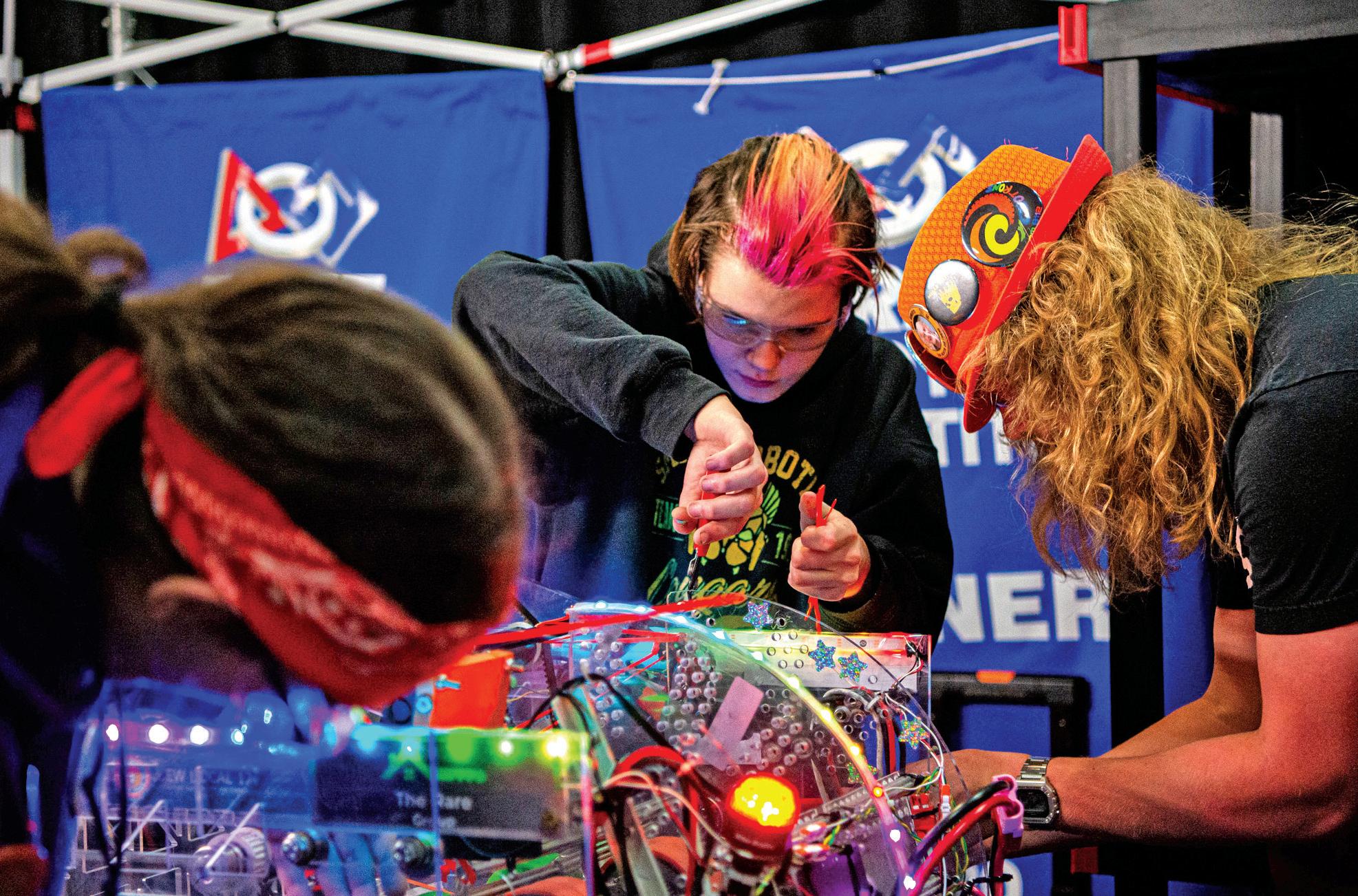
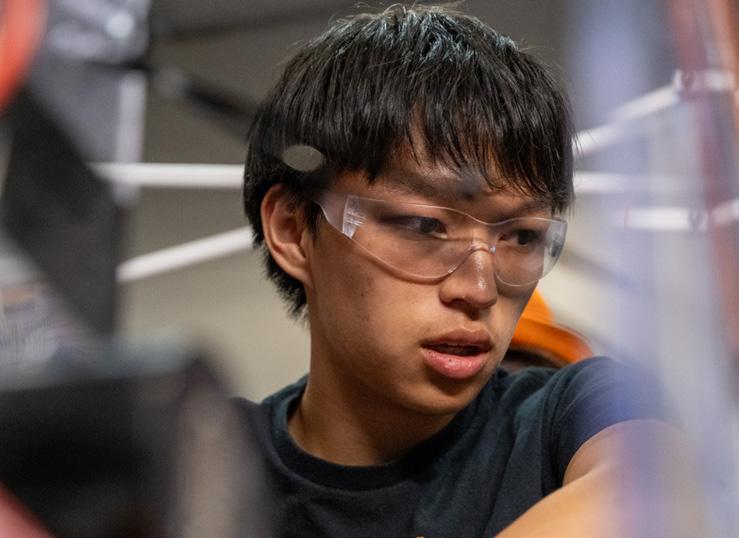
The Robotics team competed at their biggest competition of their season
After months of developing, coding and building, the robotics team had a robot ready to compete. It would be tasked with picking up balls the size of two softballs, and launching them at a target 10 feet in the air.
At the Greater Kansas City regional robotics tournament in Lee’s Summit on April 9-11, the team came in fourth. They were the third pick by the third alliance — meaning they were picked to be on the third-ranked team.
In their previous tournament, the
St. Louis regional on March 26 through April 1, the team was picked third by the second-ranked alliance for the defense the robot displayed — despite breaking a lot. They ended up finishing second in the tournament.
While they don’t have any official competitions in their season, they plan to compete in a out-of-season tournament in North Kansas City sometime in June.
WRITTEN BY SOPHIA RAGAN 3097001@SMSD.ORG
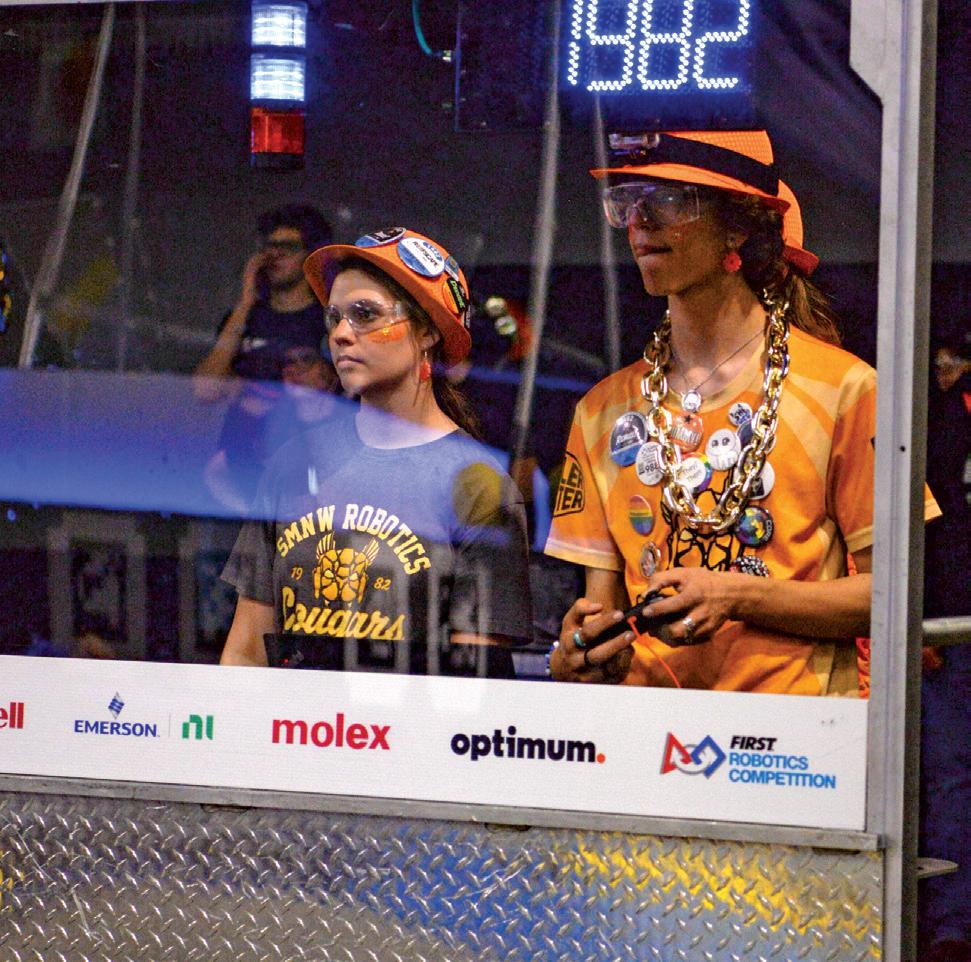
Above - Seniors James Ancell and Ashlyn Moore controlled the 1982 robot April 11 at Lee Summit North High School. Robotics Club provides students with opportunities to meet people and learn new skills. “Robotics is probably one of the most underrated things you can do at NW, not only because of the amount of skills it can teach you, but the friends you make within your own team, but also on other teams at competitions,” Ancell said. Photo by Audrey Novavky
Bellow - In between matches, Sophomore Ronan Jones helps fix the robot on April 11 at Lee Summit North High School. It can be stressful at times during competitions and between matches. “We have to work really fast, sometimes very stressful, because sometimes the robot breaks…, so we have to get it fixed. Jones says. Photo by Audrey Novacky
DESIGN BY GRETA GRIST

The KC Metro Area’s recent developments have improved the city for tourism instead of benefiting residents
435 to Broadway. A twenty-minute drive from Lenexa that once featured a picture-esque view of the Kansas City skyline, now ruined by the glowing sight of the “KC Wheel.” Placed around 50 feet away from the edge of the interstate, the attraction features a 12-15 minute, heated and cooled $17 ride, creating a dynamic view of KC for first-time visitors and obstructing the same view for thousands of residents.
The same can be said for pretty much any big-dollar investment in a new KC attraction. Invest millions of dollars in potential visitors, to neglect residents and essential urban infrastructure like public transportation and adequate housing accommodations, hiding the real KC behind a curtain of shiny new places.
Rock Island Bridge Entertainment District. An innovative and expensive use of the historic Rock Island Bridge, turning what was once an abandoned and nearuseless monument into the world’s first entertainment district on a bridge. The developers at the forefront of these big-dollar tourist investments seem to be on a constant chase of those luxurious labels and headlines.
Berkley Riverfront.
What was once ignored has become the new focus of many private developers, like Marquee Development and Palmer Square Real Estate Development.
After finishing the construction of the CPKC Stadium and the skill of the KC Current as a team and franchise, the developers of the riverfront did not hesitate to capitalize on the area’s previous success. KC Current is embarking on a $1 billion expansion of the riverfront district, constructing over 400 multi-family homes, 48,000 square feet of retail space and two plus acres of public gathering space. In a recent article on cpkctadium.com, the franchise said, “With a focus on local chefs and restaurateurs, this district will become the new culinary epicenter of our region.”
That constant chase for impressive headlines and records to break leaves the thousands of residents of KC neglected, and feeling the numerous effects of the government’s shift in infrastructure focus.
Over 15 new developments are breaking ground within the next few years in an
attempt to put Kansas City on the map. They add a shiny new layer of luxury to mask the run-down infrastructure of the metro area, putting tourists in a rainbow unicorn bubble to try to hide the pot-hole ridden roads they are on.. New renderings of these districts and attractions flood social media and local news outlets, warm lighting, animated people walking throughout these new spaces.
Have you ever once noticed a parking lot? Or even a car driving?
Kansas City, in these images, presents itself to be an accessible and walkable city for tourists to fly in and fly out, without ever needing to rent a car or call an uber. But, with over 250,000 regular riders of the streetcar and less than 20 stops in the loop and even fewer miles covered, Kansas City lacks accommodation for not only the tourists who may rely on public transportation but the long term metro residents, and not to mention the large homeless population.
In 2026, Kansas City was declared to have the largest homeless population per capita in the country. With over four thousand unsheltered people, there are less than 40 homeless shelters across the metro area, including Lenexa and Shawnee.
This kind of label doesn’t matter to the KC government. As long as they can cover it in a new headline about their new stadium move or new entertainment district, the kind of action necessary to help the homeless population will not be taken.
Issues like potholes, population increase with no housing to accommodate and an outdated transportation system plague the long term residents of the metro area. These issues for residents will continue to show through the shiny attractions for tourists, which will prevent KC from ever being a ‘destination.’
The KC government needs to redirect their focus, and their money, onto improving the city through baseline improvements, not billion dollar ferris wheels and anti-parking lot entertainment districts.
Photo by Sofia Ball
A staff editorial is an opinion piece crafted by a single writer and voted on by the entire staff of the NW Passage. It is not an unbiased news article, but an opinion piece tackling a major issue. Here is how the NW Passage voted on this editorial. 15 0 2

NORTHWEST PASSAGE
Being a child of Filipino immigrants who was never taught Filipino and reckoning with that fact
Timidly, I press her cold knuckles to my forehead.
She’s another entry in the long list of titas and titos I’ve compiled over the years, people that my parents know through relation, or mutual friends, or the mysterious method through which all Filipinos in KC seem to be connected.
I know enough to bless, to make mano. I’d been guided through it since I could remember.
Standing idly by as my parents and the other Filipino conversed, their dialogue no more than white noise to me, I waited for my prompt to perform the gesture, taking the adult’s o ered hand and touching it to my forehead. I’m in elementary now and, across my wide span of Filipino parties and events, have nailed the routine.
But I don’t know enough to understand what she says to me, happy mouth, squinting eyes, as her hand retracts.
Without words to respond, my smile is polite but insu cient.
My mom’s voice arises from behind me like clockwork. I catch the word “Tagalog” within the following stream of actual Tagalog. Explaining that I don’t know it. I infer this much easily.
I’m not old enough to care. Just old enough to feel shy under tita’s gaze as I wait for my involvement in the interaction to be over.
It takes until I’m working age to really feel it. Feet and back aching slightly, hands dry from wet, frozen product, red Pan-Asia vest shrugged over a hand-me-down (courtesy of my father), pale yellow shirt with a graphic of a polaroid taken in Manila. The vest, according to the tag, is a size M, yet it ts me ne when I’d usually need an XS. I assume this is because it’s from an Asian manufacturer. I’m freshly 17 and sliding groceries into bags. Scan, bag, scan, bag. I habitually prompt the shoddy conveyor belt’s motion sensors to bring items forth. Mechanically recite, your receipt will print right here! Have a good day! Grow numb to the song that echoes along the store’s vast aisles, I swear, at least once every shift.
It’s only upon hearing the familiar punching rhythm of Filipino that I wake brie y from my cashier hypnosis.
Families bickering and directing children to unload their cart onto the conveyor belt, or joking amongst themselves and laughing in that loud way Filipinos do.
I feel a strange sense of longing, of misplaced excitement, as I grab their all-too-familiar groceries – Pinakurat vinegar, Jufran banana ketchup, Knorr liquid seasoning. I want to say something. I want to tell them, “we have these too, my dad loves banana ketchup.” I want them to recognize that we’re the same.
Then they speak, and it’s Tagalog, Bisaya, whatever Filipino dialect it might be – and the words don’t come. It feels a little like wanting to eat at the grown-up table. And I give them the same recitation – your receipt will print right here.
At home, when my parents ask, ever curious about my day-to-day at the largest Asian grocery store in the metro, I tell them I check a lot of Filipinos out. I tell them how I recognize what they buy, how sometimes they know my parents by name, and how sometimes they ask me rst: “Are you pinoy?”
When my parents’ curiosity branches into why I even want to keep working at Pan-Asia – it’s 20 minutes away on the highway, I could easily work closer, and they’d never badgered me to pay for myself or get a job – I avoid answering.
For whatever reason, telling them that I like the opportunity to be surrounded constantly by Asian words and food feels insensitive when, in theory, I have that opportunity at home. It’s just that they don’t speak Filipino to me.
Of course, it’s not without reason. They chose not to teach me, worrying about me achieving pro -
lalaki, for Rosetta herself to grade my pronunciation — green check for ‘young girl,’ green check for ‘young boy.’
None of my attempts stuck longer than a couple days or weeks, maybe out of a failing of will or attention span. So I was partially to blame for that gap.
When I was little, I’d ask how to say random words in Tagalog – bathtub, ag, painting. Really, I’d just wanted to learn more about this fantastical Filipino culture I’d watched around me and been told I was a part of. And even now, playing songs in the car and asking my dad to translate line-by-line – I don’t get the satisfaction I want. Because I feel, still, like an outside observer.
I realize there is no cure for this. In every aspect that births the fabled “true” Filipino identity I’d desired, I’ve lived an American life. I DoorDash Cane’s after my mom’s sinigang soup. I read of political corruption in the motherland on my uncased, scratched up iPhone 16. I’ve lived happily – enjoyed my lifetime access to convenience; to the free pursuit of a career that interests me; to the kind of economic freedom that lets me spend mon-
OR WHEN MY FRIENDS, ALSO CHILDREN OF IMMIGRANTS, TALK OF UNDERSTANDING BUT NOT SPEAKING THEIR PARENTS’ LANGUAGES, AND I THINK CHILDISHLY TO MYSELF – AT LEAST YOU CAN UNDERSTAND.
- JUNIOR OLIVIA PEROCHO
ciency in English otherwise. So it was to make my assimilation easier.
I imagine their journey here: however many painstaking years of education and nursing school, their professions decided for them because that’s how you get to the US.
My mental illustration of their past is lined with the lush foliage encompassing Google Images’ results for ‘Philippines landscape’; washed over by the beaches I infer they grew up with when they tell me stories of sh caught in lunchboxes and drive 11 hours to wade into the ocean o Texas’ coast; warmed by the oppressive heat and humidity that causes my dad to sco – “if you think this is bad, you would not be able to stand the Philippines” – at Kansas’ 100º highs.
I have no experience with any of it. The image is foreign to me.
I’d tried to bridge the gap before. Duolingo didn’t have Tagalog, so I’d resolved to Rosetta Stone to teach me. It must have been around three or four times, only one of those taking place in my double-digit years of age.
Sitting in the quiet under my Frozen comforter, I recited into my iPhone 6s, batang babae, batang
ey recklessly that my parents have built up to over the course of their lives.
Yet knowing this doesn’t stop the irrational shame when my cousins (who probably aren’t actually my cousins, just Filipino) banter back-andforth with the adults, and I sit silently, balancing full paper plate on pressed-together thighs. Or when my friends, also children of immigrants, talk of understanding but not speaking their parents’ languages, and I think childishly to myself – at least you can understand
I see those bickering families, and it feels like looking at what could have been.
What do you do with the shame of having lived comfortably? How do you reconcile the crack that forms when you know you belong in part to this privileged, American life, yet still long, irrationally, ungratefully, to be closer to that mythical other half?
You scan the groceries. Listen to that same song. And you wait to spot banana ketchup.
WRITTEN BY OLIVIA PEROCHO 3093544@SMSD.ORG



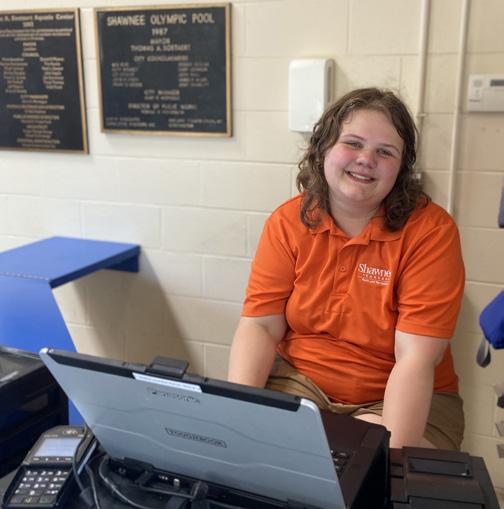





When I can’t look myself in the eyes, my little brother always seems to know how to make me smile again
As I was blowing out candles on my 8th birthday cake in the dimly lit eating space at Skate City, I wished for a younger sibling to keep me company.
In fact, I spent most of my early childhood asking for a younger sibling, and while I wanted a sister, in reality, all I wanted was a friend. By the time April 2018 came around, however, I realized quickly just how much a sibling would change my life.
The first time I saw my brother was only a few hours after his birth. I was overly excited when they gave me my own hospital bracelet to wear, and even more excited that it told everyone exactly what I was: a big sister.
Walking into the hospital room to meet my brother is one of the most vivid memories I have of my early childhood. The room smelled clean, and the lights were glaringly bright around me. The air around me seemed to freeze, and for the first time since I learned about my brother, I was nervous. I was so worried he’d decide he hated me.
Then, I held him in my arms for the first time. He was so tiny, smaller than my baby doll, Bitty, that I had come to assume was the size of an actual baby, and he looked so fragile, like a gust of wind could break him. I, however, was eight (and a half, don’t you dare forget it!) and so sure that the small wiggling bundle in my arms would be my best friend for the rest of my life.
For the first few years and through COVID, he was my favorite playmate. Despite the gap in age, we found ways to engage with each other. During his tummy time, I’d read him board books. If he was coloring, I was right there with him, doing my best to color inside the lines.
During COVID, he was my most frequent human interaction. I spent hours playing with him, reading to him, doing whatever I could with the small two-year-old who always seemed to look at me like I was the sun.
Some days, we would go outside and play with

his pirate-boat water table. When he first started climbing inside the boat, I worried he would break it, though he was barely two, and fit inside the table without a problem. After a while, I would put him on the table myself, his lopsided toddler grin egging me on when I placed him there. Before long, my parents found out, and we were no longer allowed to be unsupervised with the water table because we’d wind up wet and covered in mud.
I took those moments for granted, unaware that I’d lose interest in the smiling boy who was happy if I just looked in his direction. To him, I was the epitome of everything amazing. I was his big sister. Then, somehow, everything changed.
“Benna,” Logan begged, for my attention.
“What do you want?” I replied with too much attitude for a 12-year-old talking to a four-year-old.
He stomped away, I returned to doom-scrolling YouTube on my phone and before I knew it, he was back, but this time he was holding a knife.
My blood froze in my veins, and I did a double-take before I realized it was a butter knife that he was waving in front of my face.
“Butter bread?” he asked, a little less desperately now that he had my attention.
Annoyed, I sigh, before snatching the butter knife out of his hands and begrudgingly stomping into the kitchen to grab a Hawaiian roll and start slathering too much butter on one. Then I all but throw it at Logan, before walking back to my room in hopes of ignoring my brother.
The next thing I know, there’s butter in my hair and a four-year-old laughing as he chases me with a butter knife that he had used to “brush” my hair. I snatch the knife, throw it into the sink, and turn on my brother.
I don’t remember the next words out of my mouth. All I know is that I made my brother run crying back to his room. If I had to guess, the approximate words were as follows:
“I can’t believe you could do something like this, you goddamn idiot.”
I was so relieved to finally be left alone. I pushed AirPods into my ears and didn’t check back in until my parents were on their way home. When I did, he was playing quietly in his room and would not meet my eyes.
I don’t know if words or feelings or thoughts will ever express how much I regret this. The idea of how I acted in that moment horrifies me, and I wish I could go back and wrap my arms around my brother until he met my gaze.
Somehow, the next morning when we woke up, he still smiled up, with the same old lopsided grin, and looked at me like I was the sun. I didn’t deserve the way he looked at me at that moment and I still don’t most days but he continues to show me that, regardless of how I feel I deserve love.
Even on nights when I come home late, Logan will often greet me at the top of the stairs with a wide smile. Every time he meets my eyes, there’s a sense of adoration there. He’ll wait until I get to the main floor of our house, and he’ll hug me, his hair still wet from his bath.
I’ve never understood how he’s forgiven me for my worst moments and yet every day, even the days when I can’t play with him, he looks at me like I am worth forgiving. When he looks at me like that, it makes me feel like maybe, just maybe, he isn’t wrong.
WRITTEN BY BRYNNA EMLER 3125041@smsd.org













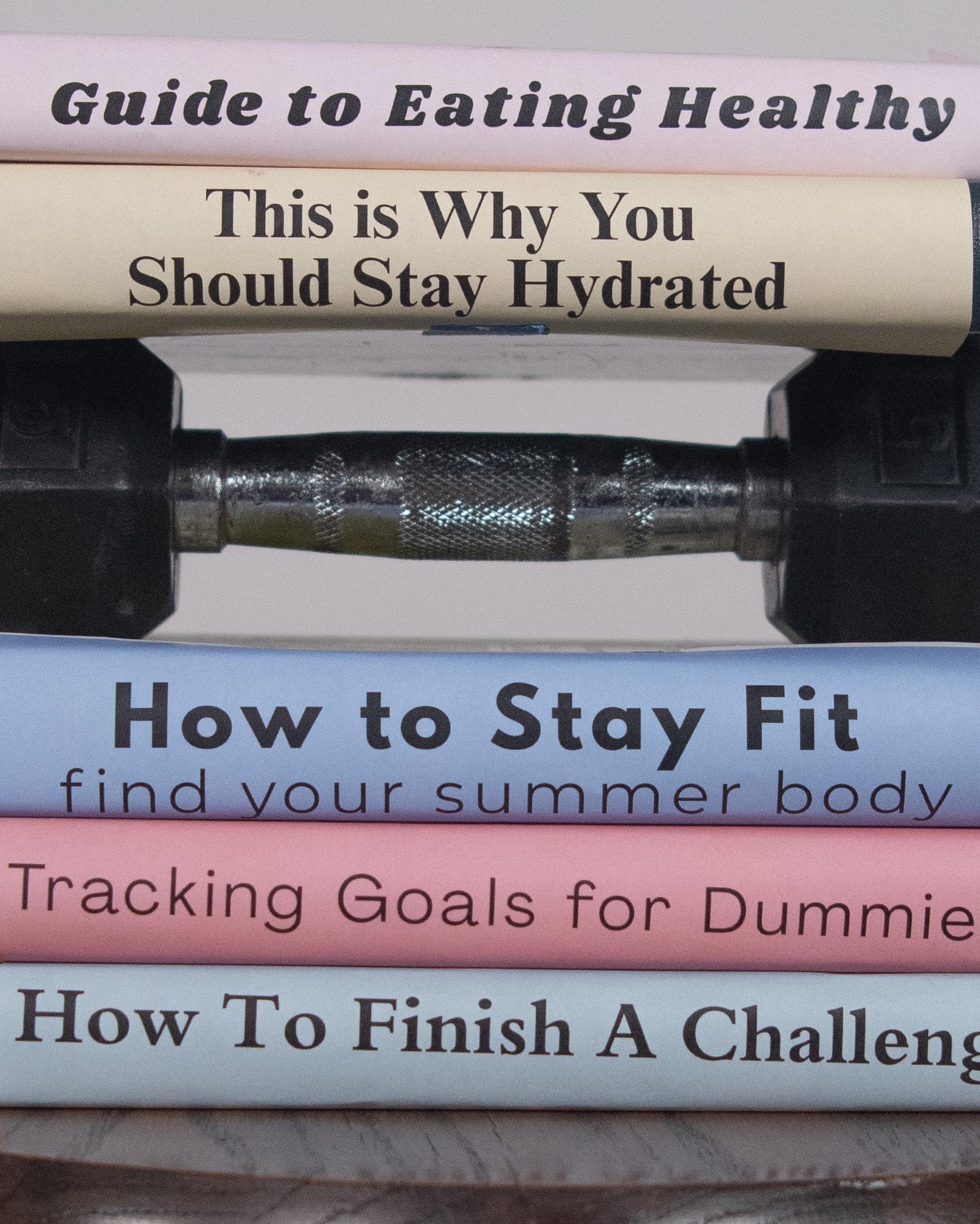
From watching Mukbangs on YouTube before lunch to spending 75 days following a strict routine, teenagers’ engagement with food and fitness content online can lead to damaging “all or nothing” behaviors.
Watching people eat on the internet is damaging the health and well being of teens
ukbang culture has ravaged the internet for more than 20 years. Between a table full of Buldak noodles and Wingstop, or a bag full of seafood boil in the car, people are eating absurd amounts of food in one sitting, all for a 15-second TikTok or YouTube video. These videos glamorize binge eating behaviors and leave viewers with unrealistic standards regarding health, how much they should eat, how they should eat it and what their body should look like.
Seeing enormous proportions of food for one meal not only tells adolescents that they should eat that much, but it also teaches them that each meal should be a 5-star product.
These videos display beautiful plates of sushi, giant Chipotle burritos and Chick- l-A chicken sandwiches with mac and cheese spilling out of the sides.
My friends and I would watch these videos before lunch period, knowing we would be consuming lukewarm pizza and slightly cold milk, as opposed to these magni cent meals.
These Mukbangs can make a normal type and amount of food seem almost boring. They often slurp and crunch the food in an exaggerated way and spill sauces down their arms, eating very messy to further romanticize the eating experience. This romanization of eating copious quantities of food can lead to the start and continuation of binge eating patterns.
A study conducted by the University of California San Francisco showed that with every hour an adolescent used social media, their risk of binge eating increases by 62%.
The National Library of Medicine
conducted an experiment to test the relationship between mukbangs and eating disorders. They found that the greater the amount of Mukbang viewing the participant did, the more eating disorder symptoms they had, and the more likely they were to not eat while watching Mukbangs. Watching these videos is being used as an unhealthy coping mechanism to create the disillusion that hunger is gone. Yes, the viewers’ bodies are still hungry, but their minds are being constantly fed at a rate that distracts them from the pain in their stomach.
Mukbang watching can also cause body image distress amongst viewers because Mukbangers eat large quantities of calorically dense food multiple times a week without visibly gaining weight.
Many Mukbangers engage in extreme caloric restriction on non- lming days, excessive exercise, chewing and then spitting out the food and throwing up the food after eating it (also referred to as purging). This is not only damaging to their health and well being, but also to that of their viewers.
Many teens think eating these amounts is healthy because they equate their slim gure to quality of health, although most Mukbangers aren’t open about what’s going on behind the scenes and are often participating in disordered eating habits themselves.
This can increase body image distress in those watching and further perpetuates the idea that eating massive portions of food is normal.
While some are using these videos as a way to nd companionship, like sharing a virtual meal, others are using this as a way to satiate hunger or as a demonstration of healthy eating habits. Neither are not healthy ways to form a good relationship with food.
The media is once again glamorizing dangerously thin bodies and is causing mental and physical damage to viewers
s the weather gets warmer and clothes get tinier, diet culture schemes and the promotion of disordered eating behaviors in the media are on the rise yet again.
In the 1990s, famous supermodel, Kate Moss, became wildly popular through her mantra “nothing tastes as good as skinny feels.” Moss was the face of a popular trend at the time called “heroin chic.” This was a phenomenon led by supermodels who had admitted to doing heroin to keep their skeletal gures. This clan of ultra thin models in uenced an in ux of young girls to starve themselves, throw up their food (also known as purging) and create toxic motivation on platforms like Tumblr to “motivate” each other to not eat to achieve a skeletal gure.
This seemed to calm down in the late 2010s with the new “in” female body type being one with curves. In the past year, however, scarily thin bodies are being pushed yet again. Tiktok’s “skinnytok” being a huge contributor to this. Skinnytok is a
AVOID FOOD RELATED CONTENT IN THE MEDIA.
Focus on what you are eating, not others. Cater your platform to your interests such as sports, crafts or reading, not food.
section of tiktok that has been curated to share weight loss tips and motivation. Creators make content about their 1200 calorie de cits and post toxic reminders like “you’re not hungry you’re just thirsty.” Gaunt and malnourished bodies are being glamorized, and are quickly becoming the female body standard again.
Alongside in uencers, celebrities are also perpetrating this revived beauty standard. Largely televised events such as the Oscars, the Grammys and the Met Gala are typically celebrations of art but this year the bodies displayed on the red carpets seemed to get more attention than the awards.
Former Disney star, Ariana Grande, has fans wondering how she lost weight as she displays her visible rib cage in her pink, Galinda inspired dresses during the “Wicked” press tour. Jenna Ortega, famous for her role as “Wednesday” Adams in hit series Wednesday, also styled her protruding collarbones with a white, lace dress with a mesh back at the Actor Awards.
Visible rib cages, collar bones that stick out of the shoulders and sunken in temples are all visual signs of malnutrition according to the Cleveland Clinic, yet these actors sport them as if they are the fashion of the season.
The abuse of weight loss drugs such as Ozempic and Wegovy is only adding to the problem, and drugs such as these are becoming increasingly common with one in eight adults having tried a form of the drug, Hollywood being no exception to that. Even tennis Olympic gold medalist, Serena
Finding
a
good balance
with food
Williams, has admitted to using and endorsing a weightloss drug brand called Ro, that her husband is an investor in. The abuse of weight loss drugs and severe caloric restriction among celebrities and in uencers is incredibly evident and increasingly concerning.
This becomes even more problematic because young girls look for ways to achieve the same physique as the celebrities and in uencers they look up to, and nd no shortage of content carefully curated so they know exactly how to do so.
According to the National Association of Anorexia Nervosa and Associated Disorders, 51.7% of girls with social media accounts had signi cant eating behavior changes such as restriction of caloric intake, overexercising and purging. One study found that 49% of youth following “health and tness” in uencers showed signs of anorexia nervosa.
Anorexia is characterized by intense fear of gaining weight, restriction of energy intake for three months or longer, and intense disturbance of one’s weight or shape. Anorexia is the most fatal mental illness, causing over 10,000 deaths each year, and is imperative to prevent and not promote these behaviors. The glamorization of starving bodies and restrictive eating habits in the media is incredibly dangerous and needs to be stopped.
WRITTEN BY CLAIRE ROGERS 3124411@SMSD.ORG
can
be incredibly
hard
in a society
built on diet culture and glori!ed binge eating, telling you to be a part of said extremes. Here are some tips to make it easier:
When plating a meal focus on having a balanced portion of carbs, proteins, fats and !ber. Remember to also stay hydrated as much as you can, water has bene!ts you wouldn’t even realize to your hunger and mind.
TUNE INTO YOUR BODY.
Though it can be hard, try to listen to what your body tells you. If you feel hungry, have a snack. Make sure to eat to !t the hunger levels of your feeling at that moment. If you feel full, stop eating; you can always save it for later.
HAVE FUN.
Food is not meant to be emotional and if it is, you’re not alone but, if your friends are grabbing sonic on the way to the game go with them! If a classmate brings cookies, join in! Social and emotional health are just as important as physical health.
ASK FOR HELP. If you are struggling, please reach out to someone. Whether that’s a teacher, a loved one, or a friend. You can also call ANAD, an eating disorder help line, 1-888-375-7767 or Text NEDA to 741741 anytime or place.

Monday: 11 a .m. — 9 p.m.
Tuesday to Friday: 7 a .m. — 9 p.m.
Saturday: 8 a .m. 9 p.m.
Sunday: 8 a .m. 8:30 p.m.


The fitness program
75 Hard became part of senior Kelli Adams routine
Everyday senior Kelli Adams wakes up and sees a display of sticky notes, marking each day until her 75 days of following a strict regimen would be over.
The trending “mental toughness” program, made by entrepreneur Andy Frisella, consists of a diet free from alcohol or “cheat meals,” completing two 45 minute workouts (one taking place outdoors), drinking a gallon of water and taking a progress photo for 75 days in a row.
“To some extent, it’s unrealistic, especially with soccer season going on and getting two workouts in a day,” Adams said. “I do try to follow it to the best of my abilities.”
Adams wanted the program to fit into her school schedule so she has non negotiables of what she has to complete daily.
“There are really valuable aspects of the challenge,” health educator Abby Vaughn said. “Regular movement, nutrient dense meals, reducing how often you eat out, hydration, getting sunlight, reading, limiting alcohol intake, obviously physically it’s really important but it’s goal based, which is super motivating and research shows that people who set and track goals are more likely to follow through.”
For Adams, her main goals are to drink a gallon of water daily and eat a high protein diet with no cheat days/meals. Adams’ said that some other aspects of the program would be especially difficult without her shortened school schedule.
“I don’t think I would be able to do this if I didn’t have those times off,” Adams said.
With the time given in between school
Many times, the 75 Hard challange is difficult to integrate into teenage life. Between sports pratices, homework, school and finding time to spend with freinds and family, many people can’t work out for 45 minutes twice a day or spends time meditating. If you miss one of your goals, you must start the 75 days over. Unless you bring lunch from home, you might not meet your nutrition goals. Considering this, there is another version of this wellness challange called the 75Soft*
Read 10 pages of a nonfiction book
*Read10pagesof anybook


leisurely walk with her dog or read.
“I normally don’t try to do anything crazy,” Adams said. “ I never know what soccer practice is going to be like and it’s 2 hours long too.”
75 Hard is meant to be an adaptable challenge that can accommodate for various lifestyles and schedules.
“Rigid dieting and exercise can really contribute to a lot of stress, guilt, burnout, and body image concerns,” Vaughn said. “Maybe this generation is approaching dieting in a very open, respectful way.”
Part of the rules of 75 Hard is that if you mess up one task, you must restart. On day 6 of Adams’ first
of water a day that the challenge requires and restarted.
“I think that discipline, being okay with not succeeding, being okay with starting over and telling people that you messed up then retrying is important because not everyone’s perfect, not every day is gonna go exactly how you want it to go,” Adams said. “I am super proud of myself for taking this on and just having that goal of being an overall healthier person.”
WRITTEN BY SARAH WELLMAN 3092222@smsd.org


*Trainfor45 minutesperday Complete two 45 minute workouts
*Eat as healthy as possible Pick a diet and stick to it

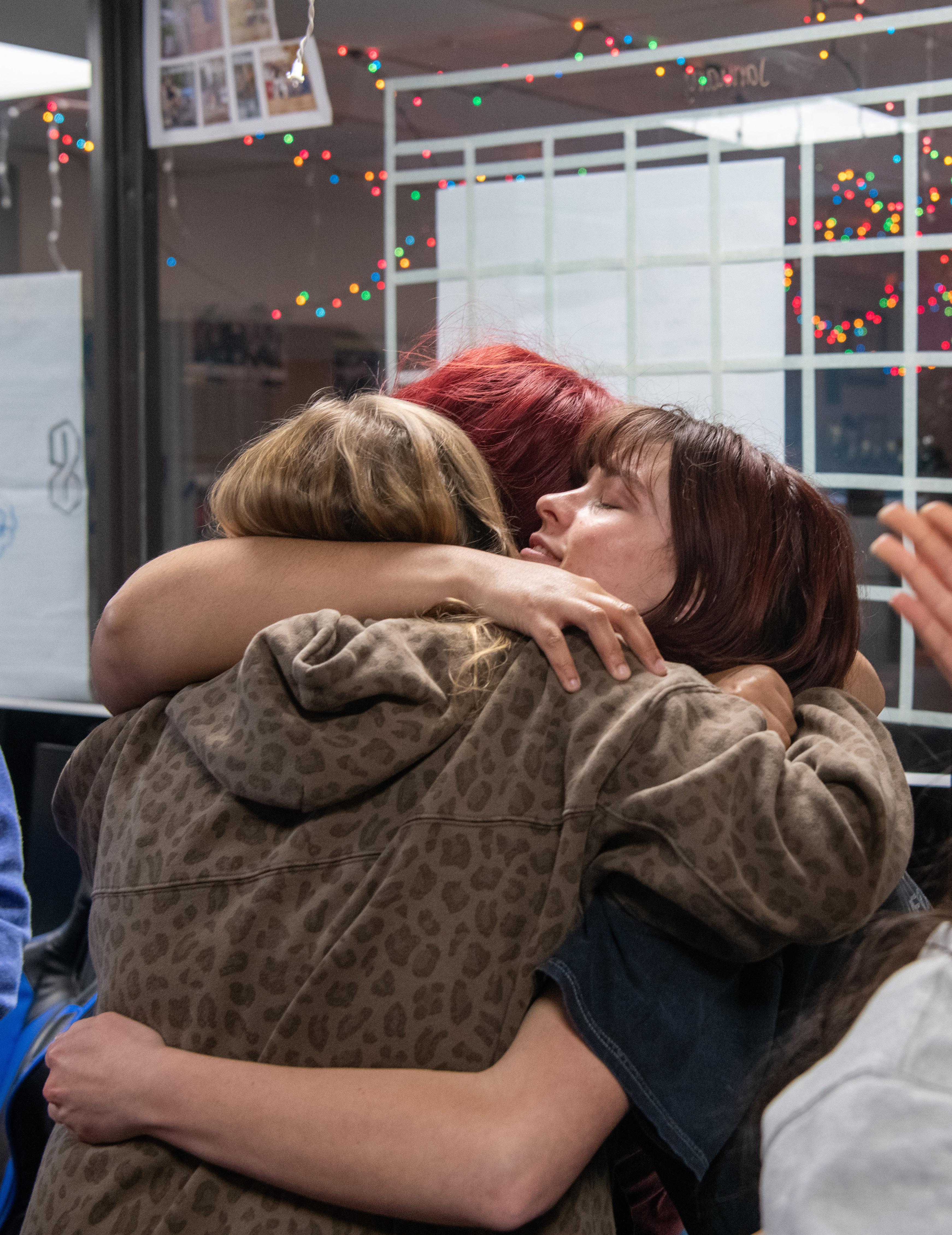
Documenting the quiet, and often overlooked, moments at Northwest through student life, struggles and success
Aliyah
Sarah
and Zoe Nixon embrace after sending the Yearbook on April 9 at 3:15 p.m.. “We were all very emotional because I have been doing this with Zoe [Nixon] for six years because of middle school,” co-editor-in-chief Sadie Babler said. “This book is just exactly what we envisioned it to be.” Photo
On April 9, the Northwest Lair sent the Yearbook
3…..2….1!” Sadie Babler, yearbook co-editor-in-chief, says, her voice cutting through the silence of the journalism room.
The !nal click of the mouse is followed by claps and cheers from other editors and sta ers all around one single glowing computer screen; the weight of 400 pages of stories has already been lifted.
Since April 1st, the yearbook editors have been camped out in the journalism room until their eyes hurt. With an April 9 deadline looming, they were running out of time. Stories about clubs, sports and student pro!les were all being compiled into one 400-page collection. For the yearbook editors, that meant it was late nights every night.
At 4:00 pm, April 8, the yearbook kids declared an o cial “lock-in” time. The goal was to send by 10 p.m., but the room soon developed into a controlled chaos — a storm of proo!ng pages and philosophical discussions about the genders of planets and critiques of every word of the opening of the yearbook. Everyone looked like zombies. By the time 10 p.m. neared, the yearbook still hadn’t been sent.
By Thursday, sixth hour, tensions were high. Most everything was done, but the faculty information was missing, somehow not saved on a computer. They had found the document, but it was incomplete, forcing everyone to scramble.
Just nine hours before deadline, sta ers began hunting down faculty members to ask two questions: what do they teach, and how many years have they been here? They handed each of the sta ers a yellow sticky note with their names, and sta ers ran to the master schedule to !nd the names of each of the teachers and coaches.
By 2:40, the scene had shifted; names and titles trickled in and went on the page as Taylor Swift’s “Betty” had begun to play. The yearbook still hadn’t been sent, and the editors had all o cially migrated to the backroom !lled with pictures on the wall and fairy lights.
The room was still abuzz with talking and laughter.
“I don’t want to send to a sad song,” Zoe Nixon said.

“Are we actually about to send it?” Junior Lexi Frazen asked.
Nixon nodded: “Oh my gosh.”
The sta surrounded a single computer. “Hometown Glory” by Adele playing, and waited to send the two !nal pages, the opening and closing were completed, all they had to do now was click send
“3…..2….1!” Babler said. The room erupts with claps and cheers. Some sta ers start singing along. Suddenly, Senior Abby Oler puts her hand around Senior Bella Alvarado’s back, then Alvarado puts her hand around junior Finn Bedell’s. Slowly, the chain continues until the group is swaying arm in arm singing along.
18 ISSUE 8 NORTHWEST PASSAGE
Brian Miller’s life spans a million experiences, from travelling the world to being a teacher at Northwest
Brian Miller used to be able to would mount his horse, Lady, no saddle, no bridle, and take o possible, trying to get far away from his family’s farm in Kansas.
He’d leave at 8 o’clock in the morning and disappear. He’d return at 9 o’clock at night.
He just wanted to escape.
Whether that be running away from his farmhouse in rural Kansas, or leaving for New York on a whim or jumping from a plane in Hawaii.
Now, the IB math teacher is stuck between four brick walls for seven hours every day, more con ned than he ever has been.
Why would someone who has lived a million lives choose this life?
The answer is simple.
Gut: The one that took him to New York, and said yes to living on the ocean for two years and eventually brought him back to Kansas.
But before he was at Northwest, explaining derivatives and SOH CAH TOH, the man with a million stories was always searching for his next adventure.
And it started back then, at night, on the horse.
“I didn’t like the farm too much,” Miller said, “I couldn’t wait to get out.”
At six, his brother cut his nger o equipment.
“There he was holding his nger, bone sticking out,” Miller said.
But Miller found ways to deal with the qualms of farm life, whether that be riding Lady, playing sports, or singing church songs with his family every Sunday.
Miller’s mother was an opera singer and used to tour with the Christian Women’s Club; his father was the music minister at their church.
“She got o ered things in New York, but she never wanted to leave Kansas,” Miller said.
But every weekend Miller, his parents and his siblings would get dressed in their Sunday best and tour from church to church singing to the pews lled with people.
“I would get ve bucks, my sister would get 10, and my brother would get 20,” Miller said, “In 73’ that was a crap ton of money.”
But Miller’s favourite escape was school; the 40-mile car ride to Berean Academy with six other classmates was his favourite part of the day.
With 32 students in his graduating class, Miller had to learn how to do everything: football, basketball, tennis, soccer, music, theatre, really anything he could get his hands on.
The rst time Miller saw a musical was Oklahoma, and his brother played one of the leads, Curly.
wasn’t booking anything.
“A lot of doors closed in my face,” Miller said. “And that was very eye-opening for a 24-year-old from Kansas.”



fail the next time.”
Back in Kansas, he booked a role in Phantom of the Opera at New Theatre & Dinner.
was like ‘cool, it’s a gig.’ I wanted a gig,” Miller said.
“I
It was in Kansas where he got his union card, and in Kansas where he met his wife, Leah. In 2005, Miller was a guest performer at a theatre in Wichita, where they were performing a musical review of Kander and Ebb songs.
“I sang ‘Marry Me’ to her the rst day of rehearsal, ‘cause that was our song together,” Miller said. “And then a year later, we were married.”
After years of steady work in Wichita, Miller found his way back to New York. A producer saw Miller in Phantom, and o ered him a contract. After a second round of auditions in New York, he got the call that he had booked his rst Royal Caribbean contract as a performer on the ship.
“The rst time I got the cruise ship, I was just so ecstatic,” Miller said. “Jumping up and down, like a movie scene.” ***
“Brian Miller, please pick up the courtesy white phone.”
The words rang through the airport and stopped Miller in his tracks. He was heading home for the rst time in seven months after six months straight of singing on Royal Caribbean. And the last thing he was expecting was a phone call.
Miller put the white phone up to his ear, and that’s when he heard the news. A singer on a di erent Royal Caribbean ship had broken his leg, and they were supposed to depart from port in a week.
And they wanted Miller to replace him. Immediately.
“No, I need to see my family,” Miller told them. “We’ll pay for your family, they can come to the rst two weeks of the cruise,” they told him.
“I really didn’t want to go,” Miller said, “So I threw this astronomical number out.”
They said yes within seconds.
Next thing, Miller was travelling through Hawaii, London, Alaska, Panama, Venezuela and Australia, and every night he would be singing, surrounded by glittering showgirls and crowds of awed faces.
Everything felt unreal. In Miller’s head, he was still that farm kid riding away from home on a horse, and now he was further from Kansas than he could imagine.
On one of the cruises to Hawaii, Miller skydived, skied, surfed and then scuba dived in the span of two days, all while doing a show every night.
For two years, Miller’s life was all water and adventure, but once he nished his contract, his agent started doubting the possibility of him booking more shows.
“My agent was like, ‘You’re never gonna work again.’ I got back, and two days later, I had a producer calling me,” Miller said.
***
Miller was in a room with six other actors, all Broadway alums who could sing, dance and act better than he could imagine.
He had made it to the nal callbacks for a Broadway show, the closest he had gotten.
“Auditions never used to scare me until I got to New York, when I started to see some of the competition,” Miller said.
As each actor went before him, the realisation slowly hit Miller.
These are the best of the best.
I’m not as good as them.
Then suddenly the choice presented itself: he would go back to Kansas, back to the farms and the family and the life before the shows.
The sun was setting, it was almost nine and it was time to turn the horse around.
Miller read for the part - but at this point it didn’t matter. He was leaving.
“I came back and started working on my teaching certi cations,” Miller said.
He was pulled to math, the formulas and patterns of the numbers reminded him of the swirling formations of the stage
“I didn’t want music to be my profession,” Miller said, “I still loved music, yes. I just didn’t want that to be how I paid my bills.”
After teaching at Kansas City Christian for ten years, Miller found his way to Northwest, where he currently teaches precalculus, IB math and music theory.
Sometimes Miller still misses the magic of the stage, but he nds ways to keep his love alive, from seeing shows, directing shows and occasionally still performing.
But he is content with a life of grading papers.
“If I had never acted and only been a teacher, I would have been okay with that,” Miller said, “If I had only been an actor and never gotten to be a teacher, that’s a pretty shallow life.”
So now the man of a million stories isn’t travelling the world, and he isn’t on Broadway, but he also doesn’t feel that need to escape anymore.
He gets to be a teacher, have a family and keep a part of his past with him through music.
“I feel insanely blessed,” Miller said, “I got two di erent careers that are just amazing.”
WRITTEN BY HARPER WARD 3125091@SMSD.ORG
“Inside the Manosphere” is a sad but important watch for those looking for a deep dive on toxic male content and the creators who make it
Inside the Manosphere” is a frustratinglyenticing documentary directed by Louis Theroux about the culture surrounding men that make and interact with manosphere content online. “The manosphere” refers to a space on the internet that “teaches” young men how to become financially successful, become fit, how to date and treat women and what the roles of a man are.
In this documentary, it shows the many controversial beliefs “Manosphere” creators and consumers have about women. Creators such as —- believe women are made to cook, clean and make babies, whereas men are the money and rule makers. A surprising part of their viewpoint is that they believe in “one way monogamy.” This is a belief that a woman should only be with them but that same man can be with many women.
Theroux does not just explore the content and the viewers but also the lives of those who make the content. He explores popular creators Harrison Sullivan, Justin Waller, Amrou Fudl (popularly known as Myron Gaines). Theroux spends days with these creators, as they go through their daily lives at work, the gym and their homes. He tries his best to get to know these men’s viewpoints, but is visibly uncomfortable most of the time he’s with them, as he frequently stops himself in the middle of sentences because he’s afraid what he has to say might upset them. As he spends more time with Sullivan, Waller, and Fudl he works to understand them and have empathy for them rather than judging them. He does this by getting to know their backgrounds and attitudes toward the world. Through this, he is able to find out that all of the creators he spoke with didn’t have stable
DESIGN BY HOPE HUNT 3135243@smsd.org
“Project Hail Mary” makes waves in theaters across the country, however, I was unimpressed
home lives as children. They all grew up without solid father figures and some grew up with unstable maternal figures. This exploration of their unstable childhoods helps explain why these creators feel the need to “teach” young men.
These young men are exactly the people whom this document is most important for. It is infuriating and sad, but incredibly important to protect these boys who most often interact with this kind of content by educating them on why these creators think the way they do and the negative implications it can have on themselves and the people around them.
WRITTEN BY CLAIRE ROGERS 3124411@SMSD.ORG
Just seven days after its release to the US, “Project Hail Mary,” a science fiction film by directors Phil Lord and Christopher Miller, grossed $164 million, becoming the secondhighest-grossing film of 2026.
According to the hundreds of reviews on Rotten Tomatoes, this film scored a highly impressive 95%. I, however, would have thrown more than five percent of my tomatoes.
This film has been compared by many to Interstellar, a heartbreaking movie about the main character, Joseph Cooper, choosing a space adventure over his children, and the consequences that follow that decision. Project Hail Mary, however, is about a middle school teacher who wakes up from a coma, lost in space, and slowly remembers his life and how he got there. Along the way, he becomes friends with a rock named “Rocky”.
This film, to me, had a heavy layer of millennial humor. Which, as a Gen-Zer, I couldn’t help but turn my nose up at. While there were moments
where the humor was comforting and respectfully silly, at times it was hard not to cringe. Especially in moments where the movie attendees next to me
“ “ “ “
I wouldn’t say that I hated this movie; I just wouldn’t spend 20 dollars to see it again. It simply never had that major moment of extreme suspense or emotion.
- Senior Genevieve Kidder
boomed with laughter.
I wouldn’t say that I hated this movie; I just wouldn’t spend 20 dollars to see it again. It simply never had that major moment of extreme suspense or emotion. Which could partly be because it’s that classic Hollywood storyline, where the main character has a crisis, makes an unsuspecting friend along the way, and the crisis, against all odds, is averted.
Looking past the seemingly sour and indifferent review I have about this movie, I did have a moment of appreciation in the final moments of the film. The main character, Ryland Grace, wakes up after his interstellar adventure to an alarm clock. He turns it off and grabs coffee when he hears a knock on the door. He opens it to find his space companion, Rocky, waiting for him. They take a walk on the beach and talk about their plans for the day. After, they cut to a scene of Grace teaching similar space creatures to Rocky about space. It was a great ending to this movie that gave me a lot more respect for the film as a whole.
WRITTEN BY GENEVIEVE KIDDER 3091881@SMSD.ORG
DESIGN BY GUS STIRLING
3161009@SMSD.ORG
ISSUE 8
NORTHWEST PASSAGE
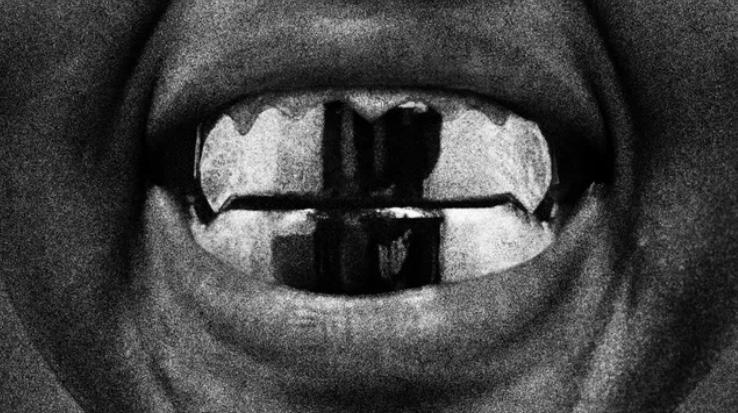
Kanye attempts to claim back his musical and cultural status through his new album “BULLY,” but falls short
In the ninth track of Kanye West’s seventh studio album, West — now known as Ye — raps that he misses the old Kanye.
After listening to Ye’s newest album, “BULLY,” I’ve realized he couldn’t have said it any better.
I do miss the old Kanye.
Kanye’s newest album “BULLY” was announced in late 2024, two years ago. The production and making of this album was in the midst of Kanye at his most controversial, constantly saying antisemetic and racist things, targeted at different ethnic groups.
As with almost every other album, “BULLY” was delayed, then delayed, then delayed, over and over again. Towards the end of the album’s release cycle, Kanye apologized for his actions and comments that were hurtful.
Finally, the album was given a release date, March 27th. March 27th came around, and to no surprise, the album didn’t drop.
The next day, the long awaited album was released.
And honestly, I wish it never did.
In this album, Kanye attempts to return to form, with similar beats to those of his previous albums, but falls short. The soul sample beats run on with nothing really special to them, are terribly mixed, and Kanye’s vocals at times don’t even sound like his own.
Kanye’s bars also have nothing special about them, unlike his previous bars that had much to talk about within them.
Even after accusations that he used Artificial Intelligence (AI) for the original singles, causing him to take longer to mix the album, it still sounds like
he used AI.
There are some decent songs on the album. Songs such as “KING”, “PUNCH DRUNK”, and “BEAUTY AND THE BEAST” sound a decent bit like his past work, but the boring production and horrible vocal and backing mix makes them only okay.
No song on the album stands out as a great track. This return to normalcy comes from an attempt by Kanye to come back to the culture and himself. After his apology, which was run as an ad in the Wall Street Journal that he himself paid for, Kanye drops this “normal” album to come back as his “former” self but ultimately falls flat due to the album being boring and not well made.
Almost all of Kanye’s albums have remained timeless. Albums such as “Yeezus” still maintain their greatness, and sound as if they could be dropped today. After listening to the album for the first time, I went back and listened to both “Yeezus” and “My Beautiful Dark Twisted Fantasy” which both maintain their status to this day as incredible “works of art” albums.
Both of these albums have incredible, rich production. Have bars that touch on social commentary about the media, politics, being an African American in America, and Kanye’s emotions, giving more to listen for in every song. Along with that, they are masterfully created.
These factors to me are what make Kanye Kanye, makes these albums incredible, and are why I listen to Kanye.
“BULLY” contains none of these factors and listening to these albums after it made me not want to even go back and listen to it again, because there was no play value.
The album sounds rushed and as if he only put forth a quarter of his effort towards making it.
Kanye has lost this ability to produce these timeless albums in the last few years, and “BULLY” remains the same. In a few years, this album will be forgotten, and looked over as even a part of Kanye’s catalogue, overshadowed by his other timeless
albums.
I think there are two sides of Ye. Kanye, the musical artist who can make incredible timeless art, and Ye, the man who makes anti-semitical, racist comments and is in constant controversy.
These two were intertwined in his music over the past few years. I feel this album was an attempt to separate these two, but he has forgotten how to be Kanye the musical artist, and sounds like a hollowed out version of his past self.
Although Kanye has failed to successfully return to his old musical status, in a way, he has gained back some of his cultural status. For part of the rollout of the album, Kanye performed concerts in cities all over the world, including Los Angeles. Kanye announced 2 shows at SoFi Stadium, one on April 1st and the other on the 3rd. Both of these concerts had over 1 million people in the queue to get tickets, with both selling out. Through these performances, Kanye performed classics along with the new album, showing he still has some cultural status selling out giant stadiums.
However, after Kanye was announced to perform Wireless Festival in the United Kingdom, the festival was cancelled because Kanye was banned from entering the United Kingdom because of past comments and controversies.
After this, Kanye issued an apology and asked to talk to officials in the UK, but yet no matter how many apologies he gives, he won’t be able to outlive his past comments.
Kanye can’t outrun Ye’s damage.
No matter how many albums he puts out or how many performances he does, he has officially dug himself into too deep of a hole of controversy to come back out of. Along with this, no album he can ever put out will match or top his past work before all of the controversy.
At this point in time, Kanye has officially fallen off.
WRITTEN BY GUS STIRLING
3161009@SMSD.ORG

Cannabis use is becoming more prevalent and socially acceptable among teenagers, who face the serious consequences
*The student names in this story have been changed to protect their identities.
Senior *Josie Milner stares intently at her popcorn ceiling. She watches the bumps cast familiar shadows and weave intricate patterns as she pulls her baby pink comforter up to her neck and slowly closes her eyes.
A few minutes before, she took ve long hits of her cart — an electronic smoking device with prelled cannabis oil. She inhaled the peach- avored vapor and held still before blowing back out. As the candy scented smoke dissipated in her bedroom, she was no longer reminded of English readings, government notes or logging NHS volunteer hours.
She folds up her glasses before setting them on her white IKEA shelf.
“Space Song” by Beach House streams through her AirPods.
“I feel unconscious,” Milner said. “Like the music is owing through my brain.”
According to the American Journal of Public Health, cannabis remains the most commonly used illicit drug in the United States, with its use increasing due to legalization, decriminalization and expanded access.
Addiction specialists say the e ects of cannabis are still widely unknown, especially on teenagers, because of federally imposed limitations on research. Teenagers also say that a lack of public health messaging, combined with pervasive cannabis advertisements on social media, has reinforced misconceptions around the drug and promoted its usage.
According to the 2024 National Youth Tobacco Survey and a long-running study conducted by the University of Michigan, there have been signi cant declines in vaping and alcohol consumption among teenagers.
But cannabis trends are going in the opposite
direction. In fact, a study published in the JAMA Health Forum, an international, peer-reviewed health journal, shows that marijuana use among adolescents has increased by approximately 26% since 2017.
There’s no clear explanation for the discrepancies, though some believe that the drop in drinking may be linked to COVID reducing larger social gatherings, while declining vaping rates followed high-pro le lawsuits against companies like JUUL for marketing tactics — such as fruity avors and colorful packaging — that targeted adolescents.
lot,” *junior Ben Snyder said. “They market them as a sleep or cognition aid.”
The lack of regulation behind these cannabis products, paired with positive marketing, is part of what worries researchers, and fuels misconceptions that cannabis is safe or medicinal.
“It’s kind of like vitamins, where they can say whatever they want, without any sort of research support,” Dr. Jordan Gette, an assistant professor of psychiatry and behavioral sciences at the University of Kansas, said. “There are so many celebrity and company endorsements, on top of people just going o of their own experiences. Or who believe, ‘Well,
“IT WAS ALL FUN AND GAMES IN EIGHTH GRADE,” SNYDER SAID. “AT THAT POINT, I WAS JUST SMOKING ONCE A MONTH OR SO. IT WAS SOME RANDOM CART MY FRIEND BOUGHT. MY FIRST HIGH FELT VERY SURREAL, YOU FEEL LIKE YOU’RE REALLY DOING DRUGS. NOW, IT’S NORMAL.”
- *junior Ben Snyder
These trends re ect the student body at Northwest.
In an anonymous survey conducted by the NW Passage, which 79 students responded to, 62% of respondents said they’ve used cannabis, and 44.9% say they still do. Most students who responded to the survey said they use cannabis once or twice every month, once or twice every week or more than once a day.
Almost all of those who admitted to using cannabis shared one thing in common: the “why.”
Self-medication is a prevailing reason among students, whether that means treating stress or anxiety, enhancing focus and creativity, appetite regulation or managing sleep.
“I get dispensary advertisements on Instagram a
cannabis just comes from a plant.’ But alcohol comes from potatoes and wheat. And opioids come from owers. Most of our drugs come from plants. So that perception has gotten pretty skewed somewhere along the way.”
Dr. Gette said she’s noticed an increase in young people who use cannabis as a coping tool, speci cally for soothing anxiety and depressive symptoms. She said this intensi es addiction as teenagers associate the substance with a source of comfort, and its use becomes habitual.
“Going into public school, I’d always say, ‘Oh, I wouldn’t do anything like that,’” *senior Bryan Lee said. “But then I was introduced to it by one of my friends. After talking with her about some mental health struggles, she was like, ‘Well, this is one of the ways I deal with it.’”
Researchers say that there’s a strong correlation with the rising cases of cannabis use and addiction among teens and a higher potency of THC found in today’s products — concentrations far exceeding those of past decades.
In the 1970/80s, the THC recorded in most cannabis products was between 2-4%, according to the National Institute on Drug Abuse (NIDA). However, today, concentrations have risen to between 15-30%, some being over 60%.
The highest concentrations of THC are typically found in carts, which 52.3% of students who responded to the NW Passage survey about cannabis use said they used most regularly.
“I slowly started realizing that some of my friends were doing this every day,” Lee said. “That was a shock for me, before it had become a daily thing for me too. But they just did it so mindlessly at points. Like, how high can you get? Where can I do it in front of people where they don’t notice? I
Passage survey said they stopped using cannabis because it started causing noticeable memory loss, brain fog or paranoia.
“We mostly see de cits in working memory,” Dr. Gette said. “That’s your ability to remember what people are saying in real time. So if you’re sitting in class, and your teacher is giving a demonstration, your ability to hold onto that information is reduced. Same if you’re reading something, that skill drops o when you’re using cannabis.”
Dr. Gette said that symptoms of cannabis use can mimic ADHD, and not only a ect cognitive abilities, like attention and concentration, but motor skills as well.
“It’s almost more dangerous than texting and driving,” Dr. Gette said. “You see a lot of car crashes because people are going too slow and can’t stay in the lines.”
Other studies have linked cannabis use to higher high school dropout rates and lower higher education degrees.
A recent longitudinal study published Feb. 20,
All data from a survey posted by the NW Passage, with 79 student respondents.
How often do students who consume cannabis use it?
ONCE OR TWICE A MONTH
The full extent of marijuana’s impact on teens remains hard to determine.
“Marijuana is still listed as what is called a Schedule 1 drug by the federal government,” associate director and professor at the KU Department of Applied Behavioral Sciences, Dr. Michael Amlung, said. “That means it’s in the same category as heroin and LSD, which has led to some restrictions on how you can study it.”
Amlung said this has caused cannabis research to lag behind the e ects of what teenagers who use it may be currently experiencing, prompting ine ective health messaging.
“We still have a lot of research to do,” Dr. Amlung said. “We don’t know all the answers yet, and that can be frustrating. I hope that changes in 10 years.”
Health teacher, Lisa Morstadt, is sponsoring RESIST, a student-led club advocating for drug awareness, set to launch next year. She wants a curriculum grounded in research, rather than fear, but believes reducing harmful cannabis use requires more than school-based intervention.
“I think parents need to educate,” Morstadt said. “We need to educate parents. Because I don’t think parents know. A lot of teenagers follow their home life. So if your parents smoke, or another family member, we think that’s normal and what we should be doing.”
Teresa Denk Smajda, an addiction specialist hired by SMSD two years ago to address nicotine use among students, has since expanded her work to focus on cannabis education and awareness. Smajda’s position is funded through a class action settlment against JUUL.
see so many kids hit their carts in class.”
Student Resource O cer, Jason Frizzel, said he’s catching more students with carts than traditional ower.
“That’s what everybody’s doing now,” Frizzel said. “Some of them smell like weed. But a lot of them don’t, and have that fruity smell. They’re harder to catch. The problem is, with one or two hits, they’re really strong. I don’t think kids realize the amount of THC that’s in them.”
Dr. Gette said that frequent use of cannabis products, which are high in THC, among teenagers can raise their risk of addiction later in life and worsen the long-term e ects of usage.
O cer Frizzell sees more students displaying signs of cannabis use, such as acting more tired than usual, slower or lacking motivation.
“You can just tell,” Frizzell said.
Some students who responded to the NW
ONCE OR TWICE A WEEK
MORE THAN ONCE A DAY
2026, in the JAMA Health Forum, surveyed over 400,000 adolescents ages 13-17 and found that cannabis use directly correlated with an increased risk of developing psychotic, bipolar, depressive and anxiety disorders by age 26.
The study also shows that those already predisposed to developing symptoms of mental disorders later in life may see them arise sooner and more aggressively.
“The younger they start, the harder it is to bounce back,” Dr. Gette said.
Dr. Gette said what she and fellow researchers have found alarming is that even when teens stop using cannabis, sometimes their IQ, memory and attention or other cognitive abilities, which experienced a drop o , may never go back to what they were before cannabis use.
Despite this, 93.4% of NW survey respondents said they are aware of the negative health e ects that accompany cannabis use.
“I’ve accepted that I’ll take a little bit of brain damage,” Snyder said.
“Sometimes it is more impactful when you’re hearing someone you don’t know talk about it,” Smajda said. “I want to embed a curriculum that is meaningful and something students will appreciate. Because a lot of kids think they can’t get addicted to cannabis. Or that it’s only pills.”
Most students who admitted to using cannabis said they started somewhere between early middle school and freshman year. This, Smajda said, is why she wants to start reaching students earlier.
“It was all fun and games in eighth grade,” Snyder said. “At that point, I was just smoking once a month or so. It was some random cart my friend bought. My rst high felt very surreal, you feel like you’re really doing drugs. Now, it’s normal.”
Of the 44.2% of NW respondents who admitted to consistently using cannabis, 6.3% would consider themselves addicted.
“I am,” Milner said. “I’m gonna be honest.”
Milner has four di erent carts, which she gets through a plug on Snapchat.
She’s been smoking since eighth grade, and said she’s aware of the negative health implications that stem from her habit.
But that’s not what she thinks about late at night.
She takes another hit, soaking in the instrumentals of her Spotify playlist and letting herself feel weightless until she falls asleep.
“I just don’t think about it,” Milner said. “It’s like, ‘Don’t ruin my high.’ You know?”









DESIGN BY SOFIA BALL 3092535@SMSD.ORG















DESIGN BY MARY KATE MITCHELL


Sophomore Bradley Ohmes stares into the glowing screen of his grey iPod, watching seniors Colin Salzsieder and Maggie Lamons cheering.
He closes his eyes, hums along to the beat, and begins replicating the movements in the cheer.
“Cougars, let’s show your fight! Yell loud with all your might!” the video echoes.
It was the day of tryouts, and Ohmes was more nervous than ever.
“I felt like, as the day went on, it was just slowly looming towards tryout time,” Ohmes said.
His goal was a Varsity spot, and he was almost certain he would get it.
He had been practicing since last summer, spending his days tumbling, practicing voice projection, and perfecting his jumps.
He had 3:00 tryouts, and he was wearing his cheer outfit to school, a black top with black shorts and red shoes.
During math class, Ohmes and his friend, sophomore Bella Letham, went out into the hallway to practice the dances.
“It’s down-up-down,” Lethem says. “No, it’s a clap.” Ohmes counters. The dance, low v, broken t, high v, punch, broken punch.
In sixth-hour AP Euro, Ohmes was
sitting at his seat. Sophomore Mary Kate Mitchell walks in and looks over at him.
“Hi Bradley, are you excited for tryouts?” Mitchell asks, smiling.
“Yes, I’m so ready,” Ohmes responds.
At the end of freshman year, Ohmes started seeing professional cheer teams and fell in love with the sport from the moment he saw it. He knew it was something he was meant to do.
He had done track and field and cross country and wanted something with more structure.
His favorite cheer teams are Miami Metel and Louis university cheer.
The closer the tryouts came, the more nervous Ohmes got.
He felt scared, the same fear he had last year when he decided to start the sport, the same fear he had last month when the doubt settled in; now it was real.
There was only one boy on the cheer team, and he was graduating, and only one other boy was trying out
“I feel like so many people have adapted to cheer being an all-girls sport, and I think that has kind of influenced how I feel about cheer.”
Ohmes’s Mom didn’t know he was trying out, and his Dad was mostly against him doing it because he was a boy. He’d rather have him do football and be a quarterback like he was.
“He’s against a lot of things that I do, so I kind of brushed it off,” Ohmes said.
Even though he didn’t take it to heart, it didn’t help the pre-tryout nerves.
Ohmes had never done cheerleading before, but from what he’s heard, being a boy would significantly increase his chances of making varsity, and that tryouts were a formality.
The seventh-hour bell rang, and Ohmes rushed to the locker room. He was the only boy changing for cheer, a stark reminder of the “all-girls sport” stigma he was working to break.
He had 20 minutes to kill, which he spent finalizing the details of how to enter the room, how to exit, and how to keep a steady smile even when his heart was racing.
Tryouts weren’t held in the gym but rather in transformed classrooms. Desks were pushed to corners, leaving space while two or three judges sat behind a table, their eyes watching every movement.
Ohmes has to rotate between four rooms
The jump room:
The dance room
The cheer room
The chant room
The jump room was his first challenge. He performed the required toe touch and a second jump of his choice.
The cheer room was the most daunting for Ohmes.
“Getting my voice projection to where I wanted it while coordinating the movements was the hardest part,” Ohmes said.
One of the judges was a well-known figure from KU, a “famous” face from the local cheer world, adding pressure.
The Chant room the final test of
rhythm and spirit for Ohmes.
When it was over, the adrenaline faded into a soft sense of relief, though the “what if’s” still lingered in Ohme’s mind.
Now his work was done.
Tryout results were expected to be dropped around 10:00 pm on Instagram, but a stroke of bad luck left Ohmes in the dark. His computer was broken. So while everyone else was either celebrating or crying late that night, Ohmes went to bed not knowing his fate.
Tuesday morning was like every other morning; he put on his red hoodie and black shorts and drove to school.
The anticipation finally reached breaking point during the passing period, when he was walking up the stairs, and his friend, sophomore Brynna Emler, delivered the news. He had made the team
Though he had set his sights on Varsity, seeing his name on the JV list brought a wave of genuine happiness.
“I’ll work with JV,” Ohmes said, “It gives me more time to grow this next year, and hopefully, I can make Varsity my senior year.”
WRITTEN BY KAYLA CHEGE 3123790@SMSD.ORG





DESIGN BY GRETA GRIST
3090450@SMSD.ORG
STORIES BY SOPHIA RAGAN
3097221@SMSD.ORG
Varsity boys’ tennis has had eleven meets. Coming out of the top half of their season, as of April 13, their top-ranked player in singles is senior Charles Lin, in the doubles junior Eli Cohen and freshman Nicolas Wallace. ISSUE 8


The boy’s varsity golf team has had two tournaments, leaving them with almost their entire season — plus state — ahead of them. So far, the best team composite score is 325, scored in the Sunflower League Championship at Falcon Ridge Golf Course. Junior Carter Mitchell came out of the tournament in the top 25 with a score of 77. Senior Will Fandell finished fourth in the Leavenworth Invitational at Trails West Golf Course with 76.


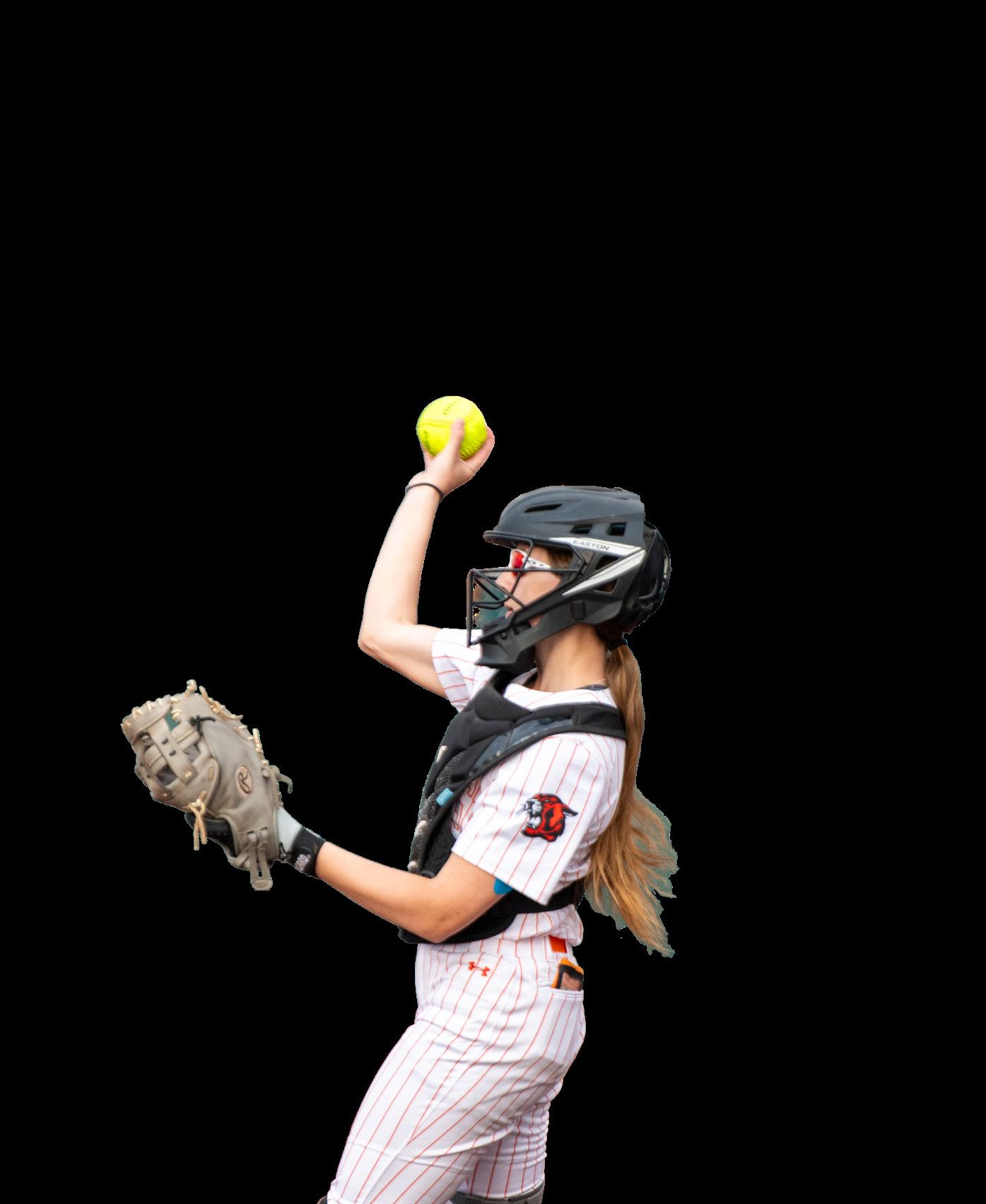
Varsity baseball is having a better season, so far, than its previous ones. The team has a record of 5-6, as of April 13.
Senior Jack Wineinger leads the batting average (0.474) and triples (3). Junior Drew Wilson leads the pitching staff in innings (18) and wins (2), also pitching 8.1 innings against Lawrence, giving up one unearned run. Senior Johnny Cecil has the most runs scored (7).
The Lady Cougars have played five games, as of April 13, with a record of 2-3. They have scored a total of ten goals and given up 3. Senior Isla Calderson-Rufus has scored 3 goals this season. Junior Stella Miyares, sophomores Nia Nightingale and Kenley Davis have all scored 2 goals.
The Lady Cougar varsity softball team, as of April 13, stands at 4-5. So far this season, sophomore Zellah Nelson leads in batting average (0.562) and on-base percentage (0.667), and junior Ryleigh Bendure leads in RBIs (19) and hits (18). Freshman Stella Byerly leads in pitching strikeouts
DESIGNED BY VIVIENNE WHEELER 3161528@SMSD.ORG
Below - Senior Maliana Perry dissects a sheeps heart April 1 in room 219. Every year students participate in one big dissection near the beginning of thier last quarter.
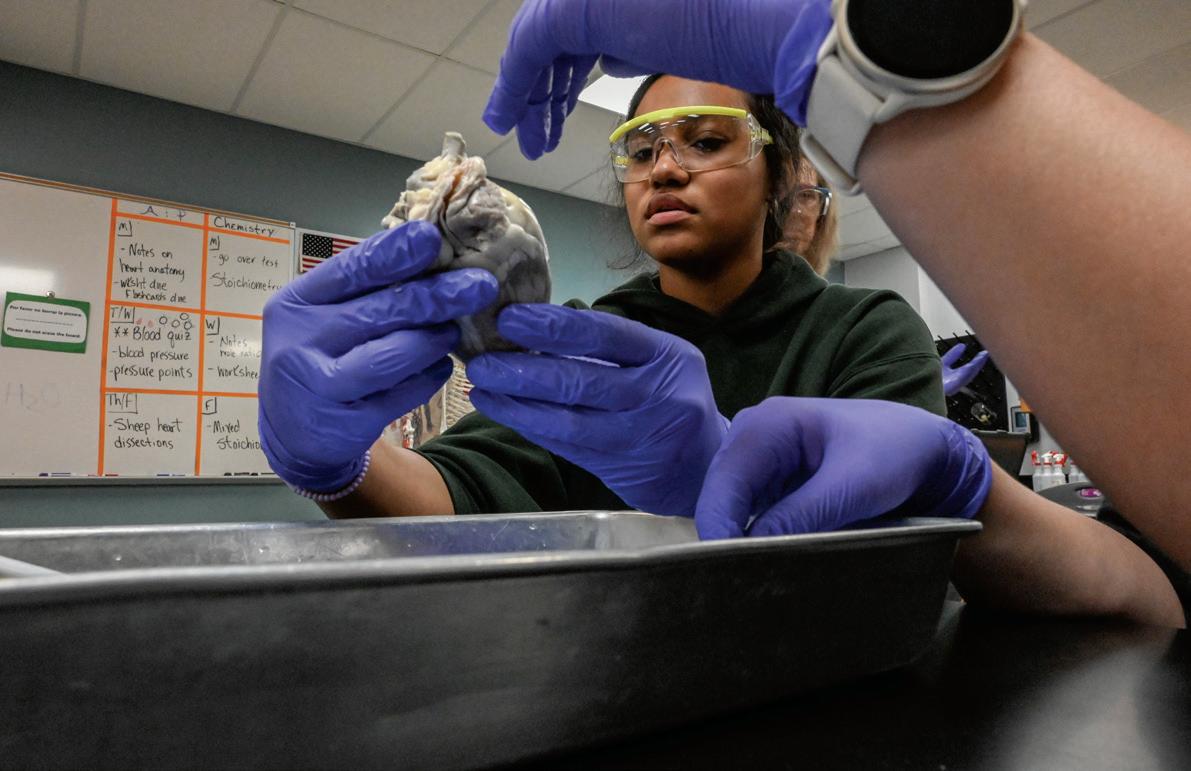
Right - Junior Allison Avila reacts tFreshman phoenix matte sings the minute music March 27 in the mall. Matte asked the office to play his music for the minute music that day. Photo by Lucy Wilson
Below - Senior Halle Gray sings a choir concert piece to prepare for upcoming contests March 31 in room 40. Chamber choir students put in hours of rehearsal in choir classes and outside of school. “So, I’ve been around singing and music my entire life. I started doing solos when I was in first grade. It was never enough for me. I just always wanted more,” Gray said. Photo by Gabriel Larkin
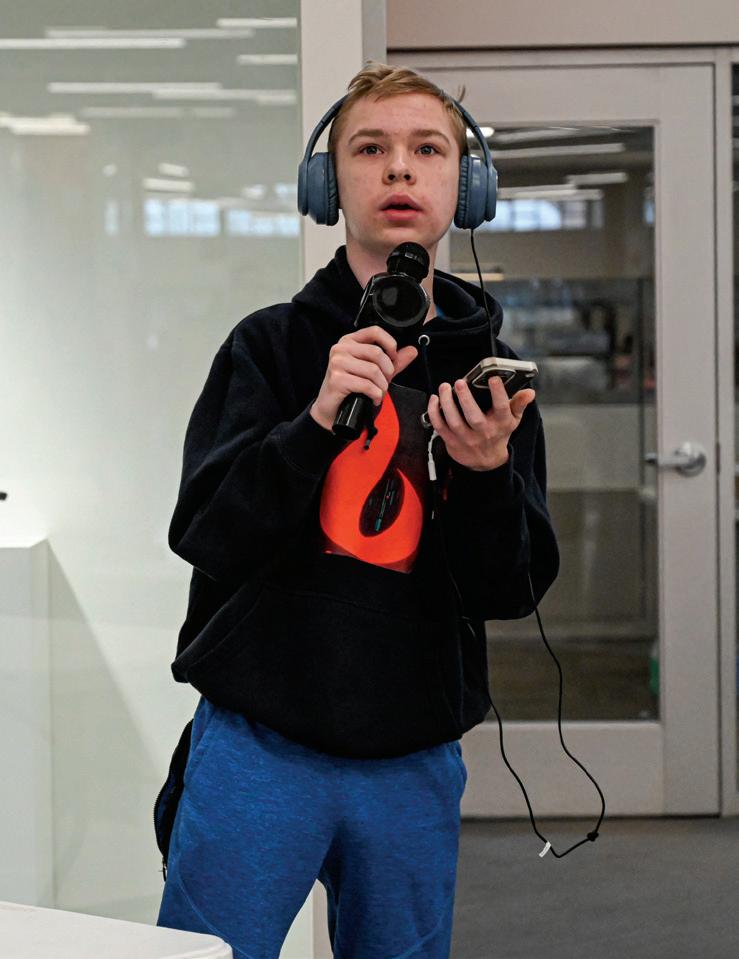
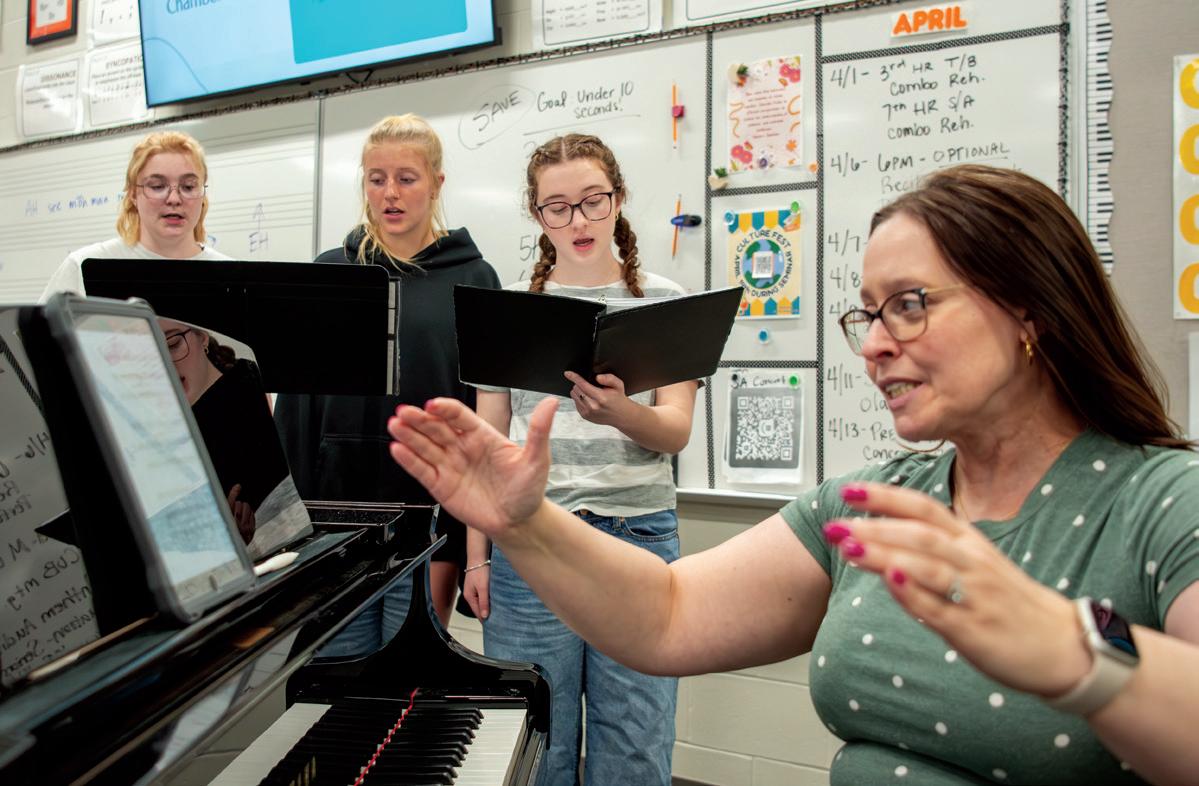
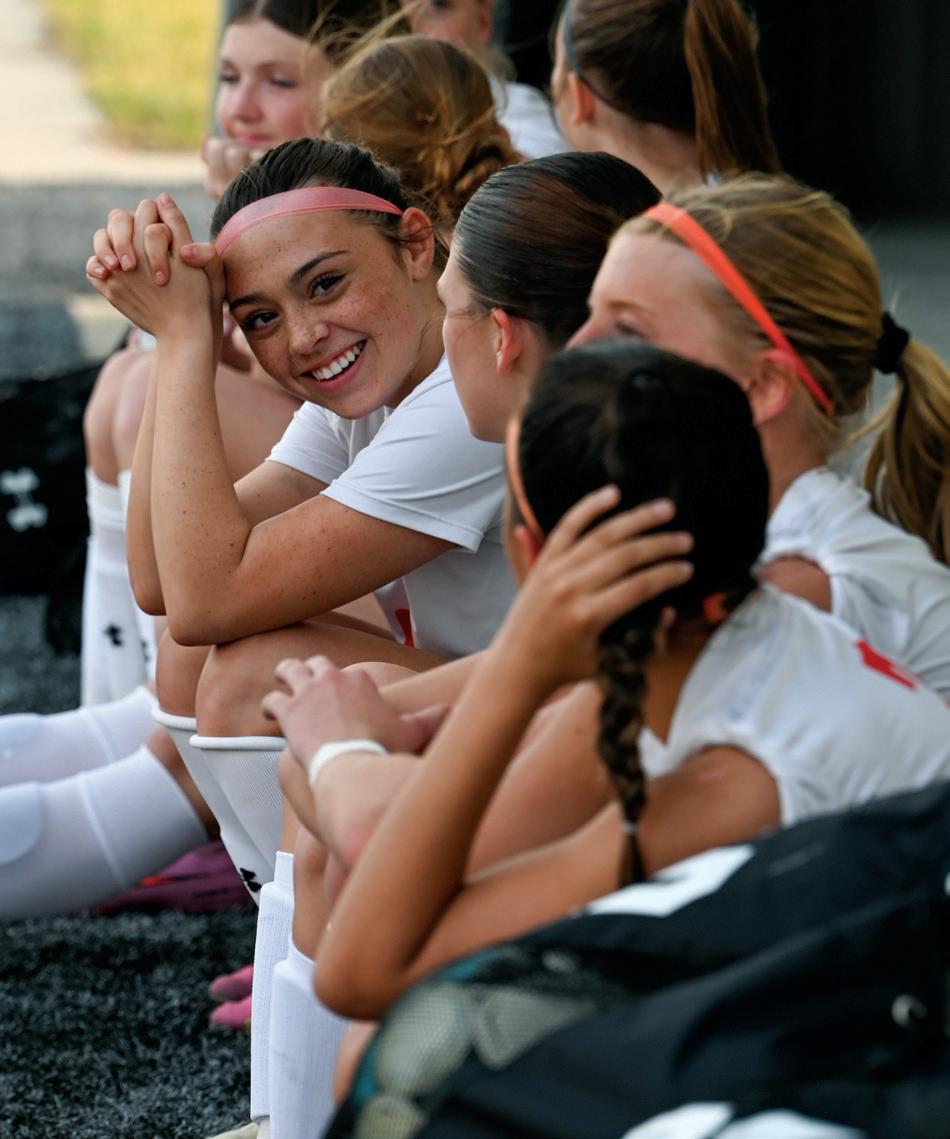
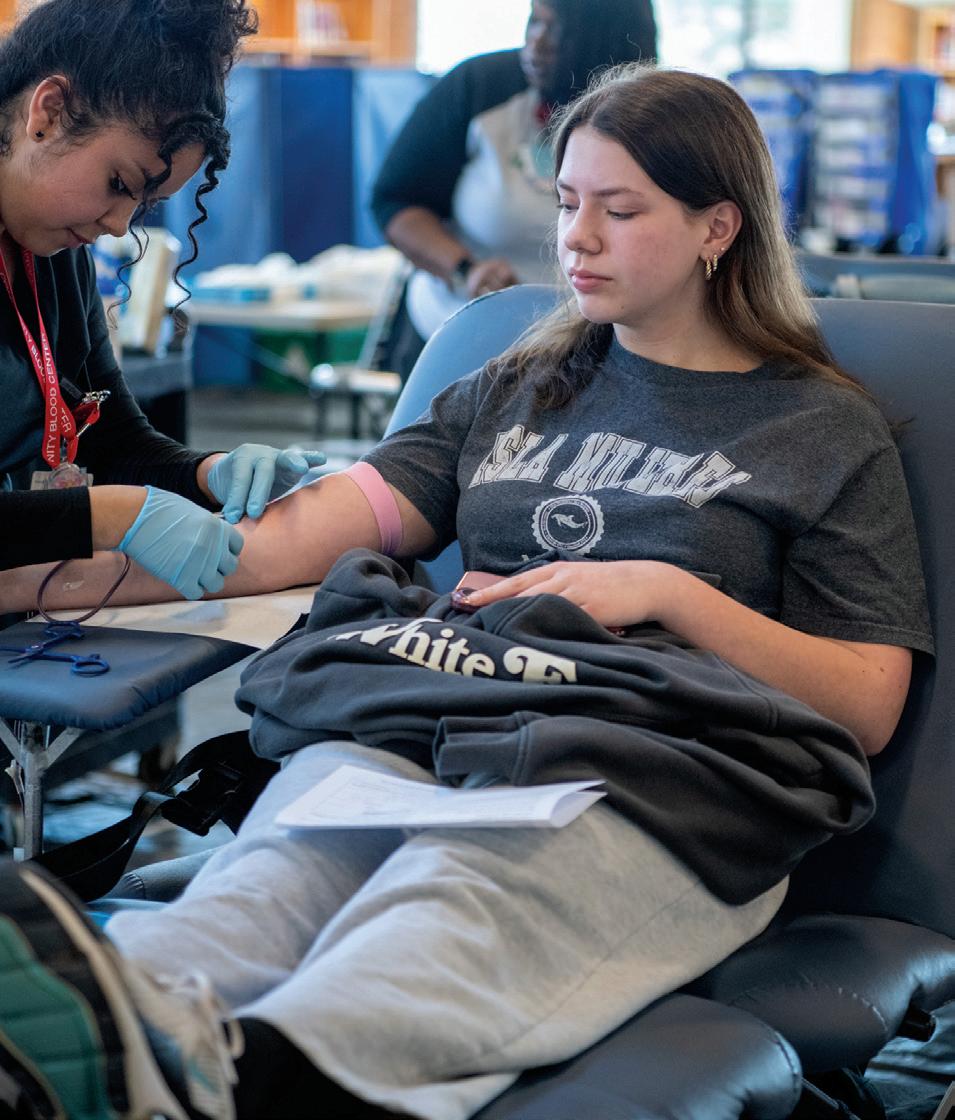
Top - Smiling, freshman Gigi Alvarado laughs with senior Isla Rufus on the sidelines March 27 at De Soto High School. Alvarado is the only freshman on the varsity soccer team this year. “Being a freshman on varsity is definitely rough,” Alvarado said. “You get pushed around a lot more, but it has helped me grow into a better player.”
Bottom - Watching, Junior Natalie Klietermes donates blood March 10 in the library. This was Klietermes’ second time donating her blood. “I would say that anyone who’s able to should try it at least once.” Klieterme said. Photo by Raegan Irwin



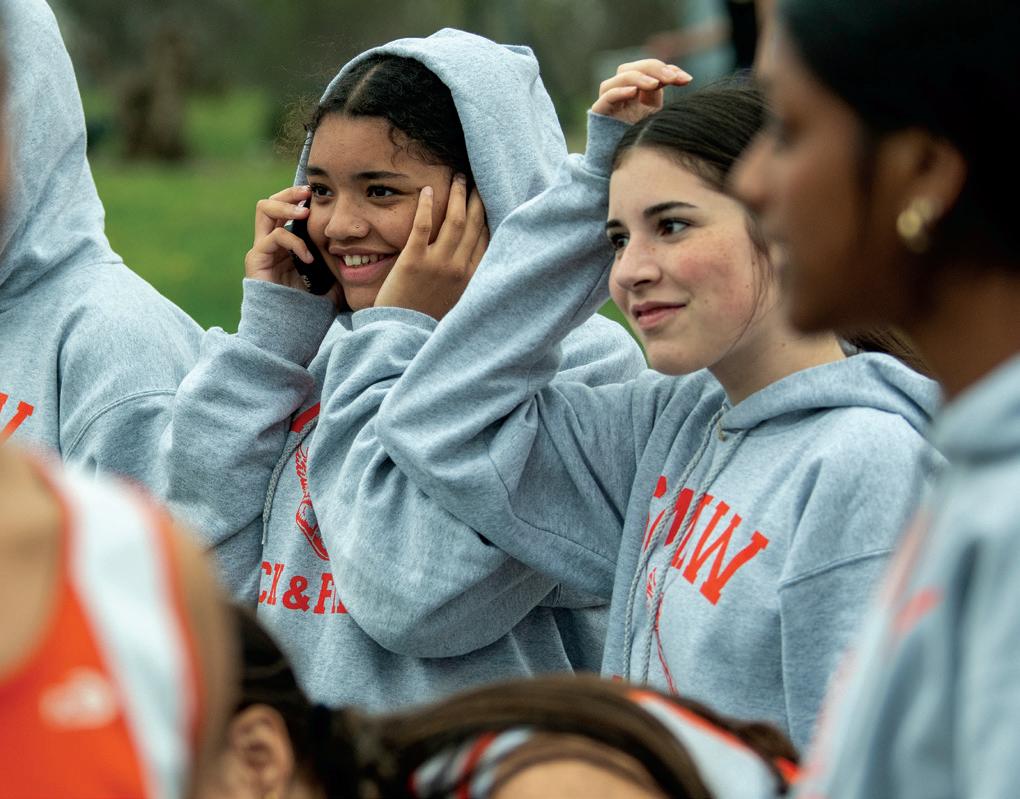
Above - Hands over her ears, freshman Sophia Singletary reacts to the sound of a starting gun going off at a JV track meet April 2 on the NW track. Gunshots serve as a signal for runners to begin their race. “I was right next to the gun,” Singletary said. “I had never heard it before. So I was scared, and preparing myself. My friends were joking around about it, calling me dramatic.” Photo by Sofia Ball

Above - Acting, senior Sienna Dehamers smokes a cigarette March 30 in the Auditorium. Dehamers played Dallas Winston in “The Outsiders” adapted by Christopher Sergel. Photo by Lucy Wilson
Left - Throwing the baseball, sophomore Dalton Close pitches April 4 at 3 & 2 Baseball Fields. Close grew up playing baseball from a young age with his dad. “I would always play with my dad, who would just toss me a wolf ball around, and I would like to catch all the time,” Close Said. “And I kind of just like continue to do that throughout, um, throughout, and then fall, and I kind of just stuck with it.”
Photo by Finn Bedell

Two Enviromental Education classes visited the fish hatchery at Jayhawk Marina April 2.

Reaching out, senior Rey Rubin grabs a Walleye April 2 in the Jayhawk Marina on Hillsdale Lake. Each student from Environmental Ed two who were willing, were given a fish to milk of either their sperm or eggs, the students were expected to handle, milk, measure, and release the fish. “I used to fish a lot with my family,” Rubin said. “So it was cool to have questions that I had asked to now be answered in my senior year.” Photo
Right - Senior Charlotte Millard milks a Walleye fish of its eggs April 2 in the Jayhawk Marina at Hillsdale Lake. Students in the Environmental Education two class have the opportunity to help fish biologists collect genetically pure walleye eggs and sperm for replenishing walleye populations in lakes around Kansas “I’ve always been fascinated by the outdoors,” Millard said. “This class has really allowed me to connect with the outdoors more, and I’m really grateful I got to have this experience.” Photo by Gabriel
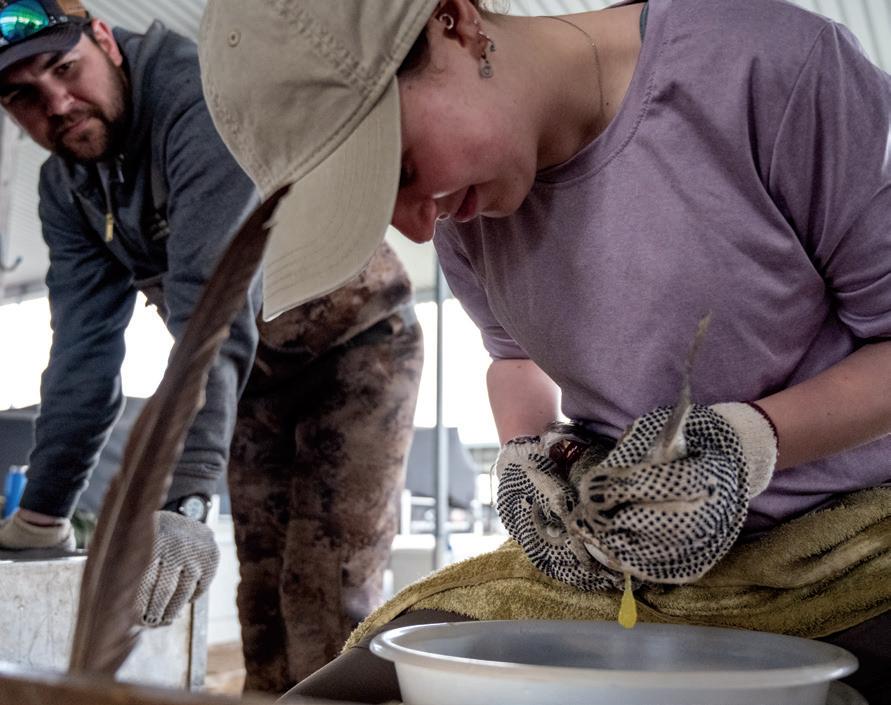

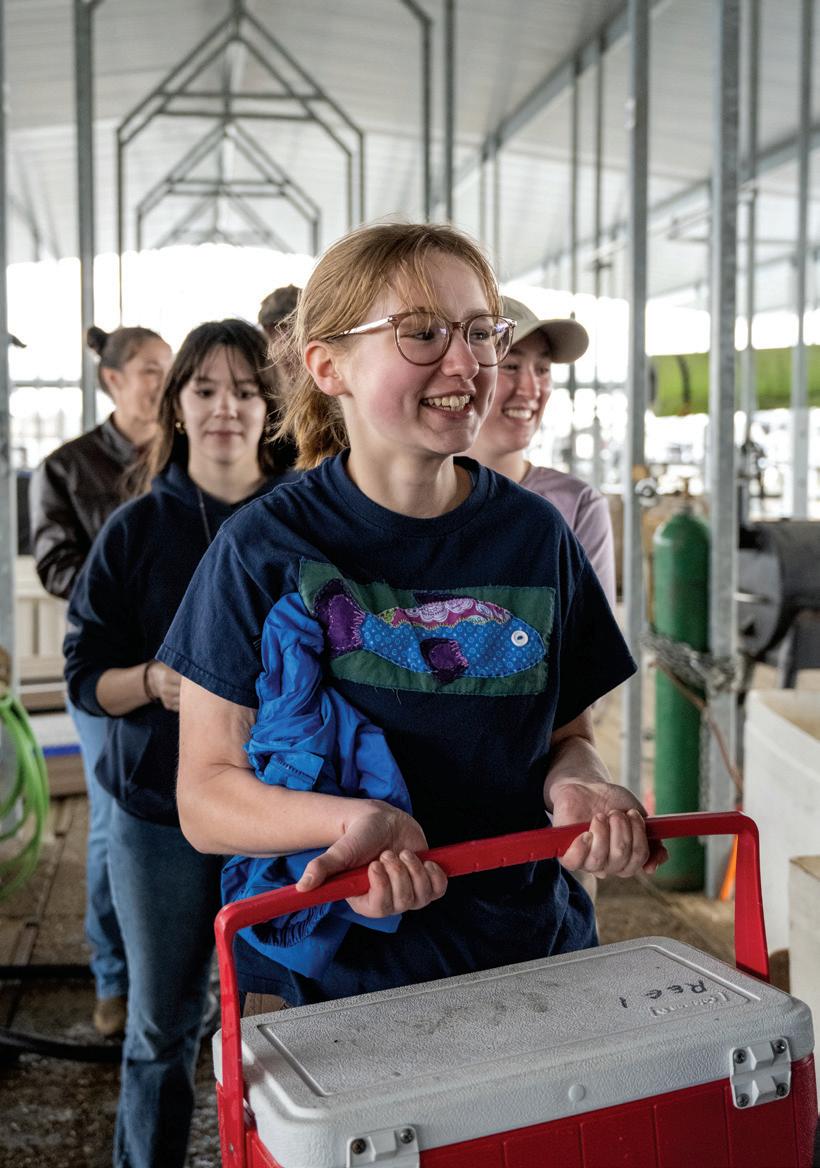
Top - Spectating, seniors Lauren Snyder and Charlotte Millard watch as the fish are getting prepared to be milked April 2 in the Jayhawk Marina at Hillsdale Lake. The Environmental Education two students were gifted a cooler full of fertilized eggs to study later in class. “It was a really great learning opportunity,” Millard said. “Mr. Pisani wanted us to see that, and get some more hands on learning.”
by Gabriel Larkin
Bottom - Grinning, senior Lauren Snyder carries a cooler full of fertilized Walleye eggs April 2 in the Jayhawk Marina at Hillsdale Lake. Snyder plans on pursuing Environmental Education by Majoring in Wildlife Biology at K-State after high school. “I’ve always loved nature,” Snyder said. “But this class is what really helped me realize, this could be a job.”