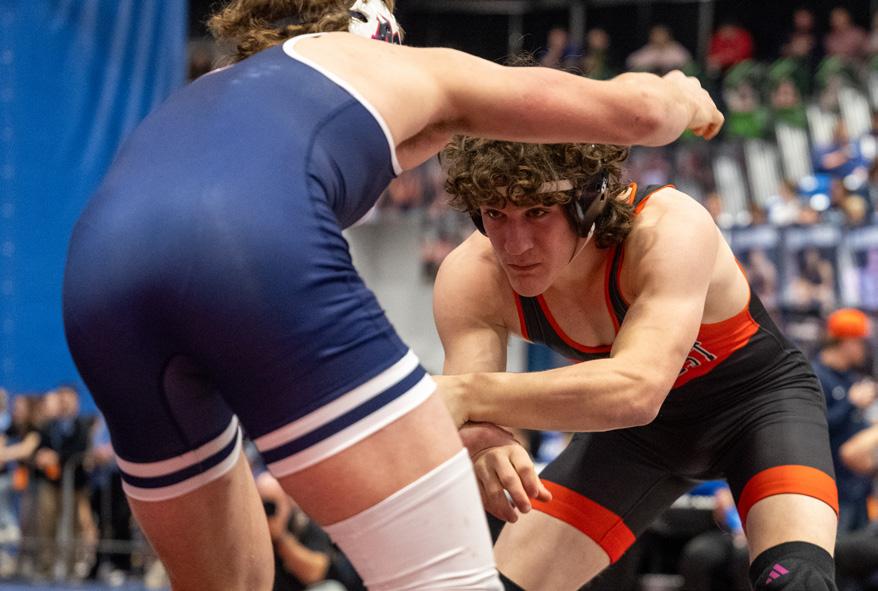
15 SECONDS PG. 10
Memes and short-form videos are used by both Gen-Z and public figures to make light of serious topics and real-world problems
MAKING SOME NOISE PG. 12
Protests surge as students feel a rising pressure to make political change
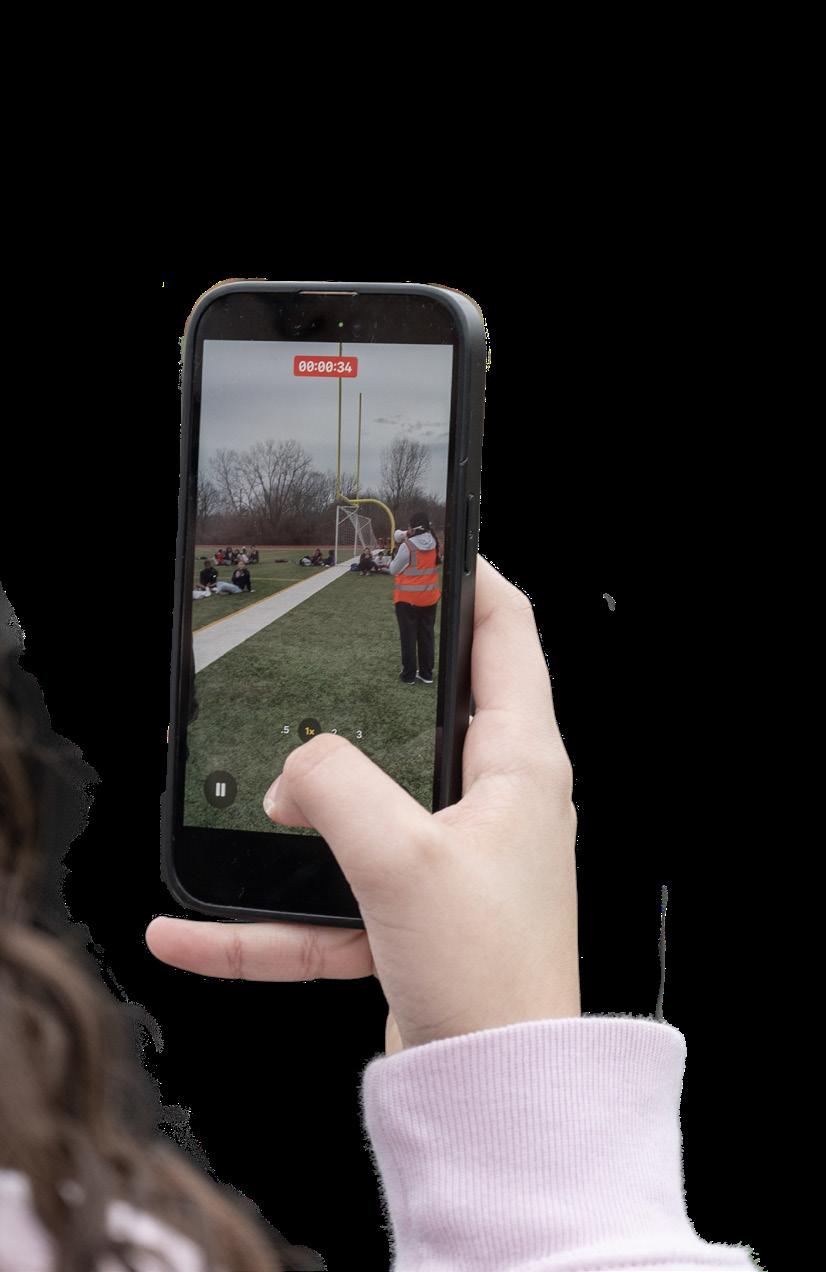




















15 SECONDS PG. 10
Memes and short-form videos are used by both Gen-Z and public figures to make light of serious topics and real-world problems
MAKING SOME NOISE PG. 12
Protests surge as students feel a rising pressure to make political change
15 SECONDS | PG. 10
Memes and short-form videos are used by both Gen-Z and public figures to make light of serious topics and real-world problems
MAKING SOME NOISE | PG. 12
Protests surge as students feel a rising pressure to make political change
DOPAMINE SCREEN | PG. 15
Doomscrolling has negative effects on the brain, especially on teenagers
IS THERE TIME? | PG. 17
The balance between school, work and having your own hobbies is almost unattainable… especially when there’s always new things you want to try
Cover by Greta Grist | Cover photos by Finn Bedell, Haylee Bell, Maddi Roof, Vivienne Wheeler & Sofia ball
PASSAGE OVERSIGHT
Co-Editor-In-Chiefs
Sofia Ball
Greta Grist
Head Copy Editor
Hope Hunt
Copy Editors
Sophia Ragan
Harper Ward
Photo Editors
Maddi Roof
Vivienne Wheeler
Lucy Wilson
News Editor
Hope Hunt
Feature Editor
Harper Ward
Sports Editor
Sophia Ragan
A+E Editor
Sophia Ragan
WRITERS
Gus Stirling
Hope Hunt
Sofia Ball

Sophia Ragan
Harper Ward
Brynna Emler
Dayla Jertson
Kayla Chege
Sarah Wellman
Olivia Perocho
Genevieve Kidder
DESIGNERS
Kennedy Woolf
Greta Grist
Mary Kate Mitchell
ADVISER
Chris Heady

The Kansas House Recently Passed A Bill Enforcing “bellto-bell” Phone Bans Across Kansas Schools, SMSD Opposes Total Ban
Kansas is one of the few states that hasn’t raised its minimum wage from the federal rate, Kansas Senator Cindy Holsch proposes a bill to change this.
Northwest administration forges a plan to raise students attendance in the month of February
The “Gilmore Girls” helped my mom and I reconnect
DOUBLE LIFE | PG. 20
During the med-sci class at the CAA, students have the opportunity to become a certified nursing assistant (CNA)
MEET THE OWNERS | PG. 22
A glimpse into the lives of three local restaurant owners and why they decided to start their business
WHEY TOO MUCH | PG. 24
Protein is a necessity for good health, but now it’s taking over
Senior Cadence Dearing learns that setbacks can let you come back even stronger
With just a few clicks, teens can place bets online despite the legal gambling age being 21

LOGGED OUT | PG. 18
Freshman Olivia Randolph chooses not to use social media

SCAN HERE TO CHECK OUT OUR WEBSITE FOR MORE CONTENT!
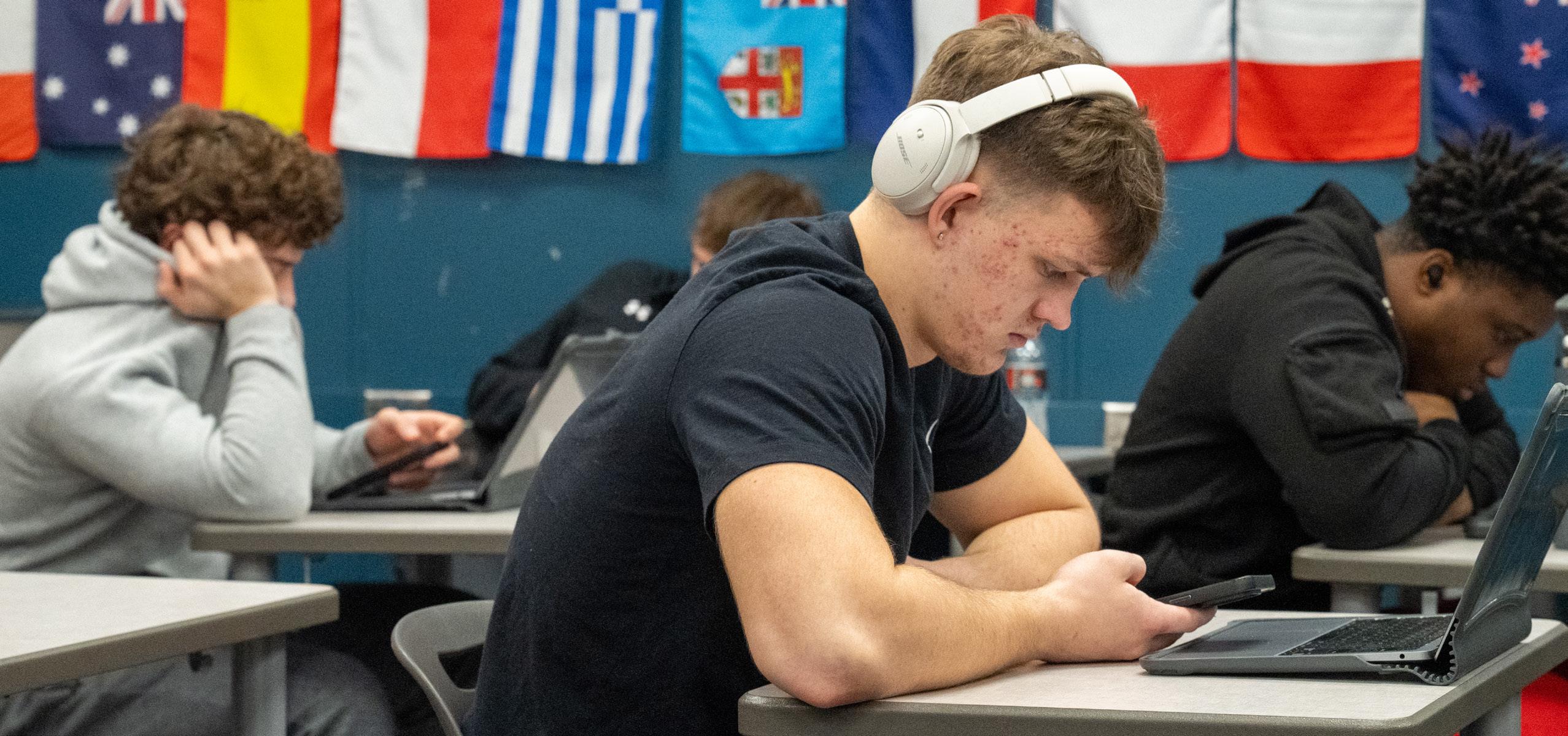
‘Ra e, Ra e, Ra e,’ Northwest administration forges a plan to raise students’ attendance in the month of February
Administrator Britton Haney’s voice !lls classrooms as students watch the weekly episode of Cougar Roundup posted on Feb. 3, 2026.
“Alright, Cougar nation, your mission this February is to be present in class as much as possible,” he says.
This minute-long announcement includes a new tactic to try and get the students at Northwest to attend 90% of their classes in the month of February: “incentives” including a 55-inch atscreen TV, Beats headphones or custom Nike shoes.
“We are trying to get more of our students to not be labeled as chronically absent by the state of Kansas, which means you need to be in class 90% of the time,” Haney said.
The students who were eligible for an entry into the ra e must have attended 70 or more classes out of the 77 classes in the month of February. And for a bonus entry into the ra e, students must have two or fewer tardies.
“This is really a focus on all of our kids who are in the 80 [percent bracket], to see if we can get a perfect month out of them,” Haney said.
As a reward for obtaining a “perfect month” in attendance, the winning students have the option to choose from three prizes. All prizes — which are all above $100 in cost — were funded from the Northwest vending machine sales, according to Haney.
“My !rst impression [of the ra e] was, ‘Oh, my goodness. We’re getting rewarded for something, you’re supposed to do?’” JCCC professor and NW math teacher Mira Davidovic said.
The students at Northwest have con icting opinions in regards to the e$ectiveness of the administration’s attempt at increasing attendance.
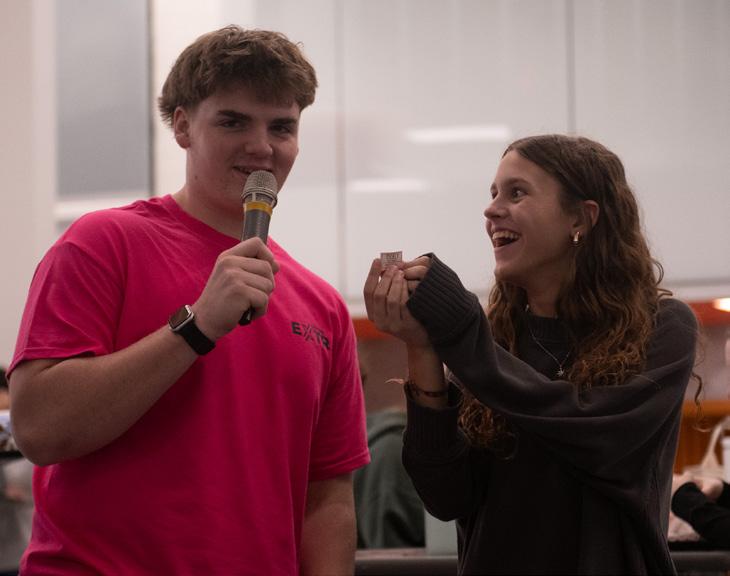
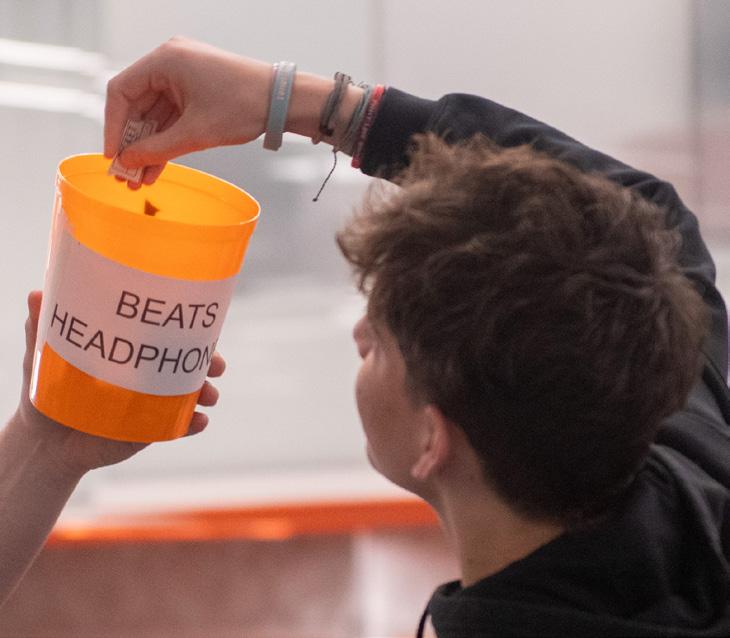
“Everyone I know who doesn’t go to class isn’t gonna see the ra e [and think] ‘a 55 inch screen TV! I better go to class on time!’,” senior Wyatt Neis said. “You really think I’m thinking about headphones or shoes or TVs when I’m laying in bed, skipping class?”
Some sta$ believe that this incentive rewards students who are chronically absent, an issue that is spiking, and already illegal in Kansas.
“After COVID, we gave everyone grace,” Davidovic said. “They have masks on, so we let them have headphones in. We let them take as many bathroom breaks as needed, and then it seems like after COVID was over, even though the mask came o$, the behavior and that mindset never changed, it just kind of got worse.”
To some, this ra e is seen as an act of desperation; especially when multiple missed days are overlooked, and seen as a minute o$ence.
“There’s no consequences for not coming to school,” Davidovic said. “And if teachers say, ‘it’s okay, you can make this up,’ what’s the point? Back in the day, if you didn’t show up a certain amount of hours, you lost credit.”
Some sta$ and students are not optimistic about the outcomes of this experiment. Though Northwest administration is hopeful it will motivate students to want to come to school and stay at school.
“Skipping class is so much fun, because you’ll be like ‘I don’t want to go to 5th hour,” Neis said. “I’m gonna go take a nap.’ [when] I’d be doing an assignment. That feeling is way better than the chance to win something cool.”
WRITTEN BY GENEVIEVE KIDDER 3091881@SMSD.ORG
‘Weighing The Costs,’ The Kansas House Recently Passed A Bill Enforcing “bell-to-bell” Phone Bans Across Kansas Schools, SMSD Opposes Total Ban
Abill that would implement “bell-to-bell” cell phone bans across Kansas public and private schools passed in the Kansas House on February 17.
House Substitute for Senate Bill 281 passed through the Committee of Education with a myriad of changes since its introduction by Senate Majority Leader, Chase Blasi, and Minority Leader, Dinah Sykes on Jan. 6, 2026.
The ban requires that school districts con!scate all student personal electronic devices and place them in an inaccessible location once school starts and, until it ends. This includes passing period and lunch. “Personal devices” consist of, but are not limited to, cell-phones, smart watches and earbuds.
The bill also prohibits any employee of a school district from using social media to communicate with students for o cial school purposes.
There is a noticeable amount of bipartisan support backing this bill. Both liberal and conservative lawmakers have argued in favor of stricter cell-phone mandates, citing lost social connections, a decline in academic performances and poor mental health as result of social media addictions.
“Smart phones and social media have exposed our children to a world they are not ready for and social pressures they don’t need or deserve,” Kansas Governor Laura Kelly said in her annual address to lawmakers in January. “Get that bill to my desk and I will sign it into law.”
Other Kansas lawmakers, however,
believe this bill is far too restrictive, especially for a high school setting.
“I voted no on that bill,” District 17 and Shawnee/Lenexa Representative Jo Ella Hoye said. “The Shawnee Mission School District already went through the process to develop a policy on personal devices. My son’s a seventh grader. When that policy went into place it made a big di erence to not have cell phones in lunch rooms for middle schoolers. But for high school, that’s a di erent story.”
SMSD o cials, such as superintendent Dr. Michael Schumacher have stated that not only would this bill be di cult to enforce, particularly throughout high schools. Many students leave school at various times, to take classes in alternate buildings, because they have shortened schedules or hold other special privileges. He said this also places pressure on SMSD’s budget, and teachers.
“I don’t want to spend millions of dollars on pouches,” Dr. Schumacher said. “We also didn’t, and I’ll say this, want to waste teachers’ time in collecting devices. It just didn’t make any sense. We have developed a policy that’s appropriate for us. If this becomes law, of course we’ll follow it, but I have major concerns that it’ll cost us either time or money to implement it. And we don’t have either of those things to spare.”
SMSD, and the six other Johnson County public school districts, including Olathe and Blue Valley have developed a united front against this bill. Superintendents, like Dr. Schumacher, contact Kansas
lawmakers regularly regarding reasons for their opposition, and discuss progress on their e orts.
“I’m really proud of the partnership we’ve developed,” Dr. Schumacher said. “We don’t talk daily, but it’s many times a week. Our
on February 17, Senate Bill 302 was moved to the Committee on Ways and Means. It must be approved by the committee before advancing to the Senate $oor for a vote. If the Senate also votes in favor, this bill will move to Gov. Kelly’s desk for signing.
“IT’LL COST US EITHER TIME OR MONEY TO IMPLEMENT IT. AND WE DON’T HAVE EITHER OF THOSE THINGS TO SPARE.”
-
DR. MICHAEL SCHUMACHER, SMSD SUPERINTENDENT
voice matters amongst the state. And most of our legislators are listening.”
SMSD created a cell phone policy last year that, at the high school level, prohibits student devices from being out during instructional time. Now, students have the option to keep personal devices stowed away in lockers, backpacks or their back pocket. Some teachers ask that students place their cell phones in pocket charts at the start of class.
Students fear that this ban would take away the ability to communicate in emergency situations, such as school shootings.
“We don’t live life in a society where that’s safe enough,” sophomore Mia Weltmer said. “That’s the wrong focus. We need to address physical dangers to student safety !rst. As of right now, anything could happen. And if we need help, we may not be able to access that because of this ban.”
After being passed in the House,
“It’ll pass in some form,” Dr. Schumacher said. “There’s too much political momentum behind it. What I hope is that it gets dwindled down to something that says school districts must create their own policy. A straight ban is the easy thing to do. Having collaborative conversations and coming to a middle ground is hard. And that’s what we did.”
The Committee on Ways and Means has yet to schedule a hearing. However, it’s likely that any major changes, or voting on this bill will take place in a matter of weeks.
“I don’t !nd the Kansas legislature is best at logistics,” Rep. Hoye said. “As a parent, do I want my kid on his phone all day? No. But understanding what it’s like through a whole school day is best left to the professionals in our school districts.”
WRITTEN BY SOFIA BALL 3092535@SMSD.ORG
‘Past Time,’ Kansas is one of the few states that hasn’t raised its minimum wage from the federal rate, Kansas Senator Cindy Holsch proposes a bill to change this
Kansas Senator Cindy Holscher has presented senate bill 471, in front of the Kansas government to raise the minimum wage to $16 an hour rather than the federal rate of $7.25.
“Honestly, we’re in an a ordability crisis in both rural and urban areas,” Holscher said. “It’s past time for us to do something about this and raise the minimum wage.”
There are 28 states, including Kansas, that have not raised their minimum wage.
“No one can make a living o of $7.25 an hour, so I de!nitely think they should raise it,” junior Stella Miyares said.
While most students at Northwest are making more than the minimum wage, the increase in rates would cause many to see a raise in their paychecks.
This is one of many minimum wage bills proposed to the Kansas government in recent years, yet none of them have been passed so far.
“When you’re talking about minimum wages, you’re talking about fairness over e ciency,” economics teacher Matthew Wolfe said. “If you leave the market alone it’s going to be e cient, if you put a price $oor on it, which is what a minimum wage is, you have the potential to cause more unemployment because you’re raising the cost on employers.”
Holscher’s bill is currently awaiting a hearing with the Kansas government, which would put it on track to get passed.
“The fact of the matter is our legislature is often controlled by some corporations, that’s who funds campaigns and some of our peers in the legislature,” Holsch said. “So that’s often why some bills, like this one, can take a while to get traction.”
WRITTEN BY SOPHIA RAGAN 3097001@SMSD.ORG









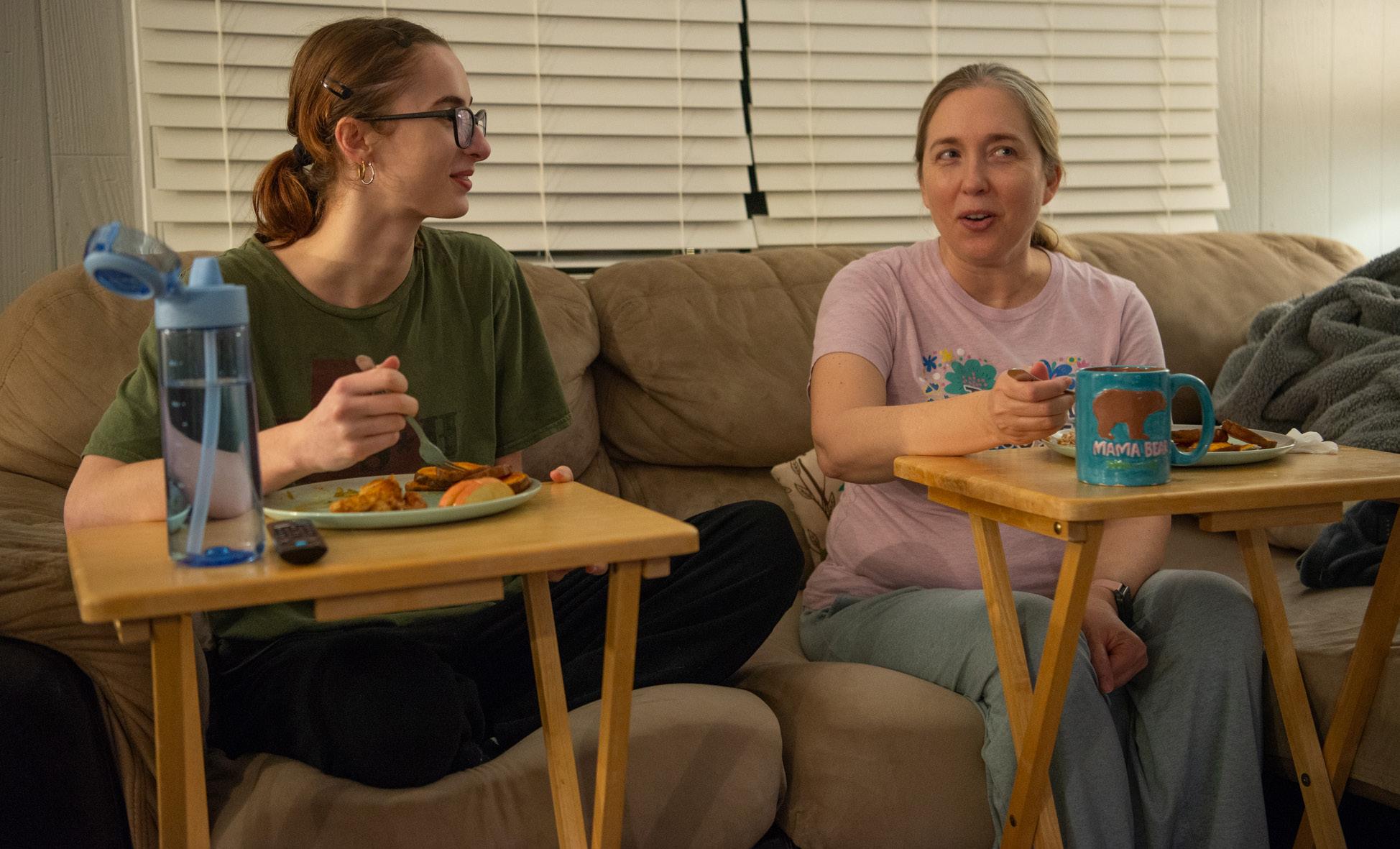
The “Gilmore Girls” helped my mom and I reconnect
Iwake up, push my blankets to the side and step onto the cold, wooden floor. I glance at the pile of cardboard boxes full of books and posters that I’ve neatly organized in one corner of the room.
As I walk toward the door, I hear soft creeks in the wood. I could never hear this gentle of a sound early in the morning before. When we lived with him.
I walk into the living room, messy piles of boxes lie between me and the kitchen. I look to my left and see my mom sitting on the couch, drinking a cup of coffee from her teal mug. I hear a familiar noise coming from the TV.
“Where you lead, I will follow,” quietly exits the speakers.
Is she watching what I think she is watching? I glance at the TV.
It is.
“Are you watching ‘Gilmore Girls’?” I ask her Why would she be watching a show about a mother and daughter with a great relationship when that is the opposite of her life?
“Yep, you are always watching it, so I figured I’d give it a try,” she replied.
I walk toward the kitchen and decide to just brush off that my mom was watching a show that I loved.
Later that night, my mom made chicken legs and mashed potatoes for dinner. We fix our plates, and I head for the table.
“Do you want to watch ‘Girlmore Girls’ while we eat?” she asks I hesitate. We always eat at the table and make polite small talk. That I’m used to. Eating dinner on
TV trays on the couch together with a known topic of conversation I actually care about is uncharted territory. Maybe she’s trying to connect?
“We don’t have to if you don’t want to; it’s just an option.”
“We can watch,” I reply.
I take my plate, a paper napkin and a cup of water to the living room. My mom set up two TV trays, one by the recliner she is sitting in and one by the couch that I am supposed to sit in?
I place my plate down on the TV tray, take a seat on the couch and carefully bite into my chicken leg while the familiar song plays in the background of a completely foreign situation.
The next few nights, we do the same thing. Each time I relax a little more, easing my posture on my couch cushion. We watch season one, and eventually one becomes four. Months go by of watching “Gilmore Girls” on our TV trays. No forced small talk, just Rory and Lorelai, Taylor and Ms. Patty.
“Are you team Dean or Jess?” I ask my mom.
“Jess. I wish he wasn’t such a bad boy, but Dean is so controlling and possessive that he definitely is not the right option,” she says.
We continue on like this, and eventually we start talking about our days before we fix our plates. Now, polite small talk has been replaced by stories of rude clients at work and an unexpected test I somehow aced.
We reach season six, and I ask her: “So mom, are you team Dean, Jess or Logan?”
“Logan. I think he treats her the best. Although I think older Jess is the best fit for Rory, he was just too late in getting his act together.”
“I agree,” I say back, surprised to have the same view as my mom on something that means so much to me.
We eventually finished the series but restarted it immediately. We both didn’t want to lose that time, because it wasn’t just watching a show with dinner. It was my mom showing that she cared and valued my views and opinions for the first time in so long.
My mom and I no longer need the show to connect because little did we know, every time we sat down with our dinner on those TV trays, we were watching lessons of how to become a closer mother and daughter pair. Sure, Lorelai and Rory have their problems and my mom and I talk about them at length, but they taught us how to talk. How to connect, after our ties had been severed by a man my mom no longer let hold the scissors so close to her and her daughters’ hearts.
It’s never a requirement for me to sit on that couch with that TV tray, but most nights I still do.
We’ve moved from the run-down duplex to a home we call our own. Our TV Trays came with us. When I don’t spend dinner in the living room with my mom, I spend it in my room with its postercovered walls, a pile of dirty clothes in the corner, shelves full of books, a mahogany vanilla scented candle lit on my bed-side table and my phone sitting next to me with a notification from my mom with a link to an AI cat video. We no longer need the scheduled time of our nightly episode to keep us connected. Now it’s long talks in the car, yelling at our cat to get off the counter for the 300th time and laughing over my brother’s inability to use just one cup.
We can now connect through the small things because we took that leap to let the Gilmore Girls teach us the big thing.
WRITTEN BY CLAIRE ROGERS 3124411@SMSD.ORG
13803 West 63rd Street
Shawnee, KS 66216

Monday: 11 a .m. 9 p.m.
Tuesday to Friday: 7 a .m. — 9 p.m.
Saturday: 8 a .m. 9 p.m.
Sunday: 8 a .m. 8:30 p.m.



Generation Z has lived a lot of their lives on the internet. With social media becoming a vice for news, politics, and negativity, this package explores its impact on teenagers.
Cover by Greta Grist


PASSAGE
Memes and short-form videos are used by both Gen-Z and public figures to make light of serious topics and real-world problems
HAWNEE MISSION NORTHWEST TEACHERS ALLOWED AND NOT ALLOWED IN AGARTHA.” The text pops out over an illustration of a white pharaoh, features discrepant beside the ancient Egyptian nemes headdress he dons. Behind him, a pyramid.
The TikTok resides on an account named “SMNW Brainrot” and alludes to the concept of Agartha, a mythical kingdom in the core of the Earth from which prominent Nazi o cial, Heinrich Himmler, theorized the “Aryan race” to descend. The white pharaoh, in combination, plays o the outdated belief that the pyramids of Giza were built with Jewish slave labor.
Agartha has become a widespread meme on the platform, part of an emerging trend of TikTok satire with antisemitic sentiment that often draws on conspiracies of Jewish involvement in US power structures, or 9/11, or the tra cking of children.
According to Statista, TikTok is used by 58% of all Generation Z members in the U.S. as of June 2024.
Gen-Z is not alone in creating content that memei es serious topics.
Government handles on TikTok, Instagram and other social media platforms are posting memes that either berate the opposing party or make fun of current events, namely the Democrats, Republicans and White House accounts. Their goal? Get Gen-Z to follow them and be interested in their politics.
For every periodic release of the Epstein les, the Democrats account posts a TikTok about President Donald Trump’s a liation with sex o ender Je rey Epstein. For every war update, the Republicans account posts an edit glorifying bombing Iran.
Gen-Z, too, contributes to this memetic approach to politics: for every mention of late political activist Charlie Kirk, founder of conservative organization Turning Point USA who was assassinated Sept. 10, a new person is “Kirki ed.” And for every discussion of U.S.-Israel
relations, a new antisemitic meme, such as Agartha, is made.
“We do need to do more to regulate the internet and to make sure that content is safe for all ages,” Kansas Representative Jo Ella Hoye said. “It is not currently, and I hate the thought of some of the things out there that my kids may see much too young.”
Whether a reaction to perceived corruption in the government or an expression of political dissent, the youth are channeling their dissatisfaction into online, often o ensive satire.
communication? An Instagram poll by the Passage shows the fact that 58% of teenagers go to social media rst to nd information.
“I think it can be kind of summed up by two things,” senior Samuel Ousley said. “One, it’s easy for us to process. And two, it’s e ective.”
But the meme’s immediate, short-form messaging can condition people to rapid shifts between unrelated topics, which requires minimal cognitive processing according to Science Direct.
Not having ample time to process information allows the routine of watching a short or meme
EVEN IF SOMETHING IS CREATED WITH THE EXPRESS INTENTION OF HUMOR, WHAT WE’RE DOING RIGHT NOW IS NORMALIZING - EVA FLORKOWSKI
“We don’t know how this is impacting kids, and there are great concerns there,” Hoye said. “Especially on the federal level, we’ve got to work with the technologies that help us for sure, and [make] sure content’s appropriate for people.”
Rather than put out public information, talk to crowds and openly campaign, o cial political parties are resorting to social media and 15-second TikToks targeting something their rival party did or is about to do.
“I think the government should hold a certain level of professionalism to them, and I think the President himself posting memes frequently online makes us look like an embarrassment on an international page,” senior Everett Walker said.
And in today’s context, “brainrot” has become a common vehicle for kids’ political expression when any alternative feels out of their capacities.
“I think that it is to some extent trying to handle the onslaught of constant information and also the emotional fatigue of being exposed to so much stu over and over again,” Florkowski said.
Why do both kids and government o cials choose the meme as their preferred format of
or TikTok, believing what’s being promoted or forming an opinion, then scrolling and never changing views on the topic again to set in.
“This is indirectly hostile media and rhetoric,” Ousley said. “Not always indirectly, against groups that are otherwise, what’s the word? Discredited? By neo-Nazis.”
Humor is essentially used as a coping mechanism and e cient form of messaging. But it becomes –perhaps in the case of Agartha – normalization of beliefs that might ultimately be more harmful.
“With these memes, I feel like it kind of creates an online culture where it’s hard to determine other people’s intentions,” Florkowski said. “Because even if something is created with the express intention of humor, what we’re doing right now is normalizing.”
WRITTEN BY SOPHIA RAGAN 3097001@SMSD.ORG
WRITTEN BY OLIVIA PEROCHO 3093544@SMSD.ORG


Social media users utilize platforms in di erent ways, some focusing on politics and news to inform themselves on current events
PERCENT OF TEENAGERS GO TO SOCIAL MEDIA FIRST TO GET THEIR INFORMATION
Data from Instagram Poll
PERCENT OF TIKTOK USERS HAVE SEEN FUNNY POSTS THAT REFERENCE CURRENT EVENTS
Data from Pew Research Center
PERCENT OF TIKTOK USERS FOLLOW 5+ PEOPLE WHO POST ABOUT POLITICS
Data from Pew Research Center
ISSUE 7 NORTHWEST PASSAGE


which begs the question, how much change are these protests really going to make?
“Obviously something needs to change,” senior Nick Stultz said, in response to a student-led walkout last semester about gun violence prevention. “But it’s probably not going to.”
Government teacher Christin LaMourie said she’s noticed a decline in civic engagement among her students, speci cally in regards to talking about politics, despite being “more informed.”
“I think they are less freely open about it in the wider classroom,” LaMourie said.
LaMourie said 10 years ago she had a student who heavily supported President Trump and would climb onto his desk yelling “build that wall” before his classmates. That student, she remembers, did not make any attempt at facilitating political discussions, but remained rmly planted in his beliefs, to the point where he thought even hearing someone else’s side might hinder them.
“People were a little bit more obnoxious,” LaMourie said. “They were willing to yell at each other on both sides. And now people are worried about ‘Is this a cancel culture thing?’ Or if we don’t want to upset each other. But it doesn’t ow as freely. Not like it used to.”
LaMourie also says she’s had more students work on local political campaigns in the past, but that’s not as common.
Kansas Representative Jo Ella Hoye — who represents District 17 in Shawnee and parts of Lenexa — said that if students and young people are having their voices heard by legislators, it’s because they’re closer to legislation.
“I love when students come to the Capitol,” Rep. Hoye said. “Whether that’s to showcase projects, be a legislative page or intern. There are so many opportunities. And the more access you have to people making policies, you’ll have a bigger impact.”
The Kansas Senate passed Senate Bill 315 on March 3, 2026, aimed at suppressing student participation in public protests. The bill would
Walking, junior Wendy Vazquez participates in a walkout Feb. 17 on W 67th street. The walkout was very important to Vazquez and her family. “For that many people to show up, I really felt seen and represented,” Vazquez said. “[My parents] were grateful for something so serious discussed in school.” Photo by Jack Pischke
impose nes of up to $100,000 a day on districts who have provenly encouraged, facilitated or enabled student protests. There will also be a crackdown on students who do not receive parental consent to participate in protests. And each school day for which students in the district walkout of school buildings in protest will “not be counted as an instructional day.”
This has yet to pass in the Kansas House, and many worry that it may interfere with the Supreme Court decision in Tinker v. Des Moines Independent Community School District, protecting students rst amendment rights on school grounds.
Some students have worked to foster spaces where teens can have a creative outlet for political activism in school. Senior Greta Grist created Change Club this year, which centers around making and featuring student art in a literary magazine that emphasizes, but is not limited to, political issues they nd signi cant.
“An easier thing is just printing student art that looks cool,” Grist said. “But it’s hard to make art that showcases deep and important issues. It’s di cult to make a space so rooted in politics that’s safe for students.”
Grist capitalized on Brown’s ideas that students need to expand political expression beyond social media, and encouraging in-person conversations.
“Speaking from experience,” Grist said, “it’s
hard to argue with somebody on the internet and come back with a sense of sympathy or e$ort to understand where they’re coming from. It’s so easy to see their belief, and not the person behind it.”
Regardless of how students choose to vocalize political opinions today, if they do, there’s an inherent need of being heard.
“Obviously, we have our sel sh personal reasons,” senior Danny Fenton said. “I want to feel heard. I want to feel important. I want to feel like I’m doing something with my life instead of sitting on my ass while people are being oppressed.”
Fenton said that trying to nd correlations between student-led walkouts and how it’s directly a$ecting political issues, especially locally, is futile.
Most students, when asked what impact they were hoping to make at recent protests, said spreading awareness, and making noise. While being weary about whether or not a di$erence is being made, they were all sure about why their participation mattered.
“Even with a small amount of people, change can be made,” Fenton said. “We can’t have an ocean without this drop in the water.”
WRITTEN BY HOPE HUNT 3135243@SMSD.ORG
WRITTEN BY SOFIA BALL 3092535@SMSD.ORG
Data from an Instagram Poll
early a dozen student-organized protests have taken place in Johnson County in the last month at public middle and high schools. This follows a national trend of thousands of students organizing walkouts in at least 12 states protesting President Donald Trump’s immigration policies and U.S. Immigration and Customs Enforcement (ICE) activity.
Students at Northwest walked out of class twice in the last month and protested up and down 67th street and Shawnee Mission Parkway.
“I’m proud of our students being able to exercise their rights on any issue,” Shawnee Mission School District Superintendent Dr. Michael Schumacher said. “Whether that be immigration or anything else. It’s a good learning opportunity. We also need to be protective of that learning environment, so we will work with student groups.”
According to a poll conducted by the Northwest Passage, 67% of students who responded said they would consider themselves “politically active.”
A little more than 70% of students said they engage with politics through posting and reposting political content. A signi cantly smaller portion of students say they engage with political activism In person. Just 13% of students said they participate in activism groups, 10% said they attend protests and 6% said they engage with Kansas Lawmakers.
Students say they predominantly engage with politics online through social media. But, physical protests have recently spiked because of restlessness building in adolescents who have the desire to do more.
“It’s making a big impact on kids,” senior Souleye Bodian said. “They feel the pain. Some of them may not know what it’s like to lose a family member, but they see their friends out here ghting for their lives and fearing for their future. They’re just out here to help, which is good. This shows that they care.”
Jenna Brown, who manages social media posts for “Boots On The Ground,” a locally-based political activism organization, said most political groups or content creators try to reach younger demographics on social media platforms. She said teens have become accustomed to the idea of vocalizing political opinions in spaces where there’s
higher accessibility and options for hiding their identity.
“Social media and technology has always been something young people develop very quickly,” Brown said. “For example, there’s always so much happening on Tik Tok. It happens very fast, and not everybody can keep up. But I feel like young people are the catalyst for making change in a way that older people can’t understand.”
Brown also said that teenagers have a tendency to keep themselves siloed in online communities and conversations, attributing this to the “loneliness epidemic.” She stated that the most e ective ways for youth to make an impact is through posting videos where they’re speaking directly with viewers, or branching out with mediums for protesting — so not just reposting or posting political content, marching in protests, emailing lawmakers or more, but a culmination of those things.
this thing on TikTok a while back about someone who was getting sexually harassed. I do think we can be doing more than that. But at the same time, what would that be?”
Not only do students worry that con ning political expression to online platforms isn’t doing enough. They also feel fatigued by the onslaught of information at their disposal.
“I had to stop watching the news because it was feeding this fear inside of me,” junior Ti any Silva, the coordinator of the rst ICE walkout at Northwest, said. “I would have constant breakdowns. But something changed once I saw what was going on in Minnesota. Innocent people were dying, trying to speak out. I knew that we could make a change, even at Northwest.”
The rst protest on February 17 saw hundreds of students le onto the football eld, holding neon handmade signs, South American ags and portable speakers. The protest spilled over onto 67th street, halting tra$c at times to protest ICE.
On Feb. 18, NW administration sent out an email to student families, discouraging attendance from the next protest on Feb. 26. Principal Dr. Lisa Gruman said that while the district supports students’ ability to exercise their First Amendment rights, it’s also important that they comply with district guidelines, which means staying on campus, preventing class disruption, not blocking access points and more.
Some students who attended the protest on Feb. 26th said they were motivated to do so in spite of this message.
“They’ve sent threatening emails to students and parents implying that they would take some kind of disciplinary action,” a senior protestor, who asked to remain anonymous, said. “We’re not trying to play around or skip school for fun. We do have a reason to be out here.”
“Everybody needs to break out of staying on social media,” Brown said. “Talk to your friends, family or small social groups. Break outside of your phones. That’s what we’re trying to do here. Having people come out to events, and go protest; creating hubs where people can actually meet each other.”
Students nd themselves wanting to do more, besides posting on their Instagram stories, or sharing Tik Toks.
“I repost a lot of things that have to do with slavery,” senior Souleye Bodian said. “I reposted
Turnout was signi cantly less than the walkout a week prior. Around 34 students attended, walking further, to Shawnee Mission Parkway. More than 20 honks were heard as students yelled “No hate. No fear. Immigrants are welcome here.” A stranger brought the protestors cases of plastic water bottles.
“I just feel that everyone should use their voice any way they can,” freshman Stella Jackman said. “Even if I’m in a wheelchair. Even if I’m disabled. I want to be here. I want to be a voice in this crowd.”
Students who didn’t participate said they feel like the scale and location of these protests is doing little to make a direct impact on political issues —








DESIGN BY GRETA GRIST 3090450@SMSD.ORG
Doomscrolling has negative effects on the brain, especially on teenagers
he human brain is built to respond to danger, but it is not made for an endless feed of it.
Our social media feeds are filled with endless counterintuitive content. In one hour of scrolling videos of ICE detaining a child, a kitten watching the doubles lounge, a woman painting a beautiful picture, and a “what I eat in a day” will flash in front of viewers, and the stream of videos won’t stop until the app is closed.
doing things that promote survival such as eating when hungry, running away from danger and warming up when cold. The brain also releases this dopamine when we scroll. When the brain latches onto sources such as scrolling that produce a huge amount of dopamine in a short period it is called maladaptive learning.
“The brain starts treating the substance as more important than basic needs like food, safety or connection,” Keith Humphreys, a professor of psychiatry and an addiction researcher at Stanford Medicine said.
This “reward” from the dopamine hit can be intoxicating and is the reason it is so hard to “just put the phone down.” Teenagers are especially
“WHEN I SCROLL FOR TOO LONG I FEEL LIKE I’M TOO TIRED OR IT’S TOO LATE TO DO ANYTHING ELSE”
Often the case for many students is that hour turns into two and three and then all of a sudden it is 1 a.m. and they never did study for that test or do the craft they’ve been wanting to do. The Urban dictionary describes this need to keep “scrolling through all of your social media feeds, looking for the most recent upsetting news about the latest catastrophe” as doomscrolling.
“I get distracted and can’t focus on other things when doomscrolling,” senior Phoenix Price says. There are many biological reasons for the feeling of an endless need to scroll. Dopamine is a feel good chemical that sends reward signals to the brain for
- SENIOR PHOENIX PRICE
susceptible to doomscrolling because of their changing hormonal balances and partially developed frontal lobes (the part of the brain that is responsible for critical thinking and decision making) due to age.
“Hormonal changes during puberty can increase the sensitivity to rewards, making addictive substances more appealing,” an article from Never Alone Treatment Center says.
This makes it harder for teens to make logical decisions regarding screen time. Like many other dopamine linked, “reward” based addictions, there can often be a withdrawal-like period when stepping away from the source. Doomscrolling being one of
them.
“When I scroll for too long I feel like I’m too tired or it’s too late to do anything else, so I keep scrolling and then I’m physically tired and mentally over the day,” Senior Phoenix Price said.
This withdrawal-like state often leads to the teen picking up their phone again because they are craving that “reward”.
“It sucks because I feel like I wasted my time,”Price said.
Students say doom scrolling has become especially taxing this past year because of the increase of political awareness content on social media.
“I’m always on my phone wanting to know what’s happening because we are at a time of crisis,” Junior Aaliyah Huggins says.
The good news is the scroll doesn’t have to be all doom. There are ways to limit the overwhelm and the withdrawal from scrolling, such as keeping your phone out of your bed, getting outside more, joining local clubs or sports, and opting out of notifications.
“Digital boundaries can give your brain and body a chance to recalibrate to normal,” Dr. Aditi Nerurkar, a lecturer in the Division of Global Health and Social Medicine at Harvard Medical School says.
Huggins has noticed positive differences since decreasing her own screen time.
“I’ve been able to go outside more and appreciate the world,” Huggins said. “Even [in] these bad times.”
WRITTEN BY CLAIRE ROGERS
3124411@SMSD.ORG
We asked NW students how many hours their screentime was. Here are the results:

http://www countrysidechalet com/






he not eddin https://www.the not .com ountryside halet pdated rices inwood

Now o ering limited aesthetics services!
Now o!ering limited aesthetics services and stemwave!
Looking for non-invasive pain relief? Try StemWave for just $49


DESIGN BY HOPE HUNT
The balance between school, work and having your own hobbies is almost unattainable
You spend around seven hours at school. Go to work or practice or rehearsal for one or two afterward. Drive—that’s 10 minutes. Eat dinner— that’s 20-25. Then shower— up to 30 minutes. After all of that it’s close to 9 p.m. What to do now? Do you do your scrapbook page or study for the test you have in algebra in the morning?
The balance between hobbies and academics is a challenging decision to make during those few hours after school.
“I want to do nails more and be more creative, but with all I have going on between work, school, and soccer I can’t,” said junior Saveah Singletary.
In a poll on the Northwest Passage Instagram, 43 out of 44 Northwest students said they have hobbies they’d like to do, but have no time to.
“I think sometimes being creative causes more stress,” Senior Calla Hardison said, “The type of art that I do requires planning and thought, so it’s not a mindless activity that I can use to wind down and relax. These hobbies can be very messy and require a lot of setup, so that also adds to the stress.”

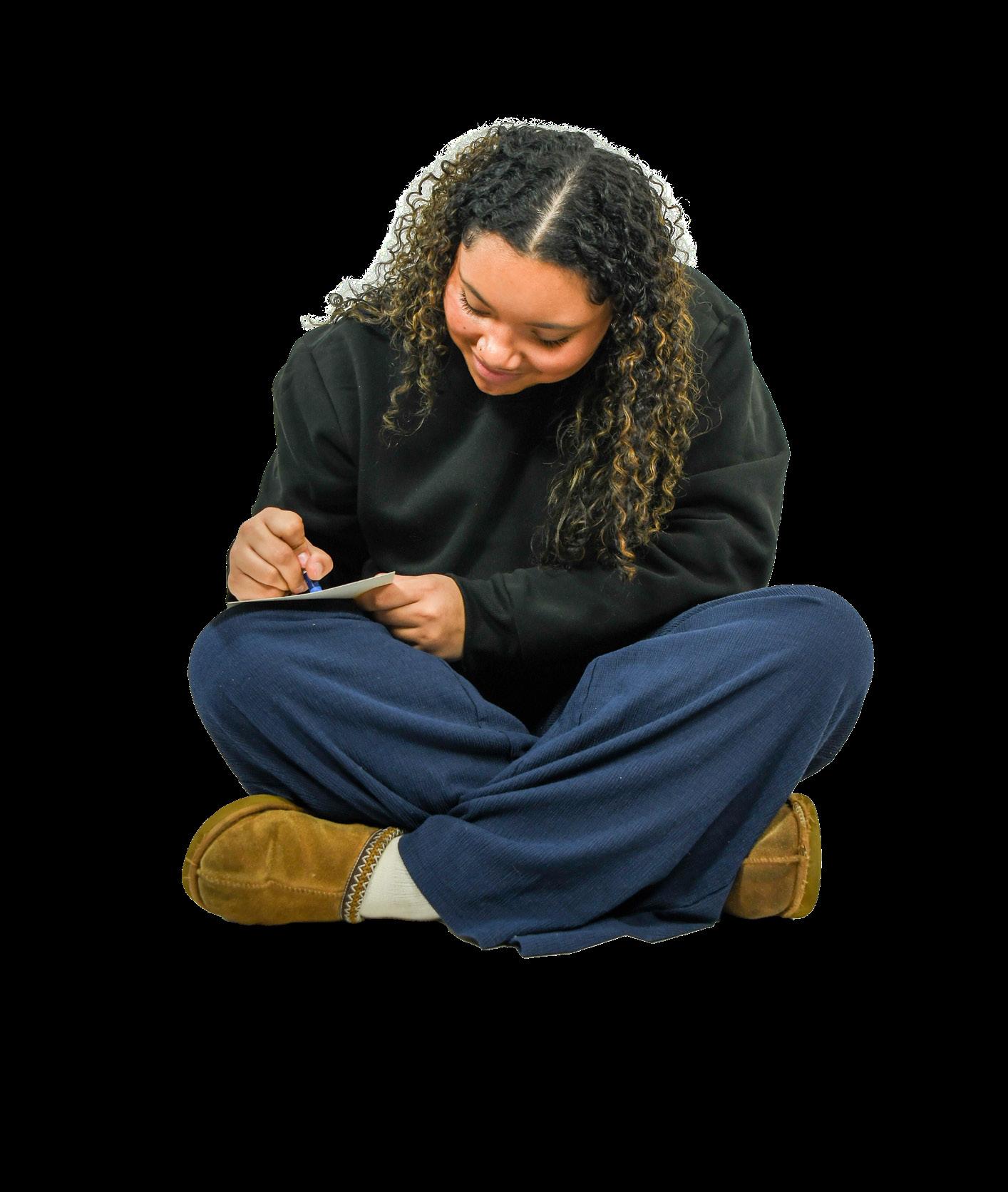
“Using our creativity, we can also practice releasing and letting go of what could potentially become toxic to our mind, heart, soul and body,” says Kim Nguyen, Clinician at Diversus Health.
Allowing your mind to relax and fully immerse yourself in a creative outlet can help release those difficult feelings you had to conquer during the day.
“I’m not really thinking about other things; I’m not thinking about stressors. I’m just thinking about what’s in front of me and putting paint to paper,” junior Schaefer Wright said.
Social media, especially, presents the ever-
constant helps.”
Spend fifteen minutes journaling every day, 2 minutes every hour doing breathing exercises, and do one thing to voice creativity; all before bedtime. When you do your hobbies, it feels like you could have been more productive than you were.
“I feel like there’s some things I need to be doing instead, but I don’t want to do that thing,” Wright said. “I want to do my hobbies, but I feel guilty for painting instead of the other things.”
When all day is spent doing things that
require more focus and effort, going home and choosing to do them again can be incredibly difficult to decide. Some students have found a way around that. How can students do all of these things if they have to stay up until 12:30 a.m. to finish homework? Is there even time?
“I try to let everything flow together naturally,” Senior Diego Meza said “My creativity sits inside free expression.”
Some students have noticed that, “learning to use your own routines may work better than following others,” said Dana Hinders, writer for Eagle View Behavioral Health. “Having a constant ‘positive feedback loop’ can improve mood and build momentum toward larger goals.”
The most effective way to create that positive feedback loop is creativity. Painting, writing, journaling, singing are all ways to raise productivity for your life inside and outside of work and academics.
“Being creative can increase positive emotions, reduce depressive symptoms and anxiety, and improve the function of our immune systems,” said Diverushealth. Creativity can come in many forms. Even if it feels like a small outlet, it still matters.
“I hope other people are more successful at allotting their time and balancing things,” Wright said. “And if you’re not, then you’re not alone. You are doing just fine. Do your hobbies, please. I beg, because the world’s getting really boring.”
WRITTEN BY HOPE HUNT 3135243@SMSD.ORG
Documenting
Feb.
of a games family,”
said.“So like video games is what we’ll do a lot [and i’ll play] roblox with my siblings.”
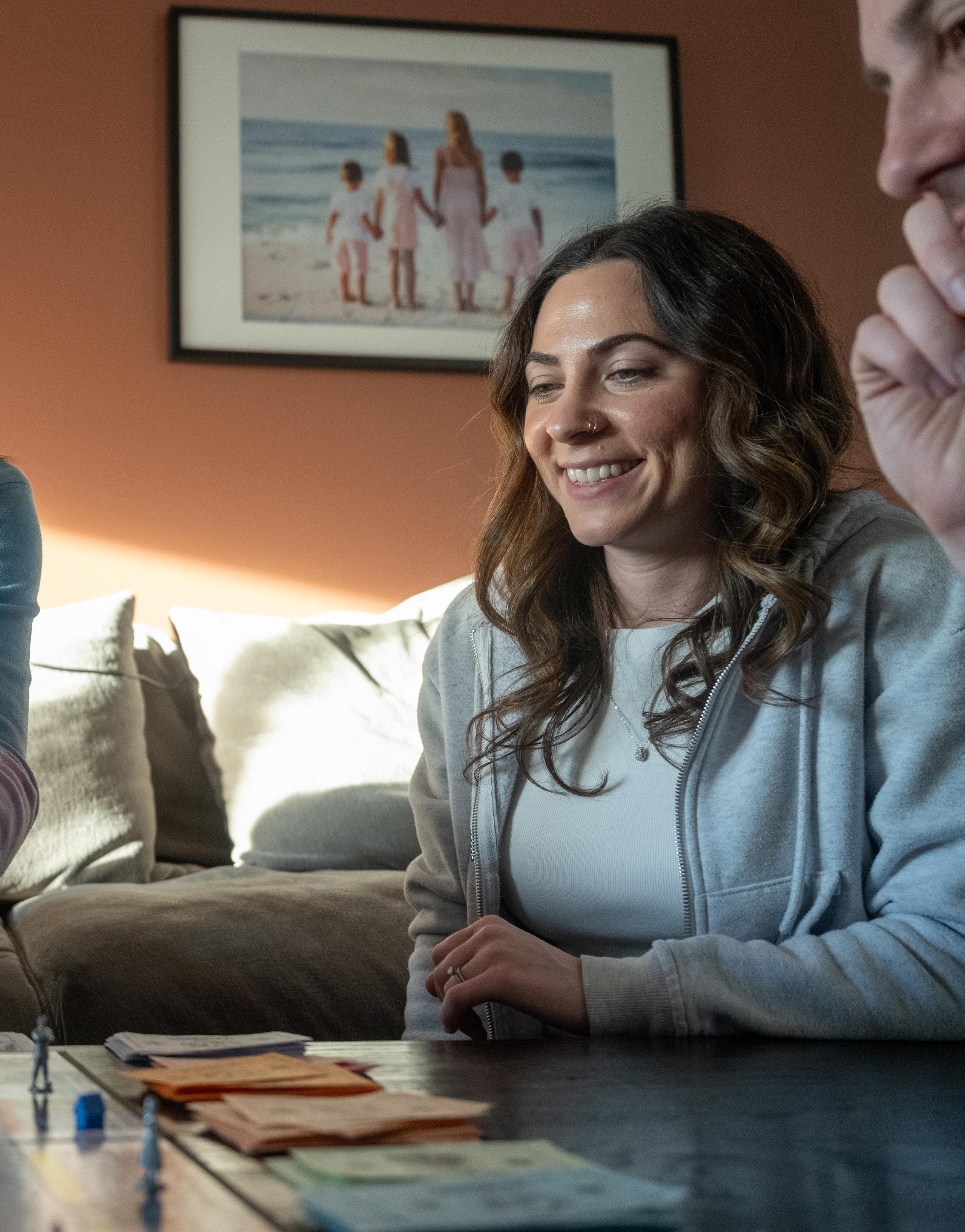
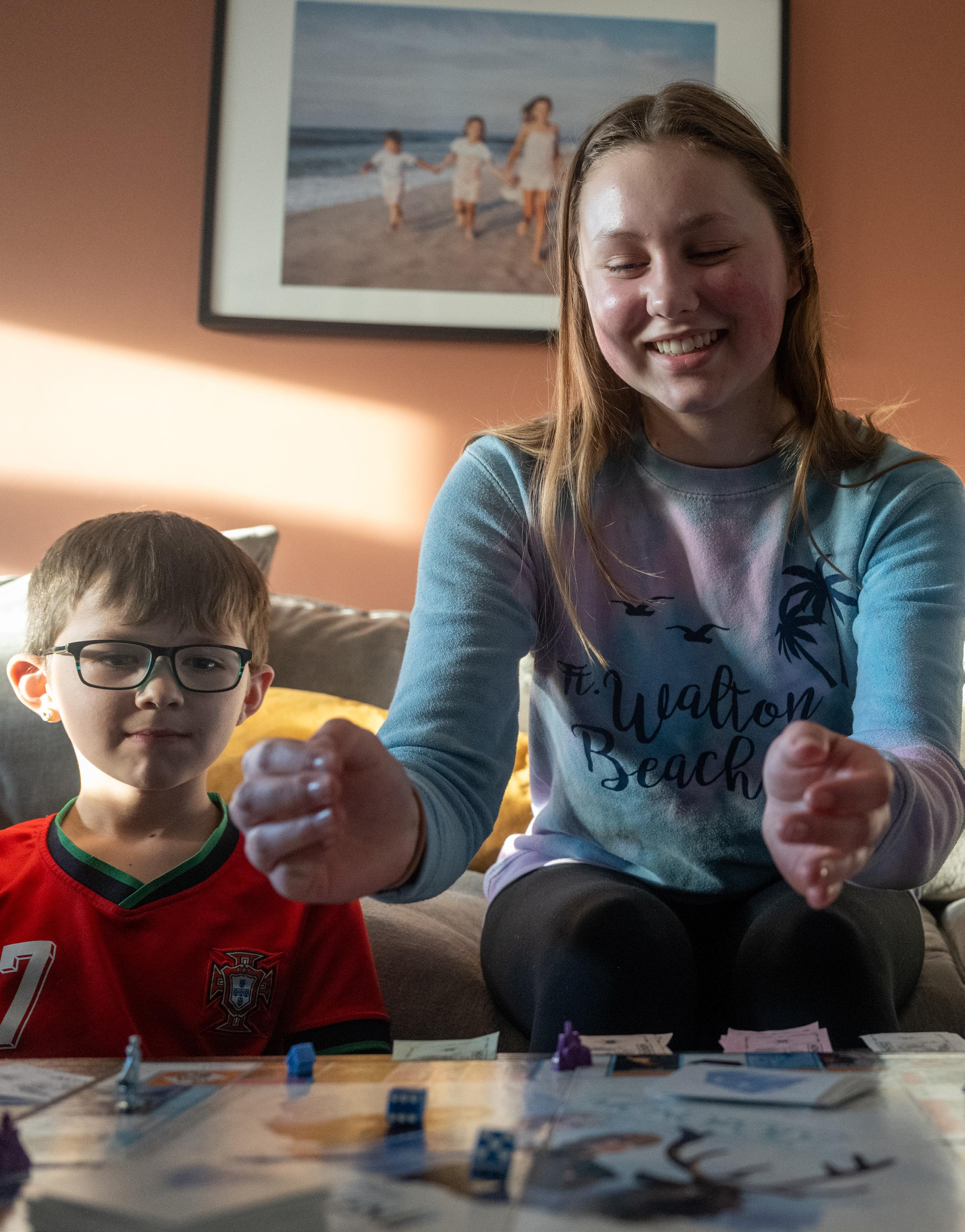
Olivia Randolph sits around her family’s co ee table, laughing and playing Monopoly with her sibling in their living room.
Randolph has never had apps like Snapchat or Instagram because her parents did not think it was a good idea. Since her parents do not use social media either, that decision has shaped the way she sees social media, too.
“When I was younger, I was like, ‘Oh my gosh, I don’t have social media’, everybody else does except for me,” Randolph said. “But now I kind of appreciate them not letting me have social media.”
Now Randolph doesn’t feel like she’s missing out. Instead of spending time on social media, she reads, listens to music, plays games and spends time with her siblings. She describes her family as a “game family; often playing video games, watching movies and doing things together rather than sitting on their phones.
Without social media, Randolph’s relationship with her phone is di erent from that of a lot of other teenagers. She mainly uses it for texting, checking her calendar, listening to music, or reading electronic books. Because she is not constantly checking apps or noti cations, Randolph sometimes forgets where her phone even is.
“I can lose my phone and not even realize it,” Randolph said.
Randolph believes not having social media gives her more time for the things that matter to her. As the oldest of four siblings, she helps with family activities, keeps up with school and spends much of her free time dancing at Northwest. She likes to keep her day organized by setting aside time for homework, free time and other responsibilities.
Although she understands why other teenagers use social media, Randolph said she sees some parts of it as unnecessary and distracting. She said apps like Snapchat can create pressure to keep up with streaks and constant communication, which she does not nd meaningful.
“I feel like it’s almost just mindless,” Randolph said. “It’s not really meaningful interactions.”
Randolph thinks social media can pull people away from what is happening in real life. Instead of focusing on schoolwork, hobbies, or family time, she thinks people can easily get caught up in scrolling and lose track of what matters.
“I feel like with social media, you can almost just get sucked in and forget stu ,” Randolph said.
While Randolph said she might use platforms like Facebook or Instagram someday for work, she does not see herself downloading the main social media apps anytime soon. For now, she is perfectly content spending her time logged o
WRITTEN BY KAYLA CHEGE 3093790@SMSD.ORG
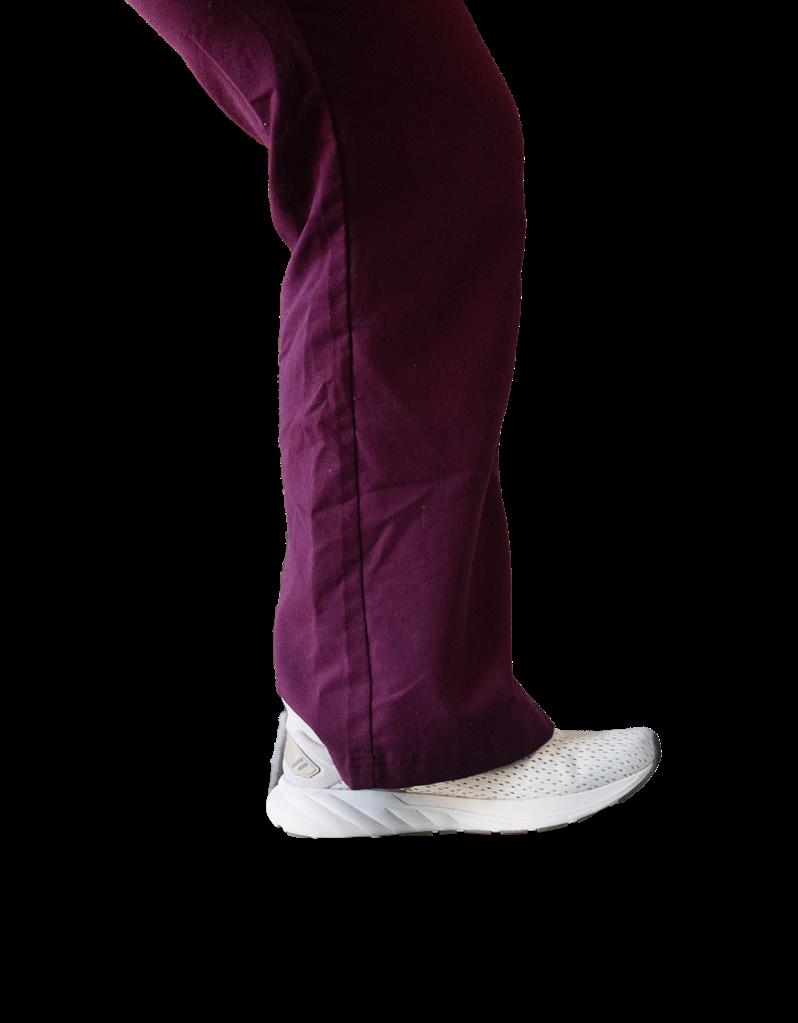
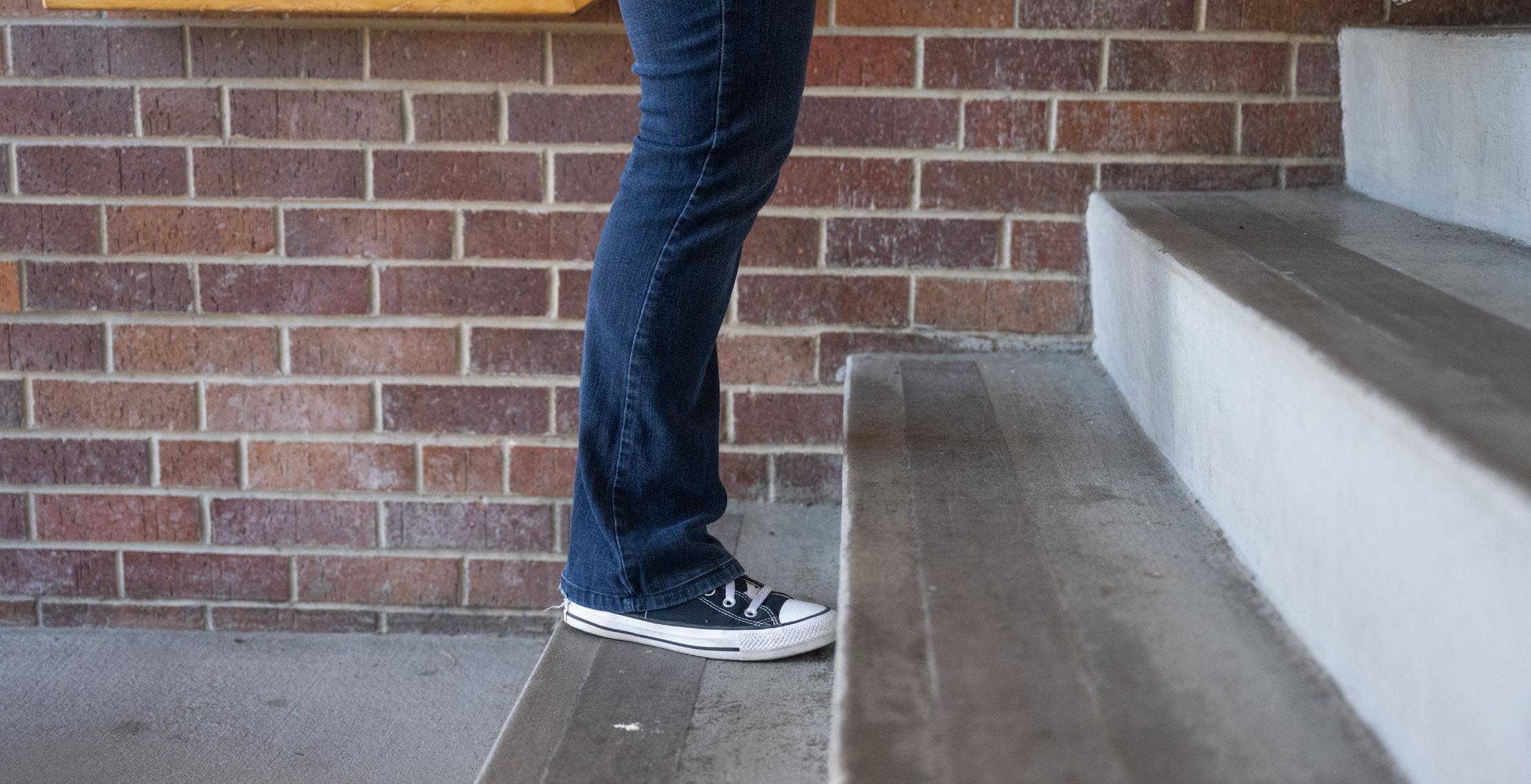
During the med-sci class at the CAA, students have the opportunity to become a certi ed nursing assistant (CNA). As a part of their clinical training, the students train at a retirement home, working alongside seasoned nurses and other healthcare professionals. From working with dementia patients to pre-shift Starbucks runs to being snowed in for 36 hours. These three students have truly experienced what it means to be a CNA.

Senior Madison Parker walked into the Delmar Gardens of Lenexa retirement home just as she does every morning at 7:30 a.m. sharp. She strode down the long, dimly lit hallway and noticed her patient’s room was empty.
“Where is she?” she asked Kim, the nurse practitioner she had been shadowing. “Oh, she died,” she responded.
That’s the kind of morning a CNA student can experience: a person they cared for for months could pass away, and in four hours, they would be solving math problems in calculus.
Working in the dementia and hospice unit, Parker has watched residents on their worst and best days, smiling through it all.
“It’s kind of sad working back there, but then it’s also like, it’s a part of life,” Parker said.
For the Med-Sci class, every student has to pick a patient they connected with to do a pro le on. While at Delmar, Parker met a tall, older man who had just been admitted after his wife had been injured.
“He would pray every time that I was there, like to be able to be with his wife,” Parker said. “After a while, he realized he was going to stay there forever.”
He and Parker would talk about sports, how he was in the Navy, or his two kids.
“He just loved to talk about life,” Parker said.
For Parker, the patient relationships are the highlight of working as a CNA.
“It just felt very heartwarming to be able to do this, for them to be able to trust me and know that I’m not just a student in high school,” Parker said.
After high school, Parker will be attending Baker University and hopes to work at Advent Health as a cancer nurse.
“I’m just excited about being able to be someone’s favorite nurse, or being able to be there for someone,” Parker said.
WRITTEN BY HARPER WARD 31250913544@SMSD.ORG


As Parker’s white Toyota pulled into the Starbucks drive-through, senior Sara Tewedle would study the green menu, attempting to decide what to order. Parker would always get the strawberry acai refresher, and Tewedle would try a new drink every morning, mainly some form of frappuccino.
“Her and I didn’t talk as much before the CNA class,” Tewedle said. But after six weeks of Starbucks trips and carpools to Delmar, they were attached at the hip.
The CNA class at the CAA is open to seniors at any SMSD schools and with only ten people in Tewedle’s class, she quickly formed tight bonds.
“It was rewarding to be able to make those new friends from other schools,” Tewedle said.
The CNA students rotate through the di erent units at Delmar, so for the rst three weeks, Tewedle worked in the assisted living unit, and for the last three weeks, she worked in the dementia unit.
“It’s a locked unit, and sometimes [the residents] would try and get out, but we can’t let them out,” Twedele said.
Having to watch older people plead with
her to let them leave proved to Tewedle the importance of a CNA.
“These are real people, and don’t go into it because of what you’ll gain, but because of what you will give out,” Tewelde said.
Tewedle’s dream is to become a pediatric oncologist and help children with cancer.
“You’re working with these tiny humans,” Tewedle said, “they have their whole lives ahead of them.”
Her experience working at Delmar taught her the importance of patience and inspired her to continue working in the medical eld.
“You’re getting that experience so early that it’s gonna help for what you want to do later on,” said Tewedle.
The day Tewedle got her CNA certi cate, she couldn’t stop smiling. That beige paper with “Sara Tewedle, CNA” written across it represented the hours spent forming bonds with patients and staying up late doing homework.
Once it was handed to her, all she could think was, “Oh my gosh, we actually did it.”
WRITTEN BY HARPER WARD 31250913544@SMSD.ORG
When senior Ehsan Asalati started taking classes at Johnson County Community College to become a CNA, he never expected to work for 28 hours during a snowstorm. It was January of 2025, and the roads were impossible to drive on, leaving Asalati stuck in Aberdeen Heights Retirement home.
“I couldn’t sleep because they didn’t have beds for everybody,” Asalati said. “I basically slept on the oor with a blanket.”
In total, Asalati was at the retirement home for 36 hours before he returned home.
Still, Asalati has continued working as a CNA and believes that experience shaped him for the better.
“It became more like a bonding experience with me and my coworkers,” Asalati said. “We were just talking while we were doing our job and making sure everybody was okay.”
Asalati became a CNA through the less traditional route of taking the class at JCCC and then continuously working at a retirement home.
“It was faster, and I just thought it’d be more worth it to take it through JUCO,” Asalati said.
After receiving his CNA certi cation from JCCC, Asalati started working 12-hour shifts on Saturdays and Sundays.
“It was de nitely di cult to be able to come home from work and try to convince yourself to do homework or study,” Asalati said.
Now in his senior year, he has stepped back by taking fewer hours and focusing on school.
Asalati plans on majoring in biology on the pre-med track and hopes to eventually become a doctor.
“It’s a very good beginner-level job for anyone who wants to work in the medical eld. Whether that be nursing ort anything in between that,” Asalati said. “I think starting as a CNA, starting in a nursing home is so important for getting a scope of what work in the medical eld really looks like.”
WRITTEN BY HARPER WARD 31250913544@SMSD.ORG

food on the menu, and basically every inventory.”
Benberg and her father are running the restaurant, while Pensub is in Chicago to open another place.
Senior Sid Benberg and her family came to the United States from Thailand in 2017. Benberg’s mom, Pensub, had owned restaurants in Thailand and came to the states to open an authentic Thai restaurant.
Benberg’s father, Niels, opened Thai Chili two years ago primarily for Pensub, for her love of cooking. Thai Chili sits tucked in a corner in a strip mall o of 87th street. Inside is lit up with bright walls of yellow and green and tables set neatly with vases and owers.
“It’s all my mom,” Benberg said. “My dad just takes her ideas, gives them to the printer, and when it comes back, my mom corrects everything she wants to keep. She’s in control of prices and the
Before Niels started self-employment, he worked for a larger business.
“I’ve just always enjoyed working for myself,” Niels said.
“I found out that most people won’t work as hard as I do.”
Both Benberg and Niels work everything from seating people to cooking in the kitchen. Niels keeps the employment small by having primarily family members and friends help out.
“I’ve always been self-employed all my life,” Niels said. “The people that I have here are like family.
Everybody looks out for each other. If someone needs an extra hand, somebody jumps in.”
Benberg has been working for her family, even

before they opened Thai Chili. Niels had previously worked for a construction company where Benberg would help her father out with projects. Those skills came in handy when it came to getting the inside of Thai Chili ready for opening, when Benberg was only 14.
“My mom mostly decorated the restaurant; my dad and I just built it,” Benberg said. “My dad did all of the materials, most of the building, but I did most of the little stu .”
Niels works six days a week to ensure customers will be eating quality food made authentically how Pensub wants.
“When you’re self-employed, you’ll be working up to lunchtime on the bay of your funeral,” Niels said.



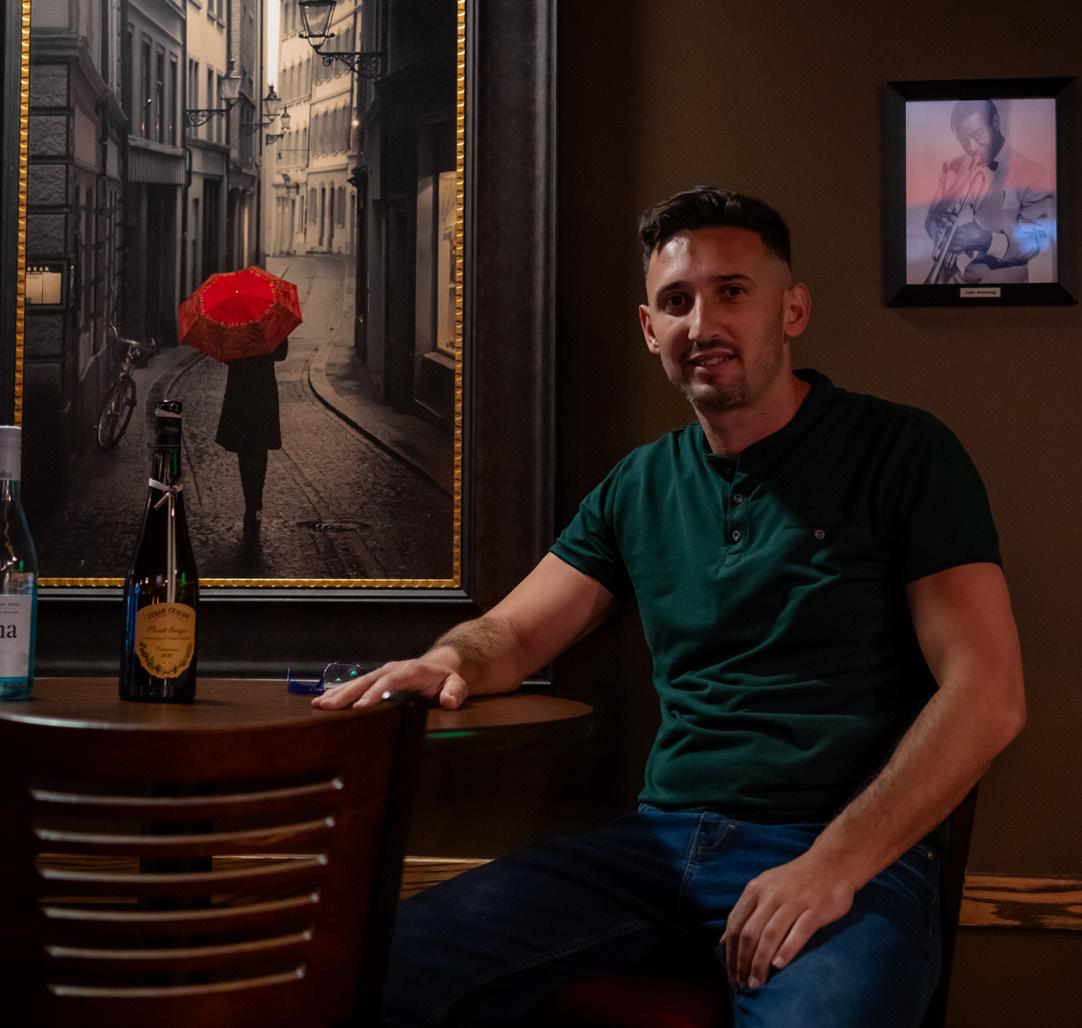
Sung Son, owner and operator of Sang Sang asian express, new location in Shawnee
Sung Son, owner of Sang Sang Asian Express, came to the United States from Vietnam in 1991.
Sang Sang is relocated o of Nieman Road in Shawnee. Son is the founder of China Peace and Sung Son Vietnamese. After 12 years in the KCMO area, Son moved to Shawnee on 75th Street. After having his rst child senior Sang Son, he named it Sang Sang after him.
After 12 years, Son’s restaurant moved a month ago to Nieman Road in Shawnee.
“We plan to continue to keep things over here the same,” Son said. “A lot of customers know we built up from the ground up.”
Son’s restaurant style is a mix of Asian cuisine, including Vietnamese
and Chinese-style dishes.
“We create and modify our own menu,” Son said. “We try to adjust with what the customers like.
And if some items do not sell a lot, we take them o .”
After their recent move, Son hopes to bring in some more business in the area with community sanctioned events hosted throughout the year nearby like, Old Shawnee Days and Moonlight Market.
Son has been a business owner for 20 years and has created his own community with customers and hopes to continue that relationship as they settle into their new location.
WRITTEN BY SARAH WELLMAN 3092222@SMSD.ORG



Toni’s Italian restaurant brings an authentic Italian experience to Shawnee
Tonis Italian restaurant is owned by two brothers, Toni Curri and Mario Maloku. Toni’s was started by the brothers in 2018 at their original location in Olathe, eventually relocating to Shawnee in 2025 due to construction issues.
The idea for this restaurant originated in Tulsa, Oklahoma.
“Back in high school, my dad had a restaurant [and] I was working at the restaurant,” Maloku said. “And then, as you know, I found it attractive for me to start opening up the family business and continue it.”
The brothers worked hard to open their restaurant.
“When you 1st start, you know, maybe a few times you may fail,” Maloku said. “But you don’t give up.”
Even through the hardships, they persevered and brought their business to what it is today. The restaurant itself is a cozy, romantic place. It is dimly lit yet still holds character, with paintings on each wall in between booths and televisions around the room, plastered with Italian scenery. The divider towards the back of the room is lined with wine bottles and fake plants.
Maloku and his brother take pride in their work and have a 4.4 star rating on Yelp, 4.5 stars on Google reviews, and 4.5 stars on TripAdvisor. They are praised for their large portions and authentic Italian food,crafting dishes to set them apart from other Italian restaurants.
Toni’s most popular dishes are Lasagna, Chicken Parmesan, Chicken Alfredo, and Tony’s combo.

“Come over, come try our food. Everybody likes Italian.”
WRITTEN BY AVA CAMPBELL 3096965@SMSD.ORG

Protein is a necessity
for good health, but now it’s taking over
Most protein products nd their home in a gym with lots of weights and mirrors. Now, I’m in a Starbucks watching a regular caramel latte and a protein caramel latte come together side by side. Inside the former is about 29 grams of protein sourced from Starbucks’ proteinboosted milk. The resulting drink, except for a thicker consistency and a slight increase in price, tastes exactly the same as the non-protein latte.
Besides the protein-boosted milk, Starbucks customers also have the option to top their drink with whey cold foam. This is made with whey protein isolate, a highly ltered, un avored protein, heavy in amino acids and known for its low lactose percentage.
“Our new protein beverages tap into the growing consumer demand for protein in an innovative, premium and delicious way that only Starbucks can deliver,” Tressie Lieberman, Starbucks global chief brand o cer, said on their website.
Alongside Starbucks, Cheerios has also released a protein-packed cereal line, Quest Cookies can be seen lingering in every grocery store and Chipotle has recently dropped its new high-protein menu.
Protein isn’t new, humans have consumed meat and beans for forever, but now we see it everywhere; taking over the media, stores and gyms. Consuming too much can lead to negative side e ects like cancer, increased thirst, weight gain and an unhealthy spike in blood sugar, according to the National Library of Medicine. However, proteins are critical to most of the work done by cells and are required for the structure, function and regulation of the body’s tissues and organs, according to the National Institutes of Health.
Whey has been a growing reason
for this rise in protein consumption. Many dairy products like cottage cheese and Greek yogurt have whey, as well as many protein powders consisting of whey isolate or concentrate. According to data from the Department of Agriculture, in January 2003, [dairy] plants produced about eight million pounds of highprotein whey powder. That number grew steadily to between 35 million and 40 million pounds per month by 2018, before leveling o
Junior Issac Gregory has a minimum of 200 grams of protein a day. Being a competitive bodybuilder, he’s in the gym every day after school until 4 p.m.
“I don’t think it matters that much the way that you bring [protein] in,” Gregory said. “There’s some studies showing eating cooked meat is better than having protein supplements, but it depends on the time of day and depending on when you work out.”
The impact of social media on the spread of protein originates from the rise in weight loss drugs like Ozempic and Wegovy. Protein intake is now especially important for the millions of Americans taking weight-loss drugs. According to the Mayo Clinic, people who are losing weight rapidly tend to lose both muscle and fat and they want to maintain as much muscle as possible.
According to a study done by the Clean Label Project, a non-pro t that certi es many products according to international standards, many protein powders are found to contain heavy metals, bisphenol-A, pesticides, or other contaminants. The Clean Label Project credits manufacturing processes, environments, or the presence of toxins in soil.
Even though sipping a protein shake is more convenient and easier to prepare, lean meat delivers a broader spectrum of vitamins and minerals.
“The di erence between arti cial and natural proteins, while on paper is technically the same, eating protein from meat versus protein powder can digest di erently in your body,”

“YOU SHOULD ALWAYS ATTEMPT TO GET AS MUCH OF YOUR DAILY INTAKE FROM REAL FOOD IT DEPENDS WHAT YOUR GOALS ARE”
- TRAINER KYM VAN ZANTEN
Gregory said. “Natural proteins from animal meat can be digested more e ciently and absorbed better into your system, compared to proteins from protein bars or powder.”
Chief Exercise O cer, Jon Rowley says that he recommends taking supplements only if nutrition is the top priority and there is a speci c target of muscle gain in mind.
“You should always attempt to get as much of your daily intake from real food,” said Kym van Zanten, Director of Training at 2020FIT. “So whether that’s a lean chicken breast for dinner alongside protein powder, then that’s what you need to do. It depends on how much somebody weighs, and what their goals are.”
Until a new health xation arises – in the height of its popularity – the protein craze isn’t going anywhere.
PEOPLE WHO REGULARLY WORK OUT NEED
1.2-1.7 GRAMS PER KILOGRAM OF BODY WEIGHT

THE AVERAGE ADULT NEEDS
0.8 GRAMS PER KILOGRAM OF BODY WEIGHT.

TEEN ATHLETES NEED 0.9 GRAMS PER KILOGRAM OF BODY WEIGHT
TODDLERS NEED 0.5 GRAMS PER KILOGRAM OF BODY WEIGHT
Senior Cadence
Dearing learns that setbacks can make you come back even stronger
Aloud pop rang out. All around her, things seemed to freeze. Senior Cadence Dearing’s opponent let her go. The referee stopped the match. Dearing went down, and she couldn’t get back up. The athletic trainer arrived at the mat to ask her what hurt. Locating the pain, however, was no easy task.
“I was telling her underneath my knee, but it was kind of my thigh too, and she just made me so mad, because she said, ‘honey, that’s your thigh,’” said Dearing, now a senior. “I just didn’t have the words to explain it.”
Until then, the state girls wrestling Match, taking place on March 1, 2025, had been going great for Dearing. The match had started the same as any other. When Dearing tried to escape a pin, instead of allowing her to push o , Dearing’s knee gave out. The pop of her knee rang out loudly, though through the buzz of the state meet, the only people who could hear it were the refs, her opponent and her.
Despite the pain, Dearing felt that she couldn’t let anyone down. She told the trainer she felt ne to keep going, and the trainer agreed to let her try.
To win the match, she would have to start from a down position, and she’d have to get up fast. Instead, her knee only gave out again, and she was pinned quickly, unable to really ght back.
After the match, Dearing was helped o the mat by the trainer and imdately taken to the athletic trainer’s o ce, where she was checked for injuries by a KU doctor. The doctor knew almost immediately that she had torn her ACL.
The following Monday, the Dearings went to KU med, where they saw the same doctor and got the nal diagnosis. Dearing had a grade three ACL tear and would require a complete ACL repair surgery. The surgery uses a graft made from
healthy ligaments or a donor to help the ligament repair itself properly. Complete recovery often takes six to nine months. That meant she couldn’t play school softball her junior year or club softball that summer. In other words, Dearing had just lost her biggest recruitment year to an injury.
The weeks leading up to her surgery were stressful. She often found herself worried that she wouldn’t fully recover.
“I was de nitely scared because I had never had any major surgery like that,” Dearing said.
If she never played again, that would mean she had lost countless years of training, practices and time. The thought of losing something she had worked for her whole life left her unsure and anxious. Through this, she tried to be as positive as possible.
“It hurt, but you have to keep going if you want to get better,” Dearing said.
Despite her concern, Dearing’s surgery went awlessly. The doctors had Dearing walking the next day, and she went to prom only two days after her surgery.
On several occasions, Dearing had to learn to put aside her pride and ask for help. Prom was one of them. Initially, Dearing didn’t think she’d need help to get into her prom dress and take pictures. However, her mother had to help her into the dress, and she was unable to go to the dance itself, opting to take pictures and attend after prom with her boyfriend and friends.
“I thought I could get into my prom dress to take pictures, and I needed so much help,” Dearing said.
With her right leg almost fully unusable, she couldn’t drive and relied on others for rides. This meant she had to constantly send texts asking if people were still going to drive her.
“I had to go to CCC, and people would drive me, and I had to text them like ‘hey, are you still coming to pick me up?’” Dearing said.
Despite the setbacks, she never let it stop her from doing what she could. During softball season, she went to support the NW softball team by running the books and tracking scores, auditioned for the Marching Cougar Pride and, once summer softball season started, supported her
club team too.
“You just treat yourself like it’s any other day, and you just have this one thing poking at you, but not stopping you from anything,” Dearing said.
Though she was able to show up and support her team, she was devastated by not being able to play school or summer ball. She was losing her junior year of softball and the summer season to an injury, and might have lost her chance of college ball.
“It was just hard to be like that for so long,” Dearing said.
Most colleges recruit students for softball towards the end of junior year school ball or during the summer season. With Dearing’s leg nowhere near healed enough to play school or summer softball, she was left with a disadvantage in getting recruited. Despite this, Dearing is headed to Moberly Area Community College to play softball after she graduates. She met the coach during her rst game back with her competitive team, when he was there to watch her team. He took an interest in Dearing after watching her persevere through her injuries and keep ghting for every play.
“He stuck with me the entire process through my recovery,” Dearing said. “Checking up on me, asking how I’m doing. He even supports my wrestling.”
After Dearing’s rst visit, she felt like she instantly t in; she knew this was where she was headed.
“I just felt like I t in, and he’s the one that’s been there the entire time,” Dearing said.
While she may have missed out on playing summer ball due to her injury, Dearing started marching season almost immediately after school ended. The beginning is mostly sectionals, during which the marching band learns their music. They started inside with their music stands in front of them. Dearing was able to participate in a majority of the things they did at practice. Among the few things she struggled with was going outside to march while carrying her drum.
Luckily for Dearing, the progression of marching band aligned for the most part with the progression of her healing.

fully participate in practice. She managed to do this in a way that allowed her to take time and not overexert her leg.
By the time they needed to be outside, Dearing was healed enough to fully participate in practice. She managed to do this in a way that allowed her to take time and not overexert her leg.
When marching season started, she was still in her mechanical brace, which sat under her uniform, and it started rubbing against her skin. This, combined with her sensitive skin, caused permanent scarring from constant heat rash on her knee. Even through this, Dearing never complained. She simply kept going through the pain.
“She is someone who is here to do the thing, and she wants it for all the right reasons,” marching band Brett Eichman said. “Everything she does, she does because she cares about it. She wants it for the good of the group.”
After the marching season nished, she moved into wrestling season. From the start, she was only practicing a little. It was scary returning to the very sport that had started this whole process. A few weeks into the season, after the
“THERES NO ‘CAN’T’. YOU JUST HAVE TO HAVE THE MENTAL POWER AND THE RIGHT PEOPLE AROUND YOU TO DO IT.” -SENIOR CANDENCE DEARING
Spring Hill meet, Dearing decided that she was done sitting around. She participated in the next duel, going 3-0. In the beginning, she was scared because she had never wrestled around a brace before. She had no idea how to push o with it and would have to relearn how to use the muscle.
She was worried that the people around her would treat her like she was fragile. For months, people had been telling her to take it easier. Coaches would tell her she wasn’t one hundred percent better, and her teammates would treat her like glass. Dearing didn’t let this discourage her. She worked hard to get back to normal.
“I didn’t like how everyone was treating me like glass,” said Dearing. “Wrestling is not [something] made
for the gentle.”
She kept pushing and worked through her fears. She leaned on her teammates to help her get through it. After a shift in wrestling partners, Dearing began wrestling with senior Calla Hardison, which helped her to regain mobility and mental awareness that she had lost with the injury. While Dearing was overcoming hurdles from her injury, she was also inspiring those around her.
“I think not only overcoming the injury, but also overcoming the knee brace involved is really cool,” said Hardison. “And that shows that she’s really tough.”
With wrestling having come to an end, Dearing is preparing for school softball. The upcoming season will be lled with more perseverance and
hardwork, but Dearing is ready and excited to play her senior year.
“I am so excited for softball. It’s my main sport, my everything,” Dearing said.
Through her injury and the support she was given throughout her recovery, Dearing has learned just how much strength it takes to recover. She has learned that she will always need help, but that above all else, there is nothing that can stop her from doing what she wants if she puts her mind to it.
“There’s no can’t. You just have to have the mental power and the right people around you to do it,” Dearing said.
WRITTEN BY BRYNNA EMLER
3125041@SMSD.ORG
With just a few clicks, teens can place bets online despite the legal gambling age being 21
*The names in the story have been changed to protect identities.
Surrounded by friends, sophomore Jerald Williams* tapped his phone and placed a ve dollar bet on the Chiefs on his friend’s phone. He was not using his own account, but one shared through a friend, using information tied to his friend’s parents. In a matter of seconds, the wager went through.
Sports betting became legal in Kansas in 2022 under Senate Bill 84. The legal age to place a bet, whether online or in person, is 21. But according to Common Sense Media, a nonpro t focused on kids and technology, 36% of boys aged 11-17 have reported gambling in the past year.
One reason sports betting has grown so much is that for many teenagers, online sports betting doesn’t require much e ort:
Download an app.
Create an account.
Use false age information. Place a bet.
In just four steps, teenagers can start engaging in unauthorized betting.
are now placed through mobile devices rather than in person at casinos or sportsbooks. When you Google sports betting, hundreds of apps come up: FanDuel Sportsbook, SportsBetting.ag, DraftKings, all ghting for one thing: attention.
Betting companies spend millions advertising on social media, during sports games, or even as suggested apps. Some of the largest sportsbooks spend tens or even hundreds of millions on advertising alone. In 2024, FanDuel spent about $157.7 million on television advertising, while DraftKings spent nearly $123 million, according to industry advertising data.
Betting apps are heavily promoted, and men ages 18-34 are among the largest groups participating in sports betting, and the industry often markets directly to that demographic, promising rewards, competition and entertainment, according to the New York Council on Problem Gambling.
Senior Jason Smith* started online sports betting after seeing an excess of online ads.
“Whenever you’re watching sports, really, they just push that on you,” Smith said.
According to Common Sense Media, 45% of teenage boys who gamble report that online gambling has been pushed on them through targeted ads.
But the in uence does not end online. It also moves through friend groups, where sports betting becomes part of everyday conversation.
45% of teenage boys who gamble report that online gambling has been pushed on them through targeted ads
The rise of mobile betting apps has made gambling faster, easier and as appealing as ever. According to the American Gambling Association, more than 80% of sports bets in the United States
36% of boys aged 11-17 have reported gambling in the past year

“I can hear them talking about, ‘Dude, I won 250 on this.’ or ‘Oh my gosh, I lost 300 on this. I have to try and get it back.’ history teacher Todd Boren said.
Even though the legal age for gambling is 21,



some teens mistakenly believe it is 18. This misconception may stem from the fact that other forms of gambling, such as buying lottery tickets or playing fantasy sports, are legal at younger ages.
Many teenagers admit that gambling can be addictive, but they believe it will stop before it goes too far. However, according to the National Council on Problem Gambling, about ve million Americans meet the criteria for compulsive gambling. Gambling releases dopamine in the brain, the same chemical associated with alcohol or drug use, which reinforces the behavior.
When senior Ethan Miller* placed his rst bet six months ago, it wasn’t at a casino. It was with friends. He mostly bets on major events like the Daytona 500 or the Super Bowl, where friends pool their money together while watching the game.
“You get an adrenaline rush,” Miller said. “When you win good money, it just feels so good.”
He typically puts down $20 or $40, which he makes from his job. The most Miller has ever won is $200, and the most he’s lost is $125.
Psychology and sociology teacher Brooke Moore explains that gambling operates on a win-or-lose system: losing money compels people to chase losses, perpetuating the cycle.
“When they win, it feels so good, and you just want to win again,” Moore said. “And that’s what makes it problematic.”
puts a 10% tax on each bet made in Kansas & requires one to be at least 21 years old to wager Data from kslegislature.gov
According to the National Institute of Mental Health, teenagers are more likely to take risks because their prefrontal cortex, the part of the brain responsible for decision-making and impulse control, is still developing, making it harder for teenagers to consider long-term consequences fully. This makes it harder for teens to consider longterm consequences fully. At the same time, their brain’s reward system matures earlier, making them more susceptible to addictive behaviors.
The e ects of gambling disorder go far beyond lost money. The Child Mind Institute
and, in some cases, far more serious legal trouble if teenagers use someone else’s identity or account to place bets. But sports betting can be di cult to catch since it often happens quietly and through phones, and through accounts not directly tied to the student placing the wager.
The reality of underage sports betting is not just that it is happening, but that it is becoming so ordinary. With money moving through phones, borrowed accounts and bets placed out of sight, what should
“I CAN HEAR [STUDENTS] TALKING ABOUT, ‘I WON 250 ON THIS.’ OR ‘I LOST 300 ON THIS. I HAVE TO TRY AND GET IT BACK.’”
- TODD BOREN
states that gambling disorder carries the highest suicide risk of any substance use or addictive disorder. According to the National Library of Medicine, more than two-thirds of adult gamblers have reported that exposure to gambling during adolescence was a key contributing factor to their current gambling addiction.
Underage sports betting can lead to blocked payouts, suspended accounts
be restricted is becoming a part of teens’ everyday life. And once that line is crossed, consequences can follow.
WRITTEN BY KAYLA CHEGE 3123790@SMSD.ORG
DESIGNED BY VIVIENNE WHEELER 3161528@SMSD.ORG
Left - Junior Allison Avila reacts to the boys varsity basketball team’s win Feb. 20 in the Main Gym. At the annual Sweetheart basketball game, the team won 5332 in the last second of the game.
Photo by Finn Bedell
Right - Concentrating, junior Moira Stewart lets go of the bowling ball Jan. 21 at Mission Bowl. The bowling team typically practiced at Park Lanes. “That was my first time at [Mission Bowl,]” Stewart said. “Every lane is different, no place feels exactly the same.” Photo by Finn Bedell

Right - Sophomore Kaleb Barikmo prepares to dive into the water Jan. 10 at the Shawnee Mission Aquatic Center. Barikmo competed in the 50yard freestyle. “It was mostly to save a little bit of energy for the 100-yard breaststroke event,” Barikmo said. “I really thought that I could maybe get the time that I wanted.”
Photo by Finn Bedell
Above - Senior Colin Salzsieder celebrates with his friends after being Crowned Sweetheart King Feb. 21 in the Main Gym. He was most excited about walking with his close friend, senior Maggie Lamons. “But this makes it all the better, you know,” Salzsieder said. “It’s like the cherry on top.”
Photo by Gabe Larkin


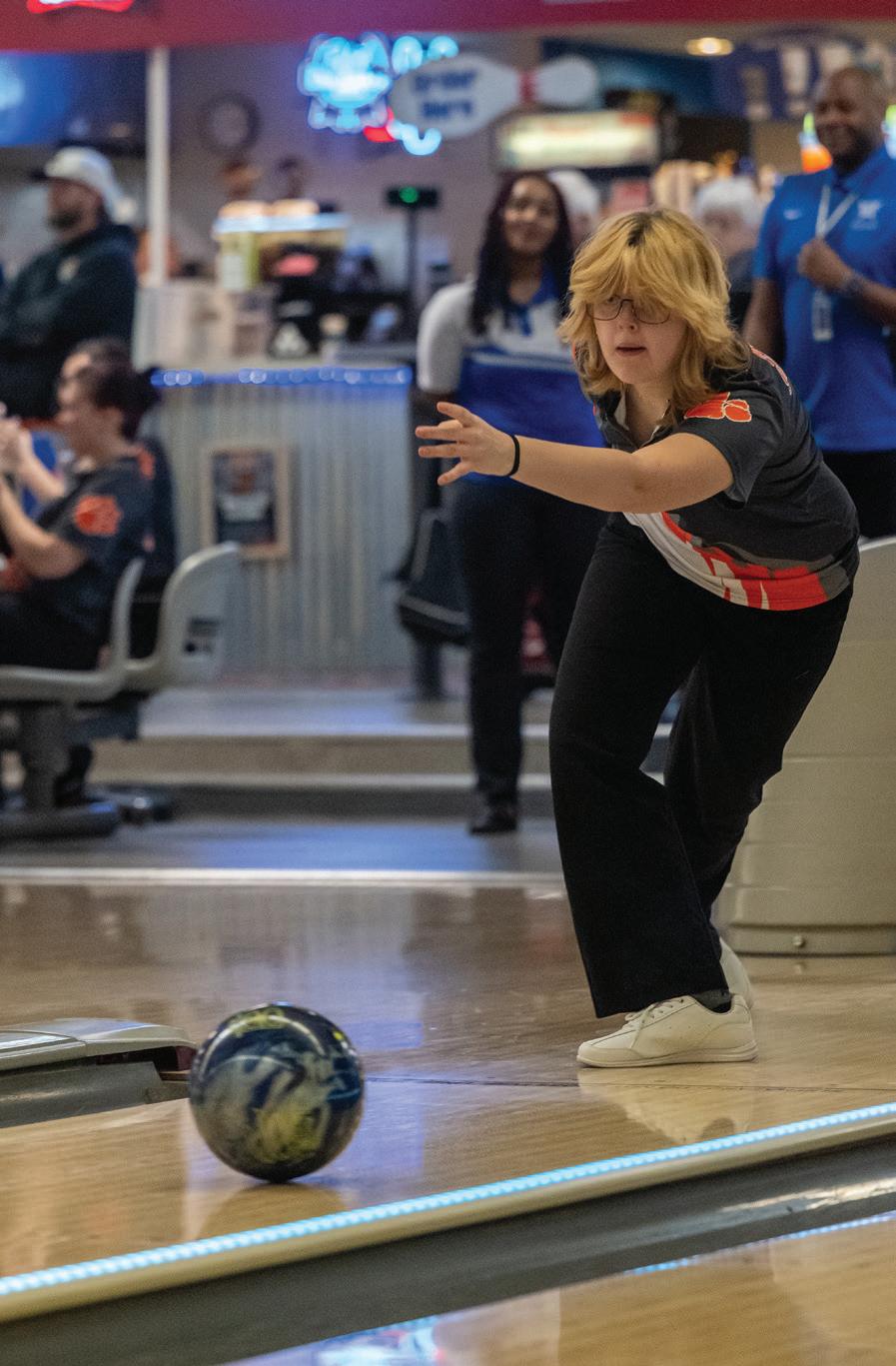

Above - Protesting, a student holds up a sign, protesting ICE Feb. 26 on the corner of Shawnee Mission Parkway and Pflumm. Over 30 students walked out of school midday to speak out against ICE agent’s activity, some keeping their identities hidden.
Photo by Sofia Ball
Right - Laughing, senior Mallory O’Neal gets surrounded by the dance team Feb. 20 in the Main Gym. O’Neal is the dance team captain. “We were watching [together] as a dance team,” Kaili Szerwinski, a dance team member said. “We were all just so excited for Mallory.” Photo by Lucy Wilson



Left - Leading the walkout, senior Roman Fent holds up a sign Feb. 26 walking down Pflum. Around 30 students walkout of class Thursday at 12pm Students walk down to Shawnee Mission Parkway protesting ICE.
Photo by Haylee Bell
Left - Acting, juniors Kaili Szerwinski and John Leon kiss on stage Feb. 9 in the auditorium. Szerwinski and Leon work alongside each other to be the leads in this year’s productions of “Rodgers & Hammerstein’s Cinderella: Enchanted Edition.“Getting the role of Cinderella was very surprising,” Szerwinski said. “Being the lead was very surreal and such an honor.”
Photo by Ella Oler
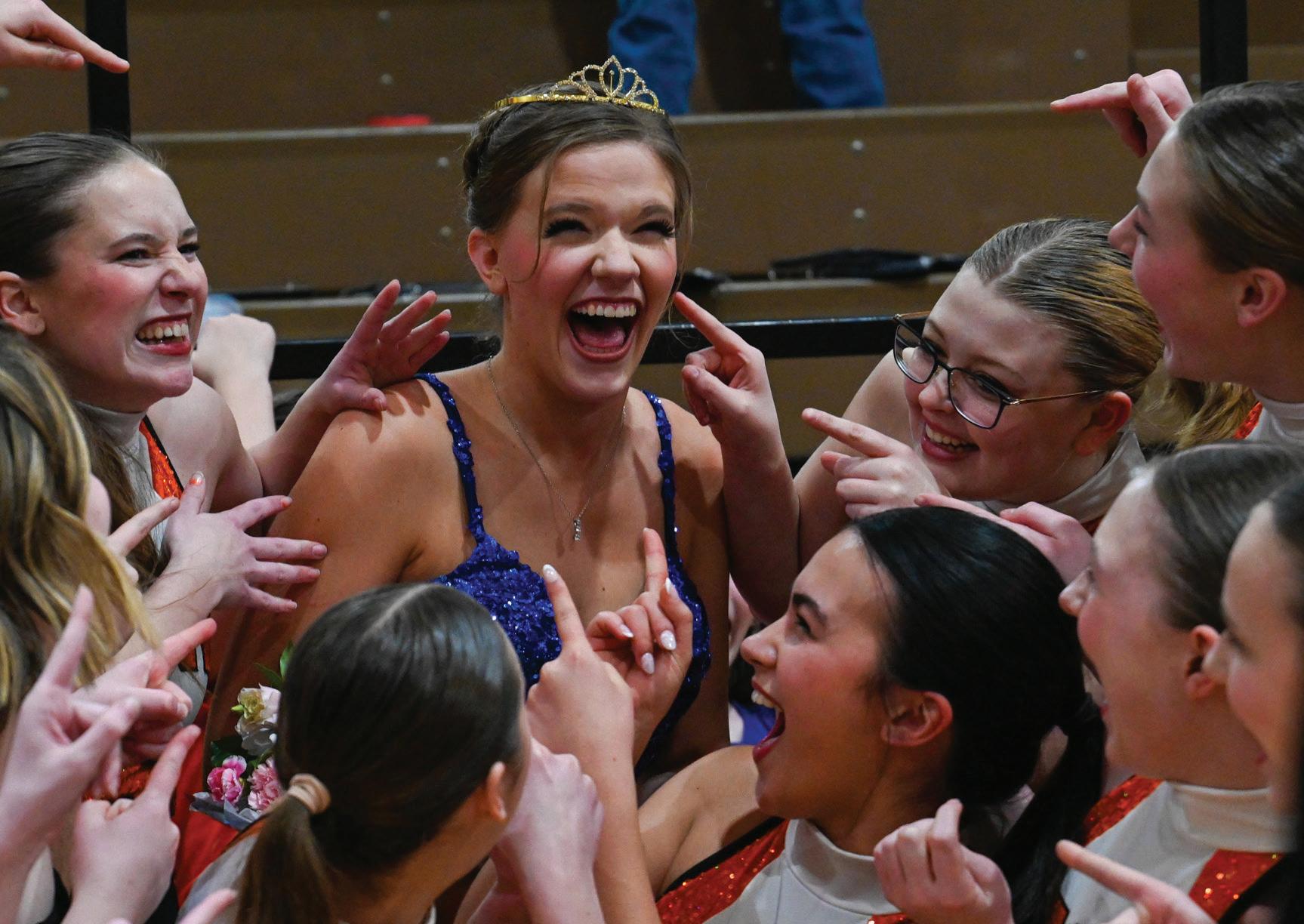
Three Northwest wrestlers place at State on Feb. 27 and 28.