After attending my first lecture at Smithsonian Associates, I was hooked. I'm proud to help ensure Associates can thrive for decades to come in a way that makes sense for my family and finances as a Legacy Society member.
“ “
After attending my first lecture at Smithsonian Associates, I was hooked. I'm proud to help ensure Associates can thrive for decades to come in a way that makes sense for my family and finances as a Legacy Society member.
“ “
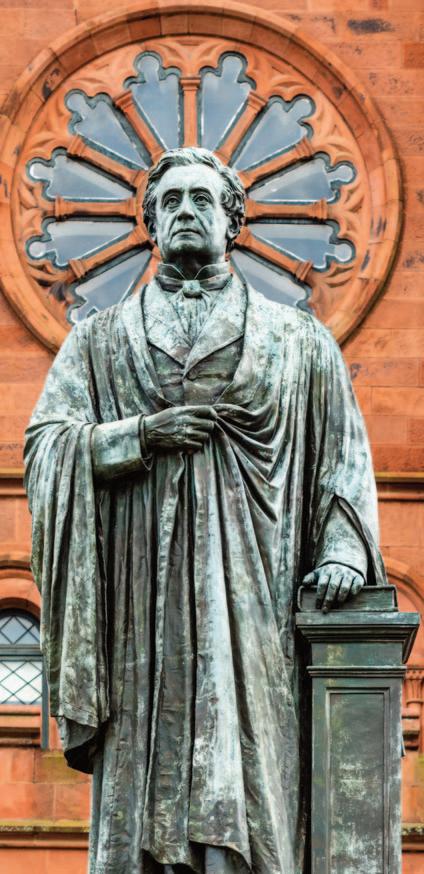
In the 1830s, a gift from a single benefactor led to the birth of the Smithsonian. Today, you can share the same visionary spirit and generosity embodied by James Smithson by becoming a founding member of the Associates Legacy Society.
Smithson saw the new institution as a place uniquely dedicated to learning. And from its founding 60 years ago, Smithsonian Associates has been committed to the same goal: creating opportunities for learning for people of all ages.
Your own legacy gift—of any size—will ensure that we are able to continue that vital work for current and future generations. And at the same time, you’ll be able to take advantage of income and tax benefits for yourself and your heirs.
By joining the Associates Legacy Society you can:
• Specifically designate your gift to support Smithsonian Associates.
• Retain control of your assets during your lifetime.
• Change your beneficiaries at any time.
• Provide for the people in your life.
• Make a gift in honor or memory of a loved one.
Members also receive invitations to special programs and Smithsonian Associates learning experiences.
We invite you to connect with us and learn more about how planned giving through the Associates Legacy Society can play a significant role in your future—and ours.
Please contact Elizabeth Moloney, Director of Advancement, at (202) 633-8697 or DonorServices@si.edu.
Dear Friends and Members,
To echo Rodgers and Hammerstein—and a certain governess who made the Austrian hills sing—this summer Smithsonian Associates is alive with the sound of music. Highlighted in these pages is a rich symphony of programs revisiting beloved works and the stories behind them and offering fresh perspectives on the artists and traditions that create the soundtrack of our lives.
The Faith in Harmony series invites you to listen more closely to the sounds resonating across America’s religious traditions, revealing how music gives voice to belief, community, and cultural identity (p. 3).
Mark the 150th anniversary of Spanish composer Manuel de Falla’s birth with a lecture featuring live piano demonstrations that illuminate how he forged his unique, seductive musical voice (p. 21). Trace the creation of Mahler’s earliest symphonies (p. 23) and Bach’s late-career masterwork, the Mass in B Minor (p. 26). Then explore Antonio Vivaldi—his restless, colorful life and the remarkable comeback his compositions made in the 20th century (p. 22).
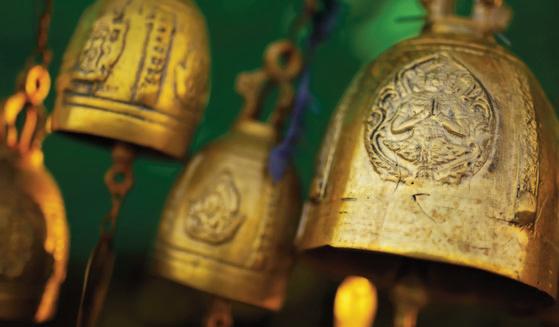
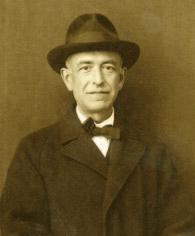
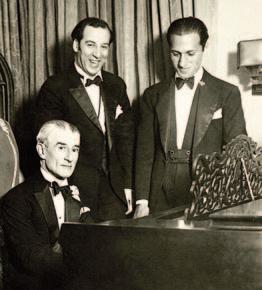
A musicologist delves into the blues, Dixieland, swing, and bebop to illustrate the ever-evolving forms of jazz—the genre that musically defines America across the globe. Its energy, freedom, and modernity lit up the hottest nightspots in 1920s and ’30s Paris and influenced experimentations by early-20th-century European composers including Ravel, Stravinsky, and Shostakovich—as well as Brooklyn’s George Gershwin (p. 25).
And, if you are a fan of the Great American Songbook and love music from stage and screen, join the Smithsonian Chorus and let your voice ring out with some of your favorite things (p. 24).
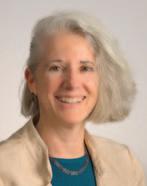

As I say adieu until next month, may your summer days be filled with memorable melodies.
Frederica R. Adelman, Director adelmanf@si.edu


in 2026 facebook.com/smithsonianassociates instagram.com/smithsonianassociates issuu.com/smithsonianassociatesprograms

As the United States enters its semiquincentennial year, Smithsonian Associates launches two special program series and a host of commemorative programs as part of Smithsonian’s Our Shared Future: 250. Marking 250 years of the nation’s experiment in self-government, these programs explore the people, ideas, conflicts, and aspirations that have shaped America—and how the past informs the challenges and possibilities ahead.
Hosted in partnership with the Smithsonian’s Office of Global Affairs and with embassies that have built strong, lasting relationships with the United States, this series honors the vital role diplomacy, cultural exchange, and mutual respect have played in shaping our nation and its place in the world. From the earliest days surrounding the signing of the Declaration of Independence to contemporary collaborations in science, art, and global affairs, people-to-people and global cultural exchange have helped advance dialogue and deepen understanding. In this milestone year, these programs underscore how international friendships—nurtured through history, culture, and creativity—continue to strengthen the American story. Each program is free, requires registration, and includes a light reception.
Rooted in the nation's commitment to freedom of belief, this five-part series explores the rich and evolving landscape of religion and spirituality in America—including Jewish,
Islamic, Christian, Buddhist, Hindu, and Native American spiritual practices, among others—through celebrations of sound. Programs, offered free to the public, feature performances and conversations that reveal the human connections that emerge when sounds resonate in harmony. From the sounding of the horn to the strike of the daf, from the healing of the jingle dress to a cantor’s call to prayer, these soundscapes reflect the tones, textures, and connections of American spirituality across the nation.
Four in-person sessions—hosted in some of the Smithsonian’s marquee performance venues on the National Mall—delve into the ways sound can reflect, shape, and amplify diverse faith traditions. The final virtual program weaves together elements of the nation’s spiritual practices, culminating in a symphony of uplifting sound.

A historian from the Princess Grace Foundation recounts the story of the princess—who was American film star Grace Kelly before she married Prince Rainier III—her support for the performing arts, and her years as a Hollywood icon. Afterward, Princess Grace’s life and legacy are commemorated in a discussion.
In collaboration with the Embassy of the Principality of Monaco and Smithsonian Gardens
Tues., Sept. 1, 6:30 p.m.; Arts and Industries Building; CODE 1TDIPLO3; free; registration required
The Key Role of Bernardo de Gálvez Spain provided essential support to the American colonies during the Revolutionary War, with Bernardo de Gálvez, the Spanish governor of Louisiana, playing a critical role. A historian illuminates Spain’s contributions to American independence, and a National Portrait Gallery curator highlights a painting of de Gálvez.
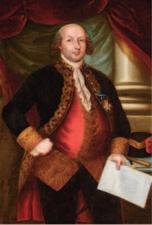
Registration for this free Sept. 17 program at the Embassy of Spain begins in August.

Italian-born physicists Enrico Fermi, Emilio Segrè, and Bruno Rossi were instrumental in the 20th century’s scientific revolution in America. Learn more from a panel of experts, including a professor of experimental physics at the University of Padua, moderated by a National Museum of American History curator.
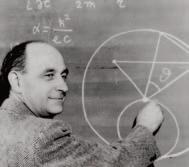
Registration for this free Oct. 27 program at the Embassy of Italy begins in September.
Echoing the deepest beats of the heart, drums are perhaps the oldest human instruments, and they figure into faith traditions across the United States. By looking at the percussion of the daf in the American Islamic diaspora, how taiko drumming connects Japanese Americans with Shinto traditions, and the power of Native American drum circles, this program explores how Americans today feel the beat of their faith in harmony.
Thurs., Aug. 6, 6:30 p.m.; Smithsonian Arts and Industries Building; CODE 1W0-997; free; registration required
The range of emotions evoked by the sound of ringing reflects a deep connection with the human spirit, one that operates on different levels in different faiths, including Hindu, Buddhist, and Native American traditions. This program illuminates the power of bells, chimes, and jingles to connect us to the divine—and even to heal—as we celebrate faith in harmony.
Thurs., Sept. 3, 6:30 p.m.; Rasmuson Theater, National Museum of the American Indian; CODE 1W0-996; free; registration required
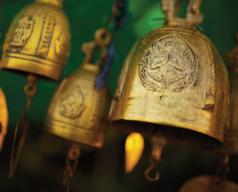
There are 1,248 UNESCO World Heritage Sites, each one offering a glimpse into the evolution of complex civilizations, empires, and religions. In this monthly series, historian Justin M. Jacobs gives an in-depth overview of both well-known and lesser-known locations.
When Mount Vesuvius erupted in the year 79, it inadvertently preserved the most extensive and intact ruins anywhere in the ancient world. Drawing on the material remains of Herculaneum and Pompeii, Jacobs paints a lively portrait of daily urban life in the Roman Empire. He explores the fascinating history of the earliest digs at these sites during the 18th century, when they were regarded as a private quarry of Roman antiquities for a Bourbon king.
Wed., July 22, 6:45 p.m.; CODE 1J0-564; Members $25; Nonmembers $35

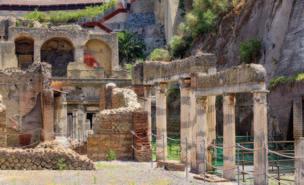
Nearly 4,000 Buddhist shrines, temples, and monasteries dot the arid plains around the ancient walled city of Bagan in Upper Myanmar, dating mostly from the 11th to 13th centuries. Jacobs examines one of the earliest and most spectacular Buddhist kingdoms in Southeast Asia, with a focus on the art and architecture of Bagan and the religious monuments erected during the height of its power.
Wed., Aug. 19, 6:45 p.m.; CODE 1J0-566; Members $25; Nonmembers $35
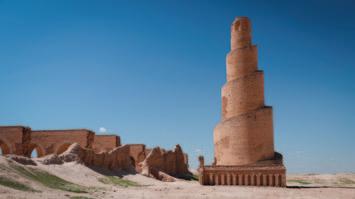
Once the thriving capital of the Abbasid Caliphate, Samarra in the 9th century served as the center of an Islamic empire that stretched from northern Africa to Central Asia. Its striking spiral minaret serves as an enduring reminder of the Great Mosque that once enclosed this sacred ground along the banks of the Tigris River. Jacobs focuses on Samarra’s rare preservation of Islamic art, architecture, and city plans from the heyday of the Abbasid Caliphate.
Wed., Sept. 16, 6:45 p.m.; CODE 1J0-574; Members $25; Nonmembers $35
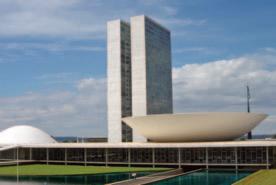
National
Built from scratch in the 1950s, the Modernist city of Brasilia was designed to express new ideas about urban living and city planning while relocating the national capital from the coast to a more central site in the Brazilian highlands. Jacobs surveys Brasilia’s carefully designed downtown landscapes and creative solutions to urban housing, all meant to synchronize with one another and provide a progressive model for a better world.
Wed., Oct. 14, 6:45 p.m.; CODE 1J0-579; Members $25; Nonmembers $35
Unless noted, all programs are presented on Zoom; listed times are Eastern Time. Online registration is required.
An American Adventure
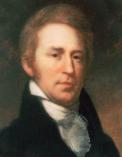
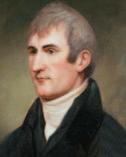
Between May 1804 and September 1806, Meriwether Lewis, William Clark, the Shoshone-Hidatsa woman Sacagawea, Clark’s enslaved companion York, and 29 volunteers crossed the continent from St. Louis to the Pacific Ocean and back again. The 2001 publication of the authoritative 13-volume edition of The Journals of the Lewis and Clark Expedition offered an opportunity to take a fresh look at one of the most remarkable adventures in American history.
Clay Jenkinson, a preeminent Lewis and Clark and Jefferson scholar, examines the dynamics of the journals: how they were written, under what conditions, and what it took to trigger a journal mention. His analysis of what the expedition’s six journal keepers included in their entries—and what they did not—offers a deeper understanding of the greatest land exploration in North America.
Thurs., July 9, 6:30 p.m.; CODE 1K0-718; Members $30; Nonmembers $45
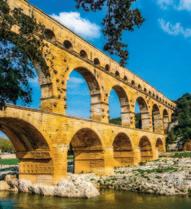
Rome did not conquer the Mediterranean by force alone; it engineered it. Aqueducts carried water across valleys and into cities at an unprecedented scale, making dense urban life possible. Bridges transformed rivers from barriers into corridors, binding provinces together year-round. Temples, forums, and public buildings functioned not only as religious or civic spaces but as enduring statements of Roman authority, rendered in stone and concrete.
Archaeologist and historian Darius Arya examines the logistical systems that made Roman expansion possible: ports capable of feeding the empire’s major cities, roads that moved armies, goods, and information with speed and reliability, and urban plans that replicated Rome across three continents. Together, these systems turned geography into infrastructure— and infrastructure into power. Rome’s empire endured not simply because it was vast but because it worked.
Fri., July 10, 12 p.m.; CODE 1D0-162; Members $20; Nonmembers $30
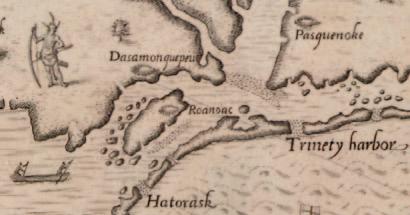
Americans have long been fascinated by the disappearance of the Roanoke colony, founded on the Outer Banks of modern North Carolina in the mid-1580s. But it was not the only European colony to be abandoned.
Historian Peter C. Mancall explores Roanoke and other lesser-known examples of disappeared colonial efforts, from Nunavut (Baffin Island) in the 1570s to the coast of Maine in 1606 –1607 and as far south as the Atlantic coast of northeastern South America. Mancall also resituates the colonization of eastern North America in its broader geographical setting.
Mancall’s new book, Contested Continent: The Struggle for North America, c. 1000 -1680 (Oxford University Press), is available for purchase.
Mon., July 13, 6:30 p.m.; CODE 1T0-078; Members $20; Nonmembers $30

Our programs... your time
Registered for a Smithsonian Associates online program but missed it because of a schedule conflict? Wish you could take a second look at a presentation you loved? Associates Encores offers the answer to these questions—and more.
Visit SmithsonianAssociates.org for more information
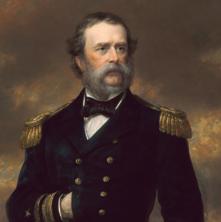
Rear Adm. Samuel Francis Du Pont, once hailed as one of the U.S. Navy’s most capable officers, saw his reputation collapse after the failed ironclad assault on Charleston in April 1863. Though celebrated early in the Civil War for securing a key Union victory in South Carolina, he later became unfairly remembered as a commander who resisted innovation.
Military historian Kevin J. Weddle argues that Du Pont supported technological progress but strongly opposed using the new ironclads against Charleston, warning they were unsuited for the mission.
Overruled by superiors, he carried out the attack, sealing his downfall. Weddle highlights Du Pont’s strategic influence and his vital role in modernizing the Navy between the Mexican and Civil Wars.
NEW DATE: Thurs., July 30, 6:45 p.m.; CODE 1K0-700; Members $25; Nonmembers $35
Historian Richard Bell numbers the War of 1812 among the most misunderstood wars in American history. Its causes, course, and consequences have long been overshadowed by the American Revolution and the Civil War.
The War of 1812 blended battlefield violence with deep political and social conflict at home. It echoed the Revolution’s struggles over loyalty and the Civil War’s battles over slavery, with enslaved people shaping events in decisive ways.
Though the military outcome was uncertain, the war secured U.S. independence, strengthened national identity, expanded states’ rights in the South, and fueled American expansionism. These, however, came at extraordinary human costs. Bell illuminates this by examining the wartime experiences of soldiers and seamen, merchants and laborers, enslaved African Americans, and Native Americans—groups whose stories have often been obscured by history.
Wed., July 15, 6:30 p.m.; CODE 1M2-464; Members $25; Nonmembers $35
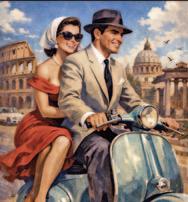
At the end of World War II, Italy was devastated—occupied by foreign armies, politically fractured, and humiliated by the collapse of Fascism and Benito Mussolini. Yet in the 1950s and 1960s it became one of Europe’s major economic success stories. Though home to Western Europe’s largest Communist Party, Italy aligned with the capitalist world and embraced consumerism. FIAT cars, Vespa motorbikes, Olivetti typewriters, and Italian fashion became global icons. Through popular films, advertising, and design, Italy projected an image of modernity, elegance, and pleasure that captivated audiences worldwide. Writer and lecturer Adam Tanner explores how this carefully crafted myth of la dolce vita—born from the imagery of Italy’s postwar boom—continues to shape how the nation is imagined both at home and abroad.
Thurs., July 16, 12 p.m.; CODE 1NV-198; Members $25; Nonmembers $35
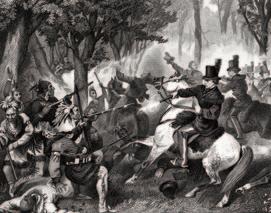
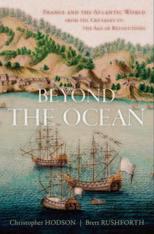
Between 1400 and 1800, Europe, Africa, and the Americas grew more connected by overseas trade and colonization. According to historians Christopher Hodson and Brett Rushforth, accounts of this era have overlooked the reach of the pre-Napoleonic French Empire, which claimed nearly a third of North America and controlled a substantial proportion of the trans-Atlantic slave trade.
Hodson and Rushforth examine the significant role that France played in the history of the Atlantic world and the ways it shaped France in return. They offer an interpretation of French colonialism influenced as much by Native Americans and West Africans as by kings and bureaucrats.
Their book, Beyond the Ocean: France and the Atlantic World from the Crusades to the Age of Revolutions, (Oxford University Press), is available for purchase.
Thurs., July 16, 6:45 p.m.; CODE 1K0-717; Members $20; Nonmembers $30
From September to November 1918, a hard-fought World War I battle that pitted green, poorly equipped American doughboys against combat-hardened German troops saw the U.S. military come of age in just 47 days in the brutal, devastating clash known as the Battle of the Meuse –Argonne. In that short period, Americans pushed back the enemy and forced the Germans to surrender, bringing the conflict to an end—a feat the British and the French had not achieved after more than three years of fighting.
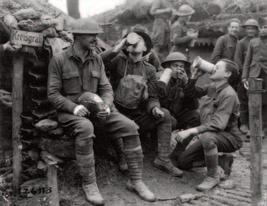
fortifications as they advance on Verdun, 1918
Military historian Mitchell
Yockelson tells the story of the cast of remarkable individuals, including original fighter ace Eddie Rickenbacker; artillery officer and future president Harry S. Truman; innovative tank commander George S. Patton; John J. “Black Jack” Pershing; and Douglas MacArthur, the Great War’s most decorated soldier.
Mon., July 20, 6:30 p.m.; CODE 1H0-914; Members $20; Nonmembers $30

Historian Steven J. Ross argues that, contrary to the belief that World War II ushered in greater tolerance, antisemitism and racism surged during and after the war. Between 1940 and 1946, violent attacks spread across U.S. cities, and extremist groups more than doubled, coordinating assaults on Jewish and African American communities.
Ross highlights how three figures—Arnold Forster of the Anti-Defamation League, George Mintzer of the American Jewish Committee, and James Sheldon of the Non-Sectarian Anti-Nazi League to Champion Human Rights—joined with many others to infiltrate, track, and disrupt these networks at personal risk. Tracing the extraordinary work of these unsung heroes, Ross provides a reconsideration of the legacy of the “Good War,” while telling the story of the intrepid activists who scored important victories that have been all but forgotten.
Ross’ book The Secret War Against Hate: American Resistance to Antisemitism and White Supremacy (Bloomsbury Publishing) is available for purchase.
Wed., July 22, 6:45 p.m.; CODE 1K0-727; Members $20; Nonmembers $30
The Louisiana Purchase and the Making of America
The Louisiana Purchase is remembered as a bargain that doubled the size of the nation overnight. The story is more complex and consequential, says historian Alexander Mikaberidze, who examines how the 1803 purchase from France redefined the United States and reshaped the world.

Far from a straightforward land deal, he argues, the agreement transferred not land but the authority to negotiate for it—territory owned by Native nations. This shift launched the U.S.–Indian treaty system and led to more than 200 land cessions with far-reaching consequences for Indigenous peoples. Mikaberidze situates the purchase within European imperial rivalries, showing how a debt-ridden colony became a prize and how ambitions reshaped the nation.
His newest book, The Louisiana Purchase: The Grand Bargain and the Making of America (Oxford University Press), is available for purchase.
Tues., July 21, 6:30 p.m.; CODE 1M2-465; Members $25; Nonmembers $35
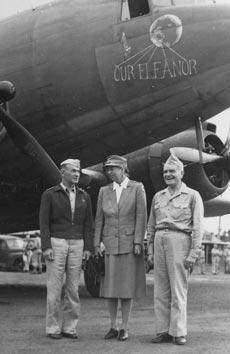
In August 1943, at the height of World War II, first lady Eleanor Roosevelt undertook an extraordinary journey to the Pacific Theater, traveling more than 25,000 miles to visit military bases, hospitals, Red Cross clubs, and remote outposts where American troops were stationed. Author Shannon McKenna Schmidt chronicles the first lady’s five-week journey as she flew in unheated transport planes and bombers, slept on army cots in rustic huts, dined in mess halls, and even trekked through the jungle on a simulated training mission. Schmidt also traces Roosevelt’s transformation from a shy society matron into one of the most visible and consequential first ladies in American history.
Mon., Aug. 17, 6:30 p.m.; CODE 1CV-094; Members $20; Nonmembers $30

Throughout American history, presidential pets have been far more than loyal companions. They served symbolic roles, shaped public perceptions, softened political images, and offered revealing glimpses into the private lives of the nation’s leaders. Whether cherished dogs and cats or more exotic creatures, the animals of the White House reflect changing ideas about family, leadership, and American society itself. Former White House correspondent Ken Walsh shares stories from two centuries of presidential pet-keeping.
President Ford and his golden retriever Liberty
From Theodore Roosevelt’s lively White House menagerie—including dogs, cats, a snake, guinea pigs, a small brown bear, and a badger—to Macaroni, the pony beloved by John F. Kennedy’s children, Walsh explores how the animal residents of 1600 Pennsylvania Avenue reveal power, personality, image-making, and the human side of the presidency.
Thurs., July 23, 6:45 p.m.; CODE 1D0-164; Members $20; Nonmembers $30
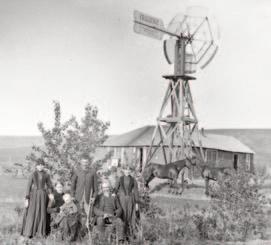
For more than 1.5 million families, the Homestead Act of 1862 offered a 19thcentury version of the American Dream, providing 160-acre plots of land on which farms sprang up across the trans-Mississippi West. It triggered a massive wave of migration and contributed key elements to an emerging American identity.
Edward T. O’Donnell, professor of history at Holy Cross College, explores the familiar telling of the Homestead Act’s history, as well as the often-overlooked reality that many homesteaders failed; that fraud and lack of oversight allowed railroads and ranchers to acquire vast numbers of homesteads; and that the great influx of white settlers into the West sparked deadly clashes with Native Americans.
Thurs., July 23, 6:30 p.m.; CODE 1H0-915; Members $20; Nonmembers $30
Anne Hutchinson can be regarded as the founding mother of religious freedom in America, says historian Fred Zilian. In the 1630s, her outspoken theological views brought her into conflict with the Puritan leadership of the Massachusetts Bay Colony. Tried for sedition and heresy in 1637–38, she was excommunicated from the church and banished from the colony—an extraordinary punishment for a woman in early New England.
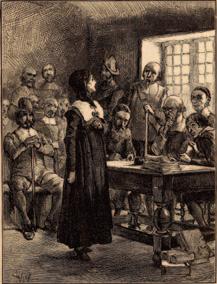
Zilian traces Hutchinson’s life, beginning with her early years in England, her marriage, and her journey to New England. The lecture explores the religious meetings that led to her prosecution, the dramatic civil and church trials that sealed her fate, and her banishment and settlement on Aquidneck Island in Rhode Island.
Thurs., July 23, 6:30 p.m.; CODE 1CV-090; Members $20; Nonmembers $30
In a richly illustrated conversation, Gary J. Walters the longest-serving chief usher in White House history, reflects on extraordinary moments from his 37 years of service. In his role, Walters oversaw the Executive Mansion’s administrative, fiscal, and personnel operations while working closely with each first family from Presidents Nixon through George W. Bush.
He offers rare behind-the-scenes insight into major events, including Watergate and Nixon’s final day, Queen Elizabeth II’s Bicentennial visit, the first papal visit, Election Day tensions, presidential transitions, and a detailed account of what was going on at the White House on Sept. 11, 2001.

Walters’ book, White House Memories 1970–2007: Recollections of the Longest Serving Chief Usher (White House Historical Association), is available for purchase.
Wed., Sept. 9, 6:45 p.m.; CODE 1K0-726; Members $20; Nonmembers $30
Early in his career Thomas Jefferson maintained that “To glide unnoticed thro’ a silent execution of duty is the only ambition which becomes me,” yet the trajectory of his long political career landed him in a highly visible role in shaping the new American Republic. Out of the shadows, he quickly learned to create and manage a public image aimed at supporting his political goals.
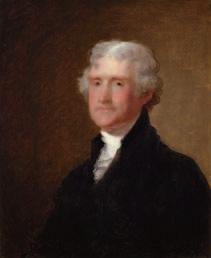
Thomas Jefferson by Gilbert Stuart, 1821
His image underscored where he stood on political issues, says Gaye Wilson, former Shannon Senior Historian at the Robert H. Smith International Center for Jefferson Studies at Monticello.
Wilson uses portraits, correspondence, period newspapers, and personal records to decipher Jefferson’s public image and what it reveals of his vision and ambitions for the nation.
Tues., July 28, 7 p.m.; CODE 1CV-091; Members $25; Nonmembers $35
Arms of the American Revolution
Both sides in the American Revolution knew the importance of firearms, artillery, and swords in making war. From the familiar “Brown Bess” flintlock musket to the innovative breech-loading Ferguson rifle, and from smuggled French guns to domestically made swords, Revolutionary-era weapons teach us a lot about how people experienced the war and the ways in which the Patriots and the British sought to win by supplying weapons as much as by actually fighting with them.
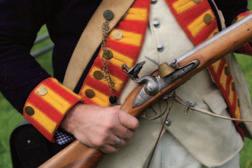
Kenneth Cohen, the National Museum of American History’s curator of early America, explores how these arms illuminate new dimensions of the American Revolution, telling a larger story about the lives of ordinary men, advances in technology, and the web of trade in which it all happened.
Wed., July 29, 6:30 p.m.; CODE 1W0-019; Members $20; Nonmembers $30
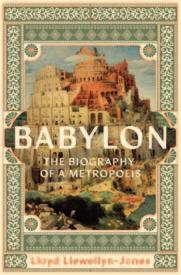
Babylon is a name that denotes both the great ancient Mesopotamian city and a symbolic, imagined version of Babylon that appears in many cultural traditions—from the Tower of Babel in the Hebrew Bible and the Whore of Babylon in the New Testament to the 1970s reggae song “Rivers of Babylon.”
Lloyd Llewellyn-Jones, professor in ancient history at Cardiff University, traces Babylon’s growth from its first royal dynasty to its emergence as a superpower in the Near East. The kingdom of Babylonia came into being and, governed by mighty Babylon, set the agenda for what civilization meant. Llewellyn-Jones explores Babylon’s reputation as a city with a dual legacy, drawing on its rich ancient past and its enduring mythic story.
His newest book, Babylon: The Biography of a Metropolis (Pegasus Books), is available for purchase.
Mon., Aug. 3, 12 p.m.; CODE 1D0-166; Members $20; Nonmembers $30
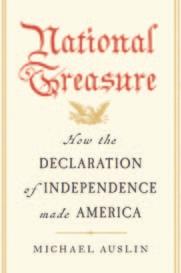
How Clerks, Scientists, and Bureaucrats Preserved a National Treasure
Few documents have captured the soul of America like the Declaration of Independence. When the Founding Fathers put pen to parchment 250 years ago, their concerns focused on the words and ideas being recorded. Within a few decades, though, as the document's ink began to fade, the race to protect and preserve this critical part of American history began.
Historian Michael Auslin traces the story of how the Declaration of Independence has survived, bringing to life the physical history of America’s founding document.
His new book, National Treasure: How the Declaration of Independence Made America (Simon & Schuster), is available for purchase.
Mon., Aug. 3, 6:30 p.m.; CODE 1W0-020; Members $20; Nonmembers $30
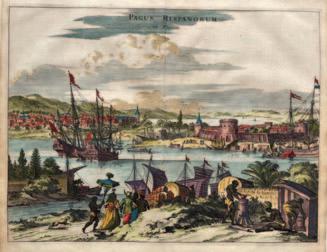
The early history of Florida is often cast as Spanish conquistadors coming to a miserable place and embarking on quixotic quests in search of magical fountains and cities of gold, only to find death, poverty, and despair. Yet this familiar narrative obscures a more complex history.
Historian J. Michael Francis explores the earliest decades of Florida’s colonial past, including the 1565 founding of St. Augustine—the oldest continuously occupied European settlement in what is now the United States. Drawing on his public history initiative, the Lost Voices project, Francis tells the intersecting stories of European settlers, Native Americans, and Africans, revealing a dynamic, interconnected world.
Mon., Aug. 10, 7 p.m.; CODE 1CV-093; Members $20; Nonmembers $30
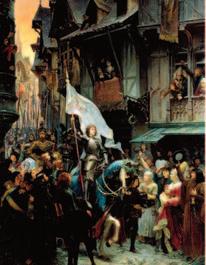
Saint, Soldier, and Leader
In April 1429, Joan of Arc rode into the besieged city of Orleans. In May 1431, she was burned at the stake in Rouen. The 25 months between changed the histories of France, of England, and, as the Hundred Years War played out, of Europe itself. Few people in history have achieved so much in so little time, says military historian Michael Livingston, and few have captured the imagination of the world so thoroughly.
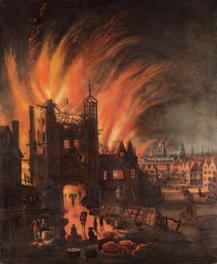
For almost five days in early September 1666, London was engulfed in flames. Beginning in a bakery, the fire spread quickly, ultimately destroying the heart of the third-largest city in the Western world. Although urban fires were common, a unique combination of circumstances allowed this one to race through the city, igniting stores of combustible goods.
Drawing from his 2025 book Bloody Crowns, a critical revision of how modern Europe arose from medieval battlefields, Livingston re-examines the story of Joan—what we know of her, how we know of her, and how a teenaged girl could have such an impact on a male-dominated age.
Tues., Aug. 11, 6:45 p.m.; CODE 1K0-720; Members $25; Nonmembers $35
Tudor and Shakespeare historian Carol Ann Lloyd-Stanger examines how decisions made by city leaders, changes in weather conditions, and actions taken by the royal family influenced the fire’s spread and eventual containment. She traces the event’s lasting impact, including debates over how the city would be rebuilt and how those decisions shaped London’s future. She also surveys the social, economic, and political effects of the fire in the years that followed.
Wed., Aug 12, 6:30 p.m.; CODE 1M2-470; Members $25; Nonmembers $35
From the earliest discoveries of what came to be known as “Mycenaean culture,” it has been unclear exactly how to understand it. Classicist and archaeologist Dimitri Nakassis explores the archaeological and textual evidence for the Mycenaean world, which turns out to be too complex to fit neatly into simple categories. Across half a millennium of history (ca. 1650–1100 B.C.E.) and stretching from the eastern shores of the Aegean to the Ionian Sea and beyond, Mycenaean communities took many different forms. In the 150 years since the discovery of the shaft graves by Heinrich Schliemann, much has been learned about Late Bronze Age Greece, which continues to produce exciting new discoveries every year. These findings not only fascinate; they also pose new questions and challenge long-held assumptions.
Tues., Aug. 18, 6:30 p.m.; CODE 1H0-919; Members $20; Nonmembers $30
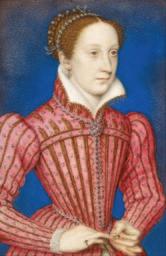
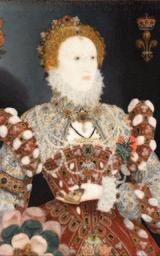
The rivalry between Elizabeth I of England and Mary, Queen of Scots, was one of the most dramatic political and religious conflicts of the 16th century. Elizabeth, a Protestant ruling an anxious England, faced constant Catholic plots to replace her with Mary, a Catholic with a strong hereditary claim to the English throne. Mary’s turbulent life—from her troubled reign in Scotland to her long English captivity—made her a magnet for conspiracies, though her direct involvement remains debated.
Historian Amy Leonard explores their fraught, indirect relationship: two related queens, never meeting in person, yet bound by rivalry and international intrigue. Mary’s execution in 1587 ended a major threat to Elizabeth but deepened tensions between Protestant England and Catholic Europe.
Wed., Aug. 19, 6:30 p.m.; CODE 1H0-918; Members $30; Nonmembers $45
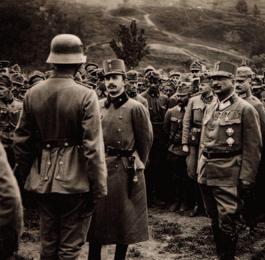
The Romanian Front is one of the most often overlooked of the many battlefronts of the First World War, and yet when the country entered the war in late August 1916, its appearance as a new enemy forced all four Central Powers to divert many of their best troops and thousands of tons of weapons and supplies from other fronts where they were desperately needed.
Historian Indy Neidell notes that Germany was stretched so thin that its leadership even feared Denmark might exploit the situation. Although the Central Powers launched massive offensives, they failed to fully conquer Romania or remove it from the war. With Russia collapsing, Romania became one of the Entente’s few remaining advantages, significantly contributing to the Central Powers’ final exhaustion by 1918.
Wed., Aug. 19, 12 p.m.; CODE 1W0-023; Members $20; Nonmembers $30
The American War of Independence freed the 13 British colonies in North America from Crown rule and set the stage for the United States’ bold experiment in self-government. Drawing on primary sources, historian Christopher Hamner continues his series that explores the pivotal turning points and strategic choices that shaped the course and the conclusion of the war.
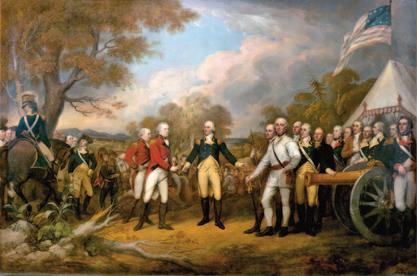
AUG 20 Valley Forge: Soldier’s Life in the Continental Army
SEPT 24 Turning Point: The Battle of Saratoga
OCT 22 Cowpens and Yorktown: The Final Campaigns of the Revolution
NOV 19 The Newburgh Conspiracy: Civil–Military Tensions in the Early Republic
4-session series: Thurs., Aug. 20, Sept. 24, Oct. 22, and Nov. 19, 6:45 p.m.; detailed program information on website; CODE 1D0-172; Members $100; Nonmembers $120
Individual sessions: Thurs., Aug. 20 (CODE 1D0-172A); Thurs., Sept. 24 (CODE 1D0-172B); Thurs., Oct. 22 (CODE 1D0-172C), Thurs., Nov. 19 (CODE 1D0-172D); 6:45 p.m.; Members $30; Nonmembers $40
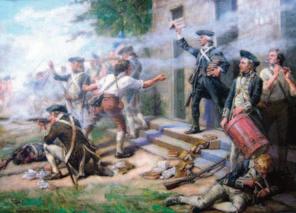
of Springfield, New Jersey, 1780
Standing by Britain and the Crown Loyalists emerged as the great losers of the American Revolution. These men and women who opposed independence and fought to keep the colonies within the British Empire saw their fortunes collapse after the patriot victory at Yorktown in 1781. History quickly lost sight of them, and from today’s perspective it’s hard to understand why so many ordinary Americans were bitterly opposed to the break with Britain and the birth of a new democratic nation.
Historian Richard Bell reexamines the conflict through the experiences of loyalists from all rungs of the social ladder, challenging stereotypes that portray them as cowardly elites or self-interested officials. Bell explores their motivations, their wartime struggles, and the profound changes they faced once the patriots prevailed.
Tues., Sept. 15, 6:30 p.m.; CODE 1M2-472; Members $25; Nonmembers $35
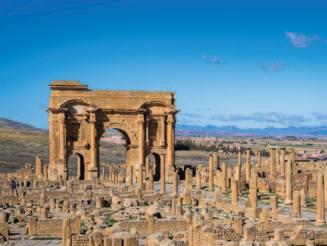
Empire at the Edge of the Sahara
Roman North Africa was one of the empire’s most productive and culturally complex regions. From Morocco to Libya, Rome reshaped regions long influenced by Phoenician, Punic, Numidian, and Libyan cultures, layering its rule over deep local traditions. In Algeria, cities like Timgad show Rome’s military precision, securing the desert frontier. Tunisia’s Carthage, once Rome’s enemy, became a major capital and agricultural hub that fed Italy. In Libya, Leptis Magna and Cyrene thrived on trade linking the Mediterranean to sub-Saharan Africa, moving grain, oil, animals, and people across lengthy routes.
Archaeologist and historian Darius Arya examines the vital role of Roman North Africa, showing how it fed Rome, connected continents, and fused African, Punic, Greek, and Roman worlds into one of the empire’s most successful provinces.
Wed., Aug. 26, 12 p.m.; CODE 1D0-168; Members $20; Nonmembers $30

Mount Desert Island off Downeast Maine is known for its granite cliffs, rocky harbors, and the sweeping vistas of Acadia National Park, but its dramatic scenery is inseparable from its human history. Historian Ralph Nurnberger traces the island’s story from its Native peoples and Samuel de Champlain’s early exploration through centuries of settlement. In the 19th century, Hudson River School artists helped establish its reputation for majestic, unspoiled beauty, and by the Gilded Age it had become a summer haven for prominent families.
Together, these and other stories reveal the history and beauty of Mount Desert Island. They invite a closer look at the landscape, people, and forces that continue to shape it today and why it remains one of America’s most remarkable coastal landscapes.
Wed., Sept. 2, 6:45 p.m.; CODE 1D0-173; Members $20; Nonmembers $30
What time does the program end? Unless noted, Smithsonian Associates programs run 1 hour 15 min.–2 hours, including Q&A
Four curators and historians from the National Air and Space Museum trace the history of flight, from humanity’s early aspirations for aerial transit, to 12 breathtaking seconds at Kitty Hawk, to the advances that came with global combat, to how jet engines and digital technology are opening a new future for aviation.
SEPT 3 The Dawn of Early Flight
SEPT 10 The Birth of Heavier-Than-Air Aviation Through World War I
SEPT 17 The Birth of Commercial Aviation
SEPT 24 History of Flight in the Digital Age

Individual sessions: Thurs., Sept. 3 (CODE 1W0-025A); Thurs., Sept. 10 (CODE 1W0-025B); Thurs., Sept. 17 (CODE 1W0-025C); Thurs., Sept. 24 (CODE 1W0-025D); 12 p.m.; detailed program information on website; Members $25; Nonmembers $35

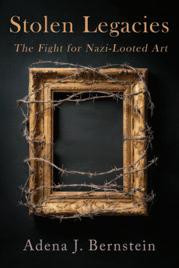
The Nazis didn’t steal just art, says author and prosecutor Adena J. Bernstein: They also stole identity, history, and memory. Decades later, thousands of those artworks hang in museums and private collections not because their histories are unknown but because laws permit institutions and third parties to retain them. Drawing on research covering 13 nations, Bernstein describes how coerced sales were later treated as legitimate transactions and how survivors and their families have been asked to meet heavy evidentiary burdens. She considers what accountability should look like and whether legal systems are equipped to deliver it.
Bernstein’s new book, Stolen Legacies: The Fight for Nazi-Looted Art, is available for purchase.
Tues., Sept. 8, 6:30 p.m.; CODE 1T0-088; Members $20; Nonmembers $30
The View from Northern Europe
The 17th century in Europe was a time of intense turmoil—war, rebellion, plague, famine, and widespread mortality. These human crises unfolded alongside the Little Ice Age, a centuries-long period of cooler temperatures across Europe and parts of the Northern Hemisphere. While scholars debate its precise influence, historians such as Geoffrey Parker argue that climate change significantly shaped what has been called the century’s “Global Crisis.”
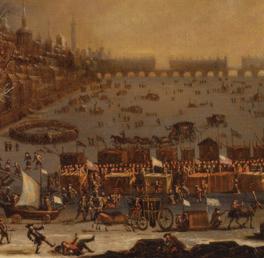
Ariel Hessayon of the University of London examines this connection by drawing on often-overlooked evidence: ice cores, pollen samples, tree rings, stalactites, manuscripts, printed treatises, and visual art. She also reveals the strategies people used to endure and adapt to a harsher climate.
Tues., Sept. 8, 12:30 p.m.; CODE 1H0-923; Members $20; Nonmembers $30
Read more about programs in this guide on our website. Search by code or date. Expanded program descriptions, presenters’ information, and more at SmithsonianAssociates.org.
Most Americans know the basic outlines of the D-Day landings of June 6, 1944. After four and a half years of war, 160,000 British, Canadian, and American soldiers landed in occupied France under the command of Gen. Dwight D. Eisenhower. Not as well known, however, is the Allied strategy and planning that led to Operation Overlord.

Military historian Kevin Weddle traces the development and deployment of the Allied military strategy for Europe and the cross-channel invasion. He describes the bitter disagreements and reluctant compromises between American and British senior military and political leaders and how their forces came together to fight in what Weddle considers as the greatest military operation in history.
Mon., Sept. 14, 6:45 p.m.; CODE 1K0-728; Members $25; Nonmembers $35
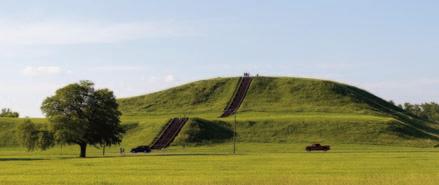
Once the largest urban center north of Mexico, Cahokia Mounds State Historic Site in Collinsville, Illinois, stands as one of the most significant archaeological landscapes in North America, reshaping the understanding of pre-Columbian civilization. At its peak, ca. 950–1350, Cahokia was a thriving city of tens of thousands, defined by monumental earthworks, sophisticated planning, and far-reaching influence. Today it is a designated UNESCO World Heritage Site.
Site interpreter Angela Cooper places Cahokia within the broader story of Indigenous North America, outlining its deep historical roots and the shared traditions of the Mississippian world. She focuses on Cahokia’s rise in the American Bottom, exploring how this remarkable city developed and flourished. Cooper connects Cahokia to other Mississippian sites and to descendant communities today, underscoring its enduring cultural significance.
Mon., Sept. 14, 7 p.m.; CODE 1NV-211; Members $25; Nonmembers $35
World’s Fairs of the 1930s
The World’s Fairs of the 1930s offered vivid visions of a world in flux—attempting to chart a future when stability felt out of reach. As the Great Depression reshaped daily life and global tensions rose, fairs in Chicago, Paris, and New York became spectacular stages where nations projected optimism, power, and unease through architecture, technology, and performance.
Art historian Jennie Hirsh examines this trio of landmark fairs, revealing how they transformed crisis into dazzling displays that captured both the aspirations and anxieties of their era.
SEPT 17 Chicago 1933–1934: A Century of Progress
OCT 15 Paris 1937: In the Shadow of War
NOV 12 New York 1939: Dawn of a New Day
3-session series: Thurs., Sept. 17, Oct. 15, and Nov. 12, 6:45 p.m.; detailed program information on website; CODE 1D0-177; Members $75; Nonmembers $95
Individual sessions: Thurs., Sept. 17 (CODE 1D0-177A); Thurs., Oct. 15 (CODE 1D0-177B); Thurs., Nov. 12 (CODE 1D0-177C); 6:45 p.m.; Members $30; Nonmembers $40
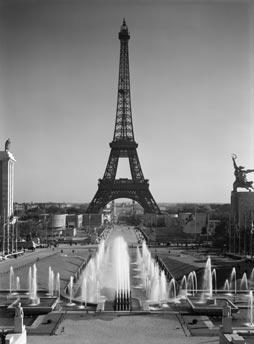
Paris World’s Fair, 1937
Few royal houses shaped the political and cultural landscape of medieval Britain more profoundly than the Plantagenets.
Ruling from the 12th to the 15th centuries, they forged an empire stretching from Scotland to the Pyrenees, developed Parliament, clashed with the Church, fought crusades, and waged the Hundred Years’ War, all while also inspiring some of the most enduring legends in British history.
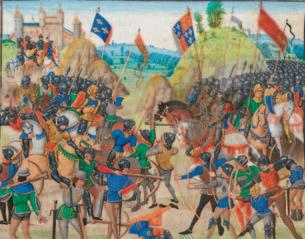
In a full-day seminar, historian Cheryl White traces how perceptions of the Plantagenets have evolved over time, examining the dynasty’s role in shaping law, kingship, national identity, and historical memory. As modern scholarship reassesses these rulers to attempt to separate myth from reality, White explores why the Plantagenets remain a source of enduring fascination.
Sat., Sept. 19, 10 a.m.–3 p.m.; detailed program information on website; CODE 1M2-473; Members $80; Nonmembers $100
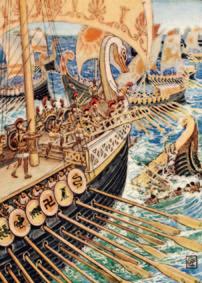
Few days in ancient history can be reconstructed in nearly hour-by-hour detail, but the Battle of Salamis in September 480 B.C.E. is one of them. Professor emeritus of classics Robert Garland recounts this consequential clash between the Greeks and the Persian Empire, often called “the battle that saved Western civilization.”
On the eve of battle, King Xerxes positioned his navy to trap the Greek fleet. Most Greek commanders favored withdrawal, but the Athenian general Themistocles refused, convinced that Athens’ salvation lay in its fleet, the “wooden wall” of Delphic prophecy. In the narrow straits of Salamis, the smaller Greek force outmaneuvered and defeated the vastly larger Persian navy—a lasting reminder of how strategy can overcome overwhelming power and how hubris invites defeat.
Thurs., Sept. 24, 12 p.m.; CODE 1J0-576; Members $20; Nonmembers $30
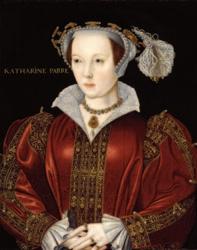
Many people know the six wives of Henry VIII through the famous rhyme: Divorced, beheaded, died, / Divorced, beheaded, survived. Dismissed for many years as simply the “survivor,” Katherine Parr was reimagined as a matronly nursemaid who kept the ailing king comfortable in his final years, fading loyally into the background. Recent portrayals reveal a woman who was a potentially devious political operator, focused on her survival at the expense of others. Nursemaid, manipulator, or something else entirely: Who was the real Katherine Parr?
Tudor and Shakespeare scholar Carol Ann Lloyd-Stanger draws on the the latest scholarship to provide a fuller portrait of this complex woman who caught the eye of an infamous king and kept his favor in a volatile and dangerous court.
Tues., Sept. 22, 6:30 p.m.; CODE 1M2-474; Members $25; Nonmembers $35
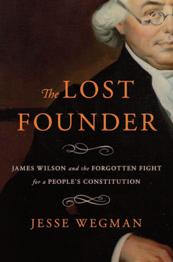
James Wilson, a brilliant yet largely forgotten Founding Father, helped shape America’s core political ideals. As a young lawyer, he wrote a powerful case for independence—an essay Thomas Jefferson kept nearby while drafting the Declaration of Independence. Wilson later produced the first draft of the Constitution and introduced “We the people,” reflecting his belief that Americans themselves are the true source of governmental power.
Despite becoming one of the first Supreme Court justices, his career collapsed after reckless land speculation. Author Jesse Wegman brings to life one of America’s most prescient early patriots and his remarkable, complicated legacy.
Wegman’s newest book, The Lost Founder: James Wilson and the Forgotten Fight for a People’s Constitution (Celadon Books), is available for purchase.
Wed., Sept. 30, 6:45 p.m.: CODE 1D0-176; Members $20; Nonmembers $30
Washington, D.C.’s cemeteries offer a lens into the city’s history, where landscape design, architecture, and memory intersect. Carolyn Muraskin, founder of DC Design Tours, explores four distinctive burial grounds: Oak Hill Cemetery, Mount Zion Cemetery and Female Union Band Society Cemetery, Glenwood Cemetery, and Rock Creek Cemetery.
Each site reflects different communities, eras, and approaches to commemoration. From the picturesque, garden-inspired design of Oak Hill and Rock Creek to the rural cemetery movement embodied at Glenwood, these spaces reveal how 19th-century ideals shaped both the physical landscape and the cultural meaning of burial grounds in the nation’s capital.
By examining their design and symbolism and the lives they commemorate, Muraskin presents cemeteries not as static resting places but as dynamic cultural landscapes that continue to shape how we understand the city’s past.
Tues., Oct. 6, 7 p.m.; CODE 1NV-208; Members $25; Nonmembers $35
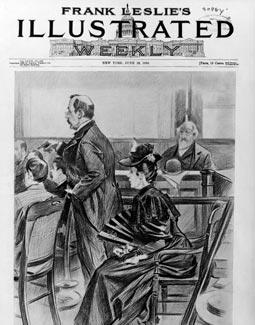
Americans have always been captivated by trials, not just as legal proceedings but as gripping public dramas. As Michael Ross, professor of history at the University of Maryland, argues, the most sensational trials do more than determine guilt or innocence: They expose the fault lines in American society.
The trials that linger in the collective memory do so because the conflicts they reveal never fully disappear. They continue to reverberate across decades, even centuries.
In this series, Ross brings to life four of the most famous trials in American history—focused on witchcraft, an accused Gilded Age double murderess, the debate over evolution, and the controversial Chicago Seven—showing how each became a flashpoint for the tensions of its time and explaining why each still matters.
4-session series: Wed., Oct. 7–28, 6:30 p.m.; CODE 1M2-478; detailed program information on website; Members $100; Nonmembers $125

During the Civil War, tens of thousands of Union and Confederate soldiers endured brutal conditions in prison camps such as Belle Island in Richmond. Yet amid hardship, many prisoners found ways to preserve their humanity. They sketched, carved, wrote, and crafted objects from whatever materials they could find, using artistic expression to cope with captivity, document their experiences, and maintain a sense of identity and hope.
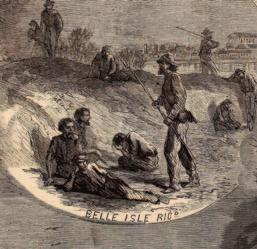
Kelly Hancock of the American Civil War Museum examines the harsh realities of these camps and highlights works from the museum’s extensive POW art collection.
Tues., Oct. 13, 7 p.m.; CODE 1NV-210; Members $25; Nonmembers $35

Unless noted, all programs are presented on Zoom; listed times are Eastern Time. Online registration is required.
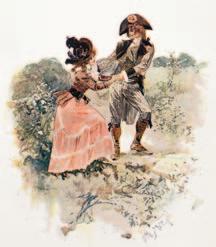
It’s easy to think of fairy tales as something distinctly European or antiquated. After all, many of the most famous fairy-tale collectors and writers lived hundreds of years ago in Germany (the Grimms), France (Beaumont and Perrault), or Denmark (Hans Christian Andersen). But fairy tales can be found all over the world, including in the United States, where they’re still being created and told today.
Folklorists Sara Cleto and Brittany Warman discuss fairy-tale traditions and stories from around the United States, including the Jack Tales of Appalachia, Black folk and fairy tales from the South, and the rise of the Disney fairy-tale empire. They also offer insights into how these supposedly frivolous stories permeate American culture and stay with us ever after.
Wed., July 8, 6:45 p.m.; CODE 1J0-560; Members $25; Nonmembers $35

Stunt performers risk their lives to craft the breathtaking illusions of action cinema, diving from horses, smashing through vehicles, and executing feats—sometimes with clothes aflame—that no leading actor could safely attempt.
In old Hollywood, the work of stuntmen and stuntwomen remained anonymous. But later it became known that Yakima Canutt—not John Wayne—made the daring horse-to-horse leap in 1939’s Stagecoach, and that Rick Sylvester stood in for Roger Moore in several James Bond entries. A few actors, like Buster Keaton and later Jackie Chan, performed their own stunts without doubles.
Film historian Max Alvarez jumps into a multimedia exploration of this tradition, revealing the secrets behind Harold Lloyd’s clock dangling in Safety Last and the behind-the-scenes stunt miracles of Vic Armstrong in Raiders of the Lost Ark.
Wed., July 8, 6:30 p.m.; CODE 1K0-715; Members $30; Nonmembers $45

Costume design shapes a film’s storytelling by using clothing to express character, history, and emotion while anchoring the narrative in a specific time, place, and genre. In Hollywood’s studio era, vast wardrobe departments dressed stars in glamorous, idealized designs for historical epics and contemporary films—often influencing mainstream fashion.
As independent filmmaking grew and realism became more valued, costume design reflected authentic, character-driven choices that span a broader range of experiences. Working with actors, designers use custom creations, costume houses, and contemporary clothing to help performers inhabit their roles.
Nancy Friedland, librarian for film studies and performing arts at Columbia University, traces the evolution of costume design in American cinema and explores how wardrobe remains an essential element of character and narrative.
Thurs., July 9, 7 p.m.; CODE 1NV-196; Members $25; Nonmembers $35
Co-starring
In 2004’s National Treasure, historian and cryptographer Benjamin Franklin Gates hunts for a lost treasure using a secret map hidden on the back of the Declaration of Independence. This fan favorite has introduced a generation of young people to the wonders of the past while raising questions about America’s founding era.
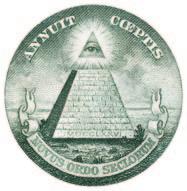
Historian Denver Brunsman separates fact from Hollywood fiction, using film clips to explain the real stories behind the Declaration, the Freemasons, and other historical references. In this case, truth proves even more stirring than fiction: The Declaration’s history is almost as improbable as a movie plot. Brunsman traces how a years-long crisis with imperial Britain culminated in the document, which—against all expectations— became synonymous with independence and has inspired Americans and the world, including filmmakers and filmgoers, for 250 years.
Thurs., July 9, 6:30 p.m.; CODE 1W0-015; Members $20; Nonmembers $30
Spend three fascinating Friday evenings expanding your knowledge of the world of wine as you sip along with sommelier Erik Segelbaum in a series of delectable adventures. Each immersive program includes a curated personal tasting kit to enhance the experience.
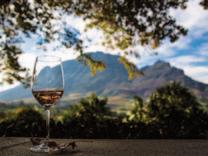
The storied wine history of South Africa—which began in the 1650s—predates that of many regions in France and the rest of Europe. The country’s world-class winemaking is reflected in its diversity of styles, unique grapes, and commitment to sustainability and environmental responsibility. Jim Clarke, marketing manager of Wines of South Africa for the United States, joins Segelbaum to explore some of the nation’s most exciting wines.
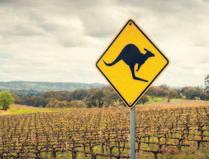
Australia’s wine industry dates back to 1788. Over the years it has evolved into a global powerhouse known for quality, innovation, and uniqueness. While most famous for Shiraz (Syrah), Australia has over 60 distinct wine regions across an immense diversity of geography.
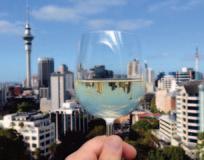
While New Zealand might be best known for Sauvignon Blanc, there’s much more to explore. Learn how the region’s high level of ultraviolet radiation and oceanic proximity (every vineyard is within 80 miles of the ocean) influence the tastes and terroirs. Discover why this small multi-island nation is a leader in premium, foodfriendly wine as you taste through some of New Zealand’s most exciting wines and wineries.
3-session series: Fri., July 24, Aug. 21, and Sept. 18, 6 p.m.; CODE 4WINE2026; Members $180; Nonmembers $225
Individual sessions: Fri., July 24 (CODE 1T0-075); Fri., Aug. 21 (CODE 1T0-076); Fri., Sept. 18 (CODE 1T0-077); 6 p.m.; Members $70; Nonmembers $85
Wine-tasting kit information: The cost includes a curated personal tasting kit with enough wine for one person to sample the full lineup of wines. Additional participants must register individually to receive their own tasting kit, which is an essential component of the workshop.
Update: Kits are available during two scheduled pick-up times the day before the program and the day of the program at Cowbell Seafood & Oyster (Union Market, 1309 5th St. NE, Washington, D.C.; Metro: NoMa–Gallaudet U station, Red line.)
NOTE: Patrons will receive additional wine tasting kit pick-up information by email prior to the program. Due to state and federal laws, Smithsonian Associates cannot ship wine kits. However, SOMLYAY may be able to provide kits to participants outside the Washington, D.C., area (who must cover shipping costs). Please contact erik@thesomlyay.com for more information.


During the past half century, director Martin Scorsese and actor Robert De Niro have crafted epic explorations of the dark side of American society and human nature. In 10 titles from Mean Streets to Killers of the Flower Moon, De Niro brilliantly applied his Method acting training to electrify audiences with characters marked by a deceptive, calculating detachment.
The Scorsese–De Niro collaborations are legendary and influential for their striking use of camera choreography, precision editing, explosive musical soundtracks, unglamorized mental or physical violence, and gritty dark humor. While filmmakers have attempted to replicate Scorsese’s directorial techniques, most have failed to capture the psychology and historical awareness behind his stylistic and narrative ironies. Film historian Max Alvarez pays tribute to a director–actor team unsurpassed in Hollywood history.
Wed., Aug. 5, 6:30 p.m.; CODE 1K0-716; Members $30; Nonmembers $45
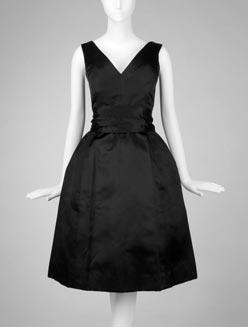
Versatile and timeless, the little black dress is the fashion equivalent of the popular Model T Ford in its time. In this illustrated lecture, cultural historian Leslie Goddard traces the evolution of this enduring style icon. Discover how Coco Chanel transformed black from a color of mourning into a symbol of modern elegance; how Audrey Hepburn cemented the little black dress’s place in popular culture; and how tastemakers and designers from Betty Boop to Prada have continually reinvented it for new generations.
Thurs., July 30, 7 p.m.; CODE 1CV-092; Members $20; Nonmembers $30
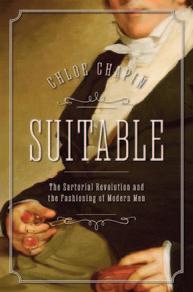
Why do men across the world dress so alike? When the American Revolution transformed global ideas about governance, it also sparked an upheaval in style. As the new nation distanced itself from European royals, its leaders rejected the ornate fashions of the aristocracy in favor of sober suits. These styles would become the foundation of menswear for the next 250 years, explains Chloe Chapin, a historian who also was a costume designer on Broadway. Tracing the evolution of the modern suit, Chapin explores what it has meant to the men who created it, the women who later adopted it, and those who rebelled against it.
Chapin’s new book, Suitable: The Sartorial Revolution and the Fashioning of Modern Men (Oxford University Press), is available for purchase.
Thurs., Aug. 20, 6:30 p.m.; CODE 1T0-081; Members $20; Nonmembers $30
The Smithsonian Institution and the National Comedy Center hold outstanding collections of objects that illustrate the importance of comedy in American life, from 19th-century vaudeville, minstrel, and puppet shows to stand-up comedians, television satire, and internet memes. The new book Funny Stuff: How Comedy Shaped American History showcases these collections with photographs and essays.
Coauthors Laura LaPlaca, head of the National Comedy Center’s Carl Reiner Department of Archives & Preservation, and Ryan Lintelman, entertainment curator at the Smithsonian’s National Museum of American History (NMAH), tell the stories of rarely exhibited artifacts and recount the lives of several comics and their influence on American culture. Following the lecture, attendees view objects from NMAH that are not currently on public display.
Funny Stuff: How Comedy Shaped American History (Rutgers University Press) is available for sale and signing.
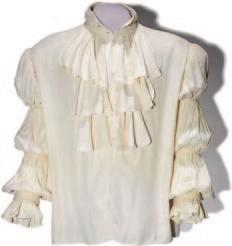
Jerry Seinfeld wore the nowlegendary “puffy shirt” in a 1993 episode of his NBC series
Fri., July 31, 12 p.m.; National Museum of American History, Nicholas and Eugenia Taubman Hall of Music; CODE 1J0-563; Members $20; Nonmembers $30

• Receive a digital version of the member program guide so you can read it anywhere
• Receive important notices regarding your ticket purchases along with other useful information
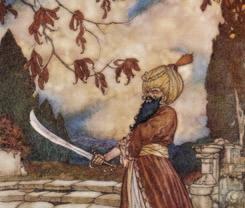
The story of “Bluebeard” has a long history and a strong presence in the annals of the fairy tale. The classic version by Charles Perrault tells of a beautiful young girl who is swept off her feet by a wealthy man and brought to his splendid castle. When she enters the forbidden chamber, she discovers that he has murdered all his previous wives, and she only escapes their fate with the aid of her siblings. Variants of the story can be found around the world.
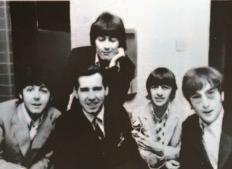
The Beatles at the Height of Their Experimental Genius
Arguably the most famous rock group in history, the Beatles left a legacy both cultural and musical. Music historian Stephen Schultz explores their seventh studio album, “Revolver” (1966), on the 60th anniversary of its release.
Folklorists Sara Cleto and Brittany Warman of the Carterhaugh School of Folklore and the Fantastic do a deep dive into “Bluebeard,” exploring what some of the oldest versions look like, why it has periods of popular resurgence, and how the story has been retold in contemporary times. This lecture includes prompts for audience interaction.
Wed., Aug. 5, 6:45 p.m.; CODE 1J0-565; Members $25; Nonmembers $35
Must-see Museums, Historic Sites, and Local Eats
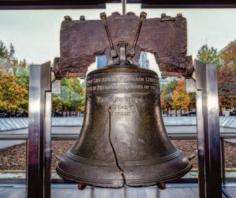
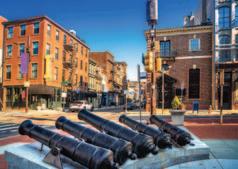
Philadelphia comes to life in an online exploration led by art historian and longtime resident Jennie Hirsh. She guides participants through the city’s neighborhoods, major museums, and cultural landmarks, spotlighting essential works at the Philadelphia Museum of Art and the Barnes Foundation, as well as hidden gems like the Fabric Workshop and Museum, Calder Gardens, and the Brandywine Workshop and Archives.
Hirsh delves into key historic sites including the Liberty Bell Center, the African American Museum in Philadelphia, the Weitzman National Museum of American Jewish History, and the Museum of the American Revolution. The program also highlights the city’s dynamic food scene—from acclaimed chefs to street eats. Participants receive a handout outlining suggested sights and a sample itinerary for further exploration of Philadelphia’s art, history, and culture.
Thurs., Aug. 13, 6:45 p.m.; CODE 1D0-167; Members $20; Nonmembers $30
Examining all 14 songs of the original British release, Schultz offers a deep dive into their musical and lyrical content, as well as a look at the studio wizardry behind them. He also illuminates the cultural context and impact of the album, tracing the band’s interactions with other musicians, notably Bob Dylan, and the global phenomenon of Beatlemania.
Wed., Aug. 5, 6:30 p.m.; CODE 1W0-021; Members $25; Nonmembers $35
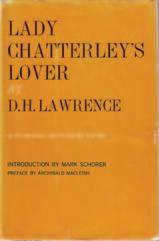
Several of the most extraordinary books of the 20th century had to overcome severe censorship challenges before they reached the public. D.H. Lawrence’s Lady Chatterley’s Lover was banned by the United Kingdom and the United States from 1928 until the 1960s because of racy language and explicit sexual content. Copies of Joyce’s magnificent 1922 novel, Ulysses, had to be smuggled into the United States until late 1933, when an American court finally deemed it fit for publication. Allen Ginsberg’s long poem Howl had to endure an intense obscenity trial before it was finally declared not obscene in 1957.
Literary scholar Clay Jenkinson explores these dramatic incidents in the history of literary censorship to understand the cultural revolutions of the 20th century rather than merely scoring points against the censors.
Thurs., Aug. 13, 6:30 p.m.; CODE 1K0-721; Members $30; Nonmembers $45
World Art History Certificate elective: Earn ½ credit
For many centuries Hinduism has had an image-making religious tradition. Hindus have long wished to see their deities in visible form, and artists have met this desire through sculptures and paintings. In modern India, this desire has also been met by colorful mass-produced “God-prints,” often called calendar prints or bazaar art.

Richard Davis, professor emeritus of religion at Bard College, outlines the history of this genre of commercial religious art, from its origins in colonial Kolkata and Maharashtra through its proliferation in independent India. Davis also looks at how the depictions of principal Hindu gods have developed and changed.
Mon., Aug. 17, 6:45 p.m.; CODE 1J0-567; Members $20; Nonmembers $30
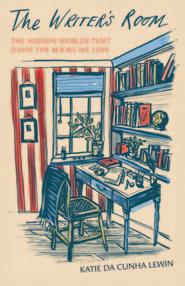
What makes a writer’s space so fascinating? Inspired by Virginia Woolf’s reflections on the importance of space for creativity, author Katie da Cunha Lewin examines how writers have worked everywhere from quiet garden rooms and shared family tables to bustling cafés and buses. She offers vivid portraits of memorable creative spaces, including Woolf’s tranquil room at Monk’s House, Ernest Hemingway’s Paris cafés, and Maya Angelou’s deliberately bare hotel rooms.
Da Cunha Lewin’s new book, The Writer’s Room: The Hidden Worlds That Shape the Books We Love (Princeton University Press), is available for purchase.
Mon., Aug. 24, 12 p.m.; CODE 1T0-082; Members $20; Nonmembers $30
Modernism, Mysticism, and the Musical Spirit of Spain
Marking the 150th anniversary of pivotal 20th-century Spanish composer Manuel de Falla's birth, popular speaker and concert pianist
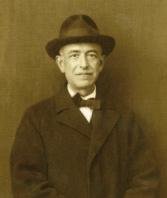
Rachel Franklin combines an illustrated lecture with live piano demonstrations to bring to life a slight, almost Chaplinesque figure whose music pulses with sensuality and spiritual intensity. Deeply sensitive, devout, and more than a little superstitious, de Falla transformed the evocative folk sounds of his native Andalusia into Modernist works of extraordinary color, wit, and drama.
From his roots in Cádiz, to Paris, where he collaborated with the revolutionary Ballets Russes, and finally into exile in Argentina, Franklin examines how de Falla forged his unique, seductive voice with such enchanting stage and concert pieces as El amor brujo, La vida breve, and Noches en los jardines de España
Tues., Aug. 18, 12 p.m.; CODE 1K0-722; Members $25; Nonmembers $35
People have told stories about disasters throughout the ages. One of the oldest such stories is that of the 10 plagues in the book of Exodus, the disasters that forced the Egyptians to liberate the Israelites. These plagues packed enough catastrophes to fill a series of summer blockbusters, including rivers of blood and smothering darkness. Religious studies scholar Steven Weitzman explores how artists, writers, activists, philosophers, believers, and unbelievers of later ages have reshaped the story to give expression to their trauma, outrage, guilt, humor, and hope.

Weitzman’s new book, Disasters of Biblical Proportions: The Ten Plagues Then, Now, and at the End of the World (Princeton University Press), is available for purchase.
Wed., Aug. 26, 6:30 p.m.; CODE 1T0-083; Members $20; Nonmembers $30
All Smithsonian Associates online programs are closed captioned
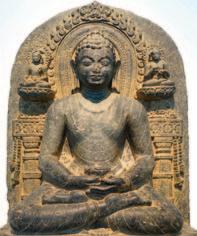
Steven M. Emmanuel, chair of the philosophy department at Virginia Wesleyan University, outlines how Buddhist teachings might shape the way to handle stress, conflict, work, family responsibilities, consumption, and difficult conversations. Bearing in mind that Buddhism is a diverse tradition, he draws on common themes such as mindfulness, compassion, non-harm, and non-attachment to explore strategies for living with greater awareness, patience, and care.
The goal is not to persuade individuals toward Buddhism but rather to consider what may be thoughtfully and usefully drawn from Buddhist ways of understanding and responding to meet the challenges of contemporary life.
Thurs., Aug. 27, 6:30 p.m.; CODE 1K0-724; Members $30; Nonmembers $45
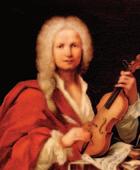
Antonio Vivaldi’s music is so beloved today that it’s surprising he was nearly forgotten for almost two centuries. In his lifetime, the fiery-haired virtuoso violinist and Catholic priest was admired for bold innovations in Baroque form, yet after his death much of the “Red Priest’s” work disappeared from performance.
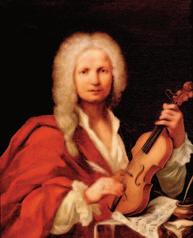
A remarkable 20th-century rediscovery of his manuscripts revived his reputation and revealed the extraordinary breadth of his creativity. From the vivid musical storytelling of The Four Seasons to choral masterpieces like the Gloria and his hundreds of concertos and operas, Vivaldi’s legacy now defines the Baroque era.
In an illustrated lecture with live musical demonstrations, concert pianist Rachel Franklin explores his colorful life, groundbreaking style, and the dramatic comeback of his music.
Tues., Sept. 1, 6:30 p.m.; CODE 1K0-723; Members $30; Nonmembers $45
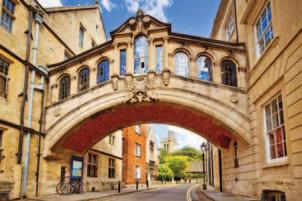
Oxford has long captivated mystery writers. Dorothy L. Sayers, Michael Dibdin, Lady Antonia Fraser, and Colin Dexter are among the many who have drawn on its historic colleges and venerable traditions, while its lush scenery and majestic quads have framed beloved television dramas such as “Endeavour,” “Inspector Lewis,” and “Inspector Morse.”
From Edmund Crispin’s The Moving Toyshop to Mick Herron’s Down Cemetery Road, the city’s storied past has inspired a remarkable array of eccentric fictional sleuths and ingenious crimes. “Oxford has many scholars,” Inspector Morse once observed, “but not enough policemen.”
Author Daniel Stashower explores this rich literary tradition, accompanied by actor Scott Sedar reading from classic novels. Settle in with tea (hold the arsenic) for an evening of locked rooms, cryptic clues, and enigmatic detectives.
Mon., Aug. 31, 6:45 p.m.; CODE 1D0-170; Members $20; Nonmembers $30
Join Tim Dolan, actor and owner of Broadway Up Close tours in New York City, as he steps into 1903 for an insider’s look at Broadway’s oldest playhouse, the historic Hudson Theatre. This online program traces a remarkable story through more than a century of careful restoration, near-demolition, and cultural significance. Explore the building’s hidden corners and architectural details, including its original design elements and the luminous work of Louis Comfort Tiffany.
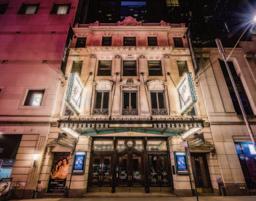
The Hudson Theatre
Along the way, discover the vivid history that unfolded within its walls—from tales of tragedy and intrigue to unforgettable moments shaped by legendary figures in theater, music, and popular culture. Dolan brings the Hudson’s past and present to life, offering a rare glimpse into one of Broadway’s most storied stages.
Tues., Sept. 1, 7 p.m.; CODE 1NV-205; Members $25; Nonmembers $35
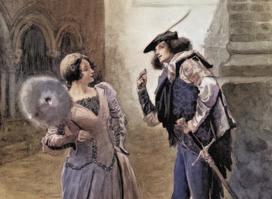
Much Ado About Nothing (1598–99) remains one of Shakespeare’s most beloved and frequently performed comedies, featuring such memorable characters as the witty, bickering Benedick and Beatrice and the more straightforward Hero and Claudio. Joseph Luzzi, professor of literature at Bard College, explores Shakespeare’s lyrical language, narrative techniques, and representations of love, honor, and marriage, among other key themes. Luzzi discusses how this riveting comedy fits into the broader arc of Shakespeare’s career as a playwright and focuses on the defining qualities and techniques that imbue it with such enduring appeal.
Tues., Sept. 8, 12 p.m.; CODE 1J0-571; Members $25; Nonmembers $35
Step beyond the monuments and virtually explore one of Washington’s most dynamic neighborhoods with Carolyn Muraskin of DC Design Tours. Travel east of the Anacostia River through a vivid narrative of historic homes, cultural landmarks, and stories of resilience and reinvention.
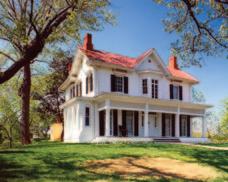
Trace Anacostia’s evolution from its early roots to its role as a center of Black culture, activism, and civic life. Along the way, encounter restored 19th-century rowhouses, ambitious preservation efforts, and a thriving arts scene. Through curated images, maps, and archival materials, visit sites such as the Anacostia Arts Center, the GoGo Museum, and the iconic Big Chair. Explore residential streets rich with architectural detail before concluding at Cedar Hill, Frederick Douglass’ final home, reflecting on his enduring legacy.
The music of Gustav Mahler, among the most powerful and emotive of the late 19th and early 20th centuries, speaks deeply to many listeners. His creative life forms a spiritual quest, exploring fundamental questions of existence, purpose, and the fate of the soul after death. Across his 11 symphonic works, Mahler offers shifting answers to these mysteries, each symphony revealing a different facet of his philosophical search.
Baroque flutist and Carnegie Mellon professor Stephen Schultz traces the stylistic evolution of Mahler’s early creative period, illuminating the defining qualities of his music. He highlights the programmatic, spiritual, and emotional dimensions that shape the early symphonies and situates them within their broader historical context.
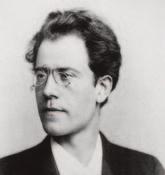
Wed., Sept. 9, 7 p.m.; CODE 1NV-206; Members $25; Nonmembers $35
2-session series: Thurs., Sept. 10 and 17, 12 p.m; detailed program information on website; CODE 1W0026; Members $80; Nonmembers $100
Shakespeare’s sonnets go deeply—with wisdom, sympathy, rage, and sly humor—into the heart of countless human struggles and joys, as readers have kept discovering for more than 400 years. Through close readings of a dozen poems, prominent Shakespearean scholar and author Robert N. Watson of the University of California, Los Angeles examines nostalgia, depression, professional rivalry, solitary travel, biblical interpretation, heterosexual and homosexual desire, post-coital regret, the art of writing a better love letter, the etiquette of breaking up gently or sharply (or both), and the challenges of aging.
Thurs., Sept. 10, 6:45 p.m.; CODE 1K0-725; Members $25; Nonmembers $35
The Makings of a Shakespearean Tragedy Shakespeare’s tragedies, filled with ambition, love, betrayal, and devastating choices, have captivated audiences for centuries. Shakespeare scholar and historian Carol Ann Lloyd-Stanger considers what makes these plays so compelling: the way he takes us into the mind of his characters, the complexity of their experiences, and the language that has become part of our discourse.
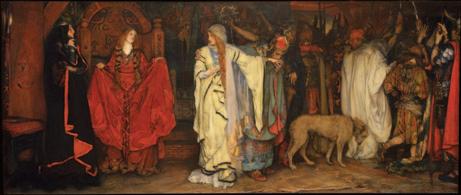
In Shakespeare’s Roman tragedies, the stakes are public more than personal. His revenge tragedies explore the tension between justice and retribution. Romantic tragedies examine the fragile balance between love and destruction, and political tragedies challenge the reality of authority and legitimacy. In a full-day seminar, Lloyd-Stanger explores the tragedies by considering their place in Shakespeare’s time and the ways they continue to resonate with audiences today.
Sat., Sept. 26, 10 a.m.–3 p.m.; detailed program information on website; CODE 1M2-476; Members $80; Nonmembers $100
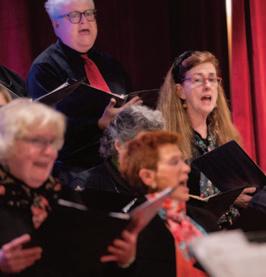
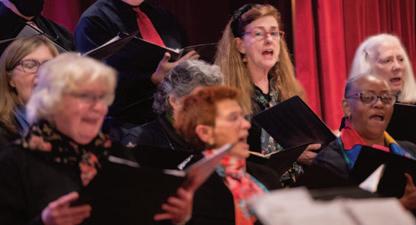
Celebrate memorable music from the stage and screen as conductor, performer, and educator Melodia Mae Rinaldi leads the ensemble in arrangements of the hits you know and love. Selections may include works by Irving Berlin, George Gershwin, Cole Porter, and Stephen Schwartz. (The final song list and arrangements are chosen to fit the group’s vocal and musical abilities.)
No audition is required. However, participants should sing on pitch; have a basic understanding of musical notation; be able to follow a choral score; and practice their vocal part by listening to rehearsal links that are provided.
Rehearsals culminate in a free performance on Nov. 30 for invited guests (reservations are required). 10 sessions plus performance: Mon., Sept. 14–Nov. 23, 6:30–8:30 p.m., no rehearsal Oct. 12; Mon., Nov. 30 performance, 7:30 p.m.; Ripley Center; CODE 1P0-914; Members $150; Nonmembers $165
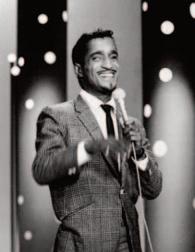
Sammy Davis Jr. was a prodigy in vaudeville, trailblazer in desegregating Las Vegas, and global superstar who shone on Hollywood and Broadway.
Performer and educator Aaron Reeder examines how Davis’s artistry intersected with questions of race, religion, and identity in 20th-century America and the contradictions of fame that defined his career.
Reeder explores Davis’ life and legacy through rare recordings, archival images, and performance excerpts. Through commentary and music, Reeder reveals the man behind the spotlight—a boundarybreaking artist whose call to authenticity, “I’ve Gotta Be Me,” continues to resonate today.
Tues., Sept. 15, 12 p.m.; CODE 1J0-573; Members $20; Nonmembers $30
The first decade of American TV comedy was an extraordinary period of innovation. The era from the late 1940s to the late 1950s produced a range of distinctive programming: live comedy and variety shows like Your Show of Shows, filmed sitcoms like I Love Lucy, and late-night talk programs like The Tonight Show. Pioneering performers and creators such as Sid Caesar, Lucille Ball, Jackie Gleason, and Steve Allen helped shape a new visual language of comedy that influenced television for the next 60 years. As he shares dozens of clips, media historian Brian Rose examines why this era may have produced more laughter than any other period in television history.
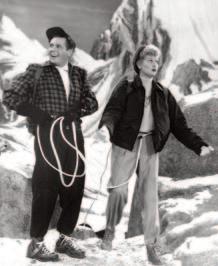
Lucille Ball and Desi Arnaz in I Love Lucy, 1956
Thurs., Sept. 17, 12 p.m.; CODE 1J0-575; Members $25; Nonmembers $35
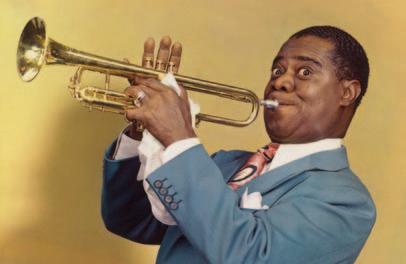
Jazz crosses lines of race, class, geography, politics, religion, and genre. In this three-part lecture series, explore the origins and proliferation of jazz, from its beginnings in New Orleans, Chicago, New York, and Kansas City to its most recent appearances in Europe and Asia. Musicology professor Anna Harwell Celenza shares recordings of blues, Dixieland, swing, bebop, cool jazz, and fusion to reveal what makes jazz vital to America’s multifaceted identity as she demonstrates how it has never stopped changing.
3-session series: Tues., Sept. 15–29, 6:30 p.m.; detailed program information on website; CODE 1T0-087; Members $75; Nonmembers $95
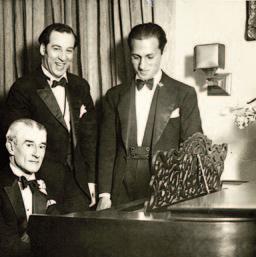
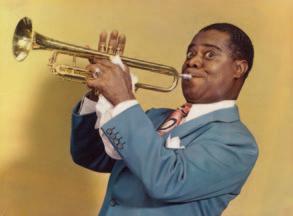
Beginning in the earliest part of the 20th century, European “art” or “classical” music enjoyed a brief but intense romance with American jazz. In a 4-part series, concert pianist Rachel Franklin uses her live piano demonstrations and historic and contemporary film clips to explore early jazz origins and how American ragtime and jazz conquered Parisian nightclubs in the feverish pre- and post-World War I era. She traces the role of jazz in the ’20s and ’30s as a symbol of political freedom and cultural modernity for composers including Ravel, Milhaud, and Stravinsky. In the United States, Copland, Gershwin, and other artists used jazz as a source of inspiration while coming to terms with its identity as a highly complex, home-grown African American artform.
4-session series: Thurs., Oct. 1–22, 12 p.m.; detailed program information on website; CODE 1K0-733; Members $100; Nonmembers $125
The Art of Choosing the Right Words
What makes the best speeches and writings stand the test of time? What can be learned from them about how to write better ourselves? Ward Farnsworth, professor at the University of Texas School of Law and author of a series of books on English rhetoric and style, shows how small choices regarding the selection of words, the arrangement of sentences, and the creation of a cadence can put force into writing and speech. He provides examples of the very best use of rhetorical devices and shows how Lincoln and other masters of the language wrote so memorably.
Thurs., Sept. 17, 6:45 p.m.; CODE 1K0-735; Members $25; Nonmembers $35
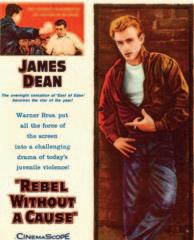
The 1950s lit up America’s marquees with titles like Dragstrip Riot, High School Confidential!, Hot Rod Girl, and High School Hellcats—Hollywood couldn’t get enough of the nation’s flaming, bewildered postwar youth. From Marlon Brando’s brooding biker in The Wild One and James Dean’s anguished teen in Rebel Without a Cause to Elvis Presley’s swaggering drifter in King Creole, studios chased the hearts, minds, and pocket change of a new generation. Depending on who delivered the moral lecture, these kids were either rotten to the core or heartbreakingly misunderstood.
The so-called “juvenile delinquency” cycle pretended to offer sympathy, but it was the onscreen misbehavior that packed theaters and drive-ins. Film historian Max Alvarez plays cinematic hall monitor to John Cassavetes, Natalie Wood, Sal Mineo, Mamie Van Doren, and more in this totally “boss” multimedia deep dive.
Thurs., Sept. 24, 6:30 p.m.; CODE 1K0-731; Members $30; Nonmembers $45
The storyline of Paris can be followed along the banks of its iconic River Seine. On both the Right Bank and the Left, evidence of the city’s 2,000-year history, the figures who shaped it across the centuries, and the artistic and architectural movements that originated here can be seen. Journey with freelance travel writer Barbara Noe Kennedy as you discover Paris, including intriguing sites, historical aspects, and art in this virtual exploration using maps, photos, and videos.
2-session series: Tues., Sept. 29 and Oct. 6, 7 p.m.; detailed program information on website; CODE 1CVPAR; Members $50; Nonmembers $60
Individual sessions: Tues., Sept. 29 (CODE 1CV-095); Tues., Oct. 6 (CODE 1CV-096); 7 p.m.; Members $30; Nonmembers $40
A Cathedral of Spirituality and Sound
By blending new sections with reimagined earlier music spanning 35 years, Bach compresses the full range of Baroque musical styles into less than two hours of radiant sound. Its emotional sweep—from profound sorrow to exuberant joy, sometimes only moments apart—matches its technical breadth, moving from simple, song-like lines to intricate polyphony.
Singer and Bach specialist Thierry van Bastelaer examines the Mass in B Minor’s history, structure, and meaning, drawing on performances by today’s most insightful and expressive interpreters to illuminate this monumental creation.
Wed., Sept. 30, 6:30 p.m.; CODE 1M2-477; Members $30; Nonmembers $45

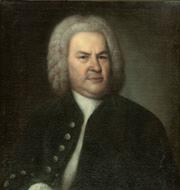
The apple is one of the world’s most diverse food plants. A century ago, the United States grew 16,000 varieties; today, industrial agriculture has narrowed what appears in stores, though hundreds of remarkable apples survive and are returning in a new renaissance. Some shaped American history, some rose from obscurity to national fame before fading again, and many offer flavors far beyond the familiar supermarket types.
Rowan Jacobsen, author of Apples of Uncommon Character, highlights extraordinary apples such as the explosively crisp Pixie Crunch, the dark Kingston Black, the lychee-scented King of the Pippins, and America’s oldest variety, the Roxbury Russet. Profiling some of the best and brightest, the oddballs and veterans, Jacobsen tells the tale of the apple in America and reveals a world every bit as magical today as it was a century ago.
Wed., Sept. 30, 6:30 p.m.; CODE 1W0-029; Members $20; Nonmembers $30
Miyazaki, Takahata, and
The anime creations of Studio Ghibli in Japan have traversed the globe since it was founded in 1985. Linda Ehrlich, who has taught Asian studies and Japanese film for several universities, focuses on the artistic and cultural influences of two of the studio’s key films: Spirited Away (Sen to Chihiro no kamikakushi, 2001), directed by Miyazaki Hayao, and The Tale of Princess Kaguya (Kaguya-hime, 2013), directed by Takahata Isao.
Ehrlich also analyzes other Studio Ghibli films, including Miyazaki’s Princess Mononoke (1997) and Takahata’s Only Yesterday (Omoide poro poro, 1991). In addition, she considers what might happen to the Ghibli brand after the death of Takahata and the (frequently) announced retirement of Miyazaki.
Mon., Oct. 5, 6:45 p.m.; CODE 1J0-542; Members $20; Nonmembers $30

Unless noted, all programs are presented on Zoom; listed times are Eastern Time. Online registration is required.
Naturalist and photographer Matt Felperin leads a visual exploration of Costa Rica’s Caribbean lowlands, foothills, and highland cloud forests, spanning the lush river corridors of Sarapiquí to the mist-laden peaks of the Talamanca Mountains. Traversing forest trails, river edges, and moss-draped ridgelines, Felperin documents the remarkable avian variety of these globally significant biodiversity hotspots.
Along the way, encounter trogons, tanagers, hummingbirds, and toucans; observe mixed-species feeding flocks and high-elevation natives; and gain insight into the elusive species that help define one of the richest bird habitats on Earth. Interwoven with field observations and narrative accounts from the rainforest, Felperin offers both a vivid visual record and an informed perspective on the ecological complexity of tropical bird communities.
Tues., July 7, 7 p.m.; CODE 1NV-195; Members $25; Nonmembers $35
Safari destinations like Kenya, Tanzania, and Botswana have long stood at the center of African travel. Yet conservation pioneers and local communities elsewhere are quietly opening remote regions where wildlife thrives in solitude and timeless landscapes remain untouched by mass tourism.

Wilderness guide Russell Gammon leads an immersive exploration of two of Africa’s most rewarding but least-visited safari destinations: Zambia and Uganda. Gammon shares the wonder of sitting quietly among a family of mountain gorillas, listening to chimpanzees call through the forest at dawn, and moving through landscapes where primates, predators, and scenery converge in a tapestry of biodiversity. Through storytelling, decades of firsthand experience, and ecological insights, he reveals why these countries are emerging as part of the future of conservation-focused travel.
Sat., July 11, 10 a.m.–3 p.m.; detailed program information on website; CODE 1J0-561; Members $80; Nonmembers $100
We are told, says philosopher Ben Bramble, that humanity’s destiny lies beyond Earth with the promise of cities on Mars, asteroid mining, lunar industries, and even “backup planets” to secure our survival. But is becoming a multiplanetary species the wisest path forward?
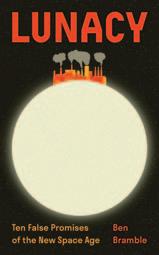
Bramble, a mission specialist for the Australian National University’s Institute for Space, argues that many of the visions of the New Space Age rest on confusion about risk, progress, and what makes a human future genuinely good. If we care about humanity’s long-term flourishing, he suggests we should look less to Mars—and more carefully at Earth.
His new book, Lunacy: Ten False Promises of the New Space Age (Princeton University Press), is available for purchase.
Wed., July 15, 6:30 p.m.; CODE 1W0-016; Members $20; Nonmembers $30

With more than 170,000 described species—and countless more to be discovered—the kingdom Fungi is one of the most astonishing branches of the tree of life. Today mycology, the study of fungi, is enjoying a surge of popular attention, captivating foragers and food lovers, scientists and artists, and naturalists of all ages and experience levels.
Though fungi can seem mysterious and even bewildering, mycologist David Hibbett illuminates their remarkable variety and explains what fungi are, how they live and grow, and the ways they shape the ecosystems around us. He uncovers the surprising roles fungi have played in human cultures across time—from food and fermentation to medicine and myth. Hibbett provides helpful context and resources to deepen an understanding and appreciation of this extraordinary and often-hidden world.
Tues., July 21, 7 p.m.; CODE 1NV-199; Members $25; Nonmembers $35
These programs are part of Smithsonian Associates
From the country’s earliest days, Americans’ survival, economy, and cultural development have been deeply tied to the natural environment. Thus, in an era of rapid environmental change, it has become vital to better understand the world around us and protect it for future generations.
The Smithsonian Environmental Research Center (SERC) is a world leader in science that connects people and ecosystems. William “Monty” Graham, the new director of SERC, discusses the center’s work, beginning with a look at how Americans used the land and its resources 250 years ago. With a combination of knowledge from the past and innovative technology, Graham says, Smithsonian s cientists can peer into the future for a glimpse at what it holds for the United States’ environment.
Wed., July 22, 12 p.m.; CODE 1T0-079; Members $20; Nonmembers $30

With Giulia Enders
Discover how listening more closely to our bodies can shift our understanding of health, connection, and happiness. Giulia Enders, physician and star of Netflix’s Hack Your Health, explores the extraordinary intelligence within our bodies. Tapping thousands of years of biological ingenuity and the latest scientific insights, Enders examines what our immune system can teach us about security, how wound healing mirrors emotional recovery, and what our bodies show us about what we truly need to thrive.
Enders’ new book, Organ Speak: What It Really Means to Listen to Our Bodies (HarperOne), is available for purchase.
Thurs., Aug 13, 12 p.m.; CODE 1T0-084; Members $20; Nonmembers $30

The Fall and Rise of America’s Eastern Wilderness
Before skyscrapers and industry reshaped the eastern United States, it teemed with wildlife: elk, bison, and wolves and cougars moving through prairies, forests, and wetlands. Environmental writer Andrew Moore explores this forgotten landscape and the decline that followed as industrialization and unregulated hunting pushed many species toward extinction.
He follows conservationists, biologists, hunters, and communities working to restore these animals to their native habitats—from bison on Illinois prairies to elk in Kentucky and red wolves in coastal North Carolina—and examines what their comeback means for conservation, coexistence, and the idea of wilderness in a modern, human-shaped world.
His book The Beasts of the East: The Fall and Rise of America’s Eastern Wilderness (HarperCollins) is available for purchase.
Tues., Aug. 18, 7 p.m.; CODE 1NV-204; Members $25; Nonmembers $35
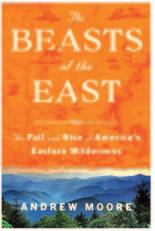
The moon has shaped human imagination since long before written history, inspiring art, artifacts, and writing across cultures. Even as modern science has revealed its geology through robotic and crewed missions, it continues to captivate artists, writers, and dreamers.
Matthew Shindell, curator of earth and planetary science at the National Air and Space Museum, traces humanity’s evolving understanding of Earth’s natural satellite. He follows the moon’s presence from ancient carvings and cave paintings to medieval Christian cosmology, early fictional lunar voyages to contemporary cinema, and from the Apollo landings to today’s scientific exploration and future mission planning.
Shindell is the editor of Lunar: A History of the Moon in Myths, Maps, and Matter (University of Chicago Press), which is available for purchase.
Thurs., Aug. 20, 6:30 p.m.; CODE 1W0-024; Members $20; Nonmembers $30
These programs are part of Smithsonian Associates
Understanding DNA, Mutation, and Human Health
DNA is a lifelong instruction manual that constantly changes, says science writer Roxanne Khamsi. From conception onward, mutations accumulate in every cell. Drawing on her new book, Beyond Inheritance, Khamsi argues that bodies are dynamic genetic ecosystems where evolution unfolds continuously. These mutations can harm— such as when altered blood cells raise heart attack risk—but they can also strengthen. Liver cells with advantageous mutations handle excess calories better, and immune cells rework their DNA to craft stronger antibodies.
Khamsi highlights discoveries showing how genetic variation shapes health, immunity, and aging, challenging the belief that all cells share identical DNA and revealing how this insight is reshaping medicine, from vaccines to cancer care.
Beyond Inheritance: Our Ever-Mutating Cells and a New Understanding of Health (Riverhead Books) is available for purchase.
Mon, Aug. 24, 6:45 p.m.; CODE 1D0-169; Members $20; Nonmembers $30
On July 23, 1999, the Space Shuttle Columbia launched NASA’s Chandra X-ray Observatory into an orbit that takes it about a third of the way to the moon. Since then, Chandra—operated for NASA by the Smithsonian Astrophysical Observatory—has sent back to Earth images of the spectacular, glowing remains of exploded stars, found black holes across the universe, and contributed to the study of both dark matter and dark energy.

Panelists:
A panel of experts from the Smithsonian Astrophysical Observatory and Northrop Grumman takes you behind the scenes at the observatory to see how engineers operate one of the most powerful space telescopes ever built. Learn how X-ray astronomy reveals an otherwise invisible, high-energy universe and why Chandra remains essential.
The panel also delves into the origins of X-ray astronomy in the United States, tracing its roots to pioneering rocket experiments in the 1960s and the Nobel Prize–winning discovery of cosmic X-ray sources by astrophysicist Riccardo Giacconi, who spent many years at the Smithsonian Astrophysical Observatory. That spirit of innovation launched a new branch of astronomy and helped establish U.S. leadership in high-energy astrophysics.
Rodolfo Montez Jr., astrophysicist, Smithsonian Astrophysical Observatory
Scott Wolk, senior astrophysicist and flight director, Smithsonian Astrophysical Observatory
Julia Zachary, Chandra Flight Mission planning lead, Northrop Grumman
Moderator:
Kimberly Arcand, Chandra visualization scientist and communications lead, Smithsonian Astrophysical Observatory Tues., Aug. 25, 12 p.m.; CODE 1T0-085; Members $20; Nonmembers $30
Read more about programs in this guide on our website. Search by code or date. Expanded program descriptions, presenters’ information, and more at SmithsonianAssociates.org.
These programs are part of Smithsonian Associates
Whales make some of the longest migrations on Earth, traveling thousands of miles round-trip annually. They follow routes that connect critical feeding and breeding habitats across the globe, linking distant ecosystems into a single living ocean. Marine biologist Amanda Hunter considers whale migration and ocean conservation and examines the growing threats whales face—from climate-driven shifts in food availability to ship traffic and ocean pollution. Hunter also highlights conservation solutions that are making a difference and uncovers the surprising ways whales help regulate ocean health and climate.
Thurs., Aug. 27, 6:45 p.m.; CODE 1J0-568; Members $20; Nonmembers $30


Humans have watched displays of the Northern Lights in awe for centuries. Some cultures thought these colorful curtains of light arose as sparks created by the tail of an Arctic fox or from epic battles in the night sky. The Sámi of northernmost Europe call it “the light you can hear.” But, as Sky & Telescope senior editor J. Kelly Beatty explains, only recently have scientists been able to fully understand how and why auroras exist. He explores the fanciful explanations for these dancing lights, how powerful bursts from the sun create them, and when and where you’re most likely to see an auroral display.
Mon., Aug. 31, 6:45 p.m.; CODE 1J0-569; Members $20; Nonmembers $30
Few animals are as instantly recognizable as the koala, an enduring symbol of Australia’s unique wildlife. Yet behind this familiar image lies a species in decline, with populations now only a fraction of what they were before European colonization. Wildlife conservation biologist Fred Bercovitch explores koalas’ vulnerabilities and how this emblematic marsupial offers a compelling window into the evolutionary forces that shape animal behavior. He examines their reproductive behavior and feeding habits and puts biological insights into a broader conservation context. Currently koalas are on the International Union for Conservation of Nature’s list of endangered species, classified as vulnerable to extinction as their numbers have plummeted by close to 30% in the last three decades.
Thurs., Sept. 10, 7 p.m.; CODE 1CV-095K; Members $20; Nonmembers $30

These programs are part of
For more than 140 million years, dinosaurs were among the dominant land animals on Earth. Thousands of species lived and died on every landmass, evolving a spectacular diversity of sizes and shapes that scientists are still uncovering today. The National Museum of Natural History’s curator of Dinosauria, paleontologist Matthew Carrano, explores what life was like for dinosaurs in these ecosystems.
Carrano delves into what bizarre dinosaurs like short-armed Mononykus and scoop-toothed Masiakasaurus were actually up to; why there were no dinosaur moles, squirrels, bats, primates, or whales; and how young T. rex and adult Nanotyrannus might have coexisted as he discusses what scientists know, don’t know, and hope to learn about the ecology of dinosaurs.
Wed., Sept. 16, 6:30 p.m.; CODE 1W0-027; Members $20; Nonmembers $30
Drawing on more than 40 years of fieldwork, John Hoogland offers an engaging look into the lives of prairie dogs—social, diurnal rodents that inhabit western North American grasslands and help hold the ecosystem together. He examines how they form large colonies, use complex alarm calls, and balance cooperation with competition.
Hoogland highlights surprising findings on mating behavior, kin favoritism, predation, population cycles, and conservation challenges, reshaping how scientists understand social animals. Blending scientific insight with field stories and comparisons across species, he presents the prairie dog as a powerful model for studying behavior, ecology, and the importance of long-term research.
Hoogland’s new book, Prairie Dogs: Ecology and Social Behavior (Princeton University Press), is available for purchase.

Wed., Sept. 23, 7 p.m.; CODE 1NV-207; Members $25; Nonmembers $35
In the early 20th century, U.S. government scientists and their European colleagues went to great lengths to bring home new seeds and cultivars from abroad. But in many cases these “plant explorers,” though much praised in their day, wound up triggering what are now considered ecological disasters.
How did Western attitudes toward imported plants and animals change so completely within a century?
Journalist Amy Crawford explores how confronting the complexities of nature and the role of humans in a changing world can place unwanted plants and animals in a new light.
Crawford’s new book, Undesirable: Invasive Species, Humans, and Where We All Belong (Oxford University Press), is available for purchase.
Wed., Sept. 23, 6:30 p.m.; CODE 1T0-086; Members $20; Nonmembers $30
Smithsonian
For at least 4,000 years, humans have treated horses as objects. Sometimes they have been objects of admiration or art and themes of literature; sometimes they have been used for transportation or labor; often in the past they have been equipment for war; and even today many are still raised for meat. What people have rarely done is consider the horse as a subject—an animal with a heart and mind that requires understanding. Janet L. Jones, a neuroscientist and horse trainer, offers a surprising overview of equine perception, memory, attention, and emotion so that participants can begin to understand who horses really are.
Fri., Oct. 2, 12 p.m.; CODE 1J0-577; Members $20; Nonmembers $30
Explore one of the most breathtaking drives in the world with naturalist and interpreter Keith Tomlinson. Starting at the northern tip of Shenandoah National Park, follow the winding Skyline Drive and Blue Ridge Parkway all the way to Asheville, North Carolina—a journey spanning nearly 600 miles of dramatic landscapes. Along the way, learn about historic sites reflecting centuries of human history, from Native American habitation to colonial settlements, and marvel at steep summits, ancient volcanoes, granite peaks, and dramatic gorges.
Beyond the scenery, Tomlinson delves into the natural wonders of the Appalachians. Through the lenses of history, science, and ecology, discover the fascinating story of this ancient mountain range and the forces that shaped its enduring beauty.
Wed., Oct. 7, 7 p.m.; CODE 1NV-209; Members $25; Nonmembers $35


The universe is far stranger than science fiction ... and it’s all real. Kimberly Arcand of the Smithsonian Astrophysical Observatory leads a journey through weird and wild places in the cosmos, from merely mind-bending to truly extreme. Along the way meet blazars (hyperactive, distant black holes) that outshine entire galaxies, quasars powered by supermassive black holes, city-sized neutron stars, and pulsars that keep time more precisely than atomic clocks, plus a few truly wild worlds orbiting distant suns. Arcand talks about how these extreme objects are found and what they reveal about the cosmos.
Tues., Oct. 13, 6:30 p.m.; CODE 1J0-578; Members $20; Nonmembers $30
What time does the program end? Unless noted, Smithsonian Associates programs run 1 hour 15 min.–2 hours, including Q&A
These programs are part of Smithsonian Associates I N SI DE
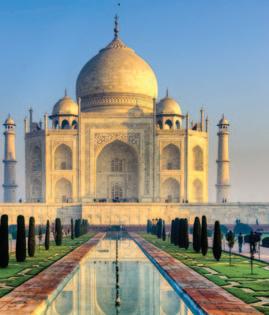
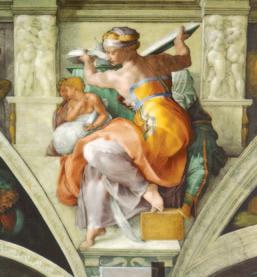
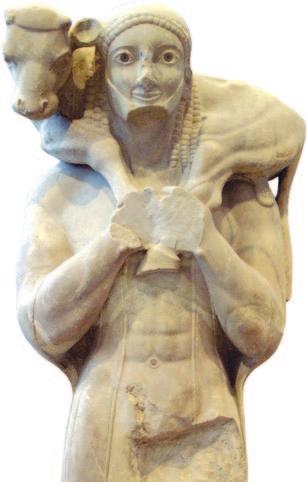
Now become the expert you’ve always wanted to be.
Art is all around us. It excites us, enriches our lives, and enlivens our imaginations. But to truly appreciate any work of art, we need to understand the context and culture in which it was produced. That’s why Smithsonian Associates offers an exciting World Art History Certificate Program.
The wide-ranging offerings are designed to provide a global perspective on art and architecture and draw on the Smithsonian’s world-class collections, the rich resources of other Washington institutions, and noted national and international museums.
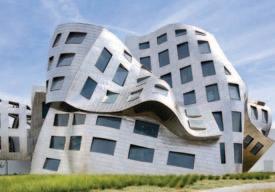
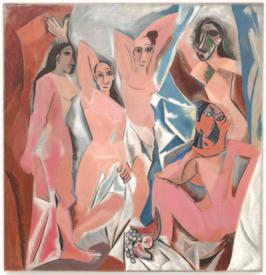
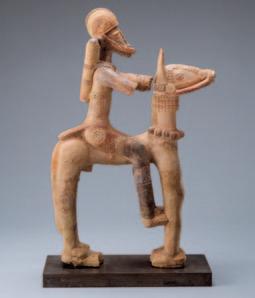
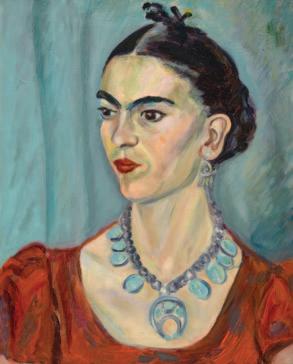
The core courses and electives in this program are selected from among Smithsonian Associates’ ongoing courses, seminars, study tours, and Studio Arts classes. You’ll find an expanded roster of instructors and a new range of course topics.
Complete the program requirements at your own pace and track your credits online. Credits are counted from the day of program registration and are not given retroactively.
To learn more about the Smithsonian Associates World Art History Certificate Program, visit SmithsonianAssociates.org/ArtCertificate
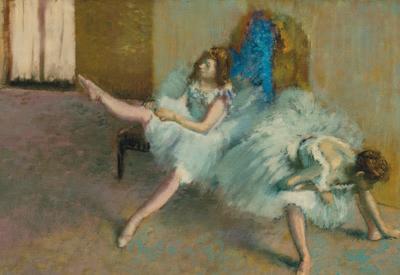
*from Smithsonian museum collections
Unless noted, all programs are presented on Zoom; listed times are Eastern Time. Online registration is required.
Discover how visual art can inspire creative writing and how writing can offer a powerful way to experience art. Mary Hall Surface, the founding instructor of the National Gallery of Art’s Writing Salon, leads workshops that explore essential elements of writing and styles through close looking, word-sketching, and imaginative response to prompts.
The sessions spotlight a wide range of visual art chosen to inspire writers of all experience levels to deepen their process and practice. Each workshop has a limited enrollment to maximize interaction among the instructor and students.
JUL 7 Dialogue: Spoken and Unspoken
JUL 14 Impact: Tone and Mood
JUL 21 Memoir: Setting and Identity
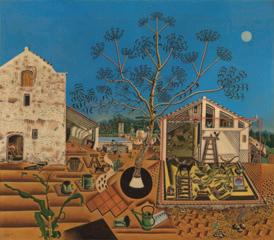
3-session series: Tues., July 7, 14, and 21, 10 a.m.; detailed program information on website; CODE 1K0-705; Members $105; Nonmembers $125
Individual sessions: Tues., July 7 (CODE 1K0-706); Tues., July 14 (CODE 1K0-707); Tues., July 21 (CODE 1K0-708); 10 a.m.; Members $40; Nonmembers $50
World Art History Certificate elective: Earn 1 credit Art and Fiction
A picture is not only worth a thousand words: It can sometimes inspire a whole invented world. Independent art historian Heidi Applegate explores the art and artists behind three works of historical fiction by contemporary authors.
Gain new perspectives on the works of Johannes Vermeer, Leonardo da Vinci, and Henri Matisse by delving into the novels followed by Applegate’s examination of the factual background along with the fiction. It’s a “novel” way to explore the arts.
3-session series: Wed., July 8, Aug. 12, and Sept. 9, 12 p.m.; detailed program information on website; CODE 1H0-916; Members $75; Nonmembers $95
Abby Aldrich Rockefeller
World Art History Certificate elective: Earn ½ credit

Long before modern art found its home in museums, it thrived in salons, collections, and networks cultivated by women. In avant-garde circles in early 20th-century New York, these women nurtured artists, championed emerging talent, and shaped the tastes that defined modern culture. Art historian Jennie Hirsh highlights Abby Aldrich Rockefeller, Lillie P. Bliss, and Peggy Guggenheim, whose collecting and patronage helped shape the foundations of New York’s modern art institutions
Thurs., July 9, 12 p.m.; CODE 1D0-161C; Members $25; Nonmembers $35
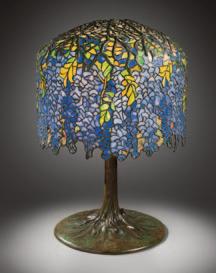
World Art History Certificate elective: Earn ½ credit
The late-19th and early-20th centuries were a time of extraordinary creativity in the arts, as New York City emerged as a global center of innovation and design. Among the leading figures of this era was Louis Comfort Tiffany, whose spectacular stained-glass windows, lamps, vases, and elegant home furnishings transformed decorative arts into coveted works of fine art.
In his several studios, Tiffany pursued what he called a lifelong “pursuit of beauty,” experimenting boldly with color, light, and new glassmaking techniques. His designs—at once opulent and organic—captured the spirit of the Gilded Age and the Art Nouveau movement while redefining the relationship between art and everyday life.
Art historian Janetta Rebold Benton, herself a collector of Tiffany lamps, explores Tiffany’s fascinating life, artistic vision, and why his radiant creations continue to enchant today.
Tues., July 14, 7 p.m.; CODE 1D0-163; Members $20; Nonmembers $30
World Art History Certificate elective: Earn ½ credit
The Etruscans hold a reputation for mystery, but we actually know a lot about these creative ancient Italians and their remarkable contributions to the history of art. Contemporaries of the ancient Greeks and Romans, the Etruscans maintained a distinctive language and visual culture.
Art historian and author Laura Morelli explores this culture using samples of masterworks of Etruscan painting, sculpture, and metalwork. She examines how the Etruscans adorned the places where they planned to spend eternity and the incredible luxury objects they took with them.
Morelli delves into what makes Etruscan culture unique in the Mediterranean world; how to appreciate the hallmarks of its visual art; and why Etruscan archaeology is among the most vibrant fields of study today.
Fri., July 17, 12 p.m.; CODE 1H0-913; Members $20; Nonmembers $30
Architect and owner of DC Design Tours Carolyn Muraskin explores the rich engineering, architectural, and cultural history of Washington, D.C.’s most significant bridges. Trace how these myriad structures have shaped movement, commerce, and identity in the nation’s capital from the 19th-century Aqueduct Bridge—once a vital link between Georgetown and Virginia—to today’s well-traveled Francis Scott Key Bridge and the historic Dumbarton and Chain bridges.
Muraskin examines how designers responded to the challenges of spanning the Potomac River and Rock Creek, highlighting innovations in materials, structural systems, and aesthetic ideals. These crossings reveal a layered narrative of urban growth, transportation planning, and civic ambition, offering insight into their roles as both feats of engineering and enduring symbols of Washington’s evolving landscape.
Thurs., July 23, 12 p.m.; CODE 1NV-200; Members $25; Nonmembers $35
All Smithsonian Associates online programs are closed captioned
In this ongoing series, Renaissance art expert Rocky Ruggiero spotlights the significant collections of sometimes-overlooked museums and churches throughout Italy.
World Art History Certificate elective: Earn ½ credit for each
Founded by the hermit monks of San Girolamo in 1396 in Venice, the Church of San Sebastiano can be described as Venetian artist Paolo Veronese’s “Sistine Chapel.” The church houses a cycle of paintings that are the most important works Veronese created. Other notable works found in the church and sacristy include Titian’s St. Nicholas and works by Paris Bordone, Jacopo Sansovino, Palma il Giovane, Alessandro Vittoria, Jacopo Tintoretto, and Bonifacio de’ Pitati. Ruggiero discusses the significance of Veronese’s paintings and highlights other noteworthy works in the church.
Mon., July 13, 12 p.m.; CODE 1J0-562; Members $30; Nonmembers $45
In the historic center of Milan, the Pinacoteca Ambrosiana houses one of Italy’s most historically significant art collections. Founded in 1618 by humanist Federico Borromeo, the museum preserves masterpieces from the Renaissance and Baroque periods. Among its highlights are paintings by Leonardo da Vinci as well as works by Caravaggio, Botticelli, Titian, and Raphael, including Raphael’s monumental preparatory drawing for The School of Athens. Ruggiero explores the museum’s history and the masterpieces that make it a cornerstone of Milan’s artistic heritage.
Wed., Aug. 26, 6:30 p.m.; CODE 1J0-570; Members $30; Nonmembers $45
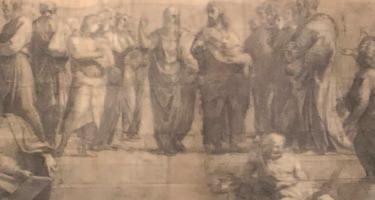
Detail of the preparatory drawing by Raphael for The School of Athens
In the heart of Siena, the Pinacoteca Nazionale di Siena preserves an extensive collection of paintings from the Sienese school, spanning the 13th to the 17th centuries. The museum traces the evolution of Sienese painting from the luminous gold-ground panels of its medieval origins, through the achievements of the Renaissance and Mannerist periods, and into the artistic developments of the 17th century. Ruggiero examines the significance of this collection and the enduring legacy of Siena’s artistic tradition.
Mon., Sept. 14, 6:30 p.m.; CODE 1J0-572; Members $30; Nonmembers $45
Read more about programs in this guide on our website. Search by code or date. Expanded program descriptions, presenters’ information, and more at SmithsonianAssociates.org.
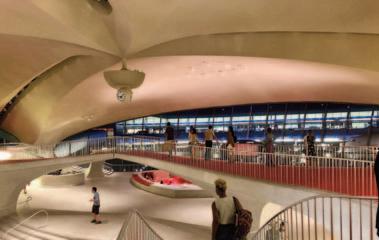
Art History Certificate elective: Earn ½ credit
By the mid-20th century, architects in the United States were redefining the modern city, transforming how people live, work, and experience space. They developed a distinctive vocabulary of modern and postmodern design, experimenting with new forms, materials, and structural ideas that influenced architects and artists worldwide.
Art historian Jennie Hirsh examines both celebrated and lesser-known projects— residences, office buildings, theaters, civic spaces, and campus structures—tracing the innovations and vision of architects such as Louis Kahn, Philip Johnson, Denise Scott Brown, I.M. Pei, and Eero Saarinen.
Through examples in Chicago, New York, Philadelphia, and beyond, Hirsh explores how these practitioners balanced functionality, elegance, and human scale, ultimately reshaping American architecture and leaving a legacy that continues to inspire the built environment today.
Wed., July 29, 6:45 p.m.; CODE 1D0-165; Members $20; Nonmembers $30
World Art History Certificate elective: Earn ½ credit
Fallingwater, designed by Frank Lloyd Wright, is one of the most celebrated achievements of 20th-century architecture and a supreme example of his philosophy of organic design—the belief that buildings should grow naturally from their surroundings. Completed in 1939 as a mountain retreat for the Kaufmann family of Pittsburgh, the house dramatically embodies this idea, with bold cantilevered terraces extending over a rushing waterfall in the wooded hills of southwestern Pennsylvania.
Constructed of native stone and warm-toned concrete that echoes the surrounding landscape, Fallingwater blurs the boundary between indoors and outdoors through open terraces, expansive windows, and the constant presence of the stream below. It’s also unique among Wright’s major works in that its setting, original furnishings, and artwork remain largely intact, preserving the architect’s complete vision.
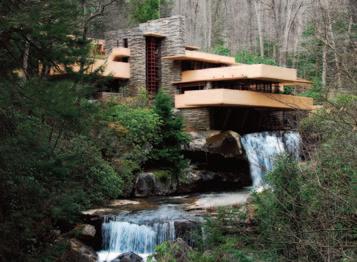
Historian and architecture lecturer Bill Keene leads a beautifully illustrated virtual exploration of this landmark house, examining its design and construction and the personalities behind its creation. Whether you have visited Fallingwater or hope to see it someday, come away with a deeper appreciation of this remarkable work and the ideas that shaped it.
Tues., Aug. 11, 7 p.m.; CODE 1NV-202; Members $25; Nonmembers $35
World Art History Certificate elective: Earn 1 credit
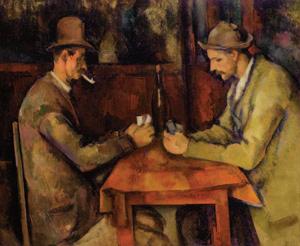
Paul Cézanne broke from artistic tradition through a radically new way of seeing, transforming ordinary objects into subjects of wonder. Though he paved the way for the 20th-century avant-garde, he remained deeply engaged with the art of the Old Masters.
Like many artists of his era, he sought to capture fleeting visual impressions, yet his focus on solid forms, broad planes of color and light, and shifting viewpoints set him apart from he Impressionists. Even as his work moved toward abstraction, Cézanne stayed rooted in the observable world, exploring how perception unfolds over time.
In a full-day seminar, art historian Aneta Georgievska-Shine examines how his groundbreaking approach—balancing tradition and innovation—allowed him to forge an entirely new mode of representing reality.
Fri., July 24, 10 a.m.–4 p.m.; detailed program information on website; CODE 1K0-719; Members $100; Nonmembers $125
World Art History Certificate elective: Earn 1 credit
The secret to understanding the daily life and culture of ancient Egypt under its great rulers and pharaohs is right before our eyes—in its art and architecture. Examinations of these vast treasures reveal how they influenced Egyptian cultural identity and how religion shaped artistic production.
During this full-day seminar, Jacquelyn Williamson, a specialist in Egypt and an associate professor of ancient art and archeology at George Mason University, draws on evidence from the most recent archaeological discoveries to survey the social and historical realities of this civilization from its early pyramids through its art created under King Akhenaten, who upended centuries of tradition to create new artistic conventions.
Sat., July 25, 10 a.m.–3 p.m.; detailed program information on website; CODE 1M2-466; Members $80; Nonmembers $100
World Art History Certificate elective: Earn ½ credit
Milton Avery, Adolph Gottlieb, and Mark Rothko’s shared summers in Gloucester, Massachusetts, in the 1930s and 1940s had a lasting impact on the work of these three pivotal 20th-century American artists. Featuring 82 works from 26 collections, the Cape Ann Museum and The Phillips Collection present “Avery, Gottlieb & Rothko: By the Sea,” a new exhibition that explores their bond.
Eliza Rathbone, chief curator emerita of The Phillips Collection, talks with Cape Ann Museum director Oliver Barker about the impact of Gloucester’s coastal landscape on the three artists and shares behind-the-scenes details about the exhibition. “Avery, Gottlieb & Rothko: By the Sea” is on view at the Cape Ann Museum through Sept. 27 and at The Phillips Collection Oct. 24–Jan. 24, 2027. Mon., July 27, 6:30 p.m.; CODE 1W0-018; Members $20; Nonmembers $30
World Art History Certificate core course: Earn 1 credit
During the Italian Renaissance, works of art could serve many functions. From sacred paintings to refined portraits of the elite to the funerary monuments of rulers, each form was designed to serve a specific purpose and to elicit a certain type of response in its viewers. Architectural structures were also designed to convey similar ideas and to shape visitors’ experiences.
Art historian Sophia D’Addio introduces the visual culture of the 14th through 16th centuries in programs covering a range of images, objects, and structures. She examines some of the most influential and fascinating works of the period, exploring their formal innovations and the relationships between powerful patrons and skilled artists that resulted in their creation.
5-session series: Tues., July 28–Aug. 25, 6:30 p.m.; detailed program information on website; CODE 1M2-467; Members $110; Nonmembers $135
What time does the program end? Unless noted, Smithsonian Associates programs run 1 hour 15 min.–2 hours, including Q&A
World Art History Certificate elective: Earn ½ credit
In 1924 the French writer André Breton composed the first of several manifestos outlining a radical new approach to literature, painting, sculpture, film, and other forms: Artists should draw their inspiration from dreams and the unconscious rather than academic training and rational thought. Christened Surrealism, it dominated avant-garde European and American art during the late 1920s and ’30s, as seen in the work of such prominent figures as Salvador Dalí, René Magritte, Max Ernst, Frida Kahlo, and Dorothea Tanning. Museums celebrated the movement’s centenary with a raft of major exhibitions throughout Europe, the U.S., and as far afield as China.
Art historian Nancy G. Heller traces the evolution and influence of Surrealism from its beginnings in Europe through the first quarter of the 21st century.
Thurs., July 30, 6:30 p.m.; CODE 1M2-468; Members $30; Nonmembers $45
World Art History Certificate elective: Earn ½ credit
The study of iconography—how symbols and allegories function in art—offers a way to understand masterpieces that have puzzled scholars for generations. In a series of programs, art historian Noah Charney reveals how decoding these visual cues can transform the way viewers interpret pre-modern Western art—turning enigmatic images into eloquent narratives.
Certain paintings in religious art were designed as visual puzzles that draw in the viewer and reward careful decoding. Charney pieces together some of the hidden mysteries, choosing Our Lady of the Dry Tree by Petrus Christus as an opening riddle packed with symbolic clues, then dives into Crivelli’s The Annunciation, with Saint Emidius, bursting with political and theological references.
The session concludes with Velázquez’s layered kitchen scene Christ in the House of Martha and Mary, prompting questions like: Why a bowl of fish? What is the significance of the background image? One of the selected works even contains a hidden recipe ready for home cooks to try.
Mon., Aug. 10, 12 p.m.; CODE 1H0-917; Members $30; Nonmembers $45
World Art History Certificate elective: Earn ½ credit
Johannes Vermeer, now hailed as a master of the Dutch Golden Age, spent more than a century in obscurity before his rediscovery in the 1860s. Literary scholar Ruth Bernard Yeazell draws on her book Vermeer’s Afterlives to recount how French journalist and critic Théophile Thoré revived interest in the painter, revealing his luminous interiors, subtle light, and intimate domestic scenes to modern audiences.
Yeazell traces the critics, historians, and artists who helped elevate Vermeer into the artistic canon, examines why his quiet, introspective works continue to captivate viewers, explores the variety of ways in which Vermeer’s art has been interpreted through the centuries, and shows how his paintings take on afterlives of their own in the imaginations of viewers.
Vermeer’s Afterlives (Princeton University Press) is available for purchase.
Tues., Aug. 4, 7 p.m.; CODE 1NV-201; Members $25; Nonmembers $35
World Art History Certificate elective: Earn ½ credit Renoir: The Gift of Joy
Pierre-Auguste Renoir, celebrated as a founding member of the Impressionists, is also hailed by modern Realists for his painterly technique and happy subjects. Renoir’s work reflected one central tenet: “To my mind, a picture should be something pleasant, cheerful and pretty. …There are too many ugly things in life as it is without creating still more of them.” No stonebreakers or railway stations for him.
He reveled in lush color that can be seen in sensual nudes, family portraits, landscapes, and genre depictions such as Luncheon of the Boating Party. Art historian Bonita Billman showcases selections from Renoir’s prolific oeuvre of more than 4,000 works as she illustrates why he is one of the most highly regarded artists of his time.
Thurs., Aug. 6, 6:30 p.m.; CODE 1M2-469; Members $25; Nonmembers $35
World Art History Certificate elective: Earn ½ credit Manet
Morisot:
World Art History Certificate elective: Earn ½ credit
Power and Propaganda in the Early Roman Empire
The special connection between French painters Édouard Manet and Berthe Morisot is legendary in the art history canon. As the “painter of modern life,” Manet quoted from masterworks of the past to critique and update the academic system for the emerging modern era. A founding member of the Impressionist group, Morisot also broke boundaries, as the only woman to exhibit in the paradigm-changing first Impressionist exhibition in 1874 and as a prolific painter who left a legacy of hundreds of works.
With the current “Manet & Morisot” exhibition in mind, art historian Matthew Palczynski unpacks their mutual admiration, from their first documented encounter at the Louvre in 1868 to their 15-year artistic and personal relationship.
Fri., Aug. 7, 12 p.m.; CODE 1H0-920; Members $20; Nonmembers $30
When Octavian received the title Augustus from the Roman Senate in 27 B.C.E., he inaugurated a new political order known as the Principate. The shift marked the beginning of an era defined by stability, cultural renewal, and the calculated use of imagery to legitimize imperial rule.
Art historian Renee Gondek discusses how art and architecture shaped and communicated the emerging identity of the Augustan era. She examines Augustus’ coordinated visual strategy—from idealized portrait types like the “Augustus of Prima Porta” statue to monumental public works including the Forum of Augustus, each designed to project themes of peace, piety, and restored tradition in the wake of civil war.
Fri., Aug. 14, 12 p.m.; CODE 1T0-080; Members $30; Nonmembers $45
World Art History Certificate elective: Earn ½ credit
Over nearly 250 years, the National Mall has become the symbolic heart of Washington, D.C., envisioned by the founders as a grand democratic stage expressing the ideals of the new republic through landscape, architecture, and monuments. In the second program of a two-part series, Carolyn Muraskin, founder of DC Design Tours, traces the Mall’s post–World War II evolution as it grew into a space for remembrance, activism, and broader historical storytelling.
Beginning with Maya Lin’s groundbreaking Vietnam Veterans Memorial, designers moved away from traditional heroic forms toward intimate, reflective experiences. Muraskin explores how subsequent memorials continue to expand the narratives represented on the Mall, reflecting an increasingly complex and inclusive American story.
Thurs., Aug. 13, 12 p.m.; CODE 1NV-203; Members $25; Nonmembers $35


World Art History Certificate elective: Earn 1 credit
Art historian Roland Betancourt illuminates the central role of images in Byzantine culture, paying close attention to how basic questions about images and their power in the medieval world can inform the ways in which images are thought about today. Covering the crucial years of the Byzantine Empire (roughly 330–1453), Betancourt looks at the art, architecture, and theories of visual culture in the medieval lands of the eastern Mediterranean, encompassing places such as Sicily, Venice, North Africa, the Levant, and the Balkans, and in modern-day Turkiye, Greece, Syria, and Russia.
3-session series: Mon., Aug. 17–31, 12 p.m.; detailed program information on website; CODE 1W0-022; Members $75; Nonmembers $95
World Art History Certificate elective: Earn ½ credit
Between 1945 and 1970, American artists dramatically reshaped modern art. Abstract Expressionists such as Jackson Pollock, Willem de Kooning, Helen Frankenthaler, Mark Rothko, Franz Kline, and Lee Krasner introduced large-scale, gestural paintings that emphasized emotion, spontaneity, and physical engagement with the canvas. Their innovations shifted the center of the art world to the United States.
In the 1960s, Pop artists—including Andy Warhol, Roy Lichtenstein, Claes Oldenburg, and James Rosenquist—challenged this intensity by transforming consumer culture, celebrity, and mass media into bold, ironic imagery. Art historian Jennie Hirsh explores how these movements, artists, and critics collectively defined a transformative postwar era, establishing the foundations of the American cultural landscape recognized today.
Fri., Aug. 21, 12 p.m.; CODE 1D0-171; Members $20; Nonmembers $30
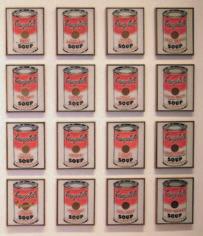
Popular Smithsonian Associates speaker Paul Glenshaw returns to the Art + History series to look at great works of art in their historical context. He delves into the time of the artist and explores the present they inhabited and what shaped their vision and creations.
World Art History Certificate elective: Earn ½ credit
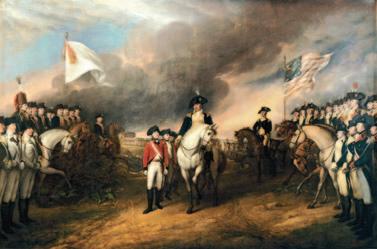
As he examines John Trumbull’s Surrender of Lord Cornwallis, Glenshaw is joined by Revolutionary War scholar Iris de Rode, whose groundbreaking discoveries of the eyewitness accounts of one of the top French generals depicted in the painting bring a fresh perspective to the French–American alliance and the French contribution to the American side of the war. Trumbull arranged the figures—many painted from life years after the victory—for dramatic impact rather than strict accuracy.
Glenshaw and de Rode unfold the story behind the battle and the painting’s 1826 unveiling in the U.S. Capitol Rotunda. They also explore how Trumbull’s unusual career as soldier, diplomat, and artist shaped this iconic work.
Wed., Sept. 2, 6:45 p.m.; CODE 1K0-734; Members $25; Nonmembers $35
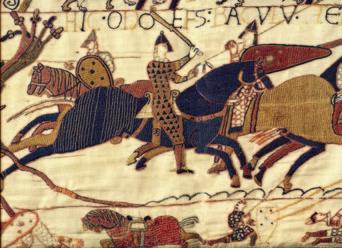
World Art History Certificate elective: Earn ½ credit
The Bayeux Tapestry is something of a miraculous survival from the Middle Ages. Nearly intact, and as vibrant today as it was when new, the tapestry was produced in the immediate aftermath of the Norman Conquest of 1066, when the fates of the kingdoms of England and France were, on a single day in October of that year, fundamentally altered ever after.
The tapestry was conceived with a role to play in managing and shaping the memory of the violent events of 1066. Historian Samuel Collins explores the agenda and arguments laid out on the Bayeux Tapestry and what the latest scholarship reveals about the strategies its makers employed for rendering a biased account of the months leading up to the Battle of Hastings.
Wed., Sept. 9, 6:30 p.m.; CODE 1H0-922; Members $20; Nonmembers $30
World Art History Certificate elective: Earn ½ credit
Art by women is now widely exhibited, and recent decades have seen a surge of interest in female painters, sculptors, and installation artists working in diverse media and styles. Art historian Nancy G. Heller highlights five exceptional women who have earned MacArthur “genius” grants, major retrospectives, and honors from international exhibitions like the Venice Biennale.
The artists are Simone Leigh, known for making massive, stylized clay and bronze images of Black women; Julie Mehretu, who produces multi-layered abstract paintings with subtle references to landscapes and politics; the humorous and insightful work of Wendy Red Star (Apsáalooke/Crow) that explores her cultural history; Amy Sherald, who has reinvigorated the venerable painted portrait; and Spanish sculptor Cristina Iglesias, who has produced work that can only be viewed while wearing scuba gear.
Thurs., Sept. 10, 6:30 p.m.; CODE 1M2-471; Members $30; Nonmembers $45
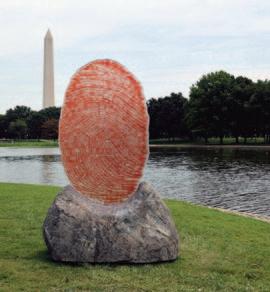
World Art History Certificate elective: Earn ½ credit
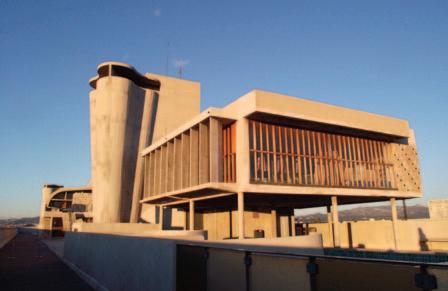
Le Corbusier—born Charles-Édouard Jeanneret in 1887—was a Swiss French architect whose radical theories on Modernism, housing, and urban planning reshaped 20th-century design.
Art historian Jennie Hirsh situates his work in its political and intellectual context, highlighting landmarks such as Villa Savoye, Villa La Roche, the Unité d’habitation, Ronchamp Chapel, and Tokyo’s National Museum of Western Art. These projects—many now UNESCO World Heritage Sites—demonstrate how his vision transformed how people live in cities.
Fri., Sept. 11, 12 p.m.; CODE 1D0-174; Members $20; Nonmembers $30
All Smithsonian Associates online programs are closed captioned
World Art History Certificate elective: Earn 1 credit
of
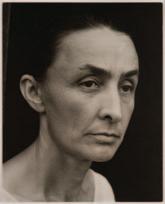
Georgia O’Keeffe is one of America’s most influential artists, best known for her large-format paintings of flowers, bones, scenes of New York skyscrapers, and depictions of the New Mexico desert. Her marriage and cooperation with pioneering photographer Alfred Stieglitz proved to be influential in promoting her career and in finding her true vocation as an artist.
Art historian Joseph Paul Cassar traces her journey from humble beginnings through her formative artistic education, her landmark exhibitions at Gallery 291, and the development of her Lake George works. He follows her travels to Palo Duro Canyon and Hawaii, culminating in her eventual settlement in New Mexico, and offers a critical analysis of her major works and legacy.
4-session series: Wed., Sept. 16–Oct. 7, 10:30 a.m. detailed program information on website; CODE 1K0730; Members $100; Nonmembers $125
World Art History Certificate core course: Earn 1 credit
The evolution of Russian art is inextricably bound to the rich cultural exchanges between East and West. These resulted in a fascinating blend of diverse visual languages and styles, from the late-medieval icons and frescos indebted to Byzantium to the great avant-garde experiments of the early part of the 20th century that developed side by side with the various currents of Modernism in other parts of Europe.
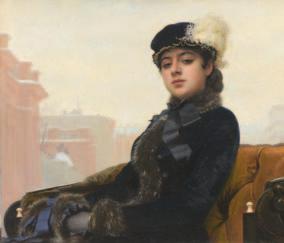
In a four-part course, art historian Aneta Georgievska-Shine brings the culture of this vast country to life as she highlights some of the major art developments in Russia over the centuries.
4-session series: Tues., Sept. 15–Oct. 6, 6:30 p.m.; detailed program information on website; CODE 1K0-729; Members $110; Nonmembers $135
Elaine Ruffolo, a Florence-based Renaissance art historian, examines the rich heritage of Italian art and architecture
Artemisia Gentileschi was a pioneering 17th-century Baroque artist, celebrated for her dramatic and emotionally charged paintings that often depict powerful women at the center of action. Overcoming significant personal adversity, including a highly publicized trial for sexual assault by a painter, she carved out a remarkable place for herself in the male-dominated art world of her time. Works such as Judith Slaying Holofernes are renowned for their intensity, technical mastery, and psychological depth, reflecting both her artistic innovation and distinctive perspective.
As Gentileschi herself declared, “I’ll show you what a woman can do… you will find the spirit of Caesar in this soul of a woman.” Ruffolo explores Gentileschi’s compelling life story, artistic innovations, and enduring legacy in the history of art.
Fri., Sept. 18, 12 p.m.; CODE 1D0-175; Members $25; Nonmembers $35
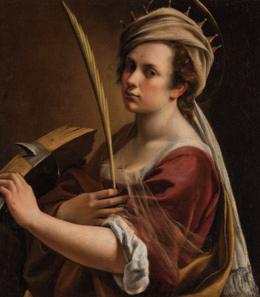
World Art History Certificate elective: Earn ½ credit
The Hudson River School—a loose fraternity of American landscape artists—was neither a school nor confined to the Hudson River Valley. Beginning in the early 19th century, the painters most associated with this group drew inspiration from America’s unspoiled landscape, finding aesthetic taste, a feeling of nationalism, and spirituality in the wilderness. At about the same time they were creating their idealized landscapes, progress in the form of industrialization and Manifest Destiny began to erode the vision of a pristine American “Garden of Eden.”
Art historian Bonita Billman examines the work of Hudson River School artists Thomas Cole, Frederic E. Church, Asher B. Durand, and others. She also considers the painters’ influences and methods and how these shaped the work of American landscapists of a second generation.
Thurs., Sept. 24, 6:30 p.m.; CODE 1M2-475; Members $25; Nonmembers $35
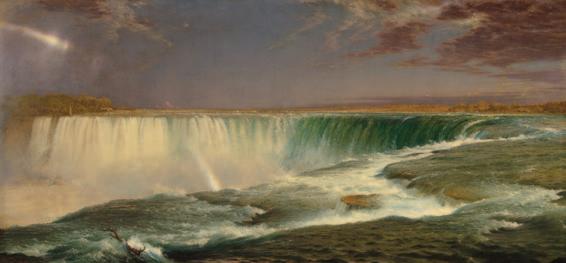
World Art History Certificate elective: Earn ½ credit
The Gothic sculptures that adorn the doorways of the Cathedral of Notre-Dame in Paris were once richly painted in jewel tones, much like the stained glass of the same period. Prophets wore robes colored with azurite (blue), red ochre, and malachite (green). Angels and saints were enlivened with rose-colored cheeks and red lips. Although the 2019 fire at the cathedral was devastating, it provided researchers with a unique opportunity to investigate these colors.
Art historian Jennifer M. Feltman, a leading American scholar and member of the official research team restoring Notre-Dame after the fire, explores the history of polychromy on the cathedral’s portals and discusses the international collaborative research project that is recreating their original appearance using digital art.
Mon., Sept. 28, 6:45 p.m.; CODE 1K0-732; Members $25; Nonmembers $35
World Art History Certificate elective: Earn ½ credit
French Impressionist artists popularized the painting of everyday urban life in the late 19th century. Composed of pleasing bits of pure color, their depictions were for the most part carefully edited, subjective, and quite beautiful.
The Ashcan School of American artists, working primarily in New York City in the late-19th and early-20th centuries, followed the Impressionists’ lead but instead realistically depicted what they saw. Their painting didn’t glamorize or prettify but captured the city with its gritty underbelly exposed. Art historian Bonita Billman presents fascinating works by George Bellows, William Glackens, Robert Henri, George Luks, Everett Shinn, and John Sloan and explores the truths they reveal about modern life. Thurs., Oct. 8, 6:30 p.m.; CODE 1M2-479; Members $25; Nonmembers $35
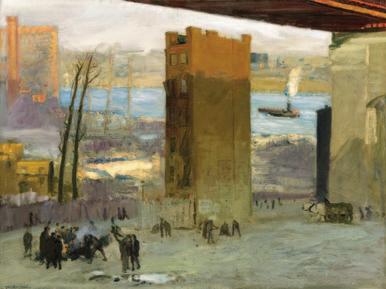
By Nick Cruz Velleman
Painting in the Key of Color
A Streamlined Approach to Color in Painting
INSTRUCTOR: Nick Cruz Velleman
ONLINE: Sun., Aug. 16, 10 a.m.; CODE 1E0-AMD; Members $60; Nonmembers $75
Basic Color Exercises
Explore how and why color elements interact within a composition, particularly when using found colors in the form of fabrics and papers. Create samples to be used as studies or combined in a larger piece.
INSTRUCTOR: Lauren Kingsland
ONLINE: Mon., July 13–Aug. 3, 5 p.m.; CODE 1E0-ALH; Members $145; Nonmembers $170
Observation and Perception: Unlocking the Skill of Drawing
Figure Drawing
INSTRUCTOR: Shahin Talishkhan
Portrait Drawing
INSTRUCTOR: Eric Westbrook
INSTRUCTOR: Shahin Talishkhan
IN PERSON: Sat., July 11–Aug. 15, 10:15 a.m.; Ripley Center; CODE 1E0-AMK; Members $235; Nonmembers $270
Introduction to Figure Drawing
INSTRUCTOR: Tom Kim
IN PERSON: Sun., July 12–Aug. 9, 11 a.m.; Ripley Center; CODE 1E0-ANB; Members $210; Nonmembers $245
IN PERSON: Sun., July 12–Aug. 16, 2:30 p.m.; Ripley Center; CODE 1E0-AML; Members $265; Nonmembers $300
W hether you want to tap into your creative side for the first time or expand your existing skills, there’s no better way to do it than with a Smithsonian Associates Studio Arts program. Each term brings a gallery of online courses and workshops—as well as select in-person offerings—in just about every area you can imagine, from drawing to fiber arts, mixed media to painting, and book arts to photography. Our extensive offerings for all levels of experience will sharpen your technical and artistic abilities as well as your confidence.
More than 80 new Studio Arts classes will begin this fall. Find out about them in the August program guide.
ONLINE: Wed., July 1–15, 7 p.m.; CODE 1E0AKS; Members $155; Nonmembers $180
The Sketchbook Habit: The Art of Everyday Life
INSTRUCTOR: Sue Fierston
ONLINE: Sun., July 12, Aug. 2, and Aug. 16, 10 a.m.; CODE 1E0-AMX; Members $165; Nonmembers $190
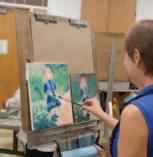
Beginning Drawing
INSTRUCTOR: Josh Highter
ONLINE: Sun., July 12–Aug. 16, 10:30 a.m.; CODE 1E0-ALF; Members $220; Nonmembers $255
Digital Drawing Fundamentals
INSTRUCTOR: Mike O’Brien
TWO ONLINE OPTIONS: Wed., July 15, 6 p.m. (CODE 1E0-ALW); Wed., Aug. 12, 6 p.m. (CODE 1E0-ALX); Members $65; Nonmembers $80
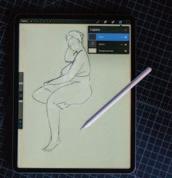
INSTRUCTOR: Lori VanKirk Schue
ONLINE: Thurs., July 30 and Aug. 6, 1 p.m.; CODE 1E0-ALK; Members $95; Nonmembers $120
World Art History Certificate elective: Earn 1/2 credit
The Mark of van Gogh
INSTRUCTOR: Nick Cruz Velleman
ONLINE: Wed., Aug. 5–19, 10 a.m.; CODE 1E0AMA; Members $165; Nonmembers $190
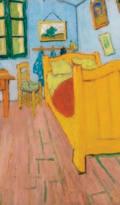
Tap your inner naturalist and draw mushrooms on coquille board, a textured paper that reduces drawn lines to a stipple-like pattern resembling a mezzotint. Experiment with a variety of colored media on this unique surface.
INSTRUCTOR: Scott Rawlins
ONLINE: Thurs., July 9–30, 6 p.m.; CODE 1E0-AMG; Members $155; Nonmembers $180
Shadows First
An Alternative Approach to Drawing Portraits
INSTRUCTOR: Nick Cruz Velleman
ONLINE: Thurs., Aug. 6–20, 10 a.m.; CODE 1E0-AMB; Members $165; Nonmembers $190
INSTRUCTOR: Carolyn Marshall Wright
TWO IN-PERSON OPTIONS: Sat., July 11, 10:30 a.m. (CODE 1E0-AKP); Sat., July 25, 10:30 a.m. (CODE 1E0-AKQ); Ripley Center; Members $135; Nonmembers $150
INSTRUCTOR: Shahin Talishkhan
IN PERSON: Sat., July 11–Aug. 15, 2:30 p.m.; Ripley Center; CODE 1E0-AMJ; Members $240; Nonmembers $275

Weekly Lunchtime Drawing Series
Travel the world with the summer edition of Sketching the Smithsonian as you take an artful break and explore the fascinating, vast collections of this extraordinary museum.
INSTRUCTOR: Morgan Kuster
ONLINE: Tues., July 14–Aug. 18, 12 p.m.; CODE 1E0AMF; Members $95; Nonmembers $130; individual sessions also available
INSTRUCTOR: Lori VanKirk Schue
ONLINE: Thurs., Aug. 13 and 20, 1 p.m.; CODE 1E0-ALL; Members $135; Nonmembers $160

INSTRUCTOR: Shahin Talishkhan
IN PERSON: Sun., July 12–Aug. 16, 10:15 a.m.; Ripley Center; CODE 1E0-AMM; Members $285; Nonmembers $320
An Introduction to Watercolor: Loose and Beautiful
INSTRUCTOR: Lubna Zahid
IN PERSON: Sat., July 18, 10:15 a.m.; Ripley Center; CODE 1E0-ALP; Members $140; Nonmembers $165
World Art History Certificate elective: Earn 1/2 credit
En Plein Air Painting in a Smithsonian Garden
Post-Impressionism Inspired by Cézanne
INSTRUCTOR: Sandra Gobar
IN PERSON: Sun., Aug. 2 and 9, 11 a.m.; Ripley Center; CODE 1E0-AME; Members $145; Nonmembers $170
NEW CLASS
Painting Vacation Memories
Capture the magic of your travels in a whole new way. Learn how to transform your favorite vacation photos of places into beautiful, expressive paintings in watercolor and ink.
INSTRUCTOR: Lubna Zahid IN PERSON: Sun., July 19, 10:15 a.m.; Ripley Center; CODE 1E0-ALQ; Members $140; Nonmembers $165
Abstract Watercolor
The Next Level
INSTRUCTOR: Heather Kerley
Landscape Painting from Photos
INSTRUCTOR: Eric Westbrook ONLINE: Wed., Aug. 5–19, 7 p.m.; CODE 1E0AKT; Members $145; Nonmembers $170
Principles of Abstraction
ONLINE: Thurs., July 30–Aug. 20, 12 p.m., CODE 1E0-AKW; Members $145; Nonmembers $170
INSTRUCTOR: Shahin Talishkhan
ONLINE: Wed., July 1–Aug. 5, 6 p.m.; CODE 1E0-AMH; Members $240; Nonmembers $275
Watercolor Journeys Travel Sketching
INSTRUCTOR: Cindy Briggs
ONLINE: Tues., July 7 and Wed., July 8, 6 p.m.; CODE 1E0-AKR; Members $140; Nonmembers $165
MEDIA
Mixed Media Constructions
INSTRUCTOR: Sharon Robinson
IN PERSON: Sat., July 11–Aug. 1, 2:15 p.m.; Ripley Center; CODE 1E0-AMT; Members $145; Nonmembers $170
Celebrating Smithsonian Gardens From Sketching to Creating in Mixed Media
INSTRUCTOR: Marcie Wolf-Hubbard
IN PERSON: Sun., July 12, 10:15 a.m.; Ripley Center; CODE 1E0-ALT; Members $115; Nonmembers $130
From Frustration to Flow Harnessing Wet Techniques in Watercolor
INSTRUCTOR: Nick Cruz Velleman ONLINE: Sun., Aug. 9, 10 a.m.; CODE 1E0AMC; Members $60; Nonmembers $75
Getting a grip on the myriad of tools and materials for mixed media can be daunting. Explore paints, mediums, inks, adhesives, and the array of equipment that can accelerate your creativity and ensure that your artwork is finished to a high standard.
INSTRUCTOR: Sharon Robinson IN PERSON: Sun., July 12, 1 p.m., Ripley Center; CODE 1E0-AMV; Members $70; Nonmembers $85


INSTRUCTOR: Sharon Robinson
IN PERSON: Sun., July 26, 10:30 a.m.; Ripley Center; CODE 1E0-AMW; Members $80; Nonmembers $95
INSTRUCTOR: Sharon Robinson
IN PERSON: Sat., Aug. 8 and 15, 1 p.m., Ripley Center; CODE 1E0-AMU; Members $120; Nonmembers $145
INSTRUCTOR: Marcie Wolf-Hubbard
ONLINE: Wed., July 8–29, 1:30 p.m.; CODE 1E0-ALR; Members $130; Nonmembers $155
INSTRUCTOR: Heather Kerley
IN PERSON: Sat., July 25, 10:15 a.m.; Ripley Center; CODE 1E0-AKV; Members $75; Nonmembers $90

Studio Arts classes are taught by professional artists and teachers. View detailed class descriptions and supply lists at SmithsonianAssociates.org/studio
By Heather Kerley
Explore ways to incorporate embroidered stitching into mixed-media artworks on paper and fabric, including hand-printed and hand-painted fabric, image transfer techniques, paper-weaving, fiber collage, and cyanotype.
INSTRUCTOR: Heather Kerley
ONLINE: Wed., July 8–Aug. 12, 12 p.m.; CODE 1E0-AKU; Members $155; Nonmembers $190
In this playful two-session class, create a lively quilted table runner using stacked and shuffled shapes. Working by machine, layer, cut, and rearrange fabric to discover unexpected patterns and movement.
INSTRUCTOR: Lauren Kingsland
ONLINE: Sat., July 11 and 18, 12 p.m.; CODE 1E0-ALJ; Members $110; Nonmembers $135
Read more about programs in this guide on the website. Search by code or date. Expanded program descriptions, presenters’ information, and more at SmithsonianAssociates.org.
Mosaic Jewelry
INSTRUCTOR: Bonnie Fitzgerald
IN PERSON: Sat., July 18, 10:15 a.m.; Ripley Center; CODE 1E0-AKN; Members $95; Nonmembers $110
Handmade Storybooks
INSTRUCTOR: Sushmita Mazumdar
IN PERSON: Sat., Aug. 8, 10:15 a.m.; Ripley Center; CODE 1E0-AMZ; Members $80; Nonmembers $95
ONLINE
Fibula Pin Workshop
INSTRUCTOR: Mïa Vollkommer
ONLINE: Sat., July 11, 11 a.m.; CODE 1E0-ALU; Members $75; Nonmembers $90
On-Location Photography
INSTRUCTOR: Joe Yablonsky
IN PERSON: Sun., July 12–Aug. 16, 1:45 p.m.; Ripley Center; CODE 1E0-ALC; Members $205; Nonmembers $240
If you appreciate the beauty of book forms as three-dimensional art and love collage, this class is for you. Learn different ways to create simple handmade books, including drum leaf binding, accordion (concertina), and types that use pamphlet and other simple stitching.
INSTRUCTOR: Sharon Robinson
IN PERSON: Sat., July 11–Aug. 1, 10:15 a.m.; Ripley Center; CODE 1E0-AMS; Members $145; Nonmembers $170
INSTRUCTOR: Sharmila Karamchandani
ONLINE: Sat., July 11–Aug. 1, 1:30 p.m.; CODE 1E0-AMN; Members $140; Nonmembers $165
INSTRUCTOR: Mïa Vollkommer
ONLINE: Sat., Aug. 8, 12 p.m., CODE 1E0-ALV; Members $75; Nonmembers $90
INSTRUCTOR: Sharmila Karamchandani
ONLINE: Sat., Aug. 8 and 15, 1:30 p.m.; CODE 1E0-AMP; Members $105; Nonmembers $130
Photo 101
Learn how to get out of Auto mode and use your camera to its full potential. Dive into what the settings mean and how to use them. Participants are shown how to make the appropriate changes on their cameras.
INSTRUCTOR: Joe Yablonsky
ONLINE: Thurs., July 2–23, 6:30 p.m.; CODE 1E0-AKZ; Members $160; Nonmembers $185
Macro Photography
INSTRUCTOR: Joe Yablonsky
ONLINE: Wed., July 1 and 8, 6:30 p.m.; CODE 1E0-AKX; Members $90; Nonmembers $115
Studio Arts classes are taught by professional artists and teachers. View detailed class descriptions and supply lists at SmithsonianAssociates.org/studio
Learn strategies to capture the beautiful features, including architecture and outdoor sculpture, that make your local botanic garden or arboretum unique. Take these techniques out in the field and come back for photo sharing, follow-up questions, and feedback.
INSTRUCTOR: Joe Yablonsky
ONLINE: Thurs., July 30 and Aug. 6, 6:30 p.m.; CODE 1E0-ALA; Members $90; Nonmembers $115
One-Hour Photo
Learn how to capture eye-catching photos, then go out during your lunch hour and photograph the architecture, public sculpture, and city life that surround you. Bonus: While taking pictures, you also reduce stress and increase mindfulness.
INSTRUCTOR: Joe Yablonsky
ONLINE: Wed., Aug. 5–19, 6:30 p.m.; CODE 1E0-AKY; Members $125; Nonmembers $150

Smithsonian Associates expert-led Study Tours offer one-of-a-kind in-person experiences. They’re the perfect way to learn more about the places and topics that fascinate you, and you’re sure to discover plenty of new favorites along the way.
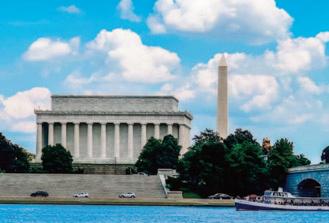
Spend a summer evening sailing on the Potomac, taking in Washington, D.C.’s architectural icons and history from a new perspective.
Cast off from Georgetown with your architecture guide from DC Design Tours and professional crew from Capitol River Cruises. As you cruise south on the Potomac, soak in sunset views of the Francis Scott Key Bridge and Georgetown waterfront, then sail past Theodore Roosevelt Island, under Arlington Memorial Bridge, and along the National Mall and Tidal Basin while learning about iconic landmarks ranging from the Watergate Hotel to the Lincoln Memorial to Arlington National Cemetery. Along the way, discover other gems, such as the C&O Canal, Lyndon Baines Johnson Memorial Grove, and Navy and Marine Memorial.
Thurs., July 23, 6–8 p.m.; detailed tour information on website; CODE 1CS-B03; Members $70; Nonmembers $90
Read more about programs in this guide on our website. Search by code or date. Expanded program descriptions, presenters’ information, and more at SmithsonianAssociates.org.
Set amid the rolling landscape of Virginia’s Shenandoah Valley, three distinguished historic houses—Glen Burnie, Belle Grove, and Long Branch—offer a window into the region’s architectural and cultural heritage. Led by regional historian Hayden Mathews, explore how these estates shaped life in the valley from the mid-18th through the early 19th centuries.
Begin at Glen Burnie House, the late 18th-century home of Winchester founder James Wood and now part of the Museum of the Shenandoah Valley. A guided tour from the head curator highlights the Wood family, the house’s Georgian craftsmanship, and an exceptional collection of decorative arts, followed by a walk through its terraced gardens.
After a boxed lunch, continue to Belle Grove. The 1794 limestone manor built for one of James Madison’s sisters reflects the cultural traditions of early settlers and late 18th-century architectural ideals. A guided tour examines its Jeffersonian design and collections while also considering the lives of the free and enslaved people who lived and worked on the estate.
At Long Branch Historic House, a refined Classical Revival mansion whose design was influenced by Benjamin Henry Latrobe, the second Architect of the Capitol, discover early 19th-century grandeur set against the Blue Ridge Mountains.
Conclude at the Burwell-Morgan Mill, an operational 18th-century gristmill illuminating the agricultural economy that sustained the valley’s great houses.
Sat., July 18, 8:15 a.m.–7:15 p.m.; by bus; detailed tour information on website; CODE 1CD-013; Members $206; Nonmembers $270
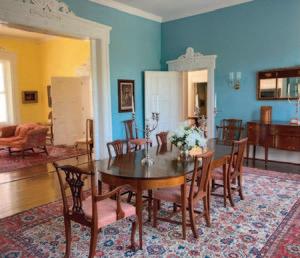
• Receive a digital version of the member program guide so you can read it anywhere
• Receive important notices regarding your ticket purchases along with other useful information
World Art History Certificate elective: Earn 1 credit
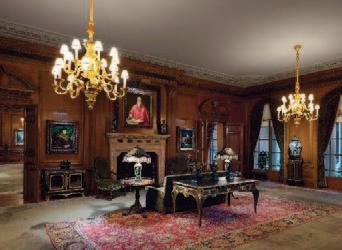
Discover three of New York City’s most renowned cultural treasures, including the Frick Collection. The museum, reopened in 2025 after four years of restoration, has returned to its historic home in the Upper East Side mansion of industrialist Henry Clay Frick.
Led by art historian Judy Pomeranz, spend an afternoon at the Morgan Library & Museum, whose architectural history is as rich as its collections of over 350,000 illuminated manuscripts, rare books, literary and historical manuscripts, music manuscripts, and drawings, spanning from antiquity to the present day. Designed in 1904 for banking magnate Pierpont Morgan, the opulent private library has a collection that includes original manuscripts by Charles Dickens and Leonardo da Vinci. A guided tour offers a curated exploration of its treasures, followed by time to explore on your own.
The Solomon R. Guggenheim Museum offers a guided look at the Thannhauser Collection, built by collector and art dealer Justin K. Thannhauser (1892–1976).
Thannhauser’s gifts brought the Guggenheim works by artists such as Edgar Degas, Édouard Manet, Vincent van Gogh, and Pablo Picasso. The collection provides an important survey of late 19th- and early 20th-century Modernism. During this critical period—as artists sought to liberate art from academic genres and introduce contemporary subject matter—the avant-garde investigated novel materials and methods, setting the stage for the development of radical new styles.
Explore the Frick Collection’s remarkable range of artwork, spanning from the Renaissance to the early 20th century. Wander through masterpieces by Old Masters such as Vermeer, Rembrandt, and Goya and experience the grandeur of the museum’s collection of decorative arts and period rooms. These beautifully preserved spaces offer a glimpse into the lavish lives of New York’s Gilded Age elite. The heart of the Frick, the serene Garden Court, provides a peaceful retreat year-round.
Tour participants stay at The Iroquois New York. An early three-course supper is included before you set off on Monday.
Sun., July 26, 8 a.m.–Mon., July 27, 10:30 p.m.; by bus; detailed tour information on website; CODE 1CN-ART; Members $765; Nonmembers $1,020
Read more about programs in this guide on our website. Search by code or date. Expanded program descriptions, presenters’ information, and more at SmithsonianAssociates.org.

Subscribe now to our topic-based eAlerts to match your interests. You can look forward to receiving timely information about new programs, special Smithsonian offers, our curated Digital Digest newsletter, and much more to spark your imagination and inspire learning.
You’re sure to find something to enjoy among the outstanding online programs offered each month. Get ready to explore a whole world of subjects—from art and architecture to history, culinary arts to science, travel to literature, and so much more!
Simply sign up at SmithsonianAssociates.org/eAlerts and you’re set. Privacy Policy: We do not rent or sell our e-mail addresses.
World Art History Certificate elective: Earn ½ credit
The Hirshhorn Museum and Glenstone
Join art guide Nancy Hirshbein as you spend a summer’s day immersed in the ideas, rivalries, scientific and social developments, and collectors that shaped modern and contemporary art.
Begin with a lecture from your tour leader, then visit the Hirshhorn Museum before opening hours, where your study leader takes you through “Revolutions: Art from the Hirshhorn Collection, 1860–1960,” an exhibition charting the rapid succession of movements that shaped Modernism and ushered in the rise of Abstraction. The exhibition features works by artists such as Pablo Picasso, Henri Matisse, Georgia O’Keeffe, and Joan Miró plus works from 19 contemporary artists whose contributions underscore how many of the revolutionary ideas introduced years ago continue to resonate today.
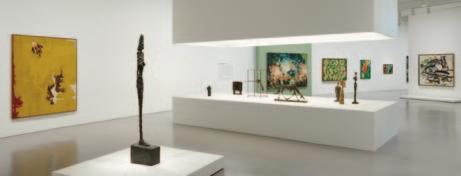
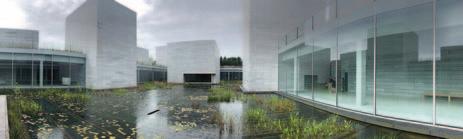
En route to Glenstone, your study leader provides an overview of the museum and selected works. Spend the afternoon enjoying a self-guided exploration of the campus. Set in a sweeping natural landscape, the museum invites visitors to delve into modern and contemporary art both indoors and among its integrated outdoor sculptures. “Ties of our common kindred” marks the 250th anniversary of the signing of the Declaration of Independence, tracing the evolution of American art through works by figures such as Jackson Pollock, Willem de Kooning, Cindy Sherman, and Andy Warhol alongside a focused presentation of three of Jasper Johns’ influential paintings.
Lunch at a local restaurant is included.
Fri., July 31, 8:15 a.m.–5 p.m.; by bus; detailed tour information on website; CODE 1CD-014; Members $158; Nonmembers $218
Art History
In 1791, Pierre L’Enfant envisioned the National Mall as a grand “public walk,” a sweeping promenade at the heart of the capital. But by 1900, his ambitious plan had been largely overlooked and altered. That changed with the influential McMillan Plan of 1902, which reimagined the ceremonial core of Washington, D.C., shaping much of what visitors see on the Mall today.
Discover the stories behind the once-planned museum park and the now-vanished railroad station and the curious reason why the Mall doesn’t align with the compass. Marvel at a rich tapestry of architectural styles represented by the Smithsonian buildings. Beg in with the Gothic Revival Smithsonian Castle, built in 1846 and the first permanent structure on the Mall, and follow the architectural journey to the striking 2016 National Museum of African American History and Culture. Along the way, encounter the exuberant Victorian flair of the Arts and Industries Building and the Beaux Arts grandeur of the National Museum of Natural History.
Continue by comparing the distinct takes on Modernism in buildings such as the Hirshhorn Museum, National Museum of American History, National Air and Space Museum, National Museum of the American Indian, and the African American History and Culture Museum. The tour concludes with a glimpse at the Mall’s newest landmark, the Frank Gehry–designed Dwight D. Eisenhower Memorial.
The tour leader is Bill Keene, a lecturer in history, urban studies, and architecture.
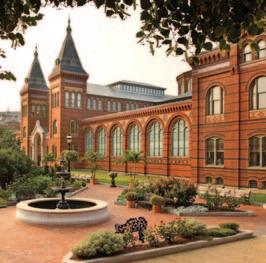
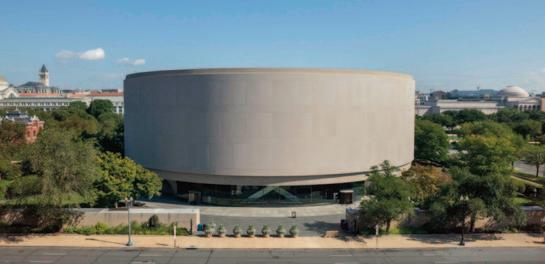
Arts and Industries Building Hirshhorn Museum and Sculpture Garden
THREE OPTIONS: Sun., Aug. 2, 9:30 a.m.–12 p.m. (CODE 1CW-A09); Sat., Aug. 8, 8:30 a.m.–11 a.m. (CODE 1CW-B09); Fri., Aug. 14, 8:30 a.m.–11 a.m. (CODE 1CW-C09); detailed tour information on website; Members $55; Nonmembers $70
At the confluence of the Potomac and Shenandoah rivers lies Harpers Ferry, West Virginia, a small town whose dramatic setting became the stage for one of the most consequential events in the struggle over slavery. Historian Christopher Hamner leads a day-long exploration of the site of John Brown’s 1859 raid on Harpers Ferry, an attempt by the radical abolitionist to spark a nationwide slave uprising. Though the raid lasted little more than 36 hours, its repercussions reverberated across the nation and helped propel the United States toward civil war.
After arriving at the Harpers Ferry Visitor Center, travel to the historic Lower Town for a guided walking tour that follows in the footsteps of Brown and his followers while exploring the town’s layered history. Enjoy a short hike to Jefferson Rock, named for the former president and offering panoramic views of the surrounding landscape. A visit to the former campus of Storer College highlights its important role as a center of African American education and memory in the years after the Civil War. The afternoon includes free time to explore the town and its museums, including the John Brown Museum, before returning to Washington, D.C. Lunch is included.
Sat., Aug. 8, 8 a.m.–5:30 p.m.; by bus;
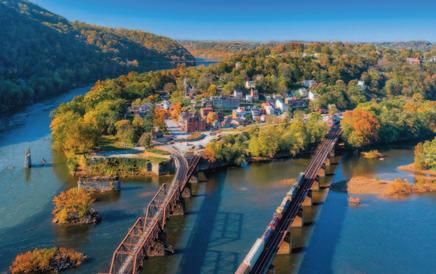
Read more about programs in this guide on our website. Search by code or date. Expanded program descriptions, presenters’ information, and more at SmithsonianAssociates.org.
World Art History Certificate elective: Earn ½ credit
Trace the evolution of the Arts and Crafts movement in Philadelphia through a day-long exploration of two remarkable sites that together tell a story of craftsmanship, community, and design. Led by Bonita Billman, the program begins at the Philadelphia Museum of Art, where a curator-led tour of “Workshop of the World: Arts and Crafts in Philadelphia, 1876–1926” reveals how the city’s industrial strength and artistic ambition shaped a distinctly local interpretation of the movement. Featuring more than 250 objects, from finely crafted furniture to metalwork and textiles, the exhibition highlights makers who sought to unite beauty and utility in response to the challenges of modern life.
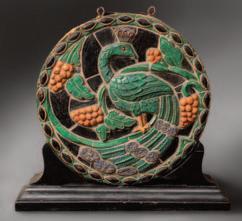
“Peacock and Grapevine Mosaic,” 1916, on view at the Philadelphia Museum of
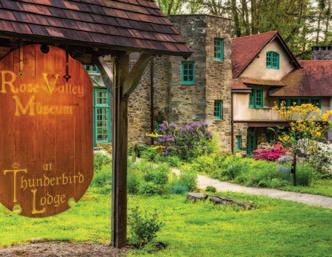
Spend the afternoon in Rose Valley, where a guided tour of the Rose Valley Museum introduces one of America’s most significant Arts and Crafts communities. Housed in Thunderbird Lodge, a beautifully preserved Arts and Crafts–style building, the museum offers a window into a bold social experiment. Founded in 1901 by architect William Lightfoot Price, Rose Valley was env isioned as a place where art, labor, and daily life were seamlessly integrated, emphasizing craftsmanship, communal living, and a rejection of industrial mass production. A walking tour of the Rose Valley Historic District with a local guide gives a deeper look at the community that formed around the movement.
Lunch at a local restaurant is included.
Fri., Aug. 28, 7 a.m.–8:30 p.m.; by bus; detailed tour information on website; CODE 1CD-016; Members $267; Nonmembers $327
Against the backdrop of the Great Depression, the New Deal ignited an unprecedented use of government resources to address crucial public services as a way to kick-start the American economy. But President Franklin Roosevelt said that in a hundred years, his New Deal would be remembered more for its arts than its job relief.
Discover landmarks, art, and other projects from the New Deal period with author David Taylor during a walking tour in Washington, D.C. Begin at Judiciary Square to see the public sculptures and dramatic courthouse bas reliefs there, including one by architectural sculptor John Gregory. Highlights along the route include the Henry F. Daly Building, constructed in the Classical Moderne style with the aid of Works Progress Administration (WPA) funds; the Federal Trade Commission Building, which features monumental sculptures by WPA artists in Art Deco style; and the National Mall and Washington Monument, which were renovated during the New Deal period. Conclude at the Department of the Interior for an optional staff-led tour of more than 40 New Deal–era murals, plus several 1941–1942 photomurals by Ansel Adams.
THREE OPTIONS: Fri., Sept. 11 (CODE 1CW-A10); Fri., Sept. 18 (CODE 1CW-B10); Fri., Sept. 25 (CODE 1CW-C10); 9:30–11:45 a.m.; detailed tour information on website; Members $55; Nonmembers $75
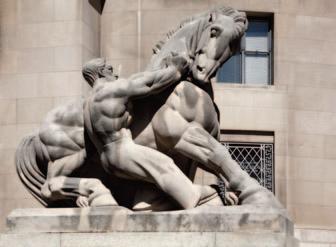
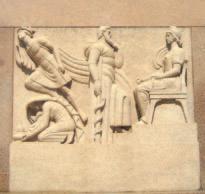
The 2,650-acre campus of the Smithsonian Environmental Research Center (SERC) in Edgewater, Maryland, encompasses forests, farmland, wetlands, and shoreline. Spend the day with SERC’s expert staff as you explore this environmental research hub and learn about its cutting-edge ecological studies.
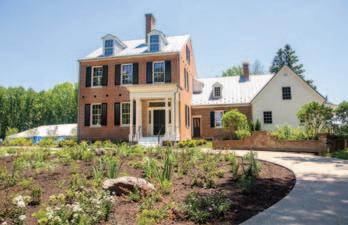
At the Woodlawn History Center, built in 1735, uncover stories of the area’s rich history—from Native American settlement to the present day—through artifacts found by volunteer scientists from the Smithsonian Environmental Archaeology Lab. Discover the intersection of environmental science and archaeology as researchers explain the ways human activity has shaped the land and its ecosystems over time. Take a morning walk along a waterfront trail that winds through lush landscapes, stopping along the way to discuss SERC research and explore the types of ecosystems that the center works to protect. Back on campus, hear about SERC’s river otter research.
After lunch, visit the South Campus for a look at the
BiodiversiTREE research project, where scientists are studying how tree diversity can shape the health of a forest and the life within it. Wrap up your day at the Global Change Research Wetland. Here, researchers run futuristic experiments to simulate how climate change could affect wetlands over the next century.
Fri., Sept. 25, 7:30 a.m.–4:30 p.m.; by bus; detailed tour information on website; CODE 1CD-018; Members $115; Nonmembers $175
Read more about programs in this guide on our website. Search by code or date. Expanded program descriptions, presenters’ information, and more at SmithsonianAssociates.org.
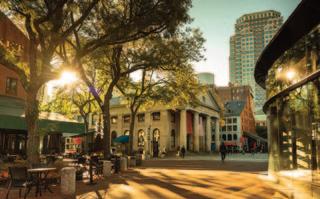
Market along the Freedom Trail
Few American cities are as deeply entwined with the birth of the nation as Boston. From village greens where militias first mustered to crowded wharves and meetinghouses alive with revolutionary debate, trace the dramatic opening chapters of the American Revolution. Guided by historian Fred Zilian, explore the landscapes and ideas that transformed a cluster of colonial towns into the epicenter of a struggle for independence.
DAY 1: Participants arrive in Boston. Begin with a welcome orientation, dinner, and lecture at the hotel from your study leader introducing the people, politics, and pivotal events of Boston’s revolutionary world.
DAY 2: During a morning excursion to Lexington and Concord, stand on the village green in Lexington and at the North Bridge in Concord and visualize how local resistance ignited a war that reshaped history. Back in Boston, a driving tour reveals the city’s evolving civic and architectural identity, from Beacon Hill to Harvard Square.
DAY 3: A guided walking tour traces key sites of protest, debate, and defiance along the Freedom Trail, with time to explore Faneuil Hall and Quincy Market. Then move on to Boston Harbor for a cruise that highlights the city’s maritime and military significance. The day concludes in the North End with visits to Copps Hill Burying Ground, Old North Church, and the Paul Revere House.
DAY 4: Conclude with a visit to the Old South Meeting House, Old State House, and USS Constitution, the oldest commissioned warship still afloat, before your airport transfer.
Sun., Sept. 13, 6 p.m.–Wed., Sept. 16, 4 p.m.; detailed tour information on website; CODE 1CN-BOS; Members $1,747; Nonmembers $2,329
NOTE: Flights are not included; participants make independent flight arrangements to and from Boston.
With a Cruise on the Schooner Sultana
Spend an unforgettable day exploring the rich history of the Chesapeake Bay with regional historian Hayden Mathews. The journey begins as Mathews weaves together the geological, environmental, maritime, cultural, and architectural threads that have shaped the region. This legacy comes to life as you explore historic Chestertown, Maryland, and embark on a 2.5-hour sail aboard the Sultana, a replica 1768 topsail schooner.
Chestertown was founded in 1704 as an official Crown Port of Entry and, as such, enjoyed a lucrative maritime trade that fueled the local economy and funded construction of the Georgian brick mansions that still line the streets of the town. While the original Boston-built Sultana patrolled the coastline of colonial North America from 1768 to 1772 enforcing the hated Townshend Acts or “tea taxes,” the replica Sultana was built by the Sultana Educational Foundation in Chestertown to serve as a floating classroom for students and members of the public where they can learn about regional maritime history and have a hands-on experience in learning about Bay ecology as well.
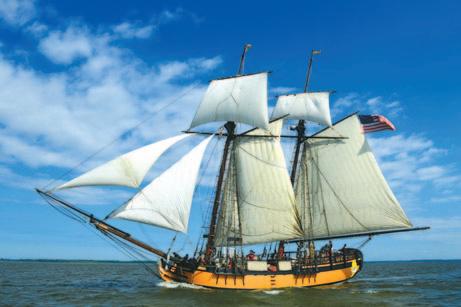
In Chestertown, meet Chris Cerino, a former mayor and the vice president of the Sultana Education Foundation, who leads a walking tour of the town’s National Register Historic District, spotlighting buildings of special interest and providing insightful stories about local history. The tour concludes at the headquarters of the foundation, where Cerino orchestrates a multimedia presentation that provides a one-of-a-kind experience of the Bay’s cultural and natural histories. A box lunch is included in the day.
Sun., Sept. 13, 7:45 a.m.–6:30 p.m.; by bus; detailed tour information on website; CODE 1ND-003; Members $199; Nonmembers $259
Rather than treating waste as an end point, cities and counties increasingly view it as a stream of materials that can be redirected, reused, and transformed. The communities around Washington, D.C., are no exception. Urban studies lecturer Bill Keene leads an exploration of three local facilities working to recover, reuse, and regenerate and the infrastructure that makes these efforts possible.
The Prince George’s County Materials Recycling Facility in Capitol Heights, Maryland, offers a window into the world of materials recovery, where tons of paper, plastic, metal, and cardboard are sorted, separated, and prepared for new life. Guided by facility experts, you observe the intricate combination of machinery and manual labor that makes recycling possible. Along the way, gain a clearer understanding of what can and cannot be recycled and how individual choices at home affect the efficiency and success of the system

Food scraps, yard trimmings, and other organic materials take on new value at the Prince George’s County Organics Composting Facility in Upper Marlboro, Maryland, where they are transformed into nutrient-rich compost. A tour of the facility and Visitor’s Center offers a look at the science of decomposition.
A visit to Community Forklift in Edmonston, Maryland, a nonprofit reuse center, highlights another dimension of sustainability: salvaging architectural materials and household goods and giving them new life, free to community groups and families in need. Hear about the center’s community partnerships and how goods are acquired.
Lunch is included.
Fri., Sept. 18, 7:30 a.m.–4 p.m.; by bus; detailed tour information on website; CODE 1CD-017; Members $169; Nonmembers $230;
Read more about programs in this guide on our website. Search by code or date. Expanded program descriptions, presenters’ information, and more at SmithsonianAssociates.org.
Founded in 1749, Alexandria, Virginia, was a major American port that was home to both the country’s largest slave-trading firm and a large free Black community. Local guide John Chapman leads a walking tour of the city’s OId Town neighborhood that takes in sites connected to this history.
Begin in front of the Freedom House Museum, where the office of Franklin and Armfield—notorious slave traffickers in antebellum
Alexandria—was housed. Stop along the Duke Street corridor at the site of Bruin’s Slave Jail, which played a part in the story of the Edmonson sisters who had tried to escape to freedom on the schooner Pearl. A bronze sculpture of the sisters, who were eventually freed, marks this historic site.
Along the way, visit sites connected to early African American spirituality such as Shiloh Baptist Church, one of Alexandria’s original African American churches, and the Alexandria National Cemetery, formerly known as the Soldiers’ Cemetery, where more than 250 members of the United States Colored Troops are buried.
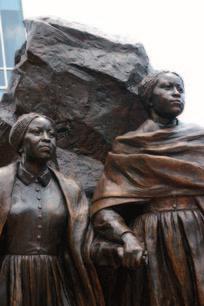
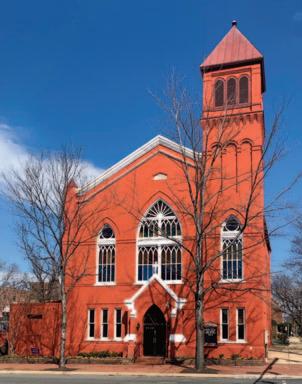
THREE OPTIONS: Fri., Sept. 25 (CODE 1CW-A11); Sat., Sept. 26 (CODE 1CW-B11); Sun., Sept. 27 (CODE 1CW-C11); 10 a.m.–12 p.m.; detailed tour information on website; Members $50; Nonmembers $70
Step into the heart of America, where history echoes through classic landmarks from the soaring Gateway Arch to neighborhoods shaped by immigration, innovation, and art. This 4-day journey explores St. Louis’s pivotal role in westward expansion, global ambition, and social change—set within a region long home to Indigenous communities—from the Mississippi River and the legacy of the 1904 World’s Fair to the communities that continue to define it. Through notable sites and local stories, discover how St. Louis became both gateway to the West and mirror of the American experience. Tami Goldman, director of tourism and visitor experience at the Missouri Historical Society, is the guide.
Highlights include
Gateway Arch National Park
The stainless steel arch rises above the Mississippi as a symbol of national expansion. From the top, enjoy sweeping views of the riverfront city that launched the Corps of Discovery in 1804. St. Louis stood as the final major outpost before Lewis and Clark traveled west.
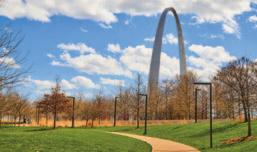
Located on the former grounds of the 1904 World’s Fair, the museum features exhibitions on the fair and the evolution of Forest Park. A special behind-the-scenes experience provides rare access to collections and curatorial insights.
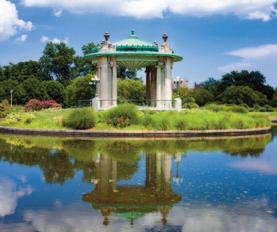
Missouri Botanical Garden
Founded in 1859, this internationally renowned institution is a leader in plant science and global conservation. Its historic landscapes and the Climatron, the first geodesic dome greenhouse, reflect St. Louis’ longstanding commitment to scientific inquiry.
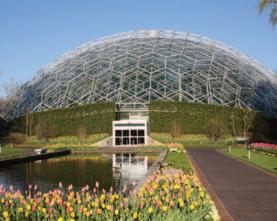
Across the river from St. Louis, Cahokia preserves the largest and most influential pre-Columbian city north of Mexico, built by the Mississippian culture between about 1050 and 1350. Its monumental earthworks offer a powerful glimpse into early Indigenous urban planning and a once-thriving, sophisticated society. Enjoy a private guided tour of the site.
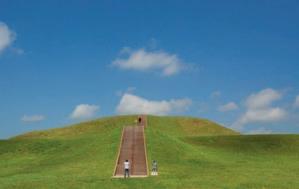
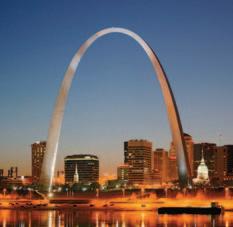
National Museum of Transportation
Home to one of the nation’s largest collections of period locomotives and railcars, the museum highlights the rail networks that helped open the American West.
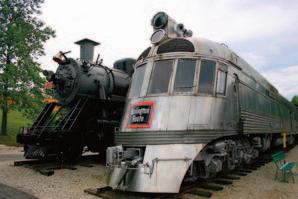
A vibrant food hall featuring independent chefs and flavors that reflect the city’s immigrant roots and contemporary creativity.
Sat., Sept. 26, 6 p.m.–Tues., Sept. 29, 4 p.m.; detailed tour information on website; CODE 1NN-STL; Members $1,491; Nonmembers $1,988
NOTE: Flights are not included; participants make independent flight arrangements to St. Louis.
COST INCLUDES: 3 nights of accommodations, bus transportation, services of a study leader and Smithsonian representative, 8 meals (3 breakfasts, 2 lunches, 3 dinners), gratuities, taxes, and entrance fees.
They’re peaceful, they’re reverent, they combine history and biography with nature and stillness: Discover the rich history and autumn beauty of two of New York City’s well-known cemeteries on a two-day tour.
Traveling from Washington, D.C., begin with a visit to Green-Wood Cemetery in Brooklyn, founded in 1838 and recognized as a National Historic Landmark for its role in American history and landscape design. Stroll through winding paths and see a variety of interesting monuments and sculptures and learn about the lives of notable figures buried there, including artists, inventors, and veterans. Enjoy an evening program at the Morbid Anatomy Library, dine at a local restaurant, and spend the night at the Nu Hotel in Brooklyn.
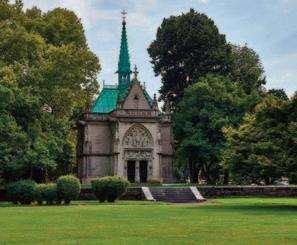
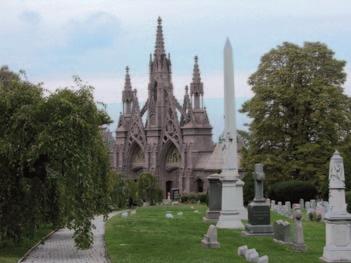
On day two, travel to Woodlawn Cemetery in the Bronx, established in 1863 as one of the largest rural cemeteries in the country. Walk among elegant mausoleums and elaborate memorials that tell the stories of jazz legends, industrial titans, and literary giants. This serene setting is the final resting place of many historical figures, and guide Allison C. Meier shares stories that bring their legacies to life. The tour offers a thoughtful way to explore New York’s cultural heritage while enjoying time outdoors. Meier is the author of Grave and a licensed tour guide whose work explores urban history, cemeteries, and the cultural meaning of burial.
Sun., Oct. 4, 8 a.m.–Tues., Oct. 5, 9 p.m.; by bus; detailed information on website; CODE 1NN-CEM; Members $746; Nonmembers $980
Read more about programs in this guide on our website. Search by code or date. Expanded program descriptions, presenters’ information, and more at SmithsonianAssociates.org.
Fall in the Shenandoah Valley
Nestled in the heart of scenic Shenandoah Valley, Staunton, Virginia, is alive with history, culture—and a little steam. Washington, D.C., area guide Lynn O’Connell leads a weekend getaway that offers a sampling of Staunton’s best sights plus a train excursion.
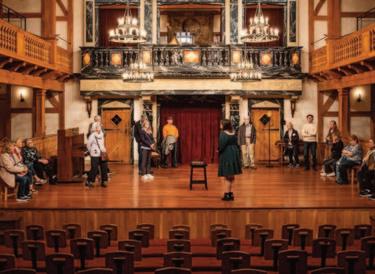
Upon arriving in Staunton, visit Blackfriars Playhouse, the only replica of Shakespeare’s indoor theater. Delve into the world of theater with a backstage tour during which guides take you around the playhouse, share secrets and anecdotes, and offer insights into the playhouse’s inner workings. After lunch, go back in time to the night that Mary Shelley was inspired to write Frankenstein as you watch Mary Shelley’s Frankenstein, a play that cleverly combines the backstory and storyline of the Gothic novel. Dinner is on your own in downtown Staunton.
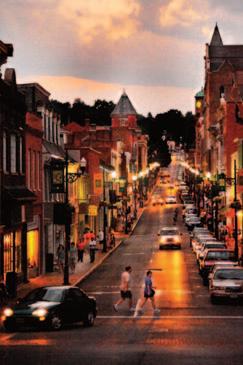
On Sunday, hit the streets for a tour of Staunton led by local guides before boarding the Virginia Scenic Railway for a 3-hour train journey on the Alleghany Special. As the train ventures westward, you go through the beautiful farmland of the Shenandoah Valley bound for the George Washington and Jefferson National Forests, with views of the Allegheny Mountains along the way. The train begins its return journey in the hamlet of Goshen in Rockbridge County. Lunch on board is included.
The day concludes back in Staunton with a visit to the Woodrow Wilson Presidential Library & Museum. A guided tour through the historic home offers insights into President Wilson’s life, leadership, and impact on American history. Sat., Nov. 7, 7:30 a.m.–Sun., Nov. 8, 7:30 p.m.; by bus; detailed tour information on website; CODE 1CN-SSO; Members $677; Nonmembers $903
3-Day Tour
The centerpiece of this art-filled three-day visit to Pittsburgh—a city of smokestacks and steel reborn as a vibrant cultural capital—is the 59th Carnegie International, North America’s longest-running survey of international contemporary art. Presented at the Carnegie Museum of Art and held every three to five years, this exhibition showcases the work of more than 60 artists, from emerging voices to globally celebrated figures.
In addition, the tour led by arts journalist Richard Selden offers a deep dive into Pittsburgh’s distinctive art and history. At the Mattress Factory, guests encounter room-sized, site-specific installations that blur the boundary between viewer and artwork. The Andy Warhol Museum, the largest museum in North America devoted to a single artist, provides an immersive look at the life and work of Pittsburgh’s most famous creative son, from iconic silkscreens to films and archives.
The itinerary also connects art to the city’s broader historical narrative at the Senator John Heinz History Center, a Smithsonian Affiliate Museum and Pennsylvania’s largest history museum. Here you explore Pittsburgh’s transformation from frontier settlement to industrial powerhouse and, ultimately, to a modern center of innovation and culture.
A highlight beyond the visual arts is the National Aviary, one of the nation’s premier bird conservation centers. Enjoy an up-close encounter with species from around the globe, culminating in a demonstration where free-flying birds soar just overhead.
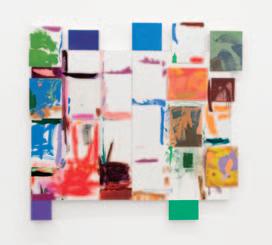
This is not a composition, it’s a place where things are, as on a table by R.J. Messineo, 2025, is part of the 59th Carnegie International
The rich ethnic and industrial history of “the ’Burgh” is woven into the tour. A walking and tasting tour of the Strip District reveals a vibrant neighborhood shaped by waves of immigration, where old-world food traditions meet contemporary culinary innovation. The tour would not be complete without a ride on the historic Duquesne Incline, a cable car dating to 1877 that offers sweeping views of the city’s skyline and the confluence of the Allegheny River, Monongahela River, and Ohio River.
Even the accommodations reflect Pittsburgh history: The Priory Hotel, a restored former Benedictine monastery dating to 1888, features Romanesque architecture, soaring spaces, and preserved historic details.
Sun., Nov. 8, 8 a.m.–Tues., Nov. 10, 10 p.m.; by bus; detailed tour information on website; CODE 1CN-PIT; Members $1,187; Nonmembers $1,585
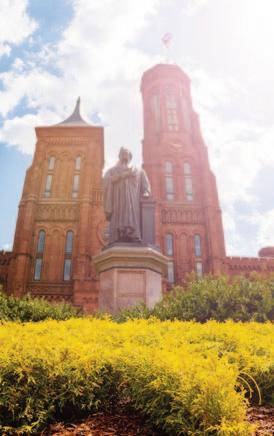
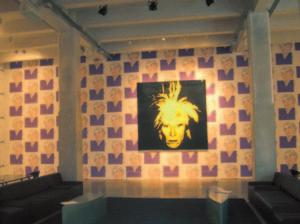
For six decades, education has been at the heart of our work at Smithsonian Associates: opening the Smithsonian’s vast resources to people of all ages.
Unlike the museums, Smithsonian Associates is not federally funded and relies entirely on donations and essential membership support to bridge the gap between program expenses and registration revenue. If the joy of learning enriches your life, please consider a charitable gift in support of the rich educational experiences that bring the Smithsonian's world of knowledge to a vibrant learning community across the country.
D emonstrate your su pport today at SmithsonianAssociates.org/donate
Members-only priority program registration before programs go on sale to the public (some exclusions apply)
Ability to purchase one registration per program at the discounted member price
Subscription to the monthly Smithsonian Associates program guide
Subscription to the monthly Smithsonian Associates digital program guide
Access to members-only in-person and online programs
Access to free Associates in-person and online programs as available (notification sent via email)
3-day viewing access to Associates Encores recordings of online programs (some exclusions apply)
Subscription to the Smithsonian Associates Digital Digest
Ability to purchase up to four registrations per program at the discounted member price
Smithsonian magazine delivered to your home
Ability to purchase up to six registrations per program at the discounted member price
Member discounts on Art Collectors Program fine-art prints
Advance digital copy of the monthly Smithsonian Associates program guide
Two complimentary registrations for an online program, in-person lecture, or performance (value equal to $35 per registration or less)
Priority consideration for wait-listed programs (some exclusions apply)
Advance registration for high-demand programs (notification sent via email)
Ability to participate in Smithsonian Summer Camp registration lottery
Two complimentary registrations for a Smithsonian Insider event
No $3 phone order processing fees for program registrations conducted over the phone
Monthly donor preview digital communications for select upcoming programs
NEW: Registration access to complimentary Associates Insider Tours in Washington, D.C. (notification sent via email)
Copy of the Smithsonian’s annual report
Recognition on the Smithsonian Associates website, in the program guide’s annual donor list, and on the annual plaque at our headquarters in Washington, D.C.
One gift membership at the Explorer level to give to a family member or friend (restrictions apply)
Reserved seating at most Smithsonian Associates in-person programs
Invitations to backstage meet-and-greets at select Smithsonian Associates in-person programs
Dedicated concierge phone line for inquiries and program registration
Invitation for two to the prestigious annual Smithsonian Weekend
Recognition in the Smithsonian’s annual report
Four complimentary registrations for an online program or in-person lecture (value equal to $35 per registration)
Additional 20% discount on member prices for Art Collectors Program fine-art prints
Two gift memberships at the Explorer level to give to family members or friends (restrictions apply)
Special event invitations as available
Quarterly Director’s Roundtable digital communications (opportunities to gather in person when applicable)
Invitation to a private event with members of Associates’ leadership
Effective April 1, 2025
Performances, and Lectures—Multi-Session
Tues., July 7, 14, and 21
Write Into
Tues., Sept. 15–29
Tues., Sept. 15–Oct. 6
Sept. 16–Oct.
Sept. 17, Oct. 15, and Nov. 12
Thurs., Sept. 3-24
10
SMITHSONIAN ASSOCIATES GENERAL INFORMATION AND POLICIES
Please visit SmithsonianAssociates.org for more details
Depending on your level of support, you will receive special benefits, including significant savings on most Smithsonian Associates program registrations and a monthly Smithsonian Associates program guide, and much more. Visit SmithsonianAssociates.org/join for more information. Become a member today!
Online: SmithsonianAssociates.org
Phone: 202-633-3030, from 10 a.m. to 3 p.m. ET, Monday through Friday. Phone registration orders are subject to a $3 handling fee.
Email: CustomerService@SmithsonianAssociates.org
Mail: Smithsonian Associates, P.O. Box 23293, Washington, D.C. 20026-3293
Phone: 202-633-3030, from 10 a.m. to 3 p.m. ET, Mon.- Fri.
Confirmed registrants receive an email from no-reply@zoom.us at least 24 hours prior to the program date that provides a link to join your session on Zoom.
All program registrations are subject to a 10% processing fee to defray administrative costs. Registrants will see this fee applied during the checkout process. Exclusions are transactions for Discovery Theater, Smithsonian Summer Camp, Smithsonian Sleepovers, Studio Arts, and Study Tours.
Credit for cancellations or exchanges are only available for orders that cost more than $40. If in compliance with the specific guidelines below, credit is issued to your Smithsonian Associates account, not your credit card. Credits are non-transferable.
Important note: Cancelling your program in the Zoom personal link that you received does not initiate the Smithsonian Associates credit or refund process. Please contact Customer Service via email at least two weeks in advance to request a change to your registration
For all Smithsonian Associates online programs, study tours, and Studio Arts classes: If you wish to cancel or exchange an order costing more than $40, please contact Customer Service via email at least two weeks before the program date to request a credit. Please note that there is a $10 cancellation fee, as well as a cost adjustment when there is a price difference if you are applying your credit to another program.
Courses: To receive credit to your Smithsonian Associates account for a course, (excluding Studio Arts classes), please contact Customer Service via email at least two weeks before the first session. Credit will also be issued within two weekdays after the first session, provided that Customer Service is contacted within that period. Credit will be prorated to reflect the cost of the first session. No credit will be given after the second session.
Overnight Study Tours: All cancellations must be sent via email to our customer service team at least 60 days before the tour date. At that point, there is a $25 administrative fee. If your request is received between 60-31 days before your tour, the cancellation fee is $150 per person. No refunds for cancellations within 30 days of the tour; no exceptions. Trip insurance is strongly recommended for all overnight study tours.
REFUNDS are only issued when a program is cancelled or if it sells out before we receive your order.
CHANGES I N PUBLISHE D SCHE DU LES Smithsonian Associates reserves the right to cancel, substitute speakers and session topics within a course, and reschedule any program, if needed. Occasionally, a time or date of a program must change after it has been announced or registrations have been reserved. Participants are notified by email. Check SmithsonianAssociates.org for latest updates.
MOVING? If you are receiving our print publications, please email or write us with your new information and allow 6 weeks for the change of address to take effect.
PHOTOGRAPHY AND VIDEO Smithsonian Associates reserves the right to take photographs or videos (or audio) during programs for the educational and promotional purposes of the Smithsonian Institution or authorized third parties. By attending a program, the participant agrees to allow their likeness to be used by Smithsonian Associates or Smithsonian-authorized third parties without compensation to the participant. Participants who prefer that their voice and/or image not be used must notify us in writing prior to the beginning of the program.