






SHAWNEE MISSION EAST
7500 MISSION ROAD
PRAIRIE VILLAGE, KS 66208
APRIL 13, 2026
VOLUME LXVIII ISSUE 14

SHAWNEE MISSION EAST
7500 MISSION ROAD
PRAIRIE VILLAGE, KS 66208
APRIL 13, 2026
VOLUME LXVIII ISSUE 14



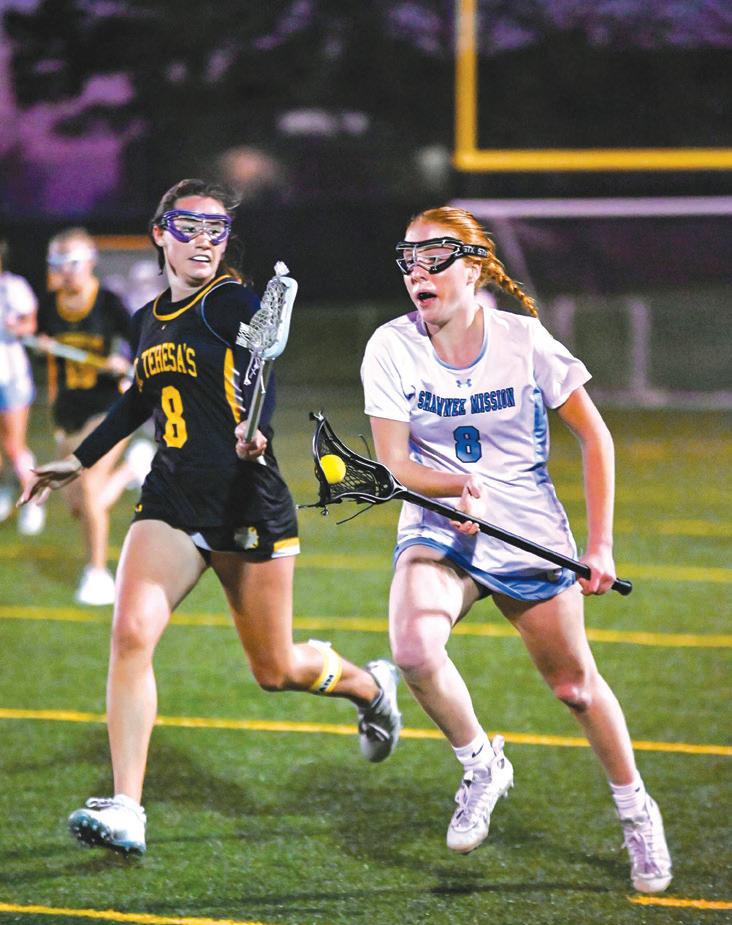
Disordered eating among high school athletes often goes unaddressed, with many students lacking proper nutrition education


APRIL 13, 2026


PRINT EDITORS
Sophia Brockmeier
Libby Marsh
ONLINE EDITORS
Luciana Mendy
Lucy Stephens
ASST. PRINT EDITORS
Avni Bansal
Michael Yi
ASST. ONLINE EDITOR
Christopher Long
Caroline Beal
HEAD COPY EDITORS
Libby Marsh
Luciana Mendy
ASST. HEAD COPY
EDITOR
Grace Pei
PRINT PHOTO EDITOR
Paige Bean
ASST. PHOTO EDITORS
Addie Clark
Ava Towner
Tyler Russell PHOTO MENTORS
Molly Scott
Sophia Cicero
Sylvie DeGalan
Zac Russell
Anastasia Flower
Vivien Glenski
Francesca Lorusso
Molly McDermed
VIDEO EDITORS
Preston Hooker
Emma Weidman
DESIGN EDITORS
Bella Broce
Evelyn Bagley Lucy Swope
DESIGN MENTORS
Lyla Weeks Miranda Liberda
Paisner
Ashtyn Ingram
Hannah Rosemann
Julia Campbell
Francesca Lorusso PAGE DESIGNERS
Madeline Glasier
Devon McFadden
Ella Slicker
Kennedy Moore
Eisley Foster
Elena Hull
Katie Cook
Lainey Hunter
Claire Troutwine
Abigail Baltzell
Lucy Cattano
Emily Enger
Jack Fitzpatrick
SECTION EDITORS EDITORIAL
Eisley Foster NEWS
Kennedy Moore OPINION
Bridget Dean
Glasier EDITORS
Higgins
Henderson
Rosemann
Cooper
Terreros
Eisley Foster
Fitzpatrick
Evelyn Geheb
Emma Weidman
Lexi Madden
Maggie Rogers
Layla Love
Avra Welling
Liv Ruecker
Bella Thompson
Charlotte Walton
RJ Kordalski
Allie Beaulieu
Sadie Jolicoeur
Graham Geheb
Welling
Douglass
Schaefer
Geheb
Sydney Eck STAFF WRITERS
Vanessa Blades
Sienna Williams
Bridget Dean
Hannah Rosemann
Effie Roper
Bella Broce
Lucy Stephens
SOCIAL MEDIA STAFF
Abigail Baltzell
Allie Beaulieu
Emily Enger
Libby Fitzpatrick
Evie Lewis
Rowan McGill
Adyson Cooper
Madeline Glasier
Devon McFadden
Sydney Eck
Lyla Weeks
Lucy Swope
Preston Hooker Molly McDermed
CIRCULATION
here to visit the Harbinger website with stories, multimedia, videos, photos and more.
Scan here to visit the Harbinger Instagram account to view galleries, stories, videos and more.
The Harbinger is a student run publication. Published editorials express the views of the Harbinger staff. Signed columns published in the Harbinger express the writer’s personal opinion. The content and opinions of the Harbinger do not represent the student body, faculty, administration or Shawnee Mission School District. The Harbinger will not share any unpublished content, but quotes material may be confirmed with the sources. The Harbinger encourages letters to the editors, but reserves the right to reject them for reasons including but not limited to lack of space, multiple letters of the same topic and personal attacks contained in the letter. The Harbinger will not edit content though letters may be edited for clarity, length or mechanics. Letters should be sent to room 400 or emailed to smeharbinger@gmail.com.
stories by BRIDGET DEAN
THE SM EAST Symphonic and Concert bands will perform at the State Large Group Festival on April 16. The bands have each prepared two pieces and worked with clinicians, guest musical professionals brought in to improve the performance quality, in hopes of receiving a five rating — the highest score from the judges.
“[It’s] like our music state assessment,” Symphonic Band Director Alex Topefer said. “We compare [our performance] to our state music standards, and then we come up with a performance, and then we get judged and rated, adjudicated.”
This year the clinicians were Joe Parisi from UMKC, who worked with the Symphonic Band, and
former SM Northwest band director Penny Snead, who worked with the Concert Band. Both clinicians attended the band concert on March 30 to take notes on the performances, and then came to SM East the following day to fine-tune the pieces in class.
“I think it’s especially [helpful] because beforehand, it’s always us and our band directors, and having an expert give an outside perspective is really good because he can pick up on things that we might have glossed over because we’re so familiar with the piece,” senior and symphonic band member Eli Moon said.
The preparation in the weeks leading up to the festival can be stressful, according to senior and
principal chair of the Symphonic Band Andrew Bennett. However, the directors and band members enjoy listening to other bands from the area perform their finest music. The Large Group Festival is both a contest and learning experience.
“[When they perform] it gives them that emotional feeling of not just performing well, but performing musically,” assistant band director Eric Starnes said. “Watching the kids’ reactions to what is usually one of their best performances of the year because of all of the preparations [is very rewarding].”
The first Senior Service Seminar will be held tomorrow due to regulation changes of the previous Senior Service Day SENIORS WILL HAVE the opportunity to do service work during a carnival-style Senior Service Seminar. The event, planned by SHARE directors and execs, will take place on the football field during the 90-minute seminar block period on tomorrow, April 14.
Senior Service Day, a SM East tradition in which groups of seniors would leave campus to volunteer at non-profit organizations around the KC area, has now been changed to Senior Service Seminar due to the discontinuation of National Testing Day by President Donald Trump. Seniors had the opportunity to miss their classes and volunteer while freshmen, sophomores and juniors were required to
take standardized tests.
Seniors used to volunteer at one organization all day, but this year, the field will be divided into six different color zones with multiple stations, allowing seniors to volunteer for different service projects.
“We have an area called civic engagement where you can register to be a bone marrow donor or register to vote,” SHARE Director Sheryl Kaplan said. “We have a carnival game area where we’re going to have different games, like a fishing pond, where they throw a little magnetic rod and pull out a fish [that] has an act of kindness on it that they can go do.”
Current SHARE execs and SHARE directors, Erin Billingsley and Kaplan, have designed the atmosphere of the service seminar to be carnival-themed. There will be hands-on volunteering, such as packing birthday boxes for Harvesters, and games, such as Go Fish, where each fish will have a different act of kindness for students to do.

“It’s an accessible way to get people involved, because there are people who just haven’t had the interest to or wanted to put in the work [to volunteer],” Wissel said. “It’s their last chance to be able to use [SHARE’s] resources.”
Kaplan and Billingsley have been reaching
The 64th annual SMSD R&D forum will take place from April 20-25, featuring student works and competitions
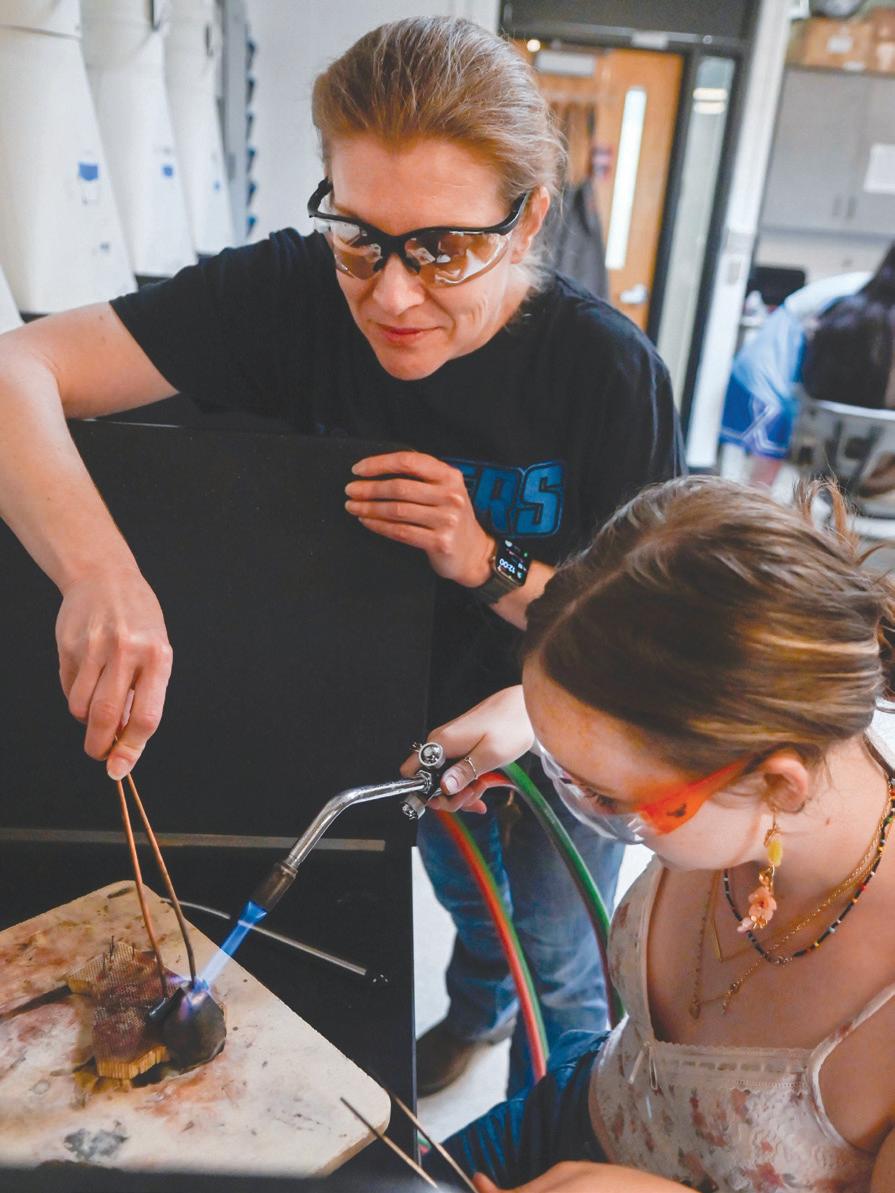
THE 64TH ANNUAL SMSD Research and Development Forum will begin on April 20 at the Center for Academic Achievement, showcasing a variety of student work and performances ranging from advanced welding creations to elementary school choirs. Three open houses will be held on April 22, 23 and 24 from 4-7 p.m., with an awards ceremony at 2 p.m. on April 25, concluding the event.
“[The forum is] celebration of learning,” Joanna Roche, District Coordinator of Elementary Math and Science, said. “It’s about kids going to school all year long, and here are
the great products that come from that and they’re each unique.”
What was once a small science fair funded by the Regniers, a philanthropic family of SMSD graduates, now has an estimated 1,500 to 2,000 student entries from the combined 35 artistic categories, according to SMSD Director of Assessment and Research at the CAA Dan Gruman. The event has also expanded to include the Next Great Pitch Competition, which was started five years ago as an opportunity for students to compete with their innovations and solutions to real-
world problems.
“At the end of [the] live pitch[es], we’ll open up an opportunity for the public at large to vote for their People’s Choice winner,” District Chief of Strategic Initiatives Leigh Anne Neal said. “They’re solving some kind of problem to better their community, or better something about their world, and it certainly has that civic and global contributor piece.”
The selected finalists for the contest will present their projects at 9 a.m. on Saturday morning at the CAA, but it will also be livestreamed through the SMSD website.
“It’ll be fun to see people just relaxing, having fun and giving back,” Billingsley said. “We’ve done several seminars that are school-wide, and they have had a really good turnout, so I’m looking forward to seeing that on a larger scale.”
Judges will give out awards for the Next Great Pitch contest and awards to the students who choose to enter their artwork into the showcase contest, at 2 p.m. on Saturday.
Family, friends, students and educators alike are encouraged to attend the forum to view students’ exemplary work.
“Once we get to the open houses, we start seeing parents and students and patrons come through to see what’s here, and it’s really fun to see people’s reactions and engagement with student work,” Gruman said.
story by CHRISTOPHER LONG
DR. Michael Schumacher announced during the Board of Education Financial Report on March 25 that the district isn’t adding any of the 113.3 Building Needs Assessment requested full-time positions including interventionists, Information Technology IT specialists, teacher instructional coaches and elementary counselors, according to SMSD Board recaps.
BUILD ING NEEDS
A document filled out annually that outlines specific needs and requests for each school in the district
“This was very hard to do,” Schumacher said, in an address to the SMSD Board of Education. “The topic of adding counselors is a very passionate topic, but hopefully our community can understand that while we want to add these positions and add counselors, we aren’t able to do that at this time.”
The district said the decision comes after declining enrollment and decreased state funding. For the 2025-26 school year, the district lost over $4 million due to a sudden drop in enrollment of over 250 students across the district, according to Schumacher.
With increased cost of living in Johnson County, families have been moving to other parts of Kansas and leaving SMSD, according to Schumacher. Over the past four years, the cost of owning a single-family home in Johnson County has risen 27%, from $330,000 to $451,000, according to an article from the Johnson County government.
Many students and families are also concerned with sending their kids to school, Title 1 schools specifically, with the ongoing Immigration and Customs Enforcement presence in Kansas City, according to Schumacher.
The district also had to transfer
$25 million to accommodate a decrease in state funding for special education, which left few funds to be allocated for new positions, Schumacher said.
TI TLE ONE
A federally-funded school with a high percentage of students, 55% or more, from low-income families
“As we’re making decisions about adding positions, in particular, [for] counselors, we need to be able to predict that we’re going to be able to continue those positions in years to come,” Schumacher said. “With all that being said, all of those factors, we didn’t think it was a year in which we should be taking a step out and adding new positions.”
Of the many positions requested by the cumulative Building Needs Assessments, 34 counselors were requested to be added at elementary schools across the district.
SMSD did decide to add five inbuilding substitutes to district elementary schools.
The majority of the substitute teachers in the district come from a pool of Kelly Education employees, a staffing company that has an SMSD contract negotiated every year, according to SM East Building Sub Kristen Ekvall.
Currently, all six high schools in SMSD have two building substitute teachers, one as part of the Kelly contract and one hired directly from the district, which arose from COVID-19 district changes, Ekvall said.
I THINK with the building subs, you get people that know the kids, and they know how the school runs.
KRISTEN EKVALL
BUILDING SUB
Most SMSD elementary schools haven’t had counselors in over 10 years, Belinder Elementary School Principal Steve Yeoman said. However, most of the social and emotional needs are being met by district allocated social workers, at least in the case of Belinder, according to Yeoman.
BUILD ING SUB
A substitute teacher that works fulltime in one building
“I’ve been here for 12 years at Belinder, and we’ve never had a counselor at our school,” Yeoman said. “I think that it’s fair to say that the social emotional learning component of what we do has remained pressing, certainly post COVID, so that may be a driver for some people to feel that there’s an additional need for counselors.”
“I think with the building subs, you get people that know the kids, and they know how the school runs,” Ekvall. “I feel like [during the COVID-19 pandemic] teachers realized that they deserve to take [time off]. If they needed to take their time during that period and going past COVID, they used it more.”
Other positions the district didn’t add included interventionists, Information Technology IT specialists and teacher instructional coaches. These decisions are just for the 2026-27 school year and could be subject to change in the coming years, according to Schumacher.
“People understand the numbers that we’re putting out there,” Schumacher said. “I mean, they’re factual numbers and the logic is there, but it doesn’t mean that people aren’t frustrated and wish we could do something different. [Not adding additional counselors] bothers me because we want to do everything we can to support our students and I know counselors would help us.”
The Shawnee Mission School District won’t fulfill any staffing requests for the 2026-27 school year
The positions the SMSD board decided not to add and what each position does
Give guidance to individuals and groups
Help students adjust to new environments
Aid students’ personal, social, academic, career and family concerns
Help resolve student conflicts throughout elementary to high school
Implement SMSD discipline protocols that are outlined each year
Work to contain and isolate incidents to preserve classroom productivity
Manage the classroom efficiently and maintain a positive classroom environment
Ensure students are meeting learning objectives through prepared lessons
All about the scouts’ uniforms

The Venturing Shirt features patches that show a scout’s membership in their council, the U.S. flag and their unit number. For formal occasions, it includes ranking and award medals

An exploration into boy and girl scouts

The scarf was originally used to protect scouts’ necks from burns and also served as an emergency rope. Today, they symbolize troop and scout honor, reminding scouts to do good daily.
The sash is worn over the right shoulder and left hip. It displays the merit badges that scouts earn by completing certain activities or by learning specific skills.
*information from scouting.org & boyscouttrail.com
*Informationfromscouting.org

Someofthe differentboyscout badgesandhowtogetthem

Knowhowtohandlea firstaidemergency Knowhowtopreparefor firstaidemergencies Knowhowtohandlea varietyofinjuries, woundsand emergencies
Discussinanoutlinewhy familiesareimportantto bothindividualsandsociety Listwhyyou’re Createimportanttoyourfamily alistofhomechores ordutiesandcomplete themfor90days Carryonaprojectathome thatincludesyourfamily’s participation
How to get each of the different types of girl scout awards



Gold Award Grades 9-12
Find an issue in the world or community that you care about
Find a team to help you tackle the issue and create a plan
Carry out your plan
Share your story and inspire others to help change their community too
Silver Award Grades 6-8
Find an issue you care about
Go solo or build a Silver Award team to help you
Choose a project that will create a lasting change
Make a plan and follow through with it
Share your story
Bronze Award Grades 4-5
Talk to your local Girl Scout council
Build a Girl Scout council team and explore your community for issues
Create a project
Put your project in motion


Correctlyperformfivestrokes Doavarietyofdifferentswimworkouts listedonthescoutingwebsite Explainthehealthbenefitsofregular aerobicexercise

Monitoryourhealth andacknowledgeyour fitnesshabits Plana12weekphysical fitnessandnutrition programtocomplete



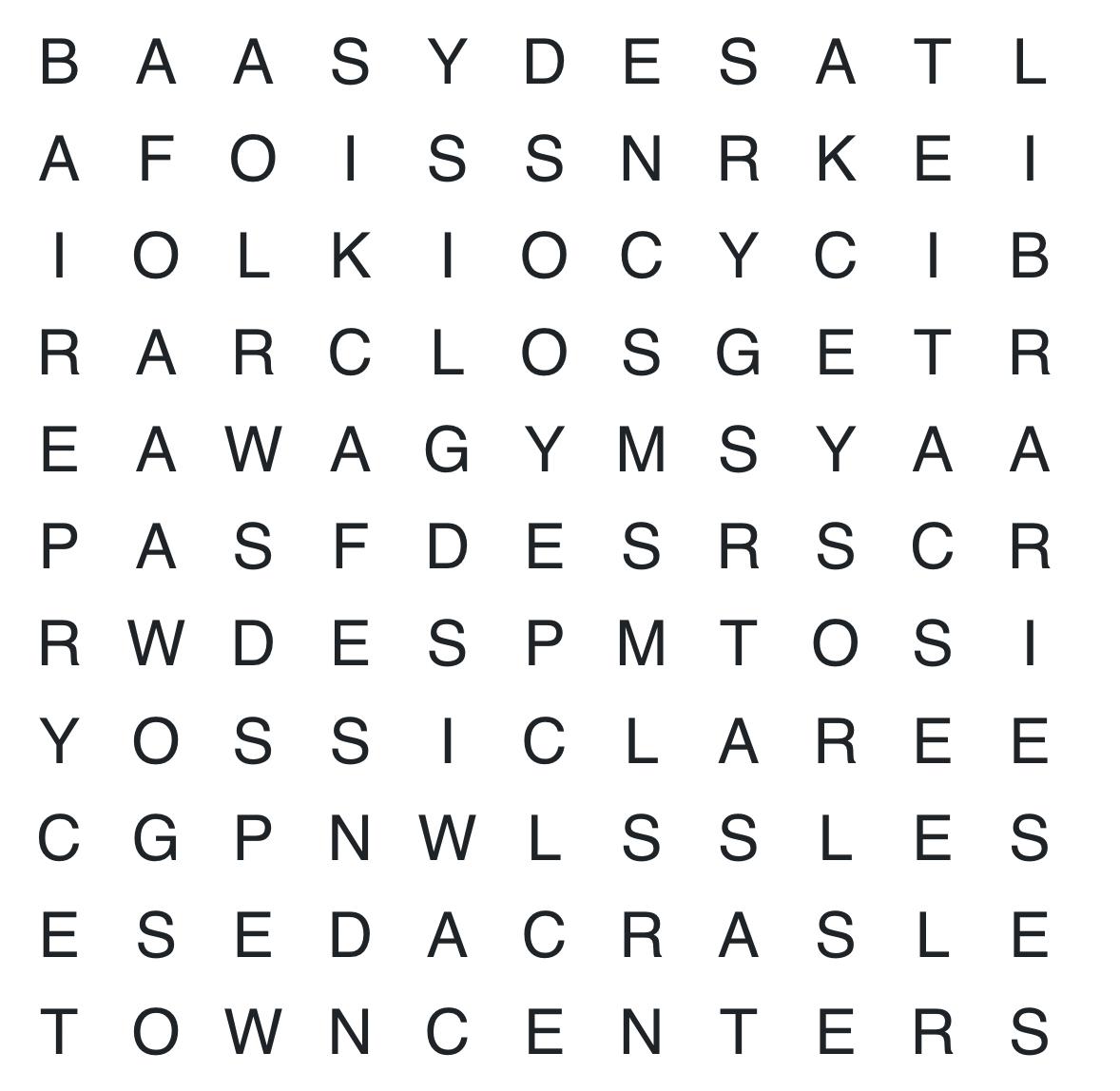
Find the names of common third spaces in the word search CENTERS
FLIP TO PAGE 10 TO READ ABOUT THIRD SPACES
Take this short quiz to determine if you’d prefer a public school or private university school
Would you rather have a smaller or larger class in terms of students?
a) Smaller classes
b) Larger classes
Would you rather have less options or a wider range of options in degrees?
a) Less options
b) More options

with criticism. It had begun with the announcement of Bailey as Ariel and the conversation had primarily revolved around her identity as a black woman.
As I was leaving the theater, I found myself questioning why the casting of a black actress as Ariel generated so much controversy. Although the original animated “The Little Mermaid” depicted Ariel as white, her race has no impact on the story; the plot remains unchanged regardless of her skin color.
oppression Hermione endures in the books is a result of her being born to Muggle parents; her skin color is irrelevant. While the majority of the time characters being white doesn’t impact the story’s plot, there are select situations in which race swapping can negatively affect a story’s impact.
Would you rather go to a school specified to one career sector or multiple?
a) One sector
b) Multiple sectors
Would you rather have the opportunity to receive more or less financial aid?
a) Potentially more financial aid
b) Potentially less financial aid
FLIP TO PAGE 9 TO READ ABOUT UNIVERSITIES
“Race swapping” characters should not generate as much controversy as it does, as their race is frequently insignificant to the story’s plot.
In recent years, race swapping characters has become increasingly common. Most modern remakes or adaptations feature at least one, if not several, characters who were originally depicted as white that are now played by people of color.
In the new HBO “Harry Potter” series, multiracial actress Arabella Stanton was casted to play Hermione. She fits the role almost perfectly, with Hermione’s long, brown curly hair and brown eyes. But, she’s not white, like Emma Watson, who played
In “The Princess and the Frog,” Tiana’s closest friend, Charlotte La Bouff, is white; this is important to the story of “The Princess and the Frog,” as their different races help emphasize their characters’ differences and unique situations
It’s important to determine if characters happen to be white versus if the character needs to be white for the story to make sense. Focusing on trivial matters, such as a person of color being casted in a story where race is irrelevant, takes the focus away from the movie and the talented actors and actresses.
Race-swapping characters who happen to be a certain race is not a big deal— it doesn’t require scrutiny. It’s only harmful, and is okay to be criticized, when a character’s specific race directly affects their arc and the story’s plot.
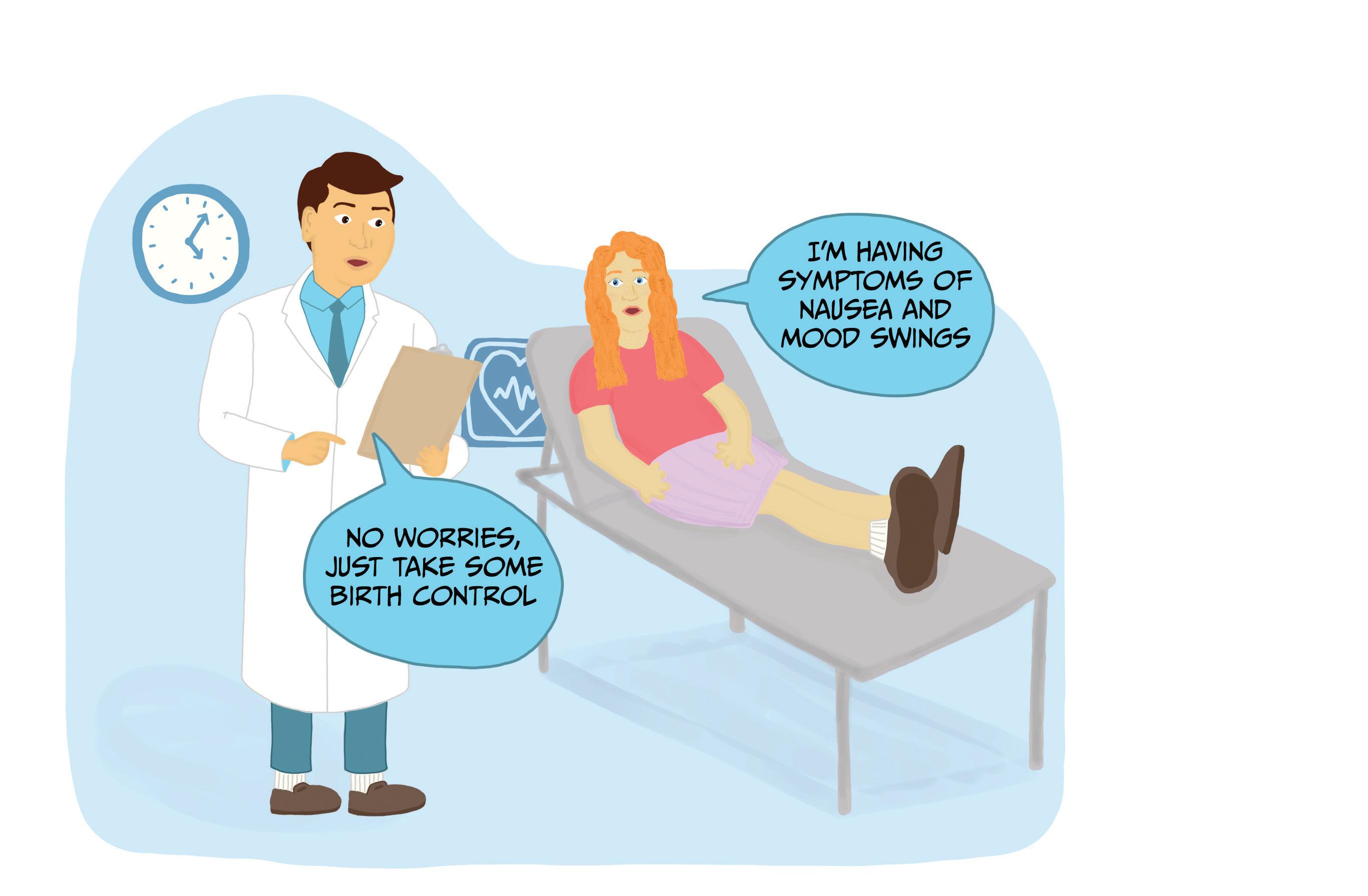
FEMALES HAVE outnumbered males in the U.S. since 1946, according to the United States Census Bureau.
Despite this, there are continuous and disturbing gender inequities in medical research, leading to underrepresentation of women in clinical trials and bias in understanding women’s health needs.
The main issue is that there’s no plan to improve this bias. Less than 8% of the National Institute of Health grant budget for fiscal year 2023 was allocated to women’s health research. NIH doesn’t separately calculate or publish a category for men’s health research, this is because most other research is men’s health. Conditions that uniquely affect women remain “critically understudied.” according to the National Library of Medicine.
In 1977, the FDA recommended excluding women of childbearing age, 15-49 years old from early clinical trials, according to the World Health Association. The goal was to protect potential pregnancies, but instead it led to a broad exclusion of women in health studies.
This was entirely unnecessary. And the only reason for it was because researchers wanted simpler data, and claimed males were more “controlled.”
This didn’t change until 1993 when the NIH Revitalization Act of 1993 mandated that women must be included in NIHfunded clinical research.
Researchers claim they “don’t know” the pregnancy risk, and therefore exclude any women that could get pregnant, according to the National Library of Medicine.
And this isn’t even close to everything. Women remain underrepresented in clinical trials across multiple specialties, specifically in cardiology, oncology — the leading causes of death among women — and stroke research, according to the NLM. And when women have to make
More funding must be invested in studying women’s health issues for a better understanding of their health needs and fairness in science


treatment decisions, they only have two, bad options. Rely on research conducted primarily on men, for which dosing and metabolism issues exist, or rely on lowerquality observation data on women, rather than rigorous clinical trials.
And who gets to be a part of and receive quality data from these clinical trials? Men.
Consider endometriosis, a condition exclusive to women in which cells similar to the lining of a uterus grow outside of the uterus.
This condition has a disturbingly low awareness among healthcare professionals and policymakers. Approximately 65% of women are initially misdiagnosed, according to the NIM. Women experience delays of diagnosis, averaging five to 12 years after their first symptoms arise, and the average patient sees seven physicians before endometriosis is properly diagnosed.
If more research money was allocated, women wouldn’t have to wait a decade for basic health issues to be resolved.
Societal normalization of women’s pain and stigma around menstrual issues, combined with the lack of medical prioritization on women’s health research, is partly to blame.
In fact, according to Blueprint to Close the Women’s Health Gap, between 2019 and 2023, less than 1% of healthcare research and development funding was directed to female-specific medical problems.
Consider menstruation and menopause, which affect 100% of females. Until 2023, no study had ever been published testing period products — tampons, pads, discs, cups — using human blood. Early tampons were tested with blue-saline solution — a shortcut instead of using real blood, because women’s bodies are apparently optional.
This lack of research would never
happen for health issues exclusive to men. Inequities persist beyond femalespecific health concerns. Take cardiovascular research for example. Women make up 50% of those affected by cardiovascular disease, but only represent 38% of patients in clinical trials, according to the NLM.
Women make up 51% of heart disease deaths, greater than males 49%.
Consider life-threatening conditions such as HIV-1, a sexually transmitted infection. A treatment medication — Biktarvy — was initially approved by the U.S. Food and Drug Administration in 2018, according to Gilead.
However, it wasn’t until 2024 that Biktarvy was updated to treat women with HIV who are pregnant.
The only reason for this delayed approval is the fact that pregnant people aren’t usually studied until later on. This is common across all medical studies using a “protection-byexclusion” mentality, which systematically excludes pregnant women without scientific justification, according to the NLM.
Female health conditions

are specific to their personal needs, especially women.
Ineffective policies and unresolved promises aren’t the solution, they only make the problem worse. The government and NIH must raise awareness on the prevalence of the issue and allocate more funding towards women’s health research.
The funding discrepancies bleed into health issues for both men and women. So don’t think that males getting the majority
Common issues that women face due to lack of research

Misdiagnosis for symptoms
Incorrect medication dosage


Hormonal issues overlooked
Error in treatment and requiring multiple or repeated treatments
*According to the National Library of Medicine
design by LIBBY MARSH
Students should take advantage of the generous financial aid and specialized education that private universities offer
WHENEVER PEOPLE ASKED me about my post-high school plan, my answer was typically “anywhere but here.”
I wanted a completely new posthigh school experience, so in my junior year, I started compiling a list of out-of-state options. The list included more public than private schools. But as I did more research, I realized that a private university would better suit my high ambitions.
Though public colleges can provide quality education, private universities are the superior option for students seeking robust student aid along with a specialized, supported education.
And private universities don’t just mean snobby students at
story by BELLA BROCE
SITTING ON MY grandparents’ porch amidst the Spanish moss and sticky air, I can feel the immense purple pride. As their Kansas State University flag swayed in the wind, my grandparents radiated Wildcat energy, despite being 1,000 miles away from Manhattan, Kansas.
While one can argue that alumni from private universities like Princeton, Dartmouth and Duke can all share this same loyalty to their school, it’s truly not the same.
My grandparents didn’t attend K-State, but they raised their kids in Manhattan, while my grandpa was a professor at the university. Now, my extended family’s whole identity
PRIVATE COLLEGE
A college or university that operates as a non-profit and doesn’t receive funding from state governments.
Princeton and Harvard. They’re more accessible than people think, with an average national acceptance rate of 70%, according to the National Association for College Admission Counseling.
At first, I strayed away from private universities because of their higher tuition, but I discovered that their actual cost of attendance is much lower, thanks to the generous amount of financial aid they offer because of private donors and large endowments. Public universities offer an average of $9,650 a year, while private universities offer almost three times that, with an average of $25,630, according to a 2023 College Board Study.
All my fears about the costs of private universities vanished after the University of Kansas —
F AMILY-LIKE CULTURE
the local, supposedly “affordable” option — only gave me $5,000 a year, and Emory University, where I’ll be attending in the fall, gave me $68,000 a year.
No matter where you go to college, it’s going to come with a hefty price tag, but at least by attending a private university, you’ll get your money’s worth with a more focused, supportive and comprehensive educational experience. Public schools are often overcrowded, making it easy to fall through the cracks if you get confused in class. Private universities, on the other hand, often have smaller class sizes, and the average student-tofaculty ratio is about 10:1, according to the National Center for Education Statistics. This means students get a more individualized education and
PUBLIC COLLEGE
A college or university that’s funded mainly by state governments
As one might expect, the idea of going to K-State was drilled into my brain from a young age. It’s affordable, has a big-school culture and offers a wide variety of programs.
But like all kids, I wanted to do the
LAND GRANT
Colleges that receive funds from the federal government for agricultural teaching, researching and extension of education to the community.
opposite of what I was asked. While I was exploring private universities, I considered enrolling at Belmont University, a small private school in Nashville, to pursue graphic design and a new environment.
don’t have to compete for the professor’s attention.
Private colleges also excel in specialized fields by providing unique programs, research opportunities and internships. Their combination of smaller class sizes and tailored resources for specific disciplines creates an ideal environment to support students’ individual interests.
As the May 1 National College Decision Day is just around the corner, a lot of seniors have an important decision to make. And while public universities play an essential role in creating more accessible education, private universities are the better option for a unique environment where talent is fostered into success.
State schools’ affordability and family-like environment is worth the enrollment
Yes, the campus was beautiful, and the people were charming. But that didn’t mask the debt I would be in after graduating. I was so invested in the sparkle and shine of a private university I was distracted by the realities of college.
Why would I go to a school with a graphic design program with the same strength as K-State, but at four times the cost?
I needed to find a place with a campus I loved, a strong, affordable program that seemed like a fit for me.
Thankfully, the University of Missouri-Columbia — Mizzou — checked all the boxes.
Immediately when I walked onto campus I felt welcomed. There was such a variety of majors, incomes,

extracurriculars and Greek life.
And to top it all off, it was affordable. While they don’t offer in-state tuition, I received a hefty scholarship because I lived in a border county. And it’s not K-State, but the tailgates and people still carry the same midwestern charm and friendliness.
Now, at the ripe age of 18, I can confidently say that state schools will always have my heart. Their inclusive and family-like environment is incomparable to anything a private university can offer.
So in 60 years, don’t be surprised to discover the University of MissouriColumbia flag proudly swaying outside of my house.
My grandparents taught me well.



TTHERE’S NOWHERE FUN around here,” one of my friends whined, scrolling on her phone. We were sitting in my car after school, struggling to come up with even one entertaining, affordable place to hang out — a common occurrence for us.
HIS WASN’T SUPERSTITION
This was serious business. On the first night of preliminary competition — the first day of girls swim and dive state — Senior Captain Georgia Boyd’s dad, Rick, was frantically driving around Topeka to find a remote for the hotel TV. Twenty varsity swim girls were about to pile into the hotel room to watch the movie, “Miracle”.
Throughout the ages of side parts, poodle skirts and roller-rinks, teenagers have gathered in third spaces — such as drive-in movie theaters of the 50s to malls in the 80s and even pleasure gardens in the regency era, to socialize and make friends.
A movie about hockey, not swim.
With candy and snacks in hand, upperclassmen reclined on the bed as the others scrambled around to find a prime floor spot. The room fell silent as the opening credits rolled and any chatter was immediately shushed.
The concept of “third spaces” was first introduced by Ray Oldenburg in his 1989 book, “The Great Good Place.” Oldenburg suggests that everyone needs three places where they spend most of their time: home, work or school and a “third space,” meant to be dedicated to socializing and community.
The swimmers leaned in to watch the story about the U.S.A men’s hockey team’s triumphant feat over Russia in the 1980s Olympics. That same year, the SM East girls swim and dive team won state.
Given the repeated presence of third spaces throughout history — like neighborhood diners, corner stores and recreation centers — why are there none now for modern teenagers?
Now, forty-six years later both the USA men’s and women’s hockey team won gold at the Olympics. This was the first time the men’s team has won since the “Miracle” movie, and the girls don’t believe it was just a coincidence. Escoe=
governments and major corporations should work to create third spaces by prioritizing public infrastructure and making prices affordable.
and the addition of promising freshmen to the SM East team, the girls swim and dive program are entering the season with high hopes and many coincidences to bring home a state championship.
“It’s our turn,” Junior Captain Vada Walsh said. “This is our sign. This is our movie. This is our year.”
According to Brookings.edu, third spaces are ideal for finding a sense of belonging, as they often revolve around shared interests and create common ground for socializing without barriers like social class. These places can be public parks, private businesses, or even social clubs, but they’ve recently become less common due to lack of use, high pricing and minimal funding.
In addition to the team’s support from head coach Chris Copeland and varsity captains Walsh and Boyd, the team has a new supporter: Jack Hughes, the 2026 USA hockey player who scored the game winning goal only ___ weeks ago.
Spots such as town centers and community gardens were once staples of any city or town. Ceremonies, markets and fairs were hosted in town centers. In community gardens, people could gather to cultivate crops.
With an American flag draped over his shoulder, missing, bloody tooth and a fist pumped in the air, his photo, is taped to the wall of the SM East pool. Watching over the team, he’s a reminder of the team’s end goal — gold — or in this case, a state championship.
Public areas such as community gardens still exist, but local governments don’t direct significant funding towards them. Most public gardens are neglected, both due to a lack of funding and people not knowing of their presence.
person in the race, screaming our heads off.”
Most people, especially teenagers, can’t justify spending that much on a 12-ounce beverage.
From my experience, knowing you’ll have to spend money going somewhere, an “invisible entrance fee,” is discouraging to teenagers seeking third places. Accessible third spaces like libraries and community centers have no entry requirements, welcome large groups and many focus on a common interest.
The newest — and youngest — additions to the varsity swim team are freshmen Charlie Harris and Teni Oyetunji. Harris, who has only swam competitively for four years, is already club teammates with a few varsity players. Her strength in breaststroke will add the much needed depth to the varsity — they’ll have solid swimmers in every event.
The drought of third spaces isn’t entirely to blame on local governments. Teenagers must seek out spaces that interest them, like school clubs or youth groups.
“The boys basically won because of their depth,” head varsity swim coach Chris Copeland said. “Even in our second place finish last year, we didn’t win one first place. It all comes back to numbers; quality and quantity.”
Though it can be nerve-wracking to put yourself into a new environment, especially when you don’t know anyone. But, teenagers need to seek human interaction, rather than having the majority of their social engagement be online.
Shopping Center, 6920 Mission Rd., Prairie Village, KS 66208
W 135th St., Overland Park, KS 66223
In the modern age, both teenagers and governments have focused less on creating third spaces. According to a 2023 Pew Research study, nearly half of teenagers say they’re online “almost constantly.” This leaves little time to socialize in person. This statistic is only worsened by the lack of maintained public or accessible private spaces available for teenagers.
Since these discovered coincidences, “Swimmy” — the Snapchat girls varsity group chat — has been pinging with excitement.
For the past ten years, the girls swim and dive program has consistently earned a podium position at state, but fallen short of first place. This year, due to shifting rosters at competitor schools
Teenagers need to make an effort to find spaces that interest them and local
“The way I’m looking at [the season] is like, ‘Why not?’” Boyd said. “I want every person going into practice and giving it their all like ‘Why not give it your all? What are we holding back for?’ I really want to have a big team aspect for it, everyone having each other’s back and just pushing themselves.”
At practice, Copeland will use sets inspired from the boys season with hopes to strengthen stroke technique. SM East is also able to enter swimmers in every category which will accumulate points and also the divers will.
Instead of public spaces, teenagers might look to restaurants or bookstores to spend their time. While privately owned spaces are usually better maintained, they aren’t as accessible because of high prices.
Contrary to other schools, the SM East girls swim team are each other’s supporters, not competitors. No matter the person, grade, stroke, the team will always be at the end of the lane with ear piercing cheers.
Starbucks CEO Brain Niccol has promoted the company’s cafés as a “third space,” remodeling interiors to include more seating, allowing free refills and offering customers traditional mugs rather than to-go cups. This is a step in the right direction, but like other corporations, the issue remains in their pricing.
“We’re all each other’s biggest cheerleaders,” Walsh said. “We’re all at the end of every single lane for every single
Even with free refills and extra couches, a medium coffee costs upwards of $6.
No matter the results at state, the SM East They are bringing the Olympian energy with them wherever they go. It’s been ten years since they’ve won state and the team has been given a good hand for the season. But even then...
School clubs are a good place to start. They often provide snacks and fun activities, cost no money to join and are full of people that share hobbies or passions — one that the club likely focuses on.
“I still like to be considered an underdog,” Copeland said.
Businesses need to work to offer affordable pricing, local governments need to fund community spaces and teenagers need to put in the effort to look for and join clubs, groups or teams that focus on their unique interests.
Third spaces have been a constant throughout history, but without a conscious effort to maintain their presence, they’re dying out — and dragging our mental health down with it.
Wornall
Kansas City, MO 64112
Mission Rd., Prairie Village, KS 66208 8101 Marty St., Overland Park, KS 66204

encourages his teammates during a rally. This is Yi’s first year on the team.
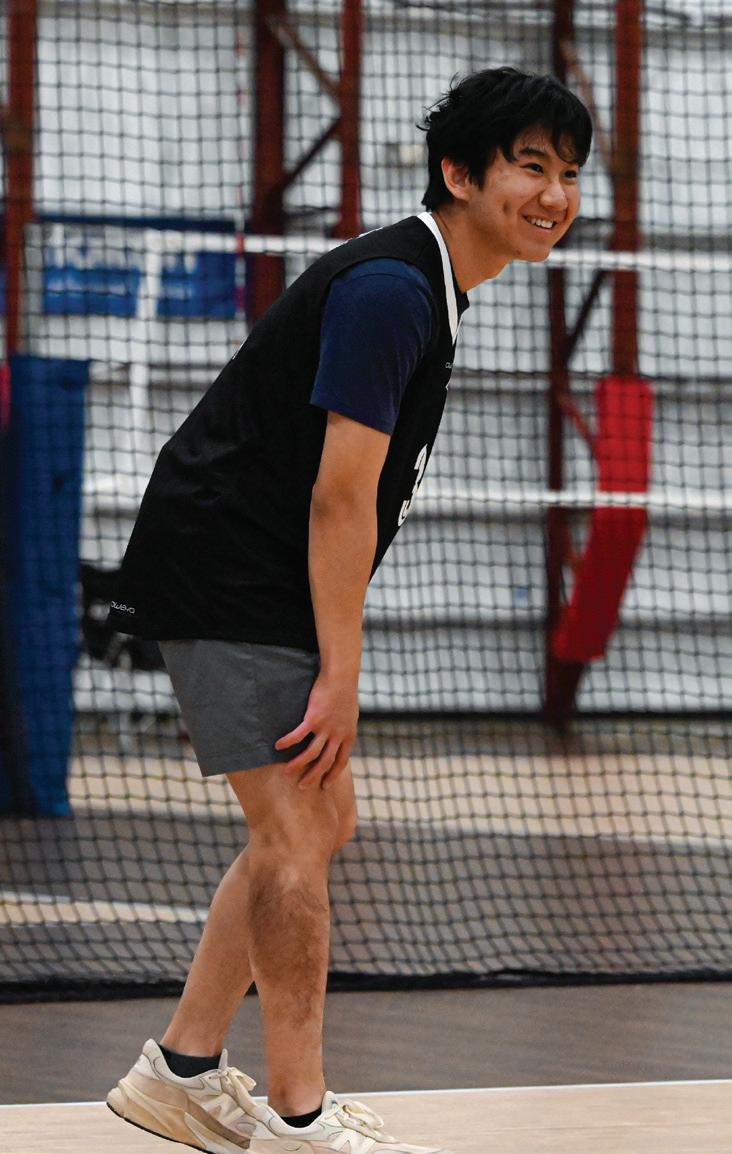
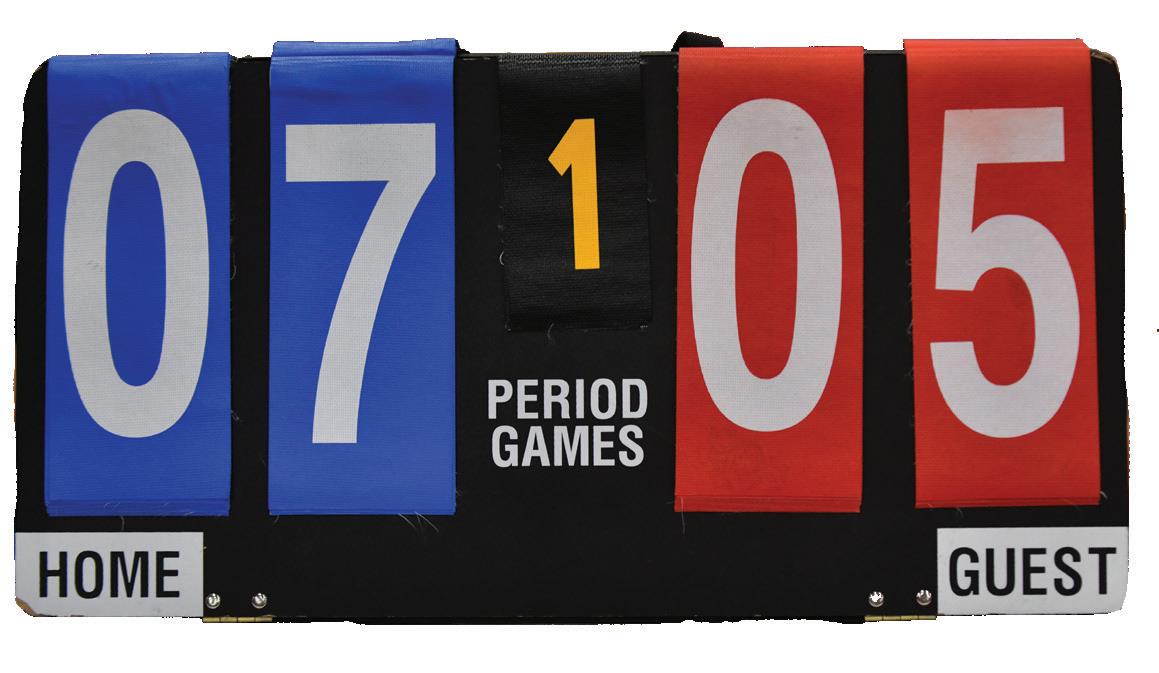
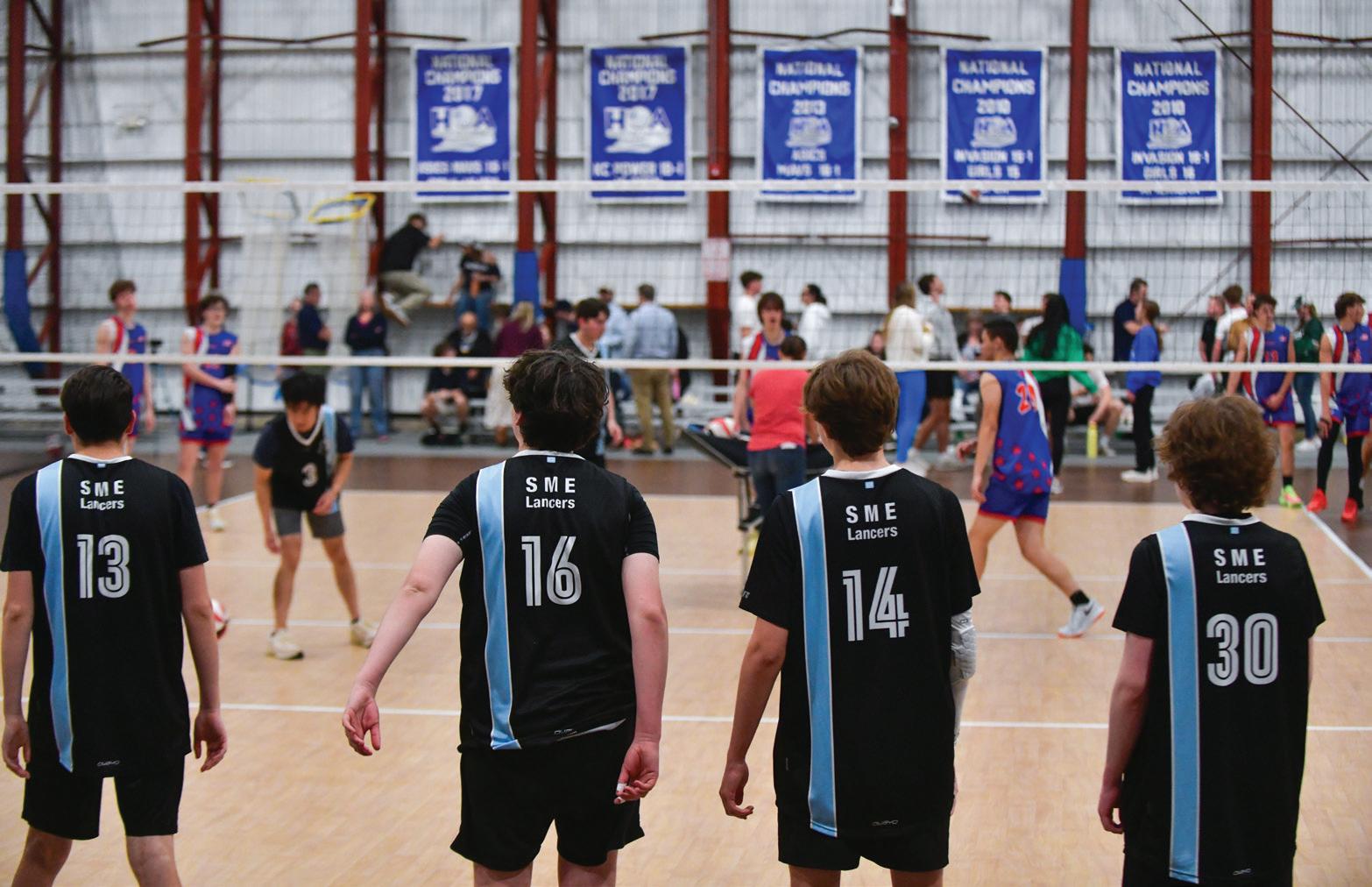
The boys volleyball team has impacted its players’ experience at SM East through the connections they’ve made with each other
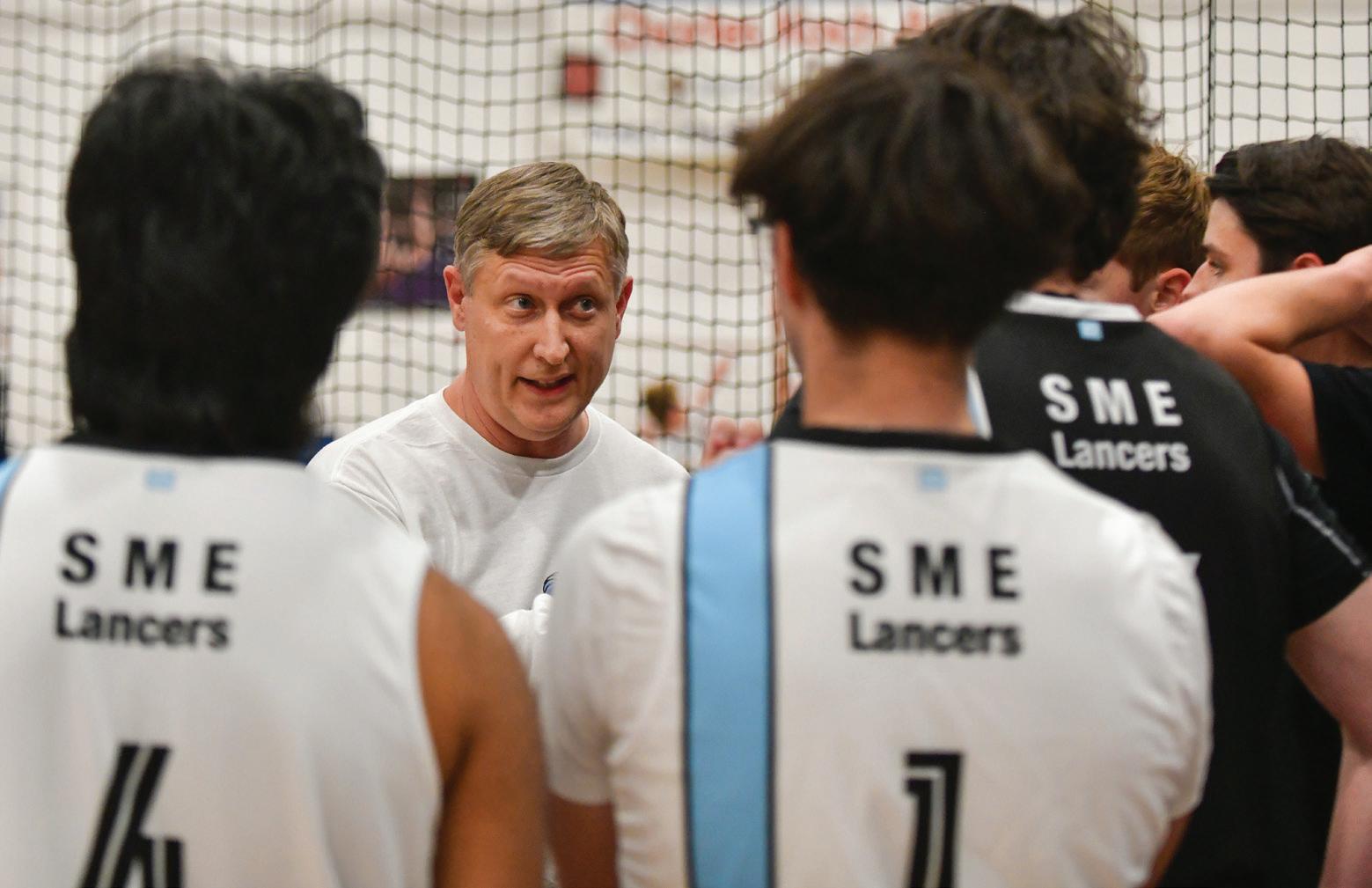
talks to the team between points. “I find the coming together of the players from different spheres into a team is the most satisfying impact of the team,”
said. “Some of the guys have played other sports, but several have never participated in a sport at East. So that team building, both on and off the court, is always one of the biggest impacts of a team sport.”
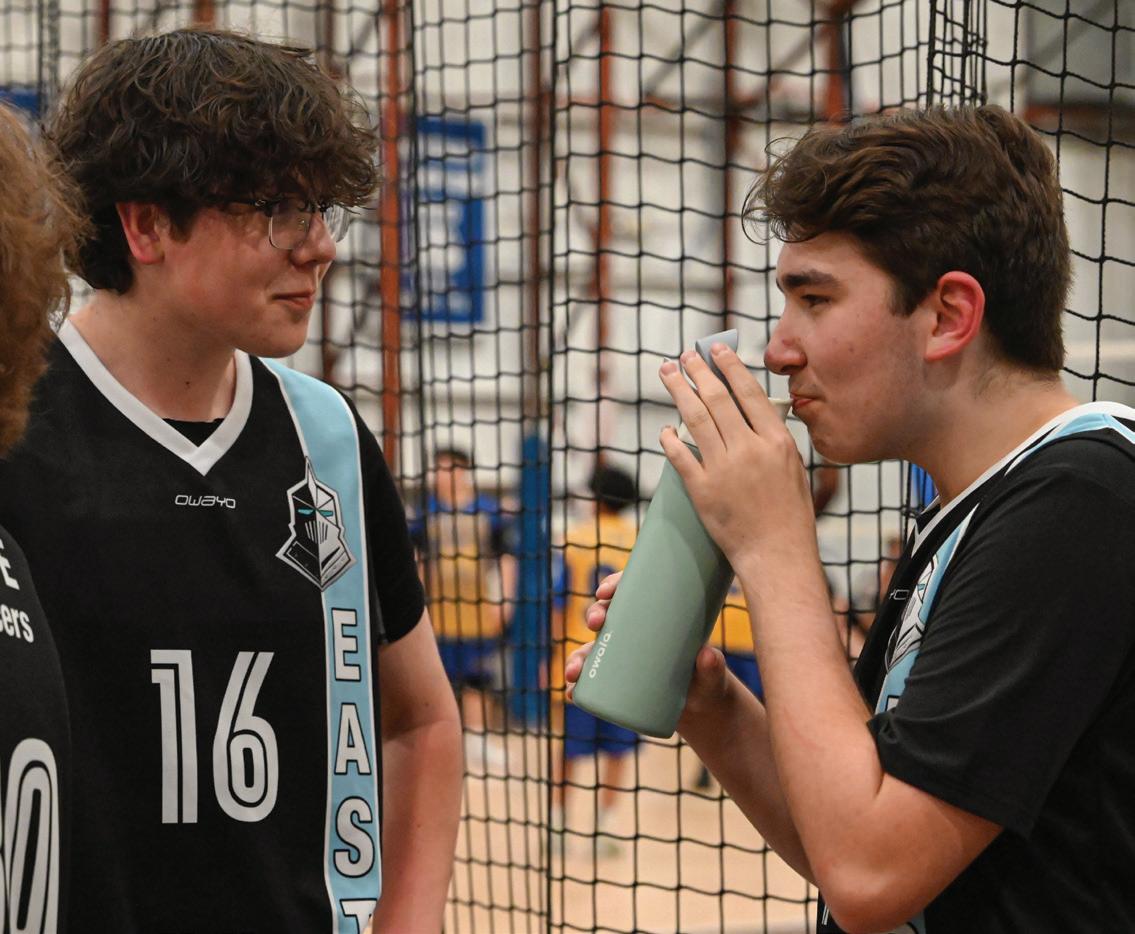
“One of my most memorable experiences so far has been the energy and teamwork during our big matches, especially when we pull together in tight moments,” Terreros said. “I really look forward to improving my skills, pushing myself and seeing how far we can go as a team this season.”







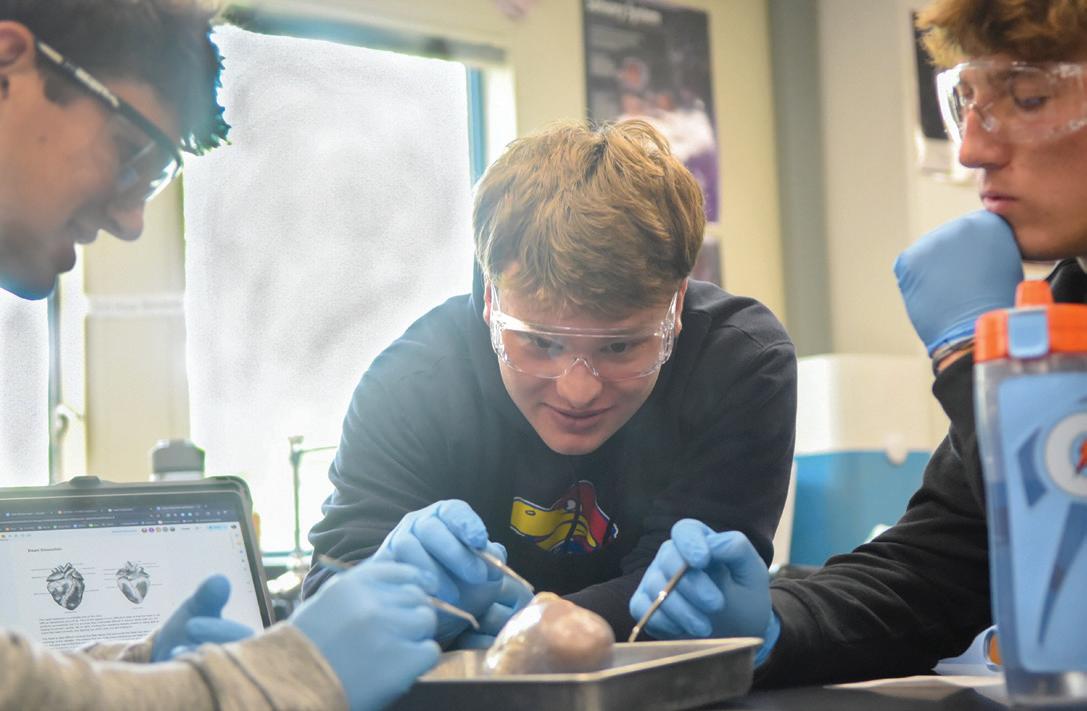
A look inside student life during the past two weeks

BELOW Junior Lukas Herrera is removing a power supply from a scoreboard that robotics students are making. “[I love working] on lots of cool projects with my friends,” Herrera said. photos by SOPHIA CICERO @scandough_sourdgh batter up
Spanish teacher Abra Scanlon started a business selling sourdough and other baked goods made from sourdough discards
Instagram handle:


SCANLON TEACHER
MY MOM AND I started making sourdough a few times during the pandemic and then I put it in the fridge and left it for a year or two. When Taylor [Swift] started making it again, my mom and I were like ‘Let’s get the starter out and try again.’
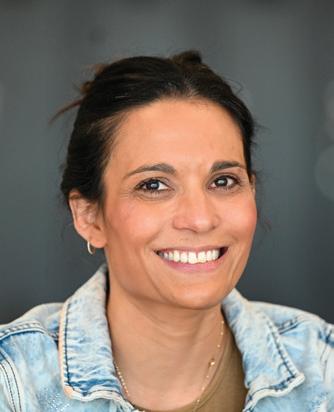
Popular recipes that can be made from sourdough discard
*According to The Little Spoon Farm
Cheez-Itz
Get to know the drum majors for the 2026-27 school year
the process
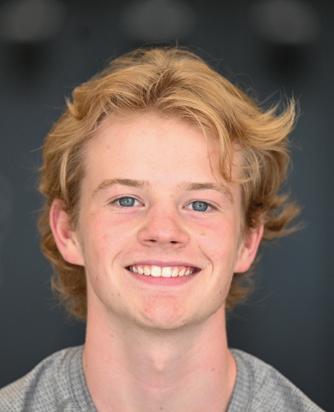
HENRY BYRD JUNIOR
Take a look at the audition process to be chosen as drum major
LEAD
DRUM MAJOR
A look into the role of lead drum major
Conduct the marching performance
Check in with section leaders
Memorize scores of the songs
Organize band bonding
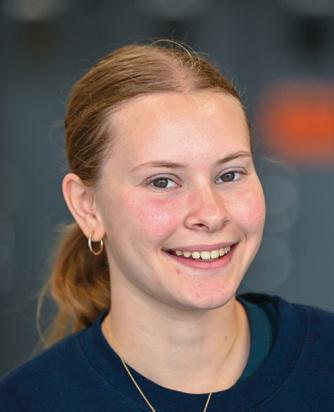
ASSISTANT DRUM MAJOR
IT’S BEEN A mixed reaction. I’ll be a little sad not being able to [march] but I also think it’s gonna be really fun being up there and conducting. MIA CROSS SOPHOMORE

Crepes
rolls
ASSISTANT DRUM MAJOR
IT FELT REALLY good [to get the position]. It was obviously a long process and I put a lot of work into it.
ANDREW BUKATY SOPHOMORE
Attend practice sessions where they learn to conduct the school song, fight song and the national anthem
Interview with band directors Alex Toepfer and Eric Starnes
1. 2. 3.
Conduct the band in the school song, fight song and national anthem before members vote on their top candidates







THE HARBINGER
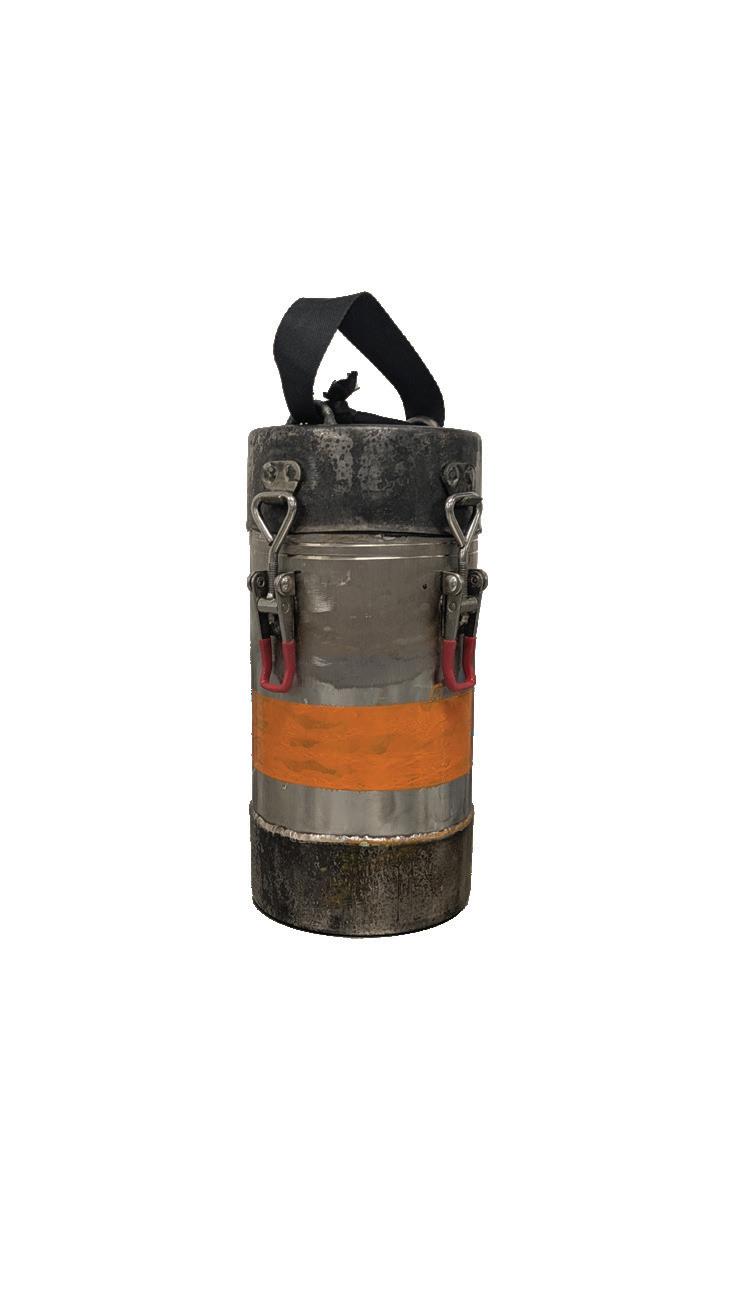
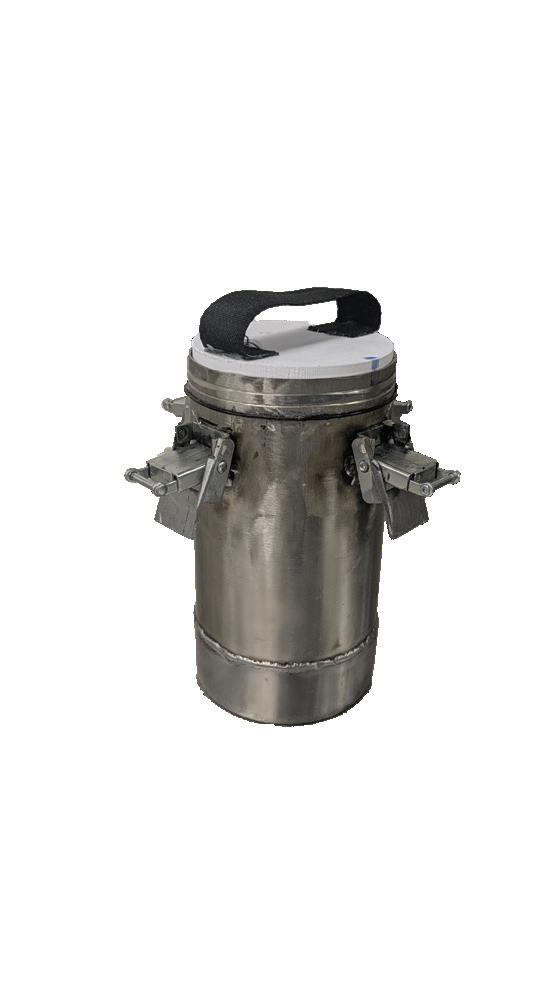
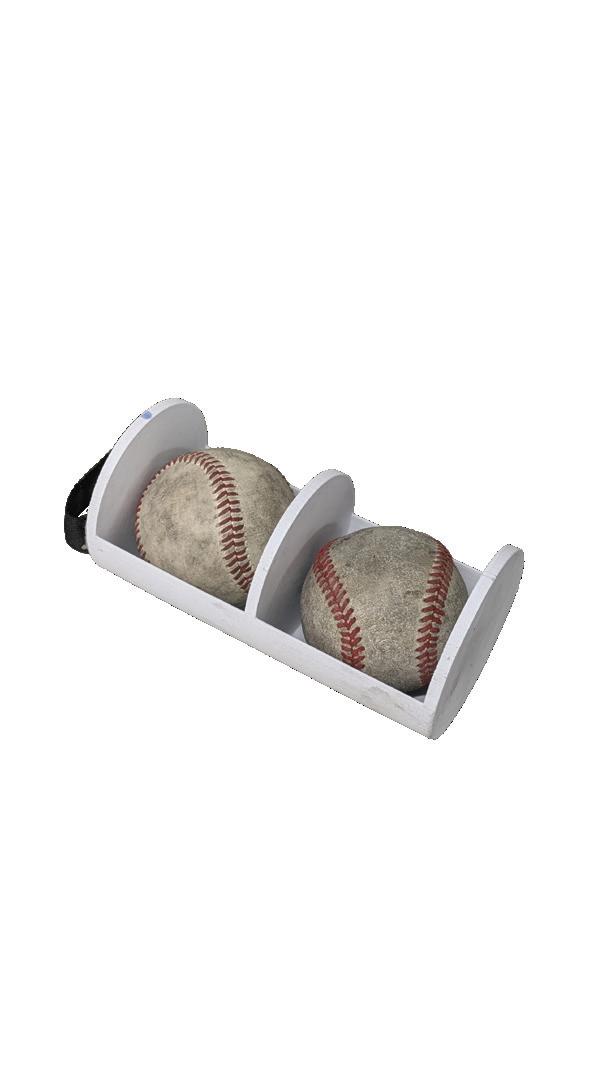
Over-center latches that create a very

Senior Owen Andrews, along with a team of two other students, developed a capsule for the NASA HUNCH program

“We were like, ‘Oh, shoot,’” Andrews said. “So that was kind of unfortunate to see, but we just decided we had to move on because it was gonna be too much work to reorder new pipes and recut and everything.”
Despite difficulties achieving a foolproof seal, the team was ready to present to the Design & Prototype Project Manager of NASA HUNCH, Glenn Johnson, for a critical design review in early November. Over Zoom, Johnson provided feedback to the group, suggesting additional testing on their design.
“It was difficult, it was hard to hear that,” Andrews said. “Even though you’d been working with one thing for three months, maybe you missed something that could cost you.”
Stands for High Schools United with NASA to Create Hardware
Andrews had class time to work on the project during the Engineering Design and Development class. According to Chambers, it’s based on a structure that students would encounter at a real engineering job, with a class meeting at the beginning and independent and small group work time.
“I like to say in that class, I’m less of a teacher and more of a project manager,” Chambers said. “They take ownership of their projects, and I give them the outline of, ‘Hey, these are what expectations you would have in the industry if you were working on a problem like this.’”
The NASA HUNCH project works towards Andrews with hopes of becoming an Architectural Engineer. For Son, it’s Aerospace Engineering, and for Phimmachanh, it’s Mechanical Engineering.
In February, Andrews and his team presented their capsule on Zoom to Johnson in the final presentation. By March, via an announcement on Instagram, they were finalists.
“I was glad for the opportunity,” Andrews said. “I was excited to see that it all came to a close very well and that the [judge] didn’t have many comments; it was good to see that.”

story by CAROLINE BEAL
NO WATER. No food.
Junior Tom Smith*, a varsity wrestler, had his routine down.
Two days before weigh-ins, Smith pushed through the hunger and thirst. All to “make weight” before a match.
And if he didn’t, Smith would put on a sweatshirt, sweatpants and socks and begin running — sweating out the “water weight.” He once lost almost eight pounds in an hour.

But Smith says it’s not just him.
Cutting calories, frequent weigh-ins, little water and the “binge” — overeating — after a meet or tournament has become an unspoken “expectation” for the wrestling team, according to Smith. Besides the team bringing in a nutritionist once, Smith says most of his teammates haven’t learned to properly diet, even with frequent cardio and strengthtraining workouts. After the season is over, the team receives no information on how to return to healthy eating habits.
psychological functioning. Both are prevalent among athletes, according to the National Association Anorexia Nervosa and Associated Disorders. Whether it’s the belief that a appearance can enhance performance, constant self-comparison to teammates, social media or nutrient misinformation, Vopat says high school can create “a storm to underfeed your body.”
Beth Marsden, assistant varsity coach and SM East mom, says comparison, especially within the team and on media, has worsened how some cheerleaders view their bodies. With resources to educate the team on nutrients, many girls turn to social media or teammates for information.
thrive in isolation and secrecy, and oftentimes people just don’t know their good friend is struggling, or their child is struggling, or their sibling is struggling.
For athletes in high school, disordered eating and eating disorders are much more frequent than sources report, according to Dr. Lisa Vopat, a primary care sports medicine physician at The University of Kansas Health System. Most young athletes are uninformed about proper nutrition, and inadequate diets, which Vopat says, can lead to health issues beyond sports performance.
AMY SULLIVAN DIETITIAN
“I think this has to do with people [not having] a good definition of what health is,” Vopat said. “I often hear every time I get a dietary recall from a parent or an athlete, they want to convince me, ‘I eat good, I eat healthy.’ Your definition of healthy and my definition of healthy are often not the same thing. For example, healthy to me is an adolescent athlete [who] feels hungry and wants to go get ice cream with their friends and needs a huge ice cream sundae.”
Disordered eating can refer to unhealthy eating patterns and problematic attitudes toward shape, weight, food and appearance, according to the National Eating Disorder Association. Disordered eating does not meet the same criteria as eating disorders, which are complex, persistent mental illnesses with frequent disturbances in eating behaviors and changes in
However, this upcoming summer, Marsden says the SM East dance and teams will work to bring counselor and a dietitian teach athletes how to educated food choices develop body awareness — healthy and conscious connections to the body.
“It’s scary freshman girls coming they were to catch wind upperclassman or somebody on varsity that has taken steps that are not in their interest, they’re like ‘Oh, I have to do that in order make varsity,’” Marsden “Positive reinforcement and education the best we can do.”
For sophomore Leah Norris, a dancer the Limelight Academy of Performing the “90-pound and 5-feet-6-inches-tall” stereotype for ballerinas became a starting in middle school.
“When I would get fitted for costumes, I would suck in so my costume would size smaller, and so whenever I tried costume, it was obviously too small,” said. “I would only eat saltine crackers before a performance [and] I would a ton of water the day before, then drink maybe a Hydro Flask worth of the day of.”
Now, looking back, Norris says she like a “zombie,” with hardly enough energy get through a competition. And Norris the only one suffering from stunted after under-eating, according to Vopat.
When athletes don’t eat malnutrition can occur, leading to Relative Energy Deficiency in Sports (RED-S), according to Vopat. When the body get the proper amount of calories appropriate macronutrient levels amount of energy exerted from exercise,
athletes, Association of Disorders. certain performance, teammates, misinformation, perfect varsity cheer comparison, on social of the With few nutrients, or fellow upcoming says both and cheer bring in a dietitian to to make choices and awareness conscious body. because coming in, if wind of an somebody taken some their best ‘Oh, well, order to Marsden said. education is dancer at Performing Arts, 5-feet-6-inches-tall” fixation costumes, would be a tried on the small,” Norris crackers would drink I would of water she looked energy to Norris isn’t stunted energy Vopat. enough, Relative (RED-S), doesn’t calories and for the exercise,
RED-S develops.
Vopat compares RED-S to a cell phone battery.
“If you’re to fully utilize your cell phone, you’re going to be consistent with charging it up to 100% battery life every night,” Vopat said. “If you’re not consistent about that and you only charge it up to 50% every day, you’re probably going to have your phone go into low power mode every day. Some of the apps don’t work, some things crash, your phone goes slow, you can’t use it. So the body works in the same way.”
Although RED-S isn’t a permanent condition, Vopat says possible weakening bone health effects can be irreversible.
If athletes, especially those in high school, aren’t receiving enough energy from food, Vopat says other physiologic processes throughout the entire body will slow.
Vopat says this can result in skipped or absent menstrual cycles in females, slowed heart rate, fatigue, dizziness and several other health effects — all from malnutrition.
For senior Eli Schaber, this became his reality.
Schaber joined the Navy Junior Reserve Officers’ Training Corps at SM North last year and the program’s Athletic Team, aiming to become competitive.
Practicing two to three times a week, the program focuses mainly on calisthenics — sit-ups, push-ups and other strenuous exercises — according to Schaber.
When he first joined the team for the 6 a.m. hour-long practices, he had no idea the pressure he was putting on his body.
After his first practice with the team, where he “had to run to the trash can,” vomiting, a few times and experiencing persistent body aches, his diet stayed the same, even with the increased exercise, constantly “pushing” himself.
“I wasn’t given any advice when I first started,” Schaber said. “I just had to figure it out myself.”
After only a couple of months, Schaber and his parents were concerned — he had lost a notable amount of weight. Schaber began sleeping through all three of his alarms in the morning, stopped eating before practice to avoid throwing up and fell asleep as soon as he got home, sometimes for hours.
For almost four months, Schaber attended fewer practices as he slowly began to regain weight and strength.
“I slowed down [and] showed up less,” Schaber said. “I figured if I’m not working out as often, I’m not putting as much stress, and that gives me more time to figure out where there’s a deficit or something missing [that’s] causing me to lose weight.”
Like both Smith and Norris, Schaber had no proper information on how to fuel his
body.
Through balancing practices, school and extracurriculars, disordered eating can become a coping mechanism for the increased pressure of being a high school athlete, said Amy Sullivan, a registered dietitian and founder at Bellatore Eating Disorder Recovery.
“Eating disorders thrive in isolation and secrecy, and oftentimes people just don’t know their good friend is struggling, or their child is struggling, or their sibling is struggling, because it’s really something that comes with a lot of shame and guilt,” Sullivan said. “It’s hard for an athlete that’s trained all their life in a sport to think about stepping back and taking time off.”
Junior Mary Johnson*, a SM East cheerleader, said losing weight has been her goal since middle school.
When she made varsity, Johnson, along with most of the team, practiced in tight biker shorts and sports bras.
“It was very hard not to compare myself to everyone,” Johnson said. “I was trying to get better at my sport and watching my body in a mirror, doing cheer, making sure I was learning all my counts and doing everything right. I think without realizing it, it was definitely getting to me.”
Alongside Johnson’s newly prescribed ADHD medicine, Adderall, which suppressed her appetite, she began eating less, sometimes not eating anything for days.
Her new prescription was helping her focus, but with less of an appetite, she was losing weight.
or seek professional help to prevent further weight loss.
Not wanting to switch medications, Johnson began attending meetings at Bellatore, which provides outpatient programs for people struggling with eating disorders.
“When you have an eating disorder, your brain is completely split into two, and there’s a rational side of thinking where I know this isn’t healthy, and I know I need to eat, and I know that you have to eat to survive,” Johnson said. “And the other side of me is like, this is what I’ve always wanted, I’m finally confident in how I look and just happy with how I look, and I don’t want to do anything to mess with that.”
Johnson now goes to Bellatore twice a week to meet with both a therapist and a nutritionist.
“A big difference between last season and the beginning of this season to now is I am allowing myself to get help,” Johnson said. “Recovery isn’t a straight line, it’s not an easy fix, especially because it’s mental and physical and it’s all around you. The standard that people accept or think is pretty [is] really hard to escape from.”
Although she’s gaining medical and mental help, the lingering thought of uniform fittings is still “triggering” for Johnson.
“Recovery isn’t linear,” Sullivan said. “[There’s] a few steps forward, a bunch of steps back, and that’s just how it goes. I don’t know that it ever really gets easier. Some aspects do, but oftentimes, somebody will have to step back in [to Bellatore], and it doesn’t mean that they failed. Life happens.”
The difference between eating disorders and disordered eating
Eating disorders and disordered eating sound similar; however, there are differences in the terms.
Disordered eating:
An abnormal pattern of eating
Can be restrictive or excessive eating
Less severe and less frequent than eating disorders
Eating disorder:
A severe form of disordered eating
More serious
Many different types: anorexia, bulimia, binge eating, etc.
Johnson lost 60 pounds in four months. The uniforms she had sized before summer no longer fit.
Losing four to eight pounds a month is recommended for safe weight loss, according to Cleveland Clinic Health Essentials.
Johnson was losing around 15 pounds a month.
When the cheer team started practicing again at the beginning of the school year, Johnson received comments on her weight loss from peers.
“You look so good.”
“You look so much healthier.”
“You’re thinner than me.”
To Johnson, this was “praise.”
But being constantly fatigued and no longer fitting into clothing that had fit only months ago concerned both her therapist and her parents. Johnson had two options: get off Adderall to help regain her appetite,
With the added pressures that nutrition has on high schoolers like Johnson, Sullivan says coaches, parents and even many doctors still lack the education around eating disorders and disordered eating awareness.
Vopat says most coaches need to inform themselves, and parents should listen to medical professionals, especially if their child is struggling with malnutrition.
Especially for younger student athletes, knowing how to properly fuel is crucial for performance and healthy eating habits, which, for most athletes, includes three meals a day and at least two snacks, according to Vopat.
“If you can catch an eating disorder [in] adolescence, [there’s a] huge potential of turning that around, where that eating disorder may not affect the individual for life,” Vopat says. “If eating disorders are missed in adolescence and then you go on to college or you go on to early adulthood with an eating disorder, it’s incredibly hard to change those behaviors and work on recovery.”
*information courtesy of the National Eating Disorder Association
Contact information of who to seek help from at SM East
Nurse: Stephanie Ptacek
Social worker: Leah Starks
stephanieptacek@ smsd.org leahstarks@smsd.org


Sophomore Lila Henry recaps the stories behind the stuffed animals decorating her car

“[This] was from a souvenir exchange I did with Eisley. I went to New York, and she went to Paris so she got me the Jellycat.”
“The first one [was] given to me by my friend Eisley. I got my car in November so the first few things in my car were Christmas-themed.”
Sophomore Lila Henry’s car holds a unique collection of items filled with stories of her and her friends
story by HANNAH ROSEMANN
IF SOMEONE WERE to drive through sophomore Lila Henry’s neighborhood in the early morning, they would see her driving an unassuming gray SUV to pick up her friends for school. If they were to look a little closer, they would see that the inside is anything but unassuming.
The interior of Henry’s car is decked out with a collection of random items and things left behind by her friends that have become a defining feature of the vehicle. Amongst these are the numerous stuffed animals, mostly Christmas themed, that have been gifted to Henry through birthdays, Secret Santas and other gift exchanges by the people she drives around.


“[This] is from my friend Anna Sullinger and its name is Patty. She got it for me for my birthday and wanted me to keep it in my car.”
“Anna [one of my friends] got me the first [stuffed animal],” Henry said. “She was last-minute shopping because she thought she needed to get me a birthday gift. So she got me a snail Jellycat that looked like a peppermint. I named it Patty after Peppermint Patty.”
Henry’s Birthday is in December, hence the Christmas theme.
Almost every stuffed animal has a story along with it or a reason why it was given to her. They are kept in various places around her car so all her friends can enjoy them on morning drives to school and afternoon 7Brew trips.
“I think she got [a stuffed
animal] from a Christmas exchange she did with her friends,” sophomore Aiden Katz, one of Henry’s good friends, said. “And then one, I think someone gave it to her because they were paying her for something. She also has a bear, which I think someone gave her to say thank you for driving.”
As the first person to be able to drive in their friend group, Henry, and by extension, her car, have become very familiar to their friend group as the thing to go to whenever they need a ride.
“Whenever I need a ride, she takes me,” Katz said. “And her car is always full because everyone needs a ride.”
make up the majority of the items in Henry’s car, they’re not the only things she has.
Thrown in the trunk of her car is a graveyard of sweatshirts that her friends have left behind and have no intentions of taking back. They ended up piled on top of a bag of soccer balls used at SM East Girls Soccer practice and an old pair of high heels from a dance previously this year.
SITTING in the passenger seat, and then I needed to check my reflection,” Katz said. “So I pulled down her window visor and Mr. Beast is just there. Like, ‘Oh, hello.’” AIDEN KATZ SOPHOMORE
These shared carpool experiences are dear to many of Henry’s friends and have led to many special, and sometimes awkward, experiences, according to Henry.
“[Henry] has a bear in the back she keeps buckled,” sophomore Anna Sullinger, one of Henry’s friends, said. “One time we went to 7 Brew, and Eisley [my friend] wasn’t buckled and the guy taking our order noticed her and the bear, and he was like, ‘oh, at least the bear’s buckled back there.”
While the stuffed animals
More entertaining and questionable items than the ones in her trunk live in the front of her car. Including a picture of YouTuber Mr. Beast that proudly hangs on her passenger side visor.
“I was sitting in the passenger seat, and then I needed to check my reflection,” Katz said. “So I pulled down her window visor and Mr. Beast is just there like, oh, hello.”
When asked, nobody really knew how the Mr. Beast photo got there, but it is a proud part of the collection.
The eclectic interior of Henry’s car truly makes it a unique experience to ride in, and one that her friends take advantage of at every opportunity.
“She has a lot of little [stuffed animals] around and a lot of trash,” Katz said. “It’s not the cleanest car, but it’s awesome.”
In the summer when I had more free time, I would always go to new coffee shops, and I would just review them in my head. Or sometimes I would write them down in my notes and give them a rating. And then I was like, ‘Why wouldn’t I just make a Tiktok account and review them?’ So that’s how I started the account. And I think it’s so fun, because there’s so many different coffee shops around Kansas City, but I feel like everyone only knows the same 15 or 20 shops, so it gives [me] something to do, and I get to try so many new places.


Campbell shares her favorite drinks she’s helped develop for Columbia Brew
study buddy
Iced coffee with milk, honey and brown sugar cinnamon syrup
lucky charms
For Valentine’s Day, my mom got me a coffee passport, and it’s a bunch of local Kansas City coffee shops. And so when I got that, I really started going all over the city. Because I used to just go to places I saw on Tiktok or something, but now me and my mom always go to random ones in Kansas City. [My mom and I] also made reviews in California, New York, Colorado – so we kind of do them all over too.
Iced coffee with toasted marshmallow syrup, creamer and lucky charm marshmallows
caramel dream
Iced coffee with caramel drizzle, caramel syrup and creamer
Me and my mom always get the same thing, and it’s an oat milk latte with honey and cinnamon. So I think that what makes it stand out is when it’s not too sweet. And I think when a place uses a different kind of coffee bean, you can totally tell and like, in the best way, I think that really makes it stand out.

It definitely has. Because when I go to [review] these places, I’m looking through their menus. Like, I saw a cinnamon roll latte and thought that would be so good and totally doable in the coffee shop. So it is really helpful to see what other coffee places are doing, and I’ll always take a picture of the menus I like, and then we can talk about it in class.



Senior Campbell Alldredge is on Columbia Brew’s menu development team and has a coffee-reviewing account on TikTok, @campbelllovescoff



design by EVELYN BAGLEY
story by ALEX HARDEN
THE BASEMENT IS stuffed with rows of shelves displaying lined up green military helmets. Flags from around the world adorn the wall — America, Germany, Japan. Mannequins wearing antique military uniforms. Binders full of soldiers’ patches. If anyone visits junior Lawrence Fein’s home, they make sure to take a trip downstairs.
Right underneath the first floor living room is Lawrence and his father, Chris’, expansive collection of military artifacts — they’re relics of war that date from modern day, all the way back to 1802.
constantly taking trips to the World War I Museum in downtown Kansas City.
“We’ve had a membership to the World War I Museum since we moved to Kansas [when I was three],” Lawrence said. “I’ve probably gone like 100 times.”
With his upbringing, one could assume it was destiny for Lawrence to lend his hand in the collection.
And he has.
A LOT OF the time it’s not really as much about finding the stuff, it’s just spending time with my family.
LAWRENCE FEIN JUNIOR
Chris’ collection is what comes from a history-obsessed childhood and a mother who was an antique dealer who often took him to estate sales. And as he grew older, he slowly compiled more and more artifacts.
Though Chris has been collecting ever since he was around 10, he didn’t take it seriously — not until Lawrence began to show interest in the hobby too.
Just like how Chris was interested in history as a kid, Lawrence has been raised by his father to be a history lover,


“Lawrence took interest when my mom brought my childhood collection to the house because she wanted it out of her basement,” Chris said. “That’s what started the two of us [collecting] together.”
Ever since then, the two have spent hours placing bids in auctions, scouring thrift stores, sifting through private collections and buying from estate sales — all to find new additions to their collection.
“I’ve spent a lot of time with my dad just going to people’s storage areas or their basements after their family members pass away, just looking for stuff [to buy],” Lawrence said.
And throughout years of collecting, the two have acquired legions of antiques they’re passionate about.
Lawrence’s first artifact was a gift from Chris when he was 6 — a 1960s

letter opener in the shape of an officer’s sword.
But Lawrence’s favorite item and also what he believes to be the most valuable in the collection is a Hussar Busby, a furry black cap worn by Hungarian cavalrymen during the 18th and 19th century.
And, according to Lawrence, they have the same amount of Hussar Busby’s as the World War I Museum.
“It was really cool when we walked in [the World War One Museum] after we got our Busby, and my dad was like ‘Yeah, we have the same amount as them now,’” Lawrence said.
For Chris, his favorite artifact is an American Fighter Pilot’s helmet from World War II produced by Spalding, the same company that used to make basketballs for the NBA.
Another setback they’ve faced is regret. According to Chris, he’s sold off items that he had lost interest in, only to regret it later on in his collecting career.
But Chris has been able to see the positives; he says it’s a self-sustaining collection. A great way to keep new items flowing in — and to keep his wife happy — is to sell off unwanted items and use the profits to buy the relics he desires.
I’VE SPENT
a lot of time with my dad just going to people’s storage areas or their basements after their family members pass away, just looking for stuff.
LAWRENCE FEIN JUNIOR
Unfortunately for the collectors, not every item they acquire is authentic. Chris once bought a few military canteens he believed were genuine bottles from World War II.
Yet, upon further research, he discovered the only war the canteens saw was controlled under the warm glow of set lights as props for the 2002 film “Windtalkers.”

Over the years, the two have been able to teach each other about different aspects of history they’re interested in and like to collect.
“I think my favorite part at this point is that we each have different interests and teach each other about those,” Chris said.
And despite the pair’s passion for history being a driving force, the collection is mainly an opportunity to bond and soak in the valuable time they have together.
“A lot of the time it’s not really as much about finding the stuff, it’s just spending time with my family,” Fein said. “The stuff is cool that we find, but sometimes I just wanna spend time with my dad.”


RIGHT Two U.S. infantry soldiers’ uniforms from World War I are on display. Uniforms in World War l were among the first truly standardized clothing produced on a massive industrial scale. This ultimately led to standard designs, standard sizes, mass production in factories and standard kits that include a helmet, boots and a jacket. Every soldier received nearly identical clothing and equipment.


LEFT A Soviet NKVD board guard’s uniform is on the mannequin. The NKVD, or Russian Narodnyy Komissariat Vnutrennikh Del, meaning People’s Commissariat for Internal Affairs, was the main secret police and internal security agency of the Soviet Union, especially during the rule of Joseph Stalin. The NKVD was a feared organization responsible for arrests, interrogations, forced labor, executions and internal order. The organization was infamous for the Great Purge, when Stalin eliminated perceived enemies.
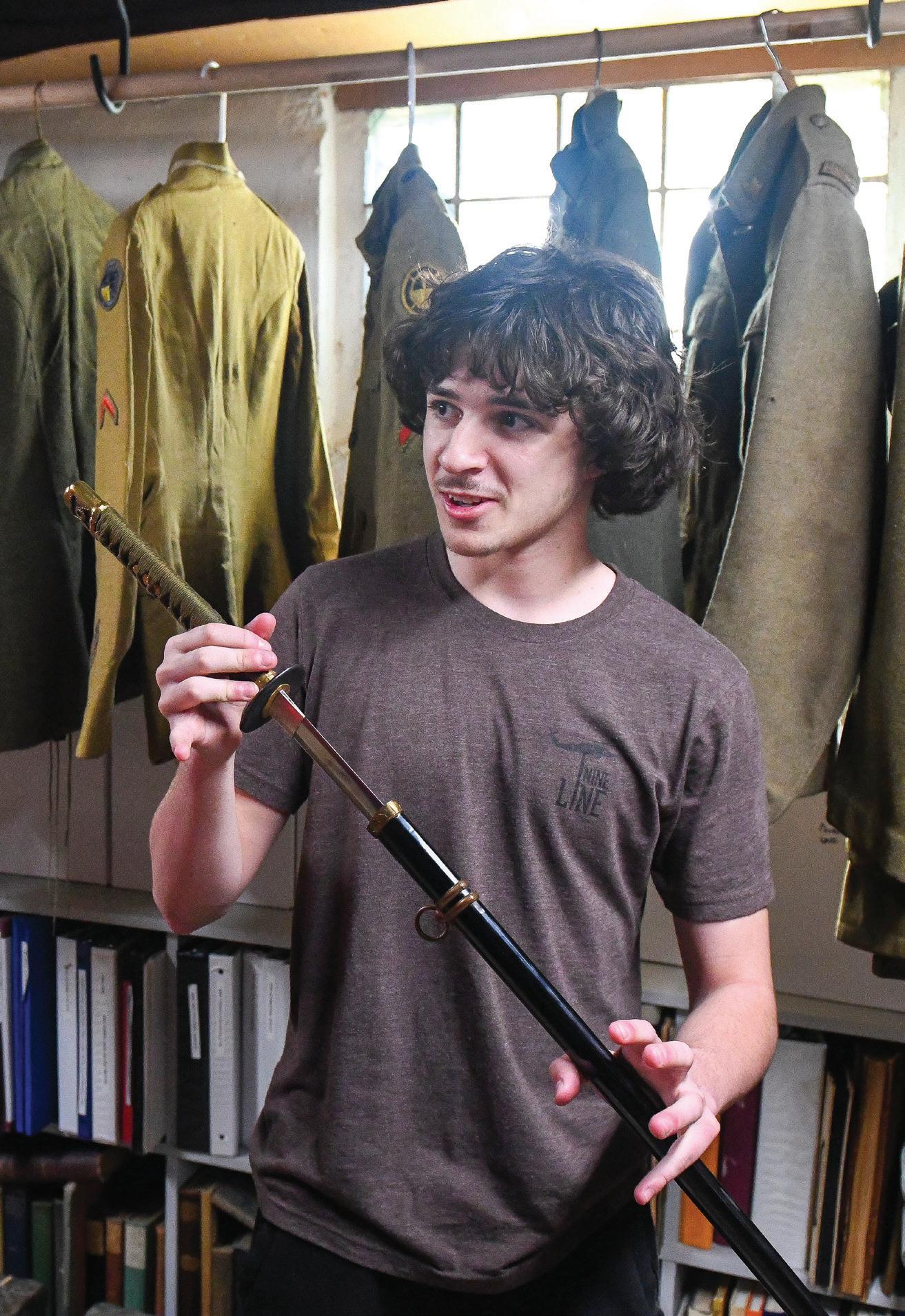
LEFT Sophomore Lawrence Fein shows off a Third Imperial Japanese Katana. These swords had little use in combat and were rather a symbol carried by officers to establish status, leadership and authority over soldiers. Occasionally they were used in close-range fighting but this was uncommon. The soldiers relied more on rifles, machine guns and artillery.

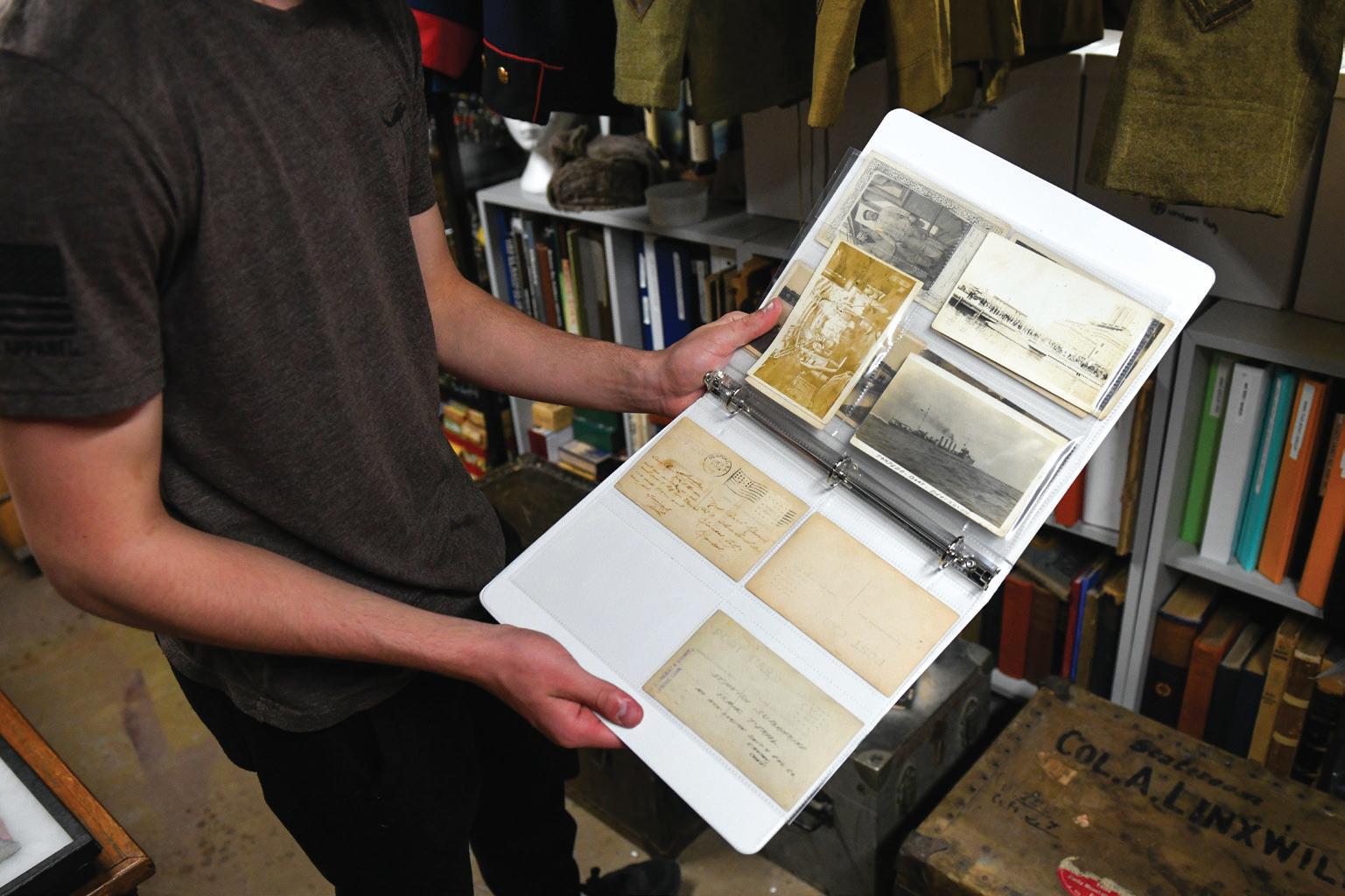
ABOVE Sophomore Lawrence Fein shows off an assortment of antique photographs. One of the photos above is labeled “Torpedo Boat Defender.” A torpedo boat defender, often called a destroyer, was a fast maneuverable warship designed to protect fleets and chase and destroy enemy torpedo boats in patrol waters. Its main job was to protect fleets, chase and destroy enemy torpedo boats and patrol waters.
Rex, a vintage clothing store in the West Bottoms, is a one-of-a-kind thrift store

story by SLOANE
West Bottoms of downtown Kansas City, I had finally found the store my friends had been insisting I visit: Rex, a clothing store known for both its up-cycled and vintage clothing.
popular for its cheap high-end brands like Lululemon, most of the clothes are dingy with multiple stains. Not only was Rex’s atmosphere worth the trip alone, most of its clothes were still in good shape, marked at low prices and anyone can find something to fall in love with if they look hard enough.
The music in the background was my favorite part, with tunes from artists like Frank Ocean and Childish Gambino, reminding me of summer and giving the whole place an indie energy.

The Donald J. Hall Sculpture Park, located right outside the Nelson-Atkins Museum, is an open-air park filled with unique, abstract sculptures.
The grungy store was up a flight of metal stairs, above the thrift store Good Juju. “Come On Eileen,” by the Dexys Midnight Runners, played in the background as I took in the walls filled with retro posters and old jerseys. The store was packed with people perusing the bursting clothing racks as it was the weekend of First Friday.
Rex consisted of three rooms, each decreasing in price the further back customers go. Each room was split into different sections varying from crewnecks to up-cycled clothing with the Rex logo painted on.
The clothes were not arranged by size, leading to several devastating moments when I thought I’d found a treasure, only to learn it was not my size. But, the store overall felt clean and not like most of the dingy thrift stores I’ve grown accustomed to.
Rex isn’t like the other thrift stores in Kansas City. While Plato’s Closet is

Rockhill Rd, Kansas City, MO 64110 20 E 5th St, Kansas City, MO 64106 4525 Oak St, Kansas City, MO 64111
Every rack was overflowing with clothes, making it hard to see each exact item, however, after 45 minutes of sifting through each section, I’d found two items worth buying — a white and navy striped sweater and retro Death Valley t-shirt. The quality of the clothes varied with some items looking brand new and others with holes, however, it all added to the vintage air of the store.
When purchasing my items the cashier was so welcoming while ringing up my $30 total and got to chatting with me about the store.
From great customer service and a unique clothing selection, not just stocking the usual shorts, t-shirts and sweatshirts, if anyone looks long enough, they’re sure to find something they love at Rex’s.
The City Market in the River Market area offers a large farmers market, with a variety of produce, restaurants and spices.





The Rock Island Bridge is a unique experience, but it doesn’t meet expectations
A120-YEAR-OLD BRIDGE turned restaurant overlooks the Kansas River with a stunning view of a wooded riverbank to the left and a walking path to the right.
Even on a cloudy day, the Rock Island Bridge is a scenic experience. The bridge opened on April 1 after three years of construction and is located off of American Royal Drive in North Kansas City, Missouri, just 20 minutes from SM East.
black-and-white pictures on the walls, to artifacts, wooden detailing and iron supports running in the middle of tables — all going back to the history of the Rock Island Bridge.
From the website, it appears to be a place with many attractions. But the River House — a seafood and smokehouse blend menu — was the only place to eat and was far too expensive.

and pickles infused a tangy, almost spicy flavor.
MARCH - DECEMBER
But for a Bridge with years worth of anticipation and description as an “entertainment destination,” it didn’t meet expectations. The bridge has few attractions, and its only restaurant is overpriced and isn’t accessible to all Kansas residents.
The bridge hovers 60 feet above the river with two floors, the bottom floor featuring a restaurant and the top the American Royal Bar. I admired the view of the river and another bridge to one side, as well as the architecture of the landmark looking down the bridge. On the far end, a trail head is under construction.
There’s a takeout window on the main floor of the bridge alongside the restaurant and the bar is on the second floor. To preserve my wallet, I went for the less pricey option at the takeout window and ordered a Cuban sandwich, a popular menu item according to the cashier, with pretzel bites and a lemonade.
I BELIEVE the Rock Island Bridge will become a tourist destination and landmark in Kansas City over the coming years because of its views and historical significance.
The River House’s featured menu items all hovered around $30, and ordering a main meal, side and drink brings any average burger order to more than $25.
BUT FOR A Bridge with years worth of anticipation and description as an “entertainment destination,” it didn’t meet expectations.
Hundreds of chairs and tables line both floors, allowing plenty of room for people to sit and enjoy the river, even on busy days.
Aspects of the bridge showcase its place in Kansas City history, from
I believe the Rock Island Bridge will become a tourist destination and landmark in Kansas City over the coming years because of its views and historical significance. However, its only restaurant should be affordable to everyone who takes a visit, not just those willing to spend $22 for an appetizer of oysters.
The Cuban sandwich I ordered featured ham, cheese, mustard and pickles between two slices of toasted bread. The flavors of the ham and cheese blended well, and the mustard
The pretzel bites were my favorite order of the day. They were cooked to a satisfying crunch while staying soft on the inside, and had a nice coat of salty seasoning. The red pepper and white cheddar nacho cheese on the side added another level of flavor to the snack. Finally, I ordered a lemonade to quench my thirst from walking across the bridge. But, I was disappointed to find a small cup filled to the brim with ice and watereddown lemonade. I expected a restaurant on a bridge to have freshly squeezed lemonade in larger cups, but I guess I should have spent that $4 elsewhere. For those just looking for a quick snack to walk around with while enjoying the views, the restaurant isn’t worth the cost.
With seafood and a bar, the bridge isn’t exactly kid or young-adultwelcoming. Having a place like the Rock Island Bridge for a family weekend day trip is great, but it doesn’t translate well for younger people.
The events that the Bridge organizes, like the Queer Bar Takeover and Cocktail Festival, also cater to adults only, narrowing availability. They did, however, have paddle boarding and yoga available for younger demographics.
While the Rock Island bridge was a unique experience, and one I think every Kansas City resident should have in their lifetime, I would only take the 20-minute drive for special occasions and not a daily trip.
Take a look at the history of the Rock Island Bridge
The Rock Island Bridge played a central role in the Kansas City Stockyards District.
1901: The initial bridge over the Kansas River was swept away in a flood in 1901.
1905: The American Bridge Company finished building a new, 302-feet long bridge.
1921: A third, shorter portion was added to the east end of the bridge after the canal was widened.
1980: The city of Kansas City, Missouri purchased the bridge as a part of the Kemper Arena expansion.
2022: Kansas acquired the bridge to enhance the waterfront through the introduction of restaurants and an event space. SAVE THE date Mark your calendar for this upcoming event 16 APRIL KANSAS CITY COCKTAIL FEST 21+ EVENT ONLY $35 PER TICKET
story by SIENNA WILLIAMS
WITH POPCORN in one hand and a diet coke in the other, I sit down in the red, cushiony chair, eager to watch a drama — “The Drama.”
As the credits rolled and the one hour and forty‑six minutes of the movie came to an end, I could surely say it lived up to its name.
“The Drama” — a dark comedy — shows a relationship gradually unfolding into chaos, using humor throughout the movie to balance the darker aspect of the film.
The plot follows Charlie and Emma, played by Robert Pattinson and Zendaya, an engaged couple preparing for their upcoming wedding until their relationship is shaken when a disturbing secret from Emmas’s past is revealed.
Charlie starts having doubts about marrying Emma while she starts to reassure him, trying to earn back his trust. Together, they navigate through their relationship and try to stay at peace by ignoring the past.
What truly stood out to me was how deeply engaging the film was from beginning to end.
The constant tension made it so intriguing. Every scene introduced something unexpected, keeping my eyes locked on the screen 24 7.
voice in the audience collectively laugh in sync when something funny happened, or ripples of socked gasps and confused “Whats?” and the anticipation, waiting to see what would happen next.
Although the plot line for this story felt dark and a little unsettling at times for its eerie moments, the humorous remarks added scenes gave it some lightness, out of the heavier moments.
But the jokes didn’t take away from the seriousness of the story, instead they made it easier to watch and sit through the tension. It felt like the humor was there to soften the darker parts, while still letting the emotional weight of the film come through.
OVERALL, the engaging plot, funny characters and final twist made me rate “The Drama” 100% on Rotten Tomatoes. I can surely say the film lived up to its name.
Across the theater, I could hear each
“The Drama” blends dark humor and romance to create a film packed with plot twists that keep the audience hooked
felt natural and real, instantly hooking me while setting the tone for the rest of the movie.
I also liked how the movie started off by moving back and forth through time using flashbacks.
As Charlie is thinking about stories of him and Emma to include in his wedding vows, the film flashes to those moments, such as the first time they met or kissed.
IN SERIOUS moments, they showed real emotion and vulnerability, and in more funny scenes, their sarcasm or humor showed their strength as actors and their commitment to the role.
Even though It seems I could call every scene in the movie my favorite, one that stood out more than the rest was the opening one.
The scene shows Emma and Charlie’s first interaction at a local coffee shop, where Charlie nervously works up the courage to go up and talk to her but ends up embarrassed when she ignores him.
Charlie later sees that Emma had airpods in and simply couldn’t hear him, which makes the moment unexpectedly funny.
I liked this scene because the humor
Cinematography: 4/5 Stars
“Visually strong with clean intriguing shots that set the tone for the story.”
This structure made the story feel more interesting and I thought it was a smart and enjoyable way to show their relationship and how they remember it.
Robert Pattinson and Zendaya did an amazing job of displaying Charlie and Emma’s charter throughout the story.
In serious moments, they showed real emotion and vulnerability while in more funny ones, their sarcasm or humor showed their strength as an actor and their commitment to the role.
Overall, the movie’s strong performances, engaging structure, and excellent take on dark comedy made the film both entertaining and interesting.
It was clear that The Drama wasn’t just about secrets or relationships, but about how people choose to confront— or avoid—the truth.
Sienna’s thoughts on different elements of “The Drama”
Acting: 5/5 Stars
“The performances felt natural and passionate, making every moment feel real.”
Plot: 5/5 stars
“Engaging and well-paced,keeping me interested the entire time.”

GIRLS VARSITY SOCCER 4/14 vs SM SOUTH 7 p.m.
Approaching spring sports events to look forward to
BOYS VARSITY TENNIS 4/15
BOYS VARSITY BASEBALL 4/17 vs OLATHE EAST 3 p.m. @Olathe East vs OLATHE NORTH 4:30 p.m. @SM East
@SMSD Soccer Complex GIRLS VARSITY SWIM 4/21
@SMSD Aquatic Center
Varsity track and field competed against 23 other schools on April 4 at the SM South Relays with many athletes placing in their events

ABOVE Sophomore Logan Bretell

BELOW Junior Aubrey Massoth runs the girls two mile run. She finished in seventh place with a time of 12:30.70 earning two points for the girls team. The girls place fourth overall in the meet.
the
ABOVE Sophomore Tully McCoy runs in the 4x400-meter relay in the first heat.
Individual placements at the SM Relays meet
• Cate Conrad placed second in pole vault
• Catherine Beltrame placed second in the 800-meter run
• Charolotte Hardy won the 1600-meter 4/14
• Macy Sims placed third in high jump
• Max Sullivan won the 100-meter dash
• Paige Stanfield won the javelin event
3:30 p.m. @SM South

Varsity Lancer Dancers select a partner to dance with to a Beyoncé mashup as one of the performances from the annual Spring Show
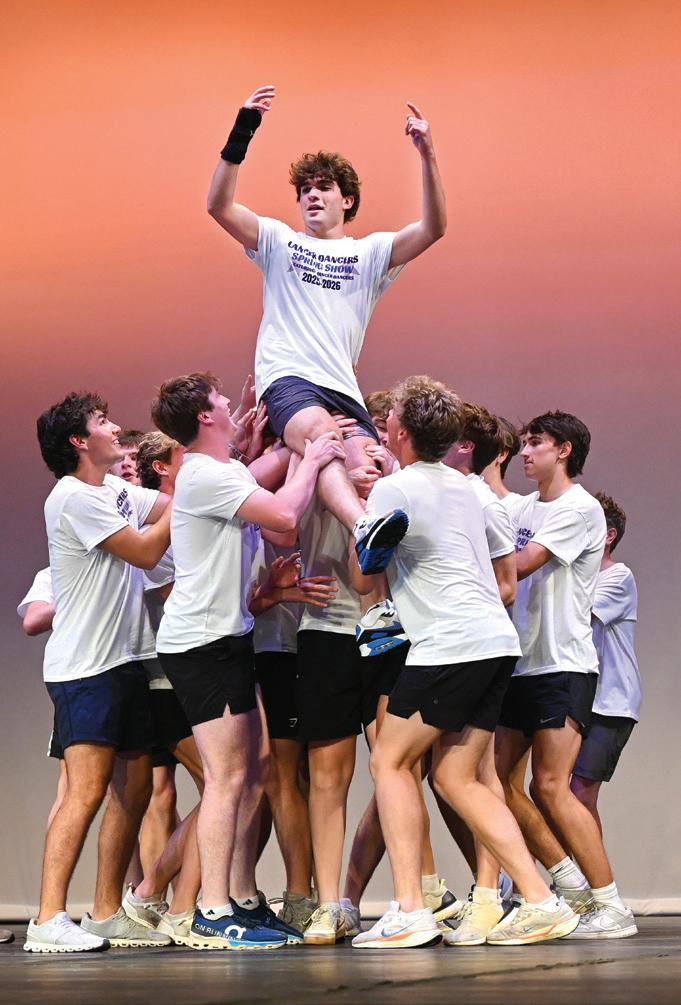


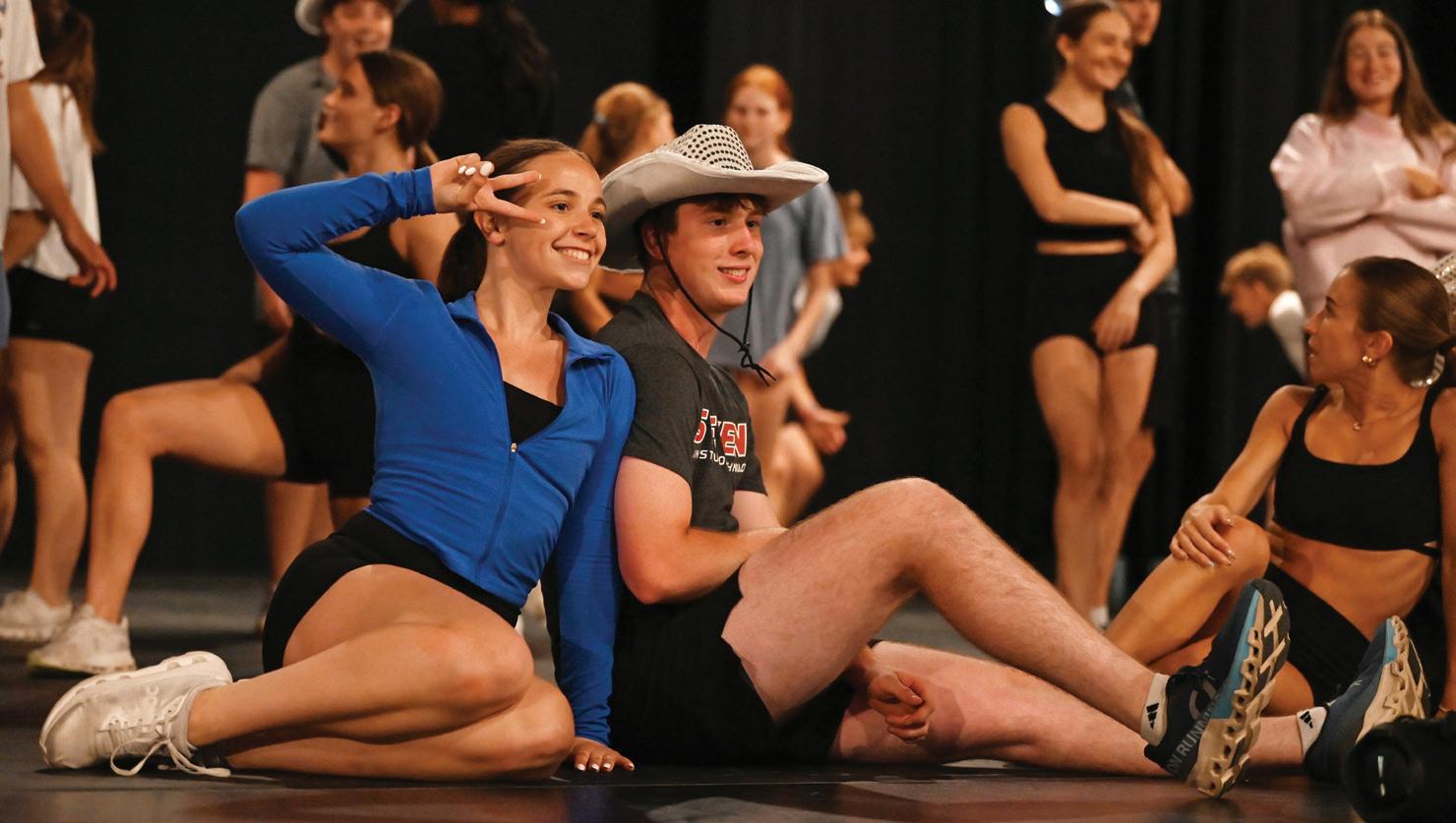

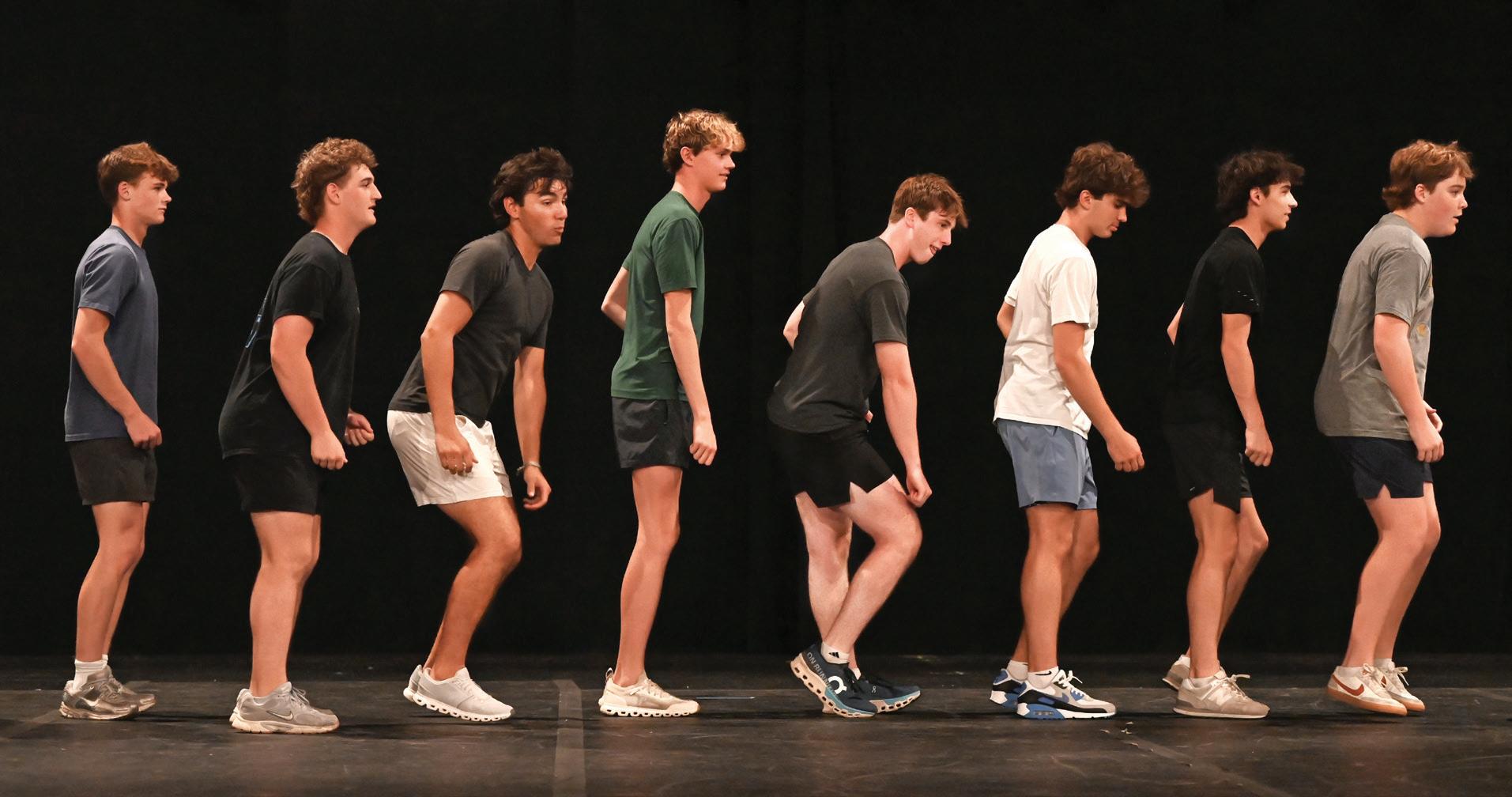
SCAN ME PHOTO FAR ABOVE Seniors Lyla Weeks and James Quance pose after the conclusion of the Mancer Dancer’s practice performance. The Mancer Dancers practiced each of their performances in the auditorium leading up to the Spring Show. photo by FRANCESCA
Scan this QR code to purchase photos of the Mancer Dancers
ABOVE The Mancer Dancers practice their dance to Beyoncé’s “Single Ladies” as a part of their mashup performance.

Rettenmaier committed to Loyola in 2023
In 2025, Rettenmaier entered the transfer portal and ended up at UCAM in Murcia, Spain

SM East alumnus Beck Rettenmaier is playing soccer for University Católica San Antonio de Murcia in Spain
story by REESE DUNHAM
AFTER LONG hours of consideration, SM East alumnus Beck
Rettenmaier entered the college soccer transfer portal in the fall of 2025. During his entire winter break back home in Kansas, he spent his time emailing any school where he might want to play soccer during the second semester of his sophomore year of college.
He was leaving Loyola University Chicago to hopefully play at another school in the U.S. Then, not even three months later, he’d be playing soccer in Murcia, Spain, for the Catholic University of Murcia, three connecting flights away from Kansas City.

“At first, I ran the opportunity [to play at UCAM] by my parents, and we all thought it was too good to be true,” Beck said. “But that changed after a Zoom meeting to get our eyes on the campus and everything that they had to offer there. That’s when our heads swiveled, and we were like, ‘Okay, this is legit.’”
Beck played varsity soccer at SM East all four years and committed to play Division 1 soccer right out of high school for Loyola.
But then, after a groin injury in the last game

of his senior year at SM East, he ended up medically redshirting his first year at Loyola because the injury never really subsided.
Beck did get to play during the first semester of his sophomore year in 2025 once his injury fully healed. He then entered the transfer portal and was offered the opportunity to play for UCAM by a part-time UCAM recruiter who was part of the coaching staff at Loyola.
“It was shocking to me that the amount of work they do there [at UCAM], and they work with a lot of Spanish national athletes, Olympians, tennis players, things like that,” Beck’s mom, Debra Rettenmaier, said. “It seemed like a really cool opportunity, and he took it.”
However, at first, Debra had reservations about her son transferring since his schooling was going well at Loyola, but she trusted that he was making an educated decision.
Since Beck enrolled halfway through the school year, he’s not taking any classes and is only playing soccer. If Beck decides UCAM is the right school for him in May, then he’ll come back during the fall as a full-time student.
Beck spends most of his time exploring and walking around the campus, and also doing Spanish tutoring through Babble and Duolingo.
Beck only took two years of Spanish in high school, but now that he’s going to school in a Spanish-speaking country, he’s
working to learn the language, eventually hoping to be bilingual.
At times on the field during practices or games, Beck struggles to communicate with his teammates or coaches because he doesn’t quite understand what they’re saying to him, but he’s tried to pick up some words and phrases. Beck is incredibly grateful to have teammates who can help him work through understanding conversations while he’s still learning Spanish.
A difference Beck has noticed while being in Spain is that he’s actually communicating more with his family than he did at Loyola due to the fact that it’s just such a different experience — even with the seven-hour time difference. He’ll give his mom and dad rundowns of his games over the phone or text her sister, sophomore Chloe, about his day.
The highlight of Beck’s season was a game on March 15 — his twenty-first birthday — in which he started for the first time and also scored his first goal during this game.
Additionally, Beck is currently on a tourist Visa because of the quick speed at which he had to leave for Spain, and it expires almost exactly when the semester ends. This summer, he’ll be coming back to the U.S. to play soccer for the Memphis Football Club, a semi-pro USL2 team in Tennessee.
“I’m ready to come back to
the States,” Beck said. “[The USL2 team] is really good competition as well. A really good level, I’m hoping to always improve as a player. I think Memphis can help me do that, and it’s a great opportunity.”
Rettenmaier started his school soccer journey at SM East

RIGHT At the end of first quarter of their game against St. Teresa’s Academy, the SM girls varsity lacrosse team puts their stickers together yelling, “Shawnee Mission on three — one, two, three!”

TOP RIGHT
After the first quarter of their game against St. James, SM comes off the field celebrating.
by AVA
RIGHT
Sophomore Lily Quance cheers on her teammates from the sideline during the fourth quarter. SM trailed St. Teresa’s Academy in the fourth quarter 12-17, but scored two more goals, making the final score 9-17.
by VIVIEN
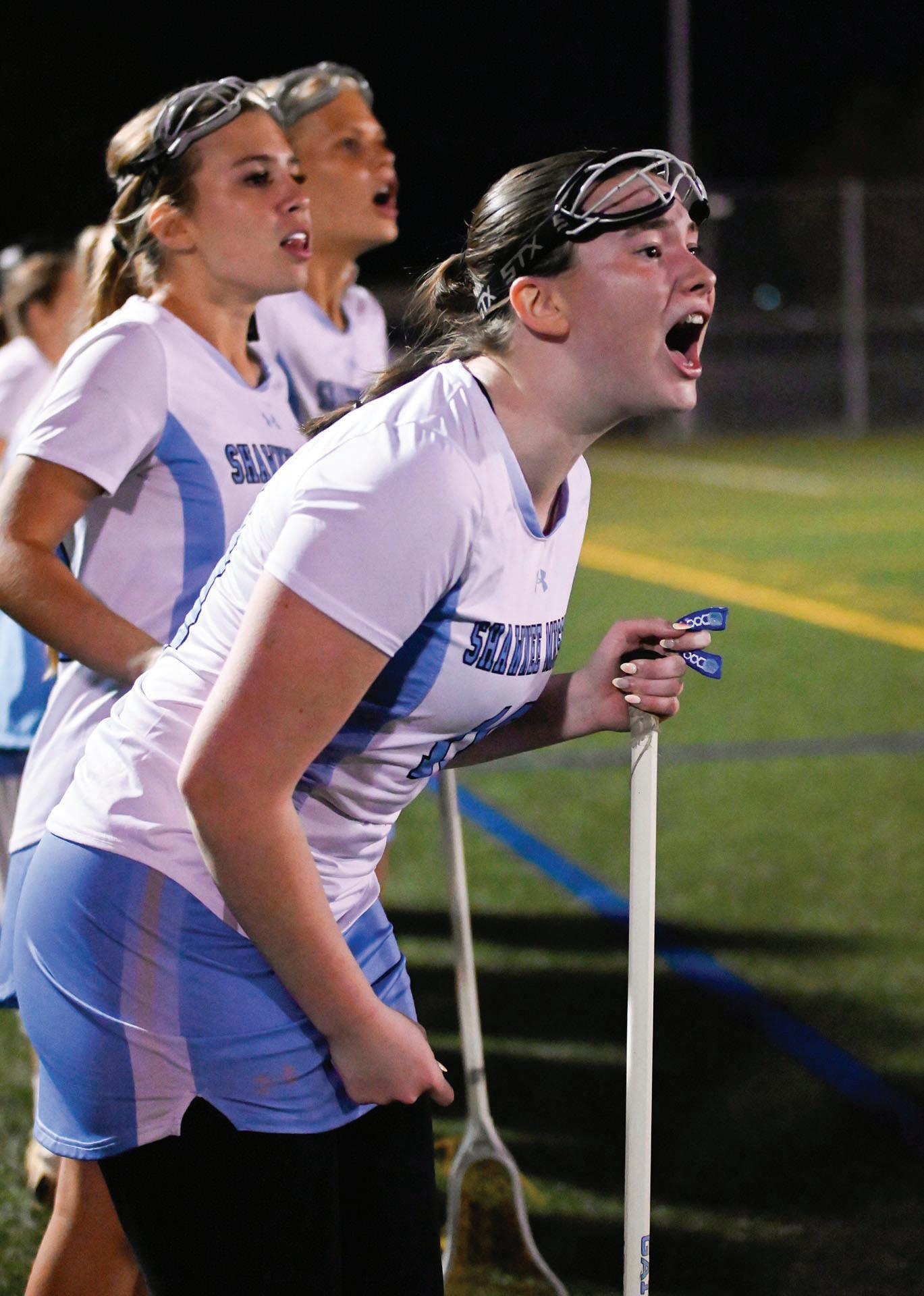
KELLY MARION HEAD COACH
THAT’S WHAT SEPARATES our team too, doing these team culture things. I feel like in the hardest moments, especially in tough games, we’re able to come back together and go over the three core things that we all agreed on as a team. It builds such a loving structure for each other.”
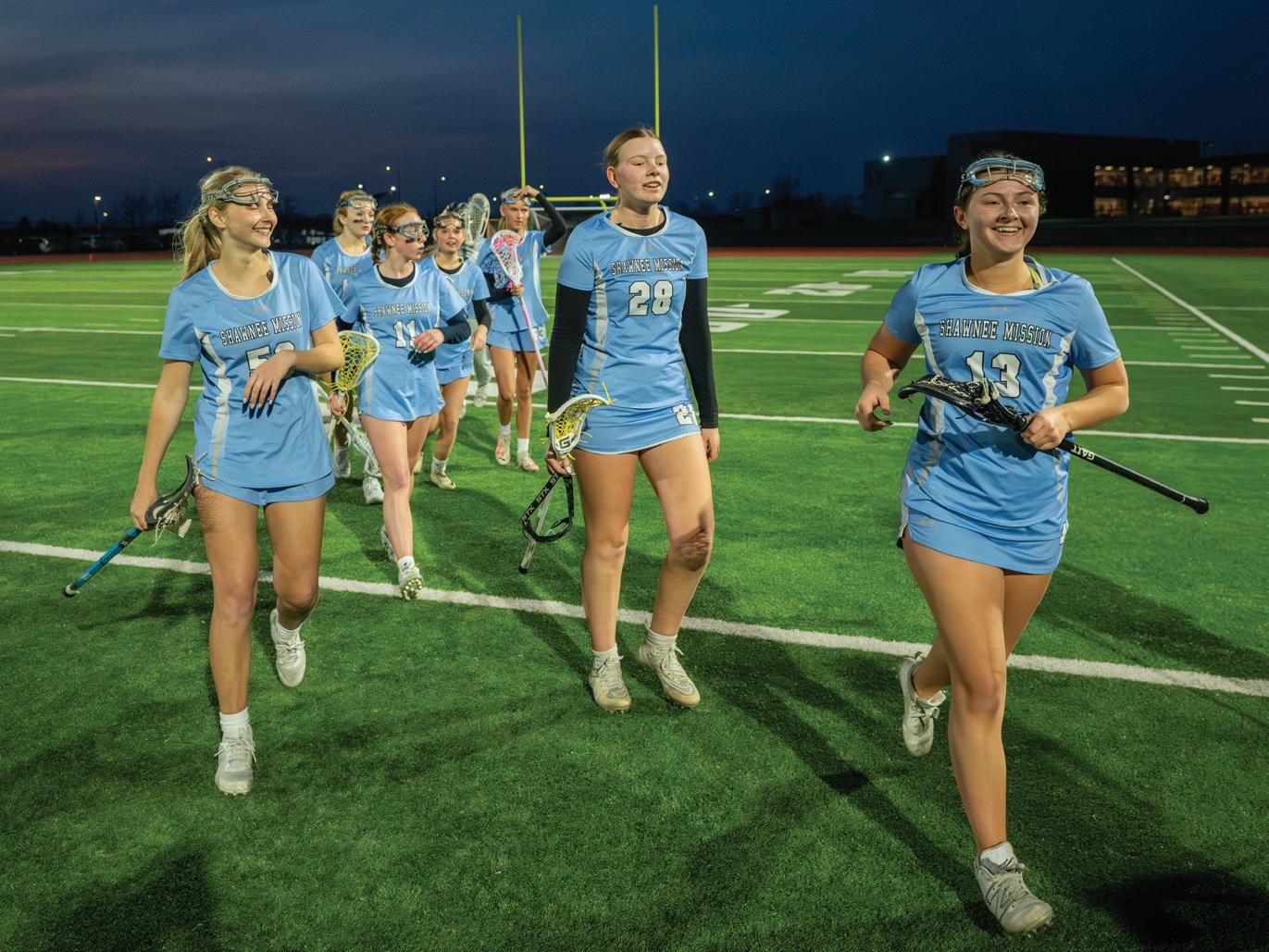
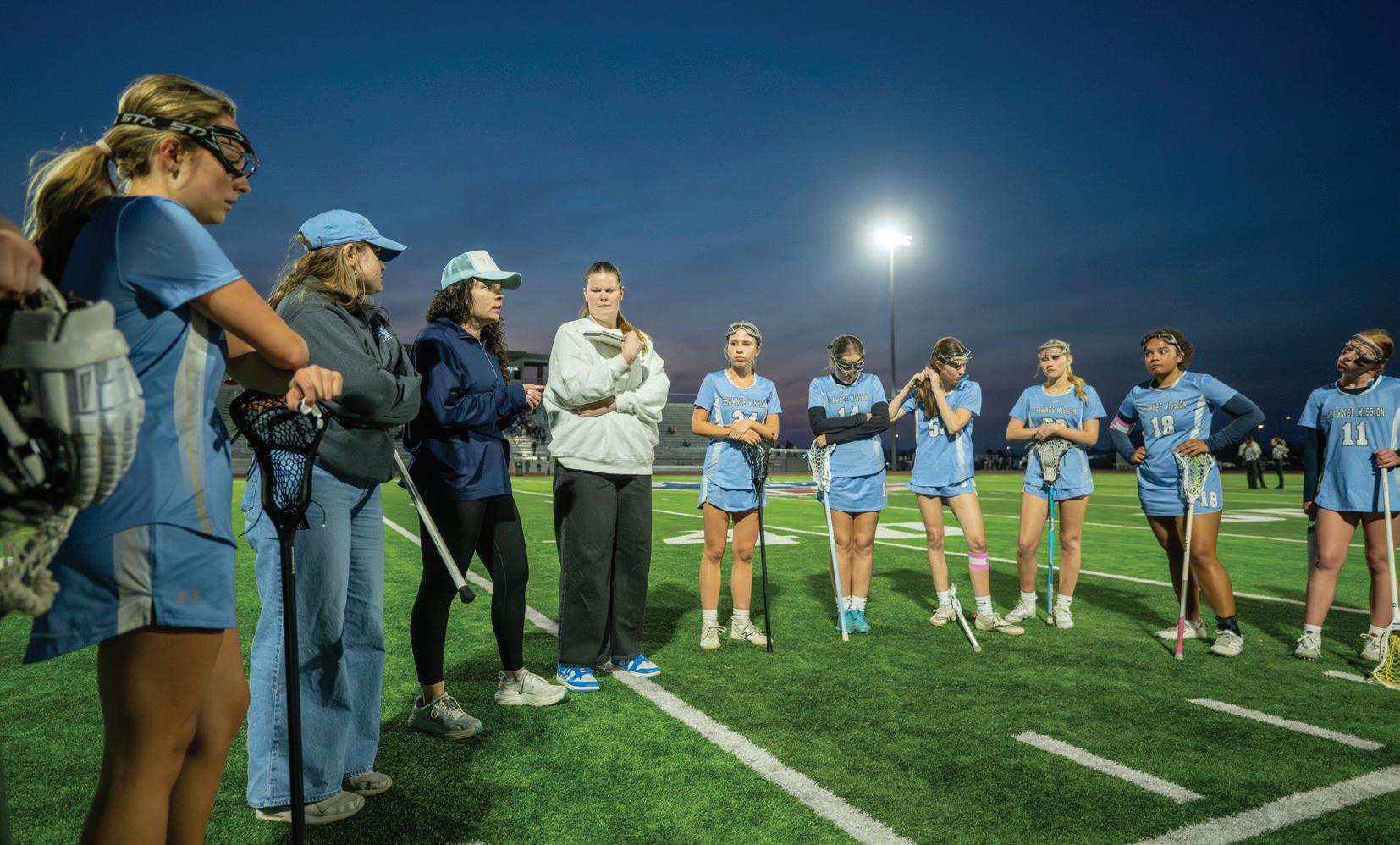
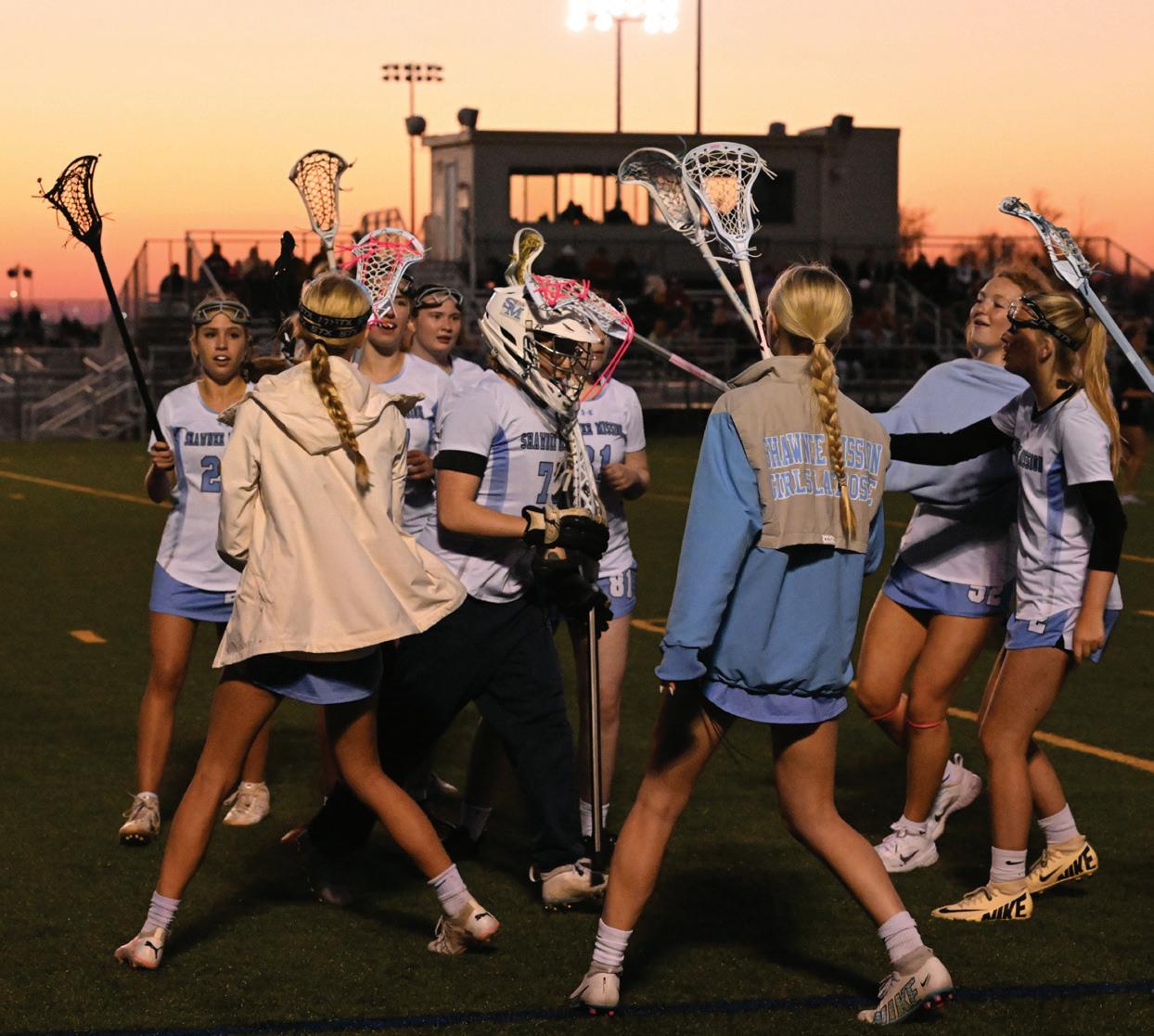
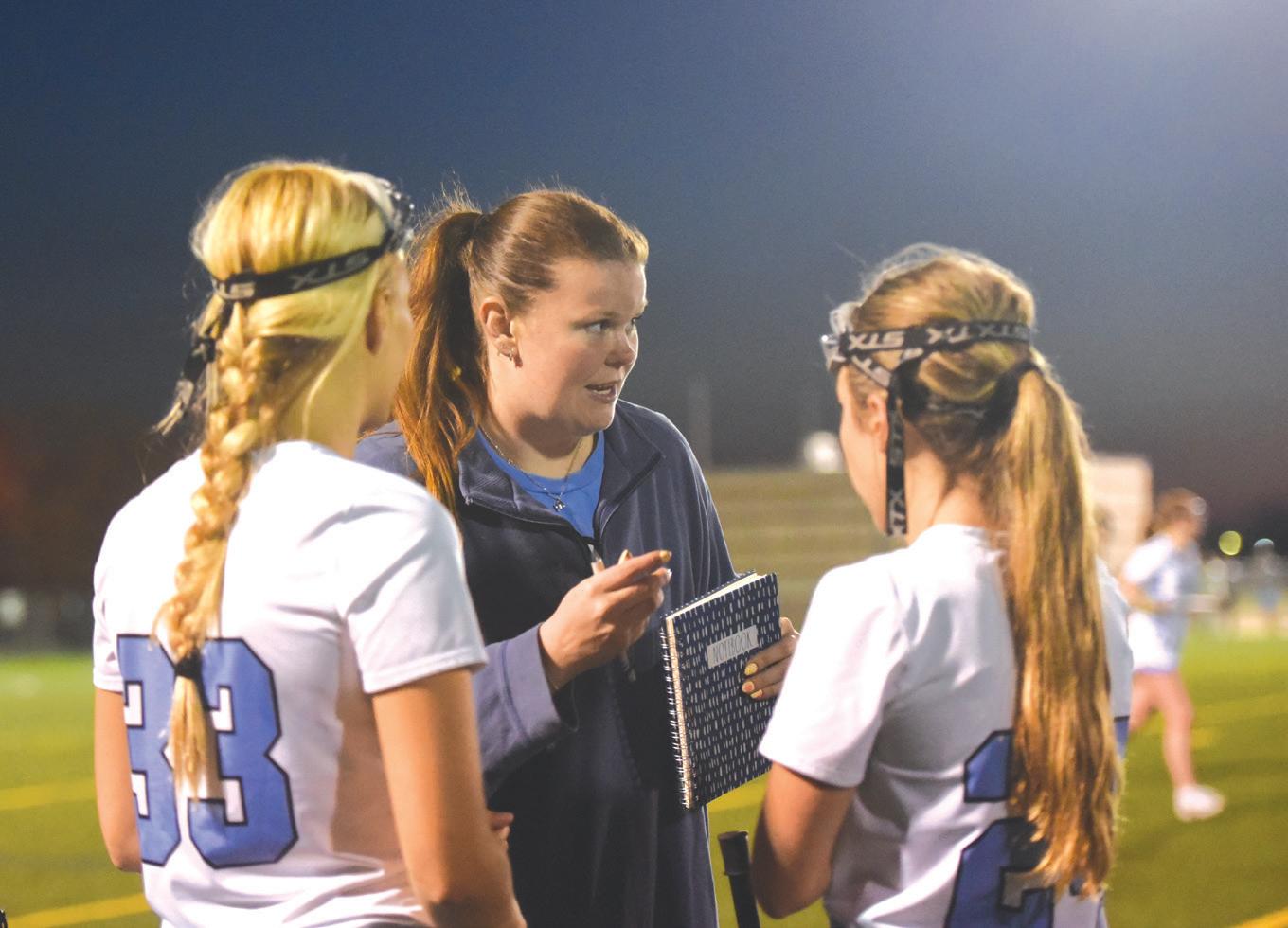
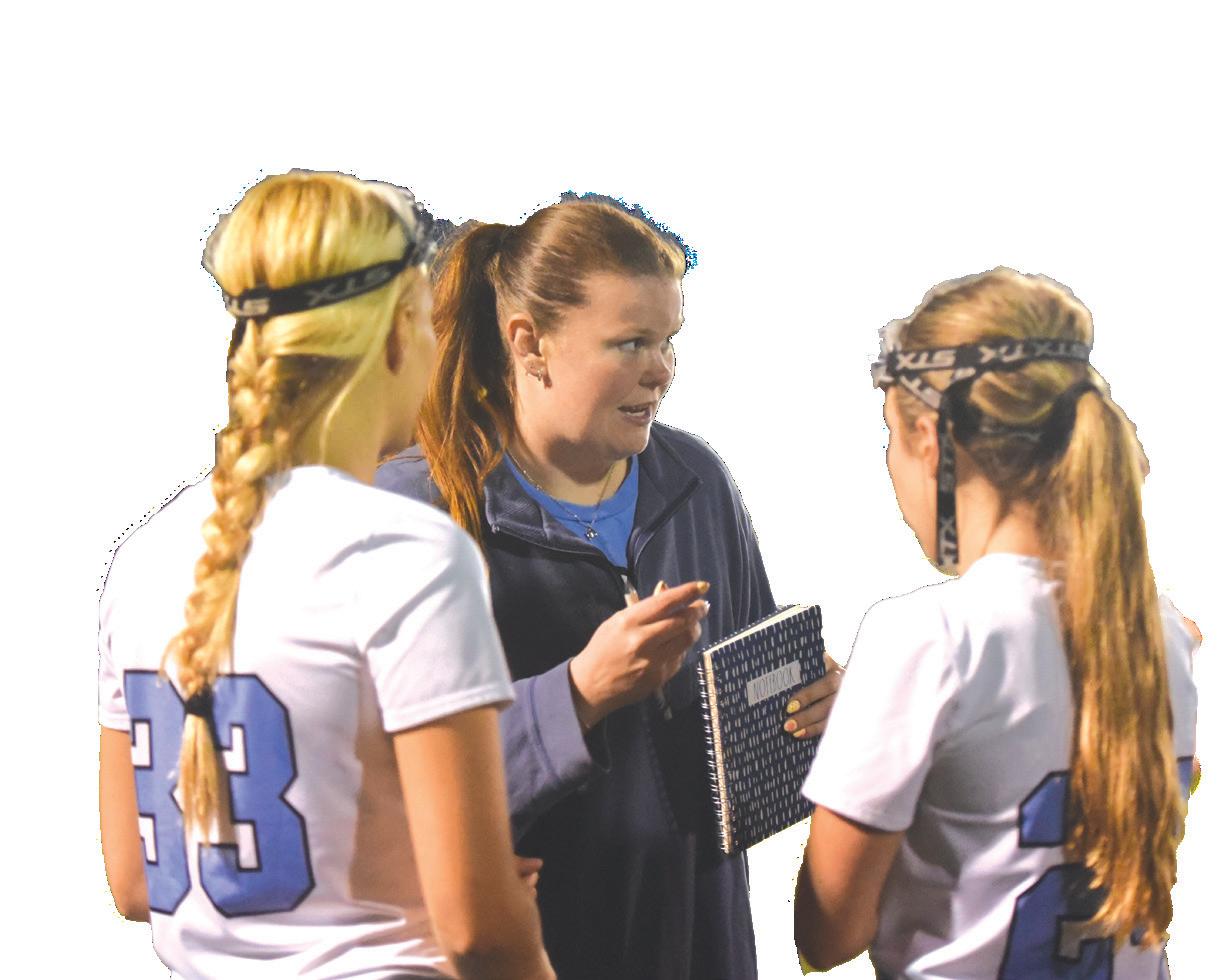
SITTING ON A white chair in front of a packed living room full of high school girls, Mae Beins clears her throat and begins.
“Love isn’t about letting things slide,” she reads. “It’s about setting high standards and consistently holding your teammates to those standards.”
After she finishes the first four chapters of “The Twin Thieves: How Great Leaders Build Great Teams,” and explains the reflection activity for the night, the room fills with chatter. Then, each girl throws out words they want the team to embody, before settling on three.
Supportive, accountable, resilient.
Shawnee Mission girls lacrosse team’s new assistant coach, Mae Beins, is starting new traditions this year to create team culture
count. The little things that add up to make one cohesive team. The little things that connect players and create a thriving team culture — one of her main goals as a coach.
Mae filled [our old coach’s] shoes even further to what I imagined. She brought this new light to the team. [Beins] is just the sweetest person ever. I absolutely love her.
“I talk about the little things all the time,” Beins said. “I really think that’s what makes such a good —not only player — but person. I’ve been very privileged to have learned all of that and so bringing it into the culture aspect has been really important for me.”
Practices end with “The Chair of Truth,” a game where one player sits on the ball bucket while being questioned by teammates.
“Who’s your celebrity crush?”
year at Rockhurst.
This included their own book club, where Beins was first introduced to “The Twin Thieves.” Now, she’s brought lessons she’s learned and bonding activities to Shawnee Mission.

“I was a little disappointed that we were having book club instead of practices, and we started reading the book and I was like, ‘Why are we doing this?’” McShane said. “But after a couple pages it made me realize it’s not only about the way you play on the field, but your mentality outside of the field and how you interact with your teammates.”
At Beins’ second book club session, reading chapters five through seven, the players worked to create a team phrase. Something that would always be theirs.
They submitted answers ranging from “Be a goldfish” to “All in, all out” to be voted on at their next practice.
Little traditions Beins is implementing to further bond the team
Beins believes in the little things, like everyone wearing the same socks to unify the team

EMILY MCSHANE SENIOR
After that first book club session, Beins — the SM girls lacrosse team’s new assistant coach — has since used the words to motivate the team during practices and games. After only eight months with the team, starting with the team’s fall practices, the girls can already attest to her impact.
“Immediately Mae filled [our old coach’s] shoes even further to what I imagined,” senior Emily McShane said. “She brought this new light to the team. [Beins] is just the sweetest person ever. I absolutely love her.”
From neatly lining up their sticks before warmups — pockets facing down, heads on the sideline — to stretching in lines of four people, everything, down to each player wearing identical white socks, has become routine: all implemented since the beginning of the season.
For Beins, it’s the little things that
“What’s your favorite school subject?”
“What motivates you?”
These questions, whether silly or deep, help Beins and other players get to know each other on a personal level — a challenge as a new coach of 52 players. But, slowly, each name is starting to stick.
“She builds really strong relationships with every single girl, and it doesn’t matter how long she’s known them,” Head Coach Kelly Marion said. “She brings so much more outside of lacrosse to it.”
“That’s what separates our team too, doing these team culture things,” Marion said. “I feel like in the hardest moments, especially in tough games, we’re able to come back together and go over the three core things that we all agreed on as a team. It builds such a loving structure for each other.”
strong relationships with every single girl, and it doesn’t matter how long she’s known them. She brings so much more outside of lacrosse to it.”
KELLY MARION HEAD
The three lacrosse coaches — Beins, Marion and Assistant Coach Maryssa Barnhill — played together at Rockhurst University, leading them to coaching together. Beins, one year younger than both Marion and Barnhill, experienced changes to the team culture her senior
COACH
Supportive, accountable, resilient.
The core words have followed the team through their ups — beating Lee Summit West High School 19-0 — and downs — losing to St. Teresa’s High School 19-8 — but have kept them exactly that, a team.
“[Beins] loves everything that she does and she puts so much passion into everything that she does,” Marion said. “It just reminds you of why you joined the sport.”
During her time playing at Rockhurst University, her team had a book club, which connected her team. She is now carrying on this tradition through Shawnee Mission. All practices end with a player sitting on a lacrosse ball bucket and getting asked fun questions by their teammates.
“CHAIR OF TRUTH”


The various traditions throughout the season HOMESTEAD’S
The night before the championship, the team goes over to the coaches’ houses and puts toilet paper on their yard
At each meet, the coaches create a theme for swimmers to dress up in; the team connects and gets competitive
The night before meets, the older kids go to one of their houses and share a large meal together
Right before each meat, the team says their chant. It has been the same chant for multiple years
story
by EVIE LEWIS
THE 7:30 AM . morning practices haven’t changed.
The same chlorine smell. The same humid air. The same tired faces.
But this summer, SM East alumni and college freshmen Larkin Brundige and Paige Henderson won’t be the ones swimming endless laps.
Brundige and Henderson are returning to their childhood country club this summer to coach the Homestead Hurricanes swim team.
Brundige began swimming for Homestead when she was just 5 years old.
“I know that having a supportive coach and a friendly face every day at practice made a huge difference for me when I was a swimmer,” Brundige said. “So I think just being supportive and friendly and encouraging to the swimmers is probably my number one goal.”
Alongside Brundige, her older brothers also work for the club. Brundige has held
positions at the front desk, concessions and childcare.
“It’s kind of like a family legacy. It’s something both my brothers have done, and I’ve watched them be coaches.”
Brundige said. “I like to swim for them, which is a really special thing. It’s just a really full circle for me and my family.”
Brundige swam for SM East throughout her first three years of high school, and it became a core part of her high school experience.
she learned from swimming at SM East and pass that teamwork onto Homestead swimmers.
enjoyed swimming at SM East and Homestead.
having a supportive coach and a friendly face every day at practice made a huge difference for me when I was a swimmer. So I think just being supportive and friendly and encouraging to the swimmers is probably my number one goal.
“I learned the importance of being a team player and just always supporting, being supportive and being there for your team,” Brundige said. Listening to how they’re doing, and just being a cheerleader, is really crucial and I really want to take that to Homestead.”
“It’s really a great team, and the coaches are great too,” Brundige said. “So I feel like it was a really beneficial experience for me, and it definitely teaches you how to work hard and just to be surrounded by other people who work really hard and can just push you to work even harder.”
LARKIN BRUNDIGE
SM EAST ALUM
Brundige wants to take what
Brundige said she met Henderson when she initially started swimming at Homestead when they were five-years-old.
“[Larkin and I] went to different grade schools, but I’ve done [swim] with her forever, and I’m just really excited to work with her,” Henderson said.
Henderson also really
“Larkin was also on the team, and we got really close to the coaches,” Henderson said. “They all said, ‘You should coach.’”
Henderson reached out to a friend for coaching advice that convinced her to take the job. Henderson said she wants the kids to have the same summer swim experience. Every year her summer was filled with not just waking up early but being motivated by beating her cousins and friends that she swam against and writing her events in Sharpie on her arm.
“I try to be really fun for the kids,” Henderson said. “Trying to get kids to get their [personal records] and focus on that and improving their strokes, and just show their hard work. When I was a kid, it was just all about being fun and being active and being with your friends, and I want to keep that going.”
PAISNER
POSITIONING
Breakdown of the stances junior Oliver Bryant takes in discus throw

Starting stance
JUNIOR OLIVER BRYANT‘S track practices look a lot different from his football practices. Instead of landing bruising blows in the middle of the field, he’s off on the grassy side of the track. And in place of tackling, he’s hopping . Before the mobility drill, Bryant slips on his new white throwing shoes.
“Get your shoes on Oliver!” head throwing coach Joe Allen mocks. “Just because you’re the best discus thrower in the state of Kansas doesn’t mean we’re going to wait for you!”
Bryant gets in line for the warm-up. Alternating feet across the green barriers and orange traffic cones, he weathers the taunts of Allen with his crew — the small group of throwers on the track and field team.
After his personal record performance at the SM East Quad meet on March 27 — 161 feet and six inches — Bryant is the record holder for discus throw in 6A schools across Kansas, and in the top four overall in the state. What started as a suggestion from his football coach has evolved into a year-round passion, as Bryant aims for college opportunities and state titles.
After playing football freshman year, head football coach Mark Simoneau suggested that Bryant try track and field in the spring. Former throws coach Emily Fossoh taught him the basics of technique, release and the one-and-a-half power-building turns of the discus throw.
“I knew, watching him, that he had something special,” Fossoh said. “Many times as a coach, you can tell based on how easily they grasp [the disc], technique or if they’re fast.”
Competitors hurl a three-and-a-
half-pound disc across an arc-shaped field, while remaining within a throwing circle. The event is about more than just strength, Fossoh says. She’s coached athletes who were strong, but didn’t have good balance. Bryant had both, and was a focused learner. He paid attention in practice and tried to learn as fast as he could.
“If you aren’t actually flexible, balanced and able to use all parts of your body, you might not find success in throwing, even if you are that guy benching hundreds of pounds,” Fossoh said.
On his own time, after practice, Bryant would practice throws into Meadowbrook Park from his backyard, measuring his throws with a wheel measure from his dad’s landscaping company.
At the end of his freshman year, Oliver was throwing around 110 feet in discus — a solid mark for a freshman, but not yet competitive at the regional and state levels, according to Fossoh. But in Bryant’s sophomore year, practicing with Allen, he was able to adjust his release point and bring his throw up to the 140s.
At KSHAA Regionals his sophomore year, Bryant was projected to place, but threw a disappointing performance of 114 feet on a bad knee.
Lifts
“It kind of threw me off for a bit, but I came back, and started practicing again,” Bryant said.
Over the summer, he attended a twoday throwing camp in Iowa to develop his form. He worked on his Olympic

lifts to build explosiveness.
And before this season, he threw two or three times a week on the SM East field to stay sharp —
no longer at Meadowbrook, because his house gets in the way of his longer throws.
Bryant’s dad Andy comes to all of his meets. At the first meet of the year, when Bryant threw his best by 20 feet, Andy knew his son had broken his record just by his reaction.
Allen says the throw was exciting, but unsurprising given Bryant’s progress.
“Oliver’s been climbing in big leaps and bounds as a thrower for some time now, and he works hard in the off season and comes back stronger,” Allen said. “He’s also a very good technician. He studies and studies.”
As the track and field season continues, Bryant will look to continue to push his range, while also thinking about sending in tape for recruiting. At practice, he works on drills and throws in the 150s — a number Fossoh and Allen believe will keep climbing.
“[Great throwers] all have that same attribute,” Allen said. “They’ll work. They’ll be in their basement, talking to strangers, and they’ll be working on their sweep leg. They won’t even know. It’s just crazy stuff like that.”

Read about teachers’ perspectives on their daily questions and the impact they have on students


BUSINESS TEACHER
What are the benefits you see from doing a daily question?
I THINK THAT [students] get to know their table mates a lot better, especially in certain classes, when you can tell that certain kids don’t know other people in the class. It gives them something to talk about, instead of just awkwardly sitting there.


SOCIAL STUDIES TEACHER
Why do you do a daily question?
Increases student engagement
Students make more connections
I feel like it sets the tone that it’s okay to talk with people and collaborate.
Allows students to feel more comfortable in class
Students enjoy pop culture questions the most.
THERE’S A LOT of pressure on people who go to school here, and I just think it’s nice for kids to be able to breathe for a minute and just talk about something that’s not curricular.
LANGUAGE ARTS TEACHER
What’s the main reason you decide to do a daily question?
STUDENTS SHOULD KNOW about each other [because] you go to school for four years together. It also makes my classroom environment more of an inclusive space where people feel comfortable if you know people better, you feel more comfortable sharing.
Anderson got the idea for daily questions from when she student taught in a debate class. They started each class with a debate topic, so Anderson decided to implement this in her own classes by asking interesting questions to her students every day.
Every kid has an opportunity to speak in my class.
Lets me learn more about my students
Done daily questions for 29 years
Anderson keeps a Google Doc, which she started ten years ago, that she updates whenever she comes up with a question or kids give her new ideas.
Uses asterisks to highlight her favorite questions
Began doing daily questions as a student teacher