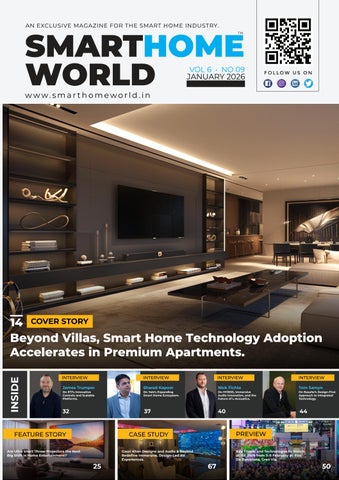
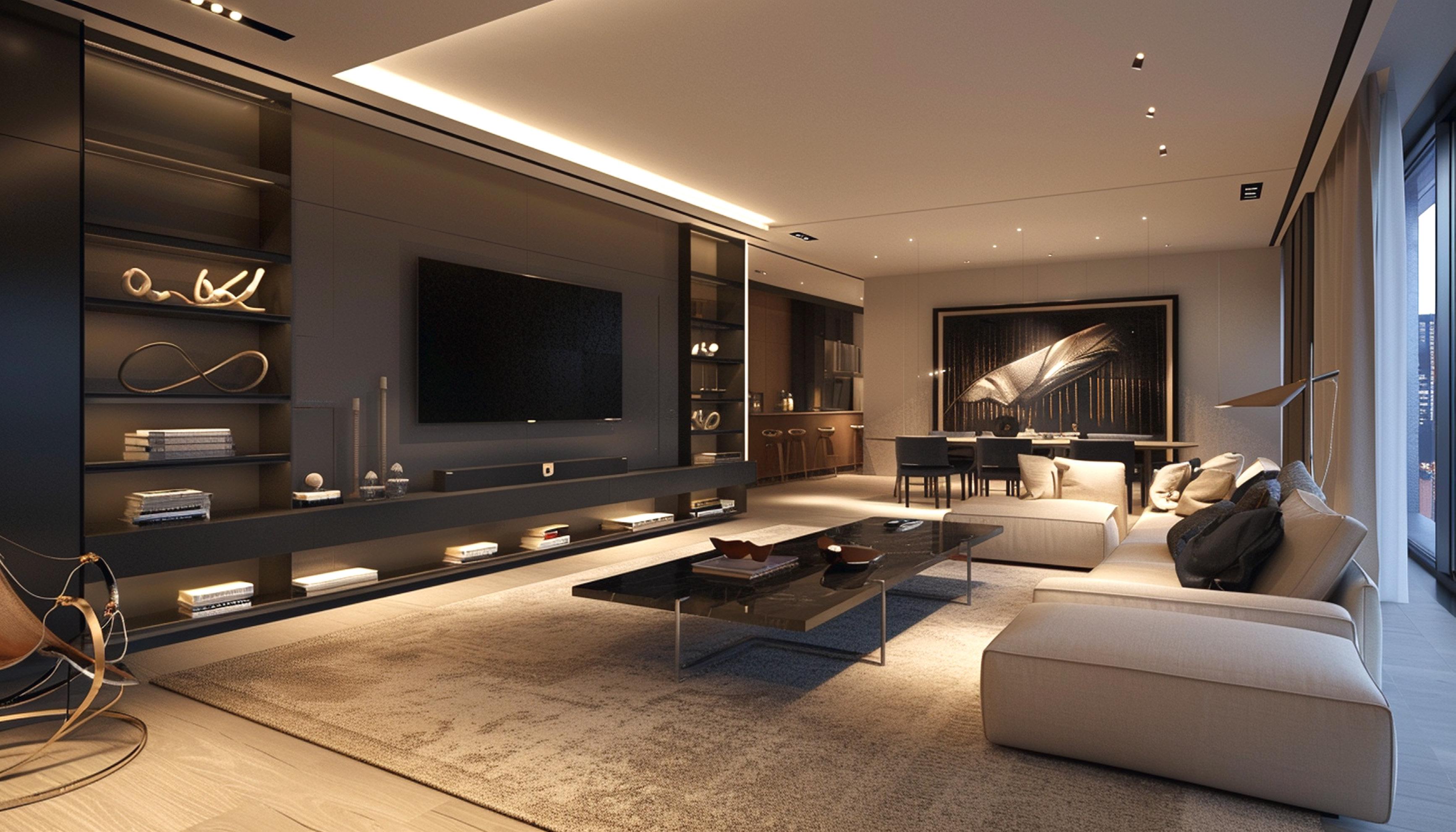
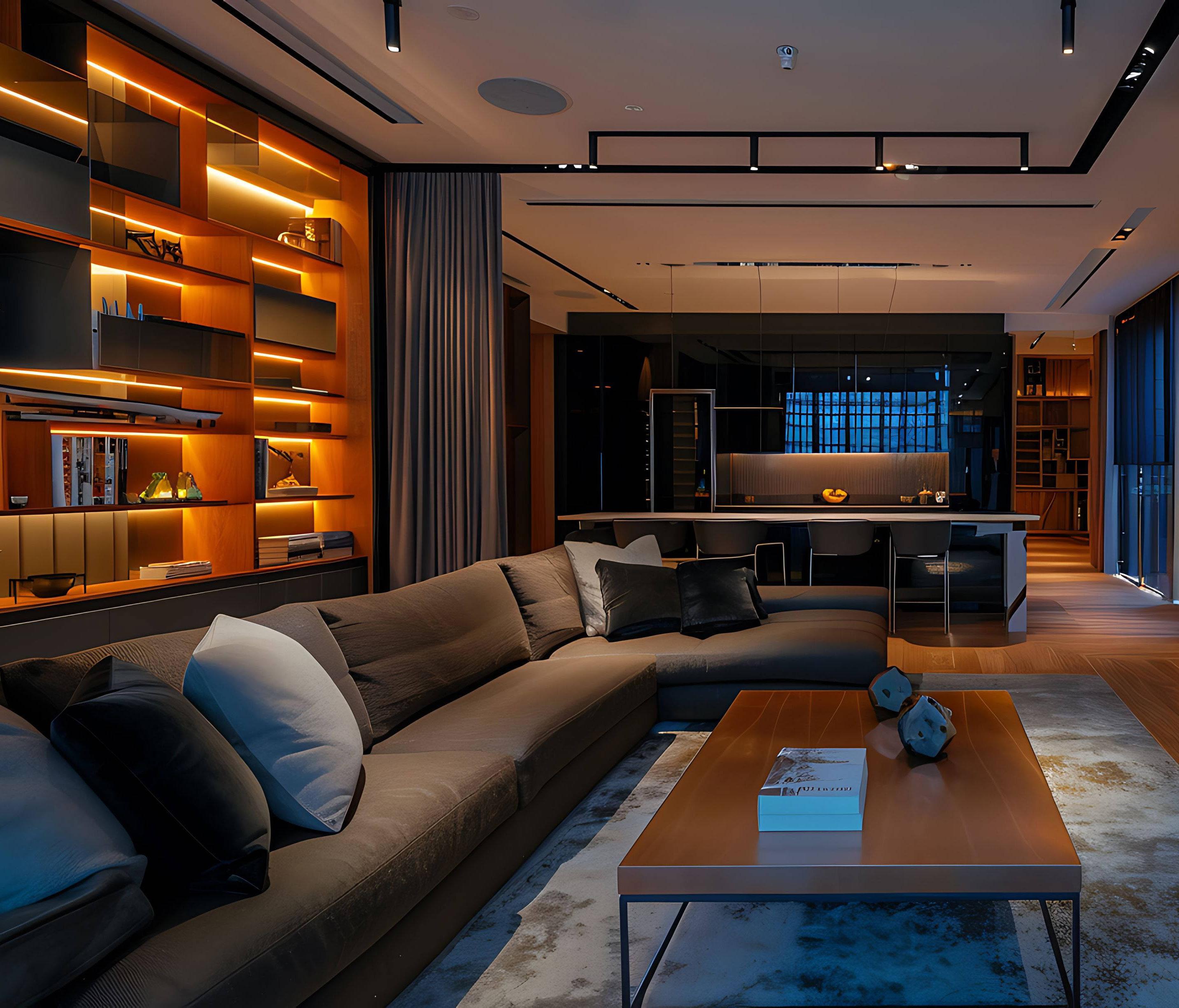
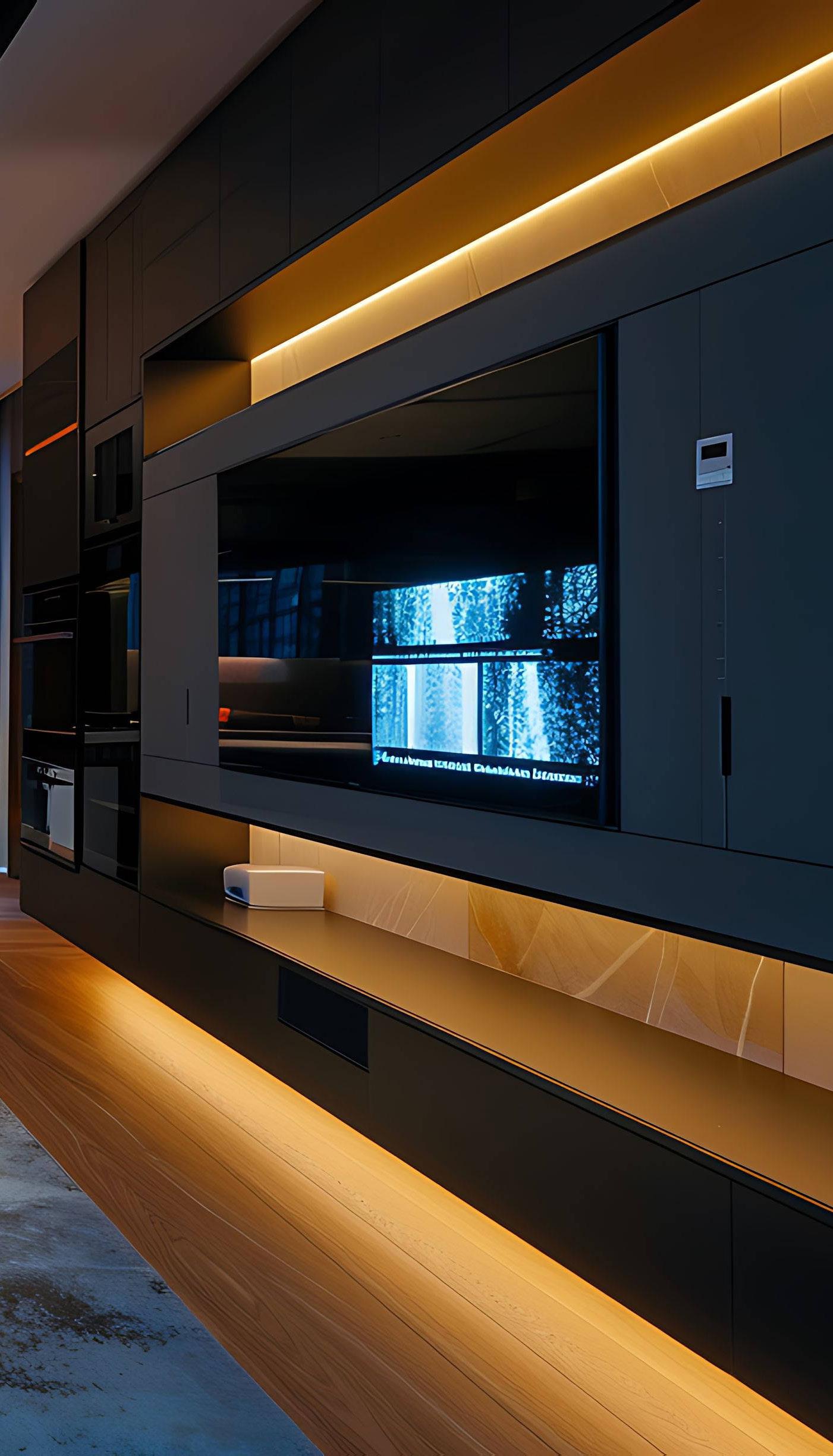
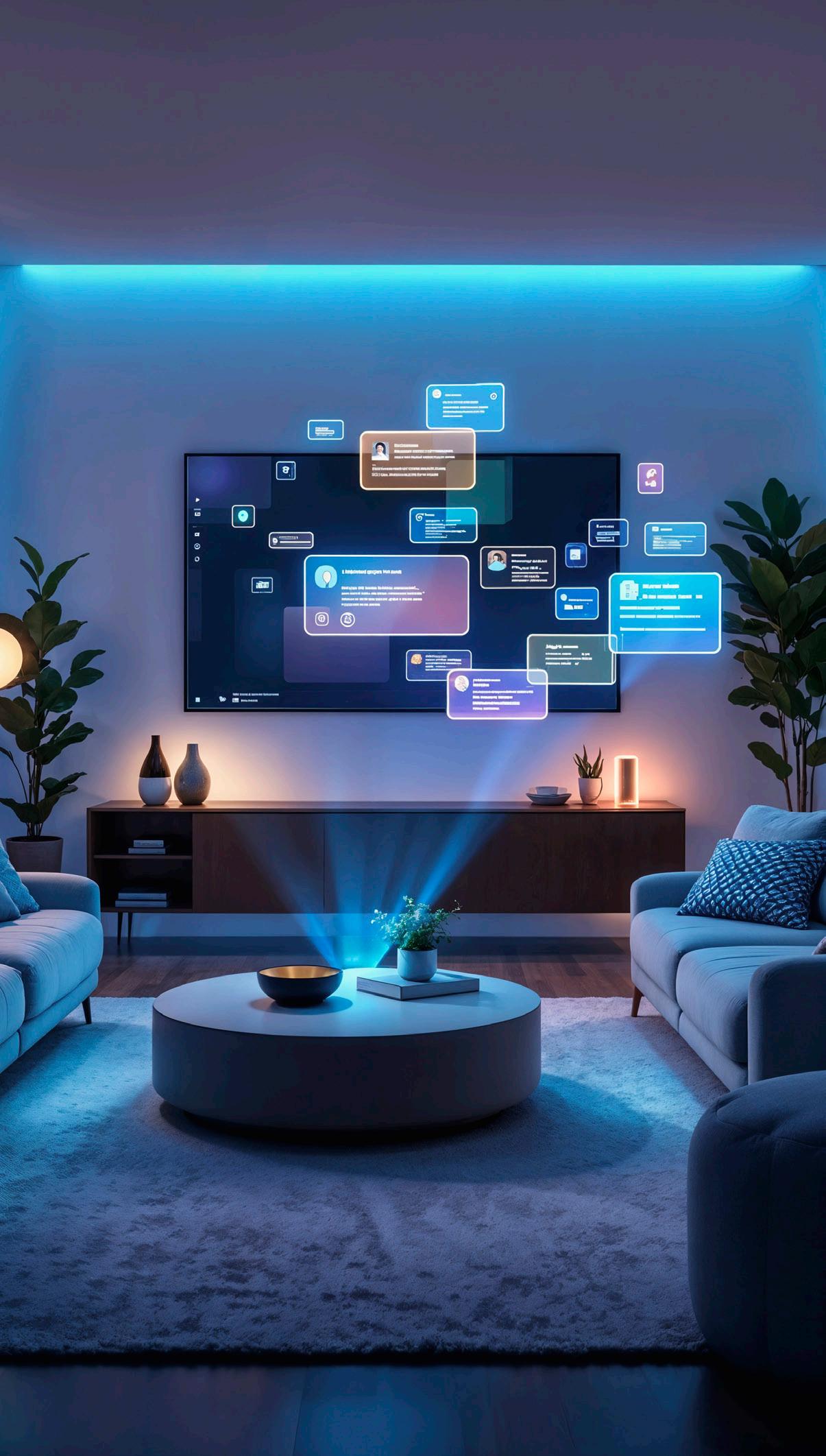
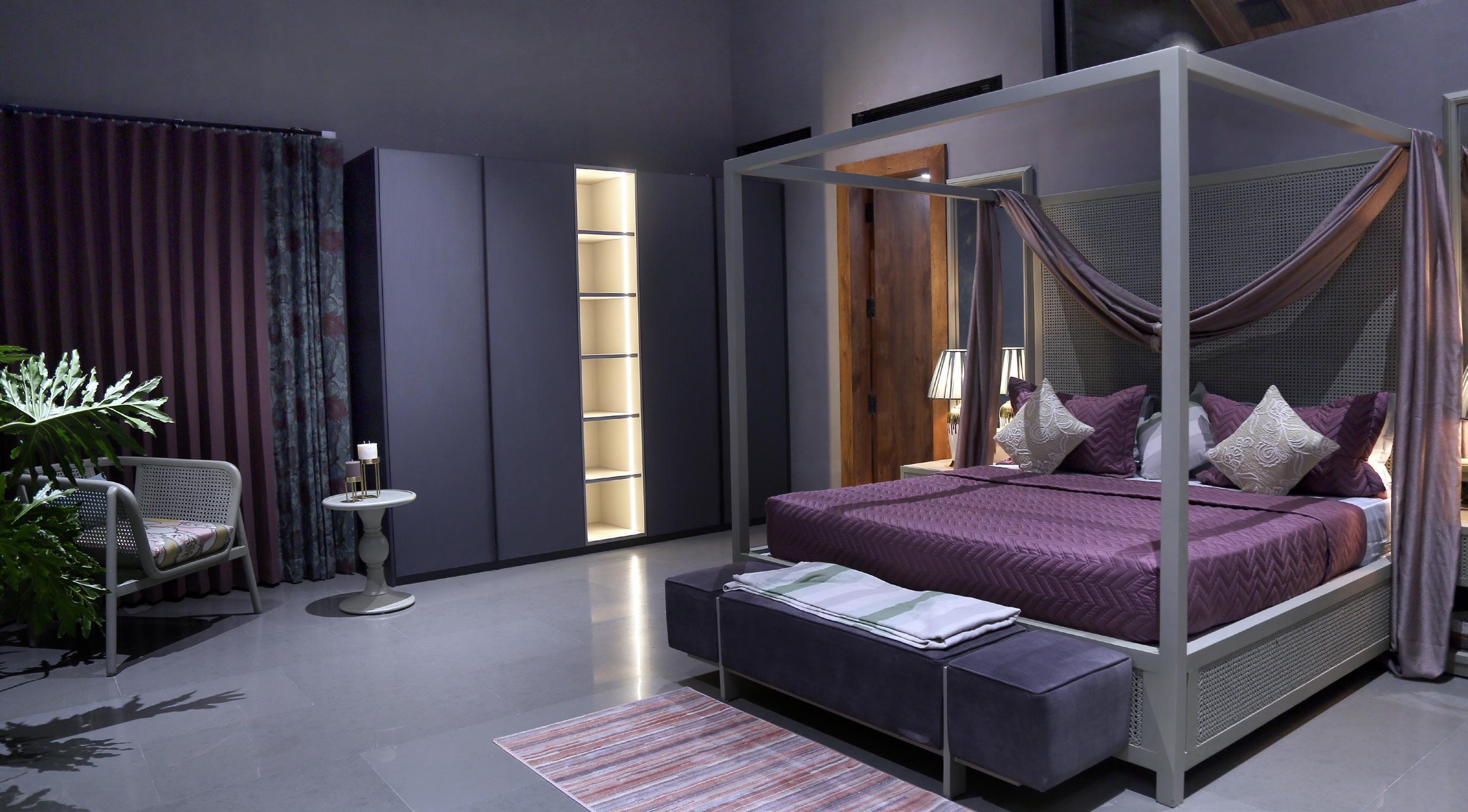
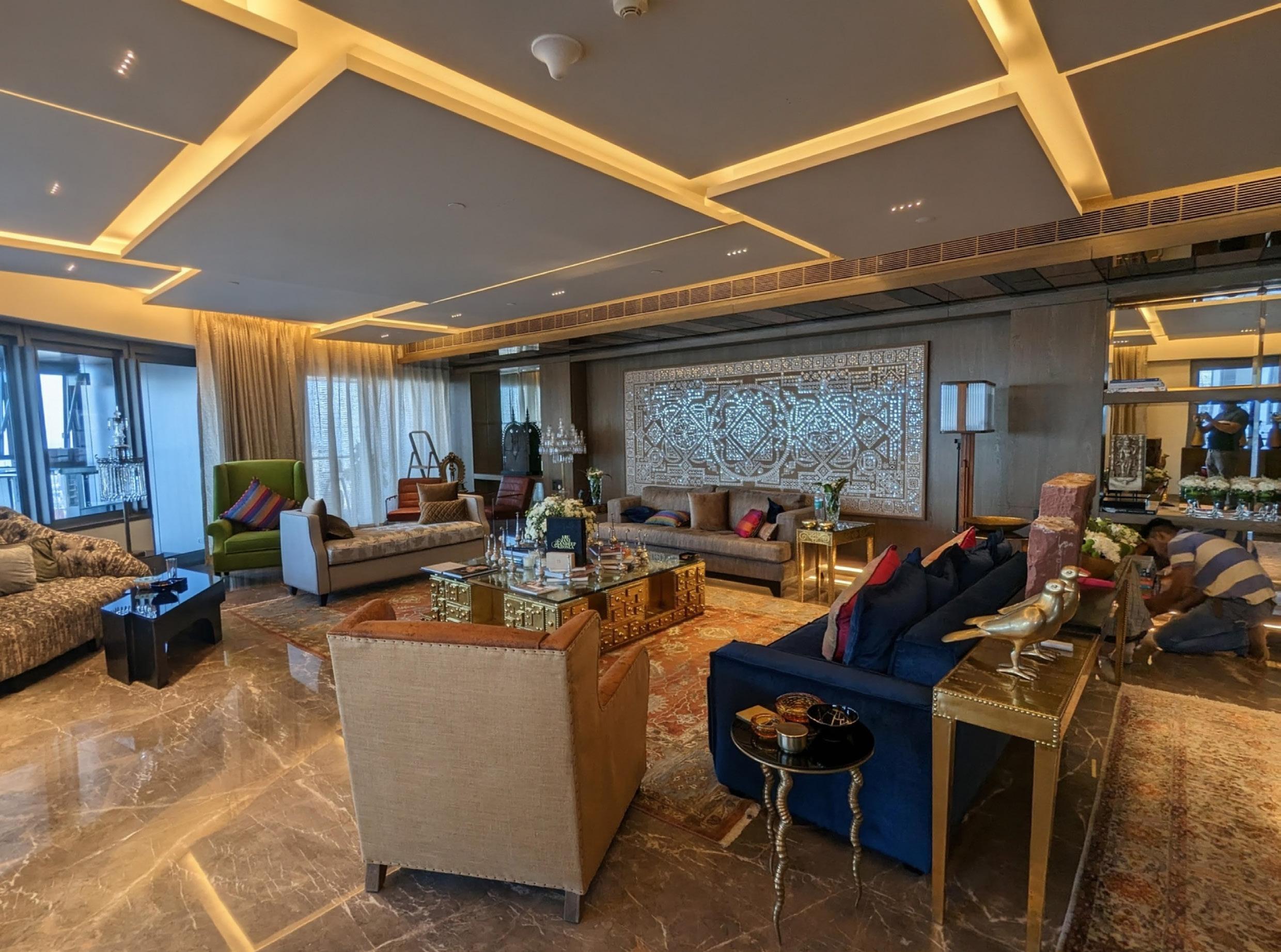
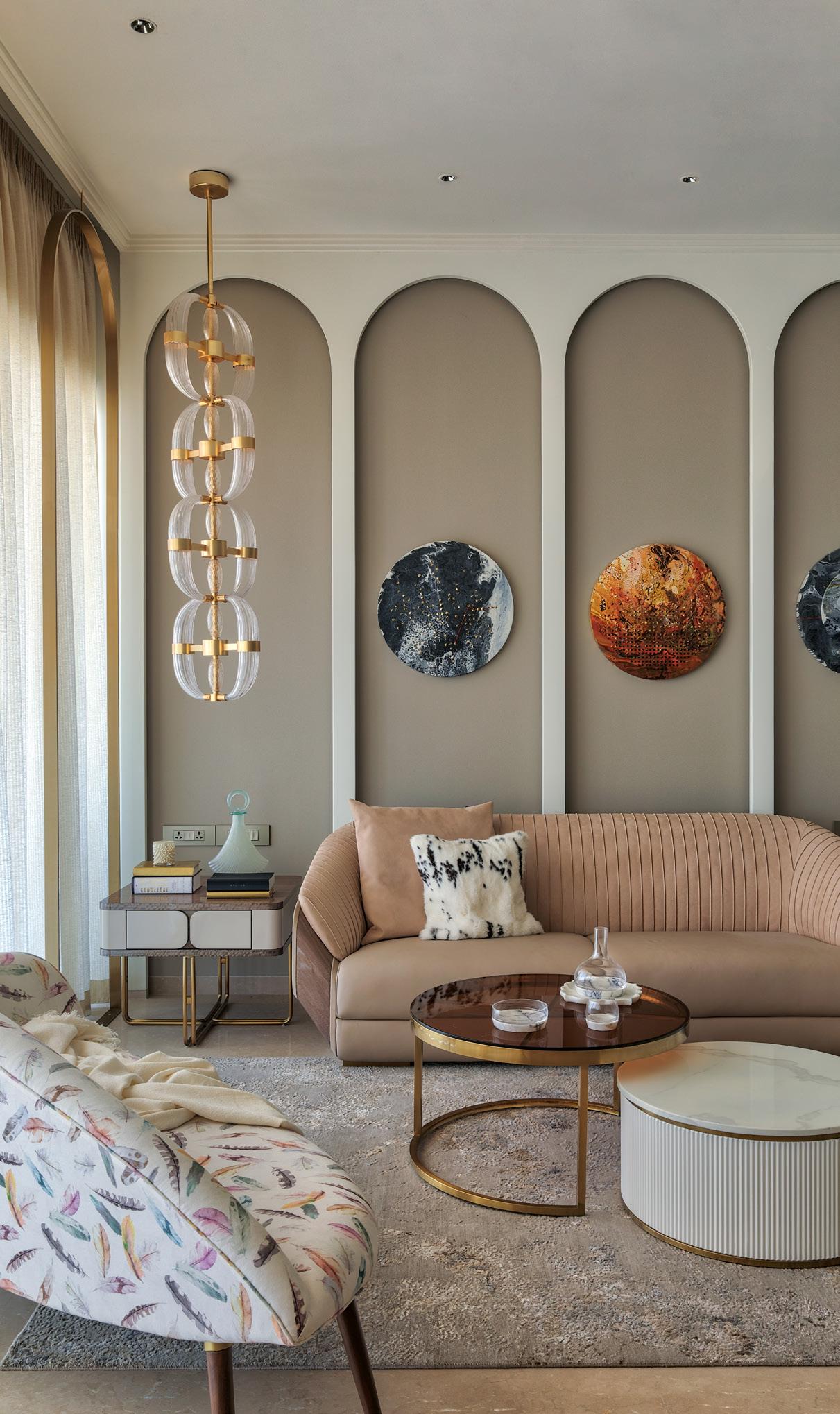
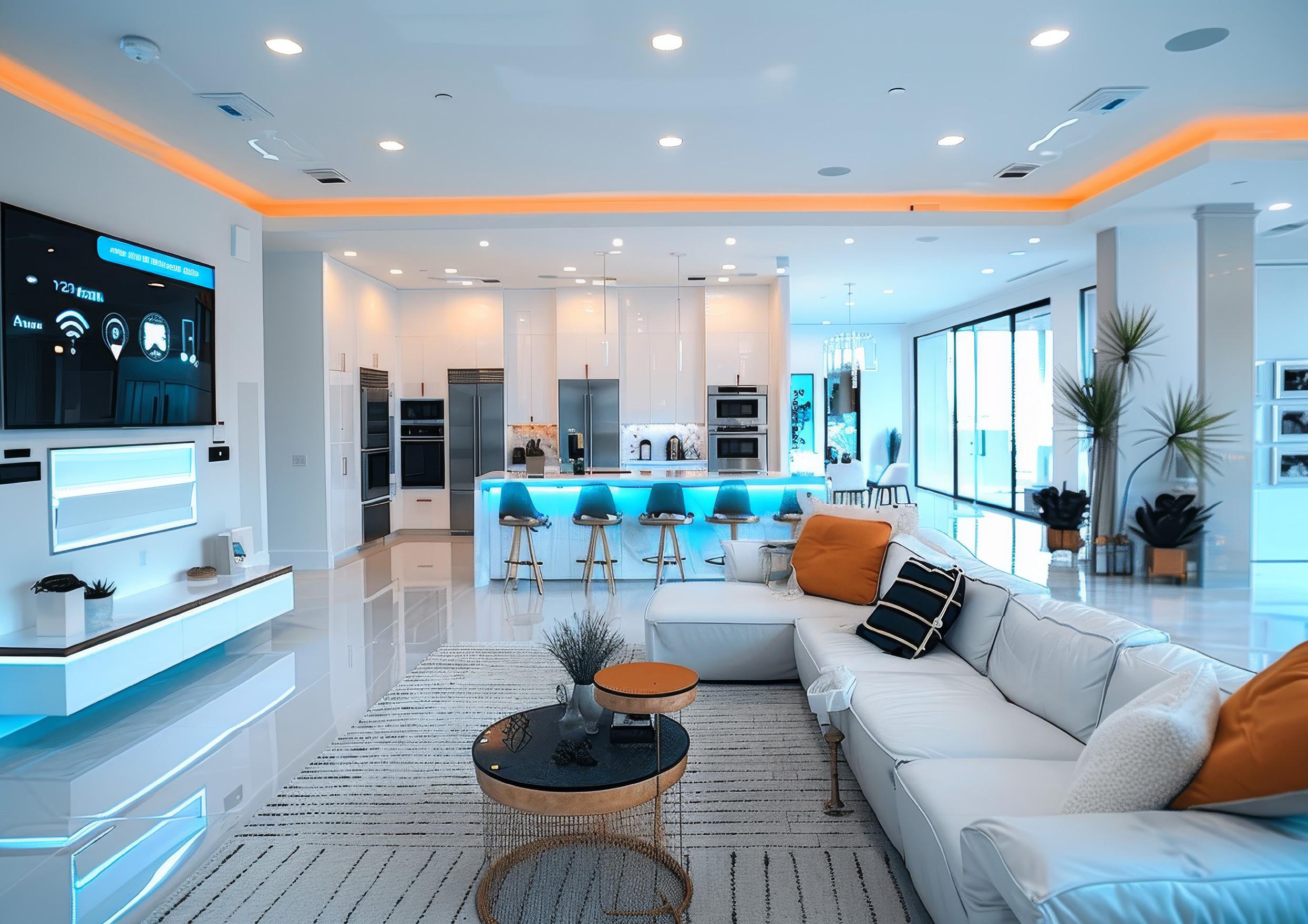
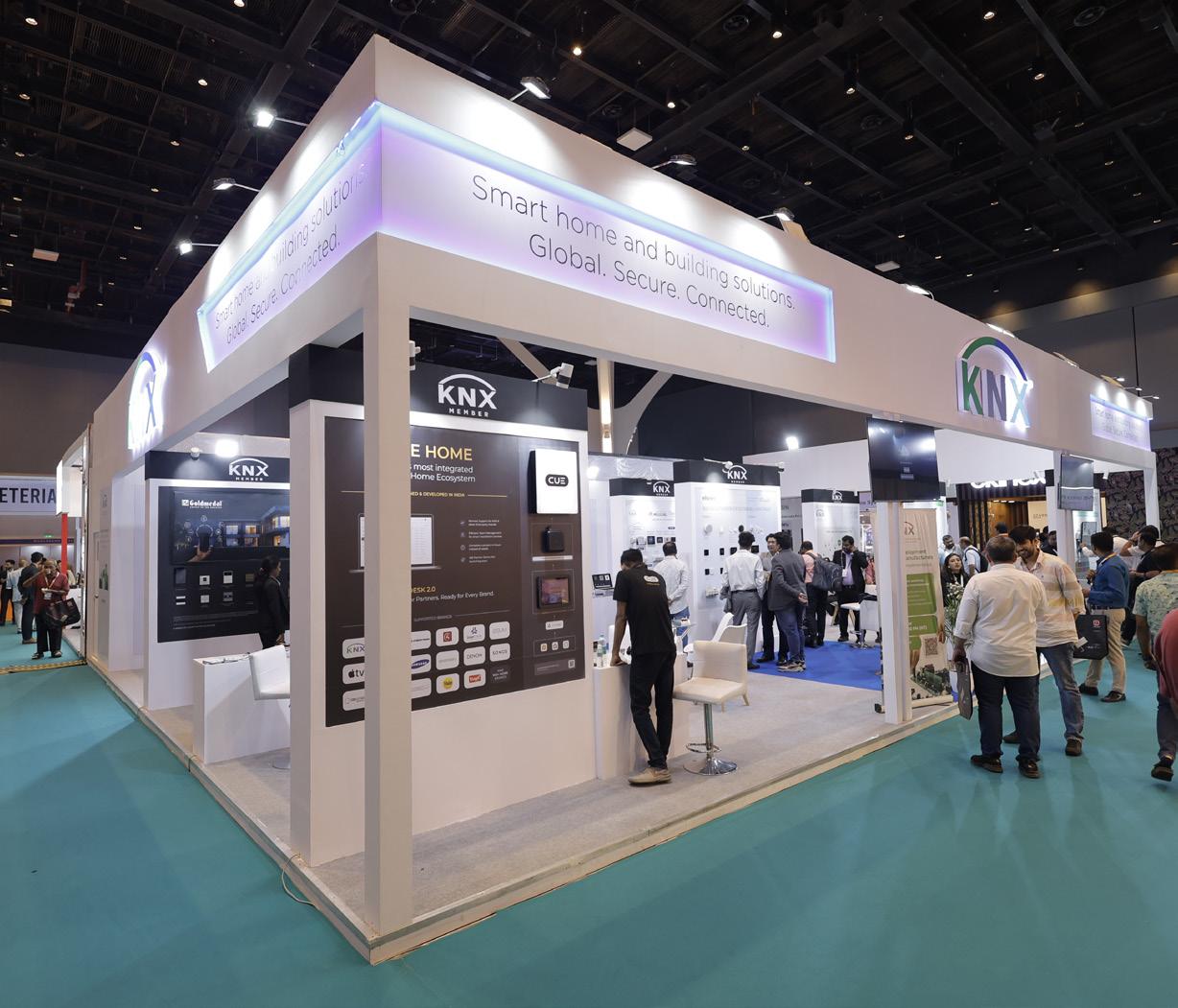
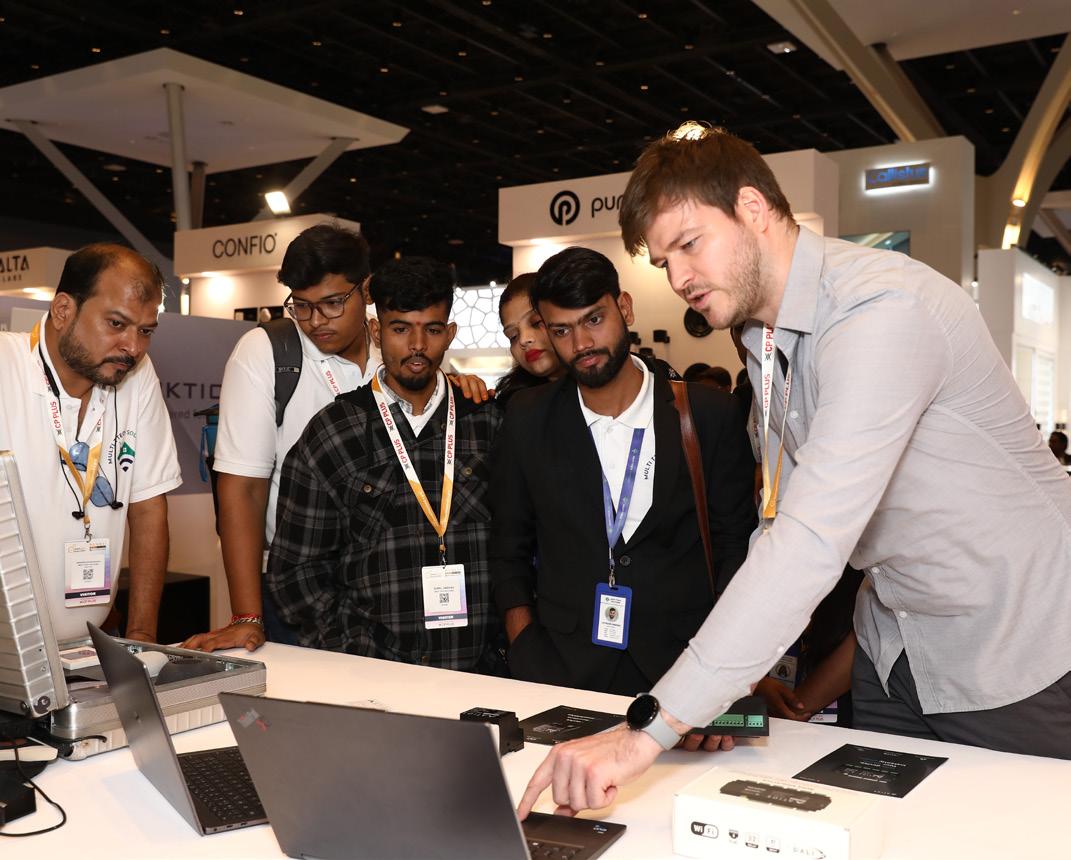
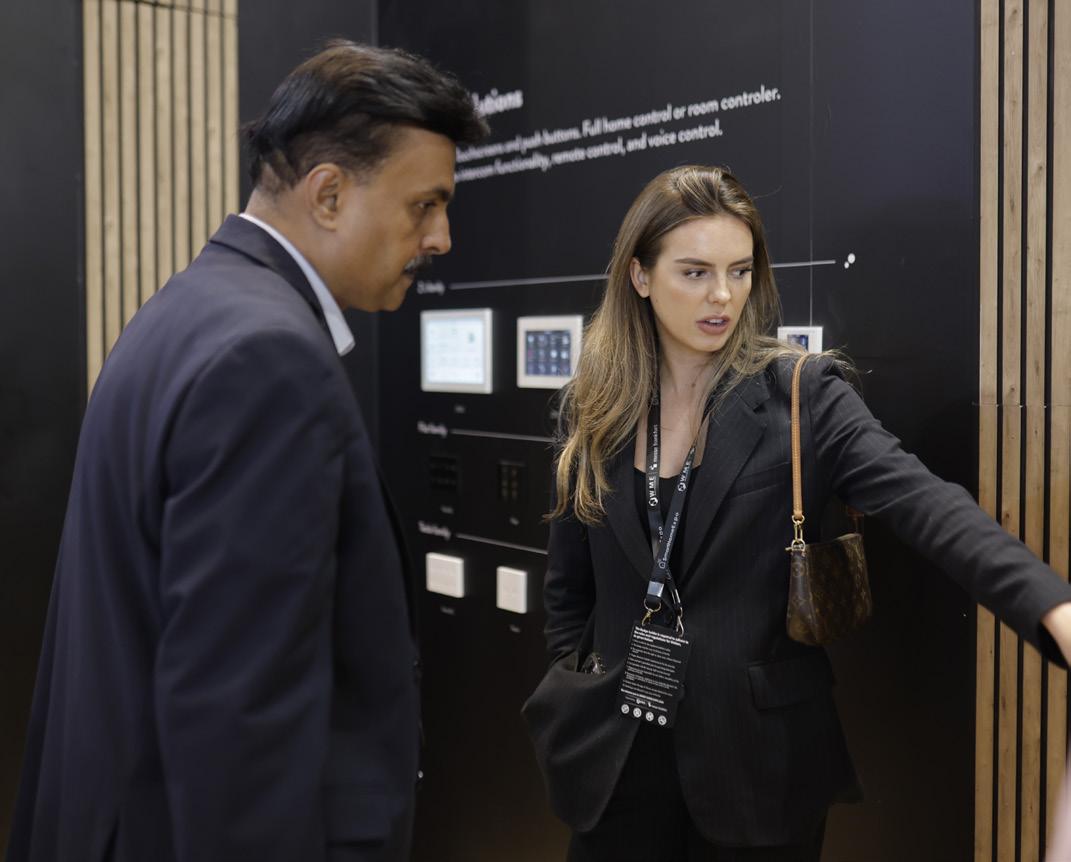
An analysis of why smart home technology once a preferred option for bungalows and villas is now rapidly adopted in large apartments. Smart Home World share expert views on advantages, scalability, energy efficiency, security requirements, and user-centric design.
Feature Story
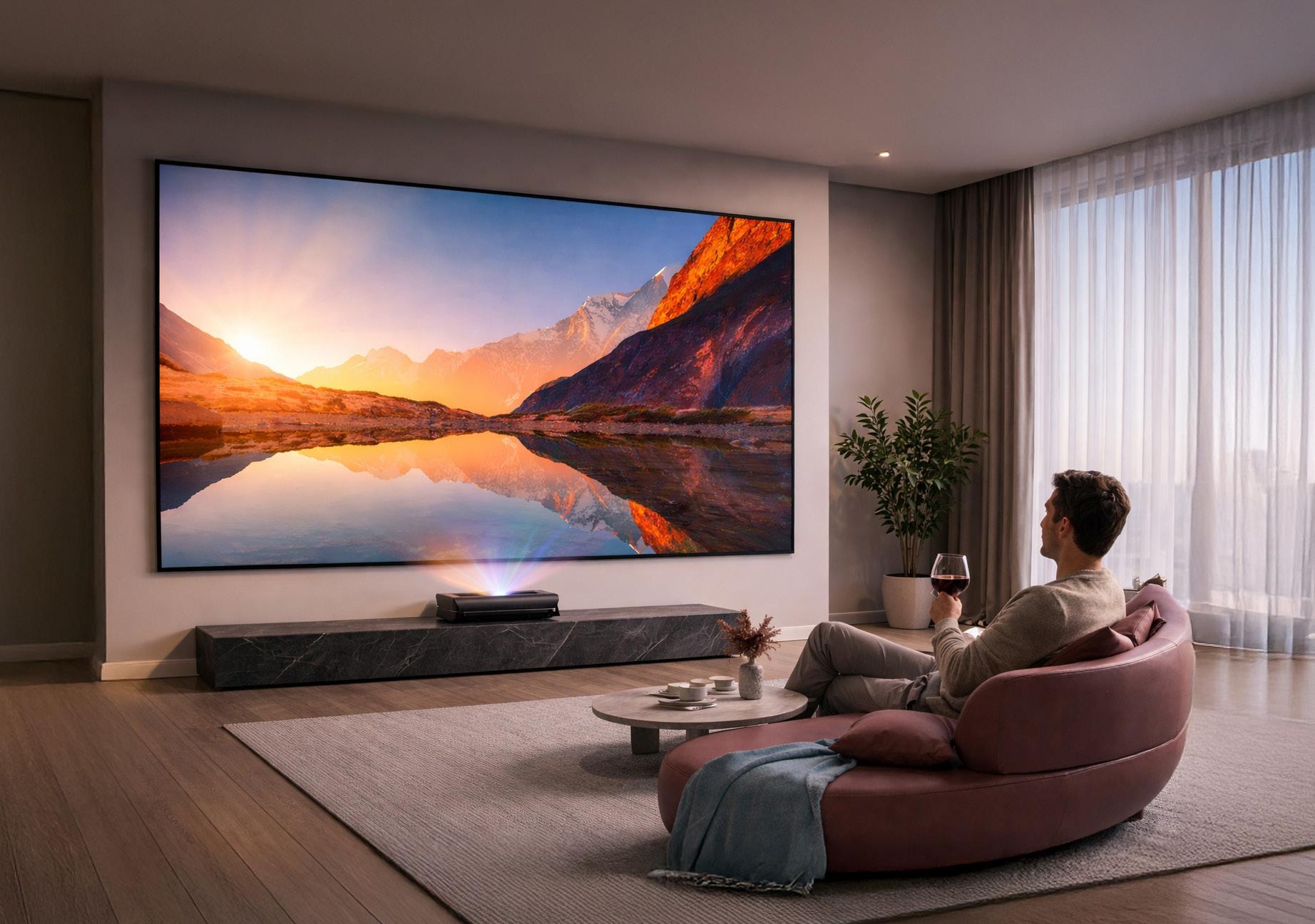
A practical overview of the growing Ultra Short Throw (UST) projector market, including ideal applications, installation considerations and brand offerings.
Interviews
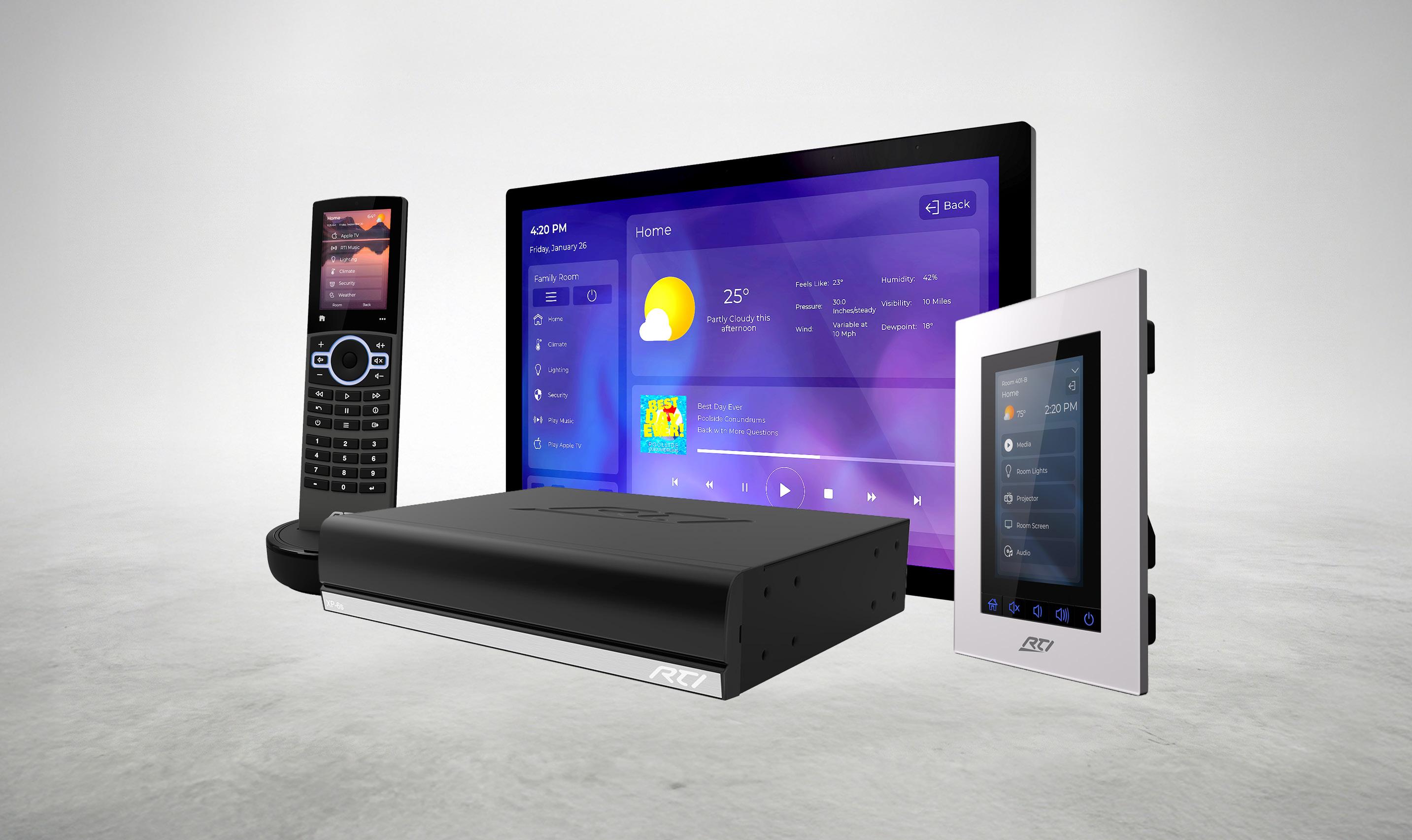
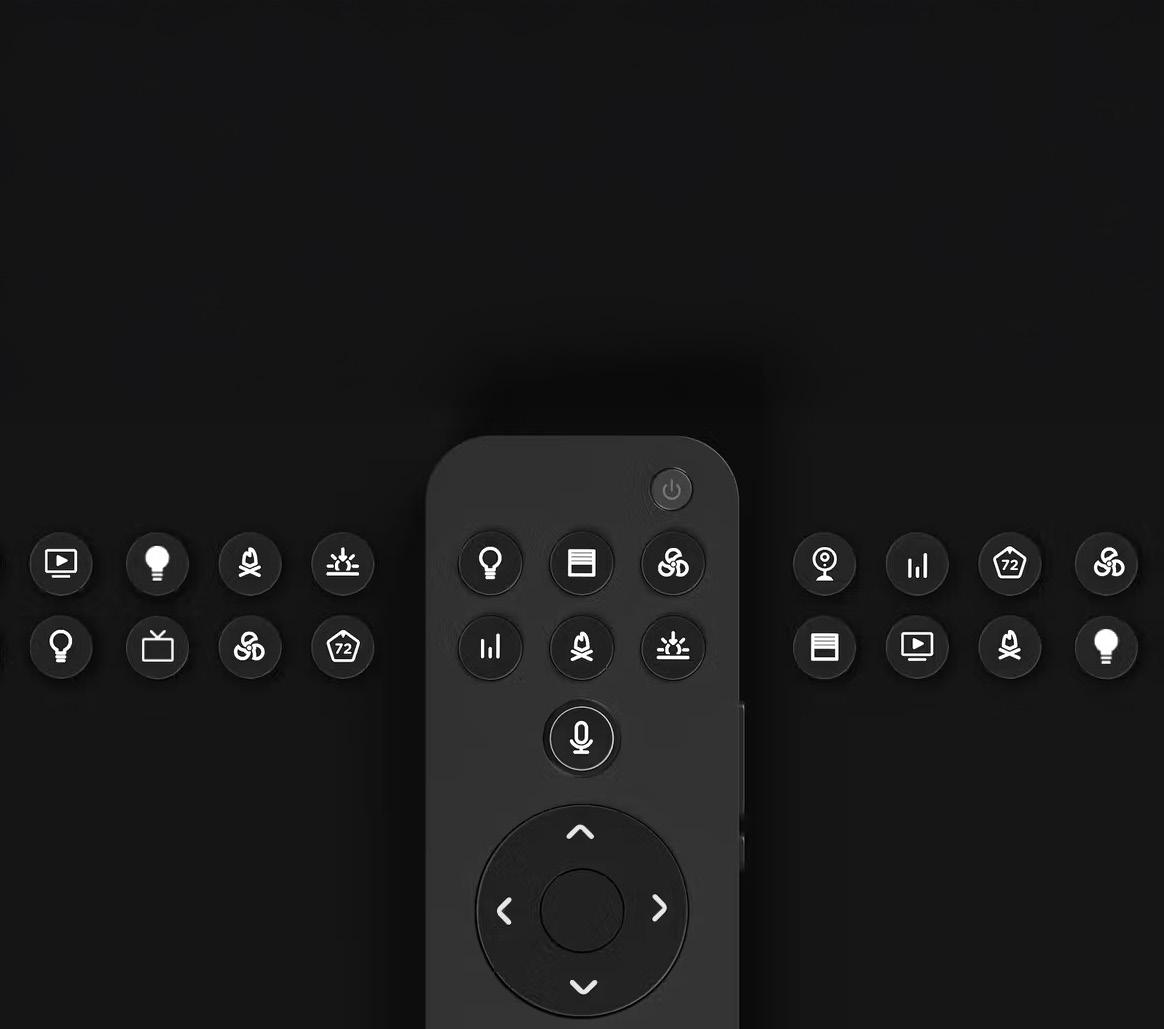
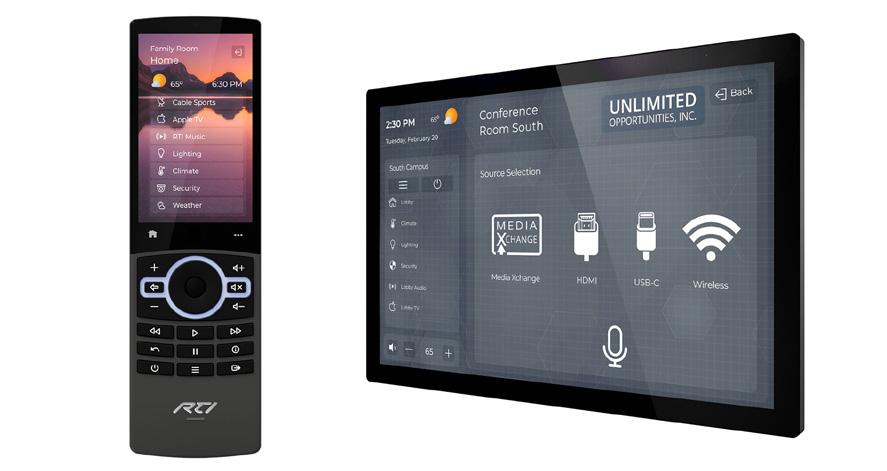
James Trumper, VP, International Sales, AVPro Global speaks about RTI’s control ecosystem, focusing on programming efficiency, scalability across residential and commercial projects, and upcoming intelligent control processors.
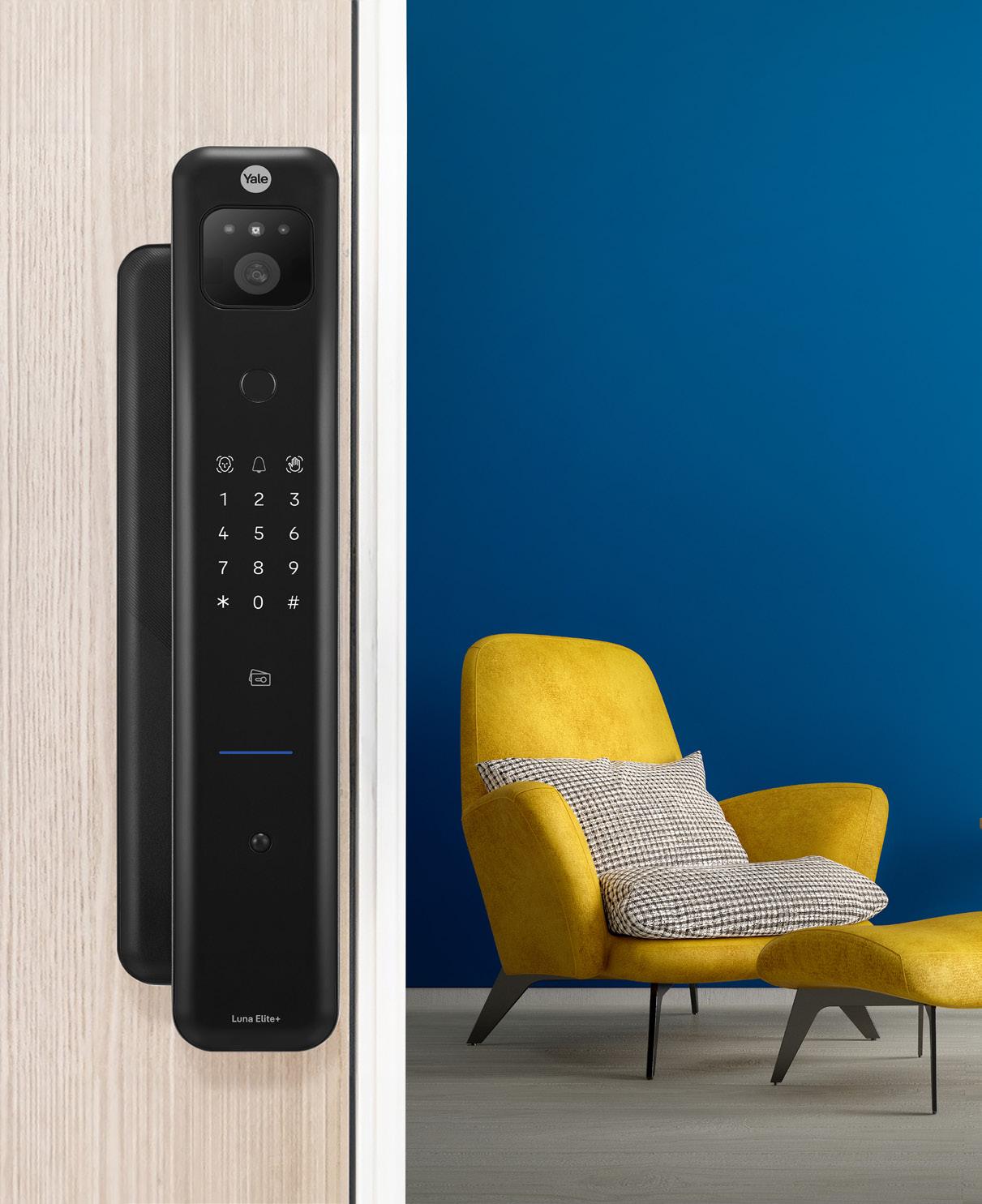
Sharad Kapoor, Director & Head, Yale B2C and Smart Residential Business, SAARC discusses on Yale’s smart security roadmap in India, covering digital locks, video doorbells, connected access control, and how integrators can deliver secure, scalable, and userfriendly security solutions.
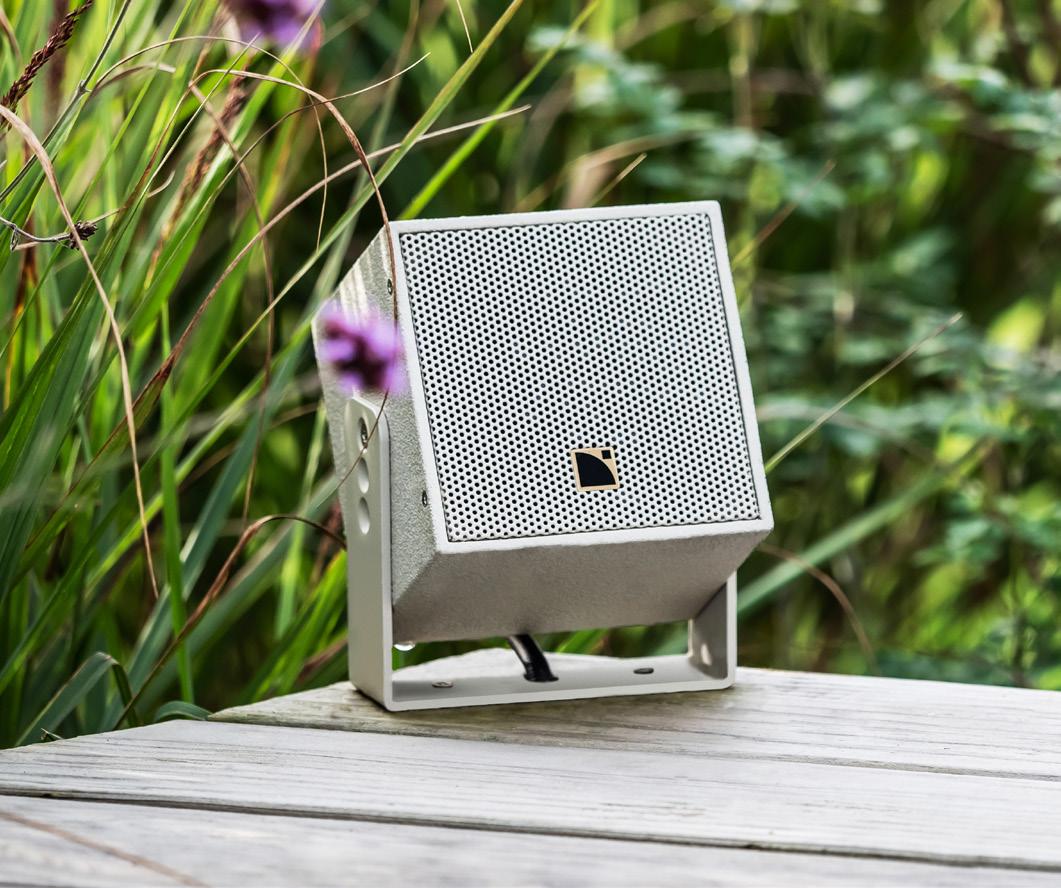
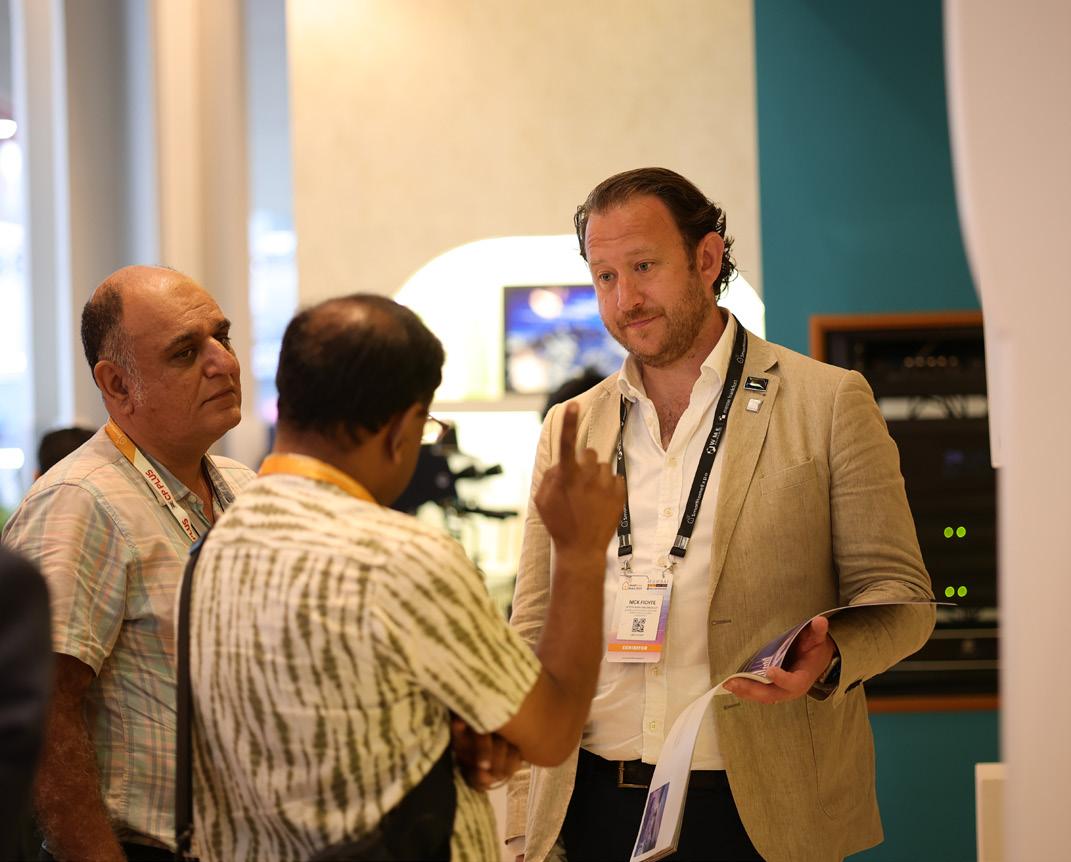
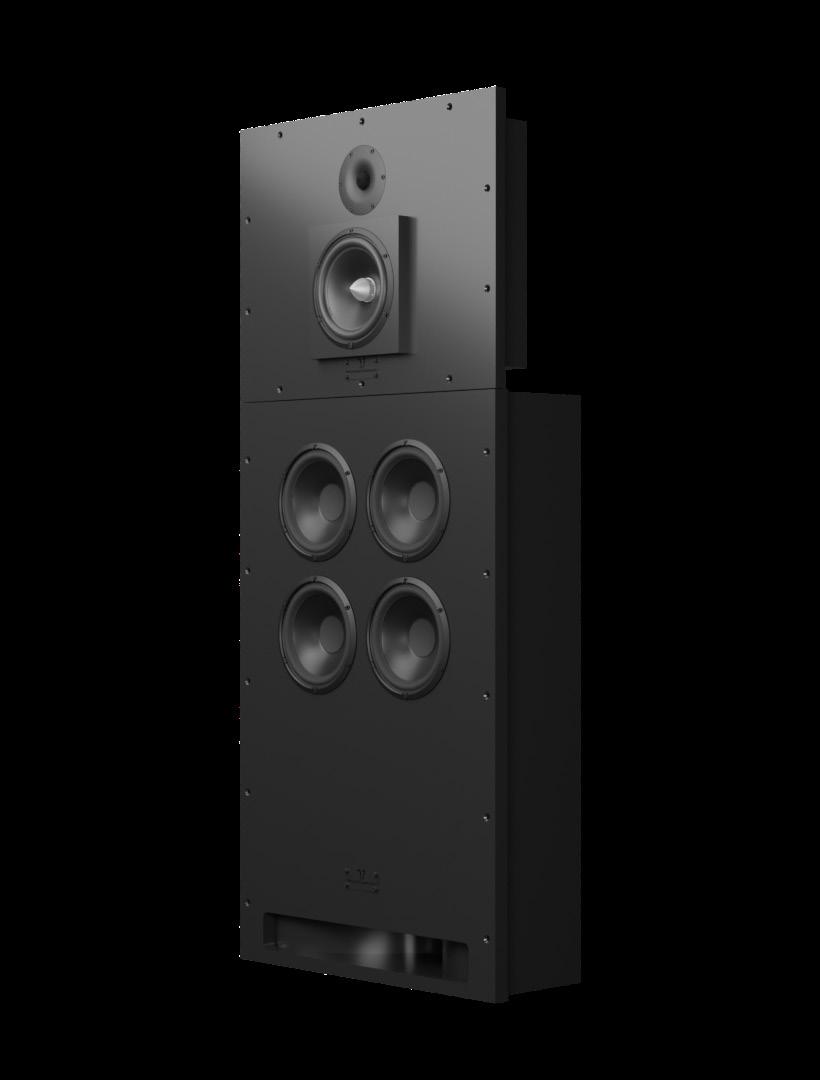
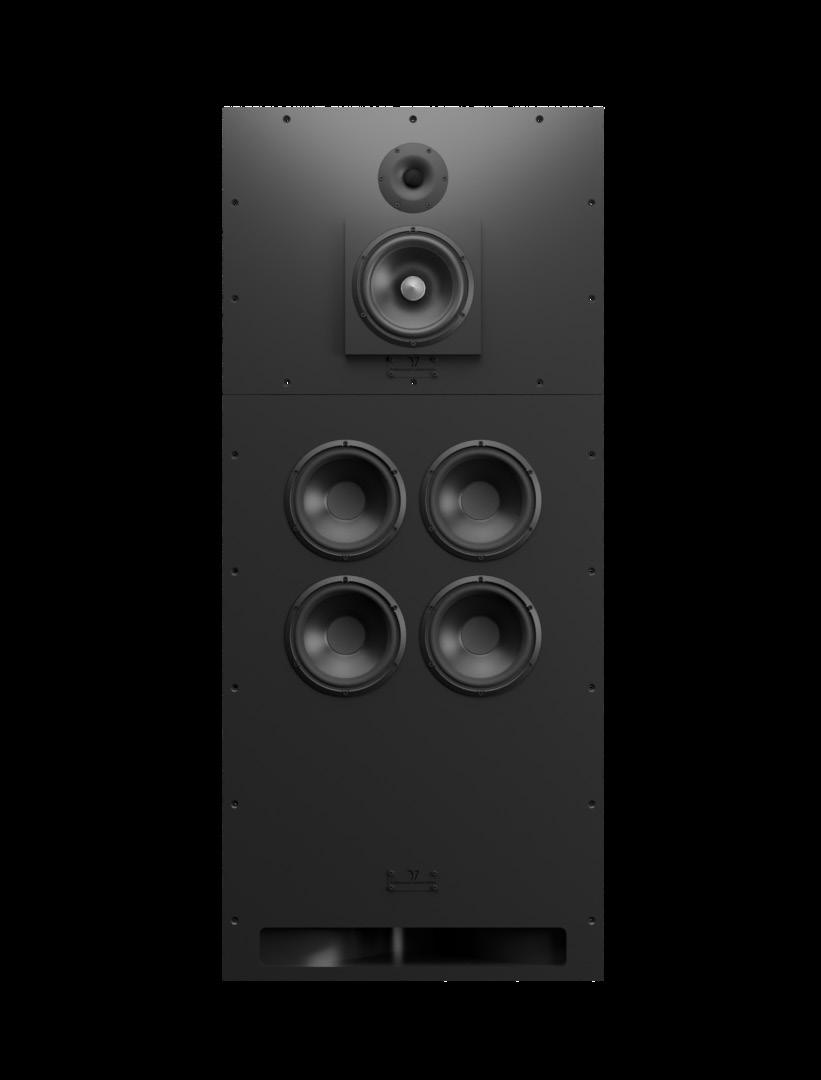
Nick Fichte, Global Business Development Lead – Home & Yacht, L-Acoustics shares his insights on HYRISS as an architectural audio solution and suggest HYRISS Handbook as a technical and design resource for System Integrators and professionals.
62 50
Previews
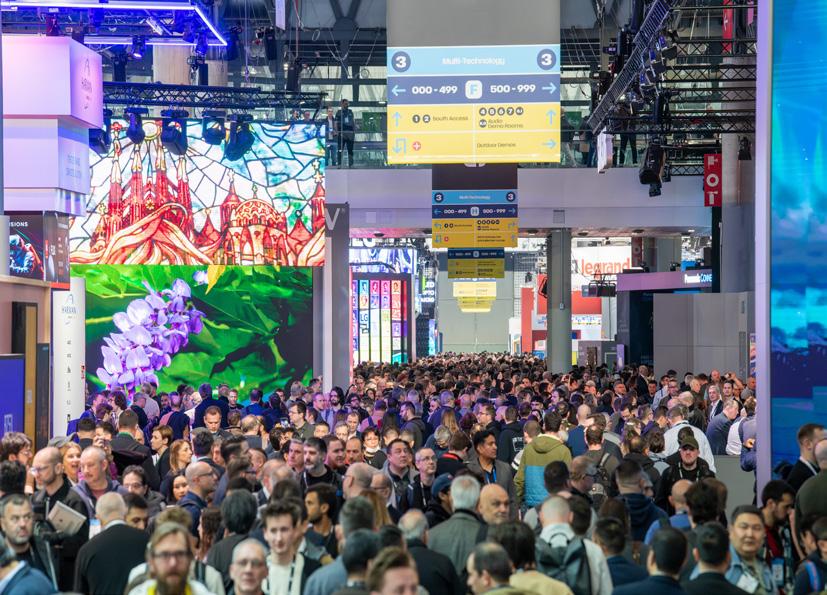
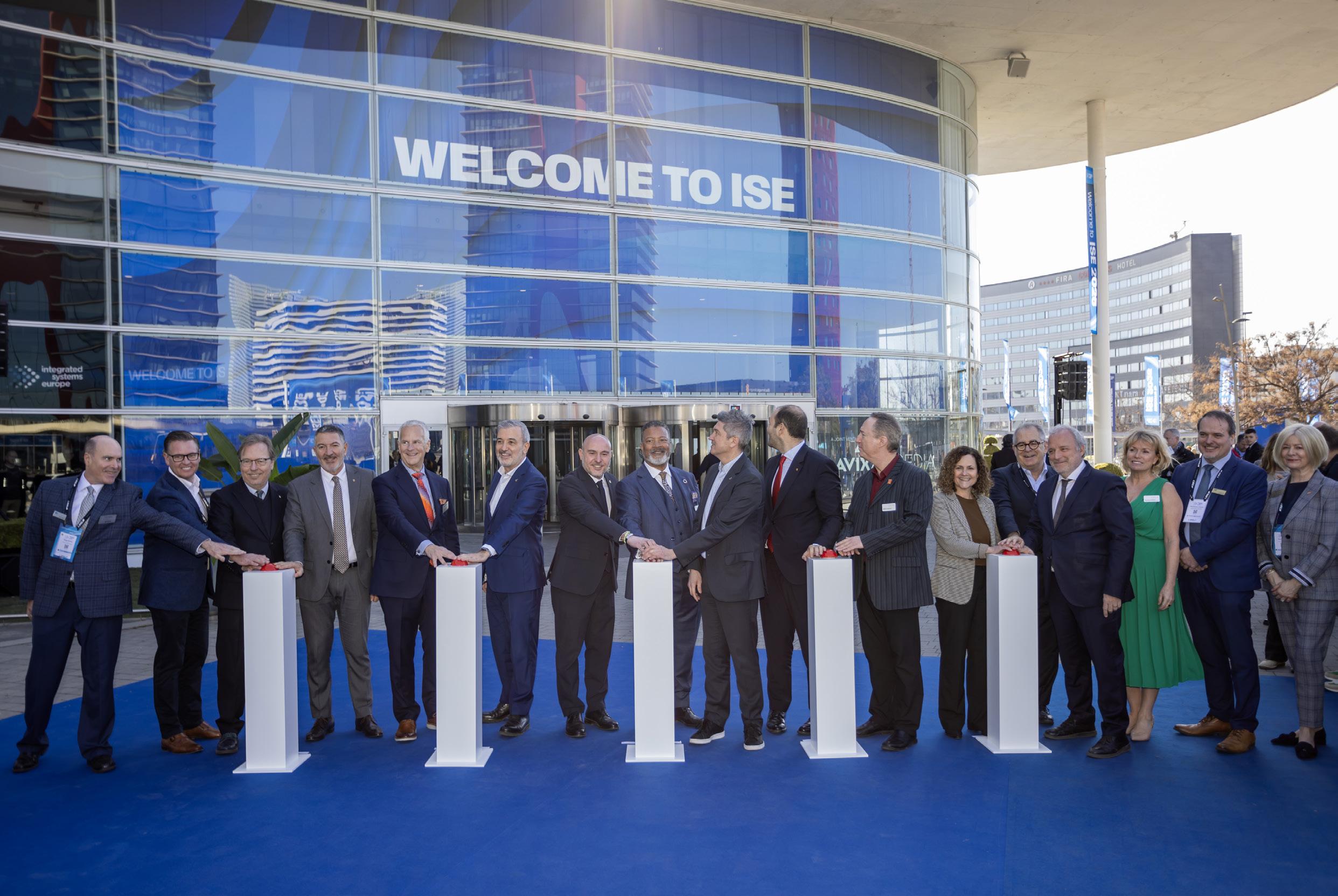
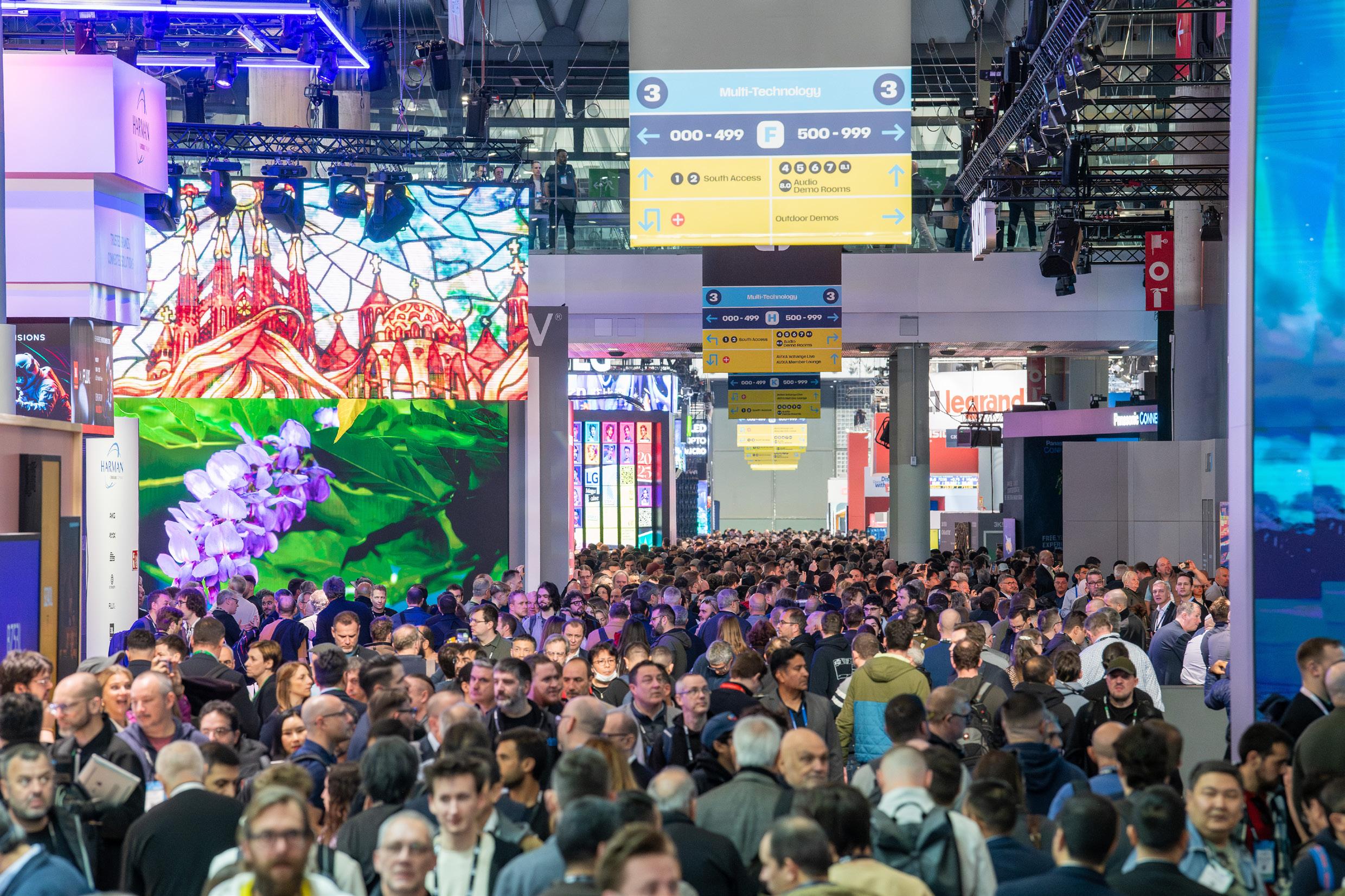
Overview of Integrated Systems Europe 2026, from 3–6 February, in Barcelona, focusing on residential, smart building technologies and more. We share a few highlights on what to expect.
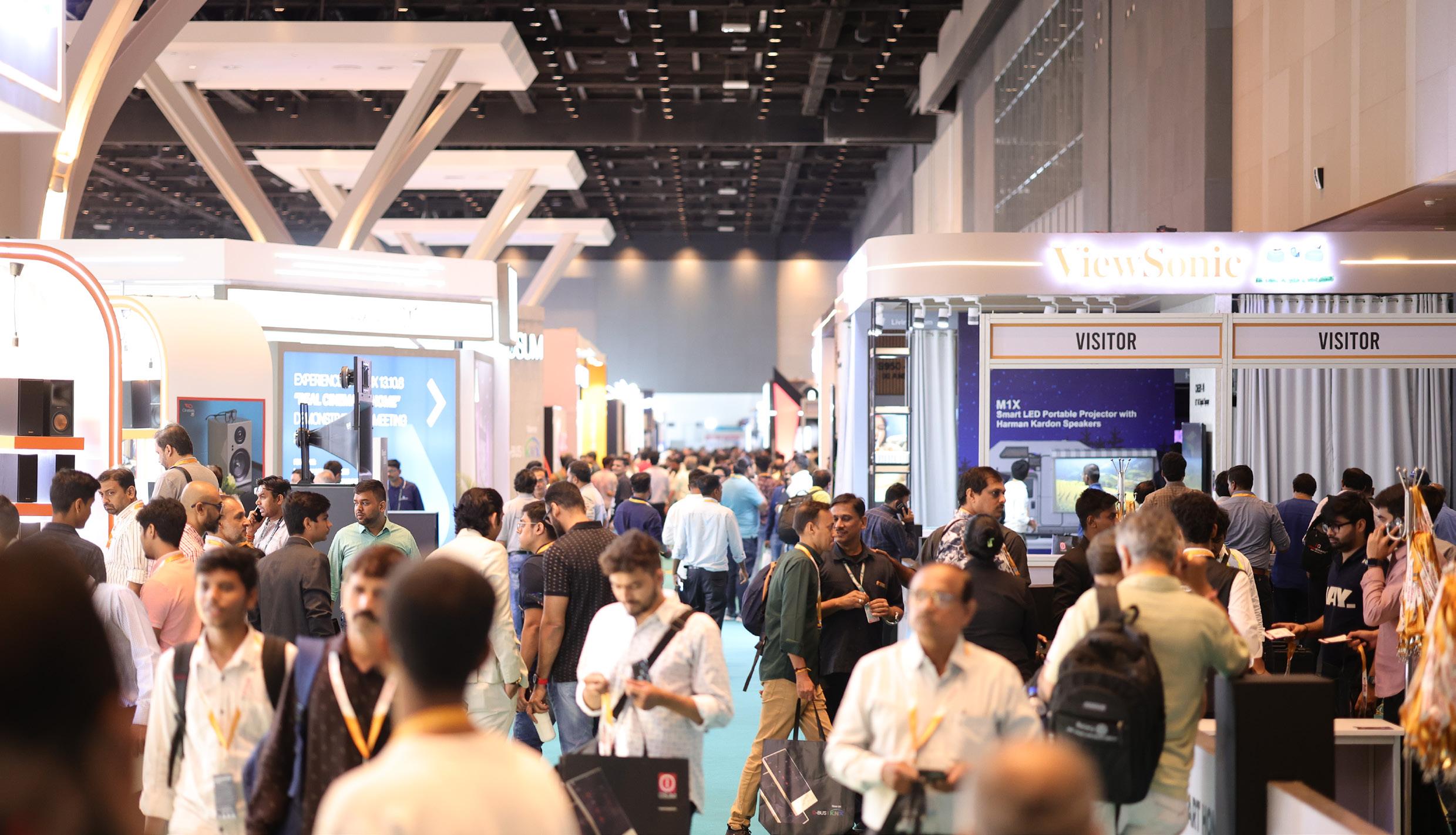
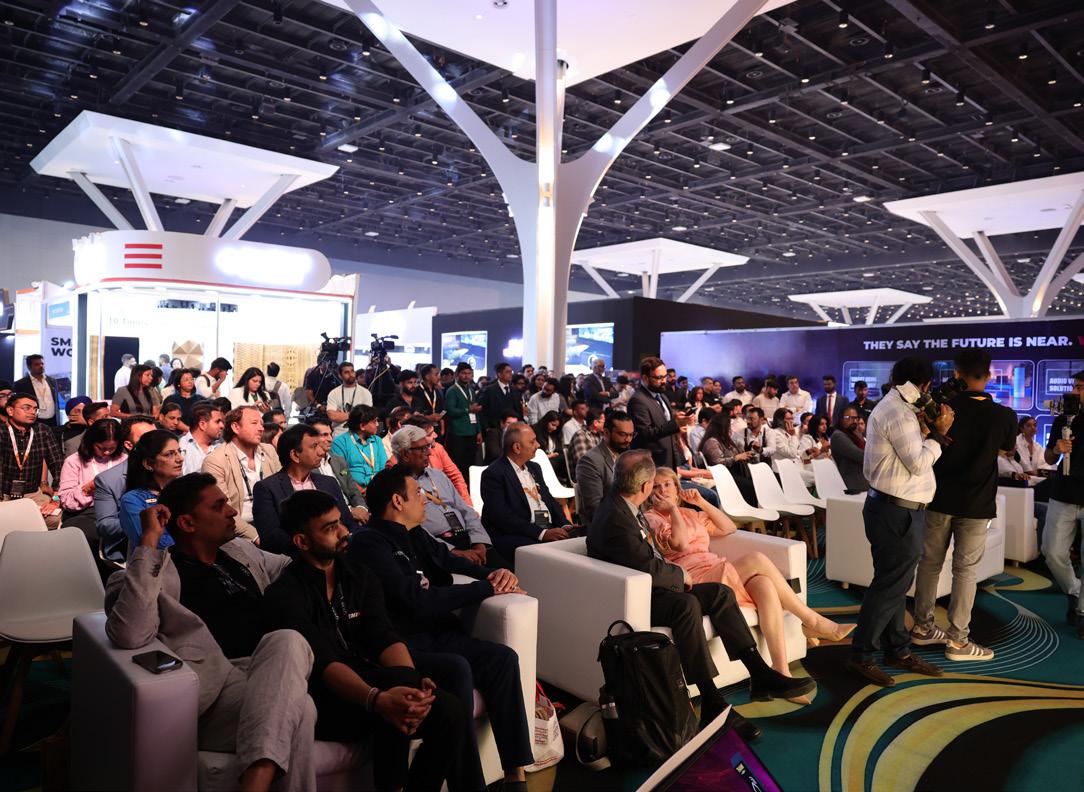
Smart Home Expo 2026: What integrators and consultants can expect from the expo on 28 to 30 April 2026 in Mumbai, including the platform focus, key solution categories, and networking opportunities.
Industry Perspective
Miantic AV offer a strategic breakdown of why traditional distribution models fall short and how execution-led partnerships are reshaping regional outcomes.
Case Studies
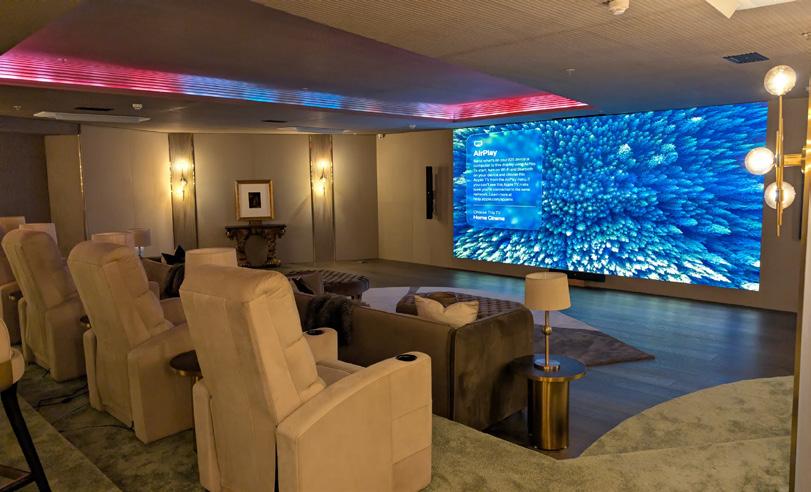
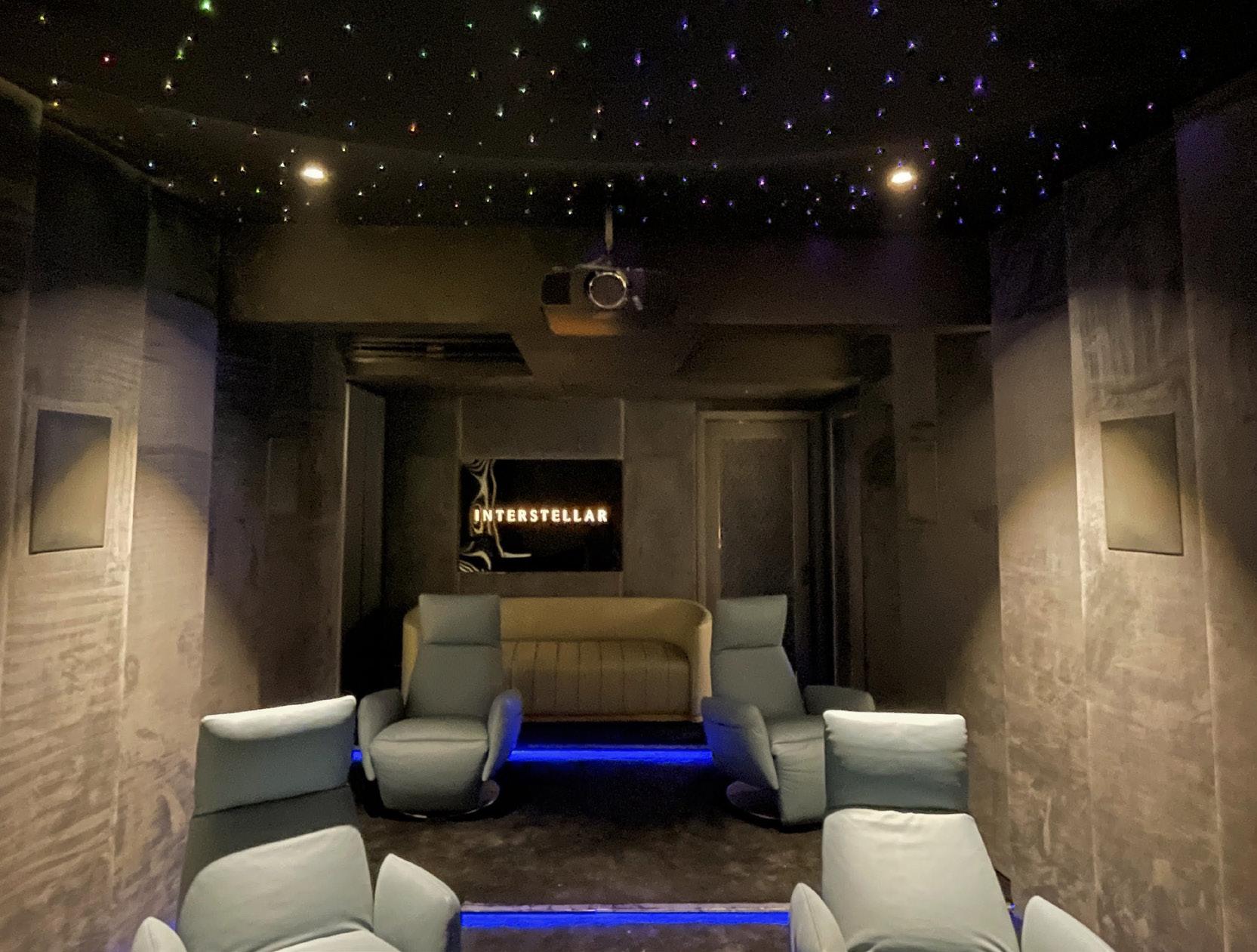
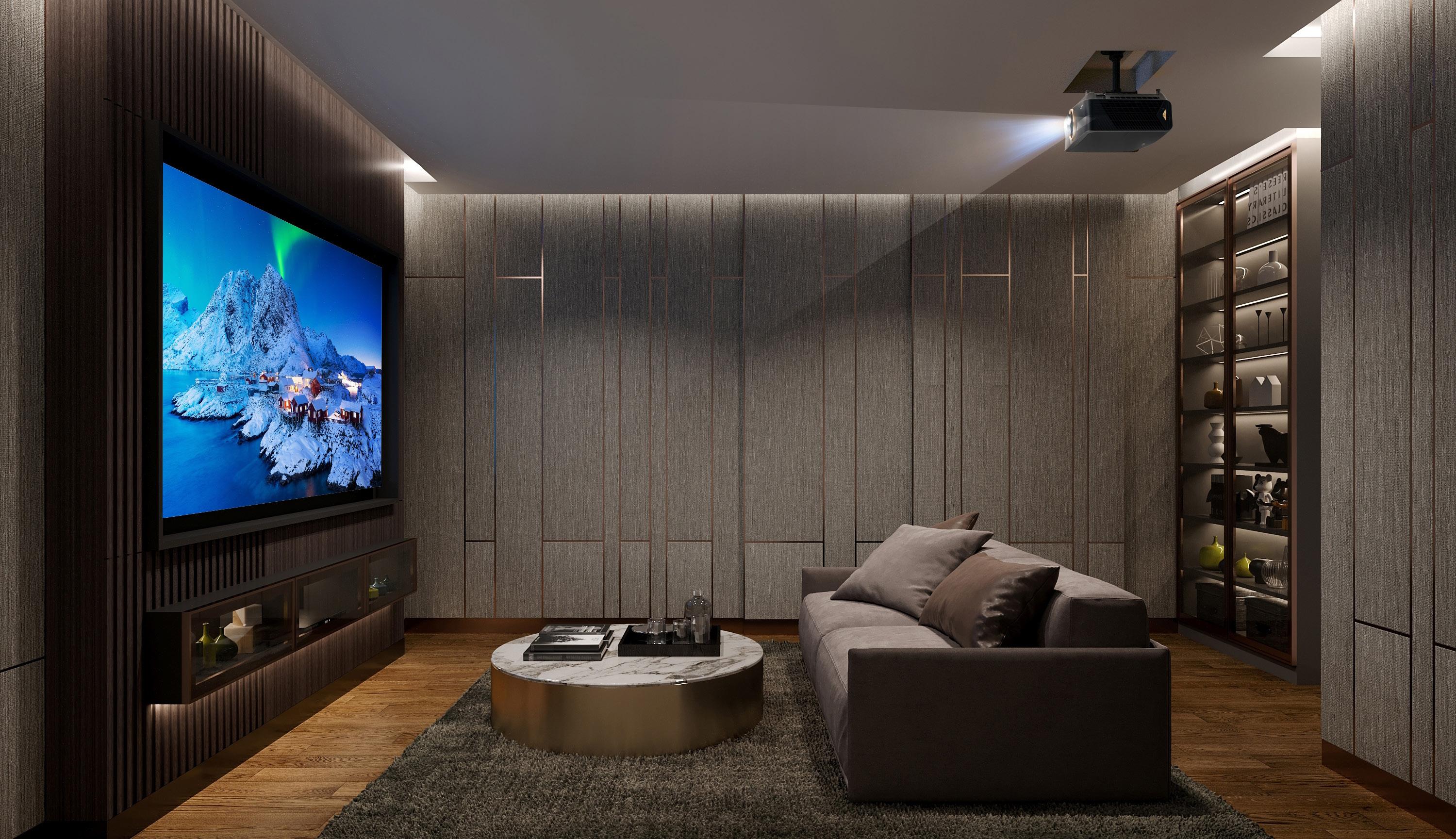
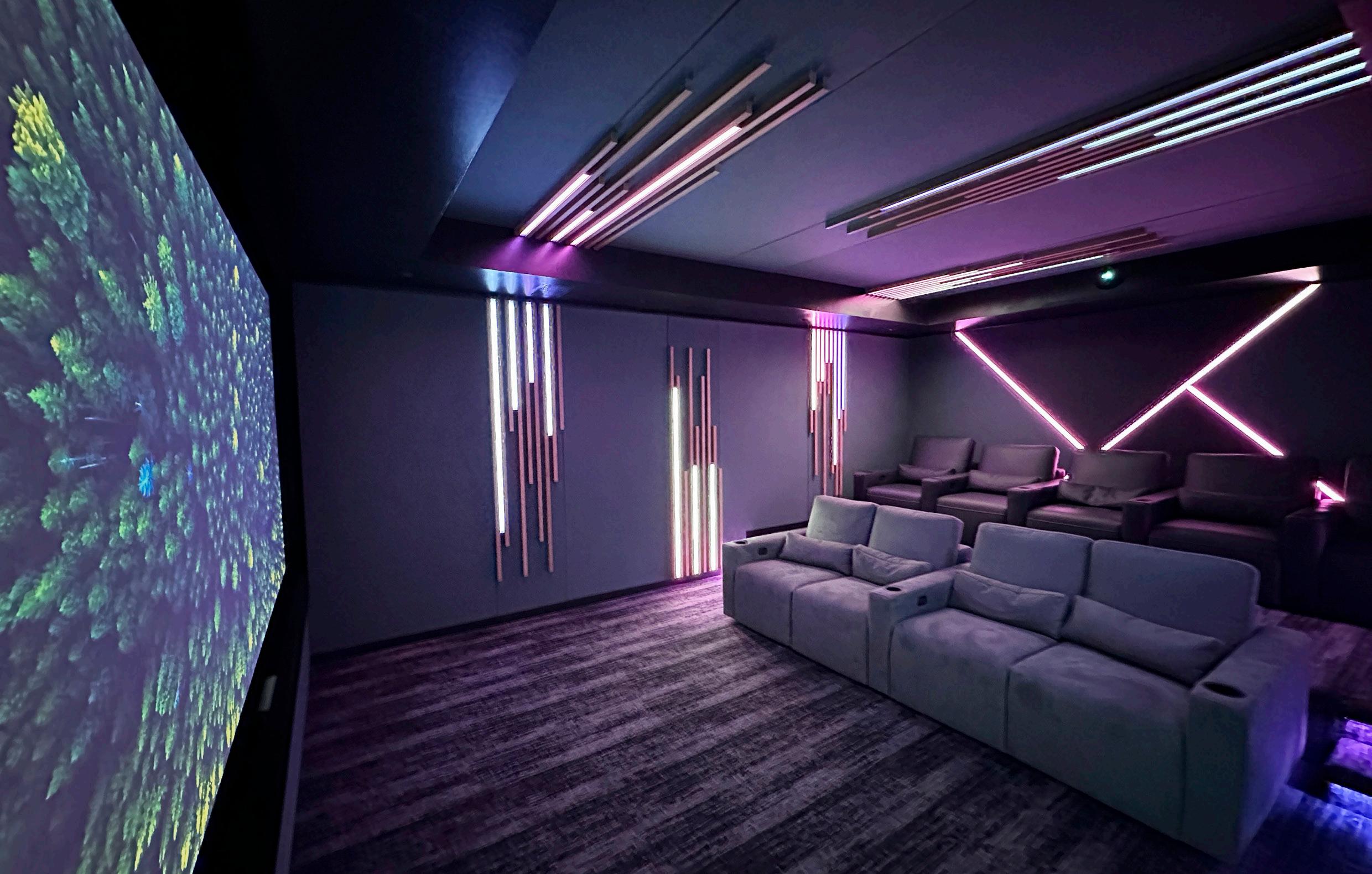
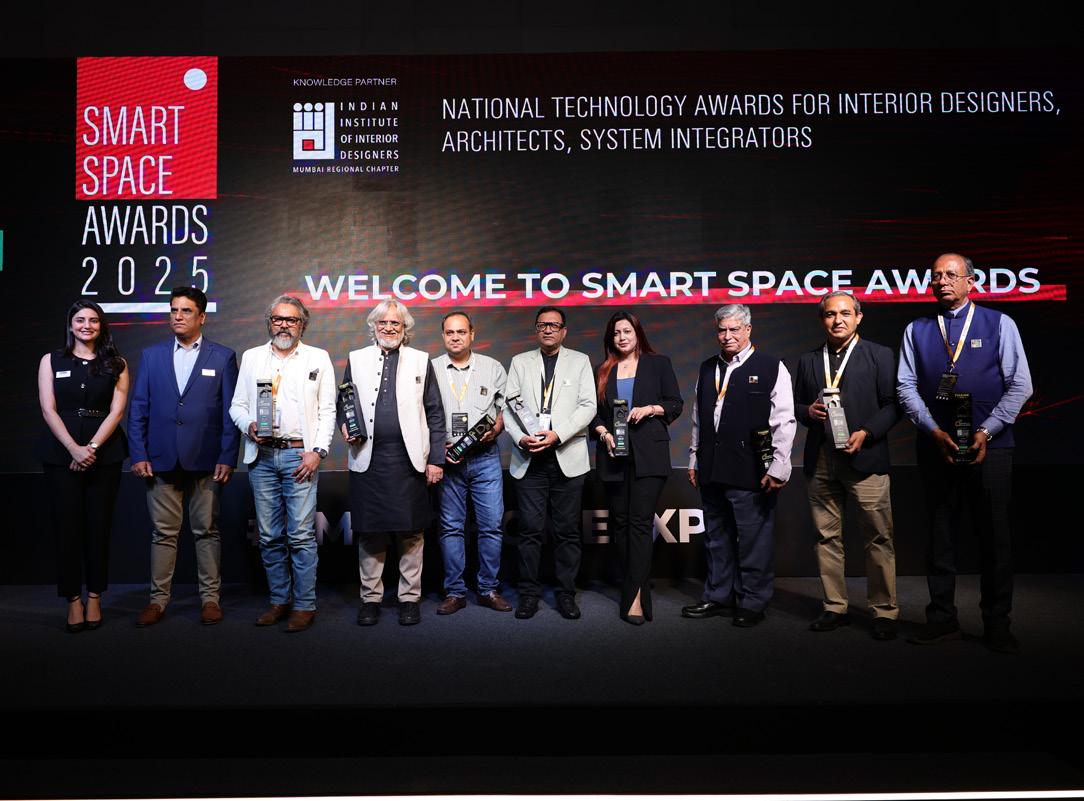
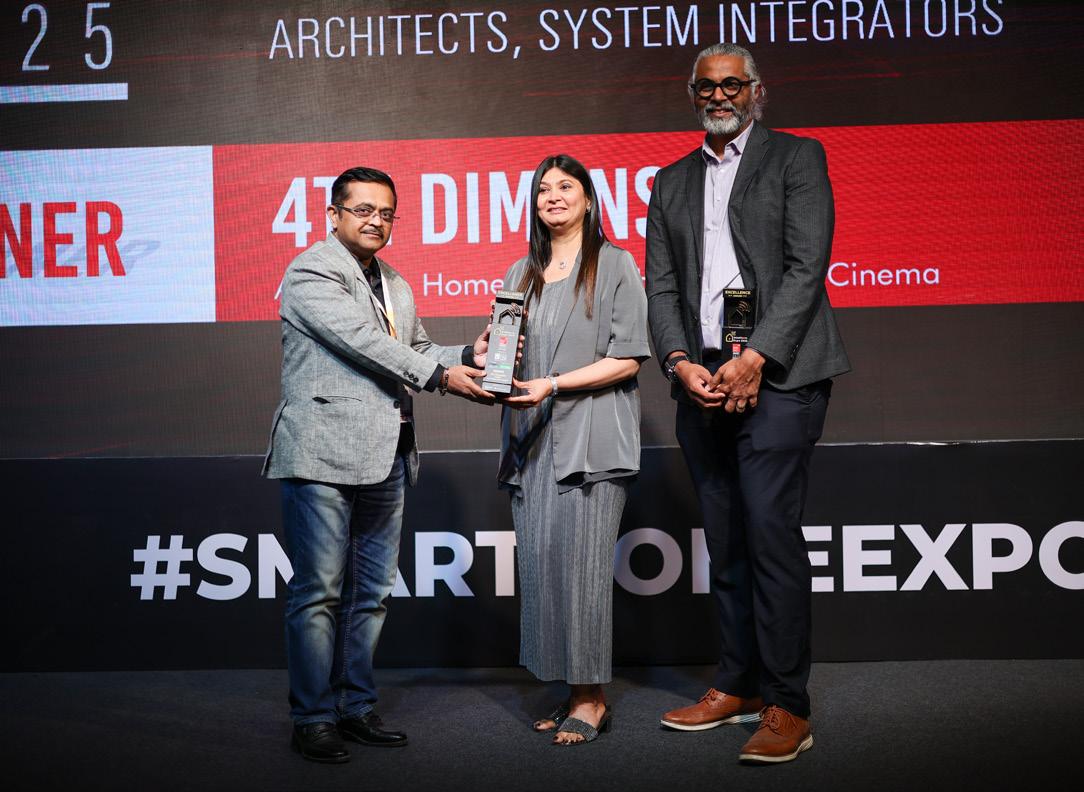
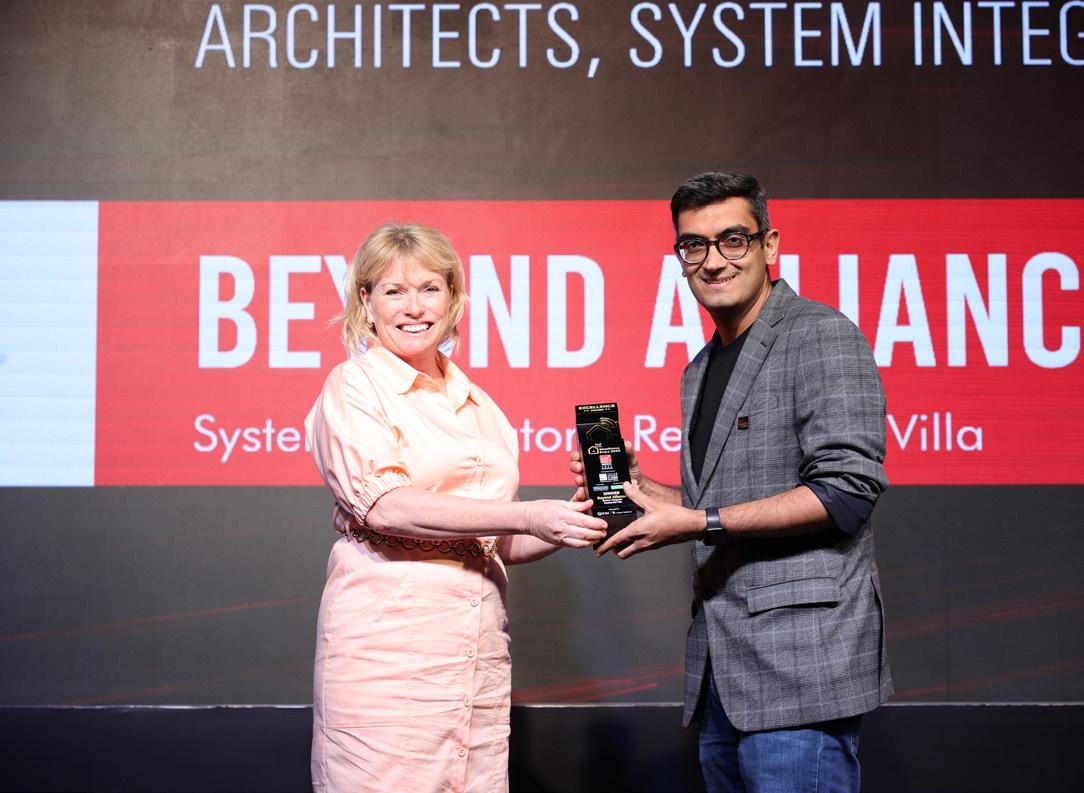
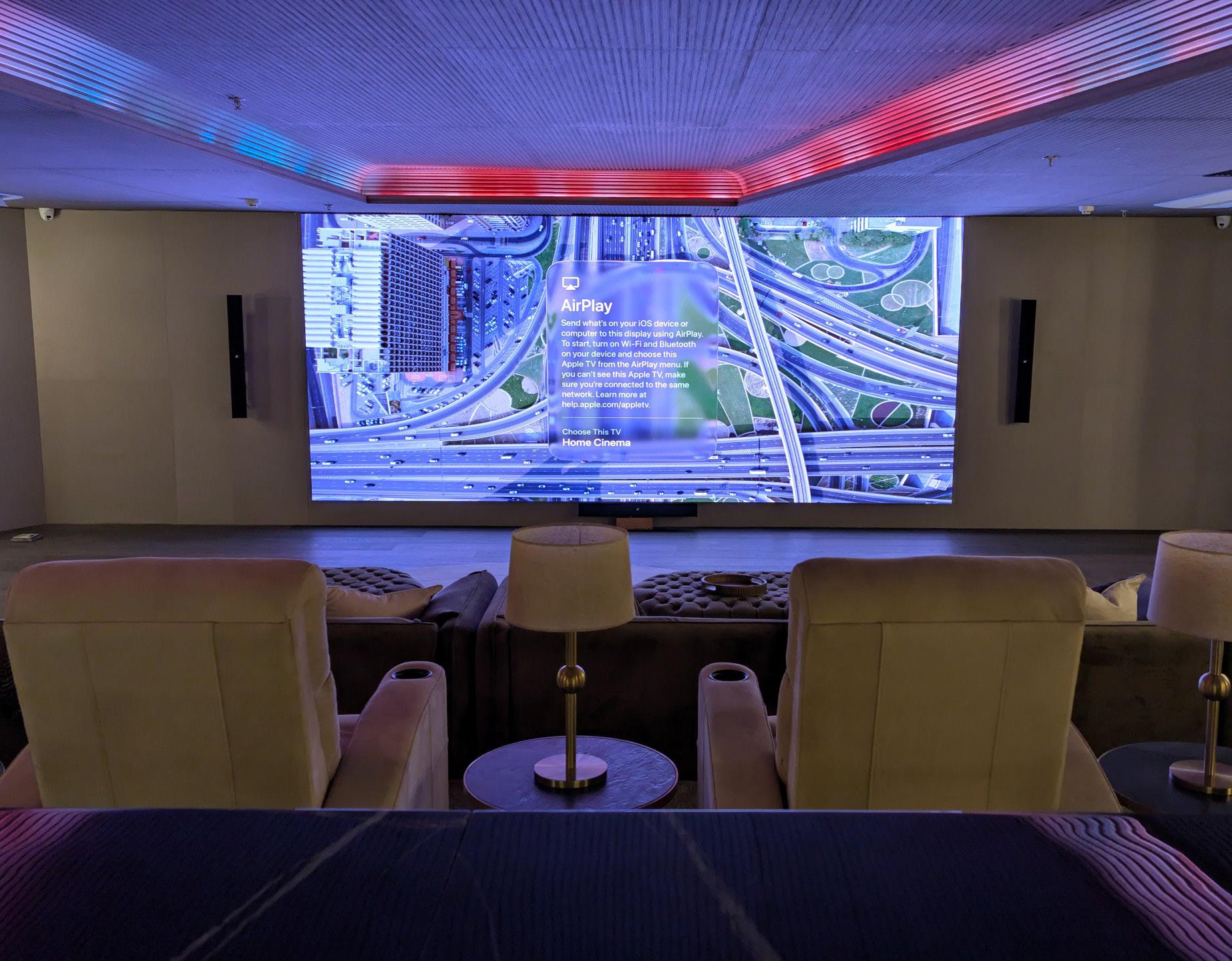
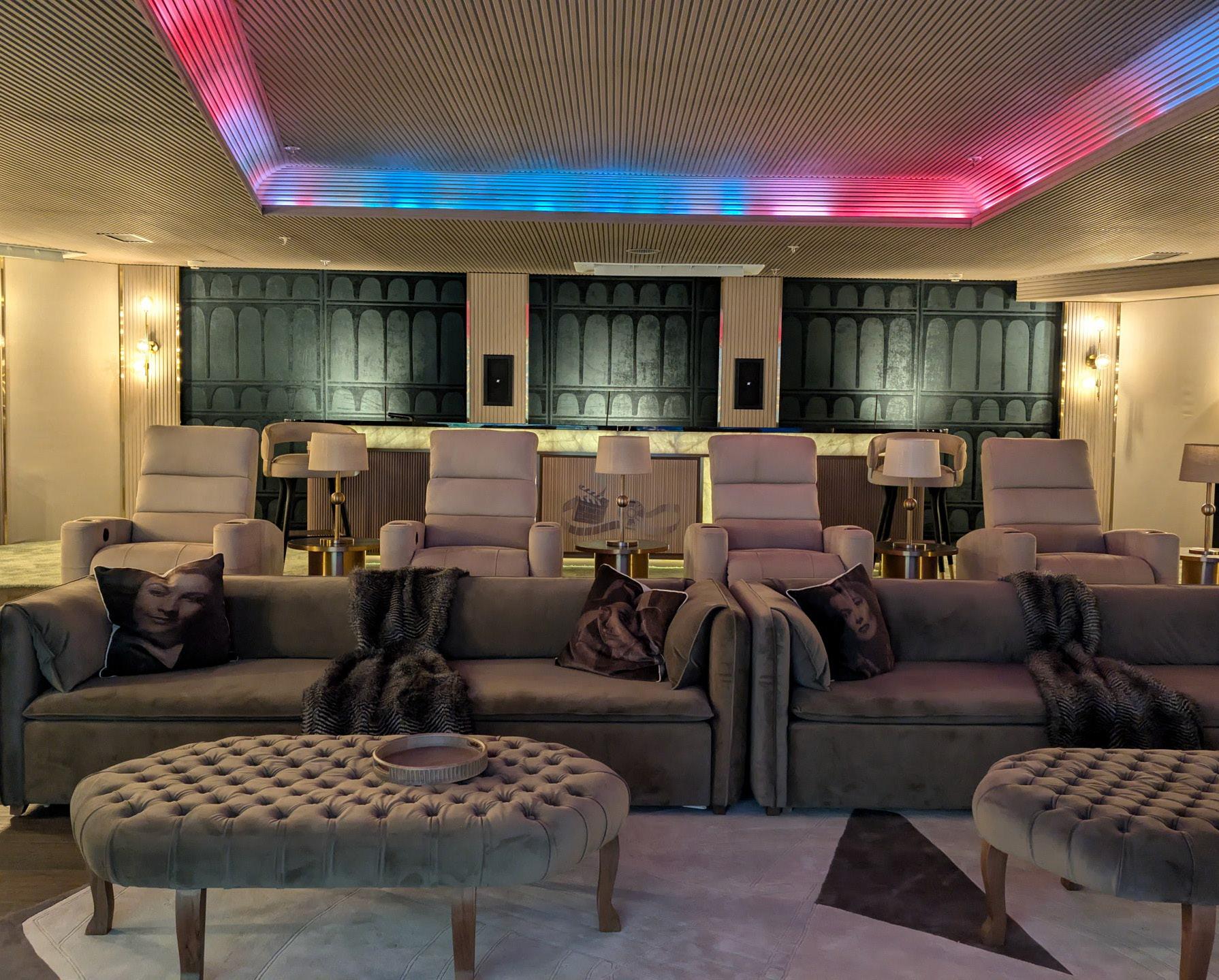
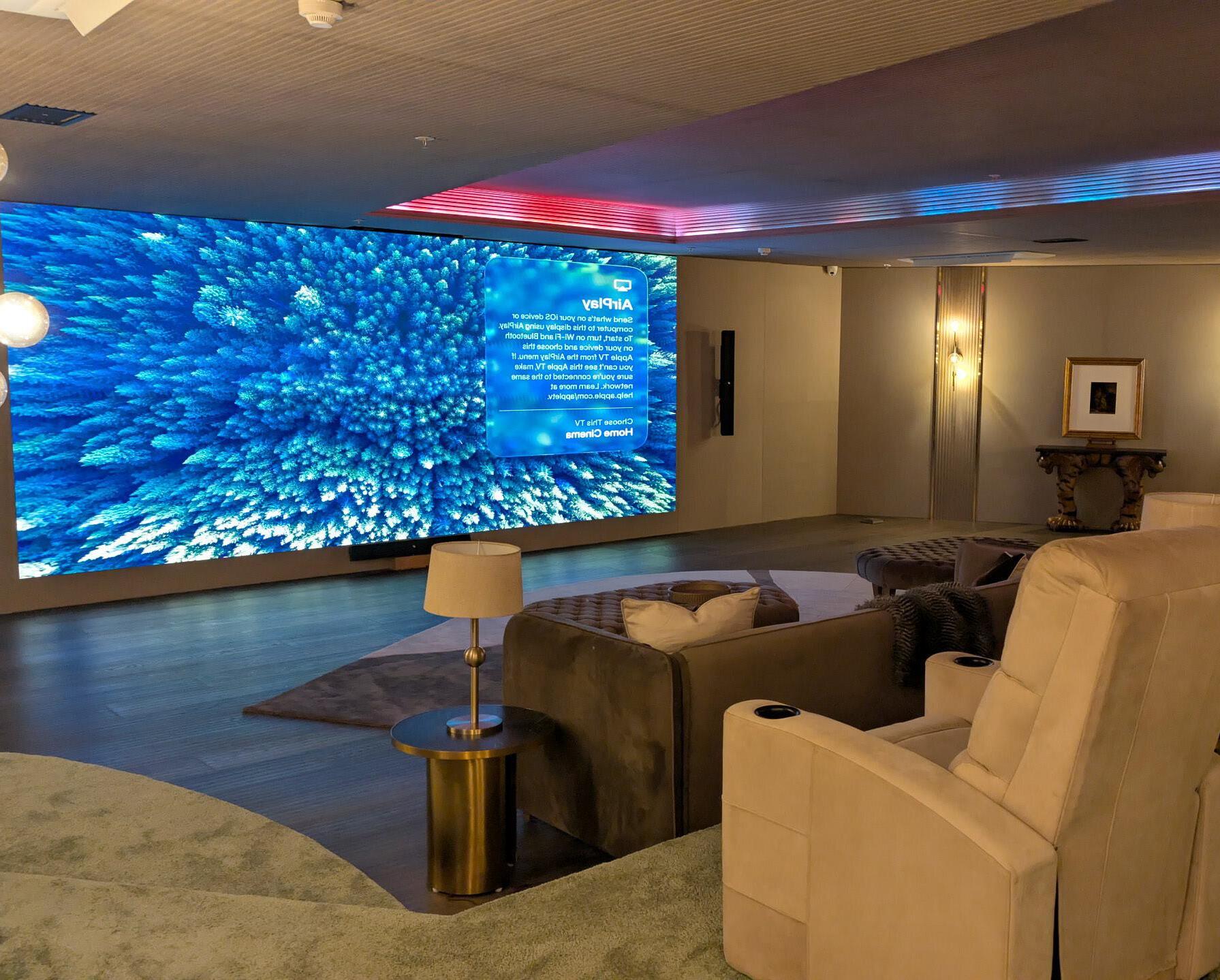
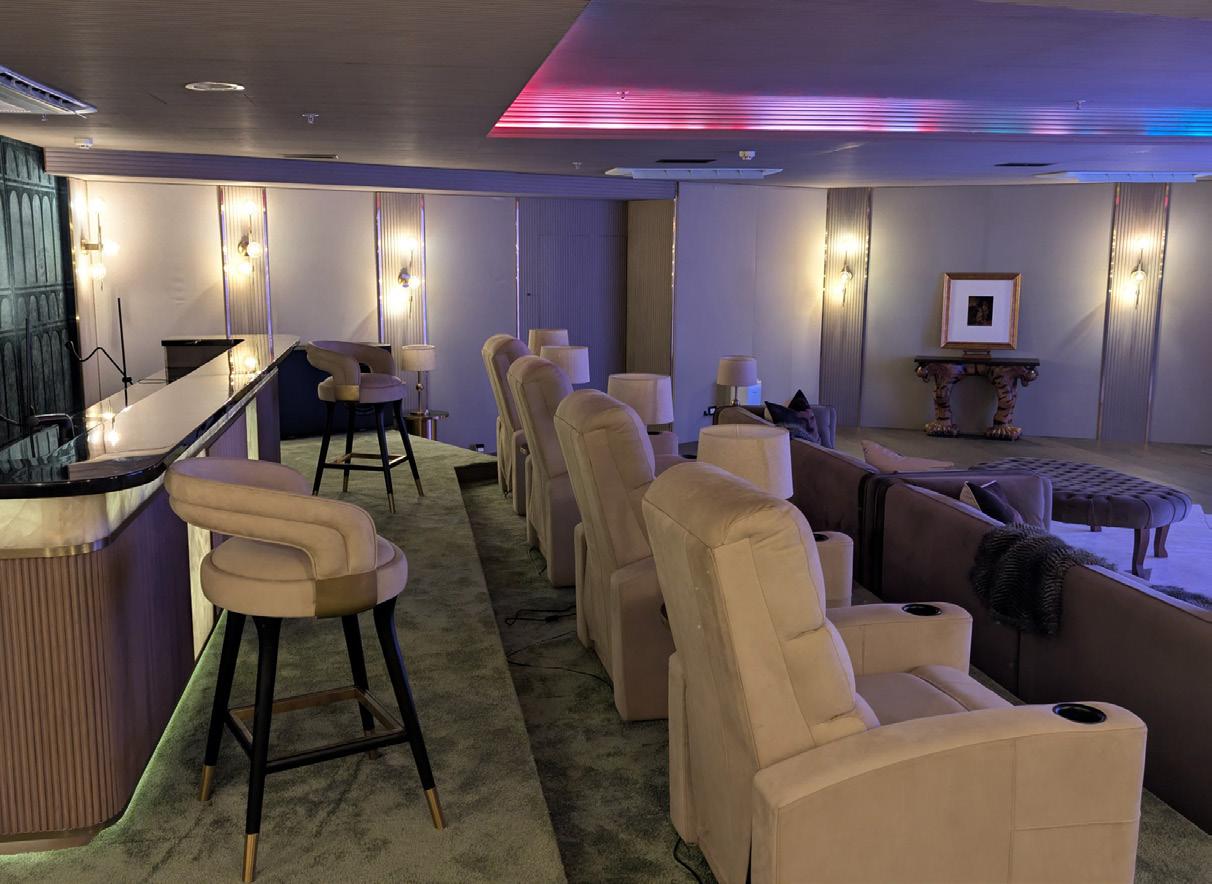
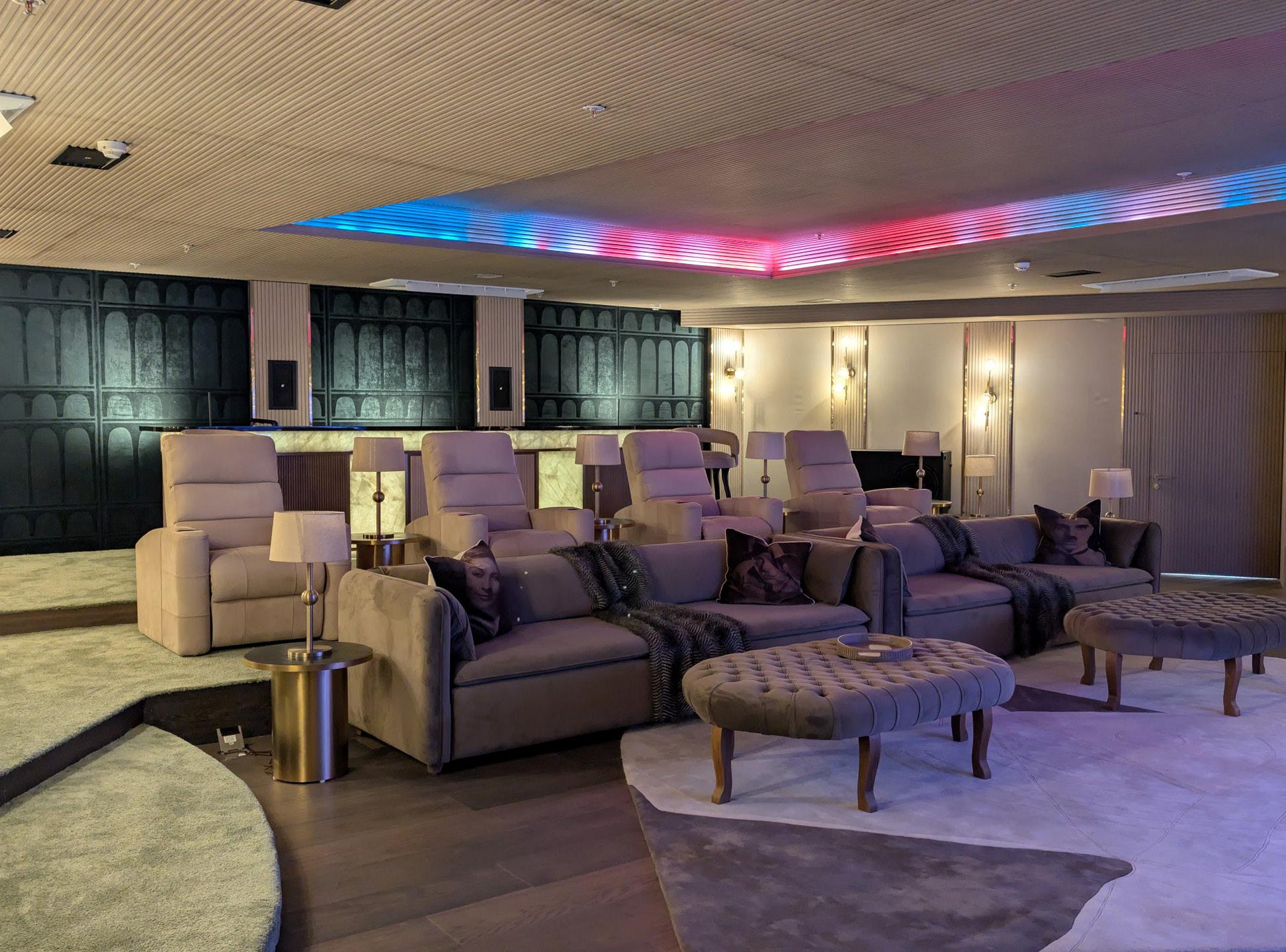
Showcasing the Smart Space Awards 2025 winning home theatre by Gauri Khan Designs, with automation and AV integration by Audio & Beyond, highlighting the system design, integration approach, and performance outcomes.
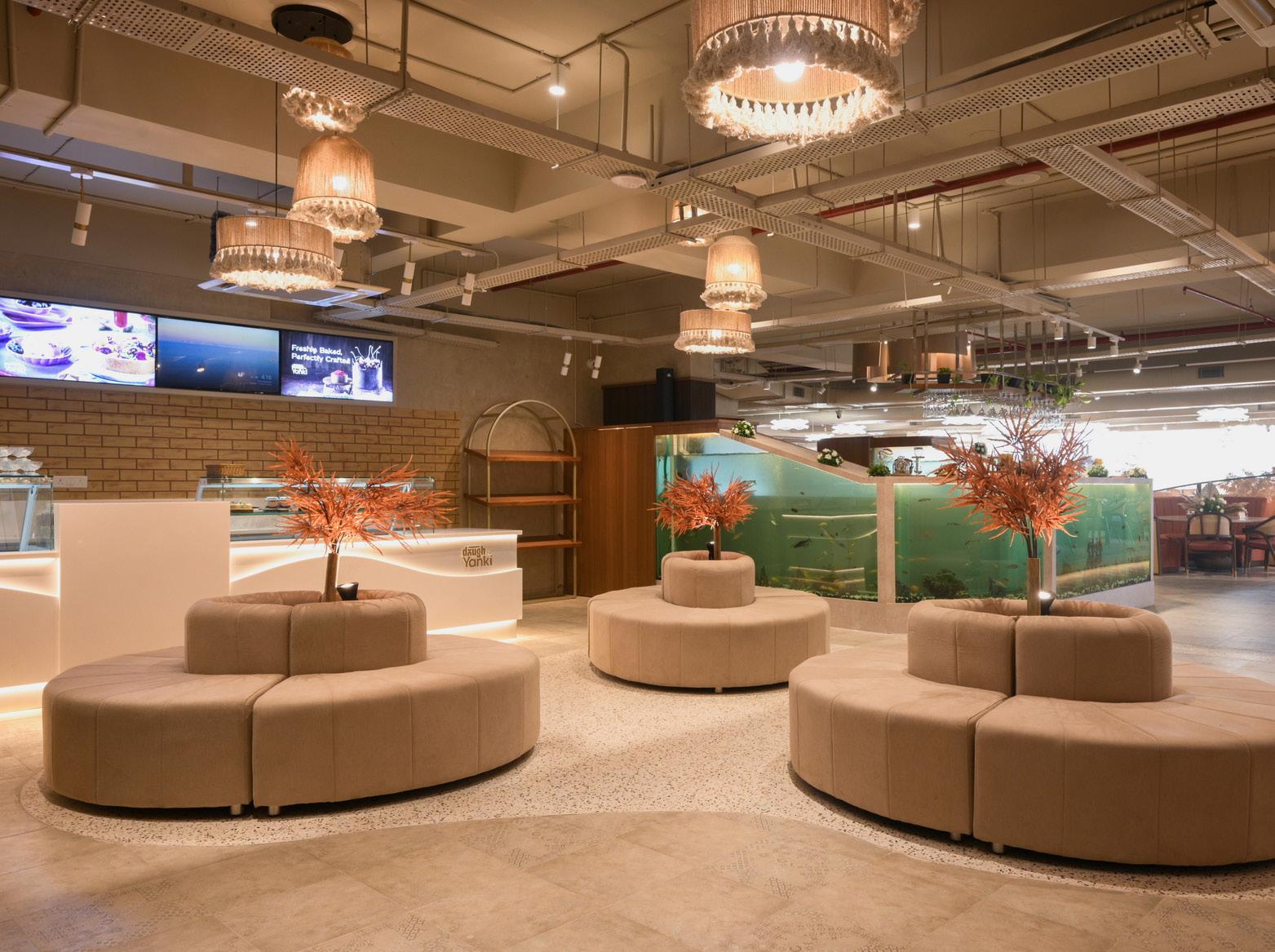
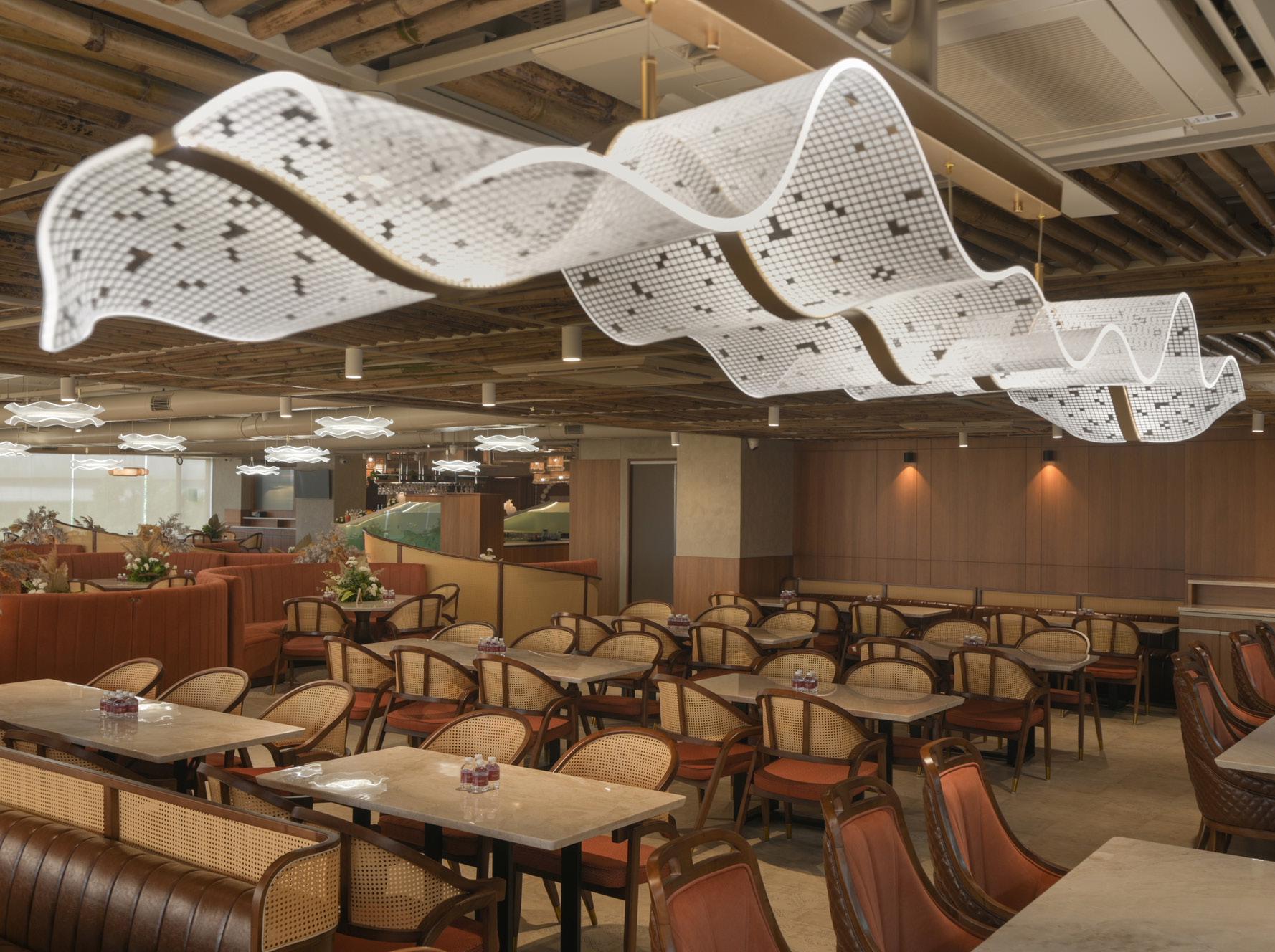
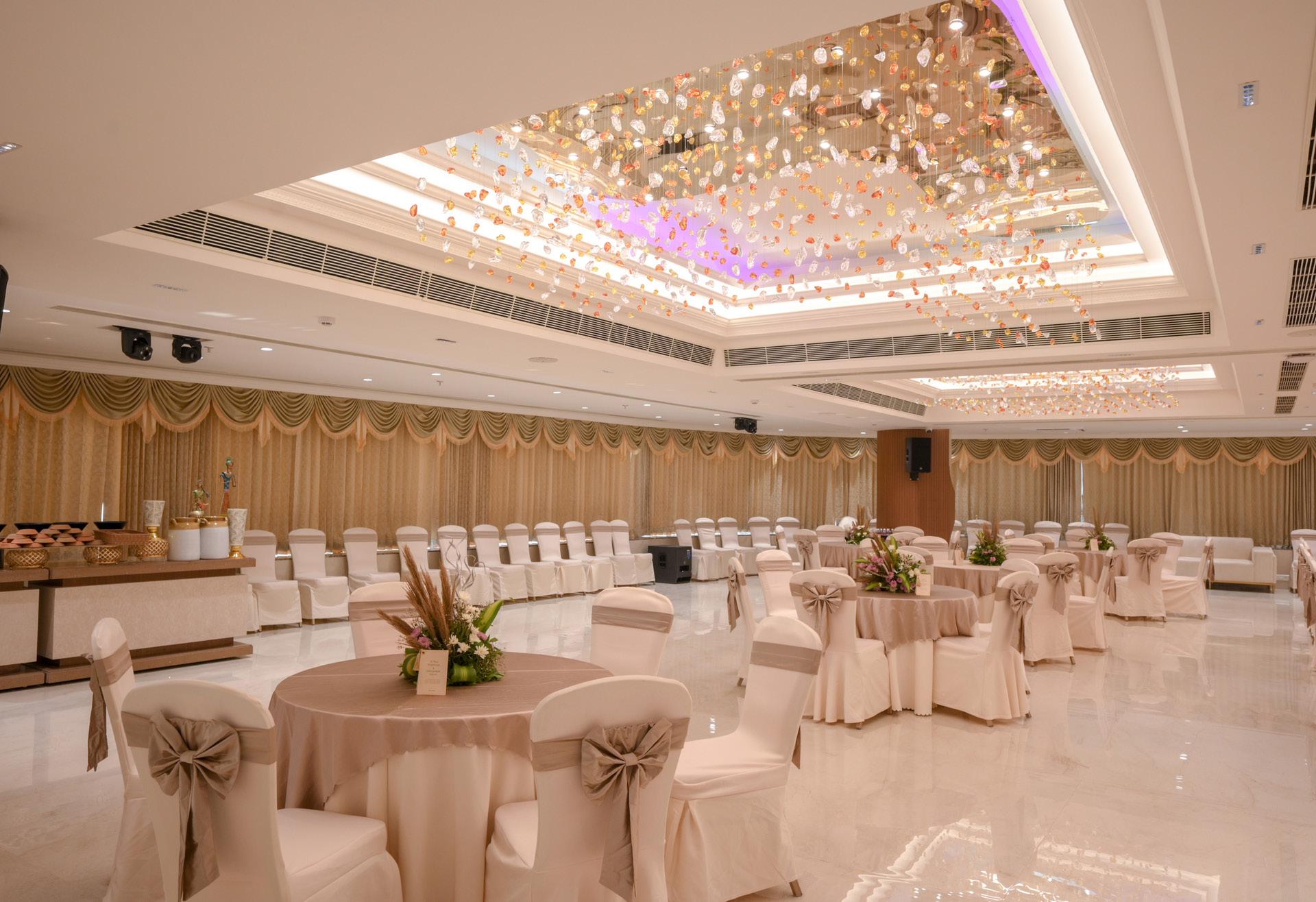
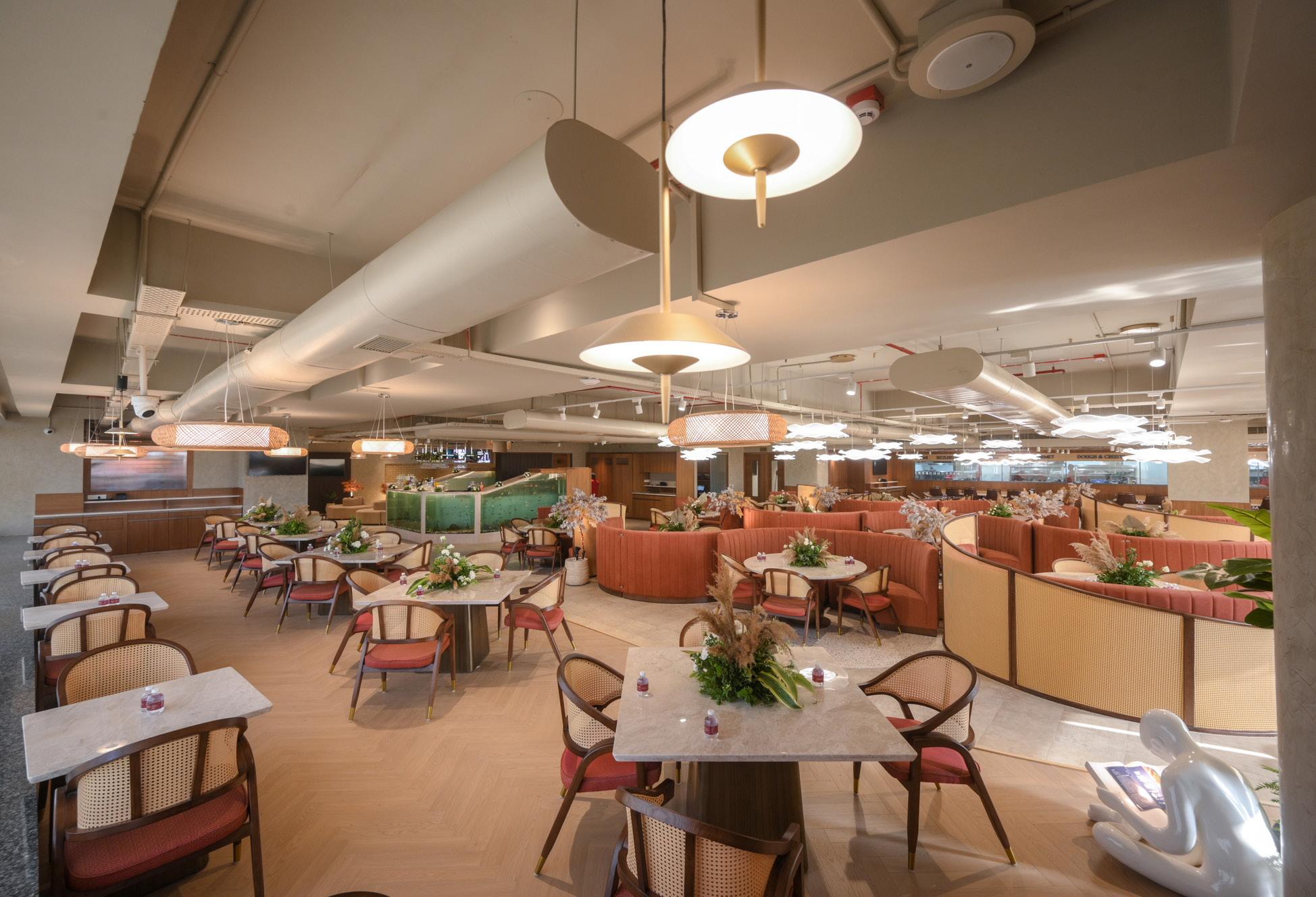
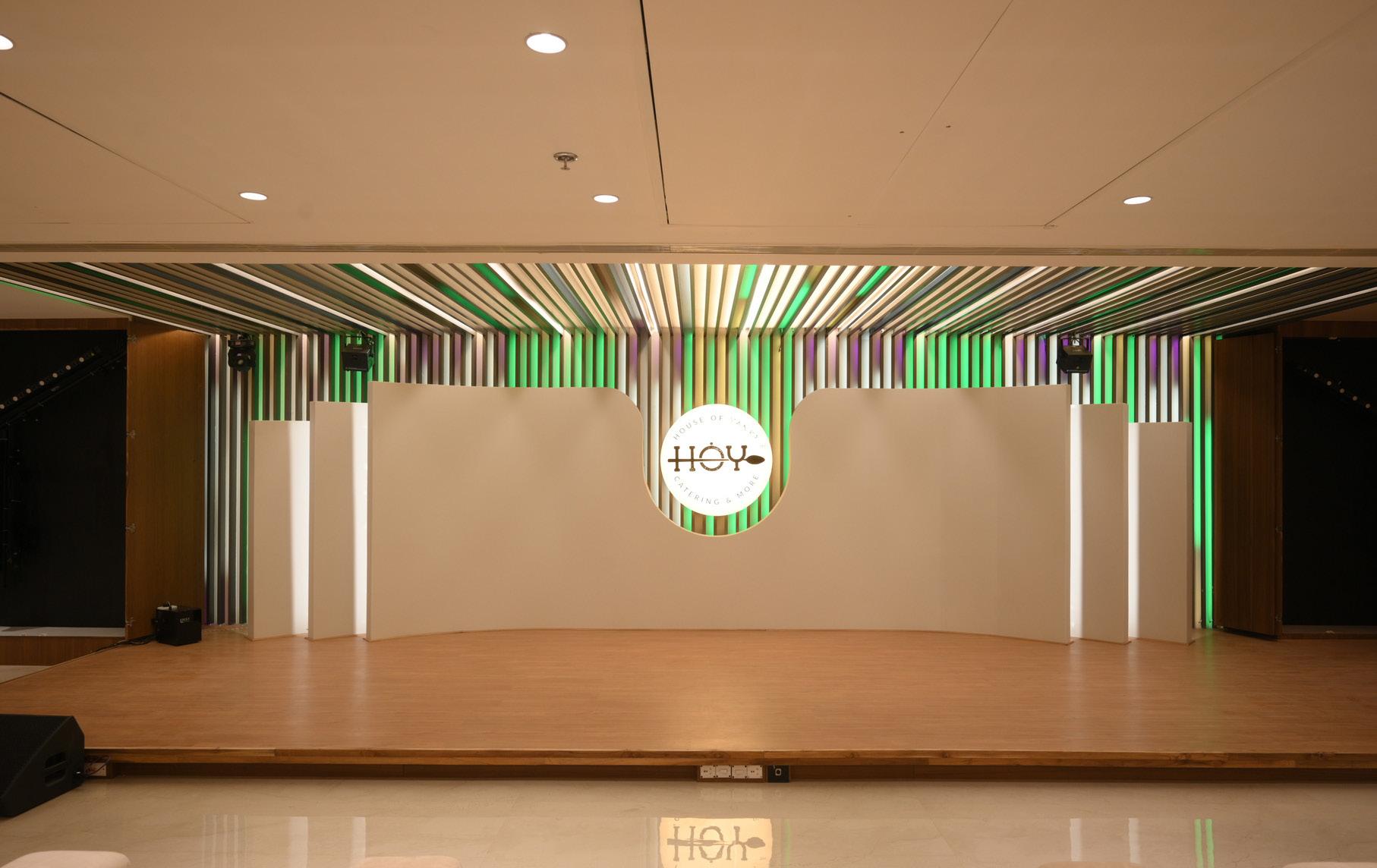
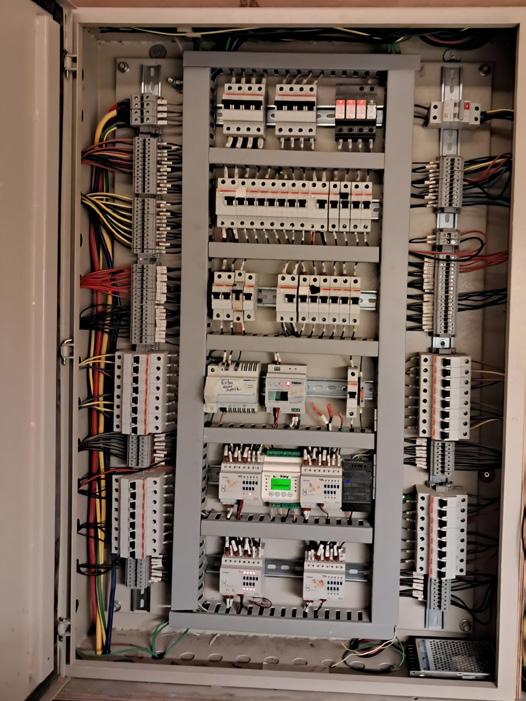
EVK Architects collaborated with Future Automation Solutions to deliver an immersive hospitality experience at House of Yanki Sizzlers.
Product Preview
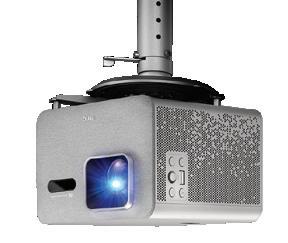
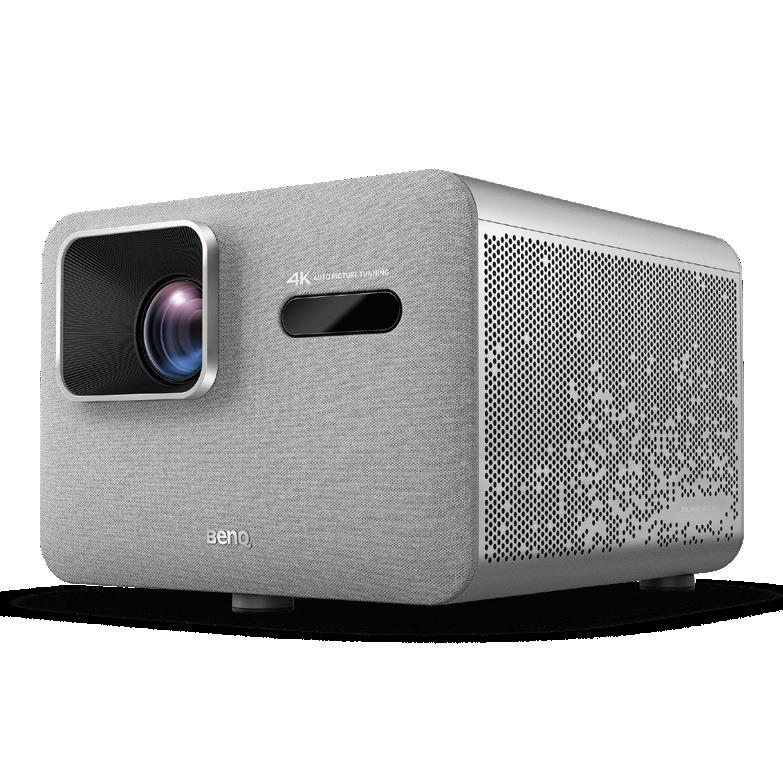
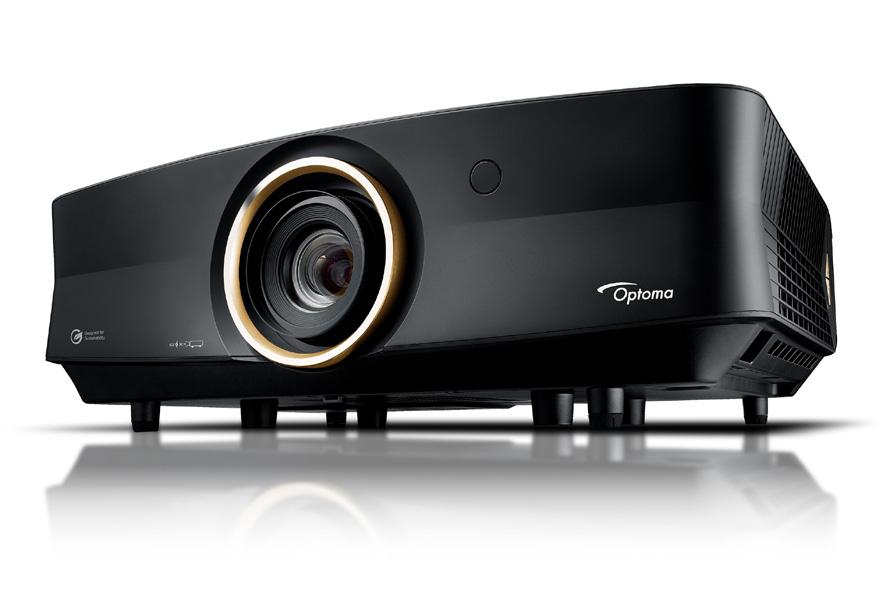
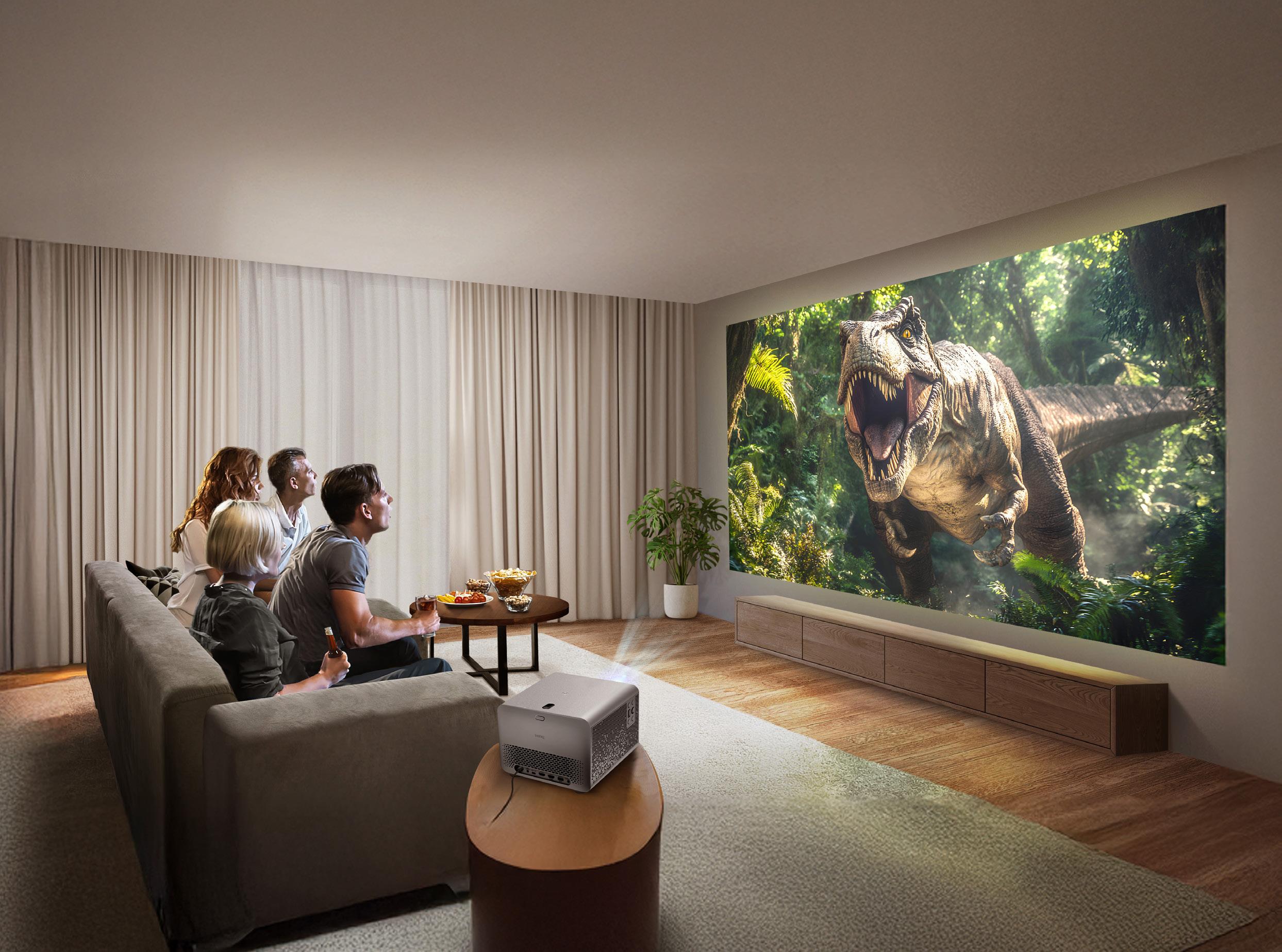
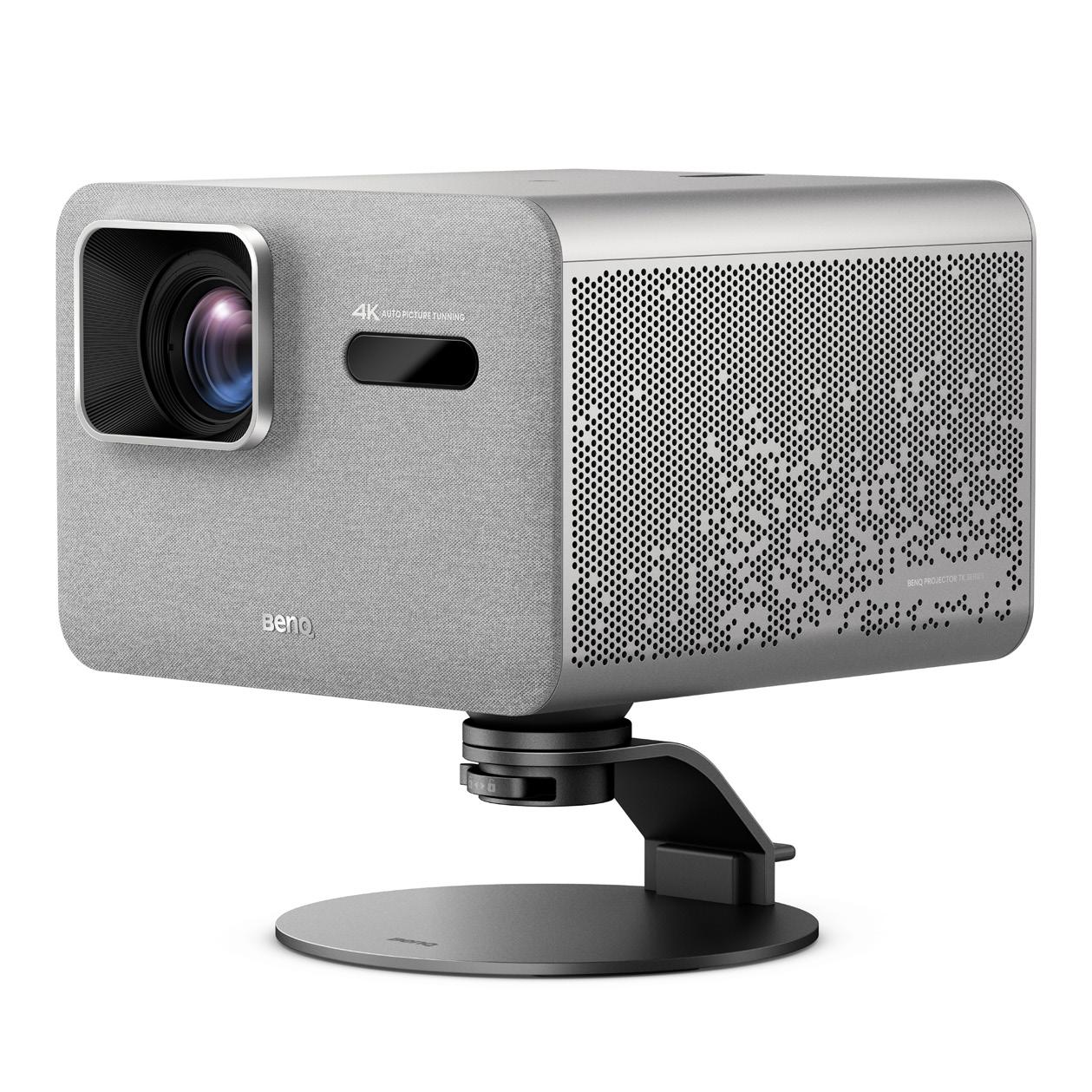
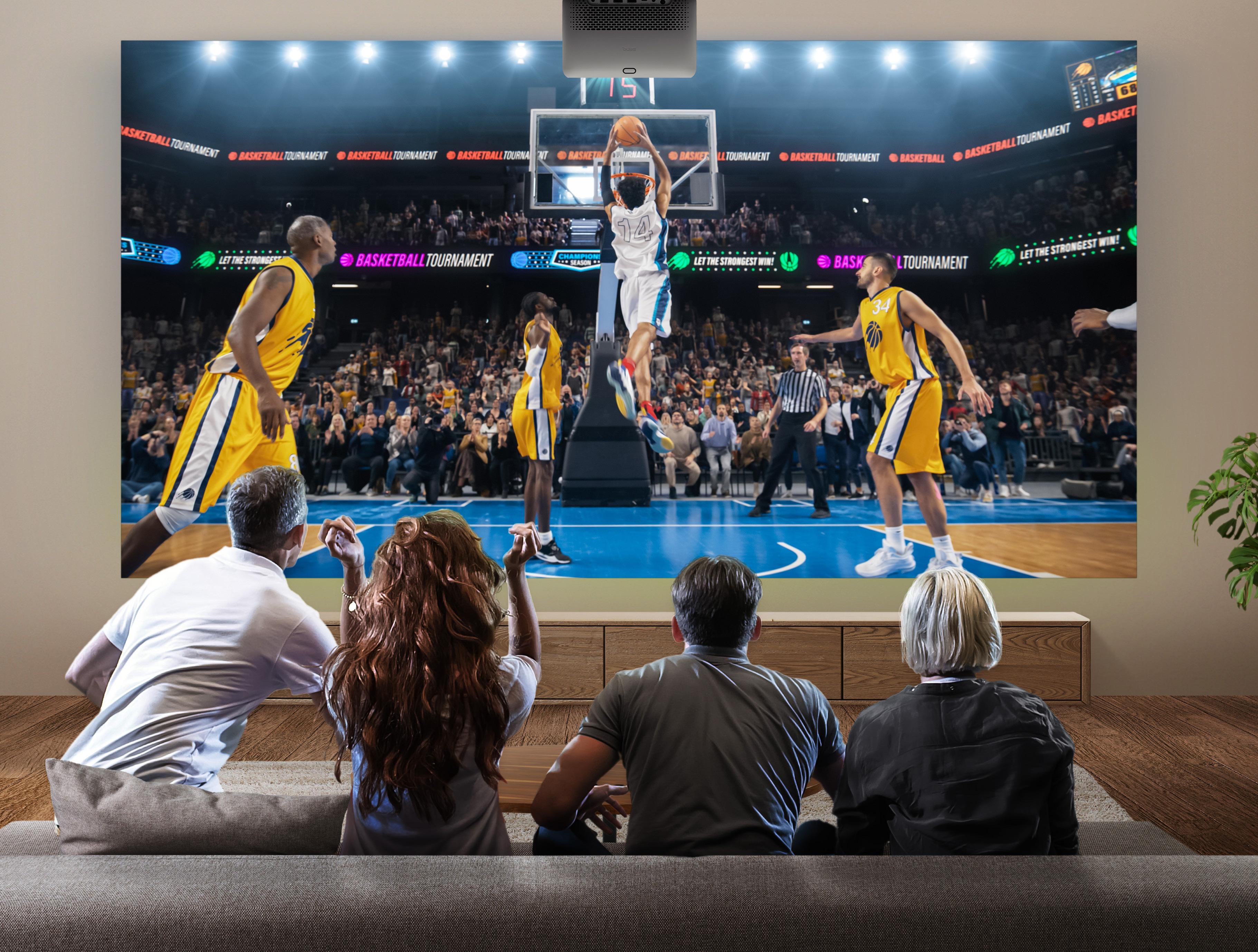
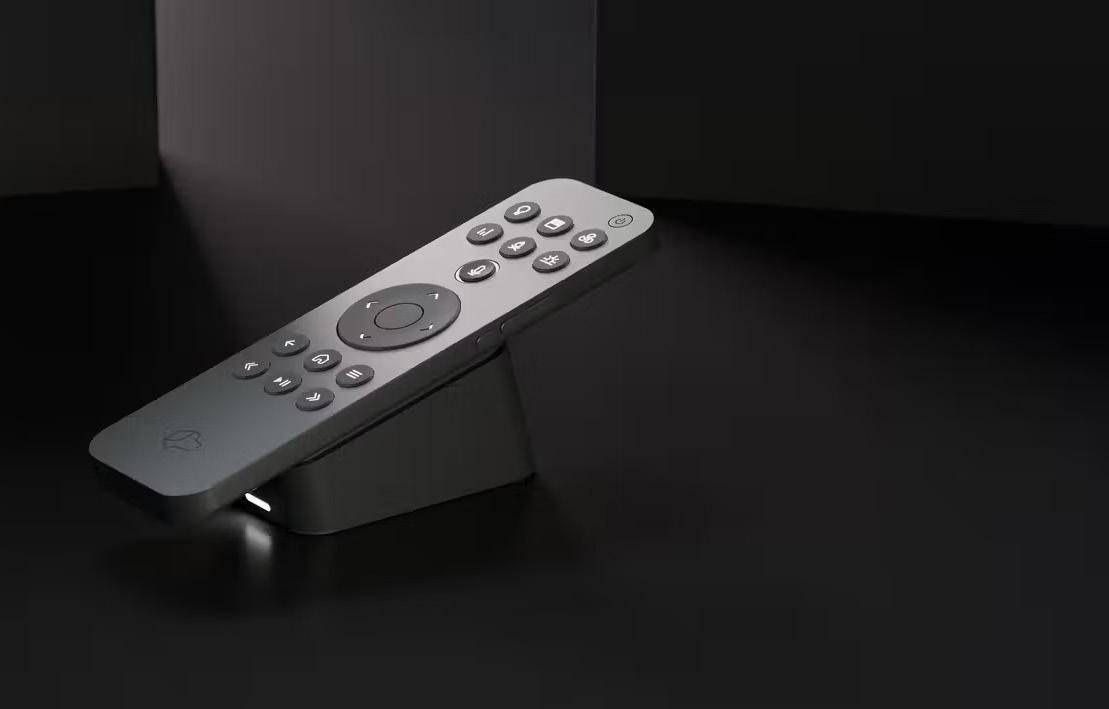
BenQ 4K Home Projectors: Installation-Ready Solutions for Modern Homes An integrator-focused overview of BenQ’s TK705i and TK705STi.
News
The latest news and updates on automation, control panels, smart lighting and AV Solutions. 14 25 32 76 74 60
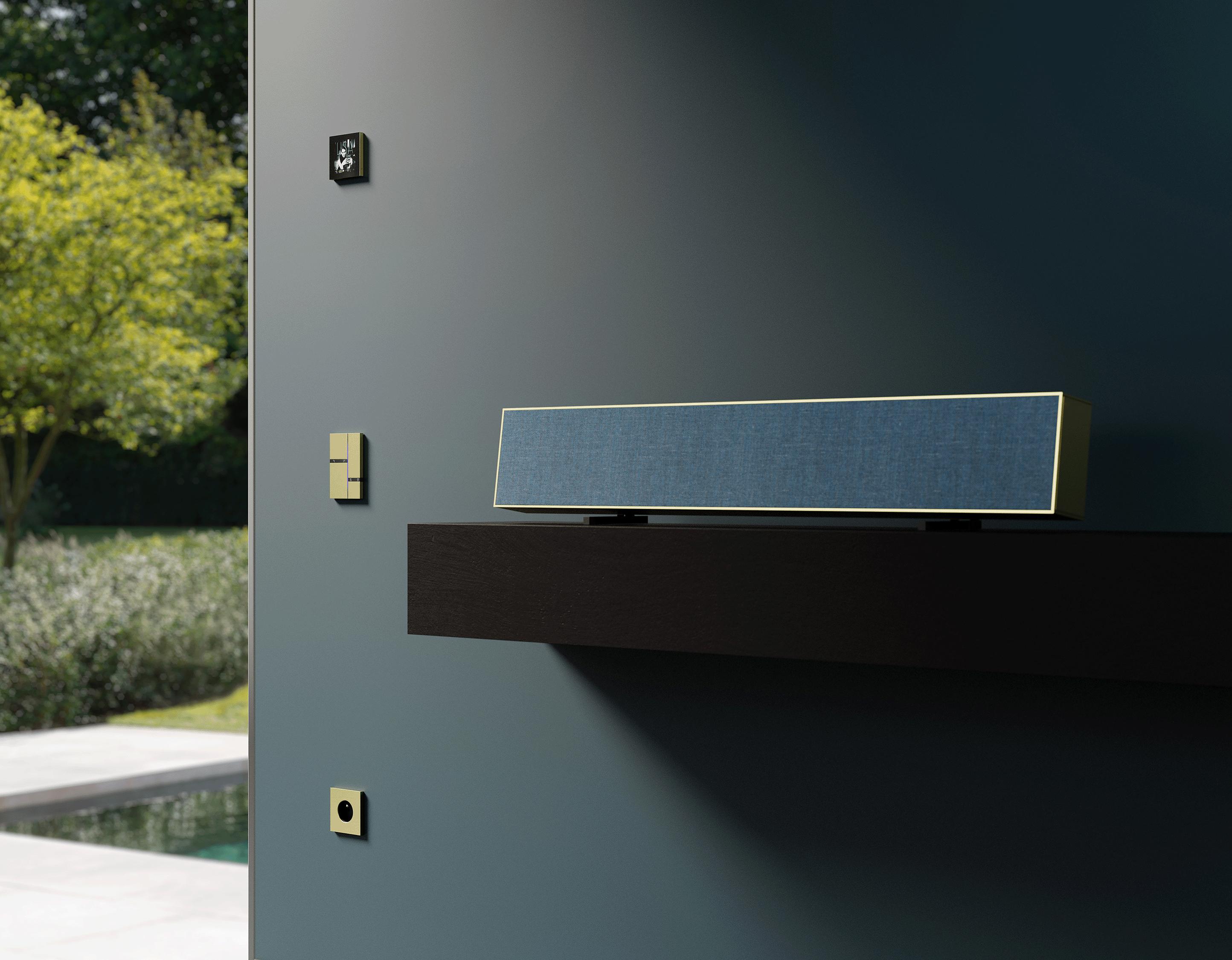
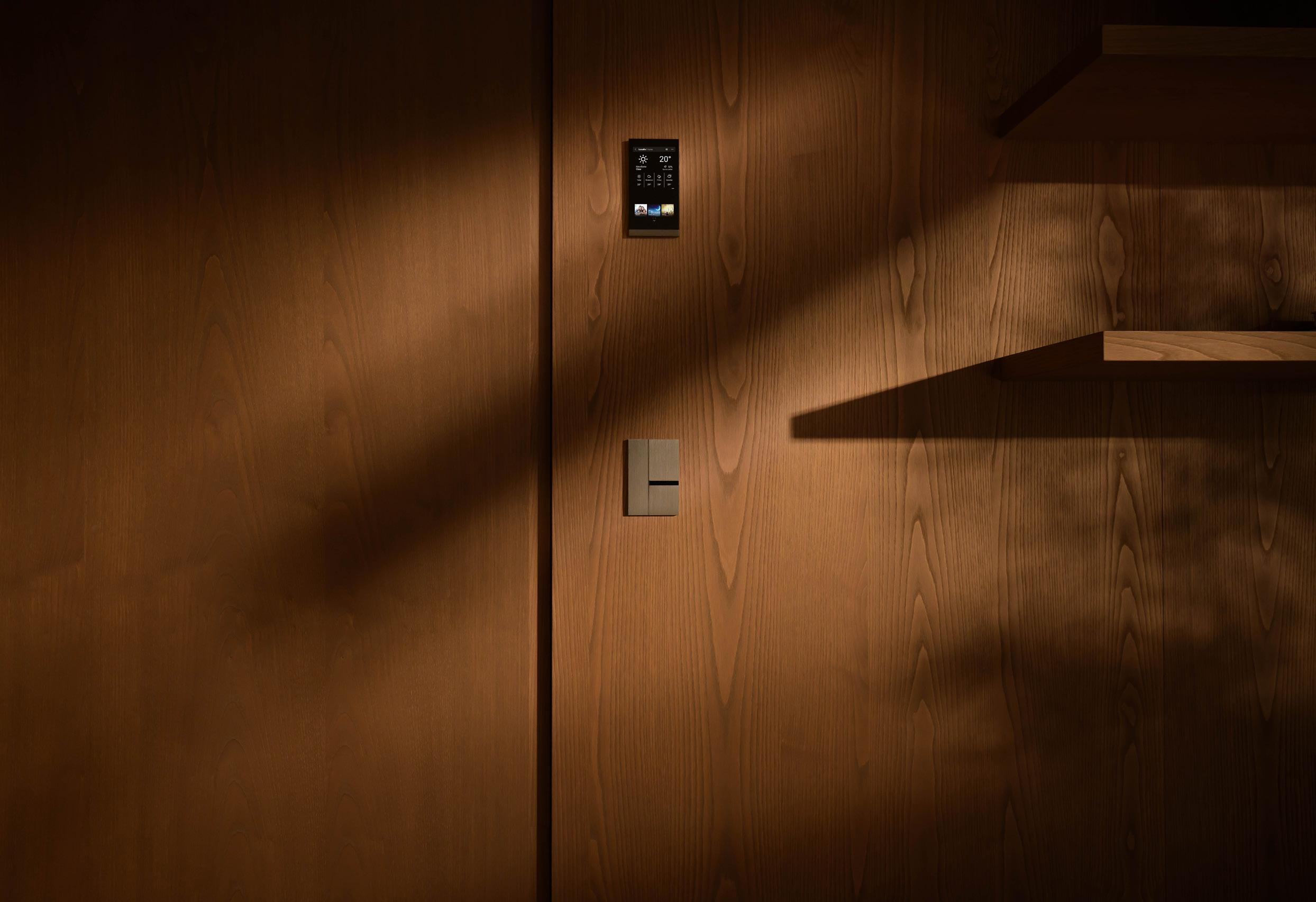
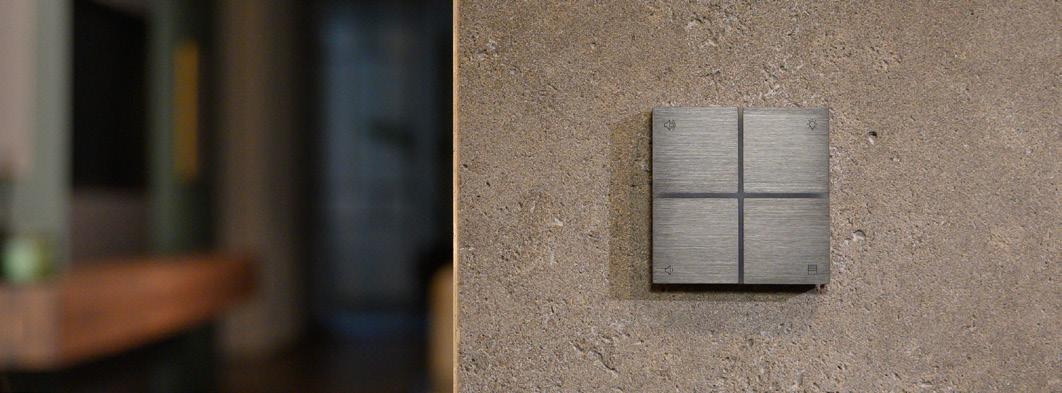
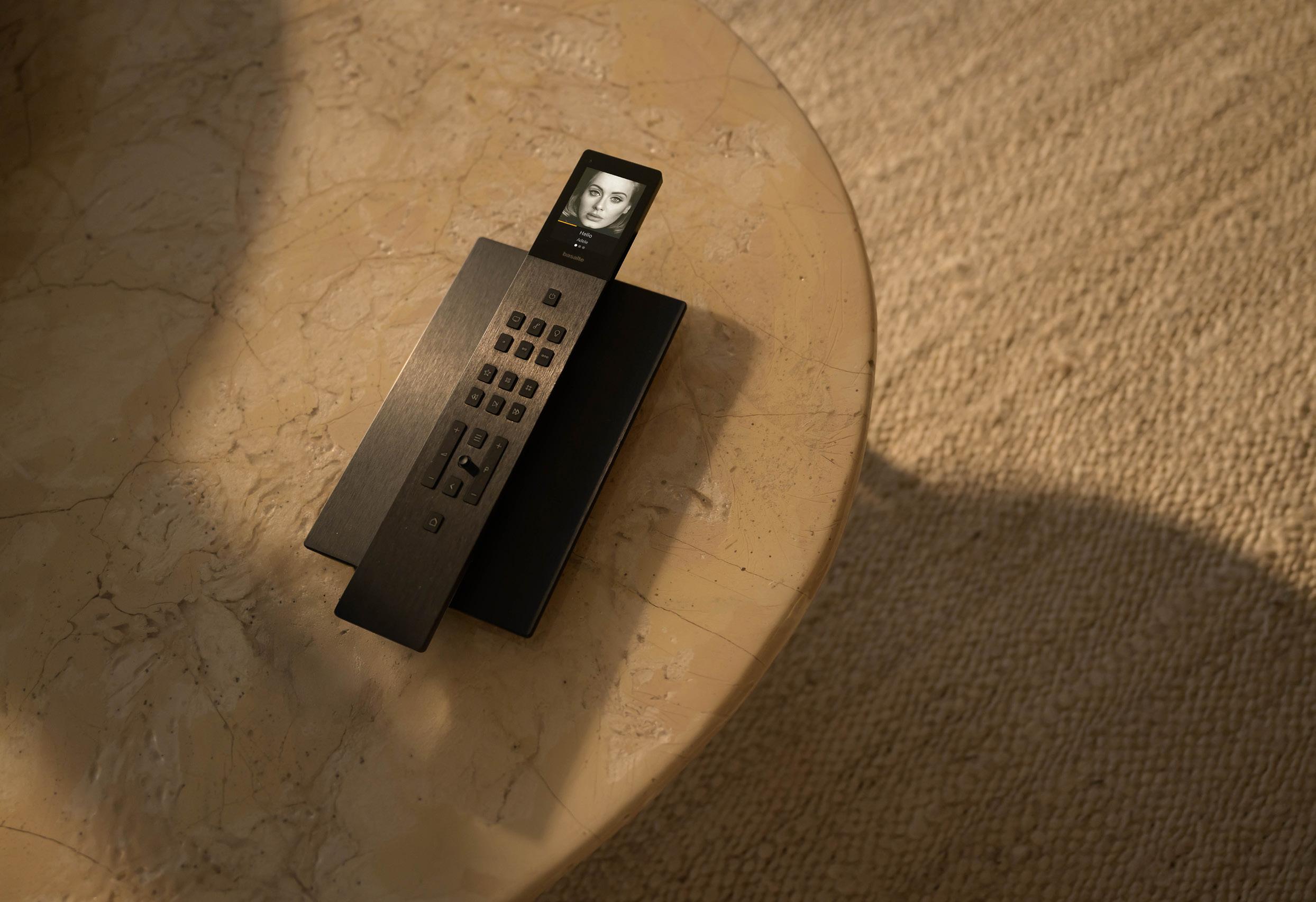
Tom Samyn, Sales & Marketing Director, Basalte addresses how integrators can balance aesthetics, usability, and performance in luxury residential projects.
As the smart home technology ecosystem evolves, each year brings fresh milestones and innovations that redefine how automation, control panels, smart lighting, and AV solutions are designed, deployed, and experienced. One of the most exciting shifts we’ve observed in the smart home segment is that what was once a premium offering, largely reserved for standalone bungalows and luxury villas, is now rapidly being adopted in large apartments. And so we explore this idea in the cover story, where we speak to the experts.
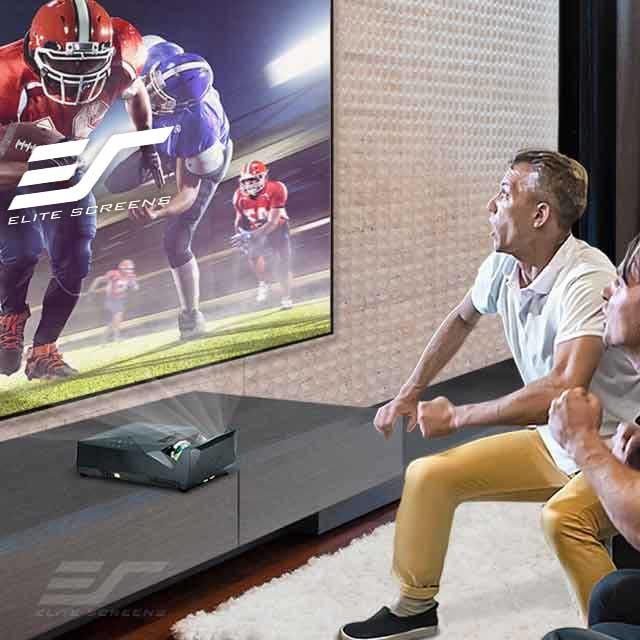
Our Feature Story is about the growing popularity of Ultra Short Throw (UST) projectors, redefining home entertainment in designconscious spaces. We examine practical applications, installation considerations, and what leading brands are offering to meet this growing demand.
In our Exclusive Interview section, we also bring you insights from industry leaders: Nick Fichte of L-Acoustics on architectural audio solutions, Sharad Kapoor of Yale on the roadmap for smart residential security in India, James Trumper of AVPro Global on scalable control ecosystems, and Tom Samyn of Basalte on balancing aesthetics and usability in luxury residential projects.
In Case Studies, we showcase a Smart Space Awards 2025-winning home theatre by Gauri Khan Designs and an immersive hospitality project, House of Yanki Sizzlers.
We also have a Previews section highlighting key industry events, including Integrated Systems Europe 2026 in Barcelona and Smart Home Expo 2026 in Mumbai.
This issue celebrates an industry in transition, so stay connected, and we will keep you updated.
Elite Screens is home to the most award winning products in the world.
Globally trusted. In India, our growth is built with 1000+ home theatre parters.
Elite Screens is one of the world’s largest projection screen brands, delivering high-quality projection screens globally with advanced manufacturing facilities across China, India, Taiwan and Vietnam.
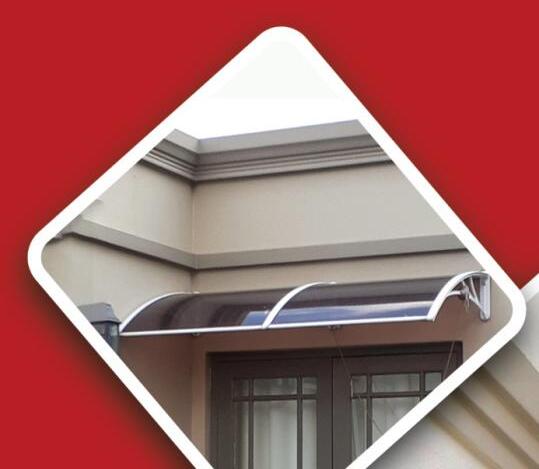
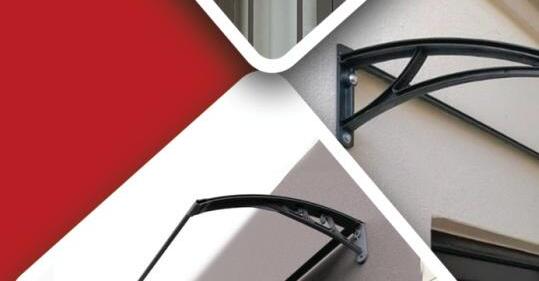
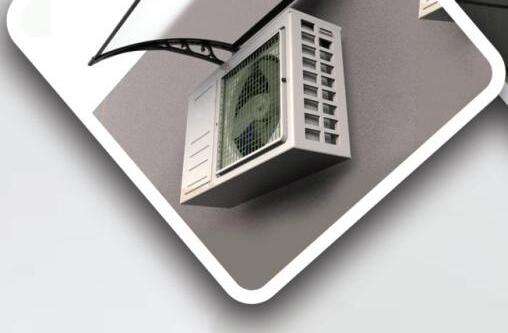
awning products focused on quality, design, functionality, and affordability for both residential or commercial applications.
any exterior with their u
. Incorporating only the highest-quality bayer virgin raw, virtually unbreakable, solid polycarbonate sheets. In addition t
polycarbonate is infused with an
uv protectant that helps keep your doors and window shades from harmful sun
ISE 2026
Fira de Barcelona I Gran Via 3 - 6 February 2026
BUILT IN
The world-renowned annual tech show is back. At our last edition, 11,599 leading Residential affiliated professionals joined us for a taste of state-of-the-art industry tech. This year, that number’s set to grow as we Push Beyond.
Preview tomorrow’s tools for Residential Smart Homes at ISE 2026. A joint venture partnership of
So don’t miss seeing, hearing and feeling it first. Test what’s next – and what’s possible – in the world of Residential. GET YOUR FREE TICKET Register with code: smarthomeworld at iseurope.org
Beyond Villas: The Smart Home Technology for Large Apartments
Smart homes technology are no longer just for villas. In large apartments, technology is transforming everyday living, making spaces more comfortable, secure, and efficient. From lighting and climate control to security and entertainment, apartments are quickly becoming the new frontier for connected, future-ready living.
For years, smart home technology was perceived as an indulgence reserved for sprawling bungalows and palatial villas with expansive layouts and equally large budgets. This generic perception has changed, and today, there is a growing demand for smart home integration within large-scale
apartments, particularly in premium and midto-high-end residences, where technology is valued for its luxury statement and also for its practicality, scalability, and relevance to contemporary urban living.
As Indian cities densify and vertical living
becomes the new normal, large apartments, typically spanning 2,000 to 5,000 sq. ft. and beyond, strike the ideal balance between scale and smart solutions.
Today, owners of large apartments not only have the budget to incorporate smart home technology but also have an aspiring lifestyle to integrate it meaningfully into their living spaces. Advancements in wireless protocols, modular systems, and app-based controls are making smart solutions more accessible and adaptable than ever before.
Smart Zoning, Efficiency and Control
Large apartments are inherently well-suited to smart home integration, as their scale allows for clear zoning between private, semi-private,
and social spaces. Smart lighting, climate control, and shading can be customised for each zone, enabling personalised bedroom routines, adaptable living areas for gatherings, and efficient automation of utility spaces. In dense urban settings, energy optimisation becomes critical, and technologies such as occupancy sensors, smart thermostats, and intelligent lighting help reduce wastage while improving comfort. Enhanced security systems, including video door phones, smart locks, intrusion sensors, and remote monitoring, add a vital layer of control, particularly in homes with multiple access points or frequent staff and visitor movement.
Centralised control through touch panels, smartphones, or voice assistants further simplifies the management of large
apartments, replacing multiple switches and remotes with intuitive, user-friendly interfaces.
Future-Ready Living in the Vertical City
This momentum is being accelerated by developers who are increasingly delivering premium apartments as smart-ready residences, complete with structured cabling and platform compatibility. For homeowners, this ensures easier integration, lower retrofit costs, and the flexibility to scale systems over
time. Crucially, smart technology in apartments is no longer about over-engineering or visual spectacle; it is about lifestyle-driven solutions that prioritise reliability, ease of use, and subtle sophistication. As urban homeowners grow more discerning, smart home technology is evolving into a defining benchmark of premium apartment living and enhancing efficiency, comfort, and control. This firmly positions the future of smart homes within the vertical urban landscape, not just restricting to just standalone bungalows and villas.
Smart Home World speaks to industry professionals to understand their perspectives on integrating smart home technology in large-scale apartments, and the technologies they most commonly recommend and integrate into their residential projects.
Home automation is often perceived as being limited to luxury villas and bungalows. However, there is a noticeable shift toward apartments as ideal environments for automation. What are your views on this evolution?
That perception is changing quite rapidly, and in many ways, apartments are becoming the natural next frontier for home automation rather than villas.
Historically, home automation was associated with villas and bungalows because large spaces that benefited from lighting, climate, centralised security zoning and most importantly, more space and demand for Audio Visual Zones. This created the image that automation = luxury.
What Has Changed: Why Apartments Are Now Ideal?
Lifestyle needs tend to be more pronounced in apartments, where efficient use of space, comfort and convenience play a critical role in everyday living. At the same time, the cost of smart home technology has shifted from being perceived as a luxury indulgence to a valuedriven investment that enhances functionality and long-term efficiency. Developer-led adoption has further accelerated this transition, with smart-ready infrastructure increasingly built into new residential projects. Additionally, apartment buyers are often younger and more tech-savvy, with a natural inclination toward integrated digital solutions.
Together, these factors are shaping a new narrative of functional luxury, where the conversation has moved from automation as a showpiece to automation as a meaningful enabler of daily living. Ultimately, home automation is no longer defined by the size of the residence but by the expectations of its occupants; positioning apartments, particularly in urban India, as the largest and fastest-growing segment for smart home adoption.
As an expert, what smart solutions do you incorporate in large apartments?
In large apartments, smart solutions need to move beyond standalone `gadgets’ and focus
on reliability, scalability, and everyday usability. My approach treats automation as invisible infrastructure, functional luxury that enhances daily living seamlessly and without friction.
Lighting Control (Foundation Layer)
Lighting forms the backbone of smart home automation. I implement scene-based controls such as Welcome, Evening, Dinner, Night, and Away. Along with that, I set up dimming in the living, and dining areas, and bedrooms to create the right ambience. Motion-based night lighting in corridors and bathrooms ensures safety, while automated balcony and façade lighting adds both functionality and aesthetic appeal.
Climate Control (High-ROI Zone)
Smart climate solutions deliver high comfort and energy efficiency. I integrate zone-based temperature control for VRV or split AC units, occupancy-based shut-off, and pre-cooling before arrival, ensuring a perfect balance between convenience and energy savings.
Smart Curtains & Blinds
Motorised curtains and blinds are automated based on time schedules or sun position, and can be controlled manually, via app, or through
voice commands. This adds privacy, comfort, and energy efficiency without daily effort.
Security & Access Control
A robust security setup includes smart maindoor locks with fingerprint, PIN, mobile, or RFID access, video door phones with mobile app connectivity, door and window sensors, and panic button integration—offering comprehensive control and peace of mind.
Audio-Visual Integration
Entertainment is seamlessly integrated with dedicated home theatre systems and multiroom audio across living and dining areas, ensuring an immersive, connected experience throughout the home.
How do you ensure reliability and performance in high-density residence.
Ensuring reliability and performance in highdensity residential environments (apartment towers, gated communities) requires a systems-engineering mindset, not a gadget mindset. The framework I use in real-world deployments to make automation boringly reliable is Network-First Design, Power Reliability & Protection, Fail-Safe & Manual Overrides, Monitoring, Logging & Maintenance.
Principal Consultant,
Home automation is often perceived as being limited to luxury villas and bungalows. However, there is a noticeable shift toward apartments as ideal environments for automation. What are your views on this evolution?
From a Mumbai perspective, this shift isn’t really new; it has always been this way. The majority of Mumbai’s ultra-affluent residents live in apartments, not villas. Independent homes within the city are rare; most villas tend to be weekend or holiday homes in places like Lonavla, Pawna, or Alibaug.
What has genuinely evolved is that home automation is no longer restricted to only ultraluxury projects. We now see strong adoption even in mid-segment and budgetconscious developments. Automation has become more affordable, more reliable, easier to deploy, and far better supported than it was even a few years ago.
In addition to this, the explosion of smart appliances and connected devices, and automation has quietly crossed over from being a ‘nice luxury’ to something that actually makes day-to-day living
more convenient and efficient. In many cases today, it’s less about indulgence and more about practicality.
As an expert, what are the smart solutions you incorporate in large apartments?
For many homeowners and designers, home automation is still defined by keypadcontrolled lighting. And often, the prettier the keypad, the more ‘advanced’ the automation is assumed to be. Our philosophy is almost the opposite.
We believe the best home automation system is the one that feels invisible and effortless. A system where the lighting understands when the sun is setting and gradually brings the home to life. Where climate sensors quietly detect discomfort and adjust the airconditioning before you even think about it. Simply connecting your phone to a streaming service powers up the entire music system rack automatically.
We focus on systems that respond to behaviour rather than commands, where you speak to your home the way you’d speak to your house help and describe what you want, instead of hunting for the right button on a
Ajay Kamath Founder &
Sounds Good, AV-Automation
wall or scrolling through multiple app screens. In short, we design what we like to call a human-appliance interface, automation driven by context and intent, not constant manual input.
We occasionally have some fun with it. We’ve even custom-designed pressure-sensing cinema seating that automatically pauses the movie and switches on floor lighting when you get up for a break—and resumes playback when you sit back down. Because sometimes, automation should simply make you smile.
How do you ensure reliability and performance in high-density residence?
Reliability in home automation comes down to three key pillars:
Product Quality: Choose robust, wellengineered products that are designed for long-term operation, not just impressive spec sheets.
System Design: Good design is critical. All loads, compatibility, and operating limits must be carefully calculated. We strongly believe in over-engineering rather than running systems at the edge—and certainly never below it.
Operating Conditions: Even the best systems will fail if the basics are ignored. Clean and stable power, proper installation practices, adequate ventilation, high-quality cabling, and periodic maintenance checks are nonnegotiable.
Ultimately, though, all of this boils down to one simple truth: Choose the right professional team. A well-designed automation system is not just about products, it’s about experience, foresight, and execution.
A true smart home is not the one with the most buttons, screens, or flashy keypads. It’s the one that does exactly what you want, often before you even think of it, and then quietly disappears into the background.
Annkur Khosla Founder, Annkur Khosla Design Studio
Which smart home technologies do you typically propose for large apartments?
For large apartments, particularly luxury homes with multiple systems and variable occupancy, we typically propose integrated smart home technologies rather than standalone gadgets. The emphasis is on achieving simplicity, security, and efficiency at scale, ensuring the technology enhances daily living without becoming intrusive.
A key component is integrated lighting control using the DALI protocol, which allows centralised management of over 70 lighting circuits through scene-based automation. This approach replaces cluttered switch panels with clean, minimal keypads while enabling adaptive lighting that enhances comfort and simulates occupancy for added security.
Smart HVAC integration plays an equally important role, with centralised control of multiple air-conditioning units working in tandem with sensors and motorized drapes. This coordination helps reduce thermal load, optimize runtime, automate shut-down during absence, and pre-condition spaces before arrival for immediate comfort.
Motorized drapes and shading systems are designed to function in sync with lighting and HVAC, helping stabilize indoor temperatures, lower energy consumption, and improve privacy and comfort without manual intervention.
From a safety standpoint, smart access and security systems include smart locks with time-
bound digital access for family members, staff, or guests, along with motion sensors, gas leak detection, and anomaly alerts. Panic button integration ensures an immediate response in emergencies, which is especially critical for solo occupants.
All these systems are unified through a single app and scene-based automation, enabling remote monitoring and intuitive control. Instead of overwhelming users with granular settings, the home operates through simple modes such as “Away” and “Welcome Home,” designed for one-touch or fully automated operation to reduce cognitive load.
Overall, the focus remains firmly on integration over complexity, ensuring the home works intuitively for the resident—quietly supporting comfort, security, and efficiency rather than demanding constant attention.
Can you share a case study where smart home technology delivered clear, measurable benefits for apartment homeowners?
The homeowner is a single mother residing in a 4,500 sq. ft. penthouse. With her sons travelling frequently for work, the home often remains unattended for long periods during the day and across extended trips. As a result, safety, intuitive operation, and energy efficiency were identified as primary priorities. The key challenges in this project began with a clear set of concerns: heightened security anxiety during solo occupancy and family absences; operational complexity arising from the management of 10 air-conditioning units and over 70 lighting circuits; inefficient energy consumption caused by manual controls and a lack of coordination between systems; and visual clutter from multiple switch panels that compromised both usability and interior aesthetics.
A full-home automation strategy was implemented using the DALI protocol, enabling seamless integration across systems. Scene-based automation replaced individual, fragmented controls, while centralized keypads and a unified mobile app ensured effortless day-to-day operation. Security was strengthened through smart locks, sensors, and AI-driven alerts, delivering proactive monitoring rather than reactive responses. Measurable Outcomes was Energy Efficiency. The HVAC system was synchronized with motorized drapes to maintain thermal stability throughout the home, significantly reducing unnecessary air-conditioning runtime during periods of absence. Compared to a previously occupied non-automated home of similar size, the residence achieved a 10–15% reduction in electricity bills, while energy spikes caused by human error or forgotten systems were effectively eliminated.
What was once a wall of eight switches was replaced with a single six-button keypad, while control of more than 70 lighting circuits was consolidated into intuitive, scenebased settings. This dramatically reduced daily decision-making and cognitive load, improving ease of use and enhancing the home’s visual clarity—an especially valuable benefit for a busy single parent.
Real-time monitoring of doors, motion sensors, and gas leaks is now accessible via a mobile app, offering constant reassurance. Timebound digital access allows staff, emergency services, and returning family members to enter securely without physical keys. AIbased anomaly alerts and an integrated panic button addressed concerns associated with solo living, eliminating unmonitored periods and reducing anxiety during evenings alone or extended travel gaps.
This project underscores how smart home automation delivers tangible ROI when designed around lived realities rather than technology alone. By prioritizing integration, the homeowner benefitted from lower energy costs, effortless daily operation, and a heightened sense of security and emotional reassurance. Most importantly, the home evolved into a reliable partner—supporting peace of mind during routine days, solo nights, and unpredictable family travel, rather than becoming another system to manage.
Which smart home technologies do you typically propose for large apartments?
For large apartments, we approach smart home integration based on lifestyle, scale, and budget rather than a one-size-fits-all solution. We work with platforms Like Lutron, KNX, and Crestron, selecting systems depending on the project’s complexity and the level of customisation. These systems allow seamless integration of lighting, climate control, curtains, and appliances, while maintaining reliability and ease of use for homeowners.
Can you share a case study where smart home technology delivered clear, measurable benefits for apartment homeowners?
In a recent large apartment project, smart home automation significantly enhanced daily comfort and energy efficiency. Lighting was programmed with time-based schedules, for instance, brighter settings during breakfast hours and softer lighting through the day, reducing unnecessary usage.
Climate control for air-conditioning, fans, and water heaters was automated and zoned, allowing homeowners to pre-set temperatures before reaching home and activate specific areas only when required.
Motorised curtains were integrated to respond to time and daylight, while dimmable lighting allowed residents to adjust mood lighting without physically moving or interrupting their routines.
Overall, the system effectively ‘read the room’, adapting to usage patterns and reducing manual intervention, which resulted in greater convenience, improved comfort, and optimised energy consumption.
Sarah Sham Principal Designer, Essajees Atelier
Which smart home technologies are typically proposed for large apartments?
In large apartments, smart home technology needs to solve everyday problems, not add layers of complexity. Automation in apartments works best when it stays in the background and supports how people actually use their homes.
Typically, this begins with lighting controls that allow simple scene settings, climate control with clear zoning across bedrooms and
living areas, and automated blinds or curtains to manage heat and daylight. These systems address comfort and energy use without requiring constant manual adjustment.
Access control is another priority, especially in apartment buildings. Video door phones, smart locks, and controlled entry systems add security while fitting naturally into daily routines. Energy monitoring is also increasingly relevant, helping residents understand and manage consumption in larger homes.
In apartments that house elderly residents or multiple generations, technology is extended to safety. Motion sensors, night lighting, and emergency alerts are introduced quietly, without making the home feel institutional.
Can you share a case study where smart home technology delivered clear, measurable benefits for apartment homeowners?
In one of our residential projects, smart home integration was planned as part of the architectural layout from the outset rather than introduced as a later addition. The home accommodated varied daily schedules, multiple users, and extensive glazing, all of
R.K. Malik
Founder and Principal Architect, R K Malik & Associates
which had a direct impact on heat gain and cooling loads.
Zoned air-conditioning combined with automated blinds was integrated to respond to the time of day and occupancy patterns. This approach helped reduce peak energy consumption while maintaining consistent thermal comfort, without requiring constant manual intervention from the residents.
Lighting automation was intentionally kept simple. Pre-set scenes reduced unnecessary usage and improved nighttime movement,
particularly for older family members.
Over time, the homeowners experienced fewer maintenance-related issues, more predictable energy costs, and a home that required significantly less day-to-day management.
What this illustrates is straightforward. In large apartments, smart home technology delivers measurable value when it is integrated with architectural planning, aligned with real living patterns, and designed to remain functional, easy to maintain, and adaptable to future needs well beyond its initial installation.
In conclusion, the Industry experts agree that smart home adoption has reached a point of maturity, where its value is measured by performance, reliability, and long-term usability rather than novelty. In large urban apartments, intelligent systems are no longer optional enhancements but critical infrastructure supporting efficient zoning, energy optimisation, security, and centralised control.
Ultra Short Throw Projectors: The Future of Big-Screen Living
Smart Home World showcases how Ultra Short Throw Projectors are growing in popularity, what the prominent brands have to offer and what they foresee for this fast-growing category.
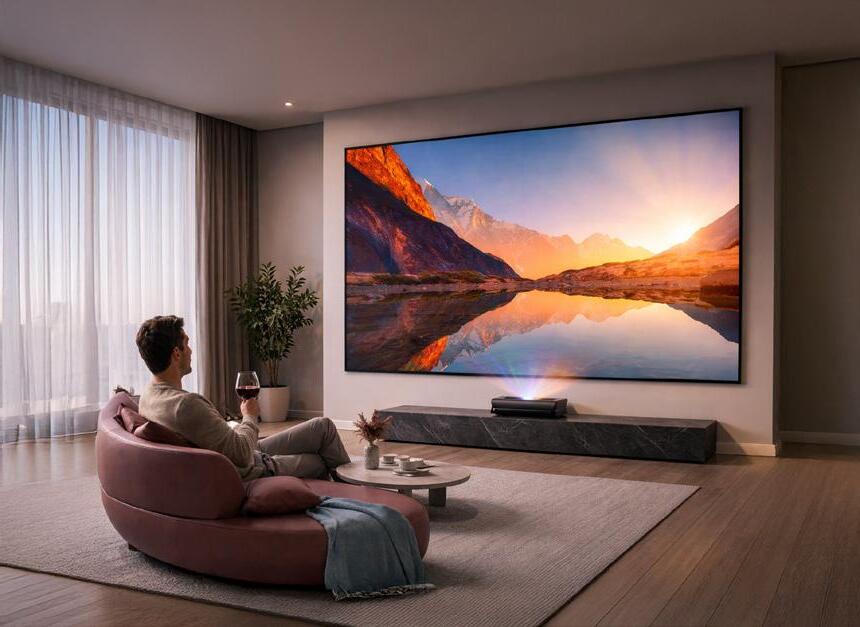
What if your living room wall could be transformed from minimalist decor to a 150-inch cinema in seconds without bulky screens, ceiling mounts, or visual clutter?
That’s exactly what Ultra Short Throw projectors deliver.
UST Projectors are emerging as the preferred alternative to large televisions, combining minimal footprint, flexible placement, powerful optics and advanced smart features like HDR, AI-based image correction, smart OS integration, and seamless connectivity to name a few technical features.
The Wall as the new Screen
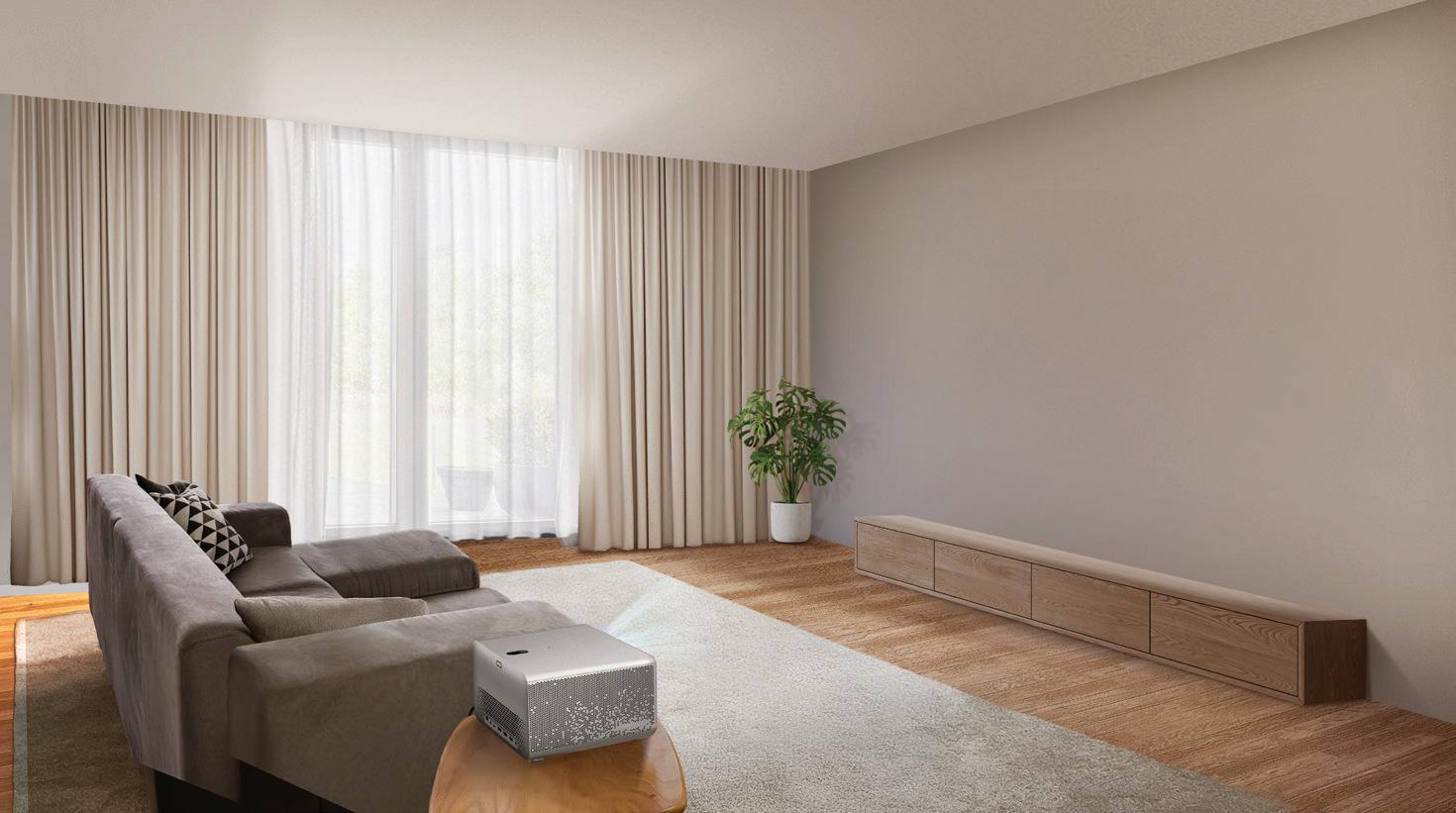
UST projectors are the preferred options for those who want to achieve immersive viewing without sacrificing aesthetics. Traditional TVs dominate wall space even when switched off, while long-throw projectors demand ceiling mounts, visible cabling, and controlled lighting. USTs, by contrast, integrate seamlessly into media consoles, credenzas, or custom cabinetry, allowing the wall to remain visually uncluttered. Paired with Ambient Light Rejecting (ALR) screens or even treated walls and they seamlessly merge technology and interior design.
For design-conscious homeowners and architects, this flexibility is key as a 100–150inch image can appear when needed and disappear when not in use. restoring the living space to its original intent.
Another important consideration is the tradeoff between convenience and quality. UST projectors deliver performance that meets serious cinematic expectations.
Laser light sources ensure consistent brightness, longer lifespan, and instant On/Off functionality. Native 4K resolution, HDR10+, Dolby Vision support, and wide colour gamuts bring depth, contrast, and realism that elevate everyday viewing.
Advanced optics allow sharp focus across massive screen sizes from just a few inches
away, while ultra-low latency modes and high refresh rates make USTs increasingly viable for console gaming, an area once dominated by high-end TVs.
Smart features are accelerating UST adoption. AI-driven image correction automatically adjusts keystone, focus, and colour based on the wall surface and ambient light. Integrated smart operating systems like Android TV, Google TV, or proprietary platforms turn USTs into standalone entertainment hubs, eliminating the need for external streaming devices.
Voice assistants, seamless connectivity with smart home ecosystems, and wireless content sharing further position UST projectors as central lifestyle devices for everyday living, rather than niche AV products.
Brand heads discuss their offerings, outlining the functional strengths and strategic advantages of their range.
Vijay Sharma, Managing Director, Optoma Technology India Pvt. Ltd.
Could you highlight your brand’s UST portfolio and key differentiating features?
Optoma has long been a pioneer in the Ultra Short Throw (UST) projection category, consistently shaping how large-format viewing can be delivered in space-constrained environments. Our UST journey began with acclaimed 4K UHD laser projection TVs such as the P1 and P2, which set benchmarks for the category with exceptional colour accuracy, smart home integration, and true ultra-short throw convenience—delivering immersive large-screen experiences at brightness levels of up to 3000 ANSI lumens.
Building on this strong foundation, Optoma’s UST portfolio has evolved significantly with the introduction of WAVE 320UK and AZH430UST. These next-generation models raise the bar with a powerful 4000-lumen output, ensuring vibrant, high-contrast visuals even in brightly lit environments—an area where UST solutions traditionally face challenges.
Despite the substantial boost in performance, these models retain Optoma’s hallmark compact and non-bulky design, reflecting our engineering leadership in balancing brightness, form factor, and installation flexibility.
This expanded UST lineup underscores Optoma’s commitment to innovation across both home entertainment and professional applications, while reinforcing our position as a category leader that delivers highperformance, design-forward Ultra Short Throw projection solutions for modern spaces.
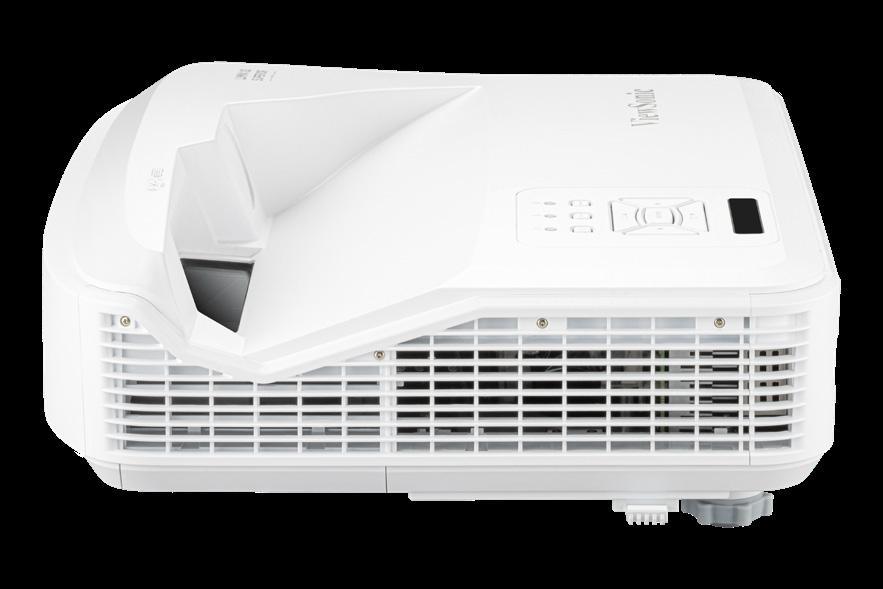
UHC70LV UST Projector
What are the biggest misconceptions consumers have about UST projectors?
One of the biggest misconceptions around Ultra Short Throw (UST) projectors is that they are inherently large, bulky, and impractical once installed. Another widely held belief is that UST solutions compromise on brightness and are only suitable for dark rooms. As a pioneer in the UST projection category, Optoma has consistently worked to redefine these perceptions. Our UST models from earlier innovations to the latest generation, demonstrate that high performance and compact design can coexist. Optoma’s UST projectors deliver powerful brightness levels suitable for everyday, well-lit environments, while maintaining a sleek, space-efficient form factor that is easy to install, reposition, and integrate into modern interiors.
By combining advanced laser light sources, efficient optical engineering, and user-centric design, Optoma continues to challenge outdated assumptions—proving that today’s UST projectors can be bright, compact, flexible, and effortless to use, without compromise.
How do you foresee the next wave of innovation in UST projection AI-driven auto-setup, modular optics, gaming enhancements, or 8K upgrade?
The next wave in Ultra Short Throw (UST) projection will not be driven by a single breakthrough, but by practical innovation that improves everyday usability, performance, and immersion. The momentum will clearly favour some over others.
The AI-Driven Auto-Setup will be the Immediate Next Wave. UST projectors demand precision placement, screen alignment, focus, and geometry correction. This sets up a friction point for many users.
The AI-powered auto-setup will directly solve this challenge by automatically detecting screen size, surface type, and ambient lighting; applying real-time keystone, focus, colour, and brightness optimization and adapting image quality dynamically as room conditions change.
Gaming Enhancements with the Strong Parallel Wave. As UST projectors move into living rooms and everyday entertainment spaces, gaming expectations are rising quickly.
Key enhancements driving adoption include lower input lag and high refresh rates for smoother gameplay, support for next-gen consoles and fast-paced competitive gaming, and improved motion handling with sharper responsiveness for the latest games.
Muneer Ahmad, Managing Director, ViewSonic India
Could you highlight your brand’s UST portfolio and key differentiating features?
ViewSonic’s approach to Ultra Short Throw projectors is centred on delivering exceptional performance and design integration for modern commercial and educational spaces.
The LS832WU, part of the Luminous Superior Series, exemplifies this philosophy. This lampfree, high-brightness projector delivers 5,000 ANSI Lumens in WUXGA resolution, making it ideal for digital signage applications across museums, retail storefronts, shopping malls, and airports. Its 0.25 ultra short throw ratio projects a 100” image from just 28 cm, with scalable screen sizes up to 170”, offering a significantly lower cost-per-inch compared to traditional commercial displays. Powered by 2nd-generation Laser Phosphor technology,
Sushil Motwani, Founder, Aytexcel Pvt. Ltd, India
Which brands do you represent, and what are the key highlights and distinguishing features that set them apart?
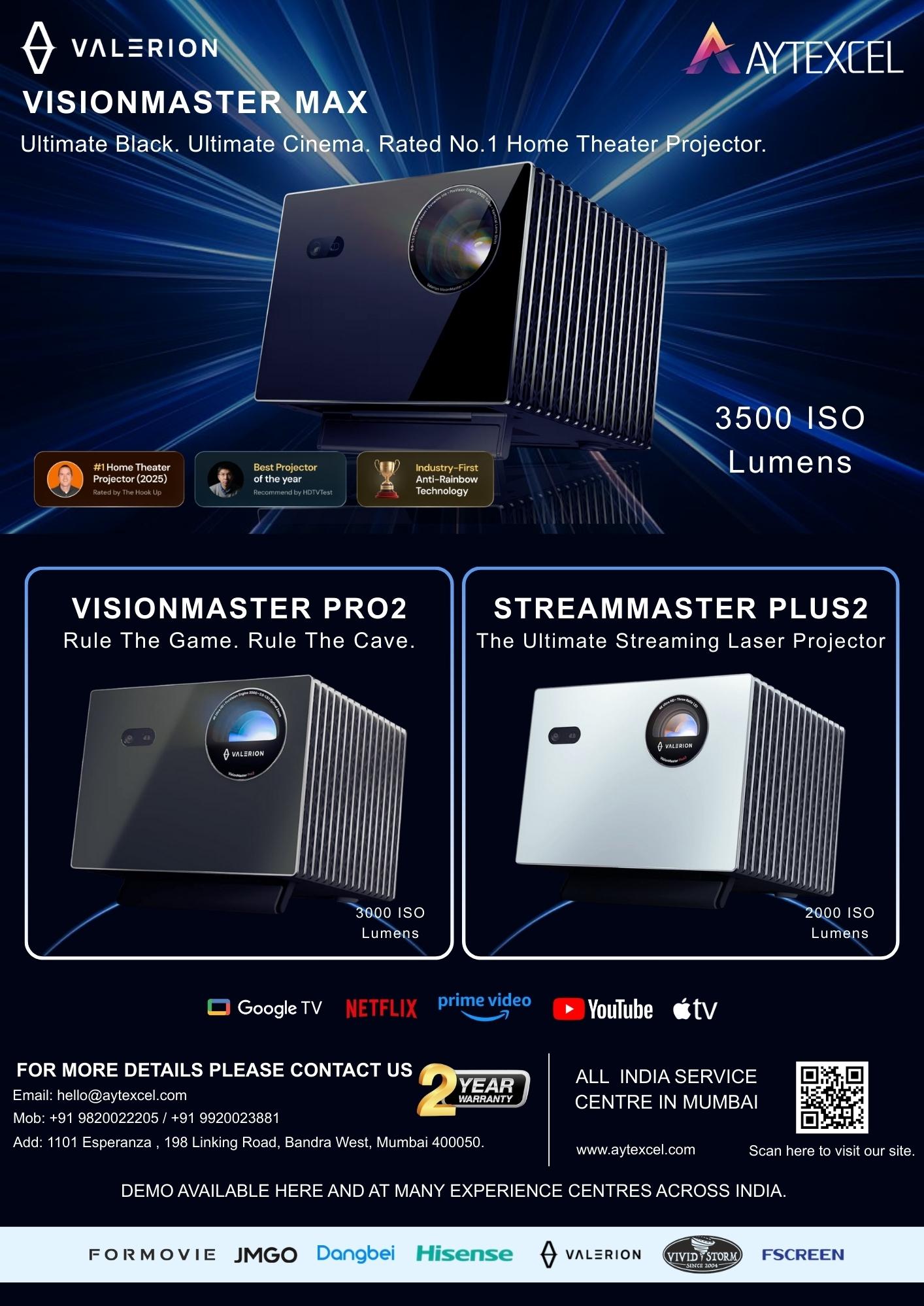
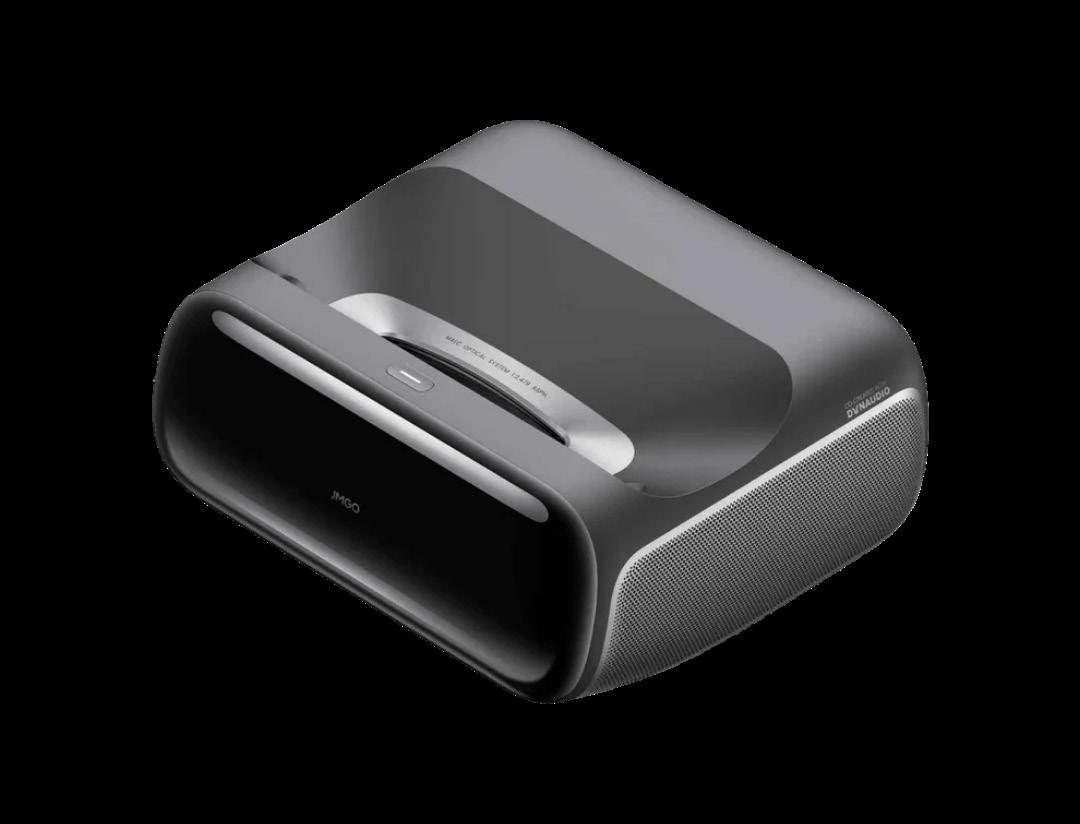
Our portfolio includes Formovie, Hisense, AWOL, and JMGO; each brand offers distinct models powered by unique technologies that clearly set them apart in the market.
Several models from these brands have consistently secured the No. 1 and No. 2 positions in Projector Central’s Showdown
the LS832WU ensures consistent brightness and reliable performance for up to 30,000 hours. Flexible installation is facilitated through horizontal/vertical keystone correction and 4-corner adjustment, while comprehensive LAN control enables centralized device management and seamless integration with Crestron, AMX, Extron, and PJLink control systems. By combining powerful optics, versatile installation options, and long-term reliability, ViewSonic positions its UST projectors as an essential tool for both commercial and large-scale media environments.
What are the biggest misconceptions consumers have about UST projectors?
Despite significant technological progress, UST projectors are often misunderstood by consumers. One prevalent misconception is that projectors require dark rooms to perform effectively, whereas modern laser-based UST models are designed to deliver strong brightness and vibrant colour reproduction even in spaces with ambient light.
There is also a belief that projector installation is complex, when in reality UST systems simplify setup by eliminating long throw distances, ceiling mounts, and extensive cabling. Additionally, concerns around maintenance persist, despite laser light sources offering years of consistent performance without the need for lamp replacements. As awareness improves, consumers are increasingly recognising Ultra Short Throw projectors as a sophisticated, low-maintenance solution for large-screen living.
rankings from 2022 to the present, reaffirming their leadership in the UST category.
LS832WU UST Projector
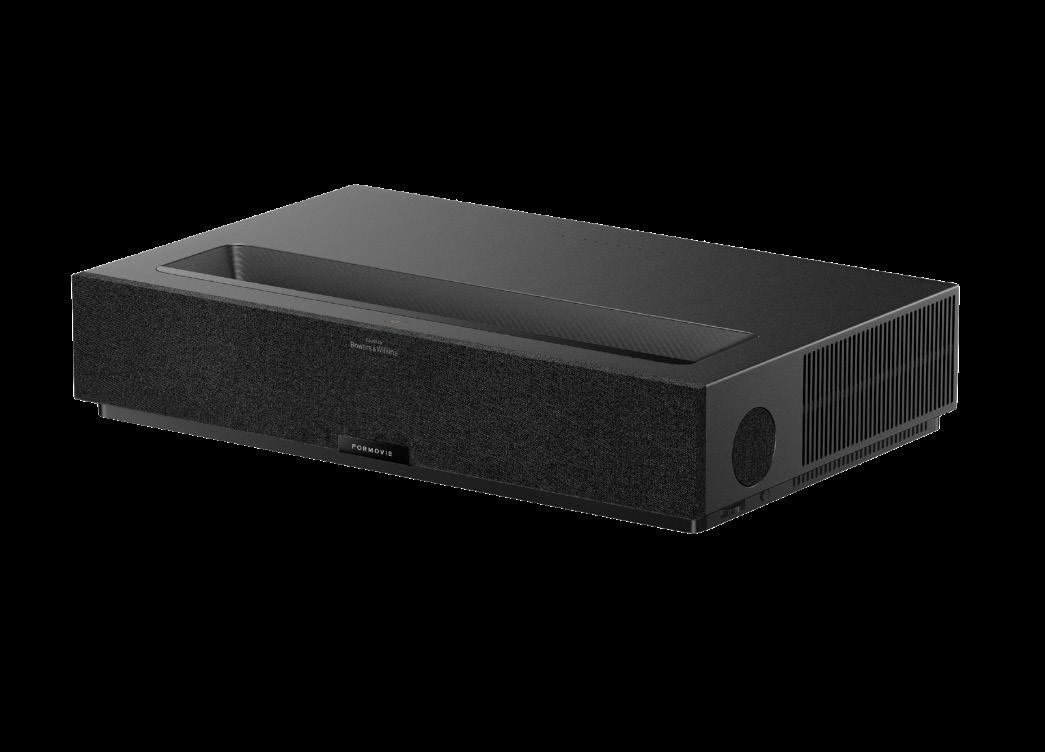
Formovie Theatre Premium is powered by Appotronics’ ALPD® RGB+ 4.0 triple-colour laser technology. This projector delivers exceptional visual performance that surpasses conventional RGB laser systems. It produces vibrant, true-to-life colours with remarkable natural accuracy, enhanced by advanced speckle suppression for smoother, clearer images. Designed for long-term reliability, the laser light source offers up to 30,000 hours of lifespan while maintaining consistent brightness at 2200 ISO lumens.
Supporting up to a massive 150-inch screen with 4K Ultra HD resolution, the projector features a 0.21:1 ultra-short-throw ratio, enabling large-format viewing from a minimal distance. Factory-calibrated to achieve 107% BT.2020 colour gamut coverage, it ensures precise colour reproduction and cinematic realism.
The experience is further elevated with official Google TV certification and native Netflix support, seamless Dolby Vision compatibility with external devices, and immersive audio delivered through Bowers & Wilkins Advanced Gen 2 acoustics with Dolby Atmos and DTS-X support—culminating in a truly immersive 3D home-cinema experience.
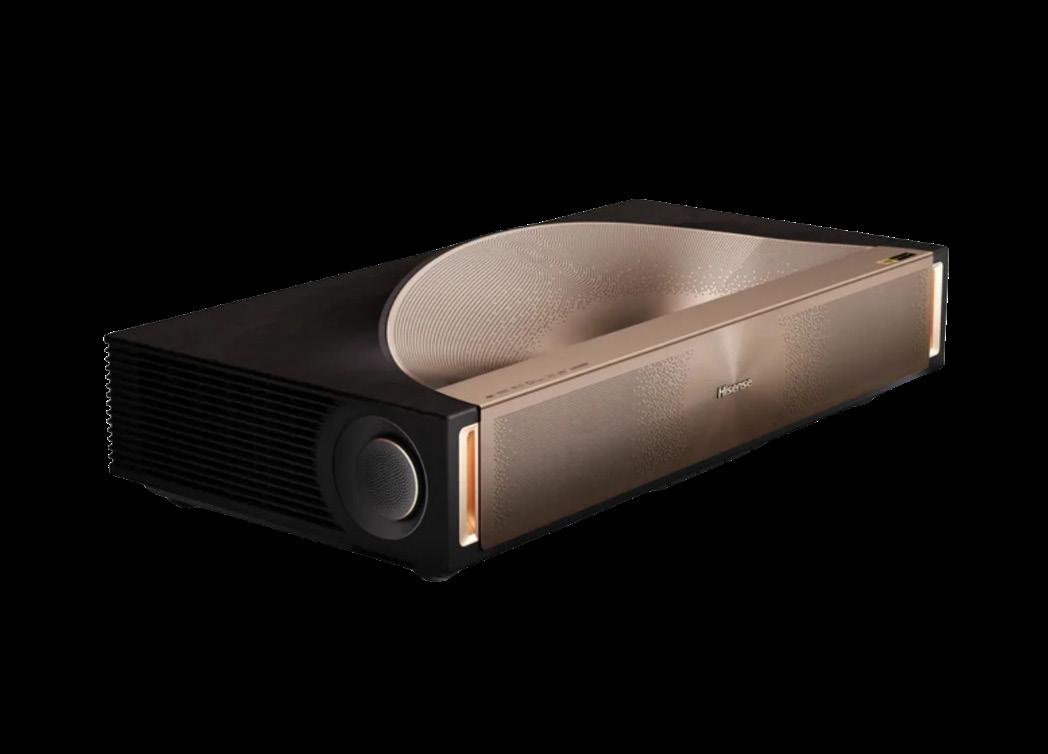
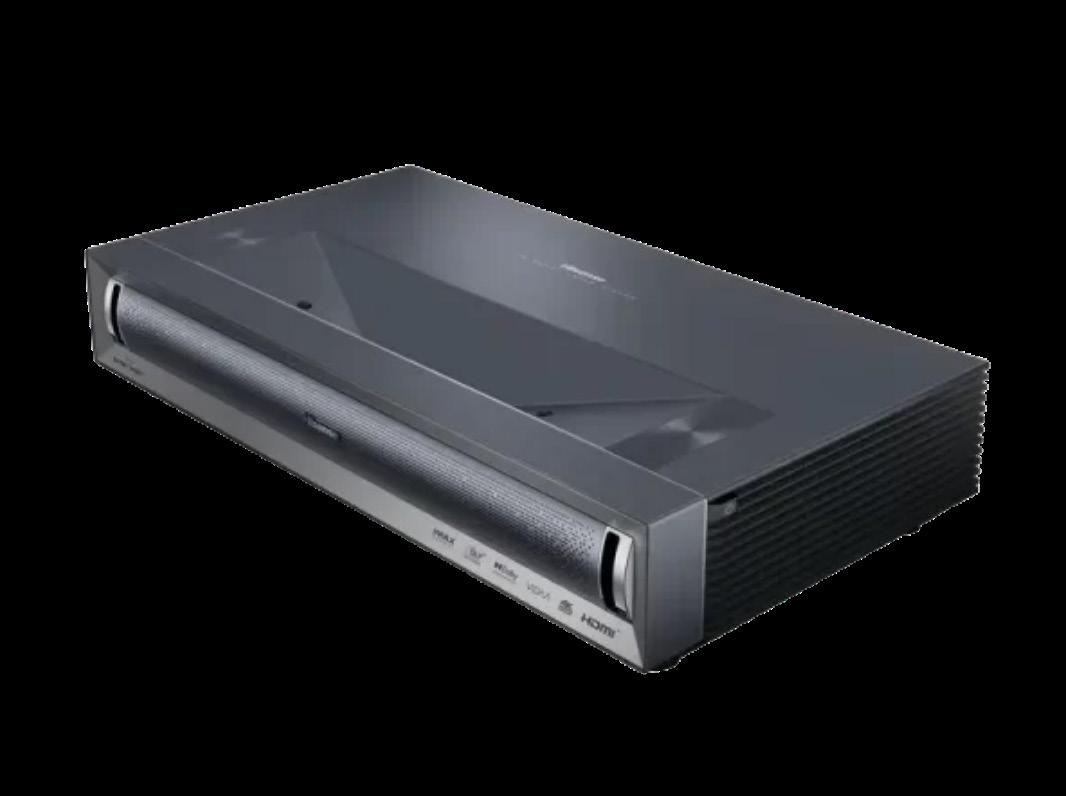
The Hisense L9Q is a triple-laser UST projector rated at 5,000 lumens with over 25,000 hours of laser life, yet real-world testing shows output exceeding 6,000 lumens. While Ultra Short Throw brightness measurements vary due to projection angles, the takeaway is clear: the L9Q is exceptionally bright, delivering around 200 nits on a 100-inch ALR screen with a real-world 0.5 gain—ideal for well-lit rooms.
Powered by the LPU™ Digital Laser Engine 2.0, the L9Q combines a high-performance chipset, precision optics, and triple-laser technology, enhanced by AI-driven picture processing that optimises contrast, colour, brightness, and HDR in real time.
Are there upcoming launches or major updates?
We’re excited to announce the upcoming launch of some of the most groundbreaking Ultra Short Throw projectors. Leading the way is the JMGO O2S Ultra, a world-first UST powered by MALC™ RGB Pure Triple Laser 3.0 technology, delivering ultra-clear 4K resolution that remains crisp even in daylight. With lifelike colours, exceptional clarity, and finely rendered details, it promises a truly immersive big-screen experience. Also making its debut is the AWOL Aetherion Series, designed to redefine visual performance with an advanced RGB laser UST platform, unlocking remarkable clarity, brightness, and cinematic precision.
Raising the bar further, Hisense introduces the PX4 Pro and the L9Q Pro, bringing category-first innovations including an iris lens and lens shift, features appearing in Ultra Short Throw projectors for the first time. These advancements offer greater installation flexibility, improved contrast control, and enhanced image accuracy.
Together, these upcoming launches represent true game-changers for the UST category, introducing multiple world-first technologies that will redefine how large-format home entertainment is experienced, and raise the bar for performance and everyday usability.
Formovie Theatre Premium
The Hisense L9Q
What are the biggest misconceptions consumers have about UST projectors?
UST projectors are still widely misunderstood. Many consumers continue to view them through the lens of traditional televisions or conventional long-throw projectors. In reality, UST projection is a category of its own—purpose-built for immersive, largeformat viewing and designed to deliver a fundamentally superior big-screen experience in modern living spaces.
Below are some of the most common misconceptions:
* UST projectors are often marketed as “Laser TVs,” but they still operate on the principles of projection. Unlike TVs that emit light directly, projectors reflect light off a surface. In very bright rooms with large windows, even the best UST projectors can appear less punchy than high-end LED or OLED TVs. Additionally, UST projection demands a perfectly flat surface—minor wall imperfections can cause noticeable distortion due to the extreme projection angle.
* While a UST projector can technically project onto a plain wall, this is far from ideal. To achieve the contrast and clarity seen in promotional imagery, a dedicated Ambient Light Rejecting (ALR) or Ceiling Light Rejecting (CLR) screen is essential. Without it, light spills onto the ceiling and surrounding surfaces, washing out contrast and reducing overall image quality.
* Although UST projectors eliminate the need for ceiling mounting, installation still requires precision. Even a few millimetres of movement can affect image size and alignment. Most UST projectors lack optical zoom or lens shift, making exact placement critical. Furniture height and depth also play a key role—incorrect cabinetry can result in the image spilling onto the ceiling or missing the screen entirely.
* While gaming on a massive screen is undeniably immersive, there are trade-offs. Many UST projectors have higher input lag than modern gaming TVs, which can impact competitive gameplay. Additionally, while newer 2025 models are beginning to support 120Hz, a large number of USTs remain capped
at 60Hz, whereas gaming TVs routinely offer 120–144Hz with faster response times.
* This misconception stems from older lampbased projectors. Modern UST projectors use laser light sources rated for 20,000 to 30,000 hours—equivalent to 10–20 years of typical use. In most cases, users will upgrade the projector long before the laser light source ever needs replacement.
How do you foresee the next wave of innovation in UST projection?
AI-driven auto-setup is rapidly becoming standard across leading UST brands such as Formovie, AWOL, and Hisense, with intelligent sensors automatically adjusting focus, keystone correction, and even wallcolour compensation for instant, hassle-free installation. Gaming performance is also seeing major advancements, with high refresh rates taking centre stage—most notably, the Hisense PX3 Pro now supports up to 240Hz at 1080p and carries “Designed for Xbox” certification, positioning UST projectors as serious contenders for console gaming.
Looking ahead, while 4K remains the current benchmark, the next phase of UST evolution is focused on pushing brightness beyond 5,000 lumens and significantly improving native contrast to around 5,000:1—bringing performance closer than ever to high-end OLED displays. Adding to these breakthroughs, iris lenses and lens shift are making their debut in UST projectors for the first time, marking a significant leap in installation flexibility and image control within the category.
Hisense PX3 PRO
Abhishek Pandey, Product Manager India, Projector Category, LG
Could you highlight your brand’s UST portfolio and key differentiating features?
LG Electronics has long been a pioneer in the Ultra Short Throw (UST) projection category, consistently shaping how largeformat viewing can be delivered in spaceconstrained environments. Our UST journey began with acclaimed 4K UHD Laser TVs such as the HU715QW and HU915QE, which set benchmarks for the category with exceptional colour accuracy with 2500 ANSI and 3700 ANSI Lumens of brightness respectively, smart home integration, and true ultra-short throw
advanced, user-focused projection solutions.
What are the biggest misconceptions consumers have about UST projectors?
One of the biggest misconceptions around Ultra Short Throw (UST) projectors is that they are inherently large, bulky, and impractical once installed. Another widely held belief is that UST solutions compromise on brightness and are only suitable for dark rooms.
As a pioneer in the UST projection category, LG has consistently worked to redefine these perceptions. Our UST models—from earlier innovations to the latest generation— demonstrate that high performance and
convenience—delivering immersive largescreen experiences at brightness with Smat features.
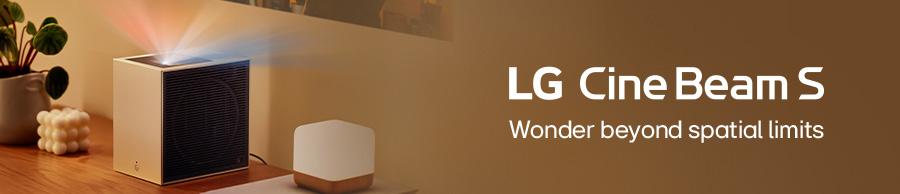
Building on this strong foundation, LG UST portfolio has evolved significantly with the introduction of Cinebeam S. These nextgeneration models raise the bar with a powerful 500-lumen output, ensuring vibrant, high-contrast visuals even in brightly lit environments—an area where UST solutions traditionally face challenges.
Despite the substantial boost in performance, these models retain LG’s compact and portable design, reflecting our engineering leadership in balancing brightness, form factor, and installation flexibility.
Are there upcoming launches or major updates your brand is planning in the UST category?
Yes, we have CineBeam S and HU295V, further strengthening our UST portfolio with
compact design can coexist. LG’s UST projectors deliver powerful brightness levels suitable for everyday, well-lit environments, while maintaining a sleek, space-efficient form factor that is easy to install, reposition, and integrate into modern interiors.
By combining advanced laser light sources, efficient optical engineering, and user-centric design, LG continues to challenge outdated assumptions—proving that today’s UST projectors can be bright, compact, flexible, and effortless to use, without compromise.
In conclusion, we would say Ultra Short Throw projectors signal a decisive shift in how we will experience large-format entertainment at home in the future.
By combining cinematic scale with minimal installation and clean aesthetics, they fit seamlessly into modern living spaces. As homes evolve, UST projectors are set to redefine everyday viewing as an immersive, design-led experience.
“RTI’s Intelligent Control Processor Range and Future-Ready Capabilities are Designed to Support Increasingly Complex Residential and Commercial Automation Projects.”
Could you give us an overview of RTI’s product portfolio and where the brand is positioned in the global control and automation ecosystem?
RTI is a control and automation systems manufacturer specialising in professionally installed solutions for residential and commercial environments. Our portfolio encompasses a wide range of control interfaces, including handheld remote controls, in-wall touch panels, keypads and mobile apps. With the core functionality of a range of powerful and reliable control processors and combined with AV distribution from the AVPro portfolio, it creates a winning proposition.
RTI is widely known for its control processors, such as the XP series. Could you walk us through your core controller lineup, for
James Trumper VP, International Sales, AVPro Global
James Trumper, outlines RTI’s product philosophy, the versatility and scalability of their range and how the brand is strengthening its position in the global control and automation ecosystem. He also sheds light on RTI’s forward-looking roadmap, including the upcoming Intelligent Control Processor range and futureready capabilities for increasingly complex residential and commercial automation projects.
example, XP-3, XP-6S, XP-8V, and any newer processors, and how each is positioned for different project scales?
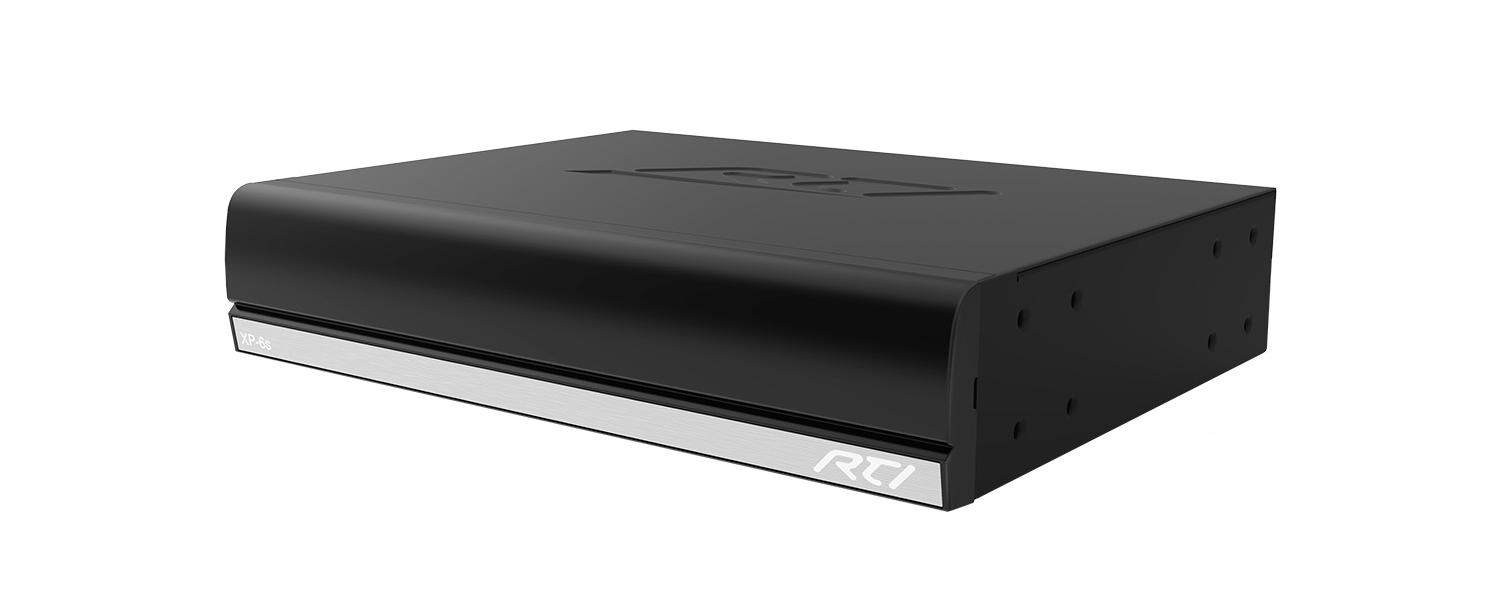
The RTI XP-3 is a compact, entry-level control processor designed for small to mediumsized automation projects. It’s positioned as our affordable processor option for single-room or focused applications while maintaining professional-grade capabilities. The RTI XP-6S is our mid-to-high-tier control solution designed for complex residential and commercial automation projects requiring substantial processing power and expanded connectivity. The RTI XP-8V is our flagship and most powerful control processor, built for complex residential, commercial, and hospitality automation projects that demand maximum processing power and connectivity. We are currently developing our next-
generation controllers, the Intelligent Control Processor range, which will expand on the current XP’s reliability and adaptability by providing more processing power, memory, and capabilities.
On the user interface side, RTI has an extensive range of in-wall and tabletop touch panels. Can you elaborate on the range you have on offer? And how do you recommend them for various applications like residential, corporate, hospitality, etc.?
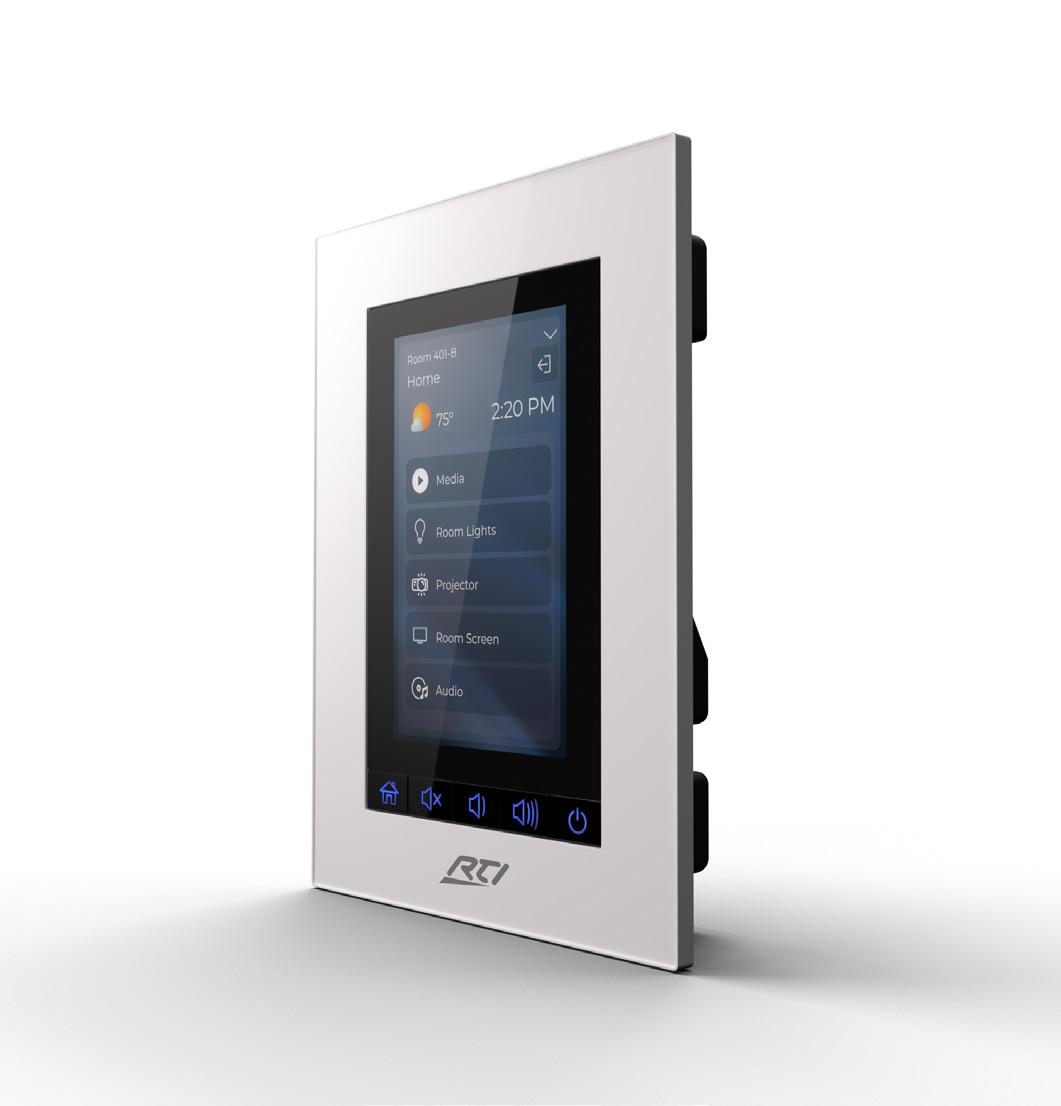
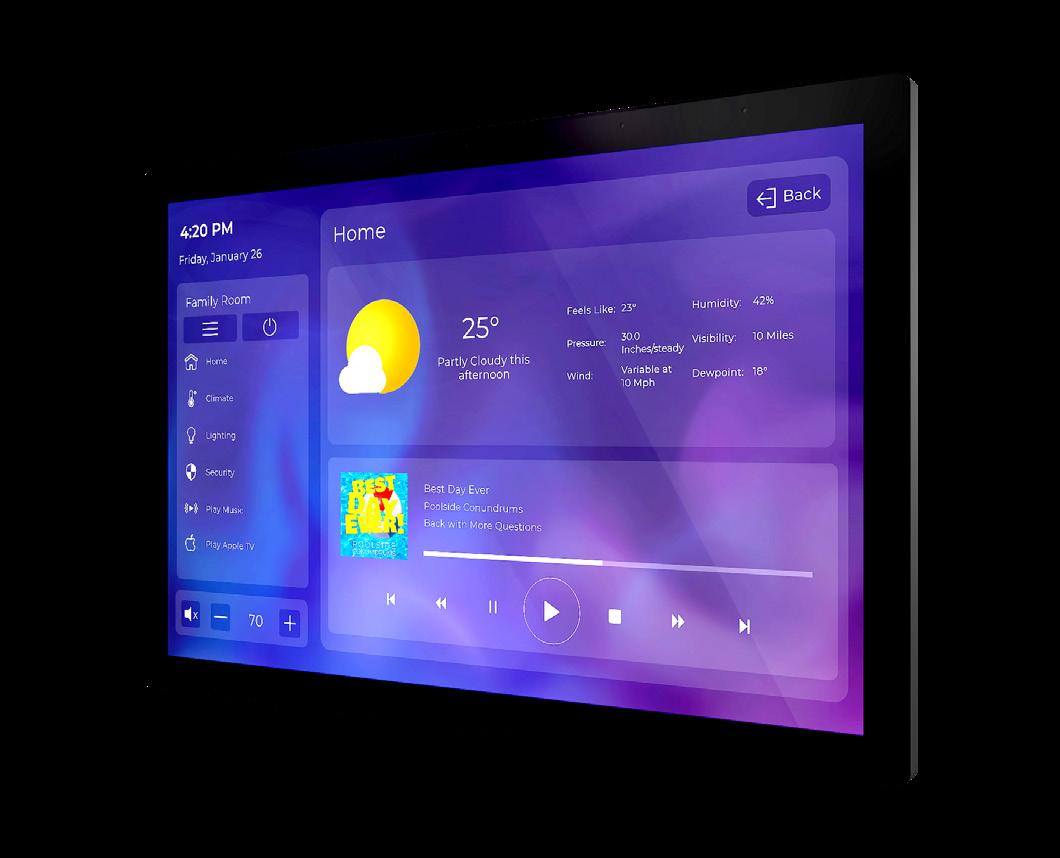
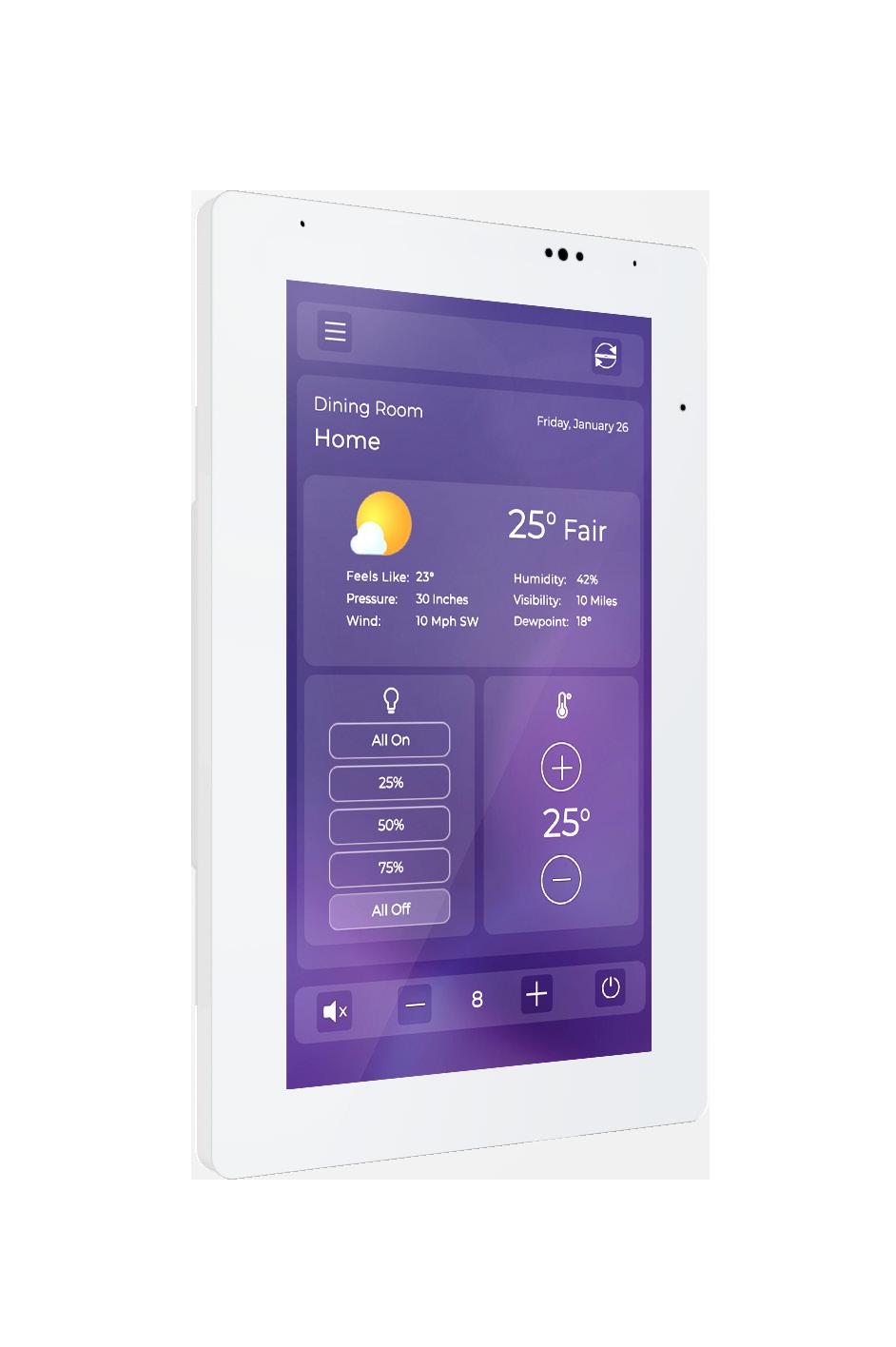
RTI offers a comprehensive touch panel lineup spanning entry-level to premium solutions for residential and commercial applications. Our current Generation, IST Series (Intelligent Surface Touch panels) features 5” and 10” offerings in both white and black surrounds, and a tabletop stand for the IST-10, providing a premium solution for both residential and commercial installations. Our KX4 is a 4” touch panel with hard keys and the unique ability of a built-in control processor in one conveniently wall-mountable package. This makes it ideal for single-room commercial applications (conference rooms, classrooms) where an allin-one solution is cost-effective. Additionally, if a cost-effective solution is all you need for basic room control, then the KX2 (when paired with a control processor) provides all you need to complete a budget-friendly entry point with hard buttons for frequently-used controls.
Handheld control has always been a strong category for RTI. How do your remotes fit into today’s projects, where mobile apps and touch panels are also common? What are the key use-cases where remotes still excel?
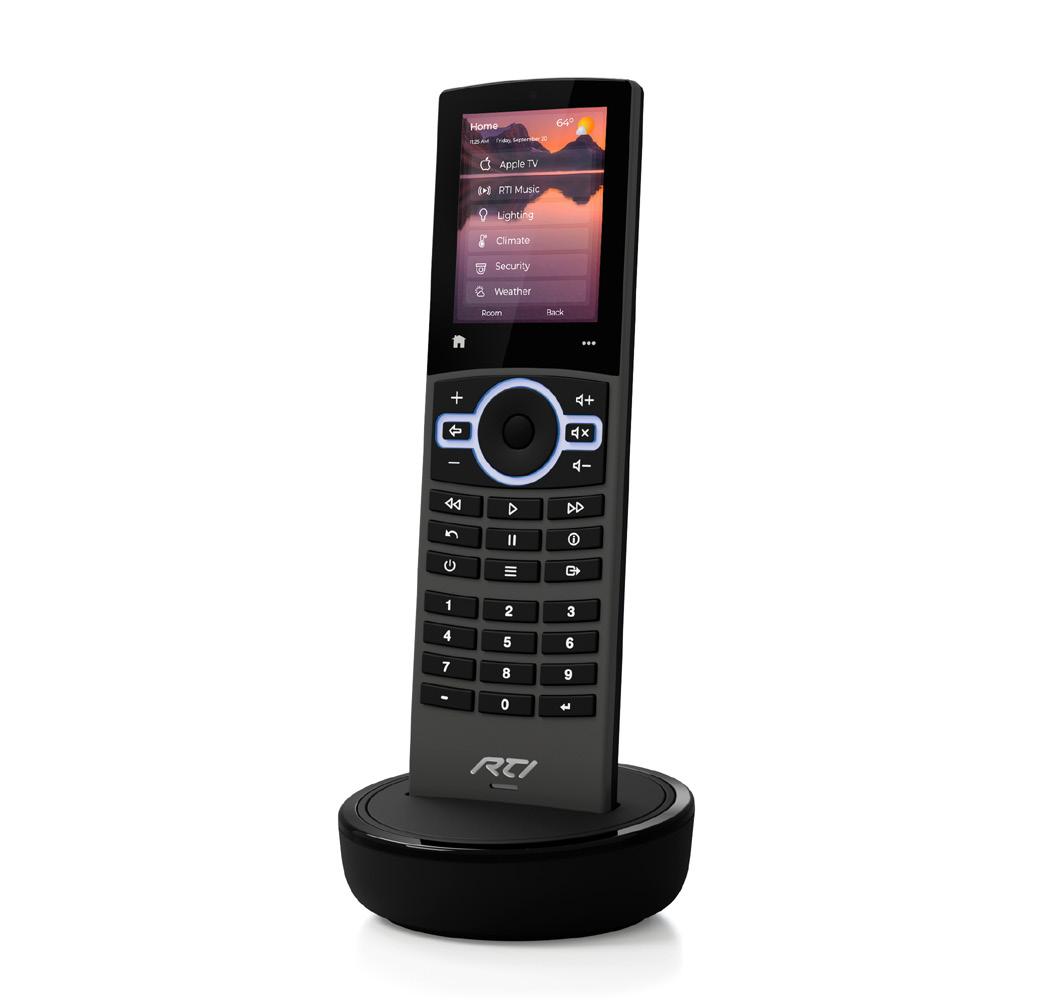
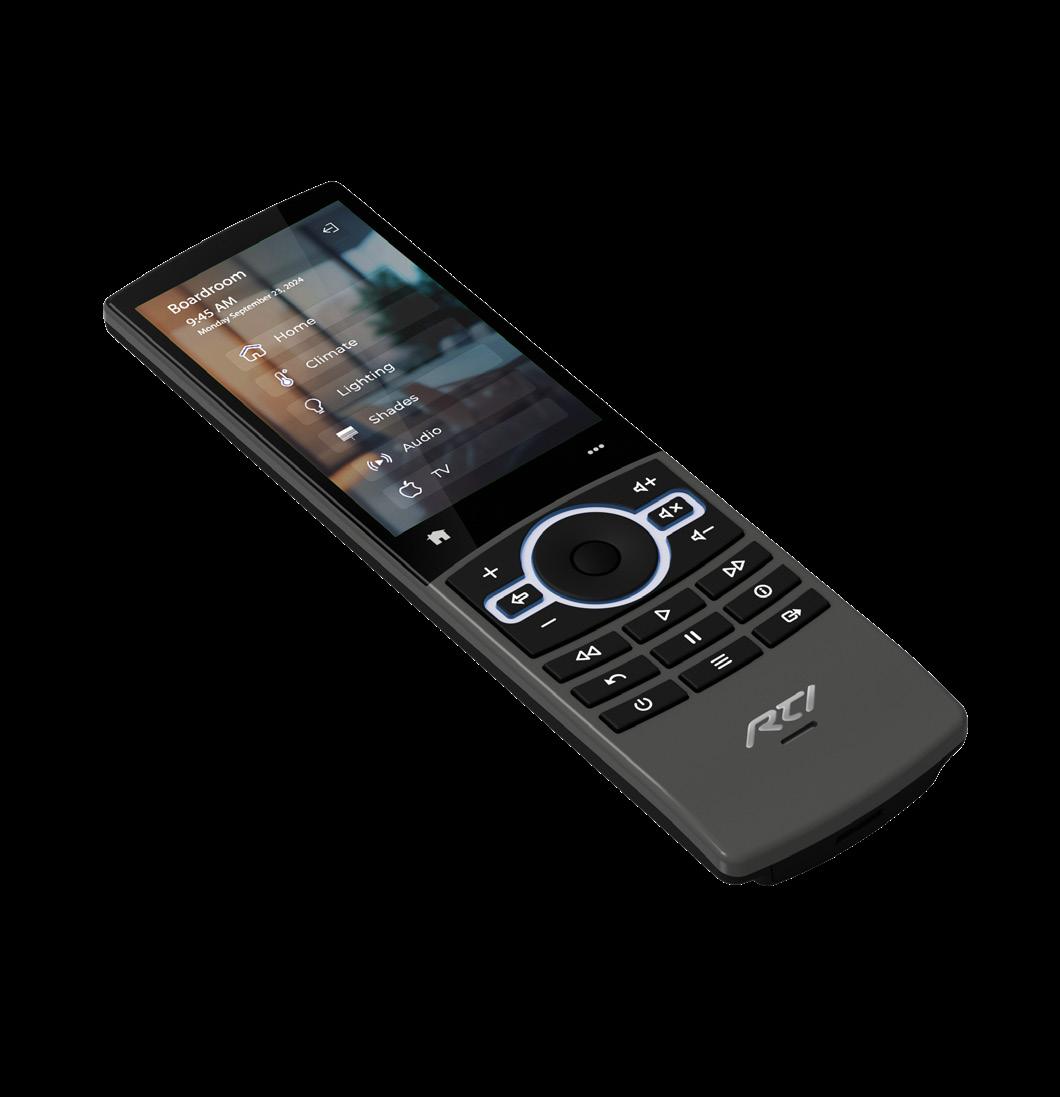
RTI has 30 plus years of experience in professional control, and can handle largescale, multi-room systems reliably, and our remote controls are used in luxury homes, yachts, corporate boardrooms and high-end commercial spaces worldwide.
With custom graphics, button layouts, and screen designs tailored exactly to your needs and no generic interfaces, your remote looks and works exactly how you want. We give the ability to create activity-based control: “Watch Movie,” “Listen to Music,” “Goodnight” buttons that execute complex sequences, all with the beautiful aesthetics such as edge-toedge glass in a premium aluminium frame, contemporary looks that complement highend interiors and a smartphone-like interface that feels familiar.
In the residential segment, what would you consider a “typical” RTI solution stack for a premium home, in terms of processors, touch panels, remotes, and any specific accessories for covering whole-home AV, lighting, shading, climate, and security?
A typical premium home RTI solution I would suggest would be 1 Central processor (XP-6Sor
XP-8V), 3-6 Handheld remotes (mix of ISR-4, ISR-2, depending on room importance), 3-5 Wall touchpanels (KX2, KX4, IST-5, IST-10 at strategic locations), RTiPanel app on family smartphones/tablets, Complete integration with lighting, shades, HVAC, security, A/V and Activity-based programming that makes complex systems simple.
The system is invisible when working correctly, residents just press “Watch Movie,” and everything happens automatically. That’s the hallmark of a well-designed RTI system: sophisticated technology delivering effortless control.
For luxury homes and villas, what is your product offering?
A luxury home RTI solution is a comprehensive, property-wide automation system I propose Multiple Processors (XP-8V + XP-6S units) for distributed control, 20-40+ Control points (remotes, touch panels, keypads), Complete Integration of all property systems, Advanced Automation based on time, occupancy, weather, and seasons, Remote Monitoring and management capabilities, Staff and Service integration, Independent Zone Operation (guest house, pool house) and Professional programming creates seamless, intuitive control.
The hallmark of a luxury RTI system: The property anticipates needs and responds
invisibly. Residents experience effortless control whether they’re pressing a button, approaching a room, or the system is responding to the time of day. It’s technology at its finest—powerful, sophisticated, and completely invisible to daily life.
In the commercial segment, in boardrooms, collaboration spaces, and training rooms, which RTI products are most commonly deployed?
In Commercial spaces, for the Standard Conference Room (8-12 people) we suggest 1x RTI KX4 (all-in-one solution) OR 1x RTI KX2 + shared XP-6S processor. For the Executive Boardroom (20+ person), we suggest RTI XP6S or XP-8V processor (equipment room), 2-3x RTI IST-10 touch panels (multiple control points around a large table), 1x RTI IST-5 (entranceroom status/booking) and Optional: 1x RTI ISR4 remote (backup/roaming control)
For Training Room/Classroom, we suggest 1x RTI KX4 (instructor podium/wall) OR 1x RTI KX2 (simpler deployments). Optional: 1x RTI ISR-2 (wireless instructor control).
For Huddle Room (4-6 person), 1x RTI KX2 (most cost-effective) OR one can opt for 1x RTI KX4 (if standalone/no central processor).
Interoperability is a key strength of RTI. How extensive is your driver library today, and how do your controllers integrate with third-party brands across AV (displays, AVRs, matrices), lighting, HVAC, security, and streaming platforms?
RTI’s driver library is extensive and mature for professional and prosumer equipment. Integration quality is excellent for core home automation systems (A/V, lighting, security) and great for peripheral systems (HVAC, cameras, shading). For a typical luxury residential or commercial installation with professional-grade equipment, RTI’s integration capabilities can be summarized as: Size of Library: Thousands of drivers are available in the RTI driver database
Covers virtually all major manufacturers and many niche brands. Both one-way (IR/ RS-232 control) and two-way (bidirectional feedback) drivers are constantly updated as new equipment releases.
The Access is available exclusively to RTI dealers through the dealer portal, integrated directly into the Integration Designer software. Searchable by manufacturer, device type, and model number, which includes driver version history and update notes
Regarding the Driver Types: IR Drivers: Infrared control (one-way), RS-232 Drivers: Serial control (typically two-way), IP Drivers: Network-based control (two-way, most modern), Relay Drivers: Contact closure control and MCP Server Integrations: Modern API-based integrations (emerging) are some of the options.
Are there any recent or upcoming product introductions or updates that you would like to highlight for the Indian and APAC markets?
We’re launching the new Intelligent Control Processor (ICP) series in 2026, offering enhanced performance, expanded memory, and broader connectivity for both residential and commercial applications. At the same time, continuous updates to Integration Designer are streamlining programming for integrators and introducing an optional new interface designed to complement Coral, our current UI platform. Make sure you visit the AVPro Global booths at ISE to keep an eye out for some potential new product releases!
Finally, what message would you like to share with system integrators and consultants who are evaluating RTI as the primary control platform for their next residential or commercial project?
The value proposition is particularly compelling in the mid-to-high-end market, enabling integrators to win projects on value without compromising on quality. It allows them to compete confidently with larger integrators, maintain healthy margins through efficient programming, and build a sustainable, scalable business model.
Integration Designer stands out as both powerful and efficient, offering faster programming for nearly 95% of residential and commercial projects. Its extensive driver library supports all major brands, while intuitive interface design tools make it easy to
create refined, custom user interfaces quickly. Remote programming capabilities allow systems to be updated directly from the office, and the learning curve remains practical— measured in weeks rather than months to reach proficiency.
Hardware quality is delivered where it matters most. For luxury homes who prioritise aesthetics as much as performance, RTI can be specified with confidence alongside the most design-forward brands. The touch panel portfolio is comprehensive, addressing a wide range of functional and design requirements.
In luxury residential projects, lighting control is almost synonymous with Lutron, and here RTI’s integration is exemplary. Its seamless compatibility with Lutron systems ensures reliability and performance at an industryleading level.
For commercial environments such as conference rooms, training facilities, and huddle spaces, the KX4 emerges as a true game-changer. Versatile and robust, it delivers an all-in-one solution that simplifies deployment while meeting the demands of professional, high-performance spaces.
“Yale’s Smart Locks and Security Solutions Combine Advanced Protection with Design-Led Functionality, Enhancing Modern Spaces.”
Yale has a long global legacy. Can you walk us through Yale’s evolution in the Indian market, particularly in the context of connected and smart security solutions?
Yale’s journey in India echoes its global evolution, transforming from traditional mechanical locks to pioneering connected smart security solutions made for everyone. With a 185-year legacy, Yale entered the Indian market with durable mechanical locks, gradually embracing digital innovations that deliver effortless unlocking through simple tap or app command. Today, Yale leads with sophisticated smart locks, digital door locks, and integrated systems tailored for Indian homes and businesses, featuring a userfriendly interface that prioritizes convenience and safety. This evolution emphasizes seamless smart home integration, remote access, and
Sharad Kapoor
Director & Head of Yale B2C and Smart Residential Business, SAARC
Sharad Kapoor, speaks on Yale’s evolution in India from trusted mechanical locks to advanced connected security solutions. In this interview, he shares insights into Yale’s expanding smart home portfolio, from digital door locks and video doorbells to highlighting how the brand is shaping safer, more intuitive living through innovation, connectivity, and user-centric design.
advanced biometric and RFID technologies, underscoring Yale’s commitment to innovation and trust in the connected era.
From a smart home perspective, how would you define Yale’s current portfolio in India? Specifically, could you outline your key product segments like digital door locks, smart security systems, smart safes and related accessories?
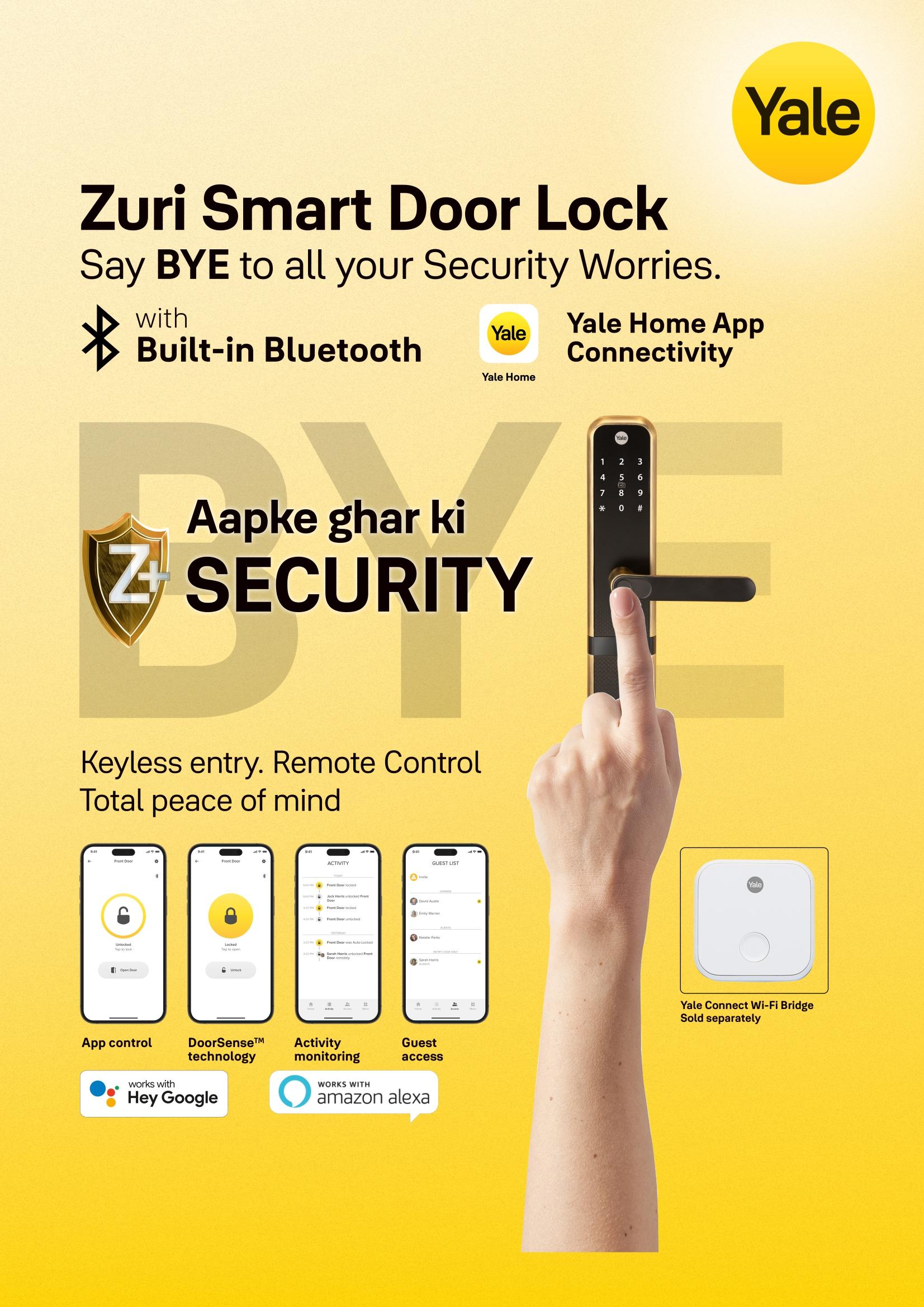
Yale’s portfolio in India caters comprehensively to smart home security needs. It includes digital door locks featuring multiple access options such as PIN codes, biometric fingerprint scanning, RFID cards, and smartphone control through the Yale app. Additionally, Yale offers smart security systems comprising intruder alarms and monitoring solutions, smart safes designed for secure asset protection, and
various accessories that integrate with the broader ecosystem. This portfolio embodies ease of use, high security standards, and connectivity, positioning Yale as a leader in India’s smart home market for reliable and advanced security solutions.
Could you elaborate on the newest ranges tailored for residential, commercial, and hospitality applications, and how their feature sets differ?
Yale’s newest ranges address diverse sectors, residential, commercial, and hospitality, each offering tailored features. Residential locks prioritize biometric authentication, multiple user access modes, and remote control via smartphone. Commercial series focuses on robust, scalable systems with access logs, RFID badges for employees, and integration with building management systems. These product sets differ in user interface complexity, security layers, and connectivity options, ensuring each segment receives solutions optimized for their unique operational and security requirements.
What are Yale’s latest offerings in digital/ video doorbells, and what innovations are you introducing in terms of connectivity, apps, and user experience?
Yale’s latest digital/video doorbells enhance home security with high-definition video, two-way audio, and motion detection alerts integrated into the Yale Home app. Innovations emphasize seamless connectivity via Wi-Fi and Bluetooth, enabling real-time monitoring and remote visitor interaction. The app offers user-friendly interfaces for features like cloud video storage, event notifications, and multiuser access. Connectivity improvements enable integration with other smart home devices, enhancing user experience with greater control, convenience, and peace of mind in monitoring entry points remotely.
Are there specific functions or innovations in Yale’s smart locks and security devices that have received particularly strong feedback from users or partners?
Innovations in Yale’s smart locks, such as multi-access control (PIN, fingerprint, RFID, smartphone), auto-locking features, and tamper alarm systems have been particularly well received. Users and partners praise the seamless integration with their controllers allowing remote locking/unlocking and creating scenes of lights turning on when the homeowner unlocks the door, guest access sharing, and activity monitoring. The focus on high security with strong encryption and practical installation ease adds to user confidence. Feedback often highlights the locks’ reliability, hybrid mechanical and digital backup, and the integration flexibility with broader smart home platforms as standout features.
How does Yale engage with system integrators for project design, configuration, and deployment? What value do they add to the overall integration of Yale solutions in smart homes and buildings?
Yale collaborates closely with system integrators to ensure optimal project design, configuration, and deployment. Integrators add value by tailoring Yale’s solutions to specific smart home and residential building
requirements, offering expert installation, customizing system interoperability, and ensuring seamless integration with other smart devices and infrastructure. This partnership enhances deployment quality, solution scalability, and user experience, reinforcing Yale’s commitment to delivering comprehensive, reliable security ecosystems through trusted professional networks.
Could you explain how Yale’s smart home ecosystem is structured, apps, cloud platform, interoperability with third-party systems, and support for standards like Matter, Zigbee, Z-Wave, etc. (where applicable)?
Yale’s smart home ecosystem in India revolves around the Yale app, cloud platforms and seamless interoperability with Yale smart locks & third-party applications. Supporting protocols like Zigbee and Z-Wave, it enables effortless syncing of lights, curtains, air conditioners, called scene creation. Locking and unlocking the Yale Smart Door lock, along with cameras, alarms and safesall become controllable via mobile devices. Cloud connectivity delivers remote access, real-time
alerts, scene creation and software updates, boosting home automation and convenience for Indian users.
Architects and interior designers are increasingly specifying smart hardware early in the project. In your experience, what role do architects and designers play in the selection of smart locks and security products, and how does Yale work with them on aesthetics, finishes, and door hardware compatibility?
Architects and interior designers play a crucial role in specifying smart hardware early in projects to ensure seamless design integration. Yale collaborates with them to offer a range of aesthetics, finishes, and door hardware compatibility options to match diverse architectural styles and design needs. This partnership ensures that Yale’s smart locks and security products not only provide top-tier security but also complement the visual and functional aspects of modern spaces, thereby supporting holistic project design and client satisfaction.
What are your future plans for the coming year?
The security needs of the common man revolve around protecting their home, family, and personal belongings from unauthorized access and potential threats. They seek reliable, easy-to-use solutions that provide peace of mind and allow them to go about their daily lives without constant worrying about safety.
Yale’s future plans focus on achieving this by expanding our product range. We aim to become a one-stop solution for all security needs, ensuring that individuals and families can go about their daily lives with complete peace of mind. By continuously innovating and integrating advanced technologies, we strive to protect not just homes but also personal belongings, offering comprehensive solutions that are easy to use, reliable and tailored to the evolving needs of the modern Indian consumer. Our commitment is to empower people to live securely, knowing their loved ones and possessions are safeguarded by Yale’s trusted expertise and cutting-edge solutions.
“HYRISS Redefines Residential Audio by Bringing Concert-Quality Sound Seamlessly Into Luxury Living Spaces.
HYRISS is a revolutionary leap in sound technology. Could you explain how HYRISS achieves hyperreal, distortion-free sound across a space, especially with speakers embedded in multiple surfaces?
HYRISS revolutionises residential audio by seamlessly integrating concert-quality sound technology into luxury living spaces. Through strategically placed in-wall speakers and advanced spatial processing, HYRISS creates multiple distinct sound experiences within a single environment—allowing homeowners to enjoy both stunning interior design and exceptional audio without compromise.
The system achieves hyperreal, distortionfree sound through three core L-Acoustics technologies working in concert: L-ISA precisely positions instruments in space, mimicking live concert settings; Ambiance
Nick Fichte
Business Development Lead – Home & Yacht, L-Acoustics
In an exclusive interview, Nick Fichte, explains how HYRISS redefines immersive audio by seamlessly merging concert-grade acoustics with architectural design and everyday living. He also highlights the HYRISS Handbook, a key resource that outlines best practices to guide architects and designers through seamless integration.
uses state-of-the-art sensing microphones and the L-ISA Processor II to transform room acoustics; Anima utilises advanced algorithms and machine learning to localise, spatialise, separate, and immerse audio content beyond its original design, transforming ordinary sound and music into extraordinary experiences
Together, these technologies enable HYRISS to deliver concert-level audio quality through discreetly embedded speakers, maintaining the visual elegance of luxury interiors while providing uncompromising sound performance across every zone of the space.
What sets HYRISS apart from immersive audio systems?
With any audio system, whether stereo or immersive, there is always a golden seat, a reference listener position. This can be
inhibitive and restrictive. L-ISA immersive audio technology, which L-Acoustics launched in 2016 for live events, started to break this mould by ensuring more of the audience gained an emotional connection to artists by enhancing the listener experience across the whole audience. HYRISS, using the same L-ISA technology allows you to position your stereo, or immersive listening golden spot, wherever you wish within a space, thus giving infinite possibilities in just one space.
How does HYRISS adapt to different spatial needs, whether it’s a luxury home, a boutique hotel, or a cultural venue? Is the system scalable or customizable based on architectural constraints?
The design criteria of HYRISS are fairly flexible, with just one main requirement: that loudspeakers be equally spaced throughout
the space, whether a home, a yacht, a hotel conference room or any other place where sound is key to the experience. We know that sometimes a compromise is required and we
can accommodate that at the design stage, in collab with architects & interior designers.
What’s the ideal collaboration process like between L-Acoustics and interior architects, AV consultants, or hospitality designers when integrating HYRISS? Are there any integration best practices or creative freedoms that the system allows?
With new technology like HYRISS, being involved early in project development allows us to set the stage for success. Often projects come to us via AV systems integrators. We’ve developed a “HYRISS Handbook,” designed to be shared with interior designers & architects, which covers best practices. This helps them to understand the design and installation process, and how we work with them to ensure their creative freedom.
In terms of maintenance and longevity, how does HYRISS compare with traditional multispeaker setups? Does it require specialist handling, or is it designed for long-term efficiency?
We are the leading creator of professional
sound technologies, founded over 40 years ago, and trusted by the world’s biggest touring artists, festivals and prestigious venues like the Hollywood Bowl, which has boasted an L-Acoustics sound system since 2004.
The same products that we manufacture for the pro market are used in our residential solutions. Even the L-ISA Processor II, which is the brain of HYRISS is often seen in flight cases at events like Weekend with Adele in Las Vegas or on tour with Andrea Bocelli. These are mission-critical events where sound is being delivered at a high sound pressure level day in, day out. Knowing that you have that same technology in your home should absolutely be a reassurance that you are buying the absolute best on the market.
As you look at international expansion, what is the scope of adoption for HYRISS in the Indian market?
Some of the projects that we have seen in India are truly spectacular. We are seeing the trend, much like in the west where clients are creating big entertainment spaces. Rooms that are dedicated to just one purpose are
becoming less used as savvy clients look to maximise their space for as many impactful experiences as possible. For this reason, HYRISS is the perfect option for luxury homes in India.
Given India’s growing appetite for luxury lifestyle technology, smart homes, and experiential design, how are you positioning HYRISS for architects and developers here?
We are still at the early stages of our journey with HYRISS, but we want to spread the word to architects and developers around the world. This is a solution which must be experienced! Today, the only place to experience it is London, but we are expanding soon we look forward to opening the HYRISS experience to more locales.
Are there any standout global installations or case studies that you feel best showcase the full potential of HYRISS? Could you share any examples where the system dramatically transformed a space?
Because HYRISS is installed in private homes, we don’t have the opportunity to share details,
but a typical end-user is using it for a space which had historically been a nightclub in their home. They wanted to keep the nightclub, but have other activities like karaoke, watching sports, listening to music anywhere in the room andjust really achieving a “WOW Factor”. What could have been a space with just a great 2-channel PA system for a DJ has ended up as a fully immersive space for many different uses and the family is over the moon with the end results.
What kind of response did you receive at Smart Home Expo 2025 for this new technology? What are your plans for further expansion in the Indian market?
Our Indian distributor, Hi-Tech has represented us for many years, but we had to wait until the time was really right for them to start adding L-Acoustics residential solutions to their focus. This year, we are showing a typical home cinema so that visitors can get to know us within the kind of project that they are familiar with. Now that the residential market knows us, we can start to demonstrate how much more we can do. Who knows, maybe we will see HYRISS at Smart Home Expo next year!
“Basalte Home is Particularly Relevant for Luxury Indian Residences.”
Basalte has built its reputation for combining refined European design with intuitive smart home technology. How does this design philosophy influence your product development, and how is it resonating with discerning homeowners and designers in India’s luxury segment?
At Basalte, our design philosophy starts from the belief that technology should quietly blend into architecture rather than stand out. Rooted in refined European design and craftsmanship, this mindset shapes every product we develop — from intuitive interfaces to carefully selected materials, all designed and produced in-house in Belgium.
This approach resonates strongly within India’s luxury segment, where discerning homeowners and designers value timeless aesthetics, tactile equality and technology that enhances comfort without disrupting
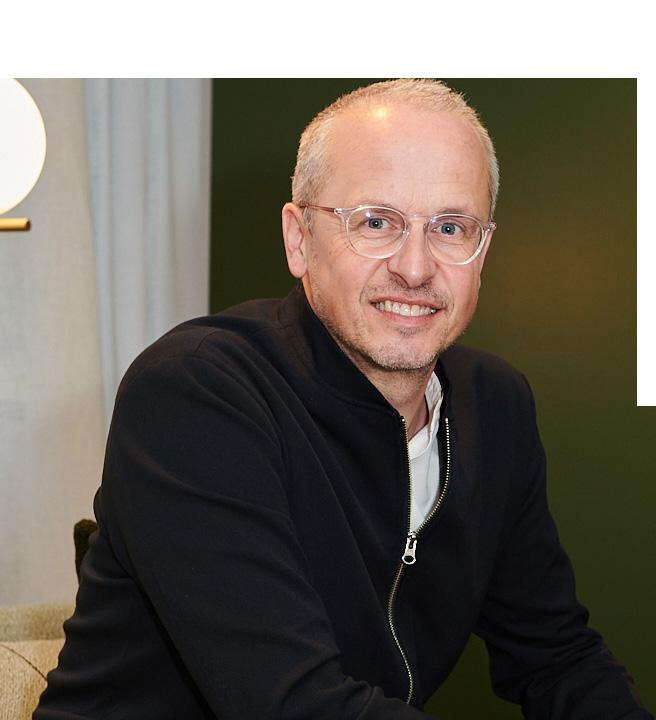
Tom Samyn Sales & Marketing Director, Basalte
In an exclusive interview with Smart Home World, Tom Samyn, delves into the brand’s design philosophy, explaining how Basalte creates smart homes that seamlessly balance performance, elegance, and ease of use. Samyn also shares insights into the company’s growing portfolio of projects in India, highlighting how thoughtful design and technology come together to elevate modern living spaces.
the architectural vision. For them, Basalte is not about visible smart technology, but about effortless, elegant living.
What makes Basalte Home particularly relevant for luxury Indian residences, where multi-generational living, varied daily routines, and ease of use are key considerations?
Basalte Home is particularly relevant for luxury Indian residences because it is designed around simplicity and adaptability. With multi-generational living and varied daily routines, everyone in the home, from children to grandparents, needs technology that feels natural and effortless. Our interfaces are intuitive and consistent throughout the house, requiring no technical knowledge to use.
At the same time, Basalte Home adapts seamlessly to different lifestyles and moments
of the day, offering personalised scenes and controls without adding complexity. By combining this ease of use with discreet, timeless design, Basalte creates a smart home experience that supports comfort, harmony and elegance across generations.
Basalte Home integrates lighting, shades, climate, audio, security, and more into one seamless platform. What makes Basalte Home’s architecture - including the Core servers and app- stand out in terms of usability, scalability, and real-world performance compared to conventional automation systems?
Basalte Home stands out through an architecture that is designed for real-life living rather than technical complexity. At its core, the system is built around powerful Core servers that handle all logic locally, ensuring fast response times and reliability.
This local intelligence guarantees consistent performance, even in large residences with many integrated systems.
Usability is central to the architecture. The Basalte Home app and interfaces are uniform,
intuitive and role-based, so daily control feels natural for every user while advanced functionality remains accessible for integrators and users. Scalability is built in from the start: whether it’s a private residence or a large multi-villa estate, the system grows without compromising speed or simplicity.
Compared to conventional automation systems, Basalte offers a refined balance between performance, elegance and ease of use — delivering a smart home that feels calm, responsive and future-proof in everyday use.
How suitable is Adelante for Indian housing formats such as high-rise apartments, independent villas, and gated communities?
Adelante has a strong security focus and modular architecture. Whether it’s a high-rise apartment, an independent villa or a large gated community, Adelante can be tailored
precisely to the level of access control and security required.
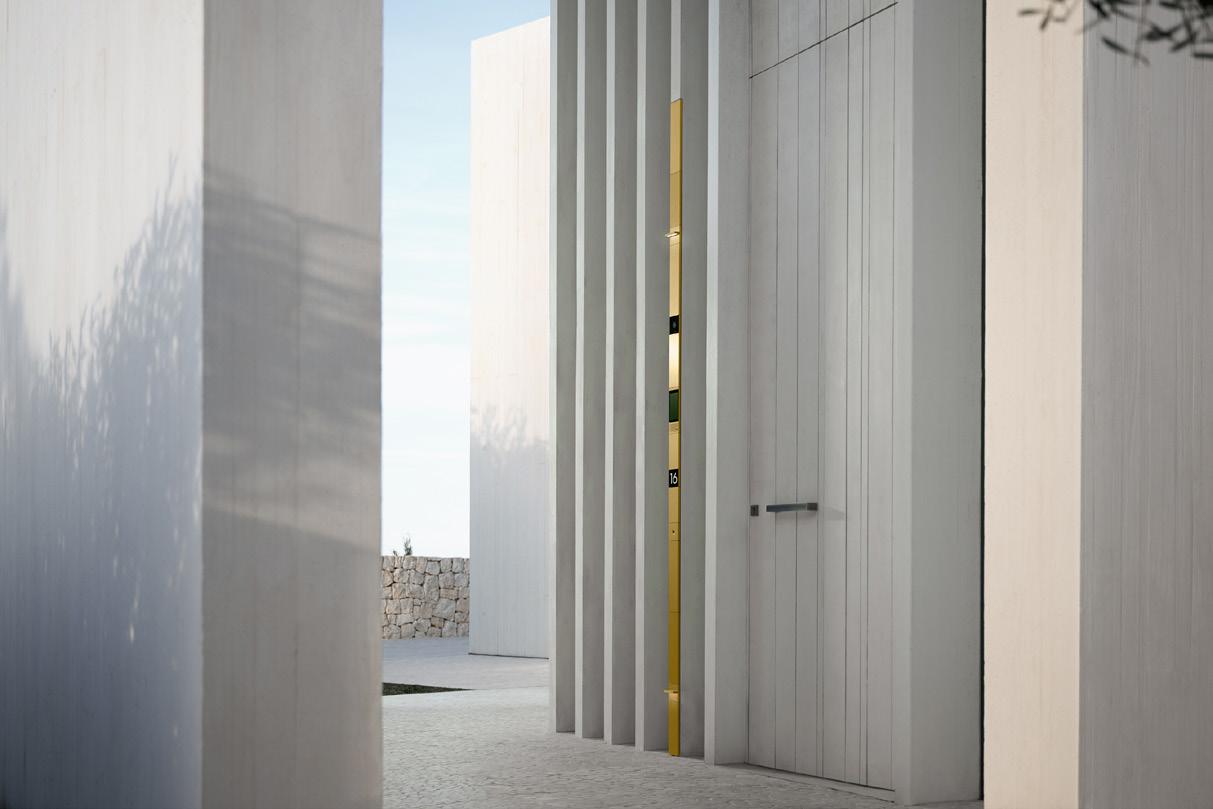
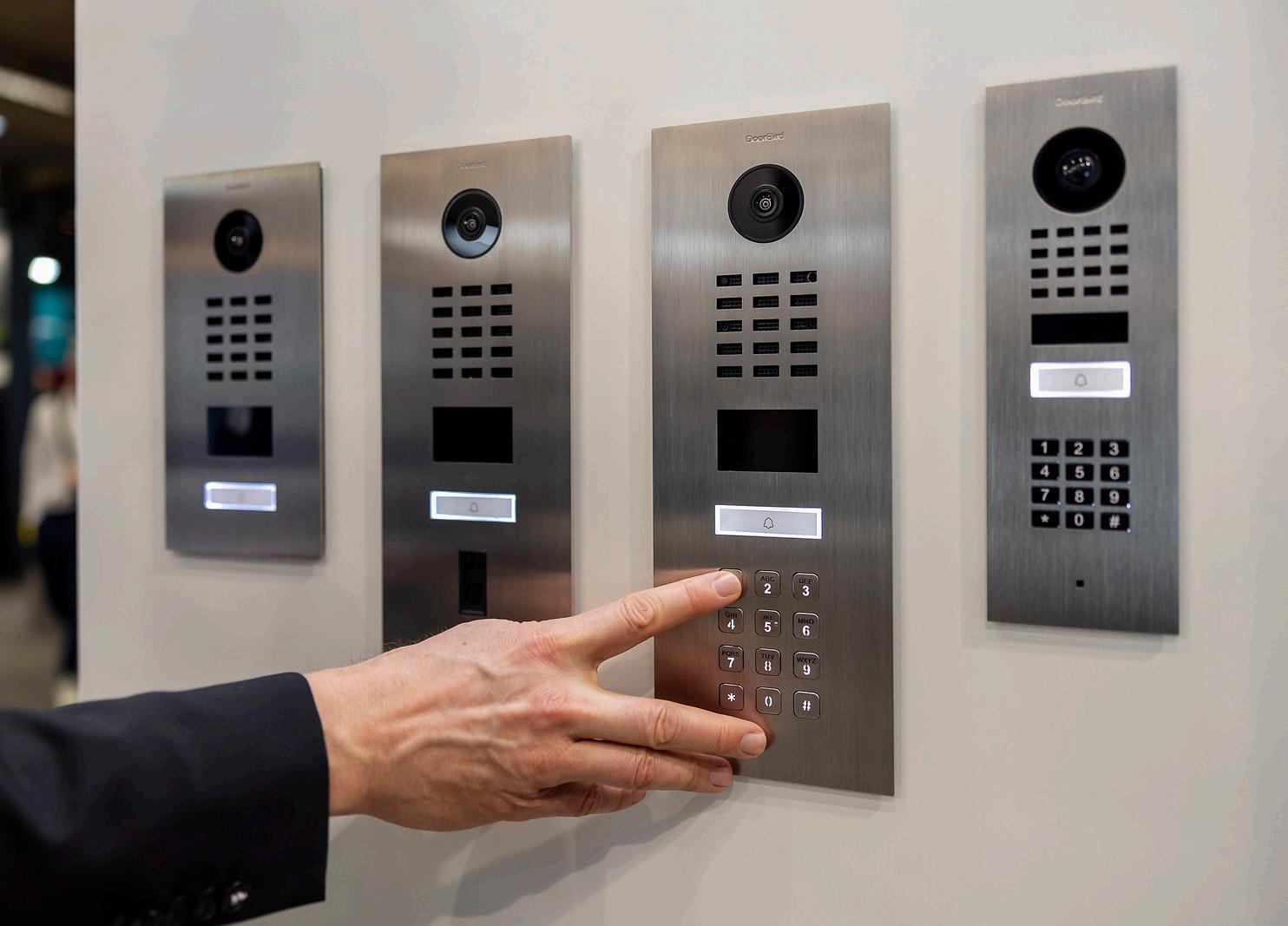
Its modular design allows integrators to compose the door communication system per location: from a full video intercom with camera and display at a main entrance, to stand-alone security modules where appropriate, such as a keycard reader, numeric keypad or fingerprint reader at private entrances, staff access points or secondary gates. This makes Adelante highly flexible for complex residential layouts common in India.
Integrated seamlessly with Basalte Home, Adelante links access control to the wider home experience: doors, lighting, scenes and notifications work together to provide both security and comfort. With its refined design and scalable setup, Basalte offers a security solution that is robust, adaptable and elegant, across apartments, villas and large gated
communities alike.
Entertainment plays a central role in Indian homes. How do Basalte’s multiroom audio and AV components enhance everyday living while remaining visually discreet? Tell us about your offering in this segment.
Entertainment plays a central role in everyday life, and at Basalte, we believe it should be experienced without visual noise or technical complexity. Our multiroom audio and AV offering is fully integrated into Basalte Home, allowing music, television and shared moments to flow naturally throughout the house. Everything is controlled intuitively via the app, keypads, or scenes, so technology supports daily life rather than interrupting it.
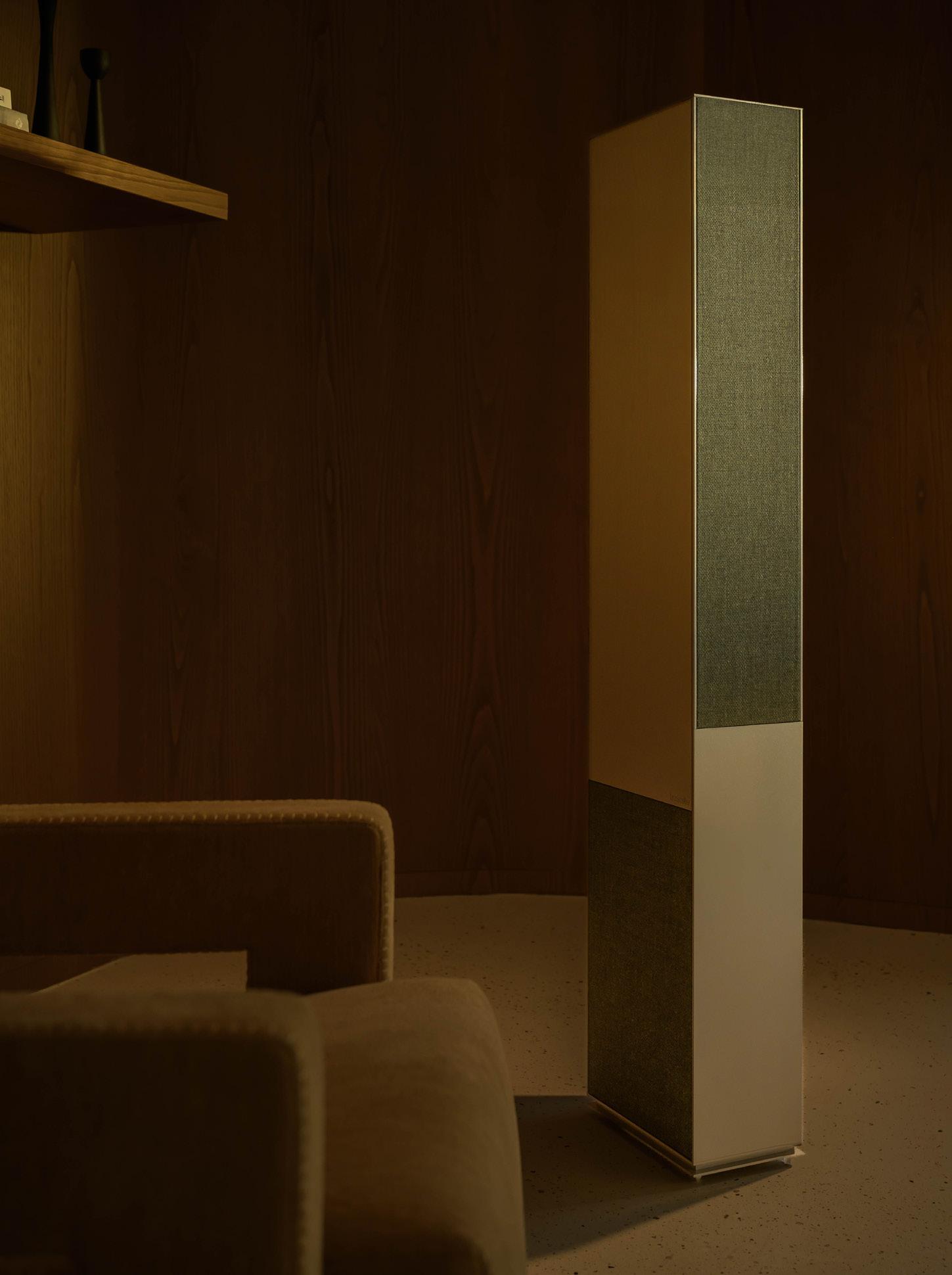
At the heart of our audio portfolio is the Aalto F5, our high-performance speaker designed for those who expect uncompromising sound
quality. It delivers powerful, expressive and detailed audio that does justice to music and cinema alike, while its sculptural form allows it to stand proudly within refined interiors. It is performance without compromise, both acoustically and visually.
Alongside this, our Rondo design speakers offer a more playful and customisable approach. With their distinctive circular design and choice of finishes and sizes, they blend seamlessly into a wide range of interiors while delivering clear, balanced sound across living spaces.
Together with Basalte amplifiers and AV components, these speakers form a coherent ecosystem where sources such as streaming services, turntables and TVs are unified into one elegant platform. For Indian homes, where entertainment often brings family and generations together, Basalte delivers
an experience that is immersive yet discreet, powerful sound, effortless control and timeless design, all working quietly in the background of everyday living.
Can you share examples of how motion sensors improve comfort and optimise energy usage in India’s diverse climatic conditions? Can you suggest a specific range?
Auro, Basalte’s motion sensor, makes everyday living both more comfortable and more energy-efficient. By detecting presence and ambient light, Auro can automatically control lighting, climate and shading based on actual use: lights switch on when someone enters and off when the room is empty, and climate settings adjust to occupancy rather than
running continuously. This reduces wasted energy in both hot, humid summers and cooler periods without compromising comfort.
In multi-generational homes, Auro also enhances convenience and safety, for example, by softly illuminating corridors or bathrooms at night when movement is detected.
Because Auro integrates seamlessly with Basalte Home, it works with scenes, schedules and logic rules across zones, delivering intuitive automation that feels natural while optimising energy use, all with a refined, unobtrusive presence in the space.
Could you highlight an India-based project where Basalte Home, Adelante, and multiroom AV solutions have come together to elevate the overall smart living experience?
One great India-based example is One Hyd Park in Hyderabad (Banjara Hills), integrated by Edomotics & Smato.
In this private apartment, Basalte Home
brings lighting, shading and music together in effortless scenes via Ellie and Fibonacci touch displays, keeping daily control intuitive and consistent throughout the home.
At the entrance, Adelante elevates the arrival experience with elegant door communication and integrated access control (including a discreet fingerprint reader), so welcoming guests feels seamless and refined.
For AV, the living room home theatre is completed with Plano in-wall design speakers, minimal in appearance, yet immersive in performance, delivering cinematic sound without visual clutter.
Looking ahead, what trends do you see shaping the future of luxury smart homes in India, and Basalte’s association with Smato?
Looking ahead, luxury smart homes in India will increasingly be defined by high-end quality, reliability and long-term service, rather than sheer technical features. Homeowners expect systems that perform flawlessly and
age gracefully with the architecture, and can adapt to evolving lifestyles without disruption.
This is where Basalte stands out, through refined European design, robust system architecture and products built for long-term performance.
Equally important is our close association with Smato Technologies, whose excellent local support, commissioning expertise and after-sales service ensure that every project meets the highest standards from installation to daily use. Together, Basalte and Smato deliver a luxury smart home experience in India that is not only elegant and intuitive, but also dependable, well-supported and truly premium over time.
Leading Residential Exhibitors at ISE 2026
Integrated Systems Europe (ISE) 2026 makes its grand return from 3-6 February at the Fira de Barcelona, Gran Via, inviting attendees to ‘Push Beyond’ the boundaries of technology and creativity. High-end design meets integrated control, entertainment and sustainable living in the Residential & Smart Building Technology Zone at ISE 2026, located in Halls 1 and 2.
Here you’ll find experts in connected living, comprising home automation and architectural lighting, such as Lutron (2G700), which offers advanced lighting control and motorised shading systems, or KNX (2J300), a globally recognised open standard for smart building automation. With KNX-compatible devices now covering lighting, heating/cooling (HVAC), security and energy management, there’s a renewed focus on sustainability as well as interoperability; also visit EelectronSpA (1D700) for a range of KNX solutions with Italian styling. Another technology ecosystem is available from ADI | Snap One + Control4 (2J150), covering AV distribution, automation, surveillance and remote management,
offering unified interfaces for lighting, climate, audio and video control across a property. If you want to step outdoors, visit Nice (2H400) for automation for gates, garage doors, solar shading, parking, wireless alarms, smart security, and access control, while DoorBird (2C330) greets visitors with IP-based video door intercoms and access control devices.
Sustainability is also served by intelligent PDUs and remote monitoring tools that control and optimise power usage. Gude (2P550), for example, is a specialist in professional power distribution and monitoring, offering tools to maintain stability and efficiency in smart home and building installations. Meanwhile, MSolutions (1E900), known for AV testing and
diagnostics tools, plays a critical role behind the scenes. Its solutions ensure optimal HDMI, HDBaseT, and USB connectivity performance, reducing downtime and troubleshooting complexity. Ubiquiti (1A800) is another choice for residential networking, offering scalable WiFi, switching and security gateways to ensure robust connectivity.
Belgian design specialist
Basalte (2G150) offers highend aesthetics with powerful control via sleek, tactile keypads, touchscreens and automation interfaces. Loewe (2E500) offers high-end television design, combining elegant form factors with OLED picture quality, smart TV capabilities and multiroom audio.
Sonos (1F500) is a leader in this space, with wireless speaker systems that deliver premium multiroom audio while integrating into
home automation ecosystems, while Bang & Olufsen (2C300) has been a watchword for innovative luxury audio for decades. Acoustic engineering plays its part too, with companies such as Artnovion (2B150) combining acoustic treatment panels and frames with elegant design, for residential as well as studio and venue environments.
A visit to Technology Integration Partners (2J500) will take you to D-Tools, Russound, Barco Residential, Savant, Domotz,
PrimeTheater, Steinway Lyngdorf and Fortress Seating, offering integration software, distributed audio, luxury projection, smart home platforms, network monitoring, bespoke cinemas, premium loudspeakers and custom seating for residential and commercial projects.
Integrated collaboration systems are becoming more prevalent in the residential space due to the rise in hybrid working. For example, Huddly (1C130) offers intelligent, software-defined cameras powered by on-device AI, enabling features such as autonomous framing, dynamic speaker tracking, and inclusive gallery views, supporting hybrid work models.
Though not situated within the halls that make up this zone, you can also find premium home automation and residential technology, including audio, lighting, collaboration and control products, elsewhere at ISE, notably at Crestron (3H200, 3H300).
World-Class Education Programme
Curated by CEDIA, the Smart Home Technology
Conference offers a content programme for smart home professionals seeking to stay ahead of industry change. Tuesday 3Thursday 5 February, the conference features expert-led workshops and courses designed to build technical expertise, strengthen business skills, and support the success of integration businesses. Content spans multiple CEDIA tracks, including lighting, energy, audio, AI, control systems, architecture, and IT & cybersecurity, with selected sessions delivered in Spanish to support a global audience.
Alongside the conference, attendees can take part in a hands-on CEDIA RP-32 Audio System Measurement and Verification Workshop on Monday, 2 February, focused on practical measurement techniques for residential and commercial applications.
Throughout the event, the Smart Home Technology Stage in Hall 2 will host complimentary daily sessions highlighting emerging technologies, practical insights, and innovation, providing a dynamic space for learning, inspiration, and professional connection.
Register Now
Don’t miss your chance to be at the forefront of industry transformation and ‘Push Beyond’ with ISE. https://register.visitcloud.com/survey/0x21eveo1ys2j
Register for FREE with the code ‘smarthomeworld’ and secure your place at
Smart Home Expo 2026 Returns to Mumbai
28•29•30 APRIL 2026
Discover what’s next in smart homes and intelligent buildings at Smart Home Expo 2026. Don’t miss the chance, to experience cutting-edge technologies, immersive demos, and direct access to 450+ leading brands. Don’t miss to register and keep yourself updated.
Mumbai, India – Smart Home Expo, India’s largest smart tech event for residential and commercial spaces, returns for its 7th edition from April 28–30, 2026, at the Jio World Convention Centre, BKC, Mumbai.
Building on the strong momentum of the previous edition, Smart Home Expo 2026 is set to bring the smart living and intelligent buildings ecosystem under one roof, with a 15,000 sqm gross exhibition area and 450+ exhibitors, in a format designed specifically for trade visitors.
The three-day show brings together 450+ leading brands showcasing solutions across smart home technology, home automation, lighting technologies, audio video solutions, smart security systems, smart building solutions, and consumer electronics, creating a focused platform for decision-makers to explore what’s next and build business across the channel.
Smart Home Expo 2026 is supported by a strong lineup of partners across key categories. The show features Havells Crabtree as the
Title Partner, Electronics Mart India Limited as the Powered By Partner, and KNX National India as the Technology Partner.
The Platinum Partners include Sonos, Cinebels, ProFX, Miantic AV, Vinshek, Smato, CP Plus, Cavitak, and KEI, while the Premium Partners includes AERO Visual Brilliance, RTI, Marantz, Basalte, GM Modular, BenQ, Epson, Optoma, Focal Powered by Naim,
ViewSonic, OKAS, Raylogic Control Systems Pvt. Ltd., Klipsch, Theory, Loewe, Smart Node Automation, James Loudspeaker, Dorset, LG, CasaDigi, B.E.G., Origin Acoustics, Gallo Acoustics, Crestron, Rako Controls, Sonus Faber, JBL, Digilux AI, Krix, L-Acoustics, Sound & Vision, MDT Technologies, moorgen, EverGlow, JR Automation Technology, Nice Group, Quba Architectural Products, and Modo.
Smart Home Expo 2026 is also backed by key industry organisations, like the Connectivity Standards Alliance (CSA) and the Z-Wave Alliance, supporting the show as Supporting Partners, and the Council of Architecture coming on board as a Knowledge Partner
A key highlight for 2026 is the return of the AV Demo Rooms, created as purpose-built, acoustically treated environments where professionals can experience high-end home
cinema and audio performance exactly as intended, across reference-grade speakers, immersive formats, premium projection, and integrated AV control.
Curated with leading global and Indian brands, the AV Demo Rooms are designed to support serious evaluation, deeper product understanding, and high-quality conversations for the audio-video and custom integration community.
Smart Home Expo 2026 will also feature the dedicated KNX Pavilion, returning as a focused showcase for KNX manufacturers, with the pavilion expected to host leading KNX brands as part of the show’s core automation ecosystem.
Beyond the exhibition floor, Smart Home Expo continues to expand its experience-led and knowledge-led formats through Lighting Connect, Smart Space Awards, and the Smart Building Summit, giving visitors multiple ways to engage with design, technology, and real project thinking across the built environment. Lighting Connect brings the lighting design and technology community together to explore smart lighting, lighting controls, and human-centric design through focused conversations and practical insights.
THE FUTURE OF SMART LIVING — AUTOMATION, AUDIO-VIDEO, AND INTELLIGENT BUILDING TECHNOLOGIES
The Smart Space Awards continue to recognise excellence where design and technology come together across residential and commercial projects, celebrating the teams shaping modern smart spaces.
The Smart Building Summit is positioned as a dedicated forum exploring the future of intelligent buildings and connected spaces, bringing together perspectives on how innovation, strategy, and design are redefining the built environment.
Scaling Global AV Brands in India and the Middle East & North Africa
With India and the MENA positioned as promising market for global smart technology brands, Manoj Manchala and Saurabh Thakar, Founders, Miantic AV, offer a strategic breakdown of why traditional distribution models fall short and how execution-led partnerships are reshaping regional outcomes.
For global AV and smart technology brands, the markets of India and MENA region are no longer “optional.” They are the primary engines of global growth. With a combined pipeline of billions in premium residential developments and “giga-projects,” the appetite for international innovation is unprecedented.
Yet, many brands find that entry does not guarantee success. The “Execution Gap”—the distance between a global brand’s vision and its local reality—is where most international expansions falter. Fragmented distribution, inconsistent technical standards, and price volatility often dilute a brand’s value before it can even achieve scale.
“In these high-velocity markets, visibility is a commodity, but structure is a competitive advantage. We don’t just move products; we build the infrastructure that allows a brand to thrive for the next decade, not just the next quarter.” Explains Manoj Manchala, Founder, Miantic AV.
Why Traditional Distribution Fails
The traditional “box-moving” distributor model is ill-equipped for the complexity of
the modern Smart Home and Pro-AV sectors. To succeed in New Delhi or Riyadh, a brand needs more than a warehouse; it needs Brand Governance. This means ensuring that every integrator, every cable, and every user interface reflects the high standards set at the brand’s global headquarters.
THE MIANTIC ADVANTAGE
De-Risking Your Market Entry: The Miantic Framework
Miantic AV was founded to solve the “Execution Gap.” We act as the local arm for international brands, providing the discipline and technical depth required to win in complex residential and commercial environments.
1. Structured Market Entry
Clear go-to-market planning, pricing discipline, phased rollouts, and regulatory readiness ensure controlled brand entry without early value erosion.
Disciplined representation, channel governance, and value protection sustain premium positioning as markets mature.
Brands developed by Miantic AV have achieved leadership positions through disciplined market entry and sustained execution.
Control system platforms such as RTI have emerged as widely adopted solutions in premium residential projects, while structured cabling brands like KORDZ have secured leading positions through focused channel strategy. In the luxury segment, Black Nova has been positioned as a premium cable brand
aligned with high-end residential design.
“We partner with brands that value longterm market leadership over short-term volume. Our goal is to make our partners the ‘default choice’ for the region’s most prestigious projects.” Adds Saurabh Thakar, Founder, Miantic AV.
Regional Growth Engine
Miantic operates with dedicated execution focus across India and the MENA—prioritizing depth over spread and consistency over speed. Expanding into India and the MENA requires more than ambition—it requires a Distribution partner with skin in the game. Miantic AV provides the local expertise and the execution framework to turn your global vision into regional dominance.
ABOUT MIANTIC AV
Miantic AV is a strategic AV and smart technology distribution and market development partner enabling international brands to scale responsibly across highgrowth markets.
India | MENA For More Information: info@miantic.com | www.miantic.com
Certified
A Tech-Driven Hospitality Experience at House of Yanki Sizzlers
For the House of Yanki Sizzlers, the collaboration between EVK Architects and Future Automation Solutions results in a smart hospitality environment, powered by automated lighting, immersive audio, and integrated entertainment systems.
House of Yanki Sizzlers, located in Gandhinagar, Gujarat, is a two-level hospitality destination set in proximity to GIFT City, the state’s emerging financial and business hub. This project brings together a restaurant, banquet facility, and a high-energy discotheque under one roof, offering a dynamic mix of dining, social, and entertainment experiences.
Designed by Ar. Ekta Kapadia, Principal Architect, EVK Architects, with System Integration by Harsh Mehta, Managing Partner, Future Automation Solutions (a KNX, CEDIA CoI, HAA Level I & II, and Casambi 4C certified
professional), the House of Yanki Sizzlers exemplifies an elevated hospitality experience through seamless automation that enhances comfort, ambience, and entertainment.
Adding his insight on the technical details, Harsh Mehta explains, “The project was designed with a focus on user-centric automation, where each system, ranging from smart surveillance to lighting controls, surround sound, and zone music, works together to create an intuitive, interconnected environment which helps the team to manage all the verticals easily and quickly. The layout
was carefully considered to ensure that every space was optimised for both functionality and entertainment, with a focus on providing accessibility and ease of control for the management team.”
A major inspiration behind the design was the owner’s philosophy of creating a space that allows their guest to enjoy the ambience along with mouth-watering food.
FAS has incorporated high-performance systems like the Background and Foreground Ambient Music for the Restaurant, Yamaha Active Stagepass Speakers for the Conference area and Yamaha Custom Calibrated High SPL Loudspeakers, to Boom up the space while having parties, all of which were strategically placed to create an unparalleled entertainment experience throughout the property.
“Our audio design for the banquet space incorporated 4 Yamaha Passive Loudspeakers
paired with 2 Passive Subwoofers, calibrated with a DSP and a mixer.” says Harsh Mehta.
Due to the space limitations inherent in this commercial hospitality project, the team faced several design challenges in the audiovisual installation. The team has skillfully opted for a discreetly integrated projector and motorized screen, effectively camouflaging the technology without sacrificing space.
All the entry and exit points have Motion sensors to save energy and navigate the guests to the main entry.
In this open ceiling project, each piece of equipment installed contributed to enhancing the overall grid design.
To ensure complete coverage without blind spots and to maintain an unobstructed view within the open ceiling concept, all cameras were strategically suspended from the ceiling.
Perhaps the most striking aesthetic achievement is the integration of the Projector–motorised screen for an exceptional viewing experience. The AV system is curated for various purposes like background music, conference areas, discotheque performance, function, or party-oriented blends in the overall design of the project. The overall result is a carefully curated design where technology enhances the environment, creating a sophisticated yet functional space.
The entire property’s lighting system is under automation control, including all direct and technical illumination, decorative lighting, focus lighting, façade, in a way that enhances the ease of use, via scenes, timers and global controls.
Dimming and Tunable Lighting: All the technical lighting in the project is controlled on a Digital dimming (DALI) platform, again on KNX. With DALI as the controller, the lights are tunable and can be meticulously controlled according to the preferences of the property’s requirements.
Motorized Shade Solutions: For both floors, Motorised shading solutions were preferred, offering comfort, noise-free and seamless control of automation on KNX keypads as well as Control4 platform, enabling the use of smart timers tagged to geolocation to allow optimal sunlight and maximum ambience.
HVAC Integration & Scheduling: For VRV Air conditioning Systems, an IP gateway Interface Adapter was installed. VRV AC Control was provided through COOLMASTER, which is feedback-driven and integrated with KNX to enable thermostat utility via user interfaces. This provides real-time status of every indoor unit along with mode and temperature, also maintaining and managing schedules.
Background Ambient music: Both floors give a nice and soothing experience of soft music while enjoying the meal. Also, the system allows it to host a stand-up comic event while plugging in the wireless microphones.
Audio-Visual solution: Enhances guests’ experience to enjoy live matches and sports
on a bigger screen of 120” with motorised shaft, when not in use it can be rolled up.
Discotheque Audio: It gives the liberty to owners to host grand parties and wedding functions to cater to a large audience of youth near GIFT city.
Sensor Controls: Lighting control sensors have been deployed across the passages, corridors and Toilets for easy navigation at night and ease of use without really worrying about energy wastage. The lux levels, motion pattern, and sensitivity, zone detection and delay times are all customed for each space.
Complete Wi-Fi and Networking: The client demanded strong WiFi connectivity in both floors. We managed the network, keeping the system decentralised within the floor limits and empowering the TVs, Projectors, Audio amps, with LAN connectivity.
Smart Surveillance: The smart surveillance system provides complete coverage of both floors, including the crucial kitchen area,
which, despite its complex layout and heavy machinery, is monitored effectively with strategically placed cameras.
Signage TVs: At the bakery counter and entrance of the property allows the client display lip-smacking delicacies and their promotional videos. Also allows the guest to display their name on the TV while hosting a wedding or party.
The network was structured in a decentralised manner to reduce unnecessary wiring. Network switches were strategically positioned across both floors, with nearby devices like cameras, WiFi access points, and amplifiers linked to their corresponding switches. The entire space is WiFi-6 enabled.
In conclusion, Maulik Patel, Director of Projects at Future Automation Solutions, says, “Our schematics for every subsystem were superdetailed, which helped us to execute this site seamlessly, especially our electrical SLDs, Audio Video SLDs, space planning and more.”
TECH INSIGHTS
Lighting and Shading Controls: KNX Backbone, Hardware from Theben GmbH Backend, MDT Touchpads, eElectron IP Interface
Winner of the Smart Space Awards 2025, this bespoke home theatre, designed by Gauri Khan Designs with automation and AV solutions executed by Rishabh Jain of Audio & Beyond, sets a new benchmark for immersive, design-led entertainment.
Designed by Gauri Khan, Founder, Gauri Khan Designs, the home theatre was meticulously executed by Rishabh Jain, Managing Director and Partner at Audio & Beyond. A seasoned sound engineer, DJ, and tech entrepreneur, Jain brings over 16 years of professional experience in audio engineering and home automation. A certified home automation programmer, he has designed and delivered more than 100 bespoke audio rooms, each calibrated for immersive and finely tuned sound experiences.
Designing a Multifunctional, Non-Linear Space
The project centres on a distinctive non-linear room geometry defined by seven corners, conceived as a flexible, multifunctional environment.
Designed to be immersive yet adaptable, the space transitions seamlessly between hosting lively social gatherings, functioning as an intimate home theatre for movie
screenings, accommodating dedicated zones for games and recreation, and incorporating a thoughtfully designed bar for drinks and refreshments.
Responding to the room’s unconventional geometry, the design introduces innovative spatial strategies that optimise usability and circulation, ensuring that each function coexists seamlessly without compromise.
Key considerations included layered lighting, adaptable seating configurations, finely tuned acoustics, and curated décor elements that reflect the user’s personality.
Integration with Space
Smart systems were carefully integrated in alignment with the spatial design to enhance both functionality and user experience. For
zone-based smart lighting, wall lamps on DALI dimming were used for ambient lighting, while the bar unit features backlit illumination and Proto Pixel integration in the ceiling to synchronise lighting with audio and video.
Pre-set scenes allow effortless transitions between movie screenings, parties, and casual gatherings. A high-resolution LED wall serves as the visual focal point, complemented by a multi-zone immersive audio system. Centralised control and voice-assisted technology ensure intuitive operation.
Smart Technologies Overview
The smart infrastructure is anchored by Control4, enabling centralised control of lighting, audio-visual systems, temperature, and other smart functionalities through a single interface. Advanced programming
allows tailored automation scenarios and optimised energy efficiency. Design & Technology Integration: Challenges Key challenges included LED wall installation within limited room height, integration of a colour-changing ceiling system, spatial constraints, and the addition of dual centre channels above and below the LED wall.
Engineering Solutions
Using Trinnov speaker placement guidelines, the system evolved from a 13.12.6 to a refined 13.8.6 layout. A transition from K-array Domino to Kayman series speakers enabled compatibility with the LED wall configuration. The final calibrated layout stands at 14.4.6, powered by the Trinnov Altitude 32 processor.
Blending advanced smart technology with refined design sensibilities, this home theatre
exemplifies how future-ready entertainment spaces can be both technically robust and experientially rich, setting a new benchmark for immersive residential entertainment.
Hardware Components Used in the Project:
TrinnovAltitude 32: A high-end home theatre processor designed for immersive audio experiences. It’s capable of decoding and rendering various audio formats, including Dolby Atmos and DTS:X Pro, with up to 32 individual outputs and 64 processing outputs. Key features include :
Audio Processing: 64-bit floating-point processing, with native sampling rates up to 192 kHz
Connectivity: 8 HDMI inputs, 2 HDMI outputs (4K 120Hz/8K 60Hz), S/PDIF inputs and outputs, AES3 inputs and outputs
Calibration: TrinnovOptimizer technology for precise speaker calibration and room optimization
K Array Power Amplifiers: High-performance power amplifiers designed to drive complex speaker systems. While specific details about the model are scarce, K-array amplifiers are known for their reliability and efficiency in large-scale installations. We have used KA208, KA28 & KA104 Power Amplifiers to power the K-Array speakers.
PlayStation 5 from Sony: A next-generation gaming console capable of producing high-quality graphics and immersive audio. Key features include:-Graphics: Ray tracing, 8K resolution support-Audio: 3D audio capabilities.
Panasonic DP-UB820EB Blu-ray Player: A 4K Ultra HD Blu-ray player designed to deliver exceptional video and audio quality. Key features include:Video: 4K resolution support (3840 x 2160), HDR10+ and Dolby Vision support-Audio: High-quality audio output, including Dolby Atmosand DTS:X
K-ARRAY SPEAKERS: We have used K-Array top of the line Line Array speaker called KaymanSeries (KY102), for LCR, Domino Series (KF26) for surrounds &Ceiling & we have used the Thunder Cinema series subwoofer (KSC18P)
Alta Labs Access Points and Network Port: Networking equipment designed to provide reliable and fast connectivity. Alta Labs offers solutions for wireless networking and network infrastructure.
Protopixel Brain: An LED processor designed for high-quality visual displays. Key features include:Processing: Dual processing for seamless visualsConnectivity: Multiple input options for flexible connectivity
MadVREnvy Pro: A high-end video processor designed to deliver exceptional image quality.
BenQ Launches TK705i & TK705STi 4K Home Projectors
Reinforcing its leadership in home entertainment innovation, BenQ, the global leader in display technology, has introduced its latest 4K Home Projector duo — TK705i and TK705STi, designed to deliver immersive, plug-and-play entertainment in any modern living space.
Built for Indian homes that balance work, play, and value leisure time, the new TK705i series brings together true 4K UHD clarity, 3,000 ANSI lumens brightness, and 16W trevolo Speaker System — transforming everyday streaming, gaming, and movie nights into cinematic experiences that fit seamlessly into daily life.
“Indian households want large-screen entertainment that’s smart, simple, and ready
to perform — without the hassle of setup,” said Rajeev Singh, Managing Director, BenQ India & South Asia. “With TK705i and TK705STi, we’ve built projectors that think for you — offering effortless setup, built-in Google TV, and incredible visual accuracy that adapts to any home.”
Seamless Setup, Instant Cinema
The TK705i series offers convenience with its auto focus, keystone, screen fit, obstacle avoidance, and eye protection — delivering a perfectly aligned screen in seconds. Whether set up in a living room, bedroom, or compact apartment, users get a seamless big-screen experience without any manual adjustments. The TK705i offers a 1.0–1.3x motorised optical
zoom for flexible placement in larger rooms, while the TK705STi’s short-throw design projects a 100-inch image from just 1.8 metres — making it perfect for smaller, multi-purpose spaces common in Indian homes.
True 4K Brilliance for Every Moment
Powered by BenQ’s HDR-PRO™ and CinematicColor™ technologies, both models deliver 98% Rec.709 colour accuracy, enhanced contrast, and lifelike detail. From binge-worthy OTT series to intense live sports, every frame looks cinematic and immersive — without needing a dedicated theatre room.
Smart Entertainment, Simplified
With built-in Google TV and official inbuilt Netflix, the TK705i and TK705STi bring streaming, voice control, and smart recommendations directly to the projector. No additional dongles or devices needed — just power on and start watching.
Access over 10,000+ apps, get personalised content suggestions, and navigate effortlessly with Google Assistant or the BenQ SmartRemote app.
Ready for the Game, Tuned for Performance
For gamers, the projectors deliver ultralow 5ms input lag at 4K/60Hz and include dedicated HDR-FPS and HDR-RPG modes optimised for real-time gameplay.
Whether you’re exploring open worlds or racing at high speed, Auto Low Latency Mode (ALLM) and HDMI 2.1 with eARC ensure smooth, responsive experiences across PlayStation 5, Xbox Series X/S, Nintendo Switch, and Steam Deck.
Immersive Sound, Inside-Out
Dual 8W chamber speakers with Dolby Audio and Bluetooth 5.2 complete the cinematic experience — offering rich, room-filling sound that enhances both movies and games.
Pricing & Availability
The BenQ TK705i and TK705STi 4K Smart Home Projectors will be available through BenQ’s select authorised retail and online partners across India starting from December onwards.
Key Highlight:
True 4K UHD Resolution with HDR-PRO™ and CinematicColor™
Built-in Google TV with Official Netflix
3,000 ANSI Lumens Brightness for Bright Rooms
8-Way Smart Image Adaptation for Instant Setup
Ultra-Low 5ms Input Lag and ALLM for Gaming
HDMI 2.1 with eARC, USB-C (30W PD) Connectivity
Dual 8W Speakers with Dolby Audio & Bluetooth 5.2
Compatible with BenQ Smart Projector Control App
Supports BenQ AR Projector Planner (Only for iPhone & iPad Users)
TK705i is Priced at a MRP of ₹199,990& TK705STi at ₹2,25,000
Josh.ai Launches Josh Edge: A Voice-First Remote for Intelligent Homes
Josh.ai, the leader in Artificial Intelligence in the smart home, has reimagined the power of handheld remote control with the delivery of Josh Edge. The launch follows a successful beta program, which provided early access to select dealers who helped shape the user experience through hands-on testing and feedback. Insights from the program informed final refinements, validated the product’s market readiness, and reinforced Josh.ai’s belief that its partners should be involved early in the product development process.
Throughout the beta program, partners shared their feedback on performance, usability, and day-to-day experiences with Josh Edge:
“The Josh Edge Remote feels effortless. It’s convenient, easy to use, and always ready the moment you pick it up. Instant responsiveness is where a lot of newer remotes struggle; this one doesn’t. Voice control is the multiplier. It unlocks features you simply can’t fit onto buttons.” Alex Lelchuk, Lelch AV
“Within the first few days we had our hands on the Josh Edge remote, it became the most popular remote in the house. After only a short amount of use, it was intuitive and fun to use. Every other remote went in the drawer!” Scott Stenger, Colorado Tech Guys.
NETGEAR Engage Controller 2.4 to be displayed at ISE 2026
NETGEAR Engage Controller 2.4 with groundbreaking offline provisioning will be displayed at ISE 2026, Booth 2U240, February 3-6 in Barcelona. The new M4350 models address two critical needs: the demand for secure, locked connections and the need for high-bandwidth solutions for demanding AV applications.
Engineered specifically for live production, touring, and other mission-critical environments, this switch offers a unique combination of industry-standard Neutrik® locking connectors:
• 16 x 2.5G PoE++ ports (up to 1,130W) for powering AV endpoints.
• 8x Neutrik etherCON ports for secure, live install connections
• 4x 25G SFP28 uplinks for high-bandwidth aggregation.
• Modular uplink card slot with 4x optional interface cards
• Redundant internal power supplies with Neutrik powerCON connectors
• SMPTE ST 2110 support with grandmaster and boundary clock functionality
Choose your preferred 1G, 10G, or 25G fiber transceivers and adapt effortlessly to your
specific installation needs, all while ensuring cables stay securely connected during demanding live events.
And the Neutrik connectors are fieldreplaceable so if a forklift happens to crunch one of the switches, the user can replace the connector right there in the field.
M4350-16C (CSM4316) – 100G Connectivity
Responding to integrator demand for highbandwidth solutions, the M4350-16C delivers 16 ports of 100G connectivity, ensuring you can deploy demanding, high-bandwidth AV applications without delay.
• 16x 100G QSFP28 ports for spine, leaf, or core deployments
• Non-Stop Forwarding (NSF) with hitless failover
• License-free Layer 3 routing and multicast
• Quiet operation for AV and broadcast environments
• For aggregation and core layers, this switch delivers massive throughput and simplicity at scale for networks of any size.
Available starting in March, these new models bring the M4350 portfolio to a total of 18 offering enterprise-grade managed switching with connectivity options spanning 1G to 100G.
Both models support the rigorous timing needs
of SMPTE ST 2110, and TAA-compliant SKUs are available for government applications.
Waterfall Audio to Unveil the LCR1000 at ISE 2026
Waterfall Audio, a French manufacturer renowned for its high-end loudspeakers that combine cutting-edge acoustic engineering with elegant, space-conscious design, will unveil the LCR1000 at ISE 2026 on Booth 2D190. Highly regarded by integrators worldwide for its outstanding performance-to-size ratio and ease of integration, Waterfall’s Pro Custom Series celebrates 10 years of international success this year.
Sitting at the top of the range, the LCR1000 is specifically designed for cinema rooms up to 100 m², delivering reference-level performance in demanding environments. Remaining faithful to Waterfall’s shallow-depth design philosophy, which preserves valuable real estate by minimising the space required behind the screen, the LCR1000 requires less than 20 cm of recess depth. It integrates seamlessly with Waterfall’s proprietary baffle structure, enabling modular installations with unmatched flexibility and rapid deployment.
The LCR1000 features a two-part architecture, consisting of two mechanically independent LF & HF modules designed to be stacked on top of each other. For ultimate performance, it operates as standard in active bi-amplification, in combination with the WATERFALL RS700 “Bi-amp Edition” amplifier by ATOHM.
The low-frequency section, housed in a bassreflex enclosure, covers the 40 Hz - 400 Hz range. It is equipped with four 18cm ATOHM LD180 long-excursion drivers, delivering tight, controlled and musical bass performance.
The high-frequency section operates from 400 Hz - 28,000 Hz. This closed-back, twoway module is built around an 18 cm ATOHM MLD180 driver specifically engineered for midrange reproduction, paired with a highefficiency 28 mm ATOHM neodymium tweeter. The reproduction of voices and fine details rivals the most refined hi-fi speakers, even at unprecedented sound pressure levels.
RTI’s Integration Designer 11 Redefines Smart Control Programming
RTI has released the latest update to its control system programming software, intended to enhance project workflows. Integration Designer 11 combines powerful new control and automation programming tools with a beautiful new user interface for the fastest custom installation ever.
The new Integration Designer 11 elevates every installation, from single-room projects—media room, office, boardroom—to sophisticated smart homes and commercial spaces. Its integrated System Manager and built-in Driver Store add programming power while saving time on every project. And the beautifully intuitive new “Coral” user interface elevates the user experience even further.
With its adaptive auto-programming intelligence, the System Manager adds feedback for rooms, devices, and automations, enabling programming to be shared across the project and saving valuable time. Let’s say you create a macro for the AVR, cable box, lighting,
and shades when watching cable TV in the family room. The System Manager remembers those commands and brings them forward to your next related macro, such as when you add a Blu-ray player or Roku media streamer to the room.
With the built-in Driver Store, you have access to all drivers without leaving the software and searching on a separate driver site. This save you time and also ensures you are always working with the most current drivers. Updating an existing system? Integration Designer 11 will tell you which drivers need an update.
1 SOUND Introduces the Sona 35
The Sona 35 is a full-range, high-fidelity architectural loudspeaker. This single-channel, 3-way point source delivers beautiful sonic quality with an extended bass response to 58 Hz. With its slim, compact form factor—just 32 inches long and less than 4 inches deep—the Sona 35 provides an impressive SPL and an extra octave of frequency response.
The Sona 35 is ADA-compliant, standing only 4” from the wall or ceiling when mounted using the included recessed mounting bracket. It can be installed horizontally or vertically, recessed into a wall, or aimed using the optional Swivel Mount accessory, allowing for downtilt and/or horizontal rotation in either orientation. This versatility makes the Sona 35 ideal for distributed audio applications, such as hospitality venues, theaters, and amusement parks, as well as conference rooms, classrooms, residential spaces, and more.
The Sona 35 is IP55-rated and saltwaterresistant, making it suitable for both indoor and outdoor environments. It is available in two versions: one featuring a marine-grade cable gland and A4 stainless steel 316 hardware, and another with a screw terminal connector. Like all 1 SOUND loudspeakers, the Sona is available in custom colors and finishes.