SMARTHOME WORLD




Umberto


Umberto
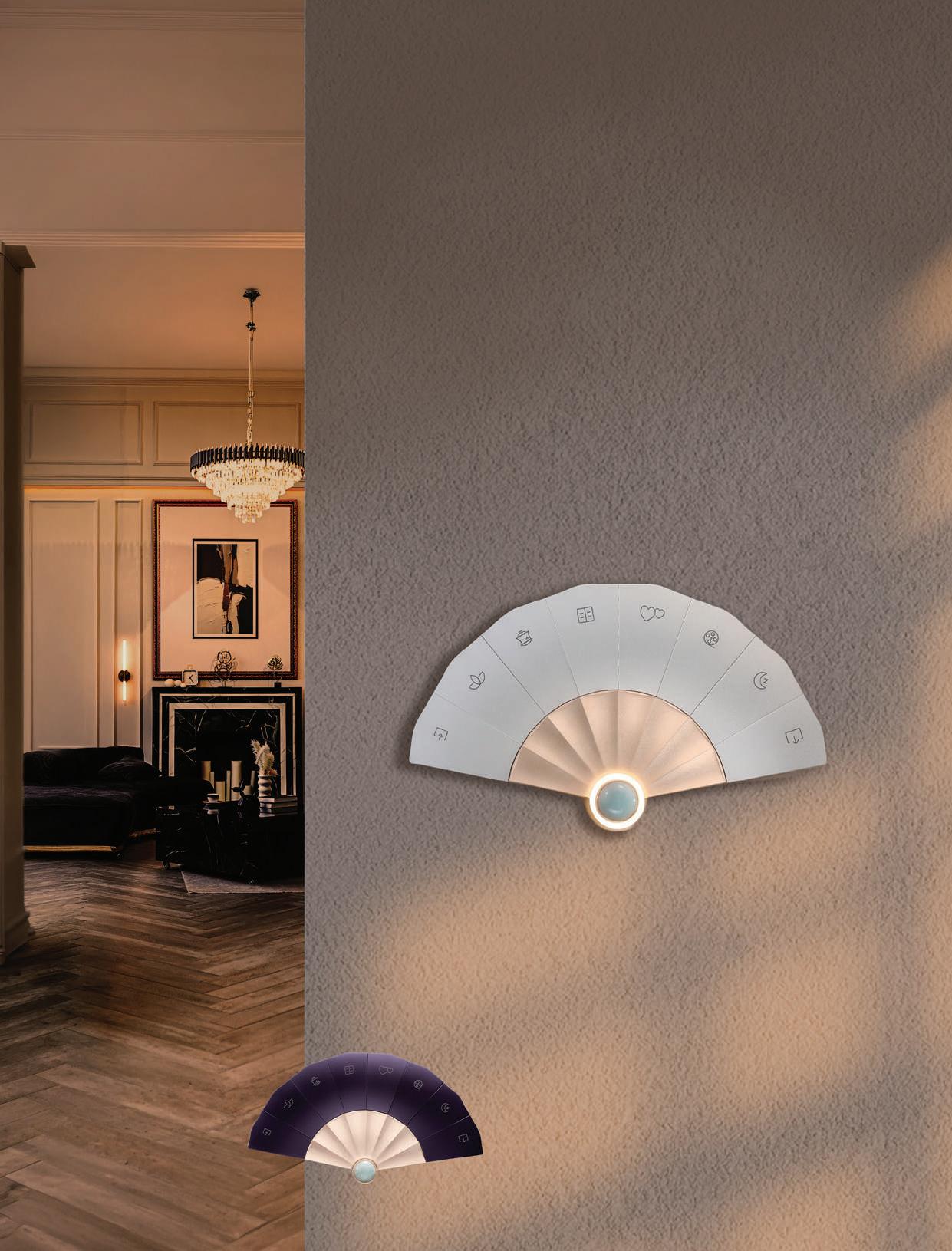
A symphony of elegance and intelligence, Havells Fanora 8-Button Smart Home Automation Panel works exclusively with the Havells Buspro Wired Automation System to seamlessly control lighting, curtains, scenes, music and much more.


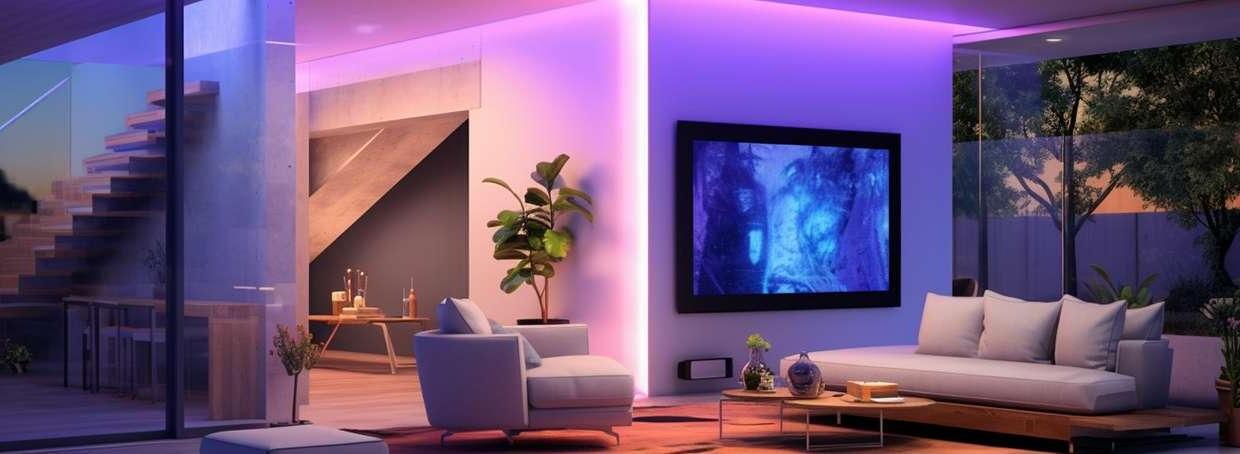
AI is the latest buzzword in the home automation market. Smart Home World asks industry experts: Are AI-powered homes hype or reality? The experts share their real-world applications, challenges, and the future of connected living in the cover story.
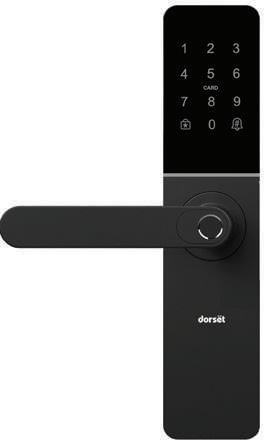
From keyless entry to personalised access, Yale demonstrates how smart security is making homes safer, simpler, and more connected than ever before.
Markus Pieprznik, Head of Sales, BEC Akustik, discusses the brand’s pioneering flat-diaphragm loudspeaker technology, its commitment to architectural audio innovation, and its growth strategy in India and beyond.
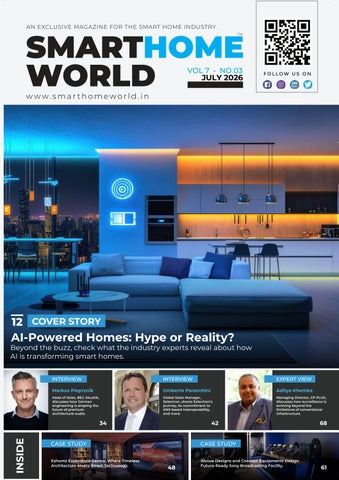
Umberto Paracchini, Global Sales Manager, Eelectron, reflects on the company’s global growth, its commitment to seamless KNX interoperability, and the innovations shaping the future of intelligent home and building automation.
At Crescendo House in Mumbai, intelligent automation blends effortlessly into the architecture. Designed by Soch Design Studio and System Integration by
Lazynest, the home balances technology, comfort, and understated luxury.
Designed by Arquite, the Ezhomz Experience Centre in Delhi provides an immersive, hands-on experience of the latest audio, video, lighting, security, and home automation technologies, all thoughtfully integrated into a refined architectural setting.
Designed by Alcove Designs with system integration by Concept Equipments, Sony Broadcasting sets a new benchmark for future-ready broadcast facilities through intelligent infrastructure, smart building technologies, and secure workflows.
Aditya Khemka, Managing Director, CP PLUS, writes on how surveillance is evolving beyond the limitations of conventional infrastructure. He elaborates on how 4G-enabled and solar-powered security solutions are making reliable, intelligent surveillance accessible to remote homes and businesses across India.
The latest product launches, technology innovations, industry developments, and market updates from the world of smart homes, intelligent lighting, home automation, and connected living.










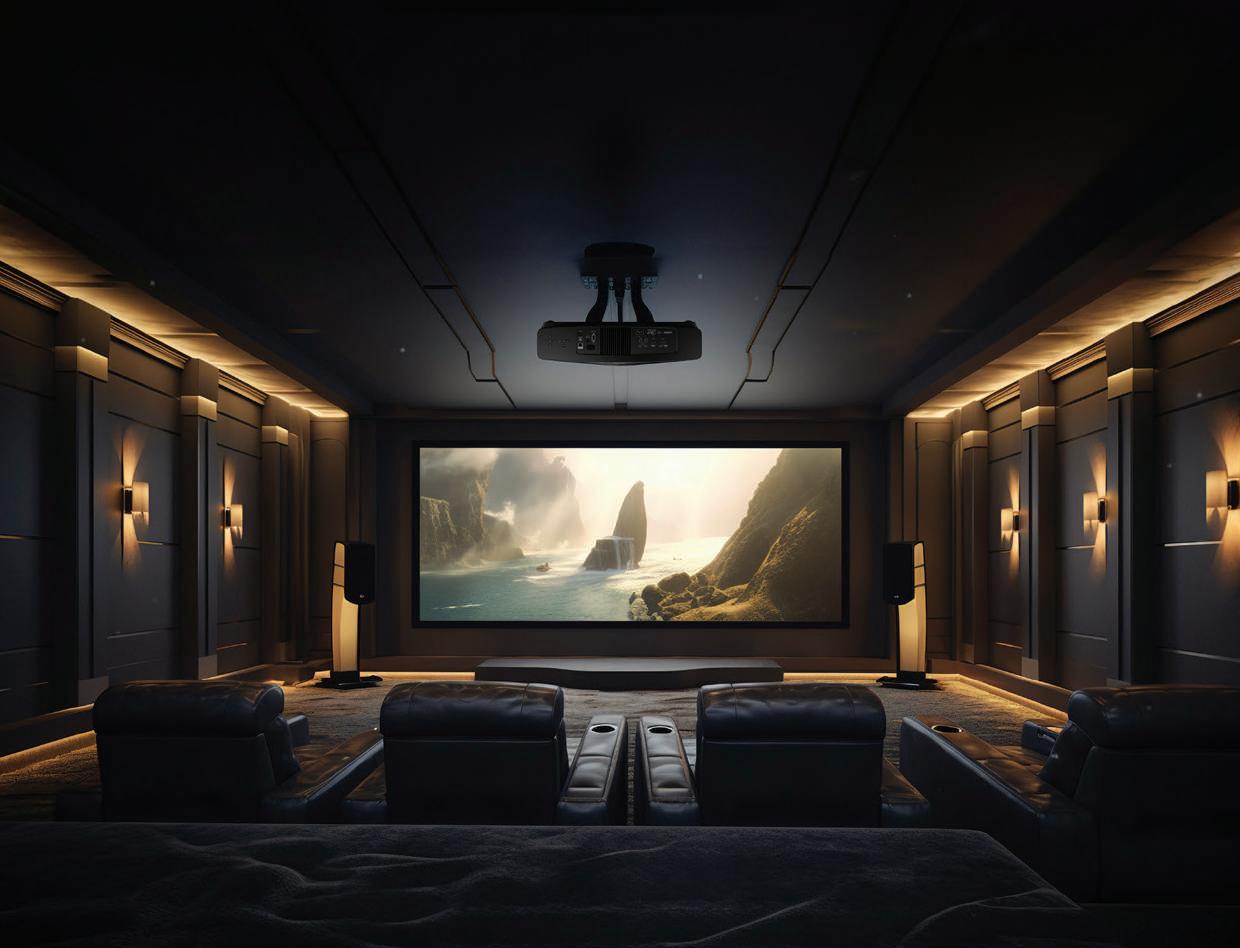
Experience Every Movie Exactly as the Director Intended.
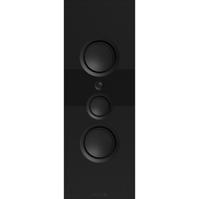
From the quietest dialogue to explosive action sequences, the Triad Cinema Reference Series delivers breathtaking clarity, e ortless dynamics and immersive surround sound for luxury home cinemas and reference-grade media rooms.
Powered by Triple-Matrix Composite Drivers featuring diaphragm made of nano-woven carbon ber, graphene, and non-woven Kevlar ber, along with a Precision Shorting-Ring Motor Architecture.
A premium No-Compromise Crossover ensures expansive imaging, wide dispersion and tight, articulate bass—creating a cinematic experience that is both powerful and incredibly natural.
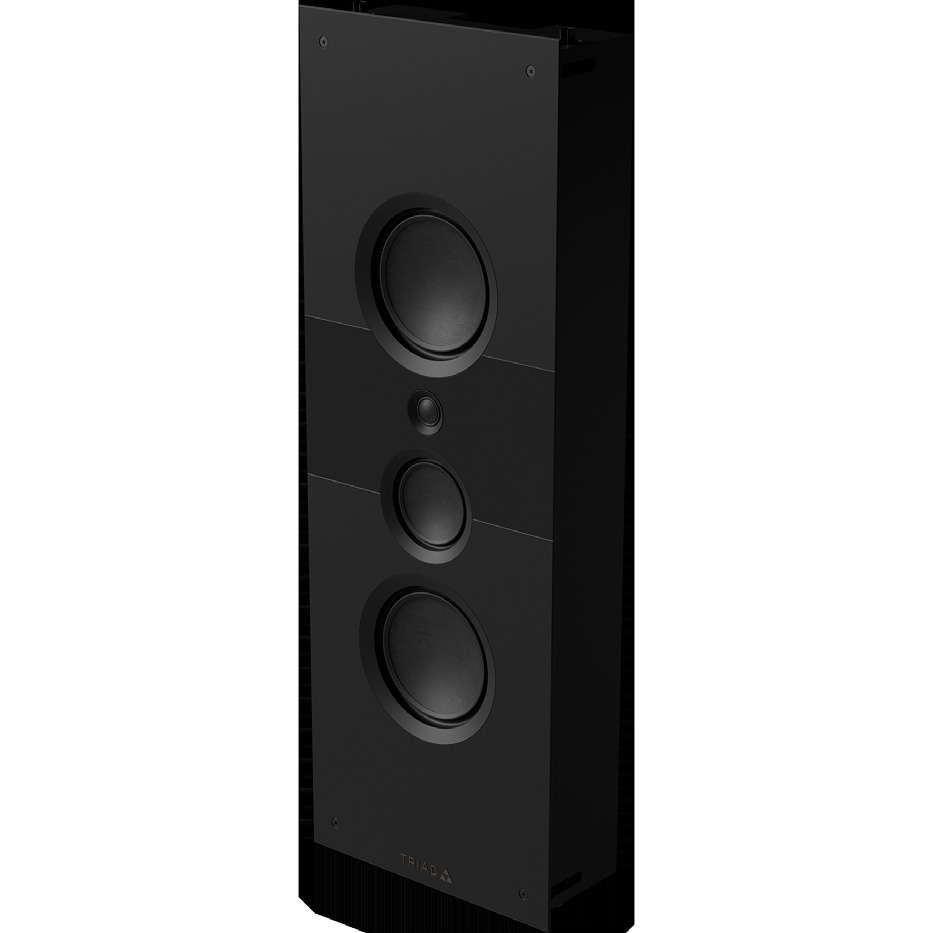
TECHNICAL HIGHLIGHTS
• Triple-Matrix Composite Driver Technology
• Nano-woven carbon fiber, Graphene, and Non-woven Kevlar fiber
• Precision Shorting-Ring Motor Architecture
• Premium Linkwitz-Riley Crossover Network Up to 500W Peak Power Handling
• 92 dB High Sensitivity
• Wide Frequency Response Sealed Enclosure for Fast, Accurate Bass
• Available in InWall LCR & InWall Surround Models
Luxury Design. Reference Performance. Designed to disappear into the architecture while delivering uncompromising cinema-quality sound, the Triad Cinema Reference Series sets a new benchmark for premium home entertainment.
Hear Every Detail. Feel Every Moment.

INDIA DISTRIBUTOR FOR ADI-SNAPONE
Mahkam Poorviaum Ventures Pvt Ltd #11, Global Heights, 8th Cross, Vijaya Bank Colony Banaswadi, Bangalore – 560043 Karnataka, India
Contact our team: +91 95780 72459
Emails: order@m2msmarthome.com











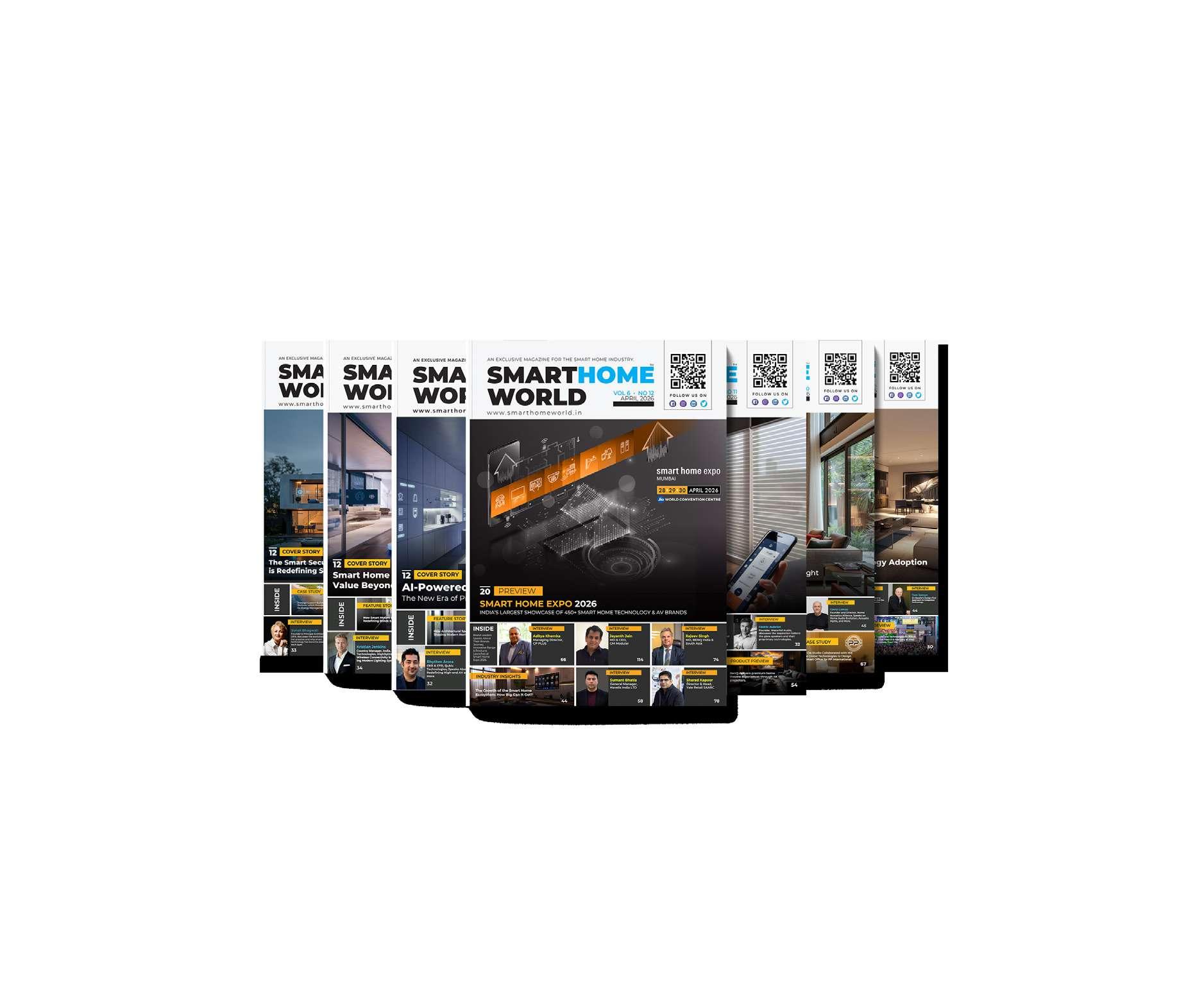
As the industry continues to evolve, so will the conversations around it. We hope this issue keeps you informed, inspired, and excited about what lies ahead in the world of connected living. Every issue of Smart Home World is an opportunity to explore the ideas, brand innovations, and professionals doing remarkable work in this segment. This edition is no different, bringing together expert perspectives, inspiring projects, and the latest developments from the world of smart technology.
Our Cover Story takes a closer look at one of the industry’s biggest talking points: ‘AI-Powered Homes: Hype or Reality?’ We speak with leading experts to understand where AI is already making a difference, the challenges it still faces, and what the future could hold for Smart Homes.
In our interview section, Markus Pieprznik, Head of Sales at BEC Akustik, shares how the company is redefining architectural audio, while Umberto Paracchini, Global Sales Manager at Eelectron, discusses innovation, KNX interoperability, and the company’s vision for intelligent home and building automation.
Our Case Studies showcase three distinctive projects, from the elegantly automated Crescendo House in Mumbai and the immersive Ezhomz Experience Centre in Delhi to Sony Broadcasting, a state-of-the-art broadcast facility that demonstrates the power of intelligent infrastructure.
Also in this issue, Aditya Khemka, Managing Director of CP PLUS, explores how 4G-enabled and solar-powered surveillance solutions are extending intelligent security to remote locations.
Whether you’re an integrator, designer, architect, technology enthusiast, or industry professional, we hope this issue offers valuable insights and fresh inspiration for the journey ahead.
Happy reading!
Chief Editor: Swati Balgi swati@smarthomeworld.in
Assistant Manager - Sales: Monika Agnihotri monika@smarthomeexpo.in


Marketing Head: Sandeep Singh sandeep@smarthomeworld.in
Tech Journalist: Sunny Sawant sunny@smarthomeworld.in
For More Information Contact Us: +91 81690 58048
Published by: WORLD MEDIA & EXPO LLP.
Ecostar, 603, Vishveshwar Nagar Road, Churi Wadi, Goregaon (East) Mumbai, Maharashtra 400063
Engineered for Excellence
Bringing Spaces to Life, with N-Labs !!
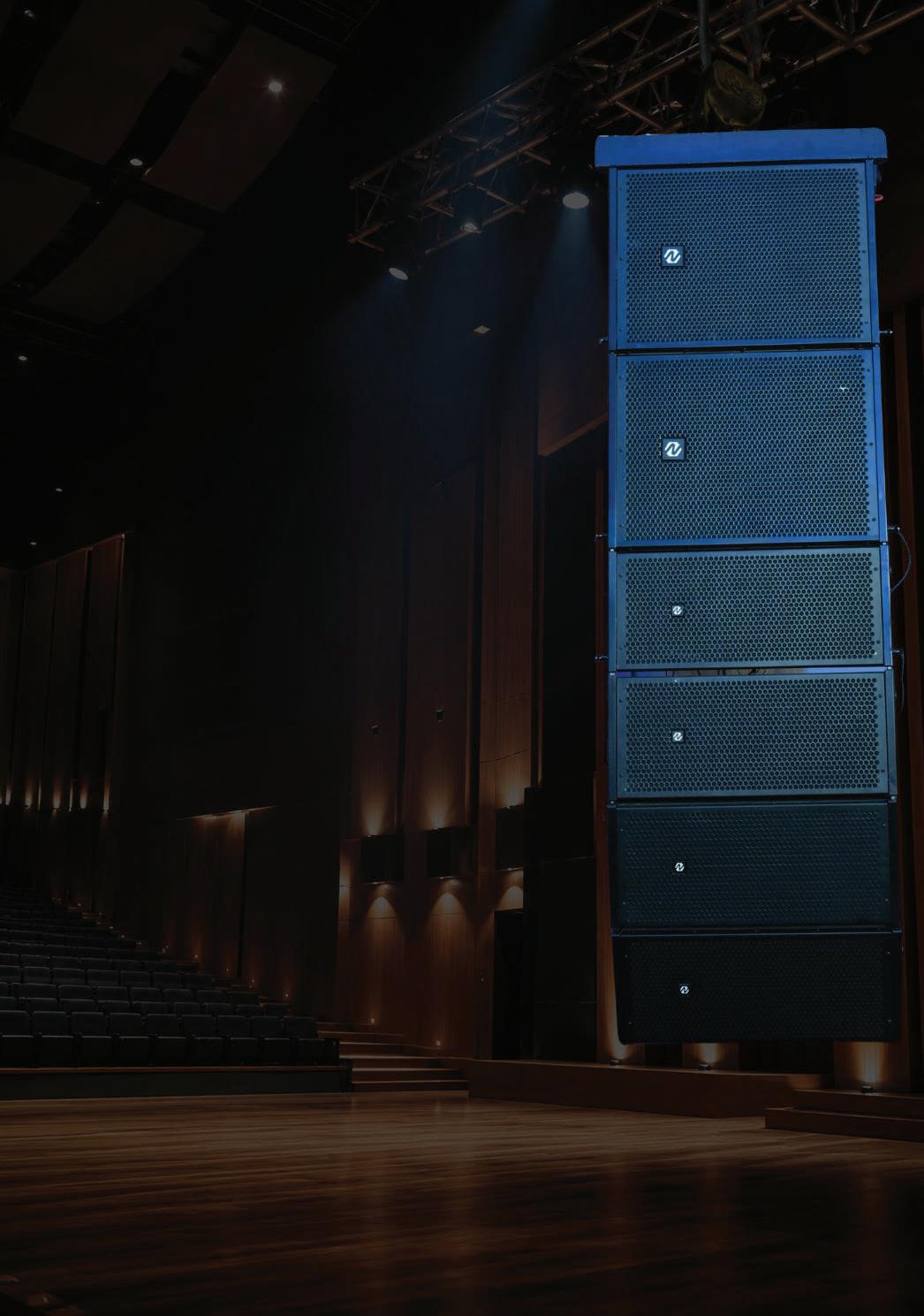
Your only Trusted Install Audio-Visual partner




To understand how AI is shaping India’s residential automation market, Smart Home World invited leading system integrators and professionals to share their perspectives. Drawing on their experience of delivering automation across a diverse range of residential projects, they offer valuable insights into what’s working today, what’s still evolving, and whether AIpowered homes are truly living up to the promise.
As Artificial Intelligence finds its way into our homes, is it delivering genuine intelligence or simply becoming the latest buzzword?
Walk through any consumer electronics store, browse the latest home automation launches, or attend a smart home exhibition, and one trend is impossible to ignore: everything is suddenly “AI-powered.”
Televisions promise AI-enhanced picture quality. Air conditioners claim to intelligently adapt to your lifestyle. Security cameras boast AI-driven threat detection, while lighting systems, appliances, speakers and even robotic vacuum cleaners are marketed as being powered by Artificial Intelligence. In today’s connected home, AI has become the industry’s favourite badge of innovation.
But beyond the marketing hype, an important question remains: Are our homes actually becoming more intelligent, or are we simply redefining automation with a new label?
For homeowners, architects, interior designers and system integrators, the distinction matters. Investing in a smart home has always been about making everyday living simpler, more comfortable and more efficient. If Artificial Intelligence is to become the next chapter in connected living, it must do far more than execute voice commands or follow preprogrammed routines; it must understand the people who live in the home.
India is no doubt a potential market for
most international brands in this segment, because the country’s smart home market has matured rapidly over the last few years, moving beyond ultra-luxury residences into premium apartments, villas and increasingly, aspirational urban homes. As adoption grows, expectations are also changing. Homeowners no longer want a collection of connected gadgets; they want technology that works together seamlessly, anticipates their needs and quietly disappears into the background.
That is precisely where AI enters the conversation.
Unlike traditional automation, which relies on fixed rules and predefined schedules, Artificial Intelligence promises homes that can learn routines, recognise patterns, optimise energy consumption, strengthen security and personalise everyday experiences. It’s an exciting vision, but one that also raises equally important questions.
How much of this intelligence is already available in today’s homes? Which applications genuinely benefit from AI, and which are little more than clever marketing? More importantly, is the Indian smart home ecosystem ready for this shift?
The reality, as is often the case with emerging technologies, lies somewhere between the hype and the promise. Artificial Intelligence is undoubtedly changing residential technology, but not every product carrying the AI label is equally intelligent. While some solutions are genuinely transforming the way homes manage energy, security, wellness and entertainment, others merely automate existing functions under a new name. Separating meaningful innovation from marketing noise has therefore become essential not only for homeowners making purchasing decisions but also for architects, designers and system integrators shaping the homes of tomorrow.
So, are AI-powered homes the future of residential living, or are we still in the early stages of a technology searching for its true purpose? The answer lies in understanding what AI can genuinely deliver and where expectations may still be running ahead of reality.
To separate industry buzz from real-world impact, we invited leading system integrators and professionals to share their experiences of deploying AI-driven technologies in residential projects and their views on where the market is headed.

How do you see AI influencing the way interior spaces are designed and experienced?
At Vivek Bhole Architects, we have always held that architecture begins and ends with the human being who inhabits it. AI has entered our studios not to displace that conviction but to strengthen it. On the design side, generative and analytical tools now let us test dozens of spatial configurations, daylight scenarios, and material palettes in the time it once took to develop a single option. We can study how the morning light will fall across a living room in December, how air will move through a naturally ventilated apartment, and how a family will circulate through a home at different hours … all before a single wall is built. The more profound shift, however, is experiential. For most of architectural history, a space was fixed the moment it was completed. AI is dissolving that permanence. Interiors are becoming responsive: able to read context, anticipate need, and adjust quietly. A room can now recognise that it is evening, that the household is winding down, and modulate light, temperature, and acoustics accordingly. The space is no longer a static container; it becomes a subtle, attentive partner in daily life. The discipline for us as designers is to keep this intelligence in service of the human experience rather than allowing it to become a spectacle in its own right. The goal is not a
home that shows off how clever it is, but one that simply feels right, say, like warmer, calmer, more considerate, often without the resident being able to name exactly why.
In what ways can AI and smart technologies make homes feel more intuitive, personalised, and human-centric without compromising comfort or aesthetics?
The philosophy that guides our practice, “Humanising the High-Rise”, is ultimately about ensuring that as our buildings grow taller and denser, the individual is never diminished within them. Used with restraint, AI is one of the most promising instruments we have for that purpose. The keyword is intuitive. Technology becomes human-centric precisely when it stops demanding attention. The best smart home is not the one with the most screens and dashboards; it is the one where the technology is invisible and the comfort is obvious. A home that learns you wake at six, warms the bathroom floor before you step onto it, raises the blinds gently rather than jarringly, and cues your preferred music at a considerate volume feels less like a machine and more like a thoughtful host. On personalisation, AI’s real gift is memory and anticipation. The members of a family experience the same home very differently, say an elderly parent, a young child, and a working professional. AI allows a single space to hold multiple simultaneous settings for comfort, light, and sound, adapting to whoever is present without anyone having to configure anything. None of this, however, should come at the cost of aesthetics. We are firm that technology must be integrated, not imposed. Sensors, speakers, and controls should be concealed within the architecture - recessed, flush, and tuned to the material palette, so that the beauty of a space is never sacrificed to its intelligence. When it is done well, residents feel the intelligence but never see the wiring.
Do you believe AI will reshape the selection
and integration of lighting, furniture, and other connected elements within residential interiors?
Yes, and this is one of the more immediate and tangible ways AI is entering the home. Lighting is the clearest example. Human-centric, or circadian lighting- light that shifts in colour temperature and intensity across the day to support our natural rhythms- is genuinely enhanced by AI, because the system can learn a household’s patterns and calibrate itself rather than follow a rigid schedule. Lighting is moving from something we switch to something that anticipates. Furniture and fittings are following. We are beginning to see connected, adaptive elements, beds that respond to sleep data, seating that adjusts, kitchens and storage that assist rather than merely contain. On the specification side, AI is also changing how we select and coordinate these elements: we can evaluate interoperability, energy performance, and long-term compatibility across an entire ecosystem before committing to it, which matters enormously when a client is investing in a home meant to last decades. That said, I offer a note of professional caution, and I make it to our own teams as much as to clients. Connectivity for its own sake is a trap. A home does not become intelligent by accumulating gadgets; it becomes intelligent when every connected element earns its place by making life measurably better. Our role is increasingly that of a curator - editing out the
novelty, integrating only what genuinely serves the resident, and ensuring these disparate systems speak to one another as a coherent whole rather than a collection of competing apps.
As homes become increasingly AI-enabled, what concerns do your clients express around privacy, data security, and trust, and how do you address them?
These concerns are real, they are rising, and I believe they are entirely legitimate. A truly intelligent home, by its nature, observes - it knows when you are home, how you live, and when you sleep. Clients are right to ask where that information goes and who can see it. Our most discerning clients now raise these questions in the very first meeting, and I welcome that. Our approach rests on a few principles.
The first is data minimisation and local processing. Wherever possible, we favour systems that process information on-site, say at the edge, or within the home, rather than continuously streaming a family’s life to distant servers. A home that keeps its own data is inherently more trustworthy.
The second is transparency and control. Residents should be able to understand, in plain language, what their home senses, and to switch it off. Intelligence must always be
optional, never imposed. The ability to make a room simply a private room again, like no listening, no sensing, is to me, non-negotiable. The third is security-by-design and the careful choice of partners. We integrate systems from established, accountable manufacturers with strong security and update commitments rather than the cheapest connected device in the market, and we insist on properly segregated home networks so that a vulnerability in one device cannot compromise the entire home. Ultimately, trust is not a feature you can install; it is earned through design decisions. Our task is to give clients not merely an intelligent home, but a home they feel completely in command of.
Looking ahead, what excites you most about the role of AI in creating the next generation of smart homes, and where do you believe it can deliver the greatest value?
What excites me most is the shift from convenience to wellbeing. The first wave of smart homes was largely about convenience: voice-controlled lights, remote switches. The next generation, powered by AI, has the potential to actively support how well we live: our health, our sleep, our sense of calm, and our connection with family. That is a far more
meaningful ambition, and it aligns completely with the human-centric philosophy at the heart of our practice. I see the greatest value emerging in three areas. The first is wellness and healthy living: homes that quietly manage air quality, light, acoustics, and temperature to support physical and mental health, which is especially precious in a dense city like Mumbai. The second is sustainability. AI’s ability to optimise energy and water use, and to run a home efficiently without the resident having to think about it, is one of the most important contributions technologies can make to responsible living; and it sits at the core of how we approach large-scale residential development. The third, and perhaps the one closest to my heart, is inclusion and dignityhomes that allow the elderly to age in place with independence and safety, and that adapt to residents of differing abilities. When AI helps a person live with greater autonomy and grace in their own home, technology is doing its most humane work. To return to where I began: we believe the tower must never dehumanise the person within it. Used wisely, AI is among the most powerful tools we have ever had to make even the densest vertical home feel personal, caring, and profoundly human. That, to me, is not hype. It is the real and exciting promise ahead.
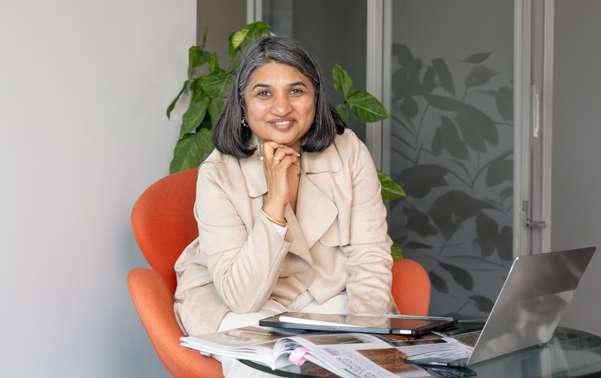
Ranju Singhi Founder & Principal Architect, BASICS Architects
Will Artificial Intelligence fundamentally change the way homes are designed? Why or why not?
AI will certainly transform the design process, but not the essence of good architecture. Homes are ultimately about people, emotions, culture, and context qualities that require human empathy and intuition. At Basics, we see AI as an intelligent design partner that enhances research, simulations, and decisionmaking, allowing architects to spend more time creating meaningful spaces rather than replacing creativity itself.
What new opportunities does AI create for architects in terms of planning, sustainability, wellness, and user experience?
AI enables architects to evaluate multiple design possibilities in minutes, optimise daylight, ventilation, energy efficiency, and material selection with greater precision. It can also personalise homes by analysing occupants’ lifestyles and predicting future needs. This allows us to create residences that are healthier, more sustainable, and better aligned with the way families actually live.
How should residential projects be designed today to accommodate future AI-driven technologies?
Future ready homes should prioritise flexibility. The architectural framework should allow for evolving technologies through adaptable infrastructure, integrated sensor networks, scalable automation, and spaces that can
change function over time. While technology will continue to evolve rapidly, well-designed architecture must remain timeless and capable of embracing these advancements without major interventions.
Are homeowners actively discussing AI capabilities during the design stage, or is the focus still on traditional smart home solutions?
Currently, most homeowners are still focused on smart home features such as lighting, security, climate control, and entertainment systems. AI as a design discussion is emerging, particularly among younger, tech-savvy clients, but conversations are gradually shifting from automation to intelligent, predictive living environments that learn from user behaviour and improve everyday experiences.
What are the biggest concerns or challenges you foresee with AI becoming more integrated into residential environments?
The greatest challenge is ensuring that homes remain human-centric rather than technology-centric. Privacy, cybersecurity, data ownership, and over-dependence on automation are important concerns. There is also the risk of technology becoming obsolete faster than buildings themselves. As architects, our responsibility is to design homes where technology enhances comfort and wellbeing without compromising simplicity, resilience, or the emotional quality of living spaces.

Will Artificial Intelligence fundamentally change the way homes are designed? Why or why not?
I believe that AI will not change the fundamental purpose of architecture. Human beings will continue to shape architecture because homes are ultimately about emotions, relationships, memory, and belonging—experiences that cannot be generated by algorithms.
What AI will change is the way architecture performs. It gives us the ability to understand patterns that were previously invisible, such as how a family occupies a home over time, how energy flows through a building, how spaces respond to climate, or how routines evolve. That intelligence can help us make better decisions, but it should never become the decision-maker.
For us, architecture has always been about creating environments that respond to people and nature. If AI helps a home become more adaptive, more efficient, and more humane, then it is a meaningful addition. But technology should remain invisible. A home should never feel like a machine. It should continue to feel like a home.
What new opportunities does AI create for architects in terms of planning, sustainability, wellness, and user experience?
I think the opportunity is not that AI suddenly gives us new tools. We have always had tools. The real opportunity is that it allows us to listen better to how people actually live.
As architects, we often design based on observation, intuition and experience. AI can add another layer to that by helping us understand patterns more deeply, such as how spaces are occupied, how light changes through the day, how energy is consumed, or how routines shift over time. This can make planning more responsive and less generic.
In sustainability, AI can help a home perform more intelligently. It can support decisions around shading, cooling, ventilation, daylight and energy use. But it should not replace passive design. The most meaningful use of AI is when it strengthens the basic architectural principles that already make a home climateresponsive.
Wellness is also an important area. Homes today are expected to support health, comfort and emotional balance. AI can help regulate light, air quality, temperature and sound in a way that is more aligned with the body and daily rhythm of the occupants.
For user experience, the biggest shift is subtlety. The best homes will not feel obviously smart. They will simply feel more intuitive. If AI can help a home understand its occupants without making the technology visible or intrusive, then it becomes a valuable layer within architecture.
How should residential projects be designed today to accommodate future AI-driven technologies?
The biggest mistake would be to design around today’s technology because technology has the shortest lifespan in a building. Architecture, on the other hand, is expected to endure for decades.
Our responsibility is to design homes that are adaptable rather than technology-specific. That means creating flexible infrastructure, accessible service routes, robust digital connectivity and spaces that can evolve without requiring the architecture itself to be rebuilt.
Equally important is preserving the human experience. Natural ventilation should still
work without sensors. Daylight should still define the rhythm of the home. Windows should still open. Manual control should always coexist with automation. Homes ready for the future are not the ones with the most devices; they are the ones that can gracefully accommodate change while remaining timeless in their architecture.
Are homeowners actively discussing AI capabilities during the design stage, or is the focus still on traditional smart home solutions?
At this stage, most homeowners are still discussing automation more than AI. The common conversations are around lighting, curtains, air conditioning, security, entertainment systems and the ability to control the home through a phone or voice command.
But there is a clear shift beginning to happen. Clients are becoming more aware of AI, even if they may not always define it in those terms.
What they are really asking for is a home that is more intuitive, healthier, more efficient and easier to live in.
Wellness is becoming a very important part of this conversation. Earlier, wellness in a home was understood through light, air, openness, gardens and material choices. AI can now add another layer to that. It can help regulate indoor air quality, daylight, temperature, humidity and ventilation based on how the home is being used throughout the day. It can also support circadian lighting, reduce glare, improve thermal comfort and make the indoor environment more aligned with the body’s natural rhythm.
In larger homes, we are also seeing interest in kitchen gardens, terrace farming and organic food systems. AI can contribute here by helping monitor soil moisture, irrigation, sunlight exposure and plant health. So wellness is no longer limited to comfort inside the house. It can extend to what people grow, eat and experience every day.
So the conversation is gradually moving from control to response. Earlier, the question was, “Can I control this?” Now, it is slowly becoming, “Can the home understand my pattern, support my health and respond accordingly?”
For us, the important thing is not to treat AI as an added gadget. If the infrastructure of the home is planned well from the beginning, AI can be integrated later without disturbing the architecture. The design must remain flexible enough to accept future layers of intelligence as they evolve.
What are the biggest concerns or challenges you foresee with AI becoming more integrated into residential environments?
The greatest concern is not technology itself. It is allowing technology to become more important than the people it is meant to serve. Privacy is naturally a major consideration because a home is the most personal environment we inhabit. As AI becomes more
embedded into everyday life, we will need greater transparency around how data is collected, stored and used.
The second challenge is longevity. Buildings often last fifty or even a hundred years, while technology changes every few years. We need systems that are open, upgradeable and interoperable so that homes don’t become obsolete because a particular platform disappears.
Finally, there is the question of restraint. Not every problem requires an AI solution. Good architecture has always relied on climate, orientation, materiality and passive design to create comfort. AI should strengthen those principles, not replace them. The most successful homes powered by AI will not be the ones with the most technology. They will be the ones where technology quietly disappears into the background and allows people to live better.

Sanghavi Director, Pentaspace Design Studio
Will Artificial Intelligence fundamentally change the way homes are designed? Why or why not?
Artificial Intelligence will undoubtedly transform the way homes are designed, but it will not replace the role of the architect. AI has the potential to optimise layouts, generate multiple design possibilities quickly, and streamline decision-making processes. However, architecture goes beyond efficiency and data, it is deeply rooted in culture, context, and the emotions of the people who inhabit a space. AI should be viewed as a tool that enhances creativity and expands possibilities, while empathy, intuition, and human connection will continue to shape meaningful residential design.
What new opportunities does AI create for architects in terms of planning, sustainability, wellness, and user experience?
AI opens up exciting possibilities across every stage of residential design. In planning, it enables faster space optimisation, scenario testing, and informed design decisions. From a sustainability perspective, AI can analyse daylight, energy consumption, material choices, and building performance to create more efficient homes. It also supports wellnessdriven design by helping architects improve ventilation, thermal comfort, and access to natural light. Most importantly, AI allows for a more personalised user experience, enabling homes to adapt to individual lifestyles, behaviours, and the evolving needs of families over time.
How should residential projects be designed today to accommodate future AI-driven technologies?
Future-ready homes must be designed with flexibility and adaptability at their core. Spaces should be able to evolve alongside technological advancements and respond to the changing life stages of their occupants. Sustainability must remain a priority, with thoughtful consideration given to energy efficiency, water management, and resource optimisation. Above all, the human experience should remain central to the design process. Technology should enhance comfort and convenience without compromising the emotional, social, and experiential qualities that make a house feel like home.
Are homeowners actively discussing AI capabilities during the design stage, or is the focus still on traditional smart home solutions?
At present, most homeowners continue to prioritise familiar smart home features such as lighting control, security systems, and automation. However, there is growing curiosity around AI-driven solutions, particularly in areas such as energy management, predictive automation, and personalised living experiences. While AI is still emerging in residential conversations, interest is steadily increasing as homeowners become more aware of its long-term benefits.
What are the biggest concerns or challenges you foresee with AI becoming more integrated into residential environments?
As AI becomes more deeply embedded in our homes, privacy and data security will be among the most significant concerns. There is also the risk of becoming overly dependent on technology, making it essential to ensure that systems remain reliable and functional, particularly during emergencies. The real challenge lies in striking the right balance— leveraging AI to enhance everyday living while ensuring that homes remain human-centric, intuitive, and deeply connected to their context and occupants.
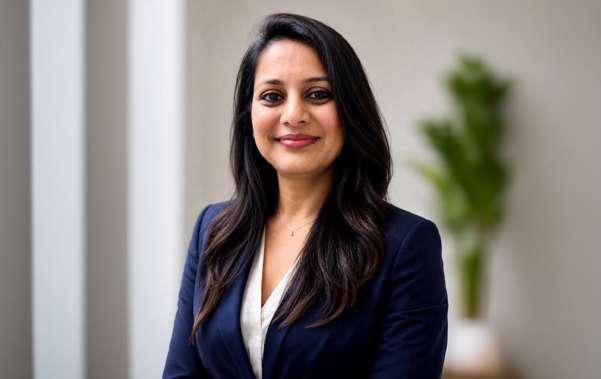
Rao Gurram Founder & Design Principal, Stories Design Studio
How do you see AI influencing the way interior spaces are designed and experienced?
AI is gradually becoming a valuable tool in the design process, but I don’t believe it replaces the human understanding that lies at the heart of good design. At Stories Design Studio, every project begins by understanding the people who will live in the space, their routines, aspirations, and lifestyle. AI can help analyse preferences, improve planning efficiency, and simulate different design possibilities, allowing us to make more informed decisions. However, the emotional connection a person has with their home cannot be generated by technology alone. Design is still about creating spaces that feel authentic and personal. I see AI as a powerful assistant that enhances the design journey, but creativity, empathy, and human insight will continue to shape the final outcome.
In what ways can AI and smart technologies make homes feel more intuitive, personalised, and human-centric without compromising comfort or aesthetics?
The best smart homes are the ones where technology almost disappears into the background. AI should simplify everyday living rather than constantly demand attention. Intelligent lighting that adapts throughout the day, climate systems that respond to occupancy, or automated shading that improves comfort without manual intervention all contribute to a more intuitive living experience. From a design perspective, technology should integrate seamlessly with the architecture and interiors instead
of becoming a visual distraction. When thoughtfully planned, AI allows homes to respond naturally to the people living in them while preserving the warmth, elegance, and personality of the space. Ultimately, a successful smart home should still feel like a home first and a technology platform second.
Do you believe AI will reshape the selection and integration of lighting, furniture, and other connected elements within residential interiors? Please share your perspective.
Yes, but I believe the change will be evolutionary rather than dramatic. AI is encouraging greater integration between design and technology, particularly in areas like adaptive lighting, energy management, and connected home systems. We may see furniture and lighting becoming more responsive to user preferences, daily routines, and occupancy patterns. However, selection should never be driven by technology alone. Every element must continue to support the overall design language of the home. Beautiful interiors are built through thoughtful proportions, quality materials, craftsmanship, and functionality. AI can certainly enhance how these elements perform, but it should complement the design rather than define it. The goal is to create spaces that remain timeless while quietly benefiting from intelligent technology.
As homes become increasingly AI-enabled, what concerns do your clients express around privacy, data security, and trust? How do you address them?
Privacy is becoming an increasingly important consideration, particularly as more connected devices enter our homes. Clients appreciate the convenience of automation but are equally conscious of how their personal information is collected and managed.
Our role is to help them make informed decisions by recommending trusted technology partners and solutions that offer transparency, robust security features, and user control. We also encourage clients to adopt only those technologies that genuinely improve their lifestyle rather than adding unnecessary complexity. Technology should empower homeowners, not overwhelm them. Building trust starts with honest conversations about functionality, long-term usability, and privacy from the earliest stages of the project.
Looking ahead, what excites you most about
the role of AI in creating the next generation of smart homes, and where do you believe it can deliver the greatest value?
What excites me most is AI’s potential to make homes more responsive to the people who live in them. Rather than simply automating individual tasks, future systems will have the ability to understand routines, anticipate needs, and improve comfort in subtle ways.
This could mean better energy efficiency, healthier indoor environments, adaptive lighting, or spaces that evolve alongside changing family lifestyles.
At the same time, I believe the greatest value of AI lies in allowing technology to become less visible. The future of smart homes is not about filling spaces with gadgets but about creating environments that feel effortless, intuitive, and deeply human. When technology supports everyday living without compromising design or emotional connection, it becomes a meaningful part of the home rather than its defining feature.

Absolutely. AI has the potential to transform interiors into adaptive environments that respond to the unique lifestyle, habits, and preferences of every homeowner. From automatically adjusting lighting, temperature, and acoustics based on occupancy to learning daily routines and optimizing energy usage, AI enables spaces to become more intuitive. AI also enables homeowners to remotely control smart lighting, air conditioning, curtains, and digital door locks through Wi-Fi, ensuring convenience, security, and energy efficiency even when away from home. However, personalization should always complement thoughtful design. The architect’s vision, cultural context, and emotional connection remain irreplaceable, while AI enhances comfort and functionality.
How can technology make spaces feel more human?
Technology becomes meaningful when it quietly supports everyday living without becoming visually or functionally intrusive. AI-powered automation can create personalized lighting scenes, regulate indoor climate, improve air quality, and adapt spaces according to mood, time, or activity. Voice-controlled lighting, ceiling fans, and motorized curtains provide effortless interaction, allowing occupants to manage their environment naturally. Occupancy sensors installed in bathrooms, passages, and terrace areas further enhance convenience by automatically operating lighting only when
required, improving both comfort and energy efficiency. The objective is not to showcase technology but to create environments that promote well-being, convenience, and emotional comfort while maintaining warmth, natural materials, and timeless aesthetics.
Yes, AI is already influencing the selection and performance of furniture and lighting systems. Adaptive lighting that changes color temperature throughout the day supports health and productivity, while smart furniture integrated with charging, posture monitoring, and environmental sensing is becoming increasingly relevant. AI-enabled lighting systems can also be remotely controlled and automated based on occupancy, schedules, or user preferences, ensuring optimal comfort and reduced energy consumption. Rather than replacing good design, AI helps designers specify intelligent products that improve user experience while preserving aesthetics and functionality.
Privacy and data security are among the primary concerns clients express when adopting smart home technologies. Homeowners want transparency regarding what data is collected, where it is stored, and who has access to it. This becomes even more important with connected systems such as Wi-Fi-enabled digital door locks, voice assistants, and remote home automation. As designers, we recommend systems with strong encryption, secure local processing wherever possible, and user-controlled privacy settings. Building trust through responsible technology integration is just as important as delivering innovative design.
What excites you most about AI-enabled living?
The most exciting aspect of AI-enabled living is its ability to create homes that are proactive rather than reactive. Intelligent homes can anticipate occupants’ needs, optimize energy efficiency, improve safety, support aging-in-place, and contribute to healthier lifestyles. Features such as remotely controlled digital locks, voice-operated lighting, fans and curtains, smart control of lighting and air conditioning, and occupancy-based automation create homes that are more intuitive, secure, and efficient. As AI continues to evolve, it will empower architects to design spaces that are not only visually appealing but also intelligent, sustainable, and deeply responsive to the people who inhabit them. The future lies in creating homes where technology seamlessly enhances everyday life without overshadowing the human experience.

Nikhil K Jayan Chief Engineer, Gadgeon Lifestyle Pvt.Ltd
What AI applications are actually being deployed today?
The AI delivering real value in homes today is practical, not futuristic. Natural-language voice control now lets homeowners speak to the house conversationally instead of memorising commands. Intelligent video analytics distinguish family members from strangers and pets from intruders, cutting false alarms dramatically. Adaptive climate and lighting solutions learn occupancy patterns and adjust themselves, replacing rigid schedules with behaviour-based automation. Energymanagement engines monitor consumption in real time, shift heavy loads intelligently and deliver measurable savings on utility bills. Predictive maintenance is emerging too — systems that flag a failing air-conditioning unit or water leak before it becomes a crisis. The solution that works is layering this intelligence over a professionally engineered control backbone: the wired infrastructure guarantees reliability, while AI adds context, learning and convenience on top.
How is AI improving home automation experiences?
The biggest shift is from programmed homes to perceptive ones. Earlier, every scene and schedule had to be explicitly configured, and the system only ever did what it was told. AI solves three long-standing pain points. First, it removes the learning curve: a homeowner simply says “make the living room cosy for a movie” and the system interprets intent — no scene names, no menu hunting. Second, it
personalises continuously: learning algorithms observe how a family actually lives and refine lighting, shading and climate over weeks, so the home keeps getting better after handover instead of staying frozen at commissioning day. Third, it makes the interface disappear: presence sensing, voice and prediction mean fewer taps on screens and switches. The outcome is technology that stops demanding attention — which is exactly what a welldesigned home should feel like.
implementing AIdriven homes?
Every challenge we face has a workable solution — if it is addressed early. The first is expectation management: clients arrive with a science-fiction picture of AI, so we begin every project by demonstrating live systems and defining what is reliably achievable. The second is fragmentation: AI must orchestrate lighting, HVAC, security, shades and AV from different manufacturers, and the solution is a unified integration platform with certified engineering rather than a patchwork of standalone apps. The third is infrastructure: AI is only as good as its data, so structured cabling, sensor placement and enterprisegrade networking must be planned at the civil-work stage, not retrofitted. The fourth is reliability: a home is not a laboratory, so we design AI to enhance a deterministic control layer — lights must respond every single time, with or without intelligence. Finally, skilled manpower is scarce, which is why continuous engineer training is now as important as the products themselves.
An AI-powered home is as secure as its weakest architectural decision — the technology is not the problem; casual implementation is. The good news is that proven solutions exist. We isolate automation devices on segmented networks with enterprise-grade firewalls, enforce encrypted communication end to end, and prefer architectures that process voice and video locally inside the home, so sensitive data never leaves the premises. Managed update policies keep firmware patched, and role-based access ensures guests, staff and
family see only what they should. The real risks sit on the unmanaged side: cheap devices with default passwords, and free cloud services that monetise personal data. Homeowners should ask three questions of any AI product — where is my data processed, who can access it, and how is it updated? Professionally engineered, an AI home can be more secure than a conventional one, because it actively watches for anomalies instead of waiting for them.
By 2030, the home shifts from responsive to genuinely anticipatory. Instead of a dozen apps and commands, a single ambient intelligence will orchestrate lighting, climate, security, wellness and entertainment through sensor fusion — presence, radar, air quality, even sleep data — acting before you ask. Conversational AI will replace conventional programming:
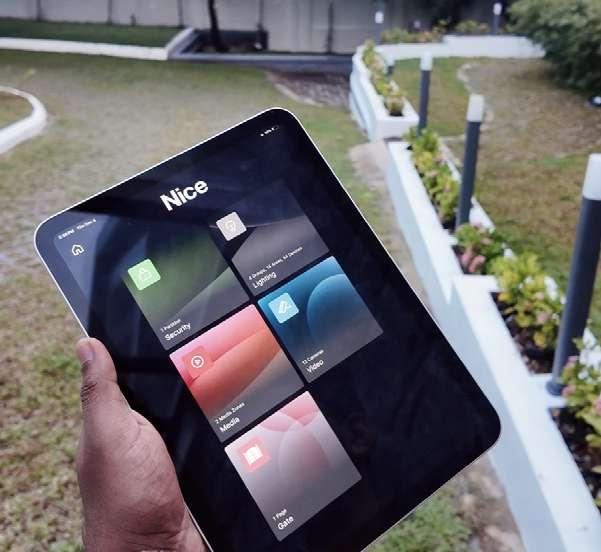
homeowners will describe outcomes in plain language, and the system will configure itself, with the integrator curating, validating and securing rather than coding line by line. Energy will be a headline story — homes negotiating with the grid, batteries and solar in real time and running themselves at peak efficiency. Crucially, intelligence will live at the edge, inside the home, keeping personal data private by design. What will not change is the need for solid engineering: reliable networks, quality sensors and a deterministic control layer. The AI home of 2030 will feel less like technology and more like a home that quietly knows you.

What AI applications are actually being deployed today?
AI is already being used in high-end homes, but usually in practical rather than futuristic ways. Its value lies in interpreting sensor data, recognising patterns and helping systems make better decisions.
Lighting: Modern systems can adjust brightness and colour temperature based on time of day, sunrise and sunset, occupancy and room use. This can improve comfort and support natural routines. However, AI cannot compensate for poor fixture selection, placement or commissioning.
Shading and climate: Automated shades can respond to the sun’s position, room orientation, indoor temperature and weather conditions. Climate systems can use occupancy, humidity and air quality data to manage cooling and ventilation more efficiently. If a room regularly overheats in the afternoon, the system can begin cooling it earlier rather than waiting for the temperature to rise.
Audio and video: AI-assisted calibration tools can measure how sound behaves in a room and adjust timing, levels and equalisation. This can improve clarity and consistency across different seats.
Security: Camera systems can distinguish between people, animals, vehicles and general movement. This helps reduce false alerts caused by rain, shadows or trees. These applications are useful, but they work best when the underlying design is already sound.
AI improves a good system. It does not rescue a poorly planned one.
How is AI improving home automation experiences?
The biggest benefit is less friction. A welldesigned intelligent home should not ask the homeowner to manage more apps, remotes and settings. It should reduce the number of small decisions they need to make.
A cinema scene may close the shades, lower the lights, adjust the room temperature and prepare the audio system. A morning scene may raise selected blinds and bring up lowlevel lighting in key areas. The experience feels intelligent because it is simple.
The mistake is to assume that more automation always creates a better home. It often does the opposite.
When a system constantly changes lights, temperature or media based on assumptions, it becomes intrusive. Homeowners want support, not surprise. The better approach is to automate repeated, low-risk activities while keeping personal choices and important decisions easy to control manually.
What challenges exist in implementing AIdriven homes?
The main challenges are usually poor planning, weak integration and unrealistic expectations. Presence detection is imperfect: A motion sensor can detect movement, but it may not know whether someone is quietly reading, sleeping or watching a film. This is why lights sometimes switch off while a room is still occupied. Better systems combine several inputs, such as motion, door activity and environmental data.
Even then, presence detection is not perfect. Important functions should not depend on one sensor alone.
Different systems may not work together properly: Lighting, climate, shading, security and entertainment products may all use different platforms.

Even when products are described as compatible, the integration may be limited. A system may send a command without receiving confirmation that it was completed.
Reliable automation depends on feedback. A system should not only ask a shade to close. It should know whether it actually closed.
Cloud dependence creates risk: Many smart products rely on external cloud services. This can make setup easier, but internet failures, service outages, subscription changes or discontinued products may affect essential functions.
Core lighting, climate, shading and security controls should continue to operate locally when the internet is unavailable.
Too many alerts reduce trust: Cameras, leak sensors and air quality systems can all create false alarms. When users receive too many warnings, they stop paying attention. Better
intelligence should produce fewer, more useful alerts.
How secure are AI-powered smart homes?
They can be secure, but privacy and security must be built into the original design. An intelligent home may collect information about occupancy, routines, camera activity, entertainment and environmental conditions. Local processing should therefore be prioritised where practical, especially for camera analytics, occupancy data and core automation.
Remote access should use strong authentication. Networks should be segmented so that a weakness in one device does not expose the entire property. Software updates and user permissions also need regular management.
No connected home is completely riskfree. The aim is to reduce exposure, limit the
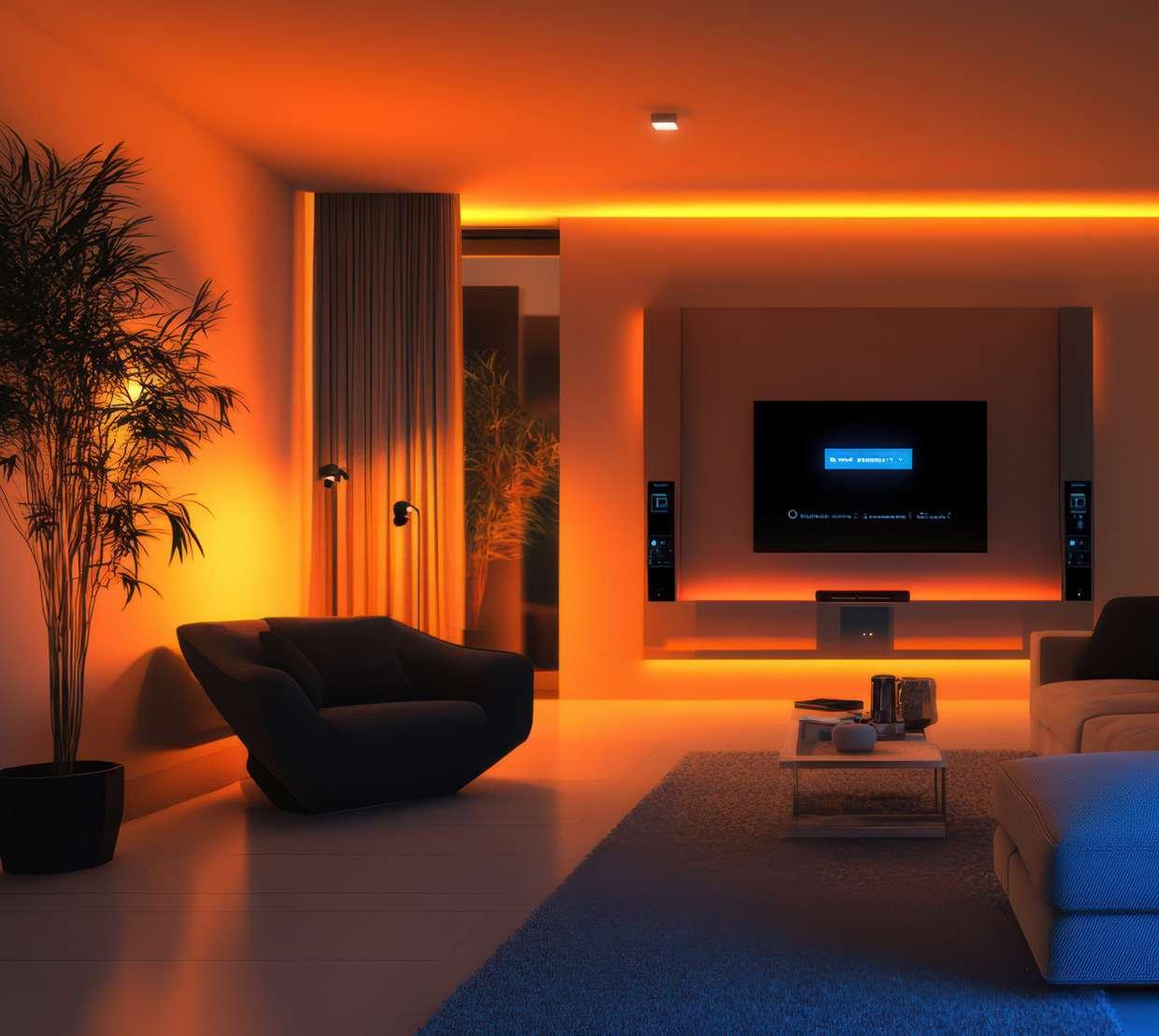
amount of data leaving the property and avoid unnecessary dependence on third-party cloud services.
Security is not a feature that can be added at the end. It is part of the system architecture.
What does the AI home of 2030 look like?
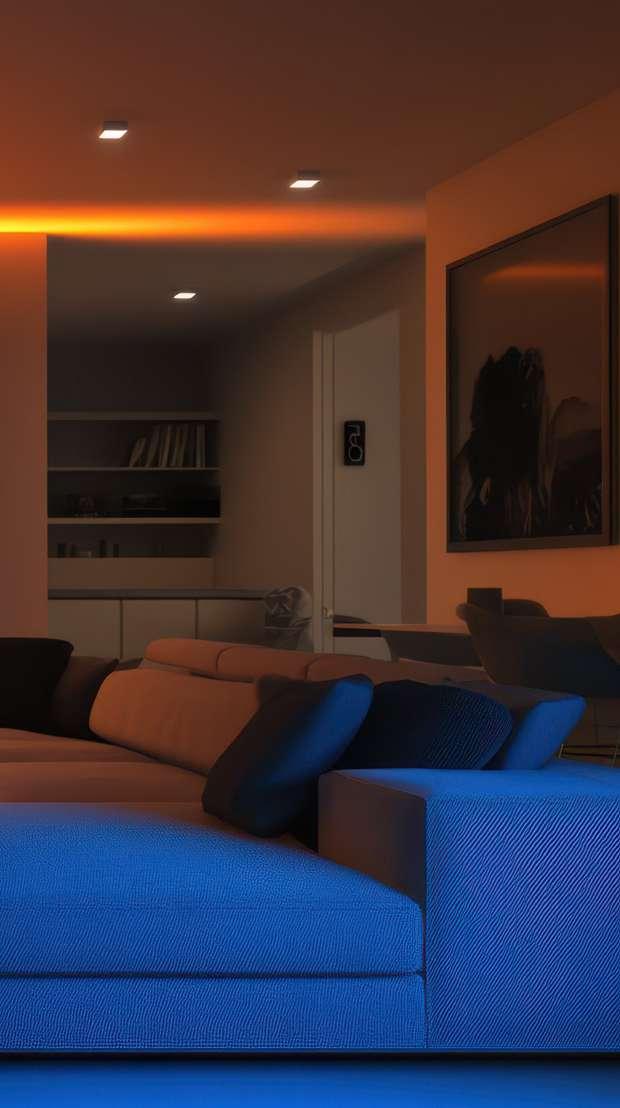
The direction is becoming clearer, but it is too early to treat every prediction as certain. Homes will become better at recognising patterns and responding before the homeowner needs to issue a command.
Interfaces will become less visible and more processing is likely to happen locally.
Rooms may also adapt more easily to different uses, shifting between entertainment, work, gaming and wellness settings.
Predictive maintenance will become more important. Homes may identify unusual energy use, slow water leaks, ageing equipment or declining air conditioning performance before a complete failure occurs. Some of this is already possible in limited forms. The challenge is making it reliable, affordable and easy to maintain across different systems.
The AI home of 2030 will not be defined by how much technology is visible. It will be defined by how rarely the homeowner needs to think about it.
How should customers approach AI home technology today?
Customers should adopt intelligent home technology, but with realistic expectations. The priority should be a strong, flexible and future-ready foundation.
Good network infrastructure, reliable wiring, open integration options and replaceable
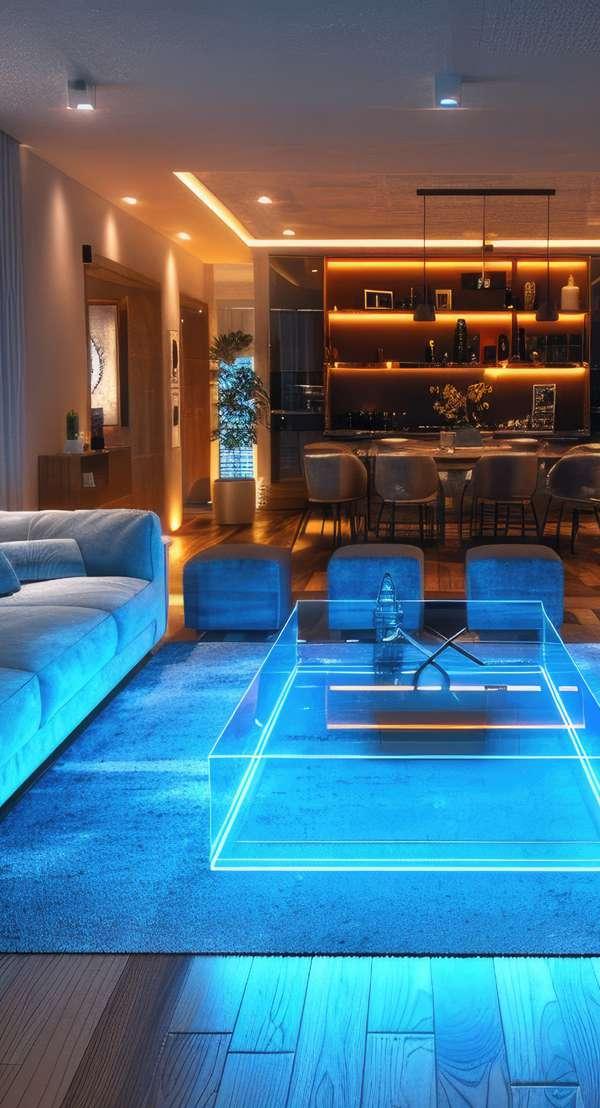
control components will matter more over time than any single AI feature available today. Customers should choose systems that work well now, continue to function locally and can be upgraded as software improves.
AI capabilities will advance considerably over the next few years. Some features that currently feel experimental will become reliable. Others may prove less useful than expected.
A clearer picture will emerge as the industry gains more experience of how people actually live with these systems.
The sensible approach is neither to ignore AI nor to automate everything immediately. Build the right foundation today. Add intelligence where it already solves a real problem. Leave room for the system to improve as the technology matures.
Imagine a busy weekday evening. Parents returning home after work, juggling grocery bags while their children race ahead to the front door. In a traditional setup, finding keys amidst the chaos becomes an inconvenience. Now consider a family hosting visiting relatives for the weekend. Coordinating physical key exchanges, scheduling arrivals and departures bums out the experience of having loved ones over. Now picture a multigenerational family living under one roof. Grandparents may prefer PIN codes since passwords are long to remember, teenagers might rely passwords since their hands are always dirty while parents prefer fingerprint recognition since they already have a hundred things to keep in mind. Now imagine a holiday home, shortterm rentals or households that frequently welcome visitors or househelp.
These have a few challenges in common. For many homeowners, the frustration begins long before they reach the front door. It’s the moment you’re balancing grocery bags, managing excited children, carrying office bags, or standing in the rain, only to realize your keys are buried somewhere at the
bottom of a bag. It’s the anxiety that creeps in halfway to work when you suddenly wonder, “Did I lock the door?” It’s the awkwardness of leaving a spare key with a neighbor, rushing home to let in a guest, or coordinating access with domestic staff, delivery personnel, or visiting relatives. Traditional locks also leave homeowners in the dark, offering no
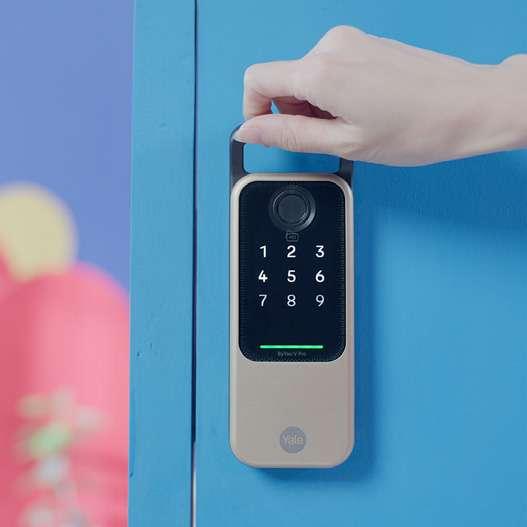
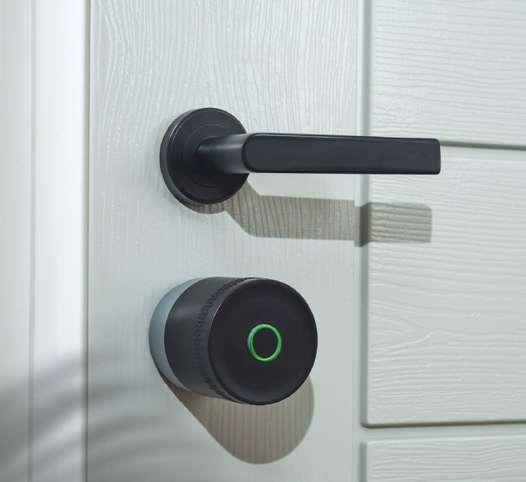
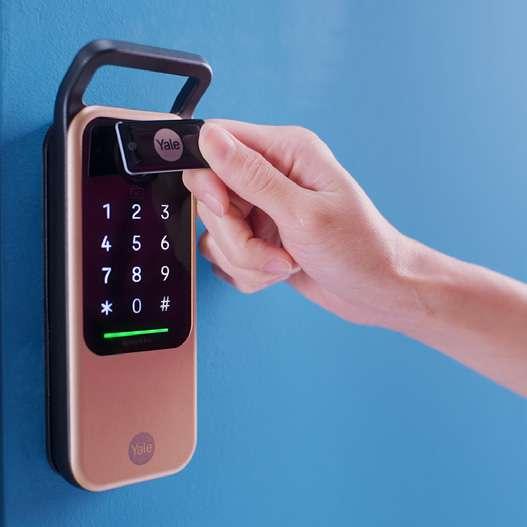
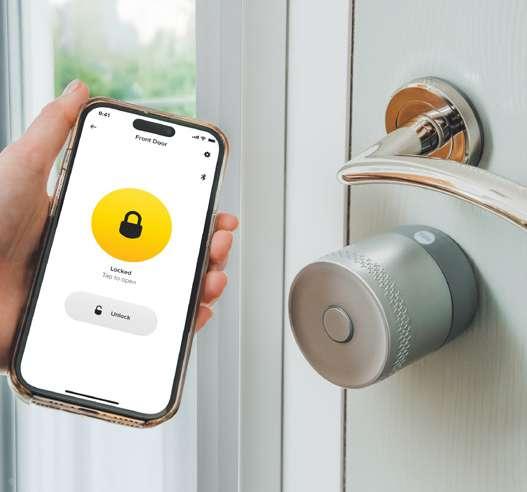
visibility into who has entered the home and when, creating constant uncertainty and dependence on trust alone. For families, these everyday inconveniences add up to wasted time, unnecessary stress, interrupted schedules, and recurring moments of irritation. Yale’s products like the ByYou V Pro and Linus Series aim to make home access more convenient, secure, and personalized. Yale’s smart lock ecosystem is designed to integrate effortlessly with today’s connected homes, offering compatibility with leading home automation platforms to create a seamless smart living experience. The Yale ByYou V Pro, works with Amazon Alexa, Google Home, Samsung SmartThings and Apple Home, allowing homeowners to control, monitor, and automate access as part of their broader smart home setup. The Linus Series extends
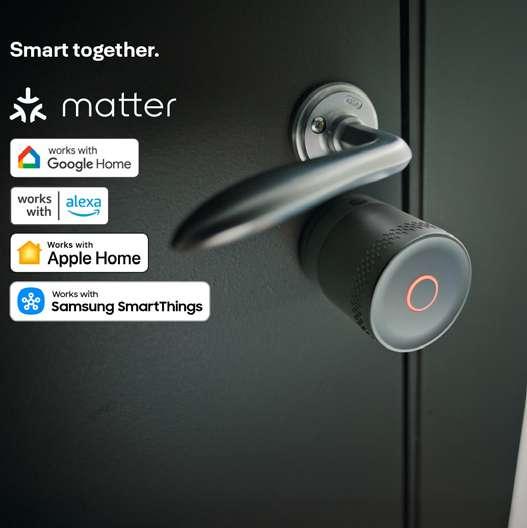
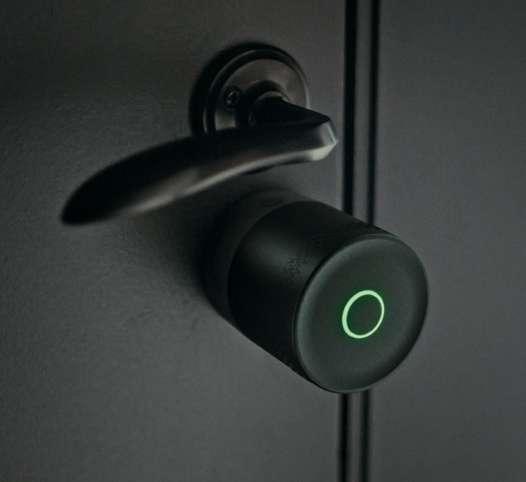
this interoperability even further with support for all these platforms as well as Matter, the new universal smart home standard that enables greater cross-platform connectivity and future-ready integration. Beyond appbased control, Yale also brings innovative unlocking experiences to users. The ByYou Pro can be unlocked using an Apple Watch via NFC, delivering quick and secure access with a simple wrist tap, while the Linus Series supports Yale Dot NFC tags, allowing users to unlock their doors with a tap of a phone, a feature recently showcased at Yale’s Mumbai expo. Meanwhile, Yale’s broader range of connected smart locks continues to support popular voice assistants such as Alexa and Google Assistant, ensuring consumers can enjoy convenient, hands-free control regardless of their preferred smart home ecosystem.
Smart home technology is at its best when it fades into the background, seamlessly enhancing everyday life without adding complexity. Yale’s Linus Smart Lock and ByYou V Pro embody this philosophy in different ways, offering homeowners a blend of security, convenience, and personalization that transforms the simple act of entering a home into an effortless experience.
us at: +91 63874 09260
“All our Solutions Undergo Continuous
Assessments, Including Regular Penetration Testing, to Ensure that all Components and Software Libraries Remain Up-To-Date and Secure.”

BEC Akustik has established itself as a specialist in high-performance audio solutions. Could you take us through the brand’s journey and share some of the key milestones that have shaped its growth, innovation strategy, and product philosophy?
The roots of BEC Akustik are closely connected to its parent company, BEC, which draws on more than 35 years of German engineering experience in permanent magnets and magnetic systems. BEC Akustik itself is a comparatively young audio brand, but it is built on this long-established industrial and technical foundation.
This background has enabled us to approach loudspeaker development from a different
Markus Pieprznik Head of Sales, BEC Akustik
Markus Pieprznik shares how the company has leveraged decades of German engineering expertise to redefine architectural audio with its patented flat-diaphragm loudspeaker technology. As BEC Akustik continues to expand its portfolio of high-performance audio solutions and strengthen its presence in India through its partnership with MZ Audio Distributions, he discusses the brand’s journey, product philosophy, and vision for the future of premium residential and professional audio.
angle and to explore solutions beyond the limitations of conventional cone-driver designs.
A key milestone was our decision to take an unconventional approach to loudspeaker design. By using our patented flat-diaphragm broadband drivers, we are able to combine dynamic sound reproduction, fine resolution and high speech intelligibility with an extremely slim form factor. This became the foundation of our ultra-slim IC line-array loudspeakers.
From there, BEC Akustik evolved from a specialist loudspeaker manufacturer into a complete audio-system provider. We have already established a strong position in
professional and installed sound applications, and our goal is to bring this comprehensive, high-performance approach more strongly into premium home audio, architectural audio and custom-install environments. Important milestones include the introduction of the ICWP range for outdoor and marine applications, the expansion of our passive subwoofer portfolio, the development of the Julia multichannel amplifier series and the creation of dedicated mounting, installation and system accessories.
Our product philosophy has remained consistent throughout this journey: outstanding sound should not dictate the architecture of a room. Audio technology should deliver high performance while integrating naturally into residential, hospitality and commercial environments.
Our partnership with MZ Audio Distributions represents another important step in our international development and gives us a
strong local platform for building the BEC Akustik brand in India.
The IC Series has been developed to meet the growing demand for architectural and custom-install audio solutions. What differentiates the IC Series from conventional in-wall and in-ceiling speakers in terms of acoustic performance, design flexibility, and ease of installation?
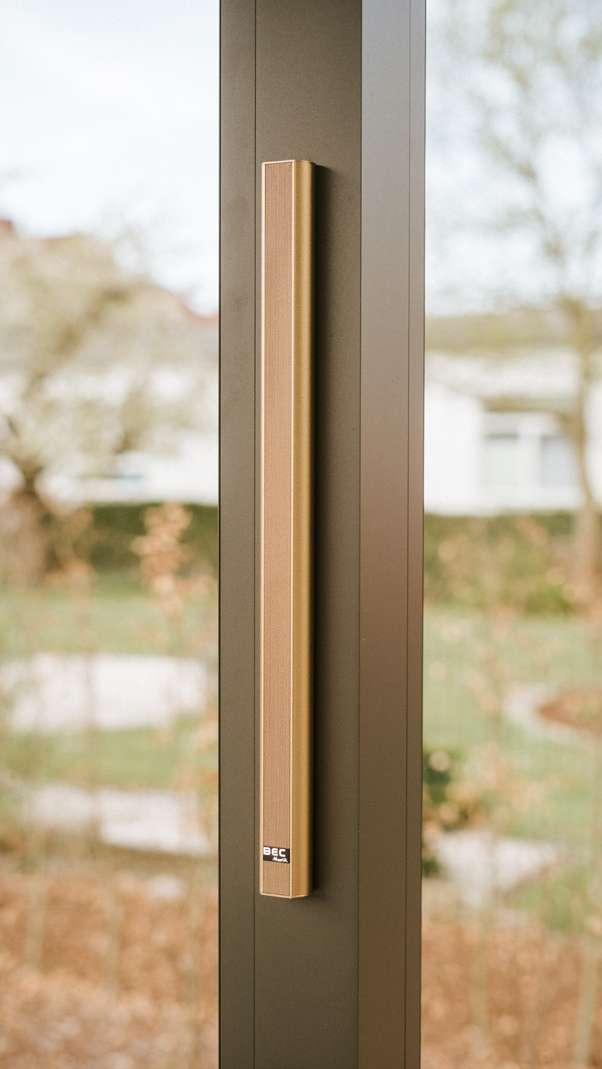
The IC Series is fundamentally different from a conventional point-source in-wall or in-ceiling loudspeaker. By positioning the drivers in a precisely defined arrangement, we create a line-array effect that carries sound deeper and more evenly into the room. This allows our patented broadband driver technology to deliver wide and consistent coverage, rather than concentrating the best sound in only one small listening position.
Our current IC models achieve a measured horizontal dispersion of 180 degrees, combined with a controlled vertical dispersion of approximately 40 degrees. This helps create
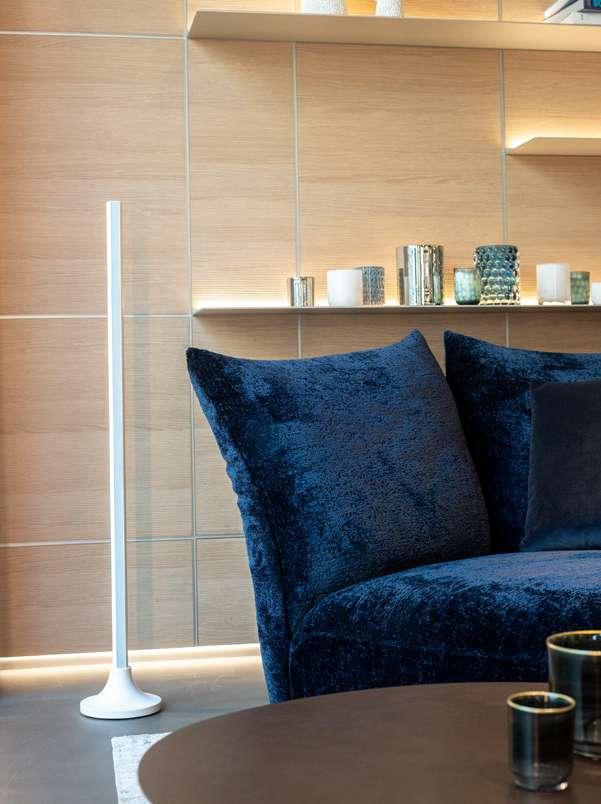
a broad listening area and a stable sound image, rather than a narrowly defined sweet spot. Speech remains clear, music sounds open and transparent, and listeners can move around the room without experiencing major tonal changes.
The extremely slim enclosure offers both design and acoustic advantages. With a width of only around 37 millimetres and a depth of approximately 23 millimetres, the loudspeakers can be positioned beside displays, integrated into furniture or architectural features, mounted on walls or ceilings, recessed into walls or used as free-standing design elements. At the same time, the carefully designed enclosure geometry helps reduce unwanted edge diffraction, supporting precise highfrequency reproduction and comfortable long-term listening.
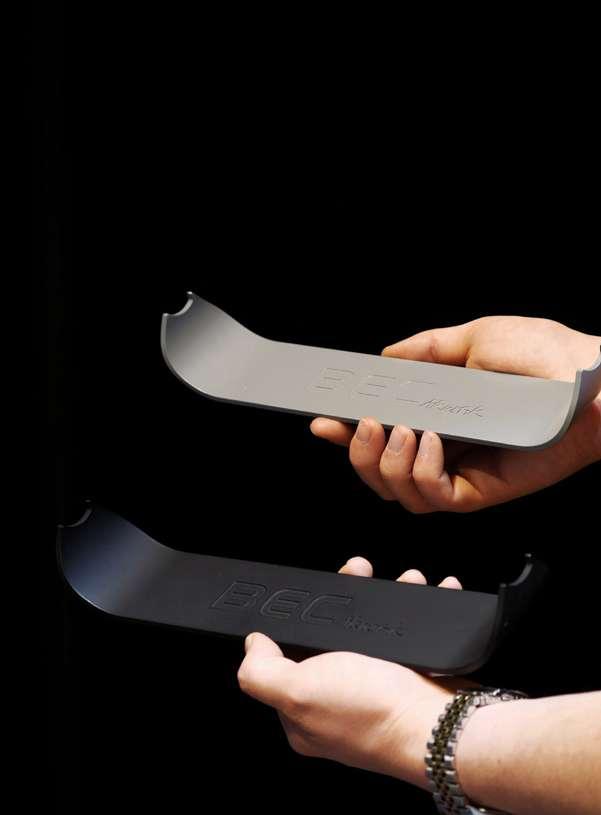
Installation is supported by magnetic wall brackets, ceiling mounts, in-wall solutions, floor and table stands, centre-speaker stands and stacking adapters. This allows an integrator to use the same loudspeaker technology across stereo, home cinema, multiroom, hospitality and commercial projects.
The BEC Akustik range of loudspeakers includes distinctive models in various sizes and colours, comprising the IC series for indoor use and the IC-WP series for outdoor use. Could you provide an overview of the models and explain the unique design philosophy, the listening experience and the target audience behind these products?
The indoor IC Series is available in five sizes: IC28, IC50, IC70, IC100 and IC120. The weatherresistant IC-WP Series is currently available in four sizes: IC50, IC70, IC100 and IC120. A compact weather-resistant variant, similar in concept to the IC28, is also in development for applications where space is particularly limited. This allows system designers to select the appropriate model according to room size, required output, listening distance and architectural conditions.
The smaller IC28 and IC50 models are ideal for compact rooms, discreet stereo systems, surround channels and projects where space is extremely limited. The IC70 and IC100 provide greater output and coverage for medium-sized rooms, while the IC120 is designed for larger

living spaces, premium stereo systems, highperformance home cinemas and commercial applications.
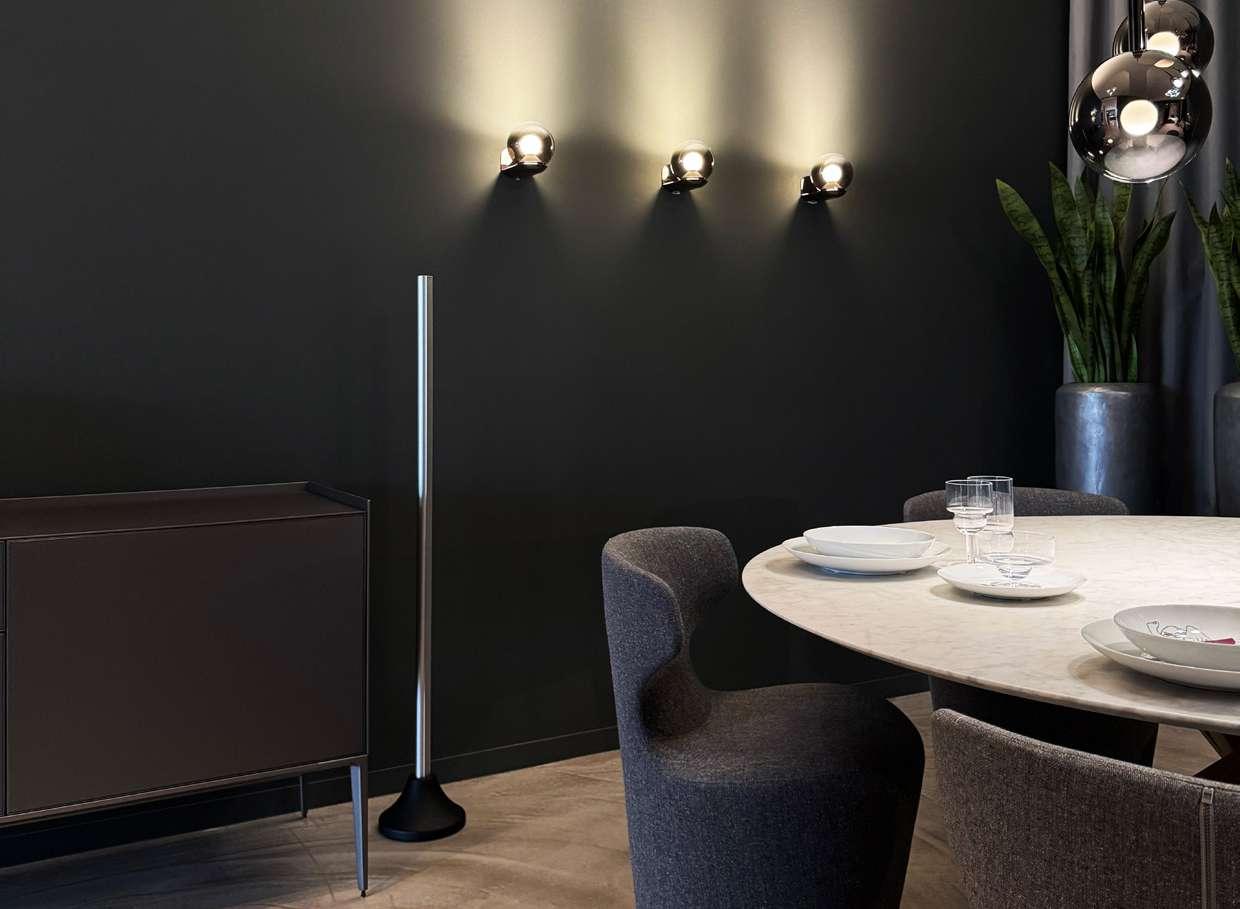
The design philosophy is based on visual restraint and architectural freedom. The loudspeakers can almost disappear into the interior, but they can also be deliberately presented as design objects. Standard and premium finishes are available, while custom RAL colours can be produced for projectspecific interiors. Selected Swarovski designs are also available for highly individual luxury installations.
The IC-WP models retain the same slim design and acoustic concept but add IP65-certified weather protection, saltwater resistance and marine certification. This makes them suitable not only for residential outdoor environments, terraces, gardens and wellness areas, but also for yachts, marine projects and seagoing vessels operating in demanding offshore conditions.
Our target audience includes architects, interior designers, custom integrators and
clients who do not want to choose between high-quality sound and sophisticated interior design.
The Julia Series of amplifiers has attracted considerable attention among audio professionals and integrators. What are the defining features and key USPs of the Julia Series, and what sets it apart in an increasingly competitive amplifier market?
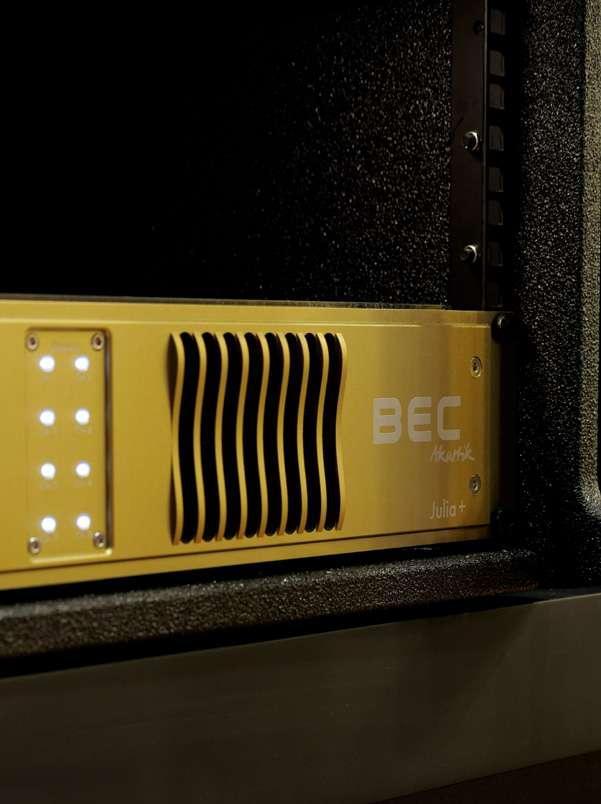
The Julia Series was developed specifically as an installation amplifier platform rather than as a conventional consumer hi-fi amplifier. The range includes four-, six-, and eightchannel Class-D models, delivering up to 180 watts per channel at four ohms and 120 watts per channel at eight ohms. Channels can also be bridged for applications requiring higher output.
For larger systems, the eight-channel version can be equipped with two optional 400watt subwoofer channels. This means that loudspeakers and passive subwoofers can be powered from one coordinated amplifier platform, reducing rack space and simplifying system design.
Julia+ adds an integrated DSP platform with BEC Akustik presets, 96 kHz processing and 64-bit resolution. It also incorporates a linear power supply and AC ground-noise dissipation. These features allow integrators to optimise crossover points, equalisation, protection and system behaviour while reducing setup time and the risk of incorrect configuration.
Another important distinction is that the amplifiers are developed and manufactured in Germany. Our approach is not simply to compete through headline power figures. Julia is designed as part of a complete system in which loudspeaker, subwoofer, amplification, DSP and presets are engineered to work together reliably.
Could you introduce us to your subwoofer range, including the FlatboySlim, Paul 12.1, and Lars 8.1 models, and explain the applications each is designed to serve?
Our three passive subwoofer models address very different installation requirements.
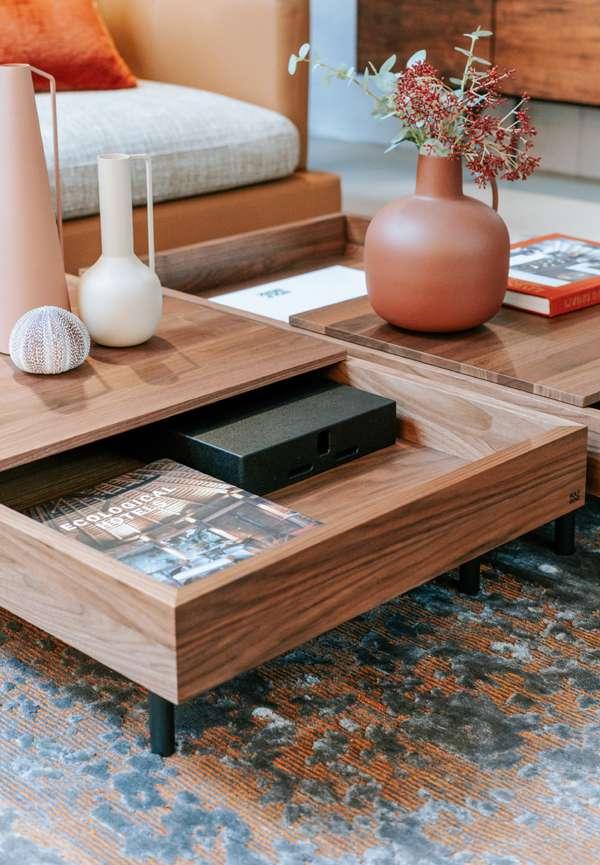
The FlatboySlim is an ultra-compact flat subwoofer using a 5.5-inch driver. Its extremely shallow design allows it to be integrated underneath furniture, behind interior elements or mounted discreetly on a wall or ceiling. It is designed for projects where space and visual impact are critical, but additional low-frequency support is still required. Its frequency range extends from approximately 45 to 200 Hz.
The Lars 8.1 is our compact all-round subwoofer. It uses an eight-inch driver, delivers up to 106 dB and covers approximately 35 to 200 Hz. It is suitable for living rooms, smaller home cinemas, meeting rooms, hospitality applications and installations requiring a
balance between compact dimensions and substantial bass performance.
The Paul 12.1 is the high-output model. Its twelve-inch driver, 1,000-watt AES power handling and maximum output of up to 125 dB make it suitable for demanding home cinemas, larger rooms and professional installations where strong, controlled lowfrequency performance is required. Weatherresistant versions of the Lars 8.1 and Paul 12.1 are also available for outdoor and specialist applications.
Beyond speakers and electronics, BEC Akustik offers a comprehensive portfolio of technical accessories. How do these solutions contribute to enhancing overall system performance and user experience?
Accessories are not an afterthought at BEC Akustik. They are an important part of the complete system concept.
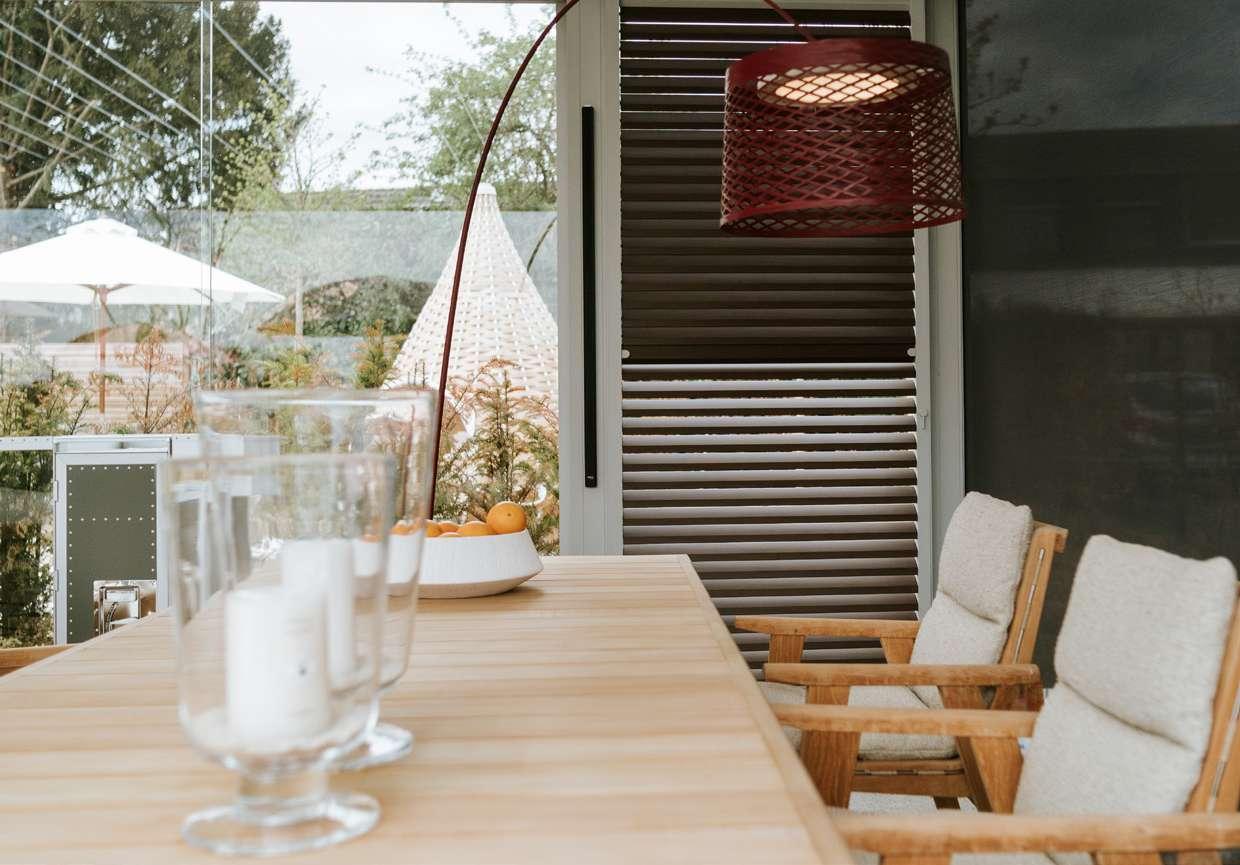
Our mounting portfolio includes magnetic
wall brackets, ceiling mounts, FlatboySlim wall brackets and stacking adapters. These products simplify installation, provide secure and accurate positioning and allow the loudspeakers to be integrated discreetly into different architectural environments.
We also offer a range of stands and bases for table-top, floor-standing and horizontal centre-channel applications. This gives the integrator the freedom to adapt the same loudspeaker to different room layouts without compromising its appearance or acoustic orientation.
On the technical side, the Fred passive crossover range is available in versions matched to the different loudspeaker impedances. It provides the correct frequency division between the IC or IC-WP loudspeakers and a subwoofer and helps protect the loudspeakers from unsuitable low-frequency signals.
The practical benefit is clear: fewer improvised installation solutions, more predictable
acoustic results and a cleaner finished project. For the end user, this translates into a system that looks integrated, performs consistently and remains easy to service or expand.
How does BEC Akustik support the custom installation community in delivering reliable, scalable, and future-ready audio experiences?
We support integrators at both the planning and implementation stages. Our aim is to provide more than individual products; we want to provide a complete and predictable system solution.
For system planning, BEC Akustik makes technical data, EASE files, architectural specifications, mechanical drawings, 2D and 3D data and preset guides available for relevant products. This allows integrators, acoustic consultants and architects to include the products at an early stage of a project rather than solving installation issues only
after construction has begun.
The modular product range also supports scalability. Different IC sizes can be selected for front, centre, surround, height or distributedaudio channels, while the Julia amplifiers and subwoofer options allow the system to grow according to the room and performance requirements. The IC-WP range extends the same concept into outdoor, marine and saltwater-exposed environments.
In India, MZ Audio Distributions provides the essential local link between the manufacturer and the installation community. Local demonstrations, product training, project consultation and after-sales coordination are particularly important in a market with a wide variety of residential, hospitality and commercial projects.
Future-ready does not only mean adding more technology. It also means providing open planning data, modular hardware and

products that can remain part of a system even when sources, control platforms or room requirements change.
Are there plans to introduce India-specific products, finishes, configurations, or channel-support initiatives to better address the unique requirements of the local market?
India is an important strategic market for BEC Akustik, and our partnership with MZ Audio Distributions gives us direct access to feedback from integrators, architects, consultants and end customers.
Our immediate priority is not to create a lower-specification product specifically for India. The BEC Akustik quality standard must remain the same in every market. Instead, we are focusing on adapting the overall solution to local requirements.
This includes evaluating project-specific finishes and RAL colours, creating suitable stereo, home cinema, multiroom, outdoor and marine audio system configurations, improving local product availability and developing demonstration systems that allow customers and professionals to experience the technology properly.
Channel support will be equally important. Together with MZ Audio Distributions, we
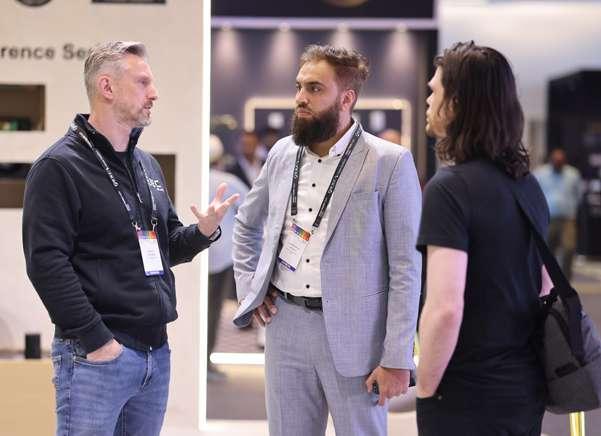
intend to strengthen technical training, project consultation, system-design assistance and local after-sales support. We also see significant potential in premium residences, luxury home cinemas, hospitality projects, outdoor entertainment areas, yachts and marine applications.
Where recurring local project requirements justify a dedicated configuration or product variant, we will evaluate it together with our Indian partners. However, any Indiaspecific solution must solve a real installation requirement and meet exactly the same acoustic, technical and quality standards as the rest of the BEC Akustik portfolio.
“The

Eelectron S.p.A. has built a strong reputation in KNX-based home and building automation. How would you describe the company’s journey and evolution over the past three decades?
Eelectron has consistently grown over the years with an enthusiastic and entrepreneurial spirit, always remaining focused on delivering high-quality products, strong customer value, and a consistent ethical approach to business and relationships.
The early years were marked by foundation, technology development, and specialisation. Feedback from customers and partners helped guide the company in the right direction, sometimes through non-linear
Umberto Paracchini Global Sales Manager, Eelectron
Umberto Paracchini, reflects on the company’s evolution into a globally recognised leader in KNX-based home and building automation. In this interview, he discusses Eelectron’s growth journey, its commitment to seamless interoperability across the smart home ecosystem, and the innovations and strategic vision shaping the future of intelligent automation.
paths, but ultimately building the experience and awareness that today allow Eelectron to stand out.
Over the past decade, the company has further refined its positioning, clearly identifying its role as well as its core customers and target markets, and successfully pursuing its strategic vision.
More recently, Eelectron has entered a phase of strong multinational and financial growth, highlighted by the acquisition of outstanding companies in the KNX automation space such as IPAS GmbH and XXTER BV. These are market-leading organisations that fully share Eelectron’s values: passion for products and innovation, and the ambition to build a unified
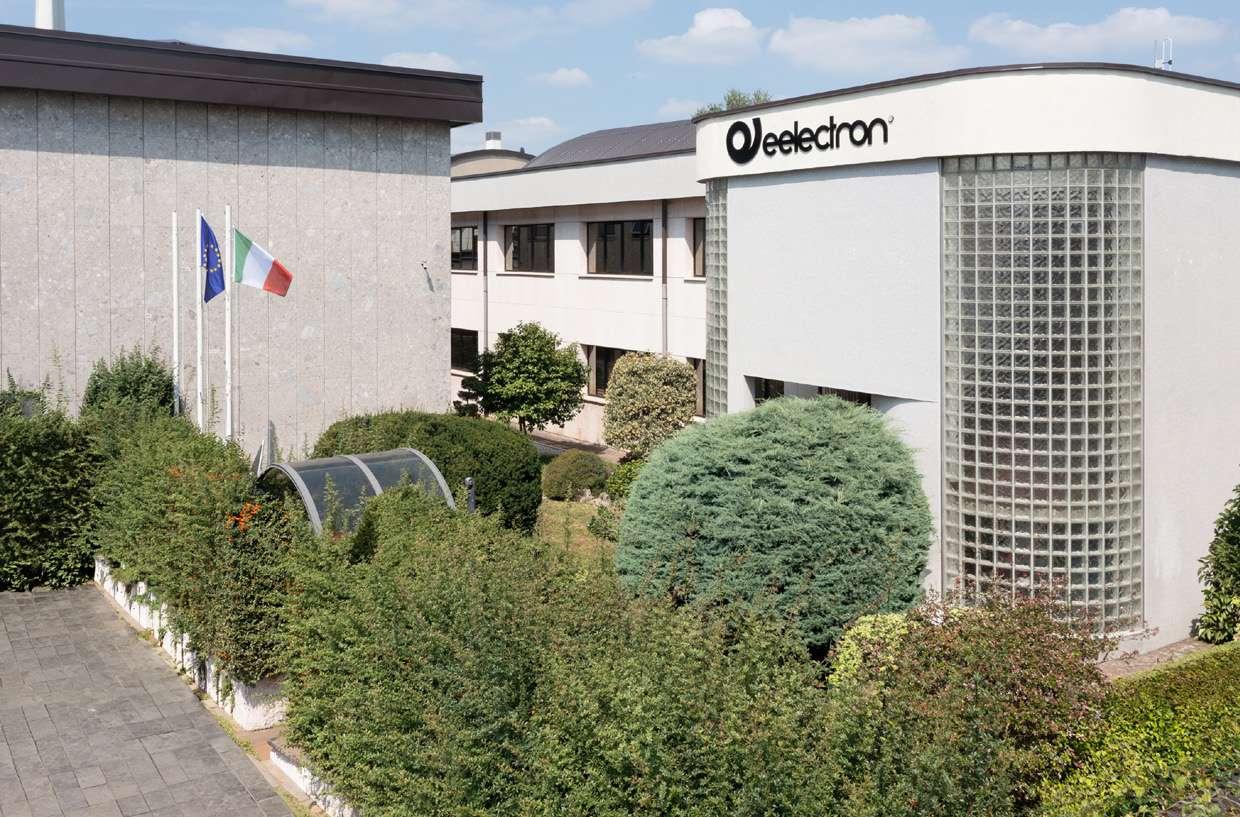
organisation where people feel part of a larger family.
With interoperability becoming increasingly important, how does Eelectron ensure seamless integration with third-party systems and the broader smart home ecosystem?
The Eelectron group is a market leader in integration. It has long been at the forefront of bridging the KNX and DALI worlds through its products, and today it continues this path by expanding into additional technologies.
At the field level, it integrates protocols such as Modbus and BACnet through flexible and efficient solutions. At the integration level, Eelectron was the first manufacturer to certify compatibility with Apple voice assistants and now offers a broad portfolio in this area. It also natively integrates other brands and technologies, including MATTER wireless protocol, audio systems (e.g., Sonos, Bluesound), intercoms, photovoltaic systems, and more.
Eelectron solutions—from bridges to gateways
to servers—are fully compatible with MQTTS, ensuring a strong connection with the IT world, granting robust security layers and encryption to meet current and future requirements, while enabling secure communication with cloud platforms and third-party systems.
Finally, Eelectron products also implement KNX Secure, guaranteeing high levels of protection within the automation environment itself.
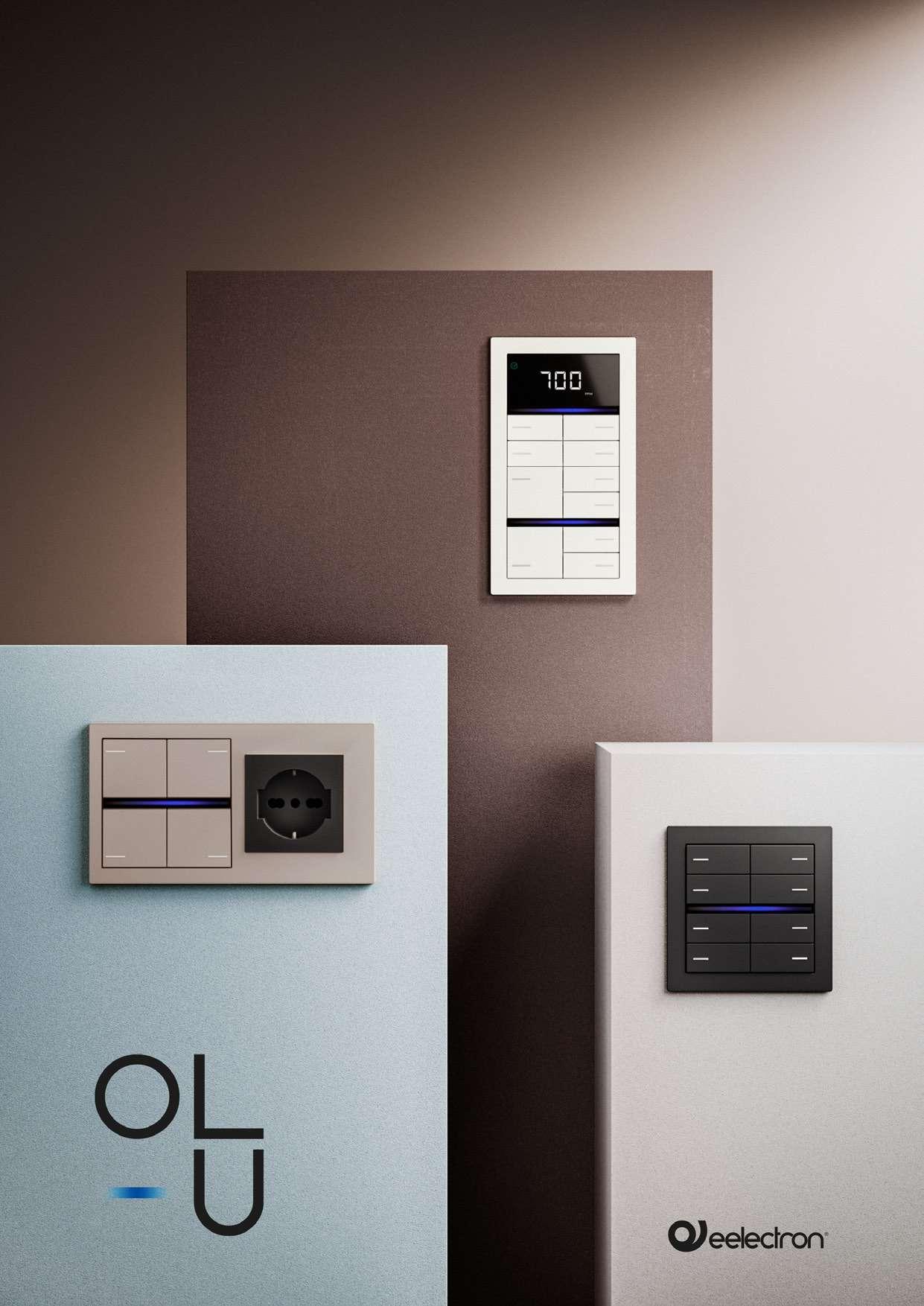
The OL-U series has attracted attention for its combination of aesthetics, user interaction, and functionality. What inspired its development, and what sets it apart from conventional control interfaces?
The OL-U series was inspired by the idea of combining strong aesthetic and design identity, deeply rooted in the company’s culture with high-end technological performance, developed with the mindset of true KNX specialists, and with a level of quality customers can rely on over time.
In essence, it is about merging beauty with functionality, while not limiting the product
to a purely elite segment. The range offers multiple finishes, extensive customisation options, and compatibility with different socket standards across various geographies.
Energy management is becoming a key priority in residential and commercial projects. How do Eelectron’s KNX solutions contribute to sustainability and intelligent energy optimisation?
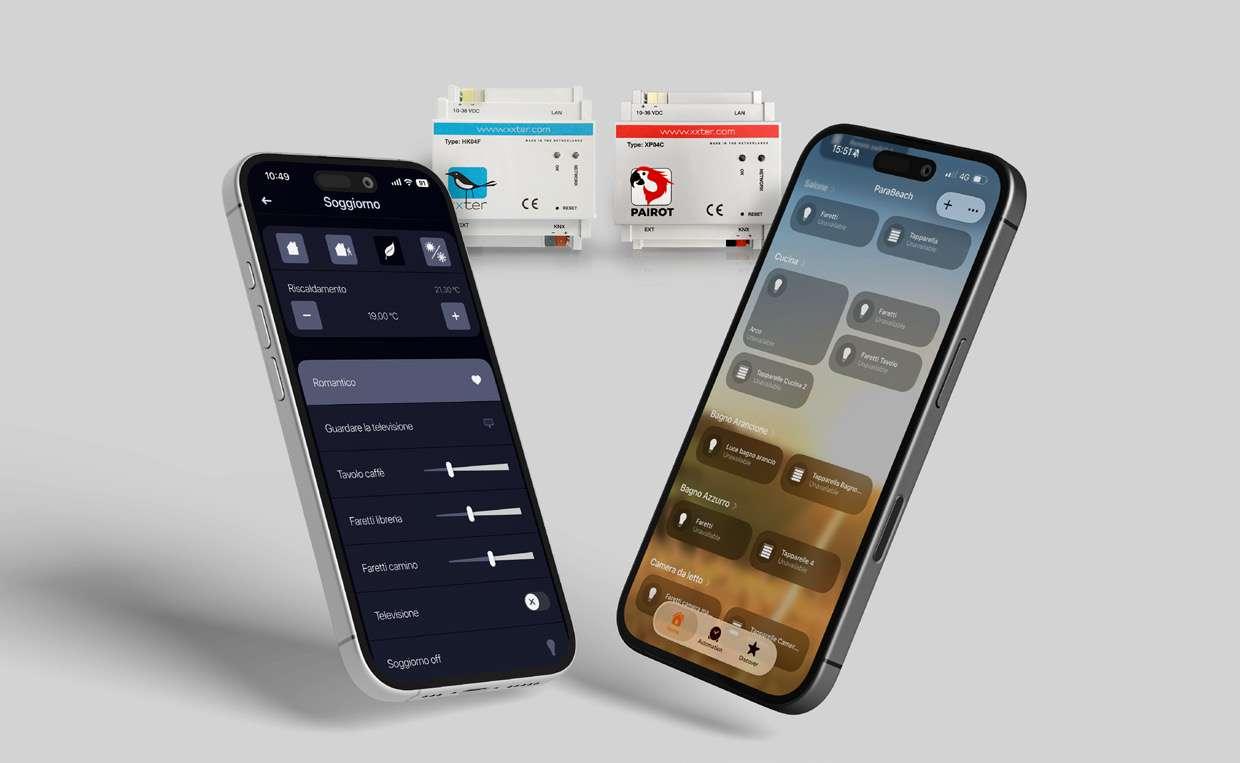
Today, the XXTER controller is probably the product that best manages modern energy management systems. It enables extremely flexible handling of priorities and time schedules, integrates seamlessly with thirdparty photovoltaic systems and EV chargers, and combines data from external sources such as weather services with locally gathered data across multiple protocols, together with fully configurable logic.
At the same time, Eelectron systems have always delivered significant energy-saving benefits, especially in commercial and mixeduse environments (such as hospitality and student housing). They optimise building behaviour through advanced sensing, HVAC management devices, and supervision software, ultimately enhancing occupant comfort while reducing energy consumption and waste.
The OL-U range serves as a sophisticated interface between users and their smart environments. How is it being applied in luxury residential and hospitality projects to simplify control while enhancing the overall user experience?
The flexibility of a complete product range allows Eelectron to deliver the highest levels of comfort to end users—from environmental control to humidity and air quality management, as well as energy efficiency and sustainability.
Using an automation system enhances lifestyle and wellbeing, maximises the impact of lighting design choices, and represents a conscious, responsible approach toward both personal comfort and environmental care. System control is enabled through the
differentiated functionalities of the OL-U series, allowing, as an example, precise lighting management, intuitive scene setting, detailed gate control, outdoor lighting control, and integration with music systems.
All key functions can be managed seamlessly without compromising on premium finishes and extensive customisation options. When combined with voice control, OL-U makes interaction with the entire system immediate and highly satisfying.
With cybersecurity becoming a key priority in connected buildings, in what types of applications does the OL-U KNX Secure range offer the greatest advantages, and how does it help ensure secure and reliable building automation?
Cybersecurity is a top priority—not only to protect personal data and privacy, but also to ensure safety in an increasingly connected and complex world.
Third-party access must be carefully managed, as it can originate from a wide range of sources—from smartphones to cloud connections linked to external services such as weather systems. Even functionalities often perceived as secondary—such as ventilation, heating, cooling, or access control—must be considered critical in many environments.
KNX Secure is now one of the safest, if not the safest, protocol in the Building Automation sector. Eelectron, placing great emphasis on these aspects, is developing a range of certified KNX Secure systems, robust software layers across its devices, and cloud connectors with high and certified quality standards, ensuring state-of-the-art encryption levels within the industry.
Intelligent sensing is playing an increasingly important role in modern smart spaces. How are Eelectron’s Multi Sensor KNX solutions being used in real-world projects to improve occupant comfort, energy efficiency, and automated building management?
Eelectron’s Multi Sensor KNX solutions have effectively introduced a new approach to
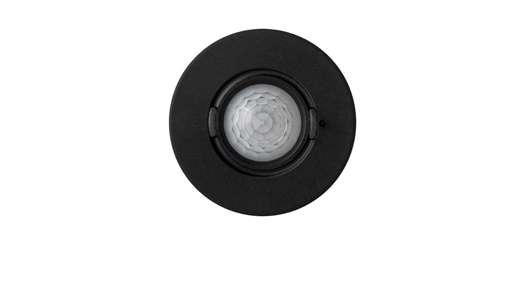
environmental management, particularly in shared or high-traffic spaces, setting a direction for both customers and the wider market.
A single, compact, and aesthetically refined product—recognised with major European design awards—integrates advanced sensing capabilities, including presence detection (to manage HVAC and related functions), light levels, temperature, humidity, sound detection (for unexpected event monitoring), and the calculation of occupancy and activity rates.
These data points provide valuable insights for building managers and operators across sectors such as hospitality, student housing,
and healthcare. They enable full awareness and control of environments, supporting faster and more efficient decision-making processes that typically lead to reduced energy consumption and minimised waste.
Eelectron has become part of the Bemsiq Group. How does this development strengthen your innovation roadmap and global growth strategy?
Joining Bemsiq—one of the most forwardthinking groups in creating people-centric workplaces and promoting ethical, sustainable business—has been both a source of pride and a powerful growth driver.
It enables ambitious investments, strong synergies within the group, and supports a structured and credible plan for both organic and inorganic growth.
Since becoming the majority shareholder of Eelectron Group in 2024, the Swedish fund has strengthened not only financial capacity but also introduced a more structured approach, expanding focus beyond industrial objectives to include sustainability, environmental responsibility, and, ultimately, people.
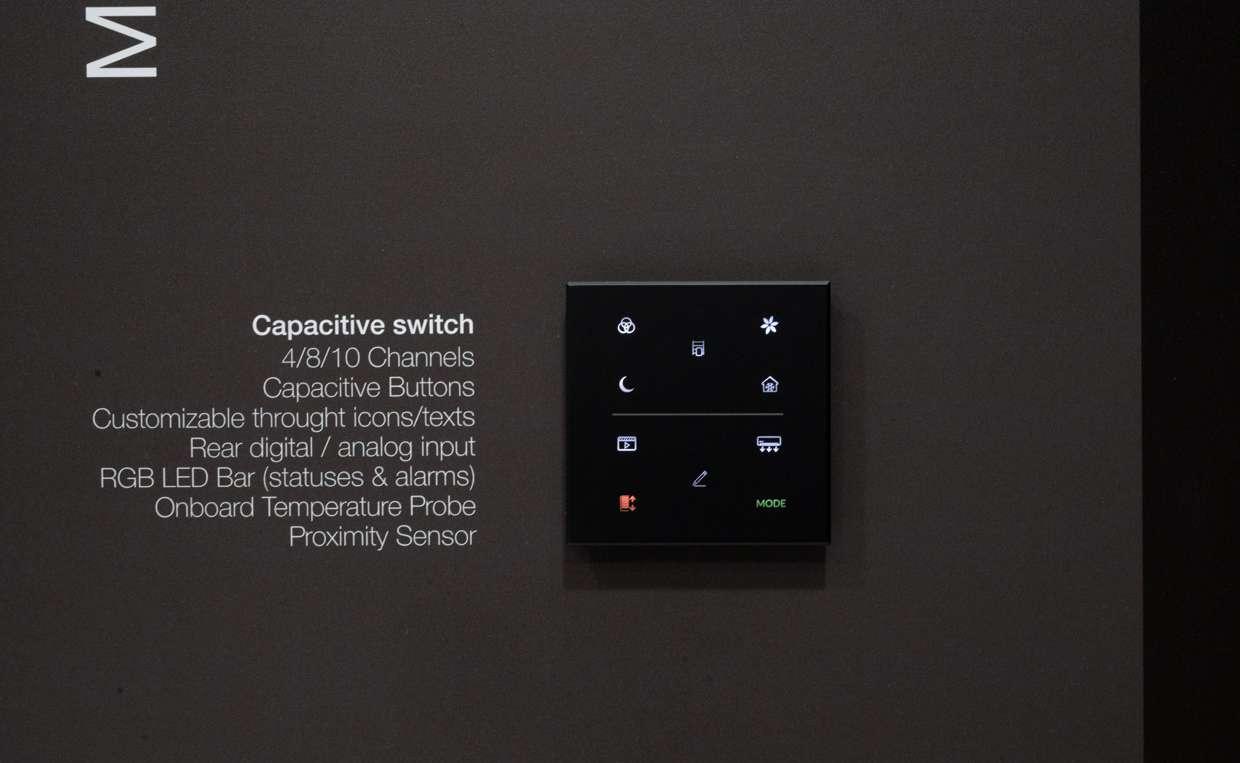
India is one of the fastest-growing smart home markets globally. How important is the Indian market for Eelectron, and what opportunities do you foresee in the coming years?
The Indian market is highly important for Eelectron and represents a significant opportunity for the future—especially in a global context where traditional economic dynamics are rapidly evolving.
Eelectron has been active in India for many years, strongly believes in its growth potential, and aims to further structure its presence in close collaboration with Technovo. This partnership represents a transparent and market-oriented synergy, full of exciting challenges to embrace.
Looking ahead, what are Eelectron’s key priorities for product innovation, market expansion, and customer experience over the next five years?
Eelectron remains firmly focused on maintaining its leadership position as an innovation-driven company. Product development has always been a core passion
across all the companies within the group, now united as a single team with the ambition of creating the best products on the market in terms of flexibility, quality, and intelligence. Significant efforts are being made in this direction, and tangible results will soon be shared with the market. The company aims to continue serving multiple vertical markets— residential, hospitality, and commercial—while further refining its positioning and providing partners with the right tools to effectively represent its value proposition.
Ultimately, the end customer, along with their needs and the specific applications required across different regions, remains the central challenge and opportunity for Eelectron.
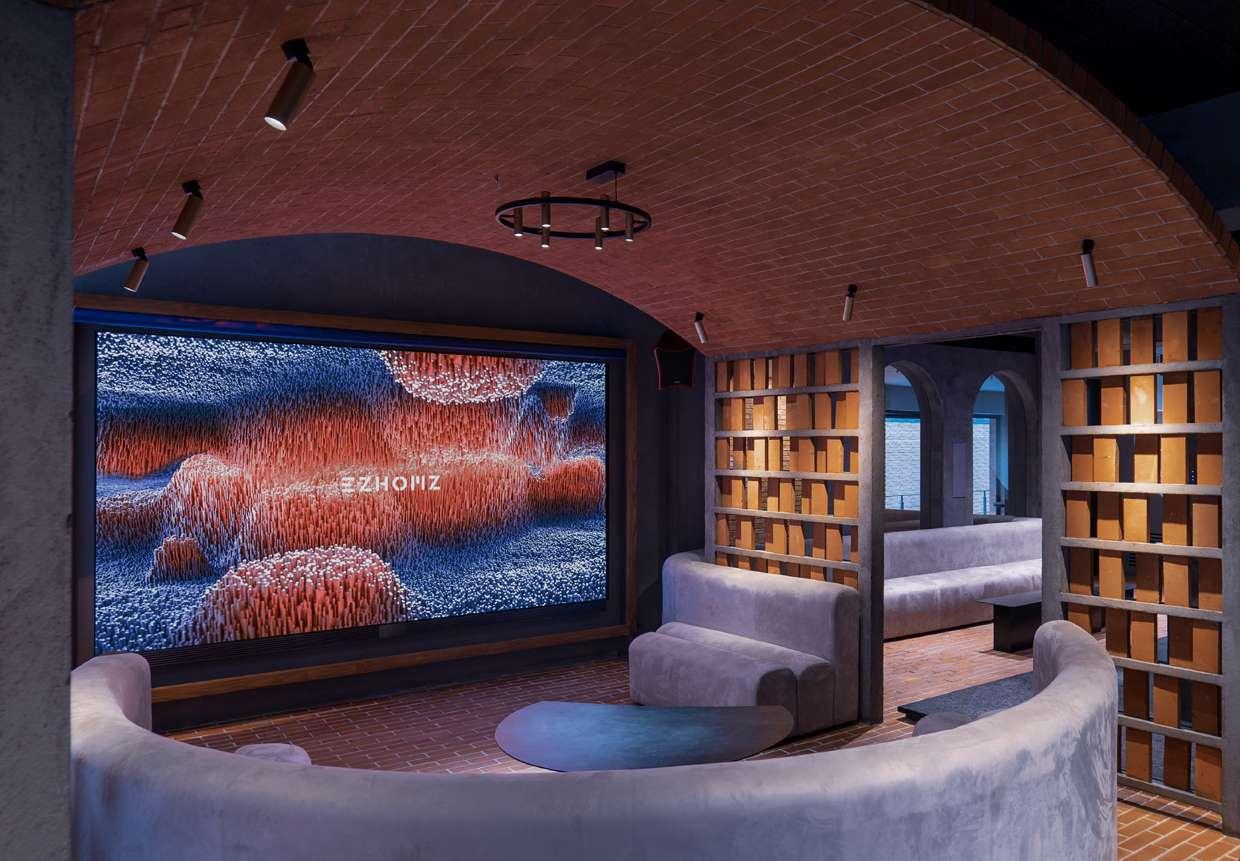
Designed by Arquite, the Ezhomz Experience Centre in Delhi provides an immersive, hands-on experience of the latest audio, video, lighting, security, and home automation technologies, all thoughtfully integrated into a refined architectural setting.
Nestled in Okhla, New Delhi, and designed by Ar. Kapil Razdan and Seema Pandey, CoFounders, Arquite, the Ezhomz Experience Centre emerges as a radical departure from the sterile, plastic-heavy aesthetic of modern retail. By housing high-end home automation within recycled brick structures, the design successfully trades traditional retail clutter for a concept described as Kinetic Invisibility. Through the OCUS Vaults, the space redefines luxury not as a collection of gadgets, but as a sophisticated dialogue between ancestral masonry and future intelligence.
“The material palette serves as the project’s philosophical anchor, proving that radical innovation and raw, sustainable materials can
coexist harmoniously. The warmth of ochre brick, laid in traditional jali patterns, provides the natural acoustic diffusion necessary for premium audio-visual experiences while grounding the high-tech interface in a tactile, human reality. This earthy texture is balanced by the cool precision of dark metal and cement-finished walls. In a clever subversion of traditional concealment, the AV room utilises translucent acoustic fabric that, when backlit, reveals the intricate wiring of the system’s brain, transforming complex engineering into a celebrated work of art,” says Seema Pandey.
“By anchoring the future of home automation within the oldest building materials known to man, the design team at Arquite has offered
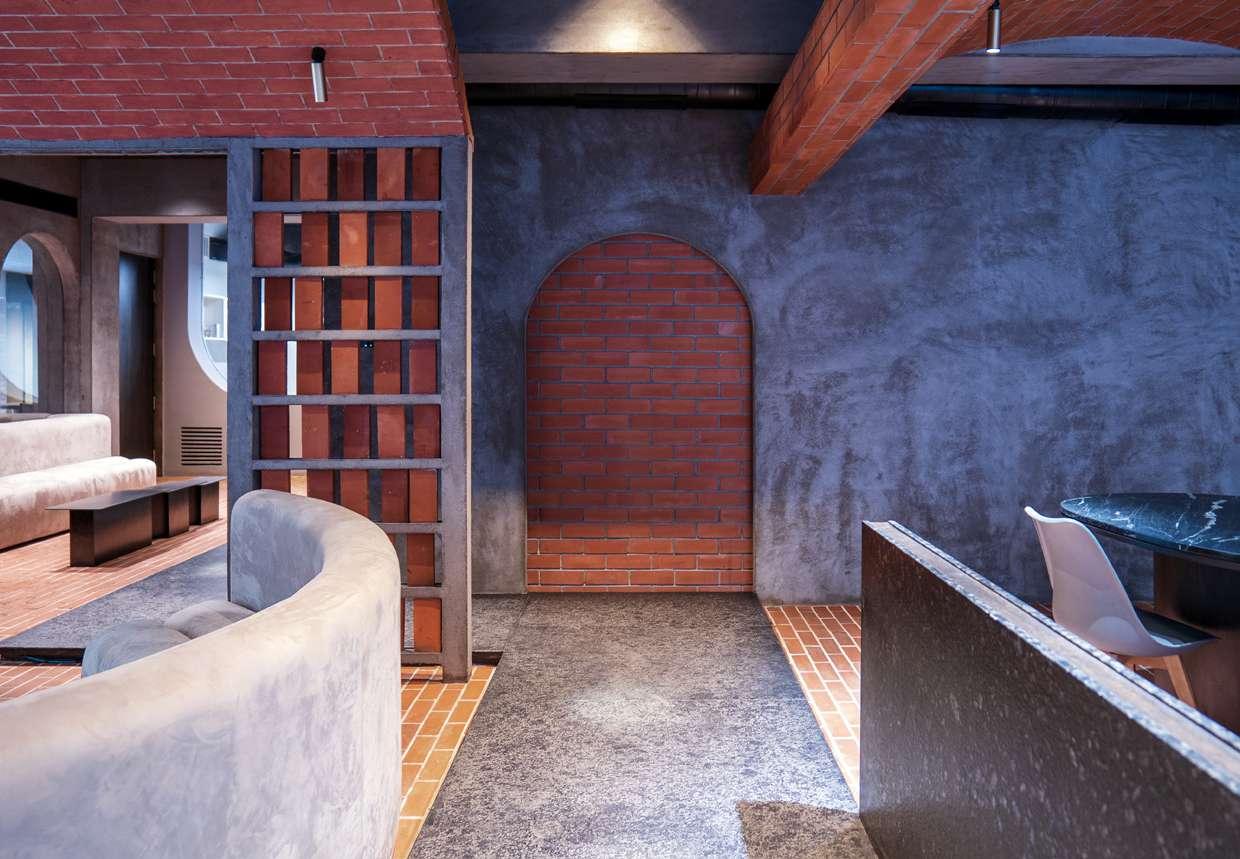
more than a product demonstration; they have provided a blueprint for a lifestyle. It is a sanctuary where the complexity of the digital age is softened by the permanence of stone and brick, ensuring that innovation enhances the physical world without cluttering it.” explains Ar. Kapil Razdan
The Ezhomz Experience Centre brings together some of the world’s most respected names in audio, video, automation, and infrastructure, each selected not for familiarity alone, but for the specific role it plays in a demonstration environment that mirrors what Ezhomz specifies in actual homes. The centre is organised across six demonstration zones plus a whole-building infrastructure layer. Below is a zone-by-zone account of every brand, the technology category it represents, its key technical specifications, and what sets it apart.
The Grand Home Theatre is the flagship
attraction of the Ezhomz Experience Centre, showcasing how professional cinema technologies can be seamlessly integrated into a premium residence. Configured as a Dolby Atmos 7.1.4 home cinema, it features a 180-inch-wide 2.35:1 custom Vuemax perforated projection screen, a 10,000-lumen native 4K UHD laser projector, a 16-channel immersive audio processor, and premium European loudspeakers with professional amplification. Every component has been selected to deliver reference-grade audiovisual performance while reflecting the standards Ezhomz specifies for luxury homes. At the heart of the system are Ascendo Immersive Audio passive loudspeakers from Germany, including speakers for the front stage, speakers for the surround channels, and wedge-model speakers for the Dolby Atmos overhead channels. Driven by Powersoft amplification, these handcrafted loudspeakers are manufactured in small batches in Ansbach, Germany, and engineered to overcome the acoustic challenges of enclosed cinema spaces, including standing waves, reflections, and time-domain accuracy at high sound
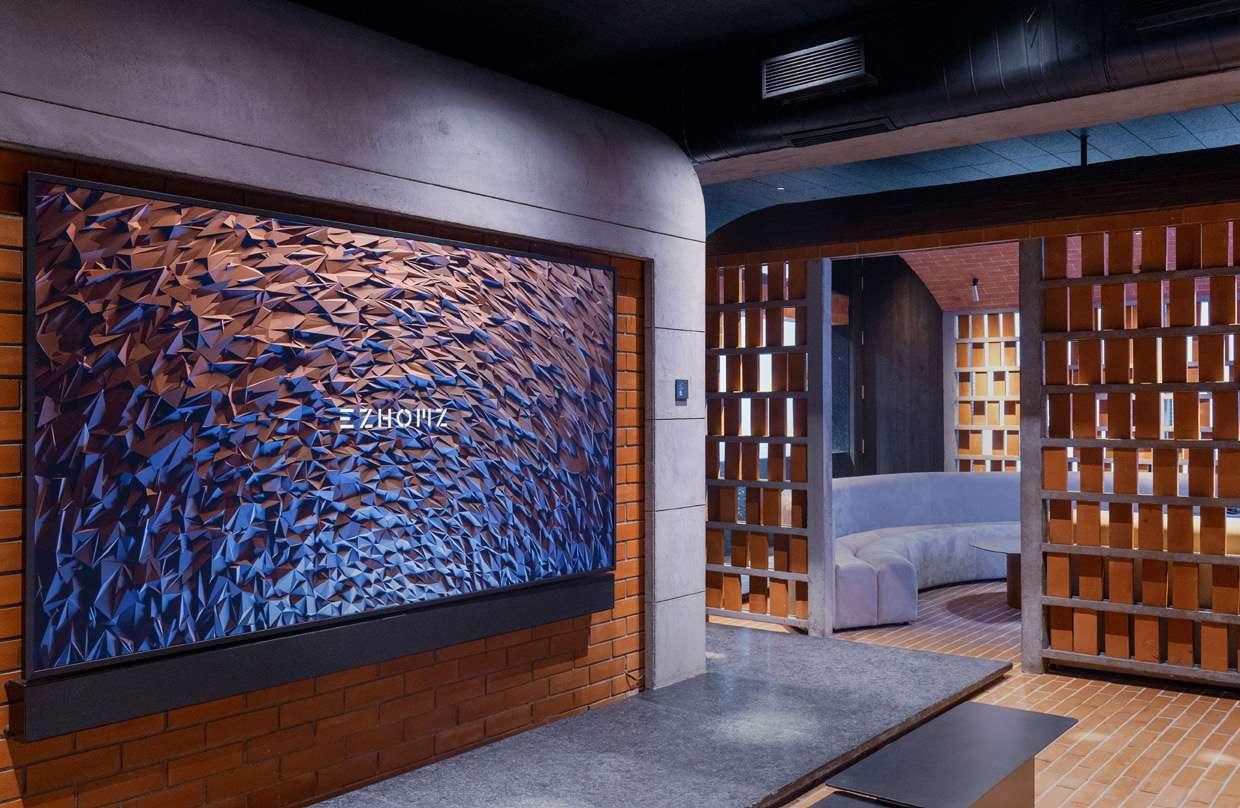
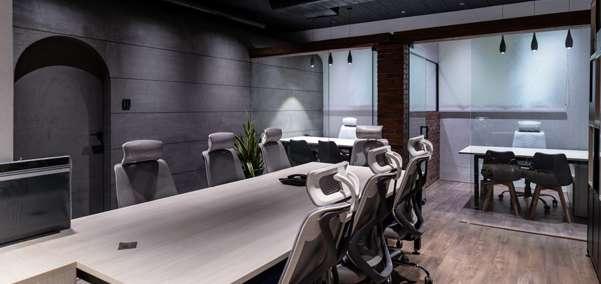
pressure levels. Their limited availability in India further enhances their exclusivity.
The speaker system is powered by Powersoft professional DSP amplification, comprising amplifiers for the left, centre, right and surround channels, amplifiers for the Atmos speakers, and an amplifier for the 18-inch subwoofer. Additional DSP amplifiers are deployed in the Home Theatre (Zone 2). Operating over AES/EBU digital audio with proprietary DSP software, the platform enables independent adjustment of level, equalisation, limiting and delay for every speaker channel. Its amp-per-driver architecture mirrors professional commercial cinema design,
while Powersoft’s proprietary energy recovery technology reduces heat generation and power consumption.
Immersive audio processing is handled by Storm Audio, a 16-channel processor from the French manufacturer founded in 2011. Supporting Dolby Atmos, DTS and Auro-3D simultaneously, it is among the few processors capable of decoding all three immersive audio formats within a single platform.
Visual performance is delivered by an Optoma professional laser projector, offering 10,000 lumens of brightness, native 4K UHD resolution, a 300,000:1 contrast ratio, MultiColor Laser (MCL) technology, a 30,000-hour laser light source, and five interchangeable lens options. Completing the system is the custom Vuemax projection screen, developed with ISOcertified international screen manufacturers and engineered for Indian conditions. The Grand Home Theatre features a 180-inchwide 2.35:1 perforated screen, while the Home Theatre incorporates a 150-inch screen. Its acoustically perforated design allows the left, centre and right speakers to be positioned
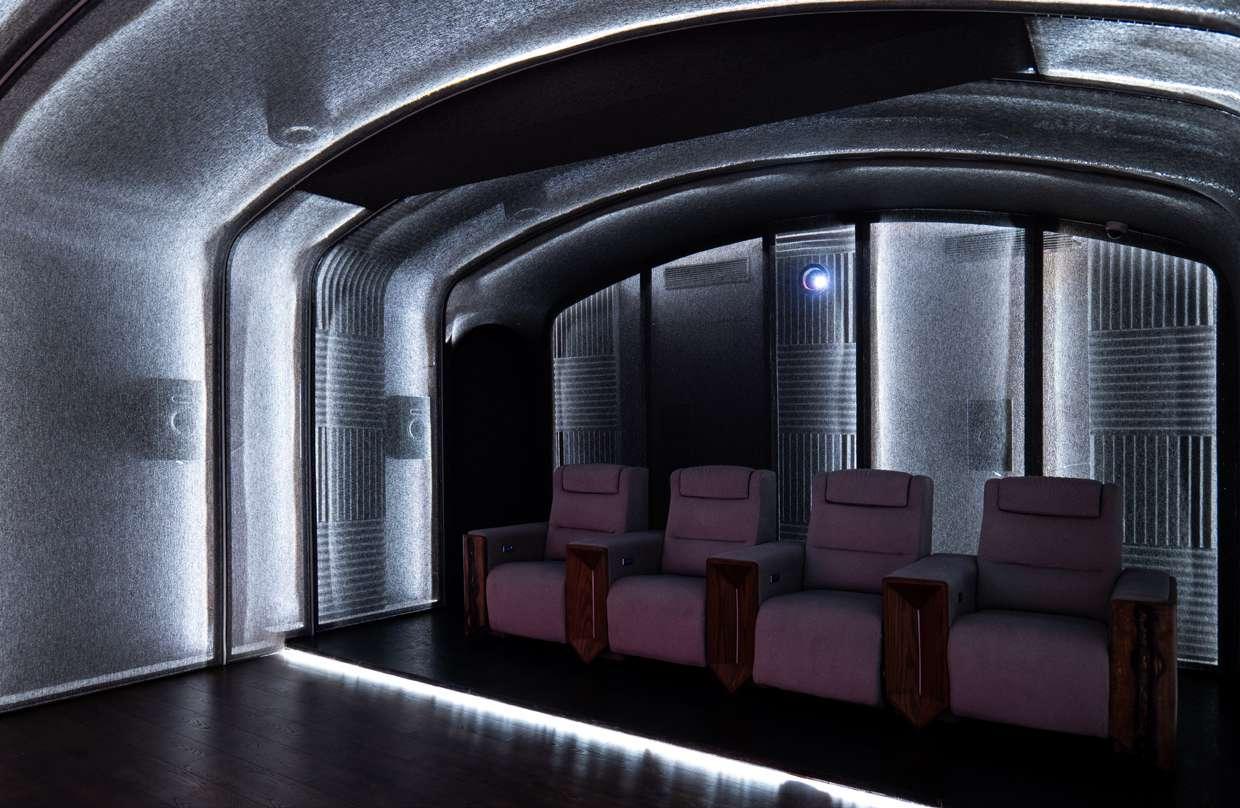
directly behind the screen—the gold standard in cinema design—ensuring dialogue appears to come directly from the actors on screen. At 180 inches wide, it is also one of the largest residential projection screens installed in India, reinforcing the Grand Home Theatre’s flagship status.
The Home Theatre is anchored by a Sony native 4K SXRD laser projector. Alongside a 98inch commercial display in the Family Lounge (Zone 3) and a 55-inch OLED display in the Discussion Room (Zone 5), it showcases Sony’s premium display expertise. The projector delivers native 4K resolution with 8.3 million pixels, eliminating the need for pixel-shifting technology. Featuring a Z-Phosphor laser light source rated for up to 20,000 hours and TRILUMINOS PRO technology covering 95% of the DCI-P3 cinema colour standard, it delivers exceptional brightness, colour accuracy and image detail.
As the world’s most compact native 4K HDR laser projector in its class, it helps visitors
appreciate the leap from a large television to a dedicated 150-inch cinematic experience.
The audio system features MAG Theatron commercial cinema loudspeakers, comprising front speakers, surround speakers and a subwoofer. Derived from the same engineering platform as MAG Cinema systems installed in commercial cinemas across more than 120 countries, the speakers deliver the authentic sound signature of a professional theatre, demonstrating true commercial cinema performance in a residential setting.
Supporting the Dolby Atmos system are Speakercraft architectural flush ceiling
speakers. The Home Theatre uses speakers for the Atmos overhead channels, while a hidden room subwoofer is showcased in the Discussion Room (Zone 5) and speakers are deployed for the Background Music (BGM) system. Speakercraft’s proprietary AIM dispersion technology directs sound precisely towards the listening position regardless of speaker placement, while the hidden subwoofer demonstrates how deep bass can be achieved through a completely concealed in-wall or in-floor installation without compromising interior aesthetics.
Designed to replicate a premium residential living room, the Family Lounge at the Ezhomz Experience Centre demonstrates how immersive entertainment technologies can be seamlessly integrated into everyday living without compromising interior aesthetics. The space combines discreet architectural audio, concealed display technology and high-performance bass reproduction, proving that technology can enhance rather than dominate modern interiors.
The audio system is built around James
Loudspeaker architectural speakers, including speakers for the front left, centre and right channels, speakers for the surround channels, and speakers for the Dolby Atmos height channels. The company’s speakers are also deployed in the Experience Centre’s background music (BGM) zones. Designed to disappear within finished interiors, these speakers deliver discrete left, centre and right channel imaging for accurate sound staging while preserving the room’s aesthetics. With a portfolio of more than 140 speaker systems, including a proprietary hidden subwoofer, James Loudspeaker demonstrates how high-performance audio can be seamlessly integrated into sophisticated living spaces.
Low-frequency performance is delivered by a JL Audio self-powered subwoofer with integrated DSP from the American manufacturer founded in Miramar, Florida, in 1975.
Completing the space is a Future Automation SPS motorised TV lift mechanism from Arizona, USA. Engineered for silent, reliable operation and backed by warranties of up to 10 years, it conceals the 98-inch Sony display within
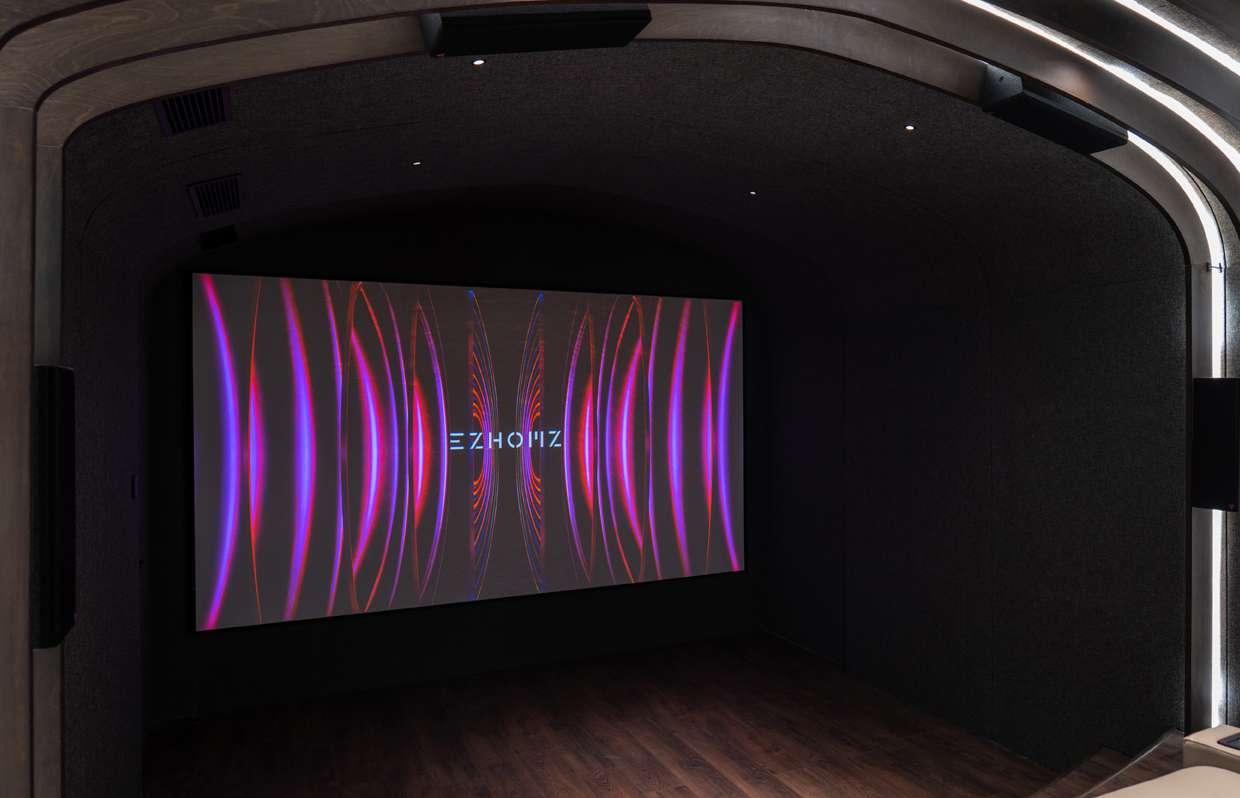
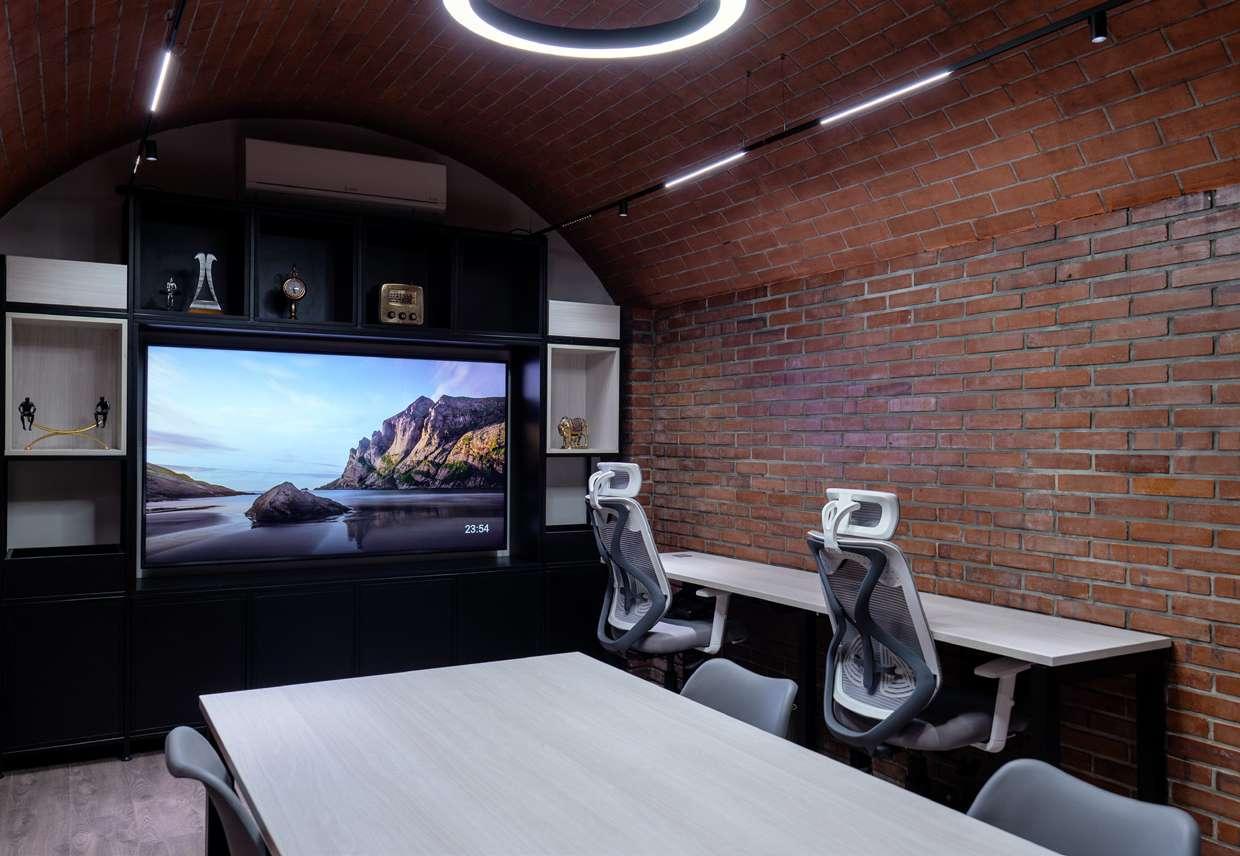
custom furniture when not in use, preserving the room’s refined appearance. At the touch of a button, the display rises smoothly into position, demonstrating how automation can maintain interior aesthetics while delivering a premium entertainment experience.
Designed for homeowners who enjoy entertaining, the Party Area at the Ezhomz Experience Centre demonstrates how professional-grade audio-visual technologies can transform a residential space into a highperformance entertainment zone.
At its centre is a 135-inch direct-view LED display from Unilumin, the Shenzhenbased manufacturer founded in 2004 and recognised among the world’s top three LED display manufacturers by market share. Unlike traditional projection systems or largeformat televisions, the display requires no warm-up time, delivers consistently high brightness regardless of ambient light,
eliminates black bars, and requires no lamp or laser maintenance. It offers visitors a first-hand experience of how direct-view LED technology can redefine large-screen entertainment in luxury homes.
Complementing the display is a professional audio system from UK-based Void Acoustics, featuring loudspeakers paired with a subwoofer. Delivering the powerful, dynamic sound associated with clubs, live music venues and professional entertainment spaces, the system demonstrates how venue-quality audio and visuals can be successfully integrated into a premium residential environment.
The Discussion Room demonstrates how advanced technology can be integrated into professional and residential meeting spaces without compromising design. Audio is delivered by the Xscace Quadcane, an architectural column loudspeaker engineered to blend seamlessly into the built environment
while providing uniform sound coverage without multiple loudspeakers or extensive acoustic treatment.
Complementing the space is a Future Automation motorised display concealment mechanism. Engineered in the UK and North America, it discreetly houses a display within custom cabinetry, keeping it completely hidden when not in use. Manufactured to order for specific screen sizes and installation dimensions, it integrates seamlessly into the furniture while delivering reliable longterm performance, demonstrating how sophisticated automation can preserve a room’s visual integrity without sacrificing functionality.
Lighting across the Experience Centre is powered by Panasonic KNX, the open international standard for building automation. The system supports phasecut dimming for incandescent and halogen lighting, DALI dimming for LED drivers, scene control and occupancy-based automation through motion sensors. Individual fixtures and lighting groups can be controlled independently or activated through a single keypad press or the OKAS touchscreen interface. A key highlight is the OKAS Circadian Lighting system, described as the world’s only genuinely automated Circadian lighting platform. Unlike conventional scheduled
lighting, it dynamically responds to the time of day, occupancy and user activity, automatically adjusting colour temperature and light intensity to replicate natural daylight, allowing visitors to experience truly adaptive lighting.
KNX switching actuators manage every lighting circuit throughout the building, enabling scene-based automation that simplifies daily operation. A single command can simultaneously adjust multiple lighting circuits, dimming levels and zones, effortlessly transforming a space from a reading environment to a home theatre setting without requiring individual controls. The demonstration reinforces the principle that intelligent automation is designed to simplify everyday living rather than add complexity.
The OKAS platform also manages climate control as part of the building’s unified automation ecosystem. Integrated with the HVAC system, it allows temperature preferences to be configured for individual rooms and user profiles, automatically responding to occupancy, time of day and predefined comfort scenes. The installation reflects the same intelligent climate management solutions that Ezhomz specifies for premium residential projects.
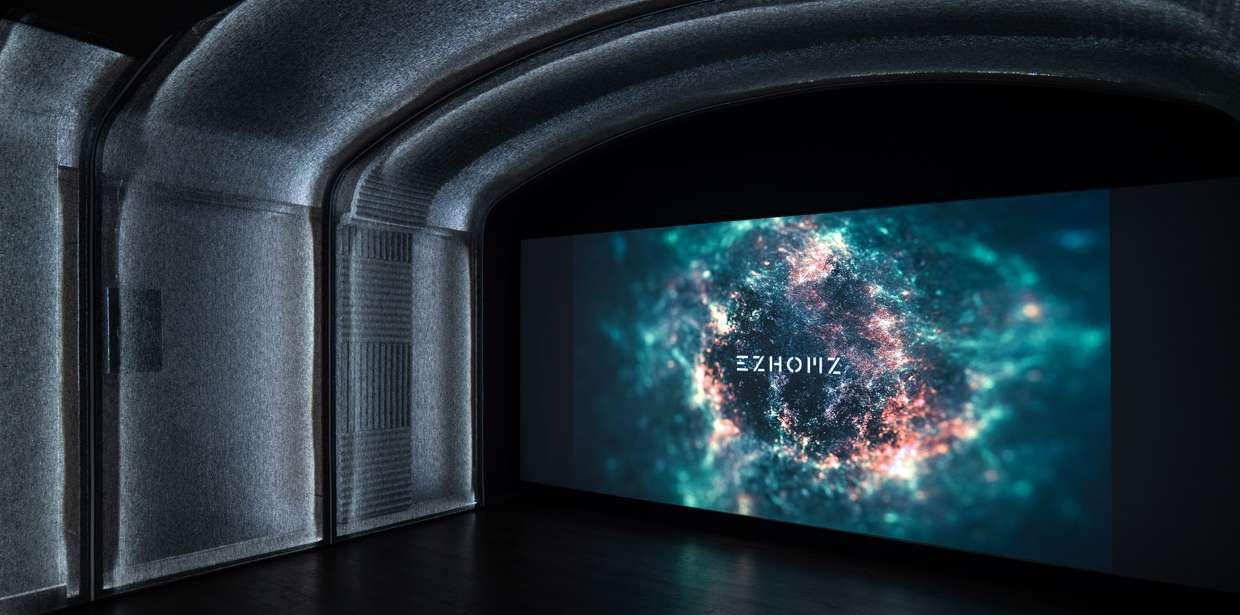
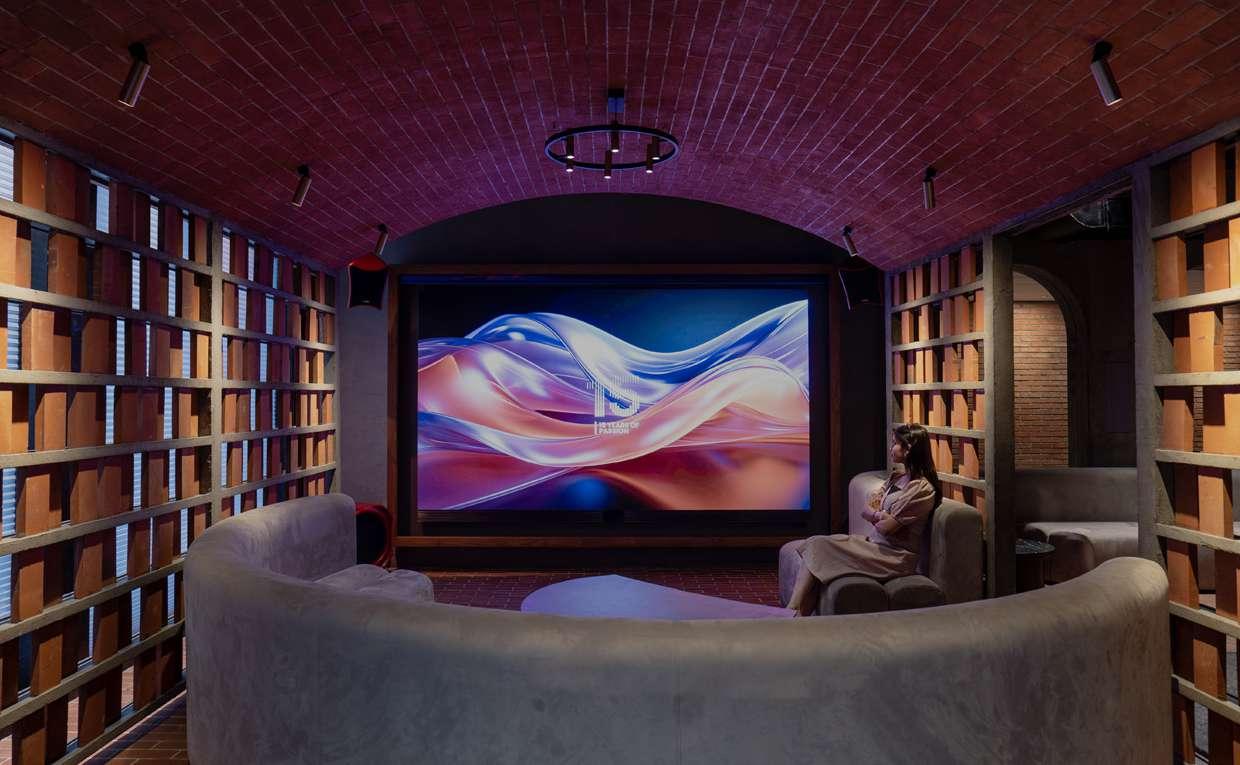
Motorised curtains and blinds form an integral part of the OKAS automation platform and are incorporated into multiple scene-based demonstrations. A single cinema scene, for example, can simultaneously close the blinds, dim the lighting, lower the projection screen and activate the complete audio-visual system, showcasing how multiple technologies can operate together through one command. Professional Security and Access Control
Security is demonstrated through a Tyco Security surveillance system featuring dome and bullet cameras managed by a 32-channel Network Video Recorder. Integrated with the OKAS platform, it provides enterprisegrade recording, simultaneous multi-camera monitoring and intelligent search capabilities, highlighting the advantages of professionally specified surveillance systems. The visitor experience begins with a BAS-IP video door phone system comprising an outdoor unit and an indoor monitor operating over the building’s IP network. High-resolution video, two-way audio and mobile app integration enable residents to answer calls from anywhere in the world.
Building access is managed by Ekey fingerprint recognition, enabling keyless, card-free and PIN-free entry. Its patented fingerprint recognition algorithm compensates for variations in finger angle, pressure and moisture, ensuring near-zero false rejection while maintaining a low false acceptance rate.
Energy efficiency is integrated throughout the Experience Centre through occupancy-based automation and OKAS Circadian Lighting. Lighting responds automatically to occupancy, climate settings adjust according to room usage, and audio-visual systems power down when spaces are unoccupied, making energy management a natural outcome of intelligent automation.
Bringing every technology together is the OKAS control platform, accessible via wall-mounted touchscreens and mobile devices. Users can create personalised profiles, while integration with major voice assistant platforms enables seamless voice control of lighting, climate, entertainment and automation scenes, demonstrating the simplicity of a unified smart home ecosystem.
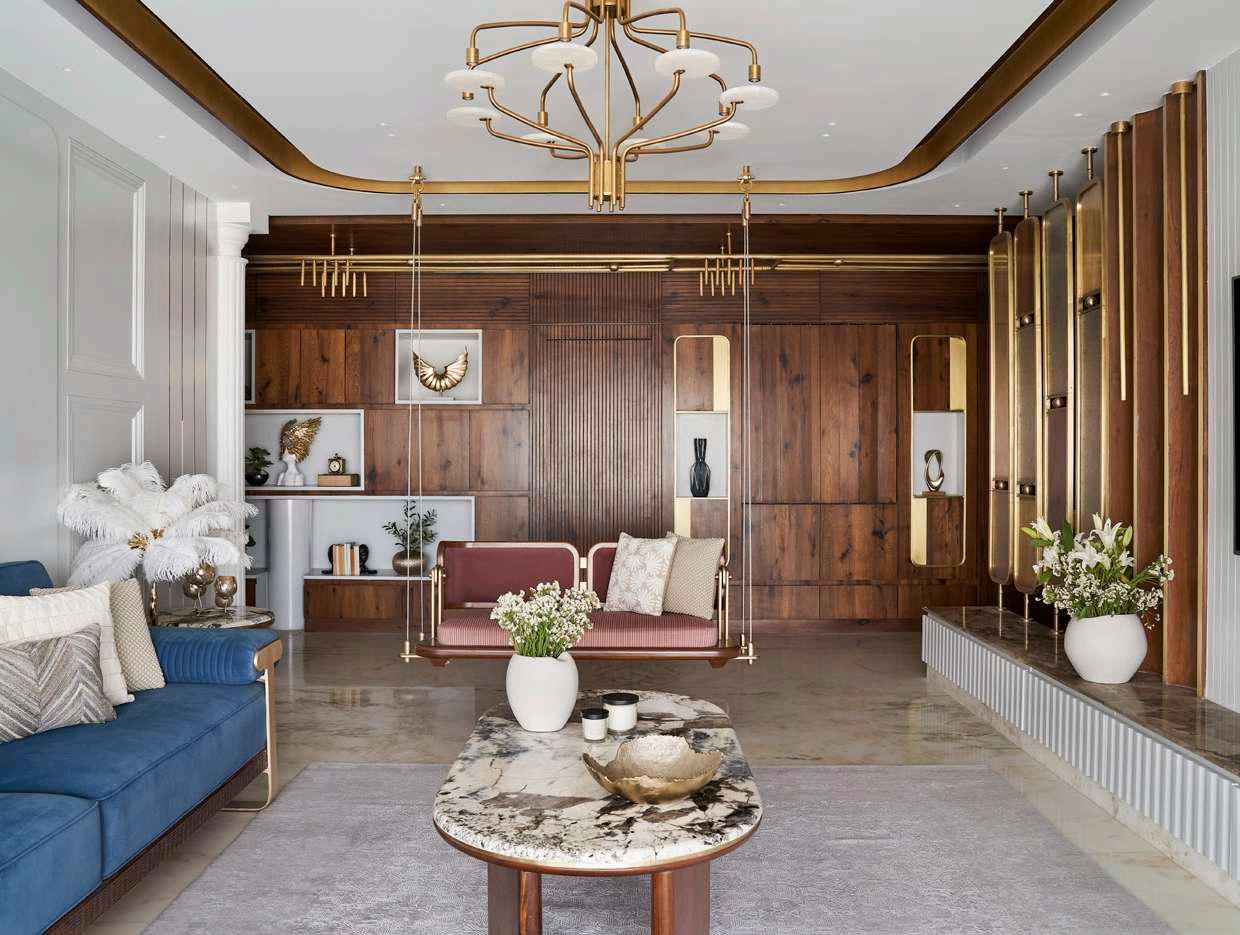
In many luxury homes today, technology often takes centre stage. At Crescendo House in Mumbai, designed by Soch Design Studio, the narrative is refreshingly different. Here, Pune-based system integration company Lazynest has seamlessly integrated home automation that remains largely invisible, quietly enhancing everyday living while complementing the home’s thoughtful design, fine craftsmanship, and refined sense of comfort.
Named after the musical term `Crescendo,’ this 3½-BHK residence unfolds through a series of spaces that gradually reveal their own personalities. Each room has been tailored to its
occupants, from the calming Japandi-inspired parents’ suite and the vibrant daughter’s bedroom to the sophisticated master suite. Yet, despite their individual identities, the spaces remain connected through a carefully curated material palette of white Italian marble, wood, brass, and soft textures.
For the homeowners, the priority was clear: create a home that feels warm, elegant, and highly livable, while incorporating technology only where it genuinely adds value. This philosophy shaped every smart home decision within the project.
Instead of an extensive automation package, the residence adopts a selective approach. Smart lighting controls, motorised curtains, integrated AV provisions, CCTV infrastructure, and future-ready HVAC planning have been incorporated to enhance convenience without altering the visual character of the interiors.
What makes the project particularly relevant is the way technology has been integrated into the design process rather than added afterwards. Switches, control points, and automation provisions have been carefully planned alongside furniture, wall treatments, and architectural details.
By concealing wiring, networking infrastructure, and automation elements within the architecture, the designers ensured that technology remains discreet. The result is a home where materials, craftsmanship, and spatial experiences take centre stage while smart systems work quietly in the background.
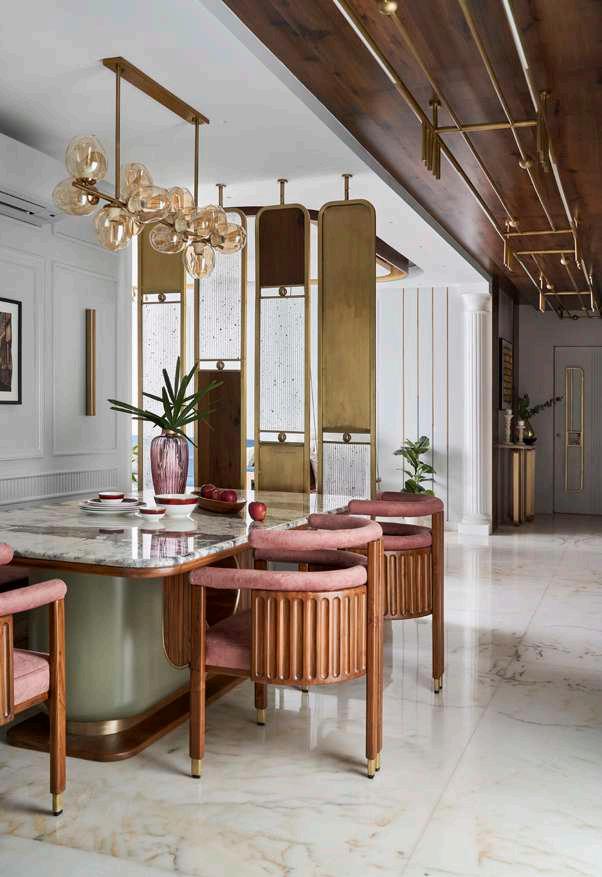
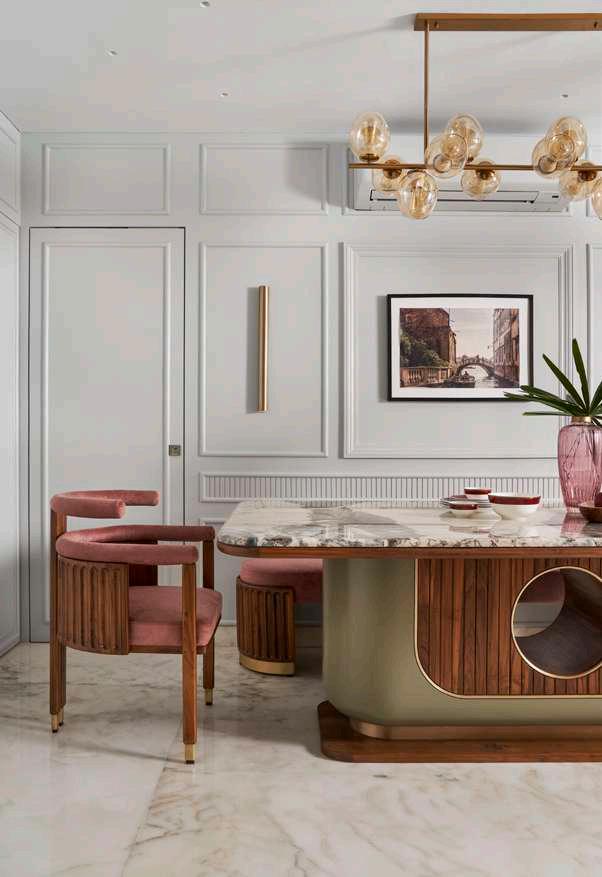
Lighting plays a pivotal role in the overall experience of Crescendo House. More than a functional necessity, it has been used as a design tool to elevate the home’s material palette and architectural details.
Layered lighting schemes combine ambient, accent, and task lighting to bring depth and character to every room. Carefully positioned fixtures highlight fluted surfaces, wood panelling, brass accents, and bespoke design features, creating different moods and atmospheres throughout the day.
While many luxury residences allocate a separate room for entertainment, Crescendo House takes a more flexible approach. The living room has been designed as a multifunctional social and entertainment hub, with integrated AV provisions and mood-based lighting controls enhancing the viewing experience.
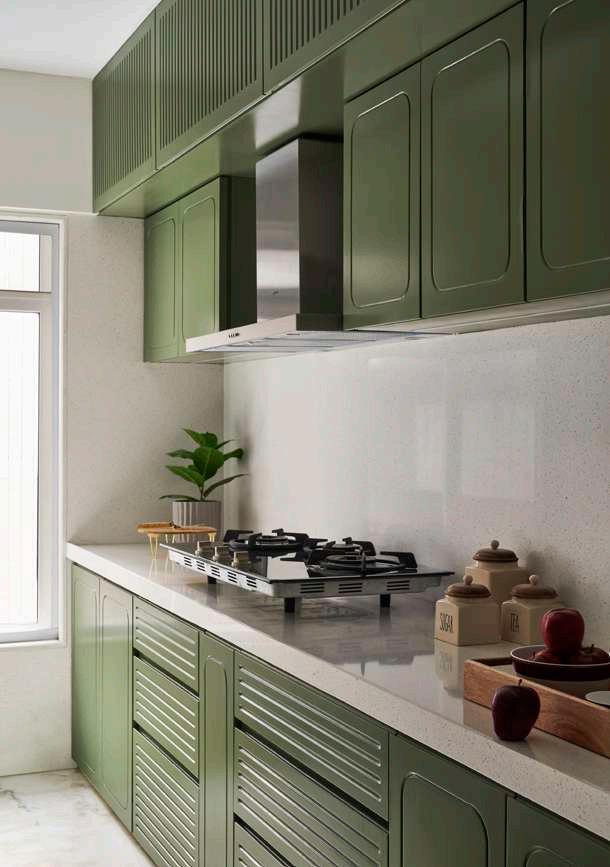
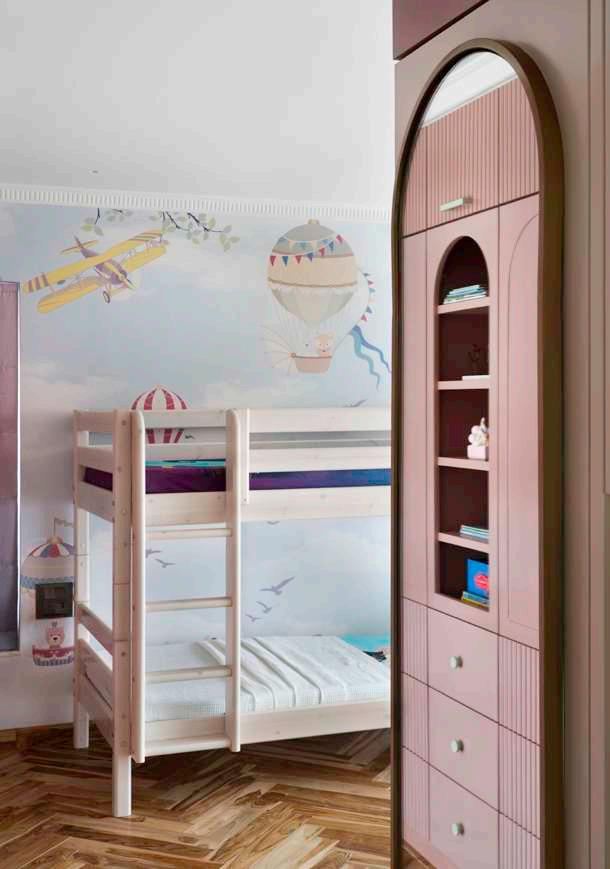
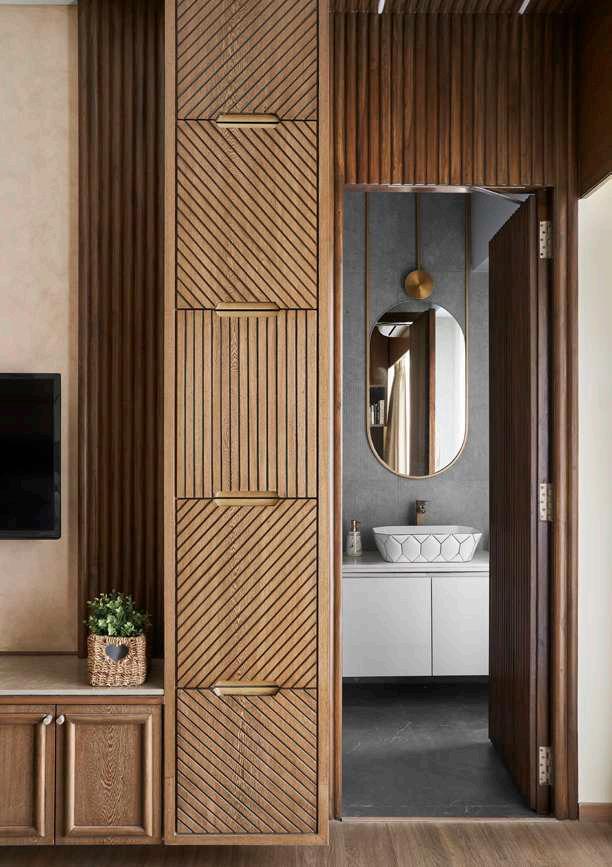
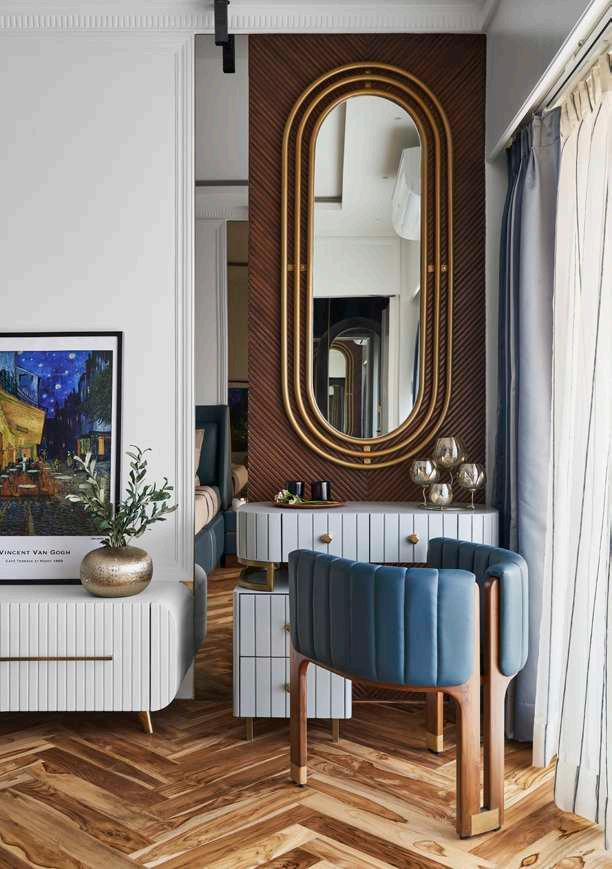
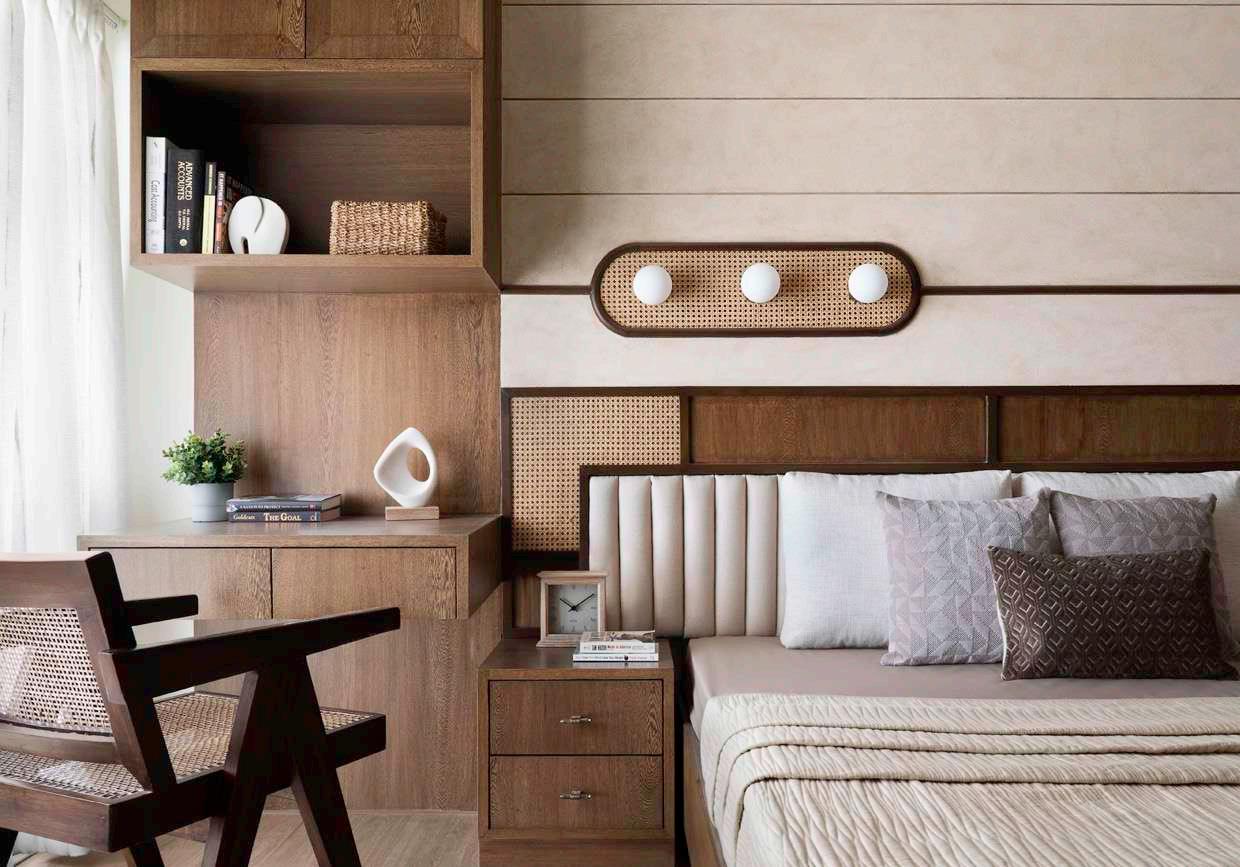
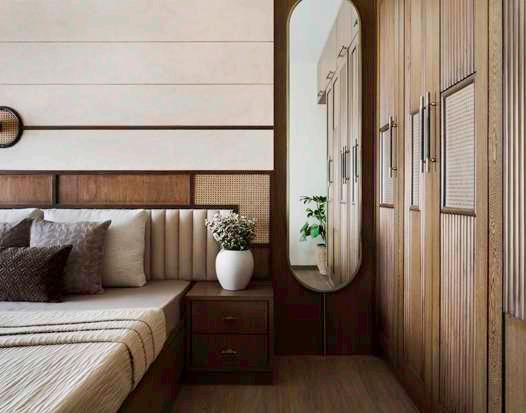
This approach reflects changing homeowner preferences, where technology is expected to adapt to daily living rather than dictate spatial planning.
Beyond its current capabilities, the home has
been planned with future expansion in mind. Structured cabling, networking provisions, and adaptable electrical layouts provide a strong foundation for future automation upgrades.
Whether integrating advanced climate control systems, additional security features, or emerging smart home technologies, the infrastructure is already in place to support future needs without disrupting the design. This home reflects a broader shift in luxury residential design. Homeowners today are increasingly seeking technology that enhances convenience without becoming the focal point of the home.
By prioritising design while subtly embedding intelligent functionality, Soch Design Studio has designed a residence that feels timeless, personal, and future-ready. It is a reminder that the most successful smart homes are often those where technology becomes invisible, allowing the experience of living to remain firmly at the forefront.
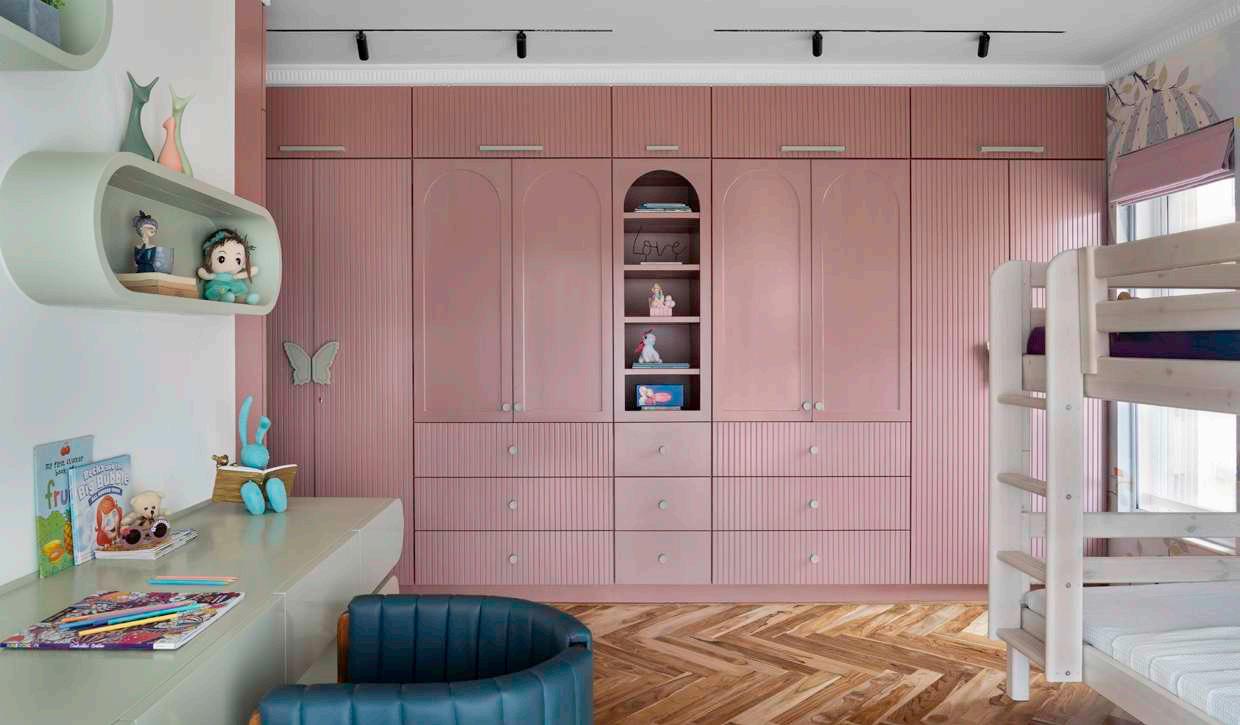
Architect / Interior Designer
Systems Integrator
Lighting Control
Motorized Curtains
HVAC Integration
Security & Surveillance
Multi-Room Audio
Amplification
Speakers
Ar. Romit Sayla, Founder – Soch Design Studio
Lazynest Lutron (DALI)
Somfy
Mitsubishi Electric
Hikvision
Sonos Marantz
Focal
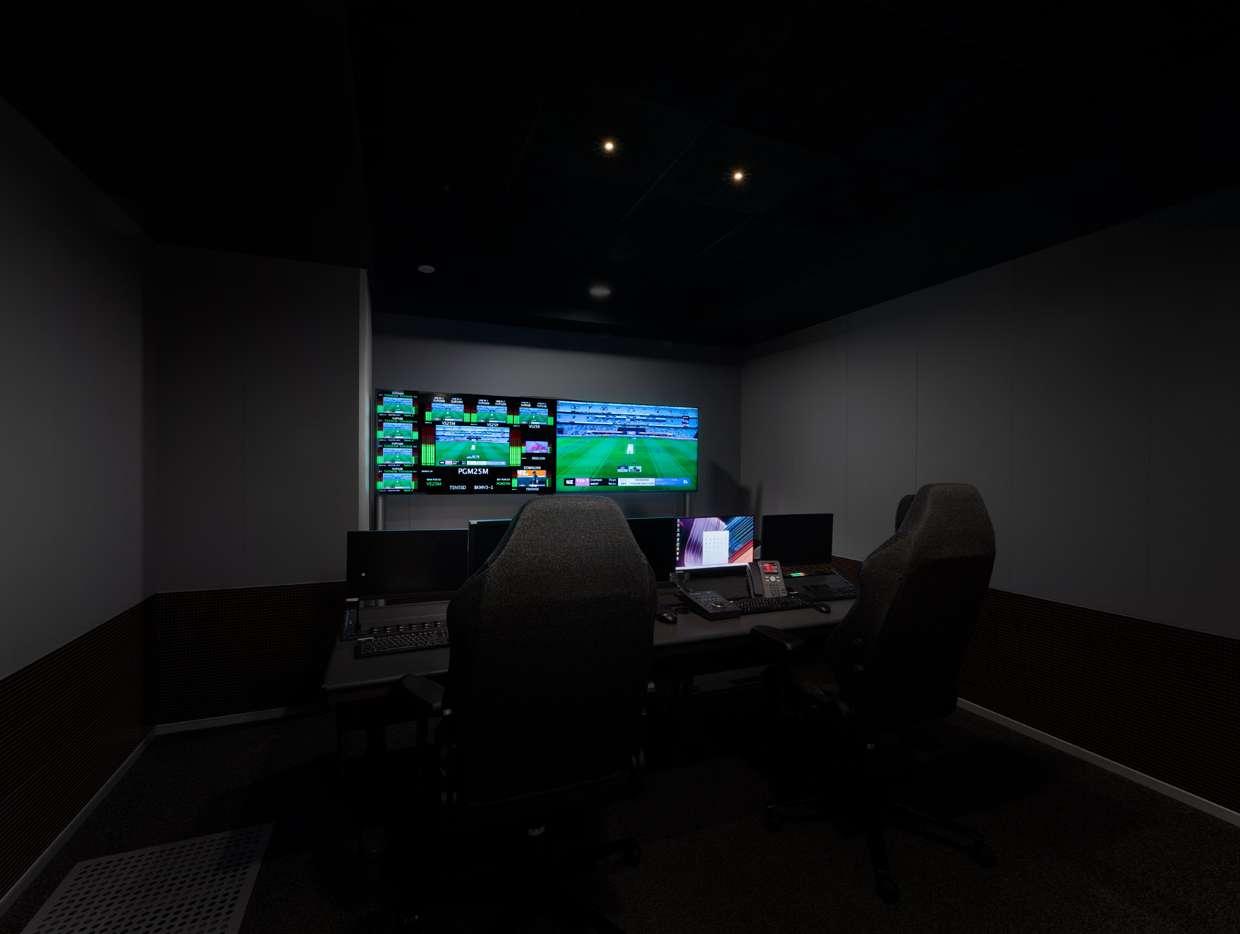
Designed by Alcove Designs and System Integration by Concept Equipments, Sony Broadcasting seamlessly combines intelligent infrastructure, smart building technologies, and secure workflows to create a future-ready broadcast environment.
Broadcast facilities demand far more than aesthetically designed interiors. They require infrastructure capable of supporting uninterrupted operations, mission-critical workflows, stringent security protocols, and evolving technological requirements. Designed by Alcove Designs and System integration by Concept Equipments, the 35,000 sq.ft. Sony Broadcasting facility has been conceived as an intelligent workplace where architecture, automation and engineering work together to create a highly resilient broadcast environment.
From a sophisticated raised flooring system and centralised Building Management System (BMS) to intelligent lighting, automated access control and collaborative technologies, every element has been carefully planned to ensure seamless day-to-day operations while preparing the facility for future technological advancements.
One of the defining engineering features of
the project is its 35,000 sq.ft. premises built on a 3-feet raised flooring system. Rather than serving only as a structural solution, the raised floor forms the backbone of the facility’s technical infrastructure.
The system allows critical building services to be efficiently routed beneath the floor while additional services are distributed above the ceiling, creating a highly organised and accessible infrastructure. This approach significantly simplifies cabling, cooling distribution and future technological upgrades without disrupting daily operations.
Despite accommodating extensive technical services, the design succeeds in maintaining an environment that feels architecturally refined, technically organised and acoustically superior, qualities that are essential for a modern broadcasting facility.
Security at the Sony Broadcasting facility extends beyond conventional access control. It has been designed to protect sensitive production environments while ensuring smooth movement of personnel throughout the premises.
The facility’s primary entrance is secured through an intelligent access control system featuring HID Global and Spectra access control solutions integrated with smart boom barriers. This combination provides controlled entry while maintaining efficient traffic flow into the campus.
Operational security also extends deeper into the facility. Spaces are dynamically managed to protect critical broadcasting workflows, while
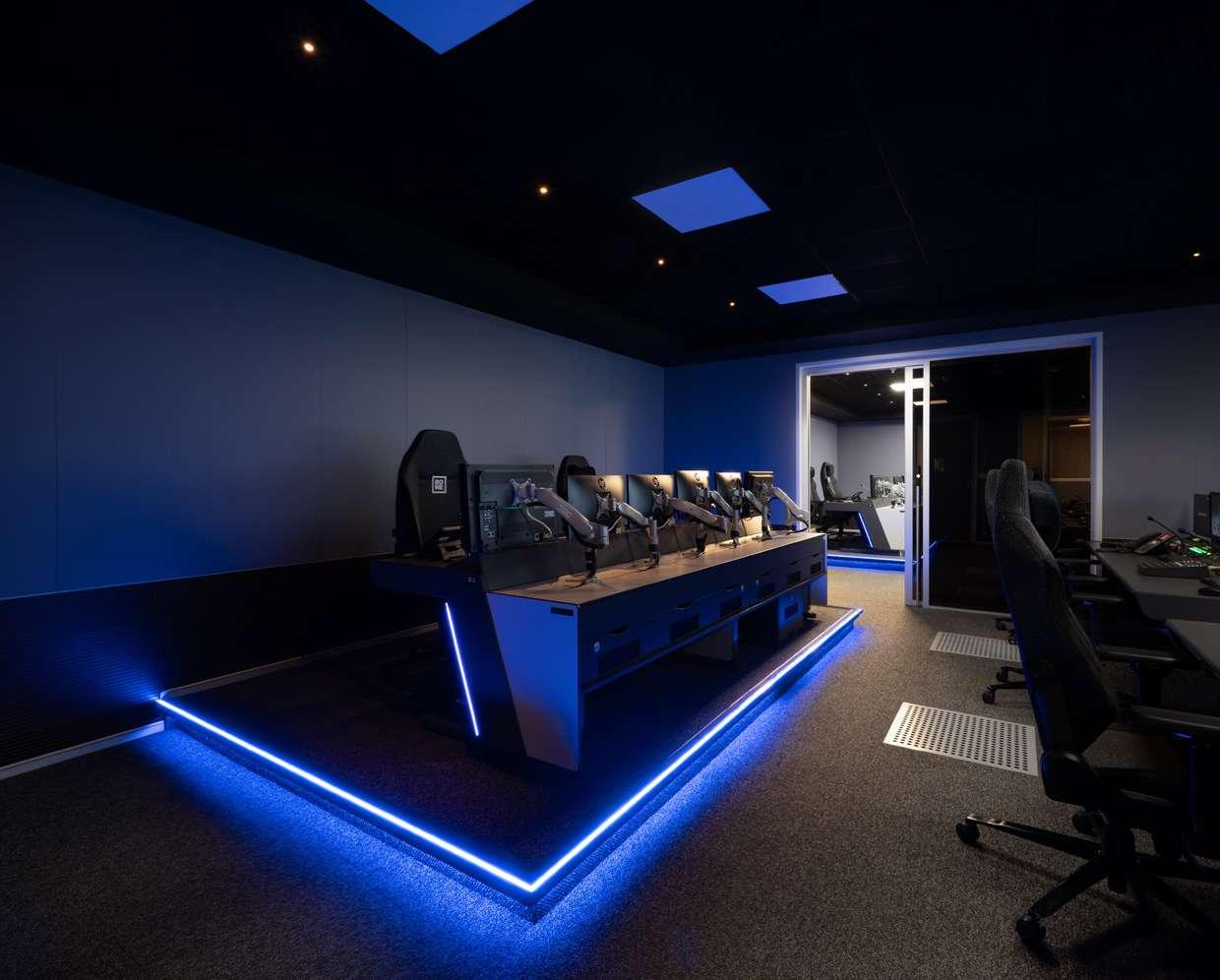
integrated room booking systems prevent unauthorised access to live broadcasting and editing suites, ensuring uninterrupted production activities.
Sony Broadcasting required a world-class facility capable of seamlessly storing data while supporting global broadcasting operations. One of the project’s most significant technical requirements was ensuring N + N redundancy for every technical service.
This redundancy strategy provides operational resilience across all critical systems, ensuring continuous performance even during maintenance or unexpected failures. The approach supports uninterrupted broadcasting while creating a highly scalable
infrastructure capable of accommodating future technological expansion.
Alongside technical redundancy, workflow management has been carefully integrated into the facility through dynamic space management and controlled access protocols that safeguard sensitive operational environments.
Lighting within editing environments demands a careful balance between user comfort, visibility and energy efficiency. The project addresses this through an intelligent lighting control strategy based on occupancy sensing and adaptive illumination.
The lighting system maintains ambient illumination at low levels, reducing glare while
conserving energy. When activity is detected or additional illumination is required within editing suites, lighting levels automatically increase to provide optimal working conditions.
This intelligent response creates a comfortable environment for editors while supporting the visual precision required for professional content production.
The lighting installation combines Abby Lighting and Philips luminaires with a Lutron DALI-based lighting control system, while Wipro occupancy sensors provide automated control based on room usage.
Meeting rooms, broadcasting studios and editing suites operate under highly structured schedules where unauthorised access can directly affect production timelines.
To address this, the facility incorporates Crestron smart scheduling systems integrated 64 | SMART HOME WORLD | JULY 2026
with room booking platforms. These systems help regulate room occupancy, prevent unauthorised entry into live broadcasting and editing spaces, and support uninterrupted day-to-day operations.
Occupancy is dynamically managed to improve operational efficiency while protecting sensitive broadcasting workflows throughout the facility.
The entire facility is monitored through a centralised Easy IO Building Management System (BMS) that continuously supervises every major equipment asset across the building.
Rather than simply monitoring equipment status, the intelligent BMS performs ongoing health checks and predictive maintenance, allowing facility managers to identify potential issues before they impact operations.
This proactive approach improves operational
uptime, minimises system failures and provides valuable performance insights that support efficient facility management.
Although broadcasting environments demand strict operational discipline, collaboration remains equally important across production, creative and technical teams.
To support these workflows, the workspace integrates smart television screens, interactive displays and digital boards that simplify meetings, collaborative discussions and content sharing.
These technologies streamline communication while maintaining the rigorous operational standards required within a live broadcasting environment. Teams can efficiently conduct meetings, share content and collaborate without interrupting ongoing production activities.
The display infrastructure incorporates
Benz interactive displays and digital boards throughout the workspace.
Scalability was a fundamental design objective throughout the project.
The 3-feet raised flooring system provides longterm flexibility for future cabling additions, cooling modifications and technology upgrades without requiring major structural interventions.
At the infrastructure level, the implementation of N + N redundancy across every technical service ensures that the facility remains capable of supporting future operational expansion while maintaining uninterrupted broadcasting performance.
Meanwhile, the centralised Easy IO Building Management System enhances adaptability through continuous equipment monitoring, predictive maintenance and intelligent health checks, enabling the facility to evolve alongside changing broadcasting requirements.
TECH INSIGHTS:
Architect / Interior Designer
System Integrator
Building Management System (BMS)
Lighting Fixtures
Lighting Control System
Occupancy Sensors
Access Control
Smart Scheduling & Room Automation
Displays & Interactive Boards
Video Surveillance
Video Management Software (VMS)
Fire Alarm System
Alcove Designs
Concept Equipments
EasyIO
Abby Lighting, Philips
Lutron (DALI Protocol)
Wipro
HID Global, Spectra
Crestron
BenQ Honeywell
Milestone Systems
Simplex

For years, surveillance technology evolved around a single assumption - that infrastructure already existed. Cameras were designed with the expectation that every location would have stable electricity, broadband connectivity, structured cabling, networking equipment, and the technical ecosystem required to support continuous monitoring. While this worked effectively in urban offices, malls, corporate campuses, and smart buildings, the reality across vast parts of India remained very different. Beyond city centres and organised commercial zones lie millions of homes, farms, warehouses, factories, construction sites, village establishments, and remote facilities where security concerns are equally urgent, yet traditional surveillance systems remain impractical. In these locations, the challenge was never merely about installing a camera; it was about enabling the entire ecosystem necessary to keep that camera functioning.
This is where CP PLUS is driving a remarkable transformation with the integration of the CP PLUS EZ-S35T 3MP 4G PT Camera and the CP PLUS CP-SL06K Solar Panel Kit. Together, these technologies are reshaping the very philosophy of surveillance deployment by eliminating the two biggest barriers that have historically restricted security adoption in
Aditya Khemka Managing Director, CP PLUS
Aditya Khemka, discusses how surveillance is evolving beyond the limitations of conventional infrastructure. In this article, he explains how 4G-enabled and solar-powered security solutions are making reliable, intelligent surveillance accessible to remote homes and businesses across India.
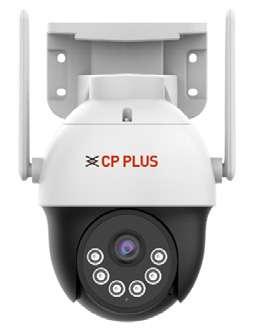
remote environments: internet dependency and electrical dependency. The result is a highly intelligent, self-sustaining, wire-free surveillance solution capable of functioning even in the remotest corners of the country where broadband connectivity may not exist, and conventional wiring becomes economically or physically impossible.
The significance of such a solution becomes increasingly evident when one observes the changing nature of India itself. The country’s growth is no longer concentrated solely within metropolitan boundaries. Industrial expansion is rapidly moving toward Tier-2 and Tier-3 cities. Warehousing hubs are emerging along highways and peripheral industrial

corridors. Agricultural modernisation is accelerating across rural regions. Renewable energy projects are spreading into isolated landscapes. Small factories, workshops, poultry farms, retail outlets, telecom infrastructure, educational institutions, and temporary project sites are appearing far beyond the reach of conventional urban infrastructure. Yet despite this expansion, security vulnerabilities continue to grow in these areas due to inadequate surveillance capabilities.
Traditionally, deploying CCTV systems in such environments involved enormous logistical complications. Extensive cabling had to be laid across large distances. Broadband installations required coordination with internet service providers. Network switches, routers, DVRs, or NVRs had to be installed and maintained. Continuous power supply became essential. In many cases, the cost of setting up the supporting infrastructure exceeded the actual cost of the surveillance equipment itself. Even after deployment, these systems remained vulnerable to wire damage, voltage fluctuations, environmental exposure, and recurring maintenance issues. For remote deployments, surveillance often became an expensive burden rather than a practical solution.
The CP PLUS EZ-S35T changes this equation fundamentally by removing the need for conventional Wi-Fi or broadband infrastructure altogether. Instead of relying on wired internet connectivity, the camera operates using 4G LTE networks, allowing users to deploy surveillance systems virtually anywhere mobile network coverage is available. This seemingly simple shift carries revolutionary implications. It transforms surveillance from a location-dependent technology into a location-independent one. By simply inserting a SIM card, the camera can establish remote connectivity without requiring routers, LAN cables, or broadband installations. This dramatically simplifies deployment across remote homes, farms, offices, temporary facilities, and industrial locations where internet infrastructure may be weak or nonexistent.
What makes this development particularly important for India is the sheer scale of mobile network penetration across the country. In many rural and semi-urban regions, 4G coverage has expanded far more rapidly than wired broadband infrastructure ever could. The EZ-S35T intelligently leverages this reality, enabling users to establish surveillance systems in locations that were previously
considered inaccessible for continuous remote monitoring. A warehouse located outside city limits, a farmhouse surrounded by agricultural land, a roadside commercial establishment, a mining project, a village school, or a factory under construction can now maintain live surveillance without the complexities of traditional networking infrastructure.
Equally transformative is the integration of the CP-SL06K Solar Panel Kit, which addresses another longstanding challenge in remote surveillance - uninterrupted power availability. Across many parts of India, especially in rural and semi-urban regions, electricity supply can remain inconsistent, unpredictable, or entirely unavailable for extended durations. Conventional surveillance systems become ineffective in such environments because cameras cease functioning during outages unless supported by expensive backup systems. The CP-SL06K changes this reality by introducing energy independence into the surveillance ecosystem. With solar-powered charging capabilities and an integrated battery backup system, the solution enables continuous surveillance operations even in off-grid or low-power environments.
This shift toward solar-powered surveillance is not merely an engineering advancement; it represents a strategic evolution in how security systems are conceptualised. Instead of surveillance depending upon infrastructure, the surveillance system itself becomes selfsustaining infrastructure. Powered by sunlight and connected through mobile networks, the combined EZ-S35T and CP-SL06K ecosystem creates an autonomous monitoring solution capable of functioning almost anywhere. This opens enormous possibilities for sectors where conventional surveillance deployments were once considered impractical or financially unviable.
For homeowners with isolated properties or farmhouses, this solution introduces an unprecedented level of peace of mind. Families can remotely monitor entrances, boundaries, livestock areas, storage spaces, or vacant properties directly through mobile applications without depending on local internet connectivity. For small businesses and factories, the solution offers operational
visibility without requiring major infrastructure investments. Shop owners, warehouse operators, workshop managers, and industrial site supervisors can oversee activities remotely, receive motion alerts, engage in two-way communication, and maintain visual records even in locations where traditional surveillance systems would have been impossible to deploy.
Beyond infrastructure flexibility, the EZS35T also incorporates advanced intelligent surveillance capabilities that elevate its practical effectiveness. Features such as human detection, motion tracking, full-colour night vision, active deterrence through builtin sirens, two-way audio communication, and remote pan-tilt functionality allow the camera to deliver comprehensive situational awareness rather than merely passive recording. Its ability to pan across wide horizontal ranges and tilt vertically significantly expands surveillance coverage while reducing blind spots, making it especially effective for monitoring open areas, construction zones, yards, and expansive properties. In many scenarios, a single PT camera can effectively cover spaces that would otherwise require multiple fixed cameras, reducing overall deployment costs further.
The elimination of extensive wiring also introduces significant long-term reliability advantages. Traditional surveillance systems often suffer from cable deterioration, rodent damage, environmental wear, connector failures, and voltage-related disruptions. By minimising dependency on physical networking infrastructure, the CP PLUS solution dramatically reduces maintenance complexity and failure points. Installation timelines become shorter, deployment becomes cleaner, and ongoing operational costs become significantly lower. This simplicity is particularly valuable in remote or temporary deployments where regular technical maintenance may not be easily accessible.
The broader significance of this technological evolution extends beyond surveillance alone. Solutions such as the EZ-S35T and CP-SL06K contribute directly to India’s ongoing digital transformation by enabling modern security

infrastructure to reach geographies that have historically remained underserved. They support safer industrial growth, smarter agricultural operations, improved asset protection, greater operational transparency, and stronger emergency responsiveness across diverse environments. In many ways, they represent the democratisation of intelligent surveillance, making advanced security capabilities accessible not only to urban enterprises but also to small businesses, rural users, and emerging industrial ecosystems across the nation.
As surveillance technology continues evolving globally, the industry is increasingly moving toward decentralised, edgepowered, autonomous systems that can function independently of conventional infrastructure limitations. The combination of 4G connectivity, solar-powered operation, remote accessibility, intelligent analytics, and weather-resistant engineering positions the CP PLUS ecosystem firmly within this future. It reflects a deep understanding of the unique infrastructural realities of India and addresses them with practical, scalable innovation rather than urban-centric assumptions.
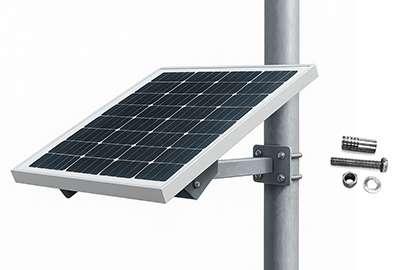
The result is a surveillance solution uniquely aligned with the future of India itself: mobile, distributed, resilient, infrastructure-light, and digitally connected. In a nation where development is rapidly expanding into newer geographies, the ability to establish reliable surveillance without depending on broadband networks or extensive wiring is not merely convenient; it is transformative. With the EZ-S35T and CP-SL06K, CP PLUS is not simply offering another surveillance product combination. It is redefining how security can exist in places where traditional surveillance systems were never designed to survive.
Crestron Electronics announced the official release of the Configure Pro platform, a professional configuration platform built to help residential dealers design, configure, and deliver Crestron Home® OS projects faster and more consistently.
Built for the realities of modern smart home projects, Configure Pro simplifies system configuration through standardised, noprogramming workflows that reduce setup friction, shorten training cycles, and help dealer teams maintain consistency across projects as their businesses grow. Whether configuring a single residence or managing a complex whole-home deployment, Configure Pro gives integrators a reliable foundation for delivering Crestron Home experiences that are built right from the start.
Configure Pro introduces intuitive tools for some of the most detailed parts of the configuration process. Clear input and output
labelling simplifies audio and video routing, while visual keypad configuration provides a more readable layout for actions, engraving, and button behaviour. A visual Sequence Editor with support for delays and conditional logic makes it easier to build, understand, and maintain powerful system behaviour without writing code.

ADI announced the international rollout of Control4® X4 and optional Control4® Connect across the US, Canada, EMEA, APAC and LATAM, introducing a redesigned user experience paired with a new service framework that together define the future of the Control4 platform. As global customer expectations continue to evolve, Control4 X4 and Connect are built to give partners a clear competitive edge by combining a modern user experience with a secure, future-ready platform built for long-term growth. Control4 X4 with optional Control4 Connect will now
be available for new and existing Control4 systems internationally. For customers seeking even more capability, the optional premium tier of Control4 Connect introduces deeper personalisation and convenience through curated Routines, expanded Apple ecosystem integration — including Apple Music, AirPlay 2 and HomeKit — and ongoing feature enhancements delivered directly to the system. This helps create a clearer pathway for customers to grow their system over time while opening new recurring revenue opportunities for partners.
N-LABS has announced its strategic expansion into the United States with the establishment of HEMONA LLC, a wholly owned subsidiary of HEPL, headquartered in Miami, Florida. The move marks a significant milestone in the company’s global growth strategy and strengthens its presence in the North American professional audio market.
The new U.S. entity has been established to streamline global distribution, provide localized technical support and aftersales service, and ensure compliance with regulatory requirements across the United States and neighbouring markets. By creating a direct operational presence, N-LABS aims to deliver faster response times, enhanced customer service and closer engagement with its growing network of partners and clients. The expansion also marks a notable

achievement for the Indian professional audio industry, with N-LABS becoming one of the first Indian Pro Audio companies to establish direct operational subsidiaries across multiple international markets. The initiative reflects the company’s long-term vision of taking Indian engineering and innovation to the global stage while strengthening its international footprint.
Swedish audio pioneer Dirac announced that Dirac Live Active Room Treatment is now available in Dirac Live Processor, the newly renamed evolution of Dirac Live Room Correction Suite. Dirac Live Processor is a virtual audio processor for PC and Mac that applies room correction to audio before it reaches the sound system. It gives listeners a new way to measure and optimise their room and system performance through software alone and the computer they already own –including in audio systems where Dirac Live is not built in. With support for VST, VST3, AAX, and AU plug-in formats, it can also be used in compatible DAWs and media players as part of an existing computer-based playback setup, such as in a studio. With this launch, Dirac Live Processor now supports the full Dirac Live portfolio: Dirac Live Room Correction, Dirac Live Bass Control, and Dirac Live Active Room Treatment. Together, these solutions position Dirac Live Processor as the home for Dirac
Live on PC and Mac, giving listeners one place to access Dirac’s full suite of room acoustics technologies.
“Active Room Treatment is the most advanced room acoustics work we’ve done, and Dirac Live Processor is how we bring it to PCs and Macs,” said Nilo Casimiro Ericsson, Product Manager for Dirac Live. “Starting today, anyone can install it on their PC or Mac and hear the difference Dirac Live Active Room Treatment can make in their own sound system, in their own room.”
Klipsch® announces a blockbuster limitededition portable Bluetooth® speaker crafted as official merchandise as part of its global collaboration with Christopher Nolan’s The Odyssey. Written for the screen and directed by Nolan, The Odyssey is the first film ever to be shot entirely with IMAX® cameras using brand-new technology.
Klipsch and sister brand Onkyo are proud to be the exclusive promotional audio partners for this groundbreaking cinematic event, based on Homer’s foundational saga, arriving exclusively in theatres on July 17, 2026.
Limited to just 2,500 pieces worldwide, the Klipsch x The Odyssey Limited Edition Speaker draws inspiration from the legendary sword

of Odysseus, with battle-worn finishes, handdistressed detailing, and brass accents that evoke an ancient artefact carried through an epic journey. Every detail reflects the strength, endurance, and legacy of the legendary hero’s weapon.
N-LABS concluded a successful showcase at InfoComm Asia 2026, presenting its latest professional AV and networked audio solutions to system integrators, consultants and AV professionals from across the AsiaPacific region.
Throughout the exhibition, visitors explored live demonstrations of N-LABS’ integrated loudspeaker systems, amplification technologies and signal processing solutions, gaining first-hand insights into workflows designed for seamless integration and reliable real-world performance. The showcase highlighted the brand’s focus on scalable, easyto-deploy systems suited to a wide range of commercial and professional AV applications. The event also provided an opportunity for N-LABS to engage with industry partners, discuss emerging trends in AV integration and strengthen relationships across the region. Conversations centred on evolving installation requirements, networked audio management
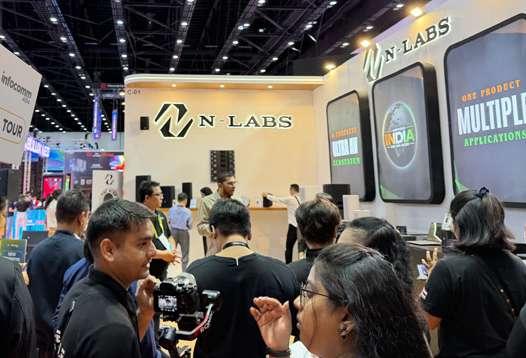
and the growing demand for intuitive, highperformance AV solutions.
Reflecting on the event, N-LABS expressed its appreciation to the partners, consultants, integrators and visitors who stopped by the booth, reaffirming its commitment to engineering practical, reliable and futureready AV solutions for the professional market.