


The State of Small Business Report is an ongoing research initiative developed by the Small Business Expo Research Team to better understand the realities, challenges, and opportunities facing small business owners across the United States.
This report is built directly from first-party data collected from Small Business Expo attendees, representing a diverse mix of industries, business sizes, and stages of growth. This approach allows us to capture real-time sentiment and behavior across key areas such as growth outlook, hiring, operations, policy sentiment, and technology adoption.
Methodology: Data is based on survey responses collected from Small Business Expo attendees across multiple U.S. markets in April 2026.
Our goal is to:
• Identify key trends shaping small business performance
• Surface real-world challenges and opportunities
• Provide actionable insights for entrepreneurs, partners, and policymakers
• Support the broader Small Business Expo mission of educating, connecting, and empowering business owners nationwide
The SBE Small Business Index stands at 6.8/10, signaling stability with cautious growth among small businesses.
Based on responses from 11,426 U.S. small business owners across multiple U.S. markets.
The SBE Small Business Index is calculated using aggregated survey responses across key indicators. Scores are normalized to a 1–10 scale and averaged to produce the final index.
The SBE Small Business Index is calculated using aggregated survey responses across key indicators. Scores are normalized to a 1–10 scale and averaged to produce the final index
Source: Small Business Expo Research Team, survey of U.S. small business owners (N = 11,426), conducted online in April 2026.
The SBE Small Business Index measures the overall health and outlook of small businesses based on key indicators including growth confidence, customer demand, economic outlook, operational stability, and technology impact.
This 6.8 index score reflects a balance between high confidence and real constraint. Small businesses are optimistic about growth, but ongoing challenges— especially around customer demand, policy support, and economic conditions— continue to limit acceleration.
Small businesses are not pulling back, but they are proceeding with discipline and measured decision-making.
The 2026 small business environment is defined less by volatility and more by adaptation. Across multiple survey modules, business owners describe a landscape that supports growth, but only with consistent effort around customer acquisition, cost management, and operational flexibility.
from the
of small business owners are confident in their growth over the next 6 months is strongly linked to higher customer demand 82.2% Technology adoption
Businesses are not pulling back, but they are proceeding carefully.
Hiring remains steady but incremental, and longterm survival confidence remains high even among those facing operational challenges.
Technology emerges as one of the clearest bright spots, with a majority of businesses reporting a positive impact— and those businesses are significantly more likely to experience stronger customer demand.
Overall, small businesses in 2026 are not waiting for ideal conditions. They are adapting in real time, building resilience through disciplined operations, strategic growth, and ongoing experimentation.
Based on survey responses from 11,426 U.S. Small Business Owners
say customer demand is their biggest challenge feel fully supported by government policy is largely moderate— not severe
Most businesses are maintaining of small businesses are confident in near-term growth
Economic outlook is heavily influenced by perceived correlates with stronger customer demand are present but not universally disruptive 82.2% 53.3% Only 10.8% Inflation impact current staffing levels
Small businesses are remain stable for most businesses
Hiring challenges Technology adoption policy support Operational conditions in real time— not pulling back adapting
Confidence remains high among small businesses, but nearly 1 in 5 express uncertainty or concern—highlighting a gap between optimism and stability. Key Insight:
Small business owners remain broadly optimistic about their near-term growth prospects. A majority report being either very or somewhat confident, reflecting a strong underlying belief in their ability to navigate current conditions.
However, this confidence is not absolute. Nearly 18% of respondents express uncertainty or concern, indicating that while growth is expected, it is not guaranteed.
Confidence paired with caution defines the current environment. Businesses are moving forward, but with a clear awareness of potential risks.
Key Insight:
Customer acquisition—not cost or hiring—is the primary constraint on small business growth in
Customer demand emerges as the single most important challenge facing small businesses in 2026. More than half of respondents cite finding customers as their primary concern—far outweighing other factors such as cost pressures or hiring.
This finding reframes the narrative around small business challenges. While inflation and access to capital are often highlighted in broader economic discussions, the data suggests that the more immediate issue is consistent revenue generation. In
Small businesses may differ in how confident they feel about their growth, but the challenges they face remain largely the same.
Across all confidence levels, from highly optimistic to more cautious, business owners consistently point to the same core pressures, with customer demand leading by a wide margin. While more confident businesses may feel better positioned to grow, they are not operating in a fundamentally different environment.
Small business owners were grouped by growth confidence and asked to identify their biggest challenge
Key Insight:
Confidence does not eliminate challenges—businesses across all confidence levels report the same core pressures.
This suggests that confidence is less about avoiding challenges and more about how businesses are navigating them. Regardless of
Key Insight:
Fewer than 1 in 9 small businesses feel fully supported by government policy, shaping broader economic expectations.
Perception of government support is mixed among small business owners. Only a small percentage report feeling strongly supported, while the majority fall into moderate or uncertain categories.
Do Small Businesses Feel Supported by Government Policies?
Do Small Businesses Feel Supported by
This suggests that while policy may influence the business environment, many small business owners do not perceive a direct or meaningful benefit.
Percent of respondents; n = 1,204.
Source: Small Business Expo Research Team, survey of U.S. small business owners (N = 1,204), conducted online in April 2026.
Understanding this sentiment is important, as it plays a role in shaping broader expectations about the economy.
Economic expectations among small business owners are not uniform. Instead, they are clearly divided and strongly influenced by perceptions of policy support.
Businesses that feel supported are significantly more likely to expect economic improvement, while those who do not feel supported are more likely to anticipate decline.
This relationship highlights an important dynamic: economic outlook is shaped not only by external conditions, but also by how business owners interpret their environment. Notably, this pattern holds consistently across industries. Regardless of sector, most small business owners cluster around neutral or mixed expectations, suggesting that differences in economic outlook are not primarily driven by industry conditions, but by broader sentiment, particularly perceptions of policy support.
Those who feel somewhat supported or unsure tend to cluster around neutral expectations, reflecting a cautious, wait-and-see approach.
Key Insight:
Perception of policy support directly influences economic outlook—more than industry or size.
Small business owners were asked whether they feel supported by government policy and how they expect the U.S. economy to change over the next 12 months
Source: Small Business Expo Research Team, survey of U.S. small business owners (N = 1,204), conducted online in April 2026.
Feel strongly supported (N = 1,204):
Expect stronger economy — 97 (74.6%)
Expect economy to stay the same — 21 (16.2%)
Expect weaker economy — 12 (9.2%)
Feel somewhat supported (N = 1,204):
Expect stronger economy — 185 (38.9%)
Expect economy to stay the same — 177 (37.3%)
Expect weaker economy — 113 (23.8%)
Unsure if supported (N = 1,204):
Expect stronger economy — 78 (29.4%)
Expect economy to stay the same — 101 (38.1%)
Expect weaker economy — 86 (32.5%)
Do not feel supported (N = 1,204):
Expect stronger economy — 97 (29.1%)
Expect economy to stay the same — 103 (30.8%)
Expect weaker economy — 134 (40.1%)
Key Insight:
Inflation remains a factor, but most businesses have adapted—shifting it from a crisis to a manageable condition.
Inflation continues to affect small businesses, but its impact is largely manageable rather than disruptive.
Across a larger, multi-city dataset, most businesses report either slight or moderate pressure on profitability, while a smaller share report severe impact. At the same time, a meaningful portion report little to no impact at all.
This suggests that businesses have adapted to inflation through pricing adjustments, cost controls, and operational changes.
How has inflation impacted your business over the past year?
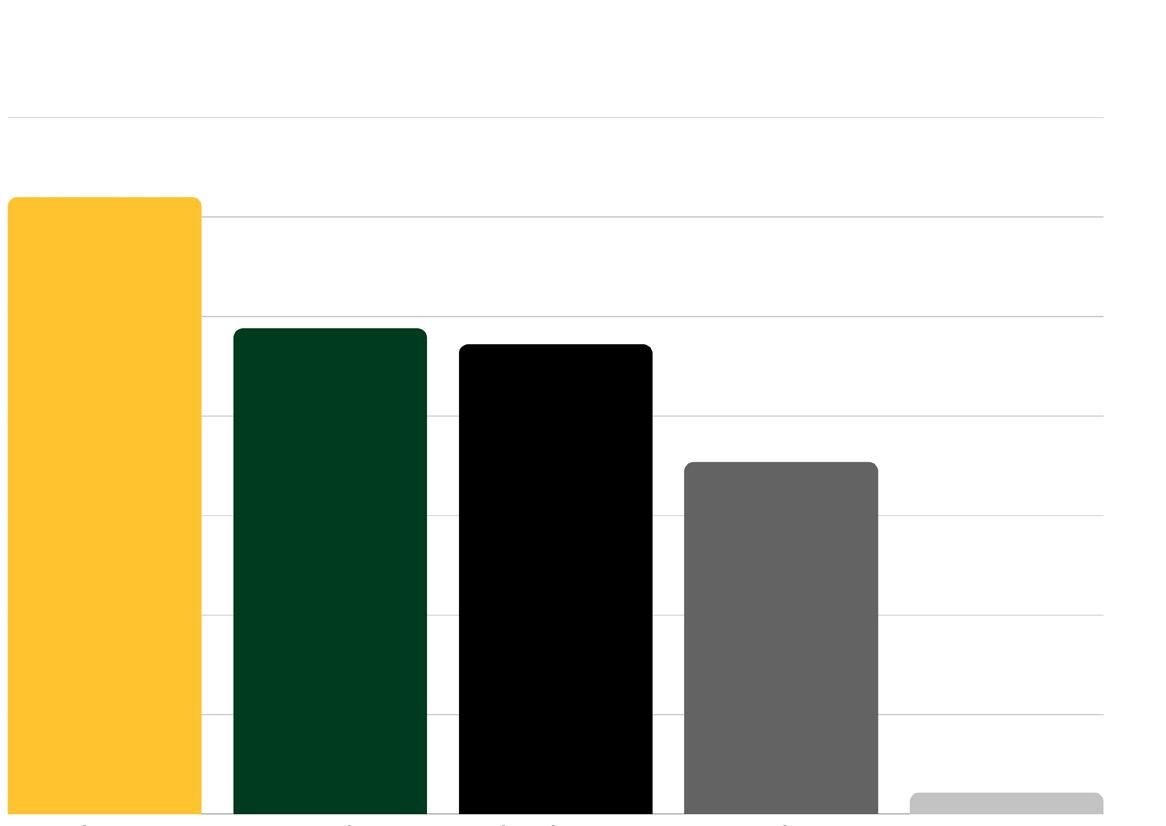
Source: Small Business Expo Research Team, survey of U.S. small business owners (N = 1,159), conducted online in April 2026.
While
inflation
remains a factor in decision-making, it is no longer the dominant force shaping day-today operations.
Hiring activity reflects stability— not expansion—with most businesses maintaining or modestly growing teams. Key Insight:
Hiring activity reflects a cautious but stable approach to growth.
Most small businesses report no change in staffing levels, while a significant portion plan modest increases rather than aggressive expansion. Only a very small share report plans to reduce staff.
This aligns with broader business conditions: demand is steady, but not strong enough to drive rapid hiring. Instead, businesses are maintaining flexibility while making incremental investments in their teams.
you plan to hire more employees in the next 12 months?
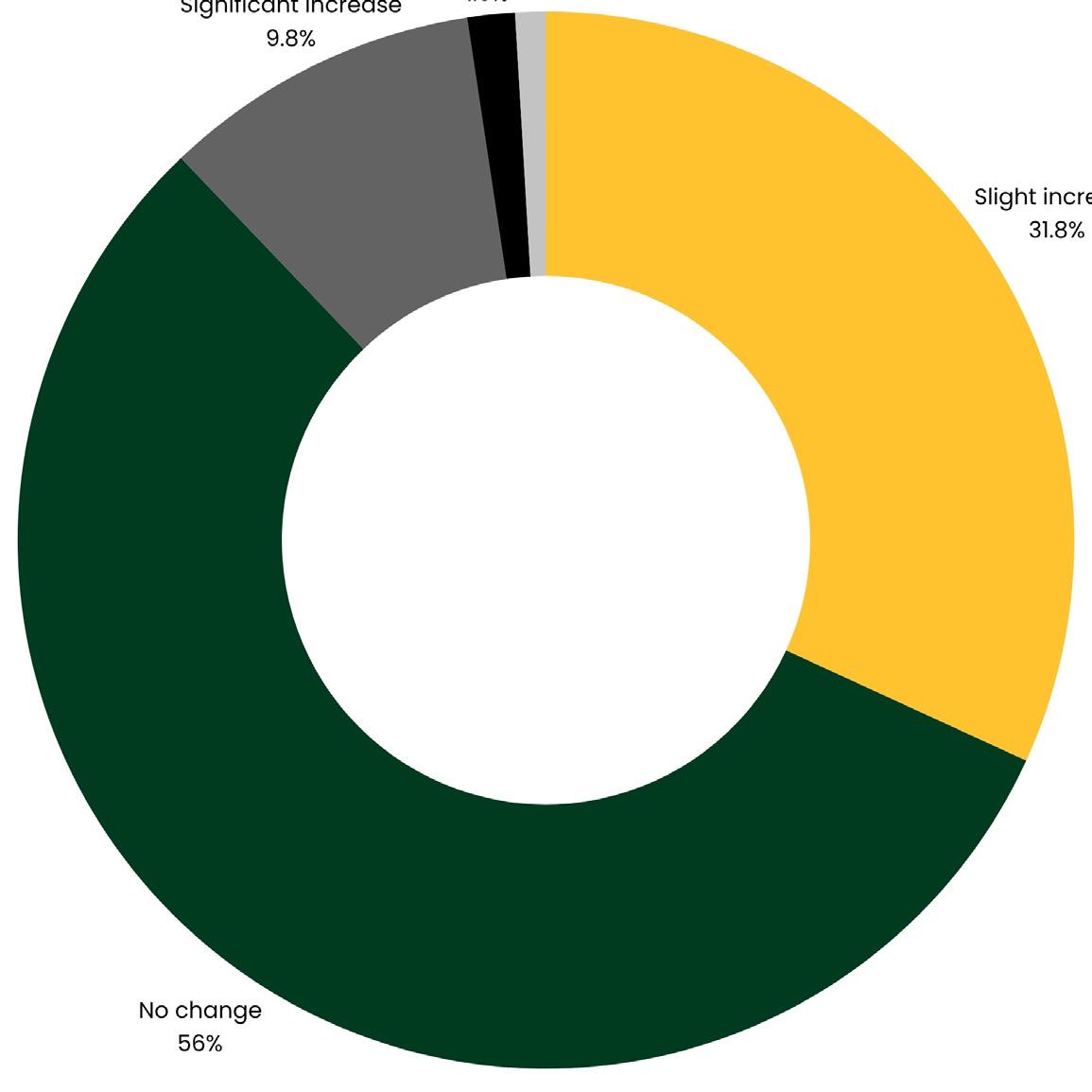
Source: Small Business Expo Research Team, survey of U.S. small business owners (N = 1,159), conducted online in April 2026.
Hiring remains a meaningful challenge for small businesses, but the data shows a more balanced picture than a simple “labor shortage” narrative.
More than 9 in 10 businesses report hiring is either neutral or difficult.
Key Insight:
Hiring challenges are widespread, but not severe enough to disrupt overall business operations.
A majority of businesses report either neutral or difficult hiring conditions, with more than half indicating that finding qualified employees is neither easy nor a major obstacle. At the same time, over one-third report some level of difficulty, confirming that hiring pressure is real for a significant portion of businesses.
Only a small share of businesses report that hiring is easy, reinforcing that while conditions are not frictionless, they are not uniformly restrictive either.
This distribution suggests that hiring challenges are present across the market, but they are not universally severe or disruptive to operations.
% of Respondents
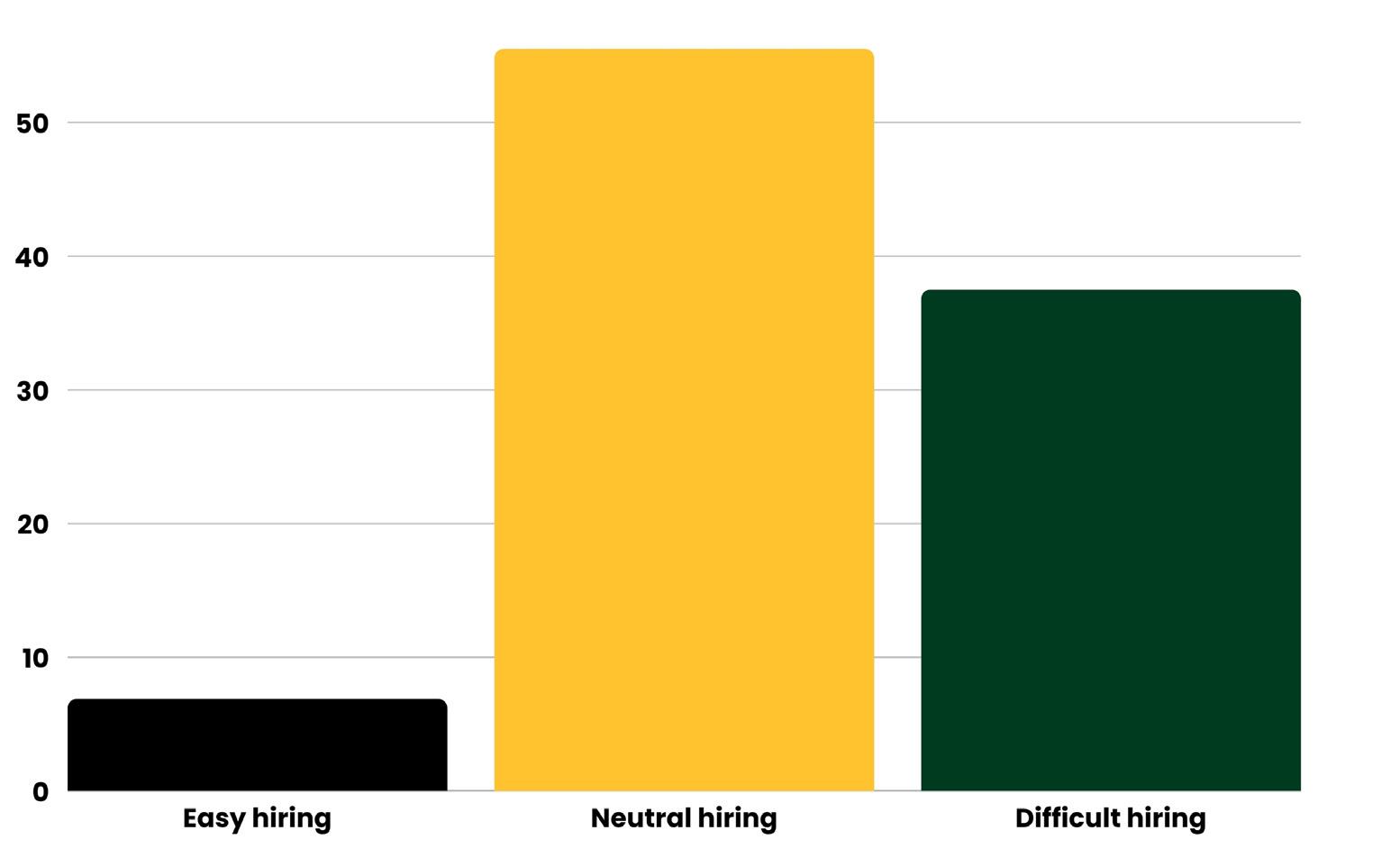
Source: Small Business Expo Research Team, survey of U.S. small business owners (N = 317), conducted online in April 2026.
External factors such as public safety are often cited as potential risks, but the data indicates that most small businesses are not significantly affected.
External risks exist, but most small businesses report stable operating conditions. Key Insight:
A large majority report no noticeable impact on their operations, while only a smaller share report negative effects.
This provides important context: while external challenges exist, they are not uniformly disruptive across the small business landscape.
Instead, most businesses are operating in relatively stable conditions, allowing them to focus on growth, customer acquisition, and internal operations.
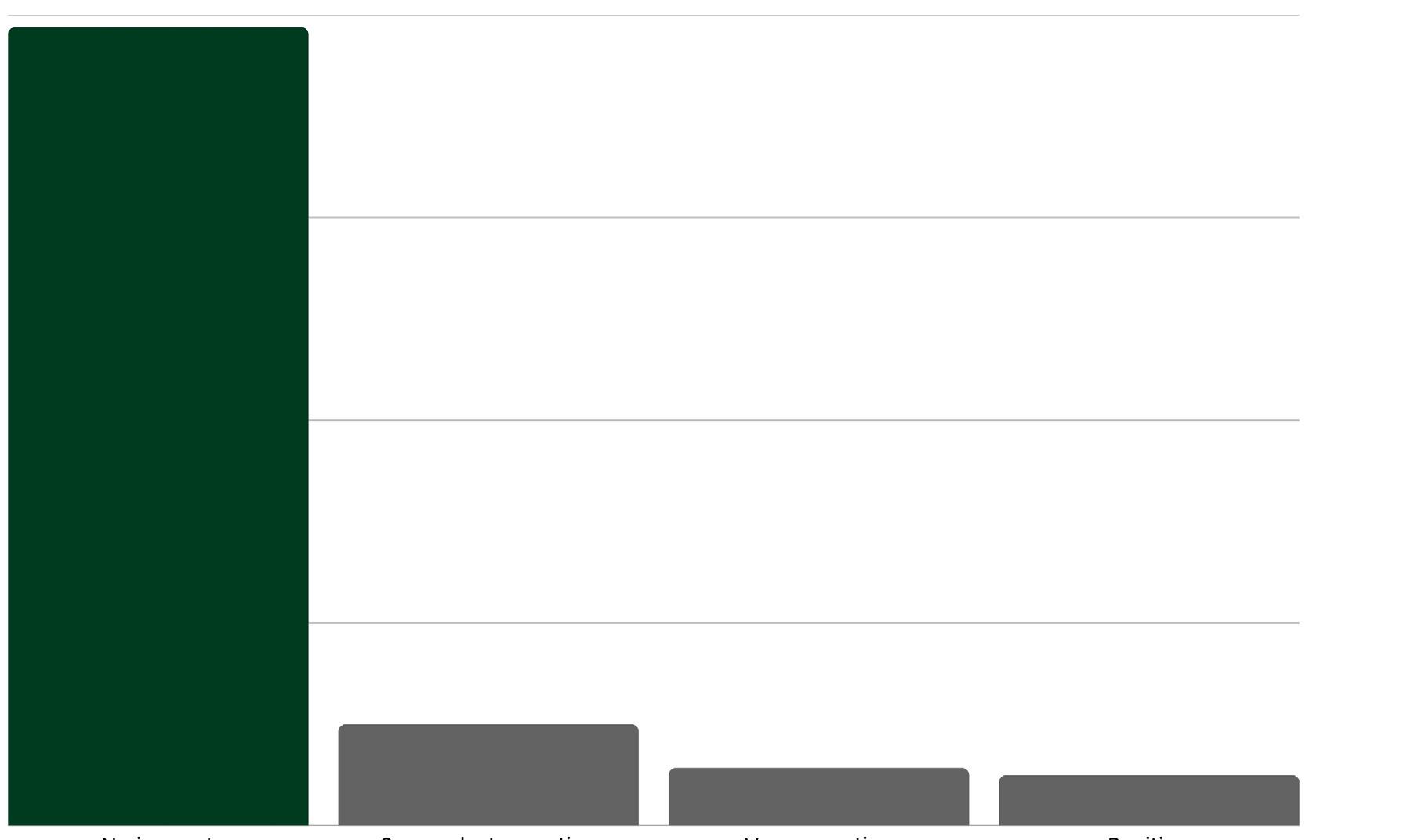
Source: Small Business Expo Research Team, survey of U.S. small business owners (N = 1,359), conducted online in April 2026.
Technology is playing an increasingly important role in small business operations—but its impact is not uniform.
Technology is increasingly embedded in operations—but not yet a universal performance driver. Key Insight:
Nearly half of businesses report that technology is having a positive impact on their operations, while a large share report no noticeable impact. Only a small minority report negative effects.
This distribution suggests that while technology is broadly beneficial, it is not yet a universal driver of performance. Many businesses are still in the process of adopting or integrating tools in ways that meaningfully affect outcomes.
At the same time, the relatively small share reporting negative impact highlights that challenges with technology—such as cost, complexity, or implementation—are real, but not widespread.
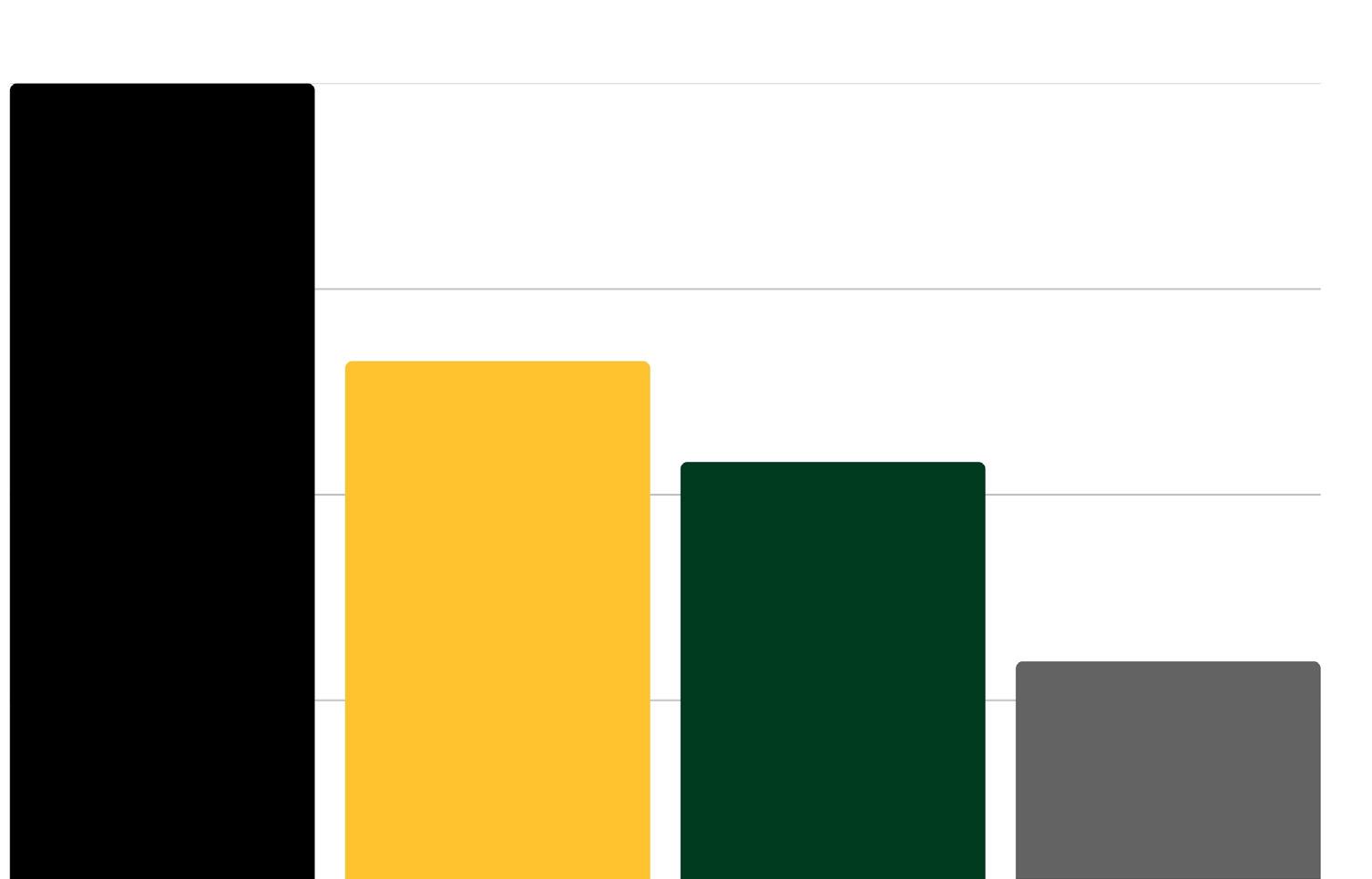
Source: Small Business Expo Research Team, survey of U.S. small business owners (N = 1,302), conducted online in April 2026.
One of the clearest relationships in the data is between technology impact and customer demand outcomes.
Technology is a direct driver of customer demand performance— not just operational efficiency. Key Insight:
Businesses that report a positive impact from technology are significantly more likely to experience stronger-thanexpected demand. At the same time, businesses that report negative technology impact are far more likely to experience weaker demand.
In contrast, businesses that report no noticeable impact from technology tend to cluster around expected performance, with fewer experiencing either strong upside or downside.
This suggests that technology is not just improving internal operations—it is increasingly tied to revenue performance. Businesses that effectively leverage technology are more likely to outperform expectations, while those struggling with it face a higher risk of underperformance.
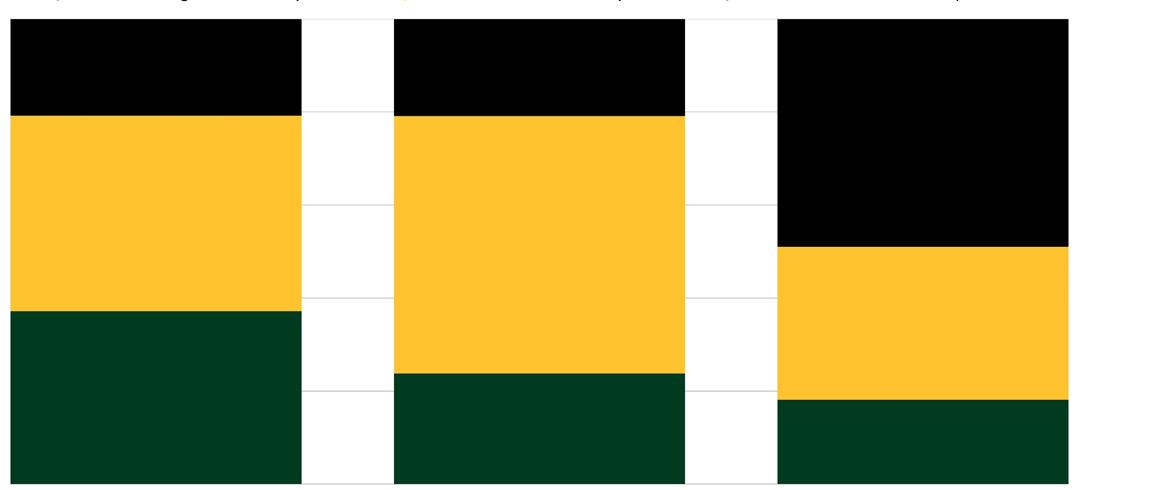
Source: Small Business Expo Research Team, survey of U.S. small business owners (N = 1,032), conducted online in April 2026.

Business owners are navigating a complex environment with a clear focus on what matters most: generating demand, managing operations, and positioning for longterm success. While challenges remain, the overall outlook is one of measured progress, not retreat.
As we continue to collect data from Small Business Expo attendees nationwide, this report will evolve to reflect new trends and emerging opportunities.
We also invite our community to help shape future research. If there are questions or topics you would like us to explore, you can submit them to the Small Business Expo Research Team for consideration in upcoming surveys. While not all submissions can be included, selected questions may be incorporated into future reports to better reflect the priorities and challenges of small business owners.
We invite you to join us at upcoming Small Business Expo events across the country to connect with fellow business owners, learn from industry experts, and take the next step in growing your business.
SUBMIT QUESTION