STUDIES OF BATTERY STORAGE FIRES SHOW NO PUBLIC HEALTH IMPACT
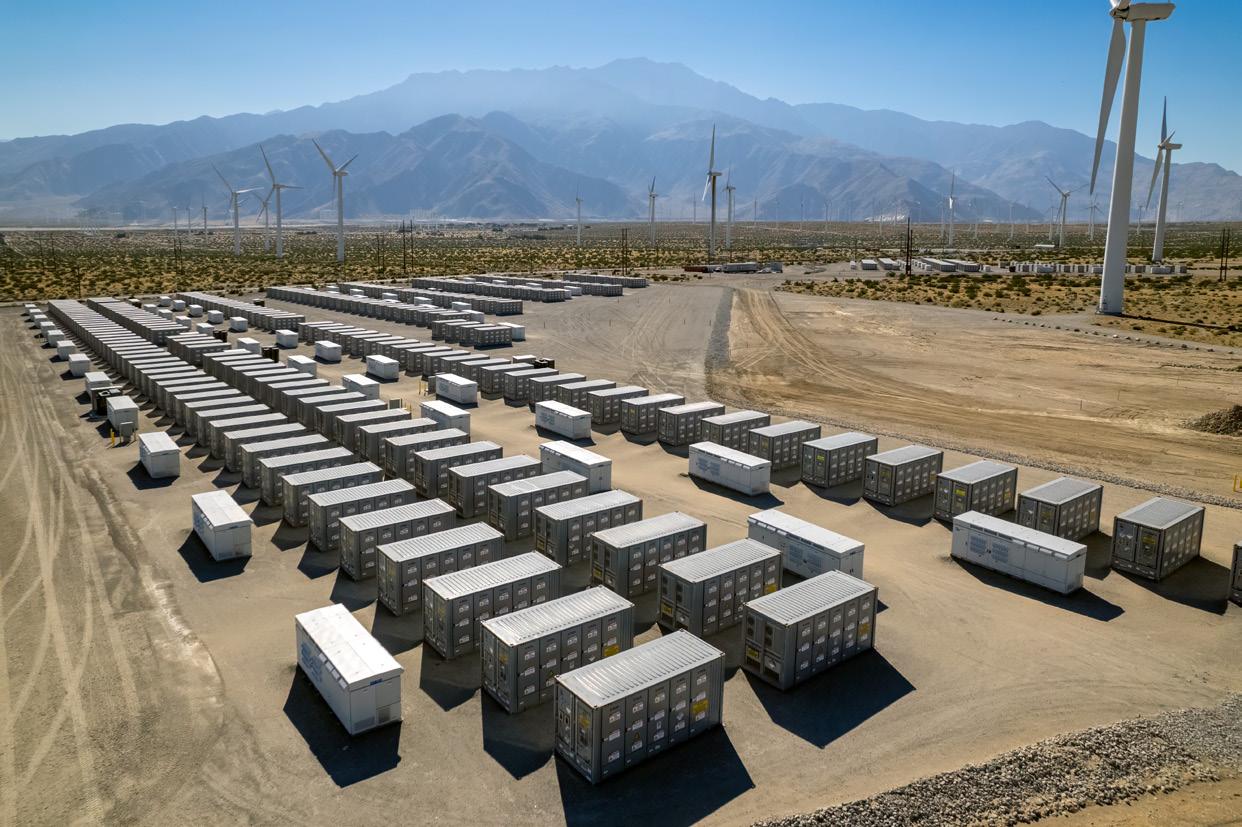
Findings from multiple studies of air, water, and soil samples conducted during and after battery energy storage system (BESS) incidents by local, state, and federal agencies have consistently found no air emissions or run-off water contamination exceeding public health thresholds. This factsheet provides a summary of results from recent BESS fire and overheating incidents.
Moss Landing (January 2025)
Air Quality: At the Moss Landing incident, over 100 air quality monitors were set up at the energy storage facility and in the surrounding communities. No airborne readings for carbon monoxide (CO), hydrogen cyanide (HCN), and hydrogen chloride (HCl) were detected. Most readings for hydrogen fluoride (HF) were below detectable limits, and the HF concentrations at the two stations with positive readings did not exceed California Occupation Safety and Health’s (Cal/OSHA) strict 8-hour exposure limit of 0.4 parts per million (ppm). Particulate Matter (PM) 2.5 levels did not exceed the National Ambient Air Quality Standard (NAAQS) of 35 micrograms per cubic meter.1
Drinking Water Quality: Drinking water samples were taken from five tanks in the Moss Landing area. Concentrations of manganese, copper, aluminum, and nickel were below public health exposure thresholds and were in the ranges of samples taken before the incident. Lithium was detected in several samples but at concentrations below the Health-Based Screening Level.2
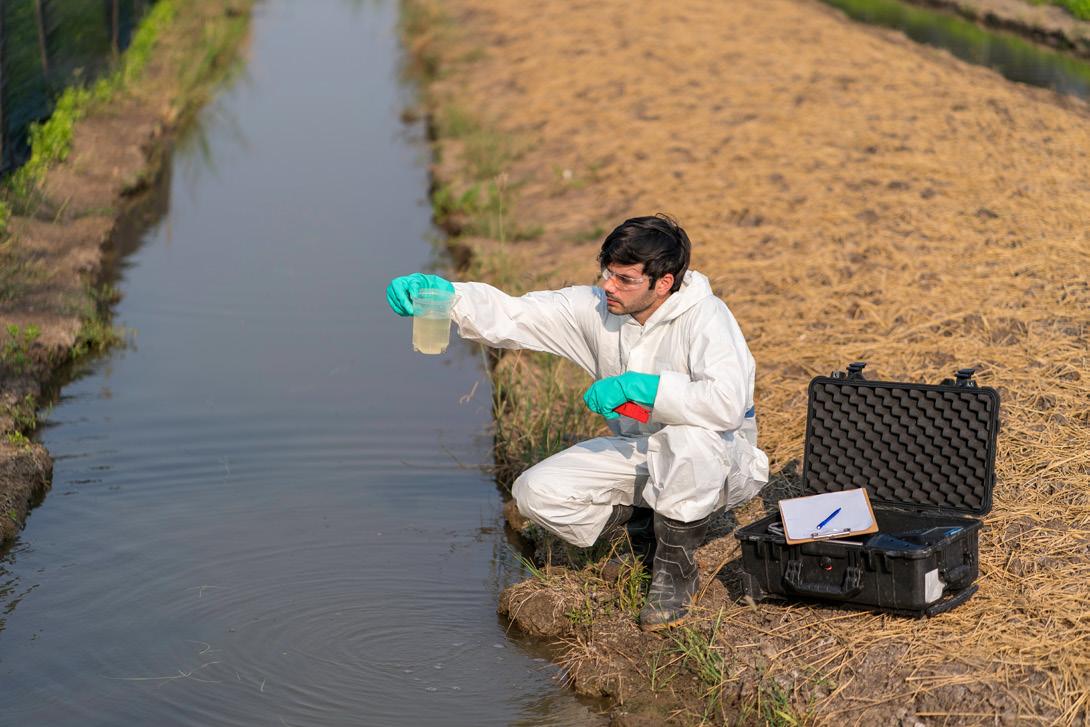
Surface Water Quality: Surface water and soil samples were collected from nine locations. Levels of barium and nickel in surface water did not exceed recreational exposure limits at any site and are at levels safe for human consumption. Chromium, cobalt, vanadium, and zinc were detected in some samples, but these metals do not have recreational exposure limits and the levels did not trigger any immediate health recommendations by the Office of Environmental Health Hazard Assessment.3
Soil Quality: Soils have been tested at the plant site and numerous locations up to several miles away by several state and local agencies. The Department of Toxic Substances Control (DTSC) collected eight soil and one sand sample. While initial surface screenings of ash and debris detected elevated levels of metals, subsequent soil samples did not 4 Additionally, researchers from the University of California found no evidence of elevated levels of cobalt, nickel, copper, or manganese in agricultural soil samples from six sites within two miles of the incident.5
Visit Monterey County’s Moss Landing incident website for all study results.6
SDG&E Escondido Substation (September 2024)
Data released by the City of Escondido following the incident showed no readings of HF or hydrogen sulfide. The nearest air monitor was set up approximately 50 feet from the site. Some trace levels of CO and HCN, which were well below public health exposure thresholds, were detected. San Diego County Hazmat concluded that these levels were consistent with the combustion products of a normal structure fire.
Analysis of runoff water samples from the Escondido incident demonstrated that levels of metals detected in the water were well below drinking water standards and the runoff water posed minimal risk to public health or the environment.8
Gateway (May 2024)
At the Gateway fire in San Diego County, air monitoring never detected elevated levels of toxic gases. Rob Rezende, the San Diego Fire-Rescue expert on energy storage fires, stated that “Even during the multi-day burn of a fire at an Otay Mesa battery facility, air monitoring instruments never reported any elevated air toxicity more than 15 feet away from the burn. That’s because the chemicals that burn from lithium-ion fires become lighter than air and float vertically into the atmosphere before dissipating.”9
Other Incidents (2022-2023)
• After three incidents in 2023 in New York State, an inter-agency working group found that no harmful levels of toxins were detected in air, water, or soil samples.10
• Analysis of air and water samples following the 2022 Elkhorn fire near Moss Landing found minimal environmental impact.11 There was no detectable presence of HF.12
CESA’s commitment to safety
CESA works closely with state and local officials to update and improve BESS safety standards. CESA’s member companies design and operate BESS facilities following comprehensive safety protocols and using equipment listed to UL standards. Additionally, BESS operators collaborate with local fire departments to educate them about BESS facilities and develop emergency response plans. For more information see storagealliance.org/safety-resources.
1 County of Monterey. “US Environmental Protection Agency (EPA), the Monterey Bay Air Resources District (MBARD), and Vistra Air Quality Monitoring Updates.” County of Monterey: Emergency, Readiness, Response, and Recovery. https://www.readymontereycounty.org/emergency/2025-moss-landing-vistra-power-plant-fire/usenvironmental-protection-agency-epa-the-monterey-bay-air-resources-district-mbard-and-vistra-air-qualitymonitoring-updates
2 County of Monterey. “Water.” County of Monterey: Emergency, Readiness, Response, and Recovery. https://www.readymontereycounty.org/emergency/2025-moss-landing-vistra-power-plant-fire/testing/water 3 Ibid.
4 County of Monterey. “Moss Landing Vistra Power Plant Fire Update: Department of Toxic Substances Control (DTSC) Statement for Soil Screening Data and Water Sampling Summary.” County of Monterey: Emergency, Readiness, Response, and Recovery https://www.readymontereycounty.org/home/showpublisheddocument/138609/638751429616230000
5 Cahn, M. D. and Smith, R. 2025, March 26. “Evaluation of Heavy Metals in Agricultural Fields Following the Moss Landing Battery Fire.” UC ANR: Salinas Valley Agriculture. https://ucanr.edu/blog/salinas-valley-agriculture/article/ evaluation-heavy-metals-agricultural-fields-following-moss
6 County of Monterey. “Testing and Monitoring.” County of Monterey: Emergency, Readiness, Response, and Recovery. https://www.readymontereycounty.org/emergency/2025-moss-landing-vistra-power-plant-fire/testing
7 City of Escondido. 2024, September 19. “Air Quality Report.” City of Escondido. https://www.escondido.gov/DocumentCenter/View/6716/SDGE-Battery-Fire-Air-Quality-Report-PDF
8 City of Escondido. 2024, September 19. “Water Quality Report.” City of Escondido. https://www.escondido.gov/DocumentCenter/View/6717/SDGE-Water-Run-Off-Report-PDF
9 Elmer, MacKenzie. 2024, September 9. “After Battery Fire, Evacuations, Agencies Try to Quell Online Anxiety.” Voice of San Diego.
https://voiceofsandiego.org/2024/09/09/dispelling-disinformation-on-battery-fire-in-escondido/
10 New York State Energy Research and Development Authority (NYSERDA). 2023, December 21. “Initial Findings Released from Inter-Agency Fire Safety Working Group on Emergency Response.” NYSERDA. https://www.nyserda. ny.gov/About/Newsroom/2023-Announcements/2023-12-21-Governor-Hochul-Announces-Results-of-FireSafety-Working-Group
11 Energy Safety Response Group. 2023, May 1. Elkhorn Battery Energy Storage Fire of September 20, 2022. PG&E. https://www.pge.com/assets/pge/currents/safety/esrg-elkhorn-fire-report-09.2022.pdf
12 County of Monterey. 2022, September 30. “County of Monterey Environmental Health Shares Air Quality Testing Information and Process During Moss Landing Fire Incident.” County of Monterey. https://www.countyofmonterey.gov/Home/Components/News/News/9345/

CESA is a 501c(6) membership-based advocacy group committed to advancing the role of energy storage in the electric power sector. At 80+ members strong, CESA is the definitive voice of energy storage in California. CESA’s mission is to advocate for energy storage as a key resource to achieve a more affordable, efficient, reliable, safe, and sustainable electric power system for all Californians. For more information visit storagealliance.org.