Elaine Kraf
I Am Clarence
UK | USA | Canada | Ireland | Australia
India | New Zealand | South Africa
Penguin Classics is part of the Penguin Random House group of companies whose addresses can be found at global.penguinrandomhouse.com.
Penguin Random House UK
One Embassy Gardens, 8 Viaduct Gardens, London SW 11 7BW penguin.co.uk
First published in the USA by Doubleday 1969
Published in the USA , with an Introduction, by the Modern Library, 2025
Published in Great Britain in Penguin Classics 2025 001
Copyright © Elaine Kraf, 1969
Introduction copyright © Sarah Manguso, 2025
The moral right of the author of the Introduction has been asserted
Penguin Random House values and supports copyright.
Copyright fuels creativity, encourages diverse voices, promotes freedom of expression and supports a vibrant culture. Thank you for purchasing an authorized edition of this book and for respecting intellectual property laws by not reproducing, scanning or distributing any part of it by any means without permission. You are supporting authors and enabling Penguin Random House to continue to publish books for everyone. No part of this book may be used or reproduced in any manner for the purpose of training artificial intelligence technologies or systems. In accordance with Article 4(3) of the DSM Directive 2019/790, Penguin Random House expressly reserves this work from the text and data mining exception.
Printed and bound in Great Britain by Clays Ltd, Elcograf S.p.A.
The authorized representative in the EEA is Penguin Random House Ireland, Morrison Chambers, 32 Nassau Street, Dublin D 02 YH 68
A CIP catalogue record for this book is available from the British Library
ISBN : 978–0–241–76685–9
Penguin Random House is committed to a sustainable future for our business, our readers and our planet. This book is made from Forest Stewardship Council® certified paper.
To Jim
INTRODUCTION
SARAH MANGUSO
I Am Clarence, first published by Doubleday in 1969 when Elaine Kraf was thirty-three, is a fable-like, marvelously haunting depiction of an emotionally unstable, occasionally psychotic single mother’s life. She narrates and evaluates the measure of her love for Clarence, her severely disabled and aphasic son, adding asides like “I smile and speak coherently reporting everything. (Everything?)” (page 6).
Kraf’s novel asks us to consider the limits of maternal love and the components of a worthwhile life. Might such a life ever belong to a person with Clarence’s physical and intellectual impairments, or to a person like his mother, whose every living hour is trained on his nurturing and survival at the expense of her own? How much should a mother be expected to sacrifice?
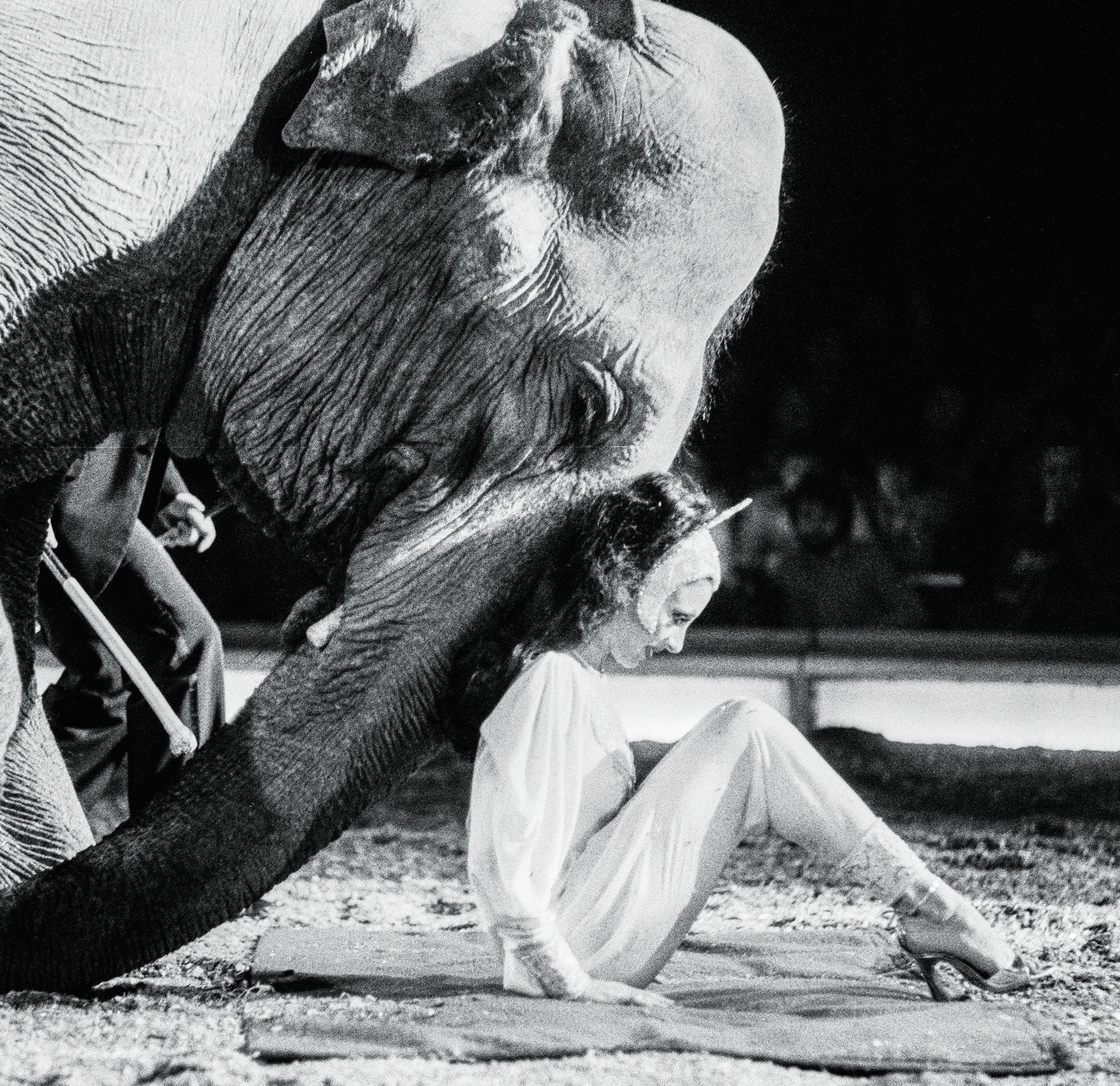
Mother and son’s life together revolves around attempts to entertain, understand, and diagnose Clarence. His mother often brings him to the zoo, where “We do not go . . . to learn. I do not assimilate new things quickly. Nor am I very curious. We just look” (page 136). At the circus, she dances and Clarence helps care for his beloved Josephine, the elephant. At the newspaper stand, Clarence’s intellectually impaired friend Carl spends his days with his own beleaguered mother. Medical specialists try to make sense of Clarence’s various disabilities; the boy’s vision, mobility, digestion, and intellect are compromised, but the doctors remind us repeatedly that his hearing is perfect.
While she was pregnant with Clarence, his mother scheduled an abortion, but she changed her mind while on the operating table, moments before the doctor began the procedure. Her decision is presented as irrational, perhaps as proof of her mental unwellness, perhaps as a means of blaming her for her apparent predicament. She revisits it frequently, as if to make sure she made the right choice.
She harbors a vague paranoia that ebbs and flows. When she admits to perceiving things that no one else can see—scaring those around her—she willingly commits herself to an institution for many months, where, she says, “Patients as well as doctors observed my actions continuously. Sooner or later they would discover what I had done. The fear of discovery kept me in a constant state of anxiety. But occasionally it diminished” (page 69). One assumes that she feels guilty for almost having aborted her pregnancy; even so, the guilt seems outsized and vague. While his mother is thus encumbered, Clarence stays with his mother’s brother, Elliot, and Elliot’s wife, Sarah, who care for him lovingly. Their life together is conventional and calm, and one dares to wonder if Clarence might be better o with them.
Kraf also interrogates common assumptions about love and sex. The romantic dyad is presented as one of many possible arrangements within which people might find emotional, financial, and sexual safety and care. We watch various characters approve or disapprove of Clarence’s mother with every decision she makes; we read editorial comments on her personal life from her brother, her sister-in-law, her psychiatrist, her neighbor, and others who take over the narrative for a chapter or two.
The book’s warmest depiction of love, though, might be that of the relationship between Clarence and his friend Carl: “They discover every day that they can take turns looking through the pieces of cellophane they find on the street. Then they forget. But they do not forget for very long that being together is the
important thing. Their tears and sounds stop quickly. Then they take hands and run somewhere.” Their connection is authentic, unfettered, and rare in this fictional world of lonely and misunderstood people.
Formally, the plot proceeds skittishly, from multiple narrators who split their focus between internal and external foci. Many paragraphs contain what seem like a mishmash of unrelated sentences: some describe the parts of Clarence’s eyes and the medical treatments thereof; some recount Clarence and his mother’s games with felt letters or a tangerine; some speculate on which of the interchangeable men might provide a stable home for Clarence; some reveal how the mother feels she is performing as a mother, a woman, and a human being.
The narrative baton is passed among those who populate Clarence’s life; hand-to-mouth artists and performers, medical specialists, and the assorted men who enter his mother’s romantic orbit for days or years. Bits of sense data and dialogue hint at past events not depicted on the page; sometimes they are mentioned again later on, in a monologue by someone else. From the chapter entitled and narrated by “Any Man”: “More goes on in that house than meets the eye. But I close my eyes. It is none of my business” (page 96). The novel comes into focus as a study of the negative space around a person possessed of almost no language. (The book’s gnomic title does not appear in the text itself.)
The mother’s intentionally amateurish poetry occasionally interrupts the narrative, reminding us that she keeps at least this much of her mind turned toward something other than Clarence. She says that she’s always writing poetry, and describes it thus: “Many of my poems sound alike. The stones are small and metallic. And often they are frozen like stars” (pages 44–45).
Mysterious persons and objects appear and reappear, and initially one is not sure what is real and what is metaphor. Is there really a circus? Of what significance is the elephant? What of the
singing waiter? What of the green ring, buried and dug up again? Many of the chapter titles alone perform feats of narrative potency: “Honey Standing on Sylvia’s Shoulders Looking Into the Trailer,” “Carl’s Dream Before He Dies,” “Ferdinand Under the Earth.”
Everything is happening at once and yet there is no apparent progress; this is the state of being of the single, financially strapped mother of a profoundly disabled child. The mother’s romantic life doesn’t move beyond casual dating and a single rebu ed proposal; Clarence ages but does not mature; the rhythm of their days, though they occasionally move apartments and cities, remains consistent. But these grab-bag paragraphs are each a carefully arranged bouquet, positioned thus to suggest Clarence’s experience of the world as a swirl of associative sensory input—and to ask whether that isn’t the way we’d all be experiencing life if we weren’t so intent on screening most things out.
Kraf maintains this uneasy ambiguity until the very end of the book, when its innermost secret is finally revealed, bringing a resolution that feels at once startling and inevitable. I’m still thinking about what more I should have noticed, how I might have anticipated the ending, how I could have done better, maybe stepped in—the story felt that real, a clear triumph for such an unnerving funhouse mirror of a novel.
I AM CLARENCE
CLARENCE AND I
It amazes me that Clarence and I have gone on so long. Always searching. Hand in hand, or he hopping zigzag behind me as I walk. My eyes are in the treetops. They live in the half dead leaves, or in an ancient rag tied to a bare twig, way at the top. There are also broken balloons—pink, red, who died inside out, squeezed at the neck, suddenly hissing.
Clarence hugs the thin trunks as we walk. Or he bends over in jerky movements to study a fly. It is a giant horsefly atop a mountain of stool. He cannot see very well (so they say, and I acquiesce), consequently his head gets too close. Puzzled, he lifts the fingers he has been leaning on. Forgetting to balance himself, he falls in some twisted position. (They told me, once, he wouldn’t walk. He lay on his back for a long time like the lame elephant with one foot in the air; the withered limb beneath.) I untangle his legs. Bending, I wipe stool from his nose and from the thick lenses of his glasses; glasses refracting trees, endless sky, creases in my face. Lenses which insist, cover, assist, betray Clarence’s eyes.
What he sees. Ophthalmologists are confused, suspicious, or certain. I listen to their speculations: peripheral cataracts, intraocular pressure, vascular abnormalities, exudates in the vitreous, cobble patterns on the retina.
And everything is the result of an unknown systemic disease, a bizarre internal malformation like midgets with shrunken
wombs, or hands without fingers. Me—my chromosomes, my life in him. Does it matter? He used to laugh when the clowns came close to him, twisting their red mouths, or when the elephant swung him up high.
I listen to their speculations. I hear. I do not hear. My eyes are fixating branches as new lenses are ground; plus and minus fused together by optometric genius. Does it matter how precise the correction—he cannot say what he sees.
Is the physiological eye su cient for their explanations? They know the eye. I know. Even I do not know what Clarence sees. Nor am I interested in the chaotic hieroglyphs of his brain waves.
(Dimension is lost, sometimes, even to me. Faces, walls, and windows are flat like cardboard deceptions.)
“His hearing is perfect,” said the young intern. And I hung silver bells above his crib. That was long ago, not now. But sometimes I forget the sequence of events. The burglar gates were put up for our own protection, I believe.
Classified as “blind, for all practical purposes,” I swear he sees the iridescent wing of an ordinary horsefly. Strangely, the fly remains stationary. Is it because Clarence’s touch is as light as its own fibrous wing? Or are his insect legs hopelessly embedded in dung.
Down one thousand streets we walk, Clarence and I. Unconscious of time, I wear red, or orange, sometimes yellow. Because it is so hard to continue. I can sense when Clarence has ceased to follow. Automatically I stand still wherever I happen to be. By the time I move a second backward, he is marching forward again.
He touches my arm as I light a cigarette. Then he sni s the smoke, laughs, and runs ahead. Gradually I catch up with him, and once more he is behind me. I am pu ng smoke into the sky. He is examining a dirty newspaper, a leaf, a dead pigeon. He touches the sidewalk with his palm. (His friend Carl used to cry because the sidewalk burned. But Clarence likes the heat.)
What does it matter if he sees nothing, is mute, and falls writhing to the ground?
I smile as we enter the Diagnostic Clinic. A faceless lady accepts a jar of his first morning urine. Neatly I have typed: clarence, first morning urine , and the date. In this I have improved, knowing the day, month, year, and finding directions easily. (In the institution I did not know names or dates. Now it has changed; I remember things most of the time, but I know I can forget.) There are things I cannot find or understand.
It is not the first time. We are always searching. Even if there are no answers in the end.
They take a part of him and study it. His blood smeared over one million slides, feces separated into constituent elements, enigmatic drops extracted from his glands. I watch. I have permitted it to happen; everything. (It could have been prevented, I think.)
Is there a magician to decipher each fragment and compound them?
His heart is perfect, but they insist. Taking a scribbled scroll from the electrocardiograph technician, we go upstairs. (They know us here. I do not even wonder what they think. I used to. Nor do I get headaches and take him home trembling.) He had wiggled his feet distorting the rhythm of the lines. But no one is concerned. Endless, limitless as things are, what is another distortion? For example, Ferdinand o ered me a green ring. On certain days I am sure of it.
“Tangerine,” says Clarence, surprising the diagnostician. Occasionally he does find a word if his want is precise—if he can, if the word is one of the few he has selected. (No one knows how. Even I.) “Tangerine” is one of Clarence’s words. And he has kept it. He loses most of them; even his favorites. He lost “Mommy” a while ago. Maybe it was a few years. Not that it has any significance.
(I think of his delicate fingertips separating each section and
then peeling o the peculiar whitish latticework. He likes to make it smooth, pulling this stringy substance from the fruit.)
His other words are: “bird,” “feathers,” “elephant,” “hat,” “Carl,” and “Josephine.” That is all.
I open my traveling bag and give him a tangerine. He rolls it along the floor. It stops between the swollen ankles of an elderly lady who is waiting in the Hypertension Clinic. She bends. Fascinated by the silken texture of her wrinkled hand enveloping the tangerine, he has forgotten. He places her hand against his cheek and closes his eyes.
“A seizure,” says the diagnostician, looking back at Clarence, whose eyes are closed in ecstasy.
It goes on like that. He follows us from floor to floor, studying Clarence. Accompanied, sometimes, by a psychiatrist, speech pathologist, neurologist, or intern. “To leave no stone unturned,” is the rationale. But what? Is there some conclusion that Clarence and I are waiting for. Why? Have I not created him as he is? I smile and speak coherently reporting everything. (Everything?)
After Clarence’s skull has been X-rayed and more appointments have been made, we go through the hospital tunnel. It curves endlessly, tiled white, mysterious below the street. Nurses, doctors in white laugh, moving toward us. We glimpse fragments of their faces. (There is no green, no tree, but barren ground.) Men pass us, wheeling carts of filthy sheets, trays, cartons, unknown implements, prosthetic hooks.
A boy, covered with a sheet, stares at the harsh ceiling light. Then he disappears. Seated in wheelchairs, with sinister smiles, some are breathing with bottles of fluid going from chair extensions into their veins. (How has it come to this?)
It ends when we go into the co ee shop on level E behind Atran Laboratory.
Unexpectedly he begins to cry. If only I could understand. Is
it Carl, or Ferdinand, or the lame elephant parading before him? I understand. Sometimes I think I do. Or is it only me?
I take out a tangerine and we roll it back and forth to each other over the cold table. Table spotted with tears. Time dead. Nothing but tangerine skin. I to him. Him to me. Fluorescent blue and distant clatter.
(It has happened like this before. Our solitude interrupted by a zookeeper, clown, derelict, madman, fool. Men; cardboard, flat, unknown. “Can I help?” The same thing. When Pierre found Clarence’s hat, when Seymour took us to the beach. A hundred strangers have stopped at our tables. Has Clarence ever seen them. Not even I am certain. The year could be 1960, 1967, or tomorrow.)
I continue rolling the tangerine, not wanting to be anywhere else, or to answer. Who? He is taking apart blood, finding disorder in chromosomes. Night and day peering at the cells; erythrocytes, leukocytes, thrombocytes, he tabulates, scribbles, inventing new combinations, organizations of rings or chains. “I am a hematologist.”
“He has had tests, and things are being questioned.”
Inexplicably three of us are rolling the tangerine. (Each is the same.) His eyes invade everything. Soon he will win my confidence. The exact prescription of Clarence’s present orthopedic shoes will be revealed. I will tell of the oddities of his growth, his unwillingness to associate objects with words. And his inability to learn as man is supposed to learn. Nor will the peculiarities of Clarence’s eyes be forgotten.
I look at him, thinking I see a clown or violinist. When I am tired I cannot distinguish things. Hematologist, I tell myself. He wants to know everything. I comply. We converse as he looks warmly, probingly, into the microscopic pupils of my eyes. I smile, a phantom. (I have never left the mirror where I saw his head come forth.) I never leave anything. It is all there, in circles, as I smile.
We are alone once more, Clarence and I, to our games and reveries. The sun dripping violent orange attracts Clarence. He affixes his bones to the window bars. We are lucky living up so high. The sun glitters on the tops of buildings. We see night, black with stars, between the crisscross of our burglar gate.
“Clarence is blind for all practical purposes,” said the ophthalmologist. “He’s a bit old, but we’ll try occluding his better eye. Amblyopia ex anopsia.”
When was that? He tears it o in a frenzy. (It doesn’t look badly, though. Neither do his shoes.) He falls more often and has lost interest in the picture books. I threw away the patch last year. Maybe I did it yesterday or a long time ago. He kept falling and didn’t enjoy the picture books. I should not have done it. But he became so quiet after Carl died.
Often it comes back to his eyes. But that isn’t the main problem. If he could speak, maybe the sensitivity of his eyes would decrease. As it is, the slightest change in the atmosphere a ects him. The conjunctiva reddens. A lump of blood appears in the bottom of his cornea. Pressure rises within. Occasionally the surface of his eye becomes very hard and he vomits and screams. Then drugs are given. But it isn’t a typical case. In many instances they cannot find structural reasons for these changes. The iris-corneal angle, for example, is deep and perfect. (It wasn’t always this way. It changes.) He loves to look at the sun, or into lamps. He turns the lamp on and o , pulling the copper chain all night.
This evening Clarence is weeping. His tears do not dry up. Nor are they accompanied by sobs. The veins of his thin neck pulsate as he stands bent backward for balance, knees apart, and toes pointing inward. His arms are outstretched, thin fingers spread apart. It is a grief without name, maybe never known before. Nor is it dependent upon concept. Chemistry is everything;
emerging from my own body whose warped chromosomes went on indi erently perpetuating.
Something about this day has caused his grief. Futureless, without space as it was in the clinic, under the lady’s skirt touching her swollen ankles. Or covered with a black plate in the X-ray Department. Even I cannot know.
He used to be di erent. If a man came to the house and played with him on the rug he stopped crying. Now he does not run to the door or window. That was how it used to be, not how it is now, our heads in the tree, breathing, sightless. This excess is not good for him. Desiccation is inevitable. Pain will follow, then ulceration. (I have always known the dry, arid land and hated it.)
But is this a time to end.
We have gone on this long, come this far to the stone steps of the Diagnostic Clinic. (I used to remove the occluder when he cried. Or the brace when it squeezed his legs. But when? Didn’t we ride the elephant? Sometimes we didn’t even fall.)
“Clarence,” I call. He turns his head, breathing with his mouth open. I bring green feathers, paste, sticks, and one of the distorting mirrors from Ferdinand. He pushes them away. (The same solutions cannot work. I know that.) Tomorrow I will buy him a parrot.
I give him his Dilantin, and we go out for a walk, wrapped in sweaters, wearing alligator boots. His tears are still coming. The street will divert him. I talk to him as I have always done except when I was in the institution; or the times I have trouble with sentences, constructions. (Words still slip away.) Ferdinand died; after the circus and all the elephants. Once he asked me to marry him. A green ring came to me from a midget who dug it up where he buried it. She kept it awhile.
We are not always by ourselves. We meet men often, as often as ever. At first they are kind. Then it diminishes. Is this why Clar-
ence is crying? How can I tell him to accept the flow of things without despair. If I knew in what way he felt it most. (He used to stand at the door or window.) When, after bringing him rattles, mallets and plastic soldiers, they do not return—that must be it. Worse they lose interest. He brings his book of elephants and they look away. He keeps bringing it. Then he stops. He doesn’t even play. He stays underneath the bed. He cannot understand. Why are things not the same, Mommy? Then I could try to answer. But even I wonder. Is it not preordained; the contrast between beginning and end being so extreme. Do they plan it. Or was there an initial pity, a fascination that they could not sustain. Clarence has not even the frail weapon of logic. What he sees he touches.
The telephone rings soon after we take o our sweaters. It is the hematologist, who cannot forget my eyes. Microscopic pupils seeing nothing . . . “Come over,” I have always said, foreseeing the end. And the walk has not dried up his tears.
I wonder if it is not better for us to remain alone. (Who is coming today, I wonder, wringing my hands—but only for a moment.)
He arrives with a bouquet of carnations for me and nothing for Clarence. He looks at me. It is the same. We will go to bed if he wants to. It is simple. Clarence finally asleep and I in the hematologist’s arms. Another night and Clarence in the morning— on the elephant, under the bed, dancing, falling . . . no end.
“I want so much for you,” he says prematurely. I do not wonder. I know no more than he knows. Clarence, I say, he means something nice. I don’t know why if it ends they say it at the beginning. Then something happens. Silence later; later no one banging at the door. Ferdinand dead. I don’t want that. Clarence, don’t cry. They mean something.
He stuck his finger into the center of the tangerine not noticing the hematologist, his gray moustache hairs bristling, seeming to advance, wanting to play with Clarence whose eyes are
crushed together from crying; we bathe them in a warm solution. We always have. The man’s hands are gentle. He is an actor or a man with tattoos or a hematologist. You. He likes being kind, for a moment. I see. Whistling, kissing me on my cheek or ear— when will it end?
I serve eggs flecked with parsley. Always. He eats hungrily, the egg sticking to his moustache or beard or teeth.
“Do you have a house for us? When?” I think or stop.
We drink co ee. Drops cling to his moustache. Clarence is indi erent. A few years ago he would have danced, receiving a broken violin from Seymour. But he does not. We know that nothing has changed.
He returns to his laboratory, below level E, after kissing me senselessly with averted eyes. (No trees, no air, only arid ground.)
In a hurry, his wet moustache smelling of co ee and sleep. His breath reverberates, eggs, time. “Good-by.”
He is not here now. Now or ever. (No one was ever here, were they?) The separation is complete like a scissor snip. Apart, seated with slides of blood, computing the possibilities for future generations of irregular genes.
Clarence, silent, not nodding or dancing sits with eyes pasted together unable to cry. He makes nothing out of it.
I have taught him to dress. He does it well, not caring what he pulls out of his drawer. Or caring too much. If it is a bad combination, I do not change it. Slowly his fingers are buttoning the purple shirt. (Their stares mean nothing.) He sits. I wish he was crying or wanting something. Don’t die. It will be delayed—the laser beam that is going to seal the retinal fissure. I am glad it will not be today. We will rest; even for a whole year. Maybe there is something to do. Come out from under the bed. I will read a story about an elephant.
He will laugh not knowing, maybe knowing; what is the difference . . . if the chromosomes are degenerating or not, given to children and theirs. He is thinking, down there with fresh blood