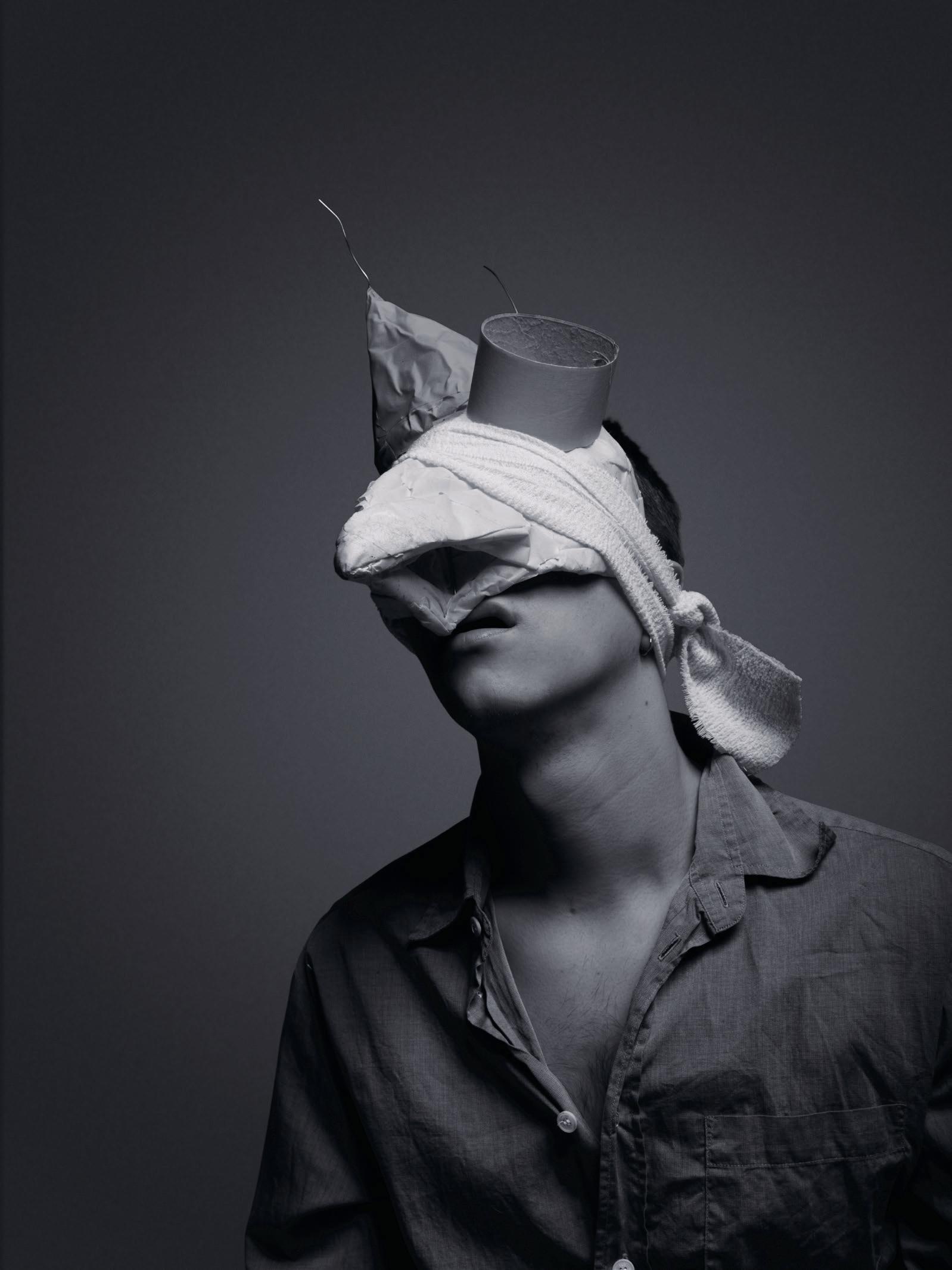
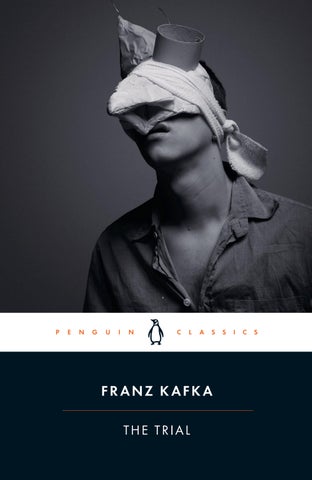
FRANZKAFKA THE TRIAL PENGUINCLASSICS
Franz Kafka (1883–1924) was a Czech-born German-speaking insurance clerk who despised his job, preferring to spend his time writing. Nevertheless, Kafka published little during his lifetime, and ordered his closest friend, Max Brod, to burn the mass of unpublished manuscripts – now familiar to us as some of the most influential novels and short stories of the twentieth century – after his death. Kafka’s novels and short stories, all available in Penguin Classics, include The Trial, The Castle and Amerika.
Idris Parry was born in 1916 and educated in Wales and at the universities of Bonn and Göttingen. After war service he became a university teacher at Bangor, moving in 1963 to Manchester, where he was Professor of Modem German Literature, until he retired in 1977. His essays have been collected in Animals of Silence (1972). Stream and Rocks (1973), Hand to Mouth (1981) and Speak Silence (1988). Idris Parry died in 2008.
Translated and with an Introduction by
Idris ParryPenguin Books
UK | USA | Canada | Ireland | Australia India | New Zealand | South Africa
Penguin Books is part of the Penguin Random House group of companies whose addresses can be found at global.penguinrandomhouse.com.
Der Prozess first published in Germany 1925 This translation first published 1994 Reissued in Penguin Classics 2015 This edition published 2019 001
Translation copyright © Idris Parry, 1994
The moral right of the translator has been asserted
Set in 10.5/13 pt Dante MT Std Typeset by Jouve (UK ), Milton Keynes Printed and bound in Great Britain by Clays Ltd, Elcograf S.p.A.
The authorized representative in the EEA is Penguin Random House Ireland, Morrison Chambers, 32 Nassau Street, Dublin D 02 YH 68
A CIP catalogue record for this book is available from the British Library
ISBN : 978–0–241–67889–3 www.greenpenguin.co.uk
Penguin Random Hous e is committed to a sustainable future for our business , our readers and our planet. is book is made from Forest Stewardship Council® certified paper
The translator acknowledges a debt of gratitude to his friends Jo Desch, Nigel Howarth, Ruedi Keller and Irmgard Krueger for valuable advice.
Contents Introduction ix
Select Bibliography xvii
Arrest – Conversation with Frau Grubach – Then Fräulein Bürstner 1
First Examination 25
In the Empty Assembly Hall – The Student – The Offices 39
B.’s Friend 59
The Whipper 66
The Uncle – Leni 72
Advocate – Manufacturer – Painter 90
Merchant Block – Dismissal of the Advocate 133
In the Cathedral 158 End 178
Introduction
‘I was not at all curious about who she was, but rather took her for granted at once. Bony, empty face that wore its emptiness openly. Bare throat. A blouse thrown on. Looked very domestic . . .’1 This was Kafka’s first sight of Felice Bauer at the home of his friend Max Brod in Prague on 13 August 1912. In spite of his lack of curiosity, he ends the diary entry on a curious note: ‘As I was taking my seat I looked at her closely for the first time, by the time I was seated I already had an unshakeable opinion.’
Kafka in fact uses the word ‘Urteil’, which means ‘judgement’. We are not told what the judgement was, but over the next two years the relationship between Kafka and Felice developed to form an important impulse for The Trial, his novel about a man who is always awaiting judgement. Even the blouse appears, a mute witness, in the first chapter. When they met, Felice was twenty-four, he was twenty-nine.
Kafka must have come to Brod’s that evening with a rare feeling of confidence. He had brought with him the manuscript of his first book, which he wanted to discuss with his friend. Because Felice was there, she was perhaps merged into this confidence and had for Kafka characteristics always associated with a happy and productive occasion. Certain favourable events which followed for Kafka as a writer confirmed her attraction for him.
They did not meet again for seven and a half months. About five weeks after the evening at Brod’s, Kafka wrote to her (she lived in Berlin) ‘introducing myself once more: my name is Franz Kafka’.2 Two nights after sending this letter he experienced for the first time a longed-for release as a creative writer. At one sitting which lasted
Introduction
from ten at night until six in the morning he produced what seemed to him his own form and vital utterance. He wrote a complete, concise story. In the morning after this night of creation he noted in his diary: ‘How everything can be said, how for everything, for the strangest fancies, there waits a great fire in which they perish and rise up again.’3
Of course he means transformation, writing as a phoenix from the flames. This night gave him both assurance and fear, typical of the tension which dogged him through life and was the stuff of those ‘strangest fancies’ he wanted to transform into art. The creative burst proved that in the right circumstances he could shape his own reality into literary form. Allied to this was fear that unspecified forces might compromise the purity of his effort. ‘Only in this way can writing be done, only with such coherence, with such a complete opening out of the body and the soul.’ For Kafka the only viable condition was that which encouraged transformation of self into literature. Nothing must disturb productive coherence.
That he had managed to achieve this coherence, if only for a few hours, must have been connected in his mind with Felice Bauer. He called his story The Judgement, a title which seems to spring naturally from the description of his first meeting with Felice. When it was published in the following year, it appeared with the dedication: ‘For Fräulein Felice B.’
In the two months following his first letter to Felice, this normally despairing and hesitant writer found unusual fluency. He completed six chapters of the novel later known as Amerika and achieved, as a bonus, that extraordinary invention The Metamorphosis, about a man who wakes up to find he has become an insect, not the only Kafka hero to wake into a nightmare. This story has been described by a respected commentator as ‘one of the few great and perfect works of poetic imagination written during this century’.4
Felice had done something for Kafka. Perhaps her greatest contribution was that she did not see him again for so many months. The relationship as it developed was largely a product of his imagination. As a searing part of his imaginative life it was inevitably material for his writing.
Introduction
Her letters have not survived. When he wrote, he moved quickly from the formal ‘Dear Fräulein Bauer’ to ‘Dear Fräulein Felice’ and swiftly through ‘Dearest Fräulein Felice’ to ‘Dearest, Dearest’ and the engrossingly familiar ‘Du’. On the basis of that one short meeting his letters swelled into raging pursuit, pouring from him, sometimes two or three a day, to form an astonishing human document. But they are love letters with a difference. Almost every page reflects the tension in Kafka’s mind as he is torn between hope and despair, conviction and doubt, attraction and fearful hesitation. Uncertainty is his way of life.
Felice seems to have been a simple and direct person, conventional in her tastes and thoughts and dress. She was a shorthand typist who, when Kafka knew her, had become an executive secretary with a manufacturing firm in Berlin. Kafka described her as ‘this healthy, gay, natural, strong girl’.5 Each adjective tells us how different she was from Kafka. This of course was the attraction. She gave him hope. When he looked into himself he despaired.
He soon declared his obsession. Not an obsession with her but with writing. He must write or die. ‘My life consists, and basically always has consisted, of attempts at writing, mostly unsuccessful. But when I didn’t write, I was at once flat on the floor, fit for the dustbin. My energies have always been pitifully weak . .’6
Does a woman really want to hear that her prospective lover’s energies are pitifully weak? What is his aim? He represents himself in these letters (and not only in these letters) as a kind of futile insect, he even tells Felice he is ‘the thinnest person I know’,7 claiming this as a kind of distinction because, as he tells her, he is familiar with sanatoriums and so has seen some really thin people. Is this the language of love? The puzzling aspect of this relationship is how Felice allowed it to go so far. Kafka’s apparent pursuit of a conventional relationship leading to marriage seems designed from the start to be a failure, because success would deprive him of the solitude necessary for his writing. ‘My mode of life is devised solely for writing, and if there are any changes, then only for the sake of perhaps fitting in better with my writing; for time is short, my strength is limited, the office is a horror, the apartment is noisy . . .’8
Kafka’s office was at the Workers’ Accident Insurance Institute in Prague, where he worked as a lawyer. His job interfered with his writing ambitions, his devotion to writing interfered with his professional obligations, so the office was another source of guilt. In a draft letter found in his diary he wrote: ‘Since I am nothing but literature and can and want to be nothing else, my job will never take possession of me, it may, however, shatter me completely, and this is by no means a remote possibility.’9
The apartment mentioned in the letter was that of his parents. Kafka, coming up to thirty, slept and worked and wrote his letters to Felice in a small room sandwiched between his parents’ bedroom and their living-room, with access from both, so that it served as passageway as well as living quarters. At night, his favoured time for writing, he could hear the snores and nocturnal heavings of his large, powerful father, the successful and uncomplicated man he admired and feared. The law can be only a wall’s width away.
On the last night of 1912 Kafka spoke of an unconditional bond between himself and Felice. What a delightful thing for a woman to hear! But perhaps not quite as Kafka expressed it – and who else but Kafka could express it like this? ‘In your last letter there is a sentence you have written once before, and so have I: “We belong together unconditionally.” That, dearest, is true a thousandfold; now, for instance, in these first hours of the New Year I could have no greater and no crazier wish than that we should be bound together inseparably by the wrists of your left and my right hand. I don’t quite know why this should occur to me; perhaps because a book on the French Revolution, with contemporary accounts, is lying in front of me, and it may be possible after all – not that I have read or heard of it anywhere – that a couple thus bound together were once led to the scaffold.’10
Is Kafka a crass deceiver or the most honest person imaginable? When a girl wants to hear the word ‘altar’ he says ‘scaffold’ and openly confesses this is his own invention, the revealing fancy, his true judgement on marriage as it affects himself. And yet he goes on. The attraction of security is too great. ‘What a lovely feeling to be in your safekeeping when confronted by this fearful world which I venture to take on only during nights of writing.’11
They arranged to meet in Berlin at Easter 1913. This would be their first meeting since that August evening at Brod’s. But nothing was simple for Kafka. There were obstacles and delays, promises, postponements. When he did arrive, Felice was not there to greet him. He could not understand this. On paper headed ‘Hotel Askanische Hof, Berlin’, a significant address in his later history, he wrote: ‘But what has happened, Felice? You must surely have received my express letter on Friday in which I announced my arrival on Saturday night. Surely this particular letter can’t have gone astray. And now I am in Berlin, and will have to leave again this afternoon at four or five . . .’12
Eventually she came. They met twice, for a few minutes. Felice evidently wanted to bring him to some kind of resolution and arranged another meeting for Whitsun, in seven weeks, not seven months. He was in Berlin again on the 11th and 12th of May, when they had more time together and he was introduced to her family. The conventional bond seemed closer, his anxieties greater. ‘My dearest Felice,’ he wrote, a few days after returning to Prague, ‘is there any purpose (I am saying this from my point of view) in prolonging the torment of uncertainty simply because somewhere it contains a slight, unreasonable, and instantly vanishing consolation?’13
All the same, a few weeks later he asked her to marry him. She accepted the offer, and he lost no time in telling her how disastrous life with him would be. ‘It certainly was not my intention to make you suffer, yet I have done so; obviously it never will be my intention to make you suffer, yet I shall always do so.’14 The ending of this letter is heart-rending, a new low even for Kafka: ‘Felice, beware of thinking of life as commonplace, if by commonplace you mean monotonous, simple, petty. Life is merely terrible; I feel it as few others do. Often – and in my inmost self perhaps all the time – I doubt whether I am a human being.’
Over the next months Kafka gave every sign of wanting to slip out of his commitment, so Felice sent her friend Grete Bloch to Prague to mediate between them. Kafka was instantly attracted to the newcomer. Perhaps he sensed here a similar source of tranquillity without the dreaded price. The vitality with which he had bemoaned his lack of vitality in the letters to Felice was now transferred to his letters to
Grete Bloch. Yet at Easter 1914 he was again in Berlin to confirm his engagement to Felice. To Grete Bloch he wrote: ‘Our relationship, which for me at least holds delightful and altogether indispensable possibilities, is in no way changed by my engagement or my marriage. Is this a fact and will it remain so?’15 The next day he wrote: ‘Dear Fräulein Grete, I feel an unmistakable and true longing for you.’16 Kafka had a genius for complicating what was already inextricably confused, and so turning it into a source of guilt.
At Whitsun Kafka was again in Berlin, this time with his father for the official ceremony of engagement. On 6 June he made an entry in his diary which shows how close he was to that transposition of mind into art which is The Trial : ‘Back from Berlin. Was tied hand and foot like a criminal. Had they sat me down in a corner bound in real chains, placed policemen in front of me, and let me look on simply like that, it could not have been worse. And that was my engagement; everybody made an effort to bring me to life, and when they couldn’t, to put up with me as I was.’17 The ritual, the relatives, the witnesses (were they testifying against him?) seemed to close round him like a cage designed to keep him from the conditions necessary for his writing.
‘Each of us’, he wrote to Grete Bloch five days later, ‘has his own way of emerging from the underworld, mine is by writing. That’s why the only way I can keep going, if at all, is by writing, not through rest and sleep.’18 Felice was ‘rest and sleep’, comfort, security. The price was too high. Grete had already mediated between them; she now did so again – to destroy the relationship. She managed to persuade Felice (could it have been so difficult?) that Kafka would make an impossible husband. His friend had now become his enemy – or was she, by this act, proving herself his best friend? The situation gets ever closer to the complexities of the Kafka narratives.
Six weeks after the engagement ceremony, on 12 July 1914, Kafka was again at the Hotel Askanische Hof in Berlin, but this time in different circumstances, summoned to face his accusers. Against him were Felice and her sister Erna, encouraged by Grete Bloch, who revealed the doubts about the engagement expressed in Kafka’s letters to her. He later spoke of Grete as sitting in judgement over him.
Kafka had a friend with him, but he himself remained silent as the words crossed over him like a knife passed from hand to hand. As at the ceremony of engagement, he was merely the object to be disposed of, the accused. There is no detailed account of this meeting, but his next diary entry speaks of it as a ‘Gerichtshof’, a court of justice. The judgement of this court was that the engagement should be broken. He went to see Felice’s parents: ‘They agreed that I was right, there was nothing, or not much, that could be said against me. Devilish in my innocence.’19 The next day he wrote them a letter of farewell, which he called ‘speech from the gallows’.
He spent two weeks on the Baltic coast, reflecting on the courtroom session in the hotel. Europe was going to war. On 31 July there was a general mobilization throughout the Austro-Hungarian Empire. Kafka was exempted because he was performing an essential civilian function. Back in Prague, he noted in his diary on 15 August: ‘I have been writing these past few days, may it continue.’20 This was the beginning of The Trial. The diary continues: ‘I can once more carry on a conversation with myself.’ The conversation is this book, the very painting of his fear.
idris parry
Notes
Abbreviations in these notes refer to the following editions of works by Franz Kafka. Numbers are page numbers in these editions.
F = Letters to Felice, with Kafka’s Other Trial by Elias Canetti, Penguin, 1978.
D = The Diaries of Franz Kafka 1910–23, Penguin, 1964.
Note 1: D, 207; 2: F, 101; 3: D, 213; 4: Elias Canetti in Kafka’s Other Trial, his study of the letters to Felice (F, 20); 5: D, 230; 6: F, 120; 7: F, 120; 8: F, 121; 9: D, 230; 10: F, 251; 11: F, 365; 12: F, 344; 13: F, 375; 14: F, 408; 15: F, 518; 16: F, 519; 17: D, 275; 18: F, 550; 19: D, 293; 20: D, 303.
Diaries 1910–13, ed. Max Brod, trans. Joseph Kresh, London, 1948.
Diaries 1914–23, ed. Max Brod, trans. Martin Greenberg with Hannah Arendt, London, 1949.
A one-volume edition of the Diaries published by Penguin Books, 1972.
Letters to Felice, ed. Erich Heller and Jürgen Born, trans. James Stern and Elizabeth Duckworth, London, 1974.
An abridged version of this work published by Penguin Books, 1978.
Elias Canetti, Kafka’s Other Trial, trans. Christopher Middleton, London, 1974.
Pietro Citate, Kafka, trans. Raymond Rosenthal, London, 1990.
Walter Emrich, Franz Kafka: A Critical Study of His Writings, New York, 1968.
Ronald Gray (ed.), Kafka: A Collection of Critical Essays, Englewood Cliffs, New Jersey, 1962. Fourteen essays by various scholars.
Ronald Hayman, K. – A Biography of Kafka, London, 1981.
Erich Heller, ‘The World of Franz Kafka’, in The Disinherited Mind, Cambridge, 1952.
Select Bibliography
Gustav Janouch, Conversations with Kafka: Notes and Reminiscences, trans. Goronwy Rees, London, 1984.
Philip Rahv, ‘An Introduction to Kafka’ and ‘The Death of Ivan Ilyich and Joseph K.’, in Literature and the Sixth Sense, London, 1970.
Mark Spilka, Dickens and Kafka: A Mutual Interpretation, London, 1963.
J. P. Stern (ed.), The World of Franz Kafka, London, 1980. A collection of twenty-four essays by various authors.
Somebody must have made a false accusation against Josef K., for he was arrested one morning without having done anything wrong. The cook employed by his landlady Frau Grubach who brought him his breakfast every morning at about eight o’clock did not come this time. That had never happened before. K. waited for a while and with his head on the pillow looked at the old lady living opposite who was observing him with a curiosity quite unusual for her, but then, feeling both annoyed and hungry, he rang the bell. Instantly there was a knock at the door and a man he had never before seen in the house came in. He was slim but solidly built, he wore a close-fitting black suit which was provided, in the manner of travelling outfits, with various pleats, pockets, buckles, buttons and a belt, and which consequently seemed eminently practical, though one could not be quite sure what its purpose was. ‘Who are you?’ asked K., starting to sit up in bed. But the man ignored the question, as if his appearance were to be accepted without query, and merely said: ‘You rang?’ ‘Anna is supposed to be bringing me my breakfast,’ said K., and then he tried to determine through silent observation and reflection who the man really was. The latter did not submit himself for long to this scrutiny but turned to the door and opened it a little to say to someone who must have been standing close behind the door: ‘He wants Anna to bring him his breakfast.’ This was followed by a short burst of laughter in the next room; from the sound it was hard to say if several persons might not be involved. Although the stranger could not have learned anything from this that he did not know before, yet he now said to K., as if making an announcement: ‘It is impossible.’ ‘That’s news to me,’ said K., who
leaped out of bed and quickly got into his trousers. ‘I must see who these people in the next room are and what explanation Frau Grubach will give for this disturbance.’ He immediately realized of course that he should not have said this and that by doing so he had to some extent recognized the right of the stranger to supervise his actions, but it did not seem important to him now. All the same, this is how the stranger took his words, for he said: ‘Wouldn’t you rather stay here?’ ‘I will neither stay here nor be talked to by you unless you tell me who you are.’ ‘I meant well,’ said the stranger and he now opened the door without further objection. In the next room, which K. entered more slowly than he intended, things looked at first glance almost exactly as they had on the previous evening. It was Frau Grubach’s living-room; perhaps there was a little more space than usual in this room packed with furniture, rugs, china and photographs, but that was not immediately apparent, especially as the most striking change was the presence of a man who was sitting by the open window with a book, from which he now looked up. ‘You should have stayed in your room! Didn’t Franz tell you that?’ ‘Yes, but what do you want?’ said K., and he looked from this new acquaintance to the one spoken of as Franz, who had remained in the doorway, and then back again. Through the open window the old woman was again visible; with true senile inquisitiveness she had moved to the corresponding window opposite so that she could continue to see everything. ‘I want to see Frau Grubach –’ said K., and he made an abrupt movement as if he were tearing himself free the two men who were in fact standing some distance away from him, and made to leave the room. ‘No,’ said the man by the window; he threw the book on a little table and stood up. ‘You are not allowed to go from here. You are after all under arrest.’ ‘So it would seem,’ said K. ‘And for what reason?’ he then asked. ‘It’s not our job to tell you that. Go into your room and wait. The proceedings have now been started and you will learn everything in good time. I am exceeding my instructions by talking to you in such a friendly way. But I hope nobody can hear this except Franz, and he himself has been obliging to you in defiance of regulations. If you continue to have as much good luck as you’ve had in the choice of your warders you