




author of Love and Marriage featured in the New Yorker, the Atlantic , and on Netflix investigation into sexual harassment won an Emmy Award and She is the host of Blind Plea , criminalized survival. Her Center, PEN America and the Foundation. She lives in Chicago.
THE FURIES
THREE WOMEN AND THEIR VIOLENT FIGHT FOR JUSTICE ELIZABETH FLOCK
VIKING an imprint of
ABOUT THE AUTHOR
ELIZABETH FLOCK is a journalist and the author of Love and Marriage in Mumbai . Her journalism has been featured in the New Yorker, The New York Times , the Guardian and the Atlantic , and on Netflix and PBS NewsHour, where her investigation into sexual harassment and retaliation in the US Forest Service won an Emmy Award and was nominated for a Peabody Award. She is the host of Blind Plea , a podcast from Lemonada Media about criminalized survival. Her reporting is supported by the Pulitzer Center, PEN America and the International Women’s Media Foundation. She lives in Chicago.
THE FURIES
THREE WOMEN AND THEIR VIOLENT FIGHT FOR JUSTICE
ELIZABETH FLOCK
VIKING an imprint of VIKING an imprint of
VIKING
UK | USA | Canada | Ireland | Australia
VIKING
India | New Zealand | South Africa
UK | USA | Canada | Ireland | Australia India | New Zealand | South Africa
Viking is part of the Penguin Random House group of companies whose addresses can be found at global.penguinrandomhouse.com.
Viking is part of the Penguin Random House group of companies whose addresses can be found at global.penguinrandomhouse.com.
First published in the United States of America by Harper, an imprint of HarperCollins Publishers 2024 First published in Great Britain by Viking 2024 001
First published in the United States of America by Harper, an imprint of HarperCollins Publishers 2024
First published in Great Britain by Viking 2024 001
Copyright © Elizabeth Flock, 2024
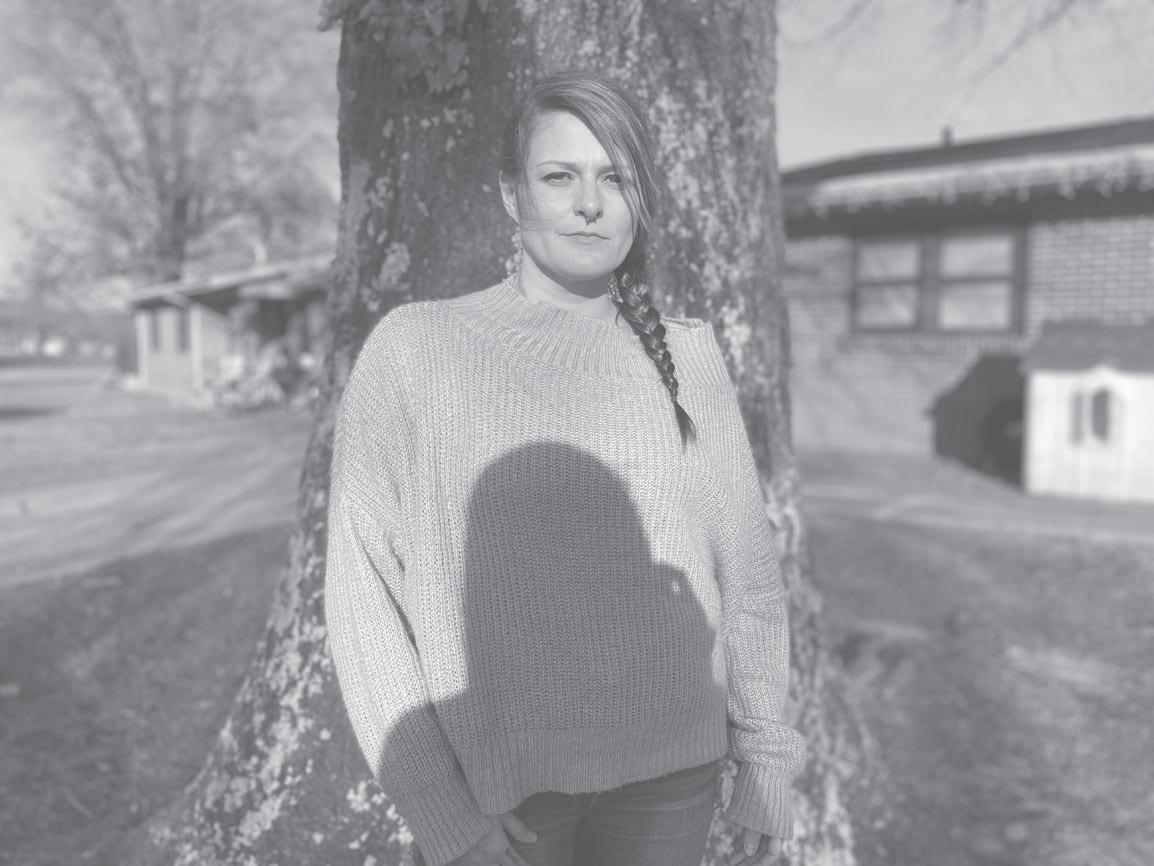
Photograph of Brittany Smith by Elizabeth Flock, January 2020. Photograph courtesy of Elizabeth Flock.
Copyright © Elizabeth Flock, 2024
Photograph of Angoori Dahariya by Gayatri Ganju, January 2019. Photograph courtesy of Gayatri Ganju.
Photograph of Cicek Mustafa Zibo by Delil Souleiman, May 2021. Photograph courtesy of Delil Souleiman.
Photograph of Brittany Smith by Elizabeth Flock, January 2020. Photograph courtesy of Elizabeth Flock.
Photograph of Angoori Dahariya by Gayatri Ganju, January 2019. Photograph courtesy of Gayatri Ganju.
Photograph of Cicek Mustafa Zibo by Delil Souleiman, May 2021. Photograph courtesy of Delil Souleiman.
‘Gunpowder & Lead’ (Miranda Lambert and Heather Little) © 2007 Sony Music Publishing LLC, Nashville Star Music and Publisher(s) Unknown. All rights obo Sony Music Publishing LLC and Nashville Star Music, administered by Sony Music Publishing (US) LLC, 424 Church Street Suite 1200, Nashville, TN 37219. All rights reserved. Used by permission.
‘Gunpowder & Lead’ (Miranda Lambert and Heather Little) © 2007 Sony Music Publishing LLC, Nashville Star Music and Publisher(s) Unknown. All rights obo Sony Music Publishing LLC and Nashville Star Music, administered by Sony Music Publishing (US) LLC, 424 Church Street Suite 1200, Nashville, TN 37219. All rights reserved. Used by permission.
‘For Inez Garcia’ by Marge Piercy. Copyright © 1974 by Marge Piercy and Middlemarsh, Inc. From Living in the Open, Alfred A. Knopf, 1976. Used by permission of Robin Straus Agency, Inc.
‘For Inez Garcia’ by Marge Piercy. Copyright © 1974 by Marge Piercy and Middlemarsh, Inc. From Living in the Open, Alfred A. Knopf, 1976. Used by permission of Robin Straus Agency, Inc.
The moral right of the author has been asserted
Printed and bound in Great Britain by Clays Ltd, Elcograf S.p.A.
The moral right of the author has been asserted
Printed and bound in Great Britain by Clays Ltd, Elcograf S.p.A.
The authorized representative in the EEA is Penguin Random House Ireland, Morrison Chambers, 32 Nassau Street, Dublin D02 YH68
The authorized representative in the EEA is Penguin Random House Ireland, Morrison Chambers, 32 Nassau Street, Dublin D02 YH68
A CIP catalogue record for this book is available from the British Library
ISBN : 978–0–241–67801–5 www.greenpenguin.co.uk
A CIP catalogue record for this book is available from the British Library
ISBN : 978–0–241–67801–5 www.greenpenguin.co.uk
Penguin Random Hous e is committed to a sustainable future for our business , our readers and our planet. is book is made from Forest Stewardship Council® certified paper
Penguin Random Hous e is committed to a sustainable future for our business , our readers and our planet. is book is made from Forest Stewardship Council® certified paper
To the ones who defended themselves and the ones who could not
To the ones who defended themselves and the ones who could not
To the ones who defended themselves and the ones who could not
Ni Santas, ni putas, solo mujeres / Neither saints, nor whores, only women.
Ni Santas, ni putas, solo mujeres / Neither saints, nor whores, only women.
—Feminist protest slogan used by women in Mexico, Spain, Italy, Canada, and the United States
—Feminist protest slogan used by women in Mexico, Spain, Italy, Canada, and the United States
CONTENTS preface 1 prelude 9 BOOK I: BRITTANY Gunpowder 13 A Fly on Flypaper 29 Hysteria 52 State of Alabama v. Brittany Smith 71 Protection 94 BOOK II: ANGOORI Vendetta 121 Sticks and Stones 135 We Are Bad, and We Can Be Worse 157 Long Live the Green Gang 171 BOOK III: CICEK Sleeping Lions 191 Pictures on the Wall 215 The Wrath of Olives 228 We Are a People 251 10,000 Leagues 268 epilogue 283 acknowledgments 287 references 289 CONTENTS preface 1 prelude 9 BOOK I: BRITTANY Gunpowder 13 A Fly on Flypaper 29 Hysteria 52 State of Alabama v. Brittany Smith 71 Protection 94 BOOK II: ANGOORI Vendetta 121 Sticks and Stones 135 We Are Bad, and We Can Be Worse 157 Long Live the Green Gang 171 BOOK III: CICEK Sleeping Lions 191 Pictures on the Wall 215 The Wrath of Olives 228 We Are a People 251 10,000 Leagues 268 epilogue 283 acknowledgments 287 references 289
PREFACE
Just before turning twenty-one, I saved up enough money to visit Rome with a few friends, thinking of nothing but the Spanish Steps and rigatoni. One of us had an idea to do a guided tour of the city, and we found one advertising a day trip to the monuments, followed by a night jaunt to the tourist bars. Our guide was a little older than us, a stocky man in his mid-twenties with a bristly beard. Two of my friends flirted with him as we visited the Colosseum. I can’t remember having an opinion of him at all.
On the night tour, I took a shot at the first bar. Everybody did, including the tour guide. It was a tacky American-owned establishment, the kind that serves soggy sliders and greasy chicken wings, with liquor bottles backlit at the bar. I don’t think I had anything else to drink that night, although I have second-guessed my memory a few times over. Afterward, we went to the Trevi Fountain and threw pennies over our shoulders, a local superstition to ensure that one day we’d return to the city. It’s the last thing I remember about that tour. The next is waking up in a dimly lit room somewhere in Rome, being raped by the guide, who, I later realized, had slipped me Rohypnol—a roofie.
It was an unnerving lesson to learn, that fight or flight are not the only two responses a person can have to threats. Another is: freeze. I was passive, I let it happen, I dissociated, and I was gone. I did not go to the police, because I did not think they would help me. For years afterward,
I was angry: angry at him for doing it, my friends for not saving me, and myself for not fighting back. Like most women, I have been violated at other times and in other ways. But the Rome incident was formative. I have spent the last fifteen years not at home in my body, in the skin that I once saw as protection. Often, I’ve wondered how that morning, and my life since, might have been different if I’d had access to a knife or a gun.
I was angry: angry at him for doing it, my friends for not saving me, and myself for not fighting back. Like most women, I have been violated at other times and in other ways. But the Rome incident was formative. I have spent the last fifteen years not at home in my body, in the skin that I once saw as protection. Often, I’ve wondered how that morning, and my life since, might have been different if I’d had access to a knife or a gun.
But this fantasy only led to more difficult questions. If I had shot him that morning, would it have helped anything, or only made it worse? If I had fought back, would the authorities have believed me, or would I have been arrested and jailed? Most painful of all, how many more women did he go on to hurt because I stayed quiet and did nothing?
But this fantasy only led to more difficult questions. If I had shot him that morning, would it have helped anything, or only made it worse? If I had fought back, would the authorities have believed me, or would I have been arrested and jailed? Most painful of all, how many more women did he go on to hurt because I stayed quiet and did nothing?
In the spring of 2016, almost a decade after it happened, I decided to find him. I knew only his first name and the name of his tour company, but as an investigative journalist, it took only an hour to find his full name, social media accounts, and where he lived. He looked just as I remembered him, though a bit less stocky, with the same red drinkers’ skin. His LinkedIn mentioned that he ran a furniture store, and his current location—the city where I lived at the time. My stomach turned and my skin itched. I blinked rapidly to ensure I was reading it right. Maybe he lived in my neighborhood. Maybe I had wandered into his business, looking for a couch or a chair.
In the spring of 2016, almost a decade after it happened, I decided to find him. I knew only his first name and the name of his tour company, but as an investigative journalist, it took only an hour to find his full name, social media accounts, and where he lived. He looked just as I remembered him, though a bit less stocky, with the same red drinkers’ skin. His LinkedIn mentioned that he ran a furniture store, and his current location—the city where I lived at the time. My stomach turned and my skin itched. I blinked rapidly to ensure I was reading it right. Maybe he lived in my neighborhood. Maybe I had wandered into his business, looking for a couch or a chair.
Soon, I found myself fantasizing about burning down his store. For months I thought about how I would do it, the materials I’d use, and how to cover my tracks. Over Facebook, I eventually sent him a message, asking if he remembered what he did to me, how many other women he’d hurt, and if he ever lost sleep at night, as I did. He did not reply, or maybe he didn’t see the message. But I was on the hunt now, for answers and for women who had followed their instincts to fight.
Soon, I found myself fantasizing about burning down his store. For months I thought about how I would do it, the materials I’d use, and how to cover my tracks. Over Facebook, I eventually sent him a message, asking if he remembered what he did to me, how many other women he’d hurt, and if he ever lost sleep at night, as I did. He did not reply, or maybe he didn’t see the message. But I was on the hunt now, for answers and for women who had followed their instincts to fight.
Vigilante women are easy to find in media, fiction, and across cultures: The Girl with the Dragon Tattoo, Kill Bill, Watchmen, Lady Vengeance, “Goodbye Earl,” the Furies, Kali, and Athena. We are drawn to these figures, perhaps because we wish we could be them. These tales fascinated me, and I spent years diving into the stories of violent women in mythology and history, some of whom are in these pages. It was only later that I realized there were so many living versions.
Vigilante women are easy to find in media, fiction, and across cultures: The Girl with the Dragon Tattoo, Kill Bill, Watchmen, Lady Vengeance, “Goodbye Earl,” the Furies, Kali, and Athena. We are drawn to these figures, perhaps because we wish we could be them. These tales fascinated me, and I spent years diving into the stories of violent women in mythology and history, some of whom are in these pages. It was only later that I realized there were so many living versions.
2 • THE FURIES
2 • THE FURIES
It was August 2008, a sweltering day in Mumbai, India, where I got my first job as a reporter at a business magazine. I kicked up small clouds of dust behind me as I walked, the sun baking the road iron hot. A placard in the median, the kind that usually bears the faces of politicians or historical heroes, stopped me. This one showed a slight woman with a round face and penetrating stare. The text below her image read: Phoolan Devi, the “Bandit Queen.”
It was August 2008, a sweltering day in Mumbai, India, where I got my first job as a reporter at a business magazine. I kicked up small clouds of dust behind me as I walked, the sun baking the road iron hot. A placard in the median, the kind that usually bears the faces of politicians or historical heroes, stopped me. This one showed a slight woman with a round face and penetrating stare. The text below her image read: Phoolan Devi, the “Bandit Queen.”
Curious, I typed her name into my phone. I learned that Phoolan Devi was a low-caste woman who fled her child marriage, became a bandit, and spent years avenging crimes against women and the poor. She died in 2001, less than a decade before. My stomach churned with the nervous thrill of finding someone you didn’t know you’d been looking for, and the realization that there were undoubtedly others like her— women who’d defended themselves in places where institutions failed to protect them.
Curious, I typed her name into my phone. I learned that Phoolan Devi was a low-caste woman who fled her child marriage, became a bandit, and spent years avenging crimes against women and the poor. She died in 2001, less than a decade before. My stomach churned with the nervous thrill of finding someone you didn’t know you’d been looking for, and the realization that there were undoubtedly others like her— women who’d defended themselves in places where institutions failed to protect them.
This book is the product of that continued search for women who took matters into their own hands: a study of three real-life women who, like alchemists, took their stories of pain and transmuted them into power. It is also a study of how women sometimes cross the line.
This book is the product of that continued search for women who took matters into their own hands: a study of three real-life women who, like alchemists, took their stories of pain and transmuted them into power. It is also a study of how women sometimes cross the line.
In small-town Alabama, I found a woman facing trial for shooting and killing a man she said had raped and attacked her in her home. I met a female guerrilla fighter in northeast Syria battling jihadists and their reign of rape and terror. And in northern India, where the Bandit Queen was born, I encountered a new female vigilante leader who wielded bamboo canes against abusers and treated the police with as much impudence.
In small-town Alabama, I found a woman facing trial for shooting and killing a man she said had raped and attacked her in her home. I met a female guerrilla fighter in northeast Syria battling jihadists and their reign of rape and terror. And in northern India, where the Bandit Queen was born, I encountered a new female vigilante leader who wielded bamboo canes against abusers and treated the police with as much impudence.
All three of these women handled matters on their own because the cops, courts, and state had failed to safeguard them. All three live in places with cultures of honor, where deeply ingrained ideas about masculinity and women helped breed the violence they faced. As scholar Nimmi Gowrinathan argues in Radicalizing Her: Why Women Choose Violence, a woman who takes up arms does so “because she is the target.” The women in this book were the targets, as were their communities.
All three of these women handled matters on their own because the cops, courts, and state had failed to safeguard them. All three live in places with cultures of honor, where deeply ingrained ideas about masculinity and women helped breed the violence they faced. As scholar Nimmi Gowrinathan argues in Radicalizing Her: Why Women Choose Violence, a woman who takes up arms does so “because she is the target.” The women in this book were the targets, as were their communities.
• • • PREFACE • 3
• • • PREFACE • 3
4 • THE FURIES
They wielded violence to survive, using a revolver, canes, and a Kalashnikov to protect themselves and other women. They broke the law and social norms, and risked jail time and death. My questions persisted: Did their actions ultimately help or hurt them? And did anything systemically shift as a result?
They wielded violence to survive, using a revolver, canes, and a Kalashnikov to protect themselves and other women. They broke the law and social norms, and risked jail time and death. My questions persisted: Did their actions ultimately help or hurt them? And did anything systemically shift as a result?
This book is a work of nonfiction. I relied on extensive interviews with these three women, and all other available subjects, to reconstruct events where I was not present. Wherever possible, I checked events, memories, and biographical details against a wealth of supporting documentation: medical records, court files, police reports, diary entries, emails, texts, letters, news articles, academic studies, book-length accounts, and more. For all historical and contemporary accounts in this book that go beyond the three women, and all epigraphs, I made every effort to rely on primary sources, local voices, and respected scholarship. Ultimately, though, this book reflects these women’s stories.
This book is a work of nonfiction. I relied on extensive interviews with these three women, and all other available subjects, to reconstruct events where I was not present. Wherever possible, I checked events, memories, and biographical details against a wealth of supporting documentation: medical records, court files, police reports, diary entries, emails, texts, letters, news articles, academic studies, book-length accounts, and more. For all historical and contemporary accounts in this book that go beyond the three women, and all epigraphs, I made every effort to rely on primary sources, local voices, and respected scholarship. Ultimately, though, this book reflects these women’s stories.
To report the stories of Brittany Smith, Angoori Dahariya, and Cicek Mustafa Zibo, I got to know them over the course of years. I learned of Brittany’s case in April 2019 after reading an online news article in The Appeal that said a woman in Alabama was facing a life sentence for killing a man who allegedly raped her. The story left me with more questions than answers, so I flew down to Alabama shortly after to meet Brittany’s mom. Together, we visited Brittany in a psychiatric hospital in Tuscaloosa, where a judge had sent her and a nurse told me she didn’t belong. Brittany was claiming self-defense for the shooting, while others in her community saw it as an act of reprisal. I wrote a feature about her case for the New Yorker, but its gray areas kept me reporting long after the piece was done. I ultimately followed Brittany’s story for four years, visiting her hometown of Stevenson, Alabama, almost a dozen times, including for a documentary we made on her case for Netflix, whose interviews are included in this book. When I wasn’t in Alabama, I spoke to Brittany regularly over jail calling apps or by letter, hers sometimes enclosed with plucked clovers.
To report the stories of Brittany Smith, Angoori Dahariya, and Cicek Mustafa Zibo, I got to know them over the course of years. I learned of Brittany’s case in April 2019 after reading an online news article in The Appeal that said a woman in Alabama was facing a life sentence for killing a man who allegedly raped her. The story left me with more questions than answers, so I flew down to Alabama shortly after to meet Brittany’s mom. Together, we visited Brittany in a psychiatric hospital in Tuscaloosa, where a judge had sent her and a nurse told me she didn’t belong. Brittany was claiming self-defense for the shooting, while others in her community saw it as an act of reprisal. I wrote a feature about her case for the New Yorker, but its gray areas kept me reporting long after the piece was done. I ultimately followed Brittany’s story for four years, visiting her hometown of Stevenson, Alabama, almost a dozen times, including for a documentary we made on her case for Netflix, whose interviews are included in this book. When I wasn’t in Alabama, I spoke to Brittany regularly over jail calling apps or by letter, hers sometimes enclosed with plucked clovers.
My reporting in India began in Mumbai all those years ago, when I
My reporting in India began in Mumbai all those years ago, when I
4 • THE
FURIES
first learned about Phoolan Devi. After that, I kept an eye out for presentday Bandit Queens, and I finally found Angoori in 2018 in the small town of Tirwa, in the northern Indian state of Uttar Pradesh. I learned of Angoori from a short online news article, which said that a low-caste woman in Tirwa had formed a gang that “thrashed” domestic abusers with bamboo canes. When I contacted the local journalist who wrote the piece, Saurabh Sharma, he agreed to take me to meet Angoori. I met Angoori at her home in Tirwa in the winter of 2018, where she was seated and surrounded by her gang of women. As she narrated her life story, the women listened closely, laughing when she laughed and crying when she cried. Other Tirwa residents saw Angoori more skeptically. I wrote about her and her gang for the magazine California Sunday, but given Angoori’s cultlike figure, I knew there was far more to tell. Angoori and I spoke for years with the help of Saurabh—who knows the region intimately and translated the Hindi dialect of Bundelkhandi that Angoori speaks—along with his late wife, Dipali, who brought so much care to these stories.
first learned about Phoolan Devi. After that, I kept an eye out for presentday Bandit Queens, and I finally found Angoori in 2018 in the small town of Tirwa, in the northern Indian state of Uttar Pradesh. I learned of Angoori from a short online news article, which said that a low-caste woman in Tirwa had formed a gang that “thrashed” domestic abusers with bamboo canes. When I contacted the local journalist who wrote the piece, Saurabh Sharma, he agreed to take me to meet Angoori. I met Angoori at her home in Tirwa in the winter of 2018, where she was seated and surrounded by her gang of women. As she narrated her life story, the women listened closely, laughing when she laughed and crying when she cried. Other Tirwa residents saw Angoori more skeptically. I wrote about her and her gang for the magazine California Sunday, but given Angoori’s cultlike figure, I knew there was far more to tell. Angoori and I spoke for years with the help of Saurabh—who knows the region intimately and translated the Hindi dialect of Bundelkhandi that Angoori speaks—along with his late wife, Dipali, who brought so much care to these stories.
The female guerrilla fighter Cicek (Chee- czech) and I first spoke over WhatsApp in 2020, chatting back and forth from the U.S. to her military base in the fertile plains of northeast Syria. For years, I had read news reports on the exploits of her all-female militia, the YPJ, a sister force to the larger YPG. Both are led by the Kurds, an ethnic minority native to the region. Since 2013, YPJ female fighters had battled ISIS militants, and were now fighting the Turkish state in defense of their new autonomous region, Rojava. The story of the region was complicated, but I wanted to tell a sliver of it by extensively interviewing one YPJ fighter, and asked several local journalists for help. Syrian journalist Solin Muhammed Amin ultimately made the introduction and translated my conversations with Cicek. Solin, who is a force, has been reporting this book alongside me ever since. I interviewed Cicek in person during two reporting trips to northeast Syria, in May 2021 and 2022, making the crossing from Iraq into Syria with the help of local journalist and jack- of-all-trades Majd Helobi, and reporting with the assistance of Solin and two other brilliant Syrian producers, Kamiran Sadoun and Obeid Sheikhi, who translated many hours of Arabic and the Kurdish dialect Kurmancî. Some towns
The female guerrilla fighter Cicek (Chee- czech) and I first spoke over WhatsApp in 2020, chatting back and forth from the U.S. to her military base in the fertile plains of northeast Syria. For years, I had read news reports on the exploits of her all-female militia, the YPJ, a sister force to the larger YPG. Both are led by the Kurds, an ethnic minority native to the region. Since 2013, YPJ female fighters had battled ISIS militants, and were now fighting the Turkish state in defense of their new autonomous region, Rojava. The story of the region was complicated, but I wanted to tell a sliver of it by extensively interviewing one YPJ fighter, and asked several local journalists for help. Syrian journalist Solin Muhammed Amin ultimately made the introduction and translated my conversations with Cicek. Solin, who is a force, has been reporting this book alongside me ever since. I interviewed Cicek in person during two reporting trips to northeast Syria, in May 2021 and 2022, making the crossing from Iraq into Syria with the help of local journalist and jack- of-all-trades Majd Helobi, and reporting with the assistance of Solin and two other brilliant Syrian producers, Kamiran Sadoun and Obeid Sheikhi, who translated many hours of Arabic and the Kurdish dialect Kurmancî. Some towns
PREFACE • 5
PREFACE • 5
and cities have both Arabic and Kurdish names; I used the names the fighters did.
and cities have both Arabic and Kurdish names; I used the names the fighters did.
I am not a war correspondent, so reporting in Syria took months of preparation, including enrolling in a hostile environment training course that involved a fake kidnapping as well as instructions on how to handle suicide bombings, crossfire, and IEDs. I created proof- of-life documents in case of abduction and snapped photographs so people could identify my body. Once in Syria, my main safety goals were to avoid the regime, ISIS sleeper cells, and Turkish drone strikes. The local journalists who cover the region do not have the luxury of all this preparation, and some have been arrested, tortured, or killed for their coverage.
I am not a war correspondent, so reporting in Syria took months of preparation, including enrolling in a hostile environment training course that involved a fake kidnapping as well as instructions on how to handle suicide bombings, crossfire, and IEDs. I created proof- of-life documents in case of abduction and snapped photographs so people could identify my body. Once in Syria, my main safety goals were to avoid the regime, ISIS sleeper cells, and Turkish drone strikes. The local journalists who cover the region do not have the luxury of all this preparation, and some have been arrested, tortured, or killed for their coverage.
Reporting in northern India and Stevenson, Alabama, came with its own set of challenges, which local journalists face every day. Angoori’s area is so unsafe to report in as a woman that Saurabh insisted we stay in Lucknow, two and a half hours from Tirwa, and commute back and forth daily. In Alabama, it was also unsafe to meet some sources, though transparency was my greatest obstacle—it was difficult to pin down good data on domestic abuse in Brittany’s county, for example, because of how police were recording assaults. All these places were costly to report in, especially over the course of years. I owe thanks to the International Women’s Media Foundation and the Pulitzer Center on Crisis Reporting for their support, plus the New Yorker, the California Sunday Ma gazine, Foreign Policy, the Guardian, Lemonada Media, and Tripod Media for putting out these kinds of stories.
Reporting in northern India and Stevenson, Alabama, came with its own set of challenges, which local journalists face every day. Angoori’s area is so unsafe to report in as a woman that Saurabh insisted we stay in Lucknow, two and a half hours from Tirwa, and commute back and forth daily. In Alabama, it was also unsafe to meet some sources, though transparency was my greatest obstacle—it was difficult to pin down good data on domestic abuse in Brittany’s county, for example, because of how police were recording assaults. All these places were costly to report in, especially over the course of years. I owe thanks to the International Women’s Media Foundation and the Pulitzer Center on Crisis Reporting for their support, plus the New Yorker, the California Sunday Ma gazine, Foreign Policy, the Guardian, Lemonada Media, and Tripod Media for putting out these kinds of stories.
There is a short story by Lesley Nneka Arimah that I thought about often while in the field, called “What It Means When a Man Falls from the Sky.” In the story, a “grief worker” has the mathematical formula to suck the grief and sadness out of people, “like poison from a wound,” but she has to die in the process. Many days, I felt the poison of covering domestic and sexual violence— violence I myself had faced—and also complex trauma, conflict, and war. Then I felt the guilt of knowing I wasn’t healing anyone only by listening, and that I would be just fine. Over the
There is a short story by Lesley Nneka Arimah that I thought about often while in the field, called “What It Means When a Man Falls from the Sky.” In the story, a “grief worker” has the mathematical formula to suck the grief and sadness out of people, “like poison from a wound,” but she has to die in the process. Many days, I felt the poison of covering domestic and sexual violence— violence I myself had faced—and also complex trauma, conflict, and war. Then I felt the guilt of knowing I wasn’t healing anyone only by listening, and that I would be just fine. Over the
6 • THE FURIES
6 • THE FURIES
PREFACE • 7
course of my reporting, I developed chronic fatigue and stomach pain, my body’s way of telling me it was overwhelmed. But then I finished writing this book about agency, power, and survival, and—foolish as it sounds—my body healed. After years of internalizing the harshness imposed on traumatized women, these days I am gentle with myself, and with others’ stories.
course of my reporting, I developed chronic fatigue and stomach pain, my body’s way of telling me it was overwhelmed. But then I finished writing this book about agency, power, and survival, and—foolish as it sounds—my body healed. After years of internalizing the harshness imposed on traumatized women, these days I am gentle with myself, and with others’ stories.
This book is a tribute to the women who have fought back, who have rewritten stories of disempowerment into stories of resistance, today and yesterday and tomorrow, in real life and in our wild imaginings.
This book is a tribute to the women who have fought back, who have rewritten stories of disempowerment into stories of resistance, today and yesterday and tomorrow, in real life and in our wild imaginings.
Elizabeth Flock
Elizabeth Flock
Los Angeles
Los Angeles
October 2022
October 2022
PREFACE • 7
PRELUDE
PRELUDE
JJustice goes by many names.
ustice goes by many names.
It goes by the name Athena, whose story began with a prophecy that she would one day overthrow her father. After her father took her mother without consent, Athena sprang from his skull with a ferocious war cry, fully grown and clad in armor, holding weapons likely fashioned by her mother. While her brother Ares represented war and bloodlust, Athena would use wisdom, valor, and cunning to defend and protect her people—and do whatever it took to get justice.
It goes by the name Athena, whose story began with a prophecy that she would one day overthrow her father. After her father took her mother without consent, Athena sprang from his skull with a ferocious war cry, fully grown and clad in armor, holding weapons likely fashioned by her mother. While her brother Ares represented war and bloodlust, Athena would use wisdom, valor, and cunning to defend and protect her people—and do whatever it took to get justice.
Justice also goes by the name Durga, who was born with many arms to fight demonic forces. In the Hindu text the Devi Mahatmya, Durga was said to have been merciful of mind but fought with fierce cruelty in war. She rode atop a tiger or a lion and wielded a shield, club, spear, and sword. The weapon of choice did not matter. Durga was protector and destroyer in equal measure.
Justice also goes by the name Durga, who was born with many arms to fight demonic forces. In the Hindu text the Devi Mahatmya, Durga was said to have been merciful of mind but fought with fierce cruelty in war. She rode atop a tiger or a lion and wielded a shield, club, spear, and sword. The weapon of choice did not matter. Durga was protector and destroyer in equal measure.
And justice goes by the name Inanna, who once unleashed plagues upon her rapist. She released raging storms and water turned to blood against those who committed wrongs. The Sumerian goddess was sometimes symbolized as a dove, but she was more often depicted as angry. In the “Hymn to Inanna,” poet-priestess Enheduanna writes: “Inanna sits on harnessed lions, she cuts to pieces him who shows no respect.”
And justice goes by the name Inanna, who once unleashed plagues upon her rapist. She released raging storms and water turned to blood against those who committed wrongs. The Sumerian goddess was sometimes symbolized as a dove, but she was more often depicted as angry. In the “Hymn to Inanna,” poet-priestess Enheduanna writes: “Inanna sits on harnessed lions, she cuts to pieces him who shows no respect.”
In Greek and Roman mythology, vengeance was also three women: the Furies, fearsome goddesses with hair that writhed with snakes. They
In Greek and Roman mythology, vengeance was also three women: the Furies, fearsome goddesses with hair that writhed with snakes. They
10
10
• THE FURIES
• THE FURIES
punished crimes against the so-called natural order: Tisiphone was the “voice of vengeance,” Megaera “grudging,” and Alecto the “unceasing one.” When the prince Orestes murdered his mother, in retaliation for the death of his father, the Furies endlessly tormented him for his crime.
punished crimes against the so-called natural order: Tisiphone was the “voice of vengeance,” Megaera “grudging,” and Alecto the “unceasing one.” When the prince Orestes murdered his mother, in retaliation for the death of his father, the Furies endlessly tormented him for his crime.
“And so, gorged on human blood, so as to be the more emboldened, a revel-rout of kindred Furies haunts the house,” wrote Aeschylus, the Greek tragedian. “Lodged within its halls they chant their chant . . .”
“And so, gorged on human blood, so as to be the more emboldened, a revel-rout of kindred Furies haunts the house,” wrote Aeschylus, the Greek tragedian. “Lodged within its halls they chant their chant . . .”
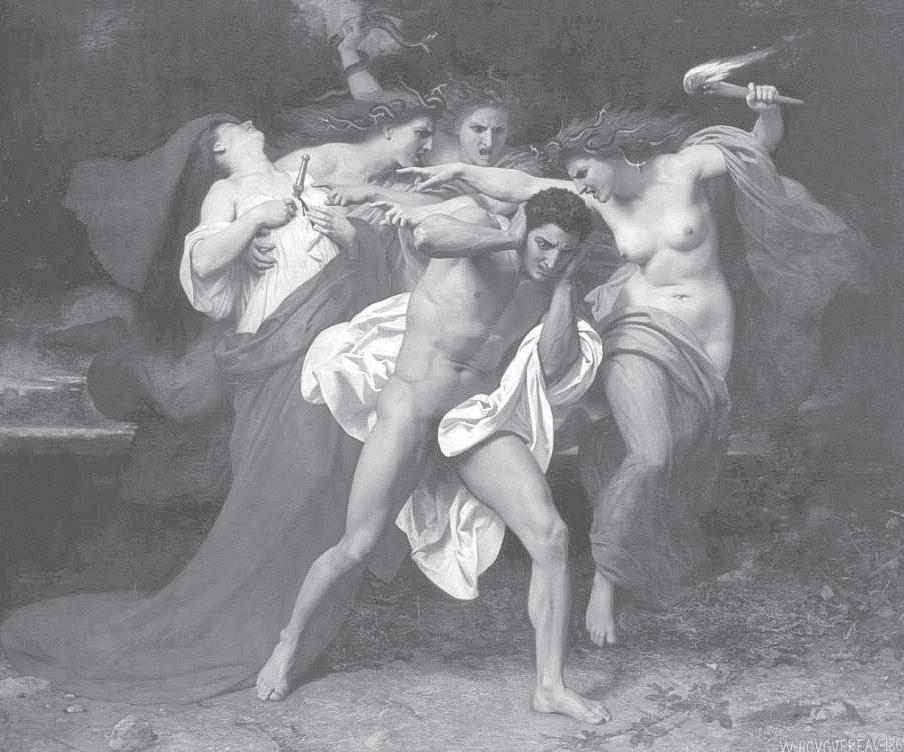 Orestes Pursued by the Furies, William-Adolphe Bouguereau, 1862
Orestes Pursued by the Furies, William-Adolphe Bouguereau, 1862
Orestes Pursued by the Furies, William-Adolphe Bouguereau, 1862
BOOK I
BRITTANY BOOK I BRITTANY
GUNPOWDER
GUNPOWDER
His fist is big but my gun’s bigger He’ll find out when I pull the trigger.
His fist is big but my gun’s bigger He’ll find out when I pull the trigger.
—From “Gunpowder & Lead,” a country music song released by singer Miranda Lambert in 2008
—From “Gunpowder & Lead,” a country music song released by singer Miranda Lambert in 2008
TThe town of Stevenson, Alabama, and what happens there, is easy to overlook. It sits in the northeast corner of the state, close to the border with Tennessee and Georgia, but is nestled deep in the overgrowth of the region. It is only five square miles, population 2,000 or so. Antique stores occupy the downtown, as if it is frozen in the past. The town’s roller rink caved in long ago. Many of the houses and double-wides are vine-covered and crumbling, and residents complain of nothing to do.
he town of Stevenson, Alabama, and what happens there, is easy to overlook. It sits in the northeast corner of the state, close to the border with Tennessee and Georgia, but is nestled deep in the overgrowth of the region. It is only five square miles, population 2,000 or so. Antique stores occupy the downtown, as if it is frozen in the past. The town’s roller rink caved in long ago. Many of the houses and double-wides are vine-covered and crumbling, and residents complain of nothing to do.
Stevenson has no shortage of natural—many in town would say God- given —beauty. The light at dusk is salmon pink over the old oak trees in rich shades of green. Children ride bicycles through empty streets, shrieking over the sound of the cicadas’ insistent drone. Teenagers drive four-wheelers up mountain roads and fish in the nearby Tennessee River using chicken drumsticks on a string. But as a person ages, there is less to do. As an adult, Stevenson holds only the promise of sweet tea, high bills, and losing lottery tickets.
Stevenson has no shortage of natural—many in town would say God- given —beauty. The light at dusk is salmon pink over the old oak trees in rich shades of green. Children ride bicycles through empty streets, shrieking over the sound of the cicadas’ insistent drone. Teenagers drive four-wheelers up mountain roads and fish in the nearby Tennessee River using chicken drumsticks on a string. But as a person ages, there is less to do. As an adult, Stevenson holds only the promise of sweet tea, high bills, and losing lottery tickets.
From town, it is an hour’s drive northeast to Chattanooga or southwest to Huntsville. If a person has enough gas money to make it to one of the bigger cities, they might drive to the movies or the bowling alley on the weekend. But if they get stuck in Stevenson, that means getting caught up in the drama, like a fly on flypaper. Like many small towns, everybody knows everybody else, and word of trouble travels fast.
From town, it is an hour’s drive northeast to Chattanooga or southwest to Huntsville. If a person has enough gas money to make it to one of the bigger cities, they might drive to the movies or the bowling alley on the weekend. But if they get stuck in Stevenson, that means getting caught up in the drama, like a fly on flypaper. Like many small towns, everybody knows everybody else, and word of trouble travels fast.
Some wake up in the morning and check the jail roster first thing to see who the police arrested the day before. Often, the arrests are for drugs. Sand Mountain, a plateau that many call “meth mountain” because of how much methamphetamine has been manufactured in its small towns over the years, is just a short ride from town. Pills and meth wrapped their determined fingers around Stevenson’s neck years ago and never let go. If not for drugs, the arrests are often for domestic violence, or both. Nearly every woman in Stevenson has a love story she’d rather forget, a deepening bruise, or an ex of whom she is still afraid.
But much of this domestic violence is never reported because women in the region generally do not trust the police. In the past, women say, they tried to call and report incidents but got nowhere or somewhere worse than they were before. Sometimes the police knew the perpetrators, or the cops were the perpetrators themselves, and those cases never went far.
Some wake up in the morning and check the jail roster first thing to see who the police arrested the day before. Often, the arrests are for drugs. Sand Mountain, a plateau that many call “meth mountain” because of how much methamphetamine has been manufactured in its small towns over the years, is just a short ride from town. Pills and meth wrapped their determined fingers around Stevenson’s neck years ago and never let go. If not for drugs, the arrests are often for domestic violence, or both. Nearly every woman in Stevenson has a love story she’d rather forget, a deepening bruise, or an ex of whom she is still afraid. But much of this domestic violence is never reported because women in the region generally do not trust the police. In the past, women say, they tried to call and report incidents but got nowhere or somewhere worse than they were before. Sometimes the police knew the perpetrators, or the cops were the perpetrators themselves, and those cases never went far.
For many women in Stevenson, life is lived in preparation for what is just around the corner. Girls learn young from their mothers that when hit, hit back. If not, they’ll only keep getting hurt. They learn not to tell anyone what happened because the authorities won’t believe them, or will only make it worse. When a girl heads out from home, few people say “Goodbye,” or “See you later.” Instead, they say “Be safe,” or “Be careful.”
For many women in Stevenson, life is lived in preparation for what is just around the corner. Girls learn young from their mothers that when hit, hit back. If not, they’ll only keep getting hurt. They learn not to tell anyone what happened because the authorities won’t believe them, or will only make it worse. When a girl heads out from home, few people say “Goodbye,” or “See you later.” Instead, they say “Be safe,” or “Be careful.”
Be careful of what?
Be careful of what?
Just be careful.
Just be careful.
Brittany Joyce Haley Smith was born in Scottsboro, the county seat and just twenty minutes from Stevenson, on her mother’s nineteenth birthday, and her grandmother’s birthday before that. When Brittany was young, her family moved all over: across Alabama, to Tennessee and Texas, before finally returning to the Stevenson area for her to go to school. For the most part, Brittany had been in Stevenson ever since, working odd jobs and living with her mother and then her husband— always in other people’s spaces.
Brittany Joyce Haley Smith was born in Scottsboro, the county seat and just twenty minutes from Stevenson, on her mother’s nineteenth birthday, and her grandmother’s birthday before that. When Brittany was young, her family moved all over: across Alabama, to Tennessee and Texas, before finally returning to the Stevenson area for her to go to school. For the most part, Brittany had been in Stevenson ever since, working odd jobs and living with her mother and then her husband— always in other people’s spaces.
Now in her thirties, Brittany worried that her body showed her four
Now in her thirties, Brittany worried that her body showed her four
14 • THE FURIES
14 • THE FURIES
pregnancies. But everyone else saw her as athletic and younger than her years, with her easy smile and boyish frame. She had soft, mousy blond hair that fell straight past her shoulders and gray-blue eyes that were bright and knowing. Although she was book-smart, she often made silly mistakes—“Dingy,” her mother called her with endearment, for being scatterbrained. Still, Brittany was tall and spoke with confidence, wearing worn blue jeans and boyish T-shirts. Many men in the area fell for the combination of her devil-may-care attitude and natural beauty. She could make anyone laugh, often by poking good-natured fun at them.
pregnancies. But everyone else saw her as athletic and younger than her years, with her easy smile and boyish frame. She had soft, mousy blond hair that fell straight past her shoulders and gray-blue eyes that were bright and knowing. Although she was book-smart, she often made silly mistakes—“Dingy,” her mother called her with endearment, for being scatterbrained. Still, Brittany was tall and spoke with confidence, wearing worn blue jeans and boyish T-shirts. Many men in the area fell for the combination of her devil-may-care attitude and natural beauty. She could make anyone laugh, often by poking good-natured fun at them.
Brittany recently had split up with her husband of about a decade, this time for good. She’d met him at a party in college, him in a silly outfit, a tiny vest on his brawny frame. That was before he got bad on pills, and got rough with her, she said. They had been on and off for years, and gone back and forth about a divorce, yet somehow it had never gone through. But now they were agreed on a separation, and he’d left the rented house to Brittany. Even if she was only renting it, she felt lucky to have a home of her own in town at last. And she was optimistic that her “babies” could finally come home, all four of them.
Brittany recently had split up with her husband of about a decade, this time for good. She’d met him at a party in college, him in a silly outfit, a tiny vest on his brawny frame. That was before he got bad on pills, and got rough with her, she said. They had been on and off for years, and gone back and forth about a divorce, yet somehow it had never gone through. But now they were agreed on a separation, and he’d left the rented house to Brittany. Even if she was only renting it, she felt lucky to have a home of her own in town at last. And she was optimistic that her “babies” could finally come home, all four of them.
It was a two-story red-brick house with grand painted white columns and white shutters. The grass grew thick out front in the summer, and old maple trees with rough bark shaded the house. Inside, the rooms had a 1970s feel, with patterned green tile in the kitchen and wood paneling throughout that Brittany loved. It had four bedrooms so her four children would not all have to share. As she walked through the empty spaces of her new home, she felt more content than she had in a long time.
It was a two-story red-brick house with grand painted white columns and white shutters. The grass grew thick out front in the summer, and old maple trees with rough bark shaded the house. Inside, the rooms had a 1970s feel, with patterned green tile in the kitchen and wood paneling throughout that Brittany loved. It had four bedrooms so her four children would not all have to share. As she walked through the empty spaces of her new home, she felt more content than she had in a long time.
Nothing troubled Brittany when she was with her babies. Her oldest, a momma’s boy, was sensitive and aware; her second son was earnest and wanted to be a paleontologist; her first girl was sassy and a tomboy through and through; and her younger daughter was still a baby but already developing a goofy, fun-loving demeanor. Brittany joked around with her children and listened to their private fears. She wrapped them in big hugs in the morning and sang them “You Are My Sunshine” at night.
Nothing troubled Brittany when she was with her babies. Her oldest, a momma’s boy, was sensitive and aware; her second son was earnest and wanted to be a paleontologist; her first girl was sassy and a tomboy through and through; and her younger daughter was still a baby but already developing a goofy, fun-loving demeanor. Brittany joked around with her children and listened to their private fears. She wrapped them in big hugs in the morning and sang them “You Are My Sunshine” at night.
It had been five years since Brittany lost custody. After she fell into
It had been five years since Brittany lost custody. After she fell into
GUNPOWDER • 15
15
GUNPOWDER •
the deep hole that methamphetamine created in Stevenson, the state removed her older three. They eventually went to live with her uncle in a town over from Stevenson, where Brittany visited them as often as she could. When she gave birth to her youngest in 2017, the state took her, too, citing Brittany’s substance abuse history. She knew that she’d become an erratic mother after substances took over. She had been arrested several times, all on petty charges related to her drug use.
the deep hole that methamphetamine created in Stevenson, the state removed her older three. They eventually went to live with her uncle in a town over from Stevenson, where Brittany visited them as often as she could. When she gave birth to her youngest in 2017, the state took her, too, citing Brittany’s substance abuse history. She knew that she’d become an erratic mother after substances took over. She had been arrested several times, all on petty charges related to her drug use.
But she was clean now, and confident all that was behind her. Separating from her husband had helped. A social worker had recently visited and approved her red-brick house, suggesting she could get increased visitation. Brittany hoped that she would get full custody after that. She was ready for a more peaceful life because she owed it to her babies. To make good on that promise, she had an upcoming interview for a steady job at a flooring company in town, with reasonable hours and good pay, which didn’t come around often in Stevenson.
But she was clean now, and confident all that was behind her. Separating from her husband had helped. A social worker had recently visited and approved her red-brick house, suggesting she could get increased visitation. Brittany hoped that she would get full custody after that. She was ready for a more peaceful life because she owed it to her babies. To make good on that promise, she had an upcoming interview for a steady job at a flooring company in town, with reasonable hours and good pay, which didn’t come around often in Stevenson.
Over the years, Brittany had often done menial, backbreaking work because it was what was available and there were bills to pay. While pregnant her second time, she did heat-setting at a carpet company, which meant being on her feet on concrete in a hot room twelve hours a day. And while pregnant with her youngest daughter, she worked from early afternoon until four in the morning at a local chicken plant, where her job had been to hog-tie chickens, kill them with an air gun to the skull, and cut off their heads. She’d also worked at most of the fast-food restaurants in Stevenson, including Burger King, where she now manned the window six days a week. The flooring company job would be easy in comparison if she got it.
Over the years, Brittany had often done menial, backbreaking work because it was what was available and there were bills to pay. While pregnant her second time, she did heat-setting at a carpet company, which meant being on her feet on concrete in a hot room twelve hours a day. And while pregnant with her youngest daughter, she worked from early afternoon until four in the morning at a local chicken plant, where her job had been to hog-tie chickens, kill them with an air gun to the skull, and cut off their heads. She’d also worked at most of the fast-food restaurants in Stevenson, including Burger King, where she now manned the window six days a week. The flooring company job would be easy in comparison if she got it.
It felt to Brittany like her life was finally coming together after years of upheaval. There was just one hitch, which was how lonely she felt. Her mother and brother lived just down the road, but there were still many lonesome hours in the house without her husband, and an unknown waiting period before her children came home. She could feel the house’s yawning space. When Brittany ran into a friend holding a wriggling pit bull puppy at a convenience store that January, she decided she would get one of her own. The puppy would be her companion as she rebuilt her world, and her kids would be so excited to come home to a pet.
It felt to Brittany like her life was finally coming together after years of upheaval. There was just one hitch, which was how lonely she felt. Her mother and brother lived just down the road, but there were still many lonesome hours in the house without her husband, and an unknown waiting period before her children came home. She could feel the house’s yawning space. When Brittany ran into a friend holding a wriggling pit bull puppy at a convenience store that January, she decided she would get one of her own. The puppy would be her companion as she rebuilt her world, and her kids would be so excited to come home to a pet.
16 • THE FURIES
16 • THE FURIES
Her friend told her that he’d bought the pit bull puppy from Todd Smith, who bred them just across the Tennessee state line. Brittany knew the name. She had met Todd back in high school through a family friend. They’d even hung out a few times, but she had not seen him in years.
When she got home, she sent Todd an excited message on Facebook: “I just saw Auntuan’[s] new pup. I want one!!! Please tell me you still have one?!!!!”
Her friend told her that he’d bought the pit bull puppy from Todd Smith, who bred them just across the Tennessee state line. Brittany knew the name. She had met Todd back in high school through a family friend. They’d even hung out a few times, but she had not seen him in years. When she got home, she sent Todd an excited message on Facebook: “I just saw Auntuan’[s] new pup. I want one!!! Please tell me you still have one?!!!!”
She sent the message not knowing the chain of events it would trigger, and that the red-brick home would remain hers for just another week. When Joshua “Todd” Smith took methamphetamine and Xanax together, the entire neighborhood in Glover Hill, Tennessee, “walked on eggshells,” according to his cousin, Jeff Poe. When Todd was not on drugs, Jeff said, he would give a person the shirt off his back. Todd’s ex-girlfriend and the mother of his child, Amanda Reed, said the same thing of Todd, that he “would give the shirt off his back to anybody.” But the difference between sober Todd and Todd on drugs was so distinct that Jeff thought of him as Dr. Jekyll and Mr. Hyde. He knew instantly from how his cousin walked or talked which version he was dealing with that day.
She sent the message not knowing the chain of events it would trigger, and that the red-brick home would remain hers for just another week. When Joshua “Todd” Smith took methamphetamine and Xanax together, the entire neighborhood in Glover Hill, Tennessee, “walked on eggshells,” according to his cousin, Jeff Poe. When Todd was not on drugs, Jeff said, he would give a person the shirt off his back. Todd’s ex-girlfriend and the mother of his child, Amanda Reed, said the same thing of Todd, that he “would give the shirt off his back to anybody.” But the difference between sober Todd and Todd on drugs was so distinct that Jeff thought of him as Dr. Jekyll and Mr. Hyde. He knew instantly from how his cousin walked or talked which version he was dealing with that day.
Many people in Glover Hill knew that Jeff sold drugs and that he and Todd both used them. Jeff found that if he gave Todd meth and Xanax together, “it was almost guaranteed Todd was going to jail that day.” Meth can make people more aggressive, while abuse of Xanax can lead to mood swings; together, the results are unpredictable. Todd told Jeff the combination made him feel like Superman, especially when alcohol was in the mix. “He walked around like: ‘This is my dadgum county, and I can do whatever I want to with it.’” The cocktail pushed Todd to dark places, making him wild and mean.
Many people in Glover Hill knew that Jeff sold drugs and that he and Todd both used them. Jeff found that if he gave Todd meth and Xanax together, “it was almost guaranteed Todd was going to jail that day.” Meth can make people more aggressive, while abuse of Xanax can lead to mood swings; together, the results are unpredictable. Todd told Jeff the combination made him feel like Superman, especially when alcohol was in the mix. “He walked around like: ‘This is my dadgum county, and I can do whatever I want to with it.’” The cocktail pushed Todd to dark places, making him wild and mean.
Todd was different when they were younger. He had grown up under Jeff’s wing. They explored the mountains and woods of Tennessee together, gathering crawdads and minnows from the rivers to bring home and watch swim in a blue plastic pool. Young Todd had a round face, bowl- cut hair, and blue eyes that shined. People said he was a cute
Todd was different when they were younger. He had grown up under Jeff’s wing. They explored the mountains and woods of Tennessee together, gathering crawdads and minnows from the rivers to bring home and watch swim in a blue plastic pool. Young Todd had a round face, bowl- cut hair, and blue eyes that shined. People said he was a cute
GUNPOWDER • 17
• 17
GUNPOWDER
kid, and then he grew up to be handsome, like a member of a 1990s boy band. At thirteen, he was confident and calm, which drove the girls in school wild as they developed their first crushes. He stayed that way until meth came to town, his mother got sick, and his father taught him how to fight. Stevenson and Glover Hill are both in the Tennessee Valley, just twenty minutes apart, and so close that residents share the same hopes, the same troubles. Meth arrived as an obvious problem in both places in the 1990s.
kid, and then he grew up to be handsome, like a member of a 1990s boy band. At thirteen, he was confident and calm, which drove the girls in school wild as they developed their first crushes. He stayed that way until meth came to town, his mother got sick, and his father taught him how to fight. Stevenson and Glover Hill are both in the Tennessee Valley, just twenty minutes apart, and so close that residents share the same hopes, the same troubles. Meth arrived as an obvious problem in both places in the 1990s.
According to Jeff, Todd’s father put boxing matches on television when they were young teenagers, and made Todd fight him and other grown men in town. Todd was forced to grow up and get tough fast, as boys in Alabama had long been made to do. Jeff said Todd’s mother, who had multiple sclerosis, soon retreated from the matches to watch her TV shows in the basement. Drugs were often available at the house, and Jeff and Todd started experimenting with alcohol and pills around that time. When visiting Todd’s home in those years, Jeff said, “I knew it was time to put my mask on for drinking, partying, and fighting.” Police were often called to the residence.*
According to Jeff, Todd’s father put boxing matches on television when they were young teenagers, and made Todd fight him and other grown men in town. Todd was forced to grow up and get tough fast, as boys in Alabama had long been made to do. Jeff said Todd’s mother, who had multiple sclerosis, soon retreated from the matches to watch her TV shows in the basement. Drugs were often available at the house, and Jeff and Todd started experimenting with alcohol and pills around that time. When visiting Todd’s home in those years, Jeff said, “I knew it was time to put my mask on for drinking, partying, and fighting.” Police were often called to the residence.*
By January 2018, hard living had caught up with Todd. He was thirty-eight, living with his father, and had been arrested some eighty times. His charges included public intoxication, drug possession, and at least a dozen assaults, some of which were aggravated assaults, and many classified as domestic violence. In the intervening years, he had grown into a stocky man with a red face, goatee, and shaved head. Jeff, too, had been rangy and handsome in high school, but after two stints in prison, wore messy stubble and a haunted look.
By January 2018, hard living had caught up with Todd. He was thirty-eight, living with his father, and had been arrested some eighty times. His charges included public intoxication, drug possession, and at least a dozen assaults, some of which were aggravated assaults, and many classified as domestic violence. In the intervening years, he had grown into a stocky man with a red face, goatee, and shaved head. Jeff, too, had been rangy and handsome in high school, but after two stints in prison, wore messy stubble and a haunted look.
At least Todd had his pit bulls. Jeff thought Todd’s first pit, Cody, which Todd got at age eleven or twelve, was ugly and told him so. “It’s not what he looks like,” Todd told his cousin. “It’s about the game.” “The game” meant fighting them—breeding dogs from the right bloodlines, brawny and fierce enough to fight, and win. Dogfighting was a common underground activity in the area, and police mostly left Todd’s
At least Todd had his pit bulls. Jeff thought Todd’s first pit, Cody, which Todd got at age eleven or twelve, was ugly and told him so. “It’s not what he looks like,” Todd told his cousin. “It’s about the game.” “The game” meant fighting them—breeding dogs from the right bloodlines, brawny and fierce enough to fight, and win. Dogfighting was a common underground activity in the area, and police mostly left Todd’s
* Todd’s father declined to comment.
* Todd’s father declined to comment.
18 • THE FURIES
18 • THE FURIES
pit bull obsession alone, though he was taken in at least once on a charge of cruelty to animals.
pit bull obsession alone, though he was taken in at least once on a charge of cruelty to animals.
In a way, Jeff thought that Todd and the pits were not so different from one another. One minute, they were sweet and shy, while the next, they could tear a creature apart. Cody had once ripped off a cow’s jaw. But for Todd and his dogs, their violence was learned, if not forced upon them by their caretakers. In Culture of Honor, Richard E. Nisbett and Dov Cohen argue that, in an honor-based society like the South, a major cause of male violence is a man’s learned “sense of threat to one of his most valued possessions, namely, his reputation for strength and toughness.” For Todd, drugs only exacerbated that sensitivity to threats. “Todd would have been a totally different person if it hadn’t been for drugs,” Jeff said.
In a way, Jeff thought that Todd and the pits were not so different from one another. One minute, they were sweet and shy, while the next, they could tear a creature apart. Cody had once ripped off a cow’s jaw. But for Todd and his dogs, their violence was learned, if not forced upon them by their caretakers. In Culture of Honor, Richard E. Nisbett and Dov Cohen argue that, in an honor-based society like the South, a major cause of male violence is a man’s learned “sense of threat to one of his most valued possessions, namely, his reputation for strength and toughness.” For Todd, drugs only exacerbated that sensitivity to threats. “Todd would have been a totally different person if it hadn’t been for drugs,” Jeff said.
Earlier that January, Todd and his father fought so badly that the police were again called to their residence. Todd was charged with domestic assault, and Todd’s father kicked him out of the house. When Jeff went to pick up Todd at a friend’s house one night afterward, he could tell something had shifted: Todd, off the cocktail of drugs, was uncharacteristically cruel to him. “If you ain’t got no drugs, then get the hell out of here,” Todd said. Jeff was concerned. He realized his cousin no longer wanted to be sober, which he thought was the saddest thing in the world.
Earlier that January, Todd and his father fought so badly that the police were again called to their residence. Todd was charged with domestic assault, and Todd’s father kicked him out of the house. When Jeff went to pick up Todd at a friend’s house one night afterward, he could tell something had shifted: Todd, off the cocktail of drugs, was uncharacteristically cruel to him. “If you ain’t got no drugs, then get the hell out of here,” Todd said. Jeff was concerned. He realized his cousin no longer wanted to be sober, which he thought was the saddest thing in the world.
In recent years, Todd had begun selling his pit bull pups that were less suited for fighting. After Brittany messaged him, he offered her a male and female pup, and told her she could come over to his dad’s house and see them. Brittany went to Todd’s house twice to meet them— once on the day of a party, with Jeff in attendance—before choosing the female pup, reddish-brown with a plucky attitude, despite her tiny size. Brittany named the puppy Athena. She didn’t know why. She just thought the name suited her.
A heavy snow fell over Stevenson on January 15, 2018, as Brittany and her younger brother, Christopher McCallie, drove to McDonald’s for a meal. Chris was twenty-six, pudgy, nerdish, with the presence of an amiable bear, a man who often kept to himself. Brittany was his polar
In recent years, Todd had begun selling his pit bull pups that were less suited for fighting. After Brittany messaged him, he offered her a male and female pup, and told her she could come over to his dad’s house and see them. Brittany went to Todd’s house twice to meet them— once on the day of a party, with Jeff in attendance—before choosing the female pup, reddish-brown with a plucky attitude, despite her tiny size. Brittany named the puppy Athena. She didn’t know why. She just thought the name suited her. A heavy snow fell over Stevenson on January 15, 2018, as Brittany and her younger brother, Christopher McCallie, drove to McDonald’s for a meal. Chris was twenty-six, pudgy, nerdish, with the presence of an amiable bear, a man who often kept to himself. Brittany was his polar
GUNPOWDER • 19
GUNPOWDER • 19