There Are Places in the World Where Rules Are Less Important Than Kindness Carlo Rovelli
There Are Places in the World Where Rules Are Less Important Than Kindness
‘A wonderfully discursive and pertinent book that stands as a celebration of the life of the mind and the gifts of an open curiosity’ Hisham Matar
‘Rovelli is a masterful story teller . . . this book is a joy to read’ Physics Education
‘It remains rare for even the most talented science writers to fuse their work with a deep knowledge of the arts. One such rarity is Carlo Rovelli who, like some intellectual throwback to antiquity, treats the sciences and the humanities as complementary areas of knowledge and is a subtle interpreter of both . . . These finely wrought essays draw on an impressive hinterland of cultural and scientific learning . . . an entertaining and enlightening journey’ Andrew Anthony, Observer
‘Carlo Rovelli, one of our age’s most inspiring thinkers, offers intellectual adventures for the curious’ Time Out
about the author
Carlo Rovelli is a theoretical physicist who has made significant contributions to the physics of space and time. He has worked in Italy and the US, and is currently directing the quantum gravity research group of the Centre de physique théorique in Marseille, France. His books Seven Brief Lessons on Physics, Reality Is Not What It Seems, and The Order of Time are international bestsellers which have been translated into fortyone languages.
There Are Places in the World Where Rules Are Less Important Than Kindness
carlo rovelli
Translated by Erica Segre and Simon Carnell
PENGUIN BOOK S
PENGUIN BOOKS
UK | USA | Canada | Ireland | Australia India | New Zealand | South Africa
Penguin Books is part of the Penguin Random House group of companies whose addresses can be found at global.penguinrandomhouse.com
Penguin Random House UK
One Embassy Gardens, 8 Viaduct Gardens, London sw 11 7bw penguin.co.uk
First published by RCS MediaGroup S.p.A., Milan, 2018
This translation first published by Allen Lane 2020
Penguin Random House values and supports copyright. Copyright fuels creativity, encourages diverse voices, promotes freedom of expression and supports a vibrant culture. Thank you for purchasing an authorized edition of this book and for respecting intellectual property laws by not reproducing, scanning or distributing any part of it by any means without permission. You are supporting authors and enabling Penguin Random House to continue to publish books for everyone. No part of this book may be used or reproduced in any manner for the purpose of training artificial intelligence technologies or systems. In accordance with Article 4(3) of the DSM Directive 2019/790, Penguin Random House expressly reserves this work from the text and data mining exception.
Printed and bound in Great Britain by Clays Ltd, Elcograf S.p.A.
The authorized representative in the EEA is Penguin Random House Ireland, Morrison Chambers, 32 Nassau Street, Dublin d 02 yh 68
A CIP catalogue record for this book is available from the British Library isbn: 978–0–141–99325–6
Penguin Random House is committed to a sustainable future for our business, our readers and our planet. This book is made from Forest Stewardship Council® certified paper.
Preface
An article in a newspaper has something in common with a Japanese ko¯an or a European sonnet: limited in size and form, it can transmit little more than one piece of information, a single argument, one reflection, a single emotion. And yet it can speak about everything and anything.
The pieces collected here, which were published in various newspapers over the last decade, speak of poets, scientists and philosophers who have influenced me in some way, of travels, of my generation, of atheism, of black holes, telescopes, psychedelic experience, intellectual surprises . . . and much else. They are like brief diary entries recording the intellectual adventures of a physicist who is interested in many things and who is searching for new ideas – for a wide but coherent perspective.
The title has been borrowed from a phrase used in one of the articles: a phrase that perhaps conveys something of the spirit shared by these articles. Then again, perhaps it just reveals the spirit of the kind of world that I would like to live in . . .
Marseille, 2020
Aristotle the Scientist
Do objects of different weight fall at the same speed? At school we are told that, by letting balls drop from the Tower of Pisa, Galileo Galilei had demonstrated that the correct answer is yes. For the preceding two millennia, on the other hand, everyone had been blinded to the fact by the dogma of Aristotle, according to which the heavier the object, the faster it falls. Curiously, according to this story, it seems never to have occurred to anyone to test whether this was actually true or not before Francis Bacon and his contemporaries began observing nature and freed themselves from the straitjacket of Aristotelian dogmatism . . . It’s a good story, but there’s a problem with it. Try dropping a glass marble and a paper cup from a balcony. Contrary to what this beautiful story says, it is not at all true that they hit the ground at the same time: the heavier marble falls much faster, just as Aristotle says.
No doubt at this point someone will object that this happens because of air, the medium through which the things fall. True, but Aristotle did not write that things would fall at different speeds if we took out all the air. He wrote that things fall at different speeds in our world, where there is air. He was not wrong. He observed nature attentively. Better than generations of teachers and students who are prone to take things on trust, without testing them for themselves. Aristotle’s physics has had a lot of bad press. It has come to be thought of as built upon a priori assumptions, disengaged from observation, patently wrong-headed. This is
substantially unjust. Aristotle’s physics remained a reference point for Mediterranean civilization for so long not because it was dogmatic, but because it actually works. It provides a good description of reality, and a conceptual framework so effective that no one was able to better it for two thousand years. The essence of the theory is the idea that, in the absence of other influences, every object moves towards its ‘natural place’: lower down for earth, a little higher for water, higher again for air, and higher still for fi re; the speed of ‘natural movement’ increases with weight and decreases according to the density of the medium in which the object is immersed. It’s a simple, comprehensive theory that provides an elegant account of a great variety of phenomena – why smoke rises, for instance, and why a piece of wood drops down in air but floats upwards in water. As a theory it is obviously not perfect, but then we should remember that nothing in modern science is perfect either.
The bad reputation that has become attached to Aristotle’s physics is partly the fault of Galileo, who in his writings launches a scathing all- out attack upon Aristotelian theory, portraying its adherents as fools. He did so for rhetorical reasons. But the bad reputation of Aristotle’s physics is also due to the silly gulf that has opened up between scientific culture and humanist-philosophical discourse. Those who study Aristotle generally know little about physics, and those who are engaged in physics have little interest in Aristotle. The scientific brilliance of books by Aristotle such as his On the Heavens and Physics – the work from which the very discipline derives its name – is all too readily overlooked.
There is also another, more significant factor that explains our blindness to his scientific brilliance: the idea that it is impossible to compare the thought produced by cultural
universes so distant from each other as those of Aristotle and of modern physics are, and that therefore we should not even try. Many historians today express horror at the idea of seeing Aristotelian physics as an approximation of Newtonian physics. In order to understand the original Aristotle, they argue, we must study him in the light of his context, and not through the conceptual frameworks of subsequent centuries. This may be true if we want to improve our understanding of Aristotle, but if we are interested in understanding today’s knowledge, how it emerged from the past, it is precisely the relations between distant worlds that counts.
Philosophers and historians of science such as Karl Popper and Thomas Kuhn, who have had a strong influence on contemporary thought, have emphasized the importance of points of rupture in the course of the development of knowledge. Examples of such ‘scientific revolutions’, where an old theory is abandoned, include the move from Aristotle to Newton, and from Newton to Einstein. According to Kuhn, in the course of such passages a radical restructuring of thought takes place, to such a degree that the preceding ideas become irrelevant, incomprehensible even. They are ‘incommensurable’ with the subsequent theory, according to Kuhn. Popper and Kuhn deserve credit for having focused on this evolutive aspect of science and the importance of breaks, but their influence has also led to an absurd devaluation of the cumulative aspects of knowledge. Worse still is the failure to recognize the logical and historical relations between theories prior to and after every significant step forward. Newton’s physics is perfectly recognizable as an approximation of Einstein’s general relativity; Aristotle’s theory is perfectly recognizable as an approximation contained within the theory of Newton.
This is not all, for within Newton’s theory it is possible to recognize features of Aristotelian physics. For instance, the great idea of distinguishing the ‘natural’ motion of a body from that which has been ‘forced’ remains intact in Newtonian physics, as it does later in Einstein’s theory. What changes is the role of gravity: it is the cause of forced motion in Newton (where natural motion is uniformly rectilinear), while it is an aspect of natural motion in Aristotle as well as, curiously, in Einstein (where natural motion, termed ‘geodesic’, returns to being that of an object in free fall, as in Aristotle). Scientists do not advance either as a result of mere accumulation of knowledge, or by means of absolute revolutions in which everything is thrown out and we begin again from zero. They advance instead, as in a wonderful analogy fi rst made by Otto Neurath and frequently cited by Quine, ‘like sailors who must rebuild their ship on the open sea, never able to start afresh from the bottom. Where a beam is taken away a new one must at once be put there, and for this the rest of the ship is used as support. In this way the ship can be shaped entirely anew, but only by gradual reconstruction.’ In the great ship of modern physics we can still recognize its ancient structures – such as the distinction between natural and forced motion – as fi rst laid out in the old ship of Aristotelian thought.
Let’s go back to bodies falling through air or water and see what actually happens. The fall is neither at a constant speed and dependent on weight, as Aristotle maintained, nor at constant acceleration and independent of weight, as Galileo argued (not even if we ignore friction!). When an object falls, it goes through an initial stage during which it accelerates, then stabilizes at a constant speed which is greater for heavier bodies. This second stage is well described
by Aristotle. The fi rst stage, on the other hand, is usually very brief, difficult to observe, and as a result of this had escaped his notice. The existence of this initial stage had already been noted in antiquity: in the third century bc , for example, Strato of Lampsacus observed that a falling stream of water breaks into drops, indicating that the drops accelerate on falling, just like a line of traffic that breaks up as the vehicles accelerate.
In order to study this initial phase, which is difficult to observe because everything happens so quickly, Galileo devises a brilliant stratagem. Instead of observing falling bodies, he looks at balls rolling down a slight incline. His intuition, difficult to justify at the time but well founded, is that the ‘rolling fall’ of the balls reproduces that of bodies falling freely. In this way Galileo manages to record that at the beginning of the fall it is acceleration that remains constant, not speed. Galileo succeeded in uncovering the detail almost imperceptible to our senses where Aristotle’s physics fails. It is like the observation used by Einstein at the beginning of the twentieth century in order to go beyond Newton: the movement of the planet Mercury, looked at closely, does not follow exactly the orbits calculated by Newton. In both cases, the devil is in the detail.
Einstein does to Newton what Galileo and Newton did to Aristotle: he shows that, for all its effectiveness, his version of physics is good only as a fi rst approximation. Today we know that even Einstein’s physics is not perfect: it fails when quantum physics enters into the equation. Einstein’s physics needs to be improved upon as well. We are still not sure how.
Galileo did not build his new physics by rebelling against a dogma, or by forgetting Aristotle. On the contrary, having learned deeply from him, he worked out how to modify
aspects of the Aristotelian conceptual cathedral: between himself and Aristotle there is not incommensurability but dialogue. I believe this is also the case at the borders between different cultures, individuals and peoples. It is not true, as today we love to repeat, that different cultural worlds are mutually impermeable and untranslatable. The opposite is true: the borders between theories, disciplines, eras, cultures, peoples and individuals are remarkably porous, and our knowledge is fed by the exchanges across this highly permeable spectrum. Our knowledge is the result of a continuous development of this dense web of exchanges. What interests us most is precisely this exchange: to compare, to exchange ideas, to learn and to build from difference. To mix, not to keep things separate.
There’s quite some distance between Athens in the fourth century bc and seventeenth- century Florence. But there is no radical rupture, and no misunderstanding. It is because Galileo knows how to enter into dialogue with Aristotle, and to penetrate into the heart of his physics, that he fi nds the narrow opening through which it can be corrected and improved. He puts this beautifully himself, in a letter written in later life: ‘I am certain that if Aristotle were to return to Earth he would receive me amongst his followers, in virtue of my very few contradictions of his doctrine. ’
Lolita and the Blue Icarus
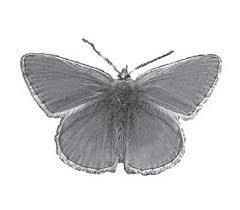
Passing through the Museum of Natural Sciences in Milan recently, I came across an old cabinet containing a collection of blue butterflies, together with what for me was an unexpected name in a context such as this: Vladimir Nabokov. The same Nabokov, that is, who was the author of such dazzlingly written novels as Lolita :
Lo-Lee-Ta: the tip of the tongue taking a trip of three steps down the palate to tap, at three, on the teeth. Lo. Lee. Ta. She was Lo, plain Lo, in the morning, standing four feet ten in one sock. She was Lola in slacks. She was Dolly at school. She was Dolores on the dotted line. But in my arms she was always Lolita.
He is perhaps one of the greatest novelists of the twentieth century. As an article in the literary supplement of The New York Times recently reminded us, ‘in academic circles Nabokov is increasingly mentioned alongside names such as Proust and Joyce’.
And yet Nabokov sought, by his own account, a very different kind of renown. One of his poems, ‘On Discovering a Butterfly’, begins like this: ‘I found it and named it, being
versed/ in taxonomic Latin; thus became/ godfather to an insect and its fi rst/ describer – and I want no other fame.’ Butterfl ies were his passion. Lolita was written during one of the trips he made west every year in the United States, avidly searching for butterfl ies.
In that serene pantheon where the souls of great writers dwell, I can imagine Nabokov smiling: a few years ago in the Proceedings of the Royal Society of London, one of the most authoritative scientific journals, an article was published announcing that his most audacious scientific theory had been confi rmed. His name will remain for ever in the annals of science: he was the fi rst to understand the migration of the Blue Icarus (Polyommatus Icarus ), the enchanting blue butterfly that can be admired in the museum in Milan. This was the kind of fame he was looking for: to be ‘the godfather of an insect’.
Nabokov’s theory was about the mode of migration of these butterfl ies on the continent of America. In 1945 he published the hypothesis that they had evolved in Asia and had arrived in the United States by crossing the Bering Strait in five successive waves, during the course of 10 million years. No one took him seriously. It was difficult to imagine that butterfl ies living in warm climates could push so far north. And yet Nabokov was right: modern DNA sequencing techniques have made it possible to reconstruct the genealogy of the species and to confi rm his hypothesis exactly. In addition, the reconstruction of changes in climate over time has shown that the Bering Strait underwent phases of sufficiently warm climate to make it possible for the passage of such waves of butterfl ies, precisely in the periods that Nabokov had suggested.
Nabokov was the curator of the lepidoptera section in the
Harvard University Museum of Comparative Zoology. He published detailed descriptions of hundreds of species. He used to collect butterfl ies in his childhood, the happy descendant of an extremely wealthy family of the Russian aristocracy. When he was eight years old, his father was imprisoned for political reasons: the young Vladimir carried a butterfly to his cell. With his father murdered and the family fortune lost in the Revolution, he escaped to Europe, where he eventually used the earnings from his second novel to pay for a butterfly-hunting expedition in the Pyrenees.
He was forced to flee from Europe too, after the Nazis came to power, and continued to cultivate his passion for entomology in the United States. He was regarded as a skilful amateur, capable of describing the different species of butterfly, being himself one of the last specimens of a type nearing extinction: nineteenth- century aristocrats who collected lepidoptera as a pastime. But a decade after his death in 1977, various entomologists began to take his scientific work seriously. His classifications turn out to be astute. One of the butterfl ies he described is named Nabokovia cuzquenha in his honour. A book published in 1999, Nabokov’s Blues, tells the story of the rediscovery of Nabokov’s classifications. But another ten years elapsed before the spectacular proof arrived of his hypothesis about butterfl ies crossing the Bering Strait, and with it the recognition of his status as a scientist of real worth.
Is there a connection between Nabokov’s science and his literary work? It is hard to resist the temptation of associating Lolita with butterfl ies, especially the Lolita seen through the lens of Humbert Humbert’s desperate love. But this is probably too facile. The issue is discussed in an essay by Stephen Jay Gould with the suggestive title ‘There is No Science
without Imagination, and No Art without Facts: The Butterfl ies of Vladimir Nabokov’, in which he argues that Nabokov’s acute focus, his almost obsessive concern for observation and detail, is at the root of both his success as a butterfly collector and his technique as a novelist. Which is probably true. Nabokov himself has written: ‘A writer must have the precision of a poet and the imagination of a scientist.’
To me this doesn’t seem enough. In 1948, in a passage inserted into Speak, Memory, one of the most celebrated literary biographies of the twentieth century, Nabokov writes in his luxuriant, exacting prose:
The mysteries of mimicry had a special attraction for me. Its phenomena showed an artistic perfection usually associated with man-wrought things. Consider the imitation of oozing poison by bubblelike macules on a wing (complete with pseudo-refraction) or by glossy yellow knobs on a chrysalis (‘Don’t eat me – I have already been squashed, sampled and rejected’). Consider the tricks of an acrobatic caterpillar (of the Lobster Moth) which in infancy looks like bird dung, but after molting develops scrabbly hymenopteroid appendages and baroque characteristics, allowing the extraordinary fellow to play two parts at once (like the actor in Oriental shows who becomes a pair of intertwined wrestlers): that of a writhing larva and that of a big ant seemingly harrowing it. When a certain moth resembles a certain wasp in shape and color, it also walks and moves its antennae in a waspish, unmothlike manner. When a butterfly has to look like a leaf, not only are all the details of a leaf beautifully rendered but markings mimicking grub-bored holes are generously thrown in. ‘Natural selection’, in the Darwinian sense, could not explain the miraculous coincidence of imitative aspect
and imitative behaviour, nor could one appeal to the theory of ‘the struggle for life’ when a protective device was carried to a point of mimetic subtlety, exuberance and luxury far in excess of a predator’s power of appreciation. I discovered in nature the nonutilitarian delights that I sought in art. Both were a form of magic, both were a game of intricate enchantment and deception.
There’s a lot more here than the capacity to notice details with obsessive attention. There is also, not least, the capacity to see beauty.
Even when our attention alights on something momentarily and then slides away. On the wings of a butterfly. Or the sound – ‘Lo-li-ta’ – of an unforgettable name.
Newton the Alchemist
In 1936 Sotheby’s puts up for auction a collection of unpublished writings by Sir Isaac Newton. The price is low, £9,000; not much when compared to the £140,000 raised that season from the sale of a Rubens and a Rembrandt. Among the buyers is John Maynard Keynes, the famous economist, who was a great admirer of Newton. Keynes soon realizes that a substantial part of the manuscript writings deal with a subject that few would have expected Newton to be interested in. Namely: alchemy. He sets out to acquire all of Newton’s unpublished writings on the subject, and soon realizes further that alchemy was not something that the great scientist was marginally or briefly curious about: his interest in it lasted throughout his life. ‘Newton was not the fi rst of the Age of Reason,’ he concludes, ‘he was the last of the magicians.’
In 1946 Keynes donated his unpublished Newtoniana to the University of Cambridge. The strangeness of Newton in alchemical guise, seemingly so at odds with the traditional image of him as the father of science, has caused the majority of historians to give the subject a wide berth. Only recently has interest in his passion for alchemy grown. Today a substantial amount of Newton’s alchemical texts have been put online by researchers at the University of Indiana and are now accessible to everyone.* Their existence still has the capacity to provoke discussion, and to cast a confusing light over his legacy.
* http://webapp1.dlib.indiana.edu/newton/.
Newton is central to modern science. He occupies this preeminent place because of his exceptional scientific results: mechanics, the theory of universal gravity, optics, the discovery that white light is a mixture of colours, differential calculus. Even today, engineers, physicists, astronomers and chemists work with equations written by him, and use concepts that he fi rst introduced. But even more important than all this, Newton was the founder of the very method of seeking knowledge that today we call modern science. He built upon the work and ideas of others: Descartes, Galileo, Kepler, etc., extending a tradition that goes back to antiquity; but it is in his books that what we now call the ‘scientific method’ found its modern form, immediately producing a mass of exceptional results. It is no exaggeration to think of Newton as the father of modern science. So what on earth does alchemy have to do with any of this?
There are those who have seen in these anomalous alchemical activities evidence of mental infi rmity brought on by premature ageing. There are others who have served their own ends by attempting to enlist the great Englishman among critics of the limitations of scientific rationality.
I think things are much simpler than this.
The key lies in the fact that Newton never published anything on alchemy. The papers that show his interest in the subject are extensive, but they are all unpublished. This lack of publication has been interpreted as a consequence of the fact that alchemy had been illegal in England since as early as the fourteenth century. But the law prohibiting alchemy was lifted in 1689. And besides, if Newton had been so worried about going against laws and conventions, he would not have been Newton. There are those who have portrayed him as some kind of demonic figure attempting to glean extraordinary and