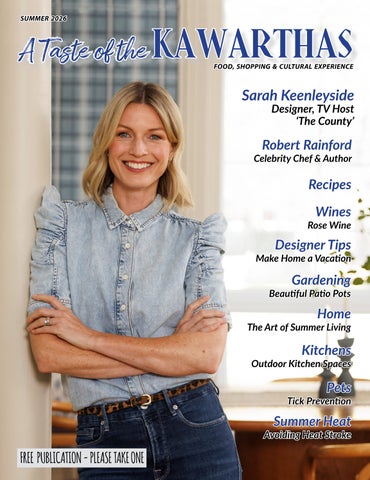
A Taste of the KAWARTHAS


Editor’s Note - Savoring the Spirit of Summer
Summer arrives as a welcome reminder to slow down and appreciate life’s simple pleasures. In a culture often defined by busy schedules and constant connectivity, the season offers a chance to step outside, breathe deeply, and reconnect with what matters most.

The longer days and warmer weather encourage us to spend more time outdoors. Whether it’s a morning walk, an afternoon at the beach, or an evening gathering with friends, summer creates opportunities to enjoy experiences. These moments may seem small, yet can have a lasting impact on our well-being.
Summer is a season of connection. Community events and family celebrations bring people together and enrich our lives. At the same time, the season encourages us to discover new places and try new activities. Perhaps most importantly, summer reminds us of the value of balance. While goals and responsibilities remain important, so do rest and reflection. Taking time to recharge can improve both our creativity and our outlook.
As the season unfolds, the invitation is simple: be present. Enjoy the sunshine, cherish meaningful connections, and create memories that will carry warmth long after summer has ended.
Your continued support is what makes A Taste of the Kawarthas possible. We don’t just choose our stories with care — we also choose our advertisers based on how well they align with our mission. Please support them, because without them, this magazine wouldn’t exist.
Karen Irvine - Editor, Videographer, Photographer & Social Media Diva
E-mail - atasteofthekawarthas@gmail.com
Facebook - A Taste of the Kawarthas Magazine
Margaret Swaine
Author, Travel, Wine, Golf, Spas & Spirits Columnist
Travel & Spirits Editor
Karen Laws
Ontario Dog Trainer
Danielle French
South Pond Home

Website - www.atasteofthekawarthas.com
Instagram - @atasteofthekawarthas
CONTRIBUTORS
Angela Beal Health & Safety Specialist
Angela Jones Principle Designer
Jennifer Boksman Wine Specialist
Vikki Whitney Gardening
Carol Turner Chef
Publisher - Slither Productions Editor - Karen Irvine
Creative Director - Jay Cooper
Chef Brian Henry Chef Extraordinaire & ATOTK Food Editor
Jay Cooper Musician, Photographer , Interviewer & Graphics Designer
Kelli Lovell
Real Estate Broker

Advertising Sales - (705) 772-8074 E-mail - atasteofthekawarthas@gmail.com
Photo Credits
Sarah Keenleyside, Rob Rainford, Carol Turner, Angela Jones, Danielle French, Margaret Swaine, Jay Cooper
© 2026 by A Taste of the Kawarthas Magazine (ATOTK) is a free publication distributed locally an is supported by our advertisers. A Taste of the Kawarthas Magazine or Slither Productions do not necessarily endorse the views expressed in the articles and advertisements, nor are we responsible for the products and services advertised. All rights reserved. Although some parts of this publication may be reproduced and reprinted, we require that prior permission be obtained in writing.









by Chef Brian Henry Culinary Editor

www.thespiceco.square.site
GETTING ALL FIRED UP!
This little piggy went to market.
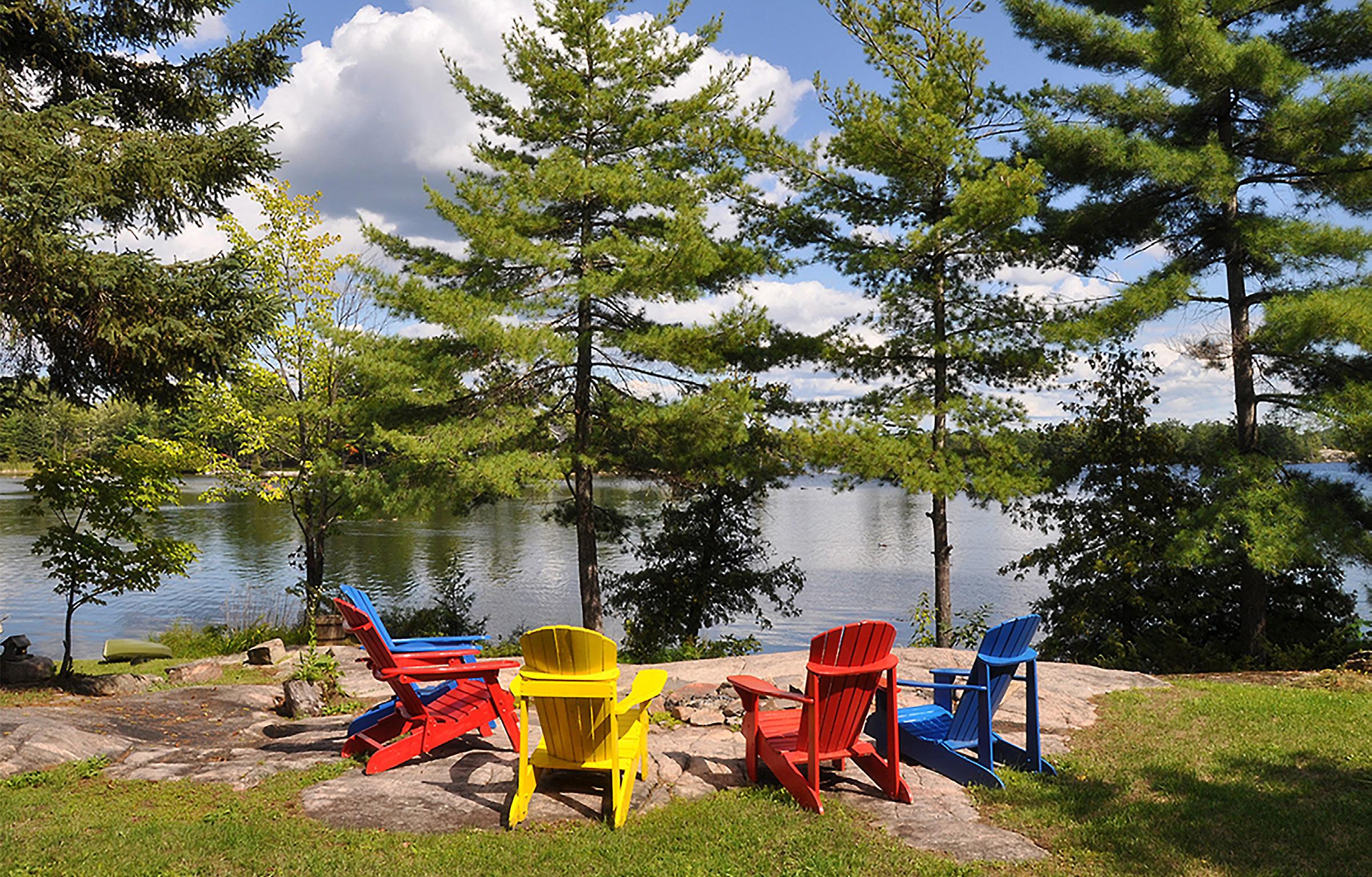
There is backyard cooking with a few friends clicking tongs around a barbecue, and then there is roasting a whole pig over an open fire as the process itself becomes the attraction. The fire pit becomes the heart of the backyard with somebody always holding a drink, somebody always giving unwanted advice, and every lawn chair in the yard eventually pointing toward the makeshift kitchen.
The fire pulls everyone in. Conversations stretch longer. Kids run through the yard. Music drifts from somewhere near the cooler. Somebody takes over turning the spit while someone else manages the coals.
That is the beauty of open-fire cooking. It slows people down enough to enjoy where they are, who they are with, and the process of making something properly. In a world obsessed with convenience, roasting a whole pig is beautifully inconvenient and that is exactly why it feels unforgettable.
Whole animal roasting is primitive with no sophistication, but it does demand a good hardwood fire, a sturdy spit, a 70-pound pig, and above all else, patience.

Owner of The Spice Co.
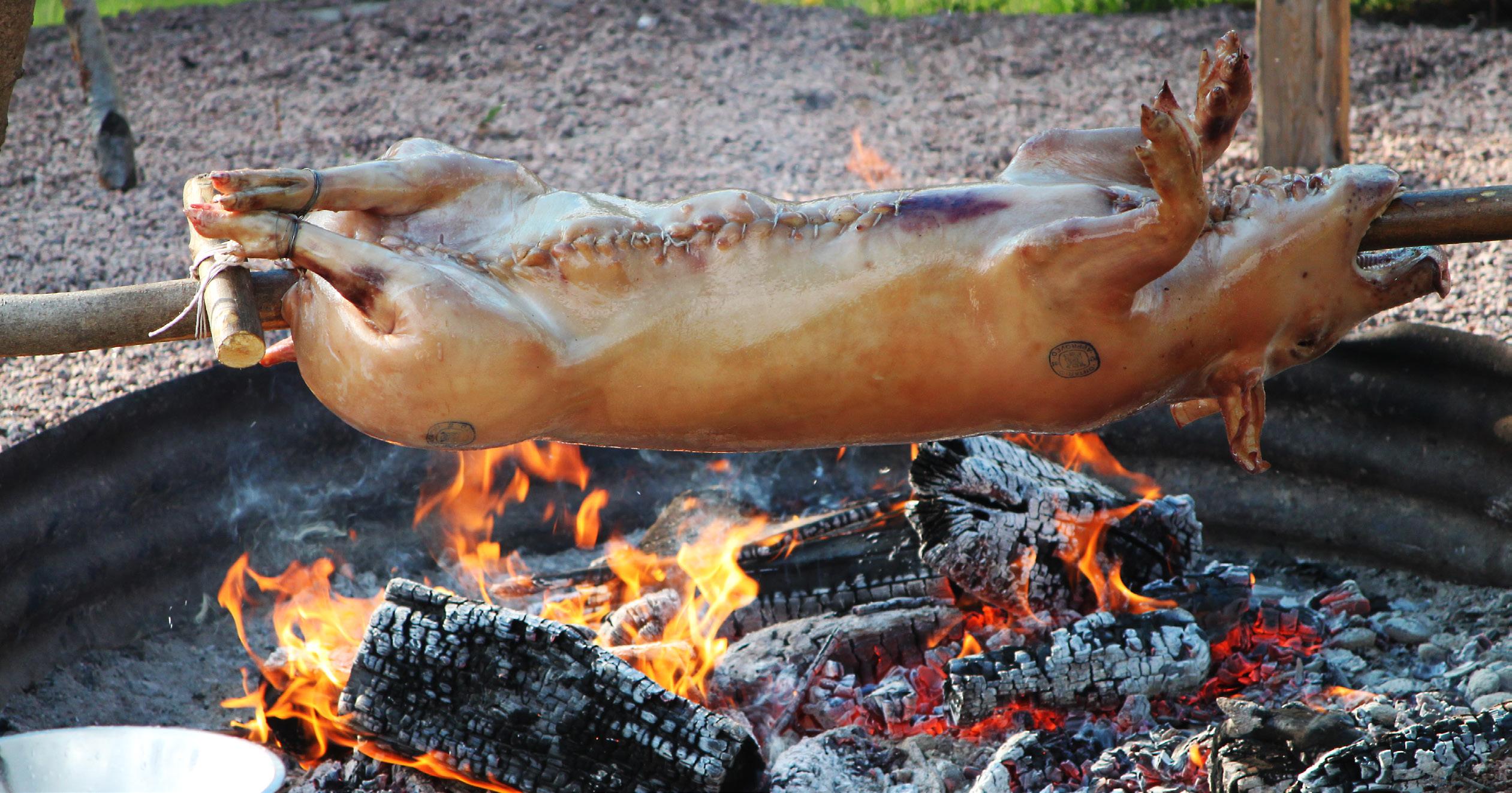
Roasted Pig
DIRECTIONS:

A proper pig roast runs on glowing hardwood coals, not roaring fire. The fire is usually started a couple hours before cooking begins, allowing the wood to burn down into an even bed of coals while the pig rotates slowly several feet above the heat. Too hot and the skin burns before the shoulders and hams cook through. Too cool and you are still standing around hungry at midnight. Depending on weather, fire control, and the size of the pig, cooking can easily take seven to ten hours.
A solid hardwood tree 2” in diameter should support a 70lb pig without bowing or flexing. The pig must be secured tightly because as the meat cooks, the muscles soften and shrink away from the bone. If the pig loosens on the spit, you may end up losing a whole pig into the fire which is the kind of thing your friends will never let you forget. To avoid this, insert the spit through the pig’s anus, pushing it along the length of the spine and out the mouth. Center the pig as perfectly as possible on the spit. Next wrap 14- to 16-gauge stainless steel wire around the rod, pass it through incisions made on either side of the spine, and twist it tight using a pair of pliers. Bend the legs up over the spit and firmly secure them with wire as well. Season the cavity with salt and crushed garlic before stuffing it with onions, thyme, lemons, oranges and herbs. Sew the belly shut with butcher twine by cutting small holes along the belly.
The spit is traditionally suspended over two support logs with a simple turning system allowing the pig to rotate slowly for hours. During cooking, the skin gradually transforms into a deep mahogany colour while repeated basting with soy sauce, brown sugar, and water builds sticky layers of smoky caramelization across the surface.


Carol’s Kitchen
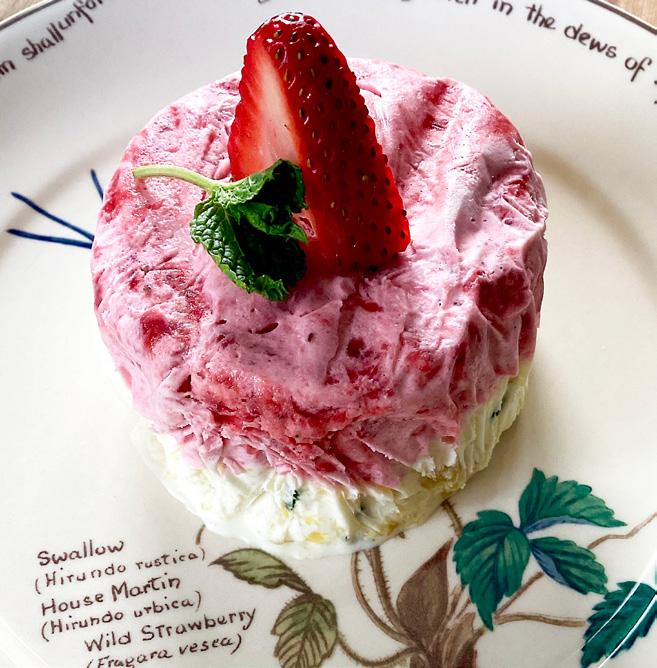
Strawberry Ginger and Peach Mint Semifreddo
SBy Carol Turner Instagram @carolcooks9319
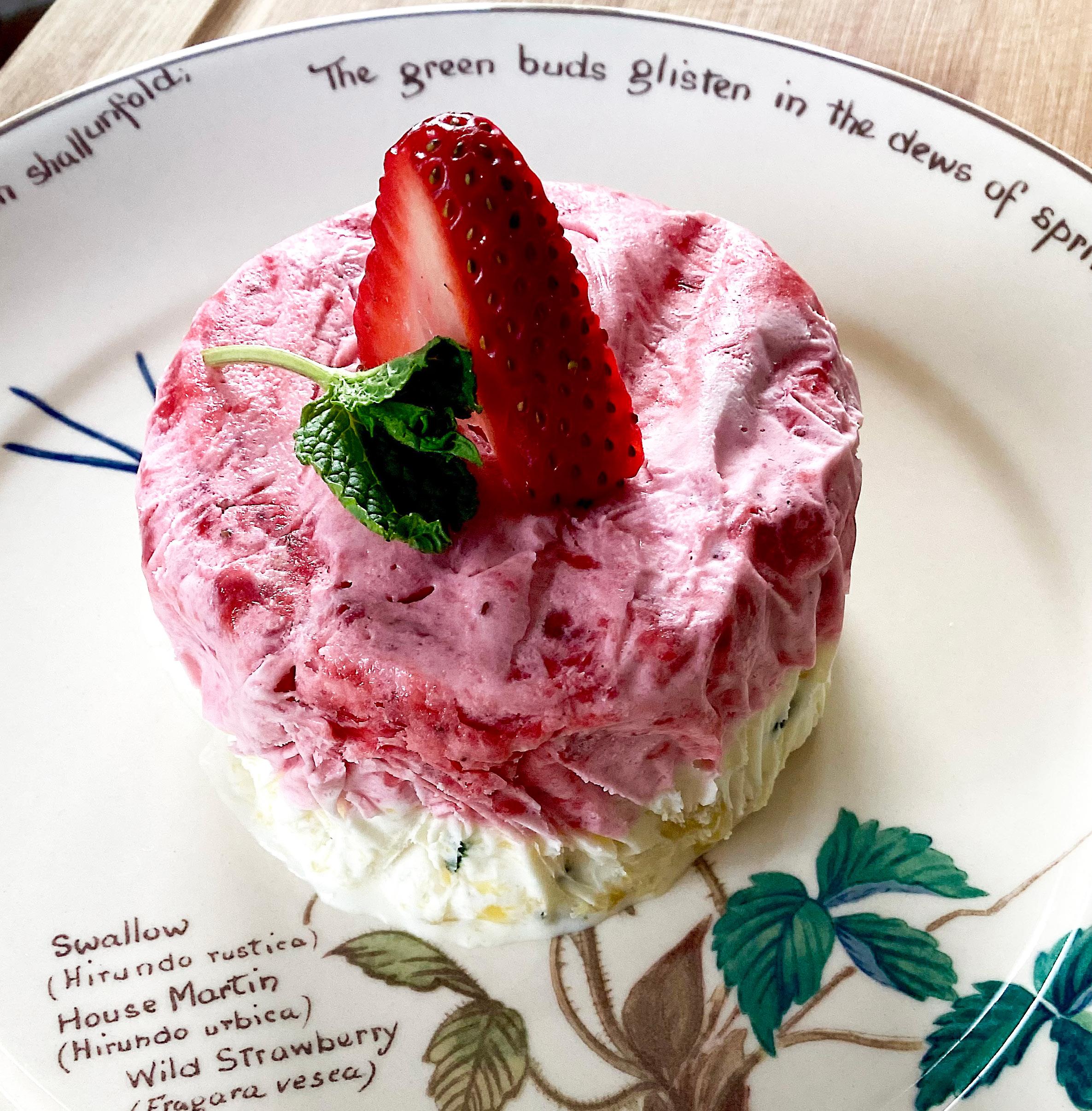
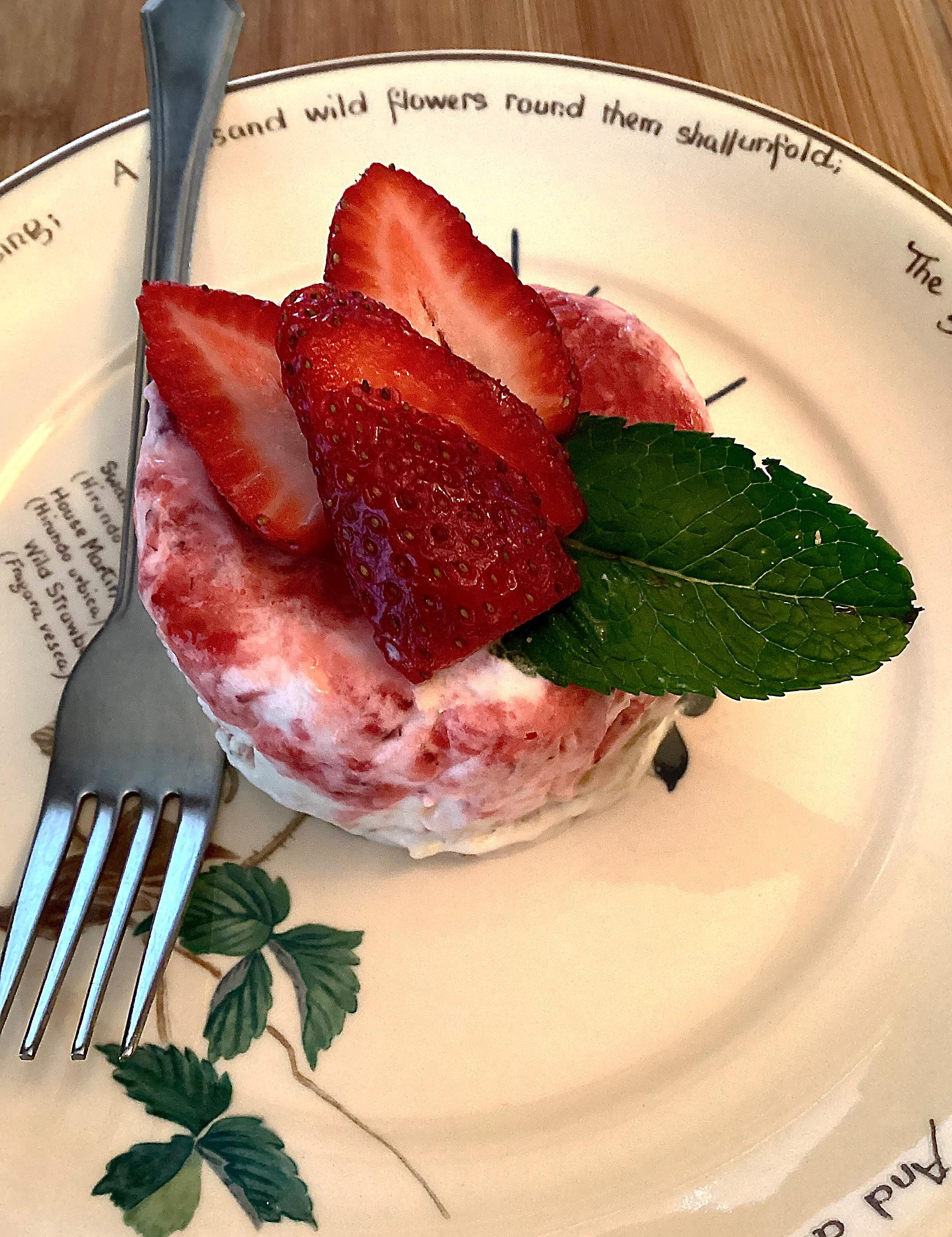
emifreddo is a classic Italian dessert, similar to ice cream, prepared without the need for an ice cream maker, making it an easy to prepare cold and refreshing summertime treat. This eggless version is light and features sweet and flavourful Ontario strawberries and peaches (mango can be substituted for the peach if preferred) It can be prepared up to seven days in advance making it a perfect make ahead dessert for summer entertaining. Serves 8.
INGREDIENTS:
Purees:
2 cups trimmed and sliced strawberries
2 cups peeled and pitted chopped peaches
2/3 cup granulated sugar, divided
1 ½ teaspoons minced gingerroot (I use a zester)
1 teaspoon finely chopped fresh mint
1 teaspoon lemon juice
DIRECTIONS:
Semifreddo Base:
1 1/3 cups cold heavy (whipping) cream
¼ cup cold sour cream, light or full fat
½ cup icing sugar
Pinch of salt
Garnish:
Sliced strawberries and fresh mint leaves
1. Place strawberries, 1/3 cup sugar and fresh ginger in a medium pan then bring to a simmer over medium heat, stirring constantly. Reduce heat to medium low and simmer, stirring occasionally, until sugar has dissolved and berries are softened, roughly 8 minutes. Remove from heat and let mixture cool completely.
2. Place peaches, the remaining 1/3 cup sugar and lemon juice in a medium pan then bring to a simmer over medium heat, stirring constantly. Reduce heat to medium low and simmer, stirring occasionally until sugar has dissolved and peaches have softened, roughly 8 minutes. Remove from heat and let mixture cool completely.
3. Once peaches and strawberries are cooled, puree each fruit, along with their released liquids separately until fairly smooth but still having texture. Stir chopped mint into peach mixture. Set aside.
4. In a large bowl combine heavy cream, sour cream, icing sugar and a pinch of salt.
5. Whip until soft peaks form (don’t overwhip) then divide mixture into two medium size bowls.
6. Gently fold each fruit puree into the semifreddo base.
7. Line eight 3/4 cup ramekins with plastic wrap, pushing the wrap tightly around the inner edges and allowing wrap to overhang on all sides.
8. Divide the strawberry mixture into each ramekin, filling half way, then gently spoon the peach mixture over, filling to the top.
9. Gently pull sides of plastic wrap up to cover semifreddo completely and press to level.
10. Freeze until firm, preferably overnight.
11. An hour before serving remove ramekins from freezer and place in fridge (this is for ease of removal)
12. Invert ramekins onto serving plate and garnish each semifreddo with sliced strawberries and fresh mint.

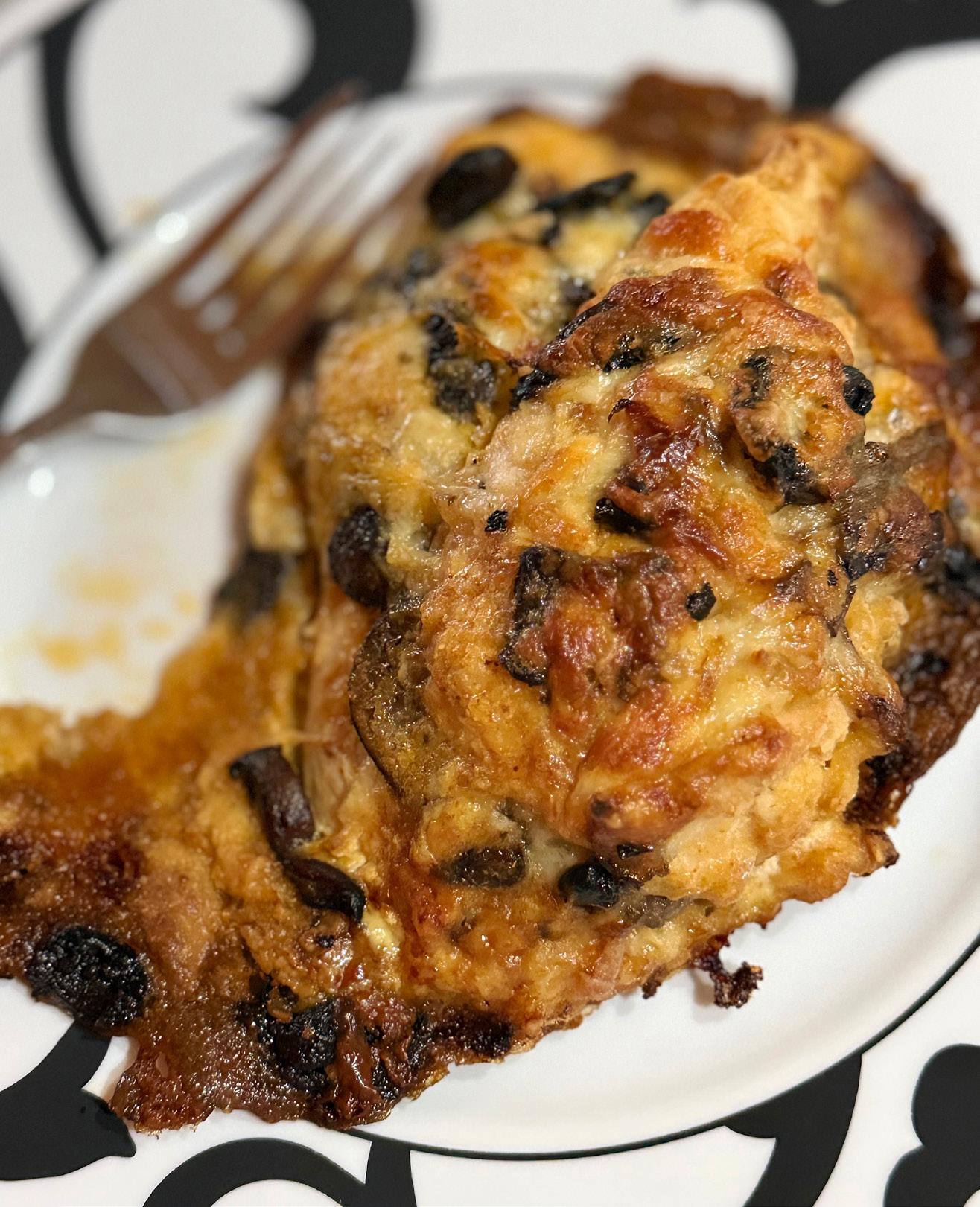
Baked, Stuffed Chicken Breasts
TBy Jay Cooper
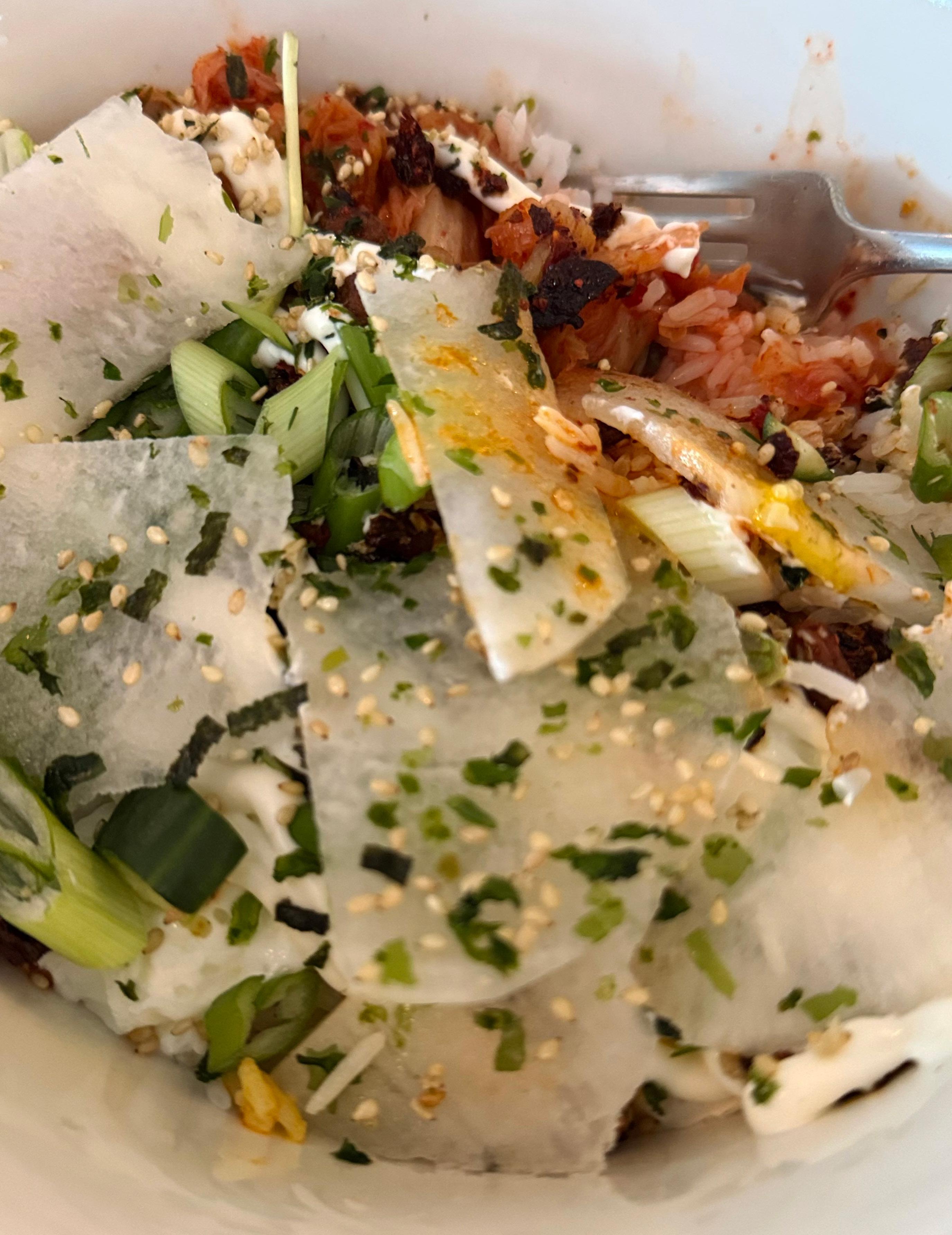
his recipe is from our Graphic Designer and Feature writer Jay Cooper. Each bite bursts with flavour that will make your taste buds sing. The chicken is tender and juicy. Once you make it, you will add it to your weekly menu. It’s a requested staple in our home. Makes 2 large chicken breasts.
INGREDIENTS:
350 grams sliced mushrooms (cremini or brown)
350 grams white onion, diced
2 Eggs
2 large skinless, boneless chicken breasts
2 Tbsp butter
1 C flour
2 C mozzerella cheese
DIRECTIONS:
CHICKEN SAUCE MIX:
1 C virgin olive oil
1 Tbsp Paprika
1/2 Tbsp Salt
1/2 Tbsp Pepper
1 Tbsp Onion Powder
1 Tbsp Garlic Powder
2 eggs
1. Melt butter in a frying pan. Add the mushrooms and onions and cook until browned. Set aside.
2. In a bowl, whisk the eggs, olive oil, paprika, salt, pepper, onion powder and garlic powder until gooey (Jay’s technical term!) and set aside.
3. Score the chicken breasts with a knife. Place the chicken between plastic wrap and flatten with a tenderizing hammer until about 1/4 inch thick.
4. Put the chicken in the sauce mix and marinate for 15 minutes.
5. After the chicken is marinated, coat it with flour and lay flat on a parchment paper lined baking sheet.
6. Add the mushrooms/onion mix and some mozzerella cheese on one side of the chicken.
7. Fold the chicken in half (like a sandwich), ensuring all ingredients stay inside the chicken.
8. Add the remaining mushrooms/onions and cheese on top.
9. Drizzle the remaining chicken marinate sauce mix on top of each piece of chicken. Sprinkle remaining cheese on top.
10. Bake at 375 degrees for 35-40 minutes.
11. Check to make sure the internal temperature of the chicken is 165 degrees. If not, let cook for an additional 5-10 minutes before serving.



Centre and Main


Kawartha Country Wines

Chemong Lodge
Photo by HENRY
CELEBRITY CHEF
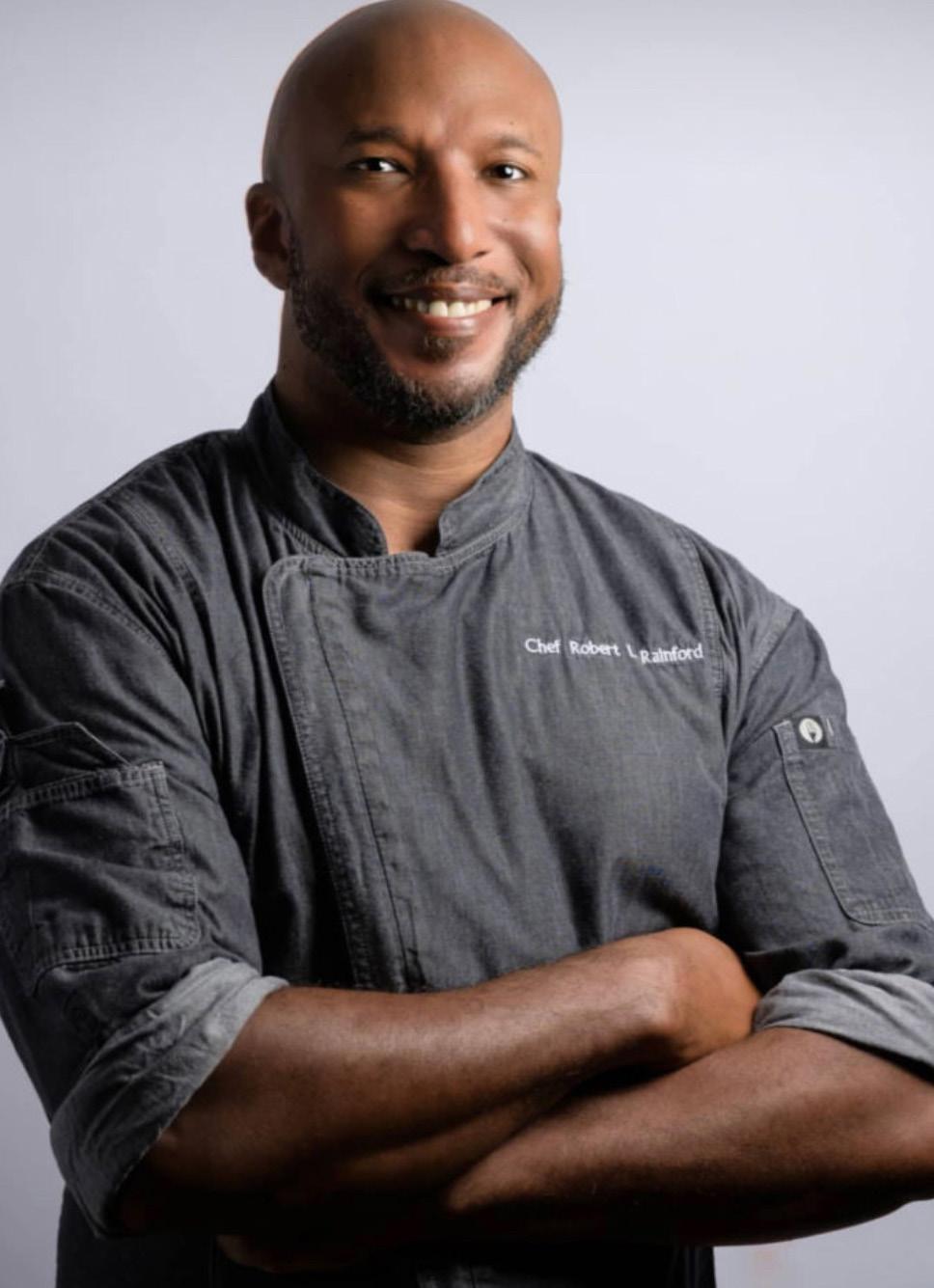
Robert Rainford - Chef, Entrepeneur, Author, All Around Great Guy
By Jay Cooper
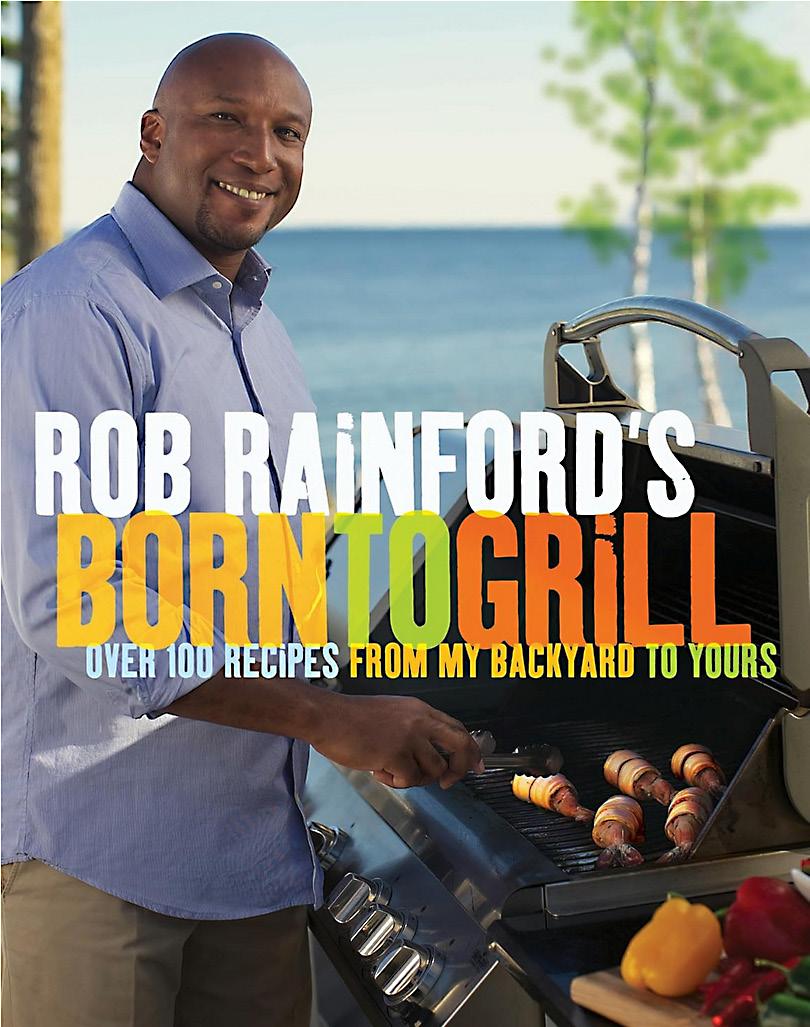
R ob Rainford didn’t set out to become Canada’s Grill Master. He set out to play professional basketball. But life, as it tends to do, had other plans — and the culinary world is better for it.
Growing up in Toronto’s Dufferin and Dundas area in the 1970s, Rainford was immersed in food without even knowing it. His neighbourhood was a mosaic of Italian, Portuguese, Greek, Jamaican, and Trinidadian families, and the smells drifting from those kitchens formed the backdrop of his childhood. He watched Julia Child and Graham Kerr on television during days he was “sick” from school — days, he laughs, that had less to do with illness and more to do with not wanting to be there.
His real dream, though, was the hardwood. “My goal was always to play basketball professionally somewhere in the world,” he says. “I really didn’t have a plan B.” But in his first year of university, he became a father, and everything shifted. He gave up on Europe, picked up a series of jobs, and spent seven years working before a quiet pull he couldn’t ignore drew him back to something he’d always loved — food.
The path to George Brown College wasn’t straightforward. Rainford’s father, a Jamaican immigrant who’d brought his family to Canada in 1970, had other ambitions for his son. When a teenage Rob expressed interest in cooking at Central Tech, his father shut it down. “He said to me, ‘I didn’t bring you to Canada in 1970 for you to be a cook.’ And he used the cook word like you use the C word in other applications.”
Every other member of the Rainford family holds a university degree. Rob is the only one with a college diploma — and he wore that distinction with quiet defiance.

“I just wanted to bring a bit of a more artful feel to barbecue.”
Once enrolled at George Brown, he didn’t ease in gently. His first fine dining position at Pangea on Bay and Bloor ended abruptly — he was let go after pushing back on how he was being spoken to. “I was still a novice,” he admits, “and I did not expect to be spoken to like that.” He landed next at the Crown Plaza on Front Street (now the InterContinental), where a former George Brown chef named Terry White brought him aboard. It was the foothold he needed. “It was the first opening I had where I knew I could push my way to the top.”
By the end of the ‘90s, Rainford had married, built a career in professional kitchens, and developed a clear point of view about what he wanted to bring to the grill. Not pit master theatrics. Not competition-show drama. Something more refined. “I just wanted to bring a bit of a more artful feel to barbecue,” he says. “I’m applying dining to the barbecue.”
He draws a sharp distinction between grilling and barbecue — gas versus charcoal, speed versus patience. Grilling, he says, is what you do after work with a beer in hand and dinner on the table in under an hour. Charcoal is a commitment, a ritual — “at least three beers” before you’re ready to cook. Ironically, despite championing the artful grill, Rainford’s own backyard has used charcoal exclusively for the last 15 years. “I go out no matter what. Wind, rain, sleet, snow — I’m by my barbecue.”
The television chapter of his story began when he joined chef Ned Bell on Cook Like a Chef, where he got his first real look at production from the inside. “I go, ‘This is not hard. I can do this.’” He was wrong, in the best way. Licensed to Grill debuted
on Food Network Canada and ran for five seasons — 104 episodes — making Rainford one of the first wave of personalities to anchor the network in its early years. The show was taped over seven-week stretches, shooting from morning until sundown, and the grind was real. “I cannot tell people how hard it was to do those 104 shows.”
The premise - Rainford hosting groups of friends for elaborate backyard grilling sessions — was largely scripted. The food and the recipes, though, were entirely his. He’s clear-eyed about the business side: he was a pioneer on a network still figuring itself out, and the experience
CELEBRITY CHEF
Robert Rainford
Continued from previous page
taught him hard lessons about ownership and leverage. “There’s nobody on the planet that wants to be back on television more than me. But I want it under my umbrella now.”
After the show, he spent years developing a concept called Hungry — a series where he’d cook with celebrities and explore their food memories — and has continued working to bring Born to Grill, his cookbook, to life as a television series. The book itself took six months to write; he has three more ready to go. He wants to package a show around them, and he’s looking internationally if Canada isn’t ready to bite.
In the meantime, Rainford has settled into a role that suits him. He’s the executive chef at the Toronto Event Centre, overseeing 68,000 square feet of outdoor space and 41,000 square feet inside, with a crew he’s shaped in his own image. “I’m teaching people who are gonna learn my style the way that I do things,” he says, “as opposed to me trying to teach to a curriculum I think is outdated.”
He also picked up golf in 2006 — late to the game compared to his twin brother (1990) and older brother (1980), having once considered it a waste of green space. He’s now in his 20th season, plays nine holes whenever he can steal the time, and carries a 20 handicap he’s convinced he could lower if he’d just stay on one course.
Ask Rob Rainford to sum himself up, and he doesn’t hesitate. “I was sharpened by fire and steel.” It’s a line that works in the kitchen, on the grill, and everywhere in between — and it fits a man who took the long road to mastery and wouldn’t trade a single detour.


Chocolate Rabbit


Kawartha Wholesale Bakery
A
SUMMER IS HERE!
t long last summer has arrived in Ontario. It was a crazy start, lots of rain and high waters, but by now your dock is out, your lawn furniture uncovered and your balconies swept and set up with flowers.
What better time to try something new while sitting in those deck chairs. How about a Rose? This pinkish beverage is produced differently than red wine but, if you can believe it, with the same grapes! Who knew? Rose wines are made with Grenache, Tempranillo and Pinot Noir grapes, to name a few. Since the wine has become so popular there are more options than ever to chose from.
Dry Rose Wine is the most common and is produced around the world with France and Spain leading the charge. Examples of dry Rose are Grenache, Sangiovese, Syrah, Mourvedre and Pinot Noir.
Sweet Rose Wine can be produced in a sweet style by simply not fermenting all the sugar into alcohol. Traditionally sweet Rose wines are white Zinfandel, white Merlot and pink Moscato. I prefer the dry Rose.
ferent due to the type of grapes used to produce it.
Now what shall we have for dinner after we have chosen our Rose? This blush wine pairs well with almost everything including spicy foods, sushi, salads, barbequed meats, roasts and rich sauces. Now keep in mind Rose can be dry and light, medium dry, medium bodied and fruity! Choose accordingly.

Jennifer Boksman
@needfulthings2021 15 Cambridge St S Lindsay 705-878-2001
Rose gets its pink hue by skin contact. When grapes are crushed, the juice that comes out of the fruit is clear, and it is the grapes skin that gives the wine its colour.
When the grape skins and the juice join together the skin color bleeds into the wines colour. In winemaking this process is called maceration. Varying shades of pink are caused by varying maceration methods.
Roses flavour profile should be examined to help you find the best one for you. The flavours are fresh and fruity with a crispness and brightness unique to these wines. You may taste red fruits, flowers, citrus, melon and even celery! Each type of Rose will taste slightly dif-
How do we serve it? Well chilled of course to bring out its crispness and fruitiness. 40-50 degrees is best, but do not over-chill your wine. If it is too cold, the wines character could get lost.
Now like every other wine we have chatted about in previous issues, I believe the best thing to do is try a few different styles of Rose to figure out which best suits your taste buds. I thoroughly enjoy trying new wines and getting my head and taste buds around new flavours and profiles. Eventually you will find the one or many that work best for you! Needful Things has some beautiful French Roses. I have tried these wines before purchasing them for my shop, Needful Things in beautiful downtown Lindsay. I have a tough job!! I also plan to spend some time on the deck this summer, watching the world go by, as I sip a glass of wonderful Rose. Variety is the spice of life, so I shall try a few to see which I prefer. I hope you will take the time to do the same.
Cheers to the Canadian summer and all it has to offer. Until next time, Jennifer
Pop by Needful Things in downtown Lindsay at 15 Cambridge St. S.



S
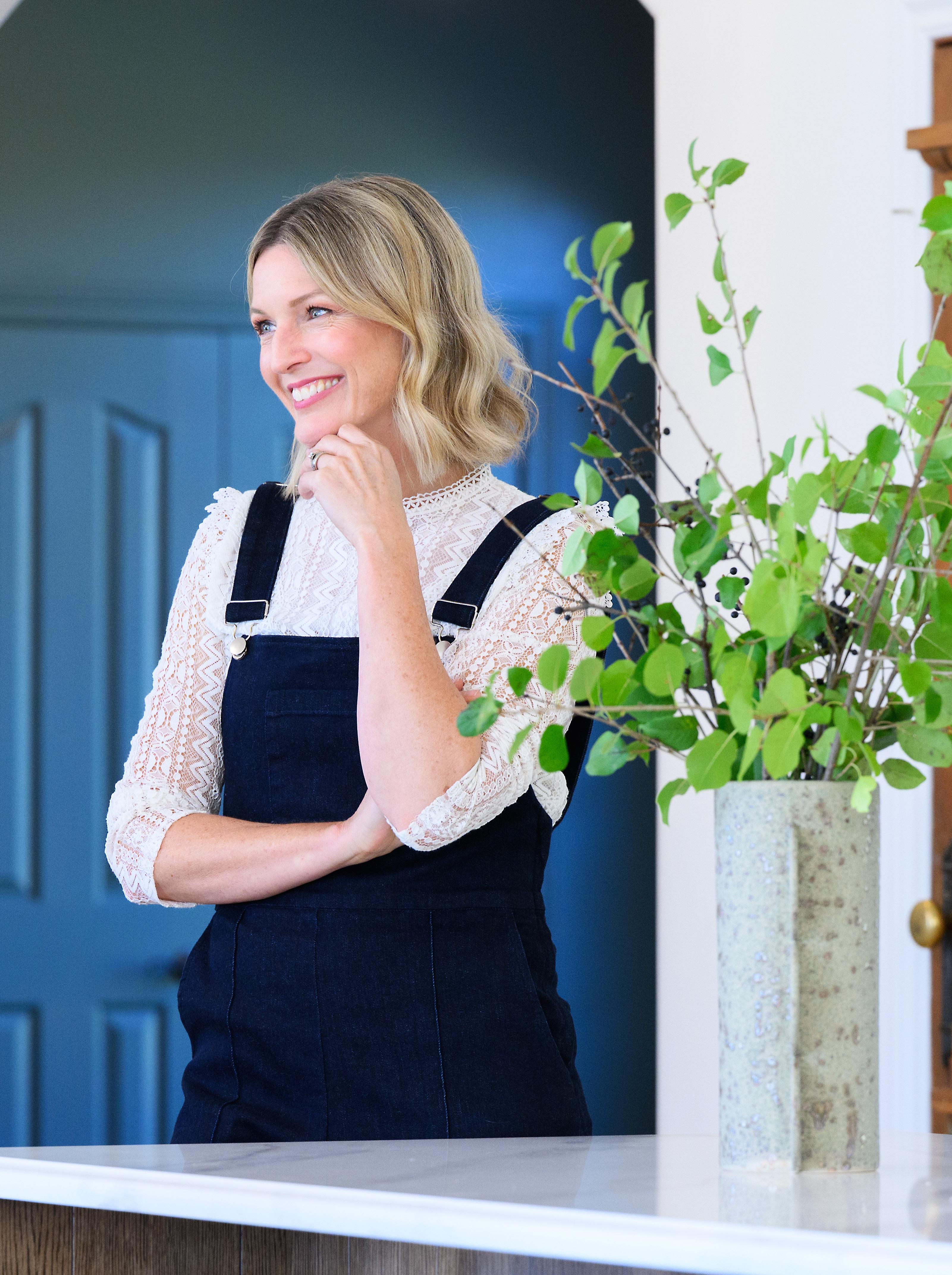
Sarah Keenleyside
By Jay Cooper Designer, TV Host
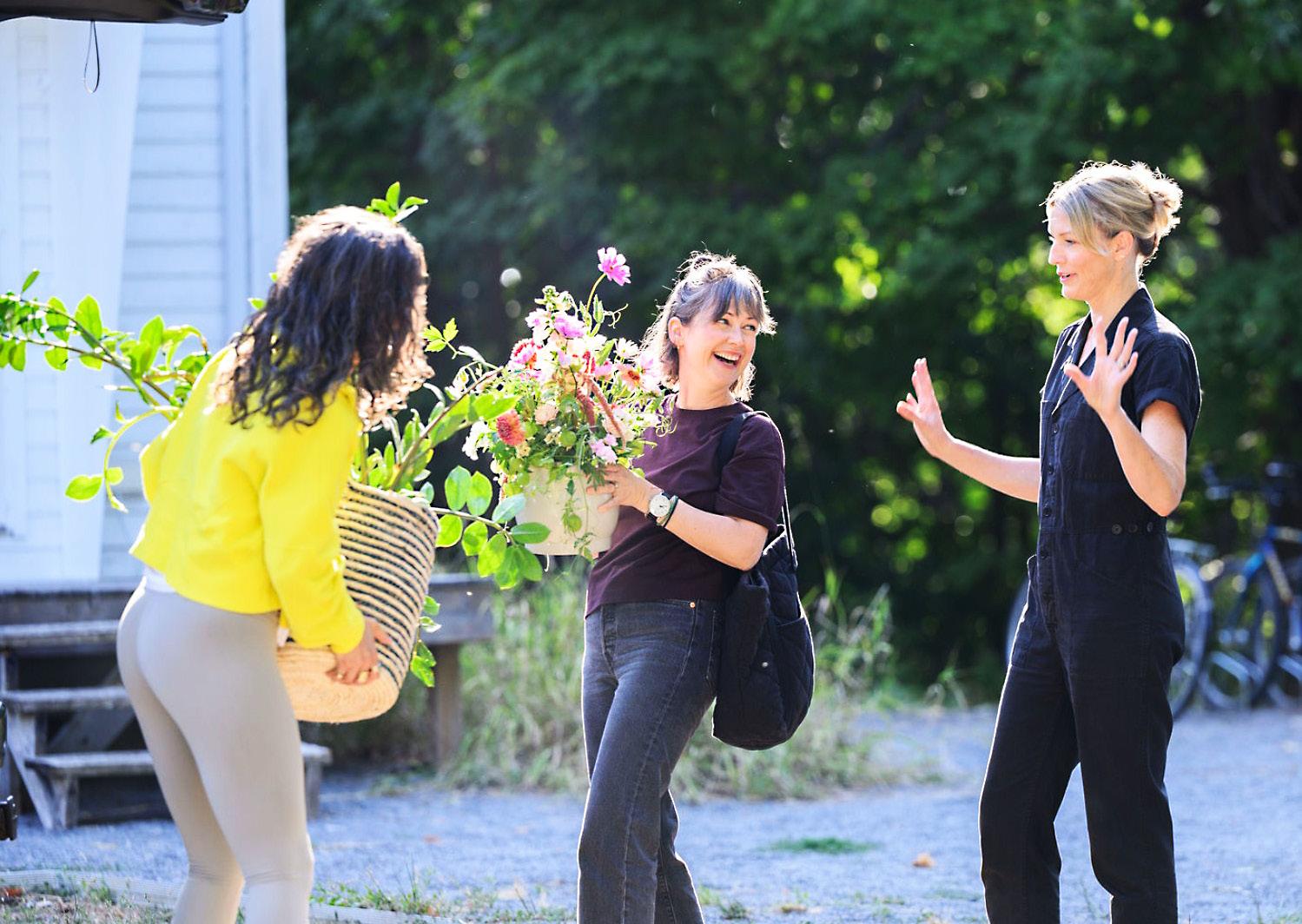
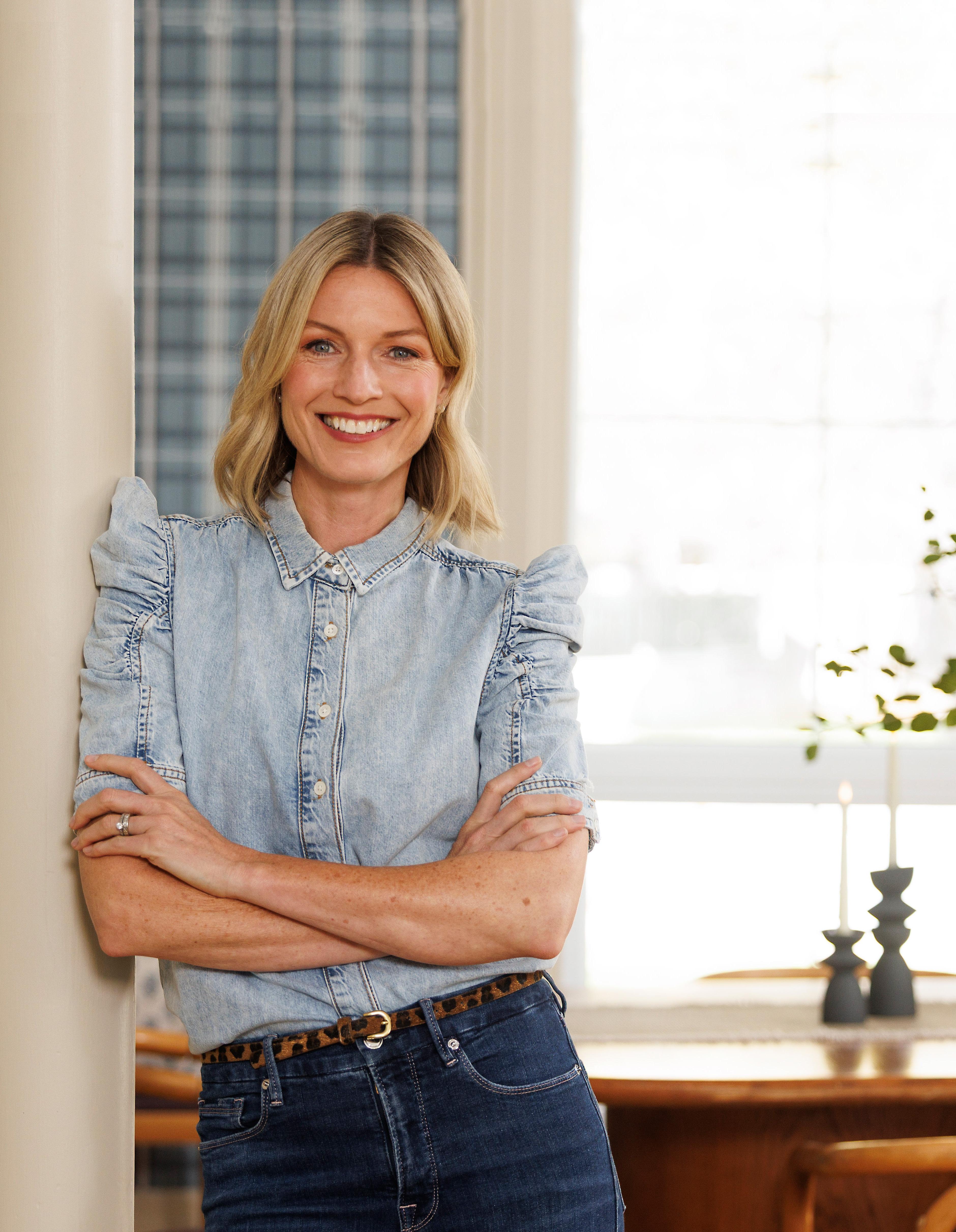
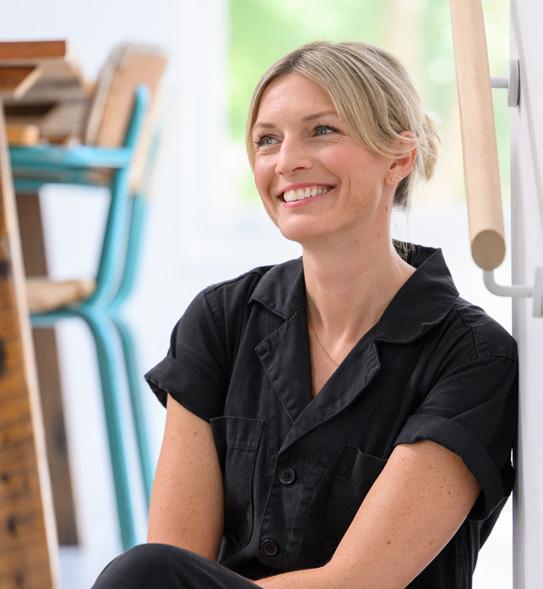
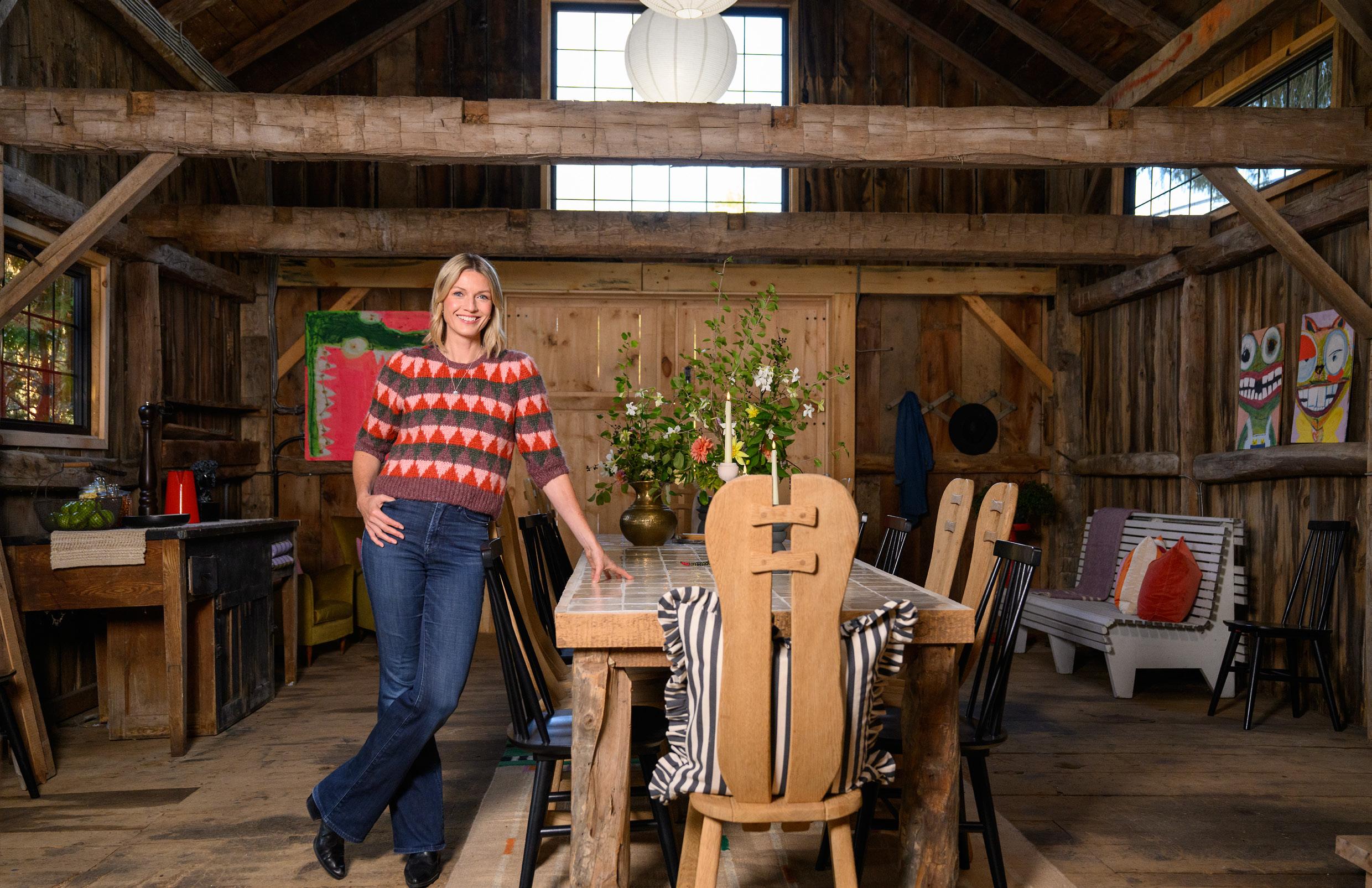
uch a pleasure to feature Sarah Keenleyside. Designer, entrepreneur and host of the new lifestyle TV series, The County. With the beautiful backdrop of Prince Edward County, Sarah took me through her journey where she balances launching her design firm (Sarah Keenleyside Design Studio), restoring her family’s historic Victorian farmhouse and showcasing the people, homes, and creative spirit that make the region so unique. Known for her warm, approachable style and passion for thoughtful design, Sarah brings a fresh perspective to home renovation and country living.
Jay Cooper (ATOTK): Now I asked four years ago what you would like to do and haven’t done yet. Any idea what you said four years ago? (Laughs)
Sarah Keenleyside (SK): Oh my God. I have no idea if that was three months after having Louie, I was still in the head-spinning phase of new mom-ness. (Laughs) What would I have said?
ATOTK: I’m going to quote your answer. “Buy a piece of property in the Kawarthas and build our dream Aframe. I have most of the design and interior touches on my computer.” I guess Justin wiped the hard drive, and you drove down the wrong road. (laughs)
SK: That’s so funny.
I remember being obsessed with A-Frame back then. Now it feels like a world away. Our connection to Prince Edward County was that Justin was moving here when we met on our first date. So that was 11 years ago, and on our very first date, he said, “Just so you know, I’ve just sold my home in Toronto, and in a month, I’m moving to Prince Edward County.”
And I said to him, “I hope I don’t like you then, because I’m not interested in getting into a long-distance relationship.” Literally on our first date. I can’t believe I said that to him. But I also misunderstood, and I thought he meant Prince Edward Island. (Laughs) I’d never been out this way before, and so when I discovered it was only two and a half hours east of Toronto, that seemed like it might be a possibility if this guy’s as good as he seemed, and he was definitely worth the trek.
ATOTK: You had just completed your own Backyard Build in 2022, so when was the turning point to move?
GTA to Prince Edward County?
SK: So, you can see even back then, we had the itch. The city was feeling a little claustrophobic to

us; it just felt like it was caving in on us. I was three months into having Louie at that point.
It was the reality of living through COVID, still at that point. We had two kids, two years apart. The amazing home that I loved, which I had bought before I met Justin in the Parkdale Roncesvalles west end. Queen West corner of Toronto was hit really hard by COVID.
Continued on page 44
HOME
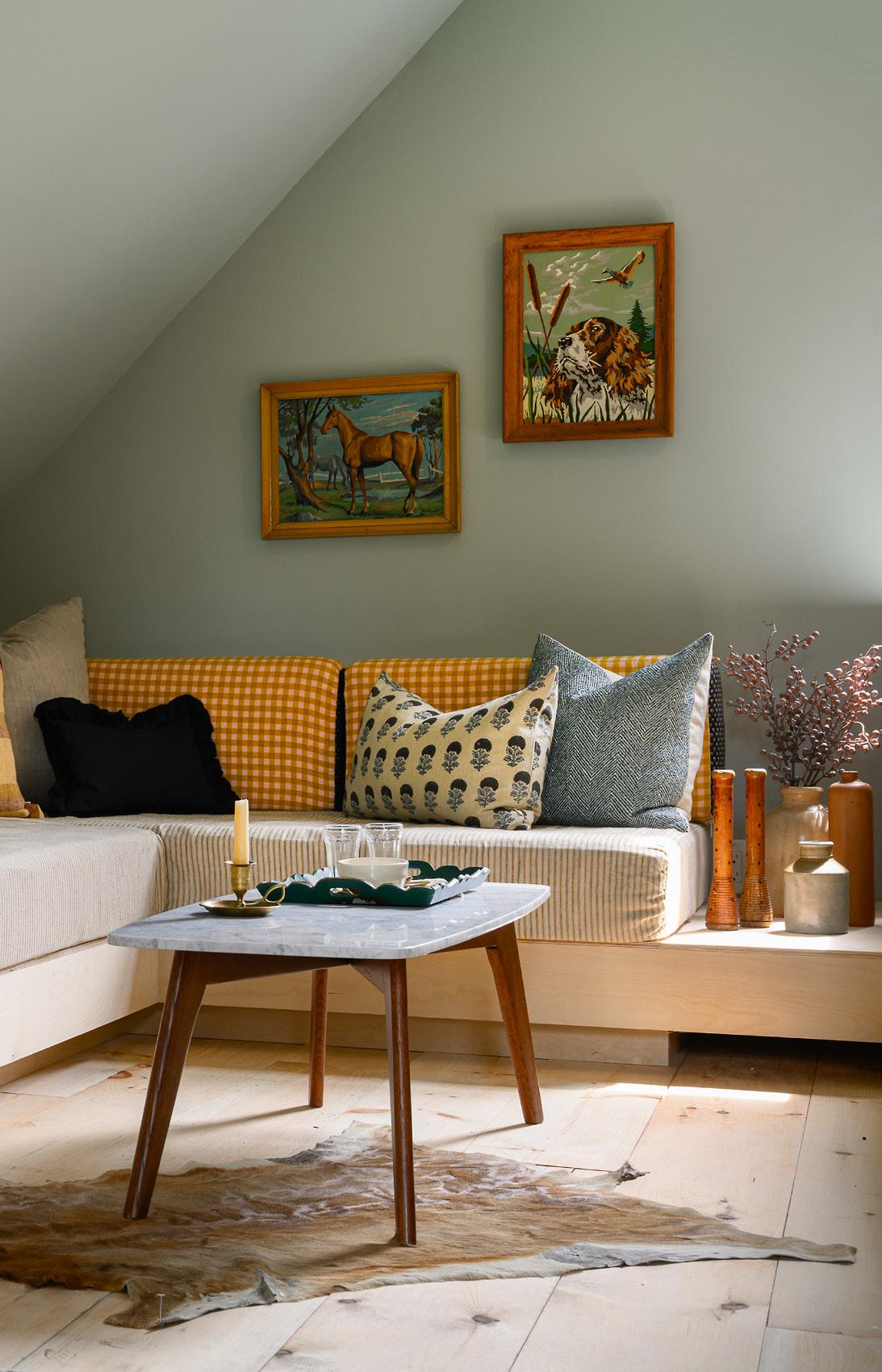
The Art of Slow Summer Living
by Danielle French South Pond Home www.southpondfarms.ca
H
ow much do we all love summer? We spend so many months in the cold, the snow, rain, and ice, just waiting for these days to arrive. The heat of the sun, the scent of flowers and fresh herbs, lazy afternoons, vegetables straight from the garden (or nearby), outdoor meals and, of course, playing pickleball outside. I love this season.
In my earlier days, summer was marked when the girls were off of school and there were no timelines, no programs, just lazy hanging about, playing outside, camping, seeing friends, jumping into cool water from a cottage dock. Now, with no school schedules or really any significant schedule to abide by, this season is about choosing a slower pace and allowing time to stretch ahead, rather than rushing to fill every moment.
When I was working on the farm, busy creating supper events, running weddings, hosting workshops, we would move our laptops from the office out to the barn, throw open the doors, and work in the open air. Our ‘summer location’ we called it. The internet wasn’t always reliable and the breeze often carried our papers away, but none of that mattered. We were immersed in the outdoors and fully present in the season. Even though it was our busiest time, it felt different working basically in the open air. There was a nice lightness to our work. And somehow, despite the pressures of having more events than there were days in the week, it felt slower.
Now I’m supposed to be in a slower ‘retired’ mode, yet somehow through the winter months I felt busier than ever, though I couldn’t exactly describe with what. Summer has a way of giving permission to downscale, to ease off a little. Maybe it is left over from raising a family and living by the school year. My world today is less about what I accomplish and more about how fully I am living each moment. I feel this new reality, and try to put it into practice every day.
If the sun is out, I take my morning coffee outside, sit with the view of the lake and just breathe it in. Even walking the dogs feels different, no more dodging ice on the road, just a relaxed wander while they’re completely dialed into every bit of wildlife that moves. There’s a softness to it all. We’re all just taking it a little easier, more connected to the outdoors, more present in it.
Living a healthy life is the thread running through my days, it is the underlying theme that influences my choices every day. It’s how I move through my life, my routines and is simply part of my mindset. What am I making for dinner, what activities
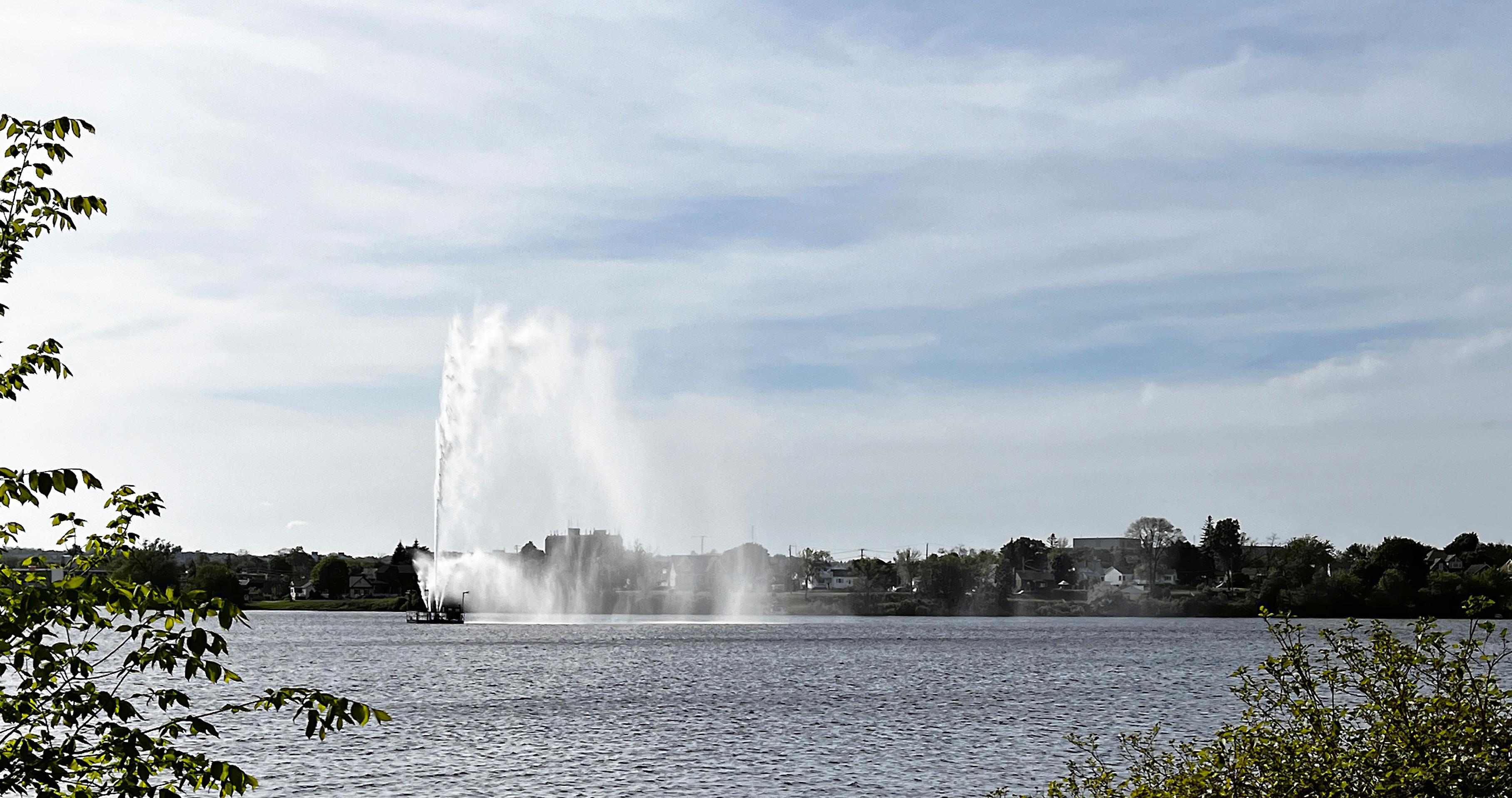
“I take my morning coffee outside, sit with the view of the lake and just breath it in.”
are on the table. Getting outside is the important part, hiking the trails in Peterborough, or meeting my daughters for ice cream, a cold drink on a patio at the Canoe Museum. There are so many simple, beautiful spots that make it easy to meet up, connect and enjoy the season.
I believe in the power of daily rituals, but summer invites us to shift them, just a little. I walk, write, play pickleball; I’m grounded in these small, steady habits. Fueling along the way with proper sleep, eating well and exercise. While I may fall off the wagon periodically with late nights, lovely glasses of wine, ultimately, I’m trying to ease into aging with agility and strength. And most importantly valuing time with friends and family. Being a good friend, a good partner and mom, ultimately that is what is important for me and most probably for most of us.
My brother recently sent me a test of various physical activities that measure how well you’ll age,
and one of the challenges was simply getting up from a seated position on the floor without using your hands or elbows. I thought, ‘Of course I can do that’. It wasn’t so easy. A humbling reminder of my limitations, but good goals to set out.
I feel fortunate to live in Canada and here in this beautiful region of the Kawarthas where there is water, rock, fields and wildlife in short proximity to just about everywhere. I can find most all the ingredients I need to make delicious meals. I appreciate being able to cook outside and sit outdoors for dinner. At the farm we often moved the outdoor table under a tree in the grass and ate in the shade overlooking the slope of the fields. There’s something about summer and the warmth of the sun, the lift of a cool breeze, the smell of the rosemary and lavender that grows in the back yard, they energize me. I hope that the summer does this for you, allow yourself one moment to relish the slow days.

DESIGN TIPS & TRENDS
SUMMER LIVING: Your Home Should Feel Like a Vacation—Not Another Job
S
ummer has a funny way of exposing what is really happening in our homes. The sunshine pours in and suddenly you notice everything. The overflowing mudroom. The patio furniture that has survived one too many Canadian winters. The kitchen drawer that now requires athletic ability and prayer to open. Winter lets us hide things. Summer reveals them.
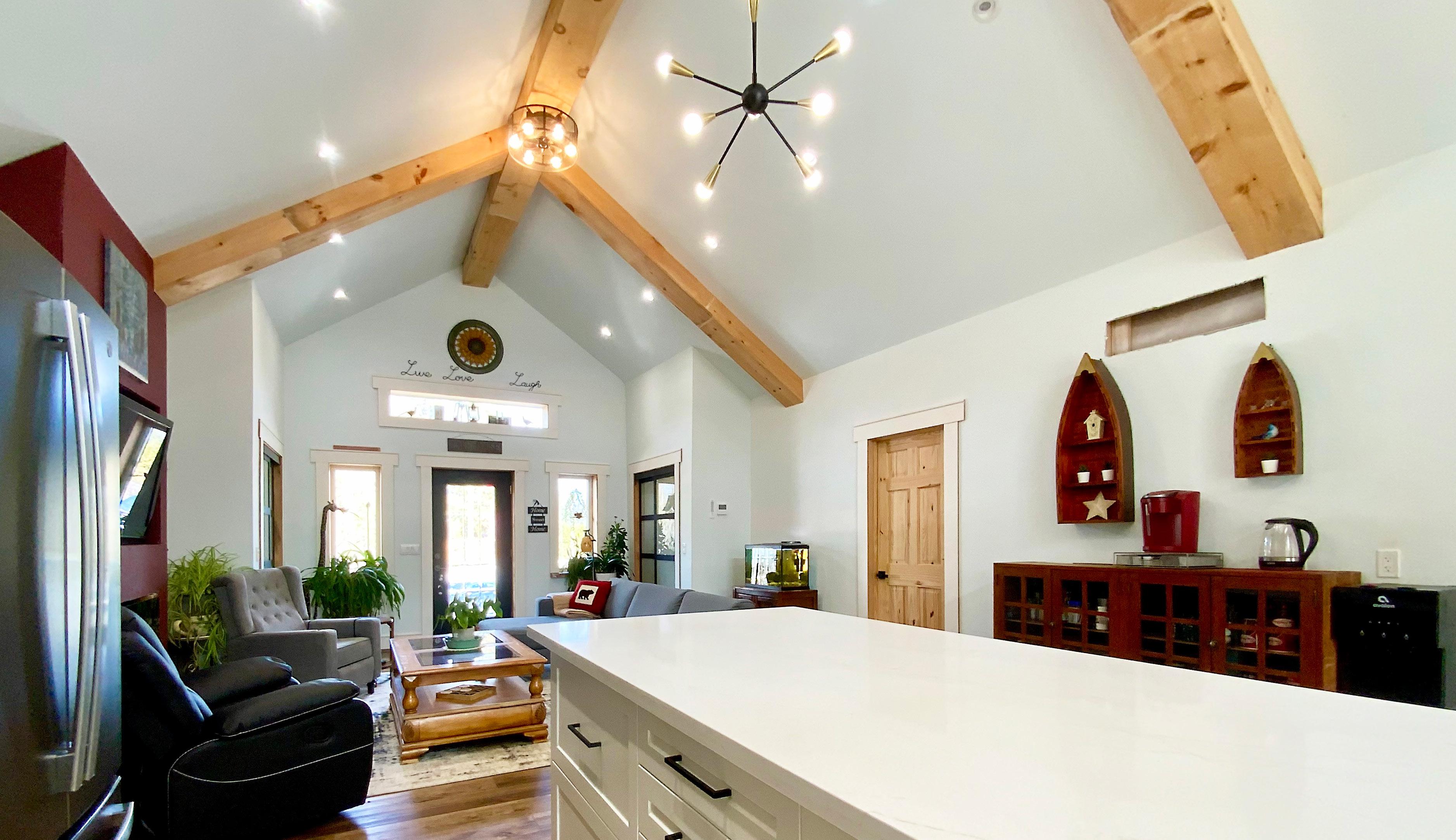
But summer also gives us something important: a chance to reset. After years of designing homes, cottages, and lifestyle spaces, I’ve learned something valuable. People are no longer just looking for beautiful homes. They want homes that help them feel better. Calmer. Lighter. Less overwhelmed. More connected. Especially after our age creeps up on us, priorities shift. Most people are no longer trying to impress everyone walking through the front door. They want comfort, simplicity and spaces that support the life they actually want to live. And honestly, that is where good design becomes meaningful. Because the best homes are not always the largest or most expensive. They are the ones that feel easy to live in.
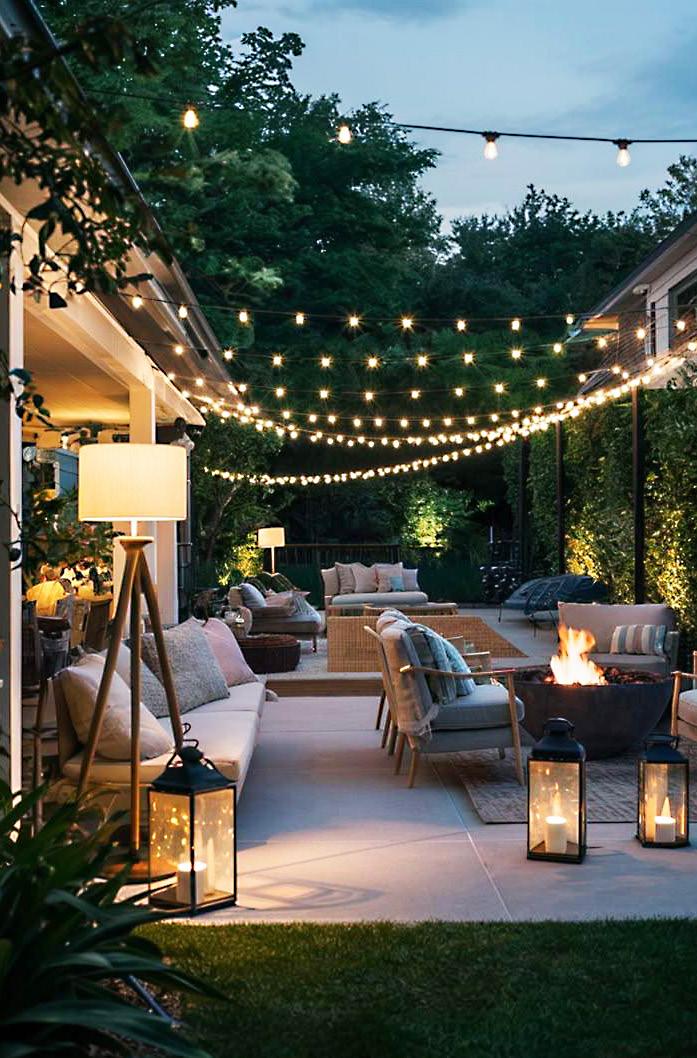
Summer Should Feel Lighter
Somewhere along the way, many homes became more work than enjoyment. We spend weekends moving clutter from one room to another and call it ‘organizing’. We buy decorative baskets to store things we probably should have donated five years ago. That is not lifestyle. That is delayed decision-making with throw pillows.
Summer living should feel easier. This is the season to simplify routines, open the windows, eat outside, and create spaces where people naturally gather.
Often, small changes create the biggest impact:
• Clearing clutter
• Rearranging furniture
• Adding soft lighting
• Updating outdoor cushions
• Fresh flowers from the garden
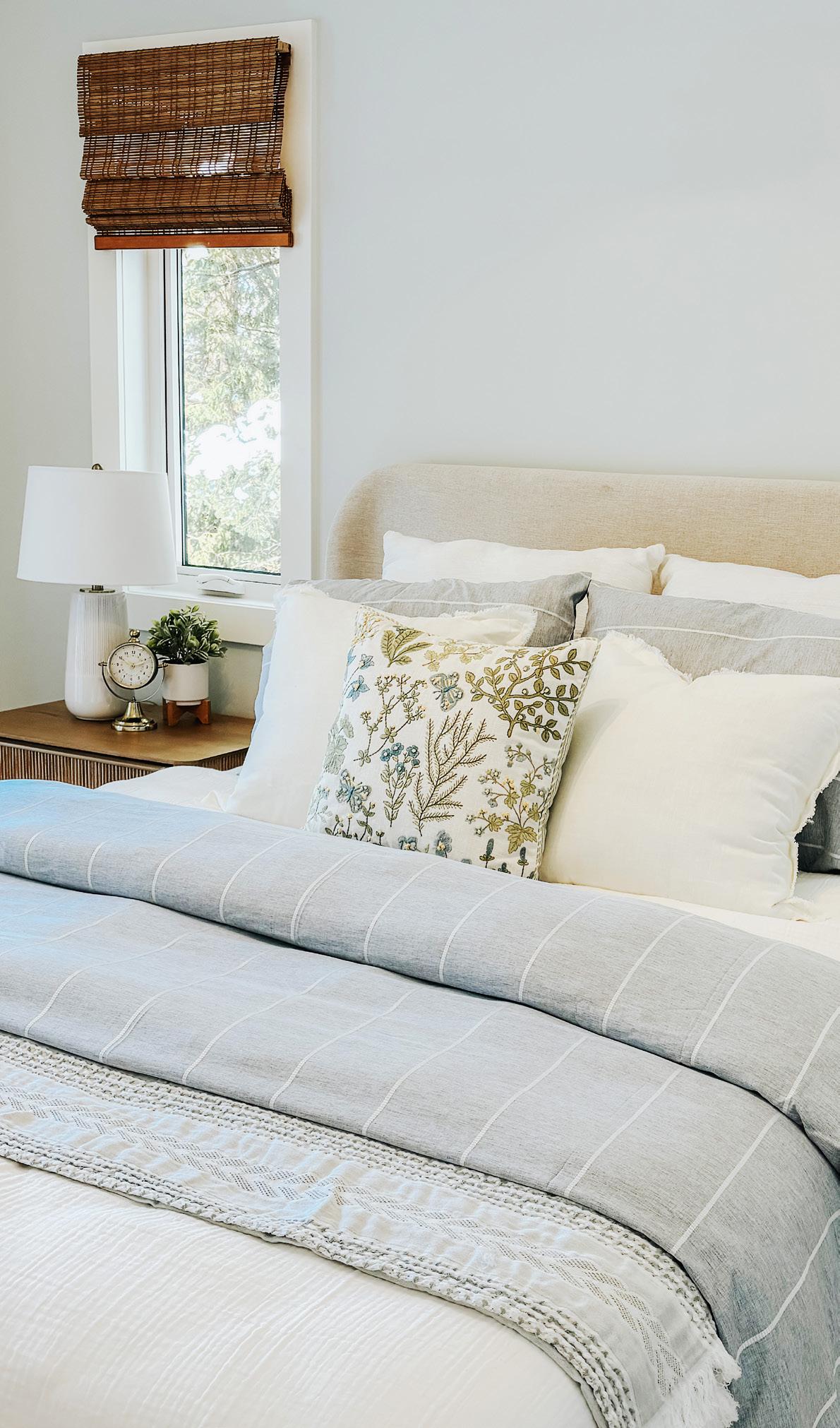
• Lighter bedding and textures
• Creating better flow between rooms
A well-designed home quietly reduces stress. That is real luxury now.
By Angela Jones, Owner & Principal Designer of Lakeshore Designs
Outdoor Living Is the New Favourite
Room

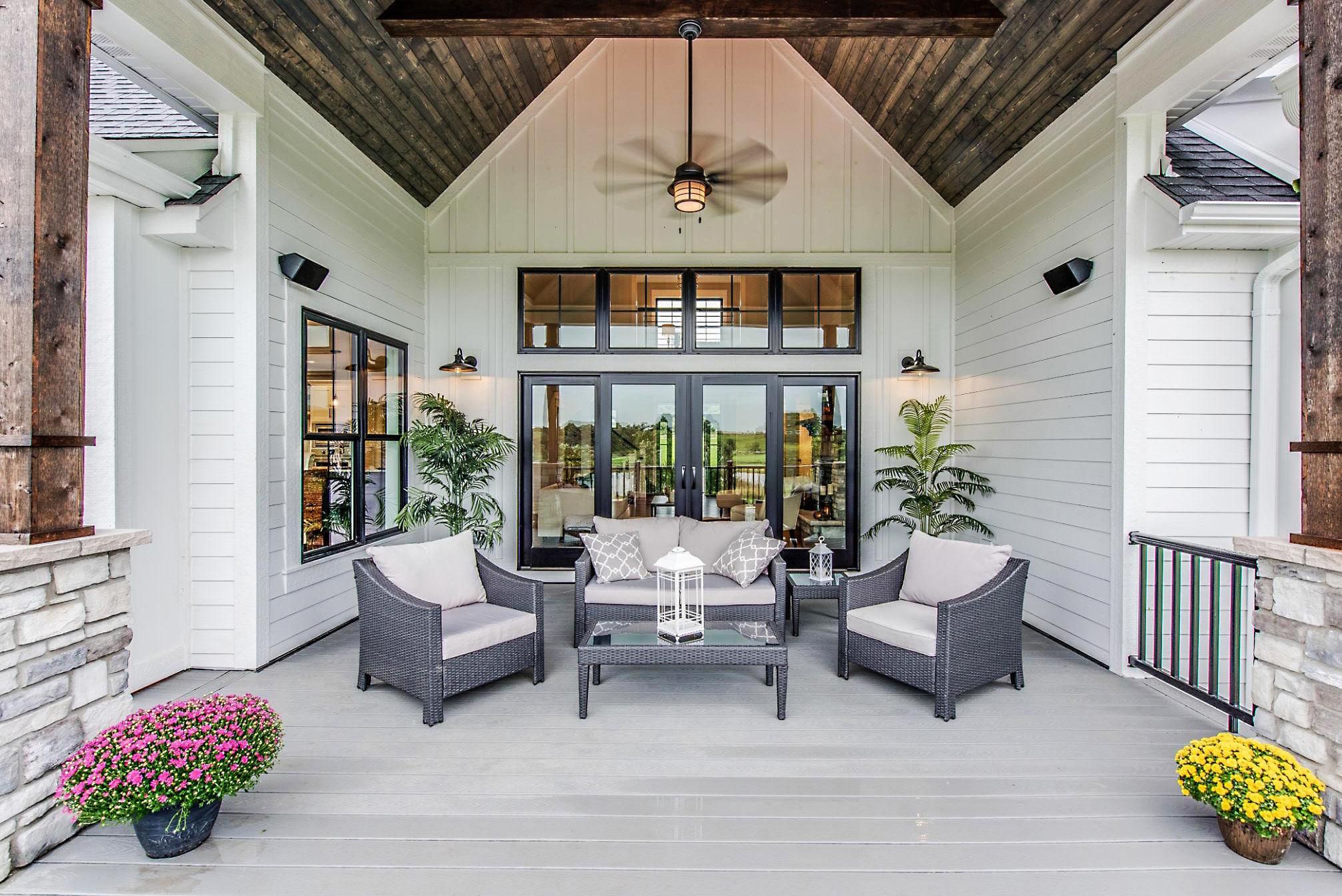
Outdoor spaces have become true extensions of the home. And thankfully, we’ve evolved beyond two plastic chairs and one citronella candle fighting for its life on the patio table. People want outdoor spaces that feel welcoming, relaxing, and comfortable. The good news is you do not need a massive renovation budget to make that happen. A few oversized planters, an outdoor rug, cozy seating, lanterns, or string lights can completely transform the atmosphere of a deck or backyard.
Lighting especially changes everything
Soft lighting creates warmth and calm. Nobody wants to feel like they are being questioned by airport security while sitting on the back deck at 10 p.m.
The goal is simple:
Create spaces where people want to stay longer.
DESIGN TIPS & TRENDS
Continued from previous page
Decluttering Is One of the Fastest Mood Boosters I know Nobody gets excited when a designer starts talking about decluttering. People want me to say, ‘Buy this gorgeous new sofa.’ Not, ‘Let’s discuss the emotional attachment to the bin of tangled charger cords from 2009.’
Clutter affects people more than they realize. Visual chaos creates mental chaos. One of the fastest ways to make a home feel more peaceful and luxurious is simply removing what no longer belongs there. Especially in summer. Homes need room to breathe. And honestly, so do people.
“Instead of chasing perfection ... focus on creating spaces that help you enjoy your life more fully.”
Your Home Should Support Your Lifestyle
One of the biggest design mistakes people make is decorating for appearance instead of experience.
Ask yourself: How do I want to feel in this space? Relaxed? Inspired? Rested? Connected? Happy? Those answers should guide your design decisions far more than trends ever will.
Your home affects your mood every single day
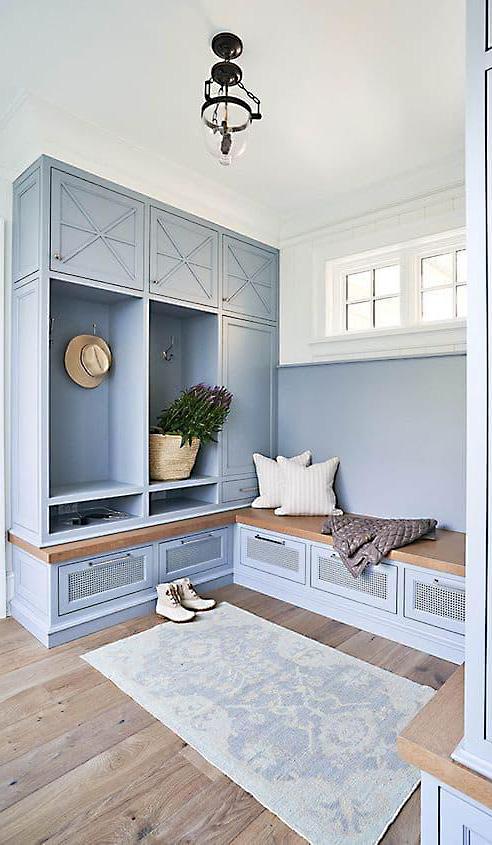
A calm bedroom improves rest. A welcoming kitchen invites connection. An organized entrance lowers stress before you even leave the house. Homes speak. The good ones say, ‘Relax. You’re home.’
Enjoy the Season You’re In Summer reminds us how quickly life moves. The kids grow up. The weekends disappear. The season passes before we know it. So instead of chasing perfection this summer, focus on creating spaces that help you enjoy your life more fully.
Open the windows.
Light the candles.
Invite people over.
Sit outside longer. Drink your coffee slowly. Watch the sunset.
Because beautiful homes are not really about showing off. They are about creating spaces where life feels lighter, calmer, and more joyful. And truly, that never goes out of style.

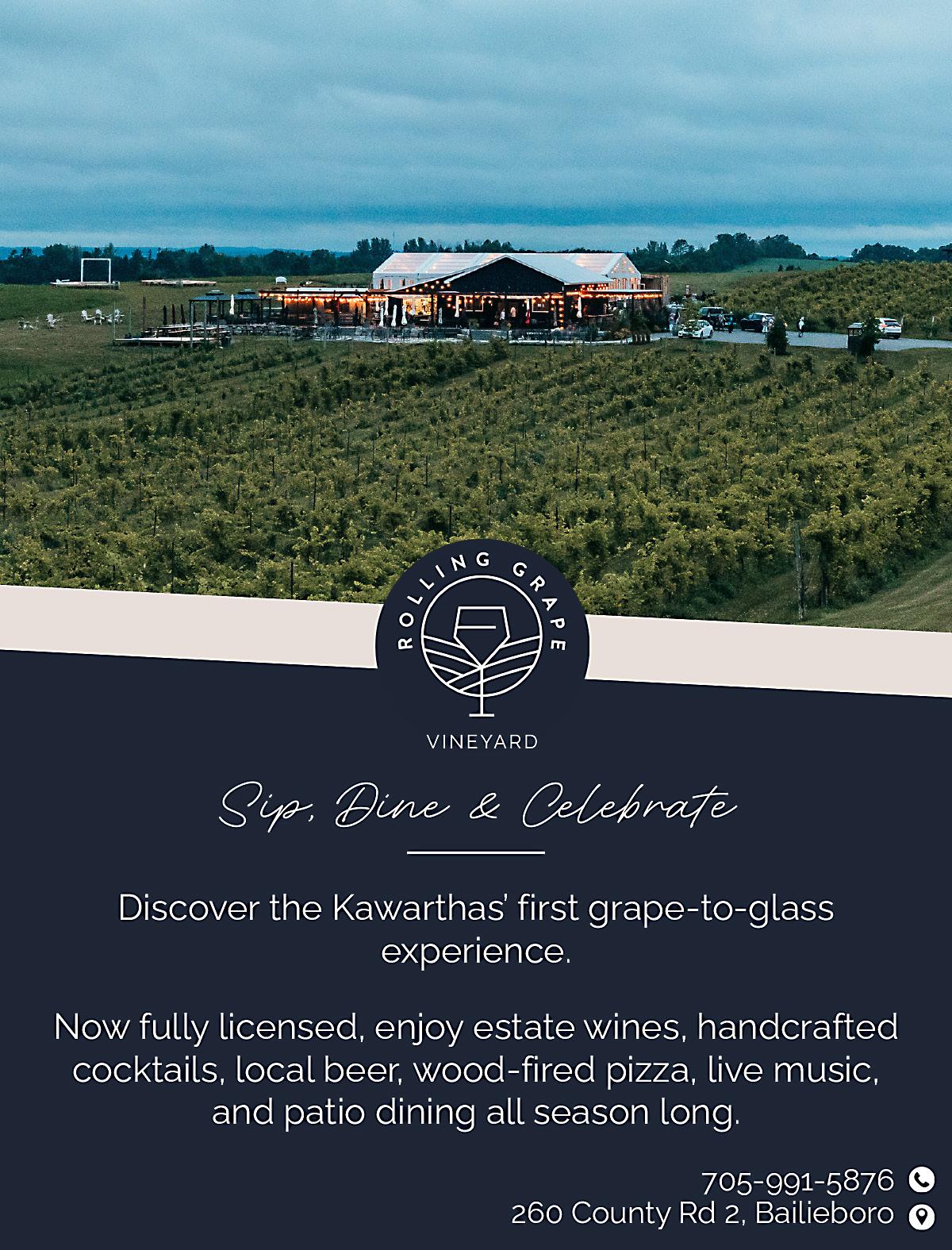
Rolling Grape
Photo
Lakeshore Designs
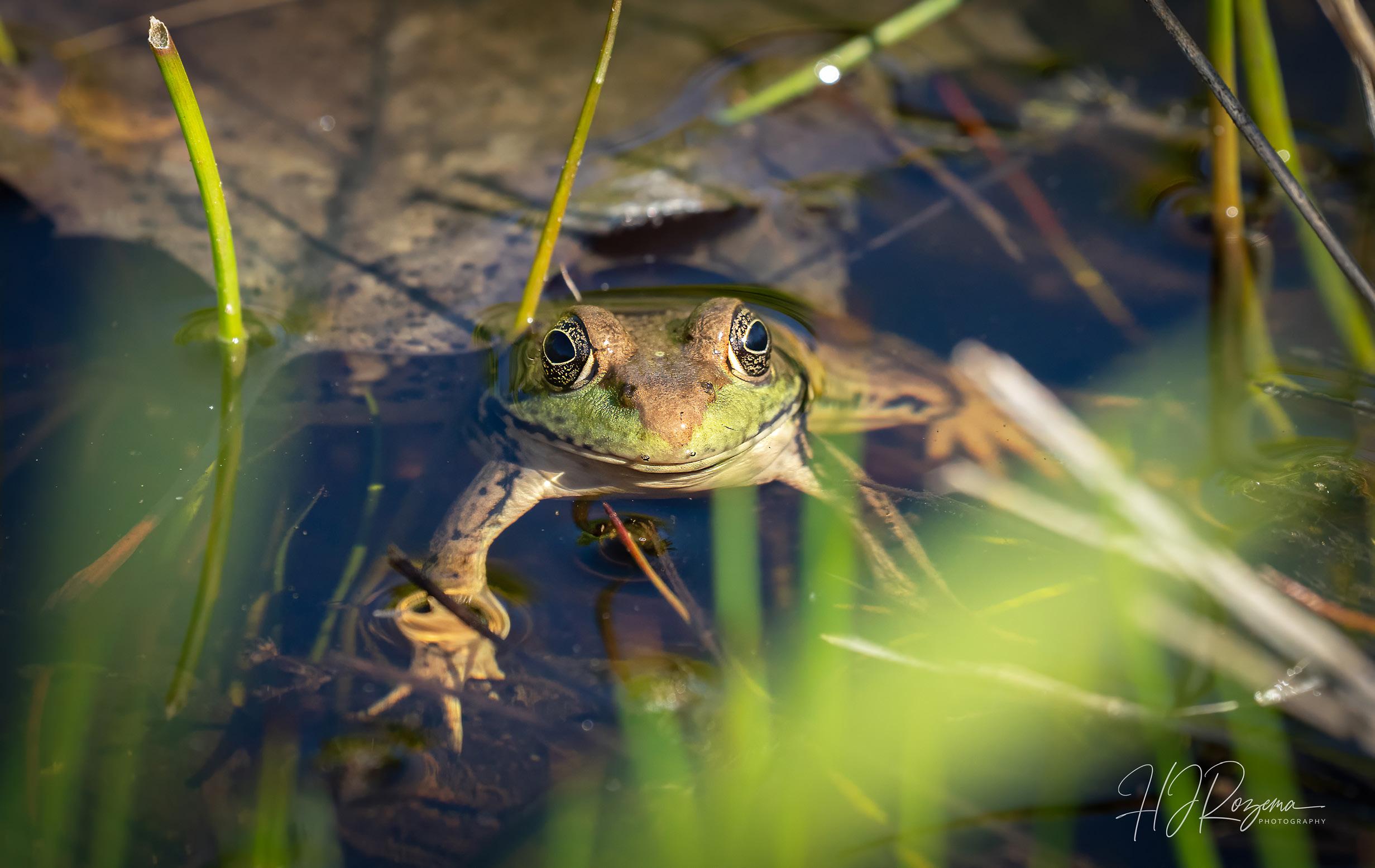
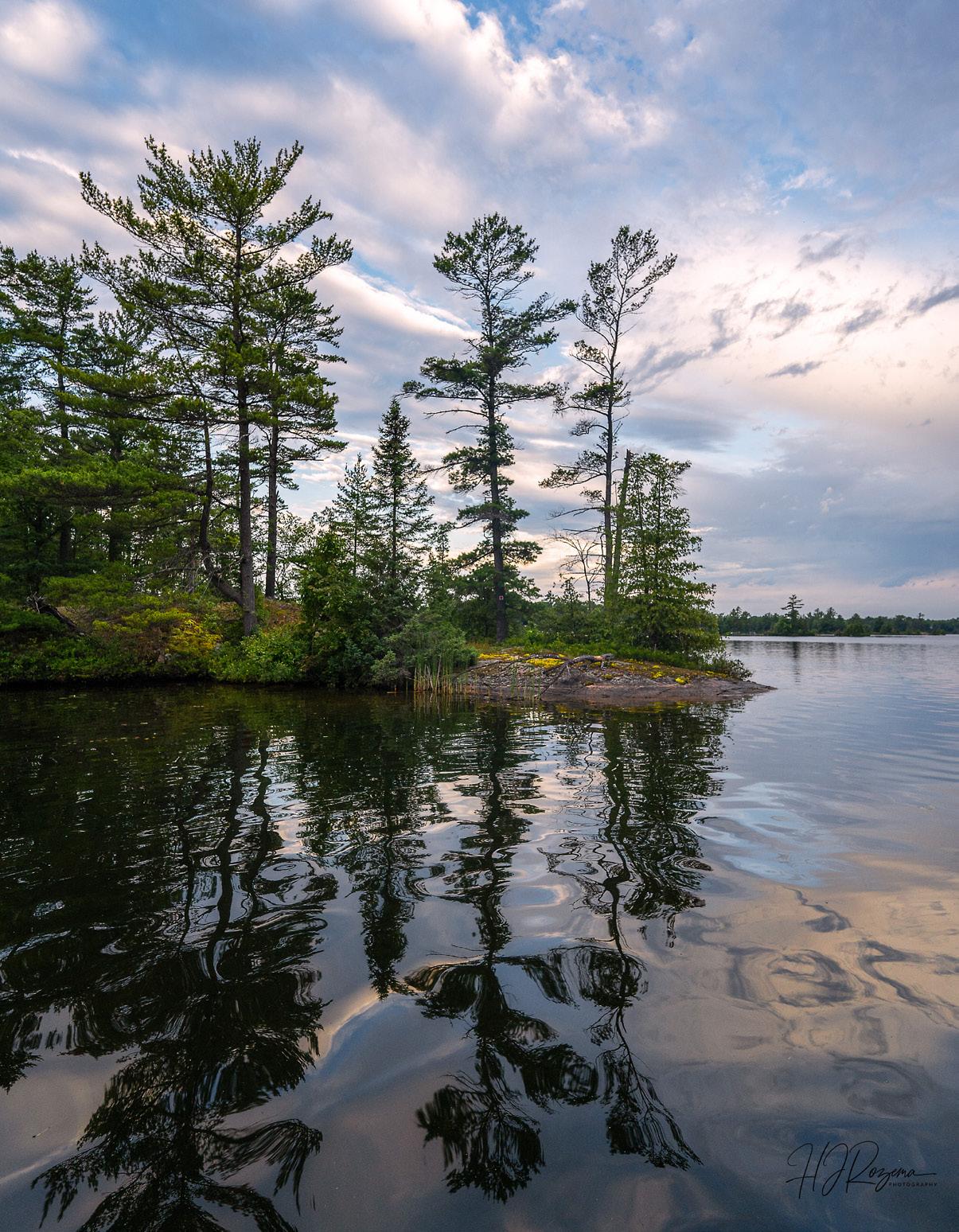
Photo by HENRY ROZEMA PHOTOGRAPHY

THE ART OF SUMMER LIVING
STARTS IN THE KITCHEN
By Gary Williams, President ~ Kitchens Depot Peterborough
When life moves outdoors, it may finally be the perfect time to reimagine what’s happening inside. There’s a certain hour in the Kawarthas when everything slows down. The lake softens into glass. Someone lights the grill. A screen door opens and closes somewhere in the background. Summer here isn’t rushed. It unfolds. And perhaps that’s why so many homeowners begin noticing their kitchens differently this time of year. Not with frustration exactly, but with clarity.
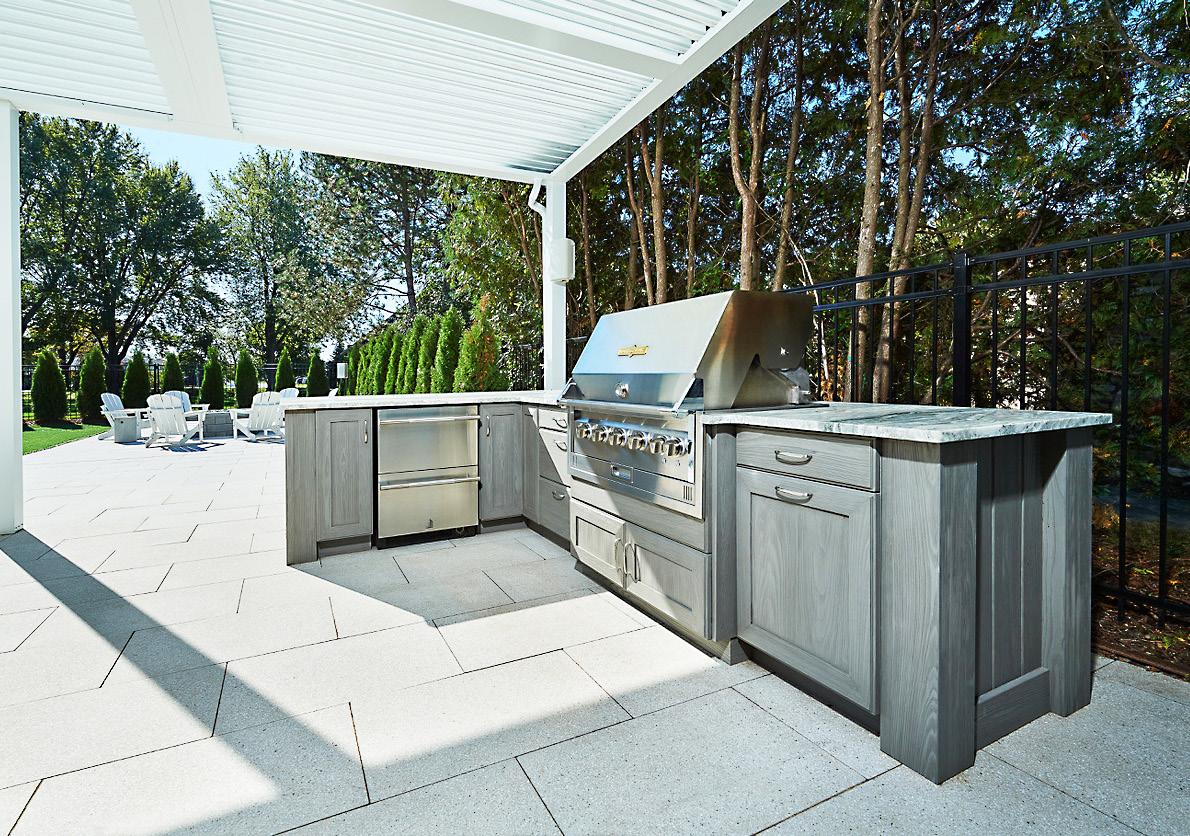
The kitchen that once worked perfectly now feels too closed off when everyone gathers. The layout interrupts instead of flows. The cabinetry feels tired beside the warmth and ease that summer naturally brings into the rest of the home. And yet, for many people, the thought of renovating still feels overwhelming, disruptive in a season meant for enjoyment.
But summer may actually be the smartest time to begin. Because this is the only season when your kitchen can temporarily become two places at once.
As outdoor living spaces come alive, the pressure on the indoor kitchen quietly disappears. Meals migrate outside. Morning coffee moves to the deck. Even entertaining becomes more relaxed and open air. Renovating no longer feels like putting life on pause. It feels like evolving alongside the season.
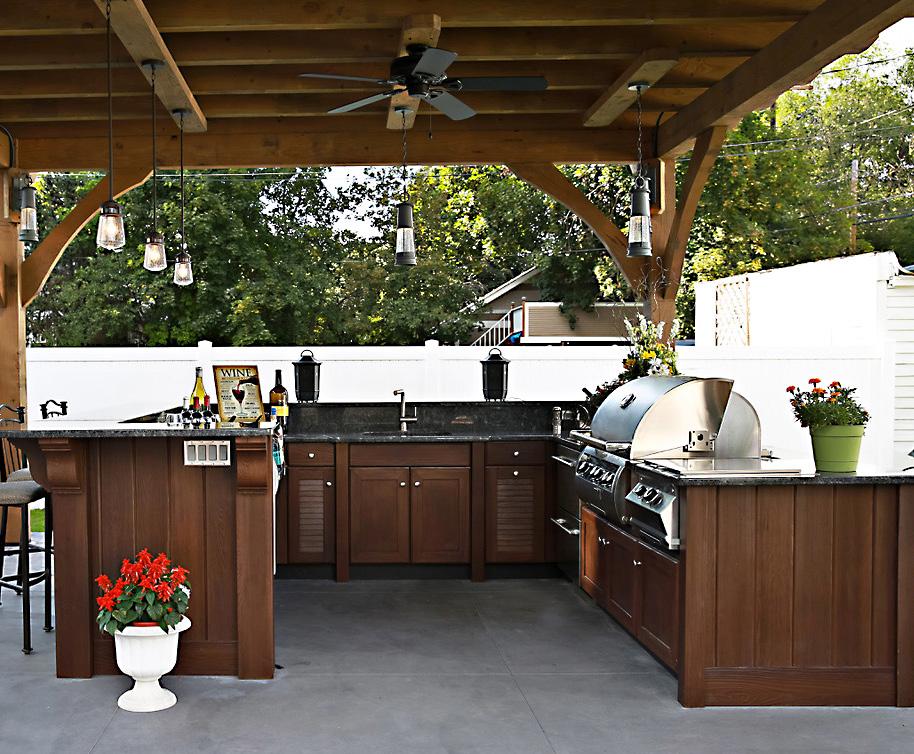
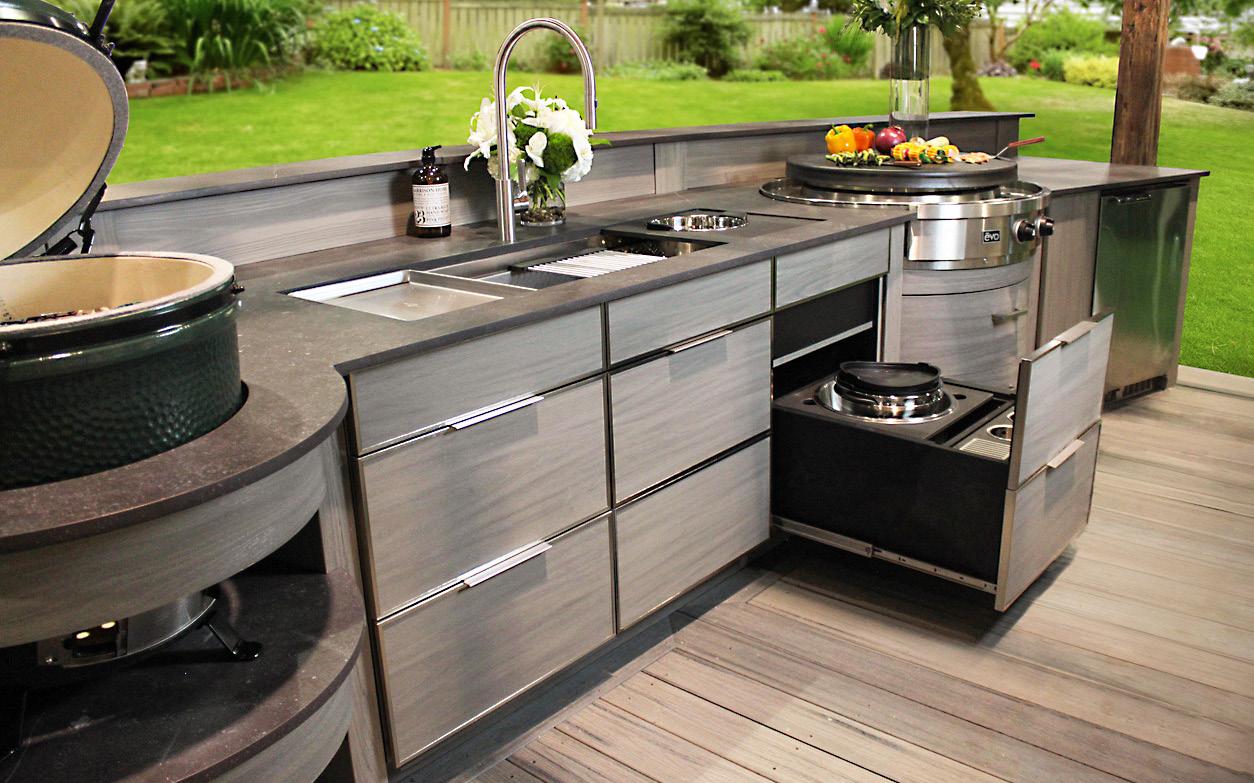
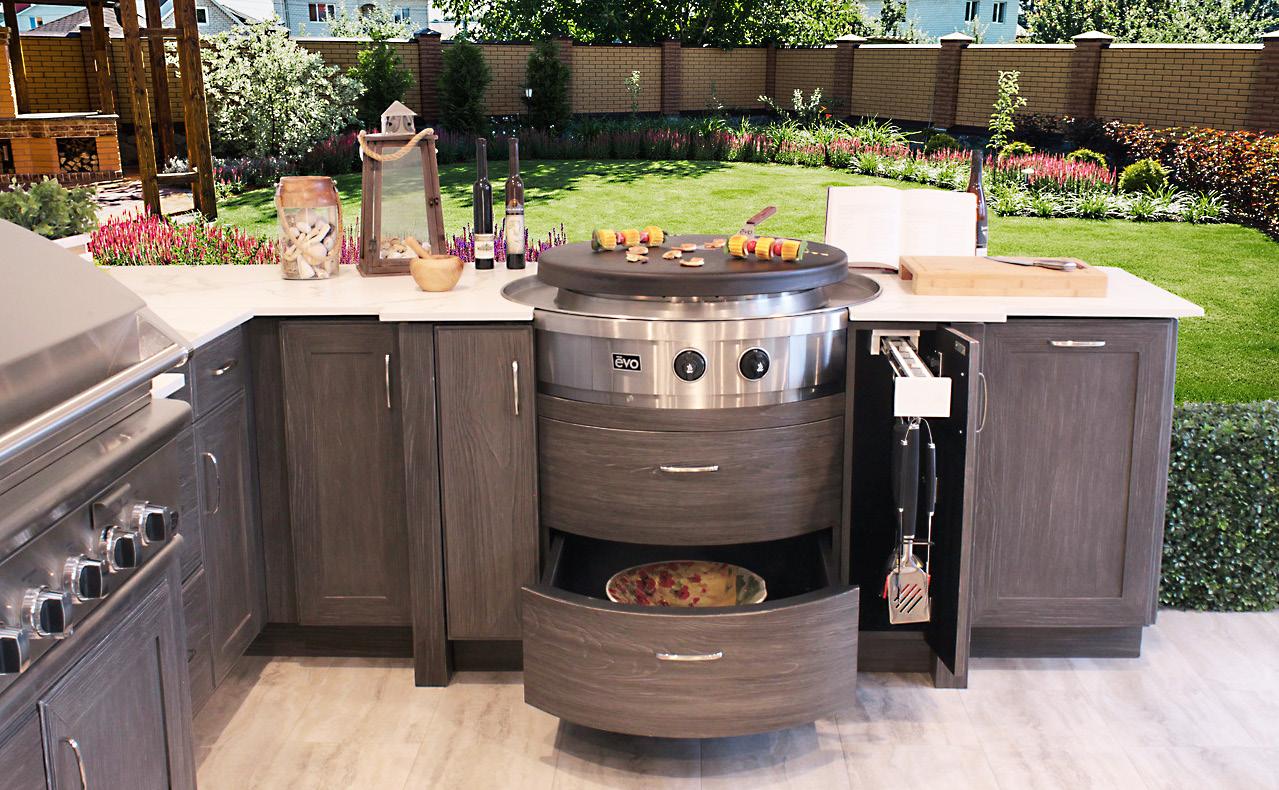
At Kitchens Depot in Peterborough, that shift is changing how homeowners think about renovation altogether. Increasingly, clients are approaching their homes more holistically, not simply updating cabinetry, but reimagining how they want to live from May through September and well beyond. That’s also why outdoor kitchens have become such an important part of the conversation.
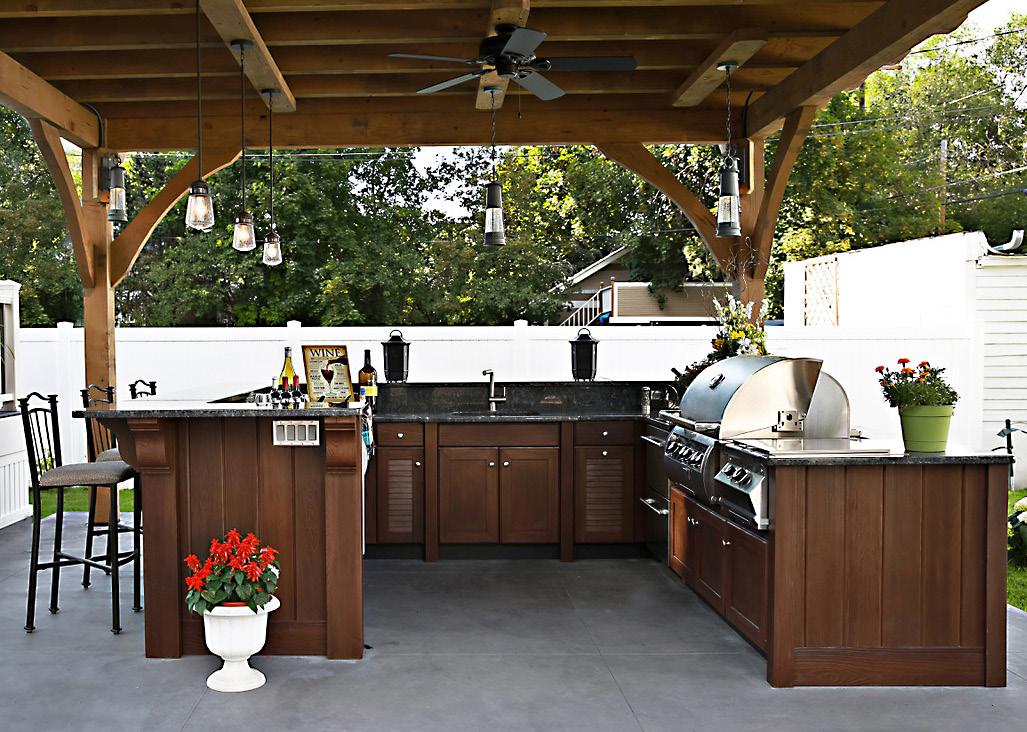
Not as elaborate backyard showpieces, but as true extensions of the home. Spaces designed for long evenings with friends, effortless family dinners, quiet mornings at the cottage, and entertaining that feels connected rather than confined. A thoughtfully designed outdoor kitchen doesn’t replace the indoors. It gives the entire home room to breathe. And perhaps that’s the real luxury today. Creating spaces that support the way life actually feels in the Kawarthas. Relaxed, welcoming, beautiful, and deeply lived in.


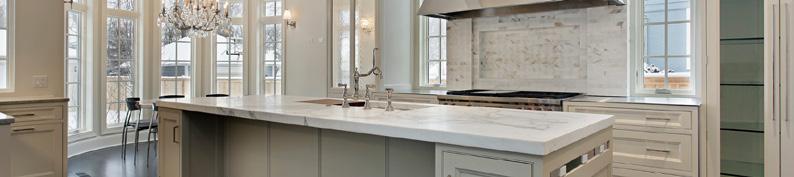

This summer, visit Kitchens Depot in Peterborough to explore indoor and outdoor kitchen design inspired by the art of living well, all season long.
Kitchens Depot
Real Estate Talk
Summer Living in the Kawarthas Lakes

TBy Kelli Lovell,
here is something timeless about summer in the Kawartha Lakes. The sound of loons echoing across the water at dusk, the gentle sway of pine trees in the breeze, and mornings spent sipping coffee on the dock create a lifestyle that feels both luxurious and deeply grounding. In recent years, the concept of “summer living” has evolved dramatically.
WHY THE KAWARTHA LAKES CONTINUE TO ATTRACT MATURE BUYERS
Located within convenient driving distance of the GTA, the Kawartha Lakes region has become one of Ontario’s most desirable destinations for mature homeowners seeking a slower, more fulfilling pace of life. The area offers an exceptional balance of natural beauty, charming communities, recreational opportunities, and modern conveniences. Unlike busier cottage regions, the Kawarthas maintain a relaxed authenticity that appeals to buyers who value comfort over flash and community over crowds. Residents enjoy picturesque towns like Bobcaygeon, Fenelon Falls, and Lindsay, along with access to golf courses, marinas, farmers’ markets, local restaurants, hiking trails, and endless waterfront activities.
The lifestyle here is centred around connection — to family, friends, nature, and personal wellbeing. Increasingly, homeowners are designing their properties to maximize that connection through thoughtful outdoor living spaces.
OUTDOOR LIVING IS THE NEW LUXURY
Over the past several years, outdoor spaces have evolved into true extensions of the home. Buyers are prioritizing properties with functional, beautifully designed exterior spaces that support both relaxation and entertaining. In the Kawartha Lakes, this trend feels especially natural. Waterfront properties already encourage outdoor activity, but today’s homeowners are elevating these spaces with resort-inspired features and carefully curated design elements. The result is a new style of cottage living that blends comfort, elegance, and practicality.
THE RISE OF THE OUTDOOR LIVING ROOM
One of the biggest trends shaping luxury cottage properties is the outdoor living room. These spaces are designed with the same attention to comfort and aesthetics as interior family rooms.
Covered decks and screened porches have become highly sought-after features, especially among homeowners looking to extend the outdoor season well into spring and fall. Comfortable sectional seating, layered textiles, outdoor rugs, fireplaces, and integrated lighting help create cozy environments ideal for relaxing evenings by the lake.
Architectural designs in the Kawarthas increasingly emphasize seamless indoor-outdoor transitions, often featuring expansive glass walls, wraparound decks, and protected terraces that immerse homeowners in the surrounding landscape. Properties with thoughtfully designed outdoor seating areas are especially appealing to buyers over 45 who prioritize comfort, entertaining, and easy maintenance.
WELLNESS SPACES ARE REDEFINING COTTAGE LIFE
Today’s buyers are increasingly viewing their properties as personal wellness retreats. Outdoor spaces designed for health, relaxation, and mindfulness have become a defining feature of luxury summer living. Hot tubs overlooking the lake, cedar saunas, yoga decks, meditation gardens, and cold plunge pools are becoming more common throughout the region. Many homeowners are creating peaceful private spaces where they can unwind, recharge, and
“One of the biggest trends shaping luxury cottage properties is the outdoor living room.”
reconnect with nature. Lakefront properties naturally lend themselves to wellness-focused living. Morning paddleboarding sessions, lakeside yoga, and evening swims become part of a daily rhythm that feels restorative and energizing. Multi-tiered decks with integrated hot tubs and spa-inspired features continue to trend strongly throughout cottage country. For mature buyers, wellness-oriented outdoor living isn’t simply about luxury — it’s about creating a home that supports quality of life for years to come.
OUTDOOR KITCHENS AND ALFRESCO DINING
Summer entertaining has become far more sophisticated in recent years. Traditional barbecues have evolved into fully equipped outdoor kitchens complete with built-in grills, pizza ovens, beverage fridges, prep stations, and custom dining areas.
In the Kawartha Lakes, outdoor dining feels particularly special. Long summer evenings by the water create the perfect backdrop for hosting family dinners, cocktail gatherings, and casual weekends with friends.
Many newer waterfront homes feature oversized decks specifically designed for entertaining. Dining areas are often paired with covered pergolas, ambient lighting, and fire features that allow gatherings to continue comfortably after sunset.
The growing “quiet luxury” outdoor trend emphasizes understated elegance through warm lighting, neutral furnishings, quality materials, and comfortable gathering spaces. Features like outdoor rugs, sculptural planters, and curved furniture help create a sophisticated yet welcoming atmosphere. For homeowners over 45, outdoor kitchens offer the perfect blend of functionality and lifestyle enhancement. Entertaining becomes effortless, and everyday meals feel like a vacation experience.
MULTI-GENERATIONAL ENTERTAINING SPACES
Another important trend shaping outdoor living is the rise of multi-generational entertaining. Fami-
lies are increasingly looking for spaces that comfortably accommodate children, grandchildren, and visiting friends.
Large dining tables, expansive docks, outdoor lounges, covered seating areas, and recreational spaces all contribute to creating a property where everyone feels welcome.
The open-concept nature of many modern Kawartha cottages supports this lifestyle beautifully. Homes are being designed with seamless connections between kitchens, living rooms, decks, and waterfront access, allowing gatherings to flow naturally from indoors to outdoors.
For many mature buyers, the dream is no longer simply owning a cottage — it is creating a legacy property where future generations will gather for years to come.
THE IMPORTANCE OF WATERFRONT DESIGN
In the Kawartha Lakes, the waterfront itself often becomes the centrepiece of the outdoor living experience.
Properties with thoughtfully designed docks, sandy beach entries, boathouses, and lakeside seating areas are particularly desirable. Buyers increasingly look for waterfront spaces that function as natural extensions of the home.
Tiered landscaping, dockside lounges, and integrated pathways help create a seamless experience between the house and the lake. Even modest waterfront properties can feel luxurious when outdoor spaces are intentionally designed to highlight the natural surroundings.
Access to clean water, scenic views, and privacy continue to drive demand throughout the region. Many buyers appreciate that the Kawarthas offer more accessible pricing compared to other Ontario cottage markets while still delivering exceptional lifestyle value.
Real Estate Talk
INVESTING IN LIFESTYLE AND VALUE
One of the greatest benefits of enhancing outdoor living spaces is the impact on long-term property value. Buyers consistently place high importance on functional exterior design, especially in waterfront markets.
Well-designed outdoor areas can dramatically increase both the enjoyment and resale appeal of a property. Features such as professional landscaping, outdoor kitchens, premium decking, lighting systems, and wellness amenities often deliver strong returns while also improving day-to-day living.
For homeowners considering purchasing or upgrading a property in the Kawarthas, outdoor living should be viewed as both a lifestyle investment and a smart real estate strategy.
YOUR NEXT CHAPTER STARTS HERE
Summer living in the Kawartha Lakes is about far more than owning a beautiful property. It is about creating a lifestyle rooted in comfort, connection, and unforgettable moments by the water. From luxurious outdoor lounges and spa-inspired wellness spaces to elegant dining areas and multi-generational gathering spots, today’s outdoor living trends reflect a deeper desire for balance and meaningful living. If you are considering buying or selling property in the Kawartha Lakes, now is the perfect time to explore the possibilities. Connect with Kawartha Kelli & Company to discover exceptional waterfront homes, charming cottages, and lifestyle-focused properties throughout the region. Their local expertise, personalized approach, and deep knowledge of the Kawarthas can help you find the perfect location to enjoy everything summer living has to offer.



Griffins
GARDENING - Patio Potting
W
By Vikki Whitney Griffin’s Greenhouses
eather-wise, we don’t know what we’ll get until we get it. Spring 2026 has taught us that. With that in mind, it is important to take steps in our container planting (hanging baskets, patio pots and window boxes) to be prepared for weather extremes.
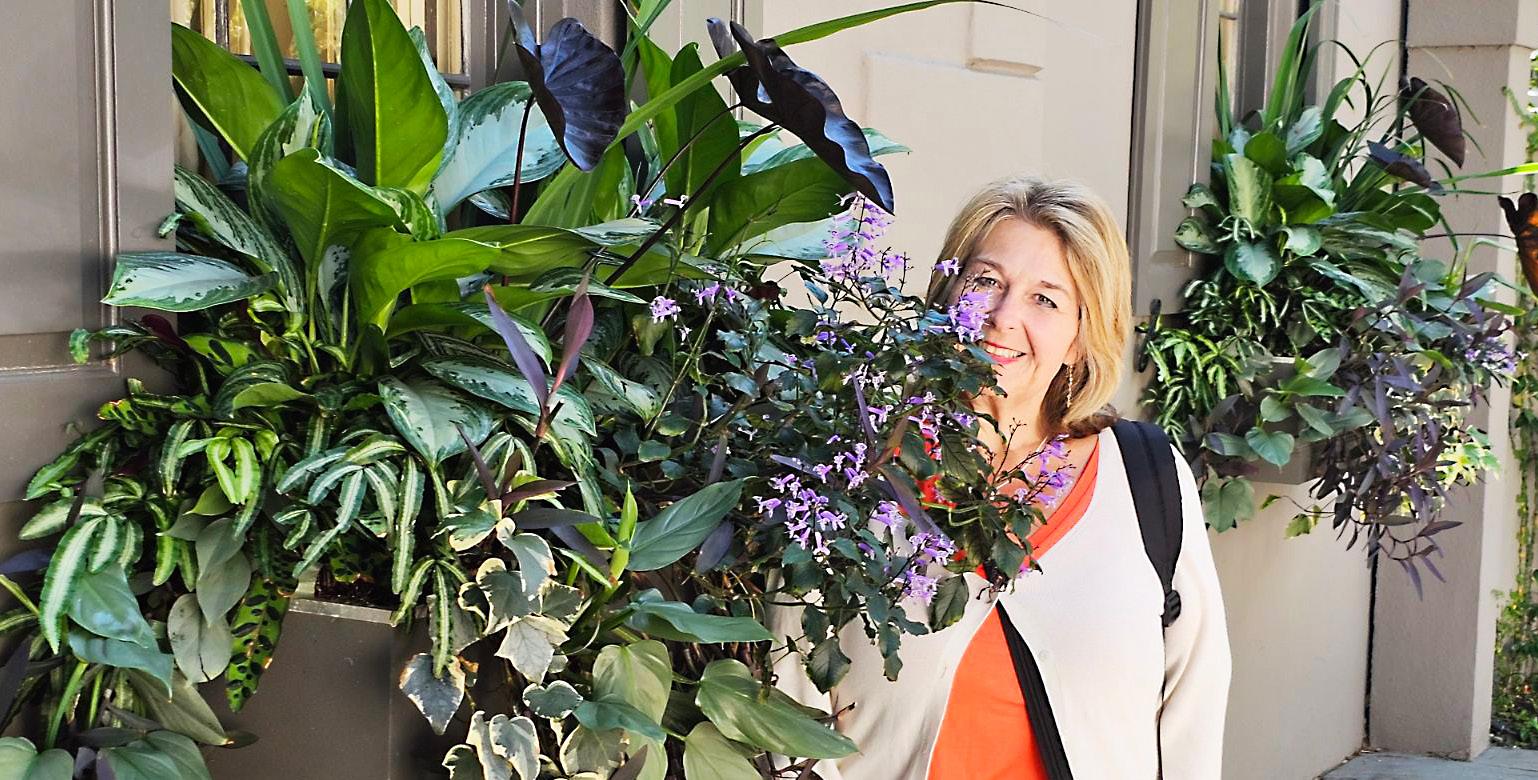
If we get a hot and dry summer, it is practical to replace small pots (less than 14” in diameter) with larger, deeper pots. BIG pots hold a lot of soil and soil holds water. It’s quite simple: large pots dry out less frequently than small pots. Plants that do not experience the extreme stress/de-stress/ stress/de-stress patterns remain lush, full of bloom and healthy.
Therefore, instead of three or five small pots scattered on the stairs to your front door, consider one or two large pots (18”+) at the base of the stairs. A visitor’s eye will be instantly drawn to it and its largesse will allow for spectacular and welcoming plant arrangements, with minimal care. Think of all of the lovely, lush plants you can use: majestic canna lilies, large blooming Calliope geraniums, long trailing Meezoo (succulent trailing plant) or tropical hibiscus bushes!
In case of a wet, cloudy summer, do take care that any pot you choose has drainage holes for excess water to escape. Yes, water will leak out of the holes and get on your deck or patio, but it’s just water and you can sweep or mop it away. It is extremely important that plants not sit in excess water or in constantly wet soil.
A large pot can be expensive to fill with proper Container Soil. Remembering that soil holds moisture, do find a balance between using too much “filler” and just topping up with soil. If the environment is windy, add bricks or rocks to the bottom of the pot. If the need to move the pots easily is priority, then use unused nursery pots flipped into the bottom of the pot or pieces of large Styrofoam. At least 60% of the large pot should be soil to make the moisture retentive soil work in your favour.

www.hjrozemaphotography.etsy.com @hjrozemaphotography

Cruising up the West Coast of Africa GETAWAY

Iby Margaret Swaine Columnist and Author www.margaretswaine.com
have visited most of the countries on my bucket list and was wondering what next? A cruise up the west coast of Africa seemed the ideal choice for me. There are “least developed nations” I wanted to experience but likely a day excursion would give me all I needed to know to decide if I’d want to return for a true vacation.
So I signed my husband and me up for a three week West African Adventure with Regent Voyageur that began in Cape Town and ended in Lisbon. It dropped anchor in some of the smallest, economically challenged countries on that continent, several of which I knew nothing prior to my tours of them. If you too are tired of the predictable, the over touristed, the overrated and the crowds, this is the trip for you.
Cape Town of course is not in a “least developed” country. It’s one of the world’s most recognized leisure destinations, though not yet one of the planet’s most visited cities, which is a good thing. This was my fourth time in the city and with each visit, I saw more high-rise and condo developments and an ever more vibrant cosmopolitan culture, all surrounded by the same natural splendor. The iconic flat-topped Table Mountain, a New7Wonders of Nature, sets the backdrop for the city and visitors can ascend it via revolving cable car or hiking trails. From the top views stretch over the Atlantic Ocean and the entire Cape Peninsula.
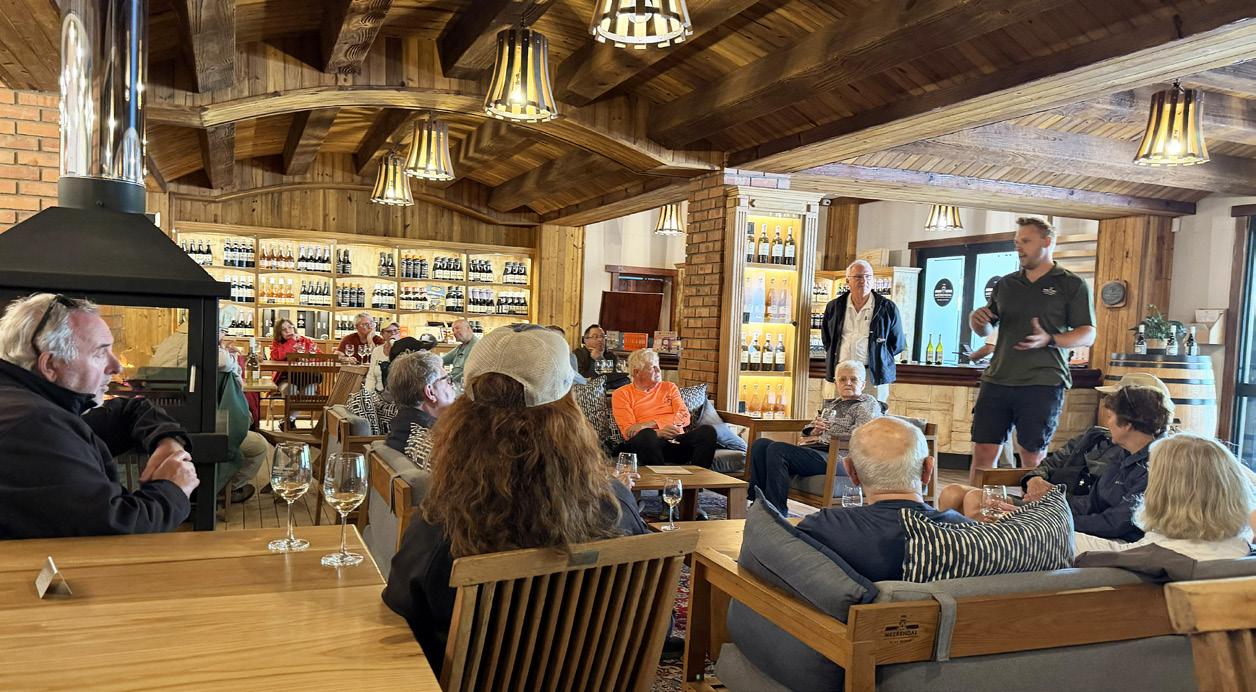
We stayed at the Radisson Collection Hotel Waterfront, perched on the breakwater between the Oranjezicht City Farm Market and the start of the extended Sea Point promenade. We booked a sea view room that was well worth the splurge with its panoramic vistas out across Table Bay. Regent offered a host of Cape Town tours, and we took one to the West Coast Ostrich Ranch and to Meerendal Wine Estate. The Ranch was a fun, informative delve into ostriches and Meerendal’s beautifully crafted organic wines were delicious, plus there was an award-winning restaurant on site.


São Tomé with our cruise ship in the background
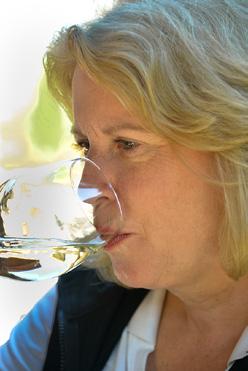
Wine tasting at Meerendal Estate Winery
Santa Cruz de Tenerife
“What we saw and experienced will stay with me forever.”

Then it was anchors up and off to Walvis Bay Namibia. This natural harbour protected by the Pelican Point sand spit, serves as Namibia’s primary deep-water port. The city, a wetland of international importance, has a unique geography where the cold Benguela Current meets the hot Namib Desert air providing vital moisture to the desert-adapted plants and animals. Bolstered by this environment, the lagoon is teaming with populations of flamingos, seals, and pelicans. From our speed boat tour we saw hundreds of Cape Fur Seals, one of which jumped into the boat. Several pelicans joined us onboard too, including one that landed on the head of a fellow traveller. The flamingos more prudently lined the shores.
We were at sea for three days to reach our next stop, São Tomé and Principe. São Tomé is Africa’s second smallest nation. The archipelago consists of two volcanic islands and several rocky islets in the Gulf of Guinea. Discovered by Portuguese navigators in the 15th century, it gained independence from Portugal in 1975.
Coffee and cocoa plantations (rocas) were the major economic drivers in the colonial period of São Tomé. At one point, the tiny African nation was the number one producer of cocoa in the world with over 800 plantations. A few of these old farms still function, and there is a small revival of the chocolate business with Diogo Vaz and Claudio Corallo considered to be making some of the best on the planet. I can attest the chocolate and the coffee here are sublime.
Saturday market day in São Tomé is crazy busy with just about everything for sale from stacks of clothing, flipflops, shoes, vegetables, and fruits all on offer. However, most of the country has been reclaimed by lush, green, tropical wilderness which has preserved its exceptional biodiversity. Tourism is in its infancy attracting nature enthusiasts and the occasional cruise ship.
Our next stop, Togo, is listed by the UN as one of the least developed nations. Bracketed by Benin on one side and Ghana on the other, it has been colonized by the Germans, British and French. French is the official language of the country, but there are 39 languages spoken. For 200 years this coastal region was a trading centre for Europeans in search of slaves, earning Togo and the surrounding region the name the Slave Coast. Voodoo is a
West African religion still practiced here, and we were privileged to watch a ceremony in a village about an hour from their capital Lome.
The next day we disembarked in Sekondi-Takoradi in Ghana. Ghana is considered one of the most successful of the West African nations. It gained independence from its colonial conquerors in 1957, the first of the West African nations to do so, inspiring other nations to do the same. Known as part of the Gold Coast it had its own source of income as it still has today with bauxite and other resources. Since independence success has been up and down. I was sad to see that a fair number of historic colonial buildings have been allowed to fall to ruin.
Our tour included a visit to the bustling Albert Bosomtwi-Sam Fishing Harbour, a major maritime facility originally constructed with grant money from Japan. Here we saw artisanal fishers on colourful wooden vessels depart the harbour in the early morning hours to navigate the Gulf of Guinea. Their catches are unloaded upon their Togo


global
GETAWAY

Continued from previous page
afternoon return, with processing commencing immediately. An ice making plant, fish processing plants and other facilities were right there on the spot.
After three days at sea, we next reached The Gambia. It’s the smallest country on the African mainland, surrounded by Senegal on all sides except the coast. They got their independence from Britain in 1965, and the official language is English. Tourist resorts along the Atlantic coast are quite lovely as are the guarded mansions in the nearby wealthy area. Elsewhere many eke out a living as subsistent farmerswith remittances from relatives abroad, if they’re lucky. Aside from peanut oil production there are few factories and almost no manufacturing.
Albert Market in Banjul, the capital of The Gambia, is a sensory overload of colour and sound. One can easily see that Muslim is the dominant religion of the country. Known as gateway to the “Smiling Coast of Africa” locals say that despite having limited means, people here are happy. The local economy thrives through the trade of batik fabrics, carved wooden masks and figures and fresh produce.
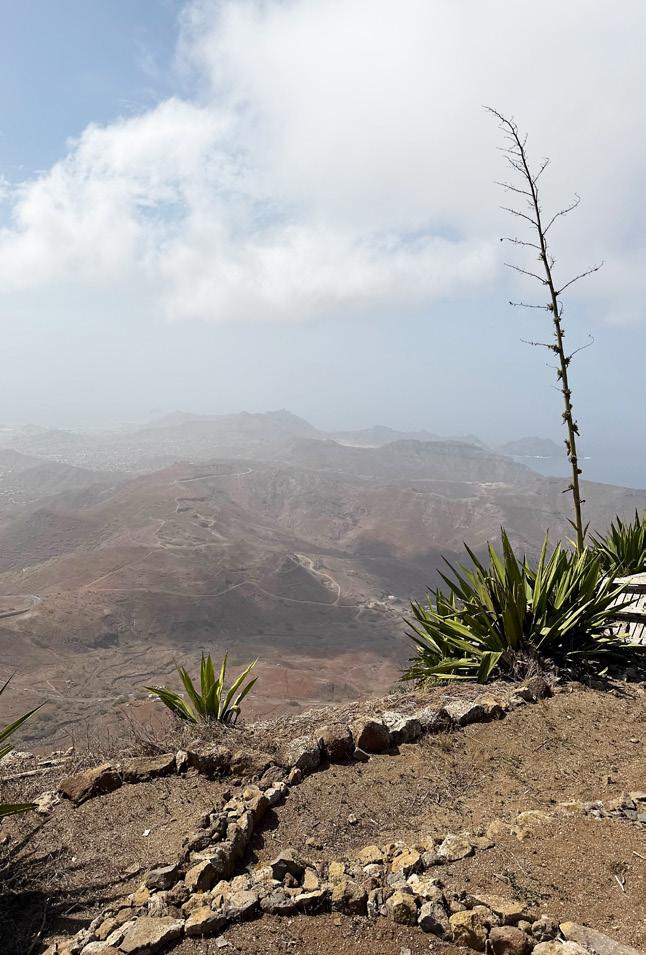
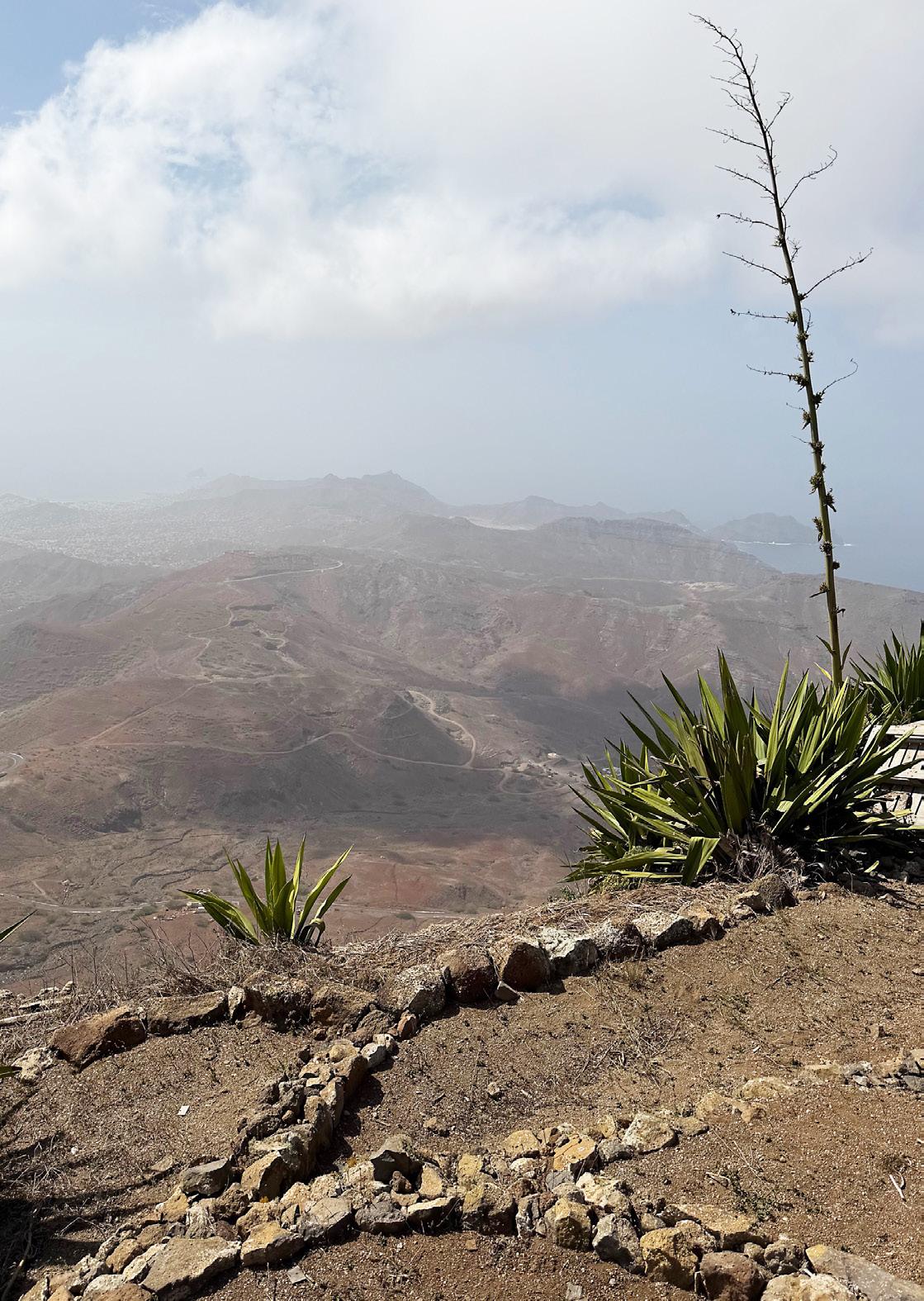
Another day at sea took us to Cape Verde. Sao Vicente, one of 10 volcanic islands that make up this African country, is spectacularly scenic. It’s photogenic from the top of Mount Verde, the island’s highest peak, to its beach shores and the deepwater natural harbour of Porto Grande Bay. Mindelo, the cultural capital, and main port of Cabo Verde is a charming
blend of Portuguese colonial architecture with newer African influenced structures. The Portuguese discovered the islands in the 15th century, and the country gained its independence from Portugal in 1975.
Our final stop on this voyage was at Santa Cruz de Tenerife, one of the Canary Islands. The Canary Islands, an archipelago in the Atlantic Ocean and the southernmost autonomous community of Spain, is located about 100 km off the northwest coast of Africa. Tenerife is the largest of the seven main islands. Historically the island chain was called “the Fortunate Isles”. They certainly are beautiful with many beaches, a subtropical climate and excellent local wines and goat cheeses.
As a result, they have become very popular, ranking as a leading European destination with over 16 million annual visitors. While the southern areas of islands like Tenerife, Gran Canaria, and Lanzarote are packed with resorts, beaches, and nightlife, the northern parts and smaller, lesser-known islands offer a more authentic, quieter experience. Air Canada is launching its first-ever direct flights to the Canary Islands for the Winter 2026–27 season.
Our West Africa adventure was over once we reached Lisbon, but what we saw and experienced will stay with me forever. It was mind expanding in a deep, emotional way.
Mont Verde, Sao Vicente, Cape Verde
Natural vs Commercial Tick Prevention: What Dog Owners Need to Know
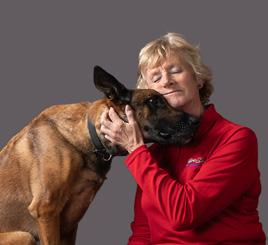
TBy Karen Laws
ick season is no longer predictable. In many parts of Canada, ticks are appearing earlier, lasting longer, and in some areas, staying active year-round. That shift has left dog owners facing an important decision: how to protect their dogs from tick-borne diseases like Lyme disease.
There are two main approaches to tick prevention. Commercial products, such as oral medications, topical treatments, and collars, are designed to kill ticks after they attach. These products are widely studied and offer consistent, long-lasting protection. However, some owners are concerned about potential side effects and ongoing chemical exposure.
Natural prevention methods take a different approach. Essential oil blends using ingredients like lemon eucalyptus, cedarwood, and geranium aim to repel ticks before they bite. These options appeal to owners looking for lower chemical alternatives, but they require frequent application and careful use. Effectiveness can vary depending on the formulation and consistency.
The key difference is strategy. Commercial products kill ticks after contact, while natural methods aim to prevent contact altogether. Both can be effective, but neither works well without consistency.
Lifestyle plays a major role. Dogs that hike, explore wooded areas, or live in high-risk regions may benefit from more robust protection. Dogs in lower-
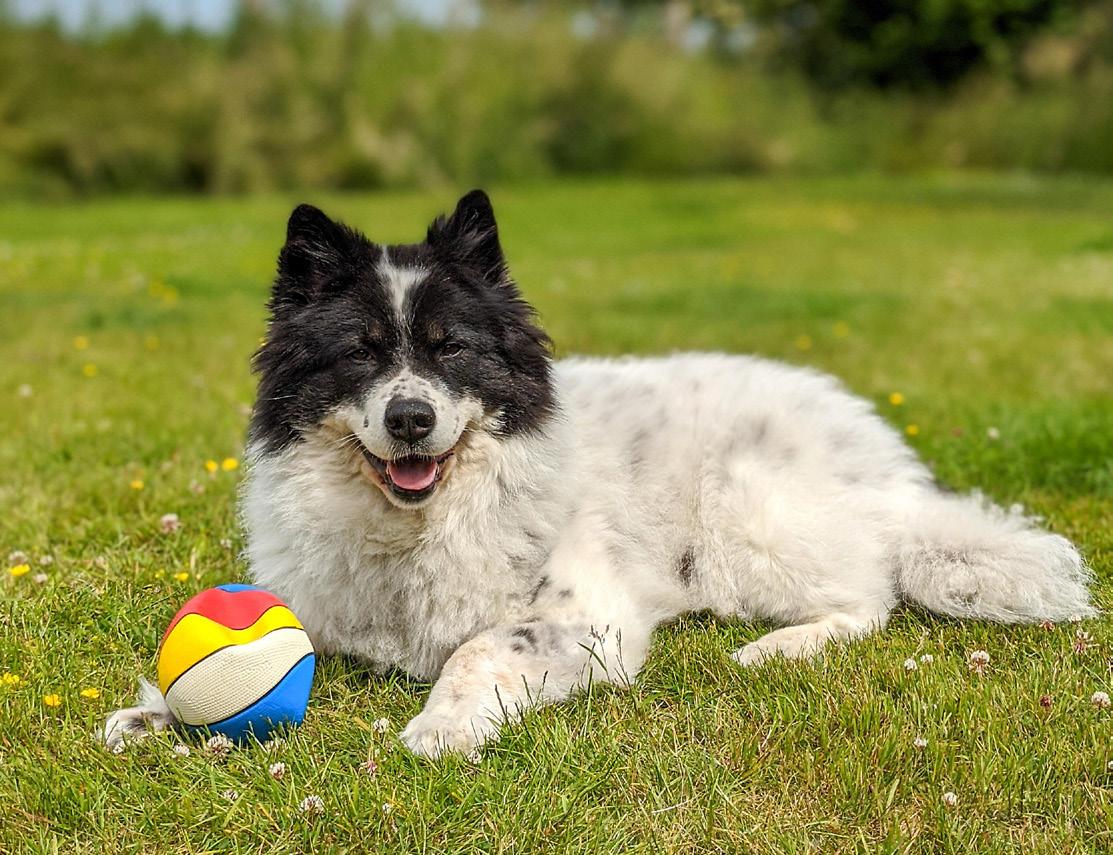
risk environments may allow for more flexibility. With tick populations expanding due to climate change, prevention is becoming less seasonal and more of a year-round consideration.
There is no single “right” choice. The best approach is the one that fits your dog’s needs, your environment, and your ability to stay consistent. Before starting any tick prevention plan, consult your veterinarian to determine what is safest and most effective for your dog.
Check our website at www.ontariodogtrainer.com for more tips for your well-behaved dogwww.youtube.com/@TheOntarioDogTrainer



workplace safety Summer
Heat

By Angela Beal HRS Group (705) 749-1259
I have spoken about this topic before, but it begs repeating. Heat stroke is a very dangerous condition and must be taken seriously. Let’s talk about the symptoms, treatment and how to avoid heat stroke. Also be aware of other conditions such as: Heat Exhaustion, Rhabdomyolysis, Syncope, Cramps, and Rash. Heat stroke occurs when the body can no longer control its temperature, which can rise to 106°F or higher within 10 to 15 minutes. The sweating mechanism fails and the body is unable to cool down. It can cause permanent disability or death if the person does not receive emergency treatment. Researchers studying chronic kidney disease have identified heat stress as the strongest risk factor for this disease.


Symptoms of heat stroke include:
- Confusion, altered mental status, slurred speech.
- Loss of consciousness (coma)
- Hot, dry skin or profuse sweating.
- Seizures.
- Very high body temperature. If treatment is delayed the outcome can be fatal.
Treatment
- Immerse the patient in cold water. If possible, a bath of cold or ice water has been proven to be the most effective way of quickly lowering the core body temperature.
- Use evaporation cooling techniques.
- Pack ice and cooling blankets around the patient. There are also medications to stop the shivering.
Prevention
- Wear loose fitting, lightweight clothing.
- Protect against sunburn. Use sun bloke and wear a hat.
- Drink plenty of fluids. Water is preferable, but if electrolytes are needed there are a variety of drinks that will help replenish them.
- Take extra precautions with certain medications.
- Never leave any living creature in a parked car.
Take it easy during the hottest parts of the day. Find a shady place to rest.
Get acclimated.
Be cautious if you’re at increased risk.
This information has been gathered from NIOSH, CDC and the Mayo Clinic. Please refer to these for more information concerning heat stroke and other heat related conditions.
www.cdc.gov/niosh/bulletin/2021/heat-stress.html www.mayoclinic.org/diseases-conditions/heat-stroke/symptoms-causes/syc-20353581 www.mayoclinic.org/first-aid/first-aid-heatstroke/basics/art-20056655

Sarah Keenleyside
And all of a sudden, these cool restaurants and bars and galleries that were just steps away didn’t mean the same to me. I really wanted space, and I wanted a place for our kids to roam free where they didn’t have to hold onto our hands, not touch things and watch out for strangers in the park.
ATOTK: Covid really screwed a lot of people up.
SK: It really did, and our neighbourhood really felt that. We were fortunate enough to always keep a foot in Prince Edward County. When Justin and I decided that we were each other’s people, he sold his beautiful house on Lake Ontario, and we downsized to a very small house in Picton, which is the main town here in the county, so that we could keep an Airbnb for when we weren’t here.
That allowed us to keep a property out here for vacation. When COVID hit, we took our little family and camped out in the county. We got a taste of what life was like out here, more than just a weekend getaway. I really wanted to raise our kids in more of that ‘80s style of parenting, where we can just open the door, and they can go ride their bikes to school and do things on their own. We knew that was available to us out in the county, so we just said, “Let’s do this. Let’s move out to the county.”
Honestly, Jay, three months into being out here in Prince Edward County, I just turned to Justin one night and said: “So we can put the house on the market whenever you want.” I don’t need any more time. I cannot unknow this life. Justin responded, “I was just waiting for you to be ready.”
ATOTK: How did you and Justin find your new home?
SK: We were living in our own Airbnb, but the house was too small for us, and we knew that. But we were so fortunate that we didn’t have to rent another place. Poor little Louie was living in the laundry room, technically.
I had converted a bedroom into a laundry room for the rental, and so we reconverted it back, but there was laundry in his room. I’m sure we’ll have to deal with that in therapy later. (laughs)
Justin and I had been looking for real estate religiously for the perfect thing to come up. At this
point, knowing the county as well as we did, we knew we didn’t want to live out in the country; we didn’t want to make the mistake that some people do when they come from the city, and they look out here, and they find these beautiful acreages with an old farmhouse.
We knew that wasn’t right for us because you’re driving everywhere. We have two little kids. We want them to have independence early in life, where they can actually ride their bikes to see their friends and stuff like that.
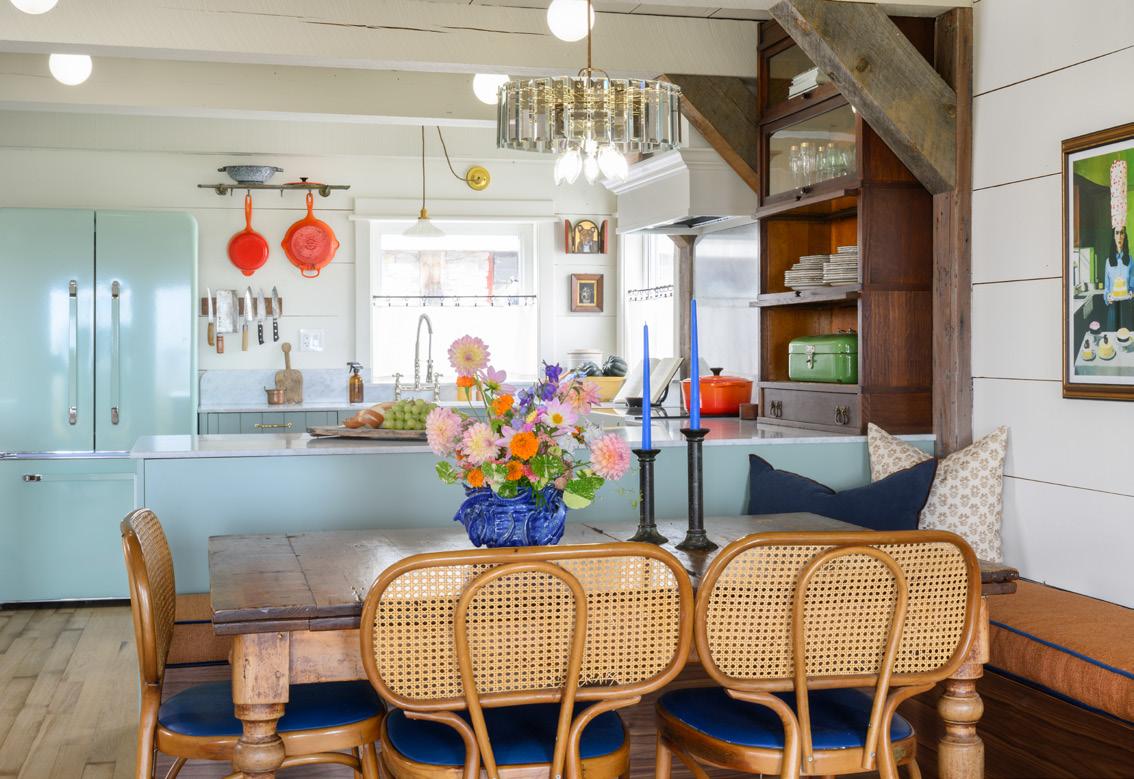
We knew we wanted to live in Picton. We wanted the walkability of city life, but the beauty of country life. We wanted to be in town or at least a walk into town. Keeping our eyes open, the most perfect property presented itself. It was an estate sale. It was an as-is sale, which is so appealing to me as an interior designer because I don’t want to ever undo someone else’s work.
It needed everything, so it wasn’t appealing to most people as it needed a full home restoration. We’re talking knob-and-tube electrical, radiator heating, no central air, major brickwork needing to be done, and old plumbing that needed to be completely redone.
To me, it was the dream, and it was an acre of land. It came with an old barn on it. It came with a little log cabin on it, a little playhouse on it. It came with an ‘80s-style pool. We didn’t even know if you could swim in it, because again, it was an estate sale. When we found that, that put it all in motion.
“The last handful of years for me have been a really great reminder of just following your heart.”
We put our Toronto house on the market. We sold the house, and then we started the year-long renovation. That’s my thing, Jay; I’m either in love with century-old homes or mid-century modern. It’s funny, my design aesthetic is always bringing mid-century modern elements into these Victorian 100-plus-year-old homes.
ATOTK: You also have the help of your fabulous friends, Jo and Kate. They’re also amazing creative souls. Are they TO acquaintances, or are they from the county?
SK: No, they’re both women that I’ve met here in the county who have all moved here for their own reasons. But again, at the core, it’s the same reason. It’s family, it’s wanting to raise our families in a community like this.
There is a real arts community here. There’s an amazing food and beverage world because it’s the canning capital of Canada. Now breweries are coming in, and there’s the farm-to-table movement that is so strong here. The real connection to the land here, which I love, especially transitioning from the city.
ATOTK: Now, how did ‘The County’, the show, come about? Your life has been turned upside down, quite literally, and you say to yourself, “Hey, we should film this. Let’s get me on camera having an emotional breakdown.” (laughs)
SK: (laughs) Yeah, like “That’s a great idea. Isn’t it?” (laughs) Just like everything in life, it’s the beauty of letting go and things just falling into place. The last handful of years for me have been a really great reminder of just following your heart and that everything falls into place when you are doing what is truly right for you and your family.
When Justin and I decided to leave the city, that was me saying, I’m not going to try to do television anymore. I had just had my second baby. We had done four seasons of ‘Backyard Builds’ at this point, and the Backyard show wasn’t going to be renewed, but there were talks about, “Can we do a new show for you?”
So many people were reaching out and being
Continued on next page
Sarah Keenleyside
like, “Hey, can we pair you up with a realtor? Do you wanna do this? Do you wanna do that?” And I’m like, “None of this feels authentic to me,” and I’ve never been interested in doing television for television’s sake. I wasn’t interested in chasing television anymore.
For my own social media purposes, to show that I was still alive and, for people who were following me, I brought my friend in to help me create some videos about this new house that we bought. Lo and behold, I got a call from one of the main people at HGTV Canada saying, “Hey, what’s going on over there? What are you doing out there? Can you come in and have a meeting with the big dogs? I want them to meet you and see why I like you so much and why I think that this could be something.” So, I came in for a very casual meeting. My husband and I were in town going to the Taylor Swift concert and I said, “Please explain to them that I don’t usually wear sequins and red lipstick, but I’m going to the Taylor Swift concert.” That’s how much weight I had put on this meeting. I was like, “Sure, I’ll come in for a little half-hour meeting. I live out in the county now. What do you guys wanna talk about?” I come all Taylor Swifted out, not wearing my usual denim. (laughs) I’m like, “Please know this is not a great representation of myself, but this is why I’m in town.” And we had a great little chat. I literally just told them about life and how beautiful it is.
I said, “If we’re gonna do this, it has to be more of a docuseries than a more formulaic HGTV show,” because the life out here is very honest and it’s very authentic, and there’s no keeping up with the Joneses out here.
And then a week later, I got a development deal, and then a couple of months later, we greenlit the production of the show. They wanted the show title to be Sarah’s blankety blank and all this stuff.
I’m like, “No, you just call it The County.” The County is a character in this television show. It just felt really honest.
ATOTK: Absolutely. That’s why it works, Sarah. The show is also absolute eye candy, the way it’s shot. The visuals and the pace of the show are totally refreshing. So huge congratulations to everyone.
SK: That’s nice that you picked up on that, Jay. If we’re gonna be representing a whole community and a region here, we have to do it justice, and that is part of the pace here. Things are slower. Things take their time. So those beautiful transition shots our director of photography was able to catch and capture are such an integral part of this show. To really transport you into this beautiful place.
ATOTK: What an amazing home movie for your kids when they get older.
SK: This is what I love. I put in a very strict rule that we could never shoot at our actual house, which we were living at while we were renovating the new house. I needed that to be a safe bubble where nothing changed, especially ‘cause mom was back at work and leaving the house at 6:00 every morning.
My husband was really holding down the fort while I was doing this, as it was 10- to 12-hour shoot days. I put in a rule; I can’t have the chaos now. The camera crew is coming to this house this morning. I really protected the boys in that way. The only time they were ever on camera was when they were at the new house or if we were out in the community. They had no idea they were wearing a microphone because if you tell a kid they’re wearing a microphone, they’re gonna blow out the audio. (laughs) I’d say, “Okay, time to put on your battery pack.” I want the kids to have fun every time they come to set, and if they’re not having fun, then they’re not coming to set anymore.
ATOTK: So, what I learned so far is, there’s a great love of satellite dishes and a big dislike of recessed lighting in the family. I’ve also learned to doublecheck right side is up when installing flooring. (laughs)
SK: (laughs) Yeah. Poor Adam. That was used for the
“I am sitting at a very beautiful place in life right now.”
promo, and he’s “Oh, man. All my friends are razzing me”, but we made up for it in the bunk bed episodebecause that’s an amazing bunk bed that he built us.
ATOTK: I asked you four years ago, and I will ask it again. What would you like to do that you haven’t done yet?
SK: I am sitting at a very beautiful place in life right now. We are living exactly where we wanna live, in a community that we love. I’ve got two healthy boys. That’s all I’m really clear about right now. I really have to shut the computer on it because my personal life takes priority in a different way.
In my heart, I feel really centered. I don’t want for anything right now. It really strips away all of that kind of commercialism that the city keeps showing you through, “Oh, I haven’t bought any new clothes in a while.” I’m like, “Yeah, ‘cause look at how many clothes I have.” The consumption is gone, and there’s a real sense of a calm happiness of not wanting for anything right now that I really wanna hold onto because it’s a very beautiful feeling.
A lot of it is a state of mind too, right? I just I wanna be here. I wanna be giving back to this community more and see my boys ride their bikes to school on their own.
ATOTK: I thank you and Justin for helping create this show and bringing it into our living rooms, as it’s a great show with family values, visual eye candy and such a great pace.
SK: That’s wonderful! Thank you so much, Jay. I really appreciate that a lot.
Instagram @sarahkeenleyside www.sarahkeenleyside.com Facebook Sarah Keenleyside