









Discovery Awaits at the UF/IFAS Extension Campus, The Butterfly Garden, Shade House / Nursery Garden, Discovery Garden, Fern and Shade Garden, Nature Walk Garden, Courtyard Garden, and Salt Tolerant Garden

Edible Herbs: Thyme Edible Delights: Thyme Recipes

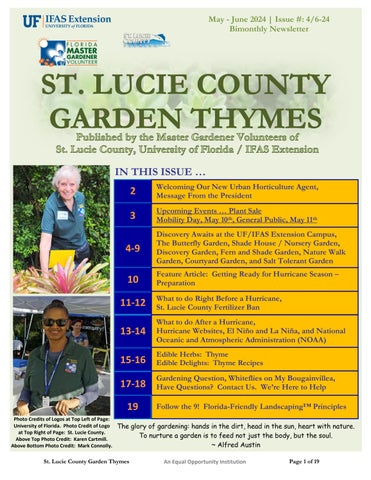
St. Lucie County Garden Thymes Page 1 of 19 May - June 2024 | Issue #: 4/6-24 Bimonthly Newsletter IN THIS ISSUE … : Logo Above Bottom Photo Credit: Mark Connolly. An Equal Opportunity Institution 2 11-12 3 15-16 17-18
Day,
General Public,
11
Questions? Contact Us. We’re Here to Help 4-9 10 Feature Article: Getting Ready
Hurricane Season –Preparation
Welcoming Our New Urban Horticulture Agent, Message From the President Upcoming Events … Plant Sale Mobility
May 10th,
May
th Gardening Question, Whiteflies on My Bougainvillea, Have
for
13-14 What to do
Hurricane
After a Hurricane,
Websites, El Niño and La Niña, and National Oceanic and Atmospheric Administration (NOAA) What to do Right Before a Hurricane, St. Lucie County Fertilizer Ban
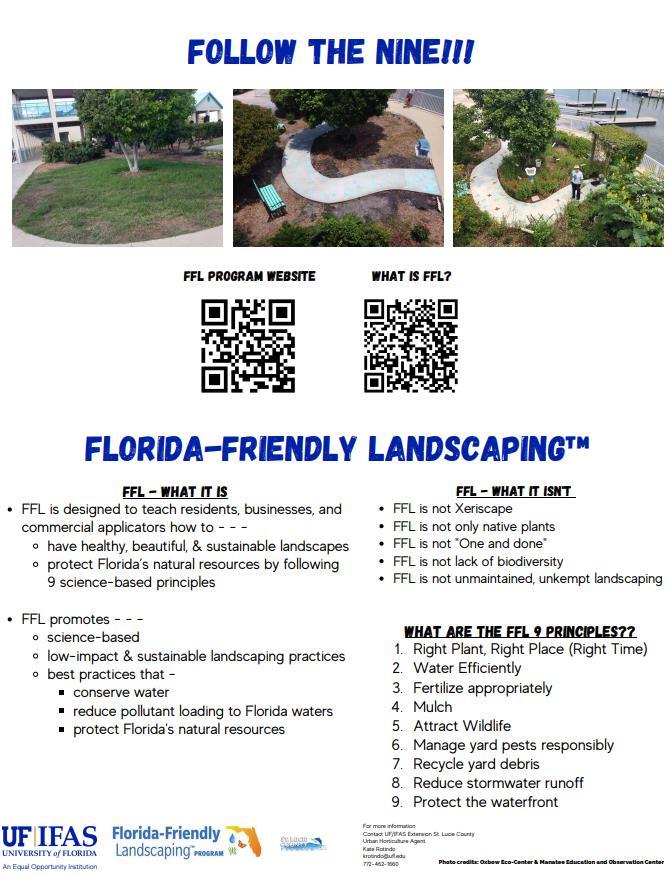
Follow the 9! Florida-Friendly Landscaping Principles 19 The glory of gardening:hands in the dirt, head in the sun,heart with nature. To nurture a garden is to feednot just the body,but the soul. ~ Alfred Austin
By: Elise Schuchman, Urban Horticulture Extension Agent, University of Florida IFAS Extesion, St. Lucie County
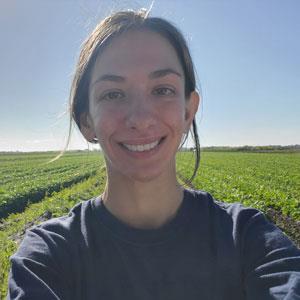
Raised in Orlando, Florida, Elise developed an interest in sustainability early in life when she saw the devastating effects of urban sprawl firsthand. After graduating from Florida State University with a bachelor’s degree in Biology, she found her passion for environmental outreach while working with the Air Potato Biological Control Program at the Florida Department of Agriculture and Consumer Services-Division of Plant Industry.
Along the way, she gained experience in entomological research, biological controls, invasive plants, and plant care, including how to diagnose and treat for pests and diseases. She is delighted to be able to share her knowledge and hopes to inspire the public to adopt Florida Friendly Landscaping Practices and create wildlife and environmentally-friendly yards that are also beautiful and low-maintenance. If you need help identifying plant disease or palm questions, or need a site visit, please contact Elise at 772.462.1609 or email her at Elise.Schuchman@ufl.edu. We welcome Elise as our new Urban Horticulture Agent.
By: Julie Norsworthy, Master Gardener Volunteer and President of the Master Gardener Volunteer Executive Committee
Happy Spring St. Lucie County and a warm welcome from methe new President of St. Lucie County Master Gardener Volunteer Executive Committee! In addition, a warm welcome to our new Urban Horticultural Agent, Elise Schuchman. We are very excited to be working together and are already well into our plans and activities for 2024!
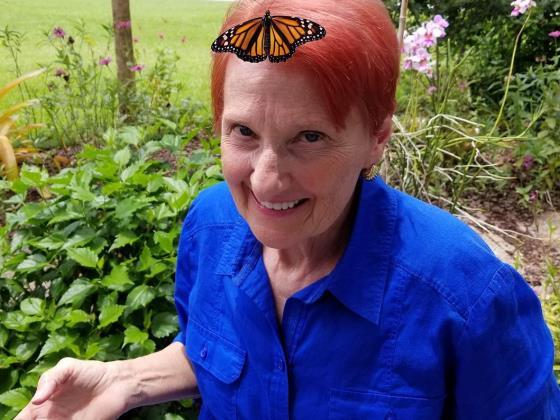
Just a little about me! Even though I have lived in South Florida since 1974 (moving from Chicago) and gardened extensively in every yard of several houses, the Master Gardener Volunteer program has enriched my knowledge and excitement about living here. I earned my Master Gardener Volunteer status just three years ago and learn every day.
My focus has been on butterflies (raising, releasing, and giving presentations) and I had to know which plants would attract the butterflies to my garden! The much-anticipated Plant Sale is coming up this Friday and Saturday. Our Mobility Day, for those who need a little extra help is this Friday, May 10th from 10:00 a.m. to Noon. This Saturday, May 11th from 9:00 a.m. to 2:00 p.m. we welcome the general public. I will be there at the cashier table and look forward to meeting my fellow gardeners!
St. Lucie County Garden Thymes Page 2 of 19
Photo Credit: Elise Schuchman, UF/IFAS.
Photo Credit: Julie Norsworthy.
Come to the Master Gardener Plant Sale This Weekend
By: Karen Cartmill, Florida Master Gardener Volunteer
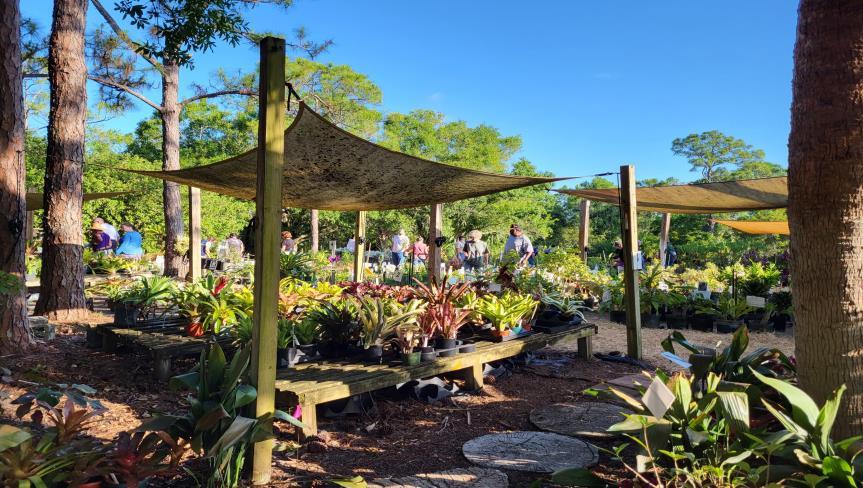
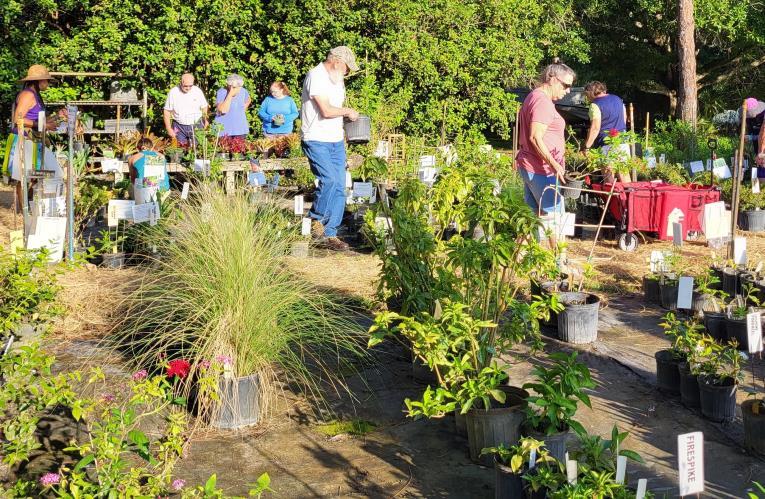
It’s a great time to purchase some wonderful plants from the Master Gardener Volunteer Nursery located in Fort Pierce at the University of Florida Extension Campus. These plants have been propagated and cared for with much love by Master Gardener Volunteers and they are ready to find their forever homes. Do your need a Mother’s Day gift or want to expand the plants in your own garden? We have a variety of great plants at great prices just waiting for you. I can honestly say that I have been purchasing plants during these plant sales for the past nine years and they have made a great addition to my garden. Plus, I have not lost one yet! Come check out the plants for sale at our plant sale this upcoming weekend. The plant sale is located at the UF/IFAS Extension Campus at 8400 Picos Rd., Fort Pierce. We’ll see you there!
St. Lucie County Garden Thymes Page 3 of 19
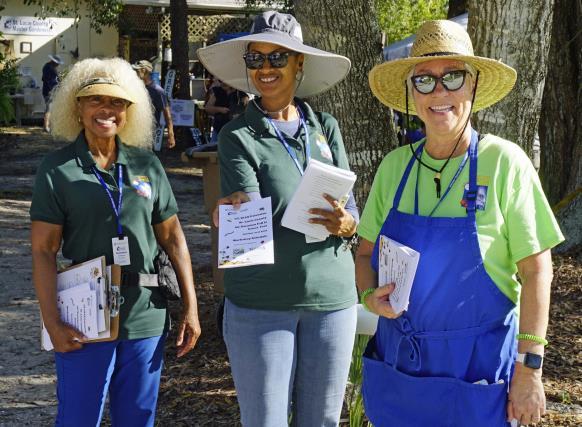
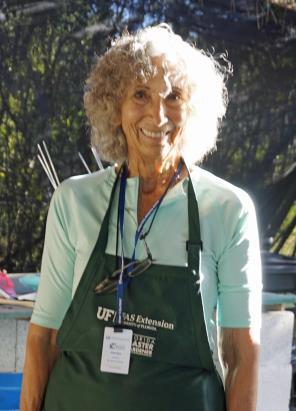
Our Master Gardener Volunteers are Ready for the Sale and Here to Help Answer Your Questions! Mobility Day Plant Sale,
Photo Credits Above: Karen Cartmill.
Photo Credit Above: University of Florida.
Come to Our Plant Sale and Visit the Many Gardens on Display
By: Karen Cartmill, Florida Master Gardener Volunteer
Did you know that the University of Florida/IFAS Extension Campus, right here in Fort Pierce has some wonderful discoveries just waiting for you? We have a total of seven (7) gardens that you can visit including:
• Discovery Garden, Nature Walk Garden, Butterfly Garden, Courtyard Garden, Fern and Shade Garden, Salt Tolerant Garden, and Shade House / Plant Nursery.
Come visit the gardens and plant nursery this weekend during our plant sale and get some great ideas. These plants will do well in our South Florida landscapes. Purchase some plants at our plant nursery, too! If you have any questions, experts will be on hand to answer them as well.
By: Janet Fitzgerald and Karen Cartmill, Florida Master Gardener Volunteers
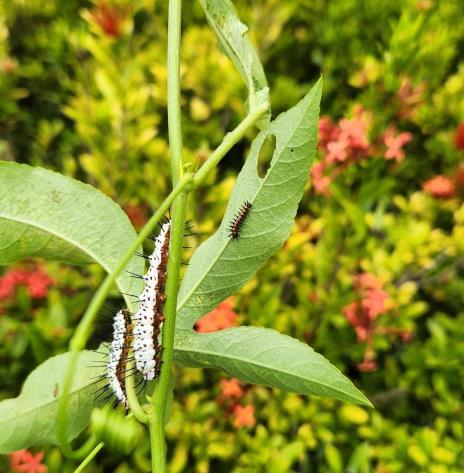
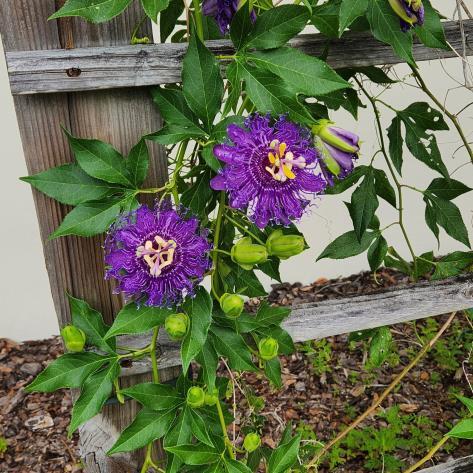
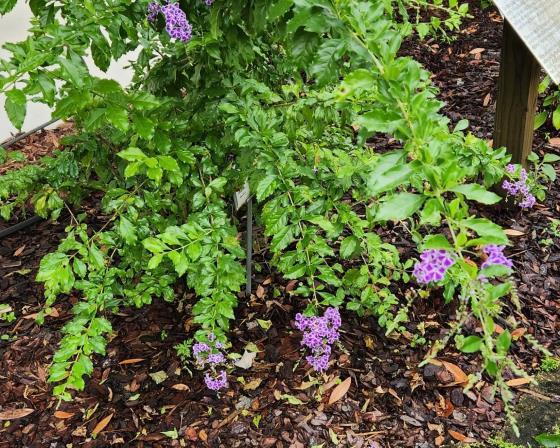
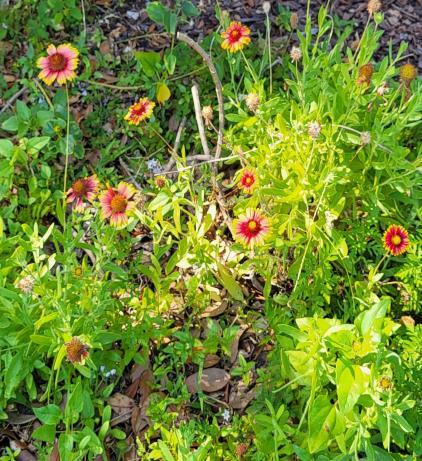
The butterfly garden at the extension office is thriving this spring. Many of our plants are in full bloom. The passion vine has Zebra longwing and gulf fritillary caterpillars all enjoying their favorite foods! Swallowtail butterflies have paid a visit and Monarch butterflies have also been spotted visiting in the garden.
There are plenty of plants that provide food and nectar, a sweet liquid produced by plants, that is rich in vitamins, salts, oils, and other nutrients. "Some of the plants in the garden include: Panama rose, gaillardia, coonties, pagoda Clerodendrum, jatropha, popcorn cassia, sweet almond, passion vine, dune sunflower, and porterweed.
On any given day, one can sit down and enjoy various species of butterflies fluttering by.
St. Lucie County Garden Thymes Page 4 of 19
Photo Credits Top and Bottom Left: Janet Fitzgerald.
Photo Credit Bottom Right: Karen Cartmill.
By: Carolyn Luxion and Karen Cartmill, Florida Master Gardener Volunteers
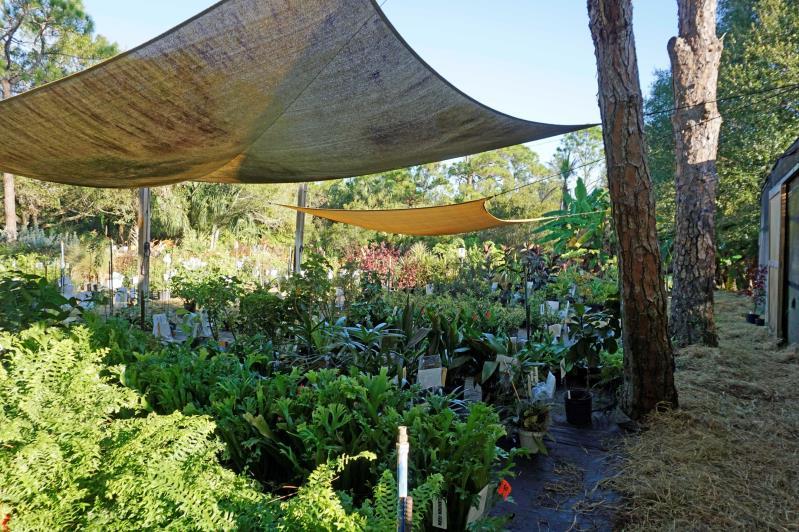
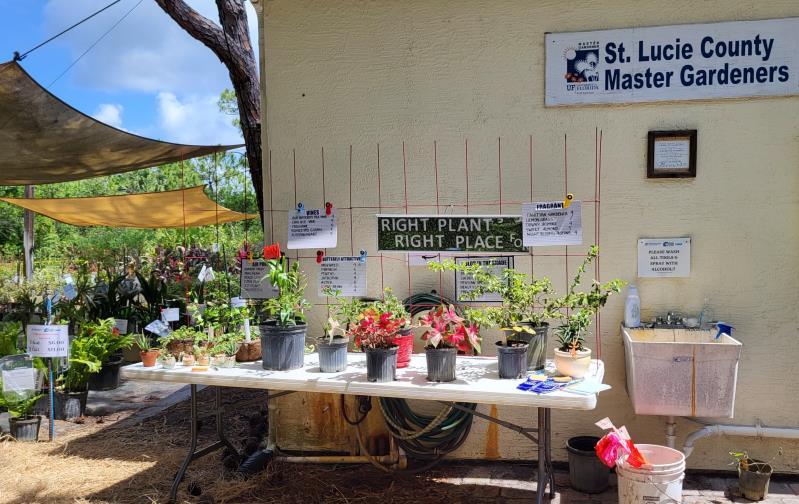
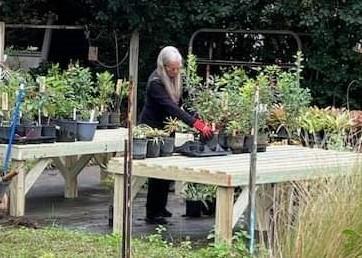
This Shade House / Nursery is more than a garden, it’s where our plant propagation begins and the many varieties of plants are given tender-loving care until they find their forever homes. Over 1,500 plants will be available for sale at our upcoming plant sale this weekend.
These plants are either native or FloridaFriendly and will do great in our South Florida gardens. Come find the right plant for the right place in a Florida-Friendly Landscape™ .
In the nursery are examples of raised bed plant tables for gardening, too. To date, ten Master Gardener Volunteers have sponsored a table with four completed and placed in the nursery. However, we could use more tables and are looking for sponsors! Come and check out the new raised bed tables.
If you are interested in sponsoring a table, please contact Danielle Shalginewicz, Master Gardener Program Specialist, University of Florida, at 772-462-1445 or 772-801-1933 or by email at dshalginewicz@ufl.edu.
Additionally, our nursery provides mother plants to the Discovery Garden that will be used to propagate new plants to grow and sell in the future.
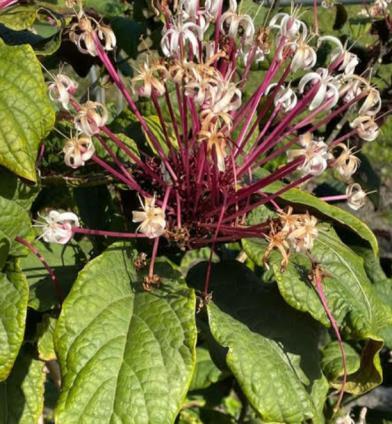
There are plenty of wonderful plants waiting to purchase at great prices, including: Copper leaf-twisted red leaf, (which has an outstanding color), Peperomias, (with three varieties of this Florida native plant that purifies the air indoors), Purple firespike, (a not-so-common color that attracts pollinators), and Fiddle leaf fig, (a great indoor plant which sold out at our last sale, but is back again)!
St. Lucie County Garden Thymes Page 5 of 19
Top and Middle Photo Credits: Karen Cartmill. Bottom Photo Credit: Danielle Shalginewicz.
By: Janet Fitzgerald and Kim Keith, Florida Master Gardener Volunteers
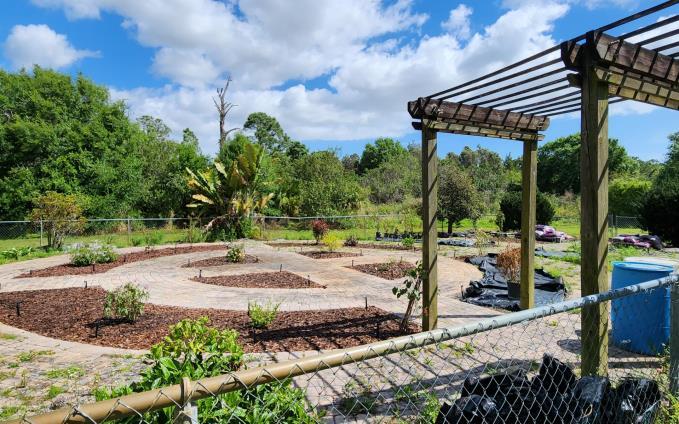
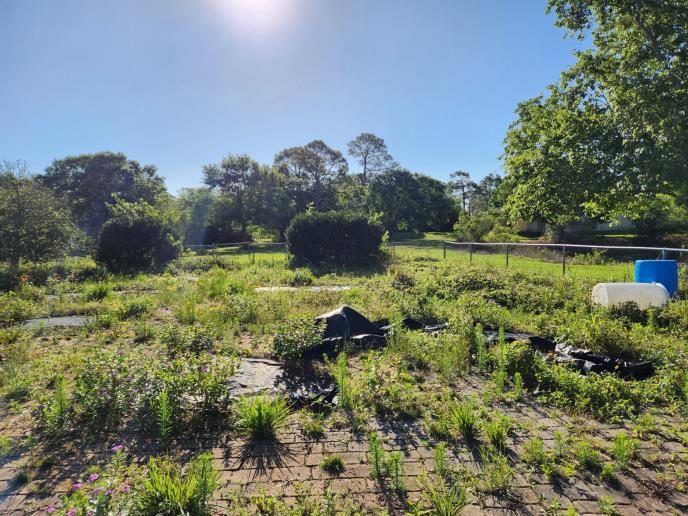
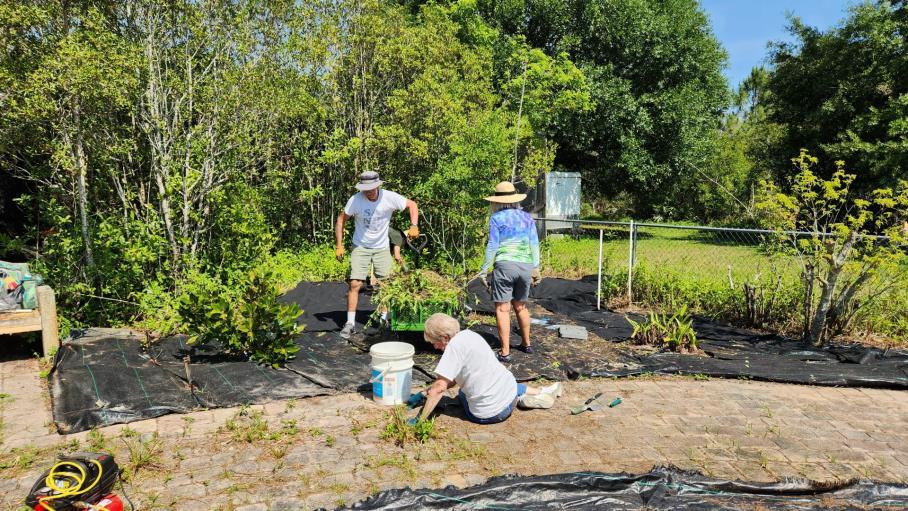
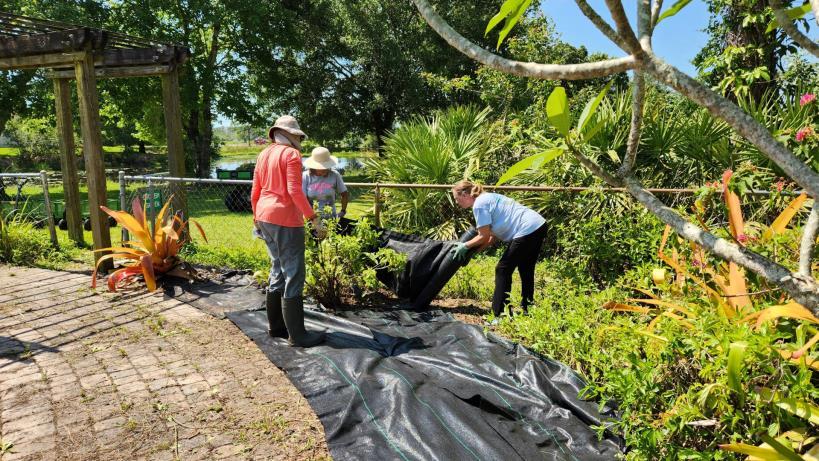
From a field of weeds to a field of plants and dreams, The Discovery Garden at the extension office is progressing nicely and is in full bloom. After almost a full year of weeding and cleaning out the garden, irrigation has been upgraded and the dedicated team of Master Gardener Volunteers can now begin planting.
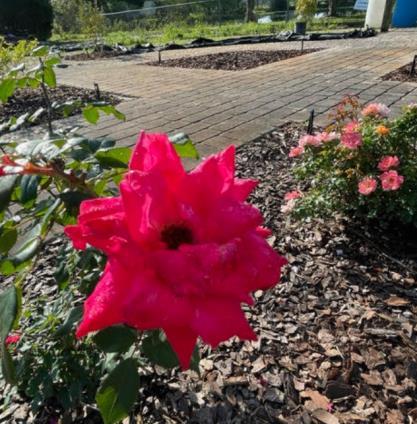
We have successfully planted several plants including rose bushes, hibiscuses, cat whiskers, plumbagoes, gold mound durantas, pentas, a vine for the arbor, and a spinach tree for our edible garden bed. We’ll start planting some flowers from seed for our flower bed. Additionally, once the weeds and the large invasive Brazilian Pepper trees were removed, a beautiful Japanese Blueberry tree and podocarpus plants were visible for all to see and admire.
We’re also excited to have received some plants from the shade house nursery that we planted into the garden, including silver buttonwood, curly chocolate copperleaf, ixora, jatropha, and scorpion tail. These Mother plants from the nursery are being planted for future propagating. The garden team is planning further plantings and trying to find ways to raise funds to make it all happen.
Come and discover the many beautiful plants in the Discovery Garden. These plants would do well in South Florida landscapes.
St. Lucie County Garden Thymes Page 6 of 19
Photo Credits Above and Bottom Left Side: Janet Fitzgerald. Photo Credits Bottom Middle and Right: Danielle Shalginewicz.
By: Veronica Dillingham and Lisa Dietderich, Florida Master Gardener Volunteers
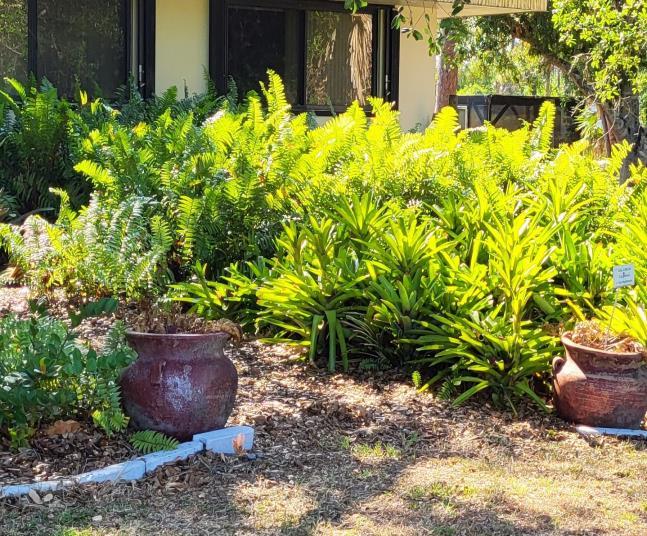
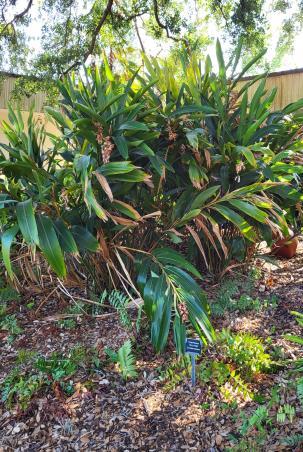
Our fern and shade garden are located on the east side of the UF/IFAS Extension building, shaded by a beautiful, huge oak tree. It is called our Fern and Shade Garden because it features an abundance of massive macho ferns. Macho ferns, also known as Nephrolepis biserrata “Macho,” are large, feathery ferns that are native to tropical regions such as South America and Central America. These ferns are characterized by their thick, leathery fronds that have a rich, bright green color. They can grow up to 3 to 4 feet in height and have a spread of 4 to 5 feet. In the top photo at left, these large macho ferns can be viewed while walking through this garden that is guided by white border stones. In addition to our macho ferns, the garden showcases various types of smaller ferns.
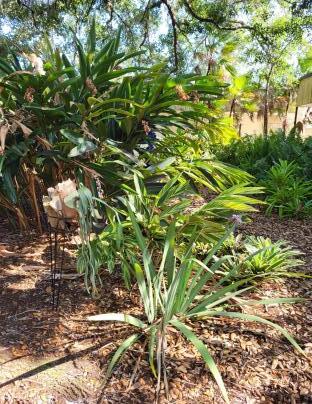
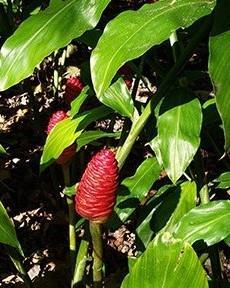
You will also be drawn to take in the beauty of tall and majestic ornamental ginger plants with cane-like stems. These plants can grow to heights of up to 15 feet. In our garden, some are as tall as 6 feet, producing an exceptionally large and uniquely shaped flower. In fact, some of the ginger plants in this garden are known as Shampoo Ginger because of their red flowers that look like red cones. When the cones are squeezed, they release a clear, fragrant liquid that can be bottled and used as shampoo and a hair conditioner! There are also smaller types of variegated ginger plants in the garden, too.
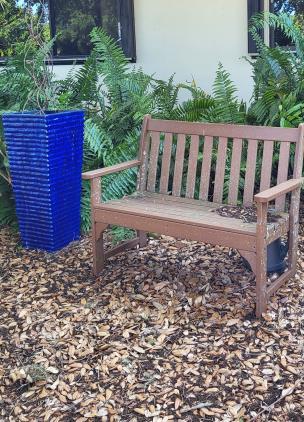
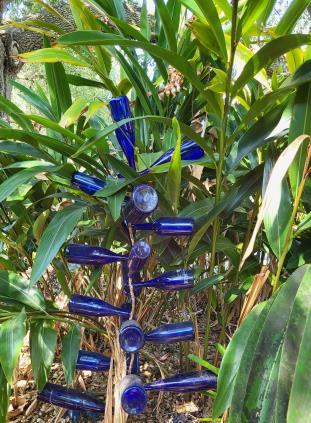
The shade garden has several varieties of shade loving plants, orchids in the oak tree, a bottle art tower, and a few caladiums, all adding a pop of color to the area. Staghorn ferns have also been added near the oak tree.
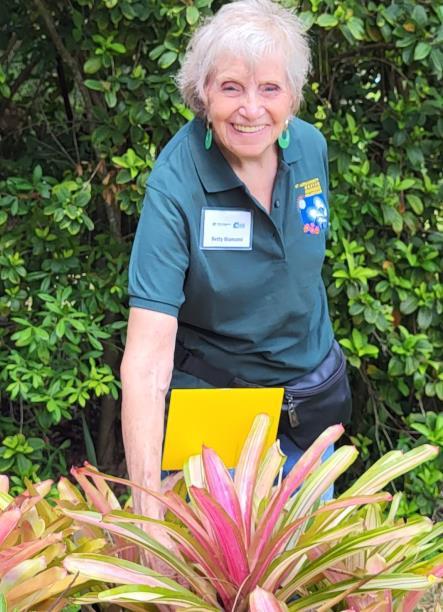
Throughout the shade garden, you will see large, bright green, and vibrant-looking bromeliad plants. When visiting our UF/IFAS Extension St. Lucie County site, come walk through our garden, have a seat, and take in the peaceful serenity of this beautiful garden. A special thank you to Veronica Dillingham, Betty Bianconi, Lisa Dietderich, and Janet Mackey for their work in the garden.

St. Lucie County Garden Thymes Page 7 of 19
Photo Credits Above: Karen Cartmill. Bottom Photo Credit at Right: University of Florida.
By: Mark Lewis, Janet Fitzgerald, and Karen Cartmill Florida Master Gardener Volunteers
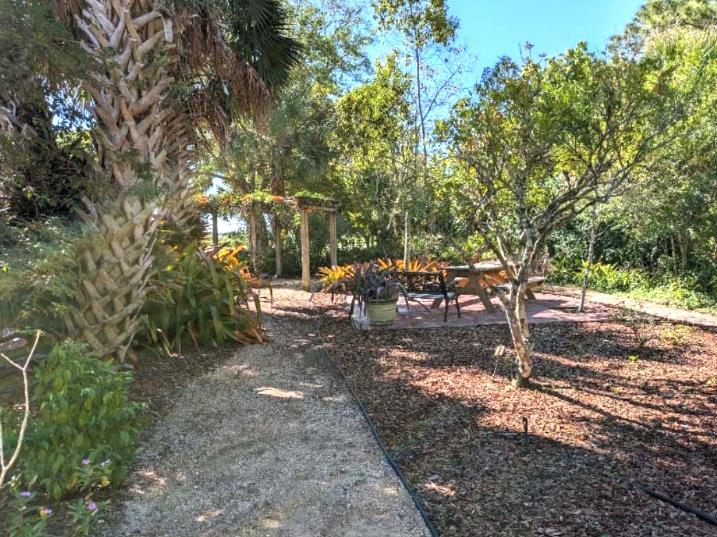
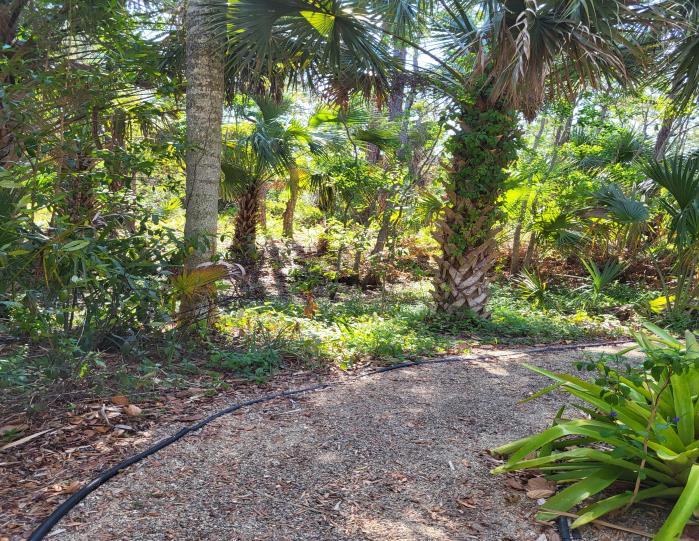
Master Gardener Volunteers Veronica Dillingham, Mark Lewis, and Lisa Dietderich have been working on the nature trail garden for the last few months with the goal of restoring and upgrading this area to its original purpose. That purpose, and the purpose of nature trails in general, is to provide a path or a series of connecting pathways through a nature area that is designed for hiking and walking. These trails provide a place where one can observe nature, the plants and trees, the area’s natural wildlife, and waterways.
Additionally, nature trails play an important role in the preservation of an area’s natural landscape, the protection of habitats, plant and animal species, and contribute to wetland preservation. They provide people with opportunities not only for exercise and physical activity, but for one’s mental health and wellness, and an appreciation for nature in general. They also provide a chance to learn about local ecosystems, plants, and wildlife, and the importance of protecting and advocating for these valuable environments.
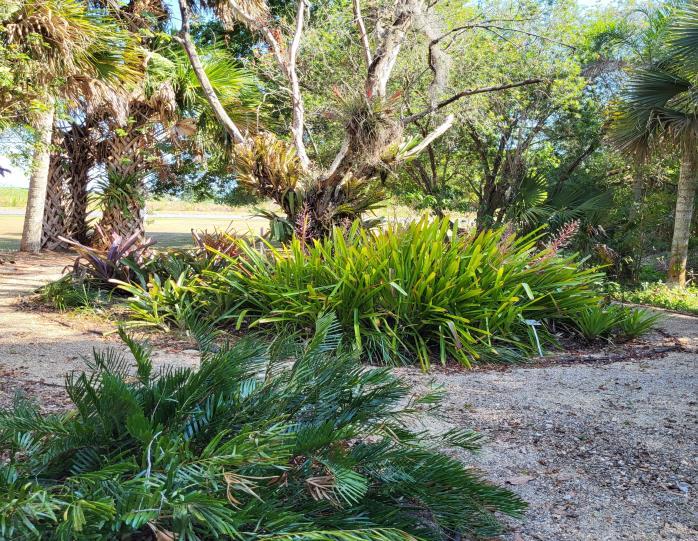
The team of Master Gardener Volunteers have made significant progress toward these goals and have cleared and restored a significant portion of the nature trail garden. Soon the succulent garden and areas across from the marsh will be cleared exposing beautiful views framed by maples trees, palmettos, and bald cypress trees.
Take a walk through the nature trail, browse through the succulent garden, bromeliads and air ferns as the trial loops around and terminates at a small gazebo. Take some time to sit and relax at the picnic table and benches. Enjoy the beauty and purpose of this nature trail and its gardens.
St. Lucie County Garden Thymes Page 8 of 19
Top Photo Credit: Janet Fitzgerald. Middle and Above Photo Credits: Karen Cartmill.
By: Patti Dmytryk and Karen Cartmill, Florida Master Gardener Volunteers
As you walk to the entrance of the Extension office, you pass through a beautiful courtyard full of bromeliads, orchids, vincas, gardenias, snowbush, yesterday-today-and-tomorrow and many other varieties of plants. Master Gardener Volunteers Patti Dmytryk, Barb Lasher, Lois Paradiso, and Karen Pollock have worked hard maintaining this garden.
On each side of the walkway are benches framed butterflies flutter by on their way to the Extension office, wonder through this garden and and other plants.
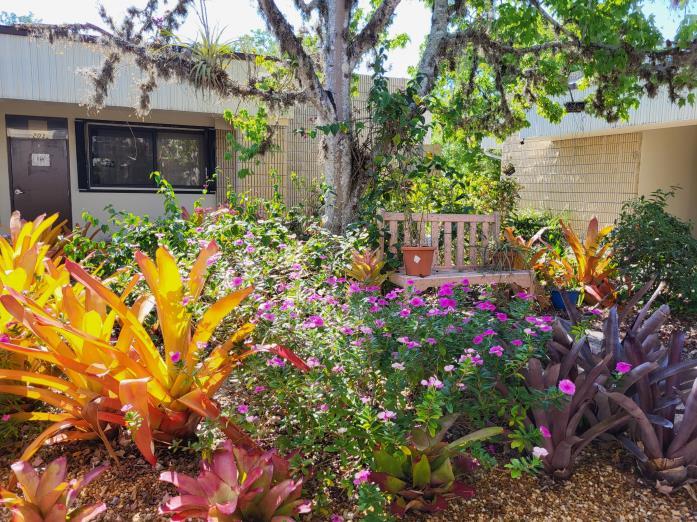
with native Florida Maple trees. Various species of Butterfly Garden nearby. On your next visit to the enjoy the different variety of orchids, bromeliads,
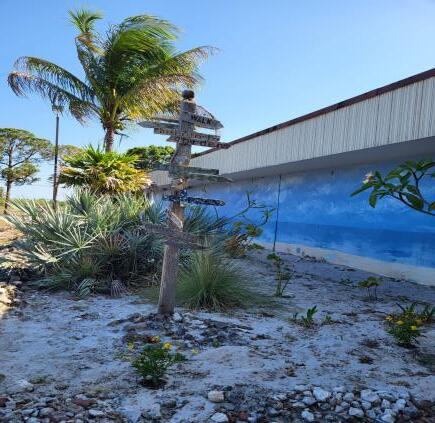
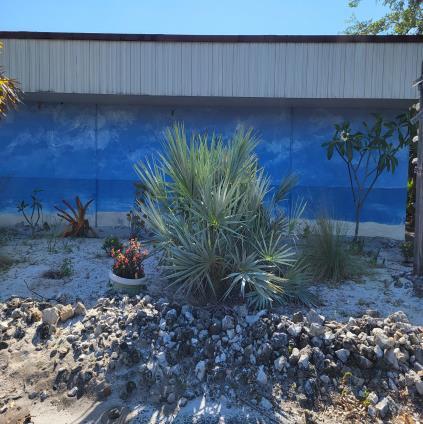
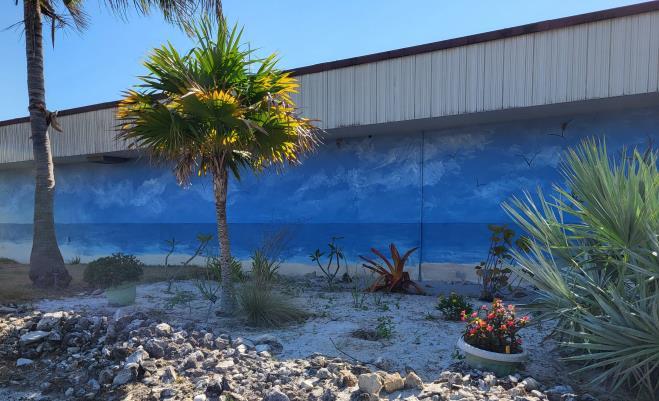
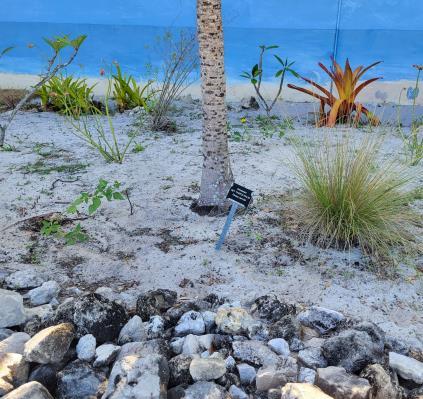
A salt tolerant garden consists of plants that have the best chance of success in an area that is near any type of seawater, such as the ocean, and is exposed to sea air and salt. Choosing plants that can tolerate salty conditions is very important.
Our salt tolerant garden is under renovation but some of the plants that you ’ll find are shrimp plants, sea grapes, bromeliads, African bush daises, saw palmettos, crown of thorns, lady slipper plant stalks, muhly grass, spider lilies, and frangipani’s. A ground cover, dune sunflower, is currently growing in our nursery and will be planted in garden next month. All is looking good at the sandy beach! Check out the garden and plants that will do well by the ocean and in salty conditions
St. Lucie County Garden Thymes Page 9 of 19
By: Janet Fitzgerald, Betty Bianconi, and Karen Cartmill, Florida Master Gardener Volunteers
Photo Credits: Karen Cartmill.
Photo Credit: Karen Cartmill.
Preparing Your Landscape This Month for the Hurricane Season
By: Karen Cartmill, Florida Master Gardener Volunteer
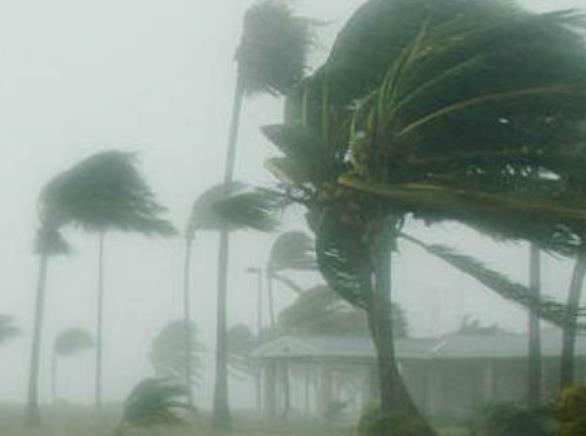
The time to prepare your landscape is long before the risk of a hurricane. Hurricane season runs from June 1st to November 30th . If you haven’t already, now is the time to perform the following tasks.
To-Do’s This Month to Prepare:
Assess your landscape.
• Remove dead, dying, damaged, and diseased branches or those that appear weakly attached to the tree and trunk area.
• Remove debris in your garden beds.
Prune your trees.
• Properly pruning trees can make them more wind resistant. Reducing or thinning the crown of a tree can also help decrease the movement of the trunk during hurricane winds.
• Do not prune trees by topping, lion-tailing, over-lifting, or hat-racking.
• Hire a certified arborist to properly prune your trees and branches if they are too large or the tree is too tall.
• Remove any tree limbs that overhang your home or other structures. Consider hiring an arborist.
Prune your shrubs and plants.
• Remove dead, dying, damaged, and diseased branches to help make them more wind resistant.
Prepare your palm trees.
• Remove coconuts, fruits, and wooden palm fronds from palm trees.
• Prune palms, but do not “Hurricane Prune”. Never prune above the 3:00 and 9:00 hands on a clock. Consider hiring a certified arborist to properly prune your palm trees.
• Remove completely brown and dead fronds only.
Clean your gutters and redivert the path of water from extended downspouts.
• Removing debris from your gutters will allow water to flow freely during torrential rains.
• Rediverting downspouts can push water away from your home’s foundation and protect against erosion. It can also protect your plants from drowning in water and root rot. Redirect outwards further out into your garden beds or ideally towards your turf areas.
• Consider creating a dry river rock bed as well.
•
St. Lucie County Garden Thymes Page 10 of 19
Photo: University of Florida/IFAS.
Preparing Your Landscape Right Before a Hurricane
By: Karen Cartmill, Florida Master Gardener Volunteer
Right before a hurricane is eminent it’s time to make your final hurricane preparations to protect your landscape as best as possible from the strong winds and rain.
Right Before a Hurricane:
Do not prune trees, shrubs, etcetera.
• There isn’t time to have the debris removed off-site to prevent it from being a hazard by becoming airborne and damaging property or others, or hindering emergency response teams. The time to perform these activities has passed. If you do prune, store the debris in your garage during the hurricane.
• Do not go on ladders, use power equipment, try to do yard work or prune as conditions start to worsen and it becomes windy. Always be cautious when using ladders and power equipment, and if using power cords.
• It’s time to protect yourself and family.
• Take pictures of your landscape and outside of your home so you have before and after pictures for your insurance company and FEMA.
Stake newly planted trees and any trees that are leaning.
• This will help hold the roots firmer in the soil during strong winds.
Take care of potted plants, garden furniture, garden art, etc., so they do not become airborne.
• Remove pots, garden furniture, garden art, small greenhouses and sheds, hanging baskets, yard debris, and other objects that can become flying objects. Place in the garage or home if possible.
• Pots that cannot be moved inside can be placed between your home’s foundations and a row or hedge of shrubs. Lie the pots down. If lying down pots between a hedge and the foundation is not possible, group your pots under a covered area and use bungee cords, anchors or other tie-downs to tie them together.
Check and clean your gutters and redivert the path of water from extended downspouts.
• Even if you cleaned your gutters and diverted extended downspouts prior when preparing your landscape, check to see if they need cleaning or any other diverting right before a pending hurricane.
Prepare Rain Barrels.
• Move empty rain barrels to a secure location such as your garage.
• If your rain barrels are connected to a gutter, disconnect them and allow water to overflow from the top. This will help secure your barrels.
• If there is already a significant amount of water in your rain barrels, fill the barrels completely, the rest of the way to the top, to help secure them and so they are less likely to blow away.
St. Lucie County Garden Thymes Page 11 of 19
Preparing Your Landscape Right Before a Hurricane, Continued
By: Karen Cartmill, Florida Master Gardener Volunteer
Right Before a Hurricane Continued:
Turn your irrigation system off.
• Wait for the soil to dry out before starting your irrigation system up again
Do not apply landscape chemicals or fertilizers right before a hurricane.
• These chemicals and fertilizers will only wash into storm drains and waterways polluting them and adding to the potential for toxic algae blooms and red tides.
June 1st to September 30th
By Karen Cartmill, Florida Master Gardener Volunteer
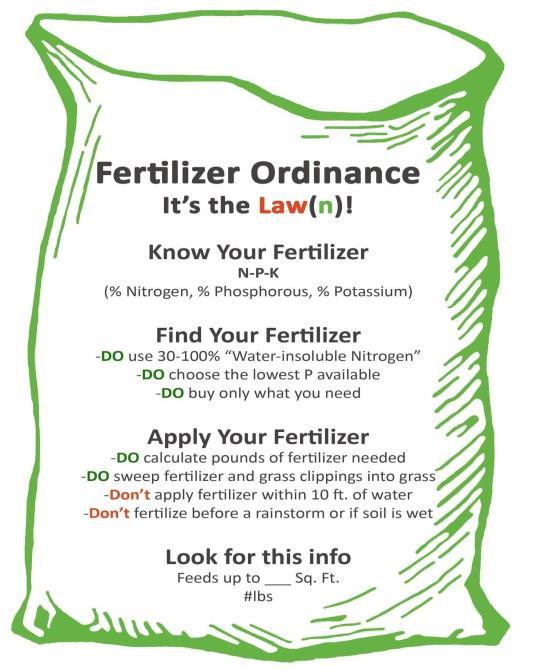
In Saint Lucie County and throughout Florida, there are fertilizer bans starting on June 1st and continuing until September 30th , which mostly coincides with the hurricane season. In addition, the ban is also in effect anytime of the year that the National Weather Service forecasts heavy rains to occur within 24 hours.
During these times, you cannot apply any fertilizers that contain nitrogen and phosphorus to your lawn or landscape. The ban is in effect to help protect our Florida waterways because these nutrients support the growth of toxic blooms of Blue-Green algae and also feeds the potential for Red Tides.
Fines can be levied if caught fertilizing with nitrogen and phosphorus. Fertilize your plants, trees, palms, and turf before the hurricane season begins
For more information, check out the following websites or the QR Codes on the right. Florida Fertilizer Ordinances: https://ffl.ifas.ufl.edu/resources/apps/fertilizer-ordinances/ St. Lucie County: https://www.stlucieco.gov/departments-andservices/planning-and-development-services/codecompliance/fertilizer-info


St. Lucie County Garden Thymes Page 12 of 19
.
QR CODE: Florida Fertilizer Ordinances QR CODE: St. Lucie County Fertilizer Ordinance
What to do After the Hurricane is Over
By: Karen Cartmill, Florida Master Gardener Volunteer
Do not go outdoors during a hurricane to inspect your landscape. Wait until it passes and is safe to do so and the all-clear has been given by the proper authorities.
After a Hurricane:
Do not go near downed power lines or attempt any clean up until power has been properly restored and it is safe for work to commence.
• Wait for the all-clear in your area.
Assess the damage to your landscape.
• Look around your property for any damage.
• Take pictures for your insurance company and FEMA.
Clean-Up.
• Start the clean-up process of debris and follow your community, city and county rules, and process for debris containment and removal.
• Replant any shrubs or small trees that became uprooted.
• Re-stake or stake any trees if necessary. Contact an arborist for larger trees needing re-staking, planting, or for damaged limbs needing removal.
Irrigation and Rain Barrels.
• Reconnect your rain barrel to your gutter.
• Wait for the soil to dry out before starting your irrigation system up again.
Check and clean your gutters.
• Even if you cleaned your gutters prior, it’s a good idea to check to make sure there isn’t any debris from the hurricane. If there is, clean and remove the debris.
• Decide if you would like to change the redirection of your downspouts outwards after the hurricane or keep them as is in your garden beds or turf areas.
Replace your potted plants, garden furniture, garden art, etc., into your landscape.
• Bring your pots, etc. from your garage, home, or wherever they were stored prior to the hurricane and replace them in your landscape.
• Inspect those pots that you weren’t able to store in the garage for any damage and repair as needed.
Refer to University of Florida/IFAS websites on the next page for more information
St. Lucie County Garden Thymes Page 13 of 19
For more information, check out the following websites or QR Codes below.
1. https://gardeningsolutions.ifas.ufl.edu/care/weather/hurricanelandscaping.html
2. https://blogs.ifas.ufl.edu/polkco/2019/05/13/preparing-yourlandscape-for-hurricane-season/
3. Disaster Recovery Handbook: • https://disaster.ifas.ufl.edu/
4. https://sfyl.ifas.ufl.edu/miami-dade/weather-issues/hurricaneand-disaster-preparation/
5. Preparing Your Landscape for Hurricane Season - UF/IFAS Extension Polk County (ufl.edu)
6. https://blogs.ifas.ufl.edu/stlucieco/2019/08/26/hurricane-seasonis-right-around-the-corner-is-your-yard-ready/
7. https://blogs.ifas.ufl.edu/flaglerco/2023/08/28/is-your-landscapeprepared-for-the-storm/
8. https://blogs.ifas.ufl.edu/news/2022/05/26/how-to-prepare-forflorida-storm-season/

El Niño and La Niña and Hurricanes
















El Niño and La Niña are the warm and cool phases in sea surface temperatures. El Niño is the warming phase and La Niña is the cooling phase. These opposite phases affect climate patterns and weather worldwide. This summer, we ’re expected to shift from El Niño to La Niña. This shift could increase the intensity and number of hurricanes in the Atlantic Ocean. There are predictions that 2024 may be a very active hurricane season. In late May, the National Hurricane Center, NOAA, known as the National Oceanic and Atmospheric Administration, will issue its first hurricane forecast for the 2024 season. Stay tuned to NOAA’s predictions. It may be a very active hurricane season. NOAA’s website is: • https://www.nhc.noaa .gov/.
St. Lucie County Garden Thymes Page 14 of 19
Photo Credit: University of Florida.
QR
QR
QR
QR CODE:
QR CODE:
NOAA Website
QR CODE: #1
CODE: #2
CODE: #5
CODE: #6
#7
#8 QR CODE: #3 QR CODE: #4
By Betty Bianconi, Florida Master Gardener Volunteer
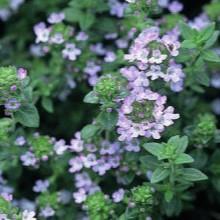
Thyme (Thymus vulgaris), a small yet mighty herb, has been treasured by cultures throughout history for its aromatic flavor, medicinal properties, and versatility in the kitchen. It’s in the Lamiaciae family and part of a genus of about 350 species of aromatic perennial herbs. It’s one of our best culinary herbs- it’s part of both Bouquet Garni and Herbes de Provence, both blends that are staples in the seasoning of many dishes. Thyme boasts an ancient lineage dating back thousands of years. Its origins can be traced to the Mediterranean region, where it grew wild in rocky, sun drenched terrain. The ancient Egyptians used thyme in their embalming rituals, and the Greeks believed it symbolized courage. The Romans embraced thyme not only as a culinary herb, but also as a remedy for various ailments.
Thyme comes in a variety of species and cultivars, each with unique flavors and characteristics. The one’s that grow best in Florida include common thyme (most widely used), lemon thyme (has citrus aroma and taste) and Creeping Thyme (milder flavor, used as ground cover).
Planting and Care: Thyme is a hardy and low-maintenance herb. Plant thyme in well-drained soil with lots of sunlight. It thrives in full sun. Thyme can be grown from seeds planted in the ground in either late fall or early spring, using cuttings, or it can be purchased as potted plants. It prefers slightly dry conditions and it tolerates drought well. Avoid over watering. Water the plant only when the soil feels dry to the touch. Regular pruning encourages bushier growth and prevents the plant from becoming woody.
Harvesting and Storage: To use, remove the top one-third portion of the plant when in full bloom and spread on newspaper in a well-ventilated room to dry. Then, strip the leaves and flowering tops from the stem and store in tightly closed containers.
Health Benefits: Many of us think of thyme as simply a culinary herb, but thyme has a well-deserved place in our medicine cabinet as well. Thyme tea is fabulous for lung congestion and coughs. It can be made into a cough syrup and used to loosen and expel mucous, reducing or stopping coughing (see recipe below.) Antimicrobial in nature, it has been used for centuries to clean wounds and kill parasitic fungi on the skin. These anti-microbial properties make it great for cleaning your house as well.
This easy to grow herb is a must for its ease of growing and the flavor boost it gives to any dish, as well as its health properties.
For more information check out the following websites or QR Codes at right:
1. https://blogs.ifas.ufl.edu/nassauco/2017/05/28/factsheet-thyme/.
2. https://edis.ifas.ufl.edu/publication/fy1209.


St. Lucie County Garden Thymes Page 15 of 19
Photo Credit: University of Florida.
Thyme Fact Sheet Thyme
By: Betty Bianconi, Florida Master Gardener Volunteer
Thyme-Honey-Lemon Cough Syrup
* Do not give this syrup to babies under 1 year of age. Please see note below.
Ingredients
• ¾ cup (12 ounces) boiling water
• 2 tablespoons fresh chopped or 1 tablespoon dried thyme leaves
• juice of 1 fresh lemon (about 2 tablespoons)
• ¼ cup honey (raw is best)
Directions
In a jar or measuring cup, stir water, thyme, and lemon juice; cover and let sit at least 10 minutes. Strain. Stir in honey until well combined. Keep covered in refrigerator up to 3 days. Makes about 1 cup.
* The Food and Drug Administration (FDA) and American Academy of Pediatrics (AAP) recommends that you do not give a baby honey or syrup, or have honey in any form at least for the first 12 months. Honey and syrups can contain spores of Clostridium botulinum, which is a type of food poisoning, in babies under one year old.
Cheesy Hamburger Skillet
By: University of Florida/IFAS Extension - Family Nutrition Program
* Adapted from Share Our Strength’s Cooking Matters. ®
Ingredients
• 2 cups whole wheat macaroni
• 1 small bell pepper
• 1 small onion
• 3 cloves garlic
• 3 ounces shredded reduced-fat cheddar cheese (3/4 cup shredded)
• 1-pound lean ground beef or turkey
• 1(14-ounce) can no salt added diced tomatoes
• 1 tablespoon dried thyme leaves
• ½ teaspoon salt
• ¼ teaspoon ground black pepper
Ideas: Try adding fresh or frozen peas, peppers, spinach, broccoli, cauliflower, or summer squash. Or, use up any leftover veggies from another meal


Directions
Cook macaroni according to package directions. In a colander, drain macaroni and rinse with cool water. Set aside. While macaroni cooks, rinse and dice bell pepper. Peel and finely chop onion. Peel and mince garlic. Set aside. In a large skillet over medium heat, cook beef or turkey, bell pepper, onion and garlic, crumbling the beef with a mixing spoon or spatula, until meat is no longer pink, about 15 minutes. Using a colander, drain off excess fat. Return to the skillet and stir in macaroni, tomatoes with their juices, thyme, salt and pepper. Sprinkle with cheese. Cover and cook over medium heat until cheese is melted, about 5-7 minutes. Serve immediately. Keep covered in refrigerator up to 3 days. Prep Time: 20 minutes Cook Time: 20 minutes. Serving Size: 2 cups. https://familynutritionprogram.org/cheesyhamburger-skillet/. Serves: 4.
St. Lucie County Garden Thymes Page 16 of 19
Photo Credit: Family Nutrition Program.
QR CODE: Family Nutrition Program.
By: Karen Cartmill and Florida Master Gardener Volunteers and Plant Clinics of St. Lucie County
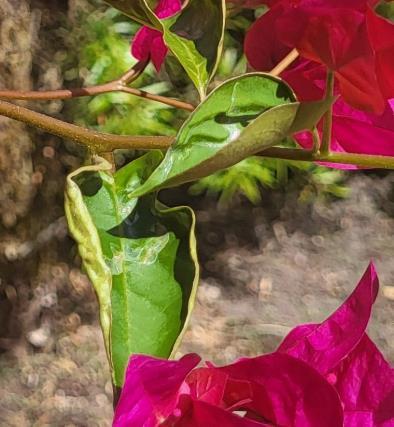
Question: I have several bougainvillea plants with leaves that have holes in them, are wrinkling, and have a sticky, clear film on the top of the leaves. I’ve noticed these little white flies around my plants. Could they be eating the leaves on my plants and doing this damage? What is going on with my bougainvillea plants and what can I do to prevent this from happening? They don’t look that good right now and I don’t want to lose them. ~ Worried

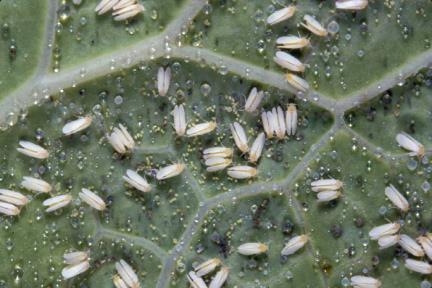
We understand your concern, but don’t worry, your bougainvillea plants can be saved. Those little whiteflies are the culprits. Whiteflies are little insects that look like tiny moths, and you correctly identified them. These small winged insects feed on the sap of a variety of different plants by piercing the leaves while laying eggs to keep the population flourishing. Whiteflies cause wilting, yellowing of leaves, premature leaf drop and stunted growth. Whiteflies also excrete a sugary substance known as honeydew. This is the stickiness you see and feel on the leaves, which can attract ants, and promote the growth of sooty mold. If you look around your plants, you might find ants that are eagerly eating this food source.
Trim and remove the affected stems and use an insecticide such as an insecticidal soap, or horticultural oil, such as Neem oil to help reduce the whitefly population. Be sure to always read the label for instructions before using any insecticide or oils. Be sure to spray the top and bottom of the leaves as well. To help prevent infestations, keep the area around the plant clean and free from debris, be sure to water and fertilize properly, too. Additionally, make sure to disinfect your trimming tools before trimming another plant.
For more information on whiteflies, check out the following website or the QR Code below: https://nwdistrict.ifas.ufl.edu/hor t/2020/09/14/whiteflieswhiteflies-whiteflies/

Newsletter Staff May-April 2024 Edition:
Editor-in-Chief: Karen Cartmill
Contributing Writers:
Nancy Bolte
Betty Bianconi
Karen Cartmill
Lisa Dietderich
Veronica Dillingham
Patti Dmytryk
Janet Fitzgerald
Kim Keith
Mark Lewis
Carolyn Luxion
Julie Norsworthy
Florida Master Gardener
Volunteers and Plant Clinics of St. Lucie County
Elise Schuchman, UF/IFAS
Extension St. Lucie County
Urban Horticulture Agent
Danielle Shalginewicz, UF/IFAS St. Lucie County
Extension Master Gardener Volunteer Program Specialist
Contributing Photographers:
Karen Cartmill, Mark Connolly, Janet Fitzgerald, Elise Schuchman and Danielle Shalginewicz.
St. Lucie County Garden Thymes Page 17 of 19
Photo Credit: Karen Cartmill.
QR Code Whiteflies e
Adults Whiteflies and eggs on leaves
Photo Credit: James Castner, University of Florida, IFAS.
to 3:00 pm

St. Lucie County Extension Office North Plant Clinic 8400 Picos Rd, Fort Pierce Monday and Friday 10:00 am to 1:00 pm
The St. Lucie County Garden Thymes newsletter is a publication created and produced by the University of Florida/IFAS Master Gardener Volunteers of St. Lucie County. The purpose is to share gardening information and provide inspiration to fellow gardeners within our community.
All links and QR Codes are live in this publication for easy access to online information. To view a website link, place your mouse over the web address. A hand will appear. Click your mouse pointer to access the website.


When finished, click the back button on your internet browser to return this newsletter.
To use a QR Code, open your camera on your phone and place over the black and white QR Code image to view the website from your phone.

We welcome any comments, suggestions, or personal gardening successes you’d like to share. Please email us at: sl-mg@ifas.ufl.edu. Happy Reading!
St. Lucie County Garden Thymes Page 18 of 19
UF/IFAS EXTENSION ST. LUCIE COUNTY
Facebook: Like and Follow Us Facebook.com/SLCMGV Landscape Questions & Concerns? Help Desks: North: 772-337-5654 South: 772-462-1660
your
sl-mg@ifas.ufl.edu
https://sfyl.ifas.ufl.edu/stlucie Main Number: 772-462-1660
Email
photos to:
Morningside Library South Plant Clinic 2410 SE Morningside Blvd, Port St Lucie Every other Friday 1:00 pm
St. Lucie County Garden Thymes Page 19 of 19
Credits: Manatee Education and Observation Center. For more information, contact UF/IFAS Extension St. Lucie County, Urban Horticulture Agent Elise Schuchman at 772.462.1609 or email her at Elise.Schuchman@ufl.edu.
Photo