The N-SSA Corporate Seal and the magazine title, The Skirmish LineTM, are registered trademarks of the NorthSouth Skirmish Association, Inc. Reproduction in any form or manner without the expressed written consent of the N-SSA Board of Directors is strictly prohibited. All pages are copyrighted by the North-South Skirmish Association, Inc. and The Skirmish LineTM magazine. Text and images in this publication are the property of the original owners (Authors). Text and images may not be published separately, in hard copy or electronically, without the expressed written permission of their owner(s). The authors and advertisers are responsible to secure the proper permissions and right to publish articles, photos, and illustrations not created by them. The NorthSouth Skirmish Association, Inc., The Skirmish LineTM, and its staff are not responsible for copyright infringement. Please contact the Editor for questions relating to any matter, including but not limited to permission to copy materials herein.
Disclaimer: The North-South Skirmish Association does not guarantee, warrant, or endorse any product or service advertised in this publication. The publisher also does not guarantee the safety or effectiveness of any product or service illustrated, mentioned, offered, or advertised herein. The publisher does not assume responsibility as to whether or not products or services advertised in this publication comply with all state or local laws which may be applicable in regard to the purchase or usage of such products or services.
Warning: The author(s), The Skirmish LineTM and its staff, and the North-South Skirmish Association, Inc. cannot accept any responsibility for accidents or differing results obtained using techniques, products, and combinations thereof that will make results vary. Firearms should be checked before firing and periodically thereafter by a competent gunsmith and all manufacturer’s instructions and warnings must be followed.
FROM THE EDITOR
Please say a big "Welcome" to our newest Skirmish Line staff member - Emily Scanlan! Emily will be working as a Junior Editor and be assisting me in the re-vamping of the magazine and layouts.
I also need to issue a correction - in my last column, I thanked our last editor - but mistakenly added a "Jr" to his name - which is actually his father. Eddie R. Davenport III was our previous editor. My apologies Eddie!
Ihaven't heard much of anything in the negative column, as far as the redesign and layout of the magazine. I do recognize that there are some issues with using the Issuu service that we use to display the magazine on the website. Those are being actively looked into. Also - please know that we're working on a solution for Skirmishers to be able to download past issues of the Skirmish Line from the website.
Please reach out to us at: skirmish.line.editor@gmail.com
From the Office of
The N-SSA National Commander
By: Dave Cole
What a difference from last Spring Nationals! Good weather and a very well-run skirmish. Thanks to the Host Teams, with Joel Rogers and Adam Bumford making things very seamless to the shooters. The Ordnance crew came up with an innovative way to keep things rolling by moving fouled firearms forward of the target line (25, 50 or 100) rather waiting on a cart to move them to the revolver range or to the far right of the range. Well done, Ordnance Crew!
your shots are going after the second relay to do that. Over the past several Nationals I have called out teams going forward like this. This is especially bad when there are no missed pigeons on the board. Pay attention to the commands from the tower, please.
As with anyone, we pick up pet peeves. One of mine is skirmishers disregarding the commands from the tower. The tower is there to make sure the skirmish runs smoothly and for everyone’s safety. The biggest disregard of tower commands that I have seen is after the first relay pigeon board, when the tower command is “Team Captains and Line Judges may go forward and check questionable hits,” then five people go forward and no Line Judge is among those five. There is sufficient time to see where
I have seen or heard of skirmishers being less than helpful to new skirmishers. If you see a skirmisher having issues, please ask what you can do to make things better for them. We are getting a lot of new skirmishers from the Recruit Skirmishes. They know the basics, but when they are struggling on the line, give them advice not criticism. A little kindness and helpfulness goes a long way; and the smile from them when you help is wonderful. Remember this is a hobby and we are here to have fun! Doing well does help the having fun.
As always, see if there are ways you can help your team, region or national organizations with your skills and knowledge. We are a volunteer organization, and when we all pitch in, it makes things better.
The N-SSA National Deputy Commander From the Office of
By: Rick Clements
Greetings once again! I hope everybody noticed how the recent host units pulled out all the stops and provided us with a smooth, wellrun Nationals along with several days of outstanding weather! Excluding the rain that settled in during the third relay of the artillery match! Congrats to each & every staff member and the members of the host units for a job well done!
While I’m at it, congrats are also extended to the Wilmington Horse Artillery, and the 1st Wisconsin, Madison Guards, as both units successfully stood inspection on Saturday during the Nationals and the units received formal N-SSA membership.
During the Board of Director’s meeting the Budget presentation revealed the Association is currently on good financial footing. Of particular interest, the reports reveal the level of N-SSA’s dependency on financial donations that strengthen the general operating fund to offset increasing expenses.
Continuing to share positive news, I hope your Regional Commanders and unit representatives shared the news that the
N-SSA received a significant financial pledge from the Goex Corporation. This is truly great news! Additionally, the Endowment fund also received a large donation from the Dana family and there was also a large donation made to the fund by the former 1st Maine Heavy Artillery. I want to express a heart-felt “thank you” for these generous donations that will help support the longterm life of our Association. All-in-all, 2026 has been a very good year so far. Let’s keep this trend going!
Until we meet again at the Fort, I want everyone to be safe, enjoy good health, and do what you can to help recruit new members! I look forward to seeing everyone again soon.
Fresh Fish!
The N-SSA Recruiting Report
By: Christopher Krecidlo, N-SSA National Recruiting Officer
Hello! My name is Chris Krecidlo, N-SSA National Recruiting Officer, 149th New York Volunteer Infantry - and I want to briefly introduce myself for this first installment of the "Fresh Fish Recruiting Report"
Shooting and collecting guns started as a father-son activity for me. Dad was my best friend, but I don’t think we became best friends until the mid-1990s when I became a teenager… It might seem strange, since most teenagers rebel against their parents, but I grew much closer to my Dad. It started as a shared hobby, and quickly became an obsession for both of us. The collapse of the
Soviet Union meant cheap military rifles flooded the US market. Dad bought a Soviet SKS, and I just thought it was awesome! We started shooting together. Dad started sneaking me out of school early on some Fridays. He had heard of a shop about 100 miles away that sold military surplus weapons packed in grease since World War II (WW2), and we just had to go check it out. I don’t think my mother approved, so obviously, he didn’t tell her! And that just made these little adventures even cooler in my mind. Rebellious teenager, right? I didn’t have any money, and Dad didn’t have much either, but he managed to scrape together
enough to buy two WW2 Lee Enfield rifles. He gave me one with a caveat: I had to clean all the grease off both of them - a process that took days. On one of our adventures, Dad bought a Navy Arms “Zouave” and we learned how to cast bullets together. The black powder smoke, large caliber, molten metal, and history! That’s it - I was hooked for life!
In Civil War parlance, "Fresh Fish" was a universal slang term used by seasoned veterans to describe raw, inexperienced new recruits. Whenever a fresh regiment marched into camp or a new arrival entered a military prison, a mocking chant of "Fresh Fish! Fresh Fish!" would echo through the ranks - a playful, if rowdy, rite of passsage welcoming them to the life of soldiering.
I joined the N-SSA as an unassigned (individual) member in 2017, without knowing anyone in the N-SSA at all. My son and I made the 7-hour journey to Fort Shenandoah; not knowing what to expect, what we needed, or who we would meet. We had a fun time, but it was overwhelming and I had many questions. At the Nationals, skirmishers are busy people. I had a tough time finding people from my region, or even anyone to stop and explain to us what was going on. There are so many people and activities at the Fort that others may not realize you’re new. Eventually I connected
with a few people from my region, who encouraged me to come and shoot at some local events. I’m so glad that I stuck with it! Nearly 10 years later, some of the absolute best friends I’ve ever had, I met in N-SSA.
Last year, I was appointed as the National Recruiting Officer. I strive to help new people with interests in Civil War Small Arms discover what a wonderful organization we have! Part of that mission is ensuring they feel welcome (since I remember that ‘lost’ feeling) and, more importantly, helping them find a team to call home. We now have a Regional Recruiting Officer in almost all of
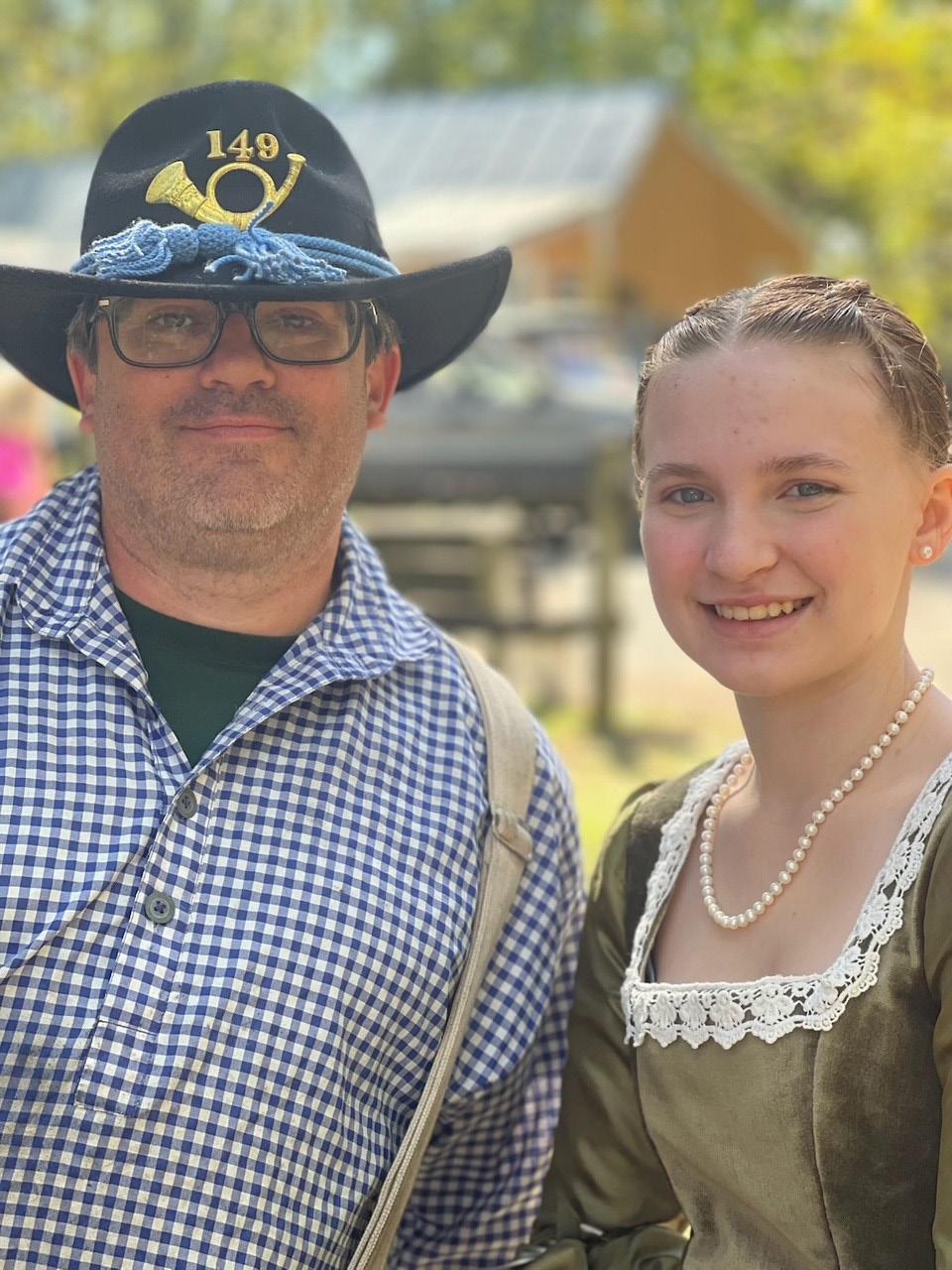
Chris (left) pictured with step-daughter Lizzy at Fort Shenandoah
the regions that are working to do the same. You don’t have to be a recruiting officer to do this though. Can you imagine a N-SSA where each of us invites one person a year to participate in some of the fun and mentors them, helping them get started?
The Board of Directors has recently placed an intense focus on recruiting, and accordingly, they have given us a budget! We have formed a committee that is processing requests for the funding of recruiting efforts, as submitted by the regions. We are providing some funding for recruit skirmishes, gun show fees, materials, social media ads for upcoming events, and more!
Without a doubt, the recruit skirmishes pioneered by the Central Virginia (CV) region are the most successful type of recruiting event. If your region is not conducting one yet, we can help you get started! Your first recruit skirmish does not have to be an enormous event. Start small, invite twenty-five recruits to sign up and pencil in a 3-hour recruitment event Saturday morning before team matches, or after Sunday’s musket match. Since the range is already rented, the target frames are set up, and other members are there to help, why not give it a try? You can always grow the event to a stand-alone event in the future!
Everyone can do something to help. If you would like to get involved with the recruiting effort and/or have an idea or feedback that you would like to share, please reach out –I’d be happy to connect with you! You can email me at:
northsouthskirmishassoc@gmail.com
Repeaters
The introduction of Henry and Spencer rifles changed the psychology of the Civil War marksman.
Confederates, largely armed with muzzleloaders - famously described the Henry Repeating Rifle as "that damned Yankee rifle that they load on Sunday and shoot all week."
About about 14,000 Henry Rifles produced between 1860 and 1866 - and were the immediate forerunner of Winchester Rifles.1
1 National Museum of American History, "Henry Rifle," Object ID [nmah_414668], accessed June 5, 2026, https://www.si.edu/ object/nmah_414668.
How Does the Team Classification System Work?
The Process Explained
By Richard E. (Ernie) Wood, Union Guards, 1682v N-SSA Statistics Database Administrator himself@richard-e-wood.net
Questions frequently arise amongst skirmishers around the classification process, particularly around why their team did (or did not) move into a different class after a National Skirmish. A few days after the end of the 153rd National, after the re-classifications had been posted, a skirmisher contacted me with a good example one of these questions:
“My team shot in class A-3 in one of the classified team matches at the 153rd and finished with a total time somewhere near the middle of the pack in A-3 – we were surprised to see that we had been moved up to class A-2 after the re-classification; especially as the team that won class A-3 in this match remained in class A-3 after the reclassification. How can this be?”
Given the number of questions like this I thought this would be a good opportunity to review the classification process and use this particular example to demonstrate how
the process works and why these two teams ended up in the classes they did.
Re-classification Process Summary:
The company/team classification process is governed by section 14 of the N-SSA Skirmish Rules. At the completion of each National Skirmish teams are re-classified as follows:
1. Each company/team participating in a classified match has their average total time re-calculated based on the lowest/best 3 of the last 4 total times the team has posted in the match (section 14.4).
2. All teams participating in the classified match* are then ranked from lowest to highest by their average total time. The top 25% comprise class A-1, the next 25% class A-2, and the remainder of the teams’ class A-3 (section 14.6).
*Note – “all teams” in this context means all active teams that have classifications
in a given team match type, irrespective of whether they currently compete in that match or not. Using my own team as an example, the Union Guards have not competed in Revolver since the 133rd National Skirmish, however, our classification remains active and our average time is included in the re-classification process after every National Skirmish.
In other words, a company/team’s classification in any classified match is based on their own performance over their most recent 4 National Skirmishes, measured against the performance of all other teams competing in the match.
Conclusions:
• The effect of any single unusually low or high total time at a single skirmish is buffered by the averaging formula and so is unlikely to cause a team to move up or down in class in and of itself.
• The number of companies/teams actually participating in a given class at any single skirmish has little to nothing to do with the re-classification, as all active teams with a classification in a given team match are included in the re-classification process.
Examples:
Let’s now return to the original question mentioned above and take a detailed look at
each team’s most recent 4 total times
“Team 1” – participated in class A-3, finished near the middle of A-3 teams, but got moved up to class A-2 – why?
Going back to rule 14.4a, we see that the worst of team 1’s most recent 4 total times, 832.0 , is removed from the average time calculation, resulting in an average time, 568.5 , that places them in the second 25% of all teams in the match, i.e., class A-2.
“Team 2” – won the A-3 class of the match but stayed in class A-3 - why?
Team 2 finished with a much better total time than they had in any of their previous 4 skirmishes, however, when averaged with their other two best times results in an average time that still places them in the bottom 50% of all teams in the match, i.e., class A-3.
In this article I have only discussed team classifications, however, the individual classification process is very similar, i.e., individual classifications are based on the average of the best 3 scores of the past 4 National Skirmishes in which a competitor has participated compared to the average scores of all other competitors in the same match.
All skirmishers should be aware that the N-SSA Skirmish Rules for both individual and company/team classifications establish procedures for appeal and protest of classifications, so any individual competitor or team that believes they have been improperly classified can follow these procedures to have the classification in question reviewed and either upheld or overturned.
Lastly, I am more than happy to address questions from any team or individual about the classification process in general, or specific inquiries as to why they are in the class they are – feel free to contact me with any such questions at the e-mail address listed above.
Ernie
I Died – Now What?
By: Chris De Francisci, Washington Blue Rifles
You get the call that is never expected or wanted, “Hi, wanted to let you know that <friend's name> passed away. What do I do with all his guns?” Usually in a tone of anguish and confusion. Several of my friends and teammates have passed over the years and the one thing that has always come up has been the spouse (always the wife) contacts someone and says “What do I do with all the guns?”
As we age this issue becomes more important, especially if we have spent years assembling a collection. We may have spent years working to get the most accuracy out of our collected firearms and do not want to see them simply dumped into a gun shop that has no knowledge of antique arms or to an auction house that is simply interested in making a profit. Most of us have an affinity for the history and use of our collected arms. And we want to think they will go on to someone who will appreciate and treasure them as we do.
Talking with others who have had these
experiences has resulted in stories of those with just a few firearms and those with over a hundred. If they are lucky, there are children who want and will inherit the guns, or friends will come forward and help to dispose of the collected arms and accessories. If not, they are dumped somewhere and potentially are lost forever.
Those of us with no heirs or interested relatives or children have to face the question of what to do. Recently I have had to give thought to the title. With no heirs or relatives interested, what provisions do I make to preserve my collection and ensure it will continue to provide use and meaning after I’m gone?
Some of the questions and issues that come up:
• Who actually owns the firearms after you are gone – what does the will say?
• Was there a will? Do other relatives have a claim on any of them?
• Is a Trust needed or appropriate?
• Are there high value firearms?
• Are there other firearms beside black powder and skirmish arms?
• Are there NFA arms? (National Firearms Act)
• What are the state laws regarding disposition and sales?
• Can the spouse simply give some of them to relatives or friends?
• How do you stay out of disputes between the spouse and children?
• How to determine a fair price
Of all the actions to take, there are two which are the most important. Take an inventory and make a list of all your firearms, include everything you can think of about them, but specifically:
• Make
• Model
• Serial number if any
• Identifying characteristics such as:
• Sights
• Caliber
• Configuration
• Stock description
• Purchase price
• Seller
• Storage locations
Having to deal with cataloging and finding the firearms puts a heavy burden on the family and any friends who are helping. I know of one situation where after the safe was emptied, firearms were continually being found all over the house in closets, under beds, couches, etc. Also, high-value firearms collections need appraisals for estate tax purposes and insurance coverage.
Second is to have a will and get it updated every few years. In it you can specify who would get certain arms and what the disposition should be of the others. Have
your will include specific gifts and personal property provisions. Make sure you include legal safeguards so the question of what to do if a designated person is unable to accept a firearm for any reason is covered. Specific designation as to who owns and the disposition of the firearms helps with any disputes with children or relatives. Consult your lawyer!
Trusts can be useful if you own items that are covered by the NFA. If not, then you likely don’t need one. However, putting assets, including your firearms, into a trust is often a good idea. Consult your lawyer.
A matter of concern, unless you kept the original bill of sale, there’s often no official proof of ownership beyond the serial number. What this means for trustees:
Your successor trustee needs to be able to prove they legally control your firearms when you die. Selling or transferring firearms to residents of other states requires understanding that states’ laws.
For example, California has very strict firearms regulations, so does New York. A trustee needs to ensure any sales or transfers comply with the buyer’s state laws as well as federal requirements. Consult your lawyer!
Put together a list of trusted friends, relatives, or dealers that you can direct your spouse or surviving relative to contact regarding disposition. Having multiple choices in case one isn’t available when you pass on. Leaving direction for your surviving spouse or relative makes things easier for them and prevents them from being taken advantage of by unscrupulous persons masquerading as friends (I’ve seen this also). Again, the two most important items are a list of all your firearms and accessories and a will. Just those two items alone will make a huge difference.
So, think about it, what happens when you are gone?
Disclaimer: This article is provided for informational purposes only and does not constitute legal advice. The N-SSA does not guarantee the accuracy or legal compliance of the processes described, and readers should view this content merely as a starting point. For specific legal or regulatory questions regarding estates and firearms, please consult a qualified attorney or local authorities.
Join the N-SSA Advance Guard!
And help preserve skirmishing for the next generation!
Donate and create a legacy that will never go away!
Members of the N-SSA Advance Guard are helping to create a $1,000,000 endowment fund to support the association into the next generation. The principal funds are to be placed into a permanently restricted endowment fund to provide a sustainable source of income for the future. The endowment fund will ensure the long-term viability of the North-South Skirmish Association.
Members of the N-SSA Advance Guard will receive a custom pin designed to be worn on the uniform. A numbered certificate suitable for framing, and their name on the Advance Guard plaque displayed in the museum.
The Advance Guard endowment is a great way to leave a legacy to the N-SSA, support the future of skirmishing, and ensure a viable organization for decades to come. Donations are tax deductible due to our 501(c)3 status.
The North-South Skirmish Association is a unique organization that represents a significant era in American history. Preserving this heritage of skirmishing is important in commemorating those brave men and women who were part of the struggle that was the War between the States.
Protect and preserve our heritage for the next generation and for years to come, join the Advance Guard today!
The first 100 donors will be designated as the Founders Group.
Yes! I want to join the N-SSA Advance Guard and be recognized.
I pledge to become an Advance Guard member and donate according to the following. I understand the principal will remain in the endowment and will only be used to generate investment income to sustain the N-SSA.
Choose one of the following:
One-time donation of $2000
24 monthly payments of $84
40 monthly payments of $50
Name:
Address: City State Zip
Phone
N-SSA Comp # Team #
Email
Signature
Make all donations payable to N-SSA Endowment Fund and send to:
N-SSA Endowment Fund c/o Wayne Jordan 8606 Eagle Glen Terrace Fairfax Station, VA 22039
For more information please contact: Chris De Francisci at (540) 840-2707 or Chris@washingtonbluerifles.com or Wayne Jordan at wvjordan@aol.com
Frequently Asked Questions:
What is an Endowment Fund
An endowment is a donation of money or property to a nonprofit organization, which uses the resulting investment income for a sustainable source of funds for the organization. Endowments are designed to keep the principal amount intact while using the investment income for guided efforts. The principal is permanently restricted from being spent and is used for investment only. The fund will grow over time as the principal is left in the fund.
What is the goal:
A $1,000,000 endowment fund goal was set as it will provide an annual income to the N-SSA of approximately $40,000 a year without ever touching the principal. This will be a sustainable source of income independent of other donations for the organization.
Why is this being done:
An endowment will help to secure the financial viability of the N-SSA for the future and ensure that the organization will be here for the next generation of skirmishers.
Secure the future of the N-SSA, join the Advance Guard today!
What are the funds used for:
Creating an endowment is an important strategy that sets aside funds for the future and is a hallmark of financial sustainability.
Endowments may generally be described as assets (usually cash accounts that are invested in equities or bonds, or other investment vehicles) set aside so that the original assets grow over time through income earned from interest, capital gains and dividends on the underlying invested funds.
The funds are expected to exist in perpetuity and the principal is not used for expenses.
The goal with endowments is to allow the principal to grow without withdrawals so that the underlying investment increases in value over time, and the investment income earned is available every year for the funding of organizational projects.
How will the funds be managed/handled:
The funds will be invested in secure instruments and managed by an outside investment company. Similar to how an IRA or 401(k) is handled. Investment income will depend on market conditions but 4% has historically been a safe income figure. Over time the fund will grow as the investments increase in value and if income is reinvested in the fund when not needed for projects.
Are my donations tax deductible:
Yes, the North-South Skirmish Association, Inc. is an IRS designated 501(c)3 organization so all donations are tax deductible.
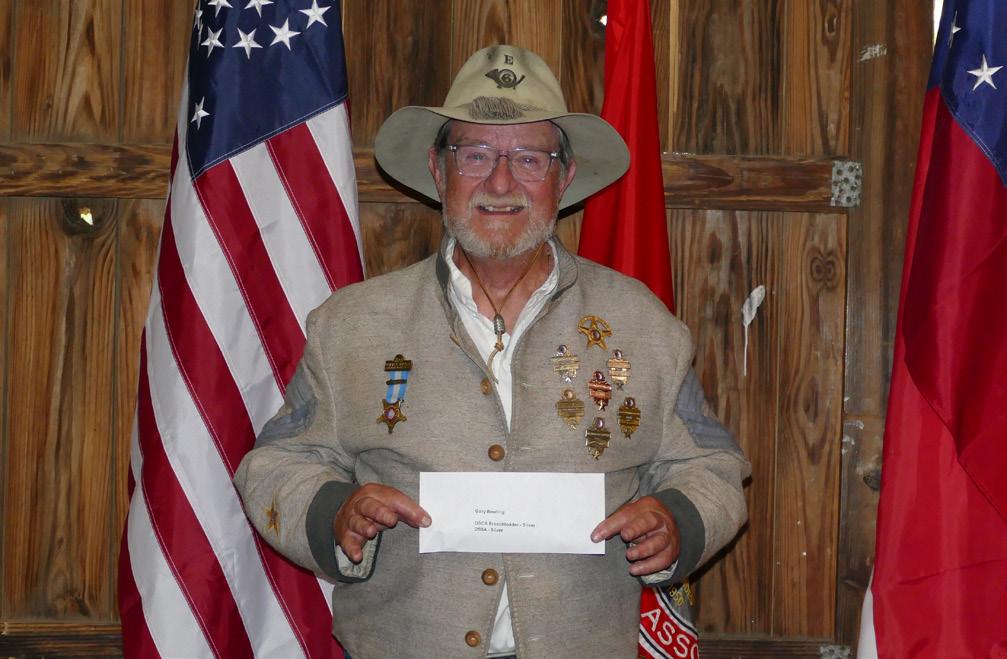
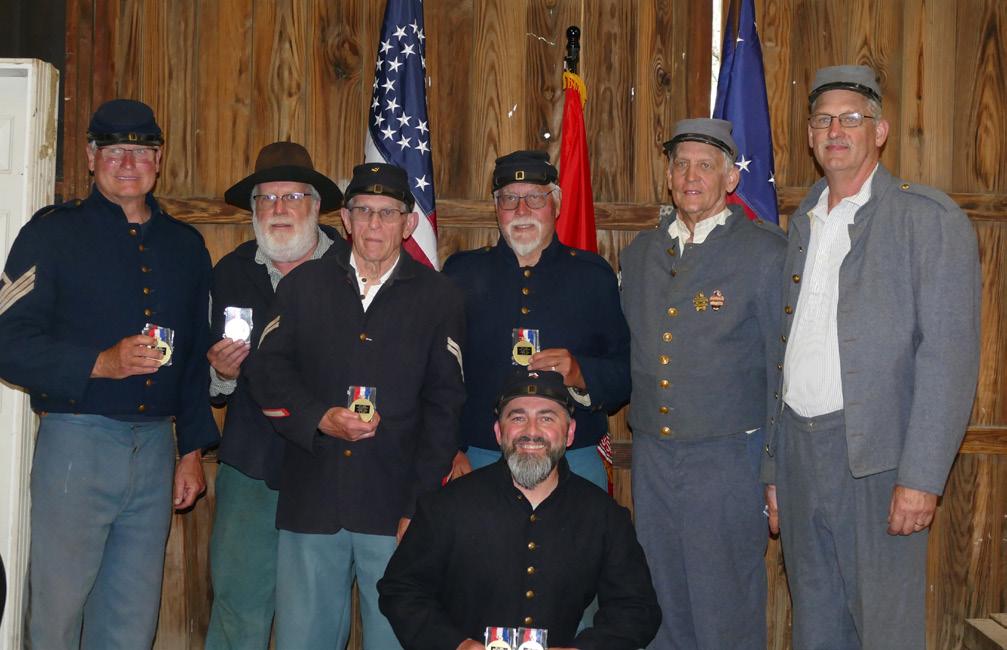
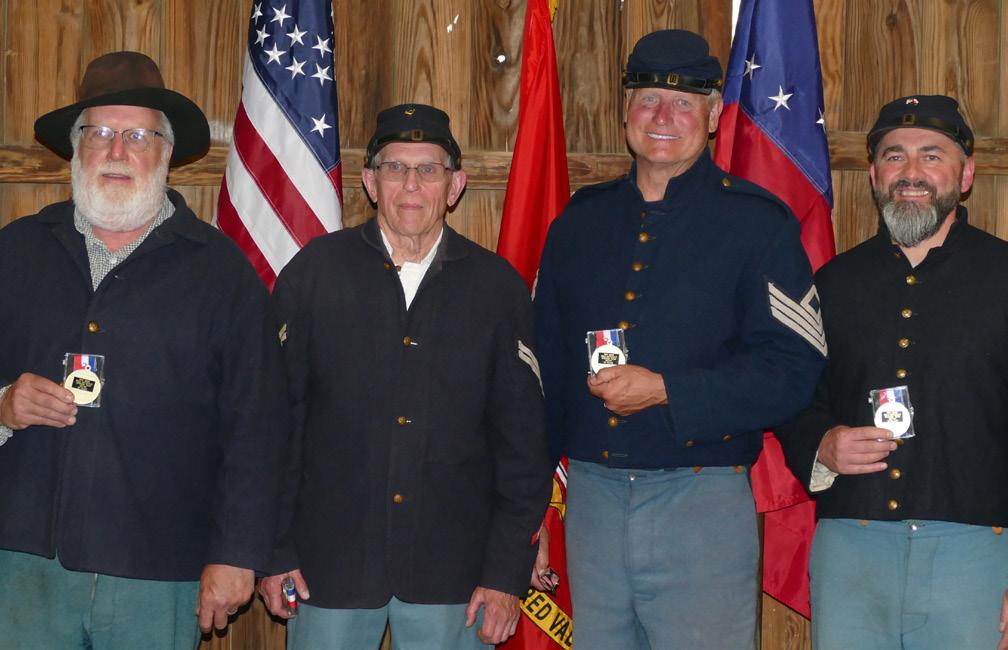
Gary Bowling, Nansemond Guard - with the DSCA Breechloader - Silver and DSSA Silver awards
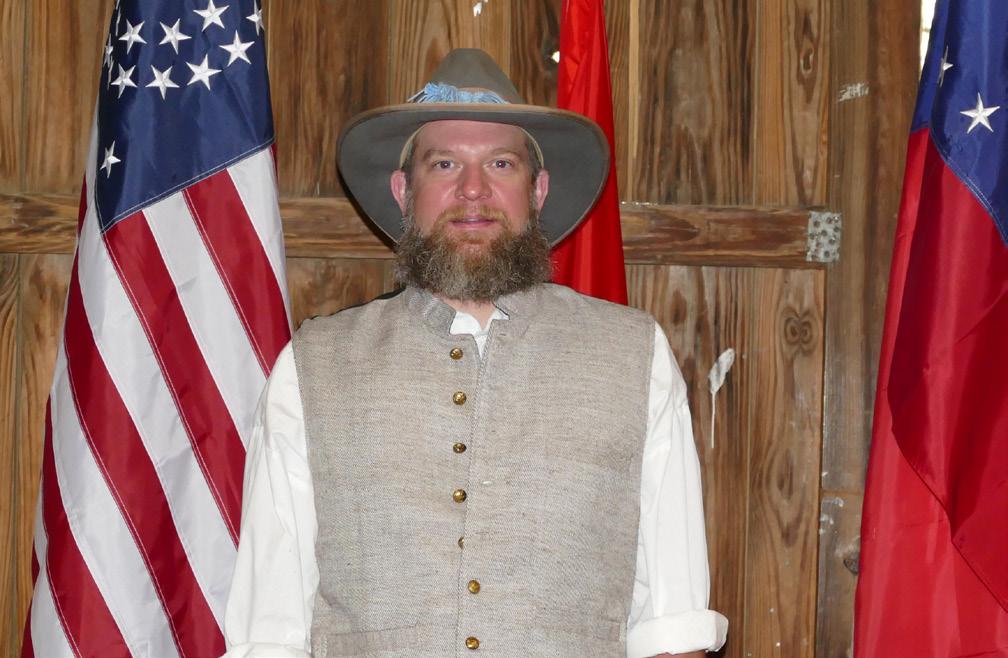
Will Rea, Nansemond Guard - with the DSCA Single Shot Pistol - Bronze award
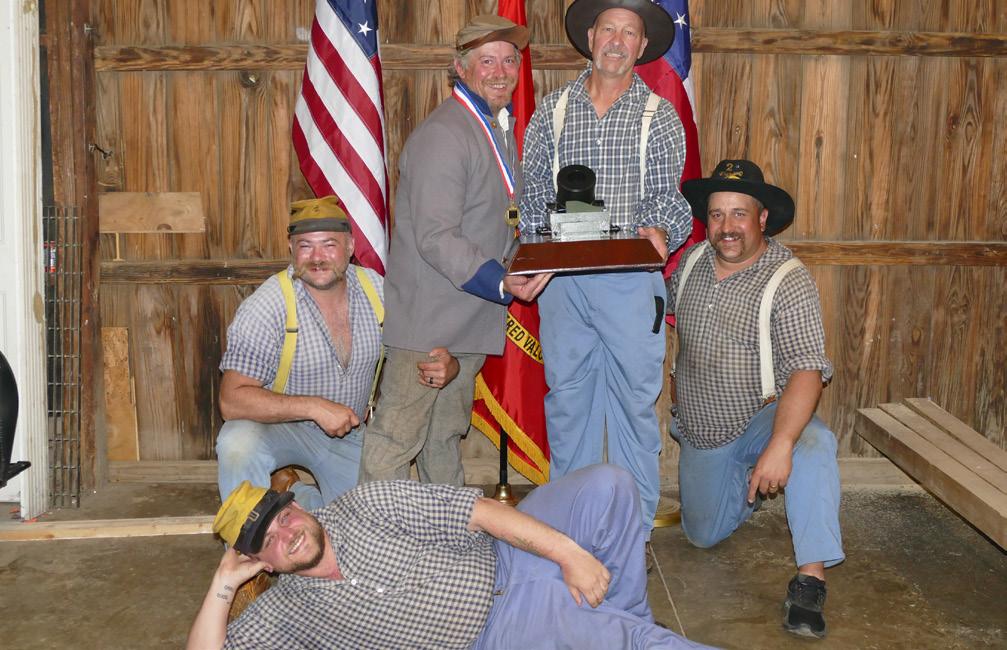
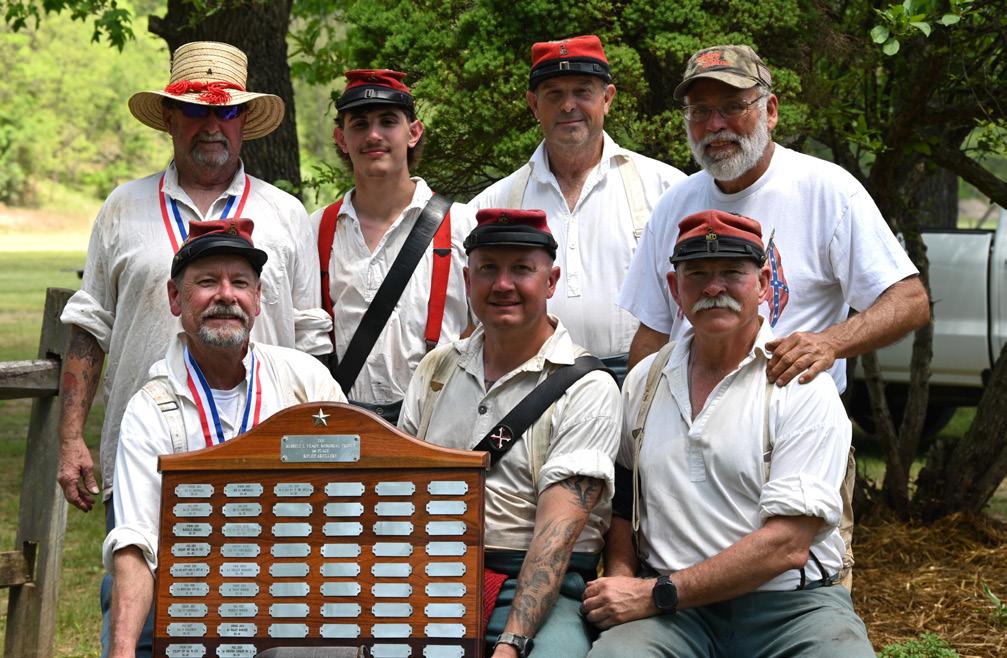
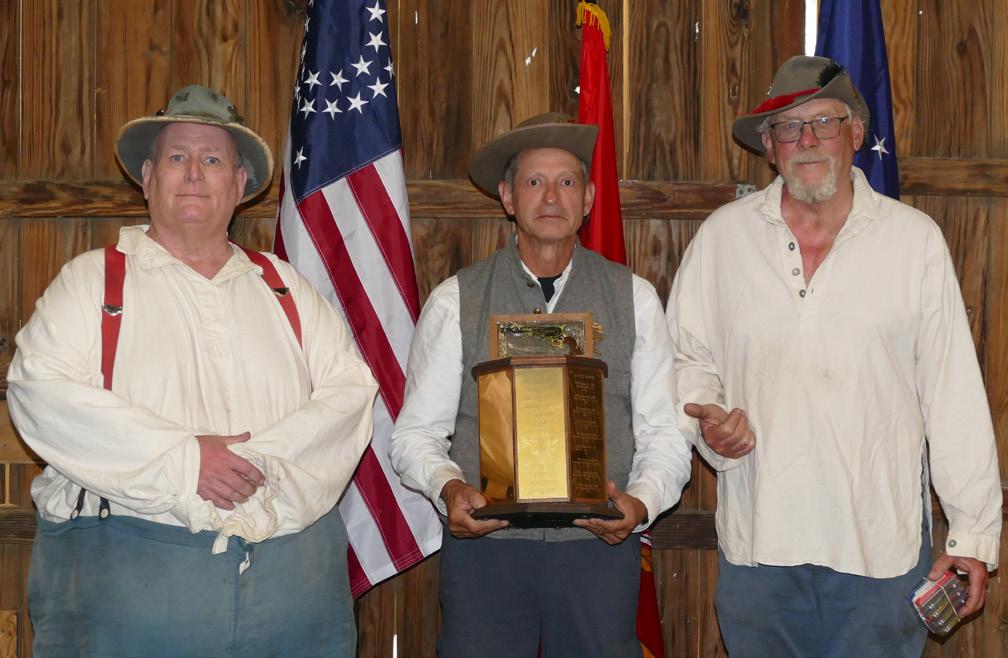
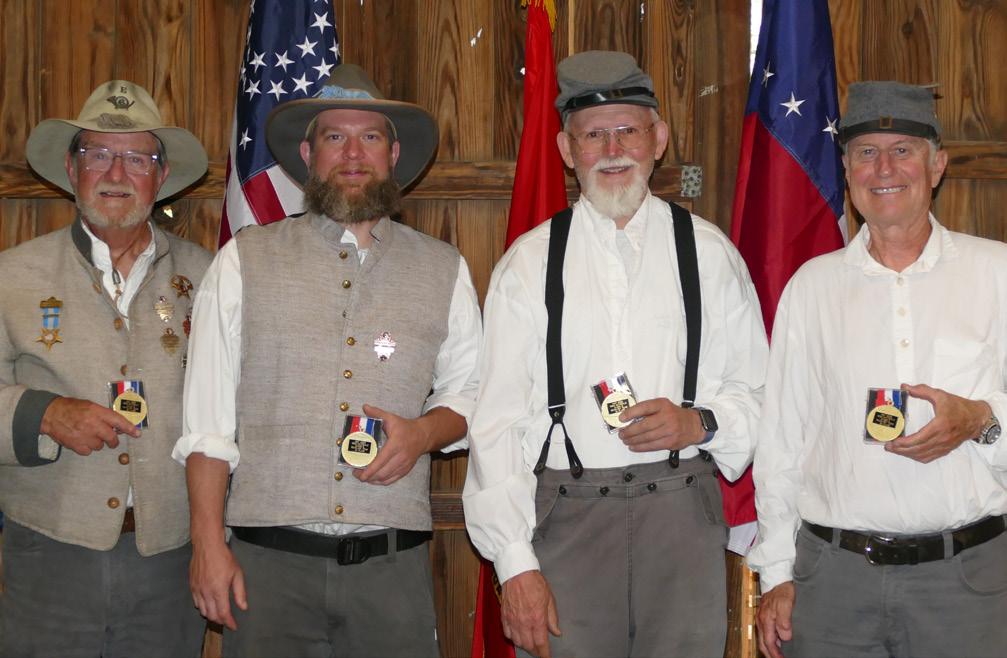
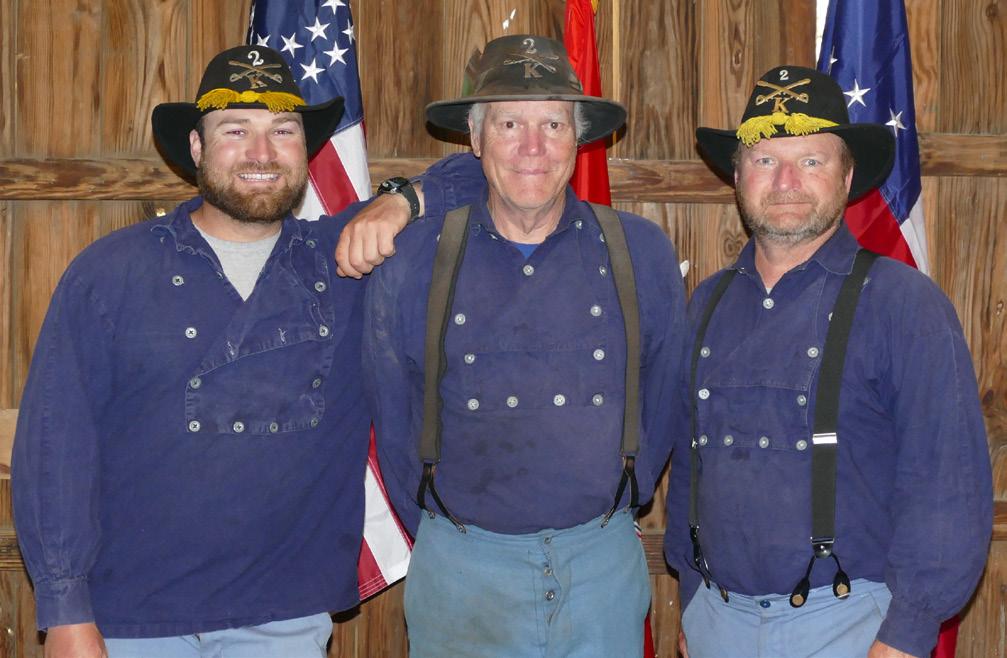
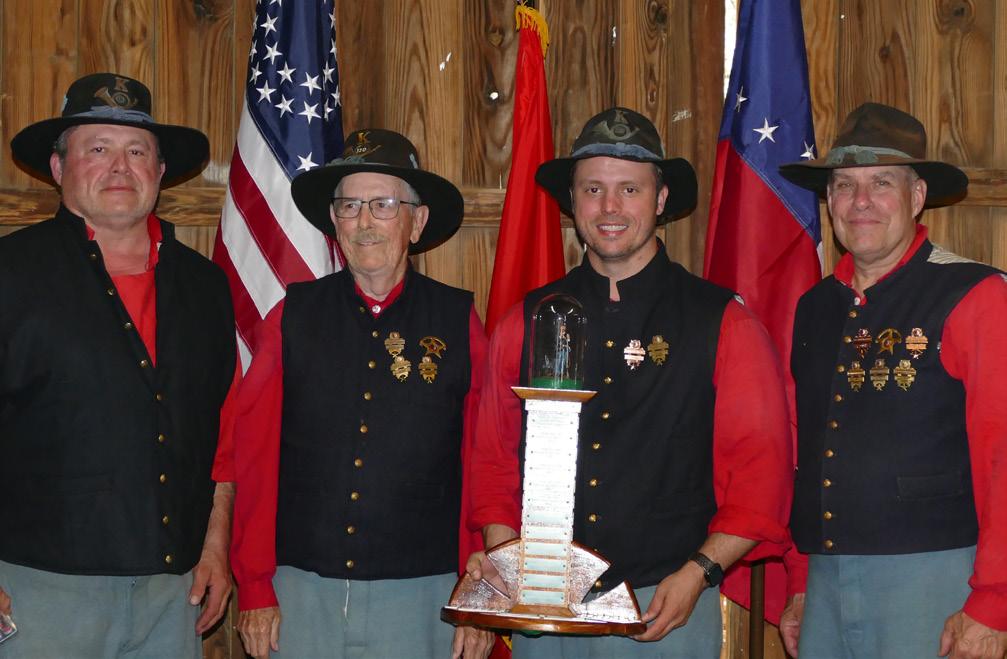
2nd Maryland Cavalry #1 - 1st Place Mortar Team with the 1st Place Mortar Trophy
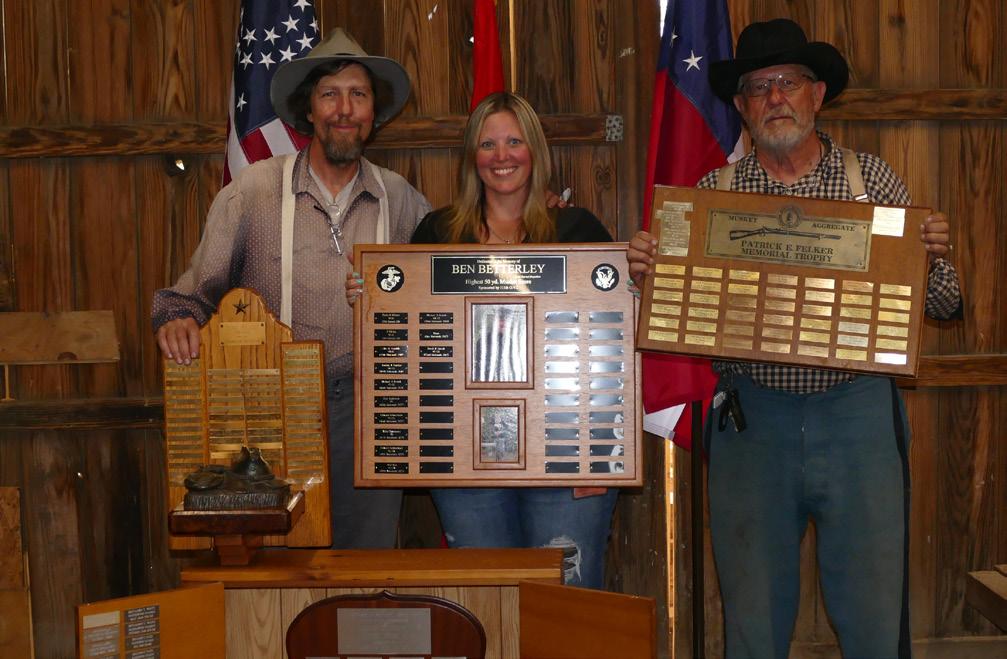
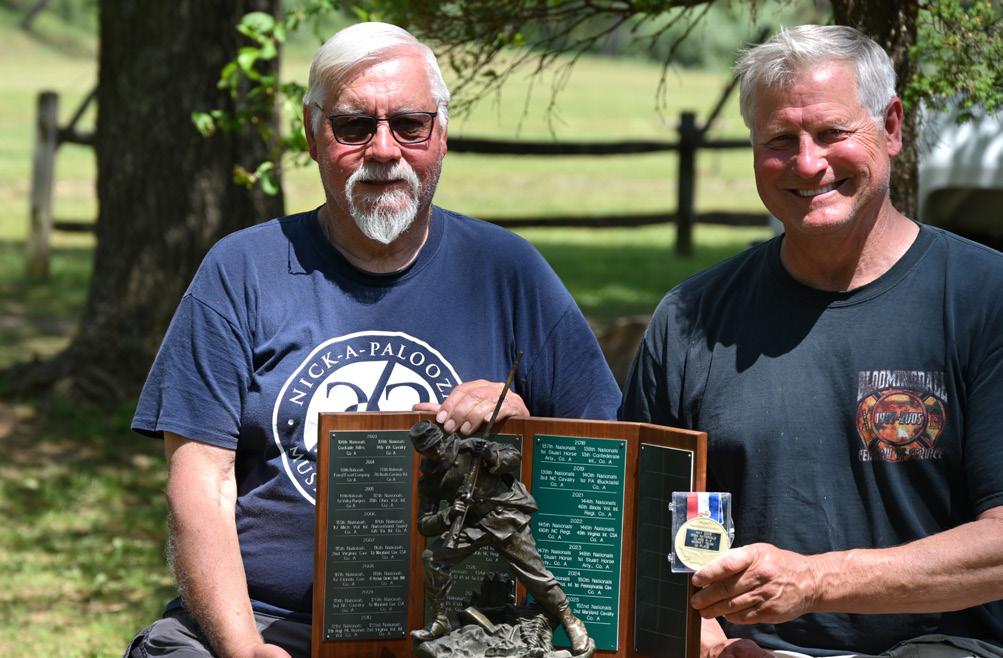
Edward W. Schneeman (L), 8th Regt. Virginia Volunteer Infantry - with the Patrick E Felker Memorial Trophy for highest Musket Aggregate; the Tom Blum Memorial Trophy for highest Revolver Aggregate; the Ben Betterley Memorial Trophy for highest 50-yard Musket Score; and the Ernest W Peterkin N-SSA Grand Aggregate Trophy for 1st Place Grand Aggregate.
Michael J. Rouch (L), 110th Ohio Volunteer Infantry - with the Bruce C Warburton Memorial Trophy for highest Carbine Aggregate and the Albert N Hardin Jr Memorial Trophy for highest Musket/ Carbine Aggregate
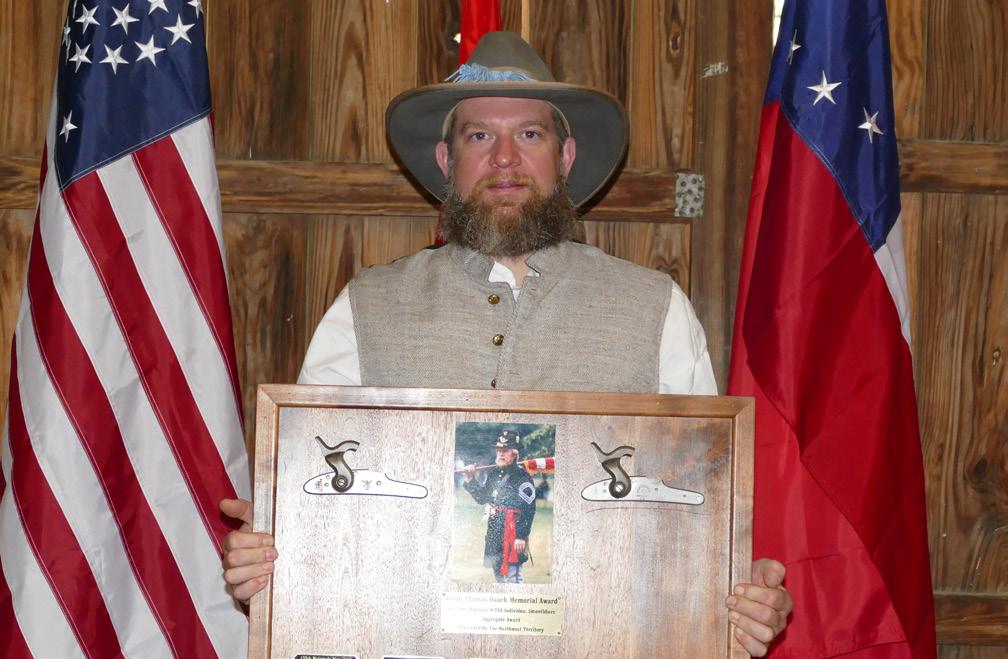
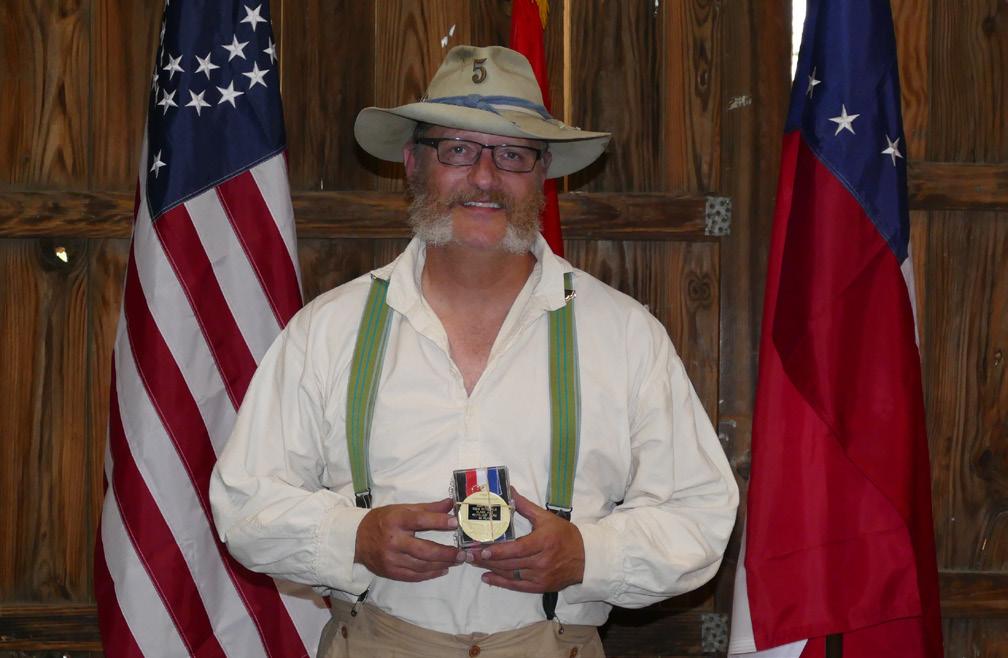
Will Rea, Nansemond Guards - with the Brian Haack Memorial Trophy for highest Smoothbore Aggregate
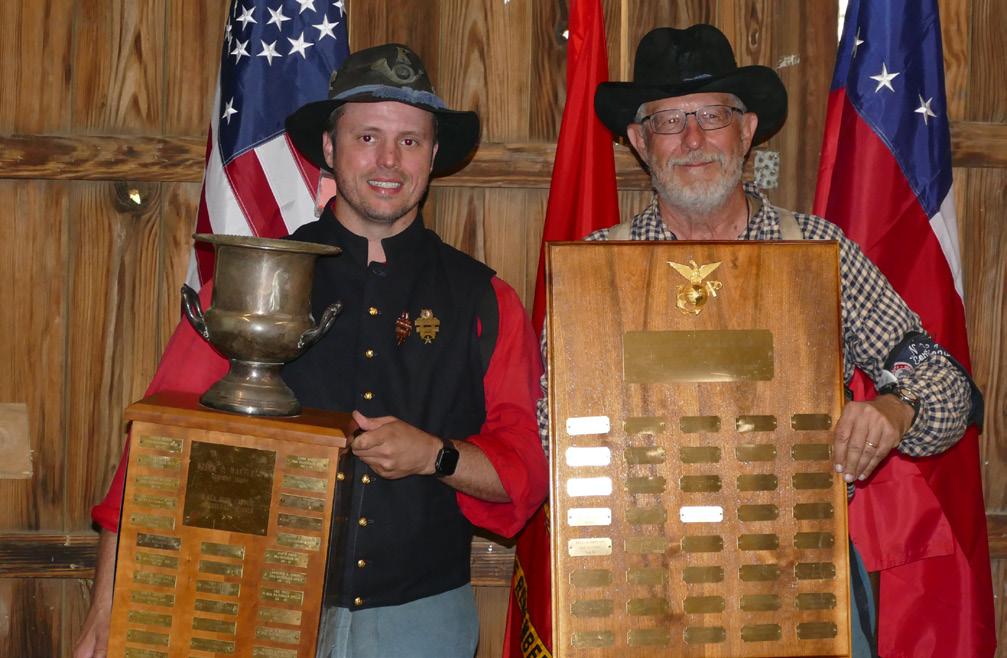
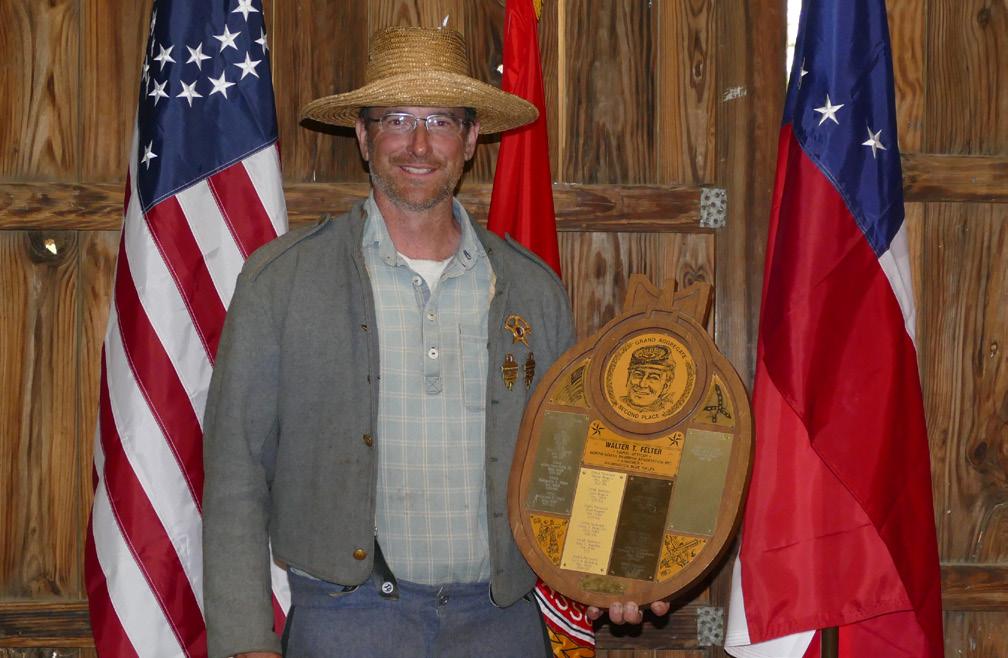
Derek P. Snook, 21st Virginia Infantry, Maryland Guard - with the Walter T Felter Memorial Trophy for 2nd Place Grand Aggregate
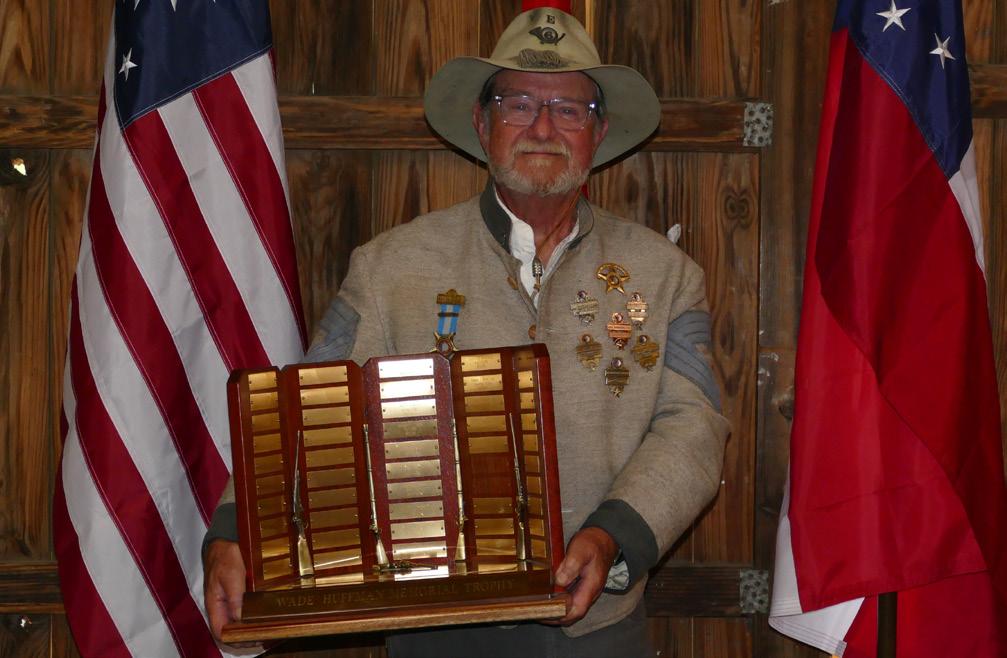
Gary S. Bowling, Nansemond Guards - with the Wade O. Huffman Memorial Trophy for highest 5-gun Aggregate
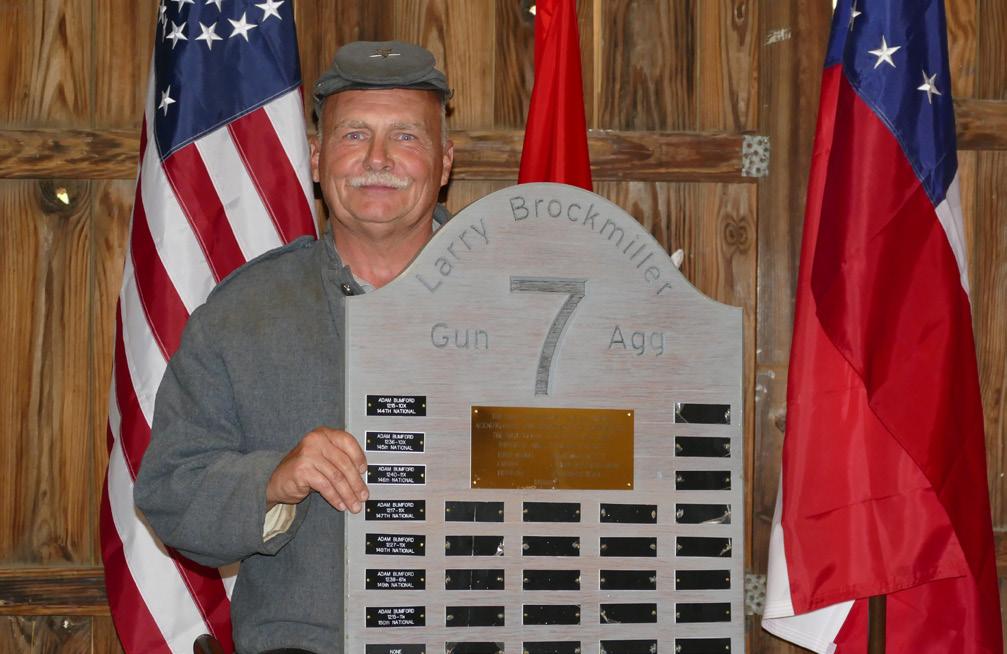
George J. Schell, 9th Virginia Cavalry, CSA - with the Larry Brockmiller Memorial Trophy for highest 7-gun Aggregate
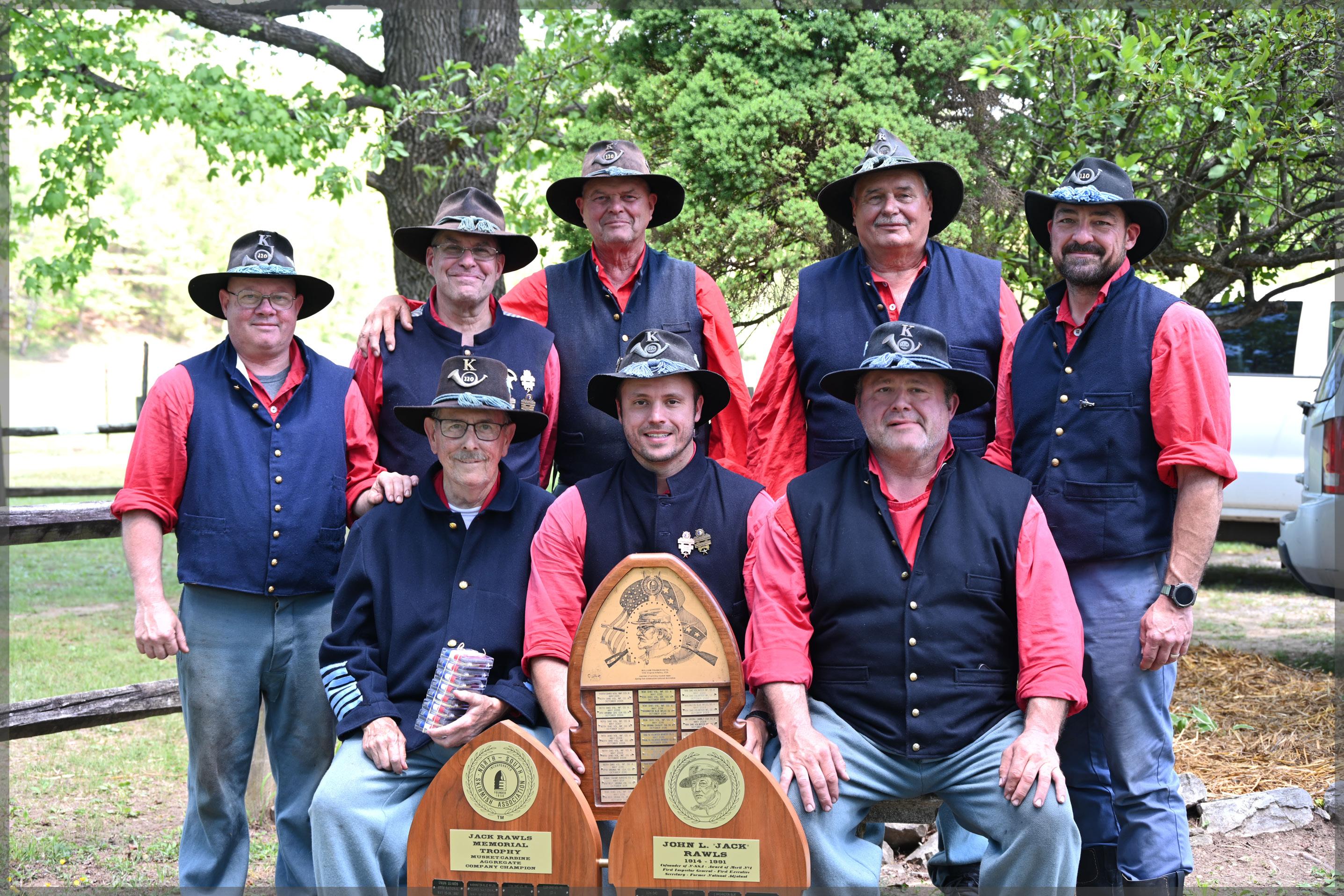
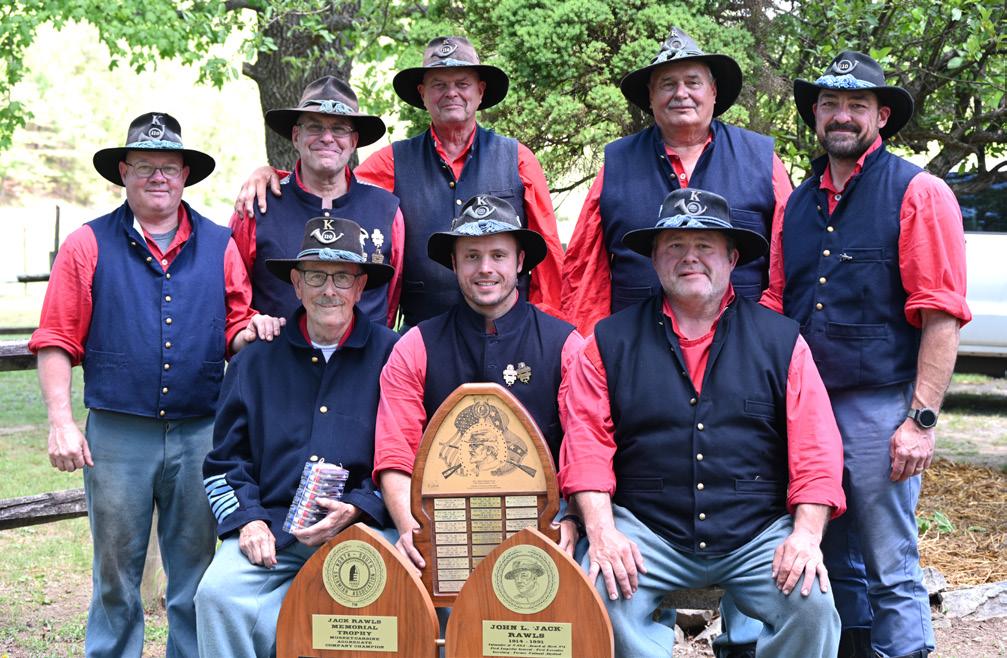
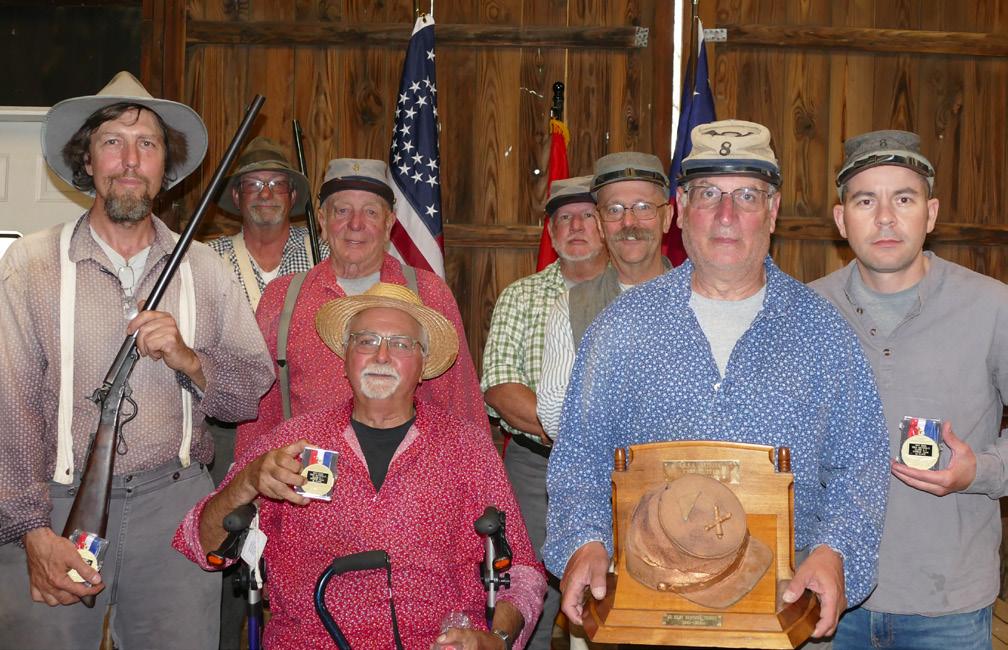
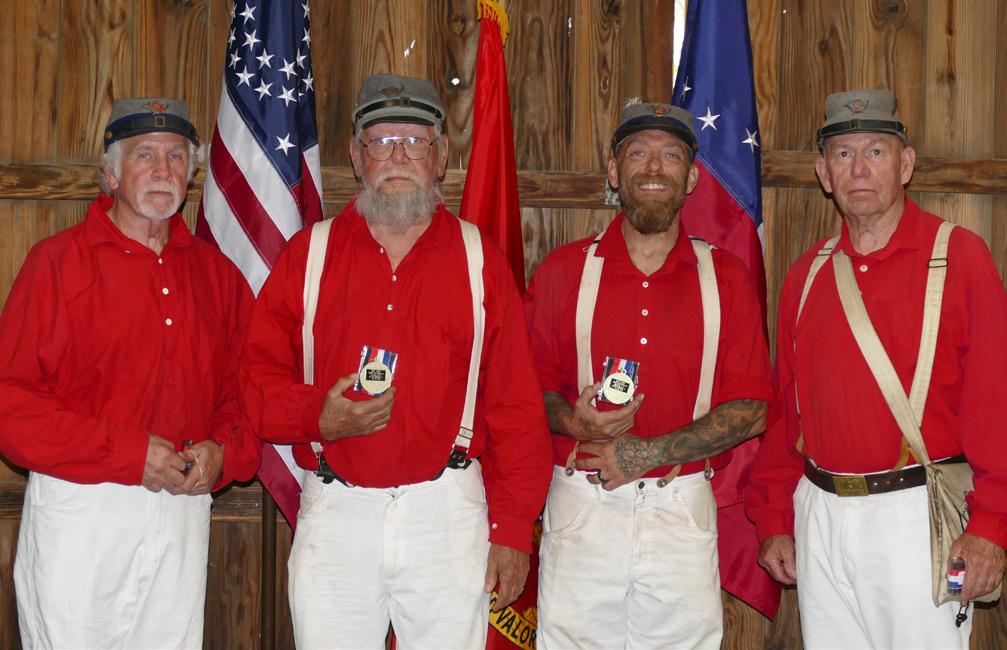
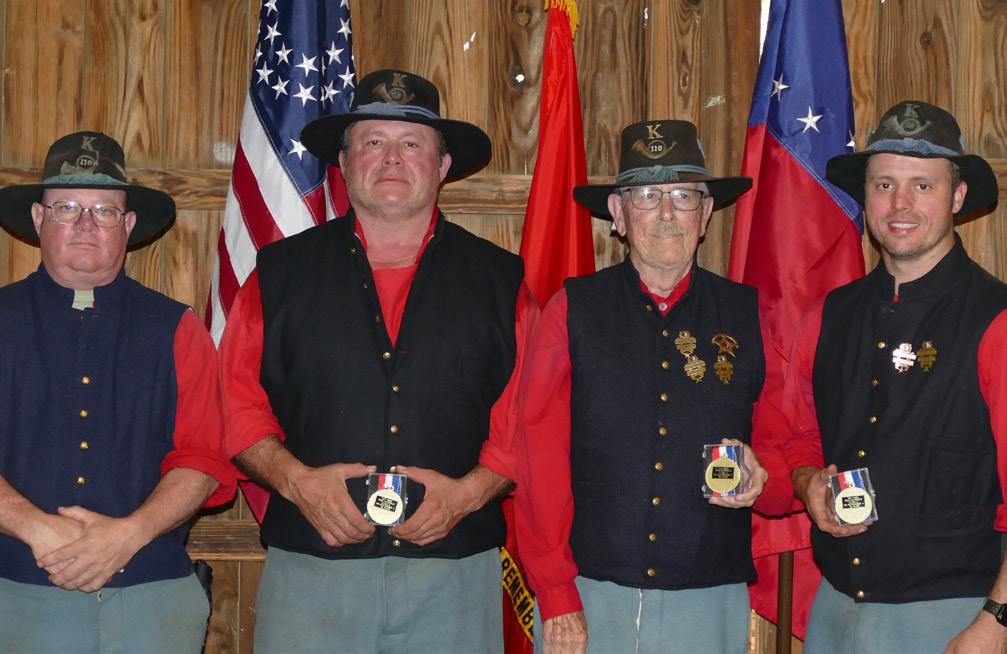
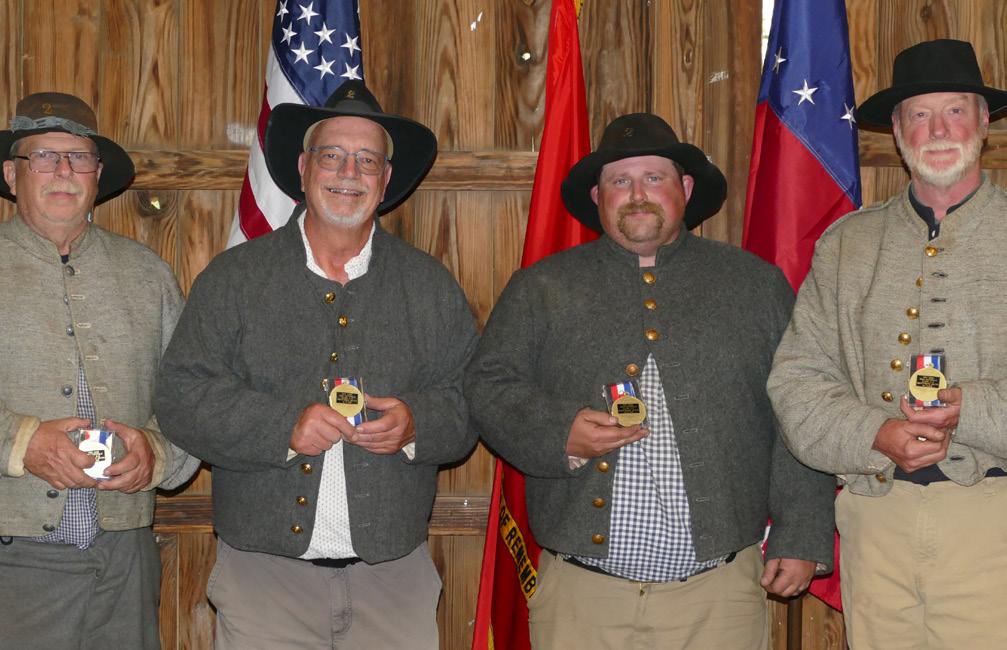
110th Ohio Volunteer Infantry, Co A - with the William Francis Keys Trophy for 1st Place A-1 Team and the Jack Rawls Memorial Trophy for 1st Place Musket-Carbine Team Aggregate
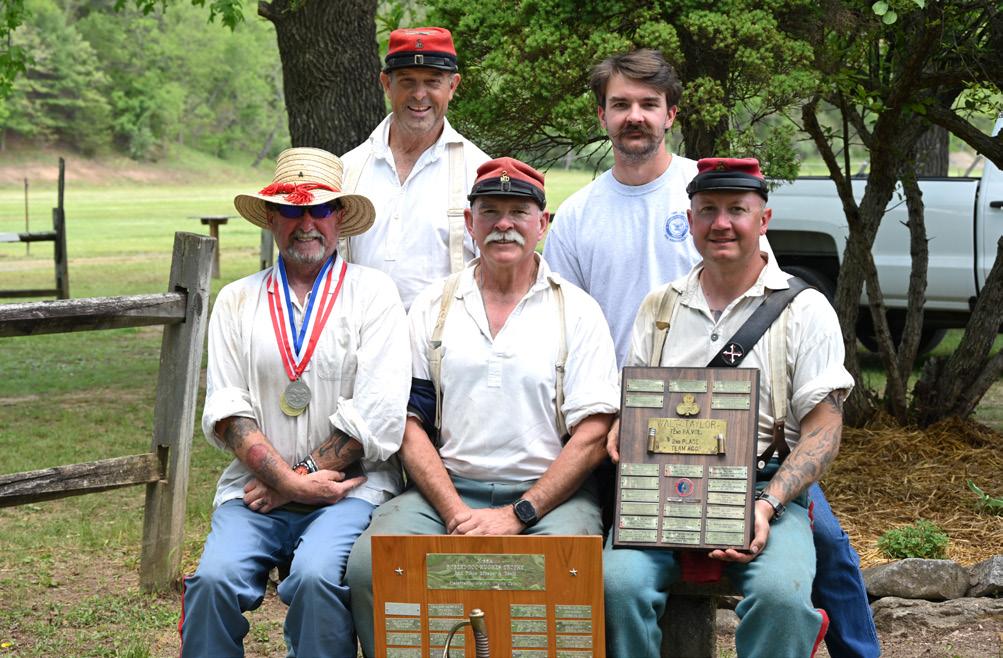
2nd Maryland Artillery, CSA, Co A - with the Robert Hughes Trophy for 2nd Place A-1 Team and the Walt Taylor Memorial Trophy for 2nd Place Musket-Carbine Team Aggregate
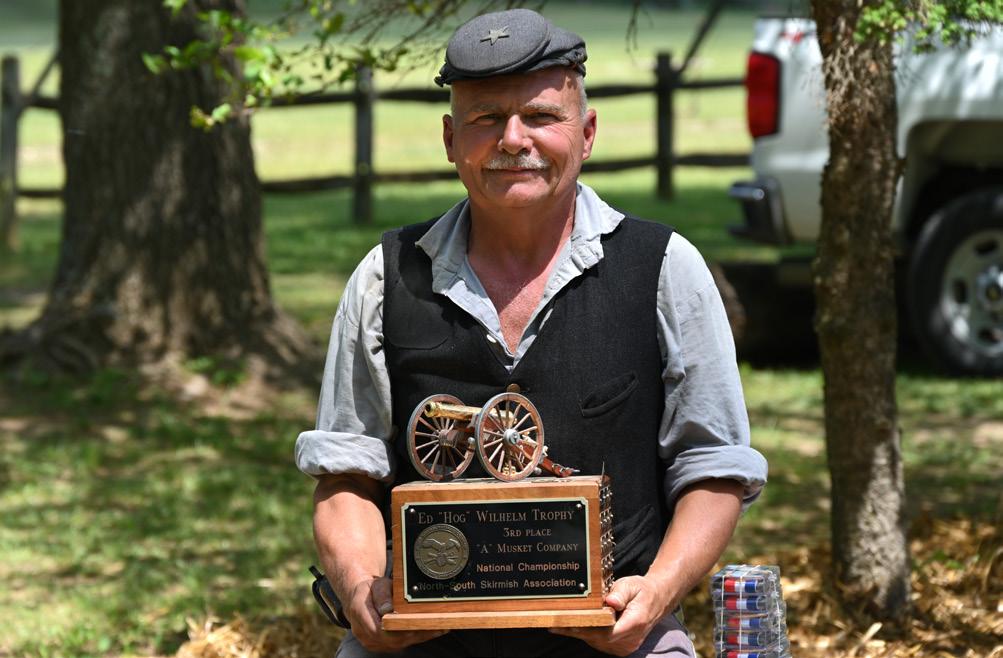
9th Virginia Cavalry, CSA, Co A - with the Ed 'Hog' Wilhelm Memorial Trophy for 3rd Place A-1 Team
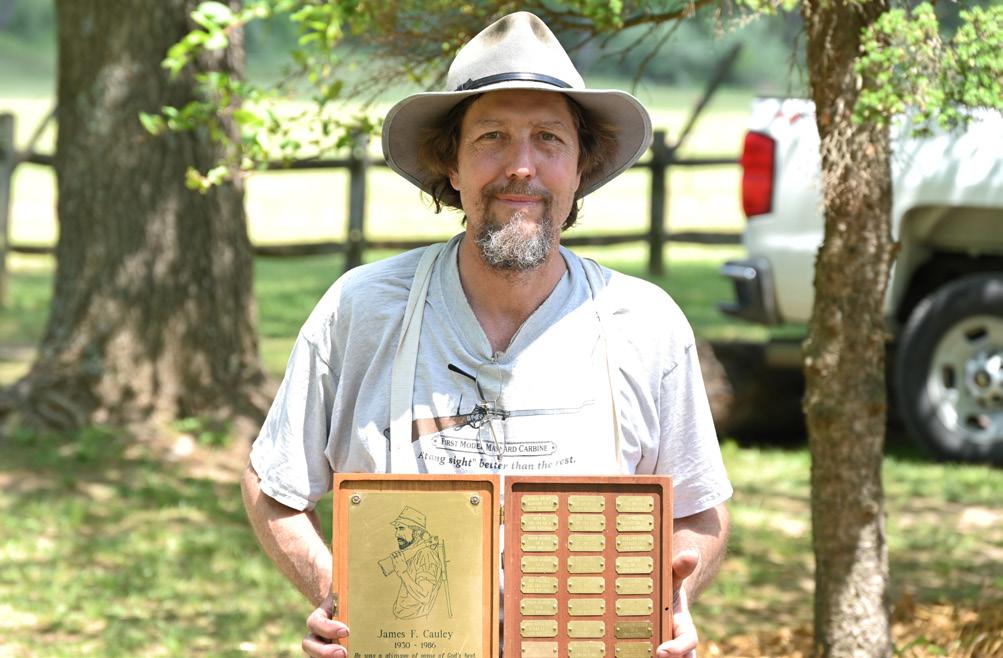
8th Regiment Virginia Volunteer Infantry, Co Awith the James F. Cauley Memorial Trophy for 5th Place A-1 Team
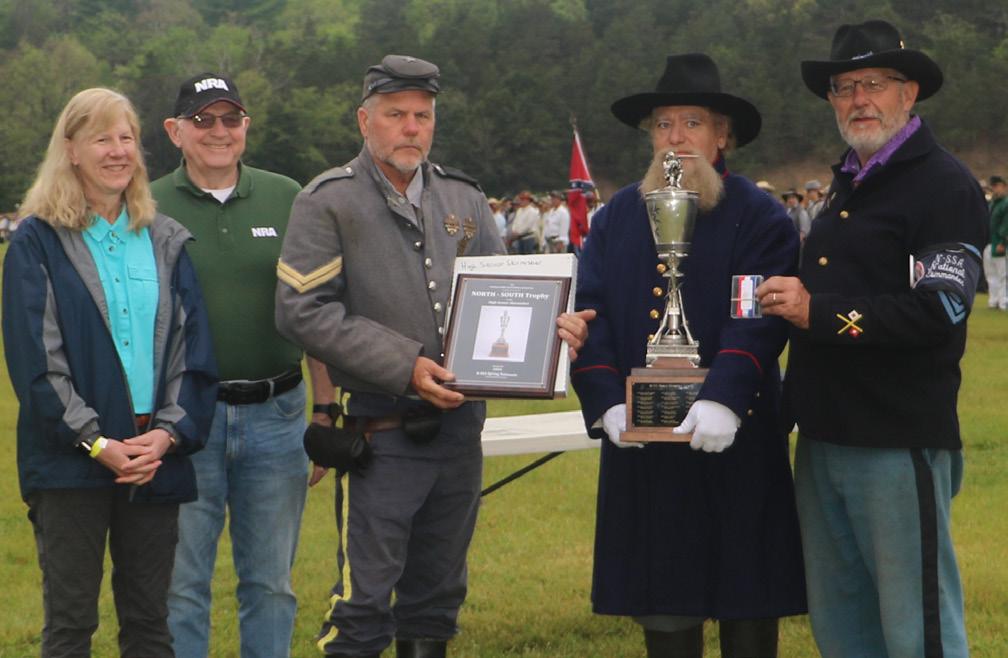
TJ Batlle, 9th Virginia Cavalry, CSA - 1st Place Senior Skirmisher - with a score of 182-3x
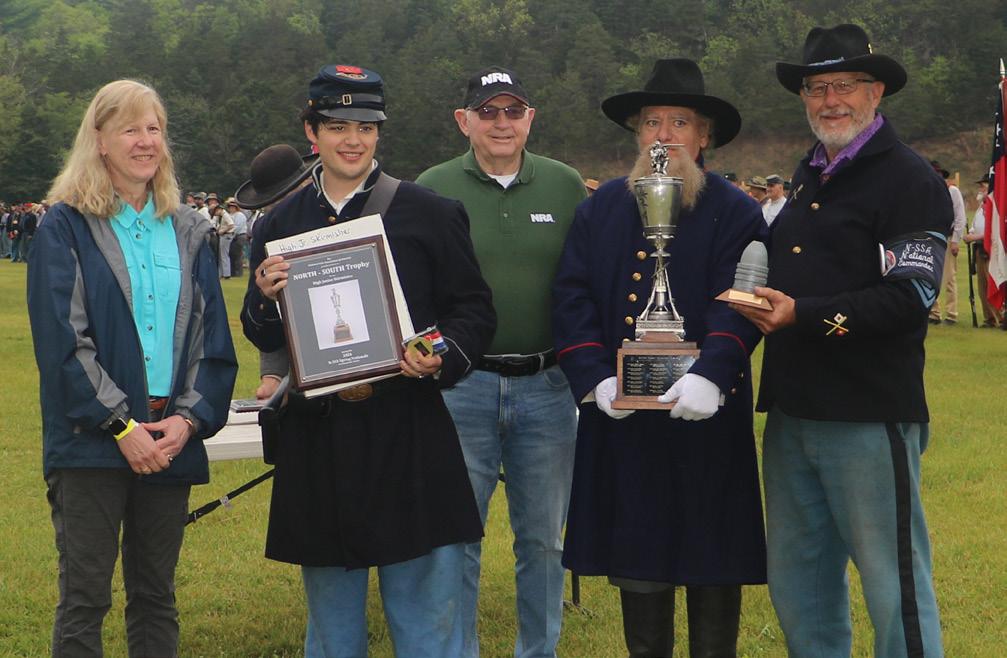
Nate Lakatos, 2nd US Regular Infantry - 1st Place Young Skirmisher - with a score of 174-3x
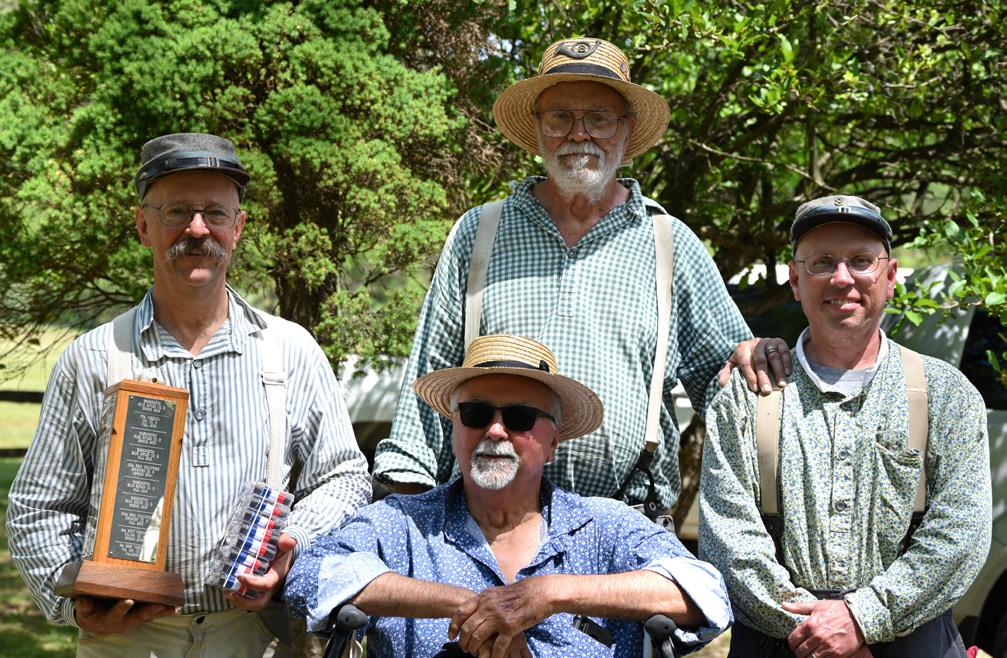
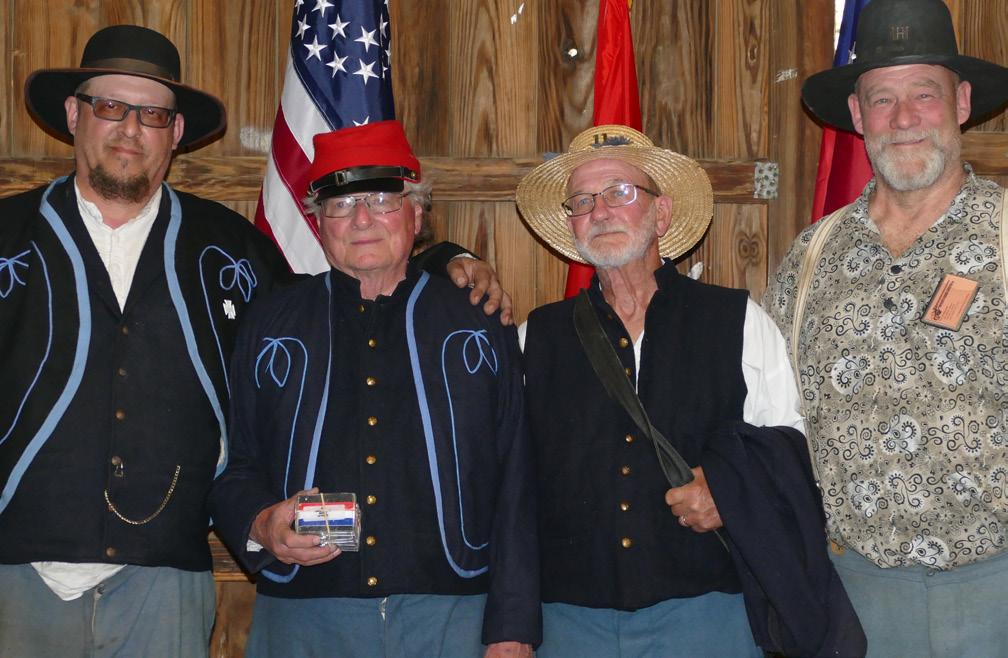
46th Illinois Volunteer Infantry Regiment, Co Awith the A-2 Musket Team Trophy for 1st Place A-2 Musket Team
8th Regiment Virginia Volunteer Infantry, Co. B - with the Franklin O Hayes Memorial Trophy for 1st Place B-1 Musket Team
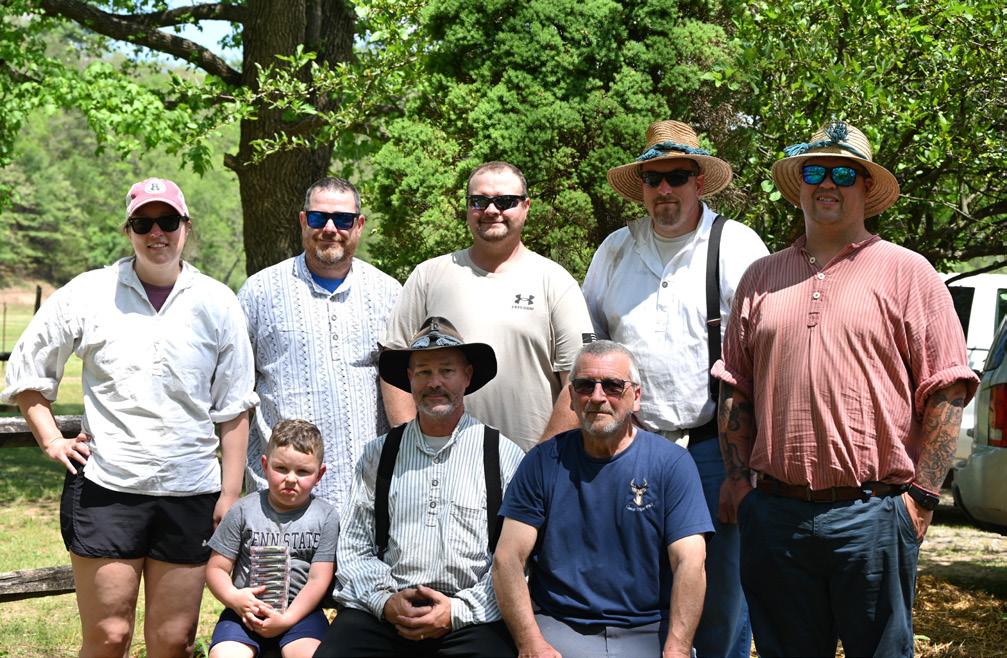
Cockade Rifles, Co. B - 1st Place, Class B-2 Musket Team
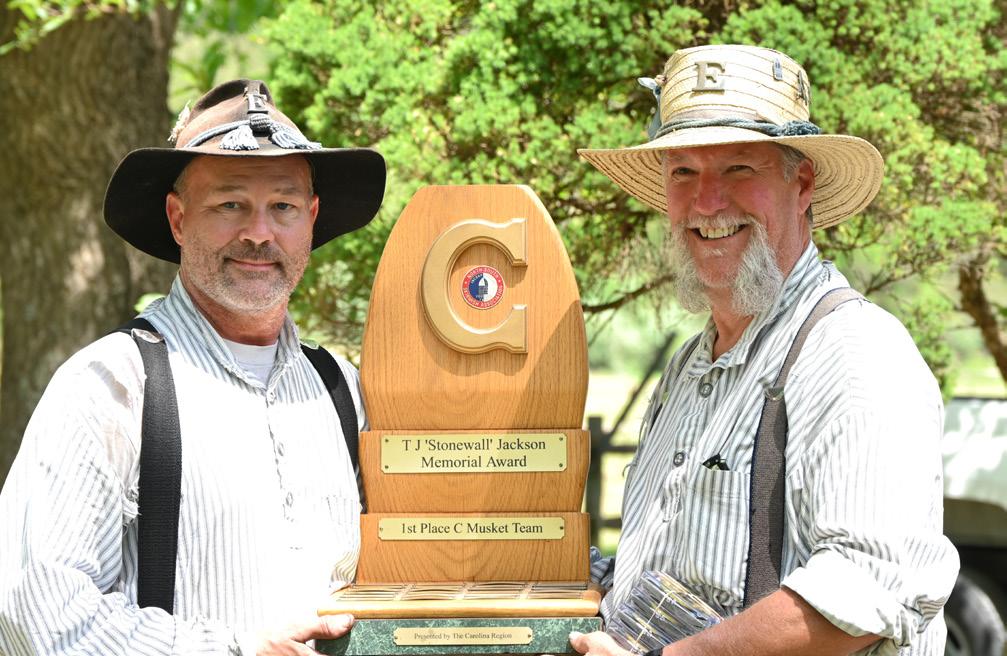
Cockade Rifles, Co. C - with the Stonewall Jackson Memorial Trophy for 1st Place C Musket Team
1st Maryland Cavalry (Tim) - 1st Place Rifled Howitzer
2nd Maryland Artillery, CSA - with the Russell L Yeagy Memorial Trophy for highest scoring Rifled Crew
8th Regiment Virginia Volunteer Infantry, Co A - with the Alan Bilby Memorial Trophy for 1st Place A Carbine Team
46th Illinois Volunteer Infantry Regiment, Co A - 1st Place, Class A-2 Carbine Team
Washington Blue Rifles, Co B - 1st Place, Class B-1 Carbine Team
Cockade Rifles, Co B - 1st Place, Class B-2 Carbine Team
Cockade Rifles, Co C - 1st Place, Class C Carbine Team
2nd Maryland Artillery, CSA, Co A - with the Private's Trophy for 1st Place Repeater Team
Tuckers Naval Brigade, Co A - 1st Place, Class A-2 Carbine Team
Lancaster Fencibles, Co A - 1st Place, Class A-3 Carbine Team
Cockade Rifles, Co. A - 1st Place, Class B-1 Carbine Team
110th Ohio Volunteer Infantry, Co A - 1st Place, Single-Shot Breechloader Team
46th Illinois Volunteer Infantry Regiment, Co A - 1st Place, Spencer Team
McGregor's 2nd Battery, Co A - with the Central Virginia Trophy for 1st Place Class A-1 Revolver Team
5th Virginia Volunteer Infantry, Co A - 1st Place, Class A-2 Revolver Team
11th Regiment, Pennsylvania Volunteer Infantry, Co A - 1st Place, Class A-3 Revolver Team
Nansemond Guards, Co A - 1st Place, Class B Revolver Team
9th Virginia Cavalry, CSA, Co C - 1st Place, Class C Revolver Team
2nd New Jersey Cavalry, Co A - 1st Place, Class A Single-Shot Pistol Team
110th Ohio Volunteer Infantry, Co A - with the Men of the West Trophy for 1st Place A-1 Smoothbore Team
2nd Virginia Volunteer Infantry, Co A - 1st Place, Class A-2 Smoothbore Team
11th Indiana Zouaves, Co A - 1st Place, Class A-3 Smoothbore Team
Cockade Rifles, Co C - 1st Place, Class B Smoothbore Team
Cockade Rifles, Co D - 1st Place, Class C Smoothbore Team
Nansemond Guards, Co B - 1st Place, Class B Single-Shot Pistol Team
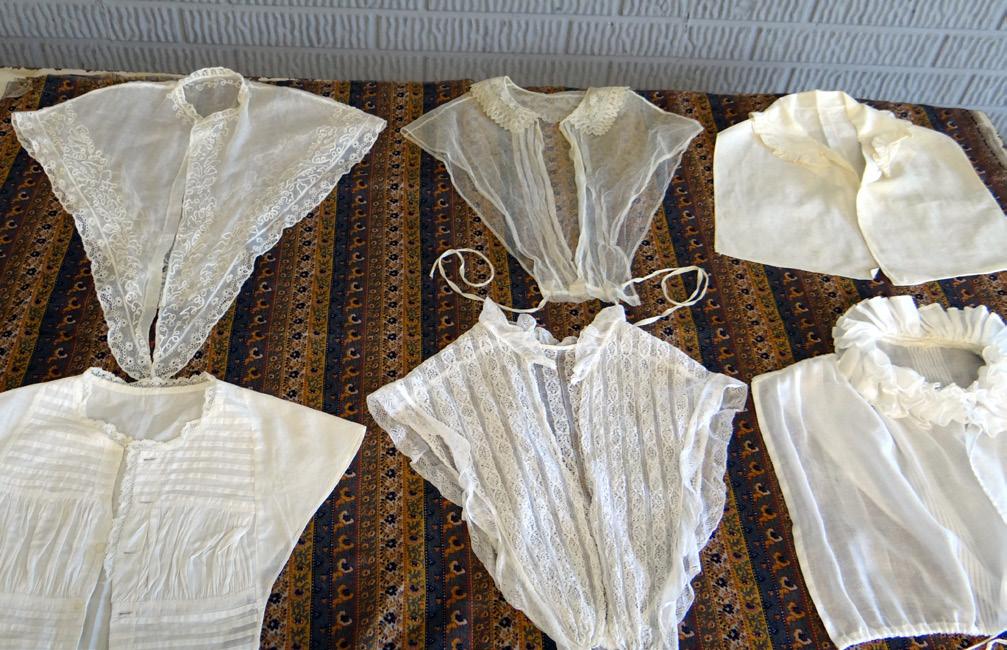
Original mid-19th century chemisettes displayed by Gayle Simmons.
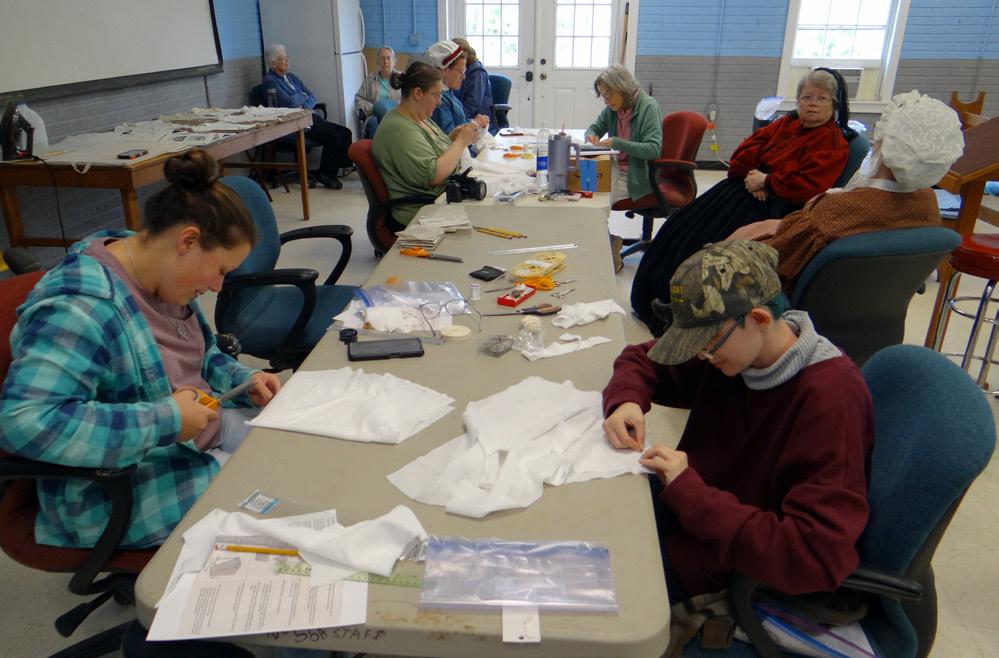
Sewing circle attendees making a chemisette.
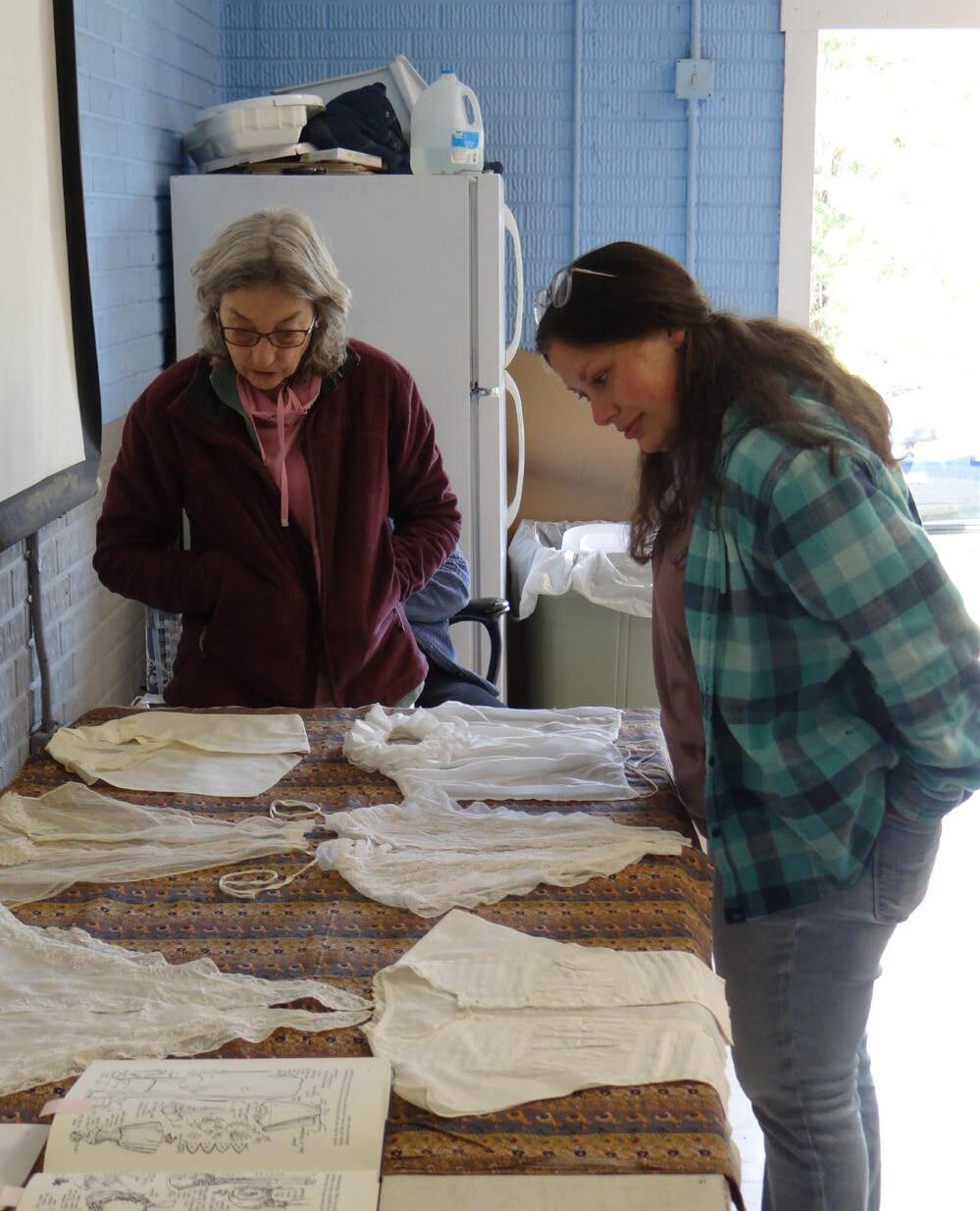
Beth Hines and Melissa Bowen study vintage chemisettes.
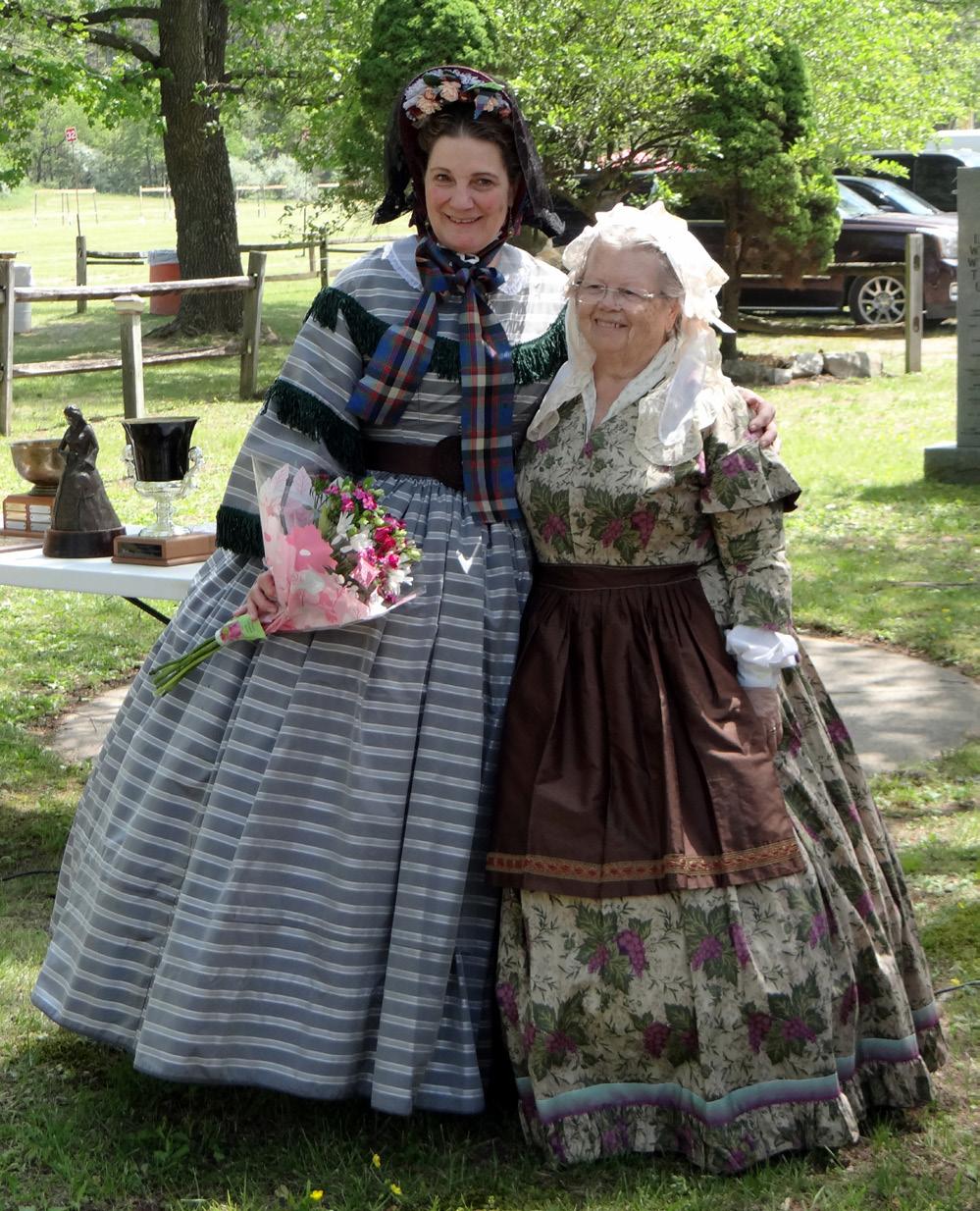
Peggy Shaw (R), current Chair of the Costume Committee gives flowers to Maryanne Greketis (L) to thank her for her past service as Costume Committee Chair.
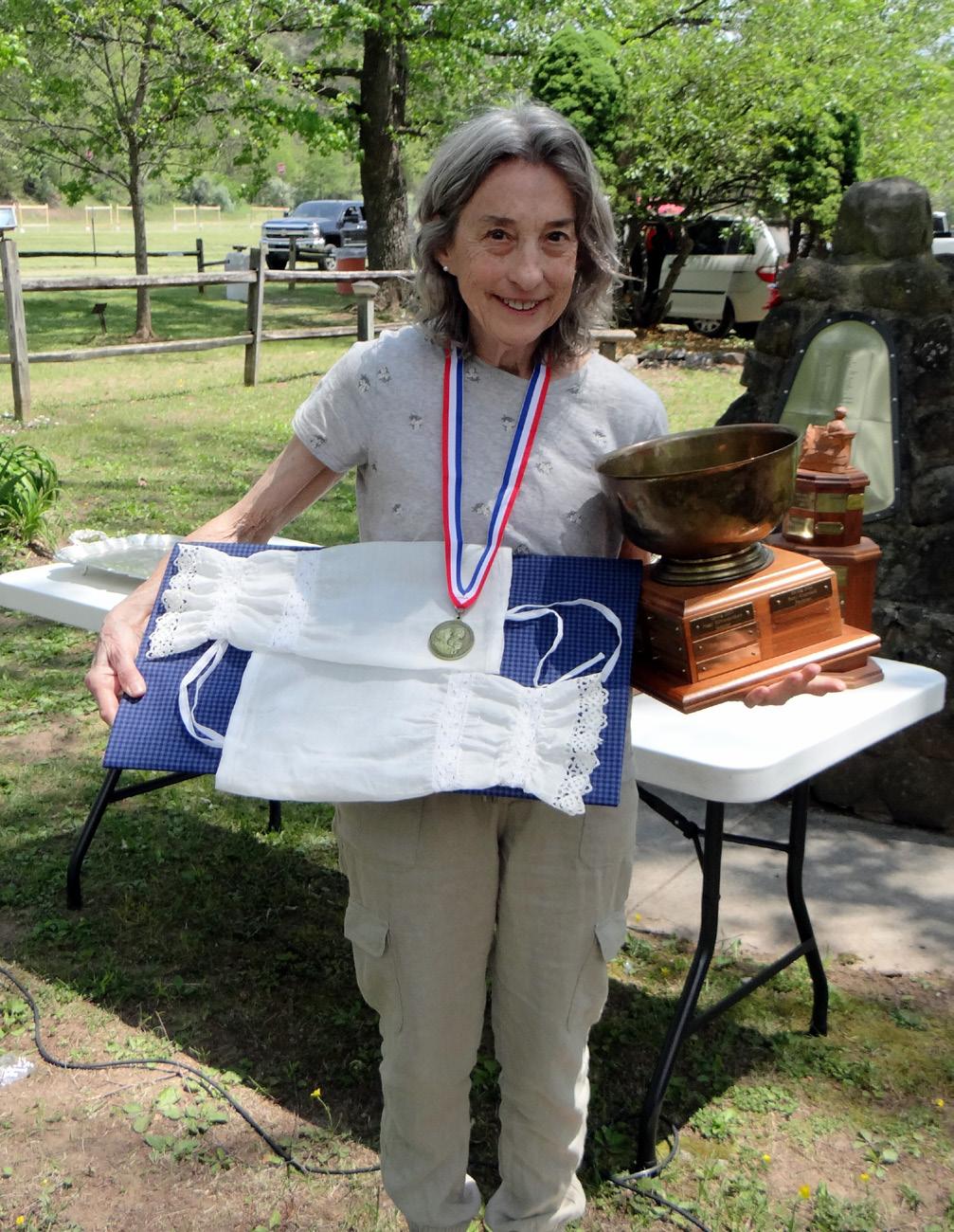
Beth Hines - The Susan Brisbin Award for the special project undersleeves. Seamstress: Beth Hines
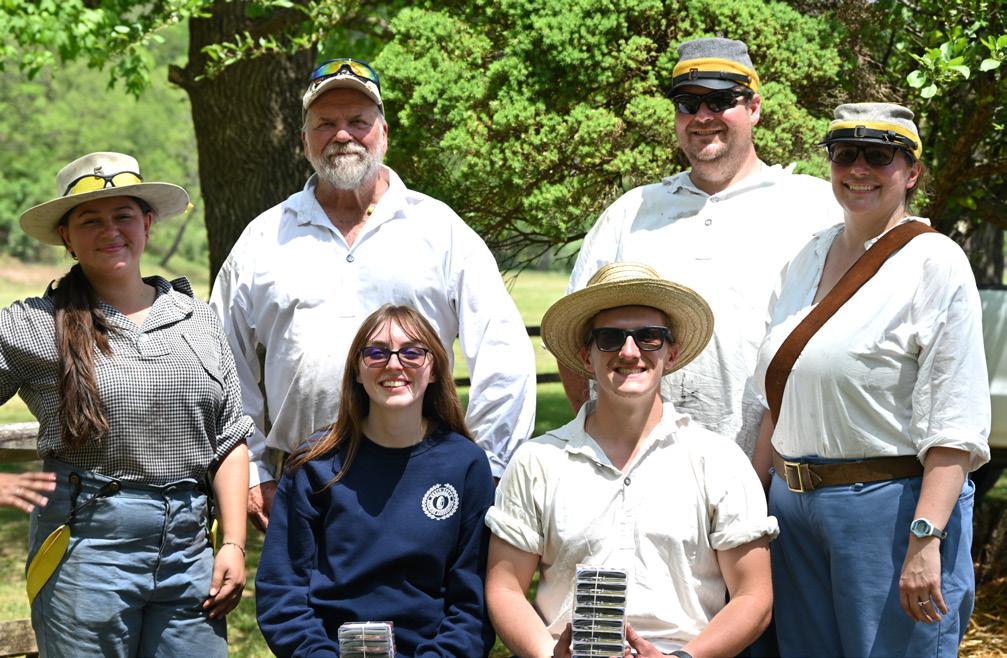
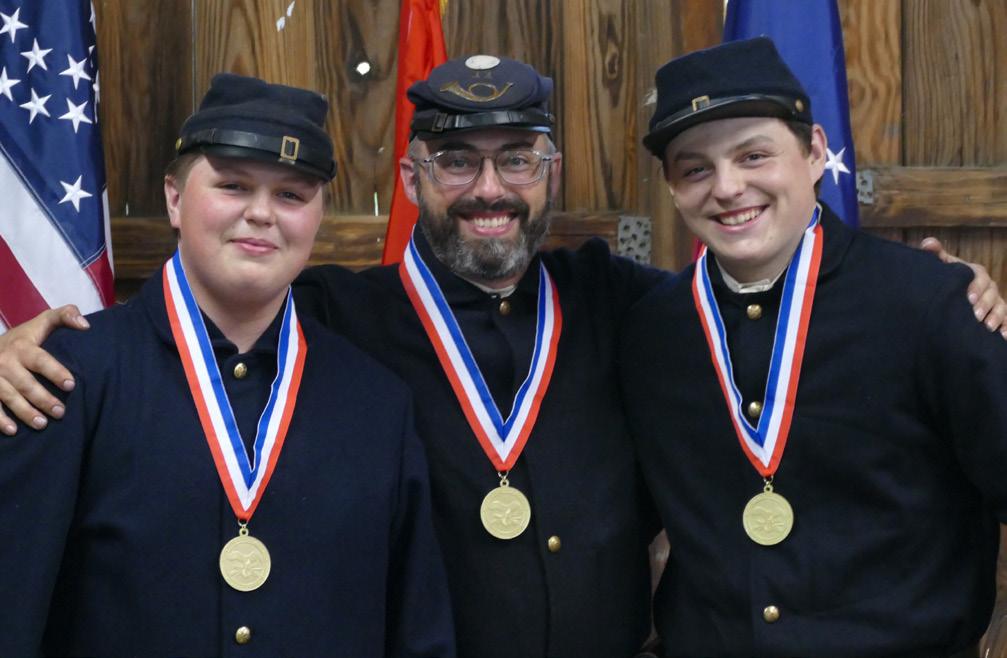
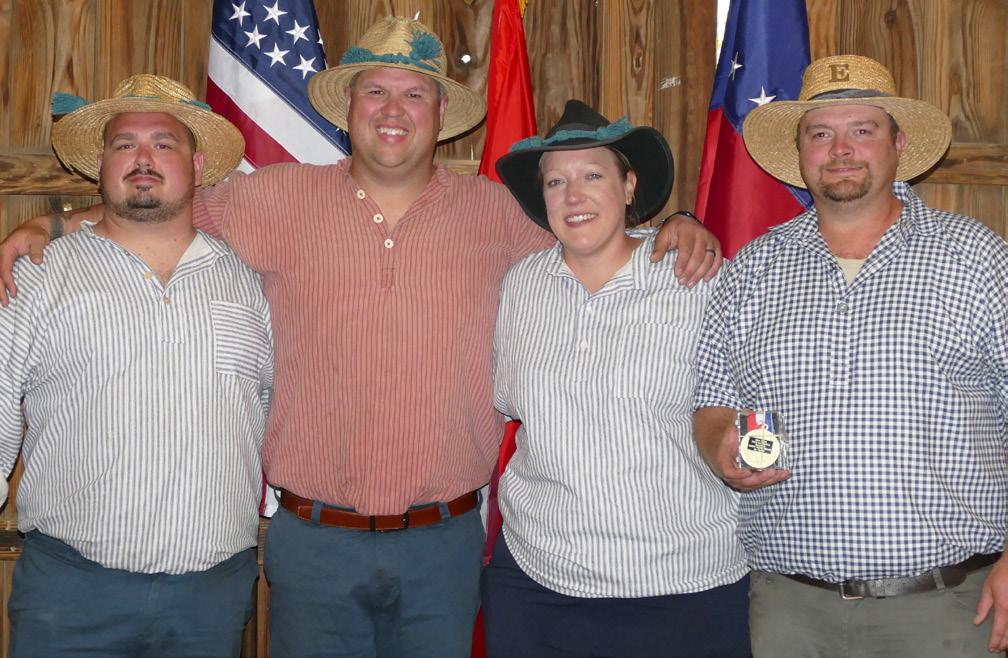
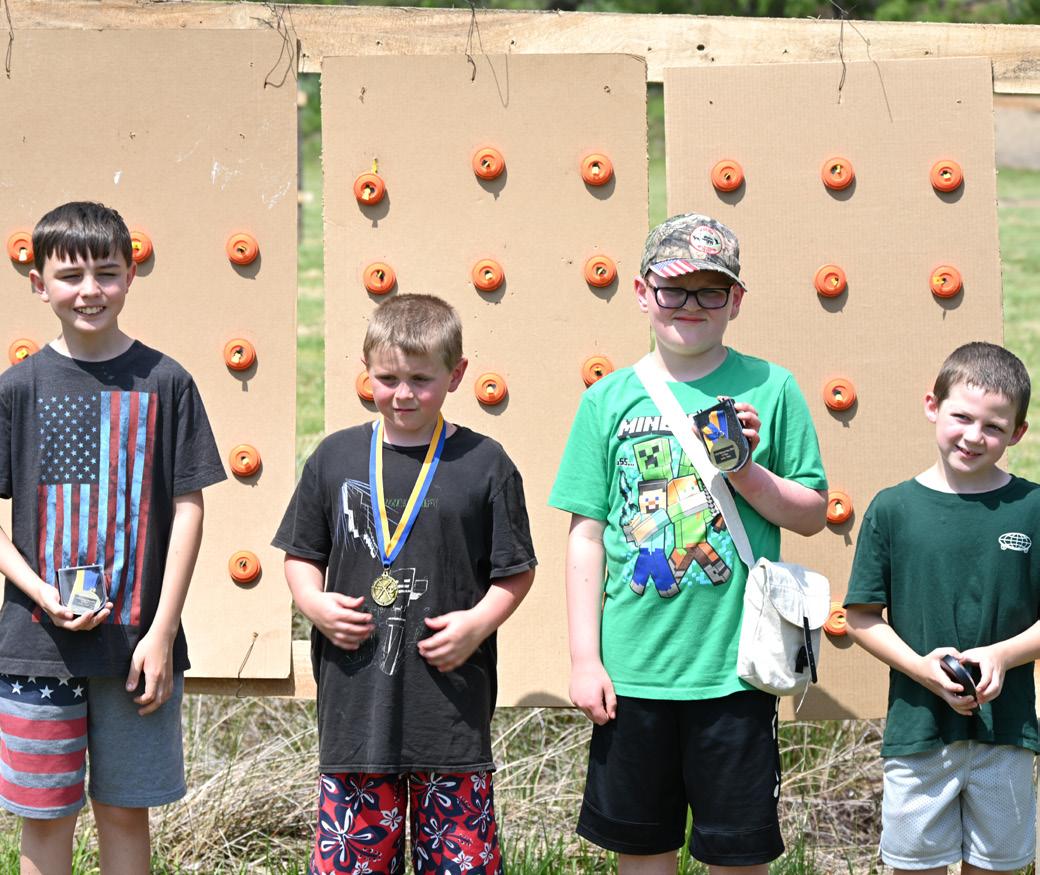
(Not in order) Raymond Weaver, Ryan Chapman, Cole Gipe, Alexander Laney - 1st Place Junior BB Gun Team
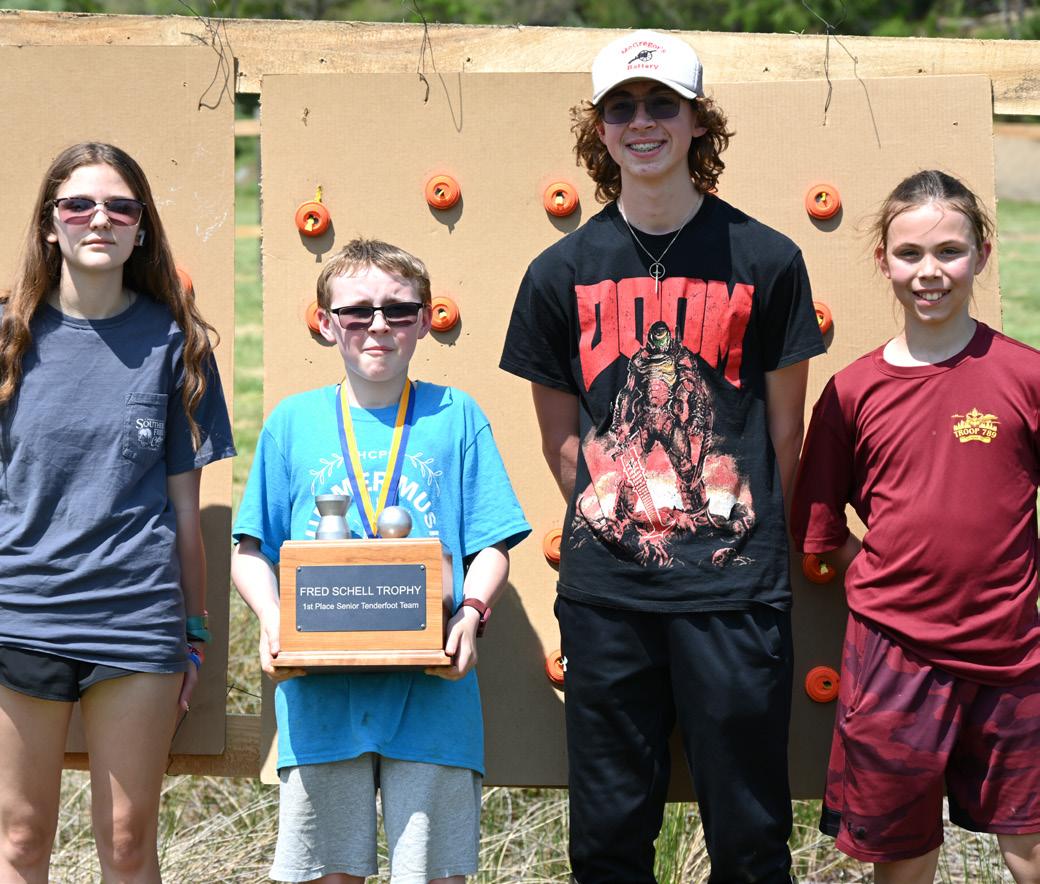
Lily Jenkins, Duncan Keener, Abel Wenke, Jude Wenke - with the Fred Schell Award for 1st Place Senior BB Gun Team
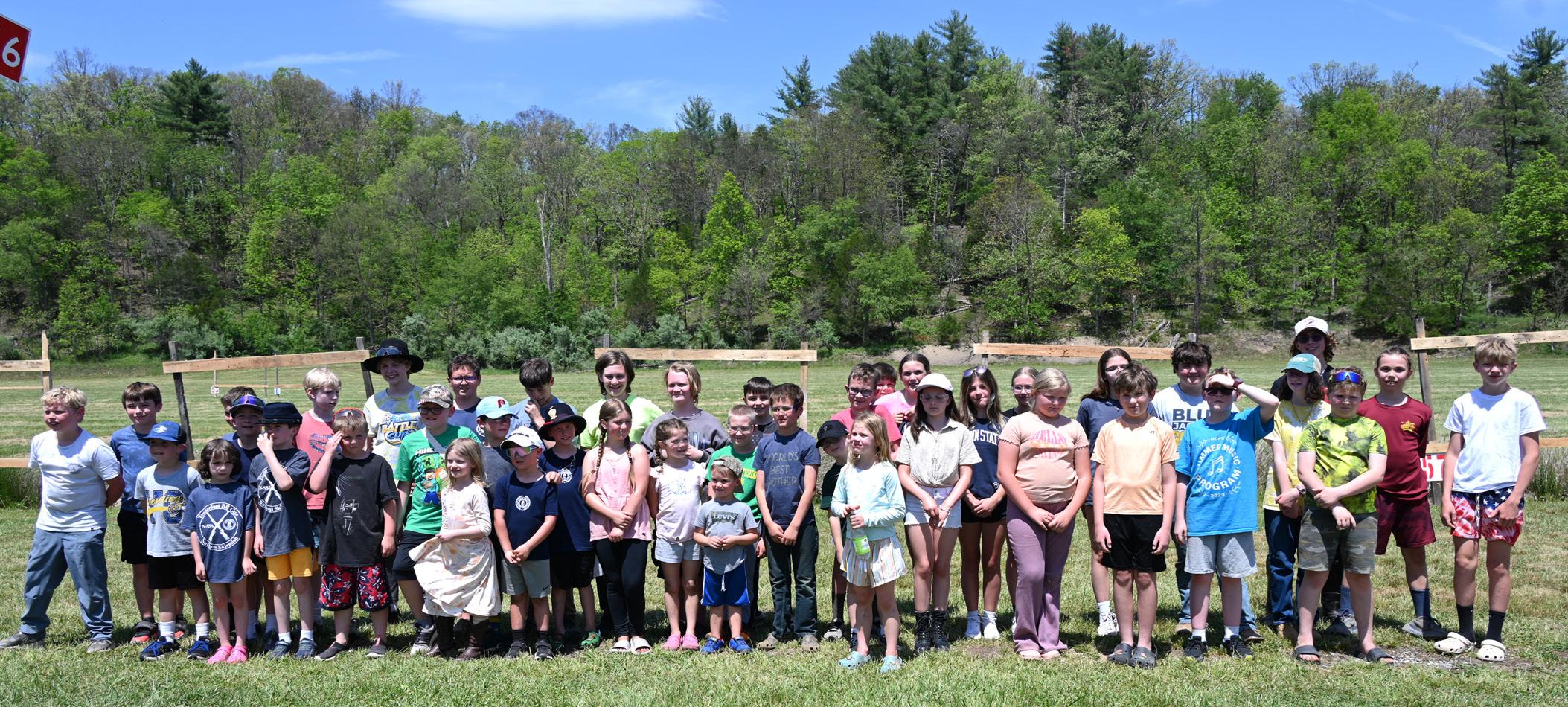
Group photo of BB and Pellet Gun shooters - from the 153rd Spring National - May 2026
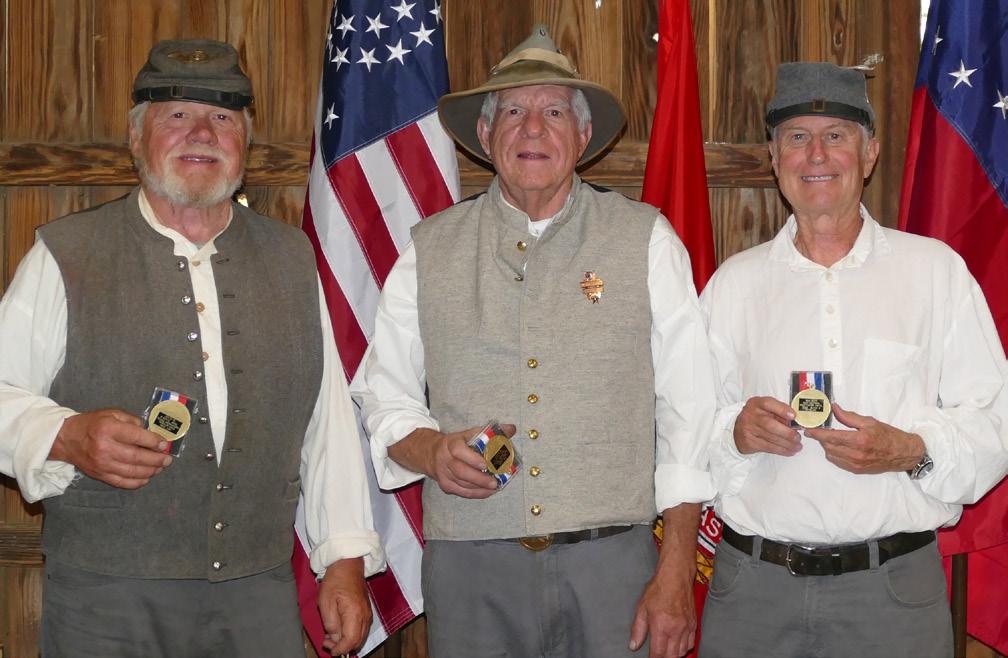
Ronald Barvian, 1st US Artillery50 Year Membership Award
Peter C. Hughes, 120th New York Vol. Infantry - 50 Year Membership Award
Richard Intravia, 1st Connecticut Volunteer Infantry - 50 Year Membership Award
Henry Winzinger, Co K 2nd New Jersey Cavalry - 50 Year Membership Award
David E. Bash, 12th US Regular Infantry - 50 Year Membership Award
Michael Dumene, Knap's Battery - 50 Year Membership Award
Phil Spaugy for Lance Herdegen (posthumous), Union Guards50 Year Membership Award
David T. Booz, Co C 2nd US Sharpshooters - 50 Year Membership Award
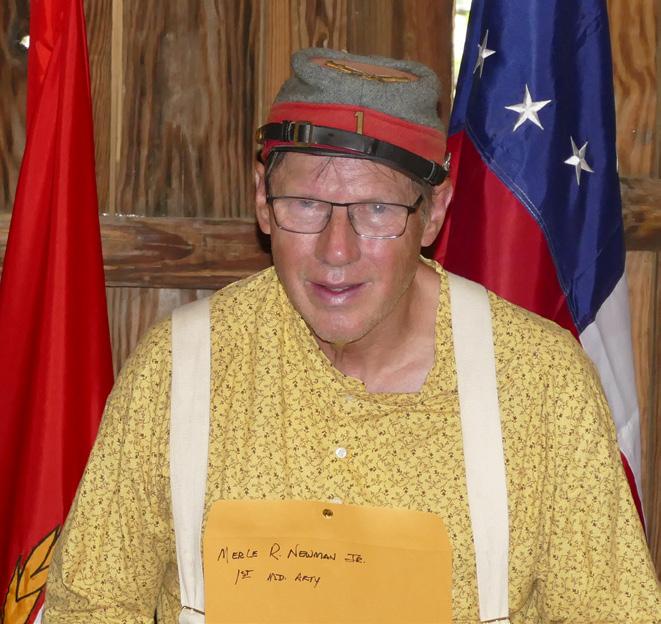
Ray Newman Jr, 1st Maryland Artillery, - 50 Year Membership Award
Not Pictured for 50 Year Awards: Gary Drake, 1st New Jersey Light Artillery
Not
for 60
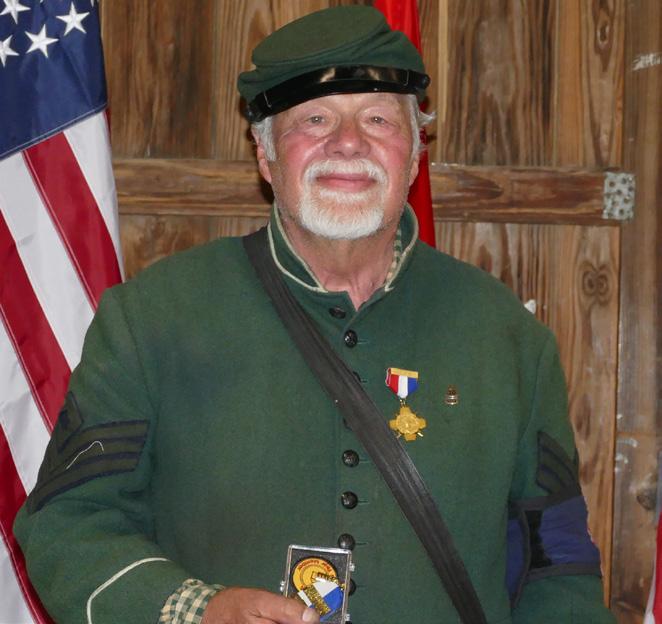
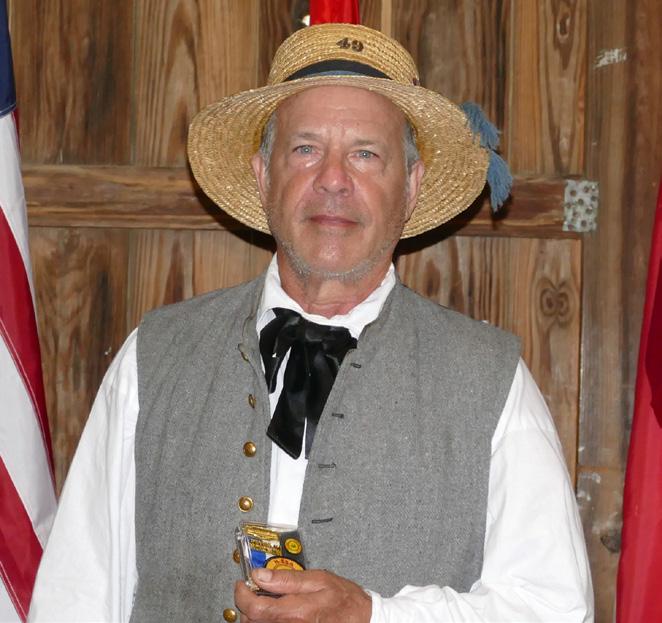
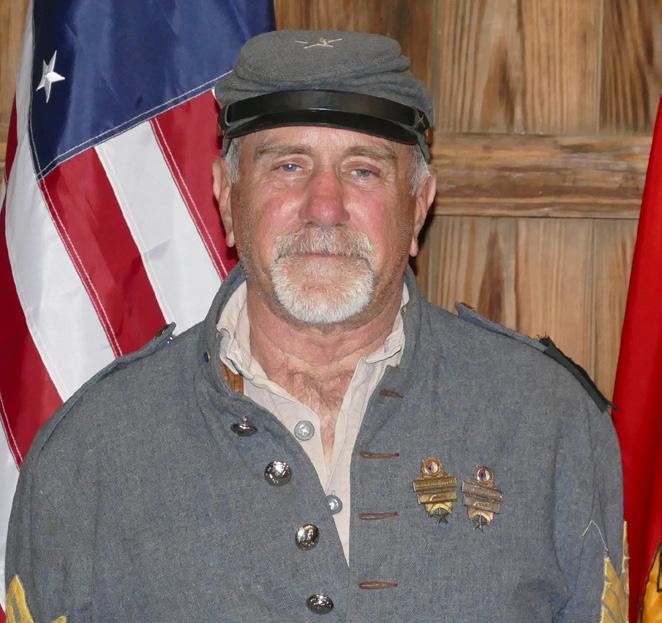
James Adams, 49th Regt. Virginia Volunteers - 50 Year Membership Award
Delmar Hale, 37th Georgia Infantry - 50 Year Membership Award
Ed G. Lee, 1st Virginia Cavalry - 50 Year Membership Award
Harry J Keppler II, 9th Virginia Cavalry, CSA - 50 Year Membership Award
John Venskoske, 5th Virginia - 60 Year Membership Award
Douglas Reed, 24th Michigan Infantry - 60 Year Membership Award
Pictured
Year Awards: Michael Lauer, 111th Ohio Volunteer Infantry
50-Yard CarbiNe
100-Yard CarbiNe
50-Yard CarbiNe
100-Yard CarbiNe
T aggregaTe
revolver
revolver
Marksman
aggregaTe
SS br/C2
Competitor
SS br/C2
50-Yard breeCh-loader
100-Yard breeCh-loader
2 PlaCeS Paid
breeCh-loader aggregaTe
2 PlaCeS Paid # Expert Sharpshooter
50-Yard breeCh-loader
3 PlaCeS Paid
# Marksman Striker
100-Yard breeCh-loader
2 PlaCeS Paid # Marksman Striker
breeCh-loader aggregaTe
2 PlaCeS Paid
# Marksman Striker
25-Yard SmooThbore
50-Yard SmooThbore
SmooThbore aggregaTe reSulTS 4
25-Yard SmooThbore
50-Yard SmooThbore reSulTS
SmooThbore aggregaTe reSulTS
4
Competitor
zer Crew:
The Iron Brigade
General George B. McClellan, at the Continental Hotel in Philadelphia, told General John B. Callis of Lancaster, Wisconsin - what he knew of the origin of the "Iron Brigade".
Said he: “During the battle of South Mountain my headquarters were where I could see every move of the troops taking the gorge on the Pike (National Pike). With my glass I saw the men fighting against great odds, when General Hooker came in great haste for some orders. I asked him what troops were those fighting on the Pike?
His answer was: “General Gibbon’s Brigade of Western men. ‘I said, “They must be made of iron.”
He replied: “By the Eternal they are iron. If you had seen them at Second Bull-Run as I did, you would know them to be iron.”
I replied: “Why General Hooker, they fight equal to the best troops in the world.”
This remark so elated Hooker that he mounted his horse and dashed away without orders. After the battle, I saw Hooker at the Mountain House near where the Brigade fought.
He sang out: “Now general, what do you think of the Iron Brigade?”
Ever since that time I gave them the cognomen of Iron Brigade."1
1George B. McClellan, statement recounted in the Program of the Iron Brigade Association Reunion (Chicago, 1900), quoted on Civil War Round Table of Milwaukee and The Iron Brigade Association website, "Origin of the Name ‘Iron Brigade,’" accessed June 26, 2026, https://www.milwaukeecwrt.org/iron-brigade-association/origin-of-the-name-iron-brigade/.
ClaSS b-2 muSke T
ClaSS a-1 CarbiNe
ClaSS a-3 CarbiNe
ClaSS b-1 CarbiNe
ClaSS b-2 CarbiNe
ClaSS a-2 SmooThbore
ClaSS a-3 SmooThbore
5
ClaSS C SmooThbore
breeCh-loader SS
4
SPeNCer
Spencer’s Repeaters in the Civil War
Part 2: In the Field
A.M. Beck - Palmetto Guards
The first installment of this series presented the rather considerable obstacles that had to be overcome just to convince the Ordnance Department of the utility of these new-fangled breechloading repeaters, and at the same time transition Christopher Spencer’s design from tool room prototype to mass produced weapon. This part of the story will present the new repeater’s introduction to field service. Part 3 will discuss the ins and outs of shooting Spencers in today’s N-SSA matches.
There were other repeaters in federal service by mid-1863, notably Colt’s revolving rifle and Henry’s magazine rifle. Sam Colt’s rifle was intended for military service, but by 1861 its failings were widely known. The Henry was intended as a civilian arm. It fired a low-powered 44 caliber round and was not designed to survive the hardships of life in the field. In spite of its shortcomings, the Henry quickly found a market with soldiers. Unlike its competitors, Spencer’s weapons were specifically designed to both survive
the vicissitudes of campaigning and fire a cartridge that was roughly equivalent to standard 58 caliber musket ammunition.
The first recorded use of a Spencer repeater in combat is by Sergeant Francis Lombard of the 1st Massachusetts Cavalry. The occasion was a skirmish near Cumberland, Maryland on October 16th of 1862, just after the great battle at Sharpsburg, MD. Lombard was a New England gunsmith before the war, which may have led to an association with Spencer. Unfortunately, Christopher Spencer does not mention Lombard in his memoirs. Later promoted to Lieutenant, Lombard was unfortunately killed at New Hope Church, outside of Richmond, VA, in November of 1863. The details of his repeater and its use are now lost to history.
It is safe to assume that Lombard’s was not the only pre-production Spencer to have seen combat. It definitely was not the only one in the field. Colonel T. E. Chickering, of the 41st Massachusetts and almost certainly
of the family that owned Spencer’s armory building, wrote the company on January 13, 1863 from Baton Rouge Louisiana. He claimed that his Spencer carbine had out shot the unit’s pickets in an impromptu target match. Supposedly the guards were armed with muskets. Production Spencer carbines were not to be delivered for another ten months. A few 36 and 44 caliber carbines had been made before 1863. It is unknown if Chickering’s was one of these.
Army units began to receive production Spencer rifles in January of 1863. The 5th and 6th Michigan Cavalry were the first to get repeaters. Their rifles were ready for government inspection in November of 1862 and shipped in December. However, the day before the new repeaters arrived in Michigan, their intended recipients had departed for Washington, D.C. Their rifles finally caught up in mid-month. The 5th, 6th, 7th and 8th Independent Ohio Sharpshooters in the Army of the Cumberland received their rifles soon after, and their issue was recorded in unit returns of February of 1863. The Navy issued their first deliveries to ships in the Mississippi flotilla and the east coast blockading fleet at about the same time.
Colonel John Wilder’s Lightning Brigade of mounted infantry in the Army of the Cumberland, was another early recipient of Spencer rifles.
Troops lucky enough to receive Spencers were unreserved in their praise. Of the few complaints only one was justified, they are heavy, especially the rifles. The 2nd Ohio Cavalry in particular complained that the new Spencers were excessively heavy and wanted their Burnsides back. However, this complaint was quickly forgotten as units gained experience with their Spencers.
The first use of issued Spencers is hard to determine with certainty. Among the earliest operations to include them were naval landings along the Carolina coast in early 1863. These were not strongly opposed and no major battles developed. The Mississippi flotilla was more or less continuously engaged against riverside Bushwackers, so it’s probably a safe bet that some return fire originated from Spencer’s rifles.
Colonel John Wilder’s Brigade in the western theater was among the first field commanders to use repeaters effectively in battle. Wilder’s Lightning Brigade greatly shortened the battle of Hoovers Gap, Tennessee on June 24th 1863, when they filled the center of a thin and under supported Federal line. As the battle developed, the center held against a vastly superior Confederate force. Braxton Bragg’s Confederates believed that a fresh corps had come up, so great was the volume
of fire put out by the Lightning Brigade. The southerners fell back to reinforce and reorganize. Bragg’s troops then counter attacked but could not carry the field. When the Confederates finally yielded, the Federals had shot away almost their entire ammunition supply of 142 rounds per man. This was the first major battle for the new repeaters. It was also the first of many instances where the fire power of Spencers in the hands of cool veteran troops carried the day. Union General Rosecrans expected that three days of hard fighting would be required to take the gap. In fact, it fell to Union control in one. Interestingly, the Confederate losses were not unusually high, 19 killed and 126 wounded out of an entire brigade.
As Wilder’s men pushed through Hoovers Gap, the Spencerarmed 39th Indiana Mounted Infantry was leading the attack at Liberty Gap a few miles to the west, with similar results. With the introduction of substantial numbers of repeaters to front line units, a change in the style of command rapidly took place. Officers with unusually large amounts of bravado began to succeed using tactics that heretofore would have been near suicidal. This élan did not find its way up the chain of command though. Overall battle tactics remained pretty much as they had been at the outbreak of the war.
George A. Custer is a good example of this class of junior officers. Custer had replaced Joseph Copeland as commander of the Army of the Potomac’s Michigan Cavalry at the start of the Gettysburg campaign. At the battle of Brandy Station, in June of
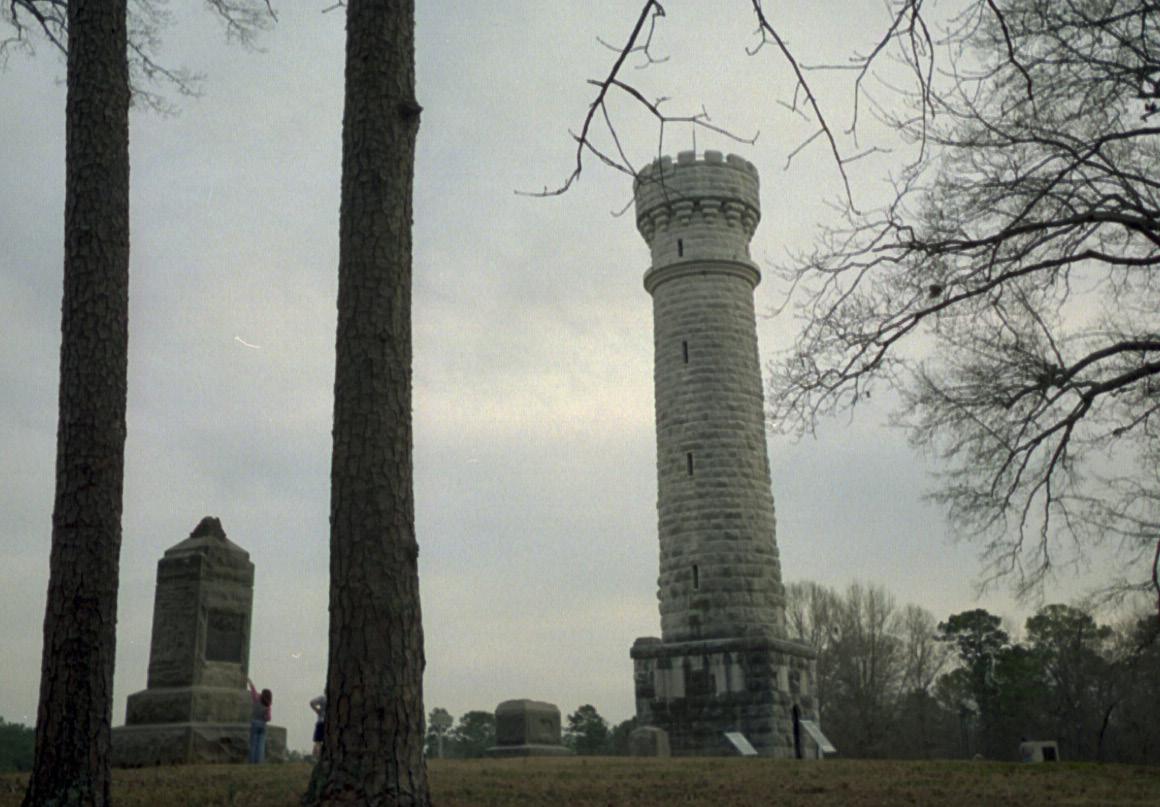
Wilder Tower (Wilder Brigade Monument) at Chickamauga & Chattanooga National Military Park, Georgia. This monument honors the Army's 1st Brigade, 4th Division, 14th Corps (Army of the Cumberland) - which was commanded by Colonel John T. Wilder and nicknamed the "Lightning Brigade".
1863, he ordered one of his first charges. It passed over a mile up Fleetwood Hill. Beyond support and mounted on fast-tiring horses, the attack quickly degenerated into a stampede with great loss. A week later at the battle of Aldie, he again commanded one of the grand charges that would become his trademark. The Confederate center was the point of attack. Although this operation covered less distance, it still lacked support and his troops took a terrible pounding.
There had been no Spencer-armed troops in either battle. However, after Aldie the Spencer-armed 5th and 6th Michigan Cavalry were taken from picket duty in the defenses of Washington and assigned to the field. At Hanover, PA on June 30th, Custer’s Michiganders, including the 5th and 6th Michigan, came to the support of Elon Farnsworth’s cavalry. Jeb Stuart’s Confederate troopers were stopped.
On July 3rd, Irvin Gregg’s Cavalry Corps again met Jeb Stuart’s now nearly exhausted Confederate troopers. The venue was just east of Gettysburg, Pennsylvania at what is today called the East Cavalry Battlefield. The Confederates were attempting to flank the Federal army in support of Pickett’s ill-fated charge. Again the ambitious Michigan commander undertook one of his
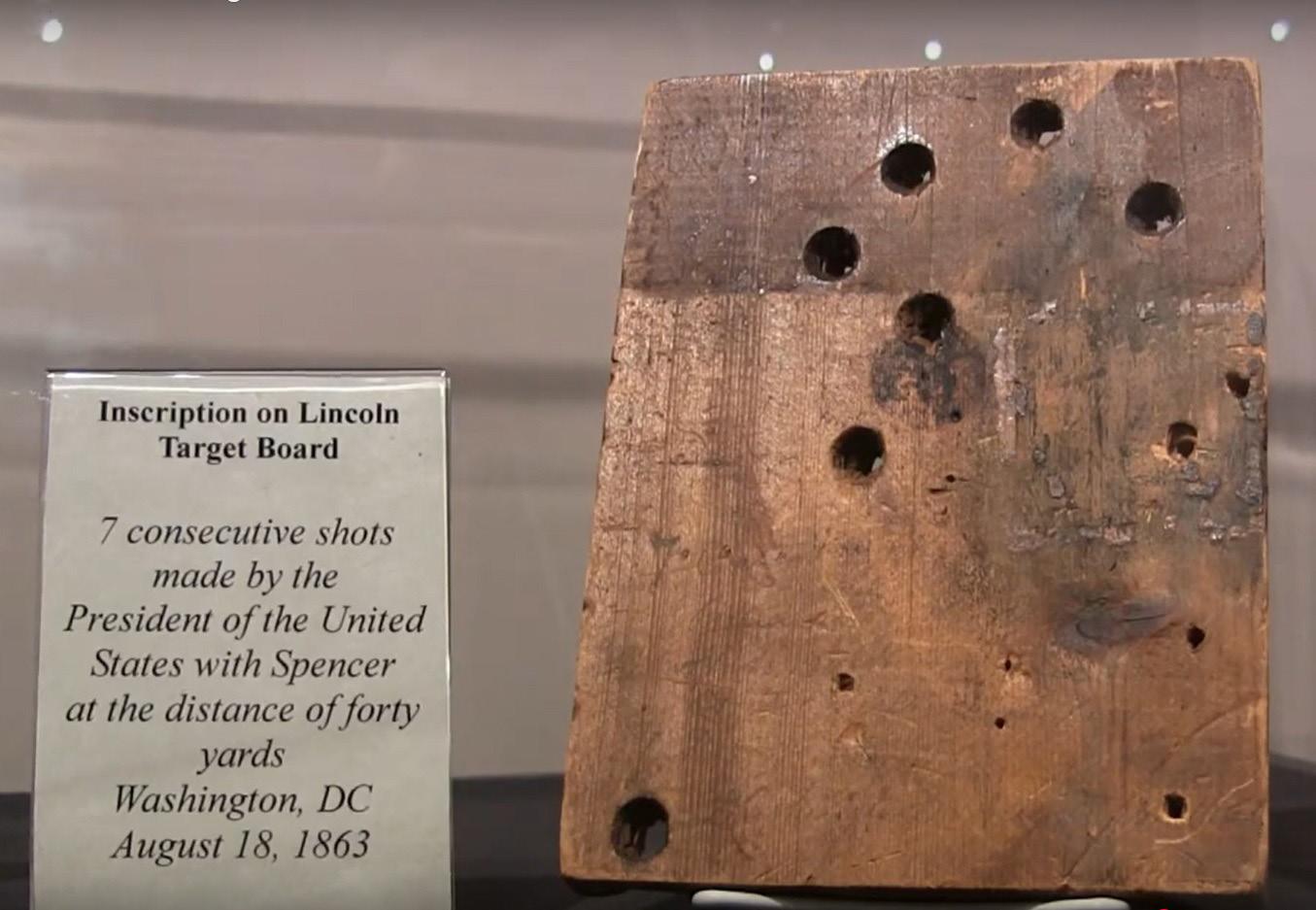
Abraham Lincoln's 1863 Spencer Target. "7 consecutive shots made by the President of the United States with Spencer at the distance of forty yards. Washington DC, August 18, 1863"
grand charges. The 5th and 6th Michigan troopers were dismounted as skirmishers in support of Custer’s mounted attack. This time southern cavalry was stopped by a bold federal charge.
That evening, Lieutenant Elon Farnsworth, who was every bit as daring as Custer, was killed in a similar charge against the south end of the Confederate line. Although his defeat is difficult to attribute to the fact that none of his troops had Spencers, these sorts of tactics relied heavily on superior firepower for any hope of success. In fact, Custer later remarked in a letter to the Spencer company that, once his entire command had been armed with repeaters, he would not hesitate to engage the enemy when outnumbered almost two to one.
All did not go smoothly though. As units began to receive Spencers in large numbers,
reports of them jamming in battle began arriving back at the War Department. Soon President Lincoln himself intervened to stop issues of the potentially defective arms. This situation led to Christopher Spencer’s visit to the White House and his impromptu shooting match with Lincoln near the Washington Monument. The problem was not the rifles, but the fact that training in how to handle the new repeaters was virtually non-existent. If the lever is not operated smoothly, it is possible to get a double-feed from the magazine. Clearing this requires removing the magazine tube and dumping out all the rounds in the magazine. Once Spencer had demonstrated that the problem could be simply avoided by operating the lever correctly, the President withdrew his objection and issues resumed.
As one can readily imagine, word of spectacular battlefield results against great odds spread like wildfire through the eastern and western armies. Every commander tried to requisition the new rifles for his troops. Custer pulled every political string he could find to have his entire brigade armed with Spencers. The brass in Washington however, remained cool to the idea of rearming with $40 repeaters, especially when they already had orders placed for over a million $18 muskets and “all the Sharps carbines you can make” for $28.50. The limited supply
of repeaters was doled out to units with especially good records of front line service, and almost entirely to western units.
By the summer of 1863, the Spencer company was finishing up the Army’s 7500 rifle order, with no more federal contracts on the way. In spite of the clumsiness of rifles when used on horseback, the Spencer lever action had obvious advantages for mounted troopers. To keep the machinery running in Boston, the company offered the Ordinance Department a deal for 22 inch barrel carbines. Barrels for the short guns were much easier to make, so the price could be cut. Spencer offered repeaters for $25, which was less than the most popular single shot carbine in the army, the Sharps. Washington was finally beginning to grasp the advantage of repeaters, especially when they were $3.50 cheaper than single loaders. The Ordnance Department quickly accepted the deal. Since the stocking and barrel making machines had to be modified, the first repeating carbine was not delivered until October of 1863. In the meantime, rifle production was continued. By the time Spencer switched to carbines, 12,471 rifles had been delivered, 1000 of those to the Navy, with another 2000 later going to the State of Massachusetts.
When the short guns appeared, they were an immediate and unqualified success.
Again, the first units to get the new carbines were cavalry with outstanding records of front line service. Many turned in Spencer rifles, which were quickly reissued to mounted infantry units.
Although virtually all Spencer rifles had been sent west, front line cavalry in the Army of the Potomac moved to the top of the priority list for repeating carbines, with western units receiving lesser numbers. Still, by early 1865, when Brigadier General James Wilson undertook his raid through the deep south, there were enough repeaters in the Army of the Tennessee for him to equip his entire command with them.
As with all other Federal weapons, Spencers were soon captured by the South and put to use against their former owners. The new guns were a great success, especially along the border, where 56-56 rimfire ammunition was fairly easy to come by. Federal supply lines proved a ready source and were more or less constantly raided by Confederate cavalry right up to the end of the war.
Unfortunately for the Confederates, copper was in such short supply that the south
was never able to provide domestically manufactured cartridges. Once captured ammunition was exhausted, the guns were sent to the nearest depot for storage. It was always hoped that a supply of cartridges could be obtained by some unknown means, then repeaters would be issued again to the Confederate mounted service. Thousands of Spencers waited out the war as mechanical POWs.
Several cavalry units in the Confederate army were at least partially equipped with Spencer repeaters. Mosby’s 43rd Va. Cavalry had an unusually good supply of the best federal arms. That unit operated on the border and specialized in appropriating Yankee goods for Southern service. Although Mosby himself preferred revolving pistols for raiding operations, by 1864, there were always several troopers armed with Spencers in the ranks. Returns of the 43rd for November of 1864 show 167 Spencer rifles and carbines on hand.
Spencer arms were held in high regard by both sides by the end of the war. During the precipitous retreat from Richmond in April 1865, three Federals surprised a lone Confederate. Thinking quickly, the Johnny spun around, working the lever of his captured Spencer as he turned. Pointing his gun at the lead man, the Reb suggested that
they may want to come along quietly. On seeing the formidable repeater, the Yanks decided that this may actually be their best option. The three surrendered and were led into the Confederate camp, not realizing that their captor had fired his last cartridge some time ago.
Probably the greatest tribute to Christopher Spencer’s repeaters was bestowed by the men that had carried them. At the end of the war, many used their muster out pay to purchase the very guns they had carried. About 11,000 rifles and carbines went home with the men that had carried them in the war. General Edwards of the 37th Massachusetts Infantry wrote to the state Ordinance Department in June 1865;
“Our regiment was armed with the Spencer rifle on the 14th day of July, 1864, and we first had the opportunity of testing them in an engagement at Summit Point (West) Virginia.”......“At whatever position we have ever been placed, we have always found them to be our best and truest friend. At Sailors Creek, Virginia, April 6th 1865, we came off victorious over Custis Lee’s brigade, that had enveloped us so closely on three sides that the bayonet was freely used. ….The rifles now mostly are property of the men, and show the marks of hard service and exposure to all kinds of weather, but are still in as good serviceable condition as ever.”
reasonable certainty. Unfortunately, that is not possible with later deliveries. Arms were packed and issued without regard to serial numbers. As requisitions for Spencers increased, adjacent numbers could, and often did, end up being issued to units hundreds of miles from each other. An additional complication in researching individual serial numbers is that the Ordnance Department did not consider contract equipment delivered until the certificates of inspection and acceptance were processed in Washington. The time required to process certificates increased as the war progressed. This has led to the discovery of unit returns showing Spencer serial numbers in the field that are considerably higher than the quantity delivered up to that point.
Today, the serial numbers of early deliveries can be traced to specific units with
Look for the 3rd article in this series on Spencer Rifles in the next issue of The Skirmish Line!
The North-South Skirmish
Originally appeared in the August 1957 American Rifleman magazine, reprinted with permission
By: John A Harper, Jr
*Photos have been omitted as we don't have access to original high-quality scans or copies.
Apurpose of the North-South Skirmish Association is to show the capabilities of the Civil War rifle-musket and to foster team competition with it and other Civil War vintage weapons in the original manner. A further objective is "to encourage the preservation and display of Civil War material".
At the 15th Semi-Annual Skirmish at Fort Dix, New Jersey, May 19, 1957, 35 teams competed. Dressed in the uniform of their companies, more than 300 men participated in a display of the use and capabilities of Civil War firearms.
Cleverly drawn-up team matches
Skirmishes are first and foremost team or company shooting matches, at which spectators can see clearly, even through the blackpowder smoke, how well each team is progressing. The Skirmish matches are all cleverly designed so that the companies competing shoot for point score against time. And the targets fall, break, explode, or
splash. At the 15th Semi-Annual Skirmish an estimated 1500 saw and heard the firing and each got his face full of blackpowder smoke blown back into the stands behind the firing line.
The Skirmish was one of many events conducted at Fort Dix over Armed Forces weekend. The Fort set aside a former bazooka training range and a bivouac area nearby. For at least two nights many of the over-300 participants tented in the bivouac area. Each military unit occupied a section of the area and flew its flag and guidon from a central position, usually near a field piece and musket racks.
A National Skirmish is divided into two days of competition. The first day’s firing is limited to individual matches, and the second day to team matches. This year there were four individual matches, one with percussion revolvers, one with carbines, and two with the rifle-musket. This is the only national shooting competition in which
Civil War carbines are fired. The individual matches are considered by many of the competitors to be only warm-up events for team competition. They are conducted more casually than team events. Competitors are not required to be uniformed, and few spectators are present. The results of individual events do not influence the outcome of the team matches.
North-South Skirmish competition emphasizes team firing. Each team, or company, numbers not fewer than eight men. Fifteen organizations competing at Fort Dix this year entered one team only, eight organizations entered two teams, and the 13th Confederate Infantry had four teams competing. The Skirmish opens with the companies marching onto the range in full uniform carrying their rifle-muskets. They march down in front of the grandstand and each company takes its assigned firing line position, to be occupied by the company for the entire three-hour competition.
The Skirmish is conducted by a Skirmish director, who has the responsibility of organizing it. Because of the large attendance and the number of competitors taking part, the Skirmishes for the last five years have been held on military posts.
A typical program
There were six team events in the Skirmish this year. These were as follows:
Silhouette Match —This event consists of volley firing at 100 yards range on one-half size silhouette targets. It emphasizes firing on command. Any hit on the target is scored, and the winner is the team with the highest point score. This is the only point event in the Skirmish.
Clay Pigeon Match—Each team is assigned a large fiberboard at 50 yards with 16 clay pigeons mounted on it in rows of four, spaced no closer than one pigeon diameter. The object is to determine which team can break all its targets in the shortest period of time.
Beer Can Event—Each team is assigned a target of ten beer cans filled with water and suspended by strings from a two-by-four crosspiece 50 yards clown range. The team members continue to fire until all cans have been hit. Of course, when a can is hit, the string is broken, the water splashes from the can, and the can falls to the ground.
Stake Cutting Event —Each team is assigned one two-inch by six-inch pine stake six feet in length, one end of which is buried in the ground at 50 yards range, with the stake vertical and the broad side facing the
firing line. At the signal each team fires at will at a horizontal mark on its stake and continues to fire until the stake is cut in half by the bullets striking on or near the mark.
Two additional events have become features at the North-South Skirmishes. One, termed the M1 Match, pits two Army riflemen against a team of eight Northern riflemen and two Army riflemen against a team of eight Southern riflemen firing at clay pigeons mounted on a fiberboard identical with the target used in the Clay Pigeon Match. The object is to demonstrate the firepower of weapons spanning a century of development. The muzzle-loading riflemen fire at an approximate rate of three rounds per minute in this interesting demonstration.
Most spectacular event
The other event is the Artillery Match. It is far and away the most spectacular of all the matches and caps a well-run Skirmish program. In the Artillery Match, as in all other aspects of the North-South program, authenticity is a requisite. The guns must be actual or reasonable scale replicas of Civil War artillery field pieces. The gun must be serviced by a crew according to the regulations in force at the time of the Civil War. Each gun crew is in the charge of a gunner who regulates the crew in servicing the piece.
The following rules serve as guides to the gun crew:
• The gun crew will serve the gun at a walk, running being prohibited.
• The man ramming the cartridge will not stand with his body in line with the bore.
• The vent will be brushed before the bore is sponged.
• The bore will be sponged with water after each firing.
• The vent will be stopped with a proper thumbstall from the time the sponge enters the muzzle until the rammer is removed from the bore after the projectile has been rammed.
• When a primer fails to discharge the piece, the whole primer will be removed and replaced by a man working in front of the carriage axle.
Matches with rifle-muskets
Small arms firing in the company events is all done with a rifle-musket or rifle. Skirmish regulations permit the use of any muzzleloading shoulder arm antedating 1865 and issued to military forces of any state or national government. The 1861 and 1863 Springfield and contract rifle-muskets are the most frequently used, although Enfield rifles and rifle-muskets and Remington "Zouave" rifles are also used.
The rifle-musket must be used in “as issued' condition, with only minor modifications being permitted. The front sight may be
reshaped, though the alteration must not interfere with the attachment of the bayonet if the arm was issued to carry a bayonet. The addition of non-issue front sights and sight hoods is prohibited. Modifications of the rear sight permitted by the rules include the alteration of an existing notch, the substitution of a new sight leaf, or the addition of a peep sight. However, the original rear sight base must be used in its original location, and a barrel may not be drilled or machined to receive a rear sight alteration
Positive functioning a must
In the interest of maintaining the arms used in Skirmishes. rules provide for the replacement or fitting of a gun lock to insure safe and positive functioning. However, there are two alterations expressly prohibitedthe removal of the half-cock notch of the tumbler, and the reduction of the trigger pull below three to four pounds.
In recognition of the increasing demand, both by shooters and by collectors, for historical military arms, Skirmish regulations permit the use of a reproduction part in repairing or replacing a broken or missing part. However, there is one requirement - that the reproduction must be an exact replica of the original part.
Blackpowder is used exclusively in NorthSouth competition. Because it ignites so readily and burns, unconfined, so rapidly, it requires greater care in its handling than does smokeless powder. In the company matches the only permissible way of charging arms is by use of a prepared cartridge in a cardboard or plastic container. Also, the competitor must carry all ammunition and shooting equipment on his person, either in a cartridge box, a waist belt cartridge box, or a haversack. The competitor may not place any equipment or accoutrements on the ground on the firing line, and cleaning equipment and shooting kits must be at least 25 feet behind the firing line. As a result of these requirements the competitor loads his cartridges before a match and carries the cartridges and percussion caps on his person when he goes on the firing line. He is not allowed to use a powder flash or powder horn.
The powder charge for the .58 caliber 1861 or 1863 rifle-musket as given in the Civil War regulations is 60 grains of FFg blackpowder. Some shooters go as low as 50 grains or as high as 85 with the purpose of fitting trajectory to the fixed sights or in an attempt to find a comfortable load to dimmish the effects of the recoil from 60 to 80 rounds fired during the three-hour company matches.
The first North-South Skirmish was conducted as a demonstration at a regular muzzle-loading shoot near Washington, D. C., in the Spring of 1950. Eight uniformed Confederates from Norfolk, Virginia, shot against five Yankee muzzle-loading shooters and were inspired to continue with their unique demonstration by the interest shown by spectators in balloons being broken and clay pigeons being smashed.
Only recently organized formally
While Skirmishes have been conducted regularly since 1950, it was only at the time of the 1957 NRA Annual Meetings that the Skirmishers were formally organized as an association. During the 1957 Annual NRA Meetings, the North-South Skirmishers adopted a written constitution and bylaws and affiliated with the National Rifle Association. Activity since 1950 had been carried on with only a few written rules. What had started as an informal shooting activity in 1950 has recently come to be recognized as a steadily growing form of shooting competition that has now passed the stage at which it can be satisfactorily conducted without benefit of regulations and a formally constituted and regulated association.
Association, 21 groups are named as charter member organizations. These groups had participated in one or more North-South Skirmish prior to June 1, 1956.
Member organizations
The North-South Skirmish Association does not enroll individual members as such. A group of not fewer than eight men may affiliate with the association. But the group must first apply to the association commander for permission to participate in a National Skirmish as a probationary organization. The application must be accompanied by a photograph of the group and a photograph or accurate description of the uniform the group intends to use. The organization must then participate in a Skirmish and demonstrate it has complied with all the rules of the association.
Under the recently adopted constitution and bylaws of the North-South Skirmish
All individuals in good standing of member organizations are considered members of the North-South Skirmish Association. The only requirements are that the individuals be male, 15 years of age or over, U. S. citizens, must not have been convicted of a felony, and must not be a member of any organization or group having as its purpose or one of its purposes the overthrow by force or violence of the government of the United States or any of its political sub-divisions. The constitution and bylaws of the Skirmish
Association provide specifically that each member organization shall be free to set its own standards of membership, bylaws, and outside activities, provided all requirements of the association's constitution and bylaws are met.
There are five officers of the Skirmish Association. A National commander is elected as the presiding officer. A deputy commander is elected. The adjutant corresponds to the secretary, and the paymaster performs the normal duties of a treasurer. The fifth officer is unique, and it would be difficult to find another organization in which there would be occasion for him to serve. He is the inspector general.
Informs and inspects
The inspector general maintains the Skirmish Association's file on Civil War ordnance and is charged by the bylaws with the dissemination to member organizations of information relative to the safe use of Civil War ordnance. At a National Skirmish he inspects, with the aid of the Skirmish director, all participating organizations to determine that these organizations, their equipment, their uniforms, and their personnel comply with the Skirmish rules. An additional duty at a National Skirmish is to conduct, not less than one hour
before the start of company matches, an inspection of all competitors of probationary organizations, competitors participating in their initial skirmish from member organizations, and all artillery crews.
Unit names and uniforms
A member organization may adopt a name or regimental designation in conformity with the theme of the Civil War. Each member organization will adopt and use a uniform of the regulation style worn and used either by the United States or the Confederate States during the Civil War – regulars, State Troops, or Militia. Each member organization may organize companies of at least eight men and give them regular company designations.
Organization and company commanders and officers wear distinctive, chevrons or insignia of the Civil War period indicative of rank. There is a scarcity of commissioned officers in the member organizations of the Skirmish Association. This is the result of a provision in the bylaws that a member organization may have commissioned officers only if that organization has four or more companies. Furthermore, Skirmish regulations prohibit shooting in skirmishes by commissioned officers. The association's bylaws state further that no National officer shall have military rank solely because of his official
capacity, though the National Commander may wear a gold sash over his shoulder with the uniform of his parent organization during his term of office.
The bylaws of the Skirmish Association provide for four types of official skirmishes. Most frequently held heretofore is the National Skirmish. Local skirmishes conducted around a program similar to the program of a National Skirmish are permitted and in fact encouraged. Special skirmishes, under conditions not provided for in skirmish regulation , are also permissible.
Regional skirmishes
Regional skirmishes are also permitted. Under the bylaws seven regions are established within the national association. Each region is set up to provide member organizations with a voice in determining association affairs by representation on the Executive Committee, a body consisting of the regularly elected National officers, the immediate past commander, and all regional commanders. The regional organizations are considered a necessary link between local organizations and the national association ideally suited to the furthering of the objectives and the orderly growth of the association.
Classes of Arms
Permitted in Matches
(As defined in Skirmish Rules)
MUSKET—Any muzzle-loading shoulder arm of the period issued as a "musket" having a smooth bore and a barrel length exceeding 36 inches.
MUSKETOON—Any muzzle-loading shoulder arm of the period issued as a "musketoon" having a smooth bore and an approximate barrel length of 25 inches.
RIFLE—Any breech- or muzzle-loading shoulder arm of the period issued as a "rifle" having a rifled bore and a barrel length of approximately 33 inches.
RIFLE-MUSKET—Any muzzleloading shoulder arm of the period issued as a "riflemusket" having a rifled bore and a barrel length of approximately 40 inches.
CARBINE—Any breech- or muzzleloading shoulder arm of the period issued as a "carbine" having a smooth or rifled bore and a barrel length of approximately 25 inches. Carbine ammunition must be externallyprimed.
FREE MILITARY—Any military shoulder arm of the period using any ignition system, loading method, or ammunition.
REVOLVER—Any percussion revolver of the period issued to military forces or of a similar pattern. Revolvers will be fired as issued without sight or other modifications.
Prior Service
• Member of the N-SSA since 1999 (12th Pennsylvania Reserve Volunteers)
• Multiple terms as Team Commander of the 12th Pa Res Vol
• Signal Officer for the N-SSA from 20112019, Assistant Signal Officer from 20192021 and again as Signal Officer from 2021 to Present
• Allegheny Regional Commander from 2019-2021
• Member of the History Center Committee from 2021 to Present
• Worked almost all work skirmishes from 2001 to Present
• Assistant National IG from 2021 to Present
• Deputy N-SSA Commander from 20212024
• National Commander from 2024 to Present
David Cole N-SSA National Commander
Personal Background
I attended and graduated from the US Military Academy (West Point) in 1977. I was commissioned in the Signal Corps and served on Active Duty from 1977 through 1988. I served as a Reserve Officer from 1988 until my retirement from the Army in 2002 (retirement rank of Lieutenant Colonel).
After leaving active duty, I worked as a communications engineer in various program offices of the National Reconnaissance Office until my retirement in 2023.
I currently reside in Berkeley Springs, West Virginia with my wife Lisbeth (Lis) and daughter Brittany, who are also members of the 12th PA and N-SSA Staff Photographers.
Candidate's Statement
I am running for a second term as the Commander of the N-SSA to keep the progress moving from the past term. Our numbers have stabilized and we have several new units. Recruitment is increasing, with many new members. Finances are in good shape with monies that were formerly sitting stagnant, now being invested and providing additional income to the Association. I look forward to continuing my service to the Association.
Prior Service
1980- Present: Member of Cockade Rifles, CV-011
1994-2001: Adjutant of the Cockade Rifle, CV-011
2001-2022: Commander of the Cockade Rifles, CV-011
1999-2022: Skirmish Director Annual Cockade Skirmish
2008-2013: Central Virginia Reg. Commander
2009: Skirmish Director 120th National 2015: Adjutant 132nd National 2024: Skirmish Director 150th National 2015-2018: N-SSA Program Chair
2010-Present: NRA/N-SSA Liaison
Craig Stanley N-SSA National Adjutant
Candidate's Statement
As a long-standing member of the N-SSA, my involvement with skirmishing began early in life. I attended my first Nationals in 1977 and, with only one exception, have participated in every National since. In 1980, upon turning 15, I officially started skirmishing and have enjoyed every aspect of it over the years.
Relocating to Texas in 2022 has somewhat limited my participation, but I remain committed to attending both Nationals and the Cockade Skirmish annually, and actively try to get to Texas Skirmishing Association matches.
Like any organization, the N-SSA has experienced its fluctuations; however, recent recruitment efforts indicate positive momentum. I am dedicated to supporting these outreach and growth initiatives. Every role within the N-SSA requires considerable time and dedication from our members. It is essential that each member receives full backing from the Board of Directors (BOD). My goal as a member of the BOD is to provide consistent support for all members, foster membership growth, and act as a genuine advocate for skirmishers. Although innovative ideas and straightforward solutions are valuable for progress, there is no need to completely overhaul existing practices—building on our strengths will ensure continued enjoyment for everyone involved.
Prior Service
I’ve been a member of the N-SSA since 1990 as a member of the following units:
12th Regiment US Regulars, 1990-2013 Dulany Troop, 6th VA Cavalry, 2014-2019 49th Virginia Infantry, 2019 to present
I’ve held various team leadership positions, that include my current position of Deputy National Commander followed by several years as Commander, 12th Regiment US Regular Infantry, while concurrently serving as the Adjutant for the Potomac Region.
As Deputy National Commander, I played a role in drafting, presenting, and adoption of the Finance Committee charter to the Board of Directors. I subsequently spearheaded the search committee for the Association’s recently selected Financial Advisor. I’m currently the chair of a committee tasked with evaluating our insurance policies and coverage requirements.
While National Adjutant, I provided input to executive committee meetings, drafted correspondence, and engaged during Board & membership meeting discussions.
As the Adjutant for the Potomac Region, I accurately captured Regional meeting minutes; communicated information to unit representatives and Regional Officers; coordinated and distributed skirmish
Richard Clements N-SSA National Deputy Commander
invitation materials; responded to various queries, tracked and maintained records.
Serving as Adjutant for the 140th National Skirmish, I successfully communicated information to host unit representatives, coordinated assignments, interacted with people, and provided timely responses to questions or concerns.
Personal Background
I’m a second-generation skirmisher who, as a young boy, sat in the “viewing area” of various skirmishes and watch my dad participate in matches while he was a member of Forney’s Battalion, and then the 118th Pennsylvania Volunteer Infantry, circa 1961-62.
I grew up in the suburbs of Philadelphia, PA. After graduating college I began a career with the federal government in 1980.
Work locations included Philadelphia, PA; New York City, NY; and Washington DC.
Following the events of 9/11, I was sent back to New York and spent several weeks climbing among and combing thru the rubble pile at Ground Zero as part of the US Government investigation.
I retired from CIA in 2014 and, on a parttime basis, returned as an Independent Contractor with the Agency until fully retiring in 2020.
I've been married to my wife Maureen for thirty years and have six sons. Four of my sons are also members of the 49th Virginia Infantry.
I live in Clifton, Va., which is about an hour and a half drive from the fort.
Qualifications
As a member of the North-South Skirmish Association (N-SSA) for over 30 years, I’ve served in leadership roles at the National, Regional, and unit levels. I am currently the Deputy Commander, N-SSA, and have served in this capacity for the last two years. During the four years prior, I served as the Adjutant for the Association. Prior to serving as a National officer, I also served as a unit Commander for many years. Serving as a member of the Executive Board, I’ve demonstrated my leadership abilities, business acumen, exercised good judgment, displayed effective interpersonal skills, and shown my personal commitment to successfully serve others.
I believe my experience in these roles enables me to successfully serve the N-SSA as Deputy National Commander. I’m asking for your support to serve another two years as your Deputy National Commander.
Candidate's Statement
As a member of the N-SSA, my family and I have enjoyed ourselves competing in revolver, smoothbore, carbine, musket, and mortar competitions throughout my thirty+ year membership. There simply isn’t anything better than relaxing at the fort with friends.
We’re all aware the N-SSA has faced several unanticipated challenges over the last couple of years. The N-SSA Executive leadership recently took bold steps to enhance the Association’s financial stability. Thru the adopted investment program, in conjunction with several significant monetary donations
and a soon-to-be-implemented sponsorship program, the long-range plans & goals for the growth of our Association will be assured.
All of us want a first-class environment at the fort to share with our families and attract new members to participate in our hobby. We have to stay one step ahead of increased property taxes, increased insurance rates, increased dumpster fees, increased sewer service fees, increased cost of target materials, and an increase in the cost for operation & maintenance of equipment. These cost increases impact everything associated with membership in the N-SSA.
Every elected leader of the N-SSA has an obligation to act in accordance with what is in the best interest of the membership. Senior leadership has the added responsibility of ensuring whatever action(s) undertaken will be done within established bylaws and have the support of the membership.
Notwithstanding any of the financial challenges mentioned above, I believe the Association has a great future ahead and I would be honored to receive your support to allow me to serve the Association as Deputy National Commander, N-SSA.
Prior Service
• Current National Inspector General –elected in 2024 to serve the 2025-2026 term
• Regional Inspector General. Assisted with safety inspections of team matches during all Nationals during tenure as a Regional Inspector General/Assistant to the National Inspector General.
• 2022 Fall Potomac Regional Skirmish Director
• Pistol Range Officer and Ordnance Officer for past Potomac Regional Skirmishes
• Has served in officer positions for multiple National Skirmishes to include: Pistol Range Officer, Ordnance Officer, and Artillery Officer.
Qualifications
• 32-year member of the N-SSA in good standing.
• Team commander for the 12th Regiment US Regular Infantry – 181PT.
• Active participant in team and individual competition.
• Current or prior active competitor with all firearm classes within the association to include artillery and mortar.
• Serves as the current Potomac Regional Inspector General
John Defilippi N-SSA National Inspector General
Personal Background
• Married and lives in Virginia approximately 20 miles from Fort Shenandoah
• Lifelong interest in all types of firearms, antique and modern.
• Previously held both armorer and firearms instructor certifications
• Sincere interest in history and the American Civil War. Holds a minor in History with a concentration in American Military History.
• Avid collector of Civil War artifacts and firearms
• Maintains an extensive library dedicated to the American Civil War’s history, tactics, firearms, and equipment.
• Guest speaker and presenter to Air Force ROTC detachments at Virginia Military Institute and Mary Baldwin College on the topic of American Civil War weaponry
Candidate's Statement
During the Spring Nationals in 1994, I was introduced to the North-South Skirmish Association (N-SSA) and the sport of skirmishing. I was immediately hooked and joined the next month. In the years since that time, I have gained additional family in all of my fellow N-SSA skirmishers. The N-SSA and the sport of skirmishing are an integral part of my life and something that my wife and I do together. I have attempted to recruit new members and work to grow the organization and sport. I want to see the
N-SSA continue to flourish and be an organization which many future generations will continue to enjoy with their families. In 2024, I accepted the nomination to run for National Inspector General and was honored to be elected to the position in the fall of that year. During the past two years, I have attempted to help the N-SSA as an organization as well as every member be successful and safe.
If reelected as National Inspector General, I continue my pledge to fairly apply the rules to ensure that the sport that we all love so much is done is a safe and equitable manner. I will work with organizations and competitors to ensure safety during all competitions while keeping the spirit of friendly competition and comradery alive and in the forefront.
In my view, the Inspector General needs to help you succeed as well as ensure adherence to policy. These have been the principles I have guided my current term under, and they will guide me through a second term as National Inspector General if you consider me worthy to continue to serve you and the organization.
Safety and fairness remain the cornerstone of any actions that I would undertake and how I will direct my staff to operate. Thank you in advance for any consideration you give me in making your selection.
Bite The Bullet!
Perhaps the most famous medical phrase associated with the war, though its literal accuracy is often debated by historians!
Origins: The most popular story is that before a field amputation, a soldier would be given a lead bullet to clench in his teeth to endure the pain without screaming.
While leather straps or wood were more common, the phrase became synonymous with enduring unavoidable pain.
However, soldiers were already "biting the bullet" during the war - specifically biting the ends off paper cartridges to pour the powder into the barrel.
In terms of medical use though, this is highly debatable. What would happen in an operatincg room if one was given a bullet to bite on? It would go "down the hatch" the moment a soldier screamed.
Most historians agree, that while soldiers were biting the ends of cartridges off - having someone who was being operated on "bite a bullet" is more of a myth and a historical fact.
It sure does sensationalize well in television and movies though!
2025 Report Society of Color Bearers and Advance Guard
Proud Donors to the N-SSA
By Wayne Jordan, Charitable Giving Committee
The year 2025 was another good year for N-SSA fundraising. Donations totaled $59,084 of which $30,718 was contributed to the Advance Guard Endowment Fund which held $150,938 at year end, and as of this writing holds a total of $180,499. The rest went into our General Fund although $8691 of it was earmarked for specific purposes.
NEW FEDERAL TAX DEDUCTION FOR DONORS:
Over the years the N-SSA has followed a pattern in America of gaining more large donors and losing smaller donors. But, the good news is that with a change in the Federal tax law there is a significant new incentive for the average person to donate to their favorite 501 c 3 nonprofit including the N-SSA. In 2026 all taxpayers can deduct $1000 of qualified charitable donations, or $2000 per married couple. You do not have to itemize deductions on Schedule A. There will be one simple line to fill out on your tax return to do this. With this deduction
available, I’m hoping that more skirmishers will find it suitable to join the Society of Color Bearers with a donation of any size. If you find that a donation will fit into your family’s financial picture this year, please consider including the N-SSA in your plans.
WE HAVE TWO BIG PROJECTS COMING UP:
In the next year or two they will need financing. First, we need a new tractor for maintaining the main range, moving heavy things like target material, and various other chores. It will be very expensive and it is hoped that some of our members who are able will step up with larger donations. Second, the main bridge over the creek needs some rehab work done on its decking, railings, etc. It’s foundation is solid but we must maintain a safe structure for cars and people to cross.
IRA ACCOUNT DONATIONS:
A few more skirmishers are starting to use
their IRA accounts for donations. If you have reached the age of 70 ½ you can make Qualified Charitable Distributions directly to a qualified nonprofit and avoid all taxes that you would otherwise have to pay on that money. It’s a pretty good deal and it makes it a lot easier to give larger donations to your favorite charities.
FINAL BEQUESTS:
And please also keep the N-SSA in mind when reviewing your estate documents. You can leave instructions for donations after you’re gone in terms of either dollar amounts or a percentage of some asset.
GENERAL FUND NEEDS:
ADVANCE GUARD ENDOWMENT FUND:
It has been growing, and will be important to the future of the N-SSA. At last count we have 38 Full Member Donors, and numerous smaller donors.
REMEMBER, ANY SIZE DONATION IS APPRECIATED:
All donors become members of the Society of Color Bearers. Donors of $2000 or more to the Endowment become Advance Guard members.
We need cash for the usual list of items that must be maintained at Ft Shenandoah, or used to support the various regions of the N-SSA. We can also accept shares of appreciated stocks, bonds, mutual funds, etc., which allows you to avoid taxes on your gains.
DONATE DIGITALLY BY USING OUR QR CODE
We now have another way to make donations. The QR code can be scanned with your cellphone and it will take you to the official N-SSA website Donations page where you can quickly and easily make a donation by credit card or Paypal. After it takes you to the page, just scroll down to the bottom of the page and click on the donate button. Be sure to include your name and mailing address so we can send you a receipt for your tax deductible donation. Or send in a check using the form below. Maybe you still have a return envelope from a recent mailing.
Name Amount of donation
Address City State
Email Phone
Credit Card # Exp. Date
General Fund or Specific Purpose?
To send in a donation now, just print and send this form with your donation to: N-SSA c/o Wayne Jordan, Charitable Donations Committee. 8606 Eagle Glen Terrace, Fairfax Station, VA 22039
All checks should be made out to the N-SSA. All donors will receive a letter of receipt by mail. The N-SSA is a 501(c)(3) organization and donations are eligible for tax deductions.
2025 N-SSA DONOR LIST
Below is a list of the 2025 donors, by category. There is also a supplementary list of donors who have Joined the Advance Guard Endowment, or answered the call for specific projects that needed funding, or donated for other specific purposes or dedications.
SERGEANT MAJOR ($5000+)
Defrancisci, Christopher
Jordan, Wayne & Joy
Zebelean, John
ORD. SERGEANT ($2500-$4999)
Wells, John
FIRST SERGEANT ($1000-$2499)
Barker III, Charles
Bash, David
Burgess, Jim
Cahoon, Tom
Chabalowski, Robert
Crockett, Nancy
Crockett, Davy
Crump, John
Harbin, Jr, Laza & Rodney
Krecidlo, Christopher
Mandy, David & Jane
Miller, Bruce & Terri
Miller, Mark
Shepherd, Bette
Sheppard, Gary & Susan
Veterans Committee
White, Thomas
SERGEANT ($500-$999)
Druen, Raymond
Estok, John
Gaede, Fred
Hottle, Karol
Krug, Matthew
Misc Cash Donors
Taylor, Nick
Wood, James
CORPORAL ($250-$499)
Angermaier, Dennis
Bertram, Eldon
Clowdis, K Blair
Corrigan, Richard
Dorner, Steve
Easterling, Frank
Heizer, William
Holland, Lyle & Brenda
Hovatter, Kent
Jordan, Joan
Newman, Dan & Mary Anne
Nipar, John
N-SSA Golf Tournament
Sorensen, Peter
Taylor, Howard
Walsh, Wayne
BUGLER ($100-$249)
5th Va Vol Inf
Acton, Karen
Albee, Peter
Anderson, Lars
Bologna, John
Childs, Terry
Coumes, James & Dale
Fraley, Courtney
Garman III, Walter
Gravatt, Glenn
Gray, David
Haag, James
Hammond, Steve
Hoover, Larry
Hottle, Christopher
Jackson, Andrea
Knapp, Louis
Koch, James
Lease, Jeffrey
McDowell, Jeffrey
Moreland, James
Patton, David
Pond, Steve
Reddick, Gordon
Rowe, L R
Ryan, James
Sherman, J R
Smith, Jerry
Snyder, Kent
Spaugy, Phil
Spencer, Wayne
Utt, Ethan
Venskoske, John
Ward, John
Wingenbach, David
Zumstein, Bruce & Terri
PRIVATE (UP TO $99)
2nd Md Cavalry
Bement, Logan
Brady, Jim
Doc's Place Donations
Dufault, Marie
Farago, Zoltan
Fiebig, Doug
Fuderer, George
Gibson, Daniel
Gorsky, Bob & Lucy
Hartshorn, Robert
Hayes, John
Heiser, Doug
Hobbs, Ann
Jones, David
Lakota, Dmytro
Lee, William
Nolte, Paul
Penney, Thomas
Ramsey, Henry
Russell III, James
Sheets, John
Vail, Greg
Ward, James
Weber, Paul
Zahner, Peter
DEDICATED DONATIONS
ENDOWMENT
Barker III, Charles
Bash, David
Burgess, Jim
Cahoon, Tom
Chabalowski, Robert
Crockett, Nancy
Crockett, Davy
Crump, John
De Francisci, Chris
Jordan, Wayne & Joy
Krecidlo, Christopher
Krug, Matthew
Miller, Bruce & Terri
Moreland, James
N-SSA Golf Tournament
Pond, Steve
Snyder, Kent
Taylor, Howard
Wood, James
Zahner, Peter
Zebelean, John
HAPPYLAND
2nd Md Cavalry
5th Va Vol Inf
Miscellaneous Cash Donors
Taylor, Nick
Veterans Committee
HISTORY CENTER
Fiebig, Doug
Haag, James
Jordan, Wayne & Joy
HYDRAULIC GRAPPLE
Wells, John
IN MEMORY: TOM HOBBS
Hobbs, Ann
IN MEMORY: JAMES COX
Jackson, Andrea
Utt, Ethan
LATRINE FUND
Jordan, Wayne & Joy
Spencer, Wayne
RANGE IMPROVEMENTS
Taylor, Nick
What is a Sanitary Fair?
During the Civil War, civilians transformed military medical relief through massive, community-organized fundraisers known as Sanitary Fairs.
Spearheaded primarily by volunteer women on behalf of the United States Sanitary Commission (USSC), these multi-week metropolitan exhibitions featured grand art galleries, commercial bazaars, agricultural displays, and dining halls.
By charging admission and selling donated goods (from handsewn quilts to livestock and autographed documents) these fairs raised millions of dollars to supply Union battlefields with vital medicine, fresh food, field hospitals, and nurses, fundamentally changing how the home front supported the front lines.
"The Metropolitan Sanitary Fair—View of the Interior of the Building on Fourteenth Street," 1864, wood engraving, Mid-Manhattan Picture Collection, The New York Public Library Digital Collections, accessed July 8, 2026, https://digitalcollections. nypl.org/items/60a67c70-c60d-012f-f740-58d385a7bc34.
Clearing a Broken Case from a Henry Rifle
Or, How to Keep from Having a Miserable Day!
By: Chris De Francisci, Washington Blue Rifles
The reproduction Henry Rifles are a great firearm. They are very accurate, fun to shoot, and easy to clean. However, nothing is worse than being in the middle of a match and finding that your next cartridge won’t load. Not wanting to force it, you gently try multiple times to push it into the chamber, but it never goes. The event is over, you pick up your brass and notice that one case seems to be noticeably shorter than the others. That’s when you realize that a case has separated and the remainder of the case is stuck in the chamber. A cold, sinking sensation begins when you realize that you have no idea how to get it out.
Having spent a fair amount of time with this issue (clearing about a dozen broken cases over the past year) there is a simple and very effective solution to this problem. I owe a great deal of thanks to Mike Moss of the 17th Virginia Volunteer Infantry for coming up with a simple technique to solve this problem. We discovered that Starline brass
appears to be the main culprit. Winchester and Remington-Peters brass seem to just split when their life is ended, but Starline has the top third break off, leaving it stuck in the chamber.
Assuming that you have a situation that looks like this:
Start by making sure you have unloaded the rifle. I repeat, make sure you have unloaded the rifle. Then check again.
You will need the following items to clear the stuck piece of brass:
Two 2-1/4 inch patches, a cleaning rod with a slotted tip (essential) and a knife with a sharp point. Push the carrier down at the breech. Lay the rifle on a bench or have someone hold it and run the cleaning rod down the barrel, WITHOUT THE PATCHES ON IT . Position the rod so the arrangement looks like this:
Now, put the two patches together and using the tip of the knife, push through the slotted tip of the cleaning rod. It should look like this:
Pull the patches through so about 1/3 is on one side. Now pull the rod back past the breech a few inches. Then push through back to the breech (once in a while you may have to do it twice before the brass piece catches). The patches will catch the brass and it will look like this:
Pull the brass piece off the patch, remove the rod, and you are ready to keep shooting. The entire operation should take about 5 minutes or less. I have cleared about a dozen broken cartridges this way over the past year. I use a very light load in the Henry so it is apparently the brass that is weakening over time. A very unscientific examination of Starline, Winchester, and Remington-Peters brass indicates that the Starline appears to be thinner than the other two. Which may be why Starline breaks and the other two just split.
Regardless, the above technique should get your rifle back in shooting shape very quickly.