Spring Issue 2026 | The Natural Enquirer | April–June
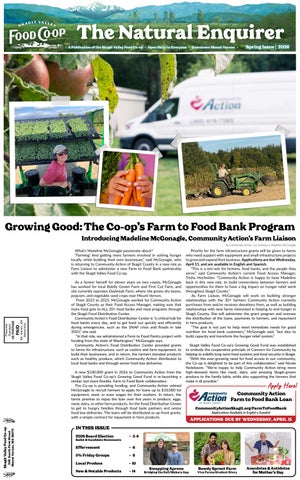
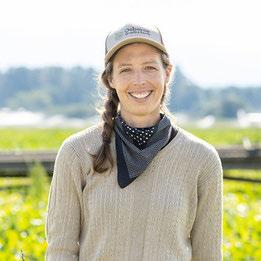
Introducing Madeline McGonagle, Community
What’s Madeline McGonagle passionate about?
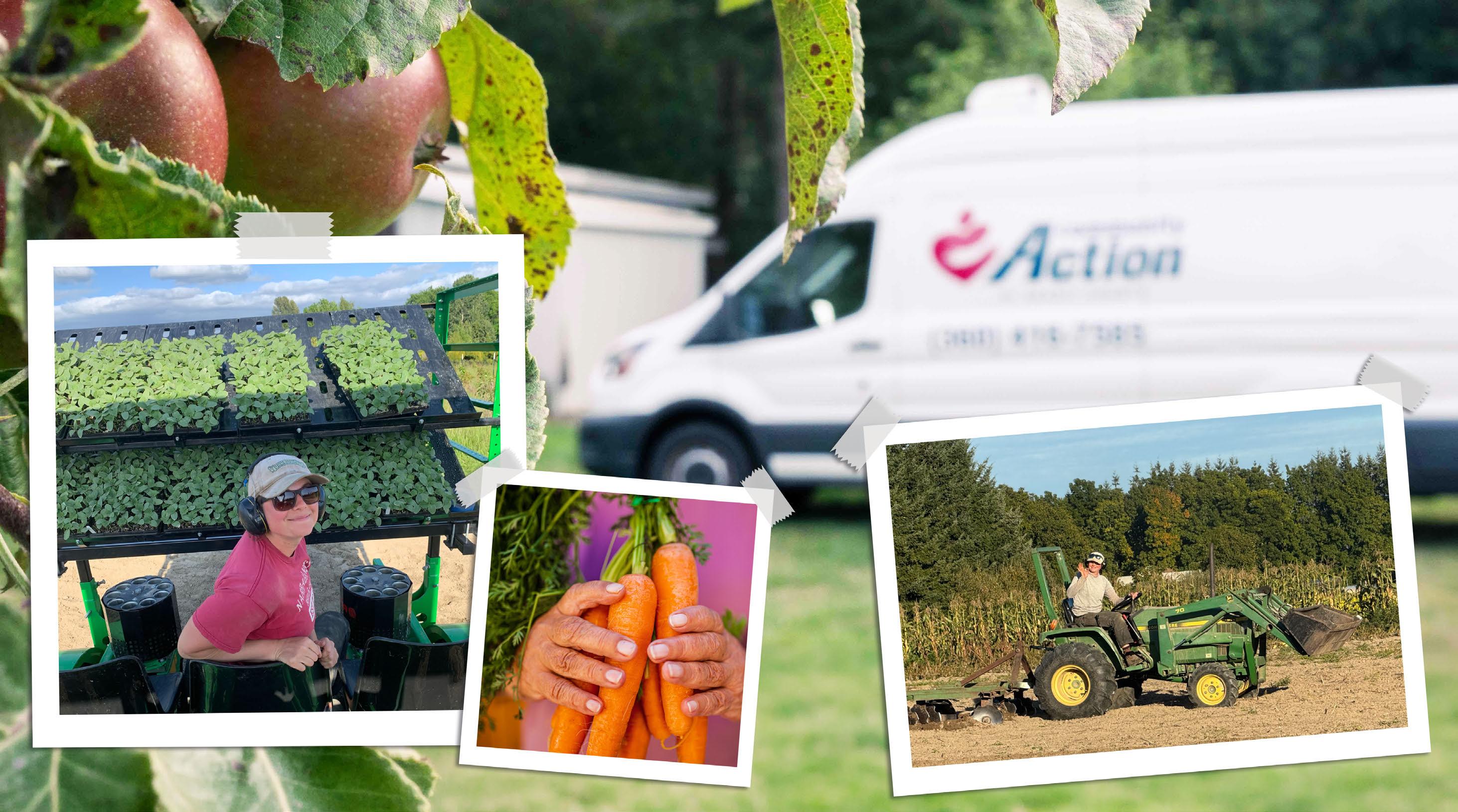
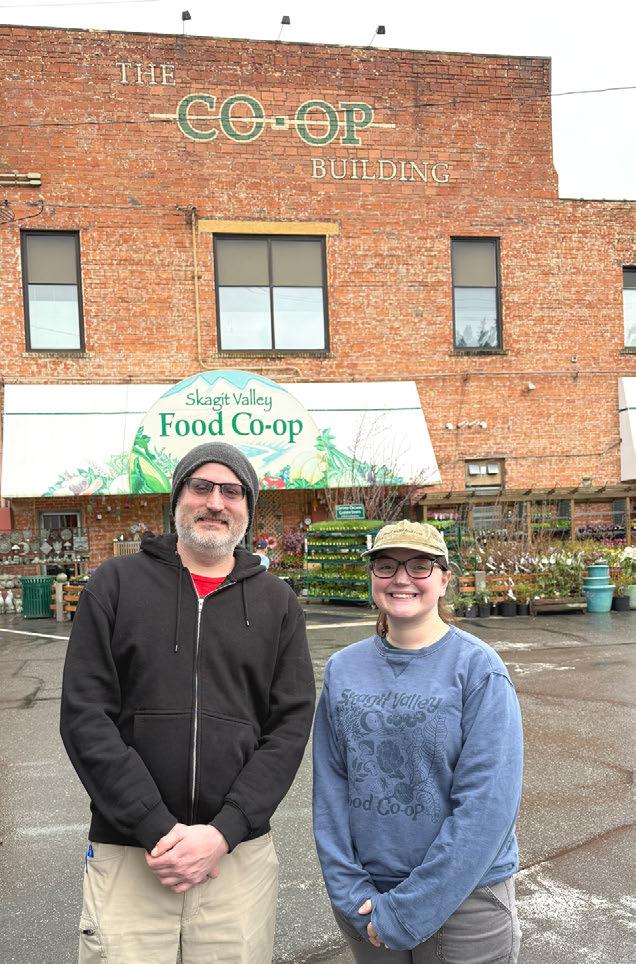
“Farming! And getting more farmers involved in solving hunger locally, while building their own businesses,” said McGonagle, who is returning to Community Action of Skagit County in a new role as Farm Liaison to administer a new Farm to Food Bank partnership with the Skagit Valley Food Co-op.
As a farmer herself for eleven years on two coasts, McGonagle has worked for local Boldly Grown Farm and First Cut Farm, and she currently operates Daybreak Farm, where she grows dry beans, popcorn, and vegetable seed crops near Mount Vernon.
From 2023 to 2025, McGonagle worked for Community Action of Skagit County as their Food Access Manager, making sure that more food gets to ALL 20+ food banks and meal programs through the Skagit Food Distribution Center.
Community Action’s Food Distribution Center is “a critical hub for food banks every day, and to get food out quickly and efficiently during emergencies, such as the SNAP crisis and floods in late 2025,” she said.
“In that role, we administered a Farm to Food Pantry project with funding from the state of Washington,” McGonagle says.
Community Action’s Food Distribution Center provided grants to farms for infrastructure, such as coolers and farm equipment, to build their businesses, and in return, the farmers donated products such as healthy produce, which Community Action distributed to local food banks and through senior food box deliveries.
A new $100,000 grant in 2026 to Community Action from the Skagit Valley Food Co-op’s Growing Good Fund is re-launching a similar, but more flexible, Farm to Food Bank collaboration.
The Co-op is providing funding, and Community Action rehired McGonagle to recruit farmers to apply for loans up to $10,000 for equipment, seed, or even wages for their workers. In return, the farms promise to repay the loan over five years in produce, eggs, meat, dairy, or other farm products, for the Food Distribution Center to get to hungry families through food bank partners and senior food box deliveries. The loans will be distributed as up-front grants, with a simple contract for repayment in farm products.
Priority for the farm infrastructure grants will be given to farms who need support with equipment and small infrastructure projects to grow and expand their business. Applications are due Wednesday, April 15, and are available in English and Spanish.
“This is a win-win for farmers, food banks, and the people they serve,” said Community Action’s current Food Access Manager, Trisha Hochreiter. “Community Action is happy to have Madeline back in this new role, to build connections between farmers and opportunities for them to have a big impact on hunger relief work throughout Skagit County.”
As Farm Liaison, McGonagle will work on building stronger relationships with the 30+ farmers Community Action currently purchases from and/or receives donations from, as well as building relationships with new farms interested in helping to end hunger in Skagit County. She will administer the grant program and oversee the distribution of the loans, payments to farmers, and repayment in farm products.
“The goal is not just to help meet immediate needs for good nutrition for food bank customers,” McGonagle said, “but also to build capacity and transform the hunger relief system.”
Skagit Valley Food Co-op’s Growing Good Fund was established to embody the cooperative principle of Concern for Community by helping to solidify long-term food systems and food security in Skagit.
“With the ever-growing need for food access in our community, the Co-op is delighted to be part of this collaboration,” said Nicole Noteboom. “We’re happy to help Community Action bring more high-demand items like meat, dairy, and amazing Skagit-grown produce to the family table, while also supporting the farmers that make it all possible.”
Community Action Farm to Food Bank Loan
CommunityActionSkagit.org/FarmToFoodBank Applications Available in English y Español APPLICATIONS DUE BY WEDNESDAY, APRIL 15
By Community Action | Liz Jennings & Madeline McGonagle
A Community of Care
“This is my favorite event of the year.”
Heidi, Produce Team Member, gets ready to take her seat in the Co-op’s Board Room. Every January, our Produce Department hosts local farmers in a gathering they call the “Annual Farm Meeting.” In it, many of our farmers located here in the Valley, sit around the table ready to discuss the new year’s growing season. Produce Manager, Ben, sits with a list of farms and the produce items they supply to the Co-op. One by one, each farmer takes a turn confirming what it is they intend to grow this year. Sometimes, a farm may decide to not grow something they had in the previous year.
“We won’t be growing napa cabbage this year, we had pest problems.” “Our farm will happily grow napa,” another responds.
THIS is what I am talking about! This is cooperation at its finest. This gathering, that is so unique, is just one example of how our Co-op creates resilience in a world of so many unknowns.
The winter was a hard season for many people at the Co-op and in our community. With the Supplemental Nutrition Assistance Programs (SNAP) briefly losing their funding back in November, food security was heavy on our minds then, and it still is today. Our Board of Trustees and team of operators have made a great intentional effort to give back to organizations that are extremely relevant to the current events we have all recently faced. I am so incredibly proud to be a part of this Co-op who makes community giving a fundamental priority. I hope that you too can take pride in our mighty Co-op as you read about these tremendous gives in this issue.
Food insecurities, flooding, fear; our community has endured so much in recent months. We are ready for a brighter season. I believe our team would agree with me when I say, our hearts are with all of you, our families, friends, and neighbors. Heading into spring as your General Manager, I am looking forward to continuing our efforts towards building not only our community’s resilience, but the resilience and strength of our cooperative as well. Together, with our extremely skilled team of operators, we will examine our existing systems and build clarity and cohesion throughout our organization. We will remind ourselves that our focus on strategic sales growth is so that we may continue to support not only the needs of our shoppers but the needs of our employees, as well. Finally, remembering that our Co-op is rooted in people, we will make time well-spent by engaging with our community members and in creating a culture of positivity.
Thank you for being a part of our Co-op. Together, we contribute to a strong and resilient food system and a community of care.
Leah Scates Interim General Manager
Board Announces No Patronage
The Co-op Board has declared no Patronage Dividend for 2025 purchases. Patronage is only returned to members when the Co-op has made sufficient net income for the year. In 2025, the Co-op experienced negative net income, therefore there are no excess earnings from 2025 to return to members. In 2025, we saw continued increases in the cost of supplies, services, wages, and healthcare.
Thanks to our members and shoppers, our sales remain strong, and we have adequate resources to allow us time to regain profitability. In 2026, we will continue our efforts to reward staff with fair pay and benefits. The 2026 business plan focuses on three main pillars: Operating Clarity & Cohesion, Community & Culture, and Strategic Sales Growth. By focusing our attention on these three areas, we hope to work toward profitability in a way that still honors people, planet, and purpose.
It is with heartfelt gratitude that we thank you for committing to shopping local at our Co-op.
A Fond Farewell
to
Board Member Casey Schoenberger
After over eleven years of service, Board Member Casey Schoenberger will be stepping down following the end of his term at this May’s annual meeting. Given his long tenure and commitment to the Co-op, we prompted a few of his fellow Board Members to share a little about Casey and also asked Casey to share some closing thoughts:
“A Board is an odd group. We govern by consensus, which means that if we all agree, we risk ignoring viewpoints, and if we all disagree, it’s hard to move anything forward. Casey has always been the lead contrarian, the one to say “but what about...” or “I think we’re forgetting...”, always with the goal of making a better decision for the member-owners and staff. For that and his dedication to taking responsibility—doing the work it takes to make this Co-op better. I will miss him on the board. Not to mention he’s a genuinely good guy, an avid musician, a great cook, and funny in the bargain.” –Brad Claypool, Board President
“What I appreciate about Casey is his focus on asking all the questions around a particular idea or issue to ensure that decisions are thoroughly vetted and considered from a multitude of perspectives that owner-members might hold. Casey really holds himself responsible to the Co-op community as a Board member.” –Kristen Ekstran, Board Vice President
“So many great things to say about Casey and his heartfelt challenges and insight to complex issues we are discussing, however, I am going to sum it up in two words…. grill hut. Our Board meets every summer for an evening of more food and fun than business. The last three of these have been at Casey’s grill hut, a delightful homemade structure behind the family home, nestled in the trees along the edge of an enormous garden. Casey has developed quite a talent for cooking over a natural charcoal grill and puts out a great meal. The Board has reluctantly agreed to let Casey go, but only if he promises to continue to feed us at least once a year. Thank you, Casey, for your significant contributions to Board business and the friendship developed along the way. Oh, and see you next summer.” –Tom Theisen, Board Member
“As the Board Administrator, I’ve really enjoyed getting to work with Casey over the last five years. His care and commitment to the Co-op, and his ability to be outspoken when needed is admirable. His timely humor always brought levity and joy to my role, and he will be missed! Thanks for all the years of service, Casey!” –Leigha Staffenhagen, Board Administrator
“After eleven rewarding years, I am hopping off the Board of Trustees when my term ends this May. I am incredibly proud of what we’ve accomplished together. The Co-op is in a very strong position, and the future looks bright. During my tenure, I have learned immensely and built lasting friendships. I hold tremendous respect for my fellow Board members and the dedicated employees I’ve had the privilege to work alongside.
Thank you for the opportunity to serve this community that means so much to me and my family. I look forward to seeing you all in the store. I will be the one overfilling my bag with bulk red lentils and trying to see if there is enough bag left to get a twisty tie on.”
Casey Schoenberger
Skagit Valley Food Co-op is a not-for-profit organization whose purpose is to provide good food at a fair price. As stated in the Co-op by-laws: “The Co-op shall promote member welfare by utilizing their united effort for the purchase and distribution of commodities in accordance with the following criteria…
A. Maintain the not-for-profit status of the Co-op
B. Offer high quality products that contribute to good nutrition
C. Support a low-impact, non-harmful approach to the environment
D. Support local suppliers and producers
E. A commitment to building a cooperative economy and supporting others who share that commitment
F. A commitment to educational programs relevant to members and non-members in the community."
Leah Scates, Justin DeMeyere, Ben Goe, nancylee bouscher
Brad Claypool, Kristen Ekstran, Tom Theisen, Nikki Boyce, Casey Schoenberger, Rob Smith & Zach Armstrong
13 • 6-8pm
Skagit Valley Food Co-op Mission Statement
2026 Co-op Board of Trustees Election
There are two positions open on the Board of Trustees. One incumbent Board member and three member-owners are running for the two open seats. Information about all the candidates and the ballot are included in this issue and available online. Candidates were asked to explain why they’d like to serve on our Co-op’s Board of Trustees and the skills and experience they’d bring to the position, should they be elected.
CANDIDATE STATEMENTS (CONTINUED ON PAGE 4)
Nikki Boyce - Incumbent Candidate
Board Experience
I am a current Skagit Valley Food Co-op Board member—having been appointed to fill a recent vacancy—an opportunity I have found both energizing and meaningful. In this role, I have begun contributing to strategic planning while supporting the leadership transition underway at the Co-op. I previously served on the Washoe County Food Policy Council Board (NV), where I worked to network, collaborate, and support a healthy and equitable local food system. These experiences have given me a solid foundation in cooperative governance that I am eager to build on.
Skills & Knowledge
Financial, facilitation, farming & food distribution, general management
Existing Community Relationships
I feel very fortunate to be part of a network of people deeply involved in our foodshed and community. In addition to working on a flower farm in West Mount Vernon, I have deep connections with farmers involved with the Puget Sound Food Hub, Viva Farms, and the Organic Seed Alliance, as well as with networks dedicated to supporting other facets of the food system, like Washington State University Skagit County Extension. I’ve also appreciated the opportunity to provide administrative support to the Foothills Food Bank and Co-op facilitation efforts.
Candidate Statement
The Co-op is an inspiring cornerstone of Mount Vernon. Recently, while browsing the pastry case, a fellow member remarked that he had recently moved here and had never felt more welcomed by a community. He visits the Co-op three times a week and wishes he had found it sooner.
That sense of connection between farmers, producers, makers, and community members, all grounded in shared values, is what makes this place so special. It is what I want to help protect and grow and is proof that there is a cooperative way to run a successful, community-forward business. It is a place I want my kids and future generations to inherit. Our Co-op’s commitment to quality food, emphasizing local and organic, and building healthy communities via a financially stable business model inspire my enthusiasm to contribute even more.
As a current Board member, appointed to fill a recent vacancy, I have appreciated the chance to participate in the Board’s planning efforts and am invested in supporting the Co-op through its current leadership transition. I look forward to continuing this work.
Boyce, continued)
My professional background is rooted in local food systems. I have managed farms, supervised over 100 employees throughout my management tenure, built and led teams for an expanding company focused on local sourcing, and served as a policy developer and environmental educator. As Director of a flower farm and team here in Mount Vernon, I bring experience in strategic planning, financial management, leadership development, and project management to my Board position. Many hands make our Co-op world go round, and I would be honored for your vote and the opportunity to give back to our community!
Board Experience
Over the past 10 years, I have worked closely with boards of various non-profits in the arts, education, and farm sectors. In my roles, I consistently collaborated with executive directors to ensure effective communication and strategic alignment between staff and the board. These experiences taught me the important governance role the board plays in guiding and shaping the direction of member-owned businesses like the Skagit Valley Co-op.
Skills/Knowledge
Co-op, farming & food distribution, grocery
Existing Community Relationships
My connection to the Co-op community is multifaceted and deeply rooted in the Skagit Valley. I have been a farmer for over a decade. I own and operate First Cut Farm with my husband, Sam, and we sell organic vegetables to the Co-op and other wholesale accounts. I also farmed at Ralph’s Greenhouse for three seasons, where I learned the ins and outs of farming at a larger scale. From 2018–2022, I developed my network within the region’s agricultural community, farm non-profits, and research groups while working at Osborne Quality Seeds. I also worked in the Co-op’s produce department in 2018 when I first moved to the Skagit Valley.
Candidate Statement
The Co-op is a central component of our community in the Skagit Valley, especially within the farming community. My decade-long experience as an organic farmer, coupled with my time working in the produce department, offers a unique, on-the-ground perspective vital for the Board.
As the food industry landscape continues to evolve, I am prepared to help the Co-op adapt to these shifts and ensure its continued success, especially alongside our new General Manager. I am deeply committed to stewarding the Co-op’s unique qualities and its focus on local produce. Serving on the Board would be an honor, and I look forward to contributing a dedicated farmer’s voice and leadership to the Co-op’s future direction.
Amber Robinson
Board Experience
I have served on two boards—the Edison Farmer’s Market and Burlington Little School, each for over a year, but at separate intervals. I participated on both boards as an at-large member and temporarily filled in the BLS president position for a brief period. The Edison Farmer’s Market was a non-profit organization working to launch a Sunday market in downtown Edison. Burlington Little School is an early childhood education center and a registered non-profit, with a board made up of parents and community members.
My participation in courses such as Cultivating Success for beginning farmers through WSU-Extension, completion of the Leadership Skagit program in 2017, and work experience as an Administrative Specialist at the City of Burlington have equipped me with a variety of knowledge and skills specific to our region. I’ve also had the opportunity to develop connections to the Skagit Valley community food systems through my previous roles as an intern at the Northwest Agricultural Business Center and as a part-time Farm-to-School Coordinator at Viva Farms. Lastly, my family has a very humble “farmette”, Plein Air Acres, that explores growing specialty flowers for direct market sales.
Candidate Statement
I am running for the Skagit Valley Food Co-op Board of Trustees because I care deeply about regional food systems and the role cooperatives play in supporting farmers, community members, local economy, and a healthy environment. As a long-time member-owner, I value the Co-op not just as a grocery store but as a connective hub for agriculture producers, food sovereignty efforts, non-profit organizations, and the daily exchanges between employees and patrons. My background includes work in the outdoor apparel industry, nonprofit organizations, and municipal government. At Patagonia, I learned about environmental grantmaking and grassroots activism. Later, my roles at Viva Farms and the Northwest Agriculture Business Center connected me directly with small-scale and minority farm owners and local food distribution in Skagit Valley. Today, I continue to stay involved in agriculture systems and land stewardship through my small farmstead, Plein Air Acres, and as a foodie interested in farm-to-table cuisine.
(statements continue on page 4)
Linda Fenstermaker
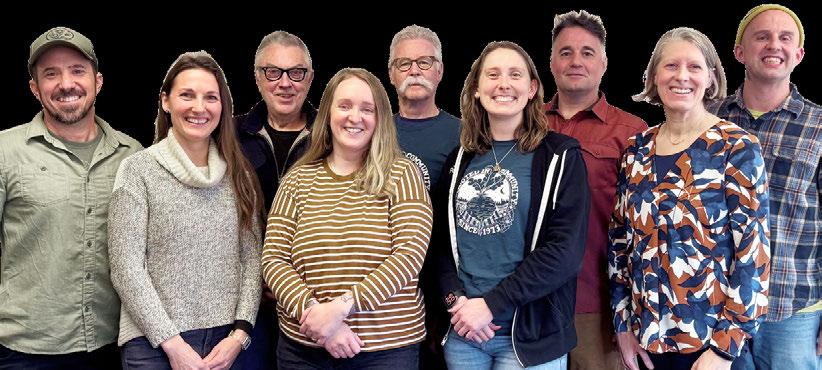
The 2025–26 Co-op Board of Trustees (right to left): Rob Smith, Nikki Boyce, Brad Claypool, Interim GM Leah Scates, Tom Theisen, Board Admin Leigha Staffenhagen, Casey Schoenberger, Kristen Ekstran and Staff Board Member Zach Armstrong
(Nikki
(Amber Robinson, continued from page 3)
I currently work as an Administrative Specialist for the City of Burlington, where I support City Council meetings, hiring processes, and day-to-day administrative operations. This experience has strengthened my skills in communication, organization, and collaboration. I have served on two nonprofit boards and completed the Leadership Skagit program, along with academic studies in Leadership & Sustainable Business and Urban Ecology at Antioch University. This exposure to diverse perspectives has shaped my belief that strong communities are built through thoughtful leadership, well-developed policies, and inclusive decision-making.
I would be honored to bring my administrative skills, creative thinking, and commitment to community-based agriculture to the Skagit Valley Co-op Board. I believe in the Co-op’s mission and bylaws, especially the support of “a stronger local food system through partnerships, information, advocacy, and direct assistance” and would enjoy contributing to its continued legacy of success and purpose in Skagit Valley.
Brian Zinke
Board Experience
I have served on the Board of several wildlife conservation nonprofits over the years at local, regional, and national levels, including:
The Wildlife Society
· Wyoming Chapter of The Wildlife Society Society for Range Management
· Central Plains Society of Mammalogists
Skills/Knowledge
General & non-profit management
Existing Community Relationships
Through my employment with Pilchuck Audubon Society, I have relationships with Skagit Audubon Society and Be Bird Wise (Skagitonians to Preserve Farmland).
Candidate Statement
The Skagit Valley Co-op is a cornerstone in the community and a place I have come to love since moving to Mount Vernon in 2023. I believe in the mission of the Co-op, have a desire to become more involved in my community, and believe my experience and skills would be beneficial to the Board of Trustees.
As Executive Director of the Pilchuck Audubon Society, I am responsible for ensuring successful fundraising, program administration, and compliance of an environmental nonprofit in western Washington. Through this position, as well as my experience serving on other wildlife conservation nonprofit boards, I have developed the skills necessary to be effective amongst a group of leaders while also being respectful of different viewpoints, experiences, and backgrounds.
As a relatively new resident of Mount Vernon, I want to get involved and become more immersed in my local community. I want to serve the Co-op members and the broader Mount Vernon community, and also develop relationships and friendships with others doing the same. The current and previous leadership has built the Co-op into a wonderful community hub and, arguably, the heart of downtown Mount Vernon. I would like to help continue that vision and contribute to this community of which I’m proud to be a part.
Does it Matter?
by Beverly Faxon
Few words drive me quite as crazy as these: “Voting doesn’t matter.”
Years ago, a friend and I discussed two presidential candidates. I said that if her candidate won, I feared that a right we both supported, and that we had all lived with for decades, might be rescinded.
Oh, no, she assured me. Never. That right was a law, set in stone. Her candidate won, and for once, I found it a small consolation when I was eventually proven right. Yes, voting matters.
As I write this, the Skagit Valley Herald reports that the Sedro-Woolley School District’s February replacement levy for Educational Programs and Operations has passed. The vote count seesawed for ten days after the election, and the final margin was just over 100 votes. Do our votes make a difference? Ask someone who supported the recent school levy in Sedro-Woolley, and made sure to cast a ballot. Or ask someone who was against the levy, but didn’t get around to voting. On a national scale, whether or not we like what’s been happening in our country since the 2024 elections, it would be hard to argue that it didn’t much matter which candidates got elected. We’ve seen it firsthand: voting impacts our lives.
2026 may be an election year, but the November elections are months away. Why an article about voting when our minds are pulled to tulips, curly rhubarb leaves pushing upward, and the sunny relief of lengthening days?
First, because we get a chance to flex our voting muscles right here, right now, at the Co-op.
Since I’m a believer in voting pretty much every chance we have, it’s gratifying to know we can start this month at the Co-op. Our Co-op is owned not by a handful of rich corporate owners, but by all of us, thousands of memberowners. We operate democratically to vote for and elect the members of the Board of Trustees, who serve on our behalf. They are an active board, making decisions that shape the vision, direction, and practices of the Co-op.
This spring, two positions are open on the Co-op Board, and four member-owners are running. Ballots are available as of April 1. A cut-out version of the paper ballot is on page 3, and print paper ballots are available in-store by the front registers. Online voting is also available as of April 1—check the Co-op website. Elections run through 5:55pm on the day of the Annual Meeting, May 13.
Second, because now is the time to make sure that strong candidates who will represent your interests run in 2026 state and local elections.
Perhaps you know someone you might encourage to run? Perhaps you’d like to run yourself? Don’t count out the possibility of creating changes you care about. We have more power than we imagine we do.
This past fall, Sammy Solano Rivera unseated an incumbent for a position on the Mount Vernon School Board. At 19, Sammy is the youngest board member in Mount Vernon history. He and his campaign manager, Sayer Theiss, a fellow 2025 graduate, ran a grassroots campaign, with the purpose of “advocating for students, teachers, and paraeducators.”
When the campaign started, I imagine it looked like a long shot. I have to wonder how many people told Sammy, “No way, Sammy. Go ahead and run, but it really won’t matter.” Yet it did matter, and so did the votes of everyone who checked the box next to his name on their ballots.
Third, if you are already thinking of, and maybe even anxious about, the November elections, it is not too early to turn that anxiety into action.
Find political parties, organizations, and candidates that align with your views, from the local to the national. Support their work, through your money, your time, or your ability to share their information. This could take many forms, depending on your resources, your comfort level with engagement, and even your willingness to travel. Grassroots groups have sprung up to phone bank or doorbell for candidates, and to write postcards simply encouraging eligible voters to go to the polls, or more specifically, to vote for a candidate.
Aside from filing for local office, supporting the candidates of our choice throughout their campaigns (by action or donation) and eventually VOTING, what can we do?
Everything possible to guarantee that all eligible voters can cast their ballots, and that every ballot they cast is counted. No matter what political disagreements we might have, almost all of us agree: as eligible voters, we want to choose our leaders, who are our representatives in a democracy. We don’t want leaders of any party, hoping to seize or hold power, to pass laws blocking qualified voters from voting.
Check your own voting registration status, or help those you know check theirs. The National Association of Secretaries of State maintains a website for helping people register to vote, update their information, or see if their ballot has been successfully received: nass.org/can-I-vote/voter-registration-status
Get involved in voter registration. I have a friend who has found working with the League of Women Voters to be a rewarding way to have conversations with community members, while helping them secure their right and responsibility to vote.
Stay tuned for any legislation that could change voting laws, and let your legislators know your response. Want to preserve your right to vote by mail? Uncomfortable with the idea that voters might be required to show government-issued ID at the polls? (Do you know where your birth certificate is? Do you have a passport?) Voting rights legislation and protection might not make for flashy reading when we are scrolling through news feeds or social media, but it is crucial, in-the-trenches work.
Ballots are due by 5:55pm on the day of our Annual Meeting: Wednesday, May 13
In Washington State (with some exceptions), odd years are for non-partisan elections (like school boards and county councils), while even years host elections for partisan offices. In 2026, we will see elections for some key congressional seats, at both the federal and state levels. We will also see elections for seats that, at one time, may have seemed routinely administrative, maybe a little boring, but now feel crucial. The role of county auditor, for example, has taken on increased significance as people look closely at election integrity and access for all eligible voters.
In fact, we are finding every local position shapes how we live, learn, earn our wages, even survive floods. We may understandably get caught up in drama at the national level, but we are learning our state and local governments often are the frontline to nurture, defend—or undermine— our everyday lives (and our democracy). Who we elect— for auditor, sheriff, attorney general, mayor, county commissioner, school board—matters.
Filing week for Skagit County, online and in-person, is May 4-8. Filing by mail begins April 21. For more information, including a list of offices up for election in 2026 visit the Skagit County website.
Spread the word about how recent changes in postmark rules could keep a mail-in ballot from counting. Washington is one of a number of states that has historically counted a mailed ballot received within a predetermined number of days after Election Day, as long as it was postmarked by Election Day. This practice was possible because, until recently, all mail was postmarked the day it was deposited, at the post office where it was deposited. New postal rules say that mail may now be postmarked at central hubs, rather than at the local offices where it is deposited, a policy that could delay the date of the postmark. The take-away: deposit ballots in an official ballot box or, if mailing, mail well in advance—don’t wait until the last minute.
Come August for the primaries, and November for the general election, we can vote for the world we want to live in. Between now and then, there will be plenty of opportunities to act, because it matters.
Swapping Aprons: Bridging the Deli-Makery Gap
One of the most remarkable things I’ve noticed in my time working in co-ops is that no two are alike. Every store has its own personality, its own tempo. And more often than not, that difference shows up most clearly in one particular place in the co-op world: the deli.
Every deli has a rhythm of its own, churning and shifting like the ocean. Some days the surf is calm, the waves lapping quietly at the shore. Other times, it’s stormwracked, the swell crashing against rock and sand. Most days, though, it’s steady and dependable: tide rolls in, tide rolls out.
So flows the Deli. There are frenetic stretches where every second feels charged with energy. There are slow, quiet hours where you can finally catch your breath. And then there’s the familiar, steady pressure that seems to come from every angle at once. This kind of energy may be consistent in a deli, but the experience can look—and feel—very different from one co-op to the next.
Menu plays a huge role in that. I’m always amazed by the variety, ingenuity, drive for excellence, and local flair I find in each co-op I visit. The grocery shelves may look largely similar from store to store, but deli offerings are where a co-op becomes unmistakably itself. The basic ingredients of something like chicken salad don’t change much, but the result always does: each deli puts its own spin on the recipe, and no two chicken salads ever come out the same.
There are less exciting differences, too—management structure, size, staffing, station layout, standard operating procedures—but they matter. Atmosphere is a big part of it. A deli might have a self-service or full-service hot bar. It might have a taqueria, a barbecue counter, or multiple fullservice stations that feel almost like a food court. Some delis pare their offerings down to little more than graband-go. Others build an experience that keeps people circling back.
A key differentiator of our deli is that our Co-op owns an entire facility dedicated to producing almost all of the food you find in our deli case and hot bar: the Makery.
To rehash, the Makery is solely a production facility where we make fresh bread, soups, salads, packaged sandwiches, and more—food enjoyed every day by people across Skagit Valley. Many of our offerings are deeply popular with customers, and we’re proud of the work we do. But ever since we opened the Makery, the relationship between the Co-op sales floor and the production facility has often felt slightly disjointed—like two teams moving toward the same goal, together yet separate.
One Monday in January, my manager, the Prepared Foods Director, told me, “I have something exciting I want to talk to you about! …on Friday.”
by Justin DeMeyere, Food Production Manager
Well, great. Friday. I can wait; I guess. Needless to say, I didn’t get much sleep that week.
What could she want to talk about? What exciting thing could she mean? What big change was being planned in the Makery? I spent my entire week tossing and turning in bed—trying not to think about it, trying to figure it out. Nothing could have prepared me for the changes she had planned for me and my team.
On said Friday, after our monthly Deli Leadership Meeting, Lisa, my manager and Leah, our interim General Manager, kept Brittany (my counterpart in the Co-op Building and longtime Deli Manager—whom many of you have probably met) and me behind in the conference room for the big reveal.
Drumroll, please… “We want the two of you to crosstrain in each other’s jobs.”
It sounds simple enough—until you take into account that the Deli and the Makery are two entirely different facilities, dedicated to the same pursuit in completely different ways.
The Deli is largely a customer service machine: cranking out friendly, local vibes, and serving delicious prepared food to our customers. The Makery is a facility built around the mission of crafting great food safely, efficiently, and consistently.
To be honest, the Makery and Deli teams are not always on the same wavelength, which you might expect with multiple crews operating in different buildings at different hours, similar to a changeover between day shift and night shift just about anywhere. And, as expected, the distance between buildings and day-to-day duties can sometimes lead to a finger-pointing match, even though we’re all on the same team, riding the same wave.
Brittany and I let the news sink in. Our initial shock soon gave way to the realization of what swapping aprons could actually mean for both teams: better communication; more understanding at the leadership level to share with staff; more open, honest discourse; and a set of fresh eyes on systems that might otherwise stay the same out of habit. This was an opportunity to learn something new—not just between Brittany and me, but between our departments, and throughout the Co-op as a whole. How often do you get to do your counterpart’s job, walk a mile in their shoes?
We’re walking. Brittany and I have been shadowing each other for the past month, and as of this writing, we’ve been fully swapped for three days. The process has already offered meaningful feedback and oversight. When I look around at my two teams, I see growing pains—but
Our Co-op Makery: The Face of Local Bakery
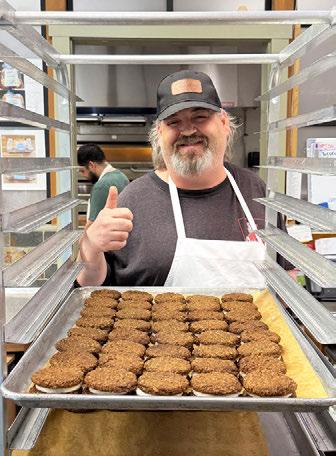
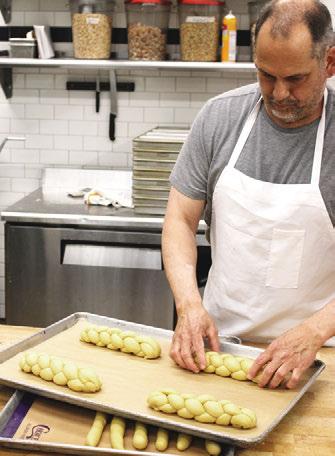
Our stellar bakery team was recently featured in the Skagit Valley Herald’s 2026 Faces of Skagit publication. You can read the full article at goskagit.com, or just pop in and indulge in one of our fresh baked cookies, cakes, conchas, or breads.
mostly I see broad acceptance of this project. Lines of communication are already clearer. We understand each other better. And both teams will benefit from the transfer of knowledge.
Customers, though, are the true winners. The whole purpose of this project is to create a stronger connection between the Deli and the Makery, so the food, service, and communication our customers experience all feel seamless. By spending time in each other’s roles, we better understand the challenges, priorities, and daily realities of both departments, which means fewer misunderstandings, better coordination, and a unified approach to the work. In the long run, that translates to greater consistency, quicker problem-solving, smoother service, and food we can stand behind with enthusiastic confidence. When the people making the food and the people serving it are more connected, customers ultimately receive a better product and a better experience.
And, for a change, I’ll be in the Deli—so if you know me, or you just want to stop by, meet me, and say hello, you can find me behind the Deli counter most days. Looking forward to seeing you soon.
Winners!
NCG’s Field Day Brand Sale Contest
We’re excited to announce that our Co-op was awarded first place—and $10,000—in the large co-op category for National Cooperative Grocers’ November Field Day Brand Sale contest in November. We are grateful to all of our staff who helped make this promotion such a success, and to all of you, our shoppers for choosing Field Day items during your holiday prep.
Since the first Field Day promo in 2024, we’ve been building our relationship with the local Swinomish Indian Tribal Community’s (SITC) environmental health program and their 13 Moons Garden as a way to acknowledge and restore Native foodways not only during Thanksgiving, but throughout the year.
SITC was a Tokens for Tomorrow group in the 4th Quarter of 2025. In addition to our Tokens for Tomorrow donation of $355, we matched our Field Day donation ($850), AND our donated our contest winnings to SITC—for a total of $11,205—so they can provide fresh produce to their eight produce stands, weekly children’s classes, and elders’ lunches.
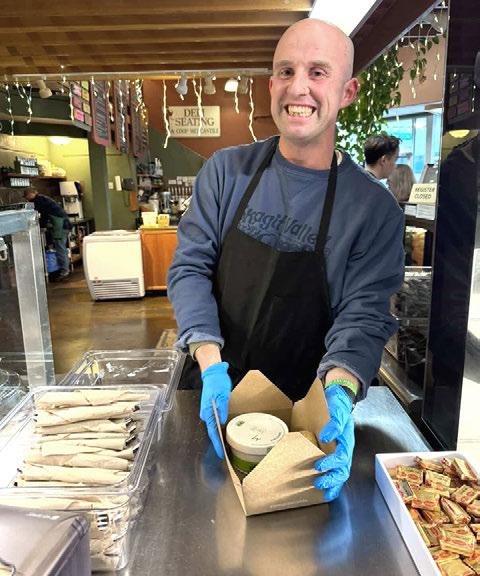
Deli & Food Production Managers, Justin and Brittany.
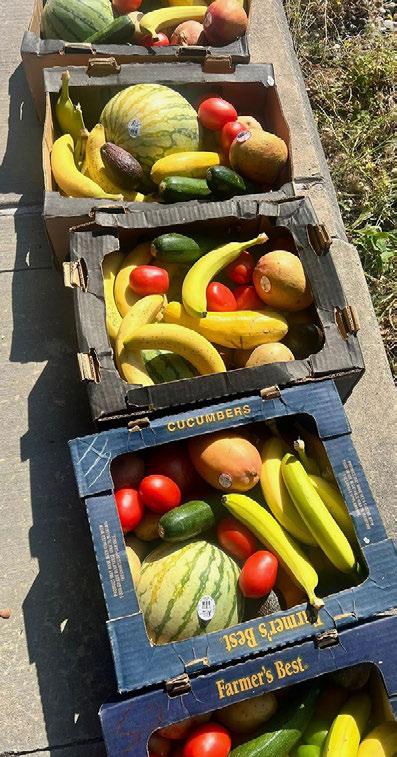
Shea & Alex working in the Makery. Produce boxes provided by SITC.
Effervescent
by nancylee bouscher, Wellness Manager
The text comes through while I’m at work: “Can you watch…?” And before I even fully absorb the details of when my great granddaughter needs childcare, I’m responding with a resounding YES!
We arrange a pick-up time on a frigid afternoon, and I watch the dried Teasel specters in the fields as I imagine all the fun we will have. Avani runs to me with two pink bows perched on her head with her arms up in the universal declaration of love as she squeals “GEEGEEE!”
My heart, worried she would be shy or scared after not seeing me for months, melts into the soles of my Converse. Children are glorious.
I remember pockets of joy in my childhood, like being on a rolling hill outside of the daycare center of Dominges Hills where my mom attended classes. The teachers had brought the rainbow-colored parachute with them, and we all were giddy with anticipation. We formed a squirming circle as each of us grabbed the rim of the fabric. The teacher would yell UP, and we’d all raise our hands toward the sky to create a bubble of brilliant colors framed by white clouds, craning our heads up to look at the magic. Then swooshing down to trap air as we expertly stepped inside the dome we created to sit on the edge—giggling across the circle at each other. We’d continue with other tricks like teachers calling out two names of children to dash across the circle under the canopy and exchange places, or “popcorn” as the teachers would release countless rubber balls onto the top of the parachute, and like kernels on a hot skillet, we would rattle and bounce them with our rigorous flapping. And there’s this moment when it feels like our spirit becomes as buoyant as that bright red ball because we are all gleeful as one. It’s a lift in your chest and an ease in your knees that just breathes lightness.
Chasing that feeling of shared joy has brought me to countless choirs, marches and protests, concerts and dances, but it wasn’t until recently that I discovered it has a perfect name: collective effervescence. Émile Durkheim is attributed with first using this term in his 1912 book “Elementary Forms of Religious Life” to describe the spectrum of experiences, good and bad, that can create the physical sense of elation when gathered in a group with shared intent. Today’s world offers us more and more examples of how this plays out, perhaps more examples of the negative impact of individuals over-stressed searching for something to unite them and settling on less noble means than parachute play in a park.
Fortunately for me, I get to spend at least 40 hours a week in a local oasis where, even as the outside world follows me through the doors, there is a shield of collective effervescence that filters out some of the harshness. There are countless attributes of the Co-op that I appreciate, one of my favorites is our youngest shoppers: the Co-op kids. From bundles worn wrapped to towering teens, it’s a headspinner to see people literally grow up as their parents go from buying chamomile for teething to acne creams in what feels like a heartbeat—myself included.
Wellness is sometimes an area that parents dread, either because they have been sent to retrieve a remedy while a child suffers or because they know every small glass bottle is a beacon for curious hands to clutch.
We have a small section dedicated to the young, tried and true herbal helpers like Herb Pharm’s ear oil and more conventional options like Genexa’s dye and preservativefree acetaminophen. Shepard Moon’s oatmeal bath soak and Clean Kids shampoo are popular, locally made body care items for kids.
As the weather warms and cramped kids burst outside, their small bodies sometimes have big issues. Herbal teas can offer a gentler nudge for help with allergies, anxieties, and those sleep struggles when the sun refuses to set before nine o’clock. Our bulk department also offers lovely ways to try small amounts of organic herbs like Nettle, Lemon Balm, and Chamomile. Nettle is mineral-rich with a mild grassy flavor. Lemon Balm can be calming, helping with “nervous belly,” and Chamomile has long been used to help wind down. As always, do your research to make sure these are safe options for your family. Sweetened with a drizzle of local honey, they are a nice mellow trio sipped either hot or cold. These three herbs are also easy to grow and find locally.
Stinging Nettle is a great introduction for kids about the importance of plants that are sometimes labeled as problematic. I mean, they do sting. Blooming plants with buzzing bees are heralded as good for pollinators, but we sometimes forget that pollinators also need plants with fuzzy lil’ beds to lay their eggs on. Nettles provide exactly that to several butterfly species in Washington and beyond. Maybe those stings aren’t so bad once we know they might be guarding baby bugs.
For me, a kid in Wellness is an honored guest. I pick a four year-old over a forty year-old any time, any place. You may be a big deal, but that toddler with kitten booties and a quilted vest? I’d follow her anywhere. I think most of my co-workers are equally enamored with little ones.
Avani and I went in search of apples and bananas only to be welcomed with the warmest smiles and encouragement from staff in every department we visited. She was given gifts and a banana card (ask any staff about them if you’re curious), along with compliments on her pink glittery boots, and left feeling like she indeed owns that store.
And that makes sense—because food co-ops exist due to a simple hope for a different type of commerce to inform a future with different priorities rather than just profit. Most parents worry about what the world will look like as their children grow and eventually fly solo. Some parents have worked really hard to ensure some alternatives to the norms; cooperatives are that labor of love. Buying organic produce isn’t just about supporting a farm that doesn’t use potentially harmful pesticides and isn’t just about getting a delicious vegetable—it’s about protecting the water and the workers. It’s being willing to pay a bit more because you care a bit more for people, whether that’s the person who wakes at dawn to harvest or a great grandchild that you may never meet.
It’s not radical to wish health and happiness to strangers that share nothing with you except the desire to thrive. It’s not political to understand the urge to protect those you love. And it’s certainly not strange to hold to the fleeting hope that someday again you’ll look out and catch the glint in someone’s eye as their hearts lift in unison with yours over a shared joyful experience that is founded simply in the notion that we are all more alike than we are different.
Sun in the sky… You know how we feel.
We’re feeling good, and these bright and sunshiney picks from our Mercantile and Wellness Departments are here to help you embrace the bizzy bizzy start to the springiest time in our valley.
Meyer Lemon Body Butter
THREE SISTERS APOTHECARY
Dry winter skin is remerging into the light, and this rich, creamy body butter is just the thing for a quick, luxurious moisturizer. It smells so much like a lemon bar you’ll be tempted to take a taste, (but please don’t)!
Calendula Sun Soap
CAMAMU
Bubble up with bright scents of geranium, sweet orange, and clove. This small-batch soap is filled with sun-kissed goodness and skin-healing organic calendula—cuts, scrapes, rashes, and summertime bug bites don’t stand a chance!
Honeycomb Lip Balm
CRAZY RUMORS
Smooth, creamy, and packed with nourishing oils, toss these plant-based balms in your bag for hydrated lips wherever the spring takes you. Even sweeter? This lip balm is vegan— totally bee-free! Hive fives all around.
Calendula Toner | FOUR ELEMENTS
Calendula: the queen of spring! Made with organic plants, cool down with a spritz for a mid-day cleanse, or apply after face wash as part of your daily routine.
The Good Oil Face Oil
THE ORGANIC SKIN CO Spa day, every day? Yes, you deserve it! Honeysuckle and turmeric help restore your skin to a perfect glow.
Citronella Tea Light Candles
BIG DIPPER WAX WORKS
5 hours of burn time, and not a mosquito in sight! Illuminate the outdoors and enjoy the bright fragrance of lavender, citronella, and cedarwood. Always made of essential oils and pure beeswax.
Sunglasses IN OUR UPSTAIRS MERCANTILE
Jeepers creepers! Skip the gas station and pop upstairs to snag your next pair of road trip peepers—lots of cute, colorful frames for every face size and shape, so you can adventure in style!
Detox Bath Salts
SHEPARD MOON CONCOCTIONS
Say goodbye to your winter blues to usher in a lighter, springier season with a restorative detox bath. Let epsom salt and fragrant lemon and juniper essential oils transport you to a clearer headspace, and embrace the sunny days ahead.
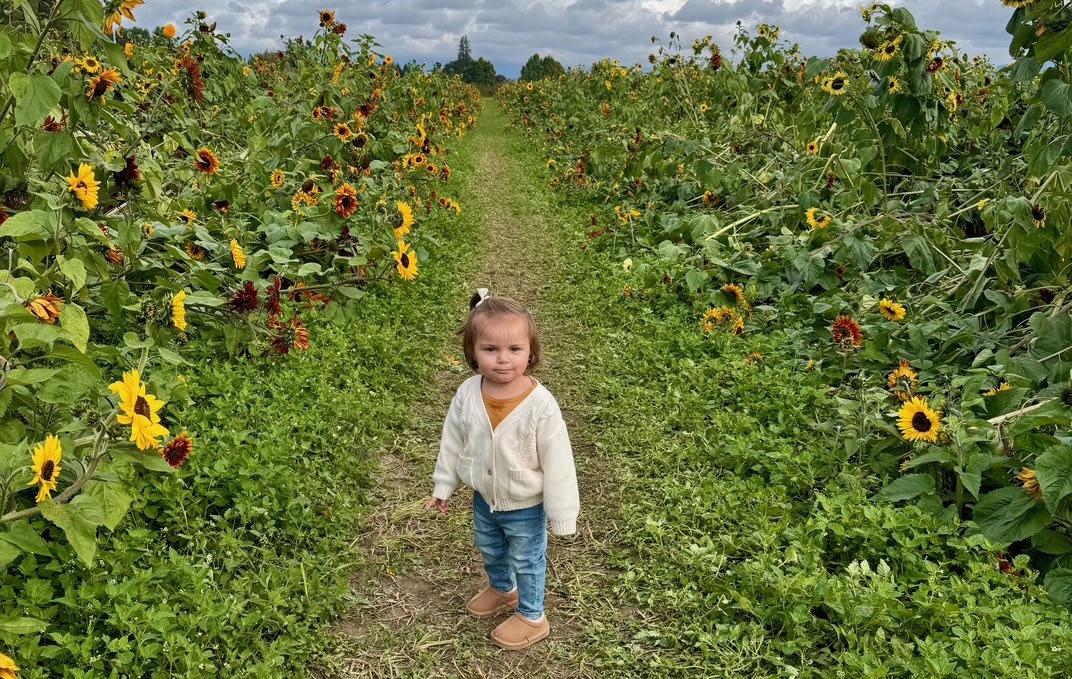
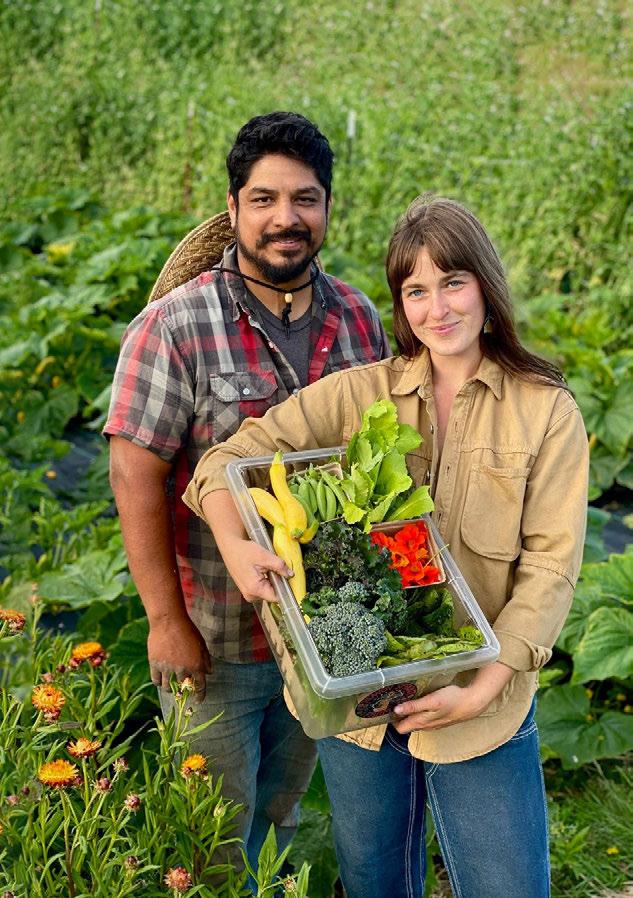
Cute Co-op kiddo Arya, daughter of our Category Manager Estrella P.
Viva Farms Practicum Student Story:
Kirsten Murray, Co-owner of Rowdy Sprout Farm
Viva Farms is a nonprofit farm business training program and incubator farm with locations in both Skagit and King County. Our mission is to empower aspiring and limited-resource farmers by providing bilingual (SpanishEnglish) training in holistic organic farming practices, as well as access to land, infrastructure, equipment, marketing, capital, and community. We are growing farmers, community, and food. Later this month, we welcome our next cohort of students in the Practicum in Sustainable Agriculture. We are thrilled to share a 2025 graduate’s reflection with the Skagit Valley Food Co-op community.
I have worked in or adjacent to agriculture for over a decade, with small farms and in urban and school gardens. I am also a certified master gardener and previously worked in outreach for a regional farmer training program. At every turn of my life, since my early twenties, I have put myself in the way of learning and experiencing different aspects of farming. All this considered, it might surprise some to learn how many foundational holes I found myself facing when I struck out to establish my own farm. When training employees, quite often the reality is that farmers/small business owners either don’t have time to deeply elaborate on every practice within their production, or lack the desire to. They tell you how to prune it, seed it, transplant it, harvest it, wash it, pack it—and you’re off and running. In my experience, farm managers also look to capitalize on what you are good at and keep you focused on those tasks.
As an example, I’ve got a keen eye for quality. I pack a mean CSA box, and I genuinely enjoy face-to-face time with customers, so wash-pack and the market circuit made sense for me. Except, I wanted to learn everything, and even within the areas I was focused on, there was little time for asking “why?”, much less getting an answer. To own your own farm, whether you are generous with the information or not, you need to know the why of everything.
I believe this to be, on one hand, a recently heightened conundrum in farming related to the stark decline of the family farm, and on the other, a continued commitment to an age-old metaphoric line in the soil which kept the farmer on one side, and the farm worker on the other,
essentially cut off from crossing over by a lack of knowledge, as much as a lack of inheritance.
Once upon another generation, the details of production were passed down within families; “the farmer” was raised with an intimate proximity to the work, and an inheritance to it. Their education was built into their childhood.
Whether by circumstance or design, continuing this incomplete transfer of knowledge in today’s ag climate will actively contribute to the collapse of our regional and local food systems as we know them—unless a crop of new, more accessible sources for preparing the next generation of farmers were to emerge from the ashes of the old system.
Opinion: Viva Farms is every bit the phoenix we have needed.
The eight months I spent participating in Viva’s Practicum in Sustainable Agriculture not only gave me ample opportunity to ask all the questions I have collected over the last decade, both in the field and in the classroom, but it also outfitted me with a strong community and access to essential resources in perpetuity.
The structure of this program, geared towards working people, and offering full scholarships, made my attendance possible. From irrigation to propagation, bookkeeping to marketing, our class was invited to the subject table with open arms week after week. No gatekeeping, and all within a gorgeous culture of curiosity, excitement, and gumption, constantly exemplified by Viva staff.
I often found myself looking around the classroom or across the field and thinking, “If only I’d had access to this 10 years ago.” And feeling intense joy for classmates at the beginning of their journey with farming, starting out under such ideal germination conditions.
It’s the kind of introduction to agriculture that makes you want to stay, makes you believe you’ve got a fighting chance. Viva cannot quench the thirst of the hottest days of summer, or disappear the stress of keeping your Organic or GAP certification documents in order, but they can, and do, make you feel like you’re not alone in any of it. To be stuck in the literal or metaphorical mud and know exactly who to call to help spring you free, is the greatest gift a farmer could ask for in their career.
Co-op Donates to Flood Relief
In December, Western Washington was hit with some of the most severe flooding our region has seen in years, and several farms and farmers in Skagit Valley were impacted by this historic flooding: fields underwater, equipment damaged, and livelihoods upended. Three very familiar local organizations— Skagit Community Foundation (SCF), Northwest Agriculture Business Center (NABC), and Skagitonians to Preserve Farmland (SPF)—collaborated to create a flood relief program to help local farmers.
We’re happy to share that the Co-op has donated $5,000 to the fund to support Skagit farms!
These funds will go directly to Skagit County agricultural producers to assist with flood damage that isn’t covered by insurance or government programs. That said, 64 farms across Skagit County applied for assistance, requesting a total of $537,000 in recovery funding, and the funding gap is over $400,000.
If you are interested in donating, please visit NABC’s website: agbizcenter.org
Included in this issue of the Natural Enquirer, Skagit County Public Works has published its 2025 Farmland Legacy Annual Report, chronicling the County’s work protecting local farmland in the past year and over the past quarter century.
The eight-page report presents data in bite-sized articles and graphic formats that can help provide insight into the role of Skagit agriculture and the impacts of protected farmland in preserving agricultural viability.
The 2025 Report covers the following:
Featured Properties: Meet the Farmers and Farmland Owners who Voluntarily Protected their Land in 2025
Centerfold Map of Protected Properties in Western Skagit County
· Acres Protected & Farmland Data
Funding Sources & Partnerships
· It’s Not Farmland Without Farmers: Succession Stories from Skagit Farmers
The Skagit Valley’s fertile soil—roughly 90,000 acres of prime agricultural land—grows 90 different crops, generating nearly $400 million in revenue in 2025. Now in its 29th year, Skagit County’s Farmland Legacy Program celebrates more than 15,000 acres of fertile Skagit County farmland protected from future development.
With opportunities to incubate on Viva’s land after graduating from the Practicum, staff support navigating funding paths and business development, continued access to specialty seminars and workshops (all bilingual, I must add!), and more. Viva Farms goes above and beyond remedying the educational gap. They are carving a whole new pathway from dream to sustainable reality for aspiring farmers, and I couldn’t be more grateful to now be on that path with them.
Murray co-owns Rowdy Sprout Farm with her partner Tommy
They presently farm on incubator land on the South End of Whidbey Island, and are actively searching for permanent land access in the region. Learn more about their farm by visiting rowdysproutfarm.com
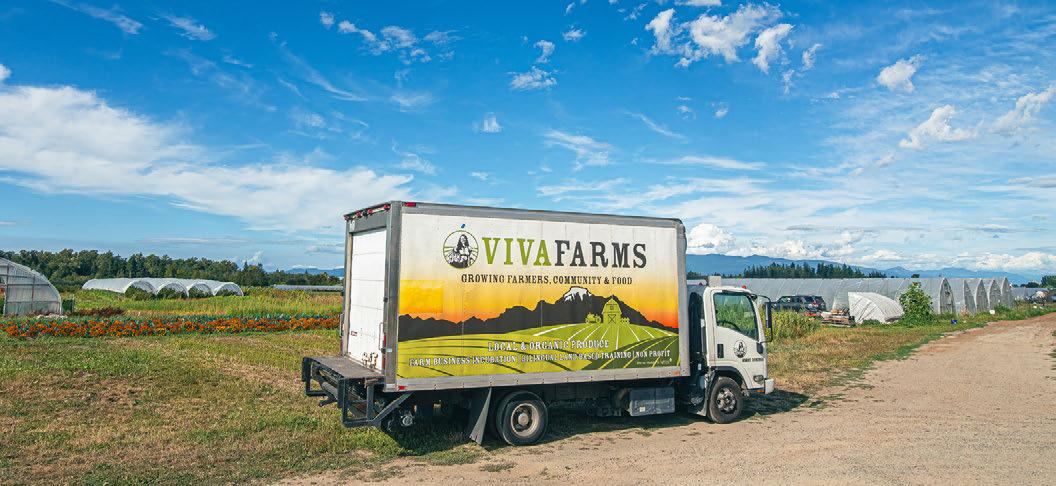
The Skagit Valley Food Co-op selected Viva Farms as the first Growing Good Fund recipient in 2023, and has since donated a total of $300,000 to Viva Farms through the fund. The Board of Trustees announced earlier in the year that we would again be donating to Viva Farms—this time $25,000 to help fund the purchase of a new refrigerated truck.
In its application for funding, Viva Farms explained that a reliable truck is key to providing historically underserved farmers The Essentials: bilingual training as well as access to land, infrastructure and equipment, markets, capital, and community, and in this case, an updated piece of equipment will directly support access to markets via the aggregation and distribution of produce to the local community.
Viva has been operating two older refrigerated trucks that have become increasingly unreliable and costly to maintain. Purchasing a new reliable refrigerated truck is essential to strengthening our regional food system and supporting everyone along the supply chain who depend on safe, consistent delivery—including you! Viva distributes its CSA and wholesale product up and down the I-5 corridor from South Seattle to Bellingham, and west to Anacortes; as a Co-op, we are helping to not only make this possible, but also more efficient.
The good news is Viva Farms has found and purchased a refrigerated market delivery truck with support from the Co-op and Washington State Department of Agriculture!
The truck allows Viva Farms to address a central barrier to growth in the Skagit program: distribution and cold chain capacity. Without increased distribution capacity, farmers are constrained in how much they can grow and where they can sell. An updated refrigerated truck expands the ability to aggregate produce from farmers in the Incubator and AgPark, and farms that have launched off site. Many of these launched farms continue to use Viva’s sales and distribution program as a key market channel.
Additional transportation capacity means more farmers farming, more acres in production, and feeding more Skagit community members. This investment helps build a distribution system that supports growth for both current and future farmers.
Kirsten
Contreras.
Kirsten and her partner, Tommy. Photo credit: Rowdy Sprout Farm
Skagit Valley Farmers Market Coalition
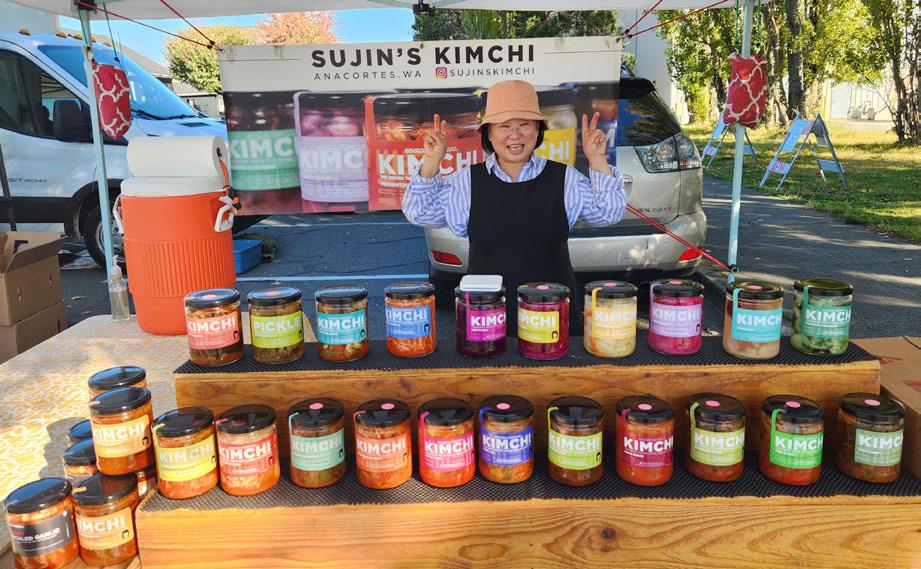
The mission of the Skagit Valley Farmers Market Coalition is to celebrate and grow our unique Skagit culture around food and community by strengthening our resilient farmers’ markets. The coalition includes the Sedro-Woolley Farmers Market, Mount Vernon Farmers Market, and the Anacortes Farmers Market. 5% Friday funds will support the coalition’s EBT Market Match program. This program feeds people who need it most and puts money in the pockets of local farmers: all matched dollars are used for fresh fruits and vegetables grown by local farmers. svfmc.com
$3,990 Skagit County Meals on Wheels IN JANUARY 2026
One of our most exciting ways to support the community is through 5% Friday! You shop and together we give 5% of Co-op sales one Friday a month to a non-profit, charitable community organization. And just think—each of these organizations is, itself, supporting the community! What a great circle of giving.
Skagit Land Trust
Kulshan Creek Neighborhood Youth Program
Skagit Land Trust conserves wildlife habitat, agricultural and forest lands, scenic open space, wetlands, and shorelines for the benefit of our community and as a legacy for future generations of people and wildlife. Funds from the 5% Friday program will directly support the Kulshan Creek Neighborhood Youth Program, coordinated by Skagit Land Trust, providing primarily migrant youth and their families with meaningful opportunities to engage with the natural environment through monthly field trips throughout Skagit County. Funds will support meals, transportation, program materials, and staff time.
skagitlandtrust.org
$4,080 Help Me Grow Skagit Family Resource Center IN FEBRUARY 2026
Skagit Gleaners’ mission is to address food waste and its environmental impacts while building an equitable food system. Skagit Gleaners does this by rescuing surplus food and products from local businesses, farms, and community members, keeping these items out of overflowing landfills. Skagit Gleaners will utilize 5% Friday funds to support the Hand-Harvest Gleaning program to purchase tools and supplies. Last summer alone, this program saved over 15,000 pounds of food that would have otherwise gone to waste.
skagitgleaners.org
The Co-op has always been a place of collective action, where business as usual is far from the norm, due in part to the cooperative principles baked into the day-to-day, including Cooperative Principle #7: Concern for Community. Community is the heart of our Co-op! We exist to nourish, serve, and give back to our community.
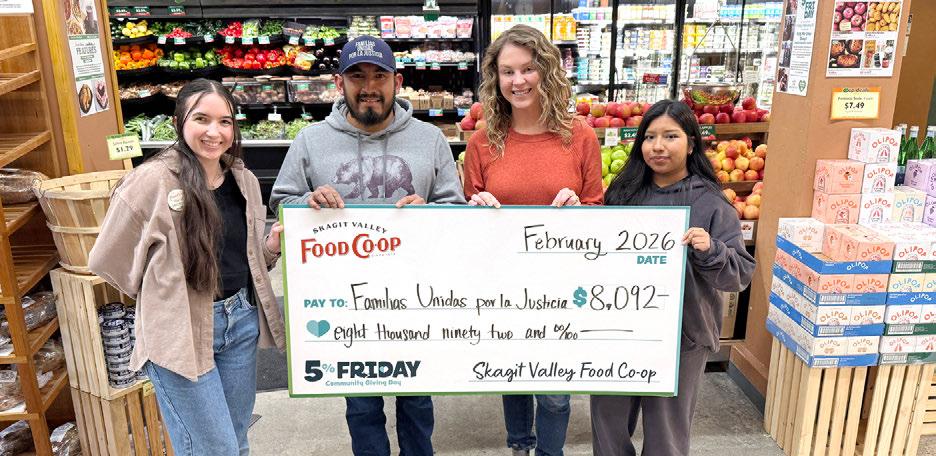
Last month when many people and businesses participated in a National Strike in solidarity with Minnesota and everyone facing violence at the hands of ICE, the Co-op remained open for those who needed us and held an impromptu 5% Friday Community Giving Day.
While not technically a 5% Friday on the calendar, we donated 5% of sales from January 30 & 31 to Familias Unidas por la Justicia. Familias Unidas por la Justicia is an independent labor union of more than 400 indigenous farmworkers in Skagit and Whatcom Counties. Together, we raised $8,092! Thank you for supporting the Co-op and our Valley’s immigrant families. june 26 • sept 25 • oct 23 in the Co-op Deli from 5-7pm Join us at one of our upcoming community meals:
PFLAG Skagit
Concrete Dress It Forward provides good-quality, free clothing, footwear, and accessories in a welcoming, boutique-style shop. Everything is donated, gently used, or brand new, including toiletries, socks, and underwear. DIF is managed entirely by volunteers and sustained through donations, fundraising, and grants. It also donates unusable items to textile programs, which supports its goal of reducing waste going into landfills.
Cold Hard Composting Facts
Is it compostable? Is it not? In my backyard? Or only at a commercial facility?
Composting is a wonderful, but tricky thing—and it is certainly a moving target when it comes to rules and regulations that vary from place to place and moment to moment. At the Co-op, sustainability is part of our mission, and so, we try to compost what we can, when we can, as best as we can. Try as we might, the information is sometimes as contaminated as the waste stream, and it’s difficult to share information that will stick. And it’s nearly impossible to compost perfectly.
Compostable Produce Bags
As of this writing, you’ll be pleased to know that we have switched entirely to compostable and paper bags in our Produce Department. NO MORE PLASTIC! Made from vegetable starch, the “Pull-n-Pak” compostable green bags are compostable at home or commercially! They’re also BPI Certified and FDA-approved food safe. Do be aware that leafy greens and other wetter veg may start the breakdown process, so you’ll want to transfer your produce into your own containers at home.
skagitlegalaid.org pflagskagit.org
PFLAG’s mission is to provide advocacy, education, and support to the LGBTQIA+ community, their friends, family, and allies. They seek to build community and to provide safe, supportive activities. PFLAG’s family values stress education, understanding, acceptance, and support, but most of all love, thereby empowering all children to lead happy and productive lives.
Skagit Legal Aid
Skagit Legal Aid expands access to the civil justice system for historically underserved communities and works to identify and eliminate barriers that perpetuate poverty, racism, and injustice. Skagit Legal Aid serves people who are most often excluded from legal systems—not because their legal issues are less serious, but because our legal systems were never designed for them. Skagit Legal Aid primarily works with Indigenous community members, immigrant and farmworker families, and rural residents.
Northwest Immigrants Rights Project
nwirp.org
Northwest Immigrant Rights Project (NWIRP) promotes justice by defending and advancing the rights of immigrants through direct legal services, systemic advocacy, and community education. NWIRP strives for justice and equity for all persons, regardless of where they were born, and its legal services are critical to helping thousands of immigrants in Washington State navigate the complexities of the United States immigration system.
WEDNESDAY
Speaking of produce bags and containers: a fresh reminder! It isn’t necessary to put most produce items in bags at all—skip this step if you can for a greener grocery shop. If you prefer to bag your produce, you can find several reusable options in and around Produce and in our Upstairs Mercantile.
Compostable Deli Packages
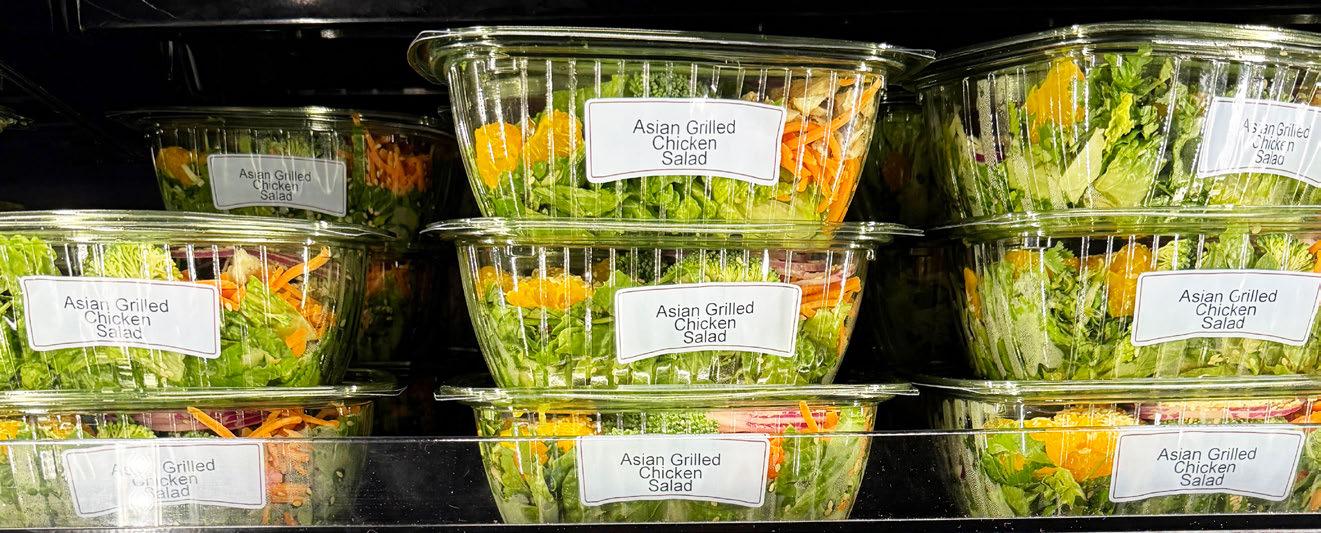
More cold hard composting facts! We have new compostable packaging in the Deli! Have you seen the green containers? We switched many of our containers back in January, which was an important step in the right direction as we move forward toward a more circular future with less single-use plastic and better composting options for everyone.
The tricky fact here is: the green containers can only be commercially composted. Please don’t add them to your yard waste bin or backyard compost pile. You can either compost them in a Deli compost bin when you’re here, or bring them back to compost next time you’re in.
Last tricky fact: the Co-op was originally told that our Deli labels, while not technically compostable, would still be accepted at the composting facility. We have since been informed that simply isn’t true. FACT: You must remove the labels from the green containers before putting them in the bin. (They can be tough to remove, so a little residual is kinda okay.)
Why not use a compostable label sticker, you ask us? We asked the same thing. Sadly, at this moment in time, they do not exist. But rest assured, we’ll have our eyes peeled. In the meantime, please keep composting carefully and know that we appreciate your mindfulness to reducing waste whenever possible.
No Denim Recycling This Year
Last April, as part of Earth Month, we brought back Cotton’s Blue Jeans Go Green™ program for the second year in a row. We were able to recycle and donate over 100 pounds of denim (71 pieces), and we are so appreciative of your participation in the program.
That said, there will be no denim recycling at the Co-op this year. In both 2024 and 2025, there were heaps of perfectly good jeans that should have been donated directly (don’t worry, we did donate them), along with several pairs that didn’t contain enough cotton (90%) to be recycled through the program (don’t worry, we did end up recycling those, too).
Instead of serving as a collection point, we’re sharing ways to recycle old clothing and textiles; you can always bring clothing worthy of donation to your favorite thrift or consignment store—or even Concrete Dress It Forward!
If you have fabric or scraps that can’t be donated, don’t throw them away! These companies recycle them, and some even give you rewards just for sending in your scraps!
Cotton’s Blue Jeans Go Green™ bluejeansgogreen.org
Ridwell ridwell.com
Trashie trashi.io
Evergreen Goodwill Mount Vernon and Sedro-Woolley Retold Recycling retoldrecycling.com In Rotation inrotation.co
Concrete Dress It Forward
Spring Greens Beat Winter Blues
by Ben Goe, Produce Manager
We all know leafy greens are good for us, but did you know they can boost energy, immunity, and allergy resistance?
Mustard greens, collards, kale, broccoli, komatsuna, bok choy, pak choy, tatsoi, nettles, arugula, spinach, and asparagus are all great examples, and lucky for us, production on all of them starts in the spring here in Skagit Valley. Some of these aren’t vegetables everyone is familiar with, but lucky for you, that’s why I’m here.
There are a few common varieties of mustard greens, and they all come in both green and purple.
Komatsuna, also called mustard spinach or tendergreen, is a spinach/mustard-hybrid with thick, edible stalks and rounded leaves. It has a notably mild flavor and is commonly stir-fried or added to ramen. It’s also great for salads. If you’re cooking it, separate the leaves from the stems and add the chopped stems a minute before you add the leaves to give them a head start. This is the triedand-true method for any of the delicious, tender-stemmed spring vegetables, like kale raab or rapini.
Mizuna mustard greens are also quite mild, but they are a true mustard. Thin spiky leaves and delicate, thin white stalks, try using them in place of arugula. If you are cooking them, they should be one of the last things you add to a dish. Other rounded-leaf varieties of mustard tend to have a spicier peppery flavor—still not too strong for salads, but often treated like kale or collard greens. Tatsoi is technically a mustard, but is more like bok choy crossed with spinach. It has a very mild mustard green flavor.
Nettles can be harvested in the spring—forager beware: use heavy gloves as latex gloves don’t offer enough protection, then snap off the budding tips when the leaves are just a couple of inches long. To remove the sting, you’ll need to blanch them—dunk in boiling water with tongs and cook for about 60 seconds, then use the tongs to transfer them to an ice bath, and drain thoroughly once cooled. Nettles can be used just as you would spinach, but because they are already cooked, they should be added last. They actually make for an excellent pesto, with or without basil or other herbs—just squeeze as much moisture out as you can after blanching and cooling before processing. Try using local hazelnuts for an earthy, and very Skagit version.
If you didn’t already know, raab is the flowering stalk of any brassica: kale, collards, Brussels sprouts, cabbage, etc. The stalks are tender and sweet, as the cold of the winter has forced the plant to produce more sugars. They are great steamed or stir-fried, or any way you might treat baby broccoli or purple sprouting broccoli.
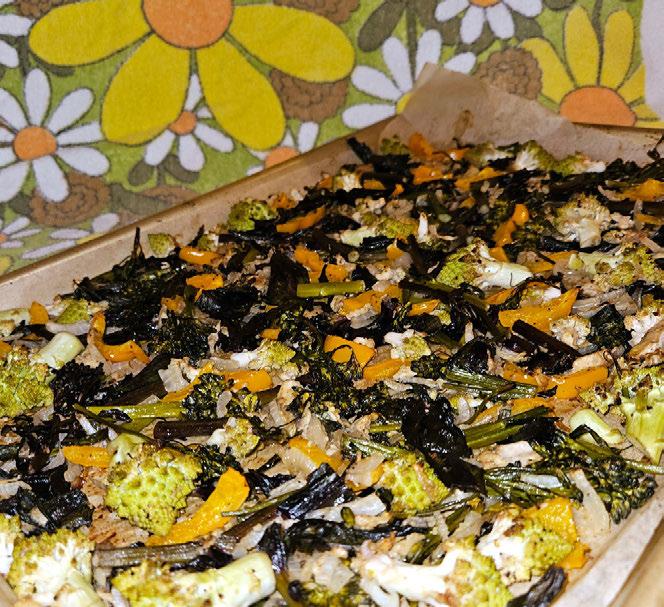
One of my favorite tricks is to rough chop any of these raabs and toss with olive oil, aged balsamic, salt, and pepper, then roast on parchment paper at a ludicrously high temperature until the edges of the leaves blacken and get crispy.
Radishes and turnips offer up many of the same health benefits as all of these greens and come into season at the same time. Turnips, particularly, get a bad rap, and so, most people don’t include them in their diets. But several of our local farms grow little white salad turnips, sold in bunches. True to their name, they can be sliced into salads like radishes, where they serve a similar, if less-spicy function.
My preference, again, is to roast them. Trim the ends and toss with your preferred oil and seasonings, and roast whole until soft. Sweet, creamy, mild, and decadent, they are great on their own or can be roasted with other veggies like asparagus, carrots, and broccoli. They are also fantastic in soups. Save the greens, use them just like mustard greens; they taste very similar.
All of these veggies are high in fiber, iron, vitamins, and antioxidants, and I guarantee adding them to your diet will help you spring out of your winter blues.
Springtime High Five Recipes
by Leigha Staffenhagen
April isn’t just for tulips! It’s also for sunny afternoons, picnics on the riverwalk, and green spring produce. Welcome the warmer weather with recipes that come together in a pinch!
As always, these High Five recipes call for just 5 ingredients or less and are an easy way to spend less time in the kitchen and more time out enjoying spring in the Magic Skagit!
Chocolate Strawberry Fool
RECIPE + PHOTO COURTESY OF CO+OP
Don’t get us wrong—super sweet, super decadent Skagit strawberries are best enjoyed all on their own. But! If you have a special occasion or a just-because craving, try this layered Chocolate Strawberry Fool.
RABBIT FIELDS FARM baby kale, bunched herbs, green garlic Mizuna, Pak Choy, Tatsoi, red mustard assorted raab, bunched dandelion greens salad turnips, French Breakfast radishes
WELL FED FARM salad mix, bunched spinach red, green + Lacinato kale
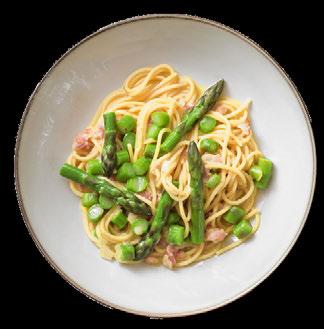
Asparagus Carbonara
RECIPE COURTESY OF CO+OP
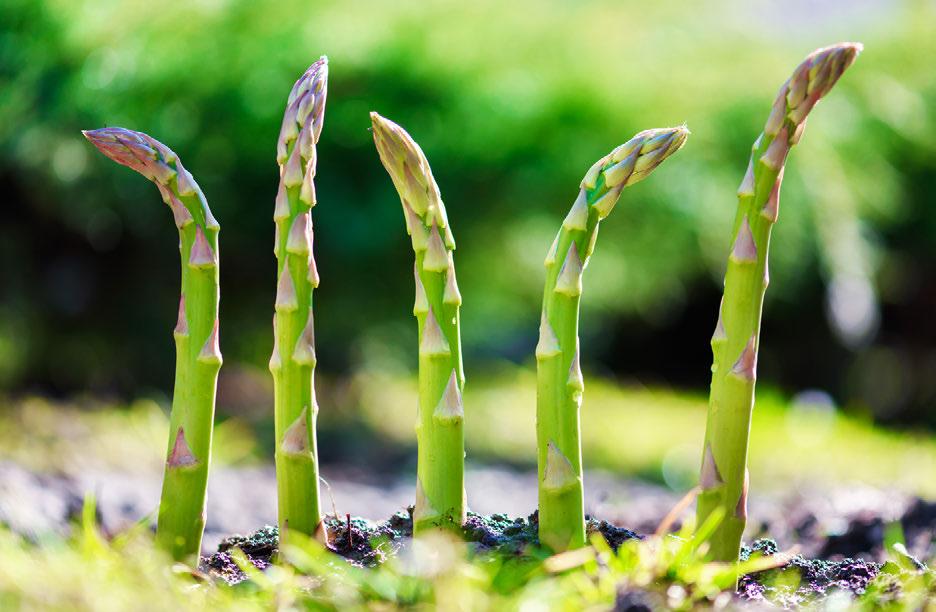
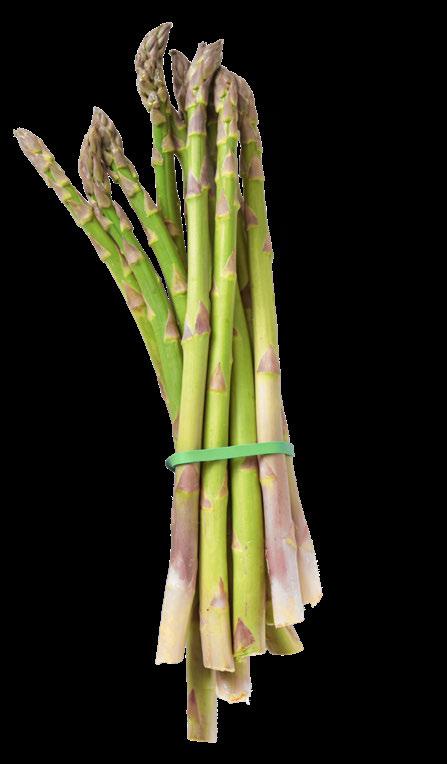
Everyone knows that those first asparagus tips soaring for the sky are a sure sign of spring in Skagit Valley. Look for local spears from Ralph’s Greenhouse and Canales Produce and give this simple and savory carbonara a twirl.
1. Heat a sauté pan over medium heat and add the bacon, cooking for about 5 minutes, until crispy. Set bacon aside. Reserve the pan with the rendered fat for cooking the vegetables. Bring a pot of salted water to a boil.
2. Add Co-op pasta to the boiling water and cook according to package directions.
3. While the pasta cooks, heat the bacon fat in the sauté pan over medium heat. Add the asparagus and carrot, and sauté for about 5 minutes. Remove from heat and keep warm.
4. In a large bowl, whisk together the eggs, milk, and salt. Have the egg mixture, vegetables, and bacon ready to toss with hot pasta.
5. Quickly drain the pasta and transfer it immediately to a large serving bowl. Pour the eggs and parmesan over the pasta, toss vigorously to coat the strands and gently cook the eggs, forming a creamy sauce. Add the asparagus and bacon, and continue tossing to incorporate. Season with pepper to taste.
Directions
1. Place 1 cup of strawberries in a small bowl and add the sugar and vanilla extract. Mash the strawberries into small pieces using a fork. Refrigerate for 30 minutes.
2. Pour the cold whipping cream into a cold, medium-sized bowl. Using a beater, whip the cream until it holds stiff peaks. Fold the mashed strawberries and 3/4 of the chocolate into the whipped cream.
3. Using a tablespoon, fill a wide-mouth glass (such as a martini glass or tumbler) 1/3 full with the whipped cream, then top with a layer of sliced strawberries. Repeat with more whipped cream and another layer of strawberries. Top with remaining whipped cream and garnish with chocolate shavings.
Ben’s blackened greens.
Doting Dads: Anecdotes & Antidotes for Mother’s Day
Anecdote: a short amusing or interesting story about a real incident or person
Antidote: a medicine taken or given to counteract a particular poison
After my father lost his mother, he moved back to his hometown of Vancouver, Washington from Bangkok, Thailand. His stateside daughter—me—had recently become a mother.
He’d lived his entire adult life overseas: East Africa, North Africa, Western Europe, South Pacific Ocean, Southeast Asia. He and my mother joined the Peace Corps in 1964, in its fledgling fourth year, as teachers in Liberia. They continued their international teaching adventure for decades to follow.
My mother likes to point out: living overseas made her a better U.S. citizen. “You realize how good you have it.”
As a first-hand witness to governments of the world, the resilient young democracy that was the U.S.A. when my parents lived overseas remained a shining beacon. They lived through Idi Amin and government coups and forced bribes and Embassy evacuations and power outages. My parents filled out their absentee voter ballots without fail, across all those decades and oceans. Hats off to the Military and Overseas Empowerment (MOVE) Act, that protected their voting rights as citizens overseas all those years.
Our International Herald Tribune daily newspaper, Time magazine, and BBC World Service on the radio kept us tuned in to stateside and world events. And—for my dad, as a full-on foodie—another regular household subscription across the decades: Gourmet magazine, delivered without fail alongside the news.
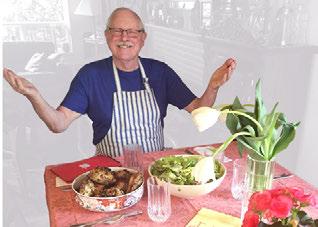
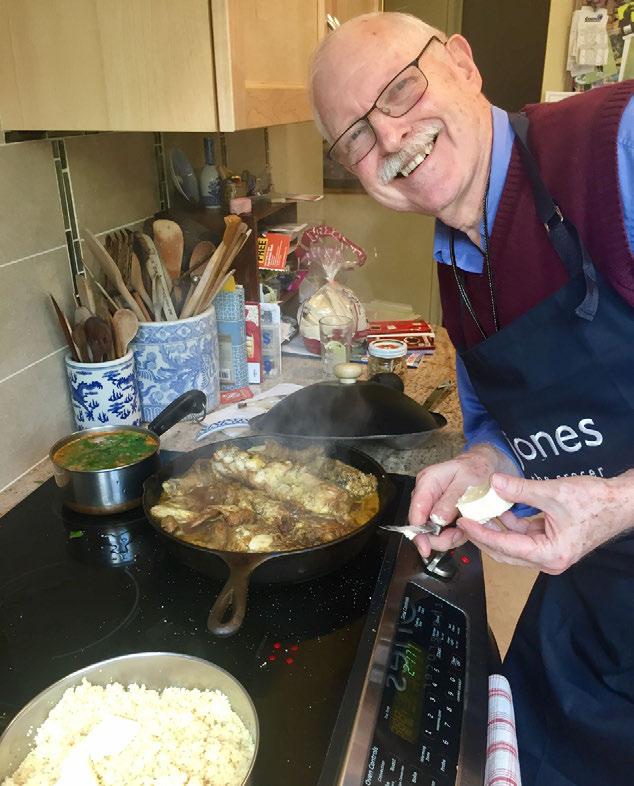
I ain’t gonna lie, overseas life sometimes comes with cooks, so my dad did not chef often when my brother and I were kids. A few times, he declared with great fanfare that he would be cooking and shooed everyone out of the kitchen, glossy Gourmet tucked under his arm. His legendary kitchen failures did not happen all in one day, but our family has howled with laughter for years about these fails. The time he set out to make the French Country Cake, showcased in high-shine glory of the magazine pages, that emerged from the oven flat… and we forever called it his French Country Pancake. There was the time he quadrupled a recipe. While usually good at math, somehow twelve teaspoons of parsley became a forested twelve cups of parsley. And perhaps his most famous fail: his attempt at the famous Five Flies Stew, signature dish of restaurant d’Vijff Vlieghen in Amsterdam who claims this uniquely spiced recipe harkens back to 1627. My dad’s version: oversalted by a handslide, and forever renamed, Dad’s Salt of the Seven Seas Soup. Nonetheless, he persevered.
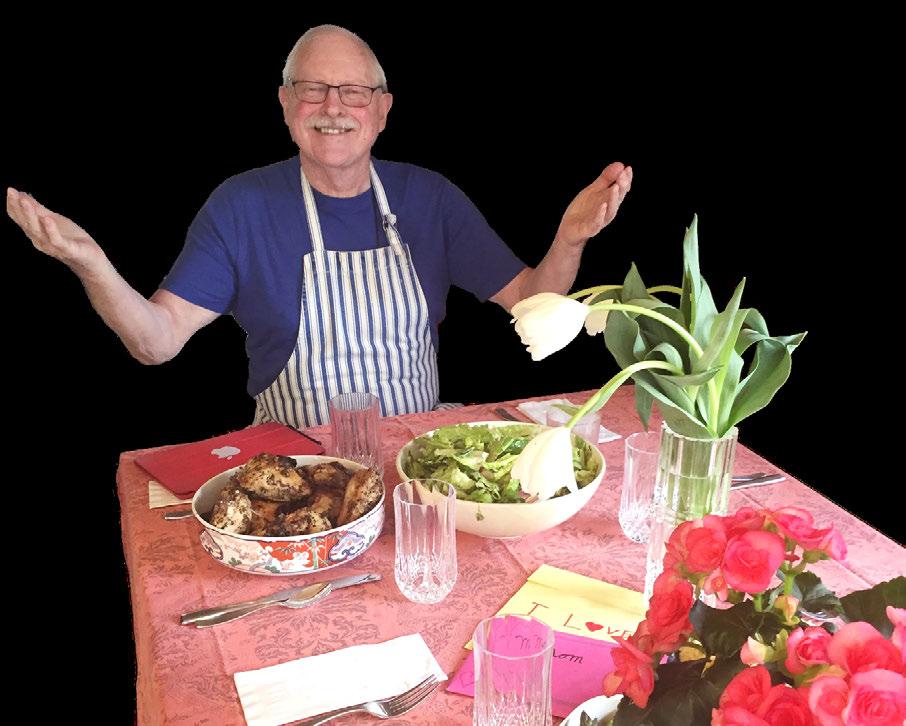
Fast forward to nearly two decades of stateside life for the whole family. It was my father who, at a point along this trajectory of shared Mother’s Days—honoring his longtime wife, my mother, and his daughter, now a mother of two—began to give us the most delicious of gifts. My dad planned—and served—themed feasts, down to a signature drink to accompany. Thai. New Orleanian. Moroccan.
The gift grew out of the year he hosted all of us at his home in Vancouver. We feasted on a Thai-themed meal from appetizer to multi-main-course to dessert. My daughter had just begun to walk, and she toddled about in a Thai dress, bright yellow with traditional embroidered edges. Mangoes and sticky rice, served in bamboo steamer baskets. Cashew chicken curry. TokTok chicken wings. Shrimp Gaeng Som curry.
He planned the menus with such joy and delight, I think this was as much a part of the gift for me.
He emailed my mother and me options in the weeks before: do we want chicken satay skewers or Miang Kham as an appetizer, or both? How does a rum coconut cocktail sound? These three main entrée dishes, or do them all? Um. Yes!
As a mother tending daily to two young children, being doted upon by my father with such love was the perfect antidote. Such lavish interest in my care and feeding was the greatest of all gifts.
Next year: muffulettas and shrimp gumbo. Cajun bread pudding. Negronis.
And the next: Moroccan carrot salad. Harira. Lamb tagine. Cinnamon oranges. Herbaltinis.
A Spring Celebration menu: Canlis salad. Shrimp fresh rolls. Cheesy rice with asparagus. Garlic bread. Chicken Marbella. Moscato with fresh raspberries. Crème brulée (complete with a DIY torch my dad brought for the kids to use, much to their delight).
And finally, last year’s Mother’s Day menu: Dad’s Famous Fails. A chance at redemption. The Five Flies Stew was incredible. Fascinating flavors that marry well. Bok choy and cannellini bean salad. Crèmant. Rhubarb poundcake. Because the French Country Cake had to be left behind… famously flat again, I kid you not.
One of the two women who campaigned to establish Mother’s Day, now in place since 1914, wanted a day that transcended celebrating maternal bonds. They wanted a day that stood more broadly for peace, unity, and social change. They wanted a day not of pre-printed cards but a day of handwritten notes, personal gestures. I want to remember this as I wade through today’s headlines. I remember this as I think of the men who tend closely to their community.
Regularly, I witness the fathers of young kids in our Mount Vernon neighborhood tend to their wives and children. Several years in a row, Mother’s Day in our ‘hood has looked like this: an informal group of dads work together to host a feast in our neighborhood park for the neighborhood moms. Complete with tablecloths, flower bouquets, quiche, fruit, mimosas, and child care while the mothers eat, connect, and relax.
The family two doors down often eat on their front lawn on warm spring days. Their kids, one and five years old, play. The father often leaps up to offer me a plate, or a generous smile as he walks towards me in my yard, an Aperol spritz or cold white wine on offer. Food is dropped off on my doorstep, and I know the man who does it feels pained by the news; his acts of care are his own personal antidote to today’s headlines. My friend’s husband who makes sure my gators are securely fastened for our winter hike. My son, now 20 years old, who served me up a delectable omelet two weeks ago, on a casual weekend visit.
My son. My dad. These dads. Not all men, I know. But these men.
I tell the story of these men as an antidote to men I read about in the news today. I honor the men who dote on us. The men who care for their neighborhood communities, their mothers, their wives, their children. The world needs you. Thank you.
Skagit writer and eater Sarah Stoner grew up in Uganda, Morocco, Belgium, and Thailand and lived in the U.S. for the first time at age 18. Her parents, in 1961, heard JFK’s now-famous inaugural address, “Ask not what your country can do for you—ask what you can do for your country,” and were deeply inspired by those words. They finished their education degrees, learned my father couldn’t serve in the military due to an eye stigma, and joined the Peace Corps. Thus began a life of raising two multicultural kids in a medley of countries—much like unique ingredients in a unique cultural stew. They each voted in every federal election for forty-plus years as U.S. citizens overseas.
by Sarah Stoner
Herbaltini | SUNSET MAGAZINE
This refreshing drink combines fresh herbs that many of us have in our PNW yards, as its creator is a Washingtonian. Cut the sugar or cut the alcohol, to enjoy to taste. Beware! These go down easy.
Ingredients
24 fresh mint sprigs, rinsed
12 fresh rosemary sprigs, rinsed
· 3/4 cup superfine sugar
2 oranges, chilled, rinsed, and quartered
2 1/4 cups gin, chilled in the freezer
1 cup plus 2 Tbsp fresh lime juice (about 7 limes), chilled
1 1/2 cups soda water, chilled Fresh mint leaves, rinsed
Directions
1. In a 3-quart pitcher, combine mint sprigs, rosemary sprigs, and sugar. With a long-handled wooden spoon, muddle (or crush) the herbs and sugar together.
2. Squeeze juice from oranges into pitcher, then drop quarters in. Press a few times with spoon to release oil from orange peels.
3. Stir in gin, lime juice, and 1/2 cup ice water. Mix until sugar is dissolved.
4. Serve or cover and chill up to 4 hours. If using martini glasses, chill in freezer.
5. To serve, slowly pour chilled soda water into the pitcher, down the side. Stir gently to blend. Pour through a strainer into chilled martini glasses or ice-filled glasses. Float a mint leaf on top of each. Serve at once.
Five Flies Beef Stew
This Dutch stew recipe has survived since 1627, according to the Amsterdam restaurant that serves it to this day. Makes 6 servings.
Ingredients
1 1/2 lbs round steak, cut 1 inch thick
1/3 cup flour
1/4 tsp each: ground cloves, ground ginger, curry powder, garlic salt, black pepper, salt
1/4 cup salad oil
2 beef bouillon cubes
·2 cup hot water
1/4 cup slivered almonds
·1 (4 oz) can mushrooms
·1 cup drained sour red cherries
·1 cup dairy sour cream
Directions
1. Cut steak into 1-inch cubes. Combine flour with spices, pepper and salt. Dip pieces of steak in seasoned flour.
2. Heat salad oil in a heavy frying pan or Dutch oven. Brown the meat in hot oil. When meat is well browned, sprinkle it with remaining seasoned flour.
3. Stir until the flour is well browned. Dissolve the bouillon cubes in hot water and pour over browned meat.
4. Cover and simmer over low heat for about 2 hours or until meat is tender. Meanwhile, melt the butter in a small saucepan. Add the almonds and cook until dark brown.
5. Stir in the almonds into the stew along with the mushrooms and their liquid, and the drained cherries. Simmer for about 10 minutes or until bubbling hot.
6. Blend in sour cream and serve at once, accompanied by buttered noodles or steamed rice.
Sarah’s Dad cooking up one of his famous feasts.
New treasures, handcrafted fresh herbal creations, and curated meaningful goods to delight and support your self-care rituals.
From reusable and sustainable lifestyle items to intentionally selected crystals, candles, and tools for wellness rituals, do much to explore.
We’re proud to feature creations from local makers, including our partner Scents of Wellbeing, and showcase a growing collection of artisan goods.
Looking for a bit of sass with your self-care? We’ve got you covered with sarcastic towels, stickers, signs, and other perfectly cheeky finds - because wellness should be fun, too.
Stop in and take a peek—you don’t have to buy a thing… but, honestly, you’ll probably leave with something you never knew you needed.
320 E. FAIRHAVEN AVE - BURLINGTON
VERA WELLNESS CENTER
Mount Vernon, WA
303 Vera Street
Nicole Noteboom, editor
Interested in advertising? Visit the Co-op website or email NicoleN@skagitfoodcoop.com for rates.
The ad deadline for the next issue (Summer | July 2026) is Friday, May 16
Live a More Vibrant, Balanced, Vital & Healthy Life!
We’ve partnered with Barnard Gri n, one of the state’s oldest and largest family-owned and operated wineries, to bring you two new signature wines, adorned with local art and named for this amazing place we call home.
Soaking up the sun calls for new thirst-quenching sips to welcome the warmth! We just refreshed our Deli cooler for easier grab-n-go access and added new drinks that put the fun in functional. Look for these pick-me-ups next time you’re in!
Protein Lemonade LUMEN
As someone who is perpetually behind on their protein goals, I’m always looking for easy sources of protein—big bonus points if they’re disguised as a lil’ treat. When I first saw Lumens in the store, I have to admit I was skeptical: I definitely don’t think “protein” when I see lemonade, or vice versa. But I was pleasantly surprised! These lemonades absolutely hit the mark as an easy, super-sippable way to tack on 16g of protein to your day! The protein source is a tasteless, colorless, odorless protein from grass-fed collagen. Collagen is also well-known for its critical role in protecting our muscles, joints, bones, skin, and hair—and who couldn’t use a little help there, too? I’m also a bit averse to the taste of stevia, but it’s well-balanced with real fruit juice here, making for a perfectly sweettart lemonade. Choose from Strawberry Dragonfruit, Yerba Maté, Original Lemonade, and my personal fave, Mango Chili
Cacao Water
BLUE STRIPES
Speaking of things you wouldn’t think go together: cacao and a hydration beverage. Made of just three simple ingredients—triplefiltered water, cold-pressed cacao juice, and a dash of fruit juice, Blue Stripes cacao water is smooth, tropical, refreshingly light, and packed with electrolytes, vitamins B and C, and antioxidants. Think of it as an alternative to coconut water!
Plus, cacao water is a surprisingly sustainable option for Earth Month! According to Blue Stripes, the chocolate industry wastes 70% of the cacao pod when making the sweet treat we all love. Blue Stripes helps by upcycling the whole cacao shell, fruit, and beans to create their superfruit hydration drink. In fact, in the last 18 months, Blue Stripes has upcycled 968 tons (yes, tons!) of cacao fruit. Talk about landfill diversion! Choose from Cacao Fruit, Passionfruit, and Mango.
Mood Kombucha
BOOCHCRAFT
You might be asking yourself, does the Co-op really need another kombucha brand. And the answer is yes—because Mood is not your average booch! Touted as a feel-good, fresh-fruited beverage that’s brewed and juiced under one roof, Mood Kombucha offers 3g of prebiotic fiber in each can, and each flavor is crafted to fit a different, well, you guessed it, mood. Choose from Regenerative Hibiscus Lemonade (made with regenerative organic ingredients), Rejuvenating Raspberry Ginger (with electrolytes), Centering Pomegranate Maté (with adaptogens), Energizing Lemon Cherry (with caffeine), and Boosting Orange Ginger (with vitamin C)
Refried Kidney Beans |
A twist on the classic canned refried beans, this High Five recipe calls for kidney beans and is the perfect addition to your Cinco de Mayo spread, whether it be tacos, nachos, enchiladas, or a fiber-packed chip dip!
Is that you, sun? It’s us! The Skagitonians who have been seeking you! We know it doesn’t get much better than those first sunny days of spring and the promise of fun they bring. Whether you’re snapping photos in a rainbow of tulips out among ‘em, exploring a quieter off-the-beaten-path trail in the Valley, or setting up for a season worth celebrating, we have some new and noshable foods you won’t want to miss!
Snack Attack
Tulip field hopping, after-school activities, busy party planning… there are plenty of reasons why you might be feeling hangry while you’re out and about. There’s no shortage of easy grab-and-go snacks at the Co-op that will keep you going through your busy, busy day— here’s what’s new that we’re loving for spring.
Lunch Kits | GREENFIELD
Only ‘90s kids will remember those lunch snack packs from childhood: crackers with cheese and meat, mini pizzas, nachos with questionable cheese… if you know, you know. Imagine that novelty, but with natural ingredients that are less processed, and better-for-you meat that’s raised without antibiotics. Meet Greenfield Lunch Kits! Packed with 12g of protein, these lunch kits are an easy grab-and-go snack, whether you’re off to work or have some hangry kiddos in tow. Choose from smoked turkey, honey ham, and uncured pepperoni, paired with crackers, cheese, and a ‘lil sweet treat.
Chips & Salsa | DE CASA FINE FOODS
Cinco de Mayo or any day, no celebration is complete without chips and salsa! De Casa salsas are USDA-Certified Organic, non-GMO, gluten-free, and vegan, making them the perfect party pick for every palate—best paired with their blue or yellow corn chips. Made in small batches in Eugene, Oregon, with just a few simple ingredients, these chips are made for dipping. You’ll find their hot, medium, and mild red salsas in the Deli cooler.
Caramel Bites | BEE GRATEFUL FARMS
We introduced you to Bee Grateful Farms caramels in the last Natural Enquirer, and y’all LOVE them! Since their dazzling debut, we’ve sold over 600 of them! With such a warm welcome, we couldn’t help but sweeten the selection from this family-owned confectionery. If you love their caramels, you’ll love the new crunchy caramel bites: think gooey caramel layered with salty-crunchies. Choose from Chocolate Peanut, Coconut Almond, and Chocolate Espresso Crunch.
Gourmet Popcorn | BLACK JEWELL
Your binge-watch just got an upgrade! Black Jewell popcorn features Non-GMO Project Verified heirloom black kernels that pop snow white and have a perfectly crisp, fresh flavor with a satisfying crunch. No one will blame you when you press play on another episode, or another bag! Choose from Natural microwave packs (with chemicalfree bags) or a pouch of Original Black Kernels if you prefer to pop them on the stove!
Beans, Beans, the Magical Legume
Beans have jumped into the spotlight recently with fiber-focused eaters, but we’ve always had a special place in our Co-op hearts for beans—just take a stroll through our Deli! Whether you’re hopping on the bean bandwagon or always add them to the mix, we have some new legumes you’re sure to love.
Local Bulk Beans | LOPEZ BROS. FARM
We have so many exciting things in store for our customer-favorite bulk department, including even more local options! Just in time for Cinco de Mayo and spring-y bean salads, our friends at Lopez Bros. Farm are now supplying us with fresh produce AND three varieties of dried beans: black beans, Flor de Mayo beans, and Rosita beans!
Canned Beans | EDEN FOODS
Established in the late ‘60s during the big boom of the natural foods movement, Eden Foods is by no means new to us: you can find their Edensoy milk, Asian-inspired sauces, rice, and more sprinkled throughout the Co-op. In 2026, they still dutifully honor the values they’ve always had: pure, great-tasting food from a principled natural foods company. Eden is proud to prepare nearly 75% of its items at its headquarters and works closely with vendors for the remaining 25%, including its canned beans! Find their organic and non-GMO pinto beans, garbanzo beans, black beans, and navy beans, by all the other canned beans.
Mexicali Bean Dip | DE CASA FINE FOODS
More to love from De Casa! Organic pinto beans are combined with organic tomatoes, jalapeños, and a variety of spices for a flavorful dip that’s great with just chips or layered in homemade tacos or quesadillas. Organic, non-GMO, gluten-free, and vegan—find them in the Deli grab-and-go case near the other dips and salsas.
1. Puree the contents of one can of beans in the blender. Reserve.
2. Drizzle the olive oiI in a large sauté pan over medium-high. Add the onions and stir until they start to sizzle.
3. Reduce the heat to medium-low and cook for 5 minutes, until softened and clear. Add garlic and stir until fragrant, then stir in the jalapeño, cumin, paprika, and salt.
4. Stir well, then pour in the pureed beans, scraping the blender jar with a spatula. Add the remaining can of beans.
5. Stir until the beans start to bubble, adding water as needed if they become too thick. When the desired consistency is reached, remove from heat.
by Leigha Staffenhagen
Timberline Bees
Not all honey is created equal. In fact, some of what’s sold as honey isn’t even honey at all. In the 2019 Netflix documentary series Rotten, the world of honey crime is exposed—a massive underground network where suppliers pass off honey diluted with sugar syrup as the real deal. Not only is that a clear rip-off for consumers, but it’s damaging to small beekeepers, the environment, and the economics of the true cost of this liquid gold.
So, what can we do to support real honey, hardworking bees, and their dedicated keepers? You’ve heard us say it before: shop local!
At the Co-op, you can rest assured that all of our honey is the real deal—our strict buying guidelines ensure we purchase only the best honey, harvested in sustainable ways. And you can bet that we have a few local options to choose from, including Timberline Bees of Granite Falls, Washington.
Family-owned for over 20 years, Timberline Bees produces pure, raw honey and bee products straight from their hives to your table. Originally a passion project of her father’s, Shelly Husby, along with her husband Chris, have proudly taken on the legacy of Timberline Bees, stewarding the hives, the honey, and the heritage that has been built over many years. Shelly and Chris believe in sustainable, responsible beekeeping, prioritizing the health of their bees above all else.
Their bees pollinate local farms, orchards, and wildflowers, making for raw honey with notes of blackberries, maple, and florals, depending on the time of year. An important detail to note is that, unlike pasteurized honey, raw honey crystallizes over time—a totally normal process that doesn’t signify a decrease in quality or spoilage, but that the honey is pure and unfiltered, just as the bees intended it! If you prefer your honey to be liquid, it’s as simple as placing your honey jar in a warm water bath.
Along with honey, Timberline Bees also harvests fresh bee pollen, a nutrient-dense food that can be added to yogurt, tossed in a smoothie, or just eaten by the spoonful. Bee pollen is often
touted as a superfood due to the vitamins, proteins, and minerals it contains, and is used by many to boost their immune system during the cold season. Not to mention, it’s just tasty with a nice crunchy texture. Just as the Husbys utilize sustainable practices to harvest their raw honey, the same is true for the bee pollen. When harvesting bee pollen for human consumption, Timberline always takes just a small share of the extra pollen, leaving plenty for the bees, who use the pollen to feed their baby bees.
FUN FACT:
Beekeepers call the pollen “bee bread” as it’s their protein source.
Whether it’s swirled in your morning coffee, baked into something special, or drizzled on everything from yogurt to toast, next time you need some of the sweet stuff, buzz into the Co-op to pick up a jar or two, or head to the Bulk Department to fill your own mason jar with Timberline Bees local honey. You’ll find the bee bread in the Wellness Department.
Hello, sunshine! Spring has sprung and the sun-sational celebrations begin! From egg hunts and Spring Break to moms, dads, grads, Cinco de Mayo, Juneteenth, and beyond, pop into the Co-op for some bloomin’ good food and a rainbow of flavor and fun. Be sure to try these handmade Co-op delights—the most delicious way to eat local this season.
june
Co-op
Leigha Staffenhagen
Community Marketing Manager
Co-op Employee Since March 2020
Background
Yes, you read that right—I was hired at a grocery store on March 11, 2020, just days before the state shut down for a historic pandemic. On my second day, I became wellacquainted with the Bulk Department while scooping up items for customers.
To say my start at the Co-op was a whirlwind is an understatement, but six years later, there’s nowhere else I’d rather be. I could write for days about how much I love our Co-op and the power I think the cooperative model has to change the world, but that’s for another time.
As our Community Marketing Manager, I wear many hats: I manage our social media, organize our outreach team and events, write blog posts for our website, and serve as a contributing editor of this very paper! I also serve as our Membership Coordinator and Board Administrator. That, and if you’ve ever emailed the Co-op, it’s very possible that you were talking to me!
Favorite customer moment:
My favorite customer interactions often take place outside the brick walls of the Co-op—either at community events or when I’m out and about in my own personal life.
I remember being at a coffee shop in Bellingham and getting to talking with a couple at a table near mine, and the topic of co-ops came up. We went back and forth about how much we love the business model and its values and principles. When they found out I worked at our Co-op, they were elated and had nothing but good things to say about us. That is the resounding comment I get at every single event: “We love the Co-op!” To get to be part of this rich tapestry of members and employees, past and present, is an absolute joy and honor.
Favorite items at the Co-op:
The list is endless: Our Spaghetti Blend Sausage, Essentially Orange Ice Cream, marinated wings, and of course, anything locally grown from our Produce Department.
Other favorites include an early-morning salted caramel latte from Colee in the Deli, Wellness recommendations from Nancylee (most recent: lemon-flavored creatine!), and literally any pastry our bakers make.
Favorite meal to make with Co-op ingredients:
A couple of meals come to mind! I love turning our hot, roasted chicken into enchiladas, and I always boil the chicken bones for a chicken stock concentrate that I freeze and add to soups/sauces.
In the summer, I have Greek salad on rotation, featuring local veg and feta and paired with grilled chicken thighs. And as my officemates know, spaghetti is always on the menu for dinner and lunch leftovers, made with Rao’s, our Spaghetti Blend, and fresh Co-op pasta.
How I spend time outside of work:
When I’m not at the Co-op, I’m probably spending time thinking about co-ops: I’m currently enrolled in the Cooperative Management Master’s program at Saint Mary’s University in Halifax, Nova Scotia.
Outside of co-ops, I love our Seattle Mariners, whether I’m watching them at home or making it down south for a game. I’m also an avid reader, runner, and tap dancer, and I enjoy spending time with my partner, Michael, exploring this beautiful place we get to call home.
Now that we’ve fully defrosted ourselves from that long winter, the Co-op Outreach Team is gearing up for a bustling spring—and we can’t wait!
If the sunny days have you itching to get out of the house and into the world, we’d love to see you at all of these fun, festive, and flavorful events coming up soon.
tulip festiVal parade
10am – 1pm | Downtown La Conner
The Annual Skagit Valley Tulip Festival Parade has been a beloved tradition in La Conner for decades. As one of the Festival’s signature events, the parade offers a joyful, locally rooted showcase of community and creative spirit. Start the morning in the KidZone for fun, family-friendly activities before settling into your seat for the parade, kicking off at noon.
17-19
Downtown Mount Vernon
Okay, we won’t technically be there, but why have a booth when you can camp out with an entire building full of amazing food and gifts? We’re happy to be a place you can pop inside to grab a quick bite, shop for local goodies, or just say hi —that is, of course, when you’re not busy eating corndogs and kettle corn or enjoying music at Tulip Tunes!
Tulip Tunes is a free three-day music festival in the heart of the Street Fair, and your Co-op is the official Sustainability Sponsor of Tulip Tunes this year: we’re providing compostable cups for the Beer Garden. Be sure to check out the lineup with over 18 performers from around the Pacific Northwest including Reposado, Baby Cakes, and more!
18
12:30 – 3:30pm | Skagit Valley YMCA
As proud sponsors of the YMCA we’re happy to attend their family-friendly, oh-so-fun Healthy Kids Day for the fifth year in a row! Come spin the Co-op wheel and get a piece of organic fruit—this event is free and open to the public.
25
9am – 1pm | Edgewater Park
Join us and Skagit Fisheries Enhancement Group for a fun and meaningful Earth Day Celebration at Edgewater Park! This event is all about giving back to nature and connecting with our local environment. Come celebrate our planet with hands-on activities, fascinating wildlife, and a chance to make a difference in our community.
SFEG will be leading a tree planting event from 9am–noon What’s Earth Day without a little voluntreeism?
Skagit River Bridge Closure
May 2026 – January 2027
In case you missed it, the SR 536/Skagit River Bridge is getting fresh paint! The bridge was last painted in 1990, and this painting project is intended to preserve and extend its service life.
Starting in May, there will be a full eastbound directional closure with an exception for emergency response vehicles. All eastbound passenger and freight vehicles must follow a signed detour.
The bridge will remain open to pedestrian and bicyclist traffic during the project, and a free shuttle service will be available for pedestrians and bicyclists who wish to cross during any full closure of the bridge. Pick-up and drop-off points have not yet been determined but will be located near both ends of the bridge.
Construction is expected to be complete in January 2027. (Fingers crossed.)
The Co-op recognizes the inconvenience of this closure, especially for our neighbors just over the bridge in West Mount Vernon, and for all the small businesses in Downtown Mount Vernon.
We hope you don’t let the detour deter you and you continue to support our vibrant small business economy by shopping local as often as you can.
5 – 7pm | Downtown Mount Vernon
Now in its 3rd year, visit South First Street for another fun and festive Cinco de Mayo parade! Hosted by Mount Vernon High School’s Latino in Action classes, you can expect everything from Mariachi and Folklorico dancers to parade floats and your very own Co-op! We’re an official sponsor this year: we’ll be handing out organic fruit and fun stickers. Give us a wave when we walk by!
june 19-21
berry dairy days
& Hot air balloon GloW spectacular
Skagit River Park & Downtown Burlington
Berry Dairy Days is celebrating its 89th year of berry sweet fun for everyone! It’s going to be another three jam-packed days of live entertainment, food, community, strawberry shortcake, and the first-ever Hot Air Balloon Glow Event on Friday night.
Your Co-op is a proud sponsor of the GLOW event, and we can’t wait to watch the balloons light up the night. You can catch us in the Grand Parade on Saturday, too. A full schedule of events is available on the Burlington Chamber of Commerce website.
10am – 2pm | Riverwalk Plaza
Sunny Skagit days at the Mount Vernon Farmers Market are just around the corner, and this year, we are excited to introduce our Cooking with the Co-op series at the market! On select Saturdays, we’ll be serving up samples of Co-op-made foods, along with fresh veg from the market, to help you with some market-fresh cooking inspiration. Make sure to mark your calendar for all the Cooking with the Co-op dates: July 18, August 15, and September 12. cookinG WitH tHe co-op at
june 21
cinco de mayo parade may 3 Time TBD | Downtown Anacortes
anacortes pride parade & celebration
2026 marks the 5th Annual Anacortes Pride Parade and Celebration, and we’re proud to sponsor this year’s event. This year’s theme is “Stronger Together”, celebrating unity and pride in our Skagit community. The parade will start downtown, followed by a Celebration at The Depot. Visit anacortespride.org to learn more.
CO•OP EARTH DAY SALE
Vanessa loading her bag with organic fruit for Mount Vernon’s 2025 Cinco de Mayo parade.