FALL 2025
A PU B LICATIO N O F
From the sniffles to serious
How to spot warning signs— and protect kids this season PAGE 8
The right care, right away Where to go when you need help now PAGE 12
Community gifts Skagit Regional Health Foundation updates PAGE 16
When compassion leads the way
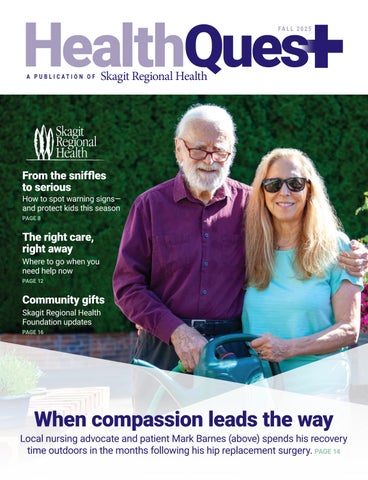
Local nursing advocate and patient Mark Barnes (above) spends his recovery time outdoors in the months following his hip replacement surgery. PAGE 14
WELCOME • FALL 2025
Protecting healthcare services
for our community About Skagit Regional Health Skagit Regional Health, Public Hospital District #1, is a community-owned entity governed by local citizens through a publicly elected Board of Commissioners. Public Hospital District #1 Board of Commissioners: • Peter Browning • Frei Burton, Chair • Bruce Lisser • Jeffrey Miller, PhD, JD • Dale Ragan • Gary Shand • Monira Vakil, DO The Board of Commissioners may be reached at srhboard@ skagitregionalhealth.org. Skagit Regional Health includes Skagit Valley Hospital, Cascade Valley Hospital and more than two dozen clinic locations in Skagit, north Snohomish and Island counties. With nearly 3,500 staff and providers, including 330 employed physicians and advanced practice providers, Skagit Regional Health is Skagit County's largest employer. Skagit Regional Health is committed to providing and enhancing healthcare services and has a vision to improve lives through compassionate and innovative healthcare. For more information about Skagit Regional Health, visit SkagitRegionalHealth.org. HealthQuest is published by Skagit Regional Health. It is intended to provide information about general health and resources. To reach the editor, contact marketing@ skagitregionalhealth.org or call 360-814-2424. © 2025 Skagit Regional Health. All Rights Reserved. Cover photo: Dakota Huntley
2
Since the federal One Big Beautiful Bill (H.R. 1) was signed into law, major changes for healthcare systems nationwide are anticipated over the next decade. At Skagit Regional Health, we are working to understand what this means for our patients and the community. In 2025, we do not expect any immediate changes. However, in late 2026, the law will gradually limit access to Medicaid, reduce federal support for the program and decrease subsidies for people purchasing insurance through the Affordable Care Act marketplace. These changes could leave many in our community without insurance or facing higher premiums and medical debt. Statewide, these new requirements could result in nearly 500,000 people losing health coverage and another 150,000 unable to afford their marketplace insurance. For our region, this could mean limited access to medical providers, longer wait times, fewer local services, more patients delaying the care they need and crowded
emergency rooms. Rural residents who require transfer to a larger hospital could face longer waits for specialized treatment. Despite these challenges, our commitment remains strong: We will continue to do everything possible to keep high-quality healthcare close to home. Our leadership team and board are planning for the future, acting now to put in place a financial improvement plan to offset future losses. We are actively laying the groundwork for how to respond, protect and expand services for our community. We also encourage you to stay informed and make your voice heard with lawmakers about the importance of supporting rural healthcare. Together, we can navigate these changes and advocate for policies that ensure every member of our community has access to the care they need. Thank you for trusting us with your health.
Brian Ivie President & Chief Executive Officer Skagit Regional Health
Exceptional healthcare, always. Improving lives through compassionate and innovative healthcare. Excellence Compassion Integrity Sustainability Equity
THE
SKAGIT REGIONAL HEALTH FOUNDATION’S 37TH ANNUAL
In this issue NEWS 4 Community news and updates 5 New providers INNOVATION 6 Women’s Health Changing paradigms in breast cancer research 7 Family Birth Center modernizes Providing support to a growing community SEASONAL 8 Family illness, preparedness and vaccination What parents need to know this season 9 Leading the next generation of healthcare providers Graduate Medical Education (GME) program plays a critical role in expanding access to care PATIENT FOCUS 10 Advances in colon cancer screening and surgical care New tools and techniques are making screening more accurate 11 Understanding hiatal hernia and GERD What you need to know
12 Where to go when you need care now The rise of urgent care and innovations in emergency care 14 Compassionate care close to home Patient Mark Barnes experiences award-winning nursing in joint replacement surgery SKAGIT REGIONAL HEALTH FOUNDATION 16 Community gifts 18 ParTee Golf Classic raises over $127,000 for Family Birth Center renovations
IN PARTNERSHIP WITH
19 A new era of Foundation Board stewardship begins SPOTLIGHT 20 Living our values, every day 21 Celebrating 20 years of the hospitalist program Hospice of the Northwest: New Bereavement Support Center COMMUNITY FOCUS 22 Resources for a healthy life 23 Letter from the Board of Commissioners
Saint Joseph Center 215 N. 15th Street | Mount Vernon
Gala ANDAuction Friday, November 28 • 6 p.m.
GALA SPONSOR LIVE AUCTION SPONSOR
Family FESTIVAL DAYS Stay in the know! Sign up to receive HealthQuest Minute A quarterly email update from Skagit Regional Health with tips and podcasts on how to stay healthy. Follow us on social media See updates on new providers, awards and developments happening right here in your community.
Saturday, November 29 10 a.m. – 4 p.m. Sunday, November 30 10 a.m. – 2 p.m.
FAMILY FESTIVAL DAYS SPONSOR Proceeds benefit the Family Birth Center campaign
3 3
IN THE NEWS • FALL 2025
In the News
Community news and updates across New Arlington Medical Office Building to expand access Next spring, Skagit Regional Health (SRH) will break ground on a three-story, 30,000-squarefoot Medical Office Building next to Cascade Valley Hospital. In a joint venture with Public Hospital Districts #1 and #3, the facility will offer Urgent Care, Family Medicine, X-Ray/Ultrasound and Laboratory services. Construction begins in 2026, with opening slated for summer 2027.
Skagit Northwest Orthopedics joins SRH Skagit Northwest Orthopedics has joined Skagit Regional Health as Skagit Regional Health – LaVenture Orthopedics. The team consists of orthopedic providers, a foot and ankle specialist, an occupational medicine specialist, and physical and occupational therapists. This integration expands local access to specialty care by meeting the growing demand for orthopedic services.
Abridge enhances clinic visits by easing documentation.
Abridge AI improves clinic visits SRH is rolling out Abridge, a HIPAA-compliant AI-powered tool that securely transcribes provider-patient conversations in real time. Already active in several clinics, Abridge reduces documentation demands so providers can spend more quality time with patients. Feedback has been positive, with many patients noting smoother, more personal visits.
Innovative Inspire V eases sleep apnea—first in Washington
Razihusin/stock.adobe.com
SRH’s Ear, Nose and Throat team is the first in Washington state to implant the latest Inspire V neurostimulator device for obstructive sleep apnea (OSA). This new, less invasive version offers better breathing synchronization and customizable therapy for patients with OSA.
Free sports physicals More than 100 high school athletes received free physicals at Arlington High School in May, thanks to the Orthopedics and Sports Medicine teams from SRH’s Smokey Point and Stanwood clinics.
SRH surgical team John Rangas, Kelly Freeman and Dr. Christopher England after first Inspire V procedure in Washington state. 4
IN THE NEWS • FALL 2025
Skagit Regional Health shurkin_son/stock.bigstockphoto.com
Welcome, new providers
Skagit Valley Hospital’s lactation program remains a valuable resource to our community.
Celebrating 25 years of family-centered lactation services The Family Birth Center at Skagit Valley Hospital marked the 25th anniversary of its lactation program on August 18. The program has grown to meet community needs, offering comprehensive breastfeeding support from prenatal to postdischarge. Partnerships now include donor breastmilk services and a Milk Drop Depot, supporting care for vulnerable infants and families.
Senior Day in the Park in Burlington SRH sponsored and hosted a booth for the nearly 300 people in attendance—sharing resources on stroke awareness, fall prevention and emergency bleeding control.
Cardiology Kathryn Dougherty, PA-C Mount Vernon Cardiology Graham Meeks, ARNP Mount Vernon Cardiology Endocrinology Nicole Woodward, ARNP - Riverbend Family Medicine Lucas Sontra, DO - Station Square Savannah Wilkinson, DO - Station Square Foot & Ankle Cindy Bullock, DPM Mount Vernon Surgery Center Kayla Steltz, ARNP Mount Vernon Surgery Center General Surgery Amy Brookman, PA-C Arlington Specialty Clinic Internal Medicine Luis Garduno, MD LaVenture Internal Medicine (MV) Occupational Medicine Michael Santoro, MD, MPH Mount Vernon Surgery Center
Career exploration for students In partnership with Washington Alliance for Better Schools, SRH hosted a career day at Cascade Valley Hospital in May. More than 40 students from Everett and Marysville explored healthcare careers and hospital operations.
We are proud to welcome the following providers to our team:
Skagit Regional Health employees at Senior Day in the Park: Tiffany Newman and Erin Serrano Amelco, Trauma Registrars; and Brian Nevi, Regional Coordinator of Trauma Performance Improvement.
SRH Community Heroes:
Exceptional care beyond the hospital walls
It was a regular day for three SRH nurses, whose daily errands all happened to include a trip to the same grocery store. And while they did not arrive at the store together, their paths would soon cross in an unexpected way. “We need medical!” someone shouted across the store...
Read more online at the Skagit Regional Health HealthQuest blog:
Orthopedics S. Ben Alcocer, PA-C - Station Square Camille Connelly, MD, FAAOS Station Square Jonathan Shafer, MD - Station Square Stacia Smith, MD, FAAOS - Station Square Pediatric Hospitalist Anika Larson, MD - Skagit Valley Hospital, Little Mountain Pediatrics Pediatrics Elizabeth Hasho, MD - Riverbend David Huante, MD - Riverbend Aisha Rollins, MD - Riverbend Urogynecology Anna Pilzek, MD - Mount Vernon Women’s Health Daniela Abreu, DO - Mount Vernon Keely Hosick, CNM - Mount Vernon Elaine Taylor, MD - Mount Vernon Wound Care Emily Chau, DPM - Mount Vernon, Arlington Jess Schultz, MD - Mount Vernon, Arlington
Find A Doctor
SkagitRegionalHealth.org/ Find-a-Doctor 5
Innovations in Care
INNOVATIONS IN CARE • FALL 2025
Breast Cancer Awareness On August 2, the Skagit Regional Health Foundation teamed up with Skagit Speedway for another 50/50 Raffle Night in support of breast cancer awareness. The event raised $1,614 to support local breast cancer initiatives. See page 17 for more. 6
Changing paradigms in breast cancer treatment We know that mammograms are the best defense against breast cancer. As the second most common cancer among women, breast cancer treatment continues to evolve, and new, exciting options are now available. Joshua Hawkins, MD, FACS, general surgeon at Skagit Regional Health, frequently performs breast cancer surgeries and is dedicated to delivering effective, personalized care. “Ten to fifteen years ago, breast cancer care was much more algorithmic with fairly standard treatment patterns that were applied to broad patient groups,” said Dr. Hawkins. “Over the past five years, there have been numerous advances … that have allowed for great personalization of breast cancer care.” Recent advancements include: • Radiation therapy is no longer a requirement for all breast cancer patients undergoing lumpectomy, but still may be advised for some patients depending on age, stage and tumor type. Some patients with early stage breast cancer and favorable tumor biology can safely avoid radiation after lumpectomy. • Axillary surgery, or surgery to remove lymph nodes from the axilla, may be avoided in some patients undergoing surgery. Historically, pathology on lymph nodes was a major factor in assessing the need for adjuvant chemotherapy. Now, there are other ways to determine whether chemotherapy is required. Avoiding lymph node removal offers improved recovery and lessened risk of long-term effects from breast cancer surgery such as lymphedema. • Neoadjuvant therapy is now used for nearly one-third of breast cancer patients. This involves the patient undergoing chemotherapy as initial treatment, followed by surgery several months later, instead of surgery first. Since
Schedule your mammogram today. Call 360-814-8208 to make an appointment. Locations: • Women’s Imaging Center in Mount Vernon • Cascade Valley Hospital in Arlington this approach can shrink the tumor before an operation, it allows the surgery to be less invasive than if it were performed prior to chemotherapy. This has led to better outcomes, including improved ability to perform breastconserving surgery such as lumpectomy, and in certain subtypes of patients is linked with improved survival outcomes. It can mean avoiding mastectomy—a more invasive surgery. It can also be used to downstage the axilla, and allow for less extensive lymph node surgery after chemo, significantly lowering risks of surgery. The importance of a multi-disciplinary approach to breast cancer treatment “I believe that multidisciplinary care for breast cancer treatment is critical,” said Dr. Hawkins. “At Skagit Regional Health, our Breast Tumor Board meets weekly. This group consists of surgeons, medical oncologists, radiation oncologists, pathology, radiology, a research coordinator, pharmacist and multiple other specialists.” Dr. Hawkins emphasized that a multidisciplinary team of providers results in optimal care for the patient, and has been proven to positively impact treatment. “There are so many more options for patients,” said Dr. Hawkins. “And we are better able to tailor our treatment plan for the patient’s specific disease stage and their individual life wishes.” Treatment for breast cancer is ever-changing for the better. What remains the same, however, is the importance of an annual mammogram and breast self-exam.
October is Breast Cancer Awareness month and we know that mammograms are the best defense against breast cancer. As the second-most common cancer among women, treatment options continue to develop and there are exciting advancements available now.
Changing paradigms in breast cancer treatment podcast
Remodeled maternity suites at Skagit Valley Hospital include increased space, upgraded equipment and refreshed furniture.
Family Birth Center modernizes to support
healthy births for a growing community The Family Birth Center (FBC) at Skagit Valley Hospital is undergoing a major transformation to better serve mothers and babies, particularly those born prematurely. The project, now nearly complete, includes renovating all 21 maternity suites to create more space for critical newborn stabilization, right in the delivery room. The upgrade comes as the center expands its capabilities, now caring for babies born as early as 32 weeks gestation (up to 8 weeks early). “We’ve trained our staff, invested in new equipment and strengthened our pediatric hospitalist program so we can keep more families close to home,” said Tami Schnell, MHA, BSN, RNC-OB, Regional Director of Women’s & Children’s Services. Previously, limited space and outdated cabinetry made it challenging to care for newborns requiring immediate intervention. The remodel removes bulky fixtures, adds flexible workspace and accommodates the specialized teams and equipment needed for resuscitation and stabilization. This often involves multiple providers, a respiratory therapist and a clinical pharmacist, alongside the delivering physician. Community support fuels transformation To support this important need in the community, the Skagit Regional Health Foundation spearheaded fundraising through events, community presentations and an opportunity
for donors to contribute $10,000 each to name a suite. Local businesses, civic clubs and families responded quickly, ensuring all 21 rooms were funded. Additional Foundation support will purchase new furniture, including rocking chairs for bonding moments and sleeper couches for those supporting their loved one giving birth. While the renovations focus on space and safety, the hospital has separately invested in state-of-the-art equipment such as portable infant warmers, specialized transport warmers for preterm babies and telehealth technology linking pediatricians with Seattle Children’s neonatologists in real time. For Schnell, the upgrades are about more than aesthetics; they’re about outcomes. “Two or three feet of free space in a delivery room can mean safer care for both mom and baby,” she said. “Our goal is a family-centered birth experience that’s as safe as it is welcoming.” With your support, we’ve transformed our maternity suites. See page 19 to learn more about the Foundation’s campaign to give every baby the best possible start. To help us complete the vision, visit SkagitRegionalHealth.org/ Foundation
7
Seasonal Health Tips
SEASONAL HEALTH TIPS • FALL 2025
Family illness, preparedness and vaccination
What parents need to know this season For parents, deciding when to call a healthcare provider, keep a child home or seek urgent care can be difficult—especially when symptoms seem mild. At the same time, preventable illnesses like measles are rising again in the U.S., highlighting the importance of timely care and vaccination. From when to call your provider to how vaccines protect the whole family, Skagit Regional Health pediatric experts are here to guide parents through cold and flu season. Recognizing when to seek care Emily Bianconi, ARNP, pediatric nurse practitioner at Skagit Regional Health – Little Mountain Pediatrics, urges parents to trust instincts but also to know the red flags. “If your 2-monthold infant has a fever of 100.4°F (38°C) or higher, is unusually lethargic, has difficulty breathing, shows signs of dehydration or feeds poorly, call your provider right away,” she says. For older infants and toddlers, contact a provider if fever persists, symptoms worsen or no improvement is seen after several days. Fever with cough, sore throat or rash may require testing for RSV, flu, strep, COVID-19 or measles, especially if the infant has been exposed to one of these illnesses. Providers can determine whether in-person care, testing or home care is best. Children should stay home until they are fever-free for 24 hours without medication and symptoms are improving. Some illnesses, like strep throat or conjunctivitis, require at least 24 hours of antibiotics before returning. “When in doubt, ask your provider for clearance,” Bianconi advises. Protecting kids with vaccines Measles, once eliminated in the U.S., is resurging, with outbreaks reminding families how quickly preventable diseases can return. “It spreads easily—even before the rash appears—with a
Convenient care for every stage of childhood
8
From newborns to teens, our expanding pediatric team is here to keep your family healthy. Scan the QR code to connect with a pediatrician.
Urgent Care Physician Gilson Girotto, DO
90% attack rate among people who are not vaccinated,” warns pediatrician Mariel Castillo, MD. High-risk groups include young children, pregnant women and people with weakened immune systems, making prevention vital. The measles, mumps and rubella (MMR) vaccine is safe, highly effective and remains the best protection. Two doses are 97% effective. Even after exposure, vaccination within 72 hours may help. The CDC recommends the first dose at 12–15 months and a second at 4–6 years. Fall is also a critical time to review other recommended vaccines. Annual flu shots, COVID-19 boosters and, for infants, preventive protection against RSV all help families prepare for the season ahead. Accessing care and staying prepared Skagit Regional Health offers well-child visits, walk-in vaccines, same-day appointments and triage support. Annual visits are an opportunity to review vaccines, address concerns and plan for seasonal boosters. Keeping vaccinations current, following isolation guidelines and seeking timely care help protect both your child and the wider community.
GRADUATE MEDICAL EDUCATION • FALL 2025
Leading the next generation of healthcare providers Our medical residents learn here, then they work here Accessing quality primary care in rural communities can be challenging, with long drives, extended wait times and limited availability of local physicians. At SRH, we’re committed to changing that. As a leading healthcare provider in Washington State, we’re actively expanding access to care through our Graduate Medical Education (GME) program—training the next generation of primary care providers to serve where they’re needed most.
Above: New Internal Medicine residents, class of 2028. Below: New Family Medicine residents, class of 2028.
Planting roots Each June, Skagit Regional Health welcomes a new class of residents in Family Medicine and Internal Medicine. This year’s Class of 2028 includes: Family Medicine Residents • Tanner Henderson, DO • Laurence Nguyen, DO • Peter Nguyen, DO • Kelsey White, DO Internal Medicine Residents • Mufaddal Diwan, MD • Sharleen Legaspi, MD • Alejandro Medina, MD • Harsh Parikh, MD • Alhan Samimi, DO • Rishay Sharma, DO • Praveena Thammireddy, MD
Over the next three years, these physicians will train and care for patients at Skagit Valley Hospital, as well as in our Family Medicine Internal Medicine Residency Clinics. They will also participate in community outreach to better understand and serve the people of Northwest Washington. Growing our own Our medical education program not only equips physicians with the skills to serve rural communities, but also inspires many to stay and build their careers here. From the graduating Class of 2025, four graduates are returning to join our medical staff: • Luis Garduno, MD LaVenture Internal Medicine • Kyle Walsh, MD Station Square Family Medicine • Savannah Wilkinson, DO Station Square Family Medicine • Tiana Ibarra Yamamoto, DO Station Square Family Medicine They join the 28 other GME alumni who now practice with Skagit Regional Health, strengthening the care available in our communities.
To find a primary care physician, visit SkagitRegionalHealth.org/Find-a-Doctor. 9
Digestive Health
Gastroenterologist S. Suresh Alagugurusamy, MD
Advances in colon cancer screening and surgical care Colon cancer remains one of the most treatable cancers—if it’s caught early. At Skagit Regional Health, new tools and techniques are making screening more accurate, more comfortable and more accessible than ever before. Patient-friendly screening options, such as gentler prep solutions and the use of simple sedation medications, help improve the experience of undergoing a colonoscopy. S. Suresh Alagugurusamy, MD, is a gastroenterologist at Skagit Regional Health. He remarks that his patients often reflect positively, sharing that their experience is better than what they’ve experienced in the past. One patient told him, “This colonoscopy prep was not as bad as my previous colonoscopy when I had to drink a large amount of liquid.” To help ensure we are not missing very small growths in the colon, Skagit Regional Health now uses advanced colonoscopy systems enhanced with artificial intelligence. This AIassisted technology helps detect even subtle polyps and early-stage lesions that might otherwise go unnoticed, improving early detection rates and potentially saving lives.
and colorectal procedures. These approaches allow patients to return home the same day, recover more quickly and resume their normal routines with less disruption. Equally as important, Skagit has streamlined access to its surgical services. From timely referrals to coordinated preoperative care, patients can move from diagnosis to treatment with fewer delays. “For the right candidates, minimally invasive outpatient surgery can make a big difference in comfort, recovery time and overall satisfaction,” says Dr. Porter. With innovations in screening, AI-enhanced detection and advanced surgical capabilities, Skagit Regional Health is redefining how colon cancer is detected and treated, making care more precise, more comfortable and closer to home.
Patient-friendly innovations When surgery is required—whether for colon cancer, advanced polyps or other colorectal conditions—patients increasingly benefit from minimally invasive and robotic-assisted procedures. Led by Allison Porter, MD, Chief of Surgery, Skagit Regional Health offers outpatient surgical options for many general
Direct Access colonoscopy at Skagit Regional Health Healthy adults 45 and older who have not had any colon-related symptoms or any other major health problems are eligible to receive a screening colonoscopy without a provider’s referral through Skagit Regional Health’s Direct Access program. Call 360-814-5739 to schedule.
“Colonoscopy is one of the few tools in medicine that can truly prevent cancer,” says Kenley Unruh, MD, colorectal surgeon at Skagit Regional Health. “The earlier we start, the more lives we can save.”
Outpatient surgery: Safe, patient-friendly options Many colorectal and GI procedures can be performed safely on an outpatient basis. This means eligible patients benefit from advanced, minimally invasive techniques while returning home the same day to recover in comfort. 10
Patients typically experience: • Smaller incisions and less discomfort • Faster recovery and return to normal activity • Lower costs with reduced hospital time • Convenient access, with easy parking and same-day discharge
Eddows/stock.adobe.com
Understanding hiatal hernia and GERD What you need to know If you experience chest pain, bloating and frequent burping, it may be more than simply inconvenient—these symptoms could indicate a hiatal hernia or gastroesophageal reflux disease (GERD). Allison Porter, MD, Chief of Surgery at Skagit Regional Health, sat down with us to share insight into both conditions and how they’re connected. A hiatal hernia occurs when part of the stomach pushes through the diaphragm into the chest cavity. While this may sound alarming, Dr. Porter explains that it’s fairly common and does not always require treatment. The concern arises when the hernia disrupts the alignment of muscles where the stomach meets the esophagus. This can lead to GERD, a condition where stomach acid or food flows upward into the esophagus, causing heartburn and discomfort. Treatment for GERD can range from natural remedies and lifestyle changes—like avoiding large meals or sleeping with your head elevated—
On-demand digestive care
Same-day virtual visits with a gastroenterology provider are available now, offering you the convenience of discussing your symptoms, treatment plans and continued care from the comfort of your home.
Visit SkagitRegionalHealth.org/digestive to request a visit.
to taking over-the-counter medications to relieve symptoms. For persistent cases or large hernias, surgical options are available, especially if symptoms interfere with eating or sleeping, or if long-term medication use poses risks. Dr. Porter emphasizes that a hiatal hernia is not necessarily cause for alarm but should be evaluated to determine the best course of care. “It’s important to get appropriate follow-up to determine if it needs treatment—or if it can simply be monitored,” she says.
For more information, listen to the full podcast 11
Health Tips
HEALTH TIPS • FALL 2025
Where to go when you need care now
The rise of urgent care + innovations in emergency care Whether you have a minor health concern or are facing a serious or life-altering condition, Skagit Regional Health is here to provide exceptional care to each patient, always. When a health need feels urgent, it can be hard to know where to go. Choosing the right care setting helps you get the appropriate care, faster.
Urgent care, emergency care or primary care: Where should I go? As a simple guide: • Start at Urgent Care (UC) for most same-day, non-life-threatening problems. Urgent care is the place for minor to moderate illnesses and injuries that need same-day attention and can be treated within a regular visit. • If you are experiencing life-threatening symptoms, or are concerned about a severe illness or injury, go to the Emergency Room (ER). • Your Primary Care Provider (PCP) is your medical home for prevention, chronic condition management and comprehensive follow-up care after UC/ER visits.
Urgent Care—the default for same-day care Today, UC is the default for same-day care between your PCP and the ER. Staffed by experienced clinicians, UC handles most non-lifethreatening problems quickly, such as cold/flu symptoms, minor injuries, potential infections and more—and will direct you to the ER if needed. “Traditionally, people would walk into their general practitioner’s office for an acute but non-emergent issue and be seen the same day,” said Dr. Arnold. “The increase in population and demand for healthcare has led to a shortfall in primary care appointment availability and longer wait times in the Emergency Room. The purpose of Urgent Care is to bridge this gap by addressing acute issues that we can’t treat in our primary care clinics and that do not need immediate emergency medical attention.”
“The right location will have the right expertise and medical equipment to match the level of need based on your illness,” says Aaron Arnold, DO, Urgent Care provider at Skagit Regional Health. “Our different facilities provide different levels of care based on the severity of illness.”
Innovations in emergency room care at Skagit Valley Hospital If you’ve visited an emergency room before, then you’re probably familiar with the typical process of check-in, triage, room placement, then testing and treatment. Skagit Valley Hospital has introduced a new triage model in its Emergency Department. The new process is: Check-in > Triage and Testing > Appropriate care area
Since it often takes longer to wait for a bed than to process tests, we can perform labs and imaging while you wait—a mutually beneficial change for both the patient and the emergency department. Most importantly, care is not delayed.
Find a primary care provider to help you manage your overall health. 12
12
HEALTH TIPS • FALL 2025
When should I go to the emergency room? For the following symptoms, it’s best to call or text 9-1-1 immediately or go to the nearest emergency room: • Chest pain • Shortness of breath • Potential signs of stroke • Serious mental health concerns • New or worsening severe pain • Uncontrolled or internal bleeding • Life- or limb-threatening injuries Emergency rooms are open 24 hours a day, seven days a week, 365 days a year.
Bridging the gap between urgent care and primary care A patient is best cared for when they’re able to follow up with their primary care provider after a visit to urgent care. Now, Skagit Regional Health’s urgent care clinics help patients connect with a primary care provider for follow-up if they don’t already have one. “Primary care clinics are still here to help our patients maintain their health and well-being,” says Dr. Arnold. “Our primary care providers conduct annual checkups and wellness visits, adjust medications and help our patients manage chronic illnesses.” Together, primary care and urgent care provide a seamless, convenient model of care—urgent care for acute needs and primary care for longterm health.
Take charge of your care Urgent care clinics are open extended hours and are available when you need care quickly: • Riverbend Urgent Care 2320 Freeway Drive, Mount Vernon • Smokey Point Urgent Care 3823 172nd Street NE, Arlington • Station Square Urgent Care 901 S. 5th Street, Mount Vernon Emergency care is available 24/7 for life-threatening concerns: • Cascade Valley Hospital 330 S. Stillaguamish Avenue, Arlington • Skagit Valley Hospital 300 Hospital Parkway, Mount Vernon Find a primary care provider to help you manage your overall health. Visit SkagitRegionalHealth. org/Find-a-Doctor to browse our provider listings.
When should I go to the
When should I go to
Signs of heart attack: • Pressure or fullness, squeezing or pain in the center of the chest • Pain spreading to shoulders, neck and arms • Severe pain • Sudden weakness • Dizziness • Fainting • Sweating • Nausea • Shortness of breath Signs of stroke: • Sudden numbness or weakness of the face, arm or leg, especially on one side of the body • Sudden confusion, trouble speaking or understanding • Sudden vision trouble in one or both eyes • Sudden difficulty walking, dizziness, loss of balance or coordination • Sudden, severe headache with no known cause Coughing or vomiting blood Deep cuts Drug overdose High fever Life- or limb-threatening injuries Poisoning Pregnancy-related health problems or childbirth Seizures Serious burns Severe abdominal pain Severe allergic reaction Severe asthma attack Severe back or neck pain Severe head or bodily injuries Severe psychiatric emergencies Severe trauma Sudden loss of consciousness Uncontrolled bleeding
Abdominal pain (mild) Allergies Asthma Broken bones or fractures Cold symptoms Diarrhea Ear aches Fever Flu symptoms Headaches Injuries Lacerations, cuts and scrapes Minor burns Minor eye trauma Minor head injuries Nausea, vomiting Pediatric illness Rashes and hives STDs Sinus pain Sore throat Sports-related injuries Sprains or strains Stings or bites Suture/staple removal Urinary tract infections (UTIs) Work-related illnesses or injuries/L&I claims
Emergency Room?
Urgent Care?
Emergency Medicine Physician James Wallace, MD
Visit SkagitRegionalHealth.org/Find-a-Doctor to browse our provider listings. 13
Patient Story
PATIENT STORY • FALL 2025
Mark Barnes spends his recovery time outdoors in the months following his hip replacement surgery at Skagit Valley Hospital.
Compassionate care close to home Experiencing award-winning joint replacement surgery When hip pain began to limit his life, Anacortes resident Mark Barnes knew it was time for help. As cofounder of the DAISY Award® for Extraordinary Nurses, Mark has spent more than two decades celebrating the compassion of caregivers. This time, he and his wife, Bonnie, experienced this compassion firsthand during his hip replacement surgery at Skagit Regional Health—a journey that brings his story full circle. Mark and Bonnie live active lives, balancing time with family, community and their ongoing work with the DAISY Foundation. But for Mark, hip pain had begun to take its toll—restricting his ability to walk comfortably and enjoy everyday routines. Eventually, he knew it was time to take action.
“Most hip replacement patients recover quickly and are surprised by how soon they’re back to daily activities.” Alexander Willis, MD Orthopedic Surgeon, Mount Vernon 14
The procedure Turning to Skagit Regional Health, the couple found reassurance in the orthopedic team’s thorough approach. His surgeons explained the procedure, answered every question and made sure the Barneses felt confident in what lay ahead. Trusting the expert care available right in his community, Mark scheduled his surgery at Skagit Valley Hospital. On the morning of surgery, Mark and Bonnie were welcomed with warmth and professionalism. As Bonnie later reflected, “Our overall experience at Skagit Valley Hospital with my husband’s hip replacement was excellent. From the time we entered the surgery area, where we were greeted with a smile and sense of humor despite the early morning hour, to the thorough explanations from Dr. Garcia and Dr. Willis, everything was all I hoped for.”
To learn more about
PATIENT STORY • FALL 2025
While Skagit Regional Health widely offers robotic-assisted orthopedic surgery for eligible patients, Mark’s care team determined that a conventional approach would deliver the best results for his situation. “Conventional techniques still serve many patients well when done by an experienced hip and knee surgeon,” Dr. Willis says. Regardless of the technique, the focus remains the same: ensuring accuracy, safety, and the best possible recovery. Recovery and outcome Mark’s recovery began the very day of surgery. With the support of the physical therapy team, he was encouraged to take his first steps and start mobility exercises right away. Most memorable to Mark and Bonnie was nurse Kunny Herlickson’s steady presence throughout those first hours and beyond. She checked in frequently, responded promptly to their needs and coordinated seamlessly with other providers. Her compassion not only supported Mark physically but also brought Bonnie peace of mind as she stayed by his side. Thanks to the expertise of his surgeons, the encouragement of his care team and his own determination, Mark regained mobility and is returning to the activities he loves. What stands out to him now is not the surgery itself, but the extraordinary care that made the journey a positive one. Inspired by that experience, he and Bonnie nominated Kunny for a DAISY Award®. She was later selected as Skagit Regional Health’s July 2025 honoree, with Mark and Bonnie attending the celebration in person.
For them, it was a powerful reminder that compassionate nursing care not only supports recovery but also uplifts the human spirit. Honoring Nurse Kunny through the DAISY Award® brought their journey full circle, celebrating the very values they have spent decades promoting.
Mark Barnes nominated Kunny Herlickson, RN, for a DAISY Award® in July 2025 following his procedure and Mark and Bonnie attended the award ceremony. To thank a nurse for providing exceptional care, visit SkagitRegionalHealth.org/DAISY Mark and Bonnie have transformed a space in their home into a DAISY Foundation museum in Anacortes, WA.
Robotic-assisted orthopedic surgery
While Mark Barnes underwent conventional hip replacement surgery, Skagit Regional Health also offers robotic-assisted orthopedic procedures for eligible patients. Robotic-assisted medical technology allows surgeons to plan each procedure with a 3D model and guides them with enhanced precision during surgery. The result can mean smaller incisions, less tissue disruption and often a faster, smoother recovery. “We create the plan, and we execute the plan. The robotic hand piece and 3D planning helps make sure we get it right,” says Dr. Willis.
joint replacement options at Skagit Regional Health, visit SkagitRegionalHealth.org/joint-surgery 15
Our mission
The mission of the Skagit Regional Health Foundation is to raise, manage and distribute funds to assure the continued availability of quality healthcare services and programs at Skagit Regional Health. The Foundation will foster awareness of and community support for Skagit Regional Health through the involvement of the people it serves.
Board of trustees
Volunteers are the key to the Skagit Regional Health Foundation’s efforts in securing philanthropy. We are pleased to acknowledge the efforts of our trustees who unselfishly give their time and resources as an example to all, and who provide leadership in the Foundation’s prudent stewardship of gifts. Brent Thompson President Brett Fontes Vice President Travis Coulter Secretary Alicia Huschka Treasurer Scott Railton Assistant Treasurer Laura Fisher Vice President of Planned Giving Katie Jungquist Vice President of Cancer Care Bobbi Ahrenius Lesha Boucher Tara Cunningham
Viry Delgado Bryan Harris Duane Henson Brian Ivie President & CEO, Skagit Regional Health Michelle Knutzen Mike Marken Evelyn Morse Holly Nielsen Sandra Nootenboom Kim Piazza Tony Pratt Aaron Robbins Gary Shand Commissioner, PHD #1 Angela Speer Usyk Ashley Stowe
Community Dwayne Lane’s Skagit Subaru delivers warmth to cancer patients In June, staff members from Dwayne Lane’s Skagit Subaru delivered cozy blankets to the Skagit Regional Health Cancer Care Center as part of Subaru Loves To Care program. We are so grateful to Dwayne Lane’s Skagit Subaru Auto Family and The Leukemia & Lymphoma Society for wrapping our patients in warmth and kindness once again. These gifts mean so much to those undergoing infusion treatments—thank you for bringing comfort and hope to our oncology patients!
Estate Planning Workshop October 14, 2025 1 - 2:30 p.m.
Colonel Betz, Attorney
Staff
Linda Frizzell Executive Director
Wendy Ragusa Stewardship and Annual Fund Manager McKenzie Sharpe Development and Digital Engagement Coordinator
16
16
Mailing Address: P.O. Box 1376 Mount Vernon, WA 98273 Office Location: 120 S. 13th St Mount Vernon, WA 98274 360-428-2140 foundation@skagitregionalhealth.org Non-profit tax ID #94-3078550 Website: SkagitRegionalHealth.org/Foundation
Join Attorney Colonel Betz for a free 90-minute presentation on trust and estate planning, including a review of powers of attorney, wills and trusts. He will also address the importance of living wills and practice care planning. Class size is limited! Sign up today to secure your spot! Registration is required by calling 360-814-8376 or emailing foundation@skagitregionalhealth.org This event is sponsored by the Skagit Regional Health Foundation.
FOUNDATION • FALL 2025
gifts B-EHS students raise money for cancer care
Racing for a cause The Skagit Regional Health Foundation partnered with Skagit Speedway for Ladies Night on Saturday, August 2, in support of breast cancer awareness. Race fans showed incredible generosity by purchasing tickets and participating in the 50/50 raffle, with proceeds supporting local breast cancer patients. Thanks to an amazing grandstand of support, the Skagit Speedway presented the Foundation with a check for $1,614, which was raised from the raffle to assist patients receiving care at the Skagit Regional Health Cancer Care Center. A heartfelt thank you to Raffle Chair and Foundation Trustee Evelyn Morse, along with her dedicated team of volunteers, for making this event such a success.
Oksana/stock.adobe.com
This past summer, students from Burlington-Edison High School’s Associated Student Body presented the Skagit Regional Health Foundation with a donation of $1,034.22 in support of the Foundation’s Cancer Care Fund. These funds were raised during the high school’s Cure Cancer Week. Thank you to the students of Burlington-Edison High School for making a difference in local healthcare!
all Babies! It’s
for the
Eat at Burlington Red Robin any Sunday from now through December 31, 2025, and let your server know:
“I’m here to support the Family Birth Center at Skagit Valley Hospital!”
Red Robin will donate
20% of your meal’s cost to support the Family Birth Center — because every baby deserves a healthy start.
Valid Sundays only when mentioned to your server. Thanks for helping our tiniest patients.
Eat. Support. Repeat.
17
ParTee Golf Classic raises over $127,000 for Family Birth Center renovations The 21st annual ParTee Golf Classic, hosted by the Skagit Regional Health Foundation, brought together a full field of 144 golfers for a day filled with fun and philanthropy. Held on June 27, at the Skagit Golf and Country Club, the event raised more than $127,000. In partnership with Title Sponsors Crothall Healthcare, Marathon Petroleum and Skagit Radiology, this record-setting year brought together a generous group of regional sponsors, volunteers and golfers, making this tournament a tremendous success. Winning golf prizes were: • Low Gross: The Chad Fisher Construction team • Low Net: The Office Tavern team • SaviBank KP Contest winner: Ben Gunn • Skagit Transportation Putting Contest winner: Paul Decelle
Tournament Sponsors: • Chad Fisher Construction • Dwayne Lane’s Skagit Subaru • Electrocom • G & W Commercial Interiors • J.P. Morgan • Moss Adams x Baker Tilly • Property Trio • SaviBank • Skagit Transportation • Jeff Stewart - Baird Private Wealth Management • The Office Tavern • TRICO Companies • Variant • WaFd Insurance Group • Whidbey Coffee
18
18
Proceeds from this year’s tournament will enhance patient care at the Skagit Regional Health Family Birth Center. The Foundation’s $1.6 million Family Birth Center Campaign is funding the renovation of the center’s 21 private maternity suites, ensuring a more comfortable, modern healing environment for new mothers and their families. The Foundation is grateful for the many contributions that make this event an important investment in our local healthcare services. Title Sponsors:
Course Sponsors: • Banner Bank • Community Healthcare FCU • Foster Garvey • JTK Engineering • Brigid Buchanan/ Keller Williams • Kham Beitlers & Associates • Optimum Properties • North Cascade Insurance • Peoples Bank • Piper Sandler • St. Clair Enterprises Inc./ FedEx Ground • Skagit Regional Health • TechPower • Thomas Cuisine Management • VSH CPAs • Woodcraft Floors, Baker Air Service and Bayshore Concrete
Game Sponsors & Underwriters: • Empower • Bruce & Debbie Lisser • Retail Lockbox • SB&C, Ltd. • Skagit Law Group • Structured Communications, Inc. ParTee Committee: • Mike Marken & Aaron Robbins, Co-Chairs • Kate Biringer • Kati Collins • Michelle Knutzen • Bristal Latham • Evelyn Morse • Holly Nielsen • Carter Otos • Larry Otos • Brent Thompson
FOUNDATION • FALL 2025
Aleksandr/stock.adobe.com
A new era of Foundation Board stewardship begins The Skagit Regional Health Foundation is proud to welcome five newly appointed trustees to its Board. These dedicated community leaders will help advance the Foundation’s mission to raise, manage and distribute funds in support of high-quality healthcare services and programs at Skagit Regional Health. Tara Cunningham is the Sales and Marketing Director for Washington Lettuce and Vegetable Company, where she plays a key role in promoting the Skagit Valley’s rich farming heritage. She and her husband, Andrew, reside in Conway with their two sons. Tara is also a member of Skagit Rotary, the Western Washington Agriculture Association and Genuine Skagit Valley. Bryan Harris serves as the Fire Chief of the Mount Vernon Fire Department, where he brings leadership, dedication and a deep commitment to public safety. He and his wife Angelyn are residents of Mount Vernon, where they reside with their two children. Bryan is also involved with the International Association of Fire Chiefs, the International Association of Firefighters and the Skagit County EMS Advisory Board. Tony Pratt, a proud Mount Vernon native and owner of The Office Tavern in Burlington, has deep ties to his community, where he still lives and is the proud father of two grown daughters. A longtime supporter of the Skagit Regional Health Foundation, Tony has played a key role in the success of several fundraising events. His generous contributions to the annual ParTee Golf Classic—providing food and beverages on the course—have become a valued tradition. In addition, Tony served as an organizer of the Skagit Charity Classic Fishing Derby, which raised vital funds for the Foundation’s Cardiac Cares Campaign. Kim Piazza is a dedicated realtor and co-owner of John Piazza, Jr. Construction, where she works alongside her husband, John. Together, they have made their home in Burlington, where they raised their two children. Kim has been actively involved in the Foundation’s Festival of Trees, as well as the Skagit/Island Counties Builders Association (SICBA), the National Association of Home Builders, the One Community One Family Foundation and the Sedro-Woolley Alumni Board. Ashley Stowe is a lifelong resident of Burlington with deep roots in the community. Professionally, she is a key member of the family business, Stowe’s Shoes and Clothing. Ashley is passionate about community service and leadership. She currently serves as Past President of the Rotary Club of Burlington and has been an active contributor to the Burlington-Edison Alumni Foundation. The Foundation expresses its deepest appreciation to these outgoing board trustees: Zach Barborinas, Kate Biringer, Aldi Kllogjeri and Larry Otos, who all served nine or more years.
Oh baby, we are so close!
Thanks to incredible community support, we’re in the final two months of the Skagit Regional Health Foundation’s Family Birth Center campaign—and so close to achieving the $1.6 million goal! These vital funds will support the renovation of all 21 maternity rooms, ensuring every family feels safe, secure and comfortable throughout their birth experience. With the incredible fundraising success of the Foundation’s most recent ParTee Golf Classic and Employee Giving Campaign, the campaign has surpassed the $1 million milestone. Now, as we approach the Festival of Trees and year-end giving appeal, the finish line is in sight. The generosity of our community has shown us what’s possible when we come together. Will you help us cross the finish line? Make your gift today and be part of something truly meaningful. The Family Birth Center at Skagit Valley Hospital has been the trusted place for Skagit Regional Health families since 1958. Today, the Family Birth Center welcomes more than 100 babies each month.
Donate today to make a lasting impact! Funds raised for the Family Birth Center campaign have already been put to use. See page 7 to learn more about the renovations being done and how they are equipping the Family Birth Center to enhance and develop care to support our growing community.
19
SPOTLIGHT • FALL 2025
Spotlight
Living our values, every day Our values aren’t just words on paper—they guide every interaction, every decision and every act of care. Across our hospitals and clinics, our team members live these values in ways that make a difference.
Integrity means doing the right thing, always. For Critical Care Nurse MaryAnn Partain, this means treating every patient—whether assigned to her or not—with the same respect and dedication, and mentoring new nurses with openness and transparency.
Compassion is at the heart of Clinical
Social Worker Peter Wold’s work in Cancer Care. He and his team provide not only expert guidance but also kindness, understanding and a steady presence for patients and their families during some of life’s most difficult moments.
“I don’t care if it’s my patient or their patient—if I see a call light, I get up and help.”
“We’re fortunate to be trusted as caregivers for those in need of our support.”
MaryAnn Partain, RN Critical Care Nurse
Peter Wold, MSW Clinical Social Worker, Cancer Care
Sustainability is about protecting
resources today so we can serve our community tomorrow. When Hurricane Helene disrupted the nation’s IV fluid supply, Surgical Services Business Manager Rachel Hofmann worked with her team to conserve fluids and safeguard patient care. “We worked together to optimize a very limited resource to maximize safe and quality care.” Rachel Hofmann Business Manager, Surgical Services
Equity guides Internal Medicine Program Director Dr. Jhoanna Santos, MD, in shaping the next generation of physicians. Under her leadership, residents learn to recognize and overcome bias while also developing the cultural awareness skills needed to serve a diverse community. The goal: to ensure every patient has the opportunity to achieve their best health, no matter their background.
Excellence is reflected in the care and pride Environmental Services team member Francisca Mendoza de Sota brings to her work, keeping patient rooms clean while offering warmth and encouragement to those who may feel alone. “I like to greet and talk with patients so they don’t feel alone.” Francisca Mendoza de Sota Environmental Services
Every day, in countless ways, our people embody these values—ensuring that care at Skagit Regional Health is safe, effective and deeply human.
“We help future physicians see the whole person in front of them—not just the condition they’re treating.” Jhoanna Santos, MD Program Director, Internal Medicine Residency
Watch videos about our values in action. 20
MaryAnn Partain, RN, comforts a patient at Cascade Valley Hospital.
SPOTLIGHT • FALL 2025
Celebrating 20 years of the hospitalist program This year marks 20 years of Skagit Valley Hospital Hospitalist Program, a milestone that not only celebrates two decades of dedication and innovation but also looks ahead to the future of patient-centered care. The program emerged in 2005 in response to a growing challenge: As inpatient volumes rose and medical capabilities expanded, providers could no longer efficiently manage both their clinic and hospital patients. The national hospitalist movement was already gaining momentum, and Skagit Valley Hospital embraced the model, ensuring 24/7 onsite physician coverage for its hospitals. Hospitalists are physicians who specialize in the care of hospitalized patients, coordinating treatment and guiding patients through complex medical needs. In its early days, the team cared for more than 20 patients on a typical weekend. Today, the program has evolved into a cornerstone of care, serving thousands of patients each year. Hospitalists work closely with specialists, synthesize complex
information and ensure patients understand their diagnoses and treatment plans. They’ve also driven key innovations, from using ultrasound for line placement to integrating telehealth for stroke and neurological care. Building trust in a new model The transition wasn’t without its challenges. Some physicians and patients were hesitant about the new model, missing the familiar presence of their long-time doctors. Over time, trust grew as hospitalists proved their value, providing focused, efficient and timely care while serving as the “quarterbacks” of the inpatient team. Patients came to see that having a dedicated hospital physician meant faster decision-making, closer monitoring and more personalized attention during their hospital stay. Making great care safer and simpler for patients Beyond the bedside, hospitalists contribute to improvements that directly benefit patients. They serve
“Hospitalists are the quarterbacks of inpatient care—coordinating specialists, synthesizing complex information and ensuring every patient receives timely, high-quality treatment.” Connie Davis, MD, MHA Regional Vice President and Chief Medical Officer
on committees that shape safety practices, medication protocols and electronic medical record development. Their efforts help ensure every patient in our community receives timely, coordinated and highquality care when it matters most. Reaching this 20-year milestone is both a celebration of how far the program has come and a promise for the future. As medicine advances, the hospitalist team remains committed to delivering exceptional, patientcentered care, always focused on what matters most—the health and well-being of every patient.
Hospice opens new Bereavement Support Center Hospice of the Northwest expanded its footprint in April by opening a new Bereavement Support Center at its location on Freeway Drive in Mount Vernon. The new space includes private offices for one-on-one counseling and a dedicated conference room for grief support groups. Bereavement services are an important part of the comprehensive care provided to hospice patients and their families. Evidence shows that timely, professional grief support can improve emotional well-being and promote healthy adjustment after a significant loss.
After a hospice patient passes away, their loved ones are eligible for up to 13 months of individualized grief support. Hospice of the Northwest also offers a robust community bereavement program open to anyone within its service area, regardless of prior hospice use. Thanks to the generous donors of Hospice of the Northwest Foundation, these vital services are offered at no cost to participants. For more information, please visit HospiceNW.org/Bereavement or contact the Bereavement Support Center directly at 360-814-5570.
The Hospice of the Northwest Bereavement Center Team (left to right) Becky Resnick, MSW – Bereavement Counselor Susan Edwards, MSW – Bereavement Lead Casey Fox, MSW – Bereavement Counselor
21
Resources for a healthy life Patient financial well-being at Skagit Regional Health
FAMILY BIRTH CENTER Scan the QR code to watch a virtual tour of Skagit Valley Hospital’s Family Birth Center.
We are aware of the financial impact that healthcare costs have on our patients and their families. Our Patient Financial Services Department is here to help. The important thing to remember is that no one should delay needed medical care due to inability to pay. If you need help paying your bill, whether or not you have insurance, we offer many options and will always work with you. To speak with Patient Financial Services call 360-814-7575, or visit SkagitRegionalHealth. org/Financial-Assistance.
CHILDBIRTH EDUCATION VIRTUAL CLASS SRH offers an evidence-based, video-rich and engaging online childbirth class. For more information, scan the QR code or call 360-814-2283.
Medicare Annual Enrollment is now available
LACTATION SUPPORT Call 360-814-2283 to meet with a lactation specialist during and after your hospital stay.
Eligible patients have between October 15 and December 7, 2025, to make important Medicare plan decisions for 2026. SRH makes available MedicareOnDemand, a resource provided by MedicareCompareUSA, a licensed insurance agency. MedicareOnDemand includes a plan quote, enrollment platform and Medicare insurance helpline. If you have questions or wish to schedule an appointment with a licensed insurance agent, please call 866-389-0445, TTY 711, Monday - Friday, 6 a.m. – 5 p.m. or visit MedicareOnDemand.com/Skagit.
Screenings
DIRECT ACCESS COLONOSCOPY Healthy adults 45 and older who have not had any colon-related symptoms or other major health problems are eligible to receive a screening colonoscopy without a provider’s referral through the Direct Access program. Call 360-814-5739 to schedule. MAMMOGRAMS Mammograms play an integral part in the early detection of breast cancer. Call 360-814-8208 to schedule in Mount Vernon or Arlington. Talk with your healthcare provider about the other screenings available, visit SkagitRegionalHealth. org/Mammograms. 22
Childbirth/Family Resources
Mental Health
988 SUICIDE AND CRISIS LIFELINE If you or someone you are worried about is experiencing thoughts of suicide, a mental health crisis, a substance use crisis or any other kind of emotional distress, please call or text 988. Services are available in Spanish, along with interpretation services in over 250 languages. Deaf/hard of hearing/TTY: Use your preferred relay service or dial 711 then 988.
Community Resources
ADVANCE CARE PLANNING WORKSHOP None of us like to think about serious illness or the end of life, but planning ahead can bring comfort and clarity when it’s needed most. This free workshop will guide you through the steps of advance care planning so your loved ones will know how to honor your wishes when it matters. Scan the QR code to enroll or visit SkagitRegionalHealth. org/Classes-and-Events.
January 10 10 - 11:30 a.m. Sahale Conference Room Skagit Valley Hospital
GIVE BLOOD Bloodworks Northwest offers blood drives in our region to serve our communities’ blood supplies. Call 800-398-7888 or visit BloodworksNW.org to schedule. HAVE UNUSED MEDICATIONS? Search MedTakeBackWashington. org or call 844-482-5322 to find local, secure drop-off kiosks for your unused medications or to order mail-back supplies. STOP THE BLEED® In a STOP THE BLEED® class, you’ll gain the ability to recognize life-threatening bleeding and act quickly and effectively to control bleeding. Please email bmoser@skagitregionalhealth. org to find a class near you.
Support Groups
CANCER SUPPORT AND BREAST CANCER SUPPORT GROUPS These free support groups for cancer patients, their families, friends and caregivers meet monthly on Wednesdays from 4:30 - 5:30 p.m. Call 360-814-8255 for more information. STROKE SUPPORT GROUP This group meets on the last Wednesday of every month from 2 - 3 p.m. For more information, call 360-814-8394 or email mpelosi@ skagitregionalhealth.org. OSTOMY SUPPORT GROUP This support group is for people with ostomies, their families, caregivers and friends. Please call Cathy at 360-202-3410 for more information.
Patient Support
Visit SkagitRegionalHealth.org and click on Classes and Events to find more resources. MYCHART PATIENT PORTAL With MyChart, you can use your mobile phone, computer or tablet at home or on-the-go to manage your family’s health online. Sign up now at SkagitRegionalHealth.org/MyChart
BOARD OF COMMISSIONERS • FALL 2025
The Public Hospital District #1 Board of Commissioners, L to R: Monira Vakil, DO; Dale Ragan; Bruce Lisser; Gary Shand, Peter Browning; Jeffrey Miller, PhD, JD; Frei Burton, Chair.
From the Board of Commissioners
Local care, local leadership What is the role of public hospital districts? Public Hospital Districts (PHDs) are a cornerstone of community-based healthcare in Washington State. Established by local voters, PHDs exist to ensure that high-quality healthcare services are available in rural areas. Unlike private health systems, a PHD is a government entity created to serve the public good, governed by an elected Board of Commissioners who live and work in the communities they serve. Why does this matter? With PHDs, decisions about healthcare are made locally, by those who understand the unique needs of our area. This local governance ensures that resources are invested where they will have the most impact, whether that’s expanding primary care access, recruiting specialized providers or supporting emergency services. Public hospital districts also reflect a deep sense of community stewardship. Because PHDs are publicly accountable, every decision is rooted in the goal of sustaining and improving health for our residents. This accountability translates into
visible community benefits: investments in stateof-the-art equipment, facilities designed for the comfort and safety of our patients and programs that address local health priorities. How does this benefit the local community? The impact of this structure is profound: From supporting rural clinics to ensuring emergency care is just minutes away, PHDs form the foundation of healthcare access in many regions. By combining local leadership with a mission to serve, public hospital districts help keep care close, responsive and tailored to community needs. As your Board of Commissioners, we are proud to carry forward this tradition of local stewardship. Together, we ensure that your PHD remains a trusted partner in protecting and improving the health of our community.
Frei Burton Chair, Public Hospital District No. 1 Skagit Regional Health
23
Follow us on social media facebook.com/ skagitregionalhealth
PRSRT STANDARD U.S. POSTAGE PAID
P.O. Box 1376 Mount Vernon, WA 98273-1376
SKAGIT REGIONAL HEALTH
linkedin.com/company/ skagit-regional-health x.com/SkagitHealth youtube.com/@ SkagitRegionalHealth
CHRISTOPHER SHEU, MD
Orthopedics & Sports Medicine at Skagit Regional Health
Manage your healthcare— anytime, anywhere. We know your family’s health can’t wait—which is why we combine compassionate care with innovative tools like MyChart.
Inside MyChart you can: + Request appointments anytime + View lab and test results instantly + Request medication refills online + Message your provider and care team securely + Schedule video visits for secure care anywhere*
REGISTER TODAY:
SkagitRegionalHealth.org/MyChart *Connect with your provider on any smartphone, tablet, laptop or desktop computer with a camera enabled. Patient privacy and safety are very important to us. Some MyChart features will become available after your clinic visit to ensure that all medical information is accurate. You may directly contact your provider with questions through the MyChart patient portal.