







Catholic educational constellations are an inspiring image of how tradition and future can intertwine without contradiction: a living tradition that extends towards new forms of presence and service. Constellations are not reduced to neutral and inert concatenations of different experiences Instead of chains, let us dare to think of constellations, their intertwining full of wonder and awakening In them lies the ability to navigate challenges with hope, but also with courageous revision, without losing fidelity to the Gospel We are aware of the difficulties: hyper-digitalization can fragment attention; the crisis of relationships can wound the psyche; social insecurity and inequalities can extinguish desire Yet, precisely here, Catholic education can be a beacon: not a nostalgic refuge, but a laboratory of discernment, pedagogical innovation and prophetic witness Drawing new maps of hope: this is the urgency of the mandate (11.1)
I speak of a “constellation” because the world of Catholic education is a living and pluralistic network: parish schools and colleges, universities and institutes of higher education, professional training centres, movements, digital platforms, service-learning initiatives and school, university and cultural pastoral programmes Each “star” has its own brightness, but together they chart a course Where in the past there was rivalry, now we ask the institutions to converge: unity is our most prophetic strength (8 1)
The Board welcomes the continued progress made by the pupils, staff, governors, volunteers and wider community members of the Saint John Southworth Academy Trust this academic year The year began on a high note as we welcomed St Thomas More Language College on the very first day of term, followed by Our Lady of Victories Catholic Primary School on 1 April 2026: two important milestones on our Trust’s continued journey of growth and collaboration
The Cardinal Vaughan Memorial School and St Joseph’s Primary, Chelsea, found the Trust


With three more schools set to join the Trust in the 2025/2026 academic year, we have come to understand that each new school addition does not simply extend the existing structure but contributes to the Trust’s ongoing evolution. This reflects our Trust’s mission of creating a community of schools, built in solidarity and operating by subsidiarity, to give our pupils all they need to grow Our schools model unity in diversity, together but unique
We continue to recognise that change, when supported by careful preparation and strong structures, offers valuable opportunities for growth Extending Pope Leo’s metaphor, comparing the world of Catholic Education to a constellation (Drawing New Maps of Hope, 27 October 2025) each school contributes as an individual star, each responsible for the formation and achievement of all their pupils As they come together within the Trust, they form clusters that shine more brightly through collective purpose and shared ambition. This positions us well for the future and ongoing expansion.
At all times, the Board remains mindful of the Trust’s motto, Omnia in Uno – Everything in One. Just as we are all one in God, the Board seeks to provide guidance and support to the CEO and the Executive Shared Services Team, so that they in turn can nurture a community of schools which foster academic excellence alongside moral and spiritual growth for all In doing so, through an understanding of the potential of each individual, working in collaboration with the Local Governing Bodies and Senior Leadership of our schools, we help our pupils maximise their talents, enabling them in time to take their place as Catholics in society
I would like to express my sincere thanks to all my fellow Directors who give their time and expertise voluntarily for the benefit of all within the Saint John Southworth Catholic Academy Trust and in support of Cardinal Vincent Nichols’s vision to advance the Church’s mission in Catholic education.

Mary Benton
The Saint John Southworth Catholic Academy Trust is a community built on solidarity and subsidiarity to support our pupils’ formation and achievement and to preserve and strengthen Catholic education. It remains an honour and privilege to lead the Southworth family.
It may be a cliché that education is about so much more than happens in the classroom, but as the pages of this report will attest, the Southworth schools live out the Trust’s mission to work for the formation and achievement of all pupils, through an education that extends far beyond classroom learning
Pope Leo’s Apostolic Letter of October 2025, Drawing New Maps of Hope, reinforced the conciliar vision of education as set out in Gravissimum Educationis. The Holy Father spoke of schools being educational constellations He provides an inspiring image of how tradition and future can intertwine without contraction to produce a living tradition in schools which extends towards new forms of presence and service In this, Southworth schools actively work to blend the best of the old with the best of the new, ensuring that the Catholic education we provide is a living network.
This allows the Trust to remain a seed-ground for the apostolic mission of the Church. Our schools work in partnership with parents and carers, preparing their children, our pupils, for their future responsibilities as Catholics in society, as our CSI, Ofsted and public examination outcomes demonstrate Of perhaps greater importance is how this partnership extends to guide these children on their individual spiritual, creative, emotional and academic journeys so that when the time comes to leave the Southworth family, they can respond to the needs of the future global society by reaching out to God.
This year has brought both consolidation and growth across the Trust St Augustine’s celebrated their first anniversary as members of it; we welcomed St Thomas More Language College and Our Lady of Victories; and prepared for others to join We continue to navigate challenges including funding pressures, pupil place planning against demographic shifts, which are not consistent across all schools, recruitment and estate sustainability.
Whilst reflecting on this past year, I cannot help but look forward. The reason for this is of course the letter written by His Eminence Cardinal Nichols on 19 November 2025 In this letter, the Cardinal reflected on Pope Leo’s Apostolic Letter, Drawing New Maps of Hope, and provided further guidance on the Diocesan Academisation Strategy
Momentous is an overused phrase, but these changes are quite considerable and have profound implications for the Saint John Southworth Catholic Academy Trust. It must respond positively to these changes, whilst retaining its mission of formationand achievement at the heart of everything we say and do In doing this, the Trust will continue to demonstrate the same blend of intellectual coherence and intelligent recalibration of good practice and adaptability that we have shown since we formed
I must thank all those pupils, parents, past parents, staff and volunteers and wider community members who form the Saint John Southworth Catholic Academy Trust. Their continued faith, dedication and commitment has allowed our Trust to continue to grow, demonstrating the centrality of Catholic formation in education, and I look forward to navigating the challenges of the future with confidence
Paul Stubbings



For the academic year ending 31 August 2025 The Saint John Southworth Catholic Academy Trust consisted of:
St Augustine’s Catholic Primary School
The Cardinal Vaughan Memorial School
St John XXIII Catholic Primary School
St Joseph’s Catholic Primary School, Chelsea
St Joseph’s Catholic Primary School, Maida Vale
Our Lady of Victories Catholic Primary School (from 1 April 2025)
St Thomas More Language College (from 1 September 2024)

The Trust’s motto (Omnia in Uno – Everything in One) captures its foundational essence and institutional mission: just as we are all one in God, so we set out jointly to create a community of schools to give our pupils all they need to grow Our schools model unity in diversity, together but unique (‘Just as a body, though one, has many parts, but all its many parts form one body, so it is with Christ’ – 1 Corinthians 12) and work for the formation and achievement of all their pupils (‘Whatever you do, work at it with all your heart’ – Colossians 3)
Our great patron is Saint John Southworth, an English Catholic Martyr, born in Lancashire in 1592. Between 1636 - 1654. He was executed at Tyburn in 1654.
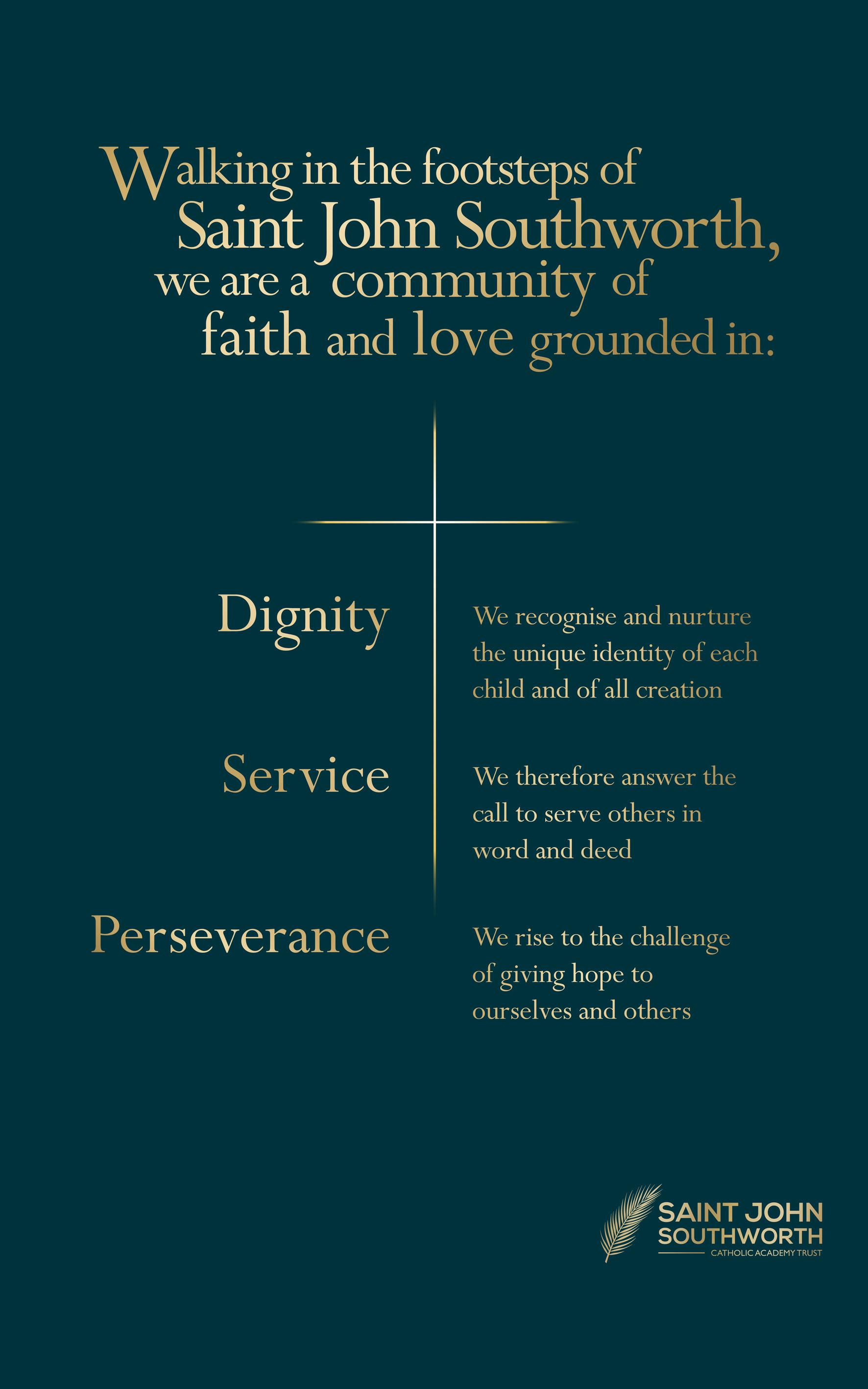
We are proud to walk in his footsteps. A community of schools of faith and love, grounded in:
Dignity - We recognise and nurture the unique identity of each child and of all creation
Service - We therefore answer the call to serve others in word and deed
Perseverance - We rise to the challenge of giving hope to ourselves and others












Whilst each school within the Trust operates by subsidiarity, these schools glow like stars in the night, each one lighting a path for every one of their pupils. Staff across the SJSCAT schools model and share the values of our patron, Saint John Southworth. He dedicated his life to serving others and he remains a powerful example for our community Through their collective commitment to our core values of Dignity, Service and Perseverance, our schools are linked in solidarity to form the SJSCAT constellation, each one a bright point whose strength grows as it connects with others
In this way SJSCAT schools focus on the formation and achievement of every pupil
Formation means far more than intellectual development, assessed by the current DfE metrics; it refers especially to moral and spiritual growth, ensuring that whenever our pupils leave a Trust school, they are assured young Catholics, ready to grow and contribute to society.
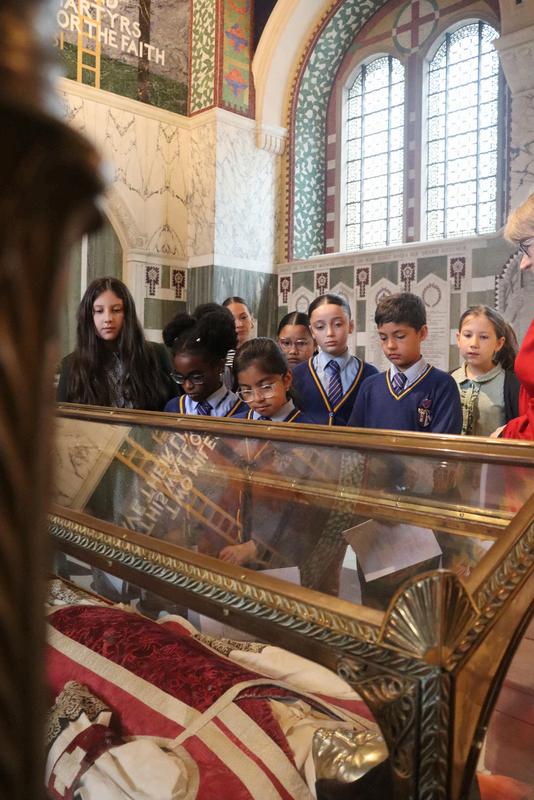
2025 had a special significance as it was the Jubilee Year of Hope. Led by our Trust Lay Chaplain, Caroline Moulinet, Trust schools marked this year in several ways, including school assemblies, collective worship led by our Pupil Chaplains, retreats, prayer sessions for pupils and staff, and an SJSCAT recollection at Tyburn Convent This fostered a supportive and nurturing faith environment across the Trust
A new initiative this year was the introduction of monthly online prayer session for all parents and carers across the Trust.
These sessions offer families an opportunity to accompany all those in the Trust by praying together for the wellbeing of all pupils and staff.
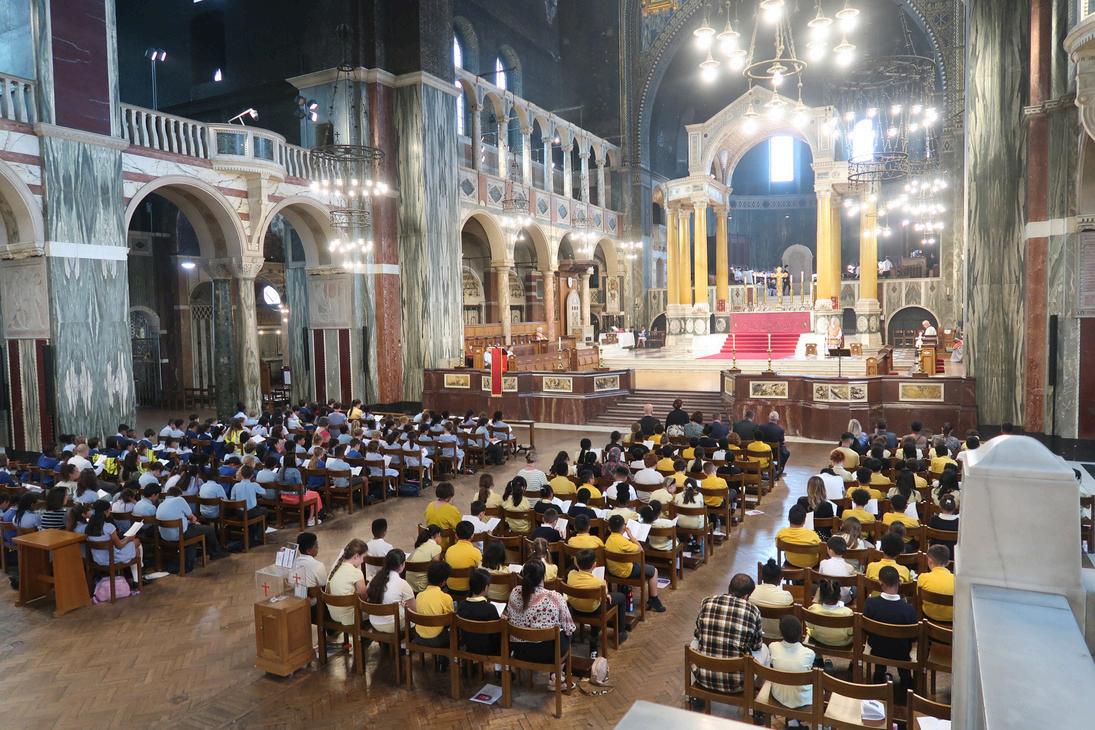
In June, Caroline coordinated the now annual Trust-wide fundraising campaign for the Diocese of Westminster Training Fund The collective gift was presented during the offertory procession at the SJSCAT Foundation Day Mass on 26 June 2025 at Westminster Cathedral
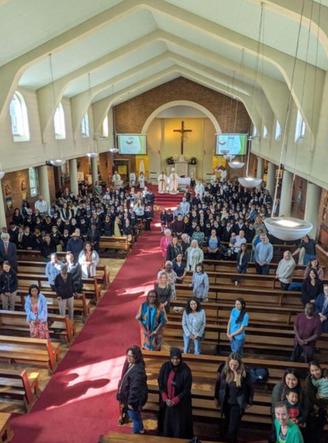
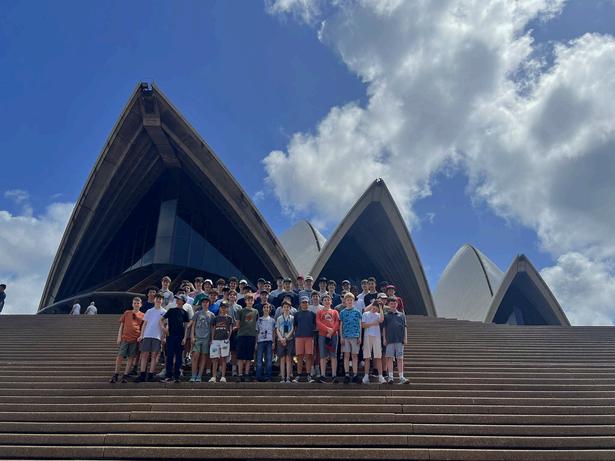
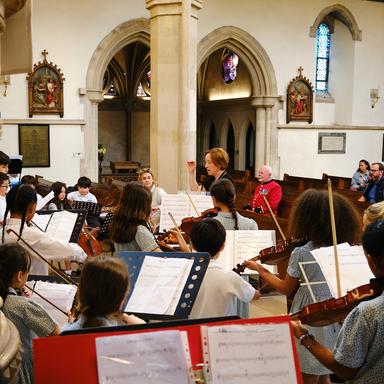
This Mass is held on or near the feast day of our patron, Saint John Southworth. This year the principal celebrant was Bishop James Curry. Over 900 pupils from across the Trust schools were in attendance and participated in readings, bidding prayers and as altar servers The music was led by the choir of St Joseph’s School, Chelsea
















The outcomes for the schools within the Trust during 2024/2025 were as follows:
The outcomes for the schools within the Trust during 2024/2025 were as follows:


Grades at 9 and 8
Pupil Destinations
To ensure that our schools remain ‘beacons: not of nostalgic refuge but laborator[ies] of discernment, pedagogical innovation and prophetic witness’ (11 1), they require a centre of gravity, a source of stability, coherence and direction
For SJSCAT that comes from our Catholic identity and shared mission, walking in the steps of our patron, Saint John Southworth. But this mission requires a supportive Trust function, the gravitational field that holds our individual schools together, shaping and guiding their movement.
The greatest asset of the Trust is its teachers and support staff, who are essential to the delivery of excellent Catholic education across all the schools
Working in solidarity, the Trust enables collaboration between the schools, shared resources and encourages improved outcomes
Of central importance to this is a strong and resilient workforce of teachers and support staff, and the Trust is committed to developing and sustaining this workforce.
CPD is integral to the delivery of the Trust’s mission. Both teaching and support staff are encouraged to complete national professional qualifications
School-to-school support is led by Karen Wyatt, Chief School Improvement Officer
The Trust has also expanded its network of subject advisors, with three being appointed - both English and Mathematics (one for EYFS and KS1, one for KS2&3, and one for KS4&5). These colleagues join James Stacey, the RE Subject Advisor, and now number seven in total.
This strengthened advisory capacity enhances collaboration across the Trust and contributes to a more supportive and attractive environment for staff recruitment and retention
This is supplemented by the SJS Teaching and Learning Digest, a termly publication designed for teachers within the academy and alliance providing resources, best practice, reviews and expert opinion
All this is underpinned by a comprehensive programme of Trust-wide inset days, individual school inset days, and the annual Ethos Day.
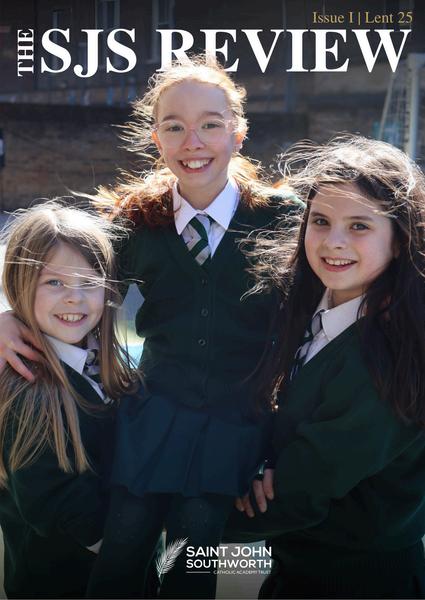
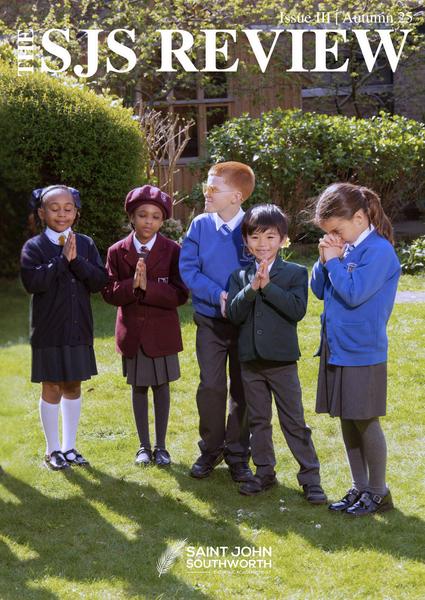
In March 2025 the first edition of the SJS Termly Review was published to record the many opportunities available to our pupils across each school This journal is shared with all within Trust community The review can be viewed here www sjscat co uk/TheSJS-Review/
It is not only a celebration of achievements, but a reflection of how our shared mission continues to shape and inspire the lives of young people within it. Most notably, their enthusiasm to serve others. The many stories highlight the work of our staff in living and promoting the values of Saint John Southworth and how these translate in to acts of kindness, celebration of community and pride amongst our pupils as they grow in knowledge and faith

The Saint John Southworth Enterprise and Research Alliance (SJSERA) is a thriving network of over 84 education providers at both primary and secondary school level in London The Alliance works with its partners to provide: ITT placements, CPD Courses, Internship programmes and NPQ Courses alongside school-to-school support.
National Professional Qualifications (NPQs) including the NPQH, NPQSL and NPQLT: SJSERA works with both Central London Teaching School and the Church of England to run these courses not only for schools within the SJSERA family but a wide range of other schools across London.
Such a wide range of courses means that the Trust is able to provide support and training from teachers starting out in their careers to those applying for Headships
Three-Week Paid Summer Internship: This programme is intended to allow undergraduates to gain valuable insights into the teaching profession and hopefully, attract them into the teaching profession at the end of their degree course SJSERA provides:
Online and In-person Get Into Teaching Experience Sessions: To understand the requirements and pathways to becoming a teacher
A one-year school-based teacher training course to enable candidates to obtain Primary or Secondary Qualified Teacher Status (QTS) with an optional PGCE: As a result, the Trust has been able to benefit by recruiting from the wider Trust community, with applicants drawn from alumni, family members, support staff and learning support staff This pattern reflects the enduring strength of our wider community and the continued influence of our shared Catholic ethos beyond the pupils’ school years
ECT Courses: The Trust working with the Central London Teaching School has provided the two-year ECT course for a number of years now training participants across the local London boroughs at both primary and secondary level

During 2024/2025, following a skills audit, the Trust Team was expanded to strengthen support for Trust schools and improve internal resilience It was renamed ‘Shared Services’ rather than Central Services, as ‘central’ implied hierarchy rather than collaboration and support, since it is a shared function
The Executive Team now consists of the CEO, COO, deputy COO, CFO and CSIO, supported by the Directors of Finance, Development, Governance, HR, Facilities and the SJSERA.
Additional capacity was added across the Estates, Finance and HR (including Payroll) teams, with recruitment initiated for the Development Team.
The Shared Services Operational Group (SHOG) was introduced to coordinate Shared Services workstreams at an operational level and strengthen their connection to the educational priorities of schools
Its purpose is to create a coherent, cyclical programme of activity that aligns all Shared Services teams and is readily understood by school leaders. This coordinated approach is intended to generate greater efficiency and deepen the schools’ understanding of the Trust’s work and how its shared functions support the education mission of the schools
SHOG runs in tandem with but is separate from the pre-existing Headteachers’ Advisory Group (HAG). This was established in 2022/2023 and provides an opportunity for the Headteachers to meet as a group with the CEO every half term.


The Trust’s annual in-person Ethos Day took place on 24 January 2025
Established in 2022, these strategy planning days bring together the Trust’s Shared Services team, Board of Directors, Headteachers and Local Governing Body governors. These sessions play an invaluable role in strengthening the internal Trust network, reinforcing shared values and giving leaders across the Trust the opportunity to contribute to the building of a strong and cohesive internal community that will support them
Strong governance creates the conditions in which the Trust LGBs can thrive and work in solidarity - the gravity for the schools It is fundamental to the success and integrity of the Trust The SJSCAT Directors set the vision, monitor performance and ensure that resources are used responsibly, allowing the Trust to achieve its objectives, manage its finances and maintain the trust of all within the Saint John Southworth community.
This clarity of decision-making and the consistent framework across the Trust means that all the schools benefit from shared standards, aligned priorities and collective ambition.
The Trust board meets twice each term and works as an effective, skilled team, drawing on a range of experiences and backgrounds to make informed decisions. All Directors undertake a comprehensive induction course and are encouraged to attend the Trust Ethos Day
Governance is supported by the SJSCAT Strategic Improvement Plan (Appendix 2), which provides an effective governance review and monitoring of the Trust’s strategic direction, ensuring accountability for both educational and financial performance.
To allow efficient and transparent operation, the Trust Board delegates responsibilities through a Delegation Matrix following the Diocesan model. Against this background, the Trust Board delegates to two main issue-based committees:
Standards Committee
Resources & Audit Committee
In addition, the Board delegates certain governance functions at local level to Local Governing Bodies, specifically:
Clarity of the Catholic vision, ethos and strategic direction of the school Holding school leaders to account for the educational performance and Catholic character of the school and its pupils
Overseeing the school’s financial performance
Whilst the Trust was confident of its governance measures, an external review of governance was commissioned, which reported in April 2025
The executive summary of the report is detailed in Appendix 3, and we are pleased to report that the review concluded that the ‘Trust’s governance arrangements are very well developed, with the Board demonstrating highquality governance The Board works as an effective team, using the appropriate balance of skills, experience, backgrounds, and knowledge to make informed decisions ’
The high standard of this governance report is a direct reflection of the dedication and unwavering diligence of the Trust’s Governance Professional, Jackie Nicholls, whose retirement this year leaves an exceptionally high bar for those who follow Her skills have been recognised outside the Trust, and she was a finalist in the National Governance Association’s, Outstanding Lead Governance Professional Category
The Trust continues to exercise careful and responsible stewardship of its financial resources in support of its core mission: to provide for the formation and achievement of all our pupils. Overall reserves have strengthened over time, reflecting the growth of the Trust and the sound financial foundations of schools joining us The Trust remains financially resilient during a period of sustained national challenge for school funding
Whilst the Trust has reported in year deficits for three consecutive years, this must be understood within the wider context of planned developments against a backdrop of significant structural pressures facing the education sector National funding reforms and the move towards a National Funding Formula have constrained resources at a time when costs – particularly staff pay and pension contributions – continue to rise faster than funding allocations As academies, our schools also bear higher employer pension contribution rates than our VA counterparts, creating an additional cost to the Trust of approximately £1 million over the current pension review period. These pressures reinforce the importance of prudent financial planning and collective responsibility across the Trust
The Trust’s Risk Register appropriately recognises the challenge of responding to an evolving educational and financial landscape Declining pupil numbers across London together with the growing complexity of need among pupils place further demands on budgets. Nevertheless, the Trust remains committed to ensuring that the most vulnerable are supported, guided by core CST principles of the dignity of the individual and the common good
Encouragingly, pupil numbers across the Trust are projected to reach 3,000 next year, triggering an automatic allocation of capital funding. This will provide welcome assistance in addressing historic constraints arising from limited capital investment.
As the Trust grows in size, the increased centralisation of the administrative functions is being pursued as an expression of good stewardship This will reduce duplication, secure value for money, and enable schools to focus more fully on teaching, learning and pastoral care
These measures, when taken together demonstrate a Trust that is responding thoughtfully and responsibly to financial pressures, while remaining firmly anchored in its mission. Through careful stewardship, collaboration and strategic planning, the Trust is well placed to sustain and develop its provision for the children and communities it serves
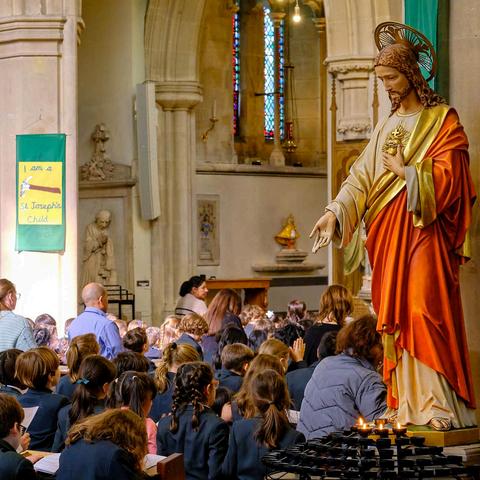
“Our role is to be faithful stewards of God, using the gifts we have received to serve others.” (1 Peter 4:10)
The Trust continues to build on the heritage of philanthropy in support of Catholic education by actively encouraging fundraising within every school and for the Trust itself
The SJS Foundation is a charity for the benefit of all the pupils and staff within the Trust Within the SJS Foundation each school has its own named fund to hold all voluntary income streams relating to that school, the majority of which are raised by the Shared Services Development Team
The Shared Services Development Team oversees the creation and maintenance of the fundraising environment across the SJSCAT It delivers a professional model of fundraising which is extended to each school in turn, in order to generate voluntary income streams to supplement the core Department for Education funding These voluntary income streams enrich the school environment in order to support pupils’ formation and achievement.
Since these income streams are separate from and in addition to state school funding, they are held within the SJS Foundation.
The Team is responsible for overseeing three separate elements or ‘streams’ of fundraising within the Trust
Stream 1 Building each school community - The Day to Day Stream, led by PTAs
Primarily ‘friendraising’, to build and support the school community, with fundraising where appropriate
Stream 2 Building funds for each school community - The Strategic Stream, led by the Development Team
To bridge the gap between current government funding and the enhanced education provision at an SJSCAT school. Can include capital works.
Stream 3 Building a future for the Trust community - The Trust-wide Stream, led by the Director of Development and Trust CEO
To ensure the long-term sustainability of the Trust.

£88,000


£27,486





Significant strategic planning was completed this year by the Executive Team to ensure that the Trust has the resilience and flexibility to meet its short-, mid- and long-term needs and so continue to provide the required levels of gravitational support, to continue the star metaphor, to the Trust schools.
Using a projected growth profile, which indicated that rapid, intelligent growth was required, The SJSCAT Strategic Plan: 2025-2030 was developed and presented to the Board of Directors, who approved it This plan now provides a practical and coherent roadmap for the Executive Team to implement from this year onwards
School growth profile:
St Augustine’s Primary
The Cardinal Vaughan Memorial School
St John XXIII Primary
2024/2025 Current Schools
St Joseph’s Primary, Chelsea
St Joseph’s Primary, Maida Vale
Our Lady of Victories Primary
St Thomas More Language College
St Thomas of Canterbury
St Vincent’s Catholic Primary School
2025/2026
St Vincent de Paul Catholic Primary School
This paper focused on:
Shared Services - the need to ensure the cost-effective delivery of central services to meet the current, mid-term and then longer-term needs of the Trust and its schools during the period of incremental growth It established the resources required to allow the CEO, COO, DCOO, CFO and CSIO to operate strategically rather than operationally.
It recognised and schematically set out the impact of falling pupil rolls on schools in terms of pupil place planning, since the sustainability of the Trust is inextricably linked to this The fall in demand is not consistent across all LAs, nor will it affect all schools in the same way
Estate Management - the need to develop an estate management strategy to guide how the Trust maintains and invests in its estate. The Trust will consider the sufficiency, suitability and condition of the whole estate to inform strategic decisions about current and future projects, including opportunities for rationalisation or re-use In turn the strategy will inform development planning and the prioritisation of capital funding It includes:
Estate strategy
Capital strategy


Complete a comprehensive skills audit of current staff to identify strengths and gaps.
Continue to develop the Executive Leadership Team.
Integrate additional capacity from incoming schools into the Trust.
Develop and implement a detailed plan for backfilling school leadership to support executive leadership
Develop operational principles for effective resource use at the Trust level

Develop a comprehensive pupil place planning strategy with detailed analysis by local authority planning area
Begin to implement the pupil place planning strategy.
Ensure schools within the Trust are working towards balanced budgets, addressing any accumulated deficits




Implementation of the estate strategy
Assess and address immediate maintenance needs
Fully embedding health and safety management arrangements and ensuring good accommodation for all users
Source and procure necessary property and construction services
Respond to the Diocese of Westminster Care for Creation protocol
In the words of Pope Leo, our Trust is not simply a collection of standalone institutions with an administrative core, rather it is a constellation of stars; connected Catholic schools with a shared mission and identity, whose strength comes from their relationship with each and the gravitational centre of the Shared Services that binds them to one another Together we form a coherent whole, greater than the sum of its part, truly modelling solidarity through subsidiarity
As we prepare for the future, underpinned by our strategic planning and implementation this year, we will follow the words of Pope Leo and seek to work as part of a ‘Catholic educational constellation’ This Trust is a ‘living tradition’, part of the ‘pluralistic network’ of Catholic education
The strategic planning, preparation and execution of these phases undertaken this year, seems well timed in light of Cardinal Nichol’s letter in November 2025, which reflected on Pope Leo’s Apostolic Letter. These documents clearly have profound implications for our Trust. But the robust nature and focus of the Trust, from its Shared Services centre to its most important elements, the schools themselves, mean that we look forward to the future, forming a constellation with our fellow Trusts, ready to draw, as the Holy Father puts it, ‘new maps of hope: this is the urgency of the mandate ’










2025
19 November 2025
As you will be aware, this year marks a decade since we launched our Academy Strategy Since 2016, we have seen significant growth: around 80% of our schools are either in one of our ten Trusts or proactively seeking to join one Building on all they have received from our forebears in the mission of Catholic education these Trusts have enabled schools to collaborate locally, enhancing educational quality, strengthening staff development, and improving outcomes for pupils
The landscape, however, has changed considerably since those early steps when the benchmark for Trust sustainability in terms of pupil numbers was 5000+. Shifting demographics and a range of internal and external pressures now mean that, for long-term sustainability, a Multi-Academy Trust should serve more than 10,000 pupils. At present, none of our Trusts meet this threshold.
Following a review focused on the future needs of our schools, the Diocesan Trustees have therefore decided to pursue closer partnerships among our existing Trusts The aim is to move towards a consolidated network of four equally proportioned Academy Trusts This development, supported by our established Trusts, will maximise sustainability for all diocesan schools in their mission, while maintaining their vital parish and community connections
This year also marks sixty years since the Second Vatican Council’s Declaration Gravissimum Educationis which reaffirmed the vital importance of education in the life of every person as well as for the Church To mark this anniversary, on 27 October Pope Leo promulgated an Apostolic Letter, encouragingly titled, given the Trustees’ decision, Drawing New Maps of Hope. Renewing ‘the urgency of the mandate’ (11.1) of Catholic education, he writes of an ‘educational constellation’ (8) of Catholic schools and colleges: ‘Each “star” has its own brightness, but together they chart a course. Where in the past there was rivalry, today we ask institutions to converge: unity is our most prophetic strength.’(8.1)
This next phase in our Academy Strategy, beginning now and to be accomplished over the next few years, is our way of rededicating ourselves to this prophetic strength, our mission, both for those within our schools as well as for society Schools currently undergoing conversion to Academy status should continue working with their designated Family of Schools; for those few yet to engage with the strategy, this is the moment to do so
Thank you for your continued dedication and leadership in our schools Your commitment to the formation and education of our children and staff is deeply valued and appreciated
W

Cardinal Vincent Nichols Archbishop of Westminster
sh,
Members
Trustees
Clerk to the Board of Trustees
His Eminence Cardinal Vincent Nichols
The Right Reverend John Francis Sherrington
Paolo Camoletto
Canon Michael Dunne
Peter Sweeney
The Westminster Roman Catholic Diocese
Mary Benton
Robert Binyon
John Creak
Anne Evans (Appointed 01 09 24)
Mary Kelliher (Appointed 01 09 24)
Dr Cornelius Kelly
Jonathan Lagan
Andrew Ndoca
Professor Teresa Pawlikowska
Karen Redhead OBE (Appointed 16.07.25)
Gabrielle Villani (Resigned 12.02.25)
Jackie Nicholls
Paul Stubbings, Catholic Executive Officer
Nicholas Kehoe, Chief Operating Officer
Executive Leadership Team
Steven Keogh, Chief Finance Officer
Jackie Nicholls, Trust Governance Professional
Karen Wyatt, Chief School Improvement Officer
PKF Littlejohn LLP 15 Westferry Circus
Independent Auditor
Banks
Solicitors
Canary Wharf
London E14 4HD
Lloyds Bank plc, 3rd floor, Queen Square, Wolverhampton WV1 1TF
Royal Bank of Scotland, London Victoria Branch, 1 Hardman Boulevard, Manchester M3 3AQ
Natwest Bank, White City (A) Branch, Unit 2050, Westfield London Shopping Centre, London W12 7GE
Browne Jacobson LLP, Mowbray House, Castle Meadow Road, Nottingham NG2 1BJ
Veale Wasbrough Vizards, 106 Henleaze Road, Henleaze, Bristol, BS9 4JZ
OBJECTIVE
2024/2025
All stakeholders demonstrate an understanding of the SJSCAT’s approach to Catholic life, RE and collective worship across its schools
Schools to share good practice
Annual ethos day for directors, governors and school leaders
Annual Mass for Southworth schools at Westminster Cathedral
Implement the CAT-wide holistic strategy for SEND
Review CAT SEND to enable the Trust to evaluate the effectiveness of its schools’ provision for pupils with SEND in five key areas: leadership, identification, tracking and monitoring, intervention and provision
Creation of a CAT wide SEND offer
Develop training and understanding of SEND across the CAT
SEND hub providing local facilities
Develop parental workshops
Review and enhance Ofsted preparedness in SJSCAT schools
Visit schools HT half termly, following QA format, reviewing schools’ SIPs
Audit websites
Appoint Subject Advisors in areas of identified need
Schools to share good practice
Seek expert subject knowledge where possible for staff CPD
Support schools during OFSTED calls and inspections
Embed robust financial services supporting SJSCAT schools’ financial efficiency
Develop strong financial literacy and compliance with ESFA Academy Trust Handbook and Trust policies and procedures (including Finance Manual) across all staff
Regular monitoring of budgets
Growth of the Trust allows for netter economies of scale for sustainable growth
All high value areas of procurement reviewed and value for money assessments in place
The Trust engages with Teaching School Hub networks and actively contributes to nationwide school improvement initiatives
Support schools to maintain financial stability in the short-, medium- and long-term
Training programme established to support school leaders and governors in interpreting data
School leaders draw up deficit recovery plans in line agreed triggers
Deficit recovery plans agreed by Executive and approved by Board
Embed effective information systems to inform strategic decision-making across the SJSCAT
Shared information platform (Arbor) developed across SJSCAT
Training provided for all schools in the development of Arbor
Continue development of a shared finance system enabling better financial decisions to be made
Shared email system
Embed SJSCAT-wide holistic strategy for estate management
Greater use of Statlog to enhance the development of the estate
Clear educational vision sets out how the estate is to be used to support this vision
Overview and comprehensive analysis of the current estate and its performance
Establish goals and objectives for the next 5 years
Identifying key areas of improvement across the estate
Identify what changes are needed across the estate and when such works are required and how these need to be prioritised
Manage resources to address future changes in funding and pupil numbers
Identification of the impact of demographic changes on admissions to schools
Schools identify clear plans in light of the demographic changes
Identification of any local planning applications upon schools
Clear benchmarking and identification of trigger points for schools
Embed a shared understanding of effective governance across the SJSCAT
Encourage use of shared governance resources: agenda templates with links to resources which aid understanding, template terms of reference for sub-committees & lead roles, SJSCAT governance skills audit, SJSCAT governance self-evaluation, declarations, policy review schedules
Extend effective use of Governorhub as a portal for exchange of good practice, dissemination of focussed supportive resources (including The Key and NGA) and communications
Continue to offer cross-CAT governor induction arrangements and in-house training/briefings in key areas (risk, safeguarding, finance, S48, OFSTED)
Develop excellent senior leadership capacity across the Trust
Identify senior leadership potential going forward
Develop a supportive coaching programme for such individuals
Encourage candidates to undertake NPQ programme
A culture of effective riskmanagement is embedded across the Trust
Ethos Day and other events focus on risk
Establish a Risk Working Party
Establish and communicate the principle of a high efficiency organisation focussed on operational compliance
Embed the principle of a high efficiency organisation focussed on operational compliance
Grow the Trust to 3,000 pupils
Refine and implement small schools model
Due diligence support for schools seeking to join via EPM
The Executive Summary of the External Review of Governance for St John Southworth Catholic Academy Trust, April 2025 conducted by Browne Jacobson.
Strategic Leadership – Vision and Values The Trust has a clear strategic vision encapsulated in its motto ‘Omnia in Uno – Everything in One’ The mission statement is underpinned by three core values: Dignity, Service, and Perseverance The Strategic Improvement Plan helps ensure that the Board not only has a clear strategic vision but is also focused on achieving it
Board of Directors – Composition The Board comprises ten Directors, with plans to add two more. The Board recognises the importance of maintaining separation between the Board and local governance arrangements. Regular skills audits are conducted to ensure the Board has the necessary mix of knowledge, skills, and experience. The Board is diverse but it is recommended that there be ongoing monitoring of its ethnic diversity.
Board of Directors – Practices Board meetings are held twice a term, predominantly in person, with hybrid facilities available The meetings are well-structured, with comprehensive agendas and extensive paperwork circulated in advance It is recommended that key papers associated with substantive agenda items include an executive summary and identified recommendations
Leadership of the Chair The Chair of the Board, provides strong leadership, direction, and accountability. Her style is thoughtful, calm, and collaborative, yet business-like. She maintains a mutually respectful and active relationship with the CEO.
Board Committees The Board delegates responsibilities to two main committees: the Standards Committee and the Resources and Audit Committee. The Standards Committee focuses on education, standards, and performance, while the Resources and Audit Committee covers audit and risk management, finance, premises, staffing, and remuneration It is recommended that the Board closely monitor the capacity and capability of the Resources and Audit Committee and consider pre-emptively setting up a dedicated Audit and Risk Committee
Local Governance – Local Governing Bodies The Board delegates certain governance functions to Local Governing Bodies (LGBs) The composition of LGBs includes foundation, parent, and staff local governors Meetings are held at least once per term, with model template agendas provided by the Trust’s Governance Professional. It is recommended to create a central group of dedicated clerks to enhance consistency of LGB clerking.
Governance Professional Arrangements Governance support delivered by Jackie Nicholls, the Trust’s Governance Professional. Jackie is highly qualified and experienced, providing exceptional governance advice and guidance She is set to retire at the end of the 2024/25 academic year, and recruiting a suitable replacement should be a high priority for the Board
Conclusion The review found that the Trust’s governance arrangements are very well developed, with the Board demonstrating high-quality governance The Board works as an effective team, using the appropriate balance of skills, experience, backgrounds, and knowledge to make informed decisions
The full Annual Report and Financial Statements, year ending 31 August 2025 can be obtained following this link:
www sjscat co uk/docs/SJSCAT Annual Report and Financial Statements 2025 pdf