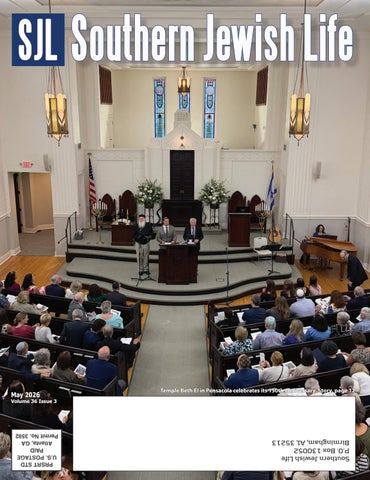
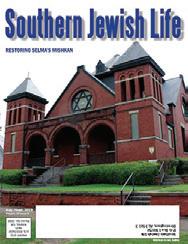
Beth El in Pensacola celebrates its 150th anniversary. Story, page 17 May 2026 Volume 36 Issue 3
that sort of ignorance is so widespread as to be barely noticeable anymore.
Whatever one thinks of Harris or Trump, when looking at the Middle East today, that region would be in far worse shape if she had won the election last year. The current trajectory, with a decisive victory over Iran, would remove a huge proportion of the problems that emanate from that region, providing far more stability and economic development. Neither Biden nor Harris would have the stomach for any of this, their left flank would go bonkers at the thought that anything other than Israel’s existence could possibly be a problem, and the region’s turmoil would fester, the sweeping changes would not be taking place.
But it isn’t just Harris. The reliably-terrible New York Times just did a softball interview with
Tucker Carlson, someone who four years ago they derided as irredeemably racist and beyond the pale. Now, as part of the kid glove treatment, the reporter framed a question to him where Israeli manipulation was stipulated as fact, and asked him why it finally succeeded with Trump.
Conspiracy so vast
Columnist Elder of Ziyon recently pointed out that in order for Netanyahu, the Jews, whoever you want to name, to manipulate the U.S. into doing something against the national interest, one would have to engineer a conspiracy so vast as to be impossible.
He wrote, “For a foreign government to direct U.S. policy, it must override all of the internal processes designed specifically to prevent that
continued on page 38
andBreakfast ServedLunchDaily
Southern Jewish Life Staff
Publisher/Editor
Lawrence Brook editor@sjlmag.com
Associate Publisher/Advertising
Lee Green lee@sjlmag.com
Creative Director
Ginger Brook ginger@sjlmag.com
Social/Web
Emily Baldwein connect@sjlmag.com
Photography
Cheryl Dorchinsky
Contributing Writers
Rivka Epstein, Belle Freitag, E. Walter Katz
Columnist
Doug Brook brookwrite.com
Birmingham office: P.O. Box 130052, Birmingham, AL 35213
New Orleans office: 3747 West Esplanade Ave., 3rd Floor, Metairie, LA 70002
ADVERTISING: Contact Lee Green, (205) 870-7889, lee@sjlmag.com
SUBSCRIPTIONS: Subscriptions for the print edition are $30 for one year, $48 for two years. Paid subscribers to our Substack site also receive the print edition.
Copyright 2026. All rights reserved. No part of this publication may be reproduced in whole or part without written permission from the publisher. Views expressed in SJL are those of the respective contributors and are not necessarily shared by the magazine or its staff. SJL makes no claims as to the Kashrut of its advertisers, and retains the right to refuse any advertisement.
Documenting this community, a community we are members of and active within, is our passion. We love what we do, and who we do it for.
agenda
April 14,
ISJL Southern and Jewish conference moving to Charlotte
Registration open for June event, for anyone with a connection to Jewish life in the South
After over two decades in Mississippi, the Goldring/Woldenberg Institute of Southern Jewish Life will hold its annual education conference in Charlotte.
Southern and Jewish, which will be from June 21 to 23, is open to everyone with a connection to Jewish life in the South.
The conference brings people from across the South and beyond to connect, learn, network and share insights on sustaining Jewish life where they live. Starting at noon on June 21 and running through noon on June 23, the conference features nationally recognized presenters and performers.
This year’s theme, “B’Yachad: All Together Now,” emphasizes the importance of coming together across communities, generations and identities. Like the ISJL itself, the conference is transdenominational and welcoming to all. Affinity group meetups offer opportunities to connect with others who share similar interests or life experiences, including interfaith families, Jews-by-choice, artists, LGBTQ+ Jews, grandparents, parents of young children, and more.
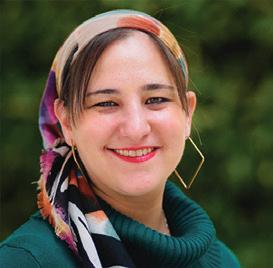
The keynote speaker will be Rabba Rori Picker Neiss, senior vice president and rabbi in residence at the Jewish Council for Public Affairs, and a Rabbinic Fellow of the David Hartman Center of the Shalom Hartman Institute of North America. She is one of the first graduates of Yeshivat Maharat, a pioneering institution training Orthodox Jewish women to be spiritual leaders and Jewish legal authorities.
Picker Neiss also serves on the board for HIAS and the Parliament of the World’s Religions. She is also a CLAL Rabbis Without Borders fellow, and co-editor of “InterActive Faith: The Essential Interreligious Community-Building Handbook.”
The conference will also feature musician Eliana Light, the 2025 Cove-
nant Foundation Family Education Fellow. An award-winning songwriter and educator, Light empowers people to make Judaism their own through experiential education, song, and prayer.
She has released two albums of original Jewish music: “A New Light” and “Eliana Sings (About Jewish Things!).” Her songs have been featured by PJ Library, and she has performed and taught throughout the U.S. She is the author of “Hebrew in Harmony,” and received her MA in Jewish Experiential Education from the Jewish Theological Seminary.
Liora Norwich, director of the Hornstein Jewish Professional Leadership Program at Brandeis University will also speak. Her work in building community learning and engagement programming that is equitable, inclusive, intergenerational and accessible will mesh with the conference’s theme of “B’Yachad: All Together Now.”
Southern and Jewish is designed for a wide range of participants, from teachers and religious school directors to congregation presidents, lay leaders, local historians, youth group advisors, clergy, and parents. Registration is open, and.day passes for locals are available.
The Institute also recently introduced an Associate National Partnership, an option for communities outside the 13-state region to take advantage of ISJL educational resources.
On
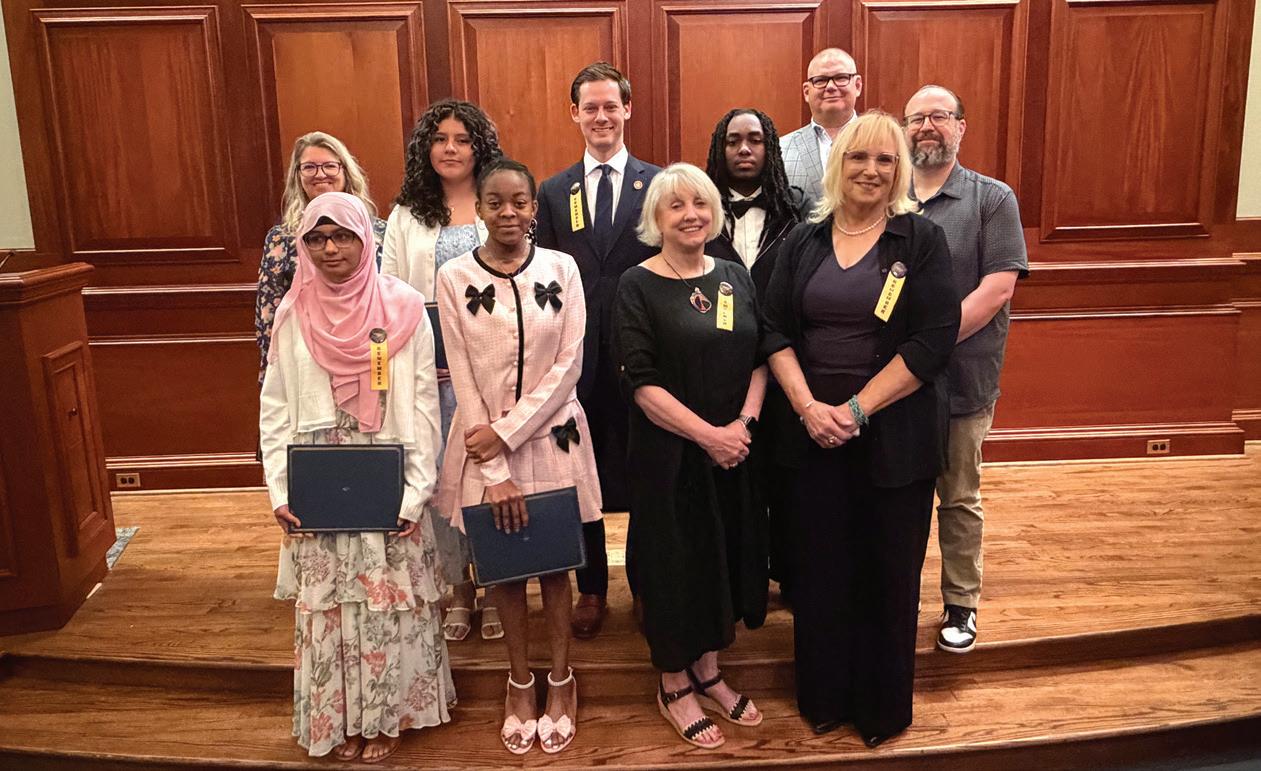
the Alabama Holocaust Commission held its annual Gathering of Remembrance, at the Alabama Department of Archives and History in Montgomery. As part of the ceremony, the Jewish Federation of Central Alabama recognized the winners of its 2026 student Holocaust essay contest.
Rabba Rori Picker Neiss
MSJE hosts event on Gay Mardi Gras
The Museum of the Southern Jewish Experience, in conjunction with JP Nola and Tulane’s Grant Center for the American Jewish Experience, will present a talk with Golan Moskowitz, “Mickey Gil (1937-2010), the Jewish Queen of Gay Mardi Gras.” Moskowitz is an associate professor of Jewish studies at Tulane.
From the 1980s through the early 2000s, Mickey Gil was a defining Jewish presence in New Orleans’ gay Carnival scene. In this talk, Tulane professor and Grant Center member Golan Moskowitz situates Gil within the broader history of Jewish American drag and the cultural traditions of gay Mardi Gras, drawing on archival footage, costumes and oral histories.
The program highlights the intersections of Jewish identity, performance and regional culture, offering a lens into the diversity and complexity of the American Jewish experience in the South.
The June 11 event at 6 p.m. will be available in person and virtually.
Moskowitz will also be speaking on “Jewish Drag Icons: Then and Now” at the 14th Street Y in New York on June 24.
AHEC holding first statewide Holocaust education conference
Teachers prepare as new curriculum standards begin
With the coming implementation of new educational standards for teaching the Holocaust in Alabama schools, the Alabama Holocaust Education Center in Birmingham is hosting its first-ever statewide teacher conference, “Teaching the Holocaust: Standards. Strategies. Stories.”
The two-day in-person conference on June 2 and 3 will equip educators with expert guidance, classroom-ready resources, a professional network, and the confidence to teach this history with care and accuracy.
The conference will feature nationally recognized speakers, leading scholars, and expert practitioners in Holocaust education. There will be keynote speakers, breakout workshops about how to meet the new Alabama standards, mastering content and implementing classroom strategies.
The new standards, which were adopted in December 2024, are seen as among the most comprehensive in the country. The standards begin
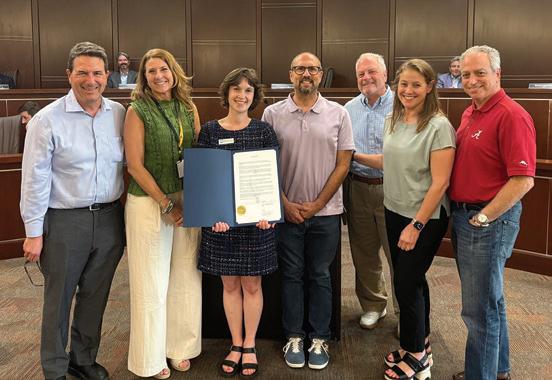
April 27, the
On
Homewood City Council passed a resolution in honor of Jewish-American Heritage Month. Mayor Jennifer Andress presented the resolution to Margaret Norman, director of the Birmingham Jewish Community Relations Council.
in grade 5 with the Holocaust introduced in an age-appropriate way as a “major event” in World War II. It is then discussed in greater depth in ninth grade world history, and the American response is explored in 11th grade.
As an example, the AHEC cited the previous standards for ninth grade history, which mention the Holocaust as a consequence of World War II. The new standards have the Holocaust mentioned in four major standards and seven sub-standards. “Social studies teachers in Alabama public schools will now be required to not just mention the Holocaust as a consequence of WWII, but will need to trace Hitler’s rise to power, describe Nazi ideology, and describe how the Nazis built on historical antisemitism, and trace the evolution of the Final Solution, to name a few.”
There is also a high school elective course of either a semester or a year.
There will be a keynote speaker each day, Erin Gruwell on June 2 and Michael Berenbaum on June 3.
Gruwell is founder of the Freedom Writers Foundation, having transformed her classroom by using the history and lessons of the Holocaust to help her students confront intolerance, reckon with their own experiences, and discover the power of their voices.
Her bestselling book, “The Freedom Writers Diary,” inspired the major motion picture “Freedom Writers,” starring two-time Academy Award–winner Hilary Swank.
Berenbaum is a renowned Holocaust scholar who was project director for the creation of the United States Holocaust Memorial Museum in Washington. As a leading voice in Holocaust studies worldwide, Berenbaum has shaped how generations understand this history and its urgent moral lessons.
The conference will be held at the Birmingham-Jefferson Convention
Complex, 8:30 a.m. to 4 p.m. each day. Registration is $35, scholarships are available. There are also a limited number of hotel subsidies for those traveling from outside the area. Registration includes breakfast and lunch, PD credits through PowerSchool, and access to the AHEC’s conference management software.
Registration is available at ahecinfo.org.
Continuing Jewish-Catholic dialogue
April 13,
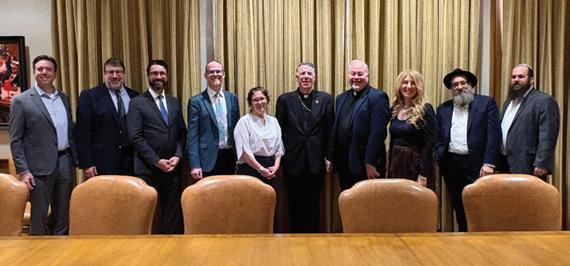
was a shared spirit of collaboration and the hope for a continued partnership and mutual support between the Jewish and Catholic communities. The growing concern of antisemitism in society was also discussed, and the role that education in Catholic institutions can play in fostering understanding and combating prejudice.
On
the rabbis of the New Orleans Jewish community met with the newly appointed Archbishop, Most Reverend James F. Checchio. There
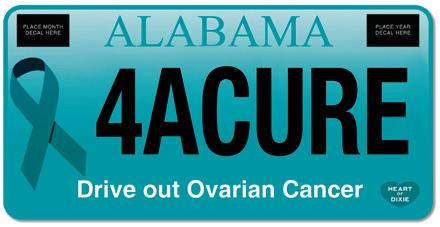
Alabama is one of three states who currently have an ovarian cancer car tag. The Drive Out Ovarian Cancer car tag raises money for research in hopes that one day, doctors will discover an early detection test for ovarian cancer, so that women will be tested for this insidious disease at their annual checkups just like cervical and breast cancers.
The mission of the Norma Livingston Ovarian Cancer Foundation (NLOCF) is to raise funds for ovarian cancer research and to increase awareness about the risks, symptoms and treatments of this disease.
The net proceeds of the $50.00 are distributed to the NLOCF to be used for ovarian cancer research at the UAB hospital. The Norma Livingston Ovarian Cancer Foundation is a 501(C)(3) nonprofit organization. Your $50 contribution is tax-deductible.
Comedian Modi making New Orleans debut in Bikur Cholim benefit
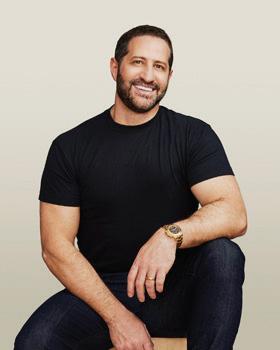
One of comedy’s most sought-after performers, Modi will make his New Orleans debut on May 18 with a performance at the Orpheum Theater, with all proceeds to benefit Bikur Cholim.
Voted one of the top 10 comedians in New York City by The Hollywood Reporter, Modi has been featured on HBO, CBS, NBC, ABC, Comedy Central, Howard Stern, and E! Entertainment, Modi has received rave reviews in The New York Times, Time Out NY and The New York Post.
Born in Tel Aviv, Modi emigrated with his family to the United States at the age of seven and was raised on Long Island. After graduating from Boston University, he worked as an investment banker until his first open-mic night made him realize that stand-up was his true calling. Equipped with a sharp wit and a knack for reading an audience, Modi has gone on to become a successful fixture in New York’s vibrant comedy scene, often doing bits that incorporate his heritage, and he is a hit with diverse Jewish audiences as well as fans of all backgrounds and beliefs.
Now a regular performer at the New York and Los Angeles comedy clubs, Modi also headlines around the country and across the globe. Modi has played himself on HBO’s “Crashing” and Netflix’s “When Jews Were Funny.” He’s also appeared in several feature films and played leading roles in two: “Waiting for Woody Allen,” which won the LA Film Festival, and “Stand Up,” a feature-length film.
In 2018, Mayor Bill De Blasio declared June 26th ‘Mordechi Modi Rosenfeld Day’ in the city of New York for his accomplishments and contributions to the artistic community. However, the good feelings between him and the mayor’s office might not be present today, as Modi was scheduled to be at a “postmodern” Seder at City Winery in New York on March 30. A couple days before the event, Modi pulled out of the event when he learned that the current mayor, Zohran Mamdani, would be attending. “We were not told Mamdani was participating in this event until today,” he wrote.
Mamdani has been the subject of intense criticism for his longstanding anti-Israel activism and his refusal to condemn terrorism. As an example, Mamdani took the opportunity of his St. Patrick’s Day speech to compare the Irish to the Palestinians and condemn Israel.
On April 2, Modi appeared on The Tonight Show with Jimmy Fallon. Bikur Cholim is Hebrew for “visiting the sick.” Rabbi Levi Partouche leads the New Orleans group in visiting patients in hospitals, offering emotional and practical assistance to individuals and their families.
Roselle Ungar, CEO of Jewish Family Service of Greater New Orleans, said Bikur Cholim is an important partner.
For Passover, Bikur Cholim worked with Kosher Cajun to deliver a Seder-to-Go to people in area hospitals. During Purim, megillah readings were done at 20 locations. Other holiday services are provided, and delivering Shabbat meals is a year-round project.
Tickets are available through the theater. Doors open at 6:30 p.m., the show is at 7:30 p.m.
The Ovarian Cancer Research Tag may be purchased for private passenger automobiles, pickup trucks, motorcycles, and pleasure motor vehicles (i.e., recreational vehicles).
Jewish Cultural Arts series explores flaws in the mental health system
On May 19, in coordination with Mental Health Awareness Month, author Tripp Friedler will share the story behind his memoir “The Tunnel,” reflecting on his son’s mental health crisis and the journey of grief, resilience, and healing that followed. Moderated by Rabbi Mendel Rivkin and Staci Lanza, this free community event will foster an open conversation on mental health.
The program is part of the Cathy and Morris Bart Jewish Cultural Arts Series at the Uptown Jewish Community Center in New Orleans.
“The Tunnel” starts on a March evening in New Orleans when Friedler gets a call from his 21-year-old son, Henry, who is on a bridge over the Mississippi River and too scared to jump.
That sets off an odyssey across the country as he and his wife try to find their son the treatment he needs, but few facilities are willing to accept him, as he goes from a nuisance to an undesirable to untouchable as his depression deepens to bipolar disorder with psychotic breaks.
The book details the flaws in the social fabric when it comes to dealing with mental illness, including in educational, legal and medical settings. And though they spared no expense in trying to find treatment, Friedler wonders what happens to those who don’t have the means and face the wall of indifference.
All royalties from the book are being donated to mental health charities, and sales from this event will benefit Jewish Family Service.
Friedler is the president and CEO of Free Gulliver, which provides strategic, financial and investment advice for businesses and individuals. His previous book is “FreeGulliver: Six Swift Lessons In Life Planning.” He is also co-founder of the Young Leadership Council and is past chair of Isidore Newman School.
The 7 p.m. program is free and open to the community.
Touro holding an artistic Shavuot
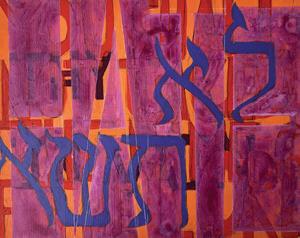
Touro Synagogue in New Orleans will have a Shavuot with artist Naomi Lifschitz-Grant, “A Spiritual and Creative Journey Through the Texts of Shavuot,” on May 21 at 7 p.m.
Naomi Lifschitz-Grant’s Third Commandment
Lifschitz-Grant is an associate professor of Art Education at the University of North Carolina at Pembroke, who started her teaching career in K-12 schools in New York City. Her work has been exhibited internationally, and in 2024 she received a Ftravel grant t attend a seminar at the Shalom Hartman Insitute in Jerusalem, to research a series of paintings based on ancient Jewish texts in response to the ongoing conflict in the region.
The evening will begin with a brief meditative service honoring the congregation’s lifelong learners and teachers.
After the service, there will be two options. Lifschitz-Grant will lead “From Text to Image: A Shavuot Ink-Wash Workshop,” where participants will create ink-wash paintings inspired by holy texts. The Touro clergy will lead “Ruth’s Journey: A Creative Journey Through the Text of Ruth,” exploring the book through music, artistic representation and midrash. Reservations are required for the ink-wash workshop, requested for the Ruth option.
After the sessions, the groups will reunite for cheesecake and wine. Lifschitz-Grant’s works will be exhibited at Touro for a self-guided tour, May 17 from 9 a.m. to 1 p.m., May 18 from 9:30 a.m. to 5 p.m., May 19 to 21 from 9:30 a.m. to 6 p.m., and May 23 from 9 a.m. to noon.
agenda
Birmingham’s Temple Emanu-El will have a farewell oneg for Rabbi Adam Wright, following the 6 p.m. service on May 29. The congregation’s annual meeting will be at 5 p.m.
The Reform congregations of New Orleans announced their Summer Union 2026 schedule. June Shabbat services will be at Gates of Prayer in Metairie, July will be at Temple Sinai and August will be at Touro Synagogue.
The Museum of the Southern Jewish Experience in New Orleans is hosting its first virtual members-only event, “Voices for Justice: Exploring Southern Jewish Perspectives on Civil Rights,” June 4 at 6 p.m. Rabbi Malka Packer-Monroe will lead attendees in an in-depth conversation about Southern Jewish responses to the Civil Rights Movement. This is a member event. Email cindy@msje.org to register for the event, or to sign up for an MSJE membership and attend.
The North Louisiana Jewish Federation’s Camp Chai will be held May 26 to 29 at B’nai Zion.
The New Orleans Section of the National Council of Jewish Women will have its annual installation and closing meeting on May 31 at 11 a.m. at Touro Synagogue, starting with mimosas and continuing with a buffet brunch at 11:30 a.m. Guest speaker will be Jeanie Donovan, director of public health and policy at the New Orleans Health Department. “Healthy Women, Strong Communities” will be an overview of women’s health in Louisiana and New Orleans. Reservations are $65, and bring a new teddy bear or educational toy or game for ages 2 to 17 for the New Orleans Family Justice Center.
The outdoor pool at Birmingham’s Levite Jewish Community Center will open for the summer on May 19. Thursday Family Fun Nights return on June 4.
JNOLA will have a Swim and Swirl poolside party with an ice cream bar, May 20 at 6 p.m. For ages 21 to 39. Registration is $15, free to Chai Society members.
The next Shabbat Halicha hike with Birmingham’s Temple Emanu-El will be on May 30 at 10 a.m. at the Birmingham Botanical Gardens.
Southern Jewish Voices, a series of Jewish community oral history interviews done before an audience at Birmingham’s Levite Jewish Community Center, continues on May 20 with Michael Saag, associate dean for global health at the University of Alabama at Birmingham and founder of the 1917 Clinic, a comprehensive AIDS treatment and research center at UAB. A complimentary lunch is served, and videos of the sessions are archived online.
The University of Michigan Men’s Glee Club will perform at Temple Sinai in New Orleans on May 14 at 7 p.m. It is the second-oldest collegiate men’s glee club. Sinai Cantor Emeritus Joel Colman will also perform, he is a past vice president of the glee club.
The Jewish Womens Circle at Chabad of Baton Rouge will have a pre-Shavuot sourdough workshop, led by Ashley Leblanc, on May 17 at 5:30 p.m., hosted by Lita Kukuy. Suggested donation is $18.
The next Doubt and Discovery group in Jackson, meeting at the Finkelberg home, has been rescheduled to May 21 at 7 p.m. Edward Mahaffey, professor of Christian Studies at Mississippi College, will lead “What makes an action moral or immoral.”
The city of Irondale near Birmingham is celebrating Jewish American Heritage Month, starting with a mayoral proclamation and Shehecheyanu on May 5 at 6 p.m. at City Hall. On May 11 at 6 p.m., there will be a screening of “Rosenwald” at the Irondale Public Library. Ironcontinued on page 43
Huntsville, Fort Walton prepare for congregational milestones
Congregations in Huntsville and Fort Walton Beach are planning milestone anniversary events this summer.
On June 14 at 5 p.m., Beth Shalom in Fort Walton Beach will celebrate its 40th anniversary. There will be a festive meal to honor founders, welcome back old friends and rabbis, and celebrate with local dignitaries.
In the early 1970s, the Okaloosa Jewish Community Brotherhood was formed, and in 1978 they acquired a building that became the county’s Jewish Community Center. In 1985, there was a desire for a formal worship space and religious school for the increasing number of children. Beth Shalom was chartered by 33 families in the JCC building.
Among the founding families still in the community are Judge Erwin and Jo Fleet, Art and Linda (z’l) Lester, David and Marsha Kaplan, Rafi (z’l) and Cheryl Elul, Ron Stevens (z’l) and Arlene Melancon.
In Huntsville, Temple B’nai Sholom begins L’dor V’dor, a year-long celebration of its 150th anniversary, in July. On July 24 at 6:30 p.m. there will be Shabbat L’dor V’dor to kick off the year of events, weaving traditional the Shabbat liturgy with special moments in the congregation’s history. Several guests from the community and the congregation’s past are expected.
On July 25 from 10 a.m. to 3 p.m., there will be ShalomFest, a street festival open to the entire community. Celebrating Jewish traditions and culture, it will feature Jewish comfort foods, Klezmer music, Israeli folk dancing, Jewish lifecycle events, and a visual and oral history of TBS from 1876 to present.
A full slate of events will be previewed at the congregation’s annual meeting on June 14.
Temple B’nai Sholom in Huntsville
Fort Polk soldier arrested for online threats
Allegedly planned to “kill every single Jew” in a synagogue
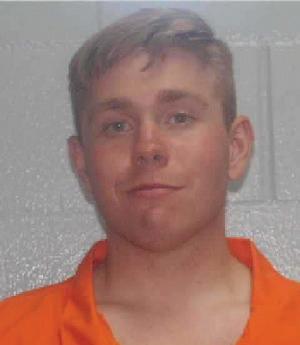
A U.S. Army soldier stationed at Fort Polk in Louisiana was arrested for online threats where he said he wanted to go into a synagogue and kill as many Jews as he could.
Jakob Marcoulier, 22, is charged with transmitting a threat in interstate commerce, based on conversations on Discord. He faces up to five years in federal prison if convicted.
On April 23, he was booked into the Rapides Parish Detention Center in Alexandria.
“Threats against synagogues and Jewish Americans are threats to the religious freedom promised to every single one of us, and this Office and our law enforcement partners are committed to protecting those freedoms,” said United States Attorney Zachary A. Keller. “This case demonstrates the FBI’s vigilance and swift action in identifying and taking action against those who perpetrate these threats, and our Office looks forward to seeing justice done in this case.”
According to court documents, FBI’s National Threat Operations Center received an online tip in February 2026 about a Discord user named “el.bostino” who had made threats toward synagogues. FBI secured recorded audio from Discord in which the individual, later determined to be Marcoulier, made these threats, stating among other things that “after this deployment if the Jews still have reign over our government, I am going to walk into a synagogue with my AK, with a 75-round drum mag, and all of my extra mags, with my level four plates, and my haka helmet that’s three plus, and I am going to kill every single Jew I know inside of that synagogue. And that’s my goal in life.”
Marcoulier went on to emphasize the seriousness of his threats, saying among other things that “you guys will never do anything about but I will. I just have to finish this, I have to go back overseas and do what I have to do. And then you’ll see me in the news. I promise you,” He added, “you guys don’t want to do anything for the f[***]ing cause when it actually needs to happen… I’ll still kill these mother[***]ers in order to make sure the white youth is f[***]ing secured.”
Special Agent in Charge Jonathan Tapp of the FBI New Orleans Field Office said after the tip was received, “FBI Special Agents in Birmingham and New Orleans, and our partners in the U.S. Army, acted swiftly in this case. This is a perfect example of how the public is law enforcement’s greatest partner.”
The FBI investigated this case alongside the Department of the Army Criminal Investigation Division. It is being prosecuted by Assistant U.S. Attorney Lauren Nickel with assistance from Legal Assistant Christy Angelle.
Marcoulier is being held after prosecutors said he was a flight risk because of his comments about going overseas, but his unit does not have any upcoming deployments.
His attorney, Angelle Boudreaux, filed a motion asking for his release, saying there is no evidence that he was going to be deployed, and even if he were, that is not a serious risk of flight.
Marcoulier is from Westfield, Mass. He has served since July 2023 and is assigned to 3rd Brigade Combat Team, 10th Mountain Division’s Light Infantry. He completed one operational rotation to Europe and has received two Army Achievement Medals, according to a report in Stars and Stripes.
Marcoulier graduated from Westfield Technical Academy. In September 2023, his mother, Kerrie, died at age 49 after an illness, and her obituary says “One of her proudest moments was seeing her son off to the army earlier this summer. She looked forward to hearing from him during their Sunday phone calls.”
Fort Polk is located in west-central Louisiana. The closest synagogues are Gemiluth Chassodim in Alexandria and Temple Sinai in Lake Charles, but there have been no reports that he had a particular target in mind.
An Instagram account of Marcoulier’s that went inactive in 2018 has posts where he is defending himself from those who call him racist, and
has a Confederate flag as his profile picture. One post shows a soldier carrying a gun, with the caption “God gave his arch (sic) angels weapons because even the Almighty knew you don’t fight evil with tolerance and understanding.”
Another post says the U.S. declared in 1957 that Confederate soldiers are officially recognized as U.S. veterans, so any removal of a Confederate monument or marker is going against a U.S. veteran. He said, “that’s why I were (sic) the f---ing flag.”
An August 2017 post is about the “tears of liberals” who call him racist because he beats them in arguments. “Keep up saying I’m racist hitler white supremacist apart (sic) of the kkk and I’ll just keep collecting tears.” In a comment, he said “you just mad that your not able to counter my points I’m a thirteen year old and you to stupid to argue with someone you’re own size.” He also commented that hating whites because they are white is “a hate crime and racist too.”
A more recent profile, where his photo is apparently him in fatigues holding a gun, is private, but his bio line reads “long range lobotomist.”
Simchat Torah in February
Thanks to anonymous donor, Jackson’s Beth Israel welcomed a new Torah six weeks after fire
On Feb. 22, six weeks after Beth Israel in Jackson lost two Torahs to an arson fire and had five others damaged by smoke, the congregation held a celebration to mark the completion of a new Torah, courtesy of an anonymous donor in the New Orleans area.
The celebration was held at Fairview Inn, owned by congregants Tamar and Peter Sharp, with a large delegation that came up from Gates of Prayer in Metairie.
Immediately after the fire, the congregation was able to borrow a scroll from B’nai Israel in Hattiesburg before the next Shabbat.
After Beth Israel President Zach Shemper blew the shofar to get everyone’s attention, Gates of Prayer Rabbi David Gerber welcomed everyone for “a truly special moment, something that I have personally never been a part of, a siyum Torah, the completion of a Torah scroll.”
He said the ceremony is akin to a Jewish wedding, where the Torah is the bride and the community is the groom.
Gerber said the day was made possible by “a hidden hand, an anonymous donor” who preferred “that today our eyes are fixed only on those holy words” of the Torah. The donor was not in attendance but was said to be watching the ceremony’s livestream.
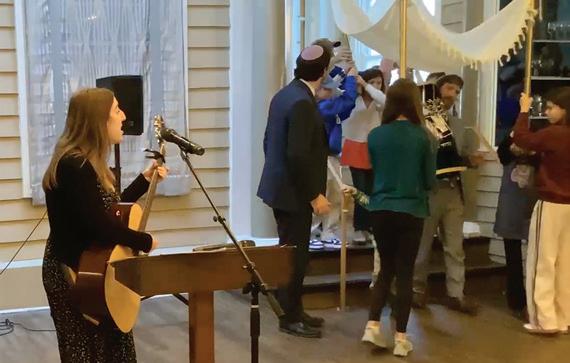
The unfinished scroll was brought in by Shemper under a chupah carried by youth from Jackson and Metairie, as Gates of Prayer Cantorial Soloist Jordan Lawrence sang bridal-related songs, “Dodi Li” followed by the end of L’cha Dodi, which references welcoming the Shabbat bride.
Gerber said there was an irony to the setting, “a truly beautiful place,” to celebrate the completion of a Torah, but he told the Beth Israel members “we are reminded that we are not in your sanctuary… The Torah is here, but it is not yet home.”
But, he noted, our ancestors figured early on that “God does not dwell in bricks and mortar, God dwells wherever the Torah opens and the community gathers. Today this room, this sacred space, is Mount Sinai.”
The moment of darkness compelling the ceremony to be there brought this opportunity “to witness this miracle of restoration.”
When Moses came down with the tablets at Mount Sinai and saw the Golden Calf, the letters on the tablets flew back up the mountain when the tablets shattered, and the tablets that had been light in Moses’ arms became heavy without the letters, Gerber said.
Beth Israel, he said, has experienced the heaviness of the empty stone since the arson. “It’s a burden to lead the community when the letters feel they have taken flight,” but today “we are catching those flying letters. As the ink dries on these final verses, we are pinning the divine voice back on the parchment.”
Gerber told Shemper “Thank you, on behalf of the Jewish people, for guiding this community so bravely and powerfully.”
Shemper said “everything that has happened to us in
Livestream screenshot
Jordan Lawrence leads the singing as the new Beth Israel Torah is brought into the room at the Fairview Inn in Jackson by Beth Israel President Zach Shemper
The long road to rebuild
Beth Israel cleanup almost complete
The sanctuary at Beth Israel in Jackson is empty. Really empty.
The pews and other furnishings are gone, the carpeting and ceiling removed, exposing the rafters. The walls are bare, including the 1960s-style lettering urging “Know before Whom you stand.” Only the gold ark doors give away what the room had been, and will become once again.
On April 26, dozens of congregants got their first look at the condition of the Beth Israel building since the Jan. 10 arson attack. The building was then opened to local media later that day. Even three months later, there was still a hint of smoke smell in the air.
In the lobby, where the fire started, there is a black charred outline where the Tree of Life plaque had been. Taped on the wall next to it is a picture of a Tree of Life, drawn by one of the religious school students. Numerous other drawings were placed on the walls for the tour, but this student insisted his drawing should be where the tree had been.
The plaque, the congregation’s five Torahs that survived the fire, and the colorful tapestries that had been on the wall of the sanctuary are now in the hands of restoration specialists.
The charred library, the main locus of extensive damage, including two destroyed Torahs, is now empty.
Cleanup is almost complete, but the process is far from completion. It is hoped that construction will be possible by late summer, and that Rosh Hashanah services will be held in the building in 2027 — when the holiday will be very late, starting on Oct. 1.
The fire exposed asbestos in the floor and ceiling, providing a significant abatement cost from the outset — approximately $1.8 million.
Insurance is still in process, as well as decisions on what form the rebuilding will take. Once numbers are known, the congregation will need to fundraise for the difference. A huge influx of donations from around the world has helped.
Trial postponed
On April 2, U.S. District Court Judge Henry Wingate granted a motion to continue the April 6 trial of Stephen Spencer Pittman, who is accused of the arson against Beth Israel. Defense attorneys argued they needed more time, and the prosecution did not object.
A pre-trial conference will be on May 21, and the trial is scheduled for June 1. Pittman is charged with three counts: arson, damage to religious property and using fire to commit a felony. He pleaded not guilty. If convicted, he faces up to 50 years in prison and $750,000 in fines.
He also faces state charges of first-degree arson enhanced under the state’s hate crimes statute. No date has been set for a state trial.
ONE STOP KOSHER FOOD SHOPPING
Dine In — Take Out — Catering Mon-Thu 10am-7pm • Fri & Sun 10am-3pm (Closed Saturday) 3519 Severn, Metairie (504) 888-2010
www.koshercajun.com
Outside the New Orleans area? We will ship your order to you!
NO ONE SAVES MORE LIVES IN ISRAEL IN TIMES OF CRISIS.
There are many ways to support Israel and its people, but none is more transformative than a gift to Magen David Adom, Israel’s emergency services system. Your gift to MDA isn’t just changing lives — it’s literally saving them — providing critical care and hospital transport for everyone from victims of heart attacks to rocket attacks. Donate today at MagenDavidAdom.org or call 866.632.2763.
is nothing shy of amazing and beautiful.” He added, “What happened to us didn’t happen to just us, it happened to all Jews, it happened to the whole city of Jackson, and it happened to all Jews everywhere.”
Rabbi Rick Jacobs, president of the Union for Reform Judaism, who had already been to Jackson for previous events following the fire, attended the Torah dedication. Gerber quipped, “since the northeast is under a blizzard, you’re part of us now.”
Regarding his recent frequent flyer status to Jackson, Jacobs responded, “I think I’m going to just buy a house here… I love this community.”
Jacobs said the Reform movement was founded in 1873, and in 1874 Beth Israel joined. “This congregation is embedded in the very heart of who we are and what we stand for, and we need the joy of today.”
“You don’t need a building to have a congregation,” he said. Jews are needed, regardless of a building, “with Torah at our center… we gather to learn.”
The arson and the 1967 Klan bombing do not define the congregation, Jacobs said. “The defining spirit of this congregation is its devotion to the core values of the Jewish people. You may come at us with hate, but we’ll come back stronger, also with more love, more love for one another, more love for our people. That’s who we are, that’s what this day is about.”
Jacobs said a close friend who runs a lot of Chabads in New York called him upon learning he was headed back to Jackson, and told him to bring their love as well. Recently, the Chabad headquarters at 770 was attacked, and his friend said “that was our moment, but we want to make sure that all of Israel, all feel supported by one another, across lines of denominations, across oceans, we are one people,” and the common unifier is the Torah.
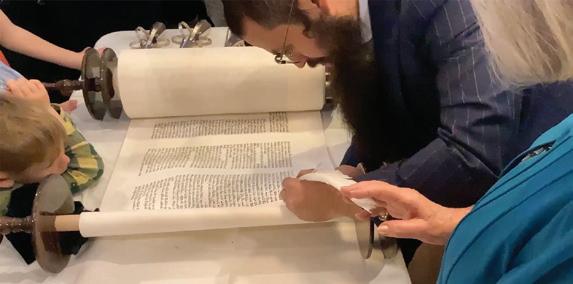
The visiting sofer completed the last 18 letters of the scroll with members of Beth Israel also holding the quill, completing the 613th commandment, that one write their own Torah. He explained that with 304,805 letters in
the Torah, if even one is not valid, the entire scroll is unusable. Holding the completion of each letter as the key to the scroll being kosher, participating in the completion of one letter is seen as fulfilling that mitzvah.
The first three letters were done by previous Torah donors, then the senior congregants, then new members. After several congregants did letters, the final five were done by Beth Israel Student Rabbi Ben Russell, Shemper, Jacobs and Gerber, then Russell and Shemper together to complete the scroll.
After a celebratory meal, the Torah was danced for the first time. Gerber said traditionally one does seven circles, and each of the seven has a different meaning — survival, rebuilding, the children of the congregation, those who came before, those who protect the Torah, the unity of our people, and rejoicing with the Torah.
Gerber told the Beth Israel congregants, “May this Torah carry you. May it be light that leads you back into your sanctuary.”
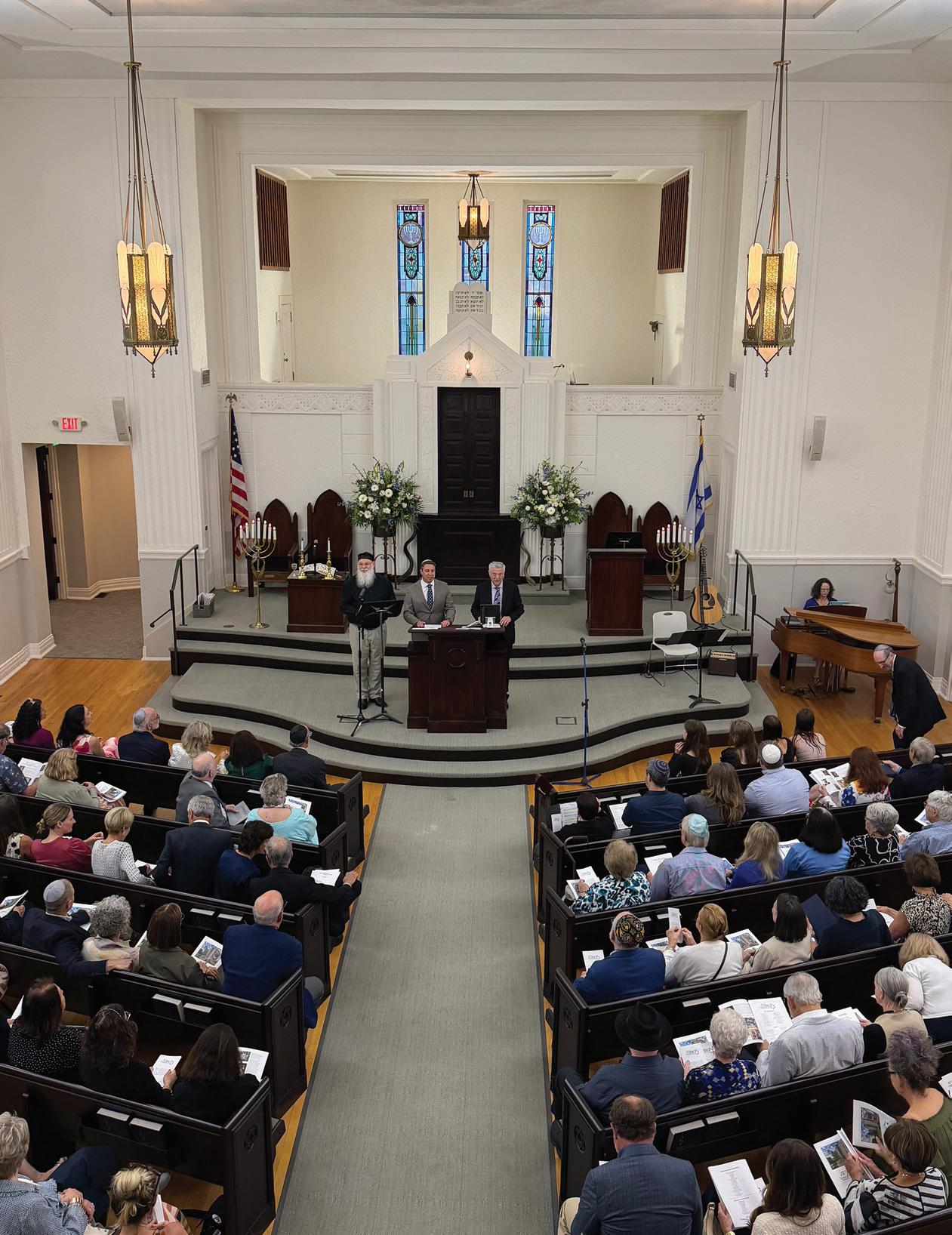
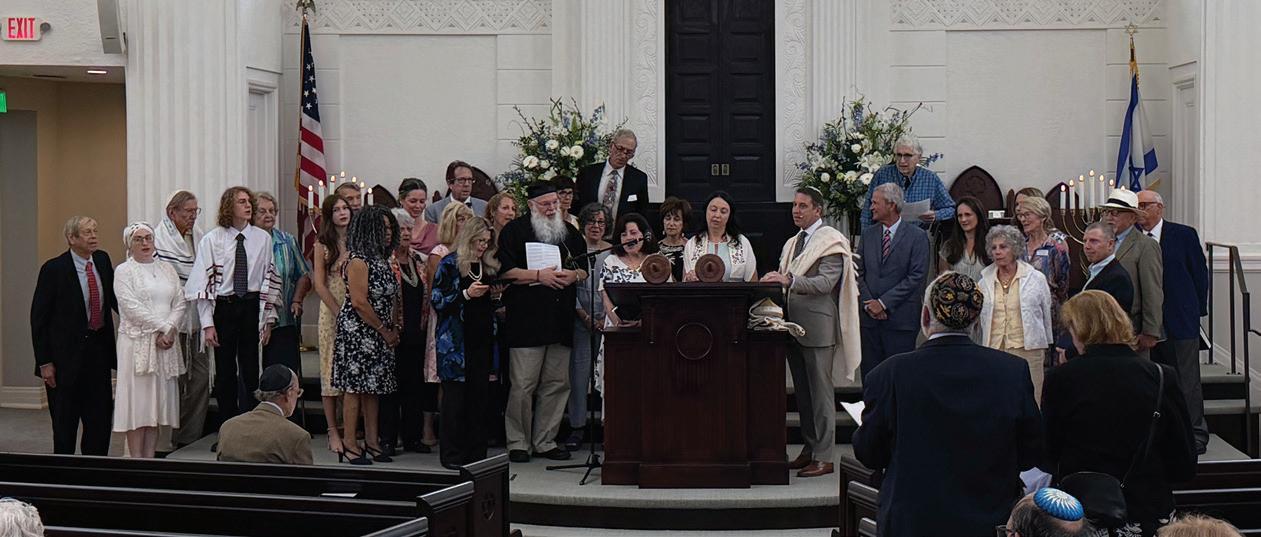
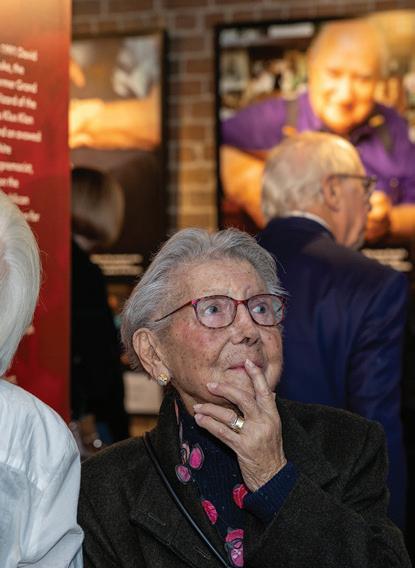
During the second aliyah on April 18, to the right were those who have been members of Pensacola’s Temple Beth El for 50 or more years, and to the left are first-generation members.
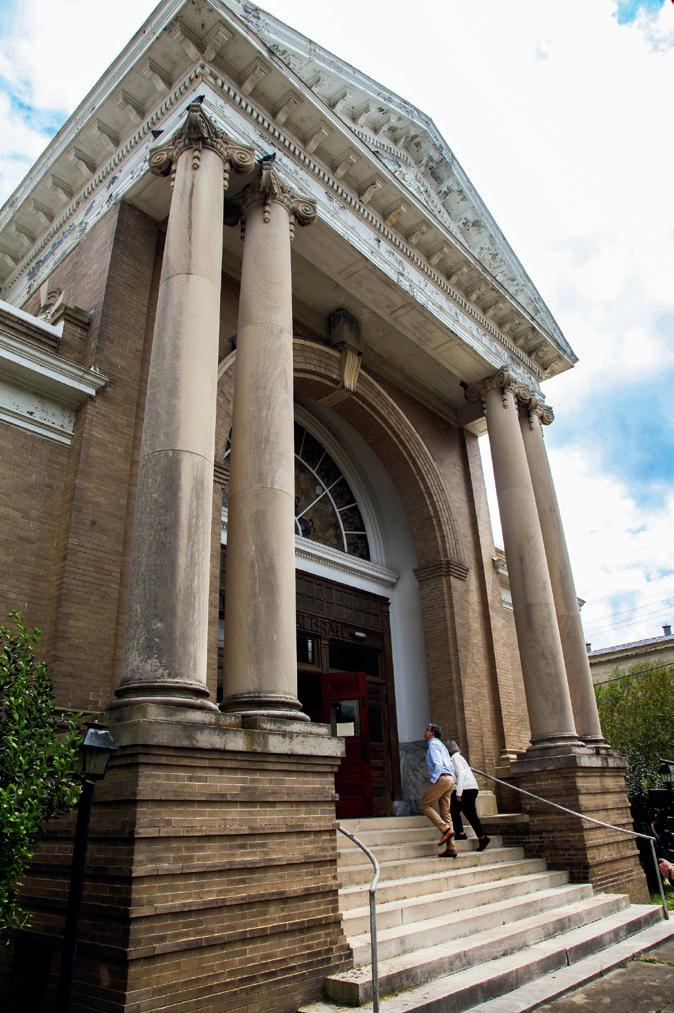
As Florida’s oldest Jewish congregation celebrated its 150th anniversary, Temple Beth El Rabbi Joel Fleekop said the event is a “mile post along the way,” a chance to “celebrate both the really rich and important history of the congregation” while also being a time “to look ahead to the continued strength of the congregation going forward.”
The Reform congregation, founded in 1876, held a “Share Our Past, Shape Our Future” weekend April 17 to 19.
Beth El President Brenton Goodman said it was “a wonderful, joyous opportunity” to revisit the congregation’s legacy. “It’s not every day that you get to understand the magnitude of what your congregation is to so many people, and see what it’s done.”
The weekend was coordinated by Janet and Chuck Kahn.
Janet Kahn told the full house at the Shabbat evening service on April 17 that it was “wonderful to see so many friends and family, those who traveled many miles to be here.”
She encouraged everyone to view the congregation’s historical display, which was created in cooperation with the University of West Florida Historic Trust and had been on display at the Pensacola Museum of Art before moving to Beth El for the anniversary weekend.
After thanking the committee members, sponsors, donors and those involved in the music for the weekend, she concluded by saying “we’re Jews, so there will be cake” after the service.
The Shabbat evening service included music through the years, starting with a piano prelude on “Yigdal” from 1873, which went into “Praise to the Living God” from the 1914 Union hymnal.
Other selections during the evening came from the Union Hymnal from 1957.
Assisting with the music theme, Cantor Richard Cohn helped lead much of the weekend. Cohn grew up at Beth El, where his parents were longtime active members.
Parts of the service also included Cohn’s wife Marsha, son David and son Jeremy and his wife Melody, and the Beth El youth musicians.
In 1972, Cohn was ordained as a cantor at Hebrew Union College-Jewish Institute of Religion in New York. He served North Shore Congregation Israel near Chicago for 19 years, and was founding conductor of the Kol Zimrah choir. From 2001 to 2007, he was president of the American Conference of Cantors.
For seven years, he was director of the Debbie Friedman School of Sacred Music of HUC-JIR, and in 2022 he became cantor-in-residence of Temple Beth Israel in Skokie, Ill.
He also was a longtime faculty member of the Institute for Jewish Spirituality’s Clergy Leadership Program, an immersive experience in spiritual practice for rabbis and cantors in the field.
Also helping lead the services was Greg Watson, who frequently plays piano and sings at services, and is a member of the Pensacola Opera.
In his Shabbat evening message, Fleekop compared the congregation to a batch of soup, recalling the children’s book “Bone Button Borscht,” where the sum of modest ingredients created something far better by being together.
“For 150 years, this temple — our temple, Temple Beth El — has thrived because similar to the people making soup in the story, its members have contributed and done what they could to nourish, enhance and better our community,” he said. “Our founding families like the man who set up the pot provided the vision that this little corner of the world could have a thriving Jewish community. Others provided the resources to build the sacred spaces our congregation has called home and to keep on the lights
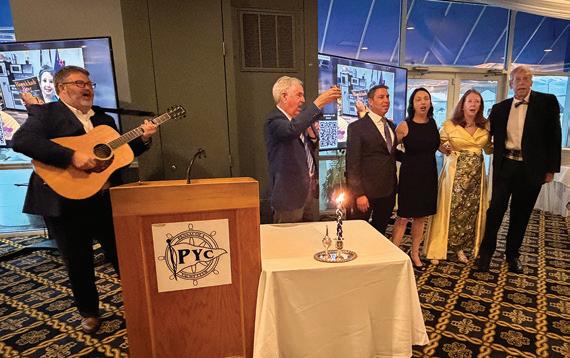
Havdalah at the Pensacola Yacht Club
community
and, this being Florida, the air conditioning also on.”
Over the decades, members have contributed according to their talents, through leadership, professional services, volunteering, contributing financially, welcoming newcomers.
Since its founding, the members of Temple Beth El have not only worked to build a Jewish community that will meet their spiritual and communal needs,” but make sure they leave behind more soup in the pot for those who will follow.
“At 150 years, our congregation is no doubt very different from what was imagined at its inception,” Fleekop said. “How could it not be?”
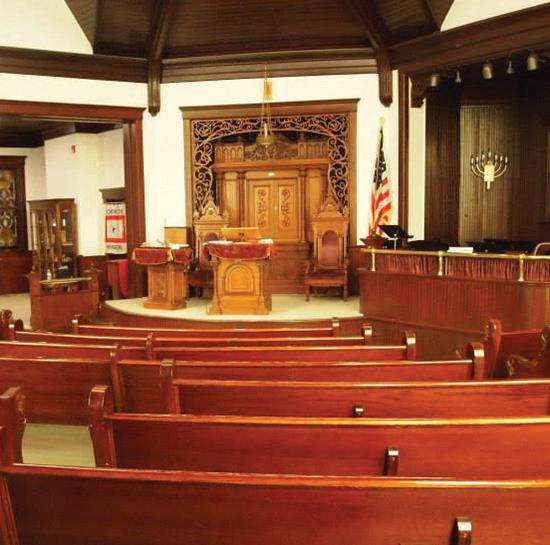
Referencing the American flag on the bimah, he said it was the flag of a union that, when Beth El was founded, had been restored barely a decade earlier, and had just 37 stars. The Israeli flag would not come into being for another three decades as the symbol of what was then a dream.
The Shabbat services contain more Hebrew, and kippot and tallesim are now more prevalent than ties and fancy hats.
“Inevitably each generation had its own taste and so added their own ingredients, the spiritual equivalent of maybe some okra, or zaatar, or even some sriracha,” he said.
“The soup that is our temple has gone from a Bavarian borscht to a Gulf seafood gumbo to a gluten-free, Asian fusion matzoh ball soup. But in many ways, in the most essential ways, we are still the same congregation.”
At the Shabbat morning service, Fleekop noted that at Beth El, as in much of the Reform movement, Confirmation was the rite of passage for teens, and Bar or Bat Mitzvahs are relatively recent. Immediate Past President Danny Zimmern, who in 1972 had one of the first Bar Mitzvahs at Beth El, and Maren Hobbs, the most recent Bat Mitzvah, to lead Mi Chamocha.
For the Torah service, an “executive decision” was made to move away from the traditional weekly portion, “which deals with leprosy and bodily emissions… which seemed very well connected to the theme of our weekend,” Fleekop quipped, and concentrate on the extra reading for the New Moon, as it was the first of the Hebrew month.
While the sacrifices mentioned in that portion may not resonate today, “it speaks to the importance of marking sacred time,” Fleekop said. While it is special to gather and celebrate the 150th anniversary, “it is a reminder that we have sacred moments throughout our life” to pause and recognize the significance.
The first Aliyah was given to those whose families have been involved in the congregation for more than 50 years. The second was for those who are the first generation in their families to be involved, and the third went to all those who had a simcha at Beth El — Bar or Bat Mitzvah, Confirmation, wedding. “We may not all fit on the bimah,” Fleekop noted.
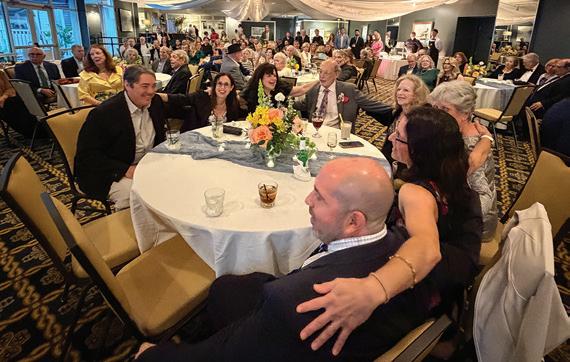
That evening, there was a celebration at the Pensacola Yacht Club, with
community
a mention of the numerous Beth El members who played significant roles in that institution, including four past presidents. Havdalah was done at the beginning of the evening, but in addition to signifying the separation between the holy time of Shabbat and the mundane time of the week, it was also a bridge between the 150 years of Beth El’s past and “God willing, the 150 years plus of Temple Beth El to come,” a separation between holy and holy.
Reflecting on the weekend, Fleekop said “I think it’s just been beautiful to have this cross section of the congregation and many families returning back to Pensacola this year and this weekend.”
Looking to the future, Fleekop said the city is growing and there is “great, vibrant energy… we hope and expect that this bodes well for the continued growth of the Jewish community.”
For Goodman, it was a chance to hear the stories about the congregation’s past, and its special role as the oldest synagogue in the state. While he grew up in Pensacola, he had been a member at B’nai Israel. Hearing the stories, “it brings it more to life.”
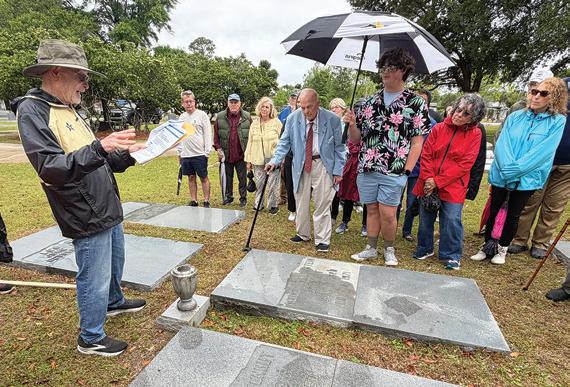
Many of the stories were brought to life the morning of April 19, as a crowd that surprised the planning committee brought coats and umbrellas for a somewhat chilly morning at the Beth El cemetery, at the tail end of a large overnight rain.
After a brief explanation of the repairs and enhancements at the cemetery after the extensive damage from seven trees being uprooted by Hurricane Sally in 2020, the group went through the cemetery, stopping at two dozen sites as Chuck Kahn, Bill Zimmern, Ray Engel and Rabbi Joel Fleekop took turns talking about various families who have been influ-ential in the congregation and the community.
Engel said the cemetery has 1400 plots. There are 621 burials in the cemetery, and 65 “people on deck. That leaves 600 plots left, so there’s still room. I’m taking reservations, as your concierge.”
The tour began at the plots of five of the 12 children of Samuel Goldbach, who donated the land for the cemetery. His son, Moses, was the first burial at the cemetery, at the age of nine months. Goldbach himself is buried in Thomasville, Ga.
There were numerous anecdotes about various figures, and how many longtime families in Pensacola’s Jewish community were intertwined through marriage. A recurring bit was about whether someone was a c-Cahn or a k-Kahn.
Engel commented that one goal is to get the perpetual care fund up to a certain level “because we all want to be at the next 150th.”
He added, “we’ve been here for 150 plus years. If we can continue to do what we’re doing, we might be here for another 150, or longer.”
Authentic North & South Indian dishes, tandoor-fired specialties, and a beloved weekday lunch buffet—made fresh with premium ingredients and customizable spice levels. Kosher-style and Vegan selections.
A tour of the Beth El Cemetery
A history of Pensacola’s Temple Beth El
When it comes to Florida’s Jewish community, most people today think of south Florida, the sixth largest Jewish community in the world. However, that is a post-World War II phenomenon, and the oldest Jewish congregation is located in Pensacola, which is celebrating its 175th anniversary this year.
The city’s Jewish history actually extends further back, with the state’s first known Jewish arrivals in 1763 when Spain ceded Florida to Britain as part of the Treaty of Paris. With New Orleans transferred from France to Spain, many Jews fled, with some going to Pensacola.
That migration would reverse in 1783 when Spain regained control of Florida, with many Pensacola Jews moving to Mobile. When the U.S. purchased Florida in 1821, some Jews started heading back to the area, but in 1845, when Florida became a state, there were no more than 100 Jews there.
In 1822, Virginia Myers became the first Jewish birth in Florida under U.S. rule, but the family moved away by the end of the decade.
Gradually, more Jews made their way to the northern, more hospitable part of the state, and the first Jewish institution, a cemetery, was established in Jacksonville in 1857.
Many newcomers first went to Milton to trade with the lumber camps there. After the Civil War, the lumber industry fueled a boom, attracting more people to the area.
In 1869, Pensacola’s Jewish community established a cemetery on land donated by Samuel Goldbach. His son, Moses, was the first known gravesite, having succumbed to a yellow fever epidemic that claimed a large proportion of Pensacola’s population. In the next 25 years, Goldbach would see the burial of four more of his children there.
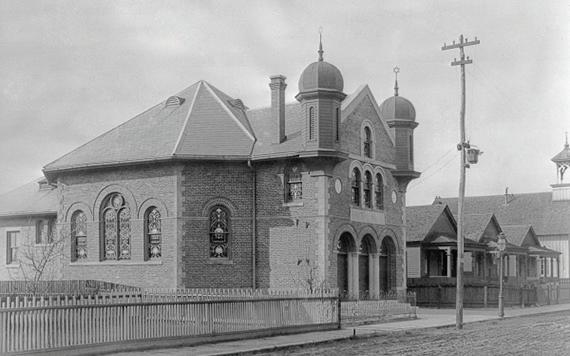
Temple Beth El, 1912
The state’s first B’nai B’rith chapter was chartered there in 1874, and in 1876, 10 families established Congregation Beth El. For the first couple of years, the congregation met in private homes or rented spaces, until they built the state’s first synagogue building on East Chase Street in 1878, at a cost of $3500. Services were conducted by Adolph Goldstucker, with Phineas Stone serving as cantor.
Ahavath Chesed in Jacksonville became the state’s second synagogue, being chartered in 1882 — though local Jews had gathered for services as
early as 1867.
Beth El would soon take over ownership of the Jewish cemetery. By 1889, Beth El had grown to 20 families, and joined the Reform movement. The next year, Rabbi A. Posman became the congregation’s first rabbi.
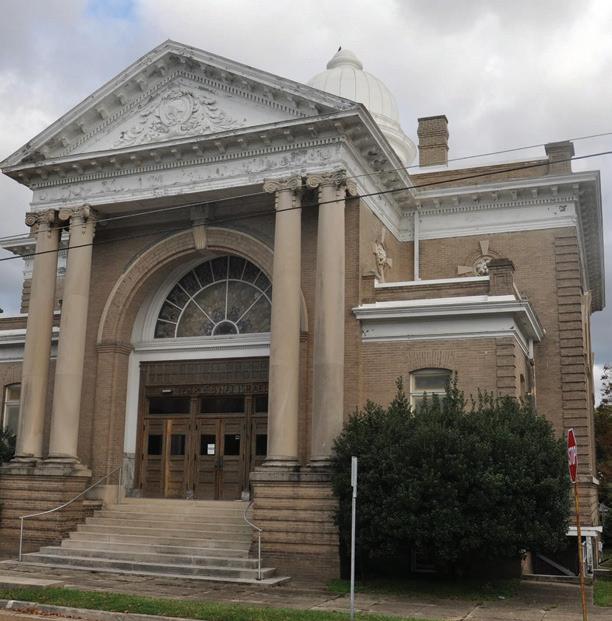
In 1895, the Beth El building burned, but was quickly rebuilt and rededicated in April 1896. Another fire destroyed the building in December 1929, but this time the decision to rebuild was accompanied by a move to the current location. Plans were developed as the congregation met at the Progress Club on West Chase Street, and the cornerstone was laid on June 1, 1931.
The Progress Club had been organized in 1897 as a response to exclusion of Jews from some civic organizations, including the Pensacola Country Club.
In 1897, Rabbi Isaac Wagenheim arrived to serve the congregation, then he took a position in Pennsylvania in 1903 — but other family members remained in town and have been active in the community through the decades, including the formation of the city’s first Kindergarten by Elsie Block Wagenheim in 1917. She would run the school until 1962.
A group of Eastern European immigrants formed B’nai Israel in 1899, and they initially met at the Beth El building, then moved to Oddfellows Hall. Pensacola became the first community in the state with two Jewish congregations, and B’nai Israel was only the sixth in the state.
When Beth El’s new Art Deco building was dedicated, the congregation had about 50 families and was the second largest Reform congregation in the state.
The city’s growth was boosted by the establishment of the Naval Air Station in 1914. During World War II, over 40 men from the Jewish community served in the military, and the Beth El Sisterhood worked with Hadassah Pensacola on USO activities and welcoming Jewish service members stationed in the area.
In 1960, Beth El expanded with a religious school building next door to the main building.
While Beth Israel in Meridian claims the ti-
Her heart is in good hands
Here, everything we do comes from the heart. Every child is surrounded by our team of compassionate caregivers who treat them as if they were their own. From the smallest patients with the biggest spirits to the families who stand beside them, we’re inspired by their strength and courage.
Helping kids heal, grow and live their best lives possible, it’s at the heart of everything we do. ChildrensAL.org/heart
Accept No Limitations
community
tle of having the first woman serving as rabbi — though because she was not ordained, she eschewed the title — Paula Ackerman was originally from Pensacola. Her husband, Rabbi William Ackerman, had served in Meridian from 1924 until his unexpected death in 1950. The congregation turned to her as spiritual leader, a role she held for three years.
In 1962, having moved back to Pensacola, she briefly reprised the role at Beth El, where she grew up, after the departure of Rabbi William Sanderson, until Rabbi William Schwartz was hired.
While Beth El had a lot of rabbinic turnover in the early years with no one serving more than 11 years, Schwartz served from 1962 to 1990, and Rabbi David Ostrich succeeded him until 2005. Rabbi Joel Fleekop has been in Pensacola since 2012.
A major remodel took place at Beth El in 1993, with more updates in 1999. The Northwest Florida Jewish Historical Exhibit and Pensacola Jewish Federation offices also became part of the campus.
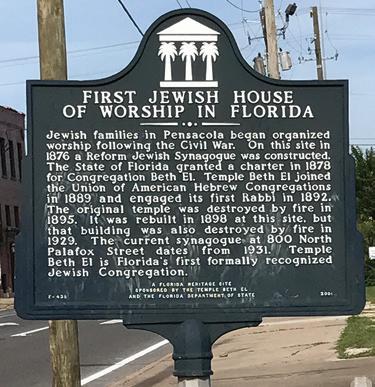
In 2001, a historical marker was placed on East Chase Street, part of a project to mark the location of the first synagogue building in each state. The marker was recently removed, due to construction of the Hotel Tristan on that site. That marker led to on-air confusion in 2004, when Hurricane Ivan went through the area. The crawl on CNN reported that Beth El had been destroyed, but there was only minor damage to the building. Apparently, a reporter had gone by the Chase Street location and saw rubble from the wall of a building that had collapsed into the parking lot where Beth El once stood, and made an erroneous conclusion.
While Beth El escaped Ivan without major damage, Hurricane Sally in 2020 caused heavy damage at the cemetery.
In 2015, the congregation started its largest building project since the 1930s. The open area under the education building was filled in, providing offices and a board room. An atrium connected the two buildings, with accessibility improved by an elevator, and the bimah was expanded. Also between the buildings, a new Susan Bear Leith Memorial Garden was established for quiet reflection.
Today, the congregation has about 180 families. Andrea Fleekop leads the School for Jewish Living, which has over 50 students from age 3 to 10th grade. Last October, Pensacola Area Reform Temple Youth hosted a NFTY-Southern conference for over 80 teens from around the region, and the congregation is active with Henry S. Jacobs Camp.
For over 15 years, the Brotherhood has hosted a poker tournament as a major fundraiser, and recently the Sisterhood and Brotherhood have partnered for Jews Who Cook.
The Power and Ethics of Transplant Medicine
Hadassah New Orleans holding panel based on
“Alive and Beating”
Shop for your favorite dancer at Applause
1629 Oxmoor Road • Homewood, AL (205) 871-7837 • applausedancewear.net
Dancewear, Gymnastics and Fitness
Family Owned and Operated since 1981
Hadassah New Orleans is partnering with the Tulane University School of Medicine on a free community program on the power and ethics of transplant medicine.
The June 25 program was inspired by Rebecca Wolf’s “Alive and Beating,” her debut novel. Inspired by a true story, the book traces six people from diverse backgrounds and neighborhoods in Jerusalem, all of whom are desperately in need of organ transplants. They include Leah, a Hasidic young woman; Yael, a daughter of Holocaust survivors; Hoda, a Palestinian hairdresser; David, an Iraqi restaurant owner; Severin, a Catholic priest; and Youssef and Yosef, two teenage boys whose fates are linked.
After a bus bombing days before Passover, there is a question that flows through the novel: Who will get a phone call about an organ donation that will save his or her life?
The story is based on a childhood friend who was on a bus that was bombed in 1995. Shrapnel struck her brain stem, rendering her brain dead, but at the time death was defined by the heart stopping, so her parents embarked on an odyssey, speaking to doctors and rabbis so her organs could be donated.
That case led to organ donation guidelines being changed in Israel.
This program aims to foster dialogue at the intersection of literature, health, and community awareness, highlighting advances in transplant science, the pioneering work of Hadassah Medical Center, and real stories from the transplant community.
“This event is an opportunity to bring together storytelling and science,” said Ilana Reisin, event chair. “We hope to create a meaningful conversation that informs, inspires, and empowers our community.”
Panelists will include Wolf and Keren Tzukert, head of Transplant Nephrology, Hadassah Medical Center; Ari Cohen, director of the Ochsner Transplant Institute; Felicitas Koller, Abdominal Transplant Surgeon at the University of Mississippi Medical Center and Donor Family; Tzofit Ofengenden, Associate Director, Graduate Studies Bioethics and Medical Humanities at Tulane Medical School; Briann Shear, recipient family representative.
The program will be moderated by Ana Hands, vice president of the Tulane Transplant Institute.
The June 25 program will be at 5 p.m., location given upon registration, and on-site parking will be available.
A fifth-generation farmer from Baldwin County One of the nation’s leading turf grass producers Dedicated to protecting Alabama’s farms, food supply and property rights.
1. Strengthening the Farm Bill & Nutrition Programs to benefit families and Alabama farmers. Let’s put the FARM back into the Farm bill.
2. Protecting Alabama Farmland and intellectual property from ownership by adversarial foreign countries.
3. Securing the Next Generation of Farmers amidst rising land, fertilizer and equipment costs. Food security is national security, and without young farmers, we cannot feed Alabama or America.
4. Growing Sweet Grown Alabama. Our brand is strong, but we can do more, such as creating an agri-tourism experience that connects families with fresh produce, farmers markets, and festivals while keeping money in local communities.
5. Streamlining Grants for Farmers to make the process less complex.
Christina Woerner McInnis on May 19
Alabama ties in International Jewish Sports Hall of Fame class
Bruce Pearl, Andre Tippett to be inducted
Two sports figures with Alabama ties are among this year’s class of the International Jewish Sports Hall of Fame.
Retired Auburn basketball coach Bruce Pearl and Pro Football Hall of Fame player Andre Tippett are among the 20 inductees announced on April 15.
Other class members include three-time Super Bowl champion Julian Edelman; Omri Casspi, the first Israeli to play in the NBA; “voice of basketball” Marv Albert; Basketball Hall of Fame player and coach Nancy Lieberman; and legendary announcer Al Michaels, best known for calling the Miracle on Ice in 1980.
Last summer, Pearl retired after 11 seasons as Auburn’s head coach. In 2025, Pearl was named co-AP Coach of the Year, with Rick Pitino. Prior to Auburn, he served as the head coach at Tennessee, Milwaukee and Southern Indiana. Pearl led Southern Indiana to a Division II national championship in 1995, during which he was named Division II Coach of the Year by the National Association of Basketball Coaches.
In Division I, his teams won four conference championships, four conference tournament championships, qualified for 11 NCAA tournament appearances and two Final Four appearances. Pearl was the second-fastest NCAA coach to reach 300 career victories.
Pearl was named Coach of the Year by Sporting News in 2006 and was awarded the Adolph Rupp Cup in 2008. He also served as the head coach for the Maccabi USA men’s basketball team that won the gold medal at the 2009 Maccabiah Games.
Pearl was the first president of the Jewish Coaches Association. The Algemeiner named Pearl one of 100 people positively influencing Jewish life in 2022, and took his Auburn team on a summer tour of Israel, where they played three exhibition games.
Among his roles in retirement, Pearl is board chair of the Birmingham-based U.S.-Israel Education Association, and often appears on cable news to discuss Israel and the Middle East.
“I’ve always tried to represent the name on the front and the back of the jersey,” Pearl told JNS. “But the name on the back wasn’t just Pearl. It was the Jewish people. It was my family. I had to answer to a higher authority, and the bar was set higher.”
Pearl said leading Maccabi USA to a gold medal at the 2009 Maccabiah Games remains a career highlight. “I took 13 Jewish boys over and brought 13 Zionists back home,” he said.
Pearl told JNS he is “blown away by the incredibly talented and impactful” class of inductees and is “proud to be a member of their tribe.”
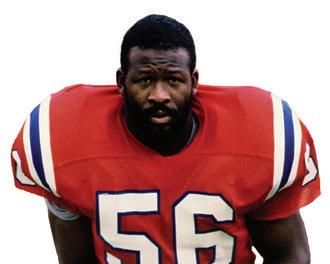
Tippett was a linebacker in the National Football League for 11 seasons
Andre Tippett
New Website! www.thaiesaneal.com
Online Ordering Available
See us for your Thai cravings!
Featuring our Drunken Noodles, Pad Thai and Panaeng Curry
New Asian-Inspired Salads
Ask about our Catering Options
Pizitz Food Hall, 1821 2nd Ave. No.
Open Mon-Sat, 11am-8pm Order Online for Pickup through Google on Toast Delivery via UberEats, DoorDash, GrubHub www.thaiesaneal.com
community
with the New England Patriots. A second-round pick in the 1982 NFL draft, Tippett was selected to five Pro Bowls and was named first-team All-Pro twice in his career. He currently serves as the executive director of Community Affairs for the New England Patriots.
He was enshrined into the Pro Football Hall of Fame, the National Jewish Sports Hall of Fame, the Alabama Sports Hall of Fame and the College Football Hall of Fame, and was selected to the Patriots Team of the Century in 2000.
Born in Birmingham, Tippett’s family moved to the northeast and he graduated high school in Newark, N.J. He was recruited by the University of Iowa and led the Hawkeyes’ defense in 1981 to its best performance in school history.
The Patriots drafted him in the second round of the 1982 NFL Draft. He became an instant starter and from 1984-85, Tippett recorded the highest two-season sack total by a linebacker in NFL history with 35 sacks in the two seasons. He would earn five straight Pro Bowl selections from 1984 to 88 and was named AFC Linebacker of the Year for three straight seasons, 1985 to 1987.
In 1986, he met Rhonda Kenney, who was working at a Black radio station in Boston. He would frequently ask her about her Jewish heritage, then initiated his own process to convert before they were married in 1993. Patriots owner Robert Kraft assisted him on the journey, and was one of the witnesses for his conversion.
In a 2012 interview before his Alabama Sports Hall of Fame induction, Tippett told SJL “I was raised Baptist in a devout family. But the conversion to Judaism was something I initiated and felt in my heart I was doing something that was right for me. That is the most important thing first. The more I learned, the more I embraced it and realized how uniquely special this was. Being Jewish is who we are and I am very proud of it.”
His first trip to Israel was in 2009, as the entire family went for the Bat Mitzvah of one of his daughters, Madison.
In 2017, Tippett was part of a delegation of 18 Hall of Fame players who went to Israel with Kraft, visiting the Israel Defense Forces Tel Nof air base to show appreciation for the soldiers defending the country.
Other honorees include Argentine world champion boxer Carolina Duer; Israeli Paralympian Zipora Rubin-Rosenbaum, a 31-time medalist; tennis player Jay Berger; Olympic champions Robert Fein of Austria (weightlifting, posthumous) and Dezső Földes of Hungary (fencing, posthumous); Israeli-American boxer Yuri Foreman; Australian Olympic gold medalist canoeist Noemie Fox; Israeli fencer Lydia Hatuel-Czuckermann; major champion golfer Morgan Pressel; former Yeshiva University coach Red Sarachek (posthumous); NBA veteran Danny Schayes; Argentine tennis player Diego Schwartzman; and Israeli Paralympic shooter Doron Shaziri.
Founded in 1981 as the successor to the American-only Jewish Sports Hall of Fame, the International Jewish Sports Hall of Fame honors athletes, coaches and contributors worldwide for excellence in sports and service to the Jewish community and Israel. More than 500 individuals have been inducted.
“Through their stories, showcasing the strength, resilience and achievements of Jewish athletes, we promote Jewish pride and inspire future generations,” the Hall says of its honorees.
The class of 2026 will be inducted on June 29 at Kfar Maccabiah in Ramat Gan.
Coach Bruce Pearl
Day of Jewish Learning
Limmud New Orleans returned to the JCC on March 8
Limmud returned to New Orleans with a day of learning at the Uptown Jewish Community Center on March 8, featuring 35 sessions over six time slots, on a wide range of Jewish topics.
While the local event is volunteer run, the logistics are handled by the New Orleans group being part of Limmud North America. The majority of speakers are local, but several came from around the country to volunteer their time.
During lunch, Rabbi David Singer, CEO of Limmud North America, encouraged everyone to “take a look around the room, to look at faces of people that you know, look at the faces of people you don’t know, and spend some time today getting to know your community, elevating your own curiosity, and really stretching your comfort zone by learning things that are interesting, learning things that are new. and pushing yourself to try something you want as you have so many different opportunities.”
Limmud Board Chair Donna Friedman Meir said the day was an opportunity for her “to hear a perspective that is very different from my New York roots and my California living.” She also led a session on “Speed Story Sharing.”
Limmud New Orleans is generally held every other year, and is part of an international network of Limmuds. A Limmud Southeast will be held at Ramah Darom in Georgia over Shavuot and Memorial Day weekend, May 21 to 25.
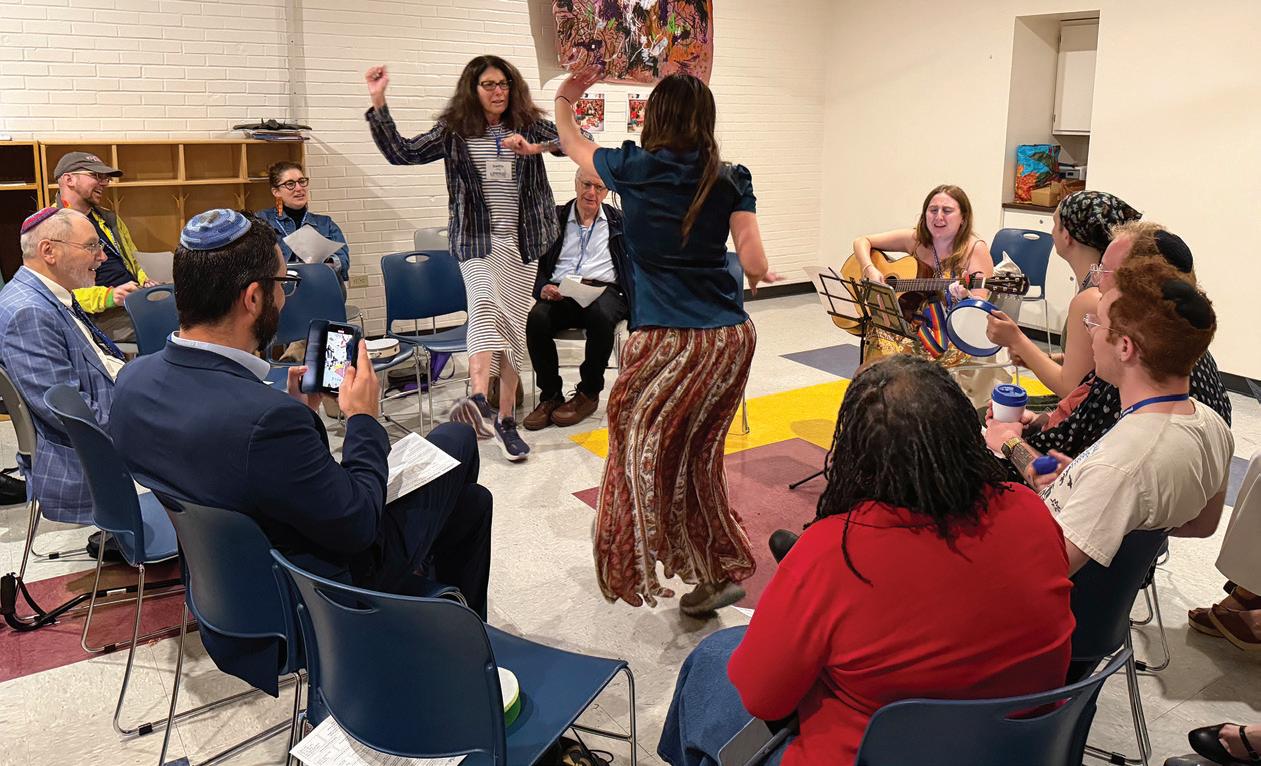
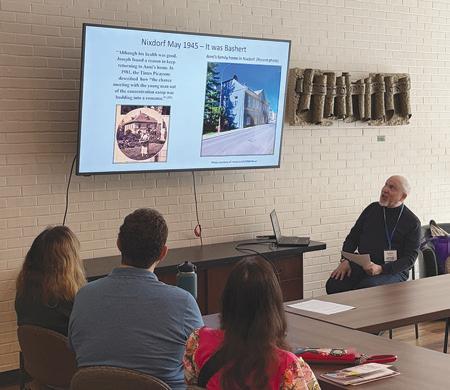
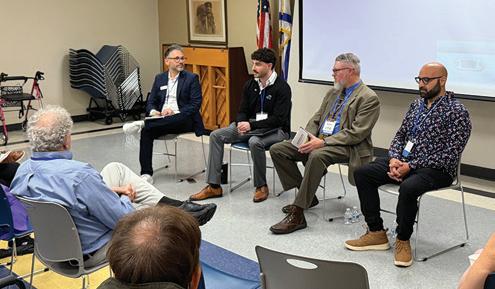
Top, a Niggun Circle led by Gates of Prayer Cantorial Soloist Jordan Lawrence. From above right, George Dansker presents “Anni and Joseph: An Unexpected Love Story” about the Sperlings, who came to New Orleans as displaced persons in 1952; a last-minute addition, “Iran and the New Middle East Battlefield” with Sam Melamed, Nathaniel Miller and Michael Wallace; and Richard Marker discussing “Why the 1700 Year Anniversary of the Council of Nicea, the 60th Anniversary of Nostra Aetate, and the 50th Anniversary of Formal Relations with the Greek Orthodox Matter.”
Nestled in the scenic foothills of Shades Mountain in West Homewood, Regency Retirement Village provides the warmth of home combined with the reassurance of community living.
Independent Living • Assisted Living Pathways Specialized Programs • Short-Term Stays
Call us to schedule a tour!
385 West Oxmoor Road, Birmingham (205) 942-3355 regencybirmingham.com
Southern Jewish Travel
Recognizing the role of New Americans
MSJE exhibit details social, activist club
While much of the Museum of the Southern Jewish Experience deals with Jews who immigrated to the region in the 19th and early 20th centuries, there is a more recent, and much different, immigration story.
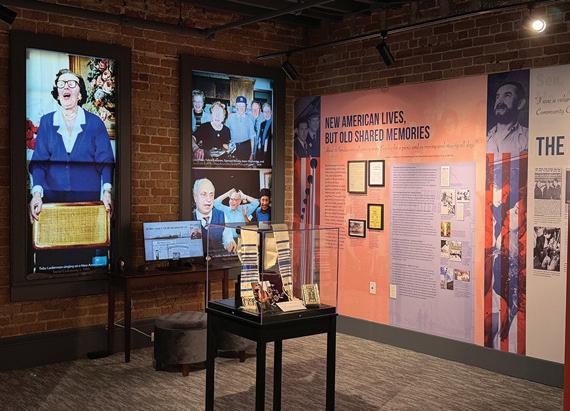
“Holocaust Survivors in a New Land: The New Americans Social Club of New Orleans” tells the story of Holocaust survivors who made new lives in the South, becoming citizens, opening businesses, organizing Yiddish-language entertainment and Holocaust memorial programs, and even confronting neo-Nazis.
The exhibit opened on March 20 at the museum in New Orleans and is scheduled to run through the end of the year.
Museum Executive Director Kenneth Hoffman said, “While the Southern Jewish experience can be found as far back as colonial times, we’re taking an opportunity to explore this more recent immigrant experience – one that resonates across religious, political, and cultural divides.”
The exhibit builds on the work of John Menszer. In 1993, Menszer started a project to document the stories of Holocaust survivors in New Orleans. What started as a photography project became a traveling exhibit and website.
The exhibition includes biographical panels created by Menszer that spotlight the experiences of survivors, like Shep Zitler, Eva Galler, Joseph Sher and Felicia Fuksman. QR codes on each panel lead to web pages about each of the survivors.
While he had studied the Holocaust, it was through this work that he was able to begin to grasp the depth of the emotions and the history coming from the Holocaust.
The exhibit opens with a photo of 45 New Americans standing in front of the Jewish Community Center in 1952.
The club itself would not be officially formed until 1961. Though the New Americans had been meeting for a decade, the twin influences of the Eichmann trial and a confrontation with George Lincoln Rockwell and his American Nazi Party in New Orleans prompted them to name their group, giving it a greater presence in the community.
Rockwell came to New Orleans on a “hate ride” in response to the Freedom Rides, and also planned a protest outside a screening of the film “Exodus,” where they were confronted by the New Americans.
That fight continued in 1989, when Klansman, neo-Nazi and Holocaust denier David Duke was elected to the Louisiana Legislature. That June, an exhibit about the Holocaust was displayed at the State Capitol, and Duke showed up. Anne Levy, a survivor in New Orleans, saw him and confronted him. The confrontation and hasty exit by Duke was captured by the media, and the publicity, and Duke’s electoral success, prompted many New Americans members to speak out about their experiences, leading to the Southern Institute’s “Ten Stories of Holocaust Survivors in New Orleans.” For the New Americans, defeating Duke in his run for
Southern Jewish Travel
governor in 1991 became a high priority.
Exhibit panels tell the stories of individual New Americans, Shep Zitler, Eva Galler, Joseph Sher and Felicia Fuksman.
“The survivors lived lives of substance,” said Menszer. “They pulled together and became an extended family for each other. You feel their presence in this exhibit.”
Other displays detail the different people and organizations that helped with resettlement, and how the New Americans advocated for remembrance, from annual ceremonies to artistic memorials at the JCC and at Woldenberg Park.
The exhibition includes photographs of the club’s gatherings, personal artifacts and immigration documents, and reconstructed audio recordings of Yiddish poetry performed at New Americans Social Club parties.
Museum curator Michael Jacobs added, “Working with John and the families of survivors is giving us the opportunity to bring these stories to thousands of MSJE visitors, locals and tourists alike.”
Levy, said to be the only remaining member of the club, was on hand for a special members preview on March 19, along with family members of many of the featured survivors.
The museum’s education department has designed a special field trip for 3rd to 12th grade students. “We’re especially looking forward to welcoming school groups from across the Gulf South to see this exhibition,” said Hoffman.
The museum’s annual student writing contest for grades 5 to 8 had a theme of how middle schoolers can welcome new Americans to their schools and communities today.
This exhibition was made possible in part with support from Karen and Leopold Sher, the MJ Sindler Family Fund for Culture & Media, Harvey Stone, and Henry Rosenblat.
Holocaust survivor Anne Levy at the exhibit opening reception
Southern Jewish Travel
B’nai Israel restoration part of tourism expansion efforts in Natchez
Located over an hour from an Interstate highway, Natchez is often seen as being off the beaten path, despite being one of only four places in Mississippi to cross the Mississippi River. But with new accessibility on the way, Natchez has been expanding its tourism offerings to make itself a destination, and is highlighting one place familiar to the Southern Jewish world — Temple B’nai Israel.
In December, renovations began at the Natchez-Adams County Airport in advance of the return of commercial air service. Starting July 1, for the first time in 30 years, there will be daily United Express service between Natchez and Houston.
“We are entering an exciting new chapter for Natchez, and these renovation efforts reflect our community’s momentum and our shared commitment to welcoming visitors with a modern, elevated travel experience” said Lynsey Gilbert, Interim Director of Visit Natchez. “With commercial air service returning next year, Natchez is positioning itself for continued tourism growth, stronger connectivity, and expanded economic opportunity.”
In addition, the Natchez Convention Center just underwent extensive renovations.
The Eola Hotel is undergoing extensive renovations and plans to reopen as a Marriott Tribute portfolio hotel in 2027. It was originally constructed by the Levy family in 1927.
There are several major events upcoming. On May 30, the Natchez Bicycle Classic will offer a scenic bicycle ride offering routes of 15, 26, 40, and 62 miles featuring rolling hills, historic scenery and an after party to celebrate.
The Natchez Food and Wine Festival in July is a premier annual culinary event, celebrating Southern cuisine, wine and craft beer against the backdrop of Mississippi’s historic river city.
The Natchez Garden Club’s Fall Pilgrimage is in November, with exclusive tours, and events opening the doors to some of America’s most exquisite historic homes and gardens. Brimming with history, these sites help tell the multi-layered, multi-cultural stories of the city of Natchez.
And in October, the 41st annual Natchez Balloon Festival will take place, as the largest and most successful festival in Southwest Mississippi.
Restoring B’nai Israel
Mimi Miller, executive director emerita of the Historic Natchez Foundation, said work has been progressing on the restoration of B’nai Israel, and “we believe what we’ve been wanting to happen will happen.”
B’nai Israel is the oldest Jewish congregation in Mississippi, founded in 1840. Their first building was dedicated on the current site in 1870, but burned down in 1903. Two years later, the current building was rededicated for a community that numbered 450, but is now down to 12.
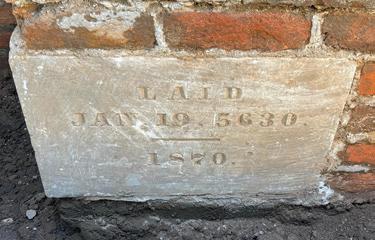
Last month, a contractor working on the building’s exterior uncovered the original 1870 cornerstone, and exposed red brick at the rear of the building is thought to have come from the original building.
Work is continuing from a recent $180,000 grant. But now, the focus is on a $500,000 matching grant; they have until April to come up with the match. “We’re trying to fundraise for the future,” she said.
The roof was fixed last year, preventing further interior damage. A cold spell led to some recent damage to a wall above the pulpit, that will be repaired along with stained sections of the ceiling from previous roof leaks.
The 1905 B’nai Israel building in Natchez
Southern Jewish Travel
Work is also in progress on a heating and cooling system, Miller said. The lack of a system, along with plywood that has since been removed, led to mildew problems downstairs. The congregation’s archives were housed there, they are now in the foundation’s climate-controlled archive for preservation.
Similarly, unless needed for a service, the Torah is kept in a vault off-site.
There is still much work to be done, especially on the exterior. A handicap ramp was added years ago, ending in the rabbi’s office behind the sanctuary. There are plans for a much-needed elevator to make the downstairs accessible. Currently, there is just a narrow staircase in the front of the building, which she called a “nightmare.” The elevator will take up part of the old rabbi’s study, and accessible bathrooms will be installed downstairs.
The upstairs bathrooms, Miller said, will remain intact, with original fixtures and stainedglass windows.
On Jan. 15, the foundation held its annual meeting at B’nai Israel. “It was amazing, it filled up,” she said. “People enjoyed being in the building. Many had never been there,” something that would have been unusual to say a century ago, as everyone visited everyone else’s spaces routinely.
Miller has been researching the history of the Dreyfus family. “We have to make sure the story stays alive, and that is the place.”
During the restoration, there are plans for the foundation to assume ownership of the building from the Goldring/Woldenberg Institute of Southern Jewish Life in Jackson.
The Viking river cruises stopping in Natchez routinely send passengers to B’nai Israel for tours, and there are a lot of Jewish passengers interested in the area’s history. Miller said that a month or so ago, she received a letter from one such passenger — with a check for $2,000.
She said that when the sanctuary is fully restored and the organ is repaired, they will be able to do “show and tell” events with Jewish food and music so the non-Jewish community can learn about an important part of Natchez history.
But for anyone who wants to see the work in progress, “all you have to do is call us.”
CJFS CARES Respite Is Growing!
The original B’nai Israel cornerstone was recently discovered
Critical (acclaim)
“He periodically spells my name right.” – Moses
“Yes, we gave him a graduate degree. We’re looking into it.” – chancellor, Jewish Theological Seminary
“Half of the things he says I said, I never said. Including this.” – his mother
“He knows more about Judaica than most, and you won’t find any of it in this book.” – his fourth-grade teacher
“I’ll deal with him.”
– The Almighty Big G
Southern Jewish Travel
McWane Science Center gears for future, recognizes its foundations
New exhibit will feature “slow animals”
By Lee J. Green
Birmingham’s McWane Science Center will host two traveling exhibits this spring — one about artificial intelligence and one that welcomes live animals as special guests.
Opening June 13 and running through Jan. 4, “Survival of the Slowest” shows the resiliency of “slow animals,” including sloths, chameleons, iguanas and hedgehogs.
Aside from the aquarium on the bottom level, “this is the first time we’ll have live animals as part of one of our exhibits” said Bob Levine, McWane’s Director of Special Projects. “It’s a scientific take on the animals, layering in learning about ecology and biology. Kids can learn how we can care for the animals and the environment they live in.”
Levine said “Survival of the Slowest” shows how animals that are slow, small or seemingly vulnerable have developed unique ways to survive through adaptation, camouflage and energy conservation.
He said the IMAX Documentary “Wild Rescue,” running from May 15 to March 18, will feature animals and tackle subjects including conservation and environmental science.
Opening just a few weeks earlier, on May 23, McWane presents “Artificial Intelligence: Your Mind and the Machine.” The exhibit, which runs through Sept. 7, will allow visitors to step into the world of AI and discover how machines learn, recognize patterns and make decisions.
Students will explore how AI is used in everyday life and consider important questions around technology, ethics and the future of human-machine interaction.
McWane Marketing Director Haley Gregg said that upcoming events and exhibits include McWane After Dark on June 20. It’s an 18-plus event with an Adult Summer Camp theme. Then they will host a Weather Fest event October 10.
She said in 2025, the McWane Science Center served 1,108 schools with on-site education or its McWane on the Move mobile learning program.
The McWane also has a scholarship fund that allows schools in need access to the McWane Science Center. They had visitors from or visits to schools in all 67 Alabama counties last year and in 2024.
Levine said McWane will be renovating its lobby during dates to be determined in 2026. When it’s complete, they plan to have a program honoring some of the greatest contributors to the founding and support of the Science Center.
“Hal Abroms was the first chairman of the board for the McWane Science Center and my father-in-law, Donald Hess, has also been so vital to the museum’s launch and continued growth,” he said. “As we move forward, we want to recognize those who have been so important to our history.”
New Orleans Southern Jewish Dining
Rosie’s on the Roof
1000 Magazine St., New Orleans (504) 528-1941
This stunning Higgins Hotel rooftop bar and lounge with sweeping views of the New Orleans skyline is the perfect place to start — and finish — your night in New Orleans. Serving small plates, sandwiches and specialty cocktails.
Commander’s Palace
1403 Washington Avenue New Orleans (504) 899-8221
Ella Brennan said she didn’t want a restaurant where a jazz band can’t come marching through. Come for the legendary Commander’s Jazz Brunch, stay for the rollicking Louisiana charm and award-winning New Haute Creole cuisine.
Cafe Normandie
1000 Magazine St., New Orleans (504) 528-1941
The Higgins Hotel’s full-service restaurant, Cafe Normandie offers an elevated dining experience showcasing French-influenced cuisine. Open for breakfast and lunch, and Sunday brunch.
Bodega
3633 Annunciation Street, Uptown New Orleans (504) 354-9878
Stop by Jaryd Kase’s casual neighborhood spot for lunch, or get a grab-and-go from the market, even a full Shabbat dinner. The menu has Jewish influences with African and South American flavors, catering is available, and catch his pop-ups as well.
Kosher Cajun
3519 Severn Avenue, Metairie (504) 888-2010
Kosher Cajun New York Deli & Grocery has authentic New York specialties — all Kosher certified. Enjoy classic eats like Reubens and matzah ball soup, plus kosher grocery staples too.
Bistro
921 Canal Street, New Orleans inside the Ritz-Carlton
M bistro’s menu is an indigenous approach to the preparation of the finest meats, seafood and produce from growers in Louisiana, Texas, Mississippi and Alabama.
Southern Jewish Dining
Habitat Feed and Social
Ocean is known for its commitment to pristine seafood, refined technique, and polished hospitality. The menu centers around whole fish and other seafood offerings, alongside composed dishes that reflect a disciplined, ingredient-driven approach.
Taj India
For over 30 years, Taj India has been Birmingham’s home for authentic Indian cuisine—prepared with care, tradition and the finest ingredients. From our signature curries to oven-fired naan, every dish reflects a passion for flavor and hospitality.
of
Elevate your social outing with deeply indulgent flavors. Located in the Grand Bohemian Hotel, Habitat Feed and Social elevates the midday routine with a two-course Power Lunch, or have an evening to remember on the rooftop.
Surin West
Serving authentic Thai cuisine for over 30 years, Surin uses the freshest local vegetables and meats combined with authentic Thai ingredients to provide an unforgettable dining experience.
Since 1991, Bud’s Best has been known for its Little Cookie with Big Taste, with almost 20 varieties of mostly bite-size cookies, under kosher supervision, available throughout the region. budsbestcookies.com, Birmingham (205) 987-4840
Birmingham Southern Jewish Dining
The Fish Market
612 22nd Street So., Birmingham (205) 322-3330
A Birmingham classic, The Fish Market on Southside offers the freshest seafood around, live music and an oyster bar. Private and semi-private dining available, along with catering.
A Nashville favorite now in Birmingham, Thai Esane features authentic dishes from northeastern Thailand, such as drunken noodles, Pad Thai and Panaeng Curry. Open for pickup or delivery. Pizitz Food Hall 1821 2nd Avenue No. Birmingham
2921 Highland Ave. So. (205) 328-4733
Serving Latin and American dishes in a casual atmosphere in Highland Park, a perfect neighborhood place to unwind and dine on the large patio overlooking Rushton Park.
>> Editor continued from page 37
from happening. The CIA, the Defense Intelligence Agency, the NSA, the FBI’s counterintelligence division, the NSC staff, the Joint Chiefs, and Congress’s own oversight apparatus all exist, in part, to detect and resist exactly this: foreign penetration of American decision-making. Congressional committees — including members with no particular affection for Israel — hold classified briefings, demand justifications, and possess the power to expose, defund, or block policy they believe serves a foreign principal rather than American interests.”
All those would have to fail simultaneously, and do so without any leaks, whistleblowers, resignations and so forth. “In short, it is as close to impossible as can be imagined.”
If Israel is controlling the U.S., it has been doing as bad a job of it as it has with controlling the media or committing genocide. Total incompetence.
In 1956, President Eisenhower forced Israel to relinquish the Sinai after the Suez crisis. Close ties between Israel and the U.S. government were still a decade away.
Under the Reagan administration there was a fierce battle over the proposed sale of advanced AWACS fighter planes to Saudi Arabia, a battle that Israel, concerned about maintaining a qualitative edge militarily, ultimately lost. Reagan also pressured Israel to suspend its 1982 campaign in Beirut, allowing the PLO’s leadership to head to Tunisia.
When the Iraq War broke out in 1991, Saddam Hussein launched SCUD missiles at Israel. President Bush basically told Israel to sit back and take it, in the interest of preserving the international coalition against Iraq. Despite 39 missile hits and 13 deaths, Israel complied.
During that time, with the former Soviet Union opening up and a massive influx of immigrants to Israel from there and from Ethiopia, Israel was seeking U.S. backing to guarantee $10 billion in loans. That request was held up for a year as the Bush administration linked it to a freeze in settlement building in Judea and Samaria, and Israel eventually capitulated.
There was lengthy, passionate Israeli opposition to what became known as the Iran nuclear deal negotiated by the Obama administration, because Israel knew that not only did it allow for Iran to continue its nuclear program, albeit at a slower pace, but Iran had no intention of adhering to the restrictions anyway. Obama pushed the deal through; thankfully, the Trump administration saw it for the disaster it was and demolished the fantasy land everyone was living in.
During the Gaza war, the Biden administration slow-walked armaments to Israel, and insisted for months that Israel not go into Rafah, despite it being a major Hamas stronghold where intelligence figured some of the hostages were being held.
Even recently, toward the end of the 12-Day War against Iran, Trump pressured Israel not to respond to a volley of ballistic missiles that killed four in Beersheva — basically ordering Israel to turn the planes around mid-mission.
Yeah, Netanyahu really has everyone on a leash.
It isn’t as if Trump doesn’t have his own reasons for going after the Iranian regime, the whole “death to America” thing aside. Having a nuke go off in Tel Aviv or New York is to be avoided, and both are targeted by the mullahs.
Trump’s negative opinion of Iran’s leadership goes back to the 1980s, as he felt Iran had humiliated the U.S. with the hostage crisis, and the numerous attacks they sponsored against the U.S. in Lebanon.
He insists Iran can’t have a nuclear weapon, because they would blackmail the world in ways that would make the current (as of press time) Strait of Hormuz issue look like a mere inconvenience. He tried to coax North Korea into the world community in his first term, only to have Kim Jong-un walk away. Eitan Shamir, writing for the Begin-Sadat Center for Strategic Studies, said Kim has all the leverage, because he has the bomb, and won’t do anything he doesn’t want to do. Trump learned that, and it informed his view that Iran can’t have that ability.
Rojo Birmingham
He continued by saying this conflict ia also a way to reorient the world chessboard, not just the Middle East and Iran’s terror proxies, as Iran supplied Russia with weapons for use in Ukraine, and China purchased oil at a steep discount from Iran due to the sanctions, in open defiance of the West. Trump just took a huge sledgehammer to that alliance, which will cost Russia and China “bigly.”
Seeing this through also sends the message to Moscow and Beijing that the U.S. is not going to go along to get along, we will defend our interests and take a stand against bad actors that threaten the world.
But really, for the anti-Israel crowd and those who oppose Trump, none of this matters. As some have observed, a society begins to crumble when people take and believe positions without regard to facts. In other words, there is no convincing some people of the truth, so delusions of Netanyahu’s control over Washington persist.
The sheer number of people out there who are ready and willing to believe the structure of lies about Israel, based on classic antisemitic tropes, and then to take the mask off and show that they really meant Jews all along, is astounding. That it has reached the highest levels of our political system is alarming and disheartening. We and our allies have a lot of work ahead of us.
Lawrence Brook, Publisher/Editor
Begun to fight racists, Southern Poverty Law Center became “weaponized against right-of-center people” and had a blind spot for antisemitism from Islamist radicals.
Tennessee governor signs bill recognizing “Judea and Samaria” in official documents.
Austin and Hot Springs synagogues vandalized with antisemitic graffiti.
Could redistricting put Jewish pro-Israel Democrats in peril in Florida?
Klan in the Closet: Suitcase of 1960s Klan materials given to Mississippi Archives.
Fifth Circuit upholds Texas law requiring Ten Commandments posters in classrooms.
Georgia’s only Jewish state legislator decries far-left Jewish opponent’s website going after her donors, with all five of those listed being Jewish.
Pro-Israel Democratic Rep. David Scott of Georgia dies.
Democratic Party meets in New Orleans, shelves three resolutions that targeted Israel and AIPAC.
John Ambrose has a ‘passion’ for building great kitchens and baths
John Ambrose is a Birmingham cabinet expert with years of experience in top-quality remodels and new construction. In this Q&A, John discusses what sets Ambrose Kitchen & Bath apart.
Why do you focus on kitchens and baths? Having worked on ground-up construction and full home remodels, I realized that kitchens and bathrooms are my passion. These are the most used and most challenging design features of the home—and as the youngest of four brothers, I like nothing more than to win a challenge! Getting the lighting, plumbing, tile, countertops, cabinets, hardware, appliances and paint to work together is like conducting a symphony. Every element has to be in harmony to achieve our clients’ vision.
Do you have a showroom to visit? Absolutely. In our showroom clients can get a handson look at working kitchens showcasing two of our top cabinet brands, Kith Kitchens and Mouser Custom Cabinetry. We also have lots of other samples to show. We see clients by appointment only because we believe that each client deserves our undivided attention.
What sets Ambrose Kitchen & Bath apart? We are committed to listening and collaborating with our clients to build spaces that work for them. Most customers come to us to solve problems in their existing space. We listen and create designs that ensure their new kitchen or bath will work for the way they live. We’re also a tight team of highly skilled professionals who have a passion for design and an eye toward the tiniest detail. We think through every aspect of our clients’ space and plan each component in advance.
Can you accommodate my busy schedule? Of course! Whether you’re a busy working parent, constantly on the road or retired and living your best life, we can work with you. We understand that not everyone can get to the design table during retail hours. In fact, we schedule most of our appointments after 4 p.m. on weekdays or on weekends.
What if I’ve never remodeled before and I’m feeling overwhelmed? Don’t worry. We’ll walk you through your entire project hand-in-hand. Before we ever started focusing solely on kitchens and baths, we did full remodels and built homes from the ground up. We understand every stage of the remodeling process and how to staff it, so we can guide you and answer all your questions. We’ll help make sure your project goes smoothly from rough-in to fluff-out.
I have no idea what a kitchen costs these days. What if my budget and dreams don’t align? We get it. We can break down costs in an easy-to-understand way and work with you to design the ideal kitchen or bath for your budget. We’ve hand-picked beautiful cabinet lines at every price point. Come take a look!
A commitment to care. •
To the Families of New Orleans
Our decision to join the professionals at Lake Lawn Metairie allows us to continue our mission to provide families the highest caliber of care in the most beautiful of surroundings. Lake Lawn Metairie proudly serves all congregations and all local cemeteries. Whether planning in advance or at the time of need, we’re dedicated to serving families with professionalism, compassion and attention to detail that is second to none.
Sincerely,
Stephen Sontheimer & Billy Henry
Southern Jewish Life Elections
Rafferty seeks re-election to the Alabama house
By Lee J. Green
Led by his father’s example of serving those in need, Alabama Representative Neil Rafferty was compelled into joining the U.S. Marines, and years later, into a different form of public service.
“My dad was a dentist and he would volunteer to help in the VA hospital,” said Rafferty, who is seeking his second re-election as a District 54 state representative from the Birmingham area. “He made his commitment to God and his country by doing mitzvahs and helping his neighbors. It set a great example for me.”
Rafferty, 40, graduated from John Carroll High School in 2003 and enlisted in the Marines in 2005 with his husband, Michael Rudolph. In 2009 he made his first visit to Israel for some special training sessions with the IDF. He made his second visit during a legislature-organized trip in September 2025.
“It was a very emotional visit. We went to a kibbutz in the Gaza envelope and visited the site of the musical festival. Talking to the people and feeling their resilience, seeing the yellow ribbons… it really had a profound impact on me,” he said.
Rafferty has long been an outspoken advocate for women’s health and minority health, along with LGBTQ, racial equity and veterans’ issues.
He said on his visit to Israel last year, he also wanted to learn some strong examples of effective social services for those in need. Rafferty also met with leaders of the Israel Space Agency and some top engineering minds. “Israel is such a diverse, beautiful place,” he said. “I really got to experience that with the people and places we visited.”
Rafferty also credits his partnerships with friends in the Jewish community helping him on a task force with his House Bill 152.
The bill passed last September eliminates the state sales tax on essential products such as diapers, baby formula, maternity clothing and feminine hygiene products.
Rafferty praises the Levite Jewish Community Center for offering free services and programs to disabled veterans as well as disadvantaged youths. “Having that community and resources are so important to address the wellness needs in our district,” he said.
Rafferty graduated with degrees in political science and English from the University of Alabama at Birmingham in 2010. He would go on to volunteer with UAB’s 1917 Clinic and worked for a few years at MedJet Assist before becoming a testing coordinator with Birmingham AIDS Outreach.
He hadn’t considered a career in politics, but a friend recommended he run for the seat about to be vacated in 2018 after the retirement of Alabama’s first LGBTQ legislator, Patricia Todd.
Todd endorsed Rafferty and he won the election that November. He won his re-election bid in 2022.
He said if re-elected, he wants to address finding funding resources and less reliance on “regressive taxes.” Rafferty also seeks to improve education, the arts and transportation.
“In my time, I’ve sought to do things that would benefit not just my district but the state of Alabama and the needs of our people,” he said. “I’ve worked across the aisle to get legislation passed that moves our state forward.”
Southern Jewish Life Elections
Keeping eyes on the Jewish community
Sheriff Pettway says safety is top priority
For the Jewish community, security is perhaps the top issue these days, and communities across the country are spending huge amounts while coordinating with federal, state and local law enforcement.
Jefferson Couty Sheriff Mark Pettway says community safety is his top priority. “We want to make sure crime is always down… we want to make sure that is our goal every day.”
No matter where someone is, he said, “I want to make sure that they are safe.”
While there is an emphasis on making sure the Jewish community is secure in today’s charged atmosphere, Pettway said many houses of worship are under attack, and “we don’t want anyone to be disturbed in that sacred time of worship.” The department has implemented a Sentinel program to train houses of worship to recognize soft spots and vulnerabilities, how to have a team to be eyes and ears, and be able to de-escalate or hold off a possible attacker until help can arrive.
Pettway said “we have put cameras at the synagogues, we have put vehicles there, to make sure that people know there’s law enforcement that is watching them… we want them to know not to come here.”
They’ve placed cameras at the Levite Jewish Community Center well before until well after events to make sure nobody comes to make trouble, and the same for the community menorah lighting each year. “My whole team is there… deputies at every point” to monitor who is coming and going.
They also have the ability to monitor synagogues from their operations center. Sometimes they do a show of force, such as when there was an anti-Israel protest in Five Points, just down the block from Beth-El and Emanu-El. Pettway said the county and Birmingham were there to make sure the community was safe. “There were no incidents — they saw a good group of law enforcement here.”
When the city and county work together, their presence prevents crime, he said. “It sends a message that you have no opportunity.”
He has a particularly close relationship with Rabbi Levi Weinbaum at Chabad, and is often seen at Chabad events.
Pettway was born in Germany, in a military family, but they returned to Alabama shortly after he was born. His mother was an educator, from a family of educators. “Education was really pushed in our family.”
After college, he was in the computer field and never thought about being in law enforcement. Working in Montgomery but having a house in Birmingham, he decided to move back but didn’t find anything in his field immediately, so he took a job with the Birmingham Police as a temporary measure.
The tech world kept moving forward and his skills were soon outdated, but he found he was enjoying law enforcement. “It was fulfilling to me to be able to help people that were going through all kinds of situations.”
He eventually went to the county sheriff’s office for more opportunities, and worked his way up the ranks. In 2018 he was elected the first African-American sheriff in Jefferson County.
A new emphasis for his office is education about scams, made even more difficult in the age of AI. They are training the deputies, and then the public, on what to look out for and how to protect one’s assets from scammers.
Pettway said the department wants to hear from people, know what is going on in the communities. One program they have is Coffee with a Cop, to keep communication open.
He said, “we want to make sure that when you have something going on, that we can be a part of it in some kind of way, and make sure that you are safe wenever you have a large gathering… so you can have fun and a good time with your family and your friends.”
Birmingham native Alex Kimerling is always game-ready
By Lee J. Green
The Kimerling family can often be found playing games during work hours, but it’s all for the benefit of the company.
Birmingham native Alex Kimerling and his wife, Whitney, who live in Nashville, started Hootenanny Games in 2023.
“I had been working with another games company for five years,” he said. “I was on a Zoom talking to a comedian for a game concept and laughing hysterically. My wife (who was an attorney) was on another Zoom and came in to say, ‘I want to do what you are doing’.”
They soon launched their company at the New York Toy Fair. Kimerling said that people usually pitch them game ideas and the ones they favor the most, they “bring those games to life like a mechanic.”
Whitney Kimerling said they have two boys in the third grade and “they are our built-in game testers. We develop games that the whole family can enjoy together. These games bring out the creative side in our kids and we love having something all of us can share in.”
Hootenanny has nine games it sells via its website, www.playhootenanny.com, or on Amazon and at retailers including Homewood Toy and Hobby.
The games range from dice games to card games, strategy and party games. One of those party games, Versus, is a music-themed game of trivia that matches song cards with moment cards. Another party game for a younger set is Feelin’ Cute, in which players have to rank animals on the cuteness meter.
Alex Kimerling said that they are developing two new games this year that will likely be a hit amongst the Jewish communities across the region. They worked with a local artist to develop a Mah Jongg game that is portable and played with cards. It will be coming out this summer.
Then in October, they will launch the Chanukah-themed Dizzy Dreidel game. “The game involves some Chanukah learning and interactive elements. We want to do something that was educational but with the main focus on fun. There aren’t that many Chanukah games out there, so we thought that would be a good niche,” he said.
Whitney said it usually takes nine to 12 months from when they select an idea until its release. “We do a lot of beta testing with our kids, friends and neighbors,” she said. “It’s so rewarding to take these great ideas and turn them into games that give people so much enjoyment,” she said.
Alex grew up in Birmingham. His parents, David and Mary Kimerling, have been very involved in the community and instilled that in Alex. He served as AZA president while in high school.
He met Whitney in graduate school at Vanderbilt University and they settled in the Green Hills neighborhood in 2013.
“It’s really special to have something that can connect the generations,” he said. “Our parents, our grandparents and we had those games growing up that were so special for us. These are opportunities to spend fun times connecting and creating wonderful memories.”
>> Agenda continued from page 10
dale will have the Light in Our Community Awards on May 20 at 6 p.m. The library will host a Jewish family night on May 28 at 6 p.m.
The Birmingham Jewish Federation’s You Belong in Birmingham will have its monthly Jews and Brews event on May 19 at 7 p.m. Reserve to the Federation for location.
Gemiluth Chassodim in Alexandria will have its annual Foundation Shabbat and dinner on May 22 at 6 p.m.
Hadassah Baton Rouge will have a cocktail party for ages 21 and up on May 28 at 7 p.m., to celebrate pediatric healing innovations at Hadassah Hospital in Israel. Address provided upon registration.
You Belong in Birmingham will have an evening at the Birmingham Barons as they take on the Pensacola Blue Wahoos, May 28 at 7 p.m.
The Jewish Womens Circle at Chabad of Baton Rouge will have a pre-Shavuot sourdough workshop, led by Ashley Leblanc, on May 17 at 5:30 p.m., hosted by Lita Kukuy. Suggested donation is $18.
By popular demand, the New Orleans Jewish Community Center is holding its first-ever Adult Sock Hop, May 16 from 7:30 to 10:30 p.m. Uptown. The 90s-themed night of music, dancing, drinks, desserts and more is open to members and nonmembers. There will be beer, wine and a dessert bar, live music and a DJ. Tickets are $45 for members, $55 for non-members, and there are $200 sponsorships that include two tickets.
The National World War II Museum will have its next Dinner with a Curator on May 19 at 6:30 p.m. Museum Senior Historian Bradley W. Hart will lead an evening of 1940s-inspired New Orleans cuisine and cocktails, while exploring “WWII in the Shadows: Espionage and Counterintelligence in New Orleans.” As a major port city, New Orleans became home to a German espionage network that clashed with FBI agents and local law enforcement in the tense years before Pearl Harbor. Tickets are $80, $77 for museum members.
Gates of Prayer Brotherhood in Metairie will start collecting donations for its Attic Sale on May 30. Donations will be accepted May 30 from noon to 3 p.m., then May 31, June 6 and 7 from 10 a.m. to 3 p.m. The sale will be June 12 and 14. They are looking for Nearly New items, such as toys, luggage, sports equipment, clothing, antiques, furniture, kitchen goods.
New Menu • Tastier Deals
Panang Curry with Tofu
Ingredients:
14oz (1 Box) Firm Tofu
2oz (1/2 can) Panang Curry Paste
13.5oz (1 Can) Coconut Milk 4 Teaspoon Sugar
1/2 Teaspoon Salt Kaffir Lime Leaves
Basil Leaves Red and Green Bell Pepper
Instructions:
1. Cut Tofu into small pieces, recommended slightly pan fried for appearance and texture
2. Cook Coconut Milk and Panang Curry Paste until boil
3. Add Tofu, Kaffir Lime Leaves, Red and Green Bell Pepper until cooked
4. Seasoning with Sugar and Salt
5. Add Basil Leaves before serving
Surin
By Lee J. Green
What started as an immigrant dream blossomed into one of the Southeast’s enduring, endearing business success stories as Surin restaurants celebrate their 30th anniversary in Alabama.
Founder Surin Techarukpong came here “without much of anything but a dream and a desire to bring Thai food, culture to the United States,” said CEO Thanes Sittivorapong. “Family was always so important to him and he helped to bring family from Thailand so they could realize their dreams too. He wanted everyone to have a better life.”
He opened his first restaurant in Los Angeles before moving to Atlanta in 1991 to open the flagship Surin restaurant. Techarukpong and his wife, Lori Livingston, founder of Birmingham’s Norma Livingston Ovarian Cancer Foundation, moved to Birmingham and opened Surin West in Birmingham’s Five Points neighborhood during a snowstorm in 1996.
In subsequent years, Surin opened restaurants in Mountain Brook (Surin of Thailand), Surin 280, Surin of Thailand Huntsville, and at one point had 14 restaurants in the Southeast.
Some restaurants closed during the pandemic and Techarukpong passed in 2024, but Livingston and Sittivorapong carry on his legacy with the four Alabama locations. The Atlanta locations were given to family who own and operate them separately, Livingston said.
“Surin was such a giving man who treated everyone like family,” she said. “We felt like we’ve had one big, extended family with all the wonderful people we’ve had working at the restaurants and multiple generations of regular customers.”
Livingston said tzedakah has always been important to her and Surin. They donated $100,000 to the Levite Jewish Community Center tennis
>> Rear Pew Mirror
continued from page 46
9. You shall bear false witness against your neighbor. Unbearable, but inevitable.
10. You shall covet your neighbor’s house. You shall covet your neighbor’s wife, male or female servant, ox or donkey, or anything that is your neighbor’s. Let’s face it, your neighbor has some good stuff.
Why did the kids put beans in their ears?
No one can hear with beans in their ears!
After a while the reason appears. They did it ‘cause we said “no!”
Next time: The rules for (not) keeping kosher. (For example, you can eat only seafood that lacks fins and scales.)
Doug Brook laments the people who seem to use the Ten Commandments as a bingo card for things to get away with. Especially those who, from the other side of their mouth, turn around and proselytize. To acquire both Rear Pew Mirror books, read other past columns, or listen to the Rear Pew Mirror podcast, visit http://rearpewmirror.com/.
>> Surin
continued from page 44
courts more than 10 years ago, and to Children’s Hospital of Alabama in memory of Sam Lapidus.
Sittivorapong, who came onboard in 2007, said when Surin West opened, “there were very few Thai restaurants in the area. Surin wanted to bring in something new to Alabama.”
“Some of the menu items (from the original Atlanta and Birmingham locations) have become such tradition and still are on the menu today,” he said. “But as we’ve grown, we’ve sought to be creative and add some items that have become popular in Thailand in recent years. It’s that delicate balance between tradition and modernization.”
The menu has evolved with specials such as barbecue chicken, mango sticky rice, papaya salad, adding avocado to Chicken Masaman and other items some refer to as “Thai street food or comfort food.” Those items were added alongside long-time favorites Pad Thai, Pad See U, Thai curries and an extensive selection of sushi rolls.
Sittivorapong said during the pandemic, Surin restaurants innovated to find ways to keep customers safe and get its food to them through expanding delivery and pickup options.
And they have done some renovations to the interior of the Crestline Village restaurant as well as expanding Surin West.
“We feel like we are honoring Surin’s legacy with everything we do,” he said. “He loved everyone and the smiles he was able to bring with the restaurants.”
“Southern Jewish Life is a vital community asset”
FREQUENT FEEDER PROGRAM
LEARN MORE!
don’t rebroadcast or retransmit without the expressed written consent of Major League Baseball.
You shall bow down to them or serve them. Just know that, much like you sometimes feel with Me, you should be ready to feel disappointed or betrayed at some point. I your Lord am not a jealous Big G, and am not visiting the guilt upon the children or the third or fourth generations of those who reject Me. Parents guilt their children enough for both of us. And I show no kindness to the thousands who love Me and keep My commandments. Sorry.
Turning the Ten Commandments inside out…
4. Forget the Sabbath day to keep it holy. Six days you’ll labor and do all your work, but the seventh day is a sabbath to the Lord your Big G. You’ll work – you, your son or daughter, your male or female servant, your cattle, the stranger who’s within your settlements. Remember, I said it’s a sabbath to Me. If you keep busy, maybe you’ll leave me the hell alone for a day.
For in six days the Big G made heaven and earth and sea, and all that’s in them – though five of those days were stuck in committee – and then rested on the seventh day, so the Big G blessed the sabbath day and hallowed it, whatever hallowed means.
5. Don’t honor your father and mother, so you may long endure on the land that your eternal Big G is giving to you. You shall never call. You shall never write. Even if you do, all you’ll hear is “you never call, you never write.”
6. You shall murder. It kills me, but it seems inevitable.
7. You shall commit adultery. You shouldn’t, but it seems like the unadulterated truth.
8. You shall steal. Try to limit this to baseball.