For a lot of people, the problem with the war against the Iranian regime has been a lack of purpose. Why are we there? They charge there has been no cogent argument as to why we are expending treasure and lives over there.
But for many who follow the Middle East closely, there’s a different question — why did it take us this long?
Even before Oct. 7 — in fact, going back to 2007, if not before — it was apparent that Iran would have to be dealt with at some point. What we have seen for the past several weeks was an inevitable war.
Every couple of years, Hamas or Hezbollah would try to poke the Israeli beehive with rocket attacks or other agitation, and to restore some semblance of quiet, Israel would have to go in and make it so the Iranian proxy was dealt a blow that would take a while to recover from. Mowing the lawn, it was called.
But everyone knew that was merely a stop-gap measure against enemies who were explicit in their aims: The complete destruction of Israel, then western civilization. At some point, just treating symptoms would no longer be adequate, the regime hiding behind the proxies would have to be dealt with.
That was seen as a daunting and dangerous task. Iran had a strategy of surrounding Israel with a “ring of fire” that would deter it from doing anything about Iran’s nuclear program similar to what Israel did to Iraq’s program in 1981.
Remember Osirak? That was when Israel took out Iraq’s nuclear capability and was condemned for it by just about everyone. That is, until Iraq’s Saddam Hussein invaded Kuwait in 1990, and the U.S. led a coalition to expel Iraq from its neighbor. All of a sudden everyone realized that it’s a whole lot easier trying to fight against an Iraq that doesn’t have a nuclear weapon in its back pocket, and maybe Israel had done the world a favor.
Iran has been propping up Hamas to Israel’s south, the Houthis to the southeast, and Hezbollah, a fighting force that made Hamas look like kindergarteners, to the north. To the northeast, Syria was a supply corridor for Iran.
For years, the plan was to be able to launch a full-scale attack on Israel from all sides, to rid the Middle East of the Jewish state once and for all. Every time Israel dealt with Hamas in Gaza, there was a fear that Hezbollah would join in, and that after those two did a lot of the preliminary work, Iran would launch a barrage to finish the job.
The QR code to our new Substack site. Subscribe today!
Southern Jewish Life is an independent Jewish periodical. Articles and columns do not necessarily reflect the views of any Jewish institutions, agencies or congregations in our region.
subscribe, email subscribe@sjlmag.com
At Touro, everyday is Mother’s Day. After all, this is the place where babies come from. Every time a baby is born and a life’s journey begins, so begins the journey of motherhood. Touro cares for women at every stage of life, and moms-to-be choose Touro for a birthing experience that is second to none. Every day is Mother’s Day in the place where moms are made.
In short, Iran was building a way to make life unbearable for Israel, with a huge cost if Israel tried to do something about it.
But a miracle happened — Hamas went ahead and launched October 7, something so severe that Israel had no choice but to respond. Pentagon experts advised Israel that if they went into Gaza, they should expect 50 to 100 soldiers killed per day. But now there was no choice — and while the losses have been painful, the numbers are a small fraction of the projection.
Miraculously, Hezbollah did not follow Hamas in any large-scale fashion after October 7, a huge miscalculation by Hamas’ now-dead leadership.
Then came the “even Hollywood wouldn’t believe it” beeper operation against a huge swath of Hezbollah’s infrastructure, followed by a decapitating bomb strike. Then with Hezbollah unable to help prop things up in Syria, the regime there fell.
All the while, Israel’s multi-layered missile defense, the Iron Dome and Arrow systems, were able to greatly minimize damage within Israel, even when Iran lobbed sophisticated missiles.
All of a sudden, the ring of fire wasn’t so hot. Last summer, Israel was able to quickly take out Iran’s air defenses and much of their military infrastructure. The only things they could not hit were the nuclear facilities, buried deep underground. For that, U.S. expertise and massive bombs were needed, and a quick strike by the U.S. significantly degraded Iran’s nuclear ambitions.
Why now?
Even after all the destruction from last summer, further action was needed. Now, Iran was pivoting to economics. Their missiles are relatively cheap, their drones even more so. And they can be manufactured relatively quickly.
The anti-missile interceptors are many multiples more expensive — think a $2 million interceptor bringing down a $100,000 missile — and much slower to produce. So recently, Iran started on a new calculation: Build up a massive stockpile of missiles, while the pricey defense interceptors lag behind. Estimates were that in a couple of years, Iran would have enough weaponry that they could send a massive barrage, deplete the defensive stocks over time, and then still have enough of a supply of missiles to take the upper hand in the conflict, able to strike at will.
Then, with a nuclear weapon available…
But this has all been about Israel. Why is the U.S. involved?
People forget that this was never just Israel’s fight. For decades, the Islamist regime has been attacking not just Israel, but the west in general. Most of the time, it was done through their proxies, but let’s not forget that this started with the storming of the U.S. embassy in Tehran and the holding of 52 U.S. hostages for 444 days, from 1979 to 1981.
There is a long list of attacks by Iran and its proxies throughout the world. The attack on the
U.S. Marine barracks in Lebanon. Fatal attacks on U.S. embassies in Lebanon, Kenya and Tanzania. Airplane hijackings resulting in American deaths. Assassination plots on U.S. officials.
In 2024 alone, Iran and its proxies launched 180 attacks on U.S. troops in the Middle East.
Iranian regime rallies feature chants of both “Death to Israel” and “Death to America.” It is often said that Israel is the “little Satan,” the small western outpost in the neighborhood, but the main target is the “big Satan” across the Atlantic.
The Houthi flag reads “God Is Great, Death to America, Death to Israel, Curse on the Jews, Victory to Islam.” Sounds like people who can be reasoned with.
The west doesn’t like to hear this, but this is a religious, ideological war. This is a radical sect in Islam that believes it is their purpose to turn the entire world Muslim. Add to that a messianic twist known as Twelver Shia, an end-of-days scenario that the Iranian regime believes. They feel it is their role to bring the coming of the Mahdi, the Twelfth Imam, and the main obstacle is the presence of the Jews in the Middle East.
One doesn’t just negotiate away the coming of the messiah.
It is ironic that many activists who oppose the war against Iran are the same people who consider fundamentalist Christians to be the world’s biggest danger because of assumptions about their end-times theology.
Cheating on the agreement
Everybody knew that Iran was not keeping up its end of the JCPOA bargain, the nuclear deal in 2015 that many erroneously said would “prevent Iran from having a nuclear weapon,” even though it had a sunset after which anything was possible.
It did not matter what the agreement said, Iran was continuing on their path to a nuclear weapon during the agreement. For the west, it was more convenient to look the other way while self-congratulating on keeping Iran from joining the nuclear club. It was a classic case of denial.
If Iran’s program is for peaceful civilian energy, there’s no need to enrich uranium anywhere close to weapons grade. Nor is there a need to hide it thousands of feet underground, or refuse JCPOA-mandated inspections.
There was also willful ignorance about Iran’s missile program, and the range of its missiles. If Israel were the only target, why was Iran building missiles with range to hit most of Europe, with plans to build something that could hit the U.S.?
It has always been painfully obvious that for the mullahs, negotiations are never about reaching an agreement, it is about buying time and regrouping. The west, with its delusion that anything can be negotiated, has been more than willing to oblige the regime, kicking the can down the road.
When the war broke out at the end of February, people protested that it was premature,
Southern Jewish Life Staff
Publisher/Editor
Lawrence Brook editor@sjlmag.com
Associate Publisher/Advertising
Lee Green lee@sjlmag.com
Creative Director
Ginger Brook ginger@sjlmag.com
Social/Web
Emily Baldwein connect@sjlmag.com
Photography
Cheryl Dorchinsky
Contributing Writers
Rivka Epstein, Belle Freitag, E. Walter Katz
Columnist
Doug Brook brookwrite.com
Birmingham office: P.O. Box 130052, Birmingham, AL 35213
New Orleans office: 3747 West Esplanade Ave., 3rd Floor, Metairie, LA 70002
ADVERTISING: Contact Lee Green, (205) 870-7889, lee@sjlmag.com
SUBSCRIPTIONS: Subscriptions for the print edition are $30 for one year, $48 for two years. Paid subscribers to our Substack site also receive the print edition.
Copyright 2026. All rights reserved. No part of this publication may be reproduced in whole or part without written permission from the publisher. Views expressed in SJL are those of the respective contributors and are not necessarily shared by the magazine or its staff. SJL makes no claims as to the Kashrut of its advertisers, and retains the right to refuse any advertisement.
Documenting this community, a community we are members of and active within, is our passion. We love what we do, and who we do it for.
agenda
interesting bits & can’t miss events
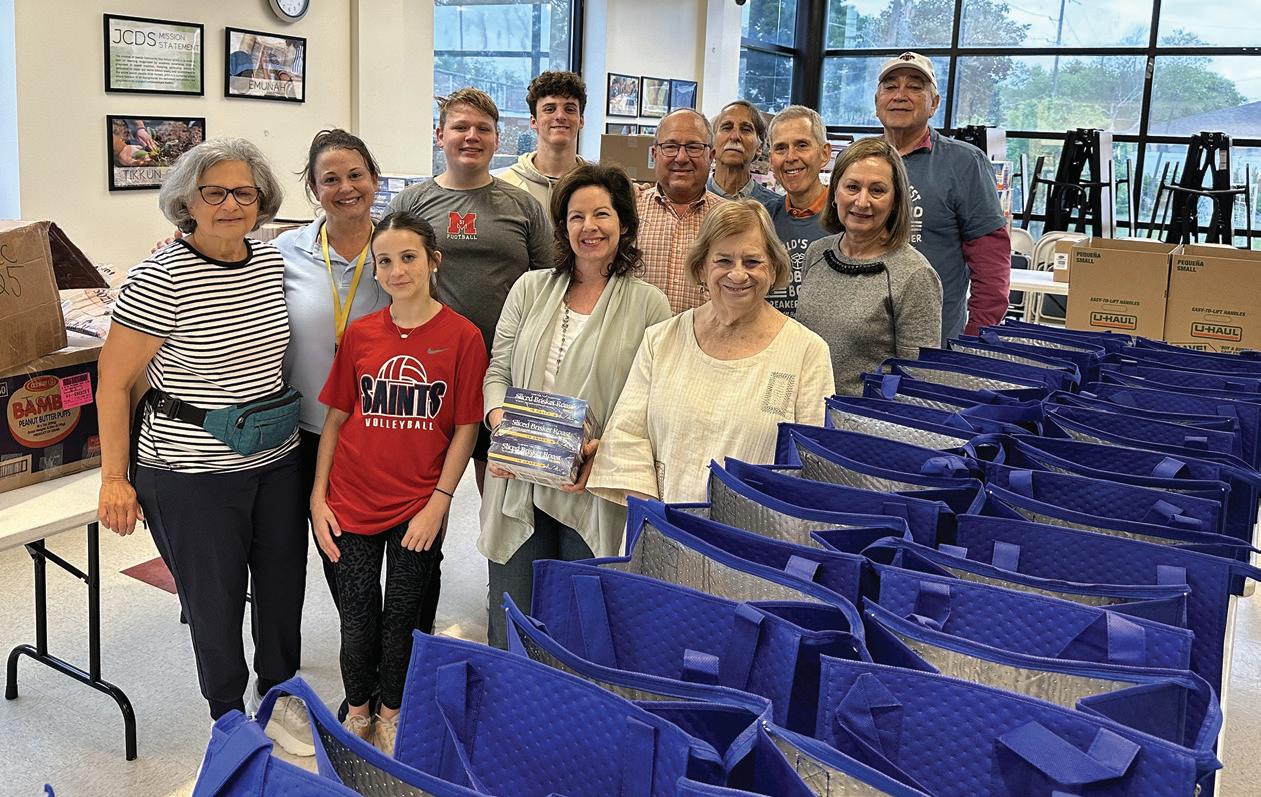
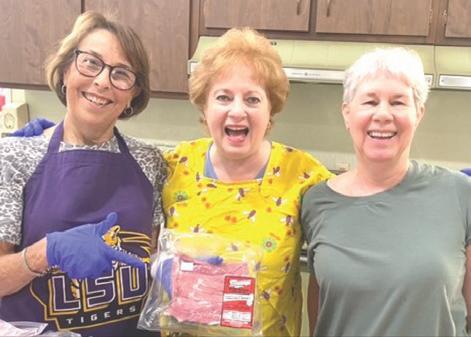
Jewish Family Service of Greater New Orleans reached over 300 community members and families with financial and physical challenges in this year’s Bruce Levy Memorial Passover Food Basket Program. Volunteers assembled and delivered the packages.
ISJL Southern and Jewish conference moving to Charlotte
Registration open for June event, for anyone with a connection to Jewish life in the South
After over two decades in Mississippi, the Goldring/Woldenberg Institute of Southern Jewish Life will hold its annual education conference in Charlotte.
Southern and Jewish, which will be from June 21 to 23, is open to everyone with a connection to Jewish life in the South.
The conference brings people from across the South and beyond to connect, learn, network and share insights on sustaining Jewish life where they live. Starting at noon on June 21 and running through noon on June 23, the conference features nationally recognized presenters and performers.
This year’s theme, “B’Yachad: All Together Now,” emphasizes the importance of coming together across communities, generations and identities. Like the ISJL itself, the conference is transdenominational and welcoming to all. Affinity group meetups offer opportunities to connect with others who share similar interests or life experiences, including interfaith families, Jews-by-choice, artists, LGBTQ+ Jews, grandparents, parents of young children, and more.
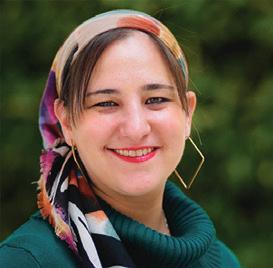
The keynote speaker will be Rabba Rori Picker Neiss, senior vice president and rabbi in residence at the Jewish Council for Public Affairs, and a Rabbinic Fellow of the David Hartman Center of the Shalom Hartman Institute of North America. She is one of the first graduates of Yeshivat Maharat, a pioneering institution training Orthodox Jewish women to be spiritual leaders and Jewish legal authorities.
Picker Neiss also serves on the board for HIAS and the Parliament of
the World’s Religions. She is also a CLAL Rabbis Without Borders fellow, and co-editor of “InterActive Faith: The Essential Interreligious Community-Building Handbook.”
The conference will also feature musician Eliana Light, the 2025 Covenant Foundation Family Education Fellow. An award-winning songwriter and educator, Light empowers people to make Judaism their own through experiential education, song, and prayer.
Rabba Rori Picker Neiss
She has released two albums of original Jewish music: “A New Light” and “Eliana Sings (About Jewish Things!).” Her songs have been featured by PJ Library, and she has performed and taught throughout the U.S. She is the author of “Hebrew in Harmony,” and received her MA in Jewish Experiential Education from the Jewish Theological Seminary.
Southern and Jewish is designed for a wide range of participants, from teachers and religious school directors to congregation presidents, lay leaders, local historians, youth group advisors, clergy, and parents.
Registration is open, and early bird rates including hotel are available through April 15. Day passes for locals are available for each day of the conference.
Music and mental health are this month’s Jewish Cultural Arts offerings
The month of May will feature two very different events in the Cathy and Morris Bart Jewish Cultural Arts Series at the Uptown Jewish Community Center.
On May 6 at 7 p.m. there will be a performance by Ziv Kartaginer, founder and music director of the Middle Eastern Big Band.
Kartaginer is a trumpet player, composer and arranger whose music blends jazz, classical, Middle Eastern, klezmer, and world traditions. Born in Jerusalem to a family with roots in Tunisia, Bulgaria and Poland, he draws deeply from Balkan, klezmer, and Middle Eastern musical cultures. His work brings these traditions together with contemporary jazz, creating inventive and compelling musical experiences.
For this live performance, Kartaginer will collaborate with local New Orleans musicians, merging the city’s distinctive sound with his original compositions and fresh arrangements of Israeli and Middle Eastern pieces for a vibrant, cross-cultural evening of music.
The concert is free for members, $18 for non-members.
On May 14, in coordination with Mental Health Awareness Month, author Tripp Friedler will share the story behind his memoir The Tunnel, reflecting on his son’s mental health crisis and the journey of grief, resilience, and healing that followed. Moderated by Rabbi Mendel Rivkin and Staci Lanza, this free community event will foster an open conversation on mental health.
“The Tunnel” starts on a March evening in New Orleans when Friedler gets a call from his 21-year-old son, Henry, who is on a bridge over the Mississippi River and too scared to jump.
That sets off an odyssey across the country as he and his wife try to find their son the treatment he needs, but few facilities are willing to accept him, as he goes from a nuisance to an undesirable to untouchable as his depression deepens to bipolar disorder with psychotic breaks.
The book details the flaws in the social fabric when it comes to dealing with mental illness, including in educational, legal and medical settings. And though they spared no expense in trying to find treatment, Friedler wonders what happens to those who don’t have the means and face the wall of indifference.
All royalties from the book are being donated to mental health charities, and sales from this event will benefit Jewish Family Service.
Friedler is the president and CEO of Free Gulliver, which provides strategic, financial and investment advice for businesses and individuals. His previous book is “FreeGulliver: Six Swift Lessons In Life Planning.” He is also co-founder of the Young Leadership Council and is past chair of Isidore Newman School.
The 7 p.m. program is free and open to the community.
Idaho rabbi to bicycle Southern history
Rabbi Dan Fink will be bicycling through the Deep South over the next couple months, starting in Vicksburg on April 12, the day the Civil War began in 1861, and finishing at Gettysburg on July 4, for the nation’s 250th birthday, and the anniversary of General Robert E. Lee’s retreat from Pennsylvania back to Virginia in 1863.
He will stop in Montgomery the weekend of April 30 to visit with his rabbinic classmate, Rabbi Scott Looper of Temple Beth Or. Fink will speak about his tour at the April 30 Shabbat service.
Fink is rabbi emeritus of Congregation Ahavath Beth Israel in Boise, Idaho. He received his bachelor’s degree in history and philosophy from the University of Virginia, and a Masters of Arts in Hebrew Letters from the Hebrew Union College in Cincinnati. He is an ardent environmentalist who enjoys hiking, canoeing, biking and kayaking. He is the author of numerous works on Judaism and environmental policy and is a certified
His itinerary will emphasize Civil War and civil rights history, with stops in Jackson, Meridian, Selma, Montgomery, Tuskegee and Birmingham. He plans to ride between 10 and 60 miles per day, depending on where he is along the journey, and will spend Shabbat at a different Jewish community each week.
MSJE hosting online knish workshop
Chef Marisa Baggett of Nashville will lead a virtual event through the Museum of the Southern Jewish Experience in New Orleans, teaching knish-making, mixing Southern techniques with Jewish flavors, May 6 at 6 p.m.
The hands-on “From Deli to Table: A Knish Workshop,” held in partnership with the Goldring/Woldenberg Institute of Southern Jewish Life, pairs practical techniques with Southern flavor influences, offering a fresh look at how Jewish food traditions adapt through place and personal history.
A Mississippi native, Baggett previously owned Zayde’s NYC deli, a kosher establishment in Memphis. A trained sushi chef, she was a contestant on “Morimoto’s Sushi Master” on the Roku Channel. forest therapy guide.
Enjoying corned beef sandwiches in the Delta
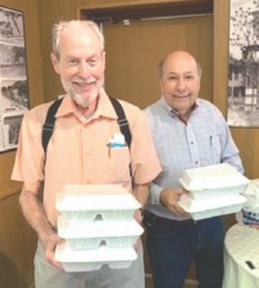
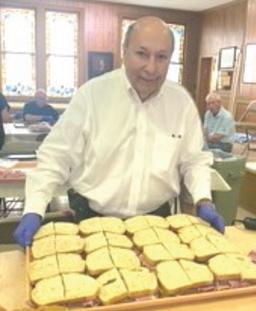
The corned beef sandwiches were once again flying out the door at Hebrew Union Congregation in Greenville, as they held their annual sale on March 5. There was one large wrench thrown into the plans, as the truck delivering the corned beef snagged a low-hanging power line, knocking out the electricity.
LAMBETH
& CUTTING TOOLS
Comedian Modi making New Orleans debut in Bikur Cholim benefit
One of comedy’s most sought-after performers, Modi will make his New Orleans debut on May 18 with a performance at the Orpheum Theater, with all proceeds to benefit Bikur Cholim.
Voted one of the top 10 comedians in New York City by The Hollywood Reporter, Modi has been featured on HBO, CBS, NBC, ABC, Comedy Central, Howard Stern, and E! Entertainment, Modi has received rave reviews in The New York Times, Time Out NY and The New York Post.
Born in Tel Aviv, Modi emigrated with his family to the United States at the age of seven and was raised on Long Island. After graduating from Boston University, he worked as an investment banker until his first open-mic night made him realize that stand-up was his true calling. Equipped with a sharp wit and a knack for reading an audience, Modi has gone on to become a successful fixture in New York’s vibrant comedy scene, often doing bits that incorporate his heritage, and he is a hit with diverse Jewish audiences as well as fans of all backgrounds and beliefs.
Now a regular performer at the New York and Los Angeles comedy clubs, Modi also headlines around the country and across the globe. Modi has played himself on HBO’s “Crashing” and Netflix’s “When Jews Were Funny.” He’s also appeared in several feature films and played leading roles in two: “Waiting for Woody Allen,” which won the LA Film Festival, and “Stand Up,” a feature-length film.
In 2018, Mayor Bill De Blasio declared June 26th ‘Mordechi Modi Rosenfeld Day’ in the city of New York for his accomplishments and contributions to the artistic community. However, the good feelings between him and the mayor’s office might not be present today, as Modi was scheduled to be at a “postmodern” Seder at City Winery in New York on March 30. A couple days before the event, Modi pulled out of the event when he learned that the current mayor, Zohran Mamdani, would be attending. “We were not told Mamdani was participating in this event until today,” he wrote.
Mamdani has been the subject of intense criticism for his longstanding anti-Israel activism and his refusal to condemn terrorism. As an example, Mamdani took the opportunity of his St. Patrick’s Day speech to compare the Irish to the Palestinians and condemn Israel.
On April 2, Modi appeared on The Tonight Show with Jimmy Fallon.
Bikur Cholim is Hebrew for “visiting the sick.” Rabbi Levi Partouche leads the New Orleans group in visiting patients in hospitals, offering emotional and practical assistance to individuals and their families.
Roselle Ungar, CEO of Jewish Family Service of Greater New Orleans, said Bikur Cholim is an important partner.
For Passover, Bikur Cholim worked with Kosher Cajun to deliver a Seder-to-Go to people in area hospitals. During Purim, megillah readings were done at 20 locations. Other holiday services are provided, and delivering Shabbat meals is a year-round project.
Tickets are available through the theater. Doors open at 6:30 p.m., the show is at 7:30 p.m.
Shapell Roster releasing details on Louisianans who served in Civil War
MSJE to hold virtual program on April 30
The Shapell Roster of Jewish Service in the American Civil War has released its Louisiana records, which are now available to explore online. These newly published findings illuminate the experiences of Jewish soldiers from Louisiana on both sides of the Civil War.
The Museum of the Southern Jewish Experience in New Orleans will hold a virtual event to hear from senior Shapell Roster Researchers Alexandra Apito and Caitlin Winkler, who will share stories of service from the state that sent more soldiers to the conflict than any other in the South.
The program will be on April 30 at noon.
Apito has been a member of the Roster’s research team since 2013. Apito holds a Bachelor of Science in Historic Preservation and Art and Architectural History, as well as a Masters of Science in Historic Preservation from Roger Williams University in Bristol, R.I. She also completed preservation and art studies in Florence, Italy.
Winkler has been a member of the Roster’s research team since 2012. Winkler holds a Juris Doctor from Washington & Lee University and a Bachelor’s degree in Historic Preservation from the University of Mary Washington. Her background in legal research and preservation informs her archival methodology and documentary analysis.
The Roster began in 2009 with the goal of identifying every Jewish soldier and sailor who served in the Union and Confederate militaries. In 2022, the Union pages were published, with 7,000 soldier and sailor pages, 3,000 primary and secondary materials, and over 50,000 historical documents.
Rabbinic Roundtable
The Jewish Federation of Huntsville and North Alabama convened a Rabbinic Roundtable with the region’s rabbis on March 7 at Temple B’nai Sholom in Huntsville. Richard Brooks, JFHNA president, said the idea is to convene events like this every so often to help bring different parts of the area Jewish community together. The rabbis were asked to pick a word or phrase from the Torah that speaks to them, and explain why they find it meaningful. Pictured are Chabad of Huntsville Rabbi Moshe Cohen, Etz Chayim Rabbi Stephen Listfield, Temple B’nai Sholom Rabbi P.J. Schwartz), and Rabbi Nancy Tunick of Temple B’nai Israel, Florence.
Voted Best Restaurant, Best Chef, and the recipient of AAA Four Diamond Award for the past twelve years
Fresh seafood in an exciting and contemporary atmosphere
We’d love to host your simcha in our three event spaces
1218 20th St S Birmingham / (205) 933-0999
Just down the street from Temple Emanu-El and Temple Beth-El oceanbirmingham.com
Birmingham’s Temple Emanu-El announced two major programs for May. On May 16, there will be a luncheon to name the Sherron Goldstein Kitchen, following the 10 a.m. Love Pray Eat Shabbat service. On May 29, there will be a farewell oneg for Rabbi Adam Wright, following the 6 p.m. service. The congregation’s annual meeting will be at 5 p.m.
The Reform congregations of New Orleans announced their Summer Union 2026 schedule. June Shabbat services will be at Gates of Prayer in Metairie, July will be at Temple Sinai and August will be at Touro Synagogue.
TEFTY at Birmingham’s Temple Emanu-El will have an end of the year and summer kickoff party at the Hamric home, May 9 at 5:30 p.m.
The Chapman Family Research Center at the Museum of the Southern Jewish Experience in New Orleans will have a workshop on May 13 at 2 p.m. with an introduction to oral histories. The free workshop is in person.
Chabad of Alabama and Jewish Fertility Foundation will host a women’s challah bake, an evening of connection, prayer, and community, celebrating the strength and unity of Jewish women. The event is cosponsored by the other Jewish organizations in the community. The Challah Bake will be April 30 at 6:30 p.m., registration is free but there is an $18 recommended donation for materials.
The Union for Reform Judaism has set May 7 as Camp Giving Day, and the Henry S. Jacobs Camp in Utica hopes to raise $36,000 in the online campaign.
The next Mensch and Mingle at Birmingham’s Levite Jewish Community Center will be on April 30 at 11:30 a.m. The quarterly gathering focuses on a different non-profit in the greater community, including remarks from someone in the Jewish community who is active in that organization. This month’s focus is United Ability, with Mark Cohen. Bring a lunch, dessert will be provided.
The next Torah on Tap with Rabbi Steven Henkin of Temple Beth-El in Birmingham will be on May 6 at 7 p.m. at Hop City, with the Beth-El Sisterhood. First round is complimentary.
Chabad Emerald Coast in Destin will have a 30A Jewish Women’s Circle Challah Bake, May 7 at 6:30 p.m., at the home of Ilisa Eichenbaum. There will be a challah and dips buffet. Reserve on the Chabad website.
Gates of Prayer in Metairie will host a session on Jewish Options in End of Life Planning, with Amy Thomas of L.A. Muhleisen and Son, on May 6 at 7 p.m.
The University of Michigan Men’s Glee Club will perform at Temple Sinai in New Orleans on May 14 at 7 p.m. It is the second-oldest collegiate men’s glee club. Sinai Cantor Emeritus Joel Colman will also perform, he is a past vice president of the glee club.
The Jewish Womens Circle at Chabad of Baton Rouge will have a , led by Ashley Leblanc, on May 17 at 5:30 p.m., hosted by Lita Kukuy. Suggested donation is $18.
You Belong in Birmingham will host a Lag B’Omer celebration on May 3 at 5:30 p.m., location given upon registration. There will be a
Birmingham’s Temple Emanu-El is spearheading a community on May 3 from 9:30 a.m. to noon, with several on-site and off-site projects. Among the volunteer opportunities is clean-up projects at Emanu-El, Temple Beth-El, Knesseth Israel and the Levite
on page 22
community
AHEC holding statewide Holocaust ed. conference
Teachers prepare as new curriculum standards begin this fall
With the coming implementation of new educational standards for teaching the Holocaust in Alabama schools, the Alabama Holocaust Education Center in Birmingham is hosting its first-ever statewide teacher conference, “Teaching the Holocaust: Standards. Strategies. Stories.”
The two-day in-person conference on June 2 and 3 will equip educators with expert guidance, classroom-ready resources, a professional network, and the confidence to teach this history with care and accuracy.
The conference will feature nationally recognized speakers, leading scholars, and expert practitioners in Holocaust education. There will be keynote speakers, breakout workshops about how to meet the new Alabama standards, mastering content and implementing classroom strategies.
The new standards, which were adopted in December 2024, are seen as among the most comprehensive in the country. The standards begin in grade 5 with the Holocaust introduced in an age-appropriate way as a “major event” in World War II. It is then discussed in greater depth in ninth grade world history, and the American response is explored in 11th grade.
As an example, the AHEC cited the previous standards for ninth grade history, which mention the Holocaust as a consequence of World War II. The new standards have the Holocaust mentioned in four major standards and seven sub-standards. “Social studies teachers in Alabama public schools will now be required to not just mention the Holocaust as a consequence of WWII, but will need to trace Hitler’s rise to power, describe Nazi ideology, and describe how the Nazis built on historical antisemitism, and trace the evolution of the Final Solution, to name a few.”
There is also a high school elective course of either a semester or a year.
There will be a keynote speaker each day, Erin Gruwell on June 2 and Michael Berenbaum on June 3.
Gruwell is founder of the Freedom Writers Foundation, having transformed her classroom by using the history and lessons of the Holocaust to help her students confront intolerance, reckon with their own experiences, and discover the power of their voices.
Her bestselling book, “The Freedom Writers Diary,” inspired the major motion picture “Freedom Writers,” starring two-time Academy Award–winner Hilary Swank.
Berenbaum is a renowned Holocaust scholar who was project director for the creation of the
I love helping people
• Knowledgeable
• Experienced
• Professional
• Meticulous
Bridget Sikora CRP, GMS Ray & Poynor Properties
205.910.0594
bsikora@raypoynor.com
United States Holocaust Memorial Museum in Washington. As a leading voice in Holocaust studies worldwide, Berenbaum has shaped how generations understand this history and its urgent moral lessons.
The conference will be held at the Birmingham-Jefferson Convention Complex, 8:30 a.m. to 4 p.m. each day. Registration is $35, scholarships are available. There are also a limited number of hotel subsidies for those traveling from outside the area. Registration includes breakfast and lunch, PD credits through PowerSchool, and access to the AHEC’s conference management software.
Registration is available at ahecinfo.org.
Anti-Israel groups pressure Louisiana over Israel Bonds Renewals on hold anyway pending amendment vote
A coalition of anti-Israel groups declared April as a month of activism to “Break the Bonds” and get Louisiana to not renew $10 million in Israel Bonds currently held by the state that are coming due on May 1. Including that amount, the state has $35 million in Israel Bonds.
Led by the New Orleans chapter of Jewish Voice for Peace and including area Democratic Socialist groups, among others, the group aimed to have an email campaign, and a weekly phone campaign, from a different part of the state each day.
The groups “are demanding better for our children, our teachers, and our future.”
According to the treasurer’s office, there are “no immediate plans to reinvest in Israel Bonds upon the maturity of the current bonds” on May 1 — but it apparently is a matter of an upcoming statewide amendment vote, not pressure.
Jeff Crouere, communications director for the treasurer’s office, said reinvestments are on hold because of the May 16 vote on Amendment 3. If it passes, “we will need to earmark funds for pay raises for teachers and support staff,” he said. “Our Chief Investment Officer needs to have maximum flexibility until we know what the voters decide.” Amendment 3 would repeal three education funds, including the Education Quality Trust Fund, one of two funds where the state has Israel Bonds as part of the investment portfolio. The contents of the three funds being considered for repeal would then be sent to the Teachers’ Retirement System, and would fund annual salary increases of $2,250 for public school teachers and $1,125 for eligible support personnel.
A similar proposal was rejected by voters in March 2025. A month before that vote, the state did not renew a $5 million Israel Bond that was
community
coming due, and JVP nevertheless claimed that as “our first success” in their attempt to get Louisiana to divest from Israel.
In April and August 2024, Louisiana purchased $10 million in bonds, as Treasurer John Fleming reiterated Louisiana’s support for Israel. He noted that the Israel Bonds were providing “higher basis points than U.S. treasuries,” and that the state was hosting a trade delegation from Israel.
At the time, Fleming also noted the rise in “unabashed antisemitism,” especially on college campuses. He said the state would “continue to oppose antisemitism by not investing in entities that partake in the BDS movement and by ensuring that the financial research and ratings that our state relies upon is based on sound financial principles rather than BDS movement tactics meant to isolate Israel in the world economy and breed prejudice against the Jewish people.”
Groups like JVP are active in the Boycott-Divest-Sanctions movement that seeks to isolate Israel economically, academically and socially.
In its campaign materials, JVP says that Israel Bonds are “unrestricted loans to the Israeli government” that “economically sustain Israel’s brutal occupation, systems of apartheid, military infrastructure, illegal settlement expansion, and genocidal campaign against Palestinians.”
According to Israel Bonds, proceeds go toward “general financing needs” in Israel, for purposes determined by the Israeli government.
In February, Texas announced it was doubling its investment in Israel Bonds, to $280 million, making them the second largest state investor.
In January, Palm Beach County in Florida invested an additional $350 million in Israel Bonds, bolstering its status as the largest local government investor in the world, with $1 billion in Israel Bonds. According to the city, the investment will generate $136 million in interest over three years, more than similar investments.
Shortly after October 7, Alabama purchased $6 million in two-year bonds, raising its investment to $10 million. Those have since been renewed and added to, making the state’s total holdings $12 million. Arkansas has $57 million in Israel Bonds, and Mississippi has $20 million.
In a statement to SJL, Israel Bonds said “The State of Louisiana has been a valued investor in Israel bonds for 22 years.” Since October 7, 2023, a record-breaking $7.7 billion has been invested in Israel through Israel Bonds sold by the Development Corporation for Israel, “partially via institutional investors such as the Louisiana State Treasury — a clear sign of the broad and enduring support for the U.S.-Israel relationship across the United States.”
They added, “We look forward to having Louisiana continue to invest in Israel Bonds for many years to come.”
ONE STOP KOSHER FOOD SHOPPING
Dine In — Take Out — Catering Mon-Thu 10am-7pm • Fri & Sun 10am-3pm (Closed Saturday) 3519 Severn, Metairie (504) 888-2010
www.koshercajun.com
Outside the New Orleans area? We will ship your order to you!
NO ONE SAVES MORE LIVES IN ISRAEL IN TIMES OF CRISIS.
There are many ways to support Israel and its people, but none is more transformative than a gift to Magen David Adom, Israel’s emergency services system. Your gift to MDA isn’t just changing lives — it’s literally saving them — providing critical care and hospital transport for everyone from victims of heart attacks to rocket attacks. Donate today at MagenDavidAdom.org or call 866.632.2763.
Come see what makes us different.
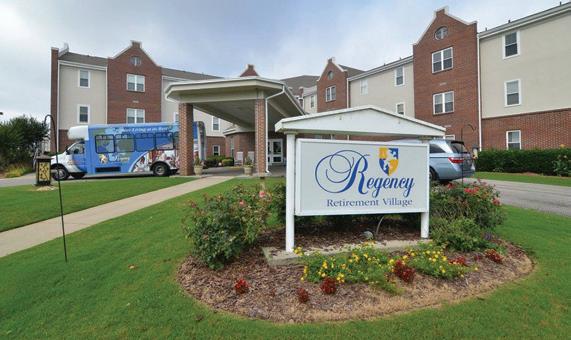
Nestled in the scenic foothills of Shades Mountain in West Homewood, Regency Retirement Village provides the warmth of home combined with the reassurance of community living.
Independent Living • Assisted Living Pathways Specialized Programs • Short-Term Stays
Call us to schedule a tour!
385 West Oxmoor Road, Birmingham (205) 942-3355 regencybirmingham.com
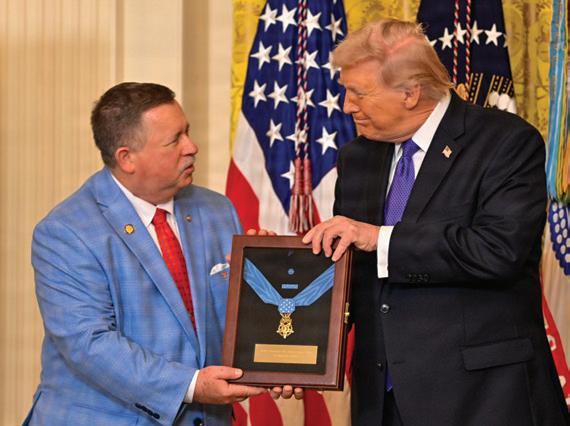
U.S. President Donald Trump presents the Medal of Honor to Chris Edmonds, son of U.S. Army Master Sgt. Roddie Edmonds, during a Medal of Honor ceremony at the White House in Washington, on March 2.
Recognizing the Righteous
Tennessee’s Roddie Edmonds awarded posthumous Medal of Honor for saving Jewish POWs during WWII
By Jonathan D. Salant
(JNS) — U.S. Army Master Sgt. Roderick (“Roddie”) Edmonds, who saved roughly 200 Jewish American soldiers from certain death during World War II and is the only U.S. soldier recognized by Yad Vashem as one of the “Righteous Among the Nations,” was posthumously awarded the Medal of Honor at a White House ceremony on March 2.
Edmonds’ son, Pastor Chris Edmonds, accepted the medal on his father’s behalf. U.S. President Donald Trump presented the award and shook his hand as the audience, including family members, other medal recipients, Cabinet officials and lawmakers, stood and applauded.
“Today, your father gets the honor he so courageously merited,” Trump said, outlining Edmonds’ wartime actions.
Chris Edmonds told JNS that the experience of meeting the president and seeing his father honored was “surreal.”
“It’s almost like a dream we were dropped into the middle of and then whisked out,” he said.
“He was always a great father,” he said. “Everybody loved him, and he loved everybody. I guess that’s the best way to describe him. But he took it to a whole other level when I discovered this story.”
“I just wish he’d have been around to accept the medal himself,” Chris Edmonds said of his father, who died in 1985.
‘We are all Jews here’
The elder Edmonds was among the more than 1,200 American troops captured during the Battle of the Bulge and sent to Stalag IX-A, a German prisoner of war camp, in January 1945.
On the evening of Jan. 26, 1945, the Germans ordered that only Jewish American prisoners report for roll call the next morning, under threat of execution.
As the senior non-commissioned officer, Edmonds was aware of the danger facing those soldiers. He ordered every American POW to report
Photo by Christopher Kaufmann/U.S. Army.
for roll call, helping conceal the identity of the 200-plus Jewish prisoners. He cited the Geneva Convention, which required him to disclose only names, ranks and serial numbers.
Edmonds refused to back down even when the commandant pressed his gun against his head and demanded he give up the Jewish service members.
“We are all Jews here,” Edmonds replied. The Nazi officer eventually lowered his weapon and returned to his office.
In March 1945, as Allied forces approached, the camp commandant ordered the prisoners to assemble for evacuation. Once they were outside and with transports arriving, Edmonds ordered his men not to follow the Germans out of the camp, but to go back inside and feign illness or hide. They were liberated the next day.
“Really amazing,” Trump said. “It’s an amazing story.”
Chris Edmonds told JNS he had pursued the Medal of Honor for his father since learning the full story from Lester Tanner, a fellow POW.
“When the Nazi commander approached and threatened Dad, Lester was there,” Edmonds said. “He heard everything, and he shared the story with me in 2013, in New York City, and at the end of sharing the story, he looked at me and said, ‘Your father’s deserving of the Medal
of Honor. You should go back and talk to your congressman and see what he thinks.’ And so we began.”
“It’s been a 13-year journey, and we’re so grateful that, in God’s timing, it’s taken place,” he added.
‘Highest standard of bravery’
Nineteen members of Edmonds’ family traveled to Washington and met Trump before the ceremony.
“None of us had ever been to the White House,” he told JNS. “We were ushered into the White House to meet the president, and he met with us in a private meeting before the actual larger ceremony, and that was really special for my children and grandchildren.”
Edmonds was recognized by Yad Vashem in Jerusalem in February 2015 as one of the “Righteous Among the Nations,” non-Jews who risked their lives to save Jews during the Holocaust. He was just the fifth American and first U.S. soldier so honored.
Stanlee Stahl, executive vice president of the Jewish Foundation for the Righteous, attended the ceremony and stated that the award “affirms what the survivors of Stalag IX-A have long known: his actions represent the highest standard of bravery, humanity and responsibility.”
On March 3, Edmonds was inducted into the Hall of Heroes at the Pentagon.
‘Speaks to the American heart’
Reflecting on the ceremony, Chris Edmonds told JNS his father would have been humbled.
“He would certainly feel greatly honored, but he would say, ‘I’m not a hero. I was just doing my job, and I came home safe, and I lived a full, meaningful life. So, the boys that are the real heroes are the ones that were buried over there that helped save me’,” he said.
“That would be his thoughts on it, and largely I would agree with him, because the men who have given their full measure of sacrifice are truly the heroes,” Edmonds told JNS. “The Medal of Honor is even bigger than Dad or even the men and ladies who have received it over the years. He really speaks to the American heart and the character of our nation, people who have the courage to go to the greatest degree to help save others.”
Also honored on March 2 were Command Sgt. Maj. Terry Richardson, a Vietnam War platoon leader who continued directing airstrikes in 1968 while wounded; and the late Staff Sgt. Michael Ollis, who sacrificed his life in Afghanistan in 2013 to protect a Polish soldier fighting alongside him.
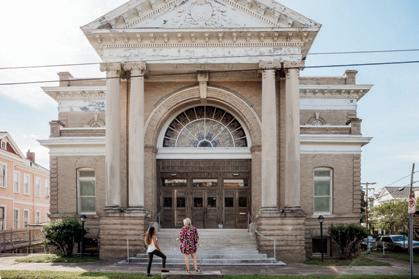
Gates of Prayer celebrates 175th by expanding its Metairie campus
Capital campaign exceeds expectations, tops $10 million
The conclusion of the year of 175th anniversary events at Metairie’s Gates of Prayer was not just a time to celebrate a milestone, it has become a time to enjoy the fruits of the congregation’s labor.
In conjunction with the anniversary, the 400-family congregation held a L’dor Vador Capital Campaign for construction and renovation throughout the building, the largest effort since the West Esplanade campus opened in 1975. The campaign launched in May 2023 with a goal of $6 million, but on March 10 President Dan Forman announced that the campaign had exceeded $10 million for renovations and endowment.
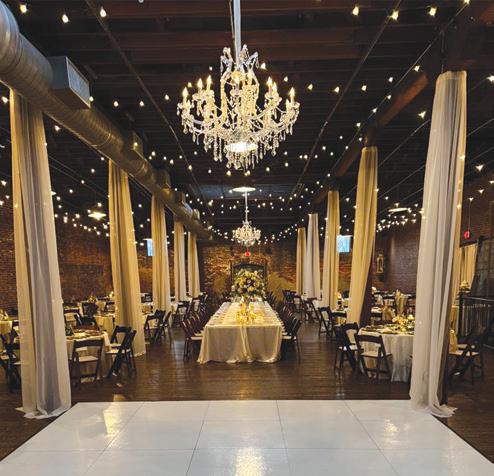
Inside, there were renovations to the Loewy Lobby, sanctuary, Bart Community Room, board room and Manheim Social Hall. There is a corridor between the social hall and sanctuary, with moveable walls on both sides. Now, the design of the three spaces is coordinated, so “it all looks like one space.” The bathrooms were also renovated.
A permanent dance floor is now part of the social hall, along with improved acoustics.
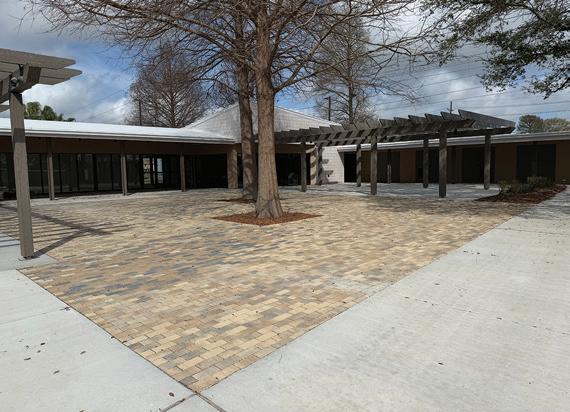
Outside, the previously empty and unused space along the corner of West Esplanade and Richland has been transformed into the Green Garden and event area.
An open-air covered corridor extends from the main building to West Esplanade, and along the road to the corner. The corridor leads to a new
Pitcher of Daisies
Screenshot
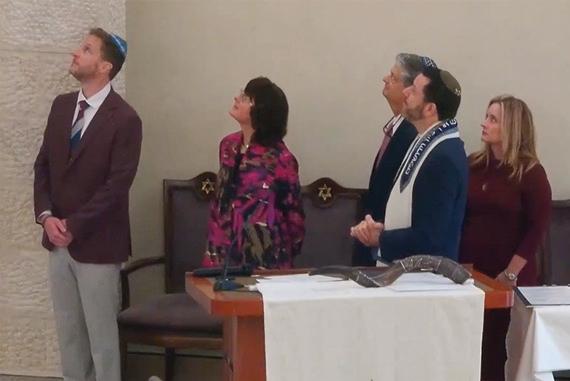
Rabbi David Gerber, Gates of Prayer President Dan Forman and members of the Dulitz family watch as the Eternal Light is lit at the beginning of the first Shabbat after renovations to the sanctuary, on Sept. 19.
New outdoor space at Gates of Prayer in Metairie
garden room and a J-FLEx moadon, a flexible education space. There are also much-needed storage areas along the corridor.
On the eastern side, there is a section designed to resemble the Western Wall, complete with places to insert prayers. There is also a meditative labyrinth and a large open space, and an enlarged sukkah.
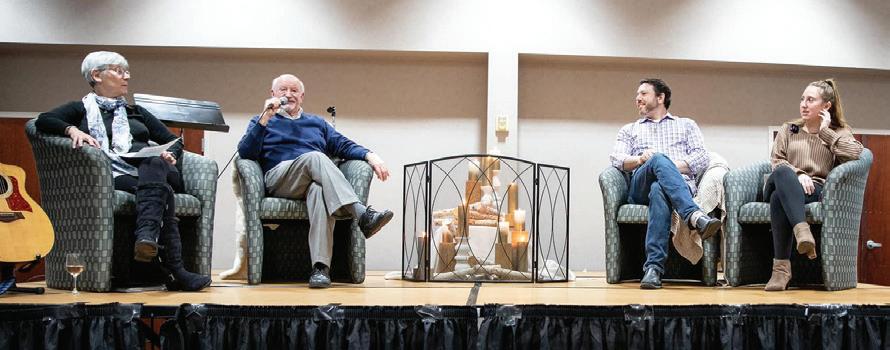
Tory May, Rabbi Robert Loewy, Rabbi David Gerber and Jordan Lawrence hold a “fireside chat” at the opening event for Gates of Prayer’s 175th anniversary, January 2025.
The space is entirely enclosed by a wall along the roads, with an eye toward security.
Forman said the board entered the anniversary year with a goal “to make sure Gates of Prayer has a solid financial foundation and the infrastructure it needs to serve the next generation. Thanks to our members and donors, we’re ending this milestone year in a much stronger place and well positioned for the future.”
He noted that they were able to do this “at a time when many organizations had to pause or delay their campaigns because of the war in Israel.”
Merryman said it was “wonderful” that they were able to raise what they did while donors were also giving to Israel. “We proved the fundraising experts wrong,” she said. “That just goes to show how generous our community is.”
The year-long celebration began the last weekend of January 2025 with a Shabbat in the Round, led by “Cantorial Soloists of Past and Present” Tory May and Jordan Lawrence. Rabbi Emeritus Robert Loewy led the Shabbat morning service with May, and the evening of Jan. 25 was a dinner catered by Bodega NOLA, along with Havdalah and a “fireside chat”
featuring May, Lawrence, Loewy and Gerber.
The next morning, there was a “Generation to Generation” display highlighting family and congregational events, with photos submitted by members depicting special congregational events in their families.
A 175th anniversary casino night was held in March, complete with a Chai Rollers room, and VIP whiskey tastings with Rabbi Gerber.
In March and April there was a five-part series, “The Eras of Congregation Gates of Prayer,” aligning the congregation’s history with what was going on in the American Jewish community at the time.
In September, there was a Cheers to 175 progressive dinner, with a guided French-Germanic wine tasting and a three-course dinner at three members’ homes. Sommelier Rebeca Pinhas coordinated wine pairings for each stop.
After the renovations of the sanctuary were complete, during the first Shabbat back, on Sept. 19, there was a relighting of the Eternal Light, which was dedicated in memory of Diane “Dee Dee” Dulitz. Her husband, Lester Dulitz, made the first foundational gift to the campaign. Her
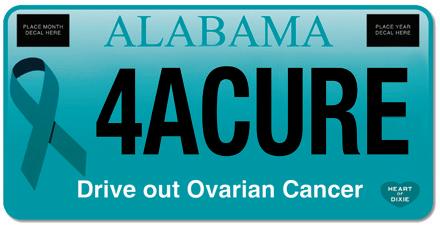
Alabama is one of three states who currently have an ovarian cancer car tag. The Drive Out Ovarian Cancer car tag raises money for research in hopes that one day, doctors will discover an early detection test for ovarian cancer, so that women will be tested for this insidious disease at their annual checkups just like cervical and breast cancers.
The mission of the Norma Livingston Ovarian Cancer Foundation (NLOCF) is to raise funds for ovarian cancer research and to increase awareness about the risks, symptoms and treatments of this disease.
The net proceeds of the $50.00 are distributed to the NLOCF to be used for ovarian cancer research at the UAB hospital. The Norma Livingston Ovarian Cancer Foundation is a 501(C)(3) nonprofit organization. Your $50 contribution is tax-deductible.
205-999-8021 cureovariancancer.org
name is now linked to the Eternal Light alongside Rabbi Mendel Silber, from a 2017 dedication (see history sidebar, page 18).
Gerber said the light was the last thing dedicated in the previous campaign, and the first thing dedicated in this one. Rekindling it, with members of the Dulitz family on the pulpit, was “a moment of sanctity, a moment to perform a holy act.”
Noting that they had been praying in other spaces since May, Gerber told everyone to take in “that new sanctuary smell,” and the service began with a Shehechiyanu.
On Sept. 27, there was an opening dinner and whiskey tasting to inaugurate the newly-renovated Manheim Social Hall.
The list of events concluded on Dec. 6 with “A Taste of Our Tradition,” an evening inspired by Alsace-Lorraine, with French and German inspired cuisine, and entertainment.
As part of the celebration, there was a call for anyone with congregational memorabilia to bring it in for scanning.
The congregation also launched the Fried Center this February, a Jewish educational retreat center to celebrate and share Jewish New Orleans, often through organizing multi-day programming for visiting groups.
From Lafayette City to Metairie: 175 Years of Gates of Prayer
New Orleans’ earliest congregations were Orthodox, as the Reform movement did not yet exist. In Lafayette City, now the Garden District in New Orleans, the Jewish Benevolent Society of Lafayette was formed by more recent German Jewish immigrants from Alsace-Lorraine. The recent immigrants generally wound up in that area instead of downtown where the more established members of the community lived.
The group began doing congregational services, and on Jan. 6, 1850, Congregation Shaarei Tefiloh — Gates of Prayer — was established. Initially, they hoped to be an Uptown branch of the downtown Gates of Mercy, the 1828 congregation now known as Touro Synagogue, but there was little interest by the older group.
The 26 founding members of the Lafayette City group met in rented spaces and purchased land for the Joseph Street Cemetery. In 1855, they bought a house at the corner of St. Mary and Fulton Streets, then in 1859, property was purchased at Jackson Avenue at Chippewa for a proper synagogue building. Members collected bricks, reaching a total of 300,000, but the Civil War interrupted construction, and members hid the bricks to keep the Union from confiscating them.
The Jackson Avenue Shul was dedicated just after the Civil War, and an eternal light donated by the Hollander family in 1875 is in the current sanctuary, having been in all three of the congregation’s buildings.
By the 1890s, services were held in English instead of in German, and the congregation had drifted into Reform practices, such as having a choir and organ, and mixed seating was introduced. In 1904, the congregation hired Rabbi Moise Bergman, who graduated from Hebrew Union College, making the move to the Reform movement official in 1908. Gates of Prayer was the last of the three Reform congregations in New Orleans to affiliate with the Reform movement.
With Bergman’s arrival, membership grew. But in 1914, Bergman had to move to a different climate for his wife’s health, and did a “rabbi swap” with Rabbi Mendel Silber, who was also a medical doctor, and at the time was acting dean and professor of psychology at the University of New Mexico.
It soon was evident to Bergman that a larger facility was needed, closer to where most members lived. A remodeled former Presbyterian church on Napoleon became the congregation’s new home in 1920. The 709 Jackson Street building still stands, and in 2014 it was renovated and redevel-
The Ovarian Cancer Research Tag may be purchased for private passenger automobiles, pickup trucks, motorcycles, and pleasure motor vehicles (i.e., recreational vehicles).
oped into 12 apartments.
Rabbi Nathaniel Share became the rabbi at Gates of Prayer in 1934 and would serve for 40 years, during a wide range of historical events. A centennial celebration was held in January 1950, with Silber joining Share in the festivities.
According to a JTA report, Nelson Glueck, president of Hebrew Union College-Jewish Institute of Religion, said the significance of the celebration lies not in the fact that it marks 100 years, “but that the event marks a link in the chain of history 1,000 and many more years ago with a past full of significance that is part of the present.”
By the late 1960s, demographics were changing as more Jews were moving toward Metairie, and there was talk of a Mississippi River bridge in the neighborhood. The other Reform congregations are still in their historic early-20th century buildings along St. Charles Avenue, as their charters say they are to remain in Orleans Parish.
the death of Rabbi Share” a ceremony did not take place — until 2017, with a series of programs about Silber and Share.
In 1971, land was purchased on West Esplanade in Metairie from the Archdiocese of New Orleans. Groundbreaking took place on May 10, 1974, but three months later, Share died suddenly.
Rabbi Kenneth Segal succeeded Share, and the new building was dedicated in September 1975. Membership continued to increase, the Louise Manheim Nursery School was established, and interfaith activities with the neighbors were established.
Members of the Hollander family had told Silber’s family in 1974 that the eternal light would be dedicated in Silber’s memory at the West Esplanade building, but with “the tumult of moving into the new building and
Rabbi Robert Loewy would succeed Segal in 1984. He focused on education for all ages, outreach to unaffiliated young adults, and the benefits of Jewish summer camp.
The congregation had a major renovation in 2000, including a larger front lobby that was dedicated in Loewy’s honor when he retired in 2018.
Flooding from the levee breach after Hurricane Katrina caused $1 million in damage. But the Orthodox congregation Beth Israel in Lakeview had the worst of it, with several feet of water making the building unusable. In January 2006, Gates of Prayer began housing Beth Israel, with joint educational and social programs. The unique partnership, which received national attention, continued as Beth Israel figured out its next move — which would wind up being next door, on land purchased from Gates of Prayer. The new Beth Israel building was dedicated in June 2012, with a playground in between the two.
In 1997, Philip Gaethe became director of the Rabbi Nathaniel Share Religious School, which evolved into a camp-like J-Flex, Jewish Fun Learning Experiences, in 2019.
At “Shalom Rav,” his retirement weekend in 2018, Loewy recounted that he had done 172 weddings, 607 funerals, 80 conversions, with a little over 400 B’nai Mitzvah and Confirmation students at Gates of Prayer. His total of 430 baby namings and brisses increased with an additional baby naming that Shabbat.
That summer, Rabbi David Gerber succeeded Loewy as just the sixth senior rabbi at Gates of Prayer since 1904.
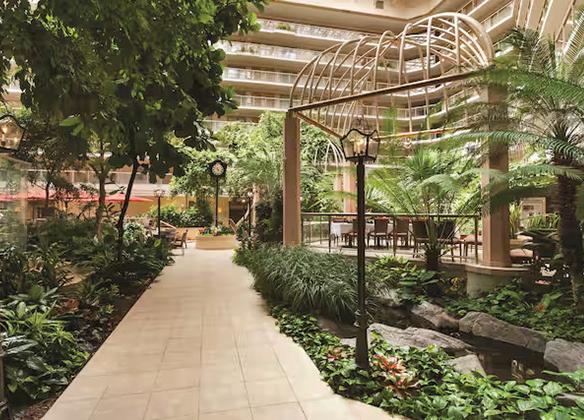
Step into style and comfort at the newly renovated Embassy Suites Birmingham. Enjoy spacious two-room suites, complimentary made-to-order breakfast, and our signature evening reception — now with a fresh, modern design that blends timeless charm with contemporary elegance.
Located just minutes from Birmingham’s top attractions. The perfect location for Bar/Bat Mitzvah and Wedding groups.
Experience the upgrade. Book your stay today. 2300 Woodcrest Place, Birmingham,
>> Editor
continued from page 4
there had been negotiations, a deal was on the table. No, it was Iran basically saying they would never give up their right to nuclear weapons, and they had material sufficient for 10 or 11 bombs, very close to being ready.
If someone says they aren’t going to negotiate, it makes no sense to keep sitting at the table in hopes they will change their minds. Unlike previous administrations, this one refused to be played, and backed up its word with action.
The administration has been criticized for not anticipating Iran shutting down the Strait of Hormuz. Was that really a surprise to anyone? Of course Iran was going to do that in a desperate attempt to extract some pain from the west.
Now think of an emboldened Iran with a ring of missiles and a nuclear capability. What would keep Iran from shutting down the strait whenever they felt like it? And who would be able to do something about it?
This is a regime that, when fighting the U.S. and Israel, decided to bomb about 10 of its neighbors. This is a rational group of people?
Imagine what they would do if they felt they could act with impunity.
The Saudis, UAE, et al, would rather not imagine that. They are pushing the Trump administration to keep going.
If the mullahs remain in power somehow, and are not toppled, they will do whatever they can to continue the battle against the west. For them, survival is victory, and they will continue the fight if it takes years or decades. They are religiously committed to it.
So, why are we in this war?
Remember, this is an ideological regime that insists it is their birthright to have nuclear weapons, and while they lie about their actions, they are completely transparent about their goal of eradicating western civilization, starting with Israel and then continuing on.
Most of the chaos from the Middle East has the mullahs’ fingerprints on it.
This war was inevitable. There was only one question: Under whose conditions did we want to fight it?
We could fight it now, when Iran is still reeling. Or we could have negotiated, giving them new life to continue building their arsenal, and to continue cheating on nuclear enrichment.
A couple years from now, we would be facing a far more powerful Iran, with larger stockpiles of weapons making it impossible to get at their nuclear sites. This apocalyptic regime could hit Europe and blackmail the world.
It was never a question of whether there would be war with the Iranian regime. The only question was when. This was the time.
Lawrence Brook, Publisher/Editor
Her heart is in good hands
Here, everything we do comes from the heart. Every child is surrounded by our team of compassionate caregivers who treat them as if they were their own. From the smallest patients with the biggest spirits to the families who stand beside them, we’re inspired by their strength and courage.
Helping kids heal, grow and live their best lives possible, it’s at the heart of everything we do. ChildrensAL.org/heart
Accept No Limitations
community
>> Agenda continued from page 10
Jewish Community Center. There will also be cleanups at Grace Klein and the Black Warrior River, and a Mitzvah Fair. Advance signups are available.
Israel Bonds, Birmingham Jewish Foundation, Chabad of Alabama and Jimmy Filler are hosting a Bonds dinner on May 7 at Chabad, honoring Heather Johnston, founder and president of the U.S.-Israel Education Association and JH Israel; and Bruce Pearl, USIEA board chair and former Auburn basketball coach. The kosher deli dinner is at 6 p.m., adults only.
On May 3 at 10:30 a.m., Birmingham’s Temple Emanu-El will host a Resetting the Table preview program and nosh, where participants will talk about what they are learning, and demonstrate a guided, facilitated dialogue. The national organization “equips and activates leaders from all corners of American life to transform toxic political divides and build a shared future.”
Gates of Prayer Brotherhood in Metairie will have a Bingo Night fundraiser, May 2 at 6:30 p.m., with light snacks and refreshments. Eight-game packets with six cards are $25.
You Belong in Birmingham launched a monthly Jews and Brews gathering for those in their 20s and 30s. The gatherings will be on Tuesdays at 7 p.m. The next session is May 19 at Avondale Brewing, June 16 at True Story Brewing, July 14 at MayaWell, and Aug. 17 at Carrigan’s Public House.
Gemiluth Chassodim in Alexandria will have a family-friendly Havdalah service followed by a dinner and a bonfire, May 2 at 6 p.m., to celebrate Israel and Lag B’Omer.
By popular demand, the New Orleans Jewish Community Center is holding its first-ever Adult Sock Hop, May 16 from 7:30 to 10:30 p.m. Uptown. The 90s-themed night of music, dancing, drinks, desserts and more is open to members and nonmembers. There will be beer, wine and a dessert bar, live music and a DJ. Tickets are $45 for members, $55 for non-members, and there are $200 sponsorships that include two tickets.
Southern Jewish Voices, a series of Jewish community oral history interviews done before an audience at Birmingham’s Levite Jewish Community Center, continues on May 20 with Michael Saag, associate dean for global health at the University of Alabama at Birmingham and founder of the 1917 Clinic, a comprehensive AIDS treatment and research center at UAB. The presentation is at noon, and a complimentary lunch is available with a reservation.
Southern Jewish Simchas
Greenberg — Sokoloff
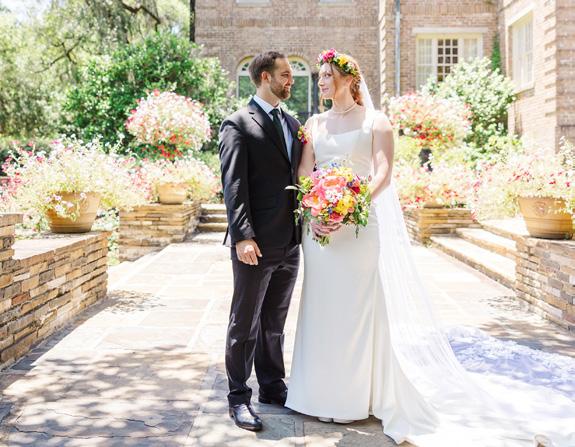
Abigail Greenberg, daughter of Jesse and Robin Greenberg of Montgomery, married Joshua Sokoloff, son of Bret and Lori Sokoloff of Memphis, on October 19, 2025.
Abby, who was crowned homecoming queen at the University of Alabama in 2017, and Josh originally met in the summer of 2021 at the Chabad in Atlanta. Josh and Abby enjoyed hanging out and attending local sporting events, concerts, religious events, and grabbing a quick bite to eat. What started out as a beautiful friendship developed into more in the fall of 2023.
Josh and Abby’s relationship was rooted in attending a variety of local Chabad events. This ultimately led them to ask Rabbi New to perform their wedding ceremony. Abby developed a special relationship with Rabbi New when she studied Tanya with him. Studying with the Rabbi not only gave Abby a better understanding of Judaism, but also gave her a better perspective with her job as a pediatric oncology nurse. Josh developed a great friendship with Rabbi New through his study sessions, attending events, and enjoying a variety of sports outings.
Their majestic wedding at The Alley Station in Montgomery was carefully orchestrated by wedding planner Jackie Frontiero, who decorated Abigail’s Bat Mitzvah 17 years ago. She brought to life Abigail and Josh’s vision from start to finish. Jackie covered every detail to perfection. Jackie, along with R&B Floral Arts, Dana’s Flowers, Brendal Rentals, Jennie Weller Catering and several other vendors brought Abigail’s dream to life. The entire day was captured by the extremely talented photographer, Nick Frontiero.
Their wedding ceremony was built on the fundamentals and foundations of Jewish tradition. From signing the Ketubah during the bedeken to having a Tree of Life painting for guests to place their thumbprint,
Signing the ketubah at the Greenberg-Sokoloff wedding
New Website! www.thaiesaneal.com
Online Ordering Available
See us for your Thai cravings!
Featuring our Drunken Noodles, Pad Thai and Panaeng Curry
New Asian-Inspired Salads
Ask about our Catering Options
Pizitz Food Hall, 1821 2nd Ave. No.
Open Mon-Sat, 11am-8pm Order Online for Pickup through Google on Toast Delivery via UberEats, DoorDash, GrubHub www.thaiesaneal.com
Southern Jewish Simchas
Jewish heritage and rituals surrounded them. Rabbi New led a beautiful traditional ceremony, including the placing the ring (passed down from Abigail’s great-grandmother) on the pointer finger of the bride, 7 circles, 7 berachot, the ketubah reading, with the father of the bride’s Tallis hung above them while Josh’s late grandfather’s Tallis wrapped around them moments before he broke the glass. Family and friends had a part throughout the whole day, from the 7 berachot to the moms breaking a plate with a hammer. It was a joyous occasion rooted in Judaism and love, a day the couple will always cherish.
After the ceremony took place, all of the guests were escorted into the seated dinner, catered by Jennie Weller. Special speeches were delivered, a few toasts were shared and then the fun began. The band Azzizz played and the crowd couldn’t get enough! They danced the night away until the couple was eventually sent off. Traditions, rituals, friends and family made this an unforgettable night.
Grand Bohemian
The Grand Bohemian Hotel Mountain Brook offers those hosting an event a blank canvas to paint on, and even an art gallery to have the celebration in.
“We’re certainly one of the most unique boutique hotels, and there are many options for those who want to have an event here,” said Grand Bohemian Sales and Catering Director Michael Odom. “It’s a very immersive experience.”
The hotel’s ballroom can host up to 350 for a seated reception, or more than 400 for standing. Grand Bohemian’s art gallery can accommodate up to 130 people standing or 50 seated, and they also have a private dining room at Habitat Feed and Social that can host up to 40 for a seated dinner.
Odom said they have hosted several Jewish weddings, Bar and Bat Mitzvahs over the past few years. They also provided the space and catering for a couple of Hadassah Birmingham events.
Habitat Feed and Social also offers cooking classes and wine-blending classes open to the public, as well as celebrations connected with some holidays and sporting events, including the Kentucky Derby. And the Grand Bohemian always hosts SEC Basketball Media Days.
“We’ve got a friendly, professional team here that is happy to work with someone on all aspects of the event – from the space, tables, linens to the food,” he said. The hotel’s kitchen isn’t kosher, but they can accommodate kosher food being brought in.
The 100-room boutique luxury hotel, opened in 2015, also includes a spa, fitness facility and a rooftop bar.
Southern Jewish Simchas
Embassy Suites Birmingham
The newly-renovated Embassy Suites in Birmingham has hosted numerous celebrations and group reservations for celebrants in the Jewish community since opening in 1983.
With 4,000 square feet of space that can be configured in several ways, “The hotel is ideal for hosting smaller events, but we’ve had several Jewish weddings, Bar and Bat Mitzvahs,” said Embassy Suites Marketing Director Whitney Davis. “We’ve also done blocks of rooms and can offer a hospitality suite if the main event is elsewhere.”
This March, they hosted the Hyman Brand Hebrew Academy from Overland Park, Kans., outside of Kansas City. The 200-student school had a couple of classes visiting Birmingham to learn more about American Jewish and civil rights history, including Temple Beth-El’s Civil Rights Experience.
The hotel also hosted the traveling Broadway cast/crew of “Tina Turner: The Musical” when it came to Birmingham last June.
“Recently we’ve hosted several teams from the American Athletic Conference basketball tournaments, family reunions and some corporate conventions during the week,” said Davis. “Our hotel is ideally located and we’re very accommodating.”
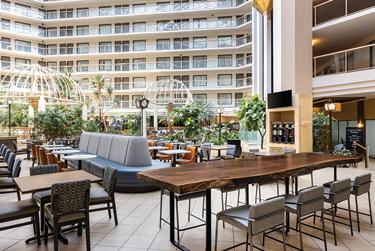
The Homewood hotel completed a multimillion-dollar renovation in the spring of 2025, including updates to all guest suites, meeting spaces, public areas and the hotel’s signature atrium.
Highlights of the renovation include updating the suites with modern furnishings, upgraded amenities, new bedding and décor.
The signature, open-air atrium has been transformed into a vibrant social hub with comfortable seating, natural lighting and a sleek, updated aesthetic.
The Embassy Suite’s on-site restaurant, Ruth’s Chris Steakhouse, provides all of the catering services. Davis said this summer the restaurant will remain open through its own renovations.
Southern Jewish Simchas
Events at Haven
From B’nai Mitzvahs to cultural festivals, Events at Haven is a hub for celebrations in Birmingham’s Southside.
In August 2025, they hosted the Ukrainian Independence Festival, which included involvement from the Jewish Relief Network Ukraine and Southern Jewish Life.
More than 500 people attended the festival, which included music, dances, poetry, history and foods from the Ukraine.
Events at Haven has hosted events for many non-profits, including the Alabama Ballet and Girls, Inc. They also provide the bar service for the Birmingham Folk Festival.
In January 2027, they will host the Bat
Ritz-Carlton New Orleans
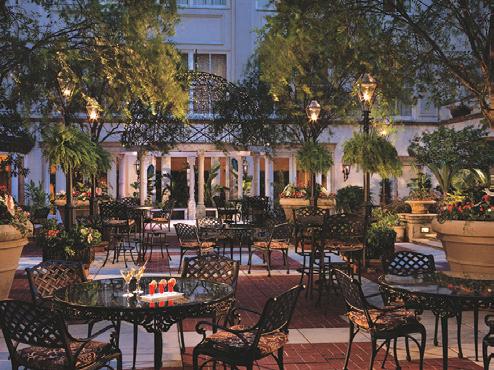
It isn’t just that couples flock to The Ritz-Carlton New Orleans for dream weddings with a New Orleans flair — the Ritz-Carlton is also expert in Jewish weddings.
Wyeth Metz, senior catering sales manager, said they provide a special room for the Ketubah signing and bedeken before the main ceremony, and also set aside a private room for Yichud, a space with food and drink where the bride and groom spend their first married moments together, by themselves as a couple, immediately after the ceremony and before going in to the reception.
While a chuppah can be set up in any of the Ritz-Carlton’s event spaces, many weddings have been held underneath the wrought-iron gazebo in the lush outdoor courtyard.
Intercontinental New Orleans
The Intercontinental Hotel New Orleans is a “Fein” place to host big events, simchas and other celebrations.
In December of 2025, the downtown hotel hosted The Edward Fein Winter Student Seminar. The seminar is considered the premier program for “students to engage with the challenges and opportunities facing Israel and the Jewish people through the lens of texts, values and ideas.”
The program, which started just after Chanukah, brought Hartman Institute scholars and more than 100 students from 55 colleges and universities across North America to New Orleans, to discuss democracy’s meaning for Jews today.
Intercontinental Hotel New Orleans Marketing Director Gina Chimeno said the participants enjoyed seminars in the Hotel’s
Mitzvah for Emily Friedman, daughter of Brad and Stephanie Friedman of City Paper Co.
Haven opened in 2016 in a restored 1924 building that originally housed the Mack Truck Company. It was started by Milo’s Tea CEO Tricia Wallwork and her husband Troy, the CEO of DataPerk.
“Troy and Tricia were born and raised here. They wanted a place that Birmingham could be proud of. This is their gift to the Birmingham community,” said Marketing Director Heather Roberts-Wood.
Haven’s 20,000-square-foot space is versatile and can be arranged to accommodate as many as 1,500 people in standing-room celebration or a 900-patron seated dinner.
The Ritz-Carlton offers a variety of event spaces, with 34 event rooms and over 48,000 square feet available, with a Grand Ballroom that can hold up to 880. There are also two courtyards and the intimate Library Lounge.
A French Quarter balcony is available for a memorable event, and for smaller events, the Residence Suite is available for overnight stays or outdoor events for up to 100 guests. The Residence, which opened in 2021, has two bedrooms, a living room, dining room and fully equipped kitchen, as well as an expansive private outdoor terrace for relaxation or entertaining overlooking the city.
Kosher-style meals can be prepared in house, and certified-kosher meals can be ordered in.
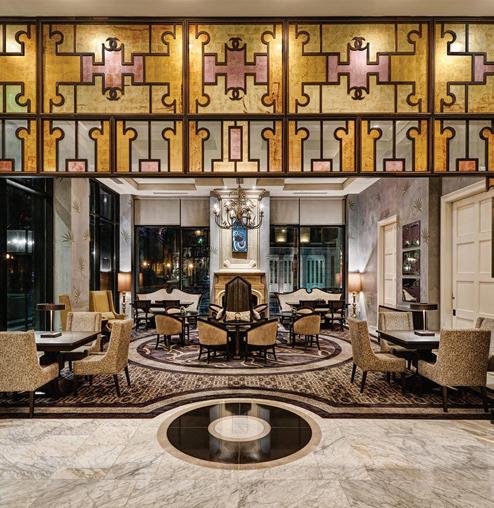
Housed in the 1909 Beaux Arts-style Maison Blanche building, the iconic hotel celebrated its 25th anniversary last year.
newly renovated event facilities.
“Our banquet and catering teams worked under the direction and supervision of Rabbi Yossi Nemes (from Chabad Center of Metairie) to serve more than 1,400 kosher meals in true Cajun and Creole style,” said Chimeno.
She said the renovations were done to the second floor meeting space in September of last year. The space consists of 10 function rooms totaling almost 13,000 square feet for gatherings of up to 200 people.
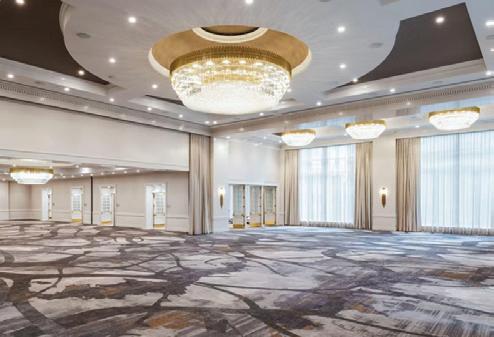
The hotel also has a large ballroom and function space on the third floor. Chimeno said they have hosted numerous Jewish community events, weddings, Bar and Bat Mitzvahs.
“We value the community and we’re happy to accommodate special requests for all parties large and small,” she said.
Southern Jewish Simchas
Loews New Orleans
Celebrations are plentiful in the Crescent City, and Loews New Orleans Hotel has hosted its share since opening in 2003 on Poydras Street.
“New Orleans is a city fueled by creativity and inspiration — expressed through our cuisine, our music, and, most of all, the unmistakable cultural energy visitors feel the moment they arrive,” said Robert Reso, Director of Marketing at Loews New Orleans Hotel. “There is no such thing as a blank canvas here. Our vibrant surroundings form a rich tapestry that naturally sets the stage for organizations to launch bold ideas and new missions.”
He added that many team members have been with the hotel since day one, and that the relationships built with returning guests have fostered a deep connection that has withstood life’s inevitable twists and turns.
The Loews New Orleans Hotel features 285 guest rooms and suites. Reso said the hotel can work with groups ranging from 25 people to 250 for plated meals and 350 for
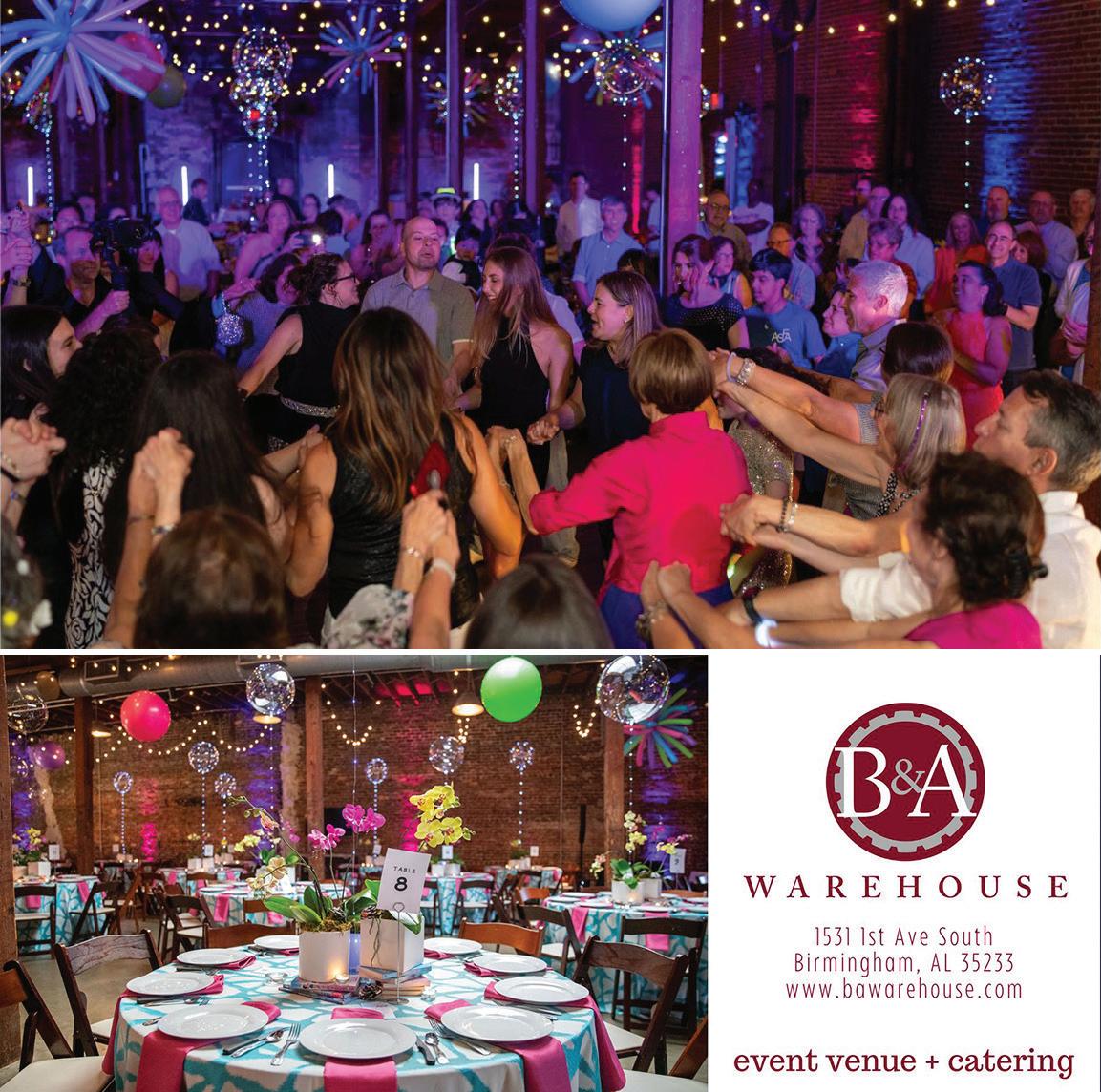
B&A Warehouse
The “B” in B&A Warehouse could easily stand for B’nai Mitzvah.
The event facility in Birmingham’s Railroad Park hosted a sweet reception for Emelia Brobst’s (daughter of Jeff and Ilyse) candy bar-themed Bat Mitzvah on January 10.
The celebration included candy-themed centerpieces and accents. Young adults enjoyed hamburgers and fries while the parents feasted on selections from a custom pasta bar as well as dessert shooters.
Zoe Levine’s Bat Mitzvah in November 2024 included a glow-stick-themed recep-
reception-style.
Over the past couple years, Loews New Orleans Hotel has hosted several Jewish weddings and Bar/Bat Mitzvahs in its space, as well as room blocks.
“Our restaurant, Poydras & Peters, is open for breakfast and nightly for dinner,” said Reso. “While we do not operate a separate kosher kitchen, we have partnered closely with Kosher Cajun New York Deli and Grocery for a number of events, and have worked with a rabbi to oversee ingredient sourcing and production.”
He said the hotel has also hosted many events for non-profits and a lot of college graduations “thanks to our long-standing relationships with the local universities.”
Reso said the hotel’s location in the CBD is ideal, near several cultural, dining and entertainment venues, with on-site valet parking.
“We sit at the crossroads of art, history, music, and cuisine — the destination’s culture radiates outward like spokes of a wheel, with our property at the center,” he said.
tion with special musical entertainment from Atlanta. More than 200 people attended.
Then in September 2024, the B&A hosted an Around the World-themed Bat Mitzvah for Meredith (Em) Washko — featuring food and cultural learning from several countries across the globe.
Isla and Maren Graham opted for a Silent Disco for their B’not Mitzvah in May 2024.
The event space, which can host up to 1,000 people for a stand-up reception, has several non-profit events on its calendar, including the Bell Center’s Derby Party on May 2 and the annual Birmingham AIDS Outreach Arty Party fundraiser on May 3.
NOLA Detox Opens New Treatment Campus on the Northshore of New Orleans Southern Jewish Wellness
Special to SJL
For families dealing with addiction, the turning point often comes when someone finally says they are ready for help. Too often, that moment is followed by a difficult search for an available treatment bed.
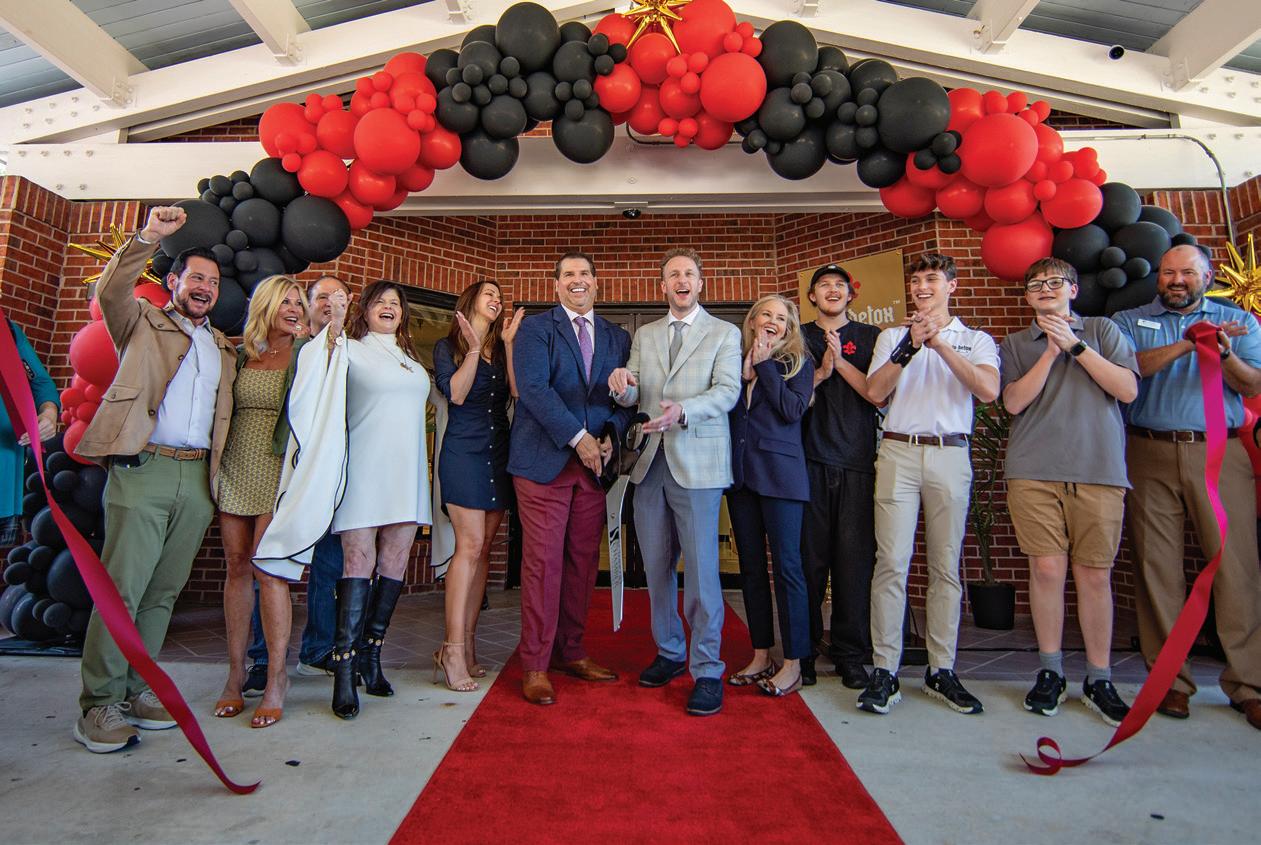
A new treatment campus in Slidell on the Northshore of New Orleans is aiming to change that.
NOLA Detox was founded in 2021 by New Orleans business leaders Dan Forman and Chris Copeland to expand access to addiction treatment in the region. Its first campus opened in the Algiers neighborhood of New Orleans and has helped thousands of individuals begin recovery through medically supervised detox and follow up treatment programs.
The new Slidell campus brings those services to the Northshore. The facility includes 30 medical detox rooms, each equipped with a king sized bed, and serves as the first step in a broader treatment program.
Patients come to NOLA Detox from across the country, though most travel from Louisiana, Mississippi, Alabama and Florida. The program accepts all major insurance plans, which helps remove one of the biggest barriers many fami-
lies face when trying to find treatment.
The expansion comes as communities across Louisiana and the Gulf South continue to face rising overdose deaths and a growing need for treatment services.
Forman said the work reflects a value familiar in Jewish tradition: the importance of saving a life.
“Saving a life is something every tradition understands,” he said. “If someone is ready to change their life and we can help them take that first step, that’s the most meaningful work there is.”
Medical detox is often the first and most critical stage of recovery. At NOLA Detox, patients receive 24-hour medical supervision as their bodies safely withdraw from alcohol, opioids, benzodiazepines and other substances. The goal is to stabilize patients physically so they can begin addressing the underlying causes of addiction.
After detox, most patients continue into NOLA Detox’s residential treatment program, where they may spend 30 to 90 days focusing on therapy, recovery skills and rebuilding stability. Patients can then transition into outpatient treatment while living in recovery residences
that provide structure and accountability during early recovery.
Copeland, whose background is in hospitality, said the organization has always tried to create an environment where patients feel respected and cared for.
“People arriving at detox are often at one of the lowest points in their lives,” he said. “We want them to feel comfortable and treated with dignity from the moment they walk through the door.”
He added, “If we treat people like honored guests, they are more likely to engage in the hard work of getting better,” he says. “Whether it is our chef-prepared meals or our staff knowing every patient by name, it is about creating a safe, dignified environment to heal.”
In just a few years, NOLA Detox has grown into one of the largest addiction treatment providers in the Gulf South.
“We remind people that life in recovery can be full of flavor, music, friendship, and purpose,” Copeland says. “Sobriety is not the end of fun. It is the beginning of real living.”
With the new Northshore campus now open, the organization hopes that when someone is ready to seek help, a place will be available.
Southern Jewish Wellness
The Joys and Challenges of Jewish Aging
By Rabbi Edward P. Cohn and Dr. Neil Baum
The book of Proverbs (16:31) teaches, “Gray hair is a crown of glory.” For example, we just learned that the latest perk in Israel has provided its “alta’s” with free public transportation. After age 67, Israeli citizens can travel for free on all buses and trains throughout the country, which is a tremendous benefit. Moreover, the seats at the front of the bus are reserved for seniors, with a sign quoting the biblical verse, “And you shall rise before the aged,” affording seniors to seats occupied by youngsters. We live in a world that is disproportionately youth oriented. Hollywood bombards us with alluring pictures of young people wearing the latest fashions, driving the coolest cars, climbing mountains, and sailing the oceans on the most exciting vacations. The only TV commercials aimed at the elderly are those for funeral insurance or senior care centers.
Out to Pasture
Companies often retire their longtime employees, putting them out to pasture when they reach their 50s and 60s, treating them as if they are suddenly obsolete. We have both noted the convenient marginalization of colleagues, physicians, and rabbis who are “encouraged” to retire.
Meanwhile, life expectancy continues to rise, with 10,000 people turning 65 every day.
Our Jewish Patriarchs and Matriarchs were described in the Torah as living well beyond the century mark. Moses, of course, set the bar at 120, and since his death, virtually no one has achieved that distinction.
What we today consider “middle age” was once regarded as an entire lifespan for those fortunate enough to achieve it. For example, in 1850, the U.S. life expectancy was just 39 years. Today, pickleball courts are filled with 80- and 90-year-olds, primarily due to advances in medicine, diet, the emphasis on an active lifestyle, and a healthy dose of MAZEL.
The Jewish Approach to Aging
First and foremost, we Jews believe that every moment of life is of inestimable value and that every sacred stage of life bestows its own intrinsic value.
While we may indeed lose a few steps, and our balance, sight and hearing are somewhat impaired with advancing years, life goes on, our productivity need not be over, and reaching meaning, gratitude and joy continues.
Take, for example, the Lubavitcher Rebbe, Menachem Mendel Schneerson, who at age 70 initiated the establishment of 70 new educational institutions. On his 80th birthday, he delivered a six-hour speech and then personally distributed Chabad texts to the audience of 10,000. Even after his stroke at age 92, he continued to lead the movement until his death in 1994.
Age-Wisdom Connection
Clearly, our Jewish tradition points to a frequent correlation between age and wisdom. In fact, the word used for aging, “ziknah,” also means “wise.” The book of Deuteronomy (32:7) admonishes: “Remember the days of old… ask your father and he will tell you; ask your elders, and they will teach you.”
The Midrash instructs that: “The people of Israel are a bird, while the elders are the wings and without them, the bird cannot fly.”
It is of interest that when older scholars, clergy, scientists, politicians and other professionals speak before large crowds, their audience hangs on their every word. Which explains why older rabbis are often seen as an invaluable asset to their communities. Perhaps these older rabbis offer a long view of life’s journey because of their personal presence across multiple generations, in both joyous and trying times.
Southern Jewish Wellness
Staying Active and Useful
Staying active and productive may offer the key to avoiding depression, dementia, and even, God forbid, suicide. If an older person has no purpose in life, they might feel empty, which could hasten their decline. Our sages remind us that, “A person only dies from having nothing to do.” As physicians, we are aware of how common it is that, upon retirement, formerly active and resourceful people become watchers of life rather than players. We can’t forget the wisdom of a cherished colleague, Dr. Harris Hyman, who advised us to retire to something and not from something.
Celebrate Each Day
All of this is to remind us that every day brings along a precious opportunity to learn, to love, to teach, to forgive, and to embrace the grandeur of life. A Hassidic teaching puts it so well: “Old age can be a winter, but it can also be a harvest.”
Life reminds us, until the last moment, of the opportunity to touch others for the better and to perform acts of loving kindness that will live on after us.
For goodness’ sake, let’s not forget that our wealth in years may also provide the opportunity to affect the next generation. Not only should each person continue to take their rightful place in society, but perhaps the greatest opportunity age offers is the chance to affect the next generation. Is there any greater love than that of a grandparent for a grandchild? An intergenerational learning and tender instruction from the older to the younger generation may well provide just that perfect insight treasured by our ancestors and captured as l’dor-va’dor.
Rabbi Edward P. Cohn is rabbi emeritus of Temple Sinai in New Orleans, now living in Atlanta. Neil Baum is a physician in New Orleans, and a professor of Clinical Urology at Tulane Medical School.
CJFS CARES Respite Is
Widening the mitzvah of mikvah
Louisiana community mikvah broadens access to an ancient mitzvah as additional contemporary uses become more popular
In recent years, there has been a resurgence of interest in the concept of the mikvah, the traditional Jewish purity bath, and those in charge of the Oscar J. Tolmas Louisiana Community Mikvah are encouraging members of the community to experience the spiritual transformation that comes from its waters.
The mikvah, which opened two years ago, is located in its own building behind Shir Chadash in Metairie.
Mikvah President Lynne Wasserman said “Traditionally, mikvaot have been around for monthly purposes by observant women… and conversion, and that’s really it.”
The mikvah is a ritual purification pool that is filled from natural water, such as stored rain water. The Conservative movement requires mikvah as part of conversion, and in 2001 it was recommended by the Reform movement.
In recent years, there has been more attention given to the mikvah’s role in spiritual life, partly due to the writings of author Anita Diamant, and an emphasis by Chabad to build mikvahs around the country (see sidebar, page 33)
Many outside the traditional community are embracing mikvah as part of women’s empowerment and bodily autonomy, while others are using the mikvah for a wide range of personal moments.
“This is a spiritual experience, it’s not just something we do because we have to,” and there’s no reason to not use it for non-traditional reasons, Wasserman said.
All Jewish congregations in the New Orleans area, the Northshore and Baton Rouge, are members of the mikvah. The congregations range from Chabad to Reform.
Wasserman said establishing this as a com-
munity mikvah “has been amazing,” especially given the differences among rabbis and congregations. The agreement was that the mikvah would be built to the highest standards of Jewish law, so anyone could use it, but individual immersions would be subject to the guidelines of the rabbi under whose auspices that specific immersion would take place.
Before Katrina and the levee failure in 2005, there was a mikvah for community use at Beth Israel in Lakeview. The 10 feet of water that flooded into the neighborhood made Beth Israel’s building unusable, and it wasn’t until 2012 that Beth Israel had a new permanent home, but a smaller facility that did not include a mikvah.
Rabbi Uri Topolosky, who was rabbi at Beth Israel from 2007 to 2013, launched the push for a new community mikvah through the Rabbinic Council. Those needing a mikvah for conversion or other purposes traveled to Houston, which Topolosky pointed out was “impractical in the long run,” according to Bobby Garon, who was president of the mikvah’s board during the development process.
In 2010, Chabad of Louisiana opened Mikvah Chaya Mushka, a women’s mikvah, as part of the RINGGER Women’s Enrichment Center. It replaced a smaller facility that dated back to 1989 and plans for their new mikvah had begun a year before Katrina.
Around 2014, the Jewish Federation of Greater New Orleans was approached to help the community mikvah project reach “critical mass,” and in 2017 the proposal moved forward as the Oscar J. Tolmas Trust provided a “significant gift” as seed money for the project, and additional fundraising was held.
Supply chain issues and labor shortages
during the pandemic pushed the groundbreaking to December 2021.
As part of Louisiana’s complicated relationship with water, the community mikvah has a unique memorial. In August 2021, Hurricane Ida hit the area, 16 years to the day after Katrina. As part of the usual hurricane precautions, Shir Chadash had secured Torah scrolls in a high location that had remained untouched during Katrina. This time, though, that space took on water and three of the congregation’s scrolls were damaged beyond repair.
In April 2022, there was a ceremony to bury the three scrolls, along with additional worn holy books from area congregations, under the ramp leading to the mikvah building. Rabbi Deborah Silver, who was rabbi of Shir Chadash at the time, said this mikvah was unique in that “the path to the mikvah is strewn with holy words.”
Southern Jewish Wellness
A mikvah facility includes private changing rooms and bathing facilities, as one submerges entirely in the mikvah with no clothing, makeup or anything else that gets between the body and the water.
Joy Lewis, secretary of the mikvah board and a mikvah guide, said that when she takes the time “to remove the layers of the outer world and transition into the sacred space that the mikvah provides, something internal happens.” For her, the experience is summed up as “peace” from the divine source. She wants to help provide that type of experience for anyone who wants to immerse.
While some immerse before a wedding, Wasserman said the mikvah can be part of “entering a new phase of life,” whatever it is — whether before a Bar or Bat Mitzvah, receiving the get that finalizes a divorce, “moving to town, moving out of town, retiring, finishing chemothera-
Pensacola mikvah nearing completion
Ever since they arrived in Pensacola in 2018, Rabbi Mendel and Nechama Danow “had a desire to build a mikvah,” he said, because “it is extremely important for Jewish life.”
That dream is becoming reality, with the planned June 14 dedication of Mikvah Gittel Raizel, exactly two years after the groundbreaking.
For years, the nearest mikvahs have been in New Orleans or Tallahassee. Recently, mikvahs have been built in Mobile, Destin and Panama City. Having a local mikvah “makes life much easier for everyone who wants to use a mikvah,” he said. Even with the newer options that are closer than the couple hours each way, “it’s still a three-hour road trip.”
For those who observe the traditional laws of family purity, women immerse in the mikvah once a month. Men often immerse for special occasions.
The mikvah will have a women’s pool, a men’s pool and a “kelim” mikvah — a shallow pool accessible from outside for immersing dishes.
Danow said new metal and glass utensils are supposed to be immersed before being used with food. “It’s a beautiful and often overlooked mitzvah that helps bring holiness and purity into our kitchens.” Until now, the only option was to bring them to the Gulf.
py — all the big life transitions.”
In his proposal for the community mikvah, Topolosky also suggested “new and creative uses” including to mark a year of cancer remission, each month of sobriety, the end of a relationship, a move to a new home, the transition of a Hospice worker after a client dies, a year of mourning, the start of a new job, a birthday, or a personal prayer during the ninth month of pregnancy.”
Additional ideas on the mikvah’s website include reaffirming Jewish identity, a fertility journey, preparing for Passover or the High Holy Days, in gratitude, or recognizing the process of coming out.
The mikvah guides can assist in creating a ritual for other circumstances, and there is a series of sheets available with different prayers for different uses of the mikvah.
Wasserman said her first time in the mikvah
In 1975, the Lubavitcher Rebbe, Menachem Mendel Schneerson, declared that building mikvahs should be a priority, especially for communities in remote locations. He also said they should be pleasing and welcoming, unlike the sparse basement locations for many older facilities.
Danow said there is an emphasis on making the mikvah “as beautiful as possible,” to have it serve as “a spa for the soul.”
The Pensacola facility has floor to ceiling polished granite slabs, with a different style in each room. The exterior is reminiscent of Jerusalem, “so when you walk in, you’re feeling like you’re in the Old City.”
Adding to the Israel vibe, there are plans for a fig tree, an olive tree and an etrog tree as part of a garden.
As the guidelines for building a kosher mikvah are complicated, two experts from Mikvah USA have been working on the project. The national organization has completed over 100 mikvahs around the country, and promotes the mitzvah.
This will be the first mikvah in Pensacola in decades. B’nai Israel had one in its first building, which it occupied from 1923 to 1954. Similarly, Temple Beth-El in Birmingham has one in its 1926 building, and Agudath Israel-Etz Ahayem in Montgomery has a mikvah. Those congregations were originally Orthodox, and affiliated Conservative in the 1950s.
“The mitzvah of mikvah brings deep holiness, connection and unity into the home,” Danow said. “It’s something powerful and deeply personal, and now, finally, it’s becoming a reality right here in Pensacola.”
Southern Jewish Wellness
was in her late 50s, and “it changed all of my preconceived notions of this ancient tradition.”
She was trained as a mikvah guide at Mayyim Hayyim in Massachusetts, a community mikvah that was the vision of Diamant and opened in 2004. Mayyim Hayyim lists similar community mikvahs around the country.
Lewis said that visiting the mikvah, “you come out and feel that the spiritual shmutz has been washed off.”
Open by appointment every day except Shabbat, the mikvah is available for men from 6 a.m. to 10:45 a.m., and for women starting at 11:30 a.m. Women’s hours extend to 10 p.m., except on Fridays, when it closes one hour before Shabbat.
Wasserman said the mikvah “is really magical at night.”
An anonymous community member has made a complimentary first immersion available for anyone who wants to try the experience, except for an upcoming bride or groom.
Those wanting to make an appointment are asked to check to make sure their rabbi or congregation’s mikvah guide can meet at a date and time. An appointment confirmation is required, the mikvah can not accept walk-ins. If a congregational guide is not available, the mikvah has its own guides. Anyone who is not connected to a member synagogue can contact the mikvah for an appointment.
While the member congregations are in the New Orleans and Baton Rouge areas, the mikvah is available for communities in the rest of the state, and in other nearby communities.
More information is available on their website, lacommunitymikvah.org.
Embracing Forgiveness
WWII Museum hosting author event
The National World War II Museum in New Orleans will have a Meet the Author program with Alex Kor, on “A Blessing, Not a Burden: My Parents’ Remarkable Holocaust Story and My Fight to Keep Their Legacy Alive.”
The son of two Holocaust survivors who narrowly escaped death, Kor grew up in Indiana. In the book, Kor details his journey, from his unique upbringing to his present-day mission of carrying on his parents’ inspiring legacy. Reflecting on his mother’s controversial stance on forgiving the Nazis and his father’s unbridled optimism, he shares the life lessons that have helped him through his own hardships and shaped his perspective on forgiveness in a world still fraught with discrimination.
The May 14 event will start with a reception at 4:30 p.m., with the program at 5:30 p.m. in the Louisiana Memorial Pavilion, and online via Vimeo.
Collat Jewish Family Services Executive
Director Lauren Schwartz, Alabama Holocaust
Education Center Executive Director Lisa Bachman, N.E. Miles Jewish Day School
Head of School Brian Cain, Levite Jewish Community Center CEO Brooke Bowles, and Birmingham Jewish Federation and Foundation CEO Florina Newcomb
Birmingham agencies hold joint annual event
All Together Now
For the first time, six Birmingham Jewish organizations joined forces for a unified annual meeting and awards event.
On Jan. 25, the Birmingham Jewish Federation and Foundation, N.E. Miles Jewish Day School, Collat Jewish Family Services, Levite Jewish Community Center and Alabama Holocaust Education Center gathered at the LJCC, giving community updates, and presentations by organizations that do annual awards.
The five heads of the six organizations took the stage together, with Florina Newcomb, CEO of the BJF and Foundation, saying “we represent five organizations with different missions, but one clear focus, strengthening Jewish life in Birmingham.”
While each organization has its own role in the community, LJCC CEO Brooke Bowles said “with the Birmingham Jewish community at the center, we’re like intersecting circles, coming together through partnership, shared responsibility, and mutual support… committed to working together to build a stronger Jewish community.”
Each agency then presented highlights from the past year, and most announced their new officers and boards.
Brian Cain, Head of School at NEMJDS, started off the agency presentations by saying “if you’re ever low on life, just come by the school. It’s instant happy. And you don’t have to you don’t have to call me, you just come in the front door, and I will take you to a classroom. You don’t have to get involved. You can just see the life that goes on in that school. It’s a beautiful place to be.”
Sarah Kunin, Day School co-president, said the school has revamped its family and community education, with an adult Hebrew class taught by
her term as LJCC president; Nancy Goedecke receives the Susan J. Goldberg DIstinguished Volunteer Award from Amy Saag.
Left, LJCC CEO Brooke Bowles presents awards to Karen Weinrib, James Carrol and Rabbi Yossi Friedman. Above, Isa Dorsky is honored as she completes
Yair Brenner, a class on antisemitism taught by Rabbi Yossi Friedman, an adult art class and parenting sessions.
She emphasized the cooperation across agencies, including after-school programs at the LJCC, student counseling from CJFS, PJ Library co-sponsoring the monthly Bubbie’s STEM Kitchen for preschoolers, the Foundation assisting in identifying funds that could benefit the school, and touring the AHEC.
Lisa Bachman, AHEC executive director, said 2025 was a year of momentum, designing its educational work on using history to understand the past and shape the future. She said the forces of “misinformation, propaganda, silence, and a willingness of ordinary people to look away” helped enable the Holocaust, and “are also shaping our world right now.” Their current work is being designed with that in mind.
This year, AHEC will convene its first-ever statewide teacher conference, positioning AHEC as “the resource for Holocaust education in Alabama and beyond.”
Eight teachers will travel abroad for Holocaust study, through a partnership with the Auschwitz Birkenau Memorial Foundation. They are also reaching more classrooms in partnership with Echoes and Reflections, with support of the Max and Betty Steinmetz Teacher
Fellowship. “This multiplier effect is enormous, and very intentional” she said.
The AHEC recently launched a new initiative with a focus group of CEOs and executive directors, Beyond the Label, a multimedia program designed to bring community together and focus on the assumptions that people make as a result of misinformation.
They also arranged for numerous Birmingham landmarks to be illuminated in yellow on Jan. 27 for International Holocaust Remembrance Day.
Nancy Goedecke, a “very proud past president” of CJFS, officiated the installation of the new board for the social service agency.
Caleigh Alevy and Lise Grace presented the 2025 Volunteers of the Year Awards, honoring Melora Ferolito and Randy Ward of the CARES Respite Program, and Miriam Sokol of the Senior Grocery Initiative.
Alevy said the grocery initiative “consists of many layers. One that is special to me is the layer that involves families who seek meaningful experiences,” as Sokol does in volunteering with Benji. “Your commitment to volunteering your time, and your friendship, has connected clients to our services, resources, and improved quality of life,” Alevy said.
Grace said Ferolito and Ward, neither of
whom were able to be at the event, were selected because “in addition to being amazing, they shared the experience of losing their parents to Alzheimer’s. With no connection to the Jewish community, they found their way to us. It’s not easy to be reminded of painful experiences, but they both chose to put their experiences to work in a commitment to our clients.”
She added, “Both of them are invaluable and greatly enhance our program.”
New CJFS President Kay Kornmeier spoke of how the agency is “the caregivers of the community,” serving all ages, all backgrounds and all incomes,” with clients from ages 8 to 103. The four pillars of service are CARES, community outreach, counseling and senior solutions.
She addressed the CARES program, which is for those with memory and movement disorders, and spoke of collaborations with other agencies in the community.
Personal Care Manager Bre Friend and social worker James Cannon spoke of one client, who they called Steve for the purposes of the presentation. A client since 2024, he has been dealing with bipolar disorder and diabetes, and Friend said a decline in his cognitive and physical con-
ditions has led them to increase their involvement with him, and with helping his family deal with his condition.
Cannon spoke of the “advocacy and collaboration” of his role in coordinating a personal care team and providing emotional support.
Frank Siegel oversaw the election and installation of the LJCC board, followed by the presentation of three awards by Bowles, to members “who to inspire us to be stronger, to be kinder, and to sustain Jewish life.”
Karen Weinrib was presented with the Marilynn Leeds Legacy of Strength Award, which “recognizes one of our members who has demonstrated resilience in the face of personal or professional challenges.” Weinrib, who underwent a heart transplant in 1991, is a constant presence at the LJCC fitness center.
Bowles said she was nominated by several board members, with one writing “Karen’s strength and determination to overcome her challenges, never ceases to amaze me. She exhibits positive will and hope, just as Marilyn, of blessed memory, did.”
James Carrol received the Sam Tenebaum Jr. Great Kaiser Award, which “recognizes one of
Facing page, Sarah Kunin presents the Federation’s Joanie Plous Bayer Young Leadership Award to Abraham Kunin; Birmingham Jewish Foundation incoming president Aaron Nelson addresses his predecessor, Alan Weintraub. Above, Lana and Stephen Royal receive the N.E. MIles Lifetime Achievement Award from the Foundation.
community
our community members who embodies community, for a commitment to the J, and helping create a warm and welcoming environment for our members.”
Bowles said Carrol has been at the J since 1978, and “has mastered the art of spreading warmth and joy throughout our hallways. With his stories, laughter, and stylish wardrobe, he has become an irreplaceable part of our foundation and our history.”
Receiving the award, Carrol said “I will cherish it for the remainder of my life.”
Rabbi Yossi Friedman was presented the L’Dor V’Dor Award, recognizing “an individual who exemplifies the tradition of passing Jewish knowledge from generation to generation at the J, by sustaining the customs, heritage, and collective memory of the Jewish people… thereby ensuring a vibrant and meaningful Jewish future.”
Bowles said one of those nominating Friedman said he “generously donates a significant amount of his time to our center and is truly a cornerstone of our community, continually passing on Jewish wisdom. Every time I interact with him, I learn something new and walk away with even more questions.”
Vice President Abe Kunin led a tribute to Dorsky for her term as president. Dorsky grew up at the LJCC, and Kunin said she used her historical knowledge to “create a vision for a strong Jewish community,” and said the institution is “in a great financial position, probably the best that’s been in over a quarter century.”
Incoming President Steven Corenblum said if all goes as expected, “by the end of this calendar year, we will be debt free for the first time since the year 2000.”
He recounted how the LJCC helped the broader community during the government shutdown, and spoke of the emphasis on Judaic programs, of which there were 62 last year.
It’s Southern Jewish Life
Federation President Sheryl Kimerling said “This past year, we’ve continued to do what Federation does best, serving as the community convener, responding to needs with compassion and strengthening Jewish connection across generations.”
Community security continues to be a priority, “but we will meet it the same way we meet every challenge, together, with vigilance.”
Amy Saag presented the Susan J. Goldberg Distinguished Volunteer Award to Nancy Goedecke, noting that they are first cousins who are often mistaken for sisters.
Saag said Goedecke’s “volunteer career has spanned many decades with the Jewish and greater Birmingham communities and organizations.” She added, “We were taught by example what it meant to work hard, to do our part, to help repair our world. Our parents were and are our examples.”
Goedecke said she began volunteering in high school and “never stopped.” She said her problem of having a hard time saying no “has allowed me to meet, get to know, and learn from all kinds of people in all walks of life.”
She added, “I know I’m speaking to the choir, but as they say, you get so much more out of getting involved than you put into it. I’m so proud of my involvement with the Federation and the other organizations that I have dedicated my time and resources to.”
Sarah Kunin presented her husband, Abe, with the Joanie Plous Bayer Young Leadership Award, noting that “he isn’t afraid to speak up and ask questions.”
“You are investing in our community to make it stronger and more cohesive,” she said. “I appreciate you having the confidence to stand up for what you believe is best, the best way to do something, and you stick with it and try to help each organization figure that out.”
Abe Kunin said he was surprised that he was thought of as a leader. “I certainly didn’t set out to become one,” and his first involvement started in December 2015 on a Federation committee — after he emailed a series
of six questions about that committee. In meetings, he observes disagreements and tries to get people talking to each other instead of past each other, to find common ground. Since 2015, he has said yes “many more times, because I want to see our Jewish community thrive.”
Samantha Palmer, director of endowments at the Foundation, spoke of Alan Weintraub’s tenure as president “during a period of real change” that saw the agency move under the Federation’s umbrella, transition from a fiscal year to a calendar year, deal with October 7 and its aftermath, and experience significant growth in its assets. “He devoted an extraordinary amount of time to his position,” she said.
Weintraub said being president for the past 30 months, when the Foundation’s assets grew from $35 million to $50 million, “has been an honor and a wonderful obligation.”
He installed Aaron Nelson as his successor, saying “With this office comes responsibility
for our donors, our agencies, our partners, and the generations who will rely on what we build today.”
Newcomb and Schwartz presented Lana and Stephen Royal with the N.E. Miles Lifetime Achievement Award, given in recognition of “their consistent leadership, giving, service, and dedication to the Birmingham Jewish community.”
Schwartz said “their leadership as individuals, and as a power couple, is strategic, honest, and driven by care and compassion.”
In a video presentation, sons Russin and Asher said “they’ve always emphasized the importance of philanthropic involvement, and becoming active in every city where we have lived. Today, we are doing our best to follow in their footsteps, to pass on these qualities to our own children.”
Lana Royal said 18 years ago, they were living in south Florida, contemplating a move to Birmingham. “I remember being on the phone
John Ambrose has a ‘passion’ for building great kitchens and baths
John Ambrose is a Birmingham cabinet expert with years of experience in top-quality remodels and new construction. In this Q&A, John discusses what sets Ambrose Kitchen & Bath apart.
Why do you focus on kitchens and baths? Having worked on ground-up construction and full home remodels, I realized that kitchens and bathrooms are my passion. These are the most used and most challenging design features of the home—and as the youngest of four brothers, I like nothing more than to win a challenge! Getting the lighting, plumbing, tile, countertops, cabinets, hardware, appliances and paint to work together is like conducting a symphony. Every element has to be in harmony to achieve our clients’ vision.
Do you have a showroom to visit? Absolutely. In our showroom clients can get a handson look at working kitchens showcasing two of our top cabinet brands, Kith Kitchens and Mouser Custom Cabinetry. We also have lots of other samples to show. We see clients by appointment only because we believe that each client deserves our undivided attention.
What sets Ambrose Kitchen & Bath apart? We are committed to listening and collaborating with our clients to build spaces that work for them. Most customers come to us to solve problems in their existing space. We listen and create designs that ensure their new kitchen or bath will work for the way they live. We’re also a tight team of highly skilled professionals who have a passion for design and an eye toward the tiniest detail. We think through every aspect of our clients’ space and plan each component in advance.
Can you accommodate my busy schedule? Of course! Whether you’re a busy working parent, constantly on the road or retired and living your best life, we can work with you. We understand that not everyone can get to the design table during retail hours. In fact, we schedule most of our appointments after 4 p.m. on weekdays or on weekends.
What if I’ve never remodeled before and I’m feeling overwhelmed? Don’t worry. We’ll walk you through your entire project hand-in-hand. Before we ever started focusing solely on kitchens and baths, we did full remodels and built homes from the ground up. We understand every stage of the remodeling process and how to staff it, so we can guide you and answer all your questions. We’ll help make sure your project goes smoothly from rough-in to fluff-out.
I have no idea what a kitchen costs these days. What if my budget and dreams don’t align? We get it. We can break down costs in an easy-to-understand way and work with you to design the ideal kitchen or bath for your budget. We’ve hand-picked beautiful cabinet lines at every price point. Come take a look!
For more information, call us at 205-510-6961 or visit AmbroseKitchenandBath.com.
with my brother, a long time resident of Mobile. His perspective was that we would be very happy here, given the city’s charm, coupled with its vibrant and active Jewish community. Additionally, we had a built in family with our cousins” and more to come, with their sons marrying into the Corenblum and Ceitlin families.
“We soon learned that being active in the Birmingham Jewish community requires far more than simply making an annual donation,” Stephen Royal said. “It is a deeply, meaningful, and fulfilling commitment of time and energy to foster the continued growth of our Jewish life in the city.”
He noted that they had moved many times over the years, and he has known many leaders and executives. “It is my opinion that the leadership of our Jewish organizations is truly the very best.”
For the past 18 years, “Lana and I embraced the community, and the community embraced us.”
While cooking for Passover… did you find things you would like
A commitment to care.
To the Families of New Orleans
Our decision to join the professionals at Lake Lawn Metairie allows us to continue our mission to provide families the highest caliber of care in the most beautiful of surroundings. Lake Lawn Metairie proudly serves all congregations and all local cemeteries. Whether planning in advance or at the time of need, we’re dedicated to serving families with professionalism, compassion and attention to detail that is second to none.
Sincerely,
Stephen Sontheimer & Billy Henry
JEF honors past, present and future at annual event
The Jewish Endowment Foundation of Louisiana looked at its past, present and future at its annual event, held on March 15 at the Higgins Hotel in New Orleans.
A series of three videos debuted at the event, each one dealing with a different timeframe for JEF — past, present and future.
Organized in 1967, JEF now manages over $100 million in total assets.
During the brunch, Maury Herman was honored with the JEF Tzedakah Award, and Roselle Ungar received the Saundra K. Levy and Helen A. Mervis Jewish Community Professional Award.
Admitted to the Bar in 1968, Herman has decades of experience in the legal system and in serving the Jewish and broader communities. He joined the family practice of Herman and Herman, and in 2018 became of counsel to Herman, Katz, Gisleson and Cain, and is managing partner of Herman Gerel, headquartered in Atlanta. He also was general counsel of the New Orleans Saints from 1986 to 1993.
He was co-chair of the Tobacco Products Liability Group of the American Association for Justice, and HKGC is among 60 law firms comprising the Plaintiffs’ Legal Committee of the Castano Tobacco Class Action. HKGC was also a member of the trial team representing Richard Ieyoub, Attorney General for the State of Louisiana, in Louisiana’s claim against the tobacco industry.
Herman is past president of the Louisiana Association for Justice and past chairman of the New Orleans Central Business District Historic Dis-
Bob Brickman presents the Saundra K. Levy and Helen A. Mervis Jewish Community Professional Award to Roselle Ungar.
community
trict, and was the chairman of the Board of Directors of a Louisiana community bank. He has also served as a board member for WYES-TV, JEF, the New Orleans Jewish Community Center and the Jewish Federation of Greater New Orleans.
Ungar is the CEO of Jewish Family Service of Greater New Orleans, a role she assumed in 2015. She is also the chair elect of the Network of Jewish Human Service Agencies.
She also is a nonprofit consultant, an Association of Fundraising Professional Faculty Training Academy Master Trainer and a Certified Fundraising Executive. In 2016 she was president of the New Orleans chapter of the Association of Fundraising Professionals.
From 1997 through 2006, she was assistant executive director of the Jewish Federation of Greater New Orleans, helping guide the community in the immediate aftermath of Katrina and the levee breach.
The Past video included JEF President Bob Brickman and Executive Director Bobby Garon speaking about how Jewish philanthropy in Louisiana is about responsibility to the community. “Decades ago, visionary Jewish leaders recognized something important. If we wanted our values to endure, our philanthropy had to endure as well,” Brickman said.
Garon said JEF was founded from that belief, “to ensure that charitable giving would be thoughtful, intentional, and protected for generations to come.”
That enabled the agency to grow, and not only support endeavors on a regular basis, but react to moments of crisis, such as Hurricane Katrina, and October 7. “Whether close to home or across the world, our philanthropy reflects a simple truth,” Brickman said. “We show up.”
In the present day video, Garion noted how philanthropy has evolved, even in the past 10 years. “Donors want to be more strategic, more engaged, and more confident that their giving is making a real difference,” and JEF has embraced that.
JEF Secretary Mara Baumgarten Force said one thing that has not changed is the JEF’s attention on a “deeply personal level… You are known. Your goals matter. Your values matter. You are truly a part of the JEF family.”
Richard Cahn, JEF president a decade ago, spoke about the future, and passing down the lesson of responsibility to the community. “JEF gives families a way to turn values into action, not just for today, but for generations.”
The funds that are created are “about preserving our future and creating a legacy,” he said. “It allows each generation to be part of something bigger than themselves.”
Bob Brickman and Bobby Garon present the JEF Tzedakah Award to Maury Herman.
NCJW honors Leslie Jacobs at Hannah Solomon Awards lunch
The National Council of Jewish Women, Greater New Orleans Section presented Leslie Jacobs with the 2026 Hannah G. Solomon Award at its annual luncheon, Feb. 2 at the Audubon Tea Room.
This award is given annually to a volunteer community leader who exemplifies the qualities of Hannah G. Solomon, founder of the NCJW. The grassroots organization of volunteers and advocates strives for social justice by improving the quality of life for women, children and families and by safeguarding individual rights and freedoms.
According to NCJW Co-President Susan Greenberg, Jacobs has fought tirelessly for over 35 years at the local, regional and state level on behalf of the children of Louisiana.
“She has been a leader in the New Orleans business sector, and a philanthropist who has built numerous organizations and opportunities for the people of New Orleans and our state,” Greenberg said.
Jacobs is a former insurance executive who has been engaged in education reform for more than 35 years. A native of New Orleans, she began as a business partner with an elementary school and subsequently served as an elected member of the New Orleans School Board, and 12 years on the Louisiana Board of Elementary and Secondary Education. Jacobs is considered the architect of Louisiana’s accountability reform, was instrumental in the creation of the Recovery School District and has been very involved in efforts to build successful schools in New Orleans post-Katrina.
Jacobs has also been active in the New Orleans business and startup
Michelle Jacobs Antle, 2026 Hannah G. Solomon Recipient Leslie Jacobs, and Lauren Jacobs Benjamin. Back row: Scott Jacobs
Ana Gershanik, Barbara Herman, Susan Hess and Ina Davis
community, serving as past chair of GNO, Inc. She founded three organizations that reflect her commitment to venture philanthropy: 504ward, a group dedicated to retaining talented young 20- and 30-somethings in New Orleans; Educate Now!, a nonprofit committed to reforming New Orleans public schools; and YouthForce NOLA, an education, business, and civic collaboration that prepares New Orleans public school students for successful pursuit of highwage, high-demand career pathways.
In accepting the Hannah Solomon Award, Jacobs noted that she wanted to share it with the teachers, administrators and community partners who do the incredibly hard work every day.
“The beauty of our system of charter schools is that it empowers them to do their magic,” Jacobs said. “They are all engaged in tikkun olam — one classroom, one child, one learning opportunity at a time.”
While volunteering at an elementary school, Jacobs asked why the school put so much effort into celebrating kindergarten graduation. One of the teachers told her that it might be the only graduation these children would ever experience. In that moment she knew two things: these students deserved better, and she’d found what she had been searching for.
The event was co-chaired by Melanie Bronfin and Wendy Goldberg.
Wendy Goldberg, Leslie Jacobs and Melanie Bronfin
NCJW Co-Presidents Susan Greenberg and Diana Mann
Steamed Bronzini
Ingredients:
1 lime
1 tablespoon sliced ginger
½ cup soy sauce
½ cup sugar
¼ cup orange juice
¼ cup rice vinegar
¼ cup sesame oil
1 cup cooked rice
¼ cup sliced snap peas
¼ cup shredded carrot
¼ cup tomago (egg)
For sesame glaze:
Critical (acclaim)
“He periodically spells my name right.” – Moses
“Yes, we gave him a graduate degree. We’re looking into it.”
– chancellor, Jewish Theological Seminary
“Half of the things he says I said, I never said. Including this.”
– his mother
“He knows more about Judaica than most, and you won’t find any of it in this book.”
– his fourth-grade teacher
“I’ll deal with him.”
– The Almighty Big G
Ocean Birmingham 1218 20th St. So. Birmingham (205) 933-0999
Combine soy, sugar, orange juice, sesame oil, vinegar in a sauce pan and reduce until thickened.
For tomago rice:
Combine rice, egg, peas, carrots and two tablespoons of sesame glaze in a bowl then set aside.
Assembly:
Line a bamboo steamer with parchment paper or a banana leaf. Top with a generous amount of glaze. Place tomago rice in a bowl that will fit inside a steamer. Top bronzini with sliced ginger and lime. Steam for eight to 12 minutes.
Ocean Birmingham
By Lee J. Green
Things are going swimmingly at one of Birmingham’s longest-running, fine-dining seafood restaurants as its new owner ushers in the next wave.
In January, Chloe Kidd acquired Ocean Birmingham from founder George Reis and said she plans to only enhance what the restaurant has meant to folks in Five Points since 2002.
“I’m from Birmingham and I remember coming here with family growing up,” said Kidd, who mostly recently had been working at a general manager at a well-known Opelika restaurant.
“This is more of an evolution than a re-invention. We’ll be making some cosmetic changes and adding some new things to the menu,” she said. “But for the most part, we’re keeping everything our customers have come to love over the years.”
Kidd said she also plans to add a to-go market with products from Ocean as well as other vendors, and to make some enhancements to the
community
>> Rear Pew Mirror
continued from page 46
“Southern Jewish Life is a vital community asset”
The Simple Son, in his simplicity, asks the most direct question. This most straightforward question is currently attributed to the Wise Son, though if he’s wise enough to ask such a detailed question, he’s wise enough to need to dive deeper, as mentioned afore.
The Child Who Doesn’t Know To Ask has to start somewhere. As such, it would be the most basic, brief question possible — which is traditionally attributed to the Simple Son who, according to the Hebrew, is for some reason always named Tom.
Again, because Passover comedy works in fours, none of this compares to Bava Gump’s suggested explanation of the real reason that we eat matzah on Passover. It’s not that the exodusing Israelites lacked time for their dough to rise. It’s because they rightly realized that their carry-on bags could hold a lot more pieces of matzah than bread.
Doug Brook endorses drinking at the Seder until one doesn’t know the answer to Who Knows One. That way, it won’t bother you how out of tune everyone is at that point. To acquire both Rear Pew Mirror books, read other past columns, or listen to the Rear Pew Mirror podcast, visit http://rearpewmirror.com/.
>>
Ocean tion, which actually fits the moniker of The Child Who Doesn’t Know To Ask (which is ubiquitously mistranslated as The Child Who Doesn’t Know How To Ask.)
continued from page 44
three private dining rooms.
Chef Shahad Jackson has been with Ocean for more than seven years, working his way up from bartender to executive chef. He said they have expanded the menu recently to include rare specialties such as bronzini, sushi and sashimi. Ocean also has a raw oyster bar.
“We pride ourselves on our specialty whole fish,” said Jackson. “We describe our food as American, but within that there is a big melting pot of flavors with some French, Atlantic, Mediterranean and other influences.”
Some of the many kosher-style menu items include Tempura Ocean (with tuna and salmon), paneed amberjack, mushroom pappardelle, angus beef tartare roll and wood-grilled jerk red snapper. Ocean also plans to expand its custom cocktail menu.
Kidd said they pride themselves on working with local farmers and suppliers. “We’re very focused on quality and sustainability,” she said.
“Ocean is not just a restaurant, it’s an experience,” Kidd added. “We want to make sure that every time our customers visit us that it’s a special evening.”
A Passunder Story
In the latter half of the pre-meal part of the Passover seder – around the time where most people start battling against enticing emanations from the kitchen – there’s an ancient anecdote in the Haggadah which nearly several families fail to skip. It’s about math.
Specifically, it recounts that because “the finger of the Almighty Big G” inflicted 10 plagues in Egypt, then “the Almighty Big Hand” caused 50 plagues at the Sea of Reeds. Because five fingers on one hand. Because people were made in the Almighty Big G’s image. (Or vice versa.)
Such was the way that Rabbis such as Akiva, Tarfon, and others with less effective publicists would explore and expound ad nauseum on the most minute minutiae that the Torah told.
Here’s another such example, from the long lost, recently discovered Talmudic tractate Bava Gump.
Rav Telphon, the Great Communicator, posited, “What if the 10 plagues in Egypt were inflicted not on the Egyptians, but on the Israelites?”
Rav Celphon, his discordant son, retorted, “Whose side are you on?”
Then Rav Telphon explained, “The Almighty Big G was trying to elicit compassion from Pharoah toward the Israelites. What better way to stir one’s compassion toward others than to see them suffering?”
Then Rav Celphon flexed his patience, saying, “Did the Israelites have compassion for the Egyptians when they were suffering through the plagues?”
Rav Telphon snapped back, “Of course, they did. And we’ve cumulatively missed out on gallons of wine in the second cup at seders for millenia because of it.”
Rav Celphon replied, “But I see you lick the spilled wine off your finger every year.”
Rav Telphon ignored his kin, continuing, “The plagues being inflicted on the Israelites would give Pharaoh numerous opportunities to sympathize with them as they suffered from an abundance of frogs, a hellstorm of hail, and being a locus for locusts.
“Pharoah failed to find compassion after the first nine plagues and so, having had their chance, the tenth plague was against the Egyptians.”
Rav Celphon sighed and said, “But that’s not what happened.”
Rav Telphon continued, “I know, but hear me out.”
Rav Celphon did not hear him out.
This raises another fundamental question. Why are The Four Questions™ really just one question with four supporting statements? Why does nobody talk about this monumental misnomer?
Speaking of misnomers, and because Passover comedy works in fours, consider the four sons. Are these really the questions these types of sons would ask? Have they been misattributed for all these centuries?
Rav Telphon didn’t think so. According to him, the Wise Son, in his wisdom, would ask the most biting, disassociating, incisive questions to gain the deepest possible understanding – the questions commonly attributed to the Wicked / Evil / Tragically Misunderstood son.
The Wicked Son is so evil that he doesn’t even bother to utter a ques-