Sri Gurubhyo Namaha








mpara
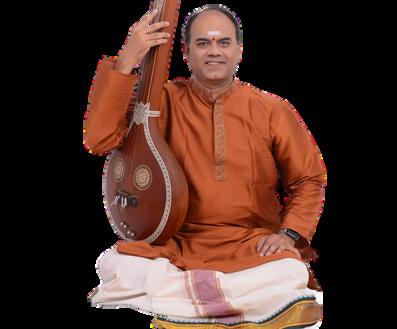
Vidvan Sri Delhi P. Sunderrajan is a world-renowned violinist and vocalist, belonging to the illustrious lineage of the flute maestro Brahmasri Saraba Sastrigal and the legendary Vidvan Sri Lalgudi G. Jayaraman. A rare artist who has achieved "A-TOP" grade status from All India Radio in both violin and vocal disciplines, his artistry is defined by deep classicism, technical mastery, and an uncompromising adherence to tradition. Over a career spanning several decades, he has accompanied nearly four generations of legendary musicians and performed as a soloist across the globe. He is a recipient of numerous prestigious honors, including the "Kalaimamani" from the Government of Tamil Nadu and the "TTK Award" from the Music Academy, Madras. In the US, the Mayor of Tempe, AZ and Mayor of Cupertino, CA declared May 18 and May 25 as Delhi P Sunderrajan Days for his service expanding the Carnatic tradition in the US th th

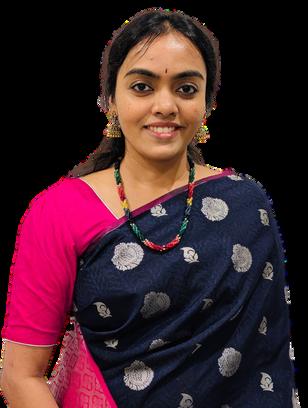
Vidushi Dr. Aishwarya Krishnamohan Dr. Aishwarya Krishnamohan is a distinguished Carnatic vocalist and a disciple of Vidvan Sri Delhi P. Sunderrajan, having received foundational training under Lalgudi Smt. Padmavathy Ananthagopalan and Smt. Shyamala Venkateshwaran. Her background reflects a rare blend of artistic and analytical depth; she holds a Diploma in Indian Music (Isai Mudumani) alongside a Ph.D. in Cell and Molecular Biology from the University of Texas at Dallas and a career as a Computational Neuroscientist. An All India Radio Youth Performer, she has graced prestigious stages globally, including the Tirumala Tirupati Devasthanam, Thiruvaiyaru Thyagaraja Aradhana, and numerous sabhas across India and the United States. Beyond performing, she has served as a judge for major competitions like TANA and Saptami. As the Founder and Artistic Director of SãMaGã Music Academy, she is dedicated to the global propagation of Carnatic music. Her teaching emphasizes bhavam, sahitya clarity, and strong classical foundations, guiding students to technical excellence and international accolades.

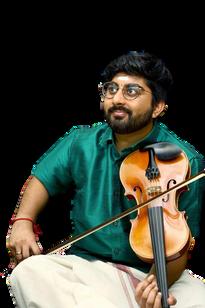
Vidvan Sri Vignesh Thyagarajan is a disciple of Vidvan Sri Delhi P Sunderrajan and has been under the tutelage of his guru for 18 years. He had his initial training under his mother Smt. Rama Thyagarajan and Sri Susheela Narasimhan. Vid. Sri Vignesh is a direct B-High grade artist of All India Radio (AIR), Chennai, India. He has regularly accompanied in the Chennai December Music season concerts since 2012 in leading sabhas including in the prestigious Madras Music Academy from 2016. He was awarded the Best Concert Award from the Madras Music Academy during the 2023 season. He has performed widely throughout the USA and India, in various states for chamber concerts and festivals. Vid. Sri Vignesh has performed numerous solos and provided violin accompaniment to many USA artists and visiting artists from India. He has been giving Violin Duets with his sister Aparna Thyagarajan across USA, India, and online social media platforms. Vid. Sri Vignesh has had the privilege of accompanying his Guru, Vid. Sri Delhi P. Sunderrajan, in multiple concerts as violin support and violin accompaniment.

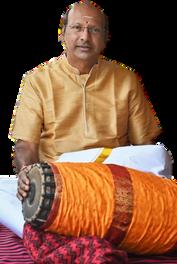
ed by his initials, received his initial training from his father, KVRS Mani, and now continues under the guidance of the esteemed percussion legend, "Sangitha Kalanidhi" Dr.TK Murthy. As an "A" Graded Artiste of All India Radio, Chennai, he boasts a career spanning 30 years, establishing himself as one of the most prolific and sought-after percussionists in the realm of Carnatic Music. Acknowledged as the "Asthana Vidwan" by the Kanchi Kamakoti Mutt, KVG has garnered numerous titles and accolades over the years. These include the "Bismillah Khan - Yuva Puraskar" from Sangeet Natak Academy, Govt of India, the "Kanjira Harishankar Memorial Award" from Nadalaya Trust, the "Palghat Mani Iyer Puraskar" from Chennai Fine Arts, the "Nada Vallabha" from Nada Sudha, and most recently, the "Sangita Kala Sagaram" award at the Cleveland Thyagaraja Festival. KVG has extensively toured internationally and participated in various music festivals and has graced the stage alongside both senior stalwarts and rising stars of today. He has collaborated with legendary percussionists of Carnatic Music such as his guru Dr.TK Murthy, Sri Palghat Raghu, Sri Trichy Sankaran, Sri Guruvayur Dorai, Sri Umayalpuram Sivaraman, Sri TV Gopalakrishnan & Vellore Ramabadran among others. Additionally, he has worked with renowned Tamil cine music directors "Isaignani" Ilaiyaraaja & Vidyasagar.

usic connoisseurs at Neyveli, Vidvan Sri Narayanan was initiated into the art of Mrudangam playing at the young age of seven, under the guidance of Sri S.K. Ganesa Pillai. He made his debut at the age of 11 and ever since, he has been making a mark in the field of Carnatic music. An intensive training under the Maestro Late Thanjavur Sri Upendran brought about a great amount of professionalism in Sri Narayanan’s playing. He is now blessed with the rare opportunity of being one of the favourite disciples of the Mrudangam Legend Padma Vibushan Umayalpuram Sri K Sivaraman.
Vidvan Sri Neyveli Narayanan has been honoured by Citations from the Governor and Congressman of Maryland in recognition of 50 years of percussion journey and 25 years of teaching in North America in 2024. Sri Narayanan is a post graduate in Rhythmology from Madras University and has accompanied almost all the veterans and present day stars of Carnatic music. He had the privilege of sharing the stage with Maestro Zakir Hussain and Violin maestros Sri Ganesh Kumaresh.
He has performed in leading Sabhas in India and won acclaim in countries like USA, Canada, Australia, UK, France, and Singapore. He has also performed in world-renowned auditoriums like Lincoln Center, Theatre de la Ville, and Queen Elizabeth Hall. He has students in India, USA, Canada and UK, taught through internet and phone. As the founder of Neyveli Narayanan Centre for Performing Arts, he has been instrumental in nurturing disciples from India and abroad.
As an 'A-TOP' grade artist, Vid. Sri Narayanan has been featured regularly by the All India Radio and TV networks, including the National Programme of music. He has received several awards and titles from various Sabhas, including ‘Naada Oli’, ‘Vani Kala Sudhakara’, ‘Laya Vadya Chathura’, and ‘Sangeeta Kala Saagaram’ from the Cleveland Thyagara Aradhana Committee in 2024. He is most blessed to be the “Asthana Vidvan” of KANCHI KAMAKOTI PEETAM.
Each piece in this Arangetram is accompanied by a visual background to reflect the rāgam’s bhāva and the composition’s inner meaning. These visuals will be projected during the performance.

Ragam: Natakurunji | Talam: Adi | Composer: Mulaivittu Rangasami Nattuvanar
The composer addresses Rajagopala in this pada varnam, questioning His upeksha (indifference) and the delay in bestowing His Anugraha. The vakra (crooked) movements of Natakuranji reflect the restless bhava of a soul seeking the Divine. The winding melody matches the waters in the background, where every turn feels like a step in a long spiritual journey. Just as the morning mist hides the palms in the image, the lyrics describe a heart clouded by maya, waiting for the light to appear. The golden sunrise shows the hope that His Anugraha will finally break through the haze to clear the mind.

m: Adi | Composer: Muthuswami Dikshitar
This prayer to Ganesha seeks the removal of vighnas (obstacles) to ensure the kacheri proceeds with shubham (auspiciousness). Composed in the Ragam Nata, the music uses steady, sthiram notes that reflect the gaja-gamana (majestic gait) and the buddhi (intellect) of the deity. This sense of grounded power matches the towering gopuram in the background, which stands as a pillar of spiritual stability. Just as the sun radiates from behind the stone structure in the image, the song describes a light that dispels ajñana (ignorance). The sunrise represents the hope that His Anugraha will break through to clear the path and settle the manas

alam: Rupakam | Composer: Tyagaraja
In this composition, Tyagaraja tells the manas (mind) to worship the beautiful forms that shine through the saptaswara, the seven sacred notes of music. He explains that these notes are vibrations of the divine, manifesting from the nabhi (navel), hrit (heart), and kantha (throat). The bright melody of Jaganmohini matches the background, where golden rays of light pierce through the dense forest canopy. Just as these beams illuminate the hidden flowers and greenery below, the sahitya describes the swaras as light that reveals the true nature of the atma. These glowing beams represent the clarity that comes when the mind is fully absorbed in the beauty of the music

Talam: Adi | Composer: Tyagaraja
In this kriti, Tyagaraja warns that the Ramatattva (true essence of Rama) cannot be understood by those with a chapala (fickle or wavering) mind. He explains that true devotion requires a steady heart, free from the distractions of worldly desires. The bright, rhythmic pace of Ragam Purnachandrika matches the background, where the full moon casts a clear, unwavering light over the landscape. Just as the moon’s reflection is only perfectly still when the water is calm, the sahitya suggests that the divine image only becomes clear when the manas stops rippling with restless thoughts.

Composer: Muttayya Bhagavatar
In this kriti, Muttayya Bhagavatar offers a prayer to Sarasvati, the mother of the universe and the source of all wisdom. The melody of Kiravani carries a deeply reflective and emotional quality, capturing the atma’s surrender to the Divine Mother. The powerful waterfall in the background envisions the reflective nature of Kiravani as a ragam and represents the unstoppable flow of mother Sarasvati’s compassion, washing away the ahankara (ego) of the devotee. Just as the lush greenery surrounds the falling water, the song describes a heart enriched by her abundance.

Ragam: Sri | Talam: Rupakam | Composer: Muthuswami Dikshitar
In this kriti, Muthuswami Dikshitar offers a prayer to Sri Varalakshmi, the mother of prosperity. The melody of Sri Ragam carries a sense of depth, perfectly suiting the worship of Varalakshmi. This composition describes her svarupa (form) as the wish-fulfilling power for all who seek refuge, revered by the gods themselves. Just as the goddess is depicted with grace and stability, the music highlights her role as the provider of true happiness and spiritual wealth. This prayer captures the essence of the one who resides in the lotus and brings light and peace to the manas.
Each piece in this Arangetram is accompanied by a visual background to reflect the rāgam’s bhāva and the composition’s inner meaning. These visuals will be projected during the performance

di | Composer: Tyagaraja
In this kriti, Tyagaraja questions where the presence (nilakada) of the divine can be found, searching for the tattva (truth) of Rama amidst the restless manas. The three images mirror this spiritual journey: the first, with flowers scattered on the river, represents the outward search through ritual; the second, with lotuses beneath the mountains, signifies the heart’s internal longing; and the third, a quiet twilight, reflects the eventual stillness and surrender. The expansive beauty of Ragam Kalyani captures this movement from the bright, active world into the silent, star-lit depths of the soul where the Divine finally reveals itself

alam: Khanda Chapu | Composer: Annamayya
In this kriti, Annamacharya celebrates the glory of Lord Venkateswara as the God of Gods. The meditative and grand nature of Ragam Hindolam reflects a deep sense of stillness and focus. The image of the ornate golden swing in the sunlit palace courtyard mirrors the vaibhavam (splendor) described in the music. The fountains, garlands, and scattered petals represent the traditional offerings of a grand worship. This scene captures the presence of the one who is both the ruler of the universe and the quiet dweller within the heart.

Ragam: Charukesi | Talam: Adi | Composer: Tyagaraja
In this kriti, Tyagaraja asks Lord Rama why He remains silent and refuses to speak. The melody of Charukesi, with its blend of bright and melancholic notes, captures the mix of frustration and plea in this conversation. The image of the vast, glowing nebula represents the infinite nature of the Lord, while the intense light at the center suggests the hidden presence that the devotee is trying to reach. Just as the stars are scattered across the dark expanse, the music reflects the search for a single word of grace within the silence of the universe. This cosmic scene mirrors the magnitude of the one who holds the world but stays quiet during the devotee's test.
Each piece in this Arangetram is accompanied by a visual background to reflect the rāgam’s bhāva and the composition’s inner meaning. These visuals will be projected during the performance.

d | Talam: Adi | Composer: Purandara Dasa
In this padam, the folk-inspired and breezy character of Ragam Maand brings a lighthearted, welcoming energy to the song. Purandara Dasa affectionately calls upon Lord Panduranga to come and grace his home. The melody captures the sweet, repetitive charm of the invitation, mirroring the rhythmic sound of Krishna’s anklets as He approaches. This composition focuses on the joy and simplicity of a devotee waiting at the doorstep, eager to see the beautiful form of Krishna.

amas | Talam: Adi | Composer: Patnam Subramanya Iyer
This Thillana is a celebratory burst of melody and rhythm, dedicated to Lord Venkateswara. The playful and bright nature of Ragam Khamas creates a festive atmosphere, moving with a high energy that builds toward a grand finish. The image of the temple gopuram illuminated by vibrant light against the dark sky perfectly captures this sense of ananda (bliss). The torches and flower-strewn courtyard mirror the crisp, rhythmic patterns and the joyful spirit of the lyrics. This scene represents a final, radiant offering of sound, leaving a lingering sense of light and devotion.
Bhale Devudamma Hanumantudu
Ragam: Desh | Talam: Adi | Composer: Sri Ganapathy Sachchidananda Swamiji
In this bhajan, Swamiji uses Ragam Desh to bridge the gap between Hanuman’s playful spirit and his massive divine power. The effortless shift between the two Nishadams mirrors the song's narrative: the softer note captures the light, bouncy energy of his "kuppi ganthulu" (jumps), while the sharper note anchors the strength needed to lift a mountain and the divinity of Hanuman. This melodic duality perfectly illustrates the tattvam of a deity who is as nimble as a monkey yet strong enough to save Lakshmana and protect all who chant Rama's name.
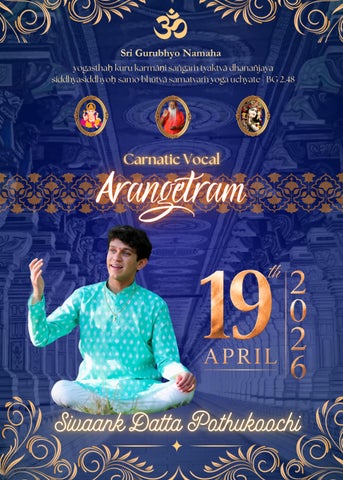
Chi. Sivaank Saisripad Datta Pothukoochi
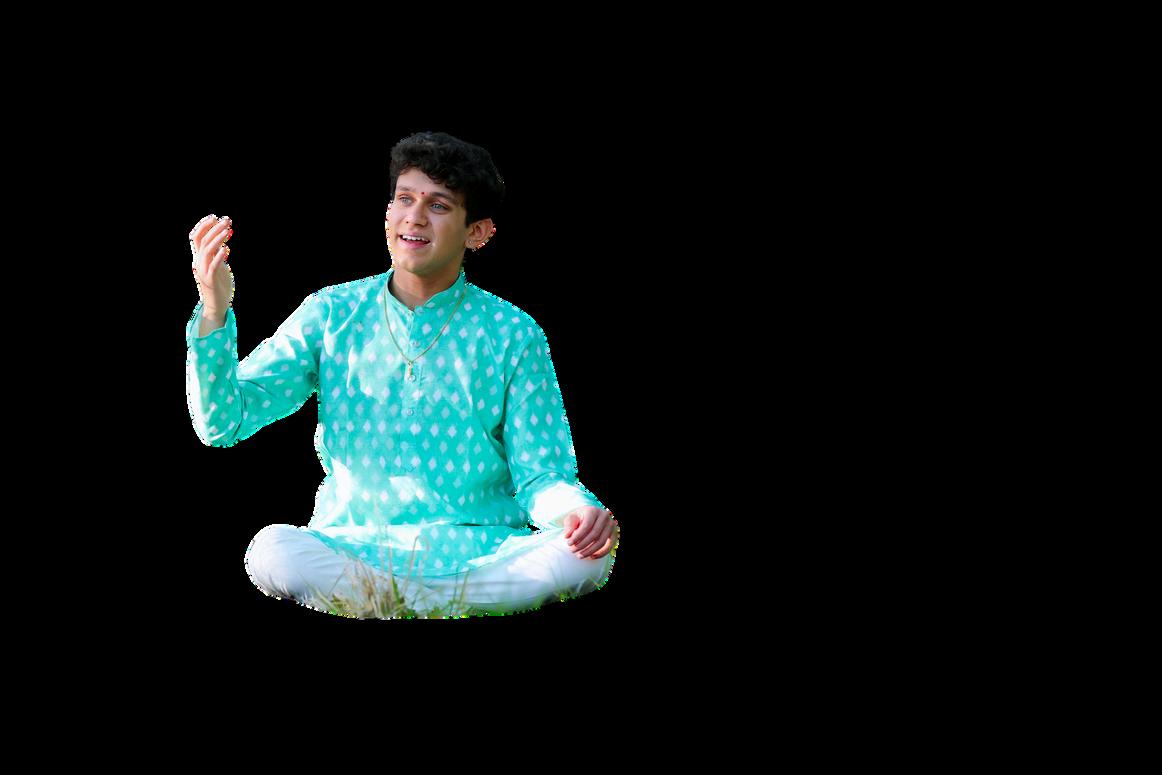
Sivaank Pothukoochi is a Senior at Coppell High School and a disciple of Dr. Aishwarya Krishnamohan. While his musical foundation began at age five, he has spent the last seven years under his Guru’s tutelage focusing on the technical and traditional depth of Carnatic vocal music. He has performed at several prominent venues, including DFW Namadwaar, Nadopaasana, DFW Ekta Mandir, and the Denton County Hindu Temple, as well as the Purandara Dasa Aradhana and Lokakshemam Satsang.
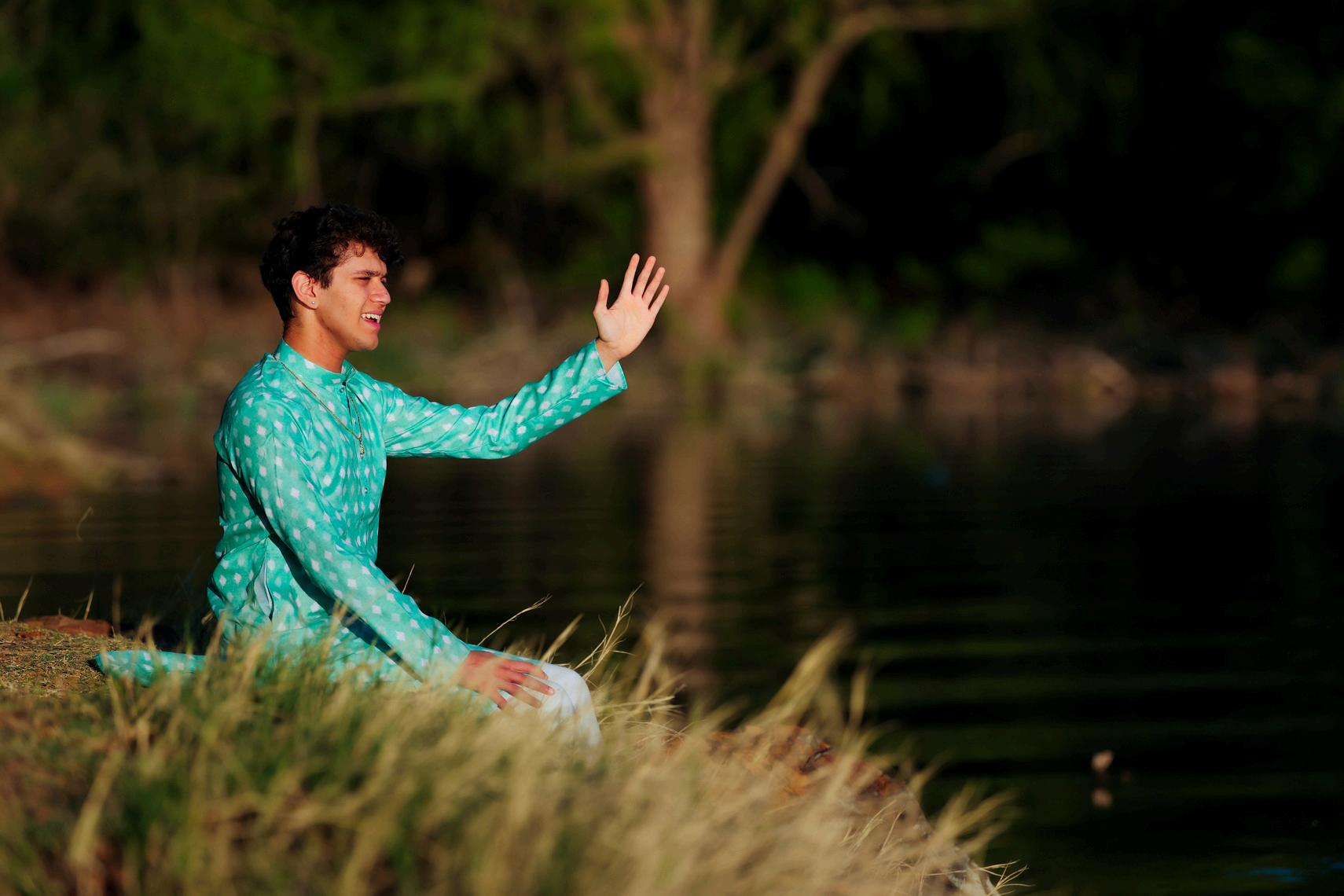
Sivaank’s interests sit at the intersection of the arts and sciences. An accomplished public speaker, he is ranked as one of the top five debaters in the country. He is also a dedicated writer of both prose and poetry, hoping to publish his second book soon. Outside of his artistic pursuits, he is an avid cyclist and is frequently found on local nature trails.
His academic interests lie in molecular biology and genetics, with a specific passion for space medicine. This fall, he will continue these pursuits at Rensselaer Polytechnic Institute and Albany Medical College as part of their seven-year Physician-Scientist (BS/MD) program.
Sivaank is deeply grateful for the blessings of Parama Pujya Sri Ganapathy Sachchidananda Swamiji. He extends his sincere thanks to his Guru, his family, and the audience for their support as he begins his professional musical journey.