By




MANAGERS PREPARE FOR SHIPPING’S NEW DAWN

Distributed at

By
MANAGERS PREPARE FOR SHIPPING’S NEW DAWN
Distributed at
Ultimately, it’s not about outsourcing responsibility, it’s
Tommy Olofsen,
OSM Thome Group managing director
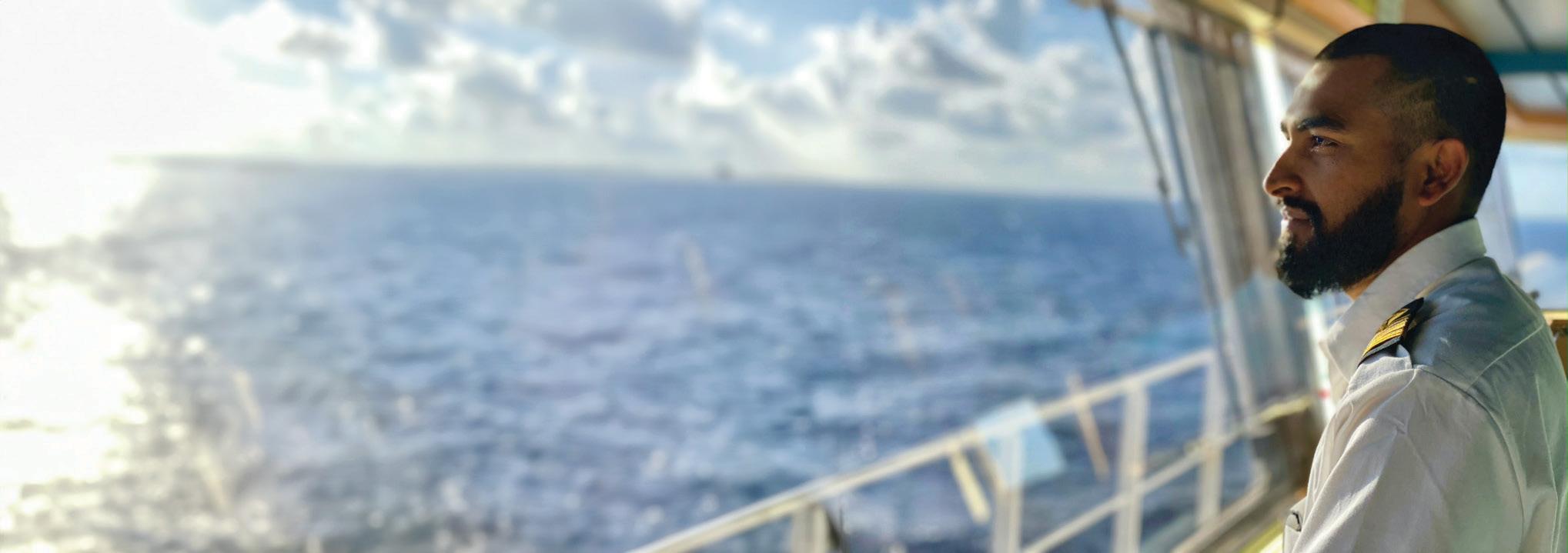
The compounding effects of technology, decarbonisation and increasing regulation are changing the skill requirements at sea more than at any point in my career
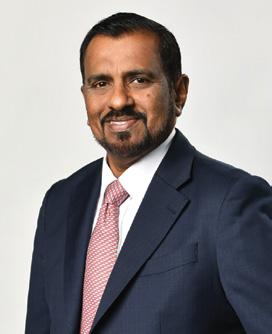
Captain Rajalingam Subramaniam, CEO of Fleet Management
If you trust professionals with your car, why would you not trust professionals with your ships?
Kuba Szymanski, Secretary-general of InterManager
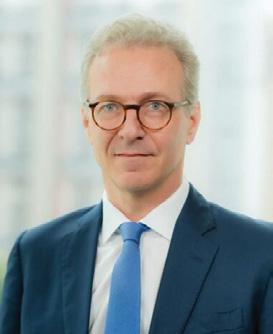


Training has never been more critical
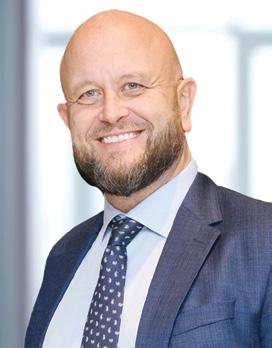
Sebastian von Hardenberg, CEO of Bernhard Schulte Shipmanagement and president of InterManager
When PE has gone wrong in shipmanagement, it has usually been because a playbook designed for a very different sector was copied and pasted without enough adaptation
Manish Singh of Maris Investments
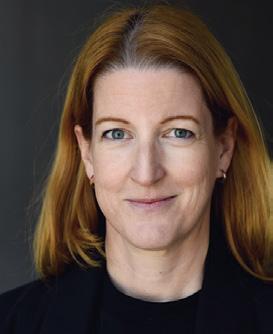
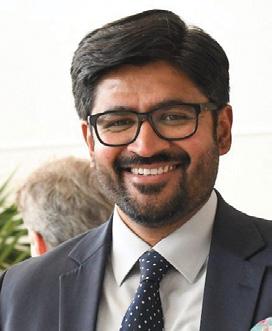
For many, many shipping companies, there’s no real data quality management process in place. If you try to put AI on top of that and base your decision making on top of it, it’s garbage in, garbage out
Friederike Hesse, Co-founder of ZERO44


The site for incisive, exclusive maritime news and views www.splash247.com
EDITORIAL DIRECTOR
Sam Chambers sam@asiashippingmedia.com
SENIOR CORRESPONDENT
Adis Adjin adis@asiashippingmedia.com
CORRESPONDENT
Bojan Lepic bojan@asiashippingmedia.com
All editorial material should be sent to sam@asiashippingmedia.com
COMMERCIAL DIRECTOR
Grant Rowles grant@asiashippingmedia.com
GENERAL MANAGER
Victor Halder victor@asiashippingmedia.com
Advertising agents are also based in Tokyo, Seoul and Oslo – to contact a local agent please email grant@ asiashippingmedia.com for details.
MEDIA KITS ARE AVAILABLE FOR DOWNLOAD AT WWW.SPLASH247.COM/ADVERTISING
All commercial material should be sent to grant@asiashippingmedia.com or mailed to Asia Shipping Media Pte Ltd, 30 Cecil Street, #19-08 Prudential Tower, Singapore 049712
DESIGN Belinda
Printed in Hong Kong
Copyright © Asia Shipping Media Pte Ltd (ASM), 2026
Although every effort has been made to ensure that the information contained in this review is correct, the publishers accept no liability for any inaccuracies or omissions that may occur. All rights reserved. No part of the publication may be reproduced, stored in retrieval systems or transmitted in any form or by any means without prior written permission of the copyright owner. For reprints of specific articles contact grant@asiashippingmedia.com.
The maritime industry is currently obsessed with “digital transformation,” but as the debates at Geneva Dry recently proved and various recent Splash contributions highlight, we’ve spent the last decade building a very expensive house of cards. We aren’t revolutionising trade; we are simply “making the garbage move faster” as one Splash contributor wrote for us recently.
The industry is currently suffering from a severe case of data illusion. We’ve built flashy dashboards and complex AI models, yet when a room full of experts in Geneva was asked if they actually trusted their data, the silence was deafening. Connectivity has improved, but basic truths, like a vessel’s ETA, remain inconsistent, inaccurate, or deliberately manipulated for commercial leverage. What is the point of a predictive AI if the underlying data is a lie?
The C-suite is salivating over AI, but the operators on the front line are resisting. Why? Because most maritime tech remains a “solution looking for a problem”, our recent digital workshop in Geneva was told. We don’t need more silos or flashy interfaces that polish digital clutter; we need interoperability. No single vendor can fix the workflow, yet everyone is still building walled

gardens.
The real competitive advantage in 2026 won’t go to the company with the tallest tech stack. It will go to the one with the clearest decision framework. It’s time to choose clarity over complexity.
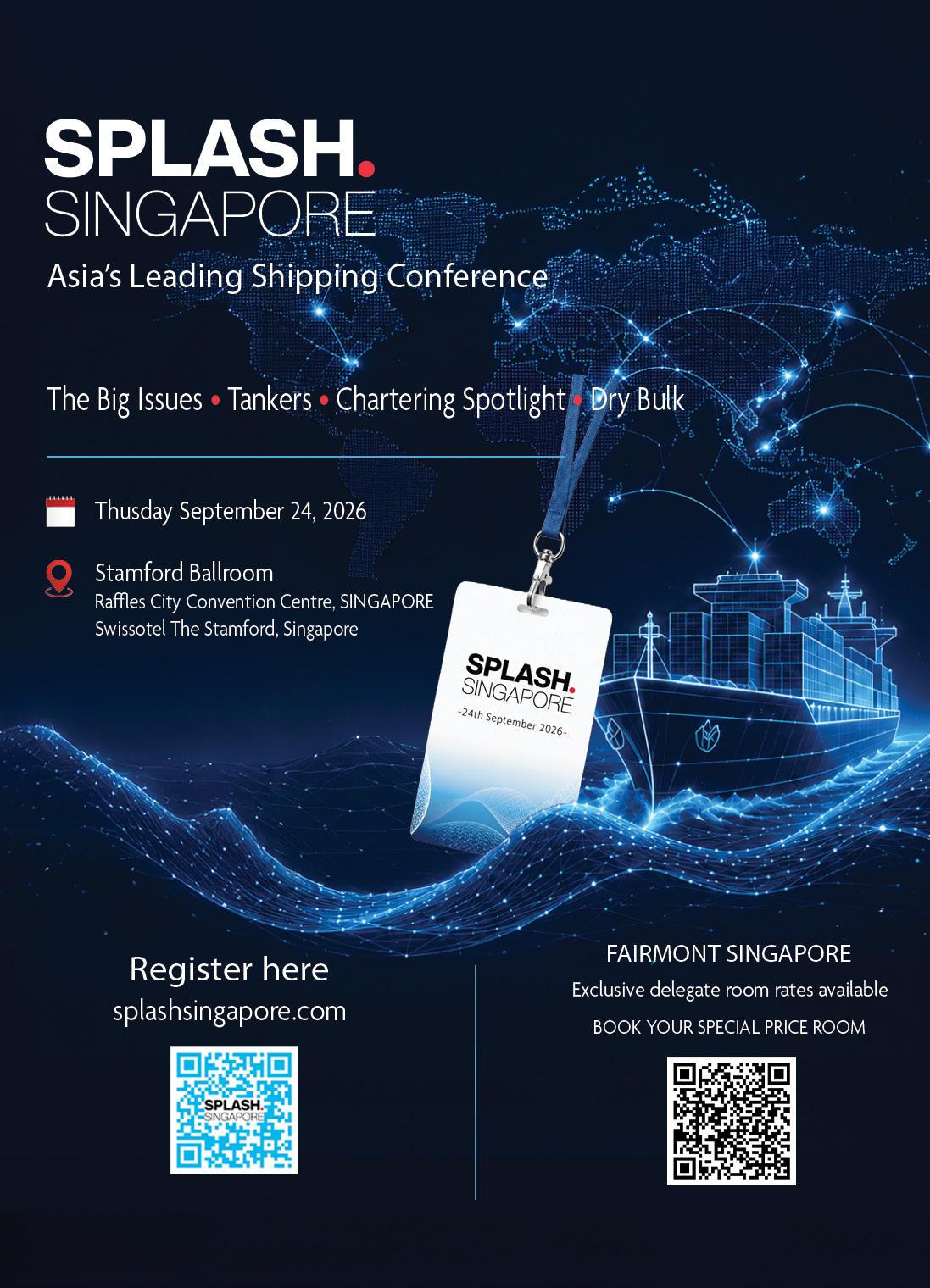
Join the reality check at the SplashTech Digital Leaders Forum in Singapore on September 24. It’s time to talk about what actually works–and scrap the rest.
Sam Chambers Editor Splash



















How will the business of shipmanagement evolve through the remainder of this decade?


Tis not a cost centre–it is a resilience and value provider that translates complex risk into consistent, safe operations.”
Tommy Olofsen, OSM Thome’s group managing director, argues that it’s important managers challenge owners’ perception that control is lost.


hird-party ship management is undergoing its most significant identity shift in decades. As regulatory complexity compounds, decarbonisation demands new expertise and digital systems reshape how ships are monitored and operated, the question is no longer simply whether to outsource–but what outsourcing should mean in an era that demands genuine operational partnership.
Ask a room full of shipmanagers how they describe their business and you will get a dozen different answers. That is, in itself, revealing. An industry that struggles to articulate what it does is an industry that has not yet fully reckoned with how fundamentally it has changed.
Captain Rajalingam Subramaniam, CEO of Fleet Management, cuts through the noise with a definition that is operational rather than commercial. “Third-party shipmanagement is frontline operational stewardship: it combines safety, technical excellence, crew welfare and digital capability to keep ships trading reliably. It
“Ultimately,,” he says, “it’s not about outsourcing responsibility, it’s about strengthening execution. If the partnership is right, you gain efficiency, transparency, and resilience, without losing oversight.”
Bjorn Hojgaard, CEO of AngloEastern, traces the evolution carefully. “Modern shipmanagement today goes well beyond crewing and technical upkeep. It encompasses safety management, regulatory compliance, performance monitoring, data governance, training and long-term asset stewardship. The role has evolved in step with the complexity of the operating environment. What was once seen as a support function is now a specialised capability that requires scale, systems and deep operational expertise.”
The nomenclature debate running beneath these descriptions is more than semantic. “Third-party” is a term that multiple contributors want to retire. Ajay Chaudhry, co-CEO of shipmanagement at Synergy Marine Group, calls it “transactional and dated.” The modern shipmanager, he argues, is better described as “an operating technical thought partner, or a lifecycle custodian of the asset.” Massimo De Vincenzo, managing director of SeaQuest Shipmanagement, prefers “professional fleet stewardship,” noting that the arm’slength implication of “third-party” is precisely the wrong mental model for owners to carry into the relationship.
Captain Ali Ihtiyaroglu of VTS Shipping favours “professional vessel operations partnership,” arguing that the criticism the term attracts is really directed at “the volume-driven, impersonal end of the market”–and that the industry needs better language to separate that from genuine operational expertise.
Manish Singh of Maris Investments




Modern shipmanagement is not third-party in spirit–it is a professional partnership
offers perhaps the most ambitious reframing of all, describing outsourced shipmanagement as “Performance-as-aService.” “The ‘third-party’ label carries baggage and suggests a subordinate role in the value chain,” he says, “whereas the reality today is that the better managers are providing an integrated capability stack: crewing, technical, procurement, compliance, data and increasingly decarbonisation advisory wrapped together. Shipmanagement is central to how a vessel performs commercially and environmentally over its life.”
Kuba Szymanski, secretary-general of InterManager, prefers the simplest reframing of all. “I would describe it as partnership. That is what both sides should be aiming for. Owners and shipmanagers should not see each other as simply customer and supplier. The best relationships are built on trust, transparency and shared objectives. Modern shipmanagement is not thirdparty in spirit–it is a professional partnership.”
For all the definitional evolution underway, the industry still needs to persuade a large segment of shipowning that third-party management is worth considering. Subramaniam’s pitch to the unconverted is direct. “Shipmanagement is getting harder and costlier for shipowners and operators, especially for those without
sufficient scale. Regulation conformance, digitalisation and crew training would best be met with those with broader expertise and scale. We bring systems, training and resilience that are difficult to replicate inhouse–so they can focus on strategy while we deliver safe, compliant operations.”
Hojgaard puts the value proposition around what goes wrong when it is absent. “The conversation is often framed around fees, but the real issue is the level of standards required to manage ships properly today. Complexity has increased materially across regulation, fuels, digital systems and stakeholder expectations–and that requires sustained investment in people, systems and governance. These investments are not always visible when things run smoothly, but they become very visible when they are missing.”
Andrew Airey, managing director of Thai manager Highland Maritime, reaches for enthusiasm rather than argument, describing the business as “hugely interesting and exciting–so many challenges and opportunities,” with the goal of delivering a “newgen, trustworthy, consistent and viable” service.
Shipmanagement has long operated on margins so thin that a single bad year on a small fleet can tip a company into loss. The sector’s structural pricing problem has not resolved itself–if anything, the
cost pressures of recent years have made it worse.
Sebastian von Hardenberg, CEO of Bernhard Schulte Shipmanagement and president of InterManager, is candid about the gap that has opened up. “Management fees have not kept pace with rising costs,” he says. “Shipmanagers will increasingly need to adjust fees to maintain profitability and sustain the level of service customers expect.” The cost pressures–inflation, wage increases, regulatory complexity, sanctions exposure, environmental requirements and crewing challenges–are compounding simultaneously and are not going away.
De Vincenzo argues that the solution lies in making the value case rather than defending the fee. “When an owner sees his fleet managed with proprietary analytics, AI-supported compliance tools and real-time performance data, the fee conversation shifts–from ‘why do you cost more?’ to ‘what does it cost us not to have this?’ The market is still price-sensitive, and you have to back the value case with hard evidence.”
Hojgaard takes a firm line on the competition from managers who prioritise cost over quality. “Those focused purely on cost will continue to attract criticism. Those focused on standards, consistency and long-term performance will increasingly be seen as strategic partners. Our focus is not to compete on price, but to deliver consistent, reliable performance over time. Owners who value that
High quality ship management with an owner’s approach
With over 35 years of experience and a reputation for operational excellence, M.T.M. Ship Management provides an integrated, full-service platform to owners and financial institutions covering Ship Management, Crewing and Training, as well as ancillary Technical and Corporate Services.
understand that quality shipmanagement cannot be delivered on a lowest-cost basis.”
How many ships will be outsourced by 2030?
Perhaps the most consequential strategic question facing the industry concerns the trajectory of outsourcing itself. Today, approximately 20% of the global merchant fleet is under third-party management. Where will that figure be in five years?
The answers from the industry are striking in their ambition. Von Hardenberg believes 30 to 35% is realistic by 2030, driven by the growing impossibility of handling regulatory, environmental and crewing complexity at scale without specialist support. Szymanski envisages third-party management reaching around 50% of the global fleet–a figure that would represent a fundamental restructuring of how the world’s tonnage is operated.
Singh is somewhat more conservative but directionally aligned. “I would be surprised if outsourced asset management is not appreciably higher by 2030. Over a third of the global fleet being under third-party management by the turn of the decade feels plausible.” His key variable is the pace of regulatory change: “The more complex and data-heavy compliance becomes, the stronger the economic case for outsourcing day-to-day operations.”
Quality shipmanagement cannot be delivered on a lowest-cost basis
De Vincenzo puts a range of 25 to 28% on the table, noting that the second constraint–the slow movement of owner mindset–may be as significant as the first. Vikrant Gusain, CEO of Dockendale Group, expects a “significant proportion” to shift without naming a specific figure, while noting that scale and expertise are becoming increasingly important regardless of owner preference.
Hojgaard argues it as a qualitative rather than quantitative shift. “Rather than focusing on a specific percentage by 2030, the more meaningful shift is qualitative: third-party management is moving from a cost-driven option to a capability-driven one.”
Running beneath the commercial debate is a skills and competency challenge that may ultimately drive more outsourcing decisions than any regulatory requirement. Subramaniam from Fleet does not hesitate when asked whether he has ever seen a greater transition of skills at sea. “The compounding effects of technology, decarbonisation and increasing regulation are changing the skill requirements at sea more than at
any point in my career. We are training crews for multifuel operations, digital navigation and emissions management. The transition is real, and we are investing heavily to ensure our people are ready.”
For managers with the scale to build dedicated training infrastructure–as Fleet Management, Anglo-Eastern, BSM and Synergy all have–the skills transition is a competitive advantage as much as a challenge. For self-managing owners and smaller operators, it is increasingly a burden that points in one direction.
Gusain captures the trajectory neatly. “Shipmanagement is becoming a highly specialised, round-the-clock function. Scale and expertise become increasingly important.” The owners who move early to partner with managers who have built genuine capability may find themselves better positioned than those who wait until the regulatory pressure becomes impossible to absorb alone.
The shape of shipmanagement in 2030 will look materially different from today–more ships under professional care, higher expectations of what that care entails, and a growing recognition that the term “third-party” flatters neither the relationship nor the responsibility it describes.





Why go it alone?

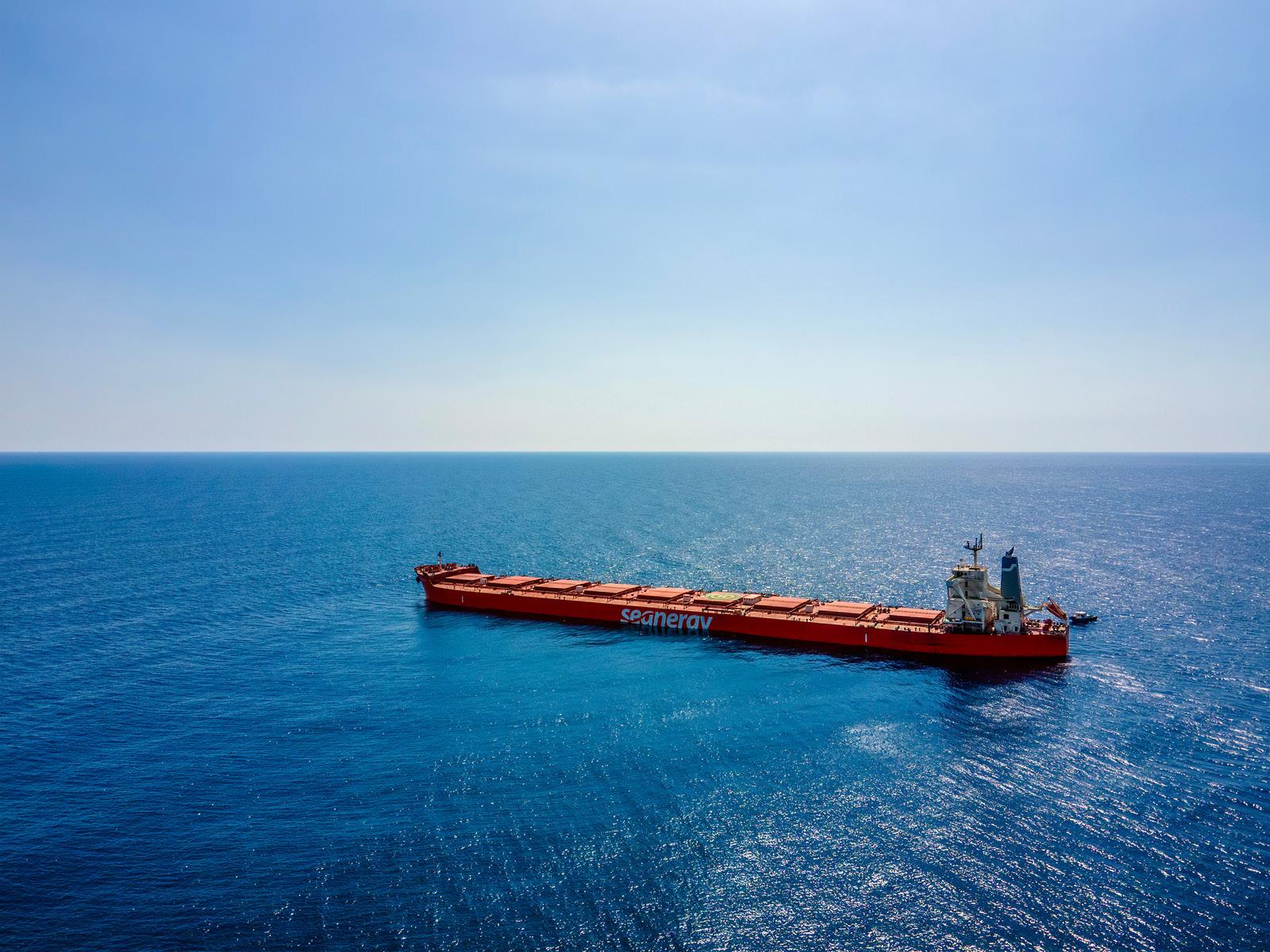
Shipowners who have never placed vessels under third-party management tend to share one instinctive concern: loss of control. The fleet is their business, their reputation and, in many cases, their family legacy. Handing day-to-day operations to an outside company can feel like surrendering the bridge.
Yet ask the world’s leading shipmanagers how they would persuade a sceptical owner in the time it takes to ride an elevator, and a common theme emerges. The best pitch is not about outsourcing ownership. It is about outsourcing complexity.
“Do not outsource control; outsource complexity,” argues Ajay Chaudhry, co-CEO of shipmanagement at Synergy Marine Group. “A good shipmanager strengthens the owner’s authority by bringing systems, expertise, governance, crew capability, data discipline, flexibility and risk management that are difficult to replicate in-house.”
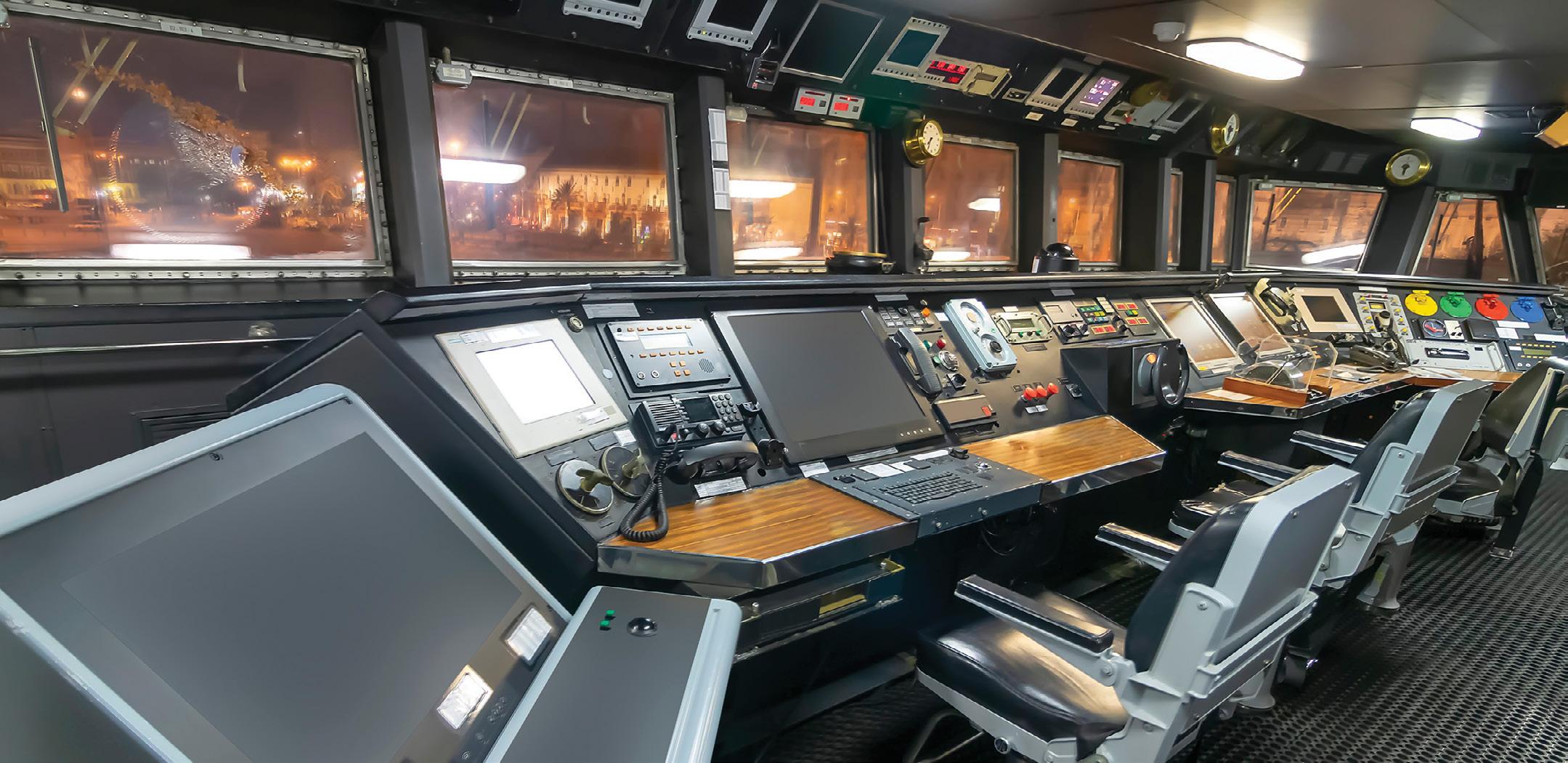
That distinction matters more than ever. The modern shipping business bears little resemblance to the relatively straightforward operating environment of two decades ago. Decarbonisation rules are piling up. Cybersecurity risks are multiplying. Crewing shortages
are intensifying. Digital reporting requirements continue to expand. Compliance alone has become a full-time industrial process.
For many owners, particularly those with smaller fleets, the economics are becoming increasingly hard to justify internally.
Manish Singh of Maris Investments says the conversation should begin with two uncomfortable questions. “Do you know what your in-house management really costs when you add up management attention, compliance overhead, IT spend and the capital tied up in crewing and technical infrastructure?” he asks. “Many owners who have never put numbers to it are surprised.”
His second question cuts even deeper: “What is your actual edge? Is it owning and operating vessels, or is it trading, commodity flows, or financial structuring?”
That argument increasingly resonates in a market where scale matters. Thirdparty managers today operate hundreds–sometimes thousands–of vessels. That scale brings purchasing power, global recruitment networks, digital infrastructure and specialised operational expertise that many standalone owners struggle to maintain economically.
Sebastian von Hardenberg, CEO of Bernhard Schulte Shipmanagement and president of InterManager, puts the value proposition in succinct terms. “Thirdparty management gives you expertise at scale,” he says, citing procurement savings, regulatory compliance, digital tools, fuel-transition support and operational consistency. “We help you increase vessel availability, reduce opex, manage complexity, reduce risk, and protect asset value while you focus on your commercial strategy.”
The purchasing argument alone can be compelling. Large managers negotiate fleet-wide deals for lubricants, stores, insurance, training and spare parts at price levels smaller operators often cannot access independently. In some cases, proponents argue, those savings largely offset management fees.
But cost is only part of the equation. Increasingly, the debate centres on people.
“Most owners who self-manage do so for control. That is understandable,” says Massimo De Vincenzo, managing director of SeaQuest Shipmanagement. “But running a full shipmanagement operation today–with all the regulatory, technical, and sustainability demands that entails–requires resources and specialised expertise that most in-house teams cannot




easily match.”
He points to another structural shift reshaping the market: talent concentration. “The best operational talent–superintendents, technical managers, crewing specialists–tends to gravitate toward dedicated management companies, where they can build a proper career and work across a varied fleet,” he says. “Attracting and keeping that calibre of people in a small in-house structure is genuinely difficult.”
That challenge is only likely to intensify as shipping enters the most complicated technological transition in its modern history.
Alternative fuels alone are creating an entirely new operational landscape. LNG, methanol, ammonia and hydrogen each bring distinct technical, safety and training demands. At the same time, digitalisation is transforming how ships are monitored, maintained and operated. Owners who once needed a lean superintendent structure increasingly require data analysts, cybersecurity expertise and emissions specialists.
Niraj Nanda, chief commercial officer at Anglo-Eastern, says professional managers are built precisely for that environment. “Third-party shipmanagement is about giving owners peace of mind without compromising strategic control,” he says. “A professional manager brings established processes, experienced teams and regulatory expertise with the scale and capability to meet an ever-evolving operating environment.”
For owners, he argues, that translates into resilience. “The day-to-day complexity, compliance burden and commercial pressure are handled by specialists whose sole focus is safe, efficient ship operation.”
Still, scepticism persists, particularly among owners who believe nobody will care about their ships as much as they do.
Tim Ponath, CEO of NSB Group, believes that concern misunderstands how modern shipmanagement relationships work. “We shouldn’t feel like an external vendor,” he says. “We operate as a seamless extension of your company, another high-performing department that you have full access to 24/7.”
That partnership model has become
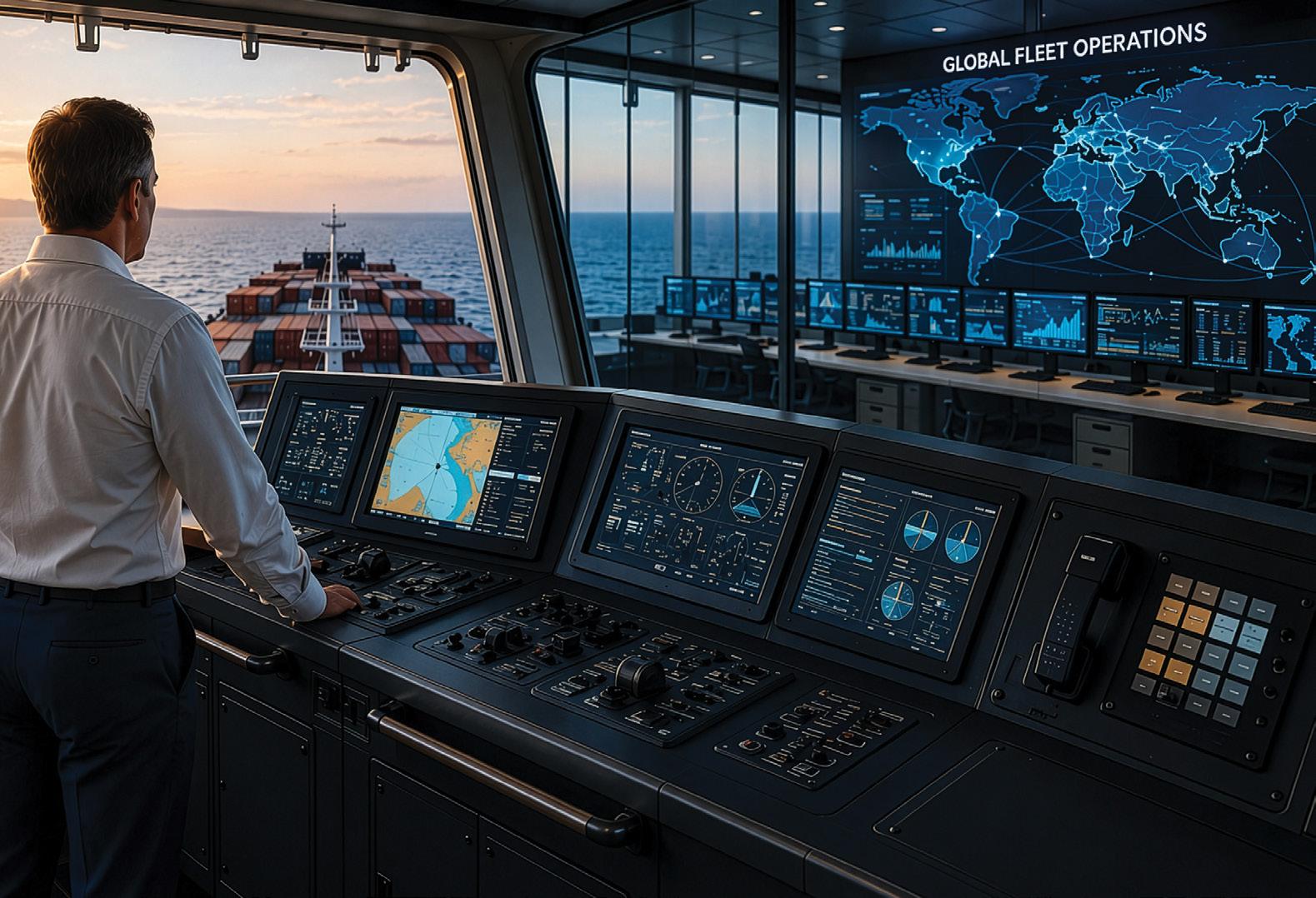
central to how leading managers position themselves. The days of purely transactional technical management are fading. Owners increasingly expect integrated service platforms covering crewing, procurement, catering, training, technology, voyage optimisation and welfare support.
Julian Panter, CEO of Noatum CSM, describes the appeal in more direct operational terms. “Do you really want to source the crew, manage the crew, operate the vessel, comply with all the regulations, organise all the technical work, or do you want to focus on the commercial side of your business?” he asks.
“For a small daily fee, we can take away all your headaches and manage your assets, so you don’t have to.”
That operational relief is especially attractive during volatile markets. Freight cycles are becoming shorter and more unpredictable. Owners need flexibility. Maintaining large in-house operational teams during downturns can become a heavy fixed cost burden, while third-party management converts much of that into a scalable service model.
Kuba Szymanski, secretary-general of InterManager, perhaps offers the simplest analogy of all. “Who fixes your car–you, or a professional garage?” he asks. “If you trust professionals with your car, why would you not trust professionals with
your ships?”
His point reflects a broader reality: shipmanagement has evolved into a highly specialised discipline in its own right.
Yet not everyone believes third-party management is automatically the right answer for every owner. Vinay Gupta, managing director of Union Marine Management Services, cautions against overselling. “There is no pitch,” he says. “Never sell ice to Eskimos.”
For Gupta, the demand only arises when owners themselves recognise inefficiencies emerging internally. “The conversation is no longer about persuasion, but about trust and alignment,” he says. “A good manager doesn’t replace ownership–he strengthens it.”
That may ultimately be the industry’s strongest elevator pitch in 2026.
Third-party shipmanagement is no longer simply about cheaper operations or outsourcing administrative burden. It is about whether shipowners believe they can realistically build–and continuously maintain–the increasingly industrial-scale systems, talent pools, digital infrastructure and regulatory expertise modern shipping now demands.
For some large owners, the answer will remain yes.
For many others, the answer is increasingly no.






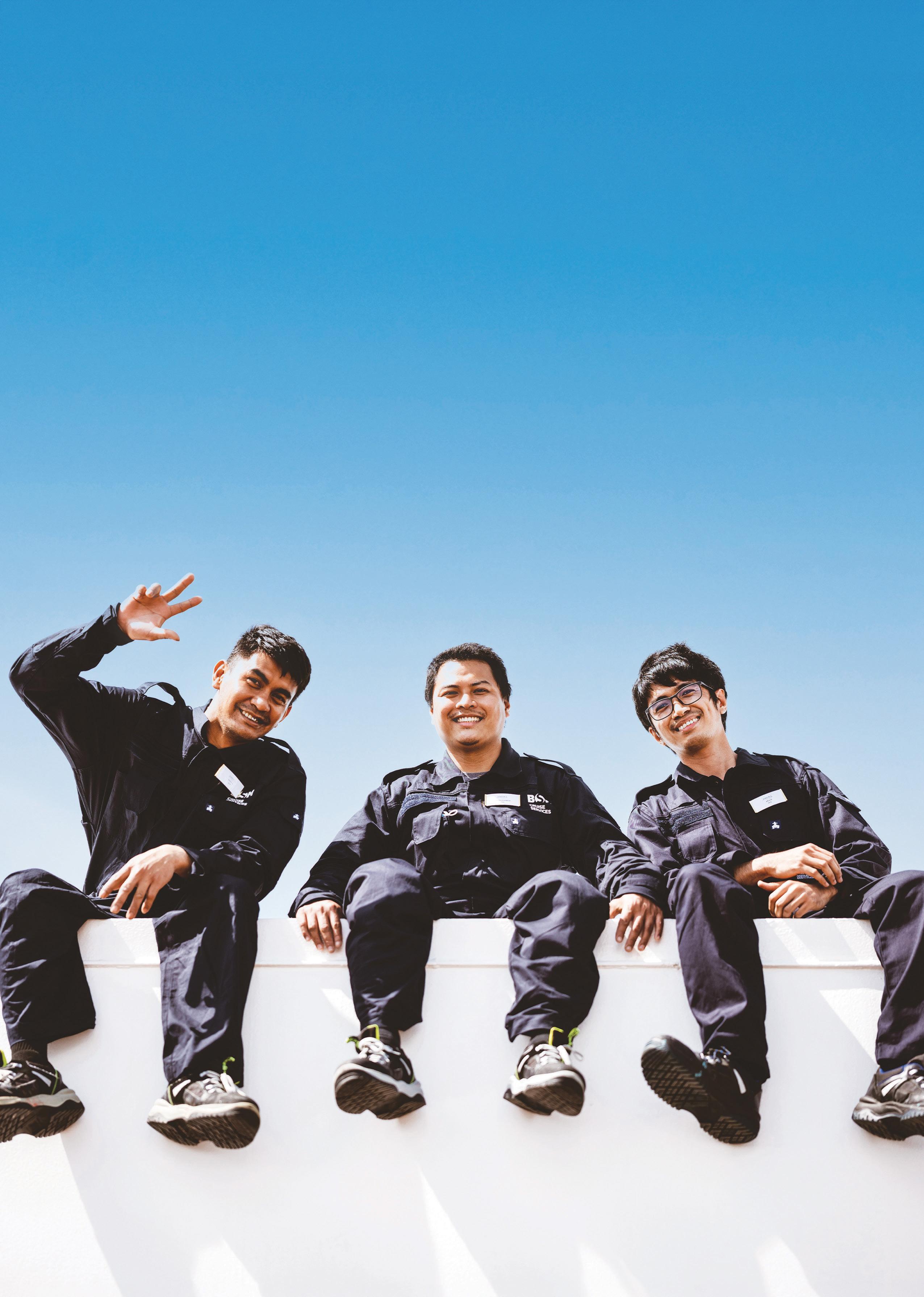
The maritime industry struggles to attract the next generation of talent not just because of working conditions, but because it consistently tells the wrong story about itself
Peter Schellenberger, who heads up consultancy Novomaxis, opens this segment with a provocation the industry needs to hear. “Our industry is not as bad or boring as we often want to assume. It is even borderline sexy when the narrative is right.” The problem, he argues, is not the product–it is the marketing. Shipping needs to adopt the social media toolbox, work with influencers and let peer-to-peer communication do the heavy lifting. The content is there: decarbonisation, digitalisation, AI adoption, the foundational importance of maritime trade to global commerce. “Do good things and talk about them,” Schellenberger says.
But he is equally clear that better messaging alone will not fix a broken proposition. “The industry needs to find global replies to seafarer criminalisation, bullying, shore leave, underrepresentation of women onboard and other important matters.” The treatment of the thousands of seafarers stranded in the Persian Gulf is, he notes, under global scrutiny. Authentic communication requires authentic behaviour to back it up. And it requires proper pay: “We have to pay what it’s worth.”
Vikas Trivedi, co-CEO of shipmanagement at Synergy Marine Group, trades borderline sexy talk with a dollop of reality. “The industry should stop selling only romance and start selling relevance,” he argues. The pitch
to young professionals, he says, needs to be rebuilt around what shipping actually offers: technology, global significance, early responsibility, meaningful postsea pathways and human sustainability. “Connectivity, welfare, mentoring, inclusion and human sustainability are now central to the employment proposition. Shipping keeps the world moving, but it must also offer dignity and a future.”
Massimo De Vincenzo, managing director of SeaQuest Shipmanagement, is more blunt about the self-inflicted nature of shipping’s image problem. “We market ourselves through a lens of hardship and regulation, then wonder why the next generation looks elsewhere.” The reality of what ship management actually involves, he argues, is far more compelling than the industry typically presents. “Shipping sits at the intersection of global logistics, environmental science, data analytics and geopolitics–there is no more complex or consequential operational environment.”
For a young professional drawn to AI or sustainability, he says, shipmanagement offers genuine intellectual depth and global impact. “We need to stop apologising for what we are and tell that story with conviction–and take it to the places where the next generation actually is.”
Niraj Nanda, chief commercial officer of Anglo-Eastern, argues that the messaging problem is ultimately a credibility problem. “The industry needs to speak more honestly
about what a maritime career looks like today and what it can become.” Young professionals are sophisticated enough to see through inflated promises. “The younger generations are more likely to be drawn to careers that offer purpose, learning and credibility–not slogans. Attracting talent requires consistency between message and experience.”
Kuba Szymanski, secretary-general of InterManager, distils the challenge to its essence. “We need to move beyond slogans. The next generation will not be convinced by words alone–they will judge us by our actions.” His standard is uncompromising. “As an industry, we are only as good as our last action.”
It is a standard that cuts through the noise of marketing campaigns and conference declarations. Young professionals researching a career in shipping will not be swayed by a wellproduced recruitment video if the Seafarer Happiness Index tells a different story, if social media carries accounts of criminalisation and poor welfare, or if the industry’s response to a crisis like the Gulf situation is slow and inadequate.
The common thread running through every contribution is the same: the gap between what shipping claims to be and what it demonstrably is needs to close–and it needs to close on both sides simultaneously. Better storytelling matters. But the story has to be true.
What
largest managers have been up to over the past year
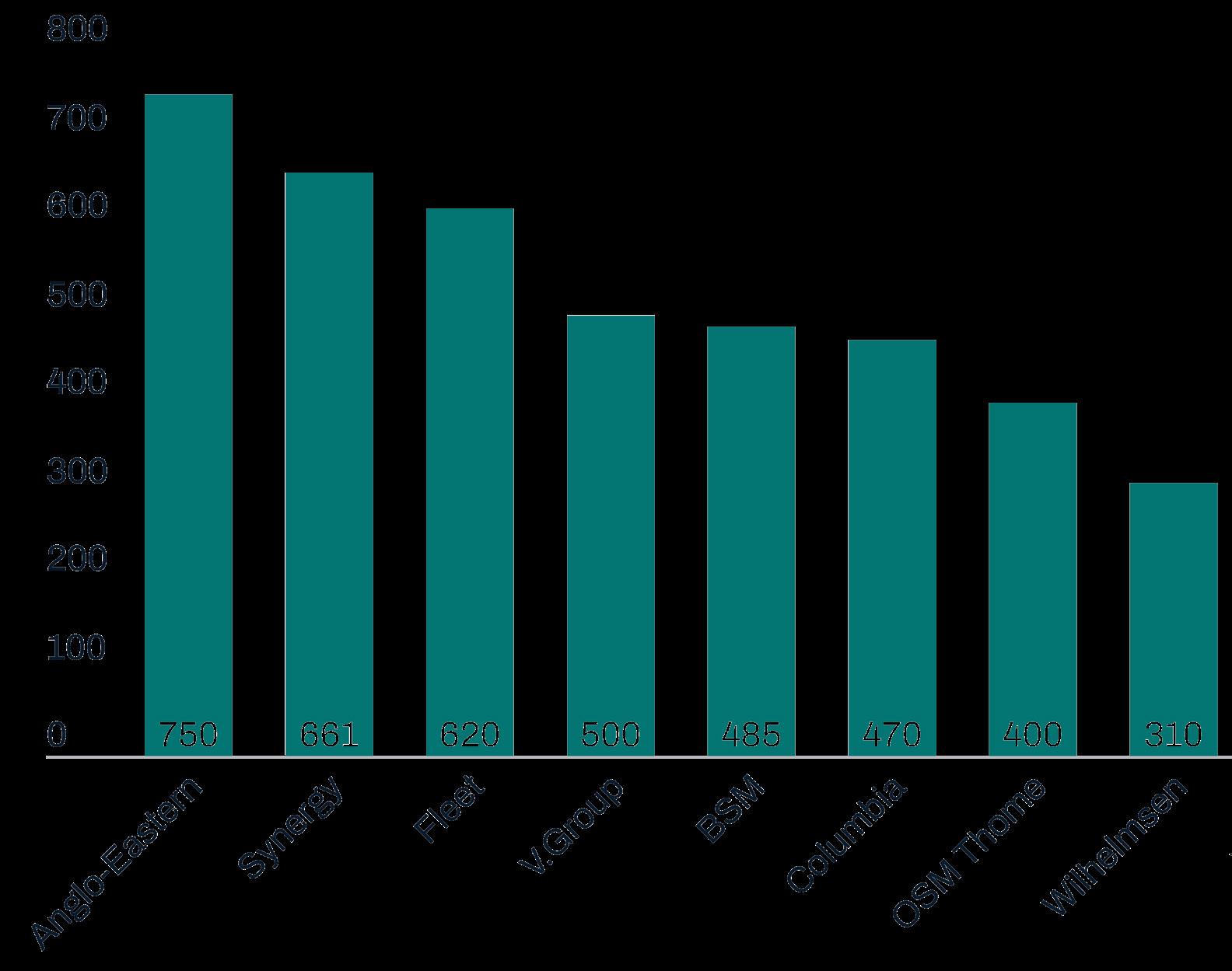
Source: Lloyd’s List
Hong Kong-based shipmanager AngloEastern has spent the past 12 months accelerating its push into digitalisation, AI-assisted operations and alternative fuel training as the company positions itself for shipping’s next operational era.
Across its fleet management, training and performance divisions, the company has focused heavily on using technology to improve safety, fuel efficiency and crew readiness, while also expanding its cybersecurity and decarbonisation capabilities.
One of Anglo-Eastern’s biggest technology moves came late last year when it signed a deal with Orca AI to deploy AIassisted navigation systems across more than 750 managed vessels. The system includes situational awareness and digital watchkeeping tools designed to reduce navigational risk and improve operational
efficiency.
The company said the rollout would help reduce crew workload while supporting safer navigation in congested or low-visibility conditions.
Decarbonisation has also become a central theme of Anglo-Eastern’s strategy.
In October, the shipmanager launched its Sustainability and Performance Services (SAPS) platform, combining AI and real-time vessel data to help owners and charterers optimise voyages, reduce bunker consumption and manage regulatory compliance including FuelEU Maritime and the EU ETS.
According to the company, systems underpinning SAPS monitored more than 800 ships and nearly 46,000 voyages between 2023 and 2025, contributing to fuel savings of more than 225,000 tonnes and cutting carbon emissions by over 700,000 tonnes.
Training has formed another major
pillar of Anglo-Eastern’s technology push. The company expanded its alternative fuels capability through new methanol and ammonia-focused training programmes at its Anglo-Eastern Maritime Training Centre in India.
Its inaugural ammonia-fuel pilot programme prepared seafarers for the operational and safety challenges associated with ammonia propulsion, with the company expecting to take over ammonia-fuelled vessels in the near future.


Singapore-based Synergy Marine Group has spent the past 12 months expanding its offshore, gas and alternative-fuel capabilities while simultaneously dealing with the long-running fallout from the Baltimore bridge disaster involving the containership Dali.
Operationally, the world’s secondlargest shipmanager has continued to broaden its footprint well beyond traditional technical management.
One of its most significant recent moves came through a joint venture with offshore services provider EDT
Hong Kong-headquartered shipmanager Fleet Management has kept busy doubling down on three priorities shaping modern shipping: alternative fuels, digitalisation and workforce development.
The company, part of The Caravel Group, has increasingly positioned itself as a technology-enabled manager preparing owners for tighter emissions regulation and the arrival of new fuel systems.
Decarbonisation has sat at the centre of much of Fleet’s activity.
According to the company, around one-third of its newbuilding supervision pipeline is now focused on dual-fuel vessels using LNG or methanol, while the manager has continued expanding its experience operating alternative-fuel ships.
The company has also continued
Offshore. The two companies launched EDT Synergy Shipmanagement to target offshore and subsea vessel management, with a particular focus on supporting decarbonisation and digitalisation projects in the offshore sector.
Synergy has also been expanding deeper into gas shipping and alternative fuels.
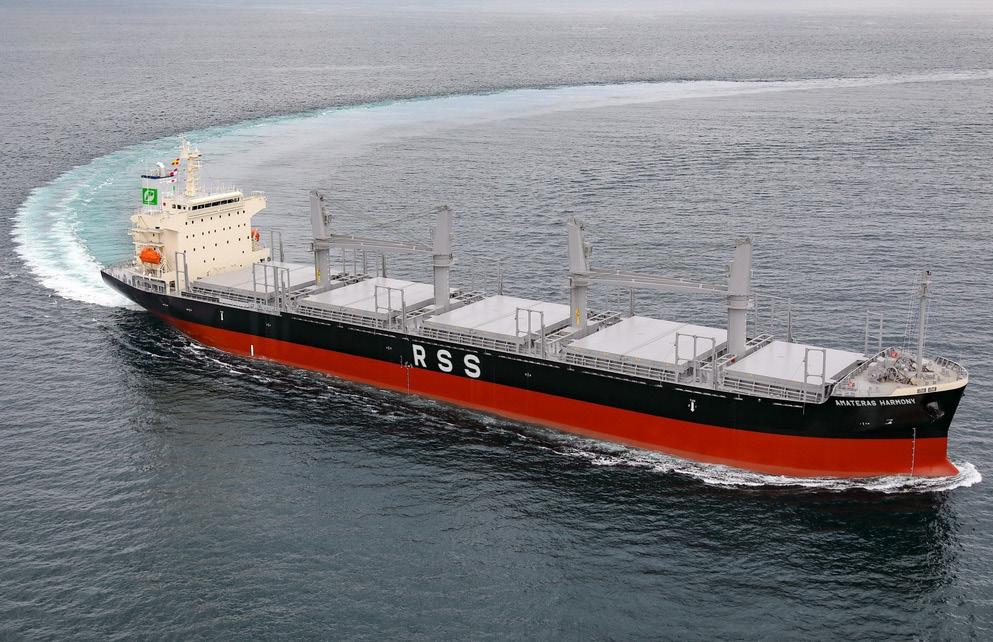
Earlier this year the company assumed technical management of Yang Ming’s LNG dual-fuel containerships YM Willpower and YM Worthiness, adding further scale to its growing LNG management portfolio. The vessels are supported by crews and shore teams trained in LNG-fuel
investing heavily in ammonia and methanol readiness. Earlier this year, Fleet supported Japan’s first ship-to-ship methanol bunkering operation, while continuing broader industry work on ammonia bunkering and crew training standards.
Digitalisation and emissions compliance have formed another major focus area.
Fleet has been promoting its PARIS digital platform, designed to help owners manage EU ETS and FuelEU Maritime compliance through emissions monitoring, reporting and verification tools.
Fleet now employs more than 27,000 seafarers globally and has expanded investment in its Fleet Management Training Institute and the International Maritime Institute, which became part of The Caravel Group last year.
The company opened a new training
operations, fuel handling and emissions compliance.
In September last year, Synergy delivered the next-generation floating storage and regasification unit Karpowership Americas, another sign of the company’s push into more technically complex vessel segments.
The group has also continued strengthening its Middle East presence. Through Synergy Ship Arabia, it expanded its offshore portfolio with five Jana jack-up barges supporting Saudi Aramco operations.
However, much of the public attention surrounding Synergy over the past year has inevitably centred on the Dali casualty and the collapse of Baltimore’s Francis Scott Key Bridge.
The company has faced multiple investigations and legal proceedings linked to the incident. In May, US prosecutors filed criminal charges against Synergy entities and a technical superintendent, alleging safety failures and maintenance shortcomings contributed to the casualty. Synergy said it was disappointed by the charges, describing the incident as a maritime accident rather than a crime.
facility in Manila and has accelerated programmes focused on dual-fuel operations, simulator training and greenfuel handling.




Global shipmanager V.Group has spent the past 12 months sharpening its focus on decarbonisation, digitalisation and specialist vessel management as it seeks to position itself for shipping’s increasingly complex regulatory and operational environment.
One of the company’s biggest strategic moves came in January with the acquisition of Njord, the fuel-efficiency and decarbonisation specialist founded by Maersk Tankers. The deal significantly expanded V.Group’s emissions reduction and voyage optimisation capabilities at a time when owners face mounting pressure from FuelEU Maritime, the EU ETS and tightening carbon regulations.
The company has simultaneously continued expanding its alternative-fuel and LNG management activities.
In April, V.Group secured full technical and crew management contracts for six LNG-ready LR1 tanker newbuildings for International Seaways, deepening an existing relationship that already covers more than 40 vessels.
A month earlier, Japanese major
Bernhard Schulte Shipmanagement (BSM) has kept itself busy accelerating its push into alternative fuels, digitalisation and crew training as the Hamburgheadquartered manager positions itself for shipping’s multi-fuel future.
The company has increasingly focused on preparing crews and vessels for the
shipowner Mitsui OSK Lines (MOL) strengthened ties with the group through a strategic partnership that saw V.Ships France assume management of two new LNG carriers while MOL acquired a 25% stake in V.Ships France.
Alongside fleet expansion, digitalisation has remained a major pillar of the company’s strategy.
V.Group has continued developing its proprietary ShipSure platform, which the company describes as a core differentiator underpinning operational scalability and data-driven vessel management. The platform provides realtime operational and performance insight across managed fleets and increasingly forms the backbone of V.Group’s digital services offering.
The company has also increasingly linked digitalisation with decarbonisation and operational efficiency. Its integration of Njord’s fuel optimisation technologies is aimed at helping owners reduce fuel consumption and improve compliance performance across existing fleets.
Crew management and workforce retention have formed another major focus area over the past year.
energy transition, while also expanding its digital performance and emissions management capabilities.
Alternative fuels have become central to BSM’s strategy.
Last July, the company launched its first methanol bunkering simulator at its maritime training centre in Kochi, India, in partnership with Wärtsilä. The simulator is designed to prepare crews for the safe handling of methanol-fuelled vessels, with ammonia bunkering simulation modules due to follow this year.
The company has also expanded its operational exposure to methanol-fuelled ships. Earlier this year, BSM added its second methanol dual-fuel bulk carrier to the managed fleet, while also taking delivery of its first methanol-capable bulker.
Alongside methanol, BSM has continued developing ammonia and LNG expertise. The company highlighted ongoing work on
In March, V.Group rolled out its Voyage Loyalty programme globally, aiming to improve seafarer retention and operational consistency through incentives and career development initiatives.
The company has also expanded diversity initiatives, launching a female cadet programme with International Seaways to help address long-term officer shortages.
ammonia-fuel training, while its specialist LNG division Pronav expanded into floating storage and regasification unit management for the first time.
Digitalisation and emissions compliance have meanwhile become another major focus area.
BSM has continued promoting its smartPAL shipmanagement software and LiveFleet performance monitoring platform, both aimed at improving operational transparency, emissions reporting and vessel optimisation. The company said all fully managed vessels are moving toward electronic logbooks and record books to improve data quality and reduce paper use.
BSM continued expanding its cadet and training programmes while also promoting diversity initiatives, including participation in the Diversity@Sea pilot programme designed to increase female representation onboard vessels.


Transparency, Honesty and Mutual Respect
A medium sized company opera ng Clean, Safe and Happy ships

Sustained High Quality Opera on and Stability Ethical and dedicated cost effec ve approachStress on Human Values Vision Values Mission

Operating … Clean, Safe & Happy … Ships
Union Marine Management Services Pte Ltd.
Head Office:3 HarbourFront Place. #12-01,Harbourfront Tower-2, Singapore 099254
India Off ice:6th-floor Conscient One Mall, Sector 109, Dwarka Expressway, Gurugram - 122017, Har yana Philiphines Off ice:2nd Floor Emmanuel House, 115 Aguirre Street Legaspi Village, Makati City 1229 Philippines
Vietnam Off ice:Rm. 1502, 15th Floor, Catbi Plaza Bldg., No. 1 Le Hong Phong, Ngo Quyen, Hai Phong City, Vietnam
The past 12 months at Cyprus-based Columbia Group have been dominated by one dramatic development: the sudden departure of long-time chief executive Mark O’Neil, one of the most recognisable figures in global shipmanagement.
After nine years leading the company, O’Neil stepped down in April with immediate effect, catching much of the industry by surprise. Initial reports gave no explanation for the abrupt exit, although Columbia later described the move as part of a planned leadership transition completed on “extremely good terms”.
O’Neil said his role had been to deliver “transformational change” at
OSM Thome has been busy consolidating its position as one of the world’s largest shipmanagers while pushing deeper into digitalisation, decarbonisation and crew development following the merger-driven expansion that created the group.
The company entered 2026 with a major leadership transition after chief executive Finn Amund Norbye stepped down, handing control to company veteran Tommy Olofsen as group managing director.
Norbye was widely credited with overseeing the successful integration of Norway’s OSM Maritime and Singapore’s
Columbia and that the task had now been completed.
The departure marked the end of an era for the company, which under O’Neil expanded well beyond traditional technical management into offshore, leisure, logistics, crewing, energy and digital services.
Long-serving executive Andreas Hadjipetrou was appointed chief executive as the group moved to reassure clients and staff over continuity.
Operationally, Columbia has continued pushing aggressively into alternative fuels, emissions compliance and digitalisation.
According to industry updates published late last year, the company expanded into managing methanol-
Thome Group into the OSM Thome platform, now spanning technical management, crew management and offshore services across roughly 1,000 vessels.
One of OSM Thome’s biggest strategic moves over the past year was the launch of EVIGO, a dedicated green services division aimed at helping owners navigate decarbonisation, emissions compliance and operational optimisation.
The unit, led by former Grieg Green chief Pia Meling, focuses on practical emissions-reduction services, digital optimisation and regulatory compliance support as shipowners grapple with FuelEU Maritime and EU ETS rules.
fuelled containerships for an Asian owner while also growing its presence in offshore and geared bulker markets through a joint venture with a Norwegian operator.
Decarbonisation has become a particularly important focus.
Columbia has promoted its EmissionsLink platform as owners grapple with FuelEU Maritime and EU ETS requirements, positioning the company to capitalise on growing demand for emissions pooling and compliance management services.
The group has also highlighted carbon capture retrofits and floating storage and regasification unit conversions among its recent technical projects as owners seek lower-emission solutions for existing tonnage.
Digitalisation has meanwhile become increasingly central to the company’s operating model.
The group appointed Lars Laugen, formerly of Klaveness and DNV, as chief digital transformation officer to lead further development of VesselConnect and broader service innovation projects.
Commercially, the group has also continued expanding through consolidation and offshore growth.
Last year OSM Thome acquired Klaveness Ship Management, strengthening its combination carrier expertise while underlining broader consolidation trends sweeping the thirdparty management sector.
Wilhelmsen
Wilhelmsen Ship Management has had a lot going on in 2025 and 2026, reshaping its leadership, expanding its digitalisation push and sharpening its focus on emissions compliance as the manager prepares for shipping’s increasingly data-driven future.
One of the company’s biggest
changes came at the top. After 16 years leading the business, Carl Schou stepped down as president and CEO, handing the reins to long-serving executive Haakon Lenz.
Much of Wilhelmsen’s recent activity has centred on digitalisation and vessel performance optimisation.
The company continued developing Bestship, its joint venture with MPC
Capital, which focuses on emissions compliance, voyage optimisation and vessel performance analytics.
Cybersecurity and vessel connectivity have also become growing priorities. Earlier this year, the group launched Waterway IT together with MPC Capital, creating a dedicated vessel IT platform focused on secure onboard connectivity and digital infrastructure.
A decade of mergers, acquisitions and private equity roll-ups has reshaped the sector. But as the dust settles, senior figures across the industry are divided on what comes next–and whether size was ever really the point
The past decade has transformed the shipmanagement landscape beyond recognition. A string of mergers, acquisitions, private equity roll-ups and strategic joint ventures has concentrated a significant share of the world’s thirdparty managed fleet into the hands of a shrinking number of large operators. But as the dust settles on that first great consolidation wave, a more nuanced debate is taking shape: has the sector reached peak M&A, or are the conditions for a second, qualitatively different wave already forming?
The short answer, based on conversations with senior figures across the industry, is that consolidation is not over–but it is changing character.
Sebastian von Hardenberg, CEO of Bernhard Schulte Shipmanagement and president of InterManager, sees the pace moderating rather than stopping. “The wave of rapid consolidation may be slowing, but it is not over,” he says. “Much of it is driven by private equity investors who believe in economies of
scale and look for managers that can support inorganic growth.” But he is careful to distinguish between growth for its own sake and growth that actually delivers something. “Merging large ship management operations rarely creates significant value for customers. What matters far more than size is alignment in quality, culture and philosophy.”
InterManager’s secretary-general Kuba Szymanski echoes that measured assessment. “We are certainly seeing a slowdown in the pace of consolidation. That does not mean consolidation has ended, but the market appears to be taking a breath.” He argues that scale, while still important, is no longer the only thing that matters. “So does specialist knowledge, quality of service and the ability to maintain close relationships with owners and seafarers.”
From scale to smarts
If the first wave was about getting bigger, the argument from the investment
community is that the second wave will be about getting smarter. Manish Singh of Maris Investments, which backs maritime technology companies, describes it in terms of a qualitative shift. “The first wave through the 2010s and early 2020s was about building scale: more ships under management to drive purchasing power and operational leverage,” he says. “The next wave is more qualitative. It is about who can assemble the technology, data and human capital to manage regulatory, commercial and technical complexity at a different level.” Singh sees smaller operators facing a stark choice as investment requirements rise. “Smaller operators who cannot fund that transition will either find a specialist niche, consolidate upward, or gradually be pushed to the margins. The consolidation story is evolving rather than ending.”
That view finds support from within the management community itself. Ajay Chaudhry, co-CEO of shipmanagement at Synergy Marine Group, rejects the idea that peak consolidation has been reached.
“The reasons for consolidation are becoming broader and more strategic,” he says. “Scale remains important because it supports investment in technology, training, cyber resilience, procurement, specialist teams, global coverage and consistent operating standards. The next phase will be about using scale to build stronger, more flexible operating platforms that deliver better service quality, resilience and value for owners.”
the client actually benefit?
Not everyone is convinced that consolidation reliably delivers on those promises, however. Tim Ponath, CEO of Germany’s NSB Group, cuts through the corporate rationale with a sharper question. “In a sector this fragmented, M&A deals will always happen when the timing and financials align,” he says. “There are strong arguments on both sides of the consolidation debate, but the only question I really care about is whether the clients actually benefit. Too often in these corporate roll-ups, the shipowners just end up sitting in the back of the bus, not treated as a priority.”
That scepticism is shared–with nuance–by Massimo De Vincenzo, managing director of SeaQuest Shipmanagement. He believes the top end of the market has largely exhausted its appetite for further deals. “The operational complexity of merging large organisations is substantial–and very large management companies with multiple offices and hundreds of staff face a genuine challenge in maintaining consistent service quality across the board,” he says. “Scale creates process,
Too often in these corporate roll-ups, the shipowners just end up sitting in the back of the bus
and process is not always the same thing as quality.”
De Vincenzo expects the market to bifurcate rather than further consolidate at the top. “What we are more likely to see going forward is a clearer split: very large managers competing on volume and cost efficiency, and smaller, focused operators competing on expertise, technology and direct senior involvement. Some owners who backed the bigger consolidations have been candid that scale did not always deliver what was expected.”
Julian Panter, CEO of Noatum CSM–itself a joint venture between AD Ports and Columbia Shipmanagement–sees further consolidation ahead, though perhaps in a different form. “I think you will still see further consolidation in the future. There are always going to be these alliances, and as organisations grow there is always a strategy which will include consolidation by joint venture, acquisition or even parts of companies consolidating in certain areas.” He identifies one sector in particular where he expects the most activity. “The area I could see most consolidation in is technology, especially as the industry hopefully starts to force the standardisation of technology processes, policies and procedures.”
Vikrant Gusain, CEO of the Dockendale
Group, points to the structural forces that keep pushing the industry toward concentration. “Consolidation in shipmanagement has been ongoing for some time, driven by margin pressures, succession considerations and the need for scale,” he says. More recently, he notes, private equity has become a significant accelerant. “As long as cost pressures and regulatory complexity continue to rise, further consolidation is likely. The trend does not appear to have peaked yet.”
There is a thread running through all of these perspectives that the next chapter of shipmanagement–consolidated or not–will be defined less by how many ships a company manages and more by how intelligently it manages them. Regulatory complexity is rising. Technology investment requirements are climbing. The talent pool for senior seafarers and shore staff is under pressure. And owners are becoming more sophisticated in their expectations.
Against that backdrop, the question may not simply be who acquires whom–but who is willing to fundamentally rethink the way the business works. As consultant Peter Schellenberger of Novomaxis puts it: “The real question is: who will be the first to challenge its own traditional operating model?”

27 & 28th April 2027



Has shipping ever asked more of its seafarers?
From alternative fuels and AI-assisted systems to cyber risk and emissions reporting, today’s seafarers are being asked to master an unprecedented breadth of new competencies–all at the same time. Industry leaders are unanimous that the pace and scale of this transition is unlike anything that has come before. The question is whether the industry can respond fast enough.
Ajay Chaudhry, co-CEO of shipmanagement at Synergy Marine Group, has lived through enough industry cycles to know when something is genuinely different. “The industry has never asked seafarers to absorb so much change at the same time,” he says. The list of previous transitions is long–containerisation, ECDIS, doublehull tankers, fuel transition, ballastwater treatment, scrubbers. But what is happening now, he argues, is categorically different in scope. “Seafarers are now expected to handle digital systems, cyber risk, alternative fuels, emissions reporting and more complex compliance. This is not a training refresh. It is a redesign of shipboard competence.”
Vinay Gupta, managing director of Union Marine Management Services, accepts the premise but adds a harder question. Upskilling, he notes, has never been optional in shipping–it has always
been a condition of staying relevant. But the intensity of today’s demands raises a concern that the industry is reluctant to confront openly. “Are we, in the name of upskilling, wearing down our resources and diluting their focus on the core responsibility of managing vessels safely and efficiently? There is a need to revisit both our expectations and our deliverables.”
It is a challenge to the prevailing narrative of relentless upskilling as unambiguously positive–and one that deserves to sit at the centre of how the industry designs its response.
Massimo De Vincenzo, managing director of SeaQuest Shipmanagement, brings more than 35 years of experience to his assessment of the current moment. He has watched seafarers adapt from paper charts to ECDIS, from mechanical engine rooms to full automation. “Each transition was demanding. But what is happening now feels different in kind, not just in degree.” The distinction he draws is precise and important. “We are not simply asking crews to learn new tools–we are asking them to develop an entirely new relationship with information: to question
data outputs, to recognise the limits of AIassisted systems, to think critically rather than just follow procedure.” That kind of cognitive shift, he argues, cannot be delivered through a certification module. “It has to become part of the culture, starting from the earliest stages of a seafarer’s career.”
Sebastian von Hardenberg, CEO of Bernhard Schulte Shipmanagement and president of InterManager, is equally unequivocal about the scale of change. “I have not seen a faster or more farreaching shift in required skills than what we are experiencing today,” he says. The convergence of complex onboard IT ecosystems, new fuel technologies and regulation, and increasing operational risk is transforming the seafarer’s role at every level. “Today’s chief engineer may manage several fuel types; crews must handle digital systems, emissions monitoring, automation and cyber-secure operations simultaneously. Training has never been more critical–that is where BSM is significantly investing.”
Tim Ponath, CEO of NSB Group, acknowledges the temptation to relativise. Every generation believes its era’s changes are the most dramatic because





























































they experience them firsthand. The transition from sail to steam, steam to oil, oil to LNG–each felt seismic to those living through it. But Ponath is not willing to dismiss today’s pace as simply the latest version of a recurring story.
“The sheer velocity of change today is genuinely unprecedented. Survival of the fittest never meant survival of the biggest or strongest–it means survival of the most adaptable. That principle applies just as much to the evolving skills of our seafarers as it does to our fleet.”
Bjorn Hojgaard, CEO of Anglo-Eastern, makes a similar point about the danger of parallel pressures arriving simultaneously rather than sequentially. “Maritime professionals today are navigating new fuel technologies, digital systems and regulatory complexity–all at the same time.” The practical implication for training is serious. “This is not a gradual shift–it is happening in parallel across multiple fronts, which makes structured preparation even more critical. Under pressure, there is no time to invent solutions–people fall back on what they already know and have practised.”
Captain Ali Ihtiyaroglu, co-founder of VTS Shipping, distils the existential risk in a single sentence: “The risk is that the pace of change outstrips the capacity of maritime education to respond.”
connectivity and the TikTok generation
Peter Schellenberger of consultancy Novomaxis adds two dimensions that tend to get less attention in mainstream training debates. The first is cyber security–an area where, on his LedgID platform, the data is unambiguous. “With increased digitalisation and connectivity, the importance of cyber security keeps growing–80% of incidents are peopleinduced.” The second is generational. Future training design must adapt not only to new technological requirements but to the learning styles of seafarers who have grown up in a digital-native, shortattention-span environment. “The future of training will need to adopt not only to new generational requirements but also to ever-increasing, often safety-relevant requirements of new technologies and fuels.”
This is not a training refresh. It is a redesign of shipboard competence
Andrew Airey, managing director of Thai ship manager Highland Maritime, takes the longest view of any contributor, looking beyond the current transition to a future in which the skills needed at sea today may themselves become redundant–replaced by better-designed vessels capable of long maintenance-free operations and remote AI-assisted control from shore. It is a vision that raises as many questions as it answers, not least about the economics of spreading enormous research and development costs across a relatively small global fleet while maintaining the historically low freight costs that world economies have come to depend upon.
Henrik Jensen, CEO of Danica, offers a rare note of measured optimism. He is aware of estimates suggesting that around 800,000 seafarers will need to be upskilled in new technologies over the next eight to 10 years. Given a global workforce of approximately 1.8m, training less than half over a decade is not, in his view, an inherently impossible target.
“Other industries already operate with much higher training ratios and invest heavily to keep their people up to date with new developments. The maritime industry must be prepared to do the same.”
The comparison with other industries is useful–and sobering. Aviation, nuclear
energy and advanced manufacturing all invest heavily and continuously in workforce competency as a condition of operating licence, not an optional extra. Shipping, by contrast, has historically treated training as a cost to be managed rather than an asset to be invested in. The industry’s ability to change that instinct may ultimately determine whether it can staff the ships of the next decade.
The final word belongs to Manish Singh of Maris Investments, whose perspective is shaped not just by decades of working in maritime finance and technology but by something more personal. “Three generations of my family have been seafarers and shipmanagers,” he says. “I’ve said before that we are facing a fourth skills revolution in maritime–and we have to respond in a fraction of the time we had for the first three.”
It is the most concise formulation of the challenge facing the industry. The first three revolutions–mechanisation, automation, digitalisation–each took generations to fully absorb. The fourth, driven simultaneously by decarbonisation, artificial intelligence and geopolitical disruption, is demanding the same depth of transformation in years rather than decades. Whether seafarers, training providers, managers and regulators can move at that pace is the defining workforce question of this era of shipping.

Everyone in shipmanagement is talking about artificial intelligence. Fewer are being honest about how far the industry still has to go
From, emissions reporting to autonomous watchkeeping, artificial intelligence is reshaping how shipmanagers run their businesses. But beneath the enthusiasm lies a set of uncomfortable truths about data quality, governance gaps and the enduring primacy of human judgement.
Julian Panter, CEO of Middle Eastern shipmanager Noatum CSM, opens with a confession that many in the industry are reluctant to make publicly. “AI for me is not widely used in its entirety. I think we all think it’s here, and we like to talk about its use, but in all honesty it’s not here yet in the maritime industry.” His diagnosis of the primary obstacle is structural rather than technological. “The biggest challenge we have as an industry before we implement the full force of AI is to unite the maritime industry in terms of standardisation with regards to technology. Once we solve that puzzle, I think you will really see how AI can transform.”
It is a candid starting point–and a useful corrective to the breathless enthusiasm that tends to dominate conference panels on the subject. The
gap between what AI promises and what it is actually delivering in day-to-day shipmanagement operations is, by most accounts, still considerable. That does not mean the tools are not being deployed. They are. But the use cases are, for now, mostly at the margins of the business rather than at its operational core.
Across the industry’s leading managers, a reasonably consistent picture emerges of where AI is finding genuine traction. The common thread is decision support rather than decision making–tools that surface information faster, reduce administrative burden and improve the quality of human choices, rather than replacing the humans making them.
Niraj Nanda, chief commercial officer of Anglo-Eastern, describes his company’s approach as using AI and advanced analytics as “decision-support tools, instead of decision makers.”
Within the company’s sustainability and performance services function, AI analyses historical and real-time voyage
and performance data to support fuel efficiency, emissions monitoring and compliance planning. “These tools provide insights and forward-looking indicators that help teams compare scenarios and assess options,” Nanda says, “particularly in the context of increasingly complex environmental regulations. They do not replace operational decision-making, but they strengthen it by providing better information earlier.” Anglo-Eastern is also piloting AI applications to reduce administrative workload in areas such as document retrieval, technical referencing and first-level analysis–“supporting crews and shore teams by shortening turnaround times and reducing repetitive work.”
Vikas Trivedi, co-CEO of shipmanagement at Synergy Marine Group, offers a similar inventory of current applications: documentation, emissions reporting, maintenance planning, performance analytics, procurement intelligence and workflow prioritisation. But he describes the boundaries around those applications, saying: “AI is a co-pilot, not an autopilot. If we cannot audit it, explain it and control
it, we should not operationalise it.” In a safety-critical industry, he argues, “poor data, hallucination and weak governance are not small risks, and AI cannot replace human judgement at the point of decision.”
Tim Ponath, CEO of NSB Group, takes the operational description further, describing AI agent deployment across company workflows as “the logical payoff for all the effort we’ve invested to be genuinely ready for this technological shift.” But he is equally sharp about where managers go wrong. “The biggest pitfall? Thinking simply throwing AI licences at your team and calling it integration. AI alone cannot work wonders. The magic lies in identifying high-impact use cases and doing the foundational groundwork first.”
One of the more thought-provoking contributions comes from Soma Sundar Gollakota, co-founder of behavioural risk management platform Bigyellowfish, who argues that the industry’s approach to AI data is missing its most important dimension entirely.
“Most AI in maritime today is built on process and systems data–vessel performance, fuel consumption, maintenance cycles. That data is reliable, structured and relatively easy to collect.” But human data is a different matter. “It requires trust, ethical collection practices and full GDPR compliance. Most platforms haven’t solved that problem, so they avoid it.” The consequence, he argues, is an AI that cannot tell you anything meaningful about the people running the operation–and people, he says, are “where operational risk actually lives.” His company’s philosophy cuts through the complexity: “AI when it’s needed, human when it matters. The decisions it informs always stay with a human being. That’s non-negotiable.”
Vinay Gupta, managing director of Singapore manager Union Marine Management Services, takes the longest view of any contributor, saying current shortcomings are not pitfalls but “stepping stones towards a safer,

more efficient and more sustainable shipping environment.” He sees AIassisted navigation systems as an early step toward continuous watchkeeping support and, eventually, autonomous shipping. “The possibilities with AI are infinite, and it already offers solutions to several underlying problems affecting the industry today–from manpower shortages to the adoption of complex technologies by inadequately trained personnel.”
The most forensic assessment of AI’s structural vulnerabilities in shipping comes from Manish Singh of Maris Investments, whose work with maritime companies gives him a clear view of where the foundations are weakest. “The maritime industry at large is structurally weak on data quality and cyber risk,” he says. “Our sector still runs on fragmented, inconsistently structured and often manually entered data, so the old rule ‘garbage in, garbage out’ applies with extra force.” He adds a further dimension that tends to be underplayed in industry discussions. “AI can also sound authoritative while being directionally wrong, especially when models are leaning on patterns from adjacent industries.” And the cyber threat compounds everything. “Reported maritime cyber incidents and attempted intrusions have surged in the last 12 to 18 months. You have a setting where enthusiasm for AI can easily run ahead of the governance and security disciplines needed to use it safely.”
Nanda at Anglo-Eastern identifies the same structural risk from a different
angle. “The main pitfall at present is assuming that technology itself delivers outcomes. In a safety-critical industry, over-reliance on automated outputs without proper context, validation or oversight can introduce risk rather than reduce it. AI models are only as good as the data, assumptions and constraints behind them. Without experienced professionals to interpret outputs and understand operational realities, technology can create a false sense of certainty.”
The final word belongs to Sebastian von Hardenberg, CEO of Bernhard Schulte Shipmanagement and president of InterManager, who distils the industry’s collective experience into a clear hierarchy of concerns. AI’s greatest pitfalls, he says, are “data quality, integration complexity and the risk of over-reliance on algorithmic outputs in safety-critical contexts.” But the solution is not primarily technical. “The success of AI in shipping depends less on the sophistication of the tools and more on how well we prepare and empower our people to use them. AI must enhance, not replace professional judgement in a riskintensive industry like ours.”
It is a conclusion that runs through almost every contribution to this debate, expressed in different ways by managers of very different sizes and philosophies. The tools are here. The data foundations are not yet ready. And the humans–for now, and for the foreseeable future–remain indispensable.
This article was written by Claude
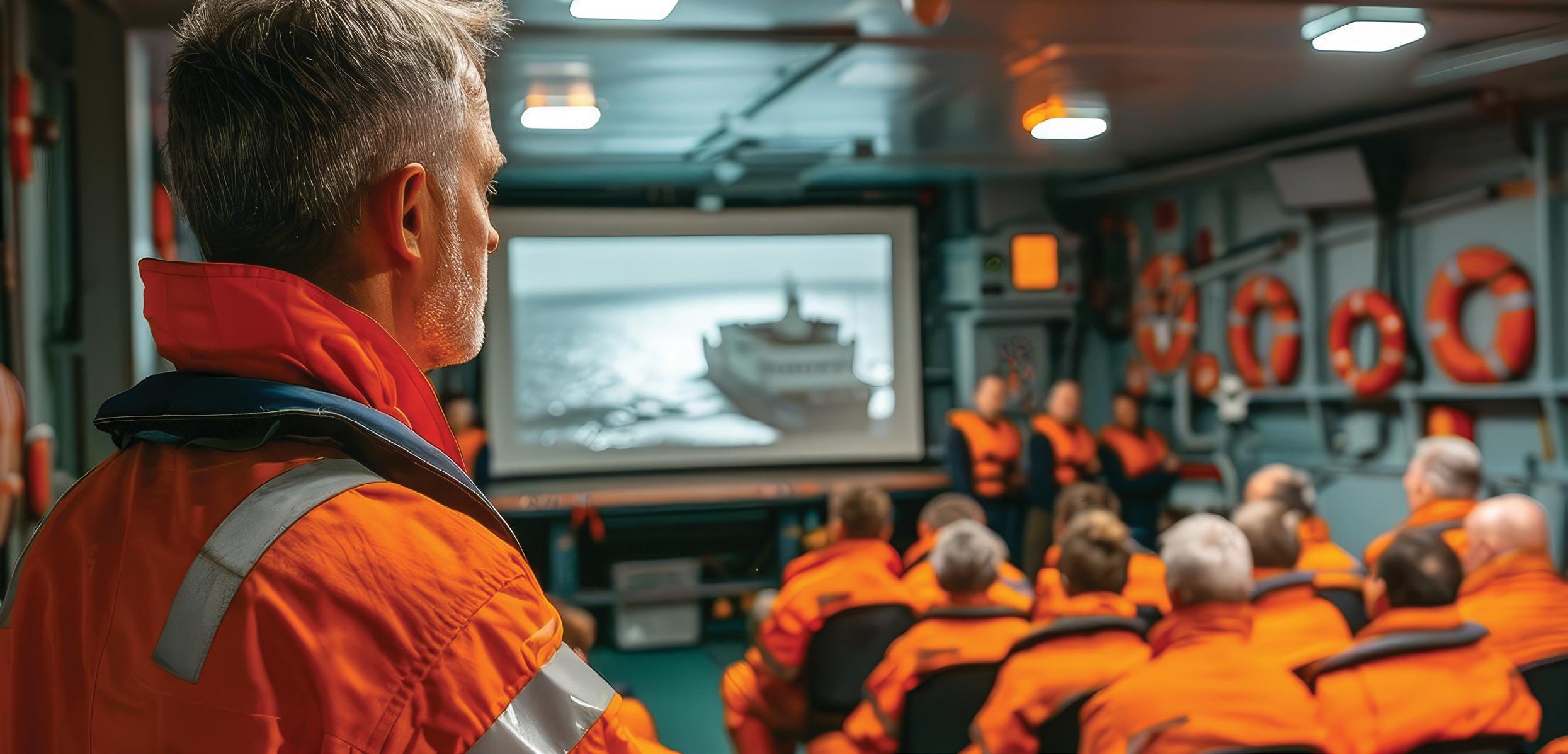
Connectivity limits, generic content and mounting skills demands are forcing the maritime sector to rethink how crews are trained for increasingly complex vessels and operations
Digital platforms have transformed maritime training over the past decade. But as decarbonisation demands new skills, officer shortages loom and consolidation concentrates the market among a handful of providers, the industry faces hard questions about whether its training ecosystem is fit for the challenges ahead.
Few people have shaped the maritime training landscape more directly than Manish Singh of Maris Investments, whose role in founding Ocean Technologies Group brought several major training and software players together under one roof. He remains convinced the logic was sound. “Fragmented providers struggle to invest at the level that today’s compliance and client expectations require,” he says. “Mission-critical services at scale need corresponding scale in technology, content and delivery infrastructure.”
But Singh is equally clear that consolidation is not a permanent answer. “The real question now is not whether consolidation was a good idea, but whether the consolidated platforms are continuing to invest at the pace the industry’s risk profile demands.”
The pace of change, he argues, has only accelerated. Decarbonisation is generating demand for new training content around alternative fuels and novel vessel technologies. Regulatory frameworks keep evolving. Officer shortages are widely flagged for the coming years. “This is not an environment where a training platform can live off its installed base,” Singh says. “Content must update continuously and delivery needs to be adaptive, data-driven and accessible.” His concern is less about market concentration per se and more about what concentration can breed. “I don’t worry about over-concentration as much as I worry about complacency. I would welcome new entrants who bring stronger data architectures and more personalised learning models to the space.”
Consultant Peter Schellenberger of Novomaxis sees further consolidation coming regardless. “I think we will see a further concentration where the two or three leading players will M&A their way further.” But he does not think scale alone will protect incumbent business models. “In new times of clients demanding modular integrations into LMS and legacy systems, there is ample space
for relevant, modern style training tools that will in future be made available not only to owners and managers, but also to seafarers themselves.” He notes that industry leaders are already showing signs of anxiety about the pace of change. “I can see that leaders are getting a bit nervous, commissioning the likes of Thetius to find out what they need to do.”
Sebastian von Hardenberg, CEO of Bernhard Schulte Shipmanagement and president of InterManager, is direct about the structural problem. “It is a highly consolidated market, and higher diversity in the training ecosystem would benefit the industry,” he says. “The skills transition ahead of us is enormous, and training technologies need to keep pace with the complexity of new fuels, equipment and regulatory demands. Concentration among too few providers risks slowing innovation and increasing costs.” BSM responds by running its own maritime training centres offering courses for both internal and external clients across operations, safety and environmental compliance for general
and specialised vessels.
Massimo De Vincenzo, managing director of SeaQuest Shipmanagement, makes a related but distinct point about the quality of what is being offered, not just who is offering it. “Too few providers means less innovation and less competitive pricing,” he says. “There is real unmet need for more specialised, vessel-type-specific training content–especially as shipboard technology becomes more varied and complex. Standard off-the-shelf content rarely captures the specificity that effective training actually requires.” SeaQuest has invested in building its own competency assessment frameworks as a result. “More providers willing to work for specific operational niches, rather than the broadest possible market, would benefit the whole industry.”
Vikrant Gusain, CEO of Dockendale Group, says the core problem is one of standardisation rather than concentration. “The challenge lies in the presence of multiple platforms, often driven by specific commercial interests, and the lack of standardisation across the sector. What is needed is greater standardisation and solutions that are aligned with industry needs rather than individual commercial positioning.” He also flags crew data protection as a non-negotiable consideration as digital platforms proliferate.
The industry’s enthusiasm for digital training platforms runs up against a persistent operational reality that Julian Panter, CEO of Middle Eastern shipmanager Noatum CSM, articulates with characteristic directness. “The challenge is finding not only quality in terms of the actual content, which has to be accredited, but also now it’s about being able to provide offline content.
Because, let’s face it, on vessels there are still issues with connectivity and there is nothing worse than doing an online course which keeps on freezing because of connection speed.”
Connectivity aside, several contributors argue that the more
fundamental limitation of digital training is its disconnect from the actual experience of operating a ship. Bjorn Hojgaard, CEO of Anglo-Eastern, comments: “Digital tools are useful for standardisation and accessibility, but they only add value when closely linked to real-world operations. Training that is disconnected from equipment, procedures and decision-making at sea quickly loses relevance.” Anglo-Eastern’s response has been to combine digital learning management systems with heavy investment in physical simulation and practical training.”Training is an asset,” Hojgaard says, “and it is worth paying a premium for the more specialised knowledge that future-ready crews are being equipped with.”
Vikas Trivedi, co-CEO of shipmanagement at Synergy Marine Group, cuts to what he sees as the deepest flaw in current training models in conversation with Splash. “The industry does not need more platforms. It needs better proof of competence,” he says. “The real gaps are interoperability, assessment integrity and portability of training records across vessels, employers and flag states.
Finishing a module is not the same as demonstrating safe behaviour onboard.” His prescription is clear: “The future has to combine digital learning, simulator time, onboard drills and outcome-based assessment.”
That view finds an ally in Soma Gollakota, co-founder of Bigyellowfish, a wellbeing platform, who approaches the problem from a behavioural science perspective. “The foundations are actually stronger than people give them credit for. There’s genuine investment happening in digital learning across maritime and that deserves recognition.” But the opportunity, he argues, is to go significantly deeper. “The opportunity now is to go deeper–not just deliver training but reinforce it. Human beings build capability through confidence, and confidence comes from succeeding at smaller things before taking on larger
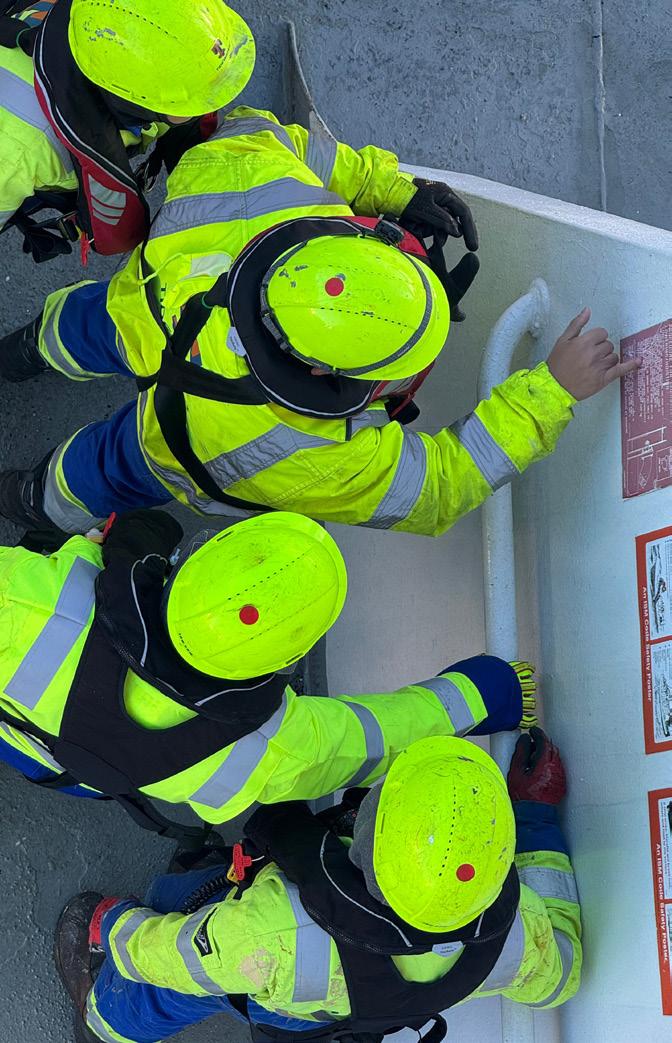
Digital tools only add value when closely linked to real-world operations
ones.” The insight has implications for how platforms are designed. “When you understand the behavioural patterns of people at work–how they learn, how they build momentum, how small successes compound into lasting capability–training becomes something people carry with them rather than something they complete and forget. That’s the next frontier for this space, and it’s a significant one.”
Running beneath all of these debates is a more urgent question: is the industry’s training ecosystem remotely ready for the scale of skills transition that decarbonisation demands?
The answer, based on the range of views gathered here, is a qualified no–not yet. The consolidated platforms are investing, and some individual managers are building impressive in-house capability. But the combination of new fuel technologies, evolving regulatory requirements, digital delivery constraints at sea and the looming officer shortage creates a challenge that no single provider and no single approach can fully meet.
Singh’s warning against complacency seems the right note on which to leave this debate. The question is not whether the industry has trained enough seafarers for the world as it was. It is whether it is building the capability to crew the world as it is becoming.

PE capital has turbocharged shipmanagement consolidation. But in a business built on safety, seafarers and decades-long relationships, the fit has never been straightforward
Capital has flooded into third-party shipmanagement over the past decade, backing consolidation, fuelling technology investment and reshaping the competitive landscape. But industry veterans remain deeply divided on whether private equity’s short-term return horizons can ever sit comfortably alongside the long-cycle, safety-critical, people-intensive reality of managing ships.
The critique of private equity in shipmanagement begins with a simple observation: the business does not fit neatly into a three-to-five year investment thesis.
Kuba Szymanski, secretary-general of InterManager, puts it plainly. “The problem comes when investors are only looking for a quick return. Shipmanagement is about people, safety, compliance and trust. It cannot be treated as a short-term financial investment.”
Tim Ponath, CEO of NSB Group, puts the tension in commercial terms. “On paper, shipmanagement ticks all the typical private equity boxes: stable, recurring cash flows and an asset-light model. But whether shipowners genuinely want a partner squeezing their daily operations for every last dollar of shortterm cost optimisation? That is highly debatable. Our clients want a long-term, trusted and reliable partnership. As a family-owned business, we don’t just meet those expectations–we are built on them.”
Massimo De Vincenzo, managing director of SeaQuest Shipmanagement, identifies what he sees as the core structural problem. “PE discipline can improve cost control and governance. But it can also erode the things that make a manager genuinely reliable: stable teams, willingness to invest in systems that take years to pay off, and the ability to absorb short-term cost for the sake of long-
term client relationships.” His message to owners considering a PE-backed manager is pointed: “Look closely at what incentives are actually driving decisions behind the contract.”
Henrik Jensen, CEO of crew manager Danica, speaks from a family ownership perspective that has deliberately avoided the PE route. “Private equity typically works with a shorter investment horizon and an exit objective. Crew management, by contrast, requires long-term relationships, sustained investment in people, cadet and talent development, and systems, and a clear commitment to service quality. A short-term approach can be difficult to reconcile with those requirements.”
Captain Ali Ihtiyaroglu, co-founder of VTS Shipping, narrows the concern to where it hurts most. “PE brings capital, but shipmanagement is a trust and people business. When exit horizons drive cost-

Aligned with the IMO's Hong Kong Convention
The problem comes when investors are only looking for a quick return
cost extraction, the model becomes harder to reconcile with the realities of managing ships safely and reliably.”
The critics are compelling, but they do not tell the whole story. A growing number of voices in the industry argue that the question is not whether PE belongs in shipmanagement, but whether it arrives with the right approach.
Ajay Chaudhry, co-CEO of shipmanagement at Synergy Marine Group, makes the affirmative case robustly. “Private equity and institutional capital can play a constructive role in shipmanagement when they are aligned with long-term operating value. At its best, capital brings focus, professionalisation, scale, stronger governance and the ability to invest faster in technology, training, cyber resilience and data systems.” He argues that shipmanagement is entering a capability-led era where capital can be genuinely transformative. “Owners increasingly need managers who can combine technical depth with enterprise-grade systems, transparency and operating discipline. Capital works well in shipmanagement when it strengthens competence, culture and long-term operating capability. In that sense, it can be an important enabler of shipmanagement 2.0.”
record is mixed but argues that sophistication is improving. “More mature private equity firms with shipping experience tend to take a more balanced view, recognising the operational and human elements involved, rather than viewing decisions purely through a P&L lens. When financial discipline is combined with a deeper understanding of the industry’s realities, it can be a constructive partnership rather than a purely transactional one.”
The debate ultimately reduces to a question of whether any given PE investor has done the work to understand what shipmanagement actually is–and arrived with a thesis calibrated to its realities rather than borrowed from another sector.
Manish Singh of Maris Investments brings two decades of working with PE sponsors in maritime to that question, and his verdict is carefully hedged. “Private equity and shipmanagement have proven to be an excellent fit, but only where the sponsor arrives with realistic expectations about cyclicality, margins and the time it takes to build operating capabilities. When PE has gone wrong in shipmanagement, it has usually been because a playbook designed for a very different sector was copied and pasted without enough adaptation.”
a deliberate choice. “Our focus is not on short-term returns but on long-term investment in people, systems and quality. That is ultimately what creates lasting value for owners.”
Niraj Nanda, chief commercial officer of Anglo-Eastern, acknowledges the tension while finding space for nuance. “Safety culture, crew development and consistency are long-term assets that take years to build and can be weakened if short-term financial objectives dominate decision-making. Where the time horizon is shorter, or the focus is primarily on
Julian Panter, CEO of Noatum CSM–a joint venture between AD Ports and Columbia Shipmanagement–rejects the binary framing of the debate altogether. “It’s not a problem at all. It’s a question of what role you want a private equity firm to play, and how that complements your business is the most important factor to ensure a great fit and that everyone is on the same page. There are three or four different types of strategy when it comes to private equity and it’s critical to understand what it is you need as an organisation.”
Vikrant Gusain, CEO of Dockendale Group, acknowledges that PE’s track
Singh is precise about what works and what does not. “What does work is equity backing for better senior talent, serious technology investment, sharper management discipline, international expansion and well-thought-through M&A. What does not work is aggressive leverage on a thin margin base, short hold periods that favour optics over substance, and cost-cutting programmes that hollow out safety and service quality.”
His forward-looking argument is the most ambitious detailing of PE’s potential role. “We are now in a phase where digitalisation, data and decarbonisation are reshaping competitive advantage in ship operations. That is precisely the point where informed PE capital can accelerate transformation instead of simply extracting value.”
Based in Hamburg, Danica Crewing Specialists supports shipowners worldwide with professional crewing solutions. We combine a traditional hands-on approach with modern, innovative digital tools – delivering transparency, speed and reliability across the entire crewing process.

With an international network of recruitment offices and deep market insight, we support owners as a first-party crewing partner – independent,

A landmark study warns that nearly half of today’s seafarers plan to quit within five years. As traditional crewing markets age and working conditions drive talent away, shipmanagers are scrambling to build new pipelines
The numbers are alarming. A major new survey by the World Maritime University (WMU), published in January and commissioned by the Officers’ Union of International Seamen, drew on responses from 4,372 seafarers of 99 nationalities to paint an alarming picture of a workforce under severe strain–and increasingly minded to walk away.
The report, In Search of a Sea-Life Balance in an Adverse Environment, finds seafarers working an average of 71 hours per week globally, rising to 79 hours for US seafarers. Around one-third of all respondents show stress levels classed as “severe and potentially dangerous.” Work and rest records are being routinely adjusted to mask regulatory breaches. Shore leave is severely limited.
Most troubling for owners and managers is the finding on retention: nearly half of all respondents indicate an intention to quit seafaring within the next five years.
WMU president Maximo Mejia commented: “Prioritising seafarers’ mental wellbeing and healthy working conditions is a necessity, as well as the way to ensure the long-term sustainability of the
maritime workforce.”
The WMU called for urgent, evidencebased action to cut administrative burdens, enforce realistic manning and rest standards, and embed humanfactors science in regulation–arguing that without this, shipping faces a compounding recruitment and safety crisis.
Against this backdrop, the question of where the industry will source its future crews is becoming one of shipmanagement’s most strategically important challenges. The demographics of established crewing nations are shifting.
Career competition from onshore industries is intensifying. And the working conditions documented by the WMU are making recruitment harder in markets that have historically supplied the bulk of the world’s officers and ratings.
Sebastian von Hardenberg, CEO of Bernhard Schulte Shipmanagement and president of InterManager, sees Africa as the most significant untapped opportunity. “The declining attractiveness
of maritime careers in some established nations makes diversification essential,” he says. “We see strong potential in Africa, where seafarers currently make up only about 3% of the global workforce despite the continent’s vast coastline.” BSM has been active on the continent for over a decade and last year opened its first maritime training centre in Ghana. Beyond Africa, the company’s smartAcademy initiative is building talent pathways through university partnerships in Egypt, Oman, Saudi Arabia, Georgia and Turkey. “Diversifying our sourcing markets is not only about scale,” von Hardenberg says. “It is about ensuring long-term resilience, competence and quality across our global crew pool.”
Captain Ali Ihtiyaroglu, co-founder of VTS Shipping, also points to East Africa, identifying Tanzania and Kenya in particular as markets where consistent investment in maritime education is bearing fruit. His emphasis, however, is on selectivity rather than volume. “The key criterion is not cost alone but the quality of technical education and adaptability to modern, digitally equipped vessels. Selectivity in crew sourcing matters more than usual right now.”

























































































































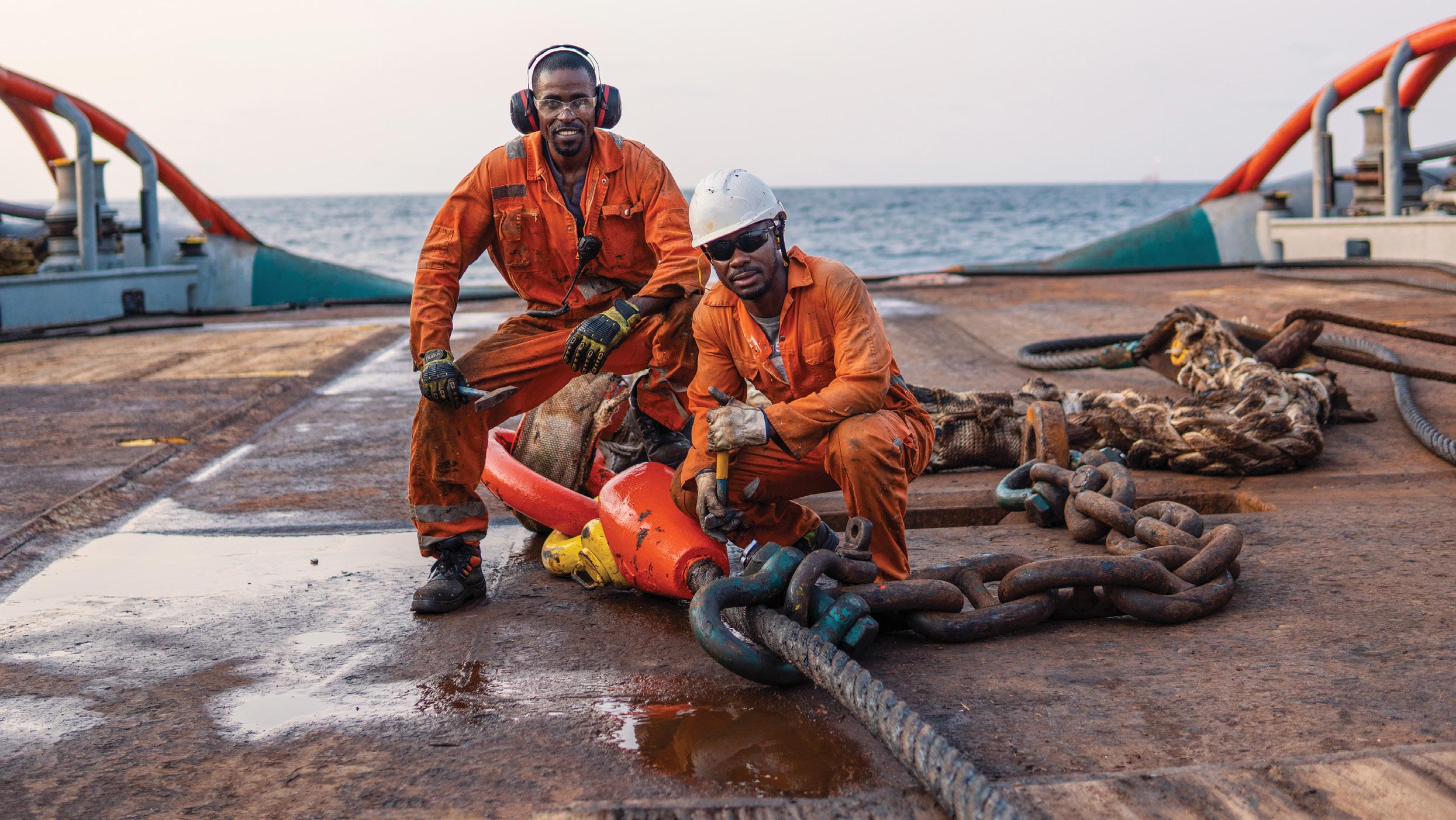
Kuba Szymanski, secretary-general of InterManager, adds nuance to the new market narrative by arguing that established markets should not be written off simply because they have fallen out of fashion. “We are seeing Vietnam emerge as a growing source for seafarers, but our members are also not giving up on traditional crewing markets,” he says. “There are still excellent seafarers in established countries, and sometimes markets fall out of fashion rather than losing quality. Georgia, for example, continues to offer very good seafarers, even if it has not always received the attention it deserves recently.” His overriding criterion remains clear: “The priority must always be quality, training, attitude and long-term career development.”
For Henrik Jensen, CEO of Danica–one of the industry’s leading crew management agencies–the answer lies in combining physical presence in established hubs with digital capability to reach markets where no office yet exists. Danica has recently expanded into Turkey and Indonesia and operates what Jensen describes as a pioneering cadet programme in Kenya, among the first of its kind in the industry.
Crewing strategy is not a geography question. It is a demographic and developmental one
“Our next phase of growth is focused on strengthening our digital recruitment capabilities,” he says. “This will allow us to reach high-quality seafarers in markets where we do not yet have a physical presence, while maintaining the standards, screening processes and personal engagement that clients expect.” The goal, he adds, is “a scalable, future-ready recruitment platform that combines global reach, local knowledge and robust quality control.”
Vikas Trivedi, co-CEO of shipmanagement at Synergy Marine Group, resists the temptation to label the crewing challenge purely as a geography problem. “Crewing strategy is not a geography question. It is a demographic and developmental one,” he says. “The first priority is to deepen, retain and develop talent in established pools: India, the Philippines and Eastern Europe. The industry must also broaden responsibly into countries where demographics, maritime ambition and training ecosystems are strengthening. The rationale is not low-cost labour. It is long-term pipeline development.”
That distinction–between responsible pipeline development and opportunistic cost arbitrage–is one that Niraj Nanda, chief commercial officerat Anglo-Eastern, the world’s largest shipmanager, echoes this comment, saying: “Our priority is not to chase new sourcing regions for their own sake, but to maintain a stable, diverse and competent crewing base,” he
says. Anglo-Eastern’s talent pool draws on strong representation from established maritime markets, with diversity viewed as an operational resilience tool as much as a values statement. As the company expands further into the cruise sector, Nanda sees diversity as increasingly central to service quality. “A diverse, multinational team enhances service quality, promotes cultural awareness, improves guest experience and reinforces our broader expertise in crew management.”
Underlying all of these strategies is a harder truth that the WMU report makes impossible to ignore: no amount of geographic diversification or digital recruitment capability will solve a retention crisis rooted in working conditions.
The industry can build pipelines in Ghana, Kenya, Vietnam and Georgia–but if the experience of life at sea continues to drive nearly half of serving seafarers toward the exit within five years, the pipeline will always be leaking faster than it can be filled.
The WMU’s call for ships and systems to stop being designed for the seafarer of 1995 is not just a welfare argument. It is, increasingly, a commercial one. Without meaningful reform to hours, rest, shore leave and administrative burden, the crewing question may ultimately have no geographic answer.























from April’s gathering of the world’s premier commodities shipping conference
Shipmanagers attending this year’s Geneva Dry conference came away with a clear message on technology: ignore the hype, focus on operational value, and do not underestimate the industry’s growing data and trust problems.
Across multiple sessions on AI, digitalisation and supply chain efficiency, speakers repeatedly stressed that shipping’s technology debate is moving beyond experimentation toward harder commercial questions around interoperability, accountability, workforce adoption and return on investment.
For many operators, the biggest frustration remains the fragmented nature of maritime technology.
Christoffer Svard, chief commercial officer at Sea, argued that the sheer complexity of shipping workflows means no single platform can realistically handle every task and that interoperability between systems is now “the critical missing link”.
That sentiment surfaced repeatedly throughout Geneva Dry, where interoperability became one of the conference’s defining buzzwords — though many argued the issue is far from superficial.
Sanjay Kapoor, CEO of GeoServe, said shipping’s biggest challenge is increasingly one of connectivity rather than access to software.
“Integration connectivity is the new way to look at technology,” Kapoor said.
Operational reliability also remained central to the discussion. Audra Drablos, strategy director at Inmarsat Maritime, highlighted how poor connectivity can directly increase fuel consumption when vessels fail to receive updated berth schedules in time.
“The vessel just steams full ahead, and fuel is burned unnecessarily,” Drablos warned.
From a shipmanager’s perspective, however, the strongest message was the industry’s growing resistance to
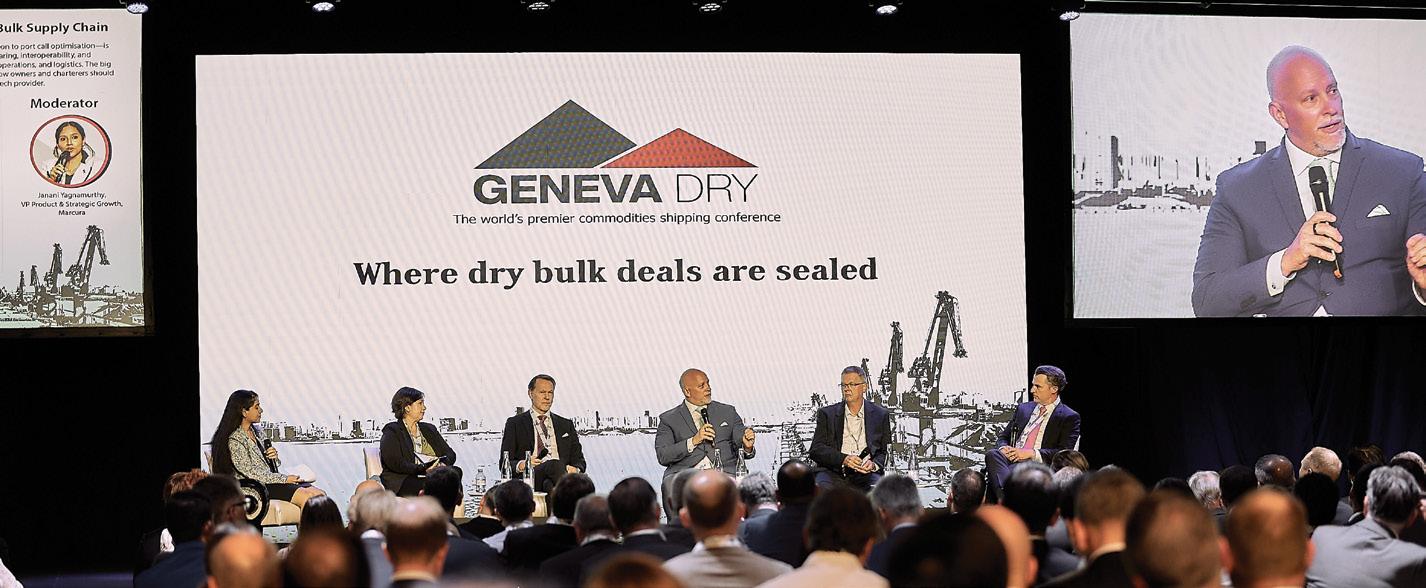
adopting technology simply because it is fashionable.
Carlos Pena, CEO of CTM, distilled the investment logic down to measurable savings, citing robotic hull cleaning as one example where the economics are immediately visible.
“If it took five days to clean, with robots now it takes three,” Pena said. “Two days is fifty grand.”
Daniel Schildt, chief strategy officer at Pangaea Logistics Solutions, said owners are increasingly suffering from “technology fatigue” as AI vendors aggressively market new tools to already stretched operations teams.
“We want to implement technology that serves a purpose,” Schildt said. “Not the latest and greatest new shiny thing.”
Several speakers argued that AI’s usefulness will depend less on flashy interfaces and more on the quality of underlying operational data.
Friederike Hesse, co-founder of ZERO44, warned that many shipping companies still lack proper data quality management processes.
“If you try to put AI on top of that, it’s garbage in, garbage out,” Hesse said.
That lack of trust in data became one of the conference’s recurring themes. During one session, only a handful of audience members said they trusted their company’s data, while nearly the entire room said they trusted their people instead.
Morten Lovstad, bulk carrier business
director at DNV, argued that verified, standardised data will determine whether AI can genuinely improve fleet operations.
“What makes the world go around is data,” Lovstad said. “But you also need to verify them.”
Despite concerns over automation, speakers were broadly united that shipping will remain heavily dependent on human judgement.
Scott Bergeron of Oldendorff Carriers compared AI with radar technology — transformational, but not infallible.
“There have been plenty of radarassisted collisions,” Bergeron said.
Others warned that workforce resistance could become one of the biggest barriers to successful implementation. Alex Albertini, CEO of Marfin Management, described what he called “saboteur syndrome”, where employees fearing replacement actively undermine AI projects.
“They will fight AI so much that they will try to sabotage a project,” Albertini said.
Still, most speakers argued the technology’s long-term impact is unavoidable. Ingrid Kylstad, managing director of Klaveness Digital, said the pace of AI development is already exceeding what many in shipping believed possible a year ago.
And Kapoor perhaps summed up the mood across Geneva Dry most succinctly.
“If you resist it,” he said, “you’re going to be left behind.”.



Sunil Kapoor on the future of shipmanagement
It’s all about differentiation, he argues
The real challenge facing shipmanagement is not irrelevance — it is differentiation.
From an owner’s perspective, management platforms can appear increasingly similar. The same planned maintenance systems. The same procurement structures. The same reporting formats. The same regulatory dashboards. Operating costs across fleets have largely standardised — crew wages, insurance premiums, lubricants and spare parts follow global benchmarks.
In such an environment, management risks becoming a comparison of fees rather than performance.
Yet shipping is not a commodity business at the operational level. Ships are complex, high-value assets operating in unforgiving conditions. A single major breakdown can increase annual operating costs by double-digit percentages. An incident poorly handled can damage chartering prospects for years. Compliance missteps can trigger reputational and financial consequences far beyond the initial event.
Performance still matters. And performance ultimately depends on people.
This became clear to me at a Capital Link forum in New York. I was standing next to a tanker owner waiting to meet a minister. When he learned that my background was in third-party shipmanagement, he made a pointed observation: “At this stage, most companies provide the same service. I
at who the superintendent is on my vessel.”
It was a simple statement, but it cut to the heart of the issue.
The technical superintendent remains the backbone of any shipmanagement organisation. If there is one structural weakness that could undermine the sector, it is the gradual dilution of this role within increasingly corporatised platforms.
A strong superintendent understands far more than maintenance schedules. He understands crew dynamics, the vessel’s history, the charterer’s expectations, and the owner’s risk appetite. He detects early warning signs long before they become formal reports. He translates policy into practice. He bridges the gap between strategy and steel.
In large corporate structures, there is a dangerous drift: the superintendent risks being reduced to a telephone operator — passing messages between the ship, headquarters and engine makers, escalating problems upward, but stripped of real authority to decide. He becomes a reporting conduit rather than a technical leader. As layers of management expand, he grows more distant from owners, excluded from strategic discussions, yet when performance slips or an incident occurs, he is the first name questioned. Authority is centralised; accountability is not. When that imbalance sets in, shipmanagement begins to weaken from its core.
I experienced this dynamic when a major owner expressed concern after one
of our most experienced superintendents left his fleet. Predictably, operational consistency began to decline. The owner was not reassured by charts or presentations; he wanted to meet the people responsible for his ships. I travelled with the technical manager and superintendents to Athens for a fullday session. Trust was restored because accountability was visible.
Later in my career, moving from management into ownership reinforced this perspective. As a manager, you report operating costs. As an owner, you absorb them. As a manager, you explain off-hire days. As an owner, you calculate their financial impact in real time.
From the owner’s position, the central question is not whether shipmanagement is fashionable or outdated. It is whether the manager understands risk — technical, operational and financial — as deeply as the owner does.
Third-party shipmanagement is not an anachronism. It is at a crossroads. The sector must move beyond being perceived as a service contractor and instead position itself as a risk partner. Owners do not need more reports. They need foresight. They need empowered technical leadership. They need decision-makers aligned with their capital exposure.
The future will not belong automatically to the cheapest provider, nor solely to the largest platform. It will belong to organisations that combine structured systems with strong, visible technical accountability.


The next revolution in maritime training is not a new course — it is a new way of seeing, writes Matt
Gilbert,
founder and CEO of Yuni
1956 was a remarkable year. John McCarthy coined the term ‘artificial intelligence’ at the Dartmouth Summer Research Project, proposing machines that could reason and solve problems. Benjamin Bloom introduced his taxonomy, a framework that underpins much of modern competency-based education. And Malcom McLean’s (pictured) Ideal X sailed from Newark to Houston, launching containerisation as a scaling breakthrough that transformed global trade.
Three different fields shared a similar idea: organising environments and ideas into standardised logical structures enables scale. Artificial intelligence needed a way to represent reasoning. Education needed a way to structure learning. Shipping needed a standard unit to transform logistics. Each breakthrough created an architecture that brought meaning to ambiguity, allowing complexity to be managed, shared, and improved.
Maritime education has felt these influences. STCW is one of the world’s largest competency frameworks, using outcome-based approaches that broadly correlate to Bloom’s hierarchy. Shorebased academic and professional qualifications share common foundations in assessment and certification.
But education is commonly organised around endpoints – courses, certificates, compliance. These are necessary, but they are proxies. They are time-bound. They do not tell us how capability actually develops, how judgement improves, or how professionals perform when conditions change and pressure mounts. Training is often deterministic. Shipping is inherently probabilistic. Decisions must be taken with incomplete information: weather evolving, markets shifting, geopolitical tensions rising, human factors interacting, highvalue assets exposed to complex and

compounding risk. Competence is not just knowledge – it is the ability to interpret signals and act appropriately in context.
This idea has deep roots. Baruch Spinoza argued that understanding comes from grasping relationships rather than isolated facts. Thomas Bayes provided a mathematical framework for updating belief as new evidence emerges – it is no coincidence that one of the world’s leading shipping programmes sits within Bayes Business School, a discipline built on decision-making under uncertainty. These are not abstract concerns. They describe the operating reality of every commercial maritime professional.
Traditional learning structures struggle to capture that reality. Completion does not equal capability. Attendance does not equal judgement. Certification does not guarantee performance when conditions are nothing like the exam.
Competency management systems exist – certificate records, revalidation flags, crewing matrices – but they are essentially sophisticated filing cabinets, not intelligence. They tell you what was attended and when it expires. These systems were built for compliance, and the industry needed them. But a system designed to flag an expiring certificate cannot tell you whether the person holding it is ready for the next role, the next route, or the next crisis. The architecture has hit its ceiling.
Artificial intelligence has recently entered the conversation, often presented
as a tutor layered onto existing content. These tools can support explanation and knowledge recall. But generating more content does not improve capability. What is needed is a shift from contentcentric learning to evidence-centric learning – from the deterministic model of course-plus-test-equals-certificate, to a probabilistic one where capability evolves as evidence accumulates.
Consider what this means in practice. A cadet completes a watchkeeping module. A chartering analyst sits a commercial decision-making course. A port captain undertakes a company refresher. Under the current model, these are separate events – certificated, filed, and forgotten. They share no common language. Nothing connects them, and the ship/ shore boundary that already divides most organisations is reinforced, invisibly, by the training architecture itself.
A shared capability graph changes that. Each learning event – simulation, course, on-the-job assessment – becomes a node, generating evidence mapped against a common structure of skills, roles, and relationships. The cadet’s watchkeeping record, the analyst’s decision patterns, and the port captain’s refresher now belong to the same picture. Organisations gain a live view of where capability is developing and where it isn’t – across ranks, departments, and the ship/shore divide that has historically made joinedup crew and staff development so difficult to achieve.
Kuba Szymanski, secretary-general of InterManager, has the final words of this magazine
Amid growing concern about a global seafarer shortage, many in the industry argue that recruitment is our biggest challenge. I disagree. The real issue is whether we are properly training, supporting and protecting the workforce we already have to build the industry’s future.
For too long, shipping has referred to a ‘seafarer shortage’ as if the only answer is to employ more people. When I look at what is happening across the crewing market, I see a much more complicated picture. In some areas, yes, there is strong competition for highly experienced officers and crew who meet the requirements of top-quality operators. In other areas, skilled and experienced seafarers are struggling to find safe, decent and reputable employment.
This problem has escalated due to the current geopolitical situation. The war between Russia and Ukraine, tensions involving Iran and the United States, and sanctions affecting Venezuela have all changed trading patterns and reduced activity in areas where many companies previously operated.
For some shipowners and operators, work in these regions has become either too risky, too restricted, or simply impossible. Smaller companies are feeling the pressure and are scaling back operations. When that happens, this doesn’t just affect the employer, it affects the seafarers and their families.
Georgia is one example of this recent trend. Georgian seafarers have served the industry for many years, often on fleets and trades now affected by war, sanctions or political risk. As those opportunities disappear, many are left
with fewer choices. Some may feel forced to accept employment on sanctioned or questionable vessels, exposing themselves to serious risks including unpaid wages, abandonment, poor conditions, criminalisation and lack of support.
For many, this is not a career decision. It is about keeping a roof over their family’s head. If reputable shipping does not offer them a solution, others will and most will not have seafarer welfare, rights or safety at heart. This is why I believe the industry must stop referring to a “seafarer shortage’. We may have a shortage at the very top end of the market, where the demand for highly trained, experienced and immediately deployable crew is intense. That doesn’t mean there are a lack of seafarers. It means we are not doing enough to develop the people who are already available.
The solution therefore is simple, If seafarers lack certain skills, they should be trained to learn those skills and if a seafarer has only had experience on a smaller less technical vessels, they should be helped to transition on to better systems and standards.
Some of the larger companies are looking at new crewing regions, including Ghana. Vietnam is also investing in retraining experienced fishermen for the merchant navy, recognising that many of these people have spent years at sea and could become valuable seafarers with the right support.
This is the right approach but must be done responsibly. Simply adding more people to the industry without protecting standards will not solve anything. It could result in pushing wages down even further and make vulnerable seafarers

even more vulnerable. Shipping does not just need more seafarers. It needs better training, better recruitment policies and better protection for the seafarers who are already part of our industry who will, in turn, encourage others to join them.
I would urge shipowners, shipmanagers and crewing departments to look again at regions such as Georgia. There are skilled, experienced and motivated seafarers who deserve a fair opportunity in reputable fleets. Seafarers do not disappear when they are unemployed, abandoned, unpaid, or forced into dangerous choices. They remain part of our industry, and we remain responsible for how this industry treats them. If we ignore these seafarers while continuing to search for the “perfect candidate”, we are not solving a shortage. We are creating one..
Simply adding more people to the industry without protecting standards will not solve anything