LIFE ON YOUR TERMS SINGULAR

Lists for Life
The Beauty in Ugly Houses
Dick Francis, Champion Storyteller
Loving Opera

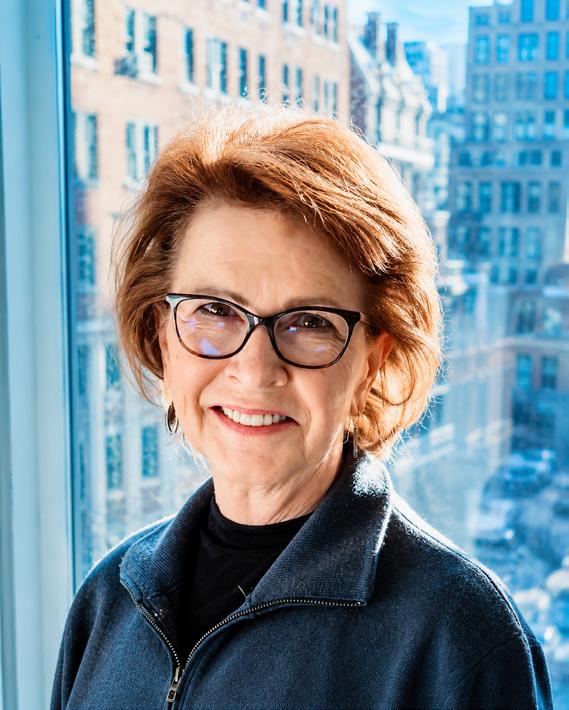
Jeri Eagan is a retired oil industry executive and former Chief Operating Officer for the Ayn Rand Institute. Her current interests are in editorial design and illustration.
My heartfelt thanks to those of you who provided such encouragement after reading the first issue of SINGULAR. Beginning with this issue, I am relinquishing the role of editor to Brian Phillips. I will remain as producer, designer, and writer. And I am delighted to welcome several excellent writers who describe things they value.
This publication is a lifestyle magazine for Ayn Rand fans and others who are ambitiously pursuing values to achieve a life of rational self-interest. It will celebrate lives being lived
well, excellent books being written, art being created, values being pursued. I hope it will provide inspiration for you and be a source for new values to consider pursuing.
Please contact me with any comments or suggested articles, or if you would like to subscribe to future issues.
jerieagan@me.com
Follow reason, not whims or faith. Work hard to achieve a life of purpose & productiveness.
Earn genuine self-esteem.
Pursue your own happiness as your highest moral aim.
Prosper by treating others as individuals, trading value for value.
aynrand.org overview
Publisher and Design - Jeri Eagan
Editor - Brian Phillips

Kathy Justice grew up on a farm in California’s Central Valley. She is a graduate of the University of California, San Diego and she worked in Wealth Management for many years. She returned to school to pursue a PhD in history, however found more joy working with plumbers and electricians and independently studying architecture and design. She built a thriving development business for new construction and renovation. She loved turning an intellectual passion into something you walk through and live in.
Today she and her husband, Jim, are restoring a riverside ranch in Johnson City, Texas. When she's not working the land, she's hiking the Grand Teton or teaching yoga in Jackson, WY.
Linda Cordair is co-owner and director of Quent Cordair Fine Art. She is known for her discerning eye and recognizing and cultivating emerging talent. She plays an active role in shaping exhibitions, guiding acquisitions and commissions, and fostering connections between artists and collectors.
With her husband, Quent Cordair, she has built the gallery into a destination for collectors seeking work that reflects both skill and personal meaning.
Beyond the gallery walls, she has contributed to a broader renewal of interest in Romantic Realism through writing, lectures, and educational outreach. Based in Jackson, Wyoming, she enjoys fly fishing and gardening in her free time, and traveling, especially to visit with her four granddaughters.

Kathy Cross was exposed to classical music as a child and started playing flute in fifth grade. She participated in school bands through college. A proud member of the UT Longhorn Band, she was one of the earliest female section leaders in that good-old-boy (at the time) institution. While pursuing advanced music degrees, she realized that academia and the practice room were not her destiny. She remained involved with music on a more informal basis, teaching, giving talks, and performing in a flute choir as well as singing choral music.
Kathy worked for the Ayn Rand Institute for 35 years, where she built the Atlantis Legacy giving program and raised millions of dollars for the future of Objectivism. Now retired, she may be seen much more often at the concert hall and opera house, and greatly enjoys devoting her time to music again.
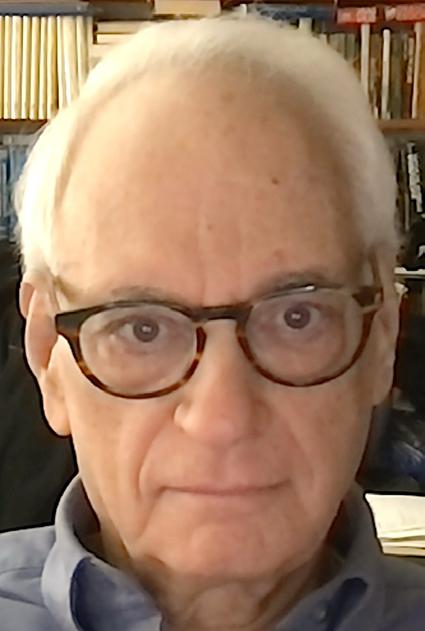
Evan Picoult has had a very long overlapping career with Columbia University and Citigroup. He did PhD research in the Columbia’s physics department and did post-doctoral research and taught in its psychology department. He has been an adjunct professor at Columbia since 2007, teaching a risk management course. He worked at Citigroup for 38 years and retired as a managing director in 2018. For more details see : https://business.columbia.edu/faculty/people/evan-picoult
In addition to being an avid reader of mysteries, Evan loves to read biographies and books on the history of math, science, and technology. He has a strong love of music, both the Great American Songbook and classical music. For over forty years, he has attended performances by many of the greatest pianists, orchestras, and conductors of the world at Carnegie Hall and Lincoln Center. He loves old movies (both silent and talkies) and the history of films.
Dear Editor,
I have always thought solitude was underrated. But of course I think one has to truly be happy in one's own skin to appreciate it. How wonderful that you celebrated it in such a thoughtful way and that you included the Wordsworth poem (alas I don't think this is still a typical poem that one reads in high school any more).
Mary Heinking Bradenton, Florida
Dear Editor
What an uplifting, joyous reading!
The article about solitude (and paintings) provided such a "good feel" experience. I have always enjoyed my solitude and I love the way you distinguish it from "loneliness."
I like the book recommendation section! I have already read (and enjoyed) The Red Concerto, but you inspired me to buy All Men Are Created Equal which I am looking forward to reading.
I love the Art section and the art throughout. (Credit to Luc for expanding my appreciation of the art!)
Ron Avni Austin, Texas
Dear Editor:
Regarding "The Allure of Accounting" (Spring 2026): This excellent feature included a quote from Jane GleesonWhite's book Double Entry—How the Merchants of Venice Created Modern Finance, citing the intimate form-and-content relationship between capitalism and double-entry bookkeeping. Her full story opens with the revelation that the need for accounting yielded an upgrade for mankind on a par with invention of the wheel.
In the 1960s, French archaeologist Denise Schmandet-Besserat investigated caches of small artifacts dating from about 7000 B.C. that had first appeared in Mesopotamia (now Iraq)—fired clay tokens shaped as cones, spheres, ovoids and cylinders. She determined that they represented different types of goods, primarily grain and meat stores. By the time cities formed around 3500 B.C., at least 300 token shapes were in use, representing a wide range of products such as bread, honey, textiles and metal. The traders stored their tokens in hollow clay balls called "envelopes." To track the numbers and types of tokens, they pressed them into the wet surfaces of the envelopes, creating the first clay tablets.
In time, rather than pressing whole tokens into the clay, one of the recordkeepers realized he could simply draw the tokens' shapes on the tablets with a stylus. In this fashion, threedimensional objects portraying real-world quantities and activities got replaced by two-dimensional symbols on flattened clay pages.
Civilization owes these protoaccountants a thunderous round of applause for inventing—take a deep breath—writing!
Jim Reynolds Katy, Texas
Brian Phillips spent his formative years owning a home improvement company, investing in real estate, and writing part-time. Now that he is grown up, he spends his time doing home improvement projects, writing part-time, and pursuing his hobbies of gardening and cooking. He is the author of the Shattering Paradigms series of Civil War era historical novels set in Fort Bend County, Texas. Brian is also the author of four nonfiction books, including Individual Rights and Government Wrongs, and The Affordable Housing Crisis: Causes and Cures.
By Jeri Eagan
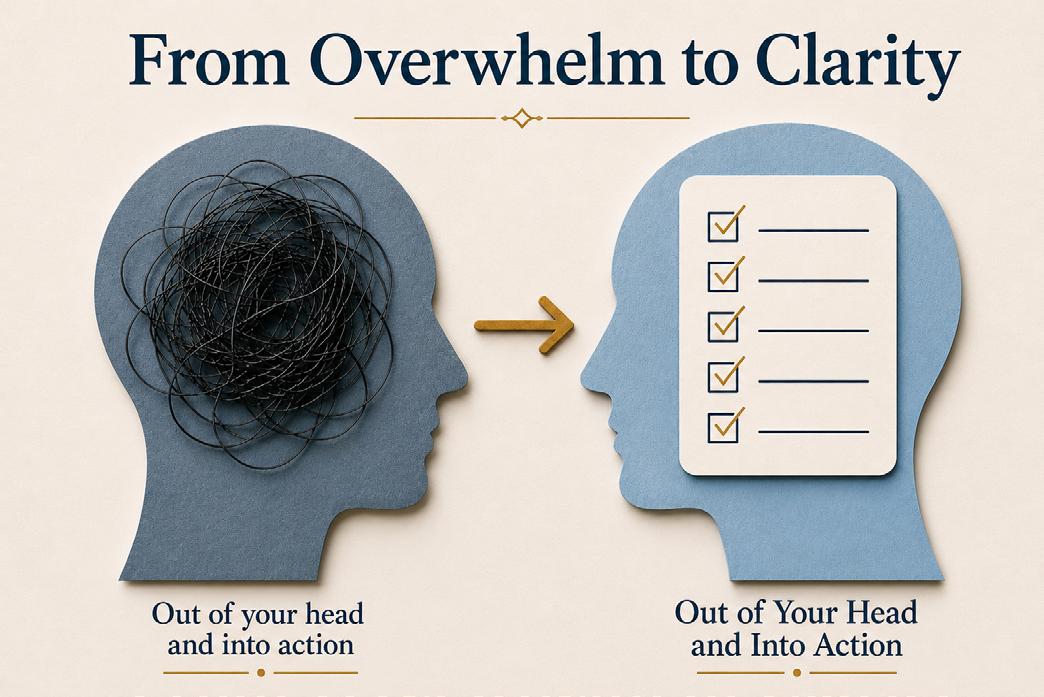
When I mentioned to friends that I was writing an article about lists, several responded with some version of “What can you possibly have to say about lists?” Their skepticism revealed just how underappreciated lists can be. Lists are among the simplest tools that humans have invented, yet they remain among the most enduring and useful. There is a reason for that. Making and following lists helps us plan, decide, remember, learn, and act. In some professions, lists even save lives.
Lists can be scribbled on a sticky note, the back of a napkin, or a calendar. They can be carefully written in a special elegant notebook. They might be typed or entered into one of the many apps designed for this purpose. Lists can be quick, unstructured ideas collected before they disappear. Or they can be highly curated and arranged chronologically or sequentially, by categories or by ranked priorities.
Whatever the form, lists make life less chaotic. They provide organization. This article celebrates the many uses and values of lists.




Jeri's to-do list April 1970
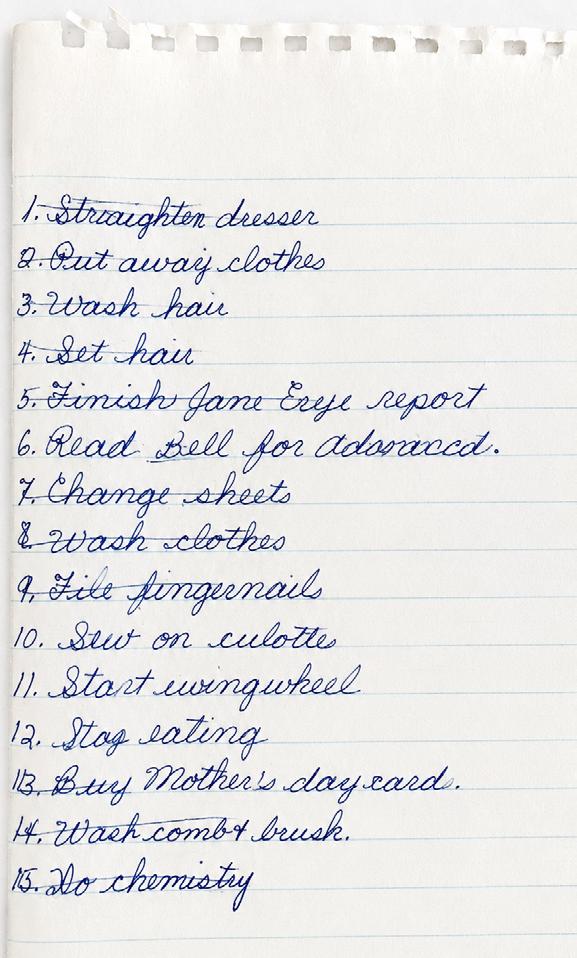
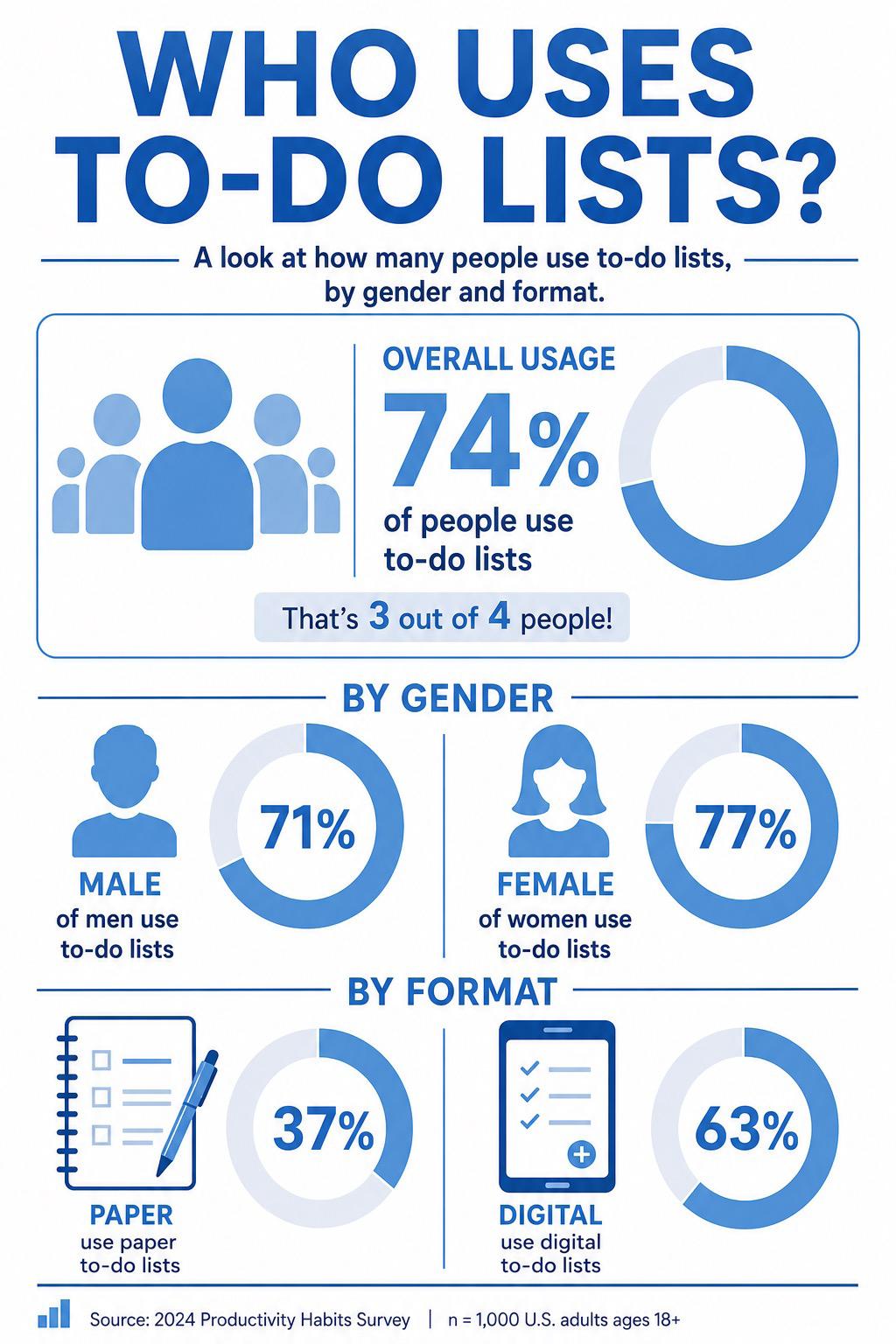
Perhaps the most frequently used list for planning is the familiar to-do list. If you are one of the 74 percent of Americans who use to-do lists, you know how invaluable they can be. In a survey, 73 percent of people report that these lists reduce stress. The mind can hold only a limited number of thoughts at once (the “crow”). If you are experiencing cognitive overload, making a list can be calming. Whether a daily, weekly, or longer-term list, seeing all your action items in one place encourages prioritization to ensure the most important are done. Committing an action item to a list can increase your motivation to do it. And there is such joy in checking tasks off when completed, and looking back to see your accomplishments.
I started making to-do lists periodically when I was a teenager. Shown is one from 1970. Looking back, I am pleased to see that I managed to do some homework amid concerns about my hair and wardrobe. I am glad I did not do item #12-stop eating. This habit of listmaking has served me well for decades.
For an interesting exploration of how other people use to-do lists, see the book To-Do List: From Buying Milk to Finding a Soul Mate, What Our Lists Reveal About Us, by Sasha Caden.
Another common planning list is the grocery list. As humble as these may appear, they represent a premeditated choice, deciding in advance rather than impulsively in the aisles. I know some particularly organized people who have lists of meals planned for the week ahead that inform their grocery shopping.
When preparing a talk or drafting an article, an effective way to start planning is to list the key points you want to make. This allows you to see the logic and structure before drafting the text. When giving a talk, using a list of bullet points on a PowerPoint slide can help the audience follow the presentation.
Less obvious planning lists I have used include noting the questions I want to ask my doctor during an upcoming visit. This is also useful for an upcoming event with a friend, with reminders of the things you want to be sure to tell her. When I was a manager, I kept separate lists of issues I needed to discuss with each staff member. These all helped when conversations migrated to distracting areas.
For planning large projects, it is essential to make a list of specific tasks. Ask any project manager how crucial lists can be. Lists and other project management tools help ensure all elements are included and assignments/timelines are clear. These are important for personal projects as well. Planning a vacation, moving to a new home, or hosting a party or wedding can be done more effectively with lists. Many involve sublists, for example, guest lists and lists of food when planning a party.
When planning a meeting, I have always insisted on an advanced list of agenda items. During the meeting a person is assigned to list the action items and the decisions made during the meeting.
Beyond planning, lists are valuable tools for making decisions. First, it is good to consider all the possible options. You can then list the pros and cons of
different options. The focus on preparing the list spurs you to think of additional options and aspects to consider.
For major decisions I often assign weights to different factors based on their significance. When choosing a car, for example, how important is color compared with reliability, safety, or long-term maintenance costs? Weighting the factors helps clarify what truly matters.
A weighted list of pros facilitates the creation of a checklist to have handy when exploring new options. When looking for a new home or buying a new car, what is absolutely required versus nice to have? When looking for a new job, what aspects matter the most? These types of lists have helped me to focus on the most important aspects.

Some checklists, such as required procedures, can save lives. Recognizing the limits to what the mind can hold at once, the use of these helps prevent omissions and manage complexity.
In the book, The Checklist Manifesto, How to Get Things Right, Dr. Atul Gawande provides examples of the life-saving value of using checklists. Some examples include:
• Surgical Safety: A 19-item surgical checklist introduced in eight hospitals worldwide reduced deaths by 47 percent and major complications by 36 percent. The checklist enforced simple, missed steps like proper antibiotic use and team introductions.
• Michigan ICU Infections: Dr. Peter Pronovost implemented a five-step checklist for inserting central lines in Michigan ICUs, which virtually eliminated catheterrelated bloodstream infections in many cases, saving $2 million and 1,500 lives in one state within eighteen months.
• Aviation Safety Culture: The aviation industry developed the practice of checklists after a 1935 Boeing crash, allowing pilots to manage immense complexity and save lives.
This included the valuable procedures followed by the copilot and cabin crew before and during the safe landing of US Airways Flight 1549 on the Hudson River.
Dr. Gawande further discusses the valuable use of checklists in construction and in restaurant operations.
Lists can also serve as a reference. These stores of information for future use often consist of things or people rather than action items. Here is list of examples:
• contacts, with name, address, phone numbers
• recipes, for dishes you don’t cook often
• books read, movies watched, countries visited
• lists of medications and supplements, which is handy for filling out the forms at the doctor’s office
• a list of past medical procedures
• lists of income and expenses for a budget
• inventories of anything
It is so handy to have information organized in one place. And it saves time to be able to find things when you need them.
Lists can also be used for inspiration. Some people, myself included, begin or end the day by recording three good things, as a reminder to celebrate the positives. This can include good things that happened, what you accomplished, or aspects in your life that you appreciate. All are good material for reflection.
Wish lists and bucket lists with ideas for the future are also inspirational. The “someday maybes” of places to visit, books to read, ideas for future projects and adventures to consider serve as a reminder of the many values still waiting to be explored and enjoyed.
In addition, a record of your values, favorite things, and meaningful memories preserves what is important and worth remembering. And in moments of discouragement, a list of accomplishments, strengths, and hard-won successes can quietly restore perspective.
For articles and non-fiction books, a helpful way to understand and retain what you have read is to list the key points in the piece. This requires focus and essentializing. This can also be an effective way to take notes during a lecture.
If you are studying a particular subject, it is also useful to capture a list of key terms and definitions. A great example of this is The Glossary of Objectivist Terms. https://tofpublications.com/Glossary/#glossary
As with any tool, using a list for the wrong purpose can be counterproductive. Sometimes it is better not to use lists. Lists are excellent for capturing ideas, but they are not always the best tool for developing them. Writing down your thoughts in full sentences is more effective in clarifying your ideas than just jotting brief unconnected words. A sentence is a grammatically complete group of words that expresses a complete thought. There are nuances that can disappear in bullet points. This is also true for communicating, since there is greater clarity with full explanations.
When introspecting an emotion, writing in full sentences provides the ability to go back and read what you were thinking or feeling.
There is also the danger of a list being used to procrastinate or causing guilt from not doing the things you said you would. It is important to ask if you are serious before adding a goal or action to the list.
Starting with those teenage to-do lists, I have created hundreds of lists over the years. I can’t imagine life without them. Lists have freed me from the burden of remembering everything, helped me focus on what matters, brought calm when I felt overwhelmed, and made important information easier to find and decisions easier to make. They have added to my successful management of complex organizations, guided my travels, organized my household, and helped me plan events.
I hope my skeptical friends see more clearly the great value in using lists. Making a list is a declaration that your time, goals, and values are important enough to organize.
Hail to the list!
By Brian Phillips

You have probably seen ads declaring, “We Buy Ugly Homes” or “We Pay Cash for Homes, Any Condition” or something similar. If you are like many people, you might wonder why anyone would buy an ugly home. The simple answer is that beauty is in the eye of the beholder. As a real-estate investor, I found ugly homes beautiful.
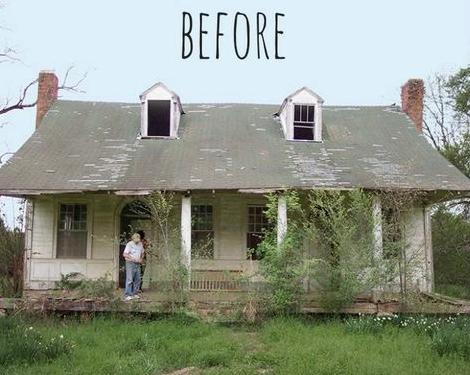
One of the first properties I bought as an investor had plywood covering the doors and windows. To inspect the interior, I had to remove a sheet of plywood. With the electricity off, the only illumination was the flashlight on my phone. It was not a pleasant experience to walk through a vacant house that felt like a cave. Other properties showed evidence of squatters, were filled with trash, and one had a tree growing through the roof. Houses such as these are called “distressed properties,” and they are not inviting to the
typical home buyer. Indeed, they can be downright scary.
There are many reasons a property might be distressed. The home may be in disrepair, and the owner cannot afford to make repairs. The owner may face foreclosure because of unpaid taxes or delinquent
enables an investor to purchase the property, pay for the necessary repairs and upgrades, and still retain reasonable equity in the property. To the investor, ugly homes are beautiful.
Some see these real estate investors as vultures who profit from the misfortune of others. Certainly, the owners of distressed properties have often suffered misfortune, and investors profit from that fact. However, calling real estate investors vultures drops the context.
Doctors profit when their patients are ill or injured. Lawyers benefit financially when their clients are going through a divorce. Auto mechanics profit when their customers’ cars break down. But few people would call doctors, lawyers, and auto mechanics
To mitigate risks an investor must know the numbers.
mortgage payments. Out-ofstate children may have inherited a property, and they simply want to sell the home quickly. Regardless of the circumstances, the owner is eager to sell.
Distressed properties sell for a price well below their “after repair value.” This price point
vultures. We recognize that these people play a vital role in helping others overcome misfortune. The same is true for real estate investors. We rescue people from difficult situations. However, unlike doctors, lawyers, and auto mechanics, real estate investors assume significant financial risk when they purchase a property.
There is no guarantee that the property will be profitable. Indeed, I lost money a few times.
To mitigate the risk, an investor must know the numbers. Which numbers are considered, however, depends on whether the property will be a rental property or a flip. For a rental, the investor must determine if the home will generate a positive cash flow from the estimated rental income. Ongoing expenses, such as insurance and property taxes, must enter the equation, along with the purchase price and the cost of the initial repairs and upgrades. For a flip, the investor must consider these costs, as well as holding costs, and the estimated after repair value. Identifying the value of comparable properties in the neighborhood is helpful, though not foolproof. In addition, the average time homes are on the market in the neighborhood will help determine holding costs for flips.
There are pros and cons to both rentals and flips. Rentals offer steady cash flow, as well as

property appreciation. However, with rentals, one must deal with the tenants. Unreasonable tenants can be a nightmare, and I certainly had a few. Even with a proven screening process, it can be difficult to identify a problem tenant until it is too late. Rentals also require occasional maintenance and repairs, and these expenses can significantly reduce the cash flow.
For rentals, property appreciation is a mixed blessing. In the long term, the profit can increase significantly as the value of the house rises. In the short term, both insurance and property taxes can
also increase significantly, which will have a negative impact on cash flow. Indeed, the taxes on many of my properties doubled in a fiveyear period, and insurance costs increased nearly 30 percent. While I increased rents to recover some of these expenses, there was often a lag time between the increase in expenses and the increase in rent because a lease was still in effect.
Early in my real estate career, I realized that increasing rents to recover the full amount of higher insurance and tax expanses was not always in my best interest. If I raised the rent the full amount of the higher costs, the tenant
may not be able to afford the new rent and have to move. The costs of a make-ready and the lack of income while the house was vacant were much higher than the cost of a slightly reduced rent.
Flips offer a large payday when the property sells, but they require a much larger cash investment than rentals. Because of the condition of distressed properties, few mortgage lenders will finance such purchases. Many investors, me included, use “hard money” loans to finance flips. Hard money loans are short-term, high interest loans (when I was an active investor, 12
percent to 15 percent was common) with interest-only payments. They work well unless a property does not sell for a prolonged period.
While knowing the numbers is crucial to successful investing, the ability to look beyond what is and envision what a house could be is nearly as important. Most of the homes I purchased had not been upgraded in fifty years. They had “good bones,” but were severely outdated. Some upgrades, such as windows and light fixtures, were easy to identify. Other upgrades, such as removing a wall to create an open floor plan or raising a
ceiling, required creativity.
It is also important to understand the particular market in which one is operating. Most of my rentals were in a low-income neighborhood. I chose that particular market for several reasons. The purchase price of such properties was surprisingly low—I paid $18,000 for the first home I bought in that neighborhood. The low purchase price makes a cash purchase more feasible, and that eliminates the expense, hassles, and delays in acquiring a mortgage or hard money loan. Homes in that neighborhood are

smaller, and so the rehab costs are lower. To not need to invest in more costly upgrades, such as granite countertops and new wood floors, also reduced the required investment. It was also more efficient to check on my properties when they were in close proximity to one another.
For flips, I focused on an uppermiddle income neighborhood that I already knew well from the contracting business I had owned for over twenty years. I had been in many of the homes in the neighborhood, so I had a good understanding of what
homeowners wanted. This made it much easier to identify which upgrades were required to make the house comparable to others in the neighborhood.
The most obvious reward from investing in real estate is the profit that can be made. There are also significant psychological rewards. Transforming an uninhabitable house into an attractive and comfortable home is rewarding. Envisioning what an ugly house can become and then making that vision a reality is equally gratifying.
Ugly homes are often an eyesore, but they do not have to remain that way. When an ugly home is transformed into an attractive, comfortable home, everyone involved—the homeowner, the investor, and the neighbors—benefits. And that is a beautiful thing. $
By Evan Picoult
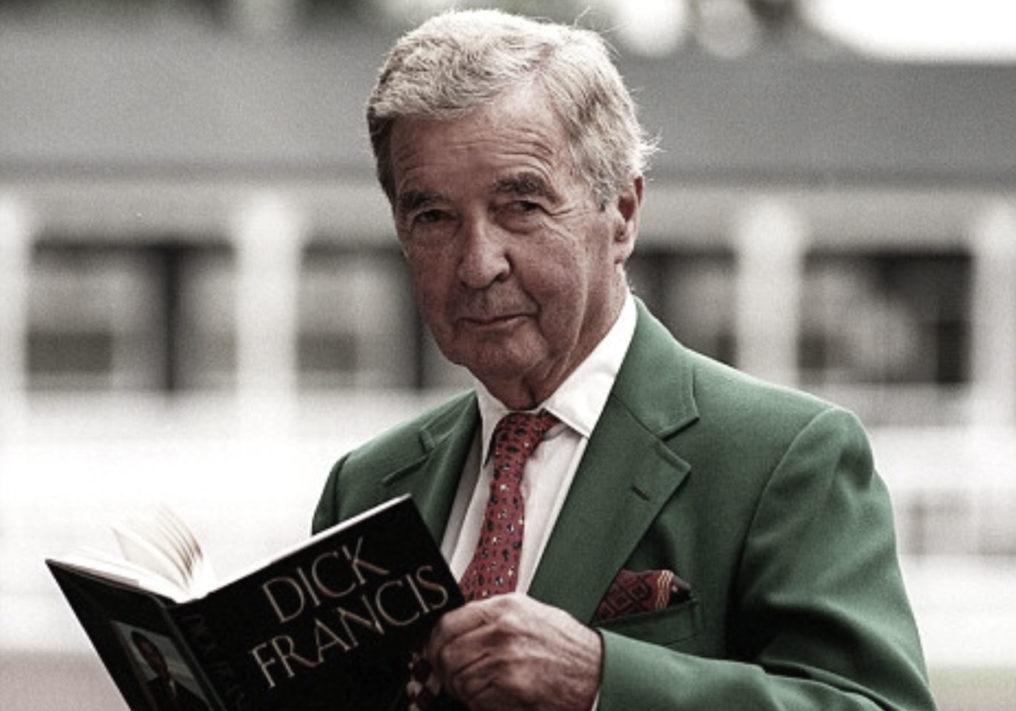
Dick Francis is my favorite crime writer.
Francis (1920-2010) was a British champion steeplechase jockey, a journalist, and then an award winning, best-selling crime writer of forty four novels. His novels are centered in the world of horse racing in England, a world he intimately knew. He is
the only three-time recipient of the Mystery Writers of America’s Edgar Award for Best Novel of the year, for Forfeit (1970), Whip Hand (1981) and Come To Grief (1996).
His novels are written in the first person, with almost every novel narrated by a different protagonist. The Dick Francis protagonist is a young man, in his
late 20s or 30s. In many of the novels, he works in a profession directly related to horse racing. In other novels he works in a range of other professions, but almost always has some connection to horse racing. The protagonist is often in a transitional inner state, ready to grow in a new direction, perhaps in a new career. He discovers some puzzling
events, begins to investigate, and is physically attacked and warned to stop looking. He perseveres at great risk, ultimately succeeds in bringing about a just end, and is transformed by his choices and actions into a stronger, more mature man.
Although Dick Francis wrote crime novels, his literary universe is essentially a benevolent world, where evil is intense but localized, and can be defeated by thoughtful action, courage, and perseverance. The focus of the novels is on the protagonist, not the villain.
As one critic wrote:
Francis "writes believable fairy tales for adults— ones in which the actors are better than we are but are believable enough to make us wonder if indeed we could not one day manage to emulate them."
Based on the above summary, one might think the novels would be formulaic and boring. They are instead deeply interesting and enjoyable because of their many virtues: perceptive characterization of primary and secondary characters; understated yet revealing dialogue; evocative style of writing; and compelling, suspenseful plots. Many of the novels evoke a strong sense of place, enabling the reader to vividly imagine the characters in their physical setting, working in their profession, pursuing their values.
I will briefly describe several of my favorite Dick Francis novels and list several others I recommend.

Bonecrack (1971) is the engrossing story of two sets of fathers and sons, and the battle over the soul of a boy. Neil Griffon is a successful, self-made man, who left home at a very young age to live his own life on his own terms, away from his controlling father. He reluctantly returns home, to temporarily manage his estranged father’s large, prominent racing stable after the latter’s long-term hospitalization from an auto accident. Griffon is kidnapped by a crime boss, Enso Rivera, who threatens to destroy Griffon and the stable, unless his demands are met. Rivera’s demands are that his son, Allesandro, must work at the stable, become the jockey of the stable’s best horse, and ride that horse, months in the future, in the English Derby. Griffon is warned that if he informs the police, the stable that his father spent a lifetime building will be destroyed.
All the above occurs within the first chapter. Griffon must now manage his father’s stable, protect it from being destroyed, and fight and win his battle with Enso. The battleground is Allesandro’s soul— the boy’s values and his sense of his self-worth. The means by which Griffon fights this battle are psychological and deeply insightful. The characterizations, dialogue, action, and plot are masterfully executed. The resolution of the battle over Alessandro’s soul is unexpected and emotionally powerful. I highly recommend this novel.
Sid Halley is the only protagonist Dick Francis brought back four times. The first three Sid Halley novels, Odds Against (1965), Whip Hand (1979), and Come To Grief (1995) are excellent. The first one was nominated for an Edgar Award for Best Novel of the year, and the latter two won that award.
When we first meet Halley in Odds Against, he is a man shattered in body and spirit. He had been a famous, dazzling, champion jockey whose career ended when his left hand was crushed and destroyed in a racing accident. He has been working as a private investigator for a small firm, but without the inner fire and fierce drive he once had. His marriage is in ruins. In Odds Against, he is reborn, and his purpose reignited as he investigates the apparent physical sabotage of an old racecourse by an unscrupulous real estate developer, who intends on taking over the property.
The most interesting and closest personal relationship Halley has
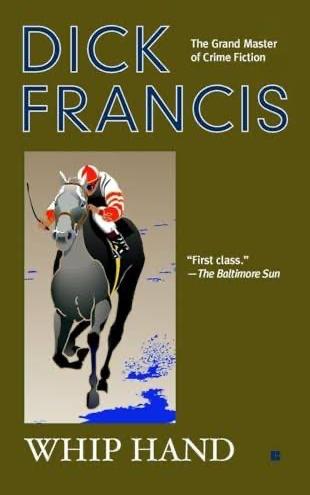
is with his former father in-law, Charles Roland, an aristocratic, retired rear admiral, who sees and deeply values Halley’s virtues and strength of character. The second Sid Halley novel, Whip Hand, is one of the best crime novels ever written. In addition to winning the Edgar Award it also won the Gold Dagger Award. The only other novel to win both awards was John LeCarre’s The Spy Who Came In From The Cold. Whip Hand should be read after reading Odds Against, to get the most pleasure from it.
The theme of Whip Hand is the question of what is most valuable in life. What is it,
without which, life is not worth living? The plot of Whip Hand is compelling and complex, with three major subplots.
The third Sid Halley novel, Come To Grief, is also excellent and worth reading, but does not reach the heights of Whip Hand.
Several other novels of Dick Francis that I highly recommend are: For Kicks (1965), Forfeit (1968), Reflex (1980), and Straight (1989).
Francis wrote thirty-nine novels, from Dead Cert (1962) to Shattered (2000), with his wife Mary (1924-2000). He said in an interview, after Mary died “Mary and I worked as a team. ... I have often said that I would have been happy to have both our names on the cover. Mary's family always called me Richard due to having another Dick in the family. I am Richard, Mary was Mary, and Dick Francis was the two of us together.”
After Mary’s death, and a gap of several years, Dick Francis wrote five novels with his son Felix. After Dick Francis’ death, Felix continued the franchise, writing “Dick Francis” novels on his own, under his own name. My comments are directed only to the novels Francis wrote with his wife. The novels co-written with
Felix, and the novels Felix has written under his own name are not at the same level as the Dick Francis novels written with Mary.
In a review of Reflex, by Dick Francis, in the New York Times, in March 1981, literary and cultural critic John Leonard wrote:
“… I am entirely innocent of racetracks. And yet: Not to read Dick Francis because you don't like horses is like not reading Dostoyevsky because you don't like God. …[R]acetracks and God are subcultures. A writer has to have a subculture to stand up on.”
by Julia Donaldson
I opened a book and in I strode Now nobody can find me. I’ve left my chair, my house, my road, My town and my world behind me.
I’m wearing the cloak, I’ve slipped on the ring, I’ve swallowed the magic potion. I’ve fought with a dragon, dined with a king And dived in a bottomless ocean.

I opened a book and made some friends. I shared their tears and laughter And followed their road with its bumps and bends To the happily ever after.
I finished my book and out I came. The cloak can no longer hide me. My chair and my house are just the same, But I have a book inside me.
By Linda Cordair
“I’m a figurative oil painter. I want to live the American dream. Will you consider representing me?”
In 2001, Han Wu Shen sent this email along with several images of his paintings to Quent Cordair Fine Art in Burlingame, CA, a gallery known for curating and selling Romantic Realist paintings and sculptures. At the time, the artist was living and painting in rural China. Intrigued by the images in the email, the gallery owner—artist and author Quent Cordair—requested that Han Wu ship a selection of his paintings to the California gallery for review. That was the beginning of what would become a long-lasting relationship. Quent Cordair Fine Art began representing the artist in 2002, helping him immigrate

to the U.S. in 2003. A "Welcome to America" party was held in Han Wu’s honor when he arrived in the United States.
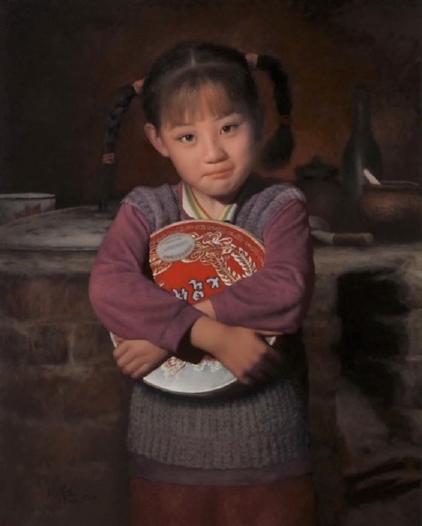
Han Wu’s figurative paintings often depict the lives of young women and children living and farming in rural China. The details in Shen’s paintings are extraordinary; facial expressions, textures, and emotions are the primary focus. About his work, Han Wu says:
“In my paintings, I represent the goodness of human nature. My figures tend to have the expression of hope in their eyes, the yearning for a better life.”
His paintings are narrative, often telling the story from the perspective of women and children living on the farms while their husbands travel long distances to find work.
Han Wu Shen was born in 1950 in Wuhan, Hubei province. He began painting in 1970. Within a year he was participating in art exhibitions in China. In 1986, Han Wu entered Wuhan Art Academy and became a professional artist. Throughout the 1990s his oil paintings were frequently exhibited in national fine-art exhibitions. In 1995, Han Wu became a member of the Chinese National Artists Association. He later served as
the Director of the Wuhan Artists Association where he had once studied. His list of awards over the next three decades is extensive, as detailed on his artist page at Quent Cordair Fine Art.
After immigrating to the United States, Han Wu returned to China often to visit family and to paint. When Covid broke out in late 2019, he was in China visiting family for the Chinese New Year. Travel restrictions forced him and his wife to remain in China for eleven months. Not allowing this hardship to deter him, he created six new paintings during the lockdown, which he sent to Quent Cordair Fine Art.
Over twenty years after his initial email to Quent Cordair, Shen continues to create masterworks while enjoying life in the United States with his family, which now includes two adorable grandsons.
Han Wu Shen’s work can be found in private and corporate collections around the world. He is recognized as a Living Master by the Art Renewal Center. His available paintings can be enjoyed on the gallery’s website at https://cordair. com.
(For more information, please contact Linda Cordair at 307-2641964 or by emailing cordairart@ gmail.com.)
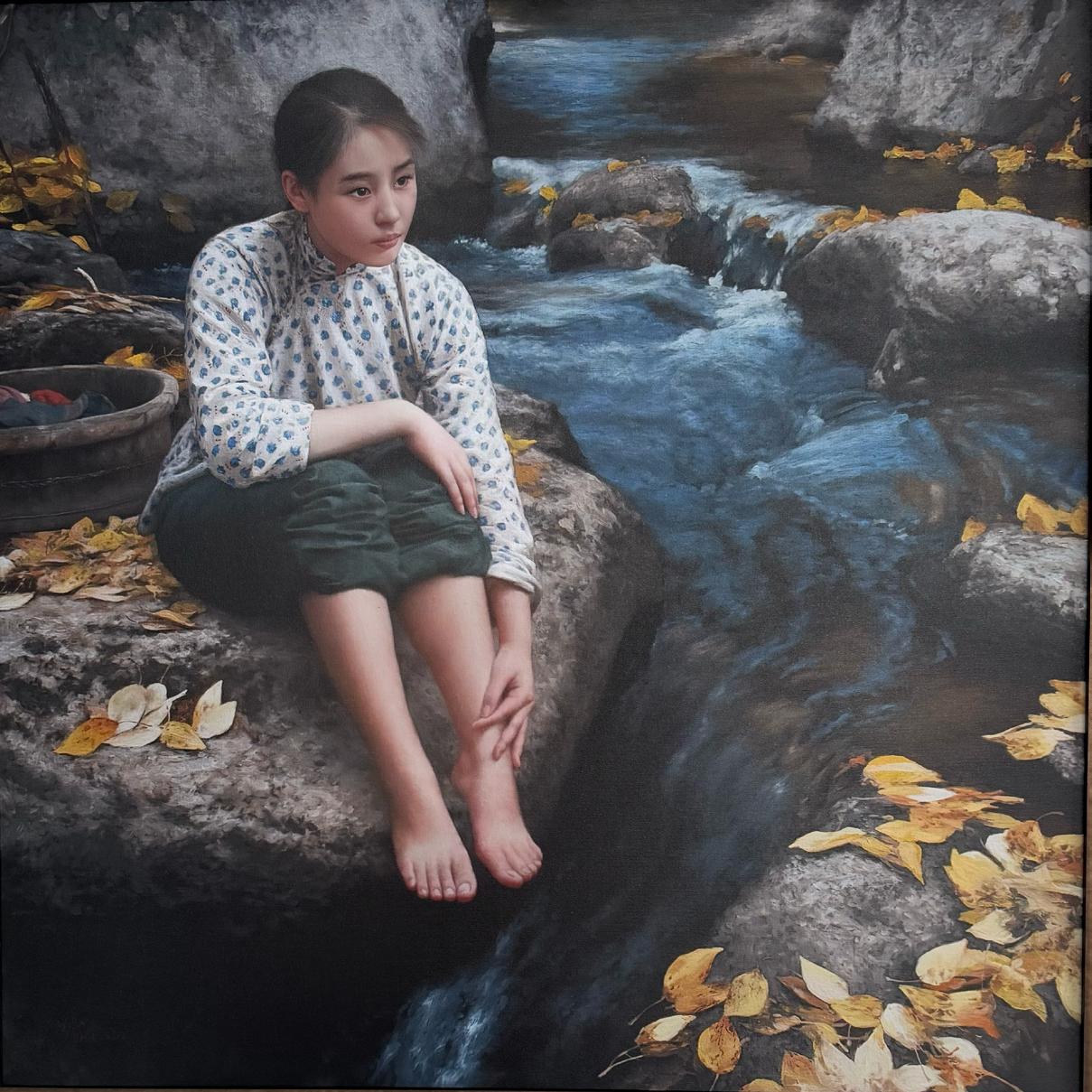

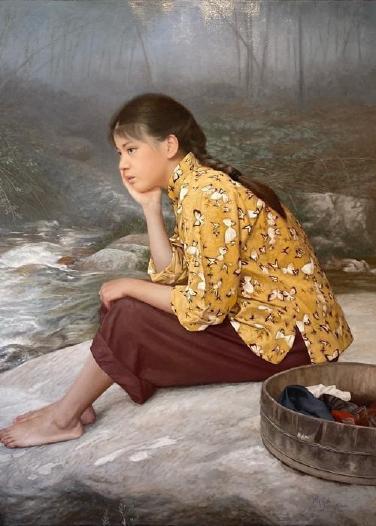
Hanging on the wall in my living room is this painting by Han Wu Shen, titled Clear Spring. It brings me joy every day. The contemplative look on the girl's face recalls to me the times I was planning my future.
Jeri Eagan Looking Forward to the Future
By Kathy Cross

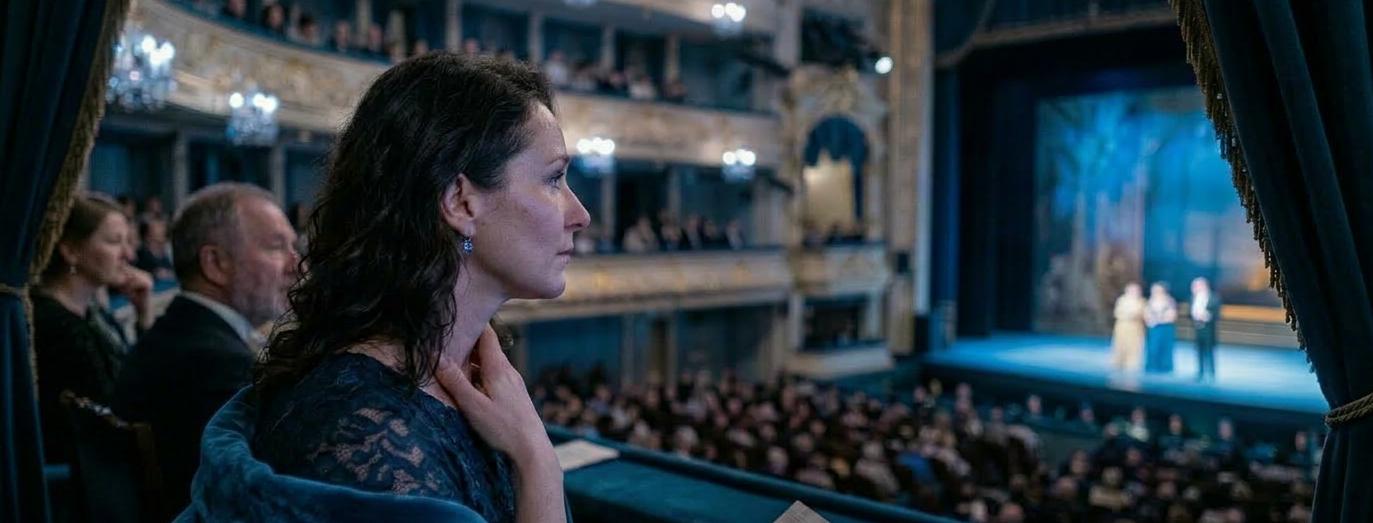
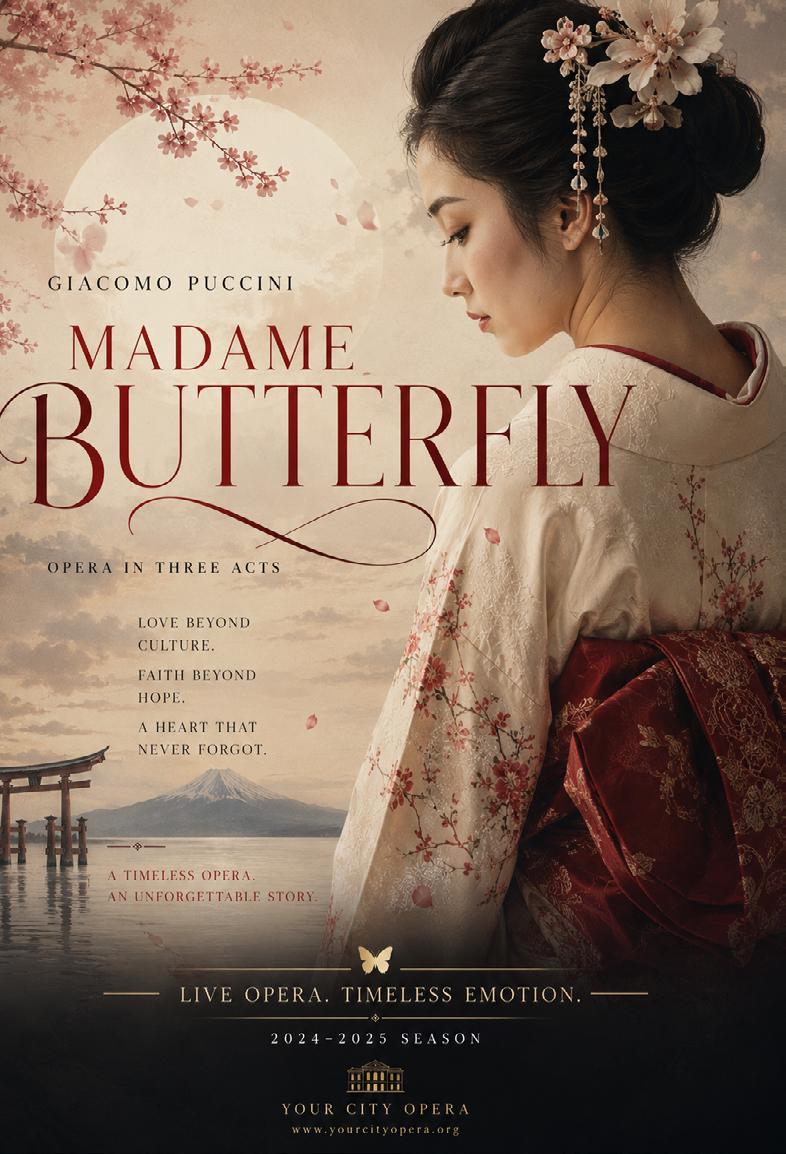
My first experience of live opera took place in the early ’90s, a performance of Giacomo Puccini’s Madama Butterfly in Ann Arbor, Michigan. I was already a student and lover of classical music, but at that time I knew little about opera or about theater in general. When the title character—a fifteen-year-old Japanese geisha— first appeared on the stage, I was disappointed to see that she was not young and not Japanese. As the performance unfolded, I came to realize that these facts did not matter. The soprano was in her forties, yet she had fully embraced the character in her movements and gestures, as well as in her vocal acting. She achieved her portrayal of Butterfly through her training, her study of the opera itself, her collaboration with the director, conductor, the other singers, and her commitment to her art. She won me over, and I learned not to eschew productions in which singers didn’t necessarily “look the part.”
In operas and operettas, the esthetic base is music, with the libretto serving only to provide an appropriate emotional context or opportunity for the musical score, and an integrating line for the total performance.
Ayn Rand, The Romantic Manifesto
In this genre, music has a more dominant and integral role than in other types of music theater such as Broadway musicals and Vaudeville. Like nonmusical plays, opera tells a story and is structured into acts and scenes. The performers consist of the primary singers plus chorus, orchestra, and conductor. Behind the scenes are the creative resources required for stage design, lighting, costumes, etc. The most notable difference is that the music is not just incidental accompaniment to the drama. The music is in the driver's seat.
Opera emerged in late sixteenthcentury Italy from a group of Late Renaissance scholars known as the Florentine Camerata, who were dedicated to reviving the art of ancient Greek drama. This meant stripping Late Renaissance vocal style of its excesses, bringing clarity to the text itself. The Camerati championed monody—a single vocal line with simple accompaniment, ensuring that the text’s emotional meaning wasn’t lost in complex layers. They termed the result a dramma per musica. The popularity of opera grew rapidly, first in Italy and soon after the rest of Europe, featuring dramatic characters with intense values and
conflicts guiding their actions. As the centuries passed through the Baroque, Classical, Romantic, and Modern periods and their changing styles, opera grew in size, scope, and integration of music and drama.
Stylization
Ayn Rand wrote, “An artist does not fake reality—he stylizes it." Have you ever heard someone exclaim about an experience or event, “It was operatic!”? The person meant that “it” was not an every-day occurrence, but something far beyond the ordinary.
Opera is not naturalistic; it is highly selective, essentialized through deliberate artistic conventions that prioritize emotional expression. All of the theatrical arts are stylized, of course, but what is stylization in opera, beyond the observation that the text is sung rather than spoken? Here are just a few examples:
Leitmotifs: Specific orchestral themes indicate characters, objects, or ideas, exposing hidden emotions or events before a syllable is sung.
In Der Ring des Nibelungen, Wagner assigns a dark, ominous leitmotif to the lump of gold that, once forged, becomes the magic ring central to the conflict between the pursuit of absolute power and the power of love. The haunting theme mutates alongside the plot, sonically tracking the gold’s corruption more than fifty times during the fifteen-hour, four-opera cycle.
Extreme Plots: Operatic plots are often criticized as implausible, packed with wild coincidences and extreme situations. In Verdi’s tragic Il trovatore, the labyrinth of mistaken identities and vengeance set in 1409 Spain is famously convoluted. Yes, the elements of the
story strain belief, but the characters’ psychological conflicts and fierce loyalty to their values are intensely real. Verdi even builds in a stylized, lighthearted break—the much-loved “Anvil Chorus”—a rousing celebration of wine, women, and hard work that provides temporary emotional relief before the tragedy resumes.
“Harmonized chaos”: In moments of high tension, multiple characters sing different words and music, expressing different emotions, at the same time. Imagine four characters on stage; one is enraged, one is heartbroken, one is plotting revenge, one is fearful and confused. In a real conversation or play this would be chaos, but in opera it blends into a coherent quartet. By singing together in harmony, their conflicting individual realities become a unified piece of art. You might recall the scene in Milos Forman’s Amadeus, when Mozart explains to the Emperor how this is possible only in opera.
Time dilation: In real life, a sudden shock takes seconds; in opera, it takes ten minutes. A character stops
the plot entirely to sing an emotional monologue. A character who has been mortally wounded somehow has the strength to sing a massive, physically demanding aria before expiring. In the last act of Gounod’s Romeo et Juliette, Romeo believes Juliette is dead, and drinks poison. She wakes up from her drug-induced sleep and realizes what Romeo has done. They rush into a soaring, desperate final duet, seeking the utmost passion in their last moments together. As Romeo weakens from the poison, Juliette stabs herself with a dagger and they die in each others’ arms.
Opera’s stories and characters are often taken from literary sources. For example, Verdi adapted plays by Shakespeare, Hugo, and Schiller for several of his operas. Composers collaborate with writers, often poets or playwrights, who create the narrative adaptations of the play or novel. A typical libretto is substantially shorter than the source text, because singing words takes more time than speaking them. The libretto for the adaptation of Othello by Verdi and librettist Arrigo Boito is fewer than eight hundred lines, in contrast to the play’s 3,500 lines.
Most serious operas have tragic endings. That trend was handed down from the Greeks, for whom tragedy was the highest theatrical art form. Tragedy was carried over from operas’ source texts as well. Composers and librettists are interested in dramatic conflict, such as when characters must choose between the person they love and their duty to family, church, and/or state. Tragic situations such as loss, betrayal, and death evoke the heightened emotions the creators are seeking. In opera, death is often romanticized as a
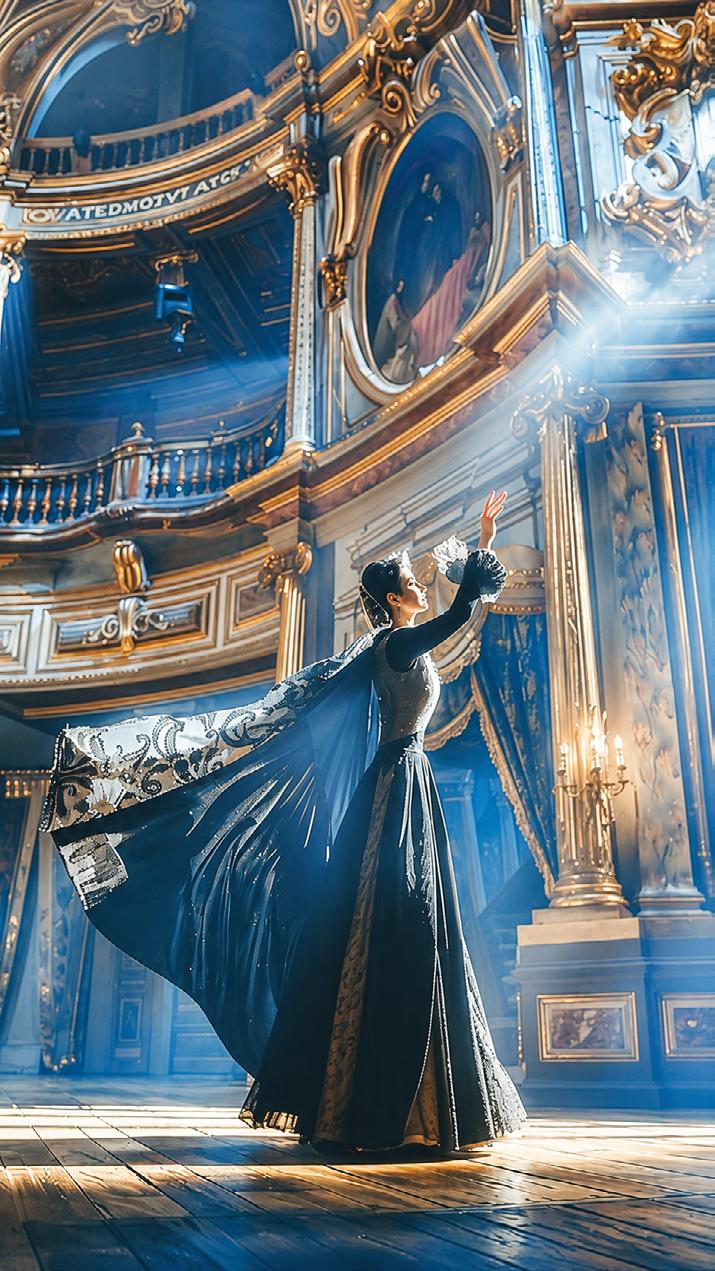
moment of transcendence, reunion, or supreme sacrifice. Alas, opera is no stranger to altruism.
This is not to say that serious operas are all gloom and doom. Many have lighter, more benevolent scenes, even comic relief, which in some cases serves to heighten the tragedy by contrast. There are serious operas with happy endings; Beethoven’s Fidelio and Puccini’s La Fanciulla del West come to mind. Mozart in particular was a master of integrating splendid comedy with serious themes in such operas such as Le Nozze di Figaro, Così fan tutti, and Die Zauberflöte. In addition, there are many excellent comic operas and operettas from which to choose. But in most serious operas there is no getting around the ultimate end for one or more of the characters. Keep in mind that tragedy in art underscores the immense value of what is lost. Focus on the grandeur of the conflict, and enjoy the music!
The Operatic Voice Operatic singing is the most difficult and demanding vocal feat there is, requiring years of rigorous physical, technical, and artistic mastery. Perhaps the most challenging aspect is the lack of electronic amplification in the opera house. How do the singers’ voices reach the back of the opera house? While a human voice cannot outblast a trombone in pure decibels, an opera singer triumphs through acoustic strategy rather than raw force. The issue is not volume; it is the singer’s ability to manipulate the six intricate parts of the vocal tract to access a different range of acoustic frequencies. The result is a resonant peak of 2500–3,500 Hz that cuts through a dense orchestra rather than competing with it.
I have great respect for opera singers. In addition to the many vocal demands, they are expected to sing well in half-a-dozen languages, act while they are singing, overcome stage fright, portray a wide range of characters, and live out of suitcases as
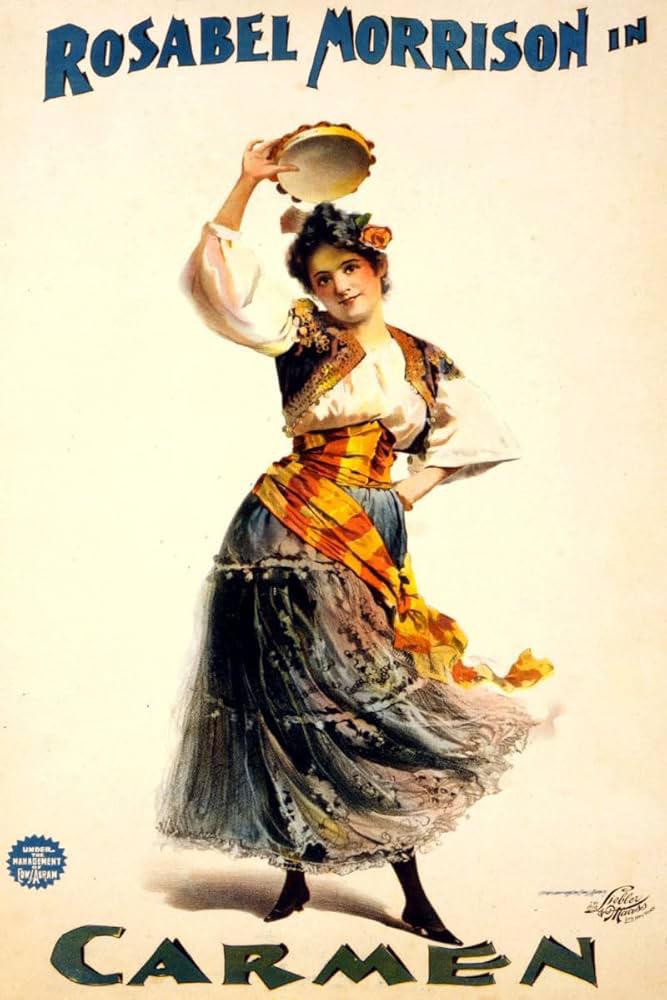
they trot the globe. Most important: their bodies are their instruments, thus they must take very good care of themselves. A scratchy throat or mild cold can throw a singer’s calendar into sudden turmoil.
Even after all the training and with many performances under their belts, opera singers still have worries. Sopranos and tenors worry especially about the high notes, often called the “money notes” that audiences eagerly wait for. Music in the higher registers is difficult to sing and sustain; sustaining while singing very softly is even more challenging. In a 1970 interview, the great Italian tenor Franco Corelli spoke of his own anxiety in this regard: “I have always been afraid. In the beginning, I didn’t have the B or C, and I was afraid I wasn’t born to be an opera singer. Then I did have the B and C, and I was afraid to lose it.”
Following my Butterfly experience in Ann Arbor, I started listening to and watching videos of opera, and soon I was attending local opera regularly in southern California. The Los Angeles
Opera had an educational program training speakers to present talks about opera. I participated, and before long I was giving talks at local libraries, colleges, and other venues. Best of all, I became a member of the Verdi Chorus, a community group that performs opera in concert, where I had the opportunity to sing (as a second alto in the chorus) portions of operas I had come to love deeply.
The great mezzo-soprano Stephanie Blythe once remarked in an interview that she wished that everyone
could experience the thrill of being onstage during a Verdi finale. (Many composers’ finales are thrilling; she was performing in one of Verdi’s at the time of the interview.) A finale is a climax marking the end of an act or the end of the opera. Everyone in the cast is onstage, including the chorus. The primary singers and the chorus members are each expressing their feelings about what has taken place and what it means. The music builds to a huge climax. It is decidedly “operatic”!
My time with the Verdi Chorus is probably the closest I will come to Blythe’s wish. The group performs in an acoustically-friendly church and has an exceptional pianist acting as orchestral accompaniment. I had the honor of singing grandi scene from operas by Verdi, Puccini, Mozart, Bizet, and others. Now I partake of the thrill as a member of the audience and that, too, has its thrilling moments. Whatever your opera journey is or will be, I wish you immense satisfaction and spiritual joy as you pursue it!
Audit Your Taste: Match your current classicalmusic preferences to your opera starting point. If you love the crisp architecture of the Baroque era, start with Handel. If you prefer high-stakes Romantic passion, dive into Verdi or Puccini.
Sample First: Don’t commit to a five-hour epic immediately. A variety of “greatest hits” compilations will help you identify which composers spark an emotional response. The core emotion lives in the music; if the score grips you, the story will follow.
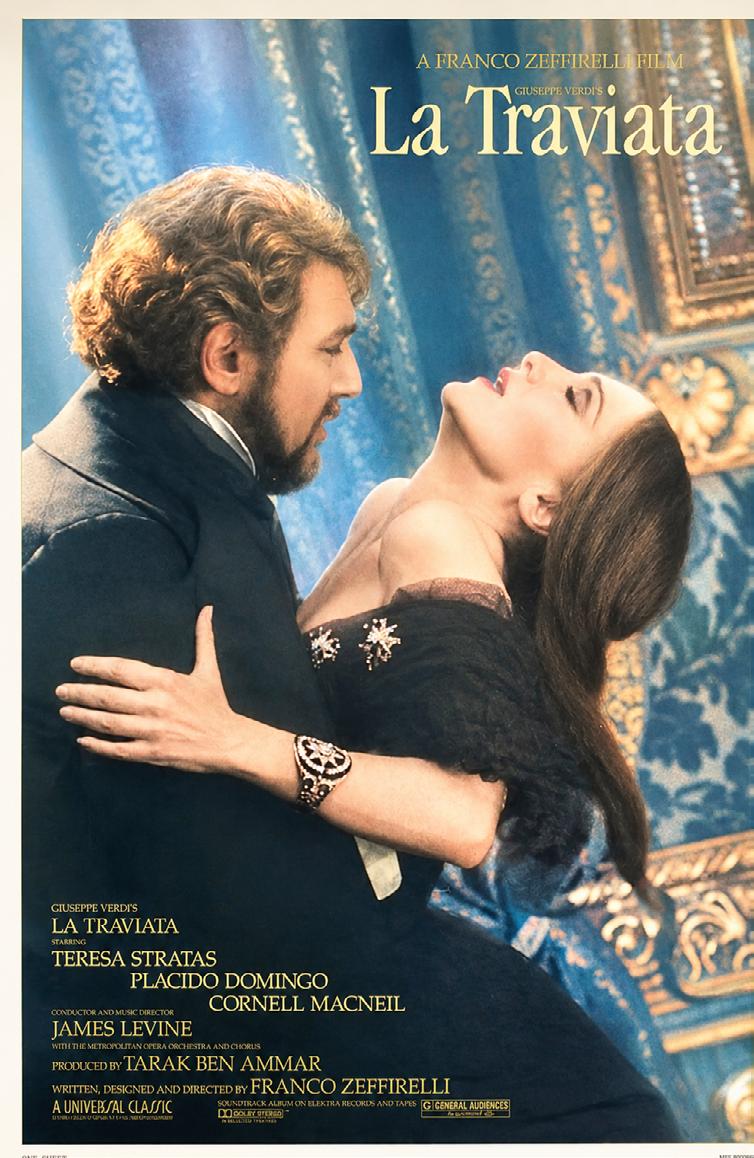
Upgrade Your Visuals: Avoid low-quality YouTube bootlegs with intrusive ads. Seek out professionally filmed live performances, as well as cinematic adaptations such as Franco Zeffirelli’s critically acclaimed 1982 film of Verdi’s La traviata, or Francesco Rosi’s stunning 1984 film of Bizet’s Carmen, shot on location in Andalusia.
Hack the Metropolitan Opera: Experience worldclass art without the New York price tag by streaming live Saturday matinee broadcasts directly from metopera. org. Even better, buy fraction-of-the-cost tickets to the Met’s “Live in HD” telecasts at your local movie theater.
Stream The Audition: Track down Susan Froemke’s 2007 documentary film. It follows eleven young singers competing in the Met’s National Council Auditions, offering a raw look at the intense discipline required to build an operatic career.
Dive into an Opera Book: A good place to start is William Berger’s informative, entertaining, and very readable books: Verdi with a Vengeance; Puccini Without Excuses; and Wagner Without Fear.
Leverage AI: AI can be your instant, personal musicologist. Use it to summarize opera plots and characters, build tailored listening lists based on your evolving tastes, untangle historical contexts, point you to sources you might not find otherwise, and answer the many questions that come up as you explore.
Is it Time? The fall season begins in just a few months. Your nearest opera house awaits you. Prepare to experience opera live!
My eye doctor told me about these wipes when I complained about my dry and sometimes itchy eyes. I use one when I’ve been on the computer too long or if I have spent too long reading fine print. If eye drops don’t give you enough relief, add these wipes to your routine! They really help!
Trish Bransletter, Houston

I love the natural glow that Loving Tan gives—it’s very even, dries quickly, doesn’t transfer onto clothes, and doesn’t have that strong self-tanner odor. The color is beautiful and natural-looking. It gives you that fresh, sun-kissed look, like you’ve spent a relaxing day outdoors.

Gloria Brady, Houston

If you get warm at night, here is a solution that might work for you. This cooling comforter stays cool to the touch on the outside. Put out an arm or leg and have instant relief. Versions available at Costco and Amazon.
Thomas Reich, Houston
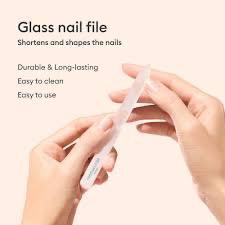
Glass nail files are so much smoother on the nails than metal or cardboard. They are easy to use, durable, and easy to clean.
If you are cold, this would work better for you. With this neck warmer, two minutes in the microwave and the heat lasts for almost an hour. It can be used for your back, stomach, or any other body part. Versions available on Amazon and at Origins
Jeri Eagan, Houston

My hair dresser highly recommends this restoring leave-in condition by Davines. It lives up to its name "Beautiful Things," resulting in soft, manageable hair that looks shiny and stays smooth. Available on Amazon.
Jeri Eagan, Houston

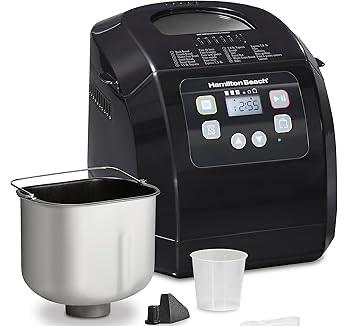
Fresh baked bread is a treat, but kneading the dough and letting it rise can be time consuming. A bread maker solves this problem. Dump in the ingredients, set the timer, and ninety minutes later you can have dough for breadsticks, biscuits, pizza, and much more. You can even have the machine bake the bread.
https://www.amazon.com/dp/B0BLXGJ27V?ref_=ppx_hzsearch_conn_dt_b_fed_asin_title_2
Sous vide—When roasting meat, achieving the desired level of doneness while retaining moisture and flavor can be challenging. Sous vide allows for precise temperature control, and because the meat is cooked in a sealed bag, the meat stays moist.

https://www.amazon.com/s?k=anova+sous+vide&crid=HMNEIM2B9LNA&sprefix=anova%2Bsous-vide%2Caps%2C245&ref=nb_ sb_ss_saint-en-refocus-candidate_ci_hl-bn-left_1_15
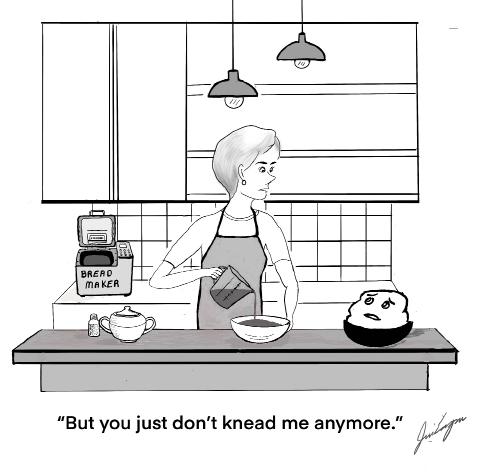

For years I struggled to perfect the skill of thinly slicing chicken breasts. A meat slicer allows me to slice chicken, pork, or any boneless meat uniformly to the desired thickness.
https://www.amazon.com/dp/B0BF5NPNXY?ref_=ppx_hzsearch_conn_dt_b_fed_asin_title_1&th=1
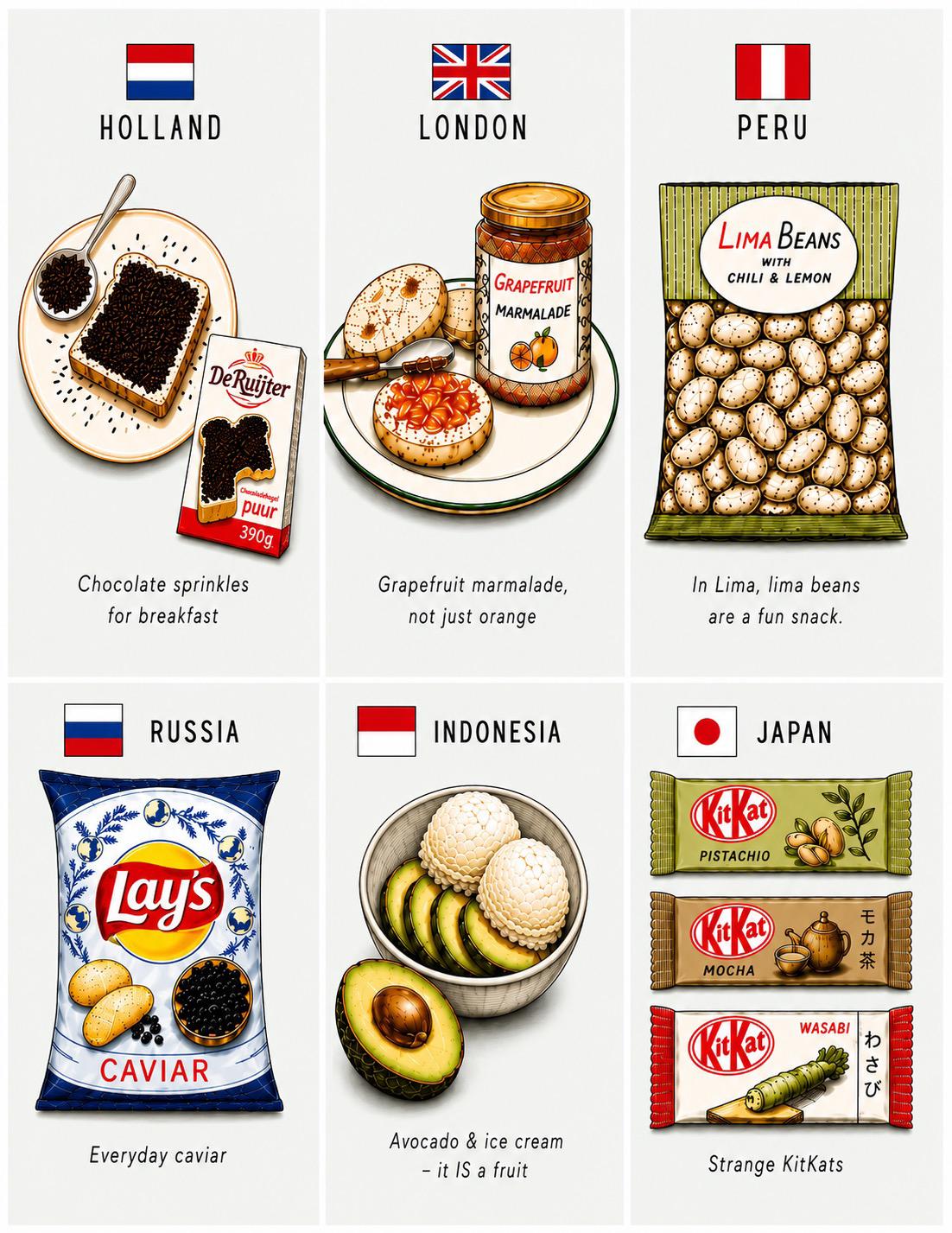
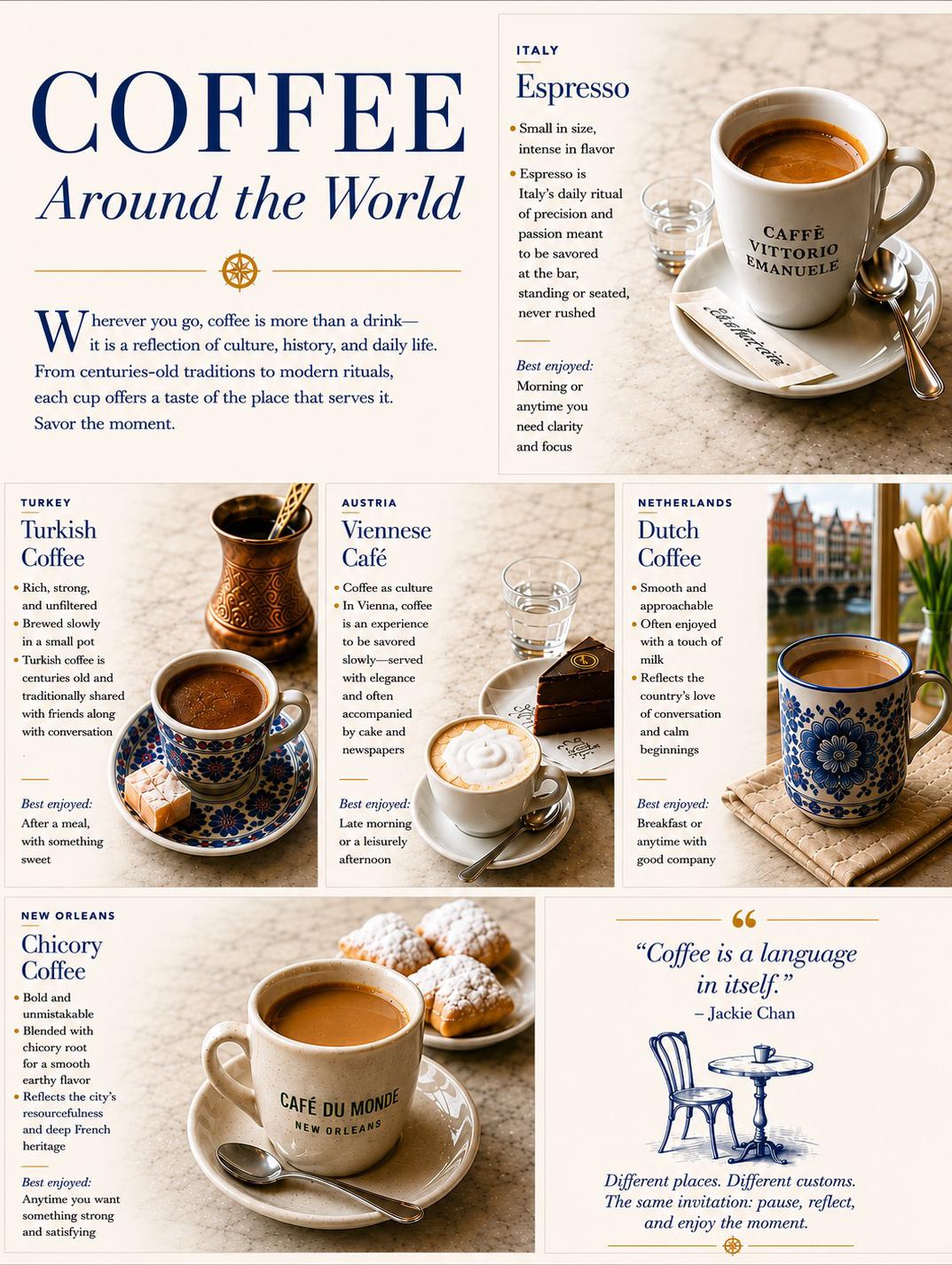
One of the many joys of traveling is the discovery of new and interesting cuisines. Here is a sampling of some unusual food items I have encountered in different countries.
By Kathy Justice
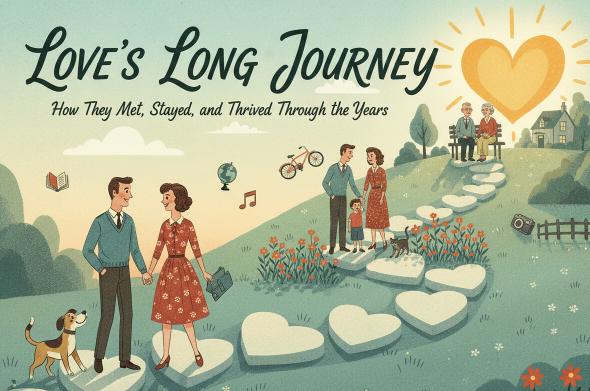
To feel oneself beloved on the earth--is this possible? And can love arrive in an instant and last?
I thought about these questions after a conversation with my new hair stylist. After small talk and getting to know each other (she just moved to town from Chicago and my former stylist moved to Nashville) I asked if she moved with a partner or by herself. She said she’s engaged, and he is her best friend, but it’s been almost ten years and they should have gotten married by now. She was flying back to Chicago for the weekend to have “the talk.” She asked about me. I said I fell in love with my husband the moment I met him and we’ve been together since. She asked how long, and I had to think. Has it really been almost thirty years? Dang— that’s a long time. She asked, how did you know? Well, let me tell you a little story…
I lost both my parents at two and grew up in foster care. By fifteen, sadness had hardened into anger. On my own at eighteen, I made a choice not to be defined by those circumstances. Books helped me heal. I was poor, but happy.
You think your pain and heartbreak are unprecedented in the history of the world, but then you read. It was books that taught me that the things that tormented me the most were the very things that connected me with all the people who were alive or who had ever been alive.
-James Baldwin
I read with intention: classics for their discipline of language, poetry for beauty and its honest exploration of the heart, philosophy for its attempt to understand what it means to
And did you get what you wanted from this life, even so?
I did
And what did you want? To call myself beloved
be human. Rainer Maria Rilke became my lover. Gabriel García Márquez, my priest. Rousseau, Locke, Thomas Sowell, and Ayn Rand—my professors. Saturdays were for long runs and used bookstores in my Northern California neighborhood. It was an education I could afford.
I was alone, still poor and still happy because I was developing my values of integrity, discipline, trustworthiness and ambition. These are the values I admired and would look for in a partner.
Eventually, I went to college while working full time. My independence of thought often put me at odds with my professors, especially in grad school, but I didn’t care. As Orwell warned, if people cannot write well, they cannot think well—and if they cannot think well, others will do their thinking for them.
After college, I worked in the trading department of a boutique investment firm in San Diego. One Friday at a company lunch, I met Jim. The moment I looked at him, something unmistakable happened. I had dated before, but never felt that pull. Weeks later, we traveled to Delaware to meet with a client. We began by talking about work, then drifted into our lives, our values, questions that mattered to us. I invested so much time in discovering my values that it was electric to see them reflected in someone else. Somewhere between the miles and the hours—by the time we flew over Chicago—we were in love.
Nearly thirty years have passed. In that time, we have known profound loss. We have raised children, lost a child, and mourned parents, siblings, and nephews. We have argued. We have grieved. What has held us together through it all is the same quiet force that first drew us together: we are still, astonishingly, crazy about each other.
Cadets and was sent to Houston, Texas for training. Mary Jo Terry delayed attending Rice University to support the war effort, volunteering at chaperoned tea dances for cadets in Houston.
At one of those dances at the Rice Hotel, Walter saw Mary Jo dancing with someone he disliked and said to his friends, “That guy is not worthy of that beauty; I’m stepping in because I’m going to marry that girl.” He cut in, introduced himself, and after a few dances and polite conversation, he memorized her phone number. Two tours and 65 missions later, including Normandy, Walter was back in Houston. He called up Mary Jo and asked her, “Do you remember me?” And she answered, “I sure do.” Weeks later they were married. Their life together produced seven remarkable children, twentyfour grandchildren, fifteen great grandchildren and over seventy years together. A legacy written in time.
“When a great moment knocks on the door of your life, it is often no lounder than the beating of your heart and it is very easy to miss”
-Boris Pasternak
Our story is not unique. Jim’s parents have their own remarkable love story.
Walter Brown was raised by a single mother in the Bronx. When World War II began, his mother refused to sign the waiver that would allow her seventeen-year-old son to enlist in the Royal Canadian Air Force. So he took the NYC police exam and was on his way to becoming a cop, yet before he started and now 18, he joined the Aviation
I think we have modeled this introspection for our children as they all have had similar experiences. Our daughter met her husband at a Shakespeare play. He was a volunteer who showed her to her seat and they just fell for each other. Twelve years and two kids later they are still crazy about each other. While in graduate school, our son met his girlfriend at a tailgate party – they have been inseparable since. My niece (who is like a daughter to us) met her husband at a coffee cart and
they started dating within days. Nineteen years, six deployments and three children later, they are still madly in love. And our eldest son just became engaged a few weeks ago—he proposed to his girlfriend the same way Jim proposed to me—at the finish of

a half marathon. As our son said, “it’s a family tradition.” What made Walter fall in love with Mary Jo at first sight and what made her wait for this young bomber pilot for years after one evening together? How do couples remain in love over time? Can you really fall in love at first sight? I believe "yes" with one condition: know yourself. Time alone— reading, thinking, clarifying your values—teaches you to recognize them in another. What did all these couples have in common? They acted quickly, were confident with themselves to be open to vulnerability with a large dose of humor, and most importantly, took a chance. Their partnership is like a start-up: they stick together no matter what and believe in the possibilities. As Harry said to Sally:
When you realize you want to spend the rest of your life with someone, you want it to start now.
Love is remarkable…
By Jeri Eagan
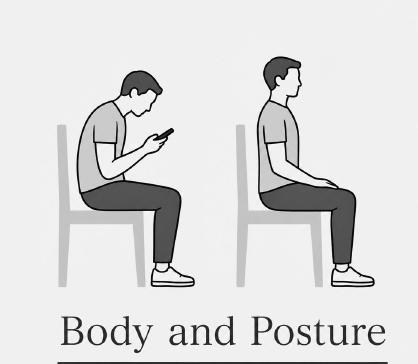
Stop for a moment and notice your body. Is your jaw tight? Are your shoulders lifted toward your ears? Is your lower back collapsed or overarched?
Most of us develop ways of moving and holding ourselves without much conscious thought. Over time, repetition, stress, and injury create habits—chronic patterns of tension and imbalance. Many physical discomforts are not simply structural problems, but result from learned movement habits.
The encouraging news is that habits can change. The mind is the most powerful tool to do this. There are many techniques that employ this mind/body connection. I will tell you about a few that I have tried.
Some techniques, like meditation, work by quieting the mind, which relaxes tension in the body. They involve focusing on your breathing or on a mantra to replace racing thoughts. My experiences with these have provided short-term benefits (though they often involve some mystical “connection to the
universe”). But meditation may not automatically reorganize postural habits that cause problems. For example, one can be psychologically calm and still hold your shoulders high from decades of lifting them.
Other techniques work by using your mind to provide specific instructions to your body. These methods, generally known as “somatics", emphasize awareness of internal states and sensing where all your body parts are relative to each other and to objects in the environment. Somatics uses this conscious awareness to guide you to form better habits for moving or holding yourself.
Through this heightened awareness, practitioners learn to recognize tension patterns and pause before reacting automatically, a process called inhibition or “non-doing.” Using gentle mental cues to then guide movement encourages more efficient coordination and reduced strain. This improves physical functioning by changing how one thinks about and directs movement.
Properly learning the Alexander Technique requires one-on-one sessions with a trained instructor. With gentle hands-on guidance, the teacher provides the mental cues for you to give your body.
“You translate everything, whether physical or mental or spiritual, into muscular tension.”
― FM Alexander
The Alexander Technique is the first fully developed modern Western somatic reeducation method and is the first one I tried. The technique originated in the 1890s when actor F. M. Alexander investigated his own chronic vocal failure. Through systematic selfobservation and experimentation, he recognized that thoughts and emotions directly influence posture, breathing, and movement. The method focuses on awareness, creating intentions to inhibit harmful habits, and improving the head–neck–torso alignment.
The core instructions are to let your head move forward and up with your spine lengthening and torso widening. This is done while sitting, lying, and standing, with a focus on everyday movements.
When living in New York City and Southern California, I was able to find excellent teachers. I would leave these private sessions feeling very light and comfortable. My posture improved and I measured as taller without compression of my vertebrae.
Outside of in-person classes, there are guided tapes for practicing, such as constructive rest. Here is a sample of that https://www.youtube.com/ watch?v=nexAbed2__Y
But to automatize the process takes many live lessons. The results are difficult to achieve on your own. Where I live now, in Houston, there are no available teachers. And I struggled with the whole idea of “non-doing.”. So, I explored other options.
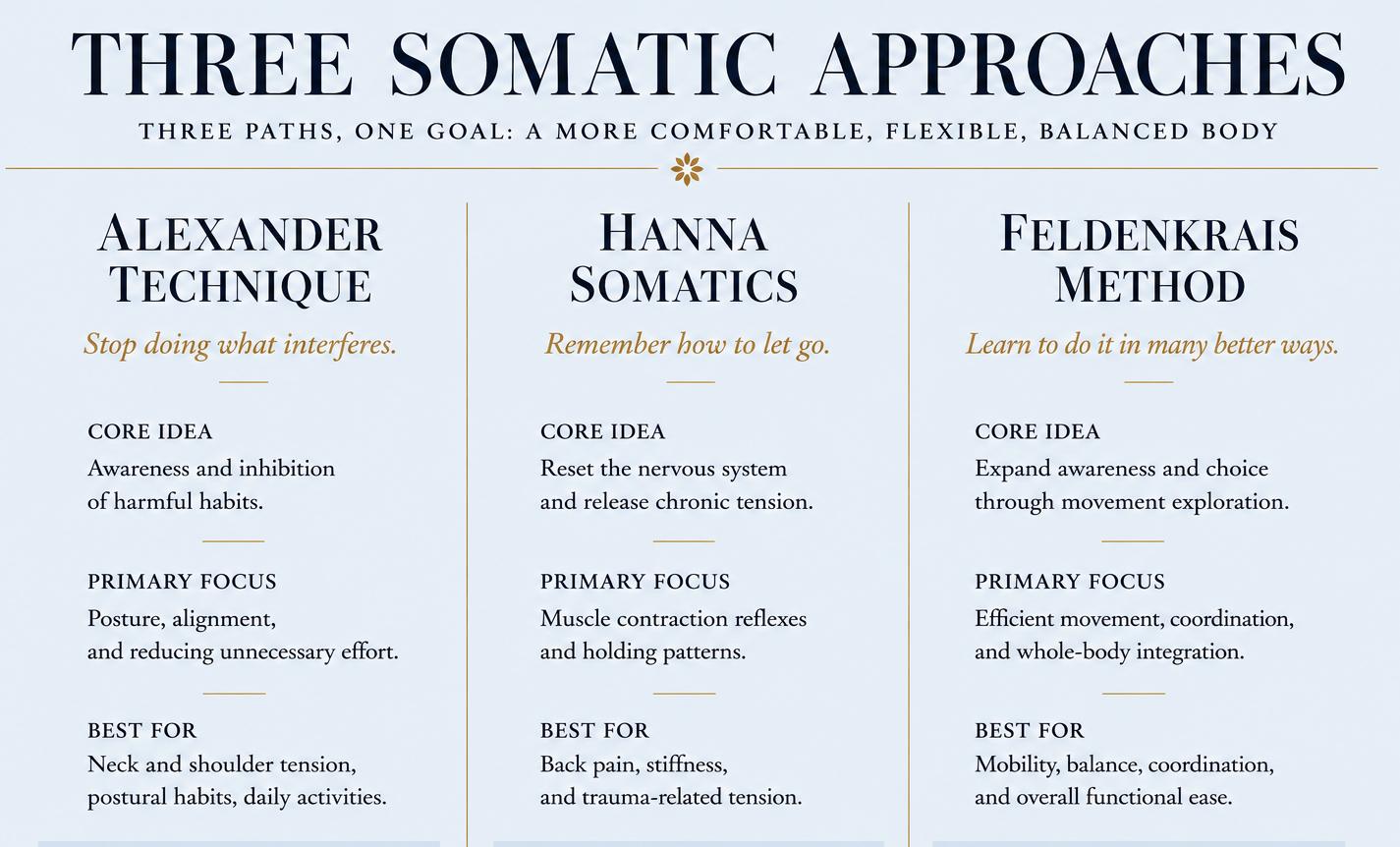
about “stop doing what interferes.” Hanna Somatics is about “remember how to let go.”
The system he developed addresses the three primary “reflexes” that create muscular contraction – see sidebar. It typically uses a dozen core foundational movements that involve lying on your back or stomach. These movements include arching and flattening the back, bending, and rotating the trunk. The key is paying attention to the movement. It is not about stretching.
the habit of overarching my back and learned to loosen my rib cage for easier movement. This was before I discovered Feldenkrais and its vast array of options.
The Feldenkrais Method expanded the possibilities far beyond posture or pain relief alone. There was so much more to discover.
The method originated when physicist and judo expert Moshe Feldenkrais (1904-1984) investigated his own knee injury.
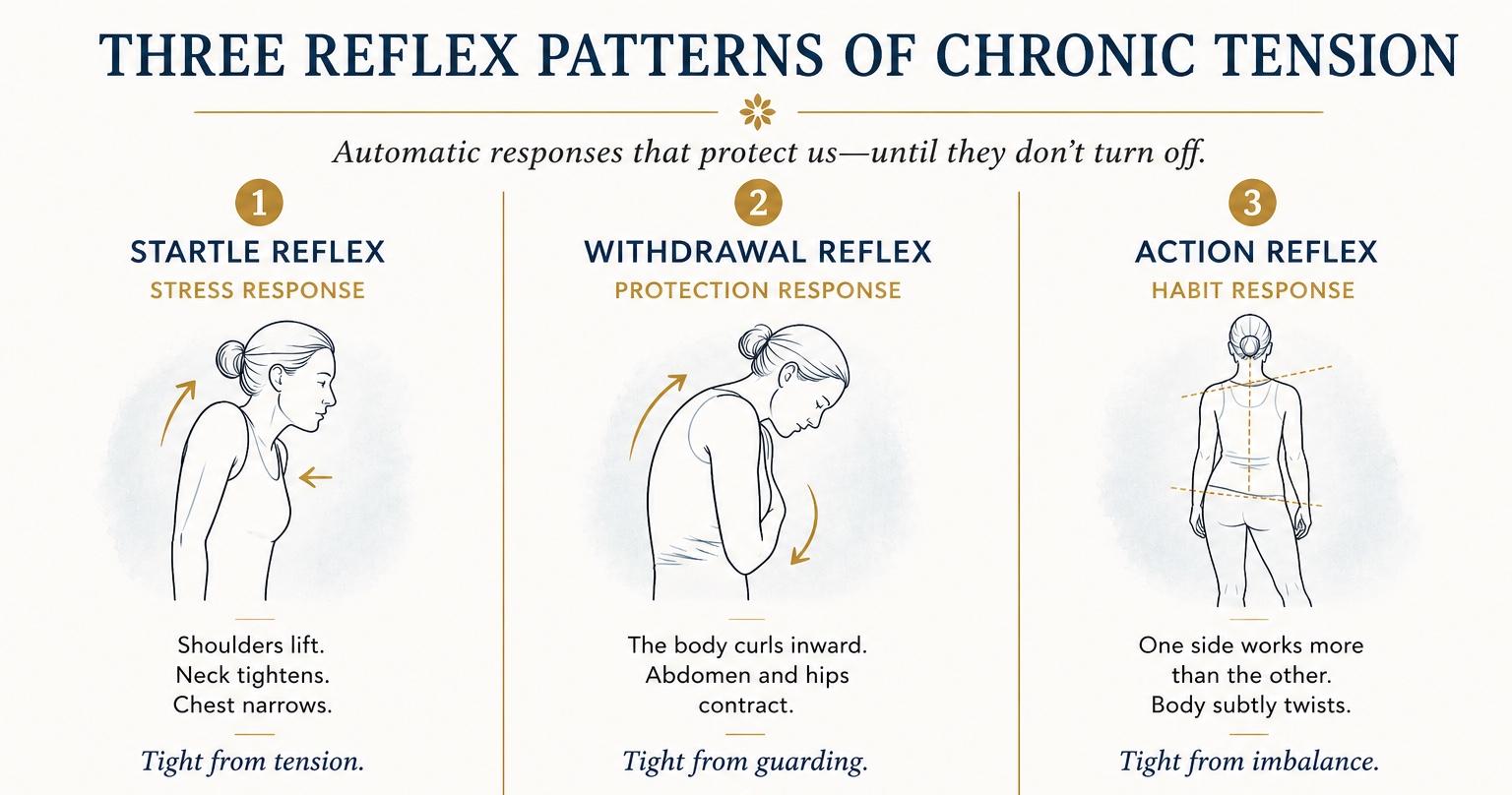
Hanna Somatics
Next, I tried Hanna Somatics. The focus of this method is the relief of pain caused by chronic tension. In 1976 Thomas Hanna developed a system of movements that focuses on resetting the nervous system and retraining muscle memory through slow voluntary contraction-release patterns. It is often used for trauma recovery. While the Alexander Technique is
Here is video that provides a good example https://www.youtube. com/watch?v=9WcjHc-M90o
I attended a helpful workshop in California to learn the basics and then used a recording to do these exercises several times a week for a few months. The movements are simple and repetitive, but surprisingly effective in relieving tension and back pain. I changed
Drawing on science and other movement disciplines, he developed a system of gentle, awareness-based movement lessons. He wanted to assist individuals in discovering more effective and harmonious methods of moving, as well as in developing a deeper knowledge of their bodily patterns. He recognized that movement patterns are learned and therefore changeable.

Increasing sensory awareness and variation in movement enhances functional ability. Feldenkrais is about “learn to do it in many better ways.”
Feldenkrais can be pursued through group classes and oneon-one training. But you can do it on your own with hundreds of audio and video recordings that are available to guide you through these movements. These are often called Awareness Through Movement. While recognizing the integration of all parts of the body, there are also lessons for specific body parts or for specific activities.
The ones I have tried have been helpful in many areas. Examples include:
-The cracking in my jaw has dramatically lessened by learning to let my jaw relax with gravity and not jut forward. I was able to forego an expensive dental correction.
-I trained my thumbs to stay closer to my index fingers, avoiding strain on my thumb tendons, for which I had once required surgery.
-My posture has improved by reminding myself to let my breastbone rise, allowing my shoulders to go down and back, and my neck to straighten (building on what I learned from the Alexander Technique).
-A taped guidance series I bought, Getting Grounded Gracefully, improved my balance when standing and walking. I learned the role of hip movements when balancing on one foot, for example.
As with the changing of any habit, these needed constant reminders every day for several months. The changed habit was then permanent.
To get a better appreciation of what these lessons are like, try some of the free lessons here https:// feldenkraisproject.com/collection/ getting-oriented/
I particularly found that these classes for purchase were helpful. https://www.feldenkraisaccess. com/store
These are the techniques I have personally tried to change habits to achieve a comfortable, flexible, balanced body. We tend to think of the mind as directing the body in simple commands: move, lift, relax. But these methods suggest something more nuanced. The movement and holding of the body reflects habits accumulated over years. Sometimes relief comes not from forcing change, but from learning how to sense ourselves more clearly.
The mind may be the body’s most underused tool. $

Making the impossible possible, the possible easy, and the easy elegant