

CONTENTS
EDITOR'S NOTE
PAGE: 04
From the Editor’s Desk
EVENTS IN TOWN
PAGE: 06
A roundup of the biggest cultural, culinary and fashion happenings near you. What to attend, where to go and what not to miss.

TRENDING NOW
PAGES: 07-11
A closer look at Rani Mukerji’s current projects, cultural influence and evergreen charm, and why her relevance continues to evolve across generations.
STARTUP
PAGES: 12-18
Founders share how trust, communication and personal equations drive their ventures. A candid look at the human side of building a business.
RETAIL
PAGE: 19-21
The newest drops, store launches and retail trends defining the start of 2026. Innovation meets consumer behaviour in this month’s marketplace spotlight.

FASHION FORWARD
PAGES: 23-26
Real people, real style, capturing the pulse of everyday dressing in a visual diary of how the city expresses itself. A guide to dressing with authority and confidence.
HEALTH AND WELLNESS
PAGES: 28-33
The Okinawa Way: Ancient Japanese dietary wisdom reimagined for modern Indian routines, a blueprint for longevity, balance and mindful nutrition.
Beauty Myths Busted: Dermatologists dismantle misinformation with evidence and clarity for smarter skincare in 2026.
FOOD
PAGES: 35-41
Your monthly taste map of new flavours, launches and culinary trends. A scan of the freshest openings, menus and gourmet experiences in town, where to dine first this month.

TRAVEL
PAGES: 44-49
Family Road Trips: Kid-friendly routes packed with comfort, scenery and memorable stops—designed for bonding and stress-free travel.
Budget Spiritual Travel: Affordable itineraries that pair inner calm with cultural discovery, making sacred landscapes accessible without compromise.
PETS
PAGES: 51-53
Stories, tips and expert insights for today’s mindful pet guardians—because caring for animals is both a joy and a shared responsibility.

STREAMING NOW
PAGE: 55-58
A deep dive into her craft, career choices and evolving artistic voice— an honest reflection from one of the industry’s rising talents.

From the E DITOR
February, Relationships & the Art of Being Present

February always arrives with a certain softness. It’s called the month of love, of relationships, of connection, and yet, ironically, it’s also the time when many of us feel the most distracted. We are busy chasing goals, seeking validation, and pursuing the next milestone. We let ego speak louder than empathy. We try to prove points instead of protecting bonds. Somewhere along the way, we forget to simply be with the people who already matter.
This month made me pause, and I realised two deeply personal lessons. Relationships don’t ask for perfection; they ask for presence. They live in the smallest moments we often overlook. That quiet cup of morning chai before the world wakes up. School drop-offs are filled with half-slept conversations and familiar routines. Sitting beside someone, doing nothing, bingewatching without an agenda. These moments don’t look extraordinary, but they are!
The second lesson came from an unexpected place, a podcast on mindful thinking. We speak endlessly about mindful eating, mindful fitness, and mindful routines. But we rarely talk about mindful thinking. If only we became more aware of what we allow our minds to dwell on, life would feel so much simpler. And so would relationships. When we become mindful of our thoughts, everything begins to shift. We listen more. We judge less. We respond with patience instead of impulse. We stop reacting and start understanding. Slowly, relationships feel lighter, safer, and more real.
What this month ultimately taught me is that presence and mindful thinking are inseparable. When we become aware of our thoughts, we automatically become more present in our relationships. We listen instead of reacting. Relationships don’t need constant effort; they need awareness. And when we slow our thoughts, everything else finds its rhythm.

This issue reflects that philosophy. It’s a gentle balance, much like life should be. From heartfelt stories about pet connections to Rani Mukerji’s calm choices and clarity of mind, to Myth vs. Medicine and Strong Bonds, Stronger Brands, this issue brings together stories that celebrate connection, clarity, and intention, just as life should. Slow down. Read mindfully. And enjoy this curation of stories, because relationships, like life, deserve to be lived fully.

Sinduri Vuppala

Editor
Sinduri Vuppala
Copy Editor
Sheba Joseph
Contributors
Lipika Varma
Ratna Bhupal
Rashmi Gopal Rao
Priyanka Goud
Aniket Pandey
A Pragnya Reddy
Bindu Gopal Rao
Mehak Walia
Dhanush Kumar
Manisha Pyaraka
Surabhi Goel
Designer K Abhinay Raj Raju
Website and SEO Anil Mandapati
Social Media
Vishal Goud
Aarthi Reddy
Editorial Office



Hashtagmagazine.in
@hashtagmagazine.in
www.hashtagmagazine.in
B 10 Vikrampuri, Karkhana, Secunderabad, 500009. Contact: 6269 000 666
Marketing Office
Atin OOH
B19, Avenue 5, Banjara Hills, Hyderabad Phone: 040 23355485
Cover RANI MUKHERJEE
Website: www.hashtagmagazine.in
Hashtag India Magazine is published and promoted by Nirvana Media House Hyderabad

UPCOMING EVENTS IN FEBRUARY 2026

Isha Mahashivaratri 2026
Under the endless night sky, Isha Mahashivratri 2026 weaves ancient tradition with powerful yogic resonance, a long vigil where silence becomes sacred and every heartbeat feels like a mantra. Led by Sadhguru and thousands of seekers, this night-long celebration is not just an event; it’s a spiritual crucible meant to stir inner energy and melt the barriers between self and the infinite. The rhythm of guided meditations, transcendent music, cultural performances, and deep discourse carries you from dusk toward dawn.
Date: 15th February 2026
Price: Free to join with optional seating passes for in-person
Venue: Isha Yoga Centre/Online Celebration

The Riders Music Festival 2026 isn’t just a concert, it’s a full throttle cultural collision where engines meet beats and people become a community. This two-day festival marries the raw passion of biking culture with live music, streetwear, food, tech zones, and adrenaline-charged experiences. Expect custom and vintage motorcycle showcases, FMX stunt shows, dirt biking zones, VR/AR Playgrounds, curated food and fashion hubs, and even track day sessions for enthusiasts.
Date: 21st-22nd February 2026
Price: ₹ 799/- onwards
Venue: Bhartiya Mall of Bengaluru
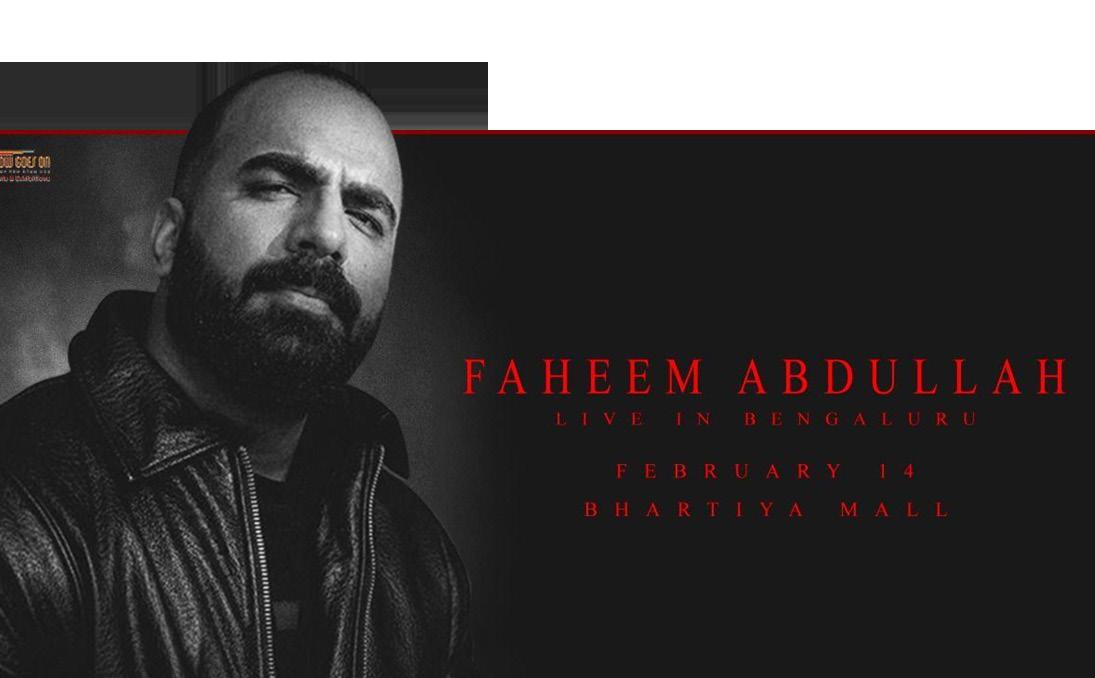
Faheem Abdullah Live in Bengaluru
Faheem Abdullah’s live show in Bengaluru is shaping up to be an intimate yet electrifying musical night you don’t want to overlook. Known for his heartfelt hits like Saiyaara, Ishq and Ehsaas, Faheem brings a voice that’s both poetic and powerful, weaving deep emotion into every line he sings. This concert marks his first mainstage performance in the city, an important moment in his steady rise from indie songwriter to a captivating live act.
Date: 14th February 2026
Price: ₹ 799/- onwards
Venue: Bhartiya Mall of Bengaluru

The SANAM India Tour stop in Mumbai is shaping up to be an electric clash of timeless classics and modern pop-rock energy. SANAM has always anchored its magic in old-world melodies reimagined with fresh spirit, think Gulabi Aankhen, Lag Ja Gale, and Pehla Nasha rendered with fearless vibrancy. Their live presence is less a concert and more a communal heartbeat, pulling generations together through familiar refrains and irresistible hooks.
Date: 14th February 2026
Price: ₹ 2,999/- onwards
Venue: South Sky, Jio World Drive, Mumbai


THREE DECADES Rani Mukherjee:
of Purpose, Power, and Reinvention
As Rani Mukherjee completes 30 remarkable years in Indian cinema, her journey stands as a masterclass in longevity, courage, and conscious choices. From becoming one of Bollywood’s most recognisable romantic leads to redefining female-led storytelling with powerful, socially rooted performances, Rani’s career has been driven by instinct, integrity, and an unwavering commitment to meaningful cinema. In a candid reflection on her career with Lipika Varma, she opens up about finding her voice, literally and creatively, embracing challenging roles, the joy of recognition, and why stories should always matter more than labels.

On retaining her voice while distributors wanted her voice to be dubbed-
My experience working with Karan Johar on Kuch Kuch Hota Hai is particularly memorable. I remember how Karan trusted me to dub my own lines despite distributors’ concerns about my voice. “I love your voice” those words from Karan made me stand my ground. That confidence helped me retain my unique voice and paved the way for future roles.
On taking challenging roles that inspire and empower women-
I’m all about taking on roles that challenge me and inspire women. My characters in Hum Tum, Kabhi Alvida Naa Kehna and Saathiya are examples of strong, progressive women who break stereotypes. My approach to acting is simple: I immerse myself in each character, leaving my personal biases aside. I am passionate about portraying women who make their own choices, reflecting the evolving Indian woman empowering themselves. My goal is to inspire audiences, especially women, with stories that resonate.
On working with Sanjay Leela Bhansali in Black-
It was transformative. I was inspired by his direction, particularly how he captured scenes with a unique energy. Bhansali's attention to detail pushed me to give my best performance. Learning sign language for Black, was a challenging yet rewarding experience. I totally immersed myself in the character, becoming a different person on screen. I learned alongside physically challenged people. Portrayal of a physically challenged woman remains one of my most iconic roles.
I’m all about taking on roles that challenge me and inspire women. My characters in Hum Tum, Kabhi Alvida Naa Kehna and Saathiya are examples of strong, progressive women who break stereotypes.
On portraying Tourette’s syndrome in Hichki
Hichki was another different film, showcasing the versatility of a teacher with Tourette's syndrome. I tried my best with utmost dedication to authenticate the character, relatable and inspiring. Despite societal scepticism, she saw the strength in people who face such challenges in their daily lives, while people even mock them. Portraying a character who faces daily challenges, I experienced the lack of empathy people often show towards those who are different. This character's journey inspired audiences, proving that with determination, one can overcome obstacles. By taking on such roles, my aim is to inspire others and bring awareness to important issues.
On not winning a National Award for Black or Hichki
The film's impact on fans, especially my mom, meant everything to me. I started my journey wanting to make my parents proud, and now I am grateful for the love from fans across generations. From starting at 17 to continuing at 47, my focus has always been on choosing better roles so my audience feels fulfilled. My fans have constantly inspired me through the faith they place in my work. They accept me as my characters, not as Rani the person— and that matters most.



The film's impact on fans, especially my mom, meant everything to me. I started my journey wanting to make my parents proud, and now I am grateful for the love from fans across generations. From starting at 17 to continuing at 47, my focus has always been on choosing better roles so my audience feels fulfilled.

On receiving the National Award for Mrs Chatterjee Vs NorwayAwards are nice, but I am driven by the desire to keep improving and inspiring others. This film is a tribute to my mom. I modelled Debika’s character in Mrs Chatterjee Vs Norway after my mom, incorporating her Bengali roots and dialect. Growing up in Kolkata and marrying at 20, my mum’s life has been an inspiration. We are proud of her, and it's reflected in my work. Debika is so heart-warming. It's no surprise, given Debika's strength and love for her family, I related to my mom in mind and performed.
On her passion for MardaaniThe impact of Mardaani on me has been profound. The film addressed a disturbing crime that sparked national outrage, and we channelled that pain and anger into the performance. Playing Shivani was emotionally intense. I found it tough to slap actors, but I understood the scene's importance for the audience, as Director Pradeep Sarkar wanted me to slap him in real life. Mardaani broke taboos, sparking crucial conversations
about women's safety and empowerment. I am driven by a desire to inspire girls, making them believe in themselves through my reel characters. I want to champion conversations about safety and empowerment, hoping to create a better future for women.
On labelling films as “femaleled”-
It’s about time we focus on the narrative, not the gender of the lead. The pressure to fit into predefined roles is real, and Gen Z/Gen Alpha need to bring in a change. Let's talk about the story, the characters, and the impact; that's what truly matters. By shifting the conversation, we can create a more inclusive space for filmmakers and audiences alike.


BLOOD, BOND & BUSINESS:
THE REAL EQUATIONS BEHIND FAMILY-DRIVEN STARTUPS
February is the month of relationships, and at Hashtag, we’re celebrating the bonds that shape not just personal lives, but powerful businesses. This special edition explores entrepreneurs who share more than a company; they share roots. From siblings turning into strategic partnerships to spouses balancing love and leadership, we dive into the real dynamics behind relationship-driven ventures. This month, discover how strong relationships can become a business’s most valuable asset....
Rohit and Kriti Mehrotra, cofounders of Organic Tattva, combine entrepreneurial discipline and brand intuition to make organic living accessible and trustworthy. Their journey reflects a shared commitment to conscious choices, family health, and building a transparent, responsible food brand.
Tell us a little about yourselves. What were each of you doing professionally before Organic Tattva came into the picture?
Rohit Mehrotra:
I come from an entrepreneurial background. Before Organic Tattva, I was involved in the business of exporting housewares and kitchenware. In 2012, I felt a strong pull towards the FMCG space and identified a clear gap in the organic food sector, particularly the need for a robust backend-to-front-end integration. That led to the inception of Organic Tattva. I’m a University of Sheffield alumnus, and I have been part of the management and operations for a while now.
Kriti Mehrotra:
I come from a Corporate Finance background with a diverse work portfolio and experience in the IT industry. I believe it’s my expertise in Finance and Export Management which has contributed significantly to the company’s growth, especially in expanding into international markets. I feel really committed to excellence


and integrity, and to drive meaningful growth while establishing Organic Tattva as a trusted leader in its category.
You come from different backgrounds. How did your journeys converge into creating an organic food brand together?
Our differences have actually broadened our perspectives and
strengthened our partnership. What truly brought us together was a shared set of values. Despite coming from different professional backgrounds, we both grew increasingly concerned about food safety, rising lifestyle-related health issues, and the declining trust in everyday food choices. Our complementary strengths and shared purpose naturally aligned, leading to the birth of Organic Tattva.
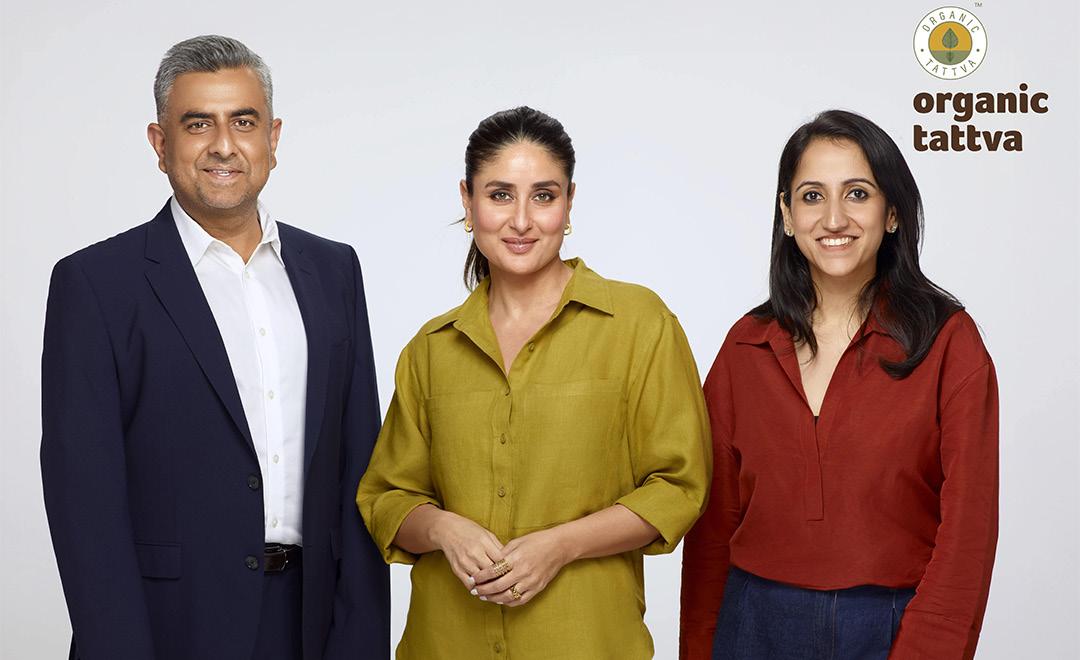
Rohit Mehrotra
Kriti Mehrotra
How does being married/cofounders influence your leadership dynamic?
Being married and co-founders brings a level of integrity and accountability that is rare in most business partnerships. We challenge each other openly, but there is also deep trust and respect. Our decisions are always driven by a shared vision, and we recognise and respect each other’s leadership roles. This balance keeps both the partnership and the organisation healthy.
What strengths do each of you bring to the table, and how do you complement one another?
Kriti on Rohit: Rohit brings structure, discipline, and a strong long-term strategic outlook to the organisation, especially when it comes to systems, sourcing, and scaling.
Rohit on Kriti: Kriti has an exceptional sense of brand intuition and consumer empathy. She truly understands the consumer pulse and brings valuable insights into brand image, communication, and social media, often bridging the gaps in between.
Do you consciously maintain boundaries between “work life” and “home life,” or does it all blend naturally?
In reality, it does blend, but with intention. While the brand is deeply personal to us, we consciously make space for conversations that are not work-related. Over time, we’ve learned that respecting each other first as partners, and then as cofounders, actually strengthens our ability to work together.
What’s the biggest relationship lesson entrepreneurship has taught you?
Listening is far more powerful than winning an argument. At the end of the day, we’re on the same team. Entrepreneurship constantly tests communication, patience, and resilience. We’ve learned that alignment matters more than agreement, and that mutual respect is the strongest foundation for both business and marriage.
What message would you give Indian families who want to switch to cleaner food but don’t know where to begin?
Start small. You don’t need to change everything overnight. Begin with

everyday staples like rice, lentils, and atta, foods your family consumes most frequently. Ask questions, seek transparency, and choose brands that are open about their sourcing and processes. Clean food is not a luxury; it’s an investment in your family’s long-term health.
And finally, what does “living organic” personally mean to both of you?
For us, living organically goes beyond certification. It’s about
making conscious choices for the environment, farmers, our children, and our own health. It means choosing purity not just in what we eat, but in our intent. Slowing down, being mindful, and living responsibly. Organic Tattva is a reflection of how we strive to live, honestly, consciously, and with purpose.
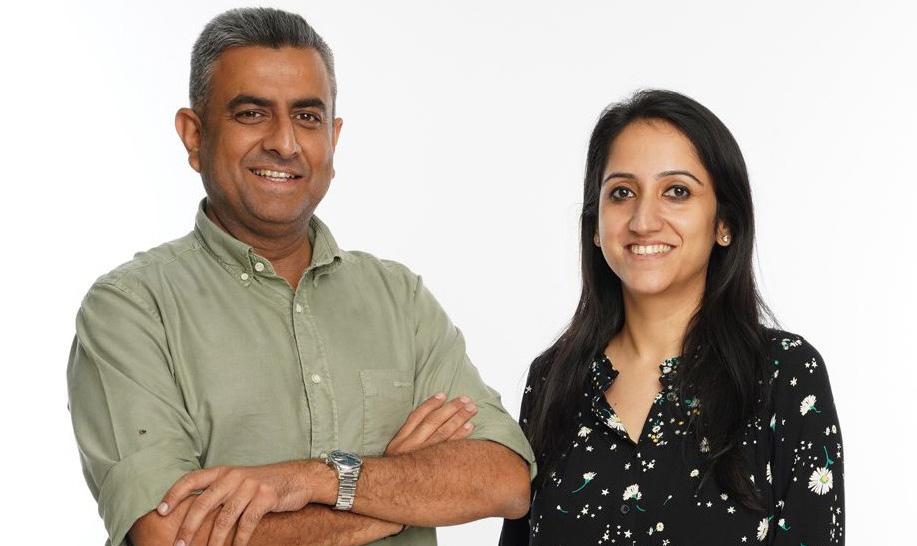
Sujata and Taniya Biswas are the founders of Suta, a homegrown Indian fashion brand redefining the sari as an everyday, breathable, and expressive garment. Combining Sujata’s structured, systemsdriven approach with Taniya’s creative vision, they work closely with artisan communities across India to create clothing rooted in comfort, honesty, and human connection. Their journey blends entrepreneurship with sisterhood, building a brand that values trust, craftsmanship, and mindful fashion.
Taniya, you left a stable career with the Tata group and IBM after IIM Lucknow, and Sujata, you pivoted from IIFT Delhi and corporate life. What was the exact moment when both of you realised that the corporate path wasn’t enough and that Suta was waiting to happen?
Taniya:
It wasn't a rebellion. It was recognition. I had done everything “right”: engineering, IIM, a Consulting role that looked perfect on paper. But somewhere between late-night presentations and early morning meetings, I realised I was living life from the neck up. My hands missed fabric. My heart missed stories. I kept returning mentally to memories of wet saris drying on clotheslines, of Maa moving through the house with her pallu tucked in.
One evening, over chai, I said it aloud to Sujata: I don’t think this is it. The moment I spoke it, Suta was born.
Sujata:
For me, it came as the discomfort of becoming someone I wasn’t. The corporate world had given me growth, but it had also hardened me. I remember thinking: If success requires me to lose softness, I don’t want it. My PhD was an attempt to find meaning, but even that felt academic, distant. What we really wanted was to build something with our hands, our intuition, and our values. Suta didn’t arrive as planned. It arrived as relief.
From travelling through remote weaving clusters in Meghalaya,


Varanasi, MP, andOdisha to working directly with artisan families, what were the earliest challenges you faced in building an ethical, transparent supply chain? The earliest challenge wasn’t sourcing; it was humility. We walked into weaving clusters not as founders, but as two women who didn’t know enough. Many people laughed. Some refused to work with us. Others cheated us. We were sent less fabric than promised, a different fabric than shown. We carried bales on our own shoulders because we didn’t yet trust anyone.
But slowly, relationships replaced transactions. We sat on floors, washed starched saris ten times to make them wearable, and paid even when it hurt our savings. Trust didn’t come from contracts; it came from showing up, again and again. One married weaver couple in Nadia said yes when everyone else said
no. They’re still with us. That’s how Suta’s supply chain was built, not fast, but honestly.
You’ve built Suta as a sister duo. How has your personal bond shaped your leadership and decision-making as co-founders? Being sisters meant there was no performance. We didn’t have to act like leaders; we just were. We argue, we pause, we cry, we laugh, sometimes in the same hour. One of us is instinct, the other structure. One asks why, the other asks how. And because the foundation is love, disagreement never threatens alignment.
We finish each other’s sentences because we’ve finished each other’s lives. That rhythm, of deep knowing, shaped Suta’s culture. Decisions are made through conversation, not hierarchy. That’s how families work. And Suta, at its core, is one.

Sujata Biswas
Taniya Biswas

What has entrepreneurship taught you about your relationship that you wouldn’t have learned otherwise?
Entrepreneurship removes all filters. We learned how differently we process fear, exhaustion, and crisis. We learned when to step in for each other and when to step back.
During moments like the Lil Flea fire, the pandemic, or nights when we didn’t know how salaries would be paid, we saw each other at our most vulnerable. What we learned was patience. Trust. That love doesn’t mean always agreeing; it means staying even when it’s uncomfortable. We didn’t just build a business. We deepened a relationship we will carry for life.
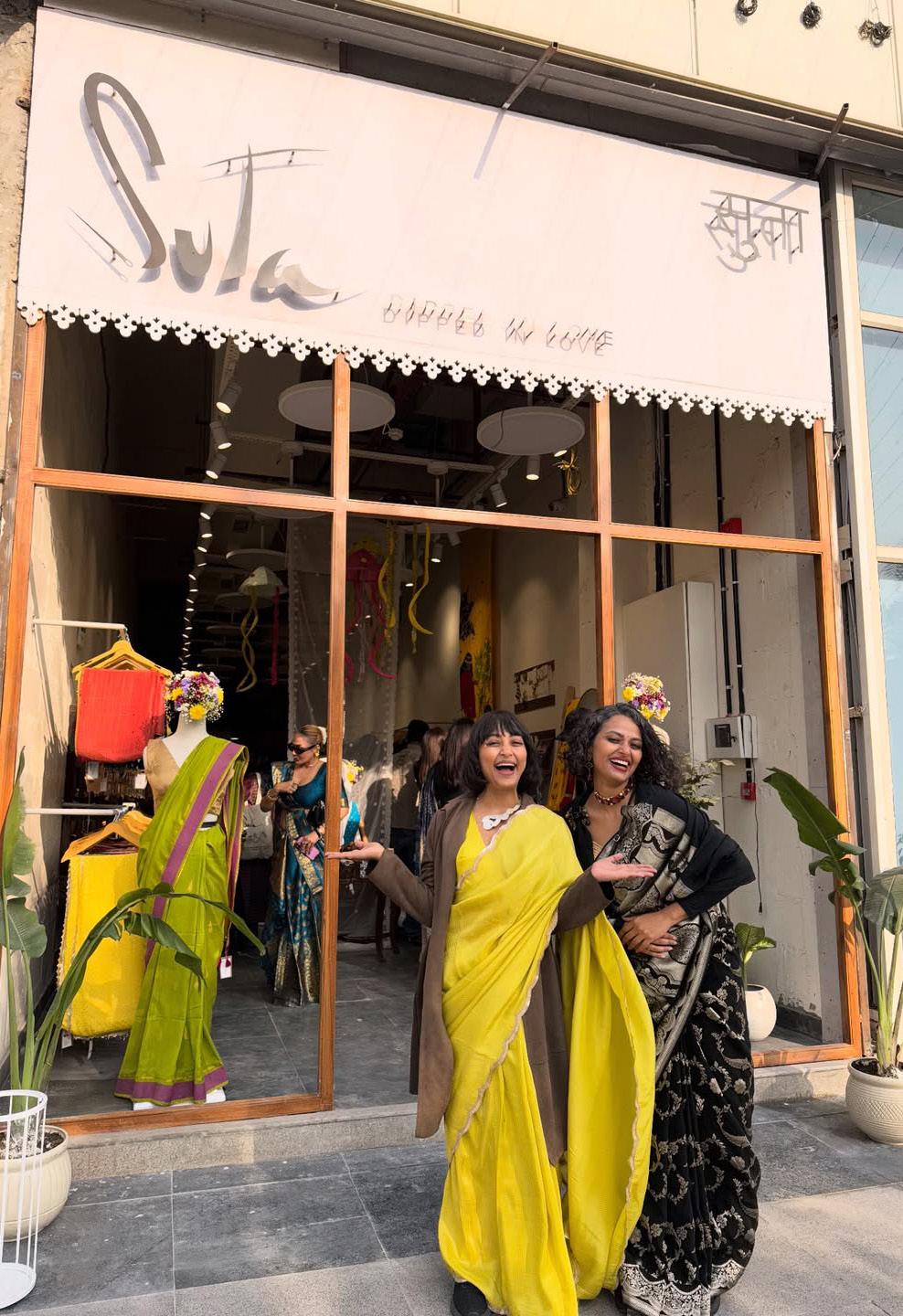

Suta has expanded rapidly with retail stores across cities like Mumbai, Bengaluru, and more. How do you see the brand evolving in the next five years, both online and offline?
Growth, for us, has never meant noise. It has meant belonging. In the next five years, Suta will grow, but gently. Offline, our stores will continue to feel like lived-in homes, where omen come to feel fabric, talk, sit, and belong. Online, storytelling will deepen, so people don’t just buy clothes, but understand them. We see Suta expanding categories, communities, and conversations, without losing its softness. Technology will evolve. But touch, trust, and time will always remain our anchors.
As advocates for mindful fashion and sustainability, what message do you want to give to modern consumers about slow fashion and supporting local artisans?
Slow fashion isn’t about nostalgia; it’s about responsibility. Every garment carries hands, hours, histories. When you choose mindfully, you’re choosing continuity over convenience. Supporting artisans isn’t charity, it’s collaboration. Wear what feels good on your skin and your conscience. Care for your clothes. Repeat them. Let fashion be joyful, not disposable. A sari doesn’t need an occasion. Neither do you.




Varun
Khanna,
Vijayaraghavan Venugopal Co-founder, Fast&Up
Vijayaraghavan Venugopal is the Co-founder at Fast&Up and has been instrumental in building the brand in India. He has over 26 years of business experience in diverse fields, which includes pharmaceuticals, Healthcare and Information Technology. He has been responsible for business development in multiple geographies, including the Triad (USA, Europe and Japan). He has worked with TekFriday, Dr Reddy's, Lupin and Emcure in different senior management roles. He was Lupin's country head in China for three years between 2007 and 2010. He is a mechanical engineer and an MBA in International Business from the Indian Institute of Foreign Trade, Delhi.
He is one of the fastest amateur marathoners in the country, having run in sub3-hour marathons 12 times in major cities throughout the world, including Paris, Boston, Chicago, Berlin, London, Tokyo and New York, all while leading the growth of India’s fastest-growing nutrition brand, Fast&Up. He also has the distinction of being the first Indian to do all six world marathon majors under 3 hours, and is the winner of the recently held Tata Mumbai Marathon in his age group.
CEO, Fullife Healthcare Pvt. Ltd. Co-founder, Fast&Up
Varun Khanna is the CEO of Fullife Healthcare Pvt. Ltd., a company he started at the age of 23 with the sole purpose to focus on healthy living. A relentless passion to do something innovative for the millennial need for an active life drove him to launch India’s first effervescent intelligent nutrition brand for sports and active living, Fast&Up, in 2015. He envisions Fast&Up to be the country’s first choice brand for active people all around the country. Currently, he leads the international business while also being the driving force for the active side of Fast&Up. One of his many roles for the brand are strategy and growth of products. He looks forward to introducing innovative products that will add value to people in different aspects of their lives.
Varun has graduated with majors in Biotechnology from the University of Leeds, UK, and is focused on being a successful entrepreneur while also being an active mentor to budding entrepreneurs. He is also interested in investing in companies which have novel products that bring in some differentiation or disruption in the current market. Apart from being passionate about work, travelling is his second passion, along with working on preserving the environment. Varun believes that movement is life, and hence an active lifestyle is of immense importance to him. He loves trying different forms of fitness, is an avid yogi and believes a good workout (in any form of fitness one is comfortable) is the key to a productive day.
Vijay, as a passionate runner and co-founder, what was the exact moment you realised India needed a science-driven active nutrition brand like Fast&Up instead of just relying on international Varun and I came to it from slightly different directions, but our real “Eureka” moment came through running. Around 2013, during the Mumbai Marathon, I kept noticing runners struggling to find the right nutrition and being told they’d need to source products from outside India. Having worked in the pharma sector, I knew India was a strong manufacturing hub, so I couldn’t help but wonder why there wasn’t a high-quality, made-in-India option
available locally. Varun had reached a similar insight even earlier, based on his own experience during a 10K run. Once we realised we were aligned on the same problem and opportunity, we decided to move ahead and launch the brand.
Vijay, when you and Varun first discussed bringing effervescent nutrition to India, how did you two define the core mission and longterm purpose of Fast&Up?
We believed we had a strong foundation in effervescent nutrition. While the format was already well established in Europe, it was still largely unproven in India, especially in the consumer space. In fact, very few

medical or pharmaceutical products in India had made effervescent part of people’s everyday routines, which made the opportunity even clearer for us. At the same time, we’ve always been driven by a long-term purpose: to build a brand that helps people live actively, stay fit, and reduce the need for frequent hospital visits. We were also ambitious about creating a brand from India that could eventually be recognised and trusted globally, and Varun and I share that vision.
Vijayaraghavan Venugopal
Varun Khanna

Fast&Up started in a niche category. What was the biggest early challenge in educating Indian consumers about the importance of active nutrition, and how did you overcome it?
Yes, we started in a relatively niche category, but within India’s nutrition landscape, it was a practical place to begin. Our biggest hurdle was awareness: many people didn’t see a need for nutrition unless it was prescribed by a doctor. On top of that, the effervescent format was unfamiliar. Since most nutrition products in India are associated with tablets, we also had to educate consumers on how an effervescent product is consumed and why it works. To bridge both gaps, we invested significant time and effort on the ground. We conducted small-group education sessions in key cities, partnered with events, and focused on getting people to experience the product firsthand. Over time, many early users organically became advocates and began spreading the word themselves.
Fast&Up has now partnered with major sports leagues and marathons. What strategic decisions or mindset shifts were key to earning trust in elite sporting and everyday fitness communities? Partnering with sports leagues and athletes felt like a natural step for us. It's been part of our journey from the beginning and aligned with how the brand has evolved. Another major
advantage is that we’re one of the very few companies that manufacture in-house, which gives us strong control over quality, regulatory compliance, and consistency. These are non-negotiables in elite sport, and the same standards matter to the everyday fitness community as well. Ultimately, people want a product that truly delivers results and is supported by robust quality systems. That’s where Fast&Up stands apart from many other brands.
As founders navigating rapid growth and category expansion, what’s the most important leadership lesson Fast&Up has taught you about building a consumer-centric brand?
As we’ve grown through our expansion and category journey, it has reinforced something deeply important to me: the customer must be at the centre of everything you do. The way you treat customers stays with them, and when you do right by them, they repay that trust many times over for years to come. A great example is our early customer base. We’ve had our share of ups and downs, yet some customers who’ve been with us since 2016 have remained consistently loyal. There have been moments when they were unhappy or frustrated, but they stayed engaged, gave us the benefit of the doubt, and even reasoned with us. And when we acknowledged issues and corrected the course, they noticed, appreciated it, and often became even stronger supporters.
That’s why I truly believe in building with the customer at the heart of everything we do.
Looking ahead, how do you envision Fast&Up’s role in shaping the future of nutrition and active lifestyles in India and beyond over the next five years?
Fast&Up has always been focused on nutrition, and when we launched in 2016, we were early to the category. COVID likely accelerated awareness, but even today, we’re only scratching the surface of what nutrition can do for India. More people are becoming active and prioritising fitness, and at the same time, new technologies are advancing quickly. Wearables are tracking more about what’s happening inside the body, and AI is helping people interpret those signals more effectively. As those insights highlight new gaps, nutrition has a critical role to play in bridging them. For us, that means Fast&Up will become even more relevant over the next decade, especially as wearable data, AI-driven insights, and nutrition converge to help people monitor their bodies more closely and support performance and health in a more integrated way.

HOT LAUNCHES
At Hashtag Magazine, we showcase the most exciting and trendy product launches in the market—from beauty and wellness to fashion, tech, and lifestyle essentials. Whether you're after the latest skincare must-haves, innovative gadgets, or fashionable trends, we’ve got you covered!

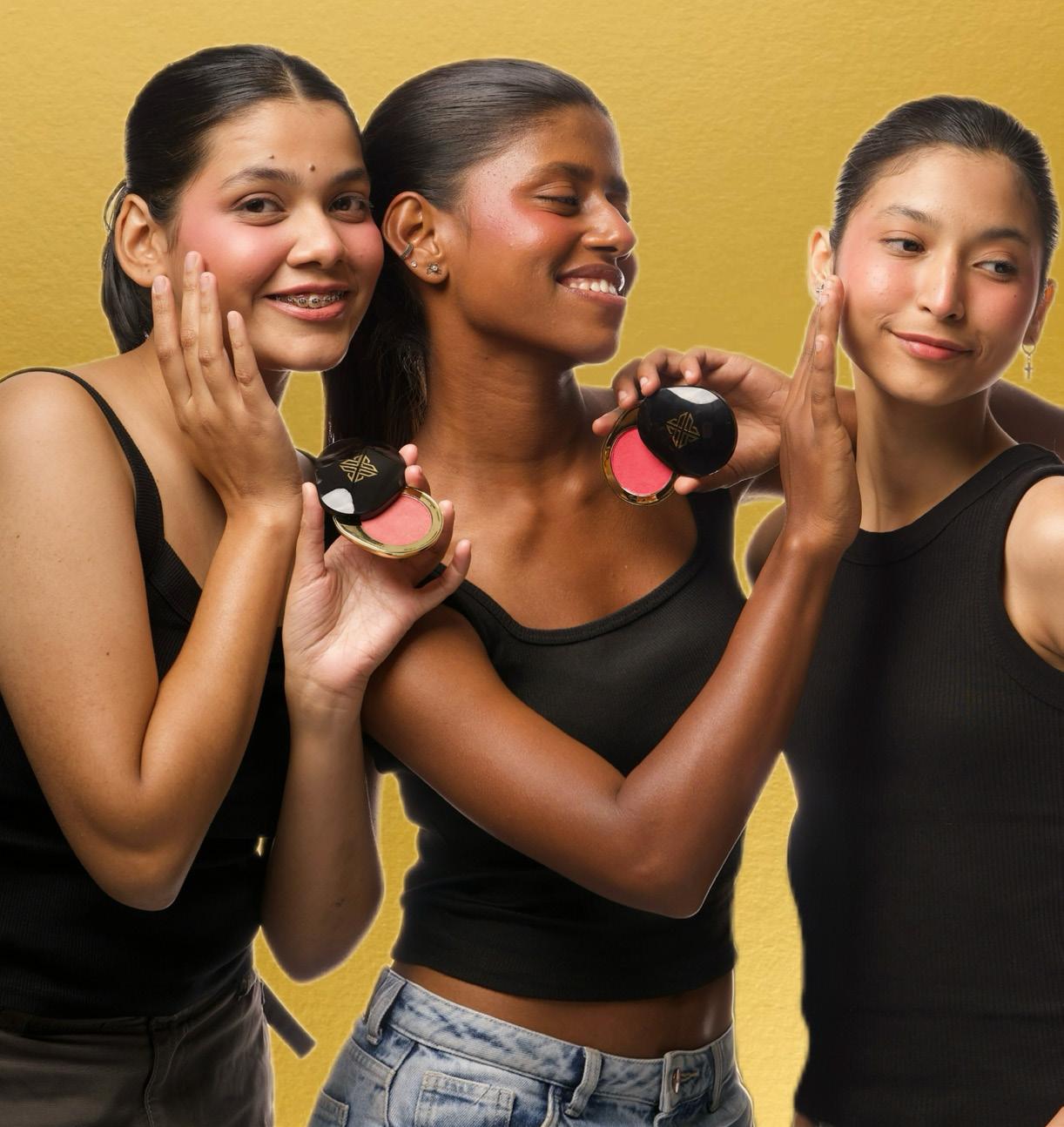
Luxiora Blurré Pudding Matte Blush
Price Rs : 430/- ONWARDS
This is a standout cream-to-powder cheek colour that blends makeup performance with skincare benefits. Its signature pudding‑matte texture feels soft and cushiony in the pot, melting seamlessly into the skin. Designed to withstand sweat and humidity, the formula stays vibrant throughout the day without streaking, caking, or patchiness, perfect for India’s climate.
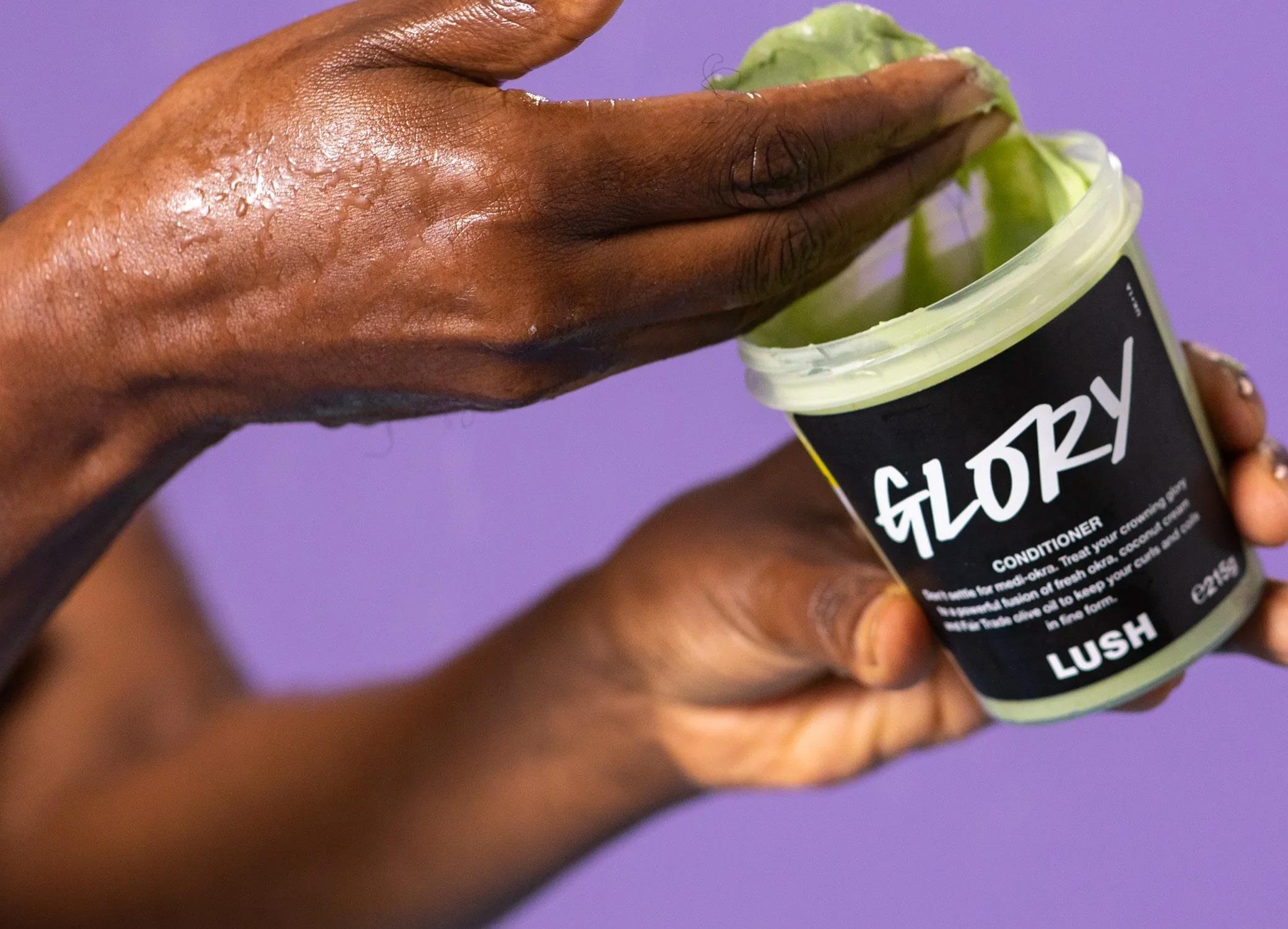
LUSH Glory Conditioner & Daddy‑O Shampoo
Lush has an intriguing range of haircare products, but two stand out for different reasons. Glory Conditioner is a rich, deeply nourishing formula crafted especially for curls, coils, and textured hair. It's a thick, moisture-packed blend of coconut cream, okra gel, and castor oil hydrates, softens, and makes detangling effortless, helping natural textures feel defined and manageable without weighing strands down. Users love its creamy texture and long-lasting scent, making it a go-to for dry or curly hair.
On the other hand, Daddy-O Shampoo is a purple-toned cleansing shampoo designed to brighten blonde or grey hair while removing build-up. Infused with lemon, lime juice, and seaweed, it delivers shine and volume with a distinctive violet fragrance. While reviewers praise its lather and refreshing scent, very dry hair may require a follow-up conditioner to avoid dryness. These are two products you should surely get your hands on. Glory is ideal for heavy hydration and texture care, while Daddy-O is best for cleansing and enhancing cool tones; each is strong in its own lane.

What sets this blush apart are the skin-loving ingredients: Niacinamide helps refine pores and enhance texture, Peptides support a smooth, elastic look, Avocado Oil and Grapeseed Oil provide lightweight hydration and nourishment, and fine blurring powders create a soft-focus effect that diffuses the appearance of pores.
Available in inclusive shades like It’s Bubblegum, It’s Watermelon, and It’s Blonzed, this blush delivers a seamless, natural flush that works on diverse Indian skin tones.
Whether applied with fingertips, a dense brush or powder puff, it offers buildable colour—from a subtle daytime glow to a more sculpted evening look—while keeping your cheeks comfortable and fresh all day.

Price Rs: 2495 /- ONWARDS
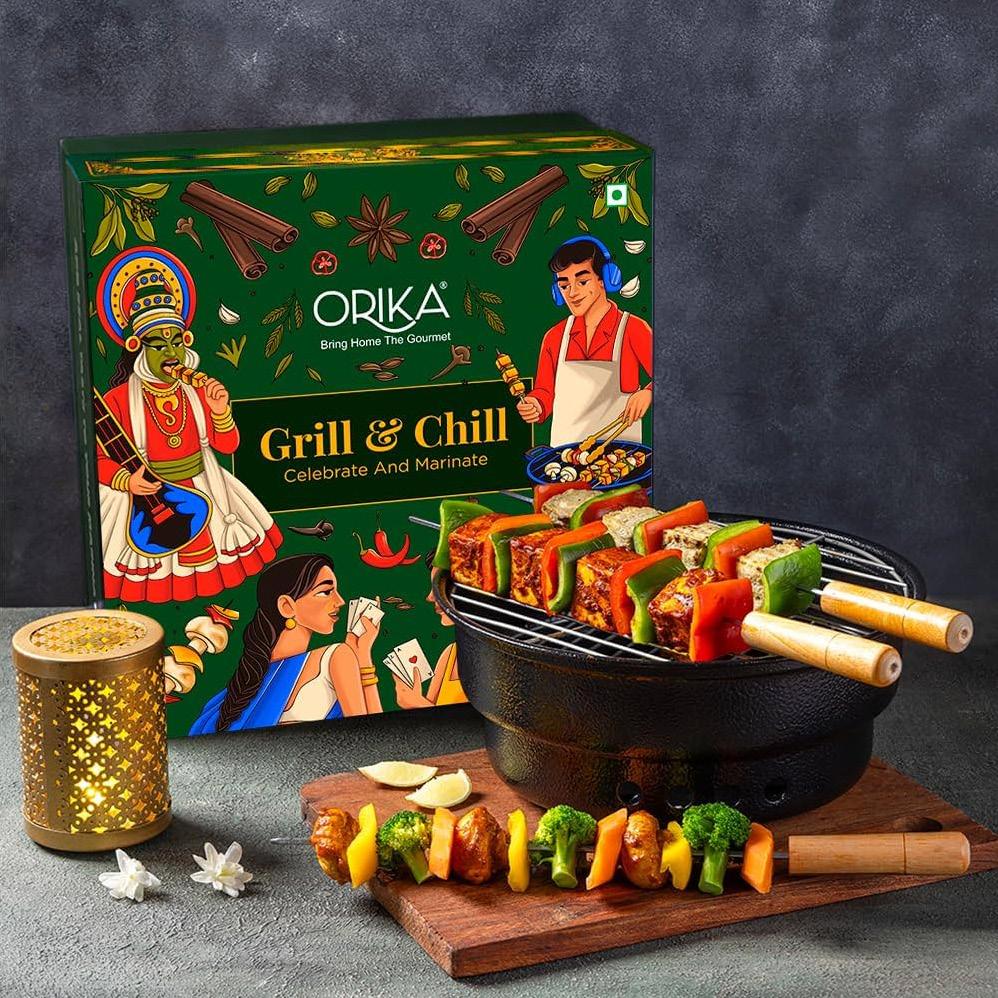
Orika Grill & Chill — Portable Barbeque Griller Set with Seasonings
Price: Rs: 1999
The Orika Grill & Chill set brings the joy of authentic grilled flavours right to your doorstep, making it ideal for barbecue lovers and casual hosts alike. This all‑in‑one portable charcoal griller kit comes with four thoughtfully curated seasonings like Tandoori Marinade, Malai Tikka, African Peri, and Old Dilli Chat Masala, designed to infuse meats and vegetables with rich, bold flavours that evoke both traditional Indian and global grilling styles.
The portable grille itself is compact yet sturdy, perfect for backyard get-togethers, small outdoor parties, or even indoor grilling with proper ventilation. Each seasoning blend reflects Orika’s commitment to crafted taste, helping even novice cooks achieve delicious results with minimal fuss.
Whether you’re marinating succulent kebabs, tangy tandoori bites, or spicy peri-peri veggies, this set brings vibrant aromas and memorable flavours to your BBQ sessions. It’s a great way to elevate everyday grilling into a flavourful, shared experience at home.

CodeSkin Moisturisers
Price: Rs : 499 onwards
CodeSkin is a science-driven Indian skincare brand offering clean, effective formulations designed to address common skin concerns with precision and safety. The brand’s range spans face cleansers, serums, sunscreens, moisturisers and targeted treatments, all formulated in-house with a strict exclusion list of 1,600+ questionable ingredients to ensure skin-safe, vegan-friendly products.
On the moisturiser front, CodeSkin has options for different needs. UltraIntense Moisturiser delivers 24-hour hydration with a patented lipid complex and essential fatty acids to strengthen the skin barrier and maintain youthful moisture levels. The brand also recently expanded with Ultra Advance Body Moisturiser, a fast-absorbing, non-greasy formula that hydrates for up to 48 hours, supports barrier repair with shea butter, niacinamide, ceramides, hyaluronic acid and panthenol, and even helps neutralise body odour and environmental aggressors.
Beyond moisturisers, CodeSkin offers face washes and serums targeting acne, pigmentation and ageing, along with broad-spectrum sunscreens and corrective treatments—making it a holistic choice for daily skincare routines grounded in dermatological science.

Power Dressing 2026
How Women Can Own Formal Wear with Confidence
Power dressing is no longer about boxy blazers and stiff formals—it’s about striking a balance between authority and style. Today’s formal wear for women reflects individuality, inclusivity, and modern flair, making it perfect for boardrooms, networking events, and even hybrid workspaces. The key? Dressing smart while staying authentic.
The New Rules of Power Dressing
• Fit is Everything: Tailored Silhouettes are back. Invest in well-fitted trousers, blazers, and dresses that complement your body type.
• Monochrome Magic: Neutral palettes (beige, cream, navy, black) remain timeless, but bold single-tones like emerald, cobalt, or burgundy are trending.
• Comfort with Structure: Think stretch fabrics, breathable cotton-blends, and soft linen with sharp cuts—robust yet wearable.



How to Wear Formal Wear Right
Key Trends in Women’s Formal Wear
Oversized yet structured blazers paired Ruffles, asymmetrical collars, or tie-up necklines that add flair without being loud.
High-waisted, floor-grazing trousers elongate the frame while exuding confidence.
Pair pencil skirts and A-line midi skirts with Sleek belts, layered chains, or geometric earrings that enhance but don’t overpower.

• Balance Masculine & Feminine: Pair a strong-shouldered blazer with soft silk blouses or delicate heels.
• Invest in Classics: A crisp white shirt, tailored black trousers, and a navy blazer form the foundation of a classic power look.
• Shoes Matter: Block heels, loafers, or pointed-toe flats— comfort without compromise.
• Play with Prints (Sparingly): Pinstripes, houndstooth, or checks add character while maintaining a professional look.


Accessories & Grooming for the Win
• A structured handbag or tote keeps things polished.
• Watches remain the ultimate power accessory.
• Groomed hair (sleek buns, soft waves) and neutraltoned makeup complete the look.




The Okinawa Way:
Ancient Eating Wisdom for Modern Indian Living
As the quest for longevity rises, the Okinawa Diet stands out with its mindful eating philosophy and nutrient-dense simplicity. This ancient Japanese approach offers practical wellness lessons easily adaptable to Indian lifestyles today. Hashtag Magazine gives you a lowdown...
The Longevity Code of Okinawa
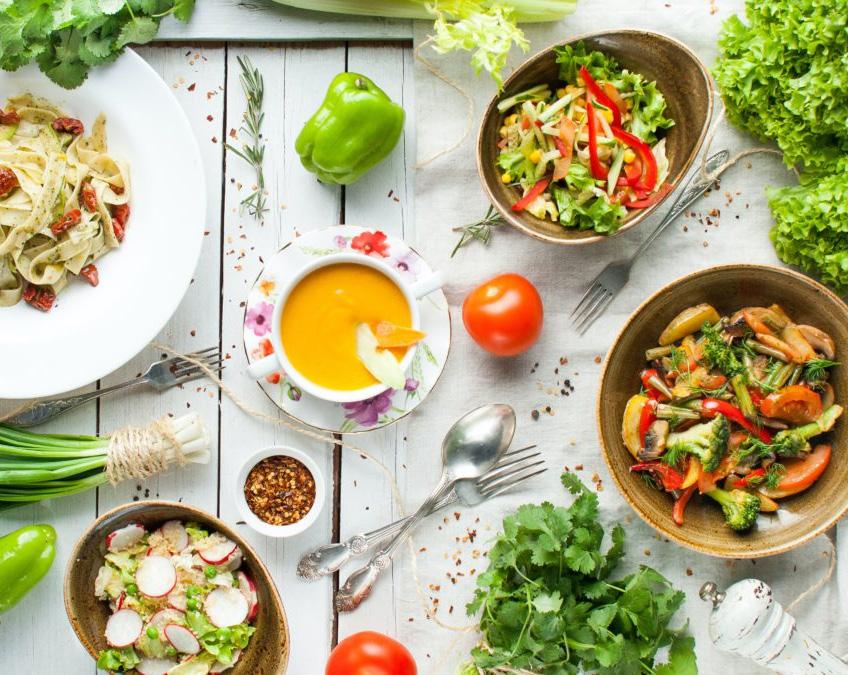
Okinawa, a Japanese island known for producing some of the world’s healthiest centenarians, has long intrigued scientists, nutritionists, and wellness experts. While genetics play a role in their extraordinary lifespan, research consistently points to diet and lifestyle as the real secret. The Okinawa Diet is low-calorie yet nutrient-dense, relying heavily on whole foods, seasonal produce, marine plants, and the famed purple sweet potato.
What makes the diet unique is its heavy emphasis on complex carbohydrates rather than protein or fat—a stark contrast to many modern diet trends. Around 60% of the traditional Okinawan diet historically came from sweet potatoes, providing fibre, antioxidants, and sustained energy. Seafood, soy products, seaweed, fermented foods, herbs, and leafy greens form the rest of the plate.
Animal products are limited, dairy is almost nonexistent, and nuts and legumes (other than soy) are eaten rarely. Certain fruits are restricted because of their high sugar content, showing how even natural foods are approached mindfully.
Mindful Eating: The Philosophy of ‘Hara Hachi Bu’
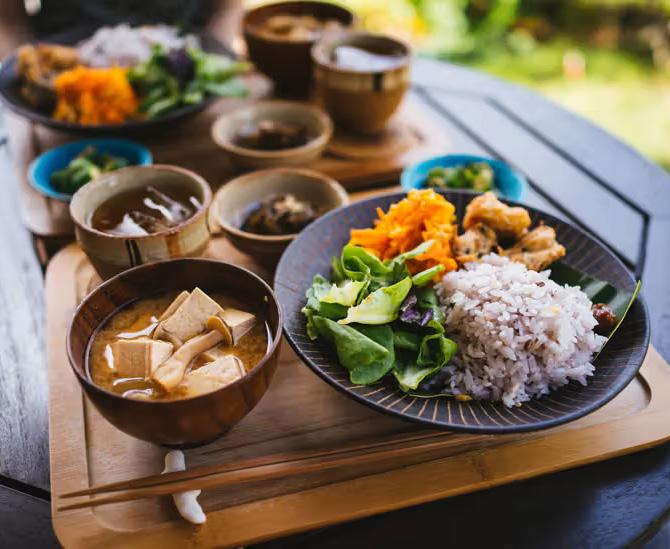
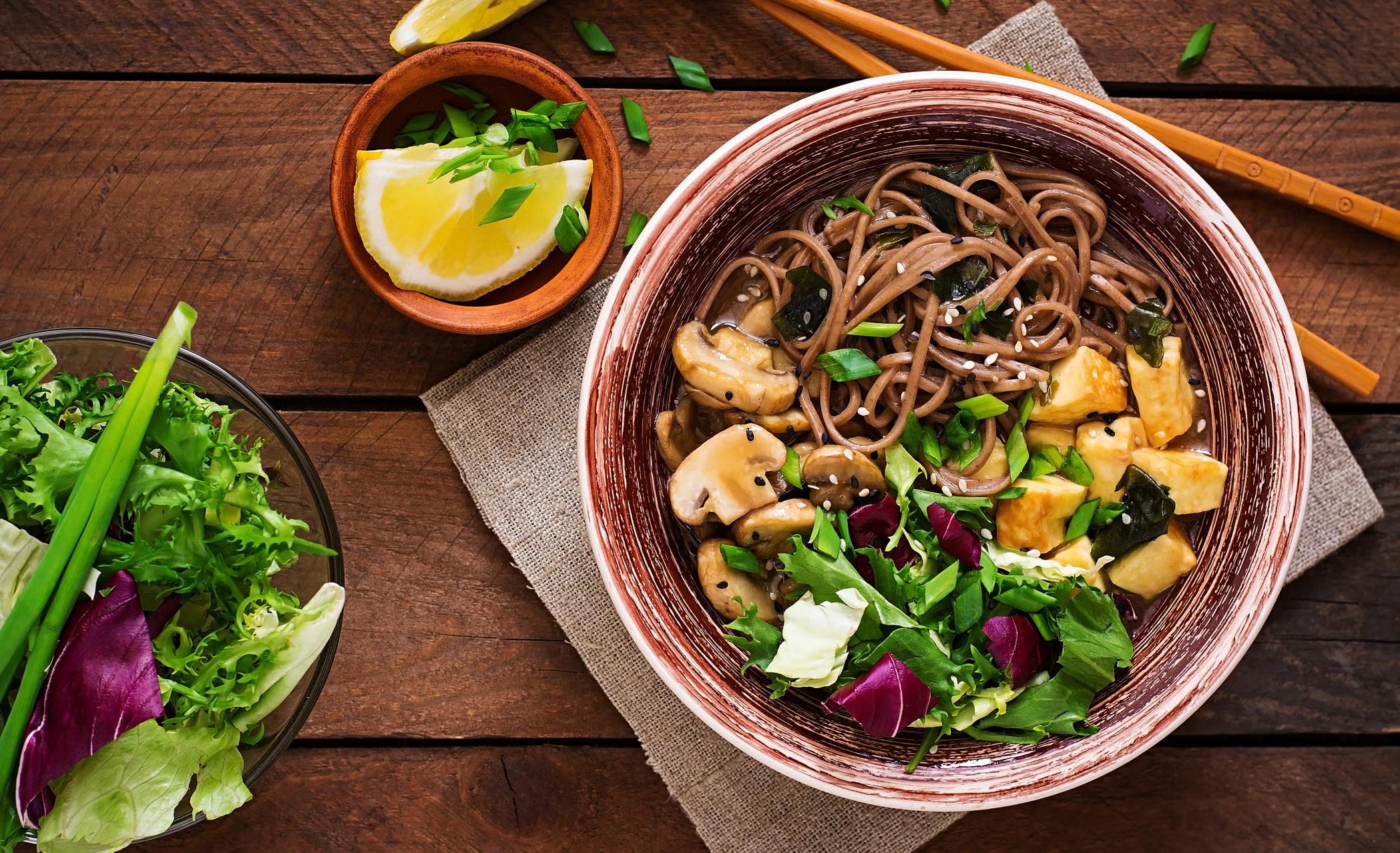
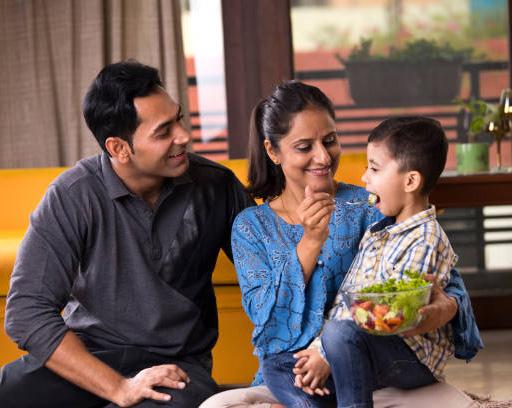
Perhaps the most powerful principle of the Okinawa lifestyle isn’t about what they eat but how they eat. The practice of “hara hachi bu”—stopping when one is 80% full—has been linked to improved digestion, better weight control, and lower inflammation.
This approach encourages slowing down, listening to hunger cues, avoiding overeating, and appreciating food consciously. In a world where stress eating, bingeing, and high-speed meals are common, this simple principle may be transformative.
Scientific Backing for the Okinawa Approach
Studies published over the past two decades show that the diet’s emphasis on antioxidants, phytonutrients, fibre, and healthy carbohydrates contributes to low rates of heart disease, diabetes, obesity, and cognitive decline among Okinawans. Foods like seaweed, tofu, sweet potatoes, turmeric, miso, and green tea offer anti-inflammatory and gut-benefiting effects.
Modern nutritionists highlight that this diet aligns closely with plantforward eating patterns recommended globally for weight management and metabolic health.
Can the Okinawa Diet Work in India?
While some Okinawan staples— like purple sweet potato or marine vegetables—may not be widely available across India, the principles of the diet are easily adaptable. Nutrition experts suggest focusing on:
• Healthy Indian carbs: shakarkandi (sweet potato), red rice, jowar, barley
• Seasonal local greens: spinach, amaranth, colocasia leaves
• Soy-based proteins: tofu, miso, tempeh (now increasingly accessible)
• Plant-heavy plates: vegetables making up 70% of the meal
• Fermented foods: idli, dosa batter, kanji, pickles in moderation
• Minimal dairy and meat
• Seafood occasionally, depending on region
Replacing fried snacks with steamed or roasted vegetables, reducing sugar intake, and cooking with minimal oil already bring Indian eating closer to Okinawan practices.
A Blueprint for Modern Wellness
In an era where quick fixes dominate wellness culture, the Okinawa Diet stands apart with its gentle, sustainable approach. It asks for no extreme restrictions, no expensive superfoods, and no rigid calorie counting—just mindful eating, plant-forward meals, and respect for the body’s natural rhythm.
As health experts explore ways to Indianise this philosophy, the Okinawan secret to long life may hold meaningful lessons for Indian homes: that longevity lies not in shortcuts, but in everyday choices made with patience, purpose, and balance.
MYTH MEDICINE:
Vs
Skin Experts Bust the Biggest Beauty Beliefs
In an age of reels, trends, and skincare hacks, it’s harder than ever to separate beauty facts from fiction. Hashtag Magazine turned to dermatologists and skincare experts to decode what truly benefits your skin, and what belongs in the bin. Here’s the expert-approved truth your skin has been waiting for.
Dr Anupriya Goe

Dr Anupriya Goel is an Aesthetic Dermatologist and Medical Director of Berkowits Hair and Skin Clinics. She is the author of the book, How to Get Glass Skin, published by Penguin House. She actively writes articles in medical journals and newspapers and has more than 20 million views on her YouTube videos. She is a National trainer of anti-ageing procedures like Botox, fillers and threadlift and an international trainer for hair growth treatments.
Can climate and pollution directly affect skin health and trigger skin problems?
Yes. Climate and pollution have a direct impact on skin health. Extreme temperatures, low humidity, and UV exposure can disrupt the skin barrier, leading to dryness, sensitivity, pigmentation, acne, and premature ageing. Pollution particles generate free radicals that increase oxidative stress, damage collagen, worsen inflammation, and aggravate conditions like acne, eczema, and melasma.
Is it necessary to change skincare products when the seasons change?
In many cases, yes. Skin needs change with the weather. During colder or drier months, the skin tends to lose moisture faster and may require richer moisturisers and gentler cleansers. In hot or humid seasons, lighter formulations, non-comedogenic products, and better oil control are often needed. Adjusting skincare helps maintain a healthy skin barrier year-round.

Can a damaged skin barrier cause multiple skin issues at the same time?
Absolutely. The skin barrier is essential for retaining moisture and protecting against irritants, allergens, and microbes. When it is compromised, the skin becomes more prone to dryness, redness, acne, sensitivity, infections, and flare-ups of conditions like eczema
or rosacea, all simultaneously. Repairing the barrier is often the first step in treating multiple skin concerns.
Are scalp problems like dandruff and itching always related to hair products?
Not always. While certain hair products can irritate the scalp or worsen symptoms, dandruff and itching are commonly linked to scalp conditions such as seborrheic dermatitis, fungal overgrowth, dry scalp, stress, hormonal changes, or weather conditions. Treating the underlying scalp issue is more important than simply changing products.
Can skin conditions like eczema or rosacea start later in life?
Yes. Although these conditions often begin earlier, they can develop at any age. Adult-onset eczema or rosacea may be triggered by stress, hormonal changes, environmental factors, underlying medical conditions, or long-term skin barrier damage. Proper diagnosis is essential, as adult presentations may differ from childhood cases.
Is patch testing important before trying new skincare or cosmetic products?
Yes, especially for people with sensitive or allergy-prone skin. Patch testing helps identify potential allergic or irritant reactions before full application. Applying a small amount of the product to a discreet area for 24–48 hours can significantly reduce the risk of contact dermatitis, rashes, or flareups.
Dr Anupriya Goel
Dr Sneha Nambiar
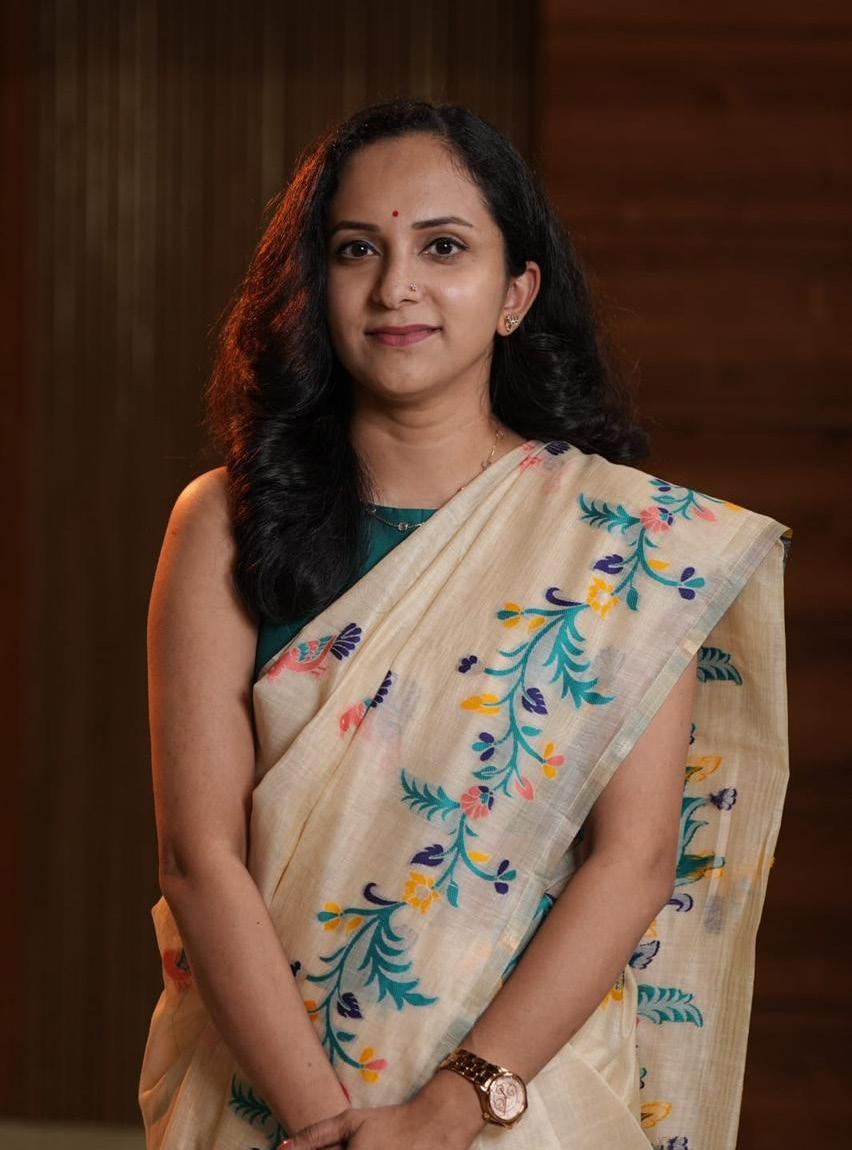
Dr Sneha Nambiar is a Dermatologist from Kerala with a keen interest in aesthetic dermatology. Through her clinical practice and educational content, she focuses on simplifying dermatology for the public, busting popular skin and hair myths and promoting safe, science-backed skincare.
Do all skin types really need sunscreen every day?
Yes. Every skin type, oily, dry, acneprone, or sensitive, needs sunscreen daily. UV rays don’t just cause tanning; they accelerate ageing, trigger pigmentation (especially melasma, common in Indian skin), worsen acne marks, and increase skin cancer risk. Even indoors or on cloudy days, UV exposure occurs, so daily sunscreen is non-negotiable.
Is acne always related to food and poor hygiene, or are there other causes?
Acne is not a hygiene problem. Over-cleansing can actually worsen it. While certain foods may aggravate acne in some individuals, the main causes are hormones, excess oil production, clogged pores, bacteria, genetics, stress, and improper skincare or cosmetics. Acne is a medical condition and should be treated as one, not blamed on “dirty skin.”
Can overusing skincare products damage the skin more than help it?
Absolutely. Overusing or layering too many actives can disrupt the skin barrier, leading to irritation, sensitivity, breakouts, and
pigmentation, something Indian skin is particularly prone to. More products do not mean better skin. Targeted, well-chosen products used correctly are far more effective.
Are professional skin treatments like peels and lasers safe for Indian skin when done correctly?
Yes, they are safe and effective when performed by trained dermatologists using the right settings and protocols. Indian skin requires a specialised understanding to prevent complications like postinflammatory pigmentation. The key is proper patient selection, correct technique, and good pre- and postprocedure care.
Does hair fall always mean a serious problem, or can it be temporary?
Hair fall is often temporary. Stress,
illness, childbirth, weight loss, nutritional deficiencies, or hormonal changes can cause increased shedding (telogen effluvium), which is usually reversible. However, persistent or progressive hair loss needs evaluation to rule out conditions like pattern hair loss or medical causes.
Is it better to follow a simple skincare routine consistently rather than keep changing products?
Yes. Consistency beats complexity. A simple routine like cleanser, moisturiser, sunscreen, and a few targeted treatments, used regularly, gives better results than frequently switching products. Skin needs time to respond, and constant changes often lead to irritation rather than improvement.


Dr Sneha Nambiar
Dr Tanvi Vaidya

Dr Tanvi Vaidya is a Consultant Dermatologist, Trichologist, and Aesthetic Physician with over a decade of experience in clinical dermatology and advanced aesthetic medicine. With a strong academic and research background, she has contributed to multiple publications, presented at national and international conferences, and received international scholarships, including recognition at the World Congress of Dermatology, Milan.
Beyond clinical practice, Dr Tanvi is deeply committed to public education and actively leverages social media to spread evidencebased awareness. Through her English and Marathi Instagram platforms, she simplifies complex skin and hair concepts for everyday understanding, reaching a combined community of over 1.5 lakh followers. Her clinical expertise includes hair loss treatments, anti-ageing procedures such as Botox, fillers, PRP & skin boosters, pigmentation therapies, and comprehensive acne and acne scar management. She is known for her ethical approach, natural-looking results, and patient-first philosophy.
Can big moles on the face be removed by laser without leaving even a small scar?
Not all big moles can be safely removed using a laser. The treatment depends on the type, depth, and nature of the mole. While lasers can help remove certain superficial pigmented lesions, deeper or raised moles often require surgical excision for safe and complete removal. Some degree of
scarring is always possible, but with advanced techniques and proper aftercare, scars can be minimal and cosmetically acceptable.
Do skin problems always show early signs before becoming serious?
Not always. Some skin conditions may start subtly and go unnoticed, while others can progress silently before becoming evident. This is why regular skin checks and early dermatological consultation are important. Identifying changes early helps in faster diagnosis, simpler treatments, and better outcomes.
Is sensitive skin a medical condition or just a skin type?
Sensitive skin is more of a skin type than a medical condition, but it can sometimes indicate an underlying skin barrier dysfunction or inflammatory tendency. People with sensitive skin may experience burning, itching, redness, or discomfort more easily. Proper skincare, trigger avoidance, and professional guidance can significantly help manage it.
Do moles, freckles, or skin spots need regular medical monitoring?
Yes, especially moles that change in size, colour, shape, or texture. Regular monitoring helps detect early warning signs of potentially
serious conditions like skin cancer. While these are larger concerns in Caucasian skin, where these cancers are more common, they can also appear on Indian skin and need to be monitored. Even freckles and spots should be evaluated if they change or appear unusual. Annual skin check-ups are advisable for long-term skin health.
Can hormonal changes at different life stages affect skin health?
Absolutely. Hormonal fluctuations during puberty, pregnancy, the postpartum phase, and menopause can significantly impact skin, causing acne, pigmentation, dryness, sensitivity, or ageing concerns. Understanding hormonal influence allows dermatologists to design customised treatment and skincare plans for each life stage. Is early treatment more effective than waiting for skin problems to worsen?
Yes, early treatment is always more effective. Addressing skin concerns at an early stage often leads to faster results, simpler treatments, fewer complications, and better long-term outcomes. Delaying treatment can make conditions more difficult and expensive to manage.

Dr Tanvi Vaidya


What’sNew?
Hashtag Magazine brings you the ultimate lowdown on India’s newest and trendiest food discoveries.
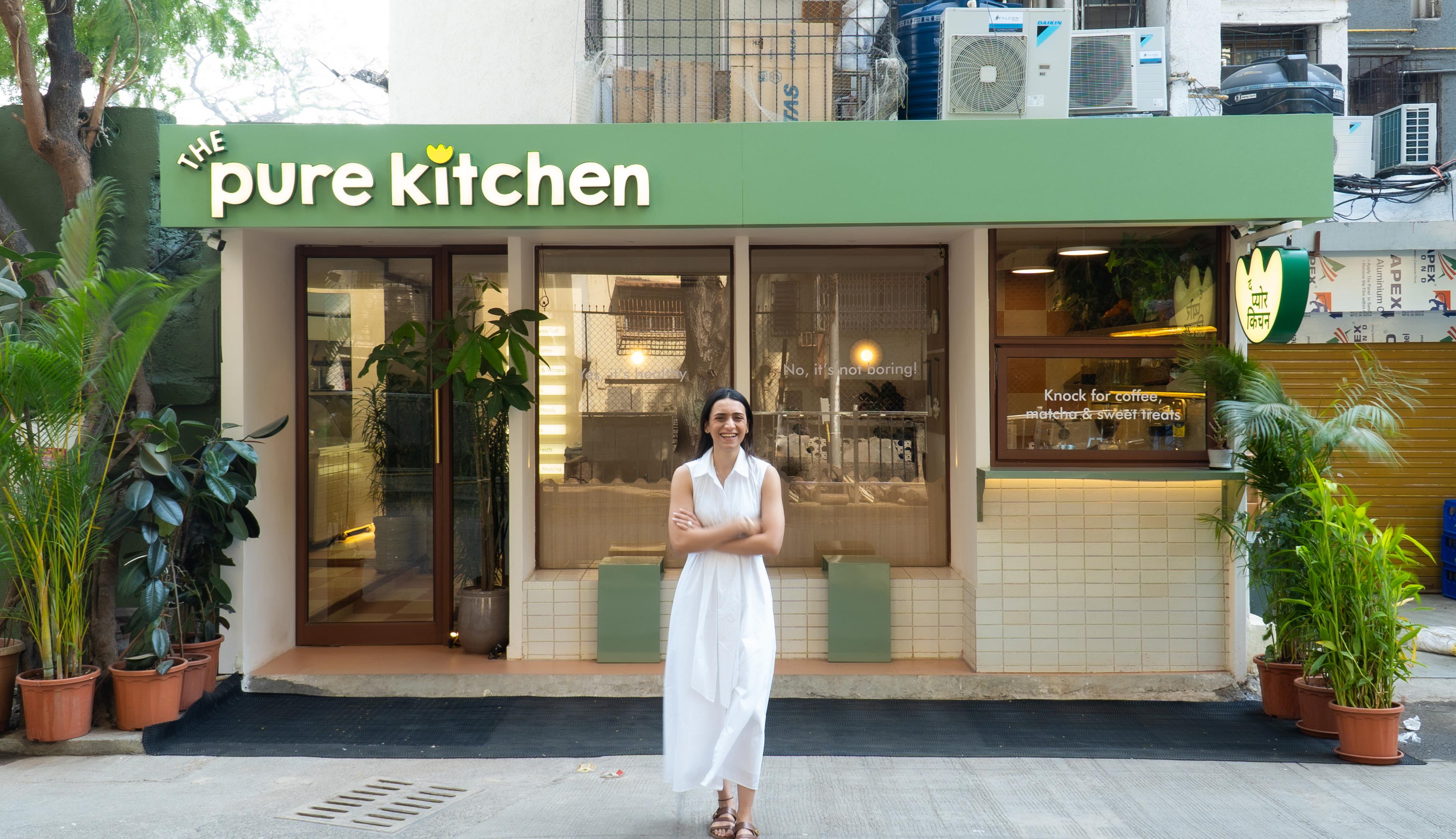
What's new? The Pure Kitchen
Where? Bandra
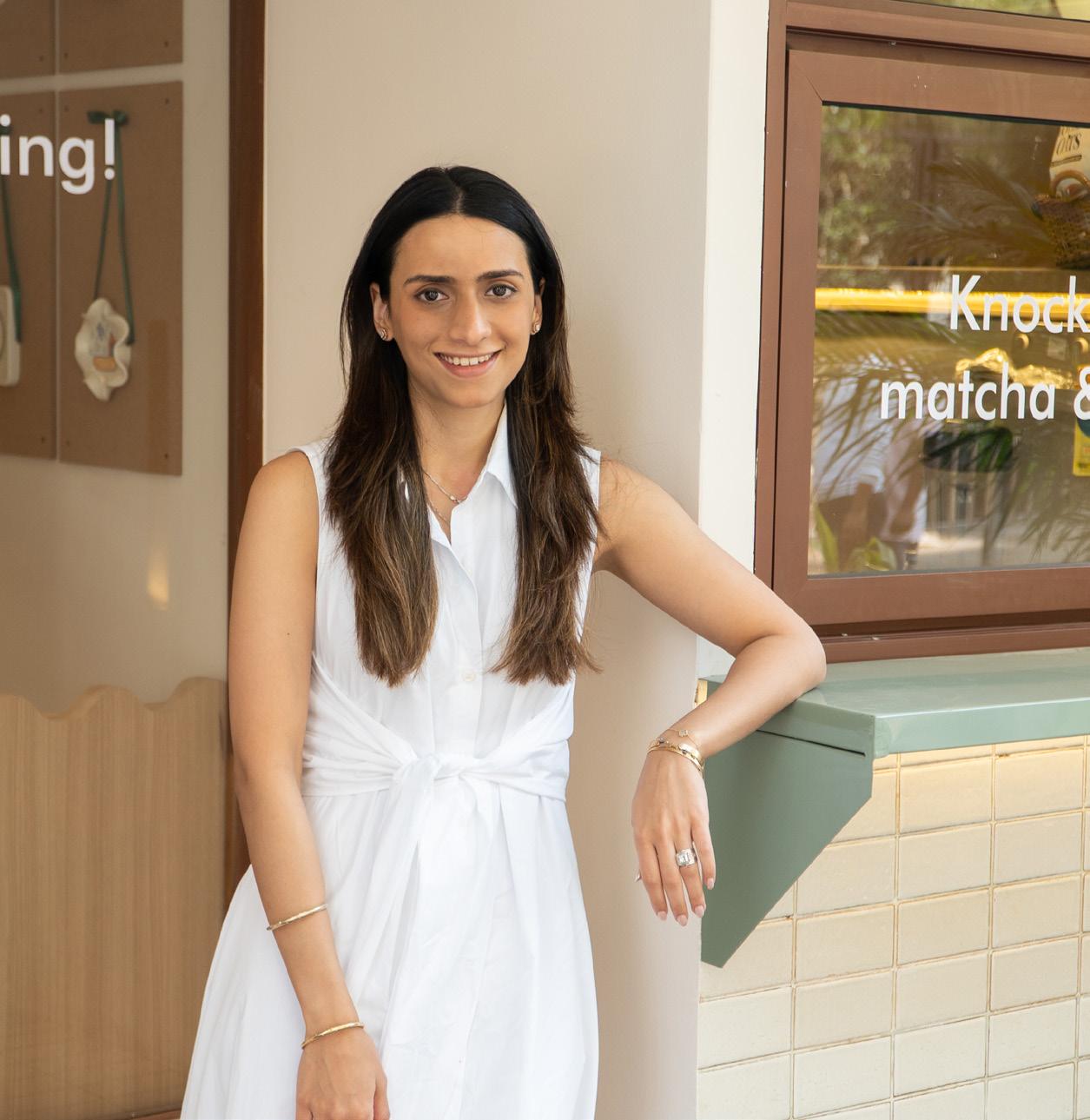
The Pure Kitchen brings a refreshing, honest take on clean eating to Bandra, one that feels warm, approachable, and rooted in real nourishment.
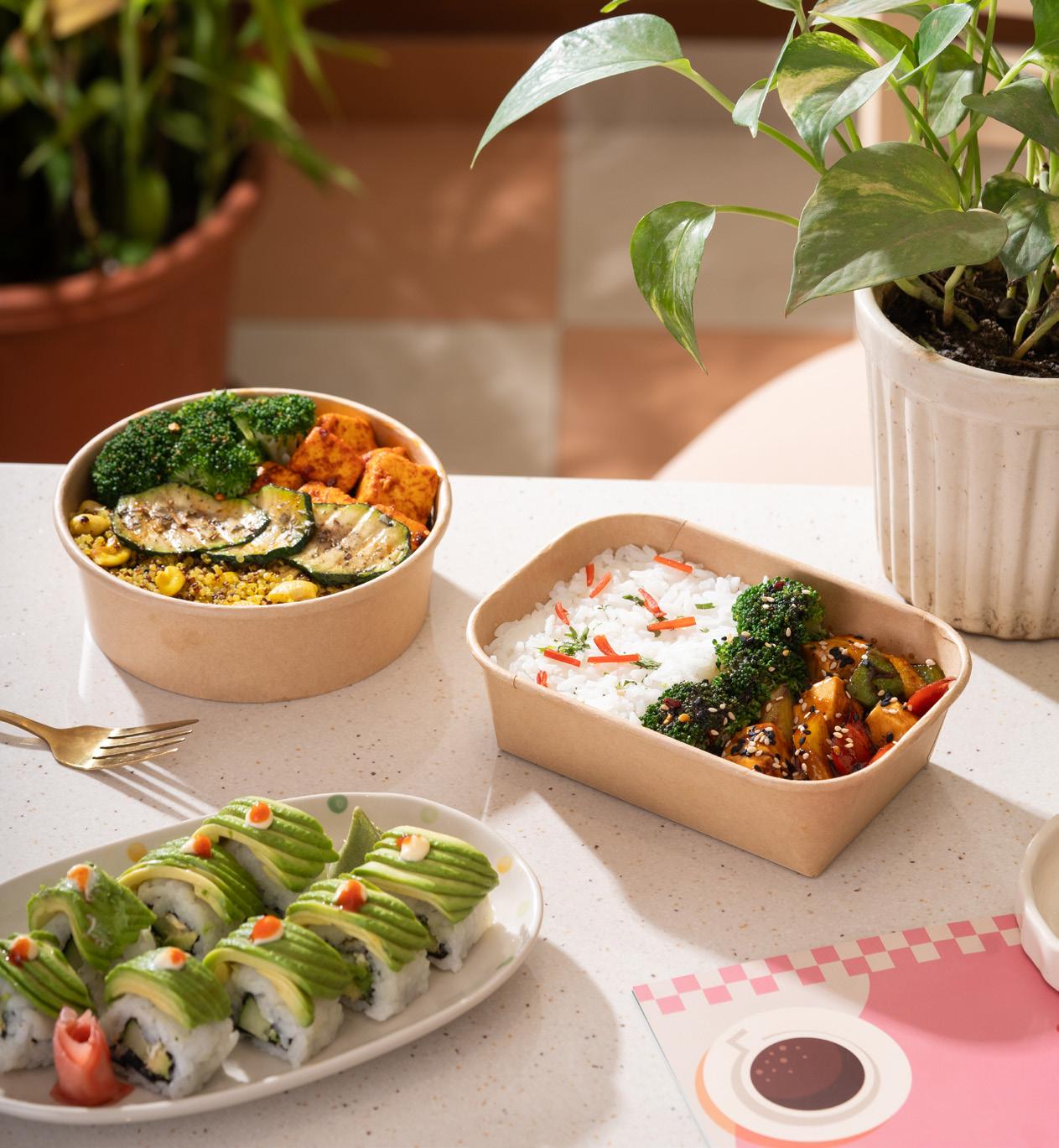
Founded by Aaliya Ahuja of Oleander Farms and Saltt Karjat, the brand reflects her belief that healthy food shouldn’t feel like a punishment. Instead of restricting ingredients, The Pure Kitchen champions better alternatives: monk fruit instead of refined sugar, unprocessed honey over syrups, and clean, mindful swaps that elevate nutrition without compromising flavour.
What truly sets the space apart is its transparency; every dish arrives with a protein count and calorie breakdown, empowering diners to make choices that serve their lifestyle. From lowcarb bowls and vibrant vegan plates to guilt-free desserts, the menu balances comfort with consciousness.
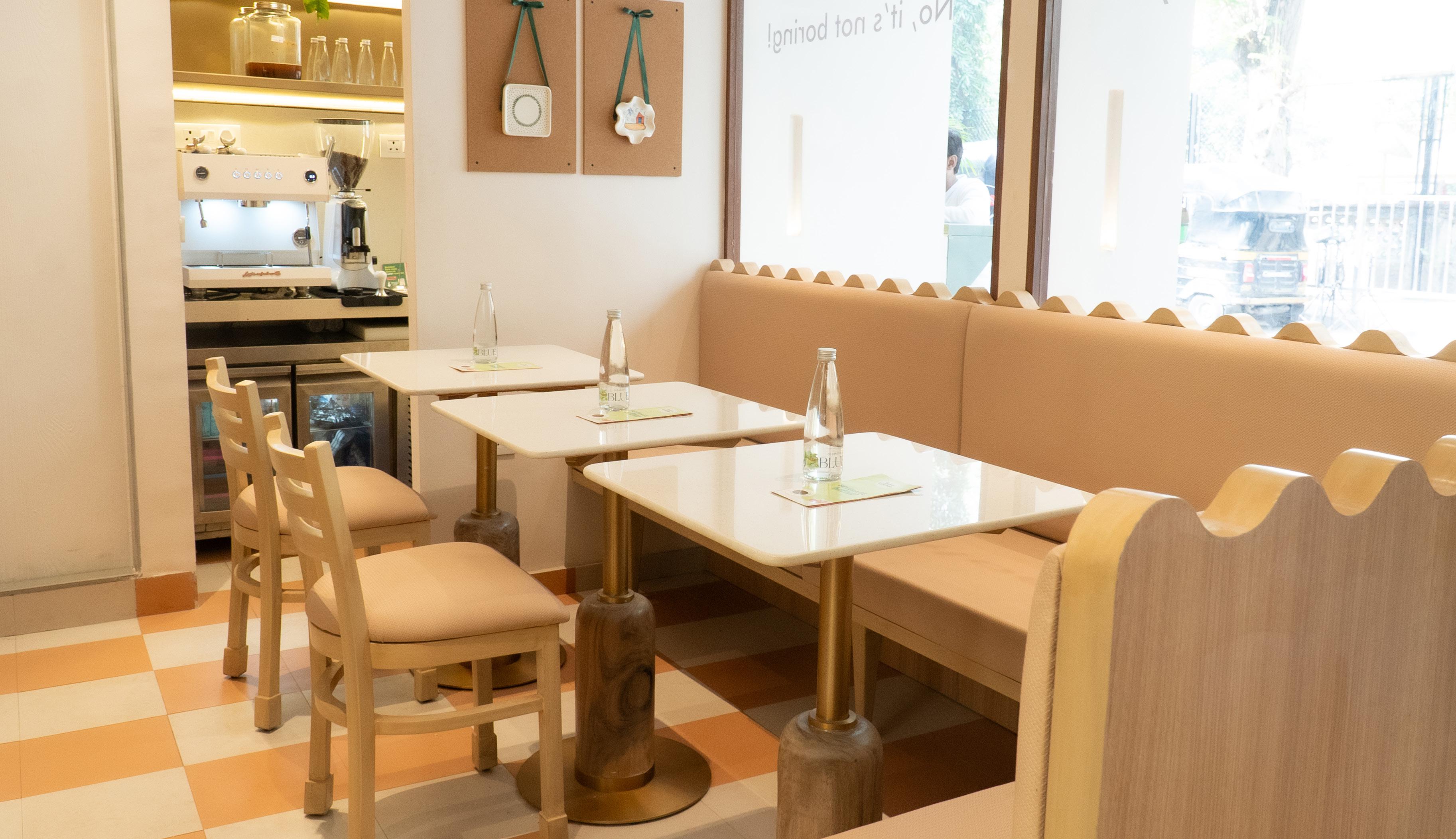
The Bandra outlet itself is a cosy, calm reprieve, ideal for mindful lunches, post-workout meals, or a quick graband-go treat from the charming coffee window. Pure, fuss-free, and thoughtfully crafted, The Pure Kitchen makes eating clean feel genuinely delightful.

Aaliya Ahuja
What?
Dynamo, Vagator Hilltop Where: Goa
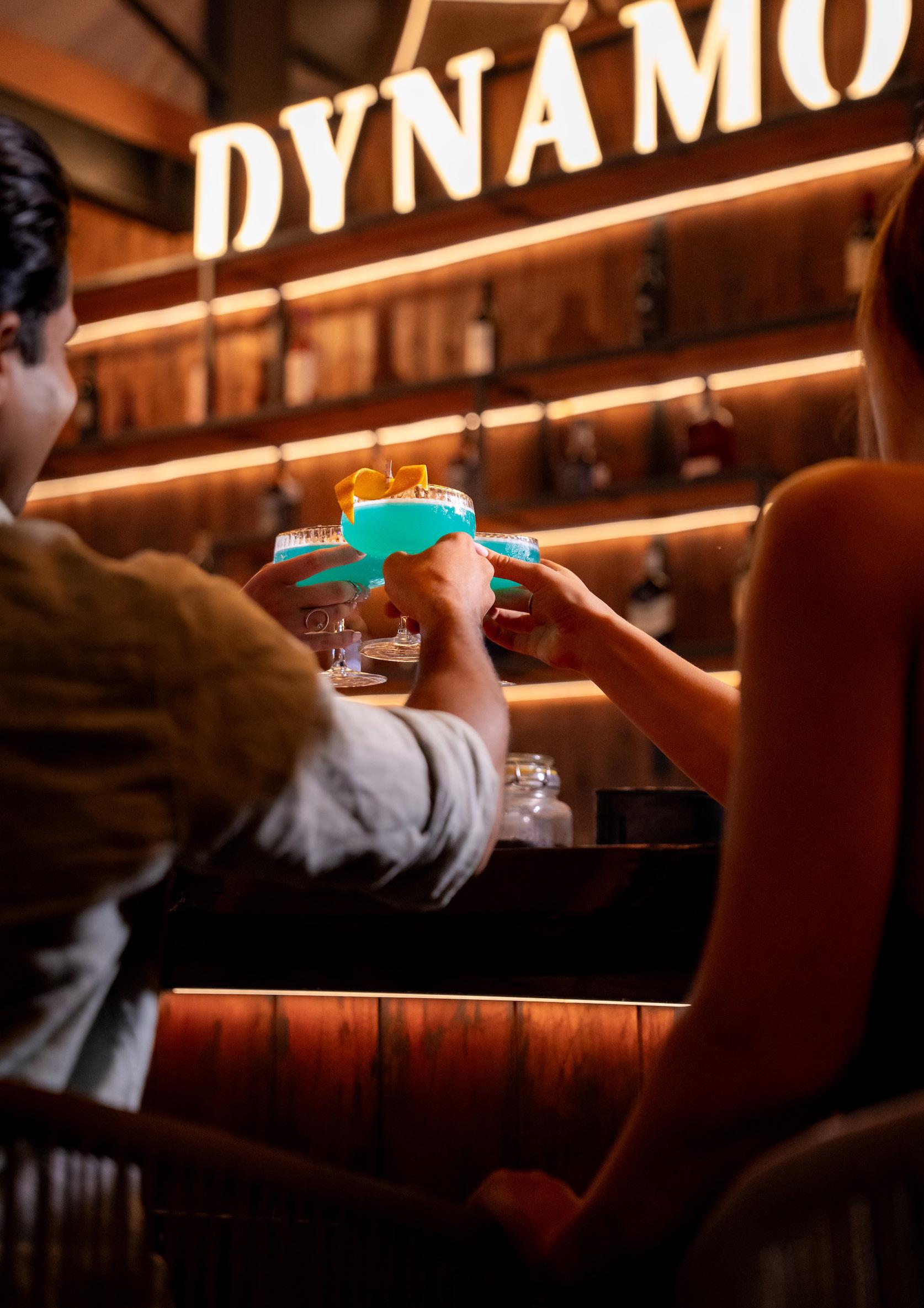
Dynamo, located on the scenic Vagator Hilltop in Goa, is redefining the state’s sundowner culture with a seamless transition from laidback sunset moods to an energetic, music-driven nightlife atmosphere. The Cliffside restro-lounge offers uninterrupted sea views, a curated cocktail program by internationally acclaimed consultants, and a menu shaped by chefs trained under awardwinning culinary leaders. Signature plates such as Chaap & Chokha, Chilaquiles, Falafel Mezze Platter, and Korean Wings pair effortlessly with cocktails like Special Train to Goa, Spirit of the West, and Calico: The Painted Horse, each crafted with depth, flavour, and narrative.
The interiors combine rustic Wild West cues with contemporary metal accents, creating a warm yet edgy aesthetic across its terrace, lounge seating, VIP sections, and bar-side tables. As the sun dips and the music builds, Dynamo becomes a destination where ambience, hospitality, and rhythm converge. It’s a must-visit for anyone seeking Goa’s new-age sundowner-to-nightfall experience.



What? Javaphile Café
Where: Worli
Javaphile Café’s newest flagship on Khan Abdul Gaffar Khan Road, Worli, brings its refined neighbourhood-café ethos to one of Mumbai’s most dynamic enclaves. Designed as an oasis for those who value quality, comfort and consistency, the Worli outpost blends quiet luxury with everyday familiarity, ideal for early risers, long workdays and slow, indulgent brunches.
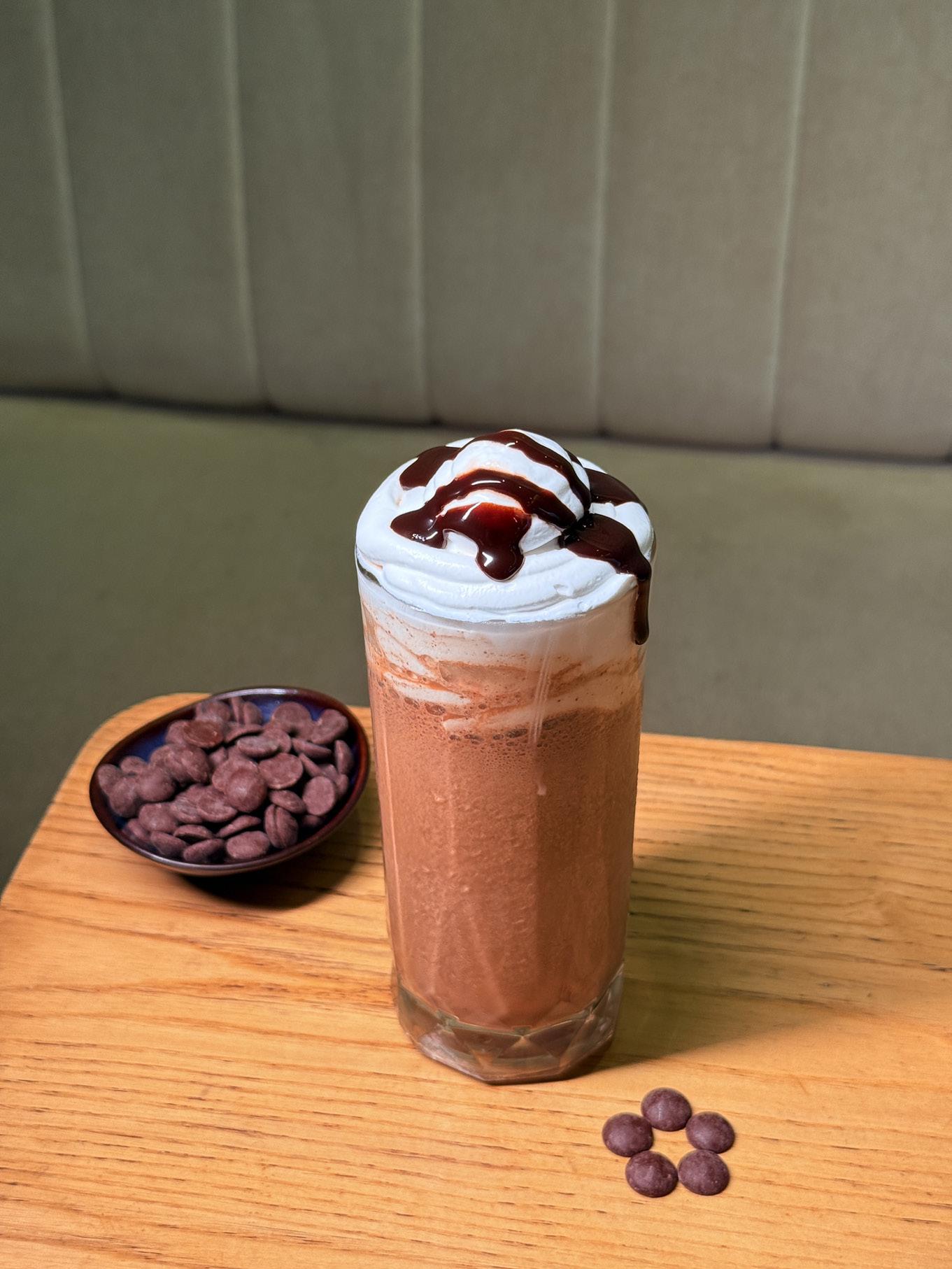
The café stays rooted in its core philosophy: coffee first. It offers the full spectrum of brews, from classic espressos to Signature Sea Salt Mocha, Spiced Latte and Java Chip Frappe. Cold brew enthusiasts can explore refreshing riffs like Citrus, Elderflower and Cream Cold Brew, while purists have ample manual brewing options, including Chemex and AeroPress.
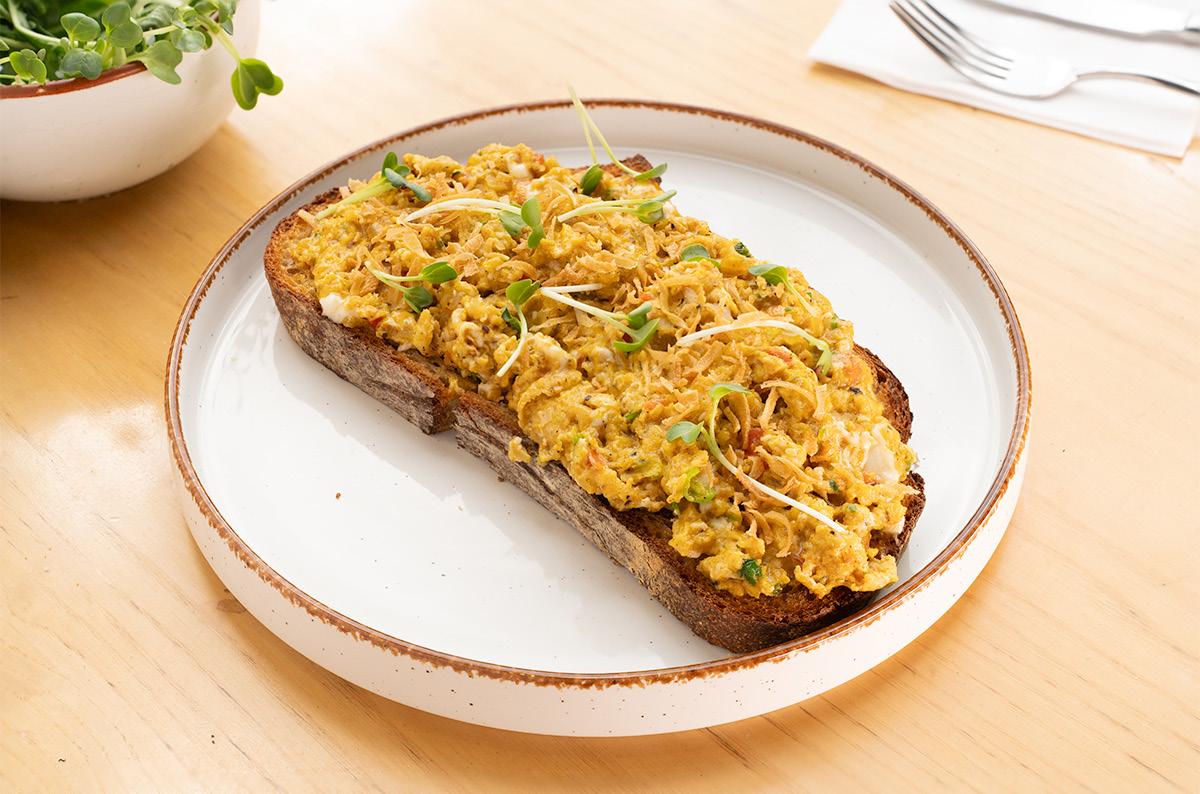
Food is comfort-driven yet thoughtfully elevated, spanning Akuri Toast, Shakshuka and Eggs Benedict to grain bowls, tartines, wraps and indulgent French toast variations. Warm service and an unfussy ambience make the new Javaphile Café in Worli an inviting everyday ritual for the neighbourhood.

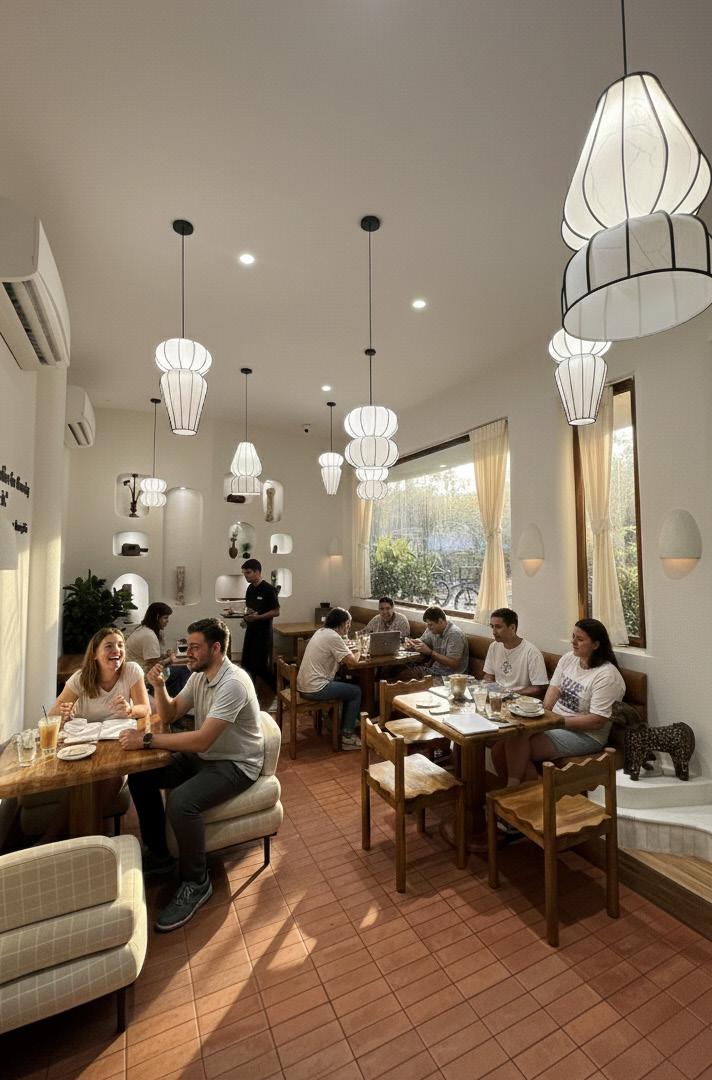
SOL55 in Koramangala positions itself as Bengaluru’s newest neighbourhood bar with a clear, refreshing intent: honest pours, soulful food, and an atmosphere built for return visits. In a city known for its high-energy lounges and trend-led bars, SOL55 stands out for its warmth, grounding, and effortless familiarity.
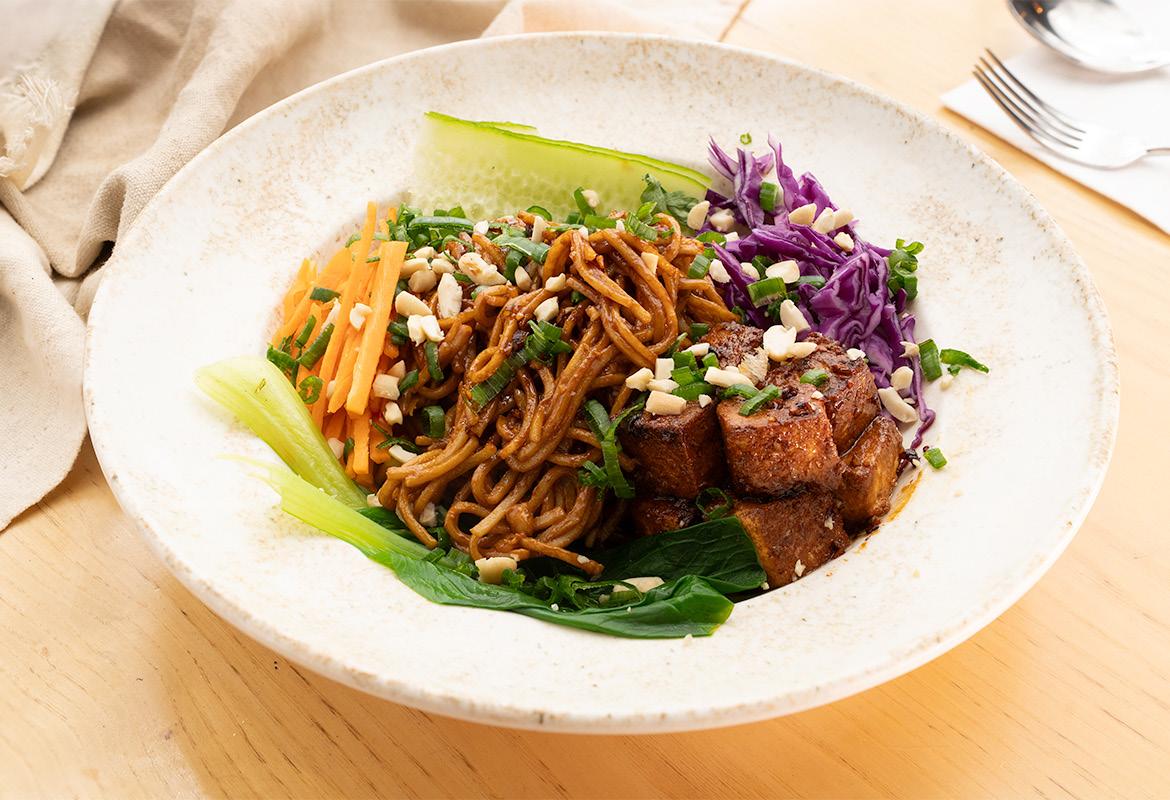
The space blends polished design with an approachable vibe, making it ideal for after-work catchups, unplanned weekends, and long conversations over comfort-forward plates. The menu is a major draw, especially the regional thalis like Coastal, Goan and Maratha, which are to find in a bar setting and crafted for wholesome, flavour-packed meals. Platters and Indian bar staples make sharing easy, while the cocktail program offers well-crafted signatures like Smoked Rosemary, Wildside, and the playful Filter Coffee Negroni.
With its thoughtful pricing, inviting interiors and consistent experience, SOL55 feels less like another addition to Bengaluru’s nightlife and more like the neighbourhood bar the city has been waiting for.
What? SOL55 Where: Koramangala




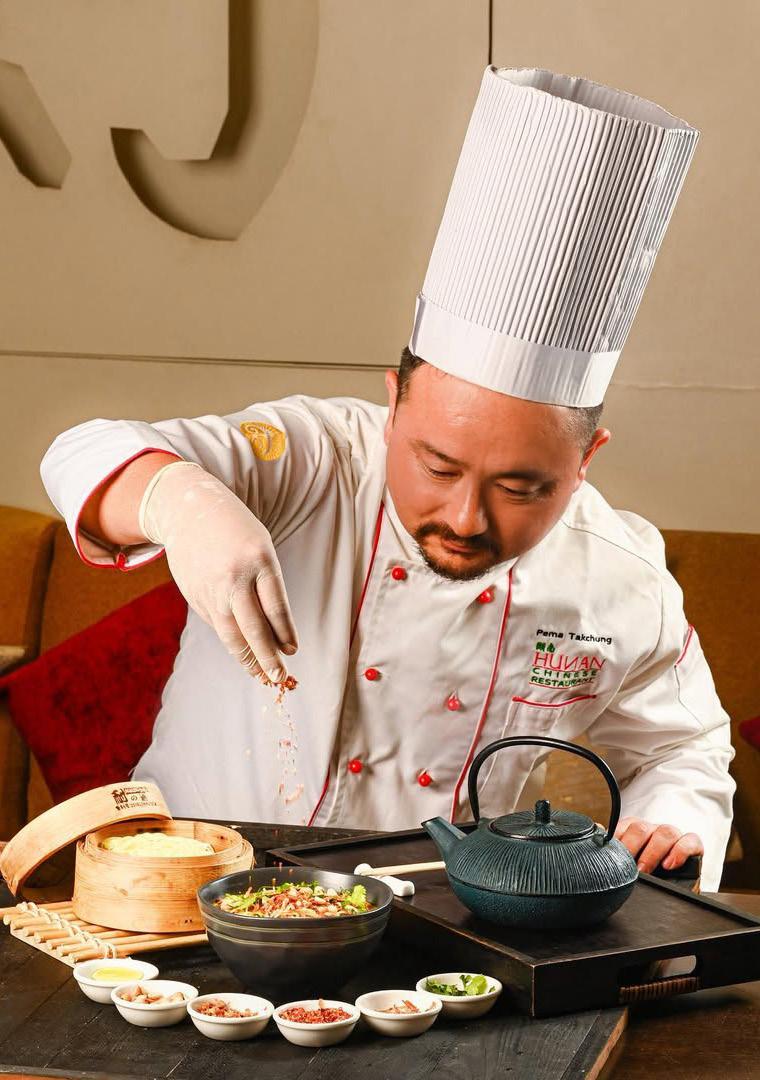
Hunaaan: A slice of Asia in Bangalore
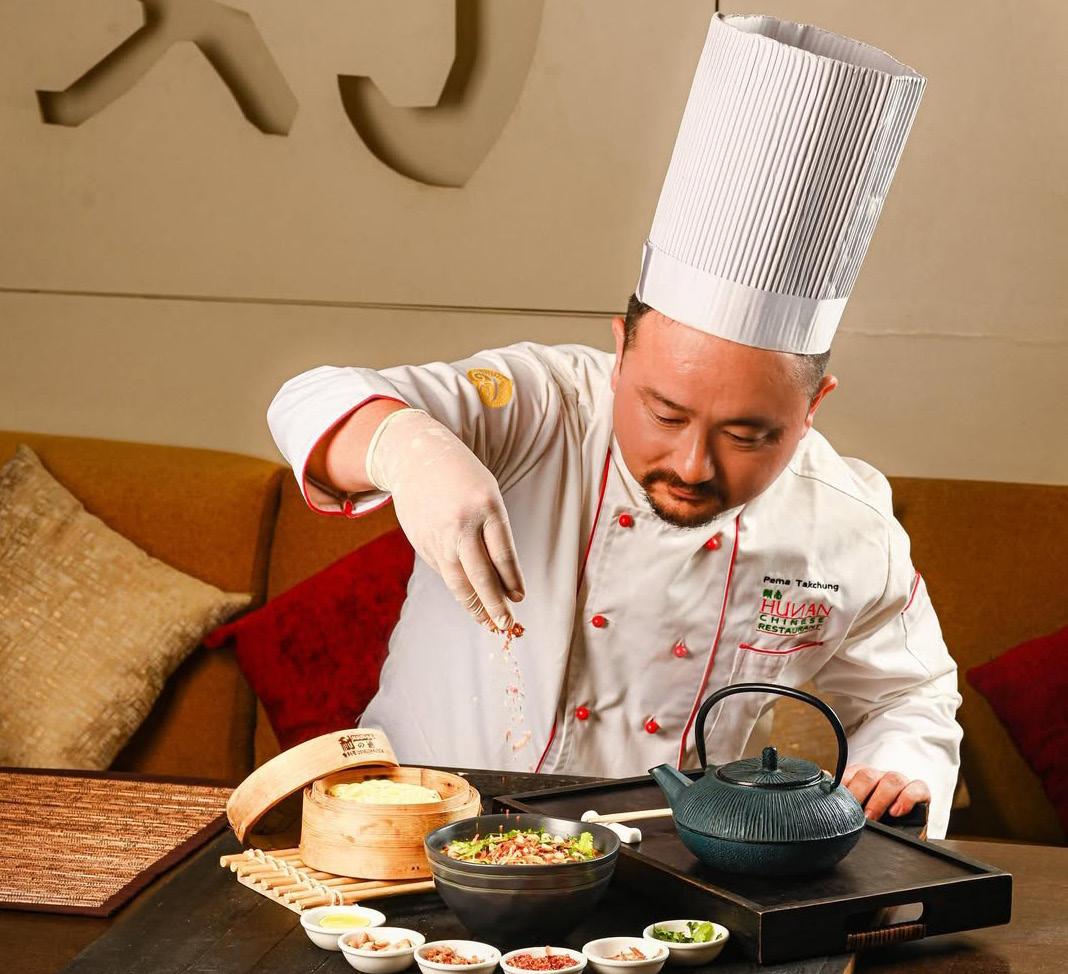
From bold spices that make you question every meal you’ve ever had to dishes that taste like they’ve travelled the world, Hunaaan delivers flavours that refuse to play it safe. With lively noodles, artful dim sums, and sauces that don’t sit quietly on the tongue, Neha Dua gives a lowdown of the place.
Plates exploding with personality
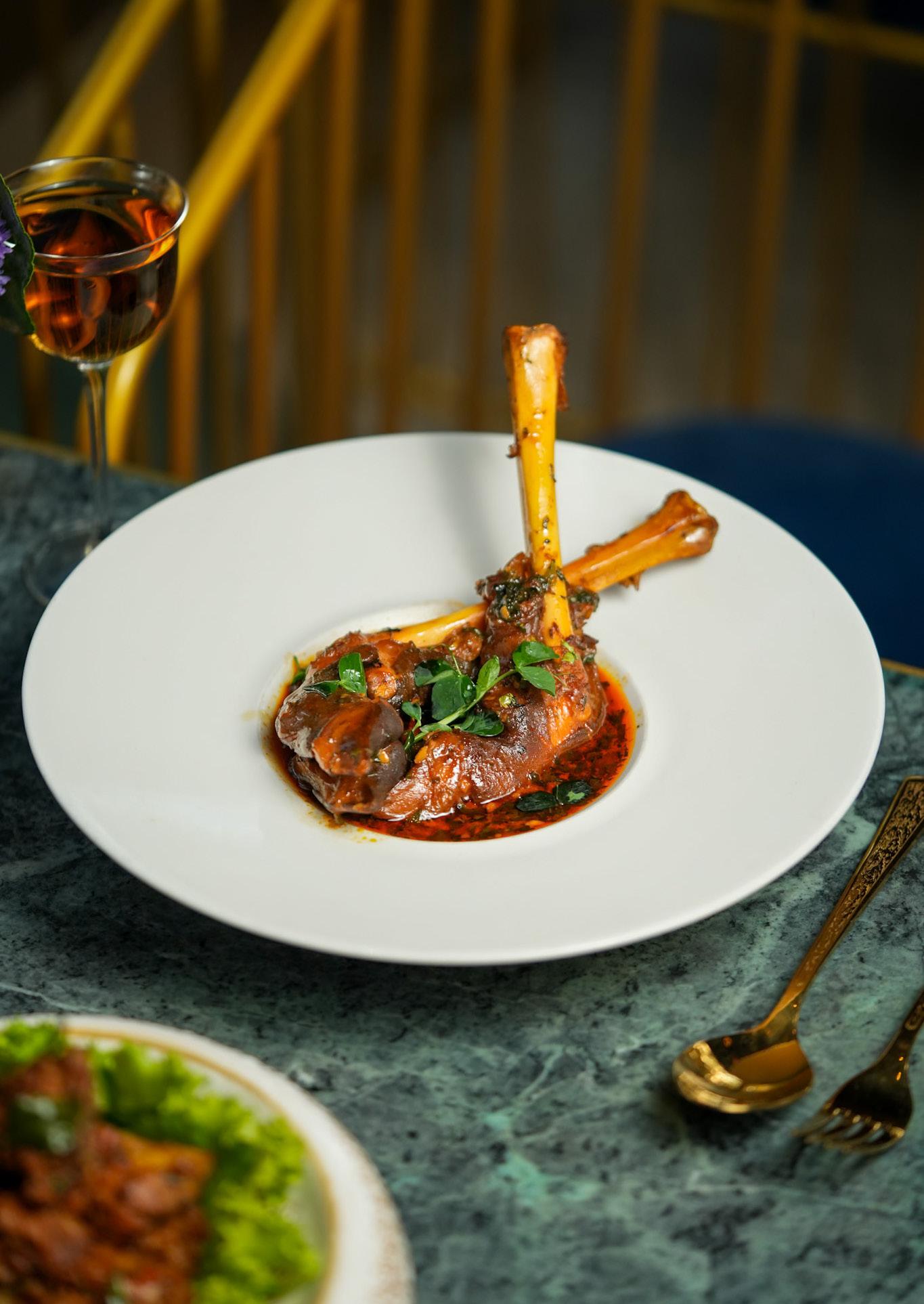
Not having sushi here would be nothing short of criminal. The Ebi Tempura and Avocado Maki is everything one expects from Japanese cuisine. The prawn tempura comes alive in a riot of colours and flavours. Vegetarians, fret not, you can indulge in the Avocado Garden.
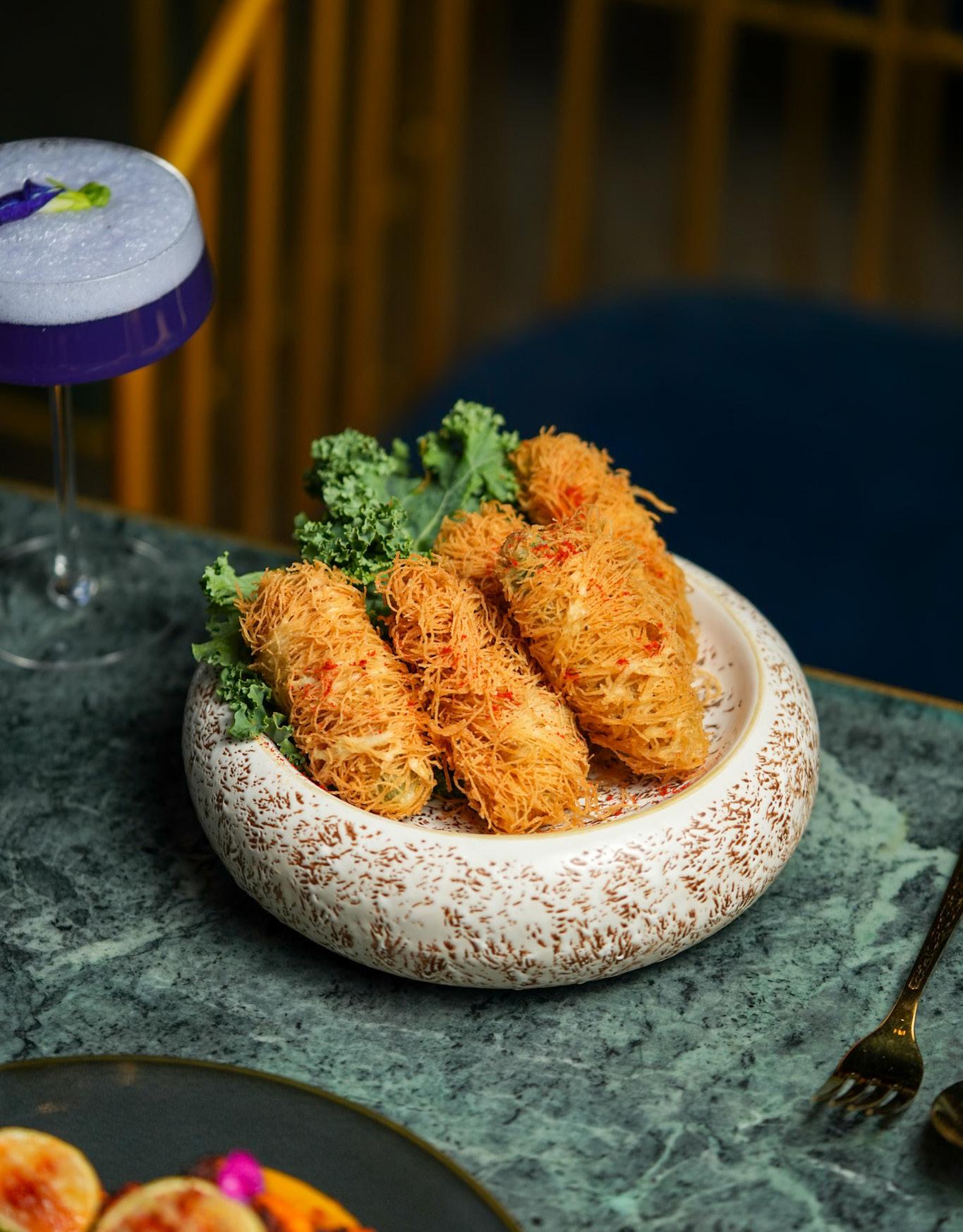
Their dumplings are delectable, with very fine wrappers and perfectly balanced flavours. The Chilli Coriander Chicken Dumpling is a sight for sore eyes and hits you with a kind of balanced chaos that you can’t have enough of. And if you like your dumplings soupy, the Basil Flavoured Curry Dumpling won’t disappoint.

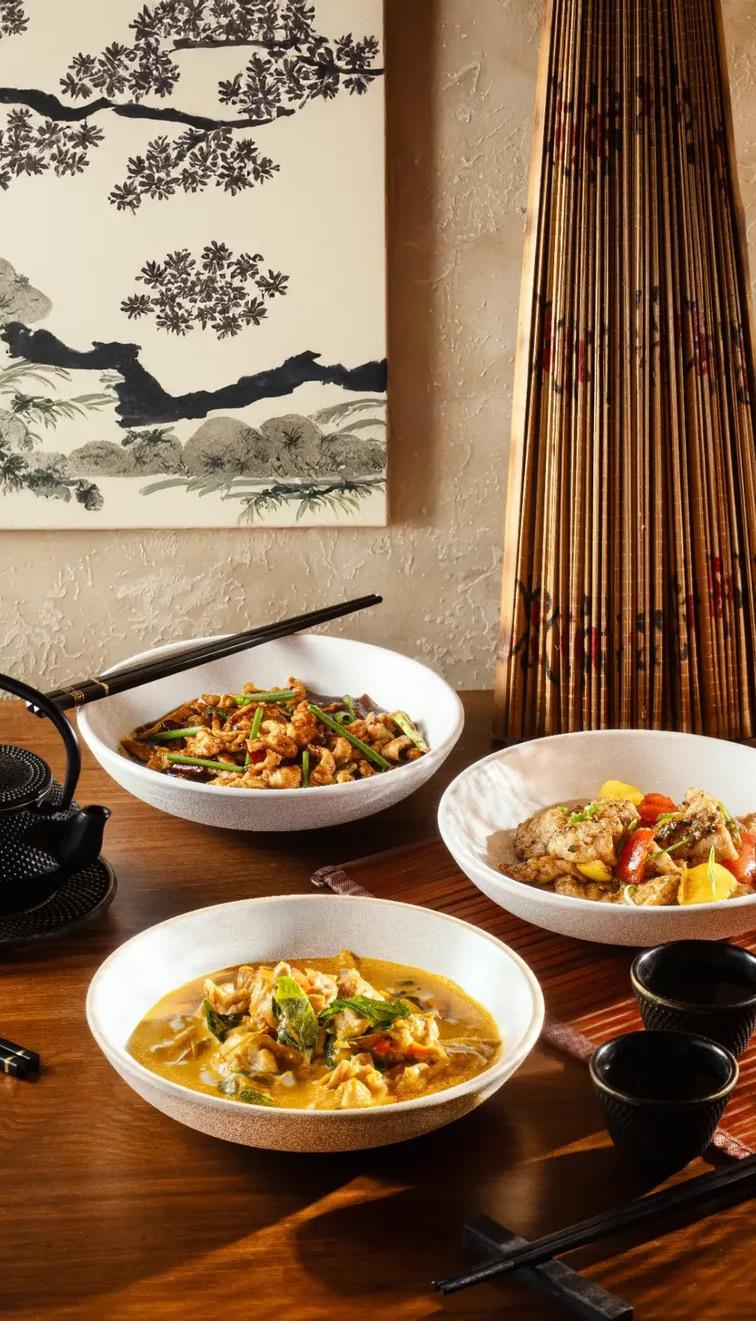
Raise a glass to excellence
A smooth Virgin Pina Colada, featuring creamy coconut milk, has the potential to teleport you to a tropical destination, while the Soju Picanté, a Hunaaan Signature Cocktail, is aptly described as “Everything you want from a picanté: Spicy, lemony, and we dare you to have just one.” Shaken. Stirred. Sipped.
A little oink, a little sugar, and a lot of swagger
Hunaaan’s imported pork belly deserves a mention. Doesn’t melt in your mouth, but is definitely less fatty than several other places. If you’re a tofu fan, don’t skip the tofu sizzler. But be prepared to share it with one or two others, for the portion size is HUGE. Although if you finish it by yourself, nobody will judge.
Matcha lovers, unite! Wrap up your meal with a serving of the Japanese Matcha ice cream. But if it’s not up your alley, do spare a thought for the tiramisu.
Every movie has its hero…
But Hunaaan has two! The protagonist of the opening credits scene is the Veg Tom Kha Soup that high-fives your very soul. Thai spices, coconut milk, perfect proportions.
The lead of the end credits scene has to be the Darsaan with Ice Cream. Crispy fried noodles, coated in a glossy honey syrup, topped with toasted sesame seeds, served with ice cream. It’s the simplicity of this dessert that makes it a winner!

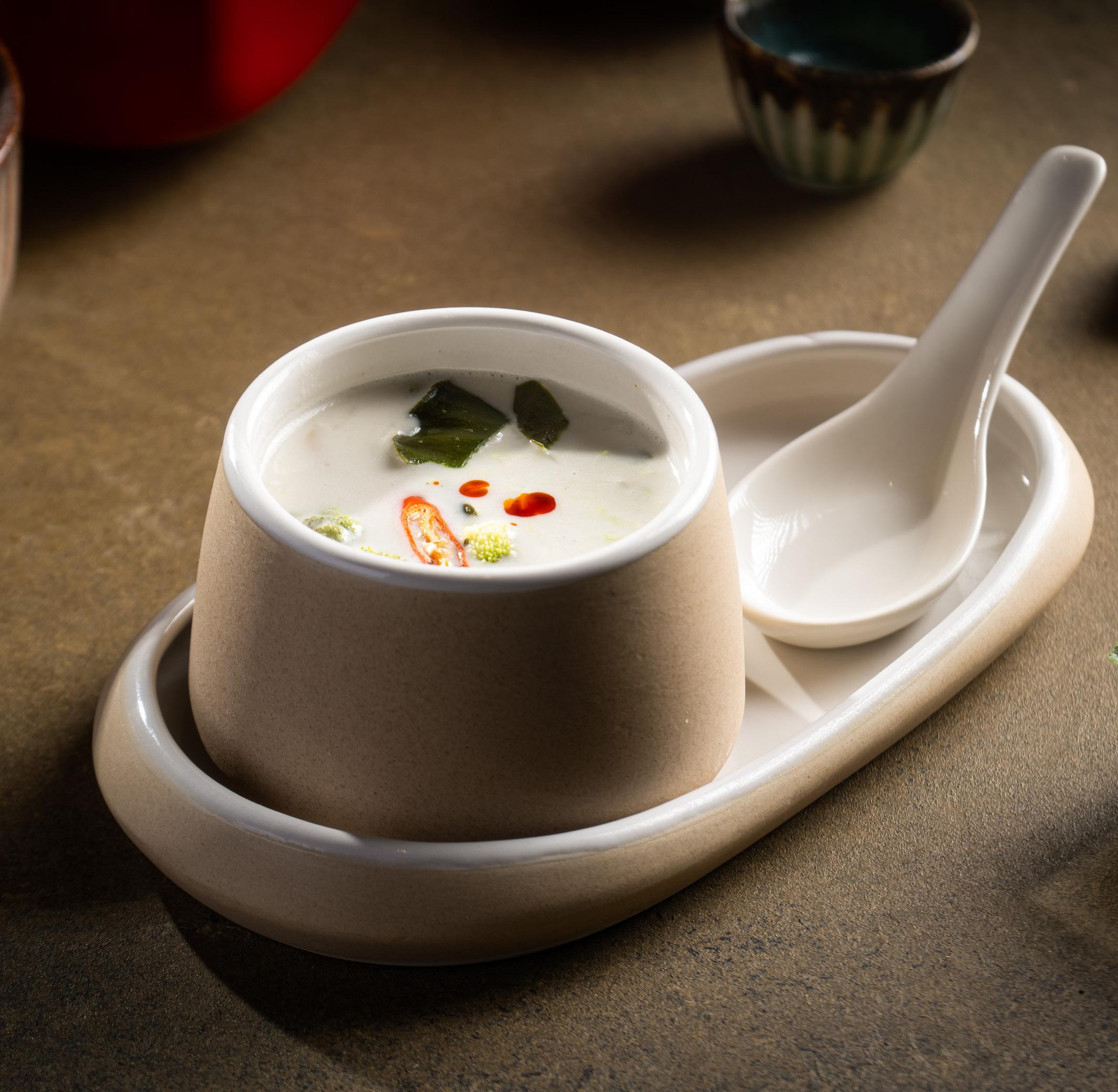

Location: 2nd Floor, 3163, 12th Main Rd, Defence Colony, Domlur, Bangalore
Timings : Mon-Thu: 12 to 4 pm, 7 to 11:30 pm/ FriSun: 12 pm to 12 am
Price for two : ₹2000 (approximately) without alcohol
Instagram : /hunaaanindia
Absolute must-haves at Hunaaan
Veg Tom Kha soup
Darsaan with ice cream





6 Routes with Kid-Friendly Stops and Food Family Road Trips in India:
The engine is humming, the bags are packed, and the open road awaits. But as every parent knows, a successful family road trip in India is a fine art. It requires more than just a GPS; it requires a strategy for clean restrooms, engaging pit stops, and food that won’t result in a backseat tantrum.
When the logistics are handled, a road trip becomes more than just travel; it becomes a core childhood memory. From the misty mountains of the North to the coastal breezes of the South, Dhanush Kumar brings you six iconic Indian routes designed to keep the kids happy and the parents’ stress levels low.
Delhi to Jaipur: The Golden Path
The transition from the skyscrapers of Gurgaon to the pink walls of Jaipur is a visual treat. The expansion of the NH48 makes this a smooth drive for families. You can break the journey at Neemrana Fort Palace, the sprawling gardens are perfect for kids to burn off energy, and the vintage car museum is a guaranteed hit. On the way, you can stop at a dhaba and order Paneer Parathas and fresh curd.



Mumbai to Mahabaleshwar
This route offers a dramatic climb through the Western Ghats. The Mumbai-Pune Expressway provides worldclass tarmac, while the climb to the hill station offers cooler air and scenic views. You can stop at Mapro Garden, also known as Panchgani. This isn’t just a stop, it’s a destination. With dedicated play zones and a chocolate factory tour, it’s the ultimate reward for a long drive.
Bangalore to Coorg
The drive through the lush landscapes of Karnataka is refreshing, but the winding roads near the end require planned breaks to keep motion sickness at bay. A slight detour near Dubare Elephant Camp allows children to interact with elephants in a natural setting, which is a highlight of any trip. The must-try food here is Neer Dosa or Idli Platter. These watery crepes are incredibly light and easy for kids to digest.


Chennai to Pondicherry
The East Coast Road is perhaps the most scenic drive in South India, offering constant views of the Bay of Bengal and plenty of seaside parks. You can stop at Dakshina Chitra Museum, a living history museum that offers craft workshops and puppet shows, turning a simple rest stop into a hands-on cultural adventure.
Grab a plate of Mini Ghee Podi Idlis. They are bite-sized, mess-free, and the clarified butter provides sustained energy. Follow it up with Fresh Coconut water sold along the roadside to keep everyone hydrated in the coastal heat.
Guwahati to Shillong
The climb to Meghalaya is stunning, with well-paved roads that snake through pine forests and past massive reservoirs. Stop at Umiam Lake for a quick pedal-boat ride. The fresh mountain air and the vast expanse of water are perfect for refreshing the senses before the final ascent.
Look for Jhalmuri or Roasted Corn prepared with a mild lemon rub. For a proper meal, try Vegetable Chowmein, the Indo-Chinese Style in the hills is unique, flavorful, and always a winner with younger travelers.


Chandigarh to Manali
With the opening of new tunnels, the hair-raising climbs have been replaced by a much smoother, safer experience for families heading into the heart of the mountains. Stop at Pinjore Gardens, located at the foothills. These massive gardens offer enough space for a full hour of running and exploring before the mountain ascent begins.
The ultimate comfort food here is Rajma Chawal served with a side of mountain-style curd. For a snack, Maggi with mountain veggies remains a legendary highway staple that no child can resist.


Budget Spiritual Travel:
How to go Deep, Not Cheap in
India
In 2026, spiritual tourism in India has become a massive industry. From high-end meditation boutiques in the Himalayas to luxury detox villas in Kerala, it is easier than ever to spend a fortune on enlightenment. But here is the truth that every true seeker eventually realises: spirituality is one of the few things in life that actually becomes less authentic the more you pay for it.
Going deep isn’t about the thread count of your yoga mat; it’s about the intensity of your immersion. Dhanush Kumar writes about how to experience the spiritual soul of India without falling into the trap.
The Power of Seva: Amritsar
The Golden Temple is the ultimate classroom for humility. While thousands of tourists visit to take photos, the deep experience lies in the Langar, which is the community kitchen. Instead of just walking through, volunteer for two hours in the kitchen. Peeling garlic or washing giant vats alongside people from every walk of life is a more profound meditation than any paid workshop.
Arrive at 4 AM for the Paki Sahib procession. You will hear the low, rhythmic chanting of Gurbani hymns that seem to vibrate through the very marble floor. The air is cool, and the reflection of the illuminated temple in the Amrit Sarvoar creates a sense of being in a world between worlds.

The Path of Self Inquiry: Tiruvannamalai
While many spiritual hubs feel like a circus, the town of Tiruvannamalai, home to the sacred Arunachala Hill, remains a sanctuary for serious meditators. Stay at the Sri Ramanasramam or a nearby simple guesthouse. Avoid the spiritual cafes and instead participate in the Girivalam, a 14 km walk around the mountain at 4 AM with thousands of others, but the experience is intensely deep.
The scent of camphor from small roadside shrines and the looming presence of the dark hill to your left serve as a silent anchor for your thoughts.

The Global Pulse of Peace: Bodh Gaya
Bodh Gaya is where the Lord Buddha attained enlightenment. It is the place where the entire Buddhist world meets.
Entering the Mahabodhi temple complex at dawn is like walking into a living map of Asia. You will hear Tibetan monks chanting in deep bass tones, Thai pilgrims in bright orange robes walking in silent meditation, and Japanese Zen practitioners sitting in absolute stillness.
Sit under the Bodhi Tree. The experience is a mix of the sensory, the rustling of the heart-shaped leaves. You are sitting at the centre of a tradition that has lasted 2,500 years. The depth comes from realising you are part of a continuous, global pause of seeking.

The Discipline of the River: Rishikesh
While the main streets of Rishikesh can feel like a festival, the traditional ashrams offer a glimpse into the Gurukul way of life. It begins with the sound of a brass bell at 5 AM. The traditional ashram experience is of strict discipline, which includes cold water showers in the morning, simple white clothing, and communal chanting.
Sit by the Ganges at dusk. The experience of the Aarti is famous, but for a deeper connection, find a quiet ghat away from the speakers. The real experience is the sound of the fast-flowing river, a constant, powerful white noise that drowns out the internal chatter of the mind.



Celebrating the Purest Relationship of All FUR-EVER CONNECTED:
February celebrates relationships in all their forms, and some of the most meaningful ones don’t involve humans at all. The bond between pets and their owners is pure, instinctive, and healing in ways we often don’t put into words. This month, we spotlight the stories where wagging tails and soft purrs have shaped lives and brought everyday joy.
MEET POOJA OSCAR SHARMA: WHERE FITNESS, COMPASSION, AND DOGS COLLIDE
Pooja Oscar Sharma, health and fitness coach and MTV Roadies alumna, never imagined that dogs would become such a defining part of her life. Enter Oscar, her grumpy yet loving golden retriever, and Karma, the mischievous younger sibling. Together, they transformed from companions into family, and inspired the creation of Oscar & Karma, an awareness-first platform dedicated to adoption, ethical care, and responsible pet ownership in India.
How would you describe the bond you share with your pets, and what joys and challenges come with being their caregiver?
Oscar & Karma began as a space to share what I was learning about my dogs. Over time, it became an awareness platform connecting people to the personalities, quirks, and sibling bond of Oscar and Karma. The joys are endless, the unconditional love, the little moments, and the growth we experience together. The challenges are real, too, especially in India, where understanding a dog’s needs, emotions, and welfare is limited. Compassion often comes last.


How did this journey evolve beyond your pets to a larger community?
As I learned more, I realized the harsh realities of breeding, neglect, and cruelty in India. Oscar & Karma now stands for fostering, helping dogs in need, supporting community animals, and promoting environmental responsibility. Every initiative is inspired by Oscar and the desire to make a difference in the world they, and we, live in.
What does running Oscar & Karma mean to you personally?
It’s a daily reminder to lead with empathy. The platform has taught me patience, resilience, and the importance of sharing knowledge responsibly. Most importantly, it has shown me that love for animals can grow into a force that educates, inspires, and unites an entire community.
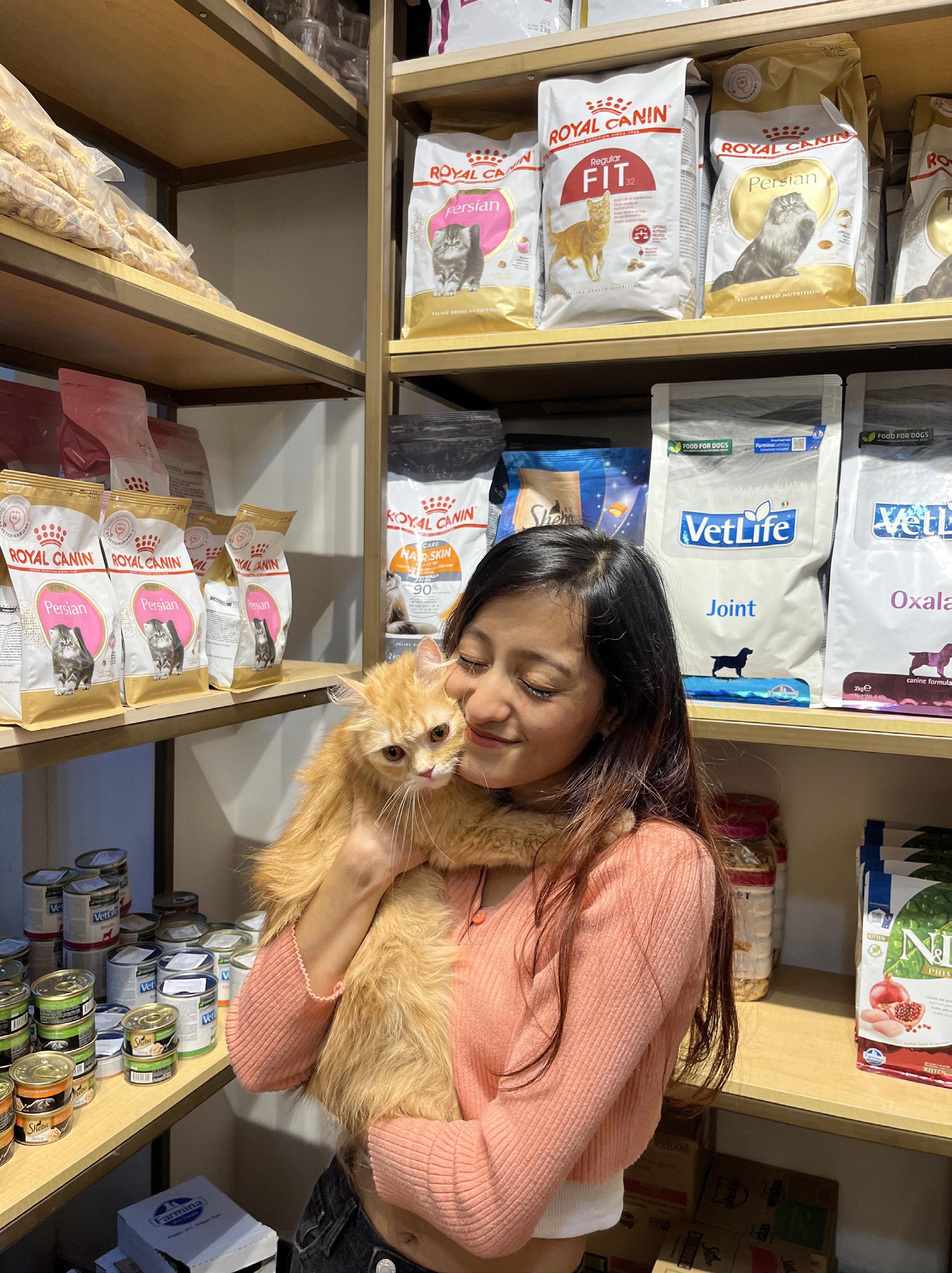
Sanjana Basnet, 22, is a Delhi-based social media manager whose days revolve around content strategy, creativity, and crafting visual stories. She finds magic in the small moments, blending simplicity and warmth in everything she does. Sharing her home is Chonkie, a threeyear-old Persian cat whose quiet charm and subtle affection make every day feel special. Playful yet calm, Chonkie brings both energy and comfort, creating a balance that perfectly complements Sanjana’s busy life.
How would you describe your bond with Chonkie, and what joys and challenges come with caring for him?
Our bond is quiet but deeply comforting. Chonkie isn’t clingy; his love is subtle, showing up in shared spaces, playful bursts, or simply lounging nearby. The joy is in watching his personality shine, from sudden zoomies to calm moments of presence. The challenge is keeping him mentally engaged, especially on busy workdays, and balancing travel or work commitments with his care. This rhythm has made our connection even more rewarding, turning small gestures into meaningful moments.
MEET PLOWY & HER PAW PARENTS: MANISHA & HITESH
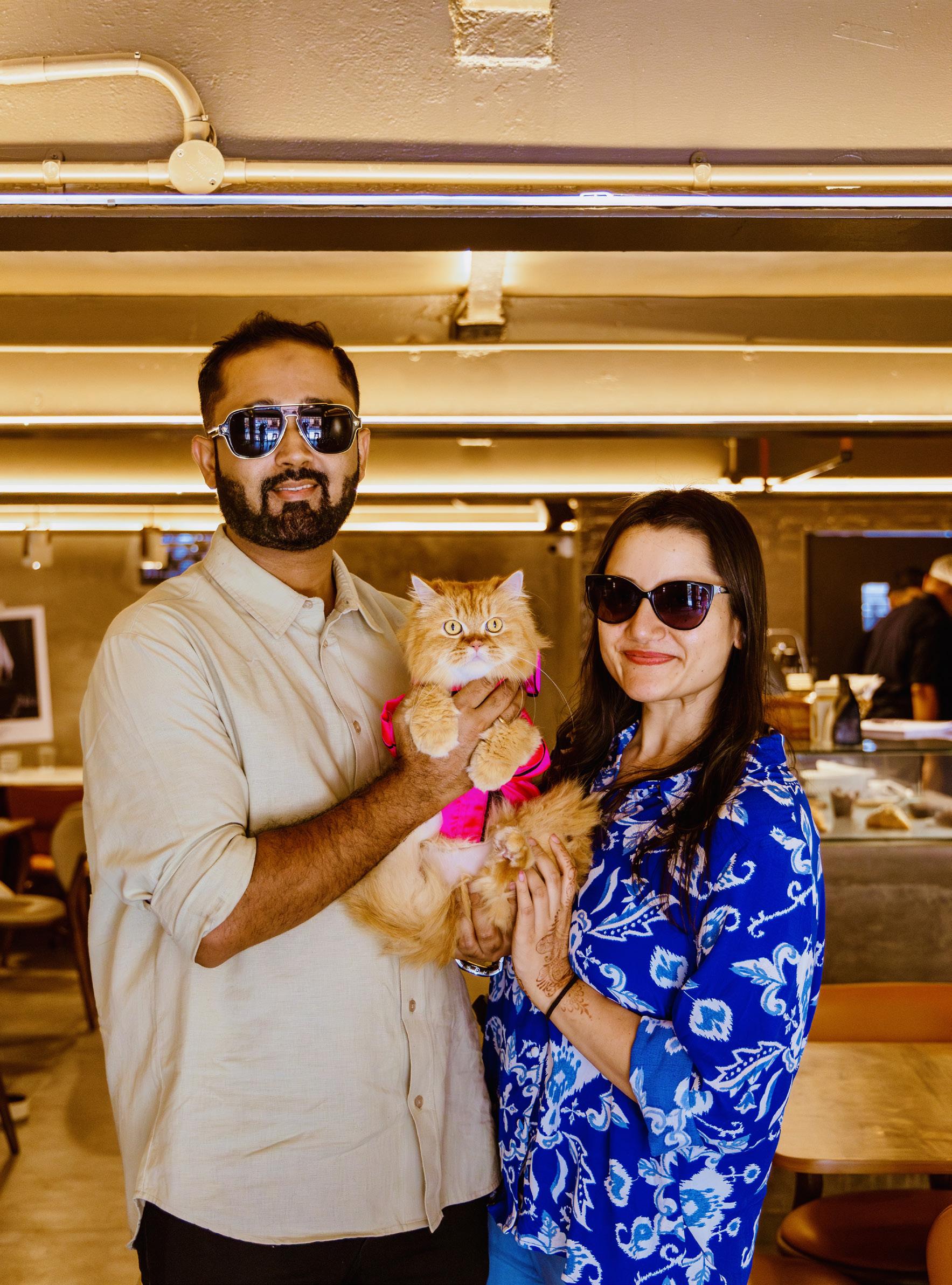
Manisha & Hitesh are the loving duo behind Plowy, a cat who’s more than just a pet; she’s family. Manisha, a dedicated corporate lawyer, balances her high-pressure career while showering Plowy with care, and Hitesh, a creative digital marketer, brings his innovative spirit to their shared adventures. Together, they create a nurturing, playful environment where Plowy thrives.
How would you describe your bond with Plowy, and what joys and challenges come with being her caregivers?
Our bond is quiet but deeply comforting. Chonkie isn’t clingy; his love is subtle, showing up in shared spaces, playful bursts, or simply lounging nearby. The joy is in watching his personality shine, from sudden zoomies to calm moments of presence. The challenge is keeping him mentally engaged, especially on busy workdays, and balancing travel or work commitments with his care. This rhythm has made our connection even more rewarding, turning small gestures into meaningful moments.


ON RAJA SAAB, CHEMISTRY WITH PRABHAS, AND LIFE IN THE SPOTLIGHT Riddhi Kumar
From the ramp at the Miss Universe pageant to the big screen, Riddhi Kumar has been quietly building a diverse career with films like Pranaya Meenukalude Kada in Malayalam, Superboys of Malegaon in Hindi, and acclaimed web series, Candy and Crash Course. She made her Telugu debut with Lover and later impressed audiences with a small role in Radhe Shyam. Now, after three years, she returns with the Prabhas-starrer Raja Saab, marking a key milestone in her journey. In this candid chat with Priyanka Goud, Riddhi opens up about her evolution as an actor, her on-screen chemistry with Prabhas, and the dream roles she’s eager to bring to life.
On her journey from Lover, web series to Raja Saab Honestly, I’d describe it as a beautiful ride filled with exploration, experiences, and constant learning. I started with Telugu cinema, then worked in the Malayalam, Hindi, and Marathi industries, which taught me so much about different cultures, creativity, and languages. I’ve been fortunate to collaborate with incredible filmmakers and actors like Prabhas, Adarsh Gaurav, Reema Kagti, and Kamal sir. Now, being back in Telugu cinema with Prabhas for Raja Saab feels like a full-circle moment. I’m truly excited to see how this new chapter unfolds.


On her role in Raja Saab
Raja Saab gave me the chance to work on a much larger scale, and that’s made me far more confident as an actor. Being part of a pan-India film helped me grow both as an artist and as an individual, and I want to carry that forward in all my work. I also learned how important glamour is in a commercial film. What drew me to my character Anitha is that she’s expressive, emotional, and genuine, and in many ways, when it comes to love and life, I see a lot of myself in her. My favourite part of the film is definitely the music songs like Sahana Sahana, Rebel Saab, and Nache Nache. It’s exciting to see how audiences across languages have embraced them; that’s the magic of music, it truly connects everyone. Nache is my personal favourite, and we had the best time filming it in Greece.

On her working experience with Prabhas
This is actually my second time sharing screen space with Prabhas, and I’ve had the best experience with him. He may be a massive star, but he also has a massive heart. He makes everyone feel comfortable on set, so walking in, I was more curious and excited than nervous. As a co-actor, he’s very giving and completely present when discussing and rehearsing scenes. And off-screen, he’s a lot of fun and a wonderful conversationalist and someone who genuinely cares.
On her bond with Prabhas, creating a huge buzz among audiences
I’m really glad audiences are loving our bond. The gift he gave me, which I wore in The Raja Saab, is just one small example of his big heart. As everyone knows, he’s a real foodie and loves feeding the people around him. Once, he even sent a whole carriage to the set with three types of biryani, non-veg curries, and fried items, all homemade, packed with flavour and absolutely scrumptious! I’ll always cherish the fun moments we had on set, and one beautiful quality I’ve learned from him is to be a giver, just like he is.
On the myth that actresses can’t be friends
I don’t know why people say heroines can’t be friends. With Malavika Mohanan and Nidhhi, our bond happened very beautifully and organically. We had some of the best conversations on set, and I truly believe women especially from the same field have so much to share and express. I learned a lot from their experiences, and yes, I enjoyed a little gossip too!
I don’t know why people say heroines can’t be friends.
With Malavika Mohanan and Nidhhi, our bond happened very beautifully and organically.
On Nidhhi Agerwal’s mobbing incident
I found the whole incident extremely uncomfortable to watch. I believe such issues should be addressed, but not by repeatedly circulating those videos they’re very difficult to see and should only be shared with the person’s consent and proper viewer advisories. Fans have immense love and admiration for artists, but love must come with respect and space; otherwise, it becomes overbearing. Incidents like this reflect the mindset we have toward public figures, and that’s something we all need to work on. Giving people space and being kind really matters. I’m glad Nidhhi has come out as a warrior.

I don’t see attention and pressure as overwhelming, but as a natural by product of the work I do. '' ''
On working across industries — Hindi, Telugu, Malayalam & more
Honestly, what I’ve learned is that creators are hustlers everywhere. Languages, food, and people may change, but teamwork and emotions on set are universal. The differences are more technical like budgets, scale of production, and team sizes but not the spirit. I’ve been privileged to work with amazing people from so many different backgrounds.
Looking forward to her new era of scripts
Yes, I do feel more confident now. Over the years, I’ve learned that every film is a bit of a gamble, so it’s best to trust your gut. With experience, I now have more leverage to choose stronger parts and read scripts from the audience’s point of view. After Raja Saab, I’m especially excited to explore stories of self-discovery films where the character goes through a meaningful arc, whether it’s a period drama or any narrative that keeps me engaged as an audience member.
On receiving fame and attention and how she manages I don’t see attention and pressure as overwhelming, but as a natural by product of the work I do. This is an industry that runs on audience response; fame is part of the job. But to stay grounded, I deeply stay

Genres or roles she’s manifesting right now
I’ve always been keen on playing a detective or cop, doing a period drama, and also exploring a classic lover-girl role so I’m really hoping something along those lines comes my way. One of my biggest dream roles is to portray Rekha in a biopic based on her life, and I even once wrote a handwritten letter to Sanjay Leela Bhansali asking him to direct it!

Rapid Fire
Morning person or night owl?
- Morning person
Coffee or chai?
- Chai
Beach vacation or mountain retreat?
- Mountain retreat
One hashtag that defines your life right now?
- #livingit