From cultural festivals and live performances to popups and exhibitions, here's your curated guide to the month's must-attend events.
TRENDING NOW
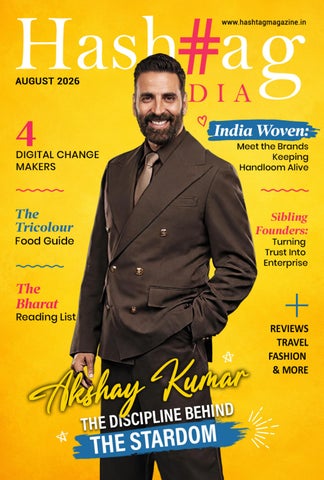
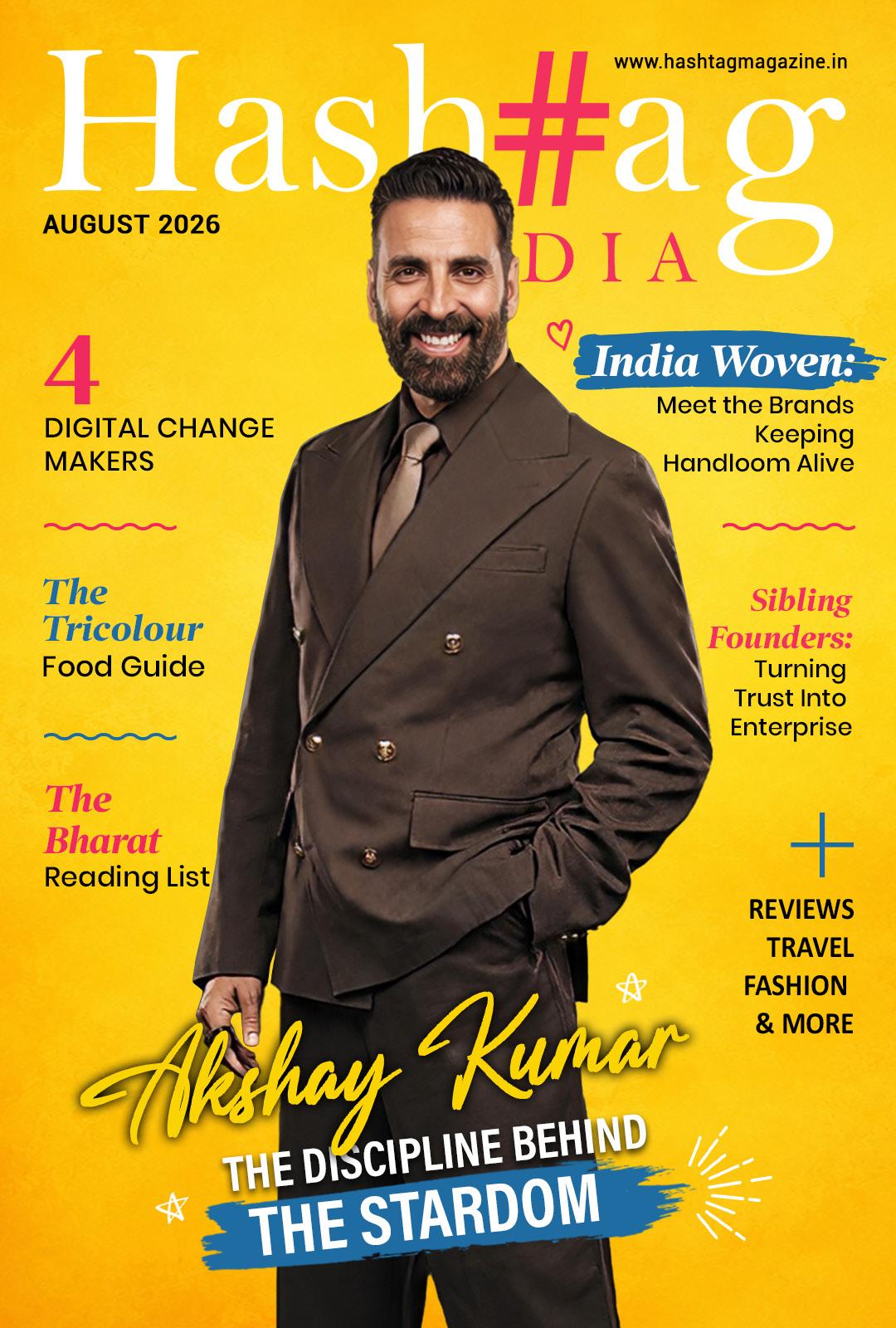
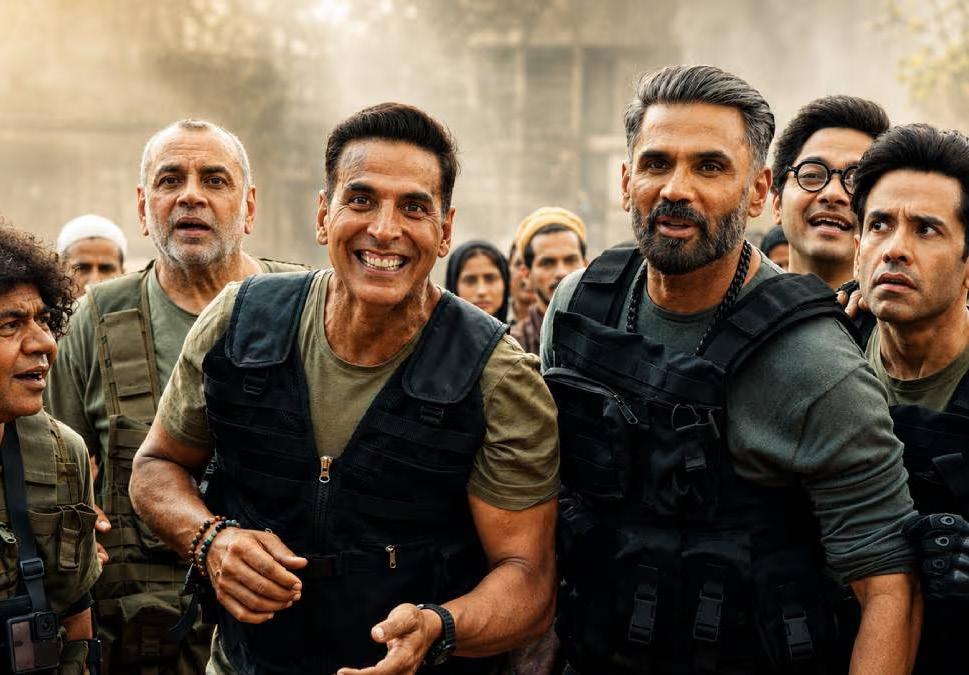
From patriotic blockbusters to his latest projects, we take a look at why Akshay Kumar continues to dominate conversations on and off screen.
STARTUP
08 - 11 03 28 54 59 42 05
Partners by Birth, Entrepreneurs by Choice. This Raksha Bandhan, we spotlight sibling-led businesses proving that trust, shared values and complementary strengths are the ultimate recipe for entrepreneurial success.
RETAIL
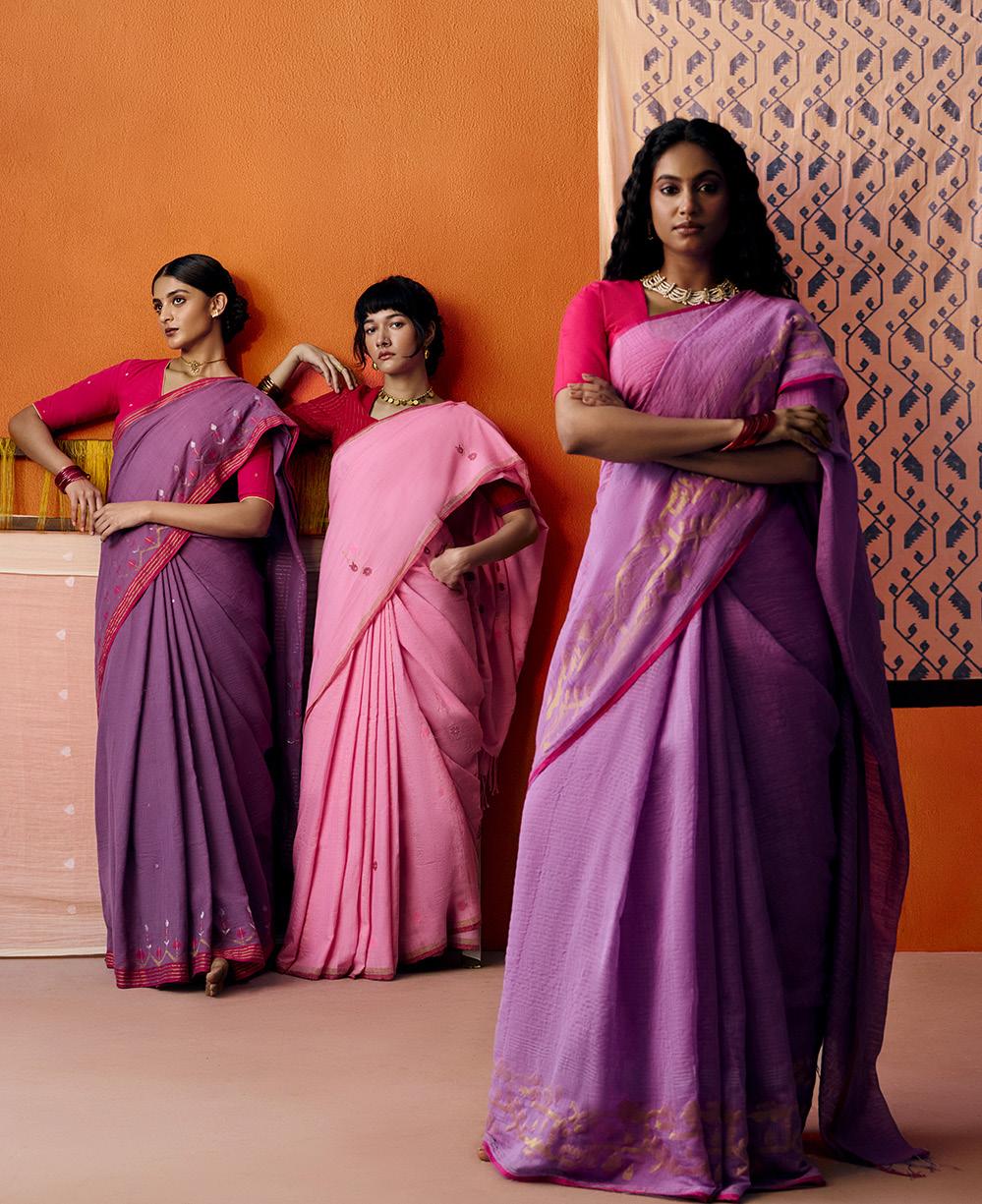
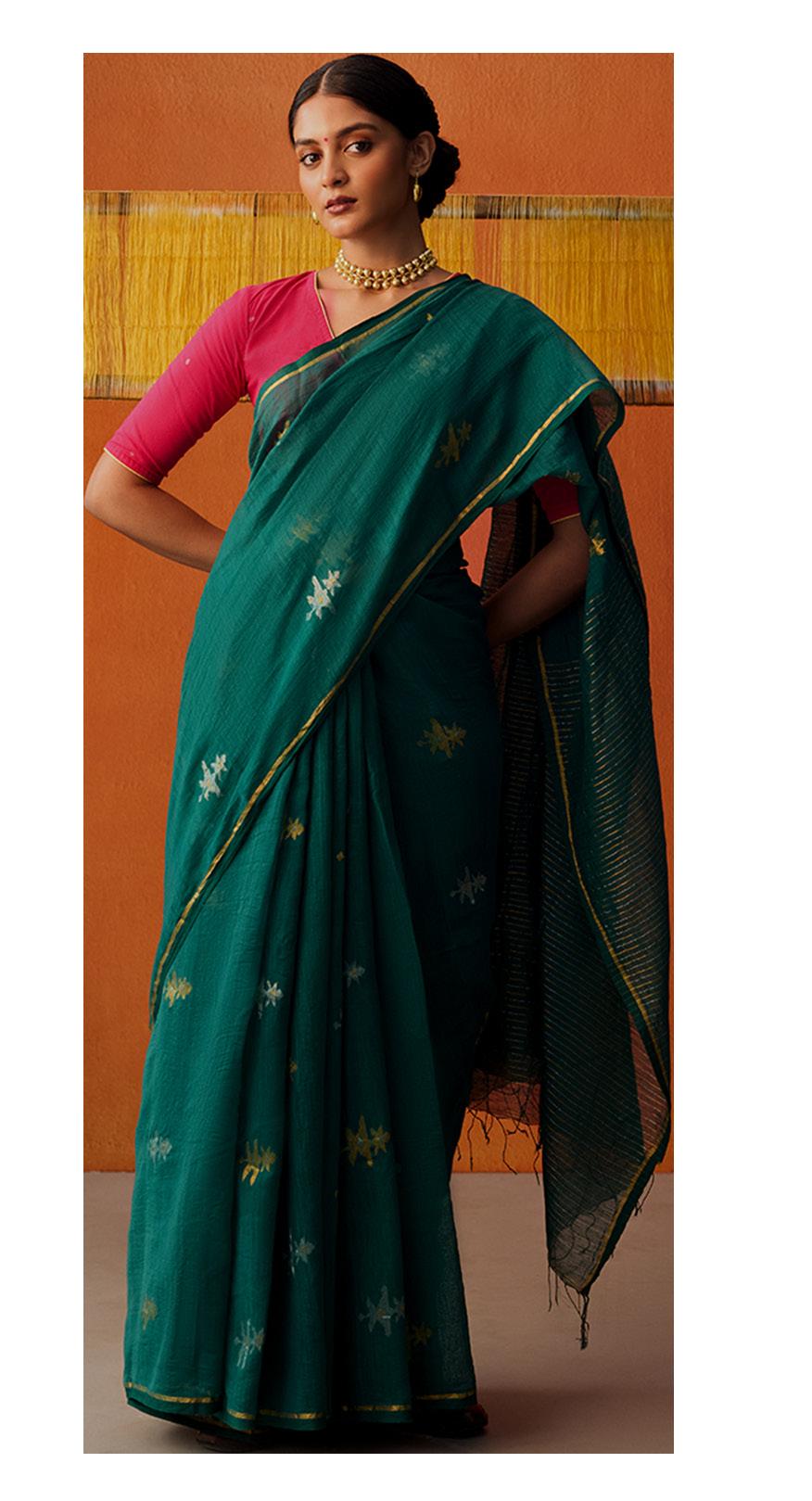
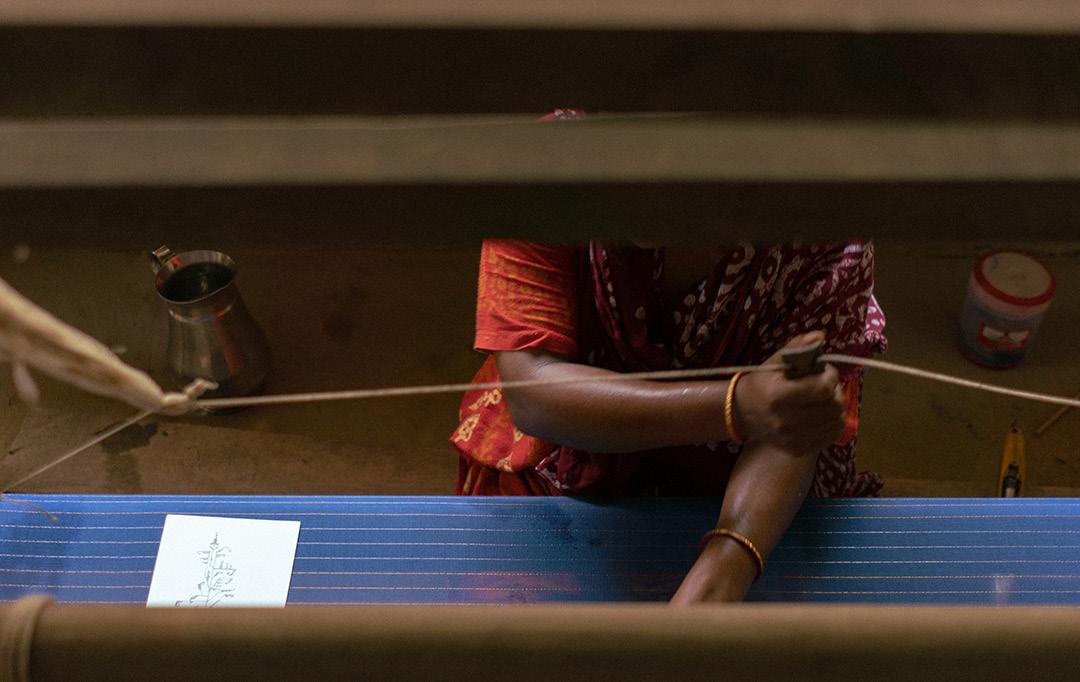
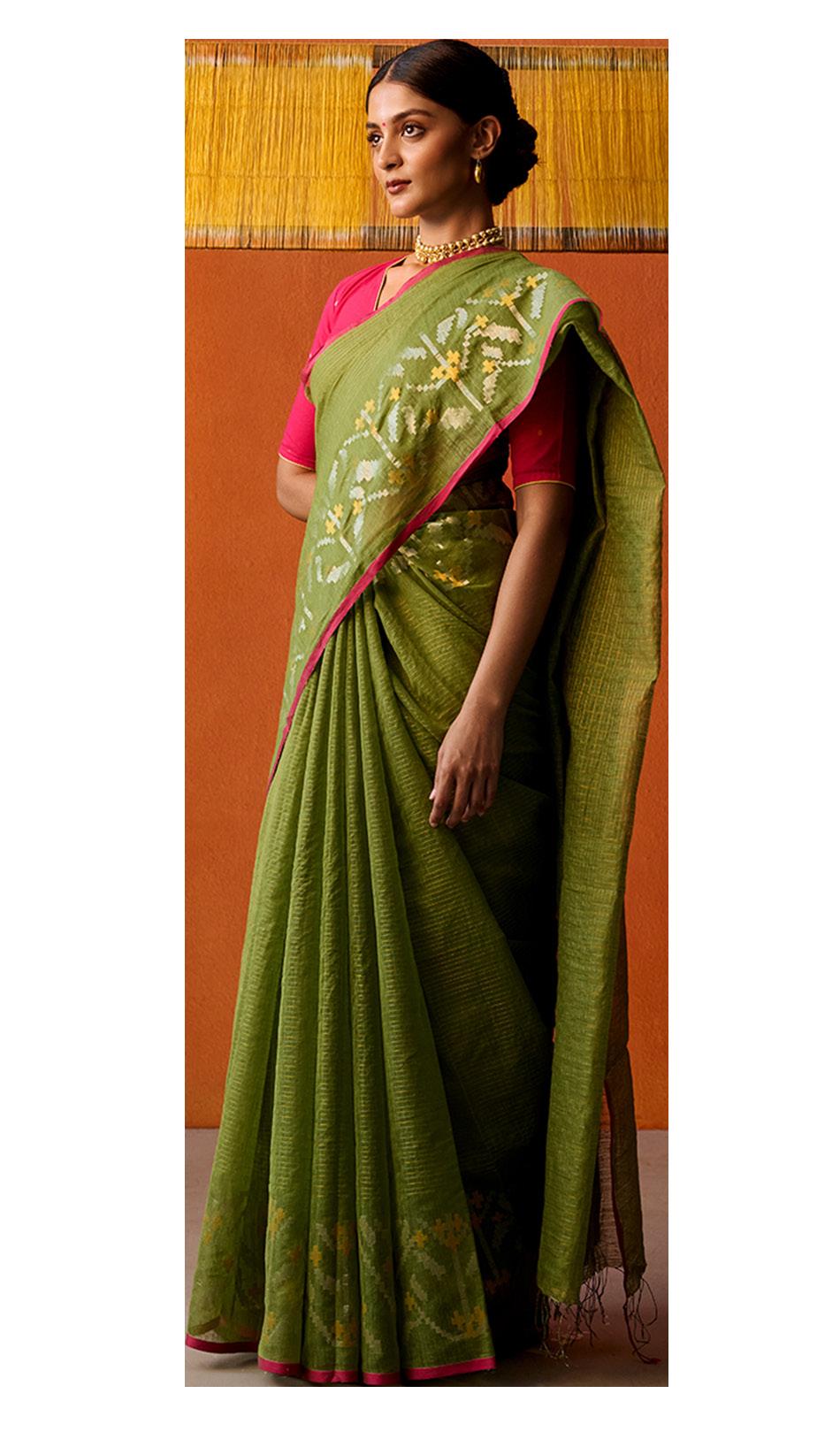
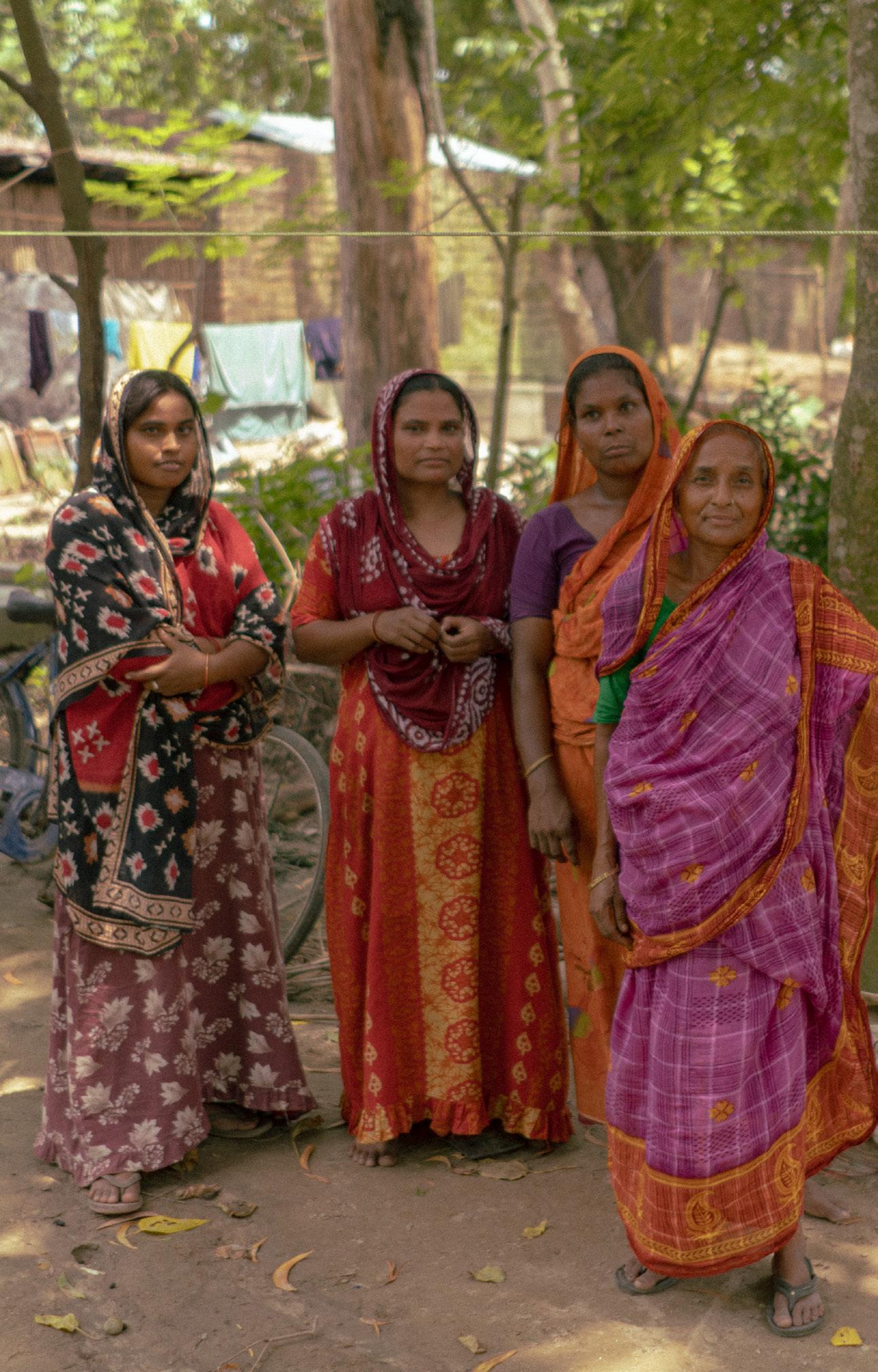
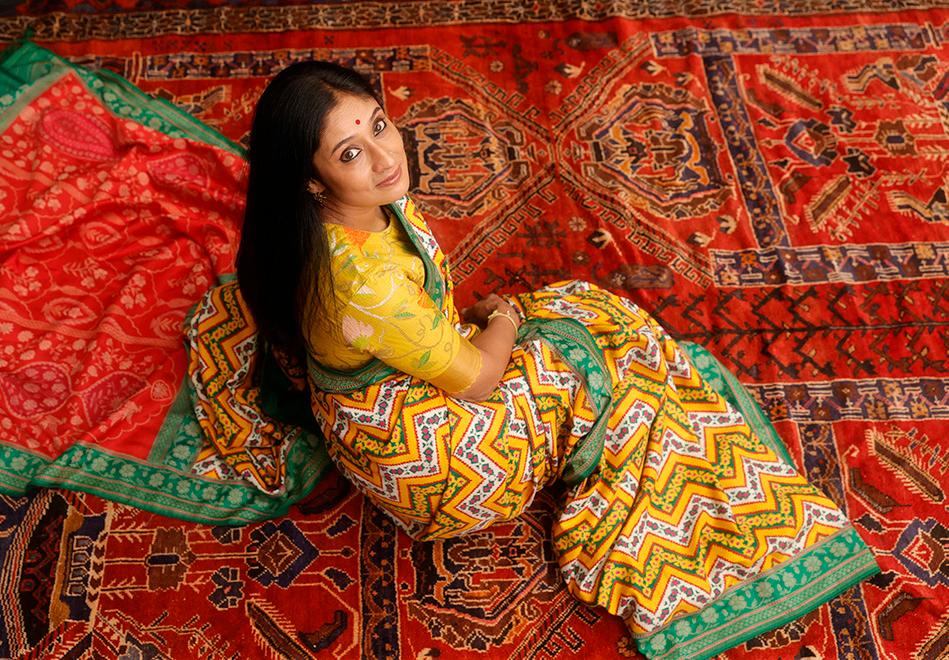
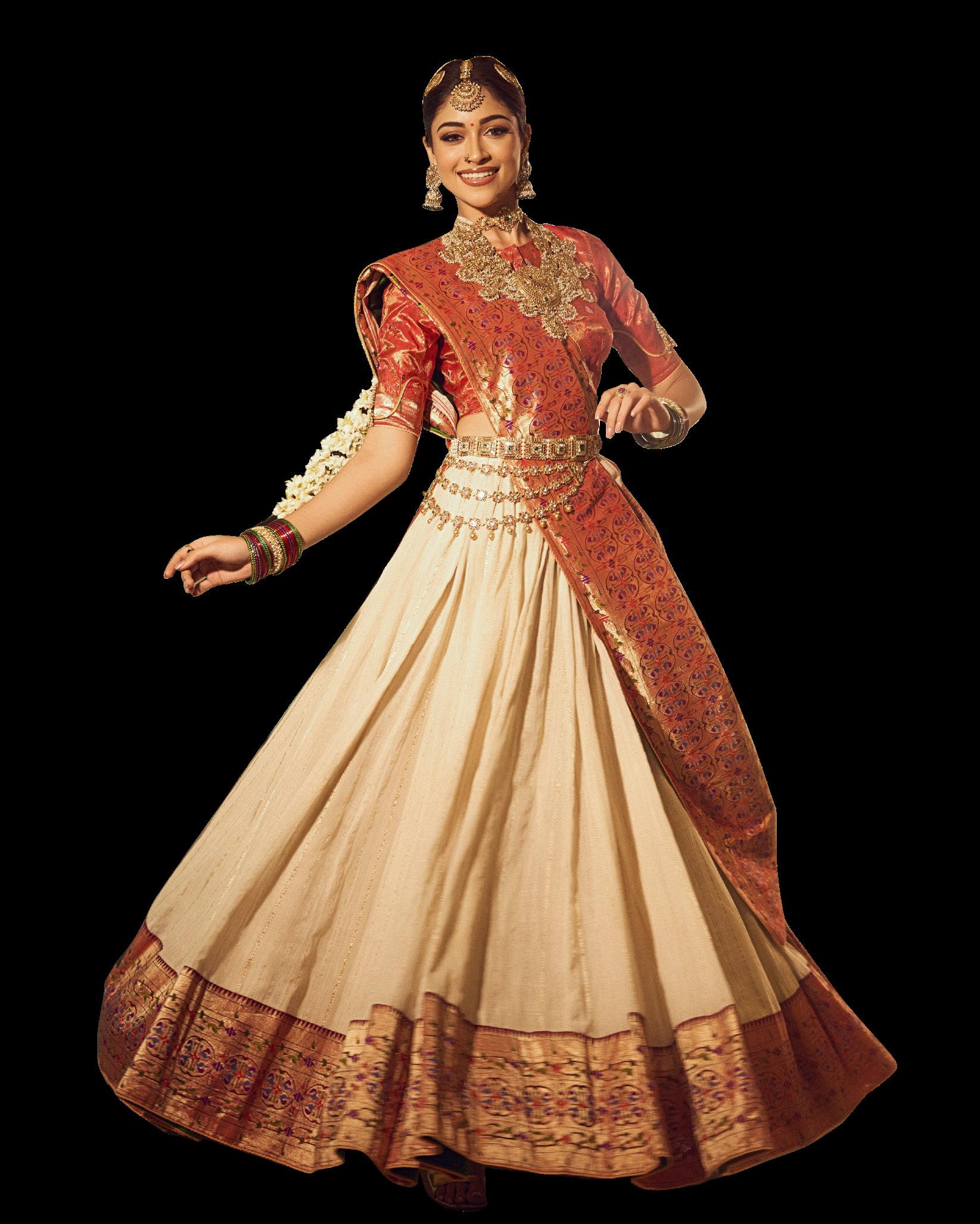
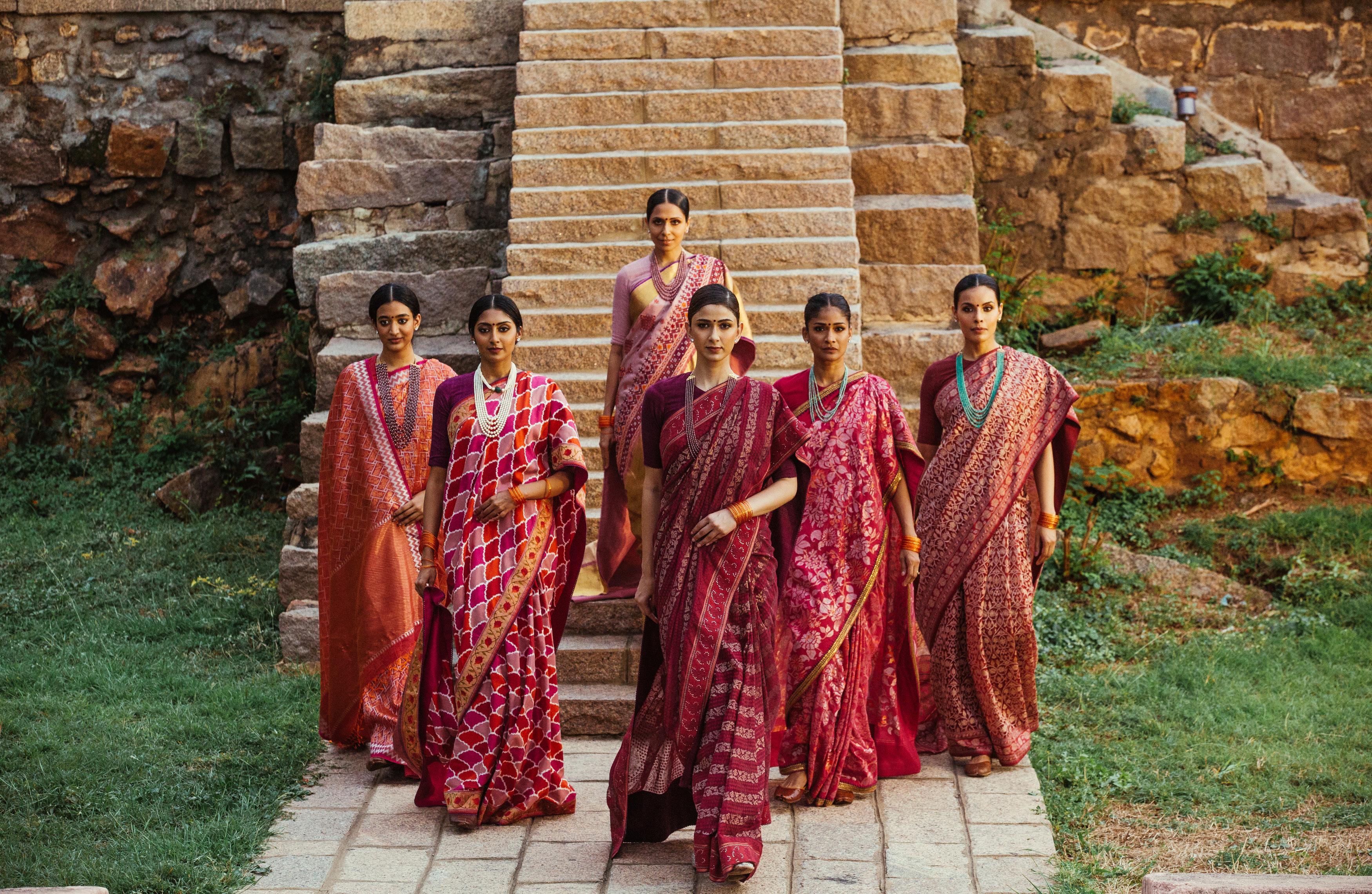
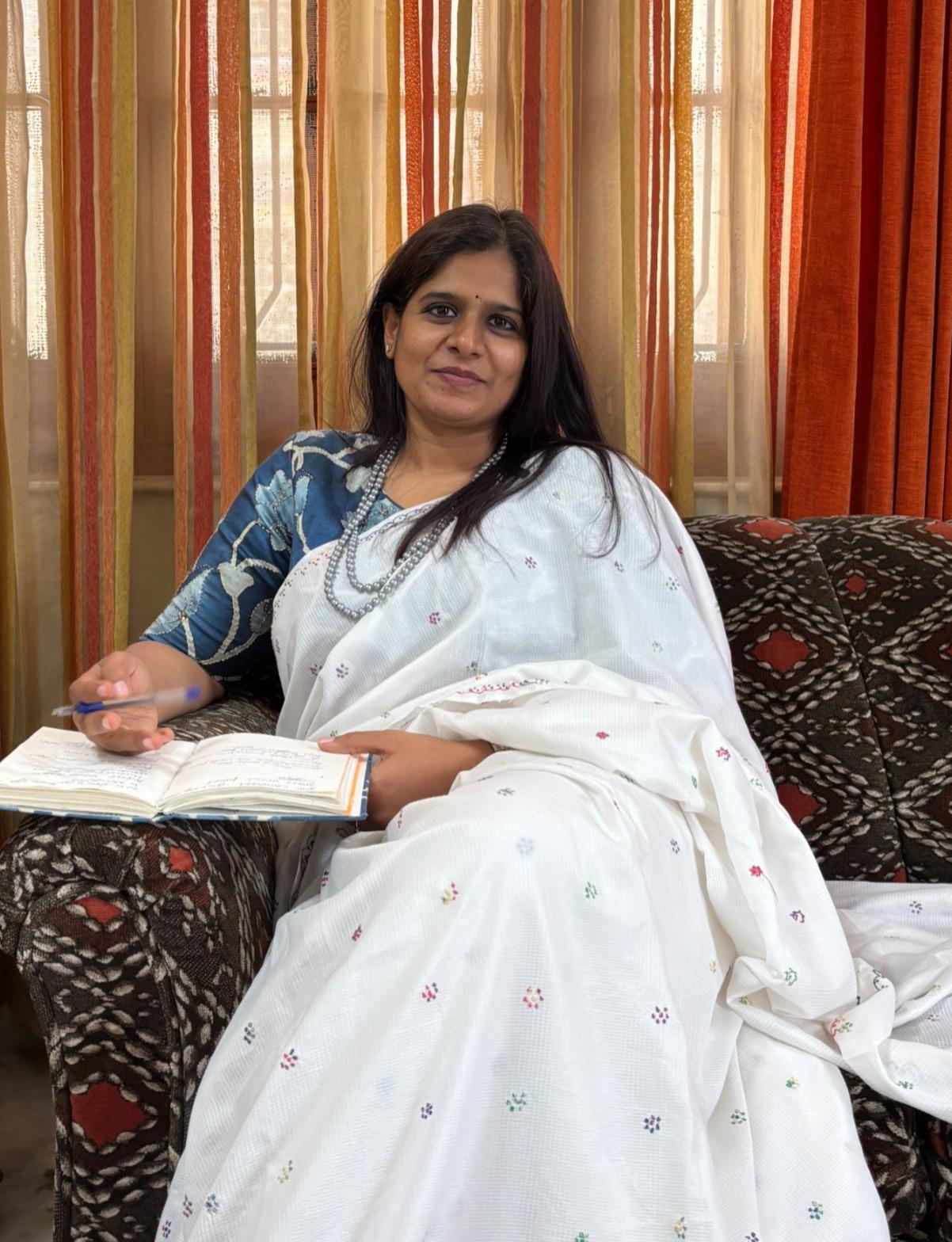
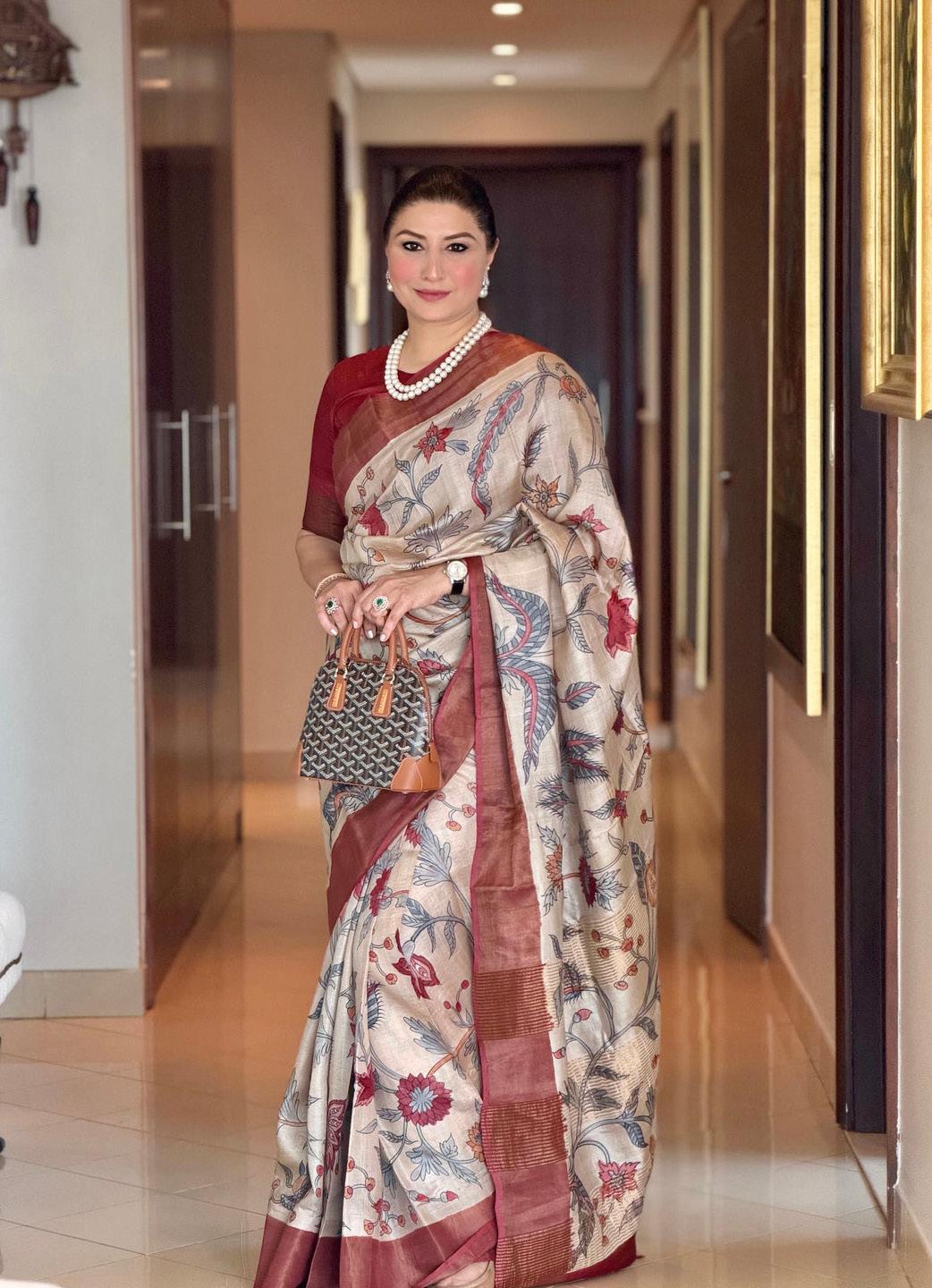
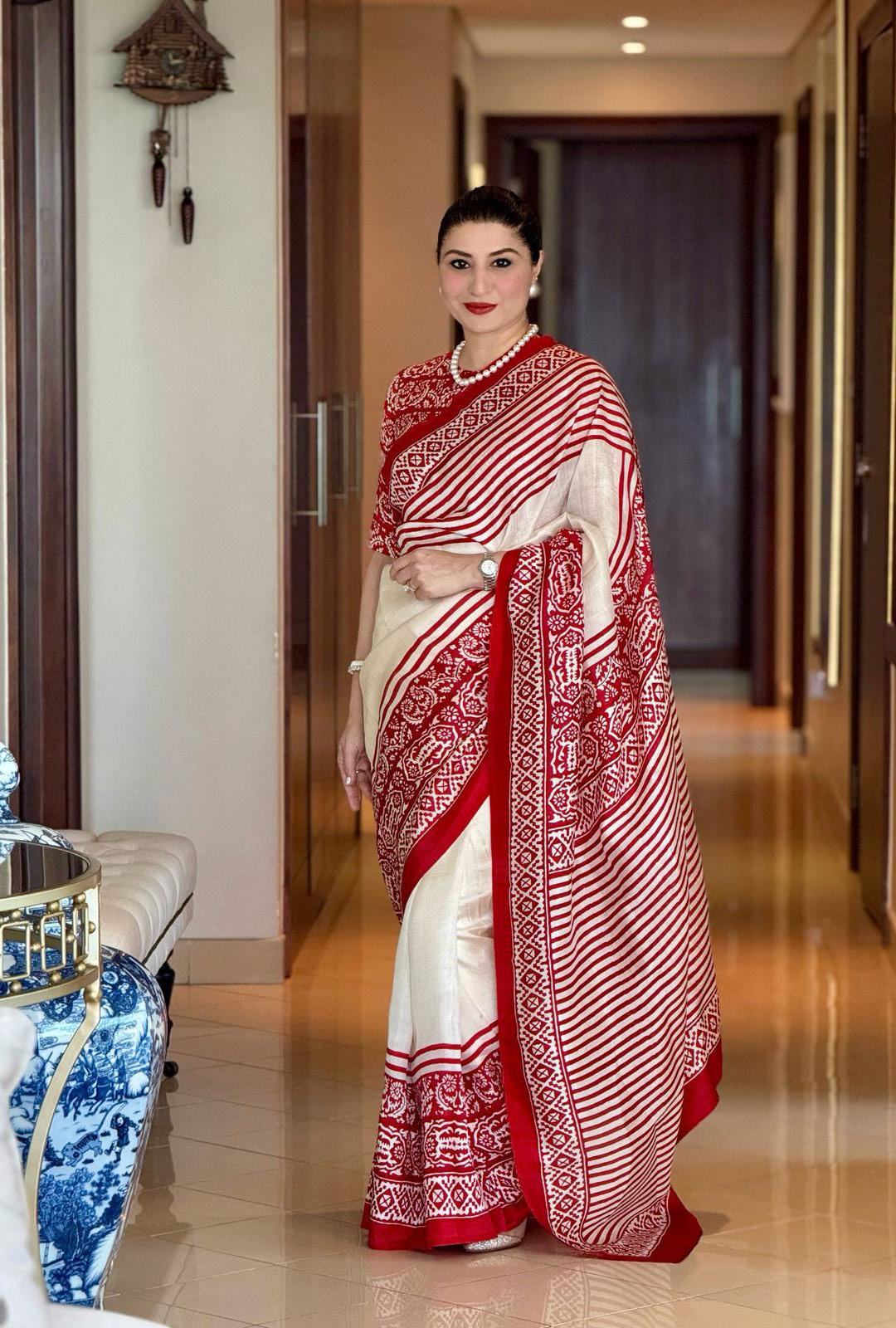
Celebrating India, One Weave at a Time. This Independence Day, explore handloom brands preserving India's rich textile heritage through craftsmanship, culture and contemporary design and also check out the latest products in the market.
FOOD
New flavours, hidden gems, chef-driven menus, and comforting classics: a curated look into the evolving food scene this season.
FOR A CAUSE
Meet the content creators using social media as a force for good: raising awareness, inspiring action and creating meaningful impact online.
13 - 20 22-26
ARTS & CULTURE
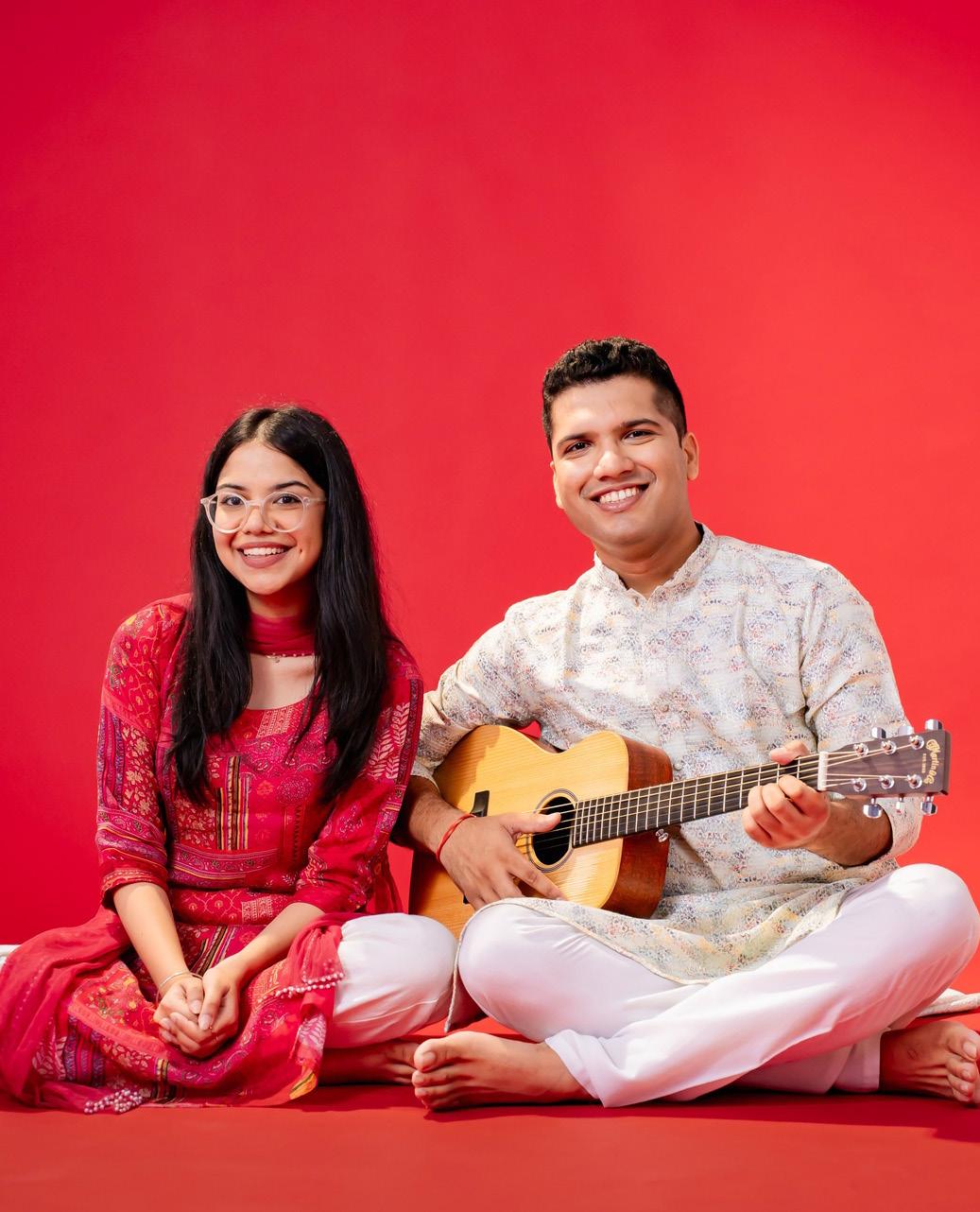
Backstage Siblings-A candid conversation with sibling artists who prove that creativity and collaboration run in the family.
STREAMING NOW
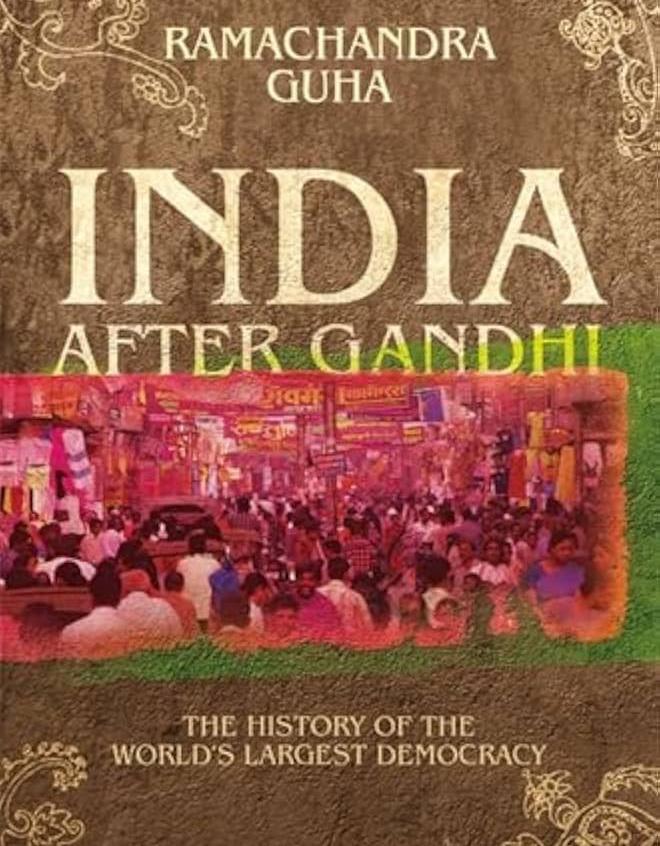
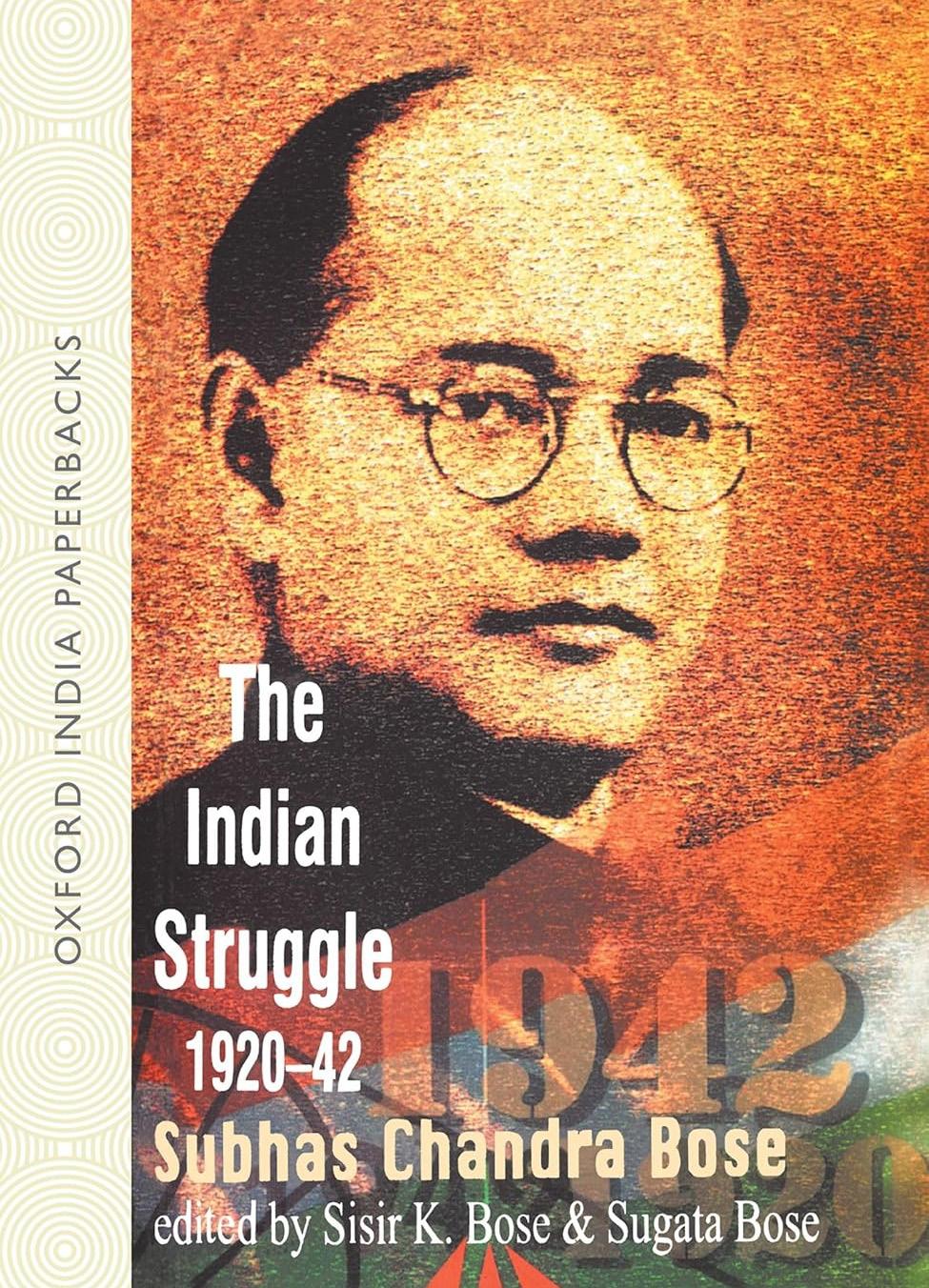
Top 5 Books to Read If You're a Patriot, a curated reading list celebrating India's history, courage and enduring spirit.
Lessons from the Wild
On a recent safari in Kenya’s Masai Mara, I witnessed some of nature’s most extraordinary spectacles: the Great Migration stretching endlessly across the plains, dramatic predator hunts, and landscapes so vast they felt almost unreal. Yet, of everything I experienced, it wasn’t the thrill of the chase that stayed with me. It was something far quieter, far more profound: grief.
We had paused when a hyena was feeding on what appeared to be the remains of an elephant. Soon after, another elephant approached, drove the hyena away, and slowly moved towards the carcass. For nearly half an hour, it stood there, gently touching the bones with its trunk, moving them with a tenderness that felt deeply emotional, as if searching for someone it had lost. There was no sound, no spectacle, just a powerful, unspoken expression of love and loss. Everyone watching fell silent, many visibly moved.
I had read about elephants mourning their dead, but witnessing it firsthand was something entirely different. It was a reminder that emotions are not uniquely human; love, memory, connection, and grief transcend species. And in that moment, it felt impossible not to reflect on our own lives.
We spend so much time chasing success, meeting deadlines, and planning what comes next. But when everything else fades, it is our relationships that remain. The people who stand by us, celebrate our highs, and support us through our lows are what truly shape who we are. Perhaps that is why this issue feels especially meaningful. With Raksha Bandhan approaching, we celebrate sibling entrepreneurs who have turned lifelong trust
and shared values into thriving businesses. Their journeys go beyond entrepreneurship, reflecting partnership in its most authentic form.
As we mark Independence Day, we also spotlight India’s rich handloom heritage, where designers and homegrown brands are preserving traditional crafts while reimagining them for today. Alongside this, you will find stories of changemakers, travel inspiration, new dining experiences, wellness, fashion, and more, each offering something to discover.
As always, I hope these pages inspire you to pause, reflect, and cherish the relationships that truly matter. Happy Reading!
Editor
Sinduri Vuppala
Copy Editor
Sheba Joseph
Contributors
Lipika Varma
Ratna Bhupal
Rashmi Gopal Rao
Priyanka Goud
Aniket Pandey
Bindu Gopal Rao
Mehak Walia
Dhanush Kumar
Manisha Pyaraka
Surabhi Goel
Designer K Abhinay Raj Raju
Website and SEO
Anil Mandapati
Social Media
Vishal Goud
Aarthi Reddy
Editorial Office
B 10 Vikrampuri, Karkhana, Secunderabad, 500009. Contact: 6269 000 666
Marketing Office
Atin OOH
B19, Avenue 5, Banjara Hills, Hyderabad Phone: 040 23355485
Cover
AKSHAY KUMAR
Website: www.hashtagmagazine.in
Hashtag India Magazine is published and promoted by Nirvana Media House Hyderabad
UPCOMING EVENTS IN AUGUST 2026
The Great India Hackathon
One of India's biggest developer gatherings, The Great India Hackathon brings together coders, innovators, and startup enthusiasts for a high-energy coding battle at JNTU Indoor Stadium, Kukatpally. With prizes worth over ₹2 lakh and support from ecosystem leaders like Google for Startups and T-Hub, the event promises a day of innovation, collaboration, and breakthrough ideas.
Date: August 9, 2026
City: Hyderabad
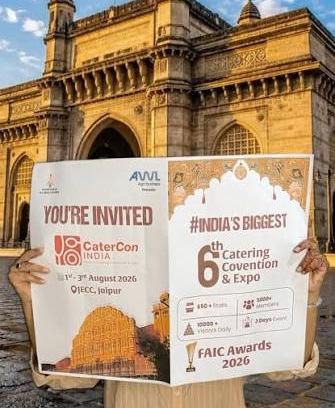
India's largest catering convention and exhibition returns to Jaipur, bringing together caterers, hospitality professionals, chefs, and event planners from across the country. Featuring more than 650 stalls, thousands of industry participants, live culinary demonstrations, and the latest innovations in catering and hospitality, it's a mustvisit for food and event professionals..
Date: August 1–3, 2026
City: Jaipur
The Ladakh Festival
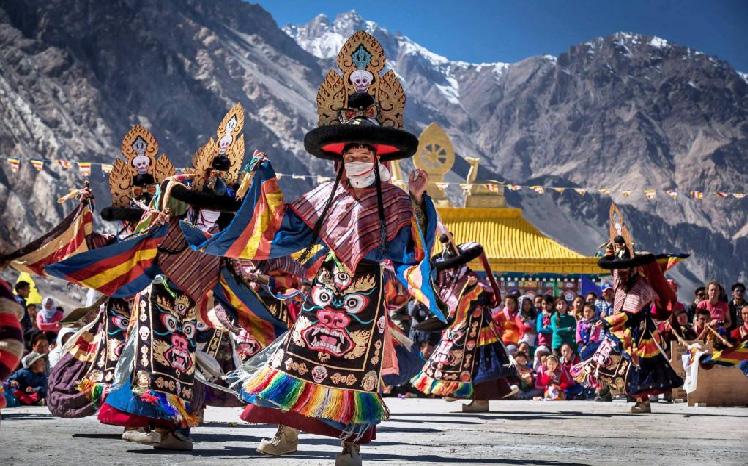
Set against the breathtaking landscapes of the Himalayas, the Ladakh Festival is a vibrant celebration of the region's rich cultural heritage. Visitors can experience colourful processions, traditional music and dance performances, local handicrafts, polo matches, archery contests, and authentic Ladakhi cuisine, making it one of the most immersive cultural festivals in the country.
Date: August 2026 (multiple dates during the month)
City: Leh, Ladakh
UPCOMING EVENTS IN AUGUST 2026
Celebrated composer Harris Jayaraj takes the stage for his first-ever live concert in Bengaluru, delivering an unforgettable evening of music. Backed by a full live band, fans can look forward to timeless Tamil chartbusters and cinematic favourites in a spectacular concert experience at NICE Grounds.
Date: August 8, 2026
City: Bengaluru
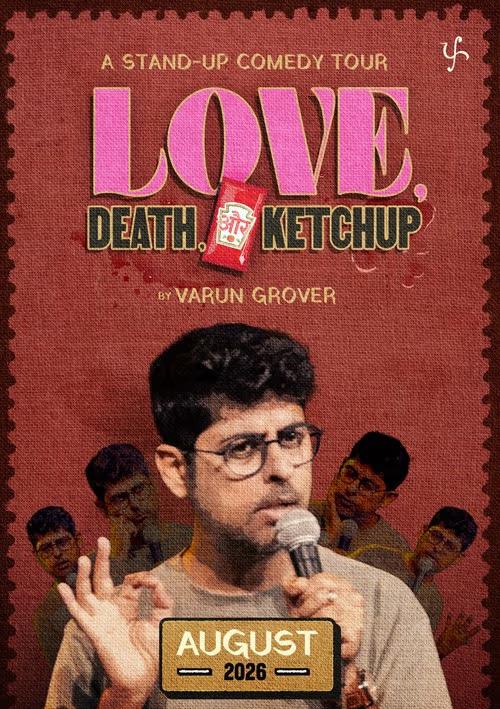
National Award-winning writer and comedian Varun Grover presents Love, Death & Ketchup, a storytelling performance that blends humour, nostalgia, and introspection. Through sharp wit and deeply personal anecdotes, Grover explores life's absurdities, relationships, and the everyday moments that connect us all.
Date: August 29, 2026
City: New Delhi
Rock on Harris Live –Bengaluru
"THE CRAFT HAS CHANGED, BUT HARD WORK NEVER GOES OUT OF STYLE"
"THE CRAFT HAS CHANGED, BUT HARD WORK NEVER GOES OUT OF STYLE"
Akshay Kumar
With a career spanning over three decades, Akshay Kumar continues to reinvent himself across genres, from action and comedy to social dramas and entertainers. As he looks ahead to his upcoming projects, including the action-thriller Haiwaan and a lineup of comedy entertainers, the actor reflects on his journey, his approach to cinema, discipline, and why staying connected to the craft remains his biggest priority.
In conversation with Lipika Varma, Akshay opens up about his evolving approach to cinema, the importance of teamwork, and the values that guide him both on and off screen.
You have played action heroes, comedians, romantic leads, and intense characters. What kind of roles excite you the most today?
I enjoy all kinds of roles. When I entered the industry, people mostly saw me as an action hero. After that, I consciously chose to explore different genres and keep discovering myself as an actor. I have done comedy, romance, social dramas, and action films. Every genre brings a different challenge, and that is what keeps the journey interesting.
Comedy has been one of your strongest genres. What makes it so special for you?
Comedy is definitely one of the hardest genres. Making someone emotional can sometimes be supported by the situation or background music, but making someone genuinely laugh requires precision, timing, and a lot of hard work. Comedy often looks effortless on screen, but there is a lot of discipline behind creating that moment. That challenge is what makes it exciting for me.
You have been part of several ensemble films. What is your view on multi-starrers?
Everyone has their own approach. Some actors prefer solo films, while others enjoy working in ensemble projects. There is no fixed formula for success. A film works because of its content, storytelling, and execution, not simply because of whether it has one actor or multiple actors.
Comedy Is Probably the Most Difficult Genre
I Enjoy Every Genre Because Each One Challenges Me Differently
How do you view the changing work culture and professionalism in the film industry?
The way films are made has changed tremendously. Technology, production scale, and working methods have evolved, but the fundamentals remain the same: hard work, discipline, respect for the craft, and teamwork. Every generation has its own way of working, but dedication is something that never changes.
There is a lot of discussion around the increasing level of violence in cinema. What is your perspective?
I enjoy films that entertain without unnecessary violence. Some stories require intensity, especially war films or subjects based on real events, but it depends entirely on the story being told. For entertainers, I believe films should be enjoyable for everyone. A family should be able to sit together and watch a film.
Your pairing with Suniel Shetty remains iconic. How does it feel to reunite?
Suniel and I have worked together in many successful films, and our chemistry has always been special. We have shared a great working relationship over the years, and I hope audiences continue to enjoy seeing us together. Some partnerships naturally connect with people, and ours has been one of those.
After so many years in the industry, what have you learned about making films successful?
One thing I learned early is that responsible budgeting plays a very important role. If the budget is right, the film already has a stronger foundation. Not every film will become a hit, but financial discipline helps protect everyone involved.
I have always believed that the producer, director, writer, and actors need to work together as one team. A healthy relationship between all stakeholders gives a film the best chance of succeeding. Films will have ups and downs; that is part of the business, but honesty, discipline, and good storytelling always matter.
Fans have been waiting to see you return with the iconic Khiladi title. Any plans?
On a serious note, there will be one- Akhiri Khiladi
You have seen extraordinary highs and lows in your career. How do you stay grounded?
There is no secret formula. When a film does not work, you understand what went wrong and learn from it. Success and failure are both part of the journey.
I believe in keeping your head down and continuing to work. During difficult times, you do the same thing: stay focused. Even after the storm passes, you keep your head down. It makes life simpler.
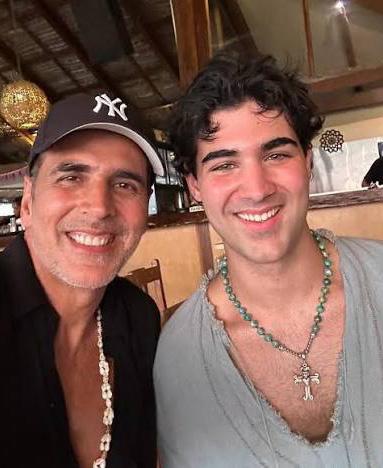
Your son Aarav has chosen a different path away from films. How do you look at his journey?
Aarav and I are quite similar in many ways. He is focused, health-conscious, and hardworking. But he has his own dreams, and I respect that. He is interested in fashion and is learning through real experiences rather than taking shortcuts.
He is even working at the grassroots level, understanding fabrics, prints, and craftsmanship by spending time in villages. I think it is important for everyone to understand the foundation of whatever field they choose.
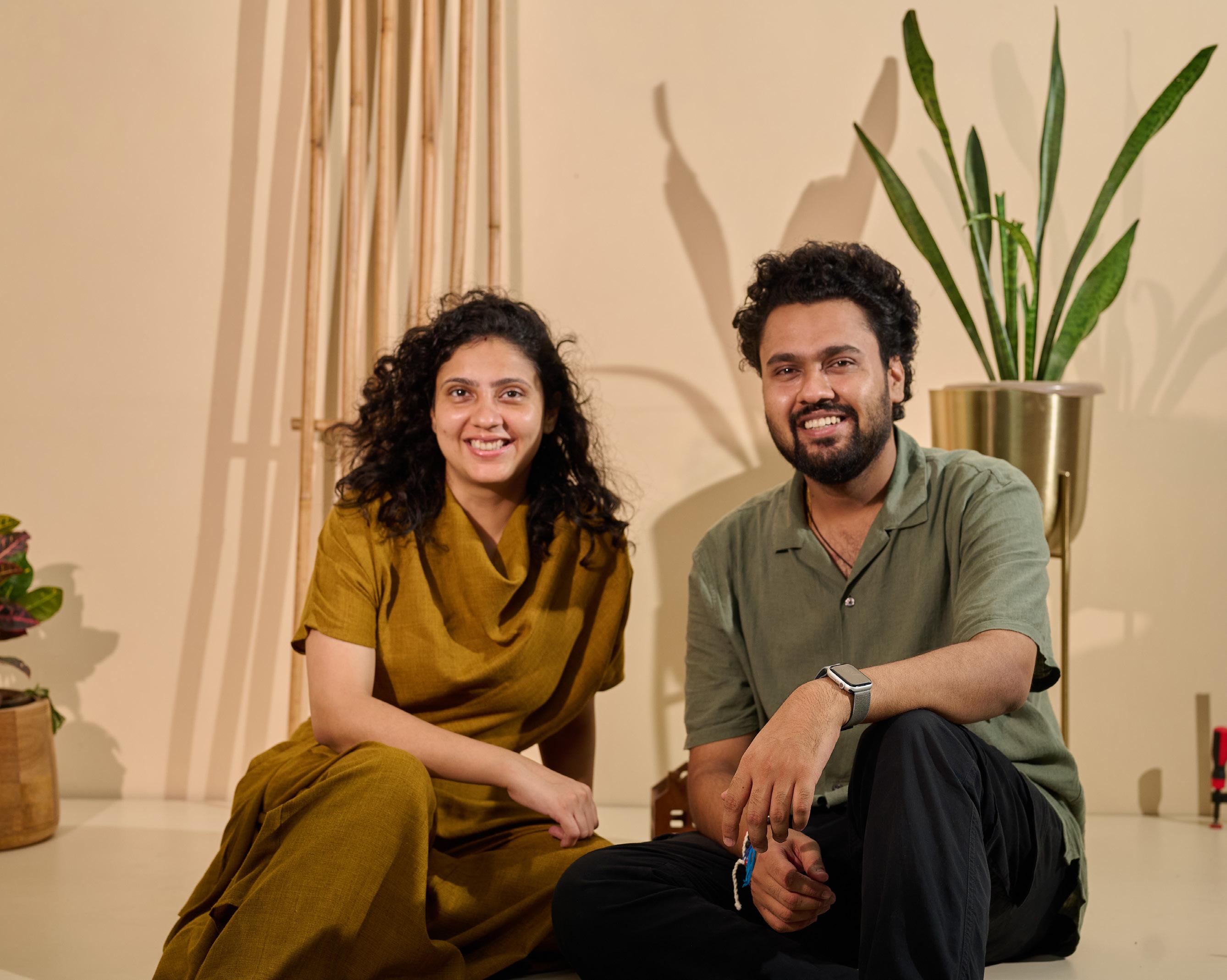
Partners by Birth Entrepreneurs by Choice
This month, Hashtag Magazine brings you inspiring sibling duos who have transformed lifelong bonds into successful businesses. Built on trust, shared values, and unwavering support, these entrepreneurs prove that some of the strongest partnerships begin at home. Their journeys celebrate the power of collaboration, resilience, and relationships that continue to grow: both as family and as business leaders.
Building a Brand, One Home at a Time
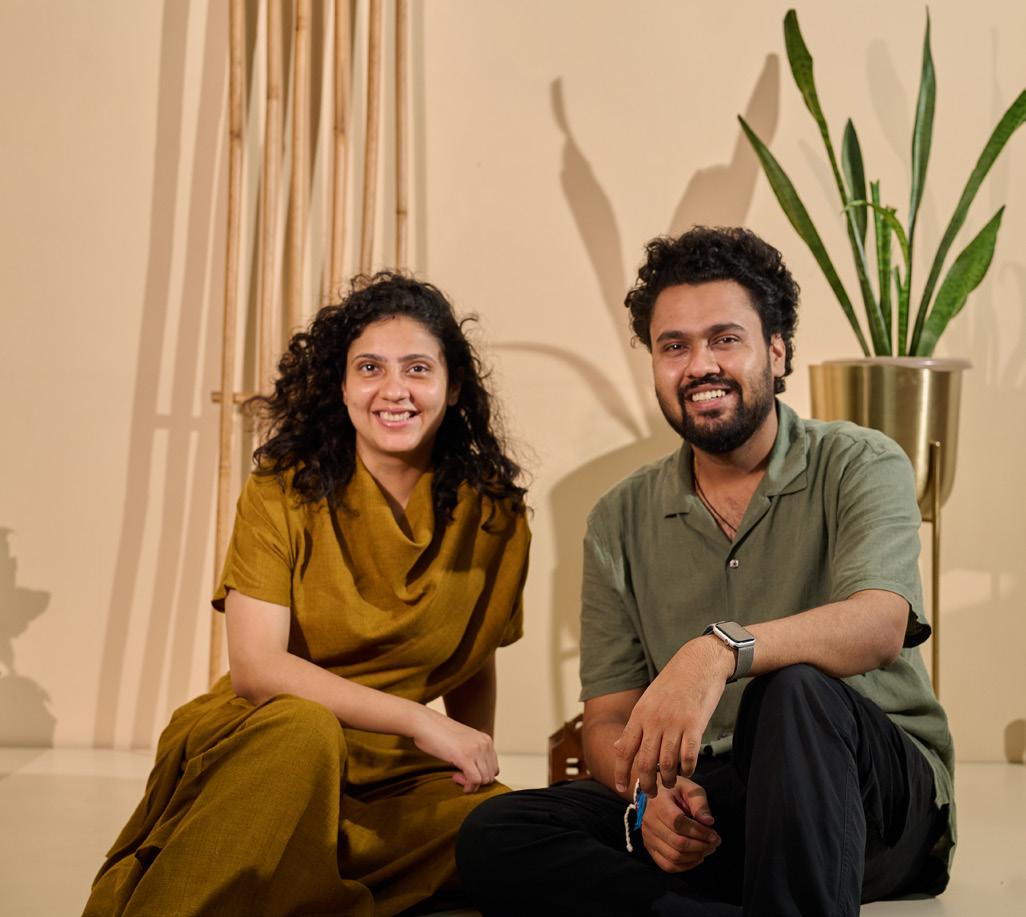
Kirti Verma and Yash Verma | Brick Brown Home Innovations, Gurgaon
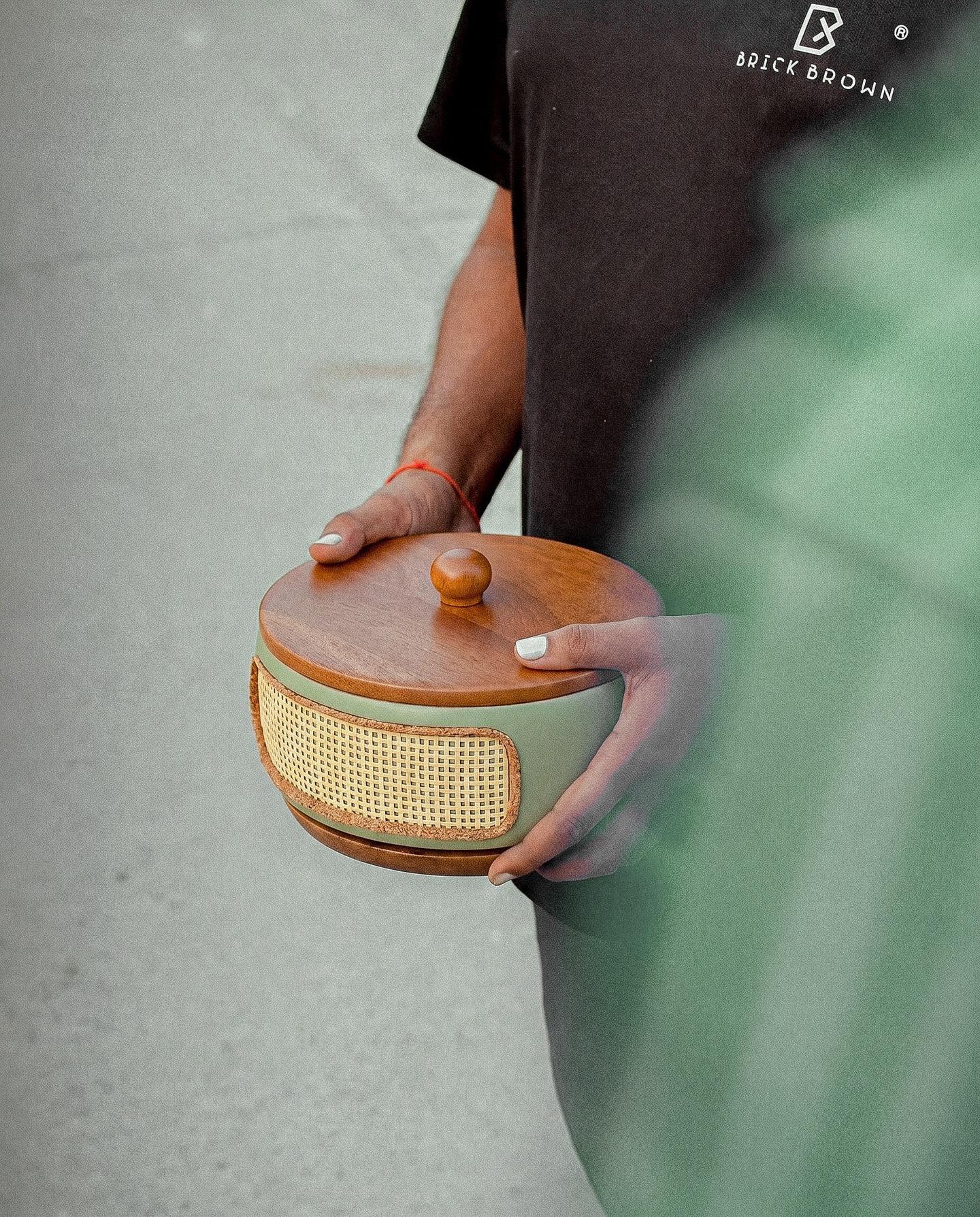
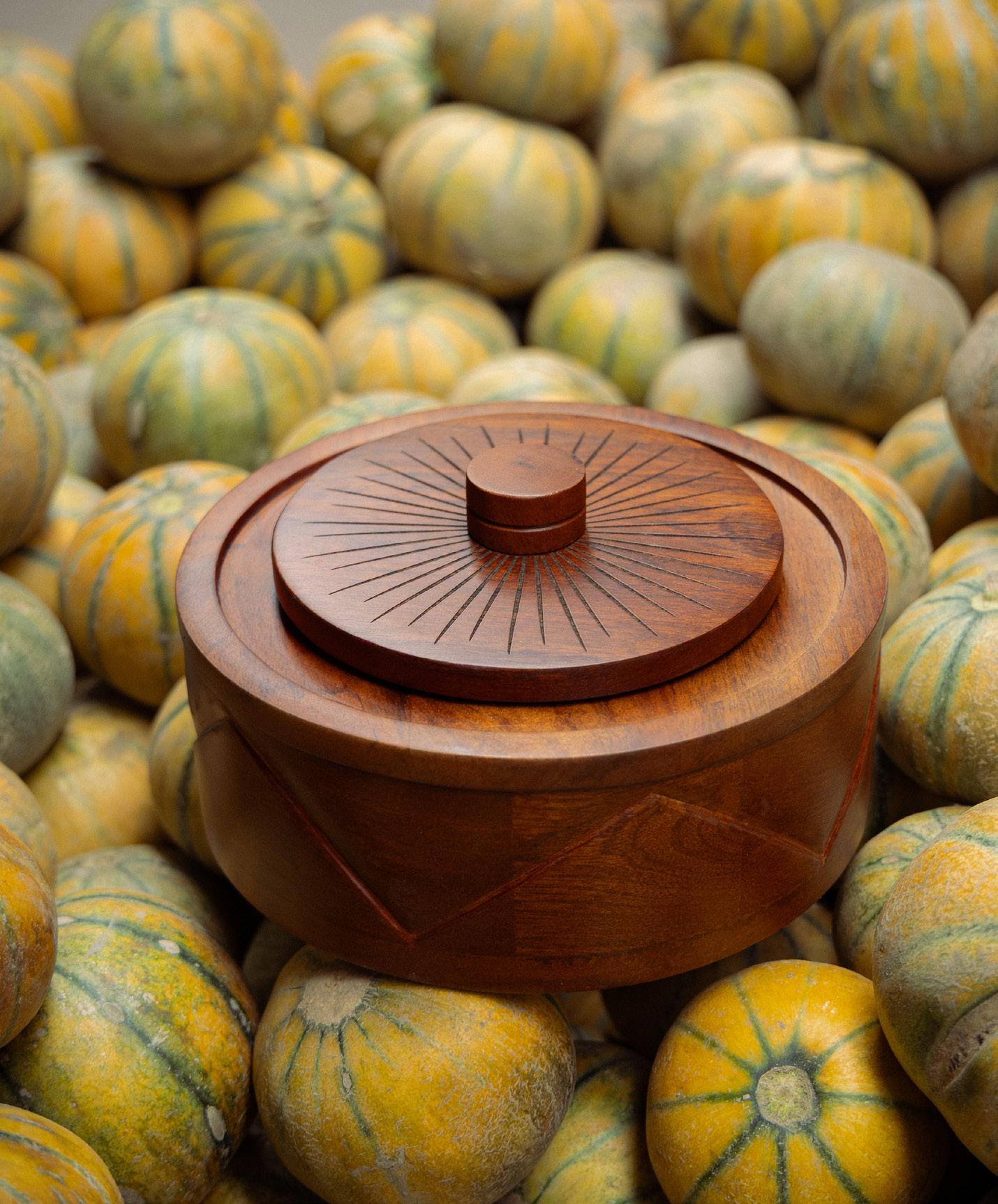
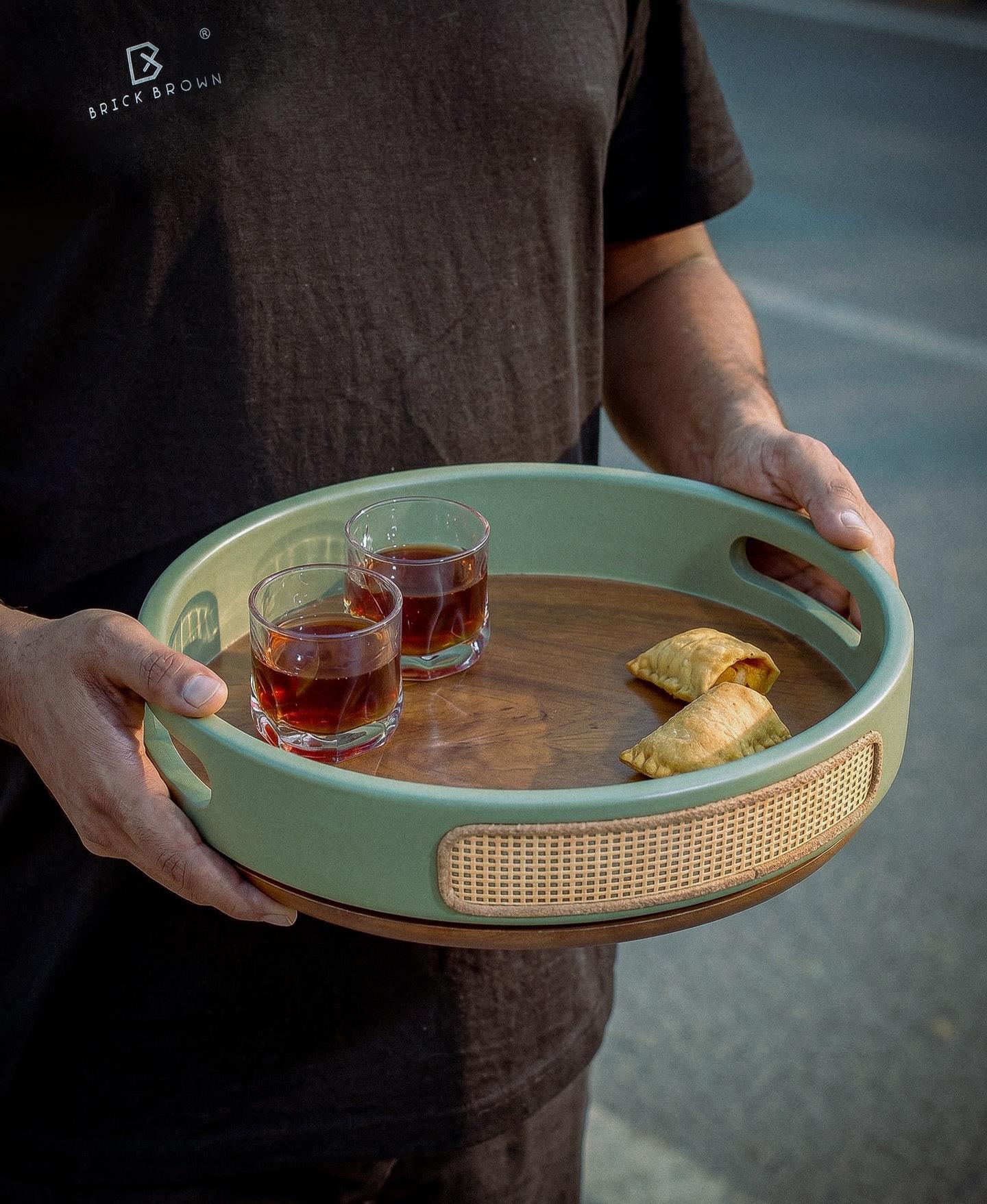
Sibling duo Kirti Verma and Yash Verma, founders of Brick Brown Home Innovations, are redefining modern living through thoughtfully designed home décor that blends traditional Indian craftsmanship with contemporary aesthetics. Based in Gurgaon, the brand creates handcrafted solid wood storage solutions, organisers, and home essentials that celebrate functionality, sustainability, and timeless design.
Yash Verma leads product innovation, artisan collaborations, and technology-driven operations, while Kirti Verma shapes the brand's creative vision, design language, and business strategy. Together, they have built Brick Brown into a contemporary homegrown brand that seamlessly blends heritage craftsmanship with modern design.
Tell us about your venture and how the idea first came to life. Why did you decide to build it together as siblings?
Brick Brown began with a simple belief that homes should feel warm, personal, and lived in. We wanted to create handcrafted wooden pieces that people would cherish for years instead of following shortlived trends. Building the business together wasn't a planned decision; it happened naturally. Having grown up with similar values and design sensibilities, we instinctively understood each other's way
of thinking, making us natural partners.
How do your personalities and strengths complement each other? We bring very different strengths to the table, and that's what makes the partnership work. I (Yash) focus on product design, manufacturing, and working closely with artisans to perfect every detail. Kirti leads branding, creative direction, storytelling, and business growth. One of us builds products worth talking about, while the other ensures their story reaches the right audience.
Has your sibling bond made entrepreneurship easier or more challenging?
It has definitely made the journey easier because trust was never something we had to build; it already existed. One moment we'll always remember is opening our own studio in Gurgaon. Standing in that space, we realised years of hard work had finally become something tangible. It was a quiet but incredibly meaningful milestone for both of us.
Kirti Verma and Yash Verma
How do you handle disagreements without affecting your relationship?
We disagree like siblings, but our conversations are always about what's best for Brick Brown, not about proving who's right. We've also learnt to leave work at the studio, so business discussions don't take over family time. That balance has helped us strengthen both our relationship and our business.
What has been your biggest milestone together, and what's next?
Opening our Gurgaon studio and seeing Brick Brown reach over 1.5 lakh homes across 15+ countries are milestones we're incredibly proud of. Going forward, our focus is on growing globally while staying true to handcrafted production, sustainable materials, and the artisan communities that are at the heart of everything we create.
What would you like to thank your sibling for?
Yash: I thank Kirti for trusting me with the parts of the business that often go unnoticed. Building something meaningful alongside someone I've known all my life is something I'll always be grateful for.
Kirti: I thank Yash for quietly carrying so much of the responsibility behind the scenes and making space for creativity to thrive. Very few people get the opportunity to build their life's work with a sibling, and I don't take that for granted.
Building Confidence, Together
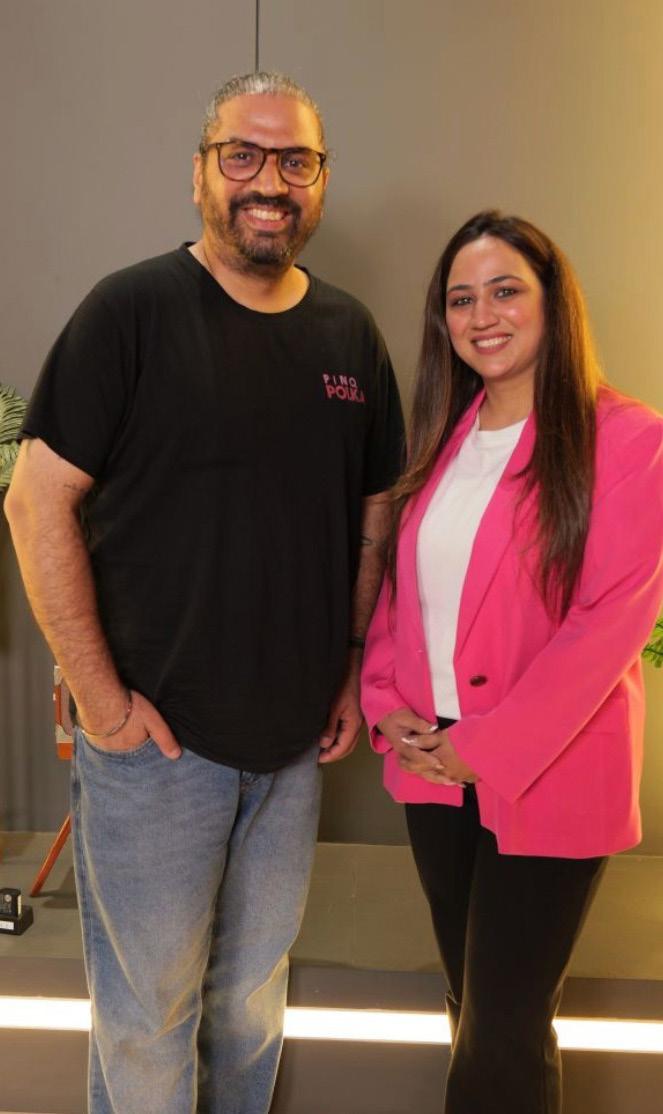
Manveen S Sharma and Mandeep Singh | Pinq Polka, Haryana
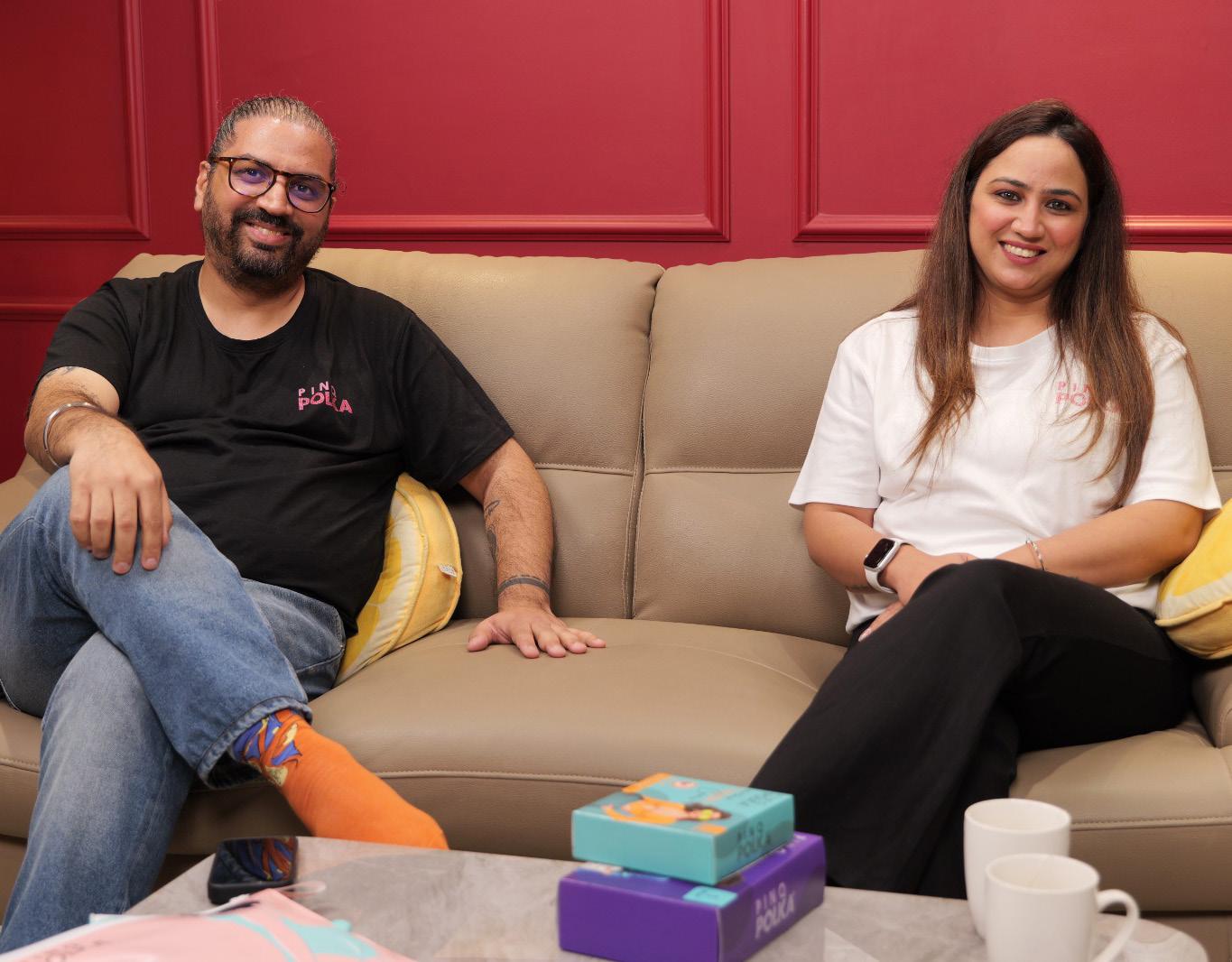
Manveen S Sharma, CEO of Pinq Polka, brings over nine years of leadership experience across the automotive, mobility, and business sectors, with expertise in business strategy, operations, and customer-centric innovation. Alongside her is her brother, Mandeep Singh, CoFounder, an entrepreneur with extensive experience in business development, sales, operations, and scaling businesses within the automotive and electric mobility ecosystem.
Together, the sibling duo has transformed a simple consumer insight into one of India's emerging women-first intimate wear and shapewear brands, combining strategic leadership with a shared commitment to creating products that prioritise comfort, confidence, and functionality.
Tell us about your venture and how the idea came to life. What made you decide to build it together as siblings?
Manveen: Pinq Polka was born out of a personal experience. I often found myself buying women's personal care products from abroad, because I couldn't find the same quality in India. During a conversation with my brother, we realised there was a genuine gap in the market. Before launching, we spent months researching, speaking to women, testing products, and gathering honest feedback. That process confirmed we were solving a real problem. Building the brand together happened naturally; we trusted each other's strengths and shared the same vision of creating products that genuinely improve women's everyday lives.
How do your personalities and strengths complement each other?
Manveen: I stay closely connected to our customers, spending time understanding their needs and translating those insights into better products. Many of our innovations have come directly from
conversations with women who use our products every day.
Mandeep: I focus on business strategy, partnerships, and sustainable growth. While Manveen leads product innovation and customer experience, I ensure we build a business that's scalable and future-ready. We may approach challenges differently, but we're united by one principle: never compromise on quality or customer trust.
Has your sibling bond made entrepreneurship easier or more challenging?
Manveen: It's definitely made the journey easier. When I was uncertain about leaving a stable career, Mandeep never stopped believing in the idea or in me. One of our proudest moments was receiving positive feedback from our earliest customers. Knowing our products were genuinely solving everyday problems gave us the confidence to keep innovating.
Mandeep Singh and Manveen S Sharma
How do you resolve disagreements without affecting your relationship?
We let the customer make the final decision. Whenever we disagree, we go back to research, product testing, and customer feedback instead of relying on assumptions. Since we're both working towards the same long-term vision, discussions remain focused on building the best possible product rather than proving who's right.
What's been your biggest milestone together, and what's next?
Watching Pinq Polka grow from a dinner-table conversation into a nationally recognised brand has been our biggest milestone. Our appearance on Shark Tank India gave us national visibility and validated our belief that India needed innovative, women-first intimate wear. Since then, we've introduced category-first products like India's first All-Weather Everyday Shaper Brief and launched campaigns such as UBU (Unapologetically Be You) and Too Hot To Hide, encouraging women to embrace confidence and comfort on their own terms.
Our focus now is to continue expanding the brand with consumerled innovations and establish Pinq Polka as the go-to destination for thoughtfully designed intimate wear that blends comfort, functionality, and style.
What would you like to thank your sibling for?
Manveen: I'd like to thank Mandeep for believing in me long before anyone else did. Starting a business is never easy, but having someone who trusted the vision, encouraged me to leap, and stood beside me through every challenge made all the difference. More than my co-founder, he's my biggest support system, and that's something I'll always be grateful for.
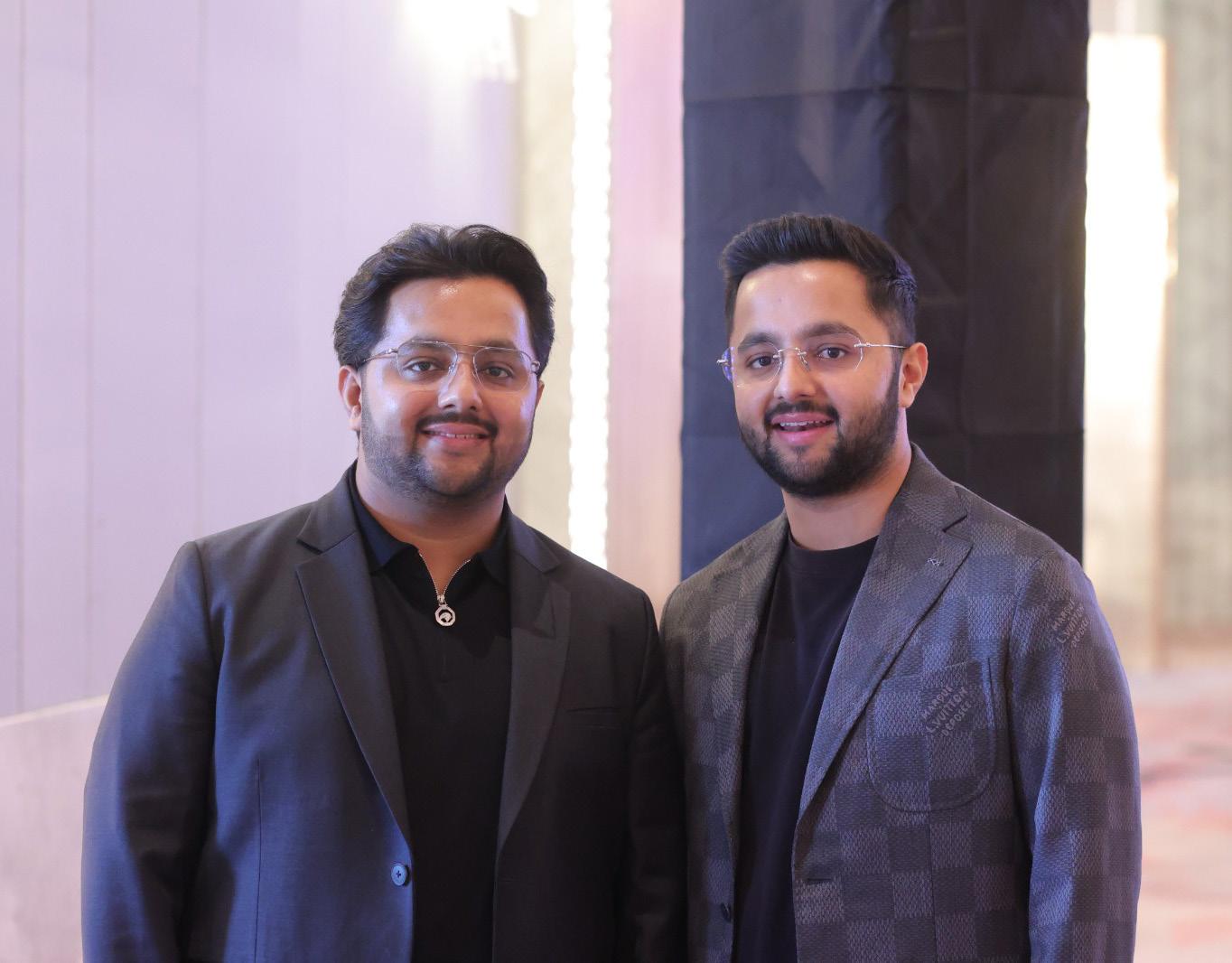
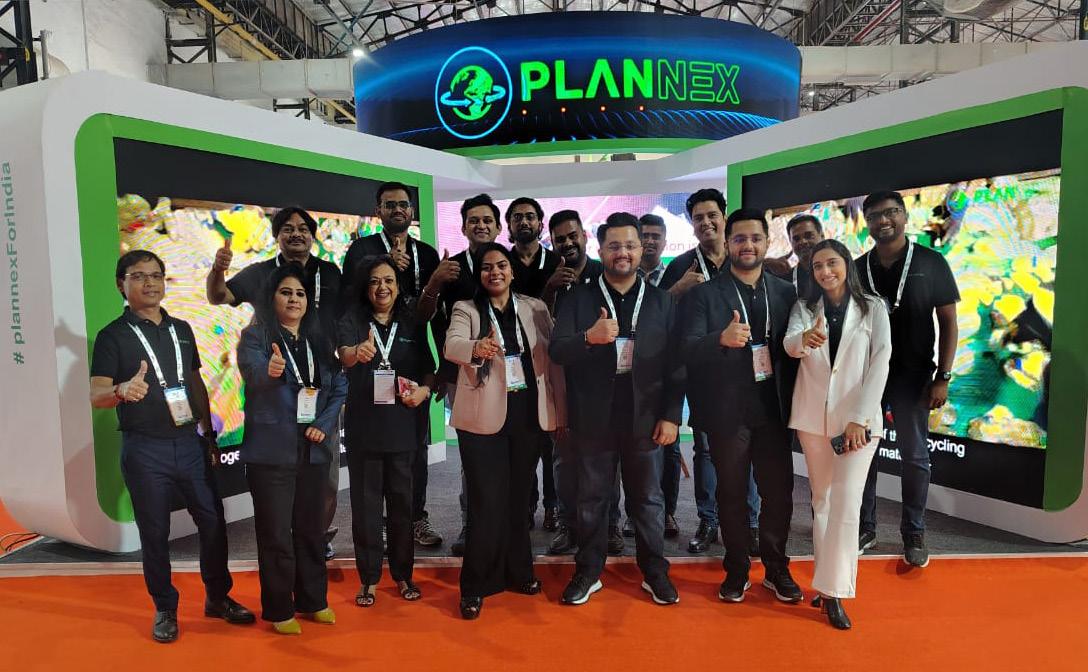
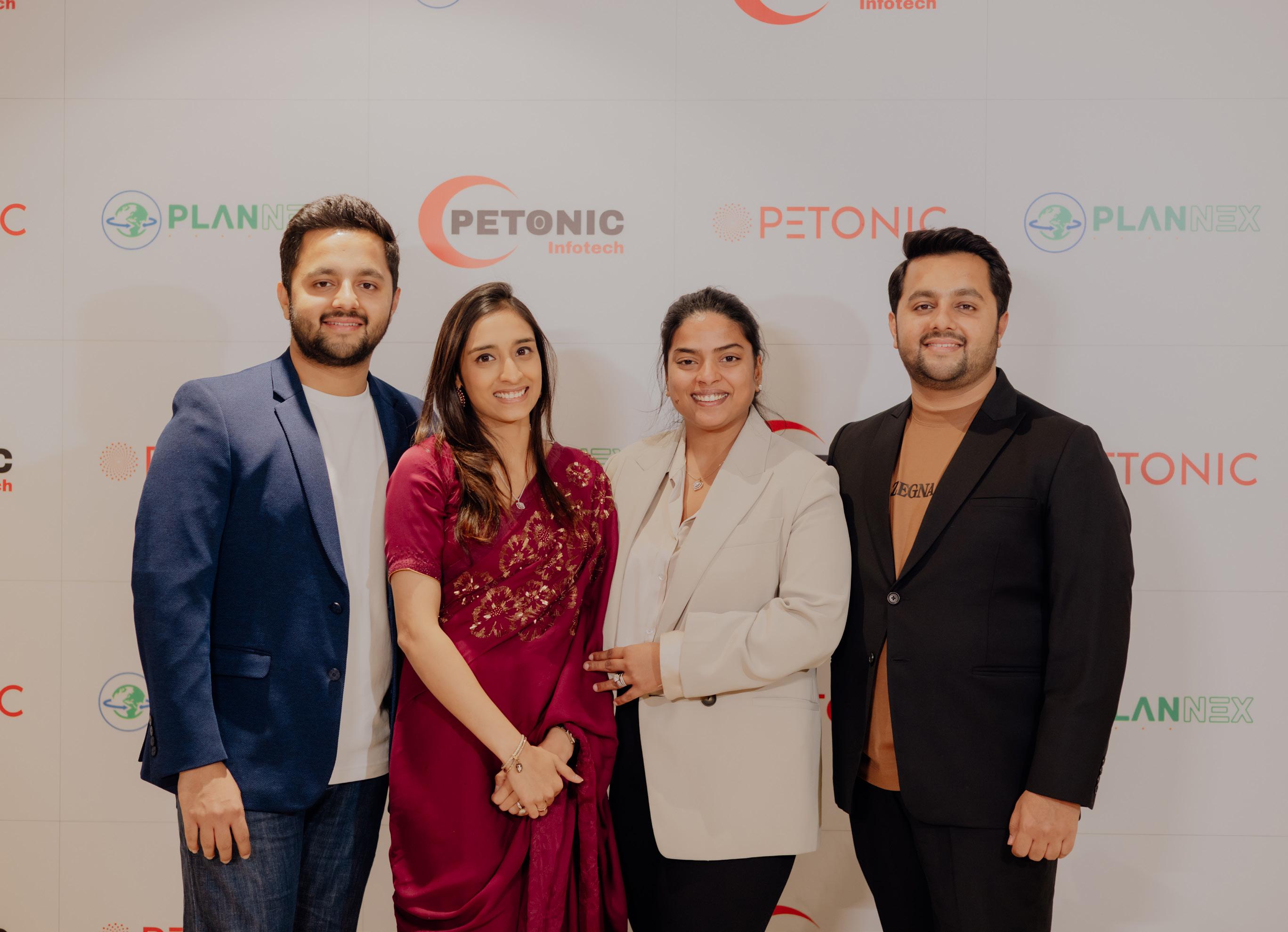
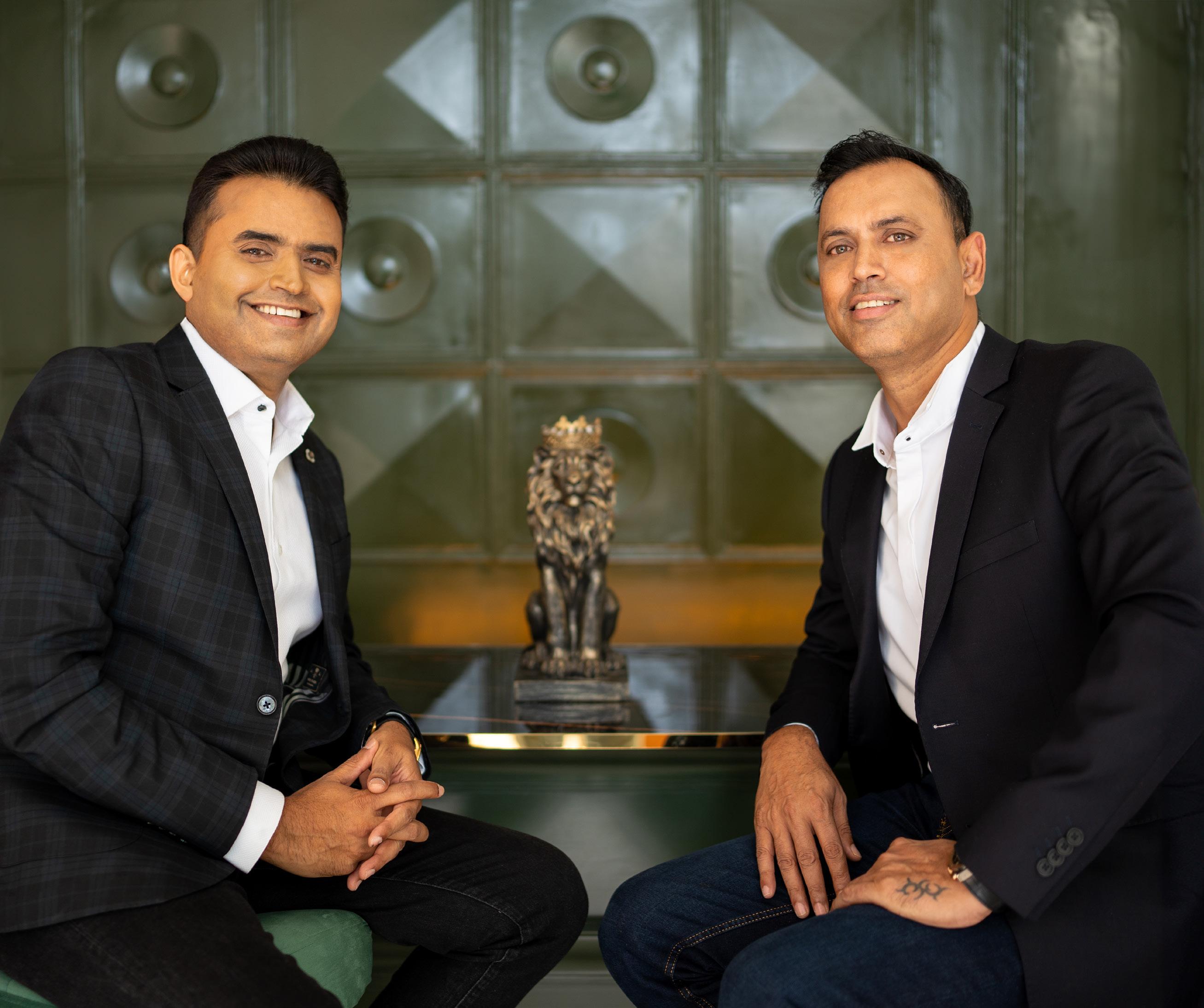
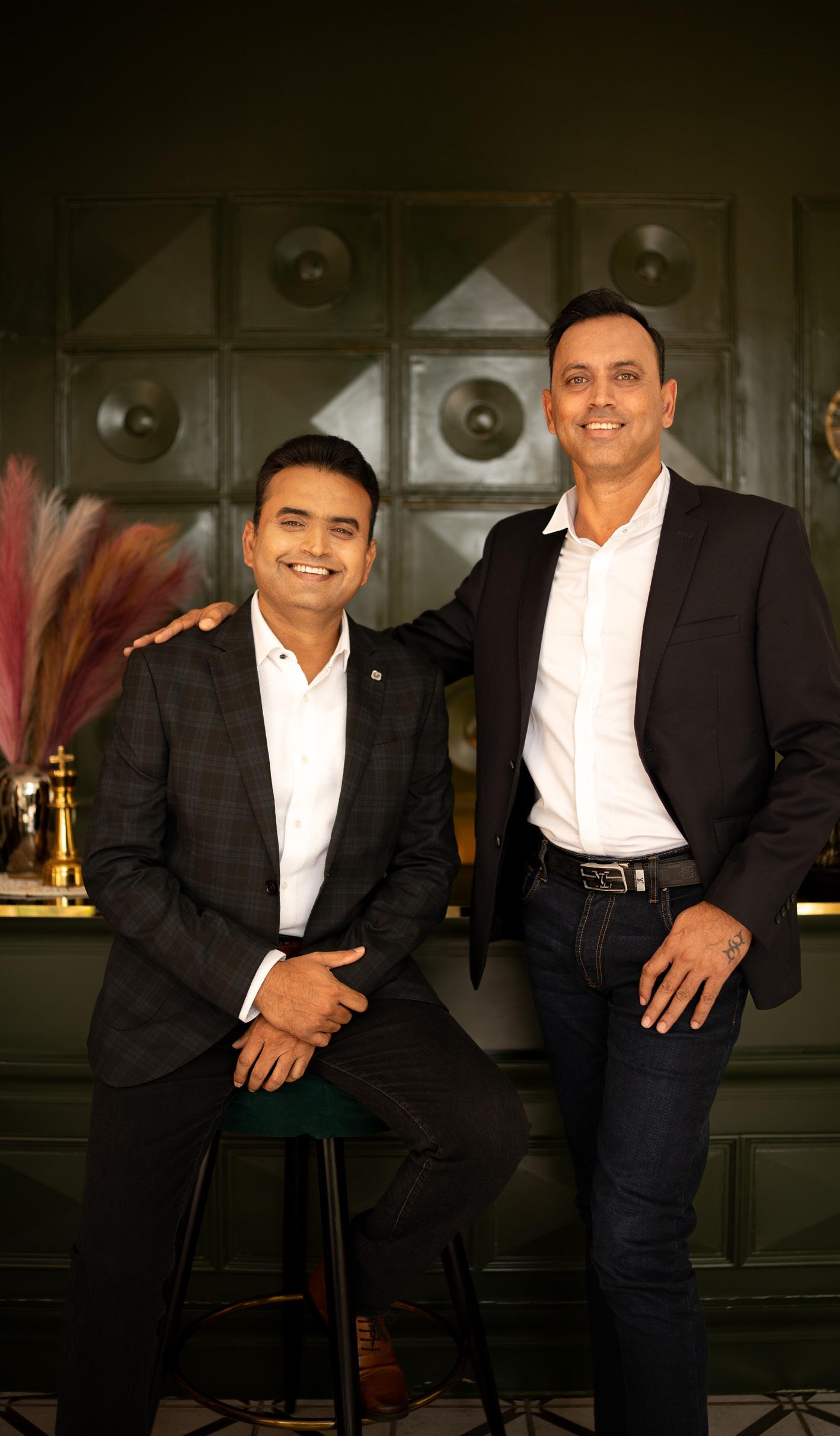
Twin brothers Yuvraj Bhardwaj and Yashraj Bhardwaj are the co-founders of Plannex Recycling, a Gurugram-based circular economy company transforming waste management through technology and innovation. Both entrepreneurs began innovating at the age of 14, filing patents and undertaking research projects long before launching their ventures. Today, while Yuvraj, Co-Founder & CEO, leads operations, technology, and execution, Yashraj drives strategy, policy, partnerships, and global expansion.
Together, the Forbes 30 Under 30 Asia honourees have built one of South Asia's leading recycling platforms, processing over 500,000 metric tonnes of waste annually across 18 facilities in seven countries, proving that sustainability and scale can go hand in hand.
Tell us about your venture and how the idea first came to life. What made you decide to build it together as siblings?
Yashraj: We've been building things together since we were 14, so becoming co-founders wasn't really a decision; it was the natural next step. We saw India's waste sector as a fragmented industry with enormous potential but very little technological intervention. While most people saw waste, we saw an opportunity to build infrastructure for the future.
Yuvraj: Today, Plannex processes over 500,000 metric tonnes of waste annually across categories such as e-waste, PET plastics, batteries, tyres, and industrial waste, while creating employment for more than 2,000 people. Being twins gave us something every founder hopes to build: complete trust. We couldn't imagine creating this business any other way.
How do your personalities and strengths complement each other?
Yuvraj: Although we're twins, we think very differently, and that's our biggest advantage. I focus
on operations, technology, and execution, making sure every facility runs efficiently and every process delivers on its promise.
Yashraj: I spend more time on strategy, partnerships, policy, and investor relationships, helping Plannex expand globally. One of us imagines what's possible, while the other ensures those ideas become reality. We've also intentionally built overlap into our roles, so either of us can step in whenever needed.
Has your sibling bond made entrepreneurship easier or more challenging?
Yashraj: Definitely easier. We've never experienced the loneliness that many founders talk about because we've always had each other. One moment that defines our partnership came during a particularly difficult business crisis. At nearly two in the morning, after hours of dealing with challenges, Yuvraj simply said, "Worst case, we'll start again. We've been doing that since we were 14." That reminded us that no business setback is bigger than the bond we share.
Yuvraj: That night reinforced something we've always believed: the business can be at risk, but we never are. Once you understand that, no challenge feels impossible.
Yuvraj Bhardwaj & Yashraj Bhardwaj
How do you resolve disagreements without affecting your relationship?
Yuvraj: We disagree often, and that's healthy. Our rule is simple: debate the decision, never the person. The person leading that particular area makes the final call, and we both respect it.
Yashraj: Once a decision is made, we stand by it together. And when the workday ends, business stays out of family conversations. That boundary has helped us protect both the company and our relationship.
What's been your biggest milestone together, and what's next?
Yashraj: Reaching 500,000 metric tonnes of annual processing capacity across seven countries was a defining milestone. It marked the moment Plannex evolved from a startup into critical infrastructure. Launching India's first waste ERP platform and our closed-loop 'Tyre to Tyre' recycling model proved that Indian recycling can lead through technology, not just scale.
Yuvraj: Our next goal is to expand our global footprint while integrating AI-driven automation across every facility. Our vision is simple: to build India's most trusted circular economy platform, where nothing valuable ever ends up in a landfill.
What would you like to thank your sibling for?
Yashraj: I'd thank Yuvraj for making my ambition possible. I can think boldly because I know he'll execute responsibly. More importantly, he's never let me feel alone, whether in business or in life.
Yuvraj: I'd thank Yashraj for always having the courage to take the first step into every opportunity, every difficult conversation, and every challenge. We've shared every milestone, every failure, and every success since childhood. More than co-founders, we've always been each other's strongest support system.
Bound by Brotherhood, Built for Business
Vijai Subramaniam and Mathan Subramaniam | Royaloak Furniture, Tamil Nadu
Some businesses begin with a breakthrough idea. Royaloak began with resilience. Long before building one of India’s largest organised furniture retail brands, brothers Vijai and Mathan Subramaniam were testing opportunities; selling tea powder, candle stands and household products, learning to adapt at every step. For Chairman and CoFounder Vijai Subramaniam, it started with a bold gamble: selling his scooter to raise ₹28,000, borrowing from friends, and investing in a small exhibition stall, where persistence proved more valuable than any perfect plan.
Joined by his younger brother Mathan, whose strengths lie in finance and strategy, the duo grew a modest venture into a nationwide brand with 200+ stores across 110+ cities. With clearly defined roles and shared intent, Royaloak now eyes nearly 400 stores and a ₹5,000-crore milestone, still grounded in resilience, clarity and trust.
Royaloak's journey began long before it became a household name. How did the idea first take shape, and what made you decide to build it together as brothers?
Vijai: Royaloak wasn't born from one defining idea; it was built through persistence. Before furniture, we experimented with several small businesses, from selling tea powder and plastic household products to candle stands. There were setbacks at every stage. I had even planned to move to Singapore, but when that didn't happen, I found myself taking up different jobs just to stay afloat. The turning point came when I took a chance on a small government exhibition stall, raising money by pledging my scooter and borrowing from friends. That experience taught us that resilience and adaptability matter more than having the perfect business plan.
Mathan: Even during those early years, we knew we wanted to build something together. Being brothers meant we already had trust, honesty and a shared purpose. We challenged each other's ideas, divided responsibilities naturally and kept learning from every setback. Royaloak is
really the outcome of years of experimentation, hard work and standing by each other through every phase.
You have built one of India's largest organised furniture retail brands together. How do your personalities and strengths complement each other?
Mathan: One of our biggest strengths is that we recognised early on that we didn't need to do everything together. Clear ownership has been the foundation of our partnership. My focus has always been on finance, product strategy, sourcing and business planning, building systems that support sustainable, long-term growth.
Vijai: My strength lies in operations, sales and understanding the market firsthand. I enjoy interacting with customers, identifying opportunities and driving expansion. What has made our partnership successful is mutual respect. We don't secondguess each other's decisions. That clarity has helped us scale efficiently.
Vijai Subramaniam and Mathan Subramaniam
Can you share a moment that perfectly captures your partnership as brothers and entrepreneurs?
Vijai: One memorable example was when I noticed strong customer demand in smaller cities that couldn't support large-format furniture stores. Customers wanted access to our products but didn't necessarily need a massive showroom. That observation sparked a long discussion between us.
Mathan: My role was to determine whether the idea could work commercially. We analysed store economics, customer behaviour, logistics and demand patterns before arriving at a solution. The outcome was the Royaloak Value Store concept: a compact retail format that gives customers access to our complete catalogue through digital platforms while leveraging our central supply chain. It perfectly reflects how our partnership works: one of us identifies opportunities on the ground, while the other validates them through numbers before we scale.
Working with family isn't always easy. How have you managed disagreements without affecting your relationship?
Vijai: We don't really see disagreements as conflicts. They're simply part of building a business. Since our responsibilities are clearly defined, we trust each other's judgement and avoid unnecessary
interference. That removes a lot of friction.
Mathan: We have always believed the business comes before individual opinions. We challenge each other's thinking, sometimes quite intensely, but the objective is always to arrive at the best decision, not to prove who is right. Once a decision is made, we move forward together. That mindset has protected both our relationship and the company.
Looking back, what milestone makes you the proudest, and what lies ahead for Royaloak?
Mathan: While crossing business milestones is rewarding, our biggest achievement is that we've built Royaloak together without compromising the trust we've shared since day one. Growing from a small exhibition stall into a national brand with over 200 stores is something we're incredibly proud of.
Vijai: Every new market represents the confidence customers have placed in us. Whether expanding into Rajasthan or strengthening our presence across southern and western India, each store reflects years of consistent effort. Our next goal is ambitious; we want to grow Royaloak into a ₹5,000-crore company while expanding our footprint to around 400 stores. More importantly, we want to continue building a brand that customers, employees and partners are proud to be associated with.
This Raksha Bandhan, what's one thing you'd like to thank your sibling for, as a co-founder and as family?
Vijai: As the elder brother, I've always felt a responsibility to lead, but I've never had to carry that responsibility alone. Building a successful business together is rewarding, but having a brother I can trust unconditionally is something I value even more.
Mathan: Trust has been one of the biggest reasons we've been able to work together for so many years without letting business come between us. Our greatest achievement isn't just the company we've built; it's that our relationship has remained just as strong throughout the journey.
4 CONTENT CREATORS ONLINE Making A Difference WHO ARE
Social media often gets a bad reputation for endless trends, fleeting virality, and mindless scrolling. But beyond the perfectly curated feeds and viral challenges, a new generation of creators is proving that the internet can also be a force for empathy, education, and genuine connection. They’re using their platforms not just to entertain, but to spark important conversations, build supportive communities, and remind people that they are not alone.
From a father reshaping India’s understanding of autism and an ASMR artist helping millions find comfort at the end of the day, to a creator championing body confidence and another offering refreshingly honest life advice, these voices are creating impact far beyond likes and views. In a digital world where attention is currency, they’re choosing to spend it on something meaningful. Meet four creators who are making the internet a kinder, more thoughtful place, one post at a time.
Indian Girl ASMR:
The Voice putting India to sleep
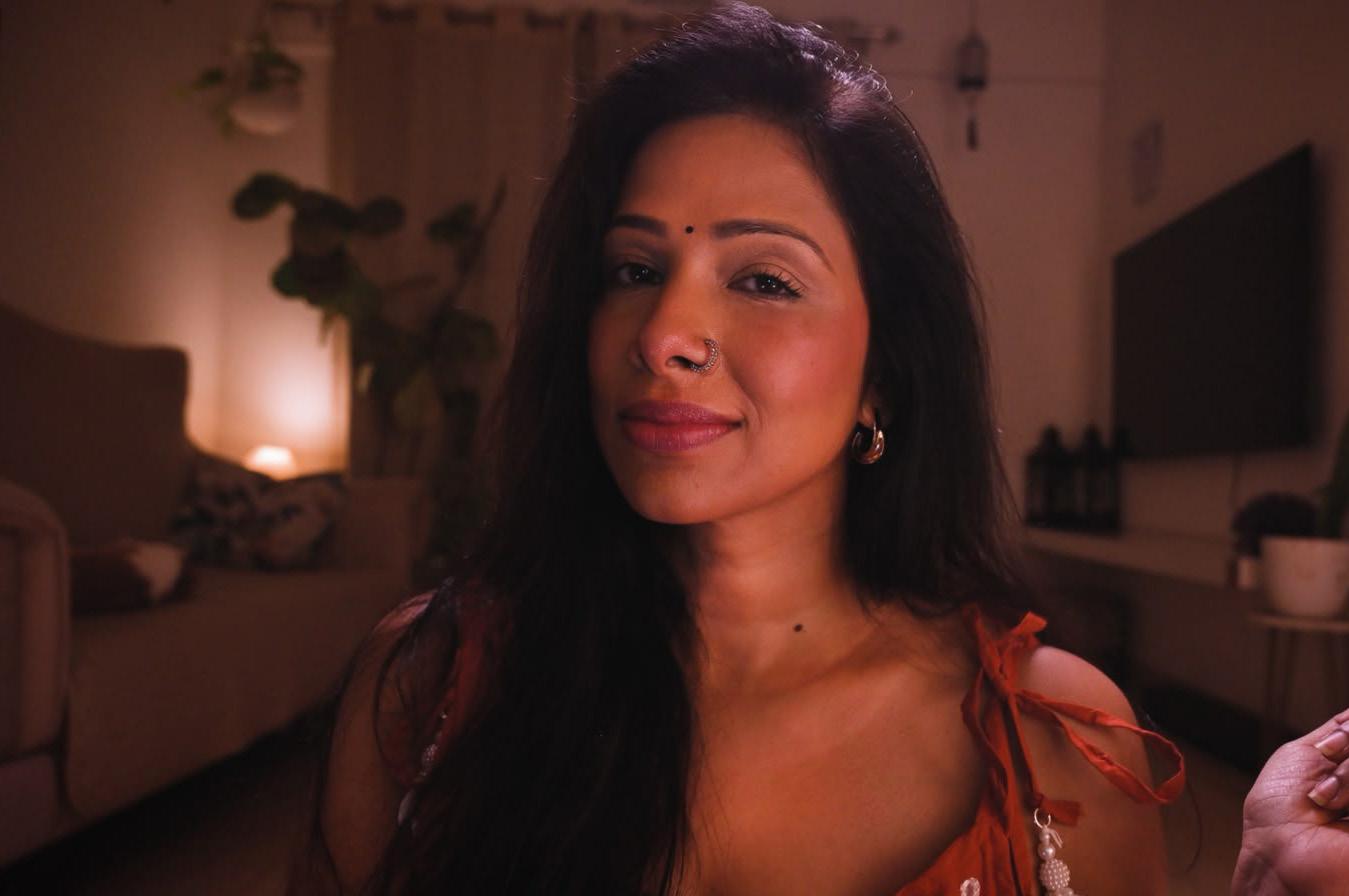
For Vedashree Pendharkar, better known online as Indian Girl ASMR, creating content has always been about offering people a moment of calm in an increasingly noisy world. One of India’s pioneering ASMR creators, she produces immersive roleplays, guided relaxation sessions, and soothing sound experiences designed to help viewers sleep better, manage stress, and unwind. Having been an avid ASMR viewer herself for nearly six years, Veda decided to try creating videos during the COVID-19 lockdown in 2020. What began as a creative outlet soon evolved into something much bigger. “As viewers began sharing stories about how the videos helped them sleep better, relax after stressful days, or cope with anxiety, I realised that ASMR had the power to make a genuine difference in people’s lives,” she says. Being among the early creators in the space, she also takes pride in introducing many Indians to ASMR for the first time.
Over the years, Veda has built a community around comfort and relaxation while navigating the challenges that come with creating in a relatively misunderstood genre. “Many people were unfamiliar with ASMR and often associated it with things it was never intended to be,” she says. Yet, messages from viewers struggling with anxiety, insomnia, and stressful periods have kept her motivated. For Veda, the impact of her work matters far more than numbers. “If my content can provide even a few minutes of comfort, calm, or relief, then I feel I have achieved something meaningful,” she says. Through Indian Girl ASMR, she hopes to encourage people to slow down, prioritise rest, and embrace self-care without guilt, while continuing to spread awareness about ASMR as a tool for relaxation and emotional well-being.
@indiangirlasmrofficial
Diksha Singhi:
The Body Confidence Creator helping women feel seen
For Diksha Singhi, founder of A Little Extra, confidence was never something she wanted women to earn after changing themselves. Through her content around body confidence, fashion, fitness, lifestyle, and entrepreneurship, she is challenging long-held assumptions about plus-size bodies and what health and confidence are supposed to look like. “Fitness and movement belong to everybody and every body,” she says. “You can love working out, have an active lifestyle, and still not fit society’s narrow definition of what a ‘fit’ person should look like.” Having grown up constantly being reminded that she was “the fat girl,” Singhi spent years feeling like she needed to shrink herself, physically and emotionally. Creating content became her way of rewriting that narrative, not just for herself, but for others who had been made to feel they didn’t belong. “I wanted more women to see someone who looked like them living confidently, wearing what she loves, building a business, and taking up space unapologetically,” she says.
Over the years, Singhi has built a community rooted in self-acceptance and representation, even while navigating the highs and lows of life online. “Confidence isn’t about never being affected by outside opinions; it’s about not letting them define you,” she says. For her, the biggest milestones have little to do with numbers and everything to do with impact. Knowing that someone wore an outfit they had been afraid to wear or started believing in themselves because of something she shared means more than any metric. Through A Little Extra, Singhi hopes to remind women that they do not need permission to take up space, pursue their dreams, or feel beautiful. “You do not have to become someone else to be worthy of success, confidence, love, or opportunity,” she says. “You are already enough.”
@alittleextra.co.in
Akshay Babu:
The Honest Creator delivering the advice everyone needs to hear
For Akshay Babu, content creation wasn’t a backup plan but a calling he spent years putting on hold. The 26-year-old creator from Kerala followed a conventional path, earning a Master’s degree in Australia and building a foundation in Computer Science, but deep down, he knew he wanted something more meaningful. “I realised I was building a life that looked right on paper but didn’t make me feel fulfilled,” he says. Returning to India, Babu took the leap into content creation, focusing on self-improvement, fitness, relationships, mental health, and social issues. What began with just 600 followers grew into a community of more than 127,000 after he committed to showing up every day. “My journey wasn’t built on overnight success,” he says. “It was built on consistency, learning, and trusting the process.”
Much of Babu’s content stems from his own experiences. Having spent years struggling with focus and motivation before being formally diagnosed with ADHD, he understands what it feels like to feel lost and misunderstood. “For years, I wondered what was wrong with me,” he says. Through self-reflection and personal growth, he gradually learned to better understand himself, lessons he now shares with others. “Every lesson I share is something I wish I had known earlier,” he explains. Whether discussing discipline, relationships, or mental health, his goal is to help people gain clarity and realise they are not alone. “If my content can help someone reach those realisations a little sooner than I did,” he says, “then I feel like I’ve done something meaningful.”
The Weekend Fakeer:
The Father changing India’s conversation around autism
For writer and storyteller Swapnil Narendra, the most important story of his life began in 2012 with the birth of his son, Medhya. After spending years writing films, advertisements, and digital campaigns, Narendra found his understanding of communication, success, and humanity transformed by raising his autistic, non-verbal son. What emerged from that journey was The Weekend Fakeer, also known as Saptaahant, a platform where he speaks candidly about autism, parenting, and the often uncomfortable realities that people quietly carry within themselves. “I realised that while I had spent years helping companies communicate, I was living with a person who couldn’t communicate through words at all,” he says.
What started as an honest glimpse into his life soon became a community for people navigating their own unseen struggles. Tired of seeing autism reduced to therapies and progress charts, Narendra shared his experiences without trying to be inspirational. “People weren’t starving for information,” he says. “They were starving for honesty.” Today, messages arrive from parents, teachers, siblings, and strangers across the world who have found comfort in his words. For Narendra, the greatest reward isn’t views or followers, but hearing someone say, “I thought I was alone until I found your page.” Through The Weekend Fakeer, he hopes to make people “less afraid of difference,” believing that the biggest challenge many autistic people face isn’t autism itself, but society’s inability to embrace those who are different.
@the Weekend Fakeer
These creators are proving that influence can be about far more than entertainment. Through honesty, empathy, and a willingness to share their own experiences, they’re creating spaces where people feel seen, understood, and less alone.
What unites these creators isn’t the kind of content they make, but the intention behind it. In an age where attention has become one of the internet’s most valuable currencies, they’re choosing to spend it on something meaningful. And perhaps that’s what truly sets them apart: they’re not just creating content; they’re creating connection, one post at a time.
HOT LAUNCHES
At Hashtag Magazine, we bring you the hottest and most exciting product launches in the market—from beauty and wellness to fashion, tech, and lifestyle essentials. Whether you’re looking for the newest skincare must-haves, game-changing gadgets, or stylish fashion trends, we’ve got you covered!
Dipsy Malli Malli Moisturiser
Price Rs : 1,999/-
Dipsy’s debut skincare launch, Malli Malli, brings together Indian botanicals and modern skincare science in a thoughtfully formulated everyday moisturiser. Designed for all skin types and suitable for both men and women, the lightweight formula delivers a soft matte finish without leaving behind any greasy residue, making it especially well-suited to India’s humid weather.
At the heart of the formulation is coriander seed oil, a native ingredient known for its antioxidant-rich, soothing and brightening properties. It is complemented by kokum butter and mango butter, which provide deep yet non-comedogenic hydration while helping maintain the skin’s moisture barrier. Neroli oil adds calming and skin-conditioning benefits, along with a subtle natural floral scent that enhances the application experience. What makes Malli Malli stand out is its claim of up to 48 hours of hydration while maintaining a breathable, weightless feel. It also doubles as a makeup primer, creating a smooth canvas that helps makeup sit comfortably throughout the day. The texture absorbs quickly, leaving skin feeling soft, balanced and refreshed rather than heavy or sticky.
For those looking for a clean, multifunctional moisturiser that blends the goodness of Indian botanicals with science-backed performance, Dipsy’s first offering is a promising addition to the daily skincare routine.
OZiva Hair Actives + Shilajit: A Daily Hair Wellness Solution for Men
Price: Rs : 899/-
OZiva has introduced Hair Actives + Shilajit, a clinically tested, plant-based supplement designed to address the root causes of hair fall in men, including hormonal imbalances, lifestyle stress and nutritional deficiencies. The convenient effervescent tablet is formulated to support stronger, denser hair while promoting overall scalp health.
The formulation combines three advanced ingredients. Shudh Shilajit Extract (70% Fulvic Acid) helps improve nutrient absorption, supports energy levels and contributes to overall vitality. GZen-Zinc™, a plant-derived zinc sourced from guava leaf extract, helps support healthy hair follicles by regulating the pathway involved in DHT production, one of the leading causes of hair thinning in men. Completing the blend is Liposomal SesZen-Bio®, a Sesbania Agati plant extract enriched with natural biotin. Its advanced liposomal delivery system enhances nutrient absorption, supports ferritin levels and promotes stronger, healthier hair growth.
Designed for effortless daily use, simply drop one effervescent tablet into 250 ml of water, allow it to dissolve completely, stir if required, and drink after a meal. The refreshing drink offers a convenient way to incorporate targeted hair nutrition into your routine.
Manufactured following Good Manufacturing Practices (GMP), Hair Actives + Shilajit reflects OZiva's commitment to clean, plant-based wellness backed by science. For men seeking a proactive, inside-out approach to hair care, this daily supplement offers a modern and convenient solution.
Everyday Dermatological Care by Salve Pharmaceuticals
Price: Rs: 194 onwards
With nearly two decades of expertise in dermatology, Salve Pharmaceuticals has built a strong reputation for creating effective, dermatologist-recommended formulations that combine trusted ingredients with science-backed skincare solutions. Its range is designed to address everyday skin and hair concerns while being gentle enough for regular use.
Sweatgo Soap is an innovative antiperspirant soap formulated to help reduce excessive sweating of the underarms, hands and feet. Enriched with glycerine, it keeps the skin fresh, clean and protected from odour for over 24 hours. The light fragrance and cooling sensation make it an excellent choice for active lifestyles, whether you're working out, travelling or attending long workdays.
Hairvital Shampoo is a bi-phase cleanser and conditioner that offers complete hair care in a single step. Powered by Aloe Vera, Wheat Germ Protein, Jojoba Oil, Vitamin E and Glycerin, it cleanses the scalp while nourishing hair from root to tip. The formula helps improve manageability, reduces dryness and brittleness, and supports stronger, healthier-looking hair with regular use.
For those with dry or sensitive skin, Parasoft Soap is a gentle cleansing bar enriched with stabilised glycerine, Olive Oil, Jojoba Oil, Aloe Vera and Vitamin E. Prepared using the cold-process method to preserve its moisturising properties, it helps maintain the skin's natural hydration while soothing dryness, making it suitable for conditions such as dry skin and sensitive skin.
Complementing the soap, Parasoft Cream provides intensive moisturisation with White Soft Paraffin, Light Liquid Paraffin and Aloe Vera. It forms a protective barrier that locks in moisture, softens rough skin and relieves dryness without feeling excessively heavy.
Overall, Salve Pharmaceuticals offers a well-rounded personal care range that focuses on hydration, protection and effective daily care. Each product is thoughtfully formulated to deliver targeted benefits, making the collection a dependable choice for healthy skin and hair.
Want your product to be featured? Write to us at contact@hashtagmagazine.in, and let’s showcase your innovation to our wide audience. Stay tuned for the best in new arrivals, expert reviews, and exclusive insights, only at Hashtag Magazine!
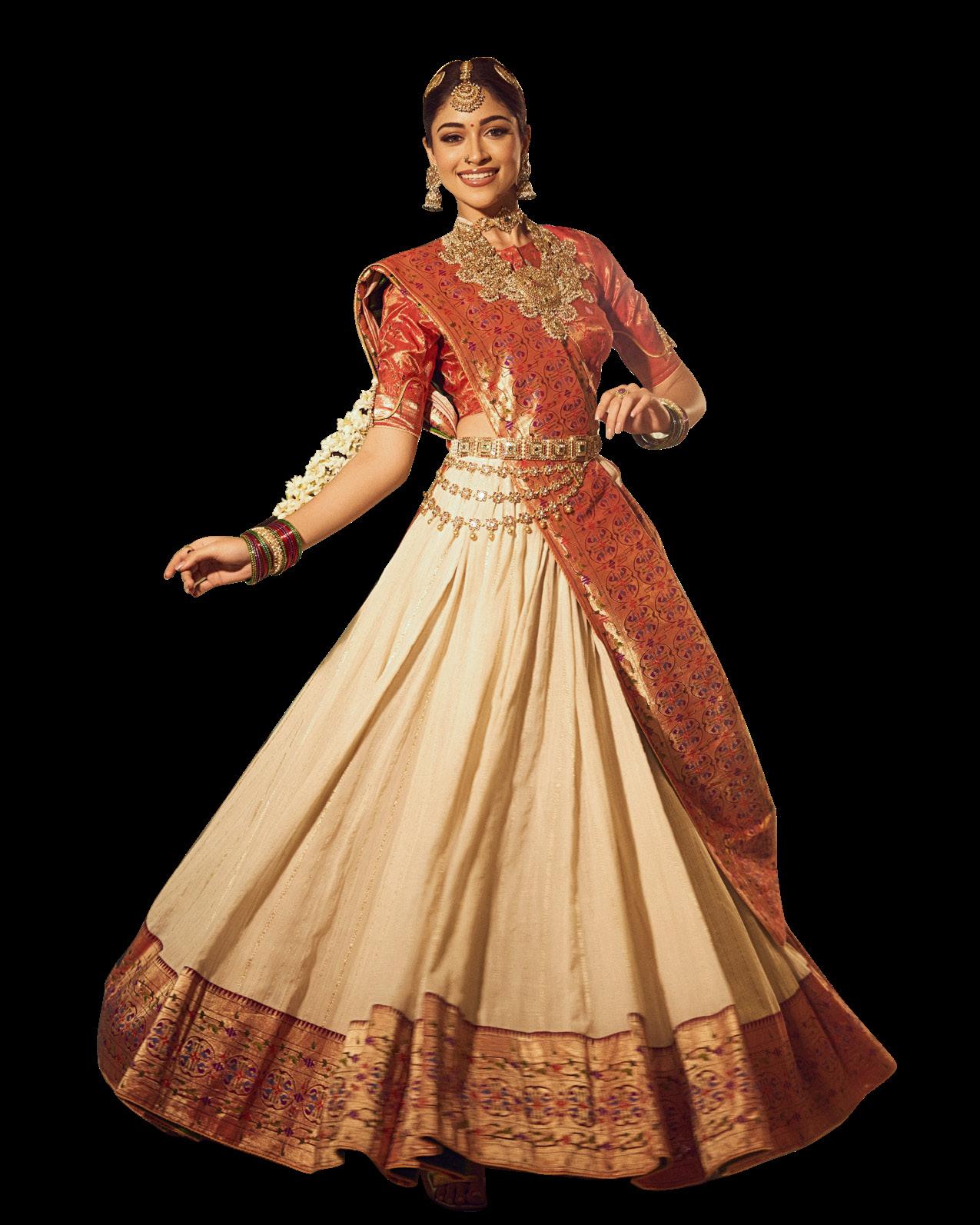
Celebrating One Weave at a Time INDIA,
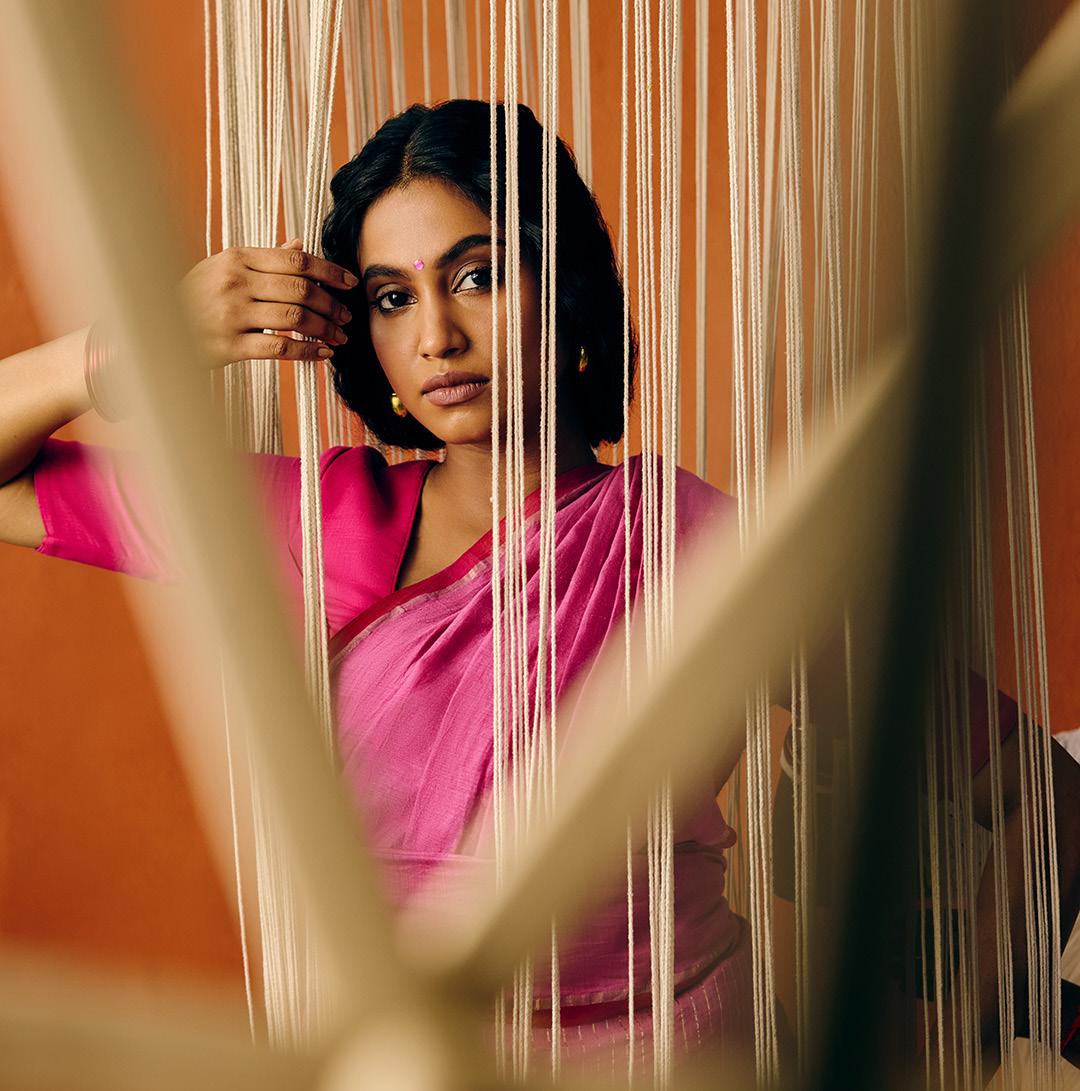
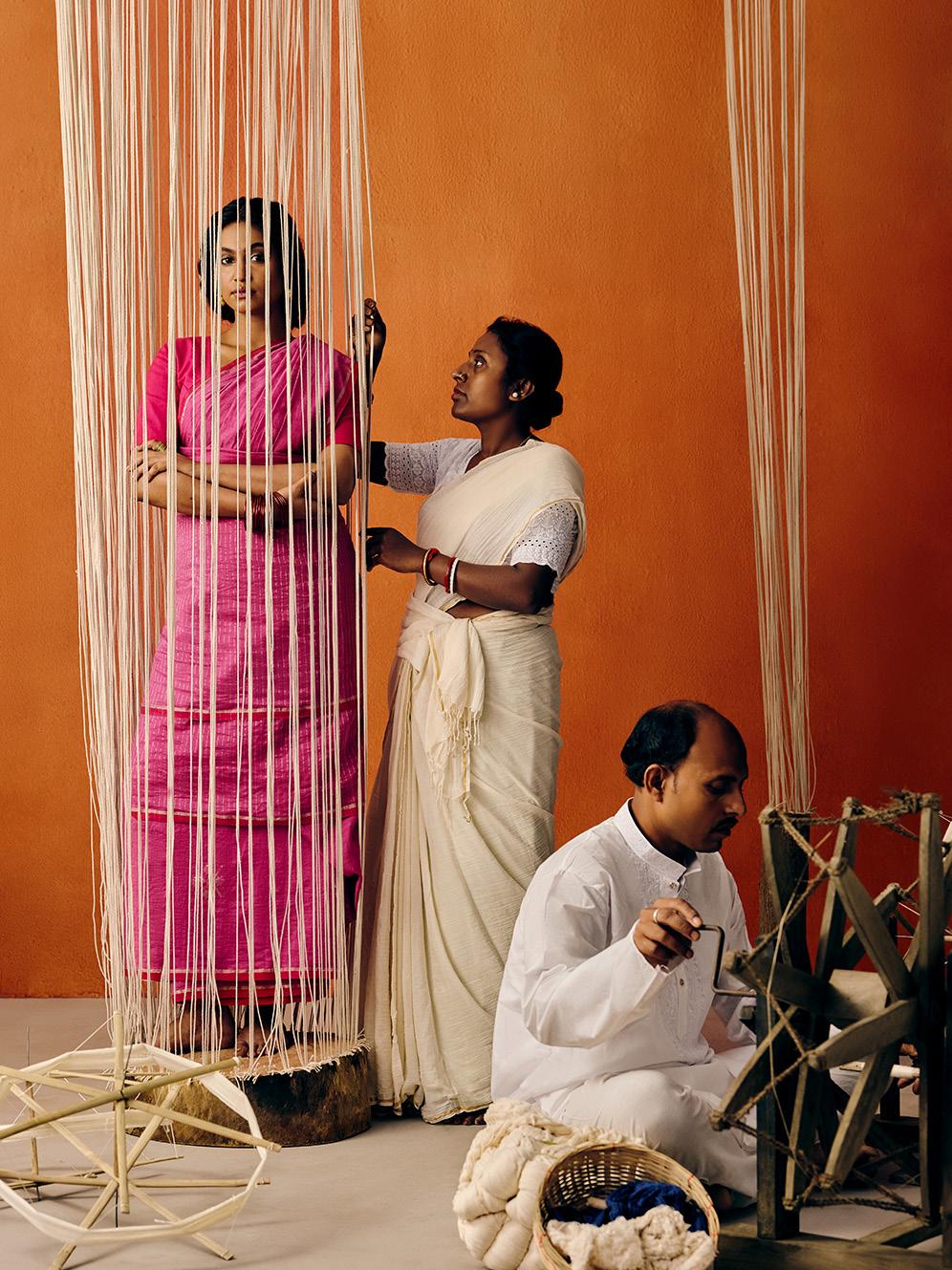
This Independence Day, celebrate India's rich textile heritage with handloom brands that honour tradition through timeless craftsmanship. From age-old weaves to contemporary silhouettes, these labels keep the country's artisanal legacy alive, one thread at a time.
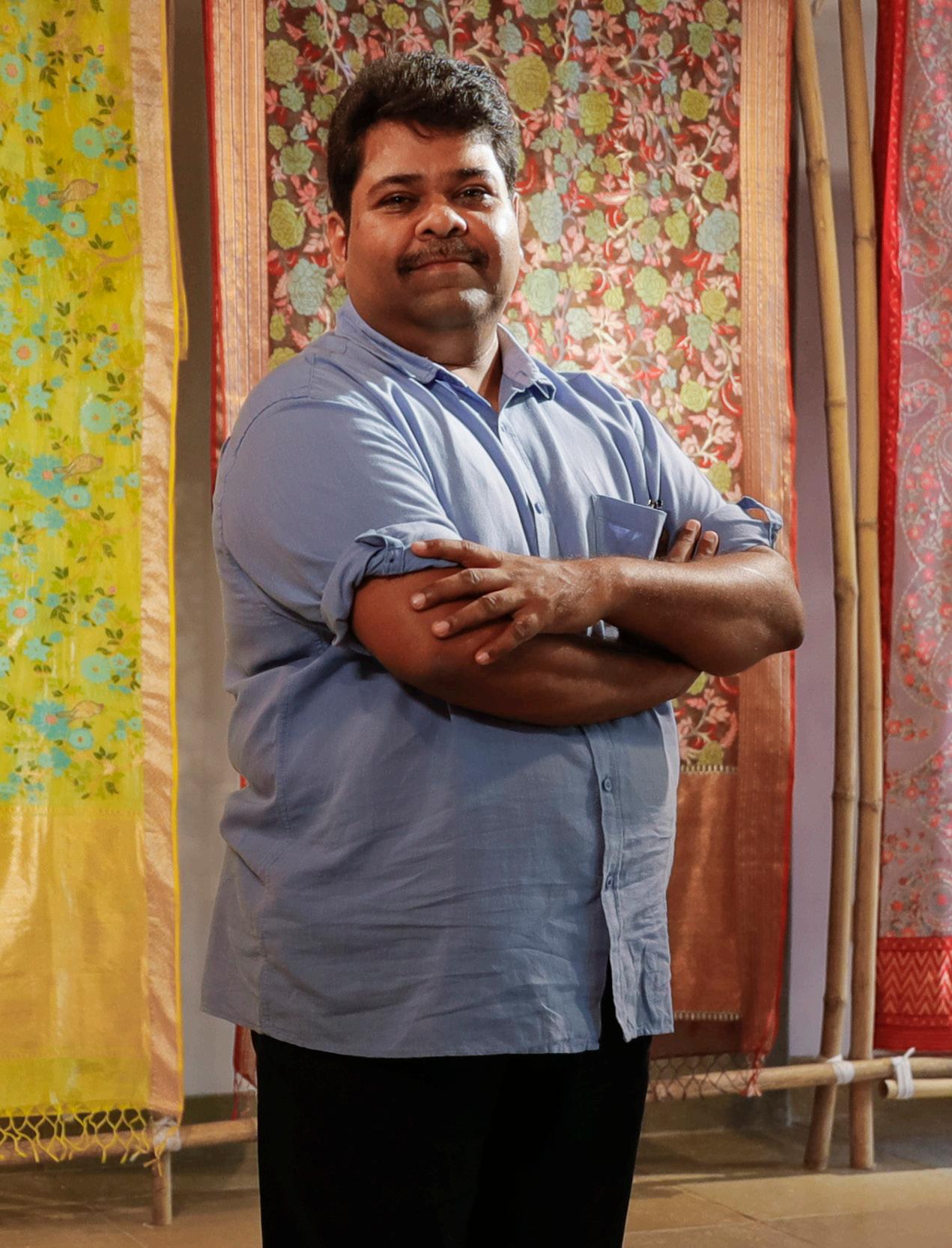
Gulmohar
by Manipushpak Chatterjee & Debarshi Roy | Calcutta
Gulmohar Calcutta is a contemporary textile label rooted in Bengal's rich handloom heritage. The brand seamlessly blends research, design, and artisan collaboration to create timeless handwoven textiles that honour traditional craftsmanship while embracing modern aesthetics. Working closely with weaving communities across Bengal, Gulmohar Calcutta is committed to preserving indigenous techniques, empowering artisans, and ensuring that handloom continues to thrive as a living cultural practice.
Tell us about your brand and how it is helping preserve and promote India's rich handloom heritage.
At Gulmohar Calcutta, we believe India's handloom traditions are living knowledge systems, not relics of the past. Every textile we create reflects generations of craftsmanship, history, and cultural memory.
We work closely with artisan communities to revive traditional weaving vocabularies, document indigenous knowledge, and reinterpret heritage techniques for contemporary audiences. Beyond creating textiles, we invest in artisan education, design development, and knowledge sharing so that these crafts remain culturally relevant and economically sustainable for future generations.
Which weaving traditions or artisan communities do you work with, and what makes their craftsmanship unique?
We primarily work with artisan
clusters across Bengal, specialising in Jamdani weaving and traditional Kantha embroidery. What makes these crafts extraordinary is the entirely handmade process. Jamdani motifs are woven directly onto the loom, thread by thread, while Kantha transforms fabric through delicate running stitches that tell stories through texture and pattern. Every piece is unique, carrying the individual artistry and skill of the artisan who created it.
Sustainability is at the heart of handloom. What ethical or sustainable practices does your brand follow?
For us, sustainability begins with the handloom itself. We work directly with artisan communities, ensuring transparent partnerships and fair wages while eliminating unnecessary intermediaries. Our collections are produced in small batches following a slow-fashion philosophy that minimises waste and values quality over quantity. We believe sustainability is about
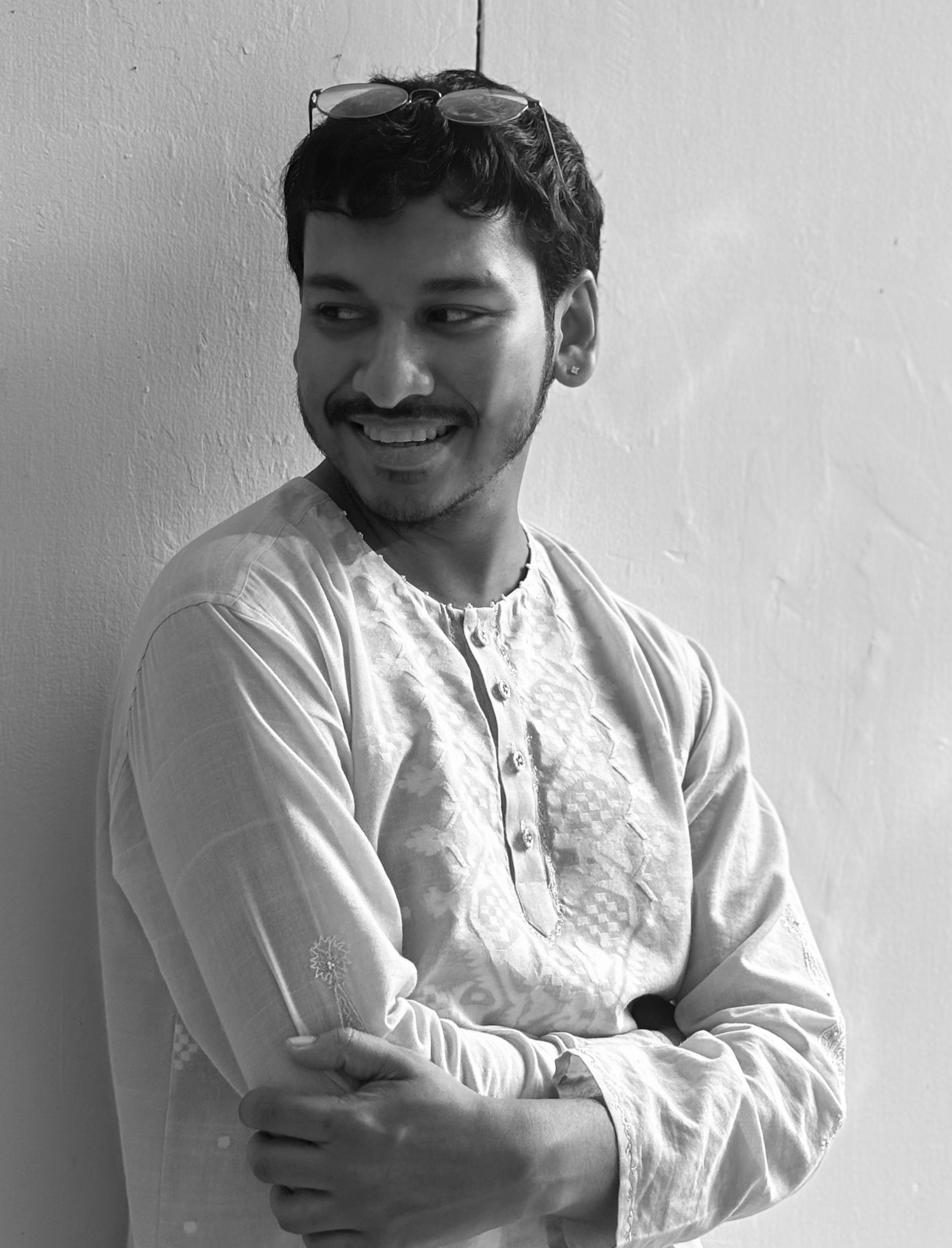
Manipushpak Chatterjee
Debarshi Roy
preserving both the environment and the communities that keep these extraordinary crafts alive.
What is the biggest challenge facing India's handloom sector today, and how is your brand helping address it?
One of the biggest challenges is the growing competition from inexpensive machinemade imitations, which often undervalue authentic handloom and discourage younger artisans from continuing their family traditions.
At Gulmohar Calcutta, we address this by working directly with artisan communities, ensuring fair remuneration, and creating contemporary collections that keep traditional craftsmanship relevant for today's consumers. By generating year-round demand for authentic handloom, we hope to create a more sustainable future for our artisans.
What does National Handloom Day mean to your brand, and what message would you like to share with consumers?
For me, National Handloom Day is an opportunity to celebrate the remarkable artisans whose hands preserve India's textile heritage every single day.
My message is simple: every handloom purchase is a conscious choice. When you choose an authentic Jamdani or Kantha creation, you're not just buying a garment; you're supporting artisan livelihoods, preserving centuries-old craftsmanship, and embracing a more thoughtful, sustainable
way of living. This Handloom Day, I encourage everyone to choose textiles that carry stories, celebrate the human touch, and honour the extraordinary artisans behind every thread.
One handloom piece you recommend this National Handloom Day?
I would recommend our BINYAASH collection. Designed around the stories of our artisans, BINYAASH celebrates the rhythm of the loom, the beauty of slow craftsmanship, and the human hand behind every weave. Each garment is more than a piece of clothing; it's a tribute to memory, skill, and the enduring legacy of Bengal's weaving traditions.
Tell us about your brand and how it is helping preserve and promote India's rich handloom heritage.
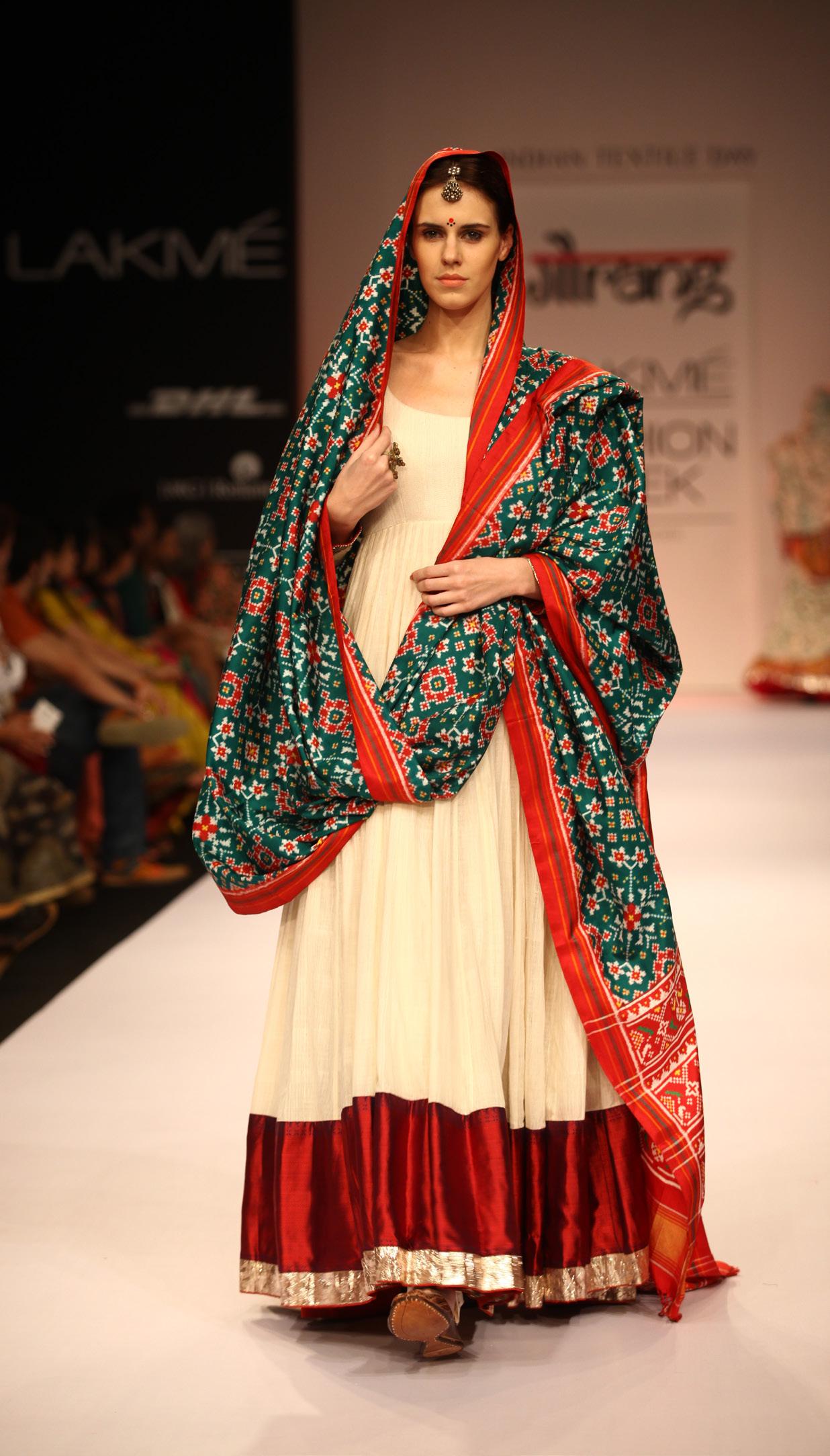
For me, GAURANG has always been about textiles before fashion. My journey began with a fascination for handwoven fabrics and evolved into a lifelong commitment to preserving India's weaving traditions, particularly the intricate Jamdani weave. Working closely with artisan communities, we have built loom clusters that strengthen weaving ecosystems, encourage innovation, and create opportunities for traditional skills to flourish. Through our collections and showcases across India and internationally, I strive to present Indian handlooms as timeless works of art that remain relevant to contemporary audiences while staying true to their heritage.
Which weaving traditions or artisan communities do you work with, and what makes their craftsmanship unique?
I work extensively with Jamdani weavers and artisan communities across Telangana, Andhra Pradesh, and several textile clusters throughout India. Through the GAURANG loom clusters, we collaborate with artisans to develop fine cottons, silks, and innovative handwoven textiles while preserving the integrity of traditional weaving techniques. What makes Jamdani extraordinary is its painstaking process: every motif is woven by hand, thread by thread, directly on the loom. The precision, patience, and craftsmanship involved ensure that every sari is unique, carrying the unmistakable signature of the artisan who created it.
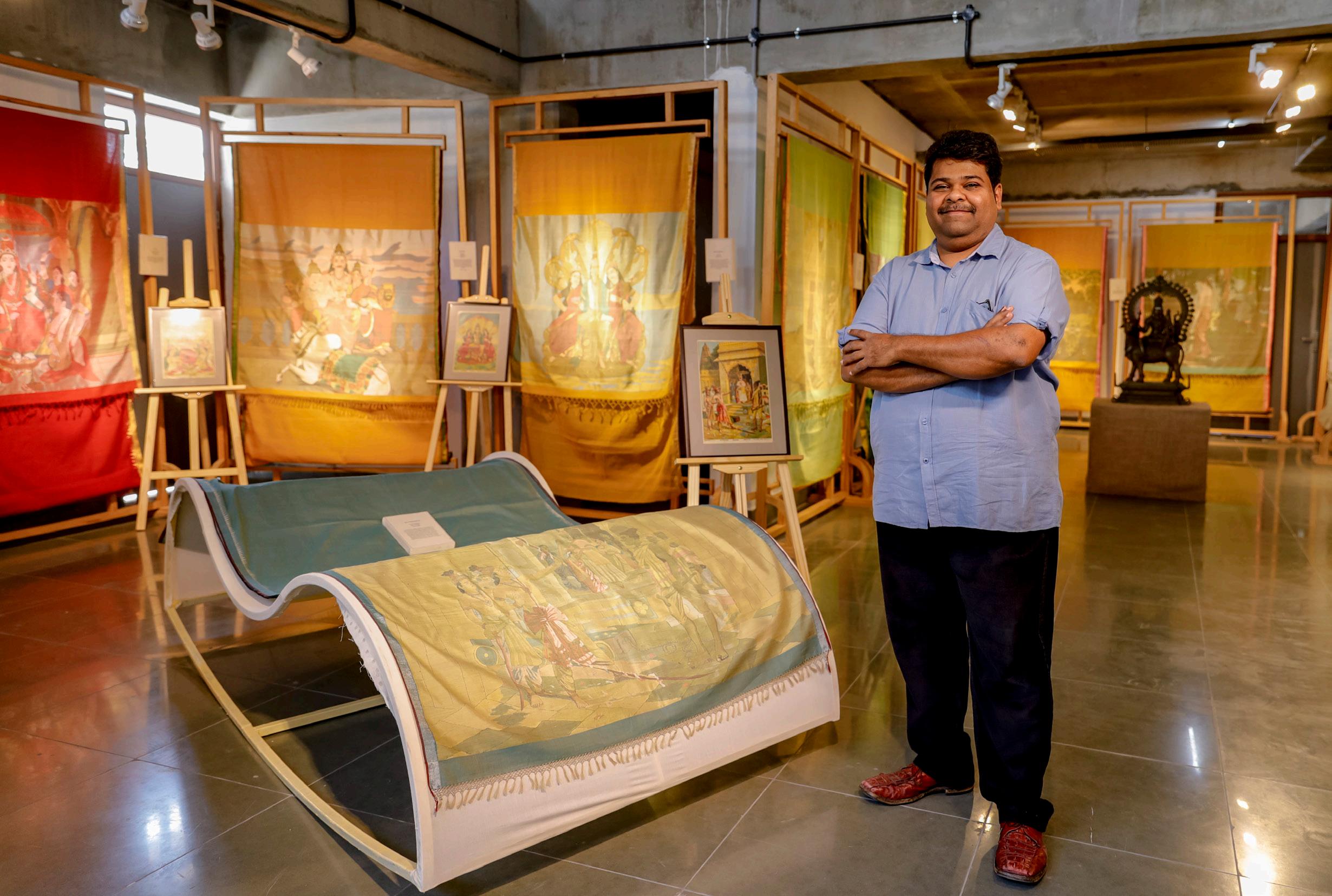
GAURANG
by Gaurang Shah | Hyderabad
GAURANG is one of India's foremost luxury handloom brands, renowned for reviving and reimagining the iconic Jamdani weave. For over three decades, Gaurang Shah has worked alongside artisan communities across India, combining traditional craftsmanship with contemporary design to create timeless textiles. Through its dedicated loom clusters, GAURANG has empowered over a thousand artisans while preserving India's rich weaving heritage through innovation, skill development, and sustainable livelihoods.
Gaurang Shah
Sustainability is at the heart of handloom. What ethical or sustainable practices does your brand follow?
Handloom is inherently sustainable, relying on human skill rather than industrial machinery while consuming minimal energy and producing very little waste.
For over three decades, I have worked directly with weaving communities to create long-term livelihoods and preserve specialised skills. Through our loom clusters, we invest in artisan training, technical refinement, and knowledge transfer to younger generations. We also embrace a slow-fashion philosophy, producing timeless textiles that celebrate quality, craftsmanship, and longevity instead of seasonal trends.
What is the biggest challenge facing India's handloom sector today, and how is your brand helping address it?
While Indian handlooms are receiving renewed appreciation, the real challenge lies in ensuring that artisan communities continue to see a sustainable future in the craft.
My focus has always been on strengthening weaving communities by creating long-term opportunities, encouraging innovation, and expanding the possibilities of the loom. By showcasing Indian handlooms to wider audiences and continually reimagining traditional textiles through contemporary design, I hope to create lasting value for both the craft and the artisans who sustain it.
What does National Handloom Day mean to your brand?
For me, National Handloom Day is a celebration of India's extraordinary weaving heritage and a tribute to the artisans whose dedication has preserved these traditions across generations. My message to consumers is simple: when you choose handloom, you choose far more than fabric. You support artisan livelihoods, preserve centuries of craftsmanship, and become part of a living cultural legacy. Every handwoven textile carries the rhythm of the loom and the spirit of the artisan, and by embracing handloom, we ensure these stories continue to be woven into India's future.
A handloom piece would you recommend this on National Handloom Day?
Without hesitation, I would recommend a handwoven Jamdani sari. To me, it represents the finest expression of India's weaving heritage. Every motif is meticulously woven by hand, creating an intricate textile that combines remarkable technical skill with understated elegance. More than a garment, a Jamdani sari is an heirloom that preserves generations of craftsmanship, making it something to cherish and pass on for years to come.
Tell us about your brand and how it is helping preserve and promote India's rich handloom heritage.
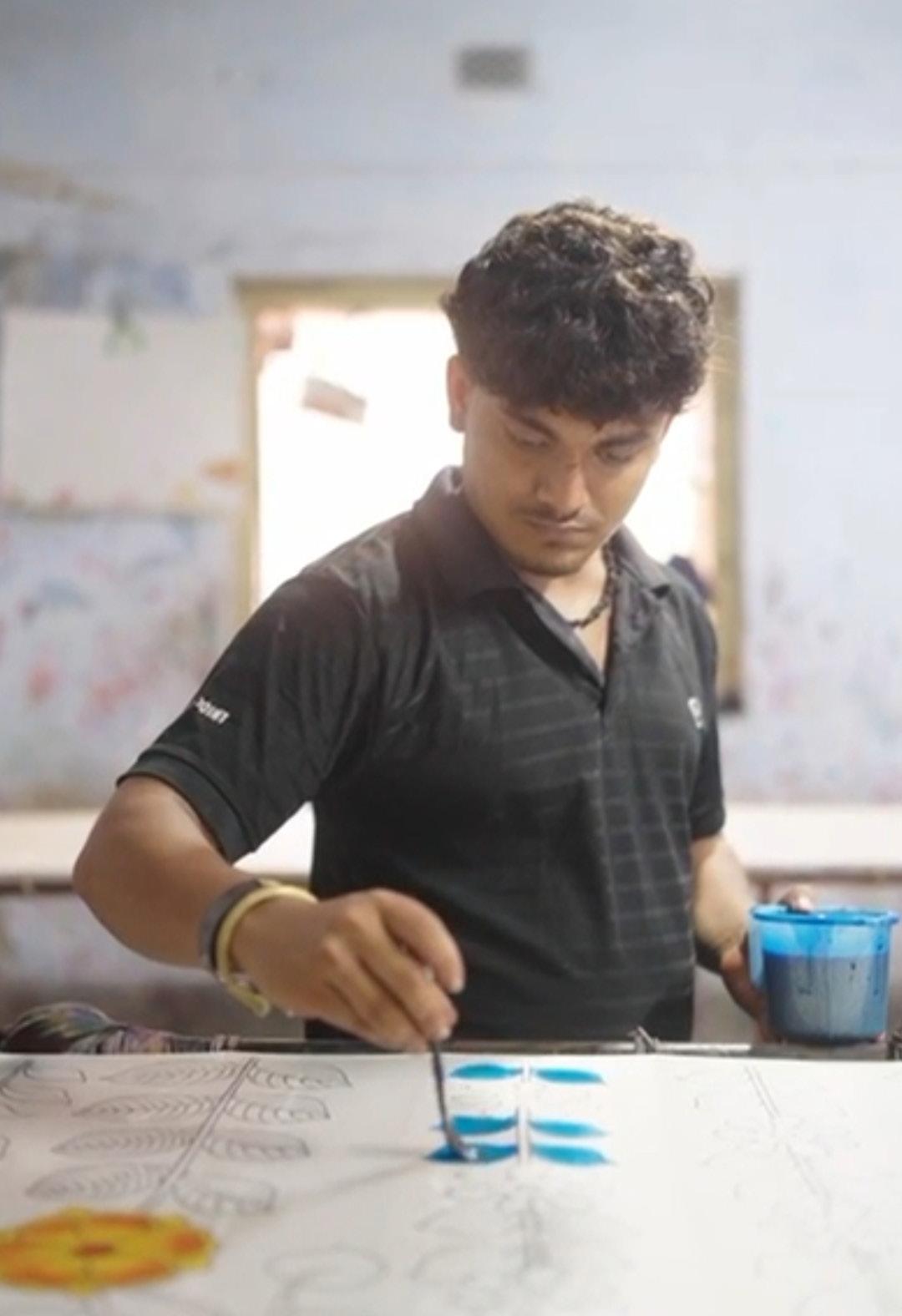
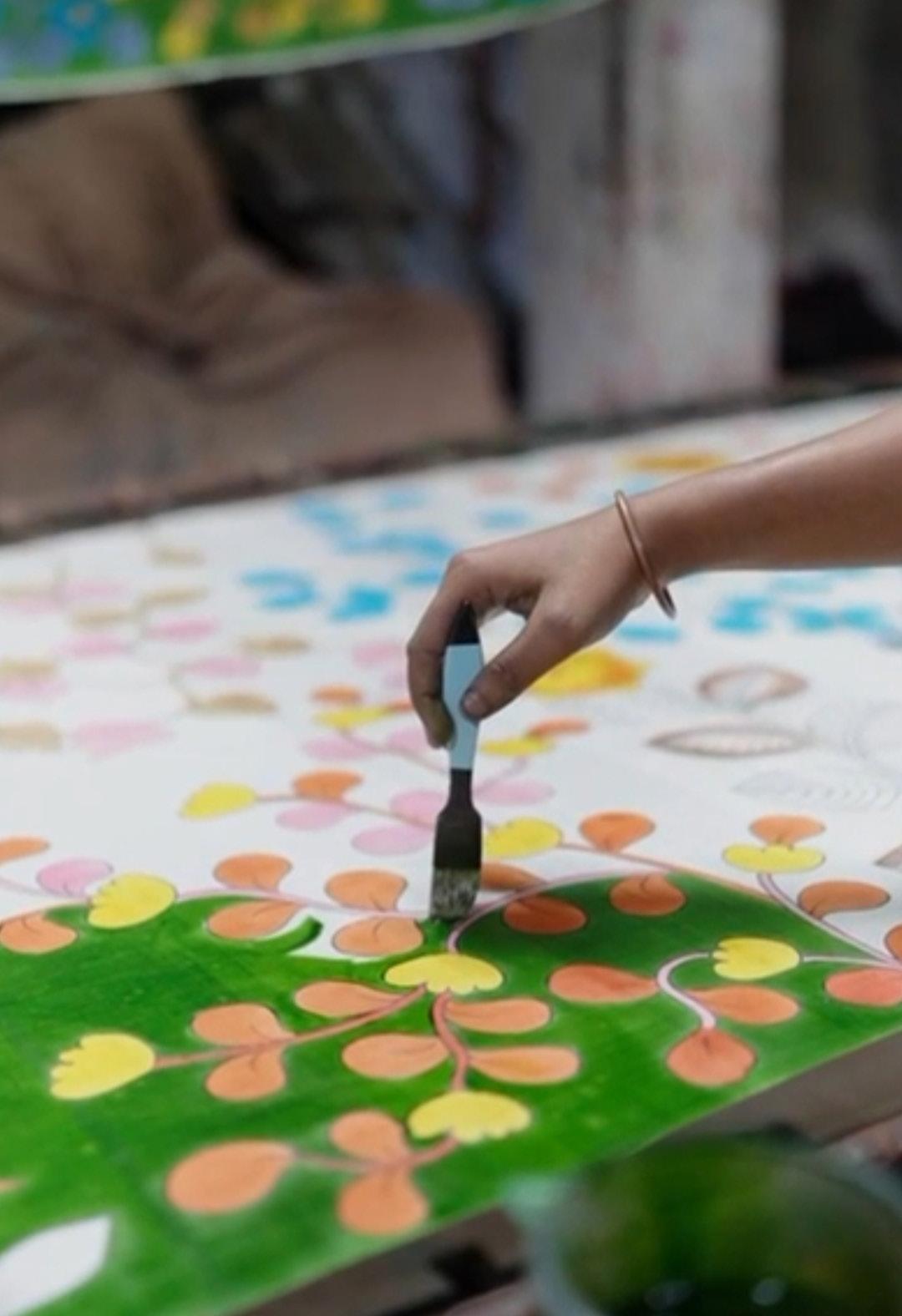
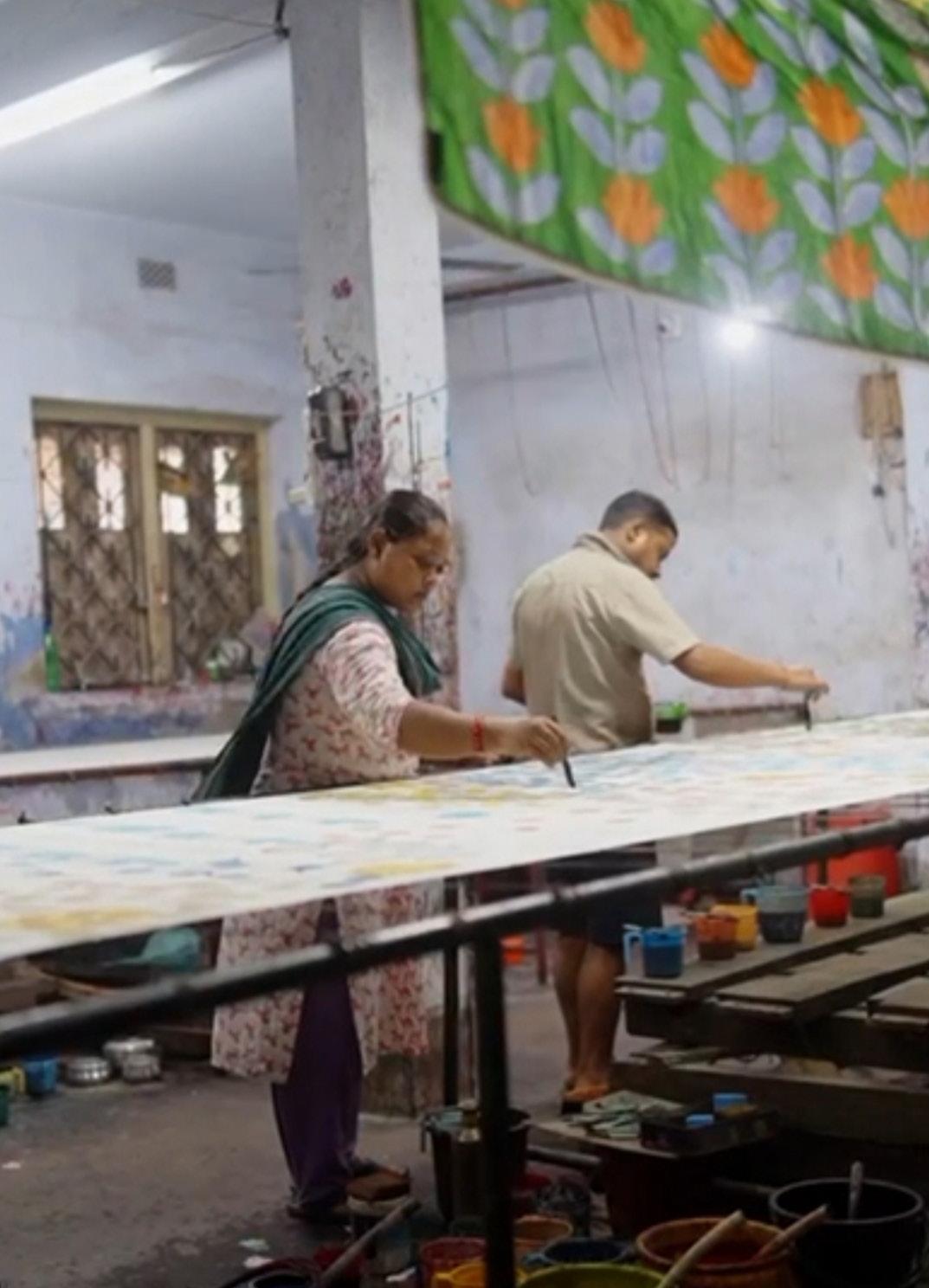
Kawaii was born from my desire to transform India’s rich artistic heritage into wearable art for the modern woman. Growing up in Udaipur, a city surrounded by art, culture, and royal traditions, I developed a deep appreciation for the craftsmanship and stories behind Indian textiles. Through Kawaii, we bring together diverse Indian art forms such as Pichwai, Madhubani, Batik, Ajrakh, and Bandhani on luxurious handloom fabrics. Our focus is on preserving authenticity while presenting these traditional crafts in a contemporary format. As a Pichwai Certified and ODOP Verified brand, we work closely with original artisans and artists, ensuring their skills are recognised, valued, and carried forward to future generations.
Which weaving traditions or artisan communities do you work with, and what makes their craftsmanship unique?
We work with artisan communities across India, including Pichwai artists from Udaipur, Madhubani artists from Bihar, Ajrakh craftsmen
Kawaii
by Lavika Singhvi | Udaipur
Founded by Lavika Singhvi, a Udaipur-born entrepreneur with a deep connection to India’s artistic heritage, Kawaii is redefining luxury sarees through the lens of wearable art. Inspired by Rajasthan’s rich cultural legacy, Lavika brings together rare handcrafted traditions from across India, including Pichwai, Ajrakh, Madhubani, Batik, and Bandhani. As a Pichwai Certified and ODOP Verified brand, Kawaii works directly with master artisans to preserve authenticity and support traditional craftsmanship. Each saree is envisioned as a timeless heirloom, celebrating heritage, artistry, and the stories woven into every creation.
from Gujarat and Rajasthan, Bandhani artisans, Batik artists, and traditional handloom weavers.
Each craft represents generations of knowledge and storytelling. Pichwai is deeply connected to Rajasthan’s cultural and spiritual heritage, with artists creating intricate hand-painted narratives. Madhubani celebrates symbolic storytelling through detailed motifs, while Ajrakh and Batik showcase complex dyeing techniques perfected over generations.
Every saree is a reflection of the artisan’s patience, skill, and artistic expression, making each piece truly unique.
Lavika Singhvi
Sustainability is at the heart of handloom. What ethical or sustainable practices does your brand follow?
At Kawaii, sustainability begins with respecting craftsmanship and the communities behind it.
We work directly with artisans and artists, ensuring fair compensation, ethical collaborations, and meaningful opportunities. By supporting traditional handcrafted processes, we help preserve skills that have been passed down through generations.
Handloom and handcrafted textiles naturally follow a slower and more mindful approach to creation, reducing dependence on mass production while protecting India’s artistic heritage. For us, sustainability means preserving both the craft and the people who keep it alive.
What is the biggest challenge facing India's handloom sector today, and how is your brand helping address it?
One of the biggest challenges facing Indian handloom and traditional crafts today is the increasing presence of machinemade imitations, which often fail to reflect the time, skill, and cultural value behind authentic handmade work.
Many heritage crafts require years of expertise, but artisans often struggle to receive the recognition and appreciation they deserve. At Kawaii, we address this by focusing on authenticity,
transparent artisan partnerships, and educating consumers about the value of handmade craftsmanship. By positioning handcrafted sarees as timeless luxury pieces and heirlooms, we aim to create sustainable demand for artisans and help preserve these traditions for future generations.
What does National Handloom Day mean to your brand, and what message would you like to share with consumers?
For Kawaii, National Handloom Day is a celebration of India’s incredible artistic legacy and the talented artisans who dedicate their lives to preserving it.
Coming from Udaipur, Rajasthan, a region synonymous with heritage and craftsmanship, we feel a deep responsibility towards protecting and promoting traditional Indian art forms, especially Pichwai, which is
an integral part of our identity.
My message to consumers is simple: every handcrafted saree carries a story. When you choose authentic handloom and artisanmade creations, you are not just choosing a garment: you are supporting livelihoods, preserving centuries-old skills, and becoming part of India’s living cultural heritage.
Handloom is not just fashion; it is art, history, and identity woven into every thread.
A handloom you recommend this National Handloom Day?
This National Handloom Day, I would especially recommend our Handpainted Pichwai Collection. Being a brand born in Udaipur, Pichwai holds a very special place in our journey. Each saree brings together authentic Pichwai artwork created by traditional artists with premium handloom fabrics, making every piece a wearable heirloom.
Alongside Pichwai, our Madhubani and Batik collections celebrate India’s incredible diversity of art forms, allowing women to carry stories, traditions, and craftsmanship with them.
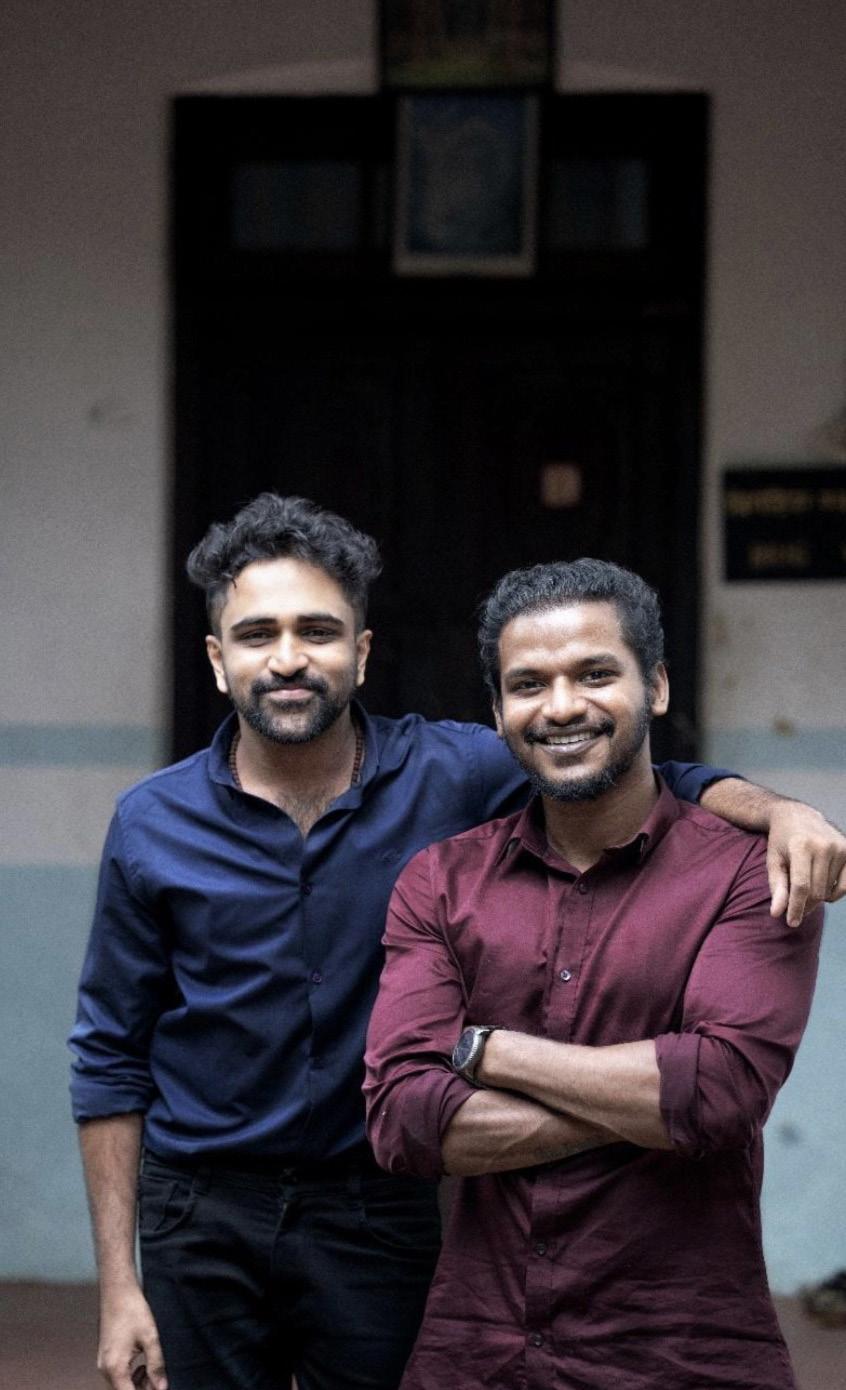
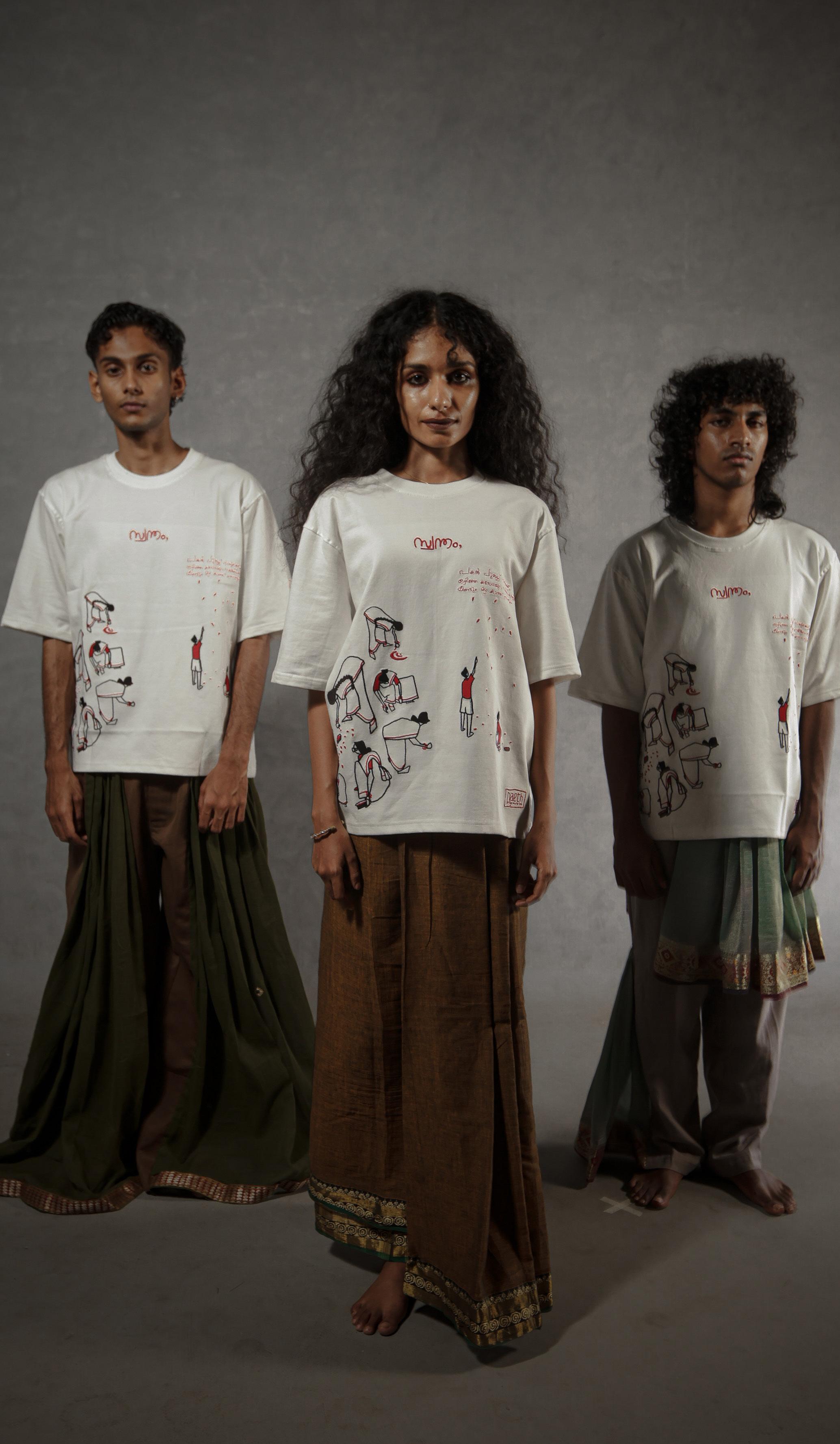
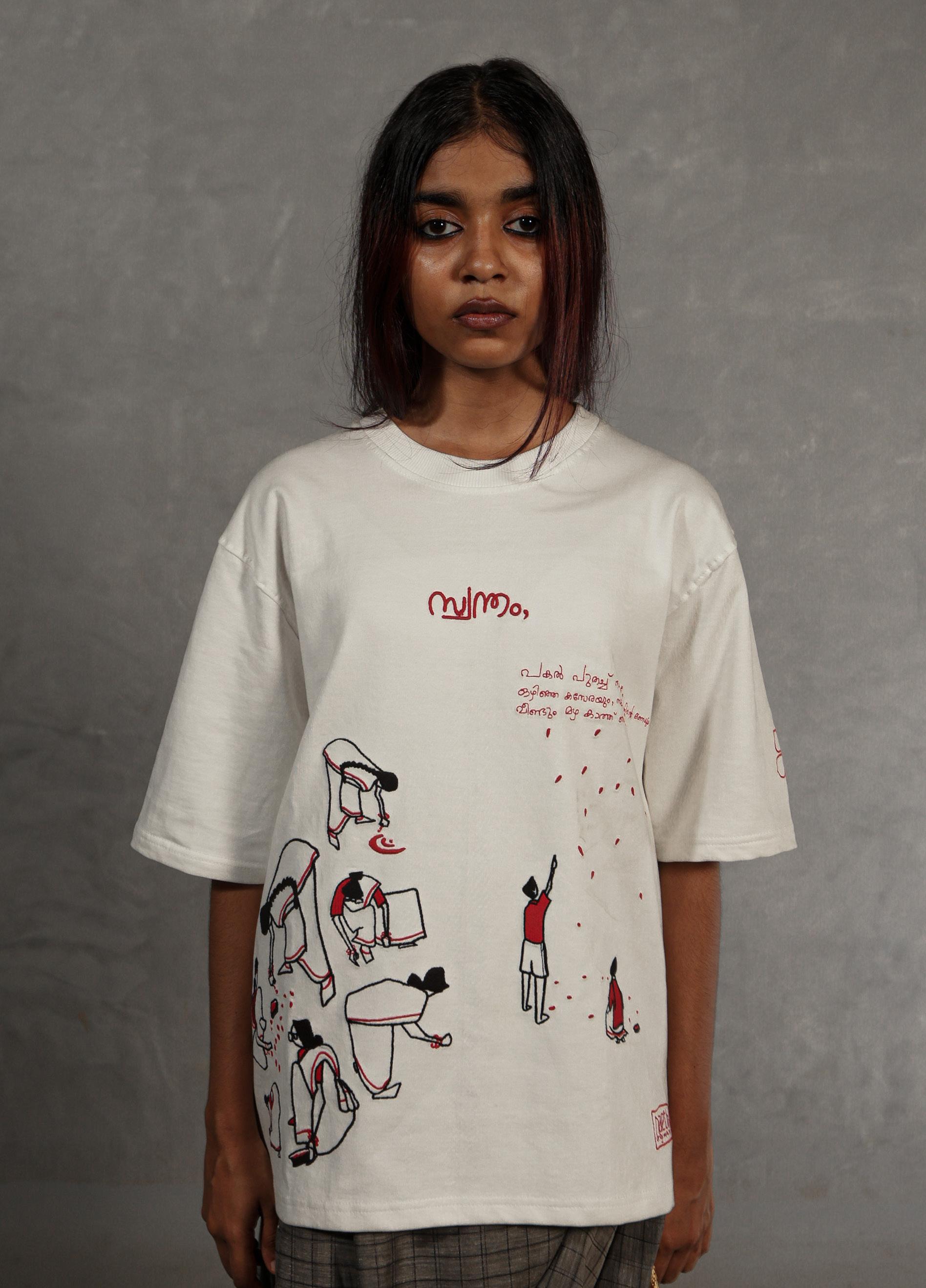
Naeth by Jithu Gopakumar and Vishnu Girija Gopal | Kerala
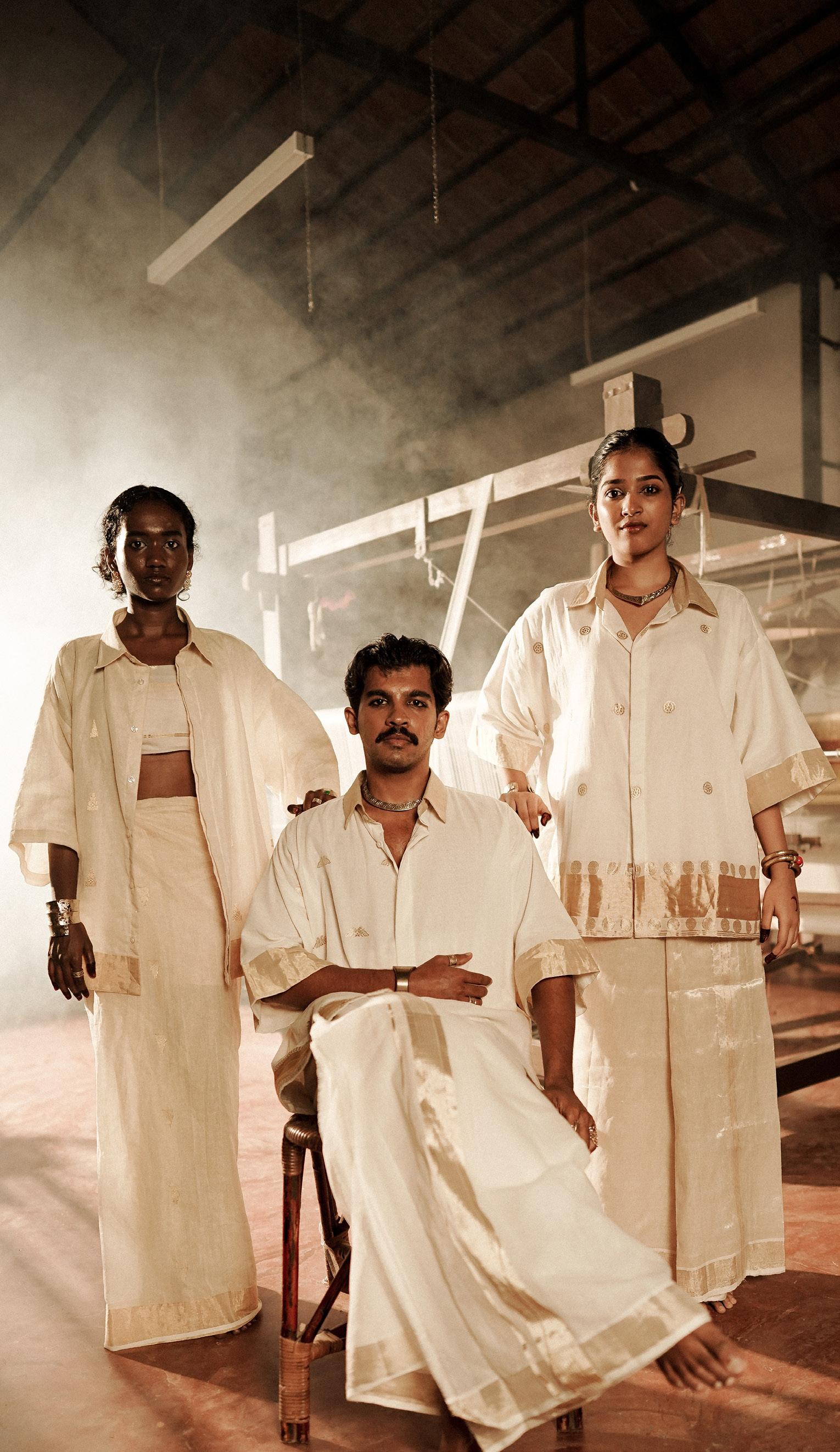
Founded by mechanical engineering graduates and classmates Jithu Gopakumar and Vishnu Girija Gopal, Naeth is a contemporary fashion label from Kerala that bridges heritage with modern design. Inspired by the state's rich textile traditions, the duo transforms handloom into contemporary silhouettes through innovative fabrics, technical textiles, and thoughtful craftsmanship. Their vision is simple yet powerful: to make India's weaving traditions relevant for today's generation while preserving the stories behind every thread.
Tell us about your brand and how it is helping preserve and promote India's rich handloom heritage.
At Naeth, we reinterpret traditional handloom through contemporary fashion. Our collections transform heritage textiles into modern, wearable silhouettes that appeal to younger audiences while preserving the craftsmanship, stories, and cultural significance woven into every fabric.
Which weaving traditions or artisan communities do you work with?
We work closely with the weavers of Balaramapuram, Kerala, a community renowned for its centuries-old weaving tradition.
Their handcrafted sarees and mundus are celebrated for their precision, purity, and exceptional craftsmanship, making every textile a reflection of Kerala's rich cultural legacy.
How does your brand support sustainability and responsible craftsmanship?
Sustainability is central to our design philosophy. We upcycle traditional handloom textiles into contemporary garments, reducing waste while extending the life of these fabrics. Alongside direct collaborations with artisans and limited-batch production, we also experiment with eco-conscious materials such as bamboo fibres and recycled PET fabrics.
Jithu Gopakumar & Vishnu Girija Gopal
What is the biggest challenge facing India's handloom sector today?
One of the biggest challenges is changing the perception that handloom belongs only to traditional wear. We believe handloom deserves a place in contemporary fashion. At the same time, we're working towards creating greater value for artisan communities by reducing dependence on intermediaries and promoting fair recognition for their craftsmanship.
What does National Handloom Day mean to Naeth?
For us, National Handloom Day celebrates the artisans whose skills have been passed down through generations. Every handloom textile carries a story of culture, craftsmanship, and community. By choosing authentic handloom, consumers aren't just investing in a beautiful garment; they're helping preserve India's living textile heritage for the future.
Which collection would you recommend this National Handloom Day?
Our Upcycled Balaramapuram Handloom Collection best represents our philosophy. Traditional Kerala sarees and mundus are reimagined as oversized shirts and contemporary silhouettes, creating versatile pieces that honour heritage while fitting seamlessly into modern wardrobes.
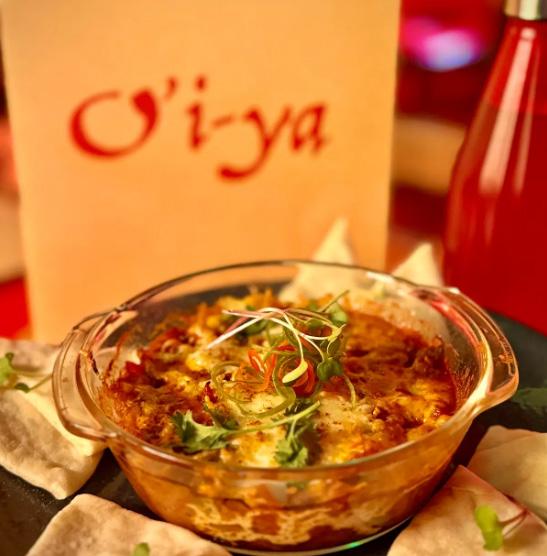
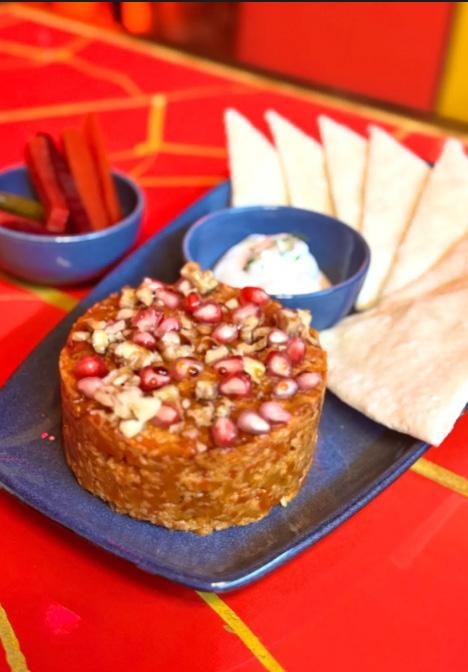
The meal began with what was genuinely one of the best pita breads I’ve had. Served warm with just enough char on the edges, it arrived soft, airy and impossibly fresh. Before we started, the server suggested we “smell, cut and dip,” and strangely enough, it completely changed the experience. Paired with the muhammara, the table went silent for a moment. Smoky, nutty, slightly sweet and rich without becoming heavy, it was easily one of the strongest dishes of the evening.
Oiya’s Mediterranean influence leans softer and creamier compared to sharper Middle Eastern interpretations. Their hummus and dips carry a richness that feels indulgent yet balanced, making even simple dishes memorable.
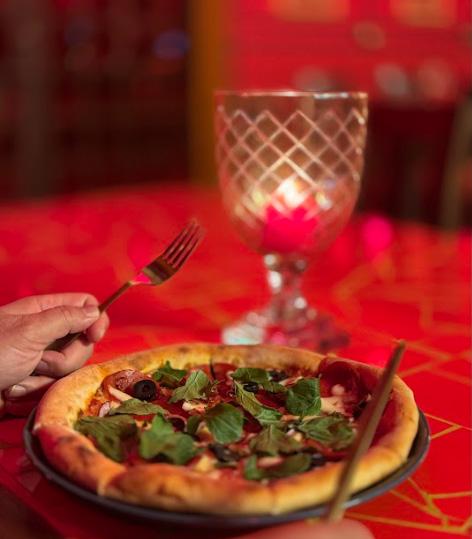
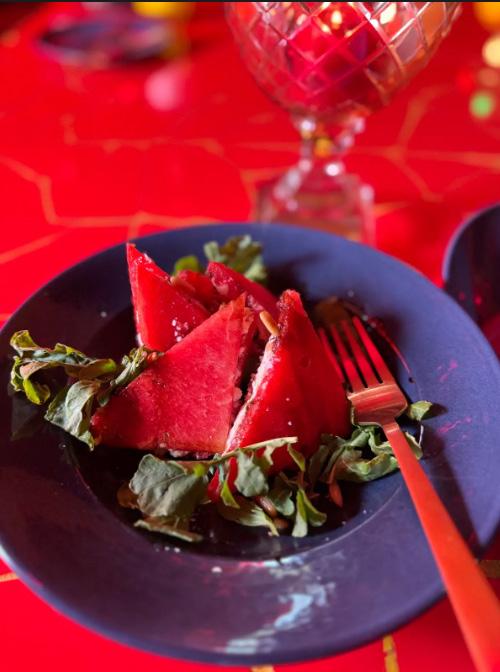
OIYA PANJIM REVIEW: Best Mediterranean Food in Goa
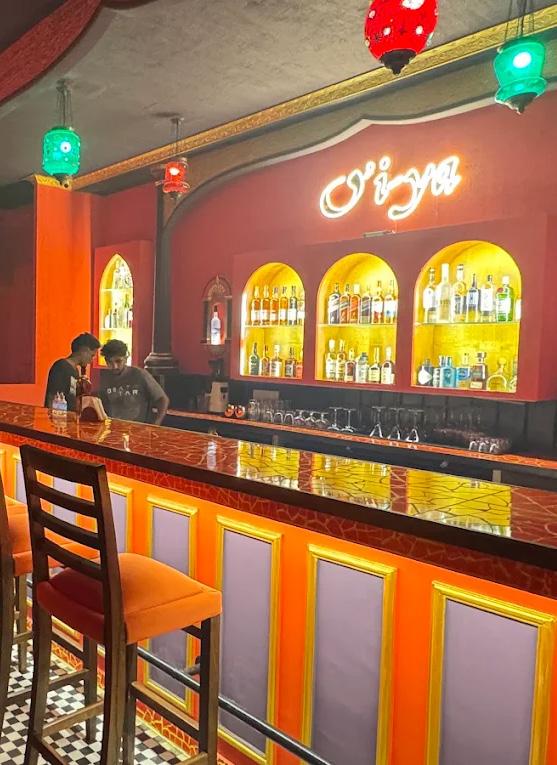
Tucked into the colourful lanes of Fontainhas, Oiya brings together flavours from Turkey, Greece, Spain and the wider Mediterranean with a menu that feels thoughtful, comforting and refreshingly unpretentious. Founded by entrepreneur Vishal Salgia, whose travels across Turkey and the Mediterranean inspired much of the concept, the restaurant focuses less on theatrics and more on getting the food right, and that’s exactly where it shines. Ratna Bhupal explores the space and its understated charm.
The veg pide followed and immediately stood out because of the bread itself, crisp at the edges with a pillowy centre that tasted unmistakably house-made. The chicken shawarma was another highlight: light, juicy and deeply flavourful without the greasiness that often comes with the dish elsewhere. Everything felt balanced and clean instead of overloaded.
Then came the mutton lahmacun, thin, crisp and layered with beautifully spiced minced meat that carried just enough heat without overpowering the dish. Nothing at Oiya felt overworked. Every plate arrived with restraint and confidence.
The owner confidently claimed they serve “the best falafel in India,” and honestly, after tasting the rest of the menu, it didn’t sound entirely impossible. The kitchen clearly understands texture, crisp where it needs to be, soft where it matters, and never unnecessarily heavy.
Beyond the Turkish and Mediterranean staples, the menu also stretches into wood-fired pizzas, steaks and continental plates, making it accessible even for diners looking beyond traditional Middle Eastern flavours.
The cocktails held their own alongside the food, too. The Monsoon Chill, inspired by the smell of the first rain hitting dry earth, stood out instantly. Built around gin and earthy notes, it managed to feel atmospheric without becoming gimmicky.
While the ambience is warm enough for a slow evening out, it’s the food that remains the real draw here. In a city increasingly filled with aestheticfirst dining spaces, Oiya succeeds because it understands that good bread, balanced flavours and genuinely memorable food are what people actually return for.
From cosy cafés perfect for slow afternoons to destination restaurants offering immersive seasonal menus, this monsoon is all about savouring flavour in its most comforting form. Here’s a curated guide to the most exciting monsoon menus that promise to turn every meal into a memorable escape.
LOYA, TAJ WEST END | BENGALURU
This monsoon, LOYA at Taj West End invites guests to savour the season through an immersive dining experience set amidst lush gardens, tranquil water features, and elegant alfresco seating. Inspired by the culinary heritage of North India, the seasonal menu features standout dishes like the smoky Wari Spiced Sigdi Macchi, the tangy Burni Ka Jhinga, the slow-cooked Cha Gosht, and the earthy Chaunk Wali Arbi, alongside the comforting Tudkiya Bhaath from Kangra. The experience is elevated with signature cocktails from the Vriksh menu and the evocative sounds of Jashn 2.0, creating a refined celebration of the monsoon.
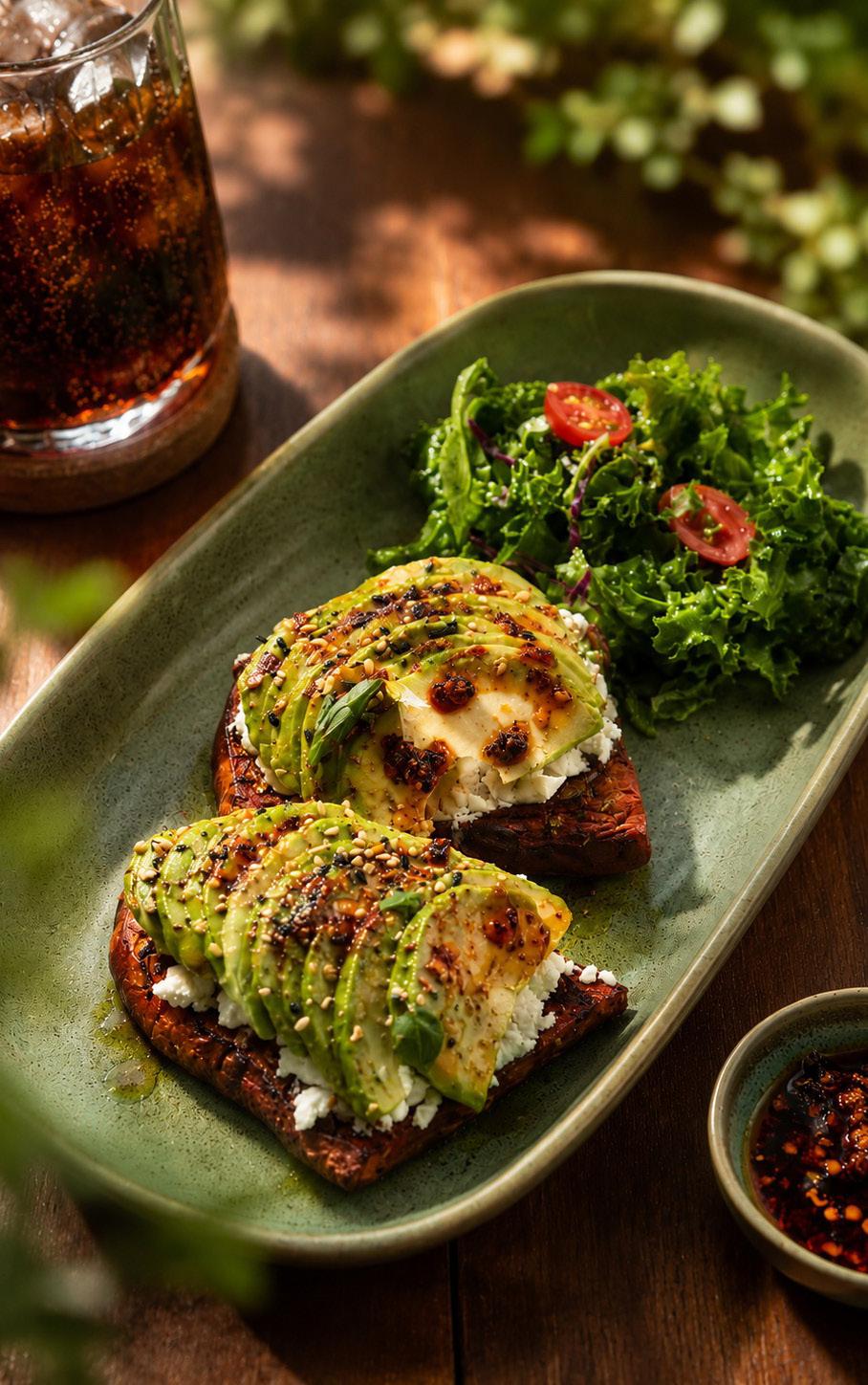
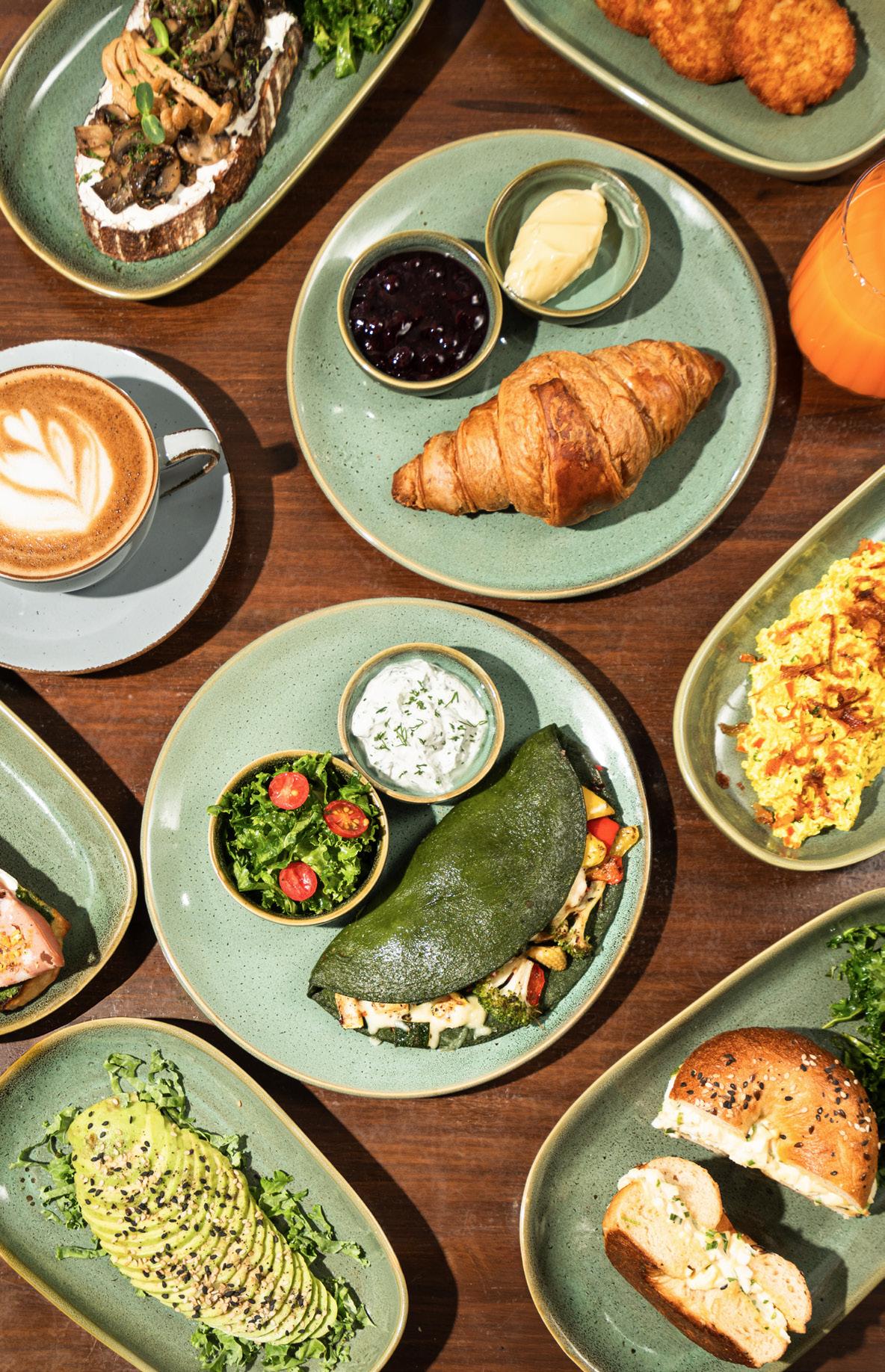
The Deli introduces Good Mood Food, a thoughtfully curated menu inspired by the everyday moments that bring comfort and joy. Celebrating the café as a space to reconnect, unwind, or simply indulge, the menu brings together wholesome all-day dishes, comforting favourites, and satisfying desserts designed to suit every mood. Whether it's a leisurely breakfast, a mindful lunch break, or a relaxed dinner with friends, Good Mood Food transforms simple café dining into a feelgood experience that lingers long after the meal.
THE DELI | MUMBAI
Avocado on Toast
Breakfast at the Deli
HUNAAAN | BENGALURU
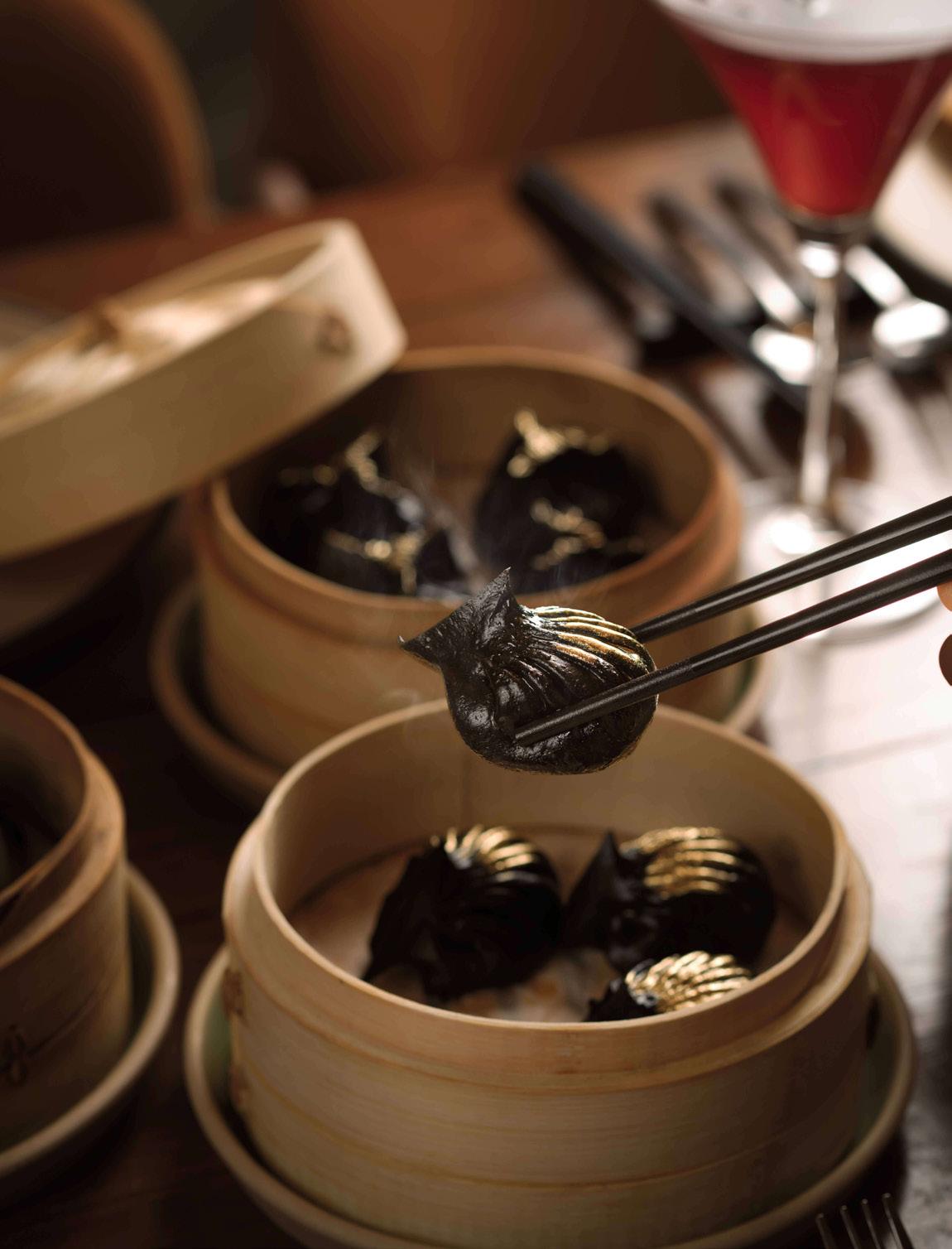
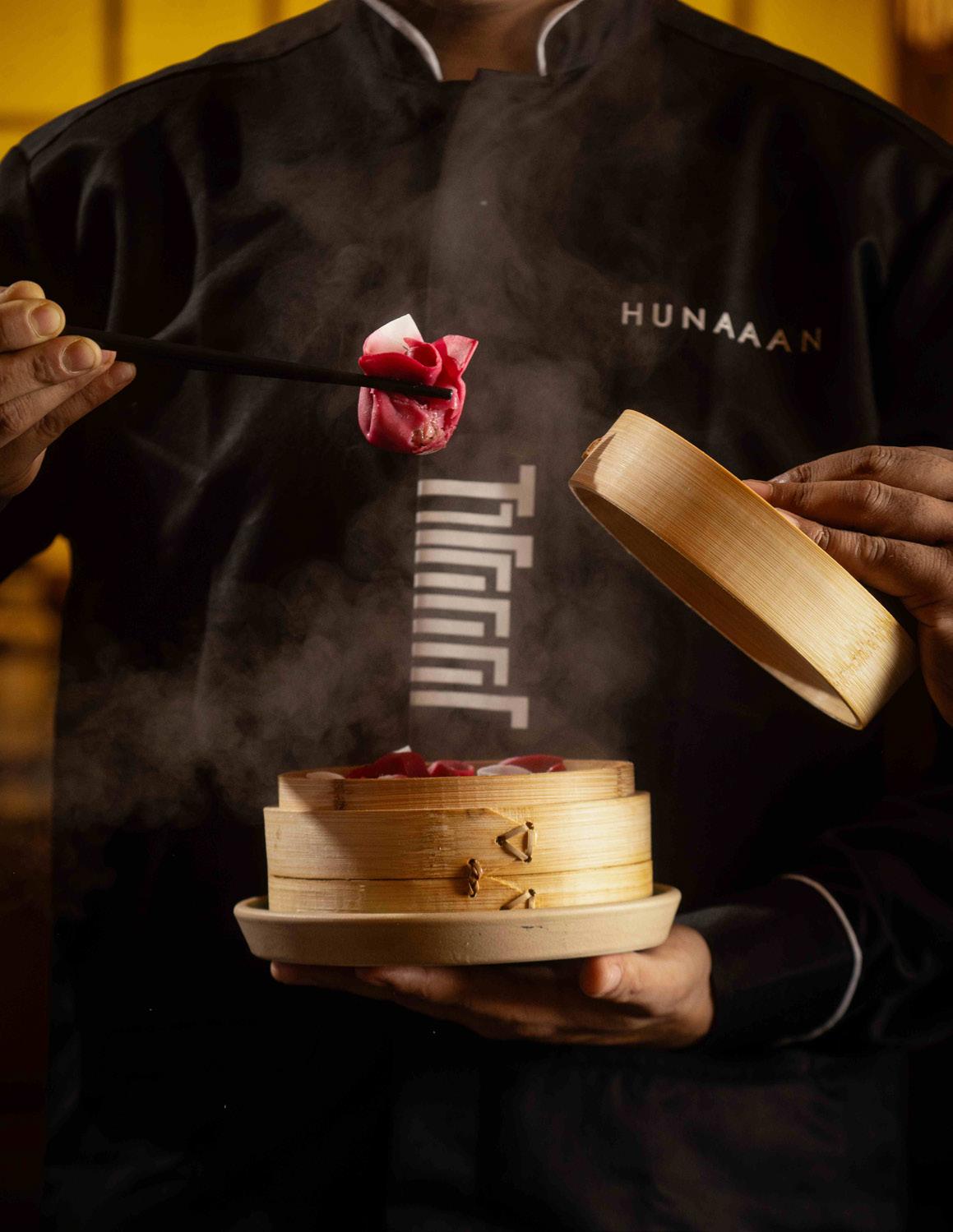
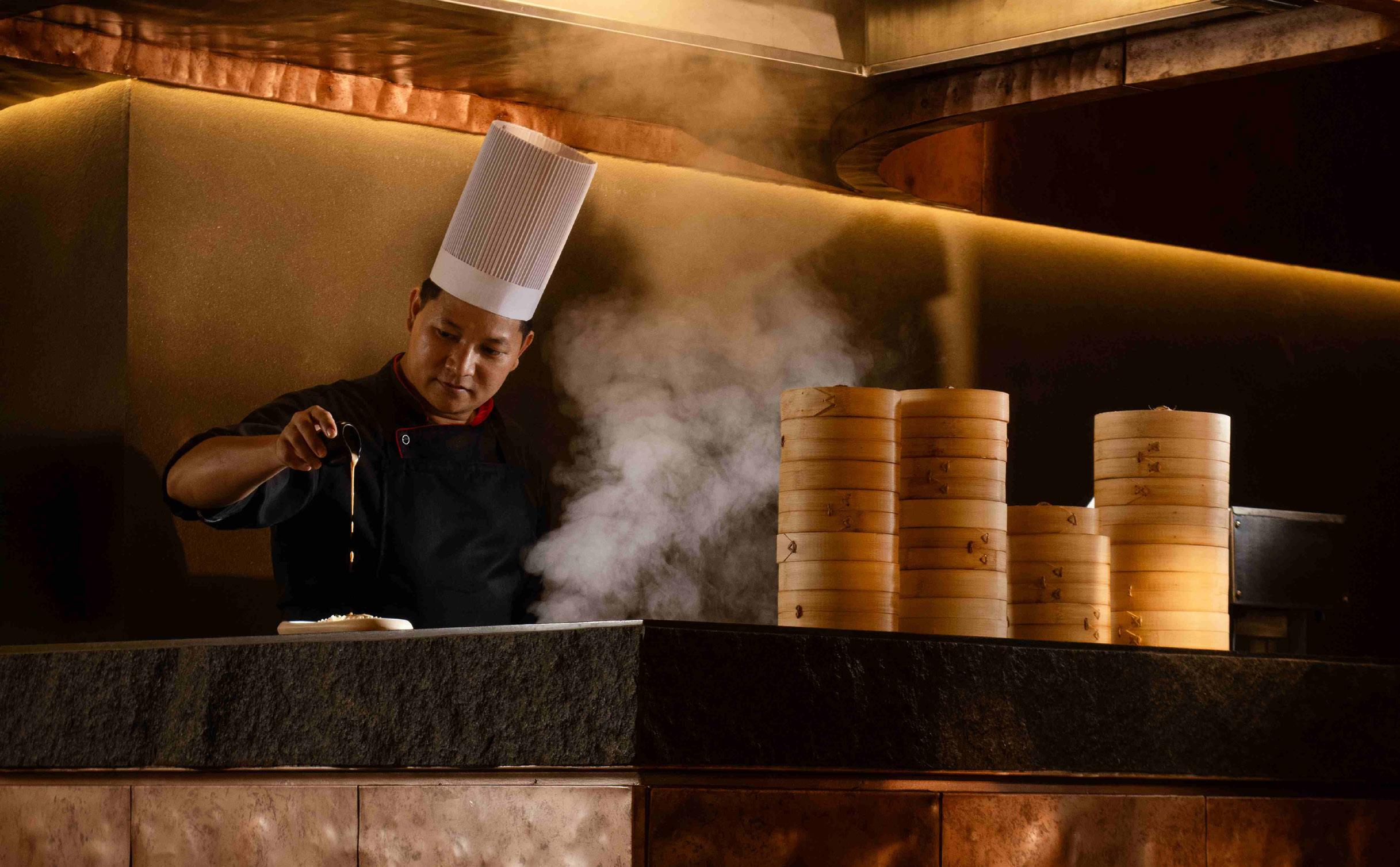
Hunaaan is bringing warmth to Bengaluru's rainy season with its exclusive Dim Sum Festival, celebrating one of Asia's most beloved culinary traditions through a thoughtfully curated menu of handcrafted dumplings and baos. Running across its Indiranagar and BEL Road outlets, the festival showcases authentic Pan-Asian flavours that are perfect for the monsoon.
Vegetarian highlights include the indulgent Charcoal Mushroom & Cheese Truffle Dumpling, the creamy Chilli Cream Cheese & Water Chestnut Dumpling, and the wholesome Broccoli & Almond Dumpling, each delicately steamed to preserve their flavours and textures. The non-vegetarian selection features favourites such as the succulent Prawn & Crab Stick Dumpling, the classic Chicken & Prawn Siu Mai, and the soft, flavourful Chicken BBQ Bao, offering a comforting balance of smoky, savoury and umami-rich notes.
Whether you're a devoted dim sum enthusiast or simply looking for a comforting meal, Hunaaan's Dim Sum Festival offers an authentic Pan-Asian dining experience.
MIRAI | MUMBAI
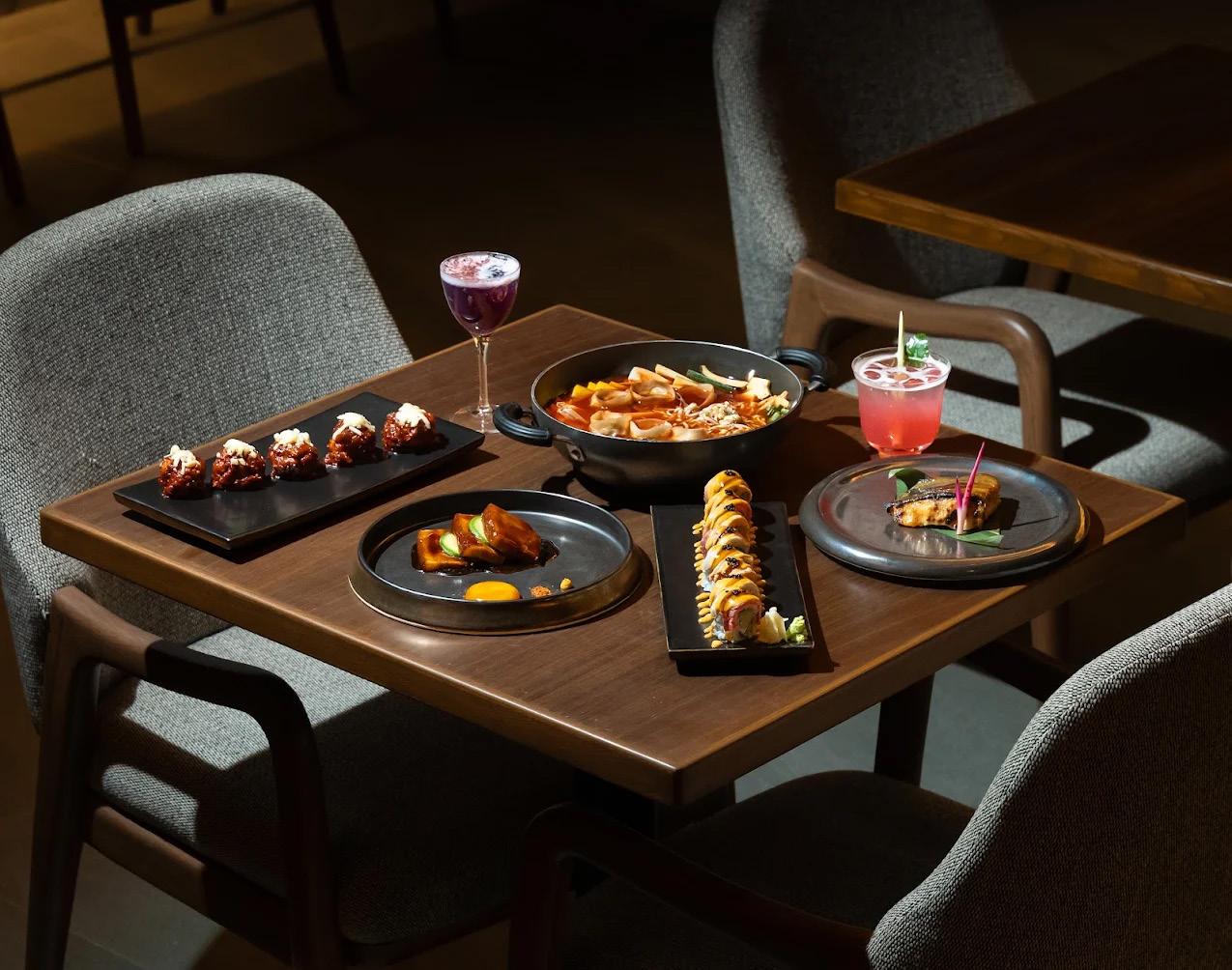
Warm up this rainy season with MIRAI's Monsoon Special Half Japanese & Half Korean Hot Pot Menu, an interactive dining experience that celebrates the communal traditions of both cuisines. Guests can choose from Vegetable, Chicken, Prawn, or Seafood Hot Pots, each served with a generous assortment of fresh vegetables, tofu, mushrooms, glass noodles, and premium broths. The signature half-and-half concept allows diners to enjoy two contrasting broths in a single pot while customising every bowl with their preferred ingredients, making for a comforting, flavour-packed meal that's perfect for sharing.
SALTT AT OLEANDER FARMS | KARJAT
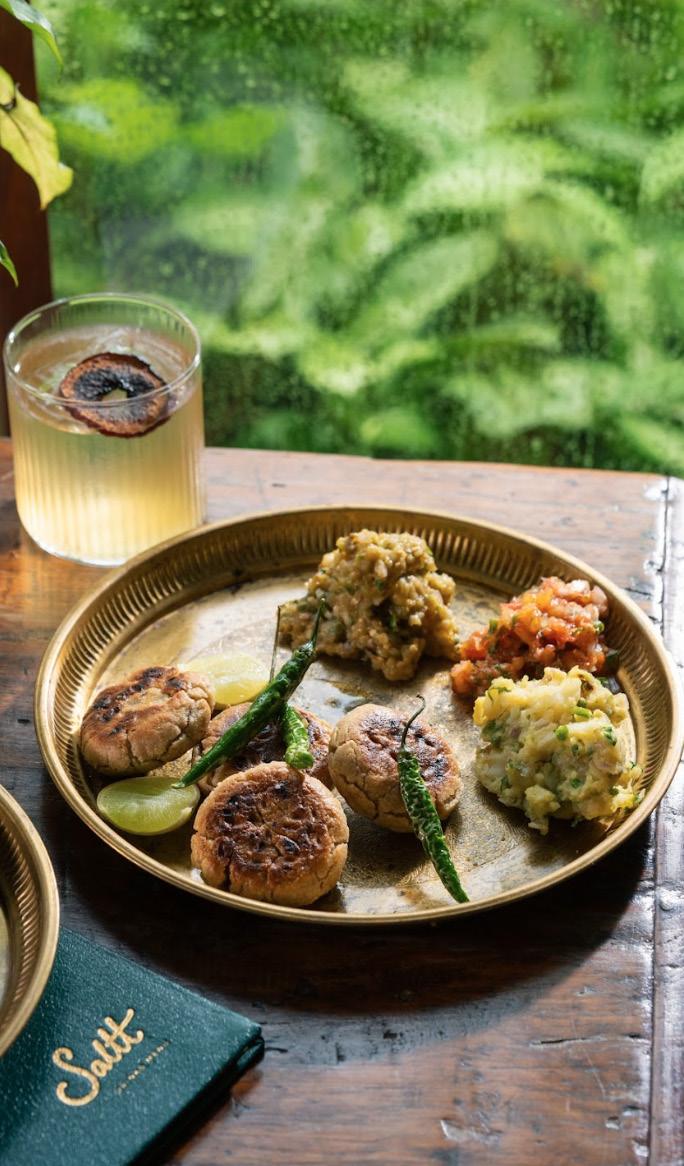
Embrace the rains with Saltt's Monsoon Specials, a seasonal menu that celebrates comforting flavours, regional nostalgia, and fresh seasonal ingredients. Set against the lush landscape of Oleander Farms in Karjat, the menu brings together hearty classics and creative twists, making it the perfect culinary escape during the monsoon.
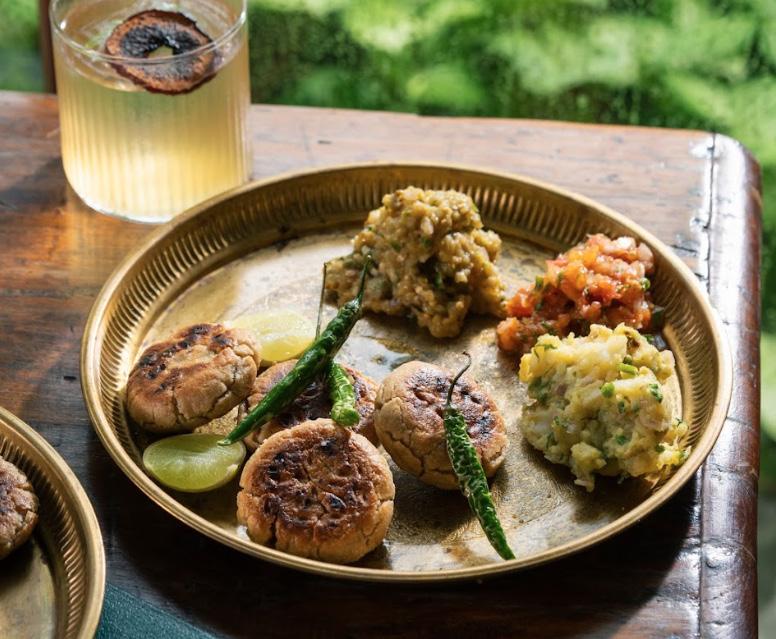
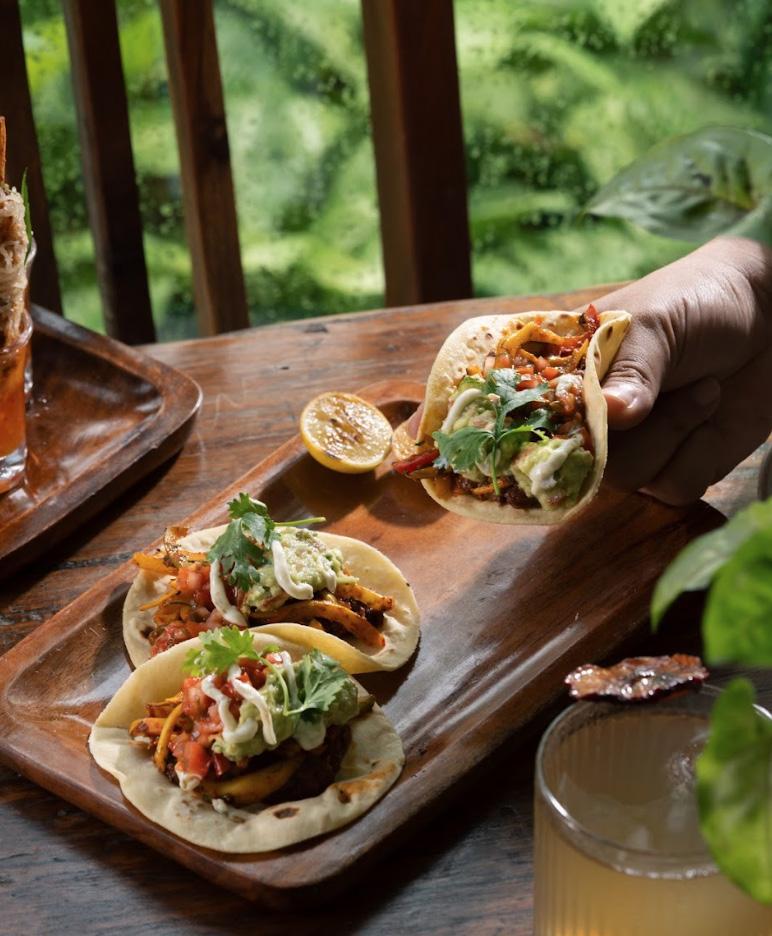
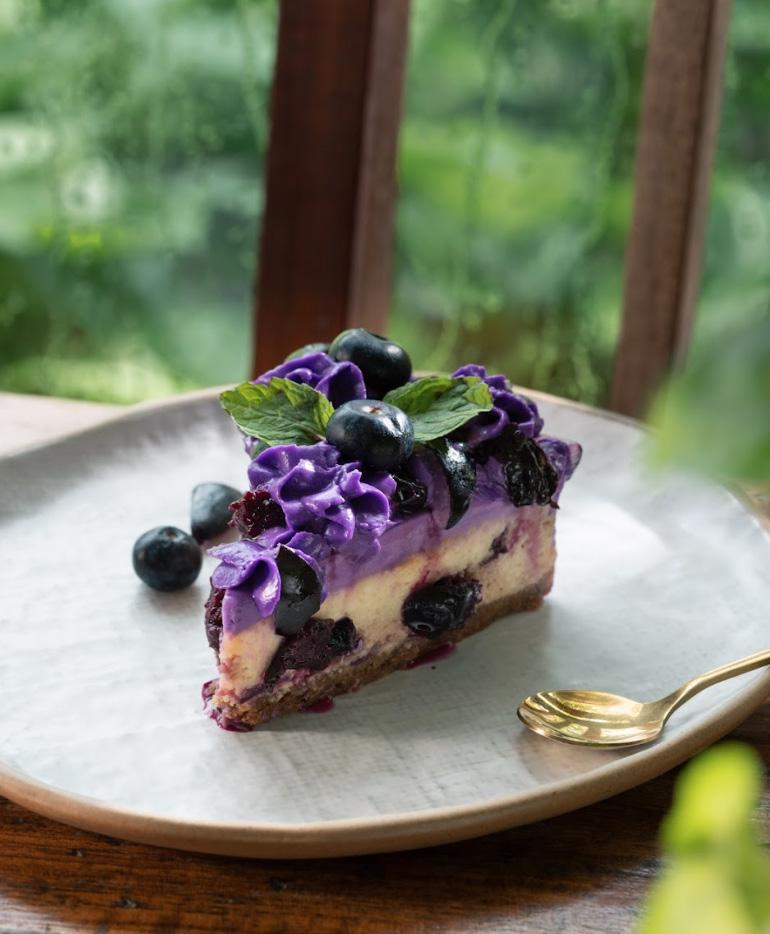
Highlights include the rustic Bihari Litti Chokha, featuring smoked wheat dumplings served with potato and tomato chutney, the crisp Jacko Taco with panko-crumbed mashed potato and sweet chilli dip, and the indulgent Crusty Chicken Drums paired with creamy mashed potatoes and rich jus. For dessert, the Jamun Cheesecake combines fresh jamun purée with baked cheesecake, buttercream, and crunchy nuts for a seasonal finish.
Complementing the menu are monsoon-inspired cocktails like the Berry Baarish, blending tequila with fresh jamun purée, vanilla syrup, and a velvety finish, and the Plum Old Fashioned, where whiskey meets homemade plum, corn saccharum, house bitters, and charred plum. Surrounded by panoramic hills, lush greenery, and serene lakes, Saltt at Oleander Farms offers a memorable monsoon dining experience where seasonal flavours meet nature's finest backdrop.
THE PENANG TABLE | MUMBAI
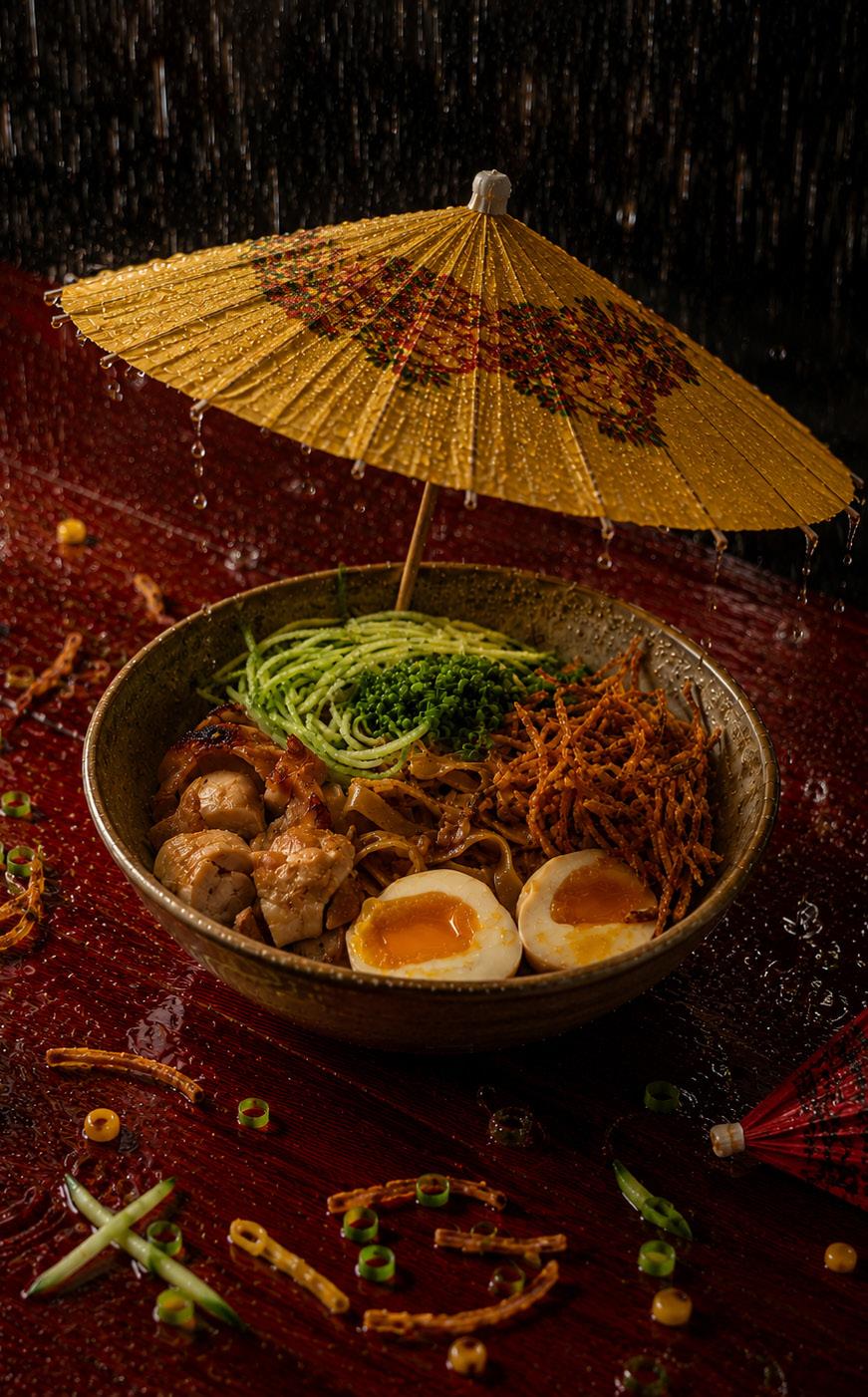
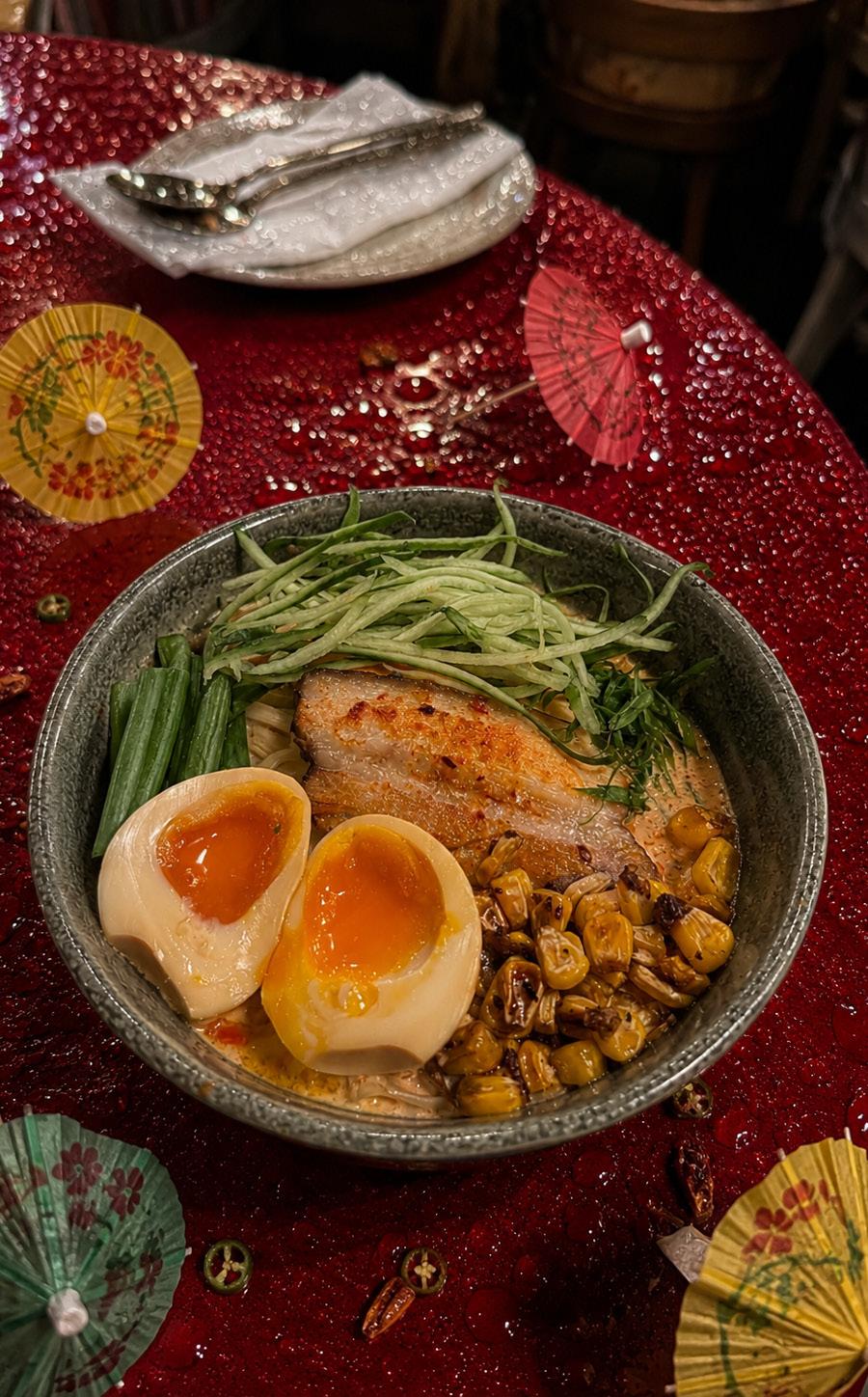
The Penang Table brings together the comforting soul of Japanese ramen and the bold flavours of Malaysian street food with its limited-edition Monsoon Ramen Menu. Signature bowls include the creamy Satay Dan Dan Men, rich Pork Curry Ramen, fiery Kam Heong Sambal Mazesomen, and the seafood-forward Hokkien Prawn Tonkotsu, each layered with authentic broths, aromatic spices, and robust umami flavours. Complementing the ramen are Malaysian-inspired small plates such as Lamb Rendang Gyoza, Cereal Prawns, and Avocado Discs, creating a comforting and flavourful dining experience that's perfect for the rainy season.
Kam Heong Sambal Mazesomen
Pork Curry Ramen
TRICOLOUR THE FOOD GUIDE
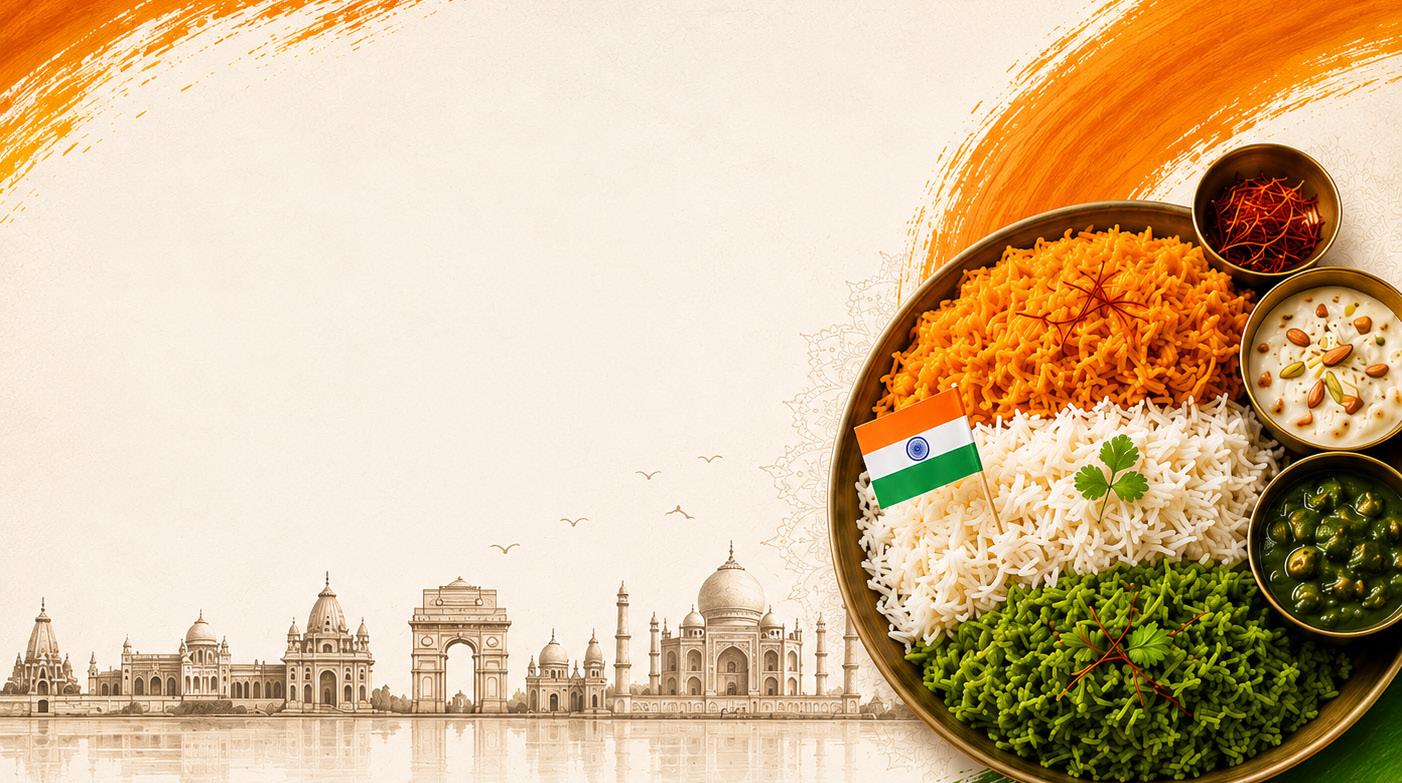
Celebrate the spirit of India through its vibrant flavours and colours. From saffron-inspired delicacies to fresh greens and pure whites, explore a tricolour feast that brings pride to the plate.
Saffron –
The Colour of Warmth & Celebration
Kesari Bath –Karnataka
A beloved South Indian sweet dish, Kesari Bath gets its golden saffron hue from saffron strands and saffroncoloured ingredients. Made with semolina, ghee, sugar, and cardamom, it is a festive favourite across Karnataka.
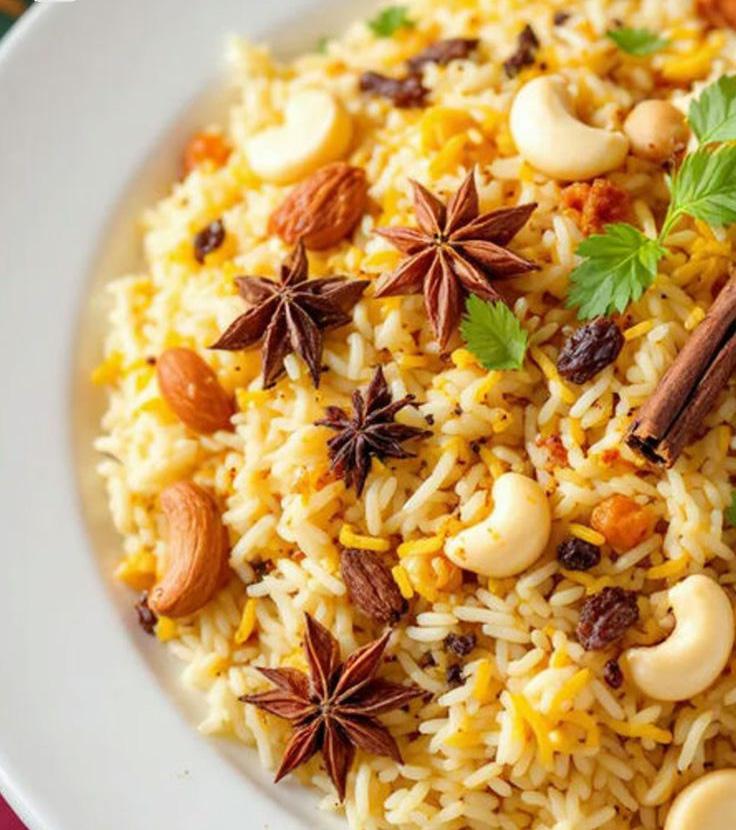
Zafrani Pulao –Hyderabad
A royal rice preparation infused with saffron, dry fruits, and aromatic spices, Zafrani
Pulao reflects the rich culinary heritage of Hyderabad. Its delicate flavours and golden colour make it a celebrationworthy dish.
Kesar Peda –Uttar Pradesh
A classic Indian sweet made with milk solids, sugar, and saffron, Kesar Peda is synonymous with festivities. Its rich flavour and vibrant colour make it a timeless favourite across the country.
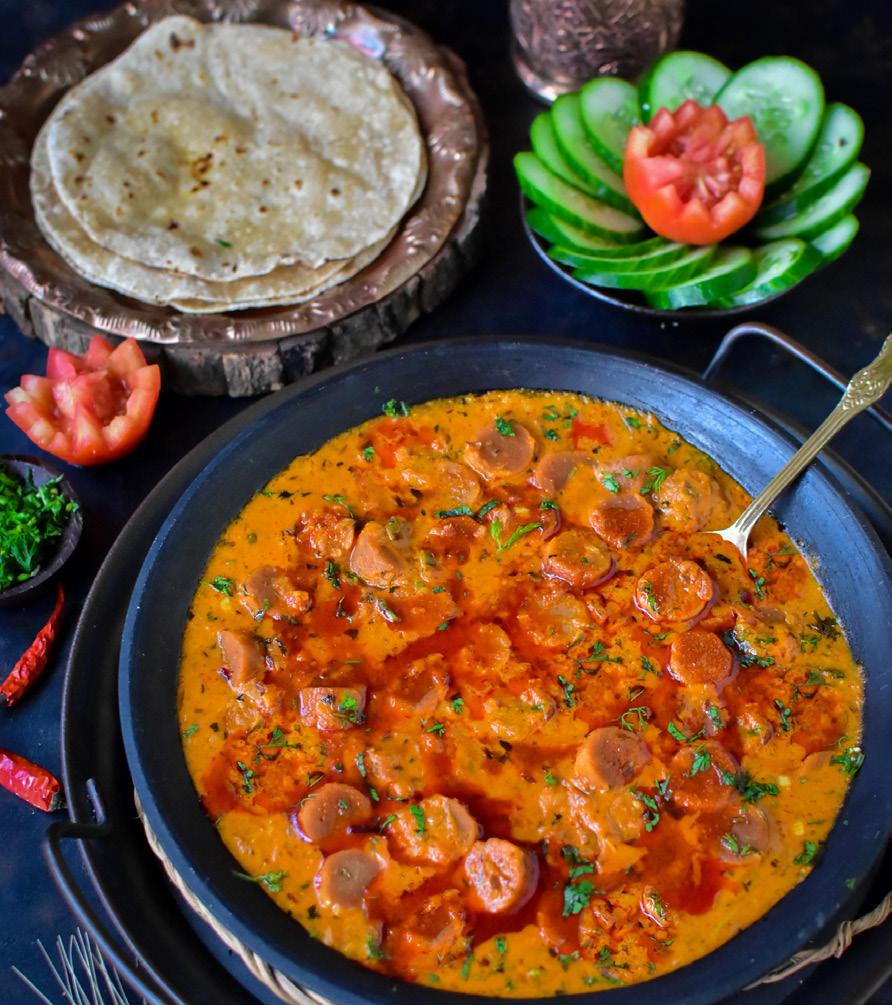
Rajasthani Gatte Ki
Sabzi – Rajasthan
A royal Rajasthani delicacy, this dish features gram flour dumplings simmered in a rich, spiced yoghurt gravy. Its warm golden tones and aromatic spices make it a festive favourite.
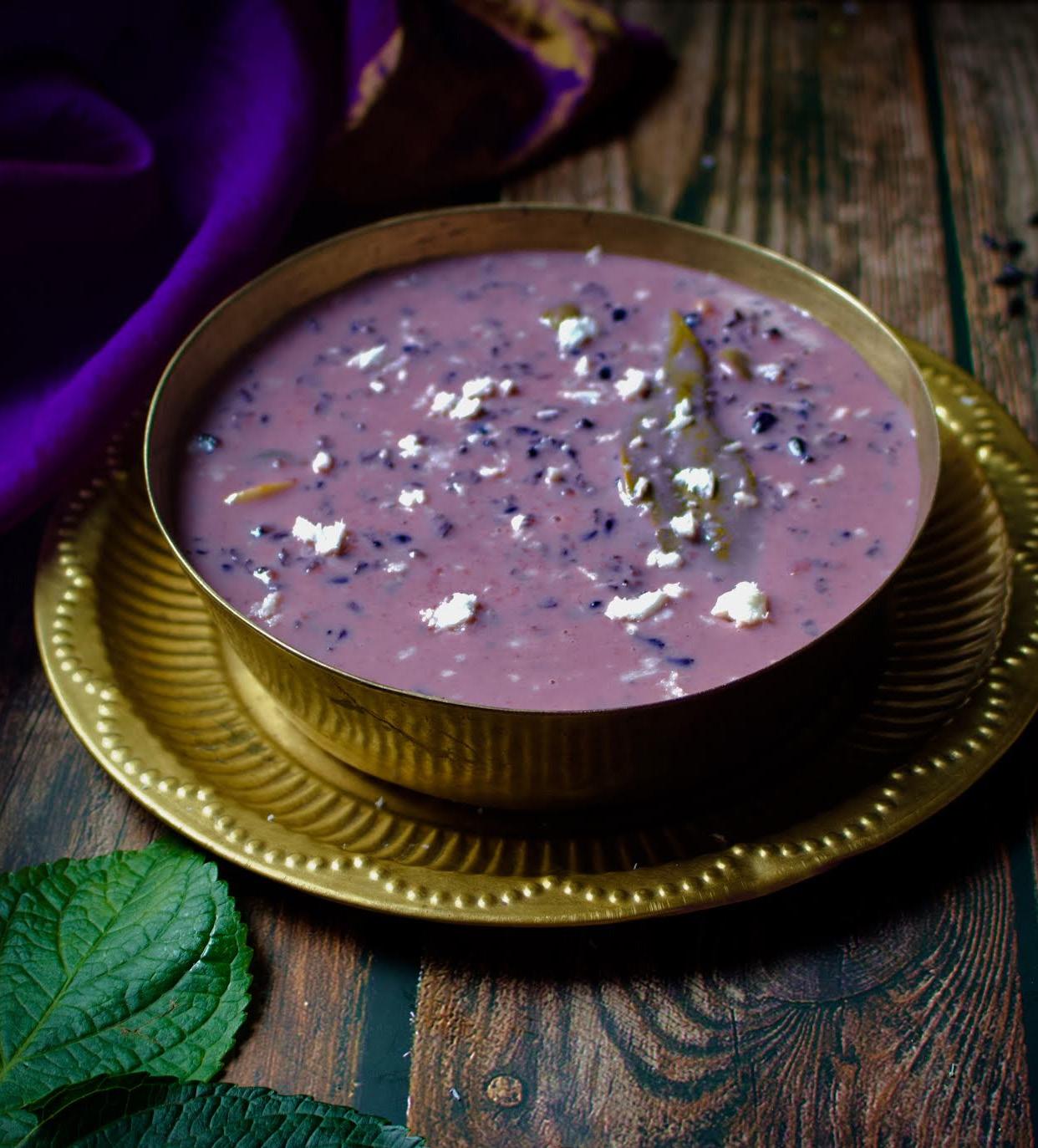
Manipuri Chak-Hao Kheer – Manipur
Made with the rare black rice of Manipur, this traditional kheer takes on a beautiful purple-golden hue when prepared with milk and saffron. It is a celebration of the region’s unique culinary heritage.
Kesar Shrikhand –Maharashtra/Gujarat
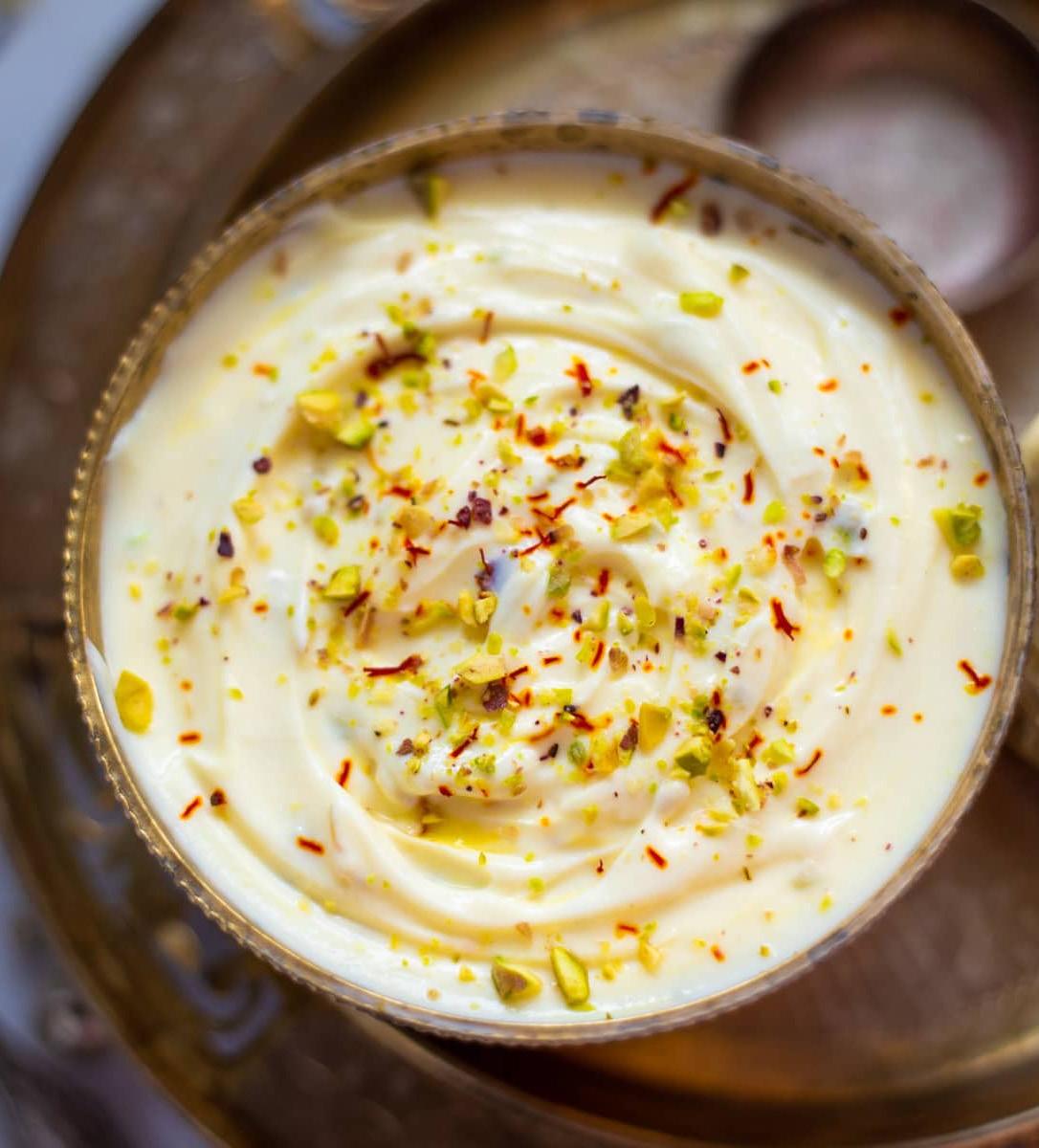
A creamy dessert made with strained yoghurt, sugar, saffron, and cardamom, Shrikhand is a staple at celebrations across western India. Its rich saffron colour and delicate flavour make it a festive classic.
White
The Colour of Purity & Balance
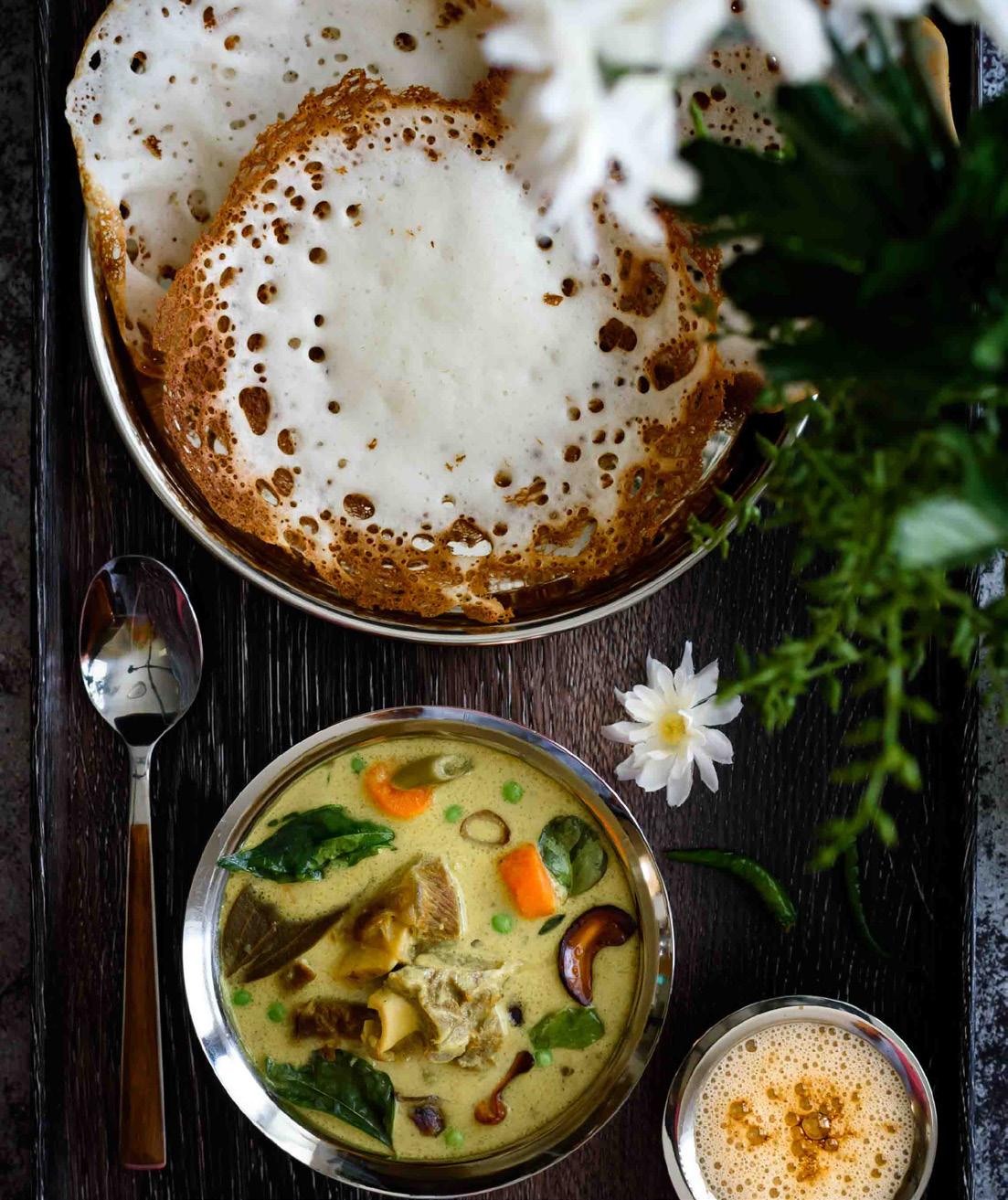
Appam with Stew – Kerala
A beloved South Indian sweet dish, Kesari Bath gets its golden saffron hue from saffron strands and saffron-coloured ingredients. Made with semolina, ghee, sugar, and cardamom, it is a festive favourite across Karnataka.
Mangalorean
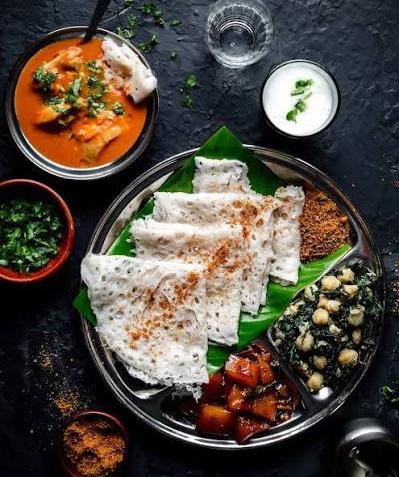
Neer Dosa –Karnataka
A delicate, paperthin dosa made with rice batter, neer dosa is known for its soft texture and subtle taste. Usually paired with coconut-based curries, it is a beloved coastal speciality.
Kashmiri Yakhni
– Jammu & Kashmir
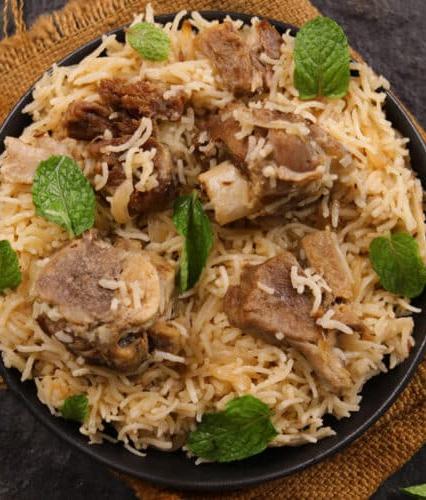
A fragrant yoghurtbased curry traditionally prepared with meat, Kashmiri Yakhni is known for its creamy white appearance and delicate blend of spices. It represents the elegant simplicity of Kashmiri cuisine.
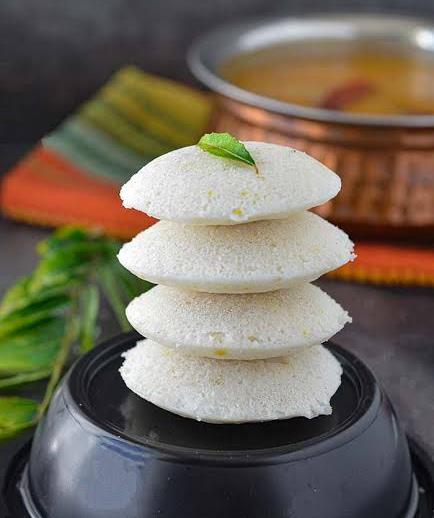
Idli – Tamil Nadu
One of India's most loved breakfast dishes, the humble idli is a symbol of simplicity and nourishment. Made from fermented rice and lentil batter, these soft white cakes pair perfectly with chutneys and sambar.
Dhokla – Gujarat
This steamed delicacy is known for its light texture and subtle flavours. Made from fermented gram flour batter, white dhoklas are a wholesome snack enjoyed across Gujarat and beyond.
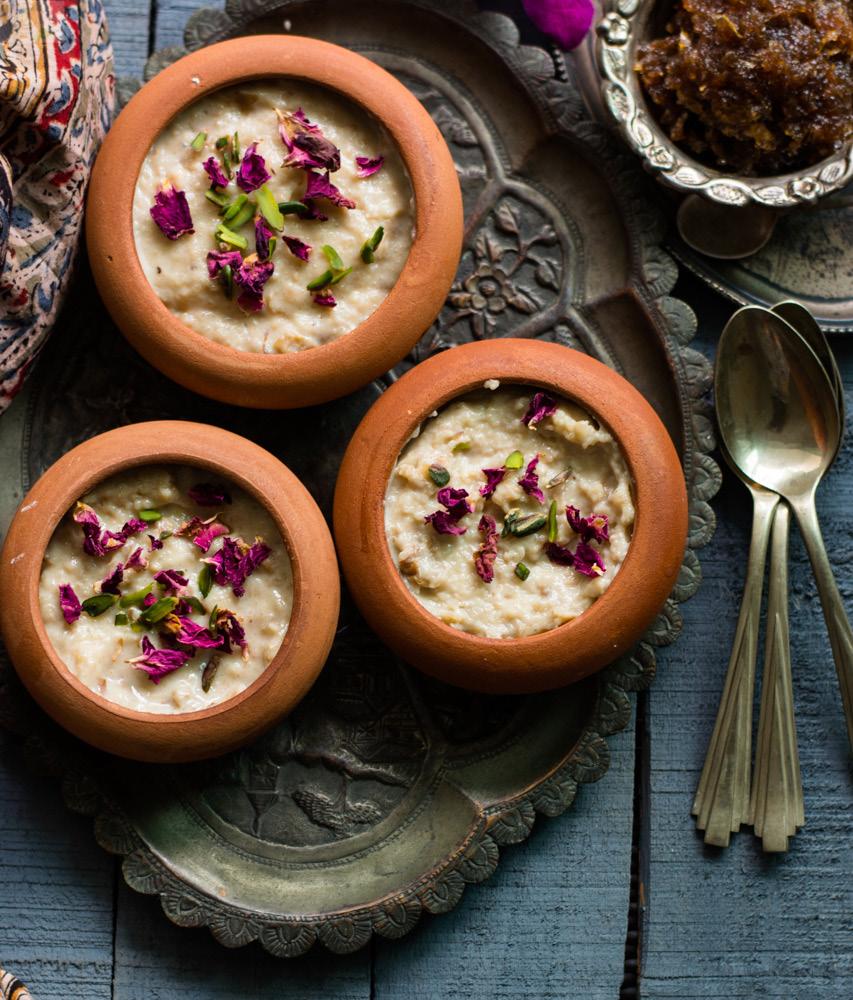
Phirni – North India
A creamy rice pudding slow-cooked with milk, sugar, and cardamom, phirni is traditionally served chilled in earthen bowls. Its smooth white texture and delicate flavours make it a festive favourite.
Green
The Colour of Freshness & Prosperity
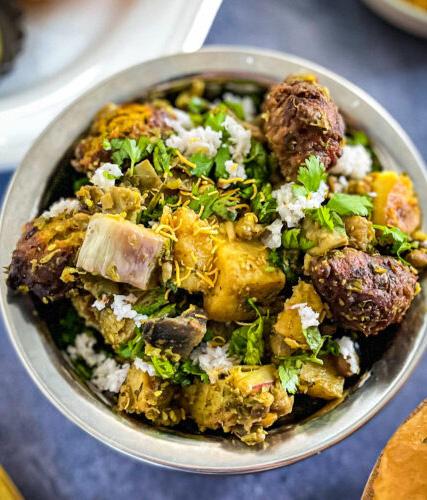
Undhiyu – Gujarat
A traditional Gujarati mixed vegetable preparation packed with seasonal greens, beans, and spices, Undhiyu celebrates the bounty of fresh produce. Its vibrant flavours make it a festive winter favourite.
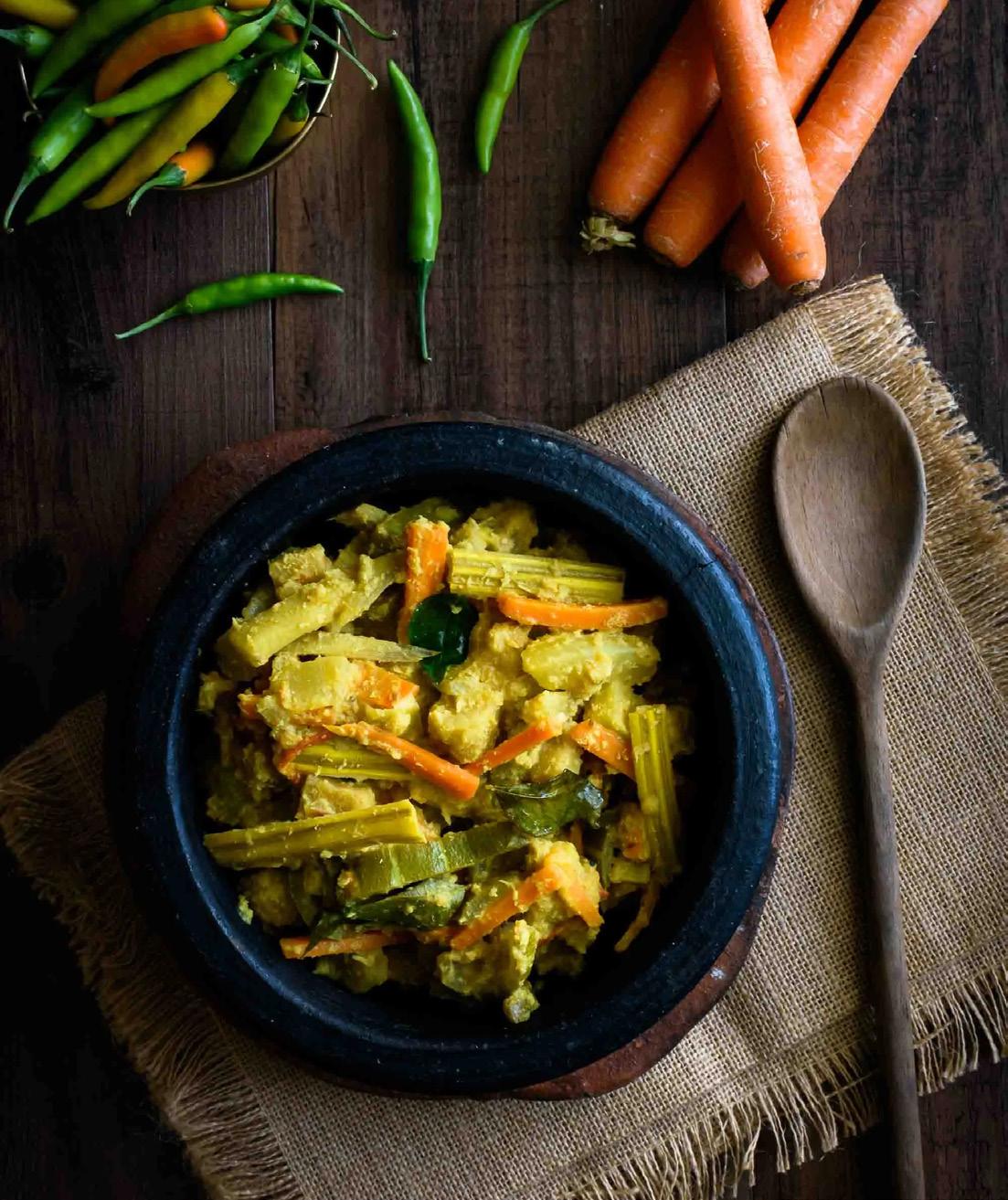
Avial – Kerala
A wholesome mix of vegetables cooked with coconut and yoghurt, Avial is a signature dish of Kerala’s cuisine. Its natural green hues and fresh flavours make it a symbol of balance and nourishment.
Green Peas Kachori – West Bengal/North India
A flavourful snack filled with spiced green peas and wrapped in crisp pastry, this kachori brings together freshness and indulgence. It is a popular winter delicacy enjoyed across regions.
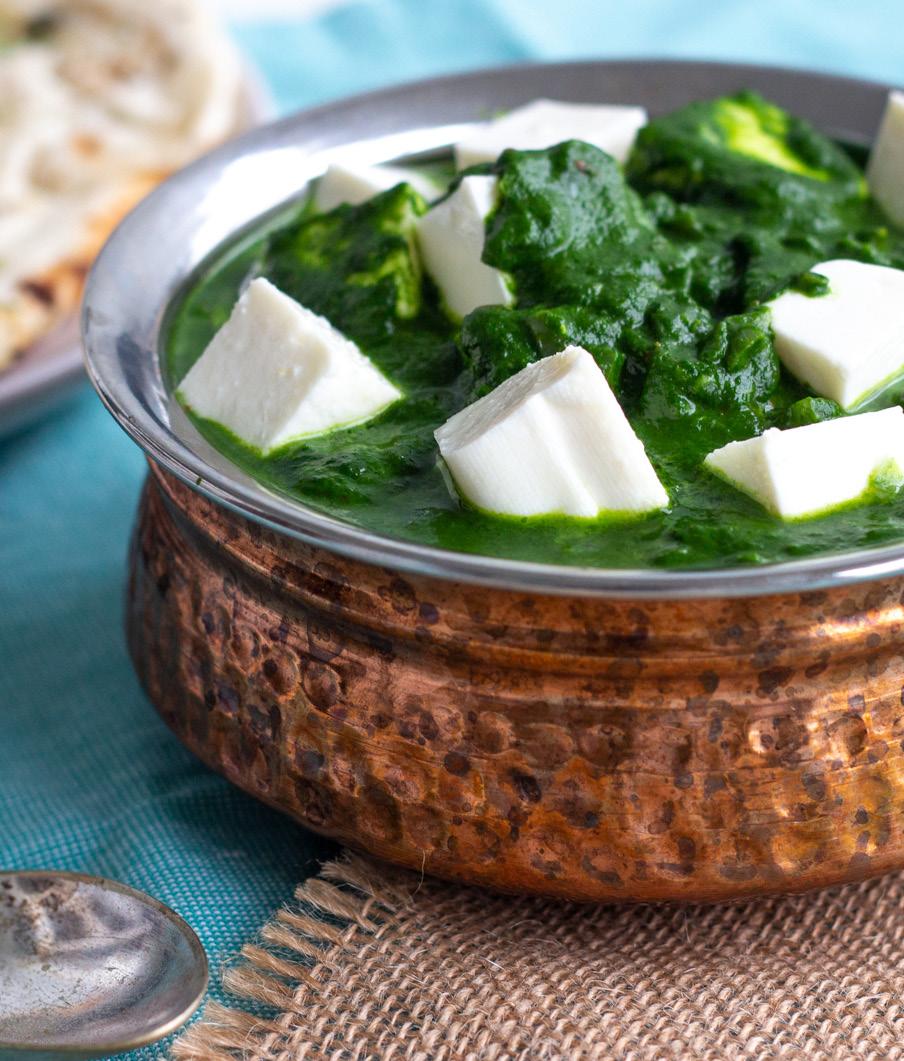
Palak Paneer –Punjab
A North Indian classic, palak paneer combines fresh spinach with soft cottage cheese in a rich, flavourful gravy. Its vibrant green colour represents the freshness of seasonal produce.
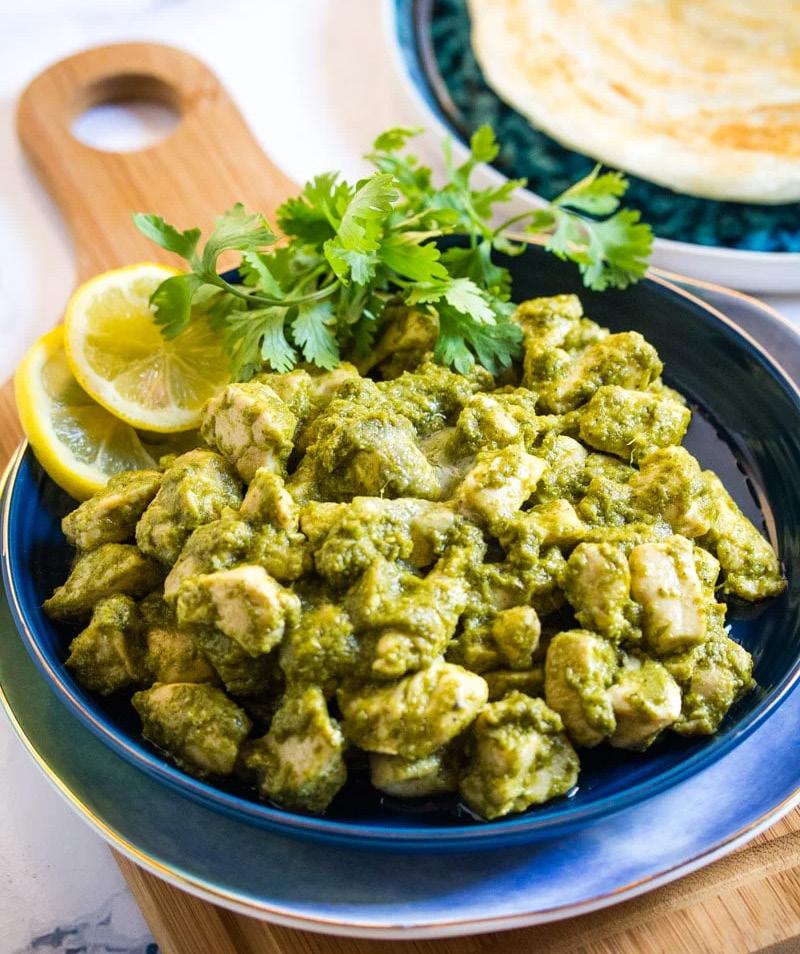
Hariyali Chicken – Punjab/North India
A fragrant dish made with a blend of coriander, mint, and green herbs, Hariyali Chicken is known for its refreshing flavours and beautiful green hue. It brings together traditional spices with the goodness of fresh greens.
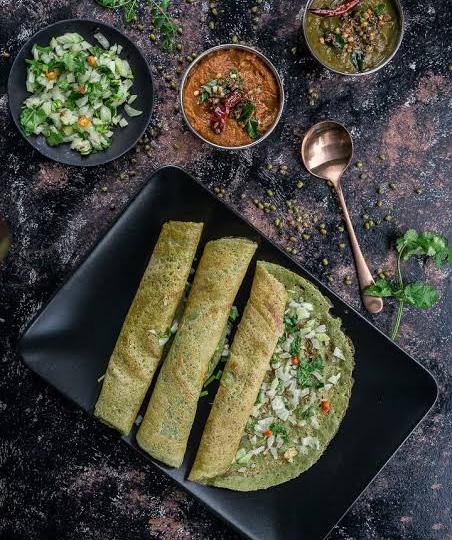
Pesarattu –Andhra Pradesh
A nutritious green gram dosa from Andhra Pradesh, pesarattu is crisp, wholesome, and packed with protein. Often served with ginger chutney, it is a beloved regional breakfast staple.
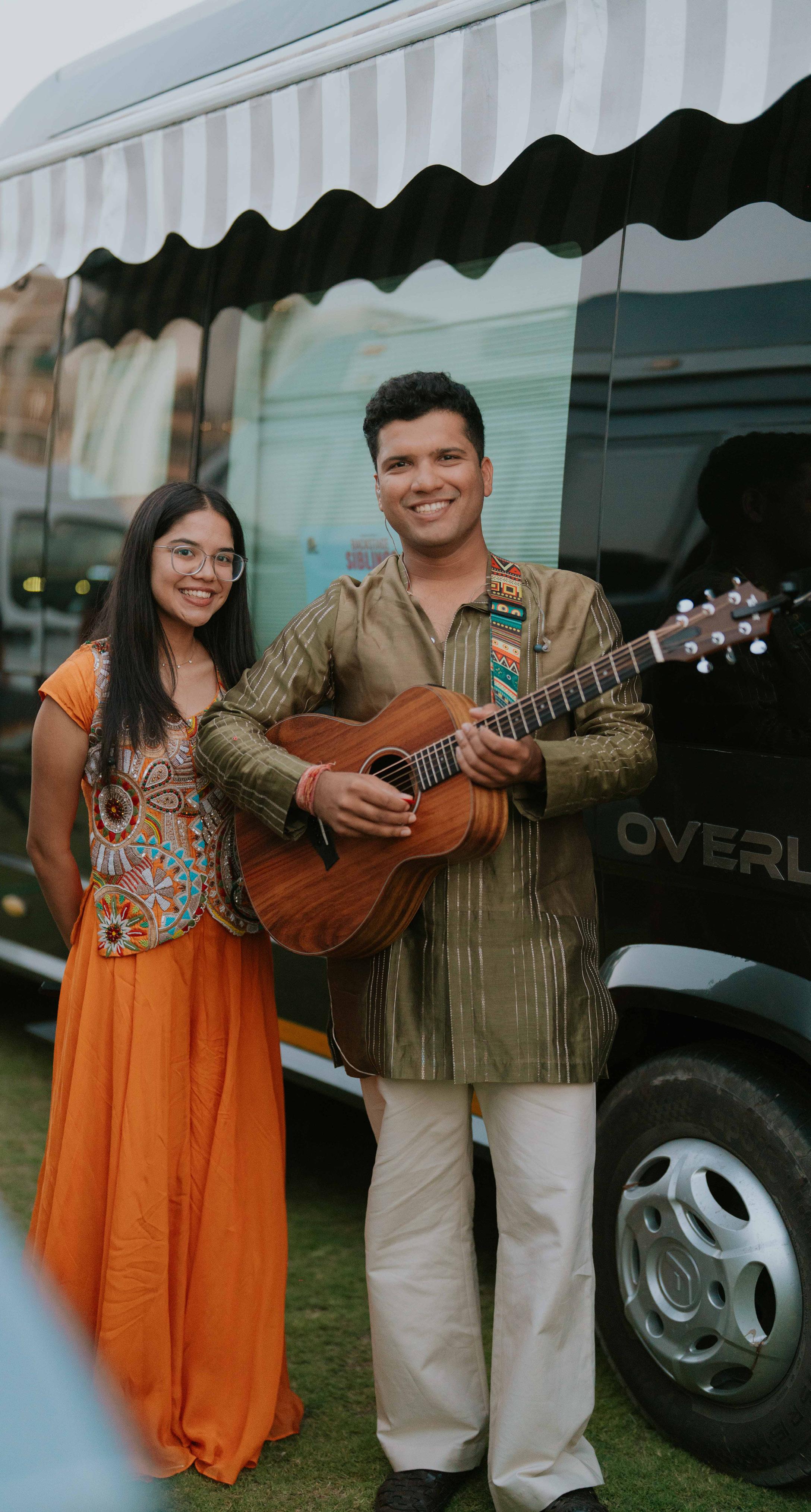
Backstage Siblings: Turning Bhajans into a Global Movement of Music, Connection
& Belonging
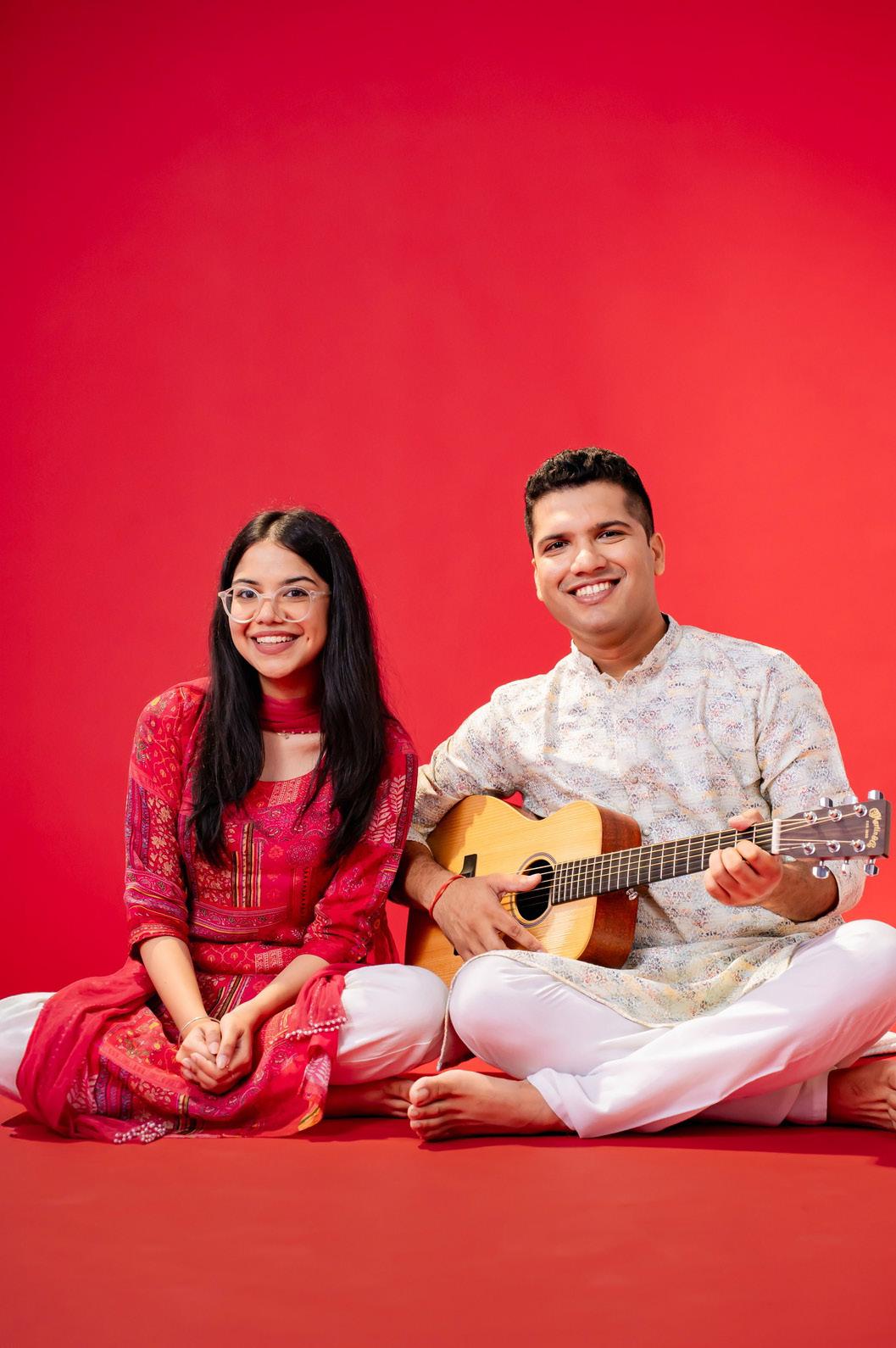
What began as childhood satsangs has evolved into one of India’s most compelling live music experiences. Siblings Raghav and Prachi, founders of Backstage Siblings, have reimagined bhajans and collective singing for a new generation seeking meaning beyond the noise. From intimate living room sessions to sold-out shows across cities and international stages, their journey is less about scale and more about creating spaces where music becomes a shared emotional release, raw, real, and deeply human.
You grew up attending satsangs with your father. At what point did you realise those childhood musical memories could evolve into something this massive?
Honestly, there was never one big moment where we thought that this was going to become massive. We grew up going to satsangs with our father, and bhajans were just a very natural part of our lives. They were familiar, comforting and always gave us a sense of peace. That stayed with us quietly, even as we grew older and moved into completely different lives.
It was only when we were deep in our corporate careers, surrounded by the constant noise of being always on, that we started feeling the need for something slower and more honest. We kept asking ourselves whether we could create a space where people could feel what music had always made us feel. That question became the beginning of Backstage Siblings.
Both of you came from demanding corporate careers. What pushed you to leave that world behind and take Backstage Siblings seriously?
Corporate life was fast, demanding and relentless. There is a certain kind of exhaustion that comes from always being connected, always responding, always moving to the next thing. For us, music was the one thing that genuinely slowed everything down.
At first, Backstage Siblings was something we did because it felt honest. But very quickly, the response became impossible to ignore. Tickets started selling out, people kept coming back, and every session left behind stories we could not forget. That is when it stopped feeling like a side thing. It felt like real work, with real impact. And we knew it deserved our full attention.
What was the exact moment both of you realised this could become more than just casual jam sessions?
We started in a living room. There was no grand plan, no business model, no big production. We called friends, asked people to share it, and somehow our first show of around 50 people sold out. That was the first signal. Then it became 100 people, then bigger rooms, then more cities. But honestly, the numbers were only one part of it.
What really stayed with us was what was happening inside the room. People were not just listening to music. They were singing at the top of their lungs, crying, hugging strangers, and staying back long after the session ended because they did not want the feeling to end. That was when we understood that this was not just a jam session. It was becoming a space of connection.
Why do you think younger audiences are suddenly gravitating towards bhajans, Sufi music, and collective singing again?
We think younger people today are looking for something that feels real. So much of life has become curated, filtered and passive. You are constantly watching, scrolling, consuming. But bhajans, Sufi music and collective singing ask you to actually be present. There is something very powerful about singing together.
When hundreds or thousands of people are singing the same words at the same time, something shifts. You feel less alone. You feel part of something. That is what younger audiences are responding to. It is not about being religious in a conventional way. It is about feeling, letting go, and finding a sense of belonging without any pretence or pressure.
What has been the most emotional or unforgettable moment you’ve witnessed during a jam session?
There have been so many, and often the most emotional ones are the quietest. We remember an older gentleman sitting in the front row with his eyes closed, tears just running down his face. We remember a young woman who had come alone, and by the end of the session, she was standing arm in arm with strangers, singing with them like she had known them forever.
And then there are the moments after the show ends. The music stops, but people do not immediately leave. They sit. They talk. They hold on to the feeling for a little longer. That stillness after the last note is one of the most moving things for us. It tells you that something real happened in that room.
What’s your process like as siblings while creating together: collaborative or chaotic?
Honestly, both. We have very different energies, and that is probably why it works. One side is more about the bigger picture, the vision, the scale and where this can go. The other side is more instinctive, more musical, more in the moment, especially during live sessions. Of course, we fight sometimes. We are siblings, so that comes with the territory. But underneath all of that, there is a lot of trust. We both want the same thing: to create something honest that moves people. That shared intention usually brings us back to the same page, even when the process gets chaotic.
Over 250 performances, 20+ cities, international shows, and crowds of nearly 10,000 people, how has your relationship with live music evolved over the past two years?
The scale has changed completely, but the feeling we are chasing has stayed the same. We started in living rooms. Today, we are performing in large venues with thousands of people. But the intention has not changed: floor seating, no alcohol, no distractions, everyone singing together. If anything, as the rooms have grown bigger, we have become even more protective of that feeling. We do not want the format to lose its intimacy just because the scale has grown.
What has evolved is our belief in the power of this experience. We have now seen it work across cities, age groups, and even outside India in places like Dubai and Singapore. It has made us realise that the need for genuine connection through music is universal.
Finally, how did it feel to be recognised by Prime Minister Narendra Modi on Mann Ki Baat? You’ve also performed for the Ambani family; tell us about these moments.
Being mentioned by the Prime Minister on Mann Ki Baat was surreal. We were building something we deeply believed in, but to have it recognised at that level, on a platform heard by millions, was extremely humbling. It made us feel that this was not just a small idea anymore. It had touched something much larger. Performing for the Ambani family was also an incredible honour.
Moments like these make you pause and think about where it all started: a living room, 50 people, and us calling everyone we knew to come for a jam. To go from there to rooms like that feels very special. More than anything, both moments reminded us that the work is real, and that this feeling we are trying to create is reaching people.
What next?
The next chapter is about taking Backstage Siblings global. We have already performed in Dubai and Singapore, and the response gave us a lot of confidence that this format can travel far beyond India. We are now looking at markets like the UK, the US and Australia, where we believe this experience can connect deeply, not only with Indian communities but with anyone looking for something genuine.
But for us, growth is not just about more cities or bigger venues. It is about deepening what the Backstage Siblings experience stands for. We want more people to know what it feels like to sing together, to enter a room full of strangers and leave feeling like you belong. That is what we are building towards.
Quick Takes:
One song that instantly gets every crowd singing?
Achyutam Keshavam. The room always takes over with this one.
Most emotional city so far?
Honestly, every city has surprised us.
One artist you would love to jam with?
Honestly, love to jam with every artist out there, as every artist brings their own vibe, energy, and creativity to the table, and it would truly be an honour to create music with any of them.
Who’s more spontaneous during live sessions?
Raghav
One word that defines Backstage Siblings today?
Homecoming! Backstage Siblings is not just about music. It feels like coming back to something familiar.
TOP 5 BOOKS TO READ IF YOU'RE A PATRIOT
As India celebrates the spirit of freedom this August, there's no better time to revisit the stories, sacrifices and ideas that shaped the nation. Whether you're a history enthusiast, an avid reader or simply looking to reconnect with India's remarkable journey, these books deserve a spot on your reading list.
INDIA'S STRUGGLE FOR INDEPENDENCE by
Bipan Chandra
One of the most authoritative books on India's freedom movement, this landmark work traces the country's fight against British colonial rule from the Revolt of 1857 to Independence in 1947. Rich in historical detail, it highlights the contributions of leaders, revolutionaries, peasants, workers and ordinary citizens, making it an essential read for anyone seeking to understand the sacrifices behind India's freedom.
INDIA AFTER GANDHI by
Ramachandra Guha
While many books end at Independence, this modern classic begins there. Guha explores the enormous challenges India faced after 1947—from Partition and integration of princely states to democracy, economic reforms and social change. It is a compelling account of how India evolved into the world's largest democracy despite immense odds.
THE INDIAN STRUGGLE (1920–1942) by Subhas Chandra Bose
Written by one of India's most iconic freedom fighters, this book presents Bose's firsthand account of the nationalist movement. It offers unique insights into the political developments of the era, the ideological differences among leaders, and Bose's vision for achieving complete independence.
THE BATTLE OF REZANG LA
by Kulpreet Yadav
This gripping military history recounts one of the bravest chapters in the 1962 India-China War. It tells the extraordinary story of the soldiers of 13 Kumaon Regiment, who fought against overwhelming odds in Ladakh. Their courage, sacrifice and unwavering commitment to the nation make this an inspiring read for every Indian.
RAIN TO PAKISTAN
by Khushwant Singh
Set during the Partition of 1947, this acclaimed novel captures the human cost of one of history's most traumatic events. Through the lives of villagers caught in communal violence, the book explores themes of humanity, compassion and resilience, reminding readers of the importance of unity and peace in building a stronger nation.