Simple System Horse Feeds | The Scoop Magazine | Issue 13 | 30th Birthday Edition
The science of rider regulation with Mindset Coach, Janine Lamy Then vs. Now
From Bucket to Barrow
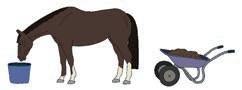
Follow the digestive journey from the first chew to the final barrow load
We explore what’s changed, and what’s next, for equine nutrition Celebrating 30 years of
Simple System
HORSE FEEDS
Issue 13
30th Birthday Edition
Contact Us
Simple System Horse Feeds, Symonds Farm, Newmarket Road, Risby, Bury St Edmunds, Suffolk, IP28 6RE 01284 810 043 sales@simplesystem.co.uk www.simplesystem.co.uk
Feed Advice
01728 604 008 info@simplesystem.co.uk
Cover Photo
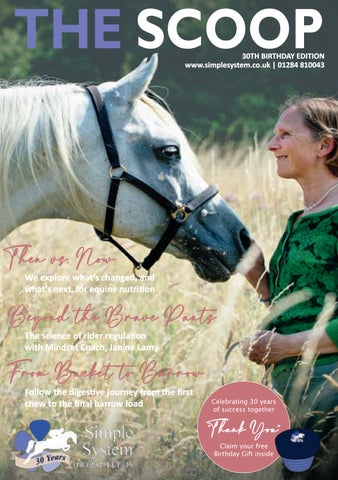
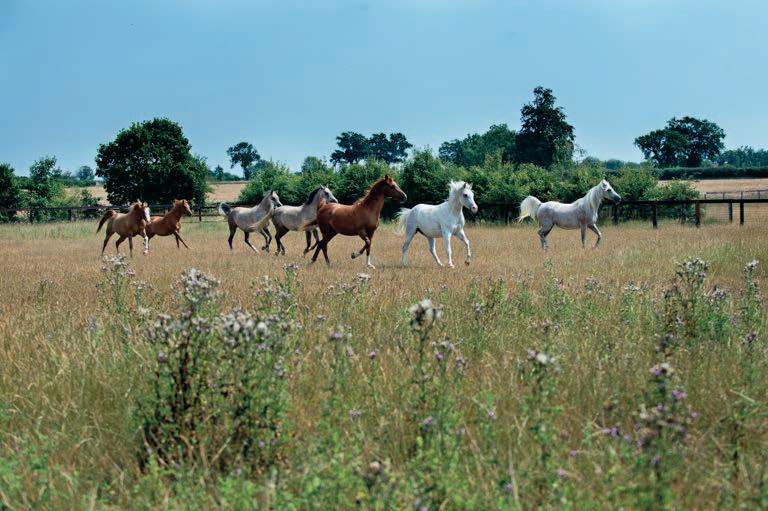
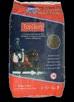
Arabian stallion, Imazh.
About Simple System
Simple System Horse Feeds is an independent, family owned feed company based in rural Suffolk. The company was founded in 1996 with the aim of producing natural and nutritious feeds that horses were designed to eat. The entire range is free from cereals, molasses, pulses, soya, preservatives and additives.
WELCOME
The countdown is finally over as we reach a truly momentous milestoneSimple System’s 30th Birthday! For three decades, our mission has remained unchanged: to provide quality nutrition that respects the horse’s natural digestive system.
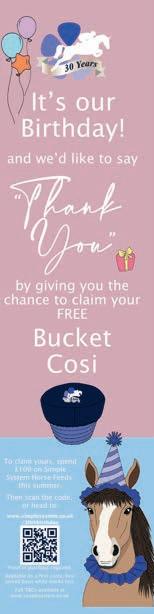
To celebrate this landmark year, we have a special giveaway as a small ‘thank you’ to all our loyal customers (details on page 5).
Underpinning this edition is the theme ‘Back to Basics’ across management, training and of course, nutrition. We have a great groundwork feature from ‘The Balanced Horse’ (page 26), and practical help finding your ‘Brave Pants’ with coach, Janine Lamy (page 10).
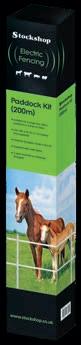
Staying ‘on the ground’, we’ve teamed up with Stockshop & Cotswold Seeds - giving you the chance to WIN a Paddock ‘Recovery’ Kit worth over £400! Find the competition in our ‘Feed Room Fun’ segment.
CONTENTS
Page 4: News & Updates
Page 6: The Simple System Story
Page 8: 1996 vs Now - How Has Feeding Changed?
Page 10 : Beyond the Brave Pants - The Science of Rider Regulation
Page 16: From Bucket to Barrow
Plus, we couldn’t have a birthday edition without indulging in a little nostalgia! We delve into ‘Then vs Now’ (page 8) - reflecting on how feeding horses has changed in the past 30 years - and we look back at our own journey.
And... For the first time in print, we are very proud to feature Jane van Lennep’s signature presentation, ‘From Bucket to Barrow’ (page 16). Some of our long-term customers will remember this talk well, and it still remains the ultimate guide to understanding the horse’s digestive system.
I hope you enjoy this special edition as much as I have enjoyed curating it.
On behalf of the Simple System family - thank you for continuing to trust us to provide the very best feed for your horses.
Melody Ashcroft
Page 20: Why ‘Back to Basics’ is Actually Anything But Basic
Page 22: Customer Comments - Sharing Success for 30 Years
Page 24: Sustainability & Ethics in Equine Nutrition
Page 26: Effective Groundwork
Page 28: Feed Room Fun and a chance to WIN!!!
Meet our Cover Star...
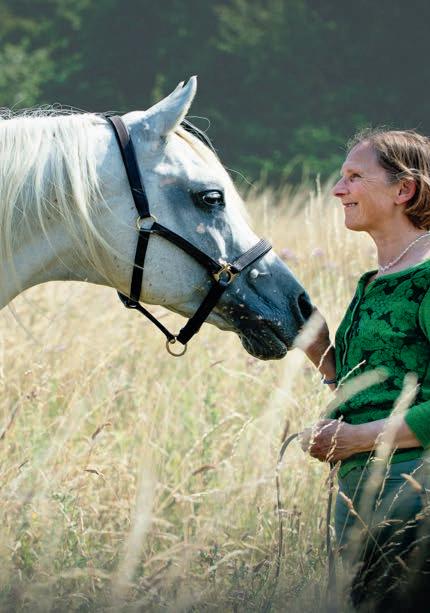
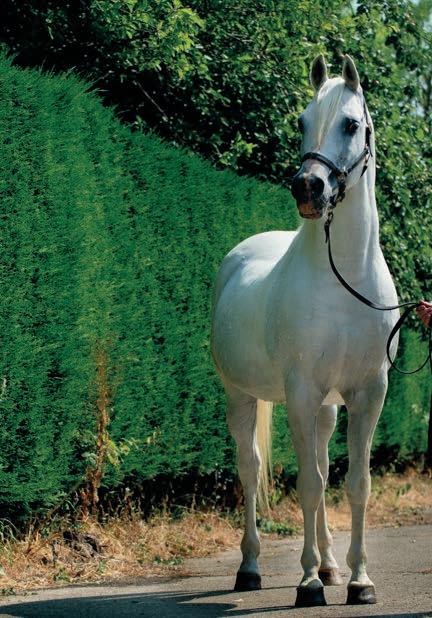
The grey Arabian stallion, Imazh, that graces our cover was bred by Paulo Gucci, the former chief designer and Vice President of the Gucci brand, by Rumak ex Inass.
Imazh had an illustrious showing career with his former carers, including British National Champion.
He came into the hands of Simple System’s Director of Nutrition, Jane, from a temporary home in Ireland at the age of 19.
Over several months, Imazh gradually became accustomed to more informal life and spent his golden years out at pasture.
He sired only two foals with Jane, but charmed all who saw him with his delightful temperament and glamourous looks.
Imazh’s Feeds...
UPDATES News &
SIMPLE SYSTEM TURNS 30!
On the 1st June, Simple System officially turned 30 years old! We can’t quite believe how far we’ve come and we wish to thank all our loyal customers for your continued support over the years.
To celebrate, we’re running a special birthday giveaway, which you’ll be able to spot in this edition of The Scoop, and in our retailers’ stores.
NOMINATIONS OPEN FOR COVETED INDUSTRY AWARDS...
Have you received excellent advice from our Feed Line? Has one of our feeds been a game changer?
If so, please consider nominating us for one of the following British Equestrian Trade Association (BETA) awards...
The ‘Test of Time’ Award... We are delighted to already have TWO products nominated for the ‘Test of Time Award’.
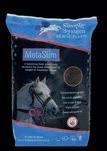
This new award gives recognition to trusted products that you and your horses simply couldn’t live without, so, if either HayCare or MetaSlim have been your horse’s hero - please nominate them now.
The Nutritional Helpline of the Year Award... Last year, the year before and the year before that, we made it to the finals! Will 2026 be our year?
Our Feed Line pride themselves on giving the very best nutritional advice for your horses. This includes practical management tips, as well as feed advice. If we’ve helped you and your horse, please consider taking a moment to nominate.
Scan the Code to Nominate
SUPPORTED RIDER UPDATES
It’s an exciting time for Simple System’s supported riders, with plenty of progress and new ventures to celebrate. Team Lamy Wright have welcomed a promising new addition, Humphrey, from the Groomsbridge stud.
Our newest supported rider, Lily Pett, had a great time at Nationals. She put on a wonderful show aboard her own Snabo Star (Joey) - finishing in 5th place in her U21 Preliminary Silver section.
Meanwhile, Emily Watts is home from the Badminton Grassroots Championships, where she competed in the BE100 aboard her own Tullaher Rodney - who impressively qualified on his 1st attempt! They had a great event, finishing in 9th place overall and are certainly an exciting pair to watch for the future.
Elsewhere, Georgia Gardener (pictured above aboard Spud) is working on an inspiring new YouTube series, Against the Odds: Road to ROR, while Rebecca Duke, also known as The Balanced Horse, has launched her brand-new online Training Academy, with a preview in our groundwork article on page 26.
Team Fenix have been enjoying success in dressage astride with carriage horse Figi, and Georgie Wood has been working at liberty with her talented showjumper, Hudson - showcasing the versatility and partnership at the heart of their training.
NEW STOCKISTS...
Here’s a handful of stockists who have recently joined the Simple System stockist family...
Alexanders Town & Country Specialists | Glasgow, G76
Chelford Farm Supplies | Chelford, SK9
Gallop & Gifts at Darlington Stables | Sandbach, CW11
Meadows Saddlery & Animal Feeds | Newchapel, ST7
The Feed Bin | Cheltenham, GL51
Wye Valley Country Store | Chepstow, NP16 & Monmouth, NP25
To
Photo credit: Colraine Capture
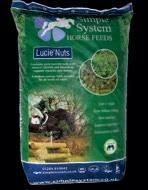
Our first pelleted forage, Lucie Nuts, went on sale.
We debuted our Instant Linseed and as ''Spice Fever'' swept the nation, our own "Girl Power", Jane, started her mission to educate with her iconic "Bucket to Barrow" talk.
As the rest of the world was preparing for the Y2K bug, we were preparing for the launch of our first forage balancer - Total Eclipse!
Abi, now our Specialist Advisor, joined us as our first van driver - Sat nav didn’t exist, so routes were plotted with pins on a map!
Oli, who would go on to become our MD in 2024, joined the company and took us digital with our own bespoke computerised stock and order system.
Jane and Tim meet and form Simple System together with Tim’s wife, Sue.
Simple System became the first UK horse feed company registered with the Vegan Society and Kate, daughter of two founders - Tim and Suejoined the family business.
Our customer base was expanding which meant a move to larger premises and recruiting two new delivery drivers, Graham & James.
We became the first UK feed company to offer sainfoin as a straight forage by adding Sainfoin Pellets.
We gained UFAS accreditation and introduced a new format of forage to our range, our Brix.
We welcomed Georgie Wood aboard as a supported rider - Georgie is still supported by Simple System today!
HayCare, our best-selling pelleted Timothy Grass hay replacer, hit the market.
Our rider team grew with the addition of Team Lamy Wright, who remain supported by Simple System. We gained BETA NOPS accreditation and launched our first certified organic products.
New feed, MalleMash, exceeded expectations quickly becoming one of our most sought-after feeds for cobs and feathered breeds.
We launched Meadow Forage Pellets, the first mixed species feed, chosen specifically for the benefit of horses, grown together as a mixed ley in the UK.
Jane van Lennep BSc., MSc., BHSI (SM Cert), NPSD. Director of Nutrition | info@simplesystem.co.uk
How Has 1996 vs. 2026
Three decades ago, when Simple System was founded, feeding horses was often a matter of trusting that whatever came in a bag “just worked.”
Owners relied on feed manufacturers to provide complete nutrition and rarely questioned ingredient sources, digestibility, or how the diet affected long-term health.
Fast-forward to 2026, and the landscape could not be more different.
‘‘Today’s horse owners are not just more informed - they’re inquisitive and increasingly evidence-focused’’
Just as nutrition science in humans has progressed significantly over the last 30 years, the equine world has absorbed new research that challenges traditional approaches to feeding and emphasises feeding to support the biological, species-appropriate needs of the horse.
Then: From Straights to Trusting Scientific Compounds. In the early 1990s, equestrian feeding practices were dominated by convenience and tradition. But, things were starting to change...
The traditional “straights” - oats, barley, bran, beet-pulp - were gradually being replaced by more scientific compound feeds, designed to deliver a complete nutritional profile.
At the same time, the landscape itself was changing. Mixed farming began to give way to arable systems, and grazing land became scarcer.
As dairy farms diversified into livery yards, horses increasingly found themselves in individual paddocks, often on limited acreage and eating inappropriate ryegrass - or ‘cow grass’.
The result? Horses were, quite literally, being squeezed into smaller spaces - and feeding systems needed to adapt accordingly.
Customer Comments..
The Herd’s Feeds...
Lucie®Fibre Cubes
Low sugar, high fibre lucerne pellets, fed soaked. Ideal for good doers of all ages.
Timothy Chop
Chopped Timothy grass, harvested at a mature stage for naturally low sugars.
HayCare®
Timothy grass hay replacer that soaks to a palatable mash.
Total Eclipse
Our original forage balancer to top-up vitamins, minerals and pre-biotic.
Feeding Changed?
Now: Questioning What’s in the Bucket
Fast forward to today, and we horse owners are almost as likely to consult scientific journals and equine nutritionists as we are to read feed labels - often applying the same level of scrutiny as we do to our own food.
We talk frequently about fibre - but not necessarily the source of that fibre. Yet this distinction really matters.
For horses, fibre comes from forage - which also supplies other essential nutrients.
‘‘Fibre should not be the waste, by- or co-product of manufacturing’’
Modern compound feeds offer fixed levels of nutrients with the source varied according to cost and availability. With this, it is easy to overlook that the horse’s natural feeding patterns were shaped by movement, seasonality, and variety - grazing across changing landscapes and using their own ‘‘nutritional wisdom’’ as they browse.
The future? In the last 30 years there has been growing recognition of the horse not as livestock, but as a sentient, sensitive partner.
The increasing promotion of the “three Fs” - friends, forage and freedom - reflects this shift. Encouragingly, attitudes are changing for the better. While there are still occasions where compromises are made, there is clear and steady progress towards giving our kept horses an improved, more natural way of life.
Feeding remains core to that evolution. As our understanding deepens, so too does the evidence that horses thrive on diets that truly reflect how they are designed to eat.
For 30 years, Simple System has been at the forefront of changing attitudes - not just towards forage feeding, but towards managing horses in a way that fully respects their requirements.
The aim is simple: to help every horse reach their full potential, whether as a happy hacker, an international competitor, or a much-loved paddock companion.
‘‘Having fed Simple System feeds since the very early days, I have complete faith in their quality.’’
‘‘A diet of Lucie Fibre Cubes, HayCare, Timothy Chop and Total Eclipse has kept my good doers satisfied, without too much weight gain.
Maddy (who delivers), is so helpful and reliable. I know I can phone the Feed Line with any questions too - Jane has more knowledge than most of us can imagine!
A friend once told me ‘horses shine from the inside’. I’m sure she was right - I rarely wash my horses but their hair and skin is always shiny and supple - they could be ‘show ready’ with very little effort! I love to see my happy, healthy horses with that ‘Simple System shine’. Would I ever use a different feed company? No way!’’
We hear a lot nowadays about the importance of riders having a positive mindset, but what does this mean and how does it affect our horse?
Well, for starters, rider mindset isn’t about being endlessly cheerful, or popping on those ‘brave pants’. It’s about understanding what makes us tick: our pressure points, habits and triggers - and having tools to steady ourselves when we wobble.
‘‘Horses
mirror our energy and nervous system’’
If we escalate internally, even if we look fine, they feel it. Our breathing changes, muscles tighten, we hold or pull - and they know. When our nervous system is dysregulated, we start to ‘react.’ When we’re regulated, we are able to ‘respond’. For our horses, that difference really matters.
It isn’t our job to control everything around us. It’s our job to regulate ourselves. That means setting ourselves up before we ride and knowing how to reset if things go awry.
It doesn’t matter which techniques we use, just that we have practised them when we are calm. They then become automatic and reliable under pressure.
Activating the parasympathetic nervous system in this way tells the brain it’s safe. When we feel safe, communication between brain and body improves. We think clearly, feel clearly and connect the two.
Ever been unable to follow instructions in a lesson because your body wouldn’t cooperate? That’s dysregulation.
Pants’
of Rider Regulation
How do we regulate the nervous system?
A 10 minute mental warm-up, which might include:
• Deep breathing techniques
• Grounding
• Gentle humming, singing or other vagus nerve stimulation
• Quick body scan for muscle relaxation (jaw, shoulders, hands, hips etc.)
• Short visualisation (colour it in - see, smell, hear, feel)
• 3 aims for the session (things you can control today)
Pressure often comes from outside - owners, coaches, parents, social media.
‘‘While we can’t always control external influences, we can control how we respond’’
Notice your breathing. Reframe unhelpful self-talk. Return to your trusted systemrhythm, straightness, posture - whatever it is that works for you.
Often, though, pressure is internal: perfectionism, self-criticism, fear of judgement or comparison - both significant in the equestrian world. These patterns may once have helped us achieve, but now they can undermine us - a little like outdated software. First recognise them, then ask: is this useful today?
I often ask riders, “Can you positively influence this situation?” If yes, focus on it. If not, let it go and return to what you can control - your breathing, rhythm, line, or even choosing a steadier hack route. Trying to control the uncontrollable creates tension; focusing on what you can influence builds confidence.
For some, setting goals is good, but goals can also create pressure - especially outcomebased ones. Focusing only on results can widen the gap between where we are and where we want to be, leading to frustration and self-doubt. Once that starts, we can feel pretty rubbish about ourselves and our riding. We feel the pressure, can lack focus, become unhappy with our level of progress, and start to think in a more emotional way. Before we know it we are stuck in a bit of a rut.
Good goal setting goes deeper: why does it matter? Is it realistic? Does it align with your values? What daily behaviours support it?
Being process-focused is key. Work on rhythm, lines, consistency - not “I need 68%” or “I must qualify.” Trusting your system keeps you present, builds resilience and helps you learn from feedback. When you stick to a system your horse knows and understands, everything becomes more predictable - and horses love predictability.
‘‘Thankfully, horses do not need perfection.They need us to be predictable, fair and emotionally steady’’
When we regulate ourselves, we give them space to think, try and trust. We make it easier for them to do their bit.
As the proverb says, “We all have a good dragon and a bad dragon. The one that wins is the one you feed most.”
Rider mindset isn’t about eliminating nerves. It’s about noticing which dragon you’re feeding each day.
Your
Feeding Questions:
Whether you’re managing a “good doer,” fuelling a performance athlete, or supporting a senior, the same questions often crop up, and the same principles often apply.
The Feed Line have rounded up your most frequent feeding dilemmas to help you navigate your path to providing your horses with simple, effective nutrition.
‘‘How much should my horse eat?’’
This can be worked out quite simply.
Start with the horse’s ideal weight as this is constant. Use a weigh tape for a good estimate, a weighbridge for accuracy, or look on wormer packs for a general guide.
Once you have an idea of their weight, the amount they should consume to maintain condition in a day is 2.5% of their ideal bodyweight. This is the dry weight of everything they eat.
If they need to lose weight, reduce this to 2% but not less as this can impact gut health.
If they need to gain weight, feed to appetite. Be warned, some natives are capable of eating twice what they need. Monitor their Body Condition Score regularly.
All their needs can be met with suitable forage/grazing, forage feeds and a forage balancer. Use feeds of suitable nutrition for work, condition, age and so on.
Jane van Lennep
‘‘Why
do you suggest soaking feeds?’’
Soaked feeds are not just for horses with poor teeth, they offer benefits for all horses.
Soaking feeds:
- Reduces the risk of choke
- Provides hydration
- Dilutes stomach acid
- Increases feed volume, helping slow intake
Abi Clark
‘‘My horse’s feed looks huge once soaked –is this OK?’’
Yes - Simple System feeds are all entirely forage based and digested in the hindgut (via microbial fermentation) just like hay or grasssomething we would never think twice about feeding generously. Much of the volume comes from added water, which supports hydration and digestion.
Horses also eat these feeds more slowly, encouraging a natural “trickle feeding” pattern that’s better for digestive health.
Ellen Lincoln
Answered
“My horse needs a hay replacement mash but I worry they will eat it too quickly - what can I do to slow them down?”
The easiest way to slow intake is to split the hay replacement across multiple bowls and space these out around their stable or turnout area - rather than giving 5kg of HayCare® in one bowl, split this into five 1kg portions. This encourages movement to alleviate stiffness and breaks between feeding bouts whilst also allowing for a more natural pattern of browsing and eating on the move.
Using large, shallow bowls limits mouthful size, and adding safe objects (like a football) makes them work around the feed. Offering a variety of soaked forages - such as Simple System Horse Feeds HayCare®, Lucie®Fibre Cubes and PuraBeet - also provides enrichment as they browse between the different flavours and textures. You can further slow eating by offering some portions as a drier crumble rather than a wet or ‘soupy’ mash, which takes longer to ‘chew’.
Ellen Lincoln
Contact the Feed Line for free advice and to find the very best feed for your horse’s individual needs. 01728 604 008 info@simplesystem.co.uk
Meet our
Specialist Advisor, Abi Clark With over 20 years as part of the Simple System team, Abi has come across more feeding challenges than we can count!
Abi is experienced across a broad range of topics, but her specialist subjects are ‘the older horse’ and ‘itchy cobs’ - the latter being her inspiration for formulating our highly popular feed, MalleMash® .
Nutrition Manager, Ellen Lincoln
With a particular interest in thoroughbreds, Ellen is the expert to speak to for feeding advice for your retrained racehorses, as well as for competition horses.
Ellen is also very at home working with more clinical cases, thanks to her practical experience in an equine hospital.
Co-Founder & Director of Nutrition, Jane van Lennep A pioneer of forage feeding, Simple System is based on a system of feeding Jane has been developing since 1973.
As well as being a highly regarded nutritionist, Jane is an experienced breeder and published author - with books about foaling and solving equine problems.
Jane is a true fountain of knowledge who thoroughly enjoys researching and working with complex nutrition cases. She always welcomes a challenge.
TargetedEnergy
With the competition season in full swing you may be looking for ways to improve your horse’s performance. Offering a Target Feed may just be the ticket...
Target Feeding is the practice of offering a forage feed directly before work. As the name suggests, offering a feed in the moments before you get on board provides a steady release of targeted energy to fuel the work that is required - allowing them to stay focused and comfortable.
There are many competition and leisure horses who don’t drink enough when they are away from home. By offering a soaked forage pellet as part of your Target Feed you are also improving your horse’s hydration.
What about the ‘Rule of Feeding’? Many of us were taught that our horses needed a period of rest before exercise if they had eaten a traditional hard feed. This is still the case if a starchy or cereal based feed is given. It does not apply with any of our Simple System Feeds. This is because our feeds are based on the horse’s natural diet - forage. If you think back to when horses were free roaming, prior to being domesticated, they would have fled danger at a moment’s notice. If a horse had to wait an hour or so for the grass to go down first they would have most likely been predated to extinction.
Back to Target Feeding... Many customers have excellent results when Target Feeding, reporting:
• Higher sustained energy levels
• Improved stamina
• Greater focus
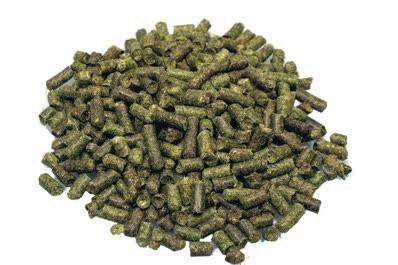
Most horses can be Target Fed with their existing Simple System feeds, although for those wanting a ‘one bag’ option, Simply Complete is a convenient choice. For endurance and stamina, Lucie® Nuts are a great choice. And, for an extra energy boost, use Red Bag Grass Pellets
From Bucket
Jane van Lennep BSc., MSc., BHSI (SM Cert), NPSD | Director of Nutrition |
We talk a lot about what goes into the feed bucket. But how often do we think about what happens next?
From the very first chew to the final barrow load, your horse’s digestive system is a finely tuned, forage-fuelled machine. When we understand how it works, our feeding decisions become much clearer - and often much simpler.
Let’s walk through the journey from bucket to barrow...
1. Digestion Starts in the Mouth
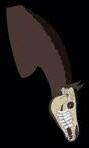
For a horse to chew efficiently, the grinding surfaces of the teeth must align correctly. When grazing with the head down, the lower jaw naturally slides slightly forward. In a wellconformed mouth, this allows even tooth wear and efficient breakdown of forage.
But here’s the crucial point: The horse has muscles to retract the lower jaw - but not to move it forward.
When we feed from raised haynets or buckets positioned high off the ground, the head lifts. The lower jaw slips back. The teeth no longer align properly. Over time, this contributes to the sharp enamel points we so commonly see:
• Sharp edges on the outside of the upper teeth
• Sharp edges on the inside of the lower teeth
• Hooks at the front of the upper arcade
• Ramps at the back of the lower arcade
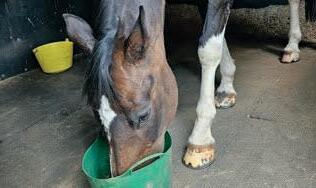
Whenever possible, feed from floor level. It supports correct jaw alignment, healthier dentition and more efficient chewing.
to Barrow
2. Chewing = Saliva = Protection
While chewing, the horse produces salivaand a lot of it.
A naturally grazing horse chews for around 16 hours per day. During that time, they produce between 36 and 42 litres of salivaenough to fill four 10-litre / 2 gallon buckets.
Unlike ours, equine saliva contains very few digestive enzymes. That’s because the horse’s natural forage diet is low in sugar, starches and fats. Nature is efficient; it doesn’t produce what isn’t needed.
Instead, equine saliva has two key roles:
• Lubricating coarse forage
• Neutralising stomach acid (thanks to its high bicarbonate content)
There’s one vital point to remember: Horses only produce saliva when they chew.
If chew time decreases, saliva decreases - but stomach acid production does not.
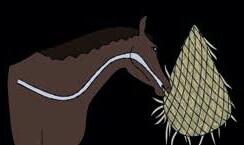
When the head is raised, the oesophagus bends
3. From Bolus to Oesophagus
A horse with healthy teeth chews feed down to particles of around 2mm before swallowing.
The food is formed into moist boluses, mixed thoroughly with saliva. An average 500kg horse swallows roughly 500g at a time - you can often see the bulge pass down the neck.
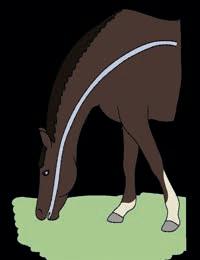
With the head down, the oesophagus forms a smooth curve to the stomach. When the head is raised, bends are introduced at the throat and where the oesophagus enters the chestincreasing resistance and potentially affecting swallowing efficiency.
Another reason why the natural ‘head-down’ eating position matters.
When eating head down, the oesophagus forms a smooth curve to the stomach
From Bucket
Jane van Lennep BSc., MSc., BHSI (SM Cert), NPSD | Director of Nutrition |
4. The Small but Mighty Stomach
Despite the horse’s size, the stomach holds only around 5 litres.
Why so small? Evolution.
A small stomach that empties frequently leaves more room for heart and lungsessential for rapid escape from predators.
Here’s the management challenge: The stomach produces acid continuously (around 40 litres / 4 10L buckets, per day).
Saliva, which buffers acid, is only produced when chewing. When we feed small, caloriedense meals that require minimal chewing, horses receive energy - but not enough saliva to neutralise the acid. Excess acid can damage the stomach lining, contributing to gastric ulcers. It may also pass further along the tract, affecting the hindgut.
When a horse is eating forage - grass, hay or soaked forage feeds like Lucie®Nuts or HayCare® - the stomach never becomes overfull. It maintains a steady level and empties small amounts frequently. This steady trickle is what the system evolved to handle.
Long periods without forage leave acid sloshing in an empty stomach - particularly problematic during exercise.
5. The Small Intestine: Rapid Transit
From the stomach, feed moves into the small intestine which is around 20 metres long, yet relatively short compared to other herbivores. First it enters the duodenum, then the jejunum and finally the illeum. Here:
• Bile (around 20 litres per day) is added
• Pancreatic fluids (around 35 litres per day) are introduced
• Digestible nutrients are absorbed
Altogether, the horse produces roughly 130 litres of digestive fluids every 24 hours. Much of this is efficiently recycled.
To move safely through the small intestine’s twists and turns, feed must now be 90-95% liquid. This is another reason adequate hydration and saliva production matter.
If a horse has been without forage for an extended period, bile can backflow towards the stomach, irritating the pyloric region and potentially contributing to pyloric ulcers.
Long periods without forage leave acid in an otherwise empty stomach
With access to forage the stomach maintains a steady level
to Barrow
6. The Hindgut: The Fermentation Vat
Once feed leaves the small intestine, it enters the hindgut - beginning with the caecum.
The caecum is a large fermentation chamber holding 25-35 litres. Here live trillions of microbes: bacteria, fungi and yeasts. These microbes:
• Break down fibre
• Produce free fatty acids (slow-release energy for stamina)
• Manufacture B-group vitamins and vitamin K
• Generate heat (supporting thermoregulation)
• Produce gas (a normal by-product of fermentation)
This is where the horse truly derives value from forage.
The free fatty acids (FFA’s) produced here fuel the horse’s slow-burn energy pathways - ideal for endurance and steady or sustained work.
7. Movement Matters
In the small intestine, strong muscular contractions (peristalsis) push food along.
In the hindgut, the system is much larger and relies more on continuous intake to keep contents moving forward. If a horse stops eating or drinking for prolonged periods, contents can dry out and compact - increasing the risk of impaction colic.
Put simply: If the horse keeps eating, the gut keeps moving.
8. Large Colon, Small Colon & Warning Signs
The large colon occupies much of the righthand side of the abdomen, looping and doubling back on itself.
Hindgut disturbances are difficult to diagnose directly.
Signs may include:
• Girthiness
• Right-sided discomfort
• Reluctance to strike off on the right canter lead
• Loose droppings or free faecal water
Hindgut ulcers and acidosis are more common than many realise.
As water is gradually reabsorbed, contents move into the small colon, where familiar faecal balls are formed.
And finally - the barrow.
A Brief Overview
From bucket to barrow, everything comes back to one central theme:
The horse is designed to:
• Chew for long periods
• Consume a forage diet
• Maintain continuous digestive flow
When we feed in a way that respects that design - floor level feeding, high forage intake, appropriate chew time - the system works remarkably well.
When we restrict forage intake, we begin to work against their evolutionary design.
The digestive system isn’t complicated, it is simply specialised. Feed for the system your horse has.
Why‘‘Back to Basics’’
Ellen Lincoln BSc., MSc. | Nutrition Manager | ellen@simplesystem.co.uk
We are often told that more is better. More ingredients, more supplements, more complex formulations. When we hear the phrase “back to basics” it’s easy to assume it means we might be settling for something.
‘‘But... there’s a profound difference between a diet that is basic and a diet that is simple.’’
While “basic” is a synonym for “simple” in the English dictionary, when considering the digestive tract of a horse, they really couldn’t be much further apart.
The ‘Simple System’
Our name isn’t just intended to be a catchy brand - it’s actually a nod to the horse’s physiology. The horse’s digestive tract is, in essence, a “simple system” designed for a one-way flow of high-fibre forage. By aligning our feed with this biological blueprint, we are supporting a system that nature has spent millenia perfecting.
What does ‘simple’ actually look like in the feed room?
1. Transparency Over Complexity
Have you ever looked at a feed label and felt like you needed a chemistry degree to decode it? Where raw materials like cereals and cereal by-products are poor sources of nutrition, they must be “topped up” with vitamin and mineral pre-mixes. These often consist of a mix of inorganic and chelated minerals, synthetic vitamins and a carrier.
When formulating feeds, we take a very different path. Our ingredient lists contain forage-based ingredients. They are short and transparent, with everything there for a functional reason - to support the requirements of the horse.
2. One Bag, Multiple Horses
The beauty of a forage-based system is its versatility. You shouldn’t need a different coloured bag for every horse on the yard.
Whether you have a retired pony or a competition horse in peak fitness, the foundation of the diet remains the same: grazing, hay, and a forage balancer - with the addition of forage pellets and chopped forages as appropriate, for additional protein, digestible energy or fibre requirements.
Take Lucie®Nuts, for example - our widely utilised ‘hero’. For a good-doing pony, a few hundred grams bulks out their balancer. For a competition horse in regular work? A couple of kilos provides the additional protein and digestible energy needed to perform.
The individual requirements of each horse are still being met by simply adjusting the volume of the feed.
29 year old Graffi (pictured) has been fed Lucie®Nuts throughout her various life stages - as a youngster, when competing amongst the whiteboards, and now as a retiree.
‘‘Anything But Basic’’ Is Actually
3. Bio-availability: Nature’s Lab
There is a common misconception that simple ingredients are “lacking.” In reality, when horses are fed high-quality, speciesappropriate forage, they require less heavy supplementation.
Why? Because quality forage provides bioavailable vitamins and minerals - in forms that the horse’s body can recognise, absorb, and assimilate naturally.
From Maintenance to Performance
Our most simple diet of Timothy Chop, Lucie®Fibre Cubes and Total Eclipse, only contains five ingredients - yet, it provides quality protein for muscle tone, essential omega oils for coat shine, and the fibre necessary for mental satiety.
For those needing more, we don’t turn to starch. We look to more nutritious forages and those harvested for optimum nutrition. Blending Timothy with Cocksfoot grass and a coating of cold-pressed linseed oil creates our Perform & Shine® chop. Need more still? Sainfoin Pellets increase the digestible energy and protein without the “fizz” often associated with cereals.
The Species-Appropriate Choice
Feeding “forage first” isn’t just a trend; it’s an acknowledgement of the horse’s evolution. By stripping away unnecessary chemical usage, artificial flavourings, and non-functional fillers, we return to the basic principle of equine health.
Keeping things simple, doesn’t mean doing less for your horse. It means giving them what they need to thrive, to maintain optimum health and to perform at their best. Just as nature intended.
Natural, Functional
Ingredients....
Lucerne
A deep rooting legume, offering a wealth of natural vitamins and minerals.
Reliably low sugar and starch levels with highly digestible fibre, make lucerne feeds the most versatile in our range.
Grass
A naturally palatable source of high quality fibre, protein and minerals. We offer grass products in a full spectrum of nutritional profiles ensuring we can provide the benefits of good grazing, as well as hay replacement, to all horses, year round.
Sainfoin
A premium alternative to grass or lucerne.
Nutritious and rich in minerals, trace elements and condensed tanninswhich can aid protein digestion.
An ideal feed for those with increased nutritional demands.
Linseed
Cooked, full-fat linseed provides essential omega 3 to ensure healthy skin, coat and hooves.
Unlike other oil-bearing seeds, linseed offers the same optimal balance of omega 3:6, 4:1, as natural grazing.
Customer Comments...
Sharing
‘‘My cob, Bob, has been fed Simple System since you first started in 1996!’’
He loves his HayCare and Lucie Nuts!
He is now 33, in fine health and has never been sick or sorry, laminitic or even overweight. I put it down to your excellent feeds!
Lois Locking Simple System Customer since 1996
‘‘For over 20 years my horses have thrived on Simple System feeds’’
Sissy, a 7/8 TB/ID cross, was my companion from 1996 until 2019. She carried me astride and side saddle on many wonderful rides. Our favourite time was our summer break on Exmoor ‘home turf’ with long rides across the moors.
Throughout her life she enjoyed Simple System feeds, from Blue Bag Grass Pellets, Organic Lucie Stalks, Timothy Chop, Lucie Brix, Lunar Eclipse and Pure Organic Seaweed in her younger years, to Lucie Fibre Cubes with FlexiBalance and Organic Cider Vinegar added as she grew older.
Cameroon, my 14.2 cob cross (now a still-grumpy but muchloved 24-year-old), has also been raised on Simple System feeds since he was five.
These days he enjoys HayCare®, Meadow Forage Pellets and MetaSlim®- and, as a bit of an equine gourmet, he loves trying different forages.
If my horses had a vote for their favourite treat, it would undoubtedly be Lucie®Mints.
Gillian Kern Simple System Customer since the late 1990s
Cameroon’s Feed Plan...
HayCare®
A direct replacement for hay, made from 100% Timothy grass.
Meadow Forage Pellets
A ‘gourmet’ choice of mixed forages, for variety.
MetaSlim®
Comprehensive forage balancer for those prone to weight gain and laminitis.
Lucie®Mints
Natural, healthy treats, made from lucerne and peppermint.
Success for 30 Years
‘‘Simple System feeds were first recommended to me by my vet and I’ve trusted them ever since!’’
The Feed Line has always given excellent advice on what was best for my Welsh Section D, John, as his age and workload changed over the years. The team are consistently friendly, knowledgeable and incredibly helpful.
My 14-year-old American Quarter Horse, Jimpy, has also grown up on Simple System, and I’m often complimented on how well he looks.
I particularly value the fact that the feeds can be given before riding, and that they are digested naturally in the hindgut - it’s very reassuring.
My horses live out 24/7 and my feed bins contain Blue Grass Pellets, Lucie Nuts, Total Eclipse and TopGain.
Georgina Wright Simple System Customer since the late 1990s
Did you know?
Lucie®Nuts were the first forage pellet Simple System brought to the market - and thanks to their reliably low sugar and starch levels - they’re still one of our most widely utilised feeds today!
‘‘I still feed Total Eclipse today!’’
I first started feeding Simple System Horse Feeds when I began endurance riding in the early 2000s, initially using Total Eclipse as a balancer for my mare, Mayfair, who lived to the wonderful age of 30.
My current mare, 26 year old Darcie, has been fed on Simple System for as long as I have owned her - since 2005.
It took her some time to get used to an unmolassed feed, but she absolutely thrives on her ‘simple’ diet.
I still feed Total Eclipse today, with Organic Lucie®Pellets and Blue Bag Grass Pellets. I also add PuraBeet in the winter, and for extra hydration in the summer.
Jackie Moore
Simple System Customer since circa 2000
Sustainability & Ethics
Planet - Friendly Forages
Lucerne
Lucerne has deep roots to help fix nitrogen from the atmosphere into the soil, reducing reliance on artificial or chemical fertilisers.
Our organic lucerne used for Organic Lucie®Pellets and Organic Lucie®Stalks, takes things a step further as organic farms are havens for wildlife such as bees, birds and butterfies. There’s up to 50% more wildlife on organic farms.
Sainfoin
Sainfoin leys typically last for four years or more, so its deep roots have the opportunity to grow deeper still, fixing more nitrogen and further improving the soil. Sainfoin is also great for biodiversity and its extended flowering period of around 60 days makes it a firm favourite for pollinators.
Simple System’s sainfoin is available in three forms: as pellets (Sainfoin Pellets), chopped with the addition of cold pressed linseed oil (Sainfoin & Shine), and compressed forage blocks (SainfoinBrix).
Mixed Herbal Ley
Herbal leys typically contain sustainable mixes of grasses, herbs and legumes. Ideal for variety for wildlife - and our horses. Did you know? Simple System created the first mixed ley in the UK that is specifically grown for horses. It’s what our Meadow Forage Pellets are made from.
Sustainability in equine nutrition begins with a simple principle: working with nature rather than against it.
Horses evolved to roam and graze a wide variety of grasses, herbs and fibrous plants for many hours each day.
When we mirror this natural behaviour, we don’t just support digestive health - we support the ecosystems that produce their food.
‘‘In many ways, what is best for the horse is also best for the planet’’
At Simple System, this philosophy underpins everything.
Forage at the Forefront...
The core of ethical feeding is respecting the horse’s design as a hindgut fermenter. By focusing on 100% natural, forage-based diets, we remove the need for high-input ingredients like cereals and soya - crops which often rely on intensive agricultural systems.
By also excluding molasses, artificial preservatives, and GM ingredients, we prioritise a “low-input” approach. This keeps the diet simple or clean for the horse and reduces the chemical load on the soil and waterways.
The take home thought...
Contact the Feed Line to discuss your horse’s dietary needs
in Equine Nutrition
Abi Clark | Specialist Advisor |
abi@simplesystem.co.uk
Sustainable Agriculture & Production...
Supporting the land means being mindful of how feed ingredients are grown and processed. At Simple System, we support practices that align with more traditional, ecological approaches to land management:
- Certified Organic Range: Our organic range is certified by the Soil Association and is grown without synthetic pesticides or herbicides, fostering healthier soil biomes.
- Renewable Energy: At our production facility in Suffolk, heat and electricity are generated by an on-site anaerobic digester, producing renewable energy from organic materials. Any waste feed generated during production is repurposed through the digester, supporting a near zero-waste approach.
- Carbon Conscious Logistics: Delivery routes for our own vans are carefully planned to reduce ‘feed miles’ and minimise emissions. For parcel deliveries, we use a courier that measures, reduces and offsets carbon emissions.
- Reusable and Recyclable Packaging: Our packaging is robust and reusable, with customers using their feed bags to store kindling for the fire, as seat covers for farm vehicles, for lining planters and growing potatoes. Our forage bags are also fully recyclable, and we continue to explore even more sustainable packaging solutions.
The Vegan Society Standard...
Simple System is proud to be registered with The Vegan Society. In fact, we were the first UK horse feed brand to have its entire range registered with the society!
Providing Vegan horse feed isn’t about human health choices or trends; it is a commitment to species-appropriate, plantbased nutrition. It ensures that no animal by-products enter the feed chain, respecting the horse’s status as an obligate herbivore.
Ethical Stewardship at the Yard...
“Ethics in nutrition is about more than ingredients; it’s about asking what is truly right for the horse as a species.”
This extends to how we manage our horses daily on the yard. Prioritising forage, sourcing hay or haylage from responsible local producers, and managing grazing carefully all help to protect the environment.
Practices such as rotational grazing, avoiding overgrazing and maintaining healthy pasture, support soil structure, carbon storage and biodiversity.
Even seemingly small actions — such as storing feed correctly to prevent spoilage, weighing rations accurately, and recycling packaging — can significantly reduce waste.
“By feeding horses in ways that respect their design as a hindgut fermenter, we not only provide them with the best nutrition, we naturally become better stewards of the land.”
GROUNDWORK
The Thougtful Back-Up
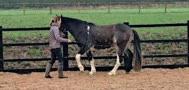
Backing up is one of the most underestimated strengthening tools we have.
When carried out correctly, it encourages the horse to:
- Step underneath with the hindlimbs
- Strengthen the gluteal and hamstring muscles
- Lighten the forehand
- Engage the thoracic sling
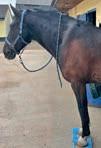
How to carry out the exercise. Begin by ensuring the base of the neck is relaxed. I may ask for a slightly lower head carriagenot overbent, just soft through the underside of the neck, with the throatlatch open and the neck reaching forwards. If the horse is braced or hollow, backing up will only reinforce tension.
Find a simple cue that suits your horse; mine is “back”. I may also place a hand on the chest, encouraging them to move away.
How many repetitions? To begin with, ask for just two or three steps. Over time, increase to 10 quality steps. If the horse veers off line, simply walk forward calmly and begin again. No correction - just quiet repetition.
How frequently should the exercise be carried out? I include backing up two to three times per week, usually asking for around 10 quality steps. This is especially beneficial for horses prone to muscle tightness and works well for my own gelding with PSSM. Done correctly, it strengthens without strain and improves posture.
TIP: If straightness is difficult initially, working alongside a fence line can really help.
Aweakaning the Stabilisers
Balance pads are simple and effective tools. They gently challenge the horse’s stability, encouraging activation of the deeper postural muscles.
They are useful for:
- Proprioception
- Limb awareness
- Thoracic sling development
Introducing balance pads to the horse. As with anything new, introduce the pads slowly and allow the horse to investigate them. Many horses will sniff or paw at the pads before stepping on - and off - and on and off again. Don’t rush; allow them to take their time. For the pads to be effective, the horse should feel relaxed.
Look out for subtle signs such as:
- A relaxed expression with soft eyes
- Licking and chewing
- A quiet shift in posture
How long should the horse stand on the pads for? Each session should be relatively short - no more than 10 minutes initially, building gradually to a maximum of 20 minutes.
Rider & trainer, Rebecca Duke, guides us through a series of in-hand excercises to build core strength, improve posture and fine tune the communication between you and your horse. Follow Rebecca on social media for more tips and training @rldthebalancedhorse
Alignment in Walk
In-hand postural work lays the foundation for everything else - and it is simple too.
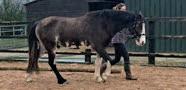
How to carry-out the exercise. Whilst walking in-hand, ask the horse to lengthen the neck forwards, down and out (without collapsing onto the forehand). I want the withers to feel as though they are gently lifting, rather than the horse falling onto the forehand.
To encourage this:
- Walk with purpose
In-Hand Square
In-hand lateral work is more technical but ideal once the horse has established the basics.
The ‘in-hand square’ can be adapted to suit the technical ability of both horse and handler.
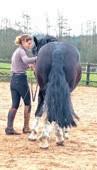
How to carry-out the exercise. Working on a clearly defined square, on one side of the square, ask for either leg yield or full pass. The aim is to cross the square with balance and without rushing sideways.
- Avoid holding the head in position, as this restricts movement from behind
- Make transitions within the walk - a few more active steps, then back to a quieter walk. This encourages the horse to carry rather than lean
TIP: The slower the walk, the more the joints are asked to flex. This helps build strength with longevity in mind, so it’s beneficial to vary the tempo.
This exercise can be carried out with field companions right through to high-level competition horses, and it is something I would always suggest incorporating into your regular routine.
Not only does it help develop strength and balance, it enhances your relationship with the horse.
At the corners of the square, ask for either a turn on the forehand or a turn on the haunches.
This exercise requires the horse to organise their body in different directions whilst staying soft and attentive. If tension creeps in, simplify the exercise to a level where both you and the horse feel comfortable. The quality of each step always matters more than the movement itself.
This exercise improves:
- Lateral suppleness
- Straightness
- Engagement
- Coordination
All of these exercises can be done in a bridle or cavesson, and eventually, at liberty. Choose equipment to suit the individual horse and always prioritise safety when introducing new excercises.
Feed Room Fun
Quick Crossword
Double Letter Ladder
Make a Match
1. The amount the horses stomach can hold (L)
2. The amount of food an average 500kg horse can swallow at a time (g)
3. The total amount of digestive fluids produced in 24 hours (L)
2. Potato or horse feed? (4)
6. Simple System’s very own ‘Girl Power’ (4,3,6)
8. Fat or balance? (4)
9. An English plant / Swiss place (7) Across
Down
1. A ‘balanced’ nod to a Bonnie Tyler song (5,7)
3. Often seen as part of three - and essential for all horses (6)
4. A situation under control or a way to excercise a horse (2,4)
5. This type of feeding is ‘on’ it when taking part in horseback archery (6)
Can you go from MARE to STALLION, changing or adding up to 2 letters each time?
Can you match the statement with the correct answer?
4. The amount of saliva a horse produces per day when grazing for 16 hours (L)
5. The amount of acid a horse produces per day (L)
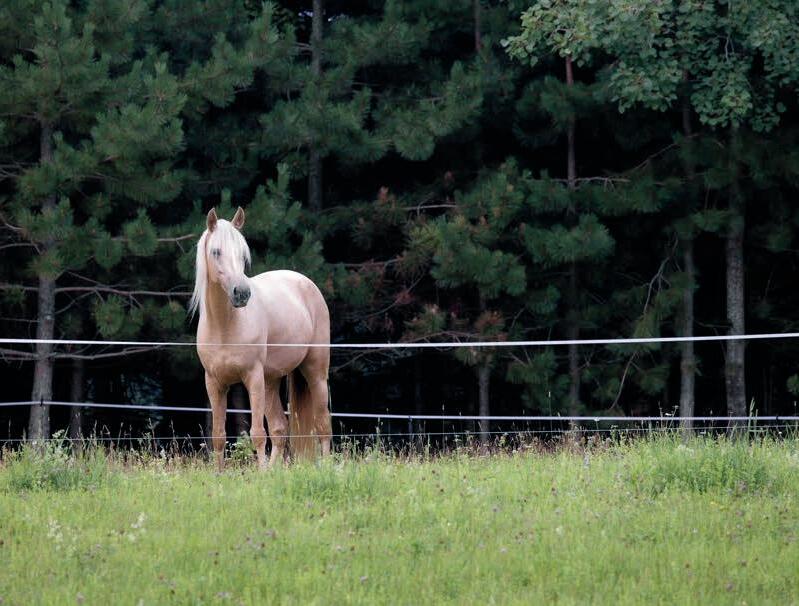
Perfect for temporary grazing and seasonal paddock management
Complete 200m paddock kit
Ideal for horses & livestock
Portable and easy to move Strong, dependable energiser - made in the UK
Over £400 worth of paddock products
1 x Stockshop Paddock Kit (details above)
6 x Simple System’s Natural Paddock Recovery
1 x Natural Grazing Mix (to cover 2 acres) from Cotswold Seeds