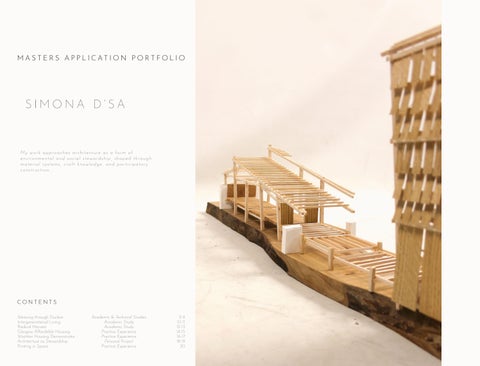
SIMONA D’SA
My work approaches architecture as a form of environmental and social stewardship, shaped through material systems, craft knowledge, and participatory construction.
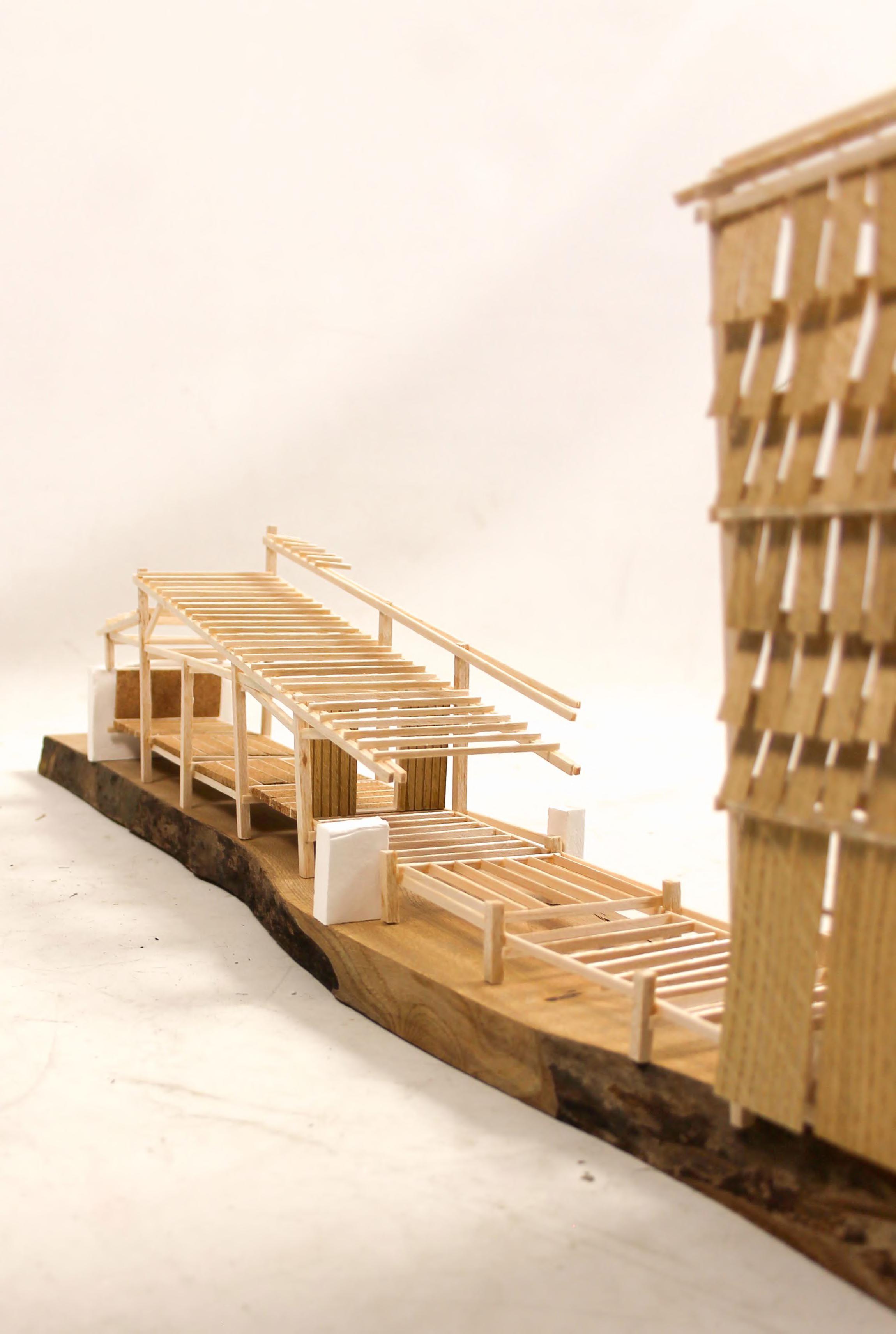
WEAVING THROUGH DUNBAR
4TH YEAR- TIMBER STUDIO DEPENDENCIES AND RECIPROCALITY
This project explores the material use of timber rooted in principles of sustainable forestry and traditional craftsmanship. Located within Dunbar, the proposal was developed for The Ridge, a charity addressing food insecurity and unemployment through community-led building and horticultural programmes. The project investigates the cyclical nature of natural resources, reframing material exchange as a reciprocal relationship between landscapes, people, and sites. Drawing on Dunbar’s flax heritage, it explores how agriculture, craft, and industry can be reconnected through material practice. The design unfolds with a drying tower that uses passive ventilation to prepare materials. A second phase introduces a community marketplace and learning centre, creating a civic space for making, trading, and education. Rooted in the Ridge’s person-centric ethos, the project explores reciprocity as a gift exchange- of giving and taking. Concerned in the preservation of craftsmanship, the act of weaving is explored both conceptually to strengthen, repair and connect the site and tectonically in the intertwining of timber structures.
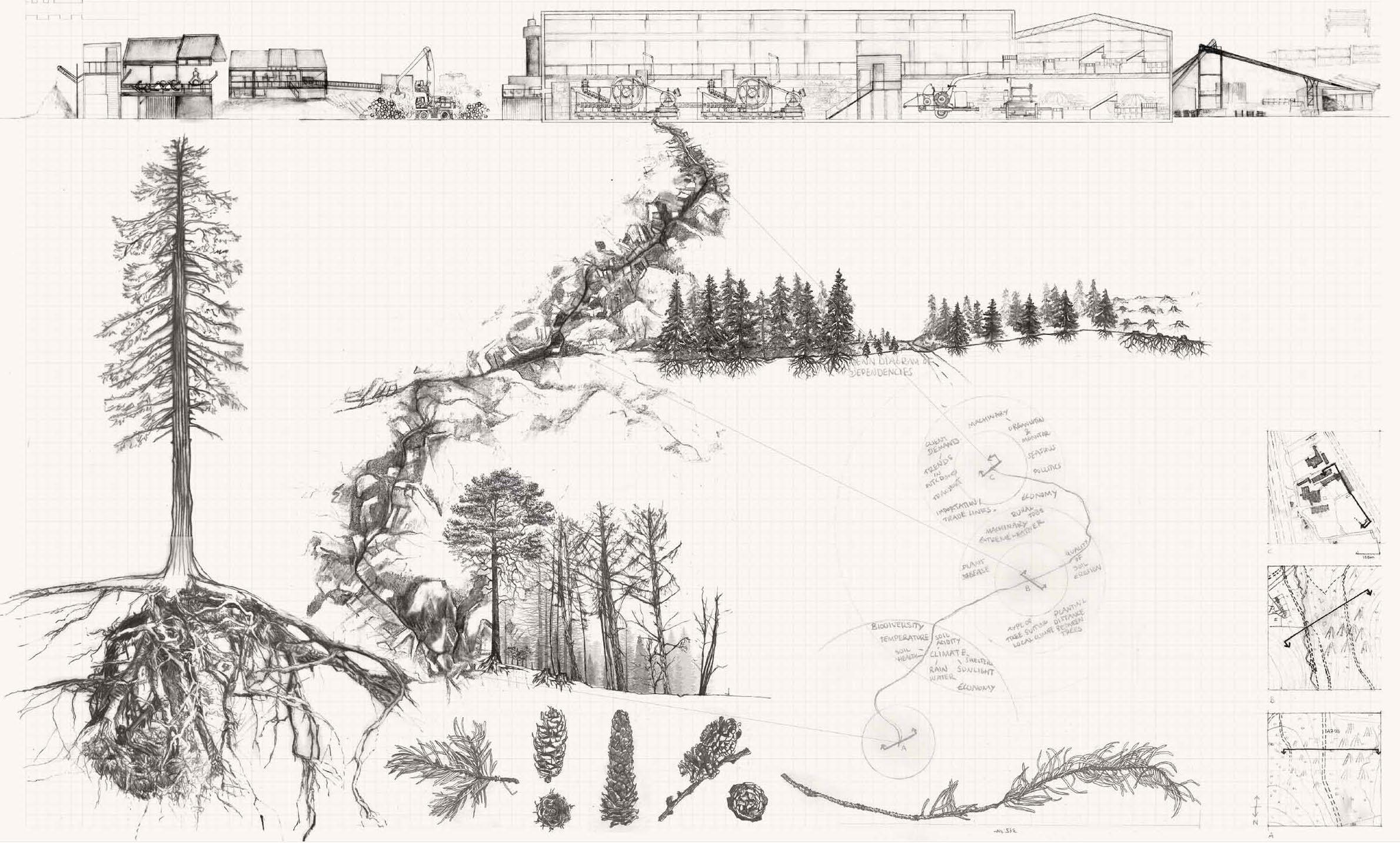
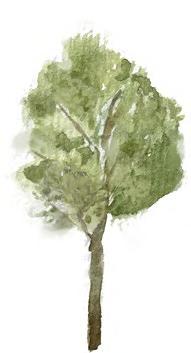
Group research drawing and timber lino print installation . My contribution: material investigation linking forest and sawmill processes, drawing of the Douglas Fir tree and section through the sawmill.
FOREST TO SAWMILLTHREE TRANSECTS OF TIMBER
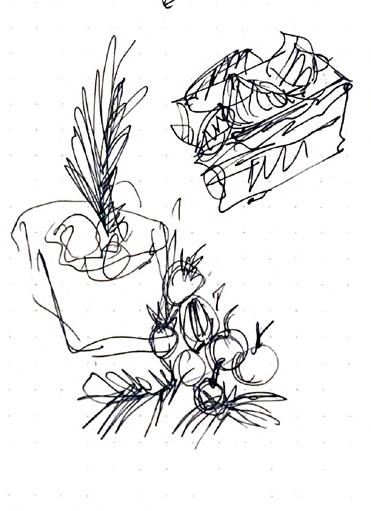
Material investigations traced the journey of timber from Cardrona Forest through plantation landscapes to industrial sawmills. Through drawings of tree anatomy, forestry management, and milling processes, the research examined how ecological systems, labour, and industrial economies are interdependent. Inspired by sectional cuts through timber, the project develops three analytical devices: radial, tangential, and transverse. These cuts become tools for reading landscapes, plantations, and sawmills, revealing temporal cycles, spatial memories, and ecological interdependencies embedded within timber production.
DUNBAR AND THE RIDGE
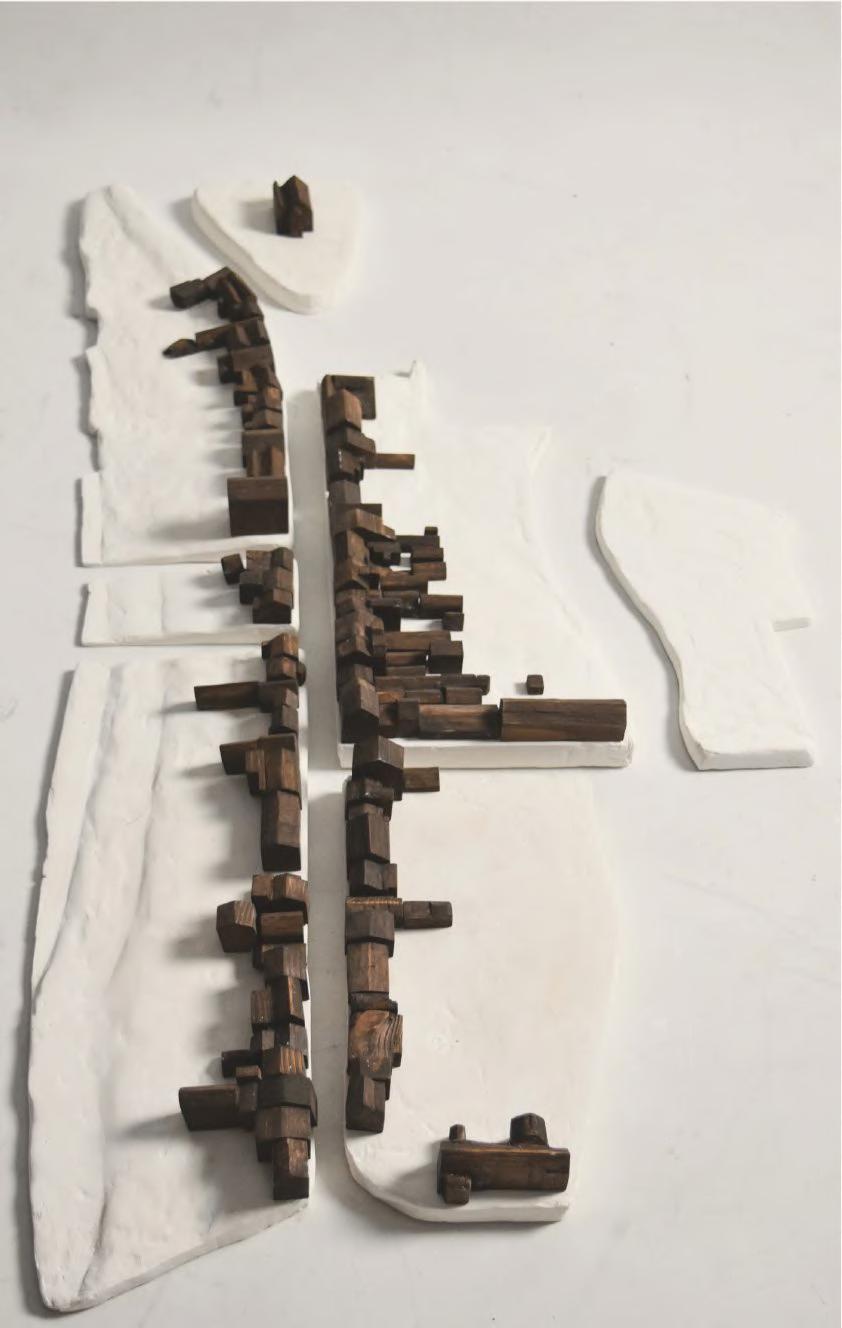
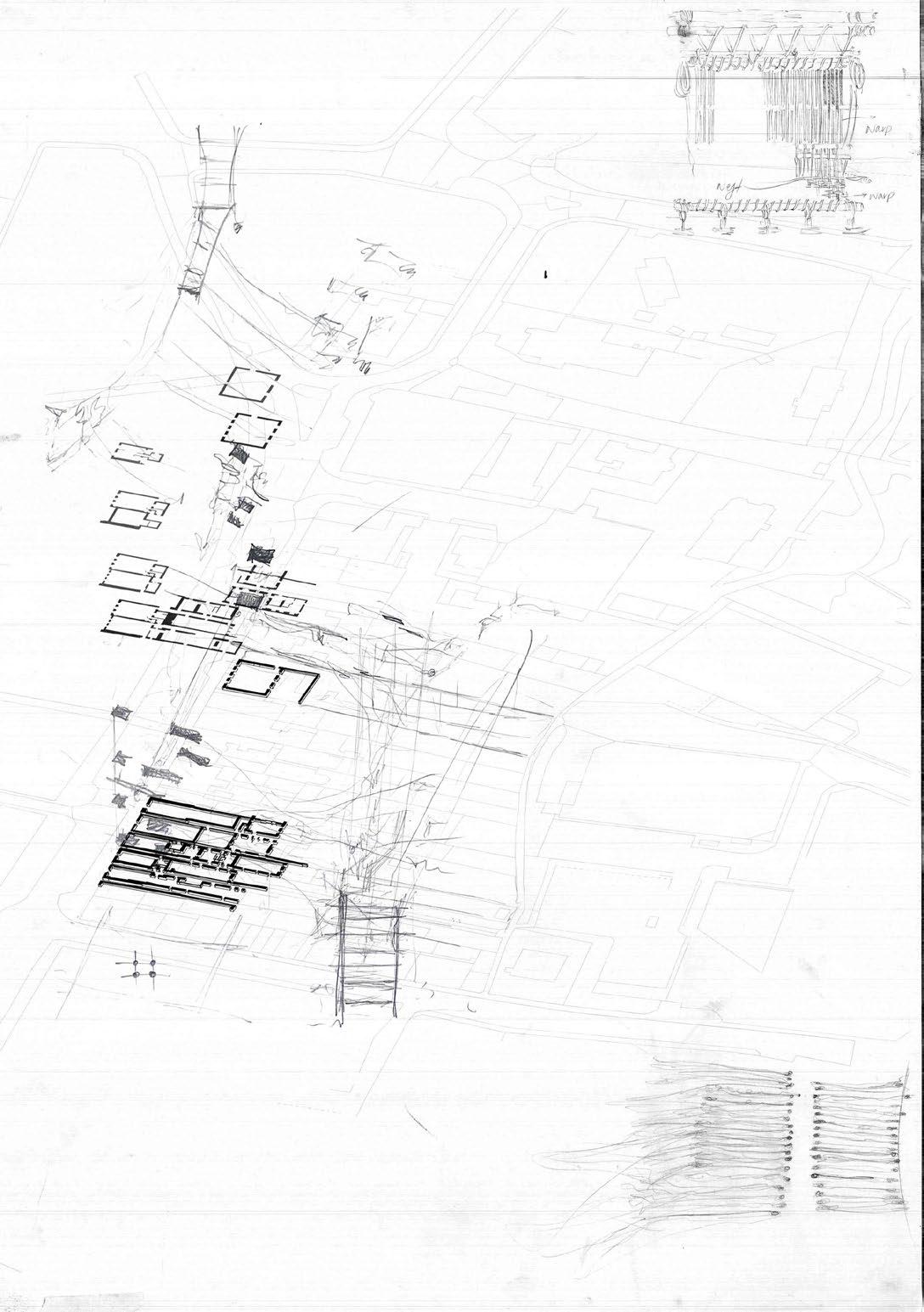
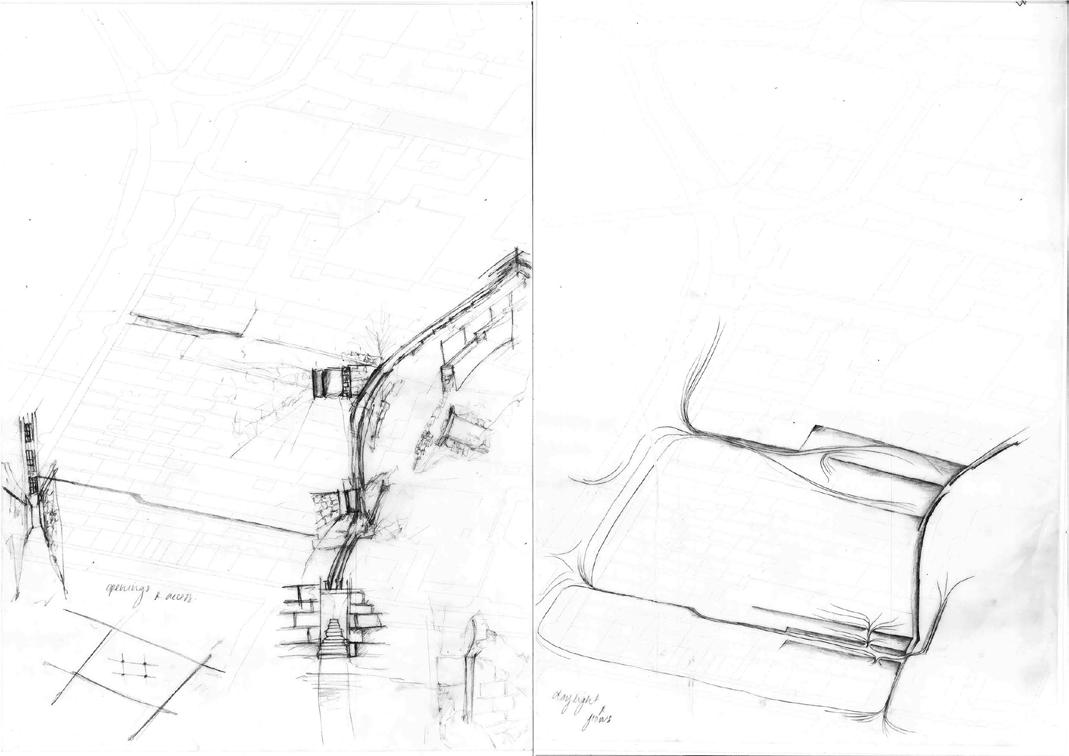
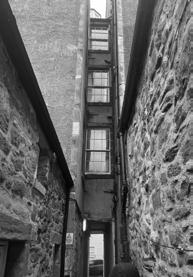
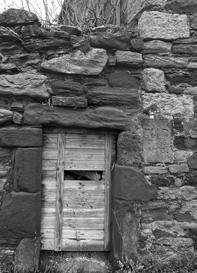
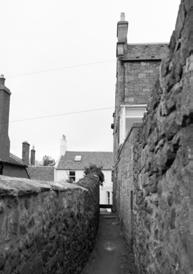
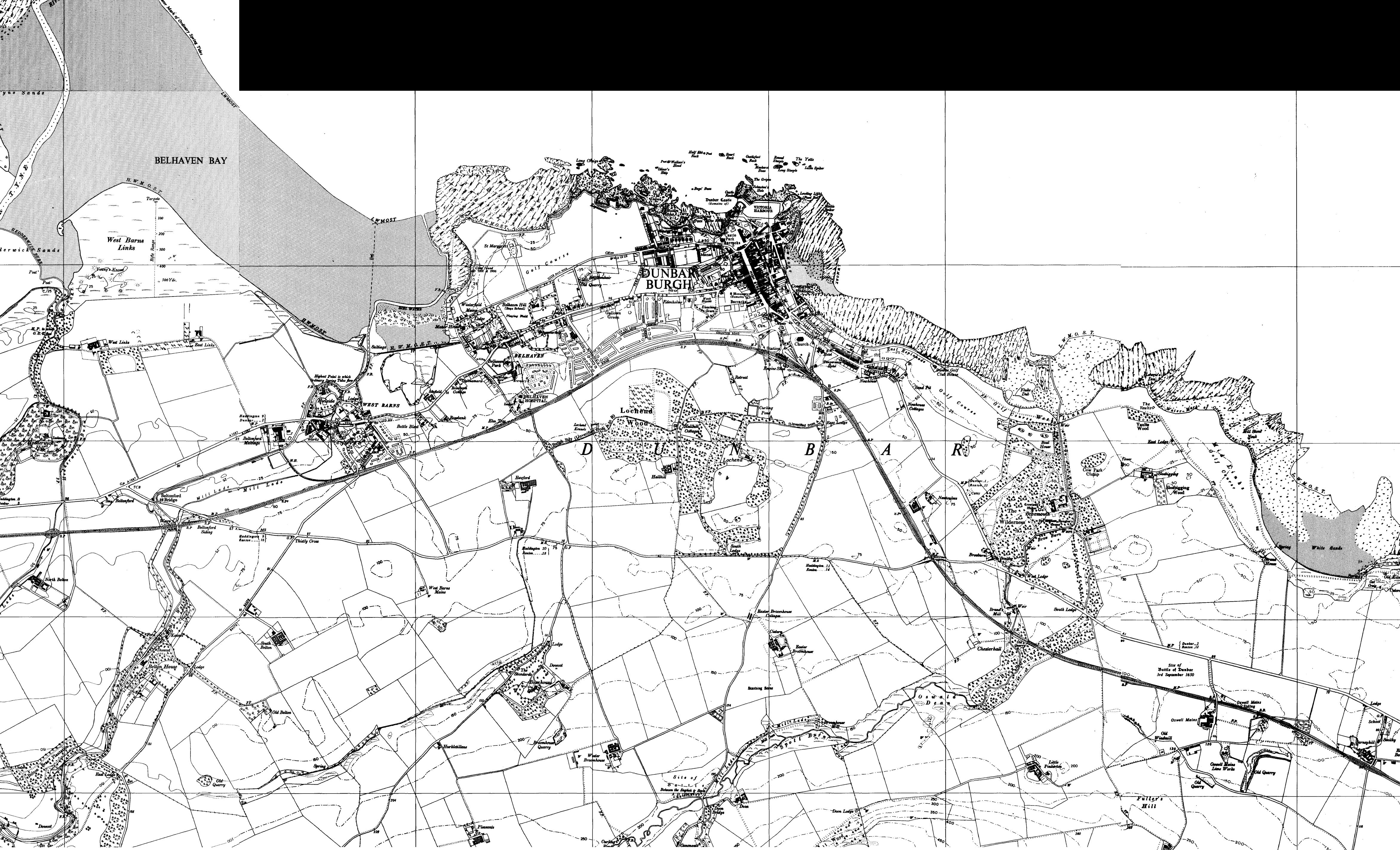
Set in the historical conservation area of Dunbar High Street, Scotland, the proposal was developed for The Ridge, a local charity dedicated to addressing food insecurity and unemployment through community-driven craftsmanship apprenticeship training and horticultural programmes. Site analysis revealed Dunbar High Street as a spine from which narrow “riggs” extend toward the harbour and backlands. Many historic passages have been closed over time. The project interprets these routes as threads within a wider urban fabric, proposing architectural interventions that weave across backlands to reconnect community spaces and repair the historic town structure.
Sunny Soups
Crunchy Carrot
Belhaven Communtiy Garden
Tynnigham Community Garden
North Light Arts, The Ridge
East Linton Sewing Tool Library
Fibreshed Scotland
Seeded. Edinburgh Our linen stories
Journeys in Design- Flax Futures
Reston Honey Borders Eco Flowers
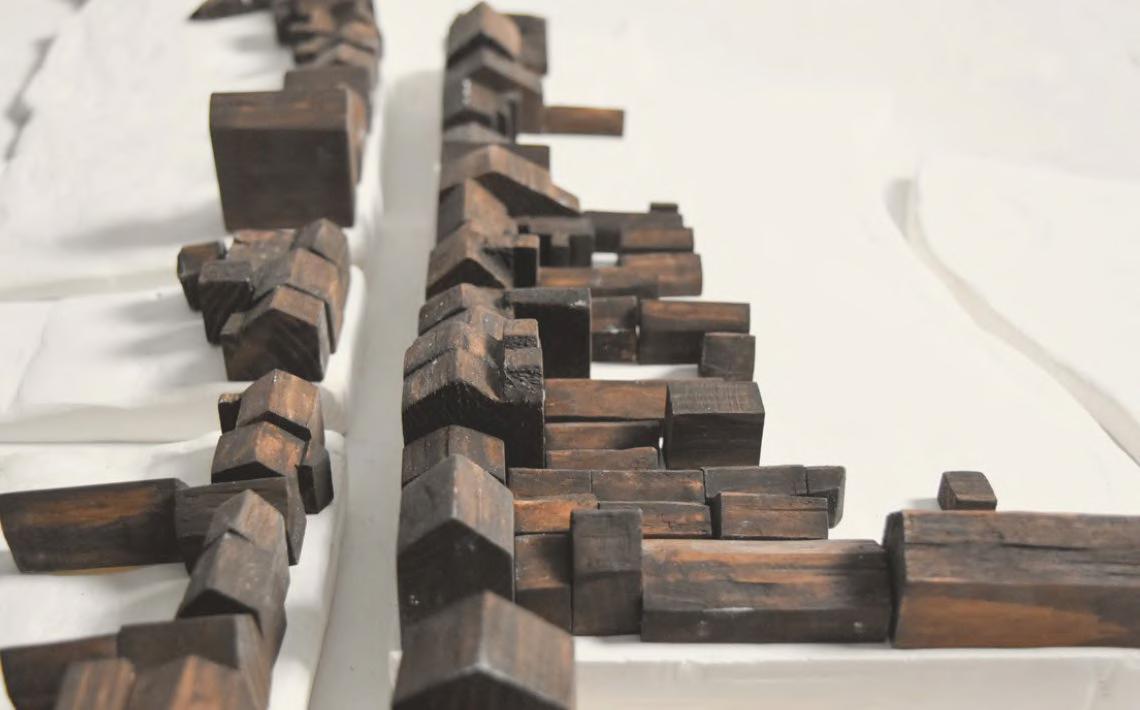
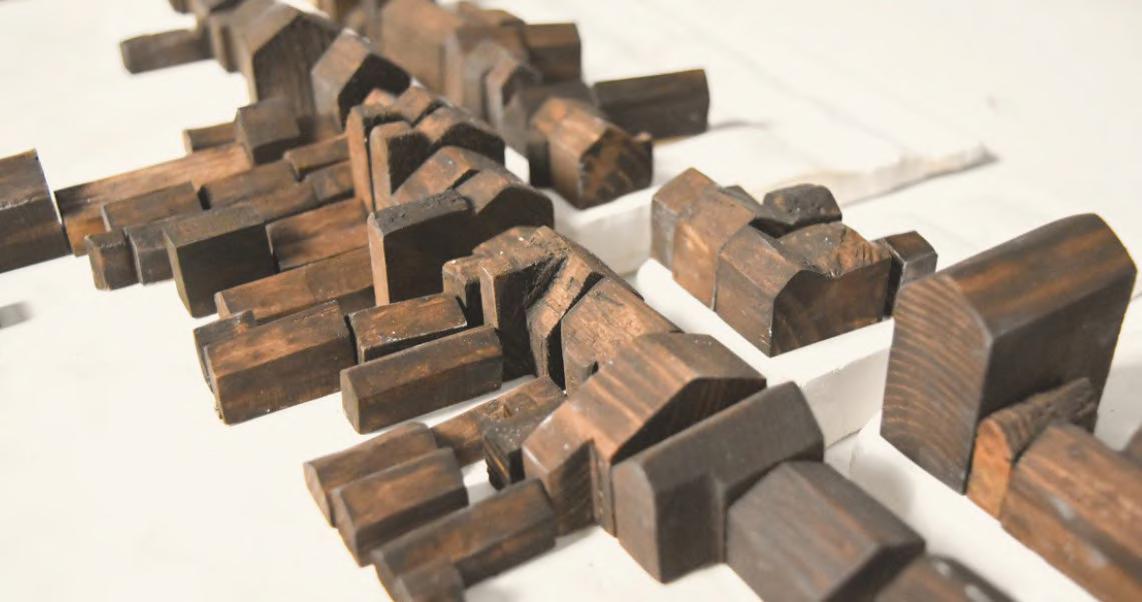
1:500 group model of Dunbar. My contribution: research on building heights and roof profiles, construction of the plaster topography base and timber house models.
Site map exploration of reciprocal relations in the Dunbar region and buildings owned by the Ridge
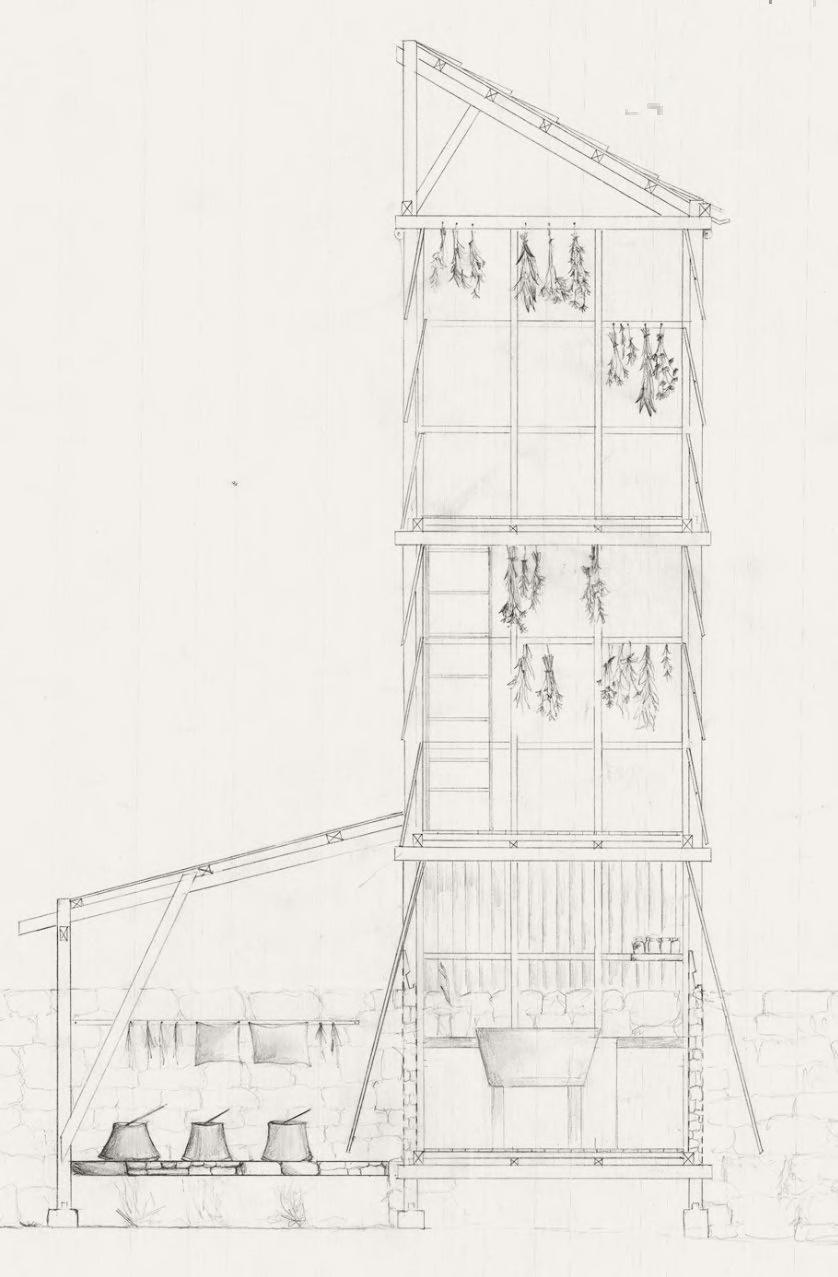
DRYING & DYEING TOWER
This project is rooted in horticulture, food, and craftsmanship, exploring the trades and educational opportunities connected to botanical and natural resources. It investigates how value can be inscribed in all parts of natural materials, brought together in the proposal of a drying and dyeing tower operating through passive environmental strategies.
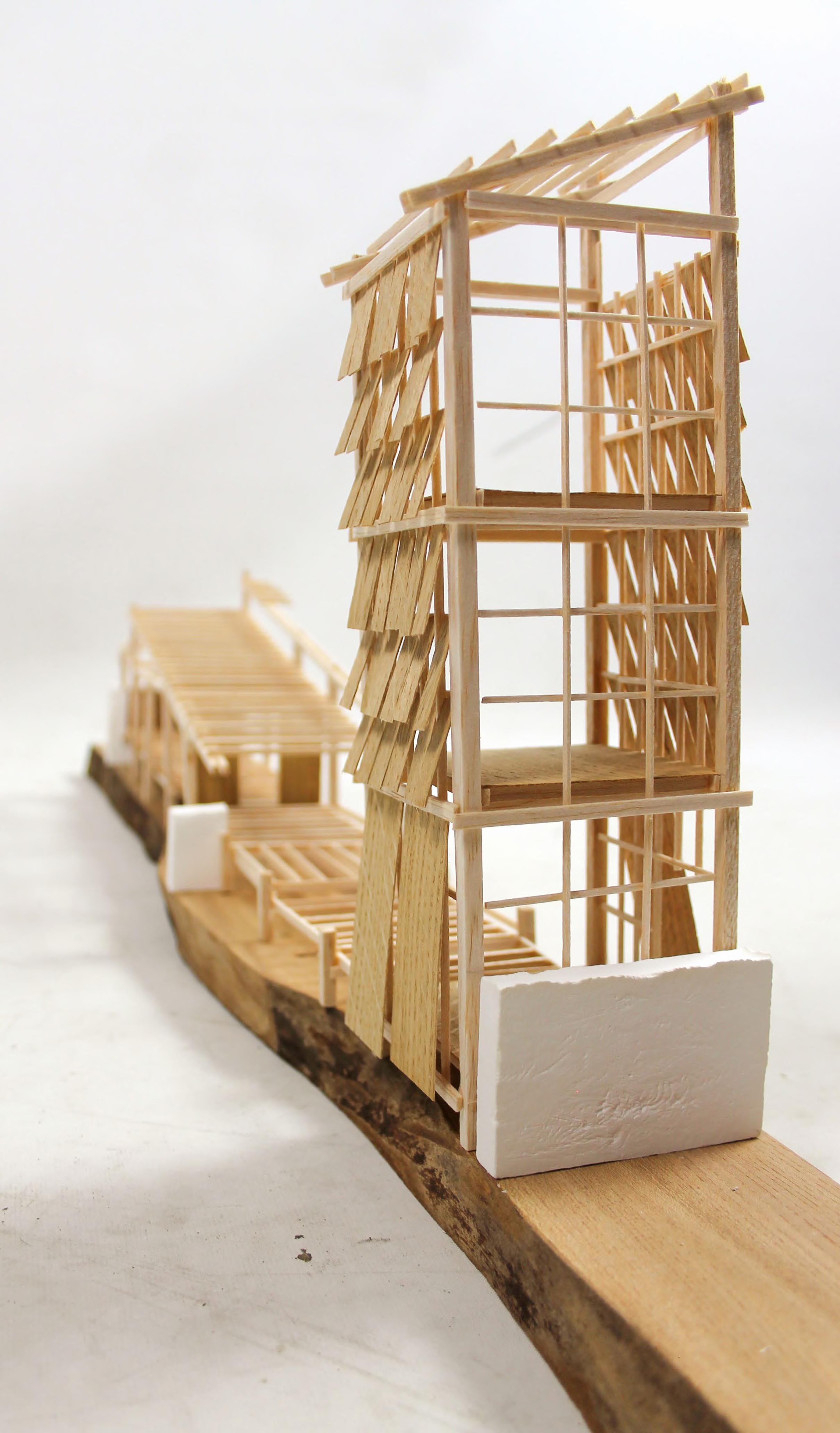
Inspired by this research and an exploration of natural airflow and solar gain strategies, a drying tower is proposed for drying herbs, flowers, timber, flax, and natural dyes. Constructed using traditional scarf and sandwich joints, the tower harnesses vertical air currents, with east and west shutters regulating airflow while the roof form and timber shingles reference surrounding the surrounding vernacular.

Digimap
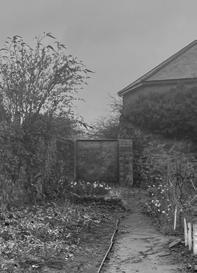
Above: Generative site layered drawing exploring urban grain and site disrepair
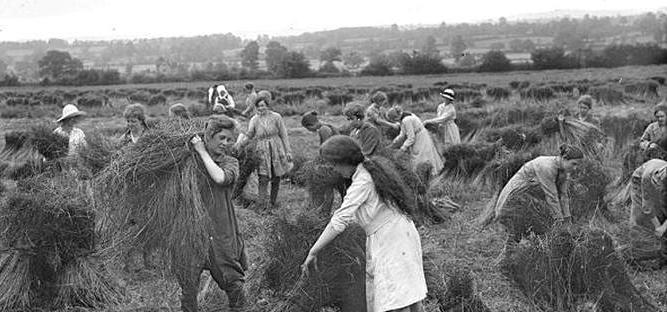
Left: East Lothian flax fields 1910 (credits: BBC one) Right: Natural dyeing of linen from Scots pine cones (img credit Kathry Davey).
1’ 50 section of drying and dyeing tower

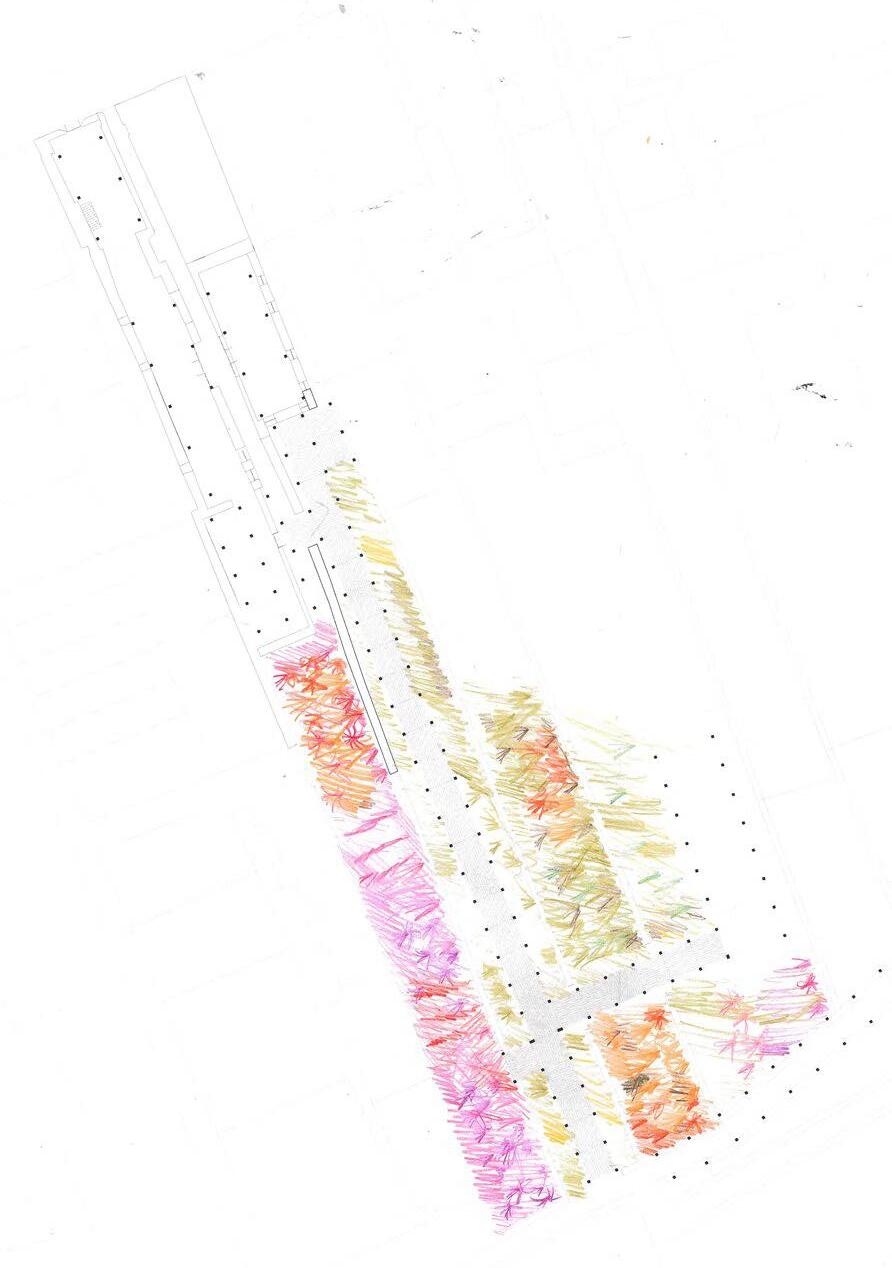
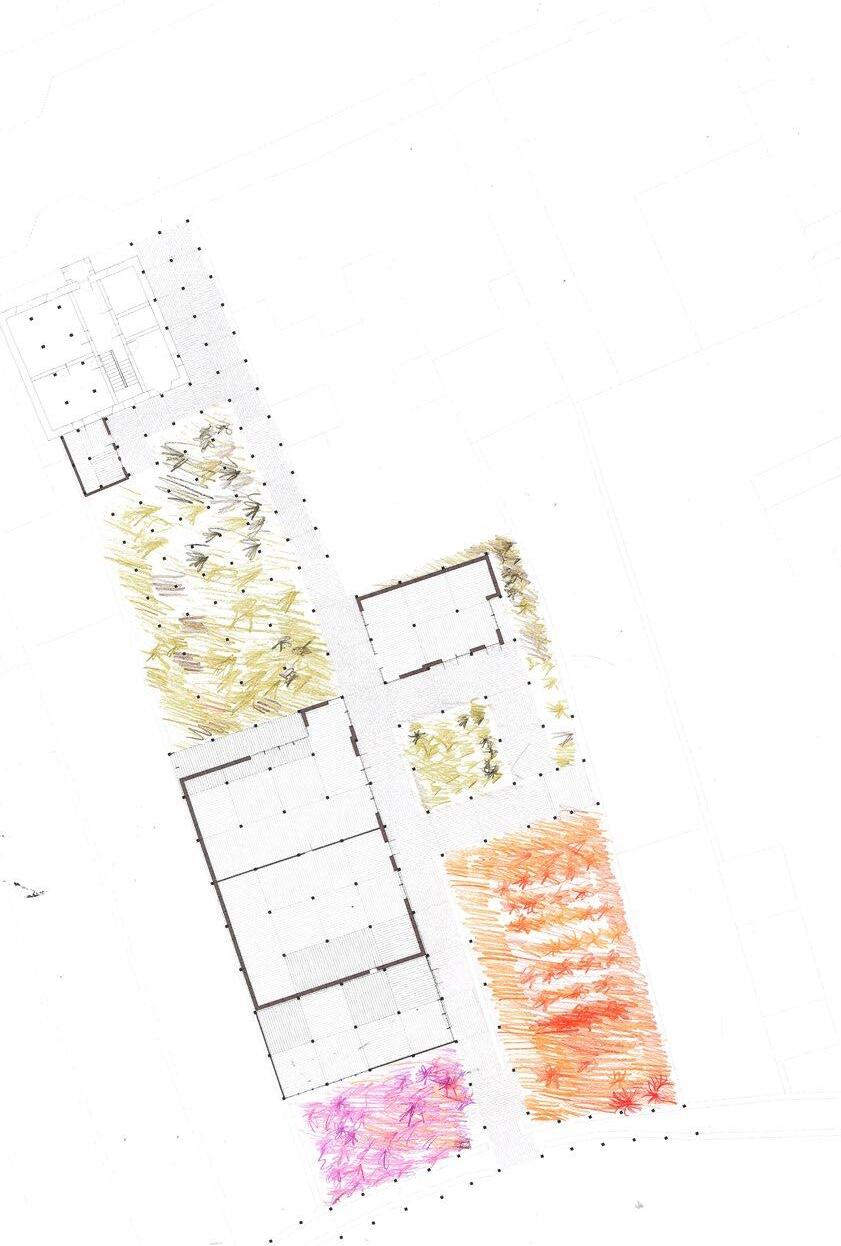
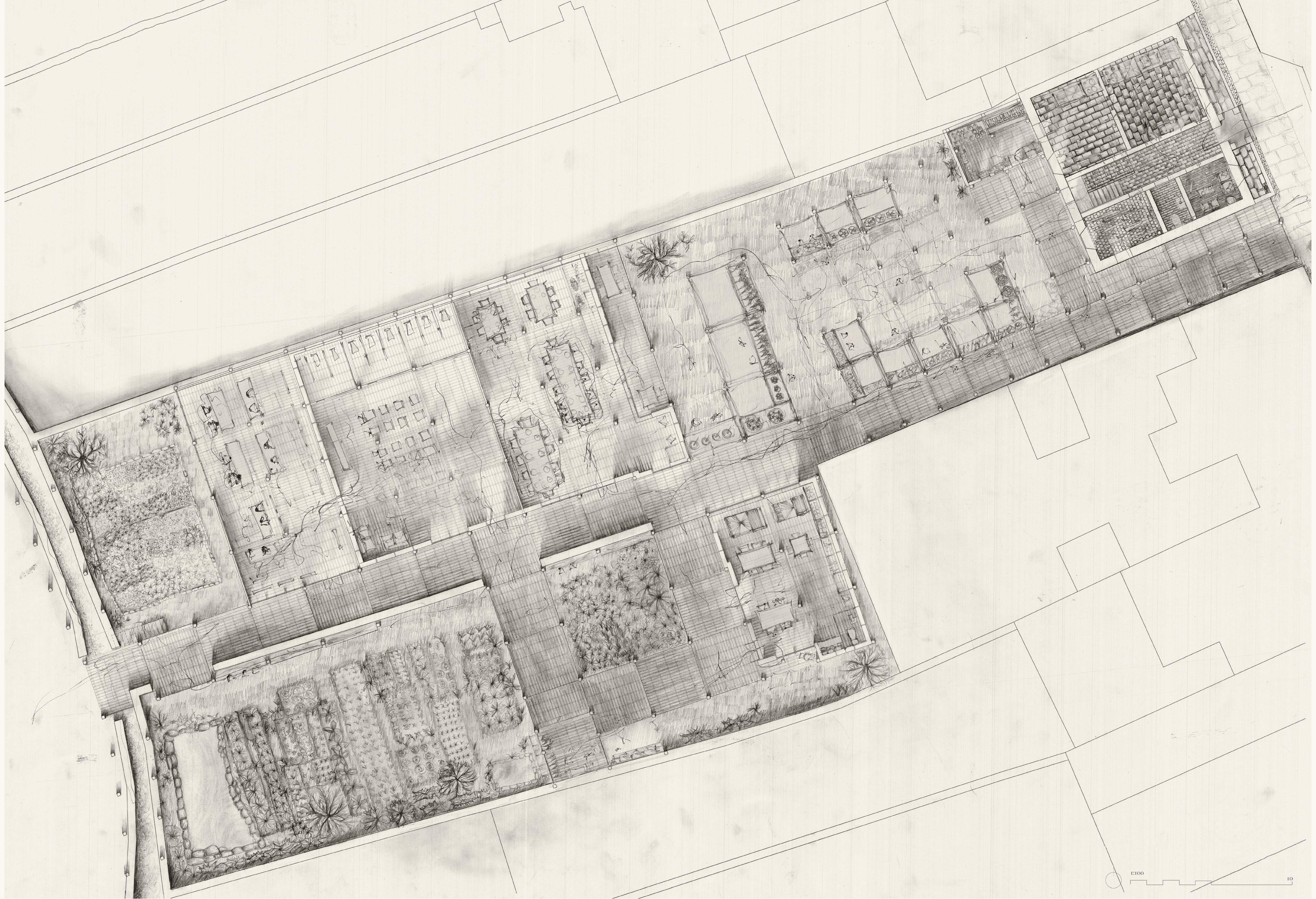
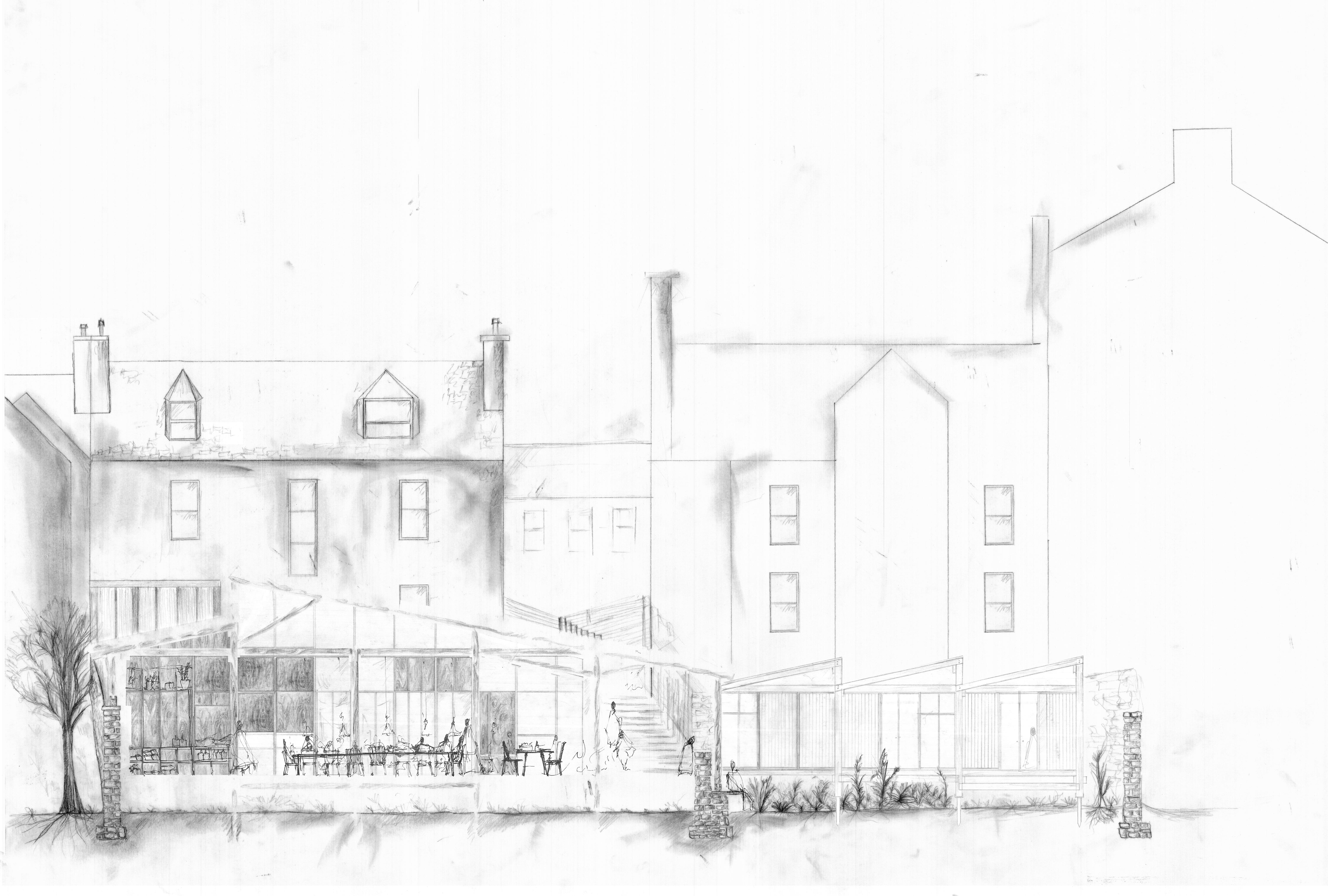
The proposal is centred around three gardens: a dyers’ garden, a kitchen garden, and a well-being garden. Drawing inspiration from the intricate interplay of the weft and warp in weaving, the design orchestrates a choreographed sequence of spaces, dictated by the changing direction of floorboards, to gracefully guide visitors through the site.
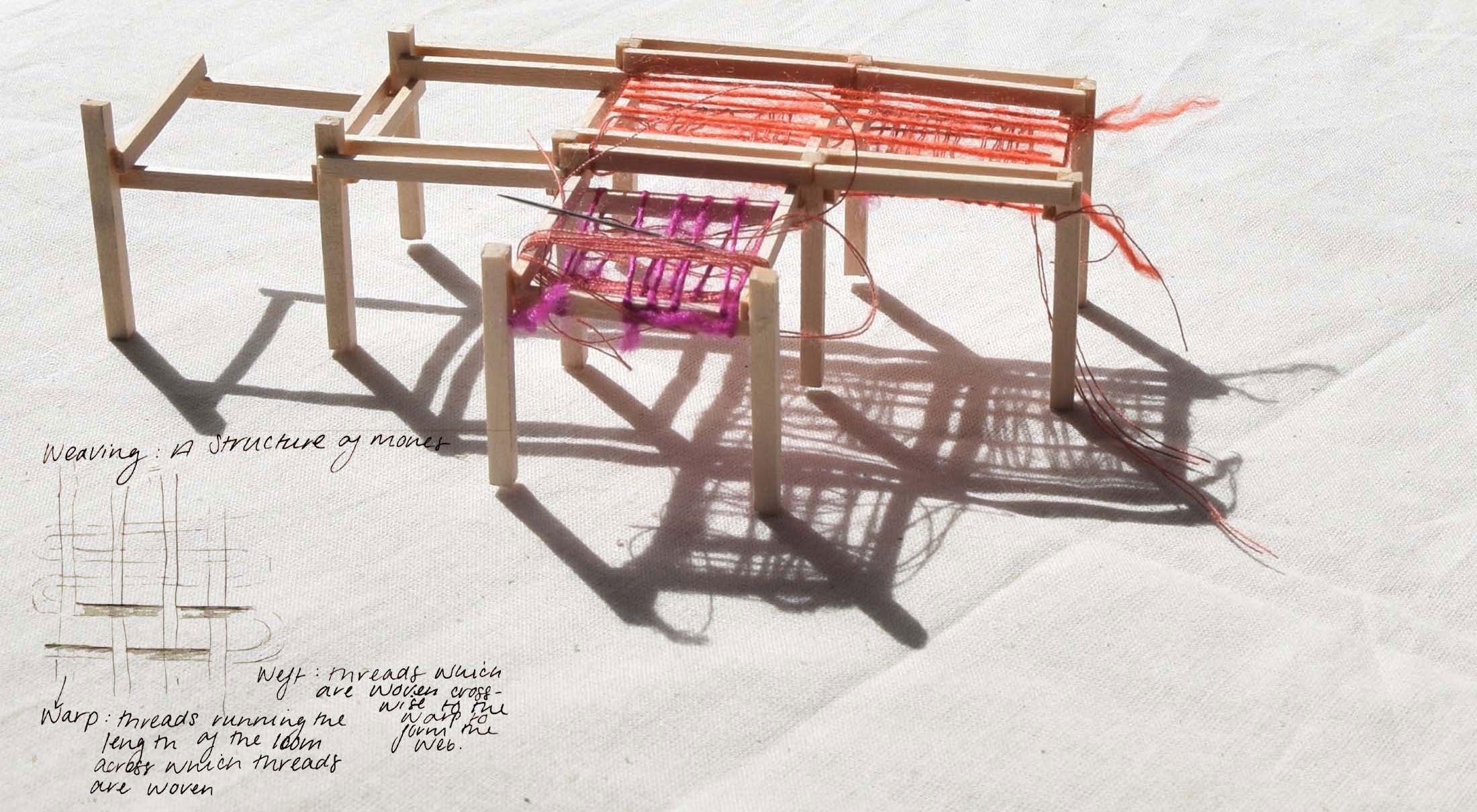
WEFT AND WARP - STRUCTURAL STRATEGY
The design delves into the interplay of rhythms, shadows, and light, integrated within the layers of framing inserted within, inside and outside the primary structural timber posts on a strategic grid. This consideration extends to the creation of conditioned and unconditioned spaces strategically crafted to accommodate a proposal that considers the ease of assembly and disassembly of timber infrastructures.
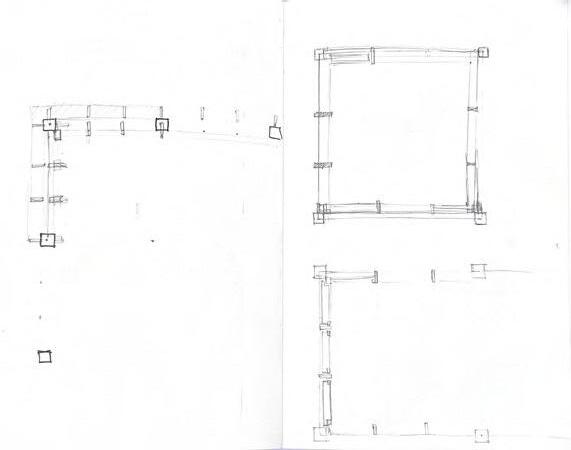
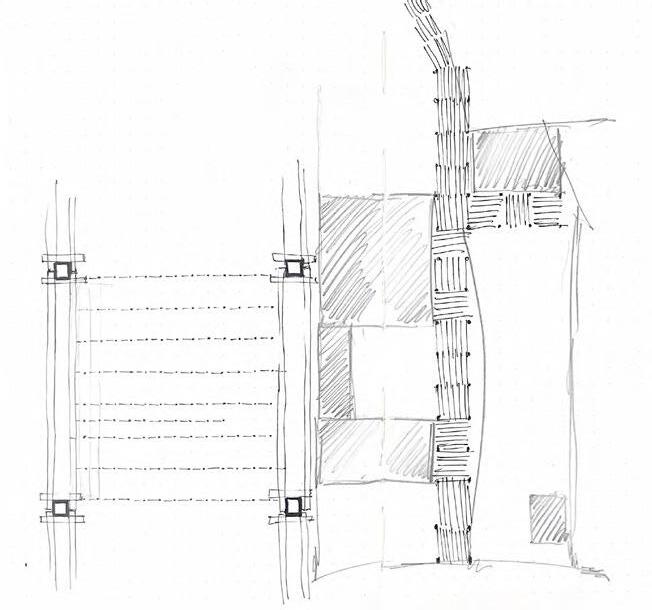
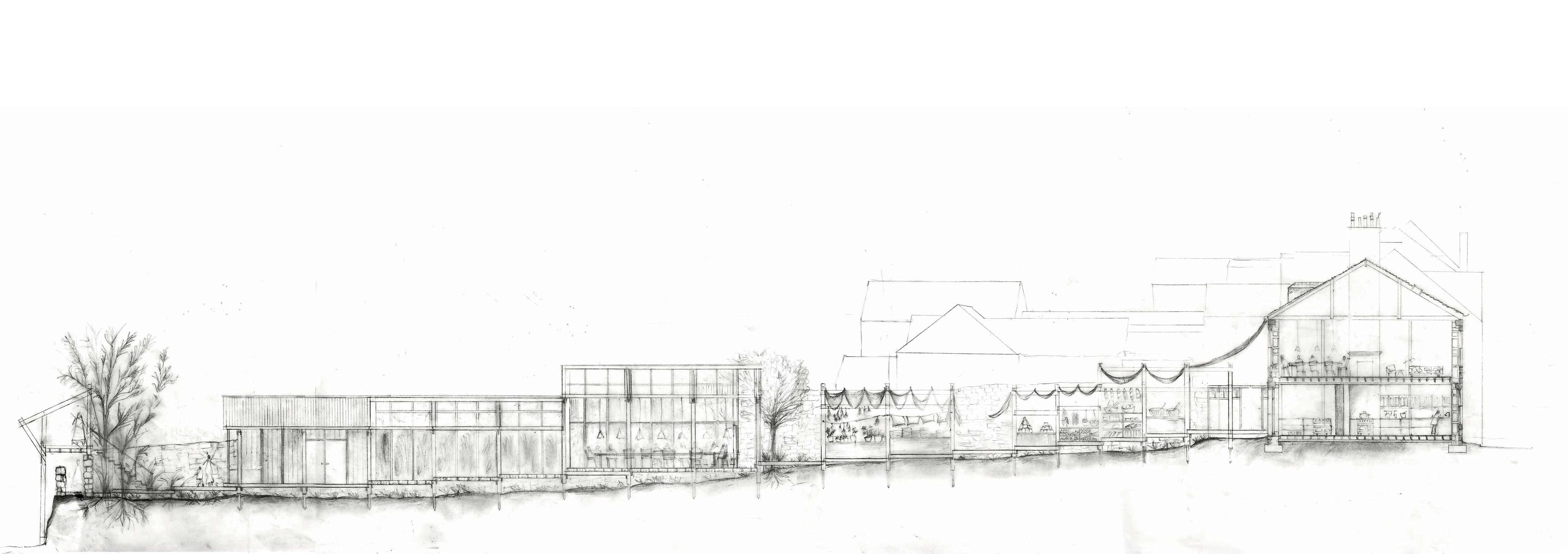
1’100 Unfolded section through existing Ridge Building through dismountable market stalls and through community centre
1’500 Programme plan
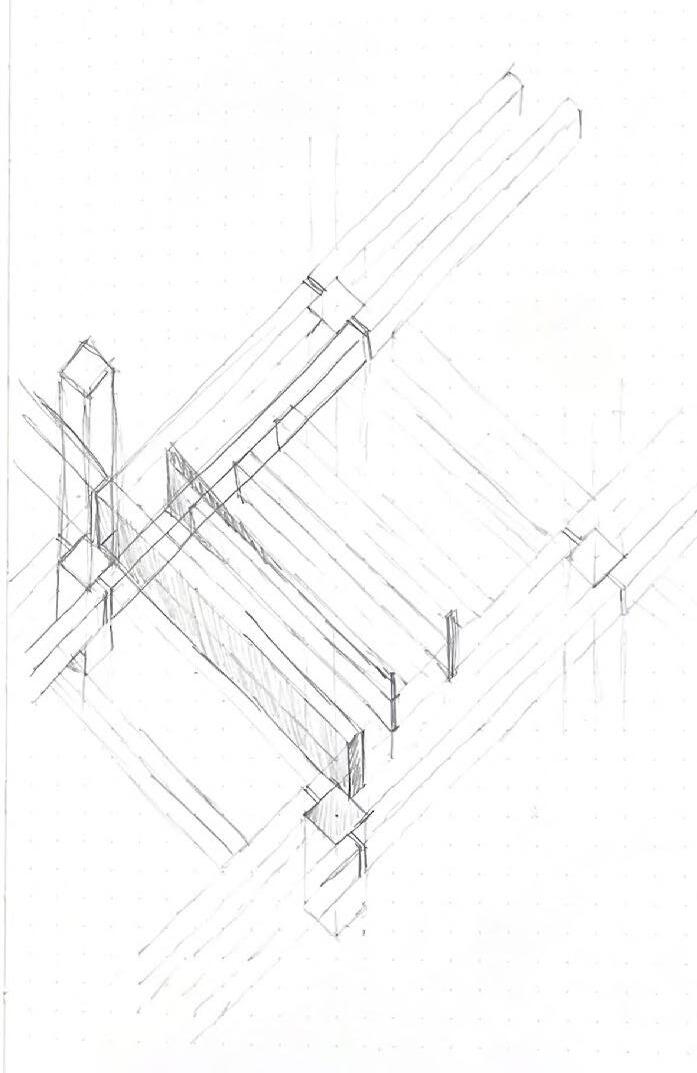
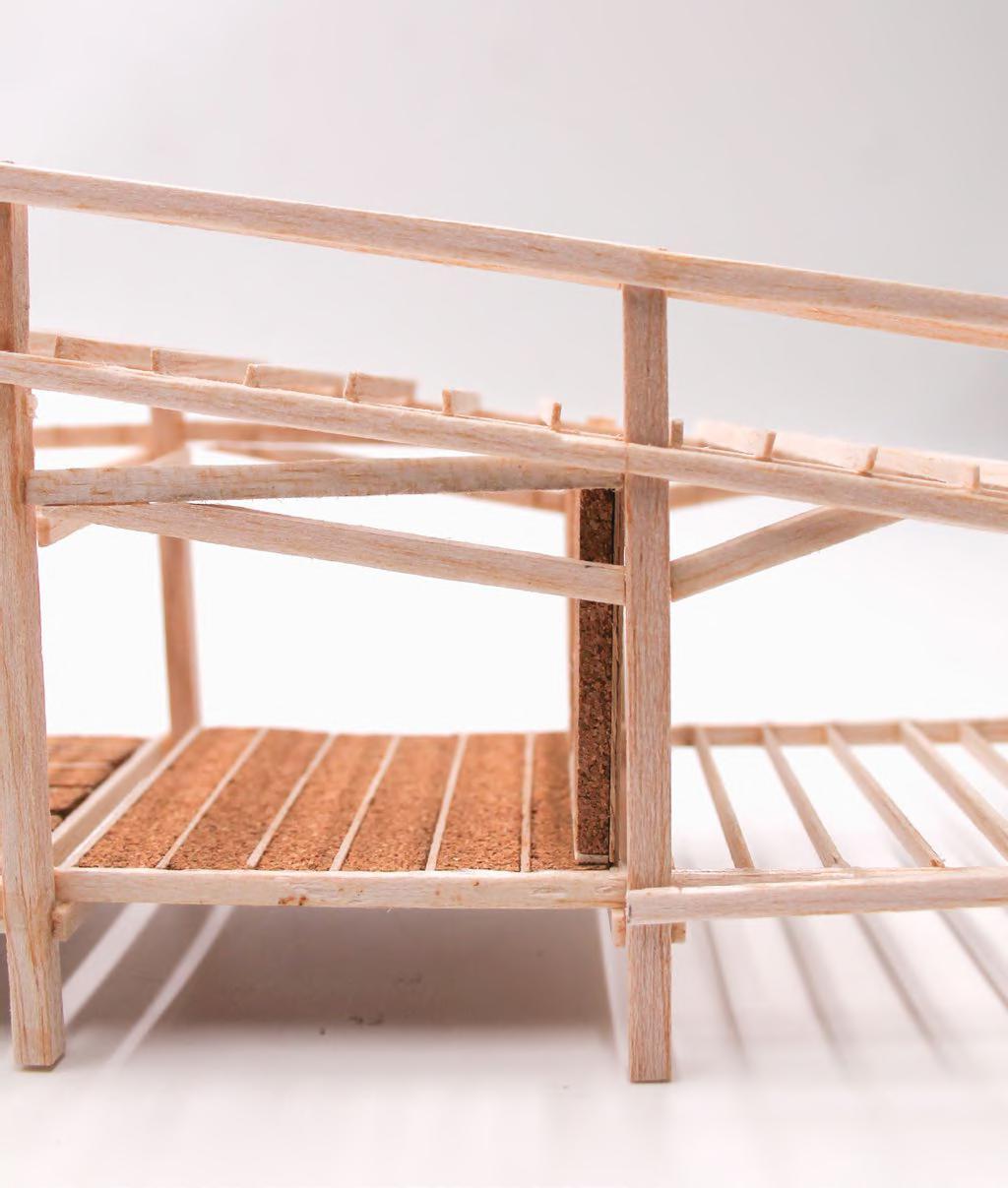
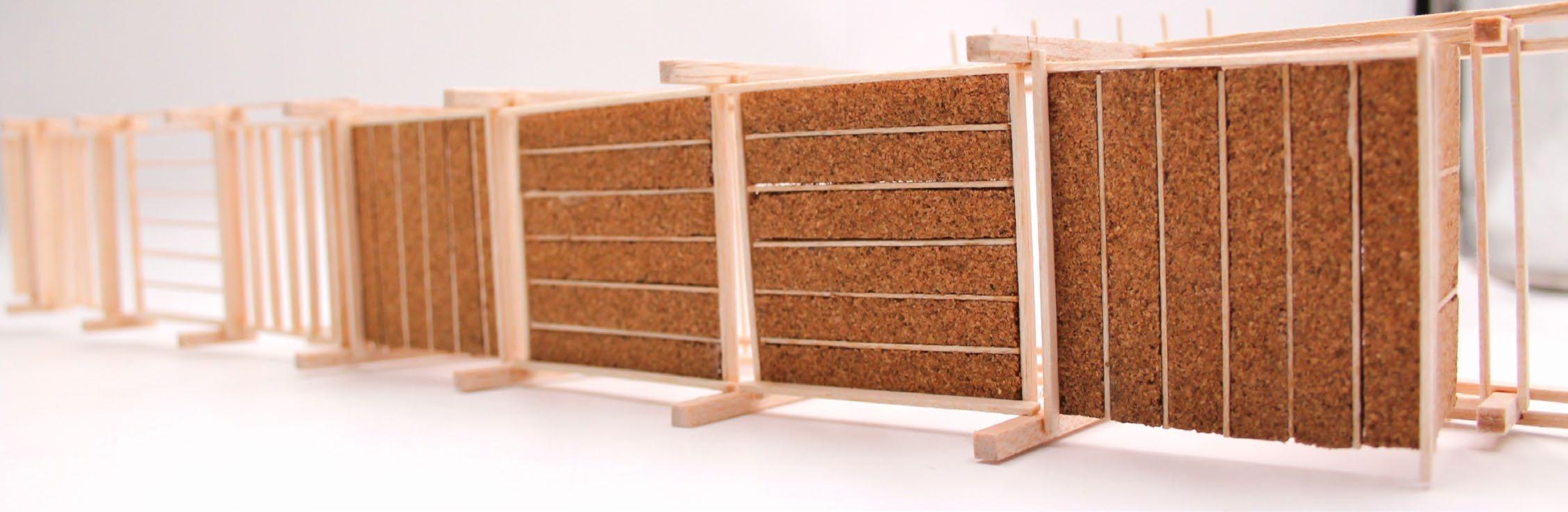
Concept tectonic model of layers of floor structure and joists
INHABITING THE FABRIC
Looked at using local- non-graded timber, thus designing with smaller spans that are easier for transportation and require less machinery (2.4m and 3.6m). Looking at weaving through existing urban fabric and the programme of different gardens led to an interest in the weaving of floorboards and joists to create walkways that mark boundaries and thresholds and lead the way into spaces and gardens.
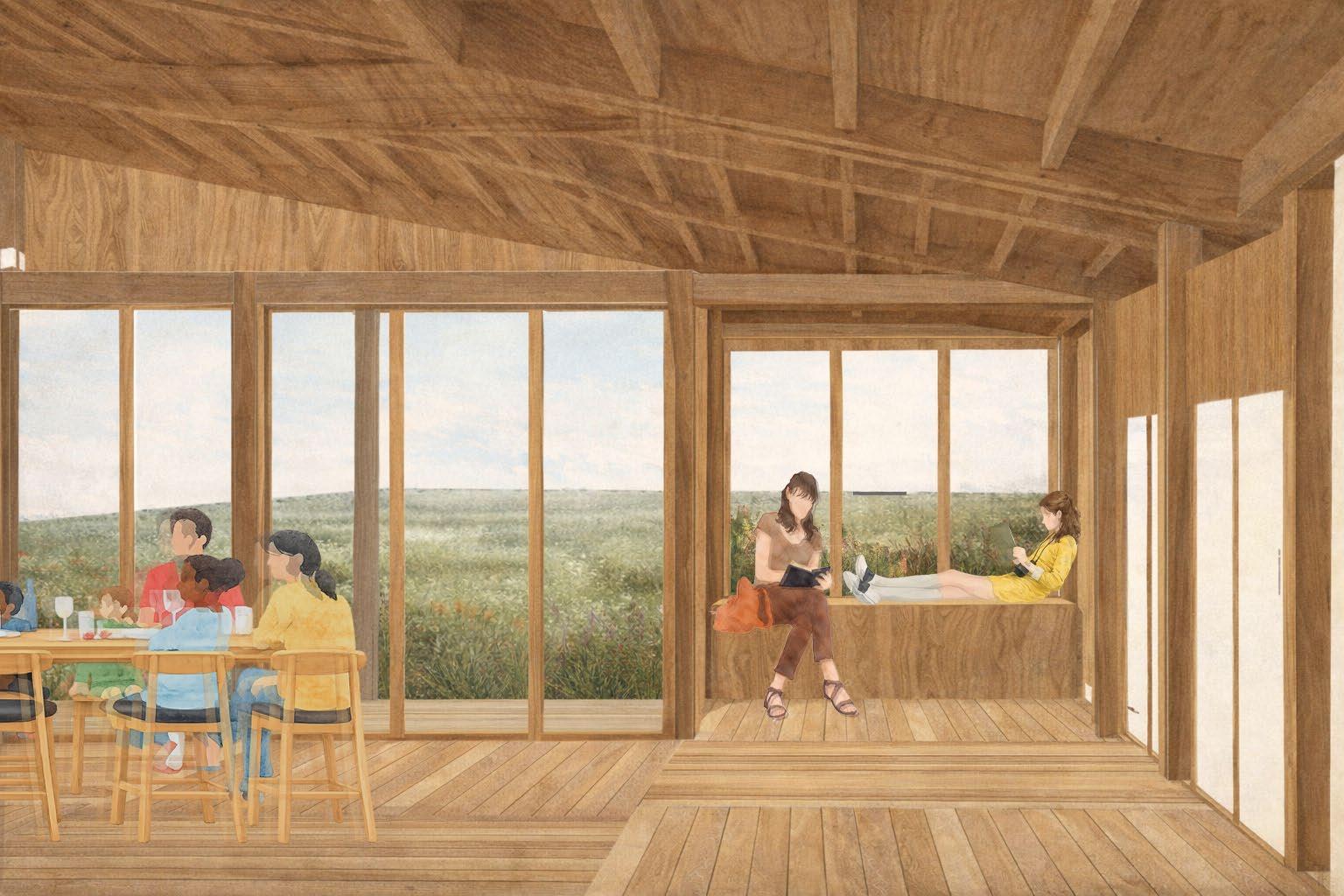
Utilised hemp insulation cassettes made from flax shiv. As such, a rhythm for understanding the space was also developed for the walls, exploring secondary frames within primary structures that can be removed and dismounted at different parts of the year. The insulation line shifts within the grid, creating depth and small niches for seating or pause.
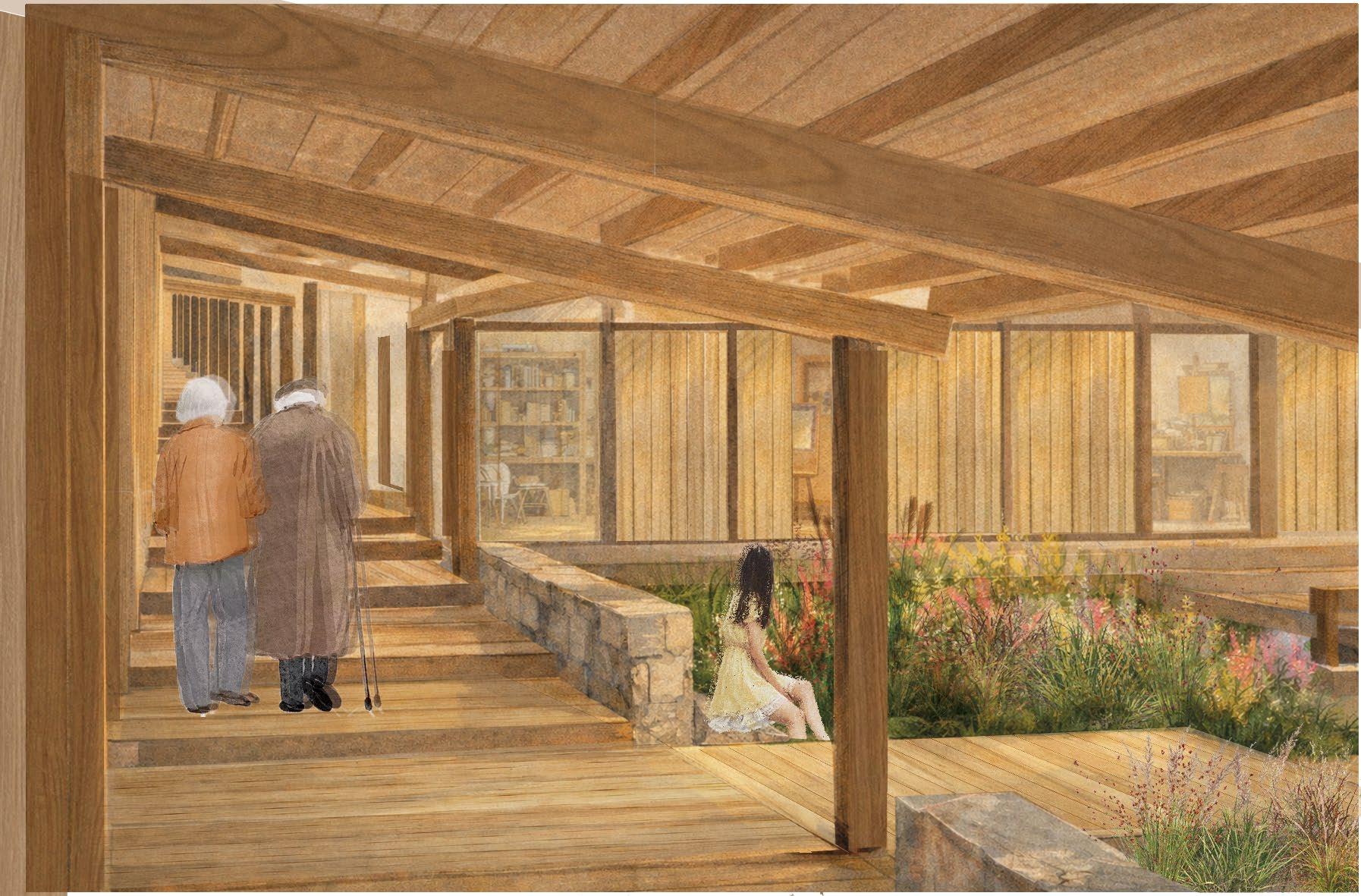
Visual looking over well being garden towards the craft studio
Visual inside communal dining space
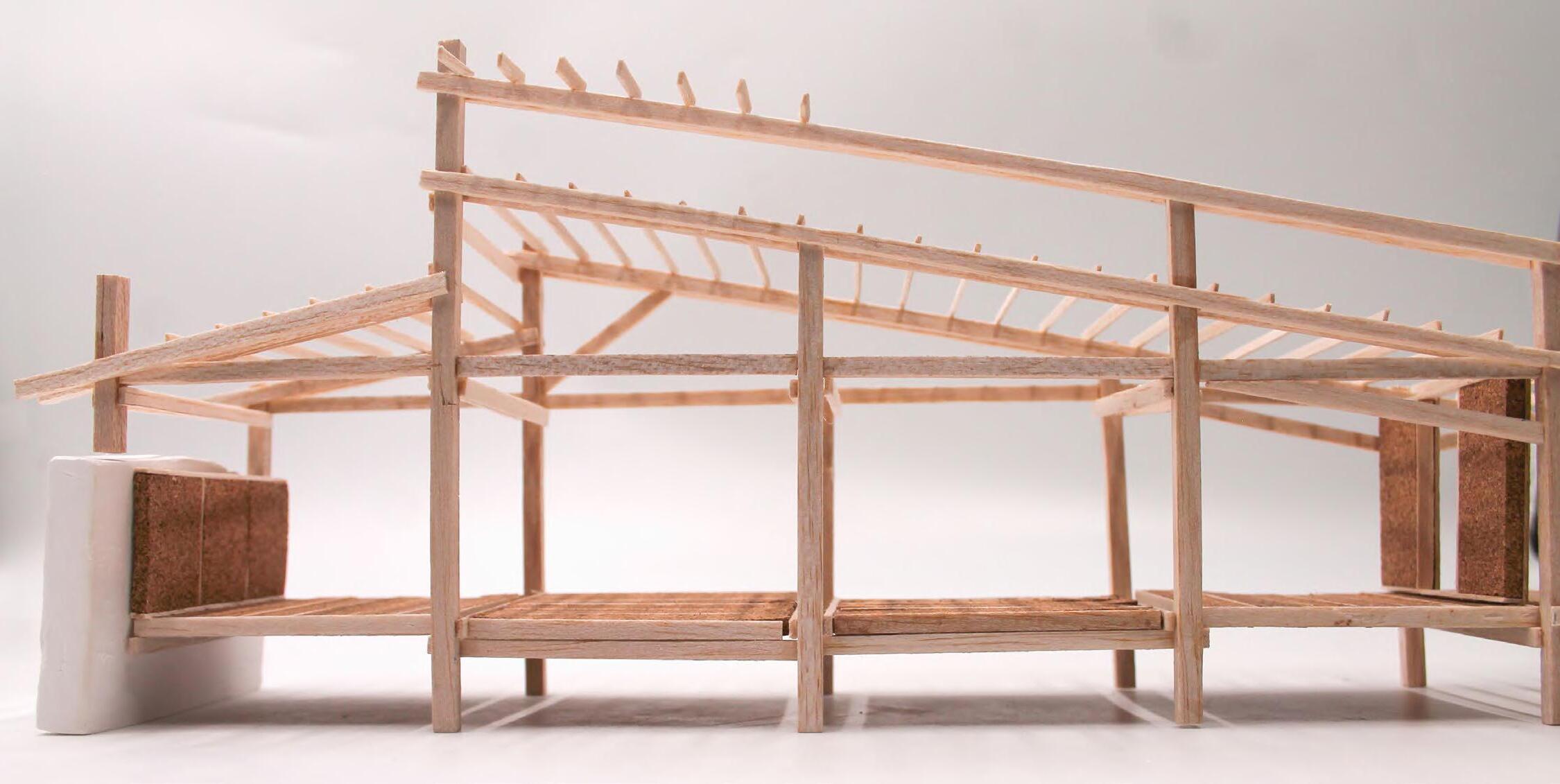
1’50 sectional technical model of drying tower through to walkway and community centre
TECHNICAL CONSTRUCTION
FOUNDATION
Steel screw pile foundations, 90mm diameter fitted onto 200x200mm posts with U-brackets.
POSTS
200X200mm Douglas Fir posts on 3600mm grid
FLOOR
Primary joists 72x195 , sandwiched around primary frame and bolted together through post
Secondary joists 44x195 on 560 centres to allow changing of directions
VCL
20x35mm tension battens on the secondary joists to help fix
insulation
Breather membrane ‘Hemp Flax’ semi-rigid Insulation Battens 195mm in-between secondary joists
20mm OSB
and
25mm Larch board on board cladding
50mm air cavity
50x44 battens
Waterproof breather membrane 22mm woodfibre rigid board 145x44 Douglas Fir
25mm Larch cladding

7
20x35mm
Breather membrane
‘Hemp Flax’ semi-rigid Insulation Battens 195mm
inbetween secondary joists
20mm OSB
Larch floorboards 20x180mm
4 WALL - Existing stone wall and internally exposed
new timber frame
500mm rough stone work that with stone to timber post connection.
25mm Larch board on board cladding
50mm air cavity
50x44 battens
Waterproof breather membrane
22mm woodfibre rigid board
145x44 Douglas Fir beams with removable ‘Hemp Flax’ semi-rigid insulation inbetween framing at 1200 centres
20mm OSB
50mm service gap
12mm Douglas Fir plywood panelling
5 ROOF
195 x Douglas Fir primary beams
47X120 exposed rafters notched onto beams at 600 centres
20mm OSB
47X145 Douglas Fir rafters with ‘Hemp Flax’ semirigid Insulation Battens at 600 centres
35mm woodfibre rigid board
VPL
25x38mm battens and counter battens at 400 centres
25mm Larch cladding
6 DOUBLE
CLERESTORY WINDOW
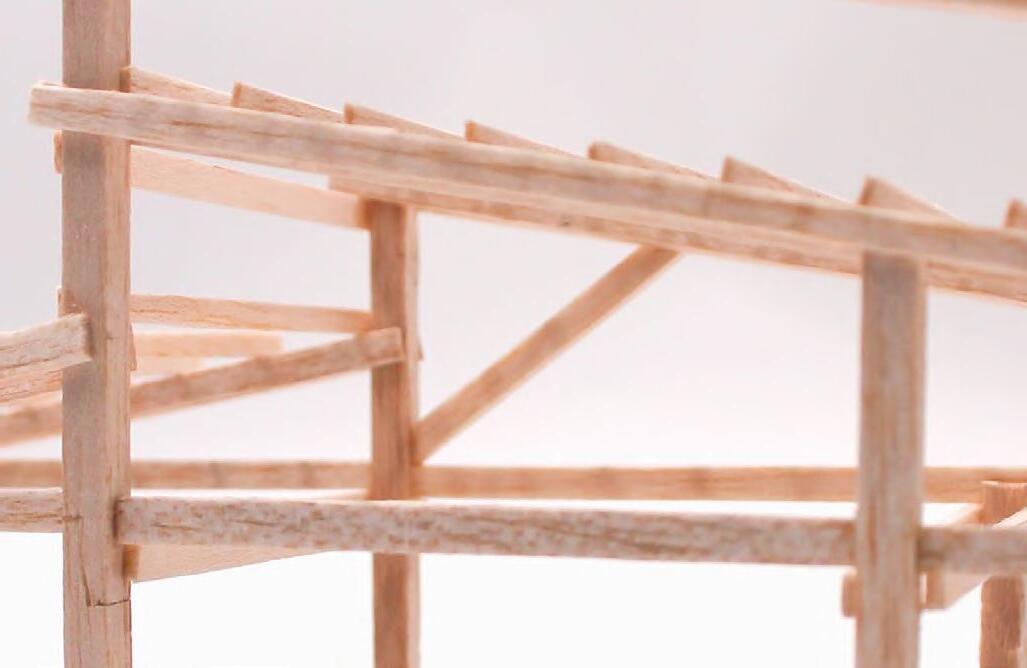
1’50 Sectional technical model, resolving joints and junctions and changing directions of floorboards. Crafted joinery and standard sizes allows for easy assembly and dissassembly and reuse
CONSTRUCTION PHASING
Roof cladding
Roof rafter doubled up to expose structure internally
Roof beams sandwiched together through the main posts
Flax insulation cassettes at 1200 centres
Primary 200x200 posts upto 3600 tall that are sandwhich jointed together
Floorboards
Secondary joists
Ground screw pile foundations
Axo of assembly and dissambly of grid square
Utilisation of the drying tower to naturally dry timber on the site, so that the Ridge could build the scheme themselves.



INTERGENERATIONAL LIVING
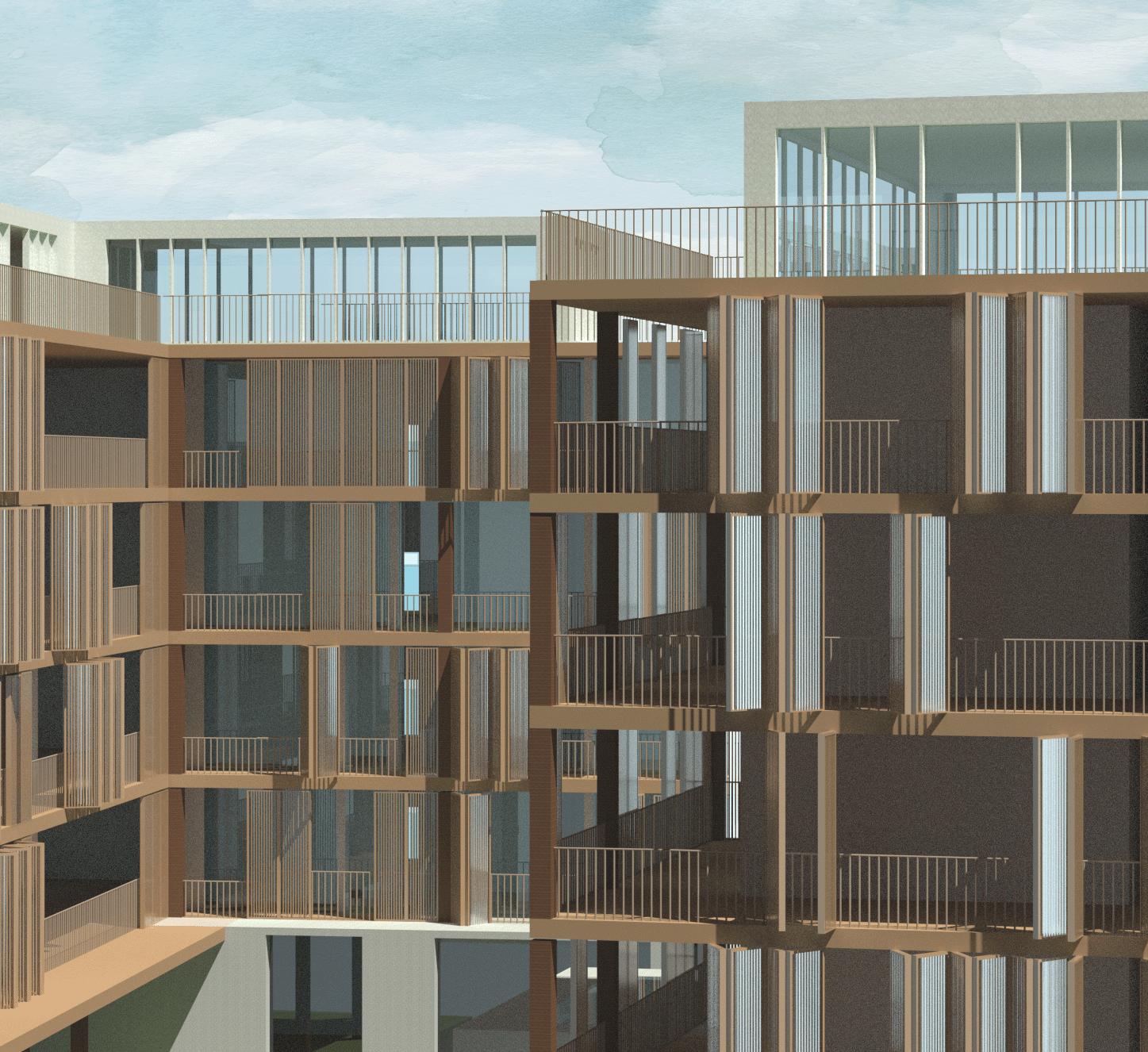
A social housing project located in Cité de la Chapelle in the 18th arrondissement of Paris. This project explored issues of ageing and isolation, alongside the responsibility and burden of caring for the elderly, looking at housing that aims to combat loneliness and provide for the needs of vulnerable people. A concert hall forms a communal anchor within the project, bringing residents and the wider community together through music, where levels of privacy are shaped by acoustics. The design approach is centred around intergenerational living, where a
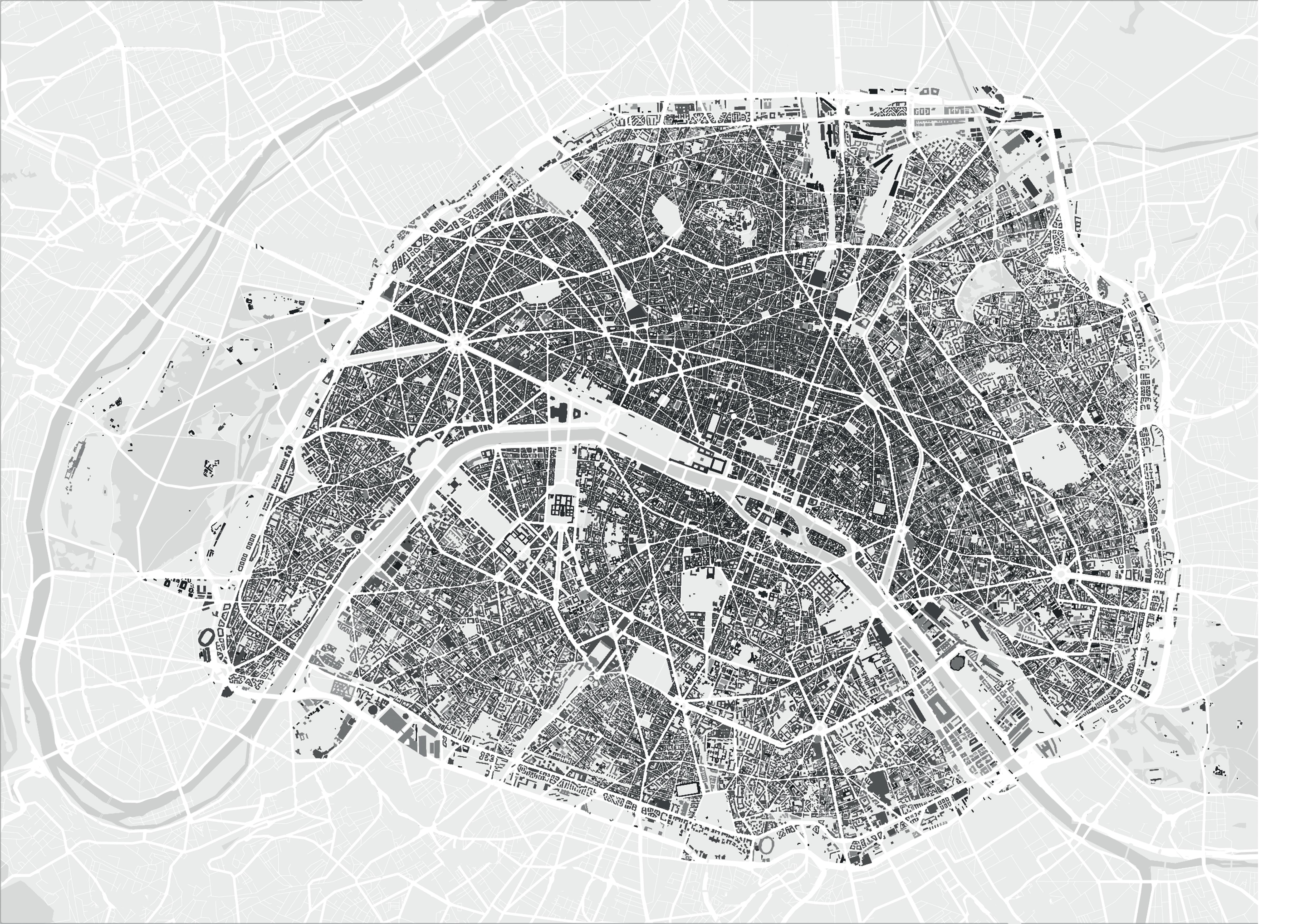


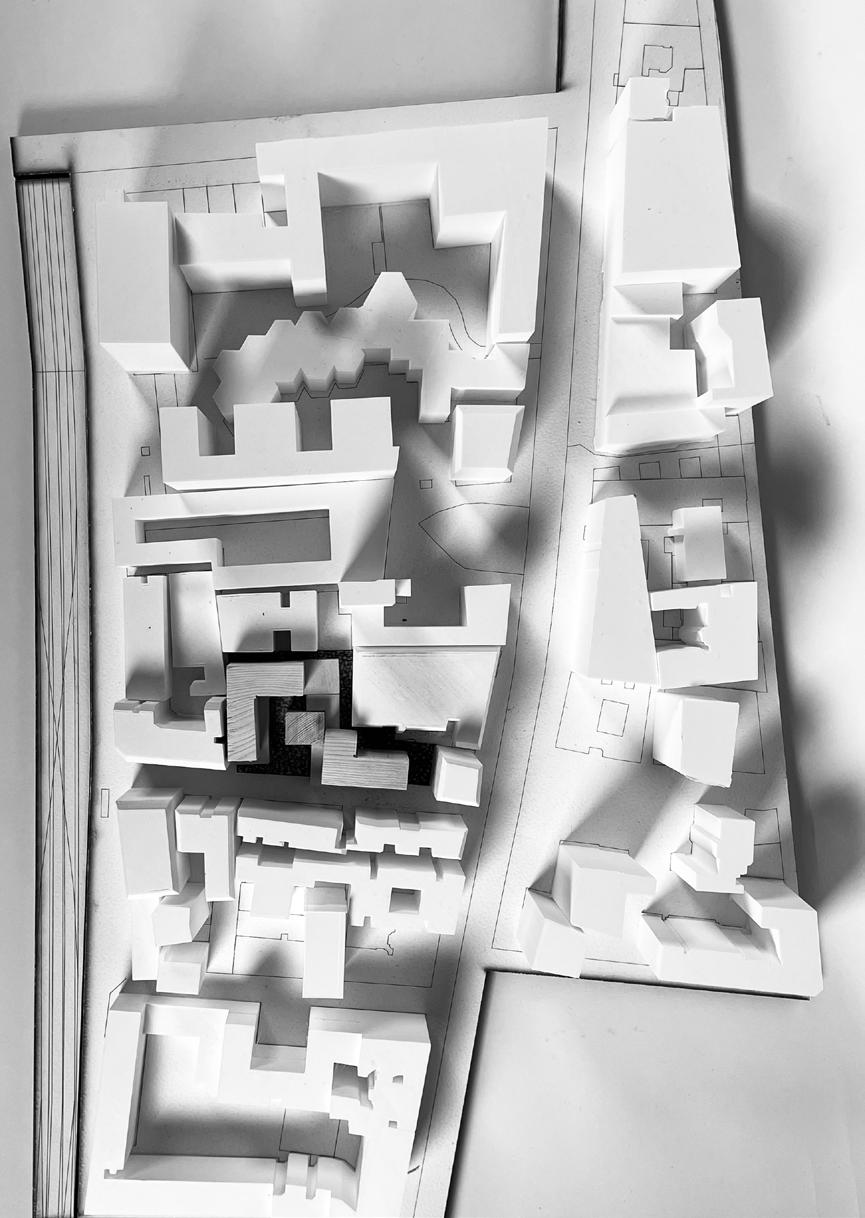
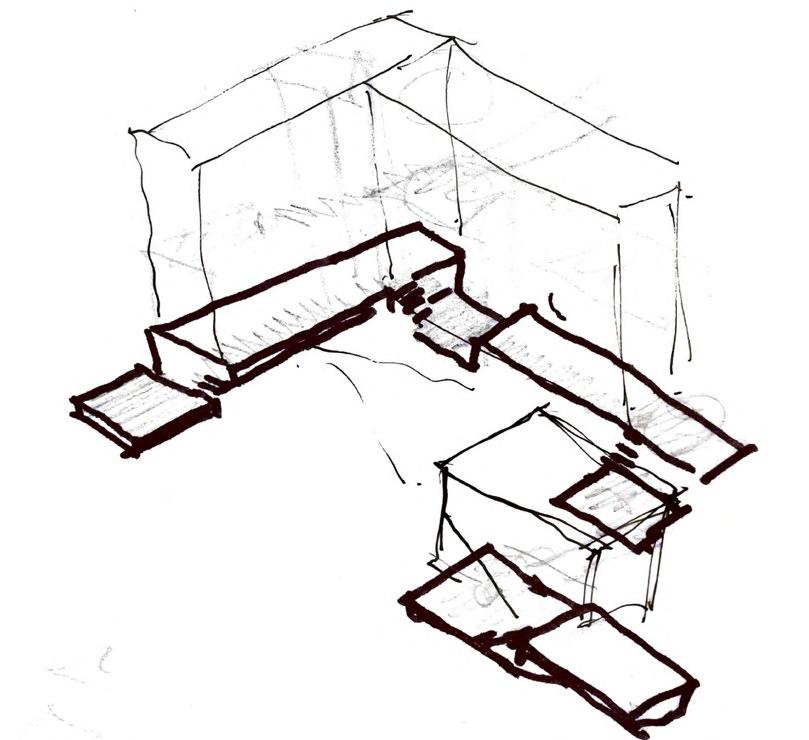
Above: Exploring the urban grain of the site. Inspiration was taken from Parisian courtyards
Below: 1’500 site and massing model Right: Section and different apartment plans for different sized living systems.


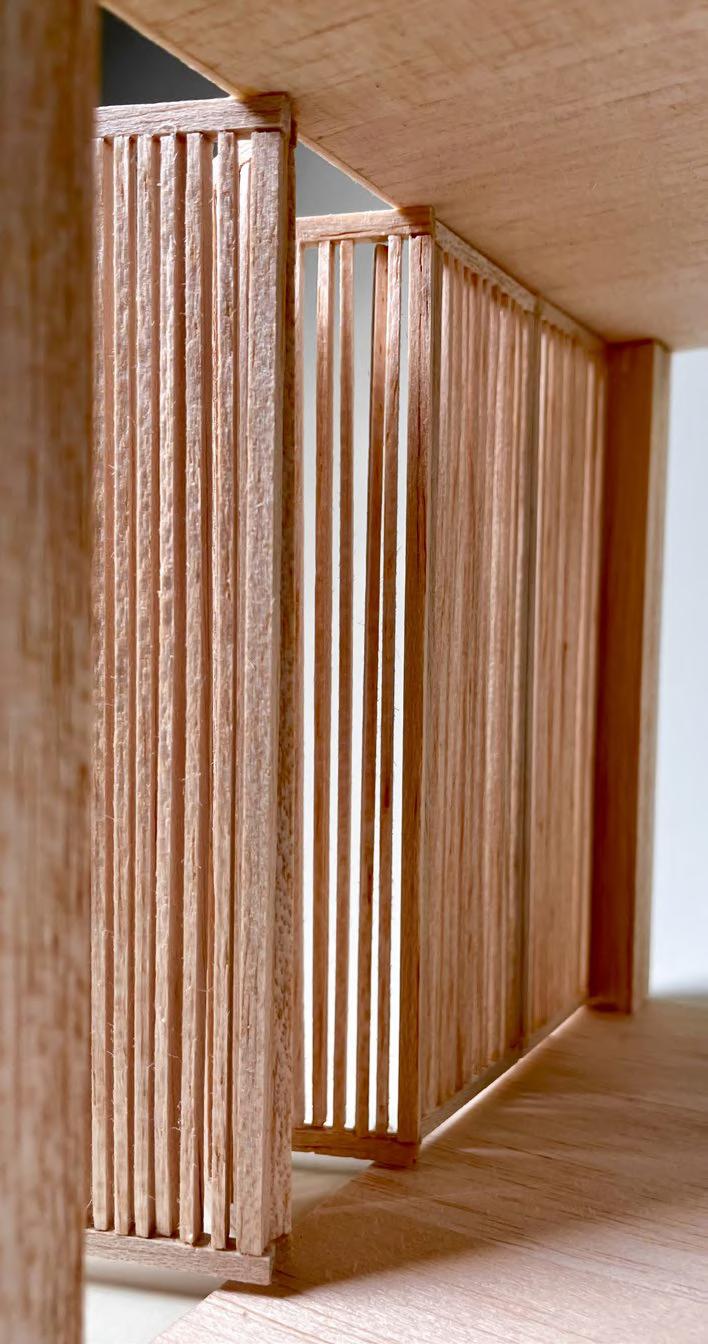
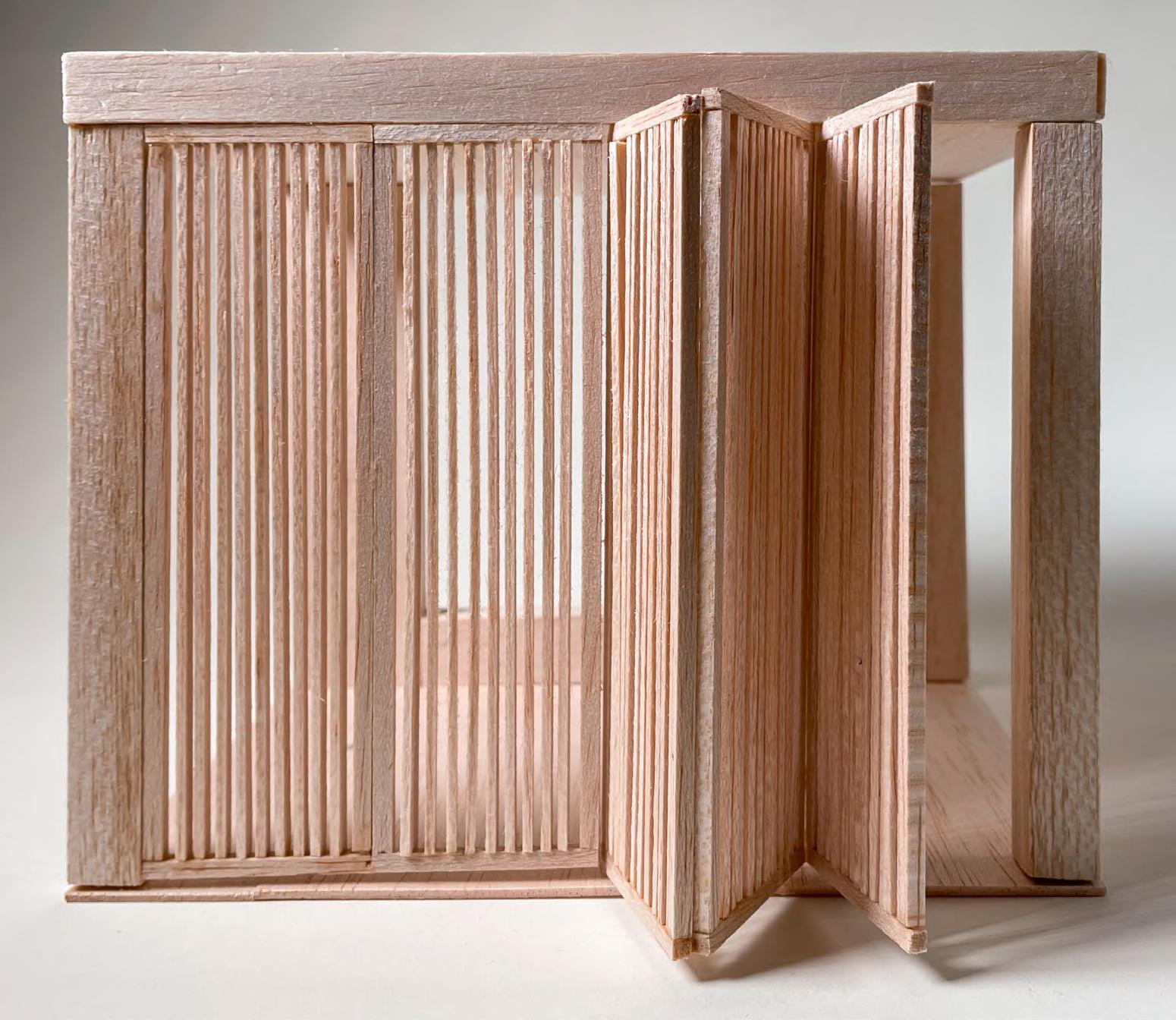
Threshold and facade model of operable timber screens that residents can manoeuvre themselves.
RADICAL HARVEST:
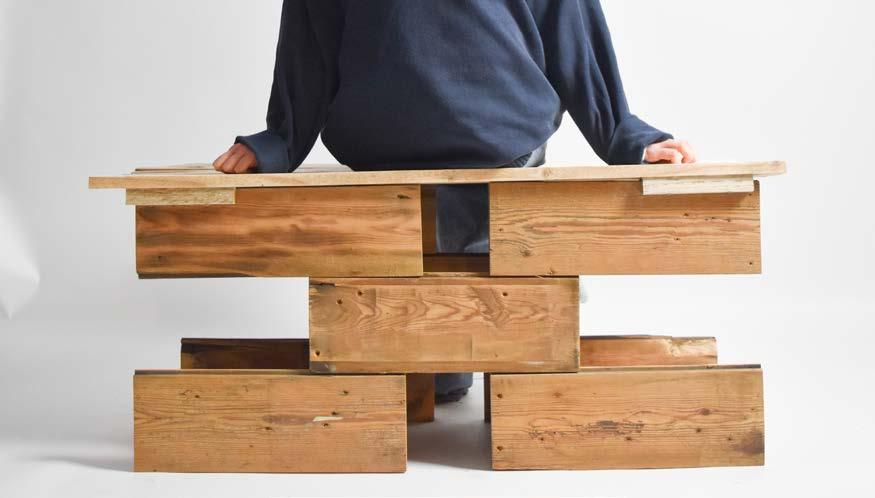
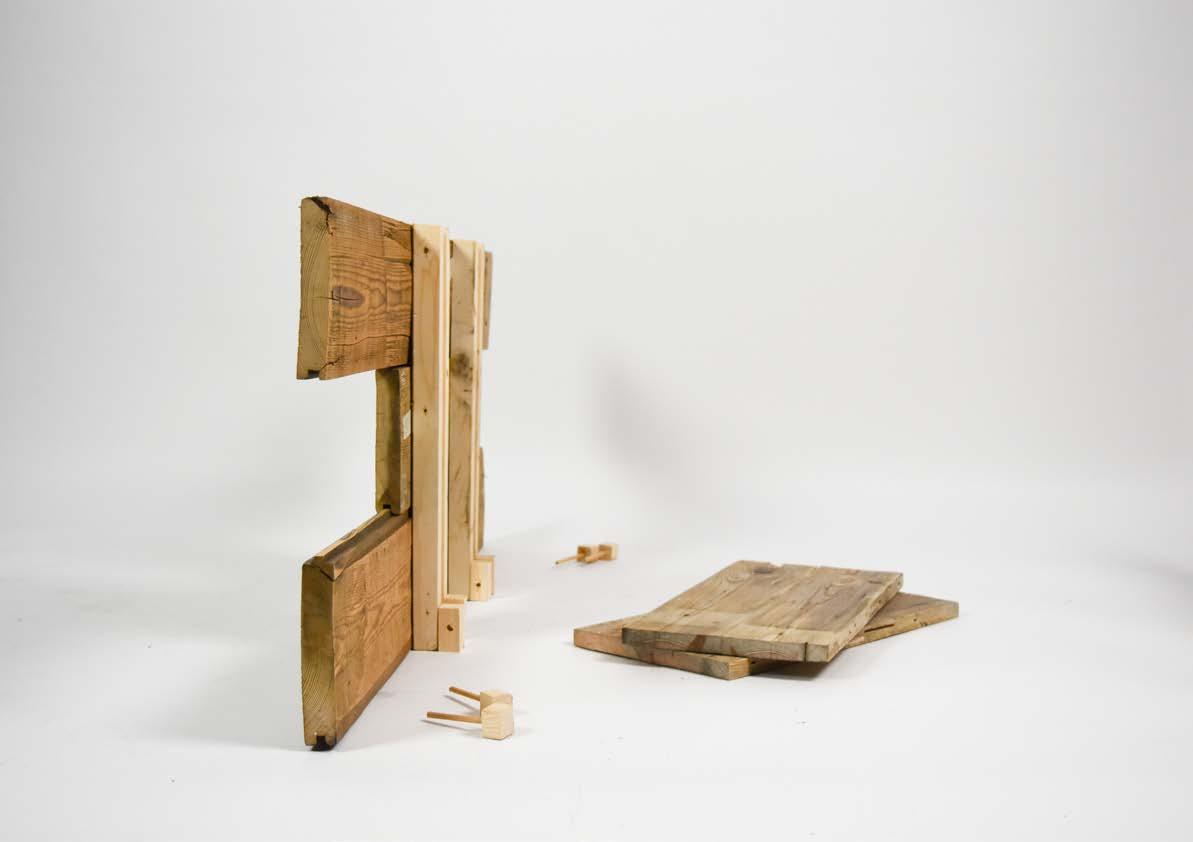
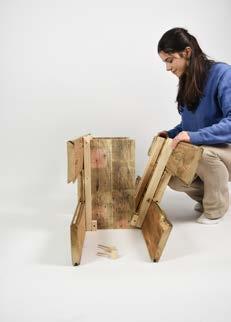
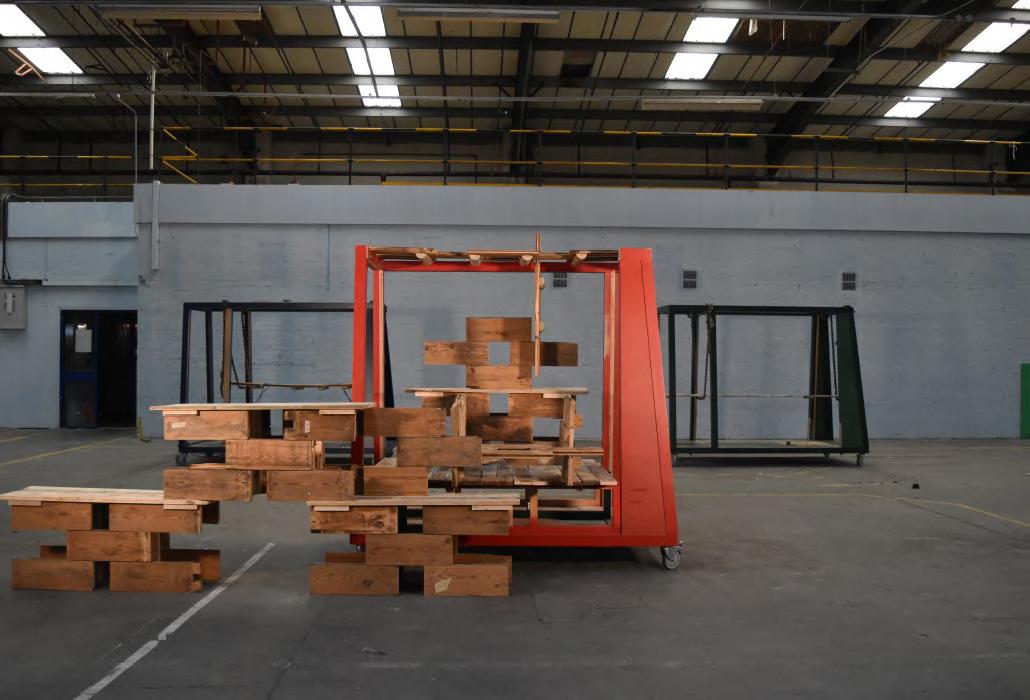
This live-build group project explored architecture at a micro scale through the design and construction of a seating/ exhibition space for a community hub in Granton. Working with reclaimed floorboards, bricks, pallets, and scaffolding boards sourced locally, the design evolved through negotiation with materials that already existed. Rather than beginning from a blank slate, discarded and restored materials guided the project’s form and construction. Modular timber lattices formed from tongue-and-groove floorboards allowed the installation to be assembled, disassembled, and adapted by the community, exploring circular construction and collective authorship.
Group project with two collaborators. Due to the nature of the live-build process, design and construction were developed collectively. All drawings produced by
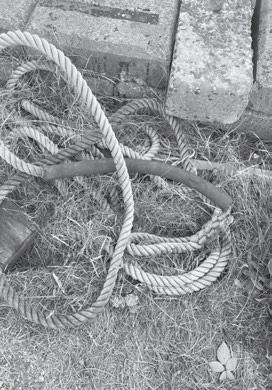
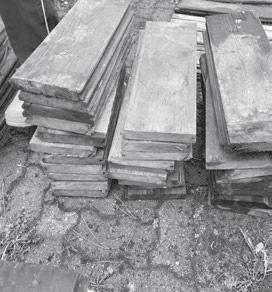
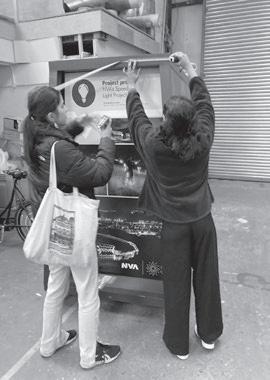
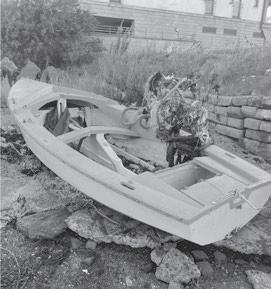
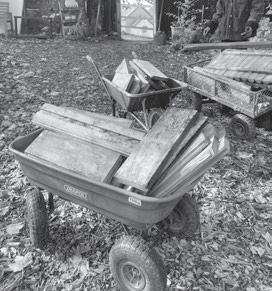
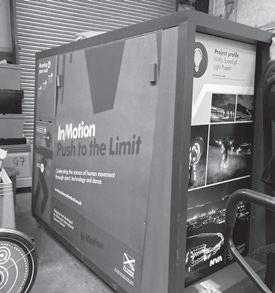
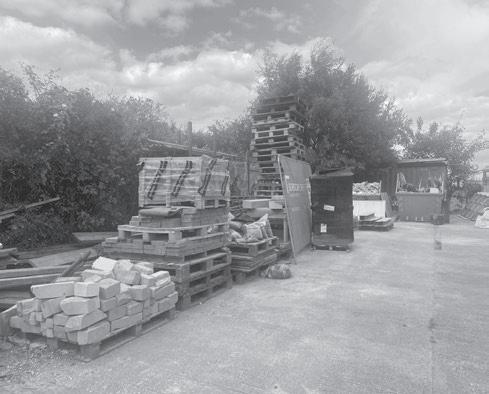
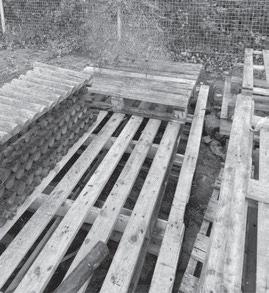
Above: Harvest map of materials collected in Granton, Edinburgh
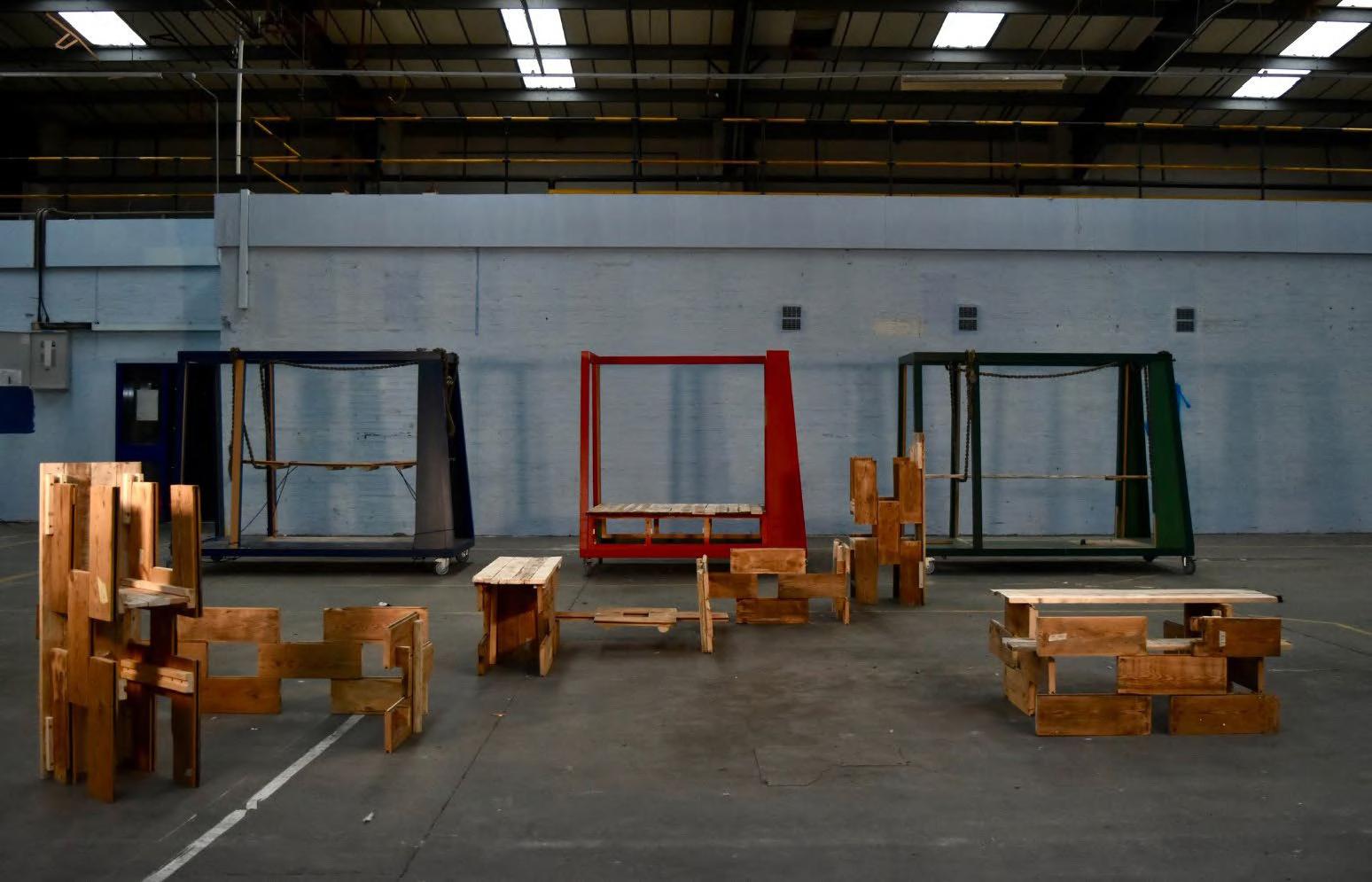

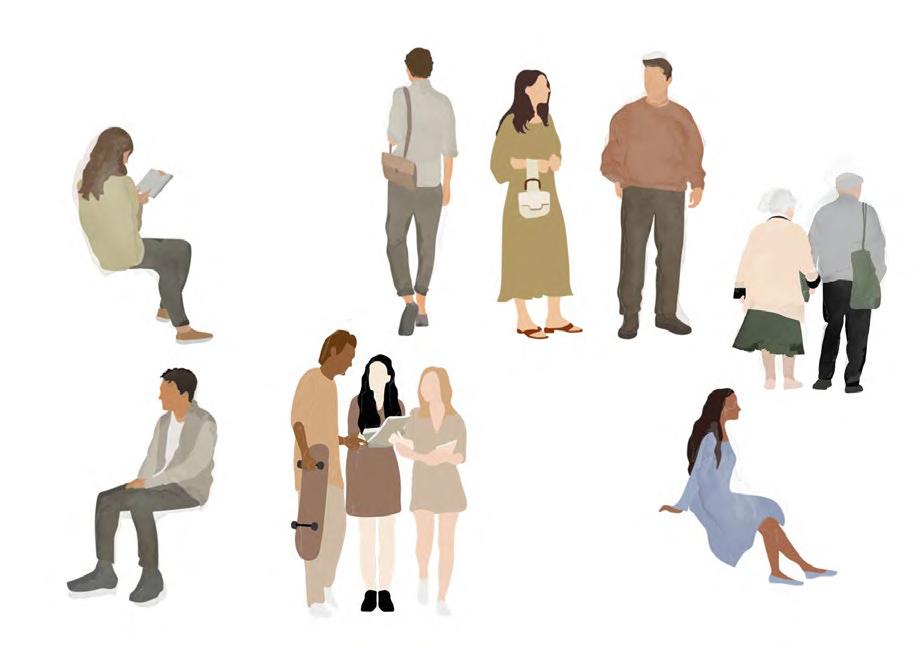

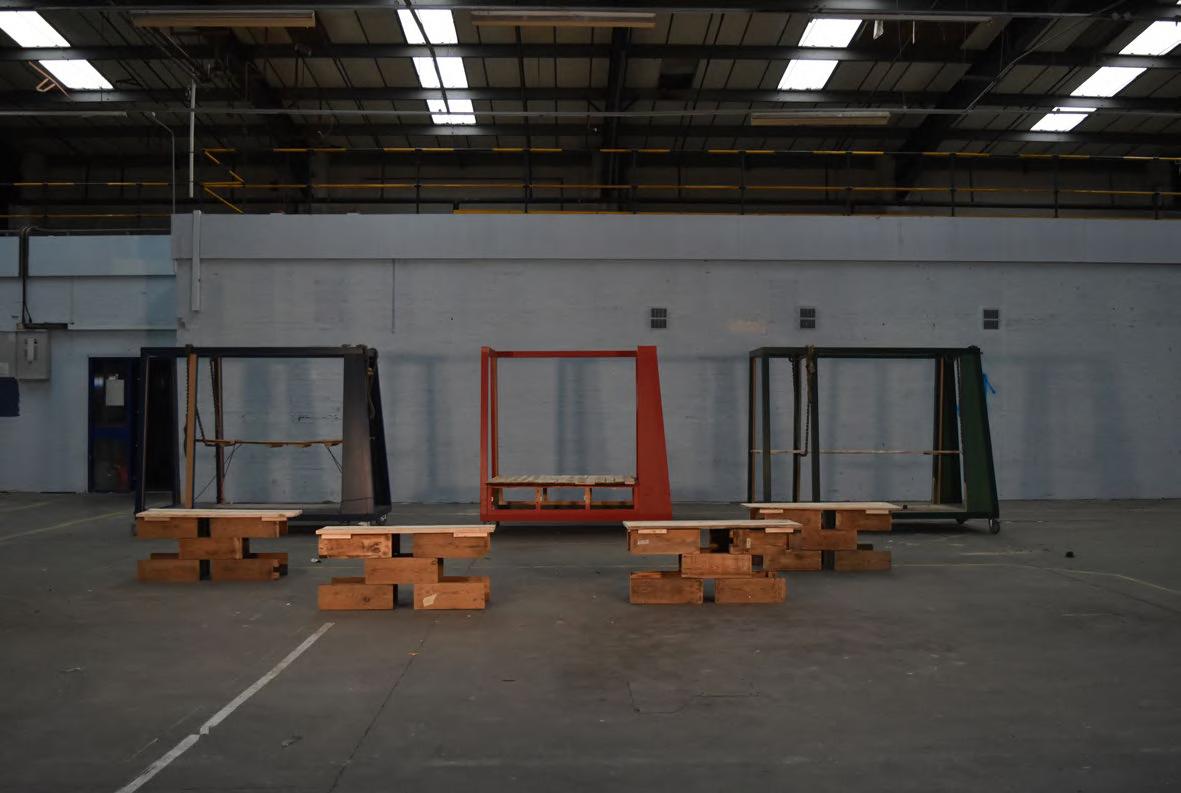
Right: Axo of use for seating, exhibition space and presentation stage as requested by client
Below: Stills from stop motion film that showed assembly, and dissasembly for diffrerent uses
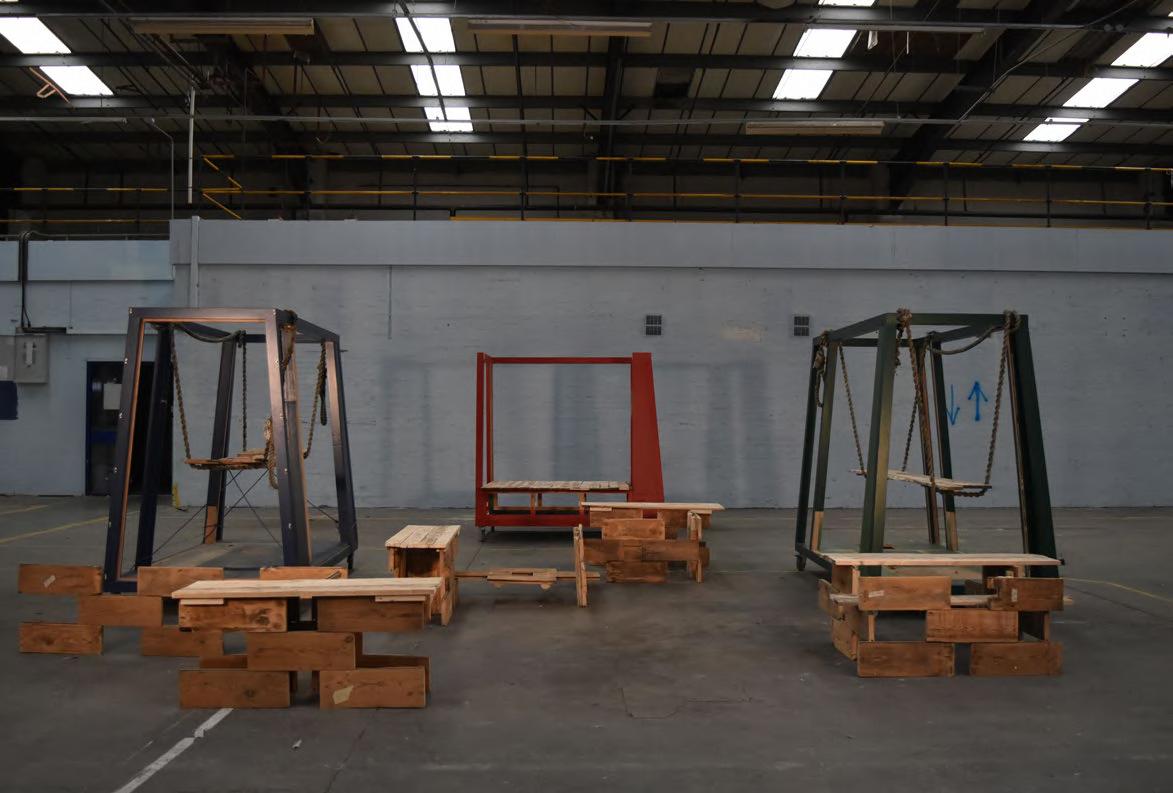
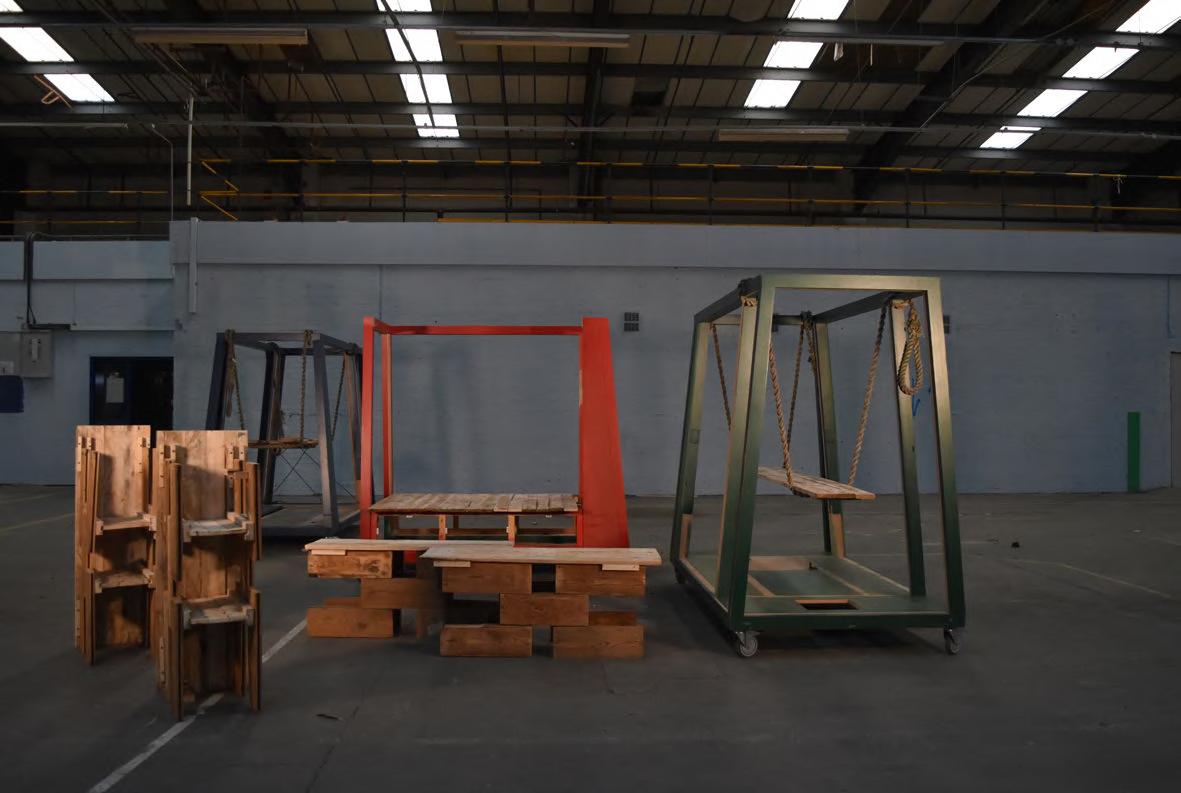
MARYHILL HOUSING, BOTANY CORNER
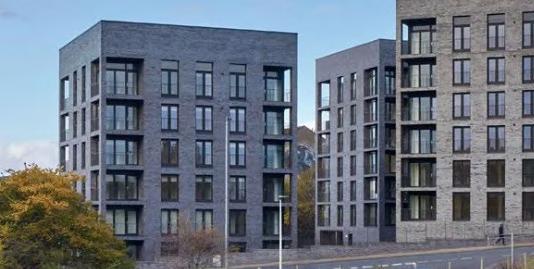
ELDER & CANNON ARCHITECTS
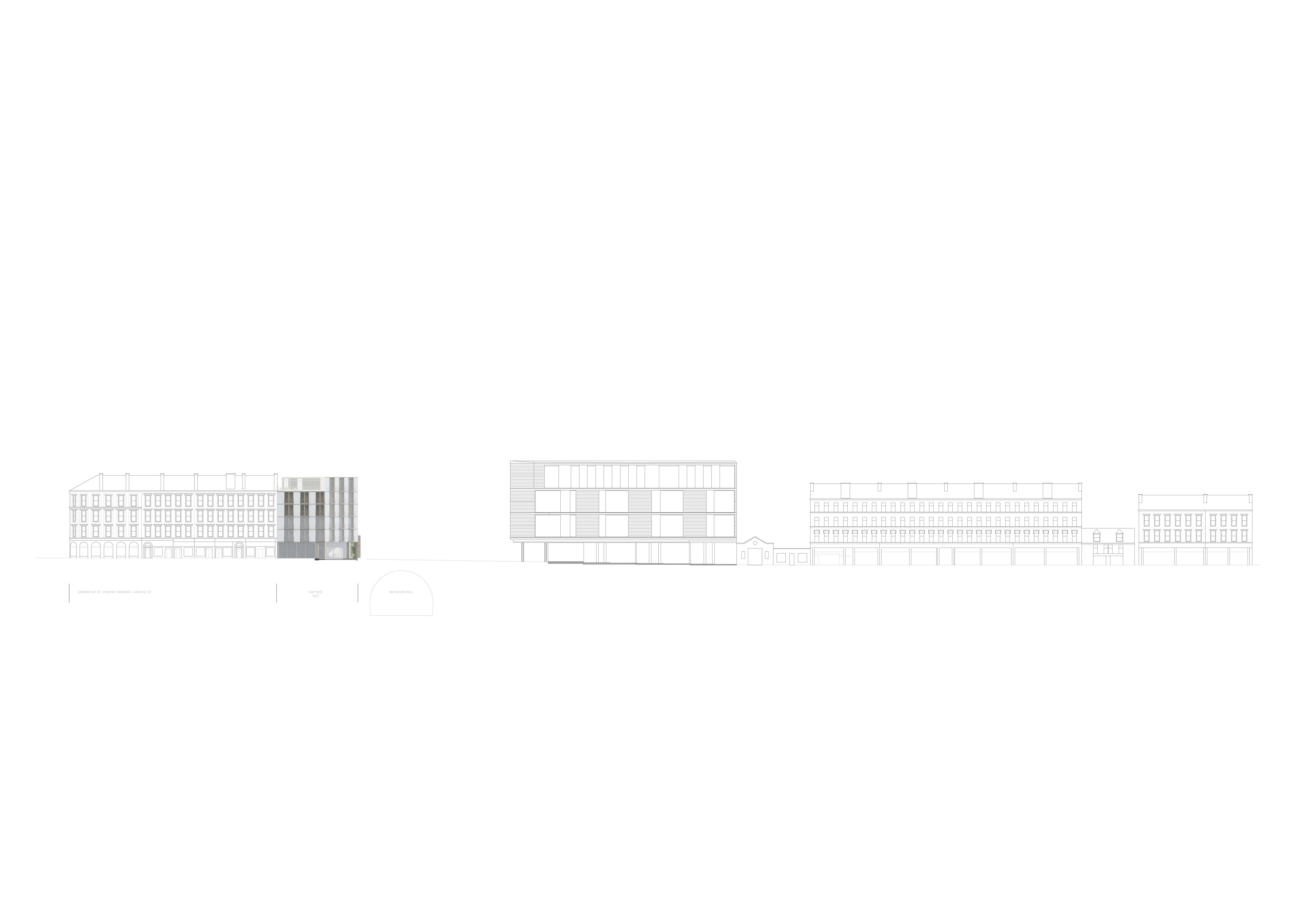
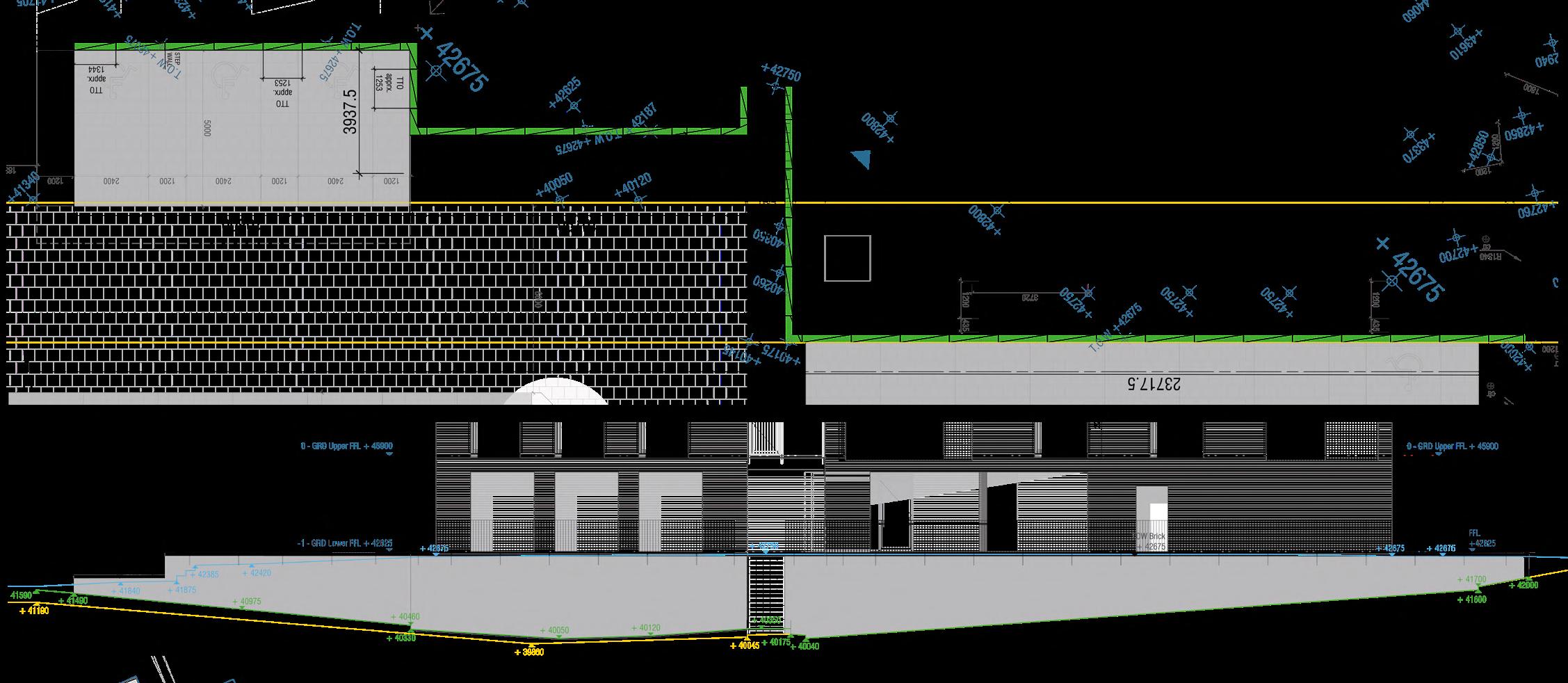
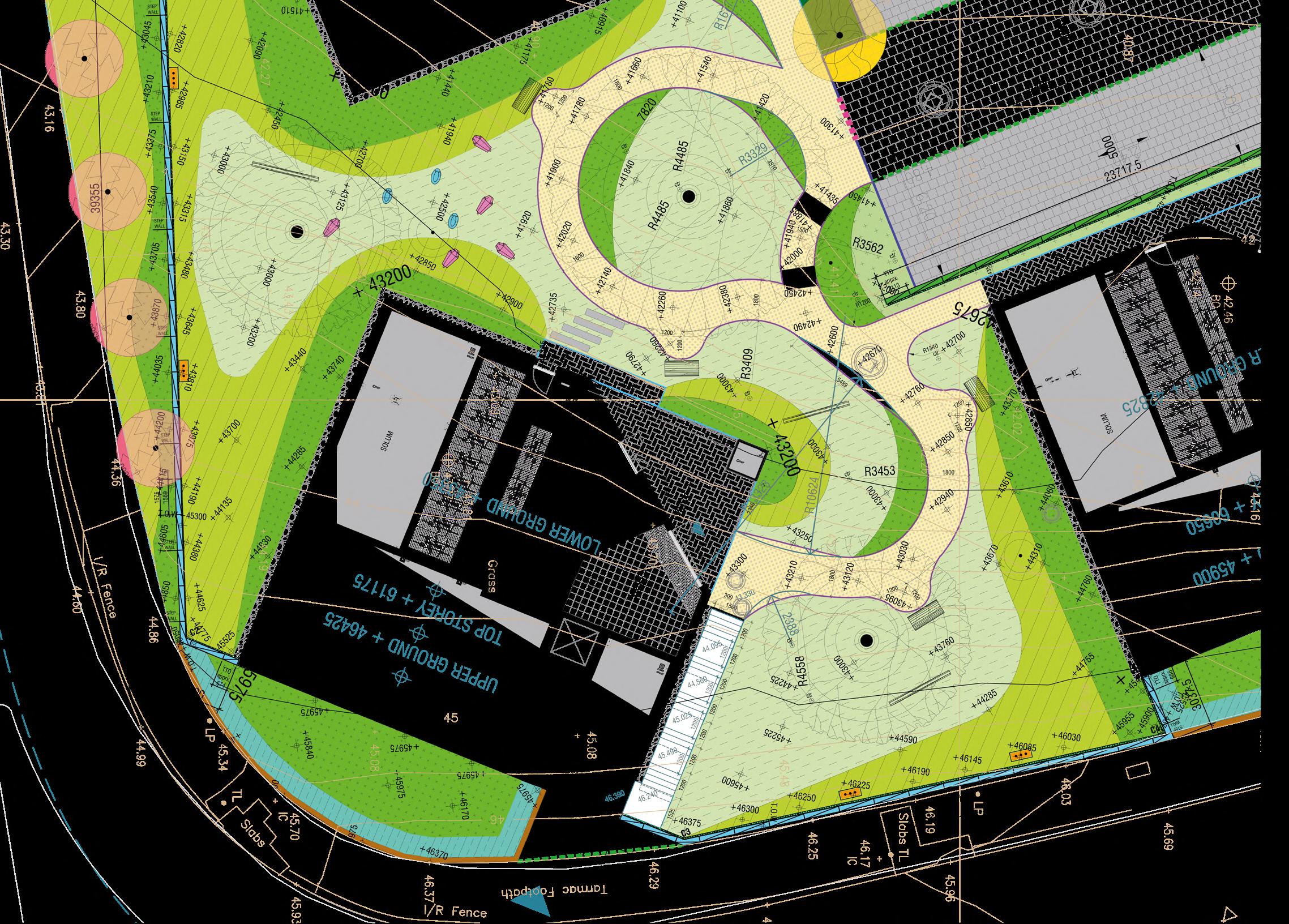
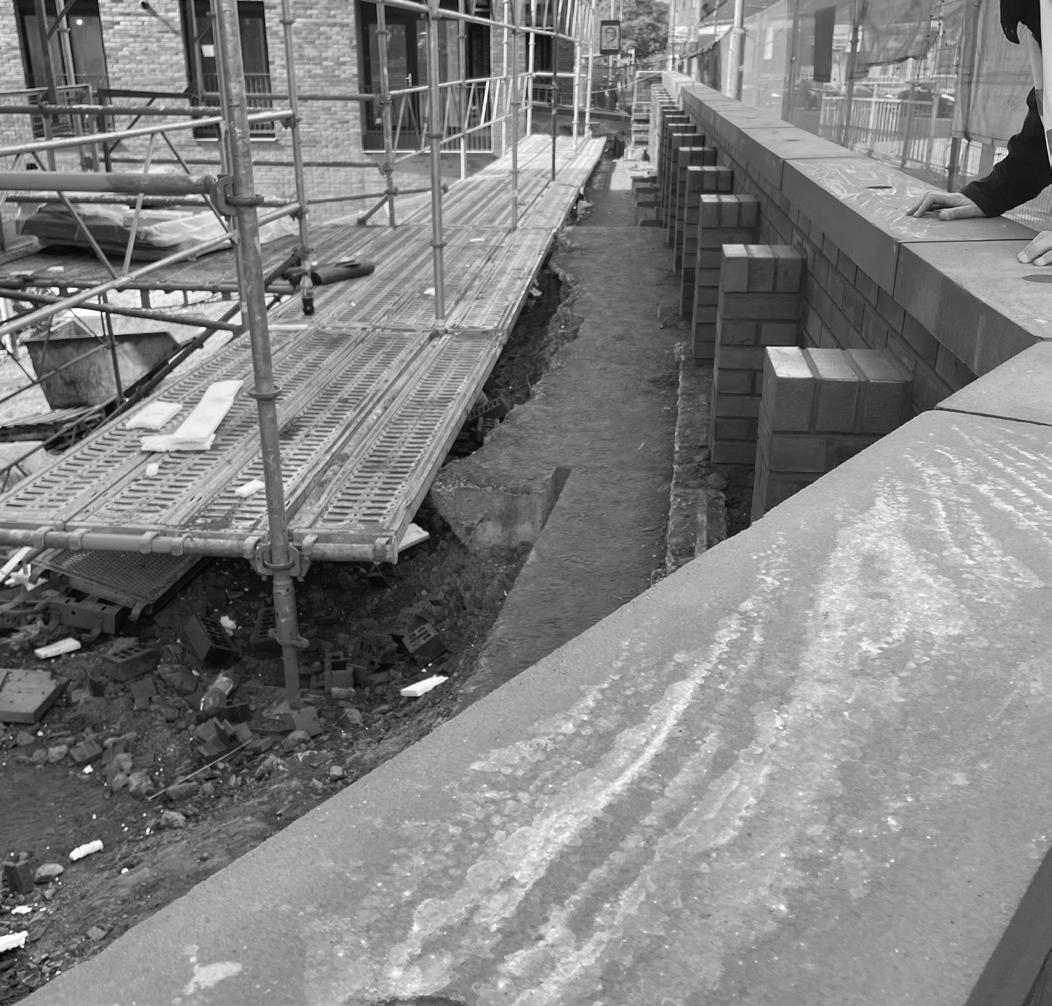
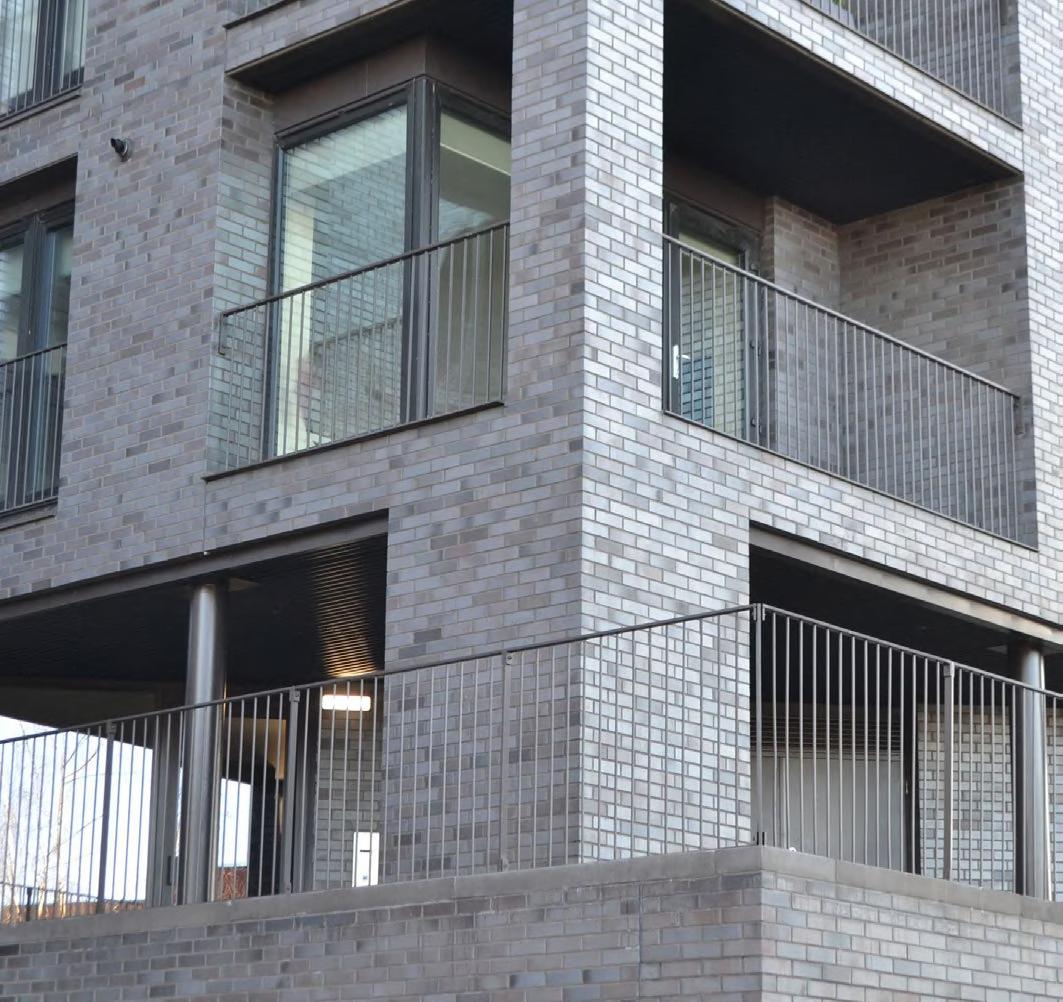
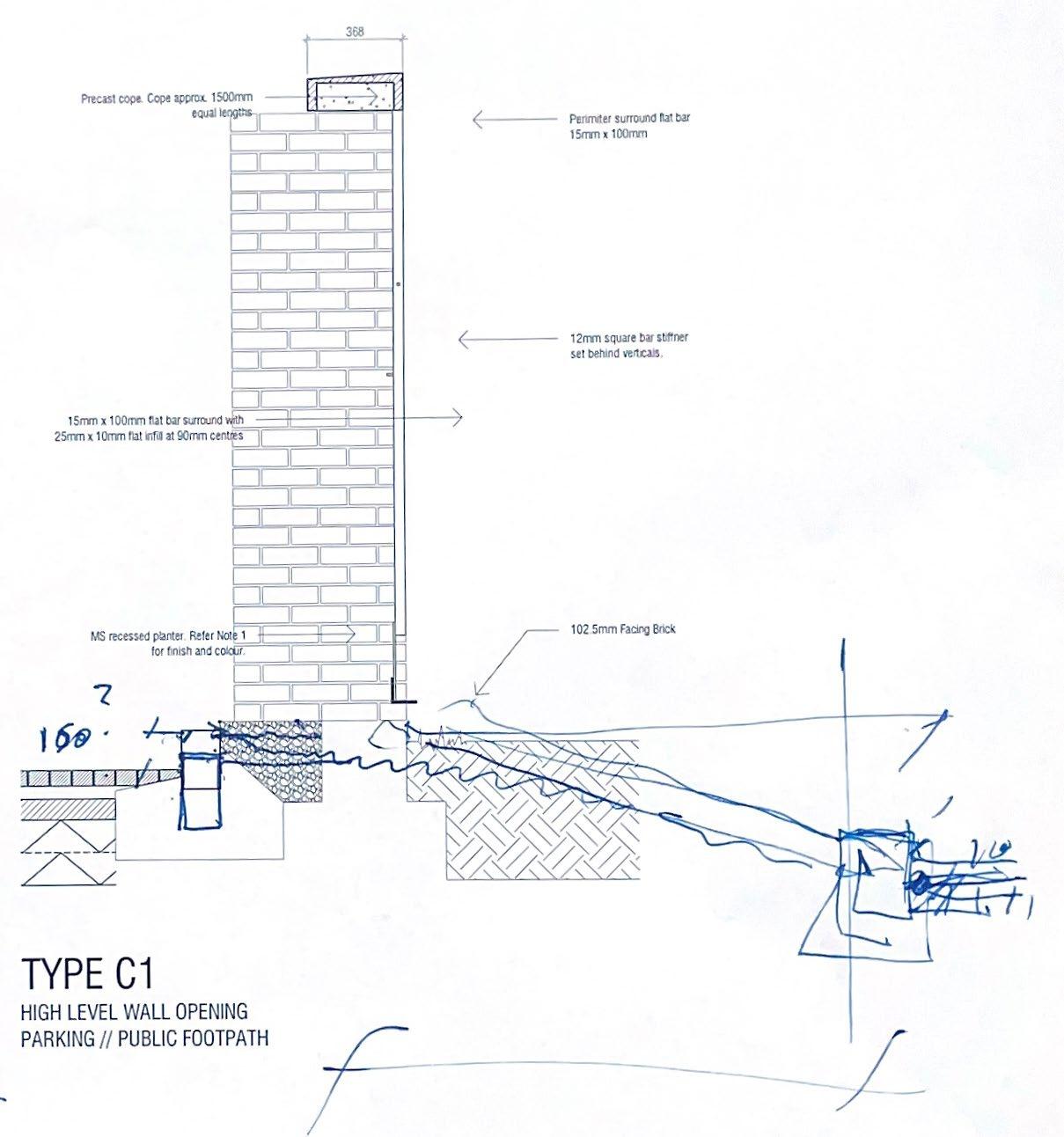
Contributed to the final stages of a residential development in Maryhill, assisting with the coordination of landscaping, ground levels, external boundary walls, paint finishes, and documentation for Building Control submission and client handover.
Working on social housing projects in Glasgow, often on sites that had previously housed high-rise council estates or asylum accommodation, prompted my interest in the broader politics of housing in the city. This experience later informed my dissertation research examining Glasgow’s housing crisis, gentrification, and the spatial conditions affecting migrant accommodation.
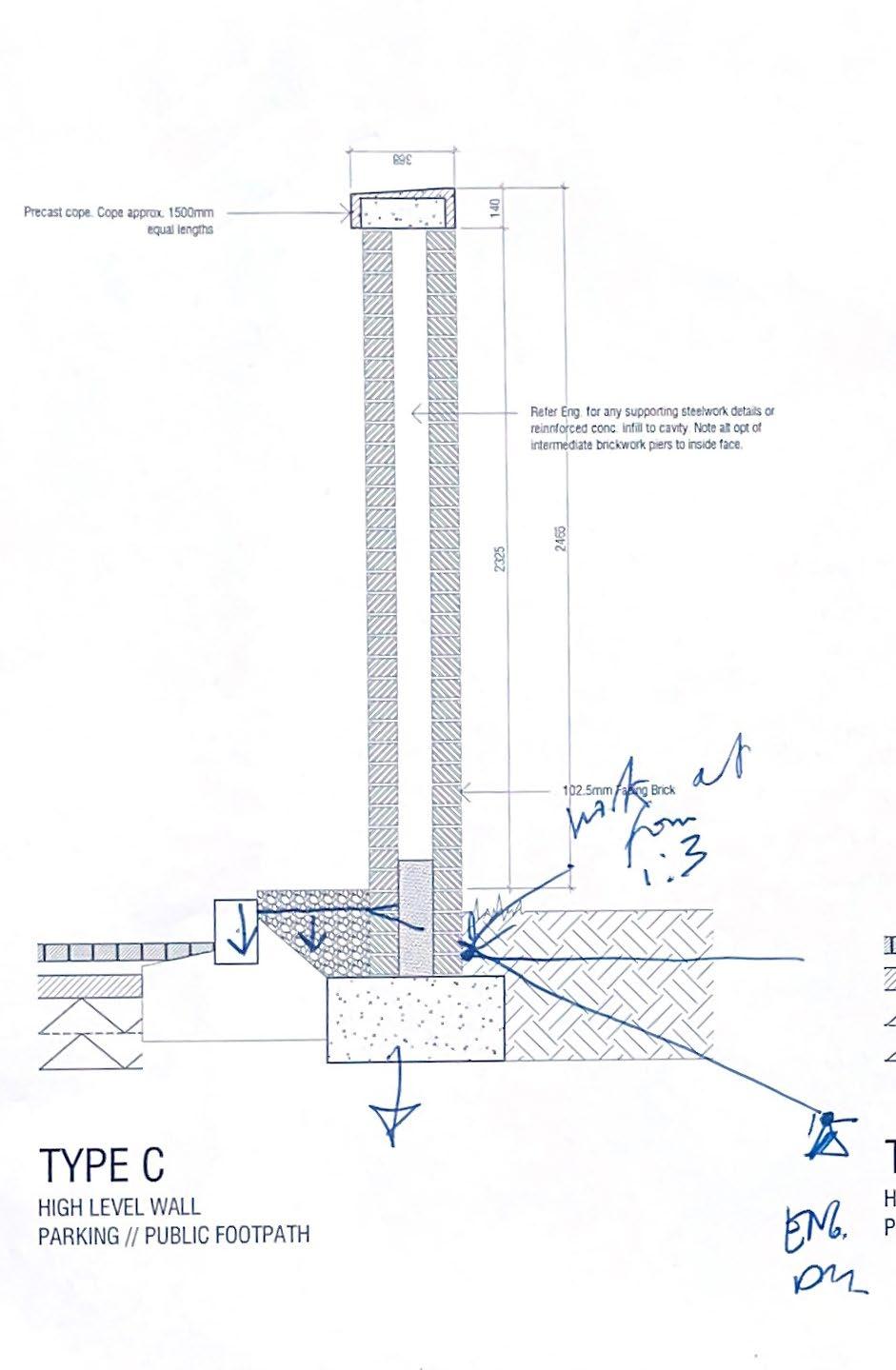
Wall Opening Detail
Wall Detail between Public footpath
Elevations and Landscape plans coordinating level changes
Final external walls built (img credits for top and bottom: Andrew Lee)
WOOTTON HOUSING DEMONSTRATOR
BOEHM-LYNAS
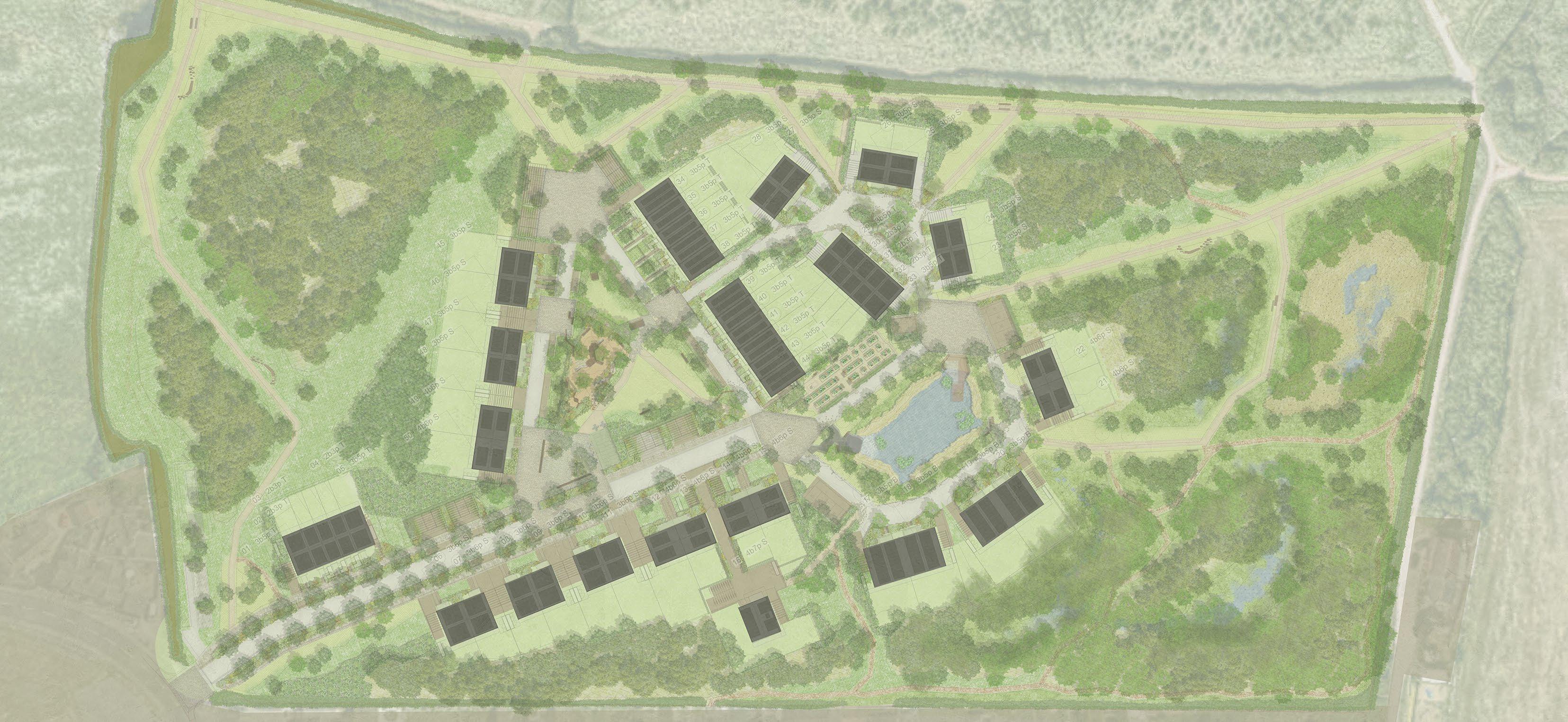
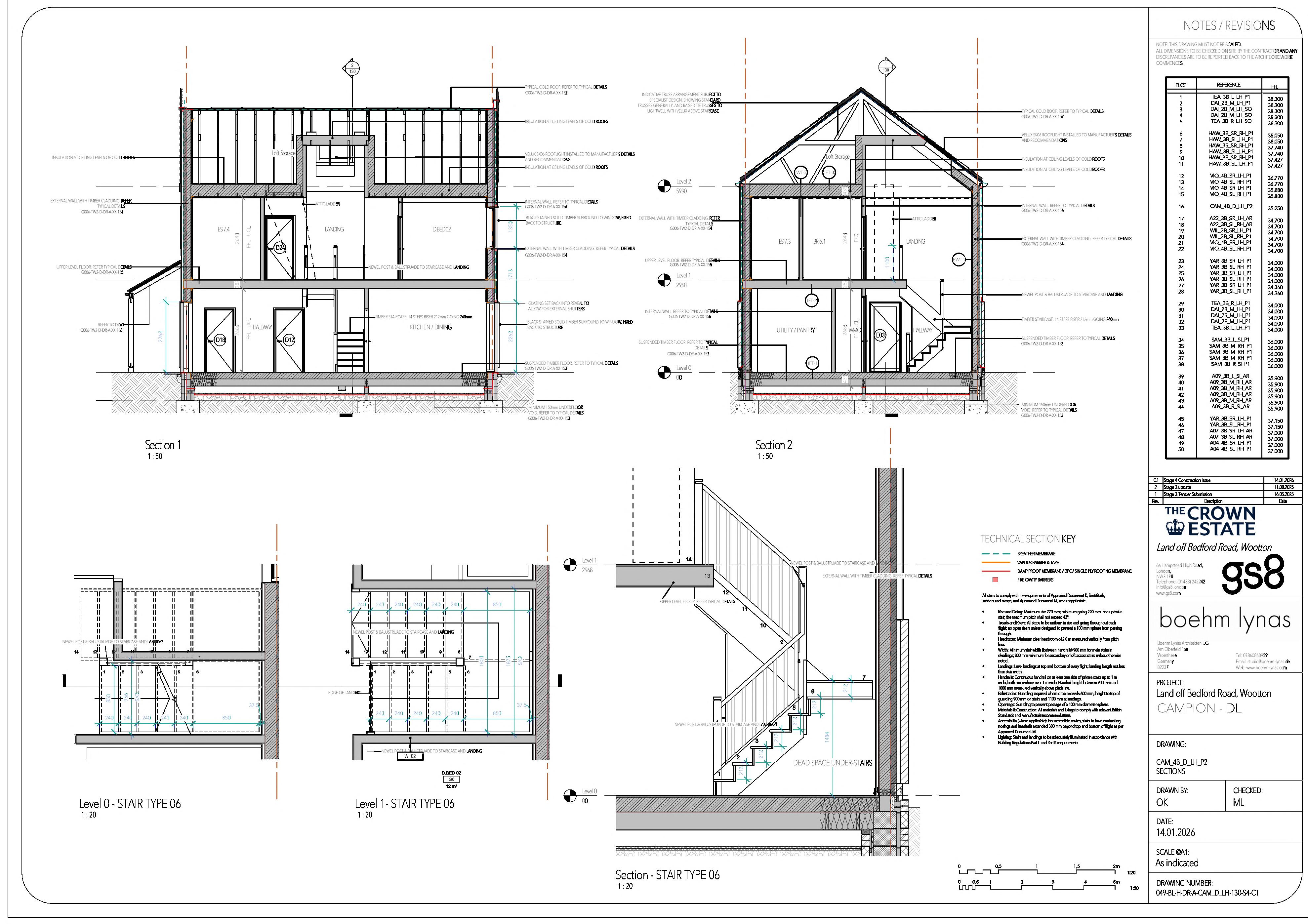
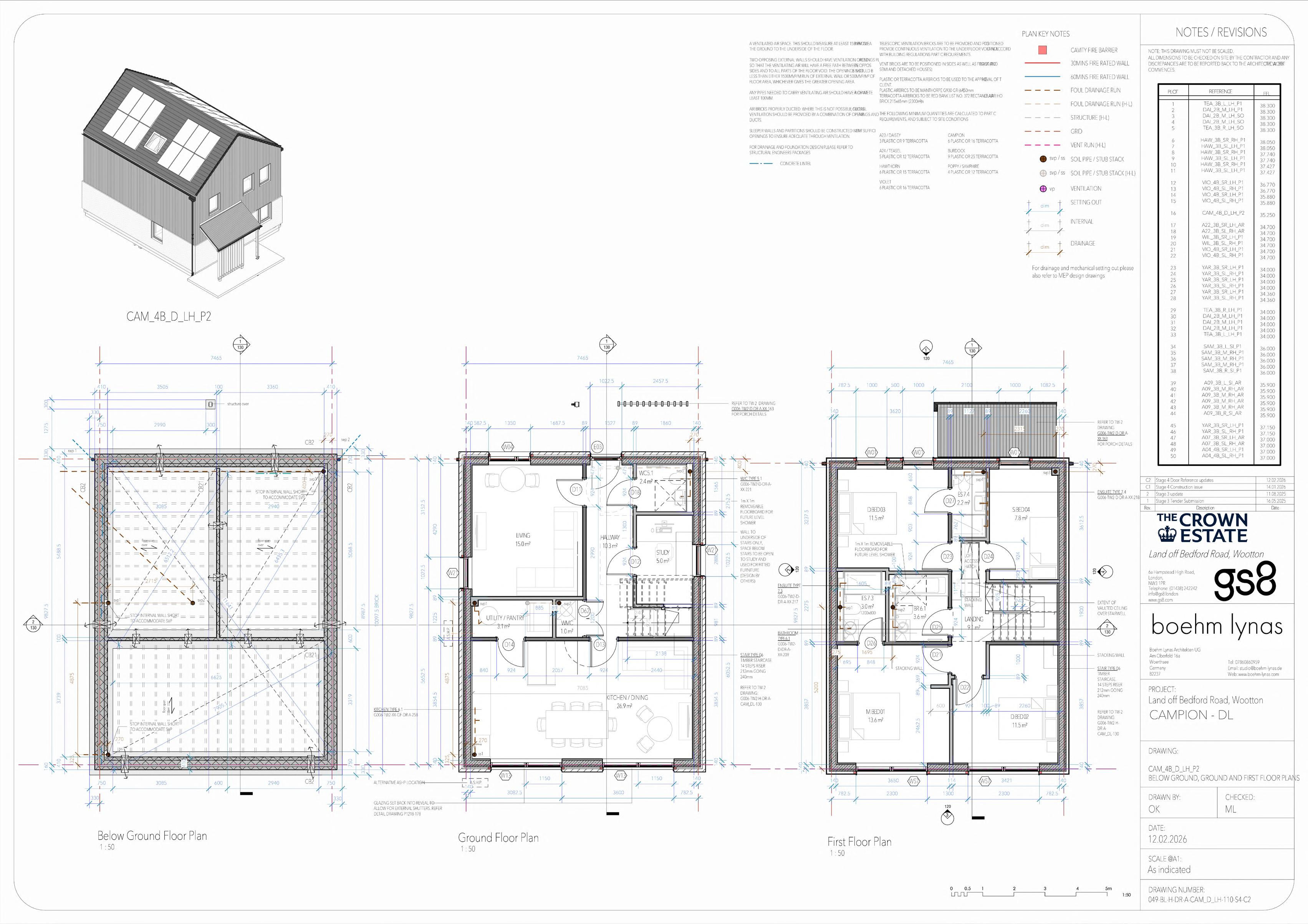
CARBON -ZERO HOMES, BEDFORDSHIRE
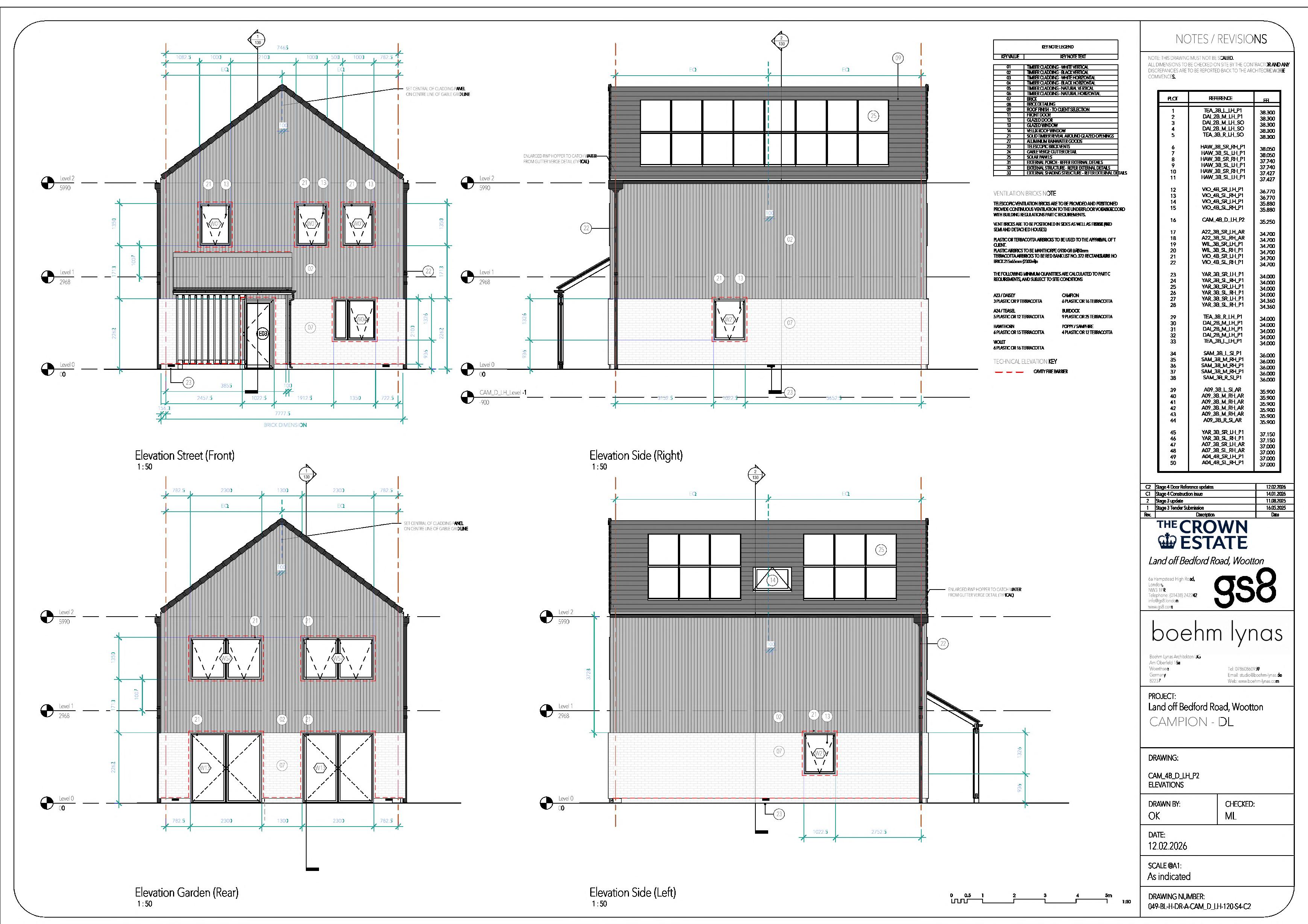
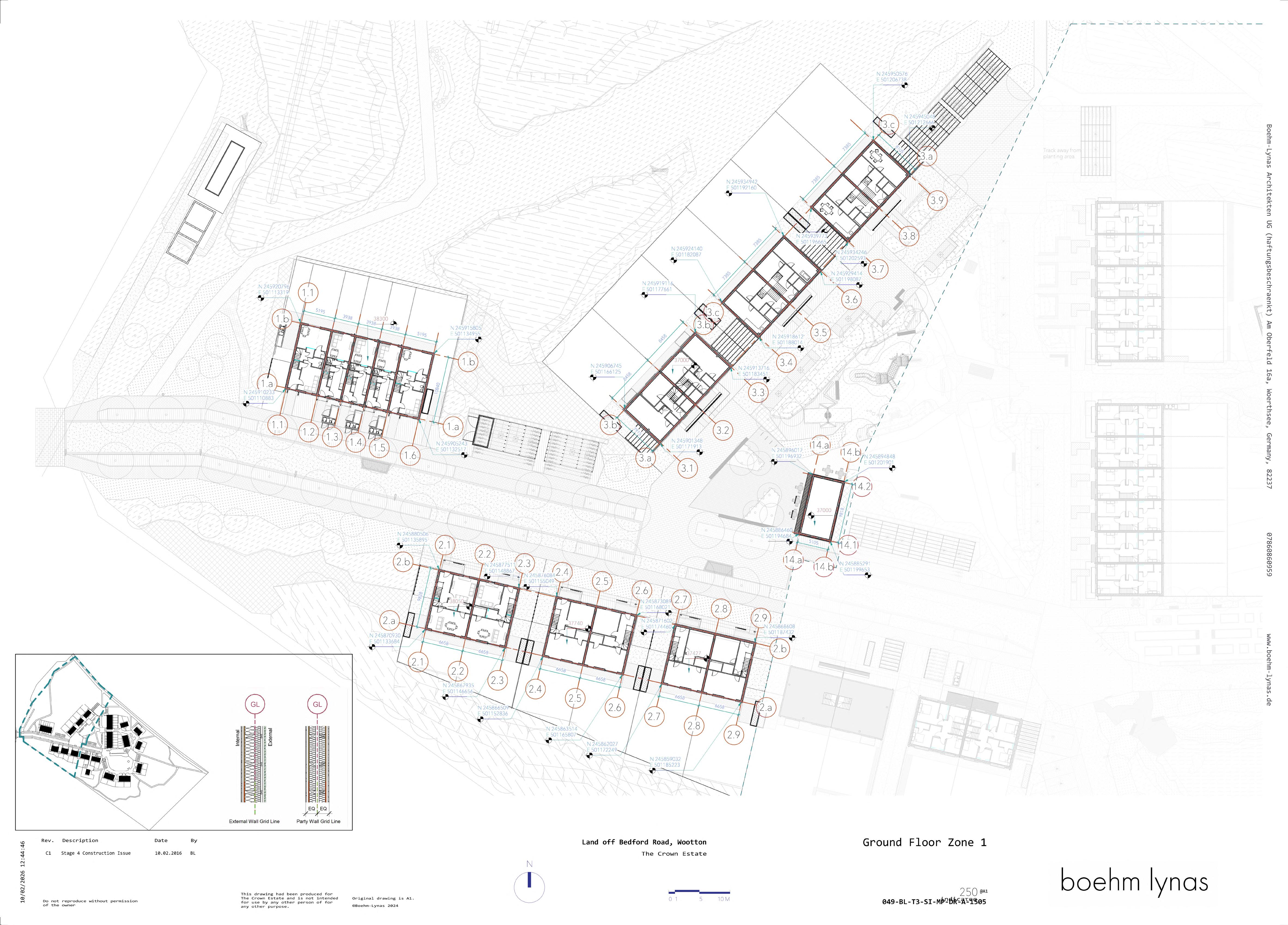
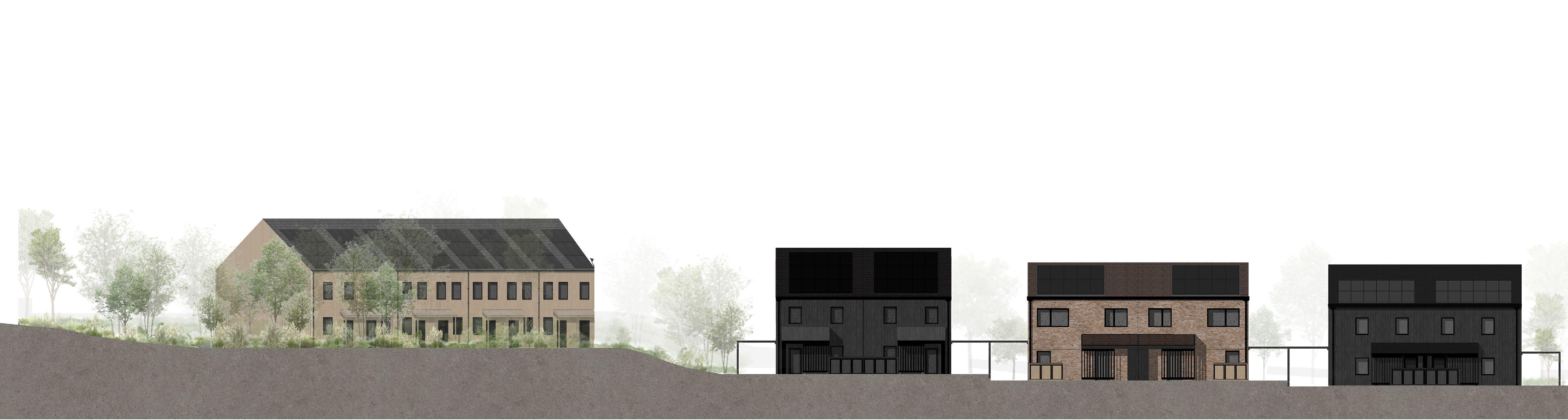
Currently working on demonstrator housing schemes piloting new sustainability benchmarks for affordable housing across the UK. The projects explore net-zero carbon homes, regenerative construction systems, and community-focused masterplanning. Working across RIBA Stages 3 and 4, I assist in coordinating design information with consultants, producing GA drawings and supporting layout setting-out. I also work with sustainability advisors to ensure design decisions meet carbon and overheating performance targets. This experience has reinforced the importance of early material decisions in shaping environmental performance and construction delivery.
INDIA FIELD RESEARCH: MATERIAL AND CRAFT TRADITIONS
PERSONAL PROJECT
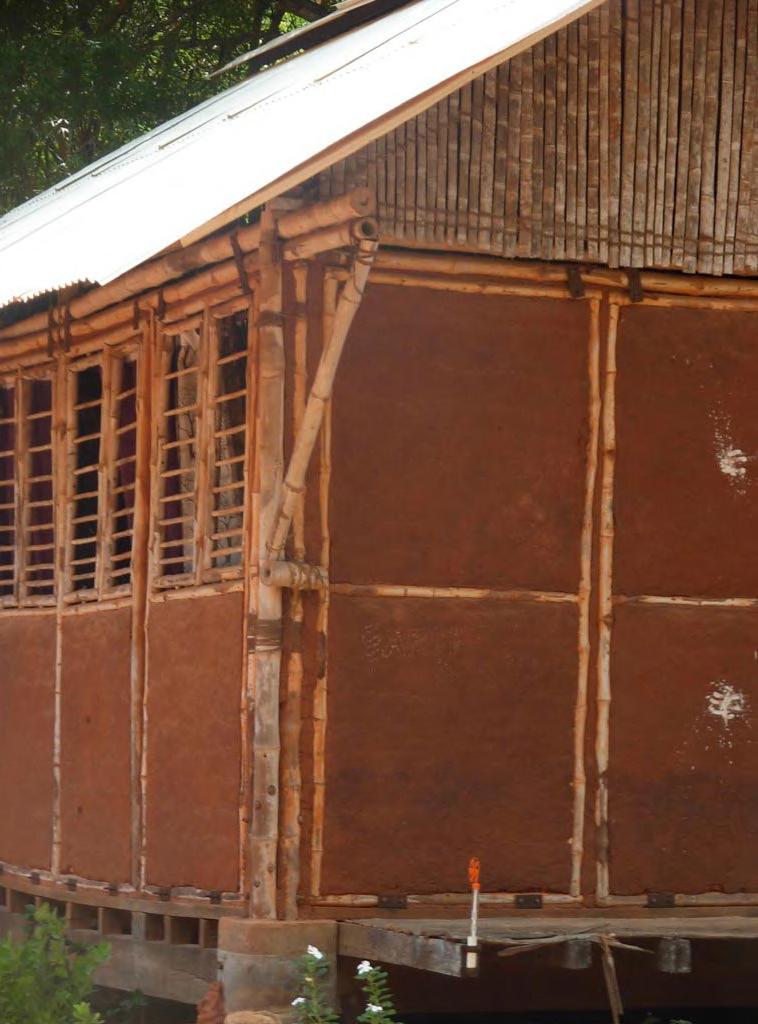
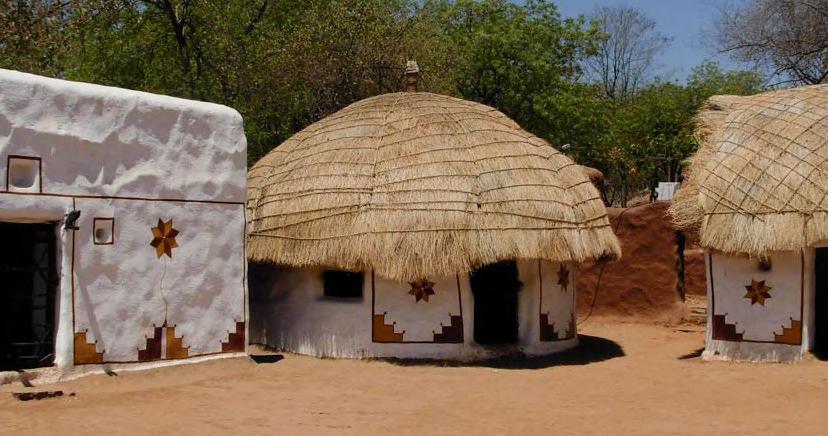
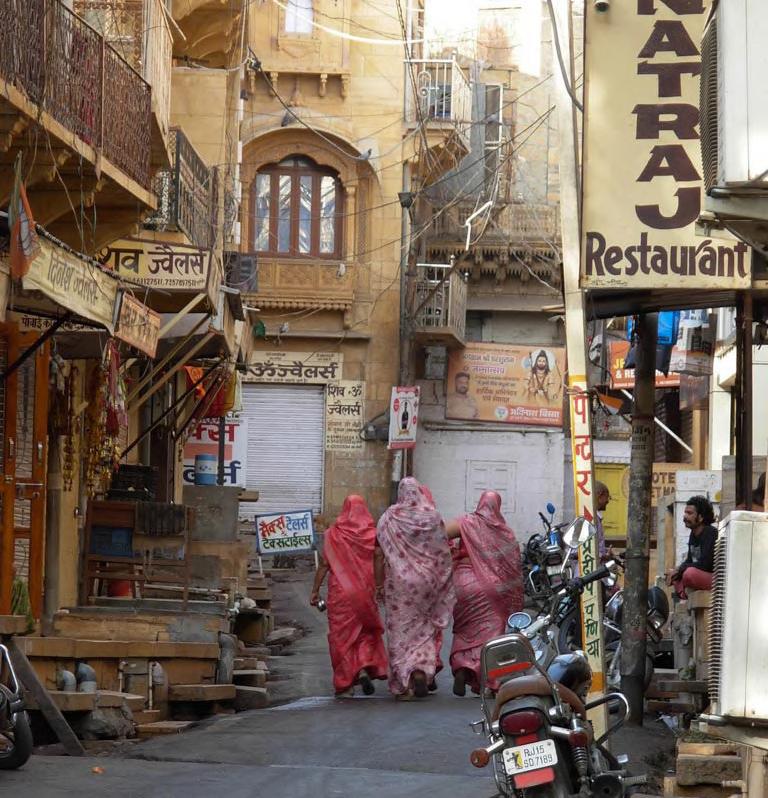
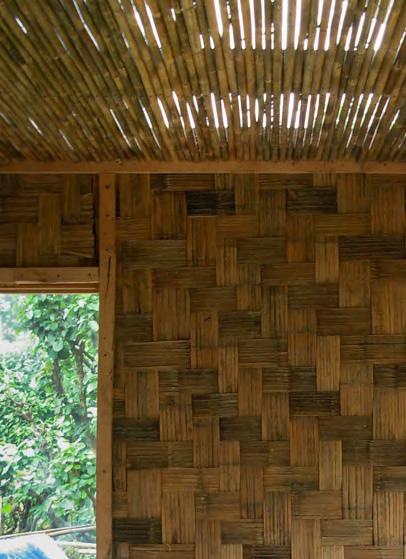
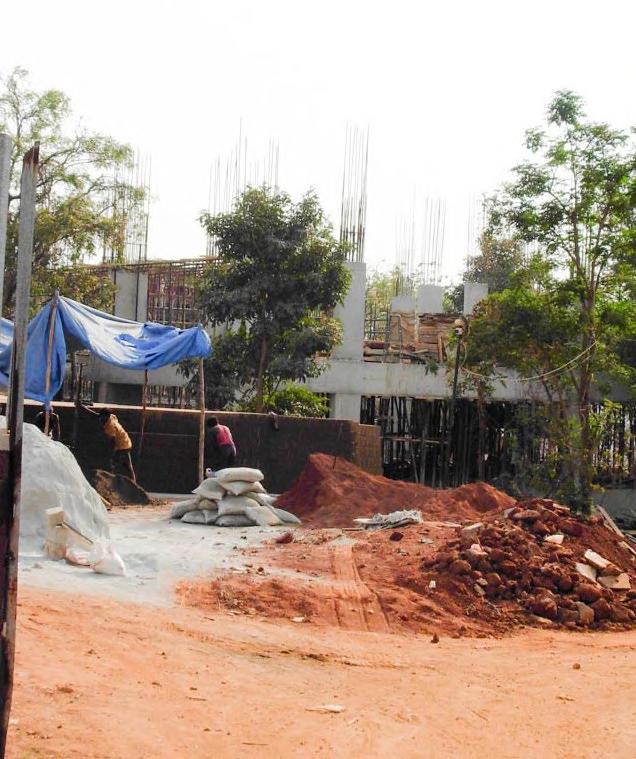
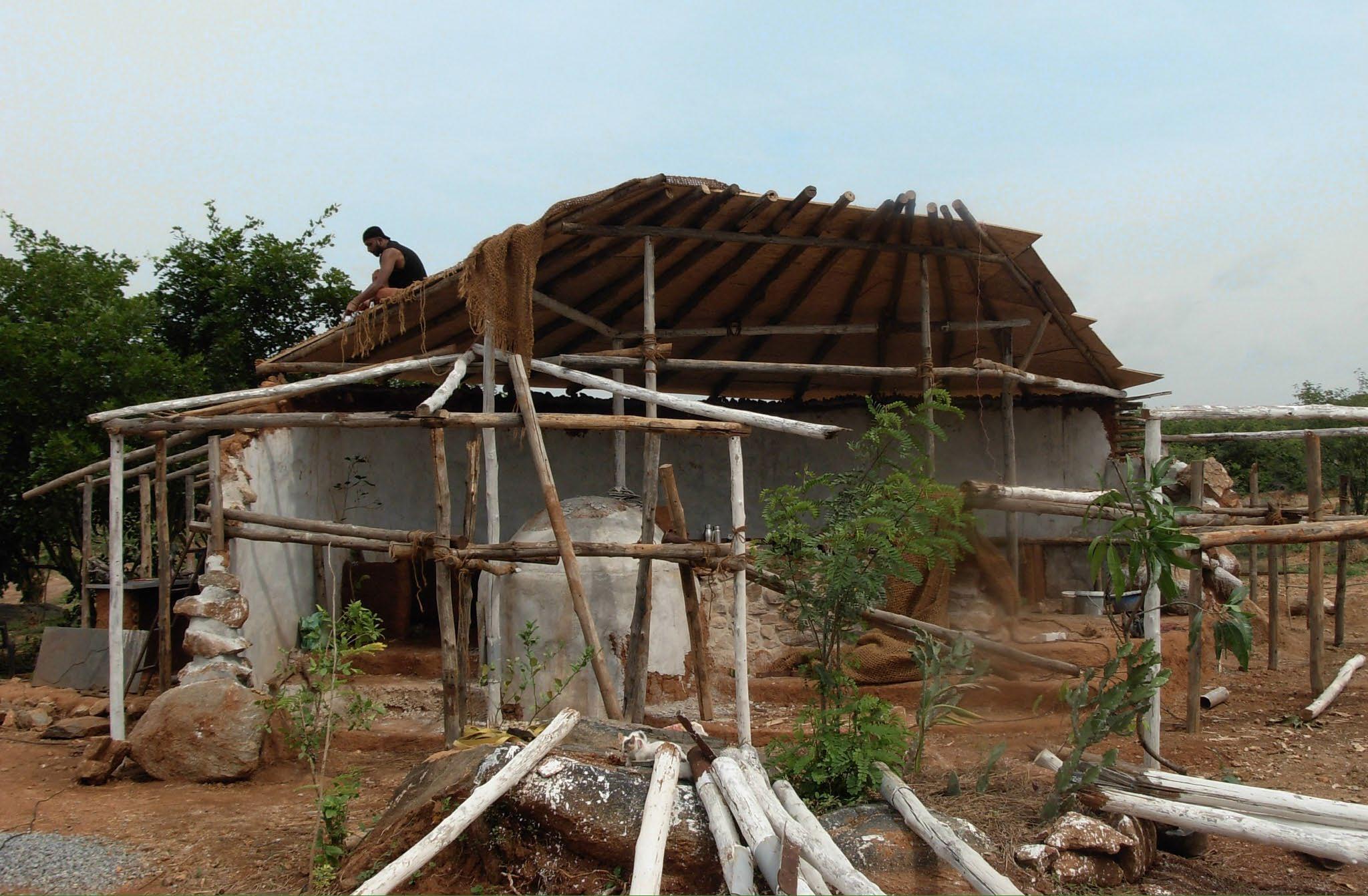
During my travels, work placement and volunteering experiences across a 7 month India trip, I documented earthen homes and construction techniques to understand how architecture can emerge from local materials, climate, and craft knowledge. Through photography and ethnographic research, I looked at how vernacular housing is observed across the country, where building traditions remain closely tied to landscape and resources. At the same time, India is experiencing a rapid expansion in concrete construction driven by urbanisation and economic development. As reinforced concrete is increasingly used in both city and remote village development, many vernacular traditions of building with earth, bamboo, lime, and lime plasters are being displaced despite their climatic responsiveness and low embodied carbon.
Speaking and working alongside local builders and residents, I learned of the stigma and caste segregation within housing justice, exploring how material choice is never neutral. Further, it would be unrealistic to expect communities to continue living in historic mud houses, many of which were constructed under conditions of material scarcity and may not meet contemporary expectations of sanitation or durability.
My research, therefore, explores how local materials and craft traditions might be combined with contemporary construction techniques, such as compressed stabilised earth blocks (CSEB), allowing earth construction to meet modern structural and hygienic standards while maintaining a significantly lower environmental impact.
Left: Wattle and Daub Home, Auroville, India
Woven Bamboo Homes, Lepcha Indigenous Community, Sikkim, India
Top: Banga’ Mud Homes, Thar Desert, India
CSEB bricks made on site for local school project, Bangalore, India. Contributed to design during internship with Hundredhands Architects.
Sandstone havelis, Jaisalmer India. Many historic homes being replaced with concrete due to economic pressures
MY CONTEMPORARY PRACTICE HAS AND HOPES TO CONTINUE TO EXPLORE ARCHITECTURE AS A FORM OF SOCIAL AND ENVIRONMENTAL JUSTICE, INVESTIGATING HOW MATERIAL SYSTEMS, CRAFT KNOWLEDGE, AND PARTICIPATORY CONSTRUCTION CAN RESHAPE THE WAY WE BUILD AND INHABIT SPACE.
ARCHITECTURE AS STEWARDSHIP: MATERIAL PRACTICE AND PARTICIPATORY CONSTRUCTION
Extending my research, I volunteered with Terraphilic Homes to help construct an architecture education centre exploring earthen building techniques. Working directly with earth, bamboo, and lime plaster allowed me to understand the structural, climatic, and social dimensions of vernacular construction. Participating in the building process revealed how knowledge of material behaviour is embedded within craft traditions and collective labour. Through making cob walls, weaving bamboo structures, and constructing wattle-anddaub assemblies, I developed a deeper understanding of architecture as a practice grounded in material responsibility, local knowledge, and community participation.
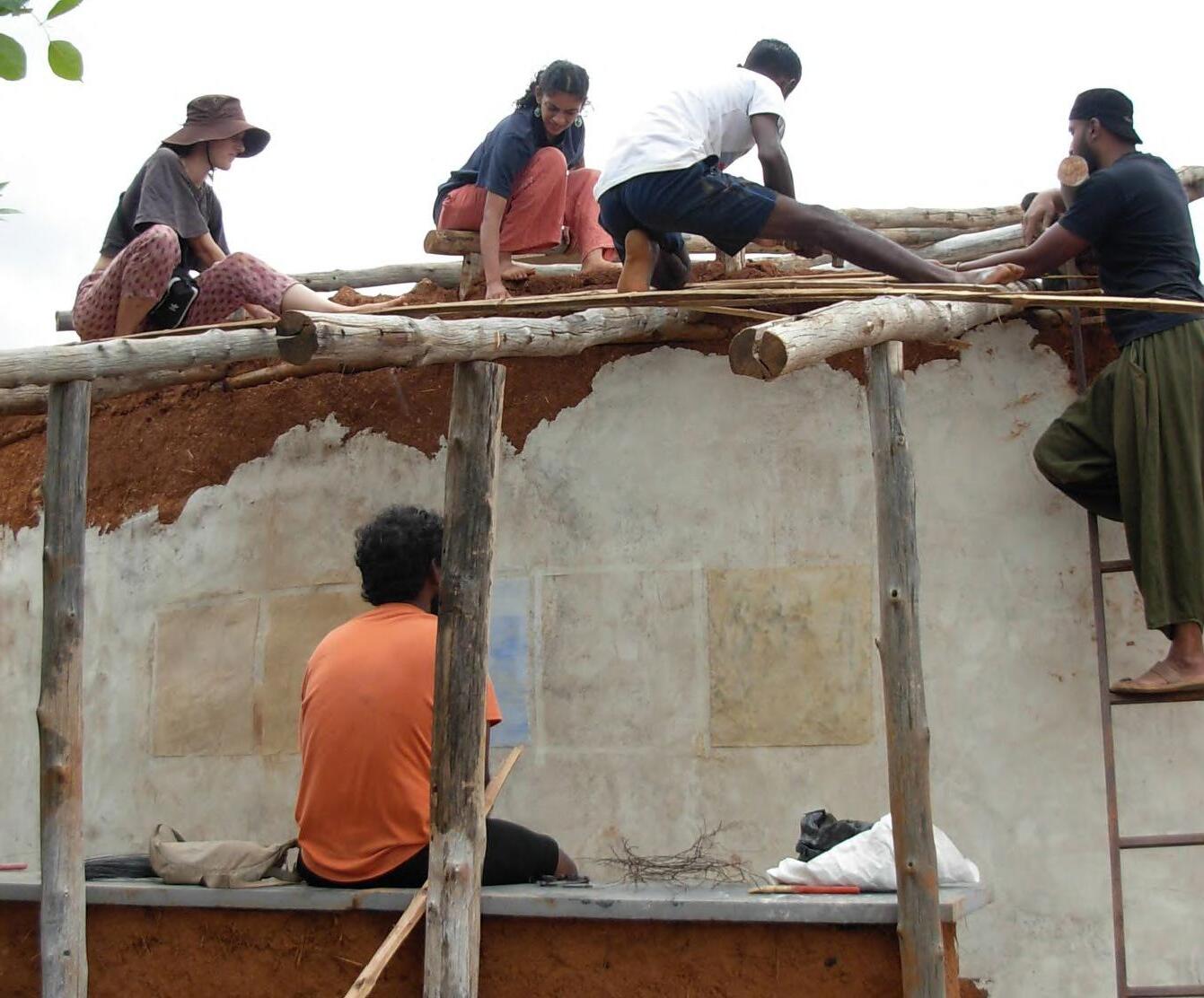
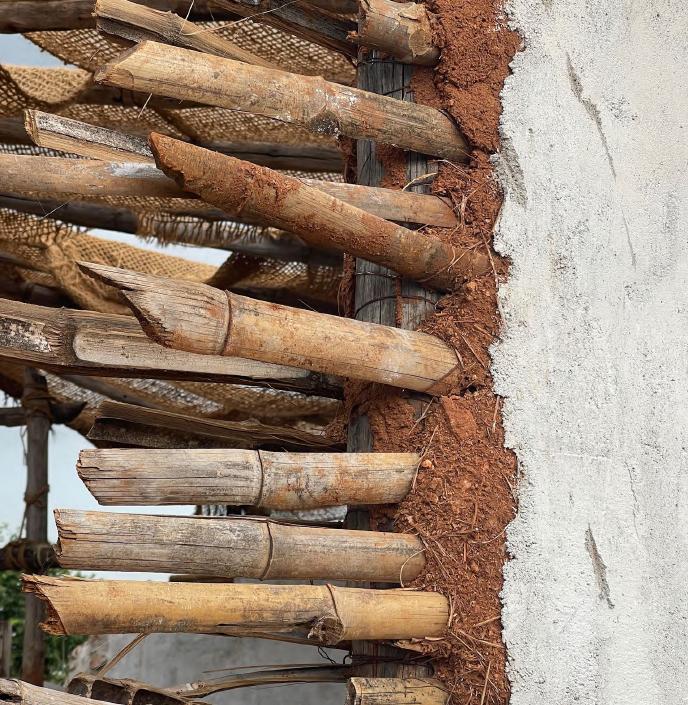
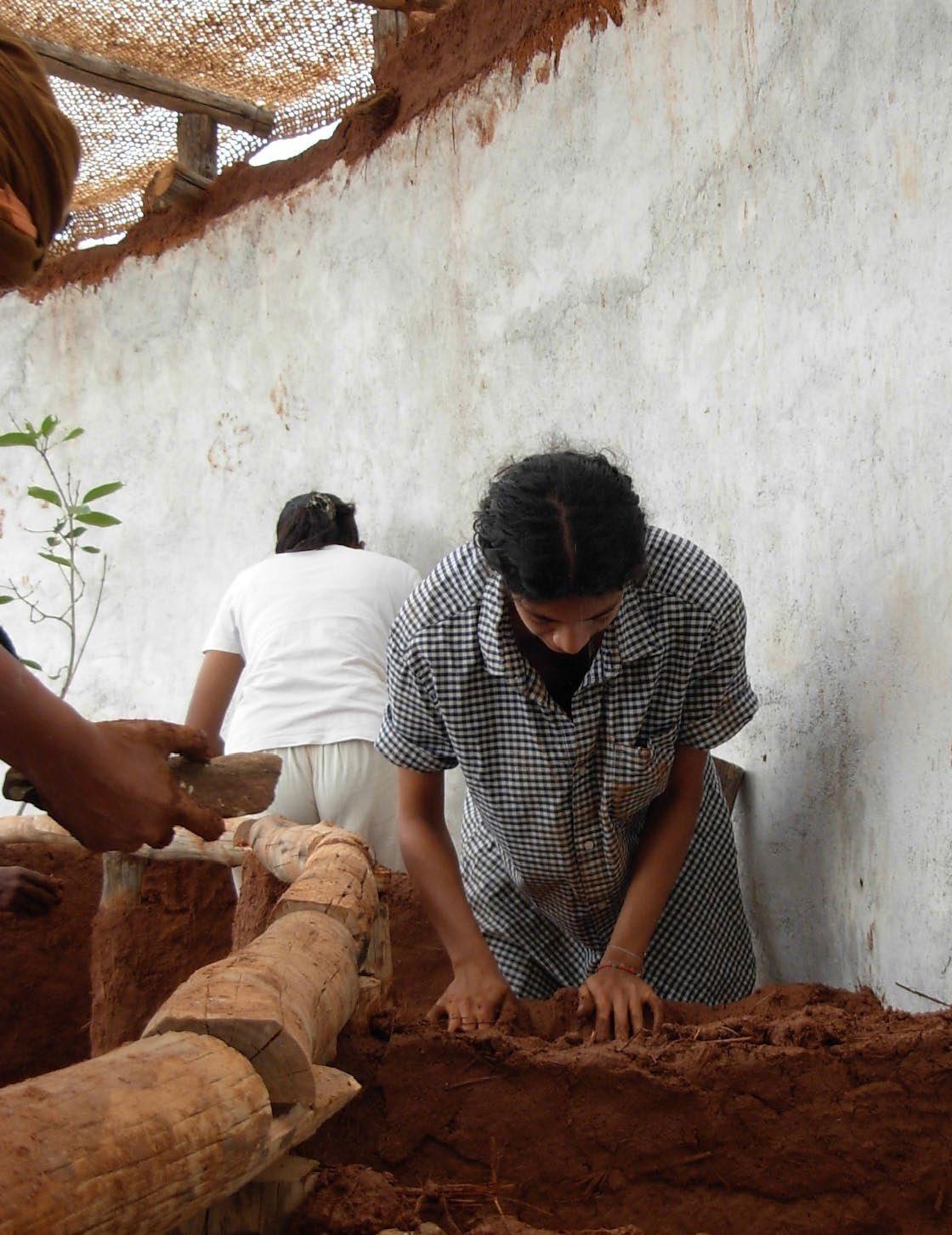
Volunteering with Terrafilic Homes to help build an education centre on earthen construction material practices.
Top: Weaving bamboo for the earth and green roof
Middle: Making cob walls with nearby soil and straw
Bottom: Wattle and Daub wall build up with natural lime plaster
PRINTING IN SPACE: ARCHITECTURE FRINGE
ARCHITECTURE FRINGE WITH CRUMBLE MAGAZINE PARTICIPATORY ARCHITECTURE THROUGH CIRCULAR MAKING
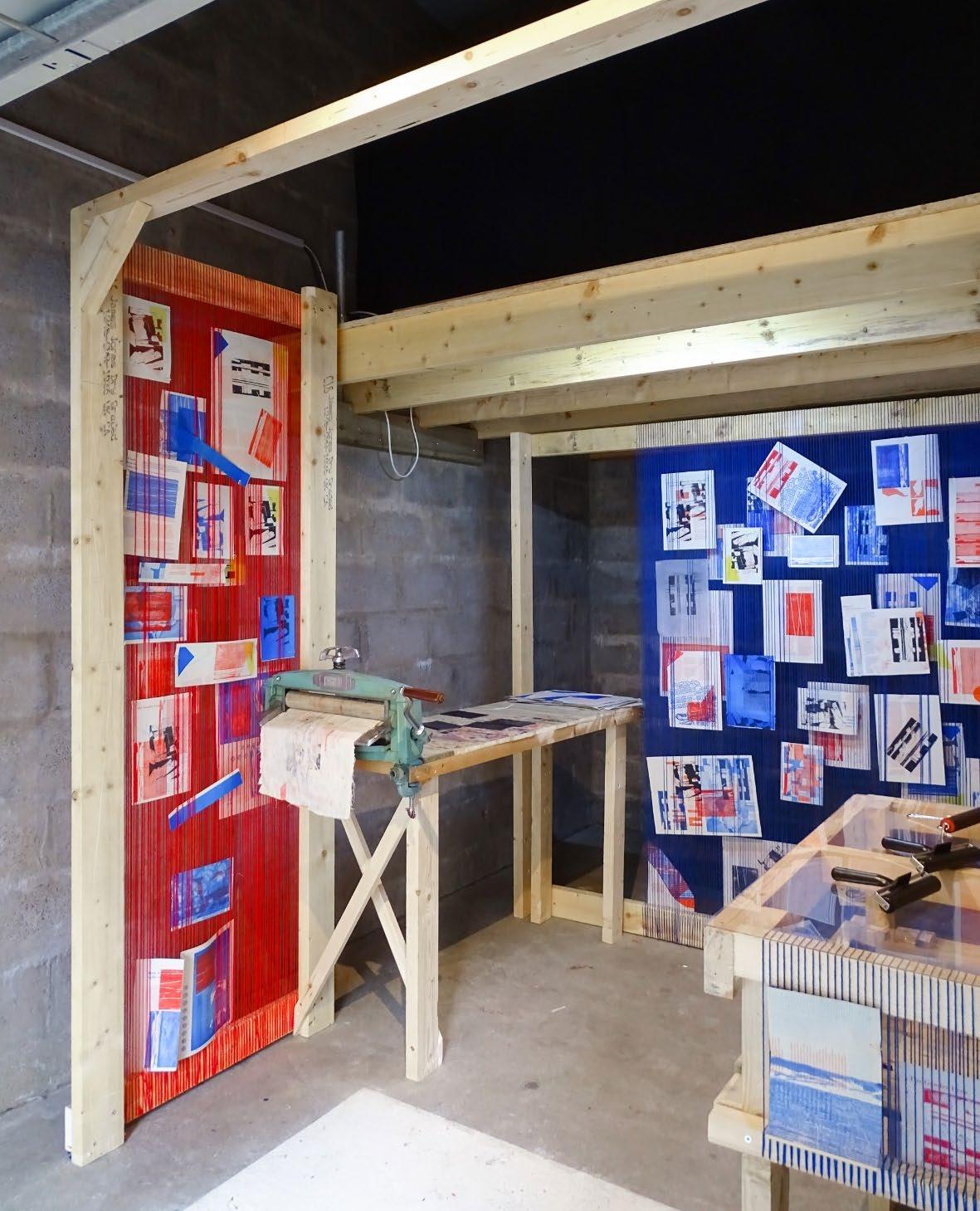
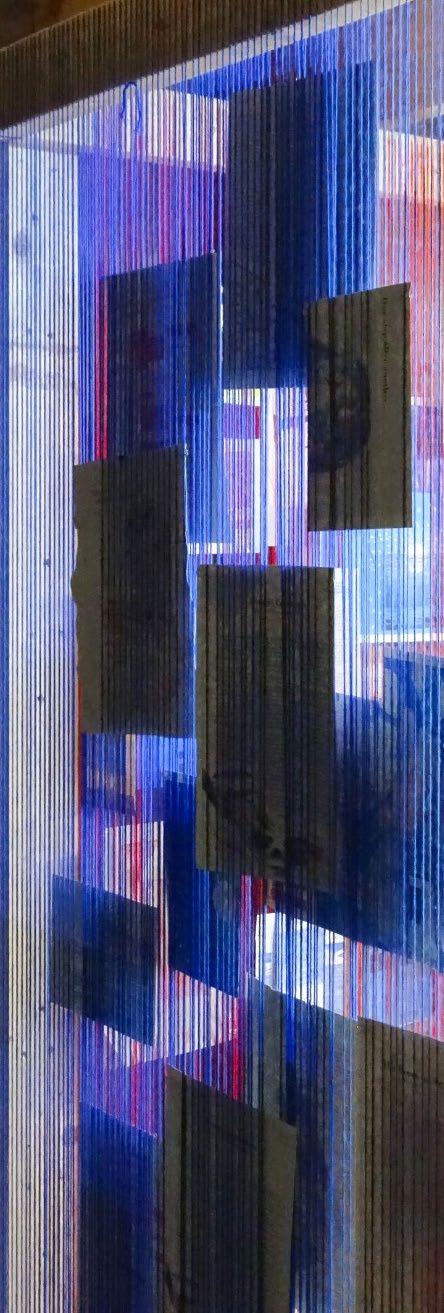
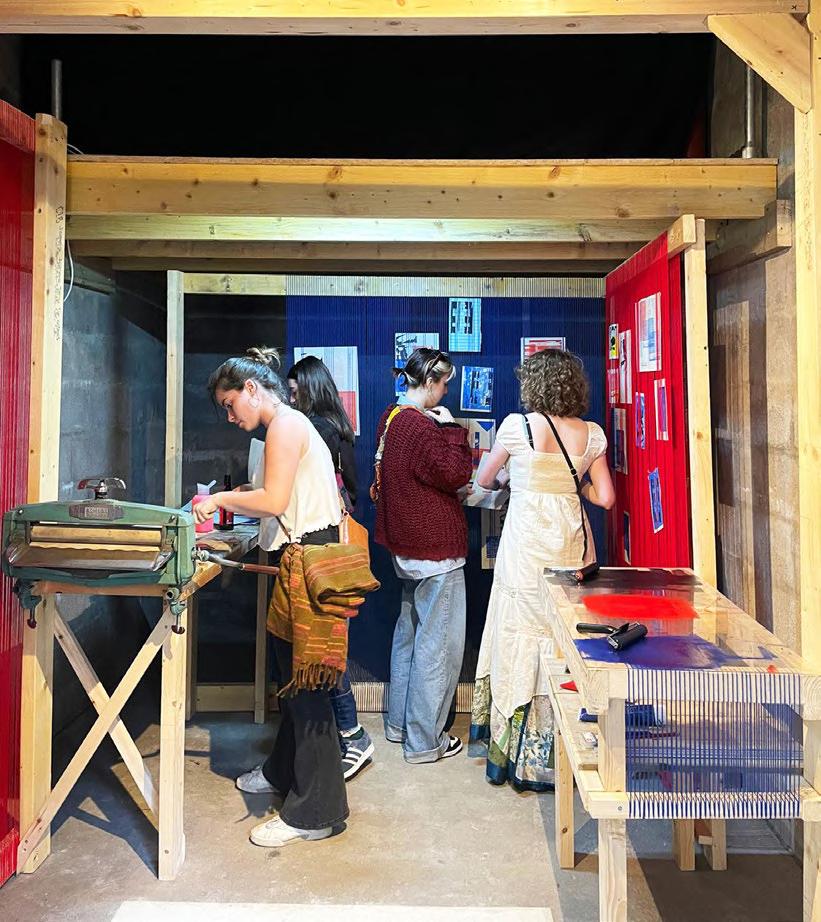
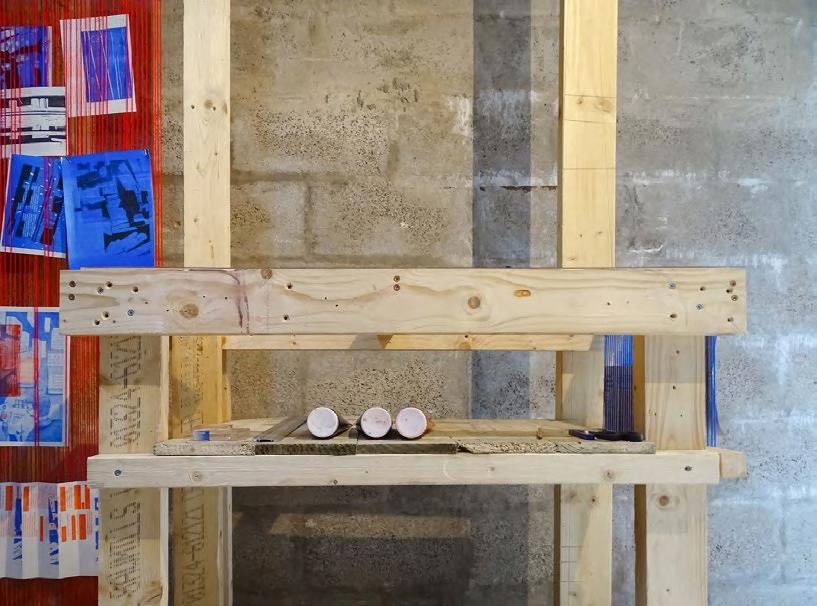
Printing in Space is an interactive installation created for the Architecture Fringe with Crumble Magazine. Constructed from recycled timber and a discarded printing mangle, the project transformed the act of printing into a spatial device shaped by public participation. Visitors generated prints that gradually inhabited the lightweight frame, allowing the installation to evolve through collective interaction. Developed through the reuse of unwanted materials sourced across Edinburgh, the project explored architecture as a participatory and circular practice. By translating printing into spatial form, the installation investigated how everyday participants can become protagonists in shaping the environments they inhabit.
Through projects such as this, I continue to explore how architecture can operate not only as a built object but as a framework for collective making and spatial experimentation. To me, all my endeavours, across live-build projects, experience in practice, earthen construction, and research, are different manifestations of the same ambition: to practice architecture as a form of environmental and social stewardship.
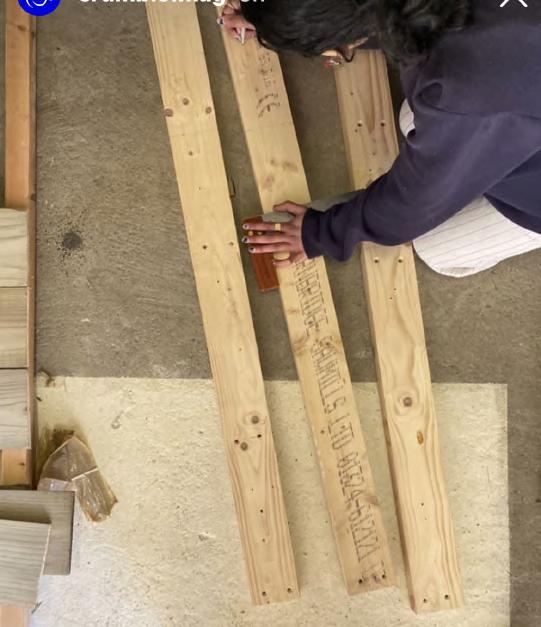
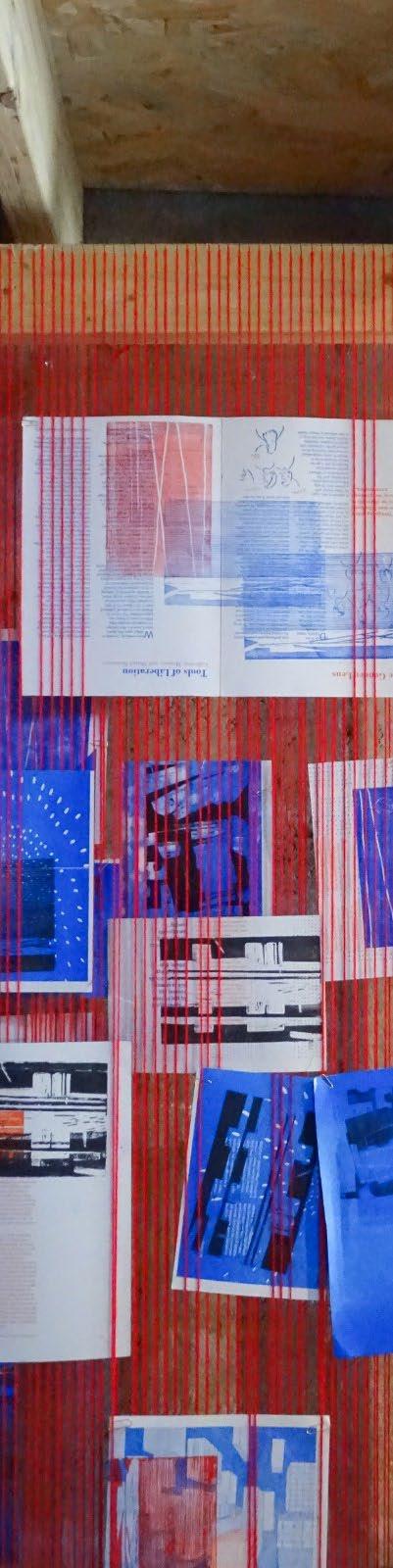
I developed the core design concept and led its construction. Team members contributed to material sourcing, building, and public engagement.