The Society for the Increase of the Ministry (SIM) is a public charity 501(c)(3), established in 1857 to identify future ordained leadership and develop their gifts through merit-based and need-based educational scholarships Since the founding of SIM in Hartford, Connecticut, it has supported over 5000 seminarians. Today SIM is a community of thought-leaders cultivating wisdom and offering educational resources for The Episcopal Church. We provide scholarships for theological education, analyze and publish data, convene dialogues, and deliver adaptive leadership training throughout the church and in support of the whole Body of Christ
SIM Board of Trustees
The Rev. Hilary Greer, Chair
David Hilder, Treasurer
Constance Perry, Secretary
Mark Grayson
The Rev Dr Linda Spiers
Miriam G. Willard McKenney
The Rt. Rev. Brian Lee Cole
The Rev. Canon Dr. Stephanie Spellers
Dr. Courtney Cowart, Executive Director
James M. Goodmann, Associate Director
Mari Shiukashvili, Missioner SIM Staff
About The SIMinarian
Theological education is a journey of discovery. In its evolving landscape ideas and beliefs shape the future of faith communities In this journal we offer you a glimpse into the theological inquiry, spiritual growth, and personal development of our SIM scholarship recipients Every year our brilliant scholars prove that their vocations have no boundaries, embracing diversity, tradition, and innovation. Each annual issue of The SIMinarian is a celebration of faith and the unending journey of growth and discernment. Our hope is to inspire, inform, and ignite passion for the future of our Church.
Our Contributors
Mildred Reyes
Wesley Theological Seminary | Class of 2028
Marisa Sifontes
St. James’ Church, NY | Class of 2021
Phil Hooper
St Anne Episcopal Church, OH | Class of 2019
Linda Etim
Yale Divinity School | Class of 2026
Demarius Walker
Earlham School of Religion | Class of 2026
Paige Trivett
Episcopal Seminary of the Southwest | Class of 2026
Shruti Kulkarni
Nashotah House Theological Seminary | Class of 2028
Quincy Hall
Bexley-Seabury Seminary | Class of 2026
Israel Portilla-Gómez
Bexley-Seabury Seminary | Class of 2028
St Mary’s Episcopal Church, Anchorage, AK
Additional Voices in This Issue
Executive Director, SIM
Jim Goodmann
Assistant Director, SIM Courtney Cowart, ThD
The Rt. Rev. Brian Cole
Bishop of the Diocese of East Tennessee
SIM Board Member
From the Editor
Mari Shiukashvili Editor of The SIMinarian
Missioner for Theological Formation, Leadership & Pastoral Care
The Society for the Increase of the Ministry
Holy and Weighty Space
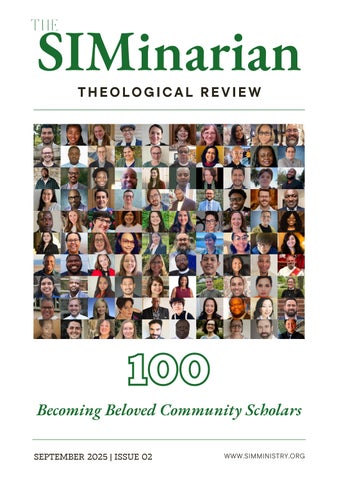
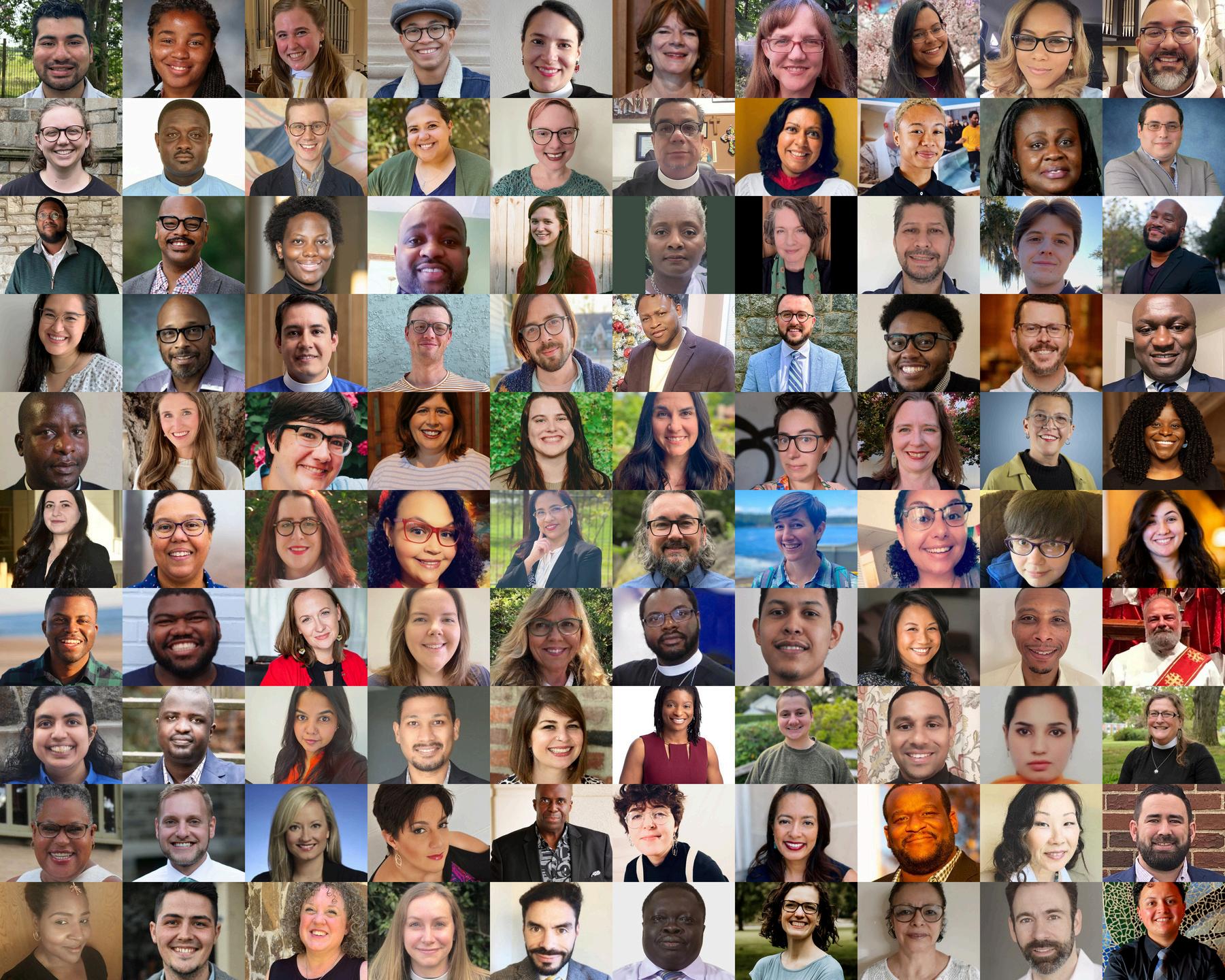
It is a joy and a privilege to welcome you to this space hosted by The Society for the Increase of the Ministry on behalf of the one hundred Becoming Beloved Community scholars of The Episcopal Church, whose composite portraits you see on the cover of this issue of The SIMinarian.
SIM’s scholars are Episcopalians, all of whom have demonstrated particular vocations to the work of becoming beloved community, the relational reality promised by the Christian gospel, and won for us by Jesus, who, in the succinct words of one of our scholars, “chose love even when it cost him his life ” [1]
This issue has been compiled even as we mark the 60 anniversary of the martyrdom of Jonathan Myrick Daniels, the twenty-six year-old SIMinarian and non-violent civil rights activist enrolled in the Episcopal Theological School in Cambridge, Massachusetts, when he was killed saving the life of 17 year-old activist Ruby Sales in Hayneville, Alabama, in August of 1965. th
We dedicate this issue to Jonathan Daniels, a SIM scholar from 1963 -1965, who dared to live the kind of love that SIM’s Becoming Beloved Community scholarships seek to honor in the lives of our emerging current-day sacred activists. This is a new generation whose lives are being consecrated, in the words of another Beloved Community scholar, Mildred Reyes, to the nurture and growth of a loving unity “forged by shared love, mutual respect, and the willingness to speak truth in the presence of power. ” [2]
In addition to the life and witness of Daniels this issue was inspired by the essays and sermons we received this year as part of the application process each Becoming Beloved Community scholar enters before they are selected and granted a scholarship for one to three years.
This year ’ s provocative essay question was inspired by the interfaith Service of Prayer for the Nation at Washington National Cathedral on January 21, where Bishop Mariann Budde’s sermon drew both praise and controversy. Applicants were asked to imagine stepping into a pulpit the following Sunday: What would they say in response? How might the Gospel speak into our divided moment? How does their story and calling shape that response?
The responses were profound.
I invite you to enrich your spiritual life and ministry by reading what just a few of the members of this anointed body of leaders has to say. Together their writings gathered in this journal create the kind of deeply faithful reflective environment Mildred Reyes says was present in the National Cathedral when Bishop Budde preached from the pulpit on January 21, 2025, – a “weighty and holy space, ” where the power of the truth, the wisdom and the challenge of Jesus Christ’s humble yet uncompromising love is made manifest, an inspiration and invitation to metanoia for us all.
This issue also serves to thank our SIMinarians, alumnae/i, friends and donors. Through the support of faithful Episcopalians SIM has been funding the theological education and formation of Episcopal leaders for 168 years, most recently distributing over one million dollars in Becoming Beloved Community scholarships. At SIM we believe that these 100 leaders, joined by all the future Beloved Community scholars SIM funds year after year, have the grace and the power to create the pathways we need to forge if The Episcopal Church is to become beloved community, God’s dream and prayer for all of us and for the whole Church and the world
Courtney Cowart Executive Director
The Society for the Increase of the Ministry
1. Quincy Hall, “The Audacity of Love: Living the Gospel in the Deep South, ” p. 39 in this issue of The SIMinarian.
2. Mildred Reyes, “The Cost of Discipleship, ” p. 10 in this issue of The SIMinarian.
The Cost of Discipleship
By Mildred Reyes, 2028 Wesley Theological Seminary
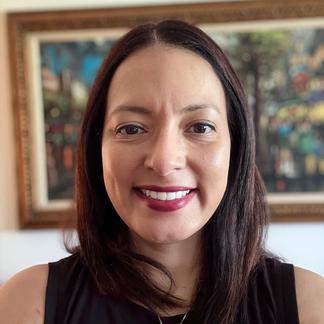
Mildred Reyes is a SIM Scholar at Wesley Theological Seminary and Bexley Seabury Seminary and serves as Missioner for Latino/Hispanic Ministries and Diocesan Initiatives in the Episcopal Diocese of Washington. She is a professed member of the Third Order Society of St. Francis (TSSF). Born in San Pedro Sula, Honduras, and raised in the Washington, DC area, she brings a passion for joy, love, justice, and presence to her ministry. Mildred lives in Maryland with her family and enjoys hiking, poetry, music, and celebrating diverse cultures.
This is why the Church’s voice matters.Wemustbeapeoplewhotell the truth. Who name sin not just in personal terms, but in public ones. Who proclaim not just personal salvation,butcollectiveliberation.
1 John 17:21
2 The Book of Common Prayer, p 855
3 Luke 4:18–19
4 The Book of Common Prayer, p 305
5 Galatians 1:10
6 The Book of Common Prayer, p 820
7 John 8:32
Justice is God’s Love
By Marisa Sifontes, 2021 Candler School of Theology
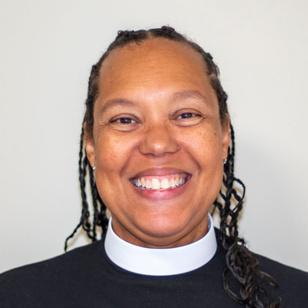
The Rev. Marisa Sifontes is a SIM alum from the first cohort of SIM’s Becoming Beloved Community scholars and a graduate of Candler School of Theology (M Div , 2021) She serves as Associate Rector of St James’ Episcopal Church, NYC with a focus on mission, parish life and pastoral care. Previously, Marisa was Associate Rector of a parish in Roanoke, VA and Diocesan Commissioner for Becoming Beloved Community in the Diocese of Southwestern Virginia. She now chairs the Commission on Reparations for the Diocese of New York.
To Those Who Paint Over Rainbows
By Phil Hooper, 2019 Church Divinity School of the Pacific
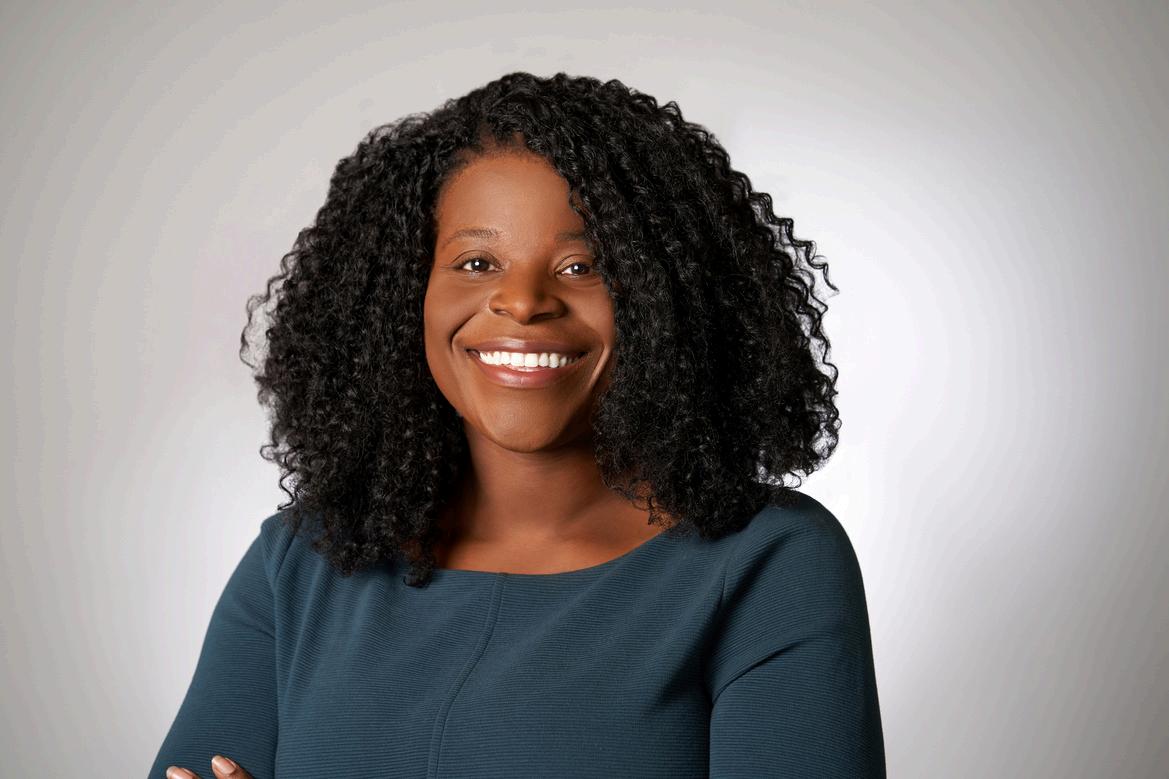
Linda Etim is a SIM scholar currently enrolled at Yale Divinity School in the Master of Sacred Theology (S.T.M.) program (2026), having previously received her M Div from Union Theological Seminary in New York in 2025. Prior to pursuing ordination in the Episcopal Church in the Diocese of Long Island, Linda had an extensive career in government and humanitarian service, particularly in Somalia, West Africa, and South Sudan
been hardened requires faith. Therefore, I would ground my sermon in the teachings of Jesus by framing it within the context of Luke, Chapter 4, the Gospel reading of that particular Sunday. I would begin by explaining the importance of understanding the occasion and context of that morning’s Gospel story: that Jesus, in Luke’s Gospel, is delivering his first public sermon in Galilee an area that had been known for Judean rebellions against the Roman Empire and whose people were living in the aftermath of that defeat and grappling with how to survive under a government that was oppressive and often cruel. I would then explain that even then, there had been disagreements about how to stand up to injustice or even what to advocate for as right in the face of such power. These divisions meant some people would have advocated for quiet acquiescence and others for a violent revolution. There would also have been a tendency to malign those on the other side by questioning their integrity or intelligence.
As I framed my sermon, I would stress that Jesus speaks of bringing “good news ” to the poor and oppressed, and wonder aloud whether a modern-
day Jesus might have referenced migrants, those who were undocumented, or members of the LGBTQIA community, as Bishop Budde had done. I would also draw the congregation’s attention to the importance of being willing to speak God’s truth even in front of those who may disagree with us and those who are powerful After all, Jesus modeled this form of bravery within the Gospel multiple times. A few verses later in the day’s Gospel reading, people disagreeing with Jesus would attempt to throw him off a cliff! [2]
He has told you, O mortal, what is good, and what does the LORD require of you but to do justice and to love kindness and to walk humbly with your God? [3]
perspective on the specificity, complexity, and universality of human suffering.
From this perspective, I have also come to realize that divisions and tensions, while intense and serious, are part of the human story I have never been more convinced about the necessity for
1. Luke 4:14
2. Luke 4:28-30
3. Micah 6:8
How do we resist?
The Episcopal Church in the Present Crisis
By Demarius Walker, 2026 Earlham School of Religion
Demarius Walker is a SIM scholar at the Earlham School of Religion in Richmond, Indiana A gifted social commentator and activist, Demarius’s spiritual pilgrimage of more than a decade has been dedicated to forging a social consciousness deeply ingrained in contemplative practice His journey has taken him from Boston University’s Marsh Chapel, to Canterbury Cathedral’s Community of St. Anselm, to Corrymeela Peace and Reconciliation Center in Northern Ireland, to Holy Cross Monastery in West Park, NY, and to serving as director of an Episcopal Service Corps program in Indianapolis.
Before we answer the question, “How do we, as the Episcopal Church, resist?” we have to answer the questions, “What are we resisting?” and even more fundamentally, just “Whoarewe?”
Who are we? We are an American expression of the Anglican branch of the Jesus movement. We are part of a Universal Church gradually emerging out of the wilderness, plagued by temptations to be spectacular, relevant, and powerful. We, the Episcopal church, are gradually emerging out of the wilderness with an established history, considerable economic resources, the conception of the Via Media, and the power to convene
Once central to society and culture, Christianity now finds itself increasingly on the margins. After centuries of prominence, the Church is being invited perhaps compelled —
than Christian Nationalism. It's deeper than white supremacy America the West the World is in crisis. The exact nature of that crisis is up for debate. Our inability to agree is part of the crisis. This crisis has many manifestations across the globe. They are legion. To reduce the issue to a single political figure, group, ideology, economic system, or set of institutions underestimates the pervasive nature of the problem. This desire to quickly find a scapegoat to blame is a central feature of the crisis.
One way to understand the present moment is that the world's complexity is outpacing our collective understanding. Our capacity to cope is being overwhelmed. Innovation is exponentially
Media, TEC may use its considerable resources to build alternative spaces, which shift the nation's consciousness. TEC must become not merely an engine of resistance but peace centers and engines of moral and prophetic imagination
This work is not just a feel-good type of reconciliation; instead, it is crucial to the success of many current struggles against injustice. In Why Civil Resistance Really Works the authors examined 323 resistance campaigns across the globe from 1900 to 2006. They found that nonviolent resistance was twice as likely to succeed, strategic choices of the movement mattered more than what they were up against, and the key factor in success was the movement's
ability to develop a broad-based coalition across society with many entry points into participation. In other words, developing deeper ties and a wider community makes for more effective resistance. Unfortunately, the Spirit of Retaliation actively works to undermine necessary coalitions TEC is uniquely positioned to engage in the sort of resistance that weaves our fraying collective fabric together and at least gives us a chance at survival.
To end, I will suggest some ways TEC can begin to engage in this sort of creative resistance.
1 TEC could use some of its vacant property to support intentional Christian communities that build alternative, sustainable, and peaceful ways of living across differences.
2.Episcopal dioceses could appoint Ambassadors of Reconciliation who commit to developing peacebuilding skills and working to cultivate peacebuilding activities within their churches and communities.
3.Churches could begin holding regular contemplative services of lament to allow space to publicly name and acknowledge the harms that are occurring to individuals, groups, and the nation as a whole. This might create space for strangers to meet, grieve, and support each other.
4.Churches and dioceses could cultivate crosscultural and cross-ideological spiritual friendships mediated primarily through letter writing as an alternative to toxic communication via social media.
5.TEC could host shared meals designed to foster collective theological reflection across lines of difference. Below is a framework for one such gathering I facilitated within a community navigating conflict.
Psalm 85 Meals
1 Inspired by John Paul Lederach’s exercise in Reconciler, p 83
2. Kay Pranis, The Little Book of Circle Processes: A New/Old Approach to Peacemaking (Intercourse, PA: Good Books, 2005).
A Psalm Lament of
By Kendall Paige Trivett, 2026
Seminary of the Southwest
Episcopal
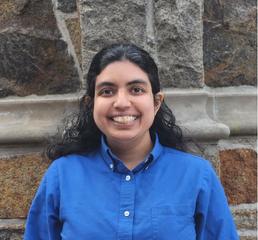
Shruti Kulkarni is a SIM scholar and a candidate for the Master of Sacred Theology (S.T.M.) at Nashotah House Theological Seminary, Nashotah, WI. She holds an M Div from Wartburg Theological Seminary in Dubuque, IA, and is a graduate of Columbia University in New York. The child of immigrant parents from India and originally raised in the Hindu tradition, Shruti’s spiritual journey is shaped by a deep commitment to mercy, compassion, and the universal love of Christ
would draw attention to those Bible verses (highlighted in The Poverty and Justice Bible) which stirred my heart to recognize the need for mercy and our call to have mercy. Then I would broaden the conversation to talk about the state of the nation and about America’s minds and hearts. I would point out that the vast majority of Americans, on all sides of the various political divides, genuinely want our country to be great, but disagree on what makes us great and on how to get to greatness. I would name how divided our country is, then credit the differing visions of greatness and how to get there with causing the divide. Then I would warn the people that it is our responsibility to make sure that our vision of
g how we might help them. I would acknowledge that such conversations might be uncomfortable and difficult, especially in light of the fact that our differing visions of greatness and how to get there prioritize helping different demographics and their particular concerns. Then I would remind the people that it is our responsibility, as part of our baptismal promise to honor the
The Audacity of Love
Living the Gospel in the Deep South
By Quincy Hall, 2026 Bexley-Seabury Seminary
Quincy Hall is a SIM scholar at Bexley-Seabury Seminary and a Candidate for Holy Orders in the Episcopal Diocese of Alabama An educator at the University of Alabama at Tuscaloosa, he has more than a decade of experience in Honors programs as a classroom instructor, curriculum developer, and nationally certified counselor. A queer African-American man in the South, Quincy brings both personal insight and pastoral imagination to his vocation, alongside his work as a classically trained pianist and church organist.
I’ve witnessed this defiant hope in the quiet acts of bridge-building that rarely make headlines: The student who, after losing a parent, channels her grief into organizing a support group for her peers. The congregation member who overcomes his own biases to advocate for a trans teen in the community.
Each of these acts whispers the same truth: the Kingdom of God is breaking in, even here, even now.
There is a cost to this kind of love. It asks you to remain vulnerable in a world that will sometimes exploit that vulnerability. It means risking rejection, or fatigue, or the quiet ache of knowing that the seeds you plant may never bear fruit in your lifetime.
And yet, this is the call. To love prophetically is to align our lives with the pattern of Christ the
Prophetic love is not soft or sentimental; it is both survival and resistance refusing to be diminished by fear and hate, insisting on the oppressor’s humanity whilestillnamingtheirsin.
Israel Portilla-Gómez is Associate Rector for Family Ministries at St Mary’s Episcopal Church in Anchorage, Alaska, and a Doctor of Ministry candidate at BexleySeabury Seminary Born and raised in Colombia, he was formed in Catholic schools and seminaries and ordained a Catholic deacon in 2010 before being received as an Episcopal deacon in 2016 and ordained priest in 2019. He previously served as Priestin-Charge of Mission at St John’s Cathedral in Bogotá An educator for nine years, Israel holds a Master of Science in Education and e-Learning from the Open University of Catalunya, Spain He lives in Anchorage with his wife, Linda, and son, Matthew
If a call for mercy for vulnerable people such as the LGBTQ+ and immigrant communities sounds like partisan politics, pause for a second: letushearagaintoday'sGospel.
1.Psalm 19:14
2.Luke 4: 28-29
when she asked for mercy for our LGBTQ+, immigrant, and other marginalized siblings Let
The Crafty and Cunning Work of the Gospel
By The Rt Rev Brian Cole Episcopal Diocese of East Tennessee
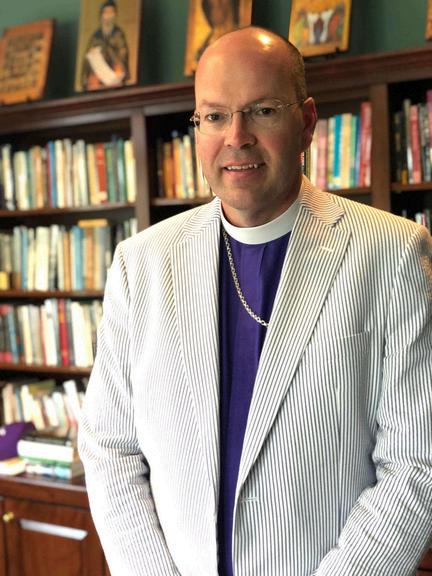
The Rt. Rev. Brian Cole is a member of the Board of Trustees of SIM, and serves as the fifth bishop of the Episcopal Diocese of East
Tennessee. In this sermon Bishop Cole reflects on Luke 16:1-13 in light of a recent experience this summer visiting the Mississippi Delta.
AsstewardsoftheGoodNews,weare to be as crafty and cunning as the unjust steward, but on behalf of the cause of the Kingdom breaking in hereandnow,whereweworkandlive andwheelanddeal.
Witnesses for Prophetic Imagination
James Goodmann
Associate Director & Director of the Scholarships Program
The Society for the Increase of the Ministry
BecomingBeloved CommunityScholars
1. Anthony Rodriguez, Virginia Theological Seminary 2027
2. The Rev. Yaa Addison Warren, Virginia Theological Seminary 2023
3. Adele Gay Dennis, School of Theology at Sewanee 2026
4 Alden Emery Fossett, Yale/Berkeley Divinity School 2026
5. The Rev. Alejandra Trillos, Virginia Theological Seminary (DMin) 2026
6. The Rev. Alyssa Stebbing, Seminary of the Southwest 2022
7. The Rev. Amanda Taylor-Montoya, Church Divinity School of the Pacific 2022
8. The Rev. Amelia Bello-Santana, Virginia Theological Seminary 2025
9. The Rev. Anatol “Ana” Ferguson, School of Theology at Sewanee 2025
10. Bro. Angel Gabriel Roque, Seminary of the Southwest 2026
11. Bethany Lynn Gugliemino, School of Theology at Sewanee 2028
12 The Rev Bernard Ago Quaye, Candler at Emory University 2027
13. The Rev. Brendan Francis Nee, EDS @Union 2024
14. Camilla Caudell, Virginia Theological Seminary 2027
15. Carissa Riedesel, School of Theology at Sewanee 2027
16. The Rev. Carlos Ruvalcaba, Bloy House 2019 Claremont University (PhD) 2030
17. The Rev. Marcia Chanta Bhan, Virginia Theological Seminary 2020
18. The Rev. Chris Leung, Virginia Theological Seminary 2025
19 The Rev Creamilda Yoda, Virginia Theological Seminary 2022
20. The Rev. Cruz Torres-Razo, Seminary of the Southwest 2025
21. Demarius Jarron Walker, Earlham School of Religion 2026