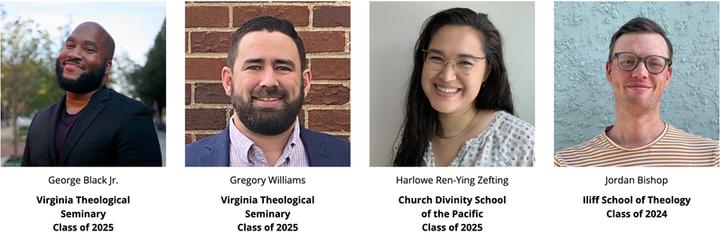
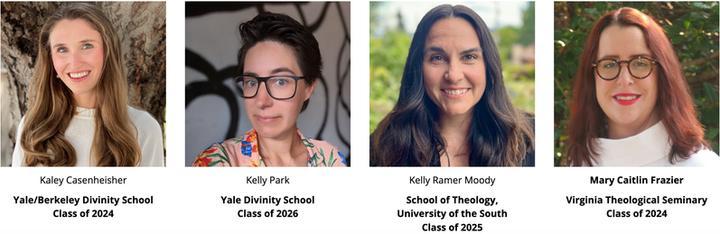
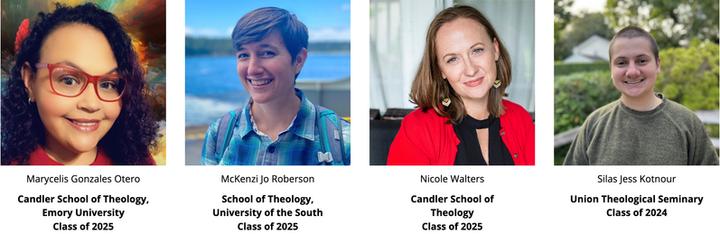
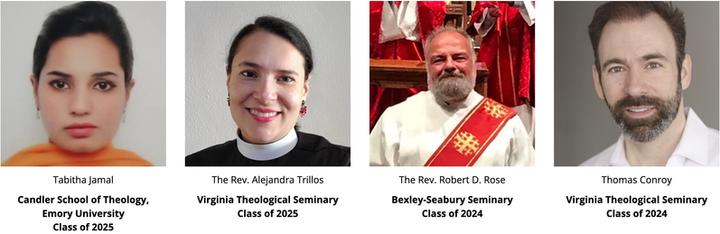
The Society for the Increase of the Ministry (SIM) is a public charity 501C(3), established in 1857 to identify future ordained leadership and develop their gifts through merit-based and need-based educational scholarships. Since the founding of Sim Ministry in Hartford, Connecticut, it has supported over 5000 seminarians Today SIM is a community of thought-leaders cultivating wisdom and offering educational resources for The Episcopal Church. We provide scholarships for theological education, analyze and publish data, convene dialogues, and deliver adaptive leadership training throughout the church and in support of the whole Body of Christ.
A b o u t
S I M i n a r i a n
In the ever-evolving world of theological education, where ideas and beliefs shape the future of faith communities, we offer you a glimpse into the depths of theological inquiry, spiritual growth, and personal development of SIM scholarship recipients Every year our brilliant group of scholars prove that their vocations have no boundaries, embracing diversity, tradition, and innovation. Each issue of SIMinarian, prepared at the end of an academic year, is a celebration of faith and an unending journey of growth and discernment Our hope is to inspire, inform and ignite the passion for the future of our Church
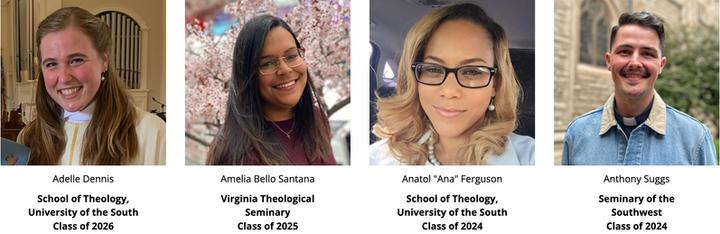
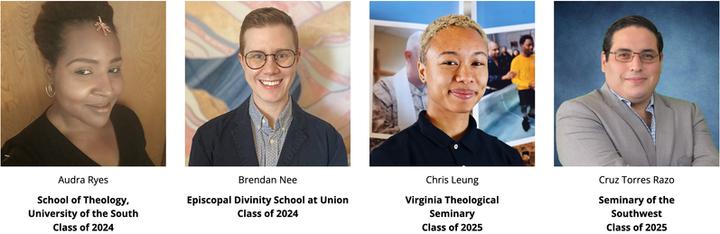
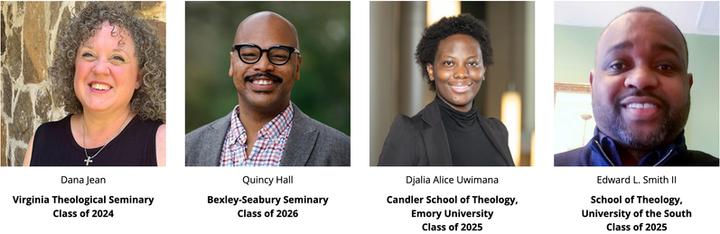
Our Contributors
Dana Jean
Virginia Theological Seminary, Class of 2024
George Black Jr.
Virginia Theological Seminary, Class of 2025
Kaley Casenheisher
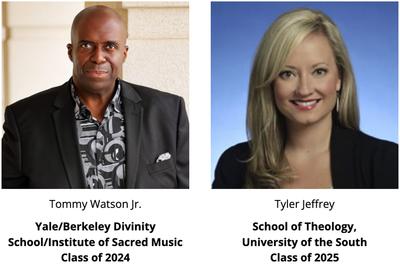
Yale/Berkeley Divinity School, Class of 2024
Kelly Ramer Moody
School of Theology, University of the South, Class of 2025
Mary Caitlin Frazier
Virginia Theological Seminary, Class of 2024
Nicole Walters
Candler School of Theology, Class of 2025
Quincy Hall
Bexley-Seabury Seminary, Class of 2026
Thomas Conroy
Virginia Theological Seminary, Class of 2024
From the Editor
As I welcome you to the inaugural issue of SIMinarian, I’d like to share its origin story with you. Having graduated with my master’s in theological studies in May of 2023, I found myself reflecting on the journey and going through the diverse array of essays, reflection and research papers, poetry, and even artwork I had created over the course of three years. While a sense of pride swelled within me looking at my work and growth, there was also sadness knowing that much of my writing had remained unseen, shared mostly only with professors (and my husband, of course) However imperfect those pieces might have been, I thought they deserved a broader audience
Mari Shiukashvili Editor of SIMinarian Missioner for Theological Formation, Leadership & Pastoral Care
The Society for the Increase of the Ministry
Note about our scholars
James Goodmann
Associate Director & Director of the Scholarships Program
The
Society for the Increase of the Ministry
Calling-making: Finding your Spin
By Kaley Casenheisher, 2023 Yale/Berkeley Divinity School
Calling, from the Latin vocare means ‘to call, to name ’ Articulating calling is a discipline and an art. Refining one ’ s calling is a vulnerable craft. As a classical singer by training, I’ve been a lifelong student of the voice and its dynamism. I’ve studied voice-making for over twenty years and as I’ve prayerfully discerned a call to the priesthood, I’ve noticed parallels in vocalizing and calling-making. Both practices require faithfulness to the process and call forward an antiphonal response shaped by who you are and what you hear. Both require tuning the heart and training the ear Both entails offering the whole self– body, mind, and soul– to the sound and the chorus. Calling me to return, and learn, and respond antiphonally.
Early in voice training, my teacher introduced me to the technique of finding the spin My teachers described the spin as the pocket where the efficiency of breath, focus of sound, and clarity of color are integrated. Refining one ’ s spin is as integral to the art of music-making as it is to vocation-making Since each voice spins uniquely in the body, they must discover their spin through practice, experimentation, and careful listening. As you listen, you are tuning to what you hear and what others hear that you do not. Just as learning to recognize and sing in one ’ s spin is seminal to the art of singing easefully and beautifully, I find the same in vocation-making. We must find our spin in our callings. As we discern our callings and how they call us, we participate in the life-long practice of finding ourspin So, we must find our practice rooms where we can risk and be witnessed as we experiment. Sometimes, these rooms are seminary classes, the ritual of the daily office, community Eucharist, parish internships, or Sunday
“Lord our God, hear my prayer, the prayer of my heart Bless the largeness inside me, no matter how I fear it. Bless my reed pens and my inks Bless the words I write May they be beautiful in your sight. May they be visible to eyes not yet born. When I am dust, sing these words over my bones: she was a voice ”
May our callings keep spinning and become the sound of beloved communities.
Together Around the Table
By Nicole Walters, 2022 Candler School of Theology
I came of age in a tradition that didn’t place a strong emphasis on what they called The Lord’s Supper. A few times a year we would come to a service to find silver serving trays holding individual cups of juice and tiny, white squares placed around the room. As with the other elements of the Baptist worship I experienced, Communion was used as a means of connecting us with the Lord, individually. It was largely expressed as a symbol of remembrance, helping us recall the sacrifice Jesus made for each of us and allowing us an opportunity to evaluate our personal relationship with God.
given to me, a gift each week the centerpiece of our worship.
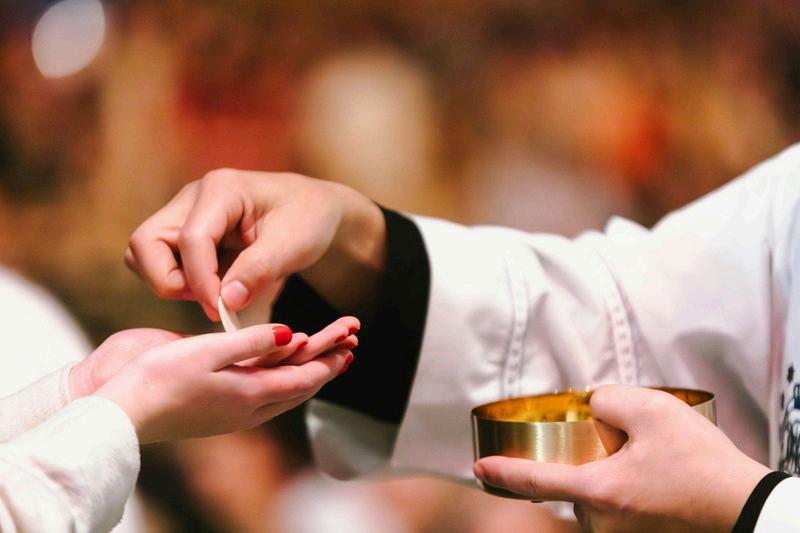
The chalice bearer followed behind her, wiped the edge of the cup, and turned it before offering it to my upturned face. Slowly, the wine crossed my lips as he reminded me this is the blood of Christ, the cup of salvation
To fulfill your purpose, he gave himself up to death; and, rising from the grave, destroyed death, and made the whole creation new. And, that we might live no longer for ourselves, but for him who died and rose for us, he sent the Holy Spirit, his own first gift for those who believe, to complete his work in the world, and to bring to fulfillment the sanctification of all…
family that stretches across time as well as place. These are the same words of thanksgiving that millions before me have said and who now eat and drink in the physical presence of the Lord who is mysteriously present in the elements of this feast and in each of us who make up his mystical body here on earth
And grant that we may find our inheritance with all the saints who have found favor with you in ages past. We praise you in union with them…
The first week I carried the chalice toward waiting hands, my fingers trembled. My apprehension spoke of the weight of the task, the utter holiness of extending the presence of the Lord to another person. My eyes met those of a friend across the rail and I tipped the cup to his lips The chalice in both of our hands at once the Lord there between us we were in communion with one another.
I kneeled a little lower to reach a toddler next. She stretched out the wafer in her hand and dipped it in the cup. When she sucked the wine off the bread and reached out again, her father gasped. Her mother cried out, and I just laughed.
Who doesn’t want a second helping? We come to the feast hungry and long to be filled, after all.
Here, among family, we reach out for the living water that promises to keep us forever satiated. We hold it out to each other We offer up another helping every week. We ask for another taste. Together around the table, we dream of the day we will hunger and thirst no more.
Christ our Passover is sacrificed for us Therefore, let us keep the feast.
1 Luke 22:16
2 Isaiah 25:6
3 All quotations taken from Eucharistic Prayer D, The Book of Common Prayer (Emphasis added)
Becoming Beloved Community
George Black Jr.
Virginia Theological Seminary
As I pondered in the language of the term “Beloved Community”, I was reminded that while the term was coined by the 20th-century thinker and theologian Josiah Royce, its prevalence and current shape are to be attributed primarily to the Reverend Dr. Martin Luther King Jr., who popularized the term during his life
and in his work. Dr. King saw beloved Community as a term pointing towards a reality where Dr King’s vision of The Beloved Community was “not a lofty utopian goal to be confused with the rapturous image of the Peaceable Kingdom, in which lions and lambs coexist in idyllic harmony.” Instead, King’s Beloved Community was the practical and achievable result of a strategy that sought to build a “critical mass ” of people equipped with the skills, resources, and courage necessary to live a life
life committed to a spiritually, physically, and emotionally aggressive and active nonviolent resistance to evil, particular the evils of poverty, racism, and militarism (The King Center). Beloved Community is a global reality brought about when we decide to fervently and unabashedly live into our God-given vocation to push up against the dark forces that impede on our and anyone ’ s ability to live a thriving life, standing firm amidst the unavoidable conflict implicit in standing against dark forces, such that we partner with God and co-creating a world where the honoring of human dignity is a fundamental and unchallenged idea.
I am a 36 years old Black man, a Middler at Virginia Theological Seminary, and a Postulant for Holy Orders in the Episcopal Church. Prior to my decision to come to seminary, I worked in schools for over a decade, and, being from New Haven, Connecticut, have lived under the shadow of the Prison Industrial Complex that is Whalley Correctional Institution all my life. I have witnessed schools break the spirits of Black boys despite the best of intentions on the part of some caring adult, and I have seen friends and family cycle through the doors of Whalley Prison like it was a rite of passage, marred by the trauma of having been stripped of their humanity even if only temporarily. I believe God has used my context and experience to call me to live out my priestly vocation as a school and prison chaplain, walking alongside boys and men, particularly Black boys and men, in the places where poverty, racism, and militarism often meet. I imagine a world where prisons are no longer our immediate response to the errors of Black men not because we have done away with crime, but rather because a “critical mass ” of people are so committed to doing all things in a way that honors
“What is Beloved Community? What does it look like to you?”
man and student I come in contact with that they are so deeply loved by God that God decided to pursue them through time in The Incarnation, and particularly for incarcerated men, to listen to the weight of the stories, and, through absolution, assure them that nothing can separate them from the love of God that is in Christ Jesus. Lastly, I seek to be trained in the art of Kingian Nonviolence by folks already out in the world doing this work, such as The King Center and other groups dedicated to bringing about Beloved Community
My hope is that all of these steps, seminary, CPE, residency, my time in the diaconate, my certification as a chaplain, my ordination to the priesthood my occupation as a school and prison chaplain, and my training under experienced activists such as those at The King Center will form me into someone who is able to love people in their discomfort while also reminding them of their God-given vocation to love the world and the people in it because I believe God is calling myself and so many others to be people who will call The Church to the task. I believe that what The Church needs more than anything are people called to Holy Orders; deacons, priests, and bishops, who will share with them the truth that I believe Dr. King was attempting to share all those years ago, the truth that we, The Church, are the “critical mass ” of people called to bring about the Beloved Community, and that that beloved community will only come about when
with embarrassment on his face. When they began to serve Communion, there was no station in our upper-lever
Dana Jean
Virginia
Theological Seminary
In my context and diocese, I hope this dream translates to planting churches and developing new missional communities that will reflect this hope of becoming Beloved Community, churches that will provide respite and sanctuary for people who have been battered and bruised and that will challenge and draw the best from people who have experienced privilege and worldly comforts. In my anticipated ministry, I will facilitate and encourage Beloved Community by hiring staff and raising up leaders that both represent a multiplicity of voices and backgrounds and are committed to actively being more than just welcoming, which implies a condescension, that the church condescends to welcome in the “other” who is not part of the group. I will facilitate and encourage Beloved Community by preaching and teaching the liberative message of the Gospel to both the oppressed and the oppressor And I will facilitate and encourage beloved
2.
1. Stephanie Spellers. The Church Cracked Open: Disruption, Decline, and New Hope for Beloved Community, (Church Publishing, 2021), 32.
Spellers, The Church Cracked Open, 32.
3. Verna J. Dozier, The Dream of God: A Call to Return, (Seabury Books, 2006), 45.
Sermons
The following three pieces are transcripts of sermons preached by our seminarians across various settings last year Each sermon draws from passages in the Gospel of Matthew, following the eucharistic lectionary for Year A
Thomas Conroy
Virginia Theological Seminary
Matthew 5:1-12
day, Micah 6:1-8, to other teachings of Christ, especially the essence, presence, connection, and duty of the neighbor e.g. as the parable of the good Samaritan [Luke 10:25–37] and The Judgment of Nations [Matthew 25: 31-46] urge and illustrate.
Christ is in the Neighbor
What is it like to be a 2nd, 3rd, or 4th generation Latino and to be asked, “Where are you from?”
The questioner is assuming that the presumed foreigner must be from somewhere other than the United States. The presumed foreigner is seen first as other or stranger, not as neighbor, and not as long-time resident of his or her own neighborhood
who already have long histories of displacement. The fear of losing your home, of being shunned from the familiar areas of growth, time, relationships, and memories That fear causes one to be poor in spirit. It causes one to mourn. One certainly feels meek not having any say in what happens to one ’ s neighborhood and one ’ s own circumstance. There is a hunger and thirst for righteousness. There is a longing for mercy, purity, and peace.
CARECEN not only fends for those marginalized groups I have mentioned, concerning how they help them to age in place. CARECEN is also welcoming the immigrant as a new neighbor, never thinking to see them as stranger That is Christ-like. Christ is in the neighbor the neighbor
and the divine meaning of the human situation.”
And he says, “That God had chosen to become a Galilean underscores the great paradox of the incarnation, in which God becomes the despised and lowly of the world.” … “What the world rejects, God chooses as his very own. ”
These statements give the beatitudes even more resonance Jesus imparts to the listening crowd that the ones among them who are sad, weak, in search of justice, and lacking or low in spirit will find joy, strength, justice, and renewed spirit. Those who exhibit mercy, compassion, peace, and justice will experience the very essence of God in the here and now and ever after.
Scan to listen to Thomas Conroy’s song, Christ Is In The Neighbor, an artistic response – in lyrics and music – to Matthew 5:1-12.
Here in the welcome, here in the word; here in the consecrated bread and wine, here in these healing hands of yours and mine, Christ is in the neighbor
Christ is in the neighbor who is meek.
Christ is the neighbor who is seeking peace.
Christ is in the neighbor, pure in heart, filled with grace,
And Christ is in the neighbor when we meet face to face
Here in the welcome, here in the word; here in the consecrated bread and wine, here in these healing hands of yours and mine, Christ is in the neighbor.
Blessed are the poor, Christ is in the neighbor. Blessed, those who mourn, Christ is in the neighbor.
Blessed are those doing justice for the kingdom of God
Here in the welcome, here in the word; here in the consecrated bread and wine, here in these healing hands of yours and mine, Christ is in the neighbor.
Christ is in the neighbor. Christ is in the neighbor
Jesus did not preach opposition to either of these authorities. Rather, he preached an altogether different source of authority and liberty that transcended them both, and empowered individuals to live from the same transcendent source of love. The message was a universal one with particular features for particular people. To a dead little girl, he gave new life. To a hemorrhaging woman, he gave renewed strength To a syrophonecian woman, he gave dignity through his own repentance and humility. To a rule-following rich man desperate for affirmation, he gave a liberating yet costly instruction to leave
Bexley-Seabury Seminary
Matthew 28:16-20
the thought that there were babies who died without claiming Jesus as their Savior and people across the world who had never even heard the Gospel of Jesus. I could tell that the teacher was not pleased by my difficult questions when she told me to ask my PawPaw, the senior deacon of the church, about these questions instead.
This exclusionary view of the others in society manifested itself in many different ways over the course of my life from that point. Like in the way that family was very cautious and concerned about my close friendship with my friend Jahlen who lived across the street from where we lived back in Michigan.
“Why do I have to stop being friends with Jahlen?”
Jahlen’s family was Muslim and sadly our family was not immune to the fear that permeated society of anyone who adhered to the same religion of the likes of Osama bin Laden and those responsible for the attacks on 9/11. Every interaction that I had with Jahlen’s family was rooted in love and respect. Not once did I recall any proselytizing of their faith. In fact, my observation of the fact that they were Muslim was
Quincy Hall
(with everything that we have and don’t have) into
In today’s gospel reading, the disciples make the trip to a mountain at Jesus’s direction. When they see Him face to face, scripture tells us that while they worshiped Jesus on the mountain, scripture tells us that some of them doubted. Who are those that doubted? Is it that some worshiped and some doubted or was it rather that the disciples worshiped and doubted? I believe that the eleven met Jesus with both their worship and their doubts. They witnessed their Teacher’s execution for proclaiming God’s kingdom built on love, justice, and equity, uprooting the status quo and the same-old-same-old way of doing and being
Christianity has a body count problem, thinking that it's always about the numbers. Well, I’m here to tell you that Jesus is about relationship The here and now. And quality: how did the interactions make the person feel afterward? What was learned? What did it mean to help someone without asking or expecting anything in turn? When we take our faith seriously, living out and using it for the betterment of those around us, our neighbors actually become more compelled by our actions or what we have to say. Doing the commission without the groundwork of loving our neighbor is how we go from a loving church in the first millennium to an Indigenous slaying, culture destroying church in the second.
“With our imperfect hands and hearts set on the life-giving relationship shown to us through the liberating work of God: Lover. Beloved. Love.”
Joy as a Christian Virtue
by Mary Caitlin Frazier Virginia Theological Seminary
In his first letter to the Corinthians, the apostle Paul writes that “faith, hope, and love abide, these three; and the greatest of these is love” (1 Cor 13:13) But what is love without joy? Love is merely a dutiful gesture, lacking heart. Joy gives love its meaning. Surely then, joy is also a foundational Christian virtue. In the Bible, we hear God calling his people to joy again and again To quote a verse of scripture made famous by its musical setting by George Frideric Handel, “Rejoice greatly, O daughter Zion! Shout aloud, O daughter Jerusalem!” (Zach 9:9). In joy, God calls us to join his dance of creation. We are made to rejoice In this essay I will explore the nature
j y j y hope for is not worth living or hoping for. It is the community’s memory of a life before enslavement that gave hope to the Hebrew slaves in Egypt.
Importantly, joy is not toxic positivity. It is not denying the suffering and pain of the world. We all will sojourn in the valley of the shadow of death. Joy is seeing the world as it is, the innumerable blessings and the very real curses, and making the choice to embrace the former and acknowledge the latter This is similar to overaccepting, a term that Sam Wells defines in his book Improvisation: The Drama of Christian Ethics “Overaccepting is an active way of receiving that enables one to retain both identity and relevance ” The world offers us the good,
In these sacred lines, the celebrant invites the congregation to raise their hearts to God If delivered correctly, these lines should convey the joy of the feast to come. When we raise our hearts to God, we are enacting what is spiritually happening while we experience joy: a raising of our spirits to meet the Creator, aligned perfectly in the praise for which we were made. Philip Kenneson, in his essay titled “Gathering: Worship, Imagination, and Formation,” writes, “because human beings are social creatures, when they gather together they inevitably presuppose and reinforce much about the shape, meaning, and purpose of the world that they understand themselves to inhabit.” Thus, when we gather weekly to offer our thanksgiving in joy, we are reinforcing the habit of joyfulness and gratitude in our communities. It is right to give God thanks and praise, indeed!
IIn her book Aggressively Happy, Joy Marie Clarkson writes, “It may seem criminally insensitive to pursue joy when confronted with the deep sorrow, injustice, and chaos of the world.” I confess that is often my reaction toward cultivating joy. I do not want to betray those who are suffering through my own enjoyment. But the fact remains that God calls us to rejoice. Through joy we partake in God’s creation. We affirm our goodness and allow that goodness to flow out of us to others. We are not putting our heads in the sand Rather we are overaccepting the offer of the world. Through worship practices such as the Sursum Corda, we practice the raising up of our hearts to God in joy and gratitude. “O come, let us sing to the LORD; let us make a joyful noise to the rock of our salvation!” (Ps. 95:1).
Amen!
1. Samuel Wells. Improvisation: The Drama of Christian Ethics, (Brazos Press, 2004), 109.
2. Philip Kenneson, “Gathering: Worship, Imagination, and Formation,” The Blackwell companion to Christian ethics, (2004), 57.
3. Joy Marie Clarkson, Aggressively Happy: A Realist's Guide to Believing in the Goodness of Life, (Bethany House Publishers, 2022), 21.
“O come, let us sing to the LORD; let us make a joyful noise to the rock of our salvation!”