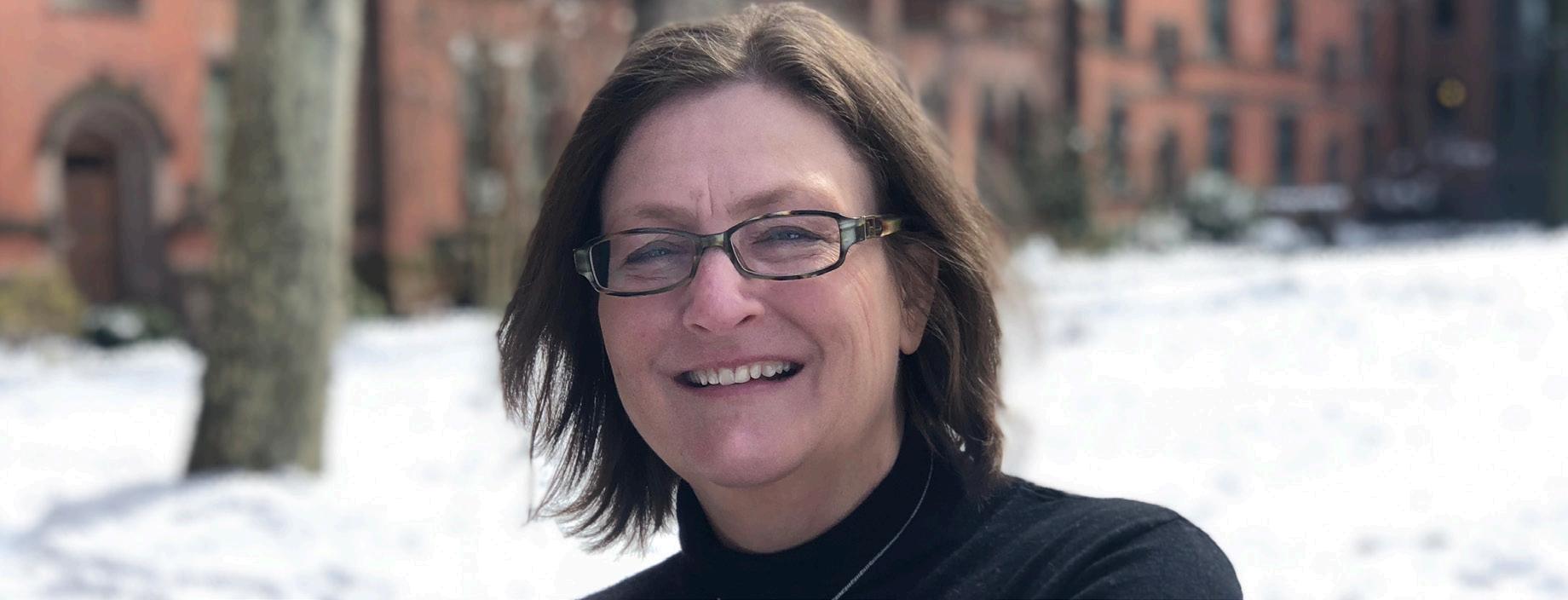
Courtney Cowart most recently has been spearheading the reimagining of a 161-year-old Victorian voluntary organization, the Society for the Increase of the Ministry (SIM). She is also at work on a book of essays entitled, Walking the Way of Love.
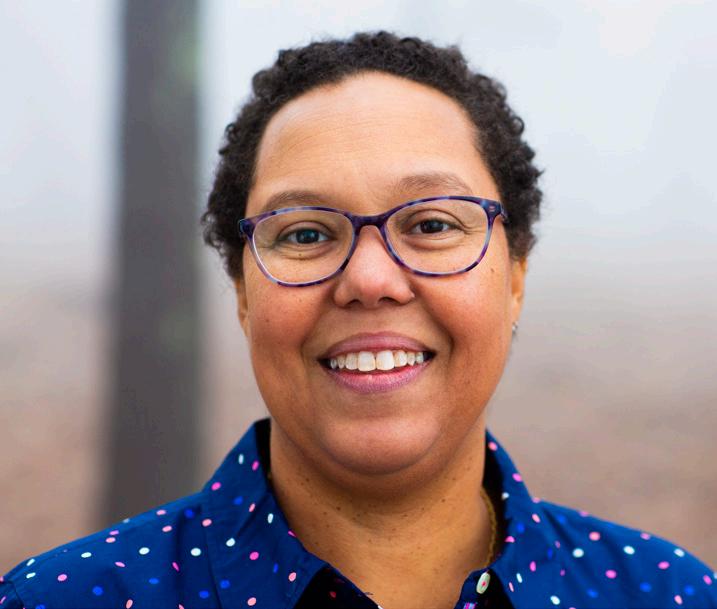
The Rev. Susan Daughtry serves as Missioner for Formation for the Episcopal Church in Minnesota, chiefly by stewarding the SchoolforFormation.org. Rebecca Solnit’s book A Paradise Built In Hell: The Extraordinary Communities that Arise in Disaster captivates her worst-case-scenario heart.
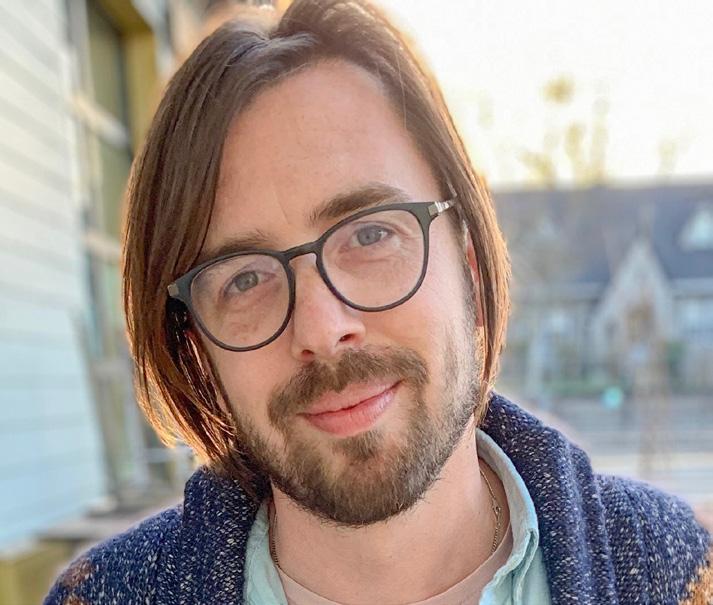
James Goodmann is co-editor of The Future of the Faith and manager for SIM’s scholarship programs. He has worked with Dr. Cowart for eight years – with a significant share of that work blending contemplative practice and social process for churches, dioceses and other organizations. Lately, he has been engrossed by the inter-connections of the mystical theologies of Moses Maimonides and Meister Eckhart.
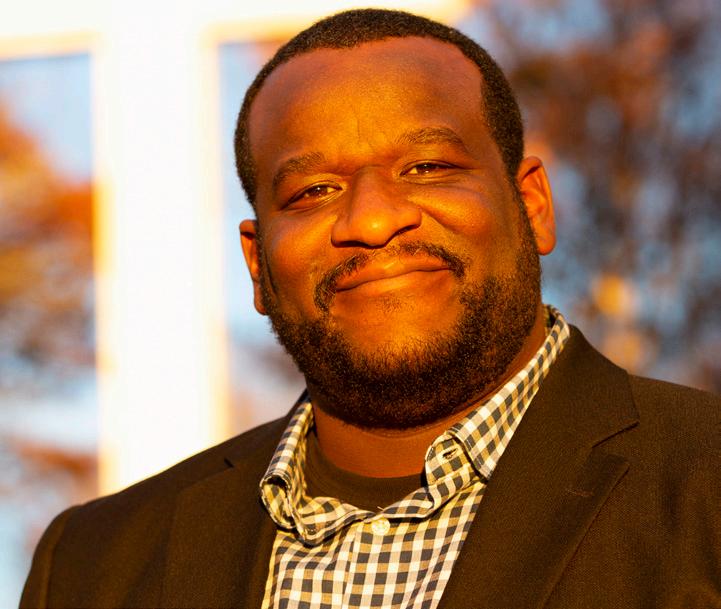
Mark Grayson is a former Hollywood agent, producer of children’s programming, and non-profit executive in education. A lifelong social entrepreneur and wandering soul, he lives in Greenfield Hill, CT, with his wife and two sons. He is also a Featured Columnist for The Good Men Project, commenting on the “new” masculinity and the many ways in which men are reframing the way they roll.
Brian Sellers-Petersen served with Episcopal Relief and Development for 17 years, culminating in his service as Senior Advisor to the President. Brian is also the author of Harvesting Abundance: Local Initiatives of Food and Faith, a compendium alternative farms and gardens across the Episcopal Church. He currently serves Senior Advisor to SIM and Agrarian Missioner for the Diocese of Olympia.
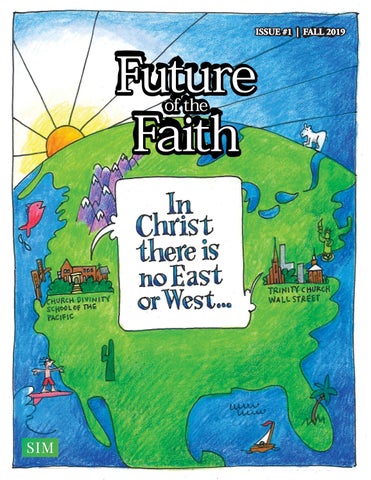
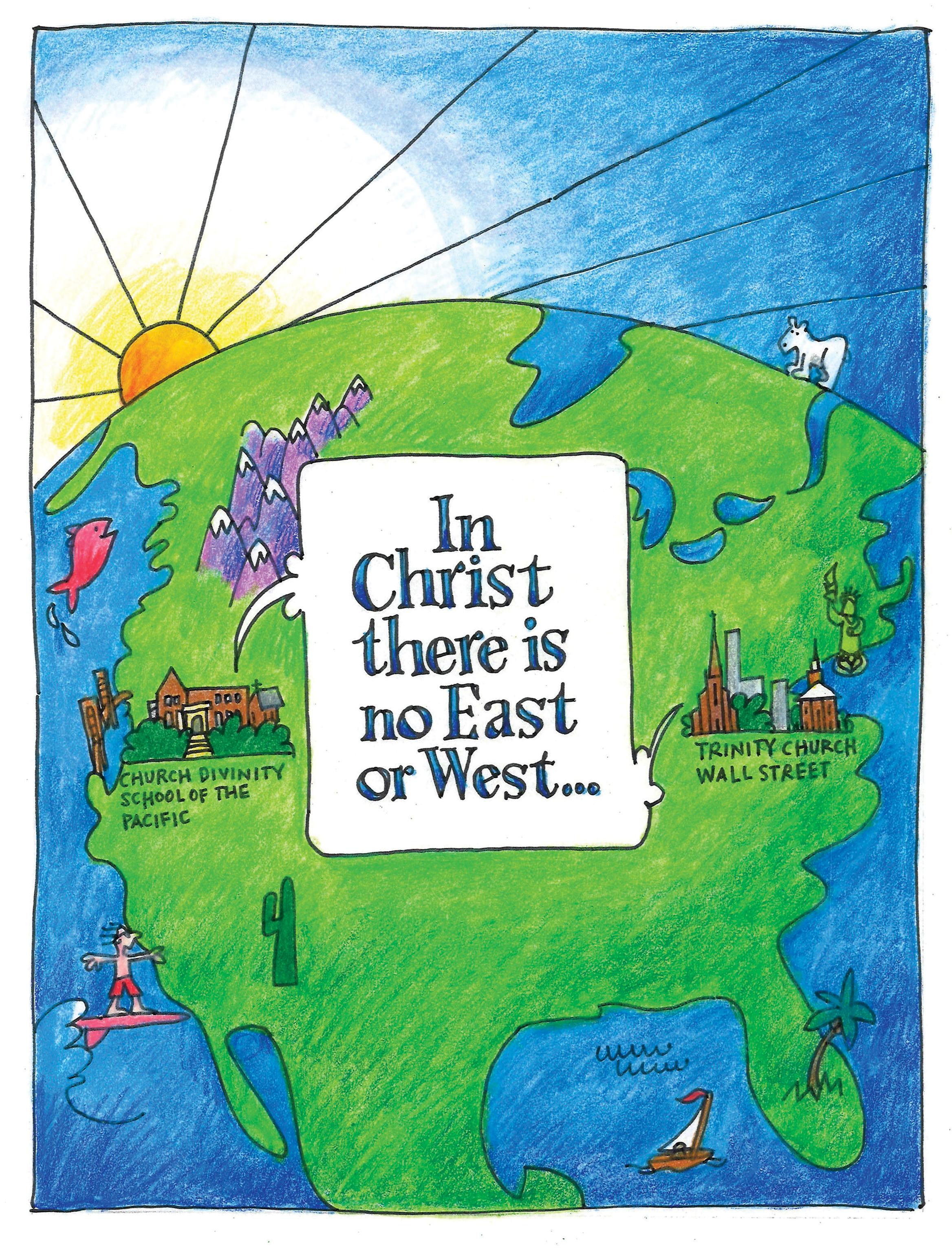
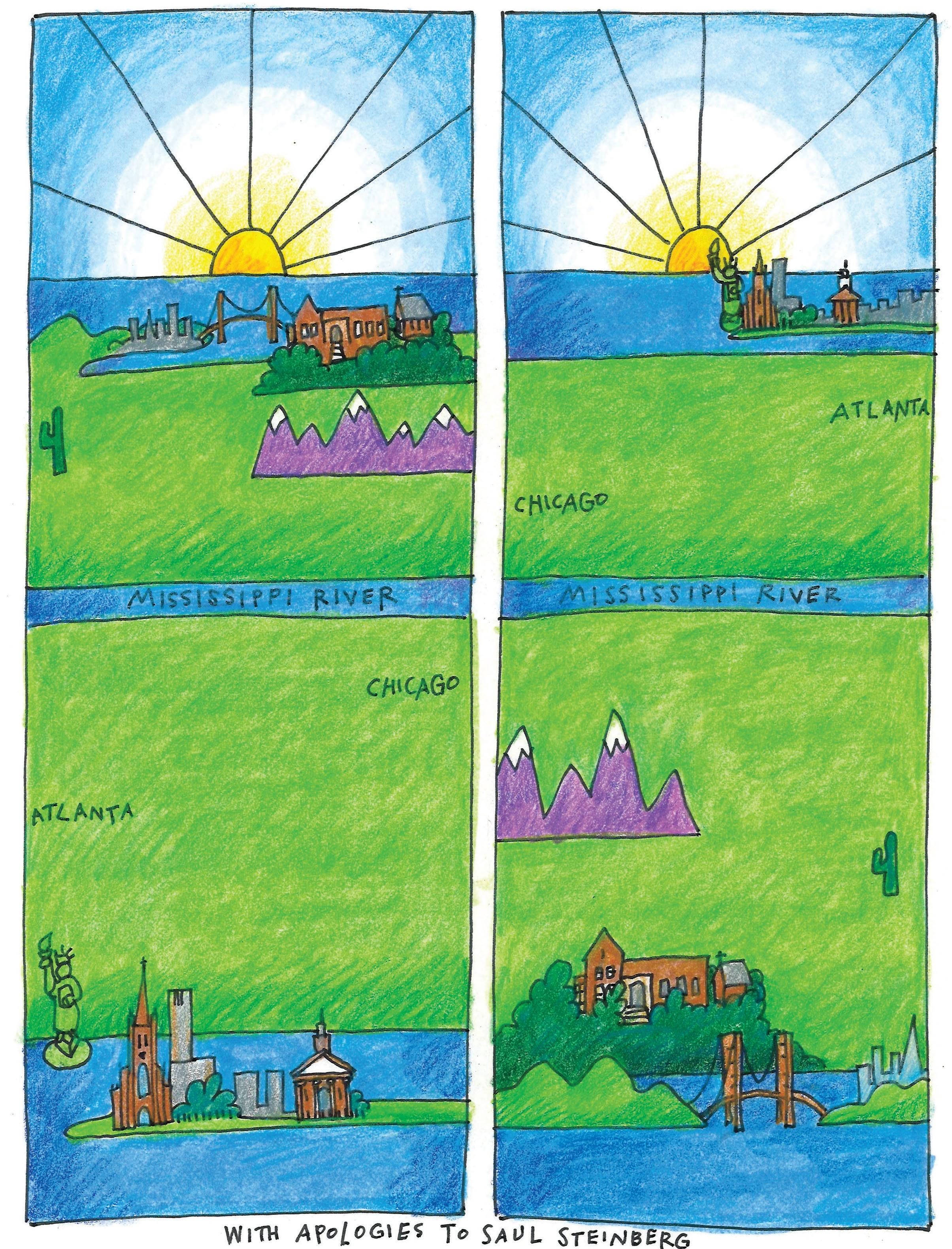
The Rev. Jay Sidebotham, Executive Director of Renewal Works: A Ministry of Forward Movement and SIM board member, is our cover artist whose apologies to Saul Steinberg (1914-1999) are – we believe – accepted by Saul from his place in “the world to come.” Jay’s matchless wit and artistic skill are great gifts to our first issue.
Future of the Faith is a journal dedicated to exploring faith and leadership development in a changing social and cultural context for the church in the 21st century. Future of the Faith is published twice annually by the Society for the Increase of the Ministry, 815 Second Avenue, Suite #314, New York NY 10017. For subscriptions, editorial and feature suggestions, and letters to the editor contact: info@simministry.org or call 212-661-4270. Your letters and comments are welcomed, as is the civility of their tone.
Welcome to Future of the Faith, The Society for the Increase of the Ministry’s new journal of leadership development for the Episcopal Church.
Susan Daughtry starkly asserts in her article, Uncharted, (p. 18 in this issue), that there is a “massive adaptive challenge ahead of the Episcopal Church.” I can’t argue with her assessment. With our latest Average Sunday Attendance numbers down another 24.7% since 2008, and with clergy retirements consistently outstripping ordinations 3:1 for the past eight years, clear signs of a dramatic generational shift in the practice of the faith by Episcopalians now appear to be undeniable across every province of the Episcopal Church.
If larger and larger numbers of people in our culture are practicing their Christian/Episcopal faith very differently from the ways we practiced it in the past, then it would appear a good deal of adaptive acumen must be brought to bear by our leaders if we are going to reimagine the church in ways that its ministries increase and the gospel grows and thrives.
Impassioned conversations engaging these issues among all sorts of people are constant - from mainstream journalists like David Brooks, to Millennials who are not following in their parents’ footsteps, to seminary scholars, to the House of Bishops which is experiencing turnover of a third of its members in the next 2 years. Even so, there are often gaps in disseminating the latest statistical data illustrating trends, and there are very few forums where all members of the Episcopal Church can be assured of updates on the most important and inspiring developments being undertaken by thought leaders in the field of leadership studies.
Our perceived sense of our church’s need in this moment is why SIM is reimagining our bi-annual publication and launching Future of the Faith as a leadership development resource for the whole church.
In 1857 SIM was founded to identify “suitable” leaders of the church and “aid them in receiving a thorough education,” making The Society for the Increase of the Ministry arguably the first (and at that time certainly the only) leadership development organization in the Episcopal Church.
In the pages of this journal you will find SIM lifting up the most provocative and potentially impactful developments in leadership recruitment and formation, at the same time we lift up the actual leaders we believe are the future of the faith so that all of us who are funding their seminary educations remain informed about the inspiring ministries they are eagerly and courageously preparing to lead.
Yours in Christ,
Courtney Cowart, Th. D. Executive Director
The Society for the Increase of the Ministry
Dear Dr. Cowart,
LETTER TO THE EDITOR
Last week, my parish administrator and registrar sent me a list of folks to examine as we clean our parish registry. It is that time again: the season to look at the rolls and see who is no longer coming. I admit that my pulse rate went up when I thought of removing those folks from the active membership list. Even though I find myself the rector of a growing community, I still swallowed when I felt that anxiety of a potential decrease in membership. Can’t I spread these out over a couple years?
I dare say most of us feel this pinch of decline one way or another. Every clergy person I know keeps a wary eye on numbers, and we struggle to find a way to respond to the pressures we face with decreasing rolls and increasing financial stress. I observe a common tendency to look toward programmatic development to stop the decline. If we can just develop the best children’s program or enticing music opportunities or gripping adult class opportunities, then we can reverse this course, etc. While it is certain that we should be intentional around teaching the faith and doing all to the best of our ability, I continue to wonder about the call to something deeper.
When I first read Richard Foster’s Celebration of Discipline years ago, I underlined the following phrase until the page was nearly scratched through: “The desperate need today is not for a greater number of intelligent people, or gifted people, but for deep people.” Foster was writing then to the pressures of spiritual leadership, and his words continue to ring in my heart.
When we think of the cultivation of spiritual leadership, what do we understand this call to depth to look like? What role do clergy have? How do clergy function? How do we teach and train them? While these are vital questions to consider, there are other vital questions as well: How do we teach clergy to pray? How do we nurture the inner lives of clergy so that their awareness of God’s presence in their lives enables them to be present to those in need? How to we encourage a trust in the Holy Spirit’s guidance in all aspects of ministry?
Perhaps this is a way in to the conversation: what do we understand charisma to be? By definition, charisma is understood as attractiveness that inspires others. In terms of spiritual leadership, I would challenge some assumptions around this description. I want to explore charisma in terms of a deeper understanding of a charism, or gift of the Spirit, within a community of people whose hearts are seeking to be transformed by Christ’s indwelling presence. I want to trust in the Spirit, to consent to the Spirit’s movement in my life. When I untether any “charisma” I or others may think I have from the Spirit’s abiding presence, what I am left with is merely my own cleverness—and that is a tricky trail to travel.
Such a charism from the Spirit is what I think Foster was describing when he prayed for “deep people” in our day and time. That is a prayer I want to share in as well.
— The Rev. Stuart Higginbotham
THE PRESIDING BISHOP SUPPORTS SIM
THE FOLLOWING IS THE TRANSCRIPT OF A VIDEO MADE BY PRESIDING BISHOP MICHAEL CURRY ON BEHALF OF SIM EARLIER THIS YEAR
VIDEO MAY BE ACCESSED AT: https://www.facebook.com/SocietyfortheIncreaseoftheMinistry/videos/456064578523648
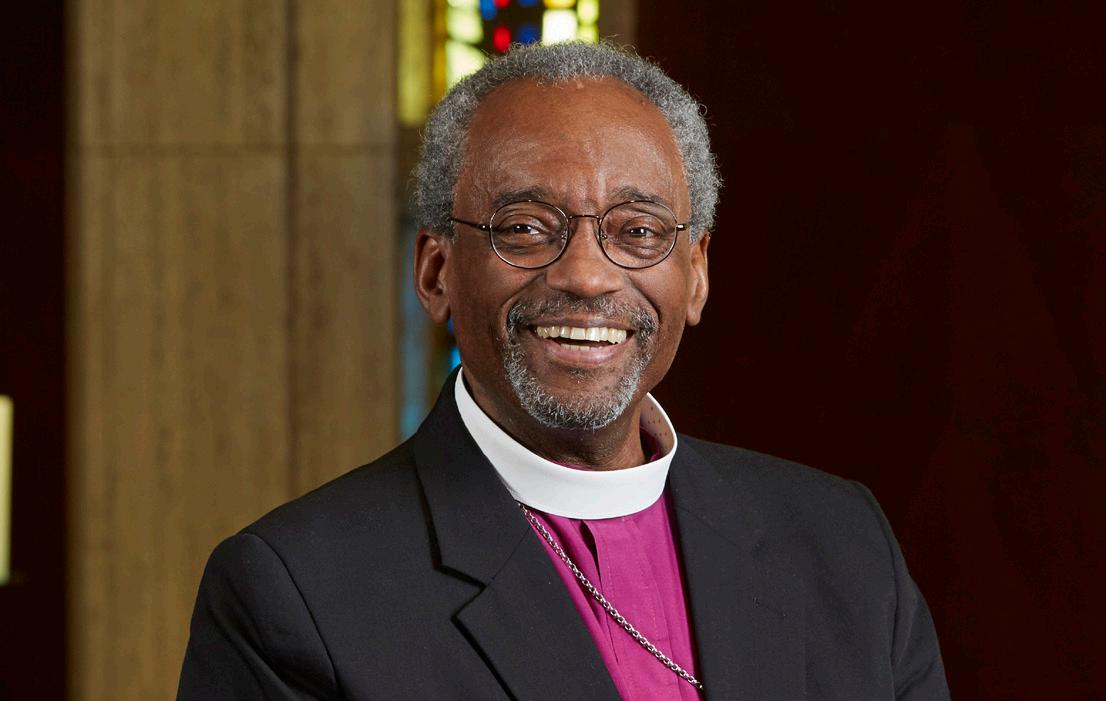
Hello, I am Michael Curry, Presiding Bishop of the Episcopal Church, and it is a real pleasure, better yet, a real privilege, to say a word on behalf of the Society for the Increase of Ministry.
I know for a fact that scholarships that enable people to engage in theological education make a profound difference on their lives and on the lives of those who come in contact with them.
These scholarships make it possible for many to receive a theological education who might not otherwise receive it. They make it possible for young people who are at the beginning of their life’s journey, if you will, to have the resources to study, to learn deeply, and then to go out and to serve the world, following in the way of Jesus of Nazareth.
These scholarships make it possible for these people who learn the way of Jesus, the teachings of our theological traditions, to then put those teachings into practice by public witness, by pastoral service, by witness and care and service that actually makes a tangible difference in the world.
I know it, even now, as Presiding Bishop of our beloved Church, that across the landscape of our church, the need for theologically trained and equipped men and women, people who are prepared for ministries, lay and ordained, who have the capacity to serve in pastoral ways, who have the capability to bear witness in the public sphere, that need is ever present and more dramatically called for in the times and the days in which we live.
But I know the need for the Society for the Increase of Ministry personally. Because of scholarships, I was able to go to seminary. Because of scholarships, I was able to receive a theological education. I would not be your Presiding Bishop had it not been for men and women, in days past, who made it possible for a young 21-year-old to go to theological school and to learn.
I truly believe that this work of supporting scholarships for theological education is nothing less than the sacred work of God, to help God in the work of changing the world by the Way of Love.
Thank you for anything that you can do; thank you for this ministry – and God love you, and God bless you! U
Support SIM in its mission to identify and fund leaders for the church of the 21st century.
Asignificant sign of the shifting landscape of theological education appeared this spring with the formation of an alliance between Trinity Church Wall Street and the Church Divinity School of the Pacific (CDSP) in Berkeley, CA. A surprise Monday morning announcement on March 4th to students, faculty and staff gathered in All Saints Chapel at CDSP was the occasion for breaking the news. The West Coast seminary is viewed by Trinity as having an “historic strength as a seminary that responds to the challenges of contemporary society” (CDSP website, June 2019). The Dean of CDSP, Dr. Mark Richardson, and the Rector of Trinity, Dr. William Lupfer, shared their elation with all gathered and invited their response to a move that they characterized as answering a challenge to the church now.
Lupfer especially invited the CDSP student body to partake of the same challenge. “I think we are on an
BY JAMES GOODMANN, SIM ASSOCIATE DIRECTOR
adventure that is a true adventure. A true adventure doesn’t have a map. There is no one we can go ask what to do, so we have to figure it out ourselves. So, I think that is what Mark and I are asking today. Are you ready to go for it and take an adventure and seek the new wisdom?” – with regard to preparing leaders and renewing the mission of the church of the 21st century. The Morning Prayer reading from the Wisdom of Solomon and the singing of the seminary hymn, “Wisdom from On High,” seemed to further flavor that invitation.
Dean Richardson also directly addressed students gathered in the Chapel that morning, “You have chosen a vocation of ministry in a time of trouble and flux in our church and world, and you are not naïve to this challenge. You have an eye open for transformational moments. Well, you’ve just found one. You’re right in the middle of it.” Adding that, “this partnership is mission-driven. The
two respective institutions, as different as they are.”
school you know is the school we want to build upon for the future.”
The shared adventure of these two institutions began with a chance airport meeting of The Rev. Winnie Varghese of the Trinity Church staff and Dean Richardson. Richardson sought Trinity’s wisdom in a property development challenge of CDSP’s in the middle of the Trinity staff’s series of consultations with its various global partners. Those conversations, related Lupfer, kept orbiting around two priorities, “leadership formation and building capacity for ministry…and we were hearing this from [partners in] Korea and Japan to Central America to Southern Africa.” Trinity and CDSP soon recognized they each possessed desirable expertise that could serve the other’s mission and the conversation swiftly acquired a surprising depth. It was, Richardson said, a meeting that blended coincidence with unanticipated purpose. “Our surprise [came] at some common ground in our mission at our
When asked about the adventurous nature of this undertaking, Dr. Richardson related that some of the groundwork for the meeting of these two institutions was occurring through CDSP’s curriculum which, he said, was formed with the anticipation that clergy and their congregations move “outside the parish gates” and form “more porous relationships” with their immediate neighborhoods. This new partnership, he added, “has expanded that neighborhood rather dramatically,” while at the same time expanding the horizons of CDSP seminarians of both regular residential and low-residence affiliations. With regard to prospects of further curriculum development, Dean Richardson said that it would be “a very careful crafting,” mixing the classics across the theological disciplines with other domains of leadership development that are more contemporary – a blend of traditional practice and learning with more latelydeveloped practices engaged in the corporate and non-profit sectors (some of which contemporary practices, re: mindfulness and meditation, have actually more ancient roots).
Dean Richardson also characterized this merger of institutions as “informed risk-taking,” with a pedagogical attitude of adventure wherein, “you are not seeking failure but are prepared to make the best use of it when it occurs.” He cited the example of the recently named Nobel scientists as sources of hope and inspiration: they saw apparent failures and shortfalls in their research and experiments as natural indicators of the next steps, as guides to modifying their hypotheses.
Robert Garris, Managing Director for Leadership Development at Trinity and formerly at Schwarzman Scholars, the Rockefeller Foundation Bellagio Conference and Research Center, and Columbia University, offered that the
partnership move between Trinity and CDSP must of necessity be seen in “the larger context set by Trinity around leadership development and planning,” and that “the serendipity of timing could not have been more perfect.” Dean Richardson and Dr. Lupfer, he said, engaged their conversations at the exact point of Trinity’s readiness to move forward with a more global strategy with regard to leadership development and sustaining ministry among its partners, in Trinity’s immediate neighborhood and across three continents.
As for characterizing the nature of the adventure for this partnership and for
Creating a global peerage of leadership and learning, Trinity’s goal is empowering ministry through faith- and values-based leadership for the Church and the world, and building stronger ties between churches and communities through their leaders.
Trinity’s leadership work as a whole, Garris added that it was a matter of “stepping into the unknown and being open and adaptable to leadership challenges around the world.” His own experience with the Schwarzman Scholarships and other programs have taught him that, “young people have a very different idea of leadership and its embodiment: less hierarchical and more lateral and collaborative,” and that those understandings are factors about which Trinity and its global partners will need to be especially mindful.
Mr. Garris said that the consistent focus of Trinity’s approach is on “faith- and values- driven leadership,”
integrating faith and values across the gamut of leadership skills as they occur in professions and precincts beyond those frequently associated with the church. Faith formation and leadership development are, neither one, to be engaged in isolation but very much inter-related: “faith and strategy; faith and making difficult organizational decisions; faith as both an inspiration and a tool for strategy.” He hoped that the merger would further develop leadership formation as a way of building effective bridges to other professions and forms of leadership that could inform and refine seminarians’ vision as they prepare to reach “a world that very badly needs spiritual leadership and guidance.” Seminarians could hear how people in other professional pathways are also engaging faith and imagination to create new pathways of knowledge and expertise as well as alleviating suffering and creating unique solutions to human problems.
By vote of the seminary board of trustees in December 2018, there was unanimous approval of the pact, with the board thereby dissolving itself. Trinity Church’s Vestry will now constitute the trustees of the seminary. In joining Trinity Church Wall Street’s global family, CDSP receives a significant and ongoing investment from Trinity to help enhance its faculty, programs, scholarships, and
physical plant and insure CDSP’s financial stability.
In addition, the seminary becomes an important star-point for Trinity’s global efforts in innovative leadership formation, an initiative that has a reach encompassing Trinity Church’s immediate New York City neighborhood and global partners across Africa, Latin America and Asia. Trinity characterized this work as “a response to the need to gather, train, and network future leaders of the Church,” to provide educational resources both to traditional and innovative divinity sectors as well as drawing upon learnings from the business and organizational development worlds. As well as providing an outstanding seminary education, Trinity envisions CDSP’s role as “a platform and location for other leadership trainings and convenings, aided by its proximity to both Silicon Valley and Asia,” and to California’s diverse populations and standing as the world’s fifth largest economy.
The late Camaldolese monk and spiritual director, Bruno Barnhart, in his last work, The Future of Wisdom, characterized wisdom as “participatory knowing: a knowing that is personal, experiential, and tending toward union with that which is known; ultimately centered in identity” (FW, p. 8). For the past three years, Trinity has been convening its global partners in search, with them, for a common wisdom for forming leaders and sustaining ministries across the Anglican Communion, from the Sudan to New Zealand to the Philippines and East Asia to the Lower Manhattan neighborhood of Trinity Church in in New York. Trinity and its global partners are forming an alliance built not on traditional models of charitable giving but rather one that fosters sustainable inter-dependence. This model infuses its leadership and ministry initiatives with an economy that capitalizes on what could be called
“marketplace ministries,” a model first engaged by the church in the Middle Ages, whereby partners participate directly in their local economies in the trade of goods and services and the leveraging of land and other assets as part of maintaining a sustainable posture.
Trinity plans to convene clergy and lay leaders across the world map of their initiatives, training them to gather and deepen spiritual communities in a changing world and empower their ministries, ultimately “network[ing] them in a global cohort of learning.” Creating a global peerage of leadership and learning, Trinity’s goal is empowering ministry through faithand values-based leadership for the Church and the world, and building stronger ties between churches and communities through their leaders.
The impact of this partnership on theological education in the Episcopal Church, while not altogether knowable, is certain to be seismic.
The Trinity-CDSP partnership is an experiment that aligns with the quest of the Greater Church, across denominations and communions, to find a more sustainable and life-giving model for leadership development –both for lay and ordained leaders. The church in this post-post-modern world is challenged to re-think its pedagogy around leadership, and to re-think the stages and occasions of leadership formation and practice, as well as an economy for the same. The world, the marketplace, far from being the “problem,” may be THE important resource of learning for the church in our century.
Asked about the significance that this move has for the Episcopal Church and its mission in the 21st century, Dr. Richardson asserted that “each of the seminaries of the Episcopal Church have their unique contributions to make to the mission of the whole” – and that each must engage their immediate
surroundings, their constituencies and the needs of the whole church.
He remarked that he was especially mindful of the contributions of the other seminaries and that “I would never wish NOT to be a part of the conversation among our seminary deans.” Nevertheless, the shifting ground around theological education, he said, asks what kinds of unique contributions that CDSP can make around leadership development. He hoped that both the church at large and Bishops discerning where to educate their postulants and candidates can see CDSP’s contribution as “adding strength” to the Church as a whole.
Spiritual writer and playwright, Paula D’Arcy, says, “God comes to us disguised as our life.” Or one could otherwise render it as, God comes disguised in the era in which we find ourselves, with all its complexities and inscrutability. We are on a pilgrimage. One thinks of that inaugural video by Presiding Bishop Michael Curry in 2016 – where he is seen emerging from the church doors and engaging a walk through the neighborhood and into the wider world – a world which not only waits to hear the Gospel proclaimed but also embodies its own share of the Good News and of wisdom. The suggestion of that visual is that there is an inter-change of wisdom of which the church has yet to take its fullest advantage. This latest happening in the world of theological education is an important projection of what may be not only possible but of impending necessity if the church as an institution is to have continuing relevance in this era and in the future of the faith. U
The shape of this story owes much to the NEWS/EVENTS section of the Church Divinity School of the Pacific’s website (cdsp.edu/email-newsletter), to Trinity planning documents and to an interview with Dean Richardson and Dr. Garris.
GATHERING FIRST FRUITS:
Lilly Summit Calls for Movement for Systemic Change
BY JAMES GOODMANN, SIM ASSOCIATE DIRECTOR
Indianapolis, January 16, 2019
Emphatic was the tone: “Nothing less than a movement is necessary for us to tackle the economic issues that have plagued American Christianity for so long.” This from a man who chose to forego a part of his cancer treatment regimen to utter those words before hundreds of people, as though his life and working legacy depended upon it. In the words of Dr. John Wimmer, a program director in Lilly Endowment’s Religion Division, Lilly Endowment and its partner organizations are on a mission: fomenting a movement to eliminate “a culture of silence and shame” that accompanies those carrying seminary debt into their active ministries.
This stigma referred to by Dr. Wimmer has become a pervasive silence and a barely-admitted-to syndrome among the leaders of many congregations across North America, even in the safest of spaces. It’s a stigma that follows many ministers into the middle of their careers with obvious impacts on their overall well-being – and with a reciprocal impact on their confidence in leadership and a secure sense of vocation. Congregations, too, are a party to this vicious cycle – in which the indebtedness of their leadership (and thus their own long-term sense of wellbeing) is a part of the deep background of their life together. This syndrome calls out to the whole church for remedy and for the participation of all facets of church structures and cultures to break this cycle that undermines the well-being and flourishing of the church, as a whole.
Dr. Wimmer addressed his opening remarks to a roomful of program leaders from seminaries and other church organizations who have been working for five years to replace that stigma with the solidarity and support of denominational leaders and the cooperative efforts of seminaries and other institutions of theological education. His brief comments set a dramatic tone for the opening of Gathering First Fruits: A National Summit on the Economics of Ministry was convened by Lilly Endowment, January 16-18, 2019 in Indianapolis.
As someone with more than a decade of experience in partnerships with the Endowment in various institutions, my heart skipped a beat to hear an Endowment spokesman call for an actual movement that had implications not only for the financing of theological education but for the whole of leadership formation across American Christianity. It was a gathering muchanticipated by Lilly Endowment and, by their estimate, the organizations in attendance represented more than 200,000 congregations of various denominational and confessional affiliations across the United States.
This summit focused on the work of more than 110 projects funded by Lilly Endowment through three initiatives that address the economic challenges facing Christian seminaries, churches and clergy in the United States. The projects are coordinated by three organizations funded by Lilly Endowment: The Association of Theological Schools (ATS), In Trust
Center for Theological Schools and the Center for Congregations. Hosted by the Center for Congregations in Indianapolis, the conference was funded by a Lilly Endowment grant.
For the first time, the Society for the Increase of the Ministry (SIM) was invited as a representative organization to this larger initiative and recognized for its efforts in raising the diversity and quality of leadership in the Episcopal Church, along with critically addressing the economics of theological education. I was a part of a team of six: three from SIM staff (executive leadership and associates); two from the Board of Directors; and one organizational consultant. The invitation to SIM as an independent agency – not a seminary! - was, itself, a significant omen of the atmospheric shift in the focus of this gatherings and all that it implied.
The presumptions of affluence in many denominational cultures, Endowment leaders observed, has created shadows where “reality is banished,” where pastors live in marginal conditions even among their more affluent parishioners, as they struggle over decades to pay their educational debts. For communities of lesser means and with their own struggling economies, the shame is compounded by the parallel struggle of many churches just to keep their doors open. Event speakers, principally Dr. Christopher L. Coble, vice president for religion at Lilly Endowment, celebrated the efforts of the 110 projects in the
initiatives. They are working to break the vicious cycle created by seminary debt and working to help church cultures to be rededicated to the health and well-being, financial and vocational, of ministers. But they also called attention to the rapidly shifting landscape of American Christianity – that Christianity and its leaders no longer attract the culture-wide deference that it and they enjoyed as late as a generation ago. “Intangible percs,” Coble argued, like reduced college tuition for pastors’ children, discounts on haircuts, groceries and other preferential treatment, have all dried up leaving pastors and priests dependent upon salary alone to carry them. The current economic status of congregational leaders leaves them in a position much like other wage earners at their level, something unsustainable in the long term –especially given current congregational models of support for ministers.
What the debt challenge brings most dramatically to life are issues associated with sustainable leadership development across American Christianity. Questions of sustainability for traditional forms of seminary education, as a whole, linger along with the unfortunate legacy of educational debt. Already, a wide swath of curricular experiments, inside and outside of seminary contexts, is underway through ATS and other organizations, that portend significant changes in the ways that formation for ministry is imagined and enacted and paid for.
161 years, both in identifying and funding Episcopal clergy and its late experience in partnership with the School of Theology in Sewanee gives it a practiced and significant share in that movement and its priorities, and in the modeling of equitable and creative solutions. Through the Future of the Faith campaign of Summer 2018 and SIM’s revision of its scholarship program to diversify, racially and culturally, the leadership of the church, the organization is strongly positioned to be an advocate for an emerging generation of leaders and for purposeful renewal of economic structures of theological education.
At the Indianapolis event, there was also corresponding input from Dr. Matt Bloom of the Well Being at Work/Flourishing in Ministry projects
leaders and their team eagerly looked forward to this meeting in Indianapolis.
“ Nothing less than a movement is necessary for us to tackle the economic issues that have plagued American Christianity for so long.”
– John Wimmer, Lilly Endowment
With this band of allies and partners along with project leaders and their teams from 67 seminaries and other church entities, Lilly Endowment has positioned itself as a convener and leader in this movement to do nothing less than re-imagine leadership across the church. SIM’s experience over
at the University of Notre Dame, and from leaders across the church where debt management for clergy in their dioceses and judicatories had become a priority. Input from leaders of color, among whom debt impact is even more dramatic, further underscored a problem that is no longer the province of disadvantaged communities, only, but is a common and growing one. The experiences of these latter communities calls further attention to the relatively privileged position enjoyed by white and male pursuers of their respective vocations above women and candidates of color.
The partnership between the School of Theology at the University of the South and the Society for the Increase of the Ministry (SIM) was among the celebrated initiatives, and SIM Project
Characterized by Courtney Cowart and Tom Moore (current and previous Executive Directors of SIM) as a unique “systemic answer to a systemic problem,” this partnership has been at work for more than five years to address the rising cost of theological education across the Episcopal Church and the incumbent burden on new church leaders precisely as they begin their ministries. The systemic answer that spurred this partnership lies, in part, with creating a centralized fund for theological education across the denomination and educating the church about the qualities of leadership that current times demand. But in addition to economic re-structuring around funding the education of leaders, this same project has also developed partnerships with four Episcopal dioceses for re-imagining mission and for the notice and nurture of potential leaders through a unique contemplative, conversational and design process, Living in the Green.
The early success of Future of the Faith campaign, an outgrowth of an earlier smaller campaign by SIM (“It Matters Who Leads”) coupled with a revision of SIM’s scholarships to diversify the leadership of the church, has drawn the notice of significant numbers of people within the Episcopal church. Particularly in the case of the renewed character of scholarships, they are gaining the attention of the church at large, especially those serving as ethnic missioners and others committed to ministries of social justice and reconciliation and to enhancing the cultural diversity of the church’s mission.
Because the mainstay of project leadership had moved from Sewanee to SIM in 2017 and 2018 and is now located at a significant conversational crossroads at the Episcopal Church Center in New York, even greater attention is being paid to this initiative and its activities, particularly at the 79th General Convention and in the seasons beyond.
The Lilly Endowment-convened summit was significant, not just for the shared learnings across seminaries and theological schools in North America, but mainly for what Lilly Endowment has learned through these partnerships dedicated to restructuring the economics of theological education. Pointing to the diverse work of these initiatives, Dr. Coble said that their coverage of the pathways to ministry, from seminarians to curacies, and their creation of communities of “mutual living and learning,” portends something for the larger church –namely that churches, as a whole, “get off the couch and live and think beyond spiritual self-maintenance,” that they become their truest selves in identifying with their mission of sharing abundant life, not least by reimagining the “economics of ministry” and the life of the local manifestations of the church “that we call parishes.”
One of the leading questions to this gathering was, “What if your programs worked?” or what if their life were extended toward reaching the solution that inspired your original vision? For SIM, the implied question in Dr. Coble’s query about the nature of success is whether, beyond solving the financial puzzle around funding theological education, the broader context of leadership development is sufficiently re-imagined – to accommodate not just a changing church and culture but the imagination and initiative of those who aspire to leadership in the church right now. U
HEARING FROM OUR SIM SCHOLARS
Asa regular part of our communications with SIM alums, we will always include some words from the community of current SIM Scholars. The following are excerpts from the lives of three scholars awarded the SIM Becoming Beloved Community scholarship for 2018-2019 and renewed for the academic year 2019-2020. Each in their own way relates the nature of their call to transformative leadership and their particular dreams for living their vocation in the church of the 21st century.
MELINA DEZHBOD, VIRGINIA THEOLOGICAL SEMINARY, ’21, POSTULANT, EPISCOPAL CHURCH IN CONNECTICUT
Melina Dezhbod fled Iran with her family in 2000 to escape religious persecution. She relates, “When I reflect on my family’s journey, what always amazes me are the all the people who risked their lives to help strangers. Seeing that love made me ask how I could one day give that love to others as it was given to my family.”
Melina hopes to combine her training as a social worker with her theological education to create transformational Episcopal ministries in communities serving the homeless and displaced.
When asked about her first year of seminary and her summer plans, Melina offered, “I recently attended the Seminarians of Color Conference early in March. I am all set for a journey to Jerusalem and the Holy Land for this summer. In addition, I will be studying to take my LMSW licensing test.
This year was my first time attending the Seminarians of Color Conference. As a junior I was very excited to attend and make connections with other seminarians. After attending, I was so happy I made the decision to go. I met a lot of incredible people, made connections with our Missioners, and learned about the resources available in our church. As soon as I arrived, everyone made me feel at home, though I was initially nervous. The learnings were deep: most prominent to me was the history of indigenous peoples of the Americas and the current state of ministry within those communities. Overall, this gathering was a wonderful opportunity and I will be attending my next two years of seminary. It was also really nice to get to join others from VTS and with whom I got to make deeper connections. I can’t wait to go and see everyone again next year! I left with my VTS family and came back with an even bigger Episcopal family!
My summer was spent studying for my social work license. After much studying I am excited to say I am
officially licensed as an LMSW. This brings me one step closer to my vocational aspiration of building a bridge between social workers and priests. In between studying for those exams, I also visited Israel/Palestine, as well as Jordan. It’s one of those trips where, on returning, there is much to take in and process. But I enjoyed getting to walk where Jesus did, being back in the Middle East after 20 years, and getting to spend time with people from my diocese. The warm love and welcome I receive every time I go abroad is a reminder of what we continue to work on as a people – that is love for all, even the stranger that comes to visit your home.”
Thanks to SIM for its support and for all the resources shared this year.”
MALCOLM MCLAURIN, SCHOOL OF THEOLOGY, UNIVERSITY OF THE SOUTH, ’21, POSTULANT, DIOCESE OF OLYMPIA
Malcolm McLaurin has served on the staff at St Mark’s Episcopal Cathedral in Seattle as Canon for Youth and Young Adult Education, as well as an Associate Director of a Camp and Conference Center in Northern California (St. Dorothy’s) and as a campus chaplain at the University of Arkansas. His deepest identification with the Episcopal Church is through the Baptismal Covenant: “It was those five ‘will-you’s’ that gave me something that I could resoundingly say ‘yes’ to. And it is also the element
of the Episcopal Church that I believe we must boldly reclaim as who we are.” Through this, Malcolm asserts, the church becomes proximate to the diversity and suffering of the world. As an African-American, Malcolm speaks to that spiritual journey of the church: “The Episcopal Church isn’t usually thought of as a church of people who look like me. A good portion of my ministry has been about sharing a narrative – whether it be a black experience, a southern experience, or a socioeconomic experience. My hope is that these stories will help shape a beloved community where we in the Episcopal Church hear the narratives of all.”
As his first year of seminary comes to an end, Malcolm spoke about the summer ahead, “As I wrap up my first year at Sewanee, a time full of affirmations, challenges, and discovery, I am preparing for a summer of Clinical Pastoral Education. I have accepted a position at Spiritual Health at Emory Healthcare in downtown Atlanta. My draw to this program was its diversity in terms of the population I would work with. With a broad range of settings, I will get to interact with patients of all ages and levels of sickness. There is no doubt that this summer will be extremely formative on my journey towards ordained ministry in the church and I am looking forward to the experience.
As an afterword to that experience, Malcolm comments, “The summer of CPE at Emory, Midtown Atlanta, will go down as one of the most formative experiences of my life. Being around pain, death, and dying in the hospital setting while trying to rebuild a relationship with my own body made for some powerful self-reflection. Showing up for patients while needing to be a patient myself gave me greater insight into my pastoral role and presence. I am definitely a different person than I was at the beginning of the summer.
Again, ‘thank you’ SIM for this opportunity and supporting me on this journey.”
MARISA SIFONTES, CANDLER SCHOOL OF THEOLOGY, EMORY UNIVERSITY ’21 , POSTULANT, DIOCESE OF NORTH CAROLINA
Marisa Sifontes had a career in the practice of law for 20 years in corporate firms and in government service. Prior to her enrollment in seminary, Marisa went on a nation-wide 30,000-mile “journey of discernment” to “witness the state of our country and our church in a hands-on way” and to decide where God was calling her.
Of her RV-powered travels with her two children, Marisa relates, “On the road, I encountered small churches and large ones, well-established historical buildings and tiny churches that were built piece by piece. I saw the strength of the laity where a full-time priest was not present, and I saw many different expressions of faith, all tied together by the Book of Common Prayer.” However, “of greater importance to me is the time I spent with people I encountered on the road, listening to their stories and sharing my own, leading with faith, even when I wasn’t sure what the outcome would be. Time and again, experience has showed me, as a person of color, people yearning for genuine connection,
fearful of ‘the other’ for reasons they may not be able to understand, and that through contact, communication and conversation, we are able to reach common ground, to understand one another, and hopefully leave each other better for the exposure.”
Of her summer plans Marisa says, “I am planning to travel to Botswana this summer; (It is the companion diocese for the Diocese of North Carolina.) Given that my interest in the work of reconciliation in the church extends not just to those of us in the US, but across the Anglican Communion and beyond, I am looking forward to having the opportunity to see what Anglican worship looks like outside of North America. The Theology and Religious Studies department of the University of Botswana in Gabarone is hosting a conference in early July that I plan to attend. The subject of the conference is: Mother Earth, Mother Africa and Theological/Religious/Philosophical/ Cultural Imagination.”
Reflecting on her summer travels, Marisa had this to offer, “This summer I spent five weeks traveling in southern Africa, visiting South Africa, Namibia and Botswana, communing with and learning from the people there.
My time there gave me the chance experience Beloved Community well beyond the borders of the country of my birth. So much to take in, so much to absorb: meeting other seminarians and seeing how similar our experiences are; serving on an altar at a service where the primary language was not my own but recognizing the familiar rhythms of the Nicene Creed in my soul; walking in the townships and feeling the barriers that are put in place to hold others back — but yet, those oppressed persist. Still we rise. While there, I was able to attend a conference held by the Circle of Concerned African Women Theologians held in Gaborone, Botswana. Scholars from all over the African continent and
beyond gathered together to share and learn. I drank deeply from the well and found the waters to be so restorative.
Traveling in Namibia and South Africa, countries still working through the vestiges of the apartheid era, I saw how much work remains to be done. But, as was pointed out to me, “We’ve only been at it for 25 years. How long has it been for your country…and where are you all at this point?”
Touché. The work continues.
JED DEARING, CHURCH
DIVINITY SCHOOL OF THE PACIFIC, ‘20, DIOCESE OF SOUTHERN OHIO
Jed Dearing is a seminarian of the Diocese of Southern Ohio and a recipient of SIM’s Becoming Beloved Community scholarship for 2018-19. His seminary journey is marked by work among both the wealthy of the Silicon Valley and the homeless and working poor of Southern Ohio. Out of this experience, he shares this question, “How will the Episcopal Church respond to economic stratification? What does it mean for the church today to host a Eucharistic meal across class and cultural lines? I believe it will take practical changes to accepted norms of Episcopal worship life in order to make room for communities beyond middle class and wealthy families…It is time for the church to break conventions, raise questions,
and figure out how it is going to make room for the other in our worshipping communities.” Citing the struggles of the early Christian community of Paul’s First Letter to the Corinthians, Jed comments, “The road to inclusion has never been easy in the history of the church...” More contemporary to us, the economic stratification of the Silicon Valley paints a challenge for the church within and well beyond that region.
Jed will be continuing his work with his field ed parish engaging with professionals in the tech, financial and law sectors exploring how business practice impacts the possibilities for Beloved Community. He will also be leading a workshop for the Diocese of Southern Ohio at their Becoming Beloved Community Convocation, exploring what parishes are willing to change to welcome new people and especially the marginalized to our churches by learning how stories OF the community can lead to cocreation BY the community FOR the benefit of the entire community. This will be followed by participation in the Preaching Excellence Program hosted by the Episcopal Preaching Foundation.
This summer Jed also spent 18 days in Panama, thanks to a grant from the Seminary Consultation on Mission (SCOM) immersed with a thriving Episcopal church in the middle class community of Davis, exploring how liberation theology has influenced their neighborhood ministry. The final five days of that project were spent in a surrounding rural community as a chaplain supporting the non-profit, This Is Health, providing crucial health care to families among the indigenous Ngäbe people in a long term partnership with a Seventh Day Adventist school and clean water project. U
INTERVIEW WITH A MINISTRY INNOVATOR
JENNIFER ALLEN, GENERAL THEOLOGICAL SEMINARY ‘20
Jennifer shares how her multiple engagements in ministry prior to seminary have shaped her call to the priesthood and her imagination for ordained ministry. Jennifer was interviewed by Brian Sellers Peterson, SIM Senior Advisor and a leader in the sustainable agriculture movement within the Episcopal Church.
HOW DID YOU END UP AT GENERAL THEOLOGICAL SEMINARY?
I am a “Cradle Episcopalian.” I felt a call to ordination before the Episcopal Church ordained women. I didn’t feel brave enough at the time women started being ordained. I became involved in a variety of church ministries including youth work, also as a Vestry Member, Bread Minister, EfM Student, Lay Reader, Convocation Delegate, Eucharistic Visitor, Eucharistic Minister, Money Counter, Stephen Leader for Stephen Ministry, Usher, Altar Guild all at St. Michael and All Angels. I served as Church Camp Nurse, Church Camp Program Director for the Diocese of Kansas.
I have served as an Alternate Deputy to General Convention in 2015, a Deputy
in 2018 (serving on the Social Justice & International Policy Legislative Committee). I served on the House of Deputy’s Special Committee on Sexual Harassment and Exploitation and Episcopal Church Delegate to the UN Commission on the Status of Women.
I am a member of the Kansas 2 Kenya Steering Committee (a mission between the Diocese of Kansas and Kenya) and I have served on the community team to Kenya 6 of the last 8 years. This past summer, I served as a chaplain intern in Kenya at the Agatha Amani House Domestic Violence Shelter. I am currently serving as a Wisdom Year Seminarian Intern at the Cathedral of St. John the Divine’s Congregation of St. Saviour.
Professionally I worked as a nurse in Home Health Nursing for 10 years. I then was a senior manager at Express Scripts, designing Medication Adherence Programs for patients on complex biopharmaceuticals.
I wasn’t planning on New York City or General Theological Seminary (GTS). I had my bags and hammock packed to go to the School of Theology at Sewanee. During a visit to NYC to
attend the UN Commission on the Status of Women, I visited Chelsea, figuring I would put a bow in at GTS and move to Sewanee. Wow, what a beautiful garden and campus in the middle of the city; I fell in love.
TALK ABOUT SOME OF THE INFLUENCES ON SEEKING ORDINATION.
What crystalized my call to ordained ministry and seminary has been my work with a small non-governmental organization (NGO) Agatha Amani House (AAH) in Kenya. My work has centered around organizing women’s empowerment conferences. I have also been involved in helping start and build a residential center for battered women. One of the primary ways AAH helps battered women is through providing nutritious meals and helping them become food secure. This includes a demonstration and community garden along with instruction in Farming God’s Way, which is similar to permaculture agriculture.
I had the blessing of being able to spend six weeks living in community with the women of Agatha Amani House, a domestic violence shelter in Kenya. Some of the work that I did
there was to support the completion of the practicum hours for Clinical Pastoral Education (arranged through the Seminary of the Southwest). I lived in the shelter and I heard the narratives of the women; praying and learning the hard practice of being present. Living at the shelter gave me the opportunity to greet each morning with the chickens and to learn to work the land for the food that we put on our table. Working the soil, turning the compost, weeding, reclaiming waterways-all of these things taught me about how working the land heals our broken hearts and souls. Often, I would provide pastoral care while sitting on a blanket a few feet from our calves, Cathleen and Cowdog. As I worked through the difficult stories that I heard, I found myself singing the Venite: “In his hand are the caverns of the earth, and the heights of the hills are his also.” I’ll never forget those moments in Kenya when the words of the Venite burst forth from my brokenness into the bright dawn of God’s creation.
During each of my trips to Kenya, Nyakio Kaniu-Lake, the Founder and Executive Director of Agatha Amani House, has urged me to consider ordained ministry. Through my relationship with Nyakio and the overall experience of Kenya, I received a firm “smack on the side of my head.” God has always been calling me. The other influence is my dad. He kept reminding me of that gentle urging that I experienced early in life. He helped me sort out the insistence of the call and the urging of family, friends and colleagues. He was always there during the moving toward and running away from. He helped me look at how pastoral care would be different from being a nurse and being a priest. He passed away before I took the plunge.
During this pilgrimage towards ordination, I have learned that church and community gardens can have an important and transforming impact on all who put their hands in the dirt.
One conversation in particular stands out. While in Oxford, Mississippi I encountered a member of a local farmers coalition. She said that in her community agriculture work the coolest people she met were people from the local Episcopal Church, because they were able to tie creation care and being a part of the community together with their faith. I want to be that person who helps bring people together around the table and garden.
WHAT ONE ASPECT OF PRIESTLY MINISTRY PULLS YOU TOWARDS ORDINATION, AFTER YEARS OF LAY LEADERSHIP?
What really brought me to considering priesthood is the role of a priest in reconciliation and absolution. There is so much brokenness in the world. Our world is hurting. Often times people think that brokenness means they are not welcome in church. So often the message the church communicates, intentionally or not, is that people are broken, and the church has the cure. The presence of God in my life and a deep connection to something outside myself, especially God’s creation motivates me to serve the Church as a priest. That means going out and helping people find that relationship they are looking for. I love the people in our pews. Part of my role is motivating people inside the church to share God’s love to those outside.
HOPES AND DREAMS FOR THE CHURCH IN KANSAS AND THE EPISCOPAL CHURCH.
We are shrinking in numbers but growing in how we engage civil society. Finding better ways to use our collective resources is key to our being a part of being of the larger community. How can we be smart about our resources to build programs to grow in discipleship and feed people? There is always going to be a place for people who want a traditional
space for worship. But we need to look to doing new things. Take risks. We want change, but we don’t want to do it ourselves. Our liturgy is rich and beautiful and part of our DNA, but we need to look for liturgy as it occurs in other ways. Great examples emerge from the communities of St. Isidore in Houston. Everything they do includes community, food and liturgy – everything from Warrior Church to Laundry Love to Kitchen Table Church and Taco Church to Youth Church gatherings.
WHAT IS WAITING FOR YOU IN KANSAS?
In the heart of Topeka there are about three acres of lawn waiting for something new to happen. I envision a community garden and reclaimed prairie grasses; we are calling the project Bethany House and Garden. The house, which was built in 1875, will provide office space to organizations working with the homeless and trafficked in the surrounding community. My ministry will be to build a community of wild church and pastoral care, reaching out to those around us. My ministry will be a hybrid ministry: I will be growing a ministry around the community garden and prairie in Topeka, as well as serving at a local parish.
It is this powerful sense of healing and joining with creation - that I learned especially during my time in Kenya - that I hope to create in this version of wild church in Topeka. It’s basically a chance for people who have experienced pain, trauma, and brokenness to reconnect with the beauty of creation and the sense of God in their lives. In Kenya, I learned about what it meant to be the church without the building; working in community, praying with one another, rejoicing and grieving. What a gift if we can learn to be the church without having the heavy weight of capital campaigns, utility bills, and building maintenance. U
CONTEMPLATION AND COMMUNITY: A GATHERING OF FRESH VOICES FOR A LIVING TRADITION
These are confounding times. On the one hand, organized religious bodies of all faiths and affiliations report a decline in membership, causing much consternation among clergy and lay leaders who point to societal and technological shifts that have disrupted traditional practice.
At the same time, there is ample evidence that we remain a nation of spiritual seekers, a country whose religious freedoms our Founders went to great lengths to protect. the wellness travel industry is growing at twice the general tourism rate. An increasing number of corporations and schools offer mindfulness programs that research indicates improve organizational climate, as well as worker and student outcomes. The number of adults who meditate has tripled. The number of people practicing yoga has increased by 55% over the past seven years (NCHS October 2018).
Nine out of ten Americans believe in a higher power (Pew Research Center, 4/25/18). The list of celebrities catering to our deep yearning for meaning and purpose grows daily.
What the hell is going on? If Americans are devoting so much time and money to these spiritual quests, enthralled by the multi-media entertainments that
mega-churches and charismatic gurus offer (who inevitably prove to be false prophets), why is the Church in such a state of decline?
Shining a light into these dark, cultural conundrums is Contemplation and Community, a brilliant diamond of a book that may just have a few answers. It offers a collection of essays by a group of young contemplatives that is a visionary, timely, some might even say providential, contribution to the national conversation about how to reinvent traditional practices of faith so that they are central to the spiritual growth of our beings. It’s possible that their collective theses might inspire a micro-reformation that could put us more deeply in touch with Christ’s original spiritual vision for the Church.
Backstory is important here. Over forty years ago, Thomas Keating, Richard Rohr, Laurence Freeman, and Tilden Edwards, began their work to advance Christian contemplative lineages as an essential component of spiritual formation of lay people. This was during a time when Westerners were increasingly looking to Eastern traditions for meditation practices that they might incorporate (since long ago contemplative prayer had become the esoteric, and almost exclusive domain of monastics).
core of our worship experience, without actually expressing that objective as their goal.
Flash forward to Snowmass, CO, August 2016, where the four contemplative leaders met to explore the commonalities among their individual practices and organizations. Although thousands of Christians were by then actively engaged in some form of meditation, the question before the four men was how best to support this unfolding movement of the Spirit in future generations. They decided that they would each invite five young contemplatives from around the world, already deeply embedded in a Christian centering practice, to join them the following summer, as a first step.
Their invitees gathered for four days, facilitated by Margaret Benefiel of Shalem Institute. The outcome of their “exchange” is, among other things, this extraordinary book. I would assert that the brothers have gotten even more than they bargained for, as what is on the page is not just a fine, vibrant, inspiring precís of contemporary, contemplative practice as conducted by the younger set, it is perhaps nothing less than a manifesto for how we might reimagine the Church.
In a series of carefully written essays, these modern day apostles put forward a compelling argument for the reintegration of Christian contemplative practice into the very
Thomas Bushlack provides a primer on what contemplation actually is, and the way in which spiritual formation advances through its practice. Sarah Bachelard argues the need to develop a contemplative life within a community setting, contrary to the self-help, ego-centered, advancement of the individual that popular mindfulness programs sometimes promote. Sicco Claus insists on discipline. Christian mindfulness is not a feel-good, stress relief program. Jessica M. Smith then renders a heartfelt, and deeply moving, reflection of the restorative power of
The focus of the essays then shifts to contemplation in action. You may be surprised by what you read. This is not a group of renunciants who experience contemplative life as a step back from real world into a state of transcendence. This is a group who leans in.
Mark Longhurst adopts the tone of a political insurrectionist, articulating a radical interpretation of the role of the mystic in the Age of Empire. To paraphrase his call to action: “Contemplation is for everyone, is possible everywhere, and in endless ways.” Phileena Heuertz makes the case that contemplative prayer is the essential point of embarkation in any journey advocating for social justice.
“These are the fresh insights of a group of unsuspecting revolutionaries to whom the Spirit has granted a discernment that could quite possibly change our world.”
symbols, even during the dark night of the soul.
With this better understanding of a meditation practice as experienced by Christians living in the world, the discussion then shifts to what a contemplative lay community might look like. Stuart Higginbotham provides an inspirational illustration of how his parish reframed its operations so that contemplation is central to its programs and administration. Net takeaway: it can be done. Kirsten Oates delivers a thought-provoking discussion of the differences between for-profit, non-profit, and contemplative strategy development. She is deeply experienced in all three. Bo Karen Lee paints a vivid picture of Ignatian spirituality and lectio divina, delivering a dramatic affirmation of its ability to set aflame the minds of individuals with rich narrative experiences that accelerate spiritual growth.
de Chardin’s work. Decoding her insights in easy to understand prose, he paints a picture of a new, emerging era of convergence and integration (the Second Axial Age, to be precise) where contemplation and its ability to forge higher, unitive consciousness is core. This is the real New Age, not some pop culture, self-referential construct.
The reader is left in an altered state upon reading these essays. Although these young contemplatives speak with the authority that only intimate knowledge based on years of practice and direct experience affords, there is a palpable energy in the text. These are not the studied statements of wise elders; they are the fresh insights of a group of unsuspecting revolutionaries to whom the Spirit has granted a discernment that could quite possibly change our world. They show us a new path away from the self-satisfactions of self-improvement schemes, and other get-rich-quick, material and spiritual success stories that so dominate our world view.
She asserts that contemplation is essential to “cultivating a New World from the inside out.” Leonardo Correa shares his experience advancing the Christian tradition of meditation around the globe, working with the World Community for Christian Meditation, in places that we might never imagine contemplation is possible, much less having any impact.
Mark Kutolowski then plugs a hole in Christian centering practice, suggesting that a key, missing component is the role that the human body plays. His framework for developing a body-based contemplative discipline, leveraging ancient Eastern orthodox practices, is a timely, brilliant contribution towards holistic, 21st century, body-mindheart solution.
Matthew Wright then sums it all up, showcasing the work of Beatrice Bruteau, a woman, thank heavens, whose vision is based on Pierre Teilhard
With the penetrating force of the universe’s whisper, they encourage us to adopt a bold new way to think and move and express our being. They insist that we must reclaim the mystical experience, the direct encounter with the divine, as our innate state and the prime mover of our Christian faith. Over time, deus vult, they will challenge us to reimagine the Episcopal Church, putting us back in touch with the very essence of what it means to be part of the Body of Christ, as we put our faith into practice.
And in the end, may we hope, that they will enable us to join in their company as Everyday Mystics. U
LOCAL FORMATION:
Missional Practice, Beloved Community, Sustainable Pedagogy –Reflection on Two Convenings of Uncharted
BY THE REV. SUSAN DAUGHTRY, MISSIONER
FOR FORMATION IN THE EPISCOPAL CHURCH IN MINNESOTA (ECMN)
“If you want to build a ship, don’t drum up the women and men to gather wood, divide the work and give orders. Instead, teach them to yearn for the vast and endless sea.”
-Antoine de Saint-Exupéry
Asdioceses turn toward local formation programs to train new leaders, practical questions often drive program design. How will we get quality instruction to our leaders, given our constraints of time, geography, and dollars? What tweaks can we make to our existing formation pathways to shape emerging leaders in the competencies we think they need? How will the Commission on Ministry read this plan in comparison with what we’ve done before? The massive adaptive challenge ahead of the Episcopal Church is overwhelming, so we turn to the kinds of solutions we can already imagine: new online learning platforms, videoconferencing,
curricula, experts. Faced with the “the vast and endless sea” of the unknown before us and the non-optional work in our inboxes, technical solutions sing a siren song.
And yet that vast and endless sea is the adventure the Holy Spirit calls us to engage. Into the unknown we must go: into relationships across cultural and linguistic divides, into the uninvented, undiscovered territory of new ways of being church, and back into our most ancient DNA as people following the way of Jesus.
In 2017, people excited about the uncharted waters of leadership formation gathered in Minnesota to ask big questions together. Leaders of local formation programs, bishops, and Commission on Ministry representatives who were already in the midst of innovative program design in their own contexts shared
• Beloved Community: How do we form leaders to have Beloved Community as the ground of their theological imagination?
• Sustainable Pedagogy: What technology and best practices can dioceses use to offer local formation sustainably?
the extraordinary resources they had created or found, and wondered together about the challenges before us. Organizations and leaders working on new approaches to leadership development such as the Episcopal Church Foundation, Backstory Preaching, the Episcopal Evangelism Society, and eFormation joined the conversation. Together, we found enormous energy and hope for engaging unanswered questions about the future of the Church.
This year, from May 29-31 in Minneapolis, the Episcopal Church in Minnesota called together another chapter of Uncharted, specifically to address questions that lingered after the original 2017 convening.
• Missional Practice: How do we form leaders locally to function missionally?
These vision questions were informed by Episcopalians’ deep roots in the language and vision of the kingdom of God proclaimed by Jesus – a kingdom in which the lion can lay down with the lamb, in which the powerful and the powerless can feast together, in which God is known in breaking bread together. Such a vision is in stark contrast with the reality of the racialized culture of our country and of many of our congregations. And this moment calls the church to form leaders equipped with a vision and practice that trusts that God does indeed live in our neighborhoods, inspire our neighbors, and invite us to partner with them to shape our world to be reconciled to God and to each other.
This same call invited the Uncharted leaders and participants to step back and ask what local formation is for:
Are we creating M.Div.–lite programs that instill key data and skills in people so that they recreate the existing culture of the Episcopal Church in their local context? Instead, the hope is that local formation affords a chance to step back and think more about our baptismal identity – asking how we might invite leaders to engage the best of the Anglican tradition, so that they will be equipped to innovate faithfully in their communities, following God deeper into relationship with their neighbors. A bigger adaptive challenge, but one that gets more to the heart of our faith.
At the 2019 Uncharted Gathering, we heard from key speakers in the worlds of missiology and Beloved Community
and pedagogy. We then engaged each other around the big questions above. Participants began an equity and diversity audit of the competencies they use to assess new leaders. Most importantly, there was the exciting expansion of a community of people asking big questions, refusing to settle for a technical blueprint when God’s Spirit beckons us to a transformative journey.
From the welter of questions and hopes, here are some of my take-away’s from the Uncharted gathering of 2019:
There was real desire to gather. As we got closer to the event, we had to shut down registration and create a waiting list. Over 50 registrants gathered,
objectives with everything I do in my faith community.” It’s no wonder: most of us were formed by graduate environments that emphasized competencies in the areas required by canon. That set of content doesn’t explicitly include teaching. If we are to form disciples, we need to learn from our partners in the world of education about best practices for doing so.
The real goal of our work is not about repackaging the M.Div. experience; it’s about the future of the church as it relates to Beloved Community We leaned in and listened hard to the wisdom in the room, especially from Dr. Catherine Meeks, Heidi Kim, and Rie Gilsdorf. I overheard excitement and urgency to work toward a church
Into the unknown we must go: into relationships across cultural and linguistic divides, into the un-invented, undiscovered territory of new ways of being church, and back into our most ancient DNA as people following the way of Jesus.
representing all four orders of ministry from a diverse array of dioceses across the Episcopal Church. Support and attendance also came from seminaries, the Church of England, Lutheran and UCC programs, affiliates like Backstory Preaching, Forma, and more. I heard, from more than one person, an expression of profound relief at the chance to meet others doing the work of local formation.
Local formation leaders want to learn about pedagogy. In the event itself and in the survey results afterward, participants talked about the immediate impact of what they heard about learning goals, personalization and press, and student motivation. One clergyperson said, “I’m going to start doing backwards design from learning
that reflects shalom, the Kingdom of God, the Beloved Community. At the same time, I heard participants reveal their own sense of unpreparedness to lead in this area.
As it pertains to local formation, here’s what caught my attention:
• Many of our conversations looked at the experience of racially and culturally based discrimination in the ordination process – and the desire of those present to help dioceses and Commissions on Ministry distinguish their biases from the requirements of formation.
• Other conversations examined the way the requirements of formation, and the tools we have locally to offer
formation, carry their own cultural biases that strategically exclude people whose experience doesn’t already reflect success in white culture.
• We noted, but did not focus on, the challenge of formation in immigrant and culturally specific communities that are discerning how their own heritage might impact not just the language for formation, but the process and pedagogy.
In other words, there’s a massive learning curve here for the Episcopal Church. As we named these issues, participants and speakers voiced their concern that the gathering not be a chance to pat ourselves on the back for our progressive values. Instead, they challenged all of us to use the event as a springboard into new ways of being. Heidi Kim offered us the insight that this community has significant power to turn the “icing” (nice-to-have, addon content) of anti-racism training into the “cake,” (most important building blocks) of formation.
Some aspects of our event design reflected deeper challenges in Anglican leadership formation. One helpful critique of the event offered, “You wanted to cover a lot of material. But the design of the event itself reflected white/western values: speed, efficiency, data exchange.”
This person noted that, had a broader group of stakeholders designed the event together, we might have left with different outcomes. This goes to the same question many of us brought to Uncharted: How do we teach emerging leaders to do things that we don’t possess the competency for? How can the experience of formation itself—not just the content – be an experience of Beloved Community and a chance to see those values in action?
Underneath all these conversations lies this uncomfortable truth: in some of our faith communities, Anglicanism
functions as a social, racial, and cultural identity marker rather than a pathway into life as baptized children of God, followers of the way of Jesus, the body of Christ. If that’s true, we need greater clarity about our theology and our understanding of what it looks like to practice the way of Jesus. Local formation, since it asks us already to distill the content and try on new approaches to learning communities, is a venue for that theological and practical work. “I wonder what it will take to let go of things that are no longer serving us well so we can embrace what is being born more fully,” one survey respondent wrote. I hear in that comment the trust that the Holy Spirit is offering us something beautiful in the massive cultural changes taking place around us. I hear too the desire to seek a life-giving way of being church, especially around racial and cultural diversity, as a pearl of great price. What of our Anglican inheritance is still serving God’s mission, and what is holding us back from joining in?
Mindfulness about the ecological and economic impact of the event was a big plus for some participants. We worked hard to source meals from vendors in our North Minneapolis neighborhood and/or vendors who would limit the waste stream from the event. From bringing their own water bottles to sorting their refuse into the compost/recycling/landfill bins, participants were enthusiastic in their support. Hosting conferences that bring care to the environmental and justice impacts of their gatherings is a learning goal for the whole church, and we in ECMN were so grateful for the positive response from our guests.
Collaboration is appealing but daunting. One respondent reflected, “I wonder when we might actually get to the place of talking about how to do online formation collaboratively. We are still a bunch of separate dioceses doing separate training programs.” With the amount of financial support
and representation from Episcopal seminaries at the Uncharted Gathering, I am hopeful that those organizations will continue to see and respond to the desire for support in this area. And/ but, I believe the drive for this work has to come from dioceses and leaders on the ground, not seminaries. For that to happen, we need attention and time for networking, organization, and coalition-building. One respondent wrote, “I think there is potential to actually create movement in the church – but we need to have better action plans and someone actually overseeing some of that. I don’t know who that is, but I think there needs to be a little more administration to get some of these things going.”
Next steps. Some of the attendees at the event self-organized into working groups that hope to follow up in the coming months. That included a working group that is interested in hosting the next Uncharted Gathering. I’ve heard from at least three of the Episcopal seminaries interested in supporting that effort. One significant next step for me is to continue to invite colleagues into this network, and to work to create opportunities for the Holy Spirit’s creative work in partnerships. These include: building a contact list, sending quarterly emails that share resources, writing, and announcements and news of events from folks who are embedded in this work. You can sign up for that email here: http://unchartedgathering.com. We’re also inviting participants at this year’s Uncharted event to take advantage of some of our surplus funds in the form of equity coaching. So, stay tuned. U
The Rev. Susan Daughtry serves as the Missioner for Formation for the Episcopal Church in Minnesota’s School for Formation (schoolforformation.org).
RESOURCES AND EVENTS FOR LEADERS
Events/Courses/Retreats/Grants/Etc.
The Presencing Institute, Cambridge, MA - Online education for teams. u.Lab2x: From Prototype to EcoSystem Impact; February through May, 2020. A chapter of the Institute’s Societal Transformation Lab. More information: https://www.presencing.org/news/news/societaltransformation-lab
Samuel DeWitt Proctor Conference - February 1821, The Cry of Black Blood: the Call to Sacred Memory, Sheraton Birmingham, Birmingham, AL (pre-Conference: Feb. 15&16, Master Class: Feb 21&22); https://proctor2019.org/
Forum for Theological Exploration (FTE)Youth Theology Network Gathering, Jan. 29-31, 2020, Indianapolis, IN, connect with a community of peers and discover best practices for youth theology institutes. More information: https://fteleaders.org/events/youth-theologynetwork-gathering
Consortium of Endowed Episcopal Parishes - 2020 Gathering, Louisville, KY, February 19-22, 2020; Strengthening Leaders for a Changing Church: Leading Beyond the Walls. Information and registration at: https://www.ceepnetwork.org/2020-louisville/
Ron Cheifitz, Harvard University, John F. Kennedy School of Government - The Art and Practice of Leadership Development: A Master Class for Professional Educators, Trainers, and Consultants, May 8-15; apply by March 9, 2020. To apply: https://www.hks.harvard.edu/ educational-programs/executive-education/art-and-practiceleadership-development
Stanford University Design School BootcampMarch 24-27, 2020. Application deadline: February 7, 2020. https://dschool.stanford.edu/executive-education/ dbootcamp
Marshall Ganz – Harvard University, John F. Kennedy School of Government - Leadership, Organizing and Action: Leading Change – online course designed to help leaders of civic associations, social movements, and advocacy groups organizing movements for change. February 10 – May 25, 2020; Register by December 10, 2019. Registration: https://online-learning.harvard.edu/ course/leadership-organizing-and-action-leading-change
Wisdom Schools: Wisdom School on the Imaginal Realm - Valle Crucis, NC, March 29-April 3; hosted by The Rev. Cynthia Bourgeault and Robbin Brent. Information and Registration: http://wisdomwayofknowing. org/resource-directory/imaginal-wisdom-school-2020-withcynthia-bourgeault/
The Stillpoint Center - Pasadena, CA, What is Sacred About Sacred Resistance? the Rev. Ed Bacon, Saturday, May 2, 2020, the Cathedral Commons at Echo Park, Los Angeles, CA. https://stillpointca.org/calendar/2020-bacon
Center for Action and Contemplation - Final Conspire Conference - Conspire 2020, Presenters: Cynthia Bourgeault, James Finley, Barbara Holmes, Brian McLaren, and Richard Rohr. Friday, May 15, 2020 at 10:00 a.m. (US MT) — Sunday, May 17, 2020 at 4:00 p.m. (US MT). Registration opens Monday, November 11, 2019. “The path of descent is the path of transformation.” https://cac.org/conspire-2020/
Faith and Lead Learning Laboratory at Luther Seminary - A social platform for church leaders, https://faithlead.luthersem.edu/ and https://faithlead.mn.co/
Gathering of Leaders - A network of Episcopal clergy deepening their leadership skills through a learning community of peers. More information: https://www.thegatheringofleaders.org/about/
Mindkind Institute for mindfulness - Customized workshops and retreats exploring the impact of mindfulness. More information: http://www.mindkindinstitute.com/workshops
Center for Courage and Renewal - Ongoing Facilitator Preparation Program: http://www.couragerenewal.org/ programs/facilitator-prep/
Our Lady of Gethsemane Abbey - Weekday and weekend retreats. http://www.monks.org/index.php/ visit-us/retreats
Omega Leadership Programs for Women https://www.eomega.org/collection/upcoming-programs-owlc
Open Center - Inspired Leadership at 30th&Madison, New York, NY https://www.opencenter.org/professionaldevelopment
Stillpoint Center for Christian Spirituality - The Art of Spiritual Direction, https://stillpointca.org/the-art-ofspiritual-direction
The Taos Institute - Workshops and courses (in person and online) in relational leadership. https://www.taosinstitute.net/
Thistle Farms, Nashville, TN – One-Day Education Workshop for Justice and Social Enterprises based on the Thistle Farms model, Monday, October 28, 2019, 9am – 2pm. More information: https://www.eventbrite. com/e/1-day-education-workshop-october-28-2019tickets-53259298997
Absalom Jones Center for Racial Healing – Dismantling Racism Training, St. Andrews Episcopal Church, Nov. 2, 2019, Peachtree City, GA, for more information and/or to register for a training class in 2020, email Sandra Tarver at starver@episcopalatlanta.org
Other programming and events at: https://www. centerforracialhealing.org/. Online Resource for dismantling racism: https://s3.amazonaws.com/PDFsGeneral/R15-2_ Dismantling_Racism_.pdf
A Brave Space - Podcasts with Dr. Catherine Meeks, Director, Absalom Jones Center. For podcasts, go to: http://abravespace.buzzsprout.com/
The Episcopal Church, Young Adults & Campus Ministry Grants for 2020 - Information at: https://www.episcopalchurch.org/youngadult/grants
Application deadline: November 11, 2019
Awakening Soul 2019, In this Great River: Presence, Deep Listening & Discernment - November 7-10, 2019, Lutheridge Conference Center, Asheville, NC. Featuring: Barbara Brown Taylor, Rev. Jacqui Lewis, and Bp. Larry Maze. Information and registration: https://www.awakeningsoulpresents.org/
Columbia University Teachers CollegeNovember 3-4, 2019, Spirituality in Education
Stephen Rockefeller/Tim ShriverNov 3 –4, 2019. Registration and more information: https://spiritualityineducation.org/conference-2019/
Grants for New Episcopal Church CommunitiesThe upcoming grant deadlines are November 15, 2019, February 15, 2020 and July 15, 2020. For more information on the grants and the application process, go to: https://www.episcopalchurch.org/new-episcopal-communities/ grants.
Center for Courage & Renewal Retreats for 2019-2020
• Courage to Lead for Young Leaders and Activists
• Journey Toward Wholeness: A Courage & Renewal® Retreat at Ghost Ranch, Sunday, November 10, 2019Friday, November 15, 2019; more information: http://www.couragerenewal.org/events/journey-towardwholeness-a-courage-renewal-retreat-at-ghost-ranch_ nm_19/
• Cultivating Habits of the Heart for Wholehearted Leadership series: More information at http://www.couragerenewal.org/events/ nurturing-series_mi_20/
• November 23, 2019, The Examined Life Project: Defining Vocation and Life Purpose; Healing from the Internalized Inner Critic, Craneleith Spiritual Retreat Center, Phila, PA
Holy Cross Monastery, West Park, NY Retreats, November 29 - December 1
• ‘Tis the Gift to Come Down: a retreat with Fr. Martin Smith; Advent time of preparation for celebrating the humility of God in the Incarnation; more information: https://holycrossmonastery.com/events/advent-retreat-withmartin-smith/
• God Will Enter Your Night: Advent Silent Retreat with Yoga and Meditation; more information: https://holycrossmonastery.com/events/advent-yoga/
Vanderbilt University, Theology and Practice Fellowships in Practical Theology - Apply by December 15 on the GDR Application page https://apply.vanderbilt.edu/apply/
• Information and FAQ’s: https://www.vanderbilt.edu/ theology-and-practice/faq.php#whatMakes
Highlander Center, New Market, TN - Offering grants up to $2,000 through the “We Shall Overcome” Fund. Grant applications due on January 20, 2020. More information: http://www.highlandercenter.org/programs/weshall-overcome-fund/
SIM GRADUATES AND SIM SCHOLARS FOR 2019-2020
CONGRATULATIONS TO SIM SCHOLARS OF THE CLASS OF 2019
Church Divinity School of the Pacific
Phil Hooper, Church Divinity School of the Pacific, M.Div., Diocese of Nevada
Claremont Divinity School/Bloy House
Carlos Ruvalcaba , M.Div., Diocese of Los Angeles
School of Theology, University of the South
Les Hegwood, M.Div.. Diocese of Mississippi
Emily Zimbrick-Rogers, S.T.M., Diocese of Southern Virginia
Seminary of the Southwest
Jonathan Hanneman, M.Div., Diocese of Olympia
Terry Pierce, M.Div., Diocese of Texas
Aloysius Peter Thaddeus, M.Div., Diocese of West Texas
Rebecca Watts, M.Div., Diocese of Central Florida
Virginia Theological Seminary
Maryanne Baker, M.Div., Diocese of North Carolina
Russell Boylan, M.Div., Diocese of Western Louisiana
Gaelyn Evengreene, M.Div., Diocese of Western North Carolina
Shawn Evelyn, M.Div., Diocese of Los Angeles
Christopher Exley, M.Div., Diocese of Pennsylvania
Daniel Johnson, M.Div., Diocese of Virginia
Jennifer Pilat, M.Div., Diocese of Upper South Carolina
Tanya Watt, M.Div., Diocese of Arizona
Joe Zolickoffer, M.Div., Diocese of Maryland
Yale/Berkeley Divinity School
Matthew Babcock , M.Div., Diocese of East Carolina
Stephanie Burrette, M.Div., Convocation of Episcopal Churches in Europe
Catherine Amy Kropp, S.T.M., Diocese of Maine
Mary Elizabeth Mills-Curran, M.Div., Diocese of Massachusetts
IN ADDITION TO OUR CONTINUING SCHOLARS, WE EXTEND CONGRATULATIONS TO OUR NEW SIM SCHOLARS OF 2019-2020
Becoming Beloved Community Scholarships
Marcia Chanta Bhan, Virginia Theological Seminary Class of 2020, Diocese of Massachusetts
Jose Santiago Rodriguez , Seminary of the Southwest, Class of 2021, Diocese of Virginia
Alyssa Stebbing, Seminary of the Southwest, Class of 2022, Diocese of Texas
Merit Scholarships
Grace Flint, Church Divinity School of the Pacific, Class of 2022, Diocese of Northern California
Sarah Stonesifer, Peabody College @Vanderbilt University, Class of 2022, Diocese of Washington, DC
Amanda Taylor-Montoya , Church Divinity School of the Pacific, Class of 2022, Diocese of Rio Grande
DuBose Scholarship
Amy Peterson, Duke Divinity School, Class of 2022, Diocese of Northern Indiana