Future of the Faith is a journal dedicated to exploring faith and leadership development in a changing social and cultural context for the church in the 21st century. Future of the Faith is published annually by the Society for the Increase of the Ministry, 815 Second Avenue, Suite #314, New York NY 10017. For subscriptions, editorial and feature suggestions, and letters to the editor contact: info@simministry.org or call 212-661-4270. Your letters and comments are welcomed, as is the civility of their tone.
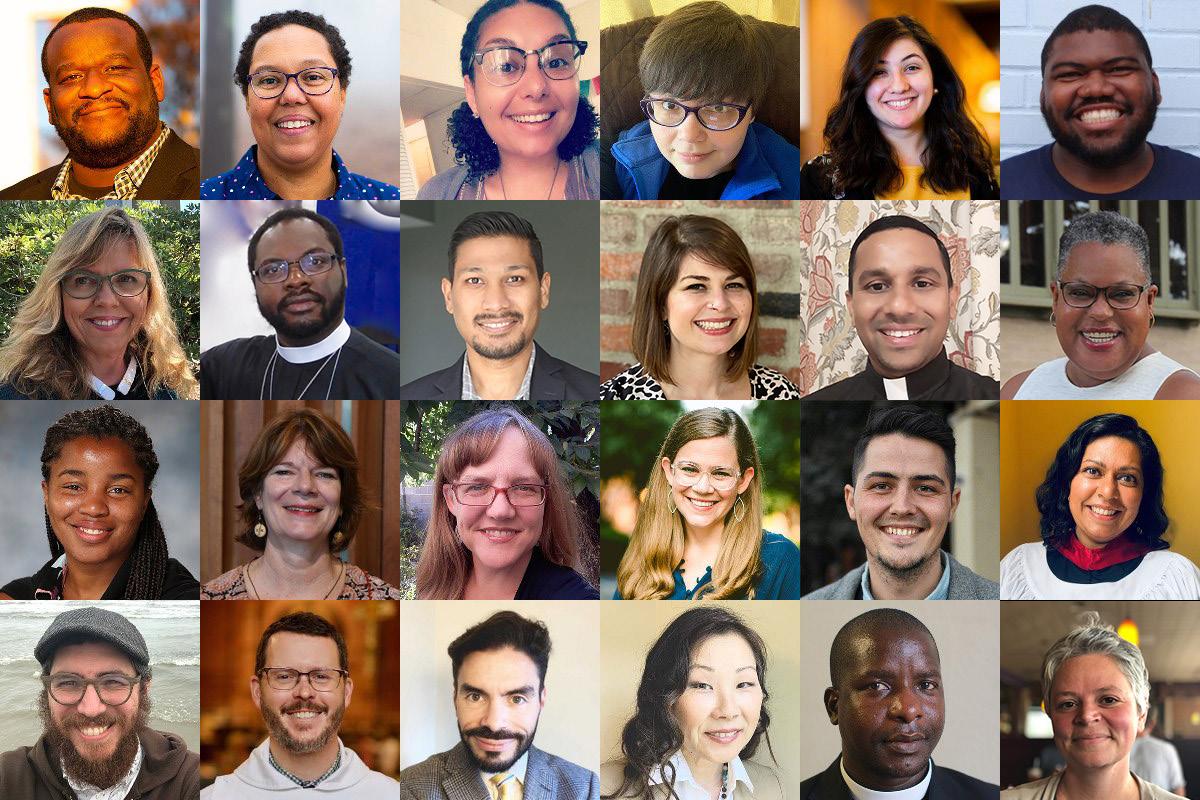
CONTRIBUTORS
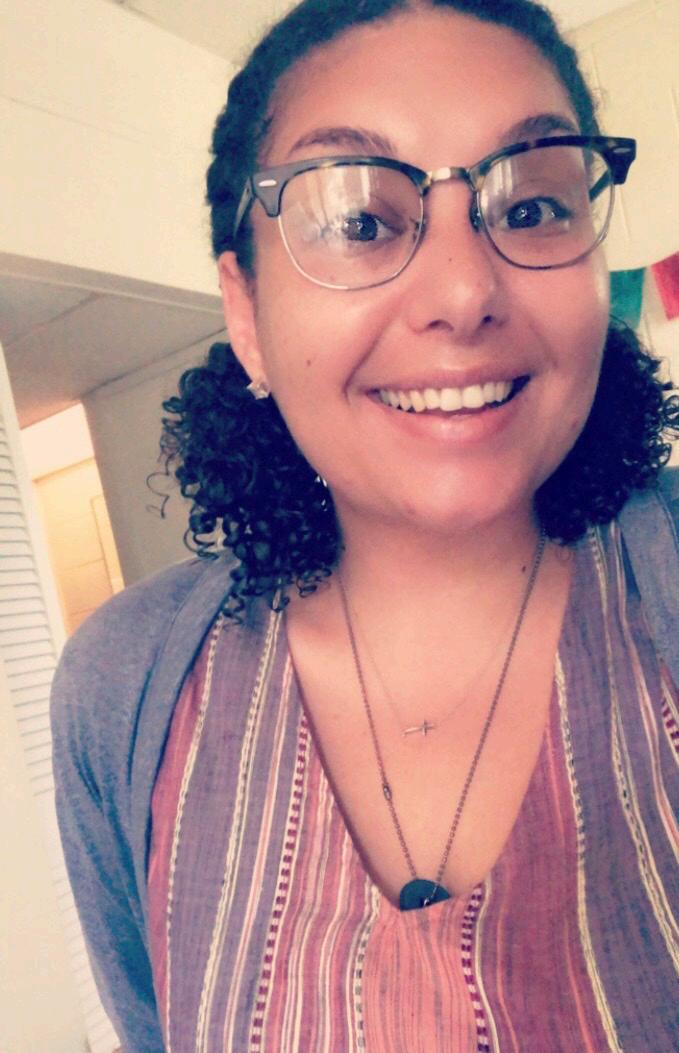
Megan Allen, is a SIM scholar and senior seminarian at the Episcopal Seminary of the Southwest in Austin, TX, hails from the Diocese of Ohio, and is a prophetic advocate for racial equality and reconciliation.
The Rev. Lisa Barrowclough serves as Chaplain and on the Administrative Team of Beauvoir School at the National Cathedral in Washington, DC and manages virtual classroom, administrative and sacred spaces.
Dr. Courtney Cowart, Executive Director of SIM, is persisting through this pandemic as SIM re-imagines and enacts its mission in building a New Church for a New World, most of it via Zoom.
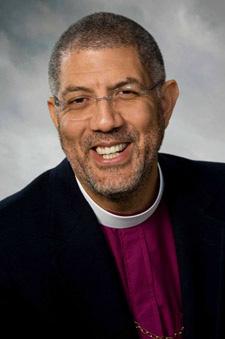
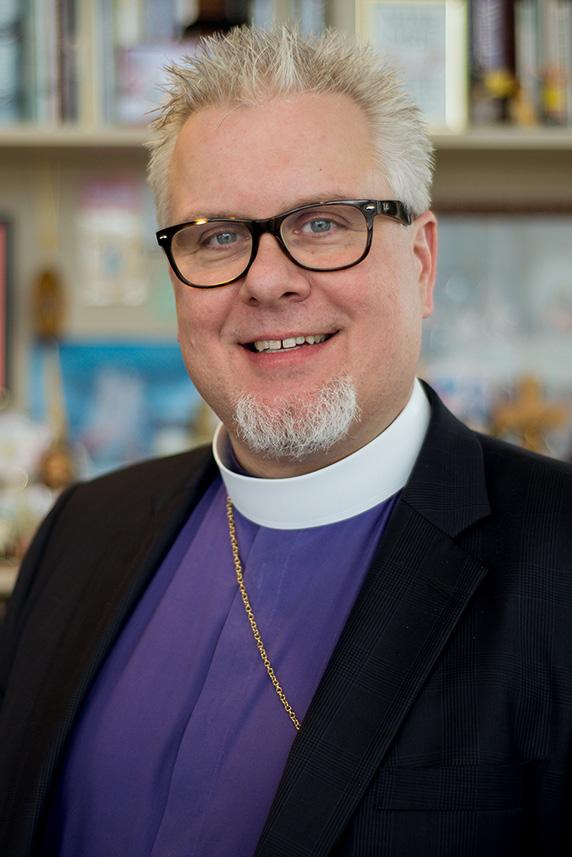
The Rt. Rev. C. Andrew Doyle is the ninth Bishop of the Episcopal Diocese of Texas, and author of Vocatio: Imaging a Visible Church and Citizen: Faithful Discipleship in a Partisan World and The Jesus Heist. His own autobiographical statement: “Met Jesus on pilgrimage; still walking.”
James Goodmann, SIM’s Associate Director, is co-editor of Future of the Faith and currently pandemically exiled from Manhattan in Montclair, NJ.
The Rev. Daniel R. Heischman, Executive Director of the National Association of Episcopal Schools (NAES), is also the author of Good Influence: Teaching the Wisdom of Adulthood and What Schools Teach Us About Religious Life
The Rt. Rev. Duncan Gray III was the ninth Bishop of Mississippi (resigned) and currently Chair of the Board for The Gathering of Leaders, an organization dedicated to diocesan and congregational renewal in the Episcopal Church through transformational leadership, effectively serving all sorts and conditions of people through the transforming power of Jesus Christ.
The Rev. Joshua Hill is Chaplain at the Holderness School, Holderness, New Hampshire, with a student body of 275 drawn from 22 states and 14 foreign nations. As newlyweds, Joshua and his wife, Hannah, traversed 1200 miles of the Appalachian Trail – which Josh describes as “less painful than stepping on legos.”
Sister Debra Susannah Mary Rhodes is a Co-founder with her spouse, the Rev. Robert Anthony Rhodes, and the Rev. Jason Dominic Prati, of the Community of Mary, Mother of the Redeemer (CMMR), currently located in New Albany, OH. CMMR is marked by a blended ethos of traditional monasticism with its emphasis on prayer and contemplation, High Anglicanism, and the Catholic Worker Movement. Debbi is also a SIM scholar (CDSP ’20). CMMR can be found at cmmredeemer.org.
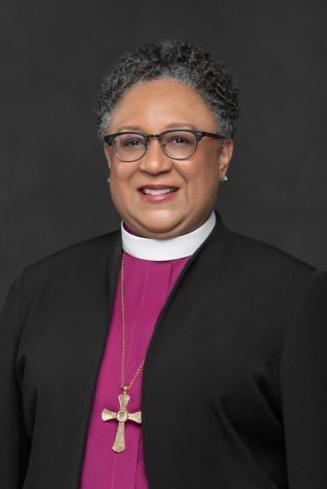
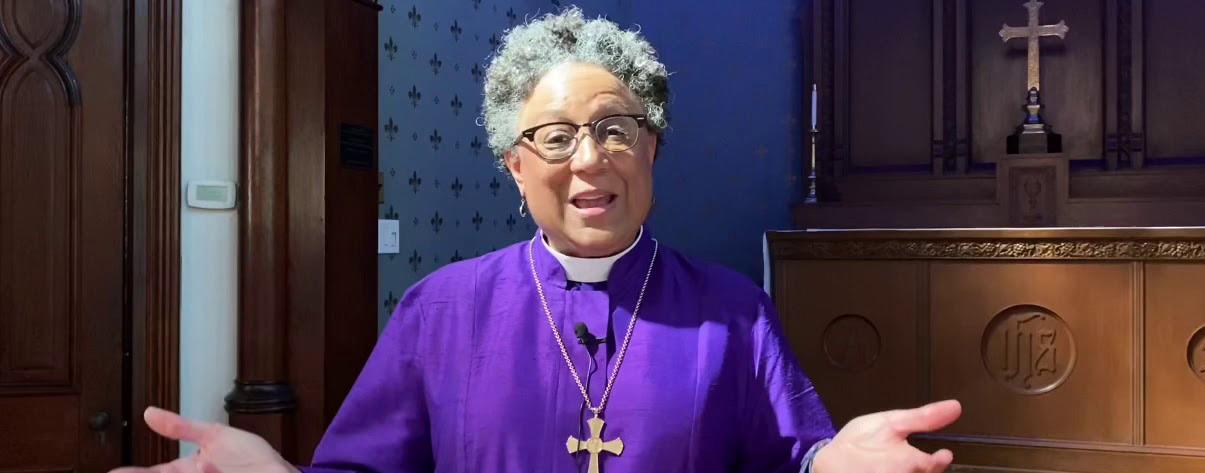
The Rt. Rev. Phoebe Roaf, is Bishop of the Episcopal Diocese of West Tennessee, the first African American woman to be a Bishop in Province IV. She has a law degree from the University of Arkansas, and practiced law prior to her ordination. Bishop Roaf also served as rector of St. Philip’s, the oldest African-American congregation in the Diocese of Virginia, prior to her episcopal ordination.
The Rev. Carlos Ruvalcaba is SIM alum and Becoming Beloved Community scholar (Bloy House at Claremont University, ’19). Carlos is currently Associate Rector at St. Stephen’s Episcopal Church, Hollywood, CA; Associate Rector at St. Barnabas Episcopal Church, Eagle Rock, CA; Program Director, Instituto Episcopal de Liderazgo; and Director, Program Group on Hispanic/Latinx Ministries, Episcopal Diocese of Los Angeles.
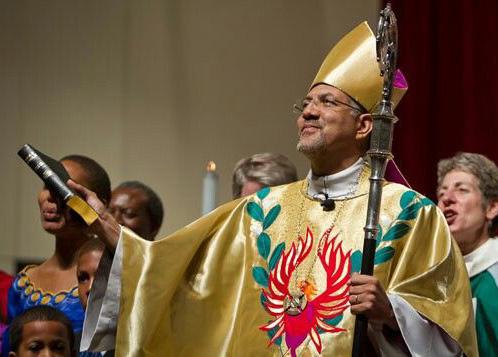
The Rt. Rev. Robert C. Wright, is the 10th Bishop of the Episcopal Diocese of Atlanta. In his previous career, Bishop Wright served as a Navy helicopter crew chief and rescue diver and as a child advocate for two mayors and the Children’s Defense Fund. Bishop Wright and the Diocese of Atlanta are proud to sponsor the work of Dr. Catherine Meeks and the Absalom Jones Center for Racial Healing in Atlanta.
The unprecedented pain and uncertainty of 2020 has surely deepened a collective sense of gratitude among Episcopalians for the ancient and sustaining gift of the faith we have received.
As witnessed on these pages, our Christian family has continuously upheld one another and millions of people through the losses, upheavals and heartbreaks of this year. At the same time 2020 has heightened our awareness as leaders of the Episcopal Church that the capacity to live into our faith and be the church in innovative and previously unimagined ways is not an optional part of faith development. As this year has underscored, the capacity to imagine and risk faithful innovation must be fostered in each and every one of our leaders for us to be fully prepared to minister in this uncertain world.
This issue celebrates both – our ancient inheritance and the prophetic risks we take for the love of Jesus and neighbor. Perhaps nowhere in these pages is the power of holding ancient/future vision together made more movingly apparent than in articles on pages 12-19 from Episcopal chaplains describing their experiences of providing pandemic pastoral care to parents, children and teachers in Episcopal schools through COVID-19.
I commend this issue to you, compiled in a season our scholar Megan Allen at Seminary of the Southwest describes in her reflection as “quarantine liminality,” for the clarity and passion that leap from every page. Whether it be while reading the words of recent SIM alumnus Carlos Ruvalcalba, writing from Los Angeles and declaring, “We closed the doors of our building, but the church never closed,” or Lisa Barrowclough’s witness from Beauvoir School at the National Cathedral in Washington of how Zoom worship opened nothing less than “a tremendous opportunity to teach about the holiness of every moment and every space,” or through the theological reminder of SIM’s own Jim Goodmann that “There is a mystical body of humanity, in health and sickness, in living and dying, in sadness and joy, to which we all are membered,” it is my hope that your faith will be renewed and your convictions for the future of the church will be strengthened by what you discover here.
In one of four interviews on leadership which I conducted for this issue with bishops of our church, The Rt. Rev. Andrew Doyle wisely observes that adaptive change is so complex and multi-layered, and happens simultaneously in so many different places, that it can only really be seen in hindsight. Surely it is only with time that we will be able to see with any real comprehensiveness what shifted for the Episcopal Church in 2020 and in deep, interior ways in each of us. But perhaps with the benefit of time’s perspective one day a future SIM scholar poring through the electronic archives in one of our Episcopal seminaries researching this era of the church’s ministry and theology will come upon this issue and gain insight into the ways we were transformed in this era by reading this issue of Future of the Faith
In the meantime, may this gift from SIM be food for thought and prayer during the Advent season. Please know it comes to you as a member of SIM’s family with our prayers for a holy and healthy Christmas and a bright and hopeful New Year.
Yours in Christ,
Courtney Cowart, Th. D. Executive Director
The Society for the Increase of the Ministry
MILLION DOLLAR GIFT FROM THE PAUL H. DUNAKIN RELIGIOUS TRUST MAKES AN HISTORIC CONTRIBUTION TO THE LEADERSHIP OF THE EPISCOPAL CHURCH
BY COURTNEY COWART, SIM EXECUTIVE DIRECTOR
Oneof the most instructive and inspiring aspects of my experience as the Executive Director of The Society for the Increase of the Ministry over the past three years has been learning first-hand about the power of planned giving and bequests.
The Episcopal Church is truly blessed with abundant resources – everything we need to ensure a strong, faithful future leadership for the church.
We saw proof of this when last December, SIM became the recipient of the Paul H. Dunakin Religious Trust’s million-dollar endowment. SIM, established in 1857, will continue the Dunakin Religious Trust’s mission since 1991, to provide scholarships for the theological education of Episcopal seminarians. Specifically, the Dunakin gift will be the financial cornerstone of Becoming Beloved Community Scholarships, established by SIM in 2018 for the historic purpose of recruiting and educating ethnically and culturally diverse leadership who are deeply committed to the Episcopal Church’s work of Becoming Beloved Community.
Limited funding for scholarships narrows the cultural diversity of those who minister in the world as Episcopal priests. As Chair of SIM’s scholarship committee, Constance Perry, and Miriam McKenney, also serving on the scholarship committee, noted in a recent statement they drafted for the committee, with the help of the Dunakin gift, this year we were able “to award people working toward the Beloved Community amounts that would leave them with very little debt. This form of reparations gave us a way for us to take care of people differently than they would have been in the past and showed [given the composition and process of the committee] that white people are finally beginning
to understand that this is their work. When we realize that our liberation is bound together, people in power can use that power for tangible change. When we include God in our decisions we step ever closer to that Beloved Community God dreams for us.”
The leadership shown by the Dunakin family in making this substantial gift to SIM will directly address these challenges and be a great blessing to the Episcopal Church for generations to come. I really cannot think of a more beautiful and holy legacy. As Presiding
The leadership shown by the Dunakin family in making this substantial gift to SIM will directly address these challenges and be a great blessing to the Episcopal Church for generations to come.
Bishop Michael Curry said in a video he made in support of SIM last year, “I truly believe that this work of supporting scholarships for theological
education is nothing less than the sacred work of God, to help God in the work of changing the world by the Way of Love.”
It is my fervent prayer that others in our church with financial resources who are discerning how to direct their gifts in ways with timely, profound and lasting impact will choose, as the Dunakin family did, to make a planned gift or bequest to SIM’s Becoming Beloved Community scholarship fund.
We are deeply grateful to Paul Harold Dunakin, who was born in Mark Center, Ohio in 1901, and grew up in Grand Rapids, Michigan. He graduated from the University of Michigan and obtained a law degree from Kent College in Chicago, Illinois. Settling in Wheaton, Illinois, he practiced law in the corporate world and later formed his own firm. He and his family were members of Trinity Church, Wheaton, where he served on the Vestry. After retiring from his law practice, he began studying for the diaconate at SeaburyWestern and was consecrated deacon at St. James Cathedral in Chicago, subsequently serving as a deacon at Calvary Church, Lombard. He died in 1991. In his will, Paul Dunakin directed the establishment of the Paul H. Dunakin Religious Trust, which for seventeen years has helped seminarians of the Episcopal Church achieve their dream of a quality theological education.
This generous gift from the Paul H. Dunakin Trust positions SIM to have an historic impact on the future of the Episcopal Church. With the Dunakin Trust’s support, not only will Becoming Beloved Community scholars be diverse. Without educational debt, they will also be freer to accept calls to minister alongside the most socially and economically marginalized in our society and to go where ministry is needed the most.
STATEMENT FROM SIM’S SCHOLARSHIP COMMITTEE
The 2020 Scholarship Committee of six members met in June to review the Scholarship Applications independently and share Scholarship Award recommendations. The diverse committee included three men and three women, one clergy and five laypeople, three whites and three blacks, including one African bishop who is also a seminary faculty member. As we reviewed the applications, our focus rested on the essay, which asked candidates to reflect on The Rev. Dr. Martin Luther King, Jr.’s I Have a Dream speech. As we continued to work together, it was clear that we were all six called to do this work - as seminary faculty, SIM staff, Commission
When we met again, it was clear that the Spirit moved in our hearts, particularly of Courtney, Jim, and Dain. At the start of that meeting, Courtney and Jim shared their desire to allocate the scholarships in a way that would have the most impact on the people who were doing the work of Becoming Beloved Community. That choice meant that our witness, along with the Spirit, dramatically impacted the award decisions. We chose to award people working toward the Beloved Community amounts that would leave them with very little debt. This form of reparations gave us a way for us to take care of people differently than they would have been in the past and showed that white people are finally beginning to understand that this is their work. When we realize that our
When we realize that our liberation is bound together, people in power can use that power for tangible change. When we include God in our decisions, we step ever closer to that Beloved Community God dreams for us.
on Ministry members, and people who work for racial reconciliation and healing. We found common ground in the work of Becoming Beloved Community.
Our first meeting, scheduled for two hours, lasted four hours as we shared our experiences in The Episcopal Church as they pertained to the essay question and Becoming Beloved Community. We found that our stories echoed the words in the essays submitted by many of the Scholarship Applicants. In essence, we were giving witness to their experiences. By the end of that first meeting, we determined who the Scholarship Awardees would be, and we set another meeting to decide how much to award each applicant.
liberation is bound together, people in power can use that power for tangible change. When we include God in our decisions, we step ever closer to that Beloved Community God dreams for us.
The entire process was a gift from beginning to end. We feel so thankful to bear witness to the diverse future of ministry in The Episcopal Church. We pray that we serve as an example to other ministries to open their minds and hearts to a church full of the myriad images of God. U
FOR SUCH A TIME AS THIS...
BY JAMES GOODMANN, SIM ASSOCIATE DIRECTOR
For the 2020 SIM scholarship season, candidates were required to answer one essay question, across all award categories, a question inspired by the writings of the late rabbi and family therapist, Edwin Friedman:
The late Dr. Edwin Friedman, family therapist and rabbi, recalls that phone calls and letters to him multiplied after his initial writing, Generation to Generation. Almost all of them were from a position of defensiveness from leaders in the face of complaints and chaos in their respective systems. Finally, he said, “I stopped listening to the content of everyone’s complaints and, irrespective of their location or
their problems or the nature of their institution, began saying the exact same thing to everyone, ‘You have to get up before your people and give them an “I have a Dream” speech.’”
What is your “I Have a Dream” speech or sermon? Offer your articulation of a dream you hold for the life of the church and/or some aspect of the future of the faith. Where do you discern the active invitation of the Holy Spirit to Episcopalians? What compels the ministry for which you are preparing? What needs to be celebrated and amplified and what challenges in the church and larger culture need to be addressed? Remember this is an
exhortation crafted to inspire and motivate your audience to join with you in making this vision a reality.
In proposing this question, SIM hoped to provoke imagination with regard to seminarians’ anticipated leadership in parishes, schools, and other contexts of ministry. And several rose to that challenge beautifully. While the “I Have a Dream” idea may strike some as fatuous and off-key given our current situation, it is perhaps the appropriate move when events seem to be saying, “…and I have a nightmare.”The Church in this time is asked to appreciate and re-imagine the profound gravitational shift that is everyone’s inheritance
given the onset of COVID-19 not to mention the racial and cultural pandemics that followed.
That gravitational shift has exposed many things that we might otherwise have bypassed under more “normal” circumstances – not least that we are inescapably bound together even in our tactile or ideological exile from each other, that there is a mystical body of humanity, in health and sickness, in
for schools, for civic leaders, for all of us in just about every aspect of social interaction imaginable. In these circumstances, can the church possibly become the “school of love” that theologian Brian McLaren envisioned? And can our love cross boundaries that need badly to be breached?
From SIM’s perspective, emerging patterns of leadership seem to come from those locally situated leaders
If catastrophe offers any gift, it may be the jarring introduction to this one, inescapable communion and one that, with our very efforts to be socially distant, continues to be built by our compassion for one another.
living and dying, in sadness and joy, to which we are all membered. The human condition, says Thomas Keating, is that one, inescapable spiritual community. If catastrophe offers any gift, it may be the jarring introduction to this one, inescapable communion and one that, with our very efforts to be socially distant, continues to be built by our compassion for one another.
Leadership under these conditions holds a similar prospect. The lines of hierarchy are softened; the lateral quality of a shared human condition opens greater possibilities for sharing leadership and mission than perhaps at any other time in recent history. The late lessons of 9/11, of hurricanes Katrina and Sandy and other disasters and their respective theatres have been academies of a different kind of leadership earlier in this century, one informed by and awakened to the gifts of everyone. Because of COVID-19 and its economic fallout, another mega-school of leadership has opened – for congregations and their leaders,
who, within their congregations and ministries, decide to step into a largely undiscovered country of virtual convenings, anywhere from meditation/ centering prayer groups and reflective corners to more formal varieties of worship to poetry circles and online conversations. We have convened several of our own, encompassing such questions as:
• What will it take for the Episcopal Church to become an anti-racist organization?
• How do faith communities benefit from becoming more reflective?
• How do the varieties of contextual ministry portend the shape of a New Church for a New World?
These and other conversations about food scarcity and building healthier food systems, bridging social gaps in times of disaster and economic emergency and other topics that embrace the church’s corporal presence to a world in great
need is our earnest toward shaping a collective imagination of a church that becomes known, eventually, for its innovation and adaption – as much as it has been known for its great cathedrals, its academic institutions and former predominant cultural presence. In our cultural dark night we may become unmoored from our obsessions with self-protection and, with lighter hearts perhaps, re-engage the kenotic lessons of the New Testament – like Christ, empty ourselves of the prestige that no longer serves us in navigating our times and consider taking the lowest place (Luke 14: 10) in order to serve others at the banquet of life. At the very least, consider this current season as an exhibition to that end!
The virus and its effects will be with us for a long time, with – needless to say – manifold economic, social and political effects that do nothing less than profoundly re-shape our everyday realities and not least through the actual cost of human lives, of those we love. By the time this reaches our readers, that cost will be only too evident. Does this catastrophe also bear with it an invitation – one from the Holy Spirit who does not bring suffering but is that life presence that accompanies us in it, who is “that dear freshness, deep down things” as Gerard Manley Hopkins asserts, and who is, also, as my colleague Dr. Cowart would say providing a timely “cosmic kick in the a**” to get us to actually behold where we are? U
WORDS OF WISDOM ON LEADERSHIP FROM BISHOP DUNCAN GRAY
RETIRED BISHOP OF MISSISSIPPI
In late February, before the COVID-19 pandemic, before our enforced season of quarantined reflection, and before the rise of the Black Lives Matters movement’ response to multigenerational systemic racism and police brutality, I had the privilege of spending an afternoon in Oxford, MS, speaking with retired Bishop of Mississippi, Duncan Gray. Our conversation inspired SIM’s essay question for this year’s scholarship applicants, which asked future leaders to write about their dream for the Episcopal Church. Looking back, it seems providential that the first in a series of leadership conversations I conducted this year was with a bishop who is now the Chair of the Board of Directors of the Gathering of Leaders, and whose episcopacy was shaped by both the crisis of Hurricane Katrina and serving as Bishop Duncan did, in the
conservative deep South immediately following the election of Gene Robinson. May these autobiographical words of wisdom be an encouragement to many who are leading in the context of politically divided congregations and through a time of national catastrophe. — Courtney Cowart
I’m convinced the difference between leaders and managers is that leaders have a dream, while managers manage that dream.
Dreams can be shattered, and it takes a lot to hold on to your dream when it looks like it’s failing. Don Quixote failed, but Sancho Panza helped him get it back. The Jesus Movement and Presiding Bishop Michael Curry is helping us get the dream back. That is a spiritually compelling and attractive endeavor.
The institutional authority of the church is long over. Very few twentyyear-olds outside the Bible Belt are excited by what the church is doing. But they do get excited when they encounter someone who dreams and sacrifices to keep the dream alive.
It is important for young leaders to understand this and I often say, “Don’t expect your authority to come from the institution. It will come from your being. Inevitably, it runs all the risks of charismatic leadership; nevertheless, there still has to be personal authority that comes from being rooted in Jesus.”
Maybe that is a charism, and if you have that charism — share it! Or maybe it’s learned and shaped and formed. I would like to think that, and that spiritual depth can increase and grow through professional
development. This is the difficult part about clergy leadership development. There is no doubt a leader has to be vulnerable, try new things and possibly fail. It’s about servant leadership, emotional vulnerability (which, by the way, is not spilling your guts at every opportunity) and authenticity, but too often we have a profession that rewards the opposite. As a rule, the temptation is to not be vulnerable and to be less than authentically who you are, and I consider narcissism to be an occupational hazard because of all the stuff people project on their clergy leader.
I believe that the ordained ministry is a sacrificial calling. Part of what I’ve said over the years to clergy is that you have to have an emotionally healthy self in order to give it away for others. Otherwise, what we call self-sacrifice will become a form of manipulation or co-dependency. The line between service to others and a manipulation of them for our own purposes is extraordinarily thin.
All of this I thought was theoretically true until I became bishop. I was elected Bishop of Mississippi in March of 2003 and Gene Robinson was elected in June. Having to negotiate the trauma of half the churches in the diocese wanting to leave the Episcopal Church, I remember leaving a conference with an image of carrying the Church on my shoulders, which suggested a kind spiritual arrogance.
After the 2003 General Convention I spent the fall making myself available to anyone and everyone who was mad. Then I went to the first CREDO conference for bishops. Because of what we had all experienced that fall most of the bishops who had gathered were talking about early retirement, some more seriously than others. I was one of the more serious ones. I had been broken and was struggling to find a way forward. During that week it became
clear to me that I could no longer try to lead by simply responding to the pain and anger that was coming at me from many directions. That well-intentioned pastoral approach had broken me. I realized that my professional life had to be balanced between responding to outside stimuli and dreaming — being guided by what was coming up out of my own life of prayer.
You can fill up your whole day reacting to external stimuli or you can carve out the time to pray and dream and respond to what is coming from that.
I met Mary MacGregor as a fellow founding member and driving force in the development of The Gathering of Leaders. Mary became our consultant as we began to dream about a way to refocus the attention of the diocese from its interior conflict to an expanded vision of mission. The result of our work was the Mississippi Tent Meeting, a weekend renewal event where I invited people to dream with me about what the church, at its best, could be. To my absolute astonishment, 2500 people showed up!
Instead of goal setting, we dreamed. We dreamed of being one church united in mission, despite how different that dream was from reality. We dreamed of being a church of invitation (not welcome) and of transformation – of being in the brokenness of transformation, and reconciliation. I had been preaching this dream for almost two years prior to the Tent Meeting. The subtext was, ‘You can leave the Church, but, boy, are you going to miss a good time!’ This was August 2005 in Mississippi. We turned a corner. People left feeling so good...and the next week Hurricane Katrina hit.
I was ready to ditch everything but the clergy on the coast said, “No. We need a dream to hold onto.” We got to about three of the fourteen things
we’d dreamed, but everyone began to understand what it means to be one church – with all the volunteers pouring in. And churches hit by the storm raised their diocesan pledge because of the power of that experience. All the experiences of that era remind me of some of the strong leadership wisdom in Richard Rohr’s writing who writes about taking your failures and your brokenness and leading out of that.
One leadership track we will need for a few more years is traditionally trained clergy because the traditional institution still has energy in it. But there is handwriting on the wall and we will need plenty of new models including the bi-vocational one. I am intrigued by the new monastic community model.
There will always be a need for a poet in the community – a poet who has the capacity to see what others don’t and has the willingness to share that and call others into it. Historically, clergy have been given time and space to be poets –to encourage the soul work that so many don’t have the time and space to do –and to come back from that time and share. The community has to have that poet to lead the people, and I believe that is universal. I am thinking about that part of the Gathering of Leaders leadership training to encourage the kind of soul-making that leadership of the future of the faith must rely on.
I think Phyllis Tickle is right: The church won’t be abolished but our walls need to be much more permeable –seeing the faith through the refracted lenses of others so that we can discern what is essential to our identity and what aspects of the faith are cultural accretions. There are some essential insights of our tradition and there is some extra baggage we can and should leave behind. U
EDUCATION
SCHOOL MINISTRY: IS THIS REALLY A DETOUR?
In John Irving’s novel, A Prayer for Owen Meany, we meet the Rev. Lewis Merrill, a Congregational pastor at a nearby church to Gravesend Academy, where Owen Meany attends school. While Merrill’s congregation loves his capacity to question established beliefs, he himself is plagued by doubts and uncertainties in his walk with God. An eloquent preacher, when Merrill puts words to his doubts in casual conversation he often would stutter.
A teaching vacancy occurs at Gravesend Academy, and the Rev. Merrill is hired as a temporary, part-time teacher, taking some of the religion classes at the Academy. At one point, Owen Meany and his classmates notice a different side to Merrill emerging as he teaches. He seems to come alive, his face opens up in apparent joy as he addresses and relishes in the challenging questions and skeptical tendencies of his students. No doubt a potential candidate for clergy burnout, Merrill seems to have found the classroom experience a replenishing and invigorating one, a new and engaging dimension to ministry.
We learn a great deal more about the Rev. Merrill as the novel unfolds. For the time he spends in the school, however, life and ministry seem to have opened up for him.
BY DAN HEISCHMAN
A COURT JESTER
As I completed Divinity School, I was pretty certain of my ministerial trajectory: I planned to spend my years in parish ministry, perhaps moving up the ecclesiastical ladder of parish opportunity. Two years into my first parish position, in suburban New Jersey, I was approached by a friend who encouraged me to look at a school chaplaincy in New York City. At the time, I had more interest in living in New York than being a school chaplain, and ultimately decided that a couple of years in a school could be my way into the Big City. At the very least, there was June, July, and August, along with a couple of weeks of Christmas and spring vacations.
As so often is the case, God had other plans.
Two years turned into ten, and I have been in schools and colleges ever since, serving as an upper school head (a glorified name for a school principal), and a college chaplain. Having focused on youth ministry in my first parish experience, I soon came to discover that if one really enjoys working with young people, there is no better place to be doing that than in a school, the place decidedly at the center of young peoples’ lives. I had a similar type
of “Louis Merrill experience” in the classroom, enjoying the challenging, sometimes daunting, always disarming questions my students would ask. So, too, as a chaplain I grew to enjoy my interactions with other faculty members, some of whom no doubt felt the school would be perfectly fine without a chaplain, but nevertheless at least tolerated my presence the more they got to know me, and I them.
The more time I spent as chaplain at the school, the more I found the experience of being in front of a group of teenagers in chapel, all of whom had no choice but to be at there, less intimidating. So, too, I discovered the remarkable opportunities of ministering to families regardless of their religious tradition, or no tradition at all.
To be sure, there were times in that ministry when I felt that serving in a school and being a Christian seemed to be at odds. The “bottom line” values of the school — academic excellence, following a certain path to worldly success — made me feel as if I was a stranger in a strange land, preaching and talking as I did about grace and mercy. As my spiritual director observed about the disjunction of my role, “You are the court jester, you are espousing the outrageous in that place.”
Years after I left the chaplaincy position at the school, I received an email from a student I had taught, who had just completed his application to a Jewish theological seminary. He shared with me one of the essays he wrote for the application. Asked in writing the essay to identify three Jews who had an impact on his decision to apply to seminary, and explain their impact, he named me as one of those three Jews, due to what he identified as the growth
chaplain. Indeed, the tangible evidence of the impact of a school chaplain’s ministry can be fully revealed at much later times than in parish work, where one’s position at the center of things is a given, not a challenge.
At the same time, many will describe their experience of feeling somewhat like an outcast at, for example, diocesan clergy gatherings, where their clergy colleagues either find it confounding that these talented people end up in schools rather than parishes, or ask
Chaplains will talk about the wonderfully rich ways in which the school is “parish” to them, how they often preach on a regular basis to more people in school chapel than their parish colleagues do on a Sunday morning — and certainly preaching to far more young people than in most parishes.
in his understanding of his Jewish identity in the Bible class he had taken with me at school.
My experiences in school ministry are far from unique. One only needs to talk to a great many of our Episcopal school chaplains who work in similar settings, to learn of their deep satisfactions, even in situations that challenge their identity and assumed presence at the center of institutional life. They will talk about the wonderfully rich ways in which the school is “parish” to them, how they often preach on a regular basis to more people in school chapel than their parish colleagues do on a Sunday morning — and certainly preaching to far more young people than in most parishes. All of these things are not immediately evident to a new school
them not about their work in a school but where they serve on Sunday mornings! As with the tangible evidence of impact, the accumulation of years helps our chaplains to develop thick skins when it comes to the view their clergy colleagues may hold of their unique callings.
CHAPLAIN OR CHAPLIN?
Working as I did, for a number of years, as a chaplain in an institution of higher education, I was surprised by the number of times, when I was addressed by virtue of my role (i.e., “Chaplain Heischman”), that the spelling of this position was incorrect. Frequently I would be referred to as “Chaplin Heischman.” At first, I attributed this to religious illiteracy,
rampant as it can be even among those in higher education. The more I saw the misspelling, the more I began to think about the degree to which this role can mimic the most famous “Chaplin” of all, Charles Chaplin. We remember him as a comic, oftentimes awkward character, nonetheless sincere and fully capable of working himself out of difficult situations.
It is easy to feel “Chaplinesque” as an ordained person in a school. The institution frequently does not resonate with or mirror one’s experience, indeed one’s outlook on life. Roaming around a school or college campus, I frequently recalled Reinhold Niebuhr’s description of walking the halls of a hospital during his time in parish ministry in Detroit, finding himself feeling out of place amidst a sea of efficient doctors and nurses hustling about, living with the realization that he was working “in a twilight zone where superstition is mixed up with something that is — well, not superstitious.”1
So, too, in the more redemptive moments, when my influence managed to be felt in some of the most unlikely of circumstances, I recalled what one of my Doctor of Ministry professors observed about my ministry in a school, “Your role can be very ambiguous, but in the midst of that ambiguity you can get away with and accomplish a lot!”
THE CAPTIVE AUDIENCE
In my current role, I visit seminaries a lot, telling students about the unique forms of ministry open to them in Episcopal schools. For many, who see the life of faith as a willful choice and intentional way of life, the idea of compulsory chapel – as is the case with almost all of our schools – to be the toughest reality to accept about this role. How can a school force individuals to worship? In response to their questions, I ask them about their own experience of church:
was going to church a free choice on their part, or did parents require them to go? Likewise, just as we require students to take certain courses and be exposed to academic subjects not necessarily of their own choosing, so, too, a school with a religious mission feels it important to expose students to the opportunities and joys of worship. It may seem a long way from Sunday morning worship, but it is part of the educational dimension of a school as well as the educative dimension of worship itself.
It turns out that so many of our students in Episcopal schools have had more worship experience and understanding of the various elements of the church’s liturgy than many of our young parishioners. The practice of attending chapel, week after week, over a period of years can have a salient impact on young people, as evidenced by their fond recollections of chapel years after graduating from the school.
MINISTERING TO A PLACE
When I first began my work as a college chaplain, I sought out some advice and perspectives from clergy and bishops who were familiar with the college and the place of the college chapel and chaplain in the life of the institution. One priest described my role in this way: “You are like the English parson, with a set geographic boundary (the college campus), in which you have responsibility for ministering to everyone in that particular precinct, regardless of their religious beliefs.” More than ministering to a
congregation, a school or institutional college chaplain ministers to a place.2 The notion of that place – its identity, its mission and culture, its challenges and shortcomings – are all part of the ministerial manifest. To be sure, one has a uniquely pastoral, prophetic, and priestly role in the midst of that institution, but there is also a degree to which the “whole” is the object of ministry. In a school, for example, one must always have the whole school community in mind, even when one is focusing on specific individuals or groups.
NEW WAYS OF DOING CHURCH
In the Episcopal Church today, I sometimes feel our rhetoric about the future of the church is way ahead of reality. We talk a good game of wanting to explore “new ways of doing church,” but we nonetheless seem stuck in the traditional modes of picturing what church actually is – the Sunday morning congregation, complete with the hope that people will come to us and identify with us in the traditional mode. As much as I love the Sunday morning model of church, I question how sustainable it can be in the midst of a rapidly changing religious landscape.
As Duke Professor Lauren Winner once told a group of our school chaplains, “you (the chaplains) work each day with the people that the church frets about not reaching” (the “none of the above’s,” those with no religious affiliation). As I think about our chaplains, being each day on the
forefront of the church’s ministry to the “great unchurched,” I cannot help but think our church is missing a great opportunity to support and uphold school ministry as a vibrant form of Christian outreach. While I am heartened by the growing understanding and visibility our bishops are giving to this form of ministry, I cannot help but wonder if our church’s lingering unwillingness to embrace school ministry has more to do with a certain dispositional symptom of decline. Why do we persist in our deliberate or inadvertent reluctance to see school ministry as a viable and spiritually substantive living out of one’s ordination vows, not to mention a tremendous opportunity for the church today?
A canon to the ordinary, talking with a priest who is planning to accept a call to be a school chaplain, asks that priest, “Do you really want to take such a detour away from parish ministry?” (the assumption being that it will be hard to return to it at some later point). I wonder if a question might be asked in response: “Is this really a detour, or could it actually be the place where — among other places — the church really needs to be?”
Just ask the Rev. Merrill if he had taken a detour, or found a renewed calling? U
1. Reinhold Niebuhr, Leaves from the Notebook of a Tamed Cynic (New York, CaPado Press, 1976), p. 24.
2. For a fuller discussion of this notion of ministering to a place, see Timothy Jenkins, “Tradition, Moderation, Kindness and Chaplaincy,” and, “An Anglican Vocation: Chaplaincy as an Experiment in Providence,” in, Jenkins, An Experiment in Providence: How Faith Emerges with the World (London, SPCK, 2006).
THE SCHOOL’S CHAPLAIN IS THE PANDEMIC’S PROPHET
BY THE REV. LISA BARROWCLOUGH, CHAPLAIN, BEAUVOIR SCHOOL NATIONAL CATHEDRAL, WASHINGTON, DC
Over more than a decade of teaching fourth grade Old Testament in two different schools I spent a substantial amount of time on the prophets. Their stories appeal to nine and ten year-olds, especially as we together recognized that prophets seemed to fall into a predictable pattern and performance as they assumed the role of “reminderer-inchief” of the People of God, whenever these needed a reset in faith, identity, and purpose. Since the earliest days of the Covid19 pandemic, and even more so seventh months into the unexpected and unprecedented ministry of school chaplaincy in the midst of it, I find myself recalling those fourth grade lesson plans as I repeatedly step into a prophet’s role, reminding the various school constituencies of who and whose they are, where they’ve come from and where they must go, and also who and how they are called to be.
“To be living reminders,” wrote Henri Nouwen, “means to be prophets who, by reminding, point their people in a new direction and guide them into unknown territory.”1 There is no doubt that the Covid19 pandemic has thrust us all into “unknown territory” to which Nouwen refers, and this suggests that there is a place for a prophet as a guide in the community. The increasing
challenge, however, is ascertaining how comfortable or willing the school and its people may be with the “new direction” the chaplain feels called to proclaim.
THE CHAPLAIN AS PROPHET IN WORSHIP AND FORMATION
Early efforts at worship and faith formation (two primary components
of school chaplaincy) were at the same time high on the “things they don’t teach you in seminary” score, and yet are still as basic as anything I’ve ever done. The community, chaplain included, needs to be reassured that “God’s Got This!” (the simple and catchy title of my first “Faith-Filled Fridays” video) and to be retold just the key faith story – God IS with us, even (especially!) when we are not with one another. In the same
The community, chaplain included, needs to be reassured that “God’s Got This!”
way as the prophets of old would tell the faith story, recounting the promises of “the God of Abraham, Isaac, and Jacob,” so too the pandemic’s chaplain engages formation and worship as the storyteller, in that most primal work of reminding in order to reassure.
As the pandemic season, and its related restrictions, have carried on, the longing for “the way we used to do chapel” has been echoing across the voices of faculty, students, and families. As a cathedral school, it seems people are missing the grandeur and whimsy of worshipping in such a hallowed space (my living room via a Zoom screen cannot compete!) but this has opened a tremendous opportunity to teach about the holiness of every moment and every space, and to invite the community to consider how to find the God they worship in the most mundane, even virtual, places.
THE CHAPLAIN AS PROPHET IN PASTORAL CARE
Every aspect of school chaplaincy is pastoral, based in the ridiculous and revered honor of a trusted relationship with a large and complex community that is forever in a process of growingup and renewing itself.2 Just as the biblical prophet demonstrated care and longing for God’s people by “speaking the truth in love” about both their circumstances and their hope in the midst of them, so I’m learning that the school needs its chaplain to give words to the innumerable feelings and needs that have taken a hold of us all. Thankfully, Scott Berinato and the editorial staff of the Harvard Business Review gave a name to a predominant and pervasive feeling before I could clearly articulate it: “We also talked about how we were feeling. One colleague mentioned that what she felt was grief. Heads nodded in all the (Zoom?) panes.”3 In my community, my sharing of this expressed truth gave needed permission, noticeably eased
anxiety, and then informed and shaped expectations in our “new normal.” In pastoral care, the realization that we were all grieving freed me to remind people of what they most needed to hear: for the children, “You are safe and loved;” for their parents and caregivers, “You were your child’s first teacher and you are ready for a time such as this;” and for the faculty, “I thank God for you.” These messages, speaking to feelings of fear and loss in us all, were (and still are) as essential as the Biblical Prophets constant reminder to the people that their God had brought them out of Egypt.
hard, and yet the need for the prophet’s proclamation of hope has never been as urgent or as necessary.
THE CHAPLAIN AS PROPHET IN ADMINISTRATION
In the best of times, chaplains should serve on school administrative teams, to speak to Episcopal Identity and the spiritual development of children, and to listen and watch intently for the sacred reflection of the school’s mission and values in decision making, communications, and more. In these times I am noticing that the school
This pandemic has opened a tremendous opportunity to teach about the holiness of every moment and every space, and to invite the community to consider how to find the God they worship in the most mundane, even virtual, places.
In the eighth month of the “new normal,” however, a division has been created in the community as most have returned to the school building to teach and learn, while some continue to work or study from home because of health risks in their own bodies or in those of their loved ones. Everyone is under an incredible amount of stress— those in the building — because of so many safety measures and as many tangible worries, and those at home because of guilt, loneliness, and ongoing frustrations with technology. In both environments, the chaplain does a lot of judgment-free listening, and takes on the risk of advocating for one cohort of colleagues in the company of the other, all while maintaining the classic stance of ‘non-anxious presence’ while feeling an anxiety she’s never experienced before. The pandemic pastoral work is
chaplain’s role in prophetic listening and speaking on administrative teams, though perhaps more challenging and tiring than usual, is critical. Leaders are stewards of many people, places, and things in a school, and in a culture of urgency and fear our vision can be so easily narrowed and shortened in order to feel more manageable or even possible. I find myself needing the courage to speak up and to remind my colleagues in leadership of the time pressures, or the food insecurities, or the health stresses, or the basic and complicated needs of our many and various human souls. That reminder is often a mirroring-back of what I hear being said, or it’s the retelling of the beautiful and beloved story of the school’s foundations, hopes, dreams, and accomplishments. Nobody has really forgotten these truths, concerns,
and priorities, but the pressing and worrisome nature of each moment is like a fog that blurs the vision of what matters most.
School administrators are daily in the business of assessing and tending to what immediately matters the most; we are bearers of the school’s mission in good times and in bad. But temperature checks, air purifiers, and contact-tracing have never been part of our mission or ministry before. It has become impossible to lead according to the pattern, style, and schedule that has served us so well for so long. The practical needs of a day on or off campus are nearly allconsuming. People accustomed to (and really good at) big-picture vision and planning have to step into classrooms so exhausted teachers, in full personal protective gear, can step away for a “bio break,” or call a parent to come pick up their child who just will not keep their mask on. It’s a trickly balance to keep up with these urgent, practical needs while not losing sight of the beautiful vision, so the prophetic chaplain just keeps mentioning both the goal and especially the grace that will allow us to delay its completion at this time.
THE CHAPLAIN AS PROPHET IN MEANING-MAKING
When my fourth graders and I studied the Old Testament prophets, we noticed that a key component of their work was
to challenge the people of God - having been reminded of their identity and story - to reset their ways in accordance with their promise and purpose. The school chaplain typically exercises this kind of prophetic voice in the community by organizing, overseeing, and reflecting on service-learning projects and partnerships. Given that outreach is a hallmark of an Episcopal education, reimagining this meaningful work during a time distance-learning has been a priority and a natural outlet for the transformation of our fears and sadness. Grief expert David Kessler, in his recent work Finding Meaning: The Sixth Stage of Grief, shares from personal and professional experience about the choice to find meaning in loss by (among many ways) stepping outside of ourselves and considering other perspectives: “Perhaps it’s time to put down the mirror and pick up the binoculars,”4 he wrote, and thereby inspired my schools “Thankful Thursdays” project. Our students (toddlers-3rd grade) have been writing notes and cards of gratitude for “the helpers” in our neighborhoods, those working to keep us safe and healthy and those providing for our basic needs. The prophetic voice of the chaplain has invited families to remember their call to serve, to look outside of themselves, and to exercise the attitude of gratitude – all practices that this pandemic response time may strengthen for us going forward.
THE CHAPLAIN AS PROPHET IN BECOMING OUR BETTER SELVES
And the hope going forward is where my reflections on the school chaplain’s work end, much as they began. My fourth-grade friends of years past would remind me that the prophet, the “reminderer-in-chief,” calls people back to their truest and best selves, knowing who and whose they are, and who and how they are meant to be, and I cannot think of more “essential work” than that. I’m already beginning to feel the call to continue prioritizing the prophetic ministry of my school chaplaincy, so my hope and prayer is that all we have learned about our best selves and best practices during our distance-learning will stay with us, as Youth Poet Laureate, Amanda Gorman, has expressed prophetically herself:
We’ll observe how the burdens braved by humankind Are also the moments that make us humans kind; Let every dawn find us courageous, brought closer; Heeding the light before the fight is over.
When this ends, we’ll smile sweetly, finally seeing
In testing times, we became the best of beings 5 U
1. Nouwen, Henri, The Living Reminder: Service and Prayer in Memory of Jesus Christ. New York: HarperCollins, 1977, 59.
2. For another article and larger conversation, but also for pastoral context here: The “congregation” is school ministry is sizeable when one considers students, alumni, and all their families, then faculty/staff/governing leadership and their families, too. The “on campus” membership changes by a certain percentage (in our case about 15%) every year due to graduation and new admissions. Constituents represent all faiths and none, and for many (child and adult) the school is the primary faith community.
3. Scott Berinato, “That Discomfort You’re Feeling is Grief,” Harvard Business Review, March 23, 2020, https://hbr.org/2020/03/thatdiscomfort-youre-feeling-is-grief (accessed March 25, 2020).
4. David Kessler, Finding Meaning: The Sixth Stage of Grief (New York: Scribner, 2019), p. 74.
5. The complete text of Amanda Gorman’s prophetic and hopeful Covid19 poem, both written and performed, can be found at https://www.cbsnews.com/news/amanda-gorman-youth-poet-laureate-coronavirus-pandemic/
A SPIRITUAL PRESENCE THAT CAN LEAD
AN INTERVIEW WITH THE REV. JOSHUA HILL, CHAPLAIN, THE HOLDERNESS SCHOOL, HOLDERNESS, NH
Could you say something of the nature of conversations about the effect of COVID-19 on the life of the school that you were a part of (with faculty, staff, and administrators)and the persuasion you used to move the school’s understanding about their community needs beyond the notion that “if we just kept working harder, everything would be fine.” What was informing the opinion you countermanded and what was informing your response?
CONTEXT: One thing that is true of boarding school educators that I certainly didn’t understand before becoming one — in spite of 5 years at a day school — is the nearly literal 24/7 nature of the job. It’s true there
are breaks for holidays, Spring, and Summer — and in New Hampshire that is glorious — but sometimes those are really less perks and more just the rest necessary for working more. Educators who have a bona fide vocation in boarding schools have gone “all in.” They are like the man to whom Jesus in the gospels said, “Follow me, let the dead bury their dead.” If veteran boarding school educators have thriving social, community, or family lives outside of school while it is in session, they are fooling me. And the longer they survive and thrive in boarding school the more likely their social, community, and family lives have become intermingled with the school’s student and faculty alumni network.
As I’ve adjusted to this reality over the last 3 years, I have wondered about how this can be healthy for me and my family personally. Vocationally, how does the chaplain minister faithfully in a context like this without altogether joining it? To be fair, the school has named health and wellness as part of its upcoming 5-year strategic plan, which reflects the fact that, in spite of the good will to create one, something in our system and schedule resists a robust culture of what most outsiders would call normal adult self-care.
ALL THIS IS TO SAY....When the time came for me to make my concerns about COVID known, my voice
shook. It felt like a risk. I’m WAY more comfortable in a priestly than a prophetic or challenging role, but I knew others shared my concerns, so I requested the meeting that ultimately ended with the cancellation of a class trip to a COVID hotspot city — after we had already arrived in that city and unloaded all the luggage. I wish I’d had the nerve to speak up before we left school.
Informing my countermanding position was recent travel to a conference and the experience of flying amid the early panic (March 4). During that trip I had more time than the average boarding school person to educate myself on the virus and its transmission. There were a few others who were well informed that early, but we felt like those in the position to make decisions hadn’t had the time to become informed or they hadn’t fully acknowledged that they understood the danger of this virus, its death rate, and its asymptomatic transmission.
The question of confronting grief seems to me to be germane to your role. How do you encourage those in the Holderness community (students and faculty and staff) to embrace the grief they are feeling - whether that’s loss of someone they love, or the emotional trauma of just living through this period of our common life?
I don’t know if I have the method. But I have been naming it as grief a lot, especially as it impacts the Seniors who won’t get to experience all the traditions of Spring. I’ve been reminding people that we have actually experienced a loss, and I’ve been using the KublerRoss stages of grief: denial, anger, negotiation, depression, acceptance. I’ve been teaching this on my vlog
I think that is accurate. The big rush to solve the puzzle was a reference to our collective administrative effort over Spring Break. We worked through much of it in the design of our online learning program. Thankfully, at the helm of the effort were some truly brilliant logistical- and problemsolving minds. Our Head of School, Director of Teaching and Learning,
I don’t know if I have the method. But I have been naming it as grief a lot, especially as it impacts the Seniors who won’t get to experience all the traditions of Spring.
(Joshua’s weekly communication with students and the Holderness community) and reminding people to be patient with each other, that we are all dealing in our own way, and each of us deserves forgiveness and patience. I also commissioned one of our brightest senior students to compose a “Litany of Loss for Spring 2020” that will probably be read by seniors at a teleconference baccalaureate service in May.
Without revealing names or locations, I can say I know that other chaplains who have named grief at other schools have been reprimanded for “being too negative.” In this respect I am very fortunate to have the public trust of my Head of School and Board Chair and Bishop.
Also, valuing “health, well-being and community above academics” seems to mirror the culture-wide struggle between public health and economic health. Did you see aspects of that conversation on a micro-cosmic level? And, are there spiritual indicators of how a school might balance its mission - in terms of balancing such concerns as health and well-being vs academics and “solving the puzzle”?
Assistant Head of School, our Admissions and Advancement Team, Our Chief Financial and Operations Officers went to work fast. I wasn’t in the room for all of it, but it looked like the questions first asked were about financial solvency: Could we keep our hourly employees paid? (This. To me, is a spiritual indicator.) Could we retain 2019-20 tuition income? Could we recruit a new class for the Fall? (Yes. Biggest class in the history of the school.)
Simultaneously, the logistics of creating an online school: What technology? What schedule? Best tools and practices for teaching online?
Then, after that it seemed — and perhaps at my suggestion although I wasn’t alone — we finally caught on to the human angle: Life is not normal anymore. We are undertaking surviving lives at home that are very different from the scenario we walk through during the school year. Some of our students had to get full time jobs or take care of siblings or grandparents. Many of our teachers are now busy with full-time parenting and homeschooling. And in some cases, thankfully few so far, family members are getting COVID-19.
I am aware of a only few deaths of student family members. After the sausage went through the factory during Spring Break, we launched a curriculum with overarching goals like community, wellness, connection, and an “empathetic grading philosophy.” It took a while, but given our team approach, I don’t think this process could have gone any differently. I’m really impressed with our people and their commitment to excellence and being critically reflective.
Does it seem to you a temptation to treat this as a “puzzle” rather than something to be lived through?
At first yes, but I probably feel this because I lean towards being an empath. But the urgencies of the situation depend on your role in the system. Certainly, I am free to bellow the human angle because solvency and curriculum and admissions isn’t my job. The work is all necessary. There isn’t a right and wrong. It’s going to take all of us doing all that work.
Are there any practices you urge or that occur to you as specific helps for your school community in this time of dispersion?
Almost instinctively teachers have gone to devoting the first minutes of their 30-minute synchronous class time to connecting personally with each student, trying to establish and re-establish the human bonds of compassion and empathy. This also happens with 2 weekly scheduled advisory meetings. It reflects our learning goals for the emergency online learning plan. If we were simply charging ahead trying to deliver content without connecting to their humanity, we’d be bad educators. U
HOW HAVE YOU ADAPTED IN THIS COVID SEASON?
BY THE REV. CARLOS E. RUVALCABA, EPISCOPAL DIOCESE OF LOS ANGELES
Icouldhave never imagined that I would live into any situation like this in my lifetime. It’s been a rough six months (as of 9/28/2020) and of course, it’s not over. It’s vital to acknowledge the emotional and spiritual toll these times are taking on us, and those we love. If I turn back to six months ago, what can I see? A health pandemic caused by COVID-19; and many, way too many, have died worldwide. The health pandemic unleashed an economic pandemic that translated to the loss of millions of jobs due to worksite closures. We all had to be in lockdown – at least, those of us privileged enough to do it. There are the essential workers who never had that opportunity. We are also living through, in our country, the worst of racial pandemics, especially after the brutal murder of George Floyd, Breonna Taylor and many other
people of color. In California, summer has given us record heat, destructive wildfires, terrible air quality, and to top it all off, an earthquake.
As church leaders, we were forced to face the most critical technological challenges to serve our communities in the last 500 years. In a sense, same as God did with the people of Israel, God invited us back into the wilderness to hold us to account, and to hear again the spirit of wisdom.
In this short period of time, we could have easily spent the time just complaining until all this chaos is over. However, we Christians are a people of hope and although our faith does not insulate us from experiencing deep pain and loss, it gives us the strength, the courage, to put one foot in front of another, to move forward in this life.
longer hug each other, or pray grabbing our hands, or communicate together in the flesh, but we have found ways to continue together even at a distance. I think that many, despite the lack of technological experience, have begun to give a special flavor to the fellowship and the community that is offered online. We are beginning to love “our new ways.”
Is it easy? It is not! COVID-19 has come to change everything, absolutely everything from the way we think to the way we act, the way we love and the way we do the opposite of love. Many of us are longing for what it used to be before March of 2020. In these times, I suppose that for most of us, returning to normality is something for which we are truly ambitious; we might be longing for “doing the stuff the way we’ve always being doing it.” But for
Is it easy? It is not! COVID-19 has come to change everything, absolutely everything from the way we think to the way we act, the way we love and the way we do the opposite of love.
We have had to readjust, to rediscover ourselves, to rediscover new ways, not of doing, but of being church. We closed the doors of our buildings, but the church never closed. We could no
me one thing is clear, I do not want to go back to what used to be my normal.
As the associate rector of two very different congregations, my colleagues,
our parishioners and I had to rethink and revaluate new ways to continue taking care of the sacred land where we are and to continue seeing everything and everyone around us as sacred as well. We had a moral and pastoral obligation to our church membership, but beyond that, we had an obligation to our neighbors.
Therefore, to continue serving our members we ventured in offering virtual services on a daily basis in our two congregations. For example, Lectio
resources needed to continue serving their communities. We began a fellowship and Bible study at the diocesan level, where members could connect via Zoom. To our surprise, the idea was so well received that we have now people connecting not only from the Diocese of Los Angeles, but also from Mexico, Guatemala, and Argentina.
We also began a partnership with the USDA, and thanks to this partnership we are able to run a food program that
We closed the doors of our buildings, but the church never closed …for me one thing is clear, I do not want to go back to what used to be my normal.
Divina twice a week, opportunities for meditation once a week, we have also studied the curriculum of “The Way of Love”, and “Becoming the Beloved Community.”
Another great experience emerged when we decided to support our neighbors, especially some of the clergy serving Latinx communities who did not have the technological experience/
weekly benefits about 800 families who live in the neighborhoods around our two congregations. Thanks to these initiatives I have begun to know the names of my neighbors and to listen to some of their stories.
In my position directing “El Instituto de Liderazgo”, a diocesan program that aims to form lay leaders, we have had to adapt to a new curriculum which
in a more intentional way, recognizes the importance of a collaborative model of ministry and work among the clergy, laity, and members of the community. Most significantly, this model recognizes the importance of lay leaders trained and formed to better serve their communities during and after COVID-19.
I am committed to continue discerning and exploring better ways to serve our communities, through this pandemic and its aftermath, but I am certain that these new models of doing and being church, especially the virtual part, is something we must continue to do.
As I mentioned, we all have had to face so many changes and challenges. For me, the most important lesson is to realize that life is so fragile and finite, that at any moment a microscopic organism can just end it. And it is precisely this fragility and vulnerability that reminds me that it is more important to love than to do the opposite. As our Presiding Bishop Michael Curry says, “The real opposite of love is selfishness. Love is the opposite of selfcenteredness and self-centeredness is the most destructive force in human relationships and political ones. Love is the antidote, love is the cure, and love is the way.” U
TRAVELLING WITH JESUS FROM THE FIRST CENTURY TO THE TWENTY-FIRST: GRATITUDE FOR WALKING THE WAY OF LOVE
BY SISTER DEBRA SUSANNAH MARY RHODES, CMMR
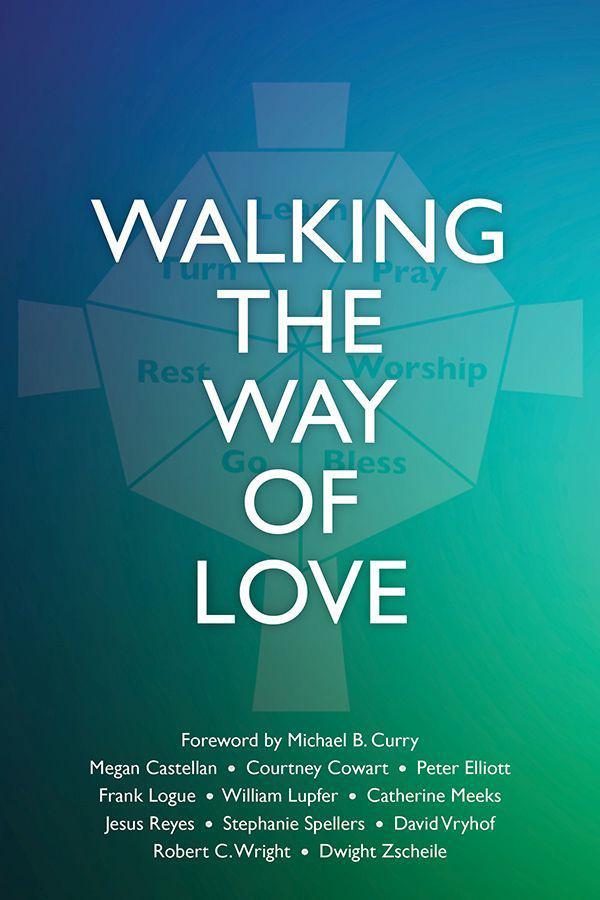
AllChristians looking for a way to “recapture the vitality of the firstcentury Jesus Movement that changed lives and their known world” (viii) should joyfully welcome the essays found in Walking the Way of Love, a new book edited by SIM Executive Director Courtney Cowart, with a Foreword by Presiding Bishop Michael Curry, as a blueprint for twenty-first century discipleship.
Two years ago, acknowledging that the Church was having trouble helping people find and make meaning of their lives in our desacralized culture, and with the clear understanding that Jesus Christ began a revolution of love that
we, through our baptisms, are ordained to continue, Bishop Curry became convinced that the way forward for the Church was to follow Jesus and his way of love: “It was the key in the first century, and it is the key in our time”(viii). In that brief time, loving discipleship seems to have become even more problematic. We have been living through what many people worry are the end-times: a worldwide pandemic claiming millions of lives, a planet we are rapidly destroying, and a world filled with greed instead of generosity, individualism instead of community, fear instead of faith, and hate instead of love. And yet, as Dr. Cowart points out in her Introduction, “we have been chosen for such a time as this” (xvii). The Holy Spirit guides us anew in every generation.
Jesus’ life, death, and resurrection make clear (at least) two very important things: we will be judged on how well we treat the least of these, and loving
The Way of Love consists of seven spiritual practices to help us reconnect to Jesus’ love-focused Christianity; one that is counter-cultural, cruciform, and gospel-based. Those practices are: TURN; LEARN; PRAY; WORSHIP; BLESS; GO; and REST. The essays on these practices elucidate the definitions provided on the Episcopal Church’s website at https://episcopalchurch.org/ way-of-love. I think the Way of Love is best summarized by Robert Wright in his chapter on GO: “We, like bread, are taken, blessed, broken, and distributed.”
The opening chapter, Jesús Reyes’ “Reflections on a Rule of Life,” recognizes God’s grace as “the cornerstone of the way of love we live together” (3), and proposes that a Rule of Life, like those that have been guiding monastic life since the Rule of Benedict was written in 516, can help open people up to receiving that grace by acting as a moral compass always pointing toward Jesus.
The Way of Love consists of seven spiritual practices to help us reconnect to Jesus’ love-focused Christianity; one that is counter-cultural, cruciform, and gospel-based.
God and neighbor is how we manifest the Kingdom of God “on earth as it is in heaven.”
Creating a Rule requires discernment, which means actively listening for God’s voice; and as Elijah heard God’s
voice not in the wind, or the fire, or the earthquake but in the silence (1 Kings 19:11-13), we too must listen for God’s voice in the silence of prayer, contemplation, and lectio divina, asking what God calling us to be and do. But having a personal Rule is not enough. We worship a Trinitarian God and were created for community. As Reyes and many of the other authors point out, if we truly want to follow Jesus’ way of love, we will do so more easily if surrounded by a community of fellow travelers.
It is this listening and the discernment that follows that should guide our steps on The Way Love. The first step is TURN, where we “pause, listen, and choose to follow Jesus” (19). As our baptismal vows make explicit (BCP, 302-303), we are called to turn from the power of sin toward Jesus and his self-giving love. Author Catherine Meeks cautions us that this turning
requires daily acts of repentance, as well as continually going deeper within to discover what blocks us from God. Like Reyes, she reminds us to spend time in silence and listen for the still, small voice of God because it is this voice that tells us when, how, and to what we must turn (29).
The second step on the Way of Love is LEARN, which is about finding meaning in God’s story. Through Bible study, lectio divina, and even memorization, the living God speaks to us. Author Dwight Zscheile argues that reading the Bible in a secular age means “taking a trip into a different cosmos, a cosmos charged with divine agency and presence” (40). It is from this place that we can challenge the assumptions of the secular age; for example, that human ingenuity is what will save us and that the only sources of meaning and identity are located inside our individual selves (39). We come to
live in God’s world, where through the power of the Holy Spirit we transcend our ordinary lives and participate in the divine life here and now.
The third “step” is the spiritual practice of PRAY. I confess I find it difficult to think about prayer as a step along the way, as I believe everything begins with prayer and it is in fact the overarching spiritual practice for all Christians; as we know, we are enjoined to pray without ceasing (1 Thess. 5:17). What author David Vryhof does well is to bridge the gap between the internal and external work of The Way of Love through prayer. He describes our role in prayer as one of receptivity because God is always the initiator. Thus, praying without ceasing (1 Thess. 5:17) for him means remaining in that posture of receptivity, paying attention to the movements of God’s grace by listening for God’s voice and looking for God’s actions (54). The fruit of this
prayer is coming to know ourselves as beloved children of God, which then allows us to offer that love to others.
PRAY brings us directly to WORSHIP, when, author Frank Logue explains, we gather in community weekly to thank, praise, and dwell with God through the sacraments (69). Given our experience of the Covid-19 pandemic, I think readers will particularly relate to Logue’s description of Christianity as an “infectious disease” that spread from person to person in the first century (75). I think one of the most important messages of this book is Logue’s warning that, unlike with Covid-19, there was and is an antidote to the Christianity of the first century, a less “virulent” strain that makes us think all is well with both the Church and the world. For me, this means that when Christianity stops being countercultural as it was in
The next spiritual practice is BLESS; we look to see where we can be a blessing to others. What was most important for me here was the move from individuals to systems: “Inevitably, this practice also leads the faithful Christian to confront some hard questions. As you honor the stories of others, and promote the abundant life that God intends for all of us, you also begin to recognize the systems and patterns that make your stories different in the first place. The practice of blessing does not allow you to remain at arm’s length, but it leads you to question why the world is the way it is, and what God would have us do about it” (87). Megan Castellan also recognizes that blessing is mutual. It leads to relationship, which enlarges the community and creates a desire to make the world a better place for everyone, not just whatever group we identify with.
“In Jesus, God shows up close enough for us to taste, smell, hold, see, ingest, and even become. Looking at him, we see what God looks like. Living like him, dwelling with him, following him as Teacher and growing in loving relationship with him, we become more fully God’s body alive in the world”
the beginning, and when it becomes no different than the surrounding culture, caught up in wealth, power, prestige, and institutional maintenance only, the Church has lost its power; Christianity no longer looks like the man it claims to follow. The awesome and terrible property of worship is that we become like the thing/the One we worship (Psalm 115:8). WORSHIP reminds us to place the Triune God at the center of our lives.
And this leads to the next step on The Way of Love: GO. As interpreted by author Robert Wright, GO means to cross boundaries, to listen deeply, and to live like Jesus. This is where the fruits of this journey reach their perfect ripeness – when our discipleship is marked by ever-expanding, loving engagement with our neighbors, our community, and the world. GO stretches us past our comfort zones, makes us part of Jesus’ original “search and rescue mission”
(95). Like the first disciples, we who are baptized are chosen and appointed to follow Jesus’ revolutionary, countercultural path of love.
The final practice is REST. As God completed the creation of the world in six days and rested on the seventh, so too must we stop for a holy Sabbath. This is a time to replenish ourselves, to make the kind of time and space for God in our lives that we don’t ordinarily have. It is a time to abide in God’s peace. According to authors William Lupfer and Peter Elliott, this Sabbath REST “propels us to a way of being, not doing; of giving, not owning, of sharing, not controlling. It beautifully summarizes the Way of Love—the Way that is undergirded by our rest (120).
Finally, in her conclusion to this book, Stephanie Spellers answers the “why” of following The Way of Love and the answer is simply that Jesus did all these things and as disciples, we follow Jesus. As she says, “In Jesus, God shows up close enough for us to taste, smell, hold, see, ingest, and even become. Looking at him, we see what God looks like. Living like him, dwelling with him, following him as Teacher and growing in loving relationship with him, we become more fully God’s body alive in the world” (123).
This book of essays explicating Presiding Bishop Curry’s Way of Love is an informative, engaging study guide for Christians yearning for a deeper connection to God and a path to social justice that is based on silence, deep listening, prayerful discernment, and a community to walk with. It is a gift to the Church as it brings us closer together as the Body of Christ, and to the world as it turns us outward towards our neighbor and propels us into sharing responsibility for manifesting the Kingdom of God here on earth. U
WORDS OF WISDOM ON LEADERSHIP FROM BISHOP PHOEBE ROAF
BISHOP OF WEST TENNESSEE
In the early days of the pandemic, I had the pleasure of spending an hour discussing diocesan leadership with Bishop Phoebe Roaf. Here is an excerpt from our conversation which conveys, I think, the prayerful, non-anxious and collaborative leadership style our first Black woman diocesan bishop in Province IV brings to her relatively recent ordination as Bishop of West Tennessee (May 4, 2019). CVC
I will say that you are not a priest or a pastor to someone until a relationship has formed. It takes time to build up trust and collegiality. I’ve been bishop for ten months and I’ve not even visited everywhere to form relationships with my clergy. Newer bishops are very mindful of this.
Leadership in my context has been about trying to find balance. There
are diocesan directives regarding the pandemic that need to be clear and there also needs to be leeway for priests when they know what is best for their context. We have faith communities where the overwhelming majority of members are in their seventies and eighties with pre-existing conditions where their demographic is particularly at risk. We have churches in rural communities with ten members or fewer. A given church’s specific context is very important. And, of course, we are using Zoom, Facebook, and conference calls to be as creative as we can be.
I am very mindful this is my first major challenge as bishop, with the pandemic beginning less than a year into the job. There are ten of us who were consecrated in 2019. We solicit advice from one another, and I am truly grateful. John Bauerschmidt [Diocese of TN] and Brian Cole [Diocese of East TN] and I have issued joint statements, realizing we also need to do things individually, but we check in with one another regularly. My experience is that bishops are really working to stay connected and not become isolated.
This is not a time to be a lone ranger. I think it is an act of leadership to solicit input and call upon others. It is always important to know your weaknesses and others’ strengths.
A lot of what you learn in seminary and the College of Bishops in a sense you have to suspend. On my best days, when I am walking and getting my rest, I appreciate my priests and deacons so much, and can be gracious and give
everyone the benefit of the doubt. It is especially important now for all sides to be gracious with themselves and one another.
I don’t want to assume I know the answers, or think I don’t have to ask questions, so I am asking a lot of questions – exploring and wondering over all the options that may have been considered prior to my arrival. Some will take it as a neutral inquiry, and some will interpret my questions as criticisms. But these are simply questions seeking additional information. Nevertheless, I think it’s important as a leader to notice and be conscious of how questions are received. There is an art to crafting good questions – what Parker Palmer calls “open and honest questions.”
Engaging in significant amounts of inquiry when you or others are stressed out might not set things up in the best possible way.
Thinking back, I remember the clergy from Louisiana and Virginia disagreeing at times with the bishop. Now I see things I didn’t know, and I see why a bishop can’t show all their cards. I think of the Native American saying about not knowing until you’ve walked a mile in someone else’s moccasins.
It’s probably too soon to see how the pandemic will affect theological education. Virginia Theological Seminary, with a strong endowment, is committed to a three-year residential process, and other seminaries could be more proficient in distance education. But I do wonder now, how having to
do this at a distance might shift our perspective. Not all seminaries can afford to give the three-year residential
thousands of miles away are reaching out. I am very interested in how we take the best of that and keep it going.
Perhaps leadership requires answering the question: Do you trust God has you?
Maybe I’m not called to be a bishop forever. Maybe I’m at a cathedral or at VTS or back practicing law in a few years. Am I open to the radical trust of a radically generous God so that I don’t have to worry that God will have something for me and letting go of the fear?
degree student the needed scholarship funds. As we learn about virtual experience there will be an impact, but I am not yet sure what that will be. I know I needed the three-year residential experience. I would not be the priest I am without that experience in community.
However, it is so counter-intuitive, isn’t it? Physical separation doesn’t have to mean you’re not connected. For my generation connection meant being in the same room. Yet people who live
It will take us out of our comfort zone. I think that already there is some tension between the folks who teach the traditional core curriculum seminary topics versus the “softer” classes like pastoral care, Christian formation and other optional areas. As some ask for these to be more emphasized and some experience this as a loss, we need those in established fields to make some room. I think it’s time to take a look at syllabi, structure of requirements, and what is required versus recommended, and I know there is some real resistance
to what the impact might be, but this gives us the opportunity to think about things in a new way. No question it’s uncomfortable.
What could be helpful is if we could not focus on winners and losers but focus on the process and the outcome…if we could do that and feel our agency, while letting go of the outcome. I would love to see us try to retrain the primary survival instinct and step back to look at what is needed for the common good.
As a bishop I notice that we are concerned with the number of congregations, the number of ordained priests and the number of parishioners, but not the number of dioceses. How might the diocesan landscape need to be restructured knowing that will mean fewer bishops?
Perhaps leadership requires answering the question: Do you trust God has you? Maybe I’m not called to be a bishop forever. Maybe I’m at a cathedral or at VTS or back practicing law in a few years. Am I open to the radical trust of a radically generous God so that I don’t have to worry that God will have something for me and letting go of the fear? U
THE PRACTICES OF LEADERS
I wish it didn’t take a pandemic for us to experience that impulse that life is poorer when we are not connected. I recall the big snowstorm in Atlanta (2011) that came to be known as “Snowmageddon.” I was sick and my wife took the truck to get the boys five miles away. She came home with a Chinese woman who didn’t speak English, who lived with us for 5 days.
…I like to think about the practices of leaders.
One practice is “balcony time.” Because business as usual is corrosive to good work and because it diminishes your ability to pay attention, we have to build in the practice of balcony time. I am an encourager and I am encouraging vestries to do this twice a year: Step back, look at your purpose statement and look at your data, and ask, “How are we doing?” We need to create the capacity of churches to do this.
BY BISHOP ROBERT C. WRIGHT
We also need to increase the capacity of that group to solicit unflattering interpretations because that is the only way you are going to see.
Jesus goes up the mountain to meet with his Executive Committee, but Epiphany isn’t for building booths. It’s for going back down to the valley with new insight into questions like, “Are we on mission?” “Where are the gaps?”
I like mutual ministry reviews because they give people the capacity to hear others being both kind and candid. By giving it all some thought you may be helping me see a blind spot. And you know, in these conversations, when someone cares.
We leave opportunities on the table because we have an aversion to data. We want to feel and not think. In the Book of Common Prayer, we give thanks for the “gifts of memory, reason and skill,” (p. 370) but I have yet to see this proved in a lot of ministry cohorts. And it’s even hard to get the House of Bishops to focus around data. An aversion to data is a hindrance.
It is a misunderstanding of Anglican identity that by our simply holding onto tradition we’re safe; we have worried too long that we’re losing our identity. We’re countering adaptation with, “I am a cradle Episcopalian.” When we do this, aren’t we valuing longevity over fidelity?
I think we can celebrate what we have received and look at the exigencies of time. We are always meant to be on the edge. We are not meant to be ambulance
chasers on liturgy, just making it up. Neither are we to celebrate the religion of King Henry. We can and should get permission from our Anglican identity to adapt.
So, we need time on the balcony to reflect. We need data or we cannot adapt. And we need to understand that it is our Anglican identity that gives us permission to adapt.
WHAT ARE THE ADAPTIVE OPPORTUNITIES OF THIS TIME IN THE CHURCH’S LIFE?
I do not want to lose the postcatastrophe dynamic of learning and growing through pain. Perhaps it sounds insensitive to ask, “What does COVID want to teach us?” but in adversity there is a lesson, and there is learning in pain. We have learned that the church is not closed, the church is adapting. That’s all we’re doing. We are still reaching out and we’re not going to stop. What worries me is some folks are pining to go back to cruising altitude. What’s is hopeful is watching people learn out loud. I don’t want to lose the “never-been-done-before” ideas. What we’re working on is a new delivery system for a walking/talking Anglicanism and Corona is forcing us to do it.
There are so many people for whom this pandemic is a bone crusher. This is a particularly hard time for the middle class. We have benefitted from stability, from the system, from the status quo. This pandemic is forcing on a largely white, middle-class church some lessons other people learned a long
time ago. God is everywhere – in lots of different kinds of places. If you have a Book of Common Prayer at home, it’s not for decoration. Pray Compline together! I’d love it if we were already doing that in households and we didn’t need to do it online.
I hope this is time when we are reminded of what we know – that in your Bible God was upset with people who created systems of preferential treatment that fattened the haves and gave a sprinkle to the have-nots. I believe some might gain a heart for those who are walking across borders. I’m hoping…because nothing cracks the heart open like this kind of tragedy does. Of course, some are “stiff-necked” people. No one can say it like the Bible. Good Lord.
gathered there, and to see the church as a public voice in society naming a moral moment about our neighbor. The Lent of 2020 may not have been the Lent we wanted but it may have been the Lent we needed, and that our country needed. It certainly reminded us how little control we actually have and reminded us of our systemic arrogance. These moments come and we are reminded what we have is each other – and it can lead to some kind of reconciliation. God can use everything to teach us what God wants us to learn. We aren’t our best when so many Americans to live so close to the bone. For America to be great you must make sure everyone is cared for. I hope there will be a strong reminder here. Greatness is not the height of our spires but the depth of our commitment to the cross. Think - when the odds were
I hope this is time when we are reminded of what we know – that in your Bible God was upset with people who created systems of preferential treatment that fattened the haves and gave a sprinkle to the have-nots.
Maybe on the way to adaptability is humility. Perhaps the perspective of humility is something we can gain from the “balcony” now. Because there is a lot to gain by saying to people “now is the time to really be a neighbor,” because so many Americans are shut out.
“Woe,” Jesus said, (a funeral word), If you keep walking down that street and there are some bad things on that street. We walk with a swagger, for instance, because our passport is blue. On 9-11, I was at St. John the Divine, and I went down to the Pile while it was still a fire. It was amazing to see how many people from around the world were
against us this is what we did. This is how we pivoted. Remember! Rigor mortis sets in if we don’t move. We need to keep stretching our muscles. If we can come back to this moment, we remember there is nothing like shared adversity to build community.
What if we were to apply in less urgent circumstances how we have adapted to COVID and to other challenges and opportunities coming up – like consolidating dioceses or creating employment for clergy ministering on the fringes? I wonder, how many online ministries will be born out of this season? COVID could even push us toward incorporating new
demographics. There is so much to learn. I’m hoping we have pushed beyond talking about these things and into actually doing them. If you talk about it you get nowhere, but if you give people an experience you give people a taste. I hope for instance people will discover that we all have multiple altars in our homes: the dinner table, the study, the bed, the living room and so on...each are extensions of our incarnate, spiritual lives.
This is an anti-clericalizing moment and there is a lot of fear there because ordination is an identity marker. But what do you want? Full churches or people full of their sense of being spiritual beings? In our church we have a lot of deferred maintenance across the board when it comes to spiritual maturation.
But nothing burns away bullshit like suffering.
SOME THOUGHTS ON THE CURRENT FORMATION OF LEADERS IN SEMINARY
On the one hand we are sending a lot of spiritual babies to seminary and expecting miracles.
I sent an email to a seminarian regarding his Ember Day letter. It was horrible. Three long paragraphs with no mention of God at all. I had to send it back and said an atheist could have written this. You’ve finished Clinical Pastoral Education – now what do you know of God? Is there a piece of scripture that you now know what it really means? Or is there an honest confession that you are with the psalmist in asking, “God, where are you?”
When I served on the Commission on Ministry, I was the one who said, “Tell me about some God stuff, some personal stuff. What’s your personal life with God like?” We are talking
about the Cross, and that needs to be lifted up as an art. That brings us back to suffering. They lifted Jesus up in front of his mother outside this city wall. We need leaders who can sit with people in suffering, and who maybe do not talk but wait to say some words. When suffering burns away bullshit and people get real clear, that is a major adaptation. And that is the purpose of the church.
On the other hand, how do we raise the expectation that you are the spiritual leader of your household? It is in the Prayer Book. Maybe Corona is going to help me/us claim that. Why
In this rapidly iterating world, what is the formation task, and how do we form disciples who have a chance to exercise spiritual leadership? We prioritize so many things other than this very thing.
don’t we, as church leaders, encourage people to develop their own spiritual leadership in their homes and perhaps come to church twice a month? Maybe we should be teaching people to lead family prayers and have a book that
logs how many times you have led family devotions. And perhaps in your parochial report you include how many of your members said they worship in their homes.
In this rapidly iterating world, what is the formation task, and how do we form disciples who have a chance to exercise spiritual leadership? We prioritize so many things other than this very thing. If we’re not careful we can lose the benefit of Corona. She has some lessons to teach in how to be church. Like 9-11, like Katrina, this is a moral moment to see the Church as a strategic partner in the transformation of the world. U
A DISCIPLESHIP OF LIMINALITY
BY MEGAN ALLEN SSW, M.DIV MIDDLER
For many of us, I imagine living in quarantine feels like a pendulum swinging between the past and the future – between remembrance and hopefulness. But what do we do with the vast space between what we cling to and what we desire? This imagine of a swinging pendulum has stuck with me during our time of quarantine, and I have come to understand this space as an opportunity to move within the liminal life we are called to as followers of Jesus.
Liminality is the space between the known and unknown, an awareness of the porous nature of knowability. People also use the word wilderness
to describe similar seasons of great discernment and ambiguity. However, the wilderness metaphor offers a beginning and end. Scripture tells us that Jesus and others both entered and exited the wilderness, but Jesus never abandoned his liminality. Mortal and immortal, king and servant, human and divine – Jesus embodies liminality. Living a liminal life means being fully present to the ever changing, yet always grounded now.
this time of unpredictability, we are being invited daily to improvise, to participate in the wonders God has for us – wonders that persist throughout wilderness wanderings!
Eventually, we will exit the wilderness of COVID. Do we hope merely to return to our past lives transplanted into the future – swinging past what this moment has to teach us? I hope not! This wildly unexpected and
Quarantine liminality challenges me to engage a deeper experience of discipleship, one rooted in improvisation, rather than predictability. Both the art of improvisation and our theology teach that each moment holds an opportunity for transformation.
Quarantine liminality challenges me to engage a deeper experience of discipleship, one rooted in improvisation,rather than predictability. Both the art of improvisation and our theology teach that each moment holds an opportunity for transformation. This requires letting go of all that we know and expect, so that we can experience what is possible. In our Baptism, we are engrafted into the liminal body of Christ, where grace and love manifest the limitless possibilities of God. In
troublesome season nurtures the gift of liminal living. We can learn that both clinging to the past and focusing on the future prevent us from experiencing God’s restorative presence in the now. In this in-between space, we can experience God’s limitless creative power working within what is to bring about what can be. Our call to follow Jesus includes our call to live liminally, not only in the wilderness seasons but throughout our lives of discipleship. U
IN A TROUBLED TIME FOR THE CHURCH
BY SEBASTIAN MOORE
Moore paints such a picture of in-breaking hope with images of fire, love, energy, and breath. His words evoke rich images of anticipatory longing, transforming the heart from within:
To feel the warmth of a consuming fire
Softens the heart of me to neighbor love
As the fulfillment of our first desire Requiring no commandment from above. The church’s present looking desperate Awakes the heart to feel a future God And a new sense of what it is to wait Dissociating this from the soul’s plod.
To wait upon a lover who delays Is the soul’s ecstasy, dark sleepless night
As new energy puzzles and prays With a new certainty of coming light.
I knew this as there breathed across a psalm A future against which we do not arm.68
WORDS OF WISDOM ON LEADERSHIP FROM BISHOP ANDY DOYLE
BISHOP OF TEXAS
In April I spent an hour talking with Bishop Andrew Doyle of Texas who has written extensively on the future of the church as well as his own share on the church in an age of transition: Citizen: Faithful Discipleship in a Partisan World and Vocatio: Imaging a Visible Church, and A Generous Community: Being the Church in a New Missionary Age, among others. Bishop Andy believes that in speaking of Christ & Culture our cultural assumptions are outdated and not attuned to what the culture thinks and actually is. “Even H. Richard Niebuhr’s iconic assumptions,” he claims, “are old.” CVC
‘When we look at organizational structures, we always and only can see [from the perspective of] looking back into the past or projecting into the future. We can’t see – or we have a very
difficult time of seeing – organizations making paradigm shifts in the present, as they are occurring. You can only see this in retrospect. Adaptive change happens at interconnected levels, simultaneously, and you need the perspective of looking back on it in order to be able to see it.
If you’ve ever watched America’s Test Kitchen, the hit TV cooking show, there is analogy. It’s not one thing that makes the best chicken. It’s different choices in multiple categories that all come together – choosing the best quality chicken to begin with; choosing the best combination of herbs to season it; perfecting the cooking time, temperature, etc. Similarly, doing my thing better is not going to fix it all when we’re talking about the church. Adaptive change that truly advances the life and mission of the church involves everything, and tinkering with it over hundreds of years: how we engage discipleship, the formation of the baptized, its content and how that is delivered, what kind of formation do you offer people? What is the ongoing formation and support of disciples in the wider system? I see the early disciples engaging a kind of action and reflection model over time that leads to adaptive change over time.
After eleven years as bishop, I have learned one size does not fit all and one thing is not going to change the church.
What is important is creating safe space for adaptability and experimentation.
How do you teach people to hold that safe space? I believe we need to form leaders for that, mentoring them through experiments in discipleship. We need to take people under our wings and support them as they play with all this.
I think of Frank Griswold, and how all the crazy things he did as a liturgist in his late twenties made him who he is. We’ve got to let people do that. If we’re going to invest in the crafting of adaptive change, we have to give people the space for experimentation. For example, one of our most innovative priests – a church planter – is in conversation with a nondenominational, predominantly Asian, multi-cultural church about becoming an Episcopal church. Someone said, “The bishop will never let you do that.” Which begs the question, do we really want radical creativity? Organizations get the people they want. Right now, we have lots of people who are pastorally gifted and really good listeners. But we are at zero in terms of innovation.
The system picks the people who look like the system – otherwise we weed them out. If you want that to change you have to get much more comfortable with people who have their own ideas, and who won’t necessarily listen to or agree with you.
I think about the 1500 people attending 91 house churches in our diocese in any given week and 90% are from no church background. People engaged in these churches have a better understanding
of adaptive ministry than anyone in traditional congregations right now.
I think about Houston which is a large majority minority city. It’s not just our buildings that are millstones. Our church’s ethnic practices are millstones too when it comes to missional engagement. The baggage that was pillaged from Egypt must be left in the desert. To do that we have to look at the past and our brokenness with real integrity that feels the rifts and the pain in order to heal with real intention.
You ask about people of different economic backgrounds in leadership. I think of SIM’s work in noticing emerging leaders and financially supporting their education at consequential levels. We’ve got to do the deep work of engagement and we have to let people know the resources for seminary are there. I have also found that funding for living expenses during seminary are really important in these cases. It’s not just a matter of covering their tuition and letting seminarians fend for themselves in often challenging economic environments.
Noticing things is a key component of leadership. Bishop Doyle says to check out a book titled The Noticer. *
Invite curiosity and observe – notice. Then back up to change the system after you have observed what needs to change.
Isn’t it great to have really difficult things to do with each other and great people to do it all with? U
* The Noticer by Andy Andrews is a fictional creation about a man, Jones, who visits Orange Beach, AL, “a simple town filled with simple people.” Fortunately, when things look the darkest, a mysterious man named Jones has a miraculous way of showing up. Communicating what he calls “a little perspective,” he explains that he has been given a gift of noticing things that others miss. “Your time on this earth is a gift to be used wisely,” he says. “Don’t squander your words or your thoughts. Consider even the simplest action you take, for your lives matter beyond measure…and they matter forever.”
The Noticer will provide you with:
• A better understanding of life’s challenges and proper perspective for tackling them.
• Practical yet powerful methods of motivation, encouragement, and resolve for those who have been dealt “the bad hand.”
• A fresh and insightful perspective on how people can change their view of the world, find strength, and move beyond their problems.
RESOURCES AND EVENTS
Events/Courses/Retreats/Grants/Etc.
Society for the Increase of the Ministry (SIM) http://www.simministry.org. Visit us online for leadership resources, upcoming web events and archives of online presentations and learning sessions.
Absalom Jones Center for Racial Healing https://www.centerforracialhealing.org/ Dismantling Racism Trainings (all online): https://www.centerforracialhealing.org/training
• Saturday, November 21 - ONLINE
• Tuesday, December 1 - ONLINE
• Saturday, December 5 - ONLINE
For other trainings in Calendar 2021, go to: https://www.centerforracialhealing.org/training
Contact Sandra Tarver at starver@episcopalatlanta.org (include the class date, the name of your parish and your position e.g. Rector, Asst. Minister, Vestry, etc.)
See Also: A Brave Space podcasts with Dr. Catherine Meeks, Director, Absalom Jones Center. For podcasts, go to: http://abravespace.buzzsprout.com/
The Presencing Institute, Cambridge, MA
Online education for individuals and teams, https://www.presencing.org/. Visit this site for updates on the following events:
• u.lab 1x: Leading From the Emerging Future is a Massive Open Online Course (MOOC) - join us in this 14-week journey through the U. https://www.presencing.org/ulab-1x-2020
• Inspiring Stories: Sharing learning experiences across acupuncture points of societal renewal, https://www. presencing.org/societal-transformation-lab
Other Resources https://www.presencing.org/resource/tools
See also: Essay by Otto Scharmer: Eight Emerging Lessons – from Coronavirus to Climate Action.
National Disaster InterFaiths Network (NDIN) http://www.n-din.org/
Visit this site for consultations, disaster chaplaincy trainings, and tip sheets for organizing community and congregational disaster response and connections to other national faith-based recovery programs. Visit NDIN’s Electronic Library for Best Practices & Resources.
Stanford University Design School Bootcamp
Program Information at: https://www.gsb.stanford.edu/execed/programs/design-thinking-bootcamp
Designing for Social Systems, receive periodic updates on webinars and other educational events: https://dschool. stanford.edu/designing-for-social-systems/dssworkshop December 6 – 11, 2020 – open workshop
Visit this website (https://www.gsb.stanford.edu/covid-19) for updates.
Marshall Ganz – Harvard University, John F. Kennedy School of Government, Leadership, Organizing and Action: Leading Change
Online course designed to help leaders of civic associations, social movements, and advocacy groups organizing movements for change. February 8 – June 2, 2021; Application Deadline: January 8, 2021. More information: https://www.hks.harvard.edu/educational-programs/ executive-education/leadership-organizing-and-action
John F. Kennedy School of Government, Cambridge, MA
Public Leadership Credential: online professional credential program that gives change-makers the skills and knowledge necessary to advance the public good and make an immediate impact in their communities. More information: https://www.hks.harvard.edu/educationalprograms/public-leadership-credential
Additional updates on the coronavirus at: https://www.hks.harvard.edu/coronavirus-information.
For additional information on initiatives at the JFK School, see: https://www.hks.harvard.edu/centersinitiatives#initiatives
Odyssey Networks
http://www.odysseynetworks.org/
Odyssey Networks is a multi-faith multi-media nonprofit that brings together organizations and individuals around powerful programming that supports people of all faiths and good will as they engage the world to nurture compassion, justice, and hope. – Odyssey Mission Statement
More about Odyssey’s Mission here. See this site for a variety of films and services to communities engaged in compassionate outreach and social justice.
Forum for Theological Exploration (FTE), Atlanta, GA Events for Young Adults and Students: Visit this site (https://fteleaders.org/events/2020-christianleadership-forum) for updates on this and other FTE events and alternative engagements; see also https://fteleaders.org/ blog/upcoming-events-ftes-response-to-coronavirus-covid-19
Virginia Theological Seminary: Lifelong Learning https://www.vts.edu/lifelong-learning/lifelong-learning
Offering online resources for parishes and other ministries; Webinars available at VTS Eventbrite page: https://www. eventbrite.com/o/virginia-theological-seminary-16854271784.
The Stillpoint Center, Pasadena, CA Programs: https://stillpointca.org/programs-folder
Check the website (above) for the following programs: Stillpoints: online opportunities for centering prayer and other spiritual practices: https://stillpointca.org/still-points
Center for Action and Contemplation, Final Conspire Conference - Conspire 2020 (now Conspire 2021) Presenters: Cynthia Bourgeault, James Finley, Barbara Holmes, Brian McLaren, and Richard Rohr. See CAC Statement of postponement until September 24, 25 and 26, 2021: https://cac.org/conspire-2020/
“The path of descent is the path of transformation.”
Faith and Lead Learning Laboratory at Luther Seminary a social platform for church leaders, https://faithlead.luthersem.edu/ and https://faithlead.mn.co/ Faithful Innovation Summit, (https://faithlead.luthersem. edu/summit/) https://faithlead.luthersem.edu/coronavirus/ for updates on coronavirus resources.
Thistle Farms, Nashville, TN
One-Day and Two-Day Education Workshops for Justice and Social Enterprises based on the Thistle Farms model: https://www.eventbrite.com/e/2-day-education-workshopjan-25-26-2021-tickets-122058156231
Center for Courage & Renewal Retreats for 2019-2020
For a rich array of Circles of Trust, Seasonal Retreats, and Leadership Events, May 2020 – January 2021, go to: http://www.couragerenewal.org/events/. Visit this page for event updates and alternate covenings strategies of the Center for Courage & Renewal. See also http://www. couragerenewal.org/programs/ for a catalog of Courage & Renewal programs. See http://www.couragerenewal.org/ catalyst/ for Stories of Transformation
Holy Cross Monastery, West Park, NY https://holycrossmonastery.com/guest-house/visits-retreatsprograms/ for: One-day visits, Individual and Group Retreats, Extended Stays, and Spiritual Direction. Closed until January, 2021.
The Institute for Conscious Being
For more information about events, go to: https://www.instituteforconsciousbeing.org/
For information about certification training in the Enneagram: https://www.instituteforconsciousbeing.org/#top. For more information about certification in ICB’s approach to the Enneagram, go to: https://www.instituteforconsciousbeing.org/icb-school/
Vanderbilt University
Theology and Practice Fellowships in Practical Theology: Apply by December 15 on the GDR Application page (https://apply.vanderbilt.edu/apply/)
• Information and FAQ’s: https://www.vanderbilt.edu/ theology-and-practice/faq.php#whatMakes
Offering grants up to $2,000 through the “We Shall Overcome” Fund. Grant applications due on Monday, February 1. More information: http://www.highlandercenter. org/programs/we-shall-overcome-fund/, or email: hrec@highlandercenter.org; Ph: 865.933.3443
OTHERS
Gathering of Leaders: a network of Episcopal clergy deepening their leadership skills through a learning community of peers. More information: https://www.thegatheringofleaders.org/about/
St. Mellitus College, London, UK https://www.stmellitus.ac.uk/
Theological education and training set in the context of prayer and worship that combines academic excellence, a focus on missional leadership, the shaping of Christian character, and the flexibility to fit around busy lifestyles. For more information, or to apply, visit https://www.stmellitus. ac.uk/about-us
Mindkind Institute for mindfulness, customized workshops and retreats exploring the impact of mindfulness. More information: http://www.mindkindinstitute.com/workshops
Open Center, Inspired Leadership at 30th&Madison, New York, NY https://www.opencenter.org/professionaldevelopment. Visit https://www.opencenter.org/livewebinars-3/ for a rich variety of online options through the pandemic season.
The Taos Institute, workshops and courses (in person and online) in relational leadership, https://www.taosinstitute.net/
PRAYER AND MEDITATION RESOURCES AND COMMUNITIES – WORLDWIDE
In our current global circumstances, SIM feels it is important to offer a range of resources that encourage a prayerful and mindful presence to the pandemic that reinforce our connection to one another and to God.
The World Community for Christian Meditation http://www.wccm.org and https://www.theschoolofmeditation. org/. Since 1980, the World Community of Christian Meditation has convened practitioners across the world in a simple (twice daily) meditative practice. They have, from time to time, located themselves deliberately in places of global tension – such is the belief in the power of this practice. They are especially attuned to the effect of practice together, however virtual, can affect our inward response to the current pandemic. See especially: https://www.wccm. org/content/contemplative-path-through-crisis
For information about the practice of Christian meditation, go to: https://www.wccm.org/content/how-meditate and https://www.wccm.org/content/what-meditation
Contemplative Outreach
https://www.contemplativeoutreach.org/. Since 1982, Contemplative Outreach has encouraged the practice of Centering Prayer – a simple practice of consent to the presence of God within. Explore more about Centering Prayer and affiliated practices at: https:// www.contemplativeoutreach.org/practice. “Contemplative practices give us the eyes to see and the ears to hear God calling us to the banquet that is our lives, as they are.”
For the online meditation chapel, go to: https://www. contemplativeoutreach.org/join-community-prayer-onlinemeditation-chapel
Other practical and community resources: https://www.contemplativeoutreach.org/resources-0 and https://www.contemplativeoutreach.org/community-0
Sant’Egidio Community - The Community of Sant’Egidio is a worldwide movement of lay people, based on prayer, solidarity, ecumenism, dialogue, existing since 1968. For resources for prayer and peace-making and other information, go to: https://www.santegidio.org/
Taize Monastery and World-wide Community
https://www.taize.fr/en. The Taize Community is an
ecumenical monastery established in France shortly after World War II to create an international web of peace and human solidarity through Christian practices of prayer and hospitality in community. For Taize prayer resources around the world, go to: https://www.taize.fr/en_rubrique10.html. “Not simply to endure events but, in God, to build with them.” – Brother Alois.
Center for Action and Contemplation
http://www.cac.org. Founded in 1985 by Franciscan friar Richard Rohr, the Center for Action and Contemplation seeks to, “open the door for a critical mass of spiritual seekers to experience the transformative wisdom of the Christian contemplative tradition and nurture its emergence in service to the healing of our world.” (https:// cac.org/about-cac/missionvision/). Visit http://cac.org for podcasts, daily meditations, online learning opportunities and the “Living School.”
September 24-26, 2021 Conspire Capstone Conference: with Richard Rohr, James Finley, Barbara Holmes, and Brian MacLaren. SOLD OUT! Webinar and waiting list still available. Albuquerque, New Mexico. For more information, contact Center for Action and Contemplation.
The Contemplative Society
https://www.contemplative.org/ An “inclusive non-profit society that encourages a deepening of contemplative prayer based in the Christian Wisdom tradition while also welcoming and being supportive of other meditation traditions.” The Contemplative Society offers a number of learning opportunities through its Wisdom Schools and workshops led by the Rev. Dr. Cynthia Bourgeault and other teachers of the Christian contemplative path. You will also find instructional and inspirational materials, in both text and audio format, supportive of the contemplative life. For information on Wisdom school in 2020: http://www.contemplative.org/events/events-with-cynthia/ Check this page and https://www.contemplative.org/events/ for details and updates for the following events:
• December 4 – 8, 2020: The Infinite Within, Onlinr Conference, Center for Christogenesis
• December 10 – December 15, 2020: Grand Luminosity Retreat: Observing the Season of Advent
• April 23-27, 2021, Retreat with Cynthia Bourgeault, Vancouver Island, BC
New York Zen Center for Contemplative Care
https://zencare.org/. Offers a number of online courses and other services including meditation practices, practice in the context of recovery, and one-to-one bereavement support: http://newyorkzencenterforcontemplativecare.secure. nonprofitsoapbox.com/component/events/event/125?utm_ source=DedicatedEmail.
See the Center’s calendar (https://zencare.org/events/) for online events.
CREATING A NEW CHURCH FOR A NEW WORLD ONE SEMINARIAN AT A TIME
In 2020 SIM allocated our scholarships in a way that would have most impact on the people who are doing the work of Becoming Beloved Community. That choice dramatically impacted award decisions. We chose to award people working toward Beloved Community amounts that would leave them with very little debt. This form of reparations gave us a way to take care of people differently than they would have been in the past.
When we realize that our liberation is bound together, people in power can use that power for tangible change. When we include God in our decisions, we step ever closer to that Beloved Community God dreams for us.
We feel so thankful to bear witness to the diverse future of ministry in The Episcopal Church. We pray that we serve as an example to other ministries to open their minds and hearts to a church full of the myriad images of God.
Please show your support of SIM’s mission by joining with us, and by donating generously to the Becoming Beloved Community Scholarship Fund as part of our end of year campaign.
SIM SUPPORTS BELOVED COMMUNITY SCHOLARSHIPS · WE SUPPORT SIM
2020-2021 SIM SCHOLARS
SIM is proud to announce its new Becoming Beloved Community scholars for the 2020-2021 Academic Year who are each answering the call to leadership in a New Church for a New World. We look forward to their companionship over the next three years and to the contributions they will each make to the life of the church. Their unique commitments to compassion and justice are the lifeblood of this organization and also of the Body of Christ.
They are joined by 15 other current outstanding SIM scholars across seven seminaries.
Yaa Addison
Virginia Theological Seminary Class of 2023
Alyssa Stebbing
Seminary of the Southwest Class of 2022
Amanda Taylor Montoya
Church Divinity School of the Pacific Class of 2022
Amy Peterson
Duke Divinity School Class of 2022
Anthony Suggs
Seminary of the Southwest Class of 2023
Chanta Bhan
Virginia Theological Seminary Class of 2020
Derek Larson
Seminary of the Southwest Class of 2021
Joe Hubbard
Virginia Theologial Seminary Class of 2021
Jose Santiago Rodriguez
Seminary of the Southwest Class of 2021
Julie Rodriguez
Seminary of the Southwest Class of 2022
Julius Chunga School of Theology University of the South Class of 2020
Malcom McLaurin School of Theology University of the South Class of 2021
Marisa Sifontes
Candler School of Theology Class of 2021
Megan Allen
Seminary of the Southwest Class of 2021
Megan Carlson Seminary of the Southwest Class of 2023
Melina Dezhbod
Virginia Theological Seminary Class of 2021
Mitchell Felton
Virginia Theological Seminary Class of 2023
Patricia Rose
Church Divinity School of the Pacific Class of 2021
Salmoon Bashir
Candler School of Theology Class of 2022
Sarah Stonesifer Peabody College
Vanderbilt University Class of 2022
Suresh Shanthakumar
Virginia Theological Seminary Class of 2023
Toni Belhu
Seminary of the Southwest Class of 2021
Katie Evenbeck
Church Divinity School of the Pacific Class of 2021
Pedro Cuevas
Virginia Theological Seminary Class of 2021
CREATING A NEW CHURCH FOR A NEW WORLD
ONE INVESTMENT AT A TIME
In this year of the COVID-19 pandemic, with its economic uncertainties and financial market upheaval, The Society for the Increase of the Ministry has been a careful steward of the resources our donors entrust to us for the support of seminarian scholarships.
Through unprecedented volatility, SIM continued to invest near market bottoms to lower our average cost of equity and debt investments. Since I became Chief Financial Officer on April 1, SIM’s investments gained 26% through November 27. I have worked hard to lower SIM’s investment expenses, reduce complexity, and produce returns in line with market benchmarks. SIM has gains of more than $850,000 in the three low cost mutual funds I have used to execute this strategy.
It has been deeply rewarding to leverage my nearly 30 years of investment experience on Wall Street to strengthen the ministry of the Episcopal Church through scholarships that reduce the educational debt of our future leaders and support new leaders committed to the work of Becoming Beloved Community.
As you consider your year-end gift, you can be confident your donation to SIM will be skillfully managed and will grow. SIM’s endowment is well-positioned to benefit from a post-pandemic economic recovery while maintaining a relatively high level of liquidity because of the uncertainty of the path to that recovery.
We are deeply grateful for all gifts to SIM of every size. Please know that I wake up every day with SIM’s endowment on my mind, and that my role as a steward of the endowment is the most satisfying client work that I do.
David Hilder Treasurer and CFO of SIM CEO of Hilder & Co., LLC