All real estate advertised herein is subject to the federal Fair Housing Act, which makes it illegal to advertise “any preference, limitation, or discrimination because of race, color, religion, sex, handicap, familial status, or national origin, or intention to make such preference, limitation or discrimination."
CONTENTS
A NEW YEAR’S TOAST TO AGING BOLDLY WITH MARY ABRANYI, ALEXANDRA WARREN, CHUCK BIXBY, AND LEE COTTON
Page 2
AGING BOLDLY TIMELESS BEAUTY: SKIN CARE TIPS FOR RADIANT AGING
Page 9
AGING BOLDLY ESTABLISHING SOCIAL CONNECTIONS IN OUR COMMUNITY
Page 14
AGING BOLDLY REDISCOVERING FORMER INTERESTS & FINDING NEW PASSIONS
Page 22
AGING BOLDLY THROUGH LIFE’S TRANSITIONS
Page 28
AGING BOLDLY GIVING BACK IN THIS SEASON OF GIVING
Page 34
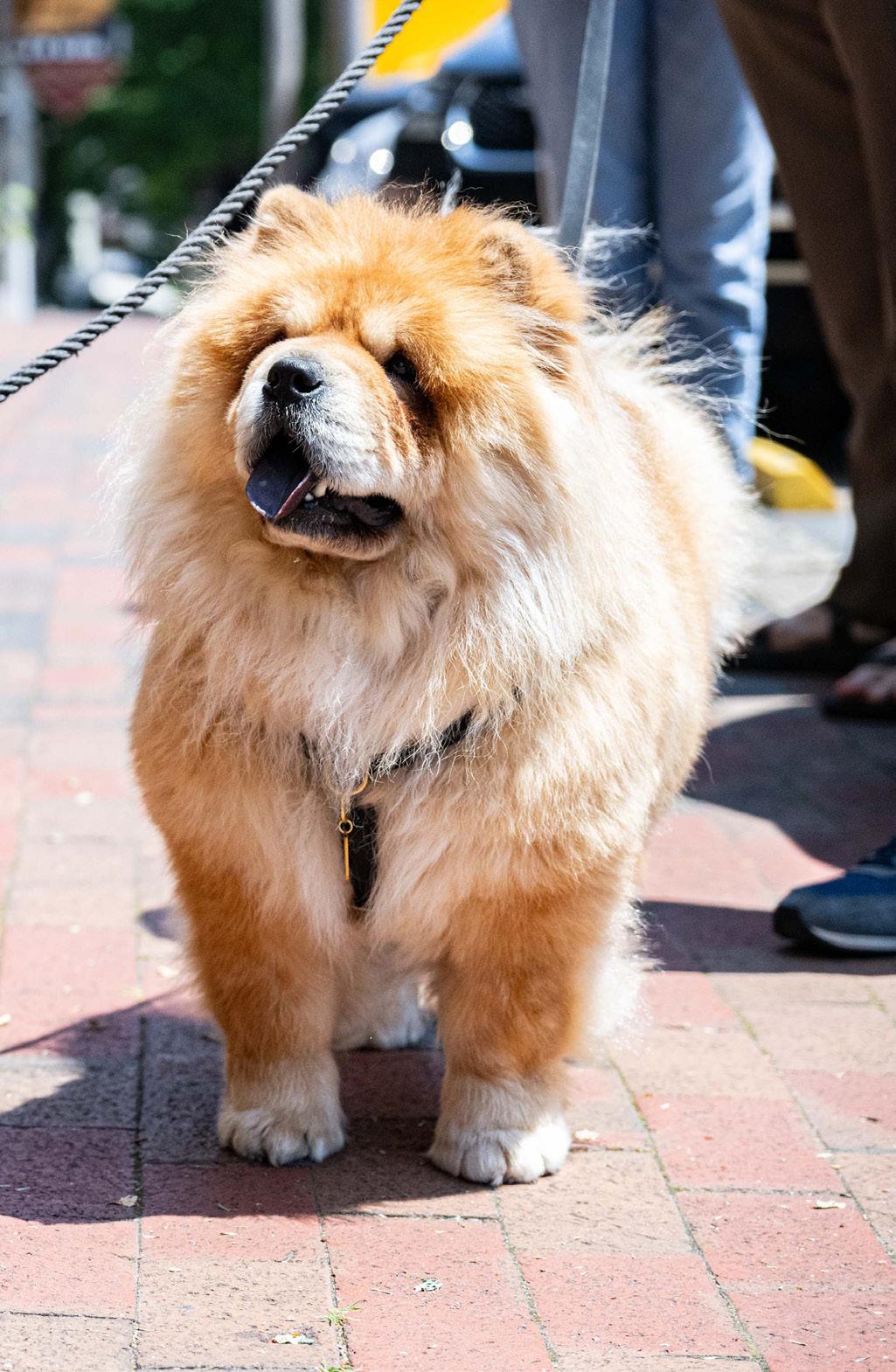
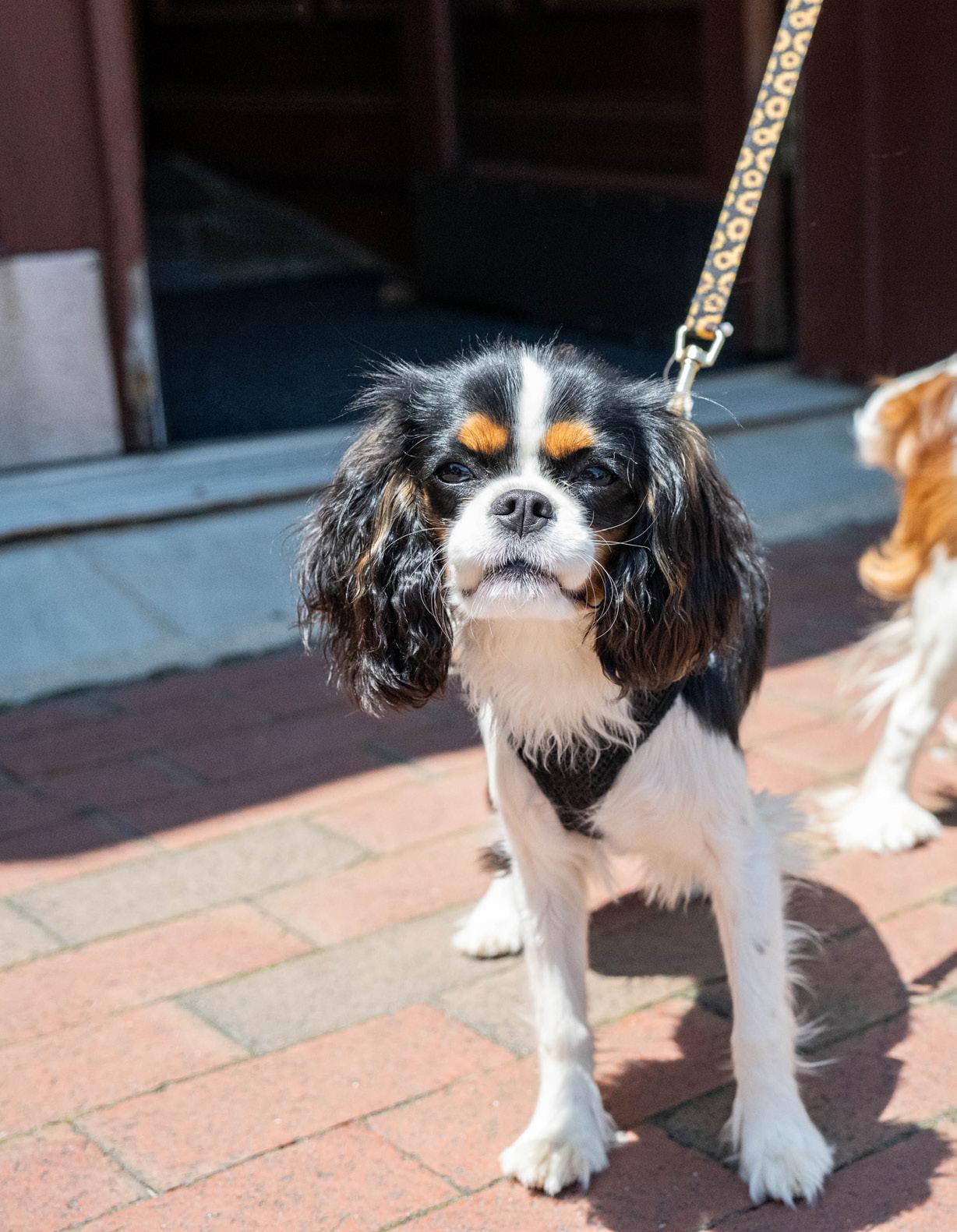
TOP LEFT: THE PLATEAU HAS MANY PARKS AND DOG-FRIENDLY RESTAURANTS - ADOPTING A PET CAN BE A GREAT WAY TO EXPLORE TOWN AND FIND FELLOW ANIMAL LOVERS. PHOTO BY NC LIVING MAGAZINE
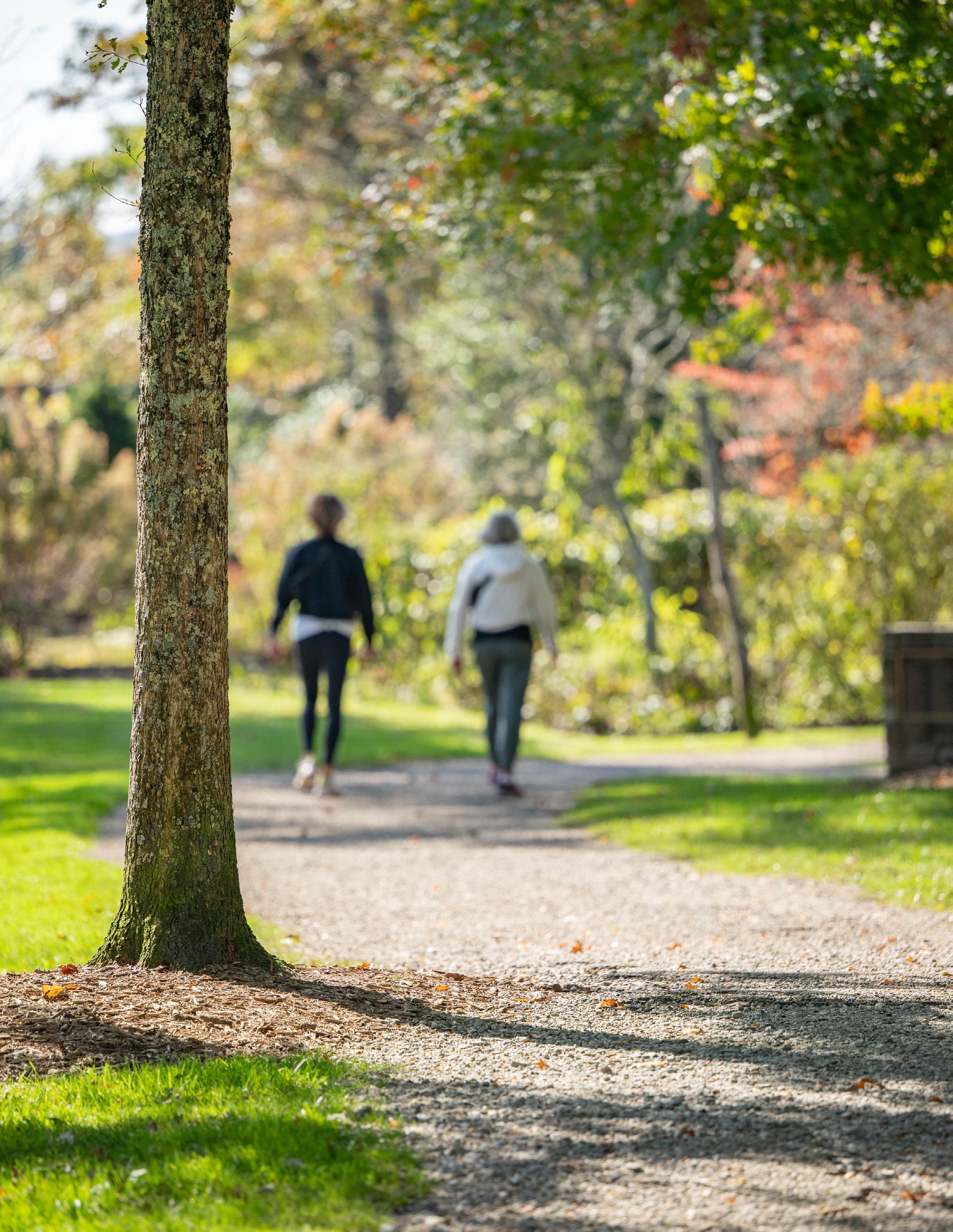
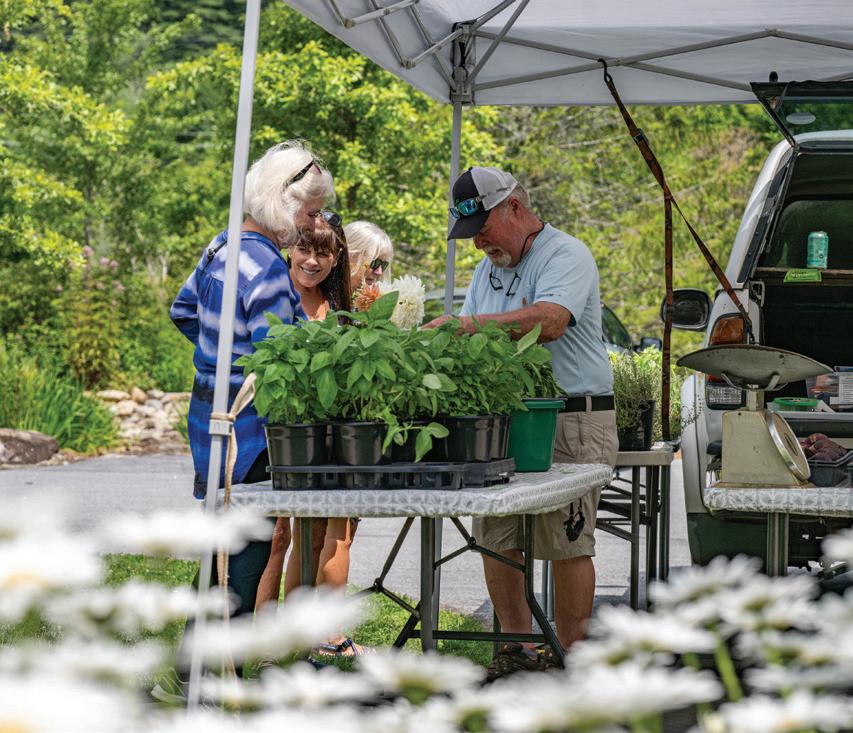
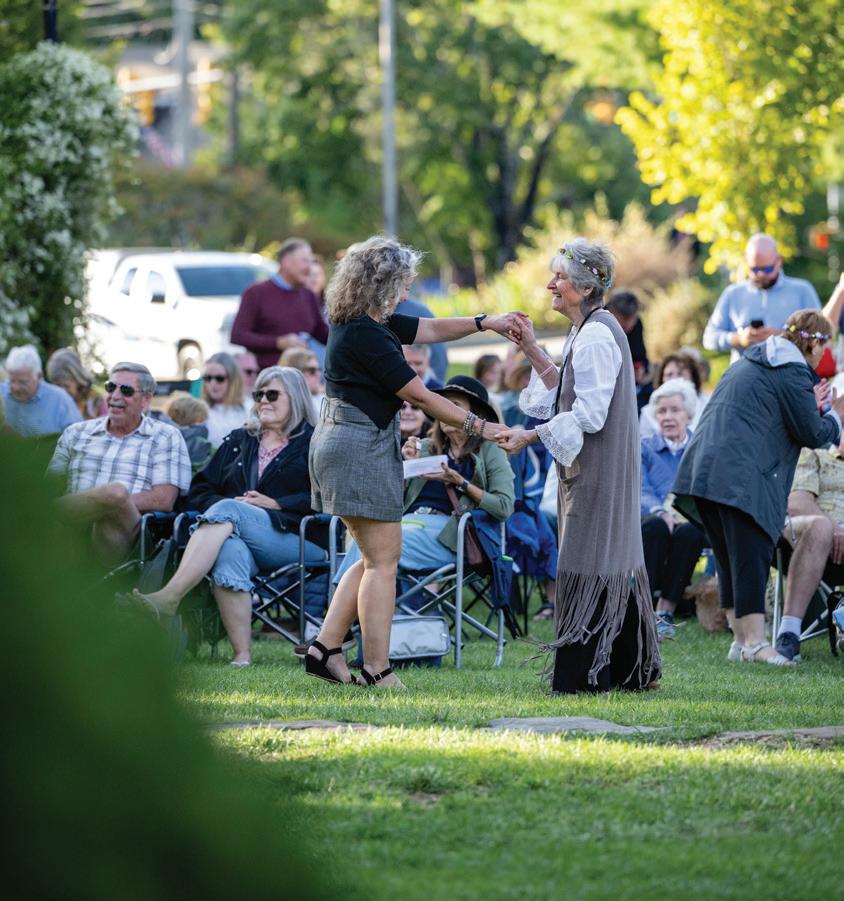
OPPOSITE PAGE: WALK AROUND DOWTOWN CASHIERS DURING THE SUMMER MONTHS TO FIND FRESH AIR AND COMMUNITY. PHOTO BY NC LIVING MAGAZINE
MARY ABRANYI, ALEXANDRA WARREN, CHUCK BIXBY, AND LEE COTTON
words by dawn liles
AS WE WELCOME A NEW YEAR, THERE IS SOMETHING WE CAN ALL AGREE ON. YES, CASHIERS NEEDS MORE SIDEWALKS, BUT LET’S FOCUS ON SOMETHING A BIT MORE SIGNIFICANT: MOST OF US WANT TO NOT ONLY LIVE A LONG LIFE BUT ALSO AGE WELL.
One hundred twenty-five million people in the U.S. are over 50 years old. Many will enjoy the privilege of aging, but aging well takes some preparation, and it’s never too late to start, no matter what your age is.
This year, NC Living is devoting one story in each issue to exploring the lifestyle factors that contribute to aging boldly. Those factors range from fitness and nutrition to handling life’s transitions, building social connections, discovering new passions, and taking care of our mental health. We’ll talk with local experts and share what they’ve learned about aging, both firsthand and through their interactions with people over 50 in our community.
We’ll kick off this series with two factors that are often at the top of our minds when we think of aging boldly — fitness and nutrition.
THE BEST EXERCISE ROUTINE IS THE ONE YOU’LL STICK WITH When it comes to working out, many people look for an exercise that will help ensure their health extends well into their eighth decade. But experts say the best exercise routine is simply the one you’ll stick with, several times a week, week after week, and year after year — and that may change as your body, interests, and abilities evolve. Regular exercise, like walking, biking, hiking, and swimming, can reduce the decline in musculoskeletal function that comes with aging. There comes a time when doing hours of punishing cardio day after day is no longer optimal; breaking workouts into manageable sessions is far more sustainable and better for aging muscles and joints.
In our community, you can practice yoga, take Pilates, join classes on stretching, and get advice and training from an exercise physiologist on high-intensity strength training.
If you’re new to exercise, our experts recommend checking with your doctor before starting any new program.
CONSIDERING YOGA
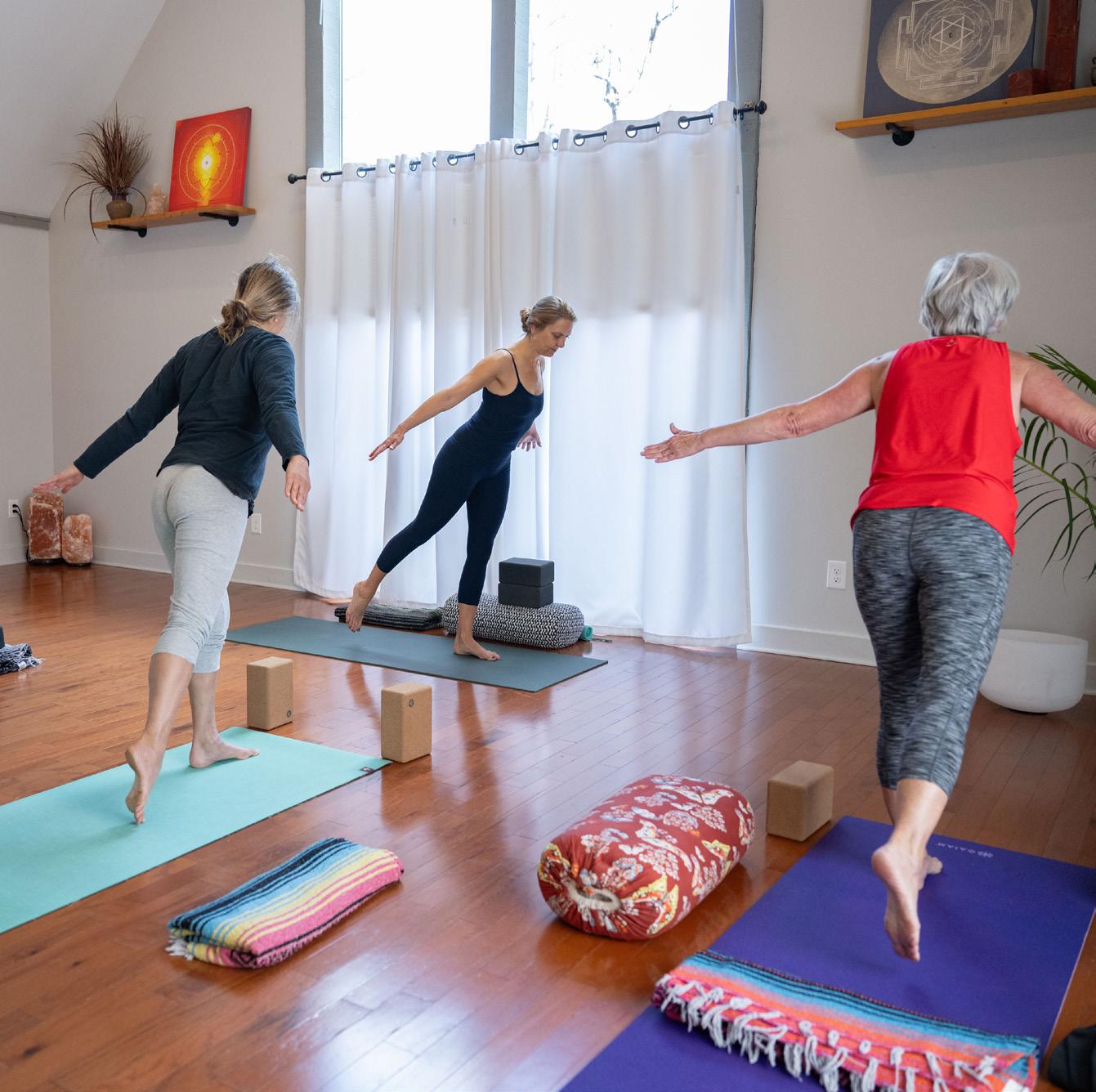
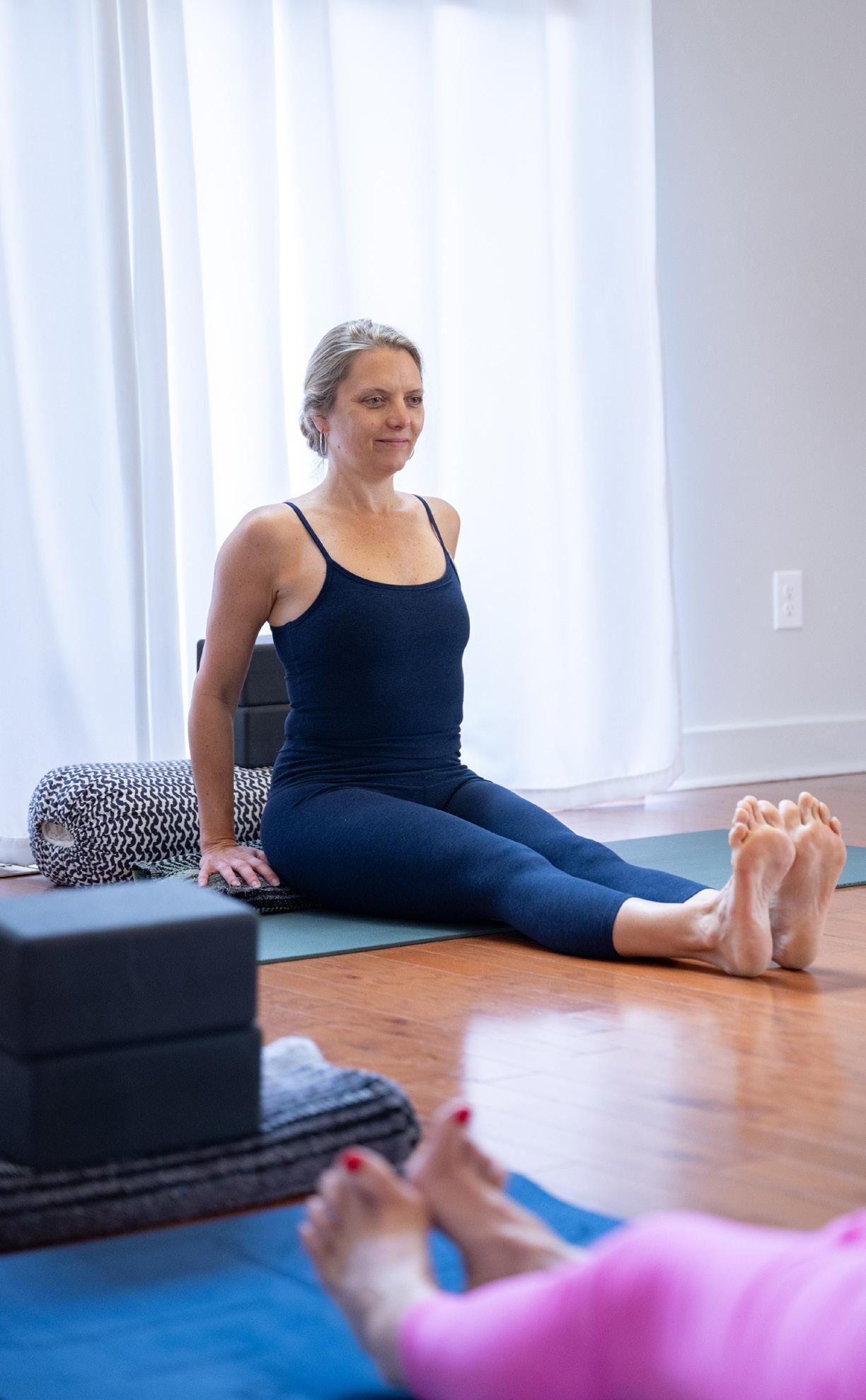
Mary Abranyi of Fusion Yoga & Wellness says, “There’s so much value in finding moments of stillness, but movement is such an integral part of longevity.” Trained and certified in various yoga styles, she developed a passion helping people grow and heal, which inspired her to begin teaching in 2002. Abranyi’s long-time love of yoga eventually led to the opening of Fusion in 2012. Since then, her teaching style has become a combination of breathwork and effective movement that focuses on balance, strength, flexibility, and alignment.
“Balance, strength, flexibility and alignment –we are prone to lose these elements of the body when we stop moving,” she explains. Abranyi feels her style of teaching has changed over the years due to age, and her personal practice was an absolute game-changer for her when she entered her 50s. She feels that making time for the practice has never been more important. Even when she travels, she looks for a studio wherever she goes, embracing the opportunity to be a student, ready to receive. Recently, while in Florida, the only yoga class that fit her schedule was Yoga for Osteoporosis. Although she doesn’t have that condition, she took the class and enjoyed it so much that she has decided to offer it at her studio in Cashiers.
“You don’t have to be suffering from bone loss to reap yoga’s benefits for better bone health,” she explains. “In fact, you may be able to help prevent the onset of osteoporosis or osteopenia with a regular yoga practice.”
ACCORDING TO ABRANYI, “YOGA ALSO HELPS WITH STRESS, ANXIETY, AND SLEEP, AS CERTAIN POSES CAN CALM THE CENTRAL NERVOUS SYSTEM WHICH CAN CENTER AND RELAX PARTICIPANTS. YOGA REALLY MEETS YOU WHERE YOU ARE AND EXTENDS WELL BEYOND THE MAT AND INTO DAILY LIFE. WITH SO MANY AMAZING BENEFITS, IT’S NO WONDER YOGA HAS BEEN IN EXISTENCE FOR MORE THAN 5,000 YEARS.”
CONSIDERING HIGH-INTENSITY STRENGTH TRAINING
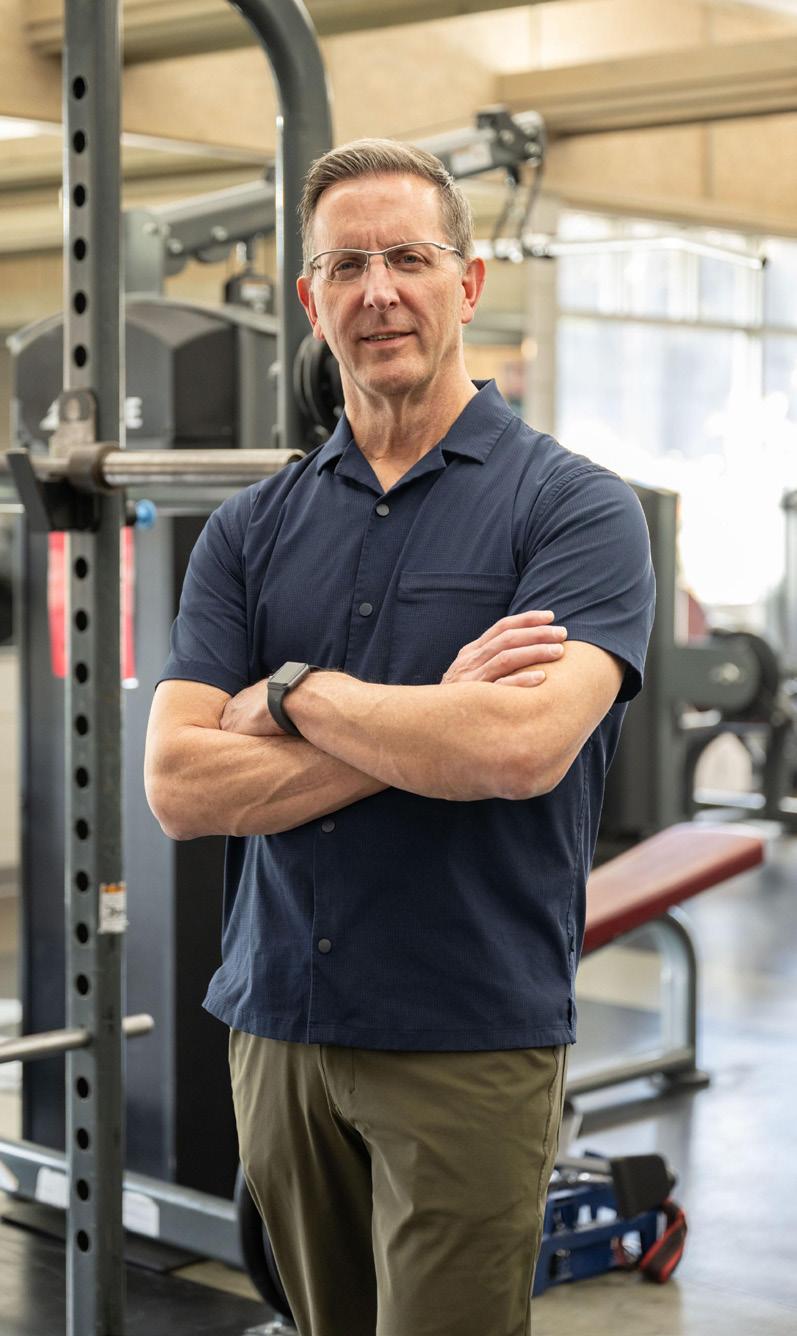
For certified Clinical Exercise Physiologist Chuck Bixby, the name of the exercise game is highintensity strength training. Through slow, controlled, intense 20-minute training sessions just twice a week, “Muscle strength, health, and performance can be improved, even into our 80s. I’ve seen it!” says Bixby.
In 1989, while training on MedX rehabilitative exercise equipment at the University of Florida, Bixby met his mentor, Roger Schwab, a strength training pioneer who instilled in him the value of safe, sensible, and meaningful exercise known as high-intensity training. For more than 30 years, Bixby has promoted this efficient, slow-motion, and evidence-based strength training in its various forms. At 65, Bixby can still train like he did in his 30s, and the strongest medication he takes is Flonase.
“The benefits of this type of training extend way beyond the gym and support an active mountain lifestyle. People can continue hiking, skiing, wakeboarding, keeping up with grandchildren, and doing all the activities they love instead of spending hours in the gym every week,” says Bixby.
JUST ONE TO TWO INTENSE WHOLEBODY RESISTANCE TRAINING SESSIONS PER WEEK INCREASE CARDIO FITNESS, ENHANCE FLEXIBILITY, AND IMPROVE BODY COMPOSITION. THIS, IN TURN, REDUCES YOUR RISK OF DIABETES AND CANCER, IMPROVES YOUR LIPID PROFILE, ALLEVIATES THE NEGATIVE EFFECTS OF FIBROMYALGIA AND OSTEOARTHRITIS, AND EVEN OFFERS COGNITIVE AND MOOD-LIFTING BENEFITS.
Bixby trained a 40-year-old woman whose frozen shoulder did not allow her to lift her arm at all. After working on an overhead press machine just twice a week for several years, she was able to extend her arm all the way above her head. “So many people throw in the towel too early or don’t make fitness a commitment,” says Bixby.
Key to this type of training is slow and controlled movement. “Moving a weight fast exposes you to injury. I like to remind people that speed kills!” Bixby says with a laugh.
CONSIDERING PILATES
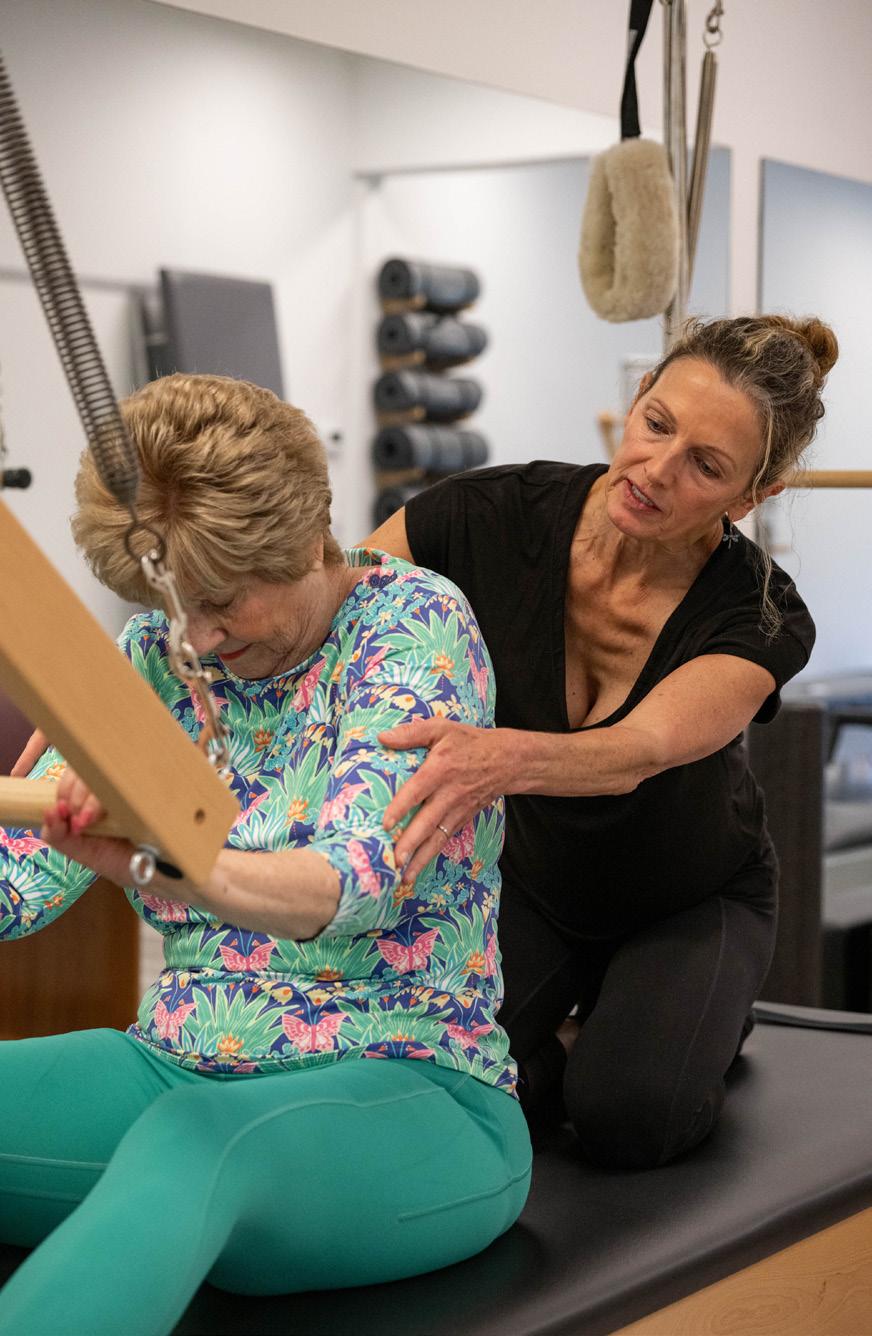
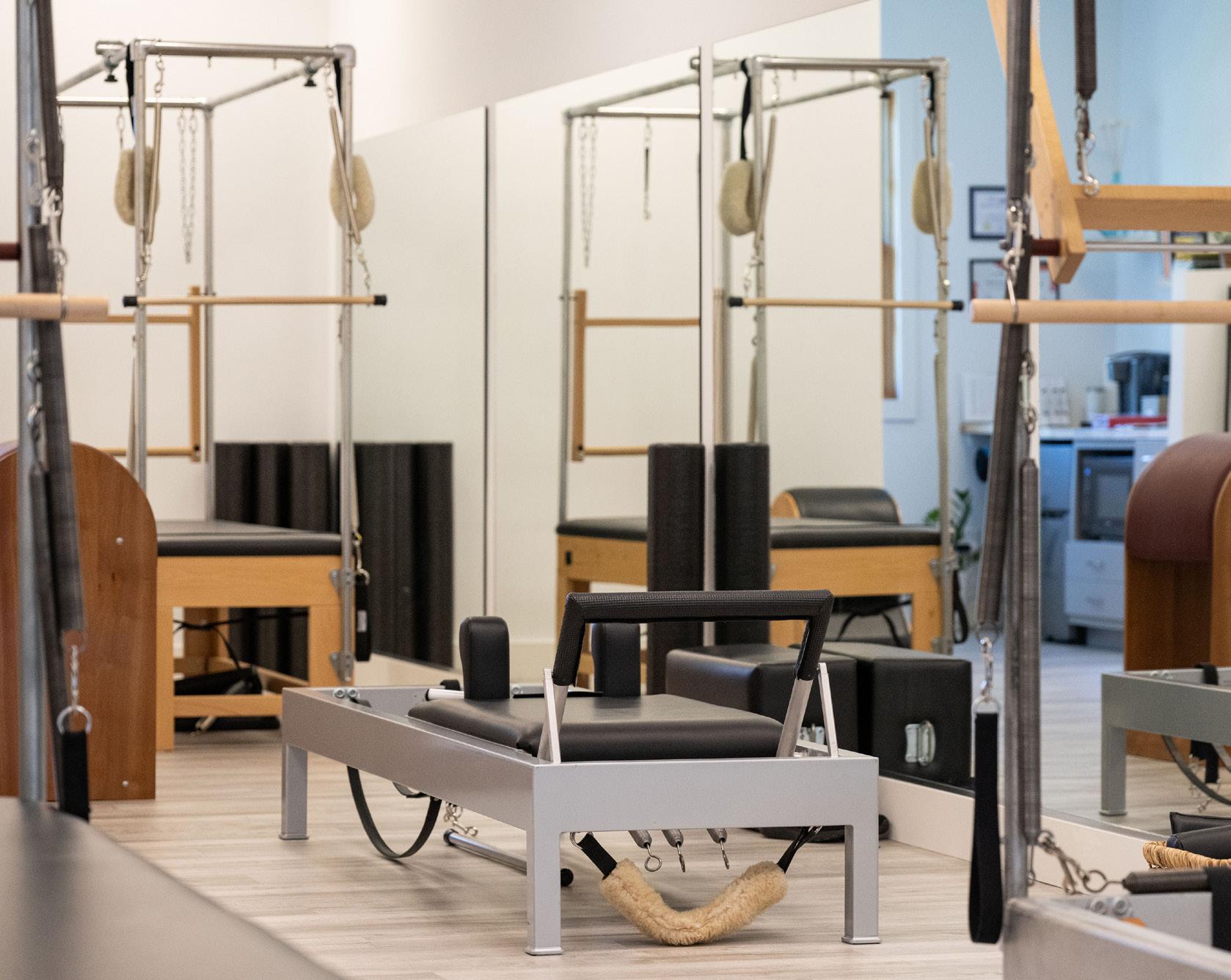
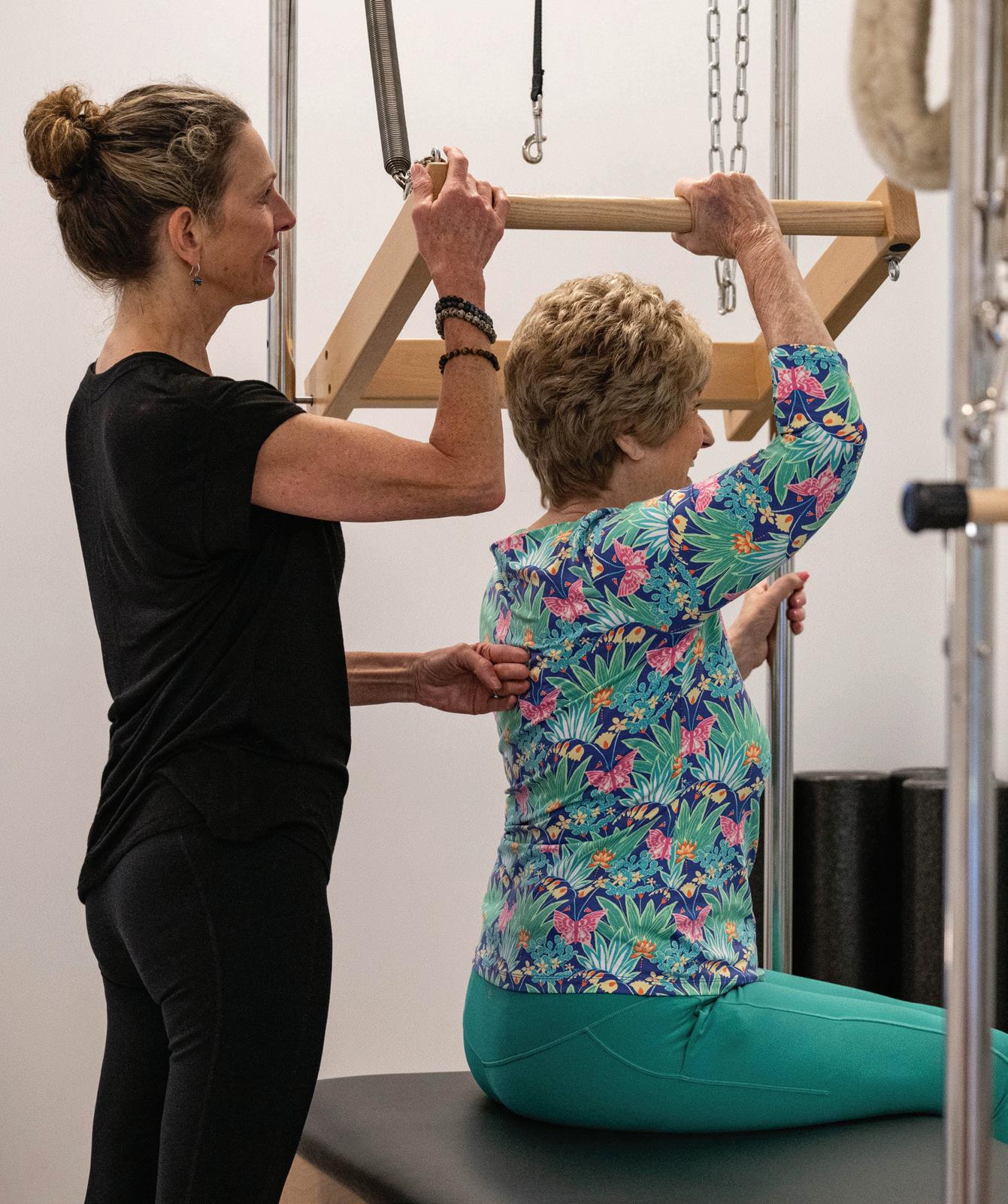
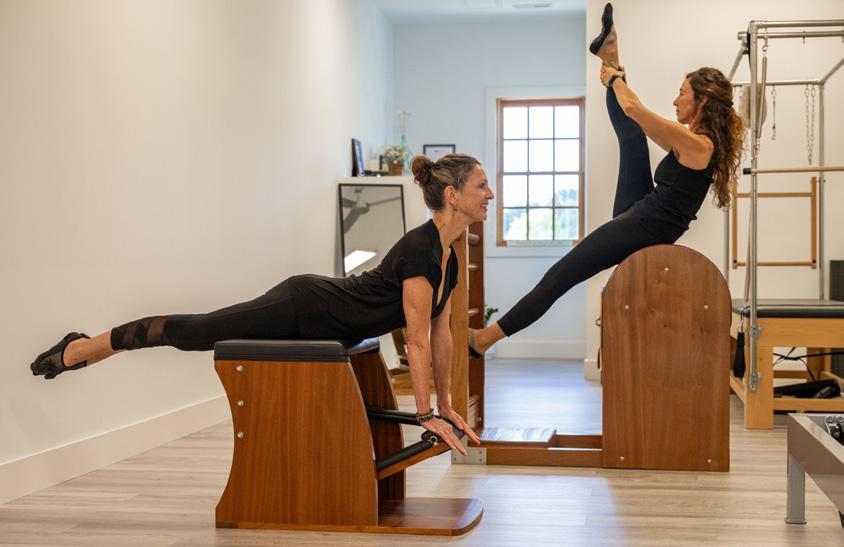
Pilates was developed in the early 20th century by German physical trainer Joseph Pilates. For studio owner Alexandra (Alex) Warren, Pilates is the exercise of choice. She earned her Pilates certification through Power Pilates, a 600+ hours comprehensive education program.
PILATES IS A SYSTEM OF CONTROLLED MOVEMENTS, AND EACH EXERCISE CAN BE ADAPTED FOR THOSE WHO SUFFER FROM ARTHRITIS, HAVE UNDERGONE KNEE REPLACEMENT, OR HAVE OTHER ISSUES THAT MIGHT LIMIT THEIR RANGE OF MOVEMENT. “ONE OF MY BIGGEST GOALS IS TO KEEP PEOPLE SAFE AND KEEP THEM MOVING AND DOING ACTIVITIES THEY LOVE, LIKE WALKING, HIKING, AND PLAYING WITH THEIR GRANDCHILDREN,” SAYS WARREN. A REGULAR 50-MINUTE BEGINNER, INTERMEDIATE, OR ADVANCED PILATES SESSION SEVERAL TIMES A WEEK CAN HELP PEOPLE FEEL MORE ALIGNED (HOW THE HEAD, SHOULDERS, SPINE, HIPS, KNEES, AND ANKLES LINE UP) AND LIMBER.
Pilates is built on six principles: breathing, concentration, control, precision, centering, and flow. The exercises strengthen your core — a group of muscles in the abdomen, glutes, and inner thighs — enhancing control and freedom of movement of the arms and legs.
The exercises also focus on strengthening the shoulder girdle, which can often be weak, particularly in women. Pilates increases flexibility and balance, thus enabling you to brace yourself better if you do fall.
“Pilates is one of the few things that you can do if you have any physical limitations. You can do the workouts until you’re 100!” enthuses Warren. “Incorporating Pilates into your fitness routine allows you to do life’s activities more efficiently and effortlessly.”
YOU
CAN’T
OUT-EXERCISE A BAD DIET
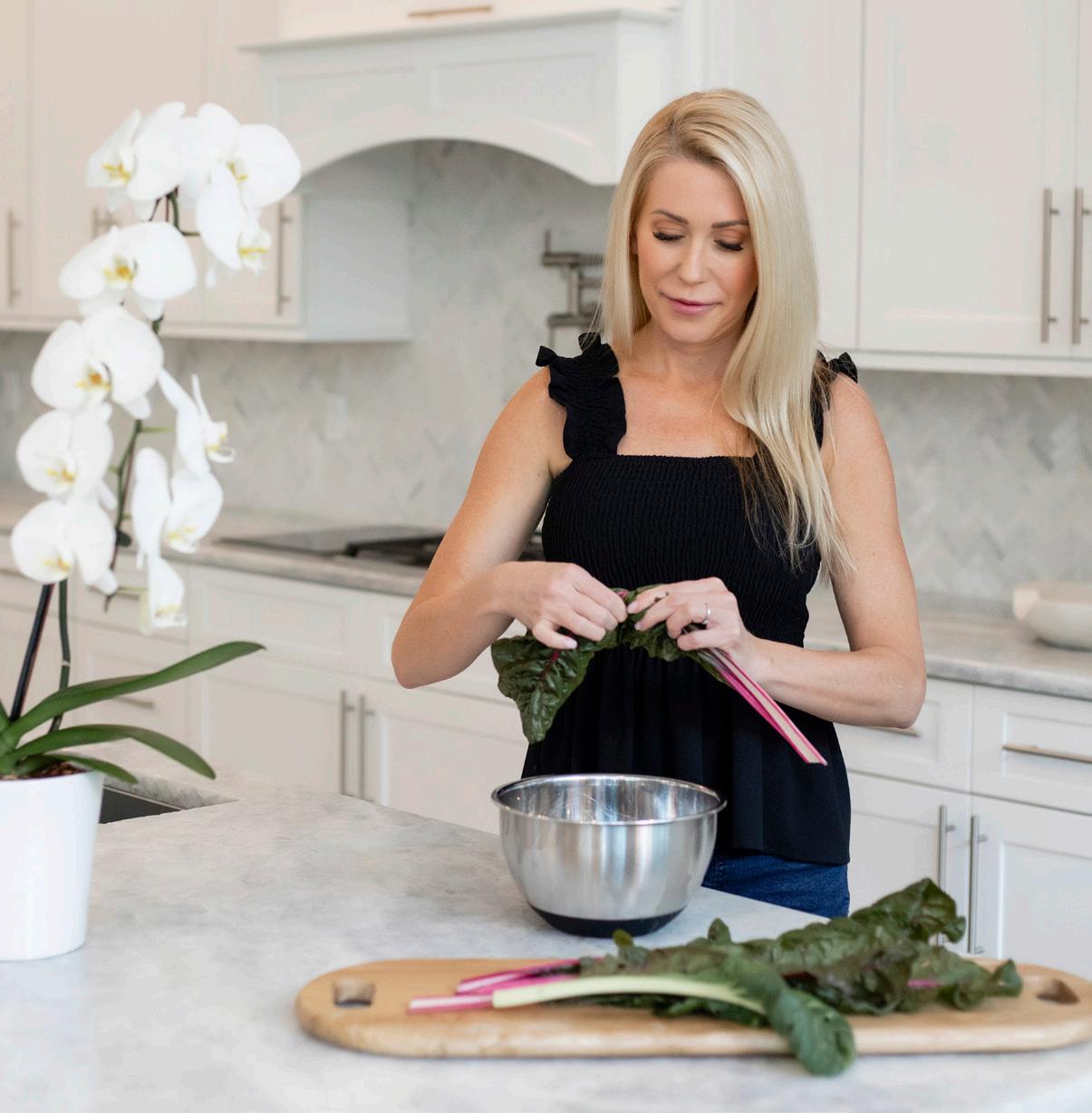
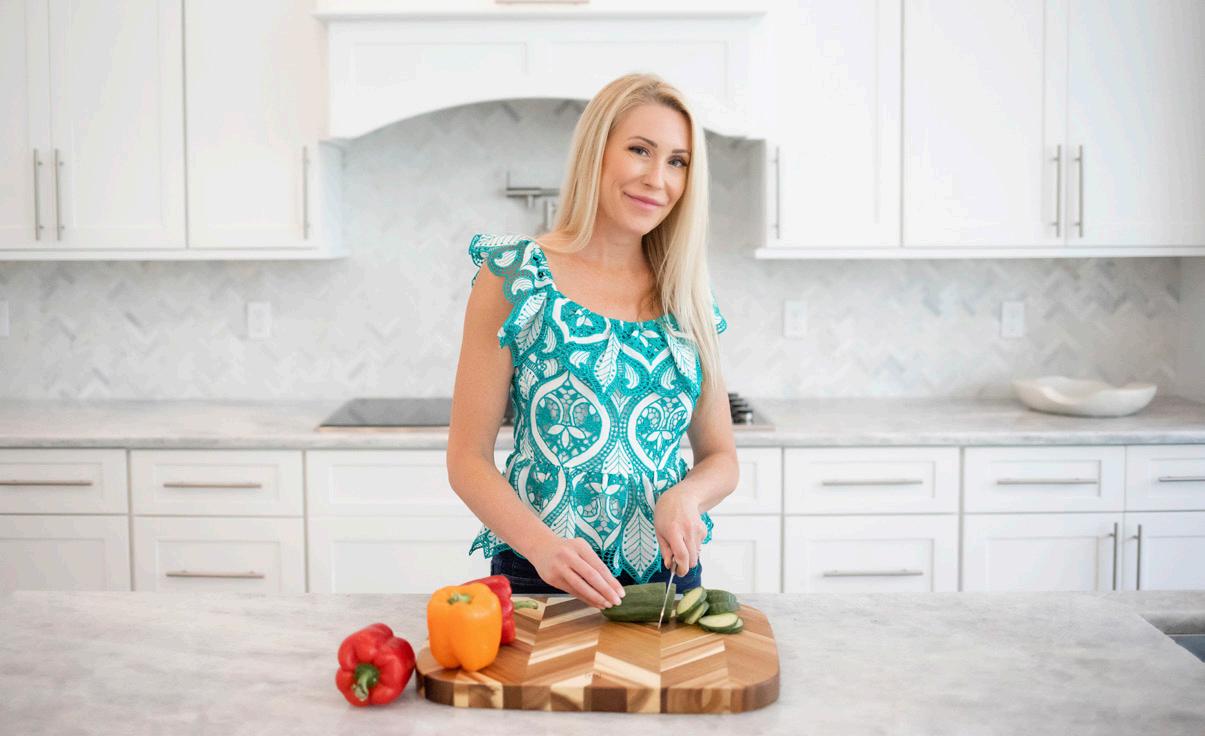
All this talk of exercise may be making you hungry, so let’s shift to nutrition. It’s a vast topic with an abundance of often confusing information. Nutritionist Lee Cotton shared some basic practices we should all follow when it comes to nutrition.
“I take a holistic approach to everything in life,” explains Cotton. “Nutrition is not about the number on the scale. To me, diet is a four-letter word. We need to change our thinking around food and limiting ourselves.
I BELIEVE IN A FOOD-FIRST PHILOSOPHY. EAT A VARIETY OF FOODS AND FOOD GROUPS. OUR BODIES CHANGE AT DIFFERENT STAGES IN LIFE. I SEE MANY WOMEN DECIDE TO GO ON EXTREME DIETS OR BEGIN FAD EATING PATTERNS DURING MIDLIFE. THAT IS COUNTERPRODUCTIVE AND COULD BE HARMFUL TO YOUR HEALTH. IT IS IMPORTANT TO CONCENTRATE ON THE KEY INGREDIENTS FOR OVERALL HEALTH:
CONSUMING ADEQUATE CALCIUM-RICH FOODS, GETTING ENOUGH VITAMIN D AND FIBER, BEING MINDFUL OF HEART DISEASE, CONSUMING NUTRIENT-DENSE FOODS, AND LIMITING SATURATED FATS.” ALSO, FOR WOMEN, REDUCING CAFFEINE AND ALCOHOL CAN HELP MANAGE HOT FLASHES DURING PERIMENOPAUSE AND MENOPAUSE.
Cotton says that with every life stage — childhood, adolescence, pregnancy, middle age, menopause — come new nutritional needs. “As we age, our bodies need nutrition for preventative and restorative needs. What we put in our bodies affects how they function and their ability to protect us from diseases.”
We should all choose meals with a balance of macronutrients — protein, fat, and carbohydrates — and focus on an eating pattern with nutrientdense whole foods. Incorporating both plantbased and animal-based protein can provide a variety of nutrients. Cotton advises talking to your doctor before considering adding vitamins or supplements to your diet.
IT TAKES A COMMUNITY
Even community leaders are recognizing the benefits of a healthy lifestyle for all citizens. Last year, the Highlands Cashiers Health Foundation created the Healthy Plateau initiative for all ages. According to the Foundation, Healthy Plateau is an exciting and engaging initiative designed to bring the Health Foundation’s vision and mission directly to the community. The program’s focus on overall well-being and community involvement sets it apart as an innovative approach to improving health outcomes. Some of their goals include promoting regular checkups and screenings, encouraging physical activity, advocating for proper nutrition, fostering participation in community programs, and supporting positive lifestyle choices.
Re-set Ready
MARY ABRANYI
FUSION YOGA & WELLNESS
Fusionyogaandwellness.com
828-743-9000
ALEX WARREN
PILATES OF CASHIERS
Pilatesofcashiers.com 828-200-9467
CHUCK BIXBY m.a. e.d., m.s., acsm-cep, eim-iii
CLINICAL EXERCISE PHYSIOLOGIST AND HIGHINTENSITY STRENGTH TRAINING SPECIALIST Chuckbixby.com
LEE COTTON rdn, ldn, licensed in fl and nc LEE COTTON NUTRITION
Leecottonnutrition.com
772-247-4999
JACKSON COUNTY RECREATION CENTER
Rec.jacksonnc.org
828-631-2020
AGING
words by dawn liles
PHOTO BY NC LIVING MAGAZINE
TIMELESS
SKIN CARE TIPS FOR RADIANT AGING
Spring has nearly sprung in beautiful Western North Carolina, revealing showy azaleas, pink and white mountain laurel, and show-stopping hydrangeas and rhododendrons. It’s the time of year we start shedding our winter coats and revealing a little more of our own beauty. But after a long, cold winter, our skin may not be quite ready for prime time.
Taking care of our skin is not vanity but an essential tool in our aging boldly toolkit. Caring for our skin is no different
firmness it once had. This means that when we frown, laugh, or squint, wrinkles begin to form at the lines of expression. Sun exposure, environmental toxins, diet, smoking, and other factors increase the risk of developing wrinkles. And menopause can cause dryness, decreased firmness, and breakouts, and skin becomes thinner and more prone to bruising and marking.
SO, WHAT CAN WE DO FOR OUR SKIN? WELL, IF A REALTOR’S MANTRA IS “LOCATION, LOCATION, LOCATION,”
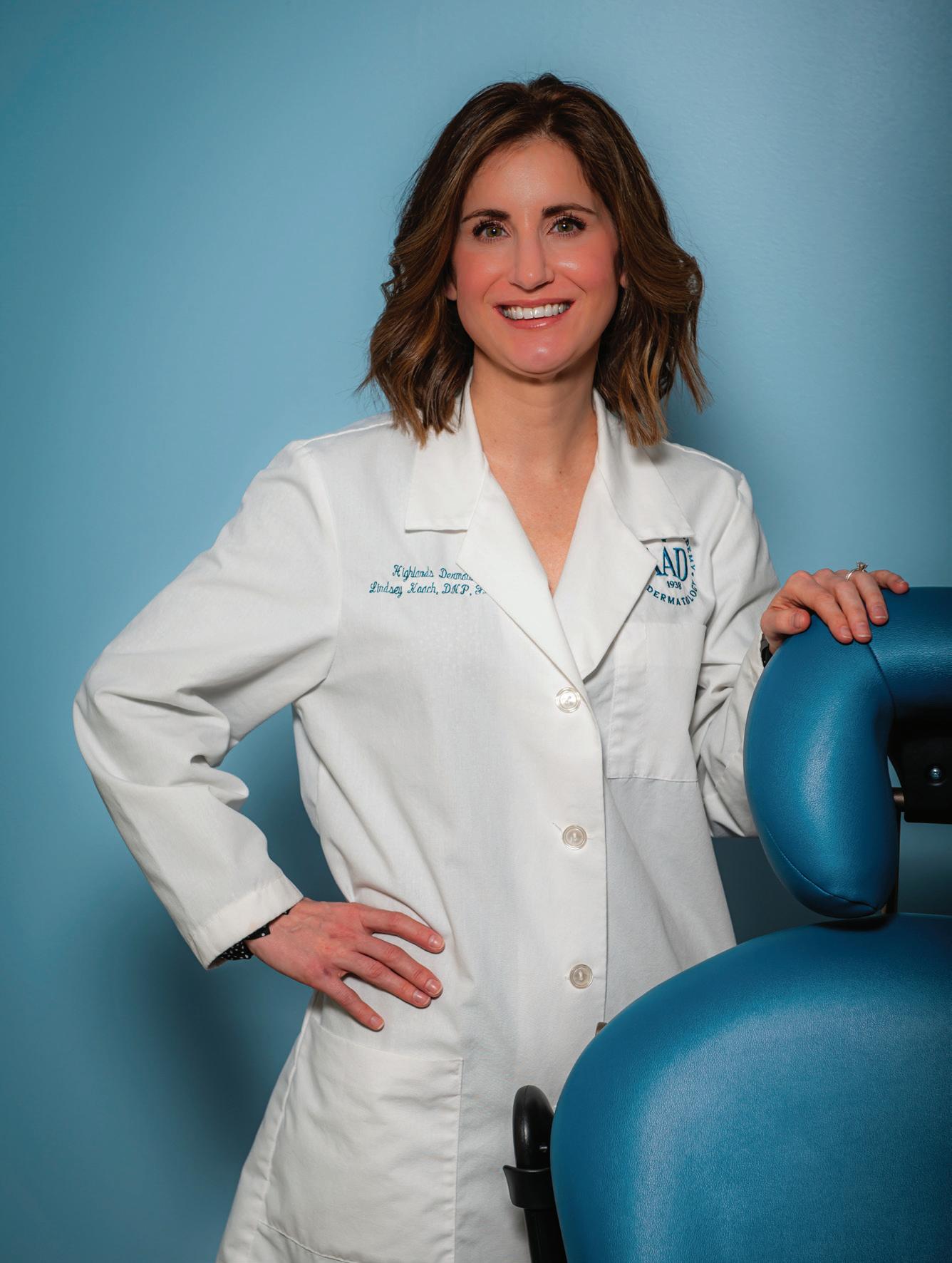
“The most important thing we can do for our skin is use sunscreen with an SPF of 35 or higher,” says dermatology nurse practitioner Lindsey Koach. “It prevents skin cancers and premature aging.” Koach says to apply sunscreen every
day, even on cloudy days or if you are inside.
“We see many skin cancers on the left side of people’s faces or on their left arm from exposure while driving.”
In addition to sunscreen, protecting our skin barrier is critical, says Tarah Grillo, licensed esthetician and co-owner of Tarah’s Beauty Bar.
“Keep your skin healthy and balanced. Don’t overdo it with harsh scrubbing. Exfoliate regularly and hydrate well. Also, use a good retinoid and vitamin C serum. We don’t need to use abrasive products to achieve results; they only strip our skin. Many more gentle options are now available.”
It’s also important to know that certain products can help make other products more effective. Hyaluronic acid is great for plumping the skin and helping to retain moisture. Use it before applying your moisturizer to give skin an extra hydrating boost, says Grillo. And skin care does not have to cost a fortune. “You don’t have to invest hundreds of dollars. You can start out small with just one product that’s clinically proven.”
A GOOD DAILY SKIN CARE ROUTINE
“It’s important to take the best care we can of our skin; it’s our body’s largest organ,” says Koach. “A good morning routine involves using a cleanser,
followed by a toner — which helps calm redness and inflammation — a hydrating serum such as vitamin C to help brighten skin, and a good eye cream,” says Koach. “Most people could benefit from adding a prescription-strength retinoid at night to help fade dark spots and keep pores from getting clogged. Some people choose to exfoliate their skin a few times a week as well, which can help de-clog pores, smooth the skin’s surface, and remove the dead cells that make skin look dull.”
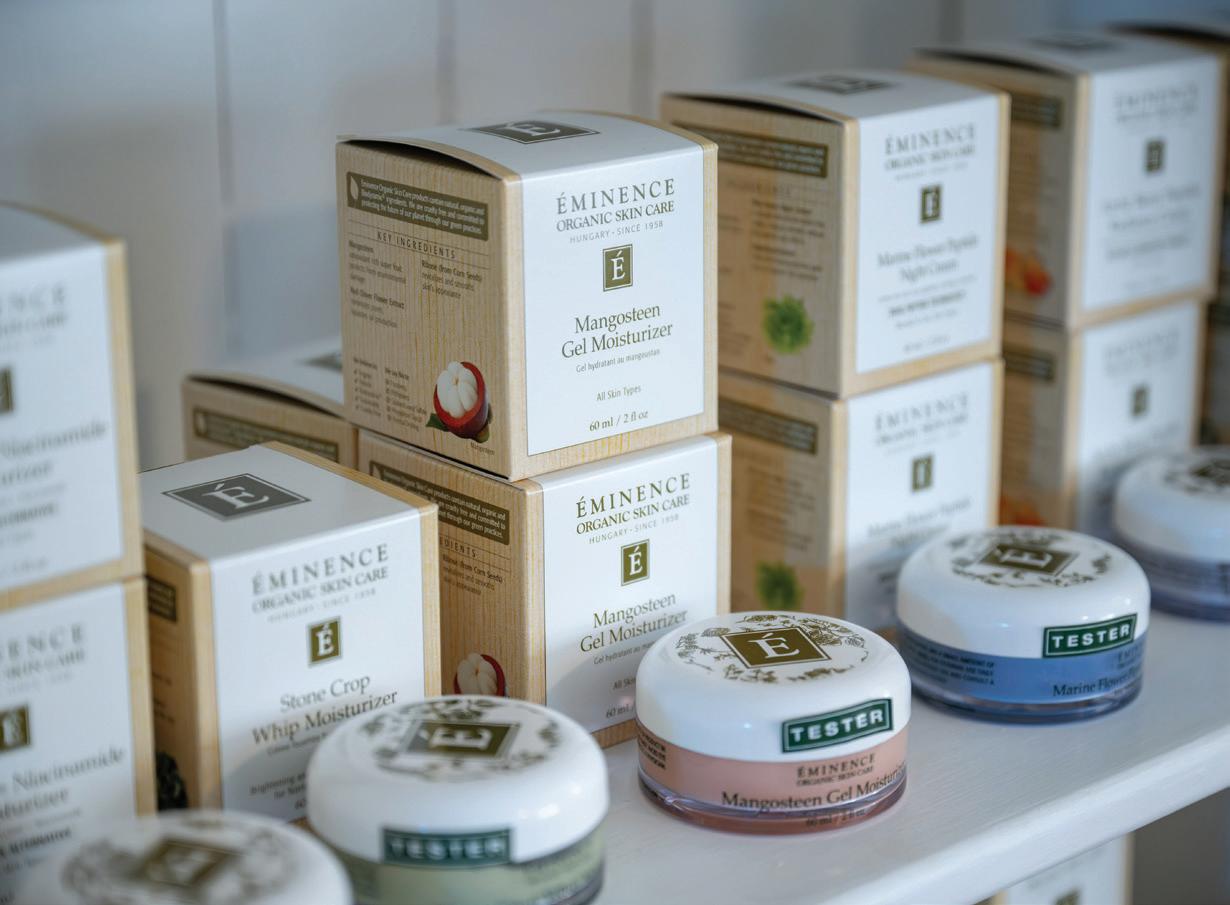
Koach recommends finding a line of skin care you like and sticking with it. At Highlands Dermatology, Koach and many of the staff use ZO® Skin Health, and many of their patients have achieved good results. Grillo’s preferred skin care lines include Éminence Organic Skin Care and skinbetter science®.
And what are their clients’ biggest skin concerns? Dark spots, followed by fine lines and deep wrinkles. “At least several times a week, people ask about treatments we offer for fixing dark spots,” says Koach. “If the spots occur on a person’s face, it can make them feel self-conscious and not as confident as they could be. Dark spots can be minimized through the use of topical substances, chemical peels, and laser resurfacing.”
TARAH GRILLO. TBBSPA.COM
PHOTO BY NC LIVING MAGAZINE
PHOTO BY NC LIVING MAGAZINE
EFFECTIVE TREATMENTS FOR SKIN CONCERNS
In addition to a good skin care routine, many people elect to incorporate other antiaging treatments. Treatments can “soften things that bother us,” says Koach. “Our goal is to help people feel refreshed and look as natural as possible, not to change how they look.”
These treatments have come a long way in the past 20 years. Many have little or no downtime. Some of the treatments include:
• Wrinkle relaxers such as Botox, which temporarily freeze the muscles and nerves at the injection site, making skin appear smooth
• Dermal fillers such as JUVÉDERM® and Restylane®, which plump up skin, filling in fine lines and wrinkles to reduce their appearance
• Chemical peels, which remove dead skin cells, resurface, and reveal younger skin
• Laser resurfacing, which boosts collagen production and provides younger-looking skin
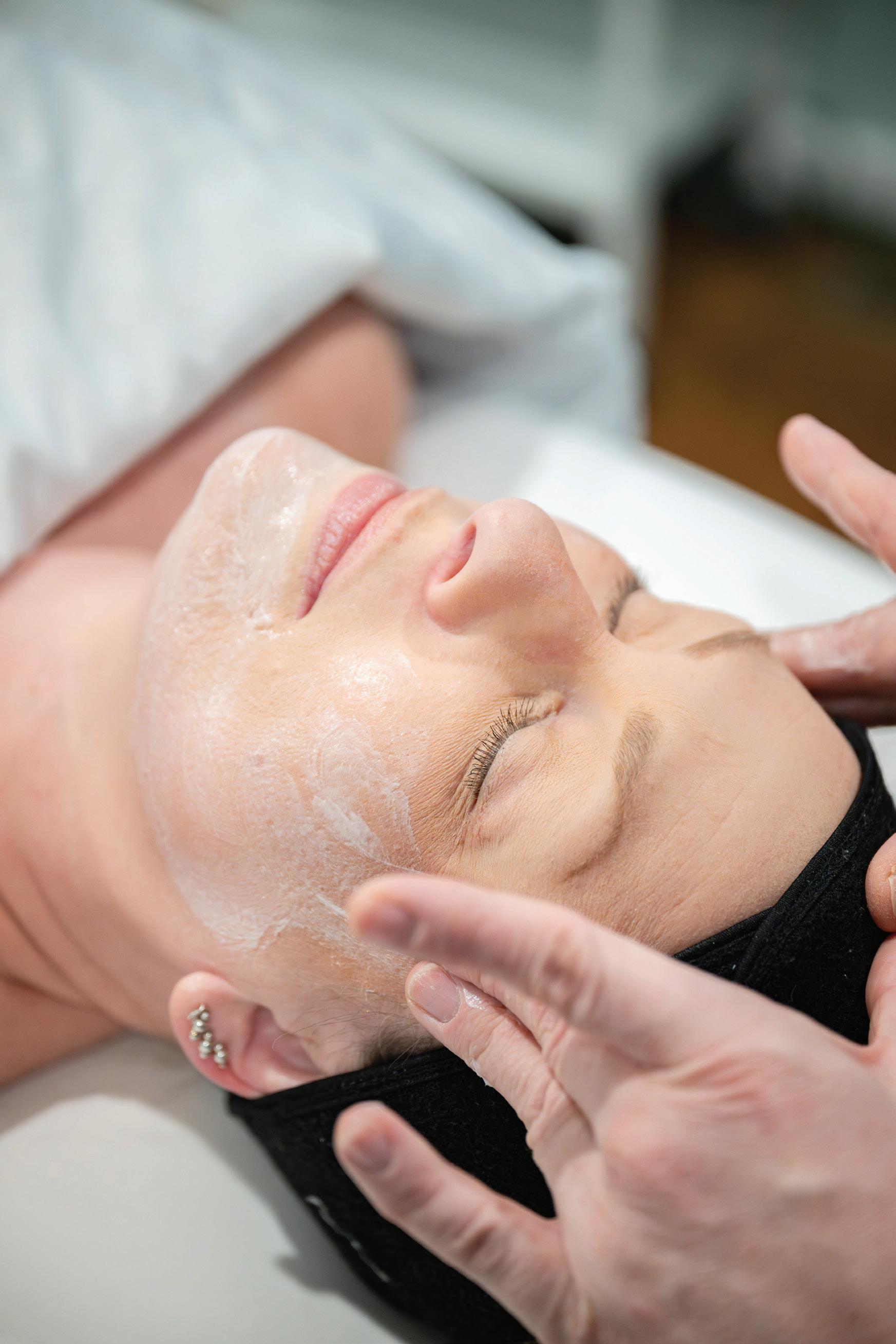
Grillo also recommends gentle chemical peels with no downtime. “Chemical peels contain different types of acids. An esthetician can guide you on which peel will be the most appropriate and beneficial to treat your specific skin care concerns.” Other popular treatments include HydraFacials and antiaging microneedling, which is a minimally invasive treatment that uses tiny needles to stimulate the skin’s natural healing process. Microneedling can help treat a variety of skin concerns, including acne scars, surgical scars, stretch marks, wrinkles, enlarged pores, sun damage, hyperpigmentation, fine lines, and crow’s feet.
Although clients now have an abundance of options for skin care treatments, Grillo says she will always take a holistic approach to skincare. “Eighty percent of what you do for your skin, you do at home with your own routine. We are here to build on that and enhance your natural beauty.”
LINDSEY KOACH OF HIGHLANDS DERMATOLOGY. PHOTO BY DAVID SIMCHOCK COURTESY OF HIGHLANDS DERMATOLOGY HIGHLANDSDERMATOLOGY.COM
LEFT : DETAIL SHOTS BY NC LIVING MAGAZINE
Local shops that sell organic soaps and lotions online have sprung up all over the state, including apothecary Whispering Willow (whisperingwillow.com). It offers hand-crafted bar soaps, body oils, hand and cuticle salves, hand and body washes, lip balms, natural linen sprays, and lavender neck wraps. Its popular body butter is a great option for dry winter skin and is available seasonably from October through March, or as long as supplies last.
Partners Wayne and Julia carefully select natural and organic ingredients to reduce the number of chemicals in our homes. They use eco-aware packaging and packing materials to help slow the accumulation of waste, and they donate 1% of sales to nonprofits through their membership with 1% for the Planet.
SHEER FLUID & DAILY SHEER SPF 50 BROAD-SPECTRUM
SUNSCREEN. PHOTOS
COURTESY OF ZO® SKIN HEALTH ZOSKINHEALTH.COM
BAMBOO FIRMING FLUID & MARINE FLOWER
PEPTIDE EYE CREAM. PHOTOS COURTESY OF ÉMINENCE ORGANICS
EMINENCEORGANICS.COM
H IGHLANDS DERMATOLOGY
H ighlands Dermatology offers effective and individualized treatments to correct a host of medical skin conditions. Its board-certified dermatologists have broad experience in pediatric, medical, and surgical dermatology. They provide a full range of dermatology services and treatments — including Botox, dermal fillers, and hyperpigmentation — to treat conditions such as eczema, psoriasis, rosacea, acne, moles, skin cancer, and wrinkles.
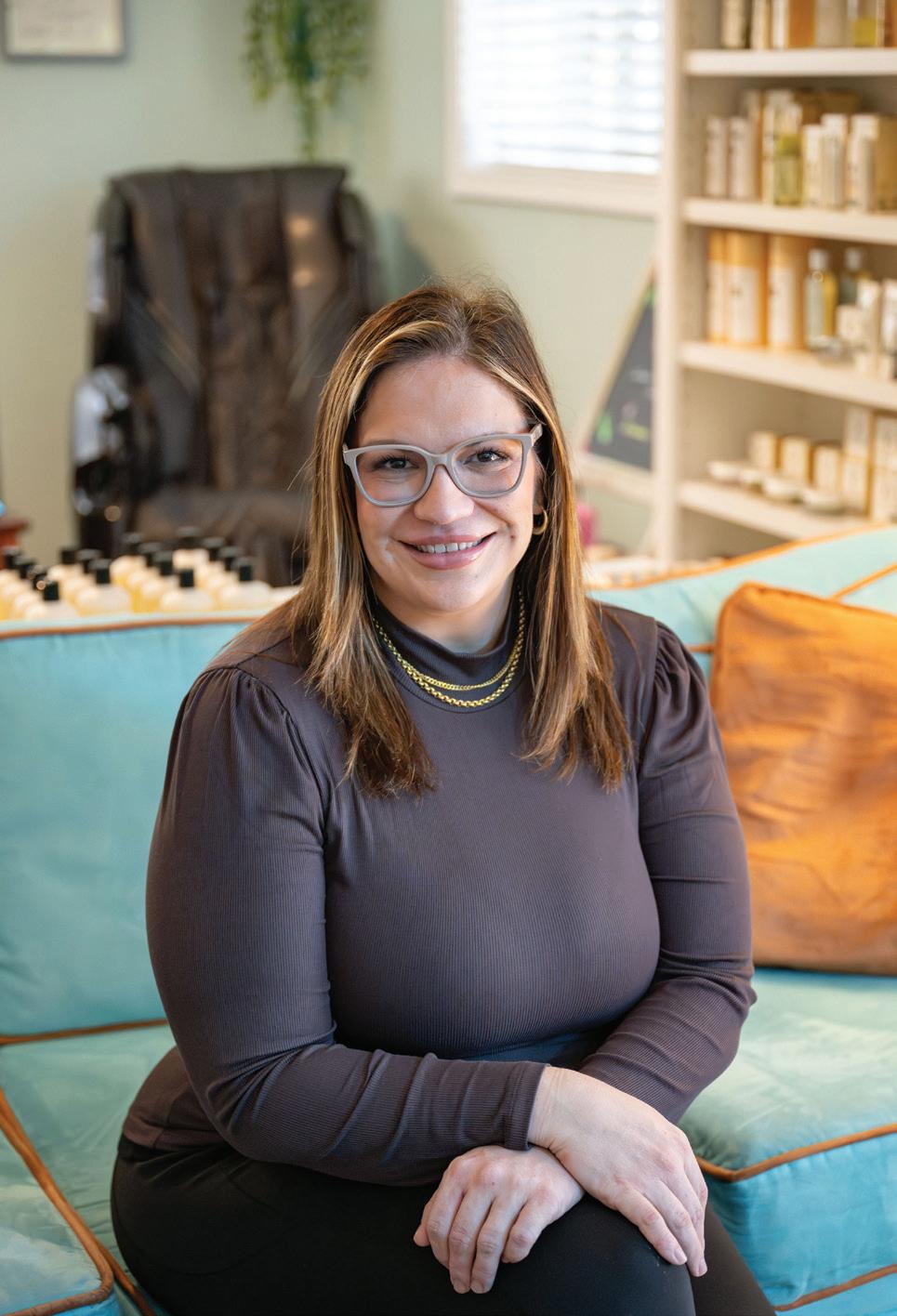
O wner and Esthetician Tarah Grillo has been in business for 17 years. She offers customized organic facials, dermaplaning, SkinPen® microneedling, chemical peels, and waxing and brow treatments.
828-487-5319
287 LAUREL KNOB ROAD | CASHIERS, NC TBBSPA.COM
ESTABLISHING SOCIAL CONNECTIONS IN OUR COMMUNITY
words by dawn liles photography by nc living magazine
We’ve all heard that “sitting is the new smoking,” but both the World Health Organization and the U.S. Surgeon General have also recognized social isolation and loneliness as significant risks to both our mental and physical well-being.
According to the National Institute on Aging, “Everyone needs social connections to survive and thrive. But as people age, they often find themselves spending more time alone. Being alone may leave older adults more vulnerable to loneliness and social isolation, which can affect their health and well-being. Studies show that loneliness and social isolation are associated with higher risks for health problems such as heart disease, depression, and cognitive decline.”
Perhaps you just moved to the Plateau or are living here seasonally or even full-time but haven’t found “your people” yet. We’re here to help with suggestions on how to plug in and establish connections in our community.
RESOURCES AND IDEAS FOR GETTING INVOLVED
Peggy Pepper, an entrepreneur who founded several businesses, including Positive On Purpose and Peggy Pepper Home, has lived all over the U.S. and abroad. She and her husband fell in love with the Plateau and made Cashiers their full-time home in August 2024. “We wanted someplace we could live and experience the beauty of nature in all four seasons,” explains Pepper. “I have never
met friendlier people than we have met here. Everyone has been welcoming and warm. There’s a kindness here that is really special.” With that kind of attitude, it’s no surprise Pepper has already gotten involved in the community and met new people while staying connected with friends from their last home in Dallas, Texas.
Pepper and her husband joined the Crossroads Society, a group of Cashiers’ citizens who make essential annual contributions in support of Vision Cashiers and its initiatives. She’s also been a Pilates devotee for many years, so she wasted no time starting classes with teacher Alex Warren at Pilates of Cashiers.
One of Pepper’s biggest pieces of advice, particularly to newcomers, is to engage with people, not just in your neighborhood, but with the hard-working people at our local restaurants, shops, and grocery stores. Her favorite question to ask is, “I’m new here. What is not to be missed?”
She’s gotten helpful feedback on where to eat, where to shop, and the most scenic hikes and places to see, such as a flower farm in Franklin that has become a favorite of Pepper’s. She is thankful to the people who work to make our town a special place to live, and she lets them know she’s grateful. “Thanking someone is a serotonin producer for both the giver and the receiver,” says Pepper.
Spreading this kind of goodwill helps strengthen our community and is an easy way to feel more connected. The social media and websites for the Cashiers Area Chamber of Commerce and the Highlands Chambers of Commerce are a great place to start. They are full of information about activities in our area where you’re sure to connect with others. Plus, here are a few more ideas to help you feel more at home.
ADOPT A PET
Animals provide companionship and often lead to interactions with other people. The many dog-friendly restaurants or dog parks around town are great places to engage with fellow animal lovers. Visit the Cashiers-Highlands Humane Society to see if an animal companion is right for you.
GET MOVING
Meeting others with similar interests is another idea to help you feel at home. Try a class at Pilates of Cashiers or Fusion Yoga & Wellness, both located in Cashiers, or head
to the Cashiers/Glenville Recreation Center to explore fitness and athletic interests. The center offers a wide variety of group fitness classes for all levels of physical activity as well as pickleball.
ENGAGE YOUR NEIGHBORS
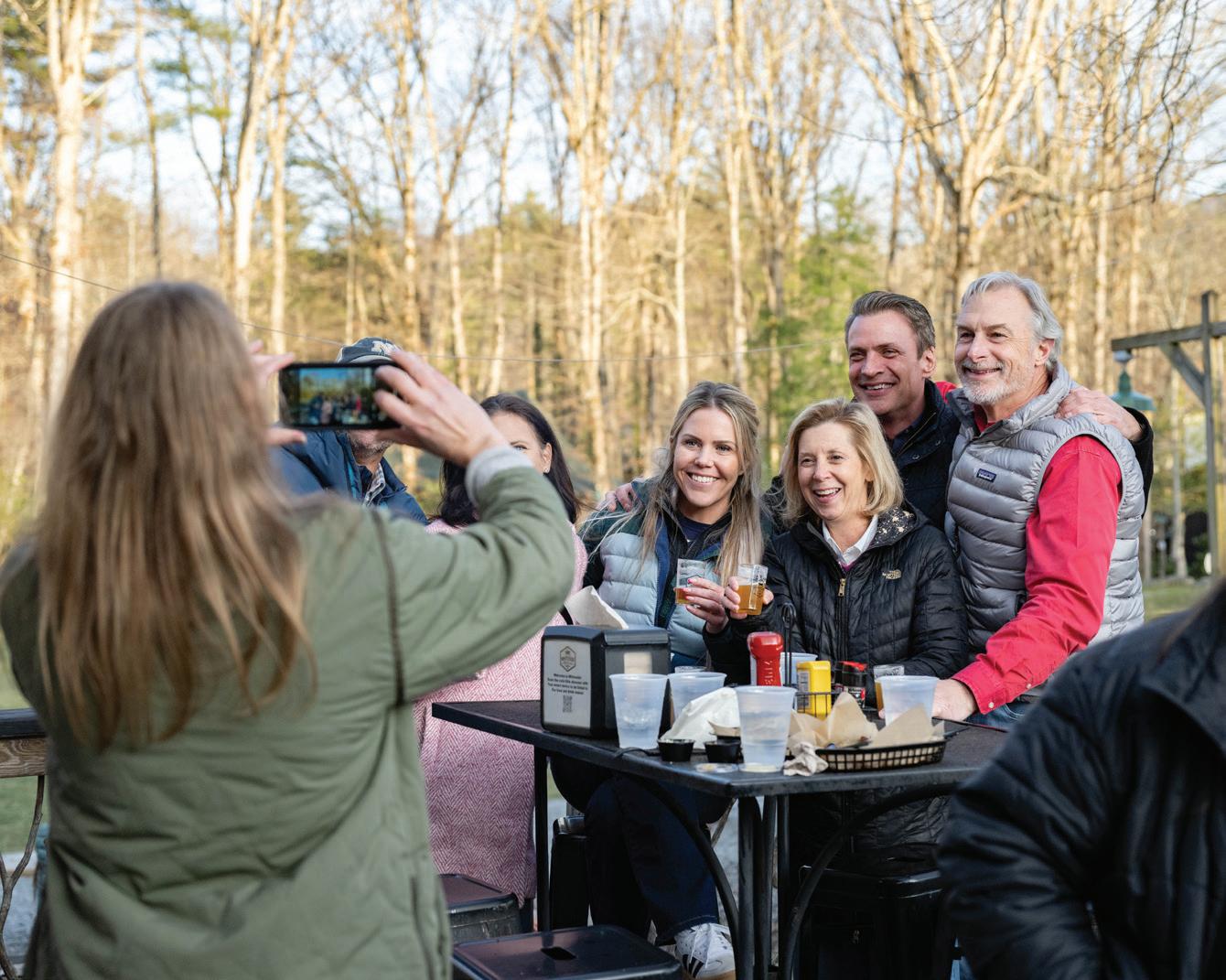
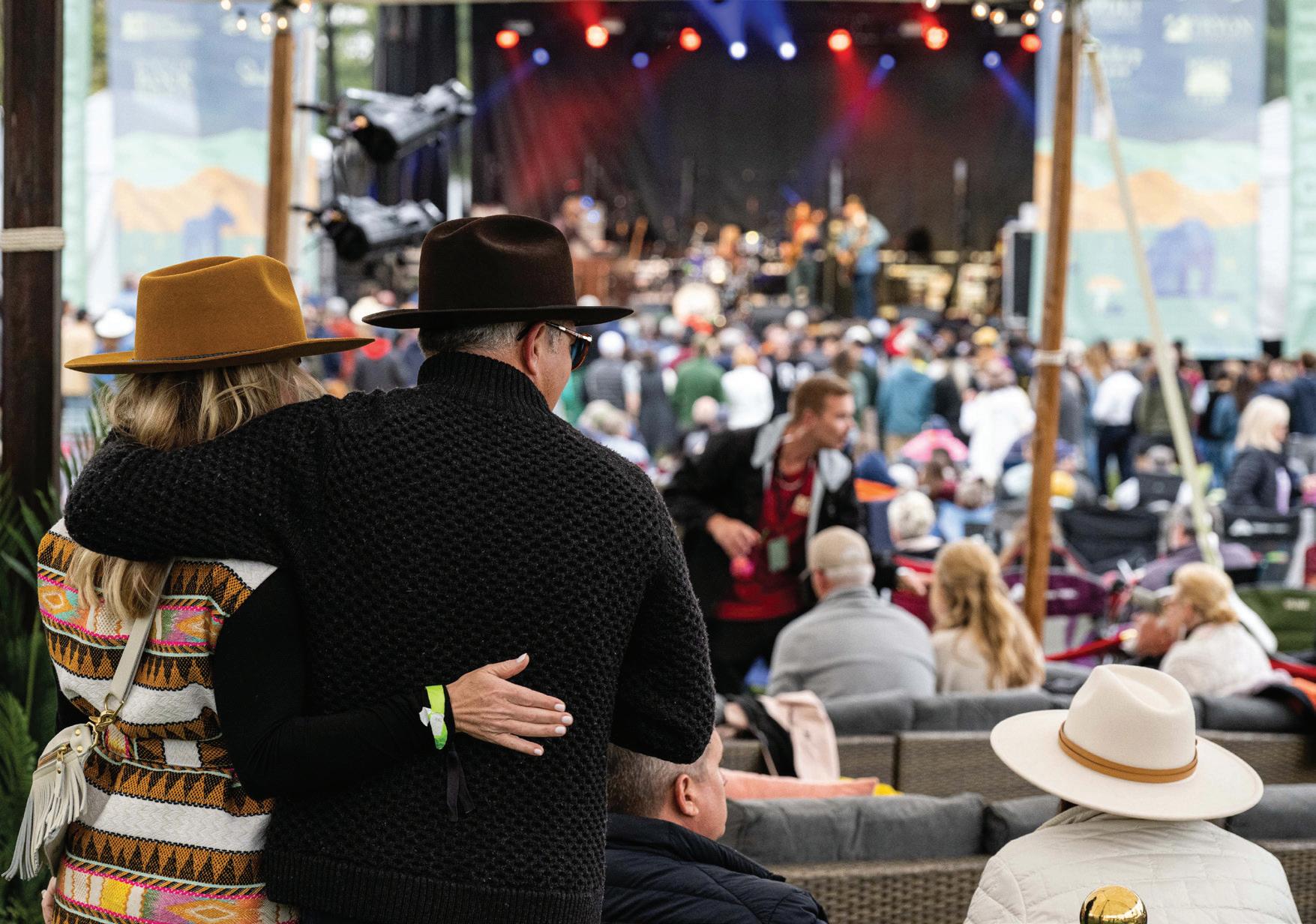
Many local restaurants have live music on most weekends during the spring, summer, and fall. Happs Place and Whiteside Brewing Company are great places to start, as both have lively bar areas where you can pull up a chair and strike up a conversation with a fellow patron.
CONNECT SPIRITUALLY
Faith-based groups or activities are a great way to get involved. There are nearly 20 churches and houses of worship in our area, serving many denominations.
TAKE AN ART CLASS
The Bascom: A Center for the Visual Arts offers lectures and art classes in a variety of mediums. Their offerings include
workshops, ongoing classes, private lessons, Open Studio packages, field trips, demonstrations, and community classes designed to meet the needs of artists of all skill levels.
EXPLORE LOCAL RESOURCES
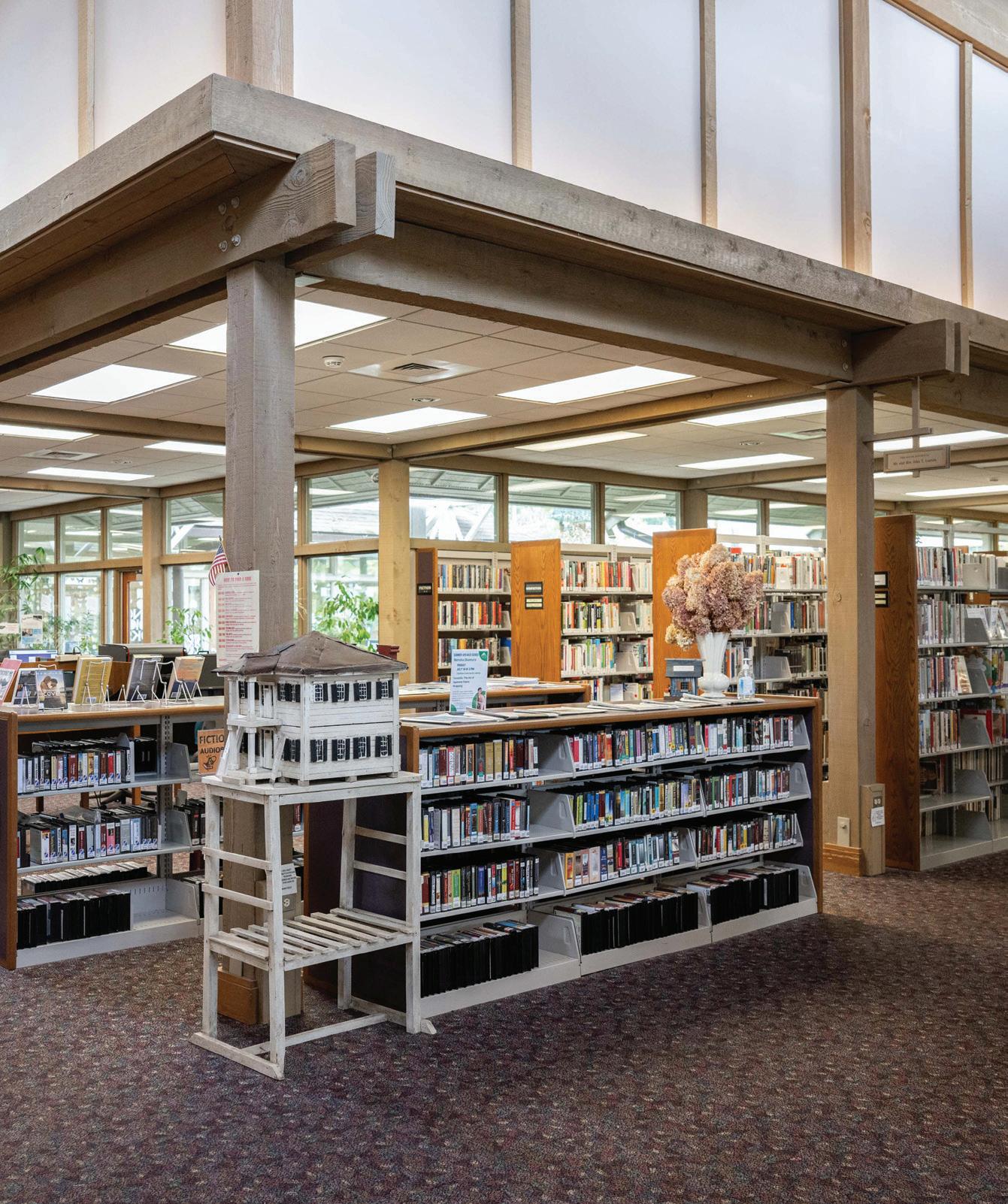
The Albert Carlton-Cashiers Community Library hosts many events and programs. The Cashiers Senior Center provides a broad range of activities and services for seniors living in the southern area of Jackson County. The center provides nutritious lunches, Meals on Wheels, social activities, arts and crafts, health promotion, field trips, and more.
LEADERSHIP CASHIERS AND LEADERSHIP HIGHLANDS
Leadership Cashiers and Leadership Highlands offered are leadership development programs that empower individuals to enhance civic knowledge, build leadership skills, and create meaningful connections. By inspiring dynamic leadership, these programs foster leaders committed to the growth and collaboration of their communities.
VOLUNTEER
The number of local organizations that need volunteers to help run their programs is too comprehensive to list. Search online for “places to volunteer in Cashiers.” Here are just a few examples of the many organizations in our area who need volunteers:
• BIG BROTHERS BIG SISTERS
Volunteers are needed just a few hours each month to be a role model and friends to help a younger person reach their full potential.
Program Director and Equity Specialist
Danielle Hernandez says retired people can make fabulous “Bigs.”
• CASHIERS HISTORICAL SOCIETY
Their volunteers play a vital role, assisting at events throughout the year, serving as docents by giving tours of the historical buildings and grounds on their campus, and joining in facilitating educational programs.
• FRIENDS OF LAKE GLENVILLE
Friends of Lake Glenville is a community association dedicated to preserving the natural beauty and integrity of Lake Glenville.
Focused on water quality, lake ecology, cleanup efforts, and boating safety, the group also fosters community connections through volunteering, social events, and membersonly activities.
• HIGHLANDS-CASHIERS LAND TRUST
In the fall and winter, the Highlands-Cashiers Land Trust holds bimonthly hikes. All hikes are easy or moderate, free, and open to all age groups. The group also holds monthly volunteer workdays to help build, maintain, and improve HCLT’s public access trails.
• HIGHLANDS VOLUNTEER FAIR
The Highlands Volunteer Fair is an excellent way to discover how you can make a difference. Hosted by The Highlands Chamber of Commerce/Visit Highlands, NC, this free, drop-in event will take place on Thursday, June 12, from 11am to 2pm at the Highlands Community Center. Attendees can explore meaningful volunteer opportunities by connecting with representatives from various local nonprofits, asking questions, and learning how their time and talents can
contribute to the community. Whether you’re looking for a one-time role or a longterm commitment, there’s something for everyone.
• PEGGY CROSBY CENTER
The Peggy Crosby Center is a nonprofit organization whose mission and steadfast commitment are to provide wellmaintained and comfortable office spaces for nonprofit organizations and small startup businesses. Their tenants provide much-needed assistance to those living in our local community and in Western North Carolina, and many need volunteers to help run their programs.
• THE VILLAGE GREEN
The Village Green is a 13.2-acre park in the heart of Cashiers, located at the crossroads of Highway 64 and Highway 107. It receives no regional, state, or federal funding and relies solely on the generosity of our community.
Spring is a great time to get out of our homes and into the community. We encourage you to take the initiative. Don’t wait for someone else to come to you, just take the first step and try something new.
Your home isn’t just listed; it’s featured . With a print circulation of 108,000 annually, NC Living Magazine places your property directly in front of affluent buyers across 45 states. Our bimonthly publication reaches 385,000 readers annually who appreciate the Plateau lifestyle and actively seek to invest in it, through print and digital subscriptions.
Aging Boldly
REDISCOVERING FORMER INTERESTS & FINDING NEW PASSIONS
words by dawn liles photography by nc living magazine
FOR MOST OF US, CHILDHOOD IS A TIME OF SELF-DISCOVERY AND EXPLORING DIVERSE INTERESTS. FULL OF ENERGY AND ENTHUSIASM, AND WITH ALMOST NO FEAR OF FAILURE, WE MOVE FROM ACTIVITY TO ACTIVITY IN SEARCH OF A PASSION TO CALL OUR OWN. BUT AS TIME AND RESPONSIBILITIES TAKE OVER OUR DAY-TO-DAY LIVES, MANY OF US LOSE OUR SENSE OF WONDER AND PLAYFULNESS. ONE OF THE HALLMARKS OF AGING BOLDLY IS REDISCOVERING PASSIONS FROM OUR YOUTH OR FINDING NEW AVENUES TO EXPLORE ONCE FREE TIME IS MORE ABUNDANT. IT CAN BE A MAGICAL TIME IN LIFE IF WE’RE WILLING TO TRY NEW ACTIVITIES WITHOUT JUDGMENT.
STAYING OPEN TO POSSIBILITIES
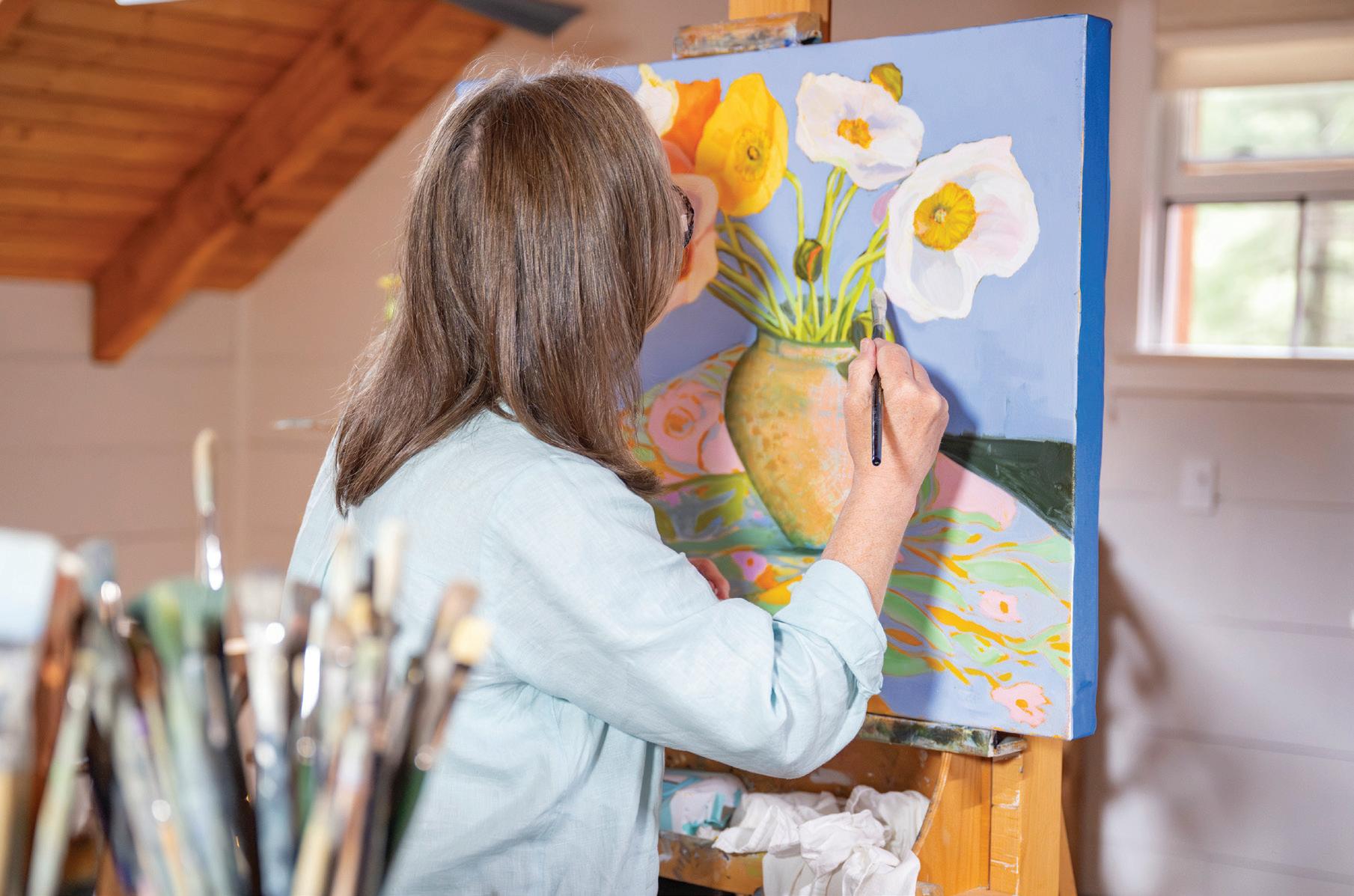
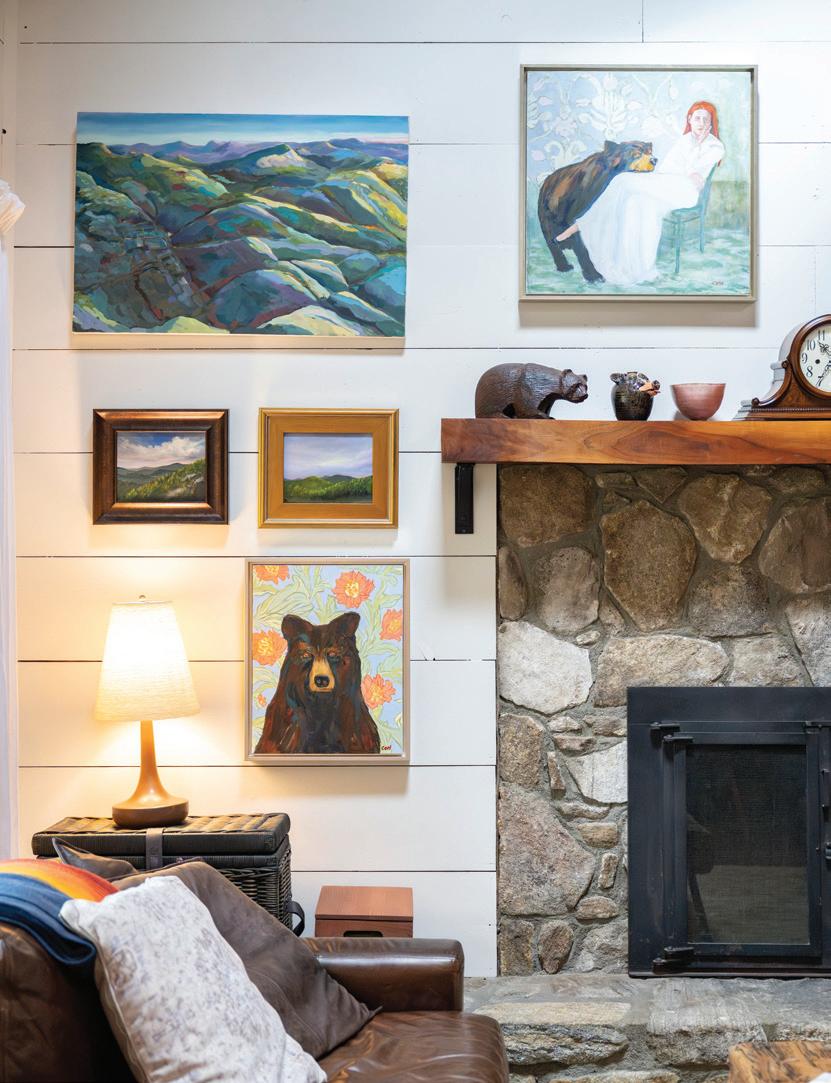
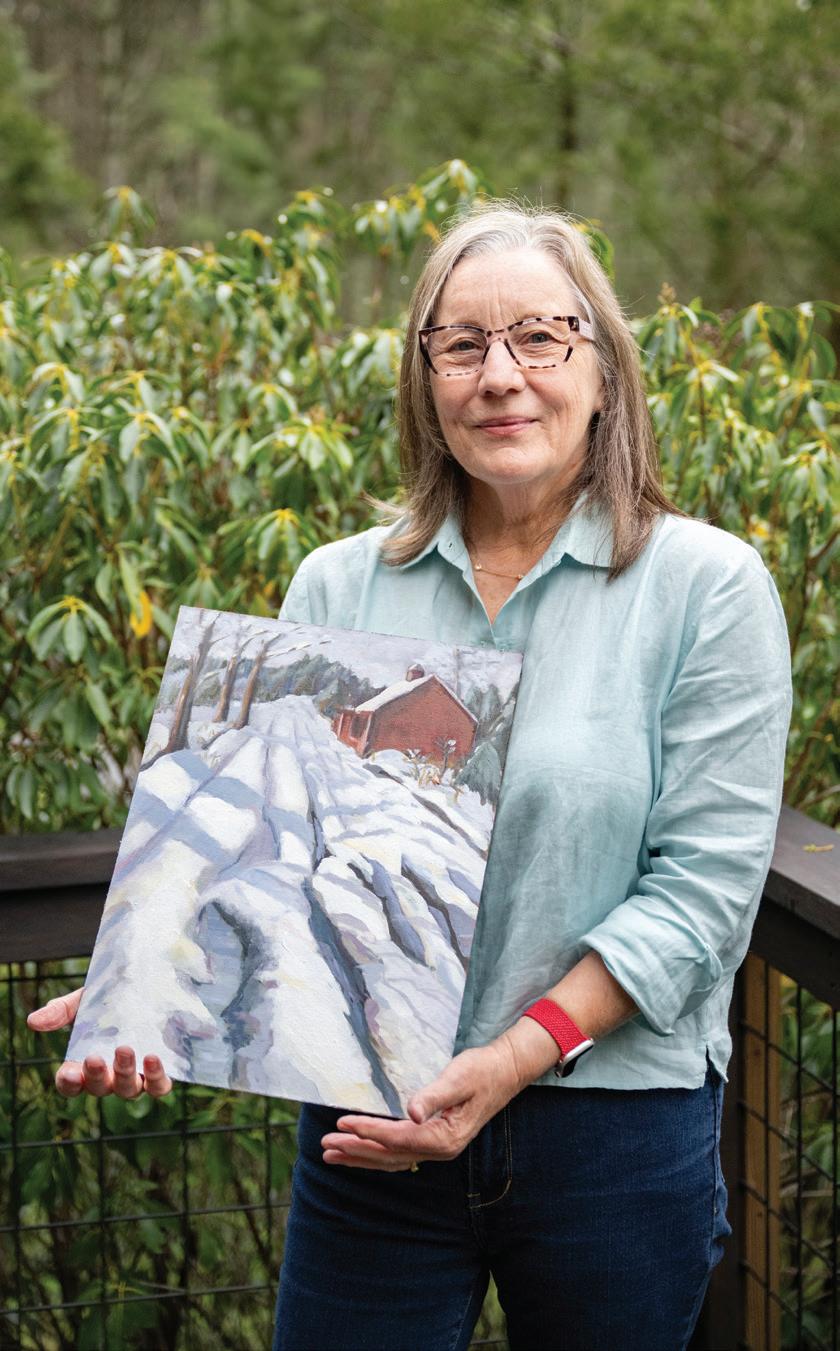
Local artist and teacher Cath Connolly Hudson showed a talent for art as a little girl growing up in the United Kingdom, and she found a particular proclivity for oil and acrylic painting.
“I come from an artistic family of six kids,” explains Hudson. “Everyone was either an artist or a musician, and my parents encouraged all of us to be creative.”
Hudson’s parents moved the family to Indianapolis when she was in middle school. She ended up at the University of California, Santa Barbara, for college and stayed in California for several years. She met her husband, a photographer, and they eventually made their way to Raleigh, where they raised their three children in addition to traveling extensively for her job and volunteering at a women’s shelter. Marriage, raising children, and holding down a big job with a software company left little time for painting.
But she knew one day she would get back to it, because “art is just part of who I am.” Over the years, she’s researched art classes online and traveled to different parts of the country by herself to join other painters in immersive workshops. At her core, she never stops learning and is always seeking inspiration. For one series of recent paintings, she decided she wanted to paint dahlias. Unable to find a good subject to work with, she grew her own, posed and photographed them, and studied the photos to create several paintings.
Hudson and her husband discovered Highlands in 2016 and bought a house in 2019. She connected with other artists at The Bascom: a Center for the Visual Arts and began teaching painting classes.
Hudson views art not as a hobby but as a way of thinking. She is constantly exploring the world around her and never misses a chance when traveling, particularly in Europe, to stop in a museum, a gallery, or a cathedral to view the work of other artists. For her, painting is not just documenting what she sees but a means of interpreting the world around her based on her visions and experiences.
Her advice to anyone is to “go make art. You don’t have to wait to retire to do it. Keep exploring and learning.” Hudson is fascinated by technology, and her latest interest is to use Google Earth to explore the world and give her a different perspective for her paintings.
There truly are not enough hours in the day for Hudson to explore all her interests, which include teaching yoga and recently serving as president of the Highlands-Mountaintop Rotary Club. She admits she has sometimes spread herself a little too thin, so she has pulled back a bit and poured her energy into the things that matter most to her. But observing the world and staying open to possibilities are things she knows she will pursue the rest of her life.
Hudson’s paintings are available on her website, www.cathconnolly.com. A few select pieces are also available to purchase at The Bascom.
FINDING A NEW PASSION AFTER 50
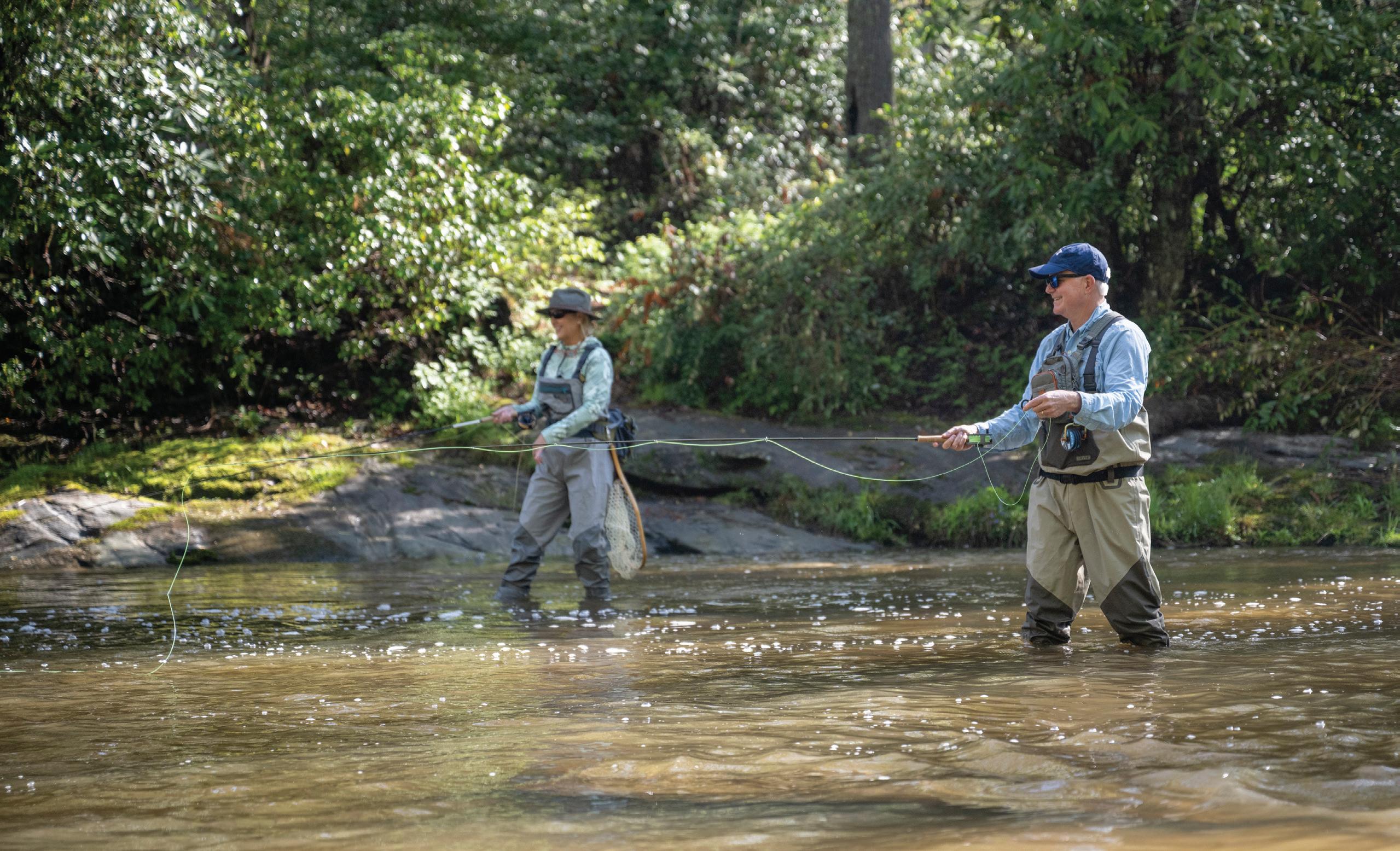
As the saying goes, “Couples who fly fish together, stay together.” Right? It’s certainly true for Edwin and Maureen “Moe” Kohn, who were looking for a new activity to enjoy together after the last of their three sons left home for college eight years ago.
“We bought our vacation home in Cashiers in 2017,” explains Moe, “and we learned that this area is considered a ‘fly fishing capital.’ That was enough to motivate us to try it out.
We both cycle, run, and hike, but fly fishing is the only activity where Edwin isn’t slowing down for me, and we can keep pace with each other. I feel the playing field is also more level on the stream. The stronger, more athletic ones aren’t always more successful in catching trout!”
Edwin, a naval aviator and third generation military pilot with a busy career in the financial services industry, acknowledges his competitive nature but says he was pleasantly surprised to find “more joy in breaking out the camera to take a picture of someone else, like friends and family, catching a fish or helping someone else fish rather than trying to catch the most fish on an outing. And I really enjoy seeing my wife excel in this sport.
The couple divide their time between Camden, South Carolina, and their home in Cashiers. Their first fly fishing adventure was with a guide from Brooking Anglers-Cashiers, who took them on the Tuckasegee River.
“Regrettably,” says Moe, “that first time fly fishing, I slipped on the rocks and broke my wrist. I felt very invested in the sport after that,” she jokes. That might have ended another person’s venture into a new sport, but she wasn’t deterred. Since that initial experience, the couple has occasionally hired local guides to coach them. Moe has taken a full-day private class, and together, the couple took a day-long group fly fishing basics class.
THE CHALLENGES AND BENEFITS OF LEARNING A NEW SPORT
Since breaking her wrist on the water, Moe is understandably a bit hesitant walking across the slippery rocks in the streams. “We often have to scramble up and down steep banks and walk through trees and high brush to access the water. And women are still the minority in fly fishing. I learned that I am comfortable enough with myself to feel a part of the group, even if the group consists of all men.” She adds that a teachable attitude is also necessary, as is an appreciation for the environment.
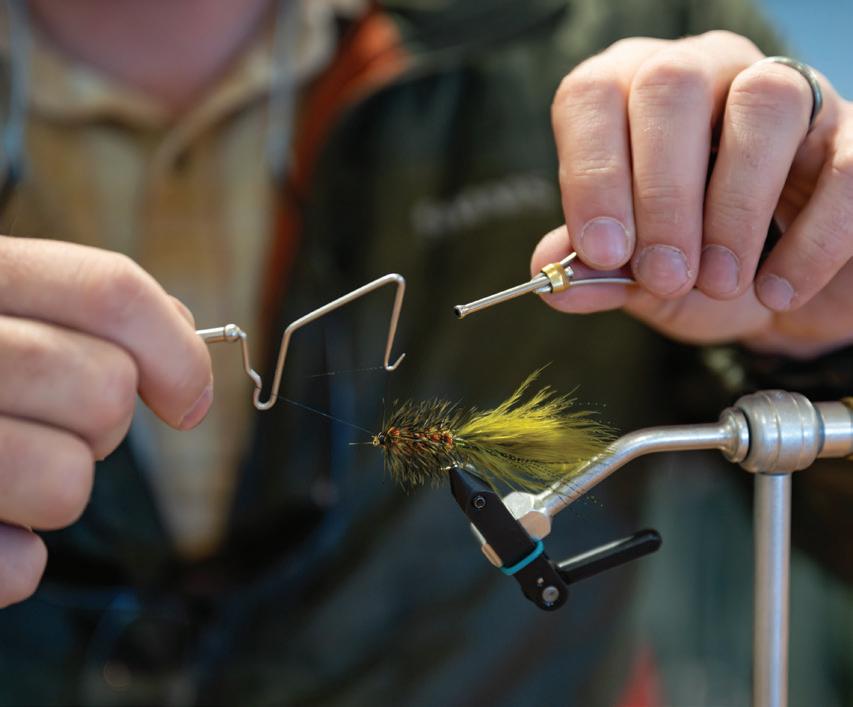
Edwin explains that the hardest part for him, outside of getting flies stuck in the trees, is figuring out which flies to use and which combinations. “But that is part of the mental challenge that I also find beneficial, especially as we age,” he adds.
Both agree that the benefits of the sport far outweigh the challenges. “Fly fishing is very therapeutic,” explains Moe. “Every time we go, we are in extremely beautiful areas surrounded by forests. The sound of the moving water creates a sense of calm.”
On the days the fish are not biting for them, they still love the experience. “Often when I am fishing, I look in awe at my surroundings and thank God for His creation — the clean water, the waterfalls, the gorgeous sky, the fresh air — and acknowledge the unique way we in Western North Carolina are blessed,” says Moe.
Edwin particularly enjoys the surrounding environment where they fish and that it is truly an activity they enjoy doing together. “Whether it’s
the fishing part, watching YouTube videos about fishing, taking lessons together, or fishing on our travels, it has been a wonderful, unexpected addition to our marriage. Casting the fly and watching it float downstream is very therapeutic for me. I also enjoy taking the dog with me when I go fishing. He stays right by my side and loves being in the water as much as I do.”
A FAMILY AFFAIR
Often, finding new activities and opportunities to pursue as we get older can be a challenge. “I think it takes more intention now to find and try new things, “says Moe. “Instead of our world shrinking around us, we want to keep expanding it by learning new things and getting out of our comfort zone.”
The couple enjoys the sport so much, they have become what they call “fly fishing tourists.” No matter where they travel on vacation, they book a
local fly fishing guide and fish the closest streams to where they are staying. That has been an extra fun way for them to see more of the areas they visit and experience fly fishing in a variety of locations and cultures.
Adds Edwin, “All three of our boys and our daughter-in-law now fly fish, and when we get together for Thanksgiving in the mountains, our tradition is to run a 5K, go fly fishing, and then come back and have a simple meal cooking steaks on the grill. No sweating over the stove. We even bought extra gear and keep it at the cottage so when we have friends visit, we can take them in the water.”
AGING
THROUGH LIFE’S TRANSITIONS
words by dawn liles
IN OUR YEARLONG SERIES ON AGING BOLDLY, WE’VE DEFINED AND EXPANDED ON WHAT WE CAN DO TO LIVE A LIFE OF MEANING AND PURPOSE, FROM STAYING HEALTHY AND FIT, TO KEEPING CONNECTED IN THE COMMUNITY, TO REDISCOVERING PASSIONS AND FINDING NEW INTERESTS. IN THIS ISSUE, WE’RE EXPLORING NAVIGATING CHANGE THROUGH SOME OF LIFE’S BIGGEST TRANSITIONS AND BEING OPEN TO NEW POSSIBILITIES.
LETTING GO OF THE FAMILY HOME
For many, the family home holds years, sometimes decades, of memories, traditions and emotional ties. So when the time comes to consider a move, whether for practicality or lifestyle, the decision to downsize can be traumatic, stirring up grief, uncertainty, and even guilt. Sorting through furniture and photo albums becomes about navigating the emotional landscape of change and finding a way forward that honors the past while making room for what’s next.
Elizabeth Kovacs, a licensed clinical social worker at Clearwater Counseling in Cornelius, North Carolina, says, “Leaving a home filled with decades of memories can be really difficult for some, and there is added grief of what to do with all of the things that children have made. My approach to supporting clients who are stuck in this process is to validate their feelings and to help them remove emotional attachment from things that are just things.”
It can be helpful and eye-opening to invite your grown children to look through the items you have saved for them and let them help decide what to keep and what to toss. This collaborative process can make the experience feel less like a loss and more like a shared transition.
Kovacs also encourages people to think about the future and alleviate some of the burden on loved ones. “Be proactive when it comes to your will, your wishes, and who gets what, so your loved ones are not tasked with figuring all of that out,” says Kovacs.
Remember the joy and freedom this time in life can bring, Kovacs advises. You and your spouse may get a chance to reconnect and remind yourselves of what brought you together in the first place. Embrace the extra time to explore new interests and pursue different activities once your focus is no longer on raising children.
EXPLORING A NEW CAREER BEFORE YOU RETIRE FROM YOUR CURRENT ROLE
So many of us are defined by what we do in our careers or our roles as parents. We often stay in the same career for 40-plus years, even if we’re feeling burned out, because we see the goal of retirement as the final exit in our story. But what if we want more from our careers? Not necessarily more for our pocketbooks, but more to enhance our lives’ playbooks. People often have second acts after they retire, but for some, that is too long to wait.
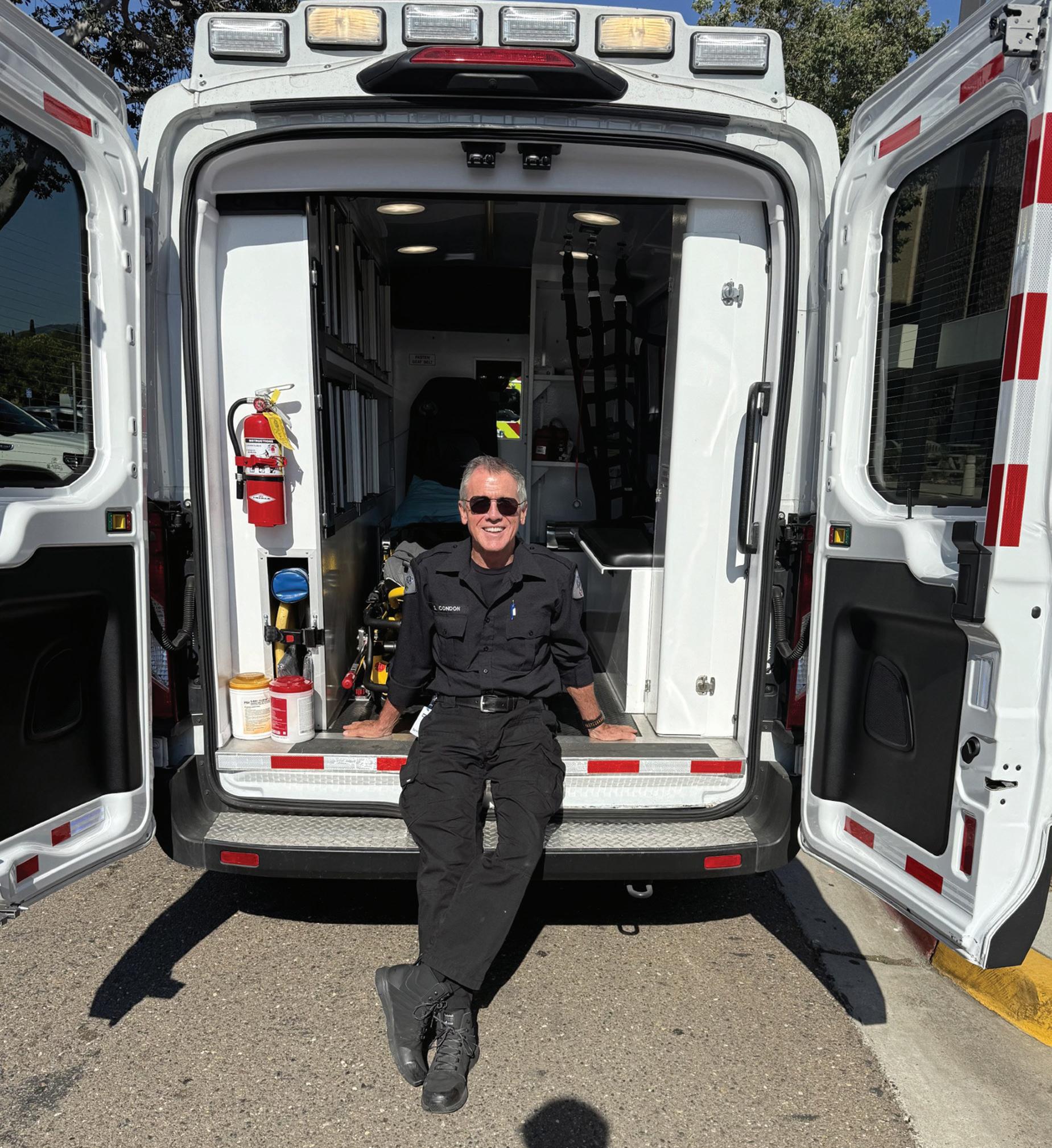
After nearly 40 years as a marketing professional, Stephen Condon had succeeded in reaching his end goal in his field. He could have put in a few more years until retirement age and called it a “good life” by any measurement.
But as he tells it, “By my 40s, I’d stopped growing. My people management skills were stuck in dialup mode, and my marketing expertise wasn’t exactly cutting-edge either. I bounced through short-term gigs, working from my home office, where evenings morphed into a predictable cycle of cocktails and Netflix. I was comfortable but uninspired. At 60, I knew I needed a change — something fulfilling, something to get me out of my bubble and back into the community.”
Condon’s inspiring story eventually led him to a 10-week EMT course at a community college. He figured that, worst case, he’d learn CPR and how to handle emergencies, particularly with grandkids in his future. And best case? “A whole new career,” says Condon, which is exactly what his training led to.
He says, “Walking into that EMT classroom was like stepping into a time machine. My classmates were barely old enough to rent a car, but their energy was infectious. I loved being back in a learning environment — cracking open textbooks, memorizing protocols, and soaking up practical skills.” In November 2024, Condon graduated and passed the National Registry of Emergency Medical Technicians exam.
PHOTO BY NC LIVING
During the EMT course, Condon got to do ridealongs with ambulance services. His first was with his local fire department, where he witnessed and assisted with a cardiac arrest call. “I was down on the floor surrounded by 10 members of the Del Mar and Solana Beach, California, Fire Departments who looked like they moonlighted as ‘Thunder from Down Under’ cast members. Eighteen minutes of CPR, and we got a return of spontaneous circulation. Off to the hospital, lights and sirens blaring, I was hooked — heart pounding, hands shaking, fully alive.”
After that initial training, Condon had several paths to choose from in his new career. He ended up landing a role with a medical transport company, drawn by flexible four 10-hour work shifts per week,
the chance to work on critical care transports, and the company’s contract with a major hospital network. Six months in, he’s loving it.
Like any job, there are benefits and drawbacks. When discussing the benefits,, Condon says, “I’m in the best shape of my life. Big breakfasts, eggs galore, and a sprinkle of creatine to help me hoist 250-pound patients onto gurneys. I’ve cut back on booze and ditched the Netflix binges. Patient interactions are the heart of this job — whether it’s calming someone with a broken hip or chatting with a bipolar patient having a tough day, I feel like I’m making a difference.”
And what about the financial planning aspect of his career change? Condon’s wife’s job covers his
AN UNEXPECTED CAREER CHANGE LED TO GROWTH AND FULFILLMENT FOR STEPHEN.
PHOTO COURTESY OF STEPHEN CONDON
health benefits, but she is looking to retire soon. His plan is to keep working full-time until he’s 65 to cover her benefits until they both are eligible for Medicare.
Condon posted his story on his LinkedIn page and received hundreds of likes and lots of support from others who want to embark on a similar journey. He encouraged others to “find your why.” His was “purpose and community.”
Condon also advises people to “not fear the classroom,” “embrace the grind,” and “stay as healthy as you can to have the energy to start something new.”
He says that changing careers at 61 wasn’t easy, but it’s been one of the best decisions of his life. “I’m not just surviving — I’m thriving, bruises and all.”
PHOTOS ON PAGE:
STAYING INVOLVED IN YOUR COMMUNITY, PRIORITIZING PHYSCIAL HEALTH, PURSUING YOUR PASSIONS, AND BUILDING UP A SUPPORT NETWORK ARE JUST A FEW WAYS TO NAVIGATE CHANGE WITH CONFIDENCE. PHOTOS BY NC LIVING MAGAZINE
Navigating Change
PRACTICAL ADVICE FOR AS WE GROW OLDER
MENTAL & EMOTIONAL PREPARATION
• Acknowledge change: Accept that aging brings change. Anticipating this helps reduce fear and resistance. Kovacs points out, “We are often most comfortable with continuity and stability, so change can be difficult. A good way to look at change is not to focus on what you’re giving up, but what you’re gaining. For example, instead of being tied down to the maintenance of a large home, moving to a condo can be quite liberating and allow time for travel or a new hobby.”
• Cultivate resilience: Practice coping skills such as mindfulness, journaling, or therapy to stay emotionally flexible.
• Define new purpose: Transitions like retirement often create a void. Reevaluate your goals, values, and what gives your life meaning.
FINANCIAL READINESS
• Plan early: Begin saving and investing as early as possible. Review retirement plans regularly.
• Downsize if needed: Consider simplifying your lifestyle or relocating to reduce expenses and maintenance needs.
• Talk to a financial advisor: Ensure you have a plan for health care, estate management, and long-term care.
• Eat for longevity: Nutrient-dense, anti-inflammatory diets (such as the Mediterranean diet) support healthy aging.
• Proactive health care: Schedule regular checkups and screenings, and stay current on vaccines.
SOCIAL & COMMUNITY SUPPORT
• Stay engaged: Join groups, volunteer, or participate in clubs to maintain a sense of belonging and purpose. “I think we’ve come really far as a society in recognizing the worth of happy, healthy older adults,” says Kovacs. “My community has several recreation centers just for seniors. Religious and cultural organizations are also great resources. Churches often have an active seniors’ group.
• It’s also a great time to pick up a new activity, such as a game, craft, or passion, and find others who share the same interests or heritage as you. Bridge, mahjong, genealogy, pickleball, hiking, aqua aerobics, tai chi, and chair yoga are just a few of the activities to jump into.”
• Build a support network: Identify people who can help you in times of need, emotionally and logistically.
PRACTICAL & LOGISTICAL PLANNING
• Legal and end-of-life planning: Update wills, power of attorney, advance directives, and health care proxies.
• Home safety: Adapt your home for future mobility or accessibility needs.
• Document organization: Keep important documents (medical, financial, legal) organized and accessible.
BACKGROUND: A STUNNING VIEW OF THE CHANGING LEAVES ON LAKE
GLENVILLE, NC. PHOTO BY NC LIVING MAGAZINE
photography by nc living magazine
GIVING BACK IN THIS SEASON OF GIVING words by dawn liles
ITH THIS ISSUE, WE’RE PUBLISHING THE FINAL STORY IN OUR SERIES ON AGING BOLDLY AND EXPLORING THE LIFESTYLE FACTORS AND PRACTICES THAT INCREASE OUR CHANCES OF NOT JUST SURVIVING IN OUR LATER YEARS — BUT THRIVING.
The season of giving is upon us, so this seemed like the perfect time to discuss giving back to our community. Volunteering can be vital for healthy aging because it enhances physical and mental well-being by providing a sense of purpose, reducing stress and depression, fostering social connections, and stimulating the mind. Studies show that older adults who volunteer experience better physical health, lower mortality rates, longer life expectancy, and increased life satisfaction compared to nonvolunteers.
According to the Stanford Center on Longevity, “Engaging in productive activities, such as volunteering, may hold significant health benefits for older adults. Compared to their nonvolunteering counterparts, older adults who volunteer have reduced risk of hypertension, lower mortality rates, delayed physical disability, enhanced cognition, lower rates of depression, higher levels of life satisfaction, and decreased physical dependency.”
The Plateau is home to a diverse population and a range of economic realities. Thankfully, our community is known for its generous citizens who freely give back. We reached out to a handful of people over 50 to find out what they are doing to enhance our community and the effect their volunteer efforts have had on their lives. We’re delighted to share some of their stories that highlight many of the different ways to get involved locally.
HARRIET KARRO
If her name is familiar, you may recognize Karro as the administrator of the 12,000-member Facebook group Cashiers Community Together.
“Having never been much of a social media fan, it is comically ironic that I now spend hours each day in my administrator role, but it seems to serve a purpose — bringing community members together and serving as a study in human dynamics,” explains Karro.
This school year is her third serving as the Monday afternoon bus driver for the Junior Appalachian Musicians (JAM) after-school program at Blue Ridge School. “As a JAM volunteer, I pick up students from Summit Charter School and bus them to Blue Ridge School,” says Karro. “This gig brings me real joy. The kids are fun, and I have the satisfaction of knowing that the transportation I provide eliminates a demand on their parents that might otherwise prevent them from taking advantage of a phenomenal program that provides music lessons and traditional Appalachian cultural enrichment.
“Finally, I serve on the board of the Wade Hampton Donor Advised Fund, which exists to raise money and award grants to area nonprofits.
Joining this board 11 years ago was the single biggest changemaker for me as a 20-plus-year member of this community. Our responsibilities include visiting approximately 30 grant applicant organizations each year. Having the opportunity to meet with and learn about needs and opportunities in our area has been and continues to be incredibly enriching.
“Volunteering helps me feel connected in an elemental way. Even as an introvert who thrives on solitude, I think there’s truth to the assertion that humans are hardwired to live in a community. Earlier in life, our communities often come readymade: our classmates, our coworkers, and the families of our children’s friends. But in retirement, the situations that demand our involvement are fewer and farther between, so volunteering, for me, provides a bridge to community. I think it satisfies, in an essential way, the need most of us have at every age to feel a sense of purpose.
“I’ve found that with age comes a kind of selfawareness that is liberating and gives us license to stop doing some of the things that we at some point felt were expected and to start taking up new things that feel more meaningful.”
THE JUNIOR APPALACHIAN MUSICIANS WALKING IN THE 2024 CASHIERS CHRISTMAS PARADE
RUTH RUSS
Russ and her husband, Miles, are members of the Good Shepherd Episcopal Church in Cashiers, and as they became more engaged there, they found wonderful opportunities to get involved around the Cashiers community.
Russ explains her volunteer experience by saying, “Our church’s mission is ‘to reflect God’s love through our faith in action.’ We have embraced this mission with our volunteer work. We have both served on the church vestry, and I chaired the Bazaar Barn committee for two years while we built our current location and continue to serve as the marketing contact for the Barn. Behind the curtain of beautiful homes and country clubs is a lot of need, and Good Shepherd and the Barn directly respond to that need through the funds we raise and grants we give — 49 worth almost $500,000 this year.
“Miles is on the boards of AWAKE, the Humane Society, and the Blue Ridge Free Dental Clinic. He just finished as board president of the Country Club of Sapphire Valley, another great philanthropic community.
“I can say for both of us that volunteering in the Cashiers has been life-changing and eyeopening. We have connected with other likeminded volunteers who want the best for our small community. Truly, for us, it’s all about building community. Volunteering gets me out of my ‘little self’ and connects me to a larger shared mission in our community.”
FRANK B. KELLY, MD
A retired orthopedic surgeon, Dr. Kelly’s volunteer opportunities have included the following: board member and president of Wade Hampton Golf Club, acolyte and lay reader at his church, a sixyear term as a board member of the Village Green, and, currently, board member of the Community Care Clinic of Highlands/Cashiers.
“I have received great satisfaction from all of these opportunities,” says Dr. Kelly. “I was a member of the Village Green board during the time we were planning the construction of our Community Building (Lewis Hall), and we were very involved in fundraising for the project and the eventual completion of the building. It has been incredibly rewarding to see how many activities have taken place in our building and what a gift it has been to the community.
“I am completing my fourth year as a member of the board of the Community Care Clinic, and it has been especially rewarding to see the progress we have made in providing free, high-quality healthcare to the underserved in our community. In the past two years, following a strategic planning session, we have expanded our services, added urgent care hours, and almost doubled the number of patients for whom we provide care. It has brought great joy to all of our board members to know that we have played a role in providing exceptional healthcare to so many who would otherwise be without healthcare at all.
“Though I certainly did not partake in any volunteer activities for personal gain, volunteering has certainly provided additional purpose in my life and has afforded me the opportunity to make wonderful friendships with so many folks whom I would not have met otherwise.
“In addition to reaping the rewards from participating in initiatives like those I have listed above, volunteering also has the benefits of
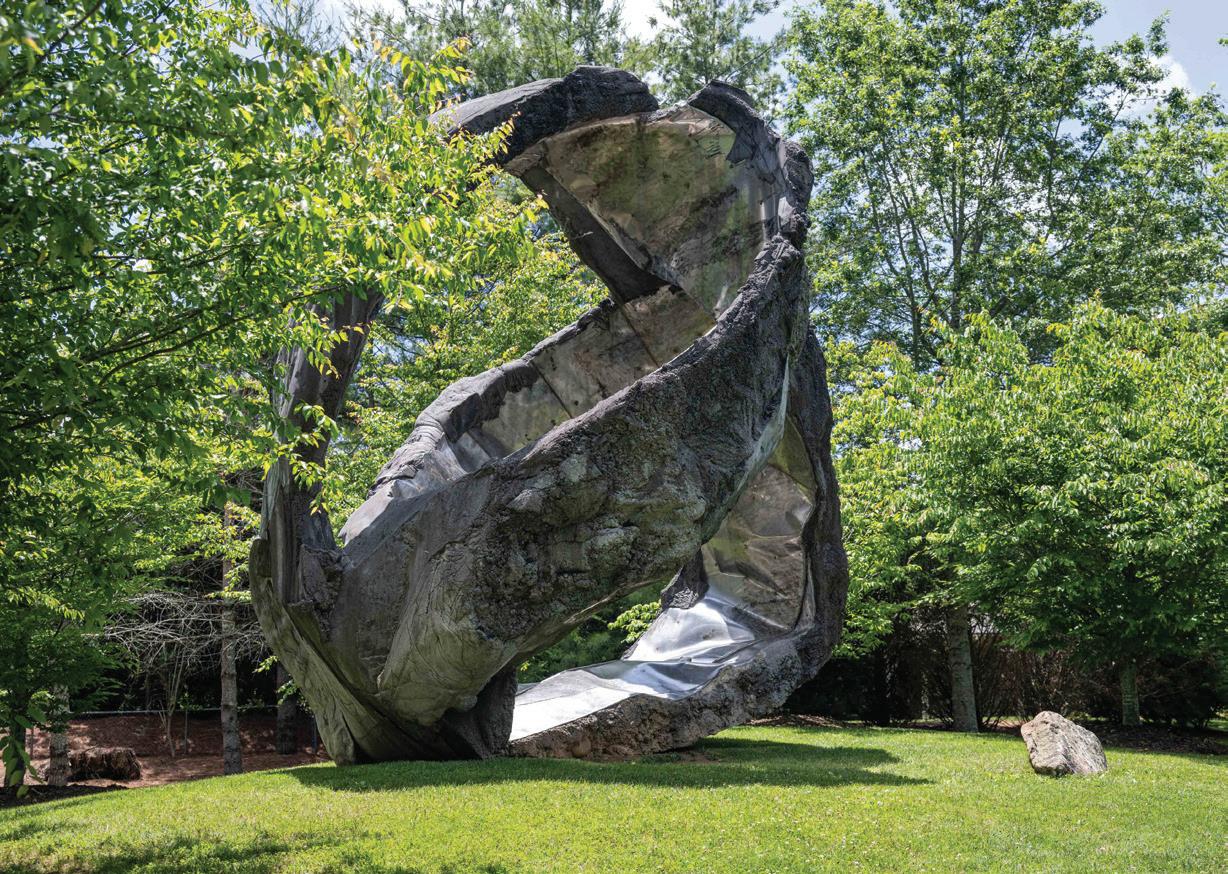
“UTLUNTA” BY PETER LUNDBERG - A CONCRETE AND STAINLESS STEEL SCULPTURE AT THE VILLAGE GREEN IN CASHIERS, NC
INSIDE THE BAZAAR BARN; ALL PROCEEDS GO TO COMMUNITY OUTREACH AND LOCAL CHARITIES
providing a closer connection to your community and some of the many activities that take place in a community like Cashiers.”
LIZ JONES
Liz Jones is a mom, grandmother, and former teacher. She had a strong desire to help a child in need, so it was fortuitous five years ago when she met Danielle Hernandez, the regional program director of Big Brothers Big Sisters of Western North Carolina, Inc.
“Danielle told me she had just the girl for me. I met the whole family and fell in love with my ‘little’ immediately. She was 9 years old.
“I was told she had some issues with anger and was behind in school. I began meeting with her every week. We quickly bonded. I live in Lake Toxaway for five months and in St. Augustine, Florida, the other seven months. I promised my little we would stay in touch when I was in Florida. Before she had a phone, we stayed in contact through mailing letters, and I sent her little gift packages every month. Since she has attained a phone, we text all the time with each other and also FaceTime.
“My little and I have shared some incredible experiences with places we have gone together. I’ve tried to help her with her reading and her math. She is also doing much better with her anger issues.
“You think you’re going to bless a child by being in their life and helping them, but I, too, was blessed. It is a wonderful program.”
ELEANOR WELLING
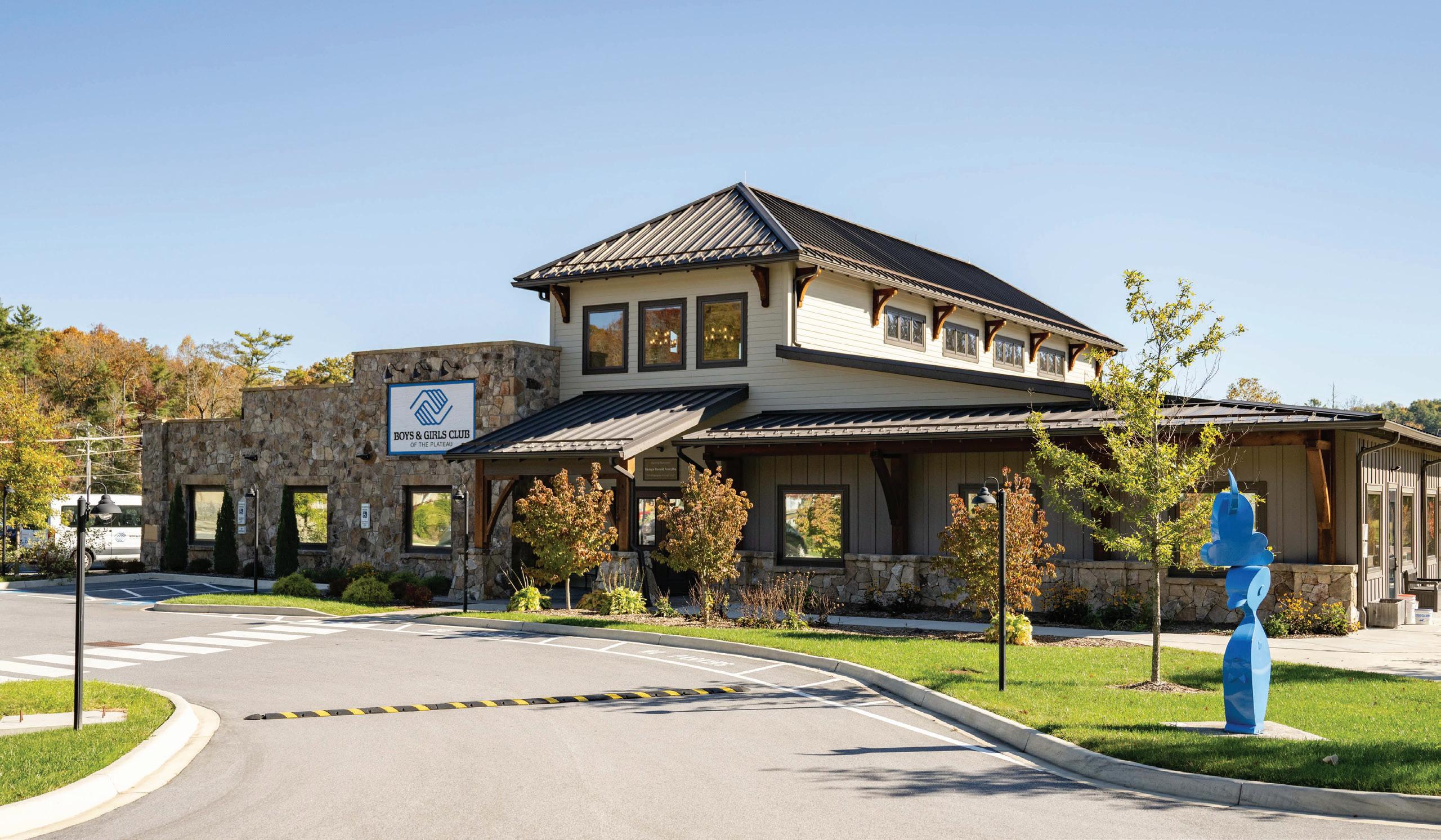
Welling is an almost 82-year-old wife, mother, and grandmother who has been a volunteer most of her life. For the last two years, she has been a tutor for an organization within the Boys and Girls Club of the Plateau called Read 2 Learn.
“Our goal is to work with students in an effort to help them get on grade level in reading by third grade. Teachers alert our director to students who are behind in their reading abilities, and she assigns them to one of the 18 tutors.
“I had the wonderful pleasure of being assigned a delightful second grader who told me at our first
LEFT : READ 2 LEARN AT THE BOYS & GIRLS CLUB
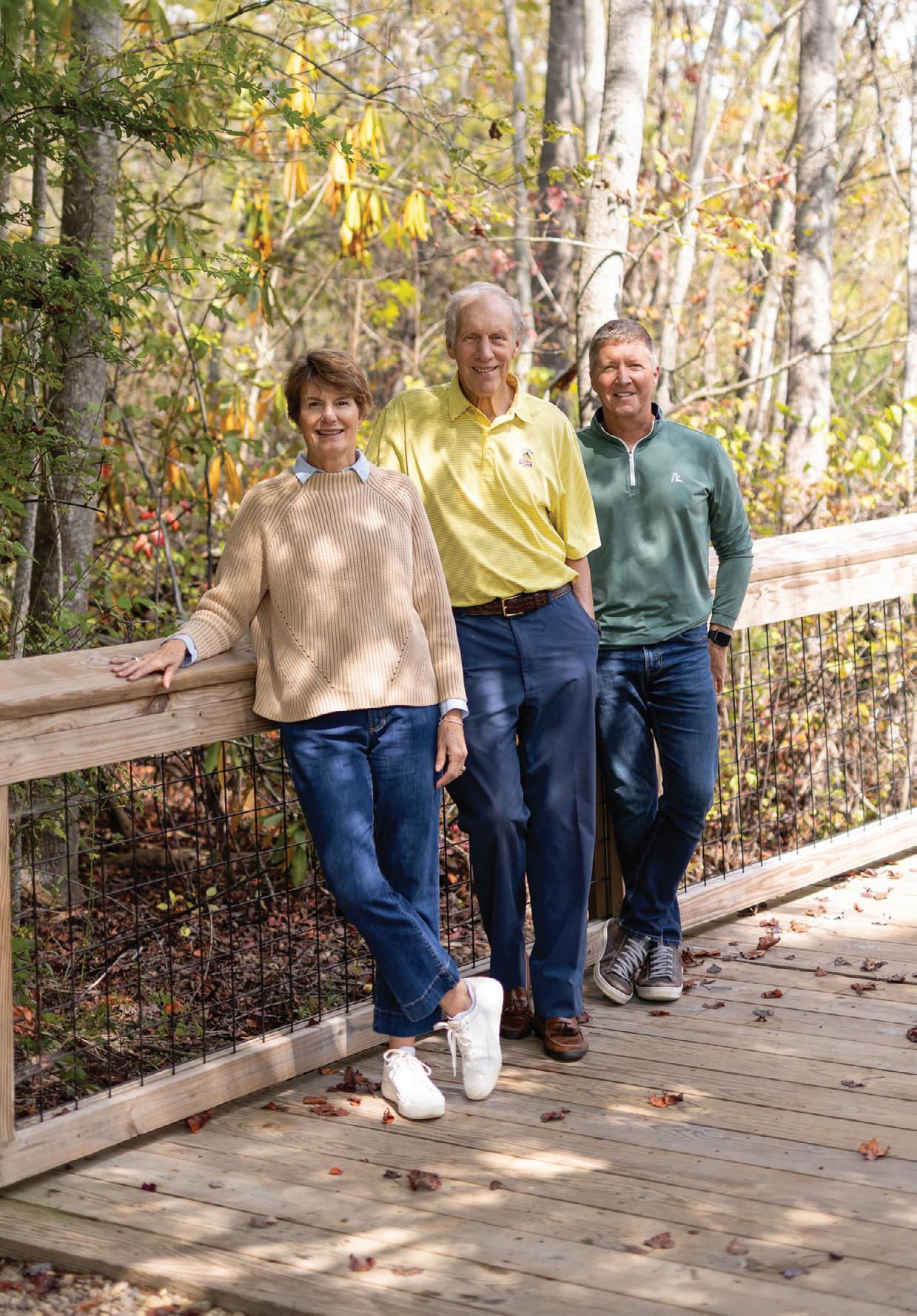
TOP LEFT : LEFT TO RIGHT IS RUTH RUSS, DR. FRANK KELLY, AND KEVIN ROWLAND
meeting that ‘the other kids say I am the dumbest kid in the class.’ We worked hard together for two years twice a week, and the person who graduated from our program at the end of third grade had a B+ average in reading and was a confident, kind, and self-assured young boy. Seeing such life-changing improvements in the life of one child brought me more joy than all the years of fundraising and committee meetings.
“Volunteering, especially in the area of basic needs, gives me the feeling of living the Scripture: feed the hungry, give shelter to the homeless, clothe the naked, and welcome the alien. Often, one’s life is the only Bible another will ever see. So, while one’s volunteer efforts, hopefully, help others in one way or another, the very act of giving of oneself is what we are all called to do in order to live a meaningful and blessed life. Mine has certainly been that and more, and I am grateful indeed.”
KEVIN ROWLAND
Rowland retired early, in his mid-50s. “I decided that with so many people doing so many things in the community needs, I would think of it as, ‘Who do I want to be as a volunteer?’ I remembered John F. Kennedy’s quote: ‘One person can make a difference, and everyone should try.’ And with that, I decided I would be whoever an agency or organization needed me to be if I could. I would be the one who tried no matter what.
“Although I’m allergic to honeybees, I am a beekeeper and demonstrate to kids the importance of honeybees and other indigenous pollinators. I don’t have children, so I chair a scholarship program. Even though I may stumble and fail, I try.
“My philosophy about volunteering is, ‘Spirit of a Living God, fall fresh on me. Melt me, mold me, fill me, use me.’”
IF YOU’RE NOW INSPIRED TO GET INVOLVED, WHETHER YOU HAVE ONE HOUR A WEEK OR JUST ONE HOUR A MONTH, MANY ORGANIZATIONS IN OUR AREA COULD USE YOUR TIME AND TALENTS. THE POSITIVE ENERGY YOU PUT INTO THE WORLD WILL DEFINITELY MAKE ITS WAY BACK TO YOU.
KEVIN ROWLAND’S PASSION FOR VOLUNTEERING LED HIM TO TAKE UP BEEKEEPING AS AN EDUCATIONAL TOOL FOR KIDS