Signal Sunday



















































































































































































By Michele E. Buttelman Sunday Signal Staff Writer
California’s love of cowboy culture can be traced back to cattle ranching primarily built upon Spanish-Mexican vaquero traditions that began with Spanish missions in the 1700s and evolved into a vast “rancho” system focused on the hide and tallow trade.
Cattle numbers grew rapidly to over 1 million by the late 1840s, with herds often doubling every two years. The 1849 Gold Rush triggered a massive boom, pivoting the ranchos toward beef production for miners.
Cattle are still an important part of California’s agricultural economy. California ranks #4 in total cattle and calves (approximately 5.05 million head) as of early 2026. While Texas leads in total inventory, California stands out as the #1 state for dairy production and boasts the highest number of cattle feedlots in the country, with more than 135 square miles of facilities.
The Santa Clarita Valley has embraced its “cowboy culture” since the days of William S. Hart, one of biggest silent movie Western stars who left his Newhall home, now Hart Park, to the people of Los Angeles. It continued through Gene Autry, the
“Singing Cowboy” of the 1940s-50s, who owned Melody Ranch, to the inception of the Santa Clarita Cowboy Festival that recently celebrated its 30th anniversary.
The SCV is also know for the large number of Western films and television shows shot within its borders.
However, in the SCV, most residents who speed down Soledad Canyon Road past the site of the former Saugus Speedway are unaware that the location started not as an auto race track, but as a popular stadium.
The future Saugus Speedway was built originally as a rodeo arena in 1927 by Roy Baker. He purchased the 40-acre property east of Bouquet Junction in 1923 for the purpose of breeding and selling show and pleasure horses. Baker also staged rodeos.
The first reference to a rodeo in the SCV was one Bob Anderson organized in 1924, but its exact location is unknown.
Baker and Anderson became partners and built a rodeo stadium that opened May 1, 1927. It seated 18,000 fans and thousands more reportedly were turned away on opening day.
Cowboy actor Hoot Gibson bought the stadium in 1930. Gibson held rodeos that drew a Hollywood crowd including famous actors such as William S.
Hart, Harry Carey, Tom Mix and John Wayne.
In 1934, Gibson sold the stadium to Paul Hill, owner of the Western Livestock Stockyards, who continued to call it the Hoot Gibson Rodeo.
In 1939, ownership passed to William Bonelli and it was renamed Bonelli Stadium.
Bonelli continued the annual rodeo tradition, but introduced auto racing in 1939. Ultimately auto racing took over and Bonelli renamed the arena Saugus Speedway. Occasional rodeos continued until the late 1960s.
Close to the SCV, but a true trip back into time. Rancho Camulos is a 40-acre National Historic Landmark that is the best-preserved example of a 19th-century Spanish-Mexican rancho in California.
Located at 5164 E. Telegraph Rd. in Piru, the museum is dedicated to preserving the historic adobe rancho and understanding of California’s early history.
For more information, visit www.ranchocamulos. org.
Where can you find the romance and action of the Old West in modern California? The rodeo is place to immerse yourself in the celebration of cowboy rodeo traditions of bronc busting, barrel racing, bull riding and steer wrestling.
Willits Frontier Days Rodeo
July 3-4
Info www.willitsfrontierdays.com
This year marks its 100th anniversary with two weeks of festivities leading up to the professional rodeo. Other events include a junior rodeo, horseshoe throwing contest, parade and additional Fourth of July events tied to its claim as California’s longest-running continuous rodeo.
California Rodeo Salinas
July 16-19
Info bit.ly/48YKApb
With an 115-year tradition this is largest rodeo in the state and one of the top 15 professional rodeos in the country. While the rodeo is in July, tickets are on sale now at carodeo.com only.
Last year’s event awarded $30,000 in scholarships and generated $854,000 for non-profits.
The Salinas rodeo began in 1911 as a Wild West Show on the site of the old race track ground, now the Salinas Sports Complex. The rodeo was inducted into the ProRodeo Hall of Fame in 2008.
The Wine Country Rodeo
Aug. 7-8
Info bit.ly/4fhwvqG
Enjoy classic rodeo events at the Sonoma County Fairgrounds including saddle bronc riding, steer wrestling, team roping and barrel racing. Held in conjunction with the Sonoma County Fair.
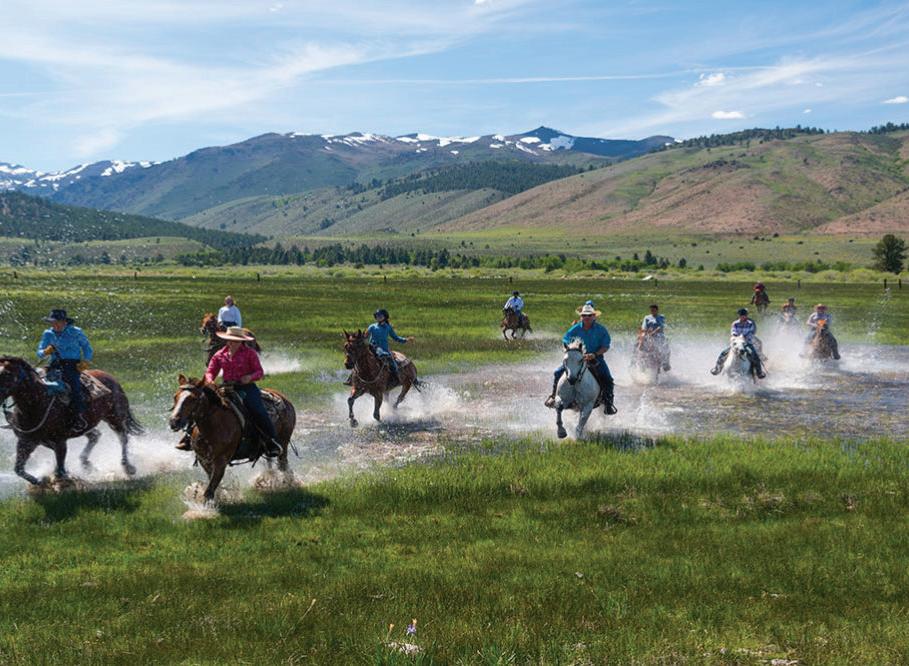
Rodeos are great entertainment and a celebration of Western cowboy culture, but the best experiences can be found out on the lonesome trail with back-country pack trips or trail rides.
Kennedy Meadows Resort Packstation
Info www.kennedymeadows.com/
This Tuolumne County outfit offers a true back-country cowboy experience. Visit the Emigrant Wilderness, Carson Iceberg Wilderness, or northern Yosemite National Park.
Aspen Meadow Pack Station
Info aspenmeadowpackstation.com
These outings bring visitors into the High Sierra for hiking, fishing and swimming with trout-filled lakes and streams.
Pine Mountain Lake Equestrian Center
Info www.pmlequestriancenter.com
Located at the gateway to Yosemite, enjoy scenic day trip trail rides from May to October, where you
can explore breathtaking landscapes on horseback. Firefall Ranch
Info www.firefallranch.com
Firefall Ranch makes it easier to get into the saddle without committing to the full pack trip route. Partner Smith Station Stables offers a wide range of exclusive horseback riding adventures through some of the area’s most highly sought-after trails.
Shadow Glen Riding Stables
Info www.shadowglenstables.com
Connected to approximately 10,000 acres of designated California State Park horse trails near Sacramento. Once on the trail you can feel the “Old West.”
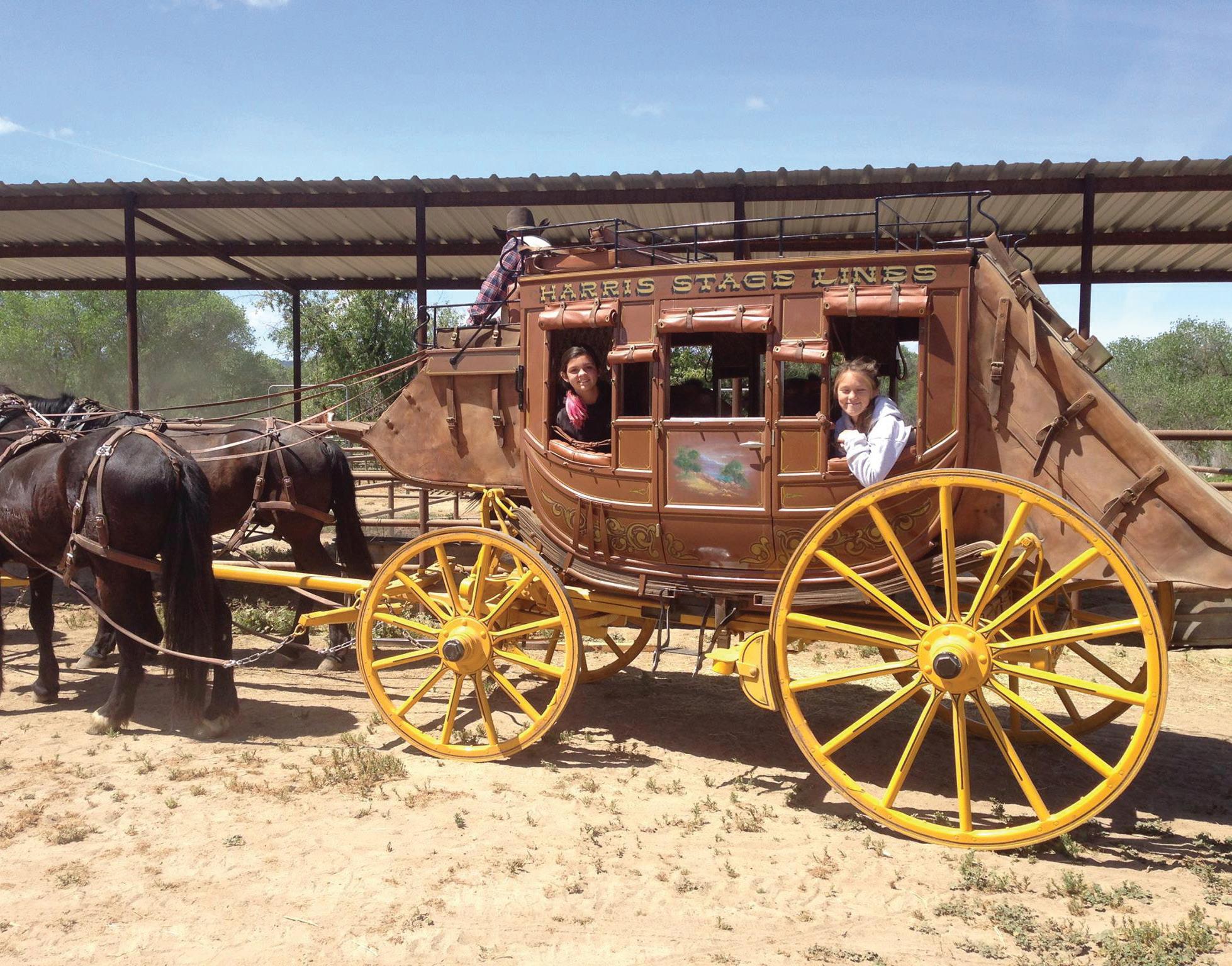
Harris Stage Lines
Info harrisstagelines.com
Experience a ride in a Concord Stagecoach at Harris Stage Lines. Relive history, traveling by stagecoach just as it was in Paso Robles in the late 1860s. Hunewill Guest Ranch
Info www.hunewillranch.com
Visitors can experience a cattle drive on a fifth generation working cattle ranch.
By Alicia Doyle
Sunday Signal Staff Writer
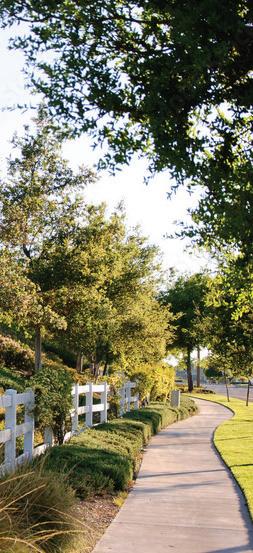
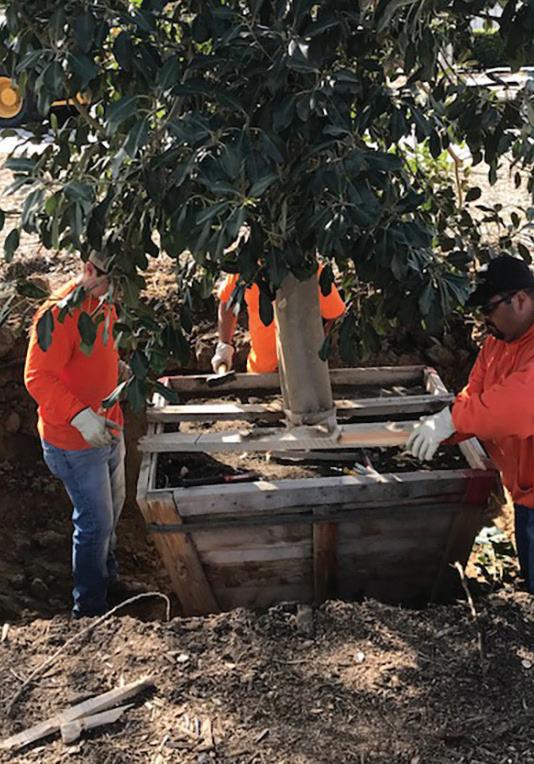
From the tree-lined paseos to the shaded sidewalks that wind through neighborhoods, Santa Clarita’s urban forest is both a defining feature of the city and a carefully managed resource—one that continues to
grow and adapt alongside the community itself. Overseeing that effort is Valerie Ferchaw, the city’s Urban Forestry administrator, who helps manage what she describes as a vast and dynamic system.
“The City’s inventory of approximately 93,500 trees encompasses those located within the public right-of-way and other publicly managed areas throughout Santa Clarita, including along streets and trails, at various city facilities, within parks and Landscape Maintenance Districts,” Ferchaw said.
Caring for nearly 100,000 trees is no small task. According to Ferchaw, the work is constant and multifaceted.
“Caring for a community forest of this size involves ongoing inspection, pruning, irrigation management, pest monitoring, risk mitigation, replacement planting, management of community requests, and coordination with infrastructure and development projects,” she said.
“Day-to-day efforts are focused on maintaining a healthy, safe, and sustainable urban forest that can continue to provide long-term benefits to the community.”
That long-term perspective is increasingly important as the city faces new environmental pressures.
Among the biggest challenges, Ferchaw noted, are “managing an aging tree population, supporting long-term regeneration, balancing tree preservation with ongoing infrastructure needs, addressing pest activity, and preparing the urban forest for the impacts of changing climatic conditions.”
She added that the health of Santa Clarita’s canopy isn’t solely in the city’s hands.
“It is also important to recognize that the community forest includes not only city-maintained trees, but privately owned trees as well,” she said. “Private property owners play an important role in the overall health and sustainability of the community forest.”
Beyond aesthetics, the benefits of Santa Clarita’s trees are tangible — especially during the region’s hottest months.
“Tree canopy plays an important role in provid-
ing shade and reducing heat throughout the city,” Ferchaw said. “Trees help shade roadways, rooftops, and other hardscape surfaces, which reduces heat absorption and, when combined with the cooling effects of tree evapotranspiration, helps create cooler, more comfortable environments for the community.”
Those cooling effects ripple outward, helping reduce water use and improve livability.
“Shaded landscapes can also reduce stress on understory plants, helping decrease irrigation demands and support water conservation efforts,” she said, noting that trees also improve air quality and make outdoor spaces more accessible and enjoyable.
As drought conditions have shaped Southern California in recent years, Santa Clarita has adjusted how it grows and sustains its urban forest.
“Water efficiency and long-term resiliency are major considerations in how the city manages and expands its urban forest,” Ferchaw said. “City staff prioritize tree species that are well adapted to drought conditions, including trees indigenous to the Santa Clarita Valley and to other parts of the world with similar climatic conditions.”
The city has also invested in more efficient watering systems.
“The city utilizes tree bubbler irrigation systems that allow for more targeted and efficient water application directly to trees,” she said. “These systems are connected to isolated valves, which provides greater flexibility to adjust watering schedules during periods of extreme heat or drought.”
When selecting trees, the city looks beyond aesthetics to resilience and compatibility.
“Important selection factors include adaptability to a variety of soil conditions, hardiness against pest and pathogen activity, and tolerance to drought, high summer temperatures, seasonal winds, and frost conditions,” Ferchaw said. “A diverse mix of evergreen and deciduous species is maintained to provide year-round foliage, seasonal interest, and a healthier, more sustainable community forest overall.”
See CANOPY, page 21
Dating in one’s golden years is a common experience for many seniors. Whether it’s the result of a loss of a spouse or other life events, many people find themselves looking for love in their golden years. According to statistics from The Senior List and the Pew Research Center, roughly one-third of adults 65 and older in the United States reported being single in 2022, a percentage exceeded only by people between the ages of 18 and 29.
Many older singles are not looking for a committed relationship; some just want to have fun exploring the dating scene. With that in mind, here’s how seniors can explore dating, which may look and feel a little different than the last time seniors were dating.
Seniors should establish the reasons they are ready to get back into the mix. Identifying the motivation for mingling can help set the right course for finding a partner. Sometimes it boils down to wanting someone to share hobbies, go to dinner or travel with. Some seniors like the idea of having a relationship with someone, but living apart with their own homes and sense of independence. Others are looking for the next Mr. or Mrs. Right, and want a partner to share their life with in all ways.
While meeting people in person is possible, particularly when those with similar interests are pulled together through clubs or social events, the dating world has increasingly moved online. Online dating is a popular and modern way to meet new people. Apps like OurTime and SilverSingles are geared specifically to the older demographic, while Bumble is women-led. Meetup is not a dating app, but one for meeting people with an interest in sharing specific experiences.
Great relationships are rooted in honesty. Individuals should skip the “glory days” photos of their youth or even 10 years ago and use current photos for dating apps. People should be specific with what they are looking for, like a travel companion to go to Europe or someone who enjoys trying the local culinary scene Being honest and specific increases the












chances of finding a good match.
Seniors are often the targets of scams, and by tugging at the heartstrings, scammers can exploit vulnerabilities. AARP¨ says nearly 60,000 people reported romance scams to the Federal Trade Commission in 2024, when victims reported losing $2.95 billion. Wanting to move conversations off of dating apps and directly to texts or other messaging platforms where they can’t be monitored is a red flag. Scammers often indicate they live far away and can’t meet in person and will give excuses to that effect. Others will promise the world and be in constant contact. It’s a cause for concern anytime a person mentions needing money or having an investment opportunity. If and when a senior meets with a



Apps like OurTime and SilverSingles are geared specifically to the older demographic, while Bumble is womenled. ©ADOBESTOCK







date, the interaction should take place in a public location for the first several dates. Double-dating with a friend also can be a safe approach.
Dating in one’s golden years requires some adjustments and an emphasis on safety. (MC)














By Ken Striplin
Santa Clarita City Manager
Excitement continues to grow in Santa Clarita as construction progresses on The Rink Sports Pavilion, the City’s highly anticipated roller-skating facility. This project represents more than just a new recreation venue. It reflects Santa Clarita’s ongoing commitment to creating active, inclusive and family-friendly spaces for residents of all ages to enjoy.
For many residents, roller skating brings back memories of gathering with friends and family for a fun night out. Others may remember the former Saugus Rollerama, which served as a longtime community destination. In recent years, roller skating has experienced a resurgence in popularity, bringing together residents of all ages through outdoor meetups and community skate groups. The Rink will help build on that momentum by creating a permanent space where new traditions and memories can be made for generations to come.
Located at the George A. Carvalho Sports Complex, The Rink is quickly taking shape as crews make significant progress throughout the building. Drywall installation is nearly complete, the ceiling grid has been installed throughout the facility and sound-absorbing panels are now being mounted. Interior painting is also nearing completion, helping bring the new space to life.
Major work has also been completed in several key areas of the building. The restrooms have been fully tiled, while the kitchen is nearing completion with tile work, walk-in coolers and freezers, stainless-steel hoods and the ordering window now installed.
Lighting installation continues both inside and outside the building, while City fiber has officially been connected to the site. Additional work is also underway on the HVAC system, landscaping improvements and the installation of exterior stonework and windows.
One of the most exciting milestones is the completion of the rink wall structural framing, giving residents a glimpse into the future home of roller
skating, special events and community gatherings in Santa Clarita.
Once complete, the 25,000-square-foot facility will feature a 12,000-square-foot skating surface that can transform into a multisport arena with basketball, pickleball and volleyball capabilities, along with stadium seating. The venue will also include a commercial kitchen, DJ booth and dining areas, creating a flexible space for birthday parties, youth programs, special events and community celebrations.
Projects like The Rink Sports Pavilion are made possible through the City Council’s continued commitment to recreation, quality of life and community connection. Alongside amenities like The Cube – Ice and Entertainment Center, powered by Valencia by FivePoint, our extensive trail system, parks and community centers, The Rink represents another exciting investment in Santa Clarita’s future.
As construction continues moving forward, I encourage residents to stay connected and follow the progress of The Rink on Instagram and Facebook at @TheRinkSportsPavilion.








In those precious few minutes between waking up and heading out the door or arriving home from school pickup, the pantry is a common destination. Seeking a grab-and-go lunch, sending your student off with a bite of protein or searching for an afternoon snack can leave you scanning the shelves for a go-to solution. With snackers increasingly mindful about what they put in their bodies, you’re not alone if you’re looking for a snacking shakeup — in fact, in a recent survey conducted by Bumble Bee Seafoods and FleishmanHillard’s TRUE Global Intelligence, 50% of Americans agreed it’s hard to find snacks that meet all their needs. According to the survey, people are looking for foods that offer:
• “Bang for their buck” (78%)
• Affordability (61%)
• Protein packed (51%)
• Meet specific dietary goals (48%)
• Easy to eat on the go (35%)
Among all factors, however, 70% said great taste is most important, proving flavor remains the single biggest driver of snacking decisions.
In response to demand for powerhouse snacks that do it all while tasting amazing, Bumble Bee Snackers easy-open, single-serve cans are shaking up snack time with a variety of bold flavors that are perfect for any time, place, budget or craving.
To find more snacking solutions that are packed with flavor while saving time and money, visit BumbleBee.com. (Family Impact)
Servings 2
2 cups cooked sushi rice
2 radishes, sliced
1 can Bumble Bee Snackers Sweet Heat Tuna
1 mango, cubed
3 tablespoons shelled edamame
1 avocado, sliced
1/4 cup shredded red cabbage
2 tablespoons thinly sliced scallion furikake, for serving Sriracha, for serving
In two shallow bowls, layer rice on bottom then


evenly divide radish, tuna, mango, edamame, avocado, cabbage and scallion. Sprinkle with furikake and Sriracha.
Servings 4
2 quarts salted water
1 cup pearled farro
1/4 cup extra-virgin olive oil
3 tablespoons fresh lemon juice (1 lemon)
2 tablespoons chopped fresh dill, basil or mint
1 tablespoon honey
1/2 teaspoon sea salt
1 can Bumble Bee Snackers Tuna Salad
6 small radishes or 1 cucumber, sliced
1 cup cherry tomatoes, halved
1/2 cup roasted hazelnuts
freshly ground black pepper, to taste crumbled feta or goat cheese, for serving (optional)


In medium pot over high heat, bring water to boil. Add farro, reduce heat and simmer uncovered until tender, 20-30 minutes. Drain; do not rinse.
In large bowl, whisk oil, lemon juice, herbs, honey and salt. Stir in cooked farro to evenly coat; set aside or refrigerate to cool. Once farro is chilled or at room temperature, fold in tuna, radish or cucumber and tomato. Sprinkle with nuts and black pepper, to taste. Serve with cheese, if desired. (Family Features)
By Tony Rizzo
“ Paddington in Peru” grossed $211 million in 2024 (while all three “Paddington” films have grossed about $700 million combined). “Paddington 4” is now in preproduction. Hugh Bonneville, Emily Mortimer, Julie Walters and Jim Broadbent are expected to return, as is Ben Whishaw as the voice of Paddington.
Sunday-Thursday, June 21-25, 2026
Robert Pattinson has to be one of the busiest actors in films today. As he awaits the release of “The Odyssey” on July 17, he’s also waiting for “Dune: Part Three” to hit screens on Dec.18. He’ll follow these up with Netflix’s “Here Comes the Flood,” co-starring Denzel Washington and Daisy Edgar-Jones.
As if this wasn’t enough, he’s cur-
rently in preproduction for “The Batman: Part II.” Jeffrey Wright, Andy Serkis, Colin Farrell, Barry Keoghan and Charles Dance are returning, while Sebastian Stan, Scarlett Johansson, and Brian Tyree Henry are joining the cast. It started shooting this month for an October 2027 opening. Julia Roberts will produce and star in “Home Economics,” which is based on the forthcoming novel by Katy Hays. But before this, we’ll see her thriller “Panic Carefully” with Eddie Redmayne and Brian Tyree Henry in February 2027. Redmayne can still be seen in Peacock’s series “The Day of the Jackal.”
Also due in February 2027 is “Narnia: The Magician’s Nephew,” starring Meryl Streep, Carey Mulligan and Daniel Craig. It wrapped filming this
this time t’s Toy meets Tech
D I S C LO S U R E DAY C Sun: 9:50 12:50 4:00 7:10; Mon to Thu: 12 50 4:00 7:10 If you found out we weren’t alone, if someone showed you, proved it to you, would that fr ghten you? This summer, the truth belongs to seven b llion people We are coming c ose to - Disclosure Day
S TO P! T H AT! T R A I N! E 12:50 PM STOP! THAT! TRAIN! fo lows best friends Tess and DeeDee, train stewardesses who trade their drear y shifts on the Stank Ra l for the gl tzy Glamazonian Express.
BAC K RO O M S E Sun: 10:10 1:10 4:00 7:00; Mon to Thu: 1 10 4:00 7:00
A strange door way appears in the basement of a furniture showroom
P R E S S U R E C Sun: 10:00 4:00 7:45; Mon to Thu: 4:00 7:45
In the tense 72 hours before D-Day and the fate of the free world hanging in the balance, PRESSURE fo lows General Dwight D Eisenhower and Captain James Stagg as they face an mpossib e choice - launch the largest and most dangerous invasion in histor y or risk los ng the war
T U N E R E Sun: 10:10 1:15 4:20 7:15; Mon to Thu: 1 15 4:20 7:15
Leo Wooda l stars as a gifted young piano tuner whose heightened sense of hear ng draws the attention of criminals
T H E D E V I L W E A R S P R A DA 2 C Sun: 9:50 1:10 7:20; Mon to Thu: 1:10 7:20
Twenty years after making their iconic turns as Miranda, Andy, Emi y and Nigel - Mer yl Streep, Anne Hathaway, Emi y Blunt and Stan ey
past January and is due to drop on Netflix after its theatrical run on April 2, 2027.
In 1958, “The Horror of Dracula,” starring Christopher Lee, ran into problems with sensors because of sexually explicit scenes that they had to cut out. Sixty-eight years later, Warner Bros. has restored the film in an uncut 4K version, which they’ll release around Halloween this year.
They went back to the long-forgotten Warner Bros. film vaults and uncovered the original too-hot-for-theirtime scenes and also how Dracula dies in the end. In 1958, it cost $278,000 and grossed $3.5 million. (Big money then!)
Pedro Pascal scored big with “The Mandalorian and Grogu,” which grossed $167.1 million during its first week. He’s completed his role in “Avengers: Doomsday” as Reed Richard/Mister Fantastic, and it’ll open on Dec. 18. He also completed “Behemoth!” with Will Arnett, Olivia Wilde and Matthew Lillard. We can only assume that it’s about yet another prehistoric creature on the loose.
Pascal’s currently shooting the romantic drama “De Noche,” opposite love interest Danny Ramirez, who was the Falcon in Marvel’s “Captain America: “Brave New World” (2025) and the Disney+ series “The Falcon and the Winter Soldier” (2021). In addition, he starred in “Top Gun: Maverick” and the HBO series “The Last of Us,” which also starred Pascal.
Pascal is 51, while Ramirez is 33, and Ramirez looks like he could be Pascal’s son. And you thought Pascal exploring space was the only daring thing that he did!

Ben Whishaw (the voice of Paddington Bear) Depositphotos
JUNE 15, 2026
1. Scary Movie (R) Marlon Wayans, Shawn Wayans
2. Masters of the Universe (PG-13) Nicholas Galitzine, Camila Mendes
3. Backrooms (R) Chiwetel Ejiofor, Renate Reinsve
4. Obsession (R) Michael Johnston, Inde Navarrette
5. The Amazing Digital Circus: The Last Act (NR) Lizzie Freeman, Michael Kovach
6. Star Wars: The Mandalorian and Grogu (PG-13) Pedro Pascal, Brendan Wayne
7. Michael (PG-13) Jaafar Jackson, Nia Long
8. The Breadwinner (PG) Nate Bargatze, Mandy Moore
9. Pressure (PG-13) Andrew Scott, Brendan Fraser
10. The Devil Wears Prada 2 (PG-13) Meryl Streep, Anne Hathaway © 2026 King Features Synd., Inc.
Social isolation and loneliness can have a notably adverse effect on a person’s overall health. According to the World Health Organization, roughly 12% of older individuals experience loneliness, which can have a negative impact on their physical and mental health, quality of life, and even their life expectancy.
Seniors have much to gain when they take successful steps to avoid social isolation. Seniors who are con-
cerned about the prospect of social isolation or loneliness or those already experiencing such feelings can try these strategies to build their social networks in retirement.
Reconnect with old friends It’s easy for adults to lose touch with old friends. By the time many adults reach middle age, professional and personal obligations can leave little time for a thriving social life.
Successful professionals may be preoccupied with work projects, and while

parents may be juggling their own hectic schedules with their children’s obligations. Come retirement, much of those responsibilities have ended, making this a perfect time to reconnect with old friends who also might have
extra free time on their hands. Reach out through social media, text message or even a phone call, and let the situation unfold organically from there.
See SOCIAL NETWORK, page 12

As people age, health needs often become more complex. Care must go beyond treating illness to support comfort and connection to what matters most.
At Kaiser Permanente in Panorama City, the Geriatric Memory Clinic focuses on improving quality of life for patients and their families. This approach adds an extra layer of care to help manage symptoms, reduce stress, and guide patients through complex medical decisions with clarity and confidence.
“Our goal is to provide compassionate and family-centered care for our patients,” said Christina Ortega-Chen, MD, a physician in the Geriatrics, Palliative, and Continuing Care department. “Our Geriatric Memory Clinic is here to support advanced dementia patients, but we also want to educate and guide their families and caregivers. Taking
Continued from page 11
Take advantage of community offerings Many communities sponsor events for seniors, like bus trips to local museums or stadiums, in an effort to encourage seniors to get out of the house. Retirees can take advantage

care of someone with memory loss can be difficult, and we want them to feel more prepared and have peace of mind.”
Geriatric Memory Care is especially meaningful
of these opportunities, which tend to attract like-minded individuals with the same interests. A bus trip to a theater production will attract fellow arts lovers, and shared interests are a solid foundation for friendship.
Start a local club or group Starting a local club based on a particular activ-
for older adults because it recognizes that health includes emotional well-being, social connection, and everyday quality of life. A coordinated team works closely with patients, families, and specialists to deliver personalized care aligned with individual goals alongside ongoing treatment, offering both medical care and additional support at the same time.
“Geriatric Memory Care helps us meet patients where they are and support them in ways that honor their values, priorities, and goals for living well,” added Dr. Ortega-Chen.
This approach helps patients feel more in control as their needs change, supporting living with dignity, comfort, and confidence.
To learn more, talk with your physician or visit kp.org.
ity is another great way for seniors to build a social network in retirement. Take to social media and express your interest in starting a local book club or walking group.
As community-sponsored trips, clubs and groups tend to attract like-minded individuals, these groups provide a
Asignificant percentage of American children are being raised by a grandparent. According to data from the U.S. Census Bureau, 2.74 million children in the United States were being raised by a grandparent in 2021.
The Census Bureau notes that such children were living with at least one grandparent who was
responsible for most of their basic needs. Grandparents also play a notable caregiving role in Canada, where Statistics Canada reports one in five unpaid caregivers in 2022 reported providing roughly 15 hours of care each week to a grandchild or grandchildren over the previous 12 months. Though the figures from the Census Bureau suggest a growing number of grandparents have taken on caregiving
roles in recent years, data indicates that such increases are generally applicable only to older grandparent caregivers. Indeed, the Census Bureau reports that the number of grandparent caregivers between the ages of 30 and 59 declined between 2009 and 2021, while the number of grandparent caregivers ages 60 and older increased during that 12-year period. (MC)
built-in pathway to friendship.
Reconnect with your faith Houses of worship also offer a great way to meet locals and build relationships based on a shared identity. Faith-based communities provide a sense of belonging that can help retirees overcome social isolation and loneliness.
Open yourself to new experiences
Trying something new is another great way to make new friends. Many local agencies like parks departments or community recreation offices offer seniors in-person workshops covering a wide range of activities. These offerings are a great way to discover a new pastime and meet new people along the way.
Social isolation and loneliness poses a significant threat to millions of seniors. But there are many ways for seniors to build their social networks in retirement. (MC)

Traveling is about creating memories with family and friends. But if you get sick when you’re traveling, you have care that you can count on.
Kaiser Permanente has you covered when you’re away from home. Get 24/7virtual care, easily refill prescriptions, and access urgent or emergency care when and where you need it.*
That way you can focus on making moments you’ll cherish.
Learn more at kp.org/travel.
*Not all prescriptions can be mailed, and restrictions may apply. Please check with your local pharmacy.
Learn more about our award-winning care at kp.org/tophospitals.
• Panorama City Medical Center
Growing older is often equated with slowing down. Aging may be characterized as a period of decline marked by an inability to do the things you once did, but recent data indicates otherwise.
According to a report in the journal Geriatrics, a far more optimistic reality awaits seniors. Nearly 45% of people age 65 and older show measurable improvements in brain health, physical function or both over time when they take certain steps to promote physical and mental wellness.
The Centers for Disease Control and Prevention recommends 150 minutes of moderate-intensity aerobic activity per week, supplemented by at least
two days of muscle-strengthening exercises. Brisk walking or swimming can improve cardiovascular health and reduce the risk of stroke and hypertension, says the Massachusetts Council on Aging.
Incorporating yoga or Tai Chi is vital for fall prevention, as it targets balance and flexibility. The CDC says improving joint mobility and balance can significantly extend the amount of time seniors can live independently. In addition, lifting light weights or using resistance bands helps combat age-related muscle loss, which is essential for maintaining metabolic health.
Mental fitness is just as vital to seniors as physical fitness. According to the World Health Organization,


routine cognitive stimulation enhances “brain capital,” delaying the onset of dementia and Alzheimer’s. Strategies for effective mental engagement include:
Lifelong learning techniques include picking up a new language or learning an instrument. This helps strengthen neural pathways that allows the brain to reorganize itself even in later decades.
Play isn’t just for kids; games like chess or complex puzzles improve problem-solving and memory retention, according to Nixon Adult Daycare in Houston.
Isolation is a leading risk factor for cognitive decline, says the National Institutes of Health. Group activities like book clubs or community volunteering can offer emotional fulfillment and mental stimulation.
Findings from a recent Yale University study indicated seniors with a positive outlook on aging were significantly more likely to show physical and mental improvements compared to those with negative perspectives. Psychological resilience is an important tool for seniors to stay healthy. Movement, social interaction, stimulating activities, and a positive attitude can help seniors maintain overall health. (MC)

Caring for members of our community and their families for the last 24-plus years has truly been a privilege! Comfort Keepers is the premier provider of inhome care with over 700 offices across the nation and internationally, but locally owned and operated by Myles McNamara.
Our goal is to enable seniors to remain safely in the comfort and privacy of their own homes for as long as possible. Often, all that is needed is a helping hand with daily tasks, including but not limited to, meal preparation, medication monitoring, light housekeeping, laundry, transportation (beauty salon, doctors, etc.), grocery shopping, companionship, assistance with bathing/showering, grooming guidance and recreational activities.
We are also instrumental in lowering the stress for family members who are juggling their own busy lives and work schedules around attending to a loved one’s needs. Our service provides peace of mind knowing these needs and daily activities are being taken care of. It will allow quality time to be spent with loved ones, rather than attending to chores.
If falling is a concern, just knowing someone is with them can make all the difference. Our Comfort Keepers are specially trained for Alzheimer’s and dementia care. Comfort Keepers prides itself in the quality of our compassionate, bonded and insured caregivers, and our mission to treat our clients like a member of our own family.
Although our clients are primarily seniors, our services are available for anyone over the age of 18 experiencing difficulties with daily tasks due to illness or injury.
Believing in giving back to the community we serve, McNamara serves on the Foundation Board at Henry Mayo Hospital, and has served as past president of the SCV Senior Center Foundation, which was the fundraising division of our Santa Clarita Valley Senior Center, other leadership roles on various boards and committees, as well as sponsoring special events throughout the year for our local nonprofit organizations.
Comfort Keepers has also made available to the community and the family caregiver, free of charge, our Caregiver Skills Lab that is used to train their


own Comfort Keepers. Family members are many times thrust into the role of a family caregiver, but have not had the opportunity to have hands-on training that can help ensure the safety of not only the person being cared for, but themselves as well. Please call for more information or for a tour.
Myles McNamara, owner of Comfort Keepers InHome Care located at 23900 Lyons Ave. in Newhall, and works professionally with seniors and their families on issues relating to senior independence. He can be reached at (661) 287-4200.
Comfort Keepers is a Licensed Home Care Company.
Senior living should be a season of confidence, not confusion. Yet for many families, legal matters get put off until a crisis forces the issue: a sudden illness, a death in the family, a dispute among heirs, or the need to step in and manage a loved one’s affairs. The best time to plan is always before life forces quick decisions.
Make sure your trust, will, powers of attorney, health care directives and other estate planning documents are current and truly reflect your wishes. Just as important, make sure your trust is actually funded, because a trust may only protect the assets that have been properly titled in its name.
Review how your home, bank accounts, retirement accounts, and insurance are held, and keep your successor trustees and family decision-makers informed about where your important documents are kept. For business owners, landlords, blended families, and those with property in more than one state, your estate planning deserves extra care. It is equally important to sidestep the common mistakes.
• Do not assume an old estate plan still works.
• Do not add family members to your accounts or deeds without understanding the tax, creditor, Medi-Cal and inheritance consequences, which are often far larger than peo-
ple expect.
• Do not rely on generic online forms when your family, your assets, and your goals are anything but generic.
• Finally, do not assume a simple will keeps your family out of probate, because in most cases a will is actually just a guaranteed ticket to probate court.
The trusted attorneys at Thompson Von Tungeln have been serving the Santa Clarita Valley since 1977, helping more than 13,000 clients along the way. We are a full-service firm built around a simple principle: our clients come first. Our attorneys handle estate planning, trust administration, probate, business and tax matters, real estate, and civil litigation, all under
one roof. That means you are never handed off to a stranger when a question crosses into another related area of law.
We know that legal planning can feel overwhelming and that is why our initial consultations are free along with our complimentary Trust and Will Review Service if you already have a living trust. Whether you want to update an existing plan, administer a trust, protect a loved one, or simply understand your options, we are here to help.
Call (661) 945-5868 or visit www. TrustTVT.com to schedule your free consultation today.









By Alicia Doyle Sunday Signal Staff Writer
As summer settles over Santa Clarita, rising temperatures and prolonged dry conditions can pose challenges for even the most dedicated home gardeners. Plants face intense sun, drying winds and limited natural moisture, making thoughtful care essential. But with the right strategies — and a better understanding of the region’s Mediterranean climate — local gardens can not only survive but thrive.
Two experts — John Windsor of Green Thumb Nursery in Santa Clarita and Richard Quintana, owner of Sunflower Garden Coaching and a longtime garden coach based in Oak Park — say that successful summer gardening begins with a few key fundamentals, especially when it comes to watering, plant selection, and seasonal awareness.
If there’s one consistent message from both experts, it’s the importance of proper watering techniques.
“In the summer, watering and weeding are the two most important tasks,” said John Windsor, a Certified California Nursery Professional at Green Thumb Nursery. “Water deeply to encourage strong root growth, and water only in the morning to avoid fungal diseases.”
Morning watering allows moisture to soak into the soil before the heat of the day causes rapid evaporation, while also reducing the risk of mildew and
other moisture-related plant diseases.
Richard Quintana emphasized that how you water matters just as much as when you water. One of the most common mistakes he sees is shallow, frequent watering that never reaches a plant’s root system.
“People often rely on overhead sprinklers that run for just five to eight minutes, and much of that water ends up as runoff,” he said. “Even drip systems are frequently set to run for too short a time.”
Instead, Quintana recommends longer, deeper watering sessions — typically 20 to 40 minutes for drip systems — so moisture penetrates well below the surface. This encourages roots to grow deeper into the soil, making plants more resilient to heat and drought.
Over time, deep watering also allows gardeners to water less frequently. However, Quintana advises against making sudden changes. “You don’t want to go from frequent shallow watering to deep watering overnight,” he said. “Gradually adjust over a couple of weeks so plants can adapt.”
In a region like Santa Clarita, plant selection plays a critical role in summer garden success. Choosing species suited to hot, dry conditions can significantly reduce maintenance while improving overall plant health.
Windsor recommends sticking with hardy, low-water perennials. “Plants like lavender, rosemary and sages do especially well here,” he said. “They’re adapted to the climate and require very little in terms of water, food or maintenance.”
Quintana encourages gardeners to broaden their perspective beyond local natives and consider plants from similar climates around the world.
“Plants native to South Africa, like pincushion flower (Leucospermum), and from Western Australia, such as Grevillea, are well-suited to our conditions,” he said. “California natives like ceanothus and manzanita are also excellent choices.”
Succulents are another reliable option, particularly for gardeners looking to add visual variety. “Echeveria come in a wide range of colors and shapes,” Quintana said. “They can really add interest while still being drought-tolerant.”
Even with drought-tolerant plants, timing is important. Quintana noted that many species — even those adapted to dry climates — can struggle if planted during extreme heat.
“Southern California gardeners often don’t realize that fall is actually the best planting season for many natives and Mediterranean plants,” he said. “Planting during the summer can put unnecessary stress on new plants.”
Beyond watering and plant selection, both experts say misconceptions about summer gardening can lead to avoidable problems.
One common mistake, Windsor noted, is trying to shield plants — especially vegetables — from the sun.
“Avoid the temptation to build shade structures for your vegetables,” he said. “They prefer full sun and can take the heat better than we can.”
While some delicate plants may benefit from temporary shade during extreme heat waves, most warm-season vegetables are well-adapted to sunny conditions.
Quintana pointed to container gardening as another area where issues often arise. “Container plants dry out much faster than those in the ground,” he said. “Even drought-tolerant plants in pots may need watering every day or two.”
Wind can further accelerate moisture loss, sometimes drying out containers just as quickly as high temperatures.
Pests also become more active during the summer months. Aphids and whiteflies are among the most common, but they can often be managed without harsh chemicals.
“You can usually wash them off with a strong spray of water,” Quintana said. “Just make sure you don’t do this in the middle of the day when the sun is strongest.”
For those new to gardening — or anyone looking to improve their results — Quintana recommends focusing on a few simple but effective practices.
First, adjust irrigation systems regularly. “A lot of people think they can set their timers once and forget about them,” he said. “But watering needs change as temperatures rise and fall.”
Second, apply mulch to garden beds. A two- to three-inch layer helps retain moisture, regulate soil temperature and suppress weeds. However, proper placement is key.
“Keep mulch about four to six inches away from the trunks of plants,” Quintana said. “Otherwise, you risk
crown rot.”
Finally, he encourages gardeners to stay observant. Monitoring plant health, noting changes and responding quickly to problems can make a significant difference.
“Pay attention to how your plants react during hot days,” he said. “And if you’re looking for advice, don’t rely on just one source — whether it’s online or elsewhere. Cross-check information or talk to a local expert.”
Perhaps the most important takeaway, Quintana said, is recognizing that gardening in Southern California requires a different approach than in other parts of the country.
“A lot of gardening advice online is written for regions with summer rainfall and cold winters,” he said. “Santa Clarita has a Mediterranean climate with hot, dry summers and mild winters.”
That distinction affects everything from watering schedules to planting timelines. In fact, many of the region’s best planting opportunities come in the fall, when temperatures cool and natural rainfall — however limited — returns.
Understanding these regional differences can help gardeners make more informed decisions and avoid unnecessary frustration.
As temperatures continue to climb, Windsor offered a simple but effective guiding principle: focus on the basics.
“Water deeply, choose the right plants and let them adapt to the sun,” he said. “They’re tougher than we think.”



As Father’s Day approaches this Sunday, it’s important for families to encourage the men in their lives to take better care of their health before serious complications occur that can result in significant complications.
A lot of men grow up hearing that being “strong” means pushing through pain and keeping quiet about health problems. But that mindset can be dangerous, health experts say. When men skip check-ups or wait too long to see a doctor, they miss the chance to catch issues early — when they’re most treatable.
That’s why as we celebrate Father’s Day on June 21, it’s important to remind men that taking care of yourself is not a sign of weakness. It’s smart, responsible and potentially life-saving, says Dr. Jorge R. Mercado, a family medicine specialist with Kaiser Permanente Panorama City Service Area, which serves members in the Santa Clarita Valley.
“Finding a disease early can be the difference between life and death,” he explained.
The most recent Centers for Disease Control and Prevention data shows that 14.2% of U.S. men aged 18 and older reported their health as fair or poor in 2024, an increase from the 13.2% figure reported for 2021.
Men from all backgrounds often avoid medical care — not because they don’t need it, but because they don’t want to appear vulnerable or out of control. Cultural expectations around masculinity can make it hard to ask for help.
But Mercado encourages men to break that pattern. Essential screenings like blood pressure checks, cholesterol and diabetes tests, as well as prostate and colon cancer screenings can prevent serious illness. He also reminds men that mental health matters just as much as physical health. Many men minimize emotional struggles, but untreated mental health issues can lead to substance misuse, self-harm and other serious consequences.
“Mental health should be treated like any other medical problem,” Mercado says. “There’s no shame

The most recent CDC data shows that 14.2% of U.S. men aged 18 and older reported their health as fair or poor in 2024, an increase from the 13.2% figure reported for 2021.
in getting help.”
According to Mercado, the following tips can help men with maintain good health:
Manage stress proactively: Stress contributes to many health problems, including a weakened immune system, heart disease and diabetes. It can affect men in different ways, and conversations about it are often most effective when they focus on practical solutions.
Schedule regular checkups Men should see a doctor for preventive care based on their age, health history, risk factors and physician recommendations. Those with conditions such as high blood pressure, diabetes, or other chronic illnesses should see a doctor more often, even if they are not experiencing symptoms.
Get a good night’s sleep Consistent sleep supports everything from energy levels and metabolism to overall health. One of the simplest ways to improve sleep is to go to bed and wake up at the same time every day, helping regulate the body’s internal clock. Partner up on fitness Exercising with a friend or
loved one can help men stay motivated and maintain healthy habits. “ We don’t need special equipment or gym membership; all we need is 15 to 20 minutes at home using body weight and getting help from our already existing smart phones, tablets and TVs,” Mercado said. “Find workouts online on different free platforms or affordable subscriptions sites or apps. All that matters is to get some movement done consistently!”
Don’t ignore symptoms If someone is experiencing symptoms or has concerns about their health, encourage them to see a doctor or offer to go with them. Early evaluation can help identify potential problems before they become more serious.
“Small, consistent steps can make a meaningful difference,” said Mercado. “Whether it’s encouraging a medical checkup, supporting or joining healthy routines, or helping someone seek care, that support can go a long way in improving long-term health outcomes.”
Kaiser Permanente offers valuable information about men’s unique health needs.
Continued from page 6
Expanding canopy coverage remains an ongoing priority across Santa Clarita, guided by both planning data and community input.
“The city’s efforts are guided by evaluations conducted by Urban Forestry staff, feedback and requests from the community, and opportunities associated with development projects throughout the valley,” Ferchaw said.
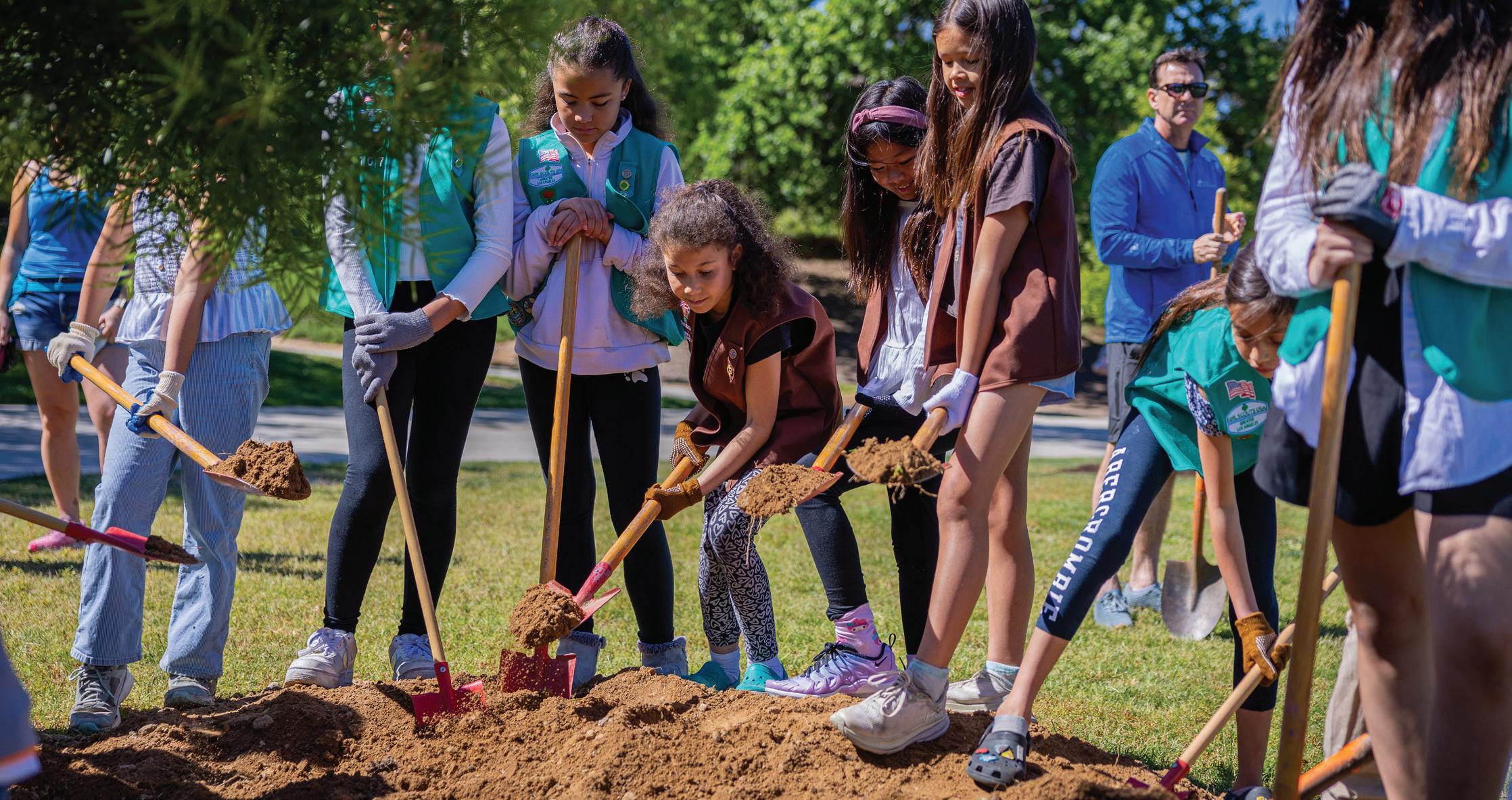
Through initiatives like the Citywide Reforestation Capital Improvement Project, crews work to fill gaps and replace aging trees.
“Significant efforts are being undertaken to regenerate the urban forest within residential neighborhoods,” she said.
Still, success depends in part on residents — especially during the early years of a tree’s life.
“These trees are planted within the public right-of-way, which typically include a small section of a property’s front yard, or sidewalk concrete cutouts,” Ferchaw explained. “The survival of these new trees greatly increases when there is a constant source of water during tree establishment, which is typically 3 to 5 years.”
With so many trees integrated into infrastructure, careful decision-making is essential.
“Public safety is always our top priority,” Ferchaw said. “We work to achieve that through proactive, high-quality tree care that helps mitigate potential defects and reduce risk.”
When conflicts arise between roots and infrastructure, the city aims to preserve trees whenever possible.
“We use a variety of preservation
strategies, such as prudent root pruning, root barrier installation, and boring in place of trenching, to help retain mature trees whenever practical,” she said. “In cases where conflicts or risk cannot be sufficiently mitigated, tree removal is offset through replacement planting.”
For many residents, trees are more than functional — they help define the look and feel of a neighborhood.
“Trees play an important role in shaping the identity and character of Santa Clarita’s neighborhoods,” Ferchaw said. “Thoughtful tree species selection helps define the aesthetic of a community, complement surrounding architecture and landscapes, and create a stronger sense of place.”
They also support local ecosystems and bring nature closer to home.
“Trees provide important habi-
tat and food sources for birds and other wildlife,” she said. “In a city as large and growing as Santa Clarita, the urban forest helps bring nature closer to residents’ daily lives.”
Residents who want to report an issue, request service or get involved in tree stewardship can contact the city’s Urban Forestry Division by calling (661) 290-2200.
As Santa Clarita continues to grow, its urban forest remains a living, evolving asset — one that depends on both city planning and community care to thrive for generations to come.
In her June 9 letter, Jocelyn Miranda makes some good points about loopholes and the wrong people getting their hands on guns so easily.
But for everyone’s information, California is consistently ranked as the state with the strictest gun laws in the United States, according to major policy and safety organizations like Everytown Research & Policy and the Giffords Law Center. Yet we are ranked the third highest state death rate by guns. We must also remember that if someone wants to break the law, they are going to do it.
Also if the police were allowed to do their job without all the restrictions put on them, and if the laws against criminal activity hadn’t been completely neutered by our liberal judges, then maybe we wouldn’t have nearly as many shootings. So, I don’t believe we need more gun control at time of purchase, but perhaps in the type of storage of those guns and ammunition, not the ownership. I do believe that parents of a minor, living at home, should be held responsible for any gun-related action of that minor.
And finally, we certainly need to understand how liberal Judges and lawmakers are hamstringing law enforcement personnel so that they are made out to be the bad guys.
Ron Perry Canyon Country
Submit a Letter to the Editor E-mail: letters@signalscv.com.
By David Hegg
As I write this, the conflict in the Middle East continues to both raise and dash our hopes. We hear optimistic declarations and see oil prices fall, then, overnight, hostilities resume, prices rise and the volume of our national whining goes up several decibels. This incessant whining is a symptom of a deeper and more devastating moral cancer that has reached epidemic proportions in our nation. We’ve lost our ability to suffer well in the right way for the right reason. In one of the most beautiful yet poignant TV series available today, Taylor Sheridan’s “The Madison” confronts the reality that progressive urbanization, with its modern advances and technological benefits, has led too many of us to believe life should be comfortable, convenient and easy. Kurt Russell, a husband who loves spending time in his Montana fishing cabin on the Madison River, tells Michelle Pfieffer, his wife living the plush life in New York City, “You’ve allowed your conveniences to become your essentials.” While I won’t give away how Sheridan unfolds his underlying theme, suffice it to say that when New York finery meets Montana reality, the eroded character of the posh urbanites rises to the surface.
Having come to expect and depend on comfortable living, we have largely forgotten how to suffer well. We gripe, whine and opine about how horrible life is when our internet is spotty, the streetlights aren’t timed well, and the prices of gasoline and beef go up. But most importantly, having jettisoned an authentic understanding that persevering through adversity builds character and grit, we have become a pampered society unable to suffer well in times when doing so is necessary.
Consider the time when World War II was forced upon us after Pearl Harbor. Suddenly, our nation’s comfortable lifestyle was drastically reordered. Our citizenry wholeheartedly answered the call to mobilize in support of our military’s missions overseas. Millions of men and women joined or were drafted into military service. Those who stayed home dealt with food rationing; women left their kitchens to work in manufacturing plants, while many others participated in scrap-metal drives and even donated family jewelry to help finance the war effort. Local communities organized civil defense groups, victory gardens, and volunteer organizations to assist families whose men had been deployed. These activities
fostered neighborhood cooperation and a feeling of direct contribution to the war effort. What they didn’t do was whine. What they didn’t do was spend their days protesting the war effort. What they did do was decide to suffer well, as a nation undivided and corporately committed to facing the challenge of war together, arm in arm. Today, as we are involved in conflict to make sure a demented regime does not employ a weapon of massive destruction, we hear the whining of the self-centered weaklings who occupy the center of their own universe. Where once we came together in times of adversity, today we fall apart as soon as life becomes uncomfortable and inconvenient. When some prices go up, we forget that freedom isn’t free. Rather, it takes grit and strong character to suffer well so the work gets done, the mission accomplished, and the ropes of unity are strengthened. So, why am I submitting this for Father’s Day weekend? I think you get it. Since the beginning, Father-power has been an essential element in raising boys and girls to be strong men and women who are willing to do the right thing for the right reasons at the right time, even if doing so means persevering through adversity. Dads ... look around, see how our country is eroding, and do whatever is necessary to teach your children to suffer well with their minds set on accomplishing the right things regardless of personal discomfort and inconvenience.
G. Michael Hopf, an award-winning author, put it this way: “Hard times create strong men. Strong men create good times. Good times create weak men. And weak men create hard times.”
On this Father’s Day, we need the upcoming generations to be strong men and strong women. And we need adults who face hard times by working rather than whining.
So, Dads, do your best to instill in your children strong, virtuous character and the ability to persevere in doing what is best and right even when it is painful. And most of all, teach your children that striving to bring about what is right will often demand strenuous efforts in the right direction for the right reason, at the right time. And just know, Dad, when you succeed in this, we all win.
Local resident David Hegg is senior pastor of Grace Baptist Church. “Ethically Speaking” appears Sundays.