South America Market Report
March 2026


March 2026
South America’s iGaming market is entering a phase of structural consolidation, led by Brazil’s scale and reinforced by strong secondary markets across the Southern Cone and the Andean corridor. While the region shows clear revenue concentration in a handful of regulated economies, underlying engagement data reveals widening participation across both licensed and unregulated jurisdictions. The result is a continent shaped by one dominant powerhouse, several stable mid-tier markets, and emerging demand in markets operating outside structured regulatory frameworks.
In this exclusive SiGMA South America Market Report, operators, regulators and investors gain insight into how user interest, estimated revenue and regulation intersect across the continent. Data from market intelligence provider Blask, covering February 2025 to January 2026, shows that South America is led by a handful of regulated economies, while smaller and unregulated markets continue to demonstrate rising demand.
The report also features exclusive insights from key industry stakeholders, including Carlos Cardama, Founder of BIS SiGMA South America; Evert Montero, President of
Fecoljuegos, and Ahikam Raviv, CCO of Notix.Games. Their perspectives provide deeper context on regulation, taxation, enforcement and the future trajectory of South America’s iGaming market.
Across South America, regulated markets account for the majority of measurable engagement and estimated revenue. However, year-round data shows that certain unregulated jurisdictions generate notable revenue relative to their regulatory status, indicating monetisation potential beyond licensing structures.
Brazil dominates the market
Regulated markets drive revenue
Strong second-tier markets
Demand exists beyond regulation
Growth depends on regulation and enforcement
Brazil leads South America’s iGaming sector by a wide margin, with peak engagement above 232 million and estimated monthly revenue exceeding $551 million.
Most measurable revenue comes from regulated jurisdictions, particularly Brazil, Argentina, Peru and Colombia.
Argentina and Peru form the region’s second revenue pillar, demonstrating strong demand and monetisation.
Venezuela and Ecuador show notable engagement and revenue despite operating in unregulated environments.
The next phase of expansion will depend on balanced taxation, regulatory clarity, and stronger action against illegal operators.
The Blask Index represents the aggregated level of user interest in all gaming brands. The following countries recorded the highest peak engagement levels between February 2025 and January 2026:

\ Engagement observations
• Brazil leads by an overwhelming margin, with peak engagement exceeding 232 million, more than seven times higher than the second-largest market.
• Peru and Argentina form a strong second tier, each demonstrating sustained demand throughout the reporting period.
• Venezuela and Ecuador rank within the top six despite operating in unregulated environments, highlighting underlying consumer demand independent of formal frameworks.
• Most high-engagement markets operate within regulated systems, particularly across Brazil, Peru, Argentina, Colombia and Paraguay.
When ranked by estimated peak monthly revenue, the hierarchy broadly mirrors engagement, but with important structural nuances:
\ Revenue observations
• Brazil dominates revenue generation, with peak monthly figures exceeding $550 million. It accounts for a substantial share of total continental value.
• Argentina and Peru form the second and third revenue pillars, both operating within regulated frameworks that enable structured monetisation.
• Chile ranks high in revenue relative to its population size despite operating in an unregulated online betting environment, suggesting strong consumer demand and offshore market activity.
• Ecuador and Venezuela demonstrate measurable monetisation despite being categorised as unregulated, indicating active offshore or grey market activity.
• Most revenue concentration occurs within regulated jurisdictions, reinforcing the correlation between licensing clarity and monetisation scale.
Brazil stands as the continent’s dominant iGaming market. With a peak Blask Index of approximately 232.9 million and estimated monthly revenue exceeding $551 million, the country significantly outpaces all other South American jurisdictions.
Blask Index representing the aggregated level of user interest in all gaming brands in Brazil.
(Source: Blask)
Brazil benefits from a large population of over 220 million, internet penetration exceeding 170 million users, and a regulated gambling and betting environment under a civil law system. Real GDP growth remained positive through 2024, reaching 3.4 percent, while GDP surpassed $4 trillion.
Engagement and monetisation are closely aligned, indicating a mature ecosystem where demand is efficiently converted into revenue. Brazil functions as the continent’s operational reference point for compliance, localisation and market entry strategy.

Argentina ranks second in revenue and third in engagement. Despite macroeconomic headwinds and negative GDP growth in 2023 and 2024, peak revenue exceeded $137 million per month, reflecting resilient consumer demand.
Blask Index representing the aggregated level of user interest in all gaming brands in Argentina.
(Source: Blask)
With high literacy, strong urbanisation and nearly 40 million internet users, Argentina demonstrates revenue efficiency within a regulated framework based on West European legal systems. The country illustrates how structured licensing can sustain monetisation even during economic contraction.
Peru combines consistent engagement, peaking at 30 million, with revenue approaching $80 million per month. Operating under a civil law system with regulated gambling and betting, the country represents one of South America’s most balanced markets.
Blask Index representing the aggregated level of user interest in all gaming brands in Peru.
(Source: Blask)
With over 24 million internet users and a median age of just over 30, Peru benefits from a digitally active and relatively young population. Revenue growth trends through late 2025 into early 2026 indicate strengthening conversion efficiency.
Colombia remains one of the region’s early regulatory adopters, combining peak engagement above 14 million with revenue exceeding $41 million per month. Its fully regulated framework supports stable monetisation.
Blask Index representing the aggregated level of user interest in all gaming brands in Colombia.
(Source: Blask)
Chile, meanwhile, presents a strong demand profile despite the absence of a regulatory framework for online betting. Although online gambling is not yet legally permitted in the country, estimated monthly revenue still peaks above $95 million, placing Chile among South America’s stronger mid-sized markets relative to population. This suggests substantial activity occurring through offshore or grey-market operators.
Blask Index representing the aggregated level of user interest in all gaming brands in Chile.
(Source: Blask)
Venezuela and Ecuador demonstrate that demand persists outside formal regulatory structures. Venezuela’s revenue exceeded $10 million per month despite economic contraction in prior years. Ecuador recorded peak revenue near $19 million, supported by nearly 14 million internet users.
Blask Index representing the aggregated level of user interest in all gaming brands in Venezuela.
(Source: Blask)
These markets illustrate latent fiscal opportunity. High engagement without formalised regulation raises questions around tax capture, consumer protection and long-term sustainability.
Blask Index representing the aggregated level of user interest in all gaming brands in Ecuador.
(Source: Blask)
South America’s iGaming landscape can be broadly divided into three structural clusters:
• Brazil as a standalone dominant hub
• Southern Cone markets (Argentina, Chile, Uruguay, Paraguay)
• Andean corridor (Peru, Colombia, Ecuador, Bolivia, Venezuela)
Brazil accounts for the largest share of total measurable engagement and revenue, functioning as the continent’s primary anchor.
The Southern Cone demonstrates strong monetisation per capita, particularly in Argentina and Chile, where regulatory structures support revenue stability.
The Andean corridor shows mixed regulatory alignment. Peru and Colombia convert engagement efficiently under regulated systems, while Ecuador and Venezuela demonstrate grey-market monetisation.
Across South America, the data reveal a consistent pattern: regulation correlates with scale and stability. However, unregulated markets with sufficient digital penetration and consumer demand can still generate measurable revenue, though outside formal fiscal oversight.


“With the right tax balance and stronger action against illegal operators, Brazil could surpass BRL 70 billion in GGR as early as 2026.”
\ Carlos Cardama, Founder of BIS SiGMA South America
“Demand can exist with or without regulation, but tax collection, consumer protection, and integrity only consolidate in regulated markets.”
\ Evert Montero, President of Fecoljuegos

“I

am a strong believer in the South American resilience, and we see changes in the region that will show growth within the next five years.”
\ Ahikam Raviv, CCO of Notix.Games
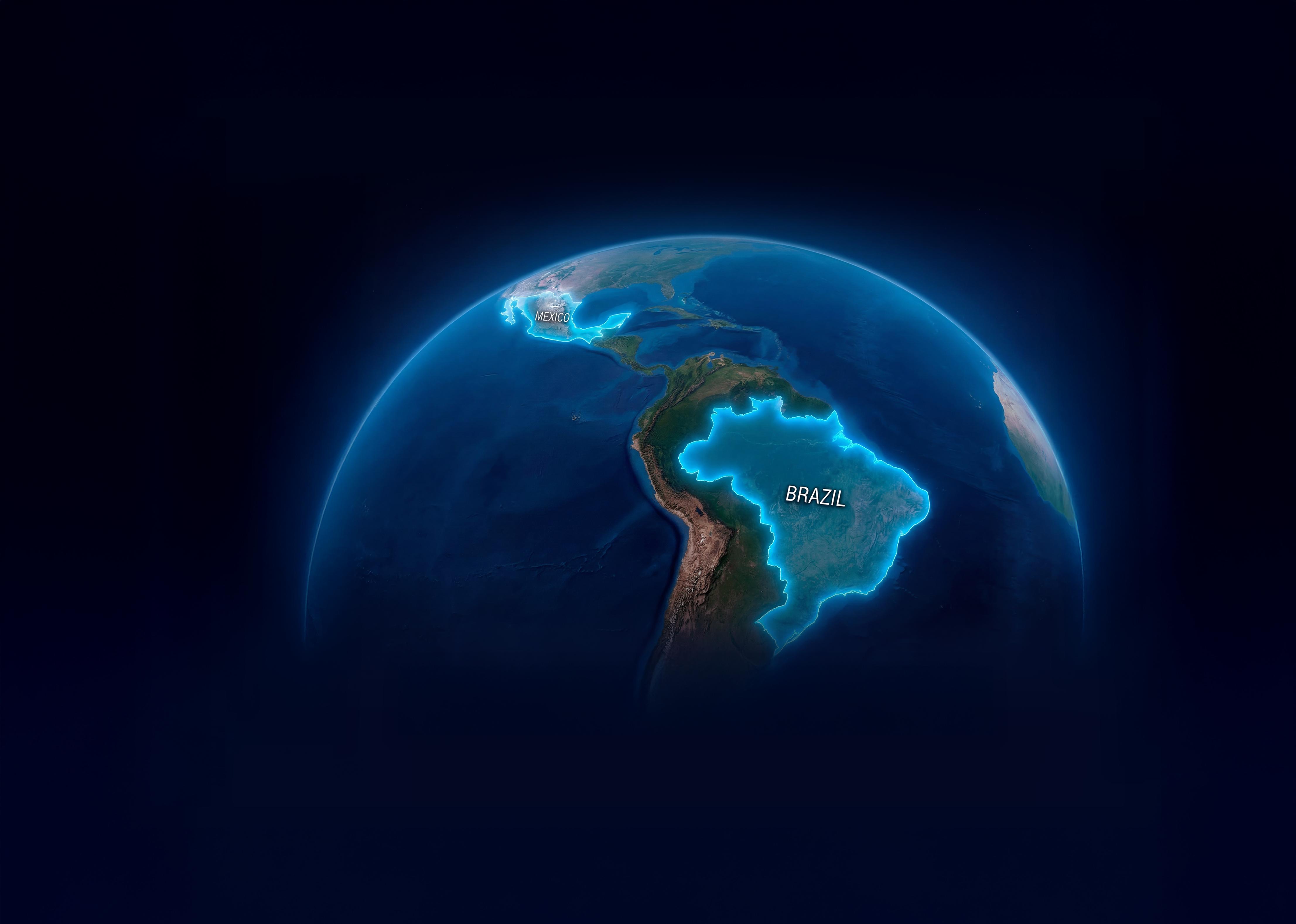




South America’s iGaming market is entering what industry leaders describe as a structural consolidation phase. While the Blask data shows clear revenue concentration, led by Brazil with peak monthly revenue above $551 million and a Blask Index exceeding 232 million, executives across the region argue that the next stage of growth will depend less on demand and more on regulation, taxation and enforcement.
Carlos Cardama, Founder of BIS SiGMA South America, is certain about Brazil’s trajectory. “Brazil will continue to stand out across the region,” he says, pointing to a population of more than 220 million, widespread internet access and what he describes as a pro-gaming culture.
According to Cardama, the licensed sector generated BRL 37 billion ($7.2 billion) in gross gaming revenue (GGR) in 2025, contributing over BRL 10 billion ($1.9 billion) in direct and indirect taxes. However, he estimates that between BRL 30 billion ($5.8 billion) and BRL 40 billion ($7.7 billion) also circulated in the grey market.
“With an adequate tax burden and the fight against illegal operators, Brazil could reach more than BRL 70 billion ($13.5 billion) in GGR in 2026 and more than BRL 80 billion ($15.4 billion) by 2028,” he states.
Evert Montero, President of Fecoljuegos, agrees that Brazil’s leadership is structural. “Brazil holds clear structural advantages — demographic scale, massive digital penetration, and a nationwide regulatory process that attracts institutional investment,” he explains.
However, Montero warns that the central issue is not demand, but channelling. “The true challenge for the Brazilian state is to ensure that players operate within the authorised market, avoiding leakage towards unlicensed operators.”
If activity remains outside the authorised system, he notes, the consequences are lower tax revenue, weaker consumer protection and an uneven playing field. “Growth must come with effective enforcement and a technically sound tax structure.”
Ahikam Raviv, CCO of Notix.Games sees room for other markets to narrow the gap, but not displace Brazil. “With recent movements in Peru and Argentina, I do see a potential to close the gap, though I believe Brazil will remain the leading market of South America for the near future.”
While Brazil dominates in scale, revenue conversion efficiency varies across markets such as Chile and Colombia, where peak monthly revenues reached roughly $95 million and $41 million, respectively.
Montero outlines four technical drivers of efficiency: payment infrastructure, control of illegal operators, tax design, and operational maturity.
“It is not only about the rate, but also the tax base and predictability,” he says. “When laws are made without understanding the operational model, margin overestimations and cumulative charges arise, undermining sustainability.”
He identifies over-regulation driven by poor technical understanding as one of the region’s largest risks.
Cardama echoes concerns around fiscal pressure. He warns of what he calls a “revenue-raising saga” across Latin America. “At the same time that it forces tax increases on the legal market, the Brazilian government pushes bettors to seek the illegal market.”
“No country in Latin America can put the stability of the online gaming market at risk by promoting tax increases,” he adds.
Raviv believes legislative clarity will shape efficiency going forward. “With changes to legislation coming fast, we see more traffic direction attempts to pre-regulated markets,” he says. Over time, he expects a combination of tax regimes and regulatory clarity to guide operator decision-making as more companies “step into the light and clean their operations.”
\ Resilience versus structural risk
Despite uneven GDP performance in markets such as Argentina and Peru, revenue growth has remained positive.
Cardama sees expansion across the region but stresses the need for tax fairness. “With regulation in countries such as Colombia, Argentina, and Peru, they tend to consolidate themselves as safe countries for iGaming operations, provided they follow the path of tax fairness.”
Montero describes iGaming as relatively resilient due to its digital and mobile nature. However, he identifies structural risks: abrupt tax changes, operational overregulation, distorted public figures leading to misaligned political decisions, and the growth of illegal markets.
“Demand is resilient; sustainability relies on legal stability, sound tax design, and effective control of illegality,” he says.
Raviv shares an optimistic outlook. “I am a strong believer in the South American resilience, and we see changes in the region that will show growth within the next five years.” He points to major international operators entering Peru and Brazil as a sign of confidence in the region’s long-term prospects.
Markets such as Venezuela and Ecuador continue to generate measurable revenue despite lacking structured gambling frameworks.
“Demand can exist with or without regulation, but tax collection, consumer protection, and integrity only consolidate in regulated markets,” Montero says.
For regulation to function effectively, he argues that it must include real enforcement against unauthorised operators, competitive tax design, and technical standards ensuring financial traceability. Without these elements, he says the illegal market strengthens, and the state loses both revenue and control.
Cardama emphasises that curbing the illegal market is critical not only for tax capture but also for responsible gaming.
Raviv describes unregulated environments as fertile ground for opportunistic actors. “In high-risk markets there are always cowboys trying to take advantage of gaps and holes in regulatory systems,” he says. However, he views market progression as inevitable. “Natural progression of such markets brings clear frameworks... with them clear tax revenue and also legitimacy.”
He adds that clearer rules encourage operators to establish legitimate operations, strengthening payment systems, and financial flows.
With Brazil counting more than 170 million internet users and Argentina and Colombia exceeding 35 million each, digital penetration is no longer a growth barrier. The question now is whether safeguards are keeping pace.
Cardama believes most operators already adopt adequate responsible gaming policies, not only due to legal requirements but also corporate image. “Betting companies seek to adopt measures to guarantee bettor safety, carry out serious and responsible advertising and present gaming as entertainment.”
However, he stresses the importance of governments working with industry bodies to warn society about the risks of betting on unregulated websites. “Curbing the illegal market is extremely important to expand the concept of responsible gaming across society as a whole.”
Montero outlines strategic priorities: interoperable selfexclusion systems, configurable deposit and loss limits, behavioural analytics for early detection, protection of minors, and effective blocking of illegal channels.
“The sustainability of the sector depends on achieving a balance between digital expansion and responsibility,” he says.
\ A region at a turning point
Across all three leaders, a consistent theme emerges: South America’s iGaming potential is unquestioned. The structural challenge lies in market channelling, tax design, and enforcement.
Montero summarises the crossroads clearly: “Regulating without understanding operations leads to overregulation; failing to control illegality results in lost revenue and protection. The solution lies in technical regulation, legal stability, and effective enforcement.”
Cardama stresses fiscal balance and anti-illegal action. Raviv highlights investor confidence and legislative clarity.
Together, their perspectives suggest that South America’s next growth phase will not be defined by demand, which is already strong, but by how effectively governments and operators align enforcement, taxation and responsible gaming to convert engagement into sustainable, regulated revenue.
This report is based exclusively on data provided by Blask. The Blask Index measures aggregated user interest in brands within each country, inferred from attributed search activity. Market dynamics estimate monthly revenue as the sum of projected brand-level revenue for completed months.
The analysis covers February 2025 to January 2026. Only countries with a complete Blask Index and revenue data have been included. Chile is categorised as unregulated in this report, as online gambling and sports betting are not yet legally authorised, although state lottery products exist in the country. Guyana and Suriname were excluded due to incomplete or missing data.
Revenue figures are estimates and reflect completed months only. Regulatory status for gambling and betting has been categorised as regulated or unregulated, as presented in the dataset.


\ Report Author
Jenny Ortiz-Bolivar
SiGMA News Senior Journalist and Reporter

\ Contributor
Carolina Vallejo Journalist

\ Contributor
Julia Moura Portuguese News Writer
Data provided by Blask.