Asia Market Report
May 2026



May 2026
Asia’s iGaming market is defined by scale and complexity, combining some of the world’s largest digital populations with one of the most fragmented regulatory environments globally. From highly regulated hubs such as the Philippines and Singapore to strictly prohibited jurisdictions across West and Southeast Asia, the region presents a paradox of strong user demand operating alongside uneven legal frameworks.
In this exclusive SiGMA Asia Market Report, operators, regulators and investors gain insight into how user interest, estimated revenue and regulation intersect across the continent. Data from market intelligence provider Blask, covering April 2025 to March 2026, reveals a market where engagement is widely distributed, but revenue is concentrated in a handful of high-performing jurisdictions.
Across 28 countries analysed, Asia generated a total Blask Index of 4.44 billion, with 155.7 million active players and an estimated cumulative revenue of $45.5 billion.
Blask index represents the aggregated level of user interest in all gaming brands. The report also highlights the rise of cross-border operators, many of which operate across both regulated and unregulated markets.
While regulation remains the key driver of sustainable monetisation, data from Asia shows that demand often precedes legislation. Several of the continent’s highest-engagement markets continue to operate outside regulatory frameworks.
Asia leads in scale and volume
The region recorded over 4.4 billion in total Blask Index, making it one of the largest global iGaming ecosystems.
Fragmented regulation defines the market Asia combines fully regulated hubs, partially regulated betting markets, and large unregulated jurisdictions.
Southeast Asia drives growth
The Philippines, Vietnam, Indonesia and Thailand dominate engagement and revenue trends.
Unregulated markets remain highly active
Countries such as India, Bangladesh and Vietnam show strong demand despite lacking full regulatory frameworks.
Cross-border operators dominate Regional and global operators leverage fragmented regulation to scale across multiple jurisdictions.
The Blask Index represents the aggregated level of user interest in all gaming brands. The following countries recorded the highest peak engagement levels between April 2025 and March 2026:
\ Engagement observations
• Asia’s engagement landscape is notably more distributed than other regions, with multiple markets exceeding 50 million in peak user interest.
• The Philippines and Turkey emerge as leading hubs, combining strong engagement with structured betting or gambling frameworks.
• South Asian markets such as Bangladesh and India rank among the top performers despite operating in unregulated environments, highlighting significant latent demand.
• Southeast Asia accounts for the majority of highengagement markets, driven by large populations, mobile-first behaviour and rising internet penetration.

\ Revenue observations
• The Philippines leads in monetisation, surpassing $1 billion in peak monthly revenue, making it Asia’s most lucrative regulated market.
• Turkey ranks among the top revenue generators despite partial regulation, demonstrating strong conversion within a betting-regulated framework.
• Japan and Indonesia generate substantial revenue despite unregulated environments, indicating significant offshore activity and unmet regulatory demand.
• Gulf markets such as the UAE and Saudi Arabia report high revenue per capita, reflecting strong purchasing power and high digital penetration.
The Philippines stands as Asia’s leading regulated iGaming market. With peak engagement exceeding 93 million and monthly revenue surpassing $1 billion, it functions as the region’s primary monetisation hub.
Blask Index representing the aggregated level of user interest in all gaming brands in the Philippines.
(Source: Blask)
A large, young population, strong English proficiency, and a mixed legal framework supporting regulated gambling have positioned the country as a key destination for operators. Rising revenue throughout late 2025 into early 2026 reflects improving conversion efficiency and sustained player demand.
Turkey combines the highest engagement levels in the region with peak monthly revenue approaching $944 million. While gambling remains unregulated, betting operates within a structured framework, enabling significant monetisation.
Blask Index representing the aggregated level of user interest in all gaming brands in Turkey.
(Source: Blask)
With over 72 million internet users and a growing digital economy, Turkey represents one of Asia’s largest addressable markets. Engagement volatility suggests sensitivity to regulatory enforcement and economic conditions.
In South Asia, India and Bangladesh rank among the continent’s largest markets by engagement, both exceeding 70 million in peak user interest. However, neither operates under a fully regulated online gambling framework.
Blask Index representing the aggregated level of user interest in all gaming brands in India.
(Source: Blask)
This combination of scale and regulatory absence creates one of the region’s most significant opportunities for future licensing frameworks. Current activity is largely driven by offshore operators, raising questions about taxation, enforcement, and consumer protection.
Blask Index representing the aggregated level of user interest in all gaming brands in Bangladesh.
(Source: Blask)
Vietnam and Indonesia demonstrate sustained engagement and strong revenue generation despite operating in unregulated environments. Vietnam’s revenue peaks above $270 million, while Indonesia exceeds $380 million.
Blask Index representing the aggregated level of user interest in all gaming brands in Vietnam.
(Source: Blask)
Both markets benefit from large populations, increasing internet penetration and mobile-first gaming behaviour. Their long-term potential is closely tied to regulatory evolution.
Blask Index representing the aggregated level of user interest in all gaming brands in Indonesia.
(Source: Blask)
Countries such as the UAE and Saudi Arabia generate high revenue relative to population size, supported by strong GDP per capita and near-total internet penetration.
Blask Index representing the aggregated level of user interest in all gaming brands in the UAE.
(Source: Blask)
Despite restrictive or unregulated gambling laws, these markets show clear monetisation potential, primarily through offshore platforms. Their future trajectory will depend on whether regulatory frameworks evolve to capture this value domestically.
Blask Index representing the aggregated level of user interest in all gaming brands in Saudi Arabia.
(Source: Blask)

(Source: Blask)
\ Operator insights
• The top tier is dominated by a mix of localised platforms and global brands, reflecting Asia’s hybrid ecosystem.
• Operators such as PlayTime and Casino Plus lead in both engagement and revenue, driven by strong positioning in high-growth Southeast Asian markets.
• Global operators like 1xBet demonstrate scale through multi-market presence, operating across 27 countries in the region.
(Source: Blask)
\ Regional operator observations
• Cross-regional operators play a critical role in Asia, leveraging fragmented regulation to scale across multiple jurisdictions.
• 1xBet and Stake demonstrate the widest geographic reach, operating across more than 20 markets.
• Mid-tier regional operators such as Baji and MCW show strong engagement despite a smaller footprint, indicating effective localisation strategies.
High population, high engagement, but largely unregulated. Represents the largest untapped regulatory opportunity globally.
High revenue potential driven by wealth and digital penetration but constrained by regulatory restrictions.
\ Regional comparison across Asia
Asia’s iGaming landscape can be divided into four structural clusters:
The region’s primary growth engine, combining high engagement with rising revenue. The Philippines stands out as the regulatory anchor.
Mature digital economies with high purchasing power but limited regulatory openness for online gambling.
Across Asia, a consistent pattern emerges: scale does not guarantee regulation, and regulation does not always capture demand. The region’s next phase of growth will depend on how governments balance enforcement, taxation and market liberalisation.


“Asia is not an emerging market for gaming – it is an existing market that is still formalising.”
\ Joe Pisano, Founder and CEO of Jade Entertainment and Gaming Technologies
“In the long-run, sensible regulation is always a desirable thing. It protects customers as well as the health of regional economies.”
\ Dr. Sudhir Kalé, Founder and Principal of GamePlan Consultants

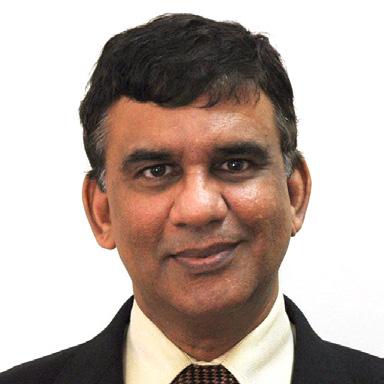
“The real issue is whether regulators choose to capture, control and monetise that demand, or continue to allow value to flow outside formal channels.”
\ Shaun McCamley, President of Euro Pacific Asia Consulting Ltd.
“Regulation is not just a legal wrapper. It is a monetisation engine.”
\ Riaan van Rooyen, CEO of Aria International

A clear consensus is emerging across industry leaders: Asia’s iGaming market is not waiting for regulation to catch up; it is already operating at scale. What remains uneven is how effectively governments capture, structure and monetise that demand.
As Joe Pisano, Founder and CEO of Jade Entertainment and Gaming Technologies, tells SiGMA World, “The gap is structural rather than temporary. Demand for gaming in Asia is culturally embedded and digitally accelerated, but regulation is often constrained by political sensitivity, legacy policy frameworks, and concerns around social impact.”
Pisano notes that “demand does not wait for regulation, it simply migrates to offshore or informal channels,” creating what he describes as “large ‘shadow markets’ that are highly active but economically inefficient from a government perspective.”
That view is widely shared. Shaun McCamley, President of Euro Pacific Asia Consulting Ltd., echoes the same structural imbalance, arguing that “the gap does not reflect a lack of demand, it reflects a lag in policy.” He adds that governments across the region have largely treated gaming as an enforcement issue rather than
an economic opportunity, resulting in a “structural disconnect” where value flows outside formal channels.
Riaan van Rooyen, CEO of Aria International, frames it even more bluntly: “Demand has moved faster than policy.” He points out that consumers in Asia are already “digital, mobile and cross-border,” while regulatory systems remain fragmented between prohibition, partial tolerance and selective enforcement.
While demand is abundant, the ability to convert it into sustainable revenue varies significantly by regulatory maturity.
Pisano describes regulation as the single biggest driver of monetisation efficiency, noting that markets with clear frameworks are better able to translate user interest into revenue through trust, payments integration and operator investment. In such environments, operators benefit from “higher player lifetime value (LTV), lower customer acquisition cost (CAC) over time, and stronger payment channel integration.”
Van Rooyen reinforces this, arguing that “regulation is not just a legal wrapper. It is a monetisation engine.” He explains that effective frameworks enable bankability, tax capture and investment, allowing demand to be “converted more efficiently into sustainable revenue.” Without it, he
said that “value leaks out through grey channels, weak compliance, unreliable payments and poor consumer trust.”
However, McCamley offers a more nuanced perspective, cautioning that regulation alone does not guarantee performance. “Regulation is not the key differentiator between high activity and high value markets, execution is,” he says, pointing out that some of Asia’s highest monetising markets still operate in loosely regulated environments driven by strong localisation and payment optimisation.
Dr .Sudhir Kalé, Founder and Principal of GamePlan Consultants, emphasises the long-term benefits of regulation, noting that “sensible regulation is always a desirable thing. It protects customers as well as the health of regional economies,” while also enabling operators to build stable customer bases and focus on lifetime value, an area he argues many still underutilise.
The Philippines is frequently cited as one of Asia’s most developed regulated gaming markets, but opinions differ on whether its success can be replicated.
Pisano describes the country as “a standout because it has struck a pragmatic balance between regulation and commercial viability,” highlighting the role of the Philippine Amusement and Gaming Corporation (PAGCOR) in building a structured licensing environment. He notes, however, that replication depends on factors such as “a central regulatory authority, a functioning digital payments ecosystem, and political willingness to regulate rather than prohibit.”
Van Rooyen agrees that the Philippines offers valuable lessons, noting its ability to create an “operable” system that supports both growth and oversight. Yet he stresses that success is not simply legislative. “That combination is not created by legislation alone. It is built through institutional capacity, enforcement credibility, payment accessibility and a market structure that channels players into legal supply,” he says.
Others are more cautious. McCamley argues that the model “cannot be replicated in its previous form,” citing recent regulatory tightening and political influence that have reduced competitiveness. Similarly, Kalé notes that while the Philippines has a strong domestic market, “this phenomenon would exist with or without regulatory frameworks,” and points to ongoing AML and CTF challenges as evidence that regulation alone does not eliminate risk.
Looking ahead, industry leaders identify a convergence of factors that will shape the next phase of growth across Asia.
Pisano highlights “regulatory normalisation, localised product offerings, integration of fintech and alternative payment systems, mobile-first user acquisition and retention strategies” as key drivers, alongside the increasing importance of responsible gaming and omnichannel solutions.
Van Rooyen similarly points to “mobile-first consumer behaviour,” improved payments infrastructure, regulatory maturation and better use of data as the core forces driving sustainable growth. He emphasises that Asia is “a patchwork of different cultural norms,” requiring deep localisation rather than one-size-fits-all strategies.
Kalé adds that sports betting will play a central role, particularly in markets like India, where he estimates that over $150 billion is wagered annually on cricket alone, largely in unregulated environments. For him, “a reasonable tax regime, sensible regulations, and technological innovations” will be critical to unlocking this latent value.
McCamley, meanwhile, argues that internal transformation within operators is just as important as external regulation. He notes that many companies still treat digital as a support function rather than a core
business, warning that “those who fail to make that shift will struggle regardless of market conditions.”
The rise of cross-border operators is further complicating Asia’s competitive landscape. Pisano observes that these operators are “arbitraging regulatory gaps,” using regulated jurisdictions as hubs while monetising demand in less regulated markets.
Kalé expects this dynamic to drive consolidation, with global players such as Caesars Entertainment, Entain Plc, Evoke Plc, Flutter Entertainment Plc and Playtech Plc increasingly targeting Asia through expansion or acquisition.
McCamley notes that cross-border players bring “speed and scale,” but also contribute to “instability, high churn and increased regulatory pressure,” ultimately forcing governments to regain control over revenue, consumer protection and market integrity.
Van Rooyen summarises the outcome as a “two-speed market.” In one lane are regulated jurisdictions improving enforcement and channelisation; in the other are fragmented, demand-heavy markets prone to leakage and volatility.
Despite differing views on execution and regulation, there is broad agreement on one point: Asia is no longer an emerging opportunity; it is an existing market undergoing formalisation.
As Pisano concludes: “Asia is not an emerging market for gaming, it is an existing market that is still formalising. The opportunity lies in regulation catching up with reality.”
Across the region, the direction of travel is clear. The question is no longer whether demand exists, but which jurisdictions can successfully convert it into a regulated, sustainable and economically productive industry.
This report is based exclusively on data provided by Blask, a market intelligence provider specialising in tracking global iGaming activity. The Blask Index measures aggregated user interest in gaming brands within each country, inferred from attributed search activity and digital engagement signals. Market dynamics (CEB) estimate monthly revenue as the sum of projected brand-level revenue for completed months.
The analysis covers the period from April 2025 to March 2026. Only countries with a complete Blask Index and corresponding revenue data have been included in the study to ensure consistency and comparability across markets.
Where data were incomplete or unavailable, countries were excluded from the analysis. As a result, the report focuses on 28 Asian markets with sufficient coverage across both engagement and revenue metrics.
Revenue figures presented in this report are estimates and reflect completed months only. These figures should be interpreted as indicative of market scale and relative performance rather than exact market size.
The regulatory status for gambling and betting has been taken directly from the dataset and categorised as regulated, unregulated, or betting-regulated/mixed where applicable. These classifications reflect the legal environment as captured by the dataset and do not account for informal or offshore market activity beyond what is reflected in the data.
No external data sources have been used in the preparation of this report. All insights, comparisons, and conclusions are derived solely from the Blask dataset to maintain methodological consistency.

\ Report Author
Jenny Ortiz-Bolivar
Asia Lead Senior Journalist and Reporter



\ Contributor
Jefferson Mendoza
Senior News Writer

\ Contributor
Rajashree Seal
Senior News Writer



\ Contributor
Ansh Pandey
News Writer \ Contributor
Sudhansu Ranjan
News Writer \ Contributor
Neha Soni News Writer \ Contributor
Anchal Verma
News Writer
Data provided by Blask.