

Creating a R-O-C-K Solid Foundation
Welcome to Greek Housing Management! As a new employee, we want you to feel prepared and ready to start your career with us. This guide will provide you with the resources and tools to successfully transition into your new role. Our hope is that this orientation process makes you feel welcome, comfortable, prepared, and supported as you take on this new position.
Here are the four components of onboarding to make sure you have a rock-solid start!
R Relationships: Build relationships with collegiate members, staff and volunteers. This is an integral part to achieving success at Greek Housing Management;
O Orientation: Learn about GHM and Sigma Alpha Epsilon as organizations, and the policies and procedures that will allow you to hit the ground running, while learning more about your facility;
C Culture: Learn about Greek Housing Management Headquarters culture and how this culture affects to the work you do in your facility;
K Knowledge of Job: Obtain clarity and transparency around your roles and responsibilities and create expectations of what it means to be successful in your role.
The True Gentleman is the man whose conduct proceeds from good will and an acute sense of propriety, and whose self-control is equal to all emergencies; who does not make the poor man conscious of his poverty, the obscure man of his obscurity, or any man of his inferiority or deformity; who is himself humbled if necessity compels him to humble another; who does not flatter wealth, cringe before power, or boast of his own possessions or achievements; who speaks with frankness but always with sincerity and sympathy; whose deed follows his word; who thinks of the rights and feelings of others, rather than his own; and who appears well in any company, a man with whom honor is sacred and virtue safe.
-John Walter Wayland
Relationships
One of Sigma Alpha Epsilon Headquarters (HQ) values is to “advance the highest standards of friendship”. We value our relationships with one another and believe they are built on collaboration, trust, inclusivity, respect and fun. When we work together in a unified effort, we can better achieve our goals. Building positive working relationships from day one should be a primary focus for you as a new employee. Opportunities to connect with other members of staff and stakeholders will be built in as a part of your orientation process in your first 30-days post hire.
These relationships happen at multiple different levels, including…
Your Supervisor: One of the most important relationships that you will develop is with your supervisor. Each staff member meets with their supervisor weekly or more often for a “one-on-one” session. These meetings provide an opportunity for you to continue to build your relationship with your supervisor as you navigate your role at Sigma Alpha Epsilon.
Being candid about your learning style and how you typically process through decision-making. Finding alignment early on with your supervisor will help you to find success quickly in your role.
With Fellow Greek Housing Management Staff Members: Greek Housing Management has a network of House Directors across the country who regularly collaborate and support one another in your roles. In addition to this, there are different Asset Managers supporting each of the regions Sigma Alpha Epsilon is divided into. You will be introduced to these peers during monthly Coffee & Chat and weekly Team Time meetings during the academic year where topics are presented and the opportunity to share feedback or experiences is provided. One of the most exciting parts our staff reports enjoying about their role is coming together in person each summer for training and development. This is a great time where our relationships are further deepened as a team.
Members of HQ Staff: Throughout your orientation to the Greek Housing Management team, you will be introduced to various members of the Sigma Alpha Epsilon Fraternity team who help to support aspects of your role. It is important to foster good lines of communication with these stakeholders since it takes collaboration to deliver on the shared goal of providing safe and inviting facilities for members of our organization.
Officers: At the local level, you will partner with officers at your chapter facility to ensure that we are able to effectively communicate with both our live-in and live-out members. Officers are the voice and mouthpiece of the chapter, so forging strong relationships with these leaders is vital.
Advisors: Officers are primarily supported in their role by their assigned volunteer advisor. Advisors may be alumni of the chapter they are supporting, and others have volunteered without that same personal attachment, but all advisors provide local support to the chapter by helping to guide processes and leverage support at either the regional or national should the chapter require aid.
Business Partners (Vendors): We intentionally call our vendors Business Partners because the relationship extends beyond the transactional nature that working with a vendor implies. Greek Housing Management has several business partners that you will be introduced to later on in your orientation process who provide targeted services or goods to Sigma Alpha Epsilon chapters at a reduced rate because of our affiliation.
Your orientation to the role is where we lay out the job process and expectations related to Greek Housing Management at-large and to your chapter facility specifically. Here is an overview of what you have to look forward to on your first day on staff…
Provided Company Equipment, Materials and Logins
• Laptop/iPad/Equipment: Each role has different requirements for technology, but every new staff member can work with their supervisor to source a printer, mouse, keyboard, docking station webcam and external monitor that fits your work station.
• Be sure to complete a quick tech check-in with your supervisor once you have received your company-issued equipment. Greek Housing Management has resources to help troubleshoot your IT needs.
• Business Card: Greek Housing Management will be ordering cards upon your hire for use conducting business.
• Nametag: This will be ordered and will be sent to your site directly.
• Logins: It is important to keep good record of all these account details as they are provided to you during the orientation process…
• PaylocityPaychex: This is our payroll system.
• Google: A single sign-on is used for…
• Shared Drive
• Revela (property management system)
• Email Signature: You will work with your supervisor to set this up.
• Set Up Your Office: Once you have received all of your issued equipment, take the time to set up your work environment so that it is comfortable for you to get started on training.
• Read:
• Organizational Overview + One Sigma Alpha Epsilon
• The Fraternity – Mission + Vision (how GHM fits in with supporting Strategic Priorities)
• SAE Financial & Housing Corporation | Greek Housing Management – History + Present Philosophy
• The Foundation – Fundraising for the Future
• Human Resources 101 – Defining HR and Paylocity Resources + Job Expectations
The culture of Greek Housing Management is adaptable and nimble all while focusing on celebrating individuals as we grow together in the pursuit of shared goals. Immersing yourself into the organization will continue as you evolve in your role as a member of the GHM team, and there will be built-in opportunities for you to connect with your counterparts at both the local and national level to learn along the way. Some things you can look forward to include:
• Quarterly Pulse Meetings with members of GHM staff.
• Weekly One-on-One | Level 10 Meetings with your Supervisor.
• Start and End of Term Touchbase meetings with local leadership.
• Monthly Coffee & Chats with all GHM staff. - To be relaunched Fall 2026!
• Weekly Team Time with the House Director team.
New Hire Basics
• Summer Training in person with all GHM staff.
• A component of this will be covering The Vision/Traction Overview to kick off the meeting.
During our times together as staff we have adopted a practice we refer to as “Segue”. This is your opportunity to share the good that you/we have accomplished since the last time we met. We start each of our all-staff meetings with this practice and encourage you to find the good in all parts of your role here in Sigma Alpha Epsilon, even and especially when in the face of adversity.
Part of your onboarding will include being assigned a “Culture Colleague” who will help to introduce you to their experience along with tips and tricks they have learned along their journey in the role. Your supervisor will assign you this counterpart during your first week and you will meet with monthly during your first semester on staff.
Knowledge of the job starts by building a foundation of learning. Being mindful of your preferred learning style, communicate with your supervisor to target training over weeks two through four of your orientation to the role in the format that makes the most sense for you.
As demonstrated during week one of your orientation, Greek Housing Management and Sigma Alpha Epsilon are rich in history and each chapter has its own story to tell. Sigma Alpha Epsilon has a long history of firsts. We were the first fraternity to create a leadership education program. One of the first to eliminate pledging, and were the first to ban hard alcohol from all events and activities. But, we’re not blazing new trails just for the sake of being able to say “we did it first.” We do things first because the actions we’re taking make a real difference that impacts the lives of real people.
We pride ourselves on the decisions we’ve made. They haven’t been easy. But they’re beyond rewarding. We’re not just a fraternity. We’re a place men go to learn how to be to a better person. To build a better world. To pass on better principles to the next generation. This is where men transform from who they are, to who they want to be. SAE is for men who want to take the collegiate experience to a higher level. Who will seek out prospects, that as members, will do the same and who will take everything they’ve learned out into the world to be a guiding light to others?
To learn more about the history that guided the organization to where we are today, check out these within your first 30-days on staff…
• History of Sigma Alpha Epsilon: www.sae.net/about
• Sigma Alpha Epsilon’s Mission and Vision: www.sae.net/about/mission-vision
• Chapter Resources: www.sae.net/resources/brand-guidelines
• Greek Housing Management: www.greekhm.com/services
Along with these resources, your supervisor will work to provide you access to our The Phoenix | The Manual of Sigma Alpha Epsilon and Minerva’s Shield | The Health & Safety Policies of Sigma Alpha Epsilon. Within your first 30-days of hire, you will need to review both documents in their entirety to ensure that all members of our organization are operating with the same foundational knowledge:
• Complete Additional Optional Trainings: There are several additional optional trainings available www.sae.net/ chapter-resources
New Hire Basics
Facilities Role Onboarding
Throughout the first 30-days of your orientation on staff, we will be focused on building knowledge of your role at Greek Housing Management. This onboarding will delve into…
• Support Resources for:
• Technology
• Performance
• Member-Related Concerns
• Food Service-Related Concerns (if applicable)
• Job-Based Duties
• Processes and Procedures
• Timelines and Duties
• Acting in an Emergency
The outline below is an overview of the timeline to follow for your orientation period, however this is meant to be dynamic and you can work with your supervisor to ensure that the learning happens at a pace that makes sense depending on the timing of your hire:
Day One
• Organizational Overview + One Sigma Alpha Epsilon
• The Fraternity – Mission + Vision
• SAE Financial & Housing Corporation | Greek Housing Management – History + Present Philosophy
• The Foundation – Fundraising for the Future
• Culture Colleague – Meet Your Counterpart at Another GHM Chapter
• Human Resources 101 – Defining HR and Paychex Resources + Job Expectations
• IT 101 – Technology Onboarding as an Employee of Sigma Alpha Epsilon
• Traction 101 – The EOS Model
• Food Service 101 – Ways that Food Service Programs Benefit Our Members
• Janitorial 101 – Expectations and Budget for Maintaining the Property
Day Two
• Facilities 201 – Revela (Inspections & Maintenance)
• Facilities 101 – Property Walk & Considerations
• Facilities 202 – Maintenance + Vendor Management
• Systems 101 – Systems + Policies of GHM
• Systems 201 – Asset Tagging + Inventories for the Kitchen and Supplies
Day Three
• Finance 101 – Revela (Accounts Payable)
• Finance 102 – Staff Expense Report
• Facilities 203 – Officers + Advisors
• Chapter Services 202 – Member Support, Expectations + Discipline
• Risk 101 – Policies Related to Liability Mitigation + Emergency Response
• Emergency Action Planning 101 – Developing a Plan for Your Facility
Day Four
• Questions and Setting Your Schedule
Learning does not stop at the end of your orientation to the organization, and we recognize that. Continue to collaborate with your supervisor to find ways that you can learn and grow here at Sigma Alpha Epsilon. We at Greek Housing Management encourage feedback, since your candor helps us to improve our processes for staff members of the future.
Through friendship, scholarship, leadership, and service, SAE finds men with impeccable character and helps them achieve their full potential, letting them rise up to face every challenge placed before them—today and tomorrow. We achieve this by mentoring our members to become True Gentlemen.
The True Gentleman is the man whose conduct proceeds from good will and an acute sense of propriety, and whose self-control is equal to all emergencies; who does not make the poor man conscious of his poverty, the obscure man of his obscurity, or any man of his inferiority or deformity; who is himself humbled if necessity compels him to humble another; who does not flatter wealth, cringe before power, or boast of his own possessions or achievements; who speaks with frankness but always with sincerity and sympathy; whose deed follows his word; who thinks of the rights and feelings of others, rather than his own; and who appears well in any company, a man with whom honor is sacred and virtue safe.
-John Walter Wayland
Fraternity
Advancing the highest standards of friendship, scholarship, leadership and service for our members throughout life.
Foundation
To support philanthropic efforts that let those who rise above become the True Gentleman they strive to be.
Financial & Housing
To provide healthy, safe housing environments for our members and guests with high-level property management, resource acquisition, and services.
True Gentlemen making our global community better.
Nearly 40 years ago, in 1986, the Supreme Council adopted the first official set of Risk Management Policies and implemented them throughout the Realm. In the early 2000s, the original SAE Risk Management Program was revised, updated, and renamed “Minerva’s Shield”.
Twenty years later, Sigma Alpha Epsilon remains committed to being the leader in Risk Management Practices in the Fraternal community. The well-being of our members, guests, and their respective communities remains a top priority for our organization. As such, the fraternity will continue to develop and implement a robust risk management program to evaluate and minimize risk proactively and further protect our organization and its members across the realm.
The objective of this program is to optimize and standardize our risk management process to ensure proper controls are in place and instill confidence in our members and stakeholders.
The aspirational outcomes of this program include:
• To establish a mindset in our members that focuses on prevention
• To foster a culture of health and wellness that benefits our members and the Fraternity as a whole.
• To address the root cause of health and safety issues
• To pave the way for a more secure and prosperous future for our Fraternity.
Working with experienced professionals in risk management, insurance, and various other industry experts, the Fraternity will develop and fully implement a vision, strategy, and plan for risk management. The Fraternity is committed to changing any systems, structures, and/or policies that don’t support this transformational vision to anchor new approaches to enhance the organizational culture. This change will include appropriate education for members, volunteers, and staff, which will include monitoring outcomes to ensure effectiveness and to track progress to continually raise the bar on performance and expectations. Risk Management is the responsibility of everyone associated with Sigma Alpha Epsilon and should be the primary consideration in everything we do as an organization.
On a national level, Sigma Alpha Epsilon is governed by an all-volunteer Supreme Council, composed of the Eminent Supreme Archon (President), Eminent Supreme Deputy Archon (Vice President), Eminent Supreme Warden (Treasurer), Eminent Supreme Herald and Eminent Supreme Chronicler (Secretary). Beyond the Supreme Council, there is an Honorary Eminent Supreme Archon and Chief Executive Officer (Eminent Supreme Recorder) as well.
Province-level governance occurs on a regular basis to discuss issues concerning the individual chapters, emerging chapters and alumni associations within their purview. Each of the 30 provinces are led by a Province Archon (volunteer district president), who is a regional alumni volunteer supported by a Province Council.
Every other year, the Fraternity Convention brings members from all over the country together to consider modifications to the Fraternity Laws, and to elect national officers.
Fraternity Mission Statement:
Advancing the highest standards of friendship, scholarship, leadership and service for our members throughout life.
Fraternity Vision Statement:
True Gentlemen making our global community better.
SAE has a long history of firsts. We were the first fraternity to create a leadership education program. One of the first to eliminate pledging, and were the first to ban hard alcohol from all events and activities. But, we’re not blazing new trails just for the sake of being able to say “we did it first.” We do things first because the actions we’re taking make a real difference that impacts the lives of real people.
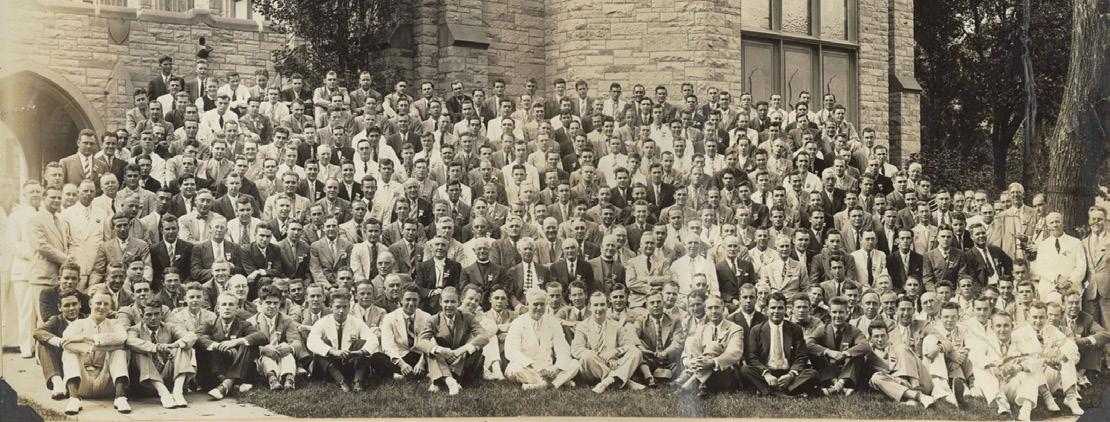
We pride ourselves on the decisions we’ve made. They haven’t been easy. But they’re beyond rewarding. We’re not just a fraternity. We’re a place men go to learn how to be to a better person. To build a better world. To pass on better principles to the next generation. This is where men transform from who they are, to who they want to be. SAE is for men who want to take the collegiate experience to a higher level. Who will seek out prospects, that as members, will do the same and who will take everything they’ve learned out into the world to be a guiding light to others?
We’re one of the country’s oldest and largest fraternities, founded on March 9, 1856, at the University of Alabama in Tuscaloosa, Alabama. Our founders were Noble Leslie DeVotie, Nathan Elams Cockrell, John Barratt Rudulph, John Webb Kerr, Samuel Marion Dennis, Wade Hampton Foster, Abner Edwin Patton, and Thomas Chappell Cook. DeVotie led this contingency, wrote the ritual, created the grip, and chose our name. Rudulph designed the badge. None of our founders were members of any other fraternity, although Noble Leslie DeVotie had been invited to join all of the other fraternities at the University of Alabama before founding Sigma Alpha Epsilon.
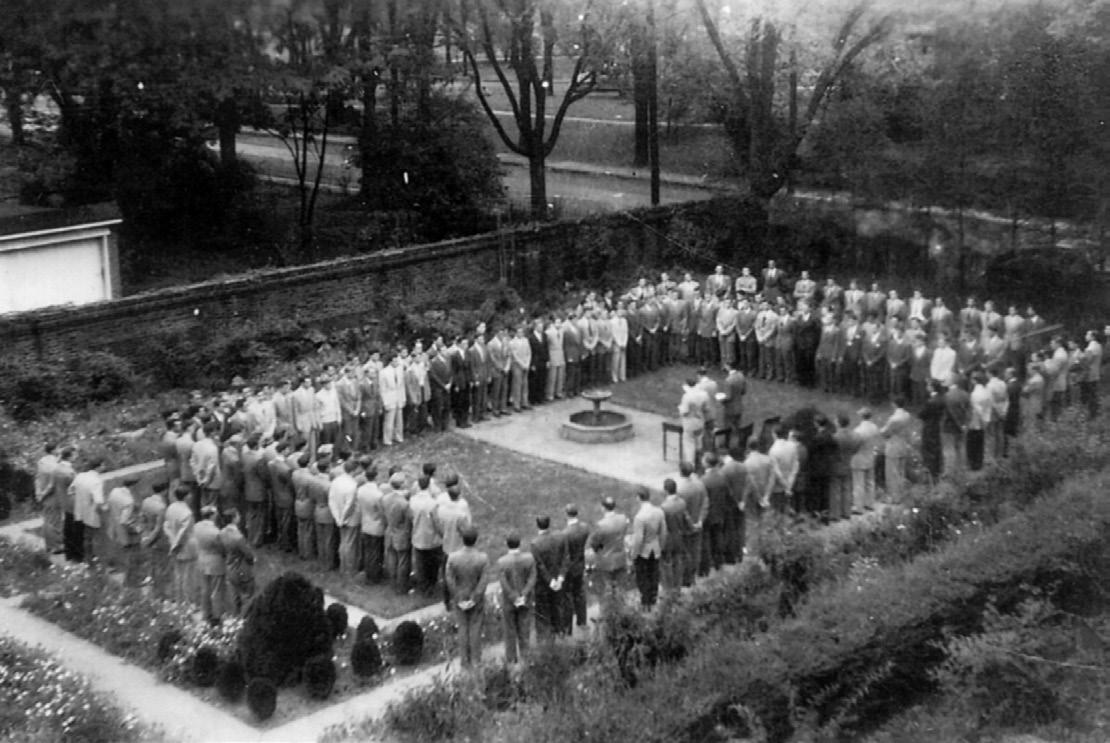
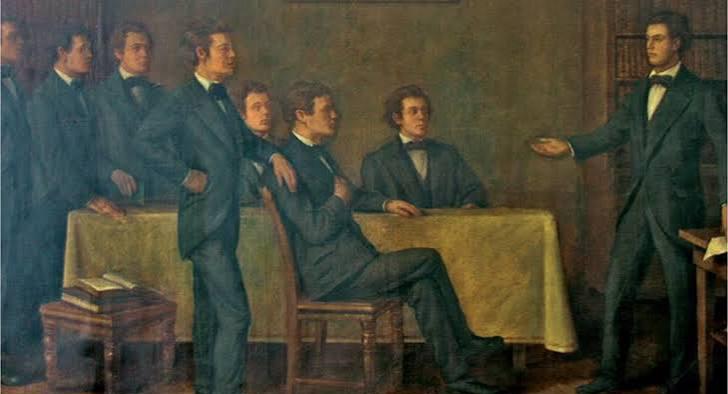
By the end of 1857, we had seven chapters and held our first national convention in the summer of 1858 in Murfreesboro, Tennessee, with four of its eight chapters in attendance. By the early 1860s, SAE had expanded to fifteen chapters. In the 1870s and early 1880s, more than a score of new chapters were formed. During this time, three brothers (The Buntings) were initiated. They strongly advocated expansion, including writing articles in our quarterly magazine, The Record. By the late 1890s, their efforts were directly responsible for the expansion of an additional 50 chapters. One of these chapters was founded at Northwestern University in 1894. Initiated was a young man named William Collin “Billy” Levere, who took over the mantle of leadership at SAE, and brought the fraternity to maturity over the next 30 years.
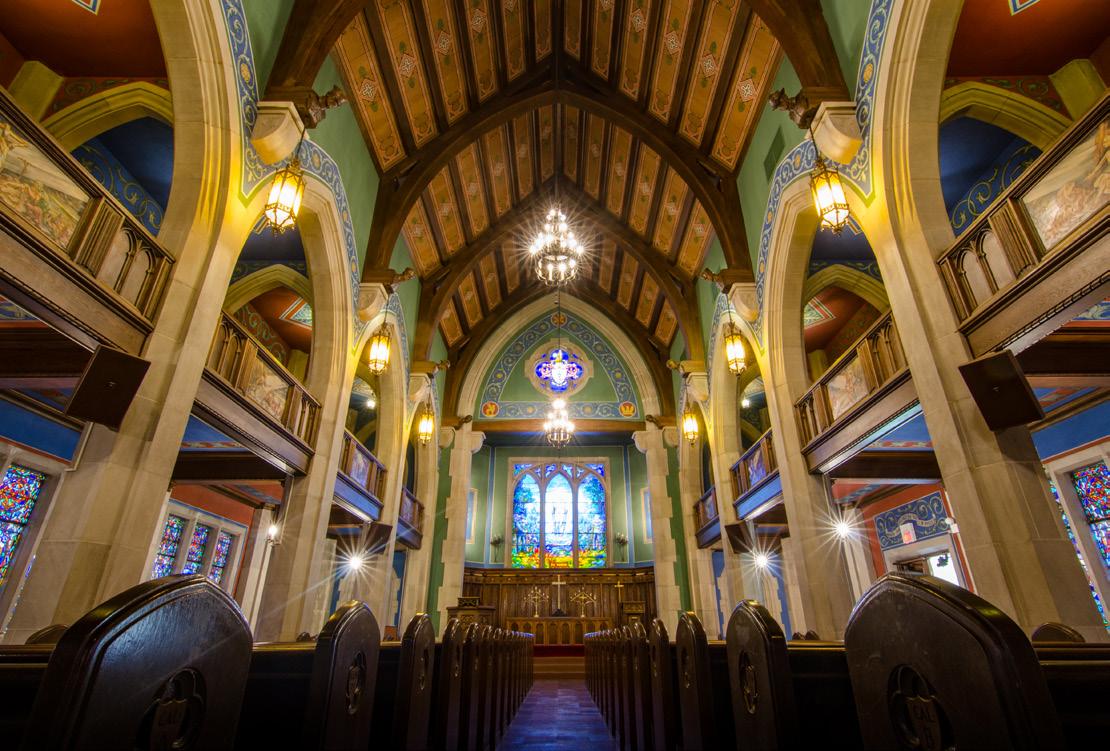
When Levere died on February 22, 1927, the fraternity’s Supreme Council decided to name the new national headquarters building The Levere Memorial Temple. Construction of the Temple, an immense German Gothic structure located near Lake Michigan and across from the Northwestern University campus.


Today, over 360,000 brothers have been initiated among our 220+ chapters. In 2018, the Supreme Council felt it was time to update SAE’s outward appearance and strengthen our collective voice as True Gentlemen. By taking a fresh look, there was an opportunity to reflect on our achievements, rise above our challenges, and elevate our levels of responsibility and leadership to those we serve. While times change, our convictions never will. And this latest milestone will help us continue to advance our principles and beliefs as we continue our collective journey forward.
We are committed to preserving Sigma Alpha Epsilon fraternity houses across the realm through industry-leading property ownership and management.
Build Great Housing
• Build strong chapters through great housing.
Provide Safe Environments
• Promote safe, competitive, and affordable fraternity housing through property management resources and services.
Create Financial Health
• Support local house corporations to become financially sound and its volunteers well-trained.
Promote Strategic Growth of SAE
• Through strategic investments, grow the Fraternity Endowment Fund and provide financial support to Sigma Alpha Epsilon Fraternity.
To be the premier financial & housing organization serving Greek Life. By ensuring attractive, industry leading communities through connection of Expert Staff, Vetted Vendors, Experienced Volunteers & Members.
Greek Housing Management is dedicated to providing safe, well-maintained & supportive environments that foster academic excellence, leadership development, and lifelong membership. We are committed to preserving the traditions & values of our organizations while enhancing the residential experience through responsible financial stewardship, facility management & alumni engagement. Our goal is to create a home that inspires personal growth, unity & service to the members & the broader community.
As industry-leading property managers and owners, we preserve, operate and optimize chapter houses in all collegiate conferences.
From billing members to filing taxes, our full-service Accounting &Finance Team ensures the financial integrity of our most sacred assets—our Chapter Houses.
• Budgeting
• Financial Reports
• Chapter Member Billing
• Custom Payment Plans
• Collections Services
• Tax Filings
• Form 990 and Form 1024 Filing
• Revela Banking which Includes Interest Earning Accounts and Cards on Demand
• Forms and Tickets for Events
*Bolded items are an additional fee.
Our online Member Portal makes the leasing process—from capturing legally-enforceable eSignatures to securing lease guarantors—simple.
• Online Member Portal
• Lease Agreements
• Membership Agreements
• Chapter Roster Review
• Staff Management of Leasing Process
*Bolded items are an additional fee.
Chapter Houses are complex facilities. Our team of Operations Experts ensure that day-to-day operations, from culinary to housekeeping services, run efficiently and within budget.
• Custom Communications via Broadcast
• Text Communications
• Culinary
• Housekeeping
• Move-In/Move-Out Process
• Incidental Damage Tracking
• Vendor Management
Our expert Operations Team ensures that our Chapter Houses are up to code and in good repair at all times.
• Routine Maintenance
• Emergency Maintenance
• Inspections
• Fire & Safety
• Staff Maintenance Monitoring
*Bolded items are an additional fee.
From effectively managing staff members to issuing paychecks, we take the guesswork out of Human Resources (HR).
• Employee Management
• Payroll
• W-2’s
*Bolded items are an additional fee.
Whether your House Corporation is looking to be acquired, or you need to evict a problem tenant, we work with a team of experienced attorneys who are happy to address your legal needs.
• Entity Formation
• Governing Documents
• Evictions
The Sigma Alpha Epsilon Foundation is a 501(c)(3) organization that raises and manages funds to support the educational initiatives of the Fraternity as well as the upkeep and operation of the Levere Memorial Temple. We depend on the generosity of donors to provide educational programs and services to our members. It is our mission to help our brothers Rise Above and become True Gentlemen. We believe in the transformative power of education and the capacity of individuals to better our world through leadership, scholarship, service and friendship.
Will you recommit to Sigma Alpha Epsilon and join our distinguished community of donors?
Giving to the SAE Foundation is a recommitment to our brotherhood. By donating you are choosing to invest in the future of SAE.
The Sigma Alpha Epsilon Foundation holds each of our donors in the highest regard and has established multiple opportunities to allow individuals to determine how they would like to give. On behalf of everyone who benefits from your generosity, thank you for your gift.

Hire Basics
Celebrate Founders’ Day by giving at least $18.56 to the SAE Foundation and joining the 1856 society. For the 2025 Founders’ Day, donors received a limited-edition pin depicting the Black Warrior River, where our story began — a symbol of our history and their support.

March to the Madness is a multi-week, bracket-style fundraiser modeled after the NCAA March Madness Tournament. SAE Chapters compete to see who can raise the most money in their match-up each round.

The weekly rounds take place between February and April from 9:00AM to 9:00PM Central Time. All donations raised benefit the Annual Loyalty Fund, which supports leadership development, educational programming, professional development opportunities, and scholarships, as well as the upkeep and operations of the Levere Memorial Temple. Winning Chapters are awarded a percentage of the money they raise to their Chapter Education Fund.
It is our honor to recognize the amazing community of donors who support the SAE Foundation. It is because of your generosity that we are able to help our brothers Rise Above and become True Gentlemen. We celebrate your commitment to SAE, your belief in the transformative power of education, and the capacity of individuals to better our world through leadership, scholarship, service, and friendship.
The Chapter Allocation Funds (CAF) are educational grants to the house corporation to support the educational portions of the house. Not every chapter has a CAF, check with your Asset Manager to see how you can support!
Sigma Alpha Epsilon is one of the country’s oldest and largest fraternities, founded March 9, 1856, at the University of Alabama in Tuscaloosa. Our founders were eight men who sought to found a new Greek-letter fraternity to perpetuate through the organization the warm friendships they had already formed on the campus of the university. Since then, SAE has expanded to over 220+ chapters across the United States, initiating over 360,000 brothers.
SAE has a long history of firsts. We were the first fraternity to create a leadership education program. One of the first to eliminate pledging, and were the first to ban hard alcohol from all events and activities. But, we’re not blazing new trails just for the sake of being able to say “we did it first.” We do things first because the actions we’re taking make a real difference that impacts the lives of real people.
Today, SAE continues to build True Gentlemen with over 13,900 collegiate members and a network of over 256,000 living alumni.
Friendship
Friendship is important to the fraternity experience and also includes the idea of “brotherhood.” The social connections you make with each other through SAE allow you to create memories and friendships that last a lifetime. Scholarship Scholarship is the purpose and forefront of the higher education experience. SAE recognizes that you are students first, and we want our chapters to do everything they can to help you achieve your scholastic goals.
Leadership
When it comes to leadership, the fraternity wants all members to become leaders in their own way. Whether it’s allowing you to serve in a position, being a part of a committee, or helping execute an event, SAE wants to equip you with the skills and tools to be a leader.
Service is integral to the fraternity experience. Through our national service partners and your local community organizations, the opportunity to serve those in need is one that Sigma Alpha Epsilon is honored to orchestrate.
Through friendship, scholarship, leadership, and service, SAE finds men with impeccable character and helps them achieve their full potential, letting them rise up to face every challenge placed before them—today and tomorrow. We achieve this by mentoring our members to become True Gentlemen.

The True Gentleman is the man whose conduct proceeds from good will and an acute sense of propriety, and whose self-control is equal to all emergencies; who does not make the poor man conscious of his poverty, the obscure man of his obscurity, or any man of his inferiority or deformity; who is himself humbled if necessity compels him to humble another; who does not flatter wealth, cringe before power, or boast of his own possessions or achievements; who speaks with frankness but always with sincerity and sympathy; whose deed follows his word; who thinks of the rights and feelings of others, rather than his own; and who appears well in any company, a man with whom honor is sacred and virtue safe.
-John Walter Wayland
New Hire Basics
Since 1856, Sigma Alpha Epsilon has been building a brotherhood rooted in the values of true gentlemen: impeccable character, self-control, humility, and leadership.
Today, with more than 350,000 brothers strong and a future brighter than ever, SAE stands as a beacon of courage, honor, and integrity. We are the leaders, the changemakers, and the role models the world needs.
Join us as we honor the past, thrive in the present, and boldly lead the future.
When you join Sigma Alpha Epsilon, you join the ranks of over 360,000 men who’ve come before you. With an extensive alumni network of more than 250,000 living alumni who are eager to support and engage with collegian members.
In addition to participating at your Chapter, you’ll have the opportunity to be involved with the Fraternity on a Province (district) and national level through SAE Third Thursday social gatherings, Province events, the National Ambassador program, and affinity groups, such as the SAE National Golf Association, SAE Hunters & Anglers, or the SAE Historical Society.

Sigma Alpha Epsilon hosts several events and opportunities throughout the calendar year to develop our collegiate brothers, engage our alumni, and celebrate our Fraternity. These events include the John O. Moseley Leadership School, DeVotie Ritual Institute, Inner Circle, and our biennial Anniversary Convention.

The ΣAE Job Board is an exclusive career platform that offers internships, parttime, and full-time positions, tapping into ΣΑΕ’s national network of Brothers for many career opportunities!
The True Gentleman Mentor Program taps into the Fraternity’s extensive alumni network, bringing together collegians and alumni of all ages from across different levels of their careers for conversations and guidance regarding their education, careers, and more.

The SAE Foundation awards meritbased scholarships to undergraduate and graduate students. Thanks to the generosity of our donors, thousands of dollars in awards and scholarships are awarded each year.
At GHM, our Senior Director of Finance acts as your representative for Human Resources. We work with Paychex and it is extremely important that staff members log their hours as required per your signed job description. The system uses geofencing, meaning that you must be at the assigned work location in order to log in for your shift. Payroll is run biweekly.
Accurate timekeeping is essential for insurance purposes. It is important that you come to work prepared and that you are communicating with your supervisor if you are unclear on expectations.
House Directors are required to complete 4 inspections of the property each week via Revela. In addition to completing these inspections, any maintenance issues must be logged via the maintenance ticket system. In your role as a House Director, you are expected to proactively manage the ticket. We assign the ticket in the system to the person who is actively working on the resolution.
In addition to managing inspections and maintenance, the House Director is responsible to manage the supply inventory at the chapter house. The House Director should proactively work to submit orders (as a ticket in Revela assigned to the Director of Administration) to place orders before items run out at the site.
House Directors are expected to provide coverage 24/7, but we recognize there may be instances that require you to be away from the chapter facility. In these cases, you need to reach out to your supervisor at least 2 weeks in advance of your time away to get permission and secure coverage for the time that you will be away from the site. Vacation will not be approved the two weeks before move-in, two weeks after move-in, two weeks before move-out and two weeks after move out. Additionally, House Directors are expected to be onsite for Winter Break move-out and for 2nd Semester move-in.
In your role as a House Director at Sigma Alpha Epsilon, you are called to wear many hats and to use your good judgement along with the provided training to care for your assigned chapter. The position will require you to navigate nuanced relationships along with complex operational situations as they unfold. We on the Asset Management team like to say that our House Directors are our “eyes, ears and boots on the ground” when it comes to managing the chapter facilities. This is especially accurate because appropriately assessing the facility and emergent situations means employing all your senses to synthesize information and act accordingly.
The following resources are listed here as you work through your onboarding period, but all live in the House Director Training Academy folder
Note that the intention is to move through training on these resources within the first 4-days post hire with your supervisor on-site, however work with your supervisor to ensure that learning is happening at a pace and in a manner that makes the most sense to you. The sessions are also listed in this guide in the order we anticipate you will engage in the training and your supervisor will lead setting up all calls, just keep an eye out on your calendar and be sure to plan accordingly. To find a list of classes sorted alphabetically, we recommend using the folder found via the QR code.
Organizational Overview + One Sigma Alpha Epsilon
• 20 minutes
• GHM Supervisor
The Fraternity – Mission + Vision
• 10 minutes
• GHM Supervisor
The SAE Financial & Housing Corporation (SAE F&H) – History + Present Philosophy
• 10 minutes
• GHM Supervisor
The Foundation – Fundraising for the Future
• 10 minutes
• GHM Supervisor
Culture Colleague – Meet Your Counterpart at Another GHM Chapter
• 30 minutes
• House Director (Chapter TBD)
Human Resources 101 – Defining HR and Paychex Resources + Job Expectations
• 60 minutes
• GHM Senior Director of Finance and GHM Supervisor
IT 101 – Technology Onboarding as an Employee of Sigma Alpha Epsilon
• 60 minutes
• GHM Supervisor
Traction 101 – The EOS Model
• 60 minutes
• GHM Supervisor
Food Service 101 – Ways that Food Service Programs Benefit Our Members
• 60 minutes
• Regional Food Service Staff Support and GHM Supervisor
Janitorial 101 – Expectations and Budget for Maintaining the Property
• 30 minutes
• Janitorial Staff and GHM Supervisor

Facilities 201 – Revela (Inspections & Maintenance)
• 60 minutes
• GHM Supervisor
Facilities 101 – Property Walk & Considerations
• 3.5 hours
• GHM Supervisor
Facilities 202 – Maintenance + Vendor Management
• 60 minutes
• GHM Supervisor
Systems 101 – Systems + Policies of GHM
• 90 minutes
• GHM Supervisor
• Topics will include: WiFi, Cameras, Access, Hard Keys, HVAC, Water, Gas, Electric
Systems 201 – Asset Tagging + Inventories for the Kitchen and Supplies
• 60 minutes
• GHM Supervisor
Finance 101 – Revela (Accounts Payable)
• 30 minutes
• GHM Controller
Finance 102 – Staff Expense Report
• 15 minutes
• GHM Controller
Facilities 203 – Officers + Advisors
• 60 minutes
• GHM Supervisor
Chapter Services 202 – Member Support, Expectations + Discipline
• 30 minutes
• GHM Supervisor
Risk 101 – Policies Related to Liability Mitigation + Emergency Response
• 30 minutes
• GHM Supervisor
Emergency Action Planning 101 – Developing a Plan for Your Facility
• 60 minutes
• GHM Supervisor
Questions and Setting Your Schedule
• 2 hours
• GHM Supervisor
New Hire Basics
At Sigma Alpha Epsilon, we firmly believe that education is ongoing our whole life long. Knowing this, here is a snapshot of what you have to look forward to over the course of the year to help you grow in your role as a House Director…
Weekly One-on-One | Level 10 Meetings with your GHM Manager.
Ongoing
These meetings serve as an opportunity for you to regularly check-in with your supervisor on the state of affairs at your chapter facility. This is your chance to review the items below and to receive honest feedback from your GHM Manager as you navigate daily living at your facility…
Quarterly Pulse Meetings with members of GHM staff.
Every 3 months or so
The quarterly business meeting is designed to bring all Headquarters staff together on a regular basis to discuss topics related to all GHM . These meetings are led by the Operations team.
Start and End of Term Touchbase meetings with local leadership.
2 hours per term
Start and End of Term Touchbase meetings are where staff, officers and advisors come together to discuss relevant facility issues and update one another on upcoming events or work we expect at the property. Communication should be happening at all levels regularly outside of these meetings but these calls provide a forum where it can be ensured that all parties are on the same page as we support the facility.
Monthly Coffee & Chats
1 hour per month
Coffee + Chat meetings with fellow House Director team members are designed to bring you new and higher level topics related to managing the facility in a forum where you can collaborate with other House Directors who have similar experiences because they share your role.
Weekly Team Time
45 minutes per week
Team Time is a weekly opportunity for you to connect on a more frequent basis with members of the operations team and fellow house directors to discuss wins related to professional growth and best practices. Team Time is meant to be guided by the group and these meetings have no set agenda. The two areas always discussed are “The 7 Habits of Highly Effective People” challenge cards by Dr. Stephen R. Covey and to review situations in an “After Action” format so that we can develop strategies as a team to help resolve present problems and be proactive in developing long-term solutions and/or processes for the future.
Annual House Director Summer Training | The Vision/Traction Overview
Annually in July
Mandatory for all House Directors each year, the Summer Training is a comprehensive conference that happens in person for our staff ahead of properties opening for the academic year. The goal of the Summer Training is to ensure that House Directors connect and ask questions as they return from the quiet of the summer to the chaos of move-in and recruitment. Summer Training brings in subject matter experts to deliver content and to elevate understanding of concepts that impact the SAE Financial & Housing Corporation and Sigma Alpha Epsilon overall. In addition to learning-driven content, opportunities for connection are built into the time staff spends together.
After your first 30-days on staff, you will continue to meet with your supervisor for your regular one-on-ones, during regularly scheduled meetings, or during the training opportunities outlined in the previous section. The intention is that learning opportunities should be continuous, plentiful and infused into every discussion. Experience will provide the opportunity to learn, and we encourage you to reach out to your supervisor if you encounter any new situations in your role and could use a helping hand during your start here as a House Director for Greek Housing Management.
The end of your House Director role onboarding period is marked by your 90th day on staff. Your supervisor will complete an evaluation of your introductory period in the role and will share that feedback with you during a scheduled meeting. That meeting is meant to be a collaboration where both you and your supervisor share the highs and lows and what was most impactful that you both learned during your onboarding period. Remember that the onboarding period is designed to allow for feedback to be shared along the way, however this official meeting at the 90-day mark ensures there is a dedicated opportunity to discuss your experience at length now that you have built a R-O-C-K-solid foundation in your role.
Post-onboarding, the pace of your continued education will likely depend on the timing of year that you were hired during. Here are some resources (available in the House Director Training Academy folder) that we recommend looking into as your schedule at the facility permits or based on the direction from your supervisor in the period immediately following your onboarding…
• BEDI 101 – How House Directors are Agents of Change
• BEDI 201 – The Holidays
• Chapter Services 201 – Education Resources for Officers + Advisors
• Facilities 204 – University Partnerships
• Facilities 205 – House Director Substitute Coverage
• Facilities 301 – Capital Improvements + Deferred Maintenance
• Facilities 302 – Enhancing Shared Spaces
• Facilities 303 – The Move-In/Out Experience
• Finance 201 – Budgeting, Spending and Improvements
• Food Service 201 – Kitchen Best Practices + Food Service Committees
• Marketing 101 – Marketing to Our Brand Standards
• Marketing 201 – Events
• Marketing 202 – Digital Collateral Tips + Tricks
• The True Gentlemen – Ways SAE Reinvests in its Members
Learning does not stop at the end of your Onboarding to the role, and we recognize that. Continue to collaborate with your supervisor to find ways that you can learn and grow here at Sigma Alpha Epsilon. We at GHM encourage feedback, since your candor helps us to improve our processes for staff members of the future.
New Hire Basics
EOS is a practical business framework designed to help companies get focused, disciplined, and aligned, especially small to midsized organizations.
At its core, EOS helps leadership teams:
• Clarify vision
• Gain traction through execution
• Build healthy, accountable teams
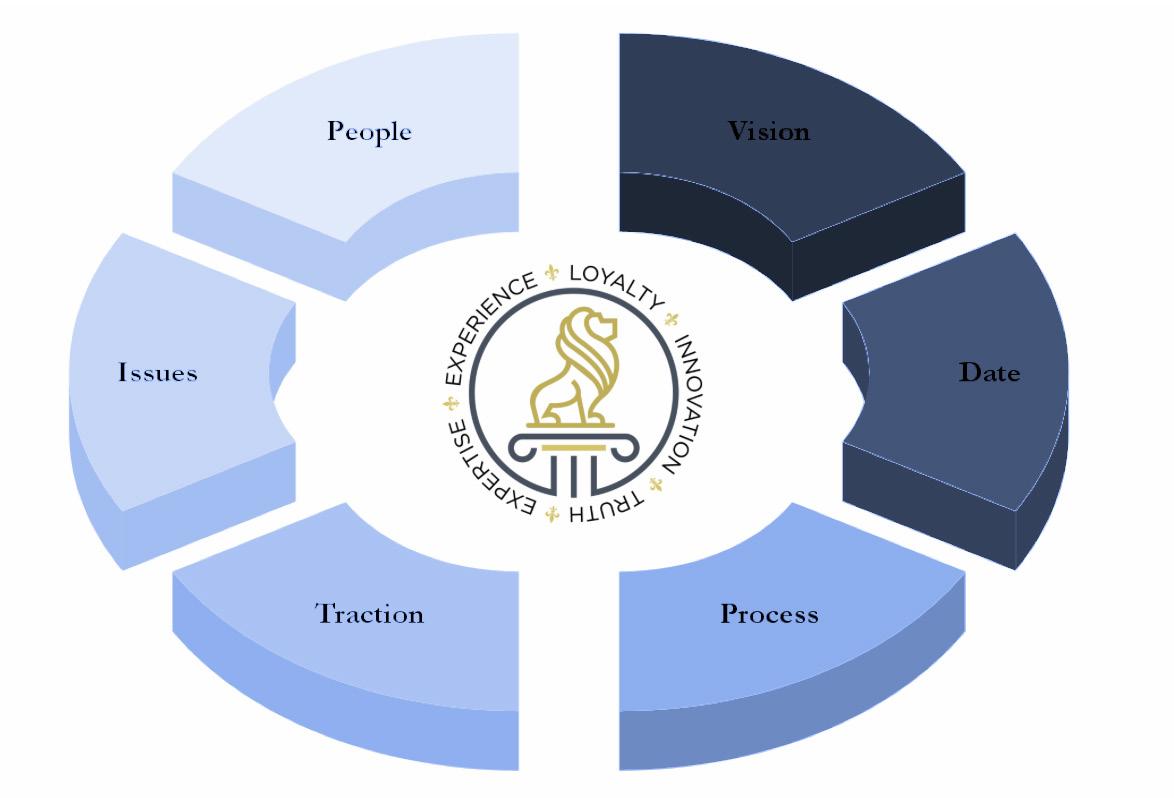
EOS says every business must strengthen six areas:
1. Vision – Everyone knows where the company is going and how it will get there.
2. People – Right people in the right seats (values + skills).
3. Data – Run the business using a few clear numbers, not gut feelings.
4. Issues – Identify and solve problems instead of avoiding them.
5. Process – Document and follow simple, repeatable processes.
6. Traction – Execute consistently and hold people accountable.
Traction is the book that explains how to implement EOS step by step.
Main Ideas in Traction
• Vision without execution fails — discipline and consistency win
• Meetings should be structured, short, and action-oriented
• Goals should be specific, visible, and reviewed weekly
• Problems must be openly discussed and solved permanently
Key Tools Introduced
• Vision/Traction Organizer (V/TO) – 2-page document aligning leadership on vision and strategy
• Rocks – 90-day priorities that drive progress
• Scorecard – Weekly metrics that predict success
• Level 10 Meetings – Structured weekly leadership meetings
• Accountability Chart – Clarifies roles (not just titles)
EOS is the operating system for running a business; Traction is the instruction manual for putting it into action.
All House Directors (HD) at Greek Housing Management (GHM)) will meet during the summer for in-person training with members of staff at HQ or another location as determined by that year’s travel budget. A part of that meeting will include the Vision Traction Overview or V/TO for GHM in the words of our CEO. This meeting will serve to align all employees of the organization and to ensure continuity of services to our clients at every level.
Post-in person training, these concepts will continue to be reinforced in the following ways:
• Mandatory Quarterly Departmental Pulse Meeting for members of the House Director team delivered by the Operations Team.
• This meeting is an opportunity to review the V/TO of the organization and Rocks from the previous 90-days.
• Optional Monthly Coffee & Chats with the Operations team where you can drop in and hear the state of the union on all things related to GHM in a less formal manner on a more frequent basis..
• Mandatory Weekly One-on-One | Level 10 Meetings with your Supervisor.
• Optional Weekly Team Time collaboration opportunities with your fellow House Directors.
Vision
Core Values
Core Focus
10-Year Target Market Strategy
1. Experience: Creating a foundation structure that promotes a life-long brand.
2. Loyalty: Dedicated to the mission of those we serve.
3. Innovative: Driven to continually evolve as industry leaders.
4. Truth: Honesty and integrity in everything we do.
5. Expertise: We are the premier financial and housing organization comprised of disciplined professionals.
Passion: Provide a home for every willing chapter.
Purpose:
• Build strong chapters through great housing.
• Promote safe, competitive and affordable fraternity housing through property management resources and services.
• Support local house corporations to become financially sound, with well-trained volunteers.
• Grow the Fraternity Endowment Fund and provide financial support to SAE.
3-Year Picture
Future Date: June 30, 2027
Revenue:
Measurables/ KPIs:
What does it look like?
Continuous Improvement
• F&H will own 15-20 Chapter Houses and Manage 25-40 Chapter Houses.
• F&H will Grant $100,000 Each Year to the SAE Foundation to Support the Levere Memorial Temple.
• Capital Reserve will exceed $1,500,000.
• Each Chapter will generate $7,500 per year from the alumni relations program (newsletters).
Operations
• Assist GHM Partner House Corporations Transition to Favor & Company for Property Insurance.
Administrative
• Address the Staff Model to Accommodate for more Owned and Managed Properties.
Prioritize
• Identify
• Discuss
• Solve
Segue
• Three (3) biggest accomplishments for the organization for the Quarter
• One (1) departmental accomplishment for the Quarter
• Your intentions/expectations for the meeting Review Previous Quarter
• Lead by Department Supervisor Team Building Opportunity
• Changes with each meeting SWOT/Issues List Shared and Discussed
• Strengths
• Weaknesses
• Opportunities
• Threats
• Issues
V/TO YTD Review
• This is your chance to challenge the organization’s vision.
• Clarity on the V/TO should be agreed to prior to moving on to the conclusion of this section.
Then move into the standard Quarterly Departmental Pulse Meeting topic starting with “Tackle Key Issues”.
All House Directors (HD) at Greek Housing Management (GHM) will meet quarterly with the Operations Team. This meeting is an opportunity to review the V/TO of the organization and Rocks from the previous 90-days. These meetings should take 90-minutes.
• The Operations Team is responsible for preparing their agenda and for organizing/leading the Zoom call.
• There is no excuse to miss this meeting, this is a mandatory meeting and a mutual agreement between all employees participating.
• Items that are FIRE-FLOOD-BLOOD (a real emergency) should be discussed as a separate meeting/call so that the intention of this meeting can be maintained.
• All notifications should be silenced in advance of arriving for the meeting, nothing should take priority over the contents of this call.
• There is no excuse to arrive late to this meeting, like attendance, timeliness is a mutual agreement between all employees participating.
• Focus on E-L-I-T-E in all aspects of your meeting and in the course of your role.
• E - Experience
• L - Loyalty
• I - Innovation
• T - Truth
• E - Expertise
• This meeting should be treated as sacred as the Levere Memorial Temple.
Segue (5 minutes)
• Three (3) biggest accomplishments at the site for the week.
• One (1) personal accomplishment for the week.
• Your intentions/expectations for the meeting.
Review Previous Quarter (15 minutes)
• Review all numbers.
• Review last Quarter Rocks along with completion status.
• Only answers should be:
• Done
• Not Done
• Once all Rocks have been reviewed, discuss the completion rate % and determine why Rocks may not have been completed. The two most common reasons cited include:
• We took on too much and overshot.
• Someone dropped the ball.
• We cannot be perfect, but it is important to “Own the decisions that you make and the actions that you take.”
• Incomplete Rocks need to be addressed by either:
• Carrying the same Rock into the next quarter.
• If the Rock is 95% complete, it can be moved into an action under the To-Do list.
• The Rock can be reassigned to a new owner.
Review the V/TO (15 minutes)
• The purpose of reviewing the V/TO is to refresh our collective memory on the vision and to make sure that all stakeholders remain on the same page.
Establish the Rocks for the Next 90-Days (15 minutes)
• Start with departmental Rocks, then move into individual rocks.
• Rocks are intended to be completed within a 90-day period.
• A Rock is Specific, Measurable and Attainable.
• You want no more than 3-7 departmental Rocks per 90-day period.
• You want no more than 3 individual Rocks per 90-day period.
• Starting with stakeholders on the call, this is the opportunity for participants in the call to share their personal Issues list to help find resolution.
• Moving into Departmental Issues for the remainder of this section. This should include carryover issues from the previous meetings that were listed on the Issues List (these can oftentimes be resolved via the creation of new Rocks). New issues will need to be pushed through the Issues Solving Track (IDS) by way of the following:
• Identify
• List all items and prioritize them.
• Discuss
• Start in the order of priority and move through as many of the issues as possible during the allotted time.
• Solve
• When you start by solving the most important issue, you find that some of the other issues on the list were symptoms of that core issue.
• The solution will often turn into a plan that will be added to the To-Do List.
• Any issues not solved during this meeting will be cascaded down to Weekly One-on-One | Level 10 Meetings.
• Who is doing what and whether there are any messages to communicate to the organization based on the decisions made in the meeting.
Conclude (5 minutes)
Everyone on the call will share the following:
• Feedback on the meeting.
• Whether or not their expectations were met.
• Their rating on the meeting from a scale of 1-10.
Each House Director (HD) at Greek Housing Management will meet weekly (the only exception being federally recognized holidays) via Zoom (or at the site when applicable) with their supervisor for 45-minutes for a One-on-One | Level 10 Meeting to review the items on the below agenda and as reflected in My 90 | Ninety.
• The House Director is responsible for preparing their agenda and having it ready at least one-hour in advance of the scheduled meeting time.
• Your supervisor will be responsible for leading the call and for keeping timing on track.
• There is no excuse to miss this meeting, this is a mandatory meeting and a mutual agreement between the two employees participating.
• Items that are FIRE-FLOOD-BLOOD (a real emergency) should be discussed as a separate meeting/call so that the intention of this meeting can be maintained.
• All notifications should be silenced in advance of arriving for the meeting, nothing should take priority over the contents of this call.
• There is no excuse to arrive late to this meeting, like attendance, timeliness is a mutual agreement between the two employees participating.
• Focus on E-L-I-T-E in all aspects of your meeting and in the course of your role.
• E - Experience
• L - Loyalty
• I - Innovation
• T - Truth
• E - Expertise
Segue (5 minutes)
“Share the good and celebrate the wins.”
• Arrive on time and with all notifications silenced to be fully present for the one-on-one.
• Three (3) biggest accomplishments at the site for the week.
• One (1) personal accomplishment for the week.
• Your intentions/expectations for the meeting.
Scorecard (5 minutes)
“Anything that is measured and watched is improved.”
• Inspection Report Completions
• Open Work Order Requests
• 0-30 days
• 31-60 days
• 61-90 days
• 91 + days
• Scheduled Work Orders
• On Hold Work Orders
• YTD Budget supplies (Owned F&H Properties Only)
Rock Review (5 minutes)
“When everything is important, nothing is important.”
• Start with company Rocks, then move into individual rocks.
• Rocks are intended to be completed within a 90-day period.
• A Rock is Specific, Measurable and Attainable.
• You want no more than 3 Rocks per 90-day period.
Customer/Employee Headlines (5 minutes)
“Examining our greater impact delivering the greatest good.”
• Share both the good and the bad.
• Issues that arise as a result should be tabled for discussion as a part of IDS.
To-Do List (5 minutes)
“Clarity directly translates to productivity.”
• Discuss operational tasks for the week.
• Tasks are intended to be completed within a 7-day period.
• Issues related to FIRE-FLOOD-BLOOD should be their own separate meeting/call.
• Only answers should be:
• Done
• Not Done
The Issue Solving Track via IDS (15 minutes)
“Great meetings are created by solving problems.”
• Identify
• List all items and prioritize them.
• Discuss
• Start in the order of priority and move through as many of the issues as possible during the allotted time.
• Solve
• When you start by solving the most important issue, you find that some of the other issues on the list were symptoms of that core issue.
• The solution will often turn into a plan that will be added to the To-Do List.
Conclude (5 minutes)
“Everyone at an organization needs to operate under the same thesis statement to be successful.”
• Recap the meeting and the new To-Do List.
• Discuss communication needs and best method based on outcomes of the meeting.
Each staff member at Greek Housing Management is provided with the optional chance to participate in Team Time via Zoom. This 45-minute training is entirely voluntary but strongly encouraged to help strengthen our synergy as a larger collective. Remember that urgent priorities should come first (we mean FIRE-FLOOD-BLOOD by this). Since this meeting time is set you should have the opportunity to schedule around it unless a new problem arises that day that requires immediate resolution for the greater good of the organization.
• The Director of Administration is responsible for preparing the materials outlined:
• Each Week (in advance of the meeting) - Sends out email to all GHM staff with “The 7 Habits of Highly Effective People” challenge card that provides the following prompts:
• Topic Area
• Topic Name
• Challenge
• Prompt
• Suggestion
• Quote
• Weekly - Manages calendar invite to all GHM for Team Time together to discuss. This quick call will cover the ways that staff members have put “The 7 Habits of Highly Effective People” into play through their role.
• In addition to the challenge card outcomes, the Director of Administration will deliver a Table Top Exercise for the group to discuss.
• Focus on E-L-I-T-E in all aspects of your meeting and in the course of your role.
• E - Experience
• L - Loyalty
• I - Innovation
• T - Truth
• E - Expertise
Over the next 52-weeks, we are inviting you to move out of your comfort zone, shift your paradigms, improve and repair your relationships, and to generally become a more effective person, personally and professionally. As you act upon each weekly challenge, you will strengthen your character and increase your influence with others.
Each week, we will review the details of the card via email. All the information on the cards has been adapted from the bestselling book by Dr. Stephen R. Covey. Each card will teach a key principle of effectiveness, poses a challenge, encourages you to be reflective, and offers a quote of encouragement.
The best way to gain control of your life is to make a promise to yourself and then keep it. As we follow this process as a team to begin making and keeping promises to ourselves and others, we will increase our collective capacity to overcome challenges, not just while at work, but also at home. Never forget that out of small things, big things are achieved!
Topic Area: Introduction to the Habits
Topic Name: Week One – Define Effectiveness
Challenge: List some things you would like to change to become more effective. Keep this list handy as you work through the challenge cards.
Ask Yourself: What matters most to me in my work and personal life?
Suggestion: When you shift your focus, you shift your impact. Put a spotlight on what matters in your life and list the next steps toward making positive change happen in those areas.
Quote: “If you apply even one of the 7 Habits today, you can see immediate results; but it’s a lifetime adventure – a lifetime promise.” by: Stephen R. Covey
Pick up a copy of Dr. Stephen R. Covey’s bestselling book, “The 7 Habits of Highly Effective People” if you want to get a jumpstart on implementing all the key components of this training into your arsenal.
After Action Reviews allow for a few different things to happen:
• Provides a forum for members to engage in feedback and learning together without judgement, since we are all aiming to improve our planning process for the future.
• To help better prepare for tangible challenges we can or should anticipate to face in the future since real life examples are encouraged to be shared as a part of this process.
• Uses the mindset that hindsight is 20/20 and that this exercise is most effective when carried out EVERY TIME you want to review a process or situation that is new to your role since this feedback loop can benefit both individuals and groups alike.
Each week, you will work with your fellow staff members to apply the After Action Review process to the provided scenarios that have been based on real-life scenarios you encounter throughout the year in your role as on-site members of GHM staff. Once the provided example has been reviewed, you will have the opportunity to discuss your thoughts collectively. Here is a sample for the format for this discussion:
Example:
Start of Year Check-In and End of Year Check-Out Processes
Move-in/out procedures were clearly communicated to members and there were no issues on move-in day.
Some members were still reaching out for last minuteexceptions, despite repeated and clear communication.
Continue to communicate with members in an effort to smooth out move-in/out day hiccups.
Research mediums for communication (i.e. maybe we should push texts instead of emails or notifications via their member portal).
Partner with officers to amplify communication efforts.
Create a required committee of officers to help support move-in/out efforts who help collaborate on specific methods per-chapter to ensure we are engaging the audience the right way.
Time with your team should be used to discuss feedback on “The 7 Habits of Highly Effective People” challenge cards and to find constructive solutions to frequently encountered scenarios. This time, though brief, is intended to be impactful by sharing and promoting best practices that build on the greater good.
Bringing the week to a conclusion on a high note, let’s talk about the wins we experienced either individually or collectively by way of implementing the teachings of Dr. Stephen R. Covey in your role.
For the purpose of executing our Weekly Team Time goal, we will be adopting an “After Action Review” format that allows for a situation to be evaluated after the fact for continuous improvement. Here is a blank sample template for your reference (below). We will cover the provided scenario(s) each week and will spend time discussing best practices together.
Each staff member at Greek Housing Management (GHM) is provided with the optional chance to participate in Coffee & Chat via Zoom. This monthly 45-minute training is entirely voluntary but strongly encouraged to help strengthen our synergy as a larger collective. Remember that urgent priorities should come first (we mean FIRE-FLOOD-BLOOD by this). Since this meeting time is set you should have the opportunity to schedule around it unless a new problem arises that day that requires immediate resolution for the greater good of the organization.
• Optional Monthly Coffee & Chats with the House Director team where you can drop in and hear the state of the union on all things related to GHM in a less formal manner on a more frequent basis.
• Since these meetings are informal, there will be no agenda to follow.
• This is your opportunity to ask any questions you have about the overall strategic goals of Greek Housing Management.
• These meetings will be co-hosted by members of the Operations Team
• Focus on E-L-I-T-E in all aspects of your meeting and in the course of your role.
• E - Experience
• L - Loyalty
• I - Innovation
• T - Truth
• E - Expertise
New Hire Basics
A Culture Colleague is someone who consistently models, protects, and strengthens an organization’s core values through their daily behavior and interactions—not just their job performance.
In simple terms:
A Culture Colleague does the right things the right way, even when no one is watching.
• Lives the core values (not just knows them)
• Treats others with respect and accountability
• Supports teammates and the organization’s mission
• Addresses issues constructively instead of ignoring them
• Protects the culture by setting a positive example
Within EOS, a Culture Colleague is considered a “Right Person”:
• They may or may not be the top performer
• But they strengthen the team and culture
• Performance issues can be coached; values misalignment usually can’t
A Culture Colleague is someone who consistently demonstrates our core values in how they work, communicate, and collaborate.
As a part of your onboarding here at Greek Housing Management, you will be paired with a Culture Colleague who will help set you on the right path in your new House Director role.
New Hire Basics
The details listed in the following tables are meant to be suggestions, but you have the flexibility to set your own schedule in your House Director role so long as…
1. You are available to meet with and take the lead with vendor coordination.
2. You attend weekly 1:1 meetings with your assigned Asset Manager (required) and that you participate in Team Time each Friday (unless work at the property needs to be prioritized and this is communicated to your supervisor ahead of the start of the call).
3. The entire property is being walked and inspections are being logged four times per week.
4. Maintenance Tickets are being proactively monitored and quickly closed out.
5. Any invoices you receive are being submitted in real time.
6. You are available for member needs 24/7/365.
Sunday
Complete Daily Chapter House Inspection via Revela
Team Time with All GHM House Directors
Complete Daily Chapter House Inspection via Revela
Update Maintenance Tickets in Revela
Meet with Executive Council
FollowUp with Handyman or Vendors to Confirm Scheduling for the Week
Weekly 1:1 Meeting via 90 with Asset Manager
Meet with Chef and Housekeeping Teams to Review Work for the Week and Supply Needs
Update Maintenance Tickets in Revela
Complete Daily Chapter House Inspection via Revela
Complete Daily Chapter House Inspection via Revela
Update Maintenance Tickets in Revela
Meet with House Manager and Food Service Committee
• Complete Daily Chapter House Inspection via Revela Once Weekly During Summer
• Finalize all Summer Turn Over Work by 7/15.
• This will be followed in late July/early August with an all points deep clean of the facility which will be timed around your opening date.
• Work with Asset Manager (who will take lead) on sending communication to incoming residents related to move-in.
• Utilize provided scheduling document to keep track of anticipated resident move-in dates/times.
• Keep track of early arrival requests which will need to be approved by your Asset Manager.
• Audit/Update key inventory and ensure that there are enough copies of each key to provide to each resident.
• Audit/Update Asset Tracking List.
• Meet with Housekeeping and Food Service Providers Ahead of the Start of Term.
• Complete Move-In and Submit Move-In Inspection via Revela to Confirm Details/Photos.
• Ensure Residents are NOT issued a key/access if they are not paid in full or on an approved payment plan with the Accounting Team.
• Complete Daily Chapter House Inspection via Revela Four Times Weekly During the Academic Year.
• Host a start of the year meeting with the live-in members.
• Complete Daily Chapter House Inspection via Revela Four Times Weekly During the Academic Year.
• Meet with Officers to Review Food Service for the Year.
• Set Up a Food Service Committee.
• Meet with Housekeeping and Officer Team to Review Supply Additional Supply Needs/Requests.
• Complete Daily Chapter House Inspection via Revela Four Times Weekly During the Academic Year.
• Meet with Officers to Review Food Service.
• Meet with Housekeeping and Officer Team to Review Supply Additional Supply Needs/Requests.
• Work with Asset Manager (who will take the lead) on Messaging for Fall and/or Thanksgiving Break.
• Keep track of extension, stay over and early arrival requests which will need to be approved by your Asset Manager.
• INDE ONLY: Plan and Provide Thanksgiving Meal.
• Complete Move-In and Submit Move-In Inspection via Revela to Confirm.
• Ensure Residents are NOT issued a key/access if they are not paid in full or on an approved payment plan with the Accounting Team.
• Complete Daily Chapter House Inspection via Revela Four Times Weekly During the Academic Year.
• Meet with Officers to Review Food Service.
• Meet with Housekeeping and Officer Team to Review Supply Additional Supply Needs/Requests.
November
• Complete Daily Chapter House Inspection via Revela Four Times Weekly During the Academic Year.
• Meet with Officers to Review Food Service.
• Meet with Housekeeping and Officer Team to Review Supply Additional Supply Needs/Requests.
• Work with Asset Manager (who will take the lead) on Messaging for Winter Break and Reopening in January.
• Keep track of extension, stay over and early arrival requests which will need to be approved by your Asset Manager.
February
• Complete Daily Chapter House Inspection via Revela Four Times Weekly During the Academic Year.
• Meet with Officers to Review Food Service.
• Meet with Housekeeping and Officer Team to Review Supply Additional Supply Needs/Requests.
• Work with Asset Manager (who will take the lead) on Messaging for Spring Break (where applicable).
• Keep track of extension, stay over and early arrival requests which will need to be approved by your Asset Manager.
• Complete Daily Chapter House Inspection via Revela Four Times Weekly When University is in Session and Once Weekly During Winter Break.
• Meet with Officers to Review Food Service for the Term.
• Meet with Housekeeping and Officer Team to Review Supply Additional Supply Needs/Requests Ahead of Upcoming Term.
• Complete Move-Out and Submit Move-Out Inspection via Revela to Confirm.
• Collect and audit all keys/ access, making updates on the Playbook.
• Secure and Close Chapter House for Winter Break Period.
• Complete any Preventative Maintenance and Deep Cleaning Services Required During the Break.
• Complete Daily Chapter House Inspection via Revela Four Times Weekly During the Academic Year.
• Meet with Officers to Review Food Service.
• Meet with Housekeeping and Officer Team to Review Supply Additional Supply Needs/Requests.
• Ensure that Officers Report Room Assignments for the Upcoming Academic Year Once Determined.
• Complete Daily Chapter House Inspection via Revela Four Times Weekly During the Academic Year.
• Work with Asset Manager (who will take lead) on sending communication to incoming residents related to upcoming year’s occupancy dates.
• Meet with Officers to Review Food Service.
• Meet with Housekeeping and Officer Team to Review Supply Additional Supply Needs/Requests.
• Work with Asset Manager (who will take the lead) on Messaging for Spring Break (where applicable).
• Keep track of extension, stay over and early arrival requests which will need to be approved by your Asset Manager.
• (Where Applicable) Plan and Host a Senior Dinner.
• Complete Daily Chapter House Inspection via Revela Four Times Weekly During the Academic Year.
• Meet with Officers to Review Food Service.
• Meet with Housekeeping and Officer Team to Review Supply Additional Supply Needs/Requests.
• Complete Move-Out and Submit Move-Out Inspection via Revela to Confirm.
• Collect and audit all keys/ access, making updates on the Playbook.
• Coordinate vendors as needed once all maintenance tickets for all areas have been entered into the system following move-out.
• Secure and Close Chapter House for Summer Break.
• Complete any Preventative Maintenance and Deep Cleaning Services that Make Sense to Start Summer.
• Complete Daily Chapter House Inspection via Revela Twice Weekly During Summer.
• Begin the Summer Turn Over Process.
• Update Playbook to Reflect Anticipated Vendor Updates in Preparation for Upcoming Fall.

When you begin as a new employee at Sigma Alpha Epsilon as an on-site House Director, you will be issued the following:
• An iPad or laptop
• Login for Email
• Login for Revela
Personally, you will be provided with a login to Paychex so be sure to keep track of your login credentials.
It is important that you bookmark all important pages . In addition to the pages mentioned above, we recommend saving the House Director website as your dashboard so it is the first thing you see each time you log online. The website will act as a one-stop shop for any information you may need in your role. Embedded into the website is your own chapter playbook and Emergency Action Plan (EAP) which will ensure you have the most important details for your site at your fingertips. We recommend printing off a new copy of the sheets included in that playbook anytime you update details online.
Your supervisor will be able to provide you with a link or the email for all of these credentials and will cover accessing important documents saved on the shared drive.
An integral part of your role as a House Director is spending a portion of your time each week walking the facility property. When you live and work in the same place, it can be easy to lose sight of the things that become “normal” in your environment. We have formulated this guide to help “take the blinders off” so that you can pay attention to specific areas of the facility that we want to be sure are always well maintained. Keeping up with proper maintenance and repair serves several purposes:
• Provides a superior living experience for GHM residents and members. When a home is properly maintained, we allow it to truly shine and become a useful tool for the chapter during recruitment. It is in your hands as the House Director to make this a desirable place our members want to live in. You are also able to advocate for changes members wish to see.
• Helps prolong the useful life of the capital improvements the GHM makes. This means that we are being good stewards of our members’ investment in their future home.
• Mitigates insurance liability. Having a properly maintained facility is important so that if/when a disaster does strike we are able to use insurance as needed without issue.
Revela is the GHM’s property management system. The platform was set up by GHM management staff with each of the sites set up as a “customer” within the system. This set up allows GHM Managers to collaborate with House Directors to keep track of:
• Work Orders
• Equipment at the Site
• Recurring Inspections or Maintenance
• Vendors
There is a separate SOP related to managing your site in Revela, but it is important to note that the system will need to be used to log all work that you find at the site during your at least weekly property walk. Reasons GHM management wants the work logged on both the Facility Evaluation Form and in Revela include…
1. Accountability for vendors to complete work timely and correctly.
2. Tracking to see if there is recurring maintenance for the same item/area over and over and to allow staff to evaluate if another solution may be required.
3. Access to reference materials like spec and warranty sheets for pieces of equipment at the property can be stored in the platform.
4. Easy integration into your work-provided email calendar (Gmail) should you choose so that vendor scheduling is seamlessly added into your schedule.
A Facility Inspection focuses on evaluating the grounds, building exterior, fire safety/security measures and the maintaining the overall condition of the commons at the property.
Facility Inspections are important because members often take an attitude of “someone else will report it” when it comes to issues being experienced in common spaces. Additionally, for many members, this is their first time living away from their parents or outside of the dorms. This means they are truly used to someone else seeing problems and acting to resolve them on their behalf.
A Room Inspection differs from a Facility Inspection only because it is limited in focus to a specific unit being occupied by a member during the academic year.
Per the GHM’s Residential Agreement, article 22:
GHM, its officers, directors and agents, or service representatives may enter the Facility or the Room during reasonable times for any reasonable purpose, which includes but is not limited to repairs, extermination, maintenance, inspections, exercising the lien described in Section 19 hereof, leaving notice and showing the Facility to building inspectors, fire marshals, lenders or insurance agents. During any emergency, GHM, its officers, directors and agents may forcibly enter the Facility and the Room at any time.
As a best practice, the GHM team recommends that room inspections be conducted at least four per term during the time that the facility is occupied and always in conjunction with a chapter officer. Room inspections are primarily focused on ensuring the following…
• Fire and life safety conditions are being met.
• The provided space is being maintained free of damage or infestations.
• In the case that the chapter leadership team has received an incident report form, to ensure that no violations of fraternity policy or the GHM Residential Agreement are present.
When able, we recommend notifying members at least 48 hours in advance of room inspections of the date and time you anticipate inspections to take place. At the time of the inspection, be sure that you and the officer who you are conducting inspections with knock and announce yourself at least twice prior to using a master key to enter the unit if the resident is not present at that time.
HVAC: Filters should be changed at least quarterly and annual maintenance checks are recommended prior to the start of warm weather in the spring. Instruct your housekeeping staff to clean the filters monthly. An HVAC professional should be called in the spring (usually around April) so that the equipment can be inspected as part of the annual maintenance check.
• Setting the Temperature: The GHM recommends that the temperature be set at 72 degrees year round and that it be kept consistent throughout the facility. If there is a dehumidifying unit in the building it should also be kept on during the summer months. DO NOT TURN OFF THE AC FOR THE SUMMER.
Heat Service and Regulation: Filters should be changed at least quarterly and annual maintenance checks are recommended prior to the start of cool weather in the fall. An HVAC professional should be called in the fall (usually around October) so that the equipment can be inspected as part of the annual maintenance check.
Boiler: A boiler is a fuel-burning apparatus or container for heating water. The fluid does not necessarily boil. Most U.S. homes are heated with either furnaces or boilers. Boilers heat water, and provide either hot water or steam for heating. Steam is distributed via pipes to steam radiators, and hot water can be distributed via baseboard radiators or radiant floor systems, or can heat air via a coil. If your house does not have air conditioning the boiler can be turned off in late spring and turned back on early fall. A professional company should turn the boiler on and off. How often is the boiler serviced? Annually prior to the start of colder weather in the Fall.
• The difference between a furnace and a boiler is that they operate in distinctly different ways. A furnace heats air, and then a blower motor moves the warmed air through the home’s duct system. On the other hand, a boiler heats water, which then flows through a network of pipes in the home.
Furnace: Combustion gases are generated by the burners in your furnace and passed through a heat exchanger. Air from your home blows across the heat exchanger to be warmed. It is then blown through a system of ducts to distribute around your home. Once warmed, the air is pushed into the hot-air plenum and then out to the rooms through duct work. The combustion gases created by burning fuel are vented through a flue in the roof or, with high-efficiency furnaces, through a wall. During warm seasons your heating system works with your central air conditioning. How often is the furnace serviced? Annually prior to the start of colder weather in the fall.
Water Heater: A water heater is an appliance that converts energy to heat and transfers that heat to water. It is connected to a cold-water supply pipe and has an outgoing hot water pipe—or system of pipes—that supplies heated water to faucets and appliances. How often is the water heater serviced? Annually to inspect, drain the system and descale. To ensure that a water heater continues to work at an optimum level, it is necessary to descale the appliance. This will mean removing the deposits that can build up from the use of hard water. This should be done by a professional company. Here are some related terms…
• Tank: The inner shell of a water heater is a heavy metal tank containing a water protective liner that holds 40 to 60 gallons (151 to 227 liters) of hot water at around 50 to 100 pounds per square inch (PSI), within the pressure range of a typical residential water system. The exterior of the tank is covered in an insulating material like polyurethane foam. Over that, there is a decorative outer shell and an additional insulating blanket [source: APEC].
• Dip Tube: Water enters the water heater through the dip tube at the top of the tank and travels to the tank bottom where it’s then heated.
• Shut-Off Valve: The shut-off valve stops waterflow into the water heater. It is a separate component from the heater located outside and above the unit.
• Heat-Out Pipe: Suspended toward the top of the tank’s interior, the heat-out pipe allows the hot water to exit the water heater.
• Thermostat: This is a thermometer- and temperature-control device. Some electric water heaters have a separate thermostat for each element.
• Heating Mechanism: Electric water heaters have heating elements inside the tank to heat the water. Gas water heaters use a burner and chimney system instead.
• Drain Valve: Located near the bottom of the exterior housing, the drain valve makes it easy to empty the tank to replace the elements, remove sediment or move the tank to another location.
• Pressure Relief Valve: This safety device keeps the pressure inside the water heater within safe limits.
Backflow: Backflow is the undesirable reversal of the flow of water from its intended direction in any pipeline or plumbing system. Backflow is dangerous because it can allow drinking water in plumbing systems to become contaminated and unusable. A backflow prevention device is used to protect potable water supplies from contamination or pollution due to backflow. In water supply systems, water is normally maintained at a significant pressure to enable water to flow from the tap, shower, or other fixture. This device is installed onto your plumbing system to protect your drinking water and the city water supply from contaminants. How often is the backflow system inspected? Annually, most typically during the summer.
Fire Alarm Inspection (smoke alarm): Fire alarm (or smoke alarm) systems are expected to help protect people, property, and assets. But you can’t tell if they’re fully operational just by looking at them. As with any other system, electronics and other components can degrade over time and compromise the system’s operation. Dust, dirt, and other contaminants can cause problems with smoke detectors. Such things as vandalism, remodeling, and improper maintenance procedures can also damage fire protection equipment. The good news is that with proper testing, inspection, and maintenance you can keep your fire alarm system at optimum operating performance. In addition to ensuring protection, keeping your system in good condition reduces expenses by preventing unbudgeted emergency repairs and costly false alarms. How often should the fire alarms be inspected? Inspection varies by location (minimum inspection on an annual basis) and the frequency is determined locally and can be required to be performed monthly, quarterly or annually. The inspection should be completed by both the alarm monitoring company and/or the fire marshal. Each fire alarm should be tagged and show renewal dates.
Smoke Detector Check: A smoke alarm is an inexpensive way to protect members from smoke and fire injuries, but the House Director must take the time to test it to ensure that it’s working properly. A properly functioning smoke detector doubles your chance of surviving a fire by warning you of a dangerous situation before it’s too late. All smoke detectors and alarms have a test button that, when pushed, causes the alarm to sound. Also, most detectors have either a blinking or a solid light that glows to let you know that the alarm is getting power. Once a month, push the test button. If you don’t hear anything, then your battery is dead. If after changing the battery, the smoke detector is still not working, immediately replace it with a new one. If the test button is not easily reached, have a handyman take care of testing and replacing batteries. While battery-operated units have a built-in device that chirps when batteries get low, signaling the need for replacement, common wisdom dictates not waiting until that point. Batteries should be replaced twice a year, once in the spring and once in the fall.
Carbon Monoxide Detectors: A carbon monoxide detector or CO detector is a device that detects the presence of the carbon monoxide (CO) gas in order to prevent carbon monoxide poisoning. CO is a colorless, tasteless and odorless compound produced by incomplete combustion of carbon-containing materials. How often are the CO detectors checked? Monthly and during all fire inspections.
Core Job Duties
Fire Extinguisher Inspection: The fire extinguisher should be inspected and certified annually by a fire protection equipment company. The fire marshal may also inspect the fire extinguishers. Replacement is dictated by fire code or fire marshal and tags on all extinguishers showing renewal dates. The House Director or their designee should be checking fire extinguishers on a monthly basis. The monthly checks should be documented. Please check the following details during a monthly fire extinguisher inspection. Confirm the extinguisher is visible, unobstructed, and in its designated location. Verify the locking pin is intact and the tamper seal is unbroken. Examine the extinguisher for obvious physical damage, corrosion, leakage, or clogged nozzle.
Fire Inspection: Fire inspections provide an opportunity to inspect for fire safety issues in the home, provide measures to improve the safety of residents and increase fire safety and awareness outreach. It is essential that a fire safety inspection program become an integral part of the facility and are done by a local fire marshal. At a minimum, an annual inspection should be done by the fire marshal. This inspection is performed to assess and mitigate potential fire- and life-safety hazards in buildings. Most fire departments provide you with a written report of any corrections that are necessary. These inspections vary in type and frequency, depending on the jurisdiction, city, and state. Fire inspections could also be done by a designated employee of the associated college or university and the university could require monthly, quarterly or annual inspections.
Fire Monitoring: All facilities with fire alarm systems must be locally monitored 24/7/365, alerts the Fire Department in the event of an emergency. The monitoring company could also be involved in the fire inspections by inspecting the smoke detectors, exit signs, security lights, etc.
Fire Sprinkler Inspection: It’s amazing how quickly a fire can spread. But facilities with a well-maintained fire sprinkler system have a huge advantage, because a quick response can slow a fire’s progress and help reduce damage until firefighters arrive. How often are fire sprinkler inspections completed? Semi-annual or annual inspection of the fire sprinkler system. This will be checked during all fire inspections.
Exit Light Check: Inspected during all fire inspections and monthly by the House Director.
Security Light Check (Interior): Security Lighting on the interior of a building are lights that go on in the event of a power outage and they are commonly referred to as “frog eyes.” How often should interior security lights be checked? Inspected during all fire inspections and monthly by the House Director of their designee.
Health Inspection: When and where applicable. Usually a city/county/educational institution requirement. Keeps the commercial kitchens up to code and the food systems safe. Kitchens are never given notice and all deficiencies must be remedied in the time frame specified. This inspection is most typically handled by our food service provider.
Hood Inspection: Kitchen hood inspections are important from a code compliancy standpoint. According to NFPA 96 (the standards set for kitchen hoods), every commercial kitchen has an industry standard for how often they should schedule the inspection. A licensed fire protection technician (or fire marshal) will inspect the system. You can review the label inside the hood for more information on when it was last inspected and cleaned. In addition to keeping the facility up to code, the biggest reason to have your kitchen hood inspected and cleaned is to keep your employees and members safe. Grease fires can be dangerous— they flare up fast, the fuel source (grease) is liquid and can easily splash and spread, and they can’t be controlled with water. Keep your kitchen staff, servers, members and guests safe by minimizing the risk of a fire starting in your commercial kitchen.
Hood Cleaning: Kitchen exhaust cleaning (often referred to as hood cleaning) is the process of removing grease that has accumulated inside the ducts, hoods, fans and vents of exhaust systems of commercial kitchens. Left uncleaned, kitchen exhaust systems eventually accumulate enough grease to become extreme fire hazards. The hood is located over the commercial stove. The exhaust system is first scraped clean, then washed clean with food-safe chemicals and hot water pressure-washing where possible to safely collect the dissolved grease and water. In addition to keeping the facility up to code, the biggest reason to have your kitchen hood inspected and cleaned is to keep your employees and members safe. Grease fires can be dangerous—they flare up fast, the fuel source (grease) is liquid and can easily splash and spread, and they can’t be controlled with water. Keep your kitchen staff, servers, members and guests safe by minimizing the risk of a fire starting in your commercial kitchen. How often is the hood cleaned? Every six months (semi-annually) by a professional company (not the chef).
Deep Clean: Completed twice annually immediately before the chapter reopens in the fall and again over the Winter Break period (this cleaning excludes bedrooms and focuses on deep cleaning common spaces only). The entire facility should be evaluated and cleaning should be done by a professional cleaning company.
Carpet + Upholstery Cleaning: Carpet cleaning is done by a professional carpet cleaning company twice per year. If needed at other times of the year, please talk to your property manager as this may be a chapter charge. Upholstery cleaning should always be scheduled in conjunction with the carpet cleaning prior to opening in the fall. When are the carpets deep cleaned? Annually in the fall before the chapter returns to school and over Winter Break prior to the Spring re-opening.
• Often times carpet cleaning companies offer deep cleaning services for dryer vents. Knock both these task out at the same time if possible.
Dryer Vent Cleaning: Should be professionally cleaned quarterly.
Drain Cleaning: A professional plumber should clean all sinks, showers, and floor drains in the facility. How often do we clean drains? Quarterly in most cases, but less frequently if you have less residents living in your chapter facility.
Grease Trap Cleaning: A grease trap (also known as grease interceptor, grease recovery device and grease converter) is a plumbing device designed to intercept most greases and solids before they enter a wastewater disposal system. These reduce the amount of fats, oils, and greases (FOGs) that enter sewers. Simply put, a grease trap is a receptacle that kitchen wastewater flows through before entering the sanitary sewer lines. How often should I get the grease trap cleaned? A professional company should do grease trap cleaning a minimum of every 6 months. Not all commercial kitchens have grease traps. Please contact your Asset Manager if you don’t know if the kitchen has a grease trap.
Kitchen Appliances: As needed, generally kitchen equipment, frequency determined by age and level of use. Typically includes dishwasher, oven/stove, refrigerator.
Knox Box: A knox box is a box that is located on the exterior of your house that is only accessible by the local fire & police departments. Inside this box would be a master key and Fob/Access card they could use to access all areas of our house in case of a fire or major safety issue. The box is usually no larger than a 6”x6” and is black with a red sticker of some sort found near the front entry door. The House Director would check this to ensure it has the most up to date key/facility access 24/7 and should be a part of the regular fire inspection done by a Fire Marshall or local fire department. The House Director is expected to ensure the Knox Box is up to date every 6 months and indicate so on the maintenance schedule.
Landscape: Landscape updates might be part of your lawn maintenance contract. This includes any updates to plants and flowers beds that need to be changed out routinely throughout the year. Typically, seasonally and in line with big events at the facility.
Lawn Maintenance: This often includes grass trimming and edging, routine mulching, tree and elevation trimming. As needed, frequency will be determined by location and climate.
Lawn Fertilization: As needed, frequency determined by location and climate. Typically this is part of your lawn maintenance contract, if needed.
Tree/Hedge/Bush/Inspection/Trim/Treat: As needed, frequency is determined by location and climate. Use a licensed arborist.
Sprinkler Irrigation System Blow Out/Turn On: Winterizing your sprinkler system is removing water from the pipes, valves and sprinkler heads and is essential before freezing occurs. It’s the best way to protect your irrigation investment from potentially serious damage this winter. Winterization should be done annually by a professional company in the fall around October. The system should be turned on by a professional in the late spring.
Snow/Ice Removal: As needed, frequency is determined by location and climate.
Core Job Duties
Pest Control: Frequency dictated by facility needs. Can include everything ants to raccoons and everything in between. Talk with your Asset Manager to determine a schedule for the facility.
• Termite Inspection/Service: When needed, usually in warmer climates, location specific. Check with your pest control company.
Trash Service: If living in during the summer, have service reduced but not stopped entirely.
Window/Screen Cleaning: Completed annually during the deep cleaning before the chapter re-opens in the fall.
Roof Cleaning: Roof cleaning is a hugely important part of home maintenance and may be the most important part of roof maintenance. Keeping your roof clean prevents decay, which could lead to expensive repairs or even a complete replacement of your roofing. Roof cleaning will extend the lifespan of the roofing and help the roof stay more functional for a longer period. How often should a roof be cleaned? As needed, or every 2-3 years. A flat roof should be cleaned annually. A licensed roofing company should complete the room cleaning.
Gutter Clean: As needed every 6-12 months. In warmer climates with buildings with lots of vegetation/trees you may need every 3 months.
Security Light Check (Exterior): Security Lighting is often used as a preventive and corrective measure against intrusions or other criminal activity at the facility. Security lighting can aid in the detection of intruders, to deter intruders, or in some cases simply to increase the feeling of safety. Lighting is integral to crime prevention and it is important that security lighting is inspected to ensure it is working properly.
Elevator Inspection: If applicable, to be conducted as needed in accordance with state and/or local requirements.
Water Softener System: Water softening is a technique that serves the removal of the ions that cause the water to be hard, in most cases calcium and magnesium ions. Iron ions may also be removed during softening. A water softener is a unit that is used to soften water, by removing the minerals that cause the water to be hard. How often is the water softener serviced? A water treatment professional should service the water softener annually. This involves cleaning the tank and ensuring valve settings are optimized. They will also test the water.
Piano Tune: Tune annually or as needed based on use and climate.
Revela is staff’s one stop shop when on the job working for Greek Housing Management. In addition to acting as the user interface where our members can accept agreements and make payments, along with acting as a bill pay system where vendors are remitted for the work they complete, Revela is also a hub where inspections are completed by on-site staff and where maintenance issues are reported by staff and members alike as they arise.
House Directors should complete inspections a minimum of four (4) times per week during the academic year. This effort is to ensure that we have the latest snapshot in time and that we are able to review conditions to help hold members accountable for their behavior in the chapter facility. In addition to helping to monitor tenant conditions, it is important that staff are reviewing the work completed by service teams to ensure that the house is being cleaned appropriately and that meals are up to the standards that we expect for our members. The areas outlined in the Daily Inspection template help ensure that House Directors are on the same page with their assigned Asset Manager. The results of the inspections should be reviewed during each 1:1 meeting to ensure that the House Director has the support they need in their role.
To complete an inspection, navigate to the inspection tab and complete the fields as pictured below. The template name will remain the same, but you will select the appropriate property based on where you are assigned as the House Director. For this image, we used the Levere Memorial Temple, but the location will be specific to where your job is located.
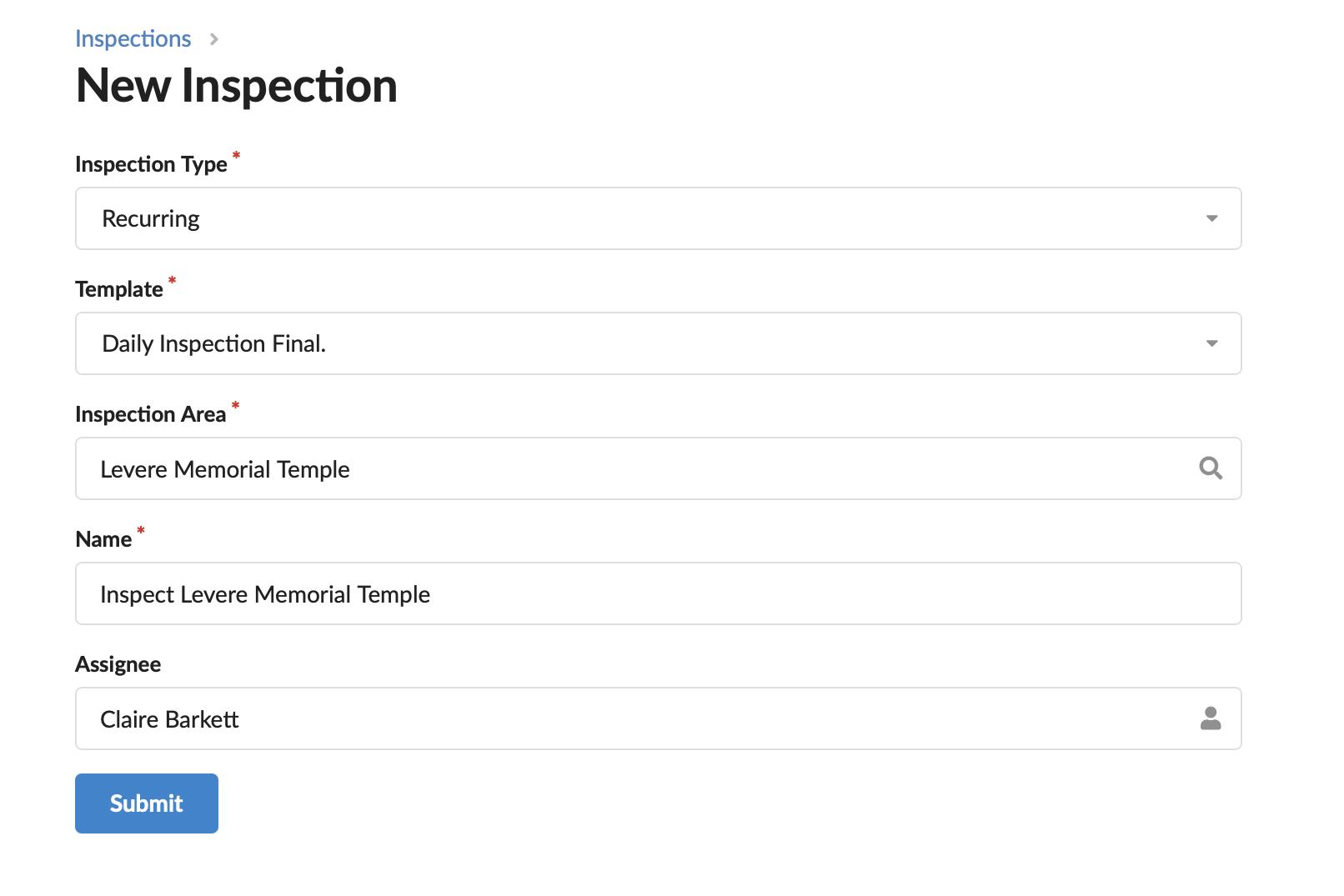
The inspection will be custom based on the common areas of your property. Each of the spaces listed will require you to answer the following questions:
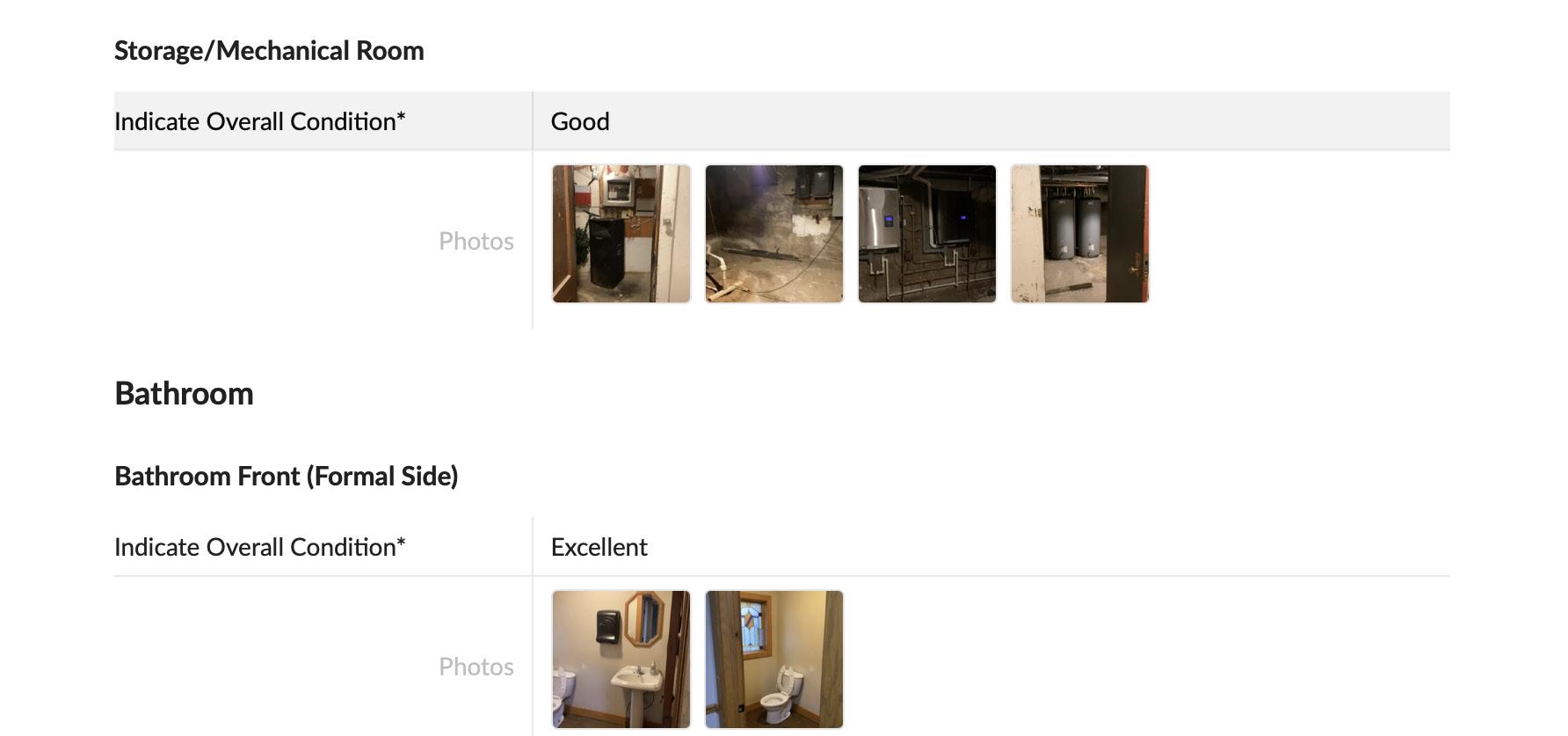
To complete your inspection, make sure that you have answered the 3 listed questions with the photos being uploaded for all areas outlined in the inspection.
In addition to the daily inspections that should be happening on a regular basis, there are inspections loaded in the system related to move-in/out and life safety. The move-in/out inspection should be completed prior to tenants taking occupancy in the fall and again at move-out each spring. Life safety inspections should happen at least 2-4 times per term to ensure that there are no issues present in the chapter facility.
Below are screenshots of the correct completed fields you should be selecting when opening a move-in/move-out inspection and a life safety inspection:
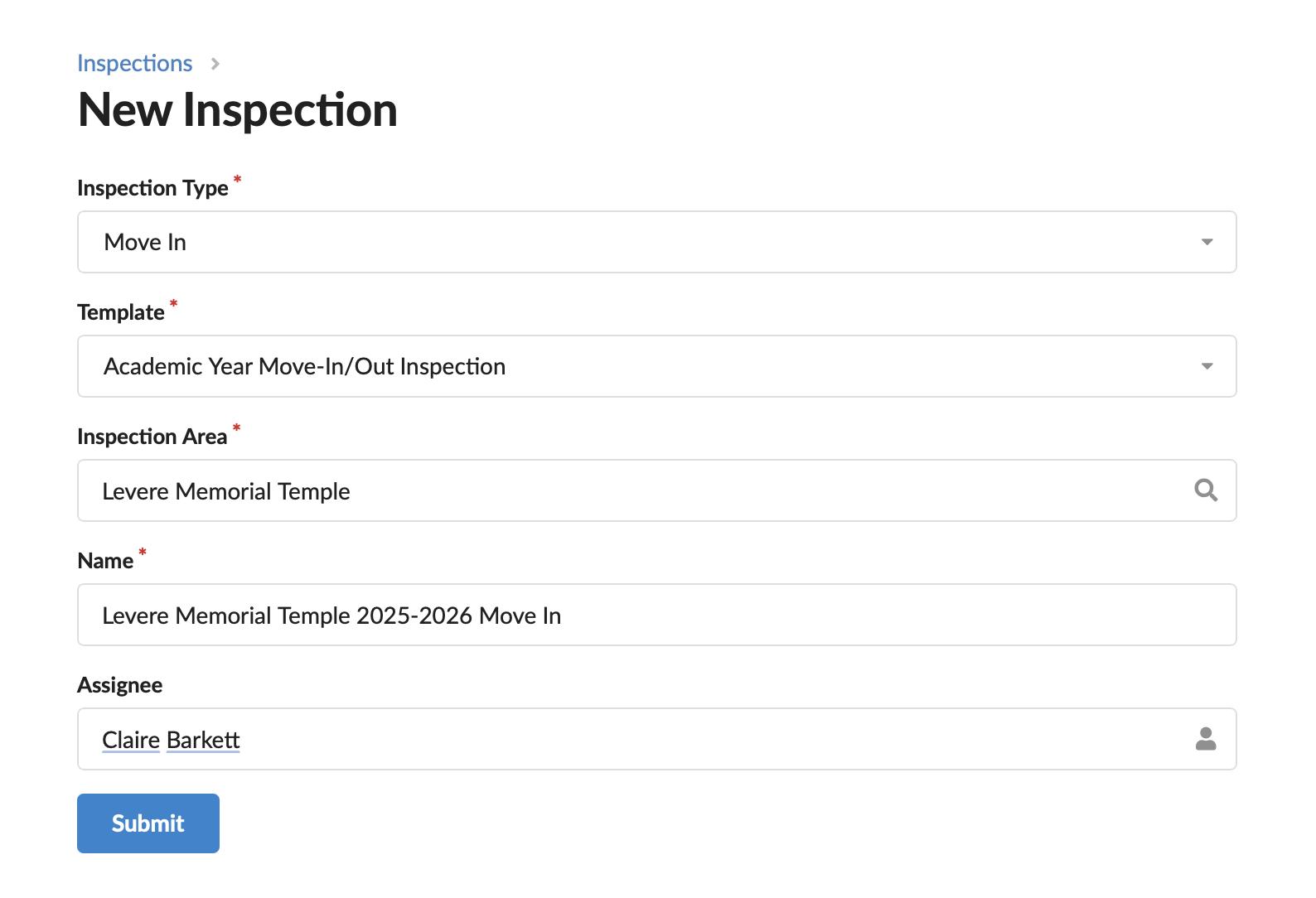
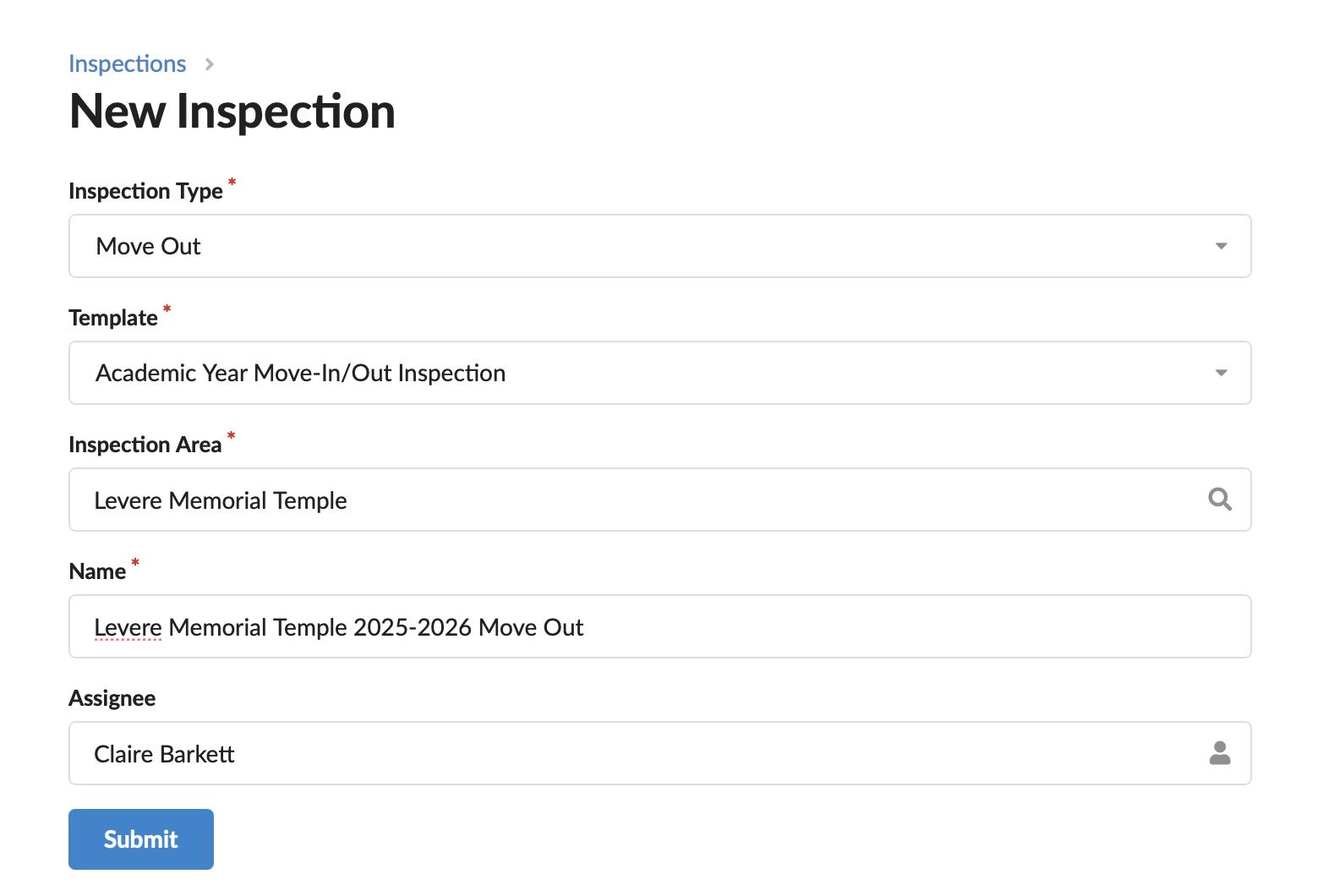
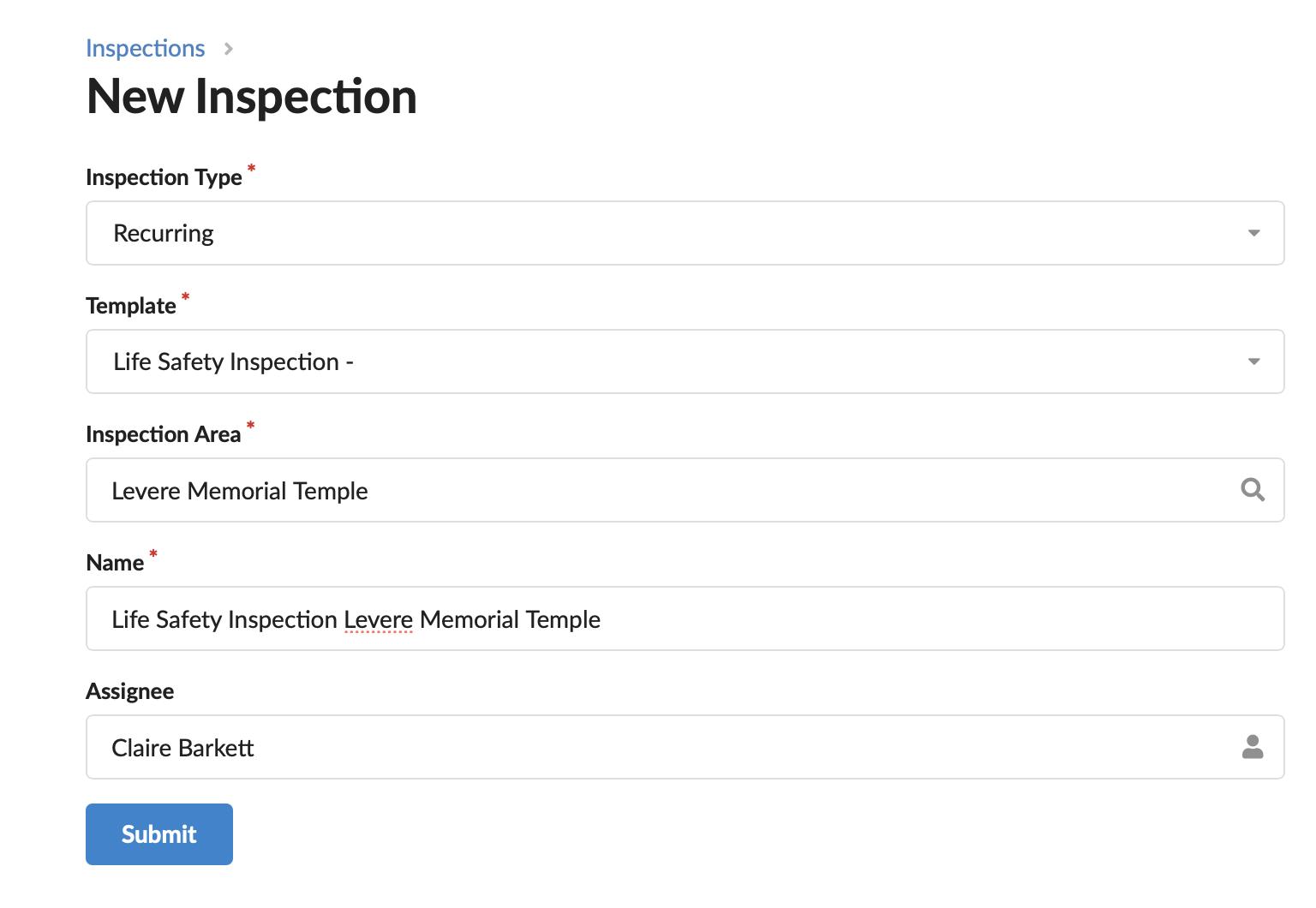
As a House Director, your primary responsibility in the role is to track and manage work to completion. Revela was implemented to provide a consistent means for tracking maintenance so that your Asset Manager and other staff members alike could have insight into conditions and expenses experienced at the facility over time. In addition to this information, the system allows officers to have access into the system to track where work is at in real time. When used properly, this system can be a perfect way to maintain communication while a fix or project is ongoing since all steps of the process are logged in the platform.
To log a work order in the system, select “New Ticket” and enter the following required fields:
• Regarding: This is where you tag the ticket to your assigned Chapter.
• Subject: This should be a short overview with the location.
• Description: Include all relevant details.
• Urgency: Select from low to high.
• Assigned Employee: Allows you to assign to a staff member and all work orders in the system should eventually be assigned (even if you do the work yourself and the ticket is only assigned to you) before they are closed.
• Tags: The related service area or vendor type.
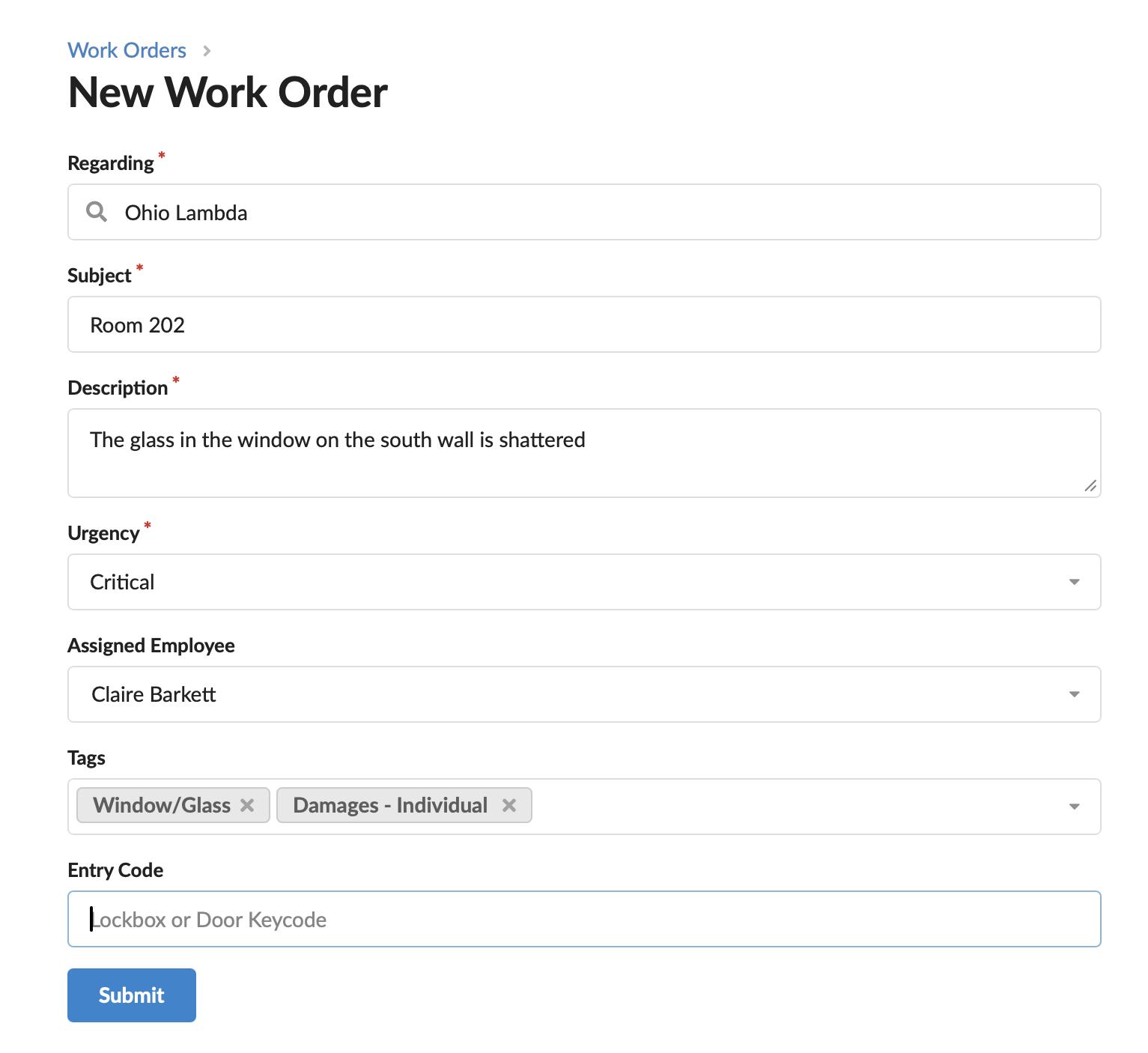
It is important to be as detailed as possible. Upload lots of pictures and describe the damage in depth. Tickets that are open in the system should be proactively managed until they are able to be closed out. Work that is in the planning stages or needs to wait until summer or later to start should be placed in the “On Hold” status to indicate that the work has been taken as far as it can be at this time. Similarly, work that is Scheduled may be placed into that status if there is no other action to take prior to the scheduled repair appointment time.
Maintenance tickets are the tool that we are using to communicate with the accounting team when there are instances of member damage. Be sure to include the name of any individual(s) that cause damage at the chapter facility, and once the invoice(s) for the repairs have been completed, enter those details into the ticket and assign it to the Director of Leasing and Compliance so they can bill the individual before the ticket is closed out.
Core Job Duties
Managing vendors is one of the most challenging and rewarding aspects of your role as a House Director. Setting clear expectations and having candid communication are two important skills that you will need to hone in this position in order to set your chapter up for successful improvement projects both large and small.
Staff at the GHM believe in building strategic partnerships with both local and national vendors to ensure that our properties are always receiving the best goods and services. Standards start with you!
This begins with the vendor vetting process and extends through you as the on-site House Director seeing any work through to completion.
Starting with the basics, we require all GHM vendors to carry Liability and Worker’s Compensation Insurance and to be able to provide a W-9. You will want to secure at least 3 competitive bids before committing to a new project. Vendors may start off requiring immediate payment for services, but we want to work with vendors to establish net-30 terms on all of our accounts.
Ensure that vendors have the following details:
• Your assigned HD email (primary for invoice processing) and phone number
• The facility address (service address)
• billing@greekhm.com (back-up for invoice processing)
• 1856 Sheridan Road, Evanston, IL 60201 (billing address)
The GHM management team has prioritized life safety improvements to GHM facilities to keep consistent standards across the portfolio. WiFi improvements have been made to provide more reliable internet access since this utility powers security for the site. Most security systems at GHM properties are now cloud-based (accessible via the web) so that GHM Managers can help better support sites from afar.
As mentioned previously, clear and direct communication is key while working on projects. Poor communication can result in more money spent or time delays for completion. Your GHM manager will ensure that any contracts have a clearly defined scope of work so review the contract closely.
A regular touch base cadence should be established to review work as it is ongoing. This should be at multiple levels:
• With the vendor.
• With your GHM manager.
• [as needed] With both the vendor and your GHM manager.
Be candid. Don’t be unkind but don’t be afraid to be honest if you feel like the vendor’s results or methods are not working out as intended. Be realistic. Often our collegians think that results should be instant, but that is frequently not the case. Set clear expectations for excited stakeholders and do not rush a repair/project unnecessarily as this can compromise the results of the work. Document everything. Since your GHM Manager cannot always be present while work is happening, we rely on our House Directors to be eyes, ears and boots on the ground ensuring things remain on track.
Capital Improvements are infrastructure additions or alterations that increase the overall value of the property. They can increase useful life by improving quality or strength. Capital projects can create more flexible and adaptable shared living-learning communities.
Regular Maintenance + Repairs are designed to preserve and prolong current facility conditions. Maintenance + Repairs is focused on the restoration of items to their previous working condition while helping to protect the underlying property.
Items that hit the capital budget are “depreciable” and will lessen in value over the time that they are in service. The following four conditions should be met for an improvement to be considered capital work:
1. Substantially adds to the value or useful life of the property.
2. Is a permanent part of the property and…
3. …its removal would cause material damage to the property or article itself.
4. The minimum total project cost exceeds the threshold of $2,500.
Virtually as soon as any project hits completion, regular maintenance and repairs for the installation will begin. Investing in both good infrastructure and the time it takes to develop a solid maintenance routine will help futureproof larger capital investments the organization makes. Don’t underestimate how far the impacts of regular maintenance and repairs can go. Remember that any items which cannot be depreciated should hit your repairs and maintenance budget.
e.g. paint or landscape work
Note: Work with your GHM Manager to receive prior authorization for any purchases or work exceeding $250 to ensure that it is within the scope of the budget.
Core Job Duties
The facility leadership team at each F&H owned or GHM managed property is comprised of the following members:
• Chapter President (Eminent Archon)
• Treasurer (Eminent Treasurer)
• House Manager
• Chapter Advisor
• House Director
• Asset Manager
Members of this committee collaborate together to ensure that operations are running smoothly and that communication is flowing well to both residents and live-out members.
The House Director will collaborate most closely with the Chapter Advisor, based on the nature of his role. The Chapter Advisor utilizes his experience, leadership and coaching skills to help his officers, both as brothers and leaders. He also promotes chapter success by ensuring the House Manager upholds his responsibilities and achieves his goals while following Greek Housing Management’s policies and procedures.
The Chapter Advisor is responsible to:
• Mentor and coach the undergraduate officers.
• Review officer reports and help to determine best solutions when issues arise.
• Advise the Executive Council and/or House Manager in planning and implementing the distribution and completion of all sublease agreements.
• Review facility rules annually and advise the House Manager on potential changes and updates.
• Meet regularly with the House Manager.
• Support the House Manager in developing and maintaining essential relationships.
• ex. House Director, university partners, GHM staff, vendors and local alumni
• Encourage open communication throughout the chapter and help collegians to facilitate conflict resolution.
• Hold the House Manager accountable to setting and working toward goals.
• Ensure the House Manager understands and adheres to all Sigma Alpha Epsilon policies and procedures and GHM policies and procedures.
• Engage in ongoing training and development.
• Work with GHM staff or House Corporation volunteers, the House Director and all other chapter advisors to see that the facilities are attractive, competitive and well-maintained.
The House Manager is responsible to:
• Inform all members of facility rules.
• Enforce facility rules and hold members accountable.
• Assist the House Director and House Corporation/GHM in managing chapter facility.
• Work with the Chapter Advisor on collecting sublease agreements, and handling issues related to filling the facility and roommate disputes.
• Coordinate any necessary daily facility responsibilities (ex. chore lists).
• Ensure emergency procedures are in place.
• Serve as the chair for the facility rules committee.
• Serve as the chair for the food service committee (where applicable).
The House Director closely collaborates with the House Manager to oversee the day-to-day operations, especially as it relates to communication.
Although the House Director should be most closely collaborating with the Chapter Advisor and House Manager, the other officer positions are especially important when it comes to maintaining the facility for the following reasons:
• Chapter President (Eminent Archon): Handles all incidents related to member discipline and policy violations. In some instances may be the primary channel for communication with chapter members.
• Treasurer (Eminent Treasurer): Responsible for maintaining chapter financial records so that they can remain in good standing with GHM and Sigma Alpha Epsilon.
Since the House Director and Asset Manager are both in paid professional staff positions, there are certain responsibilities that fall under our scope of authority as members of the workforce to complete. These specific items that need to remain with professional staff include:
• Managing all aspects of the Security Systems.
• Access Control
• Burglar Alarm
• Cameras
• Directing the work of all Vendors at the site.
• This includes directing the work of food service staff based on feedback provided by the Food Service Committee.
• All decisions related to Capital Improvement and Repairs + Maintenance Contracts.
• The legal extension of all contracts, along with the billing of members.
Asset Managers will take the lead with setting up times for start and end of term semester check-in meetings that will include all members of the facility leadership team to review pertinent topics related to your assigned facility. These meetings are intended to be a collaboration and provide an opportunity for stakeholders to ensure communication with the leadership team and larger membership is seamless. These meetings are set up for an hour but often move more quickly. In addition to these meetings, Asset Managers encourage all members of the leadership team to reach out to set-up one-off meetings as needed by the operational demands at the chapter facility.
Core Job Duties
Each chapter that GHM supports only exists because of the host university it is tied to. Each university operates slightly differently, but the following departments/programs should exist at the university your chapter is recognized by:
• Sorority/Fraternity Life or Fraternity/Sorority Life (SFL/FSL) Office: This is the office that directly supports all recognized chapters at the host institution. In most cases this office is staffed by dedicated professionals who help to administer to and support the recruitment process on campus each year. In addition to helping with recruitment, this office and its representatives can help connect members in need with the resources they are seeking.
• University Police Department: Even if the facility is outside of the university’s jurisdiction for police response, it is good to get to know the police department on campus since they may respond to incidents that occur at our facility since they will potentially involve students of the university.
• Note: Each campus operates very differently when it comes to jurisdiction and rendering mutual aid. Mutual aid is when the local police department (city/county/state) joins forces with police officers sworn in and employed by the campus to resolve an ongoing situation.
• Fire Marshal: The Fire Marshal has different levels of involvement from campus to campus. Where our facility is subject to university inspection, you will work with the Fire Marshal to schedule and conduct inspections on a regular basis. Other campuses will not require this inspection, but may require that copies of passing fire inspection reports be submitted to the SFL/FSL Office for their record each year.
• Environmental Health and Safety (EH&S): EH&S is responsible for monitoring and ensuring compliance is met per OSHA for workplace safety on campus. In cases where your chapter facility is situated on a university campus, we should be working with the university to report and address any issues that could be hazardous to member’s health.
• Office of Emergency Management (OEM): OEM is a great resource for training and development related to safety. OEM is typically responsible for publishing and updating the university’s safety website and coordinates with all the various departments on campus when emergency operations are activated on campus.
• Challenge Yourself! We encourage House Directors to check in with OEM to find opportunities on your campus for CERT (community emergency response training) certification, first aid, CPR and AED training.
• July/August – SFL/FSL reaches out to set up any mandatory training ahead of members returning to campus and passes along any messages/specifics related to recruitment in the fall.
• September/October – SFL/FSL reaches out about conducting your once per term fire drill and about submitting passing copies of inspection reports if required.
• December – SFL/FSL reaches out to set up any mandatory training ahead of members returning to campus and passes along any messages/specifics related to recruitment in the spring.
• February – SFL/FSL reaches out to collect rosters for housing for the upcoming year if required. Along with the roster may come requirements for additional passing inspection report copies that may need to be added to the chapter’s file for the upcoming year.
It is important to remember that although we are here to support students at the university in our role, there is no obligation as a mandatory reporter to the university.
Mandatory reporting is when the law requires people who are engaged in certain types of work to report known or suspected abuse or neglect. Mandatory means there is no discretion or choice given to the person to decide whether or not to report. Essentially, if a mandatory reporter knows or has reasonable cause to suspect abuse or neglect, that person must report the possible abuse or neglect to the local authorities.
When you are notified of someone in a situation that meets the criteria described above for abuse, understand that reporting to or seeking university resources can trigger those mandatory reporters on staff at the university to create a case with university services. We always want to be sure that members consent to a report being taken prior to reaching out to university staff due to this consideration.
Core Job Duties
As a House Director, you are expected to provide coverage for the site 24/7, 365. While we know that life sometimes means you won’t be able to personally provide coverage, it is your responsibility to find suitable coverage and get permission from your supervisor at least 2-weeks in advance of any planned time off-site. If you will be more than an hour away from the chapter facility, you will need coverage close to the property to be able to respond in the case of an emergency. If you have an emergency, that needs to be communicated to your supervisor as soon as the emergency arises so that they can help with securing the appropriate coverage.
The property needs to be checked in on at least once per day with regular inspections still occurring during your time off site. Your substitute must cover you by being available on-call to report to the facility in the event of an emergency if they are not staying at the site to provide coverage.
Vacation will not be approved the two weeks before move-in, two weeks after move-in, two weeks before move-out and two weeks after move out. Additionally, House Directors are expected to be onsite for Winter Break move-out and for 2nd Semester move-in.
Core Job Duties
At the GHM, your Asset Manager will proactively work with the chapter leadership team from your site to identify the approved move-in dates for the upcoming fall each spring prior. Future residents begin receiving regular communications in the late spring and throughout the summer which provide them with information related to their specific upcoming move-in and provide them with resources linked on Revela so that our residents can move-in prepared. In order to be eligible to move into the chapter facility, residents are required to have a fully executed (signed) sublease agreement and should have at least paid their membership deposit and first installment. The system allows members to set up their own payment plan so there is no excuse for their account to not be current on their payment plan at the time of move-in.
If you have any residents at or prior to move-in who have questions about their signed agreement or who express that they have not been billed, please contact your Asset manager to notify them of the situation ASAP.
Resources provided to incoming members on our website include:
• Resident Check-In and Out and Room Condition Form
• Emergency Contact and Member Documentation Form
• Resident Packing List
• Who to Go to For What
• Billing Guide
About two (2) weeks prior to the facility reopening, members will be provided with a signup link where they can sign up for an hour-long move-in time slot during the scheduled days for general move-in at the chapter facility. This should help to ensure that each incoming resident has an individualized and high-touch move-in experience where they know they are welcome at their new home.
We recommend that each House Director try to recruit at least three (3) move-in assistants to ensure that there is coverage for all move-in time slots on both days of move-in.
The requirement for each resident checking in at any GHM facility will be the same:
1. In order to be eligible to check-in on move-in day, the member must have a fully executed sublease agreement and will need to have paid their deposit and first installment at a minimum.
2. Each resident will need to be provided and complete the check-in portion of the Resident Check-In and Out and Room Condition Form, as well as return it to you within 48-hours of their move-in (ideally we want to collect this upon check in).
3. Each resident will need to provide an Emergency Contact and Member Documentation form. We need this form to also be returned to us within 48-hours of move-in.
a. This is important because we need to collect dietary restrictions to provide our food service providers ahead of the start of meal service for the academic year.
4. Residents will be issued keys and any instructions related to mail or other amenities at your chapter facility.
In July, the GHM team begins the shipping process to get move-in supplies to you at your site ahead of members returning for the year. In addition to these items, all GHM sites were provided with the following items to be kept at the site and used for all future GHM move-in/out events:
• Tablecloth
• Table
The items shipped out annually include:
• Welcome gift
• Pens
• Stickers
• Signs
• Reserved Parking
• Trash Disposal
• Cardboard/Recycling
Prior to move-in you will also receive an email that will contain items you will be responsible to print off locally. These materials include:
• Resident Check-In and Out and Room Condition Form
• Emergency Contact and Member Documentation Form
• Who to Go to For What*
• Billing User Guide*
• Access Control User Link*
* Note that for these forms we only need a handful of copies for members/parents to reference. Largely, these items are trashed post move-in if we print off too many copies.
Post House Director training this summer, reach out to connect with your chapter officers related to both move-in and the upcoming recruitment. See if there are any things in particular that they will need to be successful to start out the year. We don’t expect you to coordinate for recruitment, but we want to start conversations to be sure that leaders include you in their logistics planning for the fall so that we can plan accordingly.
At least two weeks prior to move-in, be sure that you have:
• Updated all items related to access control.
• Determined an activity for your all-house opening meeting (more to come on that in a later section).
• Purchase any materials needed for this event during this timeframe too!
One week prior to move-in:
• Complete the room condition portion of the form for each of the residents assignments (1 copy per resident).
• Prepare any printed materials you might need for your all-house opening meeting.
One-day prior to move-in:
• Hang signage and add directional arrows around the facility to help orient new residents and their guests.
Remember that as House Director you are responsible for setting the tone that starts off the day. Move-ins begin promptly at 8:00am and we need to match their excited energy when it is time to arrive. Since the house has been deep cleaned and should be looking its best, let it shine by ensuring all curtains are drawn back, blinds are open, lights and chandeliers are on and that we create a vibrant atmosphere. Partner with officers after their arrival to place any last minute touches (like notes on whiteboards or updating a few photos in collages) in common or shared spaces ahead of residents moving in the following day. Here are a few considerations to ensure that all of our incoming residents have the best possible move-in experience:
• Lead Residents to Resources: Members as well as their parents often have questions related to navigating the facility or paying their invoices with GHM. Proactively try to address those questions by making resources readily available at check-in.
• Partner with the House Manager to Communicate Ahead of Move-In Day: When we build in multiple reminders at a variety of levels, we are more likely to have our members adhere to their selected time slot and that means a smoother move-in weekend overall.
• Have Big Bold Signage: The GHM team is already sending over some pre-made signs but we encourage you to create custom signs to place in the provided sign holders to help orient members and guests as they become acquainted with the facility. Take this one step further and represent Greek Housing Management by wearing something in our brand color during move-in so that members/parents can easily distinguish you if they have any questions.
• Personalize the Move-In Experience: In addition to the move-in gifts the GHM team sends your way each year (which are held to be distributed during the all house meeting), we encourage you to get some refreshments to help welcome our members to their new home. You can also use this opportunity to educate members on items that are personal or specific to your facility so that members become acquainted with their new home that much more quickly.
a. Partner with your food service provider to source refreshments for residents and parents to enjoy on their move-in day at a lower cost.
• Appoint Move-In Assistants: As stated above, we don’t expect House Directors to do all this work on their own. Move-in assistants should help with…
a. Collecting completed Resident Check-In and Out and Room Condition Forms.
b. Distributing keys.
Core Job Duties
c. Directing members to appropriate parking and unloading areas.
d. Showing members to their new rooms if needed.
e. Orienting new residents and their guests to the facility should they have any general questions.
• Make it Social: Lots of chapter officers are getting creative leveraging technology to help with recruitment of new members. Work with your House Manager and other officers to record move-in simulations or virtual house tours that incoming residents can watch ahead of their arrival at the site. This will help to generate excitement for what is to come! As mentioned in a section above, get with your officers ahead of move-in to update photos and passive boards around the facility. Members love seeing themselves reflected in their home and these are easy opportunities to build into each move-in annually.
Following move-in, each House Director is responsible to partner with chapter leadership to set up and conduct an all house meeting to ensure there are uniform expectations set amongst new residents in the chapter facility. This meeting should be scheduled ASAP following move-in, and we recommend having it within the first week that members reside in the chapter facility. Here is a sample agenda of the items that should be discussed with all residents at this meeting:
• Distribute welcome home gifts as residents enter
• HD Introduction
• Who you are
• What you like to do in your free time
• Introduction of Chapter Officers
• Chapter Present (Eminent Archon)
• House Manager
• Life Safety
• Emergency exits
• Weather emergencies
• Rapid response plan and check-in
• Food Service
• Who is our food service provider/chef
• How to eat (what days and times meal service will be provided)
• Information requesting meals for specific dietary needs, late plates, etc.
• Not sure, escalate to HD
• Maintenance Concerns
• How to report maintenance concerns
• Who is our housekeeping vendor and when they will be in the property
• Not sure, escalate to HD
• Facility Rules
• Responsible for complying with all GHM rules (contract)
• House Manager to Highlight Chapter-Specific Rules
• Guests
• Quiet hours
• Parking
• Alcohol waiver
• Conclude
Understanding the mindset of Gen Z can help us best recruit new members to participate in our organization’s membership experience. The chapter facility is a huge recruitment and retention tool as members who opt-in for any membership experience during undergrad are looking for a place to belong, grow and find a community that wants them to thrive as much as they do. Here is what we know about them:
1. They are Hell-Bent on Creating a Fool-Proof Future
a. Actively seek out the people, activities and resources that will dot the line to success for them both in college and post-college.
b. Have blinders on to tune out potential risks and distractions.
c. Making choices to minimize debt post-college.
2. There is a Lack of Understanding of the Greek Experience (bad branding)
a. Many students spend time volunteering, working or spending time on campus to continue to uncover what they are good at.
b. Study groups are being perceived by this generation as more exciting than a Greek experience.
c. Fraternities and Sororities have been branded as “drama”, expenses, elitist and judgmental, making them feel like they are not the “safe” choice.
3. They Cannot See the Forest for the Trees
a. So fixated on finding academic and career development that they don’t realize these skills (and more) can be developed via Fraternities and Sororities.
4. Recruitment has Become Our Frankenstein
a. We have created a process to membership that can scare off some of our best potential new members.
i. Judgement from those Recruiting and being Recruited
ii. Expensive and Not Financially Accessible
iii. Requires Conformity, Down to the Clothes
iv. Takes too Much Time
v. Is a Permanent Decision
vi. Can Result in Disappointment with Placement
5. This Generation is on their Hero’s Journey
a. Overall happiness is the goal, a culmination of strong relationships and having a meaningful/well-paying career.
b. Anxiety is one of the top 3 personality traits this generation uses to describe themselves.
6. This Generation Delves into the Details
a. Over half of prospective college students are potential fraternity or sorority joiners; but to truly connect with collegiate members, we need to understand them at a deeper, more nuanced level.
i. Understanding the Four Personas of College Students Today can help with this.
1. Memory Makers: Enjoys being involved in many things and works hard to balance academics along with social life. Loves to discover and experience new things.
2. Identity Explorers: Are drawn to experiences that relate to personal growth and development. Are creative, open-minded and generally shy, so are in the pursuit of a place they can feel comfortable to belong.
3. Comfort Seekers: Feel more at ease in intimate situations and with support from close personal connections. These close connections can help these individuals to feel more comfortable when trying or experiencing new things. These individuals default to making what is perceived as “safe” decisions.
4. Focused Achievers: Academic achievement is extremely important to these individuals. They participates in activities and organizations that make a difference with future or long-term (often career-driven) goals.
Core Job Duties
Chapter facilities are designed to be a safe space for our members. Your role as a House Director is crucial in advocating for changes that help deliver that haven for our members. The following areas have been shown in the data to make a huge difference when it comes to promoting good mental health for resident and live-out members alike.
• Physically Secure and Operational: Members need to feel safe in their home. Members should be issued appropriate keys and access, and those systems need to be fully operational at all times.
• This generation experienced both the Great Recession along with COVID-19 and are extremely concerned with both physical and financial security.
• Clean-Decluttered Environment: Members are used to having spaces maintained for them, rather than taking the initiative themselves. Take the lead to start projects for organizations that lend themselves to providing a clean and decluttered environment for our members.
• Good (and Natural) Lighting: Simple swaps to create consistent and customizable lighting throughout the facility makes members want to spend more time in the environment. Natural light is proven to help promote positive mental health, so all blinds throughout the facility should be opened daily. Having good neutral lighting overhead and soft lamp lighting means that the mood can be set when the time is right but we can clearly see what is needed when the space is being used for study or programming.
• Green Spaces: Plants don’t need to be real to positively impact mental health. We encourage you to look at adding greenery inside and out of the house to help members feel a sense of retreat in their chapter facility.
• Integrated Technology: Making it easy to study and interact with your space means members can make the best possible use of their chapter facility and will promote them visiting common spaces longer. Wireless charging and Bluetooth technologies are a big part of this.
• Emotionally Safe: Your role as a House Director requires you to walk a fine line when it comes to relationships with members, but make sure both you and the house are a safe space for them.
Core Job Duties
All resources are available via the website for officers and their advisors to review and reference: www.sae.net/chapter-resources
Each chapter may follow their own cycle for when officer transitions take place, but most typically there is a period of overlap where the outgoing officer helps orient the new officer to their new role.
In our staff role at GHM, it is important that we encourage officers to seek guidance from their advisors and from members of the Fraternity Service Center (FSC) where appropriate. Here is a diagram of a typical officer structure for a chapter, although these positions may vary.
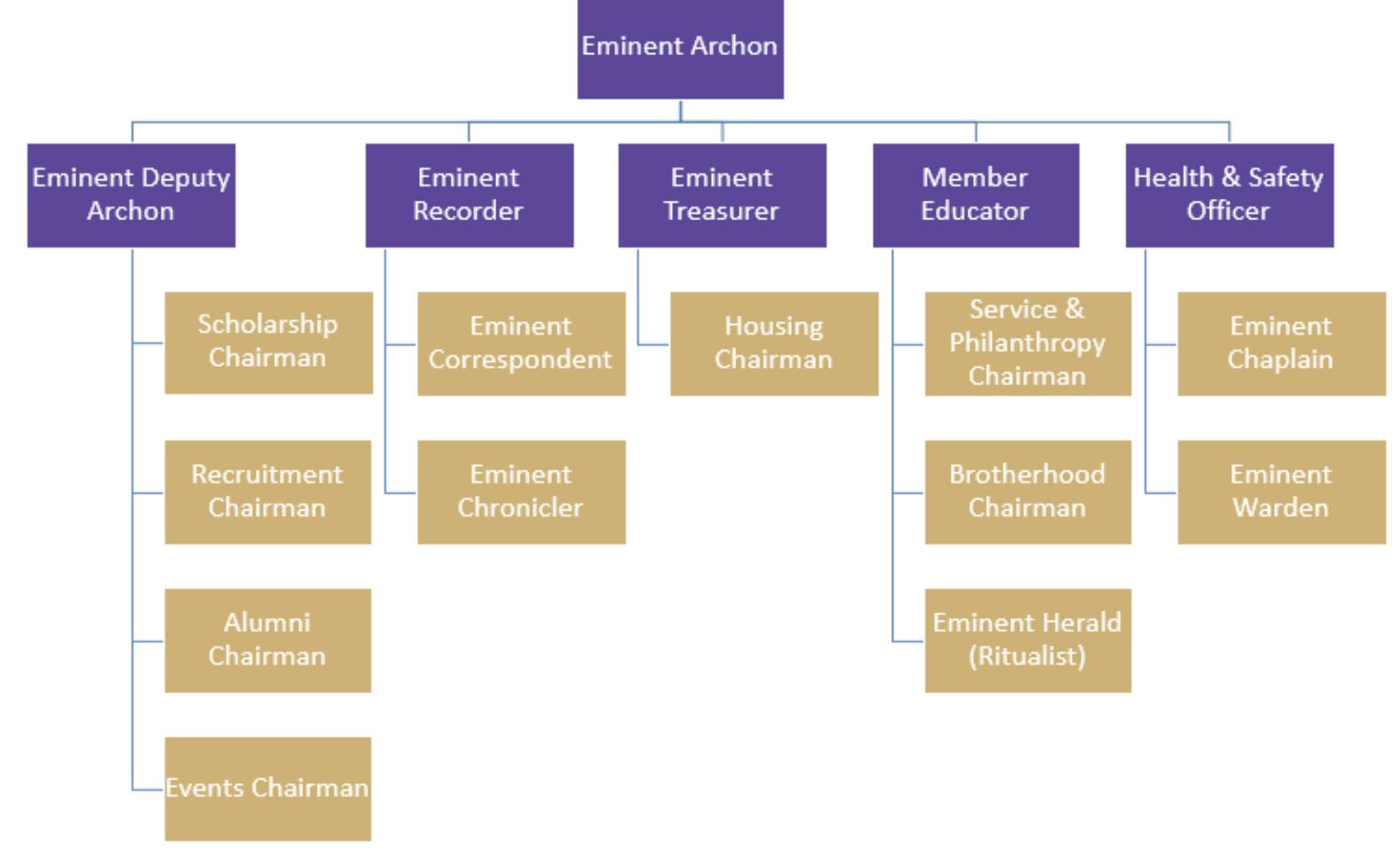
Your assigned Asset Manager will host a new officer orientation once officer transitions have been completed annually. These orientation calls will provide new officers with resources related to both property management and financial management on behalf of the chapter.
Officers are provided with read-only account access in Revela. This means that officers are able to self-help if questions arise in the system, however we still encourage officers to message staff as questions arise.
Since officers are in a position to help ensure accountability at the local level, we also encourage all members and especially officers to enter maintenance tickets into the system if they become aware of damage caused by members in the chapter facility. This tracking ensures GHM staff can charge the appropriate member(s) for damage caused in the chapter house.
Officers are expected to advocate for members and we need candid feedback for the services being provided at the house. Although the House Manager may not be an executive officer, we find that the role is critical in collecting feedback related to food service and for helping to ensure members are completing chores that they are assigned.
Many House Managers work closely with their chapter’s House Director and meet on a weekly or biweekly basis. Although this is not required, we at GHM encourage frequent touchpoints to ensure that our members and staff are both having a positive and productive experience at the chapter house.
Core Job Duties
Member support does not mean doing exactly what the member does or solving their dilemma for them, it means pointing members to the right resources and helping to educate them in their path to adulthood along the way. For many of our members this is their first time away from home and their first time navigating basic troubleshooting problems. Some members are looking for reassurance when asking questions, and others just genuinely don’t know the best path forward when faced with the dilemma they are posed with.
Two separate and distinct branches help to support each GHM (SAE Chapters only) chapter locally. These two groups are:
1. GHM: Oversee asset management and physical operations at the site, as well as a reporting party for the organization.
2. Fraternity Service Center: Oversee the member experience and provide support to leaders at the local level as they navigate complex issues related to membership.
These two parties collaborate on a regular basis to ensure that each chapter is on a good path forward and has the support they need in the face of adversity. If you are not sure who is the best resource to help resolve a dilemma, just ask your supervisor.
In addition to our organization, members of Sigma Alpha Epsilon may have certain reporting expectations or requirements as dictated by their host institutions. In our roles related to the facility, the important thing is to ensure that incidents are reported in detail and timely as they occur to the Chapter President (Eminent Archon) so that he can follow up accordingly. In addition to having reporting parameters, we may need to meet, the university can provide training, counseling, temporary housing and legal services should any of our members require those forms of assistance.
The Member Discipline Process should be initiated any time you observe a violation of Sigma Alpha Epsilon official policy or of facility rules at the chapter you support. Detailed reports should be submitted no later than 24 hours after the incident has occurred to the Risk Management Team so that they can follow the appropriate process.
Fraternity Service Center Incident Report: This report can be found on the SAE website under chapter resources in the health and wellness section. Here you can report a chapter incident or a member incident. If you require additional assistance, or should you have any urgent needs with regard to your incident, please contact the following Fraternity Service Center staff members:
• Layne Smith, Director of Risk Management. Email: lsmith@sae.net. Phone: (224) 999-2173
• Madison Simmons, Associate Director of Risk Management. Email: msimmons@sae.net.Phone: (224) 763 -4987
In your role as House Director, we need you to employ all your senses to report on conditions or situations that are occurring at the chapter facility. We need you to strictly be a reporting party, and to not intervene in any member discipline cases since those are for chapter leadership to address. It can be easy to try to neutrally mediate a situation, but listening to one party’s story when the other is not as reticent can lead to a sense of favoritism being perceived by other members. It is important to always remain a neutral party when faced with personality conflicts or differences of opinion in our roles.
Greek Housing Management has historically employed House Directors because of their direct correlation in reducing and managing risk when present at a chapter house. In the last year, Dr. Steadman Boston has worked to quantify the work of the entire team at Sigma Alpha Epsilon and the efforts have reported a reduction of 37% in the last calendar year.
House Directors are not meant to be the police, but they are the eyes and ears of the organization, acting as a reporting party. Reports should only be made once physically safe, and stopping the loss to the property should be the first order of business as our on-site agent. We always want to keep the organization’s best interests in mind and recommend that you connect with your supervisor via phone call if you are faced with an unfamiliar situation.
The fraternity manages risk according to Minerva’s Shield and officers of the chapter have been trained as a part of their role on this organizational policy. In addition to adhering to Sigma Alpha Epsilon’s Minerva’s Shield, Greek Housing Management uses a customized Emergency Action Plan (EAP) that has been developed for your chapter and is updated each year with officer transitions.
These two resources ensure you are leveraging local resources (like university or city first responders) and that you have also activated the national organization in the event that the chapter needs more specialized resources.
Core Job Duties
“Safety” is defined as a state in which hazards and conditions leading to physical, psychological, or material harm are controlled to preserve health and well-being of individuals and the community.
• Safety can also refer to the control of recognized hazards to achieve an acceptable level of risk.
• When something is called “safe”, this usually means that it is safe within certain reasonable limits and parameters.
• e.g. A vitamin may be safe, for most people, under most circumstances, if taken in a certain amount.
• It is important to realize that safety is relative. Eliminating all risk, if even possible, would be extremely difficult due to a lack of control in a shared living community and the expense, that would be incurred without guarantee of safety, would be prohibitive.
• A safe situation is one where risks of injury or property damage are low and manageable.
• It is vital to reinforce that safety is in the hands of the members to be good “eyes and ears” for the organization and their facility by reporting anything that could be “unsafe”.
• It is important to remember that safety is a concept, an exercise in risk/tolerance, and never something that one can guarantee.
“Preparedness” is defined as a state of readiness; however, preparedness should be in a constant state of evaluation as situations change, shift, grow or evolve.
Preparedness refers to a very concrete, research-based set of actions that are taken as precautionary measures in the face of potential disasters. These actions can include both physical preparations (e.g., supply stockpiles, building adaptations, enhanced accessibility, etc.) and training for emergency action.
Preparedness is an important quality in achieving goals and in avoiding and mitigating negative outcomes. Although the path to preparedness may be a long one, there are real benefits to being prepared, namely:
1. reduction to fear/anxiety by promoting a sense of safety
2. comfort in everyone being on “the same page”
3. ability for all impacted to quickly adjust as situation progresses
4. minimizing losses that accompany disasters
Using the chart which you will see on the next page, that references Federal Emergency Management Agency (FEMA) training, Greek Housing Management staff encourage chapters to plan for all steps related to preparedness and to continuously re-evaluate facility operations as any situation becomes emergent.
• The “Planning” stage of the cycle is where you gather the experts on your business and strategize on “what to do in case of when.” The answer to this question will be multifold and unique to you, depending on your geography and situation. This should not just be about COVID.
• e.g. Tornado, Earthquake, Hurricane, etc.
• The “Organize and Equip” stage of the cycle is where you gather the items, knowledge, or resources you will need to properly carry out your plan. The plan is meaningless without the pieces needed being ready to be put into action.
• e.g. I have a need for emergency power on site, therefore I need: generator, gas, and gloves.
• The “Training” stage of the cycle is where you identify the people you will need to loop-in on the plan and begin a process by which they can become exposed/educated on their piece of it.
• Think through all aspects of the plan, chances are your entire community will need to be trained or briefed on at least one component.
• The “Exercise” stage of the cycle is where the soundness of the plan is tested. Time for this testing should be scheduled since training exercises are great vehicles for highlighting deficiencies and allowing actors in the plan to become comfortable with their part.
• e.g. We planned for an evacuation point that we learned may be unusable depending on the nature of the emergency/disaster.
• The “Evaluate and Improve” stage of the cycle is where you take what you learned in the “Exercise” stage and refine your plan.
• e.g. We updated our plan to provision for three (3) physically distant evacuation points, that we named uniquely for clarity of our membership, after learning that our originally intended evacuation point could become compromised in an emergency/disaster.
• The next step is to repeat the cycle, starting at “Organize and Equip” since you are now coming to the table with a fully developed and vetted plan that will need annual adjustment according to this same cycle.
We want to stress that, although preparedness planning will promote and provide a framework by which we can hope to deliver “safe” facilities to our members, safety can never be entirely ensured.
Creating an environment where the community values the planning process, understands their place and stake within it, and recognizes how personal choices can impact their brothers, will allow the membership to establish their own sense of safety, create their own buy in to the provided wellness program, and will help determine what the new chapter “norm” will be in the aftermath of any emergency or disaster.
It is the responsibility of the Chapter President (Eminent Archon) to enact the Minerva’s Shield | The Health & Safety Policies of Sigma Alpha Epsilon any time an emergency situation occurs at the chapter facility. The purpose of Minerva’s Shield is to ensure that all members, volunteers and staff are aware of protocols to follow in the event of a situation necessitating a rapid response by the chapter. These protocols should be shared with chapter members annually. While we hope that you will not need to use Minerva’s Shields, it is best to review in advance just in case.
Events necessitating rapid response are often unexpected and generated by circumstances beyond the control of Sigma Alpha Epsilon, its chapters, or its membership. Any situation, accident or crime that occurs where members, guests, volunteers, or staff in harm’s way may necessitate rapid response. Examples of situations necessitating a rapid response:
• Death or serious injury of a collegiate chapter member or new member.
• Injury or incident involving alcohol or drugs at social events where members are present, regardless of who is hosting the event.
• Injury or incident involving a member, new member or guest at/or during a social event or philanthropy event hosted by Sigma Alpha Epsilon.
• Injury or bodily harm of new member, member or guest.
• Missing member.
• Natural disaster such as hurricane, fire, flood, tornado or earthquake.
• Unexpected medical emergency resulting in severe or fatal injury.
• Sexual assault or intimate partner violence.
• Any individual who threatens, attempts or dies by suicide.
• Deliberate damage caused by malicious mischief or riots.
• Severe illness where several individuals need medical attention.
• Acts of terrorism.
• Campus emergencies such as active shooters, missing students, threats of violence or student death.
Your EAP should be reviewed at least once per year and ideally at least twice. We recommend reviewing details for accuracy when you have officer transitions, in addition to ensuring it is accurate prior to opening in the Fall.
• Access Control: Focused on providing access according to specific parameters to specific people at specific times.
• Camera Monitoring Platforms: Allow for footage to be reviewed AFTER an incident occurs at the chapter facility. Helps provide evidence if required in a police report or criminal case.
• GHM only provides footage directly to law enforcement officers when they receive a formal police request for footage.
Security is always top of mind for GHM when investing in improvements at chapter facilities. GHM has partnered with ADT to begin upgrading systems so that cloud-based and encrypted solutions for access control, burglar alarms and camera systems that allow for support to be accessed anywhere at any time. Reach out to your Asset Manager to learn more about the solutions we have found for each of our unique properties. We at GHM are especially excited about our use of Brivo which requires members to download an app which acts as their key for the chapter facility. When the system is properly configured, the house automatically opens and closes based on the programmed holiday schedule, and members can remain active in the system from initiation to graduation without needing to be removed to restrict access during closures (like over summer).
Similar to our relationship with ADT, we work with a preferred vendor, Hoosier WiFi Guy, to set up our properties across the country with UniFi equipment and software as it relates to WiFi infrastructure. UniFi infrastructure is generally more reliable and allows us as the customer more insights into the WiFi traffic that is running at the site. If you ever have issues with your WiFi at the site, report the findings to your Asset Manager.
As technology continues to innovate, GHM staff are in the early stages of exploring Unifi solutions for access control, since they too offer a MFA form of mobile credentials that members can access via their phone.
*Sites may vary in wifi systems and access control.
The customization that a robust access control system offers means that approved key stakeholders are more easily able to access the areas that they need in order to complete their job, but that our members are protected since these same individuals can also be prohibited from certain areas or during time durations as needed. We recommend that at a minimum you consider adding in the following access levels to any system you use at your site:
• All Access All Hours
• This level is designed for you, other professional staff from the GHM team, or for substitute House Directors during the duration of time that they are covering for you.
• Residents
• All doors all hours during the academic year.
• Some doors may be restricted at facilities during the overnight hours.
• Live-Out Members
• Main door(s) only.
• Maintenance
• All exterior doors/common spaces M-F from 8am to 5pm.
• Food Service
• Days and times will be dependent on the service provided at the site.
• Housekeeping
• All exterior doors/common spaces M-F from 8am to 5pm.
• Advisors
• Main door(s) only from 6am to 11pm.
Vendors who are at the house on a less frequent basis should not be added to the system. It is your responsibility as the House Director to schedule a time and meet with these vendors to provide them with access. In the event of a prolonged project taking place at your chapter facility, check in with your supervisor to see if it would be appropriate to provide access, and to who, to help support the project efforts.
Training Purpose
To help staff understand why tracking items matters, how it protects everyone, and what’s expected day to day.
Asset Tracking
Knowing what we own, where it is, and who is responsible for it.
Inventory Management
Regularly checking that items are:
• Present
• Usable
• In the right place
• Replaced when needed
Examples in the Kitchen
• Knives, pans, trays
• Small appliances
• Utensils
• Storage containers
• Cleaning tools
A. Safety First
• Missing or damaged items can cause injuries
• Substituting the wrong tools increases risk
• Knowing what’s available prevents unsafe workarounds If an item is missing, there’s usually a reason—and safety is often part of it.
B. Efficiency & Teamwork
• Less time searching = more time serving
• Smooth shift changes when items are where they belong
• Fewer interruptions and frustrations
C. Cost Control
• Replacing lost items adds up quickly
• Small items disappearing regularly = big budget impact
• Money saved on replacements can go toward:
• Better equipment
• Staff needs
• Improvements
D. Accountability (not blame)
Asset tracking is not about punishment It’s about:
• Shared responsibility
• Clear systems
• Catching issues early When everyone owns the system, no one gets blamed.
• “We had it yesterday…”
• Buying duplicates unnecessarily
• Running out mid-service
• Items being taken home accidentally
• Equipment wearing out unnoticed
Everyone Is Responsible For:
• Returning items to their designated place
• Reporting:
• Missing items
• Broken or damaged tools
• Low supplies
• Using equipment as intended
• Participating in inventory checks when scheduled
What to Do If Something Is
1. Stop and think – Did it get moved?
2. Check the assigned area
3. Report it immediately (don’t wait or replace quietly)
4. Document if required (log, checklist, or supervisor notice)
• Asset Tracking and Supply Inventory lists are kept in your chapter’s “playbook”
• You should be reviewing items during each of your daily inspections.
• As the House Director, it is your responsibility to keep these inventories up to date at all times
• If you need help procuring any replacement items, your assigned Asset Manager will be able to assist with that.
• Items are easy to find
• Shifts start and end smoothly
• Fewer last-minute problems
• Equipment lasts longer
• Staff feel supported, not stressed
• Asset tracking protects our safety, our time, our budget, and each other.
• When we take care of our tools, we take care of our team.
In addition to Revela being used as the member interface where they sign agreements and pay their bills, Revela is also the system that staff use to make payments to vendors who complete work on behalf of a chapter. Here is an overview of those functions:
As a part of their onboarding to GHM, new members are provided with a link to claim their account in Revela. Once they click this link, they will enter their own personal information, along with their guarantors information. As a part of the signing process, members will be required to provide proof of renters insurance. They will then be required to sign their Membership Agreement, followed by a 2-year sublease agreement. Once their onboarding is complete, members pay all GHM fees, including room and board, via the portal. These funds that are collected via the system are in turn used to operate your chapter house.
All vendors should be set up for payment on net-30 terms and should be paid out of the Revela portal, rather than via credit card. It is important to provide all details for the vendor, including their email address. Having an email address on file will allow the accounting team to send the vendor a link to opt-in for electronic payment, which streamlines the entire process for future payments.
It is important to ensure that invoices are not submitted for payment until the work has been completed to satisfaction at the chapter house. GHM can only process invoices. Payment will not be remitted on Statements, Proposals, Estimates or Quotes. To submit a bill, email it as an attachment or as a clear photo to billing@greekhm.com.
Once bills have been submitted for payment, a member of the Accounting team will upload the invoice for approval and payment. Your location’s assigned Asset Manager acts as the first level approver and the CEO of GHM acts as the second and final level of approval before a check is cut from the system. Payments are usually remitted within 14-days of the receipt of the invoice to the billing email.
House Directors can use a personal payment method to make purchases on behalf of the organization or to have mileage that is traveled reimbursed when traveling for the company. All purchases and travel must be approved by your Asset Manager in advance of any expenses being incurred.
The Expense Reimbursement Form is the form that all Sigma Alpha Epsilon staff members must complete to be eligible for their expenses to be reimbursed. The form needs to be completed in its entirety prior to being submitted to billing@greekhm.com.
Here are a few items to note related to this Workforce Expense Reimbursement process:
• You will need to submit a W-9 if this is your first time being reimbursed by Greek Housing Management.
• You will also have the option to elect for electronic payment via Revela.
• Reimbursements need to be submitted within 30-days of the expense or mileage being incurred.
• Receipts need to be submitted for any expenses being reimbursed.
• Maps need to be submitted for any mileage being reimbursed.
• Mileage will always be compensated at the federally approved reimbursement rate.
• Each employee is personally responsible to submit their completed Expense Reimbursement Form along with the required receipts and maps to bill.com for payment to be released.
Greek Housing Management’s model has been built on:
• The Master Lease Agreement with the chapter which requires the chapter to fill the facility to the minimum required occupancy or to pay vacancy fees for any empty beds that they failed to fill with their own members.
• All members of each GHM chapter are privy to a Membership Agreement which requires the member to sign a 2-year sublease agreement to live in the chapter facility.
• The Sublease Agreement means that each new member financially supports the running of the chapter house for 2 years through their contributions to room and board.
In the event that members fail to honor their signed Sublease Agreement, GHM does not terminate the agreement with the member, rather the member must pay the breakage fee, which is the rent that they would have otherwise owed.
When this system is in place, and members work to proactively fill their chapter facility, they benefit from any sublease agreements that they execute beyond the minimum required occupancy.
i.e. The minimum occupancy for a house is 40 but the house can sleep up to 45, meaning that the chapter benefits from any rents collected over and beyond 40. This could have a huge positive impact on the chapter if they have the ability to and choose to overfill their chapter facility.
The budget for each chapter is designed to allow for the comfortable operation of the chapter house, but is not designed to sustain huge capital improvements to the house. GHM staff partner with alumni for fundraising efforts when huge projects arise and also leverage our existing assets when needed.
When damage occurs in the chapter facility, it is your role as the House Director to work with leadership to ensure that we assess any applicable damage charges to the responsible party and that we work with leadership to correct behavior before it becomes pervasive. We notice the largest issue with chapter’s staying on budget when we are unable to hold the proper individuals accountable for the damage they cause and the chapter as a whole ends up absorbing the costs for the repairs.
The below table sets the expectations for housekeeping at each of our chapter facilities. Our budgets for housekeeping are set based on the size of the chapter and the house being operated, so be sure to check in with your assigned Asset Manager if you have questions about keeping your budget on track. In general, housekeeping contracts and staff members are set at the start of the academic year and the weekly frequency remains the same throughout the year.
In houses where there is not full-time (40+ hours per week) of housekeeping, there is an expectation that members adhere to a chore chart and help support the housekeeping work that is happening professionally.
Responsible Party Area Item Frequency
Wipe down counters, including corners and cracks.
Clean inside and outside of refrigerator.
Mop, sweep, and/or vacuum the floor; be thorough and get under the cabinets.
Unload dishwasher, check dishes for cleanliness.
Take out trash and recycling.
Replace trashcan liner.
Load and run dishwasher.
Thoroughly mop hardwood floors.
Clean windows.
Disinfect door handles.
Dust everywhere.
Housekeeping Every time on site
Vacuum thoroughly carpets and rugs including upholstered furniture.
Housekeeping
Housekeeping
Housekeeping
Housekeeping
Housekeeping
Housekeeping
Housekeeping
Housekeeping
Housekeeping
Housekeeping
Housekeeping
Housekeeping
Housekeeping
Housekeeping
Housekeeping
Every time on site
Every time on site
Every time on site
Every time on site
Every time on site
Every time on site
Every time on site
Every time on site
Every time on site
Every time on site
Every time on site
Every time on site
Every time on site
Every time on site
Every time on site
Bathroom
Bathroom
Bathroom
Bathroom
Bathroom
Bathroom
Bathroom
Bathroom
Bathroom
Bathroom
Bathroom
Front Entry
Sweep and/or mop hardwood floors.
Fluff and straighten throw pillows.
Straighten wall art.
Remove hair from drains.
Scrub tubs and/or showers.
Scrub toilets.
Scrub sinks.
Clean shower doors.
Mop floors.
Wipe down mirrors.
Clean countertops and other surfaces.
Replenish toilet paper, tissues, and other amenities.
Restock paper towels and handsoap.
Mop floors.
Sweep entry and main walkways.
Core Job Duties
Housekeeping
House Director
Housekeeping
House Director
House Director
Housekeeper
House Director/ Housekeeping
Food Service
Housekeeping/ Food Service
Housekeeping
Housekeeping
Housekeeping
House Director/ Housekeeping
Housekeeping
House
Clean out cobwebs.
Survey outdoor areas for safety and missing or broken items.
Clean inside and outside of microwave.
Look for damaged items and take pictures of damage if necessary.
Inventory toilet paper, paper towels, dishwashing soap, lightbulbs etc. -- Refill or replace items that are running low or empty.
Clean HVAC filters if applicable.
Remove expired condiments/food.
Clean inside of oven & refrigerator.
Wipe down cabinets, inside and out.
Wipe down window blinds and sill.
Clean baseboards.
Shampoo carpets and rugs and furniture as needed.
Wash shower curtains; replace if
Treat glass shower doors w/Rain-X.
Inventory flatware, dishes, glasses and equipment and replace missing items.
Handyman
House Director/ Housekeeping
House Director/ Vendor
Housekeeping
Housekeeping
Housekeeping
House Director
Housekeeping
Housekeeping
Housekeeping
Housekeeping
(at a minimum) Semi-Annually Semi-Annually Semi-Annually Semi-Annually
Snake hair from drains.
Clean throw pillow covers.
Exhaust and vent fan cleaning throughout.
Move all furniture and vacuum/mop underneath.
Dust/wipe down light fixtures.
Wipe down doors.
Audit all storage rooms to ensure we are keeping all GHM and chapter belongings organized. Provide recommendations during next exec officer call if adjustments need to be made.
Wipe down walls.
Clean/Replace HVAC filters.
Wipe down window blinds and sill.
Core Job Duties
In the dining halls, one chef may be serving hundreds of students. High volume means that there might be more abundant or specialized resources (like pieces of kitchen equipment) but these settings also make for a less personalized experience. Our chefs, whether employed or provided by our vendor, are trained and equipped with the proper tools to provide personal food service that is just the right taste for each of our chapters.
When working with vendors in the space, like Uppercrust, the company provides an app which allows for menus to be reviewed in advance of service, meals to be rated at the time of or following service, and for requests like late plates to be made. Where an app is not available, we encourage members to speak with their chef or to check in with their House Manager to see if the food service committee is in place to provide feedback.
Our chefs and food service providers are equipped to address virtually any accommodation due to allergies or dietary restrictions. For more specific information take individual member requests to your Asset Manager so they can ensure our provider is able to meet any required accommodations. Only your assigned Asset Manager can excuse a member from the meal plan due to our inability to meet dietary needs.
Our food service providers love to give back when the chapter is hosting events at the chapter house. Some events that come to mind include:
• Recruitment
• Philanthropy
• Parents Weekend
Whenever possible we ask that officers inform House Directors and food service providers at least 2-weeks in advance of any scheduled events at the chapter house. This allows time for staff to adequately prepare. Meals provided for these events outside of the meal plan are the responsibility of the chapter to pay for, but we can often partner with regular vendors to get better quality at a lower cost when there is time to plan an event together.
GHM requires our vendors to hire and maintain ServSafe and Food Handlers certificates as required by the local jurisdiction governing each chapter house. This provides our members with confidence that meals are both safely prepared and tasty!
The commercial kitchen is closed to residents and members, it should only be accessible to the kitchen staff and to the House Director. Residents and members should have access to a servery located in the dining area. This is a countertop with small items like a coffee maker, microwave and air fryer that members can make use of 24/7. It is important that the kitchen is kept off limits to members to ensure that health code compliance is being maintained and to also to preserve the raw food that the chef has procured with the intention to use for food service. In addition to regular health department inspections, items like the hood and grease trap receive regular service to ensure all items are in good working condition for our staff at the site.
When equipment or smallwares are needed at a Chapter House, those requests should be submitted as a maintenance request via Revela so that the Director of Administration can complete the purchase and provide you with tracking details.
When your Asset Manager receives a purchase request from your location, we work with the Director of Asset Management to procure the items through our own resources. Food service vendors upcharge products that they purchase on our behalf and we want to be mindful of how we are spending and reduce unnecessary costs whenever possible.
Staff at GHM recommend that every chapter establish a Food Service Committee at the start of each academic year. The Food Service Committee should be led by the House Manager with the House Director helping to oversee the committee. The committee does not need to be made up of executive officers, but they should meet at least every other week and should be representative of a wide variety of tastes in order to be most effective. It is healthy to have your Chef or Regional Manager attend these food service committee meetings periodically so that they can hear directly from our members, but the House Director is expected to act as the liaison when a representative from the kitchen is unable to attend.
At the close of each break period (winter break and end of the academic year) the House Director should review a closing checklist with the food service staff to ensure that the kitchen has been closed with any unnecessary items being disposed of, remaining items being properly stored and inventoried, all surfaces being cleaned and sanitized before being shut down and that any needed supplies are ordered ahead of the next service period start. This close out is led by the food service staff member and is signed off on by the House Director to ensure that all parties are satisfied with the condition of the kitchen at the closure. When working with Uppercrust, they provide copies of these close out reports to the Asset Management Team.
If specialized deep cleans are scheduled during a closure period, that needs to be communicated to the House Director and should be logged in Revela.
The GHM’s improvement philosophy is grounded in prioritizing life safety improvements to our owned and managed facilities to keep standards consistent across our portfolio of properties. In the last several years, staff have prioritized infrastructure improvements which include:
• WiFi Improvements: With most students having at least some component of their class require online work, it is critical that the WiFi is reliable and strong at each GHM chapter facility.
• Access Control: Multifactor authentication and non-physical methods of access control are helping to promote safety at GHM sites across the country. These types of credentials for entry means that keys cannot be passed along to friends and are unable to be copied. This ensures that only who we intend is able to enter into our sites.
• Remote Management Capabilities: Cloud-based systems at GHM sites means that the GHM management team is able to step in and support all of our properties from a far. Systems that we have started to migrate to cloud-based solutions include: access control, burglar alarms, cameras and WiFi.
Over the next several years, the SAE F&H’s Board has committed us to upholding this work of prioritizing life safety investments over all other types of facility improvements. Life safety is not just related to security safety. Life safety can mean…
• Having reliable systems, like plumbing, water, heating and cooling.
• Having functioning infrastructure, like a roof that keeps moisture out of the facility.
• Prioritizing long-term solutions over quick fixes, such as replacing out broken items rather than patching items that are already beyond the end of their useful life.
• What does “useful life” mean? Every object you see in each chapter facility is assigned an average life span based on industry standards and how long items should last based on that measure. The useful life can range dramatically depending on the item being examined but these items are all tracked on a list of fixed assets by our Accounting Team.
• What are “fixed assets”? These are items that accounting tracks along with its associated replacement cost. These are items which are purchased for long-term use at our chapter facilities. In order to qualify as a fixed asset, the total cost of the item or project needs to exceed $2,500. These items hit our depreciation schedule.
• What is a “depreciation schedule” and why is it important? A depreciation schedule charts the loss of value of an object at the facility over time, as determined by its useful life. Tracking these items means that we have visibility into when an item should be up for replacement and can budget the appropriate cost to source a similar option can be provided when the time for replacement comes. This is what is called a “deferred maintenance schedule” that staff members review each year as the capital budget for the upcoming year is developed for each respective cost center.
More than the Accounting terms that are outlined above, House Directors are most familiar with the concept of Capital Improvements versus Maintenance and Repair
Capital Improvements are infrastructure additions or alterations that increase the overall value of the property. These improvements can increase the useful life of a utility or amenity of the facility by increasing the overall quality or strength. Capital projects can create more flexible and adaptable shared living-learning communities. These “fixed assets” that we will track once the work has concluded and the items are “placed into service” should meet the following criteria to qualify:
1. Substantially adds to the value or useful life of the property.
2. Becomes a permanent part of the property and…
3. …its removal would cause material damage to the property or item itself.
4. The minimum total project cost exceeds the threshold of $2,500.
Regular Maintenance and Repairs are designed to preserve and prolong the current facility conditions. Maintenance and repair. Maintenance and Repairs is focused on the restoration of items to their previous working condition while helping to protect the underlying property. Placing newly installed capital improvements onto a regular repair and maintenance cycle will help to safeguard our investment in the future of our member’s chapter facility.
Extra Learning Topics
House Director involvement in Capital Improvement projects, whether based on newly identified needs or a regular deferred maintenance schedule, is critical because you act as GHM staff’s eyes, ears and boots on the ground. We rely on you to ensure that vendors are executing to results and that newly sourced items meet or exceed members expectations. Keeping an accurate record of timelines related to work at the property will help when it comes to the Accounting team appropriately “placing the item into service” for our audit records. This means that if you start on a project in December but it stalls and work is unable to be completed until March then the entire project will be placed in service in March once the completed project wraps.
Also in support of the Accounting team’s work to reconcile fixed assets monthly is working with vendors to have all invoices reviewed and submitted for payment as soon as a project wraps. Delays in final invoice processing can inadvertently result in these improvement projects being “placed into service” in the incorrect months.
In addition to accurately tracking and communicating timelines related to Capital Improvement work and submitting invoices quickly, House Directors can get involved by partnering with the Asset Manger to set up designated “design committees” to ensure that all members have a say in the selections related to improvement projects where able. It is important to remember that GHM staff will always drive the final design decisions because of considerations like warranties and quality rating, however the intention of the members aesthetic will always be paid tribute to.
To be as equitable as possible, ask yourself the following questions before proposing a new idea to your supervisor:
• Would this improvement be a “nice to have” or does it address a true need or concern at the Chapter House?
• Is this an improvement that members are asking for or is this something you believe would benefit the members?
• What is the upfront cost and the recurring cost of the improvement you are proposing?
• Does the improvement address the following:
• Improve safety
• Incorporate technology
• Make the space more multi-functional
• Allow for additional services to be provided
• Add beds or take beds offline
Enhancing a shared space does not necessarily mean undertaking a huge renovation project, sometimes it’s the little things that that can help define a space and set it apart. If you are working with a vendor on any improvement work, the standard of sourcing 3 competitive quotes will still apply before work can be approved by your Asset Manager to get started. Here are some considerations related to the types of projects you might undertake:
• When you are taking on a large-scale project and are contemplating working with an interior designer, they take an average of 10% of the budget to cover their design fee.
• GHM staff have developed partnerships with companies like Wayfair, All Modern, Birch Lane, Joss & Main and Perigold, along with U-Loft and Brill who supply dorm-style furniture, to fulfill orders for Greek Housing Management facilities directly without needing to pay that upcharge working through and interior designer would incur.
• Whenever we work on purchasing new furniture, we ask ourselves these questions about our selections…
1. Commercial Grade?
2. Special Features Included?
a. Built in Outlets/USB
b. Wireless Charging
3. Is or can the piece be multi-use?
4. Has depth/scale of the item been reviewed?
5. Upholstered Items
a. Stain Resistant or Performance Fabric?
b. Abrasion Rating Reviewed?
c. Cleaning Requirements Reviewed?
Yes or No
Yes or No
Yes or No
Yes or No
Yes or No
Yes or No
Yes or No
Yes or No
d. Color/Pattern Reviewed for Practicality in Application? Yes or No
e. (sectionals only) Do Pieces Lock into Place?
6. Wood Pieces
a. Solid Wood?
b. Soft Close Drawers?
c. Is the back finished?
d. Storage Included?
i. If Yes, is the storage Open or Closed?
1. If Open, does it contain display lighting?
2. If Closed, do drawers/cabinets lock?
e. Cable Management Included?
Yes or No
Yes or No
Yes or No
Yes or No
Yes or No
Open or Closed?
Yes or No
Yes or No
Yes or No
• Investing or leveraging security technology lends itself to members feeling safest or most creative in their shared livinglearning community.
• The integrity of the brand should always be maintained, however the brand should not be taken literally either.
• Note: If you use our brand colors directly on a wall it doesn’t look the best.
• Installing sustainable and durable flooring or countertop options with installer and/or manufacturer warnings will help to future-proof the GHM’s capital improvement investment. For this reason, we always want to opt for ceramic tile over carpet flooring options where able. When working with tile, we prefer larger scale tiles that have a medium-colored grout to help minimize the maintenance of the infrastructure over time.
Updating any of the furnishings or fixtures outlined above will be a coordinated effort where you work with your Asset Manager to ensure that there is adequate funding to take on a project of the scale that you are looking at. If there is no funding for a project to happen, there are still plenty of upgrades we encourage you to look for your site. Review the list below to find ways that you can contribute to enhancing shared spaces at GHM Facilities. Remember that one of the easiest and most important ways to enhance the space it to proactively and properly maintain the space at all times.
Extra Learning Topics
Last-minute touches shouldn’t be forgotten, since these final details tie a space or project together to make things feel complete.
• Lighting: Providing options so that lighting can be customized based on space use or resident’s personal preference is key in creating an environment that our members perceive as inviting. One way to easily accomplish this is by considering the following:
• Canned Lighting – We recommend having canned lights in Bright White or 3000K to provide the best possible neutral lighting when all lights are on and in use.
• Floor and Table Lamps – We recommend having bulbs in all Soft White or 2700K so that warmer and cozier ambience can be enjoyed when just the standalone lamps are in use throughout the room.
• Leveraging Technology – Set the mood in these two fun ways…
• Smart Lighting can be used to tie multiple fixtures together and to provide countless automated lighting solutions. You can have the color adjust throughout the day, or use custom color lighting options when events are going on at the facility.
• Color changing desk lamps and charging desk lamps are fun features that allow members to show up and feel right at home in their space. Lamps that have bases featuring wireless wireless charging, or a variety of white tones will make studying in your chapter facility feel much more inviting and less intimidating. Members love when we add Signe Floor Lamps to corners of the room that feature “Hue” syncing so that lights change as music changes in the space.
• Greenery: Plants do not need to be real to make an impact on mental health, but the placement of greenery/flowers should be strategic when faux plants are used. Bringing a touch of the outside in has been shown in studies to help promote overall mental wellbeing since students often feel “cooped up” as they deal with academic priorities.
• Art and Decor: Keep art and décor options neutral overall, since styles and tastes change more often than rugs, paintings or canvases might be changed out in a space. You can never go wrong when finding symbolism in items you select, like the phoenix, a lion or Minerva.
• Encourage members to show their style by strategically placing posting boards where photos can be regularly updated or messages can be sent to other members! Easy to change out picture frames serve the same purpose.
• Scents: Keep scents clean and neutral in shared spaces. We all love clean spaces, but smelling the cleaner that was used also isn’t the first impression we want to make. Work to remove open trash cans from common spaces and to place room deodorizers to help cut any odors you do not want. Also remember that our members may be sensitive to common allergens like citrus and lavender. For this reason, avoid using essential oils in any cleaning products you employ.
• A Place For All The Things (mail and packages): Items all need a proper home if we expect member to properly maintain their space. Be sure that you have adequate mail slots for all residents to be able to have their own designated place to receive letters. For packages, ensure that there is closed storage where packages are designated to be placed. You can never go wrong investing in additional aesthetic storage options if you want members to become better partners in cleaning up their shared spaces. In addition to mail storage, you should evaluate the need to improve any chapter-related storage and use updating common space as an opportunity to reset expectations for how the newly updated space should be maintained moving forward.
Furniture changing does not mean that culture will automatically shift to follow. As GHM has moved through updates post-COVID, staff have discovered that some members have never seen their common spaces in use while the house is at full operation. Especially as we have moved through facility updates, GHM has noted the need to lead by example to set new norms and make sure committees are established to oversee work that needs to happen which requires member support. There is also a mentality of shared spaces being “someone else’s” responsibility to clean up, so without clear expectations, chapter leaders struggle to get buy-in in the following areas:
• Setting Up and Communicating Updated Chapter-Specific House Rules
• Managing and Reviewing the Chore Chart
• Setting Up/Breaking Down for Recruitment
• Setting Up/Breaking Down for Chapter Meetings
• Setting Up/Breaking Down for Events
Ask the hard questions, test the theories and do not assume that you know the things which today’s college students find most important. Yes, good food, reliable WiFi and building brotherhood are important things which draw our members to the facility, but what allows them freedom to want to stay is promoting accessibility so that members feel that all their needs can be met without leaving the shared living-learning community. Innovative solutions can pave the way for our members to leverage the technology of their Chapter House in order to excel as the students of tomorrow. The opportunities of those future learners and leaders are only limited by the constraints of our vision as we plan improvement projects today.
Extra Learning Topics
The Marketing team has provided us with brand guidelines as it relates to communicating as a staff member and extension of Sigma Alpha Epsilon on www.sae.net/chapter-resources.
Dos
• Feature moments that reflect emotional intelligence and character.
• Post about philanthropy, academic achievements, community service, leadership development, and campus involvement.
• Share photos of brothers volunteering, mentoring younger students, or attending professional events. Make sure the photos are high quality and reflect a professional image.
• Highlight specific brothers and collaboration with other groups that promote the fraternity’s values (ex, if an SAE is an on campus leader such as student body president or prominent award/internship, philanthropy partnerships with sororities, etc)
• Promote the core values of SAE.
• Consider a post or story series about what the fraternity actually stands for: tradition, leadership, service, and what it’s doing to live up to those ideals.
• Use respectful language, avoid drama, and remain professional in tone — even in comments or replies.
• Consider: “Would I want this shown in a news segment or in a job interview?”
• Your online posts reflect the chapter and build the public narrative about SAE
• Your appearance in photos and videos should reflect the professional values and traditions of the fraternity.
• Being casual is perfectly fine, but even in relaxed settings, members should aim to look neat, confident, and puttogether. Make sure clothing is clean and appropriate, hair is groomed, and the overall presentation reflects pride in membership.
• Highlight moments of professional dress, community involvement, and networking to reinforce the fraternity’s standard of the true gentleman.
• When representing the fraternity by wearing SAE letters, remember you’re serving as an ambassador for the organization. Clothing should be clean, well-fitted, and appropriate for the setting. Avoid pairing letters with attire or accessories that could appear sloppy, offensive, or inconsistent with the values of a True Gentleman.
• Don’t post or joke about anything related to hazing, drinking, or partying.
• Even if it’s sarcastic or “just for laughs,” this reinforces the worst stereotypes.
• Steer clear of sexist, racist, or ableist jokes, slurs, or inside jokes, even if they seem harmless among friends on public accounts.
• It’s ok to share special moments and photos, but consider how certain images may be taken out of context before posting.
• Follow the rule that, when in doubt, do not share.
• Refrain from discussing or arguing with anti-Greek Life individuals who bring up SAE controversies or scandals (e.g., hazing allegations).
• We can’t deny wrongdoings from members who failed to live up to our values, but it’s important to put a new foot forward and focus on the future of SAE.
• Change public opinion by leading by example.
The Chapter House acts as a hub for activities taking place all throughout the academic year. It is the responsibility of chapter leadership to communicate events to the on-site House Director as soon as they are planned so that our team can partner with the local chapter to execute.
Below are some events and partners that many of our chapters across the country join together with each year, but event are not limited to those listed here…
True Gentleman Day of Service is SAE’s community service initiative. Use the TG Day of Service branding for any service event you participate in as a group. Check out the provided resources for picking a project, planning and implementing your event, and reporting your impact.
Paddy Murphy can be one of the most memorable moments of your chapter’s year and can lead to years of tradition and enjoyment while giving back and making a lasting impact in the lives of others while also stimulating excitement and healthy competition on your campus.
For the thousands of people diagnosed every year with life-threatening blood cancers like leukemia and lymphoma, a cure exists. Over the past 30 years NMDP ® has managed the most diverse marrow registry in the world. They work every day to save lives through blood stem transplants and therapies. NMDP provides ground-breaking research, innovative technologies, patient support and education that save lives.
Every three minutes someone is diagnosed with blood cancer; this could be a stranger, a brother, or your family member. Becoming a donor is a direct way to help – you could be someone’s cure. Young male donors have the best medical outcomes for patients making SAE brothers ideal donors. As partners, SAE can help grow the donor registry and save more lives.
Children’s Miracle Network Hospitals (CMN Hospitals) is the largest network of children’s hospitals in the United States and Canada and partners with leading providers of pediatric healthcare with a mission of helping as many kids as possible live better, healthier lives.
CMN Hospitals raises unrestricted funds for 170 children’s hospitals across the U.S. and Canada to help fulfill their most urgent needs. They make all of this possible at the local level. When an individual chapter raises money, those donations directly benefit the local Children’s Miracle Network Hospital. Their founding pledge to keep 100% of donations in the area in which they were raised and to put children first in all they do also means SAE chapters can make a direct impact to their local hospital and local community.
All children deserve a safe, comfortable place to lay their heads. Across the U.S., too many boys and girls go without a bed – or even a pillow – to sleep on. These children end up sleeping on couches, blankets, and even floors. This can affect their happiness and health. Sleep in Heavenly Peace (SHP) is dedicated to building, assembling, and delivering top-notch bunk beds to children and families in need. No kid sleeps on the floor in our town®.
All beds stay within your local community, so the impact you have is truly local. Supporting the children in need within your local community will not only benefit the kids’ futures individually, but will also support their schools, local organizations, and the entire community.
Movember focuses on three important men’s health issues: mental health and suicide prevention, prostate cancer, and testicular cancer. Movember is helping to transform how men think about their health – and how to act on it. Using funds raised by Mo Bros, they collaborate with the world’s sharpest minds and best researchers to create effective treatments, innovative support solutions, and easily accessible resources for men.
As a mens’ organization, men’s health is of major importance to Sigma Alpha Epsilon. Three out of four suicides are men. One in nine men in the U.S. will be diagnosed with prostate cancer in their lifetime. And testicular cancer is the most common cancer in young men. Movember is doing important work to educate us and support research on these critical issues. Together, we can make a difference to all brothers, our campus communities, and beyond.
Greek Housing Management has been increasingly using Matterport to document our chapter houses. Here are some tips and tricks to get your house staged and ready…
• Laundry Room
• Storage Room (goal is to be able to move around)
• All Bathrooms
• Kitchen
• Mail Area
• Member Rooms
• Cleared out of random items
• Clean
• Window Blinds Up
• All lightbulbs are functional
• Room Number Displayed Properly
• All Furniture Sets
• Wardrobes/Dressers: ALL drawers & cabinet doors (if applicable)
• Futons in an upright position (if applicable)
• Chests have lids and in position (if applicable)
• Beds have mattress covers and top bunk guard is in place (if applicable)
• TV set & cords removed or neatly placed (if applicable)
• All Common Areas (dining room, hallways, stairwells, party room, workout room, library, etc.)
• Cleared out of random items
• All lightbulbs are functional
• Wall Decorations (picture frames, trophies, etc.) are hung up
• ALL doors have knobs and are functional
• If deemed appropriate, a basic clean is completed (e.g. sweep & mop, trash removed, etc.)
• All Furniture Set Appropriately
• Not placed in a fire hazard area
• Lawn Care/Maintenance is complete
• Cleared of random items/ No mail bins/ No Amazon packages
• All lightbulbs are functional (if applicable)
• Empty Parking Area (if applicable)
• Trash Bin Area Cleaned
• Organized and clean appropriately
• House Director acknowledges all items above are completed
• Provides a few days of when GHM staff can come out
*Note - ALL areas of the chapter house will be included in the Matterport.
Extra Learning Topics
BEDI-related topics are not easy to discuss openly within a group setting, but it is through that discomfort of sharing candidly that we can grow together. Each of us carries our own unique story which informs the way we operate in the world and in our job. Understanding each other can help us to “center” the correct individual under the right circumstances while acting equitably related to anyone we might encounter in daily life.
Belonging: Belonging is the result of continuously embodying socio-cultural support, integration, empathy, acceptance, and respect for all, thereby creating a safe space that invites individuals to experience an increasing awareness of and appreciation for their individuality and connectedness within the community.
Equity: Equity is the progressive practice of recognizing and eliminating barriers to opportunities for students, employees, and community members. Equity involves recognizing and eliminating both conscious and unconscious biases within institutional and organizational policies, procedures, and processes so all stakeholders may thrive.
Diversity: Diversity encompasses the full range of differences and uniqueness that embody the lived human experience including, but not limited to ability, age, education, ethnicity, experiences, family status, gender identity/expression, geographic location, heritage/history, immigration status, income, indigenous status, language, occupation, race, religion, sexual orientation, and thoughts.
Inclusion: Inclusion welcomes the contributions, experiences, ideas, and perspectives of all people by proactively addressing obstacles that impede equitable access to opportunities, resources, and decision-making, thereby creating and sustaining a culture of belonging, compassion, respect, appreciation, and recognition.
Our work in BEDI means that as a House Director we can put the teachings into action by modeling the behavior that we are taught through training. The Chapter House is a classroom and a research lab, where our residents and members both learn and model the behaviors that they are being taught by our organization.
The holidays are some of the most obvious times that we are able to effect change in our role managing Chapter Houses at Greek Housing Management. The holidays are an exciting time for many, but for others the time can carry sadness or be a reminder of unpleasant things. The holidays are also celebrated differently or not at all from one culture or region to another. Being inclusive does not mean not celebrating at all, but it is important that if one culture or tradition is to be celebrated, that all other cultures and traditions are equally considered and represented at the chapter facility.
Understanding our members and their unique way of celebrating helps us to foster inclusive décor and celebrations at the Chapter House. Representing all members’ traditions in our holiday décor is an easy way to help members feel more at home during the holidays, a time when members may especially be longing for home.
Set up a Holiday Planning Committee
Having a dedicated group of individuals who poll members ahead of the start of each holiday season can help to ensure all members are equally represented.
Lean into the Brand
Your organization’s brand is always a safe neutral. We love to get dressed up for the holidays by decking the house out in shades of metallics to pay homage to the rich history of our organization.
Make Attendance of Holiday Events Optional
When holiday events are being hosted at the Chapter House, be sure that they are listed as optional for residents and members to attend. The holidays may be a happy time of year for some but isn’t always for others and everyone should have the space to observe the holidays as they choose.
Tabletop Exercises are defined as a discussion-based activity where key stakeholders meet in an informal setting to role-play their responses to a simulated scenario. Facilitators guide participants through one or more scenarios, and players discuss how they would ideally play out their role in the situation.
For this Tabletop Exercise, we will be exploring Walking the Property at your site. We explain the exercise, then break off to walk the facility solo. You will have 15 minutes to walk before we come back together to discuss as a larger group what we learned through the exercise. To facilitate this exercise, we are providing you with a version of the Chapter House evaluation form here for reference.
Category
Grounds and Landscape
Yard(s) are well maintained, grass looks good, edging/ mowing completed, flower beds weeded and beautiful! Be sure gutters are not obstructed.
Notes for Grounds and Landscape:
Rating/condition
Needs Immediate Attention
Needs Immediate Attention
Parking and Dumpster
No blockages to designated parking spaces, no trash overflowing. No junk in parking area.
Notes for Parking and Dumpster:
Needs Immediate Attention
Access and Security
All door latches secure properly, keypads or fob readers in working condition, and cameras functioning. All keys/fobs have been audited, and any missing accounted for/deactivated.
Notes for Access and Security:
Practical Exercises
Common Areas (hallways, kitchenettes, storage, and closets)
Notes for Common Areas:
Paint in good condition, areas clean and vacuumed. Furniture intact and clean.
Kitchen
Notes for Kitchen:
Bathrooms
Notes for Bathrooms:
Area is well maintained, appliances in working condition and old food discarded.
Needs Immediate Attention
Laundry Room(s)
All toilets/sinks are flushing/draining properly, floors and walls wiped down and clean, showers in good condition and draining properly, personal items removed following use.
Needs Immediate Attention
Notes for Laundry Room(s):
Area is well maintained, all units functioning, lint traps appear clean, no standing water.
Needs Immediate Attention
Needs Immediate Attention
Amenities
Notes for Amenities: Additional Notes/Observations
Practical Exercises
Tabletop Exercises are defined as a discussion-based activity where key stakeholders meet in an informal setting to role-play their responses to a simulated scenario. Facilitators guide participants through one or more scenarios, and players discuss how they would ideally play out their role in the situation.
These scenarios, although they can also be funny, are based on real life and should be taken seriously.
For this Tabletop Exercise, we will be exploring Emergency Response case studies at your site. We will play out the following three (3) scenarios, then we will break off into teams based on your supervisor to discuss together. Once the scenario has been discussed in these small teams, we will come back together to discuss as a larger group what we learned through the exercise.
Case Study #1: Member Medical Emergency
New Hampshire Beta 2:32am on 9/15/2024: You are awoken early in the morning to frantic knocks on your door and members yelling your name and “help” at the top of their lungs. You open the door to your suite and members are stumbling over each other guiding you up to the 2nd floor while also filling you in on what they know. Steve was just discovered laying on the floor of the bathroom with a deep cut in his forehead. There is a trail of blood drops from his room across the way to the bathroom that he was found in. When you look in his room (since the door is ajar) you see that there is vomit on the floor of the room and open cans of beer. You know from check-in just a few weeks ago that Steve is in the lofted bed in the room. Returning to the bathroom, Steve is dressed like he was out the night before and did not change before going to bed. He smells heavily of alcohol and there is a pile of vomit by him on the floor. When you attempt to call Steve and shake him to see if he will awaken, you realize he is breathing but is not responding.
What are your next steps with what you know of this situation?
Case Study #1 Notes
Small Team Notes for Case Study #1
BCC Florida State 12:25pm on 11/5/2024: The University issues a bulletin shutting the campus down for the next 48-hours due to the report of a hurricane that is building momentum and headed straight towards the heart of campus in Tallahassee. For now, there are some winds and gray skies, but you are told that you have until early tomorrow morning when the anticipated Category 4 hurricane will hit your area.
• What communication will happen with residents/members once the University announces the campus closure?
• What preparations should happen at the facility, both well in advance of a disaster and immediately prior to one when you have advance notice?
• What steps should be taken following the natural disaster, only once it is confirmed that conditions are safe?
• How are residents and members accounted for following a disaster?
• What communication should happen once a full assessment of the facility conditions and member safety has been taken?
Does the severity of the hurricane change anything about the steps you should follow as outlined in the list above?
Case Study #2 Notes
Large Group Notes for Case Study #2
Case Study #3: Active Shooter Reported on Campus
Michigan Gamma 5:43pm on 3/6/2024: You are sitting at dinner when virtually everyone in the room starts to receive notifications to their phone at the same time. The blare of the alert sound rings through the dining room and you pull out your phone to see the following message…
MSU Alert: This message is from Michigan State University Police. SHOTS FIRED ON CAMPUS. If you are on campus, assess your situation and RUN, HIDE, FIGHT. If you are not on campus, stay away. THIS IS NOT A TEST! Further information forthcoming.
What immediate steps do you take once you receive this alert?
Case Study #3 Notes
Large Group Notes for Case Study #3
Practical Exercises
Tabletop Exercises are defined as a discussion-based activity where key stakeholders meet in an informal setting to role-play their responses to a simulated scenario. Facilitators guide participants through one or more scenarios, and players discuss how they would ideally play out their role in the situation.
These scenarios, although they can also be funny, are based on real life and should be taken seriously.
For this Tabletop Exercise, we will be exploring your relationship with the House Manager at your site. We will play out the following three (3) scenarios, then we will break off into teams based on your supervisor to discuss together. Once the scenario has been discussed in these small teams, we will come back together to discuss as a larger group what we learned through the exercise.
Case Study #1: Policy Violation at the Chapter House Indiana Gamma at 3:52pm on 4/20/2025: You are called by the resident into unit #8 because of a report of a clogged sink. When you knock and the resident greets you at the door you are instantly hit with the overwhelming smell of marijuana. The member invites you into the suite and you can see a large glass smoking instrument on the coffee table, along with what appears to be marijuana in a small clear plastic bag and a lighter. The resident leads you into the bathroom and shows you the sink that is backing up with water pooling and not draining properly. You let the member know that you need to make a few calls to get his sink repaired but that you will return very soon to get this sorted for him. You go to call the handyman and at the same time reach out to the House Manager so that they can help you to document this policy infraction and have the violations removed.
Case Study #1 Notes
Small Team Notes for Case Study #1
Large Group Notes for Case Study #1
Idaho Alpha at 7:34pm on 10/25/2024: You are approached by a resident down in the servery after reviewing the post-dinner clean up. The member is visibly upset and asks if you have some time to talk. You bring him into your office during which time the member shares that he has been struggling with his assigned roommate since move-in not respecting his personal boundaries in the shared room. You ask the resident if it is okay for you to bring the House Manager into this conversation and when he says “yes” you proceed to invite the House Manager into your office to continue the conversation together.
House Director Actions
House Manager Actions
Practical Exercises
Case Study #2 Notes
Small Team Notes for Case Study #2
Large Group Notes for Case Study #2
Michigan Gamma at 2:15pm on 2/10/2024: One of the most fun tasks House Directors and House Managers collaborate on is design planning related to renovations at the property. This upcoming year, GHM will be partnering to work on updates to the Chapter Room and the House Manager has worked with you (the House Director) to designate a committee of 3 individuals who will work alongside you to make design decisions on behalf of the chapter. After a design committee call earlier in the day, one of the members from the committee approaches you to share that there are concerns from him and another member from the committee who feel like their opinions and the opinions of other members from the chapter are not being respected or communicated by the most vocal member on the committee. You ask to invite the House Manager into the conversation so that you can work together to understand the situation and come up with a solution to ensure that the renovation planning accurately reflects the wishes of all members of the chapter. When the House Manager arrives at your office, you invite the committee member to share the same concerns he expressed to you just a few moments ago.
House Director Actions
Case Study #3 Notes
House Manager Actions
Tabletop Exercises are defined as a discussion-based activity where key stakeholders meet in an informal setting to role-play their responses to a simulated scenario. Facilitators guide participants through one or more scenarios, and players discuss how they would ideally play out their role in the situation.
For this Tabletop Exercise, we will be exploring Creating a Memorable Move-In Experience. We explain the exercise, then break off, make observations and take notes solo. You will have 15 minutes to do this work before we will come back together to discuss as a larger group what we learned through the exercise. To facilitate this experience, we have simulated a move-in set-up in this room for you to interact with. Some notes for you while you review the set-up. Research shows that move-in day is a critical opportunity to connect with residents and their parents. It is important to involve parents, over-communicate expectations, personalize the move-in experience and to inject with it a sense of fun. Here is a list of considerations:
Consideration Tip
Connect Residents with Resources
Partner with the House Manager to Communicate Ahead of Move-In Day
Members and parents alike may have questions related to accessing invoices and paying rent. Those questions are likely to be asked on move-in day.
Note: Residents are NOT allowed to receive their keys/move-in without paying their security deposit prior to the date of their check in. Ask your Asset Manager if you have questions about this.
Have Big, Bold Signage
Personalize the Move-In Experience
Having pre-arranged timeslots for move-in that members adhere to will help your move-in to be smooth and orderly. The GHM team is here for support but we rely on our partnership with the House Director and House Manager to ensure that all new residents receive the message and select their preferred move-in time slot.
Don’t be afraid to over communicate! Signs help ensure that members complete the move-in process correctly and dispose of refuse properly. As an ambassador representing the organization, we encourage you to wear our brand colors proudly on move-in/out day each academic year. Partner with the House Manager to update photos and passive posting boards around the facility prior to move-in. Members always feel most at home when they see themselves reflected in their environment.
Having some quick tips for residents to make navigating their new environment seamless always helps them to feel especially welcome.
e.g. Some facilities have radiators. Putting information on how to operate the radiator or care for one in their room can help minimize any misuse of equipment in their private space.
Appoint Move-In Assistants
We don’t expect you to do it all yourself! We recommend having at least 3 designated move-in assistants to help with you for the 2 days of move-in. These assistants can be members of chapter leadership but can be anyone designated by you and the House Manager. These individuals are also allowed to move in a day early with exec since they are helping with this work. These individuals should be helping with:
• Collecting check-in/out forms within 48-hours of members checking into their assigned rooms for the year.
• Distributing keys to residents who are checking in.
• Directing members to the appropriate parking area to unload personal items.
• Showing members to their new rooms if needed.
• Orienting new residents and their guests to the facility should they have any general questions.
Work with your House Manager leverage technology and record move-in simulations or virtual house tours that incoming residents can watch ahead to know what to expect prior to move-in day.
Your Notes
Group Notes
On the day of move-in play music, turn on all the lights and make the environment feel alive! Often the best content we get of GHM facilities comes from what our members generate in these moments. e.g. Many houses have our wooden True Gentleman plaque. Encourage members to take photos in front of the plaque or other SAE markings around the house to commemorate their move-in day.
By Anthony V. Mack, D.S.L., M.Ed. (North Florida ’11)
The art of leadership has been studied since the 1840s, beginning with Thomas Carlyle’s Great Man Theory - a theory that suggested leaders are born with innate qualities that make them natural leaders. Case studies for this theory included historical figures like Alexander the Great, Napoleon Bonaparte, and George Washington, just to name a few. Since then, the art and science of leadership has grown to include varying combinations of behavioral, charismatic, and transactional qualities. One of the most popular styles of leadership today is servant leadership. Although often reduced to a cliché, the servant leader is arguably one of the most impactful leaders because of their “leading by example” nature. The servant leader is distinguished by their focus on the heart work of leadership. The following will explore the heart work of the servant leader and provide application for leadership practitioners.
Keywords: altruism, follower receptivity, heart work, hygiene factor, motivator factor, servant leadership, transactional leadership
How can one be simultaneously a servant and a leader? Manning and Curtis (2019) define servant leadership as beginning with the call to serve, then the aspiration to lead. Here — the call to serve first — is where the greatness of servant leadership resides. A true servant leader is selfless and always considers others before themselves. Greenleaf (1970, as cited in Northouse, 2019) offers the most widely used definition of servant leadership. He defines it as “beginning with the natural feeling that one wants to serve, to serve first. Then conscious choice brings one to aspire to lead” (p. 228). However, there must be a distinction between true servant leaders and servant leaders in name only. To this, Greenleaf offers the following test: “Do those served grow as persons; do they, while being served, become healthier, wiser, freer, more autonomous, more likely themselves to become servants” (Greenleaf, as cited in Northouse, 2019, p. 228)? In other words, the evidence of servant leadership is followers who are better off than they were and who have the added desire to serve others.
According to Northouse (2019), there are three antecedent, or existing, conditions that have an impact on the effectiveness of servant leadership: context and culture, leader attributes, and follower receptivity. Context and culture as antecedent conditions suggest that “servant leadership does not occur in a vacuum but occurs within a given organizational context and particular culture” (p. 233). For example, health care and nonprofit organizations tend to be more caring than competitive, for-profit organizations. This implies that servant leadership is more likely to thrive in health care and nonprofit
organizations than in competitive, for-profit organizations. Likewise, servant leadership is more likely to thrive in organizations with a low power distance (less hierarchical) than in organizations with a high power distance (more hierarchical).
Leader attributes as an antecedent condition suggest that the behaviors and qualities of the leader have an impact on the servant leadership process (p. 234). Simply put, if one says that they are a servant leader without demonstrating the attributes and behaviors of a servant leader, then servant leadership does not exist. Leaders must demonstrate listening, empathy, healing, awareness, persuasion, conceptualization, foresight, stewardship, a commitment to the growth of people, and the ability to build community to be qualified as a servant leader (pp. 229-230). Finally, follower receptivity as an antecedent condition suggests that followers must have an appetite for servant leadership. Not all followers want a servant leader. Some believe that servant leaders are micromanagers or are not interested in their leader helping, developing, or guiding them. However, studies have shown that when servant leaders are matched with followers who desire servant leadership, it has a positive impact on performance and organizational citizenship behavior. On the other hand, when there is a lack of follower receptivity to servant leadership, it tends to negatively impact performance and organizational citizenship behaviors (p. 234). In summary, context and culture, leader attributes, and follower receptivity work in tandem to ensure an effective servant leadership process.
Although the art and science of leadership can be hard work, the heart work of servant leadership makes it most rewarding. The heart work of servant leadership refers to the altruistic, or caring, nature of the leader. Altruism is the highest form of concern for the interests and welfare of others above the concern for self (Northouse, 2019). According to Northouse, “altruism is pivotal to exhibiting servant leadership” (p. 340). Altruistic behaviors include mentoring, empowering, team building, and modeling organizational citizenship behaviors. This is the heart work of servant leadership.
The heart is one of the most vital organs in the human body. While one can live without certain organs, like the gallbladder, tonsils, or a kidney, the heart is essential to life. The primary functions of the heart are pumping blood, delivering oxygen and nutrients, maintaining blood pressure, and removing waste. First, the heart acts as a pump, circulating blood throughout the body via blood vessels. This action by the heart ensures that the entire body has the life-dependent fluid it needs to survive. Likewise, the heart work of servant leadership is ensuring that the organization or team has what is essential for it to function. Second, blood carries oxygen and essential
nutrients to cells and tissues. This makes certain that the body not only has what it needs to survive, but also what it needs to thrive. Without appropriate oxygen levels and nutrients, cells and tissues become damaged, and bodily functions are compromised. Similarly, the heart work of servant leadership provides what is necessary for followers to excel. This includes both hygiene (external) and motivator (internal) factors that impact satisfaction and performance.
Next, the heart regulates blood pressure by adjusting the amount of blood pumped out. If blood pressure is too high, it can silently begin damaging one’s heart, organs, and bodily functions. Conversely, if blood pressure is too low, then the lack of oxygen to the body can impair the function of its organs. By the same token, the heart work of servant leadership requires the leader to work to maintain optimal team pressure. This is when team members are most energized, focused, and performing at their highest levels. On the other hand, low and high team pressures are the silent killers of a team’s performance. Low team pressure causes members to become complacent, bored, and lack urgency. High team pressure produces stress, anxiety, conflict, and burnout. Finally, the blood removes waste products, like carbon dioxide, from the body. Carbon dioxide is poison to the body, just as chronic negativity, selfishness, procrastination, disengagement, and absenteeism are all poison to organizations and teams. Therefore, the heart work of servant leadership is to safeguard organizations and teams from these poisonous behaviors and remove team members who demonstrate them.
Servant leadership is not transactional, or an equal exchange between the leader and follower. Transactional leaders lead from a posture of what is in it for them. However, the heart work of servant leadership calls for leaders to make selfless deposits into their followers without any expectation of receiving a personal return on investment. This captures the altruistic nature of a true servant leader.
Jennings and Stahl-Wert (2016) describe the servant leader as “doing what everyone’s writing about” (p. 21). Their claim is that since servant leadership involves more serving by the leader than management from the leader, they should be called the serving leader. There are three practical points for one to consider in their pursuit of becoming a true servant leader: access, communication, and support (Manning & Curtis, 2019).
1. Access. Servant leaders are accessible and available for their followers. Not just physically present, but also engaging with them and the work of the team. This can be done by the leader reinforcing an “open door policy” or being intentional about working among followers. Although information technologies, e-mail, and social media may be more convenient ways of
interacting, they cannot replace the impact of the human moment at work (p. 147).
2. Communication. Servant leaders listen effectively. They hear what is said and not said. Whether through formally structured meetings or impromptu team huddles, “such meetings provide valuable opportunities to share information, lay out the work, anticipate problems, and gather momentum” (p. 147). Effective communication by the leader is essential because it enables them to clearly convey vision, build trust, inspire action, and fosters team collaboration.
3. Support. Servant leaders provide guidance. Targeted feedback is an integral ingredient to improving performance. “Successful leaders know that praise without support is an empty gesture” (p. 147). Simply saying, “Good work,” does not offer feedback for growth. On the other hand, saying, “In your presentation, your explanation of the main idea was very clear and easy to follow — great job simplifying a complex topic” or “Your presentation slides had a lot of text, which made it hard to stay focused. Try using more visuals or bullet points next time to keep your audience engaged,” are examples of targeted feedback. Ultimately, the servant leader must engage in sufficient discussions about performance and offer tangible support to their followers to improve their effectiveness and productivity.
As with any leadership style, there are limitations to the effectiveness of servant leadership, as well as considerations for its practitioners. First, slower decision-making is attributed to servant leadership. This is, in part, because of the servant leader’s collaborative nature. Instead of unilaterally making decisions, the servant leader may consult with a wide range of stakeholders, including their team members, other leaders, and those who will be impacted by their decision. Although collaborative decision-making is a powerful approach to decision-making, critics suggest that it slows down the decision-making process, which can lead to delayed group or organizational productivity.
Second, a consideration for servant leaders is the risk of burnout. By definition, the servant leader’s passion resides in serving others. Therefore, the altruistic nature of the servant leader causes them to prioritize the interests and well-being of others, even at the expense of their interests and wellbeing. This can lead to burnout if left unattended. Manning and Curtis (2019) posit that the result of burnout for a group or organization is losing “its best people at a critical point” (p. 409), which can be crippling and cause delayed productivity. They also suggest that for an individual, burnout can lead to “physical, psychological, and spiritual fatigue” (p. 409).
A final consideration of servant leadership is role confusion. According to Northouse (2019), “being a servant leader implies following, and following is viewed as the opposite of leading” (p. 242). Not only can the paradox of servant leadership make it difficult for observers to identify who the leader is, but participants may take liberties that they would not take under other leadership styles because of the servant leader’s empathetic nature. This can cause internal conflict that reduces group or organizational productivity.
The cornerstone of servant leadership is the desire to serve. While being characterized as a servant leader has become popular, the process of being one does not occur by happenstance. Appropriate context and culture, leadership attributes, and follower receptivity must exist simultaneously in order for servant leadership to thrive. Servant leadership is hard work; however, the heart work of servant leadership makes it uniquely rewarding. The altruistic nature of the servant leader is more concerned with the interests and welfare of their followers above their own. This results in a positively transformed follower who has the desire to perpetuate the act of serving others. Finally, servant leadership requires action, and is why the leader is often called the serving leader. Such actions include being accessible, an effective communicator, and providing guidance. Servant leadership is not about gaining followers, but uplifting lives. A true servant leader understands that in serving, one leads; and in leading, one serves.
Jennings, K. R., & Stahl-Wert, J. (2016). The serving leader: Five powerful actions to transform your team, business, and community. (2nd ed). Berrett-Koehler Publishers. Manning, G., & Curtis, K. (2019). The art of leadership. (6th ed). McGraw-Hill Education.
Northouse, P. G. (2019). Leadership: Theory and practice (8th ed.). Sage Publishing.