MAESTRO OF CINEMA MARTIN SCORSESE
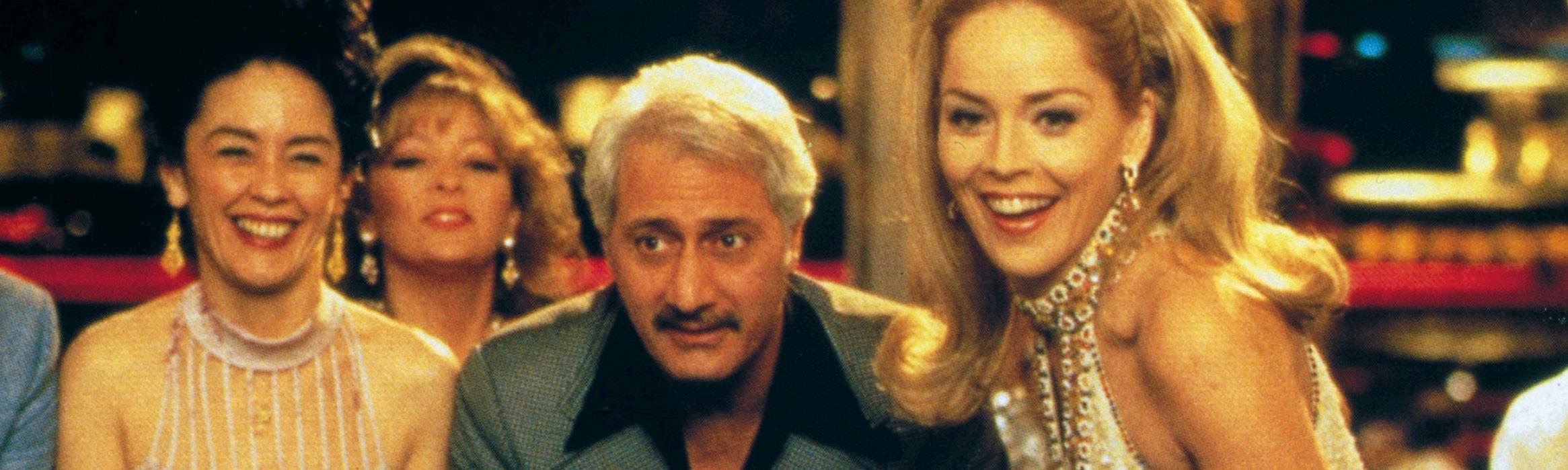
I think I learn more in a movie or a story when I see what a person does wrong and what happens to them because of that. What interested me about Las Vegas was the idea of excess, no limits. People become successful there like in no other city. There’s been a spread of new casinos all around America, which reflects desperation, when people think that with one throw of the dice their whole life will be changed. It was the beat of Vegas, the idea of Vegas, especially in the seventies. In the fifties and sixties, Vegas was for people who liked to gamble. But later you have Sinatra and the Rat Pack and all. And it gains swagger. Listen, you don’t like it, don’t come here. You can’t take the heat, get out. Fine. In Casino there’s no such thing as law, there’s nothing. It just goes. And then they self-implode.
Sam Rothstien (Robert De Niro) becomes a pillar of the community, he’s given a plaque, and he says, “Anywhere else I’d be arrested for what I’m doing. Here, they give me awards.” This is the only place he can use his gambling expertise in a legitimate way, and become part off the WASP community. But as Nicky (Joe Pesci) tells him in the desert, “I’m what’s real out here. Not your country clubs and your TV show. I’m what’s real: the dirt, the gutter, and the blood. That’s what it’s all about.”
The structure of the film changed a lot as we worked on the editing. Sequences are composed of many shots, and we had almost 300 sequences, all the scenes pinned to the wall as we worked, it took eleven months. This is where Thelma Schoonmaker came in very strongly. She had to hold the whole film in her head, all the footage, and take charge of where to place elements. Thelma and I used to edit documentaries years ago, so she’s very good at that. We decided to put the money-skimming passage up front.
The viewer should be moved by the music. Ultimately, it’s a tragedy. It’s the frailty of being human. I want to push audiences’ emotional empathy with certain types of characters who are normally considered villains. Certain songs and music pieces, when you play them with the picture, change everything. So it’s very, very delicate. In GoodFellas the sound is more Phil Spector, while Casino is more Stones, especially “Can’t You Hear Me Knocking?”, which is a key song in the film. Louis Prima has to be in there, but for the majestic destruction of the old buildings it has to be Bach. The old Vegas is being replaced by something seductive, kiddie-friendly, but it’s there to work on the core America, the family. While the kids watch the Pirate ride, we’ll take your money. While I was making Casino I was very angry at the extraordinary place that Vegas was. All that greed seemed like a reflection of Hollywood at the time, a reflection of American culture. It’s people doing themselves in by their own pride and losing paradise
Screenplay by: Nichols Pileggi and Martin Scorsese from Pileggi’s
Cinematography by: Robert Richardson
Edited by: Thelma Schoonmaker
Music Curation by: Martin Scorsese
Production Design by: Dante Ferretti
Costume Design by: Rita Ryack and John Dunn
THE PLAYERS: Robert De Niro as Sam “Ace” Rothstein
Sharon Stone as Ginger McKenna
Joe Pesci as Nicky Santoro
James Woods as Lester Diamond
Frank Vincent as Frank Marino
Pasquale Cajano as Remo Gaggi
Kevin Pollak as Phillip Green
Don Rickles as Billy Sherbert
Vinny Vella as Artie Piscano
Alan King as Andy Stone
L. Q. Jones as Pat Webb
Dick Smothers as Senator
In any house there are rules: shoes by the door, prayers before bed, toilet seat down. There are street rules: no parking, no spitting, no slapping. But rules are not the same as laws. Casino comes from the Italian word casa, Latin for “cottage”. In a casino, there are house rules, and some of those rules most definitely violate the law. But what you wouldn’t do in someone else’s house, you shouldn’t do in a casino: You must show respect, outwardly at least, like a handshake; in a casino, one is always a guest.
Casino (1995), a love story, begins with Ace Rothstein (Robert De Niro) in white pants leaving a building that looks very much like a colonial-style house. He’s dressed like the ace of hearts: red suit jacket, shirt, and tie. He tells us, “When you love someone, you’ve got to trust them. There’s no other way. You’ve got to give them the key to everything that’s yours. Otherwise, what’s the point?” Casino is a story told in reverse, like A Tale of Two Cities, only it’s one city — Las Vegas — narrated by two characters, each with his own version, like over a cup of coffee, the audience listening to both as they fill in the blanks. What is similar is their remorse.
And what causes more remorse than losing money, love, or friendship? Casino opens in 1983, when the median family income in America was $24k, and the Billboard No. 1 Hit Single was The Police’s “Every Breath You Take”. Money and surveillance, capital and control: Casino is a cautionary tale of betting big on a life outside of the law, of thinking that if love costs money, then love can be bought. Enter Ginger (Sharon Stone), a Lady Godiva. She knows that to win in a casino is to live in what Ace calls, “Kickback City”: No one is winning on their own; it’s a network to which you must belong. “What a move. I fell in love right there.” Ace watches Ginger as she walks across the casino floor, her white sequined dress catching the light, her eyes catching his. As a montage of Ginger in Vegas plays, Ace continues: “But in Vegas, for a girl like Ginger, love costs money. Ginger’s mission in life was money. She was a queen around the casino. She brought in high rollers and helped them spread around a lot of money. Who didn’t want Ginger? She was one of the best-known, best-liked, and most respected hustlers in town.” Ginger under a casino marquee, in different beaded dresses, handing cash to a valet, pills to a gambler, chips to a teller. “Ginger had the hustler’s code. She knew how to take care of people, and that’s what Vegas is all about.”
Ace might get Ginger’s floor game, but he doesn’t understand that getting her to marry him doesn’t mean that he’ll get a wife instead of a hustler. She’s honest with him: “I’m not in love with you,” she tells him. “You’ve got the wrong girl.” But Ace is such a strong believer in himself; he tells her how she’ll learn to love him. He buys her a million dollars’ worth of jewelry that they keep together in a safe at the bank.
Casino is a story of transactions, of owing and being owned. “Before I ever ran a casino, or got myself blown up, Ace Rothstein was a hell of a handicapper, I can tell you that.” He lights a cigarette, wearing a grey metallic suit. He’s in his casino, looking around, remembering who gave him what in order for him to be standing there, retelling: “I was so good that whenever I bet I could change the odds for every
bookmaker in the country. I’m serious. I had it down so cold that I was given paradise on earth. I was given one of the biggest casinos in Las Vegas to run — the Tangiers — by the only kind of guys that can actually get you that kind of money.” Enter the Mafia. A table of men sit in front of wine and fruit. A lamp hangs above, casting light like a halo around their heads, the rest of the frame in deep shadow. The room they are in could be in any house. They look directly at the camera. There are two empty chairs, ready to be filled or just newly relinquished.
Casino is a two-man job: two ideas of how things went awry, two roads leading away from the Goldena Medina. Ace’s best friend Nicky Santoro (Joe Pesci) pipes up, “Matter of fact, nobody knew all the details, but it should have been perfect. I mean he had me — Nicky Santoro, his best friend — watching his ass, and he had Ginger, the woman he loved on his arm. But in the end, we fucked it all up, It should’ve been so sweet too. But it turned out to be the last time that street guys like us were ever given anything that fuckin’ valuable again.” Where Nicky spots compadreship, Ace leaves it out. Ace didn’t want it to be the three of them; he wanted Vegas and Ginger for himself.
A watched pot never boils. The way that Ace loves Ginger is like the way he counts his money. He knows she’s never going to be faithful the way he knows all the ways in which the money in his casino gets pocketed above and below the tables. He keeps his eye on Ginger, on her whereabouts and holdings, on her phone calls and what’s in her cup. She grows restless; she wants out. The Mafia men and the crooked politicians want their money to keep on coming.
Animals can feel fear, but humans can feel dread. We can ask, how will it all end? Ace and Nicky as narrators see it all so clearly — their celebrations, their missteps — while we see the story unfolding. Because Casino opens with Ace being blown up, we know this will be a story of violence, like sitting down with a deck of cards: Who’ll walk away a loser, and who’ll hold the hand that keeps them betting.
In Casino, outside of Vegas it’s all desert. The desert is where the dead are buried, not in graves that can be visited, but in holes dug in the ground by Mafia men wearing Sunday suits. Everyone in Casino knows about the desert; the lights on the casino marquees are fueled by what happens under the stars beyond the city limits.