
Honorees with Heart: The Pioneer Scholarship Gala
BY BROOKE LUGO Staff Writer
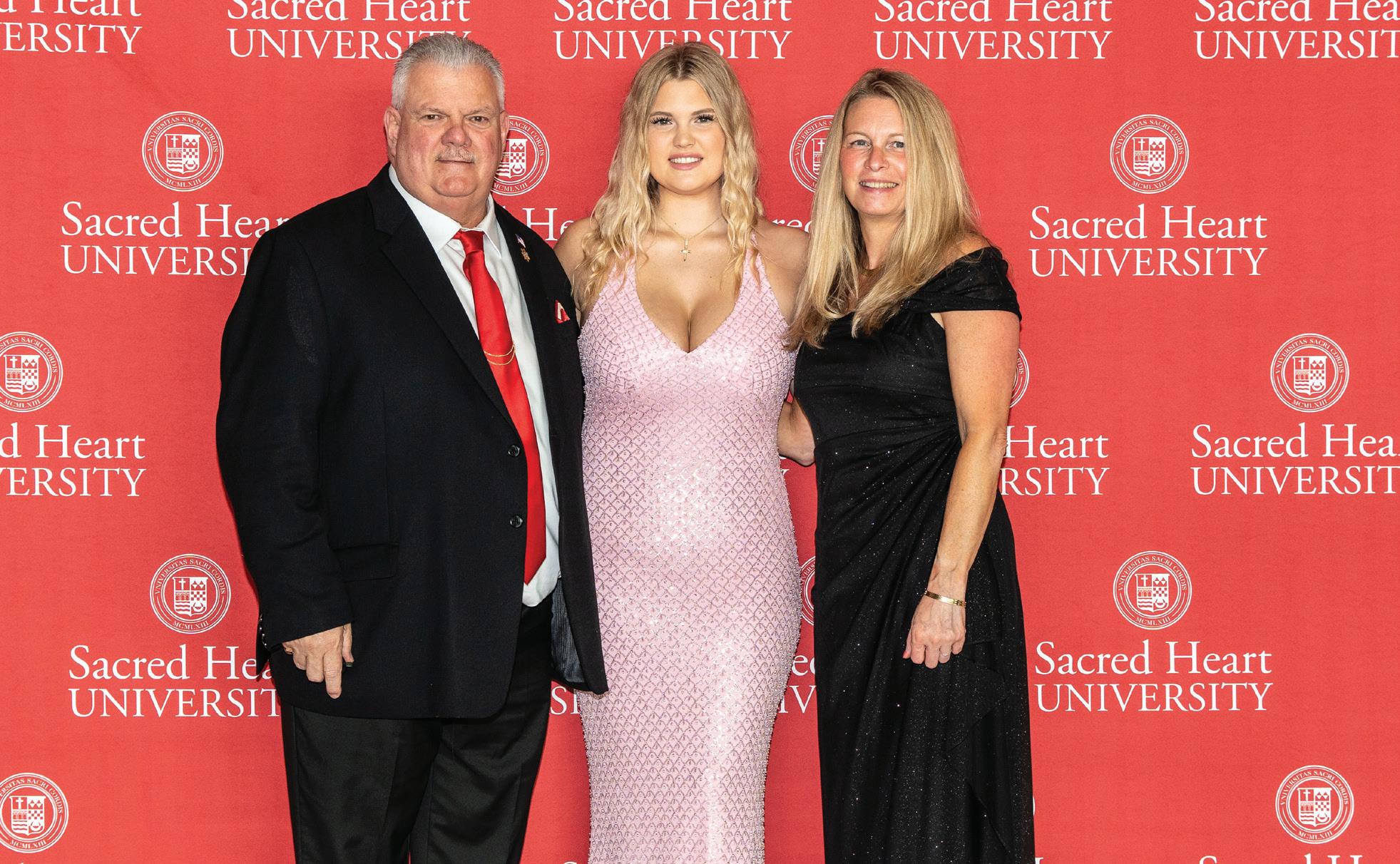
The Pioneer Scholarship Gala will be held on April 25 at the Martire Family Arena, bringing together alumni, donors, parents and members of the university community for an evening dedicated to supporting student scholarships.
The gala serves as the university’s premier fundraising event focused on expanding access to higher education. Proceeds from the evening help provide scholarships for Sacred Heart students while also celebrating leadership and service within the university community.
Each year, the gala honors individuals whose careers and accomplishments reflect the values Sacred Heart hopes students will carry into their own lives.
“When we select honorees, we look for individuals whose lives and work reflect the same values we hope to instill in our students, leadership, integrity, service, and a commitment to making a meaningful impact in their communities,” said Kristen Murphy-Mengold, associate vice president of university advancement and strategic initiatives.
This year’s honorees are NBC News journalist Craig Melvin and longtime Sacred Heart leader James T. Morley Jr.
Melvin, co-anchor of NBC News’ “TODAY,” has built a national reputation through his coverage of major political events, criminal trials and international stories. Over the course of his journalism career, he has reported on presidential inaugurations, political conventions and the Olympic Games while conducting interviews with leaders from across the political spectrum.
In addition to his work in broadcast journalism, Melvin is also an author and advocate who serves on the board of the Colorectal Cancer Alliance.
“Both Craig Melvin and James T. Morley Jr. embody the spirit of leadership and service that the gala celebrates,” said Murphy-Mengold.
Morley has been closely connected to Sacred Heart for decades and has played an important role in the university’s leadership. He previously served as chairman of Sacred Heart’s Board of Trustees and continues to support the university as a trustee.
Morley is also a founding partner of NewCity Communication and spent more than 40 years working in broadcasting, including serving as an executive with Cox Radio Inc. He currently serves on the WSHU Board of Directors and remains active in civic and community service.
Beyond celebrating the accomplishments of the honorees, the Pioneer Scholarship Gala plays a major role in supporting Sacred Heart students.
Funds raised during the event provide scholarship assistance that helps reduce financial barriers and allows students to focus on their academic, professional and personal development.
University President Dr. John J. Petillo emphasized the importance of the event for the university.
“The gala is one of Sacred Heart University’s most important annual events because it directly supports student scholarships,” said Petillo. “It brings together alumni, parents, community leaders and friends of the university to celebrate our mission while raising critical philanthropic support.”
Petillo said scholarship support can have a noticeable impact on students’ experiences at the university.
“I’ve seen students who have received the scholarship become more relaxed. It got them back on track to enjoy
US - Iran Conflict
their collegiate experience,” said Petillo.
Junior Ryan Buchan, a music major, has both attended and performed at the gala since his freshman year.
“I’ve been lucky enough to attend and perform at the scholarship gala for two years now, about to be my third year,” said Buchan. “Being able to talk to the people who help bring us students so many incredible experiences is a very rewarding experience.”
Buchan said the event also allows donors to see the impact of their support firsthand.
“These events are important because it allows donors to talk to us students directly and have face to face time with the people that their money is supporting,” said Buchan.
Petillo said events like the Pioneer Scholarship Gala also highlight the importance of philanthropy within the university community.
“Without it, a number of students wouldn’t be able to attend the university and pursue their dreams,” said Petillo.
BY LAUREN BUSH Staff Writer
The United States and Israel launched a series of strikes against Iran on Feb. 28 in a military campaign known as “Operation Epic Fury,” targeting Iran’s leadership and military infrastructure in an effort to weaken the country’s nuclear and ballistic missile capabilities, according to the U.S. Department of Defense and CBS News.
The conflict has quickly raised global concerns, particularly surrounding the potential economic consequences tied to rising oil prices and inflation.
Dr. Gary Rose, political science professor and scholar in residence, said the purpose of the conflict has shifted since the war began.
“Depending on what President Trump says from one day to the next regarding the objectives of this war, one can surmise the bombing of Iran, along with the destruction of its Navy and Air Force, is intended to limit Iran’s ability to produce nuclear weapons and long-range ballistic missiles,” said Rose. “Yet despite the uncertainty of this war, there is little doubt that Iran poses a threat to not only Israel but also several countries within the Middle East as well as the United States.”
The first weeks of the conflict involved coordinated strikes on Iranian military targets and government sites. U.S. officials have said the goals of Operation Epic Fury are “laser focused” on limiting Iran’s military capabilities and reducing the threat posed by its missile and nuclear programs, according to the Department of

Defense.
While the military objectives remain a focus, Rose said the economic effects may be felt quickly.
“For the short term, the American people and people around the globe will be paying more for gas as the price of crude oil has risen quite dramatically since the war began,” said Rose. “Due to energy prices, inflation will also increase. Consumers will feel this.”
Some students say they are paying close attention to the conflict as it develops.
“I am monitoring the conflict in Iran as I think it’s important to be informed and aware of what’s going on in the world,” said junior Matthew Meaney. “Especially as a young person, it’s important to stay informed on issues that affect the future of our country and our world.”
Meaney said he, like many Americans, remains cautious about continued U.S. involvement in conflicts in the Middle East.
“It’s a complicated situation. I think I share the same sentiments with many Americans who have Middle East fatigue,” said Meaney. “By and large, I don’t want to see American involvement in foreign wars.”
Meaney also pointed to the potential economic ripple effects connected to energy markets.
“Markets move based on feelings, and there’s been strong feelings about oil supply,” said Meaney.


“US-Iran Conflict” continued on pg. 2
Jack Cavicchi, Senior Photo Editor and Asst. Sports Editor
Sacred Heart University hosted the Pioneer Scholarship Gala at the Martire Family Arena on Saturday, April 26, 2025.
BY LAUREN BUSH Staff Writer
CONTINUED FROM PG 1
“Crude oil prices have skyrocketed, but as the USA negotiates with foreign countries, we can be hopeful to see prices come down. Inflation steadied prior to the conflict, so we can hope we stay close to that trend.”
Other students say the conflict is important to follow because of its potential global impact.
“I have been following the conflict,” said sophomore political science major Harjaap Singh. “It is a major international issue and could affect global politics and the economy. It’s important to stay informed.”
Singh said he is still forming his opinion about the decision to strike Iran.
“I think it was needed, or else something would have happened. Military action is necessary for national security. However, it could risk a much larger conflict,” said Singh.
Like many Americans, Singh said he expects the conflict to affect everyday costs.
“This can affect the global oil supply for sure. It’s going to lead to higher gas prices,” said Singh. “Overall, I think everyday goods and prices will go up.”
“I have been following the conflict,” said Singh. “It is a major international issue and could affect global politics and the economy. It’s important to stay informed.”
Singh said he is still forming his opinion about the decision to strike Iran.
“I think it was needed or else something would have happened. Military action is necessary for national security. However, it could risk a much larger conflict,” said Singh.
Like many Americans, Singh said he expects the conflict to affect everyday
BY SOFIA PAZ Staff Writer
“Playing hockey was my first and biggest passion of my life. Working for the Wild, I am very fortunate because I get to be part of hockey every day while making a living,” said computer science graduate student Abigail Ives.
Ives has combined her love for hockey with her education in computer science and information technology in her role as a hockey operations analyst with the National Hockey League’s Minnesota Wild.
“I knew that data analytics was gaining traction in hockey, and as a player/coach, I always thought about the game from a very data-driven lens,” said Ives. “With the Wild, I’m able to use my technical skills to evaluate the game from an analytics perspective and then communicate that viewpoint to our general manager and hockey coaches in hockey language.”
The U.S. Bureau of Labor Statistics projects that jobs in computer and information technology will grow by 13% between 2022 and 2032, outpacing the average growth rate for all occupations.
Prior to her time at SHU, Ives completed her undergraduate degree in English at Quinnipiac University and was then hired as a coach for the SHU women’s ice hockey team
“It’s very relevant in every part of my life, even just being able to pick a language to communicate my best. A big part of my job is being able to clearly communicate data and models to people who have no computer science experience,” said Ives.
As for her academic advisor, Richard Robustelli, executive in residence of the Jack Welch College of Business and Technology, he supports Ives’ combination of passion and academics.
“The world is not going to wait for us,” said Robustelli. “As educators, we are going to challenge the students we work with, and the more we integrate different disciplines together, the better prepared they will be for careers that bring happiness and success.”
“Combining computer science with disciplines outside of the STEM field is huge for the future.
UPCOMING EVENTS ON CAMPUS
Analytics on Ice US - Iran Conflict

costs.
“This can affect the global oil supply for sure. It’s going to lead to higher gas prices,” said Singh. “Overall, I think everyday goods and prices will go up.”
Abbie shows a love of sports and hockey, and she got the opportunity to combine her love with her interest in computer science and data in her work opportunity, and that’s a great thing,” said Robustelli.
Junior John Fucci is inspired by Ives’s education and career path
“To see a fellow student have the chance to combine her love for her sport and what she’s passionate about in her education is a great thing. It makes me hopeful that upon entering the workforce, an opportunity like that may arise for my peers or me,” said Fucci.
In her role with the Minnesota Wild, Ives works on pre and post-game reports for both the Wild and their American Hockey League (AHL) affiliate team. She also evaluates the rosters of both teams to identify their biggest needs.
“In a general sense, my role is supporting our coaching and front office staff’s decisions by bringing data into our decision-making process, whether that’s game strategy or personnel decisions. My computer science background helps me come up with various methods to build different predictive models, or API scripts, to try and accomplish this effectively and efficiently,” said Ives.
According to Robustelli, Sacred Heart decided to integrate technology into its business courses
“I think that was a very great decision that we made as a university that hopefully supports our students in a very competitive world,” said Robustelli.
Ives is set to graduate this coming May with her master’s degree in computer science and information technology.
Contributed by Abbie Ives
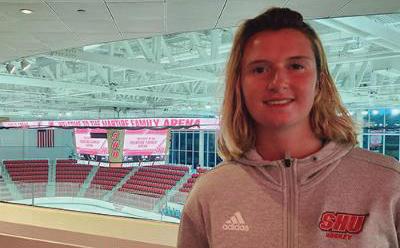
Abbie Ives (pictured) had been working at Sacred Heart before joining the Minnesota Wild.
Mohsen Ganji, AP Photo
Smoke engulfs a building after a strike in Tehran, Iran.
BY VICTORIA BRENNAN Staff Writer
Features
Classrooms Over Seas
Have you ever wanted to try to “split the G” in a real Irish pub, or enjoy an authentic Italian meal outside the Colosseum? At Sacred Heart University, the Office of Global Education offers a range of summer programs that allow students to study abroad.
These programs allow students to earn academic credit while experiencing different cultures and countries around the world. Summer study abroad programs are designed to give students the opportunity to travel internationally while still continuing their academic coursework.
“Students have a variety of programs to choose from depending upon their academic, professional and personal goals,” said Renée Pang, director of the office of global education.
Students can study in several international locations including Athens, Barcelona, Cinque Terre, Milan, Rome, as well as at the university’s global campus in Dingle, Ireland.
Summer programs allow students across different majors to take one or two courses abroad. Programs typically last between two and six weeks depending on the location and specific program. These shorter programs allow students to experience studying abroad without committing to an entire semester overseas.
For students who cannot commit to an entire semester overseas, summer programs provide them with an opportunity to enjoy a brief glimpse of studying abroad. One of the more popular summer options is Dingle, Ireland.
“SHU students can study abroad in Ireland during either or both Summer programs: Summer 1 and Summer 2,” said Ciara Barrett, program co-director at SHU Dingle.
About 150 students typically participate in the first summer session and around 100 students attend the second session, according to Barrett.
The application process begins through the university’s online study abroad system. Applications generally open in the fall semester and close between late December and early February, depending on the program.
The Office of Global Education provides several resources to help students prepare for their study abroad experience. Students can attend information sessions, meet with advisors and connect with peer Global Ambassadors who have previously studied abroad and can share their experiences.
During the program, students have opportunities to explore the surrounding area and take part in a variety of outdoor and cultural activities. These experiences allow students to better understand the local community and environment while building connections with classmates
and faculty.
For many students, studying abroad provides opportunities to learn in ways that go beyond the classroom. Traveling to another country allows students to experience different cultures, meet new people and gain a broader understanding of the world.
Senior Olivia McDonald studied abroad at John Cabot University in Rome. McDonald said the process begins by applying through the Office of Global Education and attending a pre-departure meeting that explains travel logistics, housing and academic expectations.
“When I studied abroad at John Cabot University for six weeks during the summer, we had classes during the week but had a lot of freedom outside of class,” said McDonald.
McDonald said the program allowed students to explore Rome and other parts of Italy while balancing their academic responsibilities.
McDonald said the experience of studying abroad is something she believes many students should consider.
“Students should apply to study abroad because it’s a really unique experience that lets you learn outside of the classroom,” said McDonald.
Many students use their free time to travel, visit historical sites and experience local culture. McDonald said this freedom allowed students to see many parts of Italy and learn more about the country’s history and traditions.
“It’s memorable because you’re constantly seeing new places, meeting new people, and having experiences that you normally wouldn’t have if you stayed at your home university,” said McDonald.
Sales And Styles At Retail 101
BY CHARLOTTE DOHERTY Staff Writer
Located in Shelton, Retail 101 specializes in selling overstock items at discounted prices, creating a shopping experience that blends practicality with discovery.
The warehouse is filled with rows of racks, bins, and tables, each showcasing a wide variety of styles and sizes. Visitors might feel overwhelmed by the numerous options available. However, for those willing to explore and dig around, there is a good chance of discovering some hidden gems.
“I found a jacket I have been eyeing for months for almost half the price,” said junior Emily McKay.
Popularized on social media, Retail 101 gives students the chance to save on name-brand items as an alternative to fast fashion.
“It’s a different vibe from the regular stores,” said junior Olivia Aviles. “It feels more practical and personal, like you’re finding things that matter to you rather than just following trends.”
With new shipments coming in each week, some students say that it is the variety of merchandise that keeps them coming back.
“It keeps me coming back. Even if I don’t need anything specific, I like seeing what’s new,” said Aviles.
McKay emphasized that the experience is more than just shopping.
BY CASEY MCGRATH Staff Writer
“It’s kind of like a mini adventure every time you go,” said McKay.
Senior Kaelyn Archambault, secretary of Sacred Hearts Fashion Club, says that between the variety and the affordability, she has the freedom to explore her own style without breaking the bank.
“Places like Retail 101 make it easier to try new styles without committing to expensive pieces,” said Archambault. “You can find unique items that help you develop your own look.” Archambault added that warehouses carrying overstock merchandise often include items that may not appear in typical seasonal collections.
“Sometimes the pieces you find are really different from what’s in big retail stores,” said Archambault. “That makes it interesting for people who want their outfits to feel more original.” Archambault also pointed out that the store’s business model has environmental benefits.
“I definitely think it’s price efficient,” said Archambault. “It’s consistent and sustainable. It’s not getting rid of inventory that hasn’t been sold, which is definitely a plus for the environment.”
Retail 101 offers more than just clothing. Its inventory includes school supplies, electronics, and household goods, often arriving in weekly shipments that encourage repeat visits.
The store’s layout, accessibility, and variety make it appealing to younger shoppers. With affordable prices, exclusive items, and an element of surprise, Retail 101 continues to attract students who want both value and a unique shopping experience.
Students at Work
an Assistant Mail Clerk at the SHU PAD, serves as a Resident Success Assistant in Thea Bowman Hall, and is a member of the women’s rowing team—all while maintaining a 4.0 GPA as a full-time student.
Outside of tuition, books, and school supplies, being a college student can be expensive. If you’re looking to earn some extra cash, there are a variety of opportunities both on and off campus that can help alleviate some of the financial stress.
Work-study is a federally funded financial aid program that allows students the opportunity to apply for jobs on campus.
“I found my job through attending a career fair at the beginning of the year, open to students who were offered work-study from the university,” said freshman Angelica Smith.
Smith is a Career Ambassador for the Center for Career & Professional Development. For an hourly rate of $16.94, the minimum wage in Connecticut, she performs administrative tasks and reviews student résumés, among other responsibilities.
“Having a job while in college has not only allowed me to build connections with my peers and those older than me, but it has also allowed me to communicate better and be more organized,” said Smith.
Annie Suffredini, executive director of Career Development, emphasizes the importance of students having jobs in college for their professional development.
“Things like time management, communication, teamwork, and professionalism all come from balancing work with classes and other responsibilities,” said Suffredini. “These experiences help students feel more confident and prepared when they enter the workforce.”
Sophomore Trinity Savage works as
“My time management skills have increased drastically from having a job on campus,” said Savage.
For students not awarded work-study or unable to find a job on campus, other opportunities can be found off campus in babysitting, pet sitting, dog walking, house sitting and more.
“I found most of my jobs through Facebook groups for babysitters, moms, and local community groups in towns like Fairfield, Westport and Easton,” said senior Anya Pineo. “I posted a picture of myself, talked about my babysitting experience, and shared my availability.”
For an hourly rate of about $25, depending on the job and number of kids, she appreciates the flexibility of the job.
“I try to schedule my classes earlier in the day, so I am usually done by around 2 p.m. at the latest,” said Pineo. “That makes it easier to take after-school babysitting jobs, usually from around 3 to 6 p.m.”
While some students have jobs to relieve financial pressure for their families, other factors contribute to their decision.
“A job can help with tuition and everyday expenses,” said Suffredini. “But students also look for opportunities to gain experience, explore career interests, and start building their résumé while they’re still in college.”
Through gained experience, students establish meaningful connections.
“One family liked me so much that they offered to let me live with them for a year, so I wouldn’t have to pay for housing, which was really kind,” said Pineo. “Another family helped me start my web design business and even invested in it.”
To assist students with employment, the university offers multiple resources.
“One of the best resources students have is Handshake, our career platform where employers specifically recruit our students for on-campus jobs, internships and full-time roles,” said Suffredini. “Beyond that, the Center for Career & Professional Development offers résumé and cover letter reviews, interview preparation, career coaching, and networking events with employers.”
Whether through work-study or jobs unaffiliated with the university, students recognize the benefits of working while in college.
“I think having a job in college can be really valuable,” said Pineo. “It teaches responsibility and helps you build relationships with people who can support you and help you grow.”
Instagram, @shuorientation
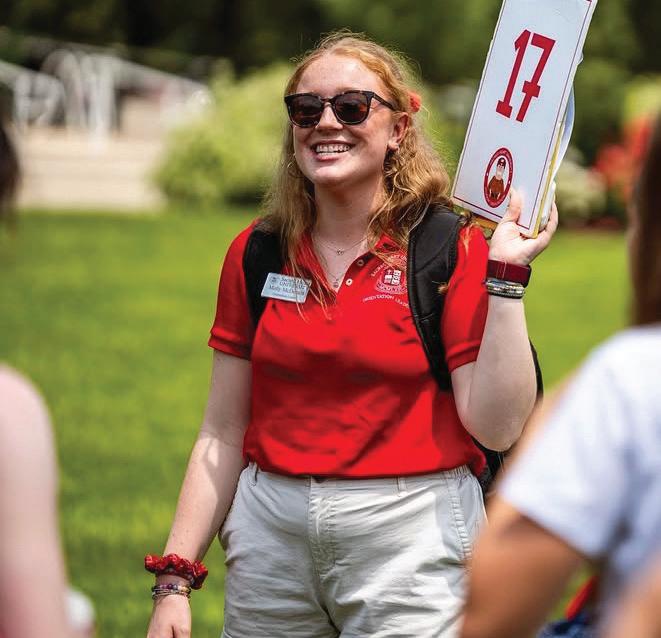
Orientation leaders guide incoming students as they adjust to life on campus.
Daniel Passapera, Sacred Heart University
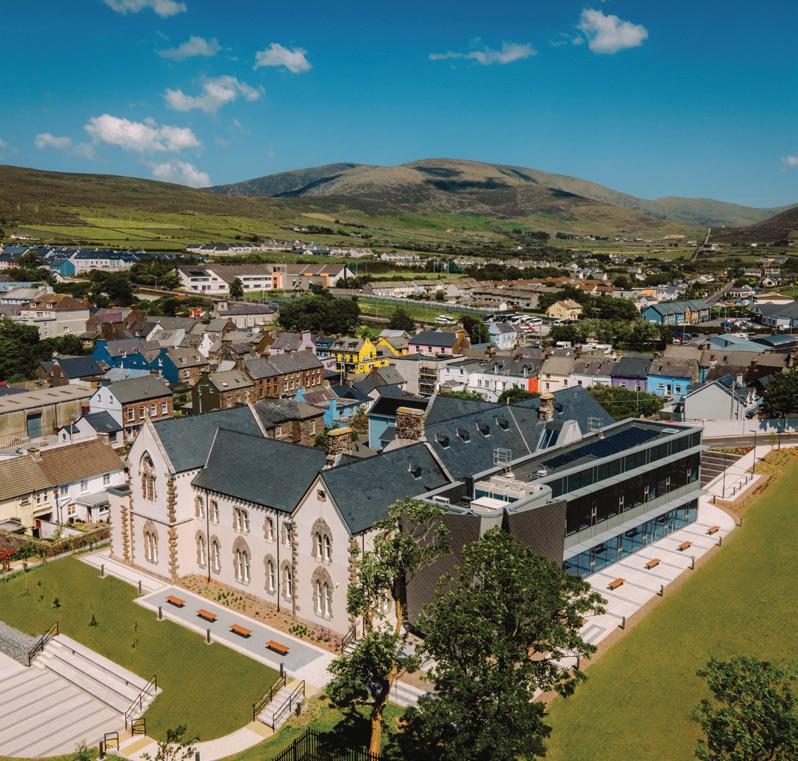
Exterior shot of Sacred Heart University's Dingle campus on Thursday, May 18, 2025.
SHU Springs Back To Life CampusLife
Spring is beginning to settle over Connecticut, and as temperatures inch into the mid‑40s, Sacred Heart University students are slowly returning to the outdoors. After months of rushing between buildings in the cold, many say the first warm days bring an immediate shift in mood, motivation, and campus energy.
“When the weather finally starts to warm up, I spend more time outside, whether that’s on the amphitheater steps, outside the library, or 63’s patio,” said junior Mia Feliciano. “It’s nice to get some work done or just hang out with some friends while in the sun.”
For some students, winter is more than an inconvenience — it’s a sea son of discomfort and stress. Katherine Rodriguez, a coastal & marine science major, said the cold months make daily routines more difficult.
“I do find the cold weather to be very bothersome,” said Rodriguez. “It’s annoying enough to walk outside around campus without freezing, to be comfortably dressed, to relax indoors because of the temperature difference, and even to enjoy iced drinks.”
Rodriguez said icy walkways add another layer of worry.
“This past winter alone, I’ve had some friends who have almost fallen on the ice outside,” said Rodriguez. “Overall, it just brings discomfort and worry to me, which affects how I feel during the cold weather.”
As temperatures rise, students say their moods rise with them. Karla Dominguez said she immediately notices the shift.
“Once the weather starts getting warmer, I usually try to spend as much time outside as possible between classes,” said Dominguez. “My friends seem way happier and full of energy because of how nice and warm it is out side.”
Feliciano said she sees the same change in her own friend group. “There’s a shift in their moods, like they’re going from being super school‑ori ented and hyper‑focused to having a better work‑life balance,” said Feliciano. “The warm weather reminds us to take care of ourselves.”
Students also say the campus itself feels transformed.
“It feels awesome overall,” said Rodriguez. “I don’t feel suffocated indoors or in heavy clothing so that I don’t freeze outside.”
Dominguez described spring as a reset for the community.
“During the winter, everyone is indoors and rushing to classes to avoid the cold,” said Dominguez. “Whereas in spring, many more people become
productive outdoors, sit and chat with friends on the amphitheater steps, or go outside just to walk around on campus.”
Students also shared what their ideal spring afternoons look like. Feli ciano imagines grabbing food with friends or visiting places like the Beardsley Zoo or downtown Fairfield. Rodriguez said her perfect day would include a picnic or a walk to Veterans’ Memorial Park. Dominguez pictured lunch with friends, followed by a beach walk or ice cream trip.
As spring eventually gives way to summer, students plan to shift their routines again. Feliciano said she’ll likely spend more time indoors once the heat sets in. Dominguez looks forward to traveling and enjoying her break, while Rodriguez plans to pick up hobbies she paused during the academic year.
Across campus, the message is the same: spring brings warmth, ener gy, and a renewed sense of community — a welcome change after a long New England winter.
CampusLifeEditorTheoWeismannandStaffWriterBenjaminObi enu contributed to this article.

Instagram, @sacredheartuniversity
Some students spent their day laying under the sun while studying to pass the time.
BY JAMES SPOTO Staff Writer
CampusLife
Preparing For Madness
Beginning on March 19, 64 National Collegiate Athletic Association (NCAA) men’s basketball teams will face off in a bracket-style tournament called March Madness. Games will be played across the country until two teams remain, with a champion crowned on April 6 at Lucas Oil Stadium on CBS.
According to ESPN, in 2025, 24.4 million brackets were filled out, setting a record for the third consecutive year.
Sophomore Tim Via described the importance of filling out his bracket and how it adds to the excitement of the games in March.
“I usually compete against my friends and family,” said Via. “It’s fun to watch and root for different teams, even ones that probably shouldn’t be in.”
Sophomore Sean Irving emphasized the lower-seeded teams and their big impact on the tournament.
“I like to pick teams who aren’t properly rated and are from a smaller conference,” said Irving. “My sleeper pick this year is the Long Island University
BY ASHTON DAVIS Staff Writer
Sharks. I think they’re going to cause some noise this year.”
Through eight appearances, the Sharks have yet to win an NCAA tournament game, as they return this year since their last presence in 2018.
“Honestly, I think that St. John’s will go pretty far,” said sophomore Alex De La Teja. “I also think North Carolina will surprise people.”
North Carolina is looking to bounce back after losing its star, Caleb Wilson, for the rest of the season with a broken right thumb.
“I’m really just looking for the upsets,” said Via. “I enjoyed watching Saint Peter’s and Doug Edert upset everyone’s brackets back in 2022.”
Irving and De La Teja agreed, adding that the upsets shake up the intensity and bring more life to the tournament.
“Furman versus Virginia in 2023, I was in Spanish class,” said Irving. “My friends and I watched the game winner from Furman with two seconds left and went nuts. Watching with a big group, it’s exciting and gets me into the game.”
De La Teja agreed with Irving, adding that he usually watches the game in his dorm surrounded by a big chunk of his peers.
“I prefer watching the games on my computer and phone in the dining hall or while I’m doing work,” said Via. “I’ll sometimes sit down and watch with my friends, but not with an overly obnoxious group.”
As for who they thought would win, Irving picked top-seeded Duke, while De La Teja picked Houston, both teams in the top 10 of the AP Top 25 Men’s College Basketball Poll.
“I think Kansas is going to win it all,” said Via. “They always make runs in March, and with the roster they have now, I would be shocked if they weren’t in at least the Final Four.”
“The tournament is easy to watch, and anyone can win,” said Irving. “You know what they say, ‘anything can happen in March,’ and I’m looking forward to seeing what this March has in store.”
Brackets and Betting
As the National Collegiate Athletic Association (NCAA) Tournament begins each spring, many college students rush to fill out their March Madness brackets. While the tradition has long been a fun way to follow the tournament, the growing presence of sports betting has added another dimension to how students experience the games.
Freshman Gavin Flynn said filling out brackets has become a yearly tradition among his friends, family and teammates. Some brackets are simply for fun, while others include small buy-ins that make the competition more intense.
“I usually fill out a bracket every year, sometimes it’s just for fun, but other times there’s money involved,” said Flynn.
Although Flynn participates in bracket pools, he said he has never placed real-money bets on March Madness games. Still, he believes sports betting has become more common among college students as the idea of making quick money becomes appealing.
“I definitely think sports betting has become more common among college students. A lot of people are attracted to the idea of making money, even if it could hurt them in the long run,” said Flynn.
Freshman JC Andrade said he also fills out brackets every year and occasionally joins paid pools with friends from home and members of his family. While he does not personally bet on tournament games, he said sports betting is increasingly visible among students.
“I think it’s definitely become more popular. People see it as a way to make quick money, even though you can lose money just as fast,” said Andrade. “Every game I’ve watched seems to promote sports betting in some way.”
Research from Sacred Heart University supports these concerns. A recent nationwide poll conducted by the university found
that 62% of Americans are worried that sports betting advertisements are affecting young people. The poll also reported that nearly three-quarters of Americans believe gambling has become more socially acceptable in sports.
Sophomore Michael Psilopoulos thinks March Madness brackets still serve as a way for students to connect and follow the tournament together. However, he believes the rise of betting apps and promotions has changed the overall sports viewing environment.
“With all the betting apps now, it feels like gambling is everywhere when you’re watching sports,” said Psilopoulos. “It can make games more exciting, but once people start betting more than they should, that’s when it becomes a problem.”

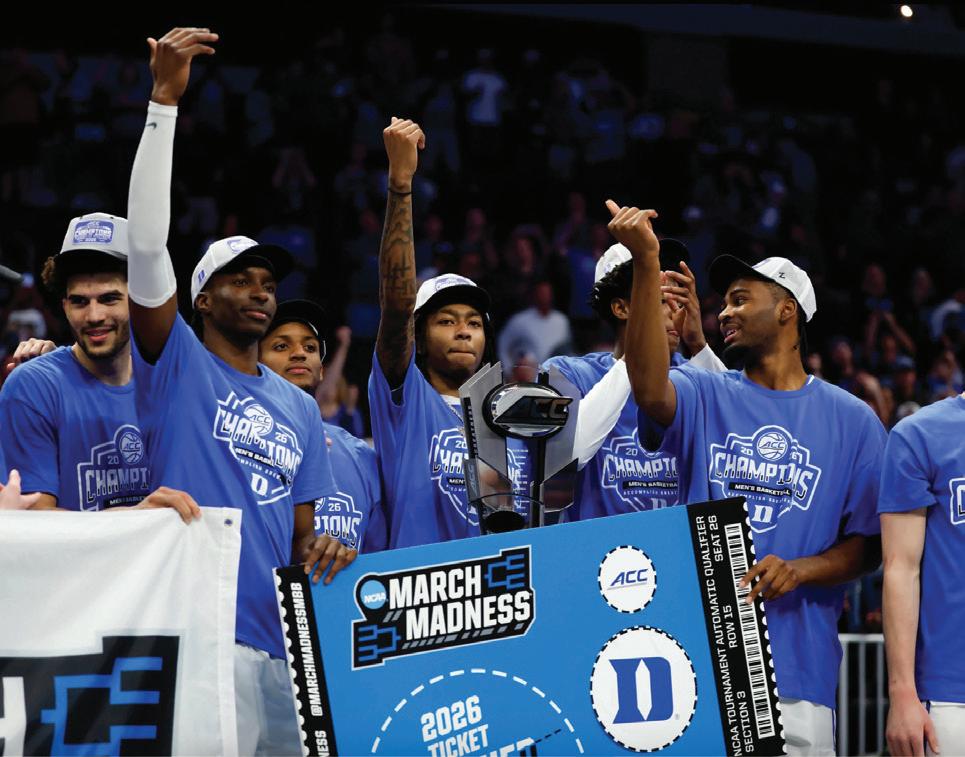
Neil Redmond, AP Photo
Duke celebrates winning the championship of the Atlantic Coast Conference tournament in an NCAA college basketball game in Charlotte, N.C., Saturday, March 14, 2026.
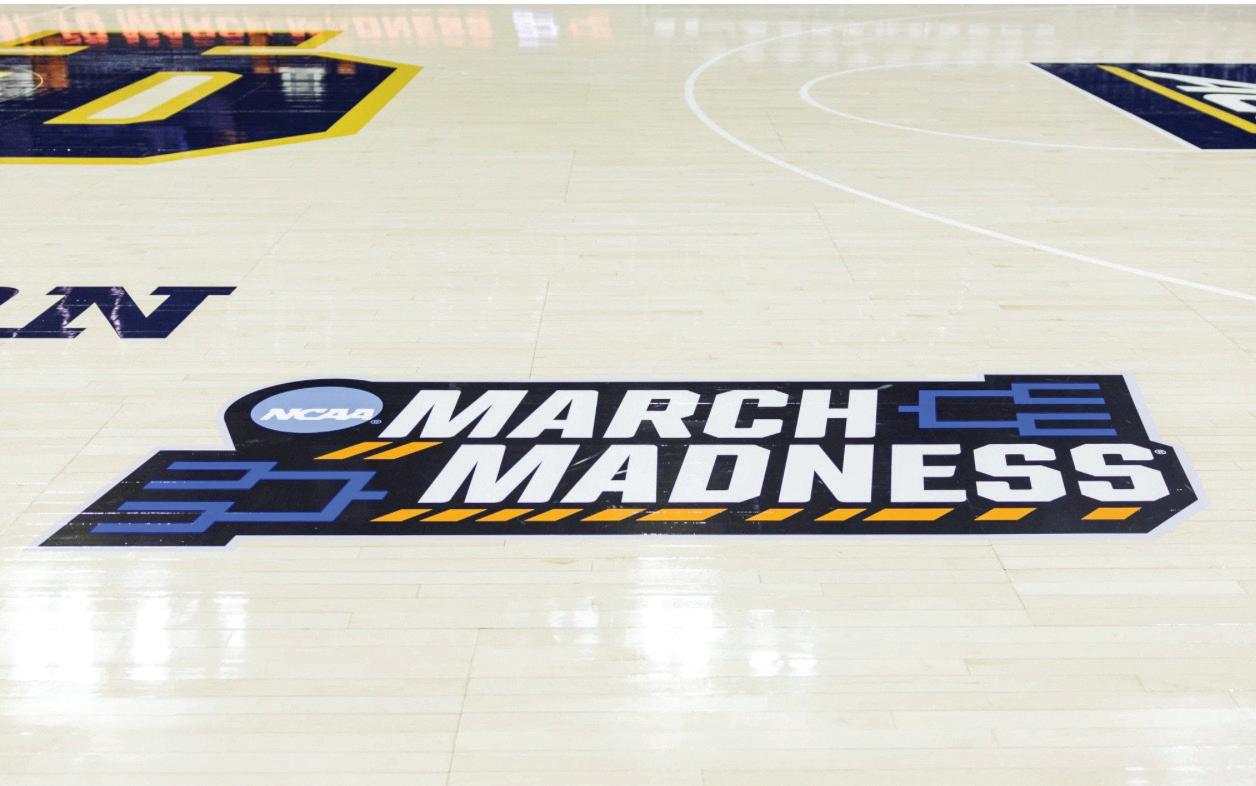
John Mersits, AP Photo
March Madness logo displayed on the court prior to second round of the NCAA college basketball between Notre Dame and Michigan, Sunday, March 23, 2025, in South Bend, Indiana.
Arts & Entertainment Singing to the Mountains
BY NORA DELEHANTY Staff Writer
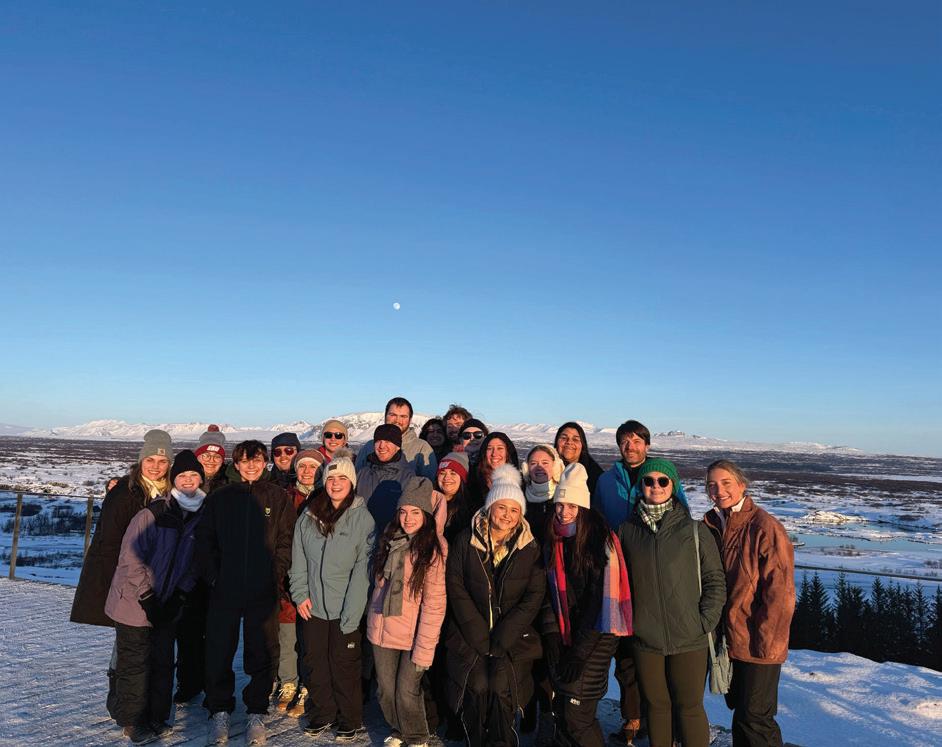
While many college students travel to warm destinations during spring break, members of the Sacred Heart University Choral Program traveled somewhere colder. From Feb. 27 to March 7, the SHU choir visited Reykjavík, Iceland, where they performed, explored, and spent time together as a group.
“We were looking for something really interesting and different to do for the choir tour this year,” said John Morrow, assistant director of choral programs at SHU. “Iceland has a strong singing culture, the Nordic and Scandinavian roots certainly lends itself to that. Those countries have a lot of good singing.”
Twenty-two students attended the trip along with Morrow, his wife Rachel, and Christopher Grundy, director of choral programs at SHU.
Junior Bethany Gibson said the destination made the trip stand out compared to traditional spring break locations.
“The Iceland trip was one of a kind. A lot of people going on spring break say they went to Florida, the Bahamas or Mexico. We can say we went to Iceland. It’s not something that people normally think of off the top of their head. It’s cool to say that I went to Iceland for a week,” said Gibson.
Members of the SHU Choral Program performed at several locations during the trip. The group sang in a Catholic mass at Skálholt Cathedral and the Cathedral Basilica of Christ the King.
“They did the mass in Icelandic, which I thought was pretty cool,” said Gibson.
The choir also performed at Harpa Concert Hall in Reykjavík.
“It is an internationally known performance space. It’s pretty highly sought after by all types of professional, high-level performers. So we were glad to perform there,” said Morrow.
This marked the first time the SHU Choral Program traveled during spring break. Previous trips took place during winter or summer breaks and included destinations such as Dingle, Ireland and Sicily, Italy.
Senior Elizabeth Knapp, president of the SHU Choral Program, said the Iceland trip was her favorite of the choir tours she has attended.
“I really enjoy the spring break trips. I think it’s nice that we have a break, but we still get to really do what we love. When am I ever going to sing in Iceland to the mountains?” said Knapp.
BY EMILY RICHMOND Staff Writer
Participation in the trip was open to all members of the SHU Choral Program, though students were responsible for part of the cost depending on fundraising efforts.
“Everyone was welcome to come. We tried to make a balanced group, but of course that depends on the interest because it is an additional cost,” said Knapp.
When they were not rehearsing or performing, students had time to explore Iceland’s natural landmarks.
“We got to go do all kinds of exploration of things like go see waterfalls and see the Northern lights and go on a whale watching tour,” said Morrow.
Gibson said the experience allowed the group to grow closer while traveling together.
“The trip was beautiful and I would 100% go back. I had such a fun time, we did a lot of group bonding, which obviously will make us sound better in the end,” said Gibson.
Morrow said trips like this allow students to experience music in a different cultural context.
“We always see that taking students out into the world lets them get to know a different culture musically, seeing how people respond to and have music in their lives in a completely different place and also just being part of a different culture as a human, experiencing different languages all around you,” said Marrow.
Is AI Taking Over Entertainment?
Artificial intelligence (AI) is becoming more common within the entertainment industry, surfacing in everything from major advertising campaigns to movie production. AI is being used to aid with editing, generate visual effects and create actors and voices as technology advances.
It is a debate of how AI will impact the industry in the future as a result of its expanding use.
Dr. Bill Yousman in the School of Communication, Media and the Arts has worries about the rapid expansion of AI in creative industries.
“Personally, I hate it,” said Yousman. “I have real concerns about how quickly AI is becoming integrated into society and what that might mean for human creativity.”
Yousman feels that relying on AI to generate ideas or assist with writing can weaken the creative thinking process that is central to artistic work.
“Coming up with ideas is what human creativity is all about,” said Yousman. “If we start relying on AI to do that thinking for us, we risk losing an important part of what makes us human.”
Media students share similar concerns, especially as they prepare to enter their careers in the industry.
“It’s honestly terrifying how much AI has been incorporated into media fields,” said sophomore Erin Phillips. “AI has the capability to do things faster or better than people sometimes can, and that raises concerns about jobs being taken away from people who genuinely love working in media.”
Phillips feels that AI can occasionally help speed up the production process, especially when working with editing tools.
“There are tools that make editing much faster,” said Phillips. “With the click of a button, AI can complete tasks that would normally take much longer, which helps projects move along more quickly.”
As AI continues to evolve, other students see both beneficial opportunities and challenges.
“It’s really interesting to see what AI can do and how much technology has advanced,” said sophomore Lainey Palmer. “But sometimes when AI in commercials or media looks too realistic, it can be a little unsettling.”
When applied properly, Palmer believes AI can also benefit and support the creative process.
“AI can actually help expand creativity,” said Palmer. “It allows people to build off their ideas and explore concepts they might not have thought of on their own.”
At the same time, Palmer acknowledged that many students are still unsure about how artificial intelligence may affect future job opportunities.
Yousman says that audience reactions to AI-generated content can vary. Some viewers notice right away when AI is used, while others may not recognize it immediately.
“Sometimes you can tell right away that something feels artificial or computergenerated,” said Yousman. “For some viewers, that can be a real turnoff.”
As AI technology advances, its role in media production is expected to increase. Some argue that the industry needs to carefully assess the ethical consequences of relying too heavily on AI.
The ongoing debate highlights a larger question for the entertainment industry: how to balance technological advancement while preserving the future of human creativity.
“You see AI getting stronger and stronger, and it makes you wonder who it might replace in the future,” said Palmer.
Contributed by John Morrow, Assistant Director of Choral Programs Members of the SHU Choral Program enjoying the sunny weather in Reykjavík, Iceland.
Tracy Deer-Mirek, Sacred Heart University
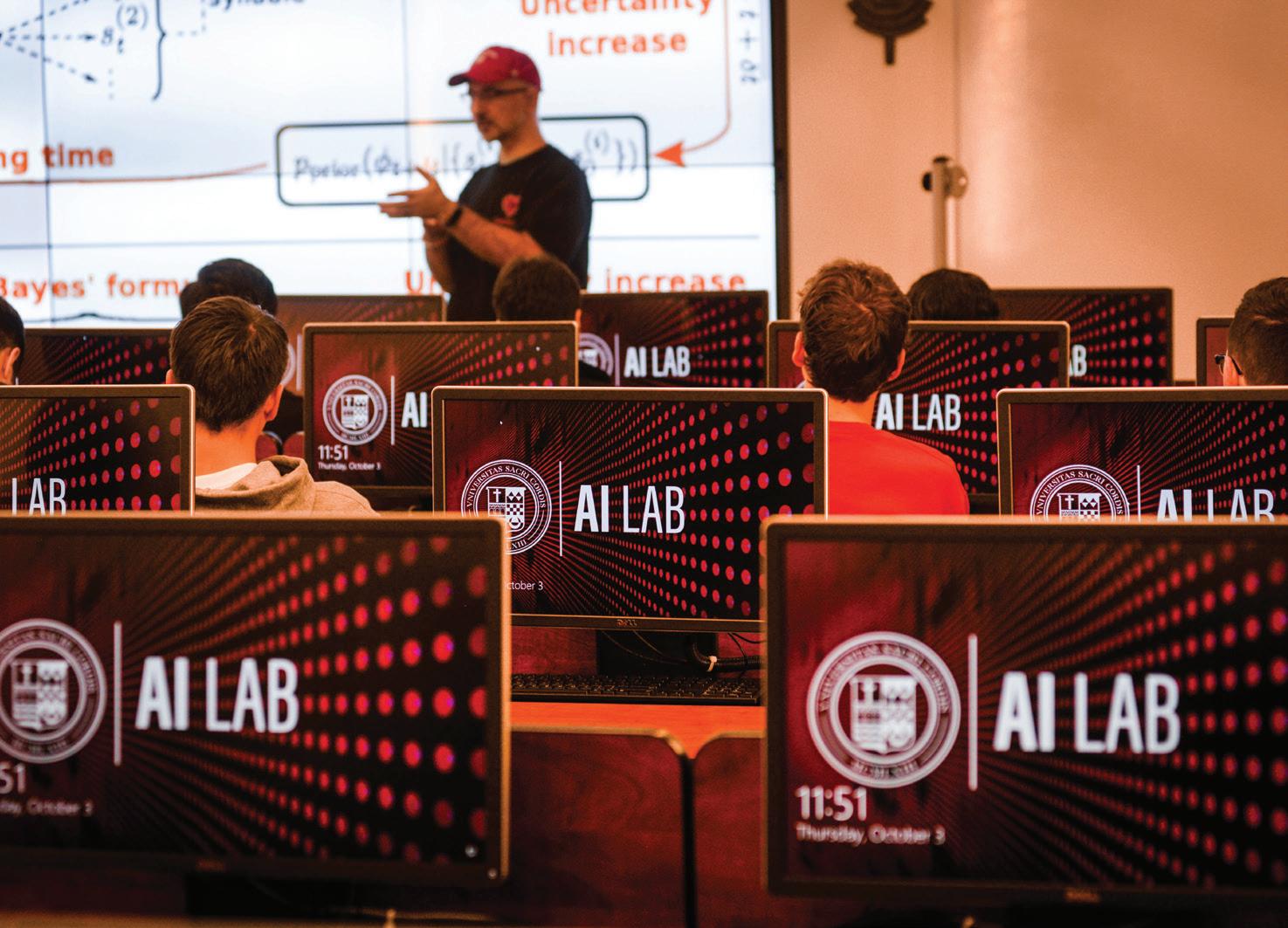
The Artificial Intelligence Lab at Sacred Heart University’s Jack Welch College of Business & Technology.
Sports
Program History Sends Pioneers to the Championship
BY JAMES EL-HAGE Staff Writer
After 16 years, the men’s ice hockey team will compete in the Atlantic Hockey America (AHA) Conference championship game, marking their third appearance in program history.
The road for the conference title began March 6 on home ice with quarterfinal play against Niagara University. The Pioneers swept the weekend 2-0, advancing to the semifinals round in the AHA Tournament.
On March 13, the lights dimmed and the band echoed through Martire Family Arena as the Pioneers skated onto the ice. Fans dressed in white filled the stands for Sacred Heart’s semifinals matchup against Robert Morris University (RMU).
The Pioneers’ performance matched the energy in the arena, securing their 22nd win of the season, the most in program history.
Upon entry, fans received white shirts with Big Red the Pioneer’s eyes printed on the front and Fear the Pioneer on the back. While some wore hoodies over them in the cold arena, the Pio Guys took it a step further with their signature look, painting their chests to spell out “#Pioneers!”
“Without a doubt a lot of people came because it was a themed game,” said sophomore Caden Rubenstein. “I think more themed games would absolutely bring more people out.”
The band drove the atmosphere, routinely playing during faceoffs and between periods.
“The band adds a huge part to the game,” said Rubenstein. “They’re basically a hype man for the entire team and the audience.”
Despite the electric environment, the Pioneers started slow. Robert Morris struck first, scoring within the first 10 minutes of the period to take a 1-0 lead. Sophomore goalie Ajeet Gundarah kept the Pioneers within reach with a key save with five minutes remaining.
As the first period winded down, the crowd voiced their frustration when the Pioneers missed an opportunity to score their first goal. Fans shouted, “Shoot it!” and “Set it up!” as the Pioneers ended the period trailing 1-0.
The Pioneers flipped the momentum early in the second period, scoring two goals in the first two minutes. Sophomore Aiden VanRooyan tied the game before senior Noah Ellis scored less than a minute later to go up 2-1.
The Martire Family Arena erupted as everyone jumped to their feet, the goal horn blaring and chants of “Let’s go Pios” echoed throughout the building.
“Once they hit those two goals back-to-back everyone was going crazy,” said junior Garret Eterno.
Midway through the second period, freshman Jack Hillier extended the lead to 3-1, sending fans to their feet again as players from both teams exchanged words and shoved each other before a media timeout.
Just two minutes into the final frame, sophomore Vitaly Levyy added another goal to make it 4-1.
“It was loud pretty much all night,” said freshman John Colello. “Once we got that
BY TUCKER TERRANOVA Staff Writer
separation in the third, I started hearing ‘SHU’s your daddy’ chants.”
Senior Reid Pabich scored with about 10 minutes remaining, extending the lead to 5-1.
Tempers flared again late in the third period after a brief scuffle before another media timeout. After the timeout, Robert Morris switched goalies, drawing reactions from the crowd as fans banged on the glass to distract the new goalie.
As the final minutes wound down, the crowd began chanting “Na na na na, hey hey hey, goodbye,” sending Robert Morris home as the Pioneers celebrated the most wins in program history.
The following day, the Pios dropped the second game of the series, falling 5-2 to Robert Morris, despite taking an early 1-0 lead.
In Sunday’s win-or-go-home matchup, the Pioneers defeated Robert Morris 5-0, extending the program record to 23 wins. Gundarah’s 36-save shutout performance earned them a spot in the AHA Championship against Bentley University.
The Pioneers will hit the ice for their first championship appearance since 2010 on March 21 against Bentley in Waltham, Mass.

Pioneer’s Late-Game Resilience
“We’ve never really been in a game where we thought we couldn’t come back,” said Murray. “We’re comfortable late in games, and when the fourth quarter comes around, we’ve played our best.”
Senior John Murray has been one of the Pioneers’ most consistent performers and played a key role in their comeback win against Merrimack on Saturday, March 7. With Sacred Heart trailing by three goals entering the fourth quarter, Murray scored three of his five goals in the final period to help secure the victory and keep the team undefeated.
Late-game resilience has become a defining trait for the Pioneers this season. Three of their seven wins have come in games where they trailed entering the fourth quarter.
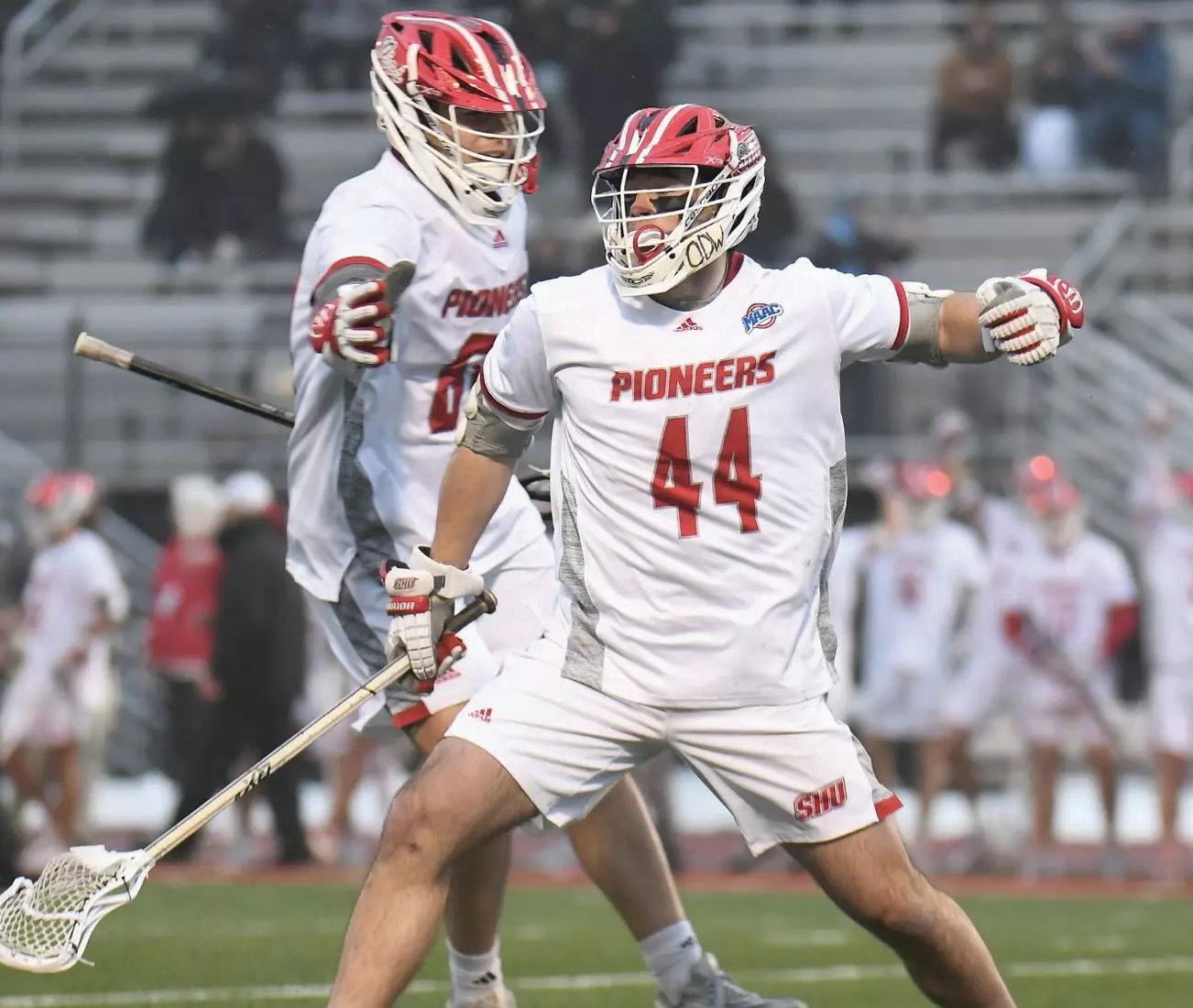
A major factor in Sacred Heart’s ability to close out games has been senior goaltender Craig Daria. In his first season as the team’s starting goalie and captain, Daria has embraced a leadership role while delivering strong performances in net. He has already been named Metro Atlantic Athletic Conference (MAAC) Defensive Player of the Week three times this season.
“I feel like I’ve become more of a vocal leader this season and have put everything together – on the field and in the locker room,” said Daria. “I’ve just been trying to lead my teammates and play my best while putting the team in the best position to succeed.”
While experienced teams often rely heavily on upperclassmen for scoring production, Sacred Heart has received contributions from players across all four classes. First-year attacker Jake Carney has emerged as one of the team’s most productive newcomers, earning MAAC Rookie of the Week honors each week so far this season and recording multiple goals in all but one game.
Carney said the program’s culture and senior leadership helped him adjust quickly to the college level. He is part of an attack unit that entered the season without any returning starters from last year, which is uncommon in college lacrosse.
“This group is very tight-knit, and they’ve helped me adjust to this level much faster,” said Carney. “One thing I remember from when I was a recruit was the program’s emphasis on being tight-knit, and they’ve been great since I got here.”
Head coach Jon Basti said he believes his team still has room to grow as conference play continues.
“The sky is the limit for this group,” said Basti. “Conference play is a different level, but we think we haven’t come close to our peak yet.”
The team currently sits with an overall record of 7-0 and a conference record of 2-0 after defeating Mount St. Mary’s University 17-9 on Saturday.
The Pioneers will continue their quest for a second MAAC championship on March 21 when they host Canisius College at noon on Campus Field.
Athletic Communications contributed to this article.
Josh Gee, SHU Athletics
Senior Ethan Wolthers stops on a dime in Sacred Heart’s 5-2 loss Robert Morris University on March 14, 2026.
Greg Vasil, Sacred Heart University
Junior Jake Moran celebrates a goal in Sacred Heart’s 12-10 win over Merrimack College on March 7, 2026.
EDITOR IN CHIEF
GEORGE TRIEBENBACHER 2026
MANAGING EDITORS
SHANNON TUTTLE 2026
MOIRA STAPLES 2026
COPY EDITOR
MADISON CONKLIN 2026
NEWS EDITORS
DANIEL GREENE 2026
MADELEINE MEDEIROS 2028
ASST. NEWS EDITOR
NICHOLAS MAISANO 2028
FEATURES EDITORS
SARA HASENEY 2026
ALEXA BORNER 2027
ASST. FEATURES EDITOR
FERNANDA GUEVARA 2026
ARTS & ENTERTAINMENT EDITORS
EMMA RICOTTA 2026
CAROLINE DAVINO 2026
SPORTS EDITOR
COLLIN MACLEOD 2027
ASST. SPORTS EDITORS
TAYLOR MAGUIRE 2027
JACK CAVICCHI 2026
SPORTS APPRENTICE
NICK DILAPI 2028
CAMPUS LIFE EDITOR
THEO WEISMANN 2026
AUDREY’S CORNER EDITOR WILL MORGAN 2028
SENIOR PHOTOGRAPHY EDITOR
JACK CAVICCHI 2026
PHOTOGRAPHY EDITOR
JORDAN DORSEY 2026
ASST. PHOTOGRAPHY EDITOR
JAYDEN HUNTER 2027
PUBLIC RELATIONS MANAGERS
SARA HASENEY 2026
ALEXA BORNER 2027
WEB MANAGER
JORDAN DORSEY 2026
CIRCULATION MANAGER
FERNANDA GUEVARA 2026
FACULTY ADVISOR
PROF. JOANNE KABAK
SPECTRUM IS PRINTED BY:
VALLEY PUBLISHING Derby, Conn.
BY LEAH MANSFIELD Staff Writer
Sports
History on the Mat
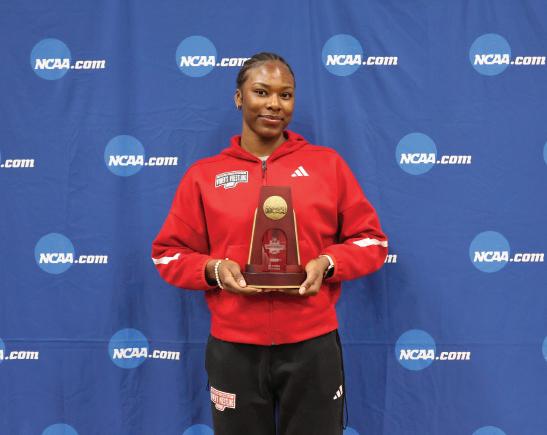
Sacred Heart University women’s wrestling made program history as several Pioneers placed at the firstever National Collegiate Athletic Association (NCAA) Women’s Wrestling Championships. The Pioneers walked into the national championship with high expectations and a desire to win and achieved just that. Freshman Josephine Larson earned her first All-American award and junior Love Daley earned her second.
“The goal for this year was to win the NCAA Regional Championship and qualify 10 to nationals. Well, we achieved the first part of it and came slightly short on the second part since we qualified eight out of 10 possible to nationals; regardless of that I’m still proud of our team’s performance,” said head coach Paulina Biega.
“Since I’m a freshman, my goal was to do as much as I can. I wanted to be open-minded and understand that since this is my first year competing at the college level, it might not go the way I wanted it to,” said Larson.
Daley won her first All-American in her freshman year and knew what she had to do after she fell short last season.
“I lost in the blood round last year, which was heartbreaking. So, this year was kind of a reset year for me,” said Daley. “I was focusing more on re-centering myself on joy and being present and having fun.”
The Pioneers have built a strong team culture that has allowed them to be successful, resulting in many wins.
“I started this program from the ground up and the growth is seen not only in numbers and results but, most importantly, the culture we set for our team,” said Biega.
“My teammates are my favorite part. Everyone gets along so well, and it really makes or breaks a team and for us, the girls make it,” said Larson.
“Wrestling is such a hard sport, and I feel like we have all come together. We all come from different backgrounds and have such strong and distinct personalities, but because we share the love for the sport, it just works and is so seamless,” said Daley.
The NCAA names the top eight finishers in each of
the 10 weight classes an “All-American.” The 2026 championship featured an 18-person field in each of the weight classes.
“Everyone at the National Championship strives and seeks that All-American honor. Whoever reaches it leaves their mark in the history books. You become a top athlete in the country. That’s something to be proud of,” said Biega.
“We made history; like this is history. I’m excited to see where is goes from here, but that was my favorite part,” said Larson.
“To be a part of the first NCAA championship and the first class of All-Americans, I mean come on, that’s awesome,” said Daley.
The team has worked incredibly hard this season and continues to train to work towards next season’s goals.
“Our entire team was a part of our success. They motivate us, they cheer us up, they do everything for us, and we do everything for them. They’re the ones we practice with and the ones who make us better. As much as it’s our win, it’s also theirs,” said Larson.
Athletic Communications contributed to this article.
The Future of the Strike Zone
BY BRETT CLOWRY Staff Writer
In the rules of baseball, the home plate umpire’s word has always been what was listened to. If a pitch was called a strike, it would be a strike, no matter if the ball was actually in the strike zone or not.
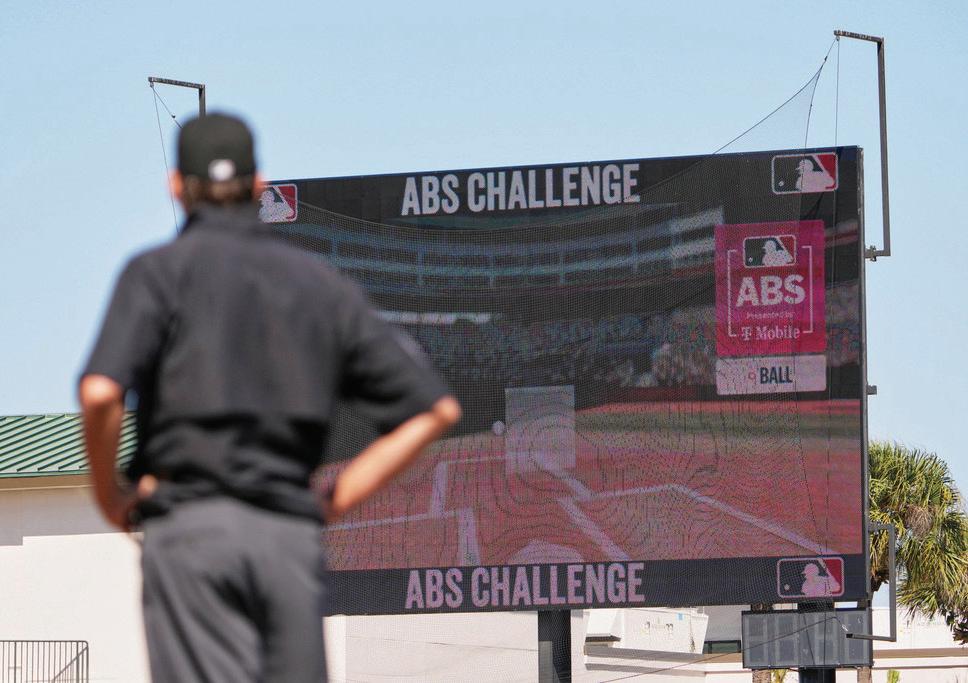
This upcoming Major League Baseball (MLB) season, there is a new component being added to the game of baseball, known as the Automated Ball-Strike (ABS). When a pitch is thrown, the batter can tap their head, implementing what is known as hawk-eye technology to display if the pitch was really a ball or a strike.
“At least we’re not completely switching to robot umpires,” said sophomore Edward Dunn. “ABS does add a level of fairness and accountability to umpires without fully getting rid of them, along with a good risk-to-reward aspect to the game as well.”
When a batter challenges the pitch, there is a 2D view of the location of the pitch within the strike zone. If the challenge is successful, the team keeps their challenge. If not, they lose the ability to challenge a pitch.
“It ruins the game,” said junior James Schindler. “Umpiring is one of the most important parts of the game. Lessening that aspect could lead to them being completely gone within the next ten years.”
The most surprising part of this switch is the drama within the fan experience. People like Schindler fear “robot umps” in the coming years for the sport.
To prevent any cheating from the dugouts during the game, ABS has even changed how games are being broadcasted. According to MLB.com, Major League Baseball requires broadcasts to initiate a nine-second delay on the display of the result of a called challenge on the field by a player, making sure the challenge is
performed from the batter himself and not a tip from a video coordinator.
In addition, broadcasts will need to show how to display how many remaining challenges a team has left in the game.
“Do they keep it on the score bug the entire game? Do they rotate it in the score bug once a half inning? That’s a choice they’ll need to make,” said Prof. John Barnes.
The ABS is not just about getting the call right. It is about holding in-person umpires accountable in real time, proving that they are almost never going to be perfect.
“At the same time, umpiring has become an issue in MLB. The accountability aspect of the new ABS system absolutely ensures accountability, so we’ll see as time goes on,” said Schindler.
Contributed by Love Daley, ‘27
Love Daley holding her NCAA Championship award.
Jeff Roberson, AP Photo
Umpire Ryan Additon watches as a call is challenged using MLB’s ABS challenge system during the third inning of a spring training baseball game between the Miami Marlins and the Houston Astros Wednesday, Feb. 25, 2026, in Jupiter, Fla.