
College of Health Professions Appoints Associate Dean
BY LAUREN BUSH Staff Writer
The College of Health Professions (CHP) recently named Dr. Jordan Schweidenback its inaugural associate dean for clinical and strategic partnerships, a new role created to expand real-world opportunities for students through stronger healthcare partnerships.
Schweidenback brings experience as a clinician, healthcare administrator and academic leader. He previously served as program director for the Master of Healthcare Administration program at the University of New Haven (UNH), where he led a team of 16 faculty members and developed partnerships that gave students hands-on experience through immersion trips, consulting projects and professional development opportunities.
“My experiences really span three areas. First, I was a clinician, and then I was a healthcare administrator, and then I made my way into academics,” said Schweidenback.
Before entering higher education, he worked at Yale New Haven Health System and Bristol Health overseeing perioperative services and medical group operations across multiple locations. Earlier in his career, he worked as a nuclear medicine and CT technologist, and managed a nuclear medicine department.
At UNH, Schweidenback built partnerships with organizations including Gaylord Specialty Healthcare and Bristol Health. Students collaborated on projects such as expanding services for spinal cord injury patients and studying why patients miss medical appointments, exploring factors like transportation and childcare, often referred to as social determinants of health.
He also partnered with the Healthcare Financial Management Association, which provided mentorship, conference access, and sponsored student memberships. Through the partnership, students were able to connect with financial professionals, gain professional development opportunities, and access scholarships available to members.
Schweidenback said forming partnerships begins by identifying shared needs between students and healthcare organizations, and then creating agreements that benefit both sides. These collaborations can include clinical placements, guest lectures, mentorship and research opportunities.
“Bringing those real world experiences helps to bridge the gap between classroom instruction and practice,” said Schweidenback.
He described this as a “practitioner academic model” that connects textbook learning to real industry challenges and helps students develop critical thinking and decisionmaking skills.
According to CHP Dean Dr. Karl E. Minges, several members of the College of Health Professions contributed to the hiring process during a two-month search. The college already has more than 300 clinical partnerships across Connecticut and surrounding states, but many have historically been developed independently by individual programs.
“Having Jordan here in this position will be able to bridge the gap and link student academics with clinicals and also with philanthropy on the back end,” said Minges.
Strategic partnerships may also support sponsorships that help offset tuition costs for students, according to
Minges.
“I am excited for the endless possibilities and the future opportunities, as this will allow students to become wellprepared professionals ready to make an impact in their fields,” said junior health science major Matt Dworkowitz.
Dworkowitz hopes new collaborations will provide more clinical exposure and opportunities to work alongside professionals in real-world settings.
“Having a dean as motivated as Dr. Schweidenback to help foster these partnerships will make a world of difference, creating more streamlined access to internships and providing students with clearer pathways to meaningful involvement,” said Dworkowitz.
As the first person in the role, Schweidenback hopes to strengthen collaboration across the college and the healthcare community. According to Schweidenback, his goal is to ensure students graduate prepared to enter the workforce with the skills, experience and professional connections they need to succeed.
Learning the Law Hands On
BY BROOKE LUGO Staff Writer
Political science students recently participated in a service-learning initiative that allowed them to engage directly with immigration law through a partnership with the Waterbury office of the Law Offices of James A. Welcome.
The collaboration was incorporated into political science, Prof. Kathleen O’Gara’s, courses during the spring and fall 2025 semesters. Students in O’Gara’s Migration and Membership class completed 15 hours of community service as part of the course curriculum, giving them the opportunity to apply classroom concepts in professional settings.
O’Gara, who has taught at Sacred Heart University for more than 20 years, said the service-learning component helped students grasp immigration issues in ways lectures alone could not.
“It is way more impactful than learning it from me,” said O’Gara. “I could talk about it all I want, but the students were coming in and telling me, ‘This is a story I heard.’”
Students were able to choose from several community placements to fulfill their

service requirement. A group of students selected the Law Offices of James A. Welcome, an immigration and personal injury law firm with multiple locations throughout Connecticut. Some students completed research remotely, while others traveled to the Waterbury office to assist attorneys in person for several hours at a time.
“I wanted students to not just learn what all of the new executive orders were doing for immigration,” said O’Gara. “I wanted them to actually see what that meant for a law firm that was trying to keep up with these changes and still serve their clients the best way possible.”
Students working with the firm assisted with legal research related to active immigration cases. According to O’Gara, the experience highlighted how quickly immigration law evolves.
“The pace of the change as I was teaching it was crazy,” said O”Gara. “So the law firm also dealing with these changes on a daily basis was powerful for students to see.”
Senior Guadalupe Larios Lezama, a political science major with a minor in criminal justice, said her responsibilities included conducting research and providing translation assistance.
“When it comes to a language barrier, it


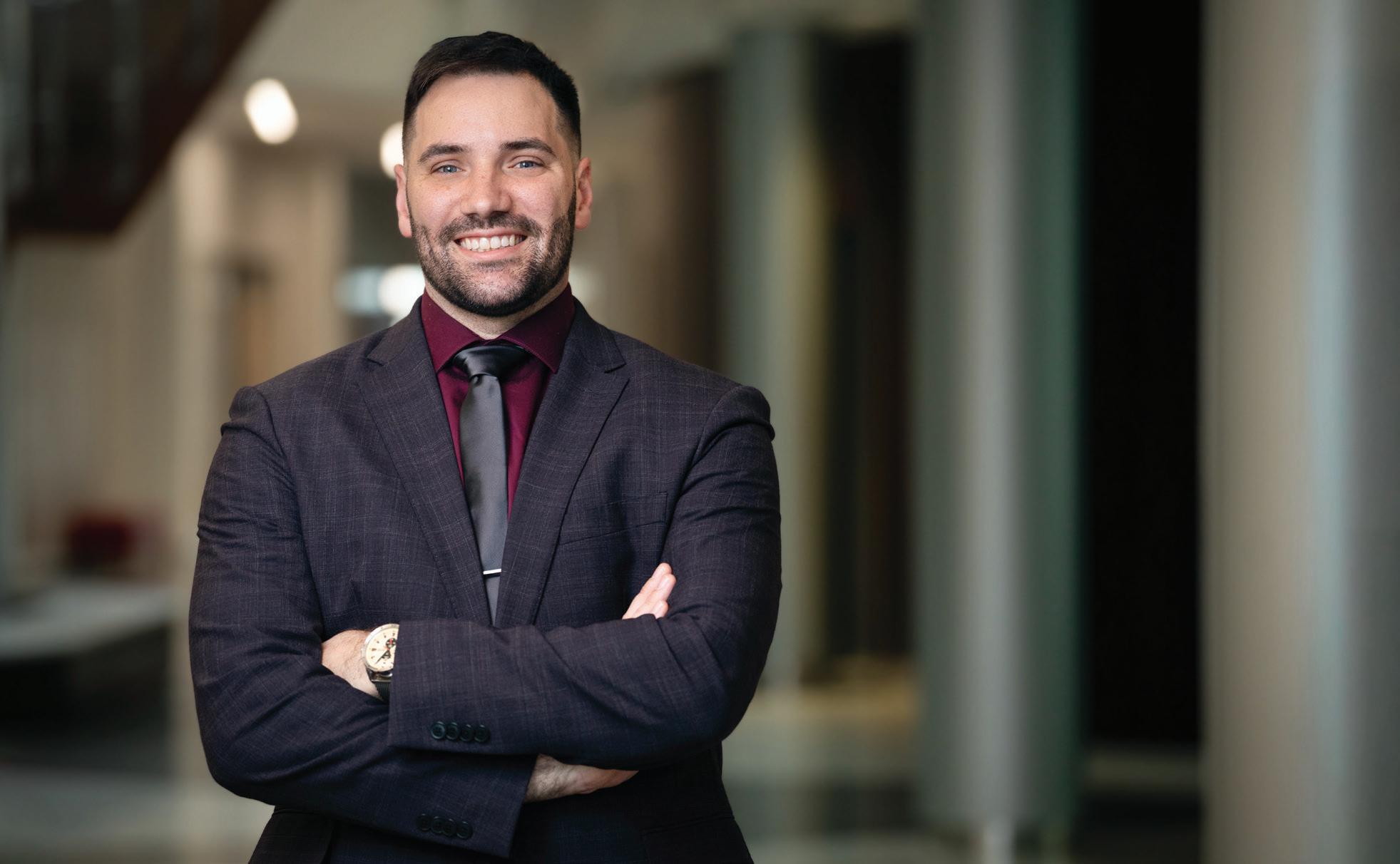
Contributed by Dr. Jordan Schweidenback, Sacred Heart University Dr. Jordan Schweidenback poses for a professional headshot.
BY SOPHIA PAZ Staff Writer
CONTINUED FROM PG 1
can be very difficult to get a proper idea of the situation,” said Larios Lezama.
Larios Lezama said the experience gave her a clearer understanding of the demands of immigration law.
“You never truly understand until you experience it first-hand. I learned how much attention and detail is needed in order to have a somewhat smooth case,” said Larios Lezama.
Senior Emma Jaghatspanyan, a political science major planning to attend law school next year, said the partnership offered valuable exposure for students interested in legal careers.
“It is very tough for people who want to go into law because there is no pre-law major,” said Jaghatspanyan. “Having an opportunity like this to get hands-on experience helps those that may not get that directly from their courses.”
Jaghatspanyan said early exposure to legal work can help students better understand what law school and legal careers entail.
“There is a huge jump between undergrad and law school. These hands-on experiences give you a taste of what it will be like in the future,” said Jaghatsspanyan.
“Students got to see what it really was like without filtered news and narratives,” said O’Gara. According to her, students’ firsthand experiences strengthened classroom discussions as well as allowed them to move beyond political rhetoric surrounding immigration.
“God on Broadway” with Dr. Gillespie Learning the Law Hands On
O’Gara said she plans to continue incorporating service-learning opportunities into her courses and hopes to expand partnerships with community organizations in the future.
“This course was one of the most rewarding classes that I’ve ever taught. I hope that they continue to be civically engaged with their community in the future, whatever that means,” said O’Gara.
BY SOPHIA PAZ Staff Writer
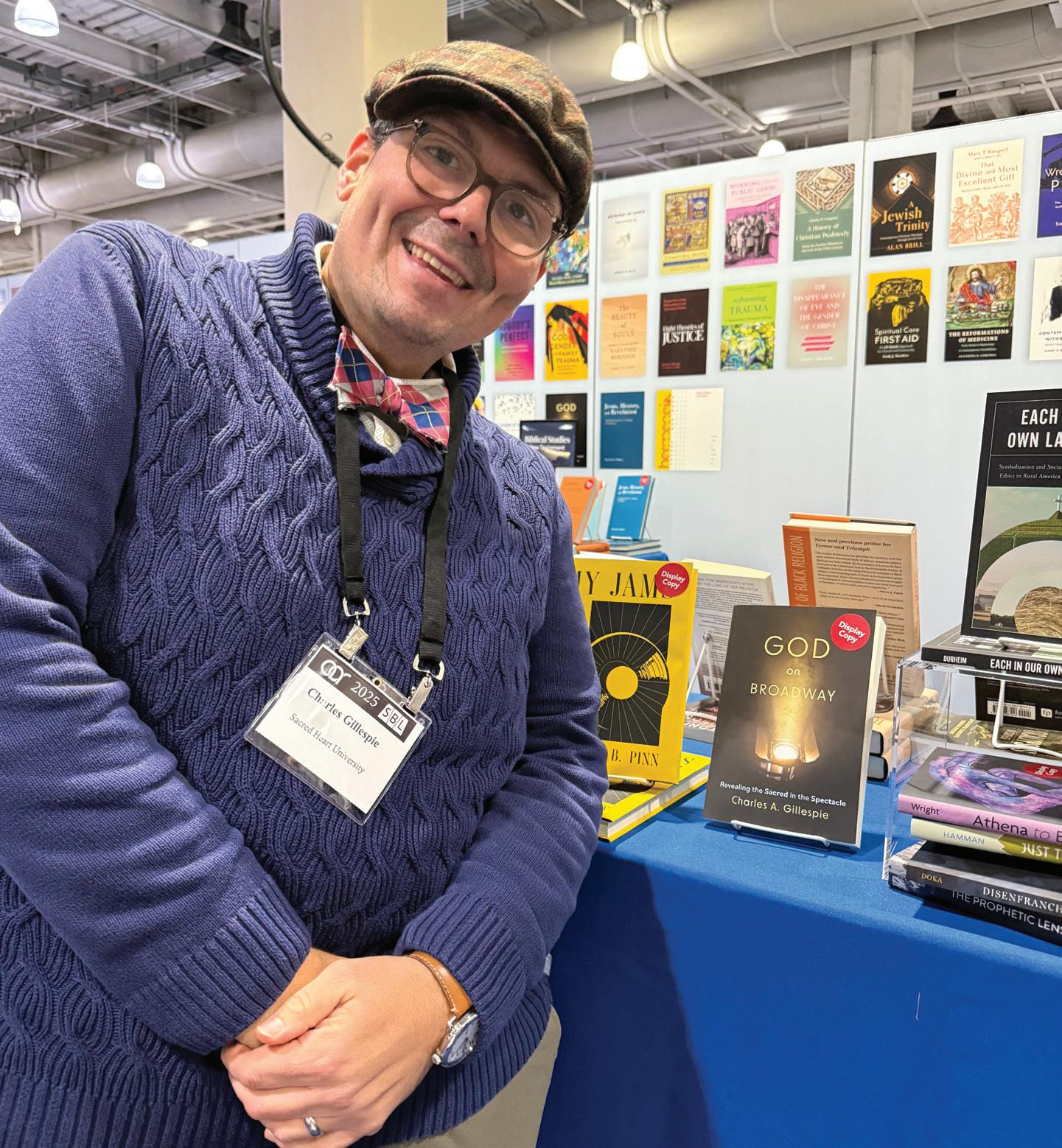
Dr. Charles A. Gillespie, associate dean of the School of Performing Arts, associate director of Catholic Studies and director of the Pioneer Journey, published his book titled “God on Broadway: Revealing the Sacred in the Spectacle” in November 2025.
Gillespie’s book, and the class he teaches by the same name, tackle the central questions of the Catholic Intellectual Tradition (CIT) by using theatre as a vessel to
drive the conversation. The book argues that the questions of CIT often emerge in places we don’t expect, and the class aims to show how religious and ethical issues arise beyond religious practices and institutions.
“When you go into the city to see a play, you don’t think to yourself, ‘I’m going to walk out of this one with my head spinning because I’ve encountered the divine differently.’” said Gillespie. “Theatre, since the dawn of human civilization, has been about confronting what it means to be human and what my relationship might be to the God/gods, and about mysteries of the universe.”
In his class, Gillespie uses plays and musicals like “The Fiddler on the Roof,” “Doubt,” and “The Great Oedipus Rex,” to raise thought-provoking questions about religion and God. The course examines these productions to answer questions like: “What does it mean for God to be a bystander to suffering?”
Like the God on Broadway course, Gillespie’s book examines over 15 shows to support the overarching theme that commercial and popular entertainment can reveal something about the God of love.
“God shows up in unexpected places, and one of the most interesting spots where we’re grappling with spiritual questions in the 21st century is when we make art together,” said Gillespie.
As for junior Hope Kaczynski, who took Gillespie’s God on Broadway class, she learned how to have scholarly conversations that challenge one’s beliefs.
“In the conversations held in Dr. Gillespie’s classroom, it made you listen and challenge everything you thought you understood. It forces you to confront and compare your ideas and understandings,” said Kaczynski.
“What I took away most in his class was not only how themes of religion relate to theatre, but also how theatre evolved over time because of history and religion,” said senior Michelle Cuocci, who also took the course.
“So many things in theatre have come from theology, from Catholicism to the Ancient Greeks, and it is so interesting how these concepts can relate to one another, even in today’s theatre,” said Cuocci.
Gillespie hopes his book can bring together joy and complexity.
“Sometimes the things that bring us the most joy are also difficult, and that’s where I hope my book is helpful for SHU students,” said Gillespie.
“We have this assumption that ‘when I’m in work mode I should only talk about my major and the stuff that’s really important for me during the day, and when I’m in fun mode, I’m only supposed to be entertained and light, and relaxing,’ and I think that cuts us off from some of the best stuff about human life,” said Gillespie.
“God on Broadway: Revealing the Sacred in the Spectacle,” published by Fortress Press, is available for purchase on Amazon. Gillespie’s class, CIT-208 God on Broadway, is offered in the fall semester with no prerequisites.
Jack Cavicchi, Senior Photo Editor and Asst. Sports Editor
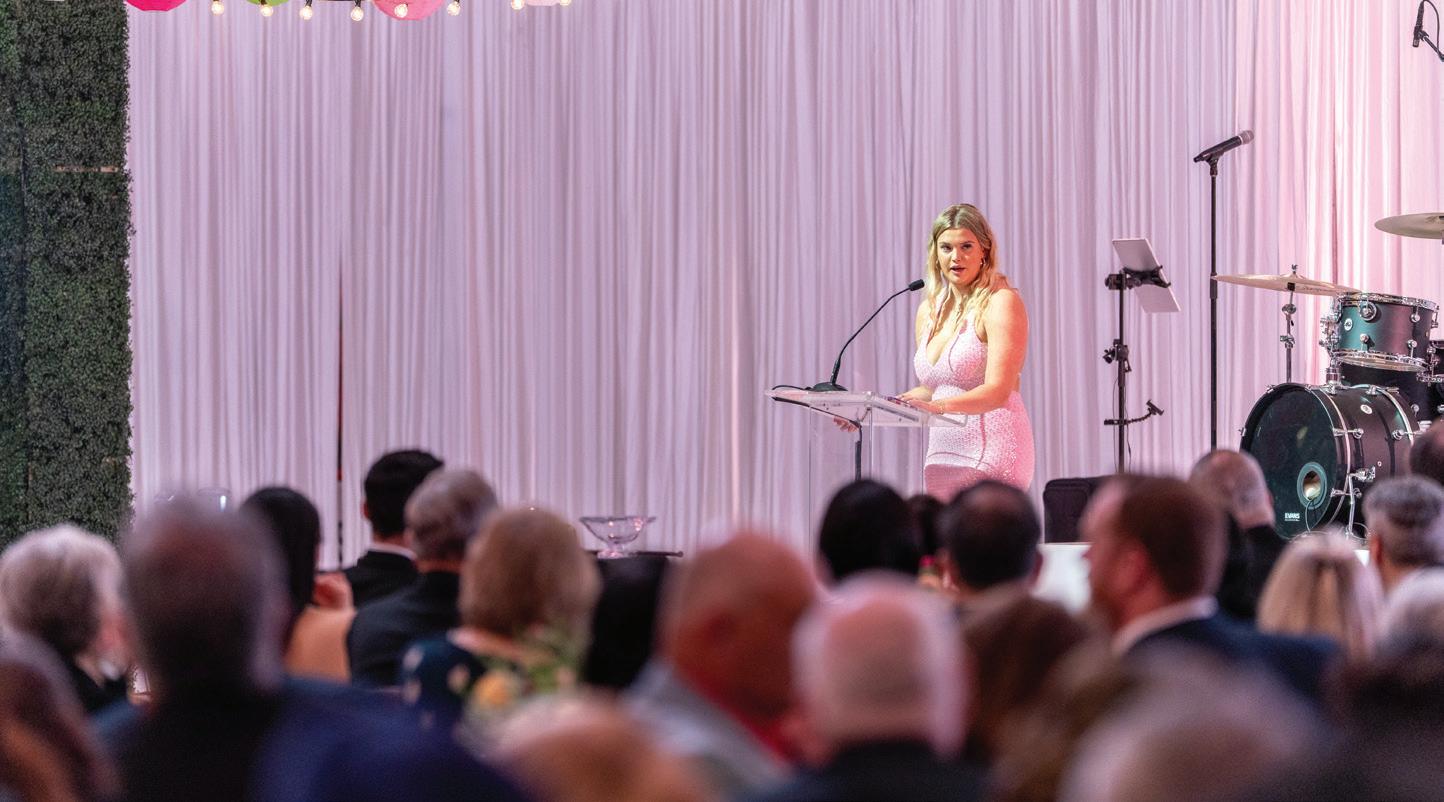
Sacred Heart University hosted the Pioneer Scholarship Gala at the Martire Family Arena on Saturday, April 26, 2025.
Contributed by Dr. Charles A. Gillespie, Sacred Heart University
Dr. Gillespie’s “God on Broadway” book featured at the American Academy of Religion book fair.

Valentine’s Day with Heart
BY CHARLOTTE DOHERTY Staff Writer
Valentine’s Day is approaching, and SHU students have several options to celebrate both on campus and around Fairfield. Events range from hands-on activities to food-focused gatherings, designed for students spending the holiday with friends or a partner.
The Student Events Team (SET) has a variety of on-campus activities for students to get involved in.
One of the campus events included a Stuff-A-Bear activity. On Feb. 6 at 6 p.m., the third floor of Linda’s was crowded with students creating and stuffing their own teddy bear.
Sophomore Molly Toland said the event stood out to her because it was interactive and relaxing.
“It’s something different than just sitting around, and it’s fun to have an activity you can take home with you after,” said Toland.
Another Valentine’s Day activity held by SET was Sweet Tooth, which was held on Sunday, Feb. 8 from 5-7 p.m. on the third floor of Linda’s. The event had desserts and treats for students to enjoy while making their own Valentine’s Day cards.
Sophomore Aine Walsh said events like Sweet Tooth make Valentine’s Day more enjoyable for students who are not in relationships.
“It’s nice having something different to do with your friends,” said Walsh.
In addition to campus events, some students plan to go off campus to celebrate. With many restaurant options being just a short drive down the road in downtown Fairfield, students have the choice to enjoy a meal from a variety of dining spots.
Popular options in the downtown Fairfield area include the Sinclair, Sophie’s Pizza Bar, and Molto.
Senior Molly Luchsinger said Sophie’s Pizza Bar has an atmosphere perfect for couples or just friends looking to treat themselves on Valentine’s Day.
“I went to Sophie’s Pizza Bar with my friends around Valentine’s Day last year and we loved the food and environment. I could definitely see it being a great option for couples or friends wanting to celebrate ‘Galentine’s’ instead of Valentine’s,” said Luchsinger.
Sophomore Rochelle McElhinney said going out to eat is one of her favorite ways to celebrate. “I like going somewhere simple where you can actually talk and enjoy the night,” said McElhinney.
When it comes to festive gifts, students said simple and thoughtful items are more meaningful than expensive presents. Toland said she prefers gifts that feel personal.
“Cards or small things mean more to me than anything big,” said Toland. For many students, Valentine’s Day is less about big gestures and more about having something fun to look forward to. With the holiday falling on a Saturday this year, students have more time to plan without the stress of academics. To stay up to date with on-campus events being held throughout the rest of the semester, follow @shu_set on Instagram.
Growing Together with Figure Skating
BY VICTORIA BRENNAN Staff Writer
The Sacred Heart University club figure skating team continues to grow as an organization, offering students the opportunity to pursue a sport that blends athletic discipline with artistic expression. As interest in the team increases, members say its welcoming environment and strong sense of community make it stand out among campus organizations.
While figure skating is often viewed as an individual sport, collegiate skating emphasizes teamwork and shared support. Sophomore Amanda Smentkowski said the balance between performance and physical skill is what makes the sport unique.
“Figure skating combines athleticism and artistry,” Smentkowski said. “Performance is just as important as technical skill in figure skating.”
Skaters train for years to master jumps, spins, and difficult turns and edges, as well as choreography. For Smentkowski, the sport has provided more competitive opportunities.
“It has taught me dedication, resilience and confidence,” Smentkowski said. “It’s a place where I can push myself to be better and express myself through my performances.”
The team practices several times a week at the Martire Family Arena on West Campus and at Wonderland of Ice in Bridgeport. Members say the practice schedule allows flexibility while maintaining consistency throughout the academic year.
“We typically skate at Martire Tuesday through Thursday,” Smentkowski said. “It’s super close and convenient. The other days, we have ice time at Wonderland, which is also nearby.”
Unlike varsity athletic programs, the SHU figure skating team is open to students of all skill levels. Skaters may participate at either a competitive or recreational level depending on their experience and personal goals.
“You don’t need to be an elite skater to join,” Smentkowski said. “All levels are welcome and needed for a successful collegiate figure skating team.”
Senior Sophia Iannelli, the team’s fundraising chair, said the club competes in up to four intercollegiate competitions each academic year.
“Our competitions usually span over a weekend, with us leaving on Friday and returning Sunday night,” Iannelli said. “Those days are very busy, filled with competitive events and watching teammates skate.”
Despite the demanding schedule, Iannelli said competitions weekends are one of the most rewarding parts of being on the team.
“The chaos is part of the fun,” Iannelli said. “Competing at the intercollegiate level is my favorite part of being on the team.”
Iannelli added that skating has played a major role in shaping her college routine and personal discipline.
“Being able to skate competitively in college helped me build structure from the very beginning of my freshman year,” Iannelli said. “Skating has been part of my identity for so long, and continuing it at SHU has been really meaningful.”
Dr. Cara Kilgallen, an adult skater who trains alongside the team, said figure skating encourages lifelong participation and personal growth. She hopes students continue skating beyond their college years.
“I hope to see these young skaters continue to enjoy skating for life,” Kilgallen said.
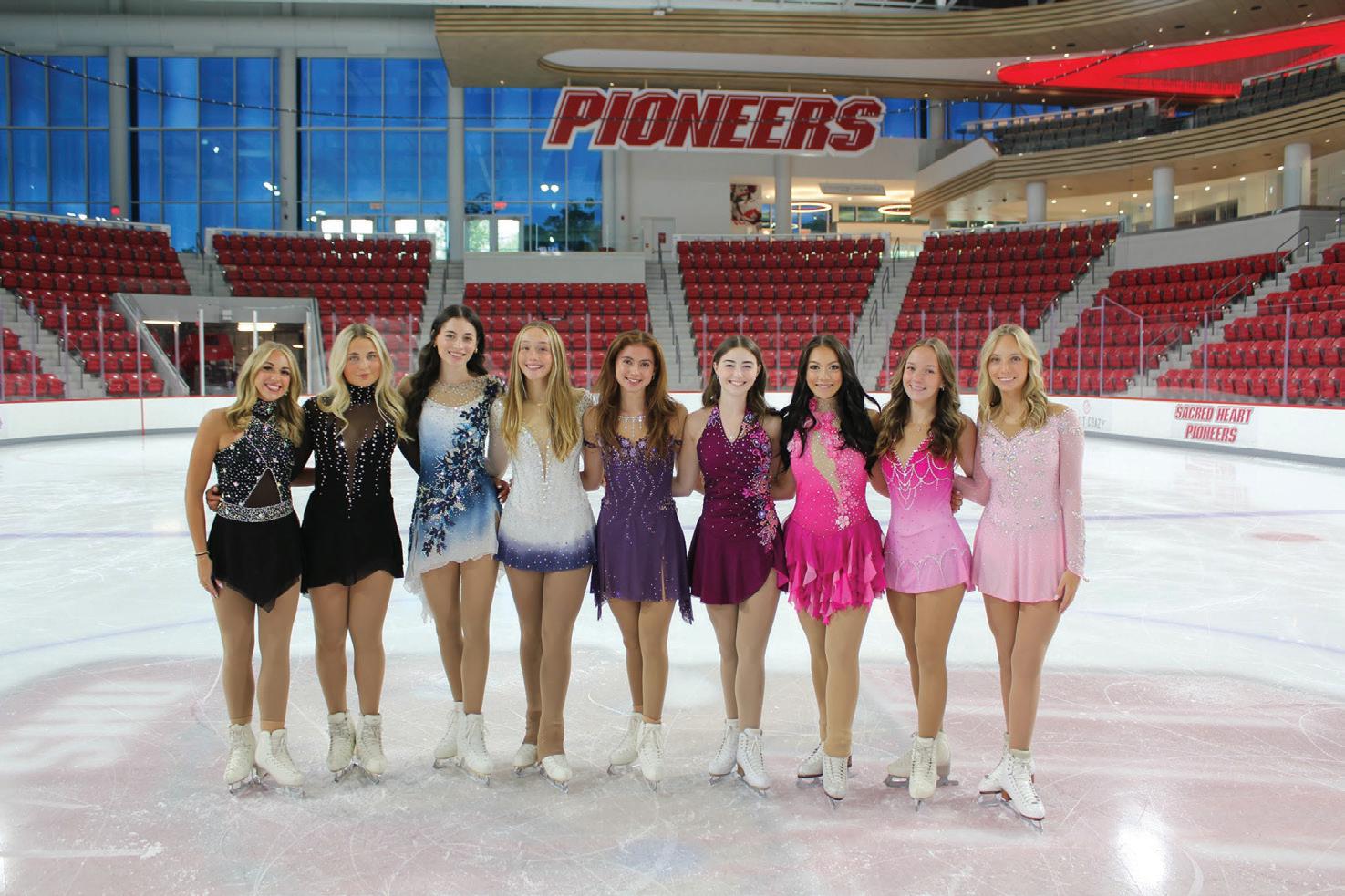
Contributed by Sydney Robinson, ‘26 Members of the SHU Figure Skating team standing together on the ice of the Martire Family Arena.
Jason Nunez, Staff Writer and Photographer
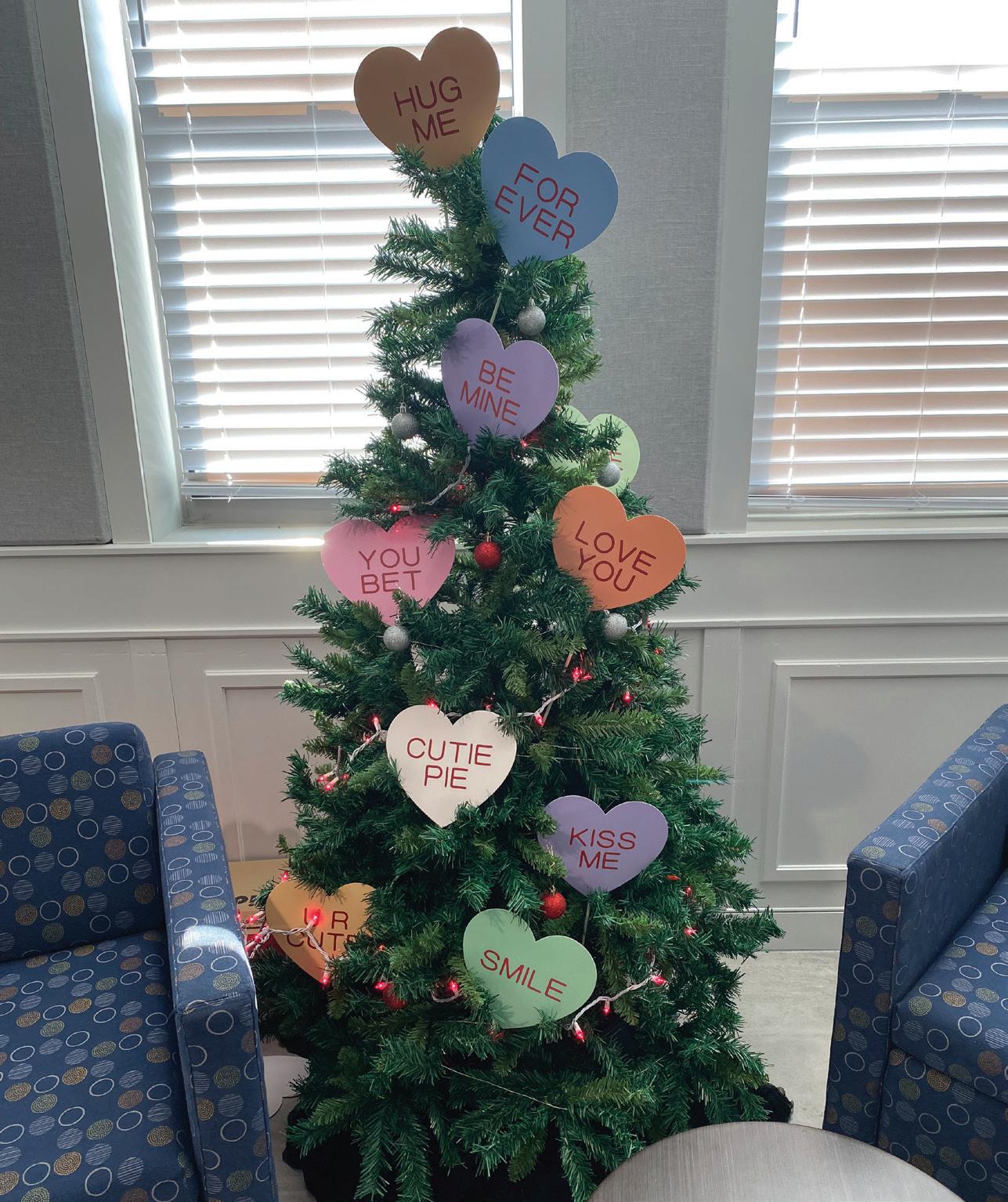
The Valentine’s Tree is located inside Roncalli Hall on the Park Ave. Campus.
BY WILL MORGAN Audrey’s Corner Editor
CampusLife
Sunday’s Without the Kickoff
For the past six months, fans across the country, and here at Sacred Heart University, have spent their Sunday afternoons catching their favorite teams battle on the field. After an exciting season, featuring the Chiefs fall into oblivion, the Colts finishing the season on a 1-8 slide after starting 7-1, and the unlikely reemergence of Sam Darnold on the Super Bowl Champion Seahawks, that communal feeling of gathering around the couch, turning red zone on and complaining about the commercials will surely be missed. But, without 15 games preceding the school week, how will SHU Students spend their Sundays now?
For sophomore Blake Mattessich, his New York Giants were tough to watch at times, but he is optimistic about the future.
“It was a rough season for my New York Giants. We went 4-13, the second worst record in the league. But, we have Dart and Skatt, and we just got Harbaugh, so the future’s still bright,” said Mattessich.
Mattessich said that there is a trade-off between enjoyment and productivity on Sundays when the National Football League (NFL) season ends.
“Without football on Sundays anymore, I’ll probably sleep in later; I don’t have to be up by at least 1 p.m. anymore,” said Mattessich. “I always used to do a lot of homework for the week while watching games, but it’ll be easier to lock in without fantasy stats to watch out for. I think my Sundays are going to become much less interesting but far more actually productive.”
The brutal season for the Giants was also a sore spot for sophomore Sergei Cicogna, who is ready to move on to disappointment with a different team now that the NFL season is over.
“4-13 is inexcusable. I don’t care how fun the games were. Now, my hopes and dreams are going to get crushed by a different team, the [New York] Rangers,” said Cicogna.
Cicogna’s Sunday schedule will become significantly less crowded without any NFL games to watch.
“Sundays without the NFL are going to be different, I’ll miss that camaraderie that was shared by everyone watching together,” said Cicogna. “But these games also took up huge amounts of my free time. I’m going to take more advantage of having nothing else to do and just nap and rest.”
Sophomore Kyle Maguire, a Steelers fan, will enjoy not having the stress of watching his team playing every Sunday.
“Sunday’s are going to be a lot more peaceful now that my sanity
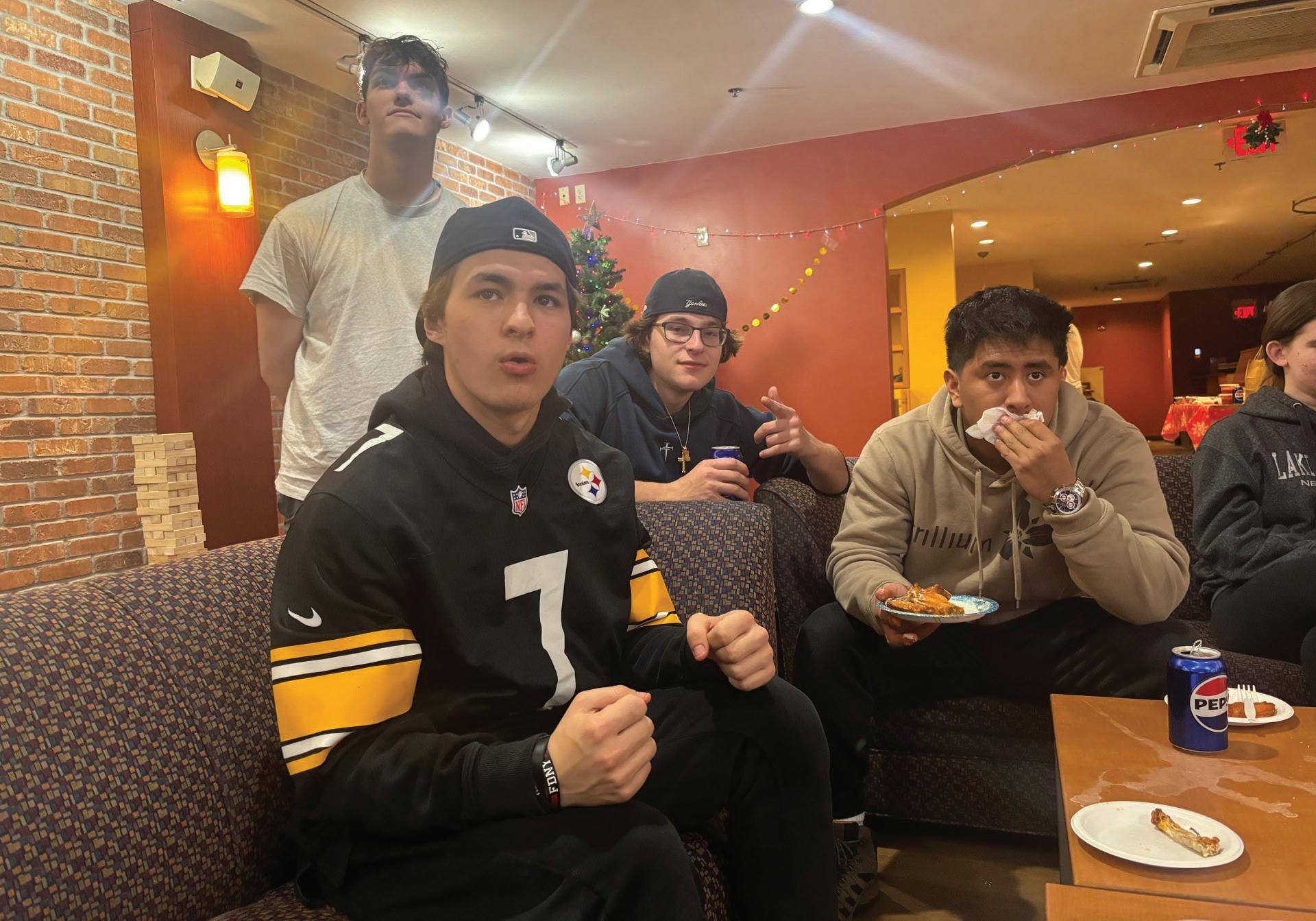
Students savoring their last NFL Sunday until next season.
isn’t dependent on how my team is doing. I’ll probably fill that gap in my day with video games and basketball, because I tend to get my classwork done during the week,” said Maguire.
The Steelers made the playoffs as a result of Ravens kicker Tyler Loop missing a 44-yard field goal to win the game in a week 18 matchup between the Ravens and Steelers that was for the American Football Conference (AFC) North title. Sophomore JP Buitrago experienced frustration by the abrupt ending to the Ravens season.
“If [Ravens quarterback] Lamar [Jackson] wasn’t out for weeks, we should have made it. Instead, everything depended on a field goal at the end. Well, the suffering is over now,” said Buitrago.
Buitrago’s Sunday homework schedule likely won’t change much despite the lack of football on Sundays.
“I’d always wait until after the games wrapped up each Sunday and then get my work in. I’ll probably still wind up doing it later without any games on,” said Buitrago.
The 2025 NFL season concluded with the Seattle Seahawks defeating the New England Patriots by a score of 29-13 in Super Bowl LX, and NFL fans are now left without football to watch on Sundays until early September.


Will Morgan, Audrey’s Corner Editor
Editorial - Breaking Barriers: Bad Bunny’s Historic Halftime Show Draws 135.4 Million+ Viewers
BY CHRISTIAN ESCUDERO Guest Contributor/SCMA Graduate Student
When Bad Bunny took the Super Bowl stage, he didn’t just perform — he brought Puerto Rico with him. It began with recognition. With Tití Me Preguntó, the show opened inside a Puerto Rican memory — sugar cane fields stretching across the field, jíbaros in pavas standing proudly, elders playing dominoes, piragua and coco frío carts rolling through the scene. It felt less like a stage and more like a neighborhood. Less like television and more like home.
The choice to open this way mattered. On the most-watched broadcast in America, Bad Bunny centered the people and places that shaped him — the same people and places that shaped generations of Puerto Ricans long before global recognition was possible. “Tití Me Preguntó” wasn’t just a hit; it was the sound of family parties, of cousins dancing, of music playing too loud and too long. It reminded us that joy has always been part of survival.
That joy sharpened into confidence with Yo Perreo Sola, a declaration of autonomy and freedom. The performance didn’t slow or soften itself for comfort. When he appeared standing on the pink casita from his Puerto Rico residency, No Me Quiero Ir De Aquí, the symbolism landed hard. That residency was about staying, about choosing the island when leaving would have been easier. But it wasn’t just symbolic. The residency drew thousands of fans to San Juan, boosted local businesses, supported stage crews, hotels, restaurants, and transportation workers, and showed the world that Puerto Rico is a thriving cultural hub. Bringing that same casita to the Super Bowl felt like a promise kept — a message that Puerto Rico, and those who nurture it, matter. At the casita, he was joined by entertainers like Pedro Pascal, Cardi B, Jessica Alba, and Alix Earle, not as glamour guests, but as community members celebrating together. It moved boldly into Safaera, embracing chaos and controlled disorder — a perfect metaphor for reggaetón itself, a genre born from marginalization and creativity colliding. Puerto Rican music has never asked permission, and this moment made that clear.
As the show flowed into Party and Voy a Llevarte Pa’ PR, Bad Bunny wasn’t just performing — he was inviting the world in. Puerto Rico wasn’t a backdrop; it was the destination.
The tone shifted, snippets of classic reggaetón — Daddy Yankee’s “Gasolina,” Don Omar’s “Dale Don Dale,” Tego Calderón’s “Pa’ Que Se Lo Gozen,” and even Hector el Father’s “Noche de Travesuras” — rippled through the air as the beat shifted. These weren’t random throwbacks. They were homages to the artists who built the genre from the streets of Puerto Rico and the barrios of New York, the same artists whose songs first brought reggaetón into the mainstream and made it possible for a young Benito in Vega Baja to dream of this stage. That medley flowed seamlessly into EoO — a track on which Bad Bunny recently won a Grammy for Best Global Music Performance.
“During Monaco,” the music softened, and Bad Bunny spoke directly to the camera: “My name is Benito Antonio Martínez Ocasio and if I’m here today at Super Bowl LX, it’s because I never stopped believing in myself. You should believe in yourself too. You’re worth more than you think. Trust me.” In that instant, he wasn’t Bad Bunny, — he was Benito, the kid from Vega Baja who once worked as a cashier. By saying his full name, he reminded everyone that success doesn’t mean forgetting your roots; it means carrying them with pride. For young Latinos and anyone chasing a dream, it was a simple but powerful message: if he could make it here, you can too. His last name, Ocasio, stitched into his outfit, made sure of that. Fame did not erase where he came from.
Then came Lady Gaga — and the moment worked because of how it was done. In the middle of Bad Bunny’s performance, the broadcast cut to a real couple actually getting married onstage, exchanging vows and sharing a kiss in front of thousands in Levi’s Stadium and millions watching at home. Gaga then performed a salsa-infused version of Die With a Smile — not as a disconnected cameo, but as if she were the wedding singer at that very celebration. Her light blue dress — echoing the azul celeste of the earlier Puerto Rican flag variant linked to independence movements — and the red flor de maga pinned on her outfit brought intentional cultural symbolism. Gaga didn’t pull Bad Bunny into her sound; she stepped into his. Salsa, a genre born from Caribbean rhythms and shaped by Latino communities in New York, became the bridge between them. Her voice, warm and inviting, threaded through the moment like a tribute to love itself, and when Bad Bunny joined in his hit Baile INoLVIDABLE, the scene felt less like a halftime show and more like a Puerto Rican fiesta — a wedding reception full of rhythm, joy, and collective heartbeat. It was unity in motion — proof that culture and collaboration can elevate a moment without diluting identity. The camera caught a child asleep across two chairs at a wedding — anyone who grew up Latino understood instantly. Parties don’t stop for bedtime. You fall asleep wherever you fit, surrounded by music and laughter.
The show expanded outward again with NUEVAYoL. This was the diaspora chapter. Puerto Rican bodegas, city imagery, and cultural references filled the screen, honoring those who left the island out of necessity but never left the culture behind. In this moment, Toñita appeared — the owner of the Caribbean Social Club in Williamsburg, a real-life pillar of Puerto Rican New York. Bad Bunny has long referenced
her in his music and even celebrated the release of Un Verano Sin Ti at her club, later fundraising to help keep it open. Her presence wasn’t symbolic — it was gratitude. It was saying that culture survives because people protect it.
One of the most moving moments of the night came when a living-room set appeared on the field, and on it sat a young boy with his family watching footage of Bad Bunny’s Grammy win speech. Bad Bunny approached and handed the Grammy to the boy, a gesture that felt like honoring his own younger self while inspiring the next generation of dreamers. For anyone who grew up Latino, Puerto Rican, or chasing a dream against the odds, it was a quiet but profound reminder — success isn’t just for you; it’s meant to be shared, celebrated, and passed forward.
That history and survival came into sharper focus when Ricky Martin joined the stage for “LO QUE LE PASÓ A HAWAii.” This wasn’t a random collaboration. The song draws a parallel between Hawaii and Puerto Rico — two islands shaped by colonialism, tourism, and displacement. Sung alongside Ricky Martin, one of the first Puerto Rican artists to reach global pop stardom, the moment carried weight. It felt like an acknowledgment that Puerto Rico’s story is not unique, but it is unfinished.
Then the lights dimmed. El Apagón arrived like a rupture. On a stage powered flawlessly, Bad Bunny performed a song about darkness — about Puerto Rico’s broken electrical grid, privatization, and neglect. As the visuals flickered and power poles climbed skyward, he held a light blue Puerto Rican flag, a version historically associated with resistance and independence. The image was devastating and deliberate: pride held high in the middle of instability. While the stadium glowed without interruption, an entire island still waits for the lights to stay on.
Out of that darkness came warmth again with CAFé CON RON. The song felt communal, almost grounding — a reminder that even when systems fail, culture does not. Music, rhythm, shared space — these things endure. The show closed with DeBÍ TiRAR MáS FOToS, a choice that felt deeply personal. As Bad Bunny walked out of the stadium with musicians playing güiros and panderetas — instruments tied to Puerto Rican plena — the message was clear: memory matters. Home matters. Time with the people you love matters.
At the very end, the Super Bowl field became a tapestry of identity. Flags from across the Americas — including Puerto Rico — filled the stadium, celebrating the continent’s diversity. He raised a football high above his head, emblazoned with the words “Together, we are America.” In a stadium of millions, he said in English, “God bless America,” naming countries across the continents. That simple act — a Puerto Rican performing mostly in Spanish on the most-watched broadcast in the United States — reclaimed the meaning of belonging. America is more than one story; it is all of us.
He spiked the football in celebration, a symbolic send-off: we exist together, we stand together, and we are stronger together. The final words on the stadium screens echoed: “The only thing more powerful than hate is love.”
The show drew an estimated 135.4 million viewers, making it the most-watched halftime performance in Super Bowl history and surpassing previous records held by Kendrick Lamar and Michael Jackson, as millions around the world tuned in. This halftime show was not built to be easily consumed. It was built to be felt. It moved from joy to legacy, from diaspora to darkness, from protest to love — without ever apologizing for its language, its symbols, or its pride. For Puerto Ricans — on the island, in New York, everywhere — this wasn’t just a performance we watched. It was a moment we saw ourselves in. A moment where history, struggle, and celebration collided, where a kid from Vega Baja who once worked as a cashier shared the world stage with millions and gave it back to his people. And that made it unforgettable.
Instagram, @vanityfair
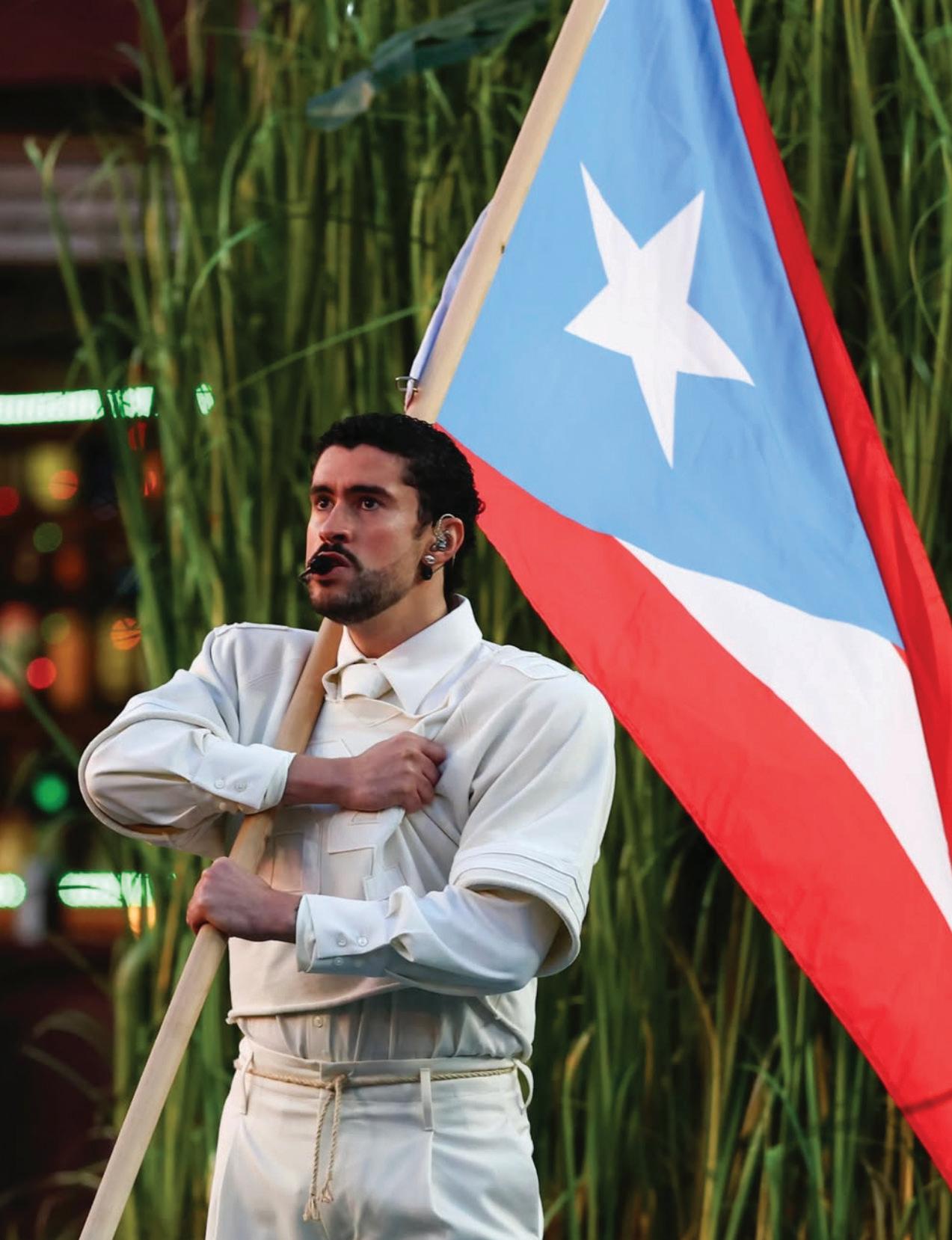
Bad Bunny performing the Super Bowl LX Halftime Show at Levi’s Stadium in Santa Clara, Calif.
Arts & Entertainment
68 Years of the Grammys
BY EMILY RICHMOND Staff Writer
“I really liked Sabrina Carpenter’s performance,” said sophomore Erin Phillips, a film major. “She brought a whole plane out, and there were backup dancers acting out different airport jobs. It was very unique compared to the others.”
Phillips said performances that combine music with visual storytelling tend to leave a stronger impression. She added that elaborate staging can help artists distinguish themselves during award shows with multiple performances.
Prof. Susan Mazer, a music professor, said she observes how performances reflect broader changes in the industry. She said this year’s Grammys highlighted increased visibility for women and artists from diverse backgrounds.
“Over the last 15 years, I’ve seen so many more women getting nominated, winning, and performing than ever before,” said Mazer. “That
kind of diversity is really wonderful to see.”
Mazer also said that the show included recognition of established artists alongside newer performers. She said honoring figures such as Carole King, Cher and Joni Mitchell underscored the lasting influence of women in music.
“I appreciated that they honored real pioneers,” said Mazer, “It’s important to recognize the artists who helped shape the industry.”
Fashion was another major topic of discussion throughout the night. Mazer said she noticed changes in how artists presented themselves on stage.
“I’m glad to see that not every female artist feels they have to look sexy or outrageous,” said Mazer. “If that’s the image they want, that’s great, but it should be their choice.”
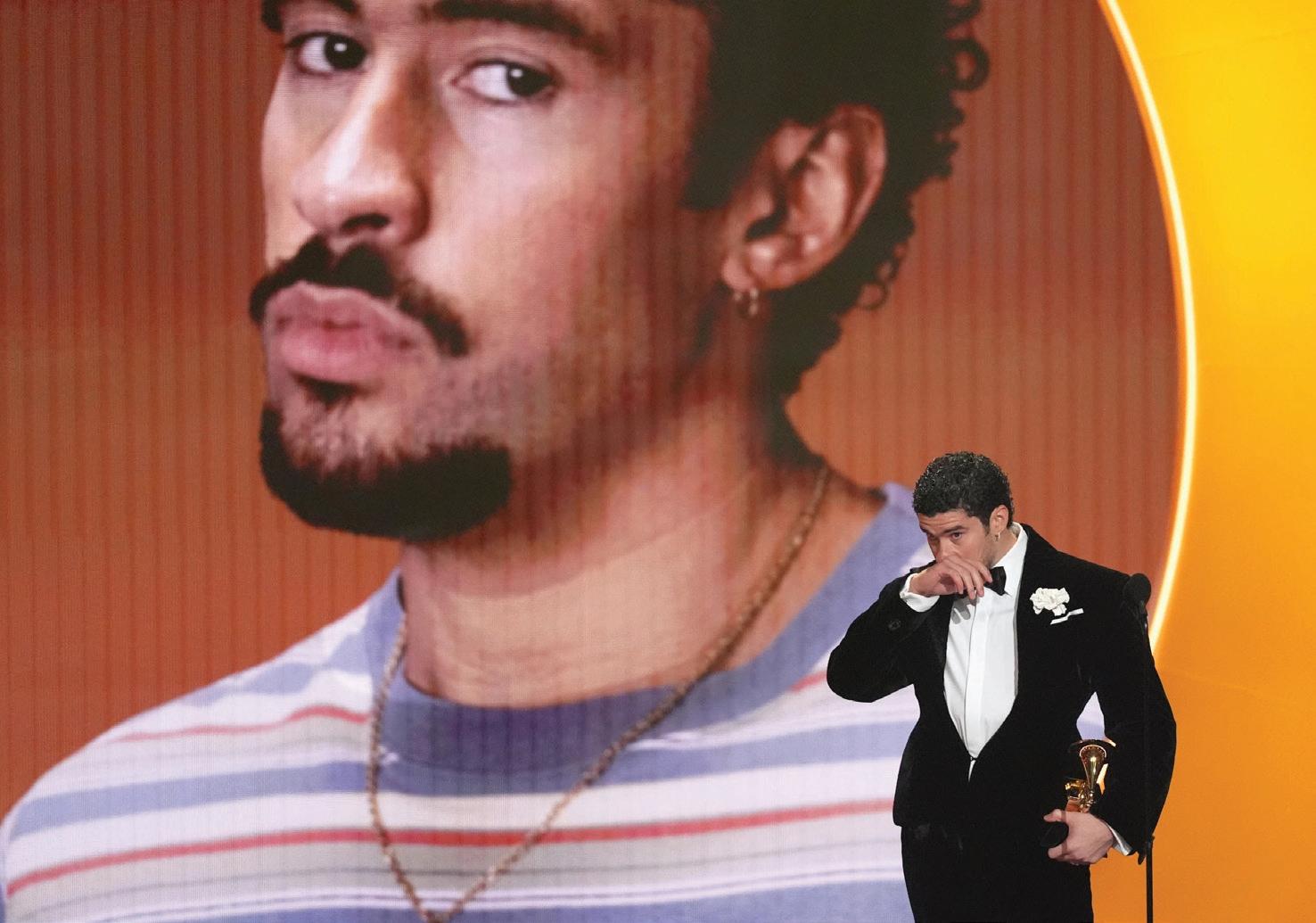
One of the most talked-about moments of the evening came from Bad Bunny’s win. Sophomore Jessie Olanick said his success stood out both musically and culturally.
“Bad Bunny was the biggest winner of the night,” said Olanick. “He made a statement about where he’s from and everything that’s been going on recently. It was really powerful and impactful for everyone to hear.”
Mazer said Bad Bunny’s Album of the Year win marked a notable moment for Spanish-language music and representation within the awards.
“That was groundbreaking,” said Mazer. “For so many years, the Grammys reflected a very narrow group of winners.”
Students said the Grammys continue to matter because of the music’s ability to connect people. Olanick said music allows people to relate to shared experiences.
“Everyone has an equal love for music,” said Olanick. “When artists express themselves, it can really change how you think about things.”
Mazer said music has reflected society, particularly among younger generations. She said award shows like the Grammys help amplify those voices.
“If you listen to music from different decades, it tells the story of what people were thinking and feeling,” said Mazer. “That’s why it continues to matter.”
Remembering Catherine O’Hara
BY EMMA RICOTTA Arts & Entertainment Editor
Catherine O’Hara passed away on Friday, Jan. 30, at 71 years old. She was most known for her lead roles in “Schitt’s Creek,” “Home Alone,” “Beetlejuice” and many more. O’Hara left a lasting impact on the Hollywood community.
Starting her professional acting career at age 20 and up until her late sixties, O’Hara was known for her comedic timing, emotional depth and ability to bring authenticity into every role she portrayed.
She became a comedy powerhouse in sketch comedy troupe “Second City Toronto” as a main stage cast member which shaped her signature style and long-time collaborations, especially with Eugene Levy in “Schitt’s Creek.”
She contributed to shaping recognizable projects in modern entertainment between television sitcoms to major motion picture films. Her work earned widespread respect throughout the industry and left a long-lasting impression on other professionals, solidifying her legacy across the Hollywood community.
While O’Hara’s influence was widely felt throughout Hollywood, her passing also strongly resonated with younger audiences. Many college students grew up watching her work, which made her a meaningful part of their lives.
As the news of her death spread, students across campus reflected on how her roles have shaped their sense of humor and appreciation for entertainment.
Senior Nora Delehanty feels that watching O’Hara as she grew up helped shape her appreciation for performance and comedy and helped spark her interest in pursuing college theatre.
Delehanty had the opportunity to perform a musical parody of “Schitt’s Creek” with the Theatre Arts Program at the Fringe Festival in Scotland last summer with “Crapp’s River.” O’Hara played Moira Rose in the famous series.
“I played Alexis Rose, Moira Roses’ daughter,” said Delehanty. “It was an honor to represent not only the university, but the show.”
Instagram, @catherine.ohara.appreciation
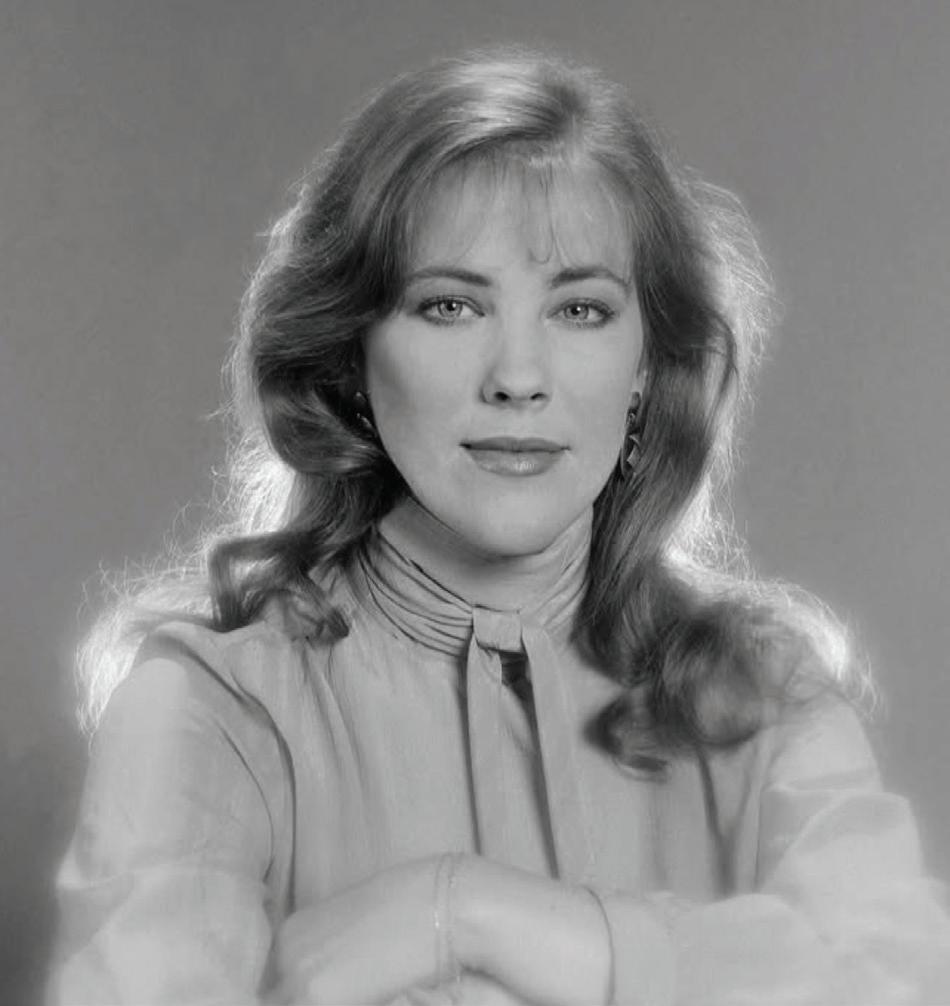
In the early 80s, a young Catherine O’Hara was asked to pose for a photoshoot for Saturday Night Live
In 2020, O’Hara won an Emmy for Outstanding Lead Actress in a Comedy Series for her role as Moira Rose in “Schitt’s Creek.”
Aside from her Emmy wins and nominations, she has gained tremendous amounts of industry respect as a veteran actress who remained relevant for decades. She has gained her recognition not just for roles, but for her influence on the screen.
Sophomore Alana DeLude grew up watching O’Hara on television and feels that she influenced her childhood.
“Her role as Sally from ‘The Nightmare Before Christmas’ was my favorite character growing up,” said DeLude. “I dressed up as her multiple times for Halloween.”
Through decades of unforgettable works, O’Hara has proven herself to be more than a comedic icon. She was a storyteller whose work continues to shape television and is leaving a legacy with her authenticity.
For many fans, O’Hara acted as a familiar presence throughout their lives. Her performances created lasting connections that will continue to resonate with future audiences.
Amanda Mandaro contributed to this article.
Chris Pizzello, AP News
Bad Bunny gets emotional after winning Album of the Year at the 68th annual Grammy Awards on Feb. 1, 2026.
Sports
Bill Belichick Left Waiting for the Hall of Fame
BY BRETT CLOWRY Staff Writer
Bill Belichick is referred to as one of the greatest coaches in the history of the National Football League (NFL). However, the six-time Super Bowl champion will have to wait another year to be inducted into the Pro Football Hall of Fame.
Belichick carries the second-most wins by a coach in NFL history, having a record of 333-178, only behind Don Shula, who had 347 wins. Belichick also set the bar with the most postseason wins by a coach with 31 wins.
“It is honestly ridiculous,” said sophomore Nolan Heneghan. “It is so rare to see greatness like that across any sport in modern-day sports. I just don’t understand what else he needed to do to be named a first-ballot Hall of Famer.”
The three-time AP NFL Coach of the Year (2003, 2007, 2010) was one vote short of the 40-vote threshold required to be named into the Hall of Fame during his first year of eligibility. The NFL Hall of Fame’s 50-person voting committee mainly consists of seasoned NFL reporters, but also includes some major football icons, such as Hall of Fame head coach Tony Dungy.
Per the Seattle Sports podcast, in regard to Belichick not getting in on the first-ballot, former NFL Quarterback Tom Brady said, “I don’t understand it, I was there with him every day… if he’s not a first-ballot Hall of Famer, there’s really no coach that should ever be a first-ballot Hall of Famer.”
Only five NFL head coaches in the sport’s rich history have ever been named to the Hall of Fame in their first year of eligibility. These names include George Halas (1963), Curly Lambeau (1963), Tom Landry (1990), Chuck Noll (1993) and Don Shula (1997).
“As a Jets fan, I literally grew up watching Belichick and Brady beat down on my team,” said sophomore Matthew Renaghan. “Even a guy like me, a fan of the Patriots’ biggest rivals, thinks without a doubt he should have been named first ballot. Belichick has more Super Bowls than every other head coach in NFL history.”
According to NFL.com, the Hall of Fame issued a statement saying, “Each year, the Hall reviews the selection process and the composition of the 50-person Selection Committee. If it is determined that any member(s) violated the selection process bylaws, they understand that action will be taken. That could include the possibility that such selector(s) would not remain a member of the committee moving forward.”
“There should be petitions about this,” said freshman Andrew Logie. “I
BY TUCKER TERRANOVA Staff Writer
may be biased as a Patriots fan, but there is something wrong internally with the sport. As great as the NFL is, there are so many issues, such as the Pro Bowl, officiating, and now the Hall of Fame. Roger Goodell needs to do something about this.”
Although Belichick’s career had some major mishaps, such as “deflategate” in the 2015 American Football Conference Championship game and “spygate” during the 2007 season in preparation of a game against the New York Jets, Logie said, “That doesn’t and shouldn’t make him any less great.”
NHL is Back on Olympic Ice
National Hockey League (NHL) players will return to the Winter Olympics for the first time in 12 years when the men’s hockey tournament begins Feb. 11 in Milan, marking the sport’s first best-on-best Olympic competition since 2014.
The preliminary round runs Feb. 11-15, followed by the knockout round beginning Feb. 17, with the gold medal game set for Feb. 22. For hockey fans, the event has been years in the making and could not come sooner.
“The Olympics are such a cool event for hockey fans,” said sophomore Nolan Keegan. “I remember watching T.J. Oshie’s shootout heroics with Team USA in 2014 and hope this tournament brings similar moments.”
In February 2025, the introduction of the Four Nations Face-Off replaced

the traditional NHL All-Star Game, pitting Canada, the United States, Sweden and Finland against each other in a weeklong tournament. The event was a resounding success, ending with Canada defeating the U.S. in overtime and leaving even casual fans wanting more.
“The tournament helped me become more interested in the game because it brought a familiar and popular format to a sport I’m less familiar with compared to others,” said junior Nick Scerbak. “The national aspect is something that gets you fired up, so it was exciting to see hockey do that.”
With little time between international competitions, rivalries will carry over into this year’s games. Canada enters the tournament as the favorite, widely viewed as the gold standard after winning the last two Olympics that featured NHL players. The roster features living legends such as Sidney Crosby alongside modern stars Cale Makar, Connor McDavid and Nathan MacKinnon, as well as rising talent Macklin Celebrini, who is expected to make a significant impact.
“I’m very excited to see Crosby and Celebrini play together,” said Keegan. “Crosby has been the face of the league for most of my life, and Celebrini looks like he could have a similar career.”
The United States is considered Canada’s biggest challenger, aiming to avenge losses in the 2010 Olympic gold medal game and last year’s Four Nations tournament. Led by Auston Matthews, Quinn Hughes and Matthew Tkachuk, the Americans hope to capture their first Olympic gold since the 1980 “Miracle on Ice” team. With several of the league’s top American-born players in their prime, the team enters the tournament with its deepest roster in decades.
Beyond Canada and the U.S., the tournament features a deep pool of competitive teams. Sweden, despite missing star forward Leo Carlsson, still boasts one of the deepest rosters in the field, while Finland, which won gold in 2022, will bring a lineup full of NHL talent.
The Czech Republic and Germany will rely on superstars David Pastrnak and Leon Draisaitl, respectively, to make surprising medal runs and emerge as fan favorites.
“Watching the smaller European countries compete is always fun because it’s their chance to show the world who they are,” said junior Will Thompson.
The tournament begins Feb. 11 with Slovakia facing Finland at 10:40 a.m. EST, followed by Sweden taking on the host nation, Italy, at 3:10 p.m. EST.
Instagram, @vintageclassics
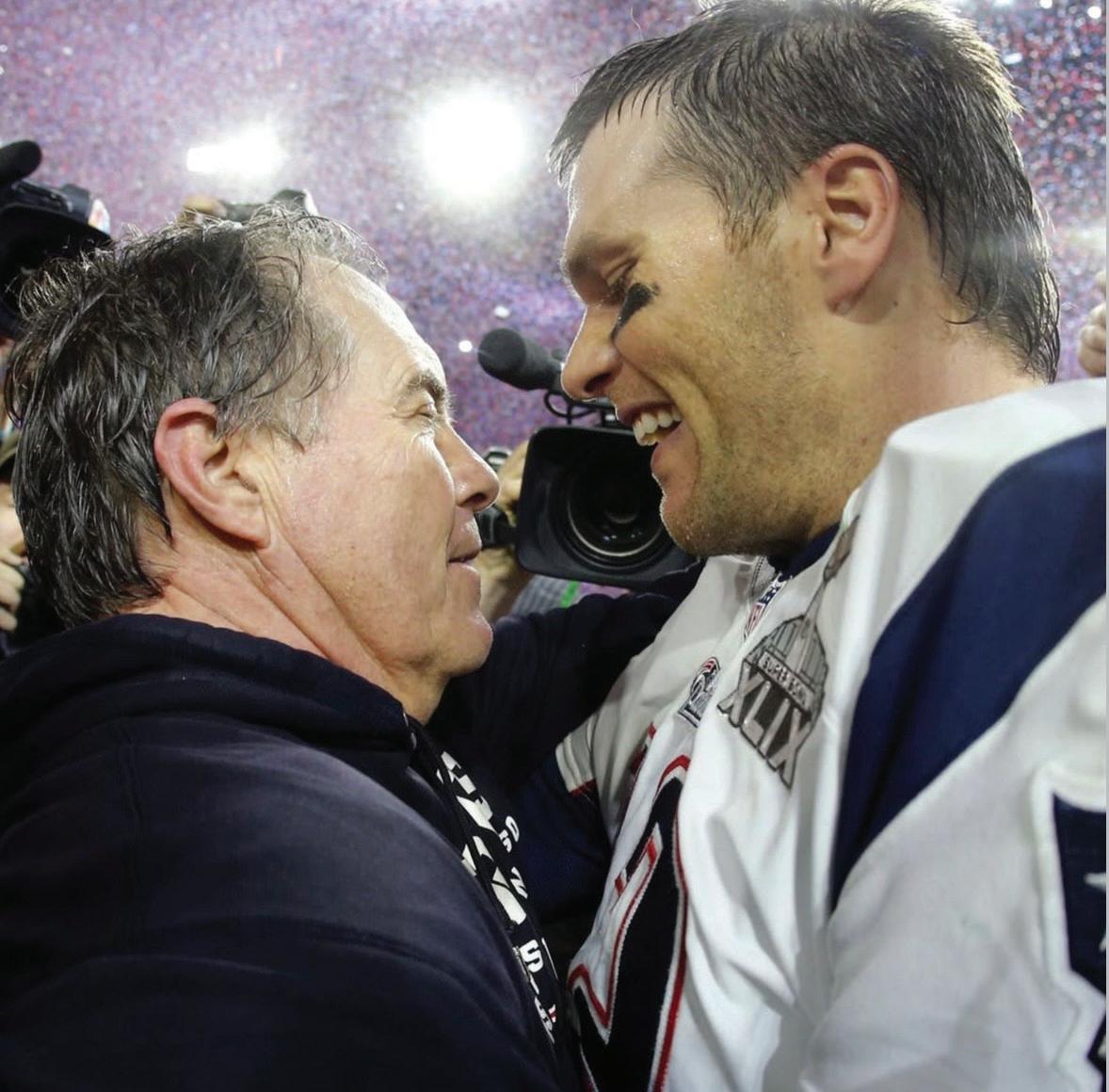
Bill Belichick and Tom Brady celebrate winning Super Bowl XLIX together.
Simor Hastegard, AP Photo Macklin Celebrini, left, and Sidney Crosby, right, embrace after a goal for Team Canada during the 2025 IIHF Ice Hockey World Championship.
EDITOR IN CHIEF
GEORGE TRIEBENBACHER 2026
MANAGING EDITORS
SHANNON TUTTLE 2026
MOIRA STAPLES 2026
COPY EDITOR
MADISON CONKLIN 2026
NEWS EDITORS
DANIEL GREENE 2026
MADELEINE MEDEIROS 2028
ASST. NEWS EDITOR
NICHOLAS MAISANO 2028
FEATURES EDITORS
SARA HASENEY 2026
ALEXA BORNER 2027
ASST. FEATURES EDITOR
FERNANDA GUEVARA 2026
ARTS & ENTERTAINMENT EDITOR
EMMA RICOTTA 2026
ASST. ARTS & ENTERTAINMENT EDITOR
CAROLINE DAVINO 2026
SPORTS EDITOR
COLLIN MACLEOD 2027
ASST. SPORTS EDITORS
TAYLOR MAGUIRE 2027
JACK CAVICCHI 2026
SPORTS APPRENTICE
NICK DILAPI 2028
CAMPUS LIFE EDITOR
THEO WEISMANN 2026
AUDREY’S CORNER EDITOR WILL MORGAN 2028
SENIOR PHOTOGRAPHY EDITOR
JACK CAVICCHI 2026
PHOTOGRAPHY EDITOR
JORDAN DORSEY 2026
ASST. PHOTOGRAPHY EDITOR
JAYDEN HUNTER 2027
PUBLIC RELATIONS MANAGERS
SARA HASENEY 2026
ALEXA BORNER 2027
WEB MANAGER
JORDAN DORSEY 2026
CIRCULATION MANAGER
FERNANDA GUEVARA 2026
FACULTY ADVISOR
PROF. JOANNE KABAK
SPECTRUM IS PRINTED BY: VALLEY PUBLISHING Derby, Conn.
SHU Flag Football’s Rapid Growth
BY LEAH MANSFIELD Staff Writer
The club women’s flag football team is making big moves this spring with its first competitions and being invited to the Eastern College Athletic Conference (ECAC.)
The ECAC is the first and largest intercollegiate women’s flag football league. The conference recently announced it has been given a $1 million grant supported by the Betty Wold Johnson Foundation, directed by New York Jets owner Woody Johnson.
The conference has invited Sacred Heart’s very own flag football team to compete this upcoming spring.
“The first practice I think we had seven, but it quickly grew within a couple of weeks where we had enough to scrimmage each other,” said head coach Kate DuBois.
“We play seven-on-seven and now our roster is at 30. To have that many girls come out knowing that there was no definite schedule, we didn’t know if we were going to play games or how many we were going to play. For them to all stay and stick with it, and still love to play, it’s awesome,” said DuBois.
The team is currently building their schedule for the upcoming months and plans to travel to at least three different locations. The Pioneers plan to go head-tohead against Long Island University, Montclair State University, Wagner College, Penn State Schuylkill, Mercy University and St. Joseph’s University.
“My biggest expectation is consistency. I want the team to work hard. I want them to be there for each other, stay united, because they are very united right now,” said DuBois. “I want them to keep it that way. It’s awesome.”
The team has had a lot of fun practicing with each other, building each other up, and preparing for their first season together.
“We have to grow individually because it’s a very team-based sport. If one part of our team lacks a certain area, teams know to pick on it, so if we individually grow and become the best player at our position, or in general. I think it’ll just allow everyone to grow altogether and make
us come together as one, great, solid unit and that’s what the goal is, ultimately,” said senior Dayna Mercogliano.
“The ECAC sets a great standard, a high standard for athleticism, and it’s a great platform for athletes. You know, to not only showcase their talents, but also grow in their talents.” said DuBois. “Having games to compete in and working for a championship, it brings a different light and a different level of effort.”
“The fact that we were able to be a part of the first inaugural season, even though we just developed the team in September is huge,” said Mercogliano. “There’s so much eagerness, the participation is so high, and there’s so much to play for now.”
“Having a structured league, backed by the New York Jets, is also huge too. It’s also huge that the NFL is recognizing how fast the sport is growing and being able to be a part of it is super cool,” said Mercogliano. “The backing also shows such support and opportunities for women.”
The Pioneers plan to travel to MetLife Stadium in East Rutherford, N.J. for a media day on Feb. 27 to recognize their involvement in the conference.
Pioneers Use Resilience in Current Season
BY JAMES EL-HAGE Staff Writer
After a season that tested their perseverance, the women’s basketball team has rewritten their narrative in a major way.
“What I’m most proud of is our resilience. This team fights, and they embody hard work and a relentless pursuit to be great,” said head coach Jessica Mannetti. “After being picked almost last in the conference, we want to prove everyone wrong,”
After finishing 5–15 in Metro Atlantic Athletic Conference (MAAC) play last season, this season’s jump has not come overnight.
“This team is really hungry to prove themselves, and they are on a mission,” said Mannetti.
That mission began in nonconference play, where they worked through embracing new roles and finding their
identity. Once conference play started, a gritty road win at Iona University helped solidify their confidence.
“We’ve just been able to gut out some really tough games and go into the locker room with confidence and that no quit mentality,” said Mannetti.
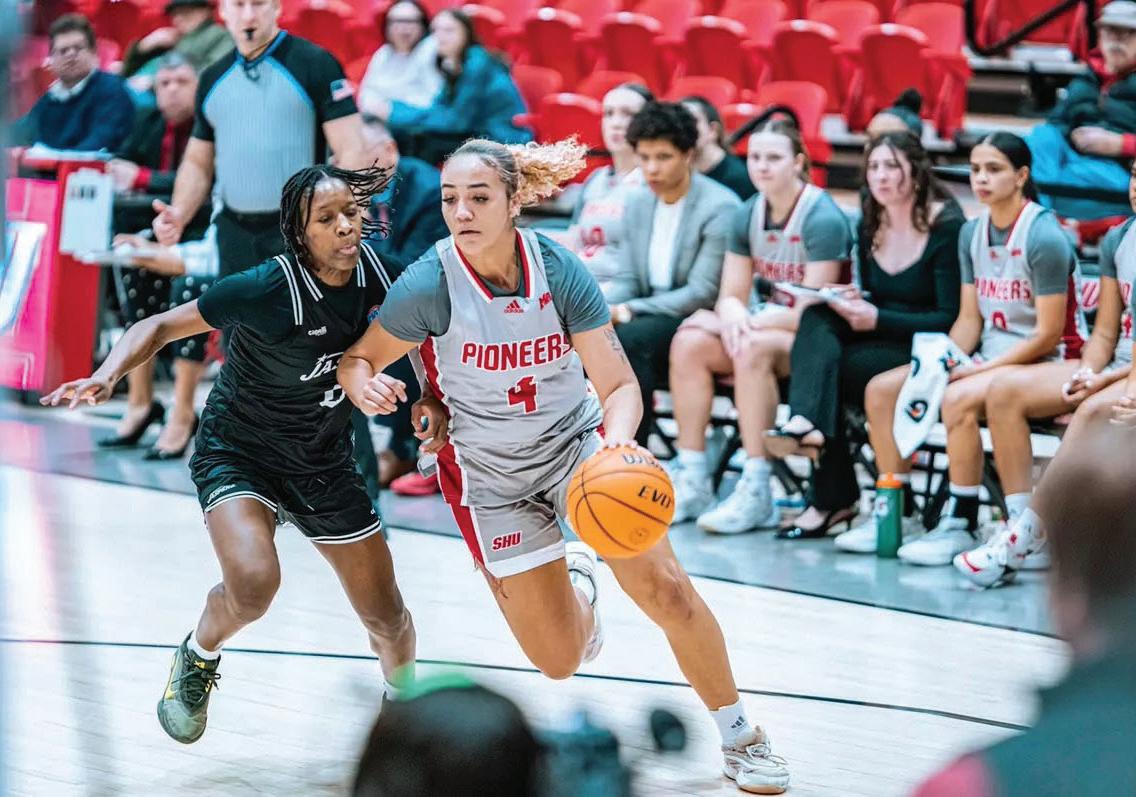
Junior Nalyce Dudley has been a key part of this season’s success.
“Over the course of this year, being my junior year, I knew that I had to step into a bigger role,” said Dudley.
Dudley’s improvement and development of her three-point shot has helped her earn all-conference team consideration.
“Last season, we started off rough. It was a new conference, and we were still trying to figure out how to play with each other,” said Dudley. “This season, coming into the locker room, I feel like we’re starting to buy into each other a lot more and play for each other.”
“We never quit, we never give up,” said senior Sierra Johnson. “I genuinely never feel like we’re going to lose even if we’re down 15 in the fourth.”
“Being in this conference, it forces us to not rely just on talent because anybody can show up and be good on any night. It doesn’t matter if you’re a top team, it’s just a matter of who’s the most connected, who’s the most disciplined, and that’s who’s going to come out with the win,” said Johnson
As the season continues, Mannetti is making sure the team does not get complacent with where they are.
“Let’s continue to put in the work now that we’ve earned a pretty fun target on our back,” said Mannetti.
After a 68-63 overtime loss to Mount St. Mary’s University on Feb. 7, the Pioneers currently sit fifth in the MAAC standings with a conference record of 9-6. They have five regular season games remaining.
The Pios next game is on Saturday, Feb. 14 at Saint Peter’s University.
Sacred Heart Athletics contributed to this article.
Contributed by Dayna Mercogliano, ‘26
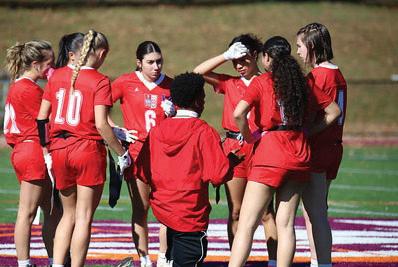
The team huddles before their next play against Post University.
Josh Gee, ‘26
Nalyce Dudley drives hard with the left hand past the Manhattan defender.