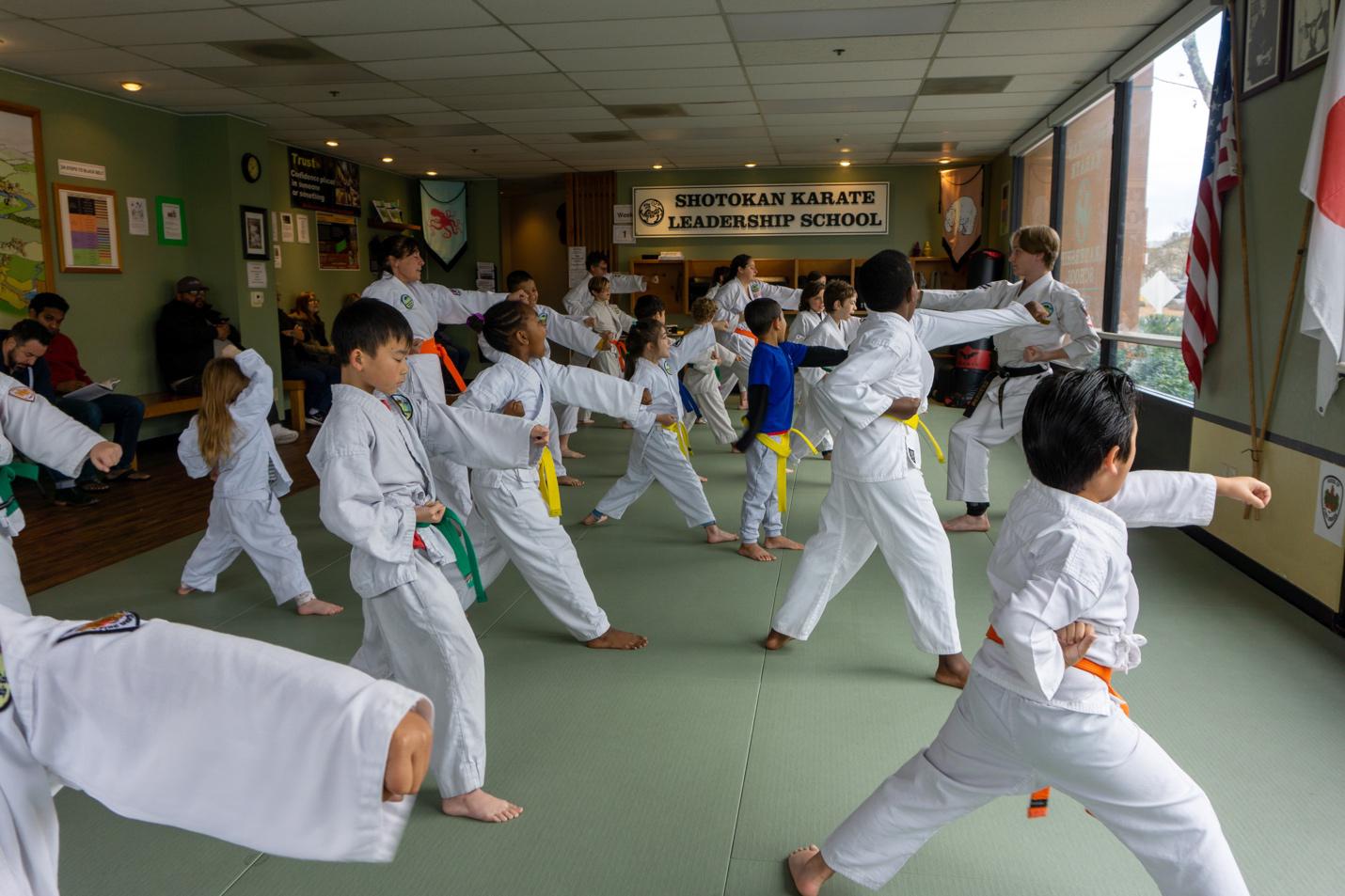
Shoka Magazine April 2023 A Family Educational Resource Shotokan Karate Leadership School® 3082 Marlow Road B1, Santa Rosa, CA 95403 707-575-1681 phone, 707-861-0092 text AskAboutKarate.com
April 1, 2023
Marty Callahan 8th Degree Black Belt
“Let every nation know, whether it wishes us well or ill, that we shall pay any price, bear any burden, meet any hardship, support any friend, oppose any foe, in order to assure the survival and success of liberty.” - John F. Kennedy 35th President of the United States
Parents, families, students and friends,
Last month I traveled to Clearwater Florida to learn from some of the most knowledgeable and successful martial art schools around. There is a lot more to it than you might imagine. I’ve been studying with these school owners and developers for several years and I always come away with good stuff. During the pandemic more than 60% of all martial art programs across the country were wiped out but with their guidance the schools in their group not only survived but grew at the fastest rate they ever have. Our school is in the strongest position it has ever been in. Your family benefits from this because we have what it takes to thrive in a hostile environment and we’re going to teach your child and your family how to do that.
One of the take-a-ways from my trip to Clearwater Florida last month was a video from the Gottman Institute titled the Four Horsemen of the Apocalypse. You can Google it. It’s only about 2½ minutes long and it goes on to explain the four negative communication patterns that if not fixed can predict the end to 90% of all relationships. These negative communication patterns are criticism, contempt, defensiveness and stonewalling. The video goes on to explain the antidotes to these negative patterns. Check it out. You’ll be glad you did. I’ll include more on this in May issue of Shoka News.
Here’s what’s in it this month’s Shoka Magazine:
• Shoka News (our newsletter)
• May Award Ceremony Announcement
• Sensei Kevin Warner’s Return Announcement
• Article: 2 Opposing Attitudes – Oh No! and Come On!

• Cynthia Kohl
• Hero’s Journey and SKLS Training – Our new book titled The Hero’s Journey-Act I the Separation will be out in the next couple of months. You’re welcome to a copy when it does.
• Cognitive Behavioral Therapy: Self-Defeating Rules 1-5 out of 14
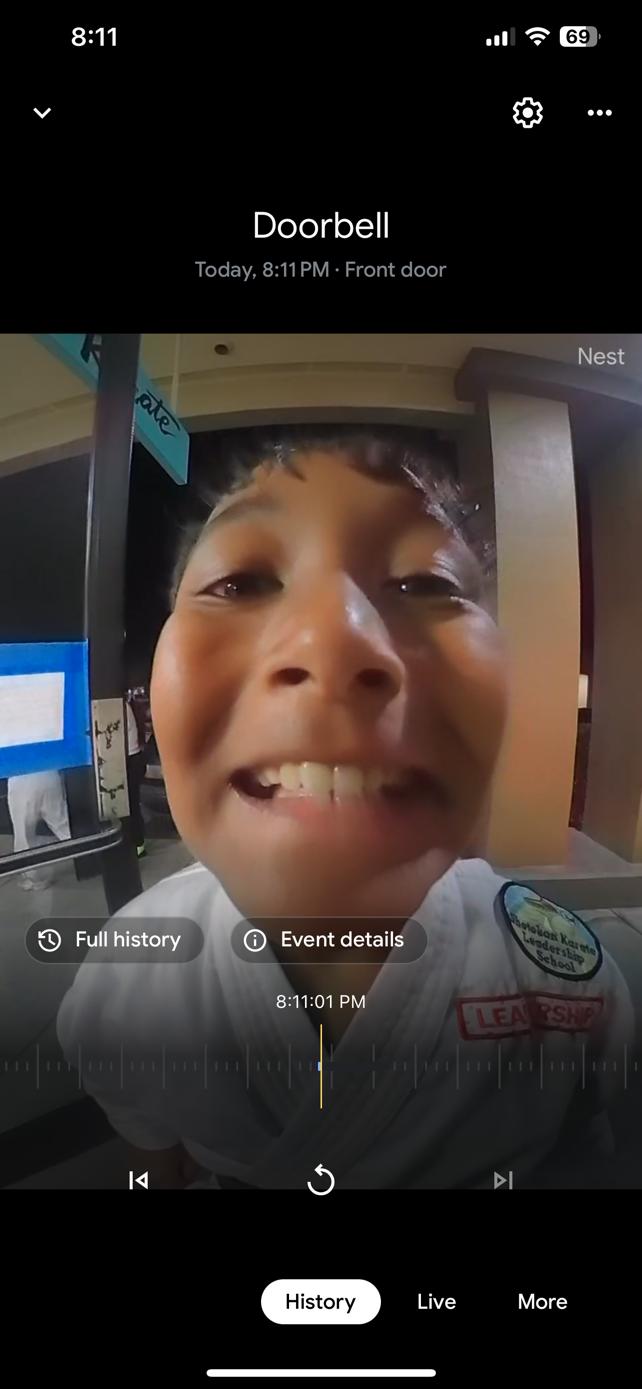
• Mystery Door Bell Ringer
Yours truly,
Marty Callahan, 8th Degree Black Belt Founder, Chief Instructor, Author
3082 Marlow Road B1, Santa Rosa, CA 95403 707-575-1681

Shotokan Karate Leadership School®
Shoka News
Shotokan Karate Leadership School® Newsletter
April 1, 2023
A BIG Welcome to our newest students!
v Logan Purtill, Jovanni Garcia, Alejandro Rojas, Jacob Fertino, Riley Stanbro, Elliot Zapadinsky, Juliann Finn, Avery Finn, Liam Finn, Patrick Finn, Ed Estrada
Upcoming Events and Activities
Ø Saturday, April 1st next Santa Rosa Invitational Karate Tournament: 10:30a-12:30p
Ø
April 10-17th Sensei Callahan’s Japan Trip
Ø Friday and Saturday, April 28-29 Sensei Kevin Warner back to teach classes
Ø Saturday, May 6th – Spring 2023 Award Ceremony and Potluck Dinner
Santa Rosa Invitational Karate Tournament – Saturday, April 1, 2023
You are probably receiving the Shoka Magazine and Shoka News after this tournament. The results will be available in the dojo. Not everyone will want to compete but those who do generally progress faster through the ranks. We’re hoping to hold the next tournament in October.
Japan Trip – April 10 to 17, 2023
I will be travelling to Japan and joining our friends from Shotokan International Alliance to do some sightseeing and karate training. I will have a full report when I get back. You’ll hear all about it in the May issue of Shoka Magazine.
April 28-29 – The Return of Sensei Kevin Warner, 7th Degree Black Belt from Riverside Sensei Kevin Warner, Instructor Extraordinaire will be here to teach classes and give a Black Belt Exam on Friday evening, April 28. Then on Saturday, April 29, he’ll teach a few more classes Space is limited so be sure to sign up in advance. Sign-up sheets will be on the front counter.
Spring 2023 Award Ceremony and Potluck Dinner, Saturday, May 6th from 5:30p to 8p. Our semi-annual Award Ceremony, Potluck Dinner and Samurai Sword Cake Cutting will be held at the Finley Center on Saturday May 6th .
Shoka Magazine: We’re mailing it to your house. We hope you’re getting it. If not let us know. It’s also coming by email in an electronic format that we recently discovered called Issuu. Check it out and let us know what you think... good or bad. And don’t worry, you won’t offend us. We’re probably more critical of our selves than you might be of us. We accepted a long time ago that we’re not perfect and that the way to get better is to recognize this and fix whatever we can when we can. We’ll teach your kids to do the same. This will serve them well the rest of their lives.
Our Covid Policy
Wear a mask if you are unvaccinated Decide for yourself if you are vaccinated. We will never ask you to do anything that will put you or your family at risk. You always have the opportunity to opt-out of any activity or event that you deem is unsafe.
Award Ceremony
Finley Community Center

6 pm Saturday, May 6th 2023
Student Performances Award
Ceremony
Potluck Dinner
Samurai Sword Cake Cutting Family and Friends are Invited.
NOTE: All Shotokan Karate Leadership School® students are expected to attend. Attendance at this event will help your child achieve their goals and demonstrate the support they have for their dojo-mates and the school.
Your child will perform on stage. Please arrive by 5:30 pm to allow them time to prepare. This will be a great opportunity for your child to show you what they have learned and for you to let them know how proud you are of them. They will remember this event for many years to come.
Potluck: Please bring a dish of your choosing to share
SHOTOKAN KARATE LEADERSHIP SCHOOL®
The Return of Sensei Kevin
Warner
7th Degree Black Belt!
We are excited to announce the return of Instructor Extraordinaire, Sensei Kevin Warner, 7th Degree Black Belt, on the Friday, April 28th and Saturday, April 29th. Sensei Warner is a former international competitor and a member of the Advisory Committee of Shotokan International Alliance. He will be here to teach classes and give a Black Belt Exam on Friday evening and classes on Saturday morning. He’s an extraordinary instructor and his classes are in high demand. Please sign up in advance. You don’t want to miss this.

Friday, April 28th
5p Shoka / BBSL All Ages & All Ranks
6p Brown and Black Belts All Ages
7p Black Belt Exam
Saturday, April 29th
9a Shoka / BBSL Age 7 and Up, Green Belt & Up
10a All Level One Students (Trial, Shoka, BBSL) of all ages
10:30a Shoka / BBSL Ages 4 and Up, All Ranks
Mark your calendars now!
SHOTOKAN KARATE LEADERSHIP SCHOOL®
Two Opposing Attitudes: ‘Oh No!’... or... ‘Come On!’
Marty Callahan 8th Degree Black Belt
“The basic difference between an ordinary man and a warrior is that a warrior takes everything as a challenge while an ordinary man takes everything as a blessing or a curse.”
-Carlos Castaneda
It’s late January 2023 we just came back from training with Sensei Edmond Otis, and Sensei Kevin Warner and the wonderful people down in Riverside. The training was short, intense and eyeopening. And on top of that we had a beautiful stay at the Mission Inn a national historical monument. If you haven’t been there, you’ve got to go, or at the very least visit their website.
Sensei Otis is the Chief Instructor of Shotokan International Alliance and is an unbelievably gifted instructor. His background as a psychologist gives him a unique perspective on the fine points of Shotokan Karate training and is a breath of fresh air to martial arts training.
In his classes Sensei Otis talked about the importance of attitude and how Shotokan Karate training was first and foremost about establishing the right attitude. Shotokan Karate practitioners are recognized around the world for having a very strong attitude towards life.
Sensei Otis explained that standing in natural stance is an important means of developing the right attitude. If your weight is back on your heels then when you are confronted with a dangerous situation you will be taken by surprise, your response will be, ‘Oh, no!’ and your reaction will be late. This attitude also makes “non-dangerous” things feel dangerous because we feel more hesitant. And it applies to opportunities. If we live back on our heels then when an opportunity is presented to us we can’t respond to it quickly enough to take advantage of it.
Whereas if your weight is forward on the balls of your feet you are ready for danger, you want it because danger is exciting, and your attitude is that if it’s going to happen then let it happen now, or ‘Come on!’ This is a strong attitude and will allow you to respond quickly and effectively to dangerous and non-dangerous situations. Sensei Otis explained that weight back and weight forward also effects how we perceive ourselves and is in effect a walking bio-feedback loop.
This attitude is echoed in the quote from Carlos Castaneda about the difference between a warrior and an ordinary man. The warrior will see everything as a challenge, whereas the ordinary man sees things as either a blessing or a curse. This is the attitude of ‘Come On’ being ready for whatever might appear.
I read all of Castaneda’s books back in the 70s and was fascinated by how his training in shamanism was similar to the training I was getting in Shotokan Karate. If you’d like more information on him, Google will tell you just about all you might like to know.
Shotokan Karate Leadership School®
3082 Marlow Road B1, Santa Rosa, CA 95403
707-575-1681
Shotokan Karate Leadership School®
Karate has had a profound impact on my life.
I kept seeing myself as an A student and I kept getting A’s.
Karate has had such a profound impact on my life. I can't sum it up in one story, but I will try to convey the most significant change I feel I have made.
I am not known for being good at math. Algebra has always been a subject that I struggle with. So, I don't need to say how nervous I was to at the beginning of the semester, having to take intermediate algebra at the JC.
But I applied certain concepts of karate to my behavior and attitude about myself as a math student. The first strategies I employed was "be faithful," and "endeavor."
I didn't waste any time for setting up a study routine for myself and I never faltered from it.
All the hard work from that enabled me to change my attitude about my math abilities, because my understanding and confidence improved.
Another thought I carried with me throughout the semester was actions follow thoughts. I will get whatever grade I envision for myself. I kept seeing myself as an A student, and I kept getting A's.
With all these improvements I have made on myself I discovered I like math, and without these changes, I would have never known.
Thank you, Sensei Callahan, for all you do.
- Cynthia Kohl, SRJC Student
3082 Marlow Road B1, Santa Rosa, CA 94303 AskAboutKarate.com, 707-575-1681
8
The Great Journey to Black Belt
“What to know when your child wants to be a Black Belt!”
Marty Callahan
th Degree Black Belt
“The cave you fear to enter holds the treasure you seek.”
-Joseph Campbell
Joseph Campbell was an American mythologist, writer and lecturer. He wrote a wonderful book title ‘The Hero with a Thousand Faces’. This book describes 12 stages of the human experience that relate directly to the transformational process your child will go through in becoming a Black Belt The process will transform them from an ordinary child into an extraordinary leader. We call this The Great Journey. Campbell describes it as ‘a process that challenges an ordinary person to become a hero by answering a call to adventure’. And, he defines a hero as someone who willingly gives their life to something bigger than themselves, someone who goes out and achieves great deeds on behalf of their group, tribe, or civilization. As a parent not understanding this process will result in your child losing out on an opportunity to become someone capable of achieving great deeds for their family, community and country. I’m sure you know adults who have not lived up to their potential. This is what’s at stake – your child’s future – and who they will become
Stage 1 – The Ordinary World
In the Hero’s Journey we are introduced to the hero in a sympathetic way. This causes us to identify with them and the situation or dilemma they are in. The hero is uneasy because of something that is causing stress. When we first meet your child, it is against a background of their personal life. Something is pulling at them. This could be shyness, timidity, laziness, bad behavior, poor focus, poor grades, lack of self-control, inability to stand up for themselves, a bully who is terrorizing them, lack of exercise, or any of a number of things. As a result, they and you may be uneasy, uncomfortable or unaware.
Stage 2 – The Call to Adventure
The hero is presented with a problem, challenge, or adventure. It’s a time of change, turmoil, and uncertainty. You or your child want something more. You may recognize the cause of the unease and want to address it, or your child may have a special gift and you want to steer them towards a challenge that would stimulate them to grow. Or, there’s a shakeup in your situation caused by an external force or something rising up from deep within.
Stage 3 – Resisting the Call
It is said that the greatest of all fears is the fear of the unknown. Your child may feel this fear. They may like the idea of karate, but resist the structure or hard work it takes to learn. At an early point in the STAR WARS story Luke refuses the call to adventure from Obi Wan and then returns home to find that his aunt and uncle have been barbequed by the Emperor’s storm troopers. This atrocity motivates him to answer the call and he now eagerly

Shotokan Karate Leadership School® 1
accepts the adventure. Your child may need a unique motivation to move them to accept the call.
Stage 4 – Meeting the Teacher
Your child meets their teacher who tests them to determine their potential. The teacher will agree to take them on as a student only after they demonstrate the capacity and willingness to learn. Your child doesn’t need to have exceptional talent but they do need to be willing to listen, do what they’re asked to do, and work hard. Your child’s initial contact with their teacher is not enough for them to really know and appreciate what their teacher can do for them. This takes time and it is the formation of a sacred bond. If the time is given, your child will come to believe that anything is possible with the guidance of their teacher. In addition to meeting their teacher your child will meet senior members of the school who will mentor them and play an integral role in their development as an extraordinary human being. Our instructors and senior members are highly trained individuals who are passionat e about guiding young people on their Great Journey. But the teachers and mentors can only go so far, eventually the hero, aka: your child, must face the unknown by them self.
Stage 5 – Crossing the Threshold
For Campbell this is the stage where the Hero fully enters the story’s special world for the first time. This is the moment at which the story takes off and the adventure gets going. The balloon goes up, the romance begins, the plane or spaceship blasts off, the wagon train gets rolling, or Dorothy sets out on the Yellow Brick Road. The hero is now committed to his journey and there's no turning back. For your child this is the start of their Black Belt training. They’ve made the commitment; they’re going all the way. This commitment is vitally important. Without it your child will not succeed. They will not be able to withstand the failures and disappointments that lie ahead. But they will only commit if they know that you will give them your entire support. Anything less and they may believe that you don’t think they’re capable. If they sense that you are wavering, or that you are waiting for them, then they will not commit and their progress will be halted. Project this into the future and you run the risk of them being unable to commit to anything significant in life. They must see that you are behind them 100%.
Stage 6 – Allies, Enemies and Tests
For Campbell at this stage the hero must make allies, pass tests and confront enemies. In STAR WARS, the cantina is the setting for the forging of an important alliance with Han Solo, and the start of an important enmity with Jabba The Hut. In many westerns it’s the saloon where these relationships are first seen. The test phase is represented in STAR WARS by the scene of Obi Wan teaching Luke about the Force, as Luke is made to learn by fighting blindfolded. The early laser battles with the Imperial Fighters are another test, which Luke passes successfully. Your child will meet their classmates and begin to form bonds with kindred spirits. These bonds are important because they will need their friends’ support during the difficult times that lay ahead. Also, it’s important to remember that not all kids like each other, so, during this stage they will come to recognize those individuals in the school that they will need to steer clear of. Sometimes parents in their zeal to protect their child make the mistake of intervening in this process. Don’t do that. Parental interference will ultimately lead to your child’s failure.

Shotokan Karate Leadership School® 2
Stage 7 – Approach
At this point in the journey the hero comes at last to a dangerous place. In many myths the hero descends into a terrible place to save someone they love, fight a dragon or gain something of great value. In STAR WARS it’s when Luke and his companions were sucked into the Death Star where they had gone to rescue Princess Leia. With their newfound allies, your child prepares to take on challenges that put them in perceived danger. This perceived danger forces them to concentrate. Their instructors are watching carefully and will make sure they have the skills they need to succeed and that they are not in real danger.

Stage 8 – The Ordeal
For the hero this is the moment he hits bottom. He faces the possibility of death, brought to the brink in a fight with a mythical beast. It’s a critical moment in which the hero appears to die but somehow survives. In STAR WARS, it's in the deepest regions of the Death Star, where Luke, Leia and company are trapped in the giant trash-masher. This is the magic of the hero myth. We identify with the hero and feel the near death experience with him. We are depressed by the apparent death and then exhilarated when the hero returns from death. Your child will never feel more alive than when they think they’re going to die.

Stage 9 – Reward
Surviving death, beating the dragon or slaying the enemy now puts the hero in a position to seize the prize he’s been after. Sometimes it’s a special weapon, or a token, or an elixir, or it’s knowledge and experience that leads to greater understanding. This is when they earn their Brown Belt. It’s a major accomplishment. They now possess knowledge and skills that are above the ordinary. They have earned a level of maturity that is above average for their age. Their peers now see them, as someone of substance who cannot be ignored and must be reckoned with. There may be celebration but there is also the danger of losing what they have earned. The real prize – Black Belt – has not yet been attained.
Stage 10 – The Road Back
For Campbell, the hero is still in danger. Vengeful forces are hot on his trail as he makes his way back to their ordinary world. They want the reward that they have taken from them. In STAR WARS this is the chase that ensues when Luke and his companions escape the Death Star and make plans to bring down Darth Vader. For your child, they must complete the adventure and bring their knowledge and skills back to their family, their school, and their ordinary world. However, there is urgency and danger in this mission. They could lose what they have gained. Vengeful forces may show themselves as a false belief that they have made it to the top, or doubts that they can really do it. If they’re allowed to quit, they will carry the mark of someone who gives up before reaching their goal. This may cause him to go down rabbit holes, quit jobs as soon as they get tough, give up easily on relationships that had great potential, never achieving much, and never feeling fulfilled.

Shotokan Karate Leadership School® 3
So, don’t let them talk you into believing that the training is boring, or too hard for them, or that they’re afraid. Quitting may appear to be the best way out but if you let them do this you will come to regret it. There are many parents who are disappointed in their child’s life; you don’t have to be one of them.
Stage 11 – Resurrection
From his research Campbell discovered that the hero would invariably emerge from his ordeal transformed by the experience. Often there is another instance of the death-rebirth experience as the hero faces death and survives. With each experience they gain greater control of their powers. They are not the same person they were when they started, they are transformed into someone greater. Your child’s Black Belt test is the climax of their many years of training. They again are severely tested. The experience leaves them purified. It is another moment of death and rebirth, but on a higher and more complete level. With this supreme effort, the forces that caused conflict at the beginning are finally resolved.
Stage 12 – Return with the Treasure
After the resurrection the hero returns home with their treasure, which might be an object, a lesson, love, a good story, or the knowledge that the special world exists and can be survived. For us, it’s the Black Belt. This treasure has the power to transform the hero and his world and that the hero is in possession of the treasure. Your child has taken their Great Journey with us and now has as their own knowledge and skills that are a powerful treasure that they can use to make the world a better place. But what are they like? What type of person have they become? Who will they be? What can you expect of them?

First, they will be well rounded in their studies and personality. They can set goals, create plans and follow through and reach those goals. They will think on their feet better than their peers. This will give them an advantage in dealing with them. They will be quick to identify problems and holes in arguments. Their decision to seek excellence in all they do will propel them to success in all situations. The steady process of making life and death decisions will spur them to act with courage, courtesy, integrity, humility and self-control in all situations. They will have a strong sense of themselves and a high level of confidence in what they say and do. They got this way from repeatedly forming and articulating their own opinions. They stand tall and walk with a sense of purpose. When they introduce themselves to others, they look them in the eye, extend their hand and speak in a clear voice. They’re polite, confident and self-assured. They work well with others and they give them the sense that they are not someone to be trifled with. When others talk to them, they know that their complete attention is on them and that they understand what they have to say. When they say they’ll do something; they do it. It doesn’t matter how much harder it is than they initially thought; they said they’d do it; so, they do it. Whining and complaining are not options. They will quickly assess a situation and do what in their heart they know has to be done even if no one else is doing it. They know they’re only as good as their word, and they know that setting and keeping high standards for themselves is what’s going to make them sleep easy at night. They’re a good man or woman, and would make any parent proud to call their child.
References:
The Hero with a Thousand Faces, by Joseph Campbell
A Practical Guide to Joseph Campbell’s The Hero with a Thousand Faces, by Christopher Vogler,
Shotokan Karate Leadership School® 4
Cognitive Behavioral Therapy
Robert Ellis’ FOURTEEN SELF-DEFEATING RULES
Robert Ellis argued that a small number of core beliefs underlie most unhelpful emotions and behaviors. Core beliefs are underlying rules or code which guides how we react to the events and circumstances in our lives. Over the thirty -five years Ellis worked on this cognitive level, Ellis identified a trend that all dysfunctional behavior and attitudes functioned out of one (or more) of these self-defeating rules. Here are the first 5 of his self-defeating rules compliments of Udemy. The remaining 14 rules will be found in future editions of Shoka Magazine
1. I NEED EVERYONE TO APPROVE OF ME
People pleasers are everywhere: you either know a few people pleasers or you are a people pleaser yourself. People pleasers say yes to everyone and everything, regardless as to whether or not they want to. They perpetually lie to fit into other people’s narratives and demands: they agree with opinions they don’t agree with, they complement people’s outfits which they don’t like, they’ll say things they believe other people want to hear, they’ll attend social events they didn’t want to go to and they’ll even date people they don’t even fancy for fear of ‘hurting their feelings’. Why do people compromise their own sincerity, integrity and authenticity to please other people? It’s usually because they believe their opinions, needs, thoughts and whole persona isn’t good enough. They usually came from backgrounds where parents, guardians or authority figures emotionally or physically abused them and rejected them, resulting in a desire in adulthood to seek any form of approval, regardless of its legitimacy.
2. I MUST AVOID BEING DISLIKED BY ANYONE
Similarly, to the first point, people who don’t like to be disliked by people are people pleasers. To avoid being disliked, they’ll maintain friendships with people they don’t personally like (or are afraid of being on the wrong side of) or be overly friendly with people who clearly dislike them, going out of their way to buy them nice things, compliment them and strike up a conversation with them. Again, this way of being is inauthentic and deceitful, but people don’t act this way out of bad intentions: they’re merely trying to disprove their deep-seated belief that they are an unkind, nasty, horrible, boring person who nobody likes and who doesn’t deserve friendship or love.
3. I MUST SUCCEED IN EVERYTHING I DO TO BE VALUABLE
Many people are addicted to success, usually because they have a deep-seated core belief that they are a failure. Their parents or teachers may have made them feel like nothing they ever did was good enough or that they were a mistake which ruined their lives, so they spend the rest of their adult lives trying to out-work this core belief that they’re a failure who will never amount to anything. As a result, they end up burned out, overworked and

Karate Leadership School
Marlow Road B1, Santa Rosa, CA 95403 707-575-1681, AskAboutKarate.com
Shotokan
3082
Cognitive Behavioral Therapy
stressed. Rather than defining success as being true to one’s values, being authentic and living with integrity, they define success as money, career status, materialism and grades.
4. IT’S NOT OK TO MAKE MISTAKES. IF I DO, I’M A BAD PERSON
Progression in life relies heavily on our ability to learn lessons from the risks we take and the mistakes we make. Unfortunately, there are millions of people who will never step outside of their comfort zone and take risks because they believe that every mistake, they make defines who they are and their capabilities in life. They see mistakes, not as learning opportunities, but as markers of their own incapabilities and insufficiency.
5. OTHER PEOPLE SHOULD STRIVE TO ENSURE I AM ALWAYS HAPPY
Whilst it’s easy to look at this rule and believe it only applies to a small minority of people who act like Veruca Salt, this idea isn’t as clear cut as that. There’s no denying that there are people in this world who feel entitled to be taken care of and appeased by everyone from strangers to immediate friends and family, there are more people out there who carry this belief more subtly. Whenever someone doesn’t go out of their way to please us, like a waiter in a restaurant or a friend, we feel affronted and offended because we expected more from them. We complain when people said something which offended us and bottle hatred towards them because they should have been more considerate, subsequently allowing their inconsideration to negatively impact our day, week or even lifetime. We can easily fall into the trap of self-consumption and forget that our needs, values and life objectives are not any more significant than those around us, so we prioritize our feelings, needs and emotional satisfaction without considering the complexity of those of the people we interact with.
Reflective Exercise:
Take 5-10 minutes to reflect on each of the irrational beliefs that Ellis highlighted. and identify any that may be particularly relevant to you. Consider the following questions in relation to each of these rules:
1. In what areas or situations do you recognize any of these rules in your life?
2. Can you identify how these rules may have developed? Did you choose them or have their underlying beliefs developed from the influence of your family/friends as you were growing up?
3. How have these rules prevented you or limited you in terms of achieving the things you really want in life?
4. What changes can you start making today to start building these new beliefs into your life?
Shotokan Karate Leadership School 3082 Marlow Road B1, Santa Rosa, CA 95403 707-575-1681, AskAboutKarate.com
Mysterious Doorbell Ringer!
A mischievous visitor appeared at our front door recently... who is it?
Shotokan Karate Leadership School®

Shotokan Karate Leadership School® At the corner of Marlow and Piner Roads AskAboutKarate.com 1 Month FREE! Call 707-575-1681 From 9a to 9p for more information New Enrollment & Reactivation Special


Shotokan Karate Leadership School
MarlowRoad,
CA 95403 .. AnMNntttn!JtDl'Jlwrrnu'Wb'Wat�JJGiw�,V/o,14aEut:.rJ>k..,..Presort Std U.S. Postage PAID Handy Mailing Service
3082
Bl, Santa Rosa,
