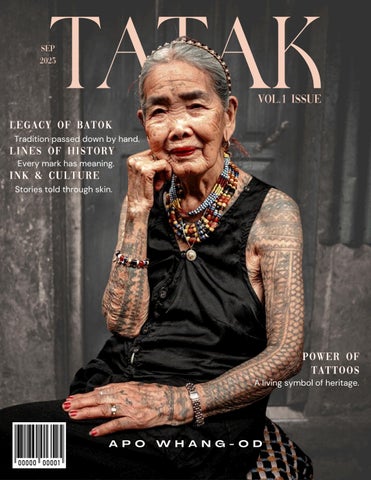
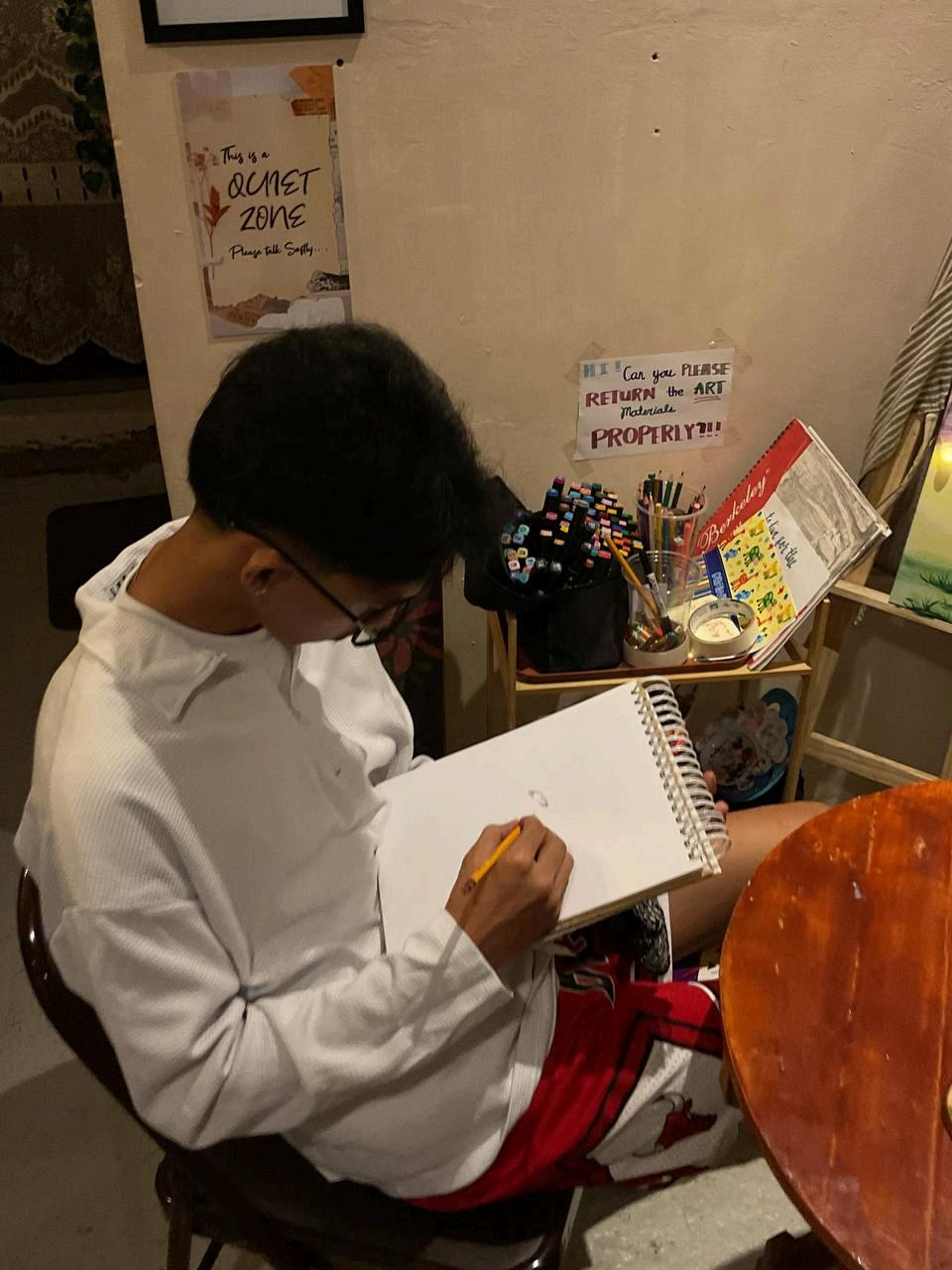
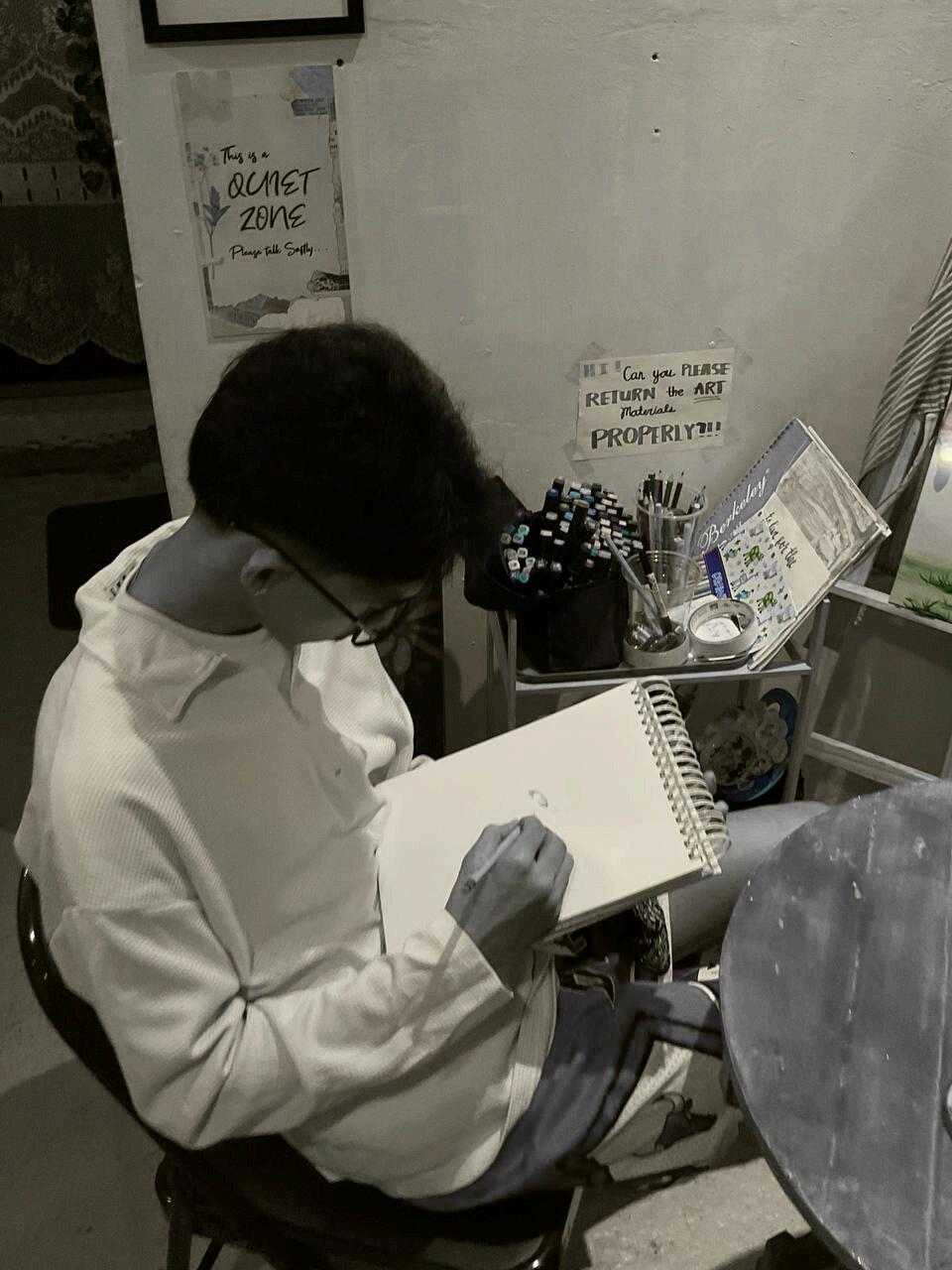
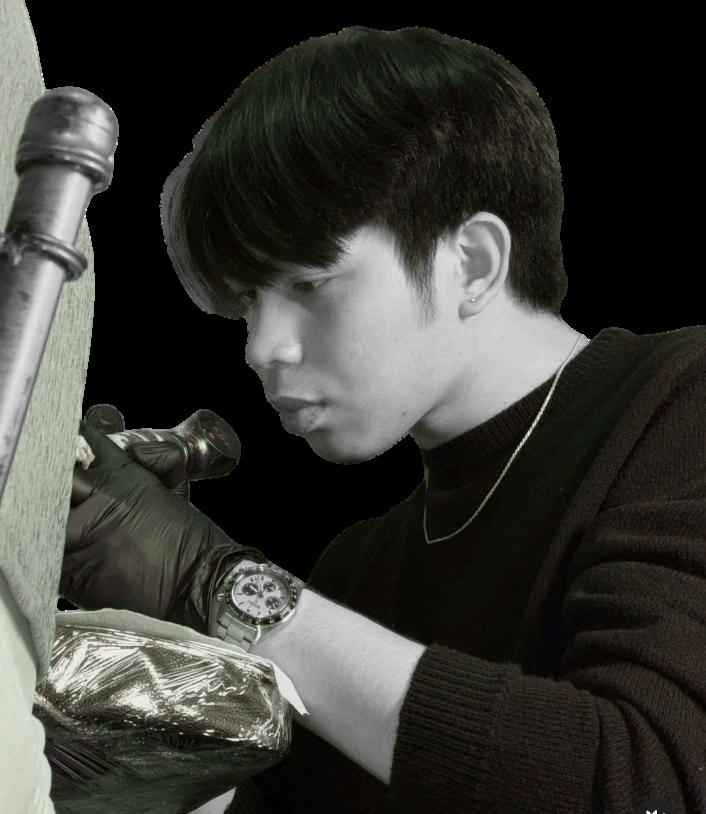
Welcome to the inaugural issue of TATAK, a magazine born from the very essence of ink and tradition. I'm Mark Joseph Dy, 20 years old, a tattoo artist myself, and like many of you, I stand on the shoulders of giants. This issue is a tribute to the living legends, the stories etched in skin, and the rich legacy of batok that continues to inspire us. We delve into the profound world of Apo Whang Od, a true master whose hands have preserved an ancient art form, making every mark a testament to heritage and resilience. Her journey, and the journeys of countless other inspiring artists, reminds us that tattooing is more than just a craft it's a dialogue between past and present, a canvas for history, and a powerful symbol of identity.
As a young artist, I constantly seek to understand the 'lines of history' and the 'meaning' behind every design. This magazine is a celebration of that pursuit, a space where we can connect with the roots of our art and find new ways to honor the 'ink and culture' that flows through our veins. May you find inspiration within these pages to continue creating, innovating, and telling your own stories through skin."
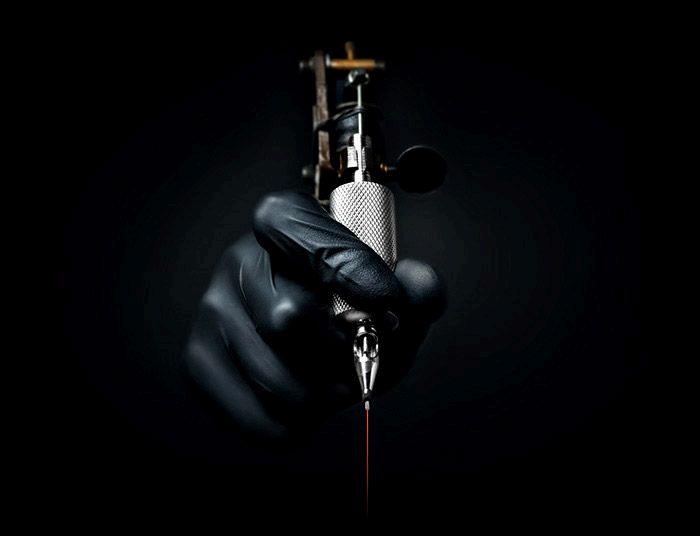
Here's an image that captures the spirit of this editorial note, perhaps a stylized representation of ancient and modern tattooing coming together.
FAMOUS WORK OF WHANG OD
INSPIRING ARTIST
DIFFERENT TYPE OF TATTOO’S 01
02
03
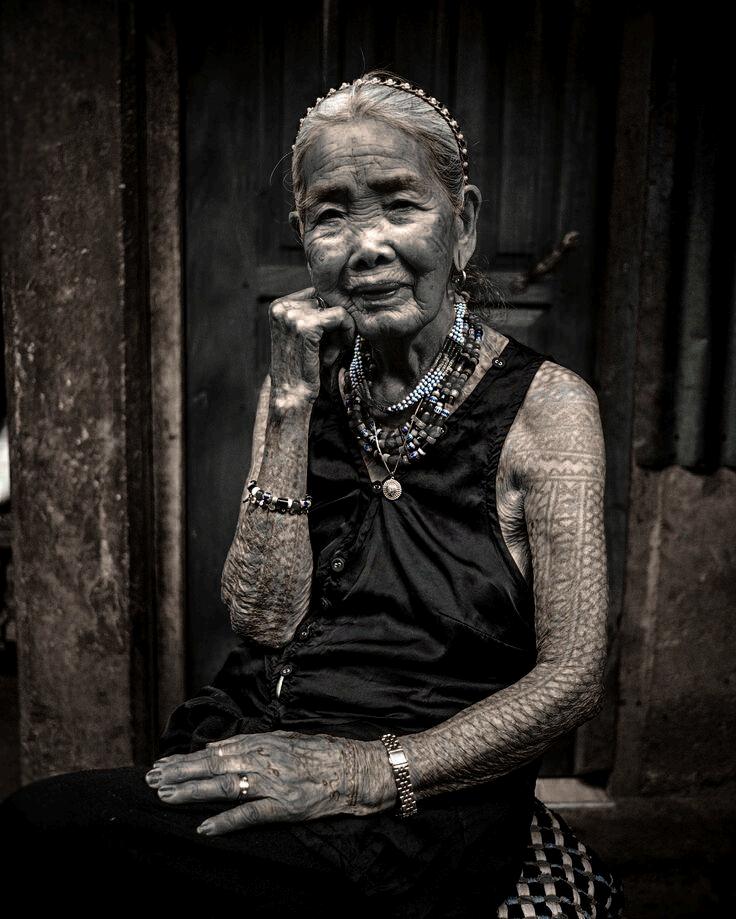
Apo Whang Od famous work
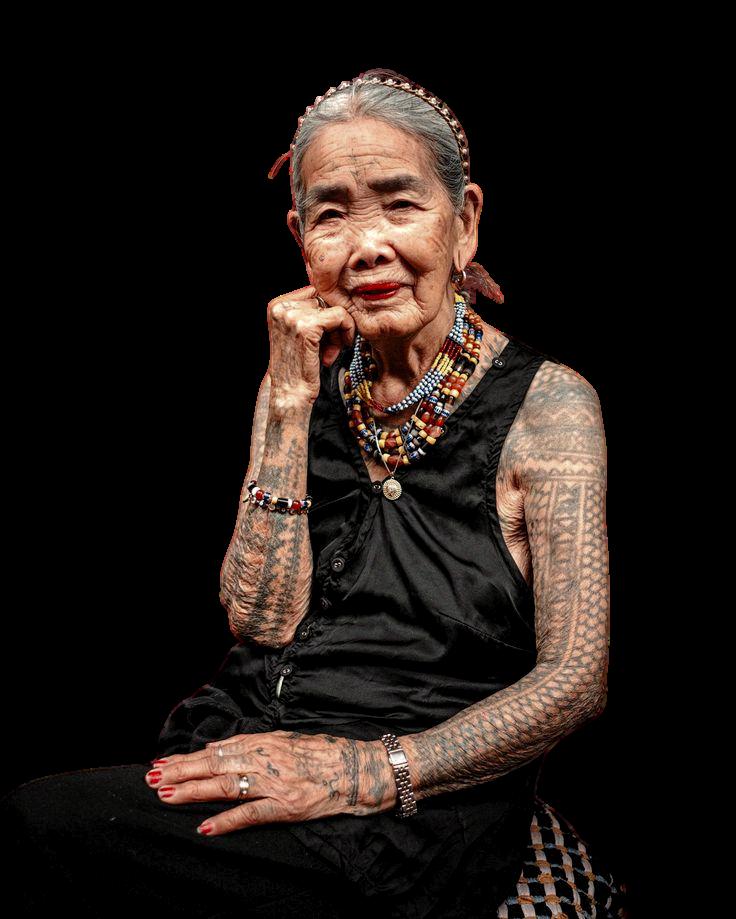
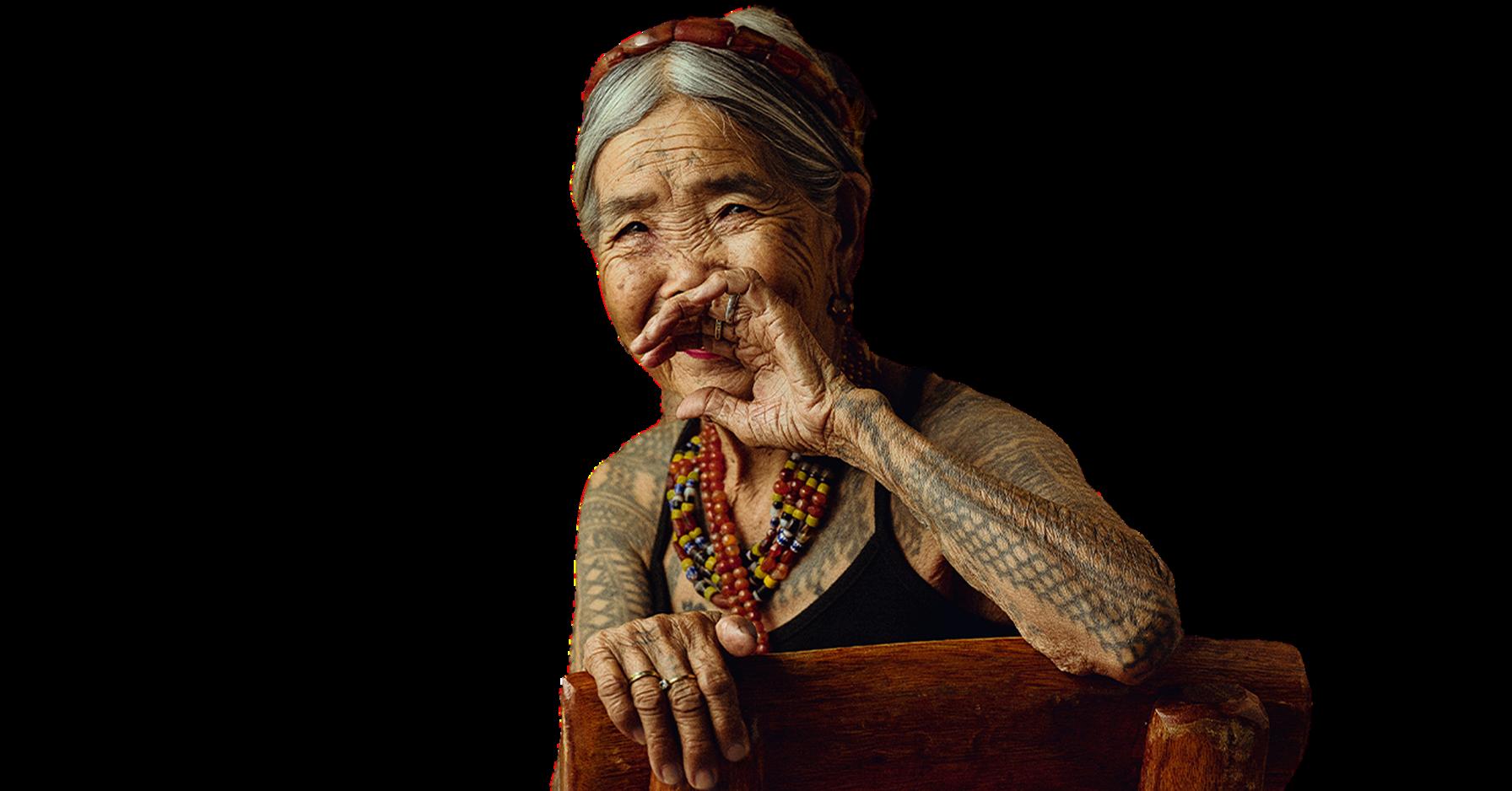
The fame of Apo Whang-Od, the last mambabatok, rests not just on individual tattoos but on her role as the living bridge to the entire Batok tradition Her works are a collection of potent cultural symbols, each with a profound history
The Most Recognizable Tattoo: The Three-Dot Signature
The tattoo most commonly requested by modern travelers is her simple Three-Dot Signature. This design is her personal autograph, typically placed on the wrist or forearm after an apprentice has done the main motif. The three dots are highly symbolic, representing Apo Whang-Od herself and her two grandnieces and apprentices, Grace Palicas and Elyang Wigan, signifying the continuity of the ancient Kalinga tattooing art through the next generation.
The Last Mambabatok
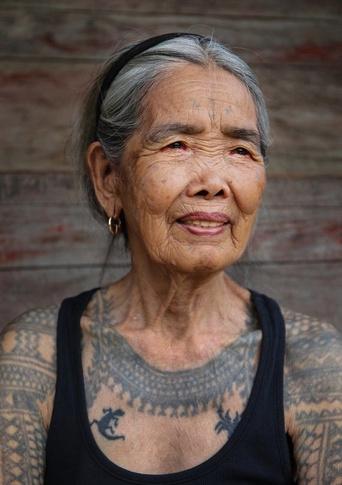
The historical Batok designs she practices are stylized representations of elements from nature, used to convey status, protection, and identity
The Centipede (Gayaman): This is a powerful motif for protection from evil spirits and a sign of long life. Historically, the centipede was considered an oracle and a companion of warriors, believed to make them more aggressive and fierce in battle
The Python Scales (Ulog): Symbolizing transformation and sacred stories, the intricate python scale patterns were traditionally used for both women, as a mark of beauty and wealth, and for warriors, linking them to an indigenous herogod
Whang-od Oggay is known as the last mambabatok (kalinga tattooist) from the tribe of Butbut in Buscalan, kanga. She has been tattoing for the past 80 years including head hunters of the indigenous tribe, at the beginning of her long career.
BUTBUT TRIBE
The Butbut tribe primarily resides in the mountainous areas of Kalinga, situated in the Cordillera Administrative Region of Northern Luzon The Butbut tribe is renowned for its traditional tattooing practices Both men and women often have intricate tattoos, which are not only decorative but also carry cultural and spiritual significance.
APOWHANGOD THEOLDEST
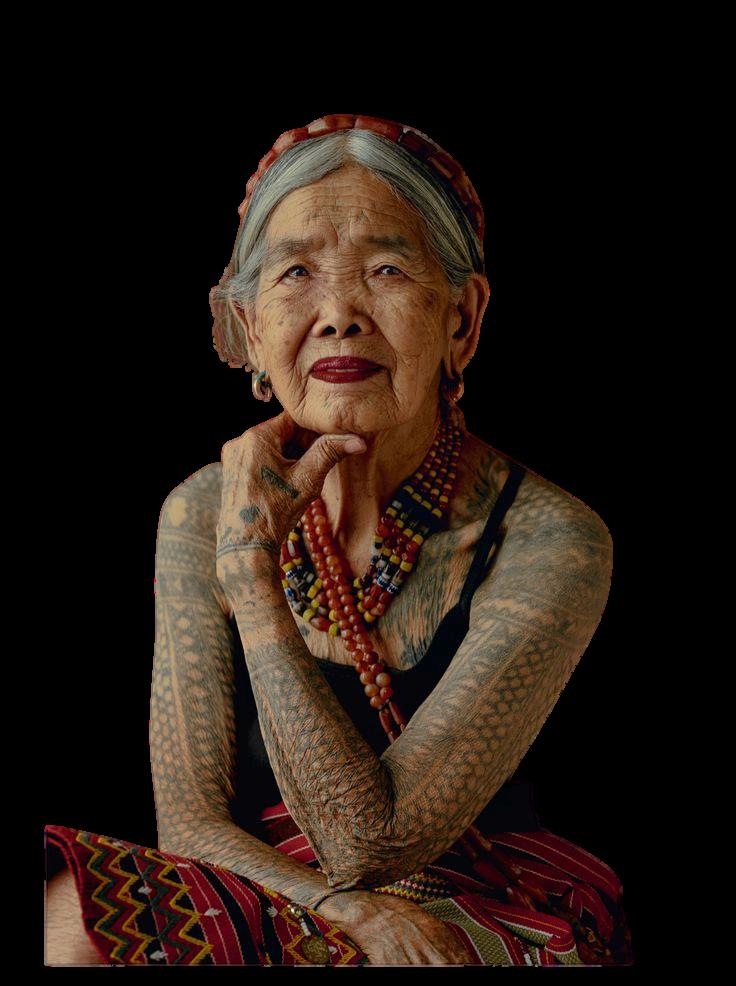
Apo Whang-Od is a crucial figure in Filipino culture and the global tattoo community, known for four main identities.
The Last Mambabatok of Her Generation: She is the oldest and last practitioner of the Butbut tribe's traditional hand-tapped tattooing art, known as batok, from her time. She resides in the remote village of Buscalan, Kalinga
Cultural Preserver: She keeps alive a tradition where batok tattoos served as marks of valor for warriors and symbols of beauty and fertility for women Her art is a living record of her people's history
A Breaking of Tradition: She was the first female in her village to learn the art, which was historically reserved for male lineage Crucially, she is passing the tradition down to her blood-related grandnieces, Grace Palicas and Elyang Wigan, ensuring the art's survival
Global Icon: Her dedication has brought her international fame, including attracting thousands of tourists to her village, receiving the Presidential Medal of Merit, and making history as the oldest person to appear on the cover of Vogue magazine
In essence, Apo Whang-Od is a living legend who embodies the resilience and rich heritage of the Philippines through the indelible marks of her ancient art.
Inspiring
The world of tattooing is ancient and diverse, and true inspiration comes from many masters across various traditions.
An inspiring message that honors both Apo Whang-Od and the entire global community of traditional and contemporary tattoo artists, we can broaden the themes to include Samoan Tatau, Japanese Irezumi, Māori Tā Moko, Inuit traditions, and American Traditional (among countless others).
Artist
To the dedicated hands that carry the needle to the Filipino tattoo artists around the world
Your work is not just art; it is a declaration of identity and a sacred act of remembering. We look to Apo Whang-Od, the last mambabatok of her generation, and see a legacy etched not only into the skin of thousands but into the very heart of the Filipino people. Her rhythmic tapping is the sound of ancestral defiance, a heartbeat that survived colonization and cultural suppression. She is the living proof that our traditions are not relics of the past they are renewable sources of strength for the future.
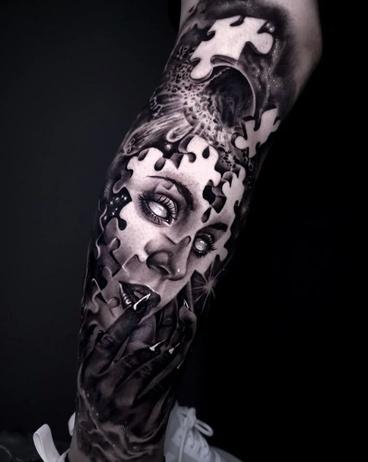
A photo realistic tattoo is an advanced style that aims to reproduce a subject like a portrait or animal with the exact detail, texture, and shading of a high resolution photograph. This difficult technique relies entirely on masterful contrast and smooth blending of ink to create a powerful three-dimensional illusion without relying on traditional outlines Because of the incredible precision required, these tattoos demand an artist with exceptional skill and often require multiple long sessions
Photo Realistic Mandala tattoo
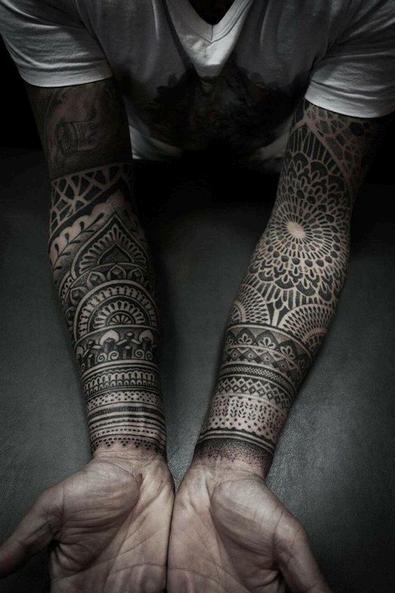
A mandala tattoo is a spiritual and artistic design, representing the universe, balance, and eternal life, often featuring intricate geometric patterns that radiate from a central point. These circular designs are highly personal, chosen for their symbolism of completeness and harmony, making them a popular choice for large, detailed pieces on the back, shoulder, or chest Because of their complexity, they require a skilled artist and can take a long time to complete, but the resulting body art is deeply meaningful and visually stunning.
Minimal
patches tattoo
A minimal patch tattoo is a contemporary and subtle form of body art, characterized by small, abstract areas of solid color or blackwork that resemble painted swatches or geometric blocks. Unlike traditional line-work tattoos, these designs prioritize shape, texture, and saturation, often looking like a single, intentional brushstroke or a quick patch of pigment on the skin. Their understated and modern aesthetic makes them popular for those who prefer delicate, avant-garde body modifications that feel more like artistic edits than conventional illustrations
Water color tattoo
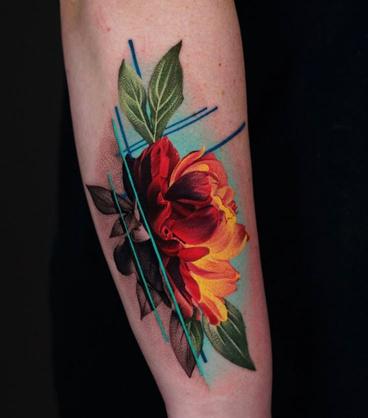
A watercolor tattoo mimics the flowing, blended look of a watercolor painting, using soft washes of color, feathered edges, and a deliberate lack of solid black outlines to achieve its unique, ethereal quality. These pieces often feature vibrant, saturated hues that seem to bleed and splash across the skin, giving the appearance of a delicate, painted masterpiece rather than traditional ink work Due to the technique's reliance on gradient and layering without strong borders, artists must be highly skilled to ensure the tattoo's longevity and prevent the colors from fading unevenly over time.
Traditional tattoo
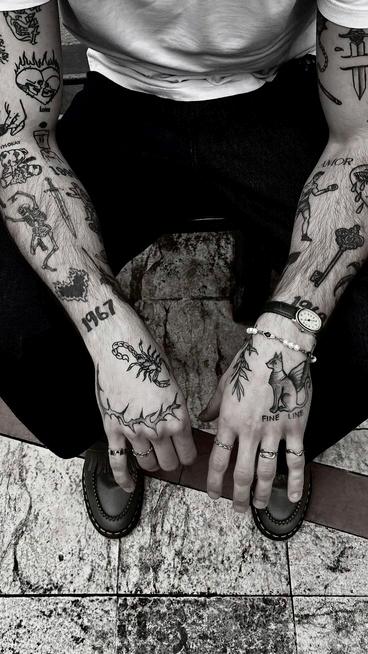
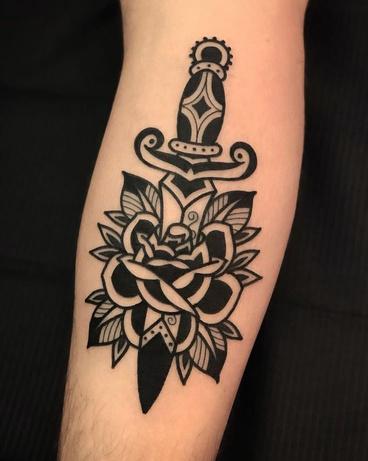
A traditional tattoo, often called American Traditional or Old School, is defined by its bold black outlines, limited color palette (typically red, yellow, green, and black), and classic imagery like anchors, roses, eagles, and pin-up girls. This iconic style, popularized by artists like Sailor Jerry, prioritizes durability and readability, using solid color packing and heavy lines to ensure the design remains clear and vibrant for decades. The style carries a strong nostalgic and maritime aesthetic, rooted in early 20thcentury American working-class culture and military/sailor motifs
Fine line tattoo
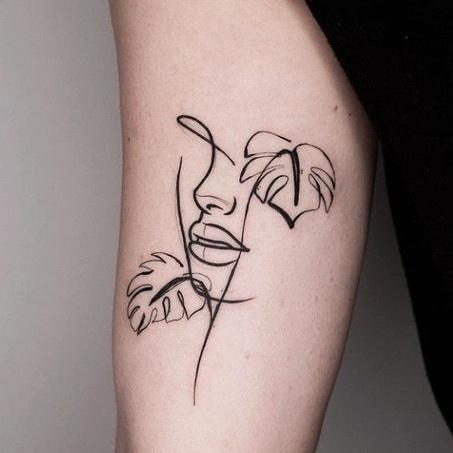
A fine line tattoo is a minimalist style characterized by the use of extremely thin needles to create delicate, detailed, and intricate designs composed primarily of single, precise lines This technique allows for a high level of detail and subtle shading without the heavy, bold outlines of traditional styles, making it popular for small text, realistic portraits, and complex, airy floral designs. Due to the fine nature of the work, these tattoos can be more susceptible to fading or blurring over time compared to bolder styles, making proper aftercare and occasional touch-ups crucial for maintaining their crispness.