

School of Engineering
Shiv Nadar Institution of Eminence

Engineering education is undergoing rapid transformation worldwide. Emerging technologies, complex societal challenges, and the demand for interdisciplinary thinking require engineers who are not only technically competent but also innovative problem solvers. The School of Engineering at Shiv Nadar Institution of Eminence has therefore reimagined its undergraduate curriculum to prepare students for this rapidly evolving technological landscape.
The new curriculum reflects a fundamental shift in philosophy, from traditional lecture-centric education toward hands-on, project-driven learning that encourages experimentation, creativity, and critical thinking.
The objective is to develop future-ready engineers capable of designing solutions for real-world problems.
CRITICAL THINKING AND PROBLEM SOLVING

INTERDISCIPLINARY SYSTEMS THINKING
EXPOSURE TO EMERGING TECHNOLOGIES
Students learn by doing, making, testing, and improving. Laboratories, innovation labs, and the Makerspace are integrated into coursework to promote experimentation and collaborative learning.
Modern engineering challenges often lie at the intersection of multiple disciplines. The new curriculum encourages cross-disciplinary collaboration and systems thinking.
THINKING AND PROBLEM
The curriculum emphasises analytical thinking, design thinking, and experiential learning to help students tackle complex engineering problems.
Students are introduced to areas such as AI/ML, programming, sensors, IoT, and advanced modelling tools early to prepare them for future industry demands. This transformation ensures that students develop deep conceptual understanding along with practical engineering skills.
A major innovation in the new curriculum is the Unified First-Year Program, which provides all engineering students with a common academic experience regardless of their chosen discipline. This common foundation encourages collaboration between students from different engineering fields while strengthening the fundamental knowledge required for advanced study.
Students work with peers from diverse engineering backgrounds, promoting knowledge exchange and broader perspectives.
Courses emphasise experiential learning where students apply theoretical knowledge through projects and real-world engineering challenges.
Students gain early exposure to technologies such as AI/ML, IoT, sensors, and 3D modelling.
Industry engagement, guest lectures, and practical problem-solving ensure students understand how engineering concepts translate into real applications.
The curriculum is designed around core engineering topics, including:
• Physics
• Mathematics
• Programming
• Sensors and IoT
• Mechanics
• Electrical & Electronics
• Materials
• Chemistry & Biology
• 3D Modeling & Printing
• Environment & Sustainability
This integrated approach ensures that students see how concepts across disciplines connect to solve real engineering problems.
The curriculum integrates a wide spectrum of skills essential for modern engineering practice. These competencies prepare students to adapt to technological advancements while maintaining ethical and professional responsibility.
AI and Machine Learning: Students learn the foundations of artificial intelligence and machine learning and explore how these technologies are applied across engineering domains.
E-Mobility: Understanding electric vehicles, battery technologies, and sustainable transportation systems.
3D Visualisation and Digital Modelling: Students develop skills in advanced modelling tools for product design and engineering simulations.
AR/VR Technologies: Augmented and virtual reality tools support visualisation, simulation, and immersive engineering environments.
Entrepreneurship: Students learn innovation processes, business models, and how engineering ideas can evolve into viable ventures.
Professional Ethics: Emphasis on responsible engineering, sustainability, and the societal impact of technology.
Soft Skills: Communication, teamwork, leadership, and collaboration are embedded throughout the curriculum.
Technical Tools: Students gain proficiency in tools such as MATLAB, LaTeX, Git, cloud platforms, and engineering software.
Engineering Principles: Strong grounding in the scientific and mathematical principles that underpin engineering design.
These skills align with the United Nations Sustainable Development Goals (SDGs) by promoting sustainable engineering solutions, responsible innovation, and technology that benefits society.
Delivery is the Key:
The first-year curriculum comprises eleven carefully structured courses totaling 24–28 credits across two semesters. Each course combines lectures (L), tutorials (T), and practical sessions (P) to ensure students develop both theoretical understanding and hands-on competencies.
This balanced approach provides students with a comprehensive foundation in engineering fundamentals while introducing them to cutting-edge technologies and sustainable practices that will define their future careers.
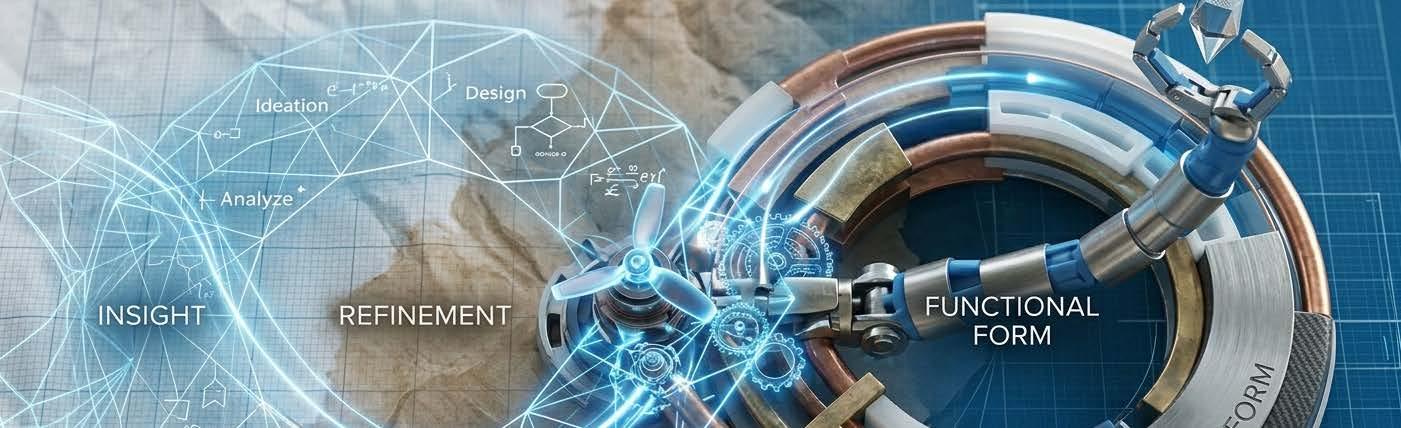
A defining element of the new curriculum is the First-Year Engineering Project, where students work collaboratively to transform ideas into working prototypes. This project introduces students to the complete engineering design cycle—from ideation to implementation.
• Team-Based Learning
• Students work in multidisciplinary teams, guided by faculty mentors.
• Each team includes students from different engineering disciplines.
• Diverse perspectives encourage innovative problem solving.
• Faculty mentors provide guidance while allowing students to drive the creative process.
Ideas originate with students, while mentors serve as facilitators who help refine concepts and support technical development.
The project encourages:
• Curiosity
• Experimentation
• Creative problem solving
• Practical implementation
The first-year project spans both semesters and provides students with hands-on engineering experience.
Students focus on:
• Problem identification
• Idea generation and brainstorming
• Concept refinement
• Selection of materials and components
• Economic feasibility analysis
This stage develops analytical thinking and design planning skills.
Students transform their ideas into working systems through:
• CAD modelling and design simulation
• Hardware development and fabrication
• Coding and system integration
• Testing and performance evaluation
Through this process, students gain hands-on experience with engineering tools, materials, and technologies.
By the end of the project, students develop:
• Practical engineering skills
• Collaborative teamwork abilities
• Design thinking mindset
• Experience in transforming concepts into functional prototypes
The first-year project sets the tone for the entire engineering journey—encouraging students to learn by building, experimenting, and innovating.