Kittens and critical periods:
What can visual deprivation tell us about the brain?
By Dr. Sarah Hillenbrand
What if you were born blind…and then suddenly had your vision restored?
This question has been pondered by philosophers for centuries. Only now are neuroscientists able to offer an answer.
In 1690, John Locke wrote about a version of this question that came to be known as Molyneux’s question. It goes like this:
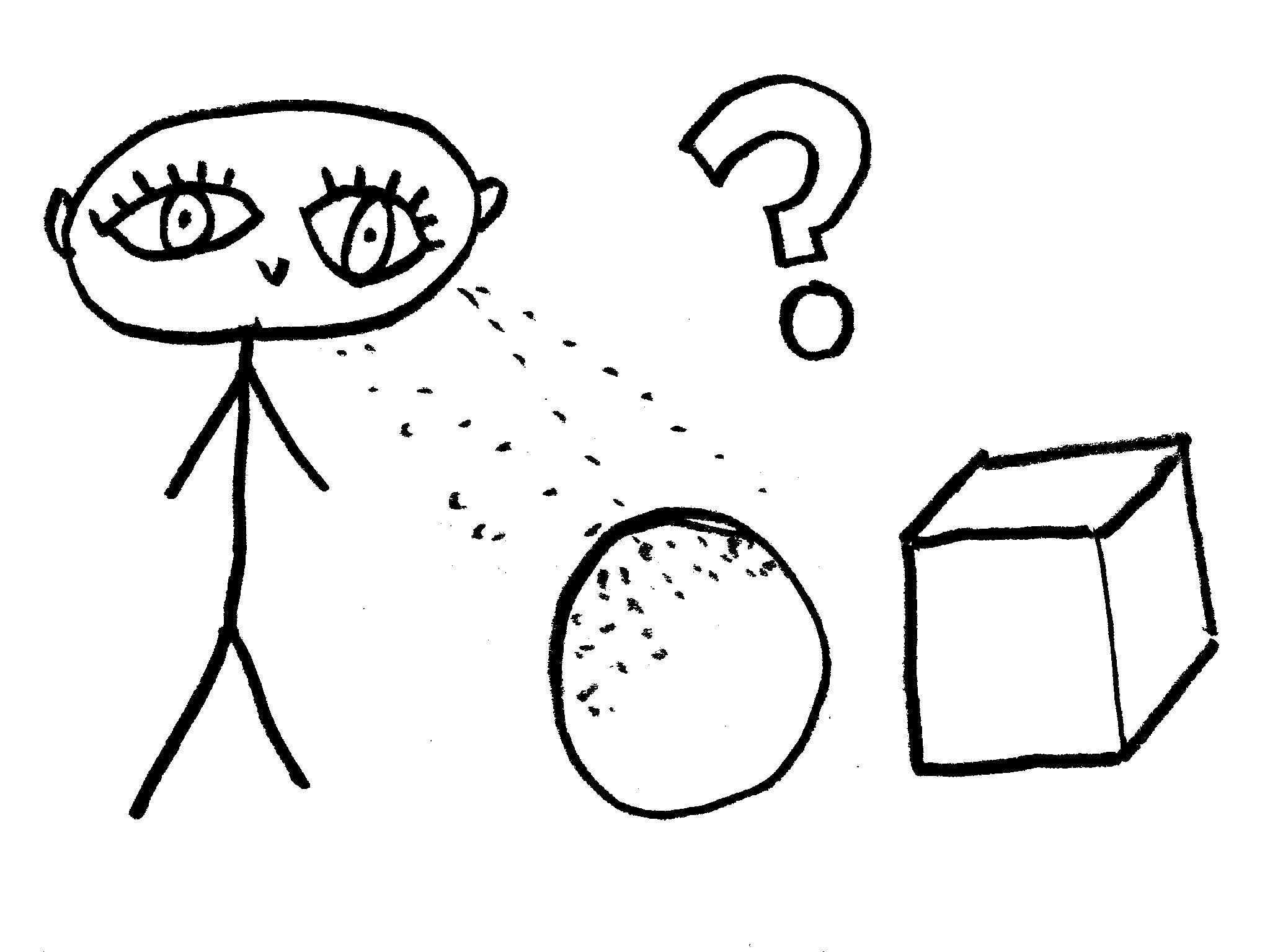
Would a previously-blind person, seeing a sphere and a cube for the first time, know which is which?
Think about it. On the one hand, you might guess that their sense of touch would have clued them in, and they would just “know” the pointy corners of the square based on what they had felt. On the other hand, you might think that touch and vision are totally separate, and this person would have to “learn to see,” from scratch.
John Locke thought NO:
“He would not be able with certainty to say which was the globe, which the cube, whilst he only saw them...though he could unerringly name them by his touch.”
As it turns out, the answer is not a simple yes or no. It depends on a lot of factors.
In this zine, you will learn what goes on inside a kitten’s brain when it has one eye covered or sutured shut. Why? Because these kittens have a lot to teach us about what happens in the HUMAN brain during visual deprivation. We will also take a look in the brains of blind people, Braille learners, and people who have had vision restored through cataract removal surgery.
The OG Molyneux
Critical periods in development
What is a critical period?
● A critical period is a time during development when a human (or animal) needs something to develop properly (Nickerson, 2023).
● This “something” could be exposure to a language, a specific molecule, physical touch…or something else!
● If you lack exposure to something during this period, you may never develop properly.
What are some examples of critical periods? (Nickerson, 2023)
● Chemicals applied to embryos can have deleterious effects on development
● Birds imprint, or form critical bonds with their mothers, during a specific stage of life.
● In humans, infant-parent attachments form between six and twenty-four months.
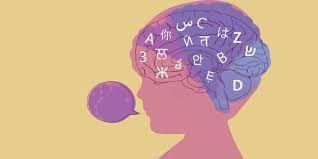
● Learning a second language during childhood leads to speaking without an accent, but learning later doesn’t.
● Language and musical abilities are harder to develop in adulthood.
What needs to happen during critical periods for VISION?
The visual system NEEDS input to wire up properly! Just like with social bonds, language learning, or playing an instrument, lack of exposure can be difficult to overcome later. But there are very few situations where people or animals are DEPRIVED of this input during the critical period. It’s these specific experiments and real-life case studies that have demonstrated how the visual system is sculpted by experience.
They did WHAT to a kitten?!
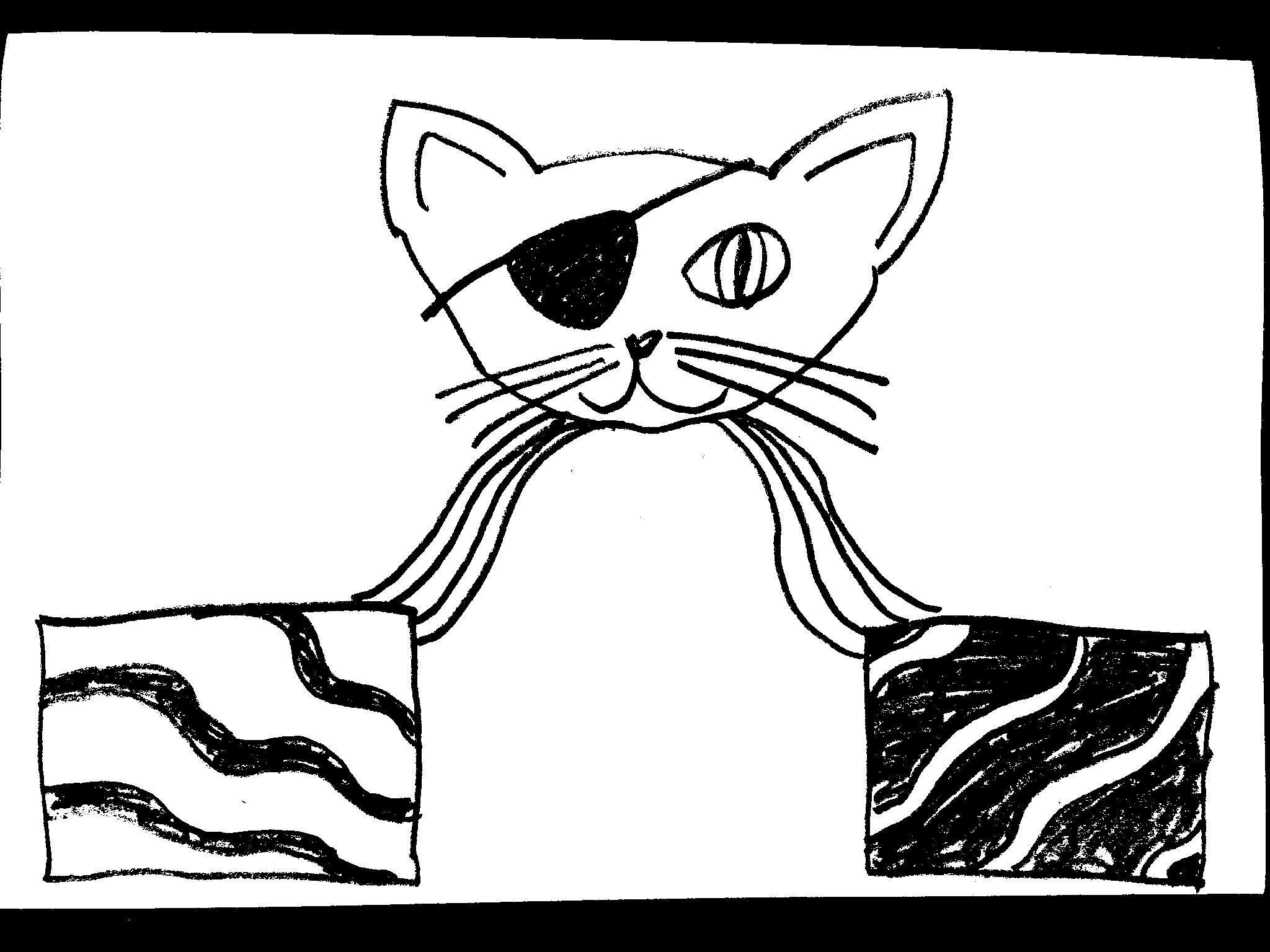
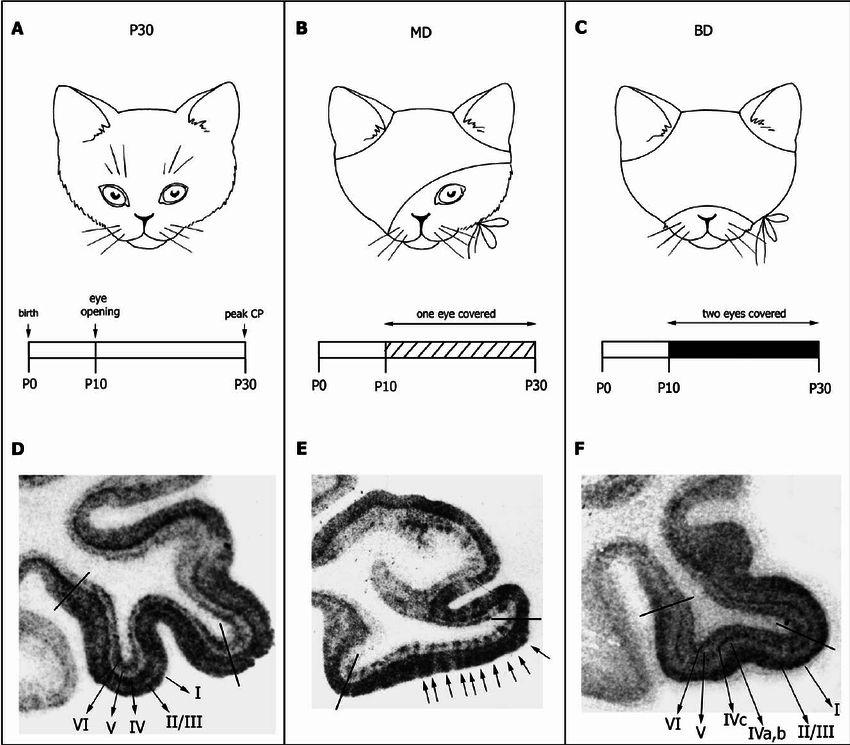
Researchers sometimes cover one eye in a kitten (middle panel), starting around 10 days after birth and lasting until around 30 days (e.g. Cnops et al., 2007). They compare the influence of visual deprivation to kittens with both eyes covered (right panel) or no eyes covered (left panel).
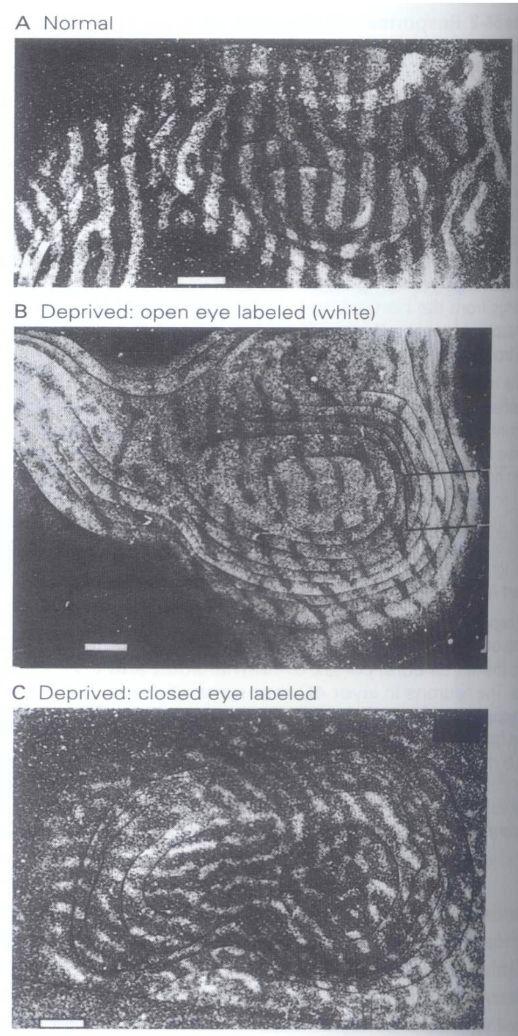
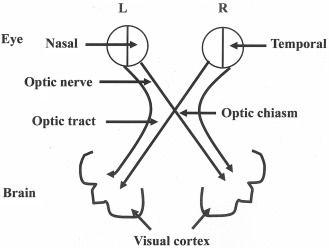
Inputs from both eyes end up on both sides of the visual cortex. There, these inputs form stripes that give this area the nickname “striate cortex.” By measuring the thickness of each stripes, researchers could measure how much input the visual cortex received from each eye.
Depending on which eye was covered, they found that the area of cortex devoted to processing input from the OPEN eye had EXPANDED, and the areas processing input from the DEPRIVED eye SHRANK (Hubel et al., 1977).
(These images come from a study done in monkeys, similar to the numerous studies done in kittens).
But what about in humans?
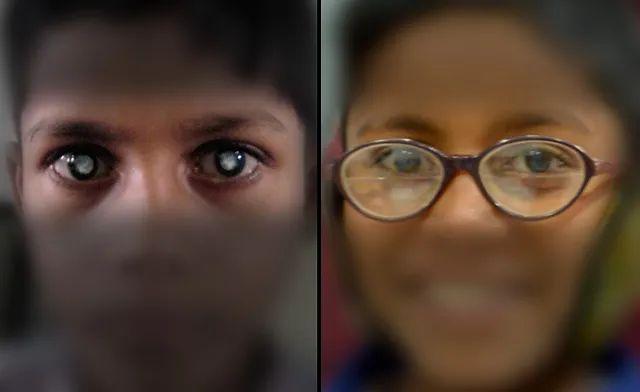
INTRODUCING…PROJECT PRAKASH!
“The overarching mission of Project Prakash is to bring light into the lives of curably blind children and, in so doing, illuminate some fundamental scientific questions about how the brain develops and learns to see.” (Project Prakash)
Pawan Sinha is an MIT professor who studies Project Prakash’s patients. Dr. Sinha had children match Legos using their sense of touch and their newly-restored sight (a test of “cross-modal learning”), and found that the made progress! Dr. Sinha says,
“This paper strengthens the case that cross-modal learning is possible despite years of deprivation…That’s very important from a clinical perspective because it argues for making a treatment available to all, irrespective of age. Children beyond 6 or 7 are not beyond the correctable age. The brain retains its plasticity well into late childhood and even into adulthood.”
(Bakalar, 2011)
Not only is this surgery changing the lives of its patients–it is also allowing researchers to test hypotheses about vision restoration that philosophers had previously only wondered about!
Neuroplasticity: The brain’s superpower
What is neuroplasticity?
Neuroplasticity is the brain’s ability to change itself by “rewiring” its connections. It occurs in a dramatic way during development, but it also occurs when you learn something new or recover from a brain injury (Brainfacts.org, 2016).
An example of neuroplasticity:
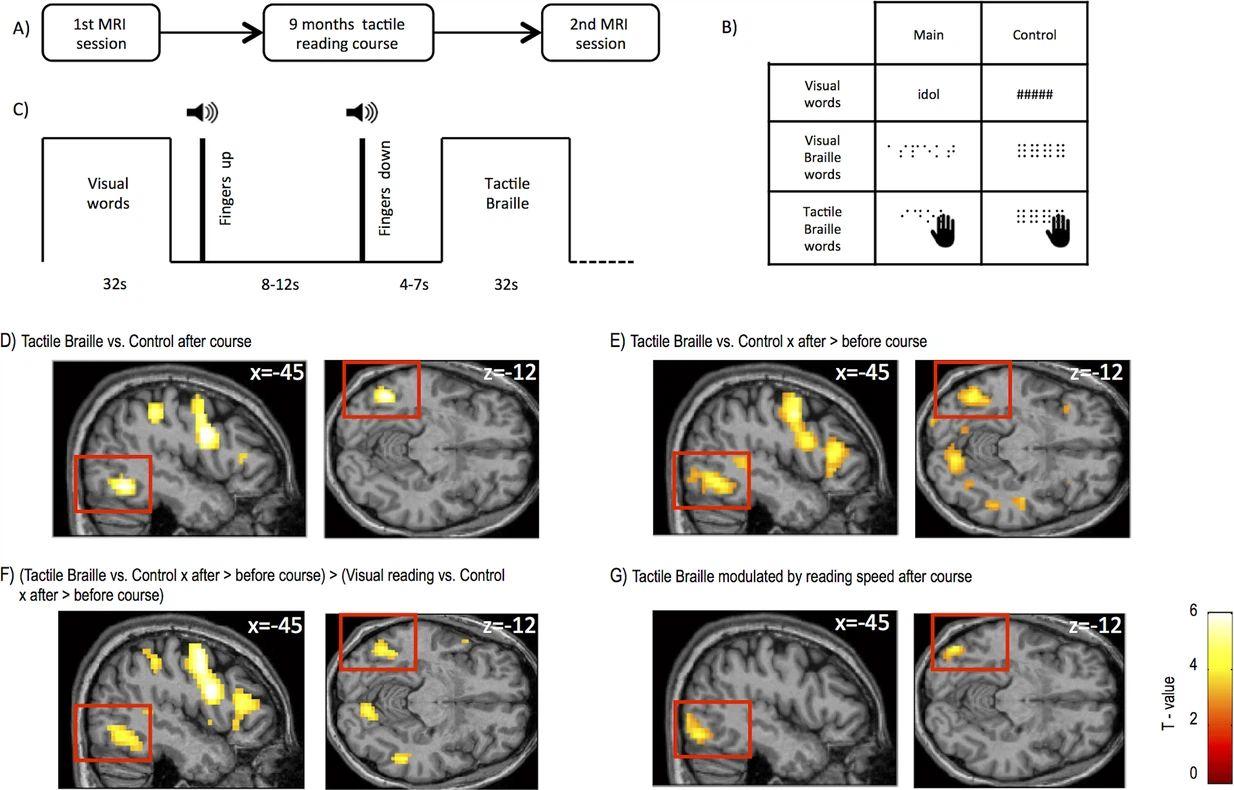
Blind people, without visual input, often learn Braille. After learning, the “unemployed” visual cortex lights up in response to
Researchers wanted to know if SIGHTED people’s brains would reorganize the way blind people’s do, with the visual cortex enlarging after learning Braille. You might think this would NOT happen, as their visual cortex already HAS a job. But surprisingly, they found that learning Braille grew a visual processing area compared to control subjects (Siuda-Krzywicka et al., 2016)
References
Bakalar, N. (2011, April 25). Study of vision tackles a philosophy riddle. The New York Times. https://www.nytimes.com/2011/04/26/health/research/26blind.ht ml?_r=0
Brainfacts.org (2016). Brain Awareness Video Contest: Neuroplasticity. https://youtu.be/Btja9L9rwmw?si=cEleStE5pRcTYic7
Cnops, L., Hu, T.-T., Burnat, K., & Arckens, L. (2007). Influence of binocular competition on the expression profiles of CRMP2, CRMP4, dyn I, and SYT I in developing Cat Visual Cortex. Cerebral Cortex, 18(5), 1221–1231. https://doi.org/10.1093/cercor/bhm157
de Abreu, M. (2023, May 13). Why congenitally blind people show activity in visual-processing areas of the brain. Neuroscience News. https://neurosciencenews.com/visual-processing-blindness-22312/
Hubel, D.H., Wiesel, T.N., & LeVay, S. (1977) Plasticity of ocular dominance columns in monkey striate cortex. Philosophical Transactions of the Royal Society of London. B, Biological Sciences, 278(961), 377–409. https://doi.org/10.1098/rstb.1977.0050
Locke, J. (1948). An essay concerning human understanding, 1690. In W. Dennis (Ed.), Readings in the history of psychology (pp. 55–68). Appleton-Century-Crofts.
Nickerson, C. (2023, September 29). Critical period in Brain Development and childhood learning. Simply Psychology. https://www.simplypsychology.org/critical-period.html
Project Prakash. (n.d.). https://www.projectprakash.org/
Siuda-Krzywicka, K., Bola, Ł., Paplińska, M., Sumera, E., Jednoróg, K., Marchewka, A., Śliwińska, M. W., Amedi, A., & Szwed, M. (2016). Massive cortical reorganization in sighted Braille readers. eLife, 5. https://doi.org/10.7554/elife.10762
Molyneux:
https://medium.com/street-science/molyneuxs-problem-can-you-rea lly-solve-this-challenge-d19094dabc24
Fetus in utero:
https://www.stanfordchildrens.org/en/topic/default?id=anatomy-fetus -in-utero-85-P01189
Language learning brain:
https://knowablemagazine.org/article/mind/2018/how-second-languag e-can-boost-brain
Visual pathways:
https://www.sciencedirect.com/topics/neuroscience/visual-pathway
Nature nurture: https://www.explorepsychology.com/nature-vs-nurture/
Back cover: https://commons.wikimedia.org/wiki/File:Thats_all_folks.svg
Thank you for reading!