


This issue is a celebration of movement across geographies, ideas, industries, and states of mind. At its heart is our cover story on Jamaica, a destination that pulses with rhythm, culture, and soul. From its rich coffee heritage and coastal beauty to its deep-rooted traditions and contemporary charm, Jamaica reminds us that travel is not just about places, but about feeling connected to a way of life that is both grounding and joyful.
That sense of connection, between past and future, tradition and progress runs throughout this edition. In “Zulfiqar: Faith, History, and a Once-in-a-Lifetime Custodianship,” we explore an artefact that transcends ownership, inviting reflection on faith, responsibility, and the ethics of preserving sacred heritage. It is a story that asks us to slow down and consider what legacy truly means.
Innovation, meanwhile, takes centre stage across multiple pages. We had an inside look at Hyundai Motor’s Ulsan Plant, the world’s largest single automotive manufacturing hub. We examine how design, scale, and precision are shaping the future of mobility. Our automotive section continues with first drives and insights into models redefining comfort, technology, and ambition, from the KIA K5 and EXEED ET to the evolving icons from Nissan.
Leadership and resilience are equally prominent themes. In an era defined by uncertainty, our feature on crisis management and problemsolving in PR leadership speaks directly to today’s business reality, while conversations with leaders such as Hiral Patel, Hakan Ozel, offer perspectives on growth, hospitality, and building purpose-driven organisations.
Technology and security remain critical pillars, with expert insights into AI, cybersecurity, robotic process automation, and enterprise data intelligence from global players including Check Point, NetApp, and Kaspersky. These stories underline a central truth of our times: progress must be matched with responsibility and foresight.
Luxury and lifestyle weave seamlessly through the issue, from haute couture at the Palms Royale Fashion Show and refined horology from MB&F, to fragrance as art, mindful interiors, wellness journeys, and culinary experiences that nourish both body and soul. Each feature reflects a shift toward intentional living, where elegance meets meaning.
As we close with sport and community at the UAE Polo Federation Cup, this edition ultimately reflects a world in motion, seeking balance between innovation and heritage, speed and stillness, ambition and authenticity. We hope these pages inspire you to explore deeply, think critically, and travel, both outwardly and inwardly, with curiosity and purpose.
GLOBAL REPRESENTATIVES
ASIA PACIFIC:
Fozia Fareen Melbourne, Austalia editor@trendingbusinessinsights.com
MIDDLE EAST & AFRICA:
Eric Dury Dubai, UAE editor@trendingbusinessinsights.com
EUROPE: USA:
CANADA:
Leila A. Paris, France editor@trendingbusinessinsights.com
S. Danish San Francisco, USA trendingbusinessinsights@outlook.com
Siew Lin Vancouver, Canada
trendingbusinessinsights@outlook.com


MANAGING DIRECTOR
Nishrat Nazeen
EDITOR IN CHIEF
Eric Dury
FEATURES
Siew Lim
Shereen Shabnam
CONTRIBUTORS
Hakan Ozel
Natasha Dury
ART DIRECTOR
V. Suquila BUSINESS AND LIFESTYLE
(Publishing House)



Jamaica: A Rhythmic Journey Through Culture, Coffee, and Coastal Charm
From Hype to Habit: IFS AI Predictions 2026
Inside Hyundai Motor’s Ulsan Plant: A Glimpse into the World’s Largest Single Automotive Manufacturing Hub
Golden Glamour at the Palms Royale Fashion Show
Securing Robotic Process Automation in Modern Supply Chains
Check Point Software Unveils Quantum Firewall Software R82.10 to Secure the AI-Driven Enterprise
NetApp Unveils 2026 Enterprise Technology Predictions Centering Data Intelligence
Kaspersky shares AI Cybersecurity Predictions for 2026
Why AI needs Diverse Perspectives - Not Just Big Ones
Sunreef 65M Explorer: Redefining Catamaran Grandeur
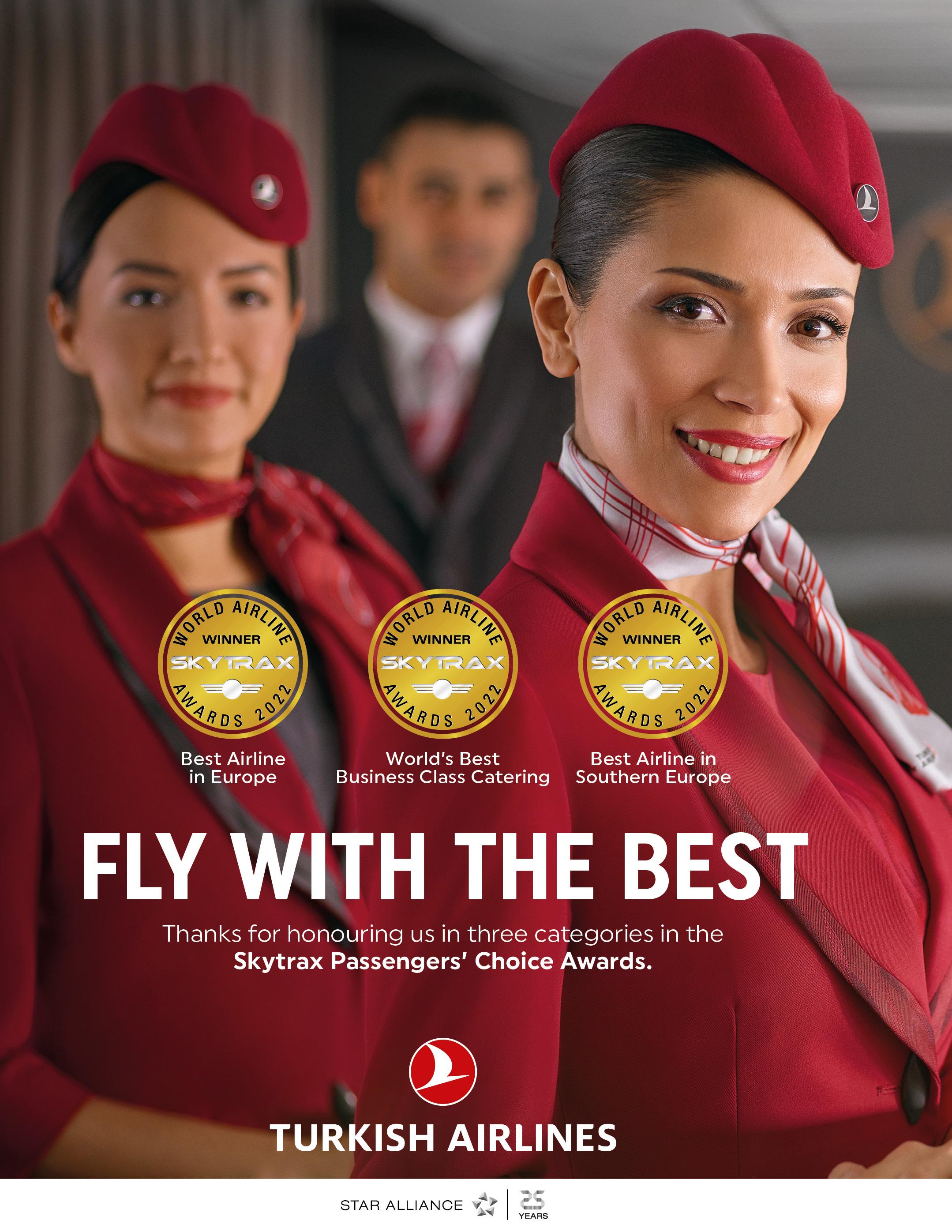
Turkish Airlines: Elevating Global Travel with Timeless Luxury

Hong Kong: A Symphony of Luxury, Wellness, and Discovery
Wellness Ayurvedic Journey in Sri Lankan with Siddhalepa Ayurveda
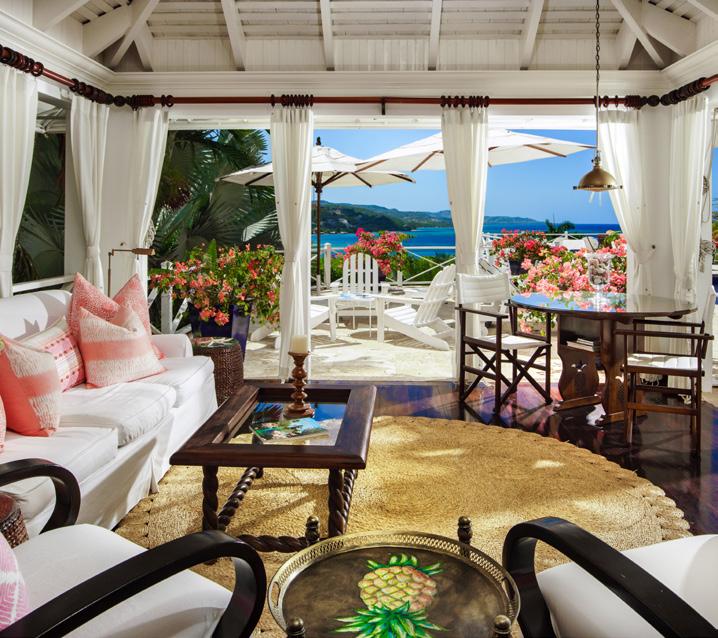
Escape to Elegance: Discovering the Charm of Round Hill Hotel and Villas
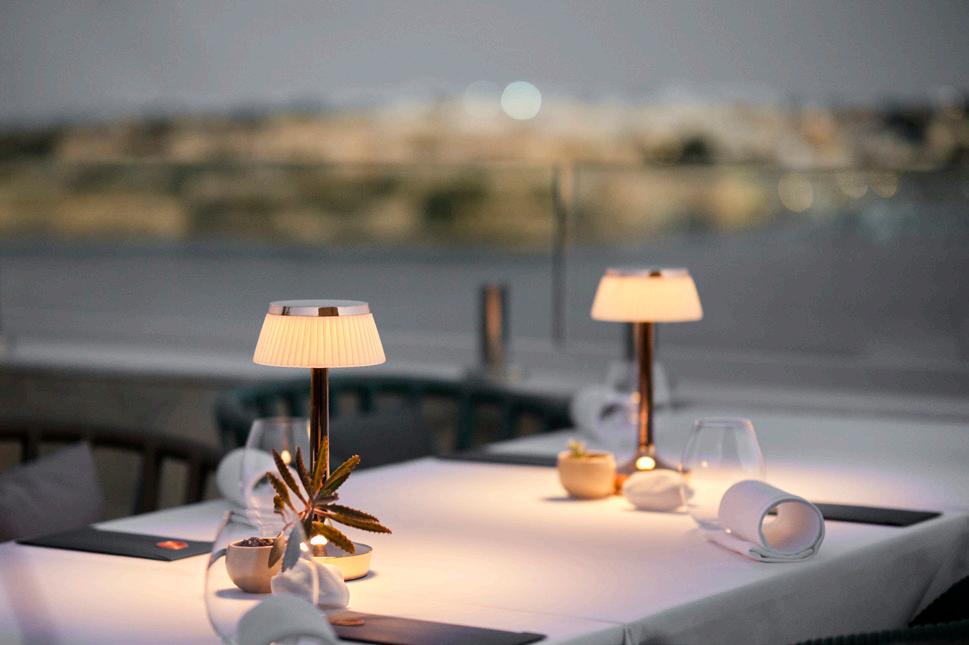
History Meets Modern Opulence on Malta’s Grand Harbour
The Psychology of Luxury Spaces: Designing for Well-being
A Symphony of Flavours: Fine Dining with a Conscious Heart at ION Harbour
The Rise of Slow Interiors: Designing for Stillness, Simplicity, and Soul
Framing Icons, Revealing Truths: My Journey Through Lorenzo Agius’s LOOK AT ME
Armaf Unveils Club de Nuit Bling
New Technology Trends
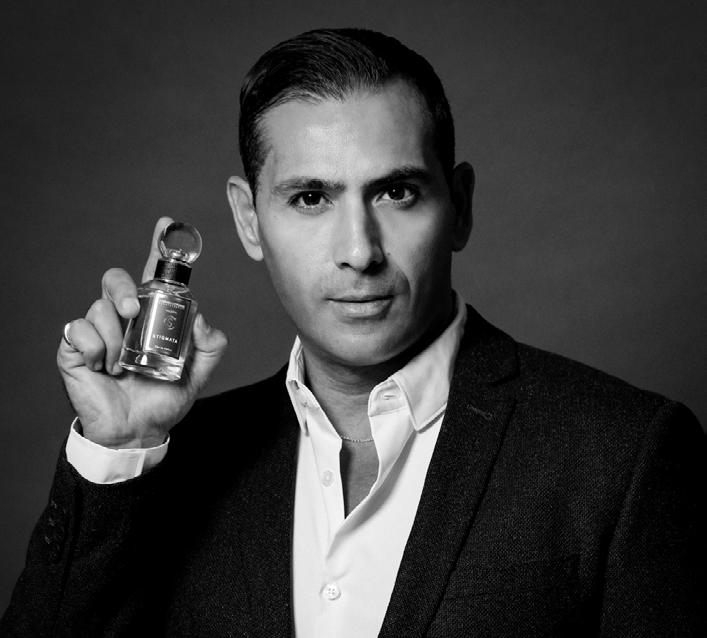
Welcome the holiday season with RITUALS Cosmetics
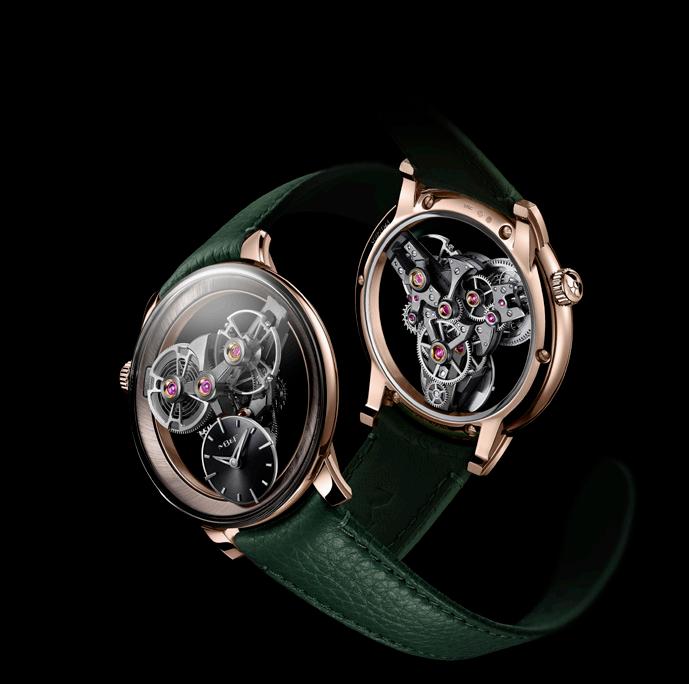
An Elegant Evolution of Creative Horology
Sleek Sedan That Blends Dynamic Drive with Smart Technology: KIA K5
EXEED ET: Mastering Range, Comfort & Ambition Adventure-Ready, Tech-Savvy and Gen Z Approved
Nissan X-Trail: From First Drive to Future Icon
The New Nissan Altima – Ideal for the Modern Driver
UAE Polo Federation Cup Tournament Fixtures Announced at Live Draw at Dubai Polo and Equestrian Club with 8 teams
The Cost of Outsourced Truth: Why Marketers Must Return to the Front Line of Social Media


By Shereen Shabnam International Writer
Few artefacts in Islamic history command the depth of reverence, symbolism, and scholarly attention as the sword known as Zulfiqar. Inseparably associated with Ali ibn Abi Talib, cousin and son-in-law of the Prophet Muhammad (Peace be upon him), Zulfiqar is far more than a historical weapon. It is a living symbol of justice, courage, divine support, and moral authority, values that continue to resonate across centuries, cultures, and schools of thought within Islam.
While Zulfiqar has long been depicted in art, literature, and popular symbolism, opportunities to physically view and study a sword believed to be its authentic historical counterpart are extraordinarily rare. In this context, recent access granted to a select group of
respected Islamic scholars and experts marks a significant moment in the ongoing discourse surrounding one of Islam’s most revered relics.
This feature brings together informed scholarly perspectives from experts who have personally examined the sword currently held in secure custodianship under Swiss law. Through close observation, comparative analysis with classical Islamic texts, and rigorous historical study, the scholars independently reached the same conclusion: that the artefact they examined aligns convincingly with early descriptions of Zulfiqar and cannot be dismissed as a later symbolic or decorative reproduction.
Their assessments extend well beyond visual admiration. Drawing on established principles used in the authentication of religious artefacts, the scholars identified specific physical characteristics that support the sword’s early origins. Forged from wootz steel and bearing the hallmarks of a true battle blade, its proportions, material integrity, and craftsmanship correspond closely with weapons produced during the formative centuries of Islam.
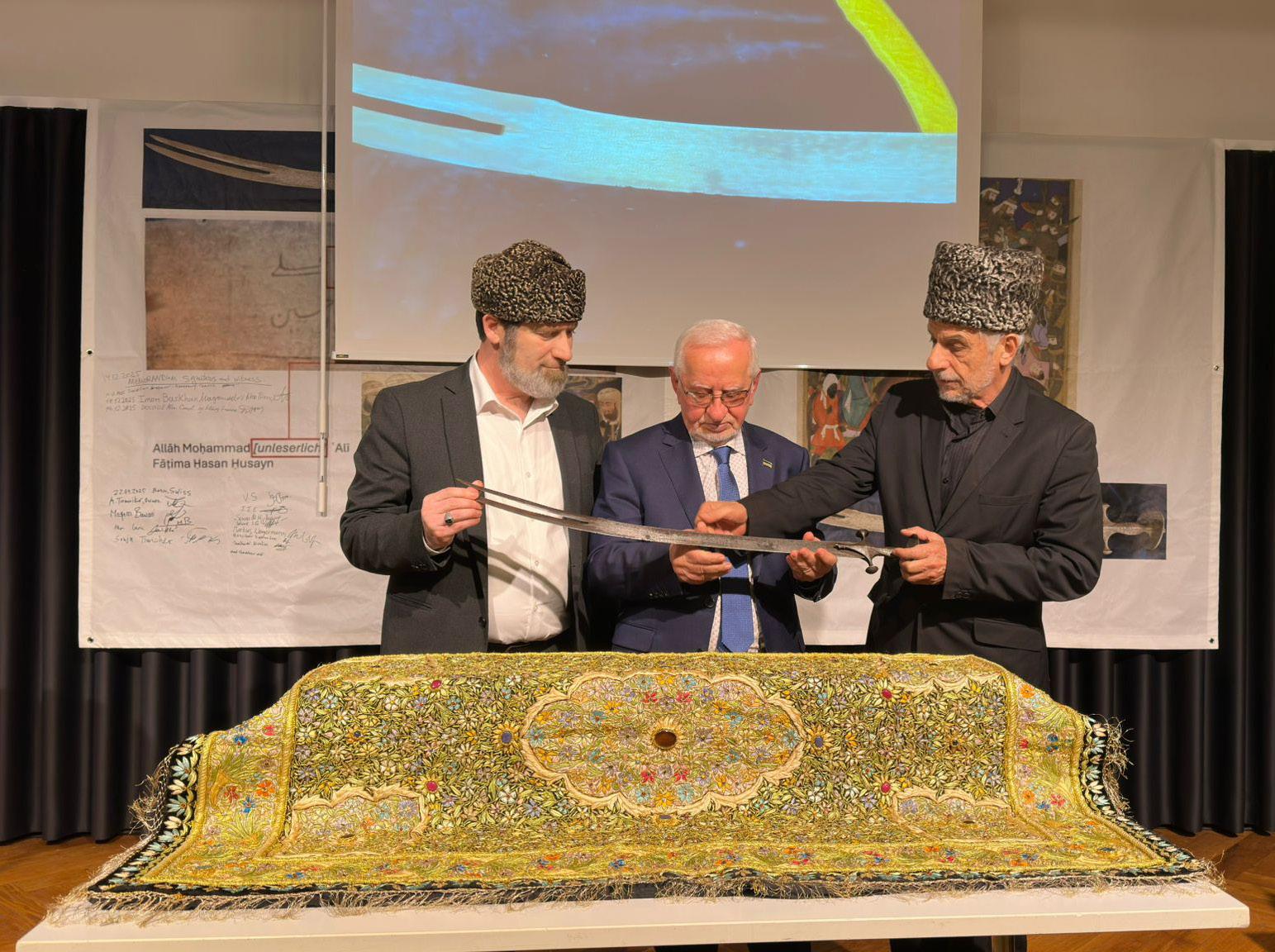




Particularly striking are the sword’s inscriptions. The blade bears names of profound spiritual significance: Allah, the Prophet Muhammad, Fatima, Ali, Hasan, and Husayn. Most notably, the name Zulfiqar itself appears repeatedly, more frequently than on any other sword traditionally associated with this legacy. For scholars, this detail carries exceptional weight. Such inscriptions are not ornamental flourishes; they are devotional declarations that anchor the object firmly within Islamic spiritual and historical consciousness.
Equally compelling is the spiritual dimension described by those who encountered the sword firsthand. Scholars who viewed the sword recently spoke of an overwhelming sense of responsibility, recognising that artefacts of this nature are not merely objects of study or admiration, but has sacred links to our civilisation.
While heritage is increasingly digitised, replicated, or simplified for consumption these days, the presence of an artefact so deeply rooted in faith serves as a powerful reminder of our history. The scholars who viewed the sword emphasised that the true importance of Zulfiqar lies not in its blade, but in what it represents: principled strength guided by divine responsibility.
Beyond its scholarly significance, Zulfiqar occupies a rare position at the intersection of faith, art, and global heritage. It has previously featured in a European museum exhibition accompanied by a multilingual catalogue, offering measured public visibility without

compromising academic integrity. Each time it has surfaced, it has drawn quiet fascination for the way it bridges metallurgy, epigraphy, history and spirituality.
Today, the sword remains in discreet private custody, with its current guardian choosing not to commercialise its significance. Any future transition is framed not as a sale, but as custodianship, entrusting the artefact only to an individual or institution capable of preserving its integrity, respecting its sanctity, and understanding its place within history.
As debates around authenticity continue in academic and public spheres, this story does not seek to sensationalise or persuade. Instead, it documents informed scholarly testimony grounded in first-hand study and knowledge. By doing so, it contributes meaningfully to the preservation of our heritage and invites a broader conversation about stewardship and the ethics of safeguarding civilisation’s most sacred legacies. Zulfiqar sword is not an artefact one owns. It is a legacy one carries forward.
The editorial office remains in direct contact with the current custodian and can facilitate confidential dialogue with qualified institutions or individuals seeking further scholarly engagement. The writer has a Degree in Islamic Revealed Knowledge & Heritage and has studied Islamic Civilisation at the International Islamic University, Malaysia.
By Shereen Shabnam International Writer
In our region, uncertainty is not an occasional disruption but a constant reality. From geopolitical developments and economic recalibration to regulatory shifts, organisations across the region operate in an environment where stability can change fast. Since I started in the PR industry 25 years ago, crisis management and problemsolving has evolved to specialised PR functions and part of core leadership competencies.
Public relations professionals are often the first line of defence when unexpected, high-stakes situations arise. Whether managing reputational threats, public scrutiny, or internal crises that spill into the public domain, the ability to think critically, assess risk quickly, and respond strategically defines the effectiveness of a PR leader.
Crisis management in the region goes far beyond issuing reactive statements. It requires sharp analytical thinking to identify the root of the issue, an understanding of how narratives will travel across borders and platforms, and the confidence to advise leadership under pressure. In many organisations, PR professionals are now embedded in executive decision-making during crises, reflecting a shift from tactical communications to strategic counsel.
One of the defining challenges in the GCC is the need for cultural intelligence. Crisis responses must be carefully calibrated to local values, religious sensitivities, and societal expectations, while also aligning with international standards of transparency and accountability. Messaging that may be acceptable in other markets can quickly escalate into reputational damage if it overlooks regional nuances. Strong problem-solving skills enable PR professionals to navigate this balance with precision.
Adaptability is equally critical. Crises rarely follow a linear path, and in our region, external variables and regional developments can alter the situation instantly. PR professionals must be prepared to pivot strategies, adjust tone, and redeploy channels in real time. Rigid crisis plans often fall short; agile thinking ensures relevance and control.
The rise of digital platforms has intensified the pressure further. In a region where social media holds significant influence, misinformation and public sentiment can escalate within minutes. Effective crisis management requires continuous monitoring, decisive judgment, and the ability to distinguish between noise and genuine reputational risk. Sometimes, the strongest response is engagement; at other times, restraint is the wiser strategy.
Ultimately, crisis situations present an opportunity as much as a challenge. When handled with clarity, empathy, and strategic foresight, they allow organisations to reinforce trust, demonstrate leadership, and emerge with stronger credibility. Reputation is closely tied to relationships and long-term vision and how a crisis is managed often matters more than the crisis itself.
As the region continues to evolve at pace, PR professionals who combine critical thinking, problem-solving expertise, and cultural awareness will remain indispensable. In an environment defined by uncertainty, these skills are not optional—they are the foundation of resilient, future-ready communications leadership.
By Shereen Shabnam International Writer
Hiral Patel is a rare mix of analytical discipline and creative operational thinking that has shaped his journey across some of the world’s most notable hospitality brands. As the CFO & Operations Director of Chalet Berezka, Hiral brings over 15 years of financial leadership and handson operational expertise to one of the region’s most dynamic hospitality groups.
Since joining Chalet Berezka in 2018, he has played a pivotal role in the brand’s UAE expansion, optimizing costs, strengthening revenue streams, and building scalable operational systems that support longterm growth. His impressive career includes key contributions to the launch of Cipriani Dubai and strategic roles with global names such as Zuma, LPM, Drake & Morgan, and Mews of Mayfair.
Today, Hiral also serves as a Non-Executive Director at Aiza Hospitality Holdings, where he oversees financial compliance, international investment strategies, and cross-market growth. In our conversation, he opens up about the evolution of the hospitality industry, the complexities of growth across multi-market operations, and the financial innovation behind Chalet Berezka’s expanding footprint.
HOW HAS BLENDING FINANCIAL LEADERSHIP WITH OPERATIONAL OVERSIGHT SHAPED YOUR APPROACH TO MANAGING CHALET BEREZKA’S EXPANSION
Blending finance with operations has been one of the biggest enablers of our success. In many organisations, these two functions operate in silos, and that disconnect often leads to inefficiencies or misaligned priorities. I’ve always believed that great decisions happen when both sides understand each other.
My role allows me to look at the business holistically and to understand shareholder expectations while also appreciating the on-ground challenges faced by every vertical, from kitchen and service to marketing and procurement. This dual perspective ensures that every decision is financially sound, operationally realistic, and strategically aligned with long-term growth.
It’s this combination that has helped us expand in a way that is controlled, scalable, and driven by data, not assumptions.
DUBAI, ZUMA, LPM,
Working with global brands taught me the importance of consistency in quality, in guest experience, and in operational discipline. These brands succeed because they know exactly who their customers are and deliver the same excellence every single day, regardless of geography.
Another critical lesson is that every decision must reflect the brand’s DNA. Whether it’s the menu, the service touchpoints, or the investment strategy, iconic brands are intentional. That mindset has stayed with me and shapes how we build Chalet Berezka as a brand with its own standards, not a concept that fluctuates with trends.
DELIVERING EXCEPTIONAL GUEST EXPERIENCES?
We look at investment from a long-term perspective. If a decision contributes to stability, improves quality, or enhances guest experience, we make it. Cost optimisation, on the other hand, is often temporary and must be done without compromising the essence of the brand.
During a five-month transition period, we retained 38 of our 40 staff because we invest in people for the long term. Our turnover rate is far lower than the industry average of 10–25% because we believe stability creates better service and stronger culture.
We also use AI across operations, from recipe costing to forecasting, ensuring we optimise smartly, not blindly.
Operating in multiple jurisdictions always comes with challenges, especially around financial compliance, banking processes, and regulatory expectations. For us, the key is maintaining strict oversight and staying ahead of changing rules.
One of the more unique challenges we’ve seen recently is dealing with requests for payments in crypto. We adapt quickly, but always within a compliant financial framework.
Ultimately, transparency and agility are essential. That’s how we ensure smooth cross-border operations.
Innovation is at the core of our strategy. We are introducing AI solutions that make reservations smarter and more personalised — including multilingual AI hosts who can take bookings and tailor experiences to guest preferences.
Our marketing campaigns, recipe costing, and operational planning are also being enhanced through AI-based tools. We believe this will give us a tangible edge.
We’ve even begun integrating entertainment robotics — we already have a dog robot that dances for guests, and our humanoid robot will soon be able to dance and serve drinks at the bar. Innovation for us isn’t a gimmick; it’s a way to elevate the experience and differentiate ourselves in a crowded market.
After more than seven years of evolution, Chalet Berezka is ready for its next chapter. We are expanding carefully and strategically, with upcoming openings in Marbella, Abu Dhabi, and Ras Al Khaimah. Location selection is critical for us, and we never replicate concepts; we focus on creating our own identity.
Growth for us means continuous improvement. We invest in talent from our mixologists to our culinary team —and we value customer input. Whenever we launch a new menu, we invite 50 of our top customers to give feedback before it goes live.
The world is moving fast, and hospitality businesses must adapt. Technology, personalisation, and service excellence will define the next decade. Our goal is to stay ahead of that curve while remaining true to who we are.

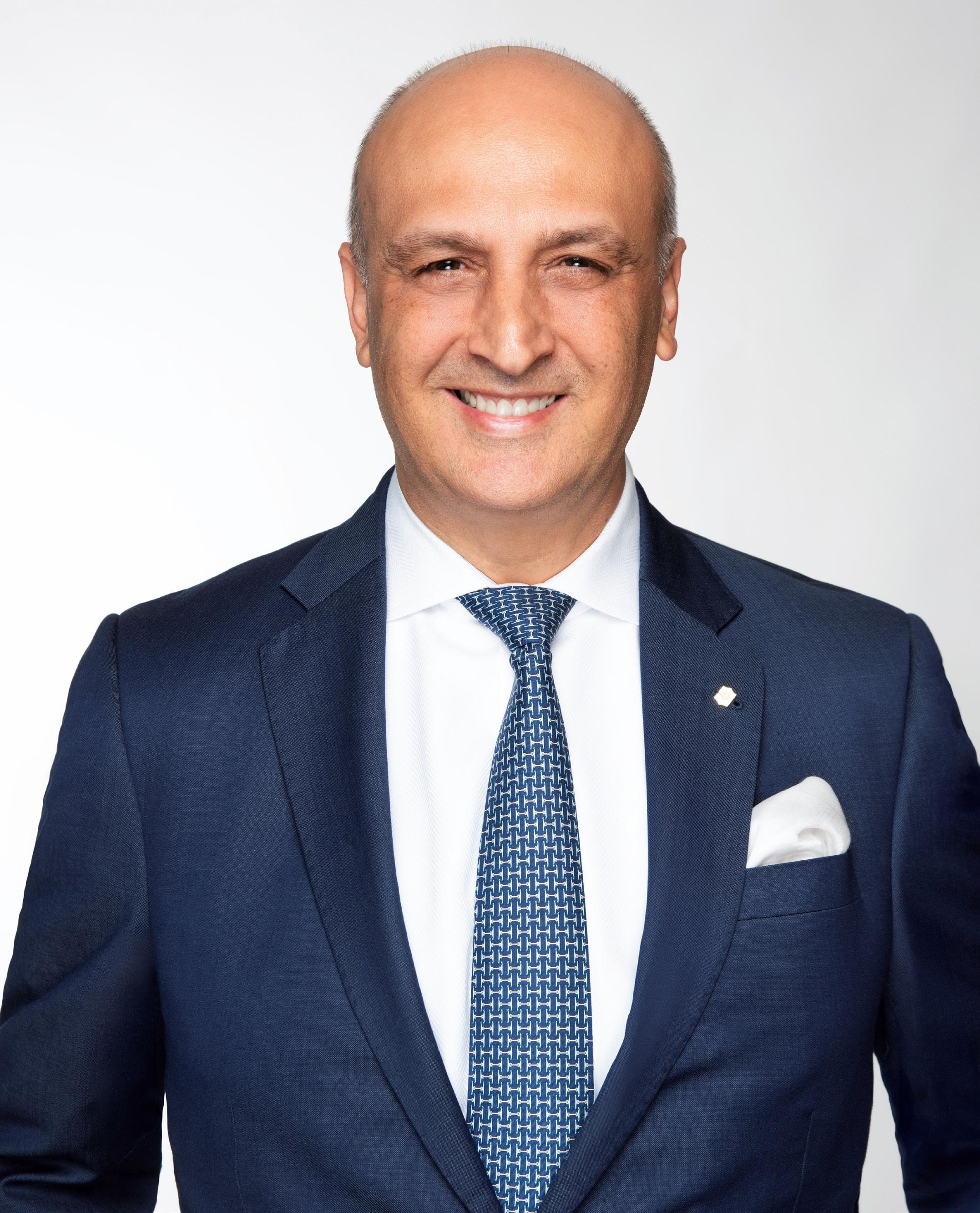
Hakan Ozel Vice President Operations & General Manager, Shangri-La Dubai
The hospitality industry is undergoing an intense transformation, driven by changing guest expectations, technological advancements, and a global shift in travel models and habits. Among the most promising developments is the rise of the hybrid Luxury hotel service model. This innovative approach blends the personalized, high-touch service traditionally associated with luxury hotels with the flexibility, efficiency, and autonomy of digital and self-service solutions. As the world looks toward the future of hospitality, the hybrid luxury model is inevitable and emerging as a blueprint for delivering exceptional experiences that cater to a new generation of discerning travelers. The hotels, which will retain just either of them will have challenges to compete and create an environment where the discerning travelers will be delighted through their experiences.
A hybrid luxury hotel service model integrates both human-centric and technology-driven elements to offer guests the best of both worlds. Unlike traditional luxury hotels that rely heavily on face-to-face and personal interaction, or some new and contemporary hotels that prioritize digital convenience, hybrid models strike a balance between the two, which is the inevitable model of the luxury services in the future. Guests can choose personalized service when they desire, or select for seamless, contactless interactions when they prefer privacy and speed.
Some of the key features of the hybrid luxury model include:
• Flexible check-in and check-out options (both in-person and digital)
• Personalized concierge services available both on-site and via mobile apps
• Smart room controls and amenities managed through guest devices
• On-demand housekeeping and room service, scheduled at the guest’s convenience
• Integration of artificial intelligence (AI) and Internet of Things (IoT) to anticipate and fulfill guest needs
Several trends are driving the adoption of hybrid service models in luxury hospitality:
1. Today’s travelers, particularly Millennials and Gen Z, value personalization, autonomy, and instant access to information. They appreciate the option of interacting with staff for special requests while handling routine tasks independently.
2. The widespread use of smartphones, AI-powered chatbots, and smart hotel infrastructure enables hotels to offer enhanced convenience without sacrificing luxury.
3. Hybrid models allow hotels to maintain high standards of cleanliness and safety while delivering personalized experiences.
4. By automating routine processes, hotels can allocate human resources to areas where personal interaction adds the most value, optimizing both guest satisfaction and operational costs.
In a simple scenario; upon arrival, guests might be greeted by a friendly staff member or use a mobile app to check in and access their room. Rooms are equipped with smart systems that allow guests to control lighting, temperature, and entertainment from their devices. Requests for extra pillows or bathroom wet amenities, lunch or dinner reservations, or spa appointments can be made via chatbots or directly with a concierge, depending on the guest’s preference. Housekeeping and room maintenance (if required) are scheduled through intuitive platforms, allowing guests to customize their experience and minimize disruptions. High-touch services such as personalized recommendations, private tours like desert safari, or curated dining experience in one of the restaurants remain available for those seeking a traditional luxury experience.

• Advanced data analytics and AI enable hotels to tailor services to individual guest preferences, from room amenities to dining options.
• Guests enjoy the freedom to choose how and when they interact with hotel services, enhancing comfort and satisfaction.
• Contactless options reduce physical interactions, appealing to healthconscious travelers and those desiring more privacy.
• By combining digital efficiency with personal touches, hybrid luxury hotels create memorable stays that foster guest loyalty.
• Automation of routine tasks reduces labor costs and allows staff to focus on delivering exceptional service where it matters most.
• Digital platforms provide valuable information about guest behaviors and preferences, enabling continuous improvement.
• Early adoption of hybrid models positions hotels at the forefront of industry innovation, attracting tech-savvy travelers and discerning clientele.
• The flexibility of hybrid systems supports adaptation to fluctuating demand and changing guest expectations.
While the hybrid luxury model offers numerous advantages, its implementation is not without challenges. Hotels must invest in reliable technology infrastructure and ensure seamless integration between digital and human services. Staff training is critical to maintain service excellence across all touchpoints. Additionally, privacy and cybersecurity concerns must be addressed to protect guest data. Another challenge is that although the hotels are investing in technology very much, they are not training and developing their employees enough to use or make them aware of the existence of the technology, which would help them to improve productivity and efficiency.
The key to success lies in maintaining a human touch. Technology should enhance, not replace, genuine hospitality. Striking the right balance between automation and personalized service is essential to preserving the essence of luxury. For a successful luxury service achievement, hotels must integrate both tradition and technology, not either of them.
Guest expectations continue to evolve. The hybrid luxury hotel service model will surely become the industry standard. Hotels that embrace the integration of both technology and tradition will be better equipped to deliver exceptional, flexible, and safe experiences. By merging tradition with innovation, the hybrid model ensures that luxury hospitality remains relevant and desirable for generations to come. The hybrid luxury service model is not just a passing trend; it is the future of hospitality. By offering guests the choice, control, and customization they crave, while preserving the warmth and attentiveness of traditional luxury, hotels can redefine what it means to provide world-class service in a rapidly changing world.

By Shereen Shabnam International Writer
Few places on earth evoke a sense of pure, unfiltered soulfulness quite like Jamaica. A vibrant island nation nestled in the heart of the Caribbean, Jamaica is a mosaic of lush mountains, rhythmic culture, and golden shores. During a recent journey that wove through the energetic streets of Kingston and the tranquil embrace of Montego Bay, I discovered a destination that is both a sensory adventure and a sanctuary for the soul.
My journey began in Montego Bay, where crystal-clear waters and verdant hills create an idyllic backdrop. I checked into Round Hill Hotel and Villas, an elegant sanctuary perched on a tropical hillside, where luxury meets timeless Caribbean charm. Here, mornings started with sumptuous breakfasts featuring Jamaican favorites—ackee and saltfish, Johnny cakes, callaloo, and bammy, all served with rich, freshly brewed Blue Mountain coffee as the ocean stretched endlessly beyond the terrace.
Nearby, the Martha Brae River offered a serene escape. Gliding on a bamboo raft under the soft canopy of the rainforest, I savored the simple pleasure of fresh coconut water and the melodic sounds of nature, a moment of pure connection with Jamaica’s lush landscape. The nature brought back some beautiful memories of my own home country of Fiji that shares a similar laid back vibe as Jamaica so I felt right at home.
Transitioning from tranquility to the pulsating heart of Jamaica, I headed to Kingston, where culture spills vibrantly onto every street. My stay at the Pegasus Hotel, ideally located across from Emancipation Park, positioned me at the center of the city’s creative and historic pulse.
Kingston’s Creative Artwalk was a highlight—a kaleidoscope of murals and street art that brought the city’s dynamic spirit to life. Each artwork narrated stories of struggle, pride, and triumph, offering an immersive glimpse into Jamaica’s contemporary identity.
Another unforgettable stop was the Bob Marley Museum, housed in the music legend’s original home. Walking through Marley’s life, accompanied by the heartfelt drumbeats of Bongo Herman—who happened to be playing live during my visit, brought a profound, personal resonance to the experience. The museum tour, animated by a guide who surprised me with a birthday serenade, was a heartfelt homage to Marley’s message of peace, love, and unity.
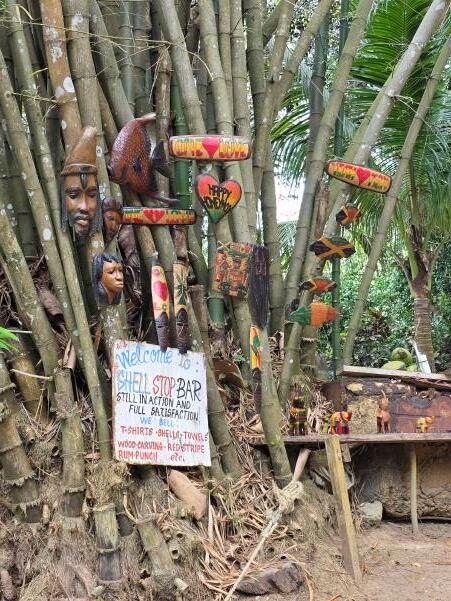

As a coffee lover, attending the Jamaica Blue Mountain Coffee Festival in the misty foothills was an unforgettable highlight. Set against the dramatic backdrop of the Blue Mountains, the festival was a lively blend of sensory delights. Over 70 vendors showcased not only Jamaica’s world-renowned coffee but also local crafts, spices, and culinary creations.
Workshops, barista competitions, and live performances infused the day with energy, while the Taste Jamaica Food Court offered dishes infused with coffee, revealing the versatility of this celebrated bean. The Blue Mountain beans’ smooth flavor, nurtured by rich volcanic soil and a misty climate, was everywhere, from steaming cups to gourmet treats.
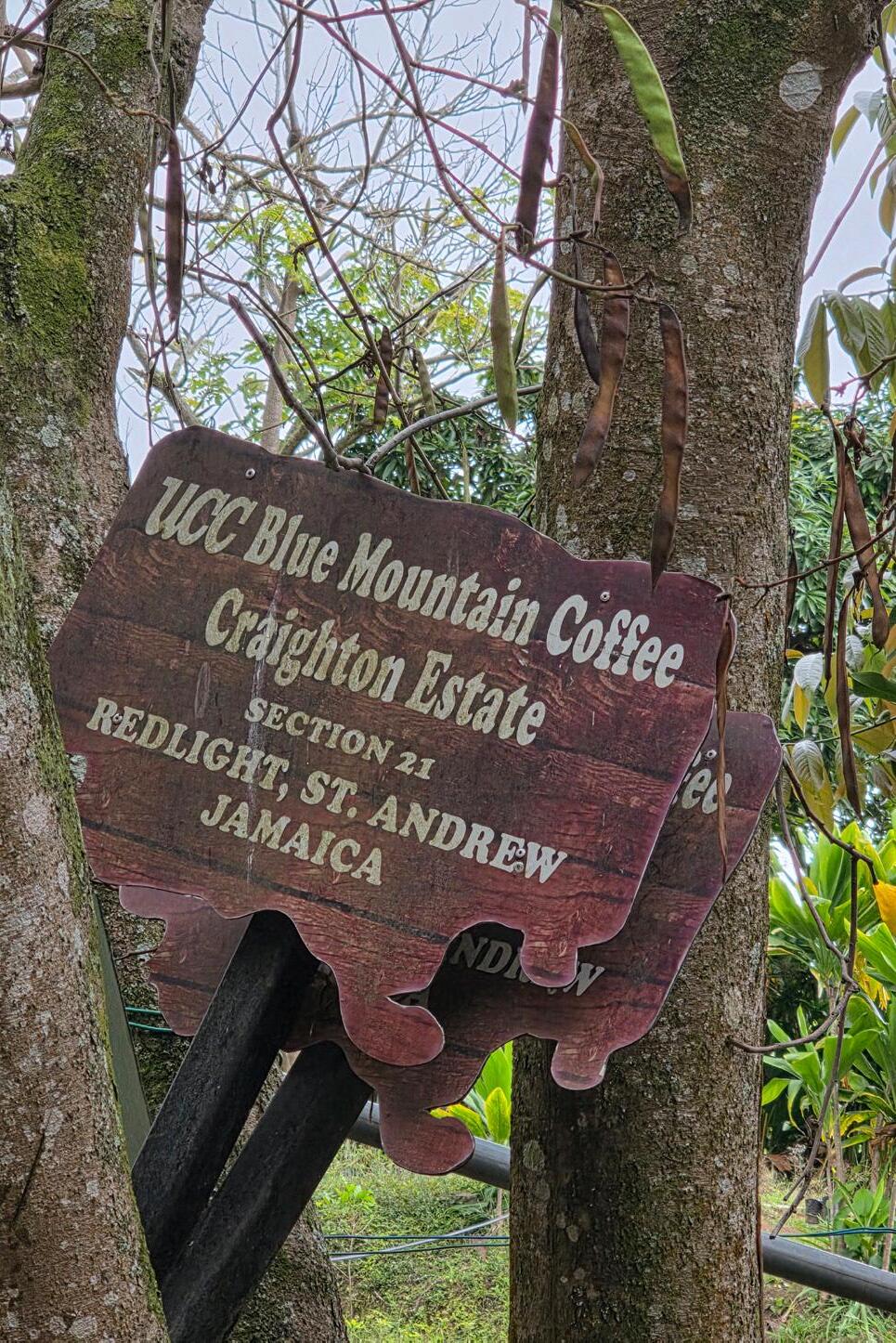
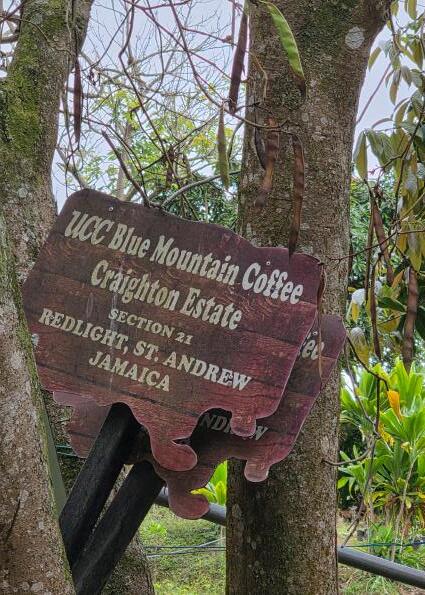
Adding depth to this experience was a visit to Craighton Estate, where I learned firsthand about sustainable coffee farming and the unique attributes that make Jamaican coffee a prized global treasure.
Returning to Montego Bay, I spent my final days at the legendary Half Moon Hotel. Spanning two miles of private beach, this historic resort—favored by royalty and celebrities offered a fitting end to the journey. Half Moon’s effortless blend of understated elegance, lush gardens, and impeccable hospitality encapsulated the soul of Jamaican luxury.
Days melted away between beach walks, spa treatments, and fine dining under the stars. Each evening, the distant beat of live reggae performances at the resort or nearby venues carried the spirit of Jamaica into the night.
As my trip came to a close, I realized that Jamaica is far more than just a destination. It is a living, breathing tapestry of resilience, creativity, and natural beauty. Whether rafting down gentle rivers, sipping worldfamous coffee amidst misty peaks, strolling vibrant city streets, or soaking in the sunset from a villa’s infinity pool, every moment in Jamaica hums with an authenticity that leaves an indelible mark on the heart. It is an island that dances to its own rhythm, inviting you not just to visit, but to feel, to savor, and to belong.
By Hannes Liebe Regional President - APJMEA, IFS
2026 will mark the moment when AI stops being the headline and becomes the habit. After years of experimentation and hype, artificial intelligence is quietly embedding itself into the way work gets done. The question is no longer whether AI works, but how well it performs in the background of daily operations.
This shift represents maturity. Companies that once viewed AI as a bold experiment are now demanding visible results: productivity, safety, and measurable outcomes. The technology itself is becoming invisible, integrated into workflows and decisions in ways that simply make business run better.
The coming year will define how organizations move from showcasing pilots to scaling real value. AI in 2026 will not be about talking to machines, but about letting them work alongside people to deliver better outcomes for customers, companies, and entire industries.
The global context surrounding AI in 2026 is one of pressure and pragmatism. The surge in capital investment from hyperscalers and governments has raised expectations for real performance and immediate, measurable returns. After years of experimentation, enterprises are now accountable for proving the value of their AI investments.
Economic headwinds, geopolitical instability, and rising energy costs are shaping more disciplined adoption strategies. The era of endless pilot programs is ending. Executives want AI that delivers clear productivity gains, reduces costs, and strengthens supply chain resilience in an unpredictable world.
At the same time, a new technological foundation is taking shape. Multimodal AI, capable of interpreting and reasoning across text, imagery, audio, and sensor data, is moving from research to production. Combined with purpose-built infrastructure for high-bandwidth processing, this shift enables more holistic, context-aware intelligence. The convergence of technical maturity and financial scrutiny will make 2026 the year AI is measured by outcomes that matter, not just innovation for its own sake.
AI will become less visible to users but far more influential in impact. The biggest change in 2026 will not be a new model or tool, but the disappearance of AI as a distinct category. It will simply be how work gets done.
The fascination with “AI-first” strategies will give way to seamless integration within business systems and physical processes. AI will move from being a feature to being the foundation. In manufacturing, energy, and service sectors, it will quietly power scheduling, inventory optimization, and predictive maintenance without anyone labeling it “AI.”

This shift is healthy. It signals that AI is entering its industrial phase - embedded, standardized, and measurable. Organizations will compete not on whether they use AI, but on how effectively it drives performance. The leaders will be those who make AI disappear into the background, allowing people to focus on decisions, not data.
2. PREDICTION TWO: AGENTIC AI AT SCALE
2026 will mark the tipping point as agentic AI moves from pilot programs toward scaled production. Autonomous agents that can plan, decide, and act across connected systems will begin forming the backbone of business operations.
Until now, agentic AI has largely existed in controlled tests or smallscale deployments. The next stage is collaborative networks of specialized agents that coordinate across departments and functions. Procurement agents will negotiate contracts while logistics agents dynamically reroute deliveries. Maintenance agents will communicate
with planning agents to balance downtime with output targets.
Together, these intelligent agents represent the foundation of what many now describe as digital workers - AI-powered counterparts capable of performing operational tasks with context and autonomy.
These agents will learn and improve through both real-world feedback and virtual training environments - a combination of practical integration and simulation that will determine how fast agentic systems mature.
This evolution will unlock step-change efficiency gains but also raise new challenges in governance, security, and interoperability. Agentic AI will not replace people; instead, it will create digital teams that work alongside human counterparts, each learning from the other.
The conversation about automation will give way to one about augmentation. In 2026, the defining workforce trend will be the rise of hybrid teams made up of humans and specialized AI agents working side by side.
These agentic systems will increasingly take the shape of digital workers - intelligent counterparts that collaborate with people across industrial and enterprise environments.
Roles will divide naturally between execution and orchestration. Routine tasks such as data entry, reporting, and document creation will be handled almost entirely by intelligent systems. Human roles will shift toward higher-value activities, like managing exceptions, exercising judgment, ensuring ethical standards, and making strategic decisions for operational oversight.
This new structure will create demand for entirely new professions. We will see the emergence of Agent Orchestration Specialists, AI Decision Auditors, and Human-AI Interface Designers. Success will hinge on how effectively organizations build trust, redesign workflows, and invest in workforce training - not just deploying technology.
The organizations that succeed will invest in human capability as much as in AI deployment. The future workforce will not be measured by headcount, but by the effectiveness of hybrid collaboration between people and intelligent systems.
As AI adoption accelerates, so does the demand for compute power, energy, and data. In 2026, the global conversation will shift from what AI can do to how efficiently it can do it. The cost of intelligence will become a competitive differentiator.
The next wave of AI innovation will be defined by optimizationgreater results from fewer resources. Organizations will seek models and infrastructure designed for efficiency, with specialized chips, edge computing, and energy-aware architectures to balance performance with cost.
At the same time, sustainability expectations will force greater transparency in how AI systems consume resources. The enterprises that can align AI performance with environmental and economic responsibility will earn both investor confidence and public trust.
Efficiency will become the new frontier of AI leadership. The winners will be those who build intelligence that scales without wasteintelligent not only in function, but in footprint.
2026 will mark the shift from competing on who owns the largest platform to how effectively those platforms deliver outcomes. The era of closed, monolithic ecosystems is giving way to open, connected architectures that allow organizations to choose the best-fit capabilities for their business.
Enterprises are realizing that value lies not in owning every layer of the stack, but in orchestrating data, people, and systems to achieve measurable impact. Flexibility, interoperability, and openness will define the winners - not the size of their platforms.
For industrial organizations, this means embedding AI into existing systems - from ERP to field service and supply chain - through intelligent orchestration rather than wholesale replacement. The focus will be on uptime, efficiency, and resilience supported by architectures that evolve over time.
In short, 2026 will be the year technology takes a step back and results take center stage. The winners will be the ones who make AI work for business, not the other way around.
The underlying technology landscape in 2026 will evolve toward convergence. Multimodal AI, agentic systems, and embodied intelligence (AI that interacts with the physical world) will merge into unified environments that understand, reason, and act across digital and physical contexts.
Advances in reinforcement learning, simulation, and multimodal processing will make AI capable of navigating complex decisions with minimal direct human input. Yet the greatest breakthroughs will come not from any single innovation, but from connecting data, systems, and agents into continuous loops of learning and improvement - enabling richer collaboration between agents themselves and the environments they operate in.
This is the next stage of industrial transformation: the embodied enterprise, where digital intelligence interacts directly with the physical world through sensors, robots, drones, and connected infrastructure. Factories, utilities, and logistics networks will evolve into self-optimizing systems that sense, decide, and act in real time. The technology is ready; the challenge is ensuring it operates responsibly, sustainably, and in harmony with the humans who guide it.
2026 will not be defined by the next AI breakthrough - it will be the year AI becomes business as usual. The headlines will fade, but the results will speak louder than ever.
The organizations that lead will be those that stop chasing hype and start mastering orchestration - between humans and machines, between systems and agents, and between ambition and execution.
AI will not replace enterprise software. It will redefine it. The most successful companies will treat AI not as a technology project, but as an operational transformation that touches every process and every person.
The story of AI in 2026 is simple. It is no longer about what AI is, but about what it enables. Those who understand that shift will not just adapt to the future - they will build it.
By Shereen Shabnam International Writer/PR Specialist
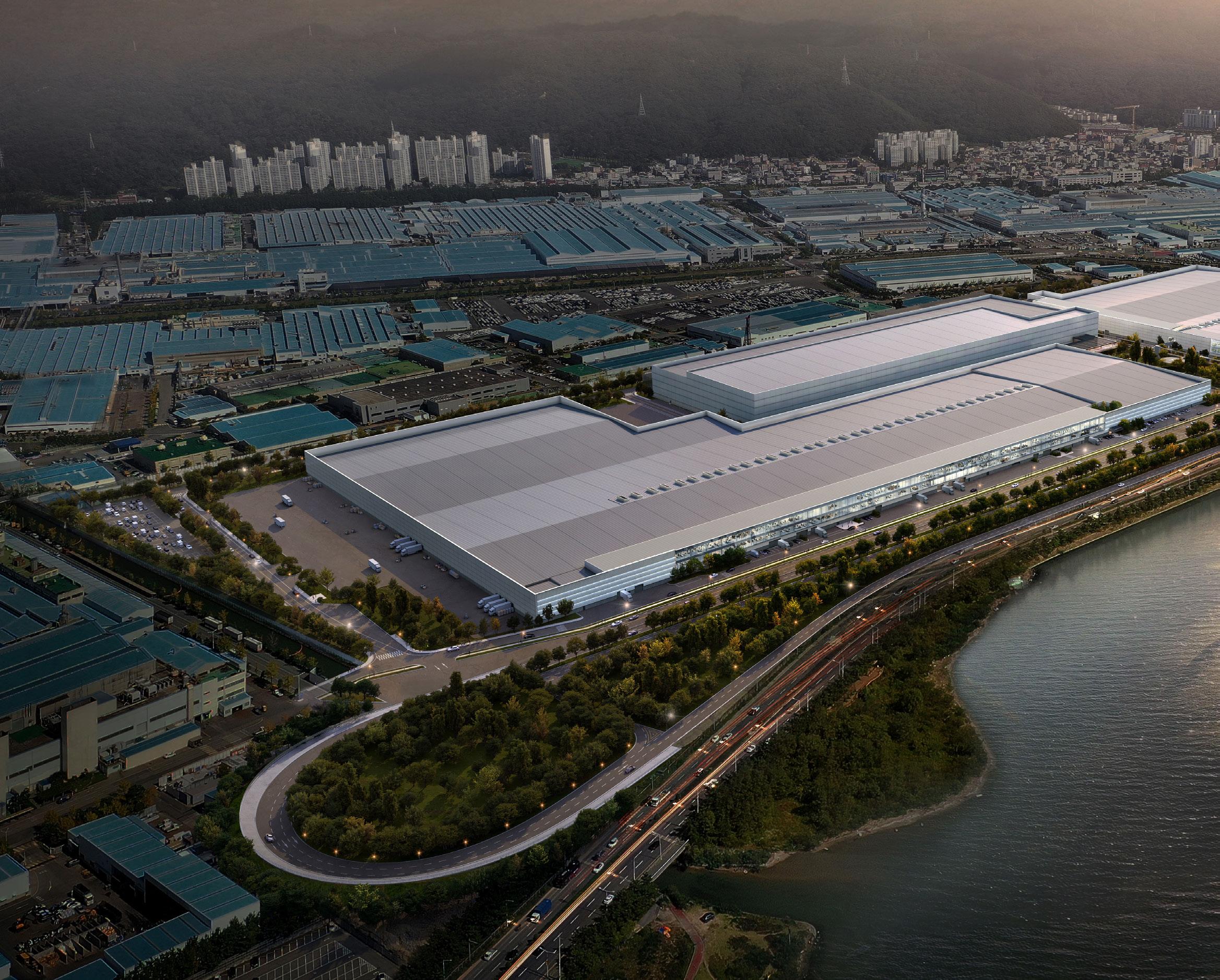
Tucked along South Korea’s southeastern coast lies the city of Ulsan, home to an industrial marvel that has long shaped the country’s automotive dominance. As part of our WWCOTY delegation’s visit to Korea, we had the rare opportunity to tour Hyundai’s vast Ulsan manufacturing complex which is the largest single automobile plant in the world. And while the figures alone are staggering, what truly impressed was the sheer precision, scale, and harmony with which each component of the operation functions.
Spanning 5 million square meters (approximately 1,200 acres), Hyundai’s Ulsan facility is less a factory and more a self-sustaining automotive city. It houses five independent manufacturing plants, its own engine, transmission, and seat production lines, and even a
private port for global vehicle export. With the ability to produce more than 1.52 million vehicles annually and an average daily output of 6,000 cars, Ulsan sets the gold standard for streamlined automotive production.
As female motoring journalists from across the globe, the WWCOTY jury brings a uniquely global and inclusive lens to every car and every factory we assess. Touring Ulsan underscored Hyundai’s meticulous attention to detail, from the early stages of assembly to the final stages of inspection and how integral this facility is to the brand’s global reputation for quality, efficiency, and innovation.
What struck me most was how seamlessly every stage of production is integrated. The process flows with industrial elegance: raw materials and parts are fed into the system, components are assembled with clockwork precision, and vehicles emerge as finished products ready to take on global roads. Robotics and human craftsmanship coexist effortlessly, reflecting Hyundai’s commitment to both cutting-edge technology and the irreplaceable human touch.

A particular highlight was the tour of Hyundai’s Heritage Hall. This thoughtfully curated space chronicles the company’s rise from its early beginnings at Ulsan to becoming one of the world’s leading automotive manufacturers. It was a powerful reminder of how far Hyundai has come and how integral this very plant has been to its journey.
What sets Ulsan apart is not just its size but the philosophy behind it. It is a place where innovation meets tradition, where scale never compromises quality, and where the past, present, and future of automotive manufacturing converge under one roof.
The Women’s World Car of the Year jury represents a collective voice that reaches over 500 million consumers worldwide and we often visit production facilities of automotive brands to get behind the scenes insights.
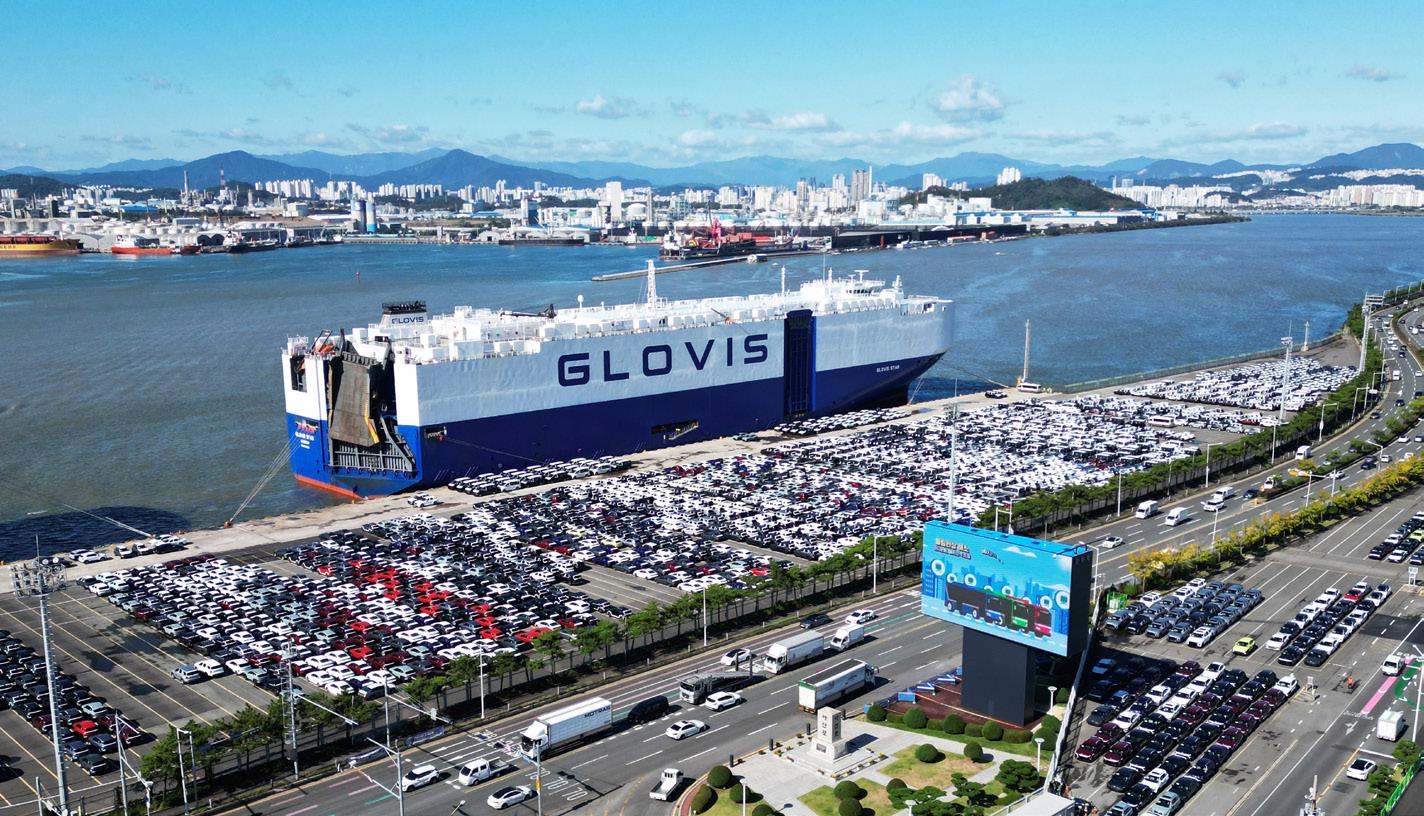
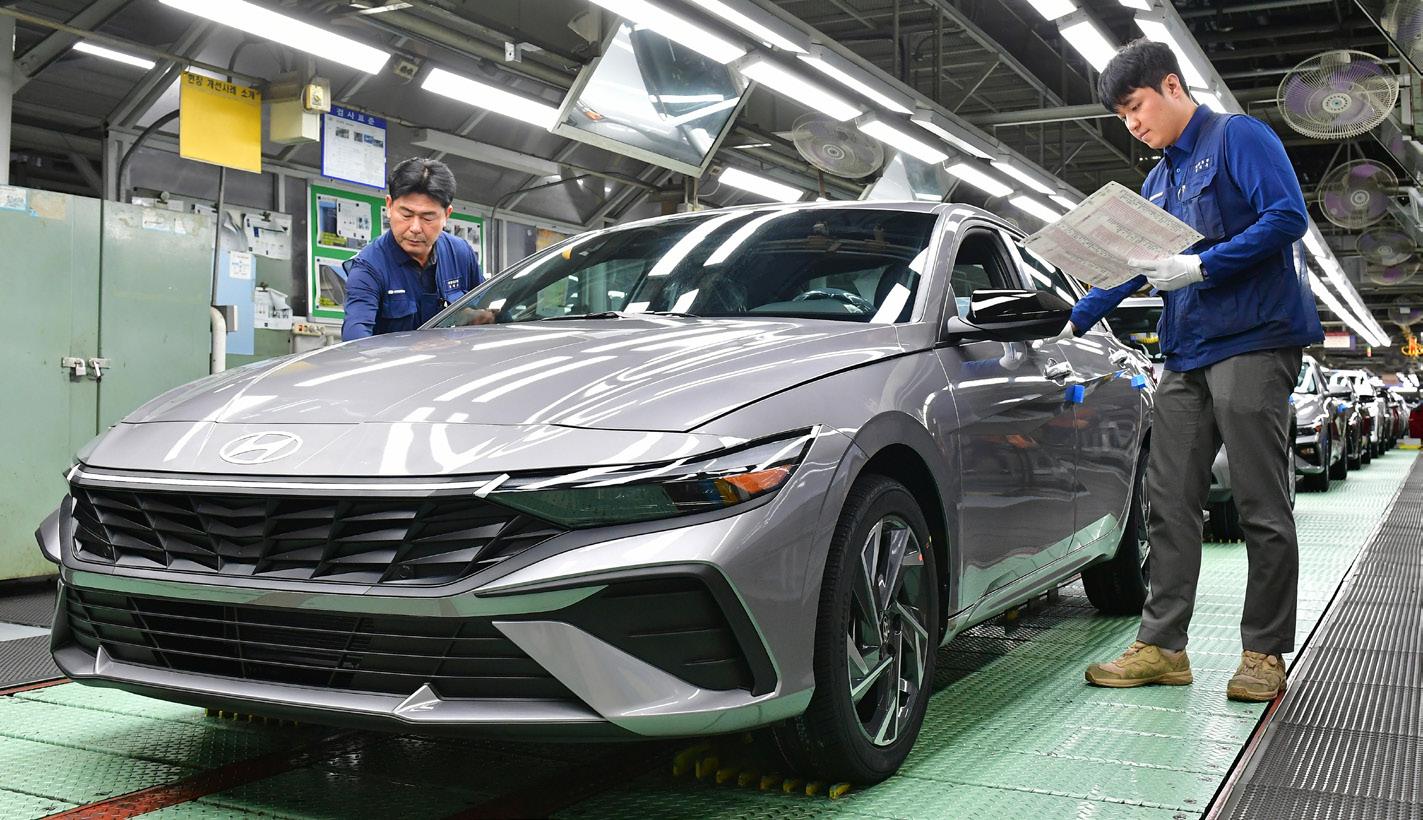

From what I witnessed at Ulsan, Hyundai’s commitment to precision manufacturing, global logistics, and brand heritage is not only world-class — it is inspirational.
HYUNDAI ULSAN PLANT: AT A GLANCE
Location:
Ulsan, South Korea
Total Area:
5 million square meters (1,200 acres)
Annual Production Capacity:
Over 1.52 million vehicles
Daily Output:
Approximately 6,000 cars
Number of Factories:
5 complete vehicle manufacturing plants
Supporting Facilities:
In-house engine, transmission plants and seat plants
Export Hub:
Dedicated port for global vehicle
shipping
Employees:
More than 31,000 on-site staff
Established:
First plant began operations in 1968
Cultural Highlights: Home to Hyundai Heritage Hall
By Shereen Shabnam International Writer
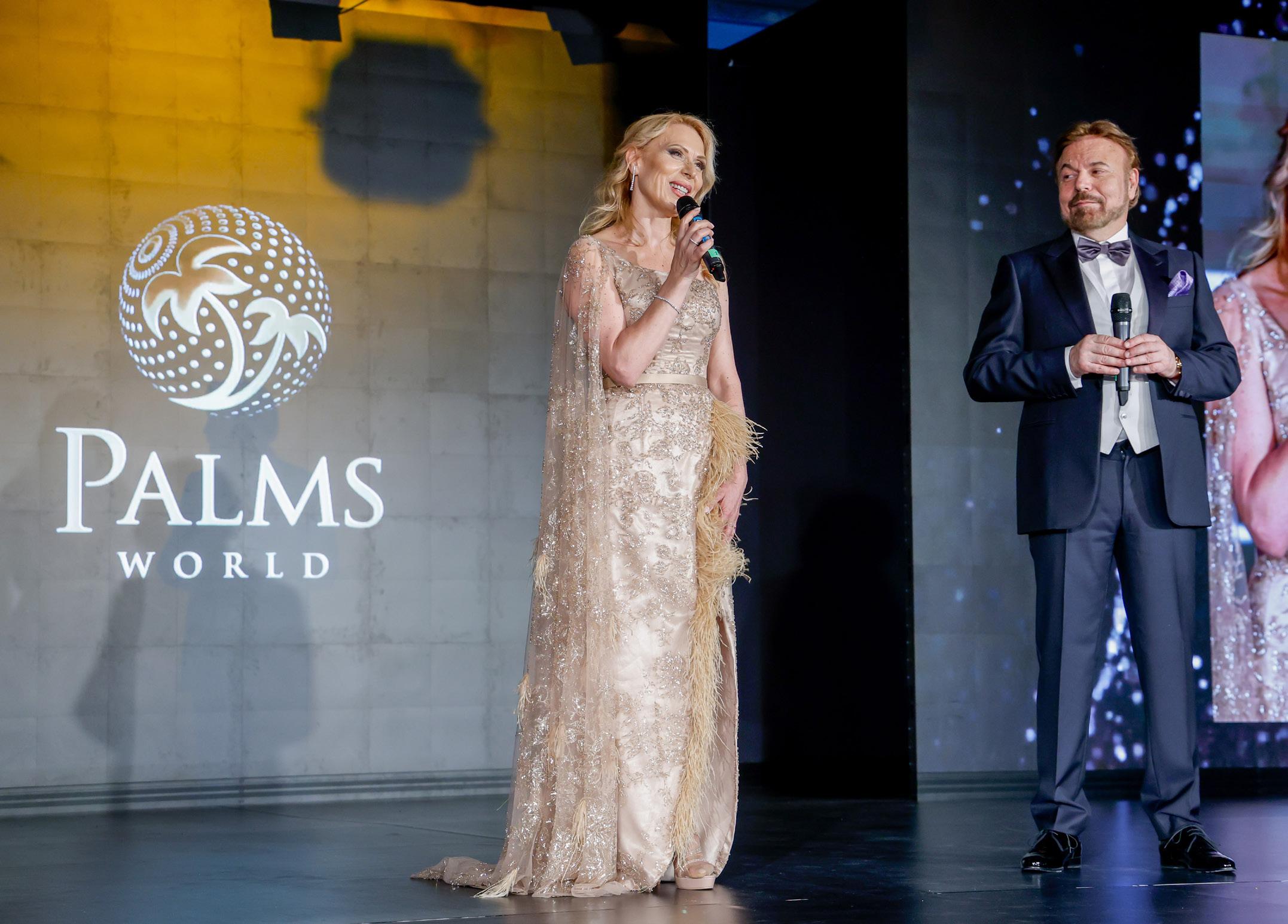
In a celebration that blended luxury, creativity, and cultural prestige, Palms Royale Sofia, as the official host, organizer, and proud sponsor delivered one of the most highly anticipated fashion and business events of the year with renowned designer Walid Atallah.
Held at the magnificent Grand Hotel Millennium, the evening was a dazzling tribute to haute couture and elevated living, drawing together
fashion elites, tastemakers, and industry leaders. The event was graced by the presence of distinguished guests and hosts of the event, Milo Borissov and Rossi Mckee, adding to the evening’s prestige and allure. From the moment guests entered the venue, the atmosphere radiated glamour. The event began with an elegant cocktail reception, where entrepreneurs, innovators, and influencers gathered for an evening of high-profile networking. As the camera flashes lit up the grand interiors, anticipation built for the main spectacle of the night.
Walid Atallah, whose creations have graced red carpets and royalty alike, debuted his latest haute couture collection, including his breathtaking Gold Collection and a new Wedding Line. With shimmering fabrics, intricate handwork, and commanding silhouettes, each piece was a masterpiece. Atallah’s reputation as a designer to

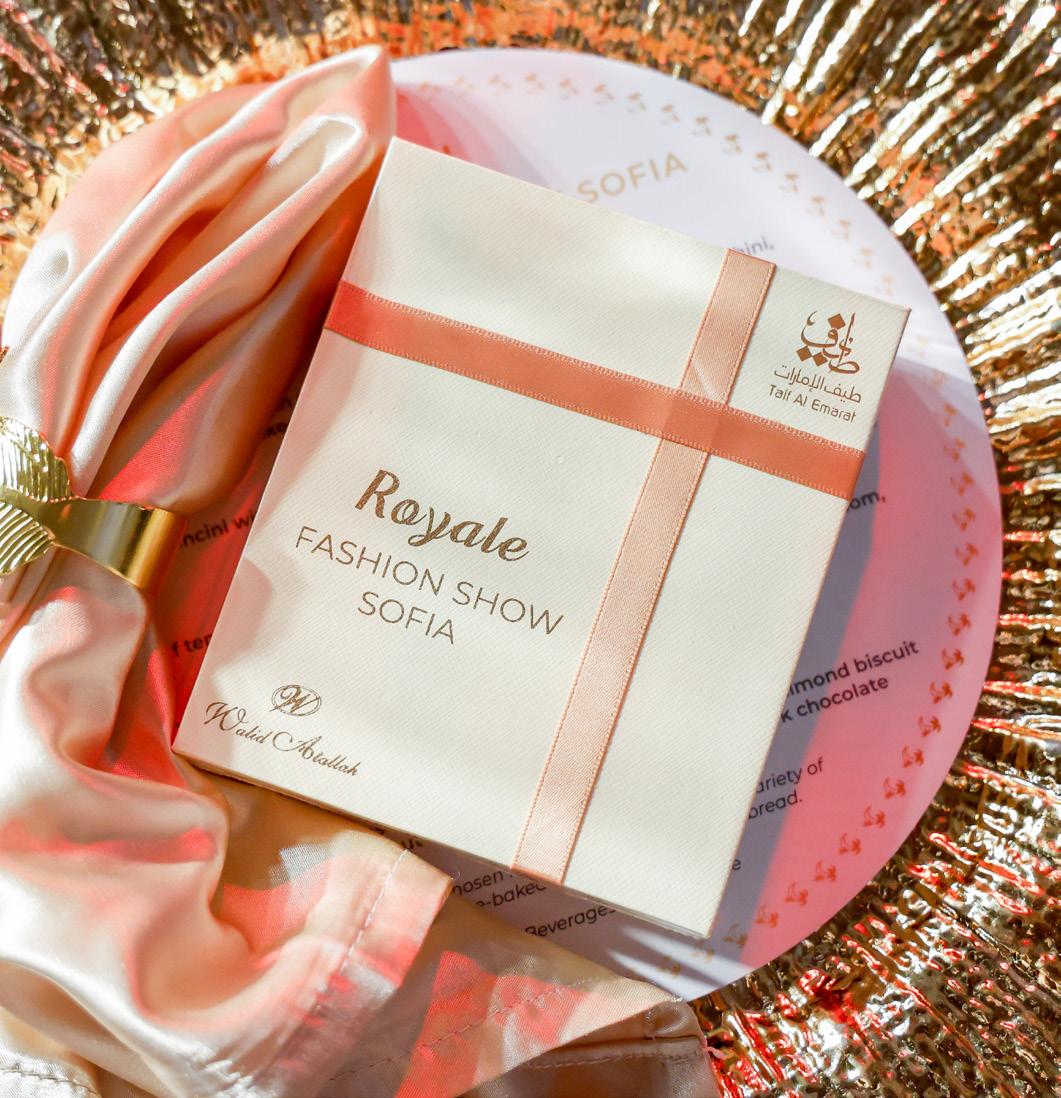
global celebrities was on full display, with his signature blend of tradition and avant-garde aesthetics taking center stage in Sofia.
Complementing the visual spectacle were mesmerizing performances by Bulgarian musicians, showbiz entertainers, superstar Nawal El Zoghby and the charismatic Amel Gharbi - who brought an
unforgettable musical energy to the evening. Their performances elevated the fashion showcase into a multisensory experience, delighting guests throughout the grand ballroom.
A sumptuous gala dinner followed, where guests continued to enjoy the luxurious surroundings, fine cuisine, and a curated entertainment program that celebrated not just fashion, but a lifestyle defined by sophistication and elegance. Every detail was thoughtfully orchestrated by Palms Royale Sofia, whose vision and patronage transformed the night into a hallmark event on Bulgaria’s cultural calendar.
This edition of the Royale Fashion Show proved to be more than a runway event as it was a testament to Palms Royale Sofia’s dedication to promoting fashion, design, and high society in the region. By creating a platform where global couture meets local excellence, Palms Royale reaffirmed its role as a leader in Bulgaria’s luxury and business landscape.
As a venue, Palms Royale Sofia delivers an exciting international gaming experience with world-class personal service, setting a new standard in Sofia with its exclusive casino, fine Asian and Mediterranean dining, vibrant nightclub, and more.
As guests departed under the soft glow of Sofia’s night skyline, one sentiment echoed through the crowd – it was a night of pure magic, unforgettable glamour, and timeless style.
@palmsroyalesofia @grandhotelmillenniumsofia @palmstravel.bg @conciergeonedubai

By Daniele Mancini, Field CISO, Fortinet
The implementation of Robotic Process Automation (RPA) systems in supply chain operations represents a breakthrough for logistics procurement and inventory management functions. RPA automation of high-volume tasks enables organisations to achieve maximum efficiency through its ability to process data and manage orders and perform system integration tasks. It does, however, also create complex cybersecurity risks affecting the entire supply network Infrastructure. Active
defense strategies against emerging threats are required to ensure continued operational stability, commercial data protection and brand reputation.
THE EXPANDING ATTACK SURFACE NEW PATHWAYS FOR ADVERSARIES
An RPA implementation creates new automated high-privilege system connections which merge previously isolated systems into a single digital
footprint. The increased attack surface created by this expansion provides malicious actors with attractive targets. Software robots known as “bots” perform human-like tasks which require them to run with elevated permissions throughout multiple applications, including Enterprise Resource Planning (ERP) systems, supplier web portals, Warehouse Management Systems (WMS) and financial platforms.
The integration points between systems create security risks; an attacker who gains control of a bot system obtains complete access to organisational operations through legitimate-looking access points that circumvent standard security boundaries.
RPA operates automatically to handle large amounts of sensitive information which includes supplier agreements, proprietary pricing data, inventory statistics and protected customer delivery records. A bot compromise enables attackers to use the system for speedy data extraction and fraudulent transaction insertion making detection and response very difficult.
Credential management systems for RPA deployments presents attractive targets for attackers as they could gain access to multiple systems through authenticated sessions while their traffic appears legitimate.
The trust relationships that form between systems become vulnerable to attacks from adversaries. A typical supply chain attack occurs when unauthorised parties access less secure RPA environments of suppliers to use automated data transfer for malware distribution and data contamination. The system will accept malicious code and fake data through automated transactions which appear as legitimate partner communications.
The fast pace of modern supply chains operating with just-in-time delivery makes security incidents from RPA systems produce more severe effects, including:
• Procurement operations inventory management manipulation and the potential spread of Fraudulent orders and incorrect shipments and manipulated prices throughout the system
• A successful attack on supply chain RPA infrastructure results in consequences that go beyond the initial data breach. The business faces multiple severe impacts which include operational disruptions, financial losses and strategic damage that endanger its future sustainability
The instant financial harm from RPA system breaches makes them an appealing target for industrial espionage activities. APT actors use the permanent privileged access of bots to execute extended surveillance operations and steal competitive intelligence.
Major supply chain security incidents result in severe damage to a company’s reputation. The practice of cybersecurity due diligence within vendor risk management has become mandatory, which makes a company’s security position determine its power to draw and keep both customers and suppliers.
A complete technology mitigation strategy needs to handle all these intricate security threats. The framework depends on security architecture and operational controls and continuous monitoring for its foundation.
1. Implement the Principle of Least Privilege (PoLP)- Each bot in RPA security operates with restricted access to perform only its assigned tasks by accessing specific systems and data and functions. Organisations can stop a compromised bot from spreading by using Role-Based Access Controls (RBAC) to block its network access to other systems.
2. Harden Credential Management - Bot credentials must be treated as highly privileged assets. Best practices include implementation of Privileged Access Management (PAM) solution for that centralises and automates bot credential management, prevention of direct storage of passwords and API keys and an MFA requirement for bot accounts accessing vital systems.
3. Establish Continuous Monitoring and Anomaly Detection - Improving visibility across the system is key. This includes creating operational baselines which track how each bot functions by recording its system access patterns and usage times and data processing amounts, analysing all data access patterns, external communications and off-hours activities which deviate from the established baseline and the integration of RPA platform logs with Security Information and Event Management (SIEM) systems for a single incident response workflow.
4. Architecture for Security with Network Segmentation - RPA infrastructure should not reside on the general corporate network. On the contrary, the system needs its own separate network area which includes defined security zones that use strong firewall rules to monitor all network communications and use application-layer firewalls and API gateways to block dangerous direct database connections which bypass other security controls by performing complete traffic analysis of bot system interactions.
Supply chain RPA functions between different organisations so internal security measures prove insufficient for protection.Security needs to protect all components within the supply chain system ecosystem.
Organisations need to establish security requirements as fundamental components of their partnership agreements, including performing complete security assessments before enabling automated data exchange capabilities. The protection of automated supplier and logistics partner communications needs data in transit to use secure API architectures with mutual authentication and robust encryption methods. The prevention of data tampering becomes possible through blockchain technology which enables verified transactions and cryptographically signed API payloads.
Take action to identify your vulnerabilities before an attack occurs. Regular security testing of RPA workflows through penetration testing and red team exercises is vital. Proactive testing enables organisations to verify their detection and response systems to operate correctly before any actual cyberattacks take place.
Conclusion: Security as a Competitive Necessity
Robotics Process Automation generates major security risks for supply chain operations, but they are manageable with an active multi-level security plan that handles system weaknesses, operational stability and supply chain network dependencies.
Organisations that establish complete security frameworks through strict access controls, hardened credential management, monitoring and extended supply chain protections can achieve transformative efficiency through automation and create fundamental elements for supply chain reliability and trustworthiness.
CHECK POINT SOFTWARE UNVEILS QUANTUM FIREWALL SOFTWARE R82.10 TO SECURE THE AI-DRIVEN ENTERPRISE
Check Point Software Technologies Ltd. (NASDAQ: CHKP), a pioneer and global leader of cyber security solutions, has announced its new Check Point Quantum Firewall Software, R82.10, introducing 20 new capabilities designed to help enterprises safely adopt AI, protect distributed environments and simplify Zero Trust across hybrid networks.
“As organizations embrace AI, security teams are under growing pressure to protect more data, more applications and more distributed environments,” said Nataly Kremer, Chief Product Officer at Check Point Software Technologies. “R82.10 helps enterprises shift to a prevention-first model by unifying management, strengthening Zero Trust and adding protections that support safe, responsible AI adoption and development.”
Enterprises are rapidly increasing their use of AI tools and LLM development, expanding connectivity across users, branches and cloud environments. This creates new risks, including AI-generated threats, identity abuse and configuration drift. R82.10 addresses these challenges with unified, prevention-first capabilities that improve visibility, control and protection across hybrid mesh networks.
“With the efficiency gains promised by AI, security professionals cannot slow down business innovation or risk being excluded,” said Frank Dickson, Group Vice President, Security & Trust, IDC. “The benefits of innovation do not negate the looming security threat being introduced by AI. Enterprises need to reduce risk, unify controls and stay ahead of sophisticated malicious actors. Check Point’s approach of embedded AI security into the network stack is an appropriate approach to quickly improve an organization’s AI security posture.”
1. SUPPORTING SAFE AI ADOPTION
R82.10 strengthens oversight of AI-driven activity by detecting unauthorized GenAI tools, expanding visibility into AI applications such as ChatGPT, Claude, Gemini, and monitoring MCP (model context protocol) usage to protect AI-powered workflows.
2. STRENGTHENING HYBRID MESH NETWORK SECURITY
Organizations gain more consistent protection across distributed environments with centralized internet access management for SASE and firewalls, simplified gatewayto-SASE connectivity, and improved identity and device posture validation to support Zero Trust at scale.
3. TAKING A PREVENTION-FIRST APPROACH TO MODERN THREATS
R82.10 introduces phishing protection that works without HTTPS inspection, adaptive IPS to reduce alert fatigue, and new Threat Prevention Insights to highlight misconfigurations and posture gaps before attackers can exploit them.
4. ELIMINATING SILOS WITH A UNIFIED SECURITY PLATFORM
R82.10 expands Check Point’s open-garden architecture with more than 250 integrations. These integrations allow organizations to apply endpoint posture signals from their existing providers directly within Check Point policies, improving identitybased controls and Zero Trust enforcement.
“Check Point continues to deliver AI Security innovations at the exact moment customers need them,” said Chris Konrad, Vice President, Global Cyber, World Wide Technology. “Their AI-driven security capabilities help organizations safeguard their businesses from the latest cyber threats, while providing enterprise-grade protection for sensitive AI workloads from model training to inference without compromising performance.”
Check Point Quantum Firewall Software R82.10 integrates with Check Point’s full AI security stack, strengthened by the recent acquisition of Lakera. Together with the Infinity Platform and Check Point’s open-garden architecture, enterprises gain a unified path to secure AI usage, automate prevention and ensure resilience across their hybrid environments. The R82.10 software will be available to download later this month.

By Suhail Hasanian Senior Regional Director, and General Manager, MEA, NetApp
As businesses step into 2026, the pace of technological change shows no sign of slowing. Companies are searching for clear direction to navigate new challenges and tap into the possibilities offered by rapid advances in artificial intelligence, cloud solutions and cybersecurity.
In response to this, NetApp has gathered perspectives from across its global network and is sharing a set of predictions that reflect practical changes already underway, helping organizations understand what moves will matter most in the year ahead.
In the next year, NetApp expects artificial intelligence to step out of pilotprogram status to become a regular tool for business. Companies that succeed will not necessarily be those with the largest data sets but those that can keep data well organized, accessible and secure. NetApp leaders believe that an intelligent approach to managing information will support the move from experiments to real-world impact, making it easier for teams to unlock value from AI across different business areas.
Cloud strategies are also shifting gears. The focus is turning from simply moving apps to the cloud, toward deciding where workloads actually fit
best based on performance needs, privacy rules and the data’s location. There is a growing need for flexible systems that handle both local and regional requirements, letting organizations adapt without getting bogged down in administration. Automation and smart policy controls help ease this process, clearing the way for teams to focus on results rather than routine maintenance.
Cybersecurity is gaining even more attention as threats evolve. The report points to increasing demand for earlier detection, faster responses and solid recovery plans. The days when security was tacked on as an afterthought are ending, with businesses embedding smarter protective measures into all their operations from the start. Taking care of data’s accuracy, safety and proper use remains essential, especially as decisions become more data-driven.
Alongside these changes, organizations are looking at ways to make infrastructure simpler and more responsive. Modern tools let businesses adjust capacity, improve access and keep disruption low as their data needs grow. The overall message is clear: being prepared for 2026 means weaving intelligence and agility into every part of the organization so challenges become opportunities.



Kaspersky experts outline how the rapid development of AI is reshaping the cybersecurity landscape in 2026, both for individual users and for businesses. Large language models (LLMs) are influencing defensive capabilities while simultaneously expanding opportunities for threat actors.
Deepfakes are becoming a mainstream technology, and awareness will continue to grow. Companies are increasingly discussing the risks of synthetic content and training employees to reduce the likelihood of falling victim to it. As the volume of deepfakes grows, so does the range of formats in which they appear. At the same time, awareness is rising not
only within organizations but also among regular users: end consumers encounter fake content more often and better understand the nature of such threats. As a result, deepfakes are becoming a stable element of the security agenda, requiring a systematic approach to training and internal policies.
Deepfake quality will improve through better audio and a lowering barrier to entry. The visual quality of deepfakes is already high, while realistic audio remains the main area for future growth. At the same time, content generation tools are becoming easier to use: even nonexperts can now create a mid-quality deepfake in just a few clicks. As a result, the average quality continues to rise, creation becomes accessible to a far broader audience, and these capabilities will inevitably continue to be leveraged by cybercriminals
. Online deepfakes will continue to evolve but remain tools for advanced users. Real-time face and voice swapping technologies are improving, but their setup still requires more advanced technical skills. Wide adoption is unlikely, yet the risks in targeted scenarios will grow: increasing realism and the ability to manipulate video through virtual cameras make such attacks more convincing.
Efforts to develop a reliable system for labeling AI-generated content will continue. There are still no unified criteria for reliably identifying synthetic content, and current labels are easy to bypass or remove, especially when working with open-source models. For this reason, new technical and regulatory initiatives aimed at addressing the problem are likely to emerge.
Open-weight models will approach top closed models in many cybersecurity-related tasks, which create more opportunities for misuse. Closed models still offer stricter control mechanisms and safeguards, limiting abuse. However, open-source systems are rapidly catching up in functionality and circulate without comparable restrictions. This blurs the difference between proprietary models and open-source models both of which can be used efficiently for undesired or malicious purposes.
The line between legitimate and fraudulent AI-generated content will become increasingly blurred. AI can already produce well-crafted scam emails, convincing visual identities, and high-quality phishing pages. At the same time, major brands are adopting synthetic materials in advertising, making AI-generated content look familiar and visually “normal.” As a result, distinguishing real from fake will become even more challenging, both for users and for automated detection systems.
AI will become a cross-chain tool in cyberattacks and be used across most stages of the kill chain. Threat actors already employ LLMs to write code, build infrastructure, and automate operational tasks. Further advances will reinforce this trend: AI will increasingly support multiple stages of an attack, from preparation and communication to assembling malicious components, probing for vulnerabilities and deploying tools. Attackers will also work to hide signs of AI involvement, making such operations harder to analyze.
“While AI tools are being used in cyberattacks, they are also become a more common tool in security analysis and influence how SOC teams work. Agent-based systems will be able to continuously scan infrastructure, identify vulnerabilities, and gather contextual information for investigations, reducing the amount of manual routine work. As a result, specialists will shift from manually searching for data to making decisions based on already-prepared context. In parallel, security tools will transition to natural-language interfaces, enabling prompts instead of complex technical queries,” adds Vladislav Tushkanov, Research Development Group Manager at Kaspersky.

By Helena Nimmo Chief Information Officer at IFS
Society stands at a turning point for Artificial Intelligence. The models we’re building now will shape decision-making, productivity, and social systems for decades. But as we focus on making AI bigger, faster, and more powerful, we can’t overlook a fundamental truth: progress depends just as much on who is shaping it as on what it can do.
Scale without diversity risks amplifying blind spots rather than eliminating them. If we want to build AI that truly works for everyone, we should broaden the perspectives feeding into these systems.
AI doesn’t exist in isolation. It’s shaped by the people who build it and the data we feed it learns from. That doesn’t make it inherently flawed. But like any system, its outcomes reflect its inputs. When those inputs lack diversity, the results may fall short.
We’ve all seen what happens when technology isn’t built with everyone in mind: facial recognition that struggles with people of colour, recruitment tools that favour CVs from male applicants, and healthcare algorithms that miss signs of illness in women.
But there’s good news - these aren’t unsolvable issues. Different types of AI offer real opportunities to build more inclusive systems. For example, explainable AI makes biases much easier to detect and correct. These human-in-the-loop approaches make sure that lived experience still plays a role in shaping outcomes.
When we bring in more voices - across genders, ethnicities, cultures, and socioeconomic backgrounds - we bring in more tangible value and experiences. Different perspectives mean different questions are asked. Assumptions get challenged. Edge cases get considered. Systems become more resilient, not because someone created a new algorithm, but because someone in the room had a different lived experience, the whole process becomes more inclusive.
Today, women currently make up less than 22% of AI professionals globally. That’s a structural failure. It means we’re missing a huge range of insight, experience, and judgment from the systems shaping our future.
Thankfully, we have trailblazers like Dr. Timnit Gebru and Dr. Joy Buolamwini (founder of the Algorithmic Justice League) leading the way, calling out bias, demanding transparency, and proving that inclusive AI is powerful. But we need more like them, across all underrepresented groups in this field. We need entire ecosystems of talent from underrepresented communities to shape the direction of travel.
With global populations projected to decline from 2080, productivity will become a defining challenge for many economies. This demographic shift means fewer workers supporting larger dependent populations, creating a productivity gap. AI will have to do some heavy lifting to fill the gap.
But that only works if AI if built to serve everyone. If the systems we rely on are designed for a narrow slice of the population, we will
limit the gains before they start. An AI workforce that can’t understand or accommodate diverse needs will create technological barriers to participation rather than remove them. We risk developing systems that work well for the dominant group who created them but exclude others from fully participating in the economy when we need everyone’s contributions most.
In a future where human capital becomes increasingly scarce, companies that deploy AI systems capable of supporting diverse users will gain significant advantages. Diversity and inclusion are the foundations for innovation that works at scale.
Too much AI development happens in silos and echo chambers. But inclusive AI? That’s the kind that adapts, evolves, and lifts everyone.
● Widening the talent pool by investing in education and pathways for underrepresented communities, including women, ethnic minorities, neurodivergent individuals, and those living outside the major technology hubs
● Changing workplace culture by ensuring diverse voices are actively shaping the direction of travel, rather than just sitting in a cubicle
● Demanding transparency by holding developers and organizations accountable for how their systems are trained, tested, and deployed
● Giving platforms and power to those who’ve lived the realities AI too often misses
None of this is radical. Though it does require some commitment and a shift away from the idea that scale alone is the solution. Diverse teams are better at spotting and fixing biases in AI models than all-male, allwhite engineers in Silicon Valley. None of this is about slowing progress - it’s about accelerating in the right direction.
It’s time to move beyond the obsession with “large” AI: large language models, large datasets, and large investments. Intelligence, artificial or otherwise, doesn’t come from size alone. It comes from perspective. From nuance. From context.
We can’t fix what AI doesn’t see. And it can’t see what we don’t teach AI to value.
This is about directing progress. Making sure that AI reflects the messy, diverse, complex reality it is meant to support. Because the alternative is scaling up systems that don’t work for the majority of the population and still calling it innovation.
If we want to build genuinely transformative technology, we have to start with the people shaping it. This can’t be the usual suspects with deep pockets and massive cloud credits, but the full range of human experience. The burden is on enterprises to invite these different opinions into the boardroom.
Let’s stop pretending that “more data” will solve everything. Let’s invite more people to help shape it. The future of AI depends on the perspectives we build into it today.
By Shereen Shabnam International Writer
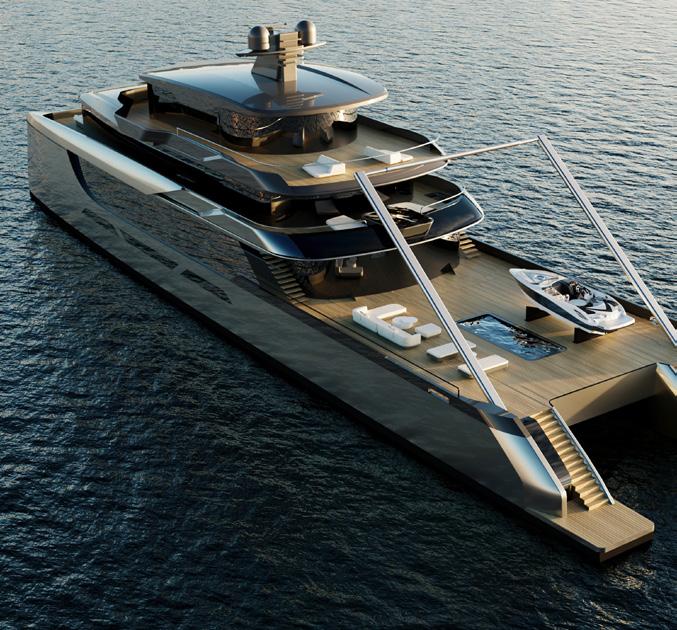
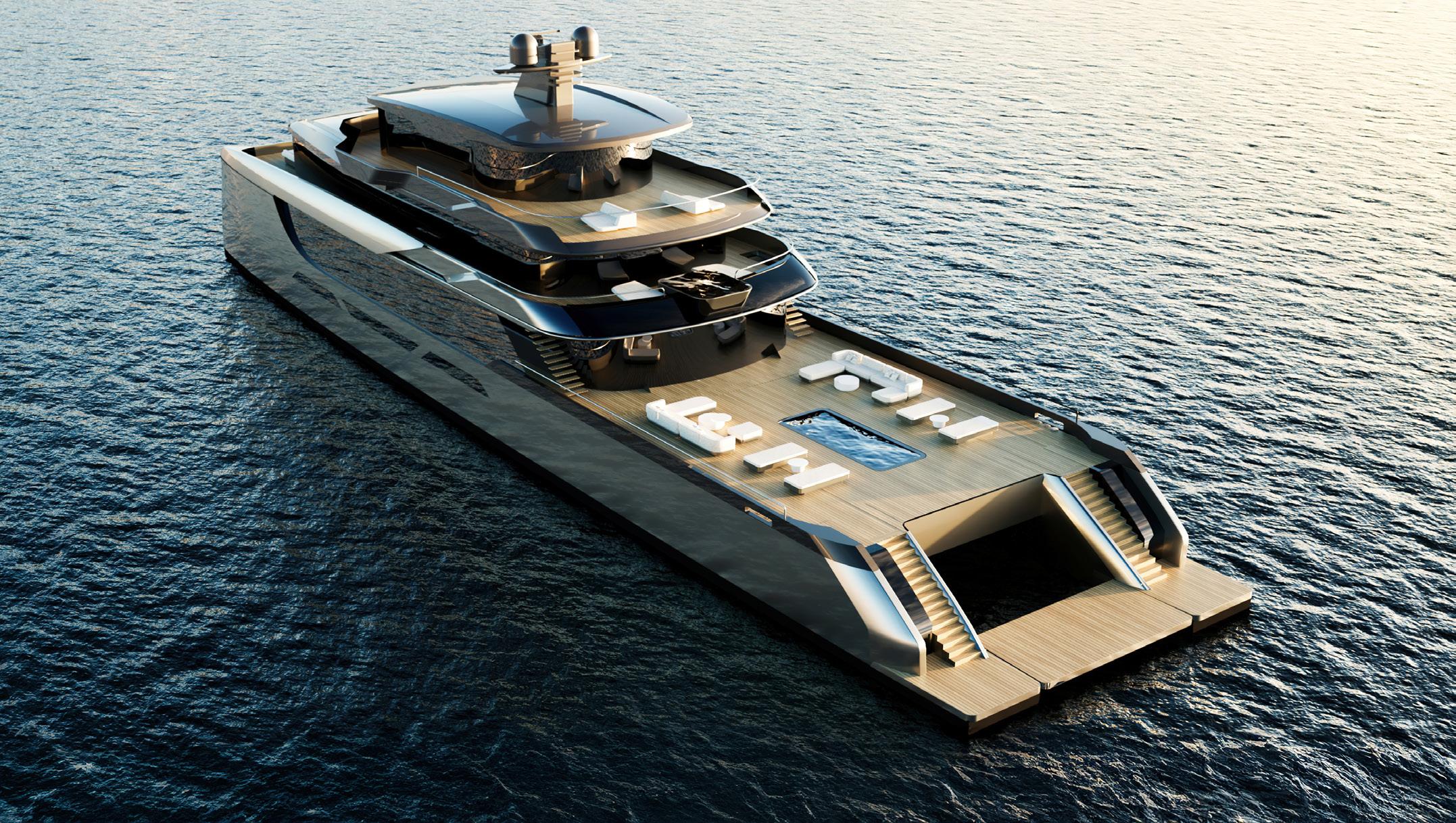
Sunreef Yachts has once again pushed the boundaries of superyacht design with the reveal of its most ambitious project yet — the 65M Sunreef Explorer. At 65 metres long and boasting a remarkable 1,800 GT, this flagship concept stands as the largest luxury catamaran ever conceived, marrying opulent living with true expedition capabilities.
Aimed at owners who crave both indulgence and discovery, the 65M Explorer balances lavish amenities with engineering designed for longrange voyages. She offers seven double guest cabins, two pools, expansive lounges, and a beach club that transforms seamlessly into a waterside gallery with fold-down platforms, a gym, and toy storage. With accommodation for 22 crew, service is elevated to the highest standards, ensuring every adventure is accompanied by unrivalled comfort.
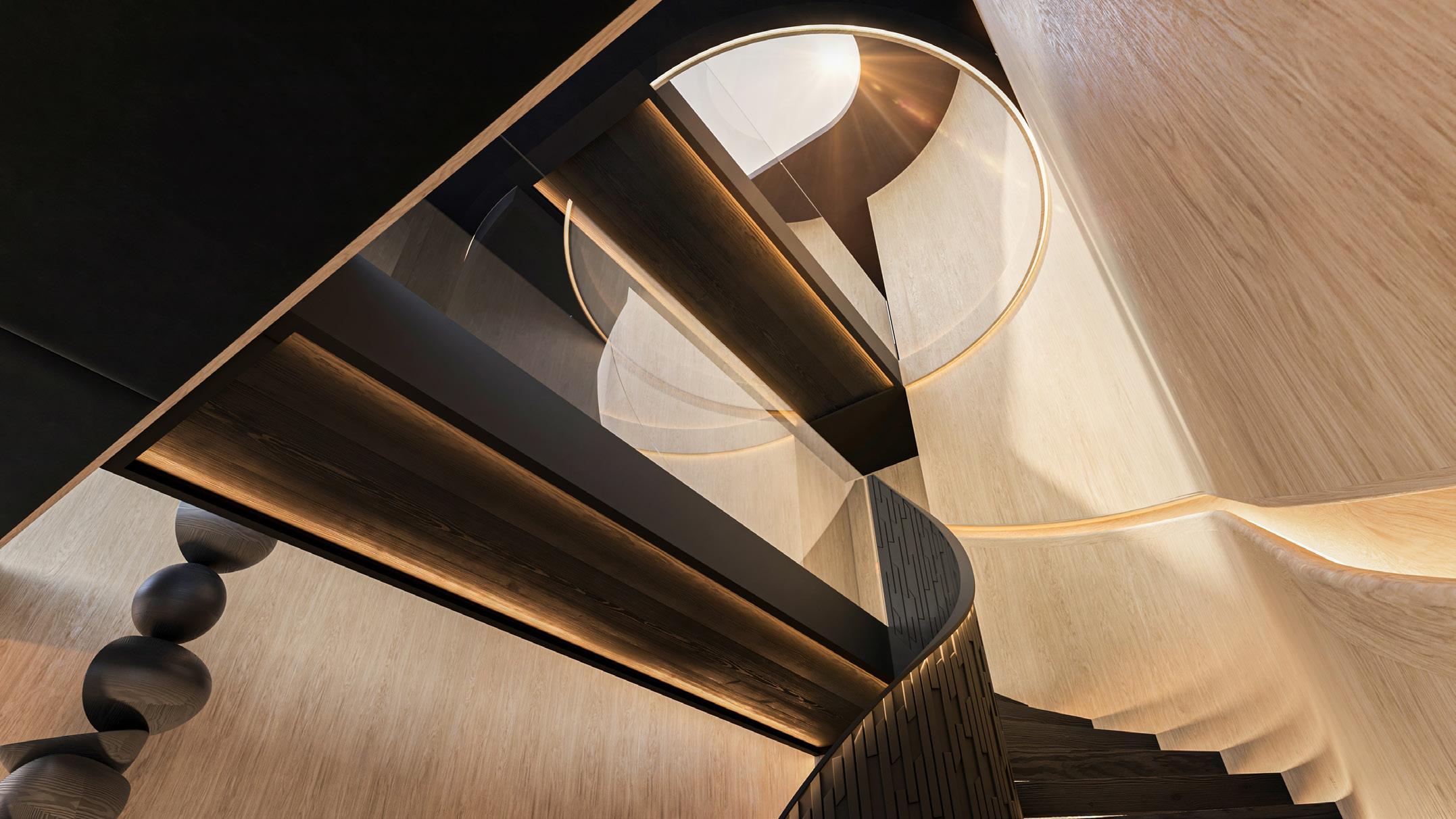
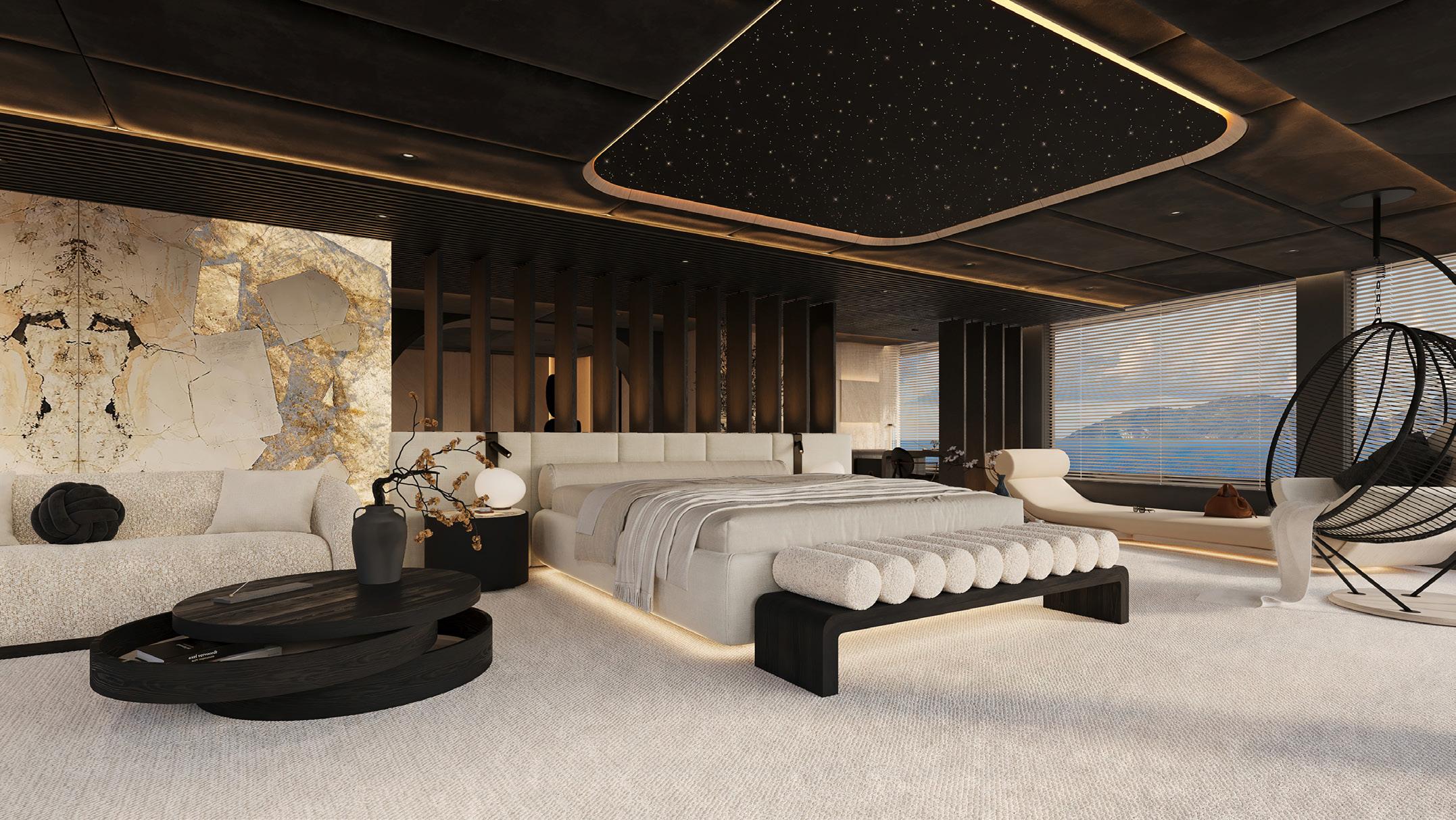
The crown jewel of the yacht is the owner’s suite, perched on the upper deck with panoramic floor-to-ceiling windows. A private foredeck lounge, walkin wardrobe, his-and-hers bathrooms, and even a two-person bathtub add to the sense of exclusivity. Two VIP suites and four additional guest cabins extend this refined luxury to family and guests. Social life aboard flourishes with both formal and informal dining areas, a moon-shaped bridge deck bar, panoramic lounges, and extensive sun terraces — all designed to create the perfect backdrop for entertaining or unwinding at sea.
True to its explorer spirit, the aft beach club is an architectural marvel. Steps lead down from the pool area to yacht skirts, which can merge into a vast platform right at the water’s edge. The space can accommodate a 7-metre tender, multiple jet skis, or be transformed into a beachside lounge. Adventure is further enhanced with a retractable A-frame crane for handling tenders, submersibles, or even a 45ft chase boat. Cruising speeds of 14 knots and a top speed of 18 knots ensure effortless journeys across the globe.
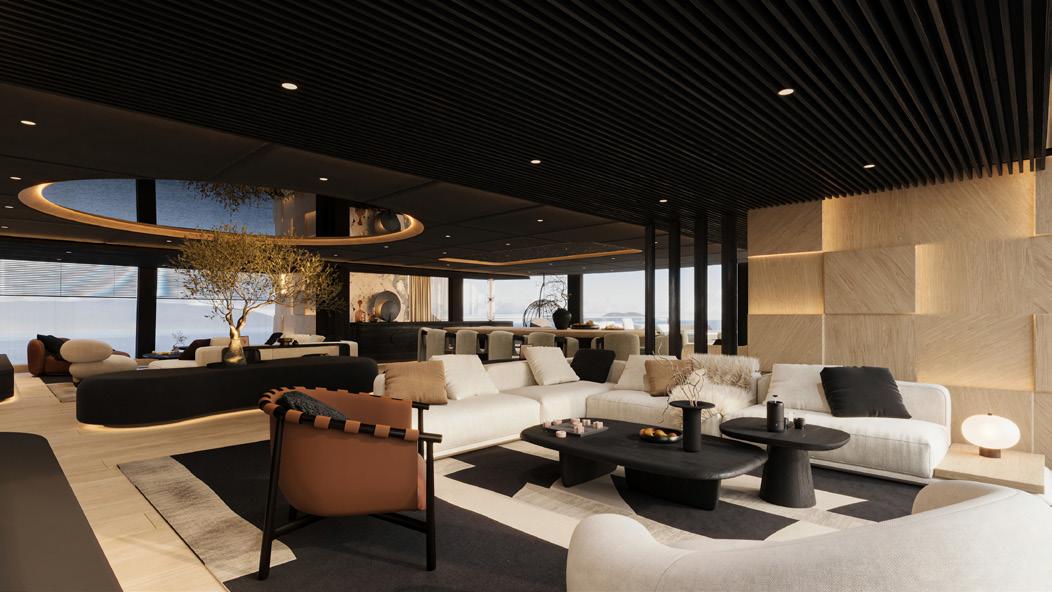
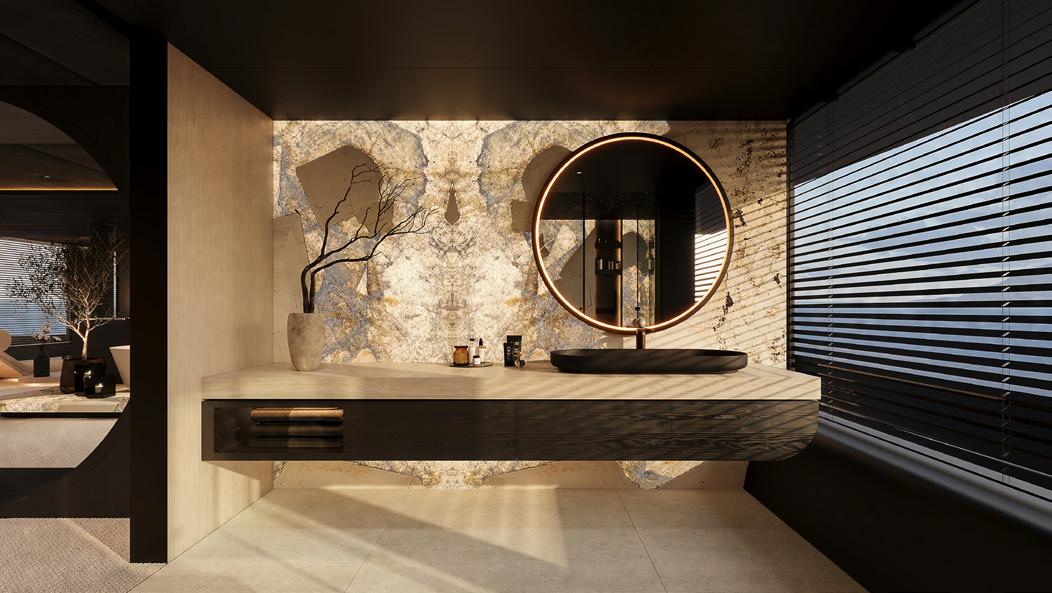
Design-wise, Sunreef has successfully translated the DNA of its celebrated smaller models onto a much grander scale. Massive reverse bows, darkened glass, and elegant curves give the yacht its commanding presence, while below deck, efficiency and autonomy underline its explorer credentials.
The 65M Sunreef Explorer doesn’t just embody luxury—it sets a new standard for catamarans in the superyacht sector, where indulgence and adventure sail hand in hand.
By Shereen Shabnam International Writer
Flying with Turkish Airlines is more than a journey. It is a curated experience where meticulous attention to detail begins long before takeoff and lingers well after landing. Known globally as one of the most celebrated airlines, it has become synonymous with service excellence, cultural warmth, and understated luxury. I look for every opportunity to fly via Istanbul and my recent trip to Malta via this vibrant city was no different. The airport itself is a haven for retail therapy and the airline truly connects you to the rest of the world seamlessly.
From the moment travelers arrive at the airport, Turkish Airlines sets a
refined tone. Check-in is smooth and efficient, guided by attentive staff who go above and beyond to ensure every detail is handled with care. Business Class passengers enjoy priority services and fast-track security, ensuring a seamless transition from ground to air.
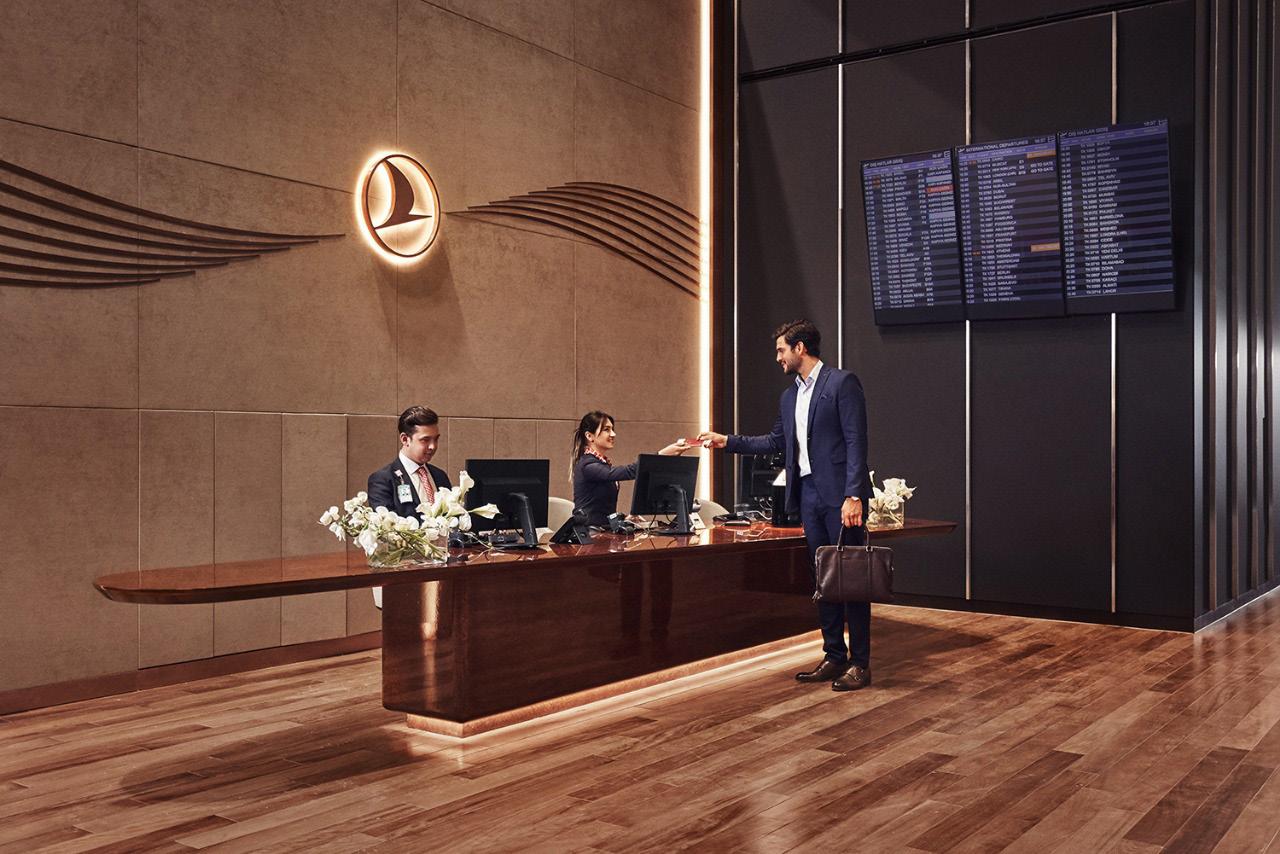
The crown jewel of the pre-flight experience, however, lies within Istanbul Airport: the Turkish Airlines Business Class Lounge. Consistently ranked among the best airline lounges in the world, it is a destination in itself. Spanning an expansive space with modern architecture infused with Turkish cultural touches, the lounge offers private suites, relaxation zones, showers, and even art exhibitions.
Dining becomes an indulgence here, with live cooking stations serving authentic Turkish delicacies alongside international cuisine, complemented by exotic teas and artisanal coffees.
It is a space that effortlessly blends luxury with comfort, setting the gold standard for global airline lounges.
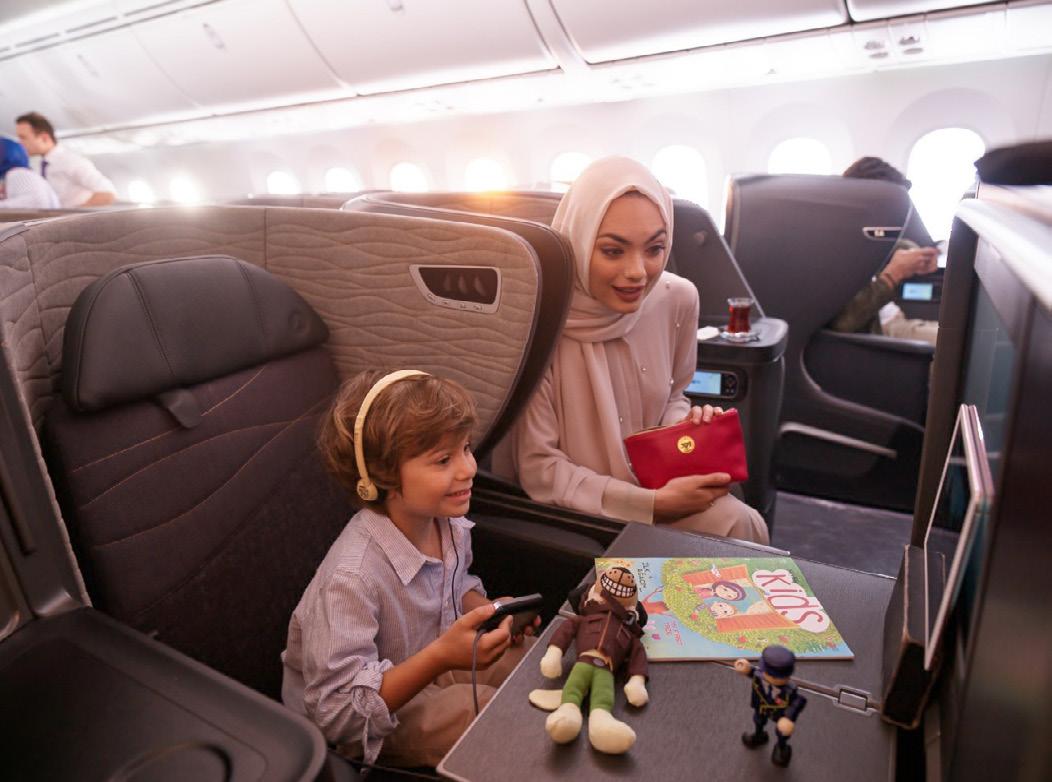
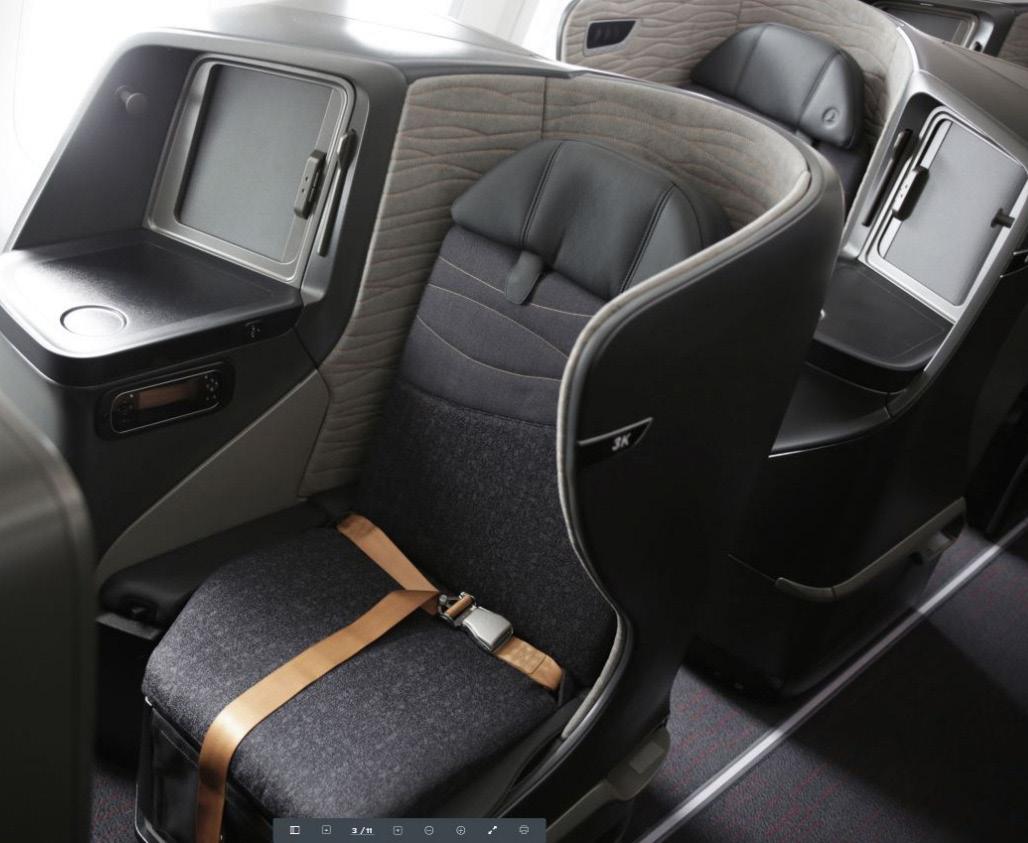
Once on board, Turkish Airlines’ commitment to passenger comfort continues with cabins designed to feel both intimate and spacious. Business Class travelers recline in fully flat seats with ample privacy, while even Economy passengers enjoy generous legroom compared to industry standards.
Service is where the airline truly shines. Crew members, known for their warmth and professionalism, deliver hospitality that feels both polished and personal. Menus curated by Flying Chefs transform in-flight dining into a gourmet journey, showcasing Turkish flavors alongside global favorites. Paired with an extensive selection of fine wines and refreshments, meals in the sky reflect the airline’s dedication to excellence.
What distinguishes Turkish Airlines is the balance it strikes between global luxury and local authenticity. From a seamless ground experience to exceptional in-flight service, every touchpoint is designed to create a sense of ease and indulgence. For frequent flyers and first-time travelers alike, the airline continues to set benchmarks, not only with its world-renowned lounge but also with its staff’s genuine hospitality that leaves a lasting impression.
As Turkish Airlines expands its network across more destinations than any other airline worldwide, it carries with it the essence of Turkish culture: a commitment to generosity, artistry, and connection. For discerning travelers seeking more than transportation, it offers a journey wrapped in elegance, care, and unforgettable service.
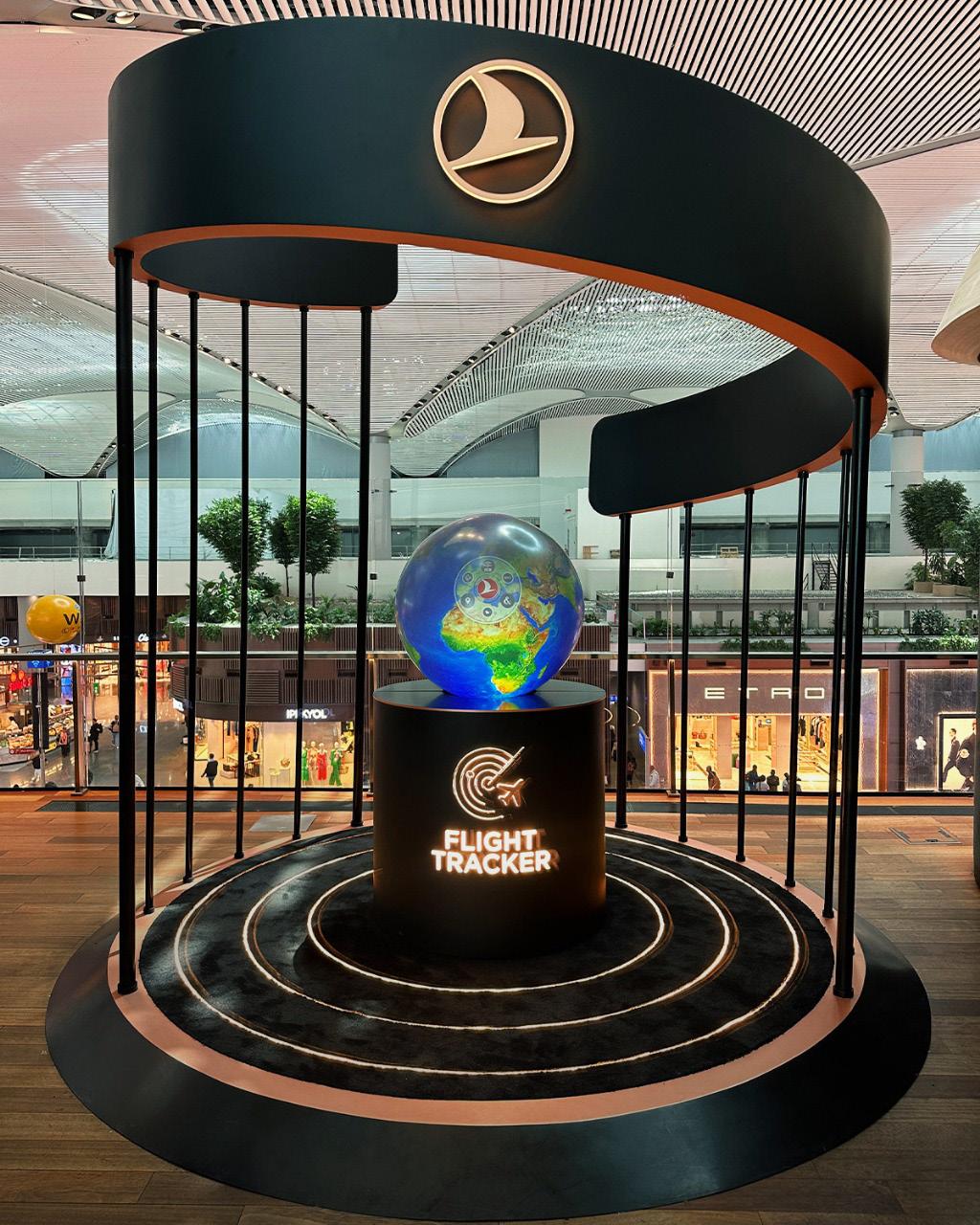
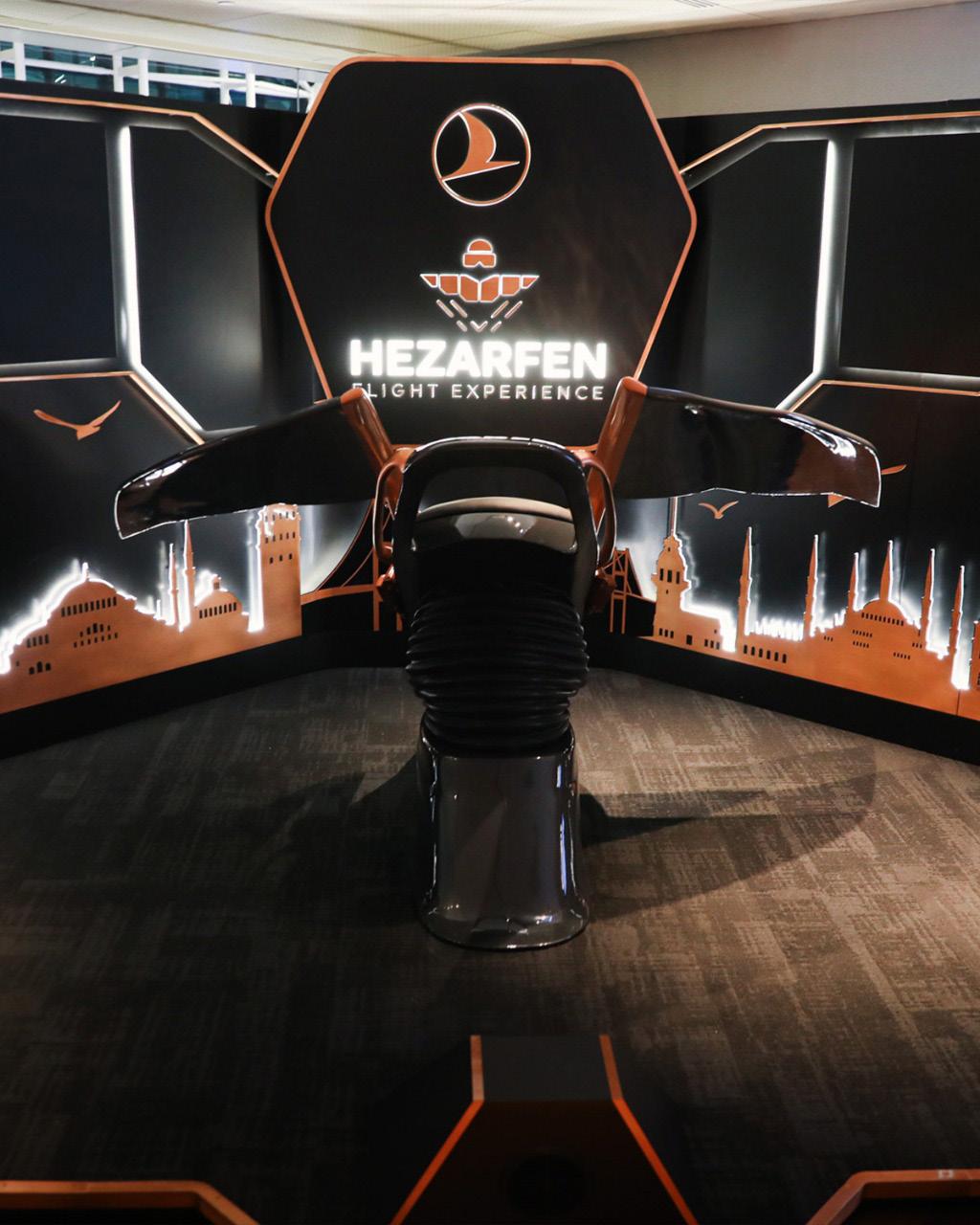
The Turkish Airlines Business Class Lounge at Istanbul Airport is repeatedly voted the world’s best, with gourmet dining, private suites, art displays, and wellness spaces that transform pre and post flight time into a luxury retreat.

By Shereen Shabnam International Writer
Hong Kong has always fascinated me with its contrasts, where glass skyscrapers rise beside incense-filled temples, where bustling markets live harmoniously alongside Michelin-starred restaurants, and where luxury is not just about indulgence but about experiences that enrich every sense.
During a business trip where my actual destination was Macau via Hong Kong, I discovered a city that isn’t just a destination, but a curated lifestyle. For all its high-octane pace, Hong Kong also embraces wellness. After my long flight, I indulged in a holistic spa ritual blending traditional Chinese medicine with modern therapies.
My highlight was a sunrise Tai Chi session along the Tsim Sha Tsui promenade, watching the city awaken to the soft rhythm of movement and breath. I was so taken by it, my next purchase was a book on Tai Chi which still remains on my bookshelf. These moments of balance became the perfect counterpoint to the exhilarating rush of the city.
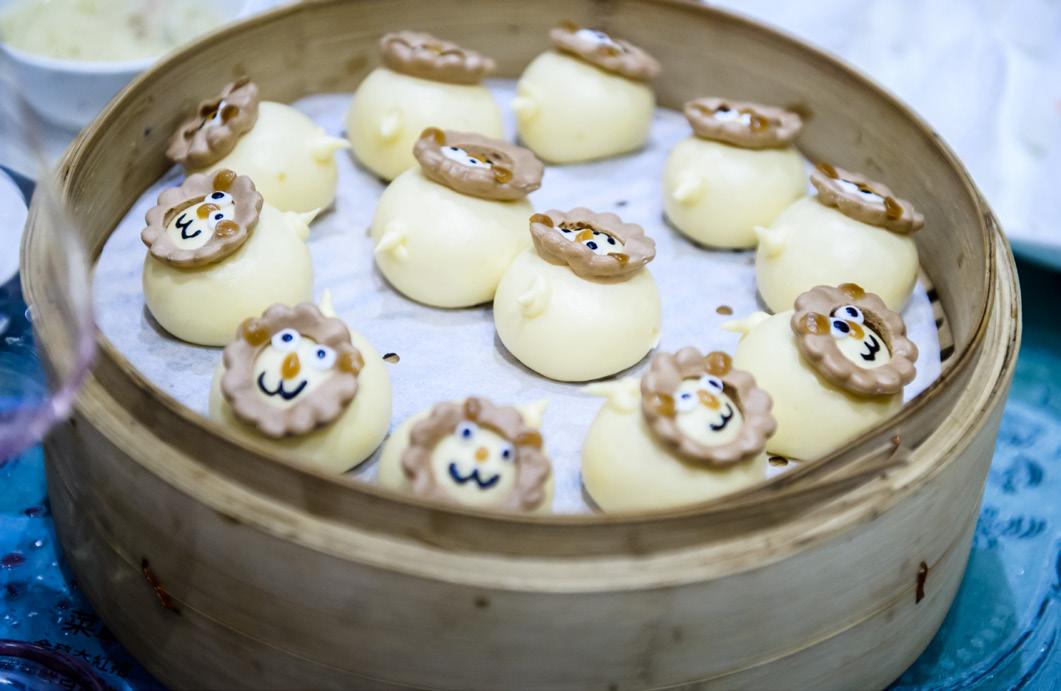
Hong Kong is every food lover’s dream. I dined at every opportunity trying dim sum and savoured innovative Cantonese flavours around the city – as I was eating halal, I ate meat only in one place but still had a wholesome food experience based on seafood and vegetables. The charm also lay in street-level discoveries with bowls of steaming wonton noodles in tucked-away eateries, egg tarts still warm from
the oven, and aromatic teas poured with reverence in traditional tea houses. Dining here is theatre, indulgence, and culture served on every plate.
I also immersed myself in the city’s creative pulse at M+ Museum, a contemporary art destination that rivals any in the world, and at Tai Kwun, a former colonial police compound reimagined into a hub of galleries, design shops, and cafes. Between exhibitions, I explored the boutiques of Central and Causeway Bay, where international luxury houses blend seamlessly with Hong Kong’s own design talent. Shopping here isn’t just retail – it is discovery, expression, and an adventure in style.
No trip to Hong Kong would be complete without a taste of its

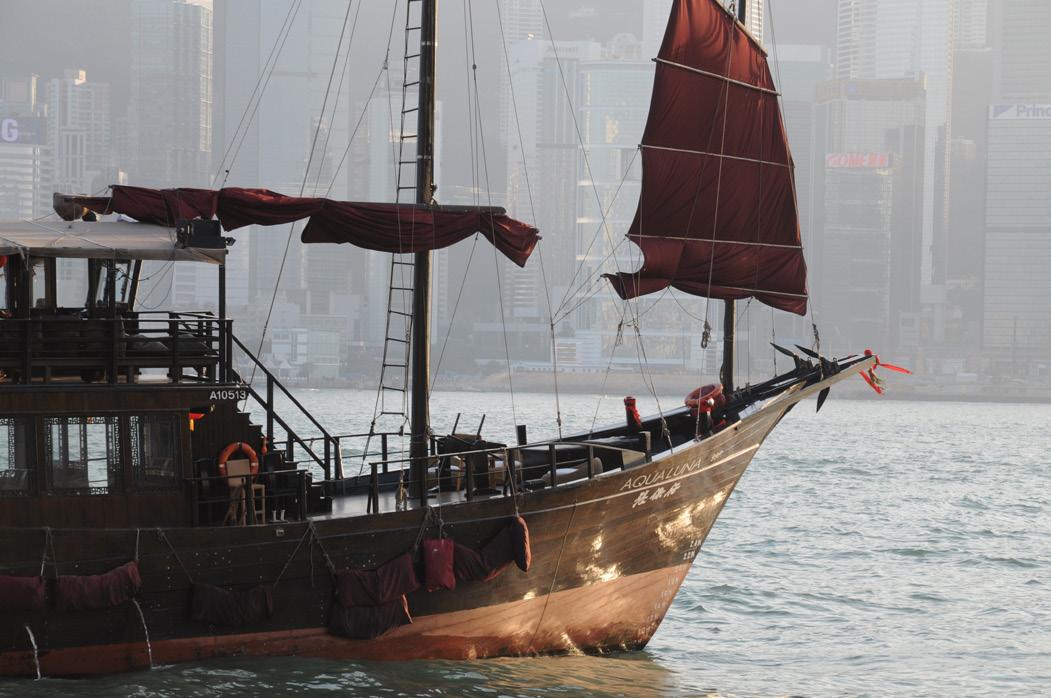
outdoors. After taking in breathtaking views of the South China Sea, I found myself on a luxury junk boat cruising Victoria Harbour at sunset as the city’s skyline lit up in a spectacle of light and colour.
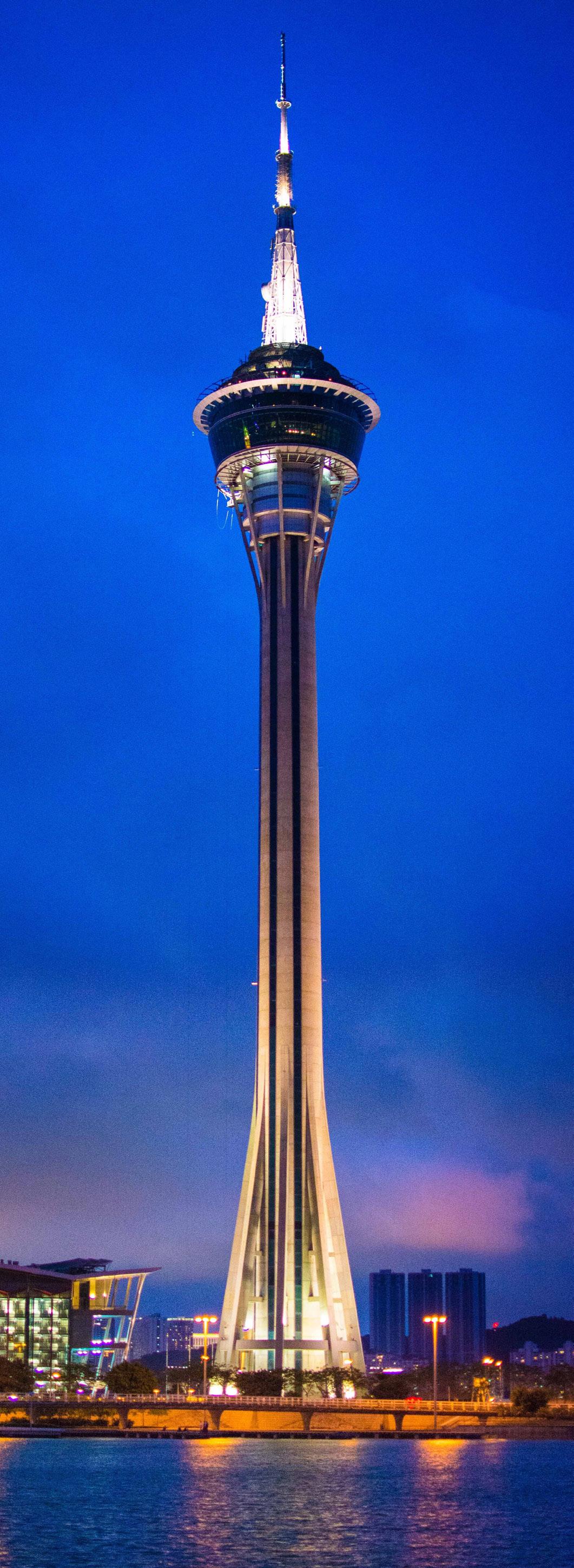
One of the highlights of my trip was a short ferry ride to Macau, often dubbed the “Las Vegas of the East.” I had some work there which only took a day and then I set exploring. Beyond its glitzy casinos, I discovered the charm of its Portuguese heritage, pastel-coloured colonial squares, cobblestone streets, and UNESCO-listed sites. Between a decadent Portuguese lunch and a stroll along Senado Square, Macau proved to be the perfect complement to my Hong Kong journey.
As the ferry crossed back from Macau and the skyline of Hong Kong reappeared in the distance, I knew this was not just a trip, it was a journey of indulgence, discovery, and connection with a city that feels alive in every sense.
Hong Kong surprised me in how it balanced so many worlds with luxury and simplicity, tradition and modernity plus serenity and adventure. From wellness mornings to culinary nights, from art-filled afternoons to spontaneous escapes, the city unfolded like a symphony, each note adding depth to my experience.
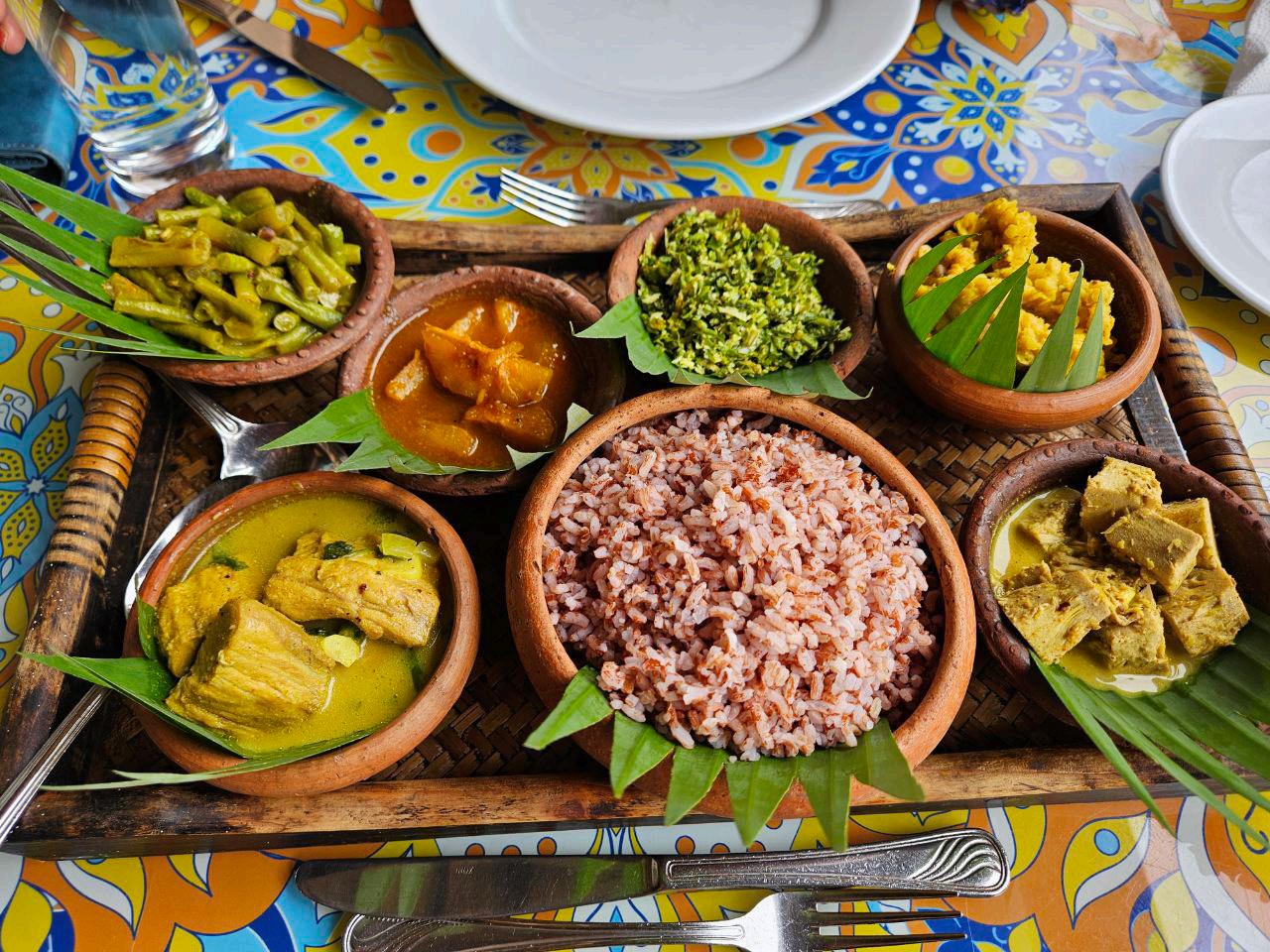
By Shereen Shabnam International Writer
In today’s world of constant hustle, wellness often takes a back seat. My recent trip to Siddhalepa Ayurveda in Sri Lanka, however, offered a truly rejuvenating escape. Flying from Dubai with SriLankan Airlines, I embarked on a wellness journey that surpassed the typical holiday experience, immersing me in the healing traditions of Ayurveda. At Siddhalepa, the indigenous Hela Wedakama medical system offered not just relaxation, but authentic healing, grounded in centuries-old practices.
My introduction to Siddhalepa began in Dubai, where the brand launched Hela Wedakama to the UAE market. This Sri Lankan treatment system has quickly gained interest among wellness seekers in the region, praised for its powerful benefits and natural approach to
holistic healthcare. Seeing its promise firsthand inspired me to explore the full experience in its country of origin.
This growing wellness wave is part of a broader initiative. The Market Development Facility (MDF), an Australian Governmentfunded program, has partnered with Siddhalepa Ayurveda to bolster Sri Lanka’s wellness tourism sector. Their collaboration focuses on expanding into the Gulf Cooperation Council (GCC) markets and promoting Hela Wedakama to health-conscious travelers in the UAE, Saudi Arabia, Qatar, and Oman.
The initiative also includes SriLankan Airlines as a key partner, supporting Siddhalepa-hosted familiarization visits for GCC travel trade and media professionals. These immersive experiences showcase authentic Ayurveda treatments, aiming to enhance awareness and positioning of Sri Lanka as a premier wellness destination. It’s a strategic move that not only uplifts tourism but promotes sustainable economic development through the global expansion of traditional healing practices.
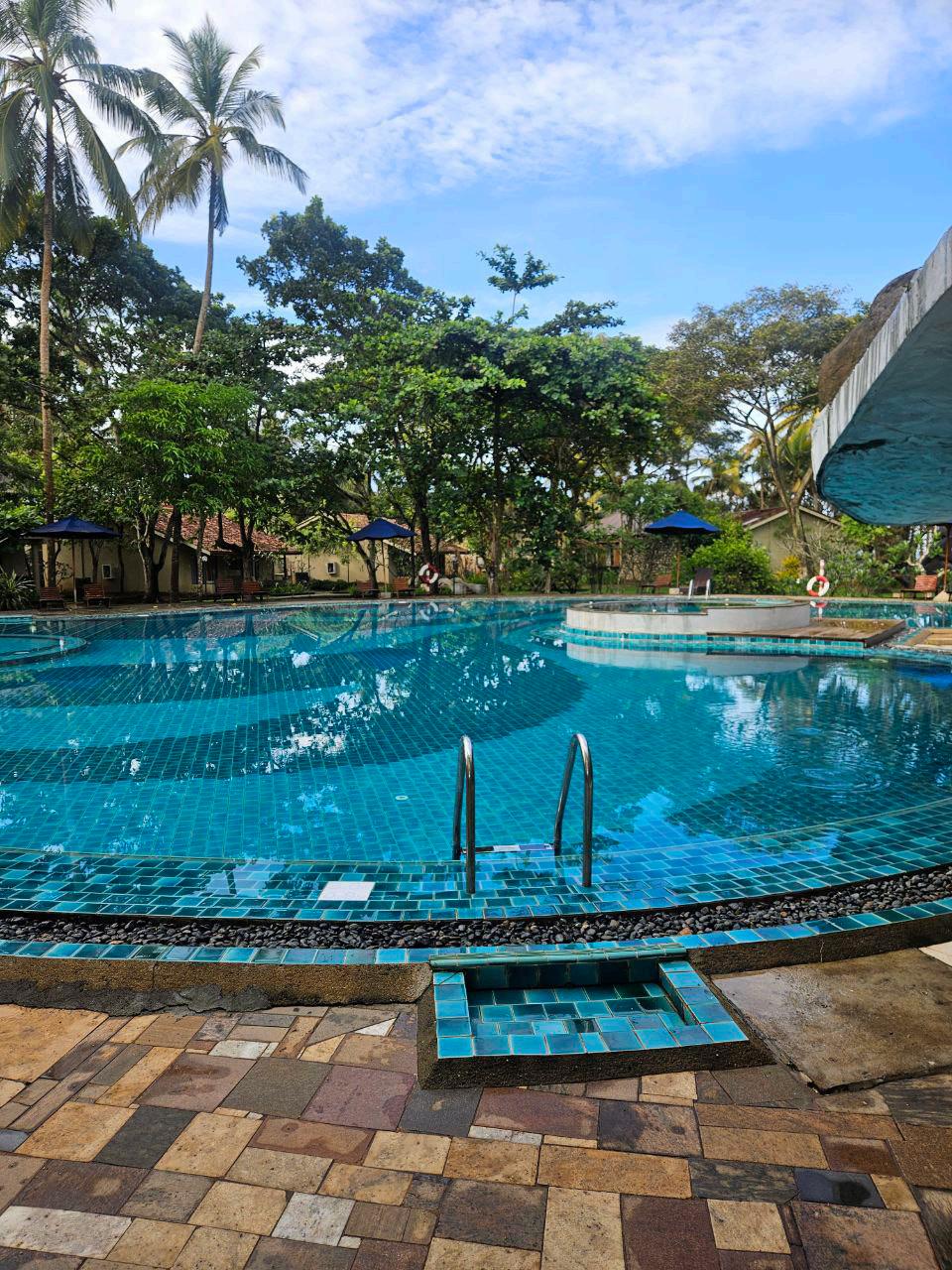
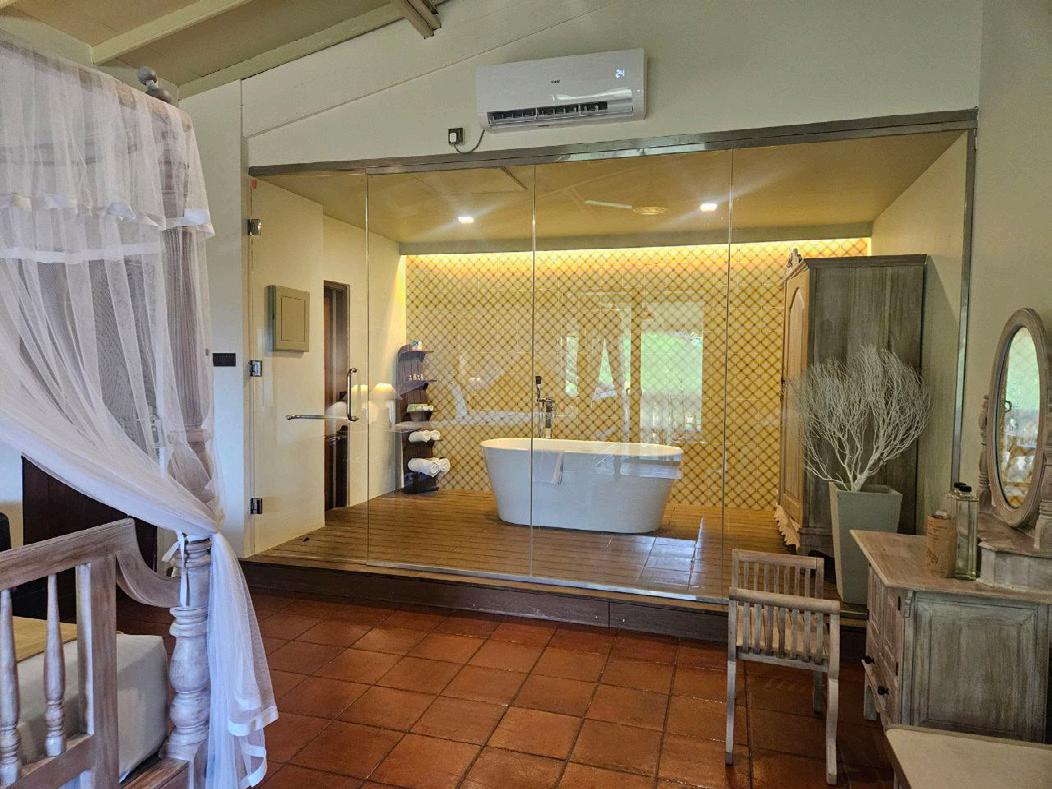
Upon arrival at Siddhalepa, my wellness journey began with a consultation by an experienced Ayurvedic doctor who took a holistic view of my physical and mental health. A personalized treatment plan was crafted for me, focusing on detoxification, rejuvenation, and restoring internal balance. Each day started with yoga and ended with meditation — grounding rituals that complemented the healing therapies.
A highlight of my stay was the range of Ayurvedic treatments tailored to address both physical tension and emotional fatigue. Herbal oil massages using warm, herb-infused oils eased muscle stiffness and boosted circulation. Steam therapies and herbal baths added another sensory layer to the experience, helping the body release toxins while soothing the mind.
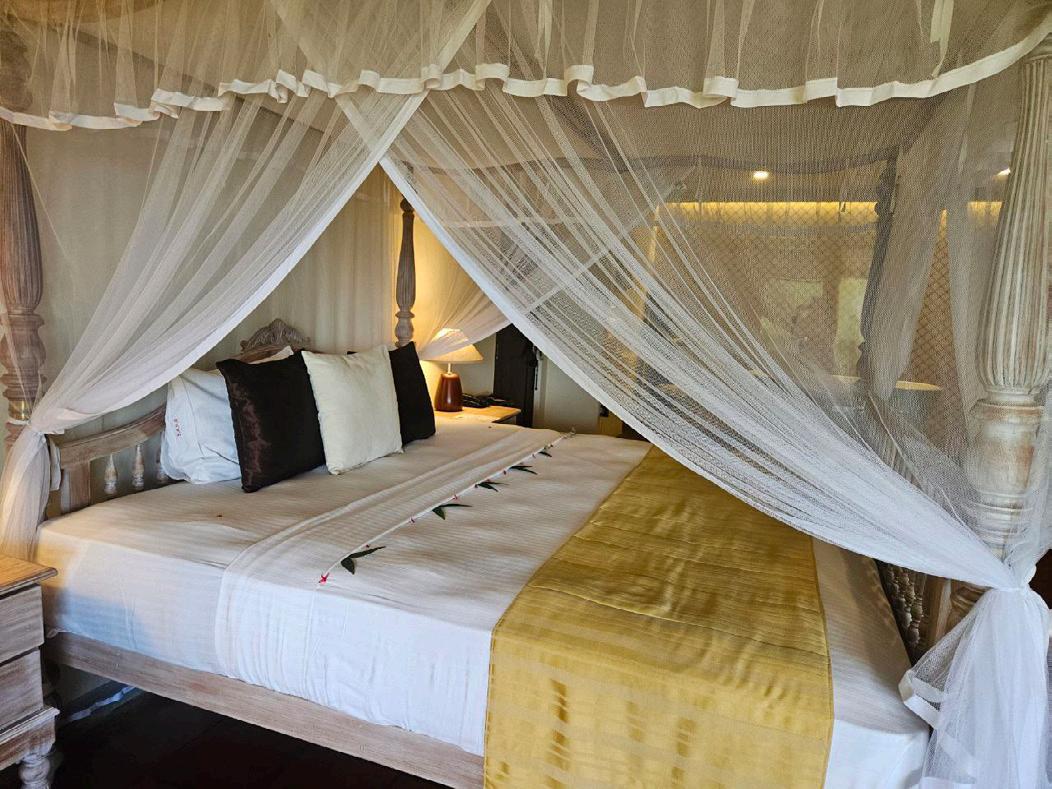
Oil therapies — where medicated oils are gently poured over stress points — along with herbal compresses, provided profound relief for deeper aches and tension. These sessions left me feeling not only lighter physically but more aligned and peaceful within.
To continue the wellness journey at home, Siddhalepa offers a curated range of Ayurvedic products, including herbal oils, elixirs, and balms. Rooted in the same Hela Wedakama traditions, these products help maintain wellness long after the retreat, offering a daily dose of balance and healing.
Siddhalepa’s wellness philosophy extends far beyond spa rituals. Their Ayurveda hospital is dedicated to long-term, chronic care. With treatment plans tailored to individual needs and overseen by seasoned Ayurvedic doctors, the facility provides comprehensive, compassionate care rooted in Sri Lanka’s ancient healing wisdom.
Reaching Siddhalepa Ayurveda is seamless, thanks to the exceptional service of SriLankan Airlines, which offers daily direct flights from Dubai to Colombo. From the moment I checked in, I experienced the airline’s signature Sri Lankan warmth — from courteous ground staff to an attentive in-flight crew, thoughtful amenities, and a taste of local hospitality in the air.
With a short and comfortable journey, SriLankan Airlines makes it easier than ever to leave the bustle of urban life behind and arrive refreshed, ready to begin a transformative wellness journey in the heart of Sri Lanka’s lush landscapes.
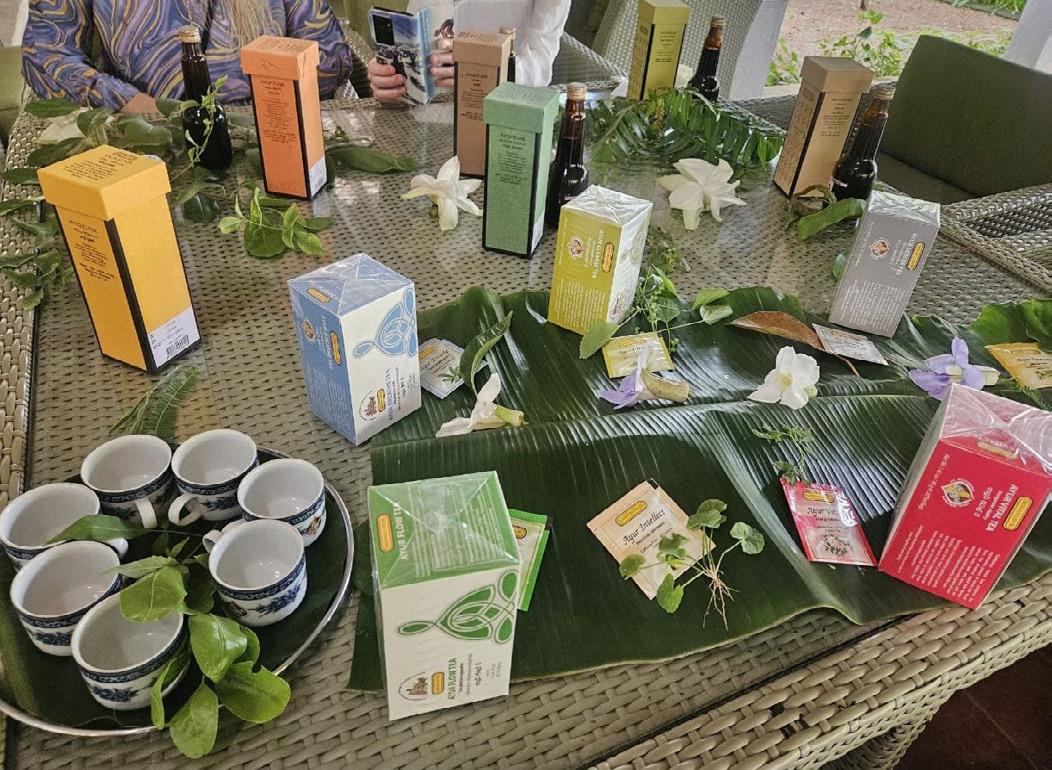
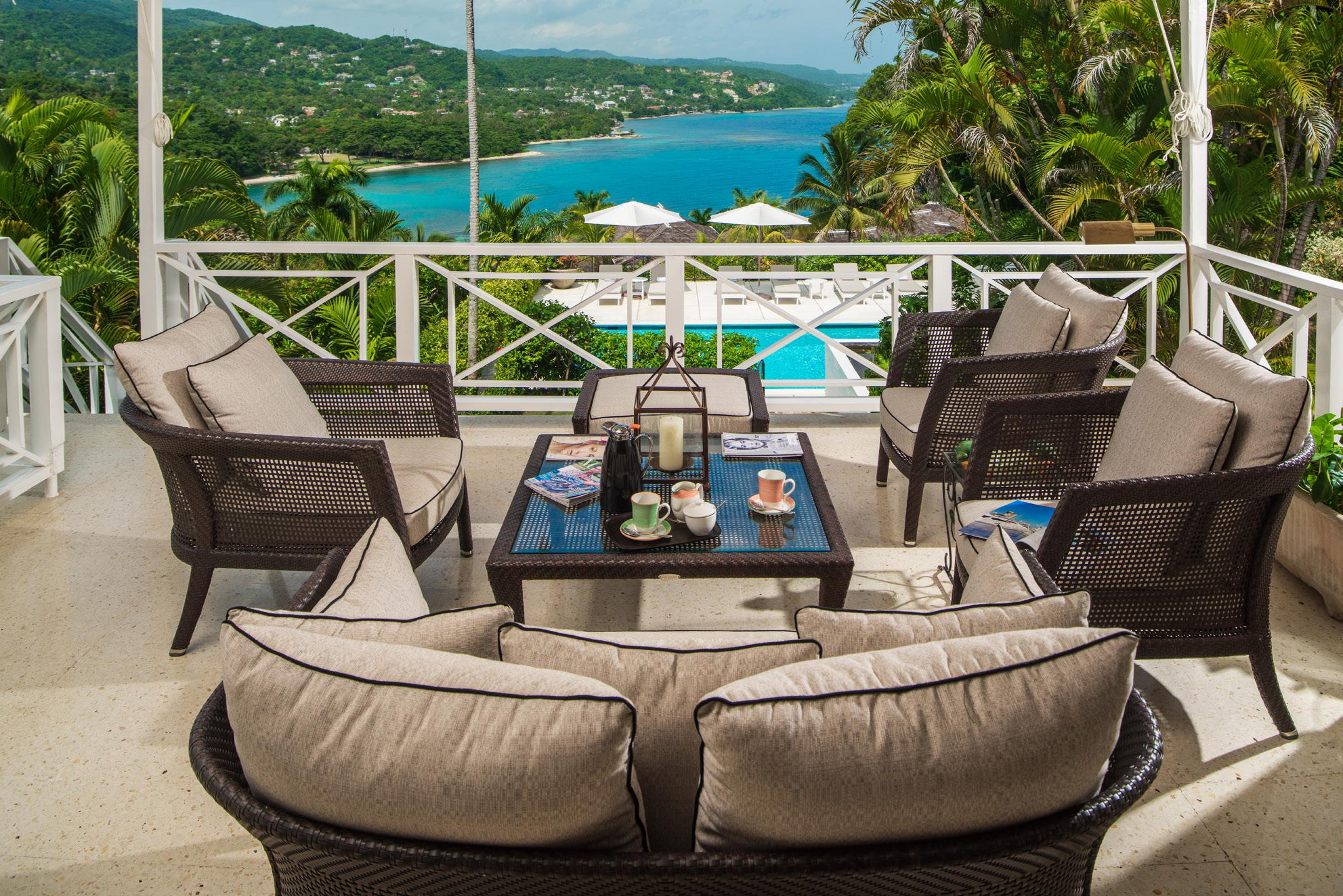
By Shereen Shabnam International Writer
Nestled on a lush tropical hillside overlooking the azure waters of Montego Bay, Round Hill Hotel and Villas epitomizes luxury and timeless elegance. This iconic Jamaican resort, a favorite among discerning travelers, offers a blend of privacy, exquisite beauty and impeccable service.
I landed in Montego Bay after a long flight and this hotel was a perfect retreat for tranquility in a lavish setting.The accommodation at Round Hill is designed to cater to the most refined tastes. Guests can choose from a variety of luxurious rooms and villas, each offering spectacular views of the Caribbean Sea.
The villas, designed by renowned international designers, feature private pools, expansive living spaces, and lush gardens, providing guests with an exclusive and serene environment. The rooms are
adorned with rich, tropical decor that reflects the vibrant culture of Jamaica, complemented by modern amenities that ensure comfort and convenience.
Dining at Round Hill is an adventure in gastronomy, as the resort prides itself on its exceptional culinary offerings. The Grill at Round Hill, the main restaurant, boasts a menu of international dishes with a Caribbean twist, prepared using the freshest local ingredients.
I requested some local dishes at breakfast and the friendly staff obliged by preparing for me a plate with the most popular Jamaican dishes like ackee with cooked bananas, saltfish, Callaloo green vegetables, Johnny cakes (fried dough bread) and bammy flatbread. I also enjoyed fresh juices and premium Jamaican coffee.
For a more intimate dining experience, there is the Seaside Terrace, which offers stunning ocean views and a selection of seafood freshly caught from the surrounding waters. The resort also hosts themed dinner nights that provide a festive atmosphere and a taste of local music and culture. The hotel encourages relaxation and rejuvenation with its world-class spa, located in a beautifully restored 18th-century plantation house.
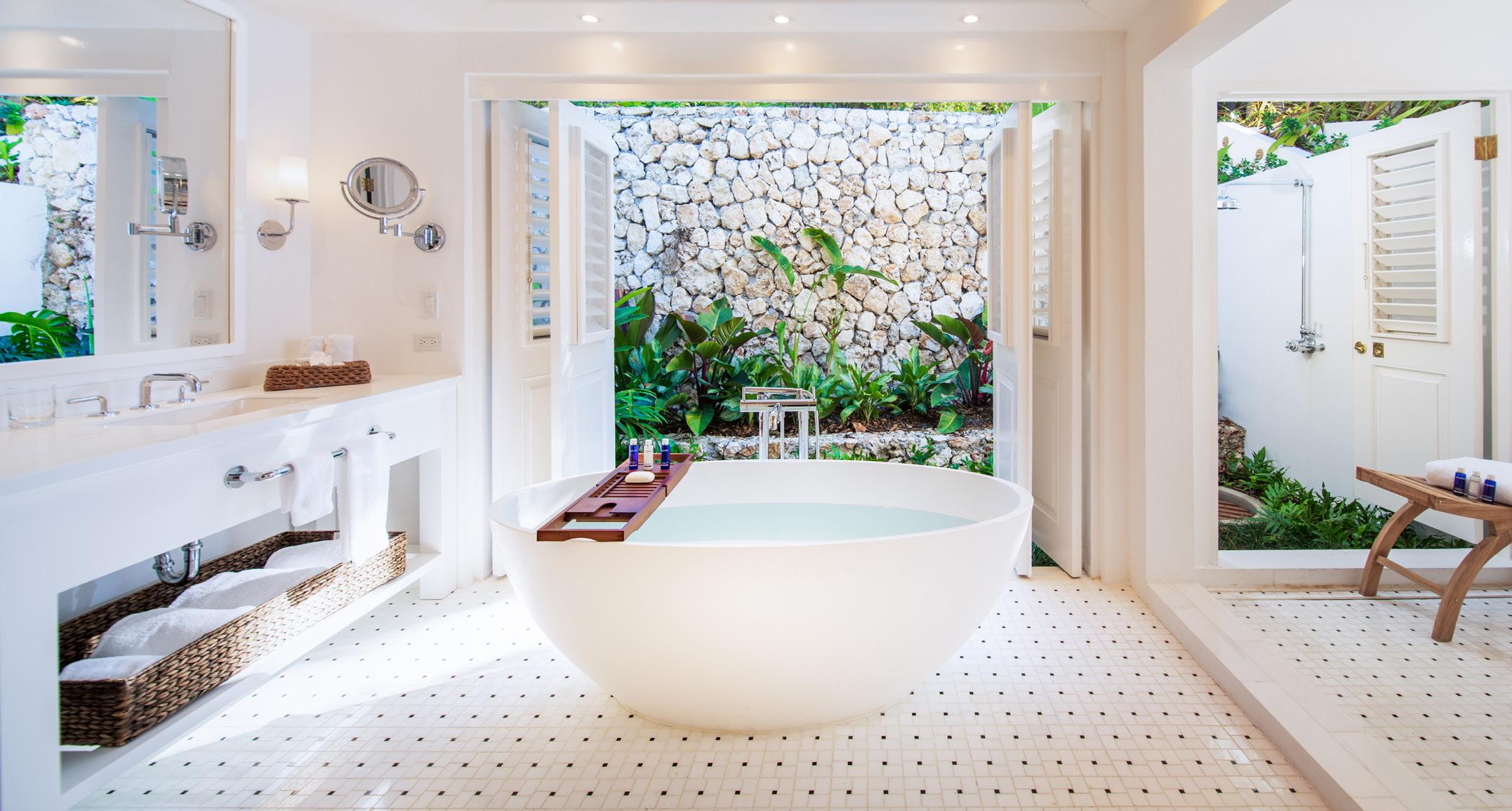
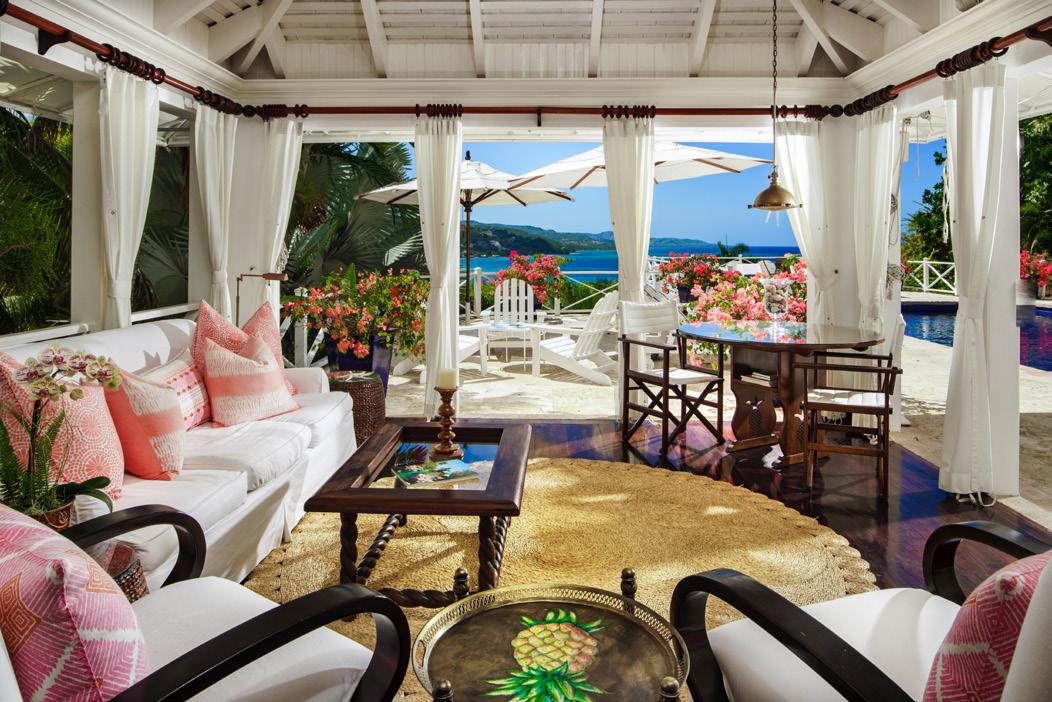
The spa offers a range of treatments that incorporate native ingredients and techniques to revitalize the body and spirit. For those looking to stay active, the resort features tennis courts, fitness facilities, and water sports like snorkeling and kayaking. The infinity pool, overlooking the sea, is a peaceful oasis perfect for unwinding and soaking up the Jamaican sun.
The staff at Round Hill are known for their warm hospitality and attentive service, contributing to the overall experience of luxury and comfort. I was treated with a smile which made my stay memorable. The hotel can also arrange organized cultural tours, visit local craft markets, or experience the vibrant nightlife of nearby Montego Bay. The resort itself often hosts live reggae nights and cultural performances, giving guests a taste of Jamaica's world-renowned music and dance.
With its stunning natural beauty, exceptional amenities, and a commitment to providing the ultimate in luxury and service, Round Hill Hotel and Villas remains a jewel in the Caribbean. It's not just a destination but an experience — one that captivates the heart and soothes the soul, making moments unforgettable.
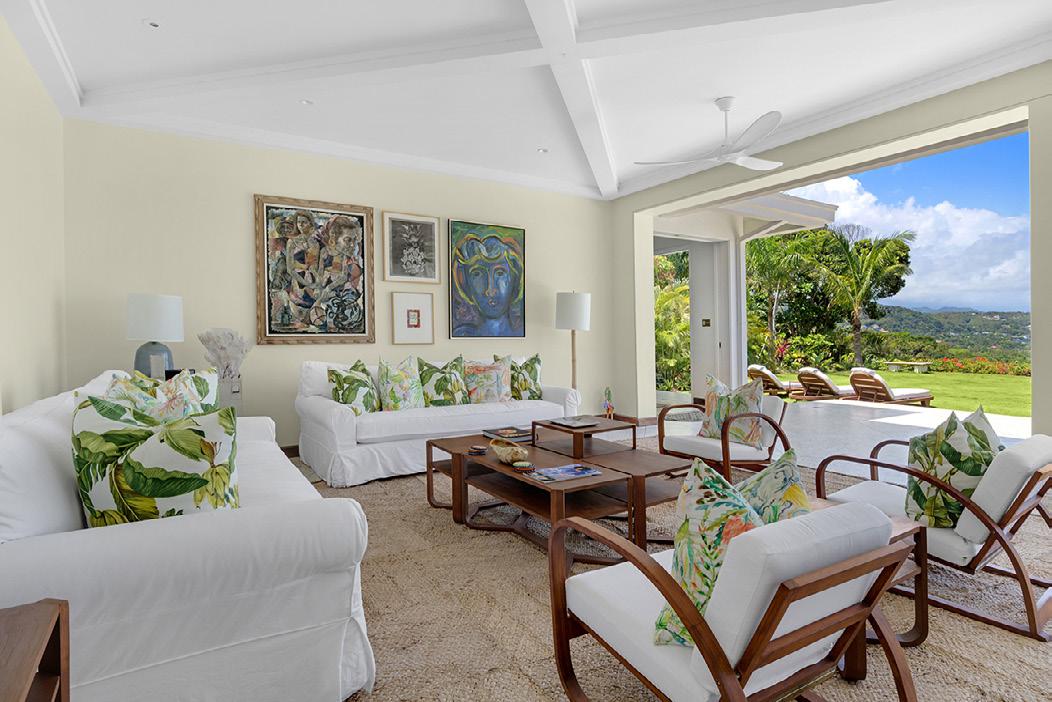
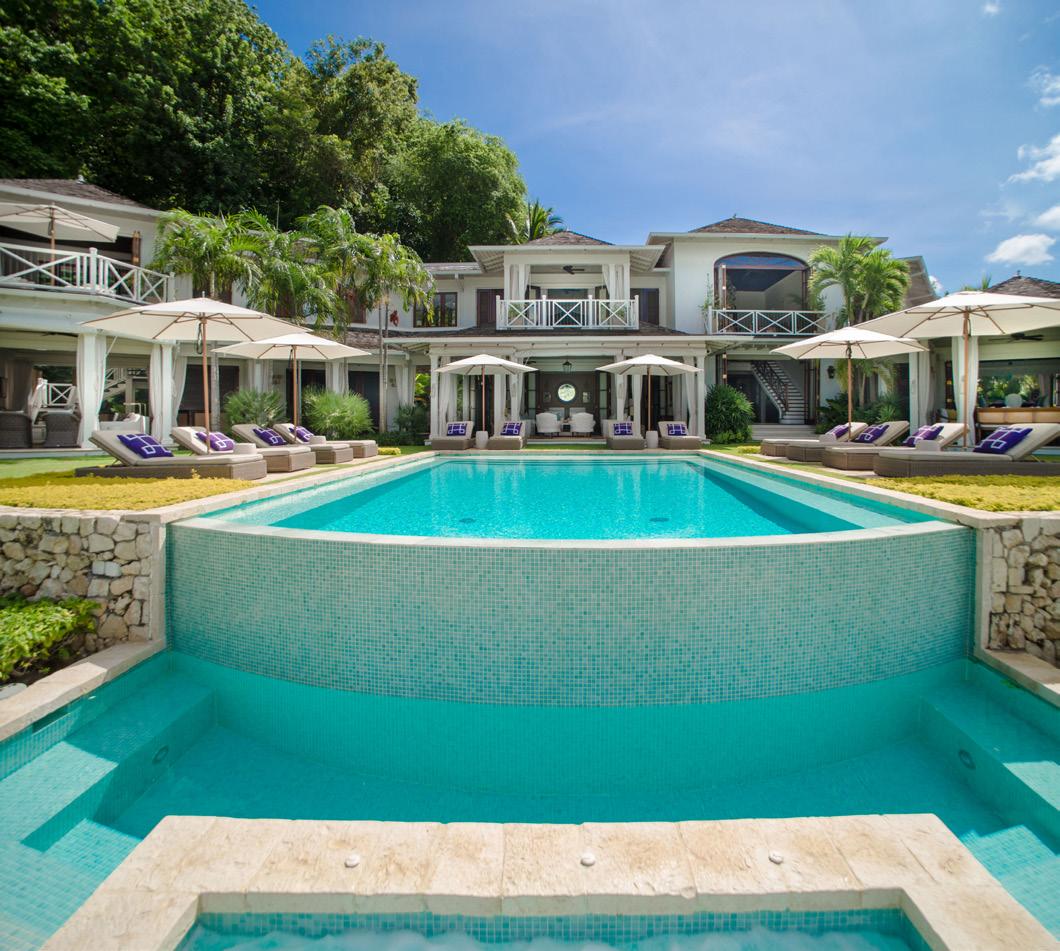
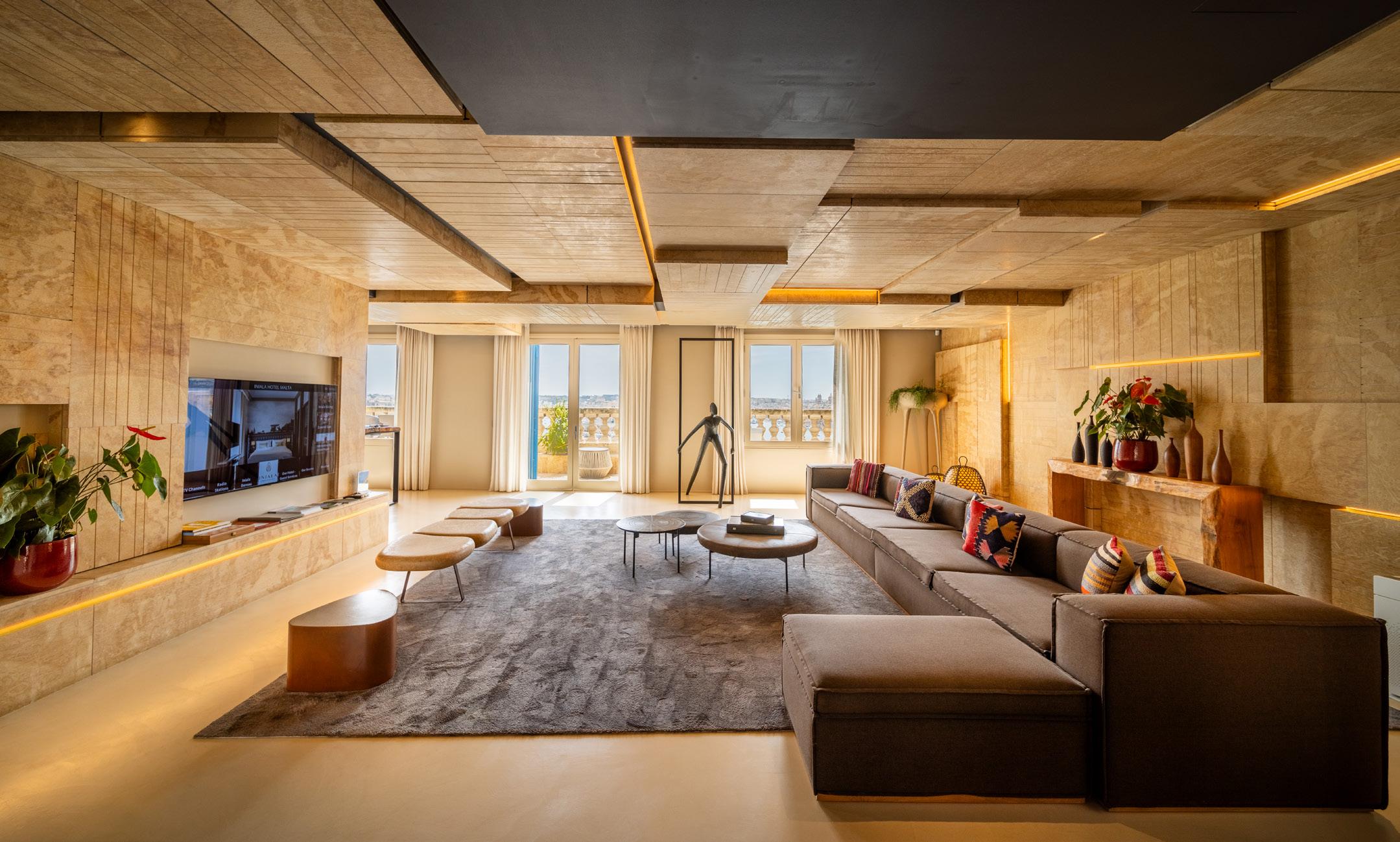
By Shereen Shabnam International Writer
Perched gracefully on St. Barbara Bastion, overlooking the breathtaking UNESCO-listed Grand Harbour, Iniala Harbour House & Residences is a living gallery of art, design, and Maltese heritage. As the only Forbes Five-Star property on the island, Iniala Harbour House has redefined the standard of luxury hospitality in Malta, offering a seamless blend of history, innovation, and warmth.
Spread across four lovingly restored townhouses and a collection of ancient vaults, the hotel is a testament to creative collaboration. Four acclaimed design studios have left their mark on the property. The result is an eclectic masterpiece where baroque grandeur, contemporary minimalism, and bespoke artistry come together in harmony. Every corridor, every suite, every Maltese balcony feels like an invitation to discover something unique.
During my stay, I had the privilege of experiencing two very different yet equally enchanting facets of Iniala. My first night was spent at The Hideaway, a boutique guesthouse designed by DAAA Haus. With just four exclusive suites spread across five levels, The Hideaway feels intimate and private, yet brimming with character.
From the carefully curated furnishings to the breathtaking sea views framed by historic Maltese balconies, it strikes a perfect balance between romance and contemporary design. For the following two nights, I moved to the Presidential Residence, a striking creation by A-Cero that crowns the Grand Residences. This suite is a marvel of modern geometry, echoing Valletta’s baroque streetscapes while framing uninterrupted panoramas of the Grand Harbour.
Spacious, sculptural, and flooded with light, it felt like inhabiting a private art gallery suspended above history. Every detail, from the bespoke furniture to the bold architectural forms — made the stay feel both grand and personal, an experience to be remembered long after leaving.
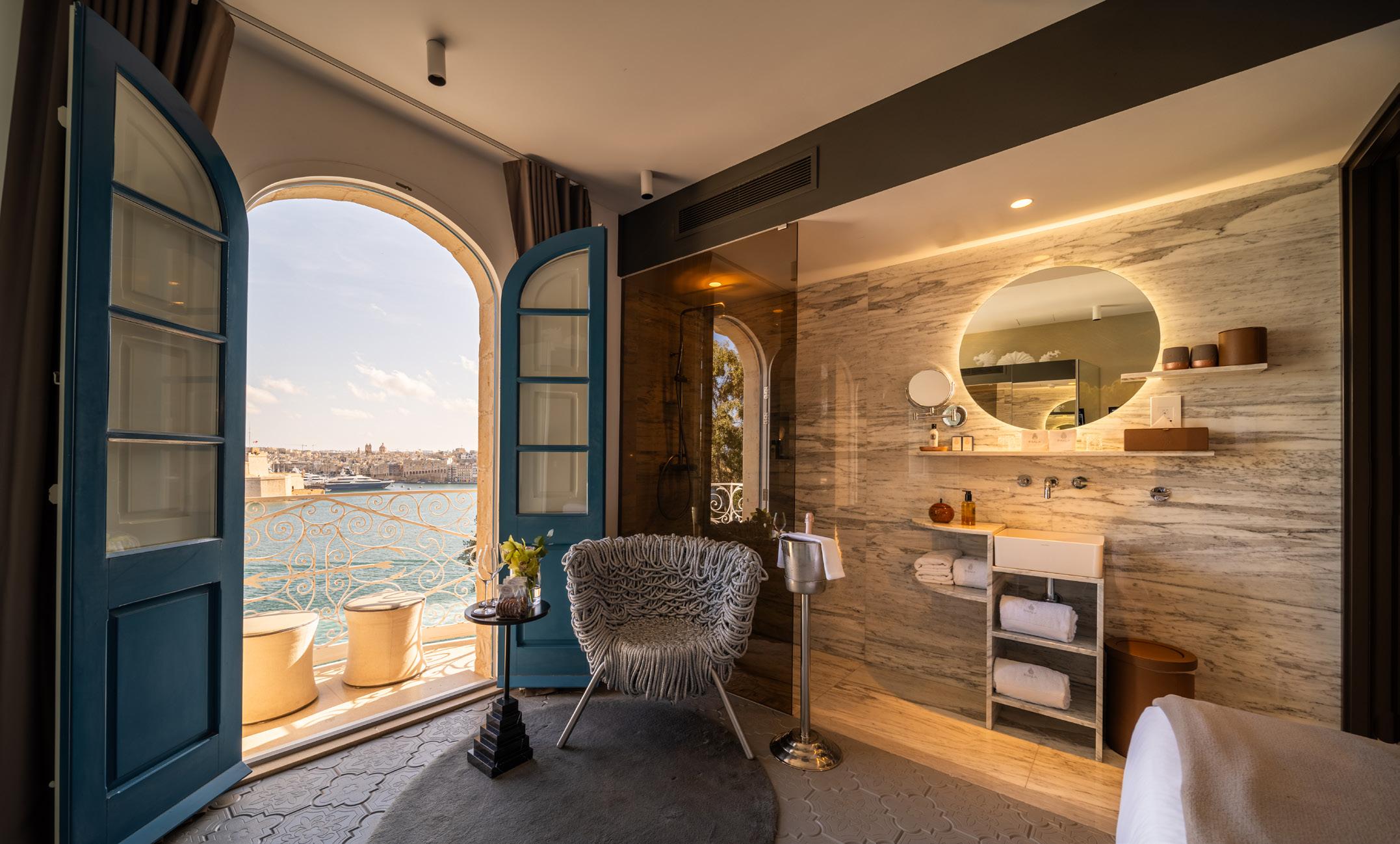
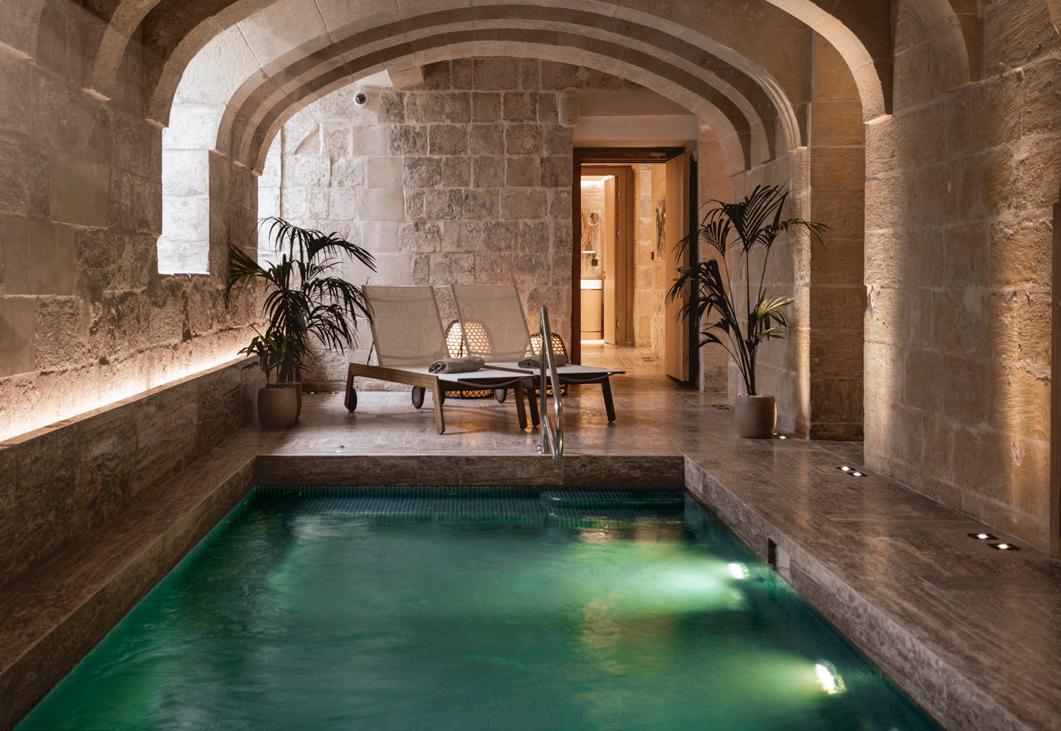
Iniala’s philosophy of luxury extends well beyond its architecture. Each morning began with an à la carte breakfast that was nothing short of divine on beautifully crafted plates showcasing seasonal ingredients, prepared with care and precision. The artistry of the breakfast service echoed the same attention to detail found in the hotel’s Michelinstarred dining.
The highlight of my stay, however, was Iniala's Spa, Essensi, a sanctuary tucked within the ancient stone vaults. Here, history and serenity coexist in a cocoon of calm. My massage was deeply restorative, leaving me utterly relaxed, as though the weight of the city above had melted away into the cool stillness of the stone. The spa’s indoor pool and wellness facilities added to the sense of timeless luxury, an oasis within the bastion walls.
Of course, one cannot speak of Iniala without mentioning ION Harbour by Simon Rogan, Malta’s only two Michelin-starred restaurant, perched on the rooftop. Though the restaurant merits its own dedicated story, its presence completes Iniala’s offering, positioning the hotel as not just a place to stay, but as a destination in itself for culinary connoisseurs.
One of Iniala’s greatest luxuries is its location. Just steps away lies the vibrant capital of Valletta, with its narrow limestone streets, bustling cafés, historic landmarks, and lively cultural scene.
Whether exploring the nearby Upper Barrakka Gardens, embarking on a private harbour cruise, or simply strolling through the city’s heritagerich lanes, guests of Iniala find themselves effortlessly connected to the heartbeat of Malta.
What truly distinguishes Iniala, however, is its people. From the moment I arrived, the staff exuded warmth, attentiveness, and genuine care. Their service was more than impeccable; it was personal.
Whether arranging experiences, anticipating needs, or simply sharing knowledge of Malta’s history and culture, they elevated the stay into something deeply memorable.
Staying at Iniala Harbour House gave me the best of Malta. Its history, its art, its gastronomy, and its innate sense of hospitality. While tucked into the intimate romance of The Hideaway and when immersed in the grandeur of the Presidential Penthouse Residence, the experience I had in both rooms was one of timeless elegance and both drew me into its story of heritage, creativity, and unforgettable luxury.

Seif shares her thoughts on how quiet luxury is not a trend but a return to focus on holistic wellbeing
I've spent the better part of two decades watching Dubai transform from an ambitious vision to global reality. Yet in all those years of witnessing record-breaking towers and boundarypushing developments, nothing has fascinated me more than the quiet revolution happening in luxury real estate today. We are witnessing a fundamental shift in what the world's wealthiest individuals truly value, and it's not what you might expect.
The numbers tell a compelling story. Dubai saw 435 home sales above $10 million in 2024, the most of any city globally, with a further 111 in Q1 2025 alone. But here's what the statistics don't reveal: over 90% of these high-end buyers now name wellness features as their top priorities. Clean air, abundant natural light, access to nature and premium wellness amenities, all these have become the new markers of true luxury.
We are seeing a paradigm shift among the ultra-high net worth second home buyers: the idea that true wealth is no longer about owning the biggest or the tallest. It's about how well you live.
This transformation shift reflects something profound about human psychology. After years of pursuing external symbols of success, today's global elite are seeking spaces that nurture their inner wellbeing. They're investing not just in properties, but in sanctuaries that support longevity, mental clarity, and emotional balance.
At The Heart of Europe, our six-island development on Dubai's World Islands, we've been quietly nurturing this philosophy, before wellness became the industry buzzword. When we embarked on this journey, we asked ourselves a fundamental question: what if luxury spaces could actively improve how we live rather than just reflecting what we own?
The quest to create meaningful experiential living has led us down fascinating paths. We brought in world-renowned Feng Shui Master Victor Li Dexiong to guide our architectural and landscaping planning from inception. His expertise in harmonising energy flow with our Western design sensibilities created unique spaces where Eastern wisdom meets Middle Eastern ambition and European sophistication.
But Feng Shui is just one thread in a much larger tapestry. Our tropical forests feature over 60 exotic plant species, arranged not merely for foliage but for their positive impact on residents and guests. We've created micro-jungles that evoke tropical tranquillity while maintaining eco-friendly pesticide and fungicide-free environments.
The psychology behind this approach is fascinating. Research consistently shows that access to nature reduces cortisol levels, improves cognitive function, and enhances overall life satisfaction.
The most discerning buyers today aren't asking about square footage or ceiling height, they value privacy, exclusivity, air quality, natural light patterns, and how the space will make them feel.
This shift has profound implications for our industry. The UAE's hospitality market is projected to reach $27.34 billion in 2025, growing to over $35 billion by 2030, with wellness and luxury as the primary drivers. Dubai alone is set to contribute over $53 billion to GDP from travel, tourism, and hospitality sectors in 2025, making it the world's most profitable tourism city per visitor.
We have responded to this evolution with developments like our recently launched Hygge Hotel, focusing to create a “Journey of Happiness” centred around the Danish concept of finding deep contentment in life's simple pleasures. Every design decision, from light-filled communal spaces to nature-inspired therapies, was made with guest wellbeing at its core. It's not simply following a trend; it's setting a precedent for how luxury hospitality can prioritise holistic wellbeing.
The technical aspects of wellbeing-focused design extend far beyond aesthetics. Our properties feature superior acoustic and heat insulation, solar-powered systems that eliminate environmental stress, and carfree environments that promote tranquillity. We are the first-ever real estate developer to establish a Coral Institute, which is dedicated to growing and rehabilitating marine life in the Arabian Gulf, because true luxury must be sustainable.
In a world of constant connectivity and urban development, people crave spaces that reconnect them with themselves and nature. They're seeking environments that support not just their lifestyle aspirations, but their deepest need for restoration and renewal.
As a woman who has navigated the traditionally male-dominated world of Middle Eastern real estate for decades, I have learned that the most innovative solutions often come from listening, really listening, to what people need rather than what they think they want. Today's luxury buyers are telling us they want to live better, not just bigger.
The future of luxury real estate lies not in outdoing yesterday's grandest structures, but in creating tomorrow's most nurturing environments. At Kleindienst Group, we're not just building properties; we're crafting havens that honour both intentional living, human psychology and environmental stewardship. Because ultimately, the greatest luxury of all is the gift of wellbeing. And spaces that actively cultivate it will define the next chapter of ultra-high-net-worth living.
Parisa Seif is Managing Partner at Kleindienst Group, developers of The Heart of Europe luxury island destination in Dubai.
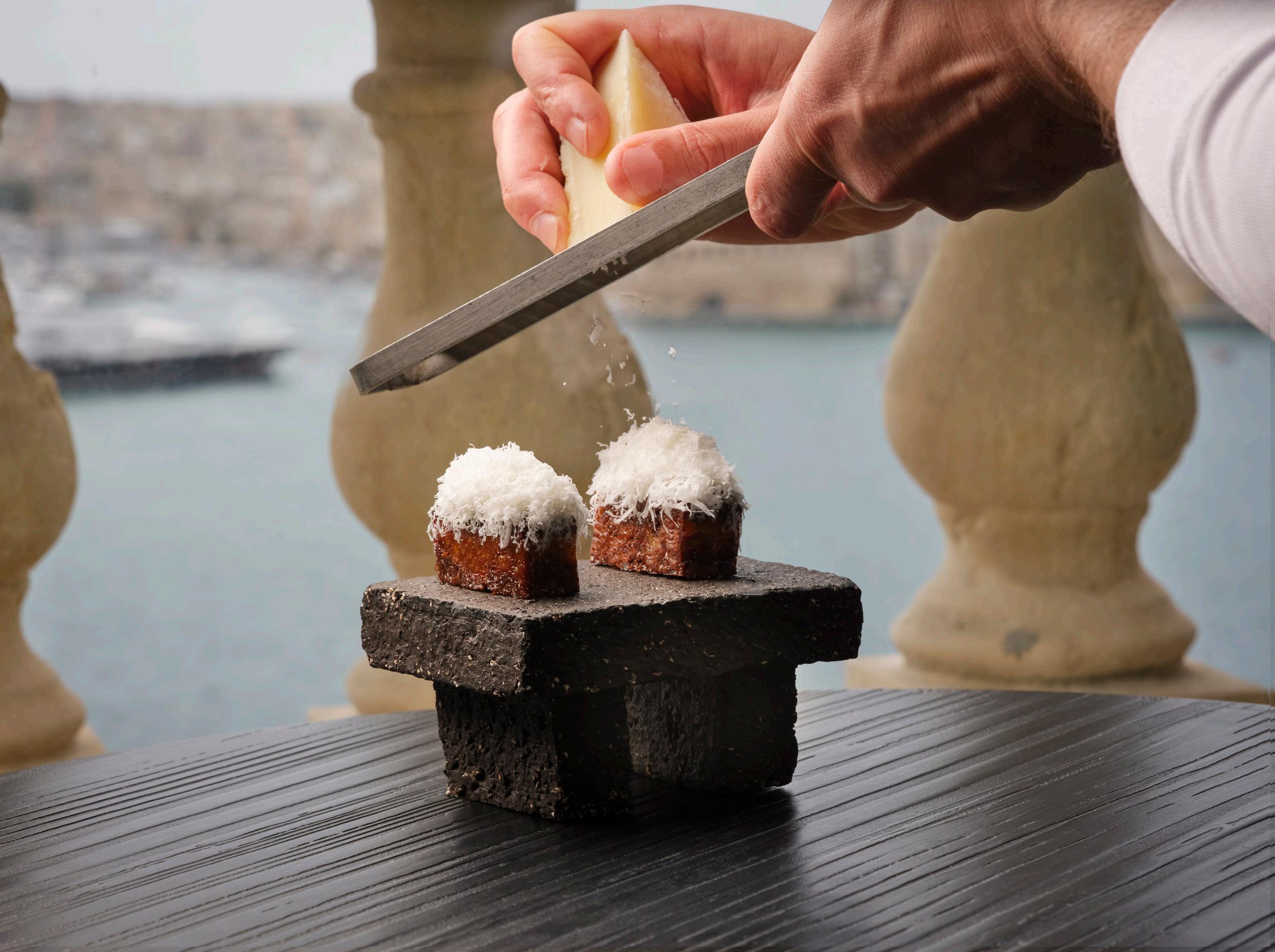
By Shereen Shabnam International Writer
There are dining experiences that delight the senses, and then there are those that linger long after the last bite, unfolding like a story that intertwines heritage, innovation, and vision. ION Harbour by Simon Rogan, perched atop the Iniala Harbour House in Valletta, belongs to the latter.
With its unrivalled views of the UNESCO-listed Grand Harbour, this two-Michelin-starred restaurant is as much about place and provenance as it is about culinary artistry.
The mastermind behind this narrative is Simon Rogan MBE, internationally renowned as a pioneer of the farm-to-table movement and Malta is the latest chapter in his journey, where under the leadership of Head Chef Christian Cali, ION Harbour has carved its own identity while staying faithful to Rogan’s ethos of sustainability and innovation .
From the moment the first course arrived, the evening felt like an ode to Malta’s landscape and seasons. A delicate carrot tartlet layered with
lampuki cured in Gozo salts introduced itself with a whisper of the sea, lifted by grapefruit and finished with the silken touch of whipped rock oysters.
It was a prelude that carried the essence of Malta’s coastline, setting the stage for the 13-course journey ahead. Each plate that followed unfolded as a chapter, weaving together ingredients foraged, farmed, or fished from the island and its surrounding waters.
One of the most memorable courses was a truffle pudding glazed in carob molasses and stout. It was earthy, dark, and indulgent, yet unexpectedly balanced with sweetness. An aerated and salt-baked boltardy beetroot dish was elevated with ember-smoked amberjack and blackberries, its layers of flavour recalling fire and forest, land and sea.
The raw south coast rossi prawn with sea jelly carried a delicate whisper of brine, punctuated by whey and the subtle salt of smoked pike perch roe. Later, a stuffed day boat seabass arrived, paired with courgettes and watercress and brought together by a roasted bone sauce that spoke to the kitchen’s dedication to whole-animal use and depth of flavour.
Desserts carried the same balance of elegance and restraint. A fig leaf mousse with cherry plums and hazelnuts was a revelation, delicate yet complex, an ode to the Mediterranean orchard.
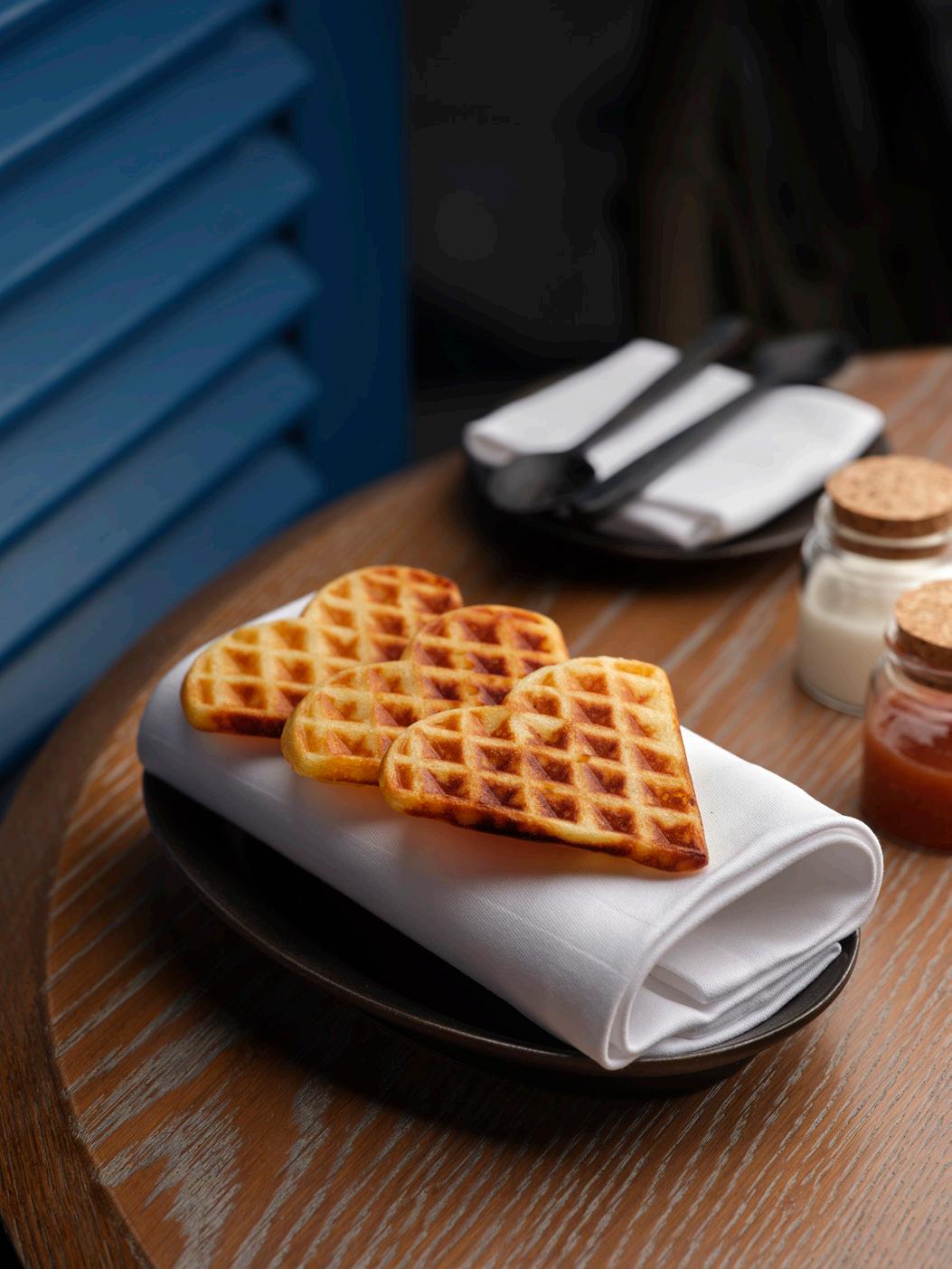
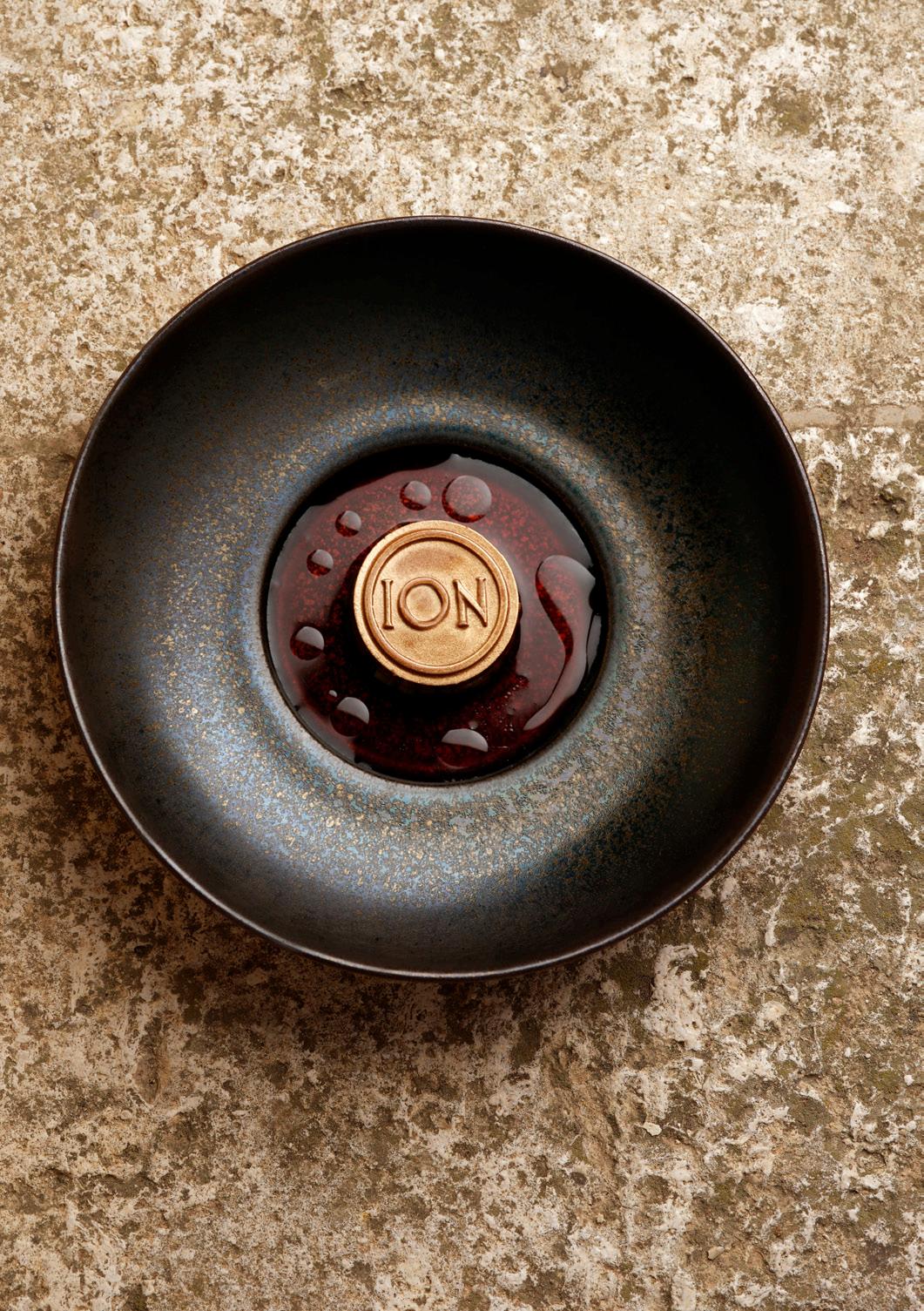
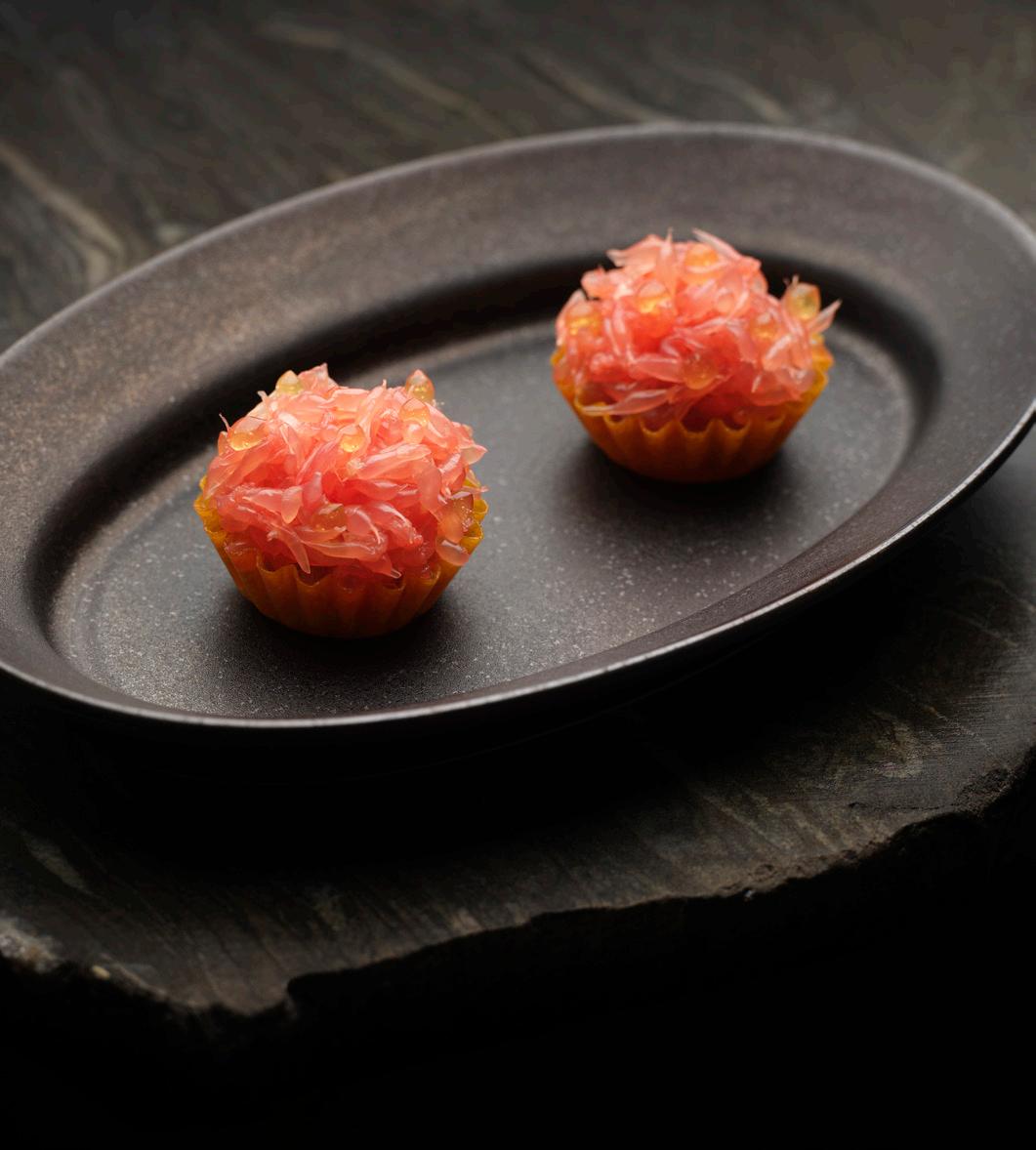
The closing Koji waffle with sheep’s yoghurt and strawberry jam, meanwhile, perfectly encapsulated the restaurant’s mastery of fermentation and preservation, traditions deeply tied to both Maltese culture and Rogan’s philosophy of reducing waste.
What elevated the experience into new territory was the decision to forgo wine in favour of a soft pairing — an innovative curation of kombucha infusions, mocktails, and cordials. Far from a secondary option, each drink mirrored the sophistication of its dish, drawing from preserved fruits, foraged herbs, and carefully fermented bases.
A kombucha laced with citrus peel resonated with the brightness of seafood courses, while a mushroom cordial deepened the flavours of earthy mains.
These pairings not only refreshed the palate but also embodied the creativity and sustainability that define ION Harbour.
Beyond the table, the restaurant’s commitment to sustainability is profound. The team liaise with local fishermen, salt farmers, goat herders, and honey producers, safeguarding traditions and even reviving endangered breeds and species.
Waste becomes an opportunity and fruit skins are turned into vinegars, mushroom trimmings into cordials, and surplus milk into a caramelised goat’s milk jam that supports local farmers. Foraged herbs and seasonal fruits are not only celebrated on the plate but also in the soft pairings, creating a closed loop between land, sea, and table.
The luxury of ION Harbour does not lie in opulence alone, but in thoughtfulness. It is luxury redefined and where innovation honours tradition, while fine dining becomes a celebration of both flavour and responsibility.
In the heart of Valletta, with history spread out across the Grand Harbour below, the restaurant offers not just a meal, but a vision: that the future of gastronomy is sustainable, imaginative, and deeply rooted in its place.
Exploring a more mindful way to live and decorate, just in time for summer
By Shereen Shabnam International Writer
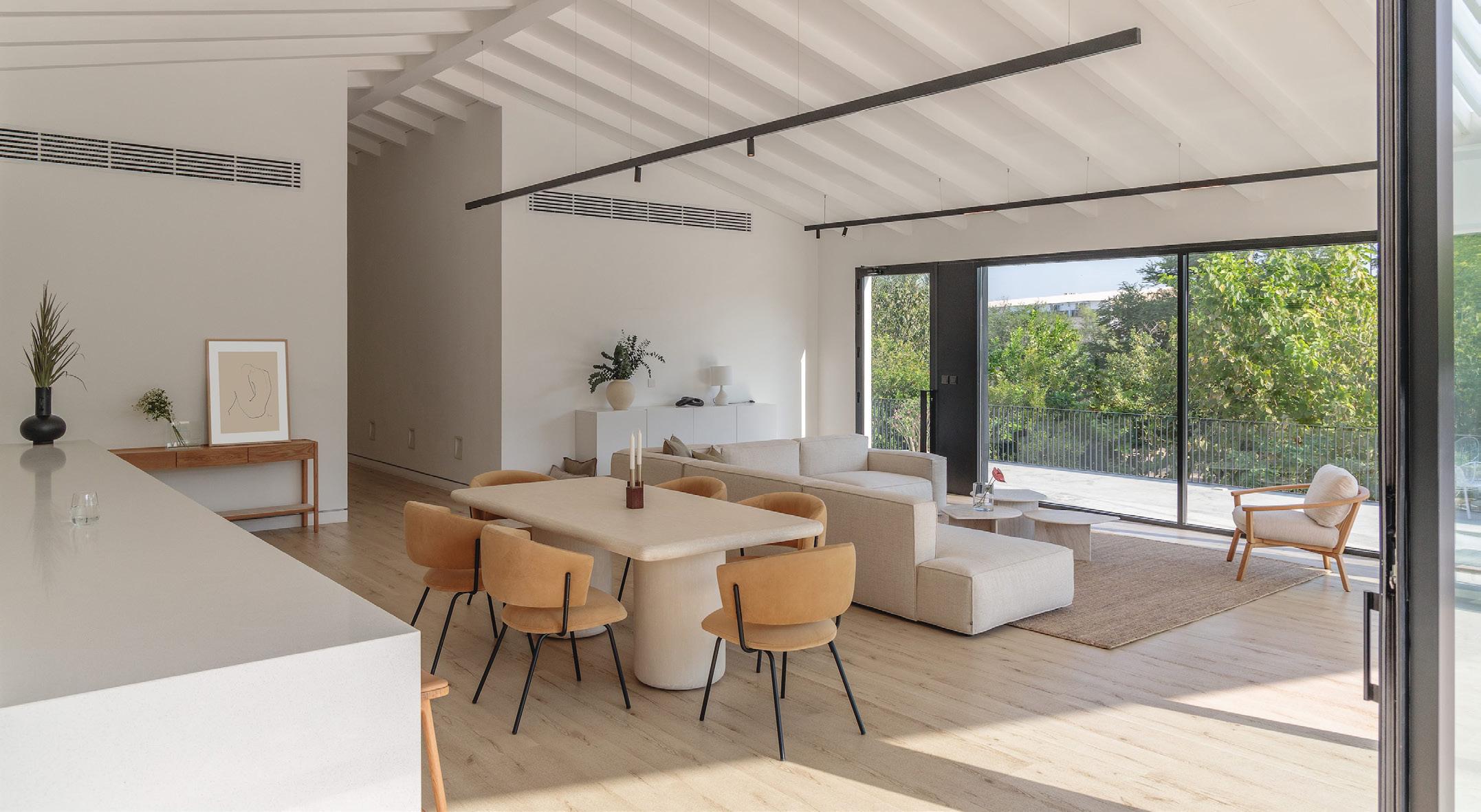
As summer settles into the UAE, bringing with it a natural slowing of pace, many homeowners are turning inward - both emotionally and spatially. The concept of “slow interiors” is gaining quiet momentum in the design world, offering a welcome alternative to fast-moving trends and over-styled spaces. At its core, this approach prioritizes intentional living, timeless aesthetics, and emotional resonance within the home.
Rather than following the rhythm of seasonal fads, slow interiors invite us to rethink the spaces we inhabit. The philosophy, rooted in the broader slow living movement, encourages creating homes that are not only visually beautiful but emotionally grounding. It is about places that support our daily rituals, invite calm, and reflect personal values.
In the UAE, one of the brands exploring this movement in depth is Loom Collection. Their design ethos draws inspiration from Scandinavian and coastal aesthetics, with an emphasis on clean lines, honest materials, and subtle elegance. While Loom may not be the only brand championing this approach, their curation offers a valuable reference point for how to interpret slow interiors in the modern Middle Eastern context.
The materials tell the story: natural woods like smoked oak, soft linen upholstery, gentle curves in seating and cabinetry - elements that whisper rather than shout. Their latest summer edit embraces a softer palette of oat, ivory, and stone, layering textures that soothe rather than stimulate. The effect is a kind of sensory retreat, where form follows feeling, and spaces are designed to exhale.
Slow interiors also speak to functionality without compromise. Think modular pieces that evolve with your needs, discreet storage that keeps visual noise at bay, and finishes that improve with age. It’s about cultivating a home that adapts to life’s rhythms, not just its aesthetics.
Sustainability, too, is a pillar of this movement. Many pieces within the slow interiors vocabulary, including those curated by Loom Collection, are made using ethically sourced, durable materials and artisanal techniques. It is a reminder that good design is not just about how a piece looks in the moment, but how it lives with us over time.
Perhaps the greatest appeal of slow interiors lies in their invitation to pause and reflect. In a region known for its dynamism and modernity, this approach offers a refreshing counterpoint and an opportunity to find stillness and authenticity through the spaces we call home.
Whether you are starting from scratch or simply refreshing a room, embracing slow interiors means curating with care, investing in quality, and decorating not for show—but for soul.
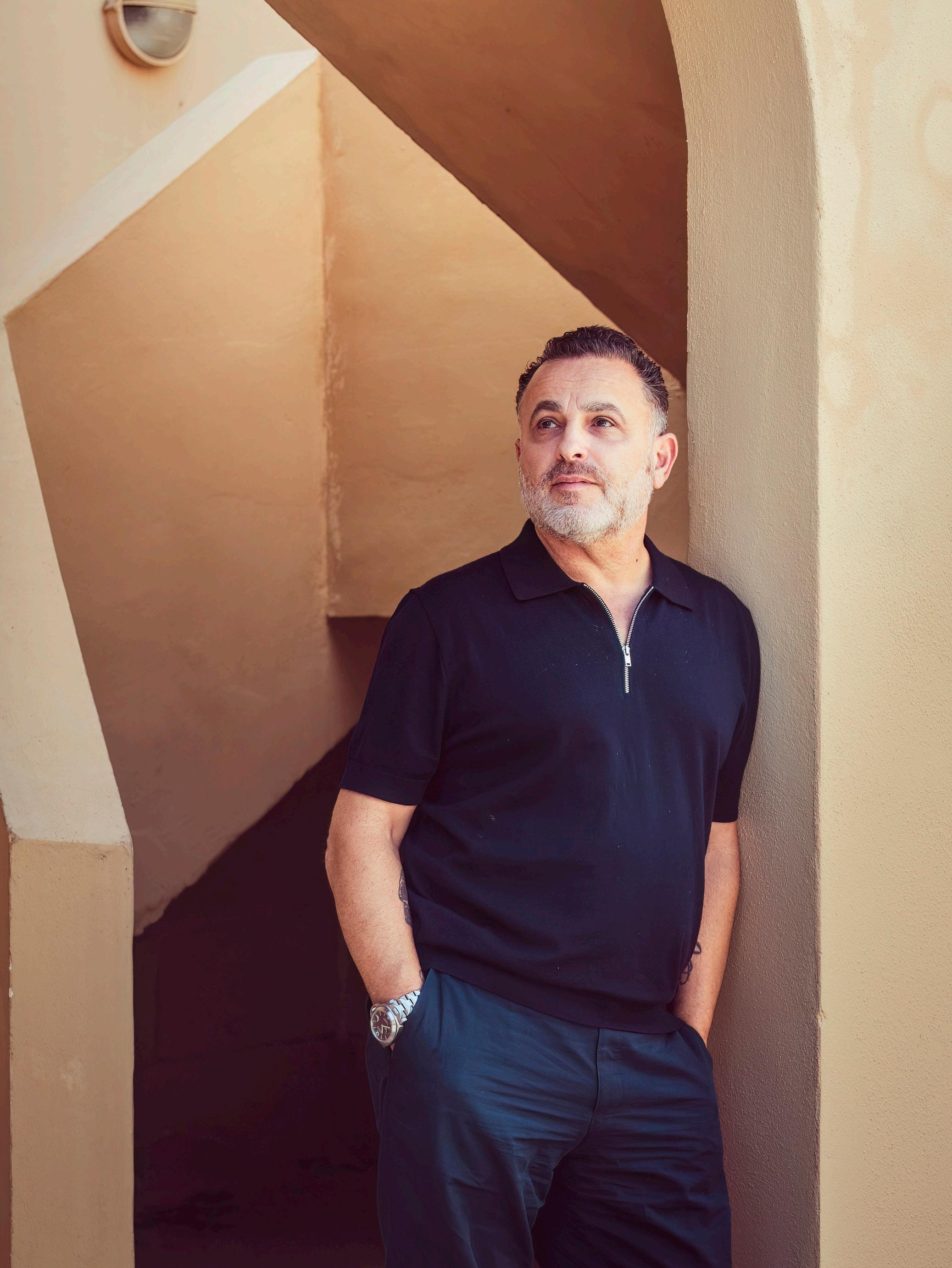
My Journey Through Lorenzo Agius’s LOOK AT ME
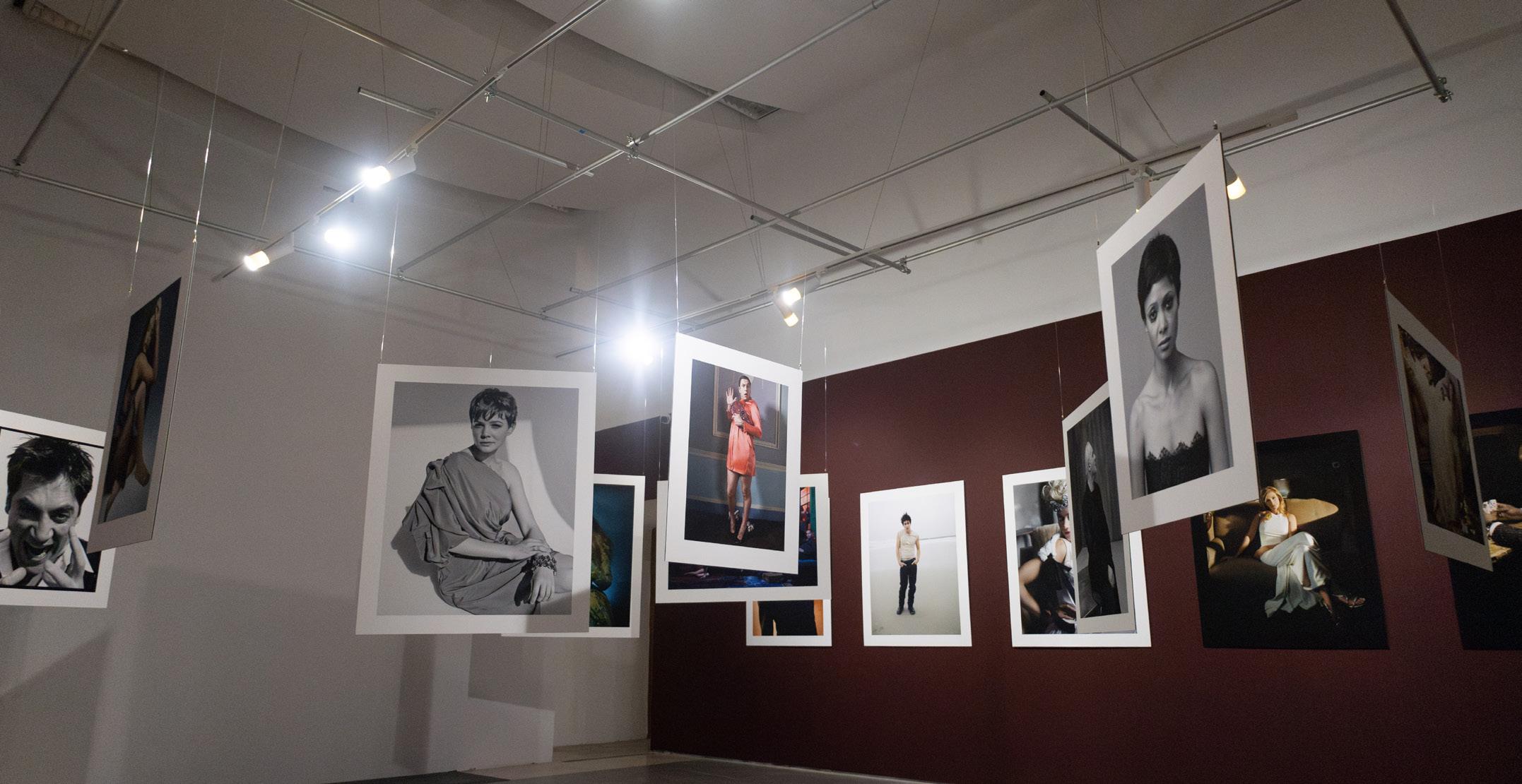
By Shereen Shabnam International Writer
Stepping into LOOK AT ME: Framing the Iconic at Spazju Kreattiv in Valletta felt like crossing into a world where art, memory, and celebrity merged into one immersive experience. For me, this was not just a retrospective of Lorenzo Agius’s remarkable career. It was a personal journey through faces and stories that have shaped my own cultural memory.
The first thing that struck me was the sheer presence of the portraits. Larger than life, displayed without glass, they felt alive, as if the subjects were there in the room, waiting to be engaged. Seeing some of my favourite personalities up close through Lorenzo’s lens was nothing short of exhilarating.
The famous Trainspotting cast portraits radiated that rebellious, electric energy that defined the 1990s, an era I remember vividly. Then came the familiar faces of global icons like Madonna, David Beckham, the Spice Girls, Jack Nicholson, all captured not in contrived glamour but in unguarded moments of humour, attitude, and humanity.
It was deeply moving to see these images in Malta, knowing that Lorenzo’s own Maltese roots shaped the humility and authenticity behind his practice.
Behind every carefully managed public image, his portraits reveal flickers of vulnerability, laughter, or stillness. Those fleeting truths made me feel closer to people I had admired from afar for years.
The exhibition’s design intensified this sense of intimacy. Soundscapes, projections, and clever spatial arrangements evoked the atmosphere of Agius’s shoots, allowing us to step into his process. Each room carried its own emotional temperature, from playful to contemplative, mirroring the rhythm of his subjects’ personalities. At times it felt as though I was standing in a cinematic frame myself, swept into the energy of his creativity.
What resonated most was the dialogue between past and present. His group portraits echoed the grandeur of Baroque painting, while his use of light recalled Old Master portraiture, a reminder that portrait photography, at its best, is not just about capturing likeness but about continuing a centuries-old conversation on how we see and remember people.
For Malta, this exhibition is a milestone: a cultural homecoming that places the nation firmly on the international art map. For me, it was an unforgettable afternoon spent in the company of icons I have long admired, filtered through the artistry of a photographer who understands that to frame the iconic is to frame the human.
LOOK AT ME: Framing the Iconic is not just an exhibition. It is an invitation to connect, to remember, and to celebrate the faces that have defined our times.
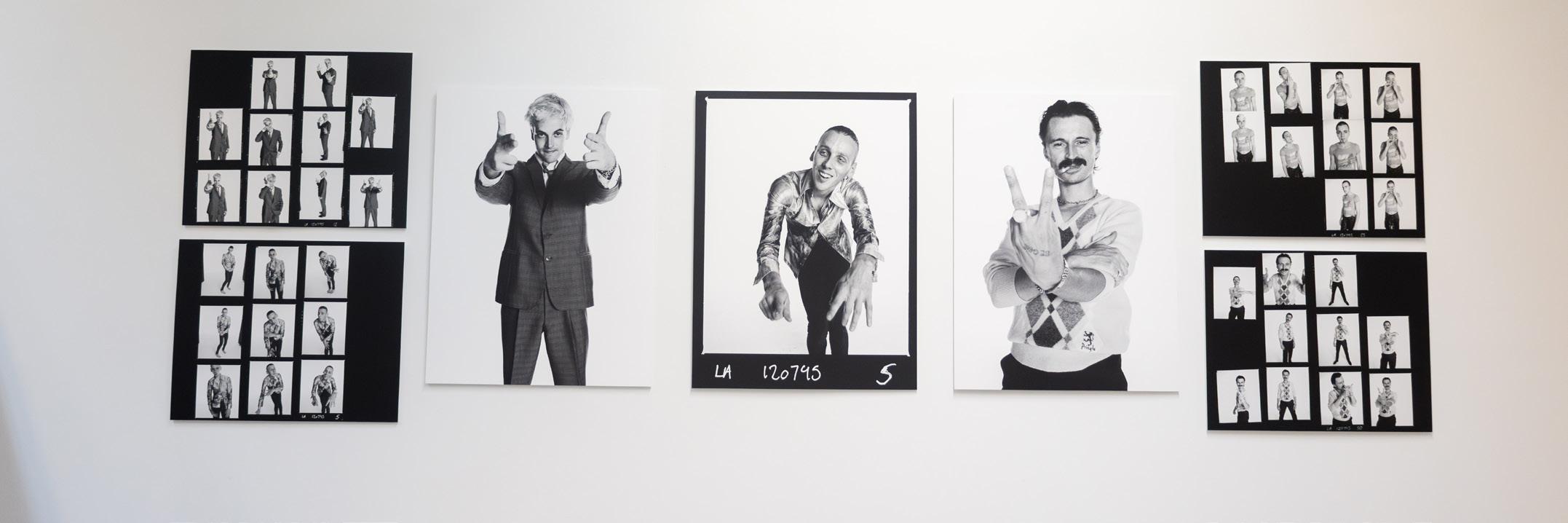
By Natasha Dury

Armaf has introduced the latest addition to its globally celebrated fragrance portfolio with the launch of Armaf Club de Nuit Bling, a scent designed to capture confidence, luminosity, and the unapologetic spirit of modern luxury.
We enjoyed the reveal in Dubai under the theme The Legacy in Light - the new fragrance marks a refined evolution of the iconic Club de Nuit collection, placing the scent itself firmly at the centre of the brand’s storytelling.
Building on the worldwide success of Armaf Club de Nuit Intense, Club de Nuit Bling represents a contemporary interpretation of elegance, crafted for individuals who command attention effortlessly.
The fragrance opens with a sense of crystal clarity before unfolding into a richer, more layered composition that balances brilliance with depth. Designed to leave a lasting impression rather than overwhelm, Bling is an olfactory signature that speaks to confidence, presence, and individuality.
Encased in a radiant, jewel-inspired bottle, Club de Nuit Bling visually reflects the fragrance within. The faceted design, polished accents, and luminous gold detailing mirror the scent’s refined yet bold personality, positioning the bottle as both a statement piece and a reflection of Armaf’s growing focus on design-led luxury. Every element, from packaging to presentation, reinforces the idea of light as a metaphor for self-expression and legacy.
Unveiled against the dramatic backdrop of Ain Dubai on Bluewaters Island, the fragrance made its debut through an immersive reveal that complemented its character. While the evening featured striking visual elements and artistic installations, the focus remained on introducing Club de Nuit Bling as a scent that embodies charisma, sophistication, and contemporary glamour.
Entrepreneur and Dubai Bling star Ebraheem Al Samadi, who was announced as the face of the fragrance, echoed this sentiment during the launch, describing Club de Nuit Bling as an extension of ambition and self-belief, qualities that resonate strongly with Armaf’s global audience. His association reinforces the fragrance’s positioning as a scent for those who embrace their journey and wear success with confidence.
Created for both men and women, Armaf Club de Nuit Bling speaks to a new generation of
fragrance lovers who seek distinction without excess. It is designed not as a fleeting trend, but as a modern classic, one that fits seamlessly into both everyday wear and elevated occasions.
With Club de Nuit Bling, Armaf continues to strengthen its reputation in accessible luxury perfumery, demonstrating how scent, design, and storytelling can come together to create a fragrance that is as expressive as it is enduring.
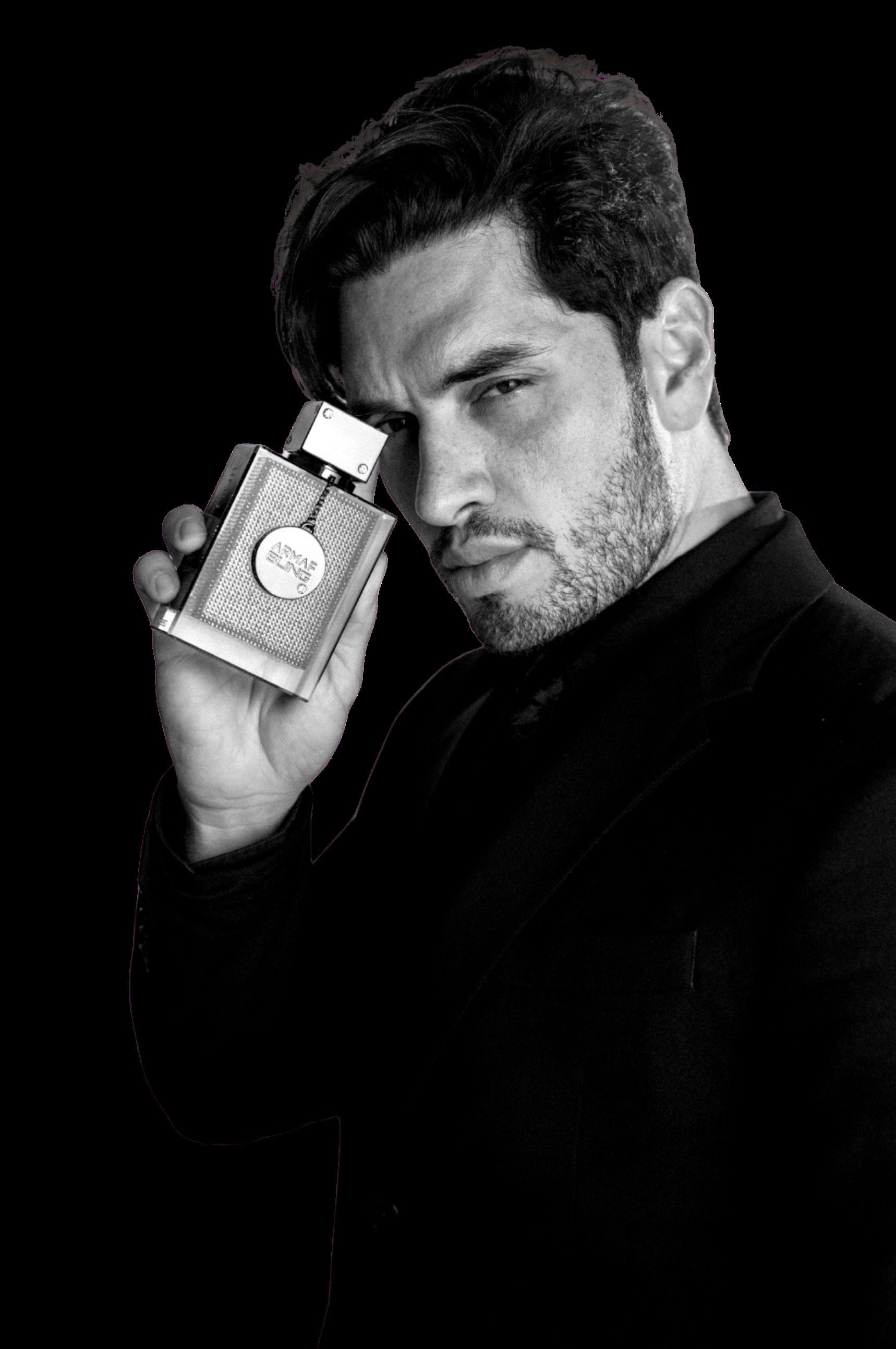
Many consumers across the world are looking for the perfect gift for their friends and family. Natasha Dury, Curator of New Technology Trends brings you the latest gadgets to gift loved ones.
The highly anticipated HUAWEI WATCH GT 6 Series redefines the smartwatch experience with its sleek octagonal design, advanced outdoor sports capabilities, and game-changing 21-day battery life. Available in both GT 6 and GT 6 Pro models, the collection blends cutting-edge technology with refined craftsmanship: the GT 6 Pro in durable matte titanium alloy with sapphire glass and nanocrystal ceramics, and the GT 6 in TC4 titanium alloy with options in 41mm (featuring pivoting loop lugs for slimmer wrists) and 46mm (with a raised timing bezel). Engineered for performance, both deliver unrivalled tracking accuracy through dualband, full-constellation GPS, making them the ultimate partner for cycling, hiking, or running. Powered by the upgraded TruSense system, they also go beyond fitness by offering emotion detection and stress-relief guidance, ensuring both body and mind stay balanced. With seamless phone-watch linking and tailored cycling features, the HUAWEI WATCH GT 6 Series is the perfect blend of style, endurance, and intelligent performance.

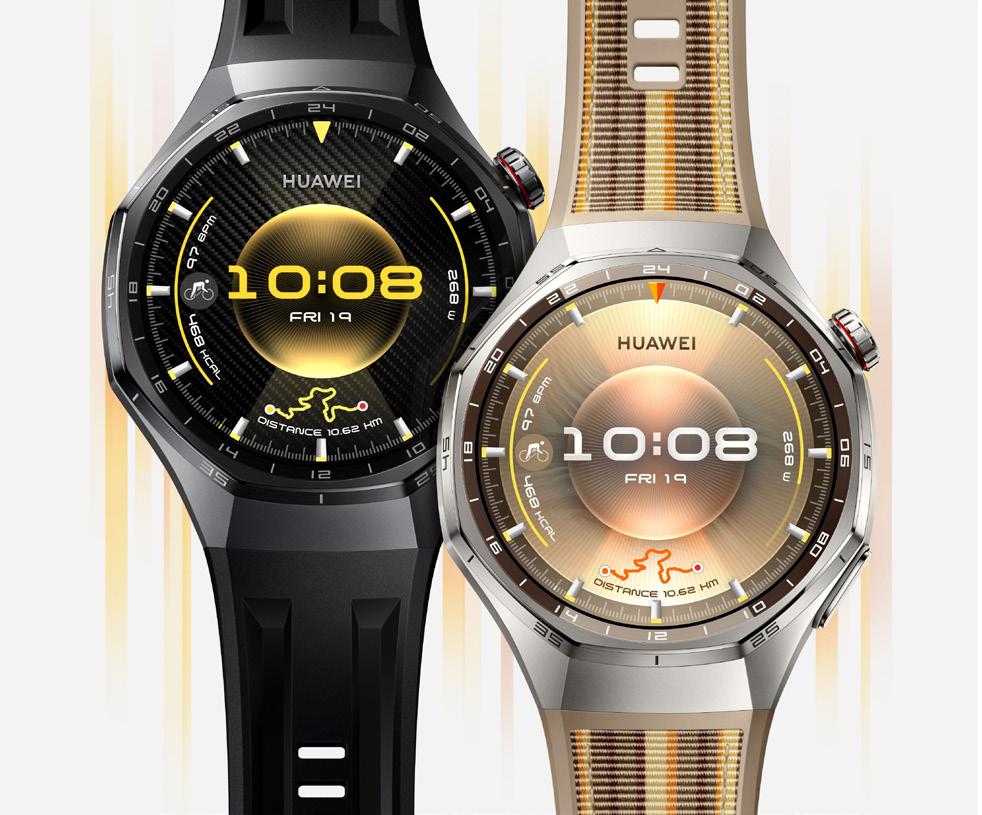
Xiaomi unveils the Xiaomi 15T Series, comprising the Xiaomi 15T and Xiaomi 15T Pro, at a global launch in Munich. The smartphones combine refined design with breakthrough imaging and connectivity features. Both devices showcase a triple-camera system co-engineered with Leica, with the 15T Pro debuting an advanced Leica 5x Pro telephoto lens alongside a 50MP main camera with Light Fusion 900 sensor for exceptional detail and clarity. For creators, the series offers 4K HDR10+ recording across all focal lengths, with the Pro delivering cinematic 4K 120fps and pro-level post-production tools. Beyond photography, Xiaomi introduces Astral Communication, including the world’s first Offline Communication system for direct device-to-device calls without cellular or Wi-Fi signals, and launches the new HyperOS 3 for smoother multitasking and redesigned user experience. With expansive displays up to 6.83 inches, long-lasting 5500mAh batteries, fast charging, and IP68 durability, the Xiaomi 15T Series raises the bar for performance, connectivity, and imaging excellence.
Bang & Olufsen introduces the Beo Grace earpieces, a striking fusion of fine-jewellery aesthetics and acoustic mastery. Crafted from polished aluminium with a slim, sculptural silhouette inspired by the brand’s iconic A8 earphones, Beo Grace delivers outstanding sound performance in a design as elegant as it is innovative. Equipped with a 12mm titanium driver, Spatial Audio optimised for Dolby Atmos, and the brand’s most advanced Adaptive Active Noise Cancellation to date, it ensures an immersive and personalised listening experience. Offering up to 4.5 hours of playtime with ANC (17 hours with the charging case), dust- and waterproof durability, intuitive tactile controls, and optional premium leather pouches in Infinite Black, Cranberry Red, or Seashell Grey, Beo Grace redefines earphones as wearable sound sculptures — seamlessly uniting timeless craftsmanship with modern technology.
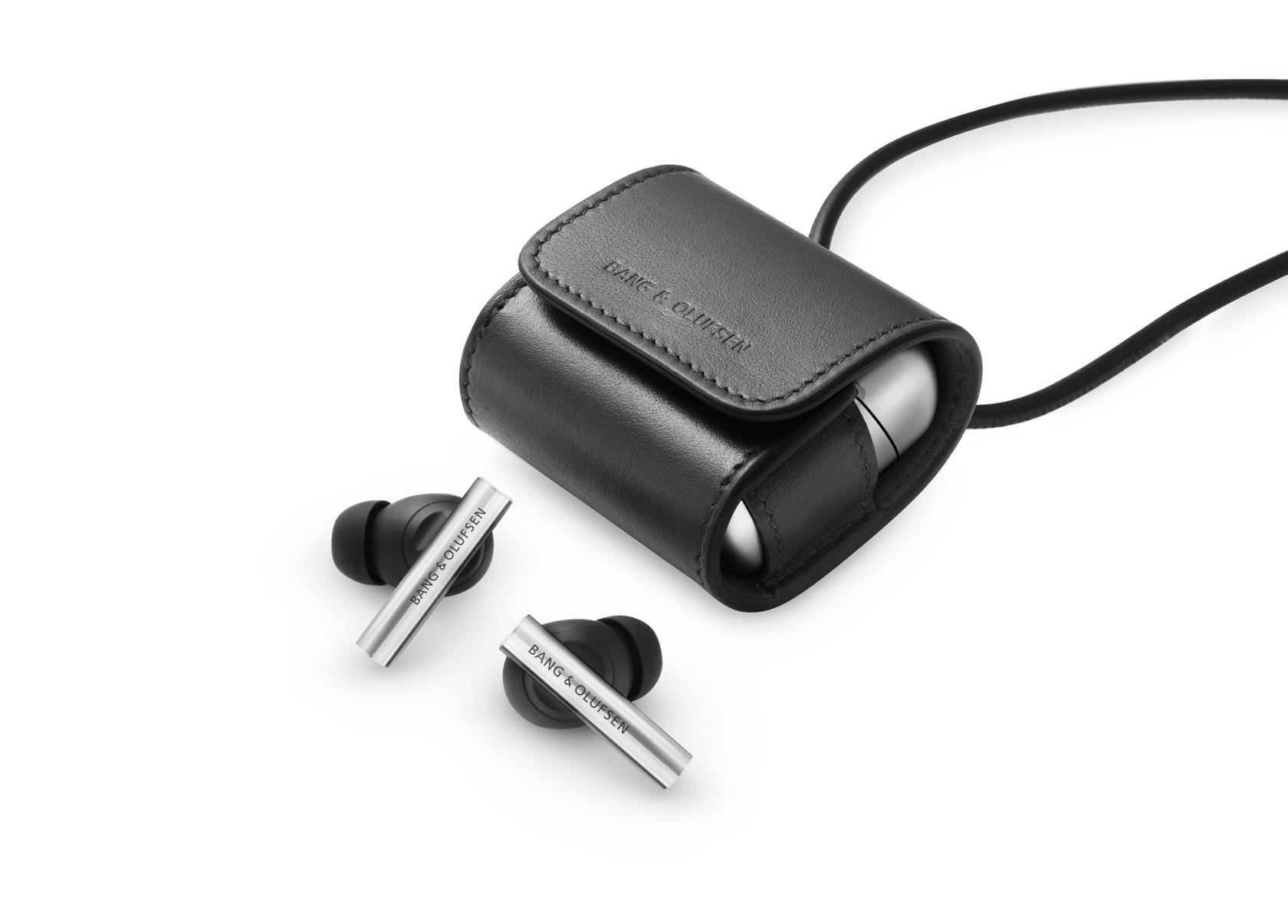

Logitech has unveiled the Rally Board 65, an allin-one portable video conferencing solution that combines intelligent audio-visual performance with a 65-inch touchscreen display. Designed for hybrid workforces, it can be rolled into open spaces or installed in meeting rooms, supporting Microsoft Teams, Zoom, and Google Meet with minimal setup. Delivering sharp 4K video and powered by AI features such as RightSight 2, RightSound 2, and new Depth Blur technology, Rally Board 65 ensures meetings stay focused while minimizing distractions. Builtin sensors track occupancy, environmental factors like CO2 levels and humidity, and feed insights into Logitech Sync for smarter room management. Sustainability is also central, with the device made from up to 41% next-life plastics and engineered to reduce energy consumption when not in use. Rally Board 65 sets a new benchmark in seamless, sustainable, and smart video collaboration.
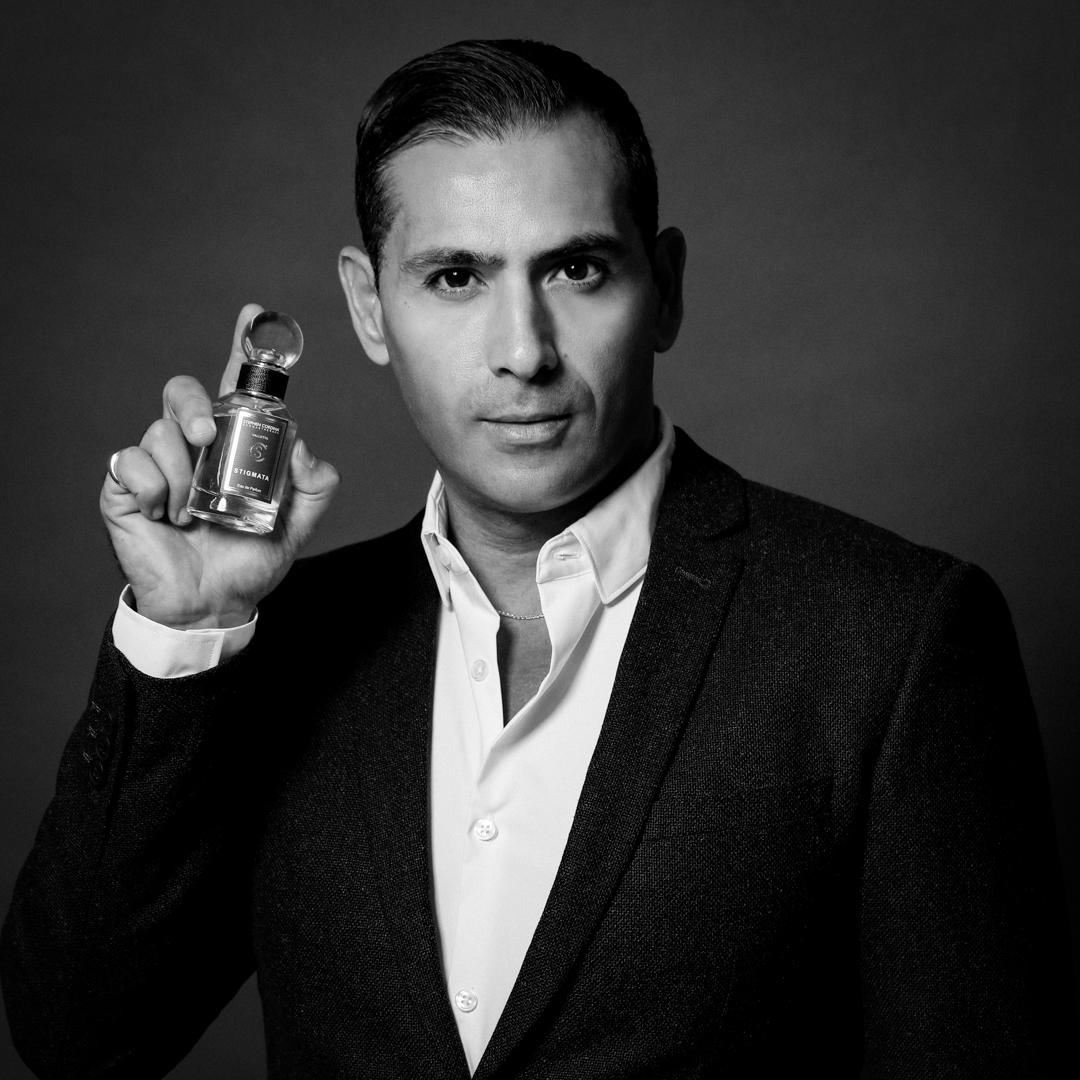
By Shereen Shabnam International Writer
Behind a modest violet door in Valletta lies Stephen Cordina’s atelier, a space where aroma becomes storytelling, and scent is sculpted by memory, place, and identity. As CEO and Creative Director of Stephen Cordina Aroma & Therapy, and a perfumer member of the Société Française des Parfumeurs, Stephen has quietly positioned Malta on the luxury fragrance map.
After a visit to his Atelier in Valletta recently, I realised that my love for candles in fact started during Christmas years ago, when a
hotel in Malta I stayed in used his cinnamon candles in the lobby - I immediately fell in love with the scent and recognised it the minute I smelt it at Stephen’s Atelier. After a tour of the store, I discovered that Stephen’s work is rooted in nature, heritage, and deep emotional resonance. It has a Maltese signature in every bottle and every box.
Born and raised in Gozo, Stephen’s earliest memories are scented: walking among fruit blossoms, inhaling herb scents at dawn, plucking petals from wild flowers. Dyslexia challenged his schooling, but it sharpened his sensory perception.
He mentions that he recognized chemical families by smell before he read their names. Over time, that intuitive nose found direction
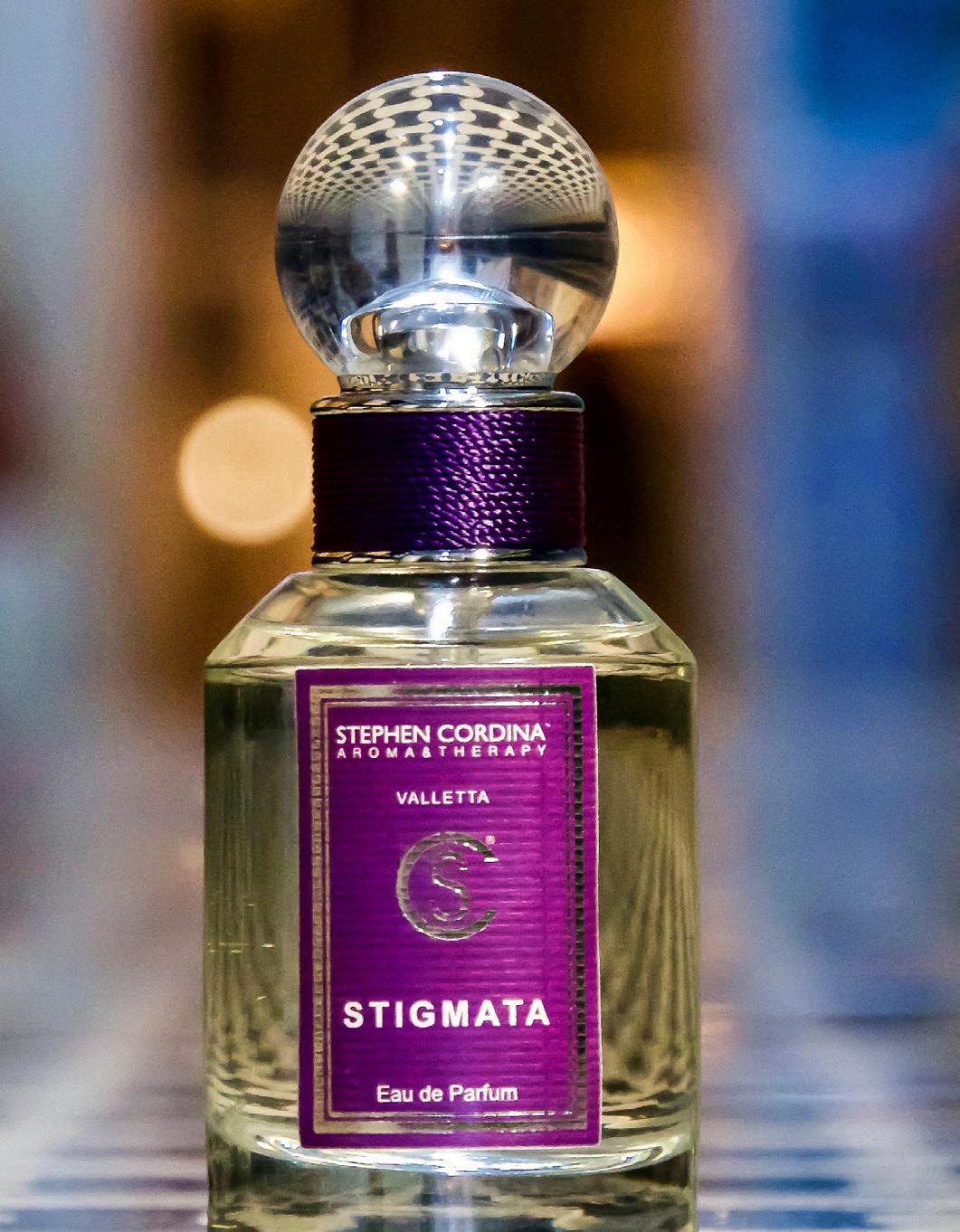
through formal training abroad and an affinity for botanical purity over synthetic shortcuts.
Returning to Malta from abroad, Stephen built his brand on natural perfumes, home fragrances, and wellness products, carved from local botanicals and inspired by Malta’s landscapes, history, and architectural heritage. His atelier in Valletta occupies a 16th-century monastic building, once a site for distilling herbal waters, which he chose deliberately to bridge Malta’s past and his olfactory future.
Stephen refuses to see perfume merely as a product. To him, every scent is a micro-biography, a fusion of place, memory, and emotion. His “local” lines bear names like Valletta, San Anton, Gozo, and Medina, drawing on indigenous flowers, citrus groves, and even ancient scent practices. One bespoke fragrance he created as tribute to his late mother features aniseed, a reminder of sweet coffee rituals in Gozitan homes.
He describes the creation process as “simmering, testing, listening”, what starts as historic research becomes blends tested over months (sometimes years), refined by feedback from friends and instinct. A fragrance is “ready” only when it transports him back to place and time, and passes the litmus test of burn, balance, and resonance.
Under Stephen’s leadership, the brand exports 11–20 % of its output beyond Malta — across Europe, North America, and the Middle East. Though still a micro-enterprise, its presence in hotel spas, yachts, and bespoke projects has drawn attention. His membership in the Société Française des Parfumeurs (a rare credential for a Maltese perfumer) underscores his ambition to bridge local craft with international
perfume culture. What makes the brand unique is that Stephen uses Aromatherapy and Alchemy techniques, formulated in a Kyphi Egyptian style of perfumery and merges it again with the traditional pyramid olfactive structure. Stephen enjoys working with newly discovered plant extracts which gives more options to reconstruct a reconstitution of a scent for which previously he had to use molecular only.
Of all other perfumers, Stephen admires Mandy Aftel, Jean Claude Elena, Alberto Morillias and most of all his first tutor master, perfumer George H Dodd who was also a Biochemist and has sadly passed away.
Stephen sees the future in experiential fragrance: immersive scent rooms, perfumed architecture, interactive olfactory journeys. He imagines scents diffusing in museum wings, public gardens, and historical buildings echoing Malta’s stone, sea, jasmine, and salt.
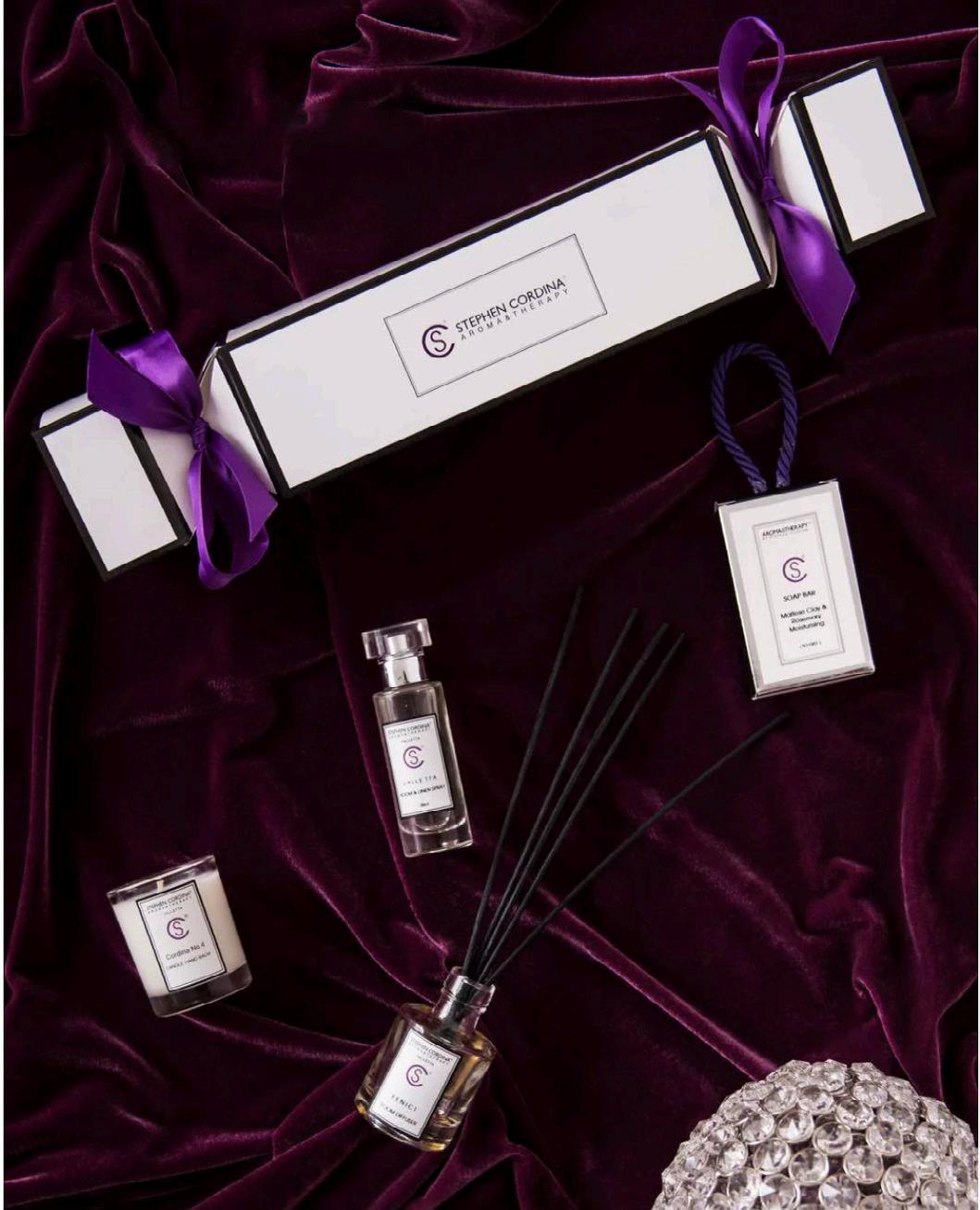
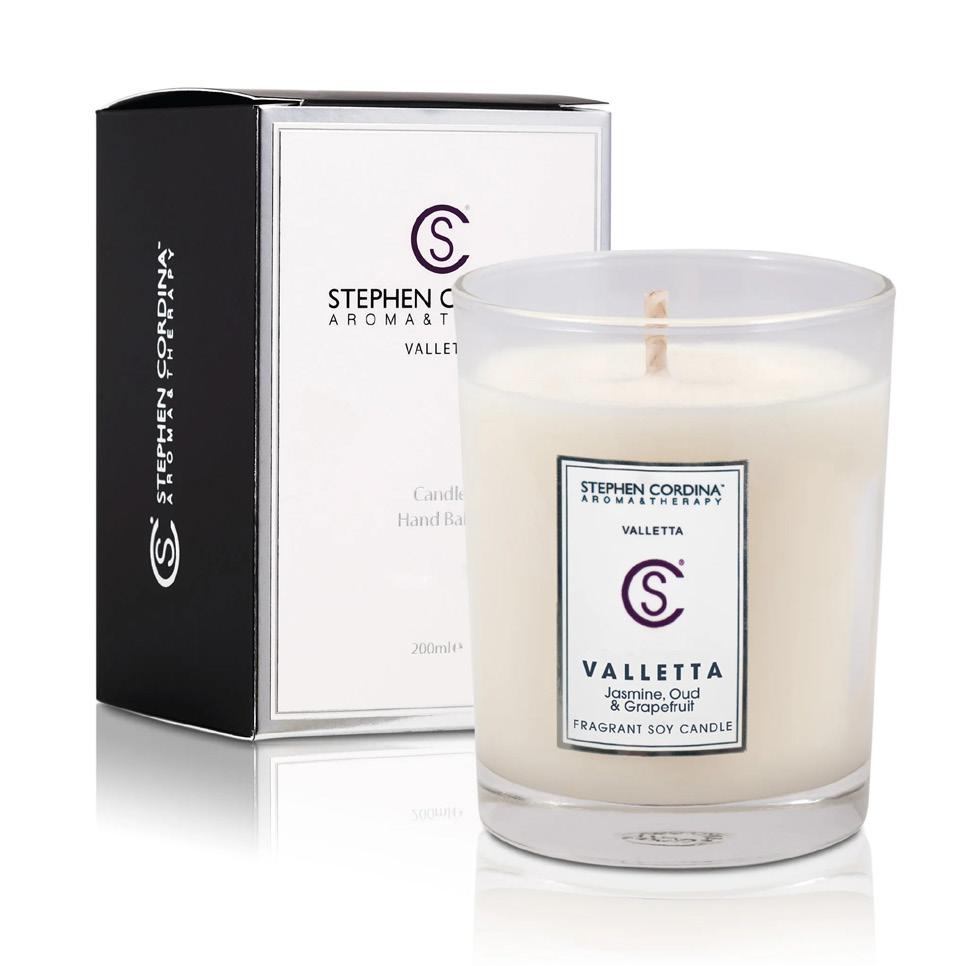
This holiday season, Rituals Cosmetics invites you to illuminate your celebrations with a selection of thoughtfully curated gift sets. Discover bestselling collections and immerse yourself in exquisite fragrances through a range of sets available in Small, Medium, and Large sizes, each with its own unique assortment of products.
This large gift set offers the ultimate purifying routine, bringing the perfect at-home spa experience to your doorstep. Inside, you’ll find a shower foam, body cream, body lotion mousse, mini fragrance sticks, and a scented candle. Each product is enriched with nourishing and purifying ingredients including eucalyptus, argan oil, and rosemary.
At the heart of this year’s collection is the relaunched Large gift set, now presented in a luxurious pouch and filled with a sophisticated selection of body and home essentials designed to elevate every festive moment. Whether you’re treating yourself or gifting someone special, Rituals offers a complete indulgent routine for everyone.
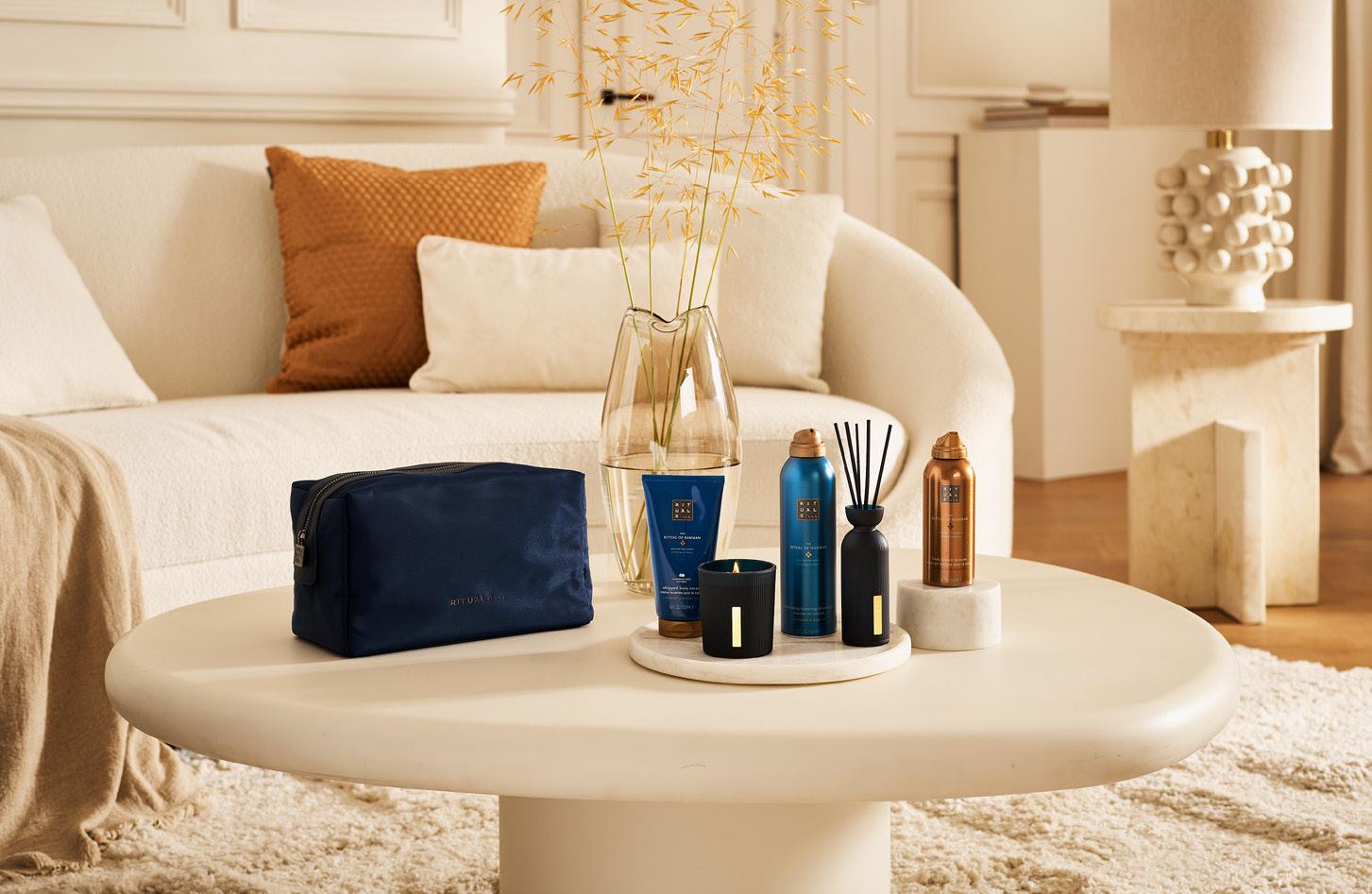

Relax and unwind at home with calming products from The Ritual of Jing. This large gift set features a shower foam, body cream, hand & foot mask, home perfume and mini fragrance sticks with notes of jujube and lotus.
The Ritual of Sakura gift set offers products infused with cherry blossom and rice milk. For a touch of luxury and renewal, discover a shower foam, body cream, body lotion mousse, mini fragrance sticks, and a scented candle.
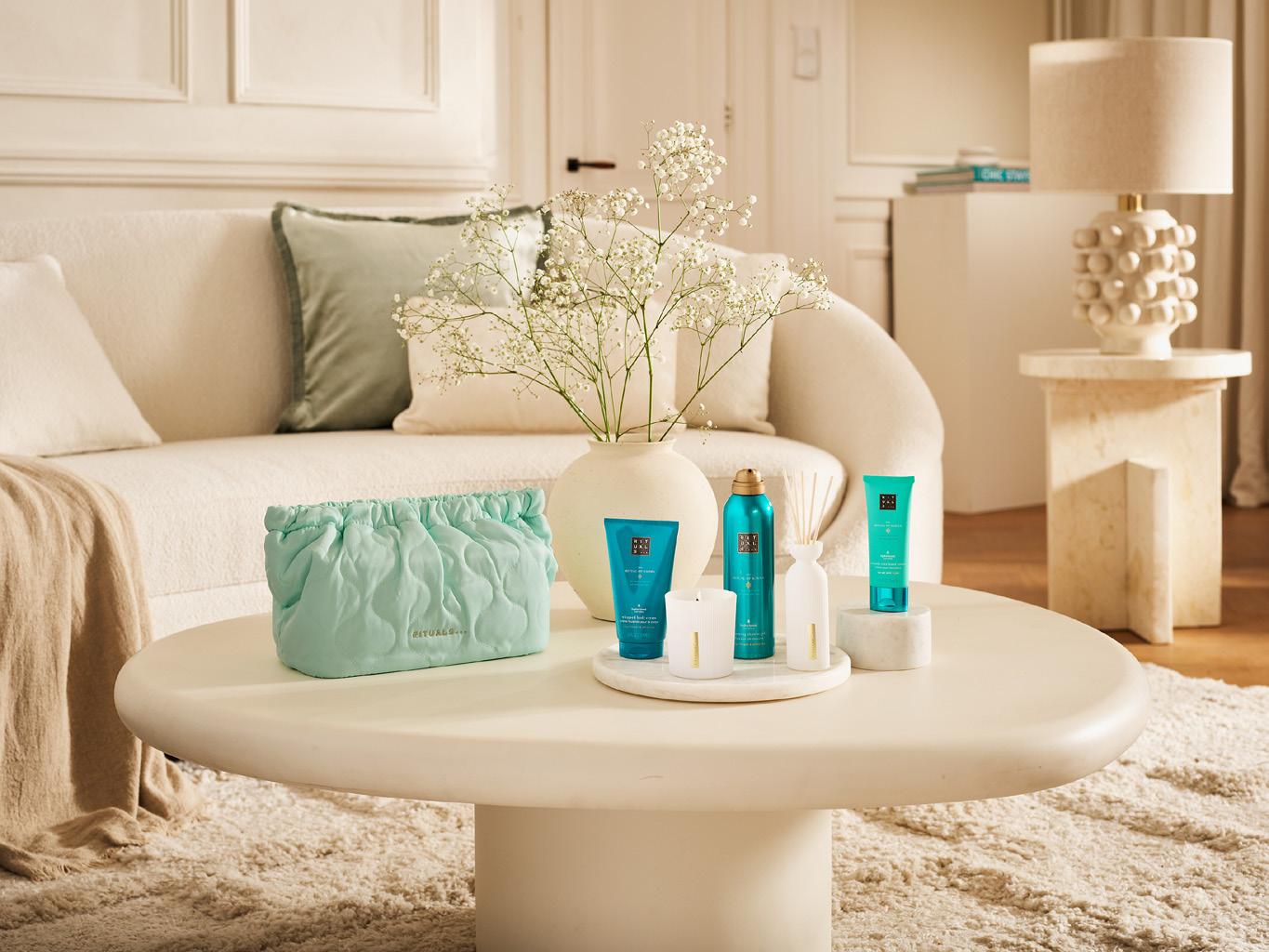
Infused with Indian rose and sweet almond oil, The Ritual of Ayurveda large gift set is a perfect treat for your loved ones. It includes a shower foam, body cream, hand balm, scented candle, and mini fragrance sticks.

Experience the year-round summer sensation of The Ritual of Karma, infused with the floral aroma of lotus and white tea. The large gift set features a shower foam, body cream, hand lotion, mini fragrance sticks and scented candle. The shower foam and body cream provide the hydrating benefits of aloe vera, squalane, and algae to help maintain your skin’s moisture levels.
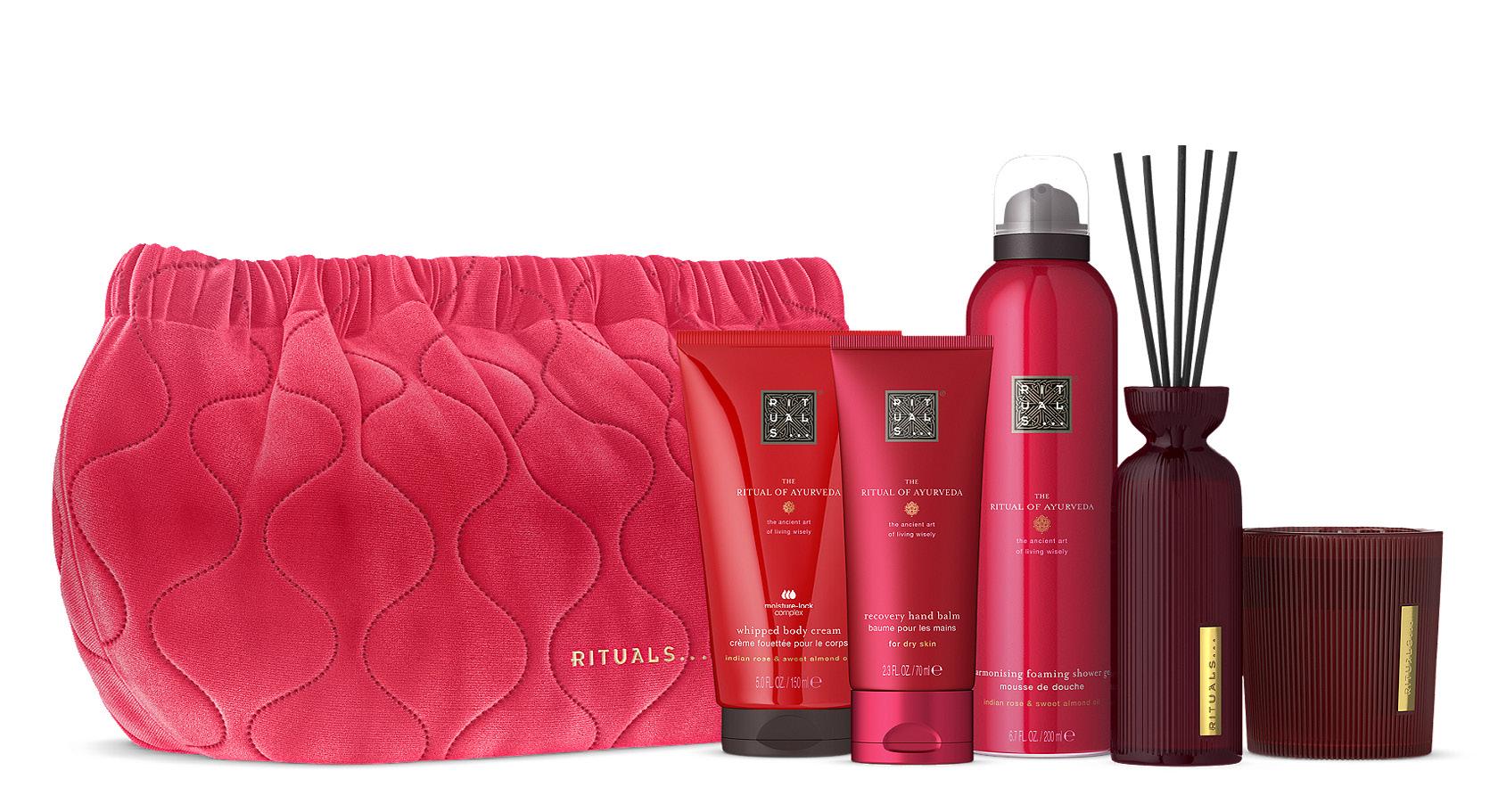
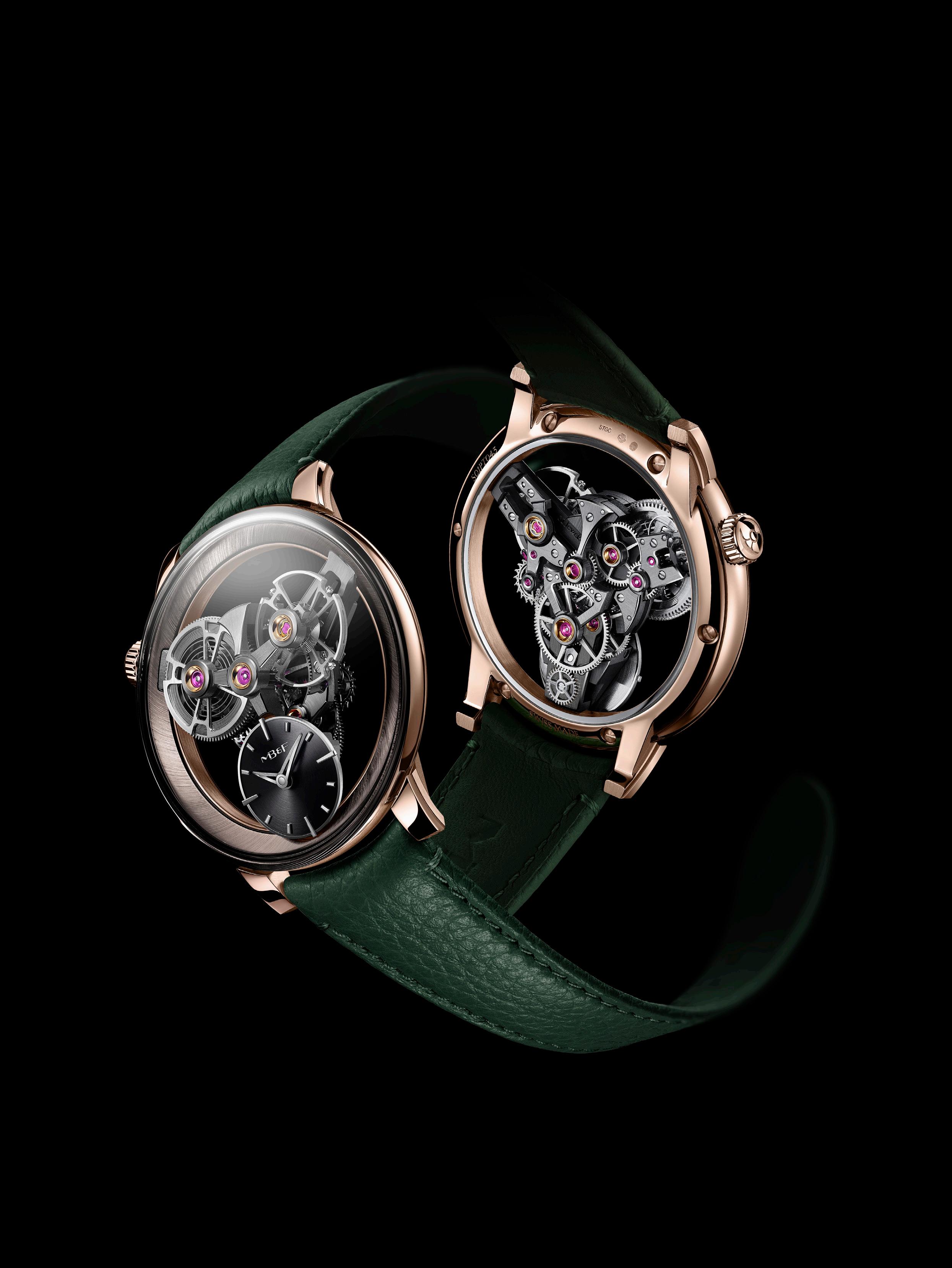
MB&F UNVEILS SP ONE
By Shereen Shabnam International Writer
For two decades, MB&F has redefined watchmaking through audacity, invention, and boundary-pushing design. Known for timepieces that feel more like kinetic sculptures than traditional watches, the independent brand has surprised collectors yet again with a creation that is both unexpected and refined. The new Special Project One (SP One) marks the launch of a dedicated collection, sitting somewhere between the radical Horological Machines and the classical Legacy Machines, but carving out its own unique space.
Encased in a smooth 38mm pebble-shaped case, SP One represents MB&F’s slimmest and smallest watch to date, yet it retains the house’s unmistakable three dimensional spirit. Its architecture revolves around a striking trinity of floating elements - the barrel, the balance wheel, and the dial, seemingly levitating within an amphitheatre-like space.
Invisible sapphire domes reveal the suspended display, where the balance wheel performs its hypnotic oscillations, the tilted dial demonstrates MB&F’s mastery of conical gearing, and the barrel holds its quiet power, all arranged in perfect symmetry.
The effect is as much theatre as horology, with the watch becoming a miniature stage for mechanical performance. Bridges are reduced to near invisibility, components tucked discreetly away, and screws hidden to amplify the sensation of weightlessness. Each of the three circles shares an identical circumference, creating both technical complexity and visual harmony.
This pursuit of equilibrium is at the heart of SP One. Early sketches dating back to 2018 reveal how MB&F sought to design a watch that whispered elegance rather than shouted spectacle. The concept was refined by watch designer Eric Giroud and engineered into reality with meticulous precision, preserving MB&F’s avant-garde DNA while embracing a more understated aesthetic.
Finishing remains rooted in traditional craftsmanship: wheels are hand-angled, chatons polished, and surfaces alternating between satin, polished, and micro-blasted treatments.
The amphitheatre-like flange frames the movement like a spotlight, while the reverse side reveals the same artisanal detailing. Even the case lugs follow MB&F’s signature pursuit of the unconventional, rising subtly from the lower case and creating a delicate separation that enhances the floating illusion.
Despite its slim profile, SP One is not about chasing the record for the world’s thinnest watch. Instead, it is about balance, proportion, and tactile beauty. The case, bezel-free and organic, feels like a perfectly smoothed river stone, an object as satisfying to touch as it is to observe.
By introducing the SP One, MB&F proves that elegance can be as daring as extravagance. It is a watch that defies category, simultaneously classical and radical, refined yet provocative. A new chapter begins for MB&F, one that celebrates equilibrium while continuing the brand’s fearless journey of creativity in mechanical art.
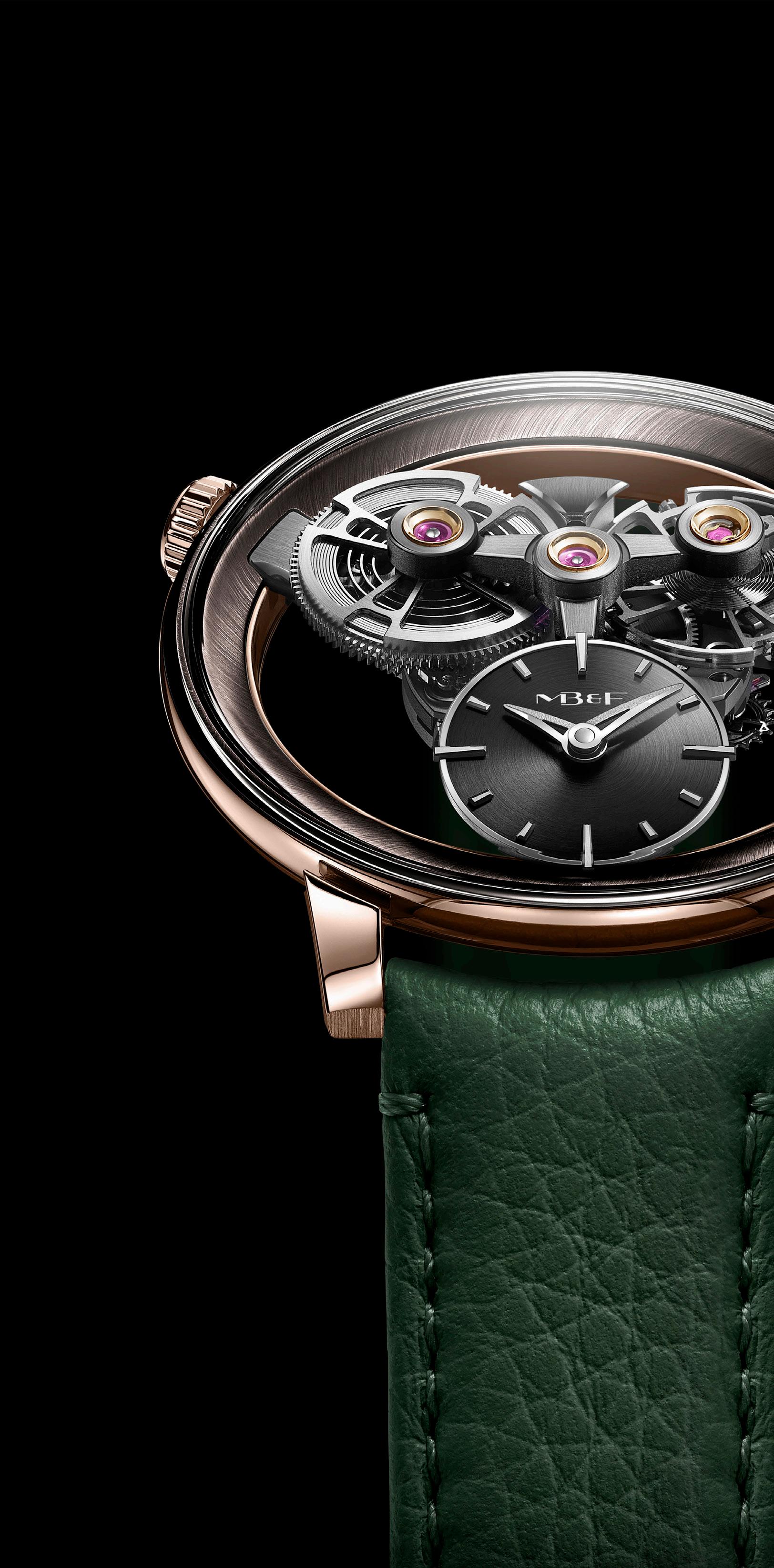
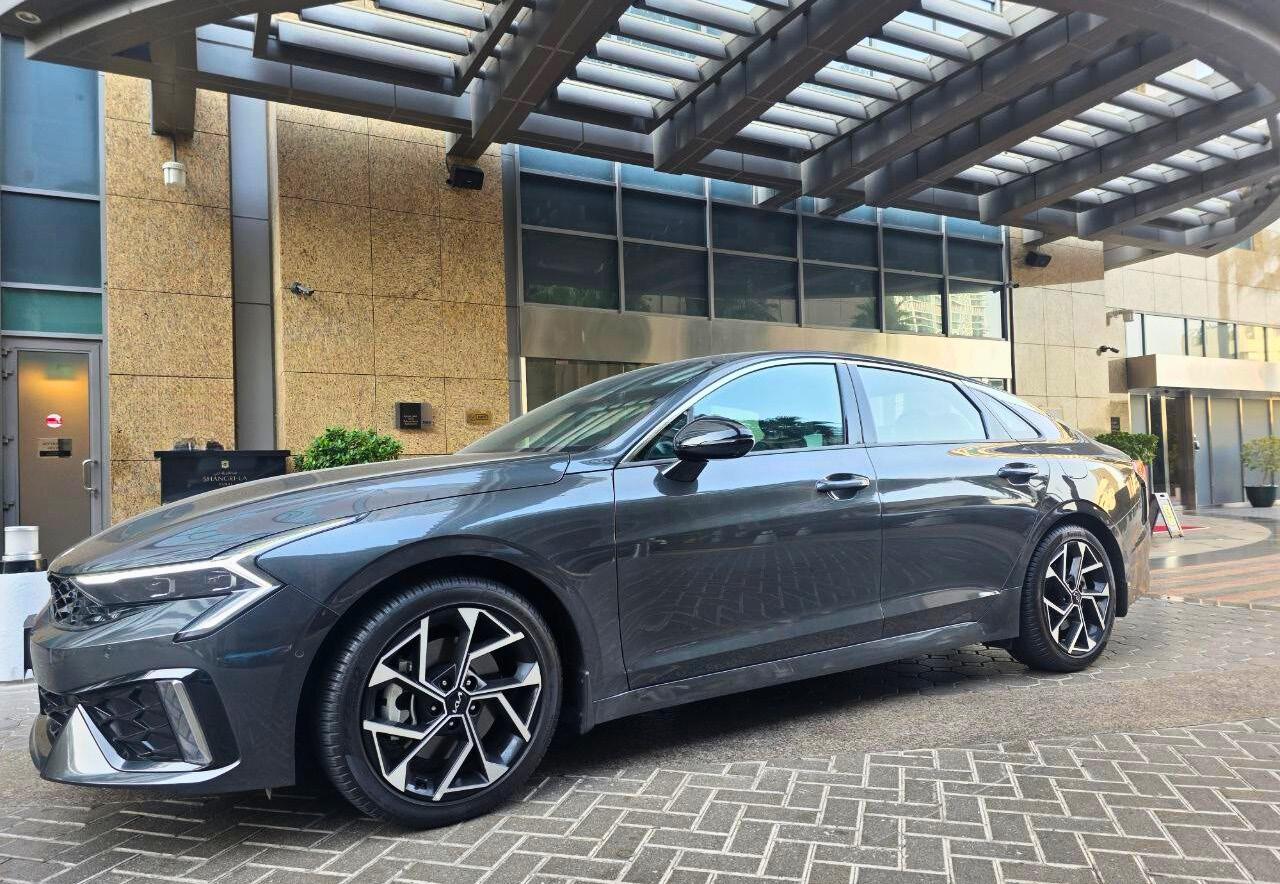
By Shereen Shabnam International Writer
The KIA K5 makes a strong statement in the midsize sedan segment, fusing contemporary design, advanced technology, and spirited performance. With its athletic stance and refined comfort, it offers drivers a balance of style, practicality, and excitement. Whether on a long highway drive or weaving through city traffic, the K5 demonstrates KIA’s evolving
design philosophy and commitment to driver-centric innovation. We took it for a spin through a busy week and thoroughly enjoyed the drive.
The new KIA K5’s exterior is bold yet elegant, with sharp character lines and a wide, aggressive tiger-nose grille that signals confidence. Its fastback-inspired profile, sleek LED headlights, and sculpted bumper design give the sedan a sporty, coupe-like appeal. Alloy wheels add to the road presence, while aerodynamic contours

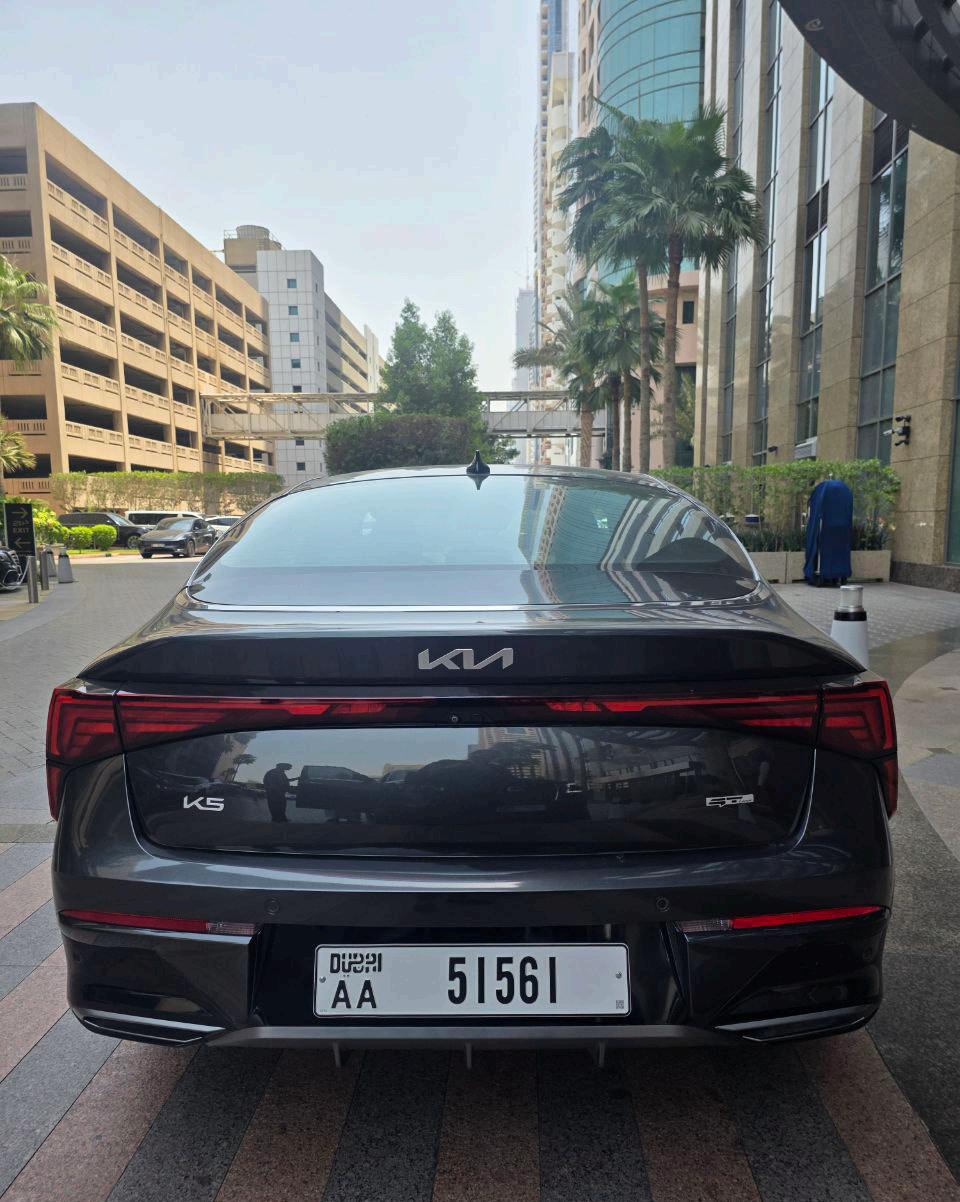
enhance both style and efficiency. The overall look is modern, purposeful, and distinctly KIA.
Step inside, and the K5 impresses with a driver-focused cabin that combines comfort with premium finishes. The spacious interior features soft-touch materials, supportive seating, and a thoughtful layout that maximizes legroom for both driver and passengers. Ambient lighting and ergonomic controls elevate the sense of sophistication, while details like paddle shift levers and a sporty D-shaped steering wheel add a touch of performance flair.
Technology is where the K5 shines brightest. A fully digital 12.3-inch panoramic display sits at the heart of the dashboard, seamlessly integrating navigation, entertainment, and vehicle information. The system supports smartphone integration, making connectivity effortless. A Bose premium sound system enhances the in-car audio experience, while a wireless charging tray ensures your devices stay powered without clutter. Every detail is designed with convenience and innovation in mind.
The K5 is engineered for dynamic handling and responsive performance. Its automatic transmission delivers smooth gear shifts, while the paddle shift levers allow drivers to take control for a sportier drive. KIA has tuned the suspension for a blend of comfort and agility, making the sedan equally enjoyable for long-distance cruising and spirited city driving. With strong acceleration and a confident ride, the K5 lives up to its reputation for offering more than the average midsize sedan.
The new KIA K5 is more than just a stylish sedan. It is a complete package that balances performance, technology, and comfort. With its standout design, feature-rich interior, and engaging driving dynamics, it appeals to drivers who want both practicality and excitement. For those seeking a sedan that looks sharp, drives well, and keeps you connected, the KIA K5 is a compelling choice in today’s competitive market.

By Shereen Shabnam International Writer

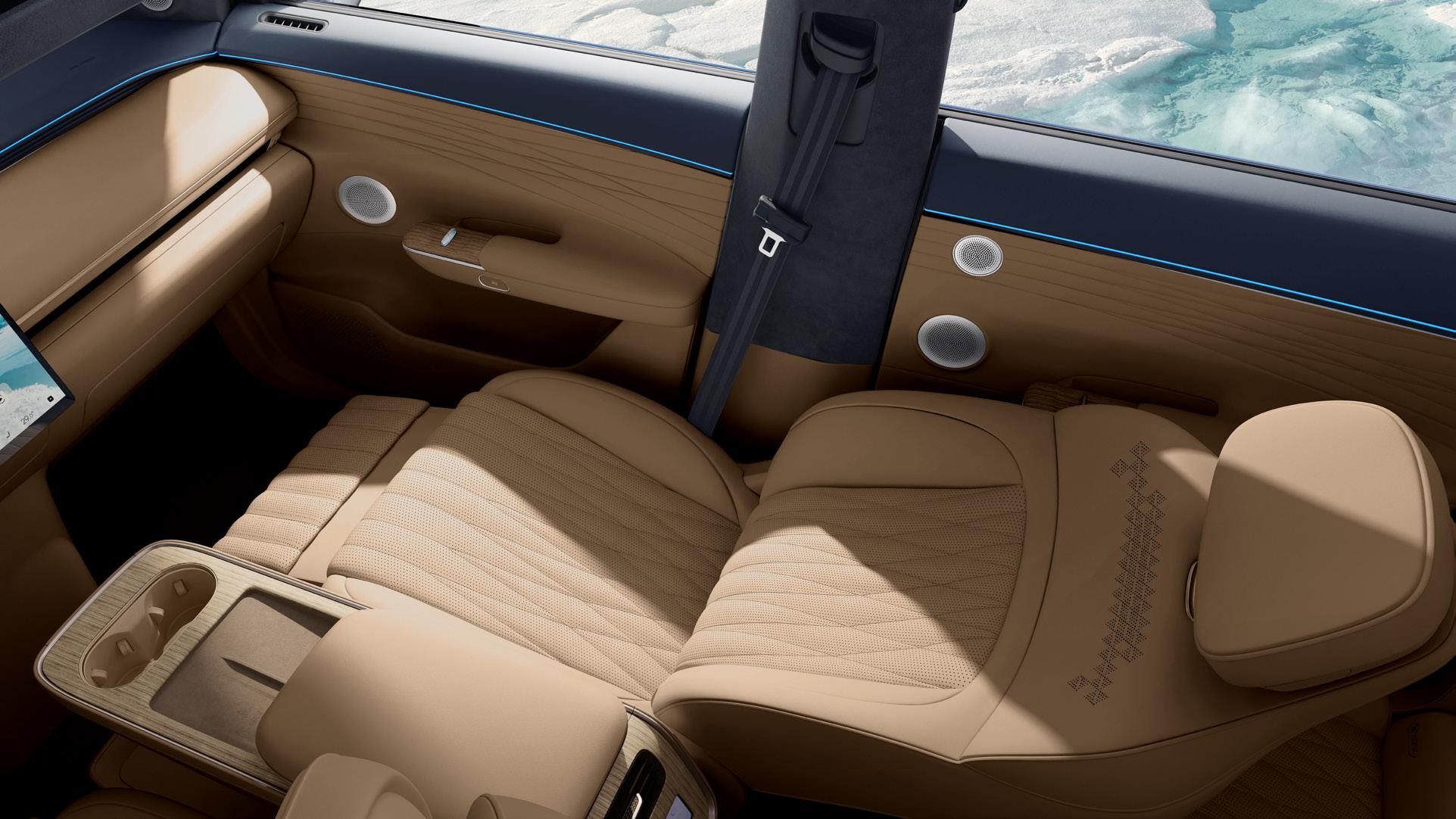
Iminimal clutter. The aerodynamic touches are purposeful and they hint at efficiency as much as aesthetics.
Step inside and the ET cocoon feels both premium and spacious. Zero-gravity seats cradle the body comfortably during long journeys, while high-quality materials and soft finishes enhance the cabin experience. The layout is intuitively geared toward comfort, with ambient lighting and well-placed controls. Rear passengers enjoy generous legroom and well-considered amenities that elevate everyday usability.
n a crowded field of electric and range-extended SUVs, the EXEED ET offers a bold promise: deliver both performance and peace of mind. With its pioneering Golden Range Extender (REEV) technology and sleek styling, this SUV targets drivers who want the best of both worlds, the silence and torque of electric driving, without the anxiety of limited range. On paper, it’s ambitious, and on the road, it doesn’t disappoint.
Visually, the ET walks a fine line between bold and elegant. Its proportions are muscular without being overbearing, and subtly sculpted lines add a sense of motion even when stationary.
The design incorporates modern cues: sharp LED lighting signatures, flush surfaces, and
Where the ET really asserts itself is in its tech suite. You’ll find an intelligent cockpit interface that anticipates driver intent while reducing distractions. Voice commands in Arabic add localized convenience, and a suite of display screens and digital gauges feel responsive and precise. Safety credentials also impress as the ET scored 91.28 % in occupant protection, ranking first among mid-to-large electric SUVs in C-NCAP testing.
Acceleration is brisk, striking a rare balance between excitement and refinement. The torque delivery is smooth and immediate, thanks to its electric drivetrain, while the air-adaptive suspension system absorbs road imperfections with poise. In everyday driving, the fuel-electric hybrid logic means range anxiety all but disappears which is ideal for both city commutes and highway stretches.
The EXEED ET is not just a technical showcase; it is a bold statement of intent in the luxury SUV segment. By merging thrilling performance with intelligent range-extender technology, it delivers peace of mind for every journey. Inside, the serene cabin with zero-gravity seats, intuitive intelligent cockpit, and command makes every drive effortless and indulgent. Add to that the smooth sophistication of its adaptive air suspension and the reassurance of classleading safety, and the ET stands out as one of the most exciting new SUVs to arrive on the market.

By Natasha Dury
The Nissan X-Trail will always feel like a milestone for me. Back in 2019, just weeks after I got my license, Nissan invited my mum and me to Fujairah with a group of motoring journalists to test drive the X-Trail.
I remember the shock when I saw my name added as a co-driver to my mum’s car. It was my first official test drive as a motoring writer. Nervous but excited, I slid behind the wheel of the X-Trail, not knowing that this SUV would end up shaping the way I think about cars and driving.
Even today, the X-Trail continues to impress with its confident stance and bold design. Its sculpted body, floating roofline, signature V-Motion grille, and sleek LED headlights give it an edge that feels modern yet timeless.
Back then, I felt proud just to be in it, even though my mum had a few doubts and heart attacks during the difficult parts of the test drive!
Now, I appreciate how its style balances adventure-ready vibes with city chic, perfect for everything from weekend road trips to pulling up at your favorite café.
Inside, the cabin has always been about comfort and space, but it has evolved to feel even more premium and versatile. Nissan’s Zero Gravity seats, tri-zone automatic climate control, and flexible seating options make long drives more enjoyable.
When I first drove it, I loved how high I sat on the road, giving me confidence as a new driver. Today, the panoramic sunroof, intuitive controls, and family-friendly touches, like configurable storage and a power tailgate that make it a natural fit for Gen Z lifestyles where practicality meets style.
Technology is where the X-Trail really shines. The 12.3-inch digital driver display, wireless Apple CarPlay, Android Auto, and the 10.8inch head-up display make it feel like a car built for our generation— where playlists, navigation, and socials matter as much as smooth handling.
The 360-degree Around View Monitor makes parking and city driving stress-free, while ProPILOT Assist brings semi-autonomous driving tech into the mix. Add to that the premium sound system, and every drive becomes a vibe. With Nissan’s e-POWER hybrid technology, sustainability is now part of the X-Trail’s DNA, something Gen Z genuinely values.

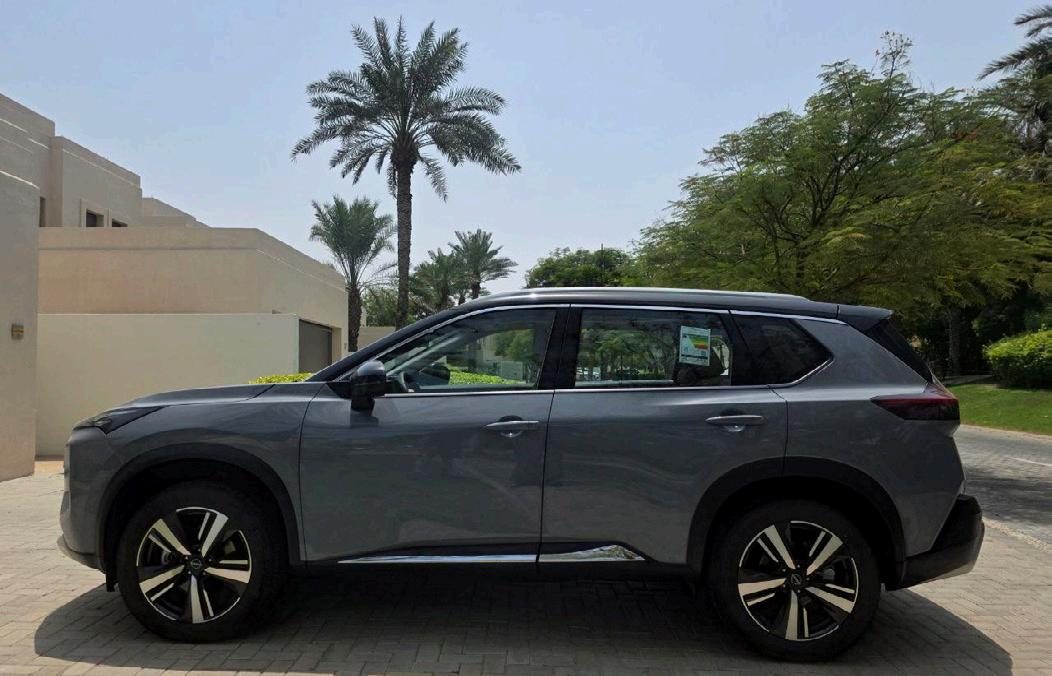
Performance-wise, the X-Trail gave me confidence from the very start. It’s smooth yet powerful, with intelligent 4x4 drive modes that handle both city streets and mountain routes with ease. On that first Fujairah trip, I was surprised by how capable it felt for a rookie like me. Now, with the latest model, it is even more refined, balancing fuel efficiency, grip, and power, making every drive feel effortless.
Looking back, the Nissan X-Trail was the SUV that marked my first step into automotive journalism. Today, it is still the kind of car that inspires confidence, freedom, and fun, making it the perfect match for a generation that wants practicality with personality. For me, it is not just a vehicle. It’s where my motoring story began.
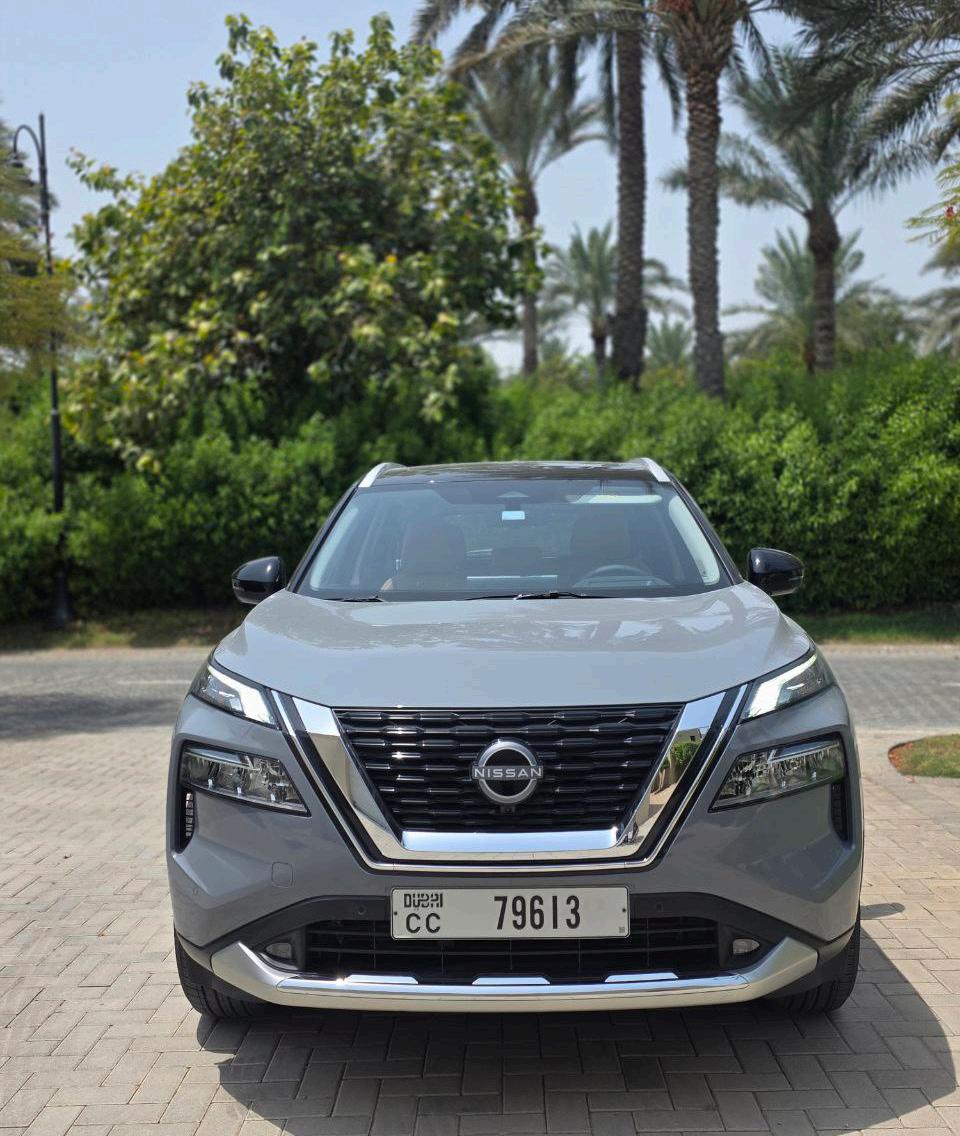
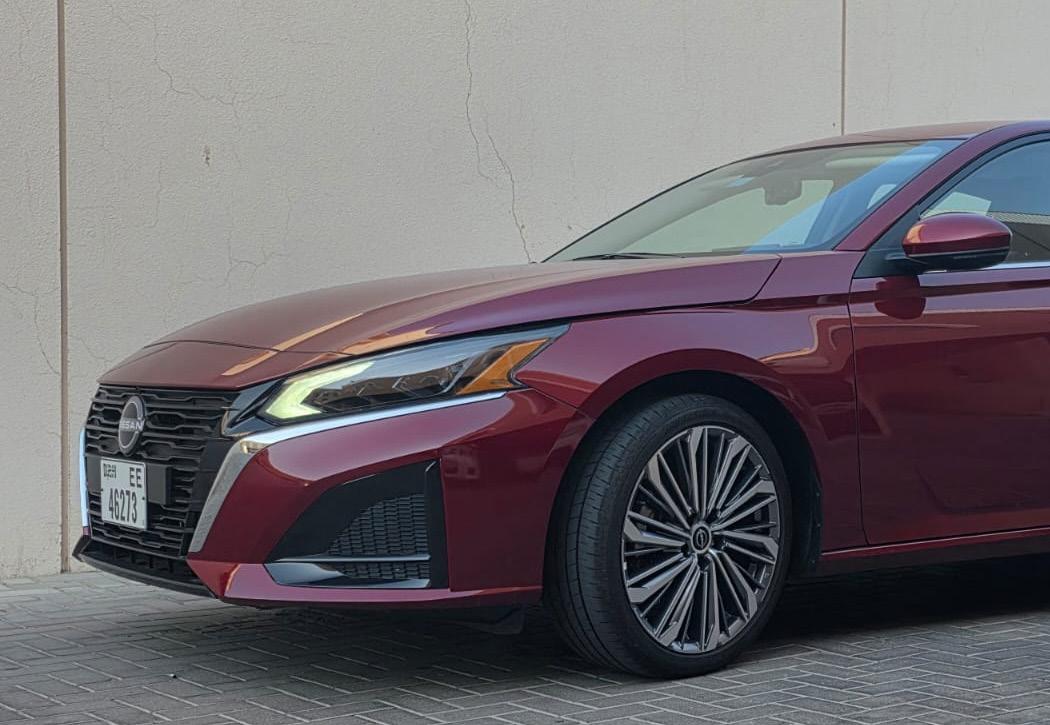
By Natasha Dury
The new Nissan Altima is all about showing up with quiet confidence. Driving it around Dubai felt like hanging out with that one friend who’s chill, stylish, and surprisingly smart about everything. It does not need to prove anything and fits right into your daily rhythm, whether you are cruising down Sheikh Zayed Road or heading out for a weekend with friends.
On the outside, the Altima feels more grown-up yet sportier than ever. The V-Motion grille and sleek LED headlights give it that premium energy without looking overdone. The redesigned alloys add attitude, and from some angles, it almost channels a luxury sedan vibe. It is perfect for heading to a cool café or a casual business meeting as it is
clean, bold, and mature enough to turn heads without trying too hard.
Inside, Nissan flexes its tech and comfort game. The cabin is spacious, the seats are soft but supportive, and everything feels driver-focused. The floating touchscreen is super responsive, wireless Apple CarPlay and Android Auto sync up instantly, and the Bose audio setup hits every beat perfectly. It feels intuitive for my generation too as Gen Z drivers don’t want to dig through menus just to change the A/C, and thankfully, Nissan gets that. Even long drives feel effortless thanks to how quiet and solid the cabin feels.
Technology-wise, the Altima keeps things advanced but not overwhelming. You get a 7-inch digital instrument cluster, adaptive
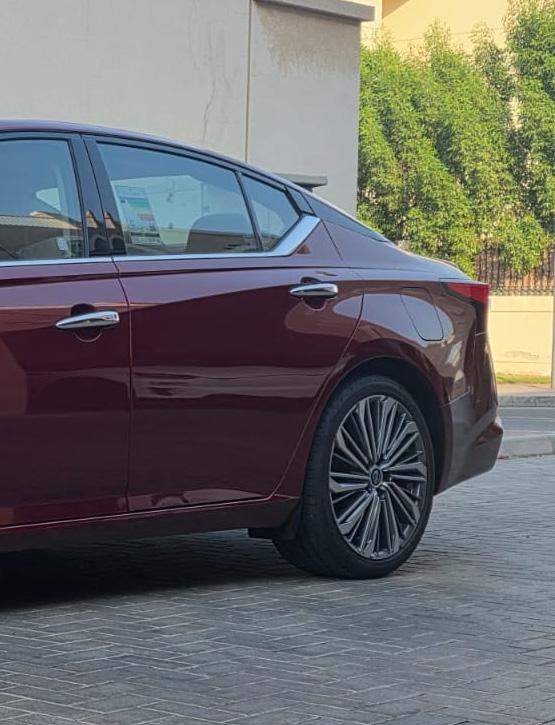
cruise control, ProPILOT Assist, and tons of smart safety features. It is the kind of car that makes you feel like tech’s working for you, not showing off. Everything from lane-keep assist to automatic braking works in the background, creating an easy confidence on the road.
Performance is balanced and it has plenty of power from the 2.5-liter engine that keeps acceleration smooth and quick enough for city and highway runs. The car feels fluid, refined, and built for the kind of driver who wants comfort with style, not chaos.
After a week of driving, it is clear that the new Nissan Altima is the kind of sedan that grows with you. It is affordable luxury done right and is smart, sleek, efficient, and just connected enough to fit a digital lifestyle. It is not trying to compete with your phone but is complementing it. For my fellow Gen Z drivers who value both aesthetics and practicality, the Altima gets a solid thumbs-up.
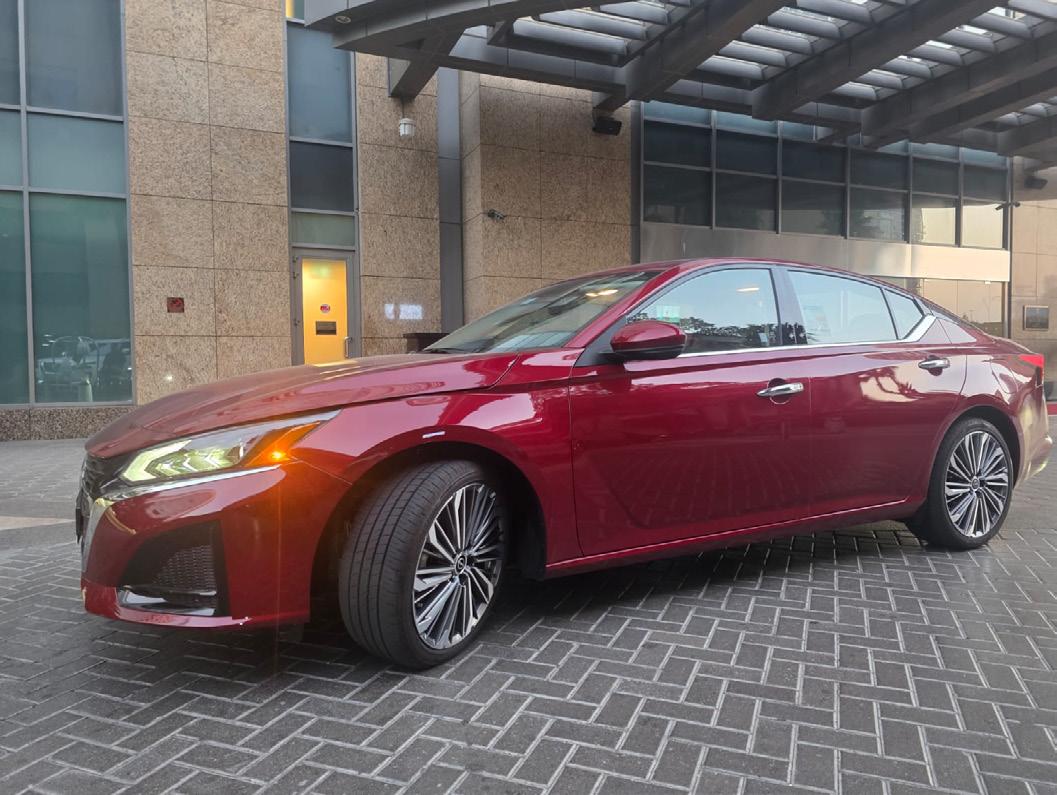

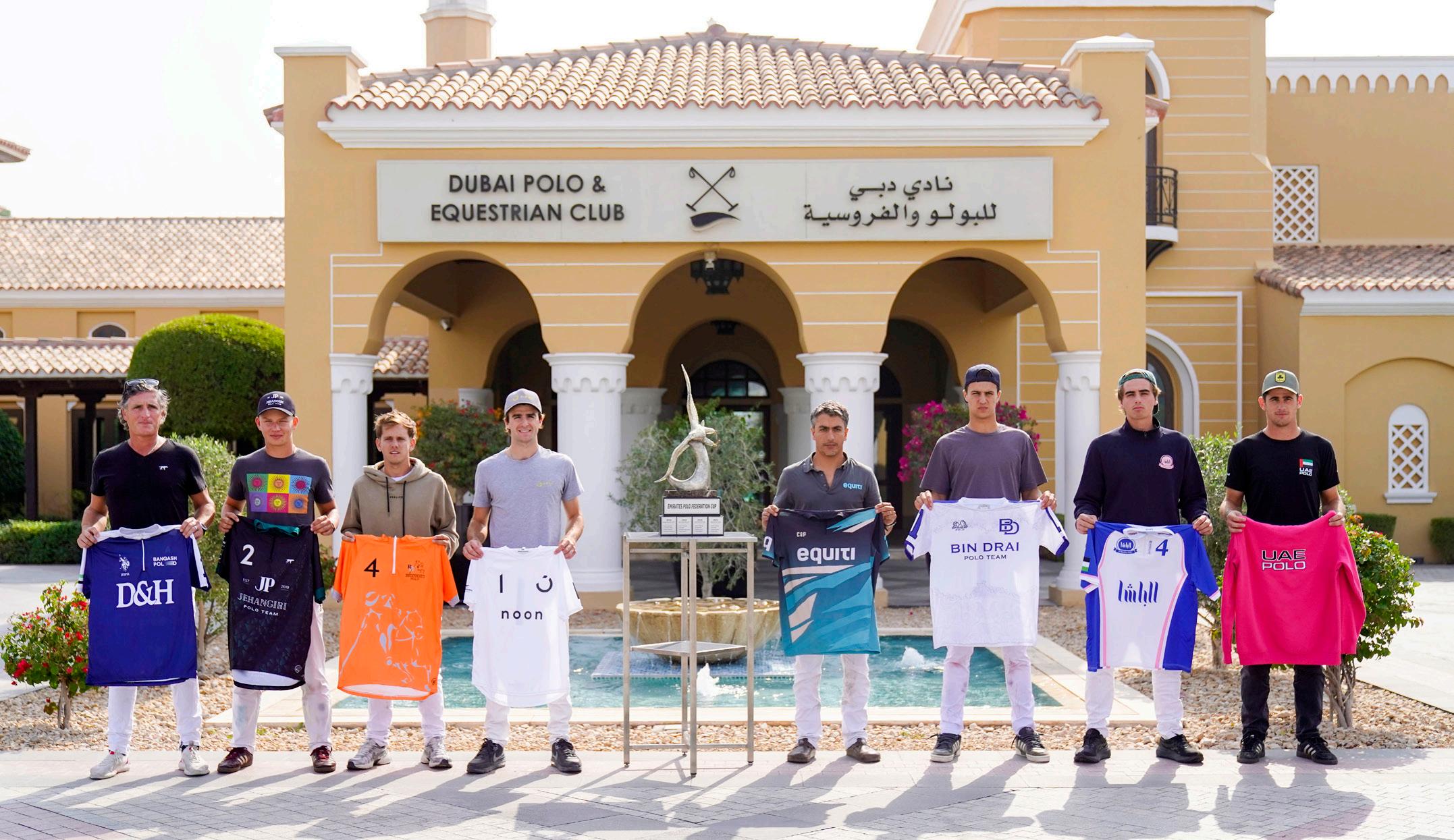
The excitement for the upcoming polo season officially begins as the UAE Polo Federation announced the teams and match fixtures for the 2026 UAE Polo Federation Cup during a live draw held at the Dubai Polo & Equestrian Club.
Recognised as one of the region’s most anticipated local polo tournaments, the UAE Polo Federation Cup will take place from 5th to 17th January 2026, bringing together eight elite teams to compete for the coveted title. This year’s tournament will feature UAE Polo, Noon Polo, Banghash Polo, Bhansali Polo, Jehangiri Polo, El Basha Polo, Equiti Polo and Bindrai Polo many of which are represented by prominent members of the polo community.
The competition is expected to deliver a high level of sporting excellence, culminating in the grand finale on 17th January 2026. Over the years, participating teams have consistently demonstrated exceptional skill, competing at top-tier tournaments locally and internationally, and reinforcing the UAE’s position as a global hub for professional polo.
Commenting on the announcement, Mr. Santiago Torreguitar, Director of Tournaments at the UAE Polo Federation, said: “The UAE Polo Federation Cup continues to be a cornerstone of our competitive calendar. This tournament represents the depth of talent within the region and our commitment to developing polo at the highest level. With eight outstanding teams and a carefully structured fixture, we are confident fans can expect thrilling matches and world-class polo throughout the season.”
Shokry Abouelsoud, General Manager of Dubai Polo & Equestrian Club, added: “Hosting the live draw and the UAE Polo Federation Cup once again is a source of great pride for us. Dubai Polo & Equestrian Club offers a unique setting where sport, tradition, and community come together. We look forward to welcoming players, families, and polo enthusiasts for what promises to be an unforgettable tournament experience both on and off the field.”
The tournament stands as a celebration of skill, sportsmanship, and the enduring legacy of polo in the region, reinforcing Dubai Polo & Equestrian Club’s role in nurturing and elevating the sport across all levels. By providing a prestigious platform on home grounds, the club enables locally based teams, from emerging talent to seasoned competitors, to showcase their abilities on professional fields.
While iconic teams compete on the field, spectators at the Dubai Polo & Equestrian Club can enjoy delectable food and beverage specials at the Terrace, Ala Carte Menu at the Dubai Polo Bar and Picnic Basket for the picnic area.
With fast-paced action, distinguished teams, and an elegant social atmosphere, the UAE Polo Federation Cup offers spectators an exceptional opportunity to experience the sport at its finest. Polo enthusiasts, families, and visitors are invited to attend the matches and be part of a tournament that celebrates athletic excellence, heritage, and the vibrant polo culture of the UAE.
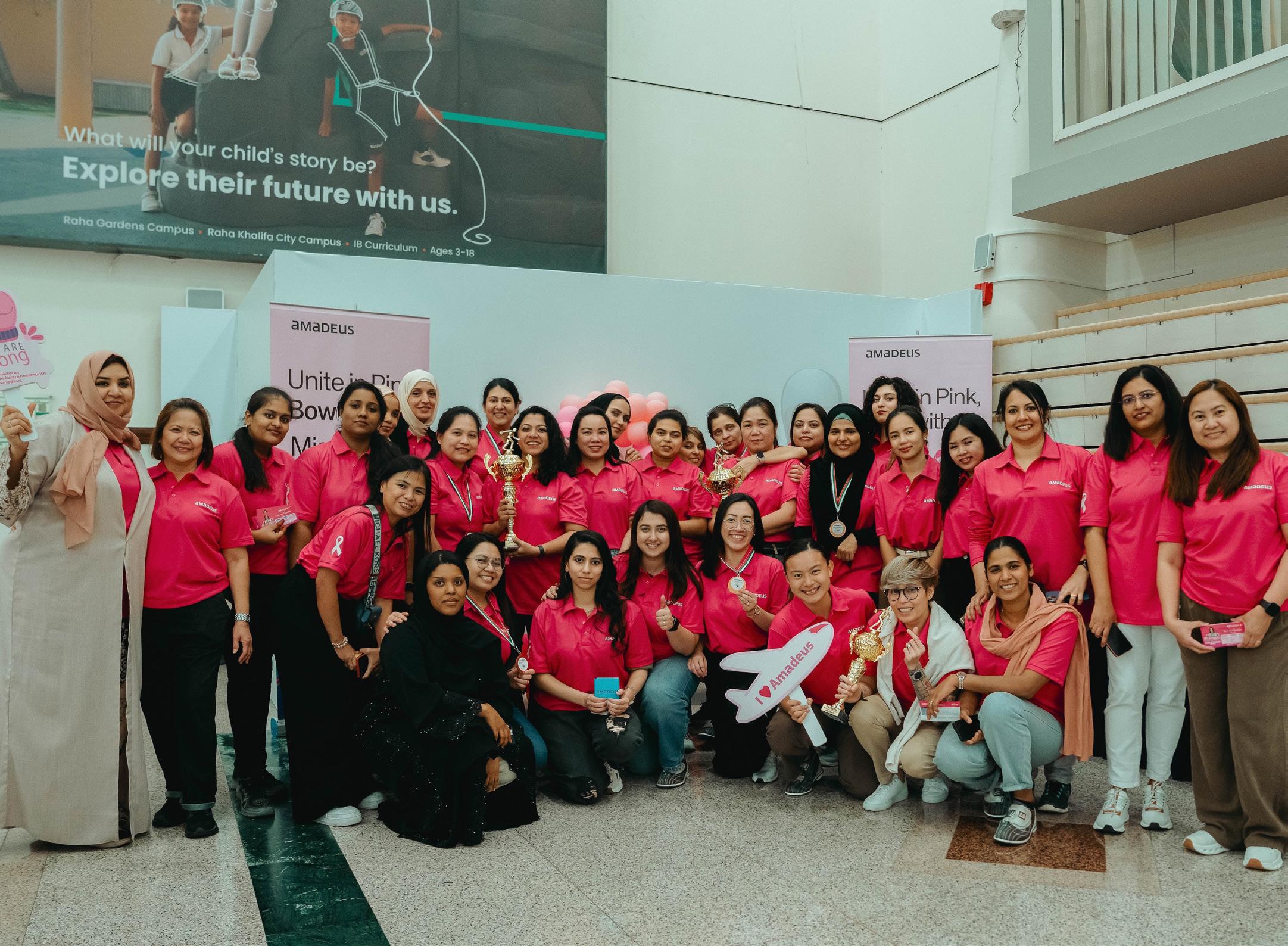
Amadeus Gulf marked Pink October with a series of communityfocused bowling events held in both Abu Dhabi and Dubai, bringing together women travel professionals from leading agencies across the UAE. The initiative, themed “Empowering the Women Network,” aimed to promote breast cancer awareness, encourage early detection, and strengthen professional bonds within the travel community.
The Abu Dhabi event took place at Khalifa International Bowling Centre, followed by the Dubai edition at Dubai Bowling Centre. Both evenings opened with an impactful awareness session on breast cancer led by a healthcare professional, highlighting preventive measures and the importance of regular checkups. This was followed by a lively bowling competition and a networking dinner, creating an atmosphere of camaraderie, connection, and empowerment.
In Abu Dhabi, the top performers of the night were from Nirvana Travel & Tourism, Omeir Travel Agency LLC, and ADNH
Sunshine Travel & Tours, securing the first, second, and third places respectively. The Dubai event also showcased strong performances, with participants from Akbar Travels securing the first and second places, while Tabeer Tourism claimed the third place.
Ernesto Sanchez Beaumont, Managing Director of Amadeus Gulf, emphasized the importance of such initiatives during Pink October, noting that the event reflects Amadeus’ enduring commitment to fostering a supportive environment for women in the travel sector. He highlighted that creating opportunities for women to connect, exchange ideas, and uplift one another is essential to driving progress and strengthening the industry as a whole.
The events concluded with a strong sense of unity and purpose among all participants, reinforcing Amadeus Gulf’s dedication to Corporate Social Responsibility and its mission to advance health awareness, wellness, and empowerment within the travel community.
By Siew Lin
am doing a hands on digital marketing course and looking at how marketing teams are handling this area is worrying. There is an uncomfortable truth in modern marketing that few are willing to confront as too many marketing professionals no longer understand social media because they no longer do social media themselves. Instead, they outsource belief, trust dashboards over intuition, and sign off on budgets that look impressive on paper but deliver little more than illusion.
Across industries, brands are pouring substantial budgets into influencer marketing under the assumption that reach equals impact. What is often overlooked, or conveniently ignored, is that a significant portion of this engagement is not organic at all. Likes, comments, saves, and even followers are frequently purchased through automated systems and engagement farms. These are not consumers. They are not decision-makers. They will never buy the product, use the service, or advocate for the brand. They are simply robots inflating numbers.
The most troubling part is not the existence of fake engagement. It is the fact that many marketing teams are unable to recognise it. When professionals are removed from the daily realities of platform behaviour, algorithm shifts, audience fatigue, and content performance, they lose the ability to distinguish genuine traction from manufactured noise. This disconnect leads to wasted budgets, distorted reporting, and a dangerous culture of self-deception.
Marketing budgets are not abstract figures. They represent company resources, leadership trust, and ultimately, salaries. When strategies are built on inflated metrics and false validation, the entire value chain is compromised. A salary justified by misleading performance is not success but it is borrowed credibility. And marketing leaders, marketing and PR agencies and influencers are all equally responsible.
There is a far more effective and honest alternative: marketers must become hands-on again. Running brand or personal accounts directly, even alongside agencies forces professionals to experience what audiences actually respond to. It sharpens content judgment, builds instinct around timing and tone, and reveals how difficult real engagement truly is. When marketers understand this firsthand, they are far less likely to be impressed by suspicious spikes or generic comment patterns.
They need to understand that the 20 year old with 5000 likes and 800 comments is not realistic and that paying AED 5000.00 per

post just based on looks and figures is actually taking away from the profits of the organisation without adding value.
Equally important is redirecting investment toward owned channels and location-based marketing. Money spent strengthening a brand’s own platforms, community presence, and real-world visibility creates long-term equity. It builds audiences that can be nurtured, measured meaningfully, and converted, without dependency on external personalities whose incentives may not align with the brand’s truth.
This is not a call to eliminate influencers altogether. It is a call to stop blindly idolising numbers and start valuing substance. Influencer partnerships should be selective, transparent, and relevant. It takes a few minutes to check how long a person has written or talked about a subject as experience matters.
Marketing professionals must remember who ultimately funds their role. Brands do not exist to prop up vanity metrics. They exist to grow sustainably, credibly, and profitably. When marketers and PR agencies fail to question inflated engagement or avoid getting their hands dirty, they risk biting the very hand that feeds them.
At its core, digital marketing is about trust between brands and consumers, and between companies and their teams. That trust cannot be built on automated engagement or reports designed to look good rather than be true.
If marketing is to regain its credibility, professionals must step back into the arena, own their platforms, challenge false performance, and advocate for strategies rooted in reality. Anything less is not marketing, it is theatre.

CONTACT:
Aromas Fiji
P.O. Box 9179, Nadi Airport Fiji
info@aromasfiji | www.aromasfiji.com | TEL: +679
Citronella
White Frangipani
Pink Frangipani
Sandlewood Vanilla
Japanese Honeysuckle
Vanilla
Sandlewood Vanilla
Aloe Vera Flavoured Soap
Rose Petal Soap
Orange Flavoured Soap
Moringa Flavoured Soap
Neem Flavored Soap
Lemon Grass Flavoured Soap
Mint Flavoured Soap
Rosemary Flavoured Soap
Basil Flavoured Soap
Goat Milk Flavoured Soap
Charcoal Flavoured Soap