




Our nation’s democracy continues to be tested by the Trump administration as the president continues to try to move America toward authoritarianism as witnessed in countries like Hungary and Turkey, for example. If America ever loses its democracy, it isn’t going to be by some violent revolution, it is going to be done by a series of rightwing actions that will chip away at our democracy. Victor Orban of Hungary seems to have written the playbook for moving a democracy to an authoritarian state.
On the optimistic side, another Eastern European country, Poland, was on a path to authoritarianism, but unlike Hungary, all the opposition parties worked together to defeat the ultraright Polish government at the ballot box, putting Poland back in the democratic camp.
First you get elected and then you decide that you don’t want to leave office. You use the power of your office to slowly crush anyone or any organization you view as your opposition. You weaken the courts which are supposed to be the biggest check on executive power, and you intimidate and threaten anyone or any institution that gets in your way. One of the main targets is the independent free press/media.
After the assassination of Charlie Kirk, the Trump loyalists have decided to try to criminalize one of the most important tenants of our democracy, free speech. First of all, there is absolutely no place for political violence and assassination in American politics or in any democracy. You use your speech, persuasion and the truth as your weapons in our political fights.
As you have seen with Trump, he has done a pretty good job of intimidating the major corporate media, especially if they need government approvals such as a favorable anti-trust ruling so they can proceed with a merger or acquisition. He is now even threatening to take the licenses away from television stations because their late-night comedians are critical of him.
Trump is blaming the liberals for inflammatory speech that caused the death of Mr. Kirk. In reality, it is Trump who has been the one who has been quick to attack the left in the most vile and derisive terms. In a functioning democracy the other party is your opponent on the issue of the moment and not your sworn enemy who may actually be your ally on the next issue. In Trump’s usual distortions of the truth, he and his minions plan to go after anyone who says anything critical of Kirk. Our First Amendment protects free speech, and that speech may be disgusting and hateful but that is the speech the First Amendment was designed to protect from budding autocrats. Even rightwing Republicans like Senator Ted Cruz and talk show host Tucker Carlson are beginning to say this is going a bit too far.
Ironically, as most of you know, it is the right that has been far more violent than the left. A study by the conservative CATO institute documents that right-wingers have been more than five times more likely to be responsible for politically motivated killings of Americans in the United States as compared to left-wingers.
I’ve always been intrigued trying to understand what liberal, educated Germans were thinking and doing around 1937 as they were watching Hitler continue to amass more power. Many did try to resist in a variety of different ways, but unfortunately there were not enough people resisting before it was too late.
What we learned is that as long as we are a democracy we need to use our First Amendment rights to push back and non-violently resist as much as we can and as often as we can. We are a democracy, and the power of our citizens still reigns supreme.
The Shepherd Express has been pushing back and speaking truth to power for the past 43 years. Our work has now become more important than ever. The Shepherd is independently owned and not
subsidized by grants from the government or, like radio and television, dependent on the government licensing for the use of our public airwaves. We are truly independent and not afraid to state the truth. We continue to do a print publication along with our comprehensive website, our informative daily newsletter and our vibrant social media, because research shows that print is still one of the most trusted and powerful means of communication.
Also, print publications like newspapers and news magazines have been shown to strengthen the fabric of a community. It is expensive to print tens of thousands of Shepherds each month, but we continue to print because it’s important for our community to have an honest, locally owned, and independent newsmagazine. We need publications like the Shepherd now more than ever. Research shows the damage a community suffers when their printed news publication goes out of business.
Print working along with its website, digital daily newsletters, and social media is the most effective way to communicate. The Shepherd Express reaches a wide and diverse audience of all ages, but it is not cheap to produce. We rely on the support from our advertisers and from our readers who have joined our support group, Friends of the Shepherd Express. We don’t charge for our publication like other news magazines, and we have no paywalls on our digital products because we don’t believe it is right to limit a person’s access to honest journalism because they don’t have the means to pay.
Please consider joining your fellow Milwaukee area individuals who are Friends of the Shepherd Express and who value honest and intelligent news and commentary that does not talk down to you. The donation page is here: https://shepherdexpress.com/ support
Louis Fortis is Publisher and Editor-inChief of the Shepherd Express.

6 Lead is in Milwaukee Public Schools The Community Demands Answers
10 Is There a Method to Trump’s Global Trade War Madness?
Issue of the Month
13 This Modern World
14 Charles Koenen, Milwaukee's "Beevangelist," Spreads the Buzz of Bees — Hero of the Month
PUBLISHER & EDITOR-IN-CHIEF: Louis Fortis (louis@shepex.com)
MANAGING EDITOR: David Luhrssen (dluhrssen@shepex.com)
GENERAL MANAGER: Peggy Debnam (peggy@shepex.com)
MEDIA SALES MANAGER: Jackie Butzler (jackie@shepex.com)



SHEPHERDEXPRESS
AND PROMOTING
FUTURE. MOREOVER, OUR DEDICATION TO SUSTAINABILITY
TO THE
OF THE PUBLICATION'S LIFECYCLE. OUR PRINTED MATERIALS ARE DESIGNED TO BE RECYCLABLE, ALLOWING READERS TO PARTICIPATE IN THE CIRCULAR ECONOMY AND PLAY A PART IN PRESERVING THE ENVIRONMENT.


16 Interview with Wendy K. Baumann — MKE SPEAKS: Conversations with Milwaukeeans FOOD & DRINK
20 A Little Something Extra’ at Lagniappe Brasserie
22 E xperience the Yemeni Coffee Shops Opening Across Milwaukee
Beverages
26 Milwaukee’s High Sodas Scores National Awards

28 Is Deafness a Disability?
Out of my Mind
30 Are the Bugs in Your Gut Aging You?
True Health
32 Is your Home Ready for the Wisconsin Winter? — Home & Garden
34 Healthy Gardens Begin in Fall
36 Credit Ratings: Do You Know the Score?
Personal Finance
40 New Season, New Faces, Now What?
Sports Spotlight
44 The Night Bruce Springsteen Blew Up 48 5 More Haunted Milwaukee Places to Visit
SENIOR MEDIA CONSULTANTS: Bridgette Ard (bridgette@shepex.com) Chuck Hill (chuck@shepex.com)
MEDIA CONSULTANTS: Jennifer Jepson (jennifer@shepex.com)
IN MEMORY OF DUSTI FERGUSON (OCTOBER 18, 1971 – NOVEMBER 20, 2007
WEB COORDINATOR: Caroline Dannecker (caroline@shepex.com)
DIGITAL STRATEGIST: Sophia Hamdan (sophia@shepex.com)
STAFF WRITER & CIRCULATION COORDINATOR: Blaine Schultz (blaine@shepex.com)
STAFF WRITER: Ben Slowey (ben@shepex.com)
LAYOUT AND DESIGN: Timothy Czerniakowski


E xpress Yourself! Cover Contest Results 56 This Month in Milwaukee 14 Things to do in October
60 Ask Ally
ME OUT
E xploring Milwaukee's Love Matrix
Dear Ruthie
‘ Ron Forever’ Filmmaker Ben Eisner Comes to

Distribution: New issues of the Shepherd Express magazine are on the street, on the first Wednesday of each month, free of charge. The Shepherd Express may be distributed only by authorized distributors. No person may, without prior written permission of the Shepherd Express, take more than one copy of each monthly issue. Mail subscriptions are available. No refunds for early cancellations. One year (12 issues) via First Class mail: $100.00.
207 E. Buffalo St., Suite 410, Milwaukee, WI 53202 Phone: 414/276-2222
Advertising Inquiries: jackie@shepex.com e-mail: info@shepex.com URL: shepherdexpress.com

BY BEN SLOWEY

It’s long been known that lead is a serious public health issue in Milwaukee homes and public properties, whether from water, paint or soil. Children are at particularly high risk; according to Wisconsin Examiner, more than 1,200 children in Milwaukee test positive for blood lead levels every year. It is not exclusively a Milwaukee issue either; lead poisoning affects children in every county in Wisconsin, affecting more than two thousand children annually, according to the Douglas County website.
Lead paint was outlawed in consumer products in 1978. However, the Milwaukee Public Schools (MPS) website says 54 MPS buildings were built prior to 1950, with 52 built between 1950 and 1978. The average age of MPS buildings is 82, significantly higher than the national average of 49. The Journal Sentinel found that MPS had cut about 85 percent of its painting staff in the last 30 years. An August 2024 report to the Joint Committee on Finance shared that MPS in total had 265 million dollars in deferred maintenance logged for 140 facilities.
In January, an MPS student tested positive for elevated levels of lead, which was traced to Golda Meir Lower Level School. Once the Milwaukee Health Department investigated, high levels of lead in the form of chipped paint and dust were found in at least nine schools. A number of them were temporarily closed, with students relocated to different buildings.
Wisconsin Health Information Organization data from 2023 shows that 52 in 1,000 Milwaukee County children have a lead-related diagnosis, and that the number of children with lead-related diagnoses on Medicaid insurance is 3.6 times higher than children on commercial insurance. This reflects that lower-income environments with older housing are most vulnerable to lead poisoning.
Lead is an endocrine disruptor that can cause hormonal imbalances, leading to biological, functional and metabolic changes. Adverse health effects from lead can include learning disabilities, behavioral issues, executive function, motor control difficulties, hypertension and renal problems, among others.
A 2020 study found child lead exposure linked to increased risk of gun violence and victimization in Milwaukee, and a 2013 study found it linked to increased risk of school suspension.
Concerned parents formed the group Lead-Safe Schools (LSS) MKE in response to advocate for safe, healthy schools in the midst of the lead crisis, inviting community activists, including Get the Lead Out Coalition, to raise awareness and take action.
Ron Jansen, a member of LSS, explains that years of deferred maintenance and the age of many of the buildings has led to the current situation. “Kids are being exposed to lead, and that has directly turned into some children being lead-poisoned.”
LSS founder Kristen Payne’s child’s school, Golda Meir, alerted parents about the positive lead test. “The risk assessment for our school was shocking,” she describes. “The levels of lead were some of the highest found at any school. The remediation lasted about two months, and our school never closed down.”
She had requested a virtual learning option for her child but was denied. “I was forced to send my kid to school, knowing full well that it wasn’t safe,” Payne remembers. “We were told by the children that some of the work was being completed while kids were in the space, and I still have yet to get answers if that was appropriate.
Organizer Lisa Lucas joined LSS when her daughter’s classroom at Fernwood Montessori School was marked as a room where work was remediated improperly. “They didn’t lay down any plastic and had lead dust flying on the desks, and that was when kids were still in the building,” she recalls.
Fernwood was closed for six weeks, yet Lucas expresses frustration that she received no communication about when it would reopen. “It really exposed the inability for MPS to handle this crisis on its own,” Lucas continues. “It also exposed the inefficiency with which the MPS central office handles these matters.”
Another organizer, Kat Cisar, has twin first graders at Trowbridge School, which was the first school to shut down. She remembers feeling caught off guard by everything. “It felt like parents were always the last to know, and I think MPS is working on that, but the communication has been atrocious.”
Jansen reckons, “My son was not in one of the closed schools, but his school was built before then, so there is a high likelihood that there is lead paint in his building.”
Lead pipes used in laterals and internal plumbing, also hazards, were outlawed in 1986. While lead laterals connecting MPS buildings to water service were removed by 2016, internal plumbing containing lead pipes remains a concern. Soil contaminated with lead, which had been found at Golda Meir, is part of the issue as well. “There is no safe level of lead exposure for children,” Jansen says. “The acceptable level is zero. All of these sources are an issue.”
This is complicated by the fact that although lead exposure can cause permanent harm, it may not show up in blood tests after a certain period of time. “The city’s response has been inadequate,” Jansen adds, “but the Health Department has been capitulating to the demands and releasing public records of the inspections and results. That’s good, but it also shouldn’t have had to be a demand from the beginning.”
The existing MPS Lead-Based Paint Compliance Program, which mandates annual visual risk assessments for chipping pain, had not been reliably followed. MPS announced in early April that Facilities and Maintenance Services Director Sean Kane had been fired, with longtime MPS employee Mike Turza taking over.
A few weeks later, MPS put forth its Lead Action Plan to address the crisis drafted in collaboration with the Milwaukee Health Department. The plan entails remediation work being done throughout the summer and into the coming school year in 106 school buildings. It also involves expanding access to blood lead testing, hiring a third-party environmental health consultant, increased contractor personnel, and the development of a detailed surveillance protocol for inspections.
LSS holds the position that dust wipe sampling be implemented as part of the plan in addition to the routine visual inspection.




The group also makes clear that they do not want lead in water or soil to be left out of the conversation, noting that not every school being remediated has been tested for lead specifically in either. They also point out that no middle schools or high schools have been listed for remediation. “It’s our demand that every school be tested,” Jansen states.
Milwaukee’s Deputy Commissioner of Environmental Health Tyler Weber sympathizes with these concerns. “Parents are right to expect lead-safe environments in every school. While the highest medical risk is in children under age 6 and in some special-needs settings where pica behaviors may occur, MHD’s position is clear: every school should be lead-safe for all students and staff.” Weber says that lead testing in water will expand across MPS through the Environmental Protection Agency (EPA)’s Lead and Copper Rule Improvements, in partnership with Milwaukee Water Works, requiring sampling for all K-8 grade schools and childcare centers within five years of the October 2027 compliance date.
Water Works plans to test the water of 50 schools this fall while MPS will replace kitchen faucets, document filter changes at drinking stations and improve signage. The Health Department is working with MPS to determine appropriate, sustainable hazard-reduction efforts regarding lead in soil.
LSS has expressed frustrations with lack of transparency from MPS regarding routine updates about remediation and testing. “That stuff is a daily update,” Lucas says. “We deserve that. Our kids need that.” Organizers do recognize the city and MPS are under-resourced.
Jansen identifies the root cause of this crisis being redlining and the intentional underfunding of Wisconsin public schools at the hands of state Republicans.
“There is not enough money in public education because Republicans want to destroy MPS specifically so that they can privatize it,” he affirms. “This is the direct result of those efforts. What we need are strong public schools, and we can’t have that when we have a state government that wants our schools to die.”
“Public health is about collective health, not personal health,” Cisar asserts. “It’s not about the supplements you take; it’s about whether you have access to clean water and schools that don’t have lead in them.
MPS Board President Missy Zombor notes that the cost to repair, replace, and maintain schools with lead risks goes beyond typical maintenance budgets. “That burden is compounded by the fact that the state hasn't adjusted education funding for inflation since 2009 and underfunds special education reimbursements,” she elaborates.
“When there's nothing left to cut, every budget move you make can create a new problem or exacerbate an existing one.”
Superintendent Dr. Brenda Cassellius assumed her role on March 15. At a listening session held at German Immersion School on August 4, she emphasized, “There’s no excuse for the state to have a $4.2 billion budget and give our kids a goose egg.
In April, CNN reported that Milwaukee Health Commissioner Dr. Michael Totoraitis had contacted a federal CDC team for help in addressing the MPS lead crisis, only for said team to be cut in a massive layoff of federal health workers. According to Spectrum News 1 the following month, Milwaukee Health Department Spokesperson Caroline Reinwald confirmed that no CDC agents had been deployed in Milwaukee to assist with the MPS crisis, despite what Health and Human Services Secretary Robert F. Kennedy Jr. told senators on Capitol Hill.
Weber comments, “I don’t know where that discrepancy came in. The CDC team has now been rehired and we’re talking with them once or twice a week to see where we go from here, but we did miss a critical moment of working with them.”
Clinics offering free lead testing can be found via the Health Department website as well as the MPS lead report.
“The more lead screenings are conducted,” Zombor says, “the better the data will be to track trends in exposure around the city, which allows the Health Department to implement more effective preventative programs to protect children.”
The MPS Board’s Accountability, Finance and Personnel Committee recently approved a resolution, co-sponsored by Directors Missy Zombor and Megan O’Halloran, that directs the MPS administration to adopt key practices and procedures that keep them accountable to the Lead Action Safety Plan, which includes a public-facing dashboard that shows progress towards recommendations as well as lead surveillance documentation added to annual school audits.
Zombor contends, “Our hope is that it will not only help MPS move forward in the short term but will provide long-term and sustainable policies and procedures that can help the district better monitor and maintain facilities and give families peace of mind.
Local group Metcalfe Park Community Bridges (MPCB) has worked extensively with LSS in this work, as they assess health and wellness at the individual, family and community levels. Deputy Director Melody McCurtis explains, “As we’ve been doing this work, we’ve found that the majority of the housing stock in Metcalfe Park is full of lead.”
One MPCB initiative has been the distribution of lead filtration systems to folks whose homes are affected. In response to the MPS crisis, MPCB was able to purchase lead filters for the schools, which can be attached underneath sinks. “That way, the cold water is getting filtered for lead but for other things too,” McCurtis notes. “We did it to respond to the needs of the community so that they can at least have some water that they know is safe.”
In June, CBS 58 reported that MPS had been fined $5,500 by the Wisconsin Department of Health Services for state code violations during its lead remediation work, with paint chips and debris found in places previously cleared. Seven of the 13 fines came from under Kane’s leadership. According to the Daily Reporter the following month, JCP Construction, the contractor enlisted by MPS to hire certified lead remediation companies to administer remediation, had been investigated and fined as well for hiring non-certified workers from out-of-state.
On June 24, the MPS board of directors passed Superintendent Cassellius’ proposed $1.5 billion budget for the 2025-26 school year, which includes at least $16 million for lead stabilization work and 20 additional facilities workers.
A Wisconsin Public Radio article dated June 27 reports that MPS had spent about $3 million on lead remediation at that point, and that crews had removed about 410,000 tons of waste. On July 31, a progress update from MPS shared that 150 painters have been working on remediation, with nine schools cleared of lead hazards so far.
LSS urges Mayor Cavalier Johnson to publicly appeal for state leverage via lobbies or standalone bills for long-term lead remediation, pointing out via an Instagram post that the city pays for annual lead-in-water testing for charter schools but not MPS, as well as that the Milwaukee Police Department receives 44% of the city budget while the Health Department only receives 3%.
“They have a responsibility to make sure that the school district they want to keep public has resources for the kids to not get poisoned,” Lucas maintains. “Every day, we get messages from parents who have so many questions. They have no other place to turn to because these systems are failing them.”
Payne puts it, “We love our public schools, and that’s why we’re fighting. Part of parents’ decision making about what school to go to is where the school falls in this lead plan.”
“The city owns these buildings,” Jansen says. “The school district is responsible for maintenance, but if the city owns the buildings that are a threat to the health and safety of the people occupying them, the city does have a burden to bear here.”
Governor Tony Evers had originally proposed an investment of $300 million into long-term lead remediation work in Milwaukee for the 2025-27 Biennial Budget. Unfortunately, Republicans gutted the budget proposals, and Evers ultimately signed the budget without the investment.
State Representative Ryan Clancy shares insight, “Even the $300 million in Evers’ suggested budget would have been insufficient to get the lead out of our homes, schools and other public places. The Republican budget which Evers is now celebrating having signed failed to meet the moment in public health just as it did public education.”
McCurtis resents that the community is expected to not only spotlight a problem but solve it as well. “If the community is able to do a rapid response, then the schools and other entities like our city and our state should be able to do a rapid response. We keep getting delays for how this issue will be addressed.”
She continues, “Black and Brown communities aren’t seeing the response. We need to see implementation and not PR stunts, and the parents, teachers and communities need to be in the room. Kids and teachers shouldn’t be in environments where they need to worry about their health, where they don’t know they’re getting poisoned while we’re wondering why kids don’t have impulse control or can’t sit still.”
Parents or community members looking to get involved in Lead-Safe Schools MKE can get in touch with the group on Instagram or email them at leadsafeschoolsMKE@ gmail.com. LSS plans to continue to hold meetings until the issue of lead in schools is fully addressed. Records of their previous press conferences, petitions and resources are listed on Linktree.
Lucas concludes, “All the resources that we need to make every Wisconsin community safe for every single child already exist. We have everything we need except political will. I would like to see state legislators, city alderpeople and county board members to make noise about this. Where is everybody?”
Ben Slowey is a Staff Writer for the Shepherd Express.



Is There a Method in Trump's Global Trade War Madness? Is There a Method in Trump's Global Trade War Madness?
E.G. NADEAU
Iwas going to dismiss the above question with a quick “No.” But when Trump imposed a 50% tariff on India in early August to deter it from buying cheap oil from Russia, I decided that the question needed a more nuanced answer. A tariff can serve as a form of sanction by one country against another in an attempt to change the latter country’s behavior. In the case of India, however, the increased tariff seems to have had the opposite effect.
So, with very few exceptions, my answer is still “No.” This article looks into the negative impacts of Trump’s tariff “policies,” describes the damage that his chaotic tariff roller coaster is doing to international trade and people’s lives and summarizes opportunities for corruption that this chaos has created for him and his “insiders.”
Paul Krugman, a recipient of the Nobel prize for economics in 2008, recently described the problem succinctly: “Trump’s whole trade war is based upon a deluded version of how the world economy works.”
Trump attended the prestigious Wharton School of Economics. But how he got in, what he learned there, and how he graduated remain a mystery. Even his grade point average while there is not public information.
In his first introductory class, he should have learned things like:
• The price of goods and services varies with their supply and demand
• Markets hate uncertainty.
• The current global trading system operates fairly smoothly, based on decades of trial and error.
• If it ain't broke, don’t fix it.
But Trump’s infatuation with imposing tariffs on the rest of the world as a means of strengthening the U.S. economy— particularly by adding U.S. manufacturing jobs—was not derived from his course curriculum at Wharton.
Trumponomics is not just comprised of the U.S. increasing tariffs on countries around the world, but also on unpredictably raising and lowering tariffs and threatened tariffs. Since his so-called “Liberation Day” on April 2, 2025, nobody (including Trump) has had any idea from day to day what U.S. tariff rates would be threatened, imposed, increased or decreased on any particular country or uninhabited island.
As mentioned above, markets hate uncertainty; Trump’s tariff craziness has given world economic growth projections a severe case of the willies, and U.S. projections an even more severe case. As of the end of July, the International Monetary Fund projected a 10% decline in world economic output in 2025 compared to 2024 (a growth rate of 3% in 2025, down from 3.3% in 2024). For the U.S., the projected damage to growth is even more dramatic—a 32% decline (1.9% in 2025 down from 2.8% in 2024).
I hasten to add that numbers are just numbers. In poor countries, slower growth impacts tens of millions of real people who are living on the margins of survival. In the U.S., the Yale Budget Lab calculated on August 7 “an average per household [annualized] income loss of $2,400 in 2025” resulting from rises in tariffs—in most cases not lifethreatening, but nonetheless painful for poor and middle class residents.
According to CNBC, the worst impacts of Trump’s tariff madness are yet to come. The primary reasons for these delayed effects are that importers stocked up on items prior to the imposition of the tariffs and now are gradually passing the higher costs on to consumers. Thus, in the long run, tariffs will effectively be a tax on U.S. consumers.
Another Trumpian trade delusion is that somehow his trade “policies” will bring about a resurgence of manufacturing activity in the United States. This is highly unlikely, especially in the short run. Much U.S. manufacturing has been outsourced to other countries where labor costs are cheaper. This is especially true in textile manufacturing. By local standards, textile workers in Bangladesh or Lesotho receive an adequate wage, but in the United States wages for these jobs would be well below the poverty line.
The U.S., Canada and Mexico have developed an intricate multi-country process for manufacturing automobiles, with the production and assembly of parts for the same vehicles occurring across the three countries. Trump’s tariffs on Canada and Mexico have disrupted this manufacturing model and are costing rather than creating jobs.
Many other examples of well-functioning trade agreements, including those involving manufacturing and service components, among the U.S. and other countries have been thrown into turmoil by Trump's chaotic approach to international trade.
All of these problems and we haven’t yet gotten to the related corruption issues. Don’t worry (or rather, I should probably write, “Worry!), these issues are up next.
Economics 101 also tells us that abrupt changes in the price of goods and/or services cause turmoil in the price of affected stocks and stock markets. Those with insider knowledge about upcoming changes can make big money on buying or selling ahead of other investors. Such insider trading is illegal.
Trump announced that April 2, 2025, would be "Liberation Day,” initiating changes in U.S. global tariffs. Most investors and countries were caught by surprise by the extent of these tariffs, announced after U.S. stock markets were closed for the day on April 2. U.S. stock prices plummeted in afterhours trading.
But some investors made money as a result of Trump’s post trading-day announcement. For example, Pam Bondi, the U.S. Attorney General, sold more than $1 million in Trump Media stock (60% owned by Donald Trump), appearing to have cashed in on insider knowledge in advance of the upcoming drop in the stock’s value.


Then, on April 9, Trump announced a 90-day pause on tariff increases (except for those imposed on China). This announcement caused a surge in U.S. markets up about 10% for the day. Who among Trump’s family, cabinet members and cronies knew about (and acted on) their advanced knowledge of this market-shaking news? We may never know.
Similarly, the U.S. and Japan agreed to a trade deal on July 22. Trump announced the agreement that evening in Washington D.C. Late on the 22nd, a CNBC article reported that “Honda stock jumped more than 11%, while Toyota surged over 15%. Nissan jumped over 9%, and Mazda Motor surged over 17%. Mitsubishi Motors popped over 13%.” Was there insider trading in advance of these huge price increases? Probably. But it would be a difficult thing to prove, especially during the Trump administration in the United States, where the foxes are “guarding” the chickens.
An article published on September 3 by the Brennan Center for Justice stated that “The shape of the big showdown on presidential power is now coming into view. Two appeals courts in the past few days have issued resounding rulings that many of President Trump’s high-profile moves on tariffs and immigration were illegal. Both cases will soon head to the Supreme Court.”
Thus far during Trump’s second term, the Court has “squirmed and wriggled to avoid confronting the White House … These cases, though, will now be fully briefed and argued on the merits, heard in the bright spotlight of public attention.”
Also, there are various statutes of limitation for different kinds of securities fraud, ranging from 5 to 10 years. Thus, in the post-Trump era, and with a Democratic president and congress, some who profited off of insider trading during Trump's second term in office may yet be convicted and imprisoned.
Right now, we know very little about who has benefited from insider trading under the Trump administration. This is by design. Corruption festers in the dark and keeping Americans in the dark is a hallmark of Trump's second term and of the blueprint laid out in Project 2025. Until now, we have had both a cowed Congress and a supplicating justice system. Perhaps, one or both of those forms of appeasement are about to change.
E.G. Nadeau is co-director of the Cooperative Society Project, dedicated to the idea that humanity may be on the verge of a new era of cooperation, democracy, equitable distribution of resources and a sustainable relationship with nature.







BY BEN SLOWEY
Bees are a vital part of the natural ecosystem. They are not just there to make honey and sting people— bees play a huge ecological role as pollinators. In fact, more than 500 native species of bee inhabit southeastern Wisconsin.
Charles Koenen, known affectionately as the “Beevangelist,” has been spreading the buzz of bees around Milwaukee for over two decades. He is president of the Milwaukee Waukesha Beekeepers Association, having previously been Wisconsin’s state bee inspector during Covid. Koenen shares his love and passion for bees by way of classes and workshops, educating communities about the importance of bees and their impact on society, from our food, our gardens, our medicines and much more.
“Every third bite of food you eat comes from bees,” Koenen contends. “Otherwise you wouldn’t have fruits, nuts, coffee or vegetables. Nature has many different kinds of pollinators, but mankind has made honey bees essential workers on Earth, and they fill their niche by pollinating our crops and orchards.”
ABUNDANCE HAPPENS
Blooming flowers act as advertisements to bees and other pollinators. “That’s how abundance happens,” he says. “Bees have a diverse diet of proteins and carbohydrates, just like we do.”
Unfortunately, large-scale monoculture clears out native plants in order to grow just one type of crop, which rapidly depletes bees’ food sources and makes it difficult for them to survive. Climate change is a major factor on bees as well. “There are so many problems,” Koenen confirms. “Bees are creatures of pattern, and our urban expansion is changing the way the landscape is.”
A Milwaukee native, Koenen previously worked as an Apple computer specialist. Around 2000, Koenen remembers coming across urban agriculture organization Growing Power and meeting its CEO, Will Allen. “Like many people, I fell in love with Will and the place.”
Growing Power had beehives on-site, stewarded by beekeeper Michael Thompson. Once Koenen was shown the ropes of beekeeping, he instantly became hooked. “I fell in love with all the crazy, cool stuff that goes on inside the hive,” he explains. Koenen subsequently left the computer business and became the organization’s beekeeper.
Redeemer Lutheran Church lent Koenen an office space, which enabled him to start teaching Marquette students and parishioners about bees. Utilizing a beehive on the church’s roof, he taught homeless folks how to be beekeepers.
He then had the opportunity to travel to and tour in Slovenia, a European bee haven. Koenen and Redeemer Church eventually held the first World Bee Day celebration in the U.S., observed May 20 every year since 2018.
“Some of the Marquette students I’ve taught have gone on to do “beevangelizing” in other parts of the country,” Koenen notes.
He continues to do lectures and workshops around Milwaukee and beyond, whether for schools, houses of worship, garden clubs, farmers markets or retirement homes. He has placed many different hives around Milwaukee, including at Urban Ecology Center, Sisters of St. Francis of Assisi, Saint John’s on the Lake and Forest Home Cemetery.
Additionally, Koenen offers swarm capture services and is happy to help new beekeepers with obtaining proper equipment and supplies. He also makes and sells honey and balms, often for sale at lectures and workshops.
While Koenen has been involved in substantial education around honeybees, he is actively shifting his educational focus toward native pollinators. “If you want to save the bees, have plants at home that you know are native to your neighborhood,” he recommends.
Koenen looks forward to moving his office space into the new House of RAD, 324 N. 12th St. To get in touch, visit his website at https://beevangelists.org/.


BY TOM JENZ

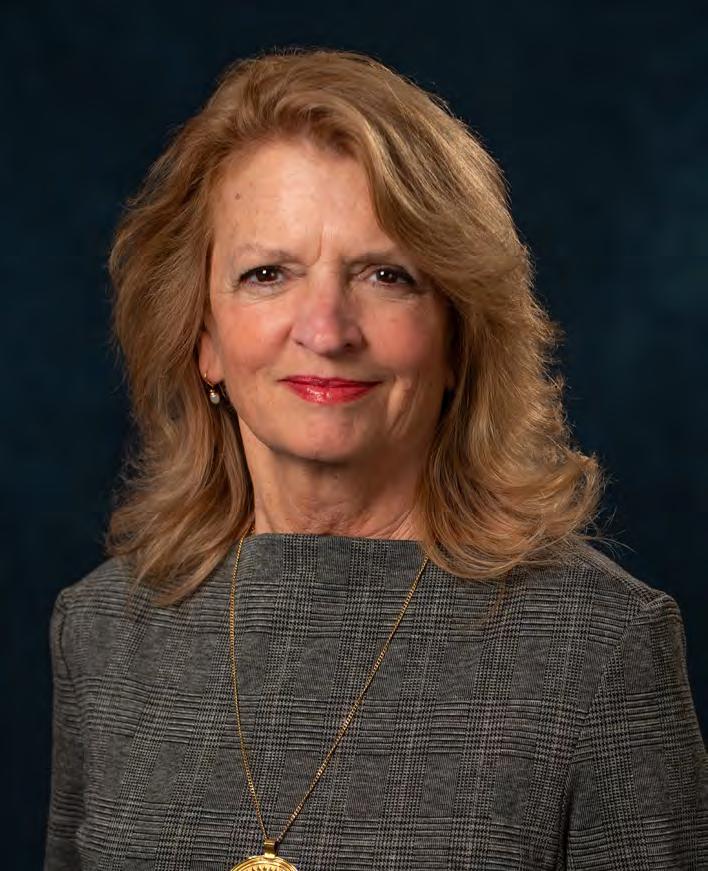
Wendy Baumann doesn’t just enter a room, she fills it with energy, insight, and forward motion. Over the years, she’s built a career defined by impact and imagination, achieving more in one lifetime than most attempt in several. Small in stature but boundless in energy, Baumann is a walking spark plug, always thinking, moving, and building. “I still feel like I’m really young and have much juice left to give, and I want to,” she told me.
For 31 years, Baumann led the Wisconsin Women’s Business Initiative Corporation (WWBIC) with passion and an unwavering belief in people. As president and chief visionary officer, she opened doors for thousands, especially women, people of color, and lower-wealth individuals, helping them build businesses, financial stability and confidence. Her mission was always clear, improve lives by improving access to opportunity.
Now, Baumann has taken her lifelong commitment to equity and empowerment to the next level. In a new chapter of service, she was recently appointed by Governor Tony Evers as Secretary of the Wisconsin Department of Financial Institutions, the citizens of Wisconsin will be benefitting from her vast experience.
Not long ago, we had a conversation at her Milwaukee office in the Third Ward.
I am interested in your background. Where you grew up, your parents, neighborhoods, schools and your post high school education.
I was born in Madison. My mother was a professor of political science. My dad was in personnel. When I was little, we moved to Whitefish Bay. My mother continued as a political science professor, but she became the director of the Institute of World Affairs as part of universities throughout the United States. She oversaw TV shows and live programming. She ran for Congress in 1968 but lost. My father was also an entrepreneur, owned and ran small businesses. He was also a great home chef.
You were blessed with some wonderful parents. My mother was my role model. I graduated from Whitefish Bay High School early because my mother received a political appointment in Washington DC in the Carter administration. I attended George Washington University, loved that experience, but I finished my undergrad degree at UW-Milwaukee. I majored in psychology and sociology. Later, I got my master’s degree at UW-Milwaukee. My interest wasn’t really in the corporate world. I wanted to make the world a better place and affect social change.
What were your first career experiences after college?
My first formal job was at Goodwill Industries. I was helping lower income people find competitive employment.
Are you referring to helping those folks get jobs to work at Goodwill?
No, they came to Goodwill because they needed any kind of employment. Goodwill had a jobs program that included job training. My task was to help the people find jobs and get them off public assistance and into competitive employment. After that job, my husband and I moved to France for a year, and I took a year off to care for our children. When we came back to Milwaukee, I worked for the Council for the Spanish Speaking as a fundraiser. At one point, I attended the Wisconsin Hispanic Chamber of Commerce where they talked about the Mexican Independence Day parade. I thought they should be interested in helping small businesses owned by Spanish speaking people. They liked my idea and hired me as the first executive director for the Wisconsin Hispanic Chamber of Commerce. I worked on helping Hispanic people start new businesses. I did that job for two and a half years and helped grow the membership from 15 to 150.
And what was the next step on your career path?
I tried the private sector, selling natural gas for a Hispanic company called TexPar, but I didn’t like that job. Then, I became director of small business development for the Milwaukee Area Technical College. I stayed there for five years, loved that job, loved my co-workers. I worked with small businesses and helped them grow through loans, financing, business education, and contracts. Most of those businesses were involved with women and also lower income people of color. That is how I came in contact with the Wisconsin Women's Business Initiative Corporation, WWBIC. They helped finance a number of businesses I was helping. I ended up applying for the job of the WWBIC President, and I was hired.
You stayed in that job for a long time and accomplished a lot.
I was hired in 1994 and left not long ago. Thirty-one years. Very rewarding work.
I understand that as head of WWBIC, you focused on advancing opportunities for women, racial minorities and lower-wealth individuals. Through that process, you helped fund micro businesses, called micro enterprises, which operated with a small number of people. What are some examples of micro enterprises?
Yes, we got into the movement of micro enterprises, not only in Wisconsin but also nationally. Our strategy was to grow little businesses into bigger businesses. To use an example, how important is the butcher, the baker, the candlestick maker, or a small restaurant in Fredonia? Eighty-five percent of businesses in Wisconsin are micro enterprises that in total employ thousands of people.
How does this approach tie into helping women?
WWBIC, the Wisconsin Women's Business Initiative Corporation, was started with a three-fold focus—helping women, people of color and people with lower incomes. But 75% of our clients were women because women often start small businesses.
Back then, women were considered to be a minority. It wasn’t until 1988 that a woman could get a loan on her own. Prior to 1988, she had to have her dad, husband or son sign the loan document. WWBIC will help anyone with lower income, but they do nestle in with women.
Here is an example. Let’s say I am a woman with a business idea, perhaps a bookstore or a restaurant. Do I come to WWBIC for help with a loan or business advice?
Yes, everything you need. You come into one of WWBIC’s six offices with that light bulb idea over your head. You can do this by phone, email, text or the website. WWBIC gets you into a class to see if your business idea is viable. They show you a business plan to find out if your restaurant or bookstore idea is viable. If you have a business plan and an accounting of your financial needs but the banks have turned you down because you are a startup and don’t have collateral, then they might put you with a WWBIC loan officer, and they might give you a direct loan from WWBIC. In the past, WWBIC has given loans of $10,000, $20,000, $50,000 and on up to as high as $350,000. They have a 96% payback rate.
Very impressive. Their track record was probably better than most banks. I read that you pioneered business incubation and economic literacy initiatives. What are economic literacy initiatives?
When I started as president of WWBIC, I saw so many people with business ideas who could not get financing from a bank. Generally, the reason was that these people did not have a full understanding of personal and family finance. Our goal was to take these financially vulnerable people and help them start a business. We began by providing them with personal financial literacy support, understanding budgeting, credit and credit history, and then, the next step of financing a business. There has been major progress in the last 30 or so years. In 2024, Wisconsin public schools are required to teach a half credit high school course in personal financing.
What is “Invest in Wisconsin” that partners with Community Development Financial Institutions (CDFIs)? And how does “Invest in Wisconsin” work? CDFIs are loans-led organizations that give loans in low-and-moderate income communities across the U.S. There are about 1,100 CDFIs in this country that lend to small businesses, small shopping malls, community redevelopment and housing. There are 22 CDFIs in Wisconsin. At WWBIC, we formed a coalition of CDFIs to work together, and we called it “Invest in Wisconsin.”
Let’s go through some of your volunteer efforts and please speak about each one. Starting with Kiva City crowd funded micro loans.
I discovered Kiva at a conference summit in the country of Columbia. The concept, I discovered, is crowdsourcing, but for micro-businesses. The Kiva concept is unique. For example, the people of the world can go to a site called Kiva and lend, not give, a sum of money for as low as $5 to a woman in Zimbabwe, who is growing oranges. The total money she is lent will allow her to buy a water system so she can grow more oranges and pay back the loans.

I thought, how can we do this in Wisconsin? I soon found out that there were programs called Kiva City in California and New York. Back in Wisconsin, I met with a man from the Federal Reserve in Chicago who was running the United States Kiva City program. I got Milwaukee on the site. A year later, we raised $250,000 to make Milwaukee the tenth Kiva City in the nation. Currently, Wisconsin has the second largest number of Kiva City loans. This concept works well with WWBIC because of their small business loan concept.
Another of your accomplishments. I understand you were involved with the development of the Milwaukee Public Market.
The Milwaukee Public Market was actually my idea. Twenty-some years ago, I was in Seattle and came across the Pike Place Market and was very impressed. Right away, I thought we needed this kind of public market in Milwaukee. I presented the idea to Mayor John Norquist, and he loved it and told me to take charge of the development. I put together a simple business plan, then worked with some local businessmen, and we raised $11.5 million, about twothirds public and the rest private.
The Milwaukee Public Market is a wonderful place to go. I bring visitors there. I also understand that you are a speaker for national and international forums. What are the subjects of your speeches? Most of my speeches are about micro and small business development. I’ve spoken in New York, Washington D.C., Halifax, Nova Scotia and more places.
After 31 years at the helm, you had WWBIC in a very strong position with many successes. Yet, you left that job not long ago. Why did you decide to move on? It was personal. Within a year of my life, I had about a dozen people I was close to die including my partner of 30 years. I was thinking, tomorrow is promised to no one.
In early 2025, the Governor appointed you to serve as the Secretary of the Wisconsin Department of Financial Institutions, A cabinet position. What does that department do and what are your responsibilities?
The DFI has 142 full-time employees, as well as additional contracted support, $23 million budget authority. The fiscal year 2024 revenue was around $112 million for the entire department. The department makes sure Wisconsin is safe and sound in terms of our financial institutions, investments and securities. These include Wisconsin statechartered banks like North Shore Bank and Johnson Bank. We do examinations and compliance. We work with the Wisconsin Bankers Association and the Wisconsin Credit Union League, among others. We do the same thing with the 100 Wisconsin state-chartered credit unions, and also with investments and securities. We handle trademarks, nonprofit and business registrations, and notaries public. We oversee the Wisconsin 529 college savings program, where we offer two tax-advantaged 529 plans, Edvest 529 and Tomorrow’s Scholar. That’s where parents and often family members put in so much money each year as savings for a child’s future advanced education. We also oversee the Governor’s Council on Financial Literacy and Capability. I have served on that council for three administrations and, for the past decade, served as the council’s chair.
I can see how well qualified you are for the Secretary of the Wisconsin Department of Financial Institutions. I do have the experience, but I am still learning, and I am a lifelong learner.
How do you see your future?
I love working for Governor Evers in my new cabinet job, but there is still a lot to do, for example, handling fraud by informing consumers of who is committing the fraud. Scam phone calls are examples, especially when it comes to defrauding older people. Then, there is addressing emerging issues like Cryptocurrency and Artificial Intelligence in financial institutions. I’d love to continue on in this role as cabinet secretary. A good challenge.
Tom Jenz is a Milwaukee writer-photographer. He writes the weekly Central City Stories column for shepherdexpress.com





BY HAZEL WHEATON
The atmosphere at Lagniappe Brasserie is reminiscent of a cozy French farmhouse, from the cool sage-green walls to the tablecloths covered with white paper. The dishes and plates are well-loved, sometimes even chipped, reinforcing the feel of a well-lived-in Gallic standby: Classic but informal, homey rather than ultra-refined, yet still rooted in the high standards of old-school French cuisine. The restaurant opened 20 years ago, and the owners haven’t overhauled their décor or concept since. They haven’t needed to.
A Cajun-French word, “lagniappe” means “a little something extra.” At its most literal, this is a small tasting plate delivered to each diner before the meal. (When we visited, the lagniappe was savory: Beef and cheese wrapped in puff pastry.) On a less tangible level, it means that small, thoughtful details elevate the meal.
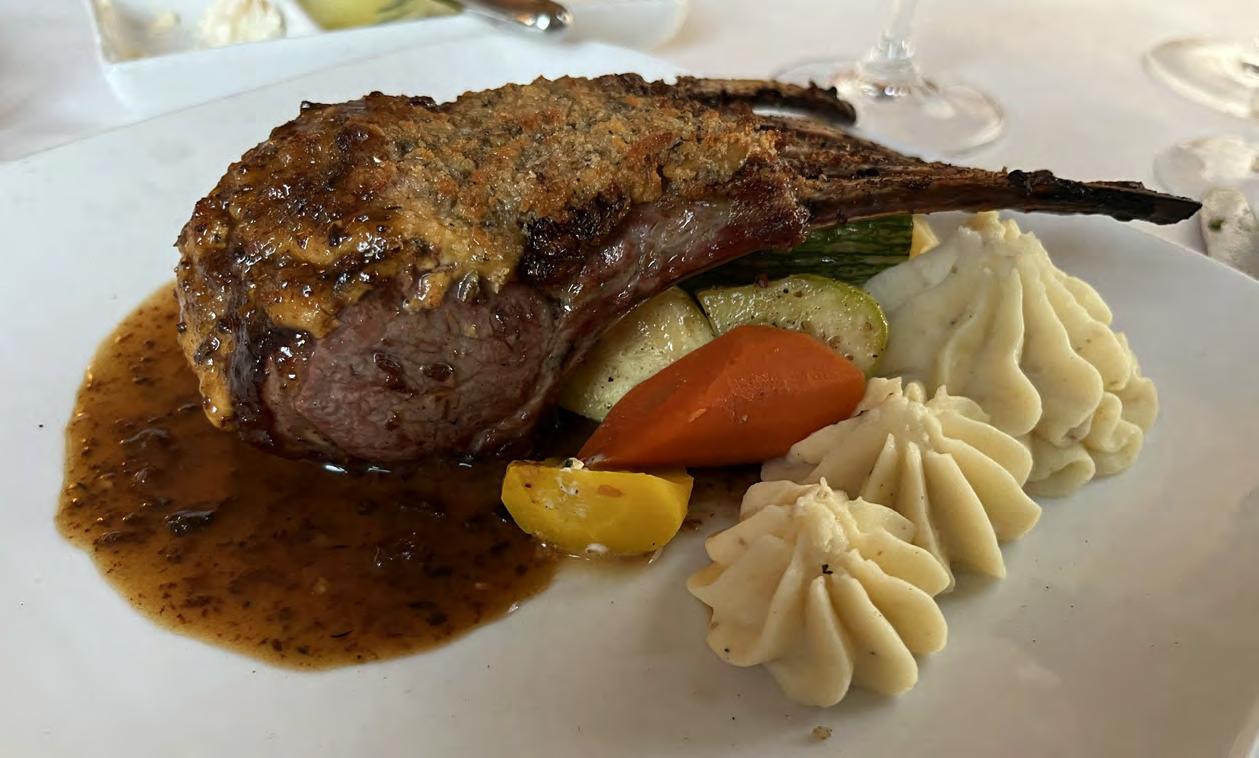
A basket with a selection of housemade breads, paired with a trio of whipped butter, herbed goat cheese, and tarragon-infused olive oil, comes without being requested. The brasserie salad, a lush mixture of greens served with a classic vinaigrette of white wine and generous lashings of herbs, is topped with a single edible flower. The ultra-traditional mustard and rosemary crust on the rack of lamb is spiked with an unexpected touch of lavender.
Lagniappe’s menu changes daily to accommodate which ingredients are in season and available, so it appeals more to those who like to sit down and say, “Surprise me!” than to those who find comfort in ordering “the regular.” Gallic flavors take the lead — tarragon is the go-to herb — but some dishes display more international influences. On the night we visited, there was an earthy, mildly spiced
southwestern bison chili with black and pinto beans and an excellent Japanese-inspired appetizer of seared scallops and shiitake mushrooms. As a whole, our menu had an early autumn feel, with surf (trout, coho salmon, and monkfish) and turf (beef, pork, bison, and lamb) dominating. Vegetarians, however, were out of luck. A peek at past menus shows the French country influence in hearty game like rabbit, squab, and pheasant.
Because I was dining with five companions, I was able to do some sampling. The beautifully grilled salmon was topped with a walnut pistou that complemented the fish with more delicacy than an herb pesto would have. The monkfish, served with a spicy Calabrian chili sauce that had serious bite, made a tender stand-in for lobster. The pork chops, topped with an herb-rich mix of goat cheese, had a perfect char.


My lamb was a standout, with excellent flavor and tenderness. Opting for the Teras Major, a lesser-known shoulder cut that substitutes for the much pricier tenderloin, meant that Lagniappe could bring their wagyu beef entrée in at just $32, an opportunity for anyone who wants to try wagyu but has been deterred by the price point.


It was unfortunate that the beef was cooked past the requested mediumrare, but it was still buttery, tender, and flavorful, served with a salty and rich Sauce Bordelaise.
Dinner at Lagniappe offers fine dining at an affordable price. Entrees topped out at $44 (the lamb), and all meals included the lagniappe, the house bread and toppings, a choice of soup or salad, and seasonal vegetables. Our soup choices were the aforementioned bison chili and a delectable cream of Brie. Side vegetables are chosen by the chef; we had a lovely mix of late summer squash (zucchini and pattypan)—all cooked to crisp-tender— and mashed potatoes.
Our only real disappointment came with dessert; the chocolate roulade didn’t have much flavor, and the banana bread pudding was dry. But I highly recommend choosing two or three of the excellent and refreshing house-made sorbets (we opted for the grape-lavender and plum);
paired with espresso, they make a light and sophisticated finish to an excellent meal.
Lagniappe Brasserie
17001 W. Greenfield Road, New Berlin (262) 782-7530, lagniappebrasserie. com
Appetizers $7–$17; entrees $23–$44; desserts $4–$12
Hours: Tuesday–Saturday, 5–8 p.m.; Open for lunch on Fridays, 11:30 a.m.–1:30 p.m.; Closed Sundays and Mondays
Hazel Wheaton is a Milwaukee writer and the Shepherd Express magazine’s regular dining critic.

BY BEN SLOWEY
Yemen was the first place in the world to cultivate coffee. In fact, the word “mocha” comes from the name of a Yemeni port city. The historical significance of coffee in this region is highlighted by a number of Yemeni-style coffee shops that have opened around town in recent years. Many such companies have entered the Milwaukee market from their original location of Dearborn, Mich. The shops, with their warm hospitality distinctive presentations of coffee, tea and food items, give an optimal alternative to larger corporate chains like Starbucks and Dunkin Donuts.
The Milwaukee area’s first Yemeni coffee shop, Qamaria (4818 S. 76th St.) opened in Greenfield in January 2024. Co-managers Anas Alhurani and Faraz Shuja take pride in their establishment’s inclusive, welcoming environment, which features a wide open seating area, a fireplace and a kaleidoscopic mural painted by local artist Janine Katbeh.
“We always felt we were missing that third space where you could see people doing homework, on a date or bringing their family to have a good time,” Alhurani recalls. “You can just come to sit and enjoy a good vibe and be around good people.”
by



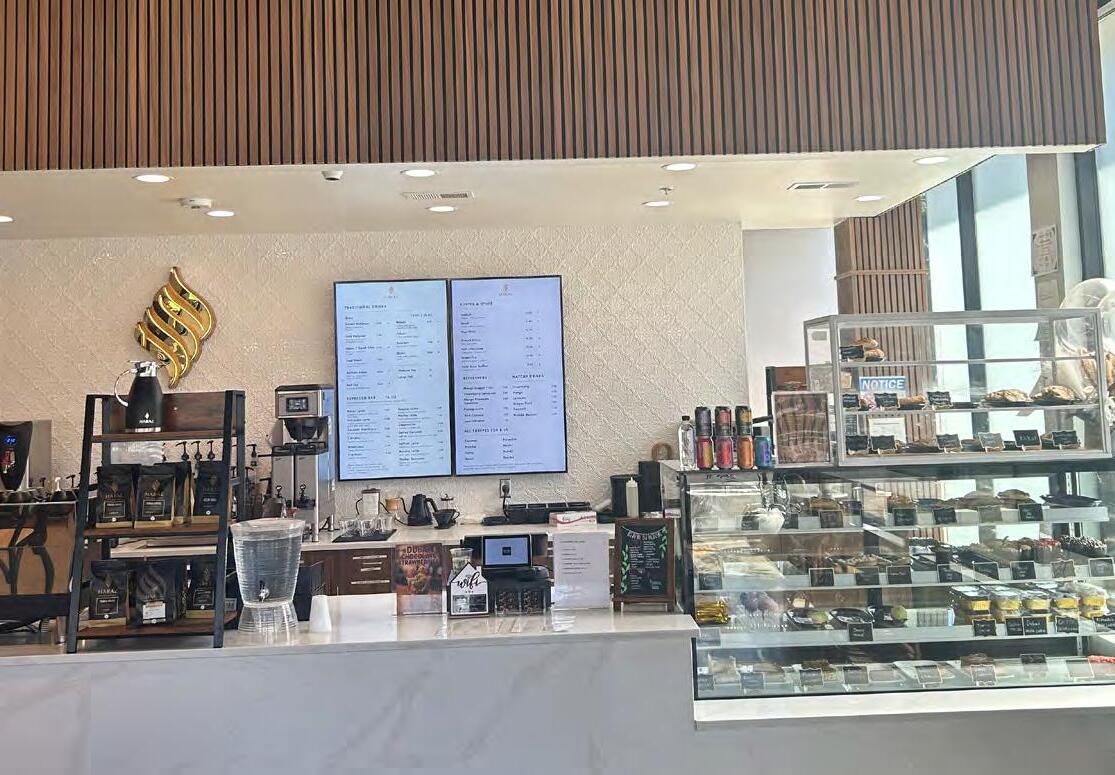
Walker’s Point has Azal (1318 S. First St.), located in a cluster of shops and stores across from Rockwell Automation. Co-managers Musa Jamal and brothers Mike and Bobby Kaid have opened the first franchised location of Azal, drawn to the company’s balance of heritage with modernity.
“The idea was to give ritual and craft a home,” Jamal elaborates. “It’s a space where hospitality leads, recipes are intentional, and every cup feels personal rather than transactional.”
Haraz (2900 N. Oakland Ave.) is the first on Milwaukee’s East Side. Manager Mahdi Hassan had always wanted to run his own coffeehouse, and of all the emerging companies, Haraz appealed to Hassan most based on his positive interaction with its owners. “We get a pretty mixed clientele,” Hassan says. “A lot of people have been very supportive and give us great feedback.”
There is also Qahwah House (7981 S Sixth St.) in Oak Creek’s Drexel Town Square, which serves eight different kinds of Yemeni coffee and tea. Additionally, Al Wadi Coffee House (200 W. Layton Ave.), serves Yemeni coffee despite not branding itself specifically as a Yemeni coffee shop; Al Wadi is in fact original to Milwaukee and just unveiled its new drive-thru. Similarly, the recently-opened Muslims of the World (MOTW) Coffee & Pastries (2859 W. Rawson Ave.), offers Yemeni chai on its menu and is notable for having its own spacious prayer room.
Several distinguishing characteristics set Yemeni coffee shops apart from traditional coffee shops. For one, customers get a unique cultural experience with their coffee, as every coffee bean found in these shops is imported directly from the Port of Yemen. This is celebrated with beautiful decor like murals and maps of Yemen, copper cup sets, mosaic art and Arabic calligraphy.
“Yemen is known for its geography and climate that make it perfect to grow the coffee beans,” Alhurani explains. “We work with farmers who use all-organic methods of taking care of them and growing them, where the beans are taken to rooftops and sun-dried, which makes the quality very high.”
After beans are harvested and imported overseas, they are roasted in Michigan before being distributed to regional franchises. The taste of Yemeni coffee is described as stronger and less acidic than other coffees. “It’s naturally complex,” Jamal remarks. “There’s notes of dried fig, cocoa, citrus and gentle spice.”
One will find many traditional coffee, tea and refresher drinks on the menus, but Yemeni coffee shops infuse such offerings with alluring blends of imported spices, syrups and flavorings. Coffees are served with various combinations of cardamom, ginger or cinnamon, while specialty lattes may come flavored with pistachio, Nutella, Biscoff or even Banana Bread at Al Wadi. Adeni chai, matcha teas and juice-based refreshers can be served in different flavors as well. Some shops get creative with noncaffeinated drinks like virgin mojitos, smoothies and frappes.
“These drinks open a lot of questions for people to ask about Yemen, where we get to teach people about the culture and region,” Hassan contends. “You feel like you’re happy with what you’re offering people.”
Yemeni coffee shops also offer a unique array of baked goods, treats and breakfast options, including sweet and savory croissants, tres leches cakes, succulent honeycomb, edible chocolate cups and much more. Shops may offer items like meat pies and mini-pizzas, plus Azal features pancakes and waffles on its menu.
Another characteristic of Yemeni coffee shops is that they are open late, typically 11 p.m. or midnight, providing a third space for a neighborhood that does not involve alcohol. Especially in communities with high concentrations of bars, or coffee shops that close early, Yemeni coffee shops offer a solid alternative.
With the Trump administration's tariffs, the cost of importing everything from the coffee itself to spices and syrups to supplies like cups and lids has increased 10-15%. In spite of this, however, many of these companies have remained loyal to their customers in keeping their prices the same. Alhurani notes about Qamaria, “The franchise was very sincere that it didn’t want to add a burden, but unfortunately that affects other things.”
Jamal echoes similar sentiments with Azal, “We’ve kept the same sourcing and quality standards, adjusted planning and logistics, and absorbed part of the impact to keep the guest experience consistent.”
Qamaria has plans to be the first Yemeni coffee company to expand into Madison. Alhurani mentions that the company has received more than 800 franchise applications. “We hope that our next journey in Wisconsin will be the start of being comfortable with the growth, while also maintaining the same level of love and quality,” he adds.










BY MICHAEL MUCKIAN
Whether you’re new to the concept of THC-laced beverages or have been tasting your way through various product lines since they started appearing on Wisconsin store shelves several years ago, please take note. The leading national brand of THC soft drinks is brewed right here in Milwaukee, and they have the medals to prove it.
High Sodas, a line of THC beverages produced by Goodland Extracts in the city’s Walker’s Point neighborhood since 2020, recently topped the competition in the 2025 L.A. Spirits Awards. In fact, the firm’s Cherry Pie High Soda earned a Platinum Award in the Infused Soda category, the title of Best Infused Beverage overall, and the ultimate distinction—Best in Show across all infused drink categories.
Crafted with Montmorency cherry juice from Door County, organic vanilla bean, lemon, and a touch of cinnamon, Cherry Pie High Soda delivers what Goodland Extracts founder and CFO Ryan Pattee describes as “a nostalgic soda-shop flavor with a clean, alcohol-free buzz.” Like the company’s other products, it’s made in Wisconsin using locally sourced hemp and all-natural ingredients.
“Winning first place is a major milestone,” Pattee says, whose sodas scored high against 200 large national brands. “The wins validated the innovation in our brands. It also helps build our credibility and opens doors for conversations with national distributors.”
The awards, judged in blind tastings by a panel of sommeliers, mixologists and cannabis industry professionals, weren’t limited to just the Cherry Pie High Soda. Goodland Extracts also earned a Gold Award for its Grape Sky High Soda, and Silver Awards for Blaze Orange High Soda, D9 Sparkling Lemonade and Flipside Cannabis Spirit.
“If there is a secret to our soda line’s success, it’s the formulation and process, as well as the quality of ingredients,” Pattee says. “Our sodas are flavor-forward without the sweetness. It’s not just good for a THC-laced soda, but it’s actually a good soda in and off itself.”
Public validation began last year at the America’s Best Spirits Awards, a much smaller competition where Goodlands Extracts won two awards, including Best in the Nation from among 50 other participants. The current win opens even more doors for a company that already distributes in 16 states, most recently adding Delaware and New Jersey. In Wisconsin alone 600 outlets carry the company’s soda line. In addition to beverages, the company also produces THC-laced gummies, tinctures, and items for topical application from its East Stewart Street location.
Goodland Extracts is a vertically integrated hemp company, meaning they grow, extract, process, and formulate everything in-house. “We’re one of the few producers who actually own the growing fields,” says Pattee. “By controlling every step, we ensure quality, consistency, and transparency in every product.”
Goodland Extracts has grown into Wisconsin’s largest hemp processor with plans to process over 600,000 pounds in 2025, he adds, awards notwithstanding.
Michael Muckian was the banking and finance writer for the Milwaukee Business Journal and is the author of The Complete Idiot’s Guide to Financing and Accounting and The One-Day MBA in Finance and Accounting.




If you were deaf, would you consider that a disability? Many, if not most hearing folks do. As for deaf people born without the capacity to hear (congenitally deaf), most do not. Unfortunately, too many people in my profession are quick to pathologize deafness, believing it increases the odds of developing psychological and social problems.
However, when it comes to the prevalence and severity of mental health issues, people in the Deaf community are no different than those in the hearing world. Those who can hear often assume that the challenges congenital deafness presents, particularly with respect to communication and interpersonal relationships, mess mightily with a person’s overall social adjustment, both personally and in the workplace. But it just ain’t so.
While slowly changing, there remains a prevailing bias in our culture that deaf people, to the extent possible, should assimilate into the hearing world. Translation? To facilitate communication and social engagement, the deaf should accommodate hearing folks more than the other way around. A bit of history illustrates this point.
Schools for the deaf have been around since early in the republic. Many of them had the stated purpose of promoting assimilation by the deaf into the hearing world. Consequently, some of these schools prohibited their students from using sign language, their primary mode of communication, instead insisting they learn to read lips. If you think lip reading is easy to master, try it sometime, particularly in a group of people.
BY PHILIP CHARD
Social psychologists who studied these lip-reading schools discovered their deaf students were just as socially well-adjusted and developmentally on par as their hearing peers. However, lip reading was not the key to their normal development. It turns out, when outside the classroom, the students used sign language almost exclusively, and that’s what facilitated their personal and educational growth.
Much of what I’ve shared applies to persons born deaf or who became so early in their childhood (prelingual). When total deafness occurs later in life after someone has lived in the hearing world for many years, different challenges emerge.
My older brother, Ev, was one such soul. After earning a Ph.D. in political science from Berkeley and beginning a college teaching career, he lost all hearing, becoming what some term a “late deafened adult”. The life disruptions he experienced, both personally and vocationally, were considerable. Learning American Sign Language (ASL), he struggled to assimilate into the Deaf community while still maintaining his prior connections to the hearing world.
Late deafened adults and others who experience significant hearing loss usually face greater risks of social isolation and loneliness than those born deaf. The latter often integrate into the Deaf community and lead full social lives. The others, like my brother, may feel suspended between these two worlds, not entirely fitting in either one.

As for those born deaf and well connected with a community of non-hearing folks or hearing ones proficient in ASL, the notion that they are “disabled” strikes them as ludicrous, as it should. American Sign Language, and its counterparts in other nations, is a rich, sophisticated vernacular that communicates information, meaning and emotional nuance.
Does that mean all congenitally deaf persons are content with their inability to hear? Of course not. But that doesn’t mean they regard deafness as a disability. It’s a divergent quality that, like many attributes that depart from the majority, can be an asset or a liability.
We decide which.
Philip Chard is a psychotherapist and author with a focus on lasting behavior change, emotional healing and adaptation to health challenges. For more, visit philipchard.com.



BY KATHLEEN BAYLISS
The answer is yes, probably. Integrity of the gut microbiome, a community of trillions of organisms in our digestive systems, is crucial for optimal health and thriving. In fact, the natural decline of the gut microbiome is a hallmark of aging with gut dysbiosis (microbiome imbalance) impacting inflammation (“inflammaging”), the immune system, nutritional status and more. Dysbiosis is linked to various age-related conditions like Alzheimer's, cancer, osteoporosis, macular degeneration and increased susceptibility to infections. But here is the great news—it can be modified not only to help mitigate these age-related maladies, but to actually promote vitality. For this reason, gut health is often the first area I attend to for all my patients no matter their age.
One of the biggest culprits of microbiome dysbiosis driving aging is a molecule known as lipopolysaccharide (LPS). LPS, released from the cell walls of certain bacteria, is an endotoxin that drives inflammation. It leads to “leaky gut” or increased intestinal permeability, allowing LPS to easily escape the gut and cause systemic inflammation. Studies show a correlation with LPS levels and brain inflammation (think dementia), impaired immunity, muscle loss (frailty), and osteoporosis to name a few issues. Some bacteria release exceptionally toxic LPS molecules, making them particularly disruptive when present in excess.
Why does our microbiome decline with age? Part is related to the initial seeding of our gut. This is influenced negatively by factors like C-section birth, formula feeding and early or frequent antibiotic exposures. Then it’s a lifetime of other factors.
Most significantly, the standard American diet (SAD) is low in fiber, lacks plant variety and contains processed foods with microbe-unfriendly additives. Exposures to environmental toxins (pesticides and herbicides amongst others) and medications, especially antibiotics and acid blockers, further assault our microbes.
Interesting animal studies using fecal microbiome transfer (FMT) show the gut microbiome's influence on aging. FMT from young mice to aged recipients improved physical health, including brain inflammation and metabolic changes. Conversely, aged microbiota FMT accelerated aging in young mice. In humans, harmful microbial shifts appear later in long-lived populations (age 90-100). Moreover, in a few human case reports in which FMT was done for other reasons in individuals with early dementia, surprisingly dramatic cognitive improvements were observed. These findings suggest positive microbiome alterations confer anti-aging benefits.
How do you know if your personal microbiome is healthy? If you have GI symptoms, your microbiome is likely “off.” Yet in my experience, it is often “off” without GI symptoms. While microbiome testing is an evolving science it can offer valuable insights. I test patients regularly and virtually everyone (including myself) has imbalances. Common findings include decreased diversity, increased disruptive species (LPS producers), and decreased beneficial keystone species including those that produce health promoting anti-inflammatory short-chain fatty acids.

We then embark on a gut microbiome restoration journey leveraging diet and lifestyle changes in addition to selective supplements including targeted antimicrobial herbs, specific probiotic strains and a blend of prebiotics.
The microbiome is both a reflection and a driver of aging. As microbial diversity wanes and disruptive organisms gain ground, systemic inflammation, frailty and chronic disease often follow. Yet, these changes are not inevitable, they are modifiable. By nurturing a healthy, diverse microbiome, it may be possible to not only extend lifespan but to enhance healthspan—the years of life spent in vitality and independence.
Interested in testing your own microbiome? As a word of caution, there are many companies out there that provide this service, but they are not equivalent in reliability, technology or interpretation, a discernment that comes with advanced training. The lab I currently use is Tiny Health, though some of my recommendations may differ from theirs. Stay tuned for my next article where I will discuss more detail on interventions that work.
The content of this article is for informational purposes only and is not meant to serve as medical advice or as information to facilitate self-treatment.
Katherine Bayliss, MD, a Milwaukee native, practiced in conventional medicine as a pathologist for 25 years. She now lives her passion, helping others through the more holistic Functional Medicine model.


BY JENNIFER JEPSON
Wisconsin winters are generally long, cold, and snowy, with true winter weather typically running from November to late March or early April, although snow and cold can persist into May. Temperatures average between 15-30°F in winter, but can drop to single digits or below zero, especially with strong winds creating harsh wind chills. So, is your home ready? As you may know, winterizing prior to November, is a good way to avoid damage to your home and expensive repairs.
The following are some areas to think about and act on depending on the needs of your home.
Windows – Winterizing your windows will not only keep you warm but it will save you money. If you have drafty windows, you have a few choices, you can either get them replaced by a professional window replacement company or you can add weather stripping or caulking on your own.
Pipes – Definitely insulate your pipes to prevent them from freezing and bursting. Check your basement, attic and crawl spaces to make sure nothing is exposed. If you don’t feel comfortable doing this yourself, you can hire a plumber to do professional preventative maintenance for you. Also, don’t forget about outdoor plumbing. Make sure exterior faucets are shut off and cover them to prevent freezing.
Roof/Gutters – Winterize your gutters by simply cleaning them out. This allows snow and ice that accumulates to melt and drain properly. Also check your roof for any loose shingles so you don’t experience any leaks from winter weather.
HVAC – Make sure your heating and ventilation is functioning as it should beforehand. Don’t wait until there is six feet of snow and temps in the single digits to find out that you need a new HVAC unit. A good way to prevent a situation like this is to have a reputable HVAC company come out and perform a basic tune-up in October or early November. Many companies run a special just for this type of service.
Attic – Along with your HVAC system, make sure your attic is insulated sufficiently so your HVAC system doesn’t have to work harder than it needs to. This too will save you money on your utility bills.
Fireplace/Chimney – Last but not least, animal nests and creosote buildup can happen in your chimney over the summer. If found, those need to be removed. Fireplaces also need to be checked for soot and debris and cleaned out to avoid a fire in your home.
As the colder months are closing in, the recommendation is to be proactive instead of reactive. All of us absolutely want








BY SHEILA JULSON
Autumn is here. After the last of the harvest has been picked and the flowers are done blooming, taking steps to winterize your garden before the first frost will protect perennials, improve soil health, and make it easier to return to the garden next spring.
Pick the last of the vegetables. Remove any green tomatoes still on the vine or those couple of zucchinis still hiding among the leaves. Frost will kill tender fruits and vegetables like tomatoes or green beans. Unripe green tomatoes will ripen on the kitchen counter or in a paper bag or box.
Pull out crop debris and annual plants that are done reproducing, especially if they are diseased (for example, tomato blight or mildewed leaves). Spent plants that are healthy can be composted; destroy any diseased plants.
Some garden pros recommend leaving annuals in the ground over winter if plants show no signs of disease. Annual flowers such as zinnias and cosmos that go to seed can provide food for wildlife during winter. Plant roots also add nutrients to the soil.
Wait until spring to cut back the seed heads on perennials such as coneflower. The seed heads provide food for wildlife during cold weather scarcity. Perennials such as bee balm and phlox should be cut back in fall to avoid the spread of powdery mildew.
Protect the soil. Add organic matter such as composted coffee grounds or eggshells, or mushroom compost, to the garden soil. Don’t rake those fallen leaves into the gutter— they are free mulch for the soil, and they also add nutrients such as nitrogen, phosphorus, and calcium.
Piles of leaves can be placed into a garbage can and then shredded with a weed-whacker into fine mulch to spread onto garden beds. Some lawn mowers also have a mulching feature. Breaking down the leaves helps them decompose and break down nutrients faster, but leaves can also be simply raked onto garden beds. Mound fallen leaves around perennial plants, bushes, shrubs, and fruit crops to protect roots from harsh frosts and ground heaving.
Keep track of plantings. Keeping records or photographs of plantings helps plan for what worked—and what didn’t— when planning next year’s garden. It’s also helpful for crop rotation, a routine that changes the planting location of vegetables each season.

Crop rotation, also practiced by many farmers, reduce damages from insects and pests, limits vegetable diseases, and manages soil fertility.
Overwintering flowers. Geraniums can be brought indoors during winter to use next season. Bring the entire potted plant indoors before the first frost.
Prune them back and store them in cooler areas, such as an unfinished basement, where temperatures get no higher than 65 degrees during the day. Water sparingly, when the top inch of soil feels dry. Bring the pots out again after the last spring frost.
Garden Housekeeping 101. Disconnect hoses and irrigation systems before the first frost hits, or it can lead to damage and thus pricey replacement or repairs. Allow all water to drain from hoses and store them in the basement during the winter months. Use outdoor spigot covers (some newer spigots have their own shutoff valves) to protect pipes from being damaged by harsh cold.
Scrub all garden tools and sharpen any dull blades. Put everything away where you’ll easily find it next season. Tools can be lightly oiled with vegetable oil to help prevent rust. And how are those gardening gloves holding up? Pick up a pair from a local gardening center or hardware store now so you’re ready to get into the garden next spring.
Sheila Julson is a Milwaukee writer and regular contributor to the Eat/Drink column at shepherdexpress.com.


BY MICHAEL MUCKIAN

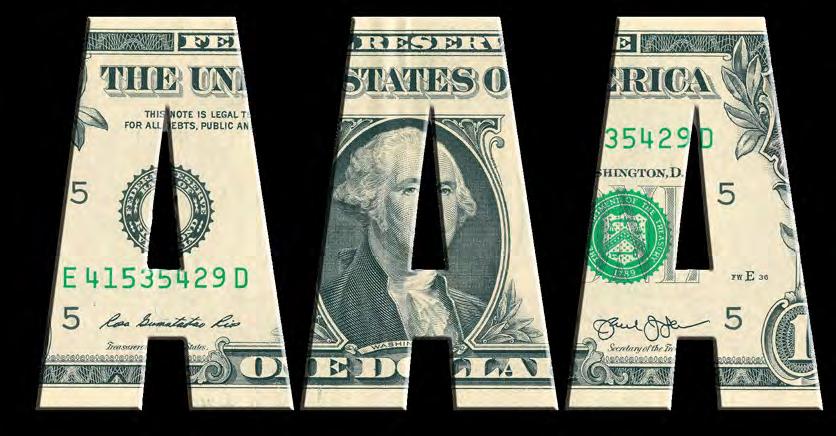
Let’s say you are relatively new to the workforce or have returned after a lengthy absence. You’re ready to take your rightful place in the financial world, holding down a steady well-paying job and renting or buying your own place. In other words, you want to be financially independent and maneuver your way through the challenges that lie ahead. But do you really know the score? More specifically, do you know your credit score? That’s the number on which your success or failure may turn.
What is a credit score? It is a three-digit numeric evaluation of your creditworthiness, or how much you will be able to borrow from commercial lenders and at what interest rate. I know, we’ve been taught “neither a borrower nor a lender be.” But if you plan to ever buy a car, buy a home or condo, invest in your own or your child’s education, start a business, take that trip of a lifetime, or any of many personal goals that may require more capital than you have available, you will need to borrow money. Your credit score will help determine the terms.
A credit score measures your desirability as a reliable borrower who has demonstrated the ability to pay back borrowed funds to the lender in accordance with the loan contract, thus reducing the lender’s financial risk. Any of three individual credit bureaus—Equifax, Experian and TransUnion—analyze your personal data and borrowing experience and estimate your creditworthiness using the same form first created by Fair Isaac Corp., thus measuring your FICO score. The three bureaus have worked together to create a VantageScore, which also may be applied. Your credit score is available from any of the bureaus free of charge.
The higher the credit score, the better off you are. The average ranges are defined below:
• 800 – 850: Excellent
• 740 – 799: Very Good
• 670 – 739: Good
• 580 – 569: Fair
• 300 – 579: Poor
How you’ve managed your financial life thus far will determine what your score will be. And that score will determine how likely you are to get the desired loan from your desired lender, how much you may borrow, and at what interest rate. In other words, your credit score is critical to your financial profile.
While emphases may vary from credit bureau to credit bureau, the main points and significant variables boil down to how well you have managed your money so far. Generally, evaluations are broken down in the following fashion:
• Payment History (35%) – Have you paid your bills on time? That’s a big thing, as is the number of late payments and how late those payments have been.
• Amounts owed (30%) – Also known as credit utilization, those amounts are the percentage of the credit you have used compared to the funding that may be available to you.





• Length of credit history (15%) – The longer your credit history the better off you are because there will be more data by which to determine your credit worthiness.
• Types of credit (10%) – The type of loans you have, whether installment loans like car loans or revolving credit such as credit cards, will further demonstrate your ability to manage loans. A mix of several types of loans is helpful, too.
• New Credit (10%) – This can be a two-edged sword because, while credit experience is good, too much new credit now might signal financial problems in your life, and that’s not good for your credit score.
Lucky for many of us, a credit score is basically a snapshot in time, and one that can change as your personal borrowing experiences changes. You can have a positive impact on your credit score in multiple ways.
• First, pay your bills on time. It shows that you have a disciplined approach to managing your finance and six months of on-time payments can change your credit score for the better.
• Pay down your debt. If possible, pay more than the minimum owed on each loan. You will reduce the amount owed more quickly and show that you’re on your way to greater financial stability and responsibility.
• Work to increase your line of credit. While this may sound contradictory to the other strategies, an increased credit line indicates the lender has greater faith in your repayment abilities. Just don’t increase your spending to meet the new threshold level. That will just make matters worse.
• Don’t close your unused credit card account. As much sense as that might make to you, closing the account reduces the amount of available credit to you which, in turn, could reduce your perceived creditworthiness. Keep the card secure and just let it be.
• Review your credit report annually and correct any errors. You don’t need someone else’s errors further complicating your finances. Visit AnnualCreditReport.com and stay current.
Remember, whatever you do to help improve your credit rating reflects in many other financial areas of life. Get informed and then make whatever efforts you need to improve your credit score and get your financial life back on track.
Michael Muckian was the banking and finance writer for the Milwaukee Business Journal and is the author of The Complete Idiot’s Guide to Financing and Accounting and The One-Day MBA in Finance and Accounting.



BY GREGORY HARUTUNIAN


In that ever-changing cycle of renewal, Milwaukee Bucks fans are being asked to put aside any disappointments they’ve endured throughout the past three seasons. These include first-round exits in the NBA playoffs, backfired personnel decisions, wildly inconsistent efforts and sloppy defensive lapses.
Added to the mix has been an aging core group of players that continually injures themselves and questions the training methods employed to keep them healthy.
They are simply asking fans to give the team a chance. Besides, you will know by the middle of November which way this is going to go.
The rumors of Giannis Antetokounmpo wanting a trade, or being traded, have been strong since the Indiana Pacers sent the Bucks packing in the fifth game of the playoffs last year. He has played for Greece’s national basketball team during the off-seasons since 2013, and they took the third-place EuroBasket bronze medal on Sunday night.
Fueling his unrest with the Bucks is the perceived inability by management to surround him with support on the hardwood. Despite roster changes, it’s the same core group.
The Damian Lillard experiment came to a halt, following an Achilles tendon tear that rendered him unavailable for last year’s playoffs. He was waived and had a choice to sign with another team, which he did. The $113 million left on his contract is stretched out over the next five years, and likely being paid by an insurance carrier minus the premium.
It allowed salary cap space to sign away Myles Turner from the Pacers, purportedly on a one-time immediate offer that would be pulled of $108.9 million for four years. Pacers coach Rick Carlisle was not happy about the deal, and let the details leak out. The Bucks got a center that averaged 15.6 points per game last season, matched with 6.5 rebounds.
Bobby Portis Jr. was re-signed after some noise of letting him go. The popular forward had 13.9 points and 8.4 total rebounds per game in 2024-25. Taurean Prince (8.2 ppg) and Kevin Porter Jr. (10.3 ppg) were signed to return as free agents. Re-signing Gary Trent Jr. (11.1 ppg) and Ryan Rollins (6.2 ppg) means trying fill Lillard’s numbers in the aggregate.
Kyle Kouzma, who was acquired in the Khris Middleton trade, is expected to provide a better showing for the Bucks, although he scored 14.8 ppg overall last season.
Thanasis Antetokounmpo led the more recent free agent signings to come back, along with Amir Coffey (9.7 ppg), Chris Livingston, point guard Cole Anthony (9.4 ppg) and guard Gary Harris. Jamaree Bouyea, Cormac Ryan, Mark Sears, A.J. Green, Pete Nance, Andre Jackson Jr. and Jericho Sims, along with forwards Tyler Smith and Bogoljub Markovic, round out the roster. Maybe.
While other teams are focusing on youth and players being brought along, the Bucks have maintained a stop-gap posture. While the bench players are good substitutions and eat up playing time, they are not pieces for the scoring chart.

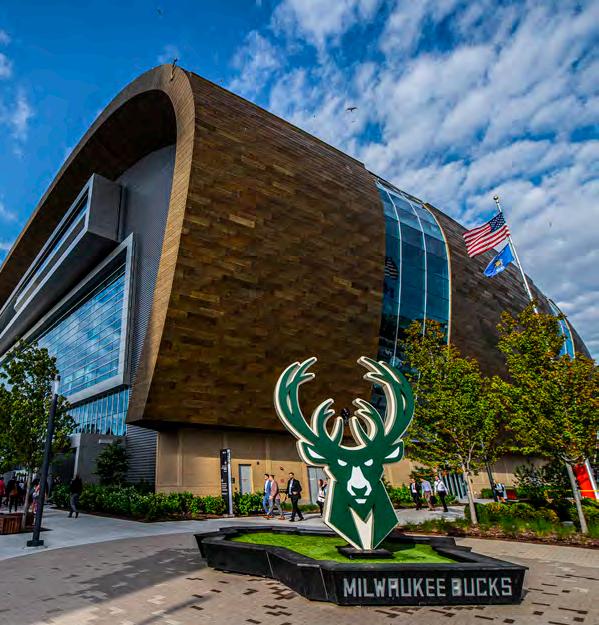
The Bucks have replaced Lillard with another splashy name in Turner, and that’s about it.
If the team sputters, will Giannis Antetokounmpo renew his efforts to move along to another team? The Bucks are seemingly not into renewal, and just staying the same, with new faces.
The Bucks open the season at the Fiserv Forum against the Washington Bullets (Oct.22) and return to play the New York Knicks (Oct. 28), the Golden State Warriors (Oct.30) and the Sacramento Kings (Nov.1).
Gregory Harutunian writes the Milwaukee Bucks column for shepherdexpress.com.




BY AURORE SIBLEY
In the summer of 1975, music editor Gary Peterson of the Bugle American, Milwaukee’s popular alternative newspaper at the time, visited writer-producer Jon Landau in a small recording studio in New York City and listened to some of the unfinished tracks that were to appear on Bruce Springsteen and the E Street’s Band’s highly anticipated album Born to Run
“I don’t think at the time I was familiar with Bruce Springsteen yet, but you could tell these were going to be something,” recalled Peterson’s wife (then girlfriend), Joyce.
A bootleg recording of the title track had already stirred enthusiasm among listeners after radio stations across the country had given it airtime, and Landau’s famous quote, “I saw rock and roll’s future and its name is Bruce Springsteen,” which appeared in The Real Paper in the spring of 1974, had created a buzz. Still, although his first two albums had garnered some critical acclaim, they hadn’t sold well and Columbia had plans to drop Springsteen if the third album, a belabored effort that had taken 14 months to record, wasn’t a confirmed success.
With his blue collar, down to earth, storytelling demeanor and the sensational musicians that made up the E-Street Band, the charismatic, guitar-toting singer was thought to have some serious star potential, and the record company had been banking on that. But at the time of Born to Run’s release on Aug. 25, 1975, and the start of what became a grueling nearly three-year long tour promoting it, the New Jersey-born and bred musician was still what’s known in the music world as a “baby act.”
It was only weeks later, on Oct. 2, that Bruce Springsteen and the E Street Band were booked to appear at the Uptown Theater in Milwaukee. A venue with approximately 1,800 seats, the show sold out ahead of time and local radio stations helped to build the hype by playing Springsteen all week long. “It was a big deal to get Springsteen,” said Randy McElrath of Daydream Productions, the company that brought in most of the big names to Milwaukee at the time. “We sold out in minutes.”

Even so, no one could have anticipated that what happened on the night of Oct. 2, 1975, would become a Milwaukee urban legend that helped launch Springsteen and his band towards superstardom.
“That show has become notorious for a number of reasons,” said writer Barry Patton who covered the concert for the Bugle American that night. “At that point in time the truism was if you could go out to the heartland, you could play anywhere in the U.S., so a whole lot of things started there. It was a very unique time in this country.”
The anticipation was palpable as the crowd found their seats at the Uptown Theater that night. “From the moment Bruce & band took to the stage you could sense the intensity of the moment,” wrote Patton in the following week’s issue that featured not only a review and photos of the concert, but a retrospective of Springsteen’s career to date.
Springsteen opened with a surprising choice, a subdued reading of “Meeting Across the River,” backed only by Roy Bittan on piano, then dove into a spirited rendition of “Tenth Avenue Freeze-Out” with the whole band, including Clarence Clemons in his white suit, “hitting all the notes you want to hear.”
By the third song, “Spirit in the Night,” Springsteen was crawling on all fours over the orchestra pit and out into the crowd, wooing his audience into rapture. The energy continued to build with a dynamic cover of “Pretty Flamingo,” and by the time the band fell into “She’s the One” followed by “Born to Run,” the show had taken flight and the audience was hanging on every note.
But then the musicians were ushered offstage and a short conference brought everything to an unexpected pause. The band departed and Springsteen returned to stage alone, sitting down at the piano. Accompanying himself, he sang an acoustic version of “Thunder Road,” masterfully tuning the audience in while bringing the energy down several notches.

Meanwhile, popular Milwaukee DJ Bob Reitman, the show’s MC, reluctantly left his center row seat near the front of the stage at the behest of Dr. Allen Reed, the head of the medic team on hand.
“At first, I said, no, I didn’t want to get out of my chair and do anything else but listen to the show,” said Reitman, “but I could tell they were serious. So that’s when they found out about the bomb scare.”
“Bob was sitting right behind me,” recalled Patton. “Somebody came up and I’m hearing the conversation because its right behind my head—and says ‘you gotta come up on stage… there’s an issue.’ So, he went up.”
As “Thunder Road” came to a close, Reitman walked onstage and took the mic, calmly informing the audience that a bomb threat had been phoned in and security needed to clear the building. Everyone was to leave quickly and quietly but the audience was informed that if all went well, the concert would resume at midnight.
“ARE YOU LOOSE?”
In response to the disgruntled cries, Springsteen chimed in next, reassuring the crowd that they would indeed come back and do it all again after midnight. And then he walked out the front door alongside his fans.
The crowd dispersed, mostly into nearby restaurants and bars, and a few fans went home, either intending to return after midnight, or passing their tickets on to others in their stead. Meanwhile Daydream’s security and the Milwaukee police force searched the building for the next three hours.
Springsteen and the band members went back to their hotel, the legendary Pfister, and congregated at the bar. A Romanesque Revival-style building that was purported to be haunted and had once been dubbed “The Grand Hotel of the West,” the Pfister’s bartender would coin the phrase that was to become a mantra for Springsteen fans in Milwaukee ever since. As Springsteen relayed to the crowd later that night, “I don’t know what you did, but we got real weird.”
“My brother actually followed Springsteen and his band down to one of the local bars during the break,” said Patton, “and they were in that bar for a couple of hours … Bruce supposedly didn’t drink, but that night he did. Everybody was drinking, loosening up, you know, probably settling their nerves because of the bomb scare. It was also the night that Are you loose? was birthed.”
Though Springsteen had and still has a reputation for never drinking before a show, he and the band had a few that night. As he relayed to his audience once the concert had resumed, “We was drinkin’ our skulls out…We said, ‘Bartender, someone tried to blow us up tonight.’ He looked at me and said, ‘Son, son, are you loose?’” And “are you loose” was to become the most repeated call of the night. In the years and decades that followed, fans would show up to concerts with poster signs reading “Are you loose?” anytime Springsteen returned to Milwaukee.
The MPD and Daydream Production’s security team worked seamlessly together that evening, thoroughly investigating the space and securing its safety before allowing the concert to resume at midnight as promised. As midnight approached and fans congregated outside the marquee once more, the crowd had, if anything, grown in size.
“We had such great seats, we were like eighth row center at the beginning of the concert,” recalled audience member Ken Wilson. “By the time we got back to the theater we were forced to be kind of off toward the back, off to one side. But hell… it was great. To my way of thinking, it was the best concert I ever saw.”
As the audience filed back into the theater, claiming whatever seats they could find, the energy was high. When asked about how everyone had managed to navigate the disruption to the show, Reitman said, “It was about as smooth as it could get. It was like almost everybody came back, you know… and when they (Springsteen and band) came back they really came back. They were incredible.”
Whether the bomb scare call had been made with the intent to rattle Springsteen or Daydream Productions, or whether it was just some random prank, was never discovered.
But despite being rattled, there was never any question that the show would resume. Springsteen’s commitment to his audience would overcome the scare.
“Bruce wanted to go back and play the concert. He wasn’t going to cancel,” said Patton. “They came back and did one of the most memorable shows of his career.”
“I’m sure they were happy to get out of Milwaukee in one piece,” said McElrath, who said that Springsteen and band members still identify him as “one of the bomb-scare guys.” “But they always came back, and they played Milwaukee and Madison a lot.”
As the second set began and the band dove into song, Springsteen regaled his audience with a tale of suspense. “We ran back to the hotel… I was shaking, my knees were weak, I couldn’t see straight… and that’s when it happened, that’s when it happened. It got very serious for a minute. I sat back, I seen what was coming. I took a big gulp, my knees started shaking, my heart started beating faster than it ever had,” and then he threw himself into Chuck Berry’s “Little Queenie,” and kept the rock and roll momentum going for the next two hours, closing the epic performance out with a “super-loose, high energy, fourth gear running of “Rosalita,” and coming back for a half-hour encore.
“It was great,” said McElrath. “Every song they knew, I think they played.”
“Yeah, the bomb scare show, that was a show to remember,” said Reitman.
Three weeks before Springsteen appeared on the covers of Time and Newsweek magazines on the same day (Oct. 27 1975), catapulting him to stardom, he would grace the cover of Milwaukee’s Bugle American. “It’s amazing at this point in time—we were way out ahead on Bruce Springsteen,” said Patton. “We did a huge spread on him … It was a turning point.”
Perhaps even more remarkably, Springsteen and the band continue to wow audiences today. Those in attendance at the concert that night at the Uptown Theater continue to revel and reminisce about the event today. “It’s still one of the most wacky shows I’ve ever seen,” said Patton. As he wrote in 1975, “This was one of those moments. No one puts out for his audience the way this guy does, no one. The band has all the class of that great American institution, The Band and they’re just as tight. Springsteen is a genius.”
Aurore Sibley is the author of a history of the Bugle American, Some Things Don’t Burn, scheduled for release by the Wisconsin Historical Society Press in 2026.


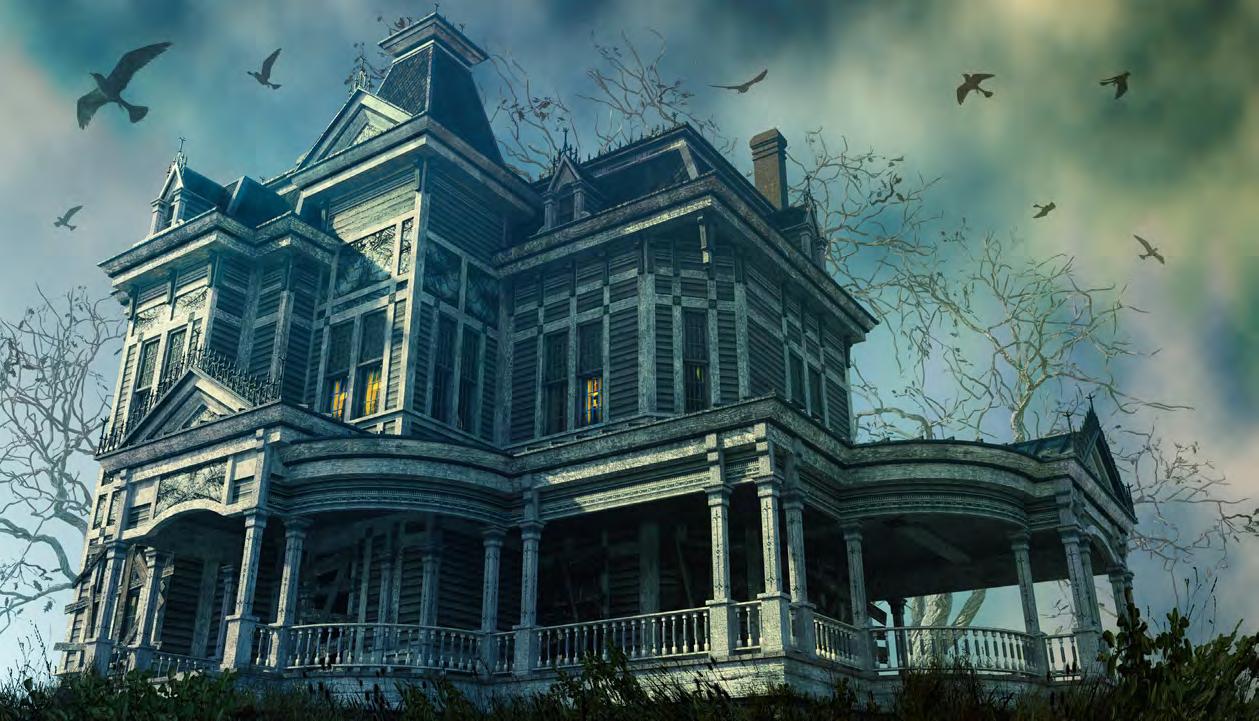
BY TEA KRULOS
Last fall, we presented you with 8 allegedly haunted places you can visit in Milwaukee. Like many scary stories, we’ve decided to create a sequel. Here’s five more haunted hot spots for you to visit on your next legend tripping expedition.
Built in 1928, the beating heart of the ghost story at this vaudeville theater turned movie house resides in the projection booth, where a former employee is said to have had a heart attack while on the job changing film reels. The room, now used as a light booth, is said to be haunted by the apparition of the projectionist, who turns stage lights on and off and messes around with other settings. They say you can feel his presence even as you walk up the steep, narrow stairwell to the room. The upper hallways are also said to be haunted by the ghostly sound of ghostly children playing and laughing and strange growling has been heard in the basement. Needless to say, it’s been a favorite spot for paranormal investigators to research.
The Pfister is Milwaukee’s most famous haunted spot, having terrified over two dozen baseball players. But just a couple blocks away is another allegedly haunted hotel. In 1883, the Newhall House burnt down, a tragedy that killed around 70 people. Northwestern Mutual constructed their Loyalty Building on that same corner, which opened in 1886. Northwestern Mutual moved into their building on Wisconsin Avenue, but it the Newhall site remained an office building until 2011, when it was remodeled into the Hilton Garden Inn. Staff and guests have reported strange noises, shadowy figures, intense feelings of fear, doors opening and closing by themselves and other eerie occurrences.



700 E. Grove St., Oconomowoc
The urban legend style story from this cemetery centers on a grave with a statue of a girl standing next to a cross, where four members of the Nathusius family are buried. They say the statue’s hands drip blood and/or weeps blood. Another says that an apparition of the girl forms in the statue, walks out into the cemetery, then wades into nearby Lac La Belle, reliving her drowning in a loop.
2000 W. Wisconsin Ave.
The former home of Captain Frederic Pabst and his family, the Pabst Mansion has been carefully and beautifully restored to look as it did in the 1800s. Some say members of the Pabst family might be continuing to hang around their former home. There’s been reports of hair and clothing being tugged at by an unseen force, mysterious phantom smells of cigars and perfume, doors slamming shut by themselves, and an apparition of Captain Pabst himself has been spotted. You can sip tea and ponder these stories at a “A Victorian Macabre Tea” at the mansion on Friday, October 3.
Tickets: https://book.peek.com/s/dc4b3489-5ae1-4299-965d676407d25cea/9EDOv
1250 W. Wisconsin Ave.
Just down the street from the Pabst Mansion, Marquette University is home to the St. Joan of Arc Chapel, built in Chasse, France in the 15th century. A Francophile paid to have the chapel disassembled and moved to Long Island; after their death it was moved again to the Marquette campus. The legend is that there is a stone in the chapel that Joan of Arc knelt on to pray, then kissed before going off to battle. That stone is supposedly much cooler in temperature than the stones surrounding it.
That’s far from the only supernatural story on campus—a ghost named “Whispering Willie” hangs out in Straz Tower, and more spirits have been reported at Helfaer Theater, and in Johnston and Humphrey Halls, the latter of which was a former children’s hospital before it became dorm.
Tea Krulos is a freelance journalist and author, writes the Madcap Milwaukee column for Shepherd Express, and leads ghost tours for American Ghost Walks.




Each October since 1993, the National Arts & Humanities Month has called attention to the vital role of creativity in American life. At a time when the arts and humanities are under increasing assault, the annual observance is an important reminder of the social and economic importance of arts in America as well as its role in preserving our rights of free expression.
In honor of Arts & Humanities Month, the Shepherd Express and the Museum of Wisconsin Art (MOWA) sponsored a contest for area artists to submit their work for publication as our magazine’s October cover. The winner of this year’s contest is a Bay View artist, Mary Galinowski.
We at the Shepherd Express offer a sincere thank you to everyone who participated and we look forward to seeing you in our next cover art contest.

BY MARY GALINOWSKI

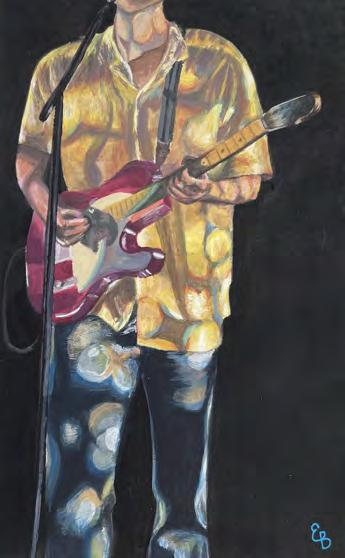
BY ERICA BRAUTIGAN


BY JEFF ABRAMSON

"PAST
BY COLLETTE ODYA SMITH
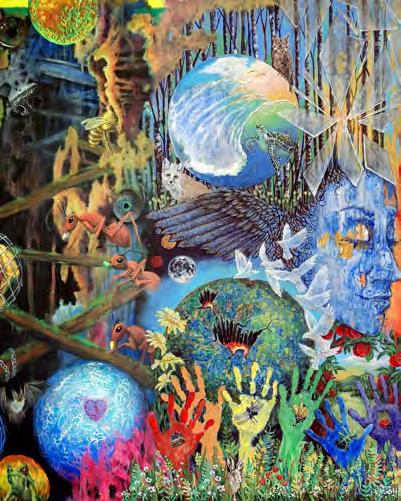
BY BRANDEE LYONS

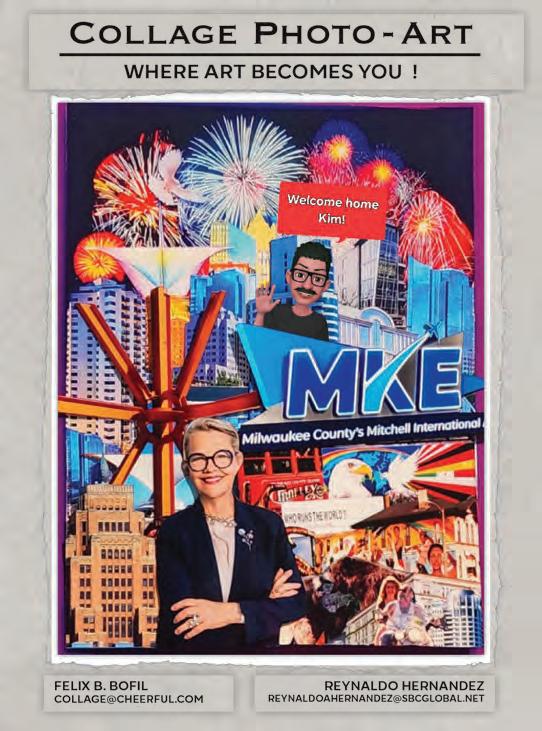


BY HARRY CHERKINIAN, DAVID LUHRSSEN AND BLAINE SCHULTZ
OCTOBER 1-DECEMBER 1
“The Legend Lives On: 50 Years Later” Grohmann Museum
“Few maritime tales resonate like the wreck of the Edmund Fitzgerald. Immortalized in art and song, the fateful day of Nov. 10, 1975, lives on in Great Lakes lore,” says the Grohmann’s director, James Kieselburg. “For the 50th anniversary of this this tragic event, we commemorate the ship and her impact on popular culture through this display of paintings, photographs, models, and drawings of the ship under construction and on the water.”
OCTOBER 3-26
Fiddler on the Roof Skylight Music Theatre
One of the world’s most recognized fictional characters is a Jewish milkman from a tiny village in pre-revolutionary Russia. Tevye, a recurring figure in the short stories of Yiddish author Sholem Aleichem, danced his way into American popular culture as the protagonist of the Broadway musical Fiddler on the Roof. From there, he reached the wider world through a popular film version that etched the story’s characters and songs in memory.
OCTOBER 4
Beet Street 2025 - Os Mutantes, Sophie Hunter, FTBK, Fellow Kinsman, Klan 414 and DJ Cozmiika
Wentworth and Potter Avenues
The annual fall festival block party returns with tabling community partners and vendors galore—food and fun for the whole family. The lineup of music ranges from locals Fellow Kinsman to Brooklyn’s Sophie Hunter to Brazilian psych legends Os Mutantes.
OCTOBER 7
Bob Mould Solo Electric: Here We Go Crazy w/ David Barbe
Shank Hall
With new Hüsker Dü artifacts on record store shelves, you might think Bob Mould is in competition with his legacy. Yet his 15th solo album Here We Go Crazy is a distillation of the unfailing melodic skill, emotional lucidity and dynamic fluency he's developed over more than four decades. The sound is pared back to its fundaments, “I've stripped things back to what excited me as a young guitarist,” he explains. “The energy, the electricity.”
OCTOBER 11-19
South Pacific
Forte Theatre Company
Richard Rodgers and Oscar Hammerstein were artists in sync with their time, nowhere less than in South Pacific, a musical whose setting was the recently ended, island-hopping war with Japan. The story of G.I.s and the social consequences of crossing ethnic lines is buoyed by memorable songs (“I’m Gonna Wash that Man Right Out of My Hair”) and melodies that became jazz standards.
OCTOBER 15
X & Los Lobos – 99 Years of Rock 'N Roll
The Pabst Theater
With all original members, X and Los Lobos are still at it after over six decades. The Los Angeles bands have paved their own paths from the ground up. With the distinct vocal blend of Exene and John Doe, X wrapped beat poetry around a rockabilly heartbeat that distilled the band’s bohemian rhapsodies. On any given night Los Lobos might be the best band on the planet. Cumbia to Chicago blues to psychedelic rock—genres smudge and blur when Los Lobos takes the stage.






OCTOBER 17-19
Giselle
Milwaukee Ballet
Marcus Performing Arts Center
Adolphe Adam wrote grand as well as comic operas, but the French composer’s enduring contribution to the canon is his ballet, Giselle. The two-act romance has been a tour-de-force for great ballerinas since its 1841 premiere, and the Ballet’s Michael Pink will doubtlessly find new ways to present the classic.
OCTOBER 18
Dancing Through Time
Concord Chamber Orchestra
St. Sebastian Parish
“Our 50th season is about honoring where we’ve been, celebrating who we are, and making space for what’s next. The October concert captures that spirit. We're connecting to history as our musicians perform on instruments that survived the Holocaust as part of the Violins of Hope residency and we're also premiering a bold new commission by Autumn Maria Reed, speaking with today's voice,” says Concord’s Dana Robb.
OCTOBER 18-19
Violent Femmes
The Riverside Theater
Milwaukee’s Violent Femmes blended punk’s energy and DIY philosophy with a stripped-down acoustic sound. For these two shows the group will play both their 1983 debut album (“Blister in the Sun,” “Gone Daddy Gone”) and the followup, Hallowed Ground, in their entireties. The debut is widely recognized as a classic but the darkness and imaginative, free-range spirit of Hallowed Ground rate it as an unheralded masterpiece.
OCTOBER 24-26
Don Giovanni
Florentine Opera
Marcus Performing Arts Center
Most of Mozart’s music has endured for his lightness of touch, the sheer smartness of his melodies and harmonies. Farcical in tragedy, exquisite in folly, Don Giovanni ranks high among his achievements. Tchaikovsky called Donna Anna, daughter of the opera’s licentious nobleman, “the most superb and wonderful human presentation ever depicted in music.”
OCTOBER 24-26,
OCTOBER 30-NOVEMBER 2
Freud’s Last Session
Acacia Theatre
It is a question as old as time, as infinite as the universe: Does God exist? In Mark St. Germain’s cleverly written play, Freud’s Last Session, we don’t get an answer. But we do gain a better understanding of its two sparring protagonists, psychiatrist Sigmund Freud and theologian/ philosopher C.S. Lewis.
OCTOBER 25-NOVEMBER 7
Bed and Breakfast of the Damned
The Constructivists
Broadway Theatre Center’s Studio Theatre
Cameron McNary, a self-described “deeply committed geek,” penned his take on that pervasive pop culture theme, the zombie apocalypse (some say it’s already happened and we’re living in the end times). A young couple take shelter in a bed and breakfast, breathing a deep sigh of relief, but find that people can be just as monstrous as zombies in this “door-slamming, Feydeau-style sex farce.” Jaimelyn Gray will direct the world premiere.
OCTOBER 28-NOVEMBER 2
Les Misérables
Milwaukee Ballet
Marcus Performing Arts Center
Victor Hugo probably never imagined that his 1862 novel about social injustice in 19th century France would be repurposed as a musical. The production premiered in an appropriate place, Paris (1980), before setting records on London’s West End before becoming a Broadway hit and a film. Les Mes is part of this season’s Broadway at the Marcus Center.
OCTOBER 31
All Souls Eve
Present Music
Milwaukee Art Museum
The concert honors the Mexican Day of the Dead with works by Latin-American composers Gabriela Ortiz and Miguel del Aguila, as well as Evan Chambers’ “The Old Burying Ground.” Eric Segnitz describes Chambers’ contribution as “a song cycle based on epitaphs.” Also on tap is the premiere of Present Music’s commission for Vietnamese American composer Viet Cuong, “Music of the While.”



I pride myself in my friendships. When any of my good friends need support because of tough times, I know how to show up for them.
Because of disturbing health news, I need to show up for myself and live differently—diet, exercise and breaking old behavior patterns. I have no idea how to do that. Can you help?
This is difficult for all of us. Our society (work, culture, school, religious beliefs) teach us that we must put others’ needs before our own. If we dare to think of ourselves first, we are considered selfish.
Here’s the good news. You already know how to be a good friend to others. You just need to transfer that empathetic instinct to yourself.
Healthy Boundaries: It’s important to know the difference between support and people pleasing behaviors. Most of us do both, but pleasing others gets us in trouble. People like us when we do what they want. We receive lots of positive reinforcement that makes us feel valued and important.
When we do what we want, we surprise them, and they get upset. They’re used to our old actions. Sometimes a power struggle ensues. If this happens, you need to ask yourself, “is this fight worth it?”
If it involves your journey to show up for yourself, the answer will always be Yes.
The best way to establish healthy boundaries is to notice when we are on automatic pilot with pleasing patterns. Awareness is the first step. We need to pay attention when a decision comes up; pause and ask, “Is this what I really want to do? Or am I following an old pattern?”
The awareness moment might sound burdensome and basic. That’s because it’s the beginning of the process that will soon become a new habit.
As a first step: make a list of the important things you’d like to change in your pleasing behaviors. Food and alcohol are boundary issues too. Example: Let’s say you have a friend that always chooses the restaurant. You agree to meet there but notice your old pattern. You suggest a walk along the lake front instead. You explain that you are trying to live a healthier lifestyle. What is their reaction? Will they support you? Can you negotiate a win -win compromise? If your friend doesn’t hear you, you must speak up.
Speaking up may be difficult to do at first. But it’s a must. “Allowing others to overrun your boundaries has unhealthy consequences for you. Being unwilling to share your feelings or say no also prevents the other person from knowing what you feel and expect.” https://www. verywellmind.com/how-to-set-boundaries-with-friends-7503205
Mindset Reframe: Besides boundary setting, the hardest part about showing up for ourselves is learning to change the way we think about ourselves and making time (forcing ourselves in the beginning) to pay attention and follow-through with our new goals.
The best way to get in touch with our best self (that really wants us to live a better life) is to spend time alone to listen to ourselves: meditation, prayer, journaling (at least 15–30 minutes per day.)
Diet and Exercise: Slow change is good change. To set yourself up for success, don’t try to do everything at once. I would prioritize in the following way:
1) Sleep
2) Food and Water
3) Exercise

Sleep: We know how important sleep is to our overall health. We need sleep to regroup and rest. Dr. John Whitcomb, who runs the Longevity Institute in Brookfield, writes, that in order to keep our brains young, we need to flush out the lymphatic fluid and other gunk in our brains. The only way to do that is through sleep. He states that we need to have at least 8 hours of sleep a night.
Food and Water: The Mediterranean diet that focuses on fresh fruit and vegetables, whole grains, olive oil and fish is considered the best diet of 2025.
myclevelandclinic.org
The Institute of Medicine recommends that men drink 13 cups (about 3 liters) of liquid and women have 9 cups (about 2 liters) of liquid per day. This amount will vary depending on temperature, age, weight and exercise activity.
Exercise: Experts agree that we all should have 150 minutes a week.
Showing up for ourselves is difficult, but a critical step for self-change. Start slowly and cut yourself some slack if you mess up. Be patient, as you would a good friend.
When we’re at our wits end in frustration, rather than beat ourselves up, ask, what would my good friend advise me to do? I hope the answer is, “it’s OK, keep going the best way you know how.”
Here for you,
Send your questions to






I’m a newly-out lesbian who just moved to Milwaukee. All of the women I meet seem to have dated each other already. What the heck is that all about? Is this normal? Is this a Milwaukee thing or a lesbian thing? Maybe it’s just me!
Welcome to Milwaukee’s Homosexual Matrix! Congratulations! You’re now part of a mysterious, although popular, Venn diagram where everyone is connected to one another through a complicated series of ex-lovers.
While this matrix isn’t unique to Milwaukee, its details and complexities vary from town to town. Don’t panic, however! You’ll survive just fine!
Start by asking your new friend, “What’s your relationship with your ex?” Ask this early on when dating and you’ll feel better for doing so. You’ll also be better prepared for run-ins with the ex.
Keep things respectful and keep an open mind. Never gossip about anyone’s previous partner, and you’re sure to find success (and love) in Cream City. XXOO

OCTOBER 1
MILWAUKEE NIGHT MARKET ON WEST WISCONSIN AVE. (BETWEEN SECOND ST. AND VEL R. PHILLIPS AVE.): Welcome autumn with this popular street fest. The 5-9 p.m. bash features music, art, food, vendors, DJs and a special 6:45 p.m. performance of “‘80s Ladies” starring me and a few of the city’s top drag queens.
OCTOBER 3 & 4
TAYLOR SWIFT ALBUM LAUNCH AT POP (124 W. NATIONAL AVE.): Grab your fellow Swifties and get ready to usher in The Life of a Showgirl. Pop is celebrating Taylor’s latest and greatest with a dance party October 3rd at 9 p.m. and a Taylor Swift drag lunch at noon the following day.
OCTOBER 5
21ST ANNUAL BRADY STREET PET PARADE (AT VARIOUS LOCATIONS ON BRADY ST.): You and your four-legged friend are in for a treat when you hit up this popular event. Take in the fun from 11 a.m. to 4 p.m. and you’ll enjoy the parade, animal contests, vendors, sidewalk sales, food and more. See www.bradystreet.org for details, schedules and registration.
OCTOBER 9
BUSINESS EQUALITY LUNCHEON AT THE PFISTER (428 E. WISCONSIN AVE.): The team at Cream City Foundation hosts its largest gathering of the year with this 11 a.m. event. From fantastic speakers, a panel discussion and an unbeatable meal, it’s one social mixer today’s business owners won’t want to miss. Stop by www.creamcityfdn.org for tickets.
OCTOBER 13
LGBTQ+ DISABILITY SUPPORT GROUP AT MKE LGBT COMMUNITY CENTER (315 W. COURT ST.): This peer-led, multi-age virtual group aims to provide safety, friendship, information and encouragement for anyone who identifies as LGBTQ+ and disabled. Everyone under the disability umbrella is welcome. Email disability@mkelgbt.org for details.
OCTOBER 17
BRANDY & MONICA: THE BOY IS MINE TOUR AT FISERV FORUM (1111 VEL R. PHILLIPS AVE.): Two powerhouses join up for an unforgettable night of music. You’ll also enjoy a special appearance by Kelly Rowland when the 27-city tour makes its stop in Brew Town. See www.ticketmaster.com for various pricing packages.
OCTOBER 18
SASHA COLBY: STRIPPED II AT TURNER HALL BALLROOM (1040 N. VEL R. PHILLIPS AVE.): One of Ru Paul’s brightest stars hits Milwaukee with this 18+ show that’s sure to wow the crowd. See www.pabsttheatergroup.com for details regarding the 8 p.m. night, including meet-and-greet options with Sasha herself.
OCTOBER 24
HALLOWEEN HOUSE TOUR AT HARBOR ROOM (117 E. GREENFIELD AVE.): Pride Rides Wisconsin offers another great fundraiser, this time with a tour of the city’s best-decorated Halloween houses. Your $10 donation to Pathfinders includes the bus tour, drinks and more. Meet at Harbor Room at 5 p.m. and get ready to be wowed!





BY PAUL MASTERSON
October is traditionally celebrated as LGBTQ History Month. Usually, one looks back in recognition of historic moments in the queer narrative. However, this fall, filmmaker Ben Eisner and his wife Rebecca (aka Reeb) are hoping to make local history by shooting his first feature film, Ron Forever, in Milwaukee with the wholehearted support and participation by Milwaukee’s LGBTQ community and beyond.
The filmmaking couple moved to Milwaukee in June to oversee the production with Ben Eisner directing the screenplay he wrote with Margaret Cho. Eisner describes his wife’s role saying “Reeb is my equal investor and business partner in our productions. She’s the true producer of the Ron omnibus and all our other projects. Reeb manages our life so we can make our Art. It took her 25 years to realize the details of everyday life don't thrive under my management, so she fired me and took over. It’s been pure bliss.”
Based on a true story from the life of actress, musician and comedienne Margaret Cho, the film’s plot finds the incorrigible 10-year-old Lola one arrest away from foster care and at the crossroads of repeating her mom’s path to self-destruction or channeling her trauma through art. Gloria, Lola’s aunt and inadvertent guardian, enlists her neighbor Ron, an aging queer artist, former English teacher and punk rocker, as Lola’s babysitter. Ron and Lola’s ensuing bond forms a constellation that allows Lola to find her expression through the lens of an 8mm movie camera. Cho herself will play the role of Gloria with John Cameron Mitchell as Ron and Sabine Grace as Lola.
Cho spoke of her deep connection to the film, saying, “Ron Forever ” is a story inspired by all the gay men who babysat me as a kid and the sad music of their struggles. I wrote about in my song ‘Ron’s Got A DUI.’ This film is all about the challenge of growing up and knowing it’s never too late to become an adult just like it’s always OK to remain a child. Ron learns how to act his age from a kid who is just a fraction of it, and Lola learns how to be a youngster from someone who really remembers. It’s a tale as old and as young as time we all want to get lost in. This story is important to me and it needs to be told.”
To that, Eisner added his greater purpose in making this film. “Liberation is one word to describe the project. Kids need to find compassion at a young age and a relatable role model they want to be like to take their trauma and pivot through creative expression,” Eisner said, adding James Baldwin’s famous remark, “(Art) is almost our only hope—because only artists have told since we have heard of man, what it is like for anyone who gets to this planet to survive it.”
The film’s punk rock soundtrack is another aspect Eisner holds dear. It features Frenzee, a punk rock band that plays an important role in the film beyond providing a musical background. “The interplanetary mission of Frenzee is to eliminate violence, hatred and war on their time traveling tour van with punk songs that bring everyone together. Lola and Ron will be introduced as characters involved throughout as the visit shape shifters over history like Margaret Cho, Harvey Milk, James Baldwin, Jimi Hendrix, Lao Tau, etc., etc., etc.”, said Eisner.
MILWAUKEE PREMIER?
Eisner hopes to engage Milwaukee Film and have Ron Forever debuted at its 2026 film festival in April. “My dream is to have the premier as part of their film festival. I want the City of Milwaukee to see this before anyone else,” Eisner said. Meanwhile, Milwaukee Pride President and CEO Wes Shaver has embraced the idea as well. “Part of our mission is to create opportunities supporting queer art and authentic story telling. Anything we can do to increase accessibility we want to be part of. Milwaukee Pride is eager to help amplify this work,” Shaver said. Possibilities include a community screening as part of PrideFest in June. Ideally, Eisner plans for Ron Forever to be adapted into a play and musical, plus a cartoon series connected to the music.
So far, the project has gotten off to a good start. Getting a meeting with the mayor’s office was a major step in sorting out the production side of the project. “They’re rolling out the red carpet,” Reeb said. “City of Milwaukee wants to make sure the production is a smooth and joyous production for all involved. I expect a ton of support—beginning, middle and end. The city is a passionate advocate,” said Eisner. “I know Ron Forever will be a classic, epic film highlighting the city and its people. Milwaukee will be proud of it.” In fact, Eisner sees the city itself as a character in the movie rather than simply a location.

He is also marketing the film to some of Cream City’s corporations for product placement opportunities. “It seems to be becoming a ‘City of Milwaukee Presentation’; maybe the first credit of the entire movie?” Eisner mused.
Fundraising for the project is key and Milwaukee has responded in kind. Eisner has already enlisted the support of local LGBTQ activist and philanthropist Joseph R. Pabst through the Cream City Foundation. Milwaukee drag legend Karen Valentine also affirmed her support as a cause célèbre: “In the times we are enduring as of late, like Lola, we are in desperate need to be reminded of the importance of the human condition.”
An emotional appeal and fundraising event is scheduled for October 16 at the Toonen-Hill house on Milwaukee’s Upper East Side. Hosts Paul Toonen and Jan Hill invite potential supporters help bring this project to fruition. More about Ron Forever may be found at knittedheart.com
Paul Masterson is an LGBTQ activist and writer and has served on the boards of the Milwaukee Gay Arts Center, Milwaukee Pride, GAMMA and other organizations.
BY ART KUMBALEK

I’m Art Kumbalek and man oh manischewitz what a world, ain’a? So listen, the other day, let’s call it September 30, I was wont to flip the page of my monthly kitchen-wall calendar, Strumpets of the South Seas, ’cause that’s the kind of guy I am—bravely organized, punctual, a seeker of useful information like which is the correct goddamn month of the year currently underfoot.
I was informed that here we be already in October, 2025, for christ sakes.
I got to tell you’s, seems just the other load of years ago when I was a katzenjammer and forced to study what-not over there by Our Lady In Pain That You Kids Are Going Straight To Hell But Not Soon Enough, this crisp time of year informed me that “Braves” meant Milwaukee stomped the baseball world, and “I Like Ike” was the bee’s knee’s when it came to a snazzy presidential hotcha-chotcha campaign slogan-ad broadcast on the 10-inch screen Stewart Warner black-and-white TV where’s you almost needed binoculars to focus in on “Uncle Miltie” Milton Berle parading ’round a national TV broadcast whilst wearing a lady’s dress, lipstick-make-up and beauty-parlor hair. Those were the days. Remember?
But we’ve still got a Columbus Day? I thought a tribute to that jagwagon had gone the way like the statue on the village green of Gen. Robert E. Jefferson Stonewall Beauregard Johnny Reb Davis Lee. Isn’t it supposed to be known totally as Indigenous Peoples’ Day, or at least Discovery Day by now?
Yeah yeah, Cristoforo Colombo “discovered” the New World whilst sailing the ocean blue, but personally, I wish he’d discovered a cure for the common cold, what the fock.
And yet, by mid-October I expect to be laid low with the old-school Columbus Day post-traumatic stress disorder. Happens every year—you wait for weeks in anticipation of the big day, it finally comes, you blessedly receive no medical bills in the mail on that Monday and then it’s over. It’s enough to blow any guy off course, I kid you not.
(Hold on a second. It’s the focking phone; got to pick up, could be a doctor with test results sure to be scary… OK, it’s my buddy Little Jimmy Iodine. Relax, smoke ’em if you got ’em, I’ll be right back.)
“Yeah, so Artie, don’t forget to come over Trick-or-Treat morning to help me make the mashed potatoes, gravy and scrambled eggs for the kids when they come by later to ring my bell with their costumes.”
“Thanks for the heads-up, Jimmy. Yeah yeah, I remember last year, this little kid who’s got one of those what-you-call speech predicaments knocks on my door.
“Bick or beet,” he says. I say, “And what are you supposed to be for Halloween?” Kid says, “A birate.” I say, “So where are your buccaneers?” And the kid says, “On the side of my buckin’ head, fockstick.”
“I’ll tell you’s, Artie, this Halloween time can be spooky ’cause it underlines that you never know what’s coming to burn your butt-ski but good in a minute, an hour, a day, next week, month or year. We’re all like that boat The Titanic. Each and every one of us has some kind of big-ass personalized iceberg out there somewheres just waiting to tear us a new one sideways in a sec, something the farthest thing from your mind, I don’t care who you are.”
“Really, Jimmy?”
“You betcha, Artie: Goliath had his David. Adam had his apple. Jesus had his Judas. The Persians had their Marathon. Mama Cass had her chicken bone. Rome had its Visigoths. Europe had its Plague. Garfield had his Guiteau. Dewey had his Truman. The U.S. had its Ho Chi-Minh. Mary Scot had her Elizabeth Virgin. Jimmy Hoffa had the trunk of a mid-’70s GM product. The Archduke had his Sarajevo. William Holden had his pointy cornered end table. Custer had his Big Horn. Frank Zappa had his prostate. Nixon had his 5 o’clock shadow. Nixon had his plumbers. McKinley had his Czolgosz. Socrates had his hemlock. Fonzie had his shark. Impressionists had their Expressionists. John Gilbert had his Talkies. Bobby Rydell had his Beatles. Trotsky had that ax in the skull, o-u-c-h, ain’a? Focking Nazis had their Russian winter. Abbott & Costello had their IRS. God had his Big Bang. Stevie Ray had his helicopter. Nellie Rockefeller had his secretary. Lincoln had his “American Cousin.” Raskolnikov had his old lady. Davy Crockett had his Alamo. James Dean had his Porsche Spyder. Galileo had his Inquisition. Liston had his Clay. Johnny U’s Colts had Broadway Joe’s Jets. Oscar Wilde had his Marquess of Queensbury. Hauptmann had his Lindbergh baby. Kobe had his whirlybird. Carter had his Ayatollah. The Big Bands had their Les Paul guitar. Marie Antoinette had her cake. Caesar had his Brutus. The Wicked Witch of the East had Dorothy’s slippers. And Artie Kumbalek will have his…”
“What the fock, Jimmy. Hey! I get the picture.”
“Okey-doke, Artie. See you for the Trick-or-Treat. Later.”
Good lord, October, time to lock the doors, lower the windows and have a nice cocktail and say “Go Pack!”
’cause I’m Art Kumbalek and I told you so.