
Rate Adjustments, Director Candidates Take Focus
by Preston Knight, Communication Manager
On May 1, residential members will see an increase in monthly bills, on average, of about $11 per 1,000 kWh for charges related to energy supply, driven largely by unplanned events affecting SVEC’s wholesale energy provider.
These charges are pass-through costs from the provider, Old Dominion Electric Cooperative — in other words, SVEC members pay what SVEC pays for energy generation and transmission.
The increase coincides with SVEC’s previously announced, smaller rate adjustment to distribution costs for an expected total increase of about $17 for the average residential member per 1,000 kWh of consumption.
At the ODEC level, the increase is from several factors, including weather and state policy changes. It is intended to stabilize power cost recovery going forward. In January and February 2026, extreme winter weather and prolonged cold temperatures increased natural gas prices and caused significant power market volatility, driving wholesale
CONTACT US
Mailing Address
180 Oakwood Dr., Rockingham, VA 22801
Phone Web
800-234-7832 • svec.coop
Email svecpr@svec.coop
Local Pages Editor Preston Knight
Local Pages Designer Ashley Kreis
If you would like to unsubscribe from receiving the print edition of Cooperative Living, email svecpr@svec.coop with your home address.
power prices even higher, ODEC says.
When temperatures stay low for long stretches of time, heating systems run longer; heat pumps rely on backup electric heat, and ultimately more electricity is used. Higher prices, coupled with increased electricity usage during periods of extreme winter weather, have resulted in the necessity for an increase to cover power costs, ODEC says.
This ODEC-level increase also incorporates projected compliance costs associated with Virginia’s anticipated reentry into the Regional Greenhouse Gas Initiative, a state policy that requires power generators to purchase carbon allowances. These additional costs are required under state law and are passed through at cost, without markup.
ODEC only charges SVEC for the actual cost of producing or purchasing energy, with no profit for shareholders or other entities. ODEC’s rates are also regulated by the Federal Energy Regulatory Commission, which requires ODEC to regularly review its rates to ensure they are recovering their costs — no more, and no less.
It’s the same process for SVEC and the application of distribution rates, which are approved by the State Corporation Commission.
BOARD ELECTIONS
Meanwhile, on April 8, a qualifications committee declared the slate of candidates for this summer’s board of directors’ election. They are incumbents Brent Arbogast, Jerry Dofflemyer and Bill Orndoff, and petition candidates Marvin H. Heinze, David Allen Ferguson, Keith A. Clark and Wesley R. Shifflett.
Heinze, Ferguson and Shifflett are running for the central region seat, which Dofflemyer represents. Clark seeks the southern region seat, which is held by Arbogast. Orndoff is unopposed in seeking reelection.
A petition candidate had to file paperwork with at least 50 signatures from other SVEC members to be eligible for the ballot.
Per the cooperative’s bylaws, three of the nine director seats are assigned to a general region in SVEC’s service territory, labeled northern, central and southern. This year those three general seats are on the ballot at the same time.
Still, all members vote for all director seats, and directors act on behalf of all members. Directors serve three-year terms. •


STail as Old as Time
Squirrels and SVEC power lines see a lot of each other
by Preston Knight, Communication Manager
quirrels are an electric reliability problem.
You might already know this. Believe us, SVEC is aware. And the rodent, well, they seem to lack the knowledge — whether from defiance, ignorance, safety or simply genetics.
“I do hear this a lot, ‘How on earth are these animals surviving as a species if they are so dumb?’” says David Mizejewski, a naturalist with the National Wildlife Federation. “They only have to survive long enough to reproduce once. As long as they get to breeding age and successfully raise one litter, they don’t have to live very long.
“Squirrels, they’re not learning. If somebody gets zapped, if they have already reproduced, then those same genes not to be weary of power lines are going to be present in the population.”
From a squirrel’s perspective, we get it. How many trips along power lines do they safely take, every day, and live to squeak about it?
It’s the occasions they do not survive that are a problem for SVEC and our members. Outages from animal contacts this year are greatly outpacing those of recent years. Through the first week of March, 73 outages were attributed to animal contact, as opposed to 37 in 2024 and just 17 in the same twomonth-plus period in 2025.
When the co-op documents its outages as being caused by an animal, the culprit could be any species. However, the majority are squirrel related, SVEC Operations Manager Martin Driver says, and this year has been worse.
“Why that is,” he says, “remains a mystery.”
That brings us back to the beginning. Since SVEC has built
and maintained power lines for decades, shouldn’t squirrels know better by now?
“There’s evidence some animals communicate and pass down information from one generation to the next, but the dangers of electrical wires might not be part of that for squirrels,” says Ellie Tahmaseb, communications specialist for the Smithsonian’s National Zoo and Conservation Biology Institute in Front Royal. “No offense to the squirrels.”
POINT A TO POINT B
Before we explore the topic further, let’s make clear this is not an assault on squirrels. Appreciation can be expressed.
“Gray squirrels are probably one of the few wildlife species that we have the privilege of seeing on a daily basis,” Mizejewski says, referencing the specific species found in the Valley. “There are songbirds, squirrels. That, I think, is kind of special and makes them unique, and we should appreciate [them] a little more.
“It’s OK these animals live around us and sometimes they can be annoying and can get themselves in trouble.”
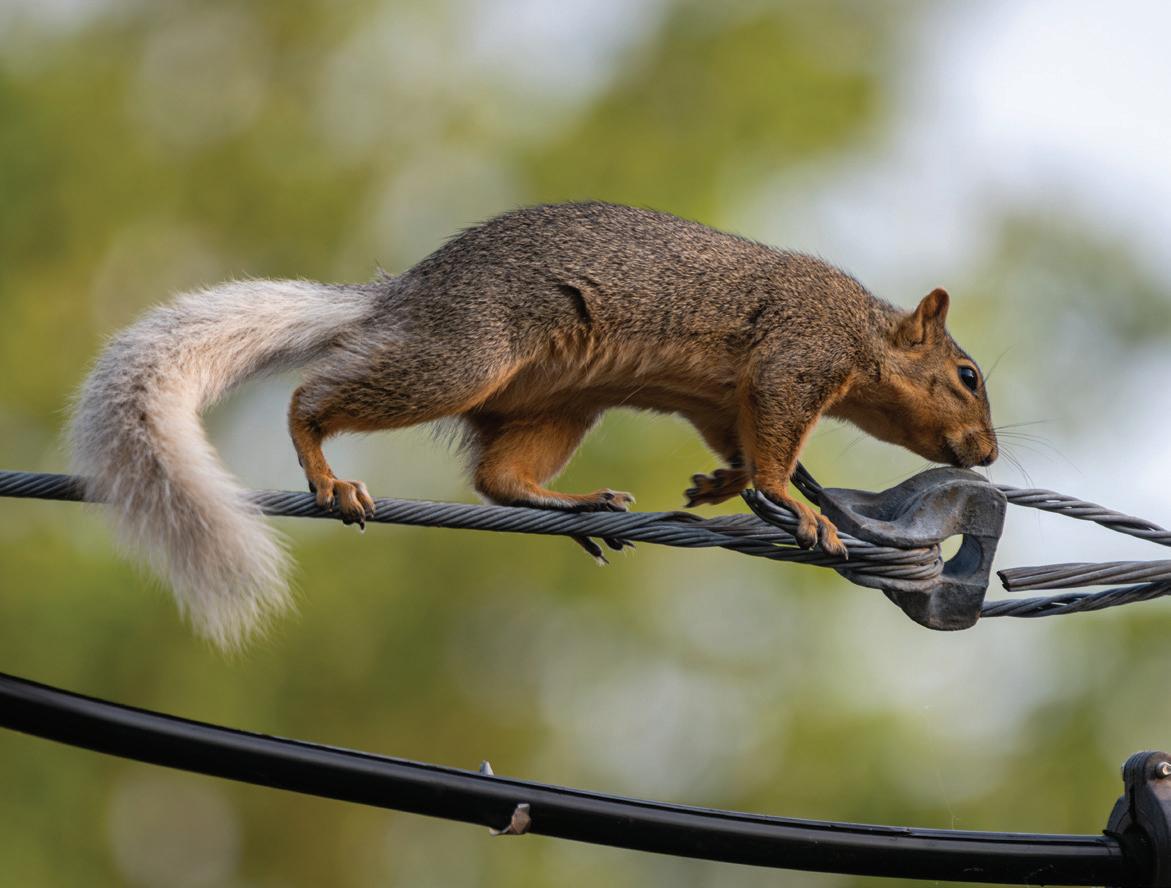
Oh, with power lines, they sure do. While squirrels tend to gnaw at whatever they encounter, exploring their opposablethumbless world with their mouths, the conflict they have with power lines are mostly electrocution through phase-to-ground faults.
“That is, the squirrel is contacting something energized, such as a phase wire, and another part of their body, probably the tail a lot of times, contacts a grounded piece of equipment, such as the pole,” Driver says. “I’d guess that they nosed into
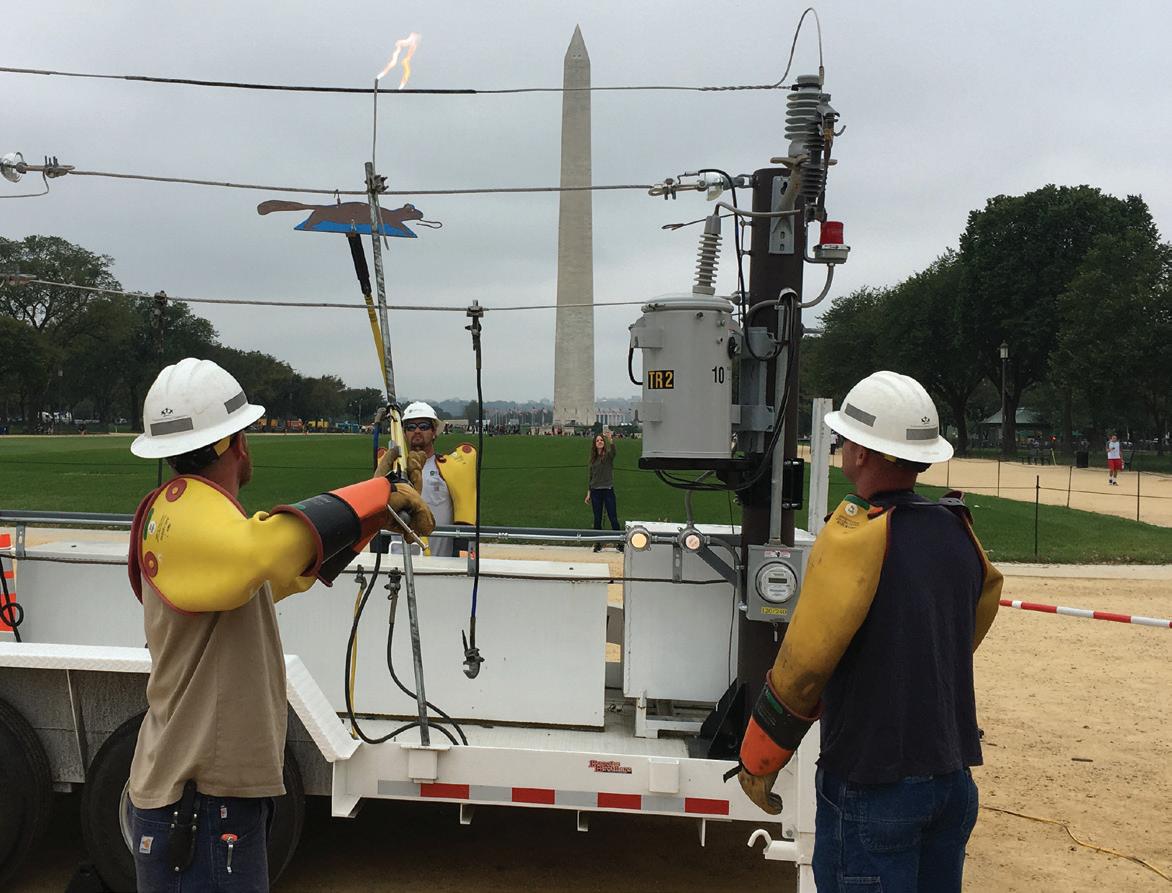
Squirrels use power lines to get around, which has increasingly led to outages this year.
SVEC travels with a safety demo to educate the public about system challenges, such as squirrels.

something. The whole point is they have to make two points of contact at different potentials, or voltages, typically between a hot wire and ground.”
It never ends well for the squirrel and can leave SVEC members in the dark, sometimes on a perfect-weather day. It’s a nearly unavoidable circumstance.
Let the explanation — or is it blame? — fall on nature.
“These are arboreal animals. They are designed to climb up trees,” Mizejewski says. “An electrical pole to them is just another tree and those electrical wires are pathways from point A to point B. Literally, to them it’s no different than a tree branch — especially in a humandominated landscape where there’s not trees necessarily with intertwined limbs, as in a neighborhood. Absent that, what are they going to do?”
Connor Gillespie, outreach coordinator for the Wildlife Center of Virginia in Waynesboro, says the natural comforts of trees play a role for squirrels, and utility poles and lines have simply entered their native landscape over time.
“They feel safest when they are off the ground,” he says. “The more
urbanization or development there is, they will take advantage of the power lines, for sure.”
The mystery might lie more in why animal-related outages increase in a specific year, as is the case for SVEC currently. One theory Mizejewski proposes makes sense on the surface: If there are more squirrels, there are more opportunities for conflict.
He says “boom cycles” for squirrel populations can occur after mast years for nut-producing trees, such as oaks. “[Oak trees] periodically have years when they are super, super abundantly producing acorns. It’s an evolution strategy to make sure of an excess across squirrels, deer, bears and every other animal so they don’t get them all,” Mizejewski says. “In years where there are so many acorns, squirrels don’t know what to do with them — and it translates to more squirrels, healthier females, and they produce better litters.”
Squirrels have two breeding seasons, roughly late spring and then late summer or early fall, Gillespie says. Those are times when the Wildlife Center, a treatand-release animal hospital, might see
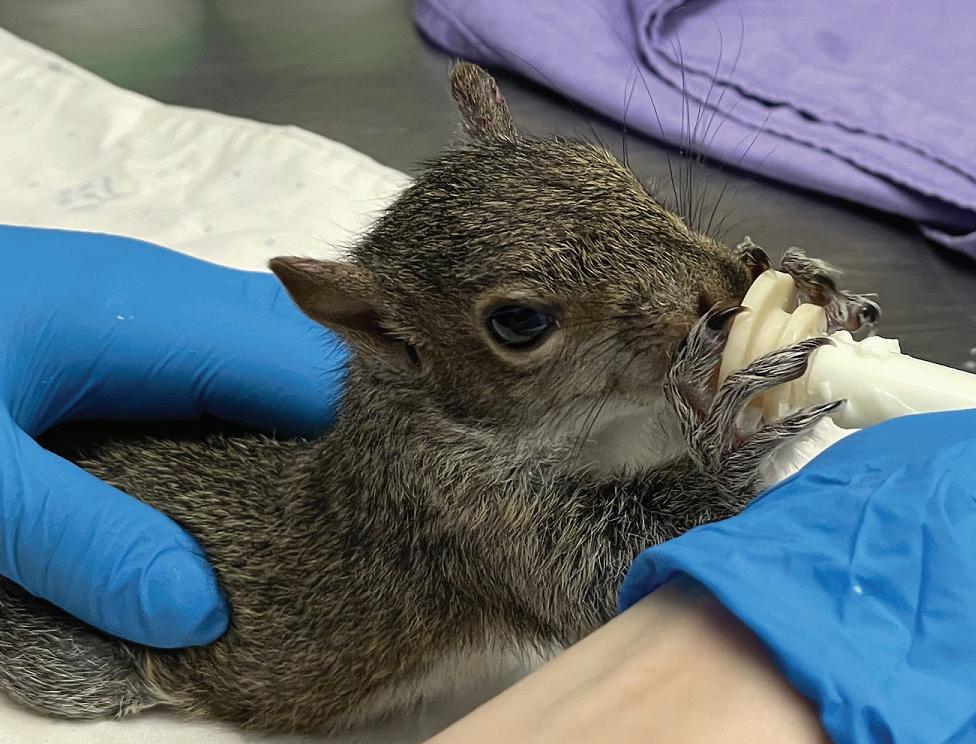
more injured and orphaned squirrels.
The facility handles 400-500 squirrels a year, making them one of its most common visitors. People who clearly view wildlife in a favorable light bring them in — even if, ironically, the animal might be prone to take their lights out.
“If you’re a squirrel, being on the ground in a wide-open area, that’s where they are most vulnerable. That’s when a hawk can see them easily, swoop down and catch them,” Gillespie says. “The vast majority use power lines with no issue.”
SOLUTIONS BY MONKEYS AND BEAVERS?
When SVEC determines a threat to its system, we seek to eliminate it. Trees falling into power lines, for example, are the leading cause of outages, and the answer is a variety of vegetation management solutions to rid the rightof-way of the problem.
Eliminating animals is not an option. And squirrels, specifically, are pesky.
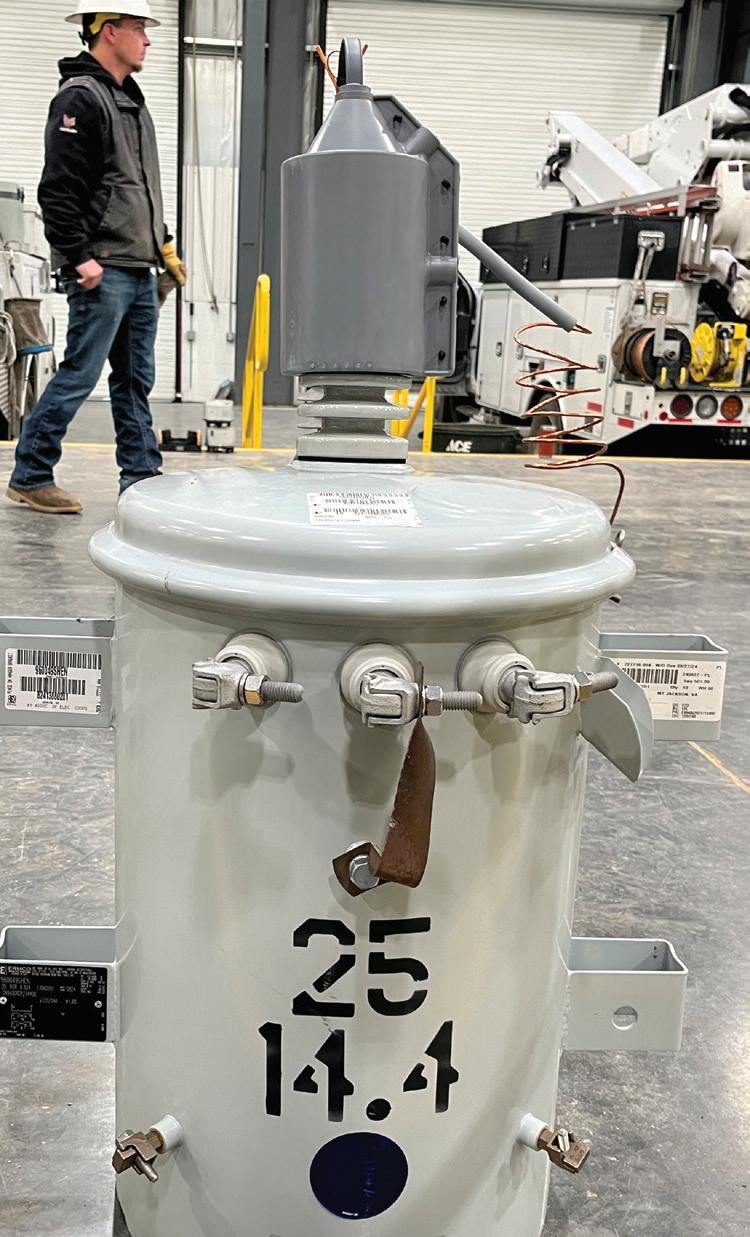
An animal guard contraption that affixes to the top of overhead transformers, attempting to prevent
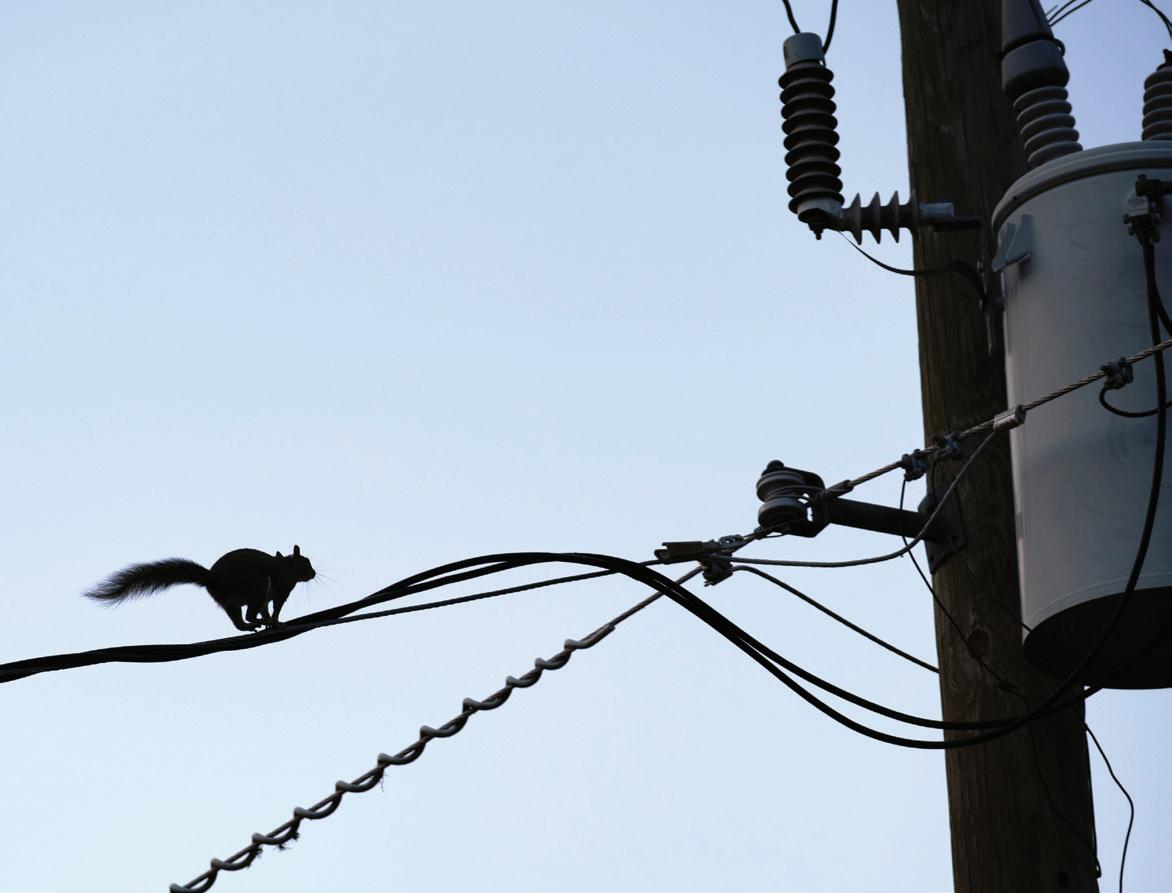
The Wildlife Center of Virginia tends to hundreds of squirrels a year.
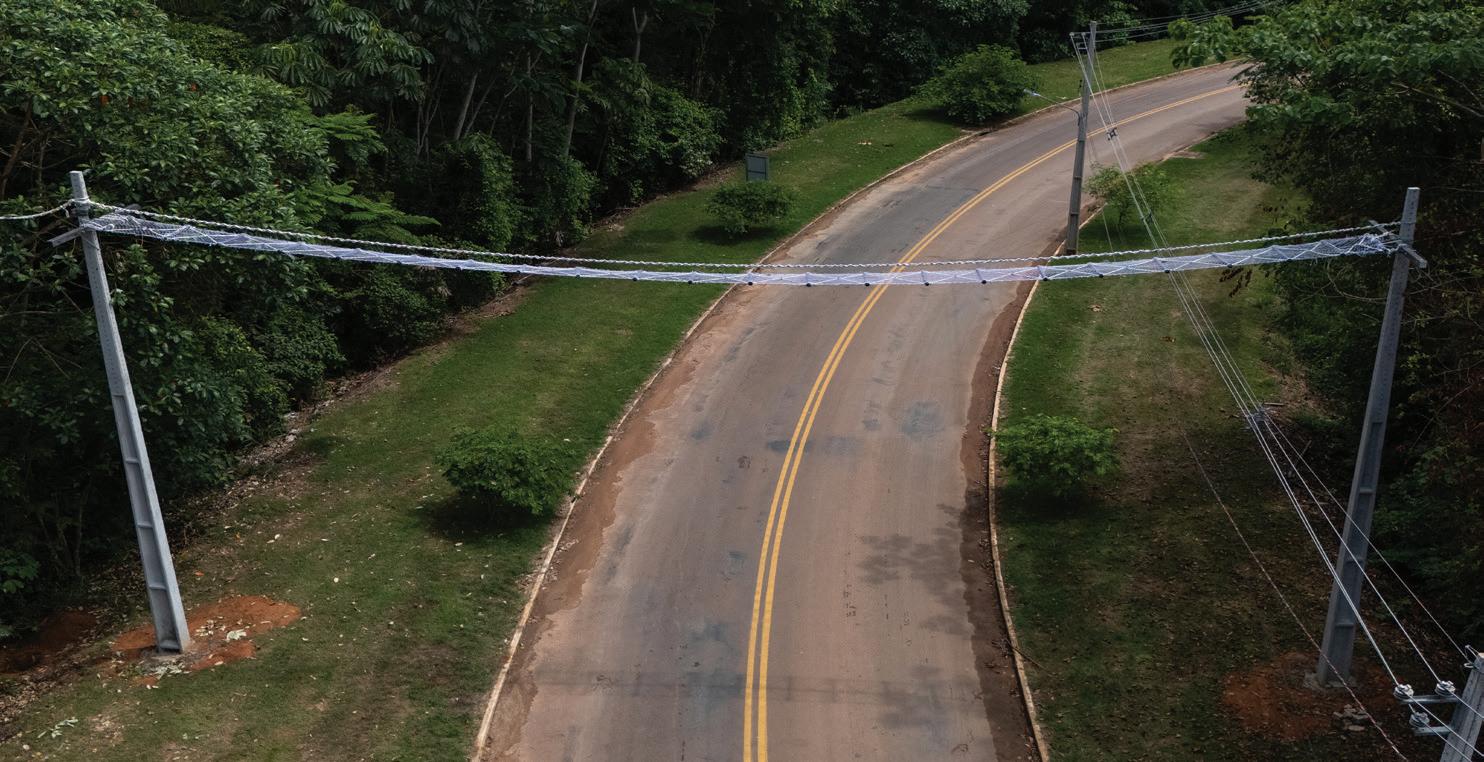
Smithsonian researchers have reduced the number of monkeys interfering with power lines by building canopy bridges. Working with a local municipality, the Smithsonian team installed seven bridges in late 2024. By March 2025, these bridges had proven to be a tremendous success, with nearly 2,000 crossings of six different species, the zoo says.
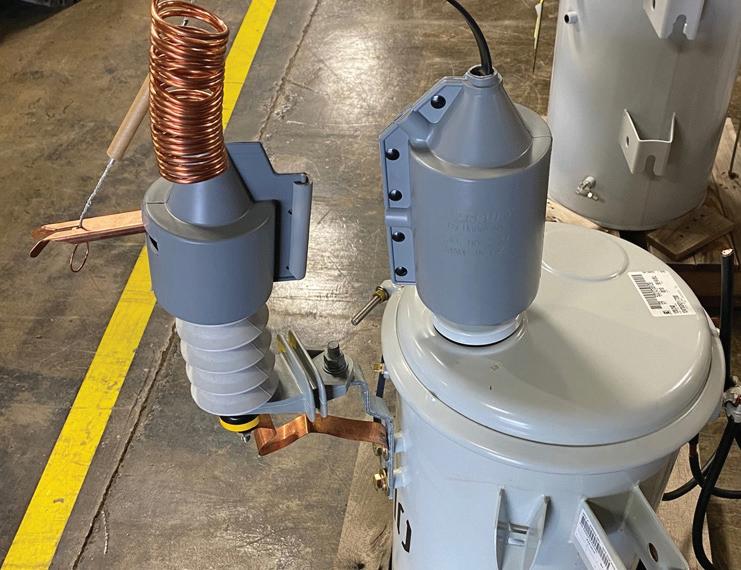
squirrels from electrocution, has mixed results.
“They do work. It is a step we take, but you can’t cover the entire system,” says Nathan Berry, SVEC’s system engineering director. “It typically doesn’t hurt anything, only helps. In general, utilities find that they end up having to cover everything up, so an entire pole top.
“If you only cover one thing, the animals just keep moving higher and higher, particularly in a substation.”
Though rare, substation-level outages are sometimes caused by squirrels, and there is no simple, cost-effective way to prevent those outages.
“Conventional substations have so much energized equipment exposed, so there’s a lot of contact opportunity there,” Driver says. “Underground infrastructure is also still vulnerable to squirrel contact. Even though the conductor itself is not exposed, there is still opportunity for contact at the cutout that protects the underground. We see this quite often.”
Would it be any consolation to know SVEC isn’t alone in this issue? It’s everywhere.
Tahmaseb made the connection to a similar issue in Brazil, where
The original intent was to keep monkeys from crossing the road, where they were vulnerable to being hit by cars, but the project grew to involve the local utility company to also keep them safe from power lines. The broader takeaways are that issues of infrastructure meeting wildlife are commonplace across the globe, and everybody can be part of conservation and protection, Tahmaseb says.
“And it may require partnerships you would not expect,” she says.
For now, co-op members can be part of the squirrel solution. Berry suggests keeping trees, brush, and trash and debris cleaned up on property, and

contacting the cooperative regarding trees threatening our lines. Co-op members should not cut trees near lines, he emphasizes.
“The more habitat there is and the more food there is,” Berry says, “the more critters there will be.”
Tahmaseb agrees, saying having trees that are not “temptingly close” to lines for squirrels may keep them away. The goal, of course, is for SVEC to find common ground with our native friends, not kick them out altogether.
“Everything has a purpose. Just because something doesn’t have a purpose to us doesn’t mean it doesn’t have a purpose,” Mizejewski says. “In the case of gray squirrels, they are really ecologically important. They are prey, an important food source for hawks, owls, foxes, snakes, coyotes. They’re sort of a protein source in that food web.
“But they are also incredibly important seed dispersers. It really is true that squirrels are out there planting the next generation of trees.”
And, unfortunately, they are out there causing power outages. But the future might not be so bleak. Mizejewski thinks of the evolution of living with beavers, which have caused flooding issues as they jam culverts in urban areas.
“Somebody a couple of decades ago came up with, basically, a beaver exclusion device that allows them to engage in their natural, instinctual dambuilding but it doesn’t clog the whole thing. Kind of a win-win,” Mizejewski says. “Maybe there will be some kind of innovation in the power industry.
“Until then, squirrels are probably something you’ll have to deal with periodically.” •
An animal guard, designed to protect the system, sits atop a transformer.
Monkeys cause outages in Brazil the same way squirrels have in the Valley. The solution there is specialized bridges.
Double the Funds
by Lydia Weaver, Community Relations Specialist
Leave it to a nonprofit to make a little go a long way.
When it comes to funding, these organizations are often skilled in stretching a dollar. Thanks to a matching grant program through electric cooperatives, four Valley organizations now have twice as much to work with.
Each year, SVEC can nominate up to four of its Operation Round Up grant recipients to receive matching funds from the CoBank Sharing Success Program. CoBank is a financial institution used by cooperatives.
Four recipients, described below, were surprised with the news of additional funding in late winter, having previously been selected for SVEC Operation Round Up grants this year. In total, between SVEC and CoBank funds, these organizations received $25,000.
BLUE RIDGE CASA FOR CHILDREN
A Staunton-based nonprofit that serves children facing abuse and neglect, Blue Ridge CASA for children recruits, trains and supports community volunteers to serve as court-appointed special advocates (hence the name CASA). Volunteers offer a stable presence for children and assist in navigating the foster care system. They also report findings from professionals in these children’s lives to help judges make informed decisions about a child’s safety, health, education and overall well-being.
Meghan Sevier, grants and communications manager, says the funding will aid the organization’s expansion into Shenandoah and Page counties. These counties were added to the program in 2023 and have a growing need for child advocacy services. With a goal of recruiting and training five new volunteers in this community, funding will help offset volunteer training and advocacy-related expenses.
“The generosity of SVEC members, amplified by CoBank’s matching grant, means more volunteers, more advocates and more hope for children in the
Shenandoah and Page region who have experienced abuse or neglect,” Sevier says.
FIRST PRESBYTERIAN CHURCH OF WINCHESTER
First Presbyterian Church of Winchester is using its grant funding to assist the Helper Fund, a ministry started in the early 1990s to assist families and individuals facing short-term emergencies. This fund acts as a last line of support and is available to those who have exhausted all other financial assistance options.
According to the fund team, assistance is typically provided as an annual grant of up to $150 per household with a three-time limit. Money goes directly where it’s owed, to landlords, utility providers or medical offices, rather than to the individual.

aquatic activities are most popular, ensures consistent and accurate communications are shared with the public, so they can make informed decisions and maintain safe recreational access. Even with conservation efforts of Luray’s Town Council and the LurayHawksbill Greenway, segments of Hawksbill Creek remain impaired, organizers say. The creek is a key tributary flowing into the Shenandoah River, meaning protecting the aquatic ecosystem locally has a far-reaching impact.

“Your generosity will allow us to help many more of our neighbors with their emergency expenses toward shelter, utilities, transportation and more,” team leader Mark Schroeder says. “Thank you so much for your support.”
FRIENDS OF THE SHENANDOAH RIVER
Grant funding awarded to Friends of the Shenandoah River will be used for this year’s Summer Weekly E. coli Testing Program, specifically on Hawksbill Creek in Page County. The organization collects, analyzes and shares data with the public to keep them informed about the quality of the water. The Hawksbill Creek testing site is home to many recreational activities in Luray, so public transparency of the results plays a role in community health.
Continued testing and monitoring throughout the summer season, when
JUST BECAUSE
Just Because is a volunteer-only nonprofit that aims to show appreciation to teachers, support staff and bus drivers in Shenandoah County Public Schools through donations that offset out-of-pocket spending from staff. School supplies, necessary sanitary items and even snacks for hungry students are regularly requested items from teachers.
Public school employees often reach into their own pockets to make sure their students are getting the most out of their education. Just Because helps alleviate those costs.
“Kindness is a valuable commodity,” says Karen Caspersen, the nonprofit’s president. “Just Because is trying to share this with the educators who receive the gifts, the volunteers and the community at large.” •
Battery Safety in a Plugged-In World
by Lydia Weaver, Community Relations Specialist
What’s strong enough to move a plane, but small enough to fit in your pocket?
Hint: You likely already own several.
You guessed it, lithium-ion batteries.
There are obvious places to find them, such as cell phones, tablets and power tools, but larger lithiumion batteries are gaining popularity in everyday life. Whether they’re powering your toddler’s favorite videos or taking you to work, with more battery presence comes more safety measures to be aware of. Since May is Electrical Safety Month, there’s no better time for a refresher.
FROM POCKETS TO PARKING LOTS
Erin Stehle, Harrisonburg Fire Department’s public education officer, emphasizes the necessity of safe choices with the growing prevalence of these batteries.
“Lithium-ion batteries are found in the majority of the devices we use every day, including smart phones and watches, laptops, toys, e-bikes and e-scooters, and even cars,” Stehle says. “While they are an effective source of power, it is critical to make sure we are purchasing, charging and recycling them safely.”
When shopping for chargers or products containing these batteries, the National Fire Protection Association says to look for a safety certification mark indicating the device has met the safety standards of a nationally recognized testing laboratory. It’s also best to use the
charging equipment that was originally supplied with, or is compatible with, the device.
To charge devices safely, make sure they are on a hard surface, not on bedding or couches, and unplug when they are fully charged. If the battery shows signs of damage, such as odor, excessive heat, swelling, change in color or popping sounds, stop using immediately, the national association says. Regularly inspect batteries and their casings for signs of damage.
The association also states that when it comes to e-bikes, e-scooters and electric vehicles, the best place to charge is outside, away from structures and not in direct sunlight. For storage of those larger batteries, avoid areas like hallways and exits.
‘HOT AND FAST FIRES’
The focus on safe storage lies within the concern of fire danger. But when these batteries’ typical use is approached with basic considerations for safety, risks are mitigated.
“Lithium-ion batteries are a tremendous power resource giving us longer work times for [our devices],” says Fiona Albertson, the fire and life safety specialist for Rockingham
burn hotter and last longer than a gas vehicle fire, international studies and industry experts indicate they are far less common.
Cassandra Frysinger, SVEC’s energy program coordinator and an EV owner herself, says it’s always best to follow manufacturer’s instructions.
“Best safety practices are going to vary based on the chemistry of the battery and the use case,” Frysinger says. “For example, many of us charge our phones to 100% each night. However, most electrical vehicle manufacturers recommend keeping the vehicle charged to 80% of the battery capacity to maximize efficiency and battery longevity. The 80% rule also leaves room for the battery to accept energy from the vehicle’s regenerative braking system when it’s operating and reduces overall heat and stress on the battery.”
Most lithium-ion batteries used in electric transportation are located in a battery containment enclosure that protects them from weather and debris, she says.
“There should not be any cracks in these containment enclosures,” Frysinger says.
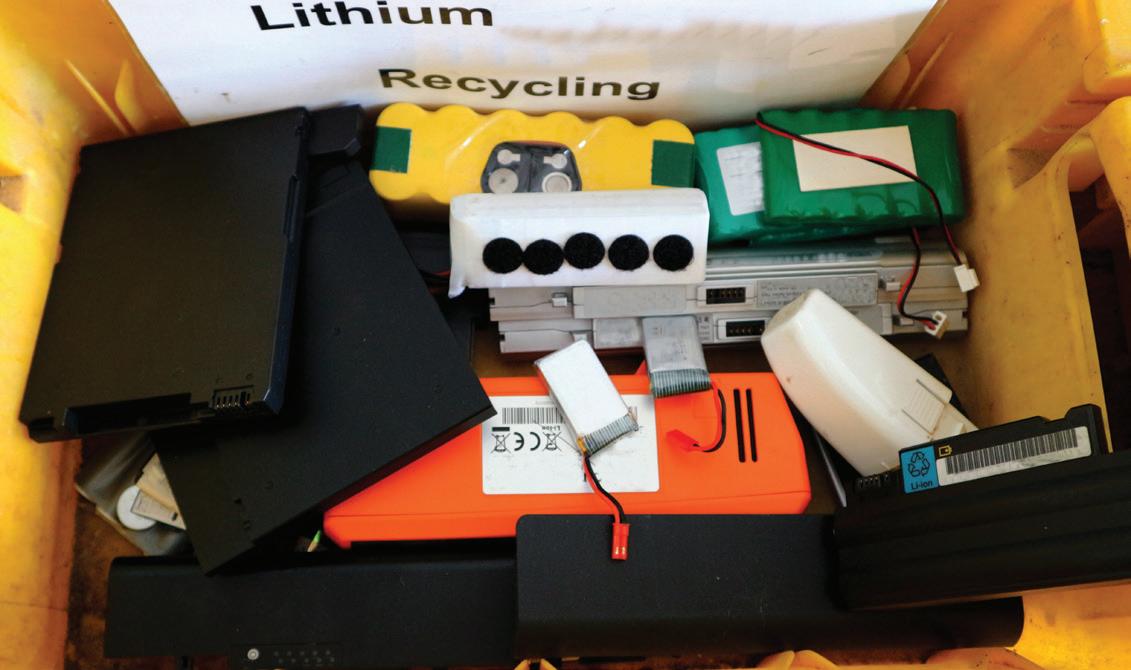
The proper way to dispose of a lithium-ion battery is to recycle it. According to Electrical Safety Foundation International, batteries should never be placed in regular waste or recycling bins due to the potential fire risk. Recycling ensures safety and allows the materials in them to be reused.
County Fire and Rescue. “However, when they experience a failure, they can create really hot and fast fires.”
Though an electric vehicle fire may

Visit call2recycle.org for more information and to find battery recycling locations near you. No matter the size, lithium-ion batteries are an everyday source of power that isn’t going anywhere. So, whether it’s your electric toothbrush or your ride to work, simple, safe habits can protect you from preventable accidents. •
Are You Ready for It?
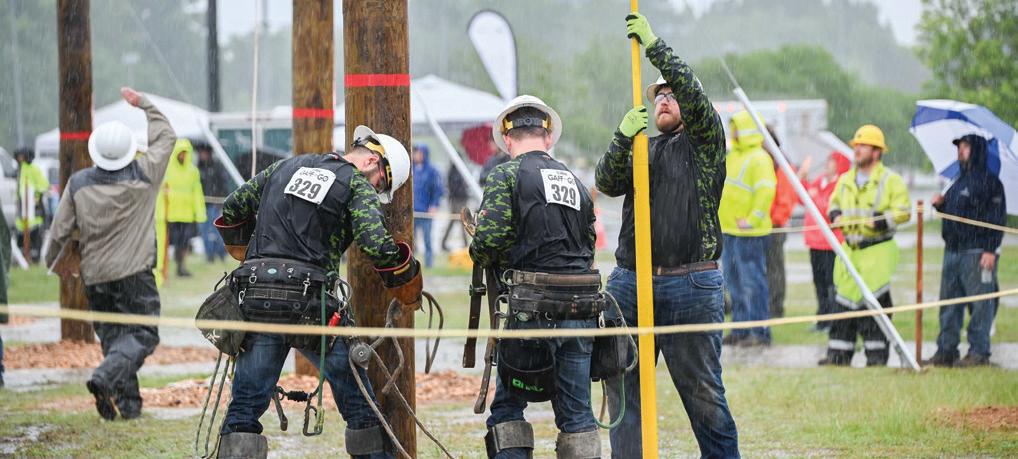
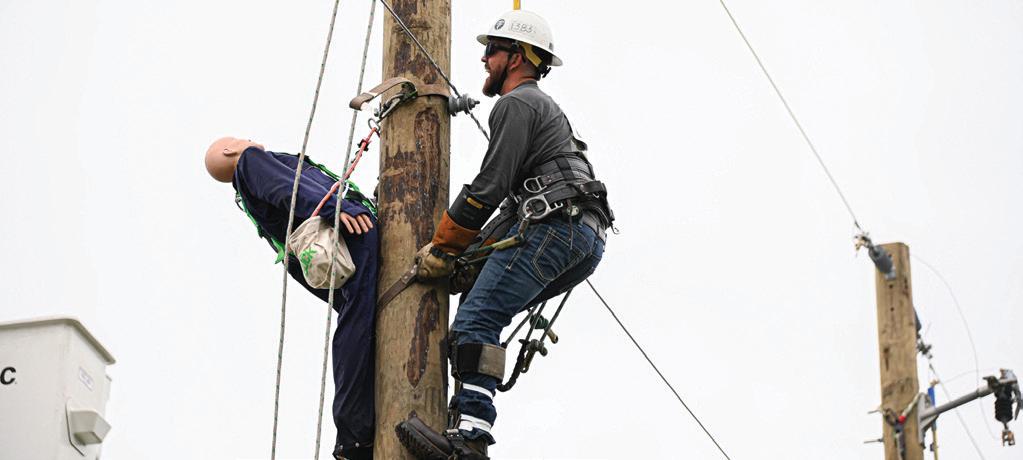
SVEC’s team is ready to compete in the 22nd annual Gaff-n-Go Rodeo, scheduled for May 15-16 at the Meadow Event Park in Doswell, just outside of Richmond. Each year, hundreds of lineworkers from the East Coast and beyond compete in various timed events. Good luck to SVEC’s representatives as they showcase their skills this year! Learn more at gaff-n-go.com.



Calling All Photographers!
Submit your photos now for a chance to be featured in SVEC’s 2027 energy-saving tips calendar. We’re looking for photos showcasing your favorite parts of the Valley.
Submission requirements:
• High resolution (3,000+ pixels wide)
• Landscape (horizontal)
• No editing
• Include location
Send submissions to svecpr@svec.coop before Aug. 1.