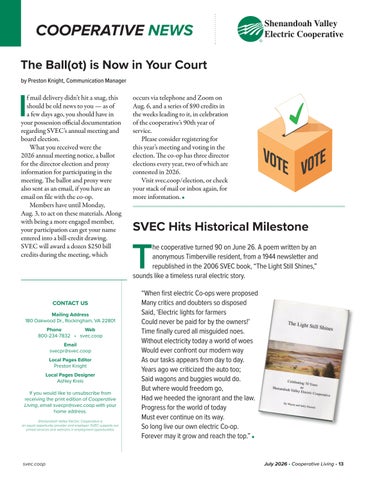
The Ball(ot) is Now in Your Court
by Preston Knight, Communication Manager
If mail delivery didn’t hit a snag, this should be old news to you — as of a few days ago, you should have in your possession official documentation regarding SVEC’s annual meeting and board election.
What you received were the 2026 annual meeting notice, a ballot for the director election and proxy information for participating in the meeting. The ballot and proxy were also sent as an email, if you have an email on file with the co-op.
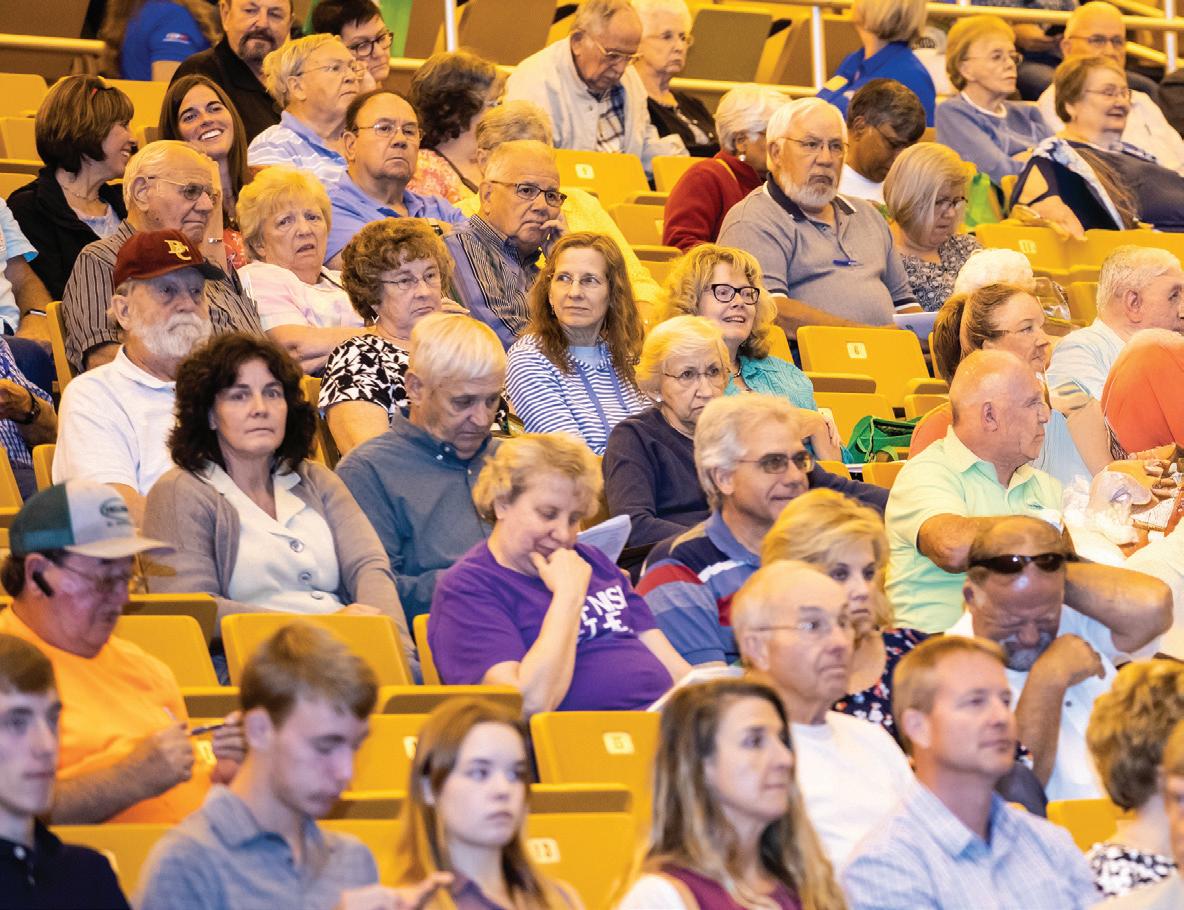
Members have until Monday, Aug. 3, to act on these materials. Along with being a more engaged member, your participation can get your name entered into a bill-credit drawing. SVEC will award a dozen $250 bill credits during the meeting, which
occurs via telephone and Zoom on Aug. 6, and a series of $90 credits in the weeks leading to it, in celebration of the cooperative’s 90th year of service.
Please consider registering for this year’s meeting and voting in the election. The co-op has three director elections every year, two of which are contested in 2026.
Visit svec.coop/election, or check your stack of mail or inbox again, for more information. •

SVEC Hits Historical Milestone
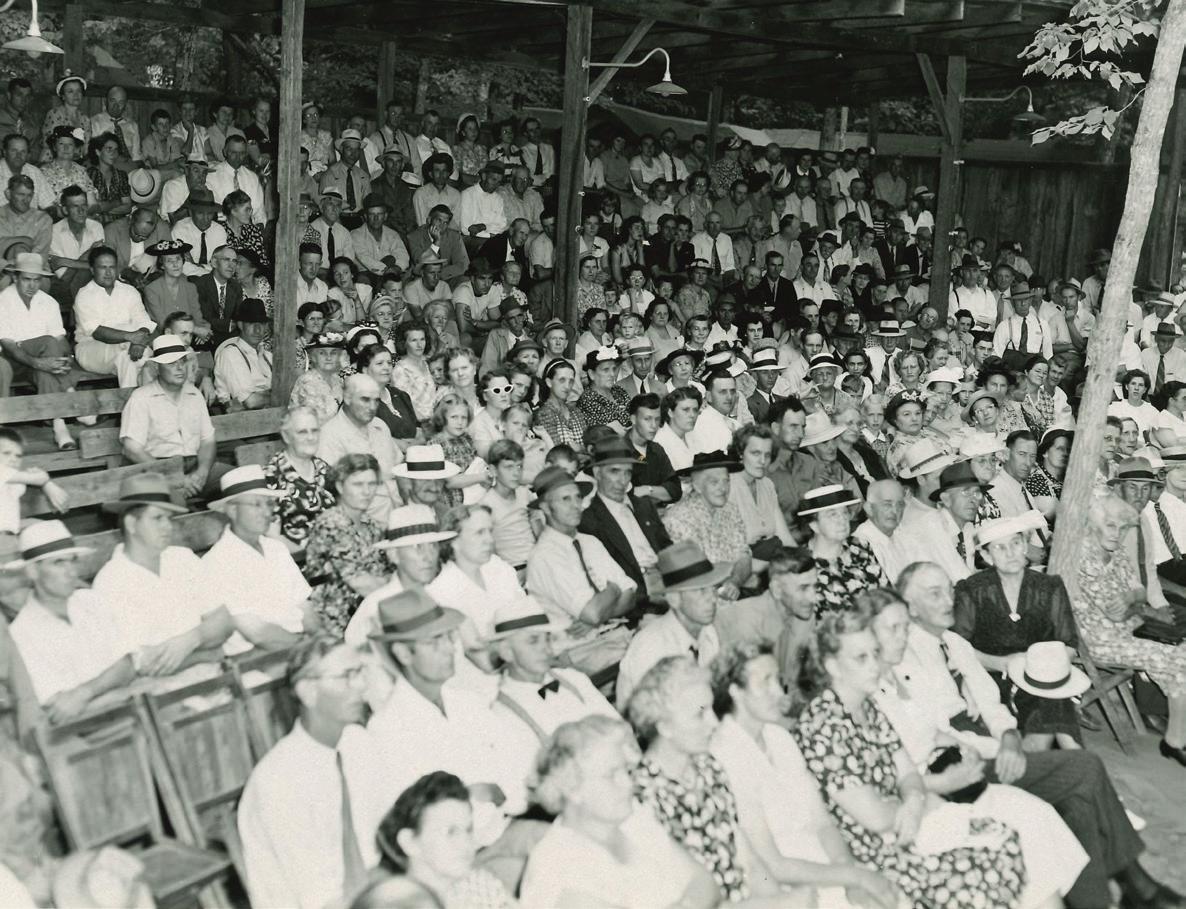
The cooperative turned 90 on June 26. A poem written by an anonymous Timberville resident, from a 1944 newsletter and republished in the 2006 SVEC book, “The Light Still Shines,” sounds like a timeless rural electric story.
CONTACT US
Mailing Address
180 Oakwood Dr., Rockingham, VA 22801 Phone Web 800-234-7832 • svec.coop
Email svecpr@svec.coop
Local Pages Editor Preston Knight
Local Pages Designer Ashley Kreis
If you would like to unsubscribe from receiving the print edition of Cooperative Living, email svecpr@svec.coop with your home address.
“When first electric Co-ops were proposed Many critics and doubters so disposed Said, ‘Electric lights for farmers Could never be paid for by the owners!’ Time finally cured all misguided noes. Without electricity today a world of woes Would ever confront our modern way As our tasks appears from day to day. Years ago we criticized the auto too; Said wagons and buggies would do. But where would freedom go, Had we heeded the ignorant and the law. Progress for the world of today Must ever continue on its way. So long live our own electric Co-op. Forever may it grow and reach the top.” •

SVEC Marks 90 Years of a ‘Sweet Situation’
Retired employees look back at careers with the Valley’s electric co-op
by Preston Knight and Lydia Weaver, SVEC Communications
On June 26, 1936, SVEC became the first electric cooperative chartered in Virginia, energizing a whopping 97 people within two years. In the ensuing decades, as the Valley has grown, so has its electric cooperative, which now serves more than 84,000 members across about a dozen jurisdictions.
As we celebrate 90 years of service, we hear the reflections of several retired employees who made their mark on the Valley by dedicating their own reliable and safety-conscious service to fellow residents. All told, they left the co-op with almost 300 combined years of electric utility experience. ***
Co-op employees come from varied backgrounds. Some may dream of working in the industry, but many come basically off the street, green to the essential service they will help provide.
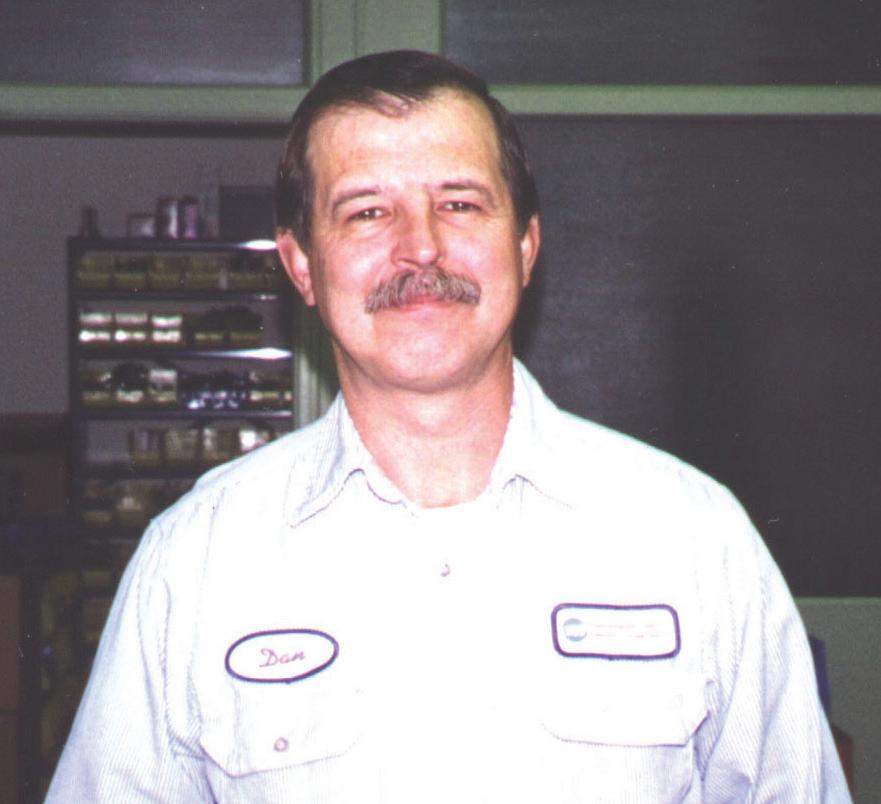
Dan Stogdale, 23 years, engineering: I started as a co-op student in 1968. My first year in engineering [at Virginia Tech], I heard about the cooperative education program. I went and checked it out. Thought I wanted to go into electronics, but I thought I’d like to stay at home when I worked each quarter, so the only thing around this area was SVEC.
Barbara Frye, 31 years, member services: The co-op had the reputation of being a good, solid employer. It’s not very often they had openings for women, so to get a job in the Mt. Jackson office, where I lived, in my hometown, was a pretty sweet situation.
Mark Feltner, 42 years, lineman: When I got out of high school, I went to a factory for three years, and I hated inside work. I wanted to get outside. And I loved every minute of it. All 42 years. Every job was always different. That’s what I loved about it.
Dan Stogdale: The first day that I
came in, [my supervisor] called me and two other summer students into his office and said, ‘I got a job. We’re going to put electric service to the fire tower up on Reddish Knob. I want you guys to go out and help stake that line.’
We staked that line up Reddish Knob using an old fire access trail. We had a Jeep, and we’d go up and back every day. It took almost four hours to get up there and four hours to get back. We spent some long days up there staking [lines]. I guess we were up there five or six weeks. Killed five rattlesnakes. I told them then, ‘If this is what engineering is all about, I think I’m going to find a different job.’
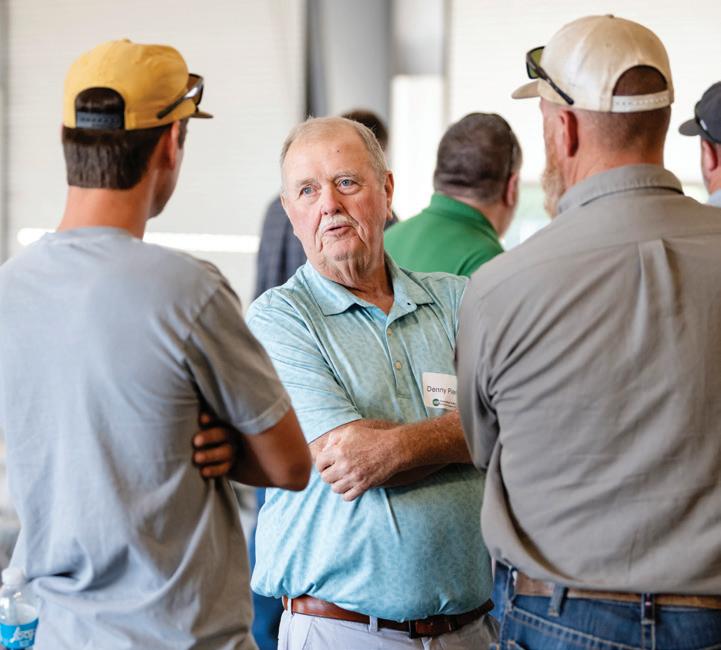
Dennis Pierce, 43 years, lineman: I was laid off and looking for a job. My mother was a waitress and knew [my eventual supervisor], and she asked him if he was hiring and he asked who needs a job. That’s how I got the interview. He said if I could be in the office that afternoon, I could do the interview.
Basically I started to work the next day. That was in ’73. I knew nothing, absolutely nothing about linework.
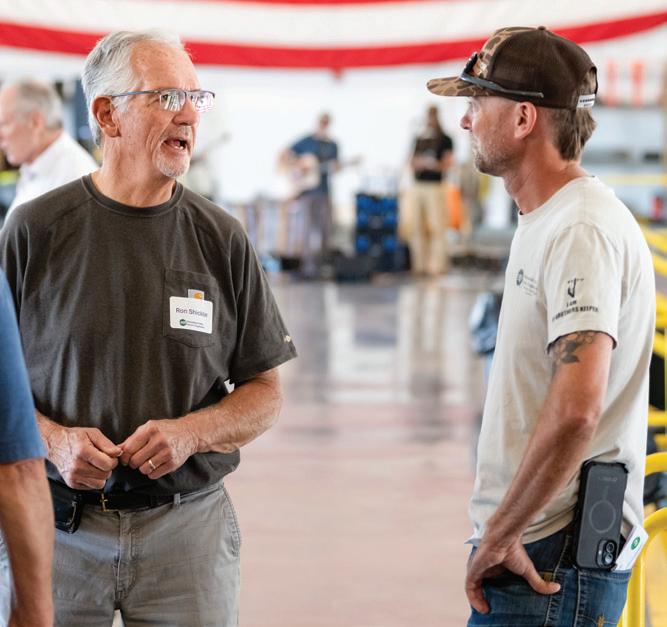
Ron Shickel, 35 years, metering/ engineering: It was Jan. 21 when I started. We had a record cold spell. I remember lying awake all night worrying about my truck starting. In the morning I jumped in and the seat felt like a plywood bench, it was so hard.
I got to work, introduced myself. I remember walking in there, it was chaos. Beepers going off. Alarms going off. We were having issues with the power supplier. They were losing some generation because of the load. My boss said: ‘I’m sorry I’m not able to give you a more formal welcome. We’re kind of in the midst of a crisis here. Do you mind sitting here and observing?’ And after a couple hours of observation, I asked myself, ‘What have I gotten myself into?’
Mark Feltner
Dennis Pierce
Barbara Frye
Whether behind the scenes or on the front lines, working in the utility industry gives people the opportunity to contribute to highly significant projects. It’s not always easy, but it’s always important.
Curtis Craig, 29 years, operations: My dad actually did the mapping system. He had the territory flown [to take] aerial photographs. That’s how the original maps came to be. I’ll always remember doing that [working on those same maps]. That was something that stuck with me and was important that I got to do. We were digitizing them.
Dan Stogdale: When I got out of school, of course, we didn’t have calculators.
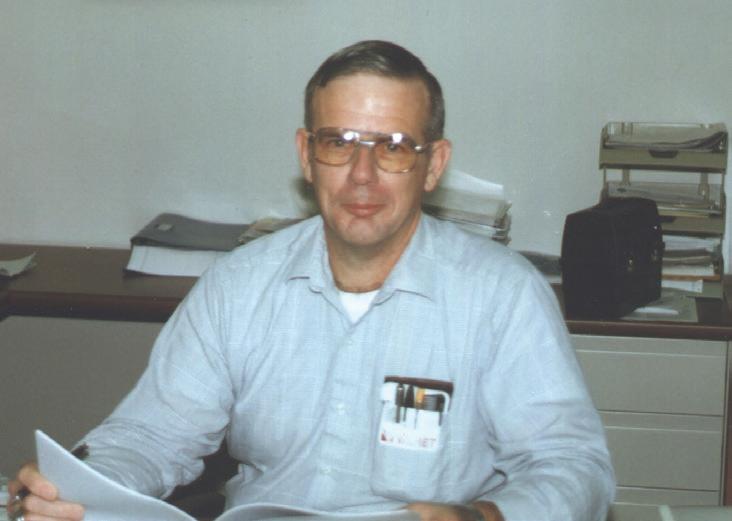
I used a slide rule all the way through school, and one of my first jobs was doing all the voltage drop and fault current calculations. I did those manually on sheets of paper.
That was something we took pride in — service for consumers.
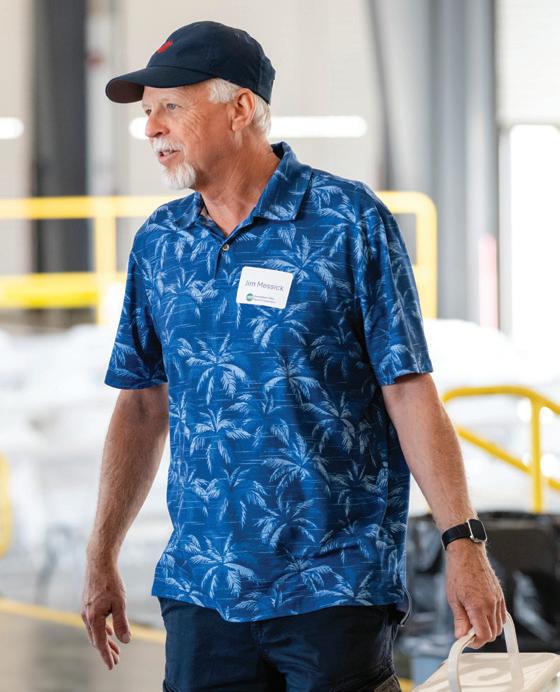
Jim Messick, 31 years, engineering: I was in the system warehouse two and a half years, then 28 ½ years in staking as a field engineering representative. I saw a lot of changes. I had the very first work vehicle with air conditioning. A lot of the guys didn’t like that.
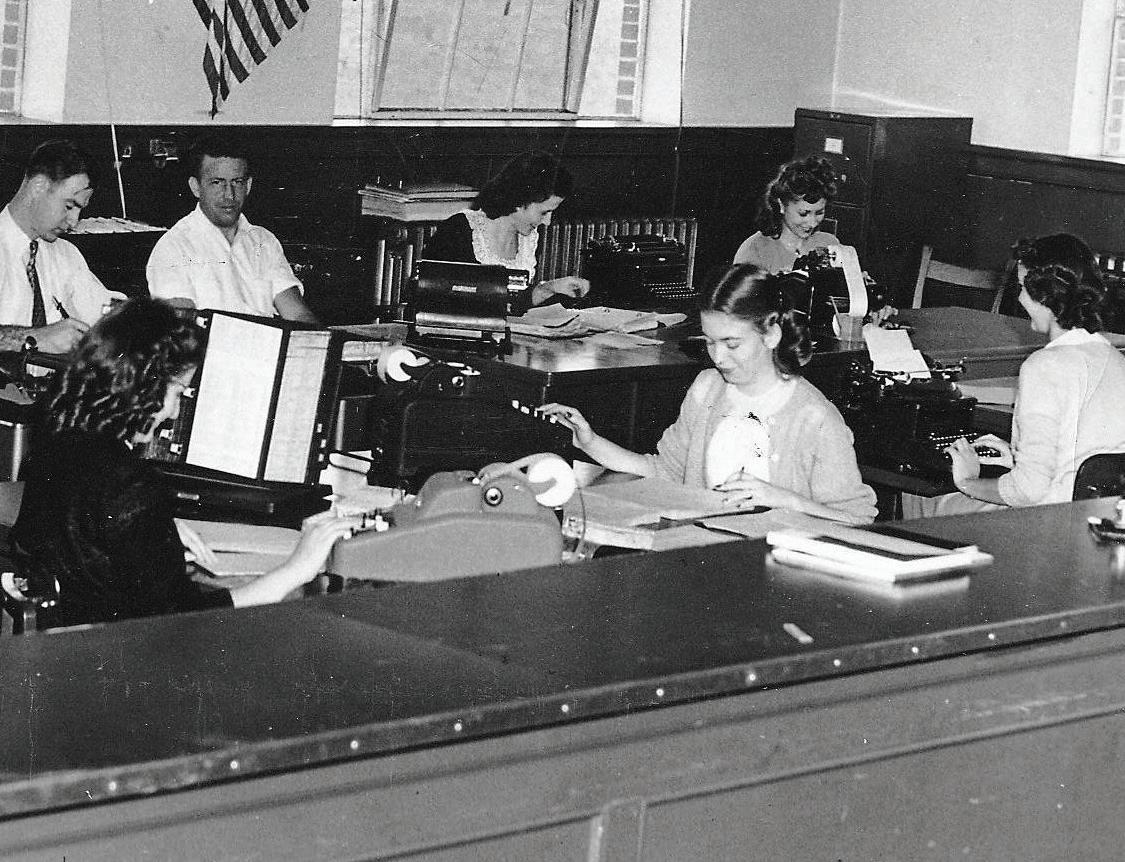
Barbara Frye: When I started, right before storms, we’d get this huge print out. We called it a No. 1 file. It had all the customer names and account numbers, and when a customer called on the phone, you had to look it up on the file. And you had to write down the number, meter and phase. And they’d go in a backroom, and they’d have all these papers laid out by outage.
Oh, my God. I just can’t believe we worked like that.
Curtis Craig: Our CEO at [one] time, whenever we had a board meeting, he loved graphs. He loved to have a visual picture of how the system was going. He’d have several other
graphs, seven or eight of them. He’d come back over to us before the board meeting, and we’d have to print those graphs off because we had kind of the only PC around. But, funny thing was, we had to color them in with colored pencils. We sat there and actually colored. Finally, I talked them into [getting] one of the first color printers, and I took one or two of the spreadsheets and printed off on a color printer and showed it to them, what a color printer could do.
“I
loved every minute of it. All 42 years. Every job was always different. That’s what I loved about it.”
— Mark Feltner, retired lineman
So, we never had to do the graphs after that.
Danny Hawkins, 35 years, operations: In ’81, they put the first IBM computer system in. They had a monitor, and that monitor weighed 100 pounds, and they put them on certain people’s desks and they kept expanding. Back then, it was [coaxial] cable. You had to run a coax cable daisy-chained from one to another, and you could only have seven in a row. They had some in-house people do it, but right after that, I ended up doing all the computer wiring. I didn’t work on them, but I ran the wires.
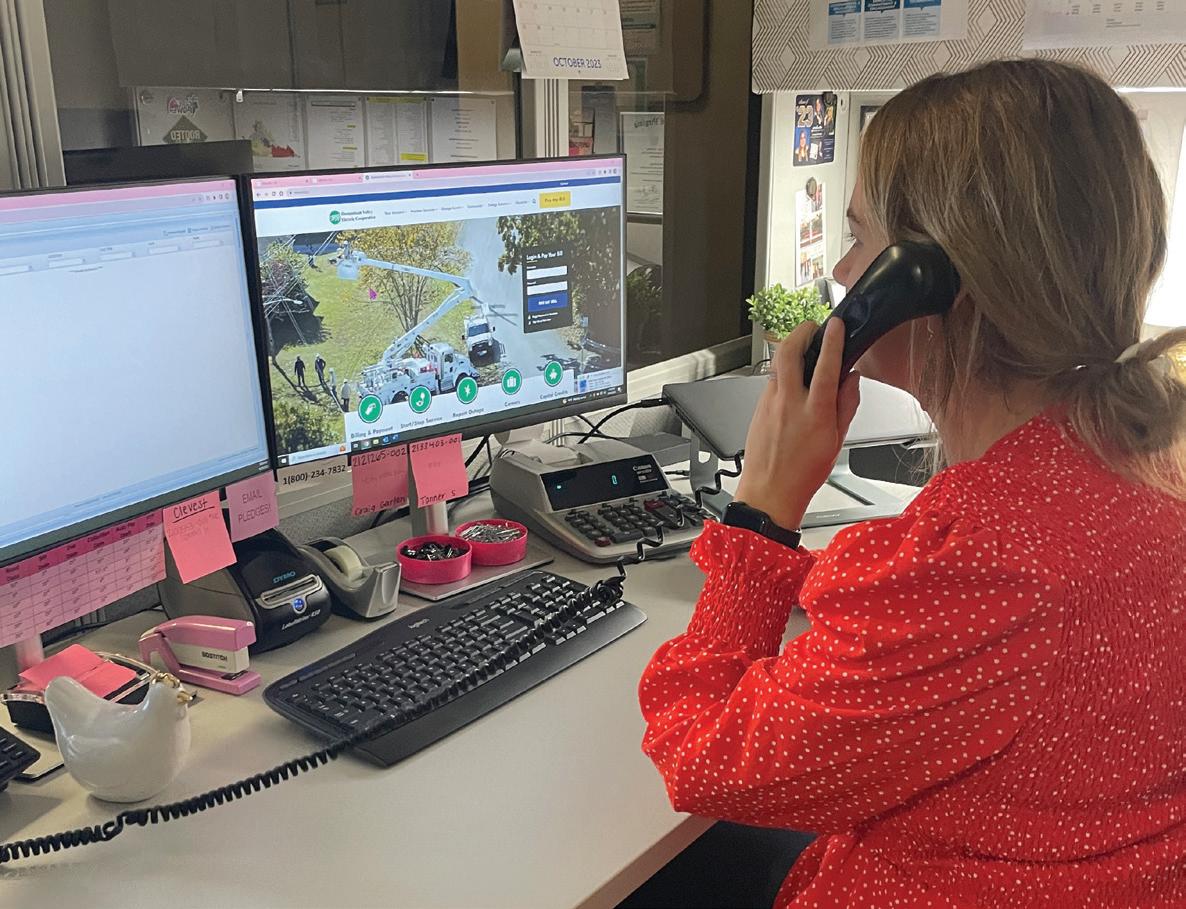
Curtis Craig: I started Nov. 4, 1991. We basically only had four PCs at that time. Now everybody has a PC or tablet in the trucks. Just where it’s gone from. The information we’re able to get back from consumers now, from substations, is pretty amazing.
Dan Stogdale: I enjoyed the years I worked. Doing what I wanted to do. I just enjoyed working with the people. My most enjoyable times with the crews were when I’d work with the crews in the substations, building the substations, I really enjoyed that.
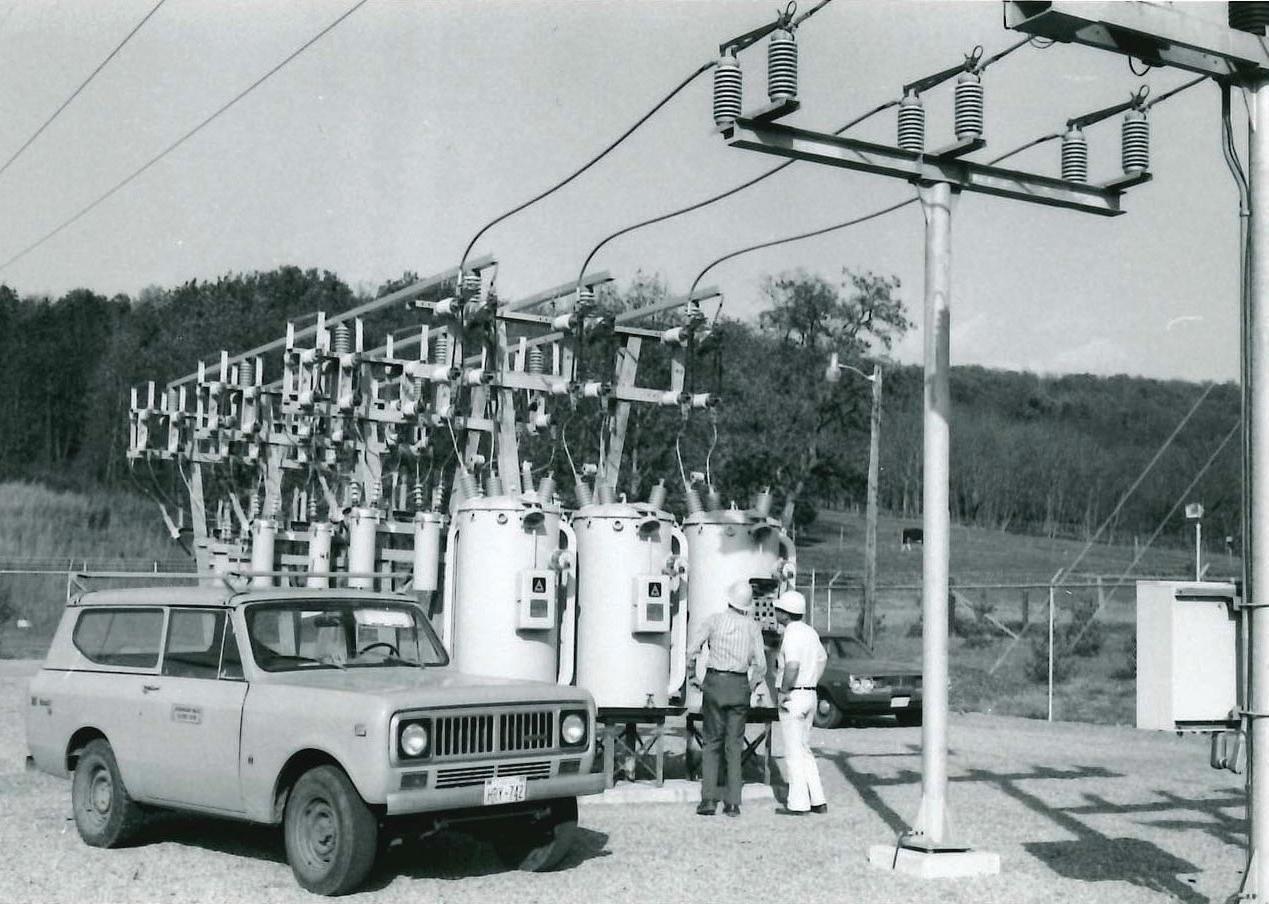
Dennis Pierce: We built several substations in my time. The first major one was Trimbles Mill [Augusta County]. All the substations, from the ground up, were done in-house. In
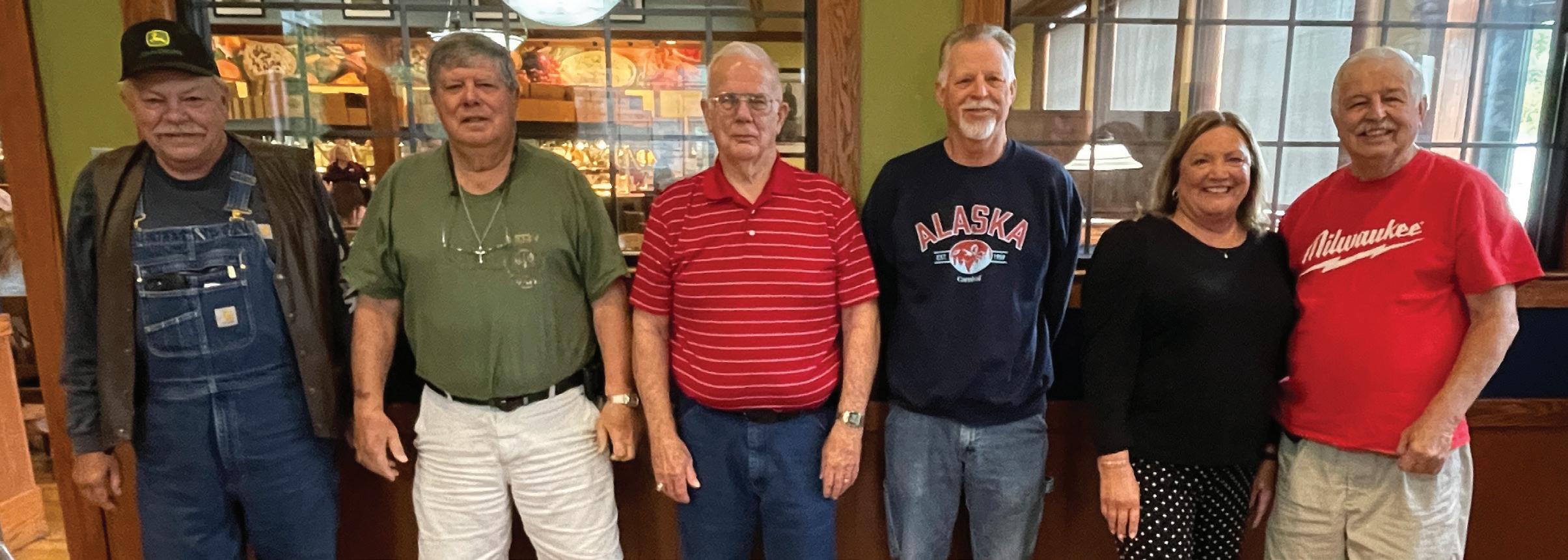
Retirees gather for a monthly luncheon to reminisce about old times.
Dan Stogdale
the ’70s we started converting our voltages to [14,400]. We started to run out of capacity. Instead of restringing larger conductors, we just doubled our voltage. It was quicker to do it that way, and less expensive.
Mark Feltner: Not everybody can be a lineman. Be proud to be a lineman. It takes a special person. It’s a great job. If I had to do it over again, I’d do it in a minute.
Jim Messick: I feel very fortunate to have worked at SVEC. I do miss my coworkers.
Ice, snow, floods and a phenomenon known as a derecho — retirees saw it all, or close to it.
Barbara Frye: We were up at the Fleming Park area of Mt. Jackson, and the foreman flew open the transformer door and it was all nice and clean inside and he said, ‘Something’s wrong.’ He says when you open up a transformer, and it’s nice and clean like that, nine times out of 10 you got a snake in there. I was like, ‘Oh, my God, why?’ Because mice like to drag stuff in, so when it’s all messy, there’s no snake, but if it’s nice and clean, there’s usually a snake in there.
I don’t know if there was a snake in there. I went back to the truck. I don’t do snakes.
Jim Messick: My most memorable times were working the major storms and outages. Blizzards in 1993 and1996, Hurricane Fran, the derecho, the snowstorm and ice on Love Mountain, and for the snowstorm of January 2016, I had all four tires chained on my Explorer.
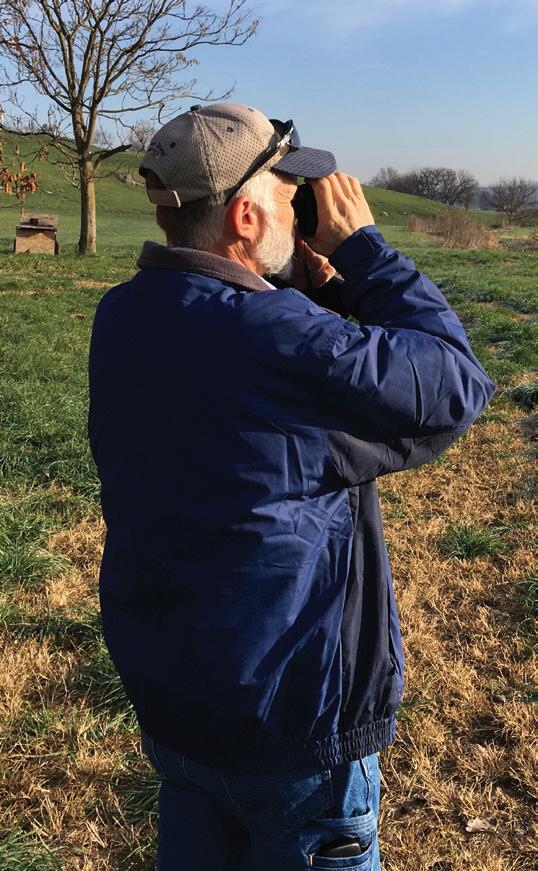
We were used as scouts, so I was out walking the lines and searching for the problems.
Dennis Pierce (1978 Easter ice): It started the Saturday night before. It rained and froze all day long. Ice everywhere. Any place you wanted to look was ice. All the poles were covered with ice. All the lines were covered with ice. We had to beat the ice off the poles to get the line back up. We got it back up, tried it, and it didn’t stay.
We probably worked about 12 days, 16 hours a day. And then for the next six weeks, we worked six [10-hour shifts]. There was a tremendous amount of cleanup after it was all said and done. Long hours, tough work.
Danny Hawkins (1985 flood): I became known as the voice of Hardy County. There were no radios in [that part of] West Virginia. So, I was up on Helmick Rock in West Virginia, and I could communicate to Dayton and Mount Jackson and relay what material to get ready, because the next day you wanted to be able to load that material and go. You wanted them to already have it boxed up, on the dock, waiting for the crew. They would call me and tell me what they wanted, and I would relay [the information]. Or the head people would call and say, ‘Hey, how’s it going,’ and I would check.
So, I was up there probably three or four days before we got everybody back on because there was no telephone. All phone lines were torn down. It was a mess over there.
Ron Shickel: We took off to go to Moorefield. It took us all morning to get there because of blocked roads, washed out bridges. There was so much devastation. The Moorefield office had more than five feet of water.
Barbara Frye (2012 derecho): I felt so sorry for the linemen. The heat afterward. It was relentless. We had so much [of the system] out. The damage was so great. It just took so long to get everybody back on. It was a very trying time, both for the people in the office on the phone and the linemen. I really felt for them.
Ron Shickel: I remember how stifling hot it was. We had just acquired territory [in Frederick and Page counties]. There were places that the right-of-way was so grown up, you really
Substations have evolved significantly during 90 years of SVEC service.
Jim Messick as a field engineering representative, and as a retiree.
Danny Hawkins
couldn’t even see where the power lines were. There were just trees down everywhere.
Curtis Craig (2016 blizzard): We had some outages. I got to take a few of the contract crews around that came in to help from other areas. One [lineworker] was from Wilmington, N.C. He was just gung-ho, wanted to work in the snow. When I got him out to Bergton and he got out of the truck, he was basically waist-deep in snow. That look on his face changed so much. He looked at me and says, ‘I think I want to go back to Wilmington.’
When you think of your electric provider, you likely care most about reliable power and reasonable costs. That’s SVEC’s goal, too, but a lot goes into making those realities.
Mark Feltner: I don’t believe people understand the safety aspects, all that’s involved [in linework]. The grounding, the safety report, finding the trouble. People just don’t realize what’s involved. In this job, you don’t make many mistakes, or someone is going to get hurt, and you surely don’t want that.
Danny Hawkins: The co-op was very, and still is, looking to the future. They started upgrades of the lines and substations in the ’70s, SCADA in the ’80s, microwave and new communications in the ’90s, and then in the early 2000s, what we called our “turtle” system to read meters [via power lines]. They’ve always been proactive on getting stuff done.
Ron Shickel: The deployment of technology throughout the co-op, be it metering, substation control, load management, telecommunications — I always considered the co-op to be on the leading edge. There’s a willingness to try new and improved products.
Barbara Frye: When I first started, women were glorified cashiers. They would answer the phones, take the money, that’s all they did. As time went on, it was really uplifting to me to see the roles of women in the cooperative expand because there were so many opportunities that developed over time.
I’m really proud that the cooperative saw that value.
Curtis Craig: I always looked to [members] like they were my bosses, basically. It was my philosophy with it. Whatever I could do to help them out, explain things, I enjoyed that.
Dennis Pierce: You look back and see what you’ve done, where you started and where you ended up. It took a special breed of a person to do linework. Not everybody was cut out to be a lineman. Sometimes working conditions were pretty poor, pretty cold, pretty wet. Other times it was pretty hot and stormy. It took a person with dedication for sure.
The ‘co-op way’ was that the consumer was the No. 1 priority, and when they were out of lights, somebody needed to be there to make sure the lights come back on. It sort of makes you feel good you were part of that process. •
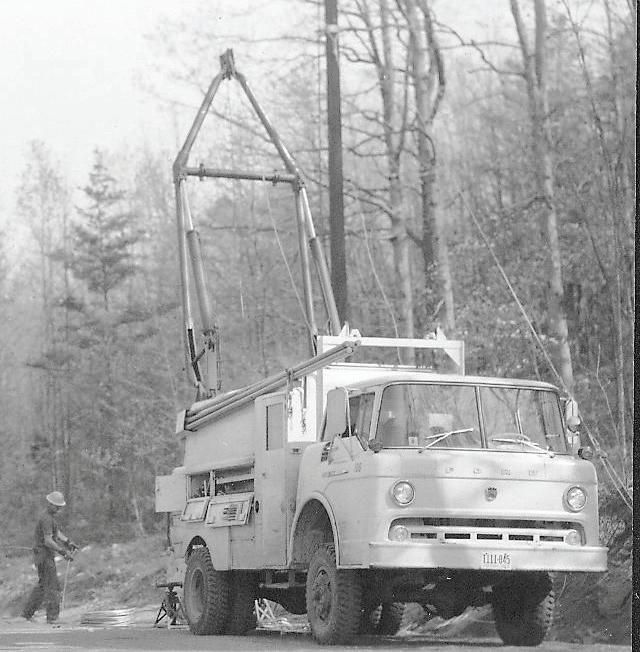
when
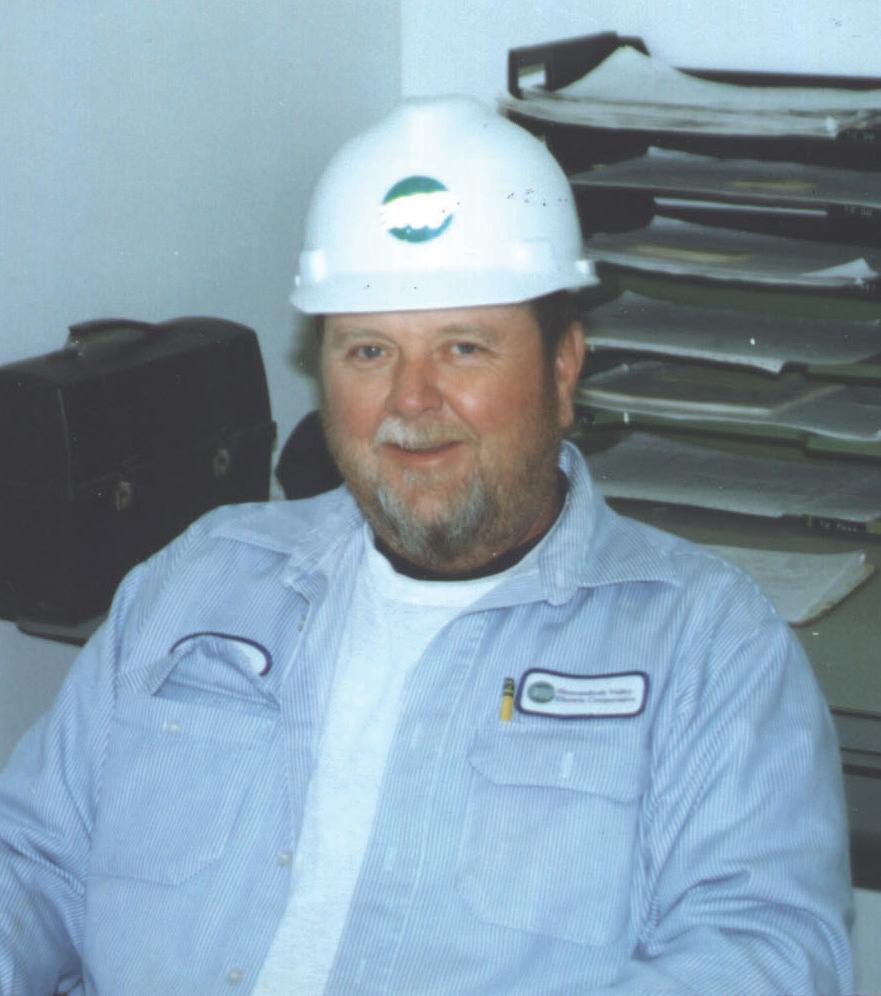
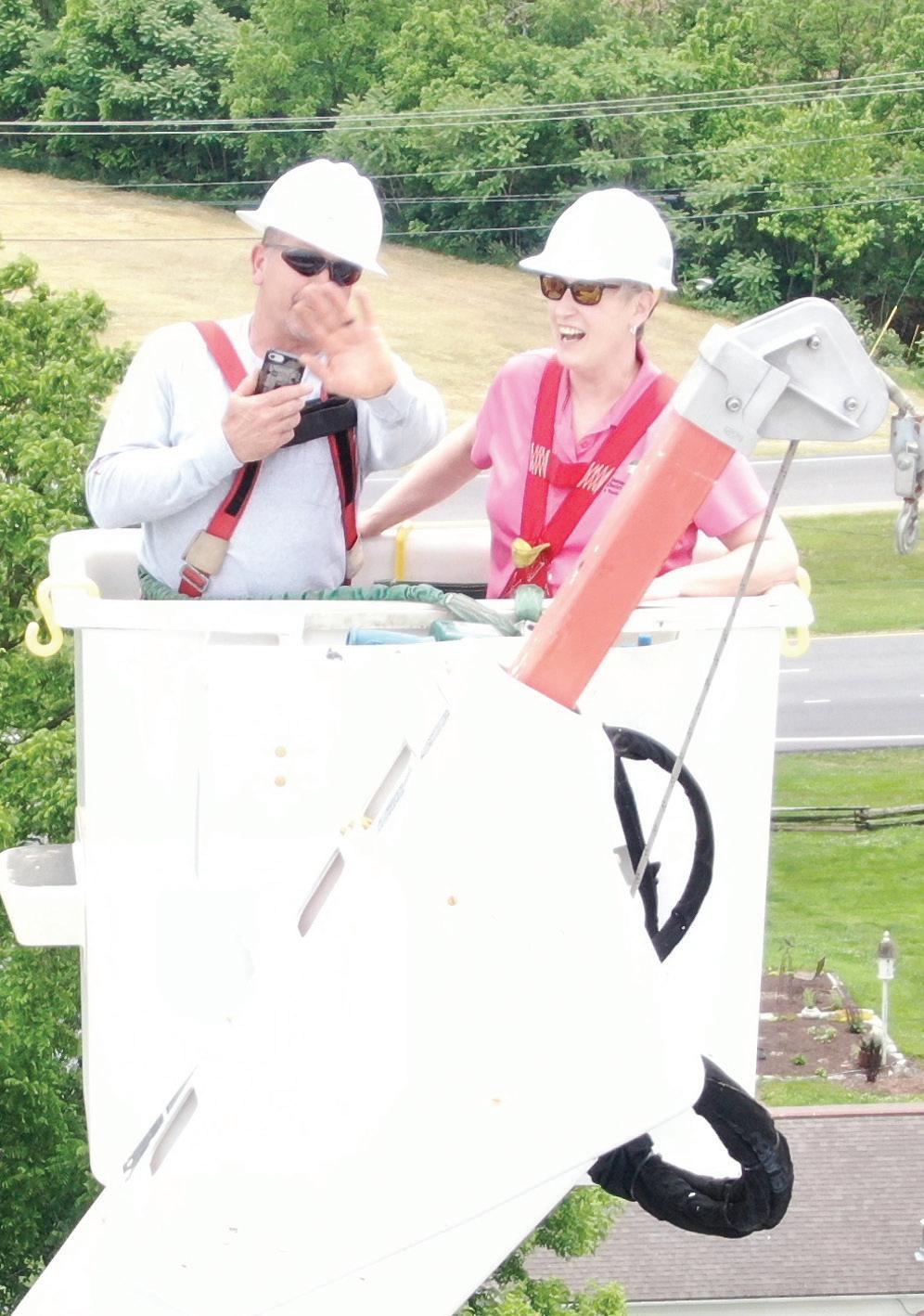
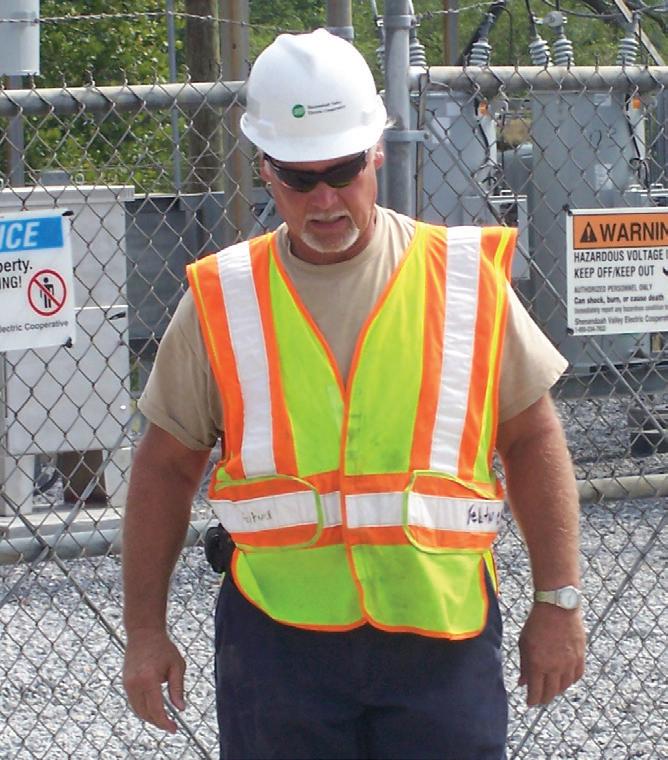
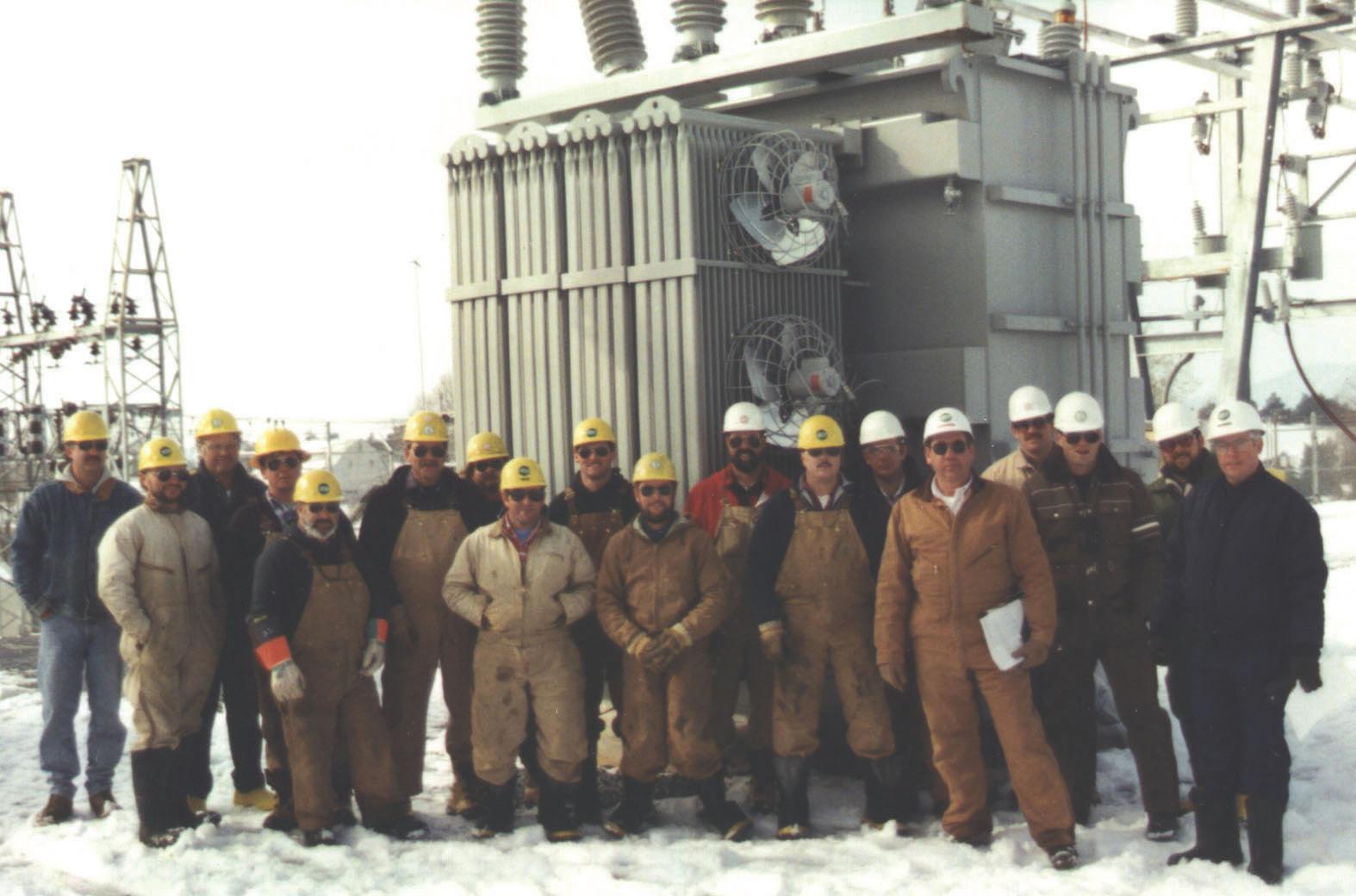
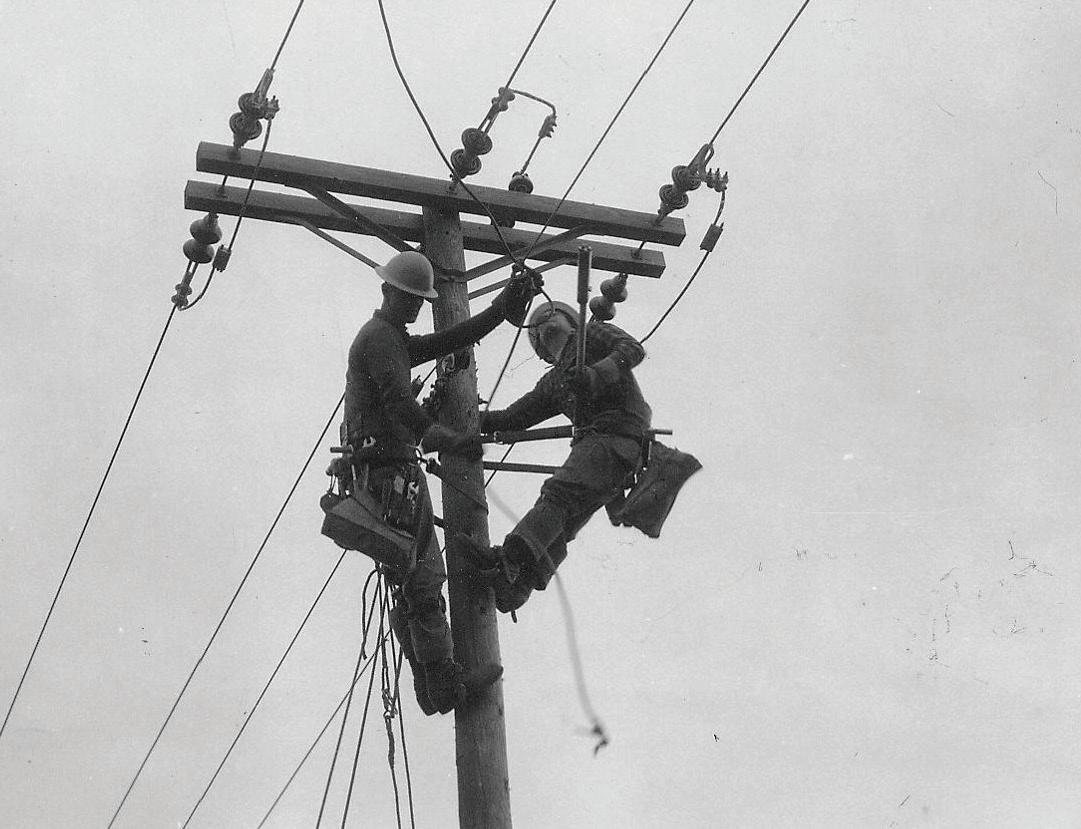
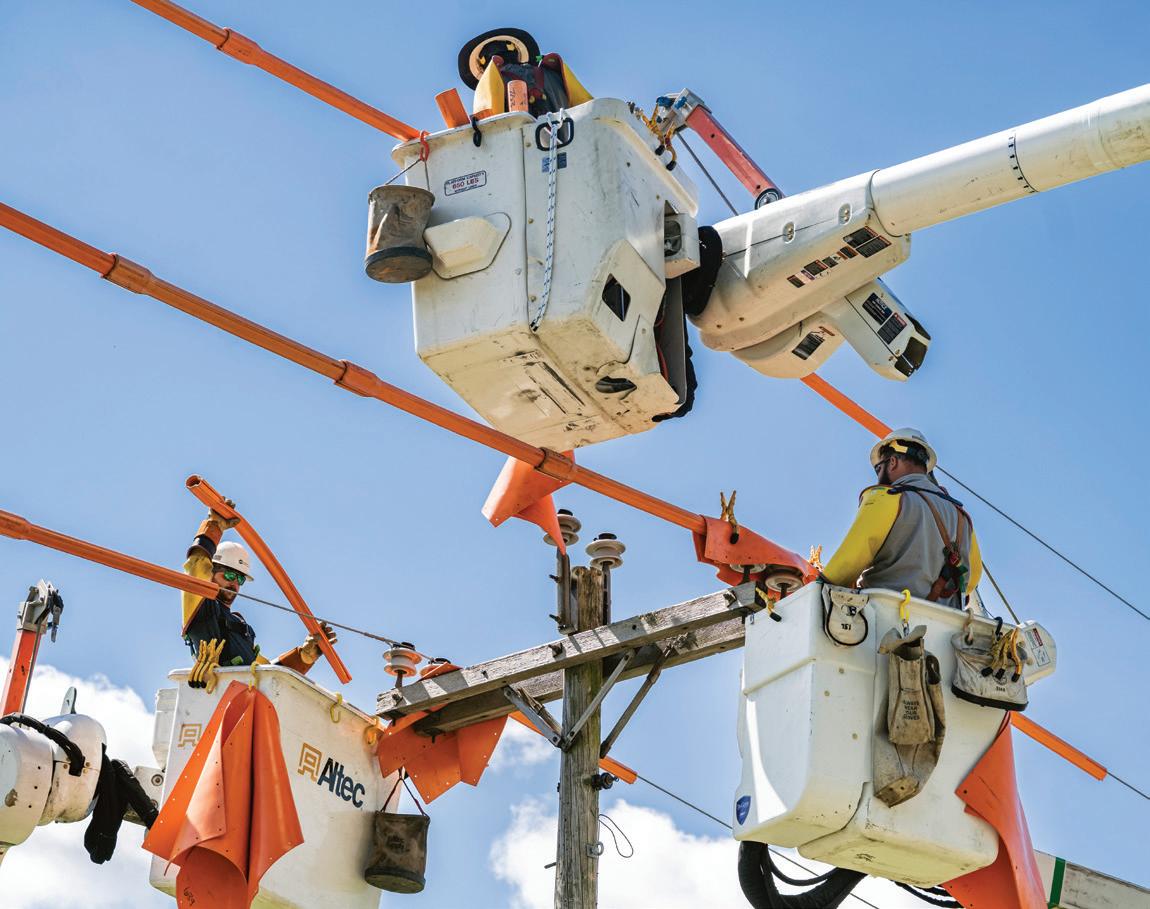
The faces and hard hat colors may have changed through the decades, but SVEC’s mission to provide safe, reliable service has remained the same.
Top: Pierce chats with current co-op employees. Above: A bucket truck in West Virginia,
SVEC provided service there. Left: Retiree Ron Shickel (left). Below:
SVEC Awards Scholarships to Local Students
Through SVEC’s Operation Round Up Committee, 10 high school seniors, whose parents or guardians are co-op members, were selected to receive scholarships this year. Each scholarship is valued at $2,000. Congratulations to this year’s students!

Pearl Anderson
High School: Broadway College: James Madison University Field of Study: Hospitality Management
“In [the Massanutten Technical Center culinary arts] program, I discovered my passion for food, the service industry and supporting my community. I love where I’m from, and the thought of providing future positive opportunities to customers brings me joy.”
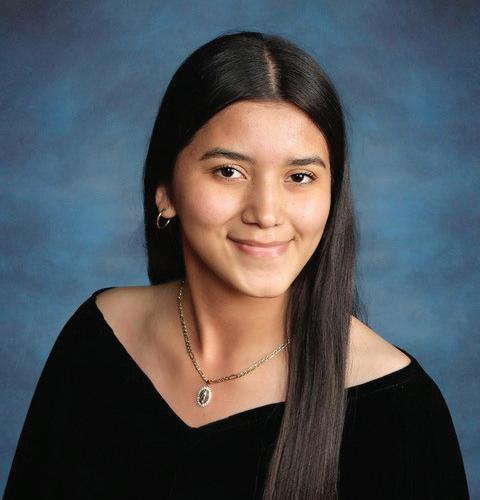

Laurel Armstrong
High School: Turner Ashby
College: University of Kentucky Field of Study: Equine Science and Management
“I hope to be an asset to the community that I grew up in and spend my career promoting leadership in agriculture to young people. I want to prepare my future students to become the next generation of agriculturalists who will be able to lead and tackle the challenges of agriculture on a global level.”

Estefani Ayala Maryn Cave
High School: Broadway College: James Madison University
Field of Study: Nursing
“Becoming a registered nurse is one of the most rewarding goals, a goal I am passionate to reach. A nurse is a crucial part of a community, providing daily care to those in need of it. I consider myself someone who finds nourishment in the ability to contribute to someone’s well-being.”
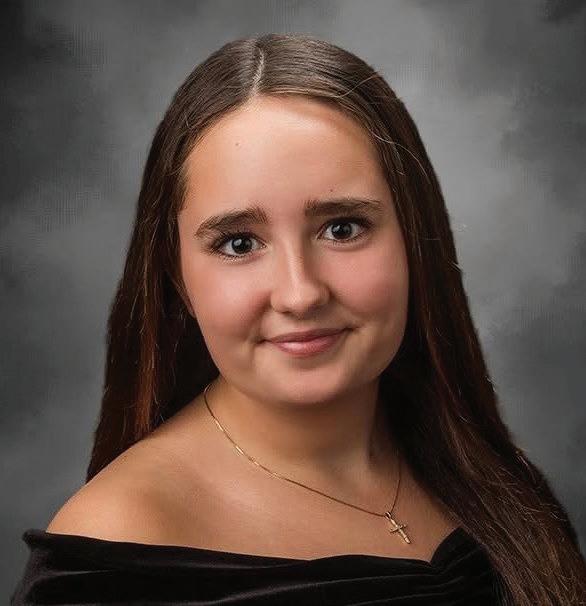
High School: Page County
College: James Madison University
Field of Study: Elementary Education and English
“My dream is to teach in my community of Page County. I want to ensure my classroom is an emotionally safe space for children, where they are able to expand their knowledge, find their voice and feel empowered. My mission is to inspire my students and uplift my community by nurturing the minds of tomorrow.”


Mina Fukumura
High School: Spotswood
College: University of Virginia Field of Study: Human Biology
“The growth I’ve experienced from supporting my community has deepened my passion for emergency medicine. I hope to grow in more than just academic knowledge, but as an emergency responder who can make a meaningful difference in my community.”
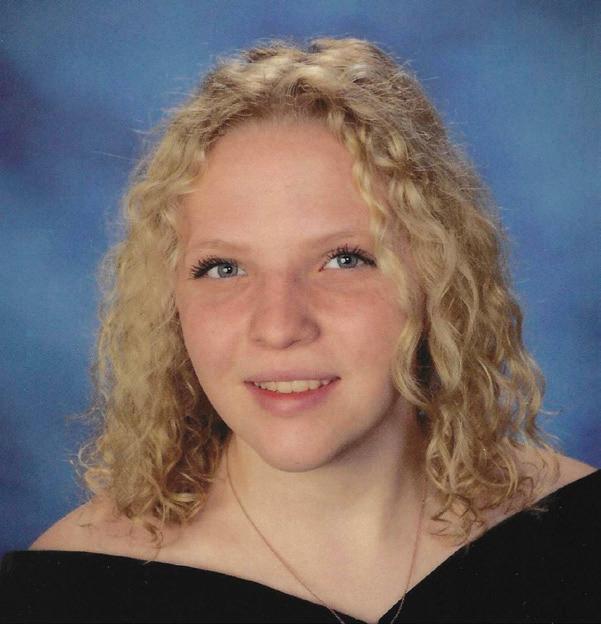
High School: John Handley
College: Penn College of Technology
Field of Study: Welding and Fabrication
Engineering Technology
“My aspiration is not only to become a certified welder, but to break stereotypes, explore new places and represent women in a trade where our voices and talents are still growing. I am committed to using my abilities to uplift others, serve my community and open doors for future generations of women in the trades.”
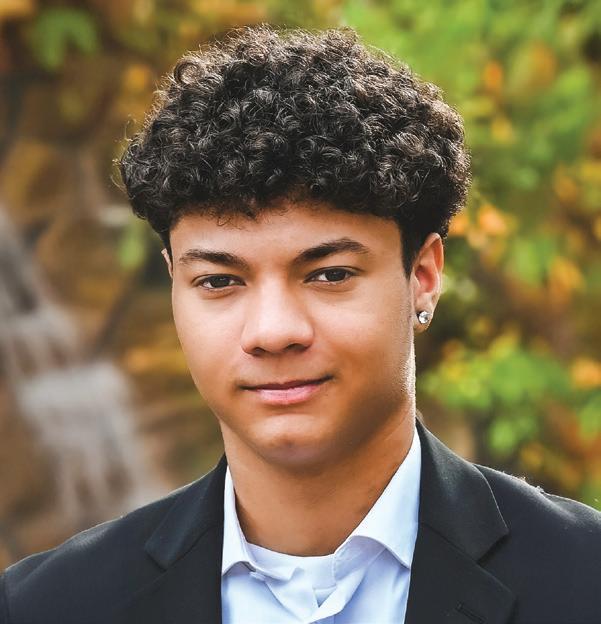
Tyler Renner
High School: James Wood
College: Laurel Ridge Community College
Field of Study: Electrical
“I am pursuing a career as an electrician because I enjoy hands-on work and learning practical skills that provide essential services to my community. Becoming an electrician will allow me to build a stable career while contributing to the safety of my community.”

High School: John Handley
College: Saint Joseph’s University
Field of Study: Cardiac Sonography
“My goal is to become an ultrasound technician, a career that combines my passion for helping others with my interest in healthcare. Beyond my career, my goal is to provide stability and a better life for my family, breaking cycles and creating new opportunities. As a firstgeneration college student, earning a degree represents more than personal achievement; it represents hope and progress for my family.”
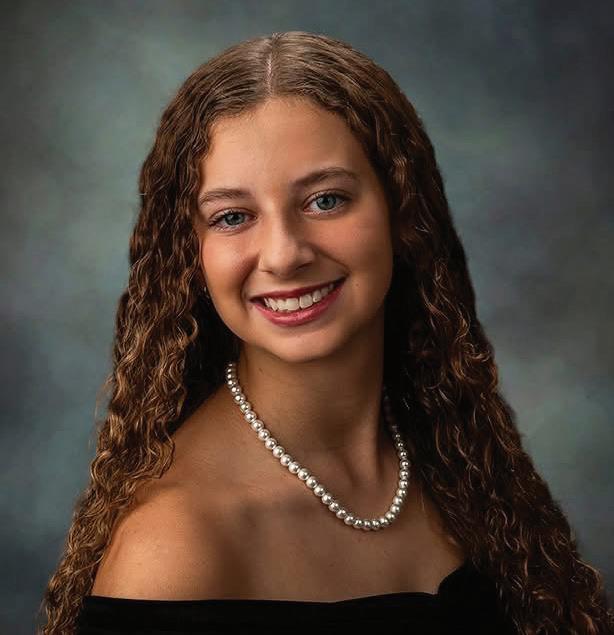
Alia Rinehart
High School: Page County
College: James Madison University
Field of Study: Biology
“Becoming an optometrist and returning to my hometown to open a practice would be a chance to be a role model to young girls in my community, showing that hard work and determination can make career goals become a reality.”
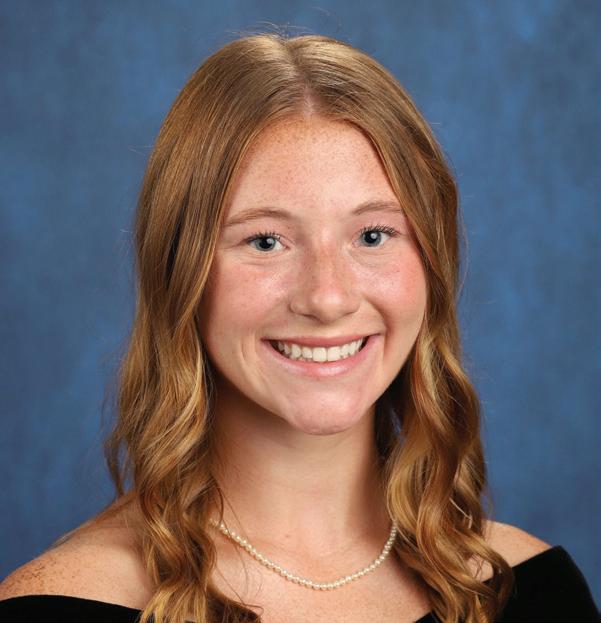
High School: James Wood
College: James Madison University
Field of Study: Elementary Education and Spanish
“My goal is to become a teacher, eventually a leader, who works hard to make sure no student is left out because of their language or culture. By being a bilingual administrator, I can connect schools and families, making sure Spanish-speaking parents and students feel just as included and heard as everyone else.”
Claire Roan
Lilyan Shearer Avery Wright
est. 1936