The Outage Restoration Partnership
by Preston Knight, Communication Manager
If an outage occurs as the summer winds down, we do not want to leave you in the cold.
Yes, that’s right. The cold can be a problem even in hot weather.
The electrical condition known as “cold load pickup” is a real one in times of extreme weather, and refers not to temperatures but to the state of power supply. If the power is out, the load has run cold, so to speak. It could just as easily be called “hot load pickup,” but the industry had to choose, and “cold” won out.
When outages occur in extreme hot or cold weather, there is concern that, upon restoration of service, plugged-in devices in a house try to catch up all at once. Electrical devices tend to spread out their consumption over time. This all-at-once scenario
can cause problems for a house: have you ever tripped a breaker because too much was plugged in?
CONTACT US
Mailing Address
180 Oakwood Dr., Rockingham, VA 22801
Phone Web
800-234-7832 • svec.coop
Email svecpr@svec.coop
Local Pages Editor Preston Knight
Local Pages Designer Ashley Kreis
If you would like to unsubscribe from receiving the print edition of Cooperative Living, email svecpr@svec.coop with your home address.
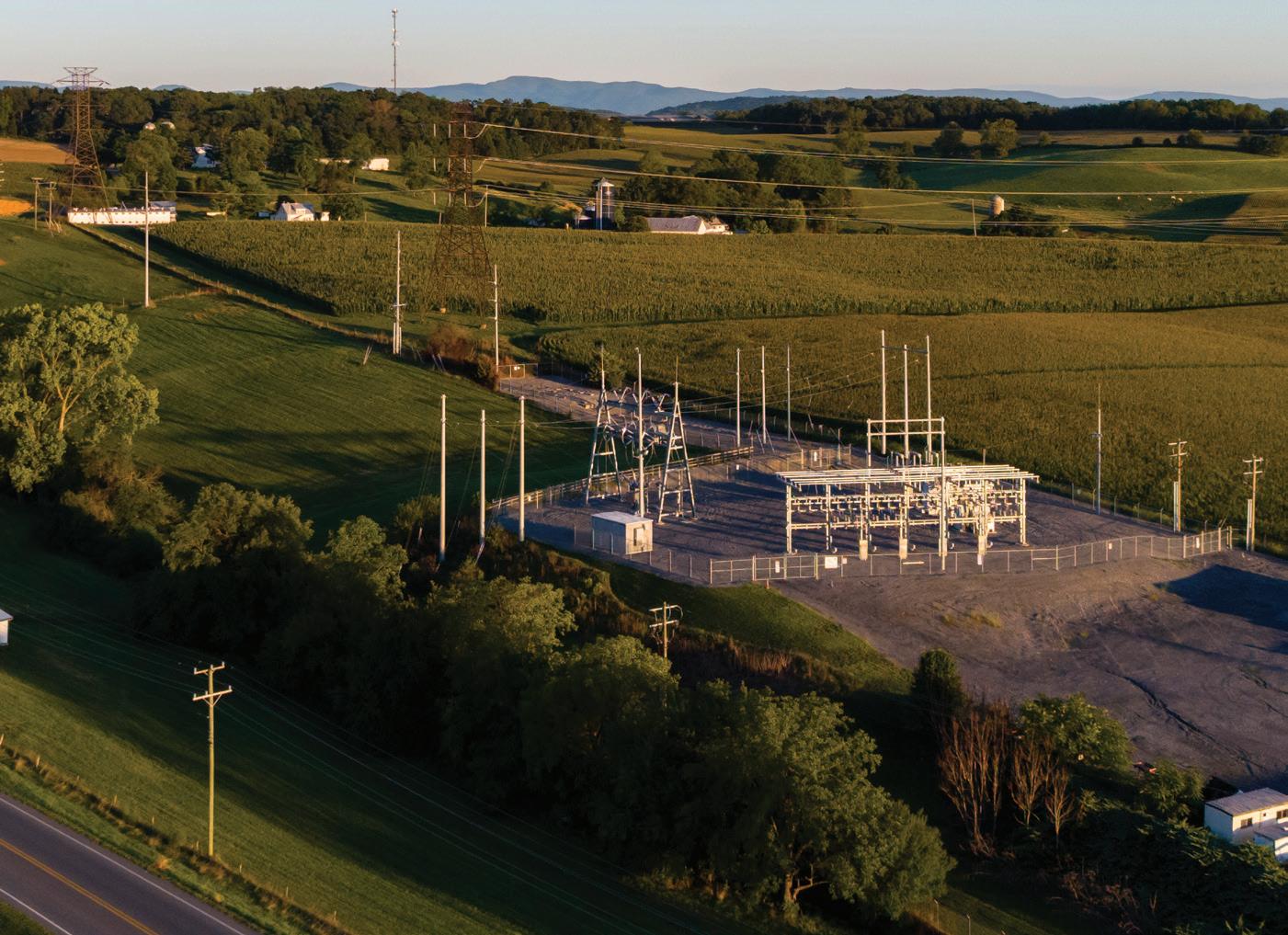
Now, if you consider your neighbors’ homes going through the same scenario, the problem moves upstream to SVEC. We might trip our breaker, and we could be right back where we started with outages.
In the summer, for example, you might have air conditioning on full blast. If the power is out and the house warms up, the air conditioning will want to restart when service is restored. Your neighbors’ airconditioning systems and additional household appliances are likely itching to do the same.
Multiple systems turning on and running all at once can place a heavy load on the power lines as they kick back on. Line protection equipment can take the overloaded lines offline
because the heavy loads appear similar to a fault — no different than a tree that probably caused the initial problem.
Similarly, cold-load pickup problems also occur in the winter when families and businesses are running heating units.
These problems can be prevented when members turn off their electric heating or air-conditioning systems, lights and appliances, and then, after power has been restored, turn them back on gradually.
This condition isn’t unique to SVEC. It is a common occurrence during temperature extremes because of the large power demand drawn by furnaces and air-conditioning systems.
Now that you know this, we hope you won’t be left in the cold this summer. •
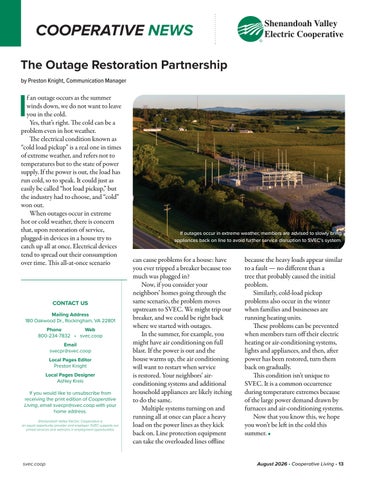
If outages occur in extreme weather, members are advised to slowly bring appliances back on line to avoid further service disruption to SVEC’s system.
Translating the Grid
An inside look at an essential investment of electric distribution
by Preston Knight, Communication Manager
Most proper depictions of a wooden utility pole should feature a gray cylinder atop it.
There’s not much more that necessarily must be known other than identifying the unassuming piece of equipment as a transformer. But there is decades’ worth of information to glean if you are interested.
Phil Clark, for one, was.
As an undergraduate studying electrical engineering at Western Kentucky University, he answered an ad for a junior position at a transformer manufacturer, effectively launching what’s turned into a 20-year career. He is now executive vice president at United Utility Supply, SVEC’s transformer supplier.
“Transformers are a fascinating piece of the system,” Clark says. “Early in my career, working in transformer manufacturing gave me a hands-on understanding of how critical these assets are to the entire electric grid, not just as equipment but as the backbone of reliable service.”
The co-op’s operations rely on relationships with dozens of vendors that support the collective whole of electric distribution. Some are highly visible, while others provide critical behind-the-scenes support.
There’s no ranking of value for products or services SVEC vendors provide, but there is little doubt that toward the top, appropriately, would be the pole-top transformer.
“They are a critical component of a distribution system,” Director of System
Engineering Nathan Berry says. “Without them, voltage at safe levels cannot be delivered to homes and businesses.”
However, for a highly visible part of the system, and one that requires significant capital investment, many unknowns surround the transformer. For instance, have you ever thought an oven was involved?
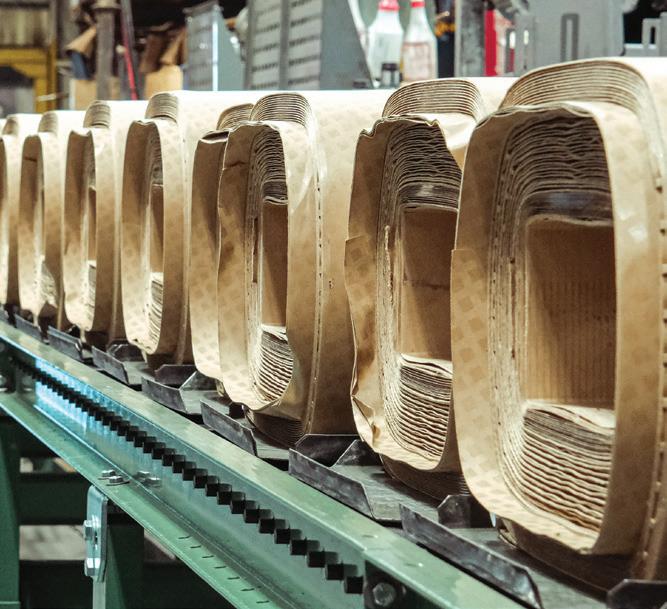
“There’s a lot of precision that goes into building one,” Clark says, “even if it looks straightforward from the outside.”
BUILT TO LAST
Understanding a transformer’s role is an important first piece. As Berry noted, Clark further characterizes a transformer as a “final handoff” in the efficient movement of high-voltage electricity across long distances.
“But you can’t run a house or a business on that kind of power because it’s way too much,” he says. “That last step, bringing it down to something safe and usable, that’s where the transformer comes in.
“I always think of it as the translator of the grid. It takes that high-voltage electricity from the grid and safely converts it into the usable power that runs homes and businesses.”
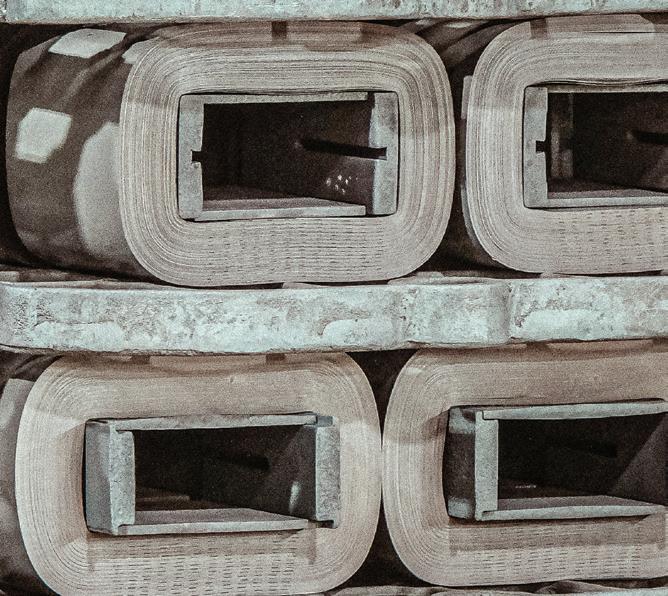
The manufacturing process starts at the device’s core, made of layered electrical steel, Clark says. The goal is to move magnetic energy as efficiently as possible. Coils of copper and aluminum are then wound to handle specific voltages and loads; that’s where voltage conversion occurs, Clark explains.
“From there, it’s all about paper and press board insulation,” he says. “Insulation is applied between windings and components to safely separate different voltage levels and prevent electrical failure.”
After the transformer core and coils are assembled, they are placed in an oven and baked for several hours.
This step serves two main purposes: it removes any moisture from the assembly and helps bond the layers of paper insulation together, Clark explains.
Once removed from the oven, the core and coil assembly are quickly placed into a tank to prevent moisture from reentering the components, he says. This process is critical, Clark adds, as controlling moisture significantly increases the life and reliability of the transformer.
A transformer is then filled with oil to provide insulation and keep it cool. External components are installed, the transformer is sealed to keep moisture out and, finally, it is tested thoroughly.
“Because the goal isn’t just to make it work; it’s to make it last,” Clark says. “Transformers are expected to sit out in the elements for 25, 30, 40 years and just keep going. That only happens if every step is done right.”
As the electric grid has become more demanding, the evolution of transformers has helped, literally, carry the load.
“The funny thing is that the purpose of a transformer hasn’t changed at all,” Clark says. “It’s still electromagnetic induction that makes the transformer work. But the material that it is made from has improved.
“Materials are a big one. The steel we use in the core today is a lot more efficient, which cuts down on energy loss. Same with copper, aluminum and insulation systems. They all perform
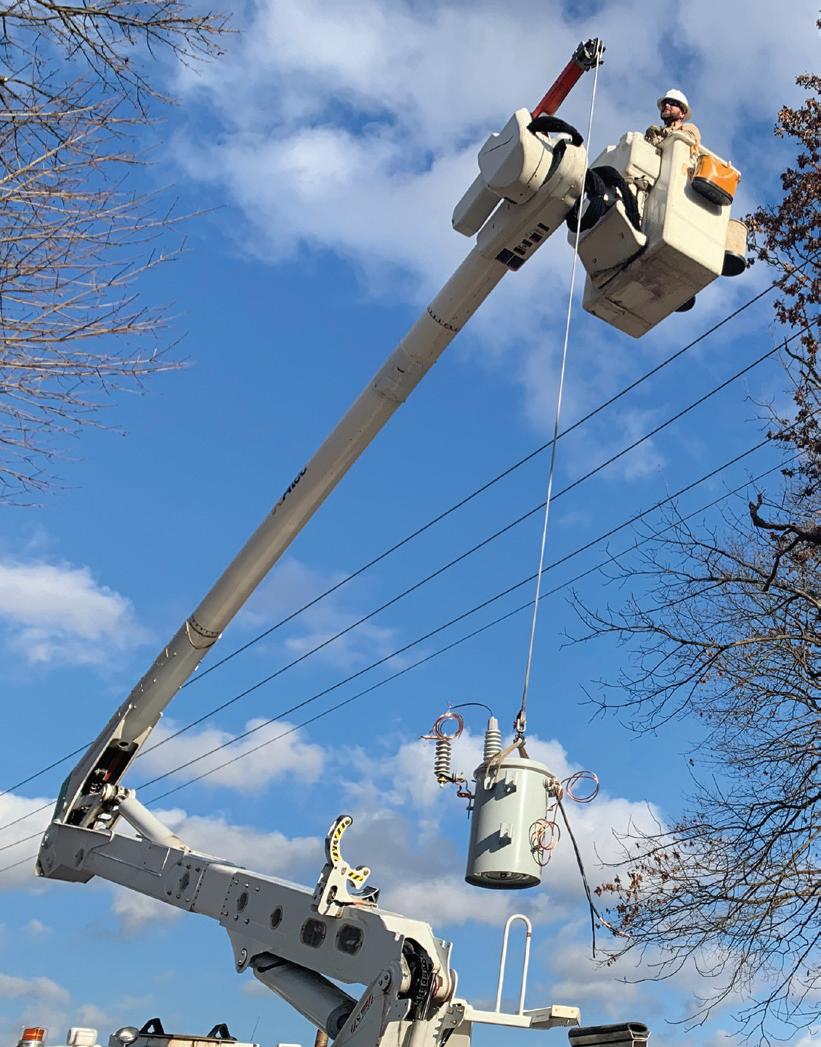
better and hold up longer.”
Heat and insulation have improved, too, which helps transformers run at lower temperatures and, in turn, boosts their longevity.
“And from a design, manufacturing and testing standpoint, they’re just built tougher. They handle weather better, fluctuations better and the overall demands of a more complex grid,” Clark says. “So, while they may look about the same on the outside, what’s inside today is a much more efficient, durable piece of equipment.”
system — including transformers — is a major factor. It should be viewed as a continued commitment to reliability and safety.
THE ‘UNSUNG HERO’
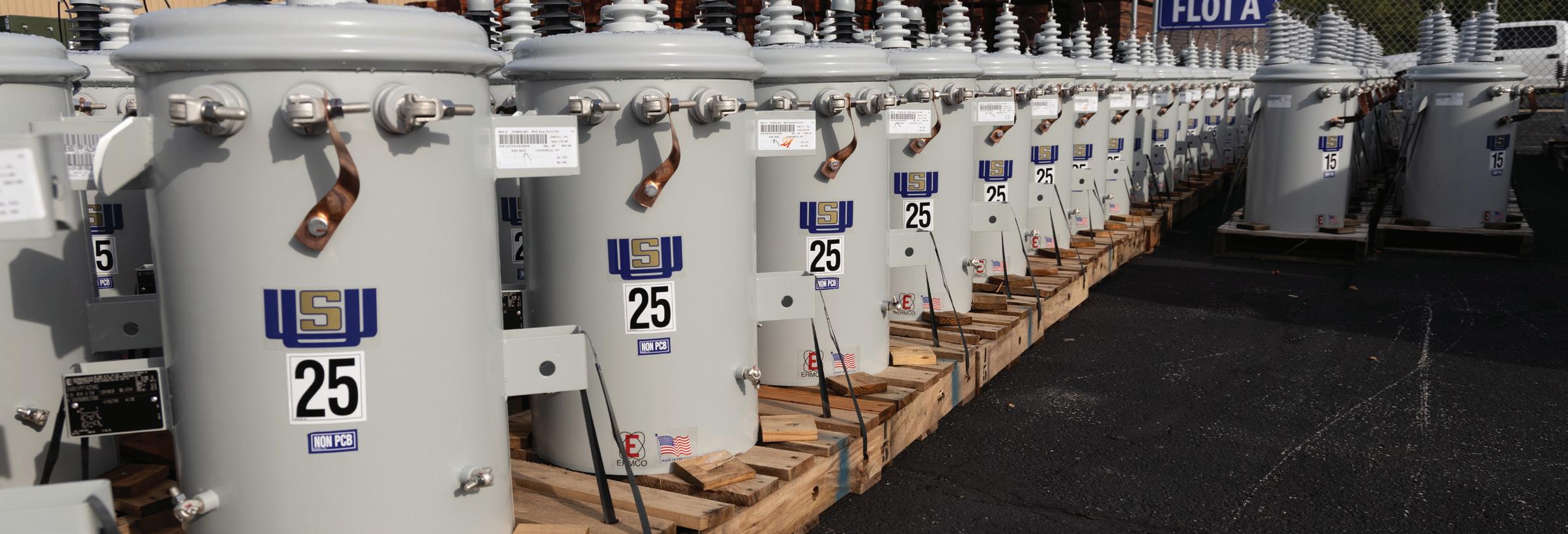
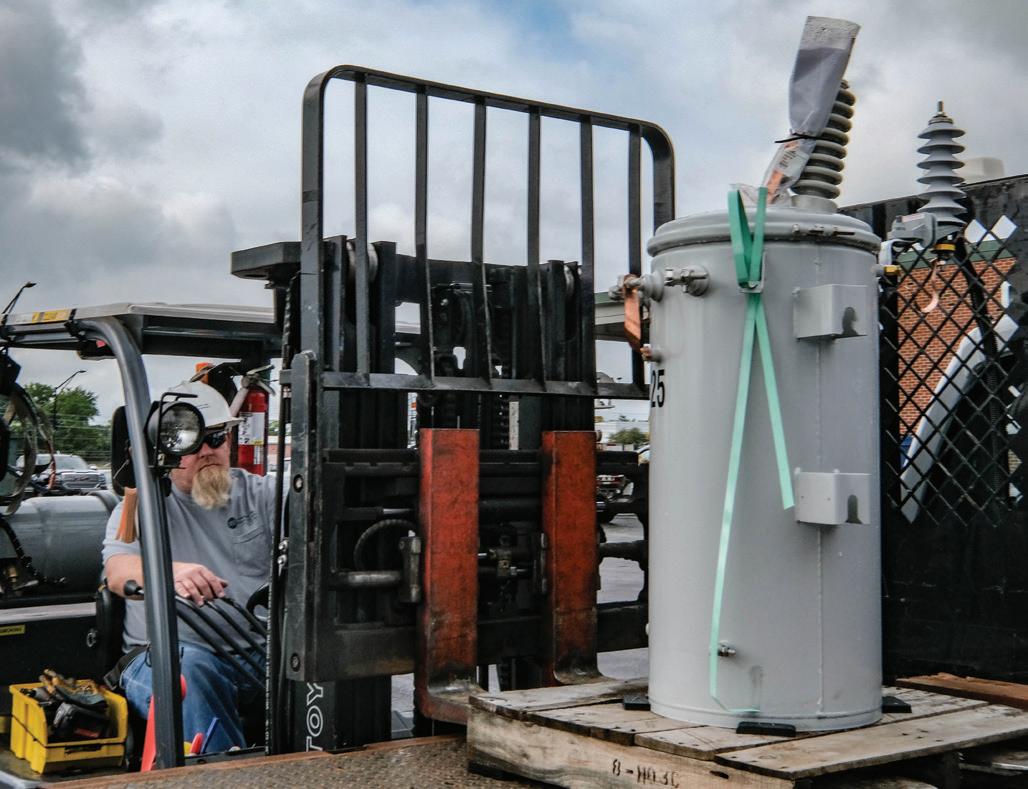
SVEC keeps a stock of transformers at all five districts, prepared to replace or add them throughout the thousands of miles of power lines it builds and maintains. Key transformer material costs, such as copper, have increased in recent years, providing challenges for all electric utilities to maintain that equipment inventory.
As SVEC evaluates the cost of conducting business, accounting for the investment required for its distribution
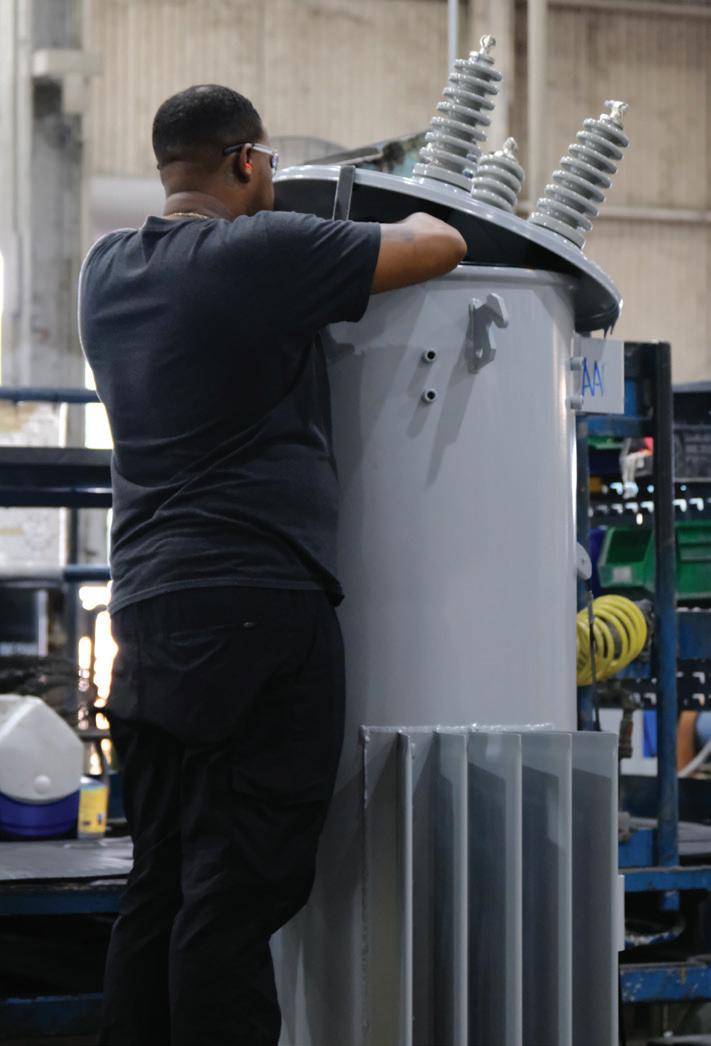
“It never comes down to, ‘It costs too much.’ There is no choice in whether to purchase a transformer or not if we have a need,” Berry says. “We always have the need. The needs come from new connections, upgrades to existing connections as members add load and storm damage, especially during thunderstorm season.”
United Utility Supply’s cooperative mindset helps. It is part of the co-op business model itself, owned by member cooperatives in 20 states and sharing resources with Kentucky’s electric cooperatives.
Like SVEC, United Utility Supply exists to support members, not shareholders.
“We’ve built our network inventory, warehouses and logistics around making sure co-ops have what they need, when they need it,” Clark says.
Transformers have their rightful place across SVEC’s footprint. They just may not always be top of mind, even from their perch.
“What’s interesting is transformers haven’t changed much in concept, but we’ve gotten a whole lot better at building them,” Clark says. “And they’re kind of the unsung heroes. No moving parts, hardly any attention, just sitting out there for 30-plus years doing their job.” •
SVEC keeps transformers in inventory at each of its locations to ensure they’re available when needed.
Before their ascent to the top of a pole, transformers are built with precision.
PHOTO COURTESY ERMCO
Co-op Students Applaud ‘Amazing Experience’
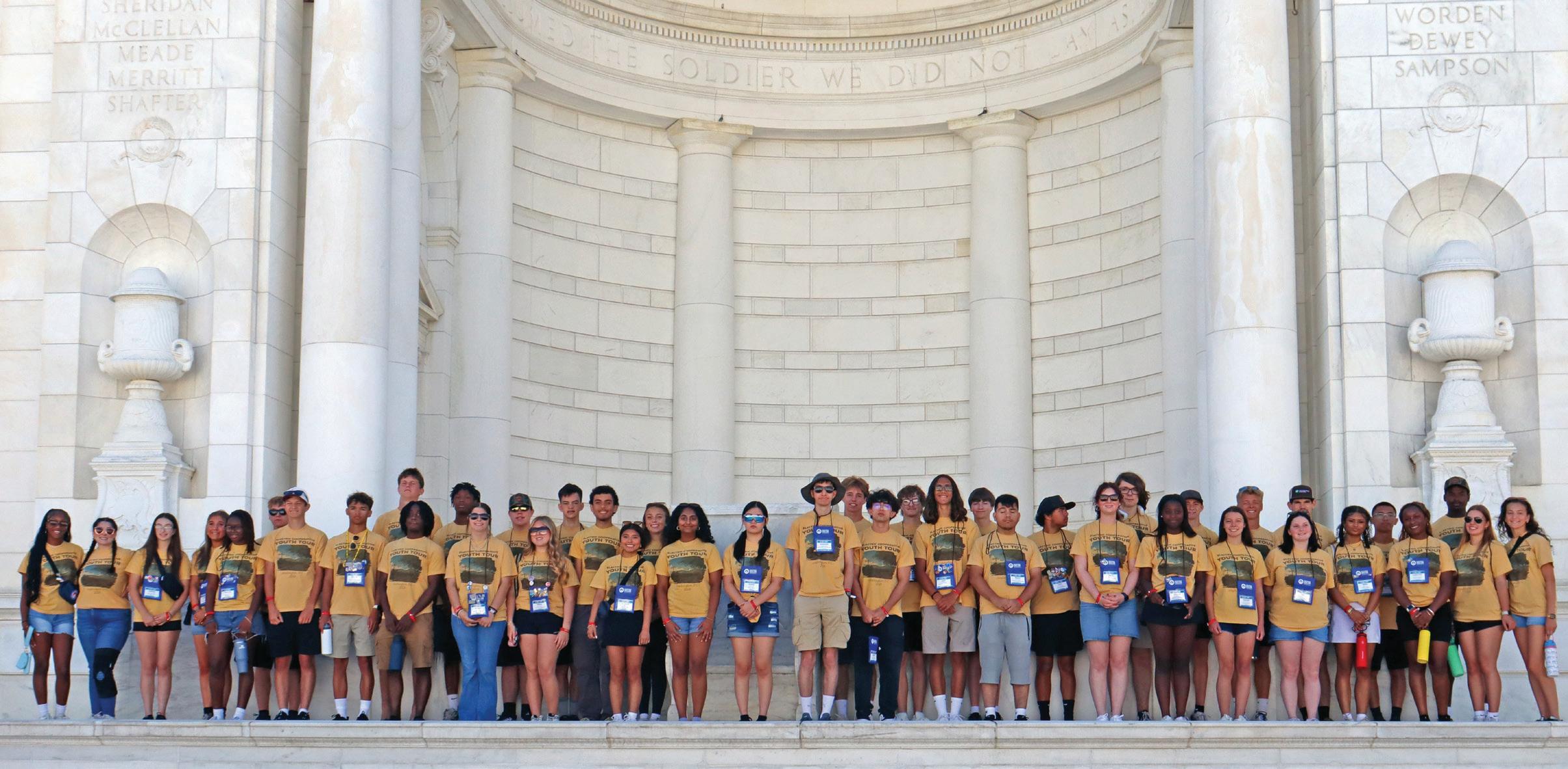
Youth Tour, hosted by the National Rural Electric Cooperative Association, once again brought thousands of teenagers to the nation’s capital. In June, SVEC took four rising seniors — from Augusta, Rockingham and Frederick counties — to participate. They toured monuments, spoke with representatives on Capitol Hill, met students from across the country and learned about electric cooperatives.
SVEC’s delegates, as they are referred to on Youth Tour, also listened to featured speakers discuss leadership development and electric co-op advocacy, highlighting how young people can get involved and the important role that electric co-ops play in their communities.
Here’s how the trip went in their own words.
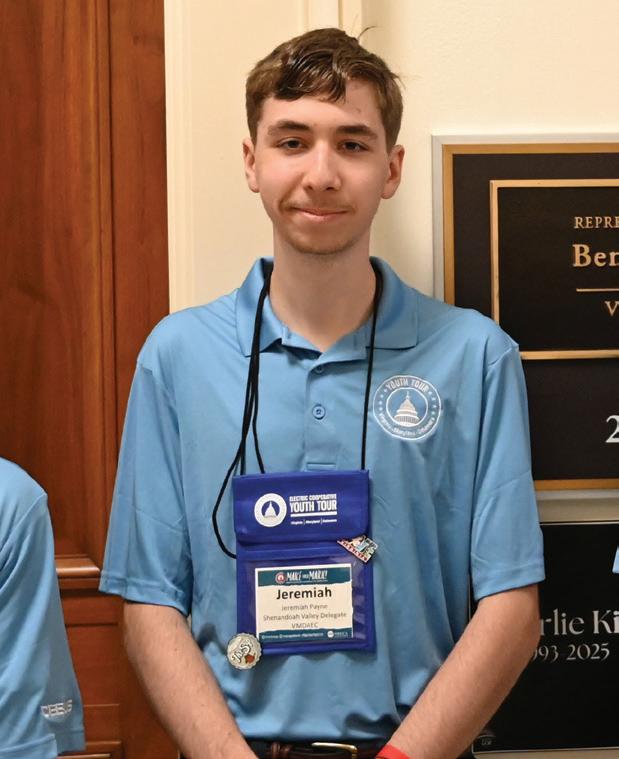
If I had to describe my experience with this year’s Youth Tour, I’d say it was highly educational, yet never boring! I had lots of fun exploring museums, meeting new people from across the country and trading cool pins with them, and learning about all the different career opportunities that I could choose.
-
Jeremiah Payne
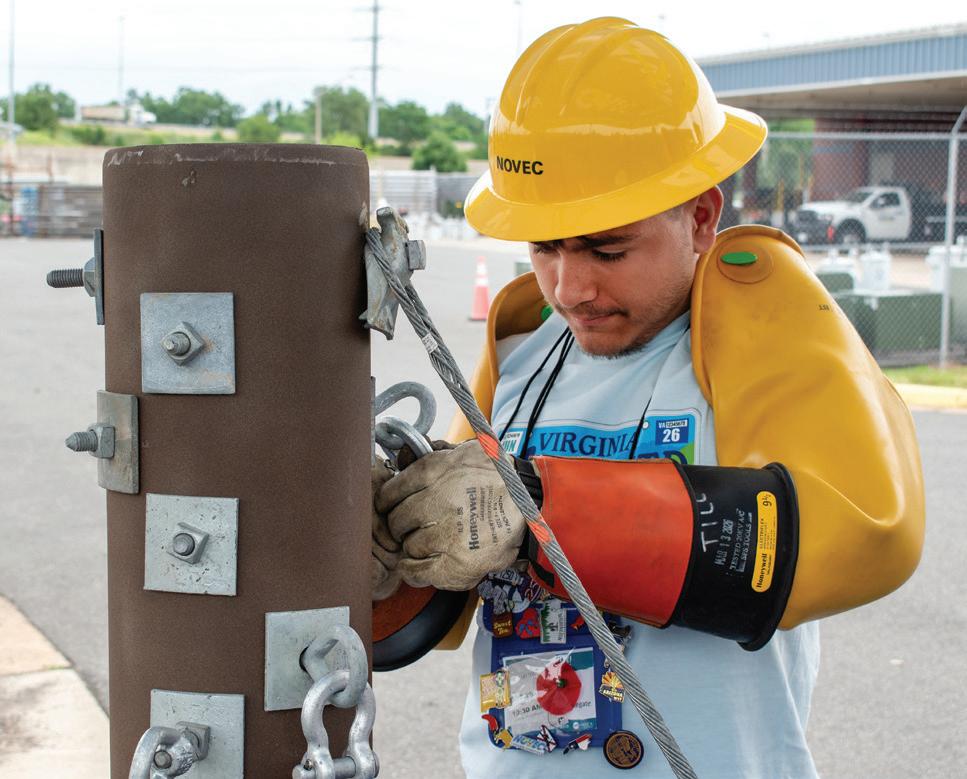
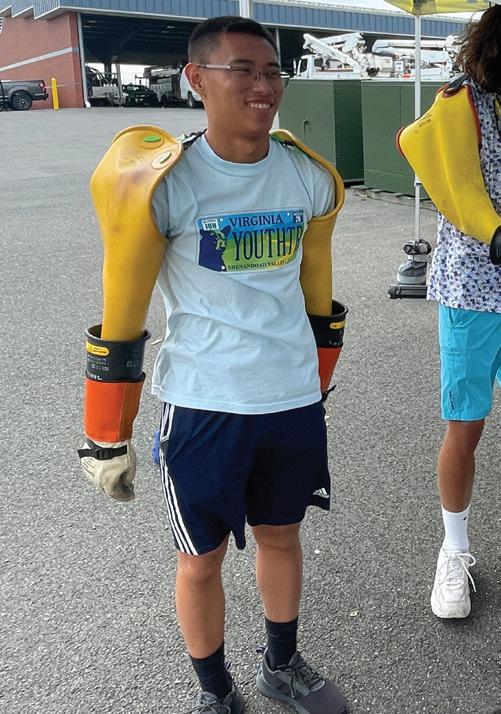
My favorite thing about my experience at Youth Tour was seeing the giant explosion with the powerline demonstration [at Northern Virginia Electric Cooperative]. Visiting Arlington National Cemetery was a highlight. Seeing how they honor everyone, watching the changing of the guard and seeing them put the flowers on the stand when we first got there [was eye-opening].
I learned how laws are made and how everything goes through processes. It’s not just one step, there’s multiple steps in everything.
If you like electricity or government, you should try Youth Tour out.
- Rocco Tajouri
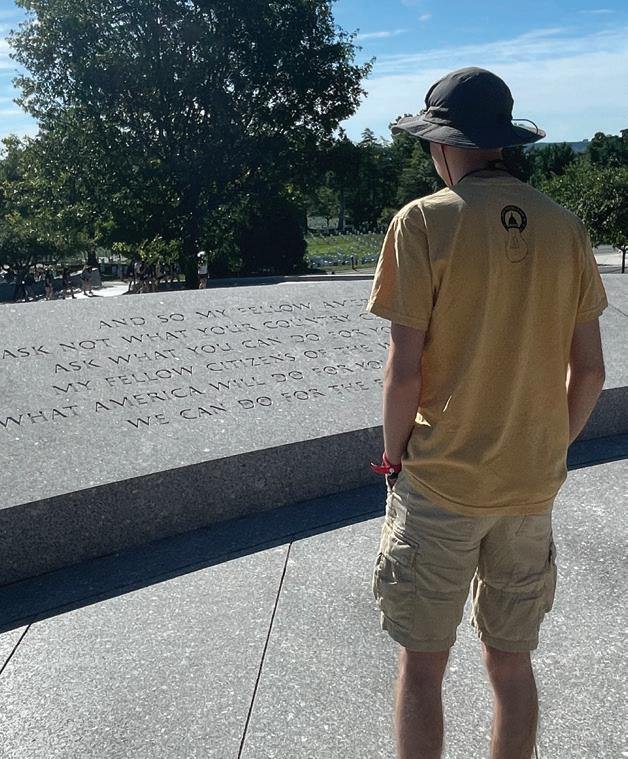
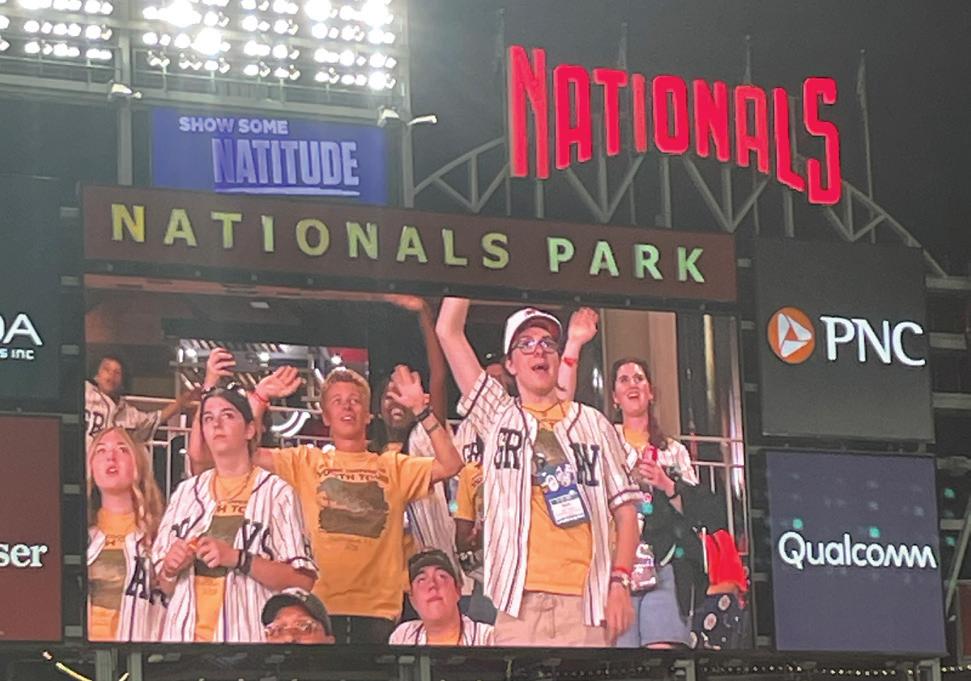
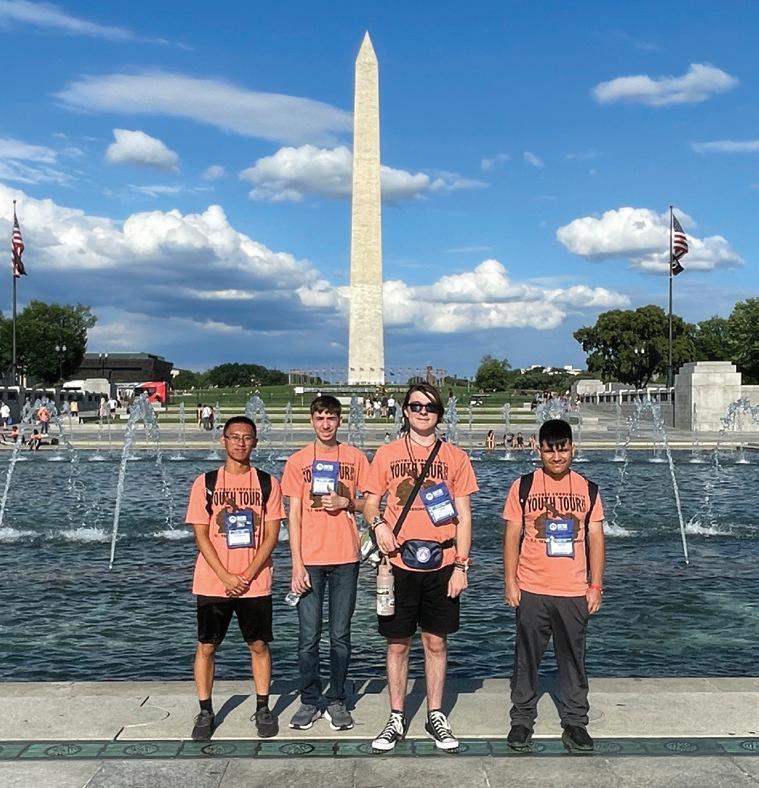
My favorite part of Youth Tour was seeing the changing of the guard ceremony. I also really liked getting to go to Nationals Park. I had never been to see a Nats game, so that was really cool. I got on the jumbotron! That was awesome. But everything was a lot of fun! The monuments were really cool to see.

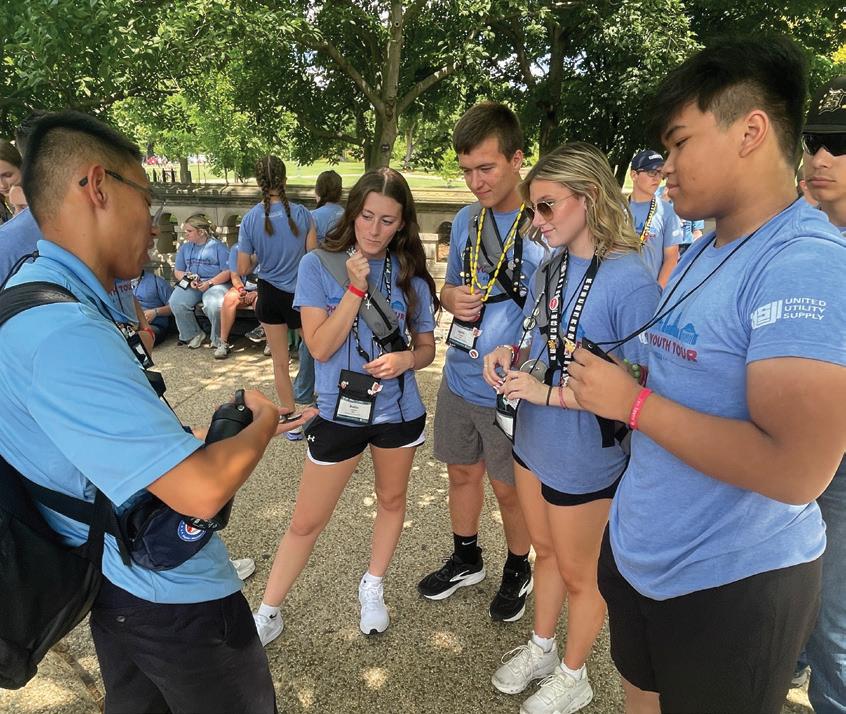
Youth Tour for me was such an amazing experience! I wasn’t expecting to do so much every day, and the people I met were all so nice. This trip gives you so, so much to see in D.C. and National Harbor. I really loved the pin-trading and getting to meet new people from across the country! The keynote speakers were absolutely phenomenal in helping me see the world with renewed passion, leadership and enthusiasm. I would do Youth Tour again any day of the week. It really is a once-in-a-lifetime event.
-
Chenghao Yang
- Bradley Toporek
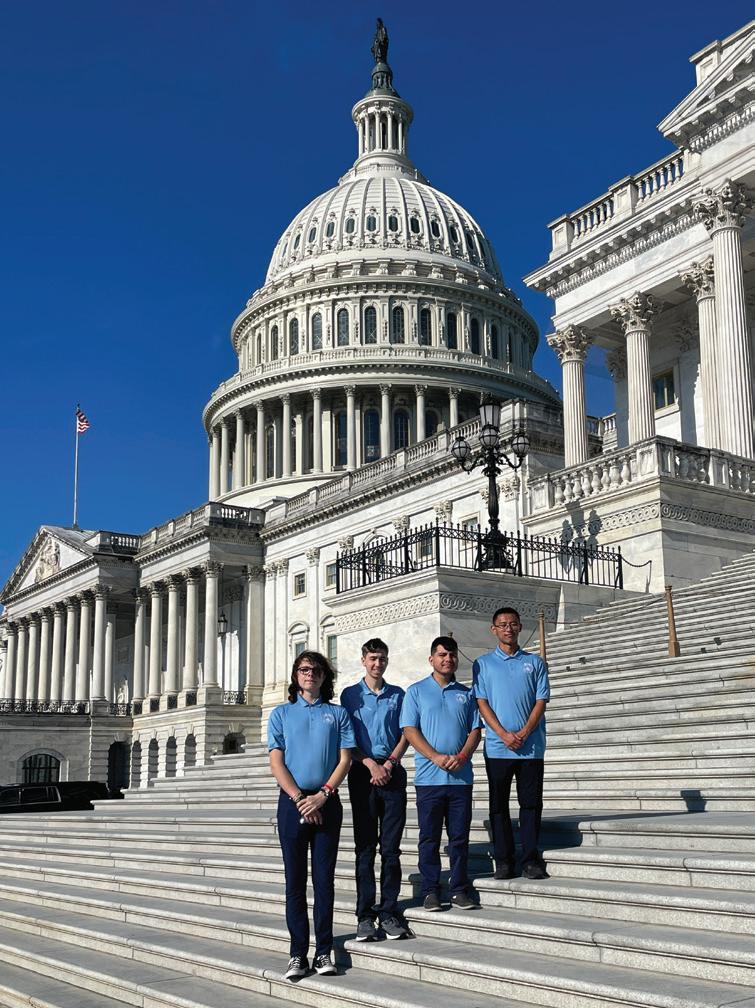
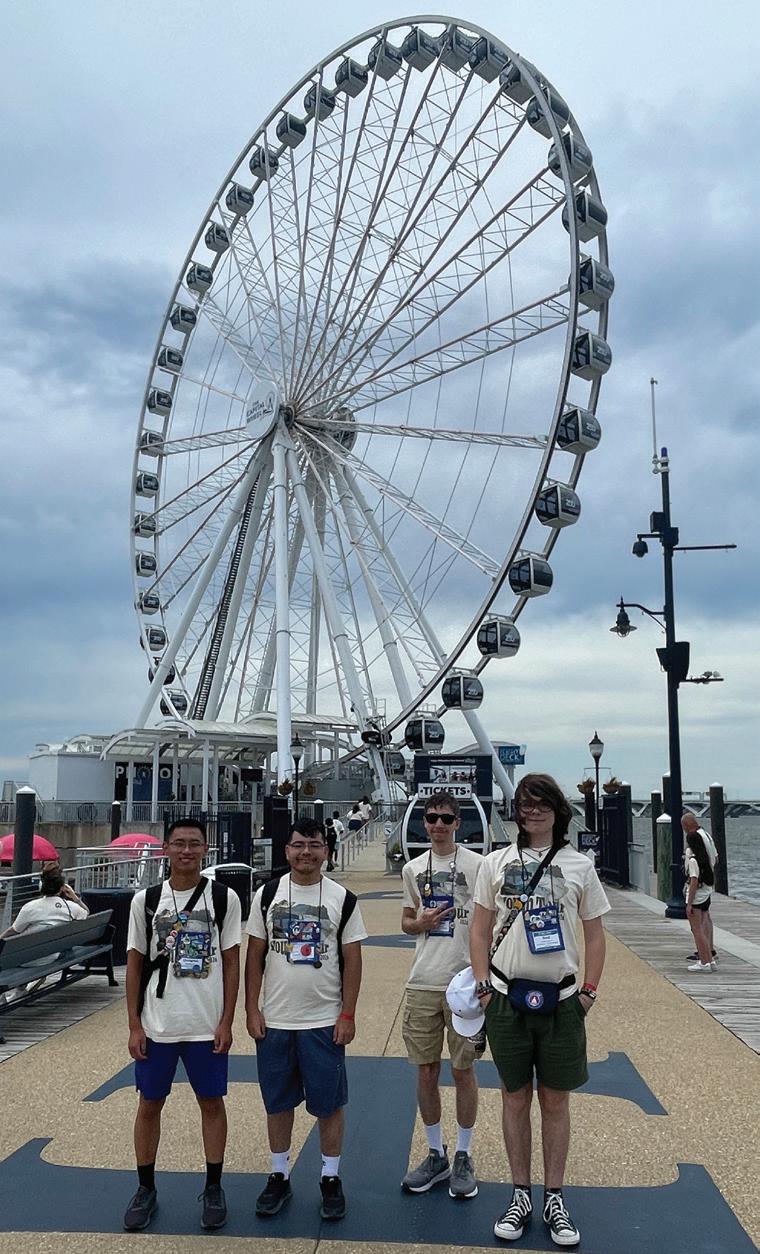
SVEC’s Youth Tour participants (left to right), Bradley Toporek, Jeremiah Payne, Chenghao Yang and Rocco Tajouri.
Charitable Giving Heats Up
by Preston Knight, Communication Manager
Amid scorching temperatures, SVEC’s Operation Round Up Committee brought further warm and fuzzies in early July by awarding nearly $30,000 in grants to local organizations.
The charitable-giving program offers three grant cycles a year, and a steady flow of funds from members who voluntarily participate by rounding up their bills keeps coffers relatively full for dispersal. SVEC also kicks in a corporate contribution.
The next, and final, round of giving for 2026 will occur in November. Applications are available at svec.coop/ ORU.
The July grant recipients were the following:
AUGUSTA/HIGHLAND
• Highland Medical Center: to purchase shelf-stable goods at its Sharing Shed for people who have food insecurity.
• Magnolia Rose Cottage: to purchase a whole home generator to ensure the human trafficking survivors it serves and their volunteers remain safe and secure in a power outage.
PAGE
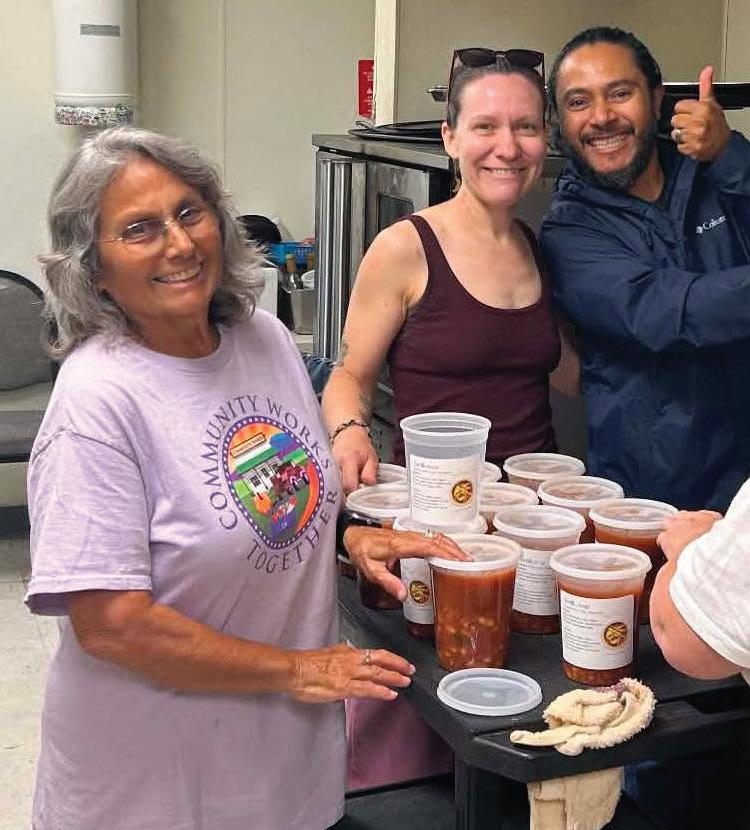
• Community Works 4Page: to purchase fresh produce, ingredients and other supplies to prepare and deliver a variety of healthy soup meals to senior citizens in Page County.
• Page Library Association: to replace all current fluorescent lighting in the library with more energy-efficient LED lighting.
• People Inc. of Virginia: to provide a back-to-school celebration for lowincome children in Luray.
• Shenandoah Elementary School PTA: to purchase musical instruments and instructional items for the music program.
• The Care Closet: to help with essential support, including food, hygiene
products, diapers, formula, clothing and emergency assistance to individuals facing financial hardship.
ROCKINGHAM
• Massanutten Regional Library: to help establish a Little Free Pantry in Harrisonburg to support people who have food insecurity and to provide a simple, dignified way for neighbors to help one another.
• Moving Mountains: to aid the purchase of a motorized stair lift for a brain injury survivor residing in a multi-level home.
SHENANDOAH
Wild Child Museum & Menagerie in Mt. Jackson received grant funds to supports its child-focused programming.

• Shenandoah Alliance for Shelter: to provide emergency utility and housing stability assistance to Shenandoah County households.
• Shenandoah Area Agency on Aging: to provide emergency backup power for three commercial freezers.
• Shenandoah Community Health Clinic: to replace a broken water heater and repair broken gutters.
• Shen-Paco Industries: to help cover essential transportation costs for about 80 adults with disabilities across Shenandoah and Page counties.
• Wild Child: Museum & Menagerie: to replenish its scholarship fund, which provides programming opportunities for families representing low-income households, facing job loss, or that have a lack of social support.
WINCHESTER/FREDERICK
• CCAP (Congregational Community Action Project): to help clients through a crisis by paying utility bills or rent and keeping them housed.
• The Kare for Kids Foundation: to purchase holiday gifts for local children, helping families to provide a happy Christmas for their children. •
Community Works 4Page will use its grant to provide soup to Page County senior citizens.
Co-op Crews Tell, Then Show, Safety
by Preston Knight, Communication Manager
There’s no rest for the weary, or the safest among us. A day ahead of storms that led to long, overnight hours of outage restoration work in Page County, SVEC participated in Shenandoah National Park’s safety day for its employees, partners and volunteers in Luray.
The cooperative brought its live-line demonstration to detail the dangers of downed lines and explain how power is safely restored — valuable lessons some of the same linemen, among others, carried out in the ensuing days as fierce storms moved through the area. In mid-June, high winds and rain on back-toback days left much of northern Page County in the dark for parts of three days, though not necessarily all the way through.
SNP itself was not severely damaged, but recent history tells officials there that outage preparedness and electric safety are priorities.
“Last year, we experienced several incidents involving power lines, which highlight the need for ongoing education and preparedness,” says U.S. Park Ranger Melissa Moses, who chairs the national park’s safety committee. “SVEC’s knowledge and experience are invaluable in helping us improve our safety protocols and reporting procedures.”
More than 4,000 co-op members, mostly in Page and Shenandoah counties, lost power in the June 11 storm that followed SNP’s event. Restoration carried into June 13, with another storm tacking onto the damage of the first. The rest of SVEC’s service territory was hit harder later, with more than 9,000 members out on July 4.
As explained to SNP event attendees, the public should never go near a downed power line or attempt to remove debris from it. The hidden dangers of what’s known as step potential — basically, voltage that spreads like ripples in water away from a live wire — could put someone at risk of injury because the person becomes part of electricity’s path to the ground.
SVEC continued its safety outreach amid storm restoration, hosting a networking event in Rockingham on June 12 for the Blue Ridge Safety Association, a local group of safety and human resources professionals.
“Participants left with actionable safety insights, fresh perspectives and a renewed respect for the critical work performed by SVEC employees every day,” says Lara Hoke, the association’s project and marketing coordinator.
The same live-line demonstration was set up for the group but could not be operated: Crews were resting after a safe night’s work.
“These educational events, especially at a time when we were facing outages, bring much-needed attention to the dangers of electricity,” says Meggan Robbins, SVEC’s director of safety and compliance. “Our goal, above all else, is that employees and the public remain safe, and then we get the lights back on when the job calls for it.”
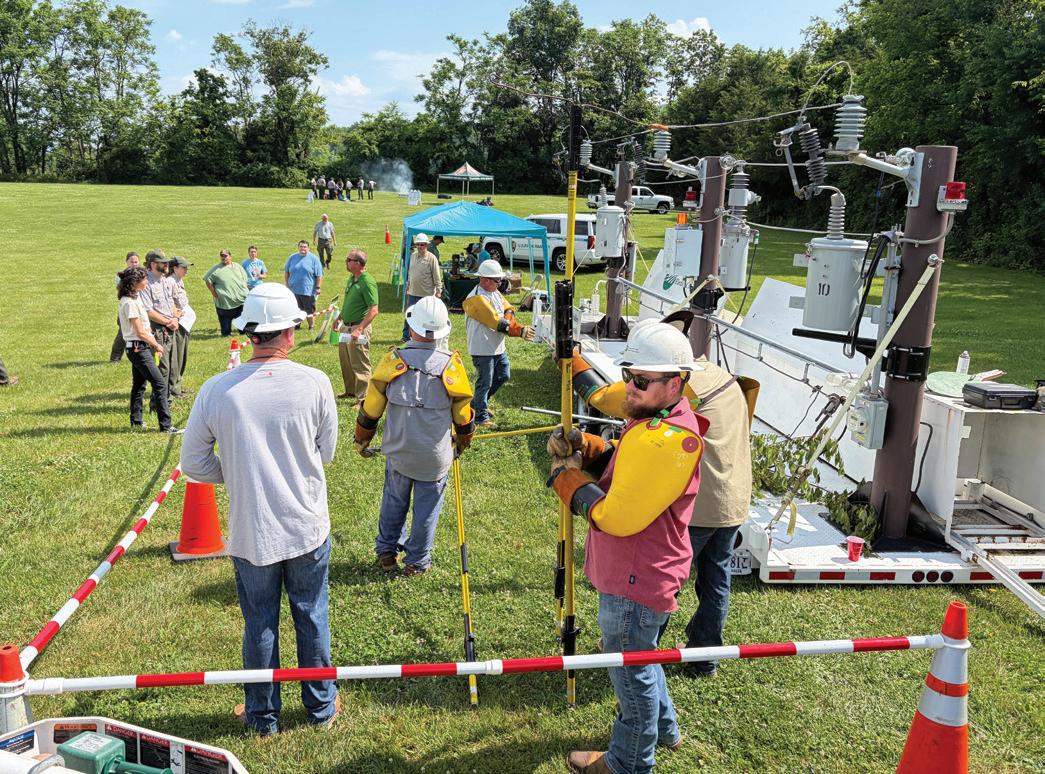
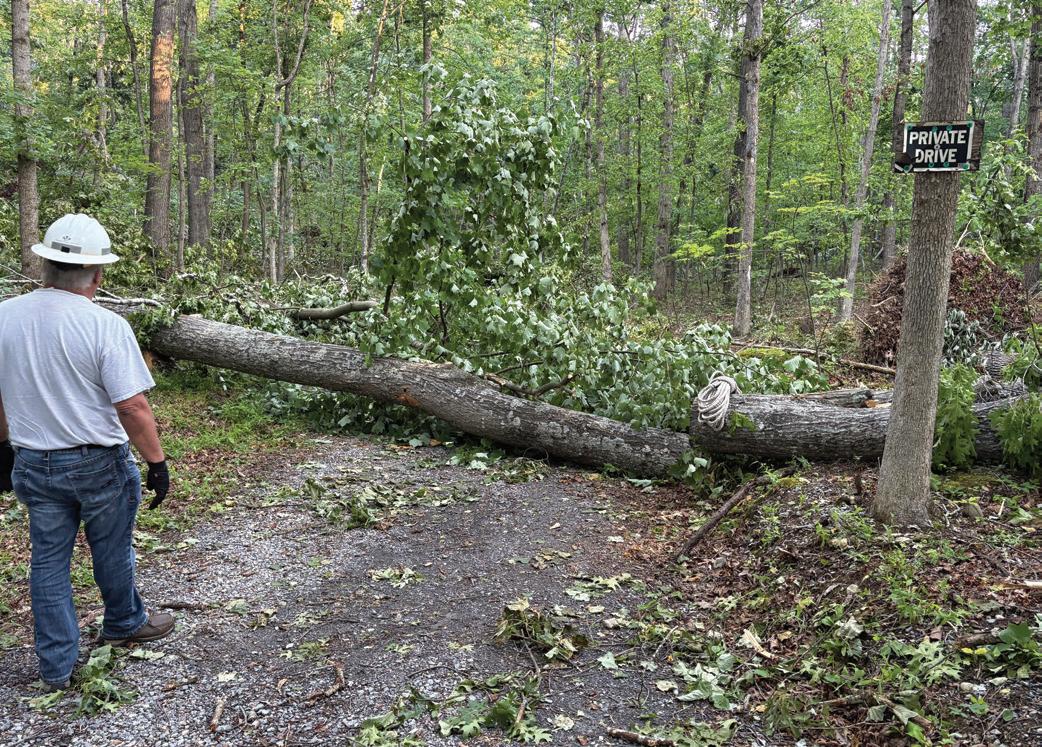
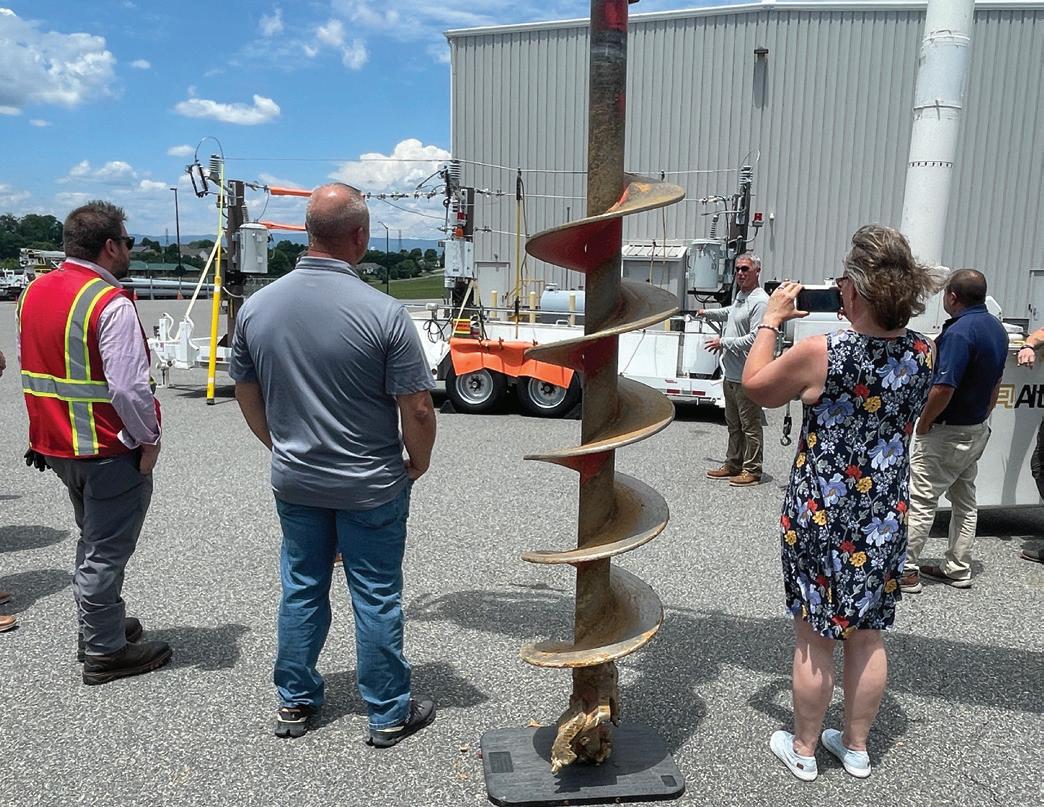
Top: SVEC linemen are geared up to discuss safety for Shenandoah National Park employees in Luray. Middle: Fast-moving storms in June caused major damage in Page County. Bottom: A local safety group visited SVEC’s Rockingham office to gain industry insight.
Unusual Business is a Smashing Success
by Lydia Weaver, Community Relations Specialist
Unless your skin is green and you live in a comic book world, smashing stuff is generally frowned upon.
But one Winchester business has just the place for you to release pent up frustrations — and avoid hulking out on your family or coworkers.
At Wreck It Rage Roomz, destroying household items and making a mess are not only welcome but encouraged. Daniel and Michelle McMillan’s business — the only one of its kind in the Valley, and one of only a handful in the state — supplies everything you need to rage or throw paint on the walls. Better yet, there’s no cleanup for you.
The McMillans entered the rage room business after seeing the stress-relief benefits firsthand. A friend of their daughter’s was having behavioral issues at home, so the McMillans invited her to an hours-long trek to the nearest rage room to give her an opportunity to release some anger. After seeing the impact made on the friend, they knew a similar space was needed closer to home.
to choose from. McMillan notes the sledgehammer as a crowd favorite, but there are also crowbars, baseball bats and hammers.
“They love the TVs,” McMillan says. “We just put out the flat screens, but [customers] really do love breaking those.”
Safety during sessions is a priority. Rage room participants must be at least 10 years old and wear closed-toe shoes, long pants, long sleeves and the provided face shields and gloves.
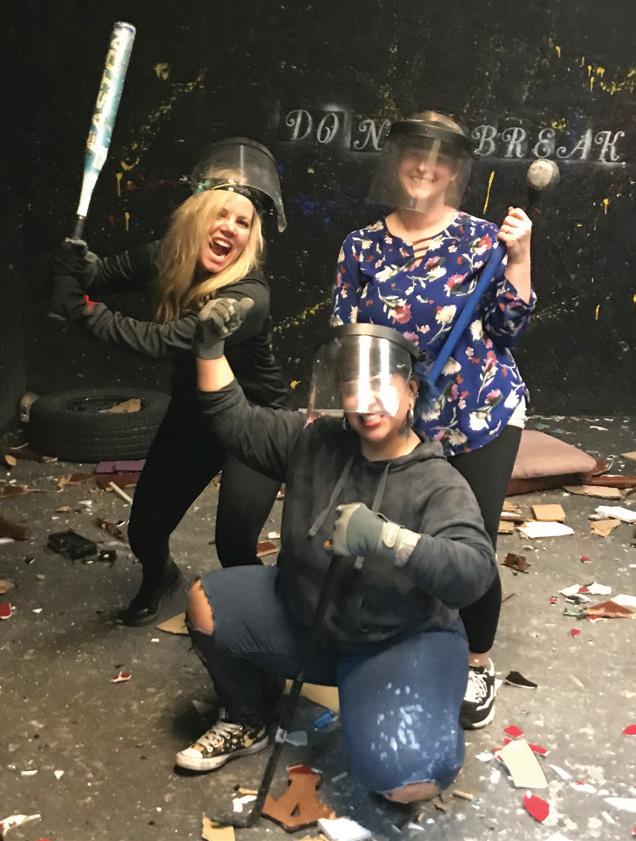
There is no age requirement for splatter painting, but paint suits, face shields and gloves are provided to make sure there’s no customer clean-up needed. If you manage to keep some paint on the canvases, they are yours to take home. McMillan says many out-of-state customers customers visit Wreck It Rage Roomz.
“Some weekends we’ll have all rage room, and some weekends we’ll have all splatter painting,” he says. “It’s probably about 60-40 rage room.”

The business also has a mobile trailer for parties, fairs and events and has even been booked for employee team-building events. They can provide a rage room inside the trailer and a tent for splatter painting at your location.
McMillan says the change in a customer’s demeanor from before and after a session is palpable.
“Relief, the stress relief, they feel reinvigorated,” McMillan says. “I hear that all the time, like it was very cathartic.”

“It is fun, and that’s the majority of our business,” Daniel McMillan says. “But there’s also people that need it. We’ve had people that have been referred [by] therapists.”
REACHING THE BREAKING POINT — SAFELY
From electronics and furniture to dishes and glass, there are plenty of options for items to “wreck,” with various instruments for smashing
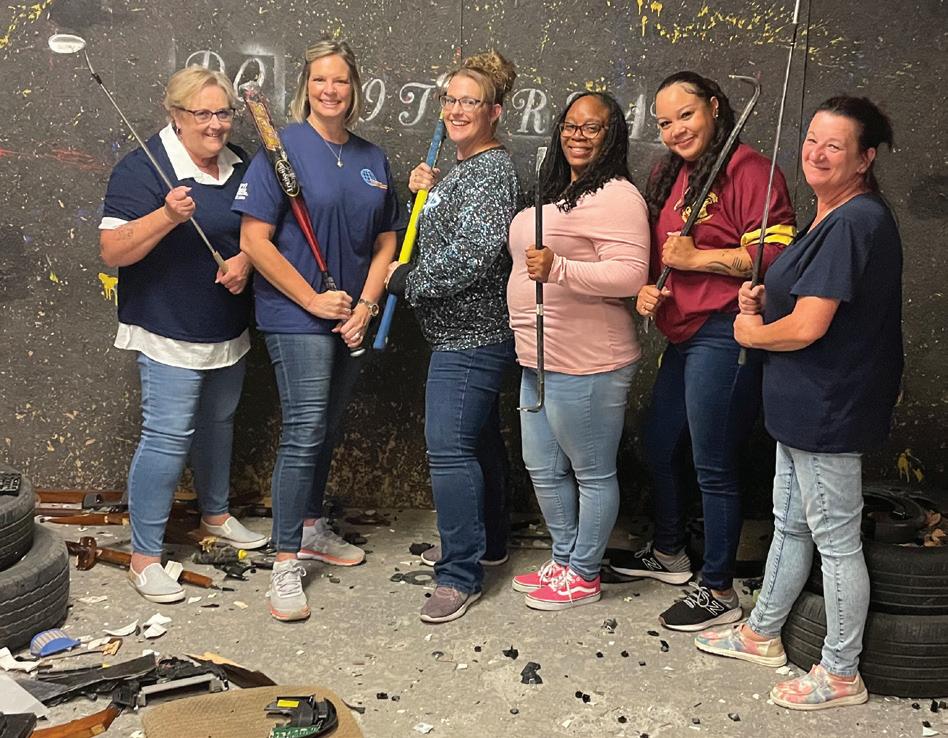
With ambitions to expand, McMillan emphasizes their goal to remain familyfriendly. They’d like to introduce axe throwing, but unlike most places that offer it, Wreck It Rage Roomz would not add alcohol to the mix, aiming to always keep the environment childfriendly.
“We’re a fun, familyoriented business. That’s really our core values,” McMillan says. “Let everybody come in and have a good time.” •
Wreck It Rage Roomz in Winchester opened in 2022, offering a chance to unwind and throw paint.