2025 Annual Report


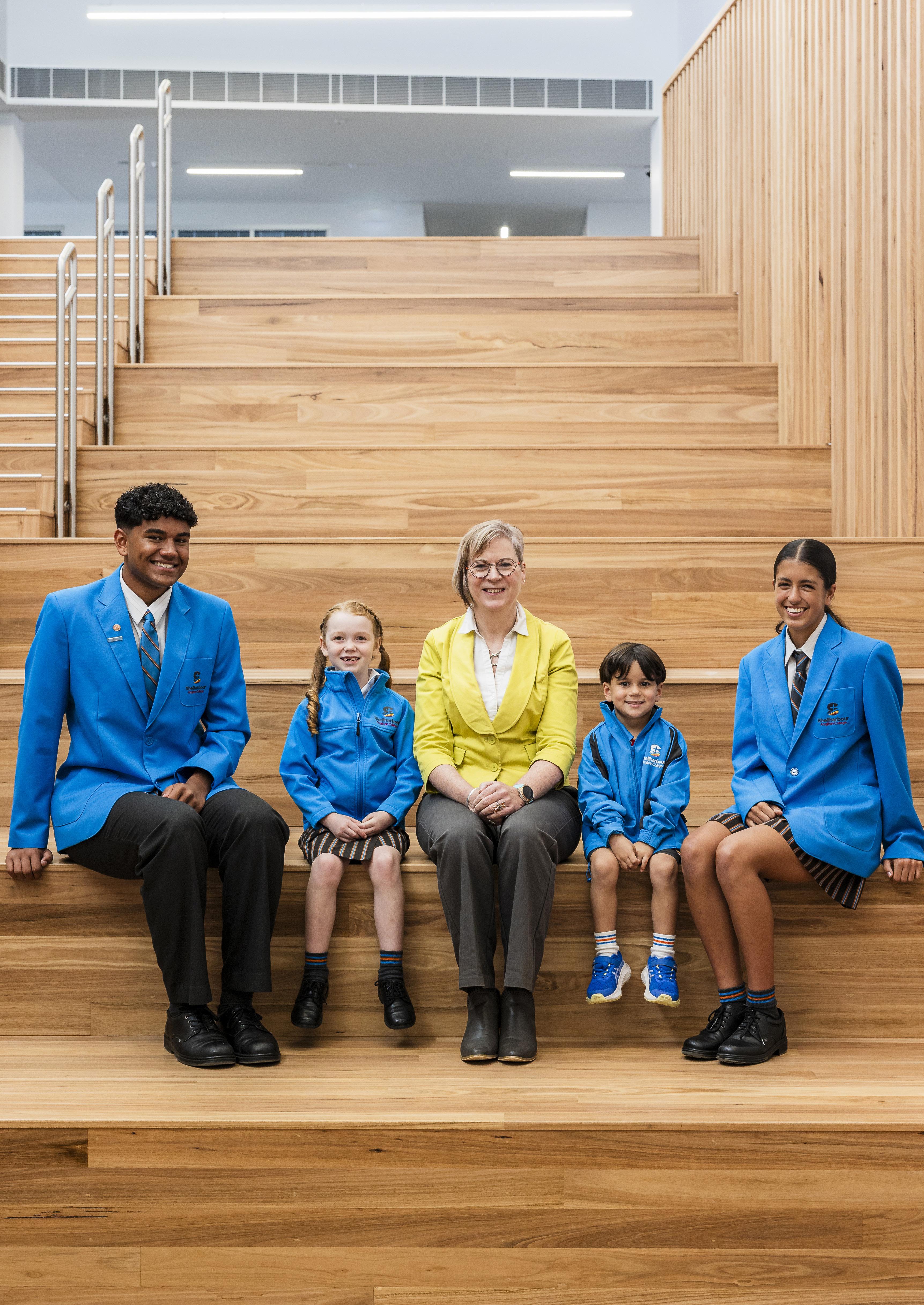
... nurturing a community where everybody learns, everybody serves, and everybody grows.
... nurturing a community where everybody learns, everybody serves, and everybody grows.

On behalf of the College Council, it is my privilege to reflect on a year of significant growth, thoughtful reflection, and renewed vision at Shellharbour Anglican College. Throughout 2025, we have seen our community continue to flourish as a place where every student is known, valued, and supported to grow.
At the heart of this remains our unwavering commitment to Christ-centred education, grounded in our shared values of Faith, Wisdom, Compassion, and Respect. These values are not simply words, but lived experiences that shape the culture of our College and the character of our students.
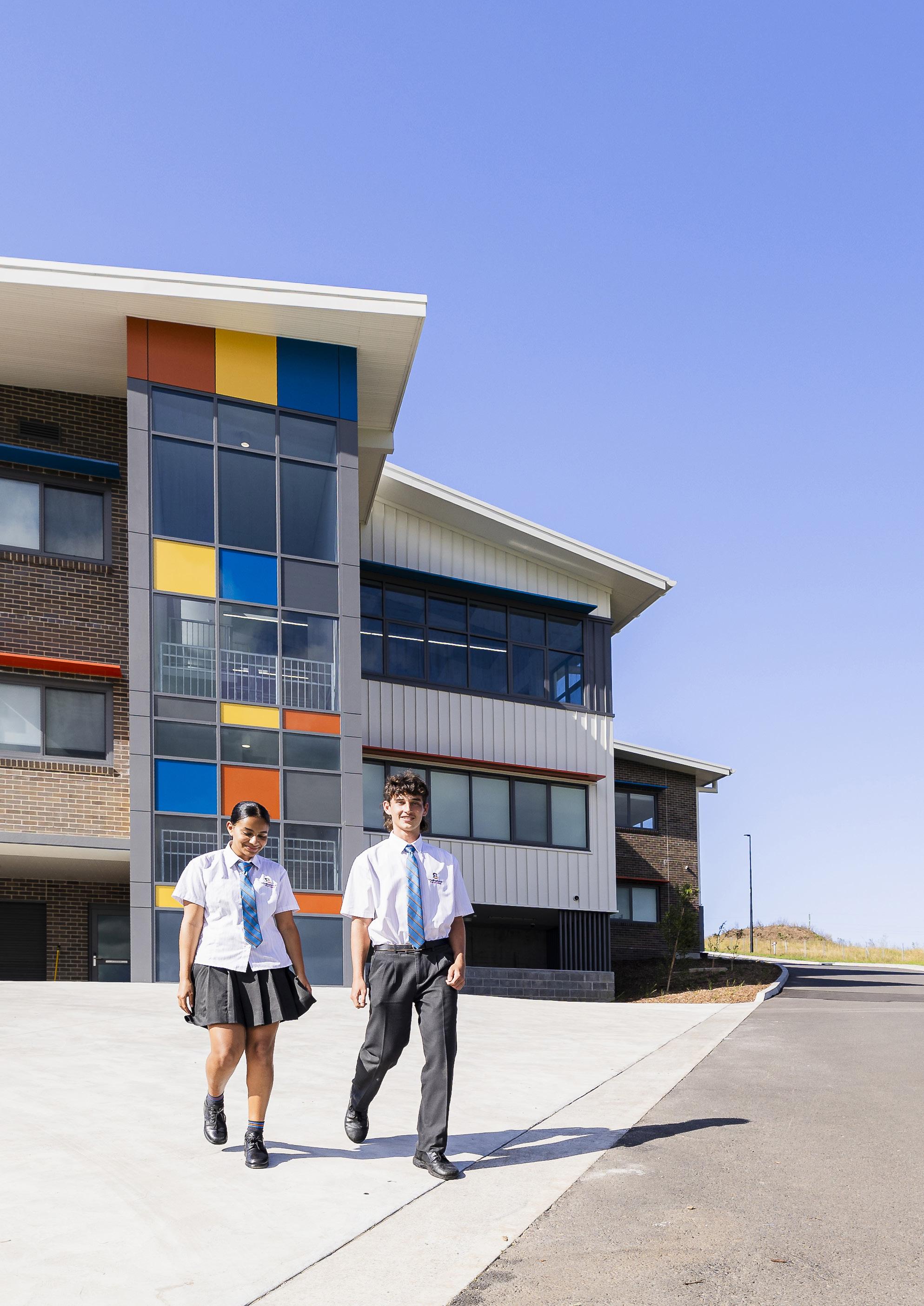
One of the most visible expressions of growth this year has been the opening of Birung, a remarkable new learning space that stands as both a physical and symbolic milestone for the College. Designed to foster collaboration, creativity, and connection across year groups and disciplines, Birung reflects our commitment to providing contemporary learning environments that inspire curiosity and engagement. It is a testament to careful planning, faithful stewardship, and a shared belief in the future of our students.
Alongside these developments, 2025 has been a year of important listening and discernment. The completion of the Anglican Schools Corporation five-year review provided a valuable opportunity to hear directly from those who know the College best – our parents, staff, and students. I would like to sincerely thank all members of the community who contributed their insights.
Importantly, this feedback has not stood in isolation. It has directly shaped the extensive strategic planning undertaken throughout the year. In partnership with the Principal, College Executive, and wider community, the Council has carefully considered how we can continue to evolve in response to both current needs and future challenges. This work has culminated in the development of the 2026–2028 Strategic Plan, which positions the College to remain responsive, forward-thinking, and firmly grounded in its mission.
I would like to extend my sincere thanks to Principal Mrs Megan Hastie for her faithful and visionary leadership, to the College Executive, and to every member of staff whose dedication and care underpin all that we do. I also acknowledge the ongoing support of the Anglican Schools Corporation, whose governance and partnership continue to strengthen our work.
Finally, I thank our families for your trust and commitment. Your partnership is vital in nurturing a community where everybody learns, everybody serves, and everybody grows. It is a joy to serve as Chairperson of this College, and I look forward with confidence and hope to the next chapter of its journey.
Mrs Karen Dixon Chairperson of the College Council

2025 has been a year of meaningful growth, shared purpose, and strong partnership across our Shellharbour Anglican College community. At the heart of all we do is a clear commitment: to nurture young people who live with hope and purpose, who are curious, creative, compassionate, and courageous, and who reflect Christ‑like character in the way they learn, lead, and serve.
As we reflect on the year, the image of a flourishing garden captures our journey well. Growth has come through intentional effort, care, and collaboration. Our shared vision remains steadfast: everybody learns, everybody serves, everybody grows. This is both our promise and our purpose as we prepare students to thrive in a complex and changing world.
A highlight of 2025 has been the opening of Birung, a new learning environment designed to foster collaboration, creativity, and connection. Bringing together key learning areas – including libraries, visual arts, mathematics, and performance – this space reflects our commitment to dynamic and integrated learning. We also anticipate the completion of new Junior School play spaces, providing further opportunities for exploration, wellbeing, and growth for our youngest learners.
Beyond the classroom, students have demonstrated remarkable character and compassion. Through partnerships such as Gilgandra and service experiences in Cambodia and Vietnam, they have engaged deeply with issues of justice, empathy, and global responsibility. Leadership opportunities through the Duke of Edinburgh program, the Student Representative Council, and service initiatives have strengthened student voice and fostered a culture of care.
This year also marked the completion of our five-year Anglican Schools Corporation review, shaped by the valuable feedback of parents, staff, and students. The review affirmed many strengths, including our strong values foundation, quality teaching, Christian focus, and care for students. It also identified important areas for growth, particularly in strengthening responses to student wellbeing, enhancing feedback, raising academic expectations, and meeting the diverse needs of all learners. Importantly, this feedback has directly informed our strategic planning throughout 2025. In partnership with our community, we have reflected deeply on who we are and who we are called to become. This process has shaped the development of our 2026–2028 Strategic Plan, ensuring that it is grounded in lived experience, responsive to need, and focused on the future.
As we look ahead, we are mindful of the challenges facing young people today, particularly in areas of mental health, digital engagement, and connection. Our response is intentional: to prioritise real-world learning, meaningful relationships, and opportunities for growth through challenge, creativity, and time in nature.
We are deeply grateful to our staff – teaching, professional, and operational – whose dedication makes this work possible, and to our families, whose partnership remains essential. As we reflect on 2025, we do so with gratitude and with hope, confident in the shared journey ahead.
Mrs Megan Hastie Principal


As the once newly appointed 2025 College Captains of Shellharbour Anglican College, we began the year talking about our ideas for this role. The goal was simple: to create a place where everyone feels like they belong and where students genuinely care about this special College and have strong connections with their friends and teachers.
Looking back, that goal seems pretty big and abstract. At the start, we had a ton of ideas ready to throw into action. But we quickly realised that community growth does not happen by ticking boxes, rushing through a to-do list, or hosting the most events. It is slower than that. It comes through conversations and everyday moments that often go unnoticed. We have learned that leadership is less about being perfect or having the best ideas and more about showing up with integrity and caring about people even when these moments go unseen.
A big part of that legacy comes from getting involved and stepping up, even when you are not sure you are capable of it. To current and future students: give it a go; whether a sports team, Duke of Ed or a subject you do not think you are ‘smart enough’ to do, putting yourself out there is how you grow and find belonging.
Let this be a reminder: there are no boundaries to what you can accomplish. If you carry passion in your heart and determination in your actions, nothing will stand in your way. Growth and legacy are not reserved for a select few, they are within reach for all of us, if we believe in our potential and pursue it relentlessly.
Every time you step up and try, you are not just growing yourself, you are serving the people around you. That is what we have loved most about the College, seeing how strong and alive this community is, the way people support each other, step up and make this a place you can deeply belong to.
Elhannah Laird and Samuel Schooley 2025 College Captains
Shellharbour Anglican College is a member of The Anglican Schools Corporation (TASC) and opened in 2004 with 93 students from Kindergarten to Year 7. Our first Year 12 cohort graduated in 2009 when the College population was 510. We are currently a Kindergarten to Year 12 school of 982 students, with 56 students in the Preparatory program.
Our students are drawn from throughout the Illawarra area, which indicates that our reputation fosters confidence beyond our immediate local area. We aim to provide a comprehensive education to our students that includes opportunities to develop individual abilities and talents both in and out of the classroom setting, preparing our students for life beyond school.
As a Christian school in the Anglican tradition, faith lives at the heart of the College, and Christ is central to all that we do. Biblical foundations and Christian values form the basis of all the College’s activities from our learning to leadership and wellbeing practices.
Chapel services, Christian studies and the voluntary CRU group provide opportunities for students from all faith backgrounds – or none – to explore questions of faith and spirituality in a safe and supportive environment. The College strives to provide a broad range of co - curricular activities from sports through to the creative and performing arts, outdoor education and service opportunities.
Shellharbour Anglican College has a strong emphasis on service and provides a number of opportunities for students to engage. It challenges them to become active, engaged and compassionate citizens. One of the highlights that draws this all together is The Duke of Edinburgh’s International Award program. This program continues to be strongly supported across the College, with significant numbers of students completing the Gold Program in their final year of school, or shortly after.
Equally as important to the College is the wellbeing of our students, and our Pastoral Care program, through Stage classes in the Junior School and House groups in the Senior School. These provide a caring and supportive environment that encourages students to care for each other but to also be outward looking, supporting a variety of charities, either through fundraising or through personal involvement.
In its pursuit of high academic standards, Shellharbour Anglican College places emphasis on student acquisition of literacy and numeracy competencies. From Kindergarten, teachers target the development of these skills and, should particular learning needs arise, early identification and intervention become the focus. This has helped create a settled learning environment.
Our Christian staff are selected based on commitment, passion and diligence. Student leadership flourishes through many opportunities to develop skills. Older students relish the responsibility of ‘buddying’ with younger students to assist with activities. An effective Prep School to Year 12 House system engages the enthusiastic participation of the whole College community through a myriad of purposeful activities and House competitions.
Feedback from enquiring families suggests the College is developing a positive reputation for strong community involvement, effective and caring staff and a settled, purposeful learning culture. Families state they are attracted by the quality education underpinned by Christian values and by the high expectations for student conduct.
Our desire to continue to achieve excellent educational outcomes for our students was equally evident in the growing number of students achieving an Australian Tertiary Admission Rank (ATAR) over 90, students being chosen for HSC Major Work exhibitions and a general strengthening of our teaching and learning culture from Prep School through to Year 12.
The College serves families from across the Illawarra and surrounding communities including Berry in the south through to Bulli in the north, reflecting its established reputation for providing quality education. This diverse student population contributes to a vibrant school culture where different backgrounds, experiences and perspectives are valued and respected. The College is committed to supporting the academic, social, spiritual and personal development of every student, encouraging participation in a wide range of learning and co-curricular opportunities. At the Term 3 Non-Government Schools Census in 2025, total Kindergarten to Year 12 enrolment was 982 students, comprising 488 males and 494 females, demonstrating a balanced student population across the College.
Student Outcomes in Standardised National Literacy and Numeracy Testing
Shellharbour Anglican College students in Years 3, 5, 7 and 9 sat The National Assessment Program – Literacy and Numeracy (NAPLAN) examinations for Reading, Writing, Spelling, Grammar and Numeracy in 2025. The participation rate for the College was 98%.
An analysis of the 2025 NAPLAN data reveals key performance trends for the College. To provide a comprehensive evaluation, the results are examined against two distinct benchmarks: the all Australian students average (national baseline) and the statistically similar school background average (socio-educational peers).
The NAPLAN results reveal that the Year 3 and Year 9 cohorts achieved results above the national average in the majority of assessed domains, including Reading, Grammar and Numeracy. Performance in Spelling was a relative strength, tracking above the national average in Year 3 and remaining consistent with socio-educational peer benchmarks across the majority of year levels.
While student outcomes remain aligned with or above national averages, comparisons against socio-educational peer groups indicate that student achievement is currently tracking below its potential. Although the Year 5 and Year 7 cohorts met national baseline standards, their progress plateaued when compared to schools of a similar socio-educational background. Furthermore, Writing was identified as a consistent area for development across the College, with outcomes in this domain falling below the averages of statistically similar schools across all four tested year levels.
Shellharbour Anglican College’s 2025 NAPLAN results (average) compared to schools with a similar background.
Shellharbour Anglican College’s 2025 NAPLAN results (average) compared with all schools.
Legend: Above Close to Below
Source:www.myschool.edu.au
Most of the graduating Year 12 students in 2025 received offers in university courses while the remaining students commenced TAFE courses and other vocational training courses, started apprenticeships or enrolled in Christian ministry training courses. Approximately 86% of the graduating class of 2025 intended to study at university at the time of their graduation.
In early 2025, Heads of Faculty undertook an annual review into HSC results and performance to evaluate teaching programs and pedagogy and to inform practice. Analysis of academic profiles by external consultants indicated that in terms of both mean and median estimated ATARs and students’ academic growth (measured between Year 10 to Year 12), the 2025 cohort achieved the fifth strongest in the past 10 years. Furthermore, 84% of the College’s HSC students reached or exceeded their anticipated level of academic growth, as projected from their Years 10 and 11 results.
A total of 68 students completed Year 12 in 2025, with 65 students being eligible for an ATAR. All students in Year 12 in 2025 received their HSC. During their HSC studies, 18% of students participated in vocational training. Senior students at the College are encouraged to ‘choose challenge’ by attempting the more challenging courses. This challenge was accepted by the students, with 32% of students studying extension subjects in 2025.
The College is committed to implementing its teaching and learning framework, which is aimed at fostering independent learners with well-developed skills in critical thinking, communication and collaboration. The development of these skills will help students continue to achieve in their studies as well as life beyond the school gate.
The following graphs indicate the observed performance trends of Shellharbour Anglican College Year 12 students in the HSC.
Percentage of students achieving greater than 70% in each HSC subject.*
* The percentage of students achieving a Band 4 or higher (>70%) in HSC subjects in the 2025 HSC.
State Versus School Average by HSC Subject
Teacher Accreditation 2025
Teacher Qualifications 2025
Category
Teachers having teacher education qualifications from a higher education institution within Australia or as recognised within the National Office of Overseas Skills Recognition (AEI-NOOSR) guidelines.
Teachers with a bachelor degree from a higher education institution within Australia or one recognised within the NOOSR guidelines but lack formal teacher education qualification.
Workforce Composition
School staff in 2025
* These figures account for both full and partial absences for all types of reportable leave.
* Average attendance rate of all students, Prep through to Year 12, per day is 91.94.
The College has the following strategies to improve unsatisfactory attendance and student engagement in College events and learning.
The College communicates to parents and guardians to clarify their obligations to ensure their child attends the College, and to not condone absences for unauthorised reasons.
Regular meetings are conducted between the Principal, Heads of Senior School and Junior School and other College leaders, as appropriate, to coordinate responses to student absences. These meetings occur on a ‘needs’ basis.
Students with persistently low attendance will be monitored, and personalised strategies will be considered to increase their attendance and/or engage them in continuing education programs. Initially, students with three unexplained absences will be contacted by their child’s tutor to see if there are issues being faced by the family. Stage Coordinators (Junior School) and the Coordinator of Pastoral Care (Senior School) may take over if absences become more frequent.
For students requiring more intensive support, one-on-one meetings with the Stage Coordinator (Junior School) or Dean of Students (Senior School) will occur and alternative arrangements may be organised in consultation with parents and guardians.
In consultation with Independent Schools NSW, the Heads of Junior and Senior Schools and other senior leaders meet with parents of students with continued low attendance and create formal school attendance plans. The Heads of Junior and Senior Schools follow the guidelines set down by the Independent Schools NSW regarding school attendance matters. When frequent absences are explained as being due to illness, the College may request medical certificates for the absences and will consult with parents and guardians regarding the health care needs of the student. This is done by the Stage Coordinators (Junior School) and Dean of Students (Senior School).
All required reports will be made to the NSW Government Child Protection Helpline, and/or contact will be made with the Child Wellbeing Unit if there are safety, welfare or wellbeing concerns in relation to student attendance. Police will also be called if welfare checks are required. Mandatory reports may follow if adequate correspondence with the family is not forthcoming.
Where a student who is under 17 years of age is refusing to attend school and all College procedures and strategies have been exhausted, the Principal will submit a Student Enrolment Destination Unknown Notification form to the NSW Department of Education.
Bullying Preventions and Intervention Policy and Procedures
https://shellharbour.policyconnect.com.au/module/223/page/4f6bff19-f13d-46f3-a79a-bd0ca5a5d350.md
Child Safe Program
https://www.shellharbourac.nsw.edu.au/wp-content/uploads/2025/01/Child-Safe-Program.pdf
Complaints Handling Policy and Procedure
https://shellharbour.policyconnect.com.au/module/957/page/a489207b-5a71-4d61-baf1-78951eab4747.md
Enrolment Policies
https://www.shellharbourac.nsw.edu.au/wp-content/uploads/2025/11/Enrolment-Policy-November-2025.pdf
Student Discipline Policy and Procedures
https://shellharbour.policyconnect.com.au/module/80/page/343cb5fd-cda6-48e3-8198-d4700bf957e3.md
Our core business is learning. We are passionate about helping our students grasp not only those fundamental literacies they need to survive, but we know they need to be prepared for the increasingly complex and ambiguous world they inhabit.
• As part of its membership of The Anglican Schools Corporation (TASC), the College is subject to an extensive and rigorous review every five years. In 2025 the College underwent the TASC review, which looked at all areas and processes of the College, and included the use of parent and student survey data as well as staff interviews and student focus groups. The 2025 review showed a broad degree of satisfaction by students, parents and staff.
Staff, parent and student feedback remains integral to the College’s reflective practices. Feedback is gathered both formally and anecdotally through various means, including surveys, participation in community, staff and student events, regular communication channels, opportunities to hear student voices and staff gatherings.
• Leaders regularly conduct interviews to gather feedback on operational, curriculum and wellbeing matters. We provide exit surveys for all Year 12 graduates and their parents, as well as to all families who leave prior to Year 12.
• Student voice was heard through the Junior School MAACAS team and the Senior School Student Representative Council, enhancing student engagement and influence across key areas of school life. These groups work in partnership with student leadership teams to ensure student perspectives help shape school decisions and activities. The College also initiated student involvement in the Child Safe Working Group.
• Student leadership continued to develop through monthly meetings between the Principal and both the Senior School College Captains and Student Leadership Team, and weekly meetings between Junior School leaders and Stage Coordinators. These forums provided valuable insight into student experience and helped shape future planning.
• Spiritual growth and discipleship remain central to College life. Regular opportunities for prayer and reflection were offered through twice-weekly staff devotions, optional lunchtime CRU and Bible study groups for students and weekly Junior School clubs that supported holistic development.
• Communication between the College and families was ongoing and multifaceted, including newsletters, social media updates, phone calls and face-to-face conversations. The Principal and Heads of School met regularly with parents to address concerns and share in the joys of student progress.
• Throughout the year, the College hosted several parent engagement events which were well attended and positively received. These included Parent-Teacher Interviews, Subject Selection Evenings, Orientation Mornings for new students, Gold Assemblies each term, Mother’s Day and Father’s Day events and Presentation Evening. Regular gatherings such as Junior and Senior School Assemblies and Chapels continued to carry a tone of gratitude and celebration.
• Both Junior and Senior School Sport programs saw high student participation, made possible by the significant time and energy invested by staff. Our House system continues to thrive, with enthusiastic student involvement and school spirit on full display during events such as the Senior School Gala Day. Strong student-staff rapport and effective leadership were evident throughout the year.
• Staff development continued to be a priority in 2025, with time invested in professional learning during Staff Development Days, weekly faculty and stage meetings, and a Wellbeing Consultant supporting ongoing staff wellbeing.
Income
Fees and private income
State recurrent grants
Commonwealth government recurrent grants
Government capital grants
Other capital income
Expenditure
Salaries, allowances and related expenses
Non-salary expenses
Capital expenditure