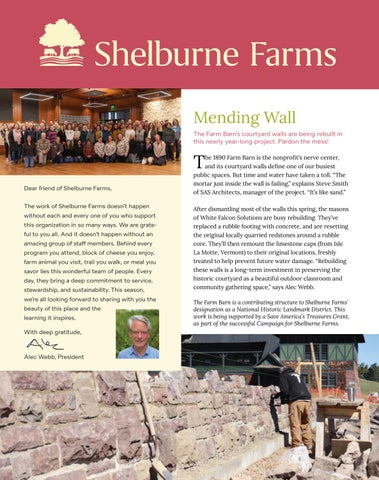
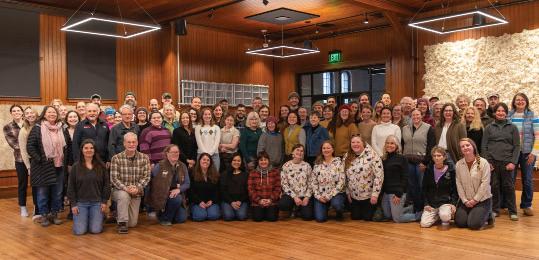
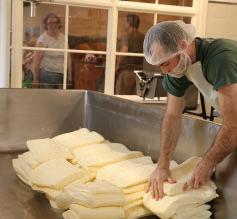
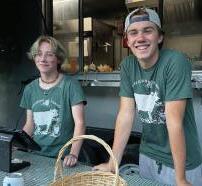
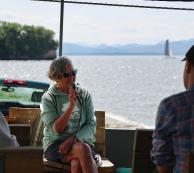
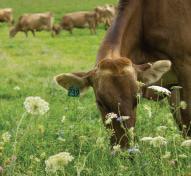
The work of Shelburne Farms doesn’t happen without each and every one of you who support this organization in so many ways. We are grateful to you all. And it doesn’t happen without an amazing group of staff members. Behind every program you attend, block of cheese you enjoy, farm animal you visit, trail you walk, or meal you savor lies this wonderful team of people. Every day, they bring a deep commitment to service, stewardship, and sustainability. This season, we’re all looking forward to sharing with you the beauty of this place and the learning it inspires.
With deep gratitude,
Alec Webb, President
Mending Wall
The Farm Barn’s courtyard walls are being rebuilt in this nearly year-long project. Pardon the mess!
The1890 Farm Barn is the nonprofi t’s nerve center, and its courtyard walls define one of our busiest public spaces. But time and water have taken a toll. “The mortar just inside the wall is failing,” explains Steve Smith of SAS Architects, manager of the project. “It’s like sand.”
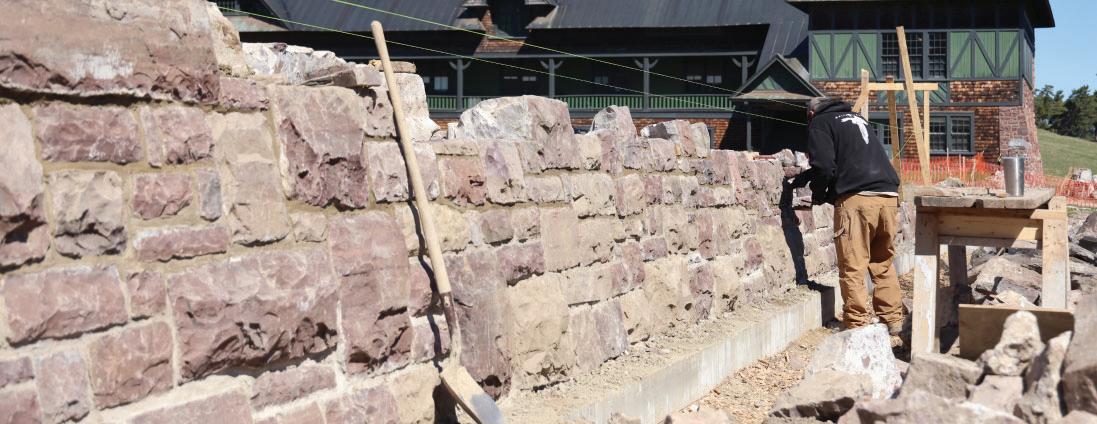
After dismantling most of the walls this spring, the masons of White Falcon Solutions are busy rebuilding. They’ve replaced a rubble footing with concrete, and are resetting the original locally quarried redstones around a rubble core. They’ll then remount the limestone caps (from Isle La Motte, Vermont) to their original locations, freshly treated to help prevent future water damage. “Rebuilding these walls is a long-term investment in preserving the historic courtyard as a beautiful outdoor classroom and community gathering space,” says Alec Webb.
The Farm Barn is a contributing structure to Shelburne Farms’ designation as a National Historic Landmark District. This work is being supported by a Save America’s Treasures Grant, as part of the successful Campaign for Shelburne Farms.
Reasons for Walking
Last year, Steve Phelps logged over 1,000 miles walking at the farm. “It’s like meditation,” he says. “It clears your head. It’s so peaceful.”
Having grown up in nearby Richmond, VT, he first visited the farm on a school field trip. But it was years later, on doctor’s orders to lose weight, that he started walking here. He shed the weight, and fell in love with the farm.
“You just have to look. That’s how you see the most incredible things.”
— Steve Phelps
“If I’m not working, I’m here,” he says. On a typical visit, he’ll walk all day; often 20+ miles. “I know exactly how long it is from point to point,” he says, flashing the phone app that tracks his routes.
“But I don’t set a plan. I just start walking.” Along the way, Steve captures thousands of photos in every season: deer, orange foliage, a wild asparagus plant, a bobcat.
Asked about his favorite places or seasons, however, and he simply says, “The whole place is my favorite spot. You never see the same thing twice.”
Two years ago, Steve turned his walks into support: for every mile, he donates a dollar to Shelburne Farms. “This place makes you feel great, and I wanted to do something to keep it going,” he explains. “It’s just a joy to be here.” His invitation to other walkers? “You just have to look. That’s how you see the most incredible things.”
Empowering Students with a Gift of Kindness
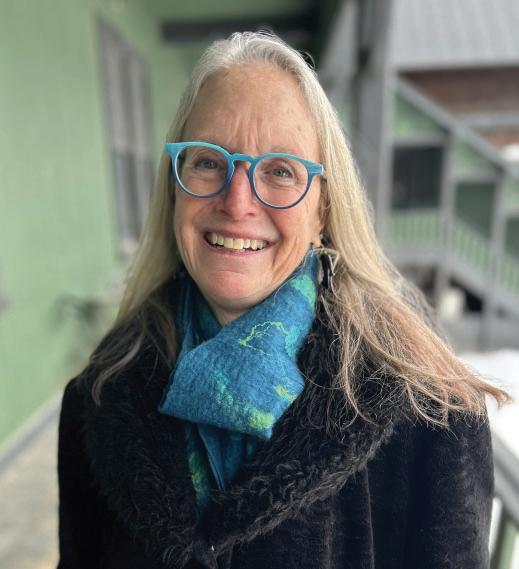
In her long career with both The Nature Conservancy and UVM’s Rubenstein School of Environment and Natural Resources, Carolyn Goodwin Kueffner continually saw the profound impact individuals can have advancing environmental stewardship. That’s why our work resonated so deeply with her. To support that work, Carolyn recently designated a portion of her IRA to the Shelburne Farms Institute for Sustainable Schools. She says, “It is my hope that this contribution will help empower students through transformative educational experiences to lead us toward a more sustainable future.”
Meet a Post-Grad Fellow
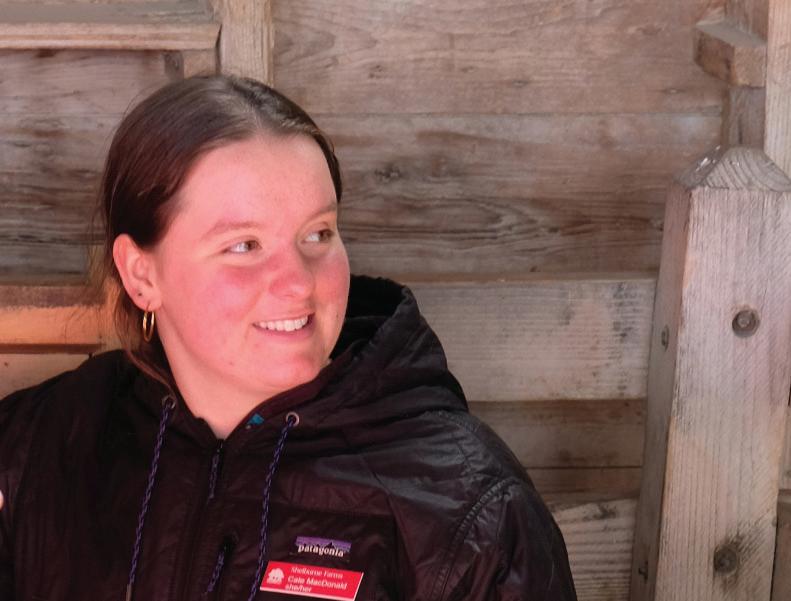
What does it mean for a community to thrive? That’s the essential question high schoolers examine in Burlington City & Lake, a semester program offered by Shelburne Farms and Burlington School District. Students focus on their city, but post-graduate education fellow Cate MacDonald, who spent this year teaching with BCL, says the lessons are global; students learn about systems, and, crucially, about their power to transform systems. “This fellowship has prepared me to continue teaching in a way I’m passionate about—diving into real-world complexities while empowering youth.”
Carolyn Goodwin Kueffner recently designated a portion of her IRA to our Institute for Sustainable Schools.
Education Fellow Cate MacDonald works with Burlington teens.
On Climate and Creativity
Teachers explore climate impacts—and climate imagination—through art, bringing their ideas back to their classrooms.
According to a 2025 nationwide survey by the Climate Mental Health Network, nearly all middle school teachers report seeing students emotionally react when the subject of climate change comes up, but many are unsure how to respond. Our Climate Creative program addresses this gap by supporting educators and their students in using art to teach and learn about climate change.
“Art is an important tool for coping with the climate crisis. It’s a medium for expressing your
emotions and connecting with others.”
— Emily Schaller Climate Creative Co-Facilitator
11 educators gathered seasonally at the farm to get hands-on with a variety of media and develop lesson plans for their classrooms. Through art, students process their learning and imagine possibilities. One teacher described the hope the program inspired. “We have the answers,” she says. “We just need to compel a critical mass to do the work.”
For more on all our professional learning programs for educators visit: shelburnefarms.org/programs
Education for Sustainability Certificates
Take a series of courses for graduate credit (University of Vermont or Vermont State University Center for Schools).
Northeast
Farm to School Institute
Year-Long | Kickoff: June 23–25
School teams build action plans for lasting impact on their school communities.
Farm to School Institute
Adaptation Program
Year-Long | Kickoff: June 22–26
States learn from this proven model for growing robust farm to school programs.
Cultivating Joy & Wonder
July 13–17
An immersive, energizing week to inspire your early childhood curriculum. Immersion in Education for Sustainability
July 21-23
Learn systems and strategies to amplify youth voice and agency for positive change.
Education for Sustainability Leadership Academy
Year-Long | Kickoff: July 27–29
Aligning education for ecological integrity, economic vitality, and social justice.
A Watershed for Every Classroom
Year-Long | Kickoff: August 3–6
Explore sustainability concepts on the land; translate them into your curriculum.
“Art is an important tool for coping with the climate crisis. It’s a medium for expressing your emotions and connecting with others,” says Shelburne Farms educator and Climate Creative co-facilitator Emily Schaller. Over the past school year,
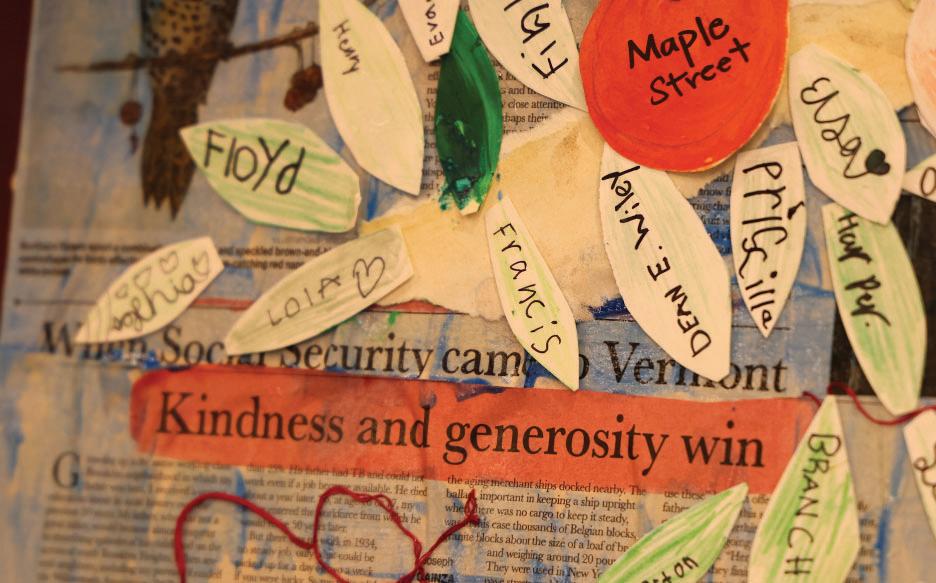
An April exhibition at the Coach Barn celebrated student and teacher creativity, from pieces interpreting climate data to a collective paper quilt honoring native birds.
See more art from the program at shelburnefarms.org/news See Climate Resiliency Fellowship, right
Climate Resiliency Fellowship
Year-Long | Kickoff: August 11–13
Deepen your teaching practice and advance education for climate action.
“Quiet Persistence – American Persimmon” by educator Lauren Kelly and students, Smokey House Center, Danby, Vermont (2026). The piece records when hundreds of students, staff, and volunteers planted an orchard of climate-resilient tree species last fall.
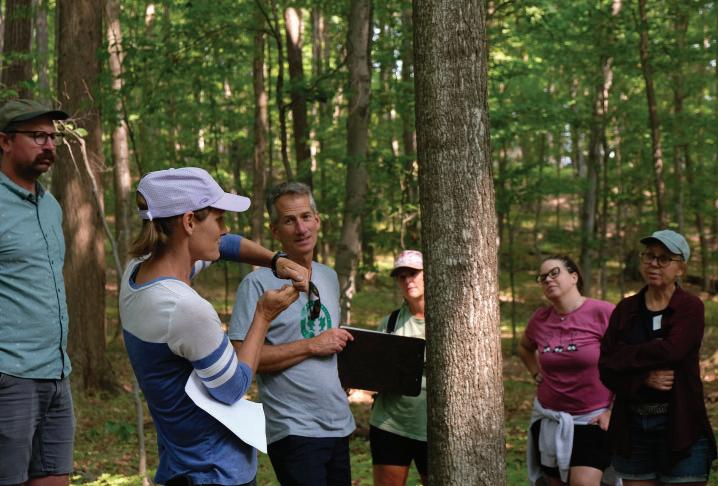
Woodlands Manager Dana Bishop with Forest for Every Classroom teachers. “The more we foster a connection to land,” shared one teacher, “the more likely students are to continue this relationship and become citizens working toward a sustainable future.”
Into the Woods
A Forest for Every Classroom, a program beloved by participating teachers, celebrates 25 years.
In the middle of Shelburne Farms’ sugarbush, a group of detectives gathers around Woodlands Manager Dana Bishop to solve a mystery: how many maple trees does this forest plot contain?
These “detectives” are Vermont teachers, on-site for A Forest for Every Classroom. Nurturing a sense of appreciation and wonder for the natural world is central to the yearlong program. As they learn about topics like habitats or the forest economy, teachers rekindle their connection to the land and consider strategies for helping their students do the same.
“Our goal is that these teachers get students thinking about their relationship to land, and what kind of action students can take to support the future of this planet,” explains Courtney Mulcahy, a professional learning facilitator with Shelburne Farms. Gatherings “plant seeds,” providing lessons, tools, and ideas teachers can implement in their classrooms. A Forest for Every Classroom is offered in partnership with Marsh-Billings-Rockefeller National Historical Park and the U.S. Forest Service, so conversations about public lands—their accessibility, protections, and their importance to wellbeing and democracy—are a big part of the program, too.
At the final gathering in April, teachers shared ways their practice has transformed: “I’m in the woods more often with children. This course allowed me to take that leap.” Another participant reflected, “The more we foster a connection to land, the more likely students are to continue this relationship and become citizens working toward a sustainable future.”
Learning with La Paz, Mexico
Acollaboration
between Shelburne Farms Institute for Sustainable Schools and several education partners in Mexico deepens this year thanks to support from the Alumbra Innovations Foundation.
One initial achievement was to adapt “Learning Locally, Transforming Globally”—our framework for place-based learning and changemaking—to support teachers in La Paz. Local experts, including Araceli Vargas of Ecology Project International and Fernando Hernández of Ándale La Paz, have guided this effort.
Next, teachers from La Paz and the UNESCO Global Network of Learning Cities will join Shelburne Farms educators and our partners in Mexico for online workshops on advancing civic action. Vargas explains it’s an exciting time to do this work in La Paz as youth engagement is at the forefront of regional education policy. Shelburne Farms Director of Professional Learning Jen Cirillo adds, “Together, we see an opportunity to seize the educational moment and support youth as they develop the sense of agency they’ll need to tackle challenges we face as a global community.”
Summer Opportunities
Your Day Visit
Walking Trails
Popular destinations on our miles of trails include the Farm Barn, Lone Tree Hill, and the Formal Flower Gardens.
If walking is not an option for you, you can obtain a driving pass on our website or at the Welcome Center.
Welcome Center & Farm Store
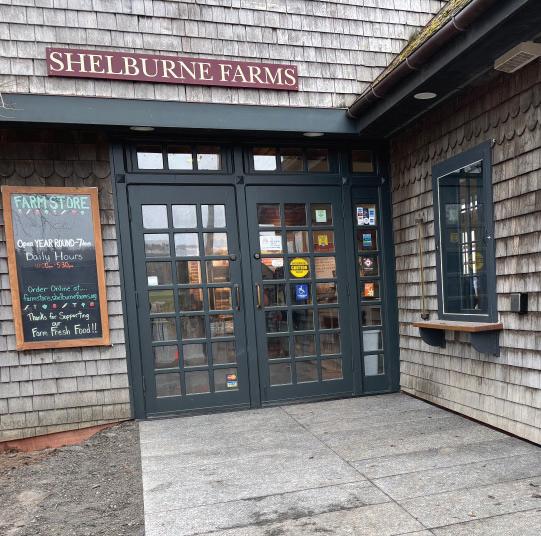
Open 9:30am-5:30pm daily. Get your questions answered and pick up fresh products from our farm and other Vermont farms: cheddar, maple syrup, fruit, vegetables, meats, and more. 10% member discount.
Fun at the Farm Barn
Tractor shuttle runs daily 10am–4pm from the Welcome Center, May 9 through October 18.
Children’s Farmyard
Meet and learn about our sheep, goats, rabbits, cow, calves, pigs, and donkeys. Scheduled activities each day.
Cheesemaking
Watch cheesemakers craft our Brown Swiss cows’ milk into cheddar. Meet a Cheesemaker: Daily, 11am
Raptors in Residence | 1pm
May 10–June 14: Sunday
June 17–Aug. 30: Wed., Fri., Sun. Sept. 6–Oct. 18: Sunday
Learn the mysteries of birds of prey with a live owl or hawk. Offered by Outreach for Earth Stewardship.
Farm Cart | 11am–3pm
May 9–June 7: Sat. & Sun. June 13–Oct. 18: Daily
Enjoy farm-grown lunch and snacks in simple dishes that feature our own and other local farm products.
Seasonal Tours
Shelburne Farms Tour
Daily throughout the summer
On an open-air wagon tour, explore the stories of Shelburne Farms and its evolution from a private estate to an education nonprofit.
Sun to Cheese Tour
Daily throughout the summer
Discover the story behind our farmstead cheddar on an open-air wagon tour to our cows, pastures, dairy, and cheese facility.
House & Garden Tour
Sun., Tues., Wed., Thurs.
Enjoy a guided, in-depth walking tour of the Inn’s main floor, upstairs bedrooms, and Formal Flower Gardens.
Shelburne Farms Inn
May 8–October 19, 2026
Make your online reservation for an overnight stay or a farm-totable dining experience (breakfast, dinner). See related article, p.7.
shelburnefarms.org/inn
Summer Events Sampler
For a complete listing & all details: shelburnefarms.org or follow us:
Farm to Medicine Cabinet
Herb Walks
May 28, July 14, September 15
These “weed walks” will introduce you to common medicinal plants in our fields and forests. With Spoonful Herbals
Pollinator Celebration Day
June 6 | Saturday
Vermont Pollinator Working Group presents a celebration of all things pollinators for learners of all ages!
Reading the Landscape from Bedrock to Pasture
June 9 | Tuesday
How do the layers of the landscape tell a holistic story of a place, from bedrock to pastures (wool and meat)? Join UVM Field Naturalist Lena Andrews to find out. (see related article on p.7)
Family Birdwalk
June 14 | Sunday
A casual and fun family bird walk with the Green Mountain Bird Alliance and Outreach for Earth Stewardship’s live owl ambassadors!
Bats in the Barn
June 26 | Friday | family program
Learn what makes bats so special with a colorful slideshow, then watch their evening flight with Barry Genzlinger, founder of the Vermont Bat Center.
From Seed to Centerpiece
June 30 | Tuesday
Enjoy a guided visit through the flowers in the Market Garden, then learn the basics of flower arranging with our Inn’s floral designers.
Summer Concert Series
July 8–August 26 | Wednesdays
Set up your lawn chair, blanket, and picnic or enjoy food sold on site. Live musical performances for the whole family! The first 3 concerts are part of the Town of Shelburne’s summer concert series.
Gourmet Mushroom Growing
July 9 | Thursday
Join Madcap Mushrooms to learn about the basics of growing mushrooms, so you can grow like a pro!
What’s the Buzz with Grazing?
July 12 | Sunday
Join ecologist Leslie Spencer to explore how grazing benefits our land, animals, people, and the wild pollinators who call these pastures and fields home.
Summer Forest Bathing: Shinrin-yoku
July 19 & August 9 | Sundays
Slow down and be guided by a Nature Connection Guide through a series of sensory invitations.
Restoring Degraded Riparian
Forested Buffers
July 23 | Thursday
Tour the site of this six-year study at the farm to learn how restoration can be paired with multiple community and ecosystem goals. With MycoEvolve
Reimagining
a Historic Garden Space
August 22 | Saturday
Visit the Inn’s northern gardens with garden designer Paul Wieczoreck to discuss the aesthetic, historic, and site considerations influencing its new design.
Flora & Fiber:
Naturally Dye a Tote Bag
August 29 | Saturday
Explore the farm’s gardens, fields, and forests to collect commonly used dye plants and make a tote bag to take home.
Join Ari Rockland-Miller, co-founder of The Mushroom Forager, to identify late-summer mushrooms and to learn strategy and technique for ethical and sustainable harvesting
Many thanks to all our program partners!
Pasture Walks & Picnics
May 27, July 1, July 28
Discover the benefi ts that grazing livestock offer land, animals, and people, from carbon sequestration, to soil as a “sponge,” to nutrients that support human health. Supported by the Forrest C. and Frances H. Lattner Foundation
Design/Build Intensive with Yestermorrow
June 15–26 | Waitsfield
From the first sketch to the final nail, bring a design/build project to life with Yestermorrow and Shelburne Farms staff. You’ll master carpentry and design basics for a final building to enhance Shelburne Farms’ campus.
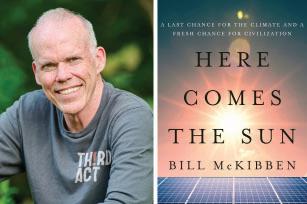
Bill McKibben
June 16 | Coach Barn
We’re excited to be hosting Bill McKibben, longtime environmental activist, writer, and champion of climate action to discuss his new book, “Here Comes the Sun: A Last Chance for the Climate and a Fresh Chance for Civilization.” A refreshing message of hope and possibility.
PHOTO BY STORYWORKZ
DARIA
Local Food Purchasing
A recent Vermont study shows how education in the classroom, state grant supports, and relationship building are getting more local foods into schools.
As a lead member of the Vermont Farm to School & Early Childhood Network, we’re excited to share a recent Network study on the status of local foods in education programs across the state.
“We wanted to know more about the creative approaches schools are using to purchase more foods,” explains Network Coordinator Dana Hudson. “It’s no small feat. These meal programs have tight budgets and a lot of rules to navigate.”
The findings?
14% of VT school food budgets go to local foods, ~$3.5 million a year.
71% of early childhood programs serve local food.
10% increase in schools’ local purchasing over past 10 years.
“This is all because of intentional statewide efforts.” says Dana. “Education in the classroom, state grant supports, and relationship building are all making a big difference. We are truly changing systems!”
The Vermont Farm to School & Early Childhood Network is made up of food systems organizations and over 400 participating individuals.
Learn more at: vermontfarmtoschool.org/LPEval24
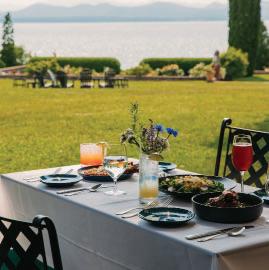
Local Food (Inn!) Dining
Chef John Patterson shares what he’s looking forward to this season.
“I love opening the restaurant and inviting guests to enjoy farm-fresh food on the patio with those amazing views,” says John. “We’ll be adding new dishes to our seasonal menu, but we’re planning on bringing back some favorites: tartar with our pasture-raised beef, charcoal-grilled trout, our seasonal Market Garden salad, and strawberry gazpacho.”
A favorite? “I’m so excited to serve our tomato bucatini,” he says. “We’ve been refining it every year, and it just gets better and better. It may look like a simple pasta dish, but so much care goes into growing each ingredient and preparing each component. The pasta dough itself is infused with tomato leaf puree from the first prunings of the season, when the leaves are most aromatic. This dish is available sometime between August and September—the exact timing is up to the weather and the tomatoes in our Market Garden.”
Pleasures of Pasture
“Whathappens when we think about farms as ecosystems versus sources of production?” asks Lena Andrews. That question drew her to both the UVM Field Naturalist Program and to leading one of our pasture walks this summer. “I wanted to combine my farming experience with skills as a naturalist,” she says. What better place than in a field?
“I love pasture,” Lena admits. “Cows on grass feels really foundational to me.” She goes on, “Cows contribute to climate change, but pasture systems are such an important healthy system. The health of humans, pastures, animals, and climate are all linked.”
UVM Field Naturalist Lena Andrews will be leading summer pasture walks.
“I’m just excited to be out on pasture with people,” she says. “There’s so much joy and life out there...songbirds, insects...so many different species. It’s a really grounding place to spend time.” Then she smiles. “Hopefully we’ll spend a bit of time with the cows, too.”
Accessibility
Thanks to recent upgrades, our farm campus and programs are even more welcoming to all.
• New entrance, bathrooms, and information booth were installed at the Welcome Center.
• Our new wagon shuttle has a lift.
• A bathroom and kitchen are being renovated at program housing (Orchard Cove House now, and Windmill Hill House this fall).
• Accessible entrances, bathrooms at the Coach Barn.
• Visitor Guides are now available in five languages.
• Coming up: An accessible trail loop will be constructed this fall from the Welcome Center.
Progress on Greenhouse Gas Reductions
Through focused efforts since 2022, we have reduced our annual net greenhouse gas emissions by over 25% from our 2019 baseline. We’re less than 200 tCO2e away from our Net Zero goal: to fully offset our emissions with the carbon that’s sequestered in our forests and fields.
Farm Greenhouse Gas Emissions in tons of CO2 equivalent (tCO2e)
Farm & Forest Sequestration
The Welcome Center has a new accessible entrance (bathrooms, too).
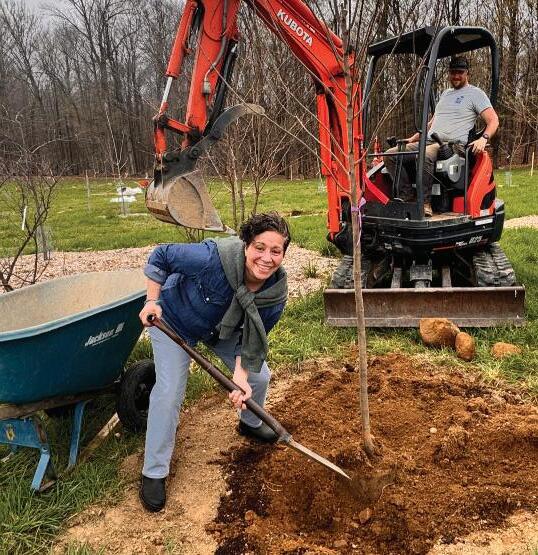
LEFT: We planted an additional 80 climate-adapted trees and 125 shrubs in Marshall Woods this spring to effectively fill the area.
Our Working Farm
Sheep & Lambs
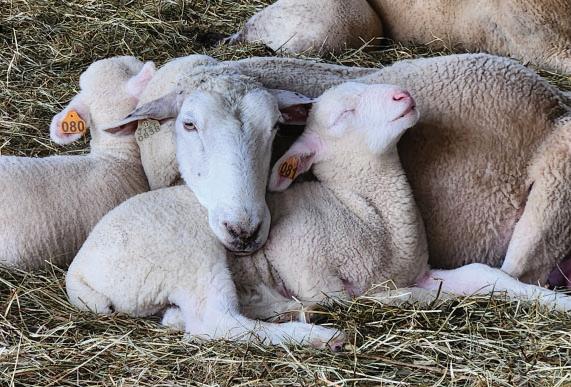
Our flock of over 70 ewes had more than 135 lambs this season. It’s an intense several weeks for our dairy staff, seeing to the health of mom and babies, before, during, and after delivery. On to green pastures!
Sugaring Season
Over 18 days of boiling, we made 1,103 gallons of maple syrup—dark and amber equally represented That’s 78% of a “full crop” (half a gallon of maple syrup yield per tap). The cold and the late start were challenging, but sugarmaker Dana Bishop says, “We have a great team!”
Cheddar Cheers!
It was great to see our 2-year cheddar get a shoutout in Food & Wine magazine this spring as “the gold standard for sharp block Cheddar.” Come find our cheese team July 7-10 at the American Cheese Society’s competition, and Sept. 20 at the Vermont Cheesemakers Festival!
Market Garden
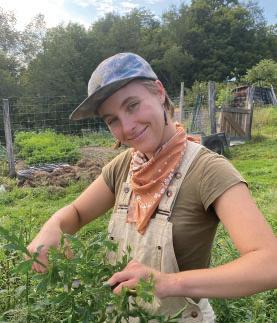
Our seven-acre garden is in full planting mode—organically growing vegetables, fruits, and flowers for the Inn, Farm Store, and local food shelves. Gardener Josh Carter is fine-tuning his communications and distribution systems this season.
New Face at the Dairy
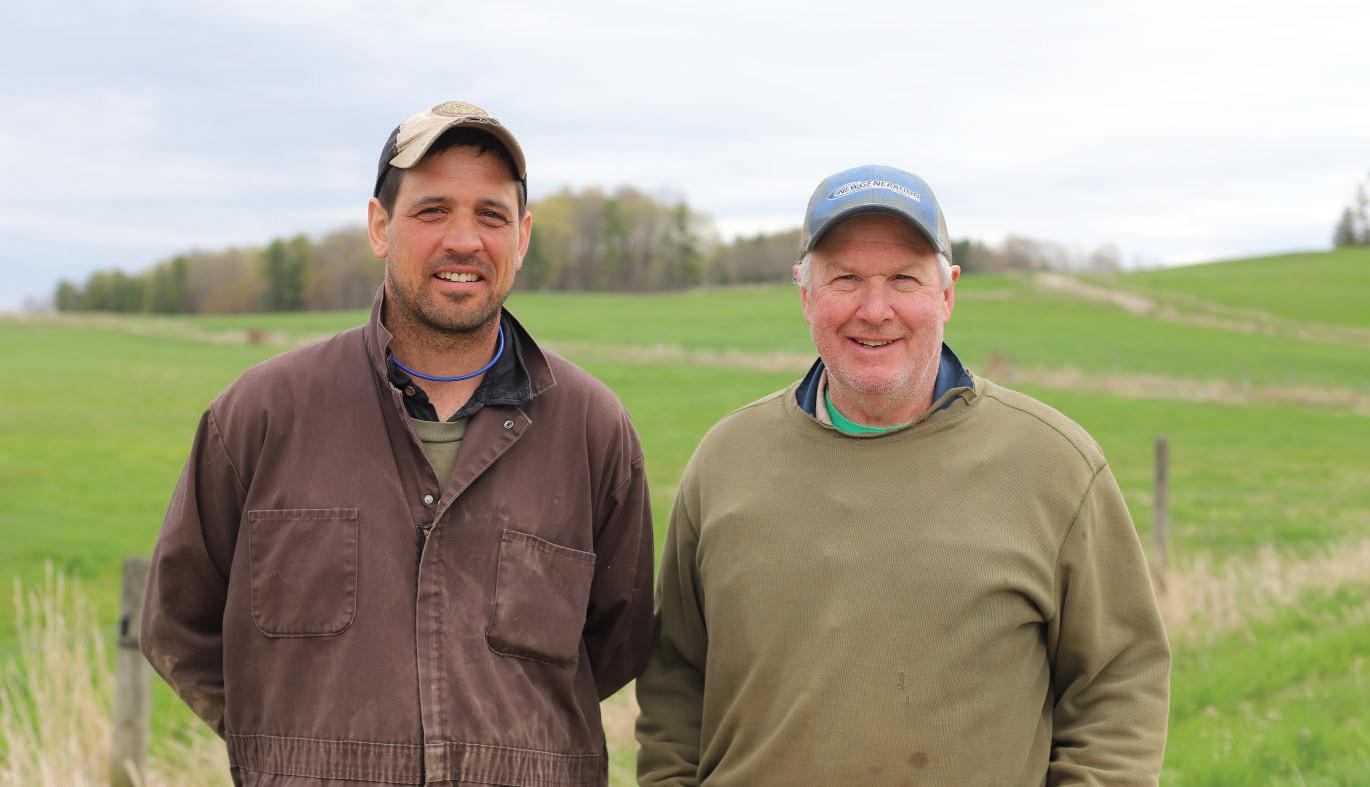
Joe Donegan, our new Dairy & Livestock Farm Manager, will continue Sam Dixon’s commitment to pasture-raised dairy, beef, and sheep.
Sam Dixon’s 30 years at Shelburne Farms have shaped the success of the dairy: its healthy cows, high quality milk, and rich pastures. Now Joe Donegan, a local organic/raw milk dairy farmer, will help carry that success forward. But the handoff is unhurried.
“It’s a slow roll,” says Joe. “I’m getting to know the farm staff, working shoulder to shoulder with them and just soaking up what they’re sharing.” Sam elaborates, “Joe’s been doing the milking to get a sense for the livestock. After that, there’s the land, the equipment, the interface with all the programs—all these layers to work through. But Joe has farmed,” Sam adds. “And he’s farmed in this area. We’re really lucky.”
“I grew up in Hinesburg and spent my life going to my grandparents’ farm there,” Joe recounts. “Farming was always just fun to me.” After wrestling in college with how to reconcile his faith with his desire to farm, he came home and built a successful organic dairy farm with his wife, transitioning later to raw milk, then to a hybrid model. So why Shelburne Farms? “It’s dynamic here,” Joe says. “There’s more room for ideas—like the potential for warm-season perennials as forage.”
“This is an iconic Vermont farm,” reflects Sam, who’ll transition to a new managerial role at the farm. “To have had the opportunity to steward this place for 30 years has been a great privilege. I’m happy Joe will have the same chance.”
1611 Harbor Road • Shelburne, Vermont 05482
shelburnefarms.org • 802-985-8686
Shelburne Farms is an education nonprofit on a mission to inspire and cultivate learning for a sustainable future through its programs, place, and products. We offer transformative learning experiences to help educators, students, and visitors create a more thriving world.
Shelburne Farms’ historic campus is a 1,400-acre diversified working farm located on the homelands of the Winooskik band of the Abenaki.
PHOTOGRAPHS (except where noted): Holly Brough, Andrea Estey, Sarah Webb, and additional Shelburne Farms staff